
Download Now
Home Blog Page 548

What is SLA and SLA best practices

0
Image source - https://bit.ly/3j3g3Nl

This article is written by Gursimran Kaur Bakshi, a student at the National University of Study and Research in Law, Ranchi. The author in this article has dealt with the meaning and features of SLA and SLA best practices. 

Introduction 

A Service Legal Agreement (SLA) is an essential tool for communication and conflict reduction between a service provider and an end-user. An SLA applies to everyone who is seeking service from an online service provider. Hence, the basic knowledge about it is a prerequisite for the customer before subscribing to any online service. However, the general public might not be able to understand the components of an SLA because they are complex in nature. This article is an attempt to simplify the concepts relating to SLA and SLA best practices. Every customer who wants to avail of maximum service value from the service provider must read this article carefully. 

All about SLA 

How can an SLA be defined 

In simple terms, an SLA is like any other agreement between two parties. An SLA is a contract between the service provider and the client that mentions the expected level of services to be fulfilled by the service provider. A service provider could be anyone such as an IT service provider (Y) offering Software-as-a-Service (SaaS) to the end-user (Company X). In this case, an SLA between X and Y would contain information about the parties, the services offered by Y to X, the responsibility and liability of Y, the customer support system and availability to solve X’s issues. These are just a few pointers that are possibly present in every SLA. 

An SLA can either be legally binding between the parties or informally negotiated. For instance, an SLA between an Indian service provider and an Indian company needs to follow the laws of the Indian Contract Act, 1872 which is that the parties must be competent, the consideration and object must be lawful and the consent should be free from coercion, fraud, misrepresentation, and undue influence. This legislation would govern the eligibility of both parties to enter into a contractual relationship. 

SLA v. OLA

An Operational Legal Agreement (OLA) is a bunch of sub-agreements within the functional grounds of an organisation dedicated to the delivery of the overall SLAs to the customers. An OLA can be entered into by the service providers within the organisation with the internal management team or external management team to maintain efficiency towards responding to the issues of the customers. Thus, it may be considered as a subset of an SLA. 

Basic features of an SLA

There is a good scope of negotiations of parties in an SLA and thus, parties are allowed to agree on a structure of an SLA. Parties can agree on an informal structure. However, it remains preferable that parties enter into a legal contract since it would be easier for them to ensure accountability. Nevertheless, an SLA would remain an indispensable part of delivering services to the customers as promised. 

Below are some of the basic features contained in a written SLAs. These are explained in brief here and will be dealt with in detail later. 

  • Every SLA deals with service description and expected services by the customer from the service provider. It may include the quality of services and the key performance indicator for improved levels of services. 
  • The metrics on which the provided service will be measured. Some of the most expected metrics parameters for the service level objectives (SLO) are service availability, defect rates, technical quality, security, and business results. 
  • A clause on termination of services. It should include penalties on the non-fulfilment of services based on service availability and service quality and an indemnification clause if third-party litigation arises due to the breach of the services by the service provider
  • The customer support system may include online and offline assistance and remote assistance. 

Some of these features are provided in this section for people to understand what an SLA actually deals with. These features will help you get more clarity on the concept as you read further. 

Different types of SLAs

There are broadly three types of SLAs. However, again as mentioned above, there are a lot of scopes for the parties to negotiate and structure an SLA according to their needs and requirements. Parties can definitely get inspiration from these three types of SLAs to understand the kind of arrangement they would require. 

Customer-level SLA

This kind of SLA is entered between the service provider and external customers. External customers are the ones who are not a part of the same organisation as that of the service provider. Thus, it is also known as an external service agreement. It is customer-specific and includes all the services that may be needed by the customer in a single contract. It is to be drafted on a case to case basis because the needs of every customer or the company are unique. 

Example of customer-level SLA 

The services are customer-specific when, for instance, a service provider provides food delivery in an office and some customers want to avail it. While other customers want a different service provider who can serve them juices, the rest of the customers want hot beverages like tea or coffee as services. Here, one service provider with common terms of the agreement will not be suitable since the needs are different. This will be termed a customer-based SLA. The needs of every customer are unique and the terms of their agreement will also be different. 

Service-level SLA

This kind of agreement is common for all the customers, unlike customer-based which is structured according to specific customers. Under this, the service availed by the end-users will be the same. Within this, there is also an internal-service-level SLA that can be entered between parties inside the organisation. 

Example of service-level SLA 

An example of expected services in an SLA is the one guaranteed by Dominos Pizza. Dominos Pizza guarantees to deliver the pizza within 30 minutes from the time the order has been placed. Another example could be, for instance, X is a food service provider and is supposed to provide common services to customers, in an office Y under the SLA. If X provide juice services to all the customers, this will be an example of service-based SLA because it covers one service for all customers.

Multi-level SLA

A multi-level SLA is customised according to the needs and suitability of the end-user company/customer. The customers are allowed to add conditions as per their suitability. It helps to integrate different conditions into one single agreement. This model is more generally used because it allows both parties to accommodate their needs. 

Three levels of multi-level SLA 

There are three levels of multi-level SLA within the same organisation addressing different levels of customers under the Service Level Management (SLM). There is another level of SLA which is interlinked with the other three. The multi-level SLA focuses on the needs of the customer’s organisation and changes are made in consideration of the needs of the organisation. 

These are as follows:

Corporate-level 

A corporate-level SLA is drafted in generic terms to address customers in general within the organisation. 

Service-level

A service-level SLA becomes specific to a particular service to the customers. 

Customer-level

A customer-level SLA is based on the needs of a particular group of customers. 

Issue-based

This level of SLA is required for specific issues that need faster resolution with more dedicated timelines. 

Example of multiple-level SLA 

Multiple-level SLA has been used in SaaS related contracts because it gives space to both parties to add their specific requirements. For instance, in the above-mentioned example, if one service provider is willing to deliver all kinds of food items from juice to hot beverages and it is also willing to customise the same for every different customer and provide them different services, this can be a suitable explanation of multiple-level SLA. 

Need of an SLA 

An SLA is an essential requirement between a service provider and user because, first, it establishes the very basis of communication between the two parties. Once the agreement has been negotiated between the parties, there has to be regular checks and balances on whether accountability and transparency are maintained by the service provider in delivering quality services to the customer. Secondly, in cases where the expected promises are not fulfilled or are breached, the customer will have the right to claim grievances on the basis of SLA.

Components of SLA 

There are namely six components of an SLA as observed in this template. These components should be present in each standard SLA. These are:

Overview of the agreement

This part of the section should ideally contain information on the type of SLA and the product or service required. For instance, ‘This Agreement represents an SLA between Company X and Customer Y for the requirement of IT services needed to maintain the product.’ It should mention other details like the scope of the agreement, date of validity of the agreement and renewal terms. 

Goals and objectives 

Since the agreement has to be mutually agreed upon, this part should reflect the purpose, goals, and objectives to be agreed upon by both parties. Briefly mention the purpose of the agreement which is to deliver service or product. Then, lay down the goals and objectives in bullet points. This should be precise and brief. The objectives can include a statement on the roles of both the parties and their responsibility, service ownership, when the accountability of the service provider will arise, and what will be the service support. 

Stakeholders

This part should mention the details of the primary stakeholders. Since this space is specifically given to write the information of the stakeholders, parties should not write too much about the same in the overview section. 

Periodic review 

In periodic review, the parties are to mention the validity of the agreement and renewal terms. It should also include the time when the agreement will be reviewed. Reviewing an SLA is important because in many cases such as in multi-level SLA, new additions take place consistently with time. Parties willing to update the agreement as per their new requirements should set the review date which could be either six months or one year in which the agreement will be reviewed in a fiscal year. Many service providers appoint a Business Relationship Manager who is bestowed with the duty to make regular reviews to suggest updates and amendments to the parties as per the new needs. 

Service agreement 

This part should mention the responsibilities of a service provider towards the customer. 

Service scope 

Under this, the service scope includes all methods through which customer support and assistance can be extended. This can include telephone support, remote desktop assistance, and emergency support to name a few.

Customer requirements 

This part may include both customer responsibilities and requirements under the agreement such as payment for support cost services. 

Service provider requirements 

Service provider responsibility and requirement can be mutual to the customer requirement/responsibilities section. This would ideally include the response time in which the query was solved and information on maintenance of the services. 

Service assumptions 

This assumption part of the agreement usually includes those changes that have been made after the agreement has been entered into and which shall be assumed to have been adopted by the stakeholders. However, it must be communicated to all the stakeholders. 

Service management 

In the above sections, the information of all the stakeholders and about the agreement is mentioned. But this section will not specify in detail the services rendered to the customer. 

Service availability 

The service availability section would include specifications on how the service provider would grant service to the customer through various online and offline modes.

Customers requirements 

This part is in addition to the service availability part and shall specify the time frame within which the above-mentioned services will be fulfilled. For instance, if you mentioned that the customer service will be available from Monday to Friday from 7 AM to 10 AM. Then, this section should ideally specify that urgent services will be made available on high priority within 48 hours of submitting the request. 

These are just some sample templates to understand all the minimum components to be included in SLA. However, these are not inclusive. 

Best SLA practices 

Best practices are a set of guidelines that are to be followed in a given industry or a workplace. For SLA, these are basic headings that should be there in any SLA agreement apart from the above-mentioned information. These are nothing but components of SLA that have been dealt with above in brief for your better understanding as to what lies ahead. Now, these are dealt with according to the specific heading. Some of the headings may overlap with the above-mentioned ones since there is no specific format for drafting an SLA. But generally, the headings dealt extensively can be referred to as the ideal type. 

Let’s take an example, an SLA has to be entered by two parties, namely, Service Provider X and University Y. The agreement concerns that X will provide networking services to Y. So, the agreement between the two parties should ideally start with an overview of the agreement. 

Purpose of the agreement

The purpose of an agreement must set clear and proper definitions and descriptions of services. Description of services should technically be the first heading in any SLA. It is because it gives information about the parties involved in it and the purpose of the contract. For any reader, this is the starting point to understand the purpose of an agreement. Hence, the section can also be named as the ‘purpose of the agreement’. Under this, set out a brief summary of how the parties (X and Y) wish to take mutual responsibilities and how changes can be made, as and when parties update the agreement to include new acceptable levels of services. 

Roles and responsibilities 

This section should include terms of the expectation of services. It should technically include four sub-sections which are namely, parties to the agreement, time period of the agreement, duration of agreement and renewal, and representations of both parties. 

Since the above heading may mention this information, make sure to only mention these in brief above so that you can deal with these headings specifically here. There is no bar on the number of headings that one can mention under this section. But since the customer/user may not have a technical understanding, it is advisable that information is mentioned in simple language to avoid any kind of litigation. 

In the duration section of the agreement, the parties can agree on a mutual date/month to review the agreement, update it if required, and when and how the renewal of the agreement can take place. Further, both parties should appoint a representative from their side who can maintain the agreement and consistently monitor it for any kind of update on the terms of services. 

X customer service statement 

In this part, use keywords like customer satisfaction. This part should ideally mention the specific services offered by the X and how they aim to fulfil them.

X’s Responsibilities 

  • X will fulfil the mutual agreement terms of services.
  • X will ensure effective customer service. 
  • X will have to define basic terminologies such as mean time between failure, mean time to failure, mean time to repair, turnaround time, and uptime. These are technical terms often used in SLA to explain how the response system of the service provider will react to a given failure. 
  • X will also specify the expected outcome

Y’s Responsibilities 

As a customer, the responsibilities are mutual in extending information required by the service provider for delivering services. Y is required to follow the detailed procedure mentioned in the SLA for the customer support system. 

Services provided 

Mention the details of all the services provided under the agreement. This part is not technical as it only mentions the details of the services provided. 

Availability and support to core services 

This part should mention that the service provider is willing to provide ancillary services along with the core services. For instance, if X is taking services for installing hardware and software in Y’s place, then ancillary services will include installation services. But it is not necessary that ancillary services are to be provided in every case. It depends on the service provider.

Requesting services 

Requesting services will include the procedure of how the service provider seeks to deal with the customer query. Here, mention what are the methods/mechanisms available such as online assistance, offline query solving through call, and remote assistance. The procedure that you mention here must correspond to the next two sections which will state the details of the point of contact for various services. If you have a ticketing system for solving queries, explain the same here so that you will not have to explain that further. This is again a discretion based on the needs of the parties. 

Mention here the working hours in which the customer queries will be dealt with. The ways in which it will be dealt with along with their main heads. For instance, if the customer can reach out to the customer care services through phone calls, mention the main person who would be responsible for taking charge of this system of the customer response system. 

It is also advisable to mention the priority standards on which the customer care preference will be taken care of. A lot of SLAs, for instance, this one, divide the preferences into high, medium, and general levels. A high level of preference reflects that the query is critical and needs to be taken care of quickly. 

Service request management 

Here, the service provider must give a detailed list of customer care representatives for solving different issues ranging from technical issues to everything else on the installation of services, people to contact for hardware and software issues, etc. If the service provider follows a ticketing system for resolving issues, then mention the details about that mechanism. This section should only mention the response mechanism in normal cases of query because the next section will deal with the escalated process. 

The process to be followed in urgency 

This section is for all those complaints that need to be solved within a quick time frame. The service provider should mention a quick mechanism for resolution which could include a customer care number or a service representative that may correspond to the query. The point of contact of all those should be specified here for the escalation process to work efficiently. 

Service metric goals 

Set out the metric parameters of performance / key indicators of performance. There are a common set of key indicators to evaluate the performance of the service provider. Since the current agreement concerns providing networking services, the key indicators of performance could be the percentage rating on how many times the network issues have been resolved and who quickly do they plan to resolve them. For instance, X can write that it is willing to solve the network issues at the rate of 85-90% of the time. 

Reviewing and reporting 

The service provider (X) should mention how it will report regarding improvements that they have made in providing the services to the customer. X can publish quarterly reports to be presented to Y on how key performance targets have been fulfilled or to be achieved. This part of the section can be mutually agreed upon by the parties. 

Review of SLA 

This part of the section may be unnecessary if the parties are willing to mention the details of the review in the initial part of the agreement. However, parties can separately add this section which would also allow them to mention in detail when they plan to review the agreement. Parties can specify the dates of the present review and future reviews. 

Appendix 

This should be used to explain certain technical terms for the convenience of the parties since there are certain terms that cannot be avoided in an SLA. Also, all miscellaneous information can be mentioned here. 

Conclusion 

A good SLA sets boundaries and expectations of services in clear terms. Hence, there cannot be one specific way to determine a standard SLA. However, the best practices help us to understand that there are minimum common components that are present in each and every SLA. These minimum sets of parameters should be looked into by the customers to understand whether the service provider they are engaging with is ready to take accountability. Apart from these minimum standards, parties are always welcome to add and subtract provisions and negotiate the same according to their needs and requirements. At the end of the day, it concerns the level of services provided to the customer. This can never be achieved if the customer is unsatisfied. Customer satisfaction should be prioritised in any SLA. 

References 


LawSikho has created a telegram group for exchanging legal knowledge, referrals, and various opportunities. You can click on this link and join:

https://t.me/joinchat/J_0YrBa4IBSHdpuTfQO_sA

Follow us on Instagram and subscribe to our YouTube channel for more amazing legal content.
Download Now

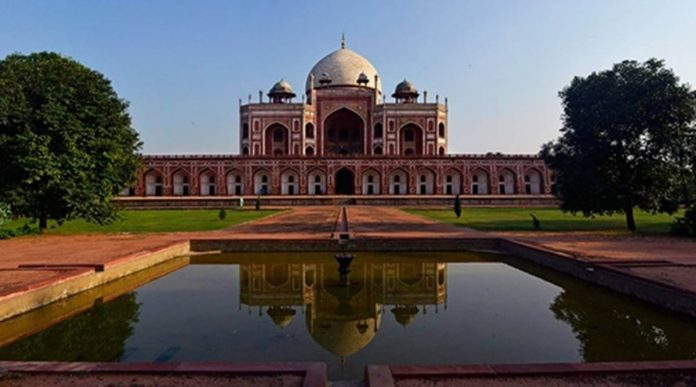
Humayun’s tomb restoration model public-private partnership : the role of the public-private partnership agreement

0
Image source- https://rb.gy/vp59t6

This article is written by Vasundhara Saxena Who is pursuing a Diploma in Advanced Contract Drafting, Negotiation and Dispute Resolution from Lawsikho.

Introduction

PPP stands for a Public-Private Partnership, but what do they really mean? Monuments, highways, and public parks require constant maintenance and reparations. This creates extra financial responsibility for the government, which it reduces with the help of private parties through such arrangements. 

Such arrangements are used in multiple sectors – energy, roadways, monument maintenance, construction of malls, dams to name a few. Private parties often help construct and maintain, and then draw a share of the revenue generated for recovery of the cost they bore. These projects are usually long term in nature. They could be for a period of 5 to 10 years or more, depending on the nature of the PPP model being followed and the size of the project. 

The PPP concession discussed in this article is about the Humayun Tomb and Sundar Nagar nursery, which was undertaken by the Aga Khan Cultural Trust Fund. Such PPP agreements divide responsibilities of maintenance, construction, reparations, improvements etc. between the parties and it could be both for-profit or not for profit motives. 

This particular PPP arrangement was not for profit and had been undertaken by  Prince Shāh Karim al-Husayni, known by the religious title Mawlana Hazar Imam within Ismaili Shia circles and as Aga Khan IV elsewhere, who undertook this project for the protection of culture and heritage. 

About the Humayun tomb restoration project

Led by the Aga Khan Foundation and the Aga Khan Cultural Trust Fund, with the support of the Tata Trust Fund, the Humayun Tombstone Nursery Restoration Project aims to restore and restore historical buildings and public spaces to promote development, economic and cultural development. 

Humayun’s widow, Hamida Banu Begum, initiated this construction in 1569, fourteen years after his death. It is the main unique example of a proper Mughal style inspired by Persian architecture. It was listed as a World Heritage Site in 1993. Prior to the restoration work, serious conditions of destruction and illegal occupation were rampant. Dirty stalls such as bazaars were set up and heavy vehicles were allowed to park illegally in these open spaces. In Nila Gumbad, thousands of “slum dwellers” were retained as “tied voters” during the election period. 

Dargah’s environment in Hazrat Nizamuddin Auliya was also mercilessly destroyed, causing the holy jar to turn into a messy cesspool. The Aga Khan Cultural Trust (AKTC) cooperated with the Archaeological Survey of India (ASI) to begin restoration work around 1999 after research started in 1997 and was completed in March 2003. Most development projects were undertaken thereafter and they included the following developments

  • Approximately 12 hectares of lawns were replanted and more than 2,500 trees and plants were planted in the garden, including mango, lemon, neem, hibiscus and jasmine branches. 
  • Replacement of water circulation systems for sidewalks has also been installed. This allows water to flow through the garden waterways and idle fountains can start working again. 
  • The rainwater harvesting system was approved and the old wells discovered during the restoration works were desalinated and activated. 
  • Stalls and other intrusions were demolished, restoring monuments and green spaces. The graceful gardens now surround the monuments, adding to their dignity and wonder. When lit up in the dark, this monument looks truly spectacular. 
  • Manual work uses hand tools to place a thick layer of cementitious concrete away from the ceiling, exerting approximately 1.102 tons of pressure on the structure, and the accumulated thickness is approximately 40 cm. It has now been replaced by the typical lime-based roofing layer. 

  • The initiative has significantly expanded the scope of the conservation project, incorporating Humayun’s Tomb, Nizamuddin Dargah, Sandal Nursery, some 30 monuments and a complete landscape plan in the creation of urban parks. 
  • The project has also significantly improved the quality of life for residents around Hazrat Nizamuddin Basti. The master craftsman dedicated approximately 200,000 working days to the project. The main design for the restoration of Humayun’s tomb as a Mughal builder requires the removal of 1,000,000 kg of concrete and thousands of square meters of cement. The residential communities of Hazrat Nizamuddin Basti are now taking advantage of improved urban infrastructure in sanitation, education, water supply and sanitation. 
  • The construction of an alternative tunnel by the Delhi government in 2006/2007 to connect East Delhi and Nehru Stadium, widening the road near the mausoleum for the 2010 Commonwealth Games and connecting National Highway 24 and Lodi Expressway posed a huge threat. Eventually, the Monument was blocked by the Bureau of Archaeological Survey of India. 
  • Installation of a visitor interpretation centre and museum in the complex is also in progress.

International frameworks on PPP arrangements

PPP laws can also be used to close gaps within the laws of various different countries and uniformising the creation of such contracts to a certain extent, like enabling the grant of step-in rights to lenders and requiring open and fair procurement processes. 

These modifications could even be embodied in sector-specific law, or within the case of procurement, a sale or competition law, or are often included during a general concession or PPP law.

While guidance and examples are often useful, each PPP/ concession law needs careful drafting to be consistent with the host country’s existing laws.

UNCITRAL guidance on PPP/ concession laws

The United Nations Commission on International Trade Law (UNCITRAL) published a Legislative guide Privately Funded Infrastructure Projects (2000). This guide was made to provide a framework for reference to non-public investment in public infrastructure. It provides for a balance between the private and government contribution depending on the nature of the project. The Guide sets out suggested legislative language in its Model Legislative Provisions on Privately Financed Infrastructure Projects of 2003.

EBRD core principles for up to date concession law

The European Bank for Reconstruction and Development (EBRD) created a set of core principles for up to date concession law as legislative guidelines in various languages.  The Legal Transition Group of the EBRD prepared a working paper called the EBRD Core Principles for justification of the aforementioned core principles.

OECD principles for public governance of public-private partnerships

The OECD Principles for Public Governance of Public-Private Partnerships provide concrete guidance to policymakers on Public-Private Partnerships (PPP) and help achieve a profitable relationship for both parties. 

Framework for Public-Private Partnerships in India 

Because the Constitution of India has well-divided sectors into Union and State List, the administration and execution of such partnerships are done by the government which has the authority to control that particular sector respectively. 

For example, national highways, power projects will come under the Union list and hence the Central government will be responsible for such partnerships. 

There are several guidelines introduced by the Central government which have to be adhered to uniformly, like the Guideline for audit of Public-Private Partnership Projects, 2009 released by the Comptroller and Auditor General of India, Guidelines for Establishing Joint Venture Companies in Infrastructure Sectors by the Secretariat for the Committee on Infrastructure of the Planning Commission, Guidelines for Monitoring of PPP Projects given by the Planning Commission, Guidelines for Formulation, Appraisal and Approval of Public-Private Partnership Projects, Guidelines for Invitation of Financial Bids for Public-Private Partnership Projects and the Guidelines for Pre-qualification of Bidders for Public-Private Partnership Projects by the Ministry of Finance to name a few.

At the State level, some key states of India like Gujarat, Punjab, Karnataka, and Andhra Pradesh have developed legal frameworks for private participation in infrastructure. The Public Procurement Bill, 2012 didn’t come to fruition and such arrangements are majorly being guided either by Standardized principles provided by the World Bank or by policies created by depending upon the sectoral conditions of the respective countries.

Types of PPP arrangements

There are several kinds of arrangements which are listed below-

  • In a Build – Operate – Transfer (BOT) model, which is typically used to develop a discreet asset rather than a whole network, like a road, it is a rather easy structure that provides maximum freedom for the private sector partner during construction and thus, the general public sector bears the equity risk. 
  • In Build – Own – Operate (BOO): The facility isn’t transferred to the overall public sector partner. A BOO transaction may qualify for tax exemption status and is typically used for water treatment or power plants.
  • In Build – Own – Operate – Transfer (BOOT) The private sector builds and owns the facility for the duration of the contract, with the primary goal of recouping the construction costs (and more) during the operational phase. This model is typically used for school and hospital contracts.
  • Other models Design-Build, (where the contract is awarded to a private partner to both design and build a facility or a touch of infrastructure that delivers the performance specification within the PPP contract) Design – Build – Finance, or Design – Build – Finance – Operate (DBFO).
  • Design-Build – Finance – Maintain (DBFM), Design-Build – Finance – Maintain – Operate (DBMFO) also exist, where the burden shifts upon the government or the private entity depending on the terms of the agreement. 
  • There is also O & M (Operation & Maintenance) which is generally used for monuments.
    In an O&M contract, a private operator operates and maintains the asset for the overall public partner, usually to an agreed level with specified obligations.

Role of the PPP agreement

The agreement should determine which tasks belong to which party and ensure that the division of duties has been made properly. The agreement contains the specified details of concessions, ownership details, the dispute resolution mechanisms, etc. . The structure of this Agreement decides long-term partners. 

Concession

Division of funds and such specifications with other relevant points are specified in this section. It handles the approval of activities granted to concessions or project companies. Details like rights, privileges and obligations of the private company; and concessions/contract period are all definitely specified in the agreement itself This may be the determination of the period or fund division, which is by ticket sales in the case of a monument, for example. This depends on the nature of the selected parties. 

Project site related specifications

Rights, title and use of the project site, handover of the project area, ownership of the situation, maintaining the situation and permission of private companies must be picked up from the relevant authorities. This is the current case is Nila Gumbad, Sundar Nagar, Humayun Tomb and a few other areas. 

General obligations of the private entity

The obligations of the private entity would be defined in the agreement and could entail a variety of functions and specifications of the scope of their work, division of the project area, their administrational duties, financial contributions, performance securities and any other obligations relating to maintenance, construction etc. 

Construction, Maintenance and Design

In this section of the agreement, terms may include design and manufacture of drawings, approval and structure of architecture and techniques, the design and drawing, project building, start and completion, the consequences of early and late completion, monitoring and monitoring of construction, examination, operation, maintenance and closure temporarily repairing and maintaining, management of networking, connection networks and access to the plant of other operators/agencies, violation of operating and maintenance contracts, implementation measures and implementation measures (quality and Number of project outputs), power monitoring, information opening, underperformance, insurance, operating time, etc. 

Obligations of the government agencies

It provides the general obligations and specific obligations of the Contract Agency. For example, you can include the incentives of state incentives that offer project locations and other areas where the project/project company can expect from the government. These can be specified in this section of the agreement. 

 Force Majeure clause 

To withstand any event due to political factors or non-political factors, obligations of the parties, costs and compensation or due to the Act of God, or to predict the fate of the concession due to such unforeseen circumstances certain terms are specified in this part of the agreement. This term is extremely important in commercial contracts, as it is also able to minimize unforeseen damages that may arise.  

Termination clause

Termination of contracts specifies events under which it may come to an end, what would constitute a breach and what would lead to termination are separately defined. 

Applicable laws

Laws for applying and resolving applicable legal disputes, dispute resolution methods are used (mediation, arbitrator, etc.) as well as procedures, obligations and rights of parties in this part of the agreement. 

Representatives and warranties clause

This clause tends to specify who can represent, authorization to powers, disclaimer, warranties, and any other disclaimers that are necessary to specify in the agreement. 

Conclusion

The agreement during a PPP decides the long run of the partnership and is what clearly demarcates the responsibilities of each party. The agreement is the backbone of the arrangement and needs to possess a clear listing of all obligations of each party that may make the partnership successful. Which type of arrangement that has been made can be deduced from the division of funds, responsibilities, area, time period for the concession, administration of the restoration in this case. 

The PPP of the Humayun tomb project was a not for profit partnership where the ownership of the public lands remained with the government and the duration was 10 years. It was a standard concession undertaken by the Aga Khan Trust for cultural and spiritual reasons rather than a profit-driven partnership.

Reference 


LawSikho has created a telegram group for exchanging legal knowledge, referrals, and various opportunities. You can click on this link and join:

https://t.me/joinchat/J_0YrBa4IBSHdpuTfQO_sA

Follow us on Instagram and subscribe to our YouTube channel for more amazing legal content. 
Download Now

Judicial encroachment into the executive domain : a word of caution

0
Image source: https://blog.ipleaders.in/permanent-lok-adalats-critical-study/

This article is written by Reet Balmiki from NALSAR University of Law. This is an exhaustive article that discusses the concerns over the potential judicial overreach in light of recent events while providing a detailed overview of the roles of the judiciary and executive. 

Introduction

The recent trend in India is that of an active and more accessible judiciary. Though this approach has remarkably benefitted the citizens in several ways, it has also led to several controversial actions by the courts. The recent spate of incidents during the COVID-19 pandemic has again brought to light numerous concerns over a threat to potential judicial encroachment into the executives’ functions. During such distressing times, the neglected response by the executive has caused the judiciary to intervene and facilitate proper governance. The recent spate of such instances has induced several conflicting views about the performance of the judiciary during these trying times. While many have severely criticized the judiciary for encroaching into the executives’ domain, others have found these actions by the courts essential due to the government’s ineffective management. 

This article discusses these concerns in light of recent events and provides an overview of the roles of the executive and judiciary. It also covers the origin of the theory of judicial activism and distinguishes it from judicial overreach through several important judgements. Additionally, it discusses the need for judicial restraint and ways to avoid the threat of judicial overreach.

The roles of the executive and judiciary

The executive and judiciary, two of the pillars of democracy, have distinct yet overlapping roles. The specific functions of the various organs of the democracy are complementary and enable the effective functioning of a democracy. 

The role of the executive branch is to implement and administer the public policy enacted and funded by the legislative branch. The executive enforced the laws made by the legislative. The judicial branch is responsible for the interpretation of the Indian Constitution and other laws and their application to the specific cases before it. They thus oversee the proper application of the laws laid down to real-world situations and guard several rights of the people. 

Such a division of government responsibilities into distinct branches to limit one branch from exercising the functions of the others emerged from the model of separation of powers. This model lies at the heart of every democracy as it advocates for the branches of the government to act independently while allowing a certain degree of mutual supervision amongst them. Therefore, even though the Constitution lays down the core functions of each branch, it does not advocate a rigid separation between the branches. The Indian Constitution, thus, finds a balance between restricting one branch from performing the core functions of another and providing effective checks and balances of power between the three branches. 

Power of judicial review 

As a part of its core function, the judiciary also has the power to review the decisions or actions of the executive and legislation and determine whether they are consistent with the Constitution. The power of judicial review emerges from the idea that the Constitution of India is supreme and oversees all other laws and actions in the country. Therefore, the courts have the power to declare any action contravening the Constitution as void. The Constitution has granted the judiciary the power of judicial review in the following provisions – 

  • Article 13 declares any law inconsistent with Part III of the Constitution to be void 
  • Articles 32 and 226 entrust the role of protection and promotion of fundamental rights onto the Supreme Court and the High Courts.
  • Article 372(1) declares all pre-constitution legislation inconsistent with the Constitution to be void.
  • Article 245 states that the powers of the Parliament and State legislatures are subject to the provisions of the Constitution.
  • Article 131136 grants the courts the power to adjudge disputes by interpreting the provisions of the Constitution. The interpretation given by the Supreme Court of India is bound by all other courts in the country. 

Now that we have discussed the role of the judiciary and executive along with the powers granted to the judiciary by the Constitution, we must look at the trend of approaches taken by the judiciary over the years and the current approach taken by the courts. 

Overview of judicial activism 

Before the advent of judicial activism in India, the courts restrained themselves to merely striking down orders or preventing actions contrary to the Constitution. Such a passive approach limited the interference of the judiciary into the executive domain but also reduced the checks and balances over the organs of the government. However, with the liberalisation of access to justice and relief through mechanisms like the Public Interest Litigations (PIL), the courts have shifted their attitude towards positive affirmative actions, and issuing orders and decrees directing remedial actions. Through judicial activism, the judiciary upholds the rights of the people, preserves the Constitutional and legal system, and plays an active role in dispensing social justice. This approach allows the judges to actively exercise the power of judicial review and strike down the decision of another branch of government or overturn a judicial precedent. 

Therefore, this leads to an overlap of the activities of the executive and the judiciary. To understand when such an overlap is necessary and when it is excessive encroachment, we must first understand the situations in which this approach emerged and under what circumstances does judicial interference turn into “over-activism.

Origin of judicial activism in India

The transformation of the Indian judiciary from a passive system took place in several stages after the independence of India. The shift in the approach was not drastic and occurred in several steps that eventually changed the overall approach of the courts. However, a major part of the transformation took place after the emergency period in 1975

Post-independence era

After independence, judicial activism was mostly silent for over a decade. The courts were dominated by the executive and legislature. Their intervention in the actions of the other branches was minimal or almost nil. Overall, the judiciary’s role during this period was restricted to its core functions and its approach towards judicial interference was conservative. 

Pre-emergency era

The evolution of judicial activism in India began during the early 1970s in India when late Mrs. Indira Gandhi attempted to introduce progressive socialistic measures and nationalized 14 major banks to serve the cause of the poor. The decisions in H. H. Maharajadhiraja Madhav Rao vs Union Of India (1970) (Privy Purse case) and Rustom Cavasjee Cooper vs Union Of India (1970) (Nationalization of banks case) were considered to be judicial overreach and the judges of the court were severely criticized to being conservative and creating a gulf between the law and social realities and needs. This marked the beginning of the judicial transformation and resultant hostility between the executive and judiciary in India. 

Another landmark case of the pre-emergency era that gained widespread attention for the act of judicial activism is the Kesavananda Bharati case (1973) which dealt with the extent of amending power granted under Article 368. The honourable court, in this case, declared that the executive had wide powers to amend all Articles of the Constitution, but this power was not unlimited and cannot be used to abrogate the basic structure of the Constitution. The court, for the very first time, held that the Constitutional Amendment passed by the legislature was invalid. 

Emergency era

Despite the change in the role played by the judiciary in the above judgements, the transformation of the judiciary was still in progress. During the time of the emergency, the courts were flooded with cases concerning fundamental right violations, but the approach taken by the courts continued to be conservative. This was witnessed in the case of ADM Jabalpur v Shukla (1976), where the Supreme Court had to decide if the personal liberties of the people were to be upheld during the time of the emergency. The court held that the citizens had no right to move to the court against the actions of the executive and upheld the right of the executive to detain citizens. This case is still considered as a blemish on the Indian judiciary where the doors to seeking justice were slammed shut for the citizens. 

Post-emergency era

The Honourable Supreme Court transformed its approach by widening the scope of interference into public administration and policy decisions taken by the other branches of the government post the emergency period. The courts began creatively interpreting the text of the law in accordance with the object of the provisions. In addition, judicial activism became the popular approach taken by the courts due to the liberalization to the access and grant of justice through PILs and creative interpretation of the laws. 

Through the introduction of PILs, the poor and needy were empowered to have easy access to justice by relaxing the traditional rigorous locus standi. One of the landmark cases in making the procedure to approach the courts for justice more flexible is S.P. Gupta vs President of India and others (1981), where the court said-

“The Court would therefore unhesitatingly and without the slightest qualms of conscience cast aside the technical rules of procedure in the exercise of its dispensing power and treat the letter of the public-minded individual as a writ petition and act upon it Today a vast revolution is taking place in the judicial process; the theatre of the law is fast-changing and the problems of the poor are coming to the forefront. The Court has to innovate new methods and devise new strategies for the purpose of providing access to justice to large masses of people who are denied their basic human rights and to whom freedom and liberty have no meaning.”

This case resulted in the widening of the powers of the courts along with the range of issues brought before them. Similarly, in the Maneka Gandhi case, the court adopted a new and liberal interpretation of Article 21 of the Constitution which paved the way for a wide range of rights to be read into the article. This case changed the outlook of courts while dealing with matters under this article and resulted in Article 21 being the most dynamic article over the years. 

The transformation from activism to overreach 

Following the emergence of judicial activism in India, the interaction between branches of the government has increased. In the initial years, the judiciary actively performed its functions and utilized its power to oversee the actions of the executive to protect the rights of the citizens. It has also asked the executive to perform its obligations as per law. While such interference by the judiciary is necessary and desirable, excessive interference with the core functions of the executive is against the model of separation of powers and is harmful to democracy.

When the judiciary oversteps its authority and encroaches into the domain of the executive, judicial activism turns into judicial overreach. The dividing line between the two is a thin one and is often overlooked or misunderstood by people. While a proactive judiciary well performing its functions is ideal, such proactiveness should not lead to interference with the proper functioning of the executive or legislature. 

There are numerous instances where judicial activism has proved to be beneficial. However, there also exist glaring situations where the judiciary has taken over the functions of another branch. Such overreach by the courts have severe implications on the smooth functioning of democracy –

  • It is inconsistent with the principle of separation of powers which is enshrined in the Constitution of India.
  • It leads to clashes between the judiciary and other organs of the government as the judiciary is overstepping its authority and encroaching into its domain.
  • The assumption of control by the judiciary reduces the faith of the people in the judiciary. The lack of trust in the justice system impairs democracy. 
  • The performance of functions of other branches by the judiciary leads to a diversion from performing the core functions of the judiciary. Such wastage of time in a country like India with a huge pendency in cases is undesirable and harmful. 
  • Performance of the functions of the executive by the judiciary can lead to underperformance on the executive’s account.

Over the years, the conflict between the judiciary and executive has revived in several instances due to frequent interventions by the courts. Before discussing recent cases that bring in the concern over potential overreach, let us understand the need for judicial interference with the help of a famous case. 

Need for judicial intervention : Vishaka case 

India follows the model of separation of powers and checks and balances. To maintain the system of proper checks and balances, there is a need for interference when necessary. Such a need arises in situations where corrective action is required against an action by the executive that is against the essence of the Constitution or when the legislation is silent or requires reform in special cases. 

A similar case where a need for deviation from the strict principle of separation of powers and judicial intervention arose was Vishaka & Ors vs State Of Rajasthan & Ors (1997). In this case, the court addressed the issue of sexual harassment faced by women at their workplace, an area on which the legislation was silent. The court recognised that “The primary responsibility for ensuring such safety and dignity through suitable legislation, and the creation of a mechanism for its enforcement, is of the legislature and the executive”. However, due to a “legislative vacuum” in this regard and the urgent social need for an effective mechanism, the court laid down the Vishaka Guidelines. These guidelines were used for over 17 years as the mechanism in cases of workplace harassment. In addition, the court also asked the Central/State governments to adopt suitable measures including legislation that led to the enactment of The Sexual Harassment of Women at Workplace (Prevention, Prohibition and Redressal) Act, 2013. The judicial intervention, in this case, was essential due to the absence of legislation governing the increasing number of cases concerning sexual harassment at the workplace. 

Recent cases of judicial activism and potential overreach

Though there exists a need for judicial interference in certain instances, it is also necessary to ensure that such interference does not lead to the judiciary performing the role of the executive. The judiciary must only direct or compel the executive to perform its duties as required, and must not take these duties upon itself. Lately, the judiciary has indulged in strict vigilance and frequent interference in the duties of the executives. While this is considered as judicial activism by some, many have expressed serious concerns over the court’s encroachment into the domain of the executive. Let us understand these concerns in light of a few recent orders passed by the courts.

Supreme Court’s order to stay the farm laws 

The Farm Acts 2020, which aimed to bring agricultural reform in India, faced severe criticism for barring civil court jurisdiction and placing the power with the state authorities. The fear that the implementation of these reforms would lead to misuse of power led to protests from the farmers against the limitation to their access to justice. 

Though the Supreme Court refused to interfere with the protesters’ right to demonstrate their dissatisfaction as part of their freedom of speech, it took it upon itself to conduct active negotiations between the stakeholders who appeared to be at a stalemate. In response to this, the Supreme Court passed an order staying the implementation of the three farm laws and formed a four-member committee to hear the concerns of all stakeholders and submit a report. 

This order by the court is a clear case of judicial overreach that dilutes the principle of separation of powers between the three organs. Though the court’s intentions might be genuine and its aim to resolve the disputes reasonably, the approach was taken by the court is a case of judicial encroachment into the executive’s domain. In the words of the former Supreme Court Judge Markandey Katju, “It follows that when a law is made by Parliament, it is only Parliament which can repeal or suspend its operation by making another law. The Court can no doubt declare a law ultra vires if it finds it unconstitutional, but it has no power to temporarily stay its enforcement even without recording a finding that it is prima facie unconstitutional.” Therefore, while the judiciary has the power to scrutinize the legality and Constitutionality of the farm laws, it cannot prescribe policy decisions or ask the government to repeal said laws. Such an act is excessive interference into the domain of the other organs and is thus a case of judicial overreach. 

Supreme Court’s order to make COVID testing free of cost

The Supreme Court, in the recent interim order, passed in Shashank Deo Sudhi v. Union of India(2020) made COVID 19 testing, both under the government and private laboratories, free of cost. This was done in response to the high cost of Rs.4,500 being charged by private labs was not feasible. The intention of the court is noble as the pandemic has affected citizens disproportionately. However, this action brought into light several concerns over the interference of the courts into the executive’s domain.

The court, however, went on to modify the order and held that “Free testing for COVID-19 shall be available to persons eligible under Ayushman Bharat Pradhan Mantri Jan Aarogya Yojana as already implemented by the Government of India, and any other category of economically weaker sections of the society as notified by the Government for free testing for COVID-19.” However, free testing for those covered by the modified order was already in place before the order was passed. 

The court while passing the order was forced to accept its limitations and recognize that it is not best suited to deal with such situations. This is a case of judicial (Mis)activism where the court’s order was rendered futile. The issue of free COVID testing was related to public business which requires knowledge of state finance. Therefore, the issue was to be best dealt with by the executive and not by the courts. The court thus lacked the practical knowledge and resources to know the consequences of making testing free of cost and should have refrained from intervening in this matter. 

Court’s supervision and interference in the executive’s efforts to deal with COVID

Since the beginning of the COVID-19 pandemic, the policies and decisions brought in by the government were visibly hasty and not thoroughly planned. Despite the efforts of the government, its unpreparedness and inability to ensure proper implementation raised several concerns over the approach of the government. 

During the first wave, the hasty decision of the Centre to implement a nationwide lockdown with the notice of a couple of hours left millions of poor stranded. Without the required economic capacity to either survive the lockdown or travel back home, several migrant workers were amongst the worst affected group. Due to the inept efforts of the Central and State government in dealing with the migrant crisis and their denial of the crisis, the Supreme Court and High Courts intervened and passed several guidelines to protect the rights of the migrant workers. The courts initially recognized that the duty to deal with the crisis rests upon the executive and thus refused to intervene in this matter. However, when the government’s incapability to manage the situation became evident, it was essential for the courts to intervene and lead the way in managing the predicament. 

Similarly, during the recent second wave, the executive’s unpreparedness in terms of infrastructure and resources despite several warnings against the second wave led to a surge in the number of deaths due to the shortage of medical oxygen. The ineffectiveness of the executive resulted in the loss of life of many patients and risks the lives of many others. 

Considering this, several High Courts intervened to and direct the proper management and availability of oxygen and other suppliers to patients. Additionally, the Delhi government’s inability to supply oxygen due to acute shortage resulted in the Delhi High Court directing the centre to ensure the allocated amount of oxygen is supplied to the national capital. However, the Centre failed to comply with this order which resulted in the High Court issuing a show-cause notice and threatening to initiate contempt proceedings against non-compliance. Though the Supreme Court stayed the contempt proceedings against the centre, it directed the centre to supply 700 tonnes of oxygen to Delhi daily. 

The judiciary has played a significant role in guiding the executive to combat the pandemic and protect the rights of the citizens. The frequent interventions by the courts during the crisis in the past year has led to several concerns over the possibility of judicial overreach. The orders of the courts during the COVID period have also interfered with the functions of the executive. However, the spate of interventions by the judiciary during these trying times is not due to an over-enthusiastic judiciary, but as a result of the executive’s inability to properly manage and regulate the activities. In a situation where the executive takes an insensitive approach, the refusal of the courts to intervene at the risk of being criticized for encroachment would leave the citizens stranded. Therefore, in the above situations, the courts played a pivotal role in protecting the constitutional rights of the people and thus should not be considered a case of unwarranted judicial intervention or “judicial adventurism.”

Need for judicial restraint 

The theory of judicial restraint prompts the judges to limit the exercise of their power. According to this theory, the judges should restrain themselves only to striking down ostensibly unconstitutional laws. Judicial restraint is a procedural or substantive approach to the exercise of judicial review by the judges. Over the years, the courts on various occasions have themselves recognised the need and importance for judicial restraint to be implemented. There are several grounds for the justification of the need for restraint on the judicial system.

  • It ensures minimal encroachment by the organs of the government into the domain of another, thus upholding the principle of separation of powers.
  • It restrains the judiciary from acting like a “super legislation” and respects the functions of the other branches.
  • It fosters equality among the branches of the government by minimizing judicial interference.
  • It protects the independence of the judiciary. 
  • It restrains the judiciary from taking an “all-powerful” attitude which is harmful to democracy since the judiciary is not directly accountable to the people like the executive and legislative. 
  • It also restricts the judiciary from laying down specific guidelines which is the role of the executive as the judiciary often lacks the required expertise and resources to implement these guidelines. 

In the above ways, judicial restraint helps to maintain a healthy and well-functioning democracy. Judicial restraint complements the values of independence of the judiciary and the separation of power among the branches of the government. Therefore, the judiciary must utilize the great powers granted to it with utmost humility and self-restraint. 

Ways to avoid judicial overreach 

With increasing activism by the judiciary post the emergency period, the threat of such activism aggravating into “judicial adventurism” or “judicial overreach” has prevailed since. Time and again the courts have passed orders and judgements on the verge of encroaching into the domain of the executive. The recent surge in judicial interventions has brought these concerns back to light. To avoid the potential overreach into the executive’s domain, the courts must implement the following suggestions –

  • While judiciary interference is desirable in situations where the executive is inactive, the courts are required to restrict themselves to their duty of compelling the authorities to act and pass appropriate executive orders. Substituting administrative orders with judicial orders is excessive use of the power granted to the judiciary and must be avoided. 
  • Excessive use of judicial powers is undesirable and evident encroachment by the judiciary. To avoid such an all-powerful approach by the judiciary, the judiciary must implement self-restraint. In cases of evident overreach by the lower or high courts, the Apex Court must intervene and restore the balance as per the Constitution. 
  • The principle of separation of powers is the essence of the Indian governmental system as per the structure provided in the Constitution. The duty to protect and uphold this principle lies on all three branches. Therefore, the executive and legislation must refrain from leaving the inconvenient decisions on the judiciary as it forces the need for judicial intervention. All three branches must actively perform their functions while cooperating and coexisting together. 
  • Since the principle of separation of power does not advocate a rigid separation between the branches and provides for mutual interaction, there is a need to establish clear limits for the powers of each branch. Therefore, to avoid excessive intervention, the limits to the judicial powers granted need to be clearly laid down and adhered to by the judiciary.

The court in the case of Divisional Manager, Aravali Golf Course v. Chander Haas, (2007) highlighted the importance and need for such restraint by stating “In the name of judicial activism Judges cannot cross their limits and try to take over functions which belong to another organ of the State.” It also stated that “With a view to see that judicial activism does not become judicial adventurism, the courts must act with caution and proper restraint. They must remember that judicial activism is not an unguided missile failure to bear this in mind would lead to chaos.”

Conclusion 

“Power corrupts, and absolute power corrupts absolutely.”

  • Lord Acton

The above statement rightly depicts the need for keeping a check on judicial activism and promoting judicial self-restraint. The judiciary cannot function in isolation and a certain level of interaction is required and desirable to maintain proper checks and balances. However, such intervention must be restricted to the judiciary’s active performance of its functions and must not lead to encroachment into the domain of the executive of the judiciary. The judiciary’s functions are limited to scrutinizing the legality and constitutionality of the laws or executive actions or directing the other branches to perform their duties as demanded by the Constitution. The judiciary must refrain from assuming the role of the other branches and formulating policy decisions. 

The recent surge in judicial intervention though seems as excessive interference by the judiciary is necessary due to the inability on the executive’s part to perform its functions effectively. As observed by Justice Gautam Patel, “Failure by the executive to govern will invite judicial interference.” Though such intervention might lead to clashes between the executive and judiciary, in case of a failure on part of the executive to perform its duties, judicial interference is the correct approach. However, the judiciary should only intervene and perform the executive’s functions when the executive is incapable of performing its duties even after guidance by the judiciary. 

Therefore, judicial encroachment into the executive’s domain depends on the particular situation. While in certain cases action by the judiciary might be excessive, the same action might be reasonable and necessary in another situation. The ultimate goal of the judiciary must be to respect the separation of powers and intervene only when desirable. 

References


Students of Lawsikho courses regularly produce writing assignments and work on practical exercises as a part of their coursework and develop themselves in real-life practical skills.

LawSikho has created a telegram group for exchanging legal knowledge, referrals, and various opportunities. You can click on this link and join:

Follow us on Instagram and subscribe to our YouTube channel for more amazing legal content.

Download Now

All you need to know about Enterprise Act, 2002 of UK

0

This article has been written by Tanya Gupta pursuing the Diploma in M&A, Institutional Finance, and Investment Laws (PE and VC transactions) from LawSikho.

Introduction 

UK Legislation which puts a lot of effort to enforce competition law and crack anti-competition behavior conducted by businesses in the UK is Enterprise Act, 2002. Enterprise Act, 2002 of the UK is enforced by the Competition and Markets Authority (CMA). It is very significant for the organization across the UK to know about the legislation and what it demands from them regarding their business conduct. Due to the Enterprise Act, 2002 of the UK there had been a lot of advancements in competition law in the United Kingdom. There has also been advancement in Insolvency Act, 1986 in order to facilitate the Competition law in the United Kingdom.

Gathering information about markets

It is necessary to understand the nature of the market to be aware of the interest of customers. Overview of the economic status of the country can only be understood by market studies therefore market information is very important for understanding the changes and to bring changes in the act. The Office of Fair Trading carries out market studies. To identify the type of market that is successful or markets that are suitable for consumers gathering information about markets is necessary. If there is any complaint of unfair trade practices then also information would be gathered about markets. There are a lot of different ways through which we can gather information and carry out market research and collect customer data. The main four techniques of gathering information are interviews, surveys, focus groups, and customer observation.

Super complaints

Section 11 of the Enterprise Act deals with the provision of super complaints. It explains that if the office of fair trading gets any complaint by the designated consumer body about any feature or combination of features of the market which is harmful to the interest of consumers then it is to be considered as a super-complaint. After receiving the complaint from the consumer body the office of fair trading has to publish the response in regards to the complaint within ninety days. It is necessary for the office of fair trading to explain the reason for accepting or rejecting the complaint. It should also explain various other alternatives which lead to resolving the issue. The designated consumer is the body that is appointed by the secretary of the state which seems to protect the interest of the consumer. An order under this section either made by statutory instrument or subject to annulment in pursuance of resolution either house of parliament.

Market studies 

A lot of research has been conducted by the office of fair trading on markets which is not appropriate for the interest of consumers. When a lot of complaints are received by the office of fair trading then there is a necessity for market studies. According to the guidance of the office of fair trading, market studies have been done. The guidance includes the general principles provided in the guidance which should be followed and it does not consider the guidance of legal authority although the law provides the flexibility the office of fair trading can deviate from the process. Market studies are done for various reasons:

  • It promotes the interest of consumer;
  • To determine the type of market which protects the interest of consumers?;
  • To acquire the knowledge about the existing and developing market;
  • To search for the market where there are potential barriers for entry;
  • To determine the kinds of problems in some types of market and to figure out solutions to overcome them;
  • To observe restrictions on competition.

The office of fair trading follows the main process for carrying out the market studies:

  • To select the market for carrying out the research.
  • The Office of Fair Trading raises concerns that should be cross-checked.
  • Assessment of markets.
  • To prepare the proposals for market study.
  • To carry out the research and prepare the report.

The first step is to select the market on which market studies should be carried out based on complaints raised and various other reasons. According to the suggestion of government authorities, local authorities trading standard services and other regulatory bodies markets are also selected. The second step is to verify the concerns with information available so as to check whether it is a valid concern or not. The third step is to check the productivity level which is done through carrying out the initial assessment which comes up with market study proposals. The market study proposal is regarded against the office of fair trading prioritization principles.

The main prioritization principles are as follows:

  • Impact;
  • Risk ;
  • Strategic significance ;
  • Resources.

To prioritize a market study proposal for action is decided by the office of fair trading. If there is any significant change in the structure of the market or conduct in the market after launching the study then the market will again be reassessed against the prioritization principle. Once the market has been prioritized for action there are four stages that lead to the publication of market study reports. Various reasons like the complexity of markets on which duration of study differs. Generally, the study takes up to twelve months but sometimes if the market is not complex it may get over within five months. There are various consequences after publishing the report which is as follows:

  • To educate the consumer’s various consumer-focused actions like organizing campaigns are carried out.
  • Recommendations may be provided by the office of fair trading to the persons carrying out business to improve their standard and to improve their business behavior.
  • To make business more effective it may also recommend developing a code of conduct.
  • It also recommends the government regulate or amend the policy which may affect the interest of consumers.
  • To address the public concerns and interest in the markets a clean bill of health is also provided.
  • When it shows that a certain type of market or combination of markets affects the competition then it can also consult the competition commission.

This is an illustration report provided by the office of fair trading to understand the nature of reports and how the office of fair trading conducts market studies.

Market investigation references

The important tool to control the adverse effects of competition is the system of market investigation references. ’The United Kingdom found the most unique tool in competition legislation is the procedure of market investigation. Market investigation is a detailed investigation which is carried out by the competition commission. An extensive inquiry for two years is conducted by the competition commission when they identify particular competition in a particular market. 

Public interest cases

The Competition Commission has been asked by the ministers to consider the implications of its competition analysis for any public interest issue. It is the duty of the Competition Commission to inform the secretary of a state that a case conflicts with the public interest. Section 152 of the Act lays down the provision for the Competition Commission to inform the secretary of the state about such cases. The cases which impact national security are regarded as valid public interest issues. It is the discretionary power of the secretary of state to make a partial or full reference based on the complexity of the issue.

Issuing intervention notices

Section 139 explains that the secretary of state issues public interest intervention notice. The Competition Commission and office of fair trading also receive notice provided by the secretary of state when marketing investigation references have been made to the competition Commission and more than four months have been passed after making such references. The intervention notice must contain the following things:

  • The subject matter.
  • The publication date.
  • The public considerations may be relevant to the case.
  • It will contain the date of which the process of consultation began and the subject matter of consultation under Section 169 of the Enterprises Act, 2002 if the market study notice has not been published.

Supplementary provisions

The supplementary Provisions deal with various concepts like duties of authorities to consult and gain information, regulated markets which were laid down in the Enterprise Act,2002. It also deals with the power of investigation available to the authorities and the penalties to be awarded for certain offenses.

Regulated markets

Regulated markets are explained in the provision of Section 168 of the Enterprise Act. The Commission or Secretary of state has the authority to decide such actions would be reasonable and practicable with regard to statutory functions of sectoral regulatory concerns. Civil aviation authority, office of communications, postal services commission, and secretary of state are various sectoral regulators provided in the section.

Consultation, information, and publicity

Duties of consultation to certain relevant authorities are laid down in Section 169 of Enterprise Act, 2002. It is the duty of the relevant authority to the person about what is proposed before making that decision. In consulting the person concerned he has to give the reasons to the relevant authority for the proposed decision.

Power of investigations and penalties

Power to the office of trading to investigate a matter is laid down in Section 174 of the act. The office of fair trading has the authority to make a reference under Section 131 or can carry out the undertaking rather than making references under this section. It is the discretionary power of the office of fair trading to collect the relevant documents and give notice to any person to provide the relevant documents needed. People who are carrying out the business are required to submit the office of fair trading estimates, forecasts, returns and other relevant information needed to carry out the investigation whenever they receive the notice from the office of fair trading.

Meaning of adverse effect on competition 

The adverse effect on competition tests is followed to determine whether a certain market or combination of markets has an adverse effect on competition. There are the certain question which is involved in the test are as follows:

  • The main characteristics of the market.
  • Competition may be harmed within the composition of the relevant market.
  • Result of the competitive process.
  • In the relevant market the features which are harming the competition.

Conclusion

The effective piece of legislation that covers all the aspects of competition and provides protection to consumers is the Enterprise Act, 2002. Through market studies and market investigation, adverse effects of competition are analyzed. In the enterprise act of,2002 all the defects have been removed by the amendment made in the year 2013, and the most significant development is the removal of CMA authorities rather than the commission and office of fair trading. The enterprise Act, 2002 is detailed comprehensive legislation that protects the customer’s interest.

References


Students of Lawsikho courses regularly produce writing assignments and work on practical exercises as a part of their coursework and develop themselves in real-life practical skills.

LawSikho has created a telegram group for exchanging legal knowledge, referrals, and various opportunities. You can click on this link and join:

Follow us on Instagram and subscribe to our YouTube channel for more amazing legal content.



Download Now

Critical analysis of the Tribunals Reforms Ordinance, 2021

0

This article is written by Shohom Roy, from Symbiosis Law School, NOIDA. This article strives to highlight the significance, merits, and drawbacks of the Tribunal Reforms (Rationalisation and Conditions of Service) Ordinance, 2021

Introduction

The President of India promulgated the Tribunals Reforms ( Rationalisation and Conditions of Service) ordinance on April 4, 2021, with the objective of abolishing ten appellate tribunal authorities and handing over their functions to the existing judicial framework. This article discusses some of the most important concerns regarding the ordinance, including the need for independence of the judiciary, specialization of adjudicators and the tenure of the officials working in the tribunal bodies.

Background

The Supreme Court of India had struck down the Tribunal, Appellate Tribunal and other Authorities (Qualification, Experience and other Conditions of Service of Members) Rules enacted by the Union Government on the grounds of judicial interference in the case of Rojer Mathew vs South Indian Bank Ltd & others (2019).  

The Central Government’s subsequent attempt in 2020 was again subjected to judicial review in the case of Madras Bar Association vs. Union of India (2021). The recommendations made by the Apex Court sought to resolve various flaws in the Tribunal Rules of 2020. After taking the suggested changes into consideration the Centre introduced the Tribunals Reforms ( Rationalization and Conditions of Service ordinance) Bill in the Parliament. Since the Bill failed to acquire Parliamentary assent, the President of India promulgated the ordinance under the powers vested to him by the Constitution of India.

Ordinance : legislation by the executive 

An ordinance is a decree put into effect by the executive wing of our government without taking the assent of the legislature. The President of India is the nominal head of the Executive and has certain powers under Article 123 of the Indian Constitution to promulgate an ordinance when the Parliament is not in session or during an emergency or threat. An ordinance has the same effect as an Act of Parliament and can be subjected to judicial review. An ordinance passed by the President under Article 123 is nullified if the subsequent ascent is not received within six weeks of reorganization of the Parliament. A Governor of a state has been granted the power to issue an ordinance under Article 213 under a situation of immediate action and non-assembly of the state legislature. The ordinance passed by the Governor must later be ratified by the state legislature within six weeks of reorganization. 

Tribunals

Tribunals are adjudicating bodies established by the executive wing of the government and vested with judicial powers in specific matters. Although the Constitution of India mentions tribunals in Article 136 and Article 227 of the Constitution of India, the definition of tribunal comes from judicial pronouncements. 

In the case of Durga Shankar Mehta v Raghuraj Singh (1954), the Supreme Court drew a line of distinction between the existing Judicial framework of courts and tribunals. The Courts clarified that tribunals are quasi-judicial entities who exercise judicial functions but do not possess the judicial power of a Court of law. The 42nd Amendment to the Constitution of India on the recommendations of the Swaran Singh Committee introduced the procedure for constitution of tribunals and associated issues under Article 323A and 323B.

Proposition of reforms in the ordinance

The case of Gujarat Urja Vikas Nigam Ltd. v. Essar Power Ltd. (2016), prompted the Supreme Court of India to request the Law Commission of India to evaluate the existing tribunal framework of the country. Under the Chairmanship of Dr. B.S Chauhan, the Law Commission in its 272nd Report enumerated multiple reforms in the tribunal system. The Tribunals Reforms (Rationalization and Conditions of Service) Ordinance, 2021 is an effort by the Government to implement some of the following recommendations made by the Law Commission:

  • The primary intention behind establishing a tribunal framework was to ensure inexpensive and quicker access to justice. However, the number of pending cases before the tribunals and the extreme delay in adjudicating on issues defeats the entire purpose of a tribunal system of justice. The Commission had suggested the establishment of a National Tribunal Commission which acts as a single nodal entity under the supervision of the Ministry of Law and Justice to monitor the functioning of the various tribunals existing in the country.
  • The quality of justice rests on the independence of the judiciary. Therefore the Commission has analyzed that the reappointment of tribunal officials hinders this quality of independence. It is suggested that officials including the Chairman, Vice- Chairman and the Members be appointed for a fixed tenure. The Chairman should serve for a period of 3 years or until the age of 70, whichever is earlier. The members can be appointed either for a period of 3 years or until the age of 67, whichever comes first. The procedure for appointment of such officials must mirror those adopted for the appointment of High Court judges to restore faith in the independence of the tribunal system. The selection of members must be impartial and under the supervision of a selection committee headed by the Chief Justice of India or a sitting Supreme Court judge. This deletes the involvement of the government agencies in the appointment of personnel. 
  • The Report has recommended that the appeals against the tribunal’s decisions should come under the jurisdiction of the High Court only when an appellate tribunal’s decisions need to be challenged. The purpose of establishing the tribunal system was to reduce the burden on the judicial framework and therefore allowing unnecessary appeals would defeat the purpose of helping the judiciary.
  • The Commission requested the Supreme Court to provide clarity on the practice of Special Leave Petitions under Article 136 of the Constitution of India which allows individuals to bypass the jurisdiction of the High Court. The Report recommended the rare usage of Special Leave Petitions since they disrupt the judicial balance of the country.

Tribunals within the judicial framework

The 215th Law Commission Report observed that the establishment of the Administrative tribunal system was to replace the role of High Courts in certain areas and reduce the burden on the judiciary. The Commission recommended that the power of judicial review given to the High Courts over the orders of the tribunal system led to unnecessary appeals. This resulted in a time-consuming and expensive affair that delayed the delivery of justice. Therefore the appellate jurisdiction should rest only with the Supreme Court of India and a framework for intra-tribunal appeals must be established. 

However, the Apex Court held that judicial review is a cornerstone of the basic structure of the Constitution. The process of tribunalisation creates quasi-judicial bodies that cannot encroach upon the judicial powers of the full-fledged Courts. The tribunal framework is a part of a bigger initiative to allow Alternate Dispute Redressal Mechanisms to reach every section of the society. However, these tribunals are formed by government agencies and must abide by the doctrine of separation of power. Hence tribunals cannot be a substitute for the High Courts and the inclination to bypass the lower courts when approaching the Supreme Court directly must be strongly deterred.  

Tribunals Reforms Ordinance, 2021

As discussed before the Tribunal Reforms ordinance, 2021 inaugurates the process of transfer of appellate jurisdiction over tribunal orders from appellate tribunals to the High Courts. Amendments have been made to some pieces of legislation to streamline the process of adjudication and remove the extra-layer of litigation.

The ordinance has also amended the Finance Act 2017 to set down the eligibility criteria and tenure of officials to be appointed to a tribunal. The Centre has also announced the formation of a Search-cum-Selection Committee for the appointment of the Chairman and members of the Tribunal. The ordinance allows the re-appointment of officials in a tribunal.

As per the ordinance, The National Consumer Disputes Redressal Commission (NCDRC) established under the Consumer Protection Act,2019 also falls under the Finance Act, 2017. The ordinance seeks to expand the tribunal framework in the country and work for the upliftment of the economically and socially disadvantaged sections.

Key points

As discussed before the Tribunals Reforms (Rationalization and Conditions of Service) Ordinance, 2021 promulgated by the President of India removes an additional layer of litigation in the form of appellate tribunals. The ordinance has amended the Cinematograph Act, 1952; the Customs Act,1962; the Airports Authority of India Act, 1994; the Trade Marks Act, 1999; the Protection of Plant Varieties, Farmers’ Right Act 2001, the Geographical Indications of Goods ( Registration and Protection) Act, 1999, the Patent Act 1970; the Control of National Highways ( Land and Traffic ) Act, 2002 and the Copyright Act, 1957 to allow the HIgh Courts to adjudicate on appeals filed against the tribunal’s orders.

The ordinance also seeks to amend Section 184 of the Finance Act, 2017. The following provisions have been affected by the ordinance:

  • Section 184(1) has been amended to modify the eligibility criteria for officials appointed to a Tribunal. A person below the age of 50 years cannot be considered for appointment as a Chairperson or Member of the tribunal. The amendment also mandates that the allowances and benefits received by the officials shall be equivalent to that received by Central Government officials of similar stature.
  • According to Section 184(7) a Search-cum-Selection Committee shall be responsible for making recommendations on the appointment of the Chairperson or Members of a tribunal to the Centre. The appointments made by the Union Government are shielded from judicial review. The ordinance has mandated that the Committee must consist of the Chief Justice of India or a Supreme Court Judge authorized to act on his behalf, the sitting Chairperson or a retired Supreme Court judge or a sitting High Court judge, two Secretaries of the Union Government along with a Secretary of the Ministry under which the tribunal has been formed. 
  • Section 184(11) stipulates that the Chairperson and Members of a tribunal are appointed for a tenure of 4 years. The officials of a tribunal are allowed to seek reappointment. However, the Chairperson can serve until 70 years of age whereas the age of retirement or Members of a tribunal has been fixed at 67 years of age. 

Critical analysis of the ordinance : boon or bane

The expansion of tribunalisation would help the economically and financially disadvantaged sections seek easier and speedy access to justice. One of the major advantages of the tribunal system is specialization in a certain specific field. A judge cannot be expected to possess knowledge about each and every field of law. Therefore, tribunals are an efficient way of dealing with the plethora of problems in the complex society. The officials of a tribunal are appointed on the basis of their knowledge and expertise on a particular subject. Therefore, the tribunals can resolve disputes on a subject for which they are formed without disrupting the judicial functions exercised by the courts.

The huge number of pending cases before the tribunals indicates the incompetence of the tribunal system and the need for necessary reforms. The Central Government has assessed the wastage of resources in maintaining this flawed framework and has therefore taken steps to streamline tribunals. However, the Tribunal Reforms ordinance, 2021 has been implemented by the government without making a Judicial Impact Assessment. The Judicial Impact Assessment, which is a process of anticipating the consequences of implementing legislation, could bring attention to whether the ordinance would pressurize the already overburdened judiciary with new cases or would lead to a delay in the delivery of justice.

The Tribunal Reforms (Rationalization and Conditions of Service) ordinance specifies that the officials must be of at least 50 years of age to seek appointment in the tribunals. This deters young and meritorious candidates from seeking appointments in the tribunals. It also raises a question on the security of tenure and conditions of service for the Members of a tribunal as they might not be able to seek employment after completion of a single term. The Apex Court had previously scrapped the age requirement in the Tribunal Rules 2020 and directed the Central Government to allow advocates with at least 10 years of experience to seek appointment in the Tribunals. The ordinance is a direct violation of the Supreme Court directives since it has again created an age requirement. It also goes against the Supreme Court decision of fixing the tenure of tribunal officials at 5 years.

The amendments to the Finance Act, 2017 allowing the Central Government to appoint the members of a tribunal on the recommendations of the Search-cum-Selection Committee is unconstitutional and raises doubts over the independence of the tribunals. The ordinance is an example of legislative overruling as it seeks to remove the power of judicial review of the Courts. This would create a major imbalance of power as the functions of the administrative tribunals of the government cannot be supervised by our judiciary. 

The Tribunal Reforms (Rationalisation and Conditions of Service) Bill

The Tribunal Reforms (Rationalisation and Conditions of Service) Bill was introduced in the lower house of the Parliament on February 13, 2021. However, the Lok Sabha was adjourned 2 weeks early as the Members of the Parliament wanted to return to their constituents and prepare for the elections in five states of the country. Therefore the Bill could not be taken up for consideration during the budget session. The Executive Wing of the government exercised the powers of the President under Article 123 to promulgate the ordinance on April 4, 2021.

Conclusion

The Tribunals Reforms Ordinance 2021 is a much-awaited initiative by the Central Government to improve the tribunal framework of the country. Although the ordinance suffers from certain flaws, it can lead to a better justice delivery mechanism in India. Adherence to the observations of the Supreme Court and ensuring the independence of the tribunals would preserve the basic structure of our Constitution and eliminate the threat to the doctrine of separation of power. 

References


LawSikho has created a telegram group for exchanging legal knowledge, referrals, and various opportunities. You can click on this link and join:

Follow us on Instagram and subscribe to our YouTube channel for more amazing legal content.
Download Now

Personal Laws (Amendment) Act, 2019

0
Islamic-Law-Law-of-the-Muslim-World-eJournal.-June-14

This article is written by Anindita Deb, from Symbiosis Law School, Noida. This article seeks to discuss the Personal Laws (Amendment) Act, 2019 and all the subsidiary Personal Law Acts that have been amended under this Amendment Act. 

Introduction 

On 21st February 2019, the President of India gave his assent to the Personal Laws (Amendment) Bill, 2018 which consequently became the Personal Laws (Amendment) Act, 2019. The Act aims to exclude leprosy as a ground for divorce for married couples from all religions across the country in order to eradicate the prejudicial treatment experienced by the patients of this disease. 

Leprosy is one of the most serious diseases that attack individuals across India. The people who suffer from this disease have to suffer in many aspects, such as loss of self-esteem due to being treated as social outcasts, loss of jobs and long-term effects such as anxiety and emotional turmoil. The patients of this disease also end up committing suicide in various instances. The patients who recover from the disease still face social and psychological problems because the stigma related to it does not go away from the conscience of the people around them. 

One of the most essential aspects of social-psychological disorders is that they damage marital relationships. In many cases, if a husband or wife develops leprosy after marriage, the one affected by the disease feels inferior and avoids socializing because the person who is physically healthy treats the person who has leprosy as unequal, which leads to divorce or the end of the marriage.

Object and purpose of this Amendment Act

The statement of objects and reasons in the Bill stated that the patients of leprosy were isolated by society due to the stigma surrounding the disease and the misunderstanding that it cannot be cured. However, modern advancements in medicines have made it possible to completely cure leprosy and medicate patients with the help of multidrug medicines. 

While there has been a cure for the ailment since the 20th century, discriminatory laws that cause social boycotts of those who suffer from it have persisted. The British introduced the Leper’s Act in 1898, which isolated and segregated people affected, but it was repealed by state legislatures on their own and based on the recommendation by the Ministry of Law and Justice. This Act, which was substantially in violation of the fundamental right to equality, regulated discrimination against the affected by separating leprosy patients from the general community. The Supreme Court, in the case of Pankaj Sinha v. Union of India And Ors. (2018), also asked the Central and state governments, to take the required steps for leprosy-affected people to be rehabilitated and integrated into society, including repealing rules that viewed leprosy as a stigmatic disability. As a result of the repeal of the Leper’s Act and the removal of leprosy as a ground for divorce, the Indian legislature has taken a step towards eradicating the stigma associated with the disease.

Leprosy as a ground for divorce – why was it valid earlier

Prior to medical advancements, leprosy was not only seen as a physical ailment but it led to the social exclusion of the patients. This was solely because it was perceived to be an incurable disease and it put the spouse and other family members of the patient at the risk of contracting the disease. Hence, in order to protect oneself from contracting the disease and to avoid being neglected by society, leprosy was considered as a valid ground for divorce. However, the ailment can now be cured, thanks to medical evolution, and it can be completely medicated in some cases. Hence, it is no longer valid to maintain leprosy as a ground for divorce. 

Acts amended under this Amendment Act

The passing of the Act has facilitated amendments in five of the marriage associated legislations, namely, the Divorce Act, 1869, the Dissolution of Muslim Marriage Act, 1939, the Special Marriage Act, 1954, the Hindu Marriage Act, 1955, and the Hindu Adoptions and Maintenance Act, 1956.

The Divorce Act,1869

Section 10 of the Divorce Act, 1869 provides the grounds on which a marriage can be dissolved. Clause (1) of this Section provided that if a marriage was solemnized before or after the commencement of the Indian Divorce (Amendment) Act, 2001, and a petition is presented by either the husband or wife to the District Court for dissolution of marriage, the marriage may be dissolved on the ground that the respondent in accordance with sub-clause (iv) has been suffering from a virulent and incurable form of leprosy, for a period of not less than two years immediately preceding the presentation of the petition to the district court. 

With the enforcement of this new Act, Section 10 has now been amended and leprosy is no more grounds for divorce under the Divorce Act, 1869. 

Dissolution of Muslim Marriage Act, 1939

Section 2 of the Dissolution of Muslim Marriage Act provides grounds for a decree for the dissolution of a marriage. A woman married under Muslim law has the right to obtain a judgement for the dissolution of her marriage on any of the grounds listed in the Section. Clause (vi) provided that if the husband has been insane for two years or is suffering from leprosy, a severe venereal disease, the lady may file a petition for the dissolution of the marriage based on this ground. 

After the implementation of the Personal Laws (Amendment) Act, 2019, Clause (iv) of Section 2 of the Dissolution of Muslim Marriage Act, 1939 has now been omitted. 

The Special Marriage Act, 1954 

The grounds for divorce have been provided under Section 27 of the Special Marriage Act, 1954. Before the amendment, clause (1) of this Section provided that a husband or wife may present a petition for divorce to the district court under sub-clause (g) on the ground that the respondent has been suffering from leprosy, which was not contracted by the respondent from the petitioner. 

Similar to the above-mentioned facts, the Personal Laws (Amendment) Act, 2019 has now called for the omission of this sub-clause.

The Hindu Marriage Act, 1955 

Section 13 of the Hindu Marriage Act provides grounds for divorce. Subsection (1) provides for grounds of divorce that both husband and wife can seek. One such ground is that the other party has been suffering from a virulent and incurable form of leprosy; clause (iv) provided for this ground of divorce.

The Amendment Act has now facilitated the omission of this clause.

The Hindu Adoptions and Maintenance Act, 1956

Section 18 of the Hindu Adoptions and Maintenance Act, 1956 provides for the maintenance of the wife. 

Prior to the passing of the Amendment Act, clause (c) of sub-section 2 of Section 18 provided that a wife is entitled to live separately from her husband and still claim maintenance if the husband is suffering from a virulent form of leprosy. 

The Personal Laws (Amendment) Act, 2019 has now called for the omission of this particular clause. 

Consequences of this Amendment Act

There is a lot of stigma in Indian society surrounding leprosy as a disease. Although medical advancements have introduced a cure for the ailment and it is no more a major threat to people around the patient, the people suffering from this disease are still outcasted from society and face discrimination in every facet of their lives.

The passing of this Amendment Act eliminating leprosy as a ground for divorce has definitely proved to be an excellent step on the part of the legislature, and it brings us one step closer to raising awareness among the crowds that leprosy is no longer a threat, while also helping the patients suffering from this disease live a more dignified life. However, we still have a long way to go. 

There are still several statutes that discriminate against patients of leprosy, discriminating against them, barring them from employment in certain institutions, and denying them access to public amenities. 

A leprosy patient is prohibited from voting in civic elections under the Orissa Municipal Corporation Act, 2003. Similarly, the Rajasthan Panchayati Act of 1994 forbids leprosy sufferers from participating in elections for the position of panch.  

Conclusion 

The Personal Laws Amendment Act, 2019 is a remarkable reform introduced by the Parliament in order to eliminate the decades-old stigma connected with people who have leprosy. The Act has, to a large extent, broken the prejudice that had been perpetrated by society, since the prevailing belief was that this condition would affect people for the rest of their lives, that there was no cure, and that the person should be excluded from society. As a result, this disease was mentioned in specific regulations as a reason to prevent leprosy sufferers from campaigning for public office or contesting elections, and one significant point is that it severely harmed marital ties, ending in divorce. But once the medical cure to leprosy was discovered, the State was determined to end this decades-old prejudice towards the patients by sending a message that the condition could be treated and that they were entitled to dwell in society.

Frequently Asked Questions (FAQs)

What is leprosy?

Leprosy is a highly stigmatised disease in India. Mycobacterium is the primary cause of leprosy. This disease primarily affects the skin and outer nerves. It is recognised by the appearance of buds or smudges that enlarge and spread, followed by loss of vision, abnormalities, and muscular wasting. Leprosy spreads from the infected person through airborne water droplets like cough or sneeze.

What are the Acts which have been amended as a result of the passing of the Personal Laws (Amendment) Act, 2019?

The passing of the Act has facilitated amendments in five of the Marriage associated legislations, namely, the Divorce Act, 1869, the Dissolution of Muslim Marriage Act, 1939, the Special Marriage Act, 1954, the Hindu Marriage Act, 1955, and the Hindu Adoptions and Maintenance Act, 1956. 

Which legislations still discriminate against leprosy patients and prohibit them from running for office or participating in elections?

The Orissa Municipal Corporation Act, 2003, does not allow a patient with leprosy to participate in civic elections. Similarly, the Rajasthan Panchayati Act, 1994, prohibits a person from running for office for the position of the panch. 

References


LawSikho has created a telegram group for exchanging legal knowledge, referrals, and various opportunities. You can click on this link and join:

Follow us on Instagram and subscribe to our YouTube channel for more amazing legal content.

Download Now

M&A and the change in arbitration landscape

0
Image source: https://blog.ipleaders.in/concept-arbitration/

This article has been written by Avik Sarkar pursuing the Diploma in M&A, Institutional Finance, and Investment Laws (PE and VC transactions) from LawSikho.

Introduction

Arbitration has always played a pivotal role in resolving disputes with minimal cost and time consumption. In common parlance, corporates have been using the arbitration procedure to great effect in order to resolve their disputes. In the recent past, it has been analyzed that when it comes to mergers and acquisition (hereinafter referred to as M&A) deals, arbitration has played a major role in resolving disputes. From 31 billion deals in 1985 to 1.2 trillion deals in 2019, the M&A regime has come a long way in terms of its growth. But then the pressing question is, why are there so many arbitration disputes in M&A deals? What leads to such scenarios? 

It must be noted that an M&A lawyer always wants to ensure that their client shall have no legal frictions out of the agreement that both parties enter into. And to attain the same the lawyers of both the parties try to get their respective clients absolved from all future obligations. The lawyer for the buyer tries to induce maximum representation and warranties from the sellers so as to get his client indemnified against any default found in the future. On the contrary, the seller tries to put maximum assumptions and disclaimers in order to minimize its liability that might arise in the future. The disputes in the M&A sector mainly revolve around agreements such as asset purchase agreements, share purchase agreements, joint ventures, etc. According to statistics given by the London Court of International Arbitration (hereinafter referred to as LCIA), 14 percent of the total cases are related to M&A deals. On another occasion, data gave by Singapore International Arbitration Centre (hereinafter referred to as  SIAC), 29 percent of total cases are related to M&A deals. 

Earlier this year, COVID-19 had contributed to the failure of a plethora of M&A deals. For instance, the abortion of the acquisition of Victoria Secret by Sycamore, followed by the near crumble of the acquisition of Tiffany by LMVH, which was later completed by issuing shares at a discounted price. Therefore, in current M&A deals, the lawyers have indulged themselves in the practice of incorporating arbitration clauses to resolve disputes that might arise in a later stage of the transaction. Further, this particular piece tries to analyze the growth of arbitration in juxtaposition with the M&A field

Evolution of arbitration

Arbitration is primarily known for resolving commercial disputes in a shorter and cheaper manner. It is looked on as an alternative process to resolve disputes privately on a bi-partisan basis. Further, arbitration has played a huge role in resolving disputes and has been successful in catering to the needs of the parties involved in the same. In recent years continued efforts have been made in order to make the arbitration process flexible and effective so that each and everyone who avails for relief can be served the same. 

On the contrary in M&A deals, it is pertinent to note that such deals are not made on a bi-partisan basis, but instead, involve numerous agreements between various parties. In M&A deals the agreements are not only with the buyer and sellers but also the shareholders, guarantor, supplier, etc. Now, as we have discussed earlier, arbitration happens on a bi-partisan basis (claimant and respondent) therefore disputes arising from multi-party agreements are not contemplated. However, many arbitration institutions have provisions for consolidation and joinder incorporated in their rules and if parties incorporate the same in their agreement, then they can actually resolve multi-party disputes as well. Incorporation of consolidation or joinder clauses in an arbitration agreement can also be called compatible arbitration agreements.

Finally, it is pertinent to note that interim measures might be imperative for resolving disputes which arise in the time between signing and closing. For instance, a buyer might want to restrain the seller from proceeding towards a particular transaction as it might have an effect on the valuation of the business that is to be acquired by the buyer. In order to enforce the interim measure, the parties can approach a particular local competent court. However, the introduction of emergency arbitration has provided an option to the parties to apply for interim relief by the appointment of a sole arbitrator. 

Arbitration disputes arising from M&A deals

In this section, we will be delving into the various contentious clauses revolving around which M&A arbitrations take place.

  1. Representation and warranty clauses

These clauses are basically undertaking that both parties give to each other with regards to past and present facts. And if there is any sort of misrepresentation or breach with regards to the same, then indemnification is asked for such breach or misrepresentation. Majorly during misrepresentation, the buyer has the leeway to rescind the contract whereas the breach of warranty only allows the party to seek damages but doesn’t let the party rescind the agreement.

For instance, if a seller represents that there is no ongoing litigation with regards to the land that is the subject of the agreement. But later on, it is found that the land is under dispute and is on trial. Now, in such cases, the buyer may repudiate the agreement or he may seek indemnification from the seller.

Disputes can also occur between the period of signing and closing the deal and, in these cases, the representation and warranty clause can help as a closing mechanism where parties can claim for damages for breach of the same.

2. Pre-Closing covenants

Due to the pandemic, there has been a slew of cases where the agreement was rescinded due to violation of this particular clause. Pre-closing covenants basically delineate the fashion in which the seller needs to conduct business between signing and closing of the deal. For instance, if company A (seller) executes a slump sale agreement with company B (buyer). And in the agreement, it is explicitly mentioned that the time between the execution and closing of the agreement, company A needs to carry out the business in its normal course as it used to before execution. Now, if company A transacts in a different way than it used to, then company B gets the right to repudiate the contract.

 In the recent past, the seller has time and again used the pandemic as a reason to violate the above clause. Whereas the buyers consider such action of the seller as a violation of the above clause thereby amounting to breach. 

Therefore, there has been a plethora of deals where the buyers have chosen the exit route due to such violations from the seller’s side. On the contrary, the sellers try their best to complete the deal. And in order to resolve the dispute, the parties may opt for emergency arbitration or arbitration to resolve their differences

3. Earn-out Clauses

Here, parties normally fix the price of the subject of the deal at a date when the deal is signed. Such a transaction can also be called the locked-box mechanism. The price of the subject is fixed based on past performance. But due to the current pandemic situation, the sellers are skeptical to implement the locked-box mechanism. And to counter such a situation the sellers are seeking an earn-out clause which can prove to be a very instrumental solution for the sellers.

Earn-out clauses are clauses where the seller ‘earns’ a certain amount of compensation on achieving certain financial goals following the acquisition. In these cases, disputes arise in situations when the buyers prevent the newly acquired business from achieving the financial goal thereby depriving the seller of the compensation. For instance, Company A has 1 crore in sales and 50 lakhs in earnings. A buyer is willing to pay 6 crores, but the current owner forecasts the future growth prospects and demands for 12 crores. In such scenarios, the two parties can incorporate the earn-out clause. Following which compromise may be entered into where 6 crores of cash payment and an earn-out of 6 crores if sales and earnings reach 12 crores within a three-year window.

 Further, it must be noted that the buyer can actually influence or control the acquired business according to its whims and fancies as after the acquisition it is totally free from the influence of the seller.

4. Indemnity insurance clause

This particular clause flows from the representation and warranties clause. Such insurance has been in vogue. To summarize, the buyer claims for indemnity from the insurer in case of any breach of representations and warranties made by the seller. Now, quoting the same example that was stated in the representation and warranties clause, where a seller represents that there is no ongoing litigation with regards to the land that is the subject of the agreement. But later on, it is found that the land is under dispute and is on trial. Now, the buyer may seek indemnification from the seller

In such cases, the insurer would obviously like to have maximum access to the available information in order to understand the risk involved in indemnifying the buyer. Keeping in mind the current pandemic situation the insurers will have to be extremely cautious when it comes to drafting the agreement. The insurer will preferably like to absolve itself from all risks that are directly related to the COVID-19. However, it must be kept in mind that in case of any defaults the request for arbitration will be made to the insurers and not to the defaulting party. 

In these scenarios, the arguments that are made in the arbitration session are mainly with regards to the technicalities of the insurance policy as it has to be determined that the damage that was caused due to the breach falls under the terms of the indemnity agreement or not?

5. MAE Clauses

Material adverse effect clause also known as the MAE clause is a very instrumental tool for the buyers. It enables the lender to withdraw from the contract in circumstances of the existence of an unforeseen situation that may cause an adverse effect on the business. Taking an example in light of the current situation, if company A (seller) and company B (buyer) indulge themselves into asset sale agreement but just before closing the pandemic hits due to which the buyer has incurred heavy losses. Now, in such scenarios, the buyer may invoke the MAE clause to pull out of the deal. 

These clauses can serve as a condition precedent or representation and warranties for parties to rescind the contracts. Further, in many contracts, it is seen that COVID-19 is considered to have caused material adverse effects and therefore is described in the MAE clauses.

Conclusion 

Since the inception of arbitration, it has been able to garner the attraction of the crowd because of the procedure which it follows to resolve disputes. Especially, there has been a surge in M&A deals due to the presence of an arbitration mechanism. The parties always have in mind that in case of any disputes which arise during the deal can be resolved quickly by employing arbitration procedures. And now with the introduction of new concepts of arbitration (e.g emergency arbitration), it is predicted that the surge in M&A deals will continue in the future as well.


Students of Lawsikho courses regularly produce writing assignments and work on practical exercises as a part of their coursework and develop themselves in real-life practical skills.

LawSikho has created a telegram group for exchanging legal knowledge, referrals, and various opportunities. You can click on this link and join:

Follow us on Instagram and subscribe to our YouTube channel for more amazing legal content.

Download Now

Is neglecting an animal’s health a punishable offence

0
Image source - https://bit.ly/3itRhWx

This article is written by Aditi Aggarwal,  from Symbiosis Law School, Noida. The article aims to discuss the problem of animal health being neglected in India and the legal provisions available for the same along with international standards.

Introduction

Ecocentrism is an environment-centred approach that promotes the belief that all species and life processes have moral value while anthropocentrism is a belief that value is human-centred, and all other existences are means to achieve human ends.

The Supreme Court in one of its landmark judgments held that all forms of animal life and concepts like humanism, speciesism, and compassion are included in the expanded meaning of the ‘right to life’ under Article 21 of the Indian Constitution. It also clarified that ecocentric principles as distinguished from anthropocentric principles are incorporated under the Prevention of Cruelty to Animals Act 1960

In another landmark case, it was observed that ecocentrism supports the protection of all life forms, not just those life forms that are valuable to humans or their needs, and emphasizes the fact that humans are only one of the many life forms on earth. The National Wildlife Action Plan and a centrally sponsored scheme (Integrated Development of Wildlife Habitats) are centred on the principle of ecocentrism. Even after such great observations by the Apex Court, many animals and their health continue to get neglected by their keepers.

What qualifies as a neglect

Animal neglect is when the caretaker or owner of an animal fails to provide water, food shelter, or any veterinary care needed for survival. The neglect can be either intentional or unintentional, but the animal suffers terribly in any way. Long-term negligence can cause serious damage to health and even death.

When is an animal in a good state of welfare

World Organization for Animal Health (OIE)

India is a member of the World Organization for Animal Health (OIE), an international reference organization for animal health and welfare. In terms of animal welfare, in the case of Animal Welfare Board Of India v. A. Nagaraja & Ors (2014) (referred to above), the definition given by OIE has been highlighted as per which an animal is in a good state of welfare (as shown by scientific evidence) if it is healthy, comfortable, well-fed, safe, capable of expressing innate behaviours, and does not suffer from unpleasant states such as pain, fear, and suffering. 

Chapter 7.1.2 of OIE guidelines states five internationally recognized freedoms for animal welfare as freedom from/to:

  • Hunger or thirst;
  • Discomfort;
  • Pain, disease, or injury;
  • Express (most) normal behaviour; and
  • Fear and distress.

The said five freedoms are also called  “Brambells Five Freedoms” and were also a part of the Farm Welfare Council 2009 of the UK.

Regarding the welfare of aquatic animals, OIE has formulated international standards for the welfare of farmed fish (except ornamental species) in the Aquatic Code and advocates the use of treatment methods suitable for the biological characteristics of fish and a suitable environment to fulfil the needs of fishes.

Universal Declaration of Animal Welfare

Universal Declaration of Animal Welfare (UDAW) is a campaign led by the World Society for the Protection of Animals (WSPA) to ensure that the principles of animal welfare are recognized internationally. UDAW has received strong support from many countries, including India. It encourages countries to enact or enhance animal welfare legislation. It convinced corporations to preserve animals. It mobilizes proponents of animal welfare all across the world. It also gets people talking about and thinking about animal welfare. 

Prevention of Cruelty to Animals Act, 1960

The Prevention of Cruelty to Animals Act, 1960 was passed to prevent the infliction of unnecessary suffering or pain on animals. Under Section 4 of the Act, the Animal Welfare Board of India (AWBI) was also established in 1962.

Section 11 of the Act

Section 11 of the Act mentions the acts which are cruel along with punishments for the same. This Section mentions three offences specifically related to neglecting the health of an animal:

  • Section 11(1)(h) of the Act mentions the offence of a person who is the owner of any animal failing to provide such animal with sufficient food, drink, or shelter.
  • Section 11(1)(i) of the Act mentions the offence of abandoning any animal without a reasonable cause in circumstances in which it would likely suffer pain by starvation or thirst.
  • Section 11(1)(j) of the Act mentions the offence of an owner willfully permitting any animal who is affected with an infectious or contagious disease or an owner permitting any disabled or diseased animal to die on any street without a reasonable excuse.

The first two clauses are non-cognizable offences while the third one is a cognizable and bailable offence. For all three offences, the punishment includes a fine extending up to fifty rupees but not less than ten rupees in case of the first offence, while for the second offence (if committed within three years of the first offence) fine may extend to hundred rupees, but it should not be less than twenty-five rupees or with imprisonment for a term extendable up to three months or both. 

The Delhi Police Act, 1978 gives special powers to the police to take action when an offence related to any animal is committed under subsection (1) of Section 11 of the Prevention of Cruelty to Animals Act, 1960.

Animal welfare board of India 

The Animal Welfare Board of India, a statutory body, was established under Section 4 of the Prevention of Cruelty to Animals Act, 1960 in 1962. The board’s mandate is to promote animal welfare in general and in particular to protect animals from unnecessary suffering or pain. The Board also advises the Central Government, States, and Union Territories on the issues concerning animal welfare.

The board of directors is committed to strengthening the legislative framework and best practices to prevent unnecessary suffering to animals. Over the past 50 years, the board of directors have played a key role in increasing public awareness and sensitivity about the welfare of animals. 

What are the powers that a policeman can exercise when he sees the cruelty being done to animals

Section 34 of The Prevention of Cruelty to Animals Act, 1960 establishes the general power of seizure to the police officer (above the rank of a constable) for examination. According to this Section, a police officer can produce an animal to the nearest Veterinary Officer or Magistrate for examination.

According to Section 35, if the offence comes under the PCA Act or it is the case of beating or overloading of animals, the police officer can seize and send the animals to infirmaries for their proper treatment and care until they are fit to be discharged. Animals sent to the infirmary for their care and treatment cannot be released unless the veterinarian issues a certificate of suitability for discharge. The cost of transporting the animal to the infirmary and the maintenance and treatment in the infirmary has to be borne by the owner of the animal. The Section also states that animals are to be detained and have to be produced before the magistrate. 

Can people who feed animals in their areas be stopped by the RWAs or Societies or neighbours under the law

Article 51A of the Constitution of India speaks about the duties of every citizen of India, one of which is to have compassion for living creatures. Thus, an animal lover is protected under the Constitution.

Article 19(1)(g) of the Constitution of India gives every citizen the right to profession, occupation, trade, and business. Therefore, if someone’s occupation is to take care of animals, it is legal and he has the right to carry out that occupation.

Article 21 of the Constitution of India, a very vast right gives the right to personal life and liberty. Thus, if someone wants to feed and provide shelter to the dogs, he is free to do so. He has the same right to liberty that the law provides to every citizen of India. 

Section 503 of the Indian Penal Code, 1860 provides for the cognizable criminal offence of intimidation. According to this Section, anyone who intimidates or threatens any person taking care of dogs is liable for criminal intimidation.

However, above all laws and rights, there is a natural right, which is a universal right inherent in the essence of ethics and which depends on human behaviour or beliefs. Even if the government or society as a whole does not enforce it, it is a right that is claimed to exist. Dismissal is an individual right and is considered to exceed the authority of the government or international agency. Therefore, if there are any rights, there must be rights to freedom, because all other rights depend on it. It is the natural right of any individual to choose to love, care for, feed, and house dogs.

In a recent ruling issued by the Delhi High Court, the guidelines were issued by the Animal Welfare Commission of India and the municipality detailed the issues that individuals and families often face when adopting and feeding stray animals. The court stated that it is necessary to record that these people and families who adopt stray animals are making a great contribution to mankind, because they provide food and shelter to the municipality, as well as vaccinating and disinfecting them. 

Without the help of these people, no local municipality can successfully implement its ABC plan. The court went on to state that local police and municipalities not only should encourage adoption but also have an obligation to ensure the protection of those who take care of these animals, especially dogs in the community or neighbourhood. They were not subjected to any form of abuse. In the end, the court stated that everyone has the right to live the way they want, and society and the community need to recognize this.

Does practising phooka or doom dev amount to cruelty

Section 12 of the Prevention of Cruelty to Animals Act, 1960 provides that if a person, to improve lactation practice the operation known as doon dev or phooka or any other operation including injection of any substance on a cow or any other milch animal which is injurious to health or permits the performance of such an operation or it is being done under his control, he would be compulsorily punishable with a fine extendable up to rupees one thousand or imprisonment for a term extendable up to two years or both. The Section also provides that the animal on which the operation would be performed would be forfeited to the Government.

Furthermore, if a police officer with a rank not lower than that of a deputy inspector has reason to believe that phooka or any other operation of the nature described in Section 12 has been or will be carried out on any animal within his jurisdiction, he has the right to enter any place where the animal exists and the animal can be detained and delivered to the veterinarian in charge of the area where the animal was detained for inspection.

Section 8 of The Performing Animals (Registration) Rules, 2001

According to Section 8 of the Performing Animals (Registration) Rules, 2001 there are some general conditions for registration that need to be followed and while granting the registration, the prescribed authority may impose such terms and conditions.

General conditions

  • Every owner having ten or more performing animals shall appoint a veterinarian as a regular employee for the care, transport, and treatment of the animals. Such animals shall not be transported by road for more than eight hours continuously and it is to be ensured by the owner that proper water and food has been given to them, which cannot be suspended for compelling an animal to train or perform a trick. After transportation, retiring and feeding enclosures shall be provided to them.
  • Further, it has to be ensured by the owner that animals are not suffering from any pain that is unnecessary before, after, and during the exhibition or training. A sick and pregnant animal cannot be made to perform and animals shall be trained to perform according to their instinct. No loud noise shall be deliberately created near the animal and fire cannot be placed close to an animal that may frighten it. No animal including horses shall be held in close proximity while shooting scenes that involve explosives or other loud noises and burning fire or fire accidents shall also not be exposed to animals.
  • The artificial light under which the performing animal is exhibited shall not have an overall intensity of more than 500 LUX. The owner cannot subject such animals to any act which might kill or injure them.
  • Further, no tripping device, pitfalls, or wires shall be used for such animals along with this, the owner needs to ensure that no props like nails, splinters, spears, barbed wires, etc. are causing any injury to animals. Equines shall not be made to walk on hard surfaces without being shoed. Along with this, no animals shall be used in downhill slides or rodeo slide stops without proper skid and hock boots.
  • The owner must ensure that the animal is not used on a very smooth floor without the use of non-slip mats along with ensuring that large numbers of animals are not allowed to gather in a manner that could cause or cause the animal to tread. The owner must also ensure that animals are not coerced or instigated into fighting with other animals, and must also ensure that sedatives or tranquilliser or steroids or any other artificial or inserted enhancer are not administered into any animal, unless that an anesthesiologist perform anaesthesia for the treatment of injured or sick veterinarians (use of steroids shall be avoided as much as possible, provided that if there are no other options to use steroids, there is a veterinarian prescription support and the purchase of such steroids must come from officially authorized sources).
  • The owner shall ensure that animals are not transported, kept, or restricted to heights, lengths, or widths that do not comply with the Transport of Animal Rules, 1978, the Recognition of Zoo Rules, 1992, or under any other Act, rule, or order for this purpose.

Guidelines to be followed while shooting a film

The owner shall also ensure that the animal is not continuously used for excessive shooting without giving the animal enough rest when shooting the film, and if a snake is used, it shall not be required to ingest any substance or make it crawl over tar or any other. The heated surface must not be distorted for fighting. Along with this, it is to be ensured that animals while shooting films fighting scenes are not shot in any livestock breeding areas (including poultry areas) and that no birds are shown in the cage.

The owner must notify the competent authority at least four weeks in advance of the location, date, and time of the actual production of the movie that will use the animal. People who wish to transport horses from one place to another must comply with the following minimums Standards to improve the travel conditions and the safety of horses, namely:

  • No horse should be tethered in such a way that the movement of the head and neck during travel will be unnaturally restricted. 
  • All horses must be watered at least every four hours and provided an adequate ration of hay during the journey lasting more than eight hours.
  • During transportation, sufficient ventilation and free flow of fresh air must be ensured in the vehicle.
  • Preferably, a rubber mat shall be used on the floor instead of a straw bed. 
  • Horses shall not be transported within 24 hours after running.
  • When the travel time exceeds six hours, no horse shall be raced unless twenty-four hours have elapsed since completion of the travel.

Conditions for using the whip on animals

The owner has to ensure that a whip other than 2 shock-absorbing whips which have been scientifically tested to prove it will not cause weals, bruising, or other damage to the horse and is subject to the conditions that:

  • The whip must not have raised bindings, stitchings, seams, or flaps.
  • The whip can only be used by licensed riders.
  • The owner shall also ensure that the whip is used in quarters in either the forehand or backhand position or down the shoulder in the backhand position, or the whip above shoulder height.
  • The use of whips in the race shall not exceed 8 times.
  • Each horse shall be used immediately after the race and again after six hours, but within eight hours after the race, a veterinary inspection shall be carried out to check whether it is injured.
  • Horses should be placed in a stable of 12 feet X 12 feet. The stables should have adequate facilities for the horses to see each other and provide adequate ventilation and thermal insulation, as well as an environmentally friendly atmosphere. As far as possible: whenever it is used more than 8 times in a race, the authority shall negotiate with the horse racing authorities to determine whether the use of the whip more than the prescribed number of times is for any reason to protect the horse or rider from any accident. 

The Prevention of Cruelty to Draught And Pack Animals Rules, 1965

General conditions for use of draught and pack animals

Section 6 of the Prevention of Cruelty to Draught and Pack Animals Rules, 1965, lays down the general conditions for the use of draught and pack animals. 

No person is allowed to use any animal to pull any vehicle or carry any load:

  • For an average of more than nine hours a day. 
  • For more than continuous five hours without rest or break for the animal; 
  • In any area where the temperature exceeds 37 degrees C (99 degrees F) during the period between 12 noon and 3 p.m. According to this, it is illegal to use draught and pack animals in Chennai, North India, and all other places where the temperature remains routinely above 40 degrees Celsius in summer. 

Other relevant provisions

  • Section 7: According to this Section, animals have to be disengaged after work and thus, no person shall be allowed to continue to keep harnessing any animal used to pull vehicles after the purpose is over.
  • Section 8: This Section prohibits spiked bits and states that no person shall use any other sharp tackle or spiked stick or equipment which causes bruises, abrasions, severe pain, or swellings to the animal to drive or ride an animal or cause it to draw any vehicle or for controlling the animal.
  • Section 9: This Section states that a horse shall not be saddled in a way that harness rests directly on the withers of the animal because of which there being no sufficient clearance between the arch or the saddle and the withers. 

Powers provided to police officers

Section 11 of the law stipulates that if an animal is deemed overloaded by a police officer above the rank of a constable, it may require the owner of the animal or other persons in charge of the animal to bring it to the animal or the vehicle, or both to the weighbridge to determine the load’s weight which the animal has been or is drawing or carrying.

If the owner in charge of such an animal refuses to comply with the requirements, the police officer has the right to take the animals or vehicles or both to the weighbridge and get it weighted. Once any weight is determined following this rule, the owner or other person in charge of the animal shall receive a written statement signed by the police officer stating the weight thus determined and any other relevant information.

Case laws

Wildlife Rescue and Rehabilitation Centre v. Union of India (2018)

In this case, the owners of elephants in Jaipur were forcing thirty-four sick and injured elephants to do work like ceremonial parades, marching in processions, and they were being decorated and painted. 

There were many issues raised in this case but the one relating to animal’s health was that ‘who are the authorities to regulate health, upkeep, and how the elephant is to be used.’ It was held in this case by the Apex Court under Section 11(1)(h) of the Prevention of Cruelty to Animals Act, 1960 that strict action should be taken against the owners and keepers who have been forcing the elephants to work, going against the order of Rajasthan High Court and the order of rehabilitating them to a rescue centre was issued.

new legal draft

Animal Welfare Board of India v. A.Nagaraja and others (2014)

This has been a very controversial case that raised the issue of banning a game called ‘Jallikattu’ where Bulls were brought to the place of ritual and participants had to embrace the hump of the bull and try taming it bringing the bull to a halt. Many times the ban was put and stayed by the state courts and Apex court also.

Relating to the matter of health, it was observed by the Court that:

  • The bulls were not offered water, food, or shelter from the time they were forced to line up until the end of the event i.e. from 8 am to 2:30 pm. 
  • Even though water troughs were there at the area of registration and collection yards, none of the animals was offered water.
  • Bulls were so terrified that their only focus used to be on surviving at the event that they did not even drink water.
  • Many bulls even lied down and because of exhaustion and dehydration, became unable to stand up. Many people during the event used to beat, kick, and even bite the bulls to force them back to stand upon their feet.
  • The bulls were kept in stalls where they used to graze for many hours or eat a lot of feed and they used to loiter around chewing their cud before doing these activities again. 
  • The bulls, during the game, were not allowed to do any of the above activities and they would not do so because of fear and pain. 
  • No intake of water, food, and shade used to lead them to exhaustion and dehydration which often used to result in death or injuries.

The Court after observing all these points gave the verdict that it is a violation under Section 11(1)(h) of the Prevention of Cruelty to Animals Act, 1960.

Suggestions and the way ahead

The welfare legislation like the Prevention of Cruelty to Animals Act of 1960 is based on the idea of “​​animal ownership.” The Constitution of India deals with animals in a limited way and considers them through a welfare-based framework rather than a rights-based framework. The idea is not to grant rights to animals but to give humans an obligation to protect animals.

A positive step in this direction has been taken by the People for the Ethical Treatment of Animals (PETA) India which has submitted its proposals for the revision of the PCA Act, 1960 to the Animal Welfare Board of India (AWBI). The 60-year-old Act has been proposed to be revised for the first time.

Some of the proposed amendments include:

  • The proposed amendments include replacing the pronoun “it” with “he” or “she” when referring to animals as a first step in identifying them as beings and sentient beings rather than objects. This has been proposed so that the law will be at least less species-discriminatory (I.e. less exploitation of animals) than it is now.
  • Other suggestions include increasing the penalty for cruelty to animals to between Rs. 25,000 and Rs. 100,000, and imprisonment for up to five years. For recognizable offences or second, unrecognizable offences, the organization also recommends confiscating the person’s animals and preventing him from keeping or working with other animals.

Conclusion

Mahatma Gandhi quoted that a nation’s greatness can be judged by the way it treats its animals. For India to become a developed country, it needs to focus on all of its human and non-human welfare and compassion towards them. The Constitution of India makes it the duty of every citizen of India to protect and improve the natural environment, including forests, lakes, rivers, and wildlife, and to have compassion for all living creatures.

The Delhi High Court emphasized in a recent case that although animals cannot speak, as a society, we must speak on their behalf. Animals should not suffer any pain or suffer from society or their owners. Any cruelty to animals brings them psychological pain. Animals have emotions, they breathe like us. Therefore, they also need food, water, shelter, normal behaviour, medical treatment, and self-determination.

References


LawSikho has created a telegram group for exchanging legal knowledge, referrals, and various opportunities. You can click on this link and join:

Follow us on Instagram and subscribe to our YouTube channel for more amazing legal content.

Download Now

Immigration issues in trade agreement

0
Image source: https://blog.ipleaders.in/analysis-post-contractual-obligations-international-contract/

This article has been written by Vidhya Sumra pursuing the Diploma in Advanced Contract Drafting, Negotiation, and Dispute Resolution from LawSikho.

Introduction

International trade has seen its ultimate growth as the world rapidly progresses in building a network connecting all countries throughout the world in the form of trade, communication, education, and a variety of other aspects.  Over the last few decades, the amount of international trade in services has increased faster than that of goods trade. From 1980 to 2011, global goods trade increased at an annual rate of 7.3 percent, while services trade grew at an annual rate of 8.2 percent (WTO 2013). Many developed countries witnessed rapid immigrant growth during the same period. It is achieved by a trade agreement that connects two or more countries for international trade, thereby improving the economies of multiple countries.

What is the trade agreement? 

The trade agreement governs the exchange of goods and services between two or more countries. An agreement may cover all imports and exports, specific goods categories, or even just one.  This can be bilateral or multilateral i.e. between two or more countries about their trade relations. 

What is international trade?

International trade is defined as the buying and selling of goods and services across international borders. The impact of international trade on migration and vice versa is determined by several factors, including the type of origin country, the type of markets in both the origin and destination countries, the type of immigrants, the size of the immigrant community in the host country, and migration patterns.

India currently has 42 trade agreements (including preferential agreements) in effect, signed, negotiated, or proposed, according to the Asian Development Bank Institute. (These are available on https://commerce.gov.in/international-trade/trade-agreements/). The United States now has 320 trade agreements in place with other countries. However, some large trade arrangements have changed trade policy.

The most important trade agreement is the General Agreement on Tariffs and Trade (“GATT”). This was signed on October 30, 1947, by 23 countries.  It was a legal agreement that aimed to reduce barriers to international trade by removing or decreasing quotas, tariffs, and subsidies while maintaining considerable regulations. The GATT was created to help the world’s economy recover after World War II by rebuilding and liberalizing global trade.

The connection between immigration and trade

Most studies on the connection between immigration and trade examine the impact of immigration on the trade of products and services. The presence of large movements in a country is often linked with growth in bilateral trade between the migrant’s host countries and country of origin. This phenomenon is referred to as the nostalgia trade.  

The links between trade and migration are as old as the history of products and people movements. The desire to do business is often the motivating force, but the necessity to send personnel to help with the transactions quickly follows. Recognition of this phenomenon is incorporated in The Immigration and Nationality Act (INA), which includes provisions for individuals who enter the United States only as “treaty merchants” and “treaty investors”.  Many studies show that immigrants increase final service exports in general and to their native country in particular. They also cut down on several sorts of intermediary services imports. When the trading partners are more culturally and institutionally distinct, the consequences are stronger.

How do immigrants impact services trade?

Immigrants can help domestic companies overcome cultural and institutional hurdles to the international market by lowering the costs of exporting and importing services to and from their native countries. This cost reduction may be especially important in the context of products trade because offering a service abroad typically involves a cultural understanding that goes well beyond what is required when selling a physical good abroad. For example, selling business services internationally necessitates a deep understanding of the foreign market’s business culture, whereas selling legal services internationally involves a deep understanding of the legal system.

To summarise, international trade and immigration are two important components of globalization. Even though governments are willing to open their borders to trade, their immigration policies have not been so flexible. However, it has been proposed that there may be a constructive connection between immigration and trade.  So, is it possible for countries to welcome immigrants to increase international trade? If yes, is there a point at which immigration becomes inundated after which positive impact vanishes?

Pros and cons of immigration and trade

Pros

Cons

  • Immigration and international trade have a casual affirmative connection. 

  • An increase of 10% in the number of immigrants can stimulate trade by about 1.5 percent on average.

  • Almost no research has revealed a negative impact.
  • The econometric approaches adopted for some of the diversity in the estimated effect of increasing immigration on trade.
  • The expected effect of immigration on trade in most research does not differ for different immigrant stocks.
  • Cross-sectional study results should be considered carefully because they may exaggerate the impact of immigrants.

The effect of migration on bilateral trade: 

Immigrants’ connections to their home countries may help to boost bilateral trade between the two countries. Bilateral trade is said to be impacted by migration in two ways:

a. Effect of Transaction Costs:

Migrants usually have in-depth knowledge of the market, social and commercial networks, language, and business procedures in their home countries. This information, combined with access to the markets of their host countries, can help them save money on imports and exports.

b. Effects of immigrant preference: 

Imports of these “nostalgia commodities” to host countries increase as immigrants’ demand for things from their home countries grows. In the long run, if the immigrant group develops large enough for local enterprises in the host country to create these goods, imports may decline.

As mentioned above, immigrants can reduce the transaction cost since they have deep knowledge about home country markets, customs, traditions, laws, and business practices.  When the host and home countries have extremely diverse cultures, languages, and institutions, and when alternative sources of information are limited, this direct trade-stimulating effect is likely to be greatest—that is, when the informal trade barriers generated by these characteristics are greatest. Transaction costs are likely to be affected by both exports and imports. Immigrant preference effects are expected to raise only imports into the host country because they occur through consumption channels because of the demands of immigrants for products from their home countries. 

Is immigration good for the economy?

Immigration gives significant economic benefits, such as a more flexible labor market, a larger skills base, increased demand, and greater innovative variety. It is a feature of communal and economic life in many countries. So, is it good or bad? 

Sometimes, immigration is also challenging.  It is disputed that immigration causes overcrowding, congestion, job insecurities, liability on taxpayers, and threatens culture. Others argue that immigration stimulates economic growth, fills skill gaps, and contributes to a more vibrant society. Immigrants definitely generate large economic benefits, according to the evidence. However, there are economic and social costs on a local and short-term basis. 

The primary role that immigrants play in economic development is often overshadowed by training methods to keep immigrants out, much as it is in trade disputes, where protectionist tendencies tend to overshadow the longer-term need for more open societies. Policies that allow the benefits to pay for the losses must be identified as a solution.

Why is there so much concern about immigrants when they play such an important role?

Some people believe that immigrants take employment and cause havoc on economies. This is factually incorrect. In the United States, immigrants have been originators of companies such as Google, Intel, PayPal, eBay, and Yahoo! Despite making up fewer than 15% of the population, talented immigrants account for more than half of Silicon Valley start-ups and more than half of patents. Research at the Federal Reserve Bank of San Francisco concluded that “immigrants expand the economy’s productive capacity by stimulating investment and promoting specialization, which produces efficiency gains and boosts income per worker”.

It will become even more critical in the future to secure a strong labor supply, which will be supplemented by international workers. The world’s population is aging. In 1950, there were only 14 million people above the age of 80. Today, there are well over 100 million individuals over the age of 80, and current forecasts show that by 2050, there will be approximately 400 million people over the age of 80.

However, there are valid worries about large-scale migration. Social dislocation is a serious possibility. The positive features of globalization, which is a powerful force for good in the world, are diffuse and frequently intangible, while the negative aspects bite deep for a small group of people. Yes, these disadvantages must be addressed. 

However, that management must take into account the fact that migration has always been one of the most essential drivers of human development and dynamism. Immigration is beneficial. Barriers to migration are a challenge to economic growth and sustainability in the age of globalization. Free migration, like completely free trade, remains a distant dream, despite the fact that it has proven to be feasible in some regions (such as Europe).

Conclusion

International service trade and immigration are two of the most rapidly expanding areas of globalization. We discover that there are significant economic linkages between these events, implying that immigration policies may have an impact on service firms’ export and offshore operations. Because trade in services necessitates overcoming cultural and institutional hurdles to a far higher extent than the trade in products, immigrants’ participation in enabling services trade may be more significant and statistically meaningful than their role in facilitating goods trade. At the same time, we show that immigrants may reduce offshoring of services with significant cultural content, which is an important distinction in the immigration-trade link.

References

  1. https://migrationdataportal.org/themes/migration-and-trade.
  2. https://www.weforum.org/agenda/2016/01/how-immigration-has-changed-the-world-for-the-better/.
  3. https://wol.iza.org.

Students of Lawsikho courses regularly produce writing assignments and work on practical exercises as a part of their coursework and develop themselves in real-life practical skills.

LawSikho has created a telegram group for exchanging legal knowledge, referrals, and various opportunities. You can click on this link and join:

Follow us on Instagram and subscribe to our YouTube channel for more amazing legal content.

Download Now

An analysis of the immunity granted to judicial and quasi-judicial authorities

0
Judicial encroachment

This article is written by Arya Mittal from Hidayatullah National Law University. The article analyses immunity granted to judicial and quasi-judicial authorities.

Introduction

“Justice to one is an injustice to another.”

– Anonymous

This quote is apt every time two parties stand against each other in a lawsuit. One of the parties to the suit is always upset with the decision on having lost the case. As a result, the judge hearing such a case becomes the victim and is considered to be pronouncing wrong or improper judgment. Thus, a lot of people file a lawsuit against such a judge and hold him liable. This situation causes chaos and distrust in the judiciary among the people. This, in turn, weakens the judiciary which is an important wing of democracy in a country such as India. The same was even felt by lawmakers in India and abroad and therefore, the concept of immunity was introduced for those authorities who are handed the responsibility of discharging judicial functions.

Origin of the concept of judicial and quasi-judicial immunity

The law of torts originated in the land of England. The law of torts arises from the common law system. This is the reason why the law of torts has been formed majorly from case laws.

It is not hidden that England follows the monarchic system of government. Thus, for long, the monarchic head, i.e. the king or queen, was immune from any liability. That is to say, it was considered that he or she will not do any wrong and thus, their acts could not be criticized. A similar rule applied for the learned men of the king who were also safeguarded from all liabilities in case they set out a wrong judgment.

In legal terms, the foundation of this concept was laid by Sir Edward Coke who stated that the losing party in each case law would feel betrayed and consider that injustice has been done to him. In such a scenario, allegations would be made against the judge who passed the order and such judge might even be sued. Thus, to protect him from disrespect and embarrassment, the concept of judicial immunity was considered a need. However, it must be remembered that immunity will be granted only in cases where the judge has been genuine and followed the principles of natural justice.

Meaning and concept of judicial immunity

The settled proposition in the common law system is that a judge in a court of record cannot be held liable for the judgments he has passed. A judge passing a judgment in good faith with genuine efforts can never be sued. But, it is also important to remember that if he passes such judgment outside his scope of jurisdiction, then he might not be able to seek immunity since he was acting outside the limits of his powers. If immunity is granted in cases where the judge is acting extra-judicially or outside his jurisdiction, he might misuse or abuse the provision which might lead to the passing of erroneous judgments. To exemplify this further, an example of a case can be taken into consideration. Lord Edward Coke in the case of Marshalsea stated “where there is no jurisdiction, there is no judge”. This simply explains how no judicial immunity can be granted when the judge is not even acting in his correct capacity.

Sirros v. Moore, (1975) AC 118

The case relates to Sirros, a Turkish citizen who was to be deported back to his native country since he violated the law relating to entry permits. The judge at the Crown Court ordered him to be detained until final approval. However, the judge had made an honest mistake as the person was not to be detained. Thus, the plaintiff filed a suit against the judge as well as the police officers who detained him. The court upheld the immunity of the judge against the order since he was acting in good faith and passed the order under an honest mistake.

Thus, in cases where the judge makes a mistake and passes an erroneous order or judgment, he may claim immunity from such error.

Floyd v. Barker, (1608) 12 Co. Rep. 23, 24

The case relates to a judge who was charged with conspiracy as he sentenced a person to death for the commission of murder. However, it later turned out that he was acquitted by the court on appeal and held not guilty. Thus, the acquitted person alleged a charge of conspiracy on the judge who sentenced him for death. However, the court held that a judge has absolute immunity and cannot be charged for conspiracy.

In this case, Lord Coke invented the doctrine of judicial immunity as he felt that the losing party would always put charges against the judge, which would cause distrust in the judiciary among the public.

Marshalsea’s Case, (1613) 10 Co. Rep. 68b

The case gave further clarity to the concept of judicial immunity. Sir Edward Coke, previously in the case of Floyd, urged for the concept of absolute judicial immunity. However, till this time, maybe he realized that absolute immunity might pose a threat as judges might misuse this power and pass erroneous judgments. Therefore, in this case, he talked of jurisdictional powers. He stated that “When a Court has jurisdiction of the cause, and proceeds inverso ordine or erroneously, there the party who sues, or the officer or minister of the Court who executes the precept or process of the Court no action lies against them. But when the Court has no jurisdiction of the cause, there the whole proceeding is coram non-judice, and actions will lie against them without any regard of the precept or process.”

Bradley v. Fisher, 80 U.S. 335 (1871)

Bradley’s case is among the initial judgments in American law which granted absolute immunity to judges against any judgments they passed. It stated: “Against the consequences of [judges’] erroneous or irregular action, from whatever motives proceeding, the law has provided for private parties numerous remedies, and to those remedies, they must, in such cases, resort”. Thus, the U.S. Supreme Court believed that it was alright in case a person did not get justice in any case against a judge. It believed so as it contended that there were enough laws to safeguard their rights under other statutes.

Stump v. Sparkman, 435 U.S. 349 (1978)

Stump v. Sparkman is yet another landmark case of the U.S. Supreme Court. The judge, in this case, approved the mother’s petition for getting her daughter sterilized in the girl’s childhood. When the girl grew old and later got to know about the sterilization approval by the judge, she filed a suit against him. The Court granted immunity to him since he was discharging his judicial function in good faith.

Meaning and concept of quasi-judicial immunity

The term quasi-judicial authority has not been expressly and specifically defined in common law yet many cases have discussed it. An inference that can be drawn from all cases is that those authorities, apart from the regular courts, which perform the judicial function following the law, are quasi-judicial authorities. They have also been granted immunity when discharging any judicial functions.

Partridge v. General Council of Medical Education and Registration, (1890) 25 Q.B.D. 90

The doctrine of immunity to quasi-judicial authority was first recognized in Partridge by Lord Esher. He stated, “If a body has a public duty reposed in it by statute and, to fulfill that duty, it must exercise discretion, then, for immunity, it is a judicial act.”

Thus, even in cases where the concerned authority is not a judge, if he is discharging any judicial function, he will be accorded immunity.

Welbridge Holdings Ltd v. Metropolitan Corporation of Greater Winnipeg, (1972) 22 D.L.R. (3d) 470

In this case, Justice Laskin stated that authority might be given immunity for one of its acts but not for the other. This is possible when the same authority is working in different capacities. He further explained this by stating that a municipality will be given immunity when working as a judicial authority but not when it is working as an executive or operational authority.

Tampion v. Anderson, [1973] V.R. 321

In this Australian case, the Supreme Court of Victoria stated that quasi-judicial authorities will be accorded the same status as that of a judge in a court when he is discharging his judicial functions. Such a judicial function should be empowered to the authority under law or statute.

Immunity to judicial and quasi-judicial authorities in India

The Judges (Protection) Act, 1985 is the consolidating act of the previously formed Judicial Officers’ Protection Act, 1850. The earlier act was formed in the pre-independence era by the British and gave protection to judges relating to civil suits only. On the contrary, the later act gave immunity in both civil and criminal cases. The jurisprudence relating to immunity in torts has comparatively been different from that of the common law of England. The courts in India have been prudential enough and only give immunity in cases where no liability existed on part of the judge.

Section 3(1) of the Act states, “No court shall entertain or continue any civil or criminal proceeding against any person who is or was a Judge for any act, thing or word committed, done or spoken by him when, or in the course of, acting or purporting to act in the discharge of his official or judicial duty or function.”

Anwar Hussain v. Ajay Kumar Mukherji and Ors. (1965)

In Anwar Hussain, the Supreme Court held the Sub-Divisional Magistrate liable since he was acting maliciously. He ordered for the arrest of the Anwar with mala fide intentions and was thus directed to pay damages. This case shows the intention of the Indian Judiciary to not give judicial immunity absolutely to the judges. That is, where the judge does not act with bona fide intentions, he may not be given any protection.

State of Uttar Pradesh v. Tulsi Ram and Ors. (1971)

In Tulsi Ram, five persons were convicted by the lower court. Two of them were later acquitted in High Court and thus, the court ordered the arrest of the remaining three offenders. However, the judicial magistrate erroneously issued an arrest warrant for all five, including those two who were acquitted, and thus the police arrested them. The two wrongfully arrested persons later filed a case against the police and the judge. The court held that the state was not liable since it was acting under the orders of the court. However, the court upheld the negligence of the judge and stated that the judge was merely performing an executive function and not a judicial function and so cannot be given immunity.

Sailajanand Pandey v. Suresh Chandra Gupta (1969)

Yet again, in this case, the judge was acting with mala fide intentions and ordered the arrest of the plaintiff. Additionally, he made this order illegally and beyond his jurisdiction. Thus, the court held the judge to be guilty of false imprisonment.

Veeraswamy v. Union of India (1991)

Veeraswamy is among the most controversial cases in the history of the Indian Judiciary in this regard. The basic question was whether an FIR could be filed against any judge and this was answered negatively by the court. The court stated that a criminal case can be filed by the government only if the assent of the Chief Justice of India has to be taken “because CJI’s assent was imperative as he was a ‘participatory functionary in the appointment of judges”. Also, it is important to note that the court said that the assent of CJI is not merely a recommendation but an obligation. Moreover, the government needs the permission of CJI again at a later stage to grant sanction for prosecution.

As regards the quasi-judicial authorities in India, they have also been covered under the ambit of The Judges (Protection) Act, 1985. This can be validated by Section 2(a) of the Act which includes every person, “who is empowered by law to give in any legal proceeding a definitive judgment, or a judgment which, if not appealed against, would be definitive, or a judgment which, if confirmed by some other authority, would be definitive”.

It is clear from the above clause that authorities such as tribunals and boards which have been empowered by some law or statute can also be protected under this Act.

Critical analysis

The proposition of law relating to immunity differs quite a bit in English common law and Indian law. A lot of English cases granted immunity to judges where they were negligent in their actions. On the contrary, the Indian judiciary does not accord immunity to a negligent judge acting with even bona fide intentions. This, however, seems to be more logical since a judgment might restrict the movement of a person for any reasonable cause as happened in many of the above-mentioned cases. Therefore, a judge should be made liable for his actions if he acts negligently or without following the principles of natural justice.

As regards the certainty of liability of judicial and quasi-judicial authorities in India, the same depends on the facts of each case and no strait-jacket rule can be applied. However, it can surely be ascertained that the liability will not be given to judges in the following cases:

  1.   Where the judge acts illegally or beyond his jurisdiction.
  2.   Where the judge acts with mala fide intentions.
  3.   Where the judge acts negligently.

Specifically, in criminal cases, an action can be taken only after the consultation of the Chief Justice of India.

Conclusion

Immunity to judicial and quasi-judicial authorities is important to save such authorities from getting alleged by people against whom a judicial pronouncement has been made. Lord Coke can be credited for inventing this doctrine which has been of immense contribution to the judiciary. However, absolute immunity has not been granted to prevent abuse of such benefitting law. With the evolution of time, the laws have been put to scrutiny and been more refined than previously.

In India, the Judges (Protection) Act, 1985 provides immunities to authorities that are discharging judicial functions. It covers both judicial and quasi-judicial authorities. This is important since there are many other authorities such as commissions, tribunals, boards, etc. which are entrusted under different statutes to discharge judicial functions.

In the Indian context, the benefit of immunity is given with much prudence and care. The judges, who are acting with mala fide intentions or negligently or beyond their jurisdiction, are not given this blanket protection, rather they are held liable for their actions.

To conclude, it can be inferred that immunity to authorities performing judicial functions is a good step that can help them to freely give a just judgment without any fear. However, it must also be remembered that such a judgment should be made with bona fide intentions and in accordance with the provisions of the law. 

References


Students of Lawsikho courses regularly produce writing assignments and work on practical exercises as a part of their coursework and develop themselves in real-life practical skills.

LawSikho has created a telegram group for exchanging legal knowledge, referrals, and various opportunities. You can click on this link and join:

Follow us on Instagram and subscribe to our YouTube channel for more amazing legal content.

Download Now
logo
FREE & ONLINE 3-Day Bootcamp (LIVE only) on

How Can Experienced Professionals Become Independent Directors

calender
28th, 29th Mar, 2026, 2 - 5pm (IST) &
30th Mar, 2026, 7 - 10pm (IST).
Bootcamp starting in
Days
HRS
MIN
SEC
Abhyuday AgarwalCOO & CO-Founder, LawSikho

Register now

Abhyuday AgarwalCOO & CO-Founder, LawSikho