Download Now
Home Blog Page 547

Patriarchy and the Indian legal system : search for a female CJI

0
Legal practitioners
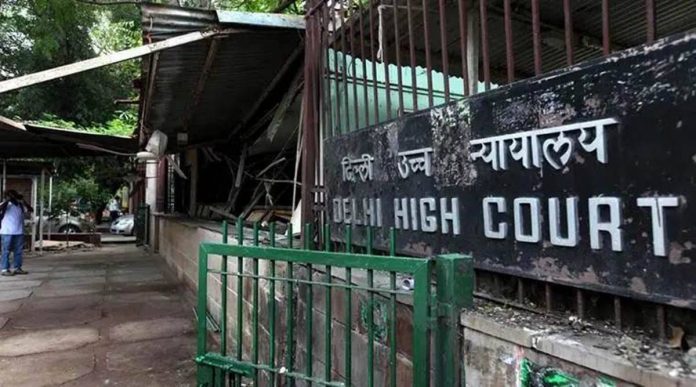
Image Source - https://rb.gy/8h4xqh

This article is written by Gyaaneshwar Joshi, from the Faculty of Law, Jamia Millia Islamia, New Delhi. In this article, the author discusses the lack of opportunities given to women in the judiciary.  

Introduction

Skewed gender disparities have always been present in the judiciary around the world. Decades ago, women in several countries were debarred from entering the legal profession. The gender-related issues were challenged in many infamous cases such as Bebb v. Law Society (1913) and Bradwell v. Illinois (1873), where the foreign courts discussed the principle of whether women are suitable for joining the legal profession or not. 

The Supreme Court of Canada in the case of Edwards v. A.G. of Canada (1829), i.e. in the ‘persons case’, allowed women for the first time to sit in the Senate, and overruled its previous judgment which held women as “unqualified persons” under Canadian Law and ineligible to become a member of the Senate. 

In Re: Regina Guha v. Unknown (1916) was the first ‘persons case’ in India’s legal history. In this case, Regina Guha after completing her Bachelor in Laws in 1915 applied to enrol as a lawyer, but her application was rejected because women were not permitted to register under the rules of the Legal Practitioners Act, 1879. After fighting a prolonged legal battle against the oppressive provisions under this Act, the Legal Practitioners (Women) Act, 1923 was passed which added a new clause that “no woman shall, by reason only of her sex, be disqualified from being admitted or enrolled as a legal practitioner or from practicing as such” and this amendment paved the way for women to get themselves enrolled as ‘Advocates’ from the year 1923.

Lack of female representation in the judiciary

The Supreme Court (Number of Judges) Amendment Act, 2019, increased the number of judges in the Supreme Court from 30 to 33 (except CJI). However, looking at the present strength of 29 judges in the Apex Court, the female number of judges, after the retirement of Justice Indu Malhotra on 13 March 2021, is only ‘one’. Justice Indira Banerjee is currently the sole female judge who will be retiring on 23 September 2022. 

In the Supreme Court’s history, from 1950 to 2020, there have been 247 judges appointed, out of which only 8 are women, i.e. a mere 3.2% of total appointments. During the first thirty-nine years of the Supreme Court, no female judges served on the Supreme Court bench. Whereas in the history of the Apex Court between 1950-2000, only two women were appointed, i.e. Justice Fathima Beevi and Justice Sujata Manohar. Justice Fathima Beevi became the first female judge to be elevated to the Supreme Court in 1989. It was after 2000, the number of appointments improved, and six female judges served the bench. The High Courts of Calcutta and Bombay produced the maximum number of female Supreme Court judges. 

The share of female judges appointed from the Bar is relatively low as compared to the bench. Out of the eight Supreme Court judges, Justice Indu Malhotra is the only woman judge to be elevated directly from the Bar. She was appointed in April 2018, fifty-four years after the first appointee in this category.  

While looking at the number of female judges appointed in various High Courts of India, the total strength of sanctioned judges is 1079, where 426 seats are vacant and, out of 653 sitting judges, only 78 are women. Madras High Court (13) has the highest strength of female judges, followed by Punjab & Haryana High Court (7), Delhi and Karnataka High Courts (5), Gujarat, and Kerala (5) High Courts. Presently, there are no women judges in five High Courts, namely, Patna, Manipur, Tripura, Meghalaya, and Uttarakhand. Justice Hima Kohli is the only female Chief Justice currently serving in the High Court of Telangana. She will be retiring on 1 September 2021. 

Also, the estimated strength of females serving in the lower Judiciary is abysmally low, with around 4409 women judges serving out of 15,806 judges, i.e. 28% of the total current strength.    

List of Women Justices in the Supreme Court


Judge’s Name

Year of Appointment

Bar/Bench 

(High Court)

1

Justice M.F. Beevi

1989

Kerala

2

Justice Sujata Manohar

1994

Bombay

3

Justice Ruma Pal

2000

Calcutta

4

Justice Gyan S. Mishra

2010

Patna

5

Justice Ranjana P. Desai

2011

Bombay

6

Justice R. Bhanumati

2014

Madras

7

Justice Indu Malhotra

2018

Bar 

8

Justice Indira Banerjee

2018

Calcutta

Patriarchy in the Indian legal system

The concern over patriarchy was fueled in April 2021, after the Supreme Court Women Lawyers Association moved an application before the former CJI Sharad Arvind Bobde. This application was filed in the Supreme Court seeking directions to consider meritorious women lawyers practicing in the Supreme Court and the High Courts for appointment as Judges in the High Courts, especially in those High Courts where the representation of women is relatively low. The application urged for the appointment of more women judges in the High Courts and the Supreme Court.  

The former Justice Indu Malhotra, in her farewell speech also raised the concern over inadequate representation of women in the higher judiciary. She said that “women should not be taken as a mere token” in which she pointed out that women judges should not be appointed only for the sake of having female representation in the Court, but to elevate gender sensitivity and equality in the justice system.

Female judges and their unachieved dreams

Presently, many women candidates deserve to be appointed as a Judge, but the main problem lies with the male-dominant collegium structure of the Supreme Court. Collegium is a system for appointment and transfer of judges in the Supreme Court and the various High Courts. The body comprises the Chief Justice of India and 4 other senior-most judges of the Supreme Court.

The Supreme Court collegium has a more prominent role in elevating judges to the Supreme Court and various High Courts, but this body has always been considered as a male-dominated body and is notorious for its lack of showing liberal and generous approach in terms of judicial appointments of women in higher Judiciary. Even though the executive has been given the power to appoint judges to the Supreme Court under Article 124(2) of the Constitution, it has a minimal role in the appointment because in the case when the name gets rejected by the executive for an appointment but reiterated by the collegium, the executive is bound to appoint that person as a judge. 

Former CJI Sharad Arvind Bobde took his stand on this issue and stated that many women advocates had been offered judgeship in the past, but all have declined to hold the office, citing their domestic responsibilities. Justice Sanjay Kishan Kaul, who was part of the same bench hearing the plea filed by the Supreme Court Women Lawyers Association, reiterated CJI’s statement and corroborated that many women have declined judgeship offers. The bench further anticipated that the time is near to come when India has its first female Chief Justice. 

Looking at the present status of appointments being done for the post of the Chief Justice, it seems to be very far for India to have its first female Chief Justice. The seniority level in the Supreme Court judges, which plays a significant role in elevating any judge to the post of the CJI, shows that there are no chances of having any women candidates until 2027. According to seniority, incumbent CJI, R.V. Ramana, will serve the office till 26 August 2022. Justice Uday Umesh Lalit will likely succeed him by 8 November 2022, followed by Justice D.Y. Chandrachud up to 10 November 2024, Justice Sanjiv Khanna up to 13 May 2025, Justice B.R. Gawai up to 23 November 2025, and Justice Surya Kant up to 9 February 2027. Therefore, the chances of having a woman as the CJI is negligible until 2027. 

On 18 August 2021, the Supreme Court collegium led by Chief Justice N.V. Ramana has shortlisted the names of nine judges for the elevation to the Supreme Court, which includes the name of three woman judges- Justice B.V. Nagarathna (Karnataka High Court), Justice Hima Kohli (Telangana High Court), and Justice Bela Trivedi (Gujarat High Court). Among these three judges, the name of Justice B.V. Nagarathna is at the forefront to become the first woman Chief Justice of India in 2027.

It is believed that former Justice Ruma Pal could have been the first woman Chief Justice of India in 2005. In 2000, three judges were appointed to the Supreme Court in which Justice Ruma Pal and Justice Yogesh Sabharwal having the same seniority, were confirmed to take oath on 29 January 2000. Due to the occasion of the Golden jubilee of the Supreme Court, the swearing-in ceremony was postponed to 26 January 2000. Justice Ruma Pal did not receive the notice in time, which resulted in Justice Yogesh Sabharwal being sworn in first and becoming the senior justice. On 1 November 2005, Justice Yogesh Kumar Sabharwal became the 36th Chief justice of India.    

new legal draft

Why do we need more women in the judiciary? 

Gender sensitivity has always been a severe issue in the Indian judiciary. Attorney General K.K. Venugopal once suggested to the Supreme Court that “Judges who studied from old schools and are patriarchal, need to be sensitized”. He further stated that improving the representation of women in the judiciary could go a long way towards a more balanced and empathetic approach in cases related to sexual violence. 

The issue of gender sensitization has been raised many times, especially in the cases where male judges failed to show empathy for the female victims. One such matter happened in Madhya Pradesh High Court when the Judge agreed to grant bail to a man charged with outraging the modesty of a woman, on the condition that he visit the complainant’s house and request her to tie a rakhi band on his wrist. Similarly, the former CJI Sharad Arvind Bobde once created a controversy by asking a 23-year-old government servant to marry a woman who accused him of rape. 

In the judgment of Delhi v. Pankaj Chaudhary and Others (2018), the all-women bench of the Supreme Court, comprising Justice Indira Banerjee and Justice R. Bhanumati, has shown the difference that only women judges can make while dealing with a rape case, as opposed to male judges who seem unable to overcome their stereotypical views on rape. In this judgment, the Supreme Court bench instructed to restore the Trial Court’s conviction and sentence against the four accused who were charged with the offence of rape. Earlier in this matter, the Delhi High Court delivered the judgment in favour of the accused just because the rape survivor at the time of rape was under police custody for prostitution. The Apex Court held that even if a woman is ‘immoral’ or of ‘easy virtue’ it does not mean that it will give anyone the right to rape or exploit her. The Court stated that even if a woman is of ‘loose immoral character’, she is equally entitled to protection under the law. 

The judiciary will not be trusted if it is viewed as a bastion of elitism, exclusivity and privilege. Therefore, the presence of women is essential for the legitimacy of the judiciary. The past status of women in the Judiciary can be observed from the case of Rupan Deol Bajaj v. KPS Gill (1995), when the complainant, Ms Rupan Bajaj, urged the Supreme Court to appoint a female judge for her case. However, there was no incumbent female judge present in the Supreme Court at that time.

Notable women who have served the Indian judiciary

Several women lawyers reached prominent positions in the Judiciary. They marked their names in some of the prominent judgments that can never be forgotten in the history of the Indian Judiciary:   

Cornelia Sorabji

She was the first female advocate in India. She was also the first female graduate from Bombay University and the first woman to study law at the prestigious Oxford University. During the 20 years of her service, it is estimated that Sorabji helped over 600 women and orphans fight legal battles; sometimes with no charge.    

Justice Anna Chandy

She was the first woman judge of the High Court and served for over 8 years as a judge in Kerala High Court. She was often described as a first-generation feminist, having fought for women’s right to work and demanded a quota for women in government jobs. Apart from being India’s first women judge, she was also one of the first female judges in the British Empire.

Justice Fathima Beevi

She was the first woman Supreme Court judge. In 1950, she became the first woman to top the Bar Council of India’s exam. After she retired from the Supreme Court, she was appointed as the Governor of Tamil Nadu in 1997.

Justice Leila Seth

She served as the first woman judge on the Delhi High Court and became the first woman Chief Justice of a state High Court for Himachal Pradesh. She was also responsible for the amendments to the Hindu Succession Act, 1956 which gave daughters equal rights in the joint family property.

Justice Indu Malhotra

She was the first woman judge elevated directly from the Bar and became the 7th woman judge in the Supreme Court’s history. Justice Indu Malhotra, in her three-years tenure as a judge, delivered a series of remarkable judgments, ranging over varied schemes of law such as striking down Section 497 of the IPC (Adultery) and the decriminalisation of homosexuality under Section 377 of IPC.

Justice Indira Banerjee

She is the 8th and only female judge of the Supreme Court at present. She is the former Chief Justice of Madras High Court, the second woman to hold the position in India before being elevated as a judge of the Supreme Court. She was enrolled as an advocate on 5 July 1985 and practiced before the Calcutta High Court. She served as a judge in significant rulings such as Sushila Aggarwal v. State (NCT of Delhi) (2020), which unanimously ruled that the protection granted to a person under Section 438 of the Code of Criminal Procedure, 1973 should not invariably be limited to a fixed period, but it should insure in favour of the accused without any restriction on time. 

Conclusion

In India, women have occupied higher offices like President, Prime Minister, and Speaker but are still left to represent the higher judicial posts like CJI, Attorney General, and Solicitor General. The shortage of women judges in the higher judiciary has been raised on several occasions in the Parliament and debated by notable panels in various legal conferences.

References


LawSikho has created a telegram group for exchanging legal knowledge, referrals, and various opportunities. You can click on this link and join:

Follow us on Instagram and subscribe to our YouTube channel for more amazing legal content.

Download Now

A gulp of Coca Cola’s CSR

0
Image Source: https://rb.gy/oddxnd

This article has been written by Sneha Asthana, pursuing the Diploma in Business Laws for In-House Counsels from LawSikho.

Introduction

The idea behind corporate social responsibility is to ensure that entities making most revenues out of society’s resources pay back to the same society in different charitable ways. Every existing company operating in India with a turnover of over one thousand crores can move some resources to help and benefit the same society that provides its resources for its business operations. According to Section 135 of the Companies Act, 2013, any company with a net worth of five hundred crore rupees or more or a turnover of over one thousand crore rupees or more or a net profit of five crore rupees or more during the immediately preceding financial year must constitute a board to look into such CSR activities. Such companies shall contribute a minimum of 2% of their average net profits that were made in the immediately three preceding financial years into social welfare activities. There’s no doubt that companies which do not meet the above categories are also capable of helping society and initiating CSR activities, however, the Indian law does not mandate such companies to follow their corporate social responsibilities. This does not take away a chance from them for doing so though. Most decently sized companies have still participated in several societal welfare activities such as volunteering programmes, sponsorships, training, building homes, etc. The big-sized companies simply need to follow this under the law leaving them no other choice because Section 135 of the Companies Act works on a “compliance or explain basis”.

While the Companies Act simply mandates the companies to participate in such CSR activities, the section does not expand on the types of CSR activities that can be taken up. Most companies or country-specific laws derive such knowledge from the 10 principles drafted in the United Nations Global Compact. The Compact throws light upon how companies need to work sustainably which means that they have to meet certain thresholds in areas of human rights, labour, climate, environment, anti-corruption etc. The 10 principles that have been drafted in this Compact also broadly cover the above categories by giving out guidelines to the companies to adhere to and initiate practices that protect and respect human rights, allowing a non-interfering work life with no discrimination or preferential treatments and also allowing the freedom of association to the workers, ensuring complete preservation and protection of the environment and finally, giving their best efforts to avoid all kinds of corruption. Companies all across the globe use these principles to chart out their activities ensuring that their base lies in these principles. The guidelines in this Compact have broadly covered the most essentially problematic issues of the society which can only be solved by huge amounts of resources and hence, any company making and creating any initiative towards any one of those guidelines will inevitably help the society. 

Coca Cola and CSR 

Coca Cola has been involved with various sustainability programmes throughout its existence. They follow their raison d’être – To refresh the world and make a difference in all aspects including their corporate social responsibility. The company has initiated programmes according to the United Nations Sustainability Goals as stated above. They focus primarily on waste management and the preservation of water. The company focuses on Waste Management as they understand that most of their packaging is done through plastic components which can be difficult to collect and dispose of. Proper waste management is the need of the hour and so is recycling. The company is also focusing on making its packaging completely recyclable or reusable to better help the environment. Coca Cola India has been involved in its consistent and progressive CSR activities since 2010 and the only aim is to invest higher and more efficiently in such programmes. This article studies a few of their most important and renowned CSR programmes.

What initiatives have they taken?

1. World Without Waste

World Without Waste is a program that was launched in 2018 by the Coca Cola company all over the world. The initiative is based on solving the problems of collecting, recycling, repurposing, and reusing the waste that generates from their products. It was observed that their packaging waste and the bottles and containers of their products had become a big part of the waste generated all through the world. Even in India, it is not an uncommon sight to see lying Coca-Cola beverage bottles lying around in the trash bins. While the packaging of their products is not something they cannot compromise on, Coca Cola has been extremely successful in finding out ways to battle the problems their packaging causes to the environment and the economy. This initiative has given Coca Cola a different perspective altogether on their packaging. The company has decided to focus and change the following through this initiative, viz.:

  1. Design of their bottles: The company has targeted to make their bottles 100% recyclable and reusable. The sizes of its bottles have also been changed to Affordable Small Sparkling Package (ASSP) turning into the world’s lightest weighing and best-performing bottles. 
  2. Collection: The company intends on collecting all bottles used, including their reusable glass bottles to ensure that all their packages are again recycled and reused thereby not generating waste.
  3. Plastic circular economy: Coca Cola intends to create a sustainable economy and environment for all countries impacted by their business. Their focus lies on creating initiatives that work efficiently towards collection, segregation, and treatment of waste. Material Recovery Facilities, knowledge management, traceability, waste management workers – all of these lie in the checklist.

Under the main initiative of World Without Waste, Coca Cola has come up with a few initiatives in India to ensure their operations run smoothly here. Some of those are: 

  1. Project Prithvi – This project of Coca Cola was initiated in sync with the Indian Government’s Swacch Bharat Abhiyaan (Clean India Mission) and also per the Extended Producer’s Responsibility Program. It partners with the United Nations Development Program and aims to cover everything from the collection of plastic to its treatment facilities. Most plastic is collected from societies or bulk generators etc. It is then taken to the material handling facilities where machines and human labour work on segregation of plastic, cleaning, shredding, bailing, and basic treatment of plastic making it ready for the end recyclers. These facilities are often equipped with massive highly efficient machines and human labour to work on these machines and other humanly affordable tasks to do. The amount of waste calculated per day makes it practically impossible for humans to work alone on it. After having given a round-one treatment to this waste, all the waste is delivered from these facilities to the end recyclers making sure no amount of waste goes into a landslide thereby stopping any kind of environmental pollution.
  2. Alag Karo – Alag Karo which translates to Segregate is an initiative implemented by Saahas, a society in partnership with Coca Cola India and TetraPak which solely focuses on the segregation of waste. The initiative was first implemented in Gurugram, with an aim to reach the entire country progressively. Segregation at the source of waste generation in apartments and societies, offices, etc., is the initiative’s primary focus. Along with the act of segregation, the initiative also aims at educating people about the segregation of waste by providing them with manuals and the three different coloured bins to ensure that the same education is practised. The initiative also collaborates with various commercial establishments to analyze and determine different strategies to do the same and give recommendations for the municipal corporation and government policies. Their collaboration with educational institutions has also been very compelling to ensure such knowledge is instilled in citizens from a tender age itself. The initiative has also been highly successful in educating and training the workers giving them fair compensation for all their efforts.

Findings

Coca Cola has been very successful in its initiatives under its main head of waste management over the last few years. According to their plan, they have already seen victory in introducing ASSP bottles in the market towards which people have been very accepting. The size of the bottle appears very comfortable and convenient for people to carry and consume the drink from. It also works great wonders on the environment because each of these bottles can be almost entirely recycled. In 2019, the company also marked a great step towards their initiative by producing the first bottle ever made by recovered and recycled marine plastics. The initiative was implemented broadly in cities like Hyderabad, Bangalore, Mumbai, etc., and about 85000 tonnes of plastic was collected every year, hugely treating the different kinds of chemicals making it ready for the end recycler, and protecting the environment from any spills. Additionally, Coca Cola has also witnessed great heights of success in the other mentioned initiatives. 

  1. Project Prithvi has developed across 28 cities all over the country. With its main objectives revolving around design, collect and partner, the campaign has collected more than 1,10,000 MT of waste since its inception. They have spread across 36 cities now employing more than 4500 workers in 2018. About 100 Self Help Groups were created with men and women who were trained and educated in the waste management fields to make them capable of employment. More than 200 schools were also touched to educate students and create awareness about the particulars of waste management. 
  2. Alag Karo has now reached about 1.5 million people as segregation has become part of most cities. IT has been implemented in around 22000 households, 42 residential societies, 412 offices and 87 restaurants. Around 24000 students were also educated and sensitized about waste segregation and resource recovery through the campaign. 75000 kg waste was collected and segregated at the collection level thereby increasing source recovery levels drastically. Additionally, more than 500 workers were employed under the campaign which helped the employment rate, especially of Gurugram, greatly. 

Other initiatives such as Material Traceability Program and Women Waste Recycler Upliftment Program also function on similar patterns of waste collection and segregation. The initiatives have found remarkable success in demonstrating holistic waste management strategies. MTR has ensured the involvement of the informal sector in constructing material recovery facilities, educating and training the informal sector, and handling a capacity of 5-10 tons of dry waste every day in their different Facilities. The WWRUP has helped over 200 rural women in getting trained and becoming capable of attaining employment to sustain their livelihoods. 

2. Fruit Circular Economy

Fruit Circular Economy is an initiative started by Coca Cola in 2011 to help farmers get better yield out of their saplings, decide on which produce to cultivate, use high-density farming techniques etc. The project with the name of Unnati Mango started in Andhra Pradesh to help the farmers double the yield per hectare of cultivation. Problems like lack of knowledge, inability to produce more yield, lack of modern techniques were moved away rapidly from the farmers because of the Ultra High-Density Plantation campaign that Coca Cola introduced. It is under this campaign that farmers were educated and equipped with modern modes of cultivation and helped make better yield produce. The campaign focuses on simple changes like planting several mango trees in a small area so the plants bear fruit faster due to their survival instincts in contradiction to the traditional method where it was believed that mango trees should be planted at a distance so proper nutrients reach to each tree sufficiently. 

FCE was started in Andhra Pradesh but has now reached most of South India and parts of Northern and Eastern India. The project Unnati has now found scope not only in mangoes but in apples, oranges, litchi, and grapes. Methods of drip irrigation, land trials, demo farms, modern nurseries, organic pesticides, farmer trials, and training on good agricultural practice have all factored in resulting in great crop results and higher incomes for the farmers. 

Findings

  1. Unnati Mango – Until 2014, Unnati Mango had become vastly successful with the practice of UDHP spreading to over 2,073 acres, 60,000+ farmers trained, more than 3000 women trained and supported, 40 acres used for planned nurseries with a capacity of 2 million plants. More than 90,000 farmers have been impacted positively by the project.  
  2. Unnati Orange – This project was launched in 2018 and has been successful in planting on at least 350 acres of land, creating more than 20 acres of demo farms using UDHP techniques, and educating more than 20,000 farmers of the same.
  3. Unnati Apple – The project, also launched in 2018, in Uttarakhand, taught the orchard farmers to grow the fruit as creepers. In the beginning, the project was able to educate and train 3,300 farmers and create around 99 modern demo farms, 4 of which were intended to showcase a higher variety of apples being cultivated. Now the project has more than 1000 demo orchards and more than 150 established orchards. It has also educated and trained more than 3000 farmers with an aim to train more than 50,000 farmers in the second phase of the project.
  4. Unnati Grapes – A project launched in 2019 in Tamil Nadu has now trained around 8000 farmers and has built 600 demo farms so far.
  5. Unnati Litchi – Yet another project launched in 2019 which helped train more than 80,000 farmers and revitalise farms spanning across 3,500 acres. 

Coca Cola has spent considerable resources on FCE which have all produced better results than expected. The company aims at helping more than two lakh farmers by 2022 and introducing a new more transparent supply chain which would be extremely helpful to all kinds of farmers.

3. Water Stewardship (Pursuing Water Security)

Coca Cola realises the stake it has in the use of water for, all its operations from using it for beverages to the use of it for producing containers. This initiative was started by the company to ensure that it creates an efficient, protective, and resilient water management system for all its manufacturing operations. The motto of the initiative is to reduce, reuse, recycle and replenish through which the company can ensure a proper supply of water for itself and all the other communities. 

The company has a well-planned strategy to ensure their water usage is minimal and also efficient so no amount of water is used arbitrarily. It adheres to the following steps:

  1. Facility Water Vulnerability Assessments (FWVA) are carried out to assess the potential risks in quality and quantity at all bottling plants of the company.
  2. Facility Water Protection Plans (FWPP) are then drafted out each year after receiving the reports of FWVA. FCPPs are helpful to the company because it shows the quantities of water being used and the purpose, the efficiency of the same and the quantity of water that has been reused. 
  3. All usage of water for the coming year is planned according to the above reports and then compared to the last year’s usage to understand any loopholes or arbitrary uses of water. Post usage, all wastewater is then treated properly and released in water bodies that support aquatic life.

The company has also made inspiring goals of replenishing 100% of the water used by it. To achieve this goal the company partnered with a few NGOs and formed a group Anandana which has helped in achieving not only the replenishment goal but several other water conservations and providing clean drinking water goals that had been chalked out by the company. 

Findings

Coca Cola has been highly successful in reducing the percentage of water being used for its operations. Their water use ratio, which tells us the litres of water used to make one litre of beverage, has drastically decreased from 3.38 litres in 2008 to 1.74 litres in 2019. Additionally, Anandana has been successful in providing WASH facilities to several villages, increase watershed development, and supporting agricultural improvements. More than 600 villages and 80,000 members of the community benefited from their work. More than 5 villages of Aurangabad districts were helped with RO and ultrafiltration units, Jaldhara Water Health Centers were installed in more than 3 states of the country and built hygienic toilets across the country benefitting more than 10,000 people and tackling the problem of open defecation in India. In regards to water replenishment, around 13.3L litres of water has been replenished which means more than 119% of the water used in manufacturing operations has been replenished. This has been played out advantageously for a country like India which already faces a lot of drought problems, once such which was faced in Maharashtra. Anandana has partnered with Haritika to increase water availability through run-off water harvesting measures like rainwater harvesting etc. This has benefitted more than 5000 people in various remote districts of the state.

Simultaneously, the company also adheres to regular legal compliance from the Environment and Water Protection Acts to ensure no leaf is left unturned when it comes to saving water or reusing water. 

Conclusion

While Coca Cola has three main CSR initiatives involving Waste Management, Fruit Economy, and Water Conservation, the company also has other initiatives like Support My School (SMS) which helps several schools in building proper sanitation and hygienic facilities which also cater specially to girls, the multi-stakeholder partnerships on sustainable agriculture which help farmers face economic, social, environmental and infrastructural problems in farming has also attracted a decent success rate after an investment of more than Rs 1 crore. Through these initiatives, what one can observe is Coca Cola has ticked every box in initiatives that are close to home. The company is aware and understands the problems it can cause to society through its business operations and it shows through these initiatives that the company is only trying to correct its wrong and it has been significantly successful in doing so. Coca Cola is a brand so deeply imprinted on our minds as it is a part of our lives that when the society is also benefited by the company in other social, economic ways, it only gets more difficult to drift away from Coca Cola.

References


Students of Lawsikho courses regularly produce writing assignments and work on practical exercises as a part of their coursework and develop themselves in real-life practical skills.

LawSikho has created a telegram group for exchanging legal knowledge, referrals, and various opportunities. You can click on this link and join:

Follow us on Instagram and subscribe to our YouTube channel for more amazing legal content.

Download Now

Arbitral tribunal and the Indian courts : the interplay in light of the case of Megha Enterprises v. Haldiram Snacks

0
Image source - https://bit.ly/3dSDHZK

This article is written by Mr. Rishabh Shukla, pursuing B.A. LL.B (Hons) from The Maharaja Sayajirao University of Baroda, Faculty of Law. This is an exhaustive article which deals with the full-fledged details and explanation to the case of Megha Enterprises vs Haldiram Snacks.

Introduction

Keeping the principles of natural justice in mind, independence, impartiality & neutrality of the arbitrator are essential for fair, free & unbiased arbitral proceedings. The extent of the power of the court in interfering with arbitral awards under Section 34 of the Arbitration and Conciliation Act, 1996 is still in the realm of uncertainty. A bare reading of the Section indicates that the power of the courts is limited to setting aside the arbitral awards, strictly in terms of the specific grounds enshrined therein. However, it is pertinent to note the fact that there are several judgments wherein the courts have crossed this limitation by not only setting aside the arbitral award but also by modifying the arbitral awards while dealing with petitions filed under Section 34. This article aims to look into the scope as to whether the courts can modify arbitral awards while dealing with petitions that are filed under Section 34. Though there are many judgments pertaining to the same, the focus of this article will be on the judgment of Megha Enterprises v. Haldiram Snacks (2021).

Arbitral tribunal and the Indian courts – underlying independency 

Presently, commercial arbitration is the preferred mode of dispute resolution for commercial disputes that are complex in nature. It is a well-known fact that our judicial system is, and has been for some time, burdened with a massive backlog of cases. These days, it is not unusual for matters to be stuck or delayed in the judicial system for more than a decade as a pending resolution, especially if the matters are of high value or complicated in nature. As a result, it is becoming a standard practice for parties to include arbitration clauses in all major transactions and agreements.

The concerned courts have the power to intervene to assist or guide the arbitration proceedings seated in their jurisdiction. This assistance can be in any one of the following ways:

  • By referring the dispute to arbitration (Section 8).
  • By granting interim measures in aid of arbitration (Section 9).
  • By appointing arbitrators (Section 11).
  • By deciding any controversy arising out of an arbitrator’s mandate (Section 14).
  • By enforcing interim orders of the arbitral tribunal (Section 17).
  • By assisting in taking evidence including summoning witnesses and producing documents (Section 27).
  • By penalising and punishing parties for non-compliance with orders of the arbitral tribunal (Section 27, Arbitration Act).
  • By extending a mandate of an arbitral tribunal, substituting one or more arbitrators on an arbitral tribunal or penalising the tribunal or the parties for a delay in pursuing arbitration proceedings (Section 29(A)).
  • By hearing challenges to an arbitral award in an application of setting aside (Section 34, Arbitration Act).
  • By hearing appeals from certain decisions of the arbitral tribunal (Section 37) such as when a plea of lack of jurisdiction is accepted (Section 16) or an interim measure sought of the arbitral tribunal is rejected (Section 17, Arbitration Act).
  • By making payment of costs to the tribunal before the rendering of an award (Section 39).
  • By extending periods fixed by the parties for the initiation of arbitration (Section 43(3)).

There have been several recent initiatives to improve the arbitration landscape in India. Notably, amendments to the Arbitration Act have aimed at improving speed and efficiency of arbitration by, among other things mentioned herein:

  • At imposing time limits.
  • At encouraging institutional arbitration.
  • At reducing the scope for the intervention of the court, both at the pre-arbitration and post-arbitration stage.
  • At discouraging the filing of frivolous applications challenging arbitral awards.
  • At discouraging delays by introducing a more realistic cost regime.

Judiciary has also followed the lead, with a number of recent decisions narrowing the scope of judicial interference. The executive has also sought to bring about efficiencies in arbitration involving government institutions by encouraging and making involvement of ministries to comply with arbitration awards, pending any proposed challenge, in the interests of ensuring cash flow, particularly concerning major infrastructure disputes.

The case of Megha Enterprises v. Haldiram Snacks

Facts of the case 

The petitioner, Megha Enterprises, was engaged in the trade of crude palm oil. It entered into two agreements dated February 2, 2013, and February 25, 2013, with M/s Coral Products Private Limited for sale and purchase of crude palm oil on a high sea sale basis (“High Sea Sale Agreements”). Pursuant thereto, Coral sold 1470 Metric Ton (MT) and 2500 MT of crude palm oil to the petitioner at a rate of INR 46,600/- per MT and INR 48,750/- per MT respectively, and issued two separate invoices dated February 2, 2013 (for INR 6,85,02,000/-) and February 25, 2013 (for INR 12,18,75,000/-), to the petitioner aggregating to INR 19,03,77,000/-.

Thereafter, in terms of a scheme of amalgamation under Sections 391, 392, 393 and 394 of the Companies Act, 1956, Coral merged with M/s Haldiram Snacks Private Limited (The respondent herein). Under the terms of the said scheme of amalgamation, all the assets of Coral stood vested with the respondent, including a sum of INR 19,03,77,000/- receivable from the petitioner in respect of the High Sea Sale Agreements. According to the respondent, the petitioner took delivery of the crude palm oil at Kakinada, which was the port of delivery, in accordance with the terms and conditions of the documents executed between Coral and the petitioner. However, the aforesaid amount of INR 19,03,77,000/- remained outstanding as the petitioner failed to pay the same.

Consequently, by a notice dated May 18, 2016, addressed to the petitioner, the respondent invoked the arbitration clauses under the High Sea Sale Agreements and sought the consent of the petitioner to appoint a sole arbitrator from amongst a set of three former judges of the Delhi High Court. In the released notice, the respondent sought payment of INR 19,03,77,000/- whole sum with interest at the rate of 18% per annum, which according to the respondent was in terms of the High Sea Sale Agreements as well as the custom and usage of trade. The petitioner responded to the said notice via a letter dated June 3, 2016, denying its liability to pay the said amount as claimed by the respondent and also declined to give consent for the appointment of an arbitrator. The petitioner further claimed that the arbitration clause was not binding on any of the parties.

Thereafter, the respondent filed a petition with the Delhi High Court under Section 11(6) of the Arbitration and Conciliation Act, 1996 seeking the appointment of a sole arbitrator to adjudicate the disputes arising out of the High Sea Sale Agreements in question. The said petition was allowed by the Court and under an order dated April 18, 2017, the court then referred the parties to the Delhi International Arbitration Centre (DIAC) with a direction for the DIAC to appoint an arbitrator in accordance with the provisions of the 1996 Act and its rules.

Following this, the respondent filed its statement of claims before the sole arbitrator on June 5, 2017, claiming the following:

  1. INR 19,03,77,000/- as the amount outstanding against the sale of crude palm oil;
  2. Interest at the rate of 18% per annum from the date the amount became due till the date of filing of the statement of claims, quantified at INR 14,56,38,405/-;
  3. Pendente lite and future interest at the rate of 18% per annum from the date of filing of the claim till payment of the award;
  4. Costs of litigation.

In response, the petitioner filed its statement of defence raising several contentions including the Respondent’s claims being barred by limitation as the arbitration clause was invoked on May 18, 2016, which was beyond a period of three years from the date on which the amounts became payable under the High Sea Sale Agreements.

The arbitral tribunal, however, rejected the contention that the claims made by the respondent were barred by limitation and in its award and held:

  1. A sum of INR 19,03,77,000/- was due and payable by the petitioner to the respondent,
  2. Interest at the rate of 9% from April 1, 2013, that is, the date of filing the statement of claims till the recovery of the said amount would be payable by the petitioner to the respondent, and
  3. Awarded costs of INR 5,00,000/- in favour of the respondent.

Aggrieved by the arbitral award, the petitioner filed the present petition under Section 34 of the 1996 Act challenging the impugned arbitral award dated October 26, 2020, before the Delhi High Court.

Issues

  • Whether the arbitral award can be interfered upon on the ground of disagreement over inference drawn from the evidence.
  • Whether the Arbitral Tribunal had misapplied Section 18 of the Limitation Act, 1963.

The contention of parties to the case 

Contentions raised by the petitioner

The petitioner, inter alia, contended that the respondent’s claim was barred by limitation and the arbitral tribunal’s conclusion to the contrary, was patently illegal. It was submitted that the High Sea Sale Agreements in question were entered into on February 2, 2013, and February 25, 2013, and invoices (of INR 6,85,02,000/- and INR 12,18,75,000/-) were also issued on the aforesaid dates. In terms of clause 11 of the High Sea Sale Agreements, which were identically worded, the payment for the same was required to be made on expiry of ten days from the date of the High Sea Sale Agreements.

Accordingly, the payment of INR 6,85,02,000/- against the invoice dated February 2, 2013, was to be made by February 12, 2013, and the payment of INR 12,18,75,000/- against the invoice dated February 25, 2013, was required to be made by March 7, 2013. Since the notice invoking arbitration was issued on May 18, 2016, it was contended by the petitioner that the said notice was beyond the period of three years from the promised dates of payment and as a result, the claim of the respondent was barred by limitation.

It was also contended that the tribunal had erred in accepting the respondent’s contention that one Mr. Avneesh Agarwal of Coral had received a letter dated May 31, 2013, (Balance Confirmation Letter) acknowledging the liability of the petitioner under the invoices. The petitioner contended that the said letter was not signed and therefore, could not have been considered as an acknowledgement under Section 18 of the Limitation Act, 1963.

It was further contended that an e-mail dated June 4, 2013, forwarding the Balance Confirmation Letter which was purportedly forwarded by Mr. Mohan Maganti of M/s KGF Cottons Private Limited to Mr. Avneesh Agarwal could not be construed to extend the period of limitation as the same had not been sent by any of the constituent partners of the petitioner. Further, there was no evidence to support the fact that Mr. Mohan Maganti was an employee of the petitioner. Additionally, the email itself indicated that it was sent on behalf of M/s KGF Cottons Private Limited, and communication by a third party could not be considered as an acknowledgement by the petitioner or any other third party on its behalf.

Contentions raised by the respondent

The respondent, on the other hand, contended that the arbitral tribunal had carefully examined the evidence on record and concluded that the petitioner had acknowledged the debt owed against the two invoices in question. It was submitted that the arbitral tribunal had seen and appreciated the Balance Confirmation Letter as well as the email dated June 4, 2013.

It was contended that the arbitral tribunal had also examined the question of whether the Balance Confirmation Letter was required to be signed and had in this regard followed the decision of the Karnataka High Court in the case Sudarshan Cargo Private Limited v. Techvac Engineering Private Limited (2014), where it was held that e-mails can be construed and read as a due acknowledgement of debt and the same would meet the parameters as laid down under Section 18 of the Limitation Act.

Findings of the Court  

The High Court of Delhi, in this case, based on the arbitral tribunal’s findings observed that it was specifically clear that it had examined the question of limitation in detail. The High Court further observed that the petitioner neither presented its books of accounts, nor its ledger to contest the contents of the mentioned email. Thus, in the eyes of the court, no evidence was presented before the court by the petitioner to establish that the assertion made in the Balance Confirmation Letter that its ledger accounts reflected a sum of INR 19,03,77,000/- as outstanding towards Coral/respondent was incorrect.

It was further observed that the scope of examination of an arbitral award under Section 34 of the 1996 Act was extremely limited. It is trite law that the High Court, on the ground of patent illegality, would not undertake the exercise of re-appreciation of evidence. In this case, no case could be made out by the petitioner that mentioned that the arbitral award was contrary to the fundamental policy of India, as it could not be considered to be opposed to justice or morality, by any stretch.

The High Court also observed that it was trite law that delays in filing a claim results in only barring the remedy, but not in extinguishing any sort of debt. After evaluating the material on record, the arbitral tribunal had rejected the petitioner’s contention that the respondent be denied its remedy to seek what it claimed to be legitimately due to it. Thus, there was no question of such an approach offending any sense of morality as was embodied in the expression “public policy” as used in Section 34(2)(6) of the 1996 Act.

Additionally, the High Court of Delhi also noted that the dispute, in this case, is related to a simple transaction of sale and purchase of goods and that everything the arbitral tribunal had done after having found that the petitioner had not paid for the goods purchased by them, was to award the said consideration to be paid with interest.

Conclusion 

The Delhi High Court, in this case, affirmed the arbitral award that was passed in favour of the Respondent and thereby dismissed the application filed under Section 34 since the petitioner was not able to assail any ground or advance any argument that could be accepted by the High Court. While dismissing the application, the court rejected the arguments of the Petitioner as it did not find any reason to interfere with the award merely on the ground that the arbitral tribunal had made an error in drawing inference from the evidence on record.

This decision of the High Court goes a long way in affirming multiple facets of not just arbitration law but allied laws as well. First and foremost, the High Court has continued its stance of pro-arbitration by not interfering with the award on the ground where there may be disagreements overdrawing inferences from the evidence on record. 

Additionally, whilst upholding the view of the arbitral tribunal on the point of acknowledgement of debt in an electronic form, the court has taken a positive step forward in appreciating the technological advancements and by applying the contours of Section 18 of the Limitation Act to electronic communications as well.

References


LawSikho has created a telegram group for exchanging legal knowledge, referrals, and various opportunities. You can click on this link and join:

Follow us on Instagram and subscribe to our YouTube channel for more amazing legal content.

Download Now

How to remove an auditor before the completion of his term

0

This article has been written by Aaditya Saurabh, pursuing the Diploma in Business Laws for In-House Counsels from LawSikho.

Introduction

Every company is required to appoint an auditor from the time of incorporation until it ceases operations, according to the Companies Act of 2013 and related rules and laws. An auditor is a qualified individual who audits the financial and operational aspects of a business. An audit is an examination of financial reports by an independent individual or organisation, which includes a balance sheet, income statements, cash flow statements, statement of changes in equity, and notes providing a summary of significant accounting policies and other explanatory notes required to be presented in the company’s annual report.

The primary goal of the audit is to offer a genuine and fair representation of the financial information provided in the annual report, which reflects the financial situation of the organisation for the fiscal year. As a result, every corporation must appoint an auditor. Notably, there are situations when management is dissatisfied with the services of the auditor, that’s when the auditor is removed. Auditors are appointed for a set period of time, which is a maximum of five (5) years in a company for one term. However, the Board of Directors may elect to remove the auditor before the end of his term for any cause.

Who is an auditor

An auditor is a neutral third party tasked with examining and verifying the correctness of financial documents and ensuring that businesses adhere to tax regulations. An auditor analyses the validity and trustworthiness of a company’s financial statements from an accounting standpoint by following the auditing rules specified by the regulatory body. They guard firms against fraud, point out inconsistencies in accounting methods, and, on occasion, operate as consultants, assisting businesses in identifying ways to improve operational efficiency. The auditor provides an unbiased assessment to the company’s owners or shareholders in order to protect and maintain the company’s financial stability.

Auditors operate in a variety of positions in a variety of industries. As the financial year approaches, all government and non-government organisations are required to maintain a track of their accounts and audit reports. Before presenting these companies’ financial statements to the appropriate departments, they must be thoroughly examined and appraised. This audit of financial documents is carried out by an auditor, who shall also be held liable in the event of any inconsistency in the reports. As a result, every organisation needs the services of an auditor.

An auditor is defined as a person who has been trained to review and verify financial data and is recognised as a Chartered Accountant (CA) under the Chartered Accountant Act, 1949. According to the Companies Act of 2013, all corporations must appoint an auditor. Provided, however, that a firm whose majority of partners are eligible for appointment as aforesaid may be appointed as an auditor of a corporation by its firm name.

Term of auditor

In this context, the term refers to the number of years an auditor is selected by the company’s members at its annual general meeting. A corporation can appoint an auditor for a maximum of five (5) years in a single term. The following is in accordance with Section 139(2) of the Companies Act, 2013 and Rule 5 of the Companies (Audit & Auditors) Rules, 2014, where the below mentioned companies are not permitted to appoint an individual auditor for more than one term of five years or an audit firm for more than two terms of five years each as auditor:

  1. All listed companies,
  2. All unlisted public companies having paid up share capital of rupees ten crores or more.
  3. All Private Ltd Co. having paid up share capital of rupees fifty crores or more.
  4. d. All enterprises with a paid-up share capital of less than the threshold level set forth in (b) and (c), but with public borrowings from financial institutions, banks, or public deposits totalling rupees fifty crores or more.

Individual or firm auditors who have finished their term(s) will not be reappointed for a period of 5 years following the expiration of their term(s). An audit firm that shares common partner(s) with another audit firm whose term in a company has expired is also barred from being appointed in that company for a period of five years. Furthermore, once their maximum term of five (5) years has elapsed, corporations other than those listed above are free to appoint the same auditor for “N” number of periods. The above-mentioned companies must comply with the aforementioned provisions within three years of the date of their implementation.

Removal of auditors appointed under Section 139

Section 140 of the Act allows the auditor to be removed before the end of his term and outlines the procedure for doing so. The auditor appointed under section 139 may be dismissed from his office before the expiration of his term only by a special resolution of the company, after receiving the prior consent of the Central Government in the required way, according to sub-section (1) of Section 140.

An application to the Central Government for the removal of an auditor is to be submitted in Form ADT-2 according to Rule 7(1) of the Companies (Audit and Auditors) Rules, 2014 which must be accompanied by the fees specified in the Companies (Registration Offices and Fees) Rules, 2014. Furthermore, pursuant to Rule 7(2), this application must be submitted within thirty days of the Board’s resolution to the Central Government (powers granted to Regional Director). Furthermore, the corporation must hold the general meeting within 60 days of receiving clearance from the Central Government (regional director) to enact the special resolution, as per Rule 7(3).

A careful examination of subsection (1) of section 140 reveals that the term “auditor appointed under Section 139” means that the auditor(s) appointed by the shareholders, board of directors, or Comptroller and Auditor-General of India can be forced to remove before the end of his term if the company complies with the prerequisites of sub-section (1) of section 140 and Rule 7 of Companies (Audit and Auditors) Rules, 2014.

Note: It is self-evident that sub-section (1) of section 140 of the Act deals solely with the removal of auditors before the end of their term as determined by the board, shareholders, or the Comptroller and Auditor-General of India, as the situation may be, and thus there is no hard rule of special notice by shareholders as prescribed in sub-section (4) of Section 140 of the Act for removal of auditors.

The shareholder, on the other hand, has the right under Section 111 read with Section 100 of the Act to move a resolution for the removal of the auditor. The provisions of Section 140 sub-section (1) must be followed in the event of such an application.

Procedure for removal of auditor

The simple meaning of Section 140 of the Act is that the auditor can be dismissed by passing a special resolution after getting the Central Government’s prior permission (powers delegated to the regional director). As a result, the following procedure must be performed in order to remove the auditor before the end of his term:

  1. Take approval from the Audit Committee: If a company is required to form an Audit Committee under Section 177, the proposal to dismiss the auditor must be accepted by the Audit Committee at a properly constituted meeting.
  2. Set up a meeting of the board of directors: Schedule a board meeting for the removal of the auditor on a set date, as per Section 173 and Secretarial Standard-1 (SS-1), in conjunction with the chairman or managing director of the company. At least 7 days prior to the date of the board meeting, send a notice of the board meeting, along with the agenda, notes to the agenda, and draft resolution, to all of the company’s directors at their registered addresses. In the event of an emergency, a shorter notice can be given. Then, in order to provide the concerned auditor with a “reasonable opportunity to be heard”, notify him of the date of the board meeting at which a resolution for his dismissal would be passed.

Pass the board resolution for the removal of the auditor before his term expires at the board of directors meeting. Then give permission to the company’s CS, CFO, or any other director to file an application with Form ADT-2 before the Central Government (powers delegated to the regional director). Then give permission to any practicing CA, CS, or advocate to come before the regional director and sign a Vakalatnama (Memorandum of Appearance). Then, within 15 days after the board meeting’s end, create and circulate draft minutes to all directors for their comments by hand, speed post, or any other means of courier or e-mail.

  • Note: According to Regulation 30 and 46(3) of the SEBI (LODR) Regulations, 2015, listed companies should indeed notify the stock exchange of their decision to file an application for removal of the auditor within 24 hours of the board meeting and post the information on the company’s website within two working days.

3. File an application to the Central Government (regional director): In accordance with the provisions of Section 179 of the Act, which concerns board powers, the board of directors of the company has the authority to file an application to the Central Government under sub-section (1) of Section 140. This applies to the regional director for the removal of the Auditor must be filed in Form ADT-2 within 30 days following the board meeting’s resolution, together with the specifics of the reasons for the removal of the auditor.

When the regional director receives the application, he or she will set a date for the hearing. Following the hearing, the regional director may approve the removal of the auditor.

Note: Under Regulation 30 and 46(3) of the SEBI (LODR) Regulations, 2015, listed companies are required to give disclosure regarding the regional director’s order to the stock exchange within 24 hours of the hearing date and post it on the company’s website within two working days.

4. File a certified copy of the order of the regional director with the registrar of companies (ROC): A certified copy of the order of the regional director in Form INC-28 is to be submitted with the ROC by the company, within 30 days of receiving the certified copy of the order.

5. Set up a meeting of the board of directors: Set up a board meeting in accordance with Section 173 and SS-1, and pass the relevant board resolution to take note of the regional director’s directive using the steps outlined in Procedure No. 2 above. Then set the date, time, and location for the company’s general meeting. Then, in accordance with Section 102 of the Companies Act, 2013, approve the draft notice of the general meeting, as well as the explanatory statement affixed to the notice. Then grant the director or company secretary authority to sign and issue a notice of the general meeting, as well as to conduct any other acts or things necessary to carry out the board’s resolution.

6. Set up a general meeting: According to Sections 96, 100, and SS-2, notification of a general meeting must be provided in writing, by hand, by ordinary post, by speed post, or by any type of courier, or even by email, at least 21 days before the actual date of the general meeting. In line with Section 101, notice can be issued with the permission of at least a majority in number and 95% of the paid-up share capital of the company providing the power to vote at such a meeting. All directors, shareholders, secretarial auditors, company auditors, debenture trustees, and others who are entitled to receive notice of the general meeting will get such a notification.

This general meeting must be conducted within 60 days of receiving the Central Government’s clearance, and then a special resolution must be enacted to remove the auditor before his term expires. It’s worth noting that the requirement for shareholder’s approval under the former Section 224A of the Companies Act, 1956 was only for an ordinary resolution, whereas Section 140 of the Act required a company to approve a special resolution of members. The minutes of the general meeting must then be drafted, signed, and collated in conformity with the provisions.

  • Note: Listed companies are required to report the outcomes of the general meeting to the stock exchange within 24 hours of the meeting’s conclusion and put them on the company’s website within two working days, according to Regulation 30 and 46(3) of the SEBI (LODR) Regulations, 2015. Listed companies must also provide information of the voting results to the Stock Exchange within two working days after the meeting’s completion and disclose them on the company’s website, according to Regulation 44.

7. File Form MGT-14 with ROC: Finally, within 30 days of approving a special resolution in general meeting, the company must file Form MGT-14 with the ROC, along with the fee stipulated in the Companies (Registration offices and fees) Rules, 2014, and any attachment of documents that may be necessary.

Significance of reasonable opportunity of being heard

The auditor concerned must be given a reasonable opportunity to be heard before any action under Section 140 is taken, according to the proviso to sub-section (1). As a result, the proviso to sub-section (1) of Section 140 requires that the auditor be provided a reasonable opportunity to be heard before any action by the shareholders or the central government is taken to remove him.

According to various dictionary definitions such as Cambridge Dictionary, Merriam Webster, Collins Dictionary, and Oxford Learner’s Dictionary, the term “reasonable” has a very broad magnitude and can differ from one reality of course to another, but it always means an objective, honest, and just conclusion backed by legitimate reasons. As a result, the phrase “reasonable chance to state its or his concerns” refers to the ability to state objections in order to reach a just and equitable resolution.

In Smt. Geeta Patel v. State of Rajasthan & Ors., the Rajasthan High Court construed the word by citing earlier Supreme Court rulings in the case. It was held that the term “reasonable opportunity” had been clarified and viewed by the Supreme Court with reference to clause (2) of Article 311 of the Indian Constitution, which states that a civil servant who may be dismissed, omitted from service, or reduced in rank as a result of an inquiry into allegations of misconduct must be given a reasonable opportunity to be heard. 

Furthermore, in Khem Chand v. Union of India & Ors., the Supreme Court summed up the elements of a “reasonable opportunity” under Article 311(2) of the Constitution as an opportunity to refuse his guilt and define his moral superiority, which he can only do if he is told what the charges against him are and the accusations on which they are based; and also as an opportunity to defend himself by questioning the witnesses and himself in his favour.

After considering the terms “reasonable” and “reasonable opportunity” in the context of administrative law, it can be concluded that the doctrine of reasonable opportunity is an objective mode of adjudication of a disputed issue that requires a fair, appropriate, progressive, and satisfactory opportunity for the person effected to present his version of factual information to the authority qualified to decide the issue and further that the responsible authority should assess the affected person’s version without discrimination, prejudice, or extraneous factors, and, if practicable, an opportunity for a personal hearing should be provided.

The Delhi High Court held in Basant Ram & Sons & Anr. v. Union of India & Ors that as stated by the Rule of Law principle that “no one should be condemned without hearing”, an auditor who is being removed from his post must be given a reasonable opportunity to be heard, so that his removal becomes effective. The auditor is granted this opportunity to clean up his domain and furnish the court with his clarifying statements, thus assisting the court in delivering just and equitable justice to all.

Conclusion

The cohesive reflection of the prerequisites of subsection (1) of Section 140 read with Rule 7 would lead to an approach that subjects to the approval of the Central government, a special resolution is required to be passed in the General Meeting of the company for the removal of the auditor before the end of his term and thus removal shall take impact from the date of receiving of approval of the central government. Before any of this may take place, the Auditor who is being removed must be given a “fair opportunity to be heard.” The corporation must also follow any specific observations or orders issued by the central government in connection with the removal of the auditor.

References


Students of Lawsikho courses regularly produce writing assignments and work on practical exercises as a part of their coursework and develop themselves in real-life practical skills.

LawSikho has created a telegram group for exchanging legal knowledge, referrals, and various opportunities. You can click on this link and join:

Follow us on Instagram and subscribe to our YouTube channel for more amazing legal content.

Download Now

How Partnership Act facilitates business for partnership firms

0
dissolve firm
Image source: https://bit.ly/2YJzH7m

This article is written by Rishika Rathore, a student of B.A. L.L.B, from the School of Law, Jagran Lakecity University, Bhopal. It is going to explore the key points through which Indian Partnership Act, 1932 eased out the actions in business for partnership firms.  

Introduction

An organization that engages in commercial, industrial, or professional activities, with the aim of profit, charity, or social welfare, is called a business. A partnership can be an absolute choice if any business is going to be owned and driven by numerous people. A partnership is a conventional contractual arrangement by two or more individual entities to run and operate a business to share its profits. The overall sense of partnership is a joint action by multiple parties to set up an endeavour. The parties may be non-profit organizations, businesses, individuals, medical or law professionals, governments, etc. This article comprises the study of the partnership in the light of the Indian Partnership Act, 1932, along with the historical background and significance of the same. The different kinds of partnerships, their importance, and their benefits will also be added to the bargain.    

Indian Partnership Act, 1932

Partnership firms in India are regulated by the Indian Partnership Act, 1932. Section 4 of the Act defines partnership as – Partnership is the relation between persons who have agreed to share the profits of a business carried on by all or any one of them acting for all”. This Act interprets the structure of the partnership by laying out all essential provisions to run a partnership firm. 

Description of partnership 

In a partnership firm, two or more persons assemble to execute a business to earn profits and share it, along with the liabilities (if any). The individuals owning the partnership are called partners. The partners collaborate their respective capital resources and work collectively to maintain or run their business. Mere co-ownership will not constitute a partnership. Section 12 of the Act states that a partnership must be formed to carry out any lawful business. Some examples of partnership firms are Maruti Suzuki, Hindustan Petroleum, Redbull and GoPro, etc.

History of the Act

Initially, the provisions of the partnership were proposed under the Indian Contract Act, 1872, under Chapter XI, from Section 239 to 266. It was an arrangement based on the practices and customs of commercial people and traders in India, following English principles of law. But, with the advancement of trade and commerce among Indian business sectors, such arrangements felt insufficient and outdated. The requirement of a separate partnership was felt. Therefore, the Indian Partnership Act, 1932 was passed by the legislature and received the green flag on 18th April, 1932 and came into force on 1st October, 1932. 

Through this Act, Sections 239 to 266 of the Indian Contract Act were revoked. The previous provisions about the partnership were based on the rules incorporated in the Draft Contract Law Report (1866), of the Third Law Commission, 1861, chaired by Lord Romilly. But, the advanced Partnership Act was modified and established based on the English Partnership Act, 1890

Types of partnership in India 

There are three main types of partnerships that are adopted by business organizations:

General partnership 

In this type of partnership, all partners have the right to make decisions about the functioning and administration of the firm. The partner’s liability is unlimited but it acts as a stumbling block in situations where financial loss or blunder occurs because the private assets of all the partners can be forfeited or ceased to pay the debts and claim credits, even if such loss or blunder is caused by a single partner. 

In the case of State Bank of India v. M/s. Simko Engineering Work (1800), it was cited that a partnership firm has no separate entity of its own and all the liabilities and actions of one partner will be binding to all other partners, as per the provisions of Section 20 and Section 22 of the Partnership Act. Although there is an exception to Section 20, which says that if partners extend or restrict the implied authority of any partner by making a contract, then the onus to prove such restriction will be on the part of the partner who claims it. 

The General Partnership is additionally divided into three categories:

  • Partnership at will – Normally, when a partnership is initiated, it is based on the partner’s decision to decide the period of its existence. When the partnership is created without discussing any specific period, it is known as a partnership at will. Under Section 7 of the Partnership Act, two necessities need to be fulfilled:

(A) No agreement about the confirmation of a fixed period of partnership.

(B) No direct or indirect clause regarding confirmation of partnership.

  • Particular Partnership – This kind of partnership is initiated with an ultimate goal to carry out a particular undertaking. Some partnerships are created to finish a particular project, contract-based assignments, or a specific business, then such collaborations are known as particular partnerships under Section 8 of the Act. 
  • Partnership for a fixed period – When partnerships are created for a fixed period and then after the expiration of such period, the partnership dissolves.  

Limited Liability Partnerships

In limited liability partnerships, the liabilities of partners are limited to each partner following their willful contributions in the firm. Thus, the personal assets of partners cannot be ceased to pay back the firm’s debts. The Limited Liability Partnership Act, 2008 was published in the official gazette of India and came into force on 31st March, 2009. LLP is treated like any other partnership firm in terms of taxation, but the provisions of the Indian Partnership Act do not apply to it. 

Registration-based partnerships

  1. Registered Partnership – If a partnership firm gets itself registered in the Registrar Office, having authority over the place of business of the firm, then such partnership is said to be registered. 
  2. Unregistered firm – Registration of a partnership firm is not mandatory under the law of the Indian Partnership Act. Thus, if a partnership firm is executed based on an agreement among the partners, without registering the firm, then it will be called an unregistered partnership. 

Criteria of partnership under the Act

As per the definition of partnership under the Indian Partnership Act, 1932, the structure of partnership must consist following criteria:

  1. There must be a contract;
  2. between two or more persons;
  3. who agree to carry on a business;
  4. to share profits and;
  5. the business must be carried on with mutual agency among partners. 

There must be a contract 

A partnership does not come to light from status, operation of law or inheritance, but emerges as a result of a contract. Thus, a contract is the true foundation of a partnership. For instance, in a partnership, if a partner dies, his son can claim a share in the partnership property but cannot become a partner. If he wants to become a partner, he has to sign a contract for partnership with the consideration of other partners. Likewise in the business run by the Hindu Undivided Family, the members of the family cannot be called partners because their relation arises from status, not from the contract. 

Between two or more parties

No less than two individuals are essential to constitute a partnership, after all, it is an outcome of a contract. The Indian Partnership Act does not highlight any information about the maximum number of partners in a partnership firm. However, as per the provisions of the Companies Act, 2013, the maximum number of partners in a partnership firm should not exceed the number of 100. This limit used to be 20 for business partnerships, following the provisions Section 11 of the Companies Act, 1956. 

The persons competent to enter into a contract of partnership can be either natural persons (mortals) or artificial persons (companies). It should be marked down that a partnership firm is not considered as a legal person who has ‘a separate legal entity’ from its partners, therefore in the case of Dulichand v. Commissioner of Income Tax (1956), it was held that a partnership firm cannot be entered into a contract of partnership with another partnership firm or individual. 

Agree to carry on the business

The term “business” is used in a broader sense implying every occupation, trade, or profession. The collaboration made with the aim of charity will not be considered a partnership. For instance, if two persons bought a farm, contributing an equal amount of money, and then initiated a shelter for homeless children, such association would not amount to a partnership, but a co-ownership. 

Sharing of profits

If the business is initiated for a philanthropic cause (as per the above-mentioned instance), then it would not be considered a partnership because the sole purpose of a partnership agreement is to earn and share profits amongst all the partners. In the case of Raghunandan Nanu Kothare v. Hormasjee Bezonjee Bamjee (1926), it was held that partners are free to share their profits in any ratio they prefer and it is not essential for partners to share losses of the firm. Thus, any partner may voluntarily bear the losses incurred in the partnership. Moreover, the partnership deed should explicitly state the mode of sharing profits or losses and in the absence of such deed, the provisions of the partnership act would apply which implies that “all the profits and losses will be shared equally among all the partners”

Mutual agency

Under the provisions of the Partnership Act, every partner is both principal and agent for himself and other parties. Thus, the business of the partnership is carried on by either one or all the partners, representing the firm in each case. A partner can be bound to his acts as well as to his partner’s acts. This mutual agency allows every partner to run a business on behalf of other partners. 

Benefits of partnership 

The key benefits of a partnership firm are as follows: 

  1. Partners are their own masters supervising their affairs.
  2. An agreement is all you need to create a partnership.
  3. Having a business partner helps other partners to share the financial burden for expenses and capital expenditures needed to carry on the business.
  4. A mere agreement is enough to dissolve a partnership.
  5. By sharing the affairs, a partner lightens the load of another partner which creates a positive impact on personal as well as professional life.
  6. It’s not easy to have blind spots about the conduction of partnership, as several eye sets help to mark loopholes in the regulation of partnership. Moreover, the partnership helps to generate new perspectives or gain different outlooks about the overall conduction of the firm.
  7. Partners take great initiatives to make a business successful as huge profits will be equal to huge ratios of distribution.
  8. Unlike a company, a partnership does not have any separate legal entity, the partners are collectively known as a partnership firm. 
  9. The uncertainty of risk in a partnership is shared by all the partners, which makes them rational and responsible. 
  10. Aligning aims and objectives with partners strengthens the business along with providing greater growth opportunities. 

Conclusion

Alone we can do so little, together we can do so much” is a famous quote by Helen Keller, that metaphorically highlights the basic idea behind a partnership firm. In India, The Indian Partnership Act, 1932 provides a regulatory framework for all kinds of partnership firms. To compete in this world of competition, every business needs a shoulder to lean on for its growth and eased-out process. Partnerships allow a business to acquire diverse pieces of information and multiplied workloads due to various networks and continuous interactions among partners. Throughout the study, it can be observed that the Indian Partnership Act, 1932 has provided numerous provisions that regulate the partnership firm at each step, thus it would be right to conclude that the Partnership Act of India has facilitated the business for partnership firms. 

References


LawSikho has created a telegram group for exchanging legal knowledge, referrals, and various opportunities. You can click on this link and join:

Follow us on Instagram and subscribe to our YouTube channel for more amazing legal content.

Download Now

Procedure for drafting a restaurant franchise agreement

0
Image Source: https://rb.gy/chk54z

This article is written by Kshitij Pandey, pursuing a Diploma in Advanced Contract Drafting, Negotiation, and Dispute Resolution from Lawsikho.

Introduction

India is one of the biggest franchise markets in the world. The country has one of the largest consumer markets due to its large population and growing economic prosperity. This provides an opportunity for numerous Food and  Beverages (F&B) Restaurant franchising in India. In the recent past, the country has taken several steps like privatization of many sectors, liberalisation and globalisation of the Indian economy to facilitate business in the country. With increasing ease of doing business, India has become one of the leading commercial and economic hubs on the Globe and there are a lot of international entities coming to the country with various franchise opportunities. Franchising business growth is very impressive in India. According to Franchise India, franchising has registered a growth of around 30-35% over the last four-five years, with the overall turnover estimated to be around Rs. 938 billion. In India,  the share of the Franchise sector has crossed 1.8% in the GDP and it is estimated to increase to about 4% by 2022. Presently, in India, there are more than 3,800 domestic franchisors with different franchise models. Franchising the products, under several formats, by various industries like F&B, education, retail, health and wellness, and consumer services is a preferred choice for their growth. The restaurant franchise is one of the major contributors to the franchise business in the country. According to  Grant Thornton’s report, the share of F&B  sector franchising has grown the fastest, having a CAGR of 41% from 2012 to 2017, with market share increasing from 5% to 9% during this period. This article discusses their legal perspective of Restaurant franchises in India.  

What is franchising?

Franchising is a method of selling products or providing services. This involves two parties:

  1. One, known as a franchisor, who has already established a business system and for his specialised product with its own well-known trademark.
  2. Other is a franchisee, who gets the right to do business using the trademark and business system of the franchisor in return for royalty/fee payment. 

According to the Blacks Law Dictionary, “franchise” means a license from the owner of a trademark or trade name, permitting another person to sell a product or service under his name or mark. 

Types of generic franchising

There are, generally, two types of franchising:

  • Business format franchising

In this type of franchising, the franchisee gets the right to use the franchisor’s trade name, products and services as well as an established system for operating the franchise business. The franchisor provides support like site selection and its development, standards adopted by the brand, operating manuals with support in day to day operation strategies, training, quality control, marketing strategies and business development support to the franchisee. Restaurants, convenience stores as well as personal and business services are some of the examples of this type of franchising.

  • Product distribution franchising

This model involves the dealers or distributors, who get the right to use only some specific system or format of the franchisor’s business. A typical example of this type of franchising is automotive dealerships.

Restaurant franchising in India

  1. Restaurant franchising involves granting access to an established brand with rights to some other entity to use name, recipes, look and feel, trademarks etc. to conduct business, in return for some franchise fee. In the agreement, the terms & conditions for every aspect like menu, design and layout, service, staff etc. are covered and these are to be followed by the franchisee under the defined protocols. 
  2. Following the economic liberalization of the 1990s, several foreign companies with strong brand names have established restaurants in India through franchising. Global franchise companies in India include Auntie Anne’s, Barista Lavazza, Baskin Robbins, Booster Juice, California Pizza Kitchen,  The Coffee Bean, Domino’s, Dunkin Donuts, Hard Rock Café, Johnny Rockets, KFC,  McDonald’s, Pizza Hut, Starbucks, Subway, TGI Friday’s, Wimpy’s etc. 
  3. Like their global counterparts, the popular Indian brand owners with a large customer base are also following the franchise model to expand their business further. Barbeque Nation, Moti Mahal, Haldiram, Sagar Ratna, Swagath, are a few of the most famous franchises in India. These restaurant chains have carved out an important place for themselves in the Indian F&B industry. 

What is a franchise agreement?

In a franchise agreement, the expectations for behaviour and acts for the legal and commercial relationship between the franchisor and the franchisee are delineated to run a business under the franchisor’s brand name. A major part contains the conditions put by the franchisor, which the franchisee must follow, but there are provisions for protecting the interests of the franchisee also. A good franchise agreement will also have provisions like dispute resolution and governing laws covering both the parties, in case anything goes wrong.

Types of restaurant franchise agreements in India

  • Master franchising

In such franchising contracts, the brand owner of the popular restaurant chain grants the right of the franchising activities in a particular territory to a person or entity, which is called a ‘master franchisee’. Then, within this territory, the ‘master franchisee’ assumes the role of the franchisor. In this type of agreement, the franchisor (brand owner) grants the right to a master franchisee, who can provide all the products and services of the franchisor. The master franchisee has also the right to appoint further franchisees. Examples of this type are Taco Bell, Papa Johns, Yo China etc.

  • Single-unit or direct franchising 

In India, it is considered as one of the most prevalent models for franchising, in which the owner also works as the primary operator or the manager for his restaurant. The franchisee has to invest their own capital and apply their management skills to enhance their business. Examples are Moti Mahal, Pind Balluchi, Sagar Ratna.

  • Multi-unit franchising

In this type of contract, the franchisor grants franchise rights to more than one business unit. The ownership of all these units is with one franchisee, which is responsible for the growth of all such units. Examples are Nirula’s, Subway etc.

  • Company-owned franchising

In this type of contract, the brands like Pizza Hut, Berco’s etc. establish the offices in the franchising territory to provide help to franchisees for expanding and establishing the business in the territory. 

Legal provisions for restaurant franchising agreement 

In India, there is no specific law, which solely governs all aspects of franchising. However, various aspects of franchising business can be dealt with provisions in various business and industry-specific laws in India. As of February 2020, there were 34 jurisdictions that had some form of franchise-specific law or regulation that requires the delivery of a disclosure document to a prospective franchisee before the prospective franchisee purchases the franchise. In absence of strict requirements, under Indian law, for any pre-contract disclosure and any statutory obligation to provide any information to the prospective franchisee, a general principle of good faith and fair dealing is followed. A franchisee should conduct thorough due diligence before concluding a franchising agreement.

Various aspects of franchise agreements and related laws in the country as under: 

  • Enforceability of the franchise agreement 

Technically, franchising is a contractual relationship. Therefore, franchise agreements can be governed by various provisions in the Indian Contract Act, 1872 (“Contract Act”). Under the Contract Act, the following are some of the conditions for a valid contract: 

  1. Offer or Proposal;
  2. Acceptance of the offer;
  3. Lawful Consideration, which is not forbidden by law 
  4. Lawful object and purpose;
  5. Free consent of the parties;
  6. The capacity of the parties to enter into the contract;
  7. Legality.

Therefore, each and every franchising agreement has to essentially meet the criteria mentioned under Section 10 of the Contract Act, for the Franchise Agreement to be legally enforceable. Even though the Contract Act does not stipulate that a contract must be in writing, it is preferable to have a formal and written franchise agreement to clearly lay down the rights and duties of both parties. 

The Indian Contract Act is the main law governing the fundamental aspect of contractual obligations between a franchisor and a franchisee. It decides fundamental principles of the agreement like offer, acceptance, consideration, breach of contract and other essential activities.

There may be an issue of competing with the franchisor’s business during the term of the franchising. In the landmark case of Gujarat Bottling Co. Ltd. and others v. Coca Cola Co. and others, the Supreme Court held that a negative agreement restraining the franchisee from manufacturing, bottling, selling, dealing or otherwise, being concerned with the products or beverages of any other brands or trademarks or trade names during the subsistence of a franchise agreement including the period of notice, is not in contravention to Section 27 of the Contract Act. This issue must be considered while formulating the contract.

Similarly, as per the Contract Act, the franchisee may also have an obligation to compensate the franchisor for liabilities arising due to actions outside the course of the business or in contravention to the franchisor’s directions. In case, a third party takes action on the representation of an agent and suffers any losses, it may create some concerns for the franchisor also. Further, any limitation on the authority of the franchisee will not bind any third party unless he is or is made aware of such limitation. Therefore, it is very important to consider the anticipated relationship between the franchisor and franchisee while finalising the franchise agreement.

  • Protection of intellectual property rights

A  franchising agreement involves the transfer of some form of intellectual property, either an invention or a patent for the invention or a business trade secret (eg. McDonald’s and Barista coffee). The intellectual property licence lies at the core of a franchise, the laws governing licensing of intellectual property are very important in a restaurant franchise agreement. This aspect can be dealt with under different enactments like the Trademarks Act, 1999, Patent Act, 1970, Design Act, 2000, Copyright Act 1957. These statutes govern various aspects of a franchise agreement including the trademark, patent, design, copyright etc. Trademark Act protects the trademark, unique identification of any brand, through proper registration. In the restaurant business also this is applicable for example, a particular dish of a franchisor may have its unique recipe. No one knows how to prepare the same taste like a McDonald’s burger. This aspect of the product is regulated by patent law. In McDonald’s Corporation & Anr v. National Internet Exchange of India & Ors, McDonald’s submitted that the defendants were fraudulently misusing the Mcdonald’s trademark and copyright. It was also submitted that the respondents were engaged in registering misleading domain names incorporating the McDonald’s trademark and were operating fake websites inviting applications to McDonald’s franchise and collecting monies from the applicants illegally. Mcdonald’s sought an injunction restraining the respondents from carrying out such activities. The injunction was granted by Delhi High Court on the basis of the prima facie case presented by McDonald’s.

While preparing a franchising agreement, it should be ensured that the franchisor has the authority to grant, to a franchisee, intellectual property rights, mentioned in the agreement. The agreement must always specify the exact nature of and the extent to which, rights are granted. Disputes involving post-term use of the franchisor’s trademark by the franchisee are one of the litigious issues in franchising, which may be avoided by careful drafting of the franchise agreement.

In a business format type restaurant franchise agreement it is crucial for the agreement to decide on the amount of know-how and trade secrets to be transferred to the franchisee as well as protection of the franchisor’s confidential information from third parties. In this regard, the franchisee can be restricted by a negative covenant from competing with the franchisor during the franchise agreement. Such negative clauses can also prevent sharing of any confidential information, trade secrets and know-how during and even post-termination of the agreement.

  • Competition and unfair trade practices

Under the Competition Act, 2002, practices related to production, supply, distribution, storage, acquisition or control of goods or provision of services, which may cause substantial adverse effects on competition within India, are legally barred. In the agreement, it should be ensured that there is not an element of antitrust or restrictive trade practice to restrict market competition and promote monopoly.

Monopolies and Restrictive Trade Practices (MRTP) Act, 1969 mandates that agreements relating to restrictive trade practices for the provision of services or for the production, storage, supply and distribution or control of goods must be registered with the Director-General. Both parties in the franchise agreement must refrain from monopolistic or restrictive practices. The Commission under the MRTP Act is empowered to grant an injunction to prevent such trade practices and compensation for any losses or damage suffered thereby, may also be awarded.

  • Liability under Law of Torts

In a franchising arrangement, the breach of any duty by any of the parties i.e. the franchisor or franchisee, which causes a loss or damage to the other party or to any third party, may result in a civil action for negligence. If there is a principal-agent or an employer-employee relationship between the franchisor and the franchisee, the franchisor can be held liable for any torts committed by the franchisee during the agreement.

  • Corporate and taxation liabilities

The provisions of the Companies Act, 2013 and other rules and regulations in India, applicable on companies are to be abided by the franchisor and franchisee if they are registered as a company.  The directors of the company may become liable for their actions. If the franchisor enters into a joint venture with franchisees, the sector and industry-specific regulations would be applicable. For example, in order to open a fast-food restaurant franchise, the franchisor or franchisee needs to obtain requisite licenses from the concerned government department.

The franchisor or franchisee’s income would be subject to tax rates applicable to companies as per the Income Tax Act, 1961. This statute regulates the mechanism of international franchising also. All the royalties or the franchise fee are taxed at applicable rates in the country.

  • Consumer protection

Under the Consumer Protection Act, 2019 the consumer is provided with different types of safeguards against unfair trade practice. In case, there is any defect in the product or deficiency in services, a consumer can file a complaint against the franchisee as well as the franchisor.

  • Foreign exchange control 

In the case of a franchise agreement between an Indian resident and a non-resident, the provisions under the Foreign Exchange Management Act, 1999 (“FEMA”) and the rules framed thereunder needs to be considered.

For transfer of funds outside India, for use or purchase of trademark/franchise in India, the FEMA rules, mandates for prior approval of the Reserve Bank of India (“RBI”).

International brands, having a franchise in India such as KFC, Subway etc. have to abide by this Act and related rules. There are different sets of rules for prior approval of the Government for royalty payments on use of the trademarks and brand name of the foreign collaborator with or without technology transfer.

  • Property and labour 

Laws relating to real estate and leasehold property form an important part of franchising. Depending on the Terms & conditions of the legal relationship between franchisor and franchisee related to franchise business operations, different labour laws would be applicable. In respect of restaurant franchises, the court had observed that the franchisees are independent contractors as they selected their suppliers, fixed the prices, made large initial investments and made hiring decisions.

  • Dispute resolution

The Arbitration and Conciliation Act, 1996 is applicable in resolving disputes wherever possible. Alternate dispute resolution through arbitration may be a solution to the disputes arising between Franchisee and franchisor. 

Essential elements  of a franchise agreement for restaurant

A ‘franchise agreement’ is, necessarily, a legally binding contract to be followed by both of the parties i.e. franchisor and franchisee. These agreements are mostly non-negotiable. The franchisor, normally, makes a similar contract for every franchisee and mostly they are non-negotiable in nature. For some old franchisee businesses like Subway, contracts are very well defined for many years and many provisions of their contract are hardly negotiable. Though franchise agreement clauses differ from business to business. There are few common clauses that these agreements should necessarily cover:

  • Scope

The franchise agreement should lay down the nature of the business, the geographical scope, etc. the subject matter and the term of the franchise. The franchise agreement should clearly mention whether it is a fine dining restaurant, cafe chain, take away or fast food outlets, pizzerias, Mobile food outlets and kiosks. This section is crucial to the agreement as it is the preamble to the agreement and would be referred to for interpreting the true intent of the parties. For example, if the franchisor is a well-known restaurant brand in India that wishes to start a chain of restaurants throughout different cities. In that case, the scope must set out the basis for the agreement by outlining the intention of both the parties to start the chain of restaurants, the areas in which these restaurants would be commenced, the validity period of the agreement, and the exclusive or non-exclusive nature of the agreement. 

  • Location and territory

The physical area/territory is assigned by the franchisor to its franchise through the provisions in the franchise agreement. There are two types of franchise territories:

  1. Exclusive territory: In an agreement with an exclusive territory, the franchisor cannot sell other franchises in that particular area. The territory assigned is exclusive to that franchisee.
  2. Non-exclusive territory: When a franchise is sold in a non-exclusive territory, the franchisor can have other franchisees in the same territory.
  • Term and renewal

This clause contains the time duration for the initial term as well as the renewal period, if any, of a franchise agreement. According to the provisions mentioned in the agreement, a franchisee is authorised to operate the franchised unit for a specific period. The renewal clause provides the opportunity for the franchisee to continue further with the franchise, as per the terms and conditions mentioned in the agreement.

  • Licensing, confidentiality and intellectual property rights (IPR)

IPR has become the core of franchising agreements. It is necessary to delineate the intellectual property such as trademark, service mark, trade name, copyright, patent, trade secrets or know-how etc. associated with the franchisor and the exact intellectual property it is licensing to the franchisee. All such licensing must conform to the relevant intellectual property legislation in India.

The franchisor restaurant should define the limit, the manner and the circumstances for use of the intellectual property rights. Through the provisions in the franchise agreement, it is to be ensured that the IPR given by the franchisor is not misused by the franchisee and cause any damage to the market value and goodwill of the brand.

In the event the franchisor has transferred or may transfer some trade secrets like the recipe of signature dish or confidential information to the franchisee, the agreement should stipulate that such information will be kept confidential during as well as after expiry of the agreement. 

The franchisee is granted to use the franchisor’s proprietary marks only in connection with the operation of the franchised unit in the franchise agreement at the location from where such franchise is operating. An owner of a Kareem’s cannot use Kareem’s proprietary mark at any other place except the particular restaurant.

  • Fees and royalty 

The non-refundable franchise fees which the franchisee has to make to the franchisor and also the one-time fees if any needs to be mentioned. The manner in which and the times at which such payments are to be made must also be included. Royalty clauses giving the details of the non-refundable portion of the payment (usually in percentage) which the franchisee is obliged to make to the franchisor should also be mentioned. 

  • Obligations of the franchisee

In the agreement, the franchisor should stipulate the duties that the franchisee must confirm so as to protect the franchisor’s goodwill and brand. All the conditions necessary to protect the franchisor’s brand must be included while drafting these stipulations. At the same time, the terms and conditions must be conducive for a successful and profitable business by the franchisee. These conditions are compulsions for the concerned party and they must be complied with, otherwise, it may result in a breach of the contract. These obligations may include: 

  1. The adequate financial resources and infrastructure to carry out the business operations by the franchisee. The franchisor can specify that the premise is of a certain size at a certain location and a minimum amount of infrastructure to operate the franchise. 
  2. To maintain the premises and ambience of franchised units in conformity with the standards. These include equipment, signs, fixtures, furniture, and other infrastructures.
  3. Obligation to maintain the reputation and the goodwill of the brand.
  4. to provide periodic reports on the functioning of the franchisee’s business
  5. It is the responsibility of the franchise to meet and maintain the highest standards and an obligation to maintain the standards and ratings applicable to the operation of the franchised business.
  6. To abide by the products and operations standard requirements. The franchisee should use only the Menu Authorized by the franchisor. There may be a condition that the franchisee restaurant’s business must be confined to the preparation and sale of only such Menu Items and other food and beverage products as the brand owner has designated and approved in writing from time to time. A condition about the sourcing ingredients for the franchisee restaurant may also be put in the agreement.
  7. A duty to maintain the supply of goods i.e food & beverages at all times. For example, the restaurant brand owner should stipulate that the franchisee unit must supply some particular type of F&B items like south Indian/North Indian dishes, Sweets, Lassi, Coffee etc. with quality of food and service matching to the brand owner’s expectations. 
  8. To display a hoarding or signboard outside the restaurant so as to attract people.
  9. Most franchise agreements explicitly require the franchisee to obtain the approval of the franchisor for transfer or assignment of interest in the franchise unit. There may also be clauses providing the franchisor rights of first refusal to take over the franchise, in case the franchisor wants to transfer ownership.
  10. Franchisee to act equitably and in good faith to include any and every possible action of the franchisee.
  11. to use the premises of the franchised unit solely for the purpose of conducting the business franchised. For example, if it is a purely vegetarian restaurant then it can not serve non-veg items
  12. to advertise the brand and carry out promotion campaigns.
  13. the franchisee to get insurance to cover its business operations.
  • Franchisor’s obligation

Many times a franchise agreement is a one-sided contract in the initial draft favouring the franchisor. However, the franchisee can negotiate and manage to include clauses that protect the franchise. The franchisee may also want the franchisor to fulfil certain conditions and may impose some obligations on the franchisor. These obligations may include:

    1. Assistance in locating and negotiating a place to start the franchise outlet, based upon the needs of the franchisor.
    2. To provide a copy of the franchisor’s confidential and proprietary documents including the operating procedures, specifications, standards, trade secrets, know-how etc.
    3. To provide training to the employees of franchisees as to how to conduct the business operations and also continue to upgrade the franchisee with new methods, equipment and services. The time duration of the training along with the place and cost to be incurred etc. should be specified in this clause. 
    4. To give exclusive authorisation for a particular area to promote the franchise. For example, the franchisee may get assurance that in a particular area there will not be any other restaurant as a franchisee of the same brand owner. 
    5. Assistance in getting government, regulatory and legal approvals from different agencies. 
    6. To provide continuous support and advice to franchisees during business operations.
  • Default notice termination 

A provision should be made for notifying either party before making any changes to the agreement or before rescinding or terminating the agreement due to any default. The notice must be given for a reasonable period. This provision is essential to make the contract equitable.

This clause should also contain conditions of default and termination of the franchise agreement. Grounds for termination may include the defaults like the material breach of the agreement, legal incapacity of any party to perform the agreement, bankruptcy or insolvency and changes in the legal and regulatory framework in the country.

There must be a provision to prohibit the franchisee from using the intellectual property rights and/or the business format of the franchisor, as a consequence of the termination of the agreement. The franchisee must also be obligated to return all confidential information obtained during the term of the agreement. The franchisor may also covenant that the franchisee should not open a competing business within the same location. 

  • Negative covenants

Negative covenants related to non-competition and protection of intellectual property and confidential information may be included in franchising agreements. Under such a clause, the franchisor can put a condition that the franchisee will not start any competing business in the nearby vicinity so as to capitalize on the franchisor’s brand equity. 

  • Dispute resolution

Under this clause, the court, having jurisdiction for legal recourse, in a case of conflict between the franchisor and the franchisee needs to be mentioned. An arbitration clause specifying the seat of arbitration and the institution to appear in case of disputes as well as the manner in which the arbitration is to be carried out should be mentioned.  For example, the clause may stipulate that the Indian Arbitration and Conciliation Act, 1996 would be applicable. A classic example of a restaurant franchise dispute was a dispute between McDonald’s and one of its Indian franchisees. McDonald’s terminated the franchise arrangement with Connaught Plaza Restaurants Private Ltd (CRPL) for non-payment of royalties, but the termination of the agreement was challenged by CRPL and it continued use of the McDonald’s system despite the termination citing the reasons like interests of consumers, employees and vendors. Both parties litigated since 2013 at various levels in the Indian court system including Company Law Board (CLB) and through arbitration proceedings in the London Court of International Arbitration (LCIA) before a settlement was reached. McDonald’s announced an out-of-court settlement with the fast-food chain in May 2019 agreeing to buy out Bakshi from their joint venture that operated outlets in north and east India.

  • Post-term obligation

After the expiration or termination of the franchise agreement, the franchisee still may have some obligations toward the franchisor. The franchisor may reserve the right to purchase or designate a third party that will purchase the whole or any portion of the assets of the franchised unit including the land, building, equipment, signboards, furnishings, supplies etc.

  • Indemnification

The franchise agreement should have adequate provisions for indemnification of the parties for any liabilities arising out of the other party’s breach of contract. An inclusive list of situations in which parties would be liable for indemnification may be included to avoid disputes.

Conclusion

Though various laws in India can protect the interests of franchise arrangements and govern such agreements, there is a growing need to improve the regulatory and legal framework for harmonising different legal provisions for restaurant franchising. In the past three decades, the rapid growth of the restaurant franchising industry has been registered even without matching legislative or regulatory reforms. In spite of the tremendous growth of the restaurant franchise industry and its excellent potential for future growth, in India, we lack industry-specific laws and regulations. In absence of specific laws, the agreement for restaurant franchises needs to be exhaustive with provisions from various applicable laws on different aspects of the business establishment and operation. A comprehensive agreement with all the necessary clauses may avoid litigation and in case of a clash of interests, the agreement can help is an amicable settlement of disputes by saving money and time required for protracted litigations.


Students of Lawsikho courses regularly produce writing assignments and work on practical exercises as a part of their coursework and develop themselves in real-life practical skills.

LawSikho has created a telegram group for exchanging legal knowledge, referrals, and various opportunities. You can click on this link and join:

Follow us on Instagram and subscribe to our YouTube channel for more amazing legal content.

Download Now

Effects of the Specific Relief (Amendment) Bill, 2017 on the law of remedies for breach of contract

0
Famous cases

This article is written by Ishwita Mondal, pursuing a Diploma in Advanced Contract Drafting, Negotiation, and Dispute Resolution from Lawsikho.

Introduction

The Specific Relief Act is a legal statute that deals with recovering damages in case of non-performance of the contract. This act was enforced with the view that if a party withdraws from doing his or her performance of the contract against the other party,  the aggrieved party can approach the court under the Specific Relief Act. More specifically, the party whose civil rights have been hampered and who has suffered actual damages can seek relief under the Specific Relief Act. This Act mainly comes into play when for the damages caused to the party any monetary compensation would not suffice. The Act does not confer any rights on itself, relief is only provided when legal rights are violated. The Specific Relief Act, 1963, needed certain modifications as few provisions of the Act, was imposing restraint on the investors to invest in India, as it was completely the court’s discretion whether to grant specific relief to the party, so in 2017 a bill was proposed to amend it and to make it a general rule rather than an exception.

Background

The existing legal framework hindered investors from investing in India. India has a low rating when it comes to the ease of doing business and it is mainly due to the laws surrounding enforcement of contracts and their breach.

The court had discretionary power about granting specific performance. So, when there was a breach of contract and it needed to be litigated, it often happened that the non-defaulting party was left with protracted litigation and no other option to enforce the contract. Section 20 of the Act says that it is the discretion of the court to grant specific performance and the court is not bound to grant such relief merely because it is lawful, it was held in the case of Ranganatha Gounder vs. Sahadeva Gounder and Others, 2005. The investors from outside India were fearful to form a contract in India because if by any chance they underwent a breach of contract then they might not get the benefit of specific performance as it depended on the discretion of the court.

So, the Union Government felt the need to change a 50-year-old law and wanted to come up with an amendment, to make India a country that is ideal for investing.

Anand Desai Committee Report

The Specific Relief (Amendment) Bill, 2017 came with certain changes in the Specific Relief Act, 1963. There were several provisions that were used to restrict the parties from enjoying their rights. In the light of the Union Government’s ‘Make in India’ initiative and to facilitate further the ease of doing business, an expert committee was set up in 2017, which is known as the Anand Desai Committee. The objective of this committee was to report the modifications and amendments which are needed in The Specific Relief Act,1963.

The Anand Desai Committee recommended the following:

  • Specific Performance should be made a general rule for the remedy for breach of contract and not an exception and monetary compensation should be made an alternate remedy.
  • The discretionary power of the court should be restricted while granting specific performance; rather it should be presented to the parties as their right.
  • The rights of the third parties should be recognized, but such cannot be done in the case of governmental contracts.
  • To include the scope for addressing unconscionable contracts, unfair contracts, reciprocity in contracts etc. and implied terms in a contract in the Act.
  • Public Utility Contracts should be considered as a distinct class of contract. The Committee also viewed that in order to carry out public work to usher in progress without interruption,  such contracts should be kept to a minimum.

The Specific Relief (Amendment ) Bill was introduced by Mr Ravi Shankar Prasad who was the Law and Justice Minister in 2017 and received presidential assent on  1st August 2018.

Specific features of the Amendment Bill, 2017

  • Specific performance: The amendment Bill proposes to take away the discretion from the court while granting specific performance.
  • Substituted performance: The Bill also allowed third parties to be allowed as substitutes if a contract is broken. This is provided as an alternate remedy.
  • Injunctions: The Bill had proposed to prevent courts from granting injunctions in contracts related to infrastructure projects.
  • Special courts: Special Courts are proposed to be made to deal with infrastructure projects.
  • Recovery of possession: The bill proposed to permit dispossessed persons to file a suit for recovery of possession for immovable property.

Amendment made by the Specific Relief Amendment Bill, 2017 in respect to the breach of contract

The Specific Relief (Amendment) Bill, 2017 has made enforcement of contracts easier in   India. Section 10 of the Specific Relief Act, 1963 states  that the court has discretion while granting specific performance of the contract where:

 (i) There exists no standard to understand the actual damage caused by the non-performance of the contract.

 (ii) Where breach or non-performance of the contract is of such a nature that monetary compensation would not suffice.

Additionally, Section 10 also incorporates the idea that breach of contract for immovable property cannot be revived by monetary compensation whereas the damage for breach of contract for movable property can be revived by monetary value. So, The Specific Relief Act, 1963 had provided the court with the discretion to provide specific performance only in special circumstances and not as a general rule.

The position of law in India related to the breach of contract before 2018 did not provide adequate relief to the parties. The question related to a special status that is granted to the immovable property first arose in the Supreme Court of Canada in the case of Semelhago v. Paramadevan ([1996]2 SCR 415). From the decision given in the case, it was interpreted that specific performance should not be granted when the evidence about the uniqueness of the property is absent to such an extent that its substitute would not be readily available.

In the case of P.S Ramkrishna Reddy V. M.K Bhagyalakshmi and another said that specific performance for agreement of sale cannot be refused on the ground that the property was immovable.

The amendment which was proposed tried to bring the same position in India as of Canada and other countries like Australia, New Zealand. Section 10 of the Specific Relief Act, 1963 dealt with the matter where specific performance of the contract needs to be granted. After the amendment, Section 10 of The Specific Relief Act, 1963 was substituted and specific performance is dealt with under Section 11(2), 14 and 16. Due to the amendment, the discretionary power of the court has been reduced and granting of specific performance has been made a general rule. Section 11 is related to the act which is in regard to the specific performance of a trust. After the amendment, Section 11 (1) states that “Except as otherwise provided in this Act, specific performance of a contract shall be enforced when the act agreed to be done is in the performance wholly or partly or a trust”. Section 11(2) states that a contract that is enforced by a trust in excess of its power cannot be specifically enforced.

Illustration: A kept 1000 packets of biscuits in trust of B. A disposes of them wrongfully. Then A needs to restore the same quantity to B and B can enforce the remedy of specific performance.

Section 14 lays down the types of contracts that cannot be specifically enforced. The following contracts cannot be specifically enforced namely:

  • Where a party to the contract has obtained substituted performance of a contract in accordance with the provision of Section 20;
  • A contract, the performance of which involves the performance of a continuous duty which the court cannot supervise;
  • A contract which is so dependent on the personal qualification of the parties that the court cannot enforce specific performance of its material term; In the case of Anitha Aidinyantz vs. Ken R Gnankan, 1997 it was held that contract of personal service can not be enforced not an absolute rule. and
  • A contract that is in its nature determinable.

Additionally, Section 14(1) (a) bars the granting of a special performance in cases where the breach of contract can be adequately revived by monetary compensation. Upon the enactment of the contract,  the court no longer needs to determine whether a breach of contract can be recovered through monetary compensation. The court needs to see before granting specific performance that whether the contract comes within the ambit of Sections 11(2), 14 and 16. If the answer is yes, specific performance cannot be granted.

Section 16 states that if the plaintiff has not performed his part of the performance then he cannot claim specific performance against the other party.

Conclusion

The bill has limited the discretionary power of the court while providing specific performance for breach of contract. It stated that except in special circumstances like Section 11, 14 and 16, specific performance should be the general rule. Considering today’s reality, the remedy which is provided by enquiring about the uniqueness of the property is not relevant and is absurd because what is unique for one may not be unique for the other. In this case, the law needs to be more specific. Discretionary power of the court on deciding whether to grant specific performance in case of breach increases inconsistency. So, the bill aimed to make the law more objective for providing a remedy in case of breach of contract.

The enforcement of contracts in India was the main point of concern for the investor outside of India and the Specific Relief (Amendment) Bill, 2017 tries to solve all these issues which have brought about landmark changes in the law of India.

References


Students of Lawsikho courses regularly produce writing assignments and work on practical exercises as a part of their coursework and develop themselves in real-life practical skills.

LawSikho has created a telegram group for exchanging legal knowledge, referrals, and various opportunities. You can click on this link and join:

Follow us on Instagram and subscribe to our YouTube channel for more amazing legal content.

Download Now

The need for use of experts in arbitration

0

This article is written by Ayushi Agarwal, pursuing Certificate Course in Arbitration: Strategy, Procedure and Drafting from LawSikho.

Introduction

An alternative dispute resolution method has been chosen by many as a more efficient alternative to the traditional Court structure but what makes it more appealing is the proficient way of solving a dispute. For determination of claims, for understanding technicalities of a subject matter or for any other reason experts are often hired to help and aid the procedure of dispute resolution. However, the use of experts has not been introduced recently, it dates to 1782 when Lord Mansfield in the case of Folkes v. Chadd allowed expert opinion to determine the outcome of the case.

In India as well, the use of experts has been very instrumental in a few landmark cases. In the matter of Ramesh Chandra Agarwal vs Regency Hospital Ltd. & Ors. AIR 2010 SC 806, the Apex Court held that an expert is not a witness of fact (like other witnesses) and his evidence is really of an advisory character. The duty of the expert witness is to furnish the Judge with the necessary scientific criteria for testing the accuracy of the conclusions so as to enable the Judge to form his independent judgment by the application of these criteria. No expert can claim that he could be absolutely sure that his opinion was correct.

Literal meaning of the word “expert”

Now to get a better understanding of what an expert really does, we must delve into the literal meaning of the word itself. An expert is a person who has an in-depth knowledge of a subject and is capable of diving deep and seeking answers to a question raised on that subject. They are the gurus of a subject and often have a more scholarly and proficient lookout for their respective subjects. Experts have been defined in the Webster Dictionary as; “having, involving, or displaying special skill or knowledge derived from training or experience”.

Experts have been consulted and relied upon by the courts of justice since time immemorial. The judicial officers, judges, magistrates, and arbitrators are expected to know and rule upon law points but often these judgements are influenced by views of experts in the field and their testimonials on the law points. The terms “Expert Opinion” and “Expert Testimony” often appears before us as lawyers and these terms have been defined and described in the legal dictionary as;

Expert testimony– “opinions stated during trial or deposition (testimony under oath before trial) by a specialist qualified as an expert on a subject relevant to a lawsuit or a criminal case.”

Expert witness– “a person who is a specialist in a subject, often technical, who may present his/her expert opinion without having been a witness to any occurrence relating to the lawsuit or criminal case. It is an exception to the rule against giving an opinion in the trial, provided that the expert is qualified by evidence of his/her expertise, training and special knowledge. If the expertise is challenged, the attorney for the party calling the “expert” must make a showing of the necessary background through questions in court, and the trial judge has the discretion to qualify the witness or rule he/she is not an expert or is an expert on limited subjects. Experts are usually paid handsomely for their services and may be asked by the opposition the amount they are receiving for their work on the case. In most jurisdictions, both sides must exchange the names and addresses of proposed experts to allow pre-trial depositions.”

Origin of the use of experts

The use of experts has had an impactful role in the establishment of some major judgements in the past. It is also imperative to note that the term “The opinion of experts” has been defined under the Indian Evidence Act, 1872 as;

“Opinions of experts.—When the Court has to form an opinion upon a point of foreign law or of science or art, or as to the identity of handwriting [or finger impressions], the opinions upon that point of persons specially skilled in such foreign law, science or art, [or in questions as to the identity of handwriting] [or finger impressions] are relevant facts. Such persons are called experts.”

Experts in arbitration

Now that it has been established that experts are an indispensable part of forming an opinion on a complex subject, we shall discuss their role in an arbitration proceeding.

According to my opinion, the purpose of arbitration is to resolve disputes between parties outside the traditional judicial courts established by law. Though, arbitration is also an alternative dispute resolution method recognized and practised in accordance with the Arbitration and Conciliation Act, 1996. With the increasing complexities and the rise of sector-specific arbitration, the appointment of experts becomes crucial in resolving disputes. Arbitrators often face multiple questions, like:

  1. Whether the use of an expert will provide a better understanding of the subject?
  2. Whether the parties agree on the appointment of a third party i.e. an expert to throw light on the point in law?
  3. Whether parties agree to a common expert or a panel of experts for the resolution of their dispute?
  4. Whether the opinion of an expert is crucial to the outcome of the Arbitration or not?
  5. Whether the opinion of the expert is based on correct and undisputed factual status?
  6. Whether the expert has applied their technical knowledge and arrived at the most probable conclusion?

The above questions are key to the admission of an expert opinion. In the Article “Relevancy of Expert’s Opinion” the author observes that the value of an expert opinion is dependent on the facts on which it was based and the competency of such facts to form a reliable opinion. Therefore, the author observes that the importance of an opinion is decided on the basis of the credibility of the expert and the relevant facts supporting the opinion so that its accuracy can be cross-checked. Therefore, the emphasis has been on the data on which opinion is formed. The same is clear from the following inference: 

“Mere assertion without mentioning the data or basis is not evidence, even if it comes from an expert. Where the experts give no real data in support of their opinion, the evidence, even though admissible, may be excluded from consideration as affording no assistance in arriving at the correct value.”

arbitration

Importance of experts in arbitration

Some questions before an arbitrator are beyond legal acumen and these questions pertain to a certain specific area of study which can either be accountancy, taxation, asset valuation, science, intellectual property rights, technology, energy sector etc. The experts hired from these sectors will possess knowledge that is unique and particular to this area of study and will therefore help and assist the Court/Arbitrator to make their decision in a more informed manner. In an article published on the website of the Global Arbitration Review, Mr Stephen Bond, from Covington & Burling LLP has indicated the importance of an experienced expert as an investment worth making;

“The importance of competent and professional expertise cannot be overstated. Experienced experts are expensive, especially in cases requiring complex questions of delay analysis and damage quantification. It is understandable that parties can often be reluctant to make a considerable investment in leading experts; however, it is an investment that is always worth making. I have personal experience of a number of occasions when an otherwise potentially strong case failed because of flawed expert analysis. Even when a tribunal is otherwise persuaded that a party has a good case, it will not be able to eventually find for that party unless it has detailed and cogent evidence to support the findings when they write up the award. Careful arbitrators tend to be conservative in their decision-making and are looking for a strong and reliable evidentiary basis to reassure them that their decision is the right one.”

In the same article, another scholar George A Bermann, from Columbia University School of Law highlights that experts win cases;

Asked, long after the fact, by losing counsel in a case where the weaknesses in his advocacy, if any, lay, I offered two simple words: ‘Your expert.’ That was the truth.

Expert evidence is of the essence in any dispute in arbitration that has the least technical dimension. In more cases than one might imagine, outcomes turn on evidence of a more or less specialised nature. Most leading international arbitrators are generalists and, albeit to a somewhat lesser extent, so too are most leading international arbitration counsel. Expert witnesses plainly fill this gap. Even in disputes having no particularly specialised character, if monetary relief is forthcoming, so too will be expert evidence on damages.

Because arbitral tribunals gauge carefully the objectivity and reliability of expert witnesses, counsel needs to admonish experts that poor expert performance can sabotage what might otherwise be a winning case. Who are the experts to avoid? Those who display excessive partisanship, undue defensiveness (including taking umbrage at challenges to their credentials), inconsistencies with prior statements (including prior writings and testimony) and an unwillingness to make strategic concessions.”

Expert witness on the recent developments on the use of experts in arbitration

Mr. Mrinal Jain in his article published in Who’s Who Legal has commented upon the future and challenges faced by the use of experts in an arbitration proceeding;

“First, it is essential to create knowledge and awareness of the role of an independent expert witness in the dispute resolution process amongst the corporates and the legal fraternity in India. The expert witness work is still at a nascent stage in this country (as compared to the developed countries like Singapore, USA and UK) and requires greater acceptability and recognition by the arbitration community, in general. This is true especially in cases where complex economic, financial and valuation issues are contested. 

Second, it is pertinent to recognise the need to continue to develop the next generation of expert witnesses and assist the first-timers in identifying suitable opportunities to present themselves as an expert. 

Finally, the expert witness work will evolve over time with the increasing reliance on technology and artificial intelligence; and changing law of damages.”

Conclusion

Thus, this makes it imperative that the expert hired not only bring their technical know-how to the table but also make complex issues much easier to resolve which may be alien to even the parties involved. We shall not only be looking at the basic qualities like independence and authority but also their ability to answer each question that may arise during the pendency of proceedings. As Indian legal problems develop into complex technical issues, the use of experts will eventually become inescapable.


Students of Lawsikho courses regularly produce writing assignments and work on practical exercises as a part of their coursework and develop themselves in real-life practical skills.

LawSikho has created a telegram group for exchanging legal knowledge, referrals, and various opportunities. You can click on this link and join:

Follow us on Instagram and subscribe to our YouTube channel for more amazing legal content.

Download Now

A peek into the Ivan Boesky Insider Trading Case

0
Image Source: https://rb.gy/gjtbvb

This article is written by Priya Singh, pursuing Diploma in General Corporate Practice: Transactions, Governance and Disputes from Lawsikho.

Introduction

I’m sure you have heard of some famous insider trading cases in India, such as Rakesh Agrawal vs. The Securities and Exchange Board of India (SEBI), Indiabulls insider trading case, Hindustan Lever Limited vs. SEBI, and others. In this article, I will be discussing Ivan Boesky, who became infamous for his role in an insider trading scandal that occurred in the United States during the mid-1980s. The U.S. Securities and Exchange Commission (SEC) was established in 1934, entrusted with protecting investors and overseeing that securities markets operate fairly and transparently. The SEC declared on November 14, 1986, that it had filed criminal and civil securities charges against Ivan Boesky, an investment banker who generated hundreds of millions of dollars by betting on corporate takeovers.

What is insider trading?

The Securities and Exchange Board of India, Prohibition Of Insider Trading Regulations, 1992 defines an insider as any person who is or was connected with the company or is deemed to have been connected with the company and is reasonably expected to have access to unpublished price sensitive information in respect of securities of 11[a] company, or has received or has had access to such unpublished price sensitive information. 

The SEC does not provide a definition of insider trading as it contains a wide range of activities. However, insider trading can be described as the purchase and sale of securities by individuals who, as a result of their work, have access to Material Nonpublic Information (MPI) regarding security. It occurs as a consequence of a breakdown of the fiduciary relationship of confidence and trust. MPI could be any information that, if released, has the potential to affect the company’s stock price.

Some important elements of insider trading are discussed below.

What exactly is “material” information?

Information could be material if; a reasonable investor would consider it important in deciding whether to buy or sell the company’s shares, or it may have the potential to affect the market price of the company’s securities.

The information may include projections of future revenues, earnings or losses, or changes in such estimates; changes in auditors; pending or proposed mergers, acquisitions, tender offers, joint ventures; potential litigation; changes in management or the Board of Directors; changes in operations or development in products, services, customers, suppliers, orders, contracts; changes in dividend policy; bankruptcies, etc.

What is referred to as “nonpublic” information?

If material information has not been communicated in a way that makes it available to all investors, it is considered “nonpublic.” 

To demonstrate an information public, it is essential to carry out the filing of a report with the Securities and Exchange Commission, the distribution of a press release via a widely circulated news or wire service, or any other reasonable means of ensuring widespread public access.

Who may be termed as an insider?

Corporate directors; officials; family and friends of insiders, as well as other tip recipients who traded shares after obtaining the information; employees of service firms such as law, banking, brokerage, who came across material nonpublic information on companies and traded on it.

Applicable legislation

Corporate officers, directors, and other insider personnel are prohibited by the U.S. Securities and Exchange Act of 1934, Rule 10b-5 from exploiting privileged corporate information to make a profit (or avoid a loss) by trading in the Company’s shares. The “tipping” of secret corporate information to third parties is also prohibited under this rule.

Who is Ivan Boesky?

Ivan Boesky, a prime figure in one of the stock market’s greatest insider trading frauds attended the University of Michigan but did not graduate, went to the Detroit School of Law, and received a Law degree (1964). In 1966, he went to work as a securities analyst on Wall Street after working as a law clerk and accountant. In 1975, Boesky began his arbitrage firm, Ivan F. Boesky & Company, with the aid of his father-in-law, real-estate giant Ben Silberstein.

Boesky was a stock arbitrage specialist, a word that refers to the practice of buying a stock, commodity, or currency in one market and simultaneously selling it in another at a higher premium. The situation presents a chance for a trader to make a risk-free profit by simultaneously buying and selling identical assets in separate markets while taking advantage of market inefficiencies.

When a stock’s price does not indicate its true value, it is known as a market inefficiency. This may occur due to various reasons.

How did Boesky become the individual levied with the highest punishment for insider stock trading in 1988?

In the 1980s, President Ronald Reagan’s relaxing of financial regulations allowed a surge of corporate mergers and acquisitions, providing fertile ground for traders to earn massive profits. Those companies that were about to be acquired would have large blocks of their shares being bought by arbitrage traders like Boesky in the hopes of seeing the prices rise. Boesky would put millions of dollars into these companies’ stocks, and if they were bought, their stock values would usually rise, after which he would cash out and make a sizable profit.

By 1986, as an arbitrageur, Boesky had accumulated a fortune of over US$ 200 million by speculating on business takeovers.

As the commencement speaker at the School of Business Administration at the University of California, Berkeley, Boesky went on to say that, ”Greed is all right, by the way. I want you to know that. I think greed is healthy. You can be greedy and still feel good about yourself.”

He wrote a book named “Merger Mania – Arbitrage: Wall Street’s Best-Kept Money-Making Secret.”

But everything came crumbling down for Boesky when an investigation began against Dennis Levine. Levine pleaded guilty to amassing about  $11.5 million profits from illicit insider trading over a span of five years. He agreed to cooperate with officials and provided material implicating Boesky in the illicit activities.

Dennis Levine was a managing director and Michael Milken was a finance officer at Drexel Burnham Lambert, a New York investment bank where Boesky colluded with both to establish a working relationship.

According to the SEC, Boesky acquired information from Levine about potential mergers of big firms, purchased stock at low prices before the news became public, and profited when the stock’s price rose.

After an estimated $60 million loss on a failed venture for Cities Services (a precursor to Citgo), Boesky struck a deal with Lavine where he (Boesky) would give Lavine a cut of his profits in exchange for insider information about forthcoming mergers and takeovers.

Boesky turned out to be a gainer of material inside information contrary to his image of a brilliant predictor of a firm’s impending takeover. Lavine and Boesky were charged with insider trading for making investments based on non-public information.

Boesky consented to the final judgment of the court prohibiting him from violating Sections 10(b) and 14(e) of the Securities Exchange Act of 1934 thereunder.

In a plea bargain, Boesky was ordered to pay a $100 million punishment and also consented for gathering evidence against his associate, junk bond king Michael Milken. He worked with the investigators, providing crucial information that helped implicate other prominent figures, by tape-recording parts of their conversations. Boesky received a lifelong suspension from securities trading as part of his guilty plea.

Changes brought about after the fraud

Even with the U.S. Securities and Exchange Act of 1934 in force, the enforcement of the said statute was lacking. Following the amendment of The Securities Exchange Act of 1934, the Insider Trading and Securities Fraud Enforcement Act of 1988 (ITSFEA) also known as the Insider Trading Act of 1988, broadened the scope of the SEC’s enforcement of the insider trading laws.

It authorized the SEC to impose harsh monetary penalties, usually in multiples of the profit gained through insider transactions, and the guilty parties could face up to five years in prison, depending on the severity of their violation. The maximum sanctions levied were either 300 percent of the money made on the trades or $1 million, whichever was greater. 

What is rule Rule 10b-5?

Enacted under the U.S. Securities and Exchange Act of 1934, Rule 10b-5 is aimed at preventing securities fraud. It is one of the important sections of legislation in determining whether or not a security fraud exists. It forbids corporate officials, directors, legal heirs, and other insider personnel from using private corporate information to profit. It also forbids tipping confidential corporate information to third parties.

The rule declares it unlawful, to carry out fraud using any device, scheme, or artifice; failure to state a material fact or making an erroneous statement of a material fact that could lead to misrepresentation; involvement in any act, practice, or business which has potential to deceit any person.

With the promulgation of Rule 10b5-1 and Rule 10b5-2, the SEC has further defined and clarified a myriad of issues relating to potential securities fraud.

How does the SEC track down insider trading activities?

  • Informants: Insider trading may be revealed through tips and complaints from sources or informants like 1. Anonymous calls 2. Market Professionals 3. Disgruntled employees 4. Competitors 5.unhappy investors or traders.
  • Self-Regulatory Organizations [SROs] provide the SEC with hundreds of reports of suspicious trading each year. In some instances, these reports are made by telephone on a virtually real-time basis. Frequently, SROs provide detailed written reports of their investigations including backup materials. An example of such an organization is the Financial Industry Regulatory Authority (FINRA).
  • Other SEC units, such as the Division of Trading and Markets, may also provide insider trading information. 
  • Market surveillance activities: This is one of the most crucial methods for detecting insider trading. The SEC employs advanced computer technologies to detect illicit insider trading, particularly around critical events like earnings announcements and major company developments.
  • Media reports are also an important source of information about possible securities law infractions.

Challenges in detecting insider trading 

With a market value of $24.5 trillion, the New York Stock Exchange (NYSE) is one of the world’s largest stock exchanges. Every day, on the NYSE alone more than nine million corporate stocks and securities are traded. With such a large volume of trades, it becomes difficult to keep a track of all such illegal activities.

Hence, A key problem of insider trading remains the identification of insider trades. However, the struggle does not end here, with identification another major problem faced by regulatory authorities becomes proving them.

The concept of insiders and insider information is clouded with ambiguity. Insider information can be misused by a wide range of people, including the firm’s management, members of its supervisory board, shareholders, and the firm’s internal audit personnel. Subjects outside the firm, such as employees of state institutions and government ministries, accountants, lawyers, and others, have access to confidential information about the firm. Rules and codes of conduct, on the other hand, are routinely flouted. 

Where is Boesky today?

Boesky, who is now 84, (as of August in 2021) and is still barred from trading securities, reportedly spent two years in prison and has been out of the spotlight since then. However, he is one of the subjects of the CNBC primetime limited series “Empires of New York,” and is said to have influenced director Oliver Stone when he was looking for inspiration for the character of Gordon Gekko in the film Wall Street, who represented corporate greed.

Conclusion

Even though the SEC has procedures to protect investors from insider trading, high-profile persons are occasionally discovered doing so, such as in the insider trading case involving R. Foster Winans, Martha Stuart and ImClone, Raj Rajaratnam, and others. Minimizing insider trading, or portraying the market as competitive, transparent, and free of illegal behaviours, is in the interest of not only regulatory and supervisory agencies, but also the government and traders, and the public at large. As a result, it is critical to ensure that such operations are well regulated and that adequate law is in place, with severe penalties. The enforcement of strict ethical trading rules and trader codes of behaviour is sorely needed. Ad hoc whistleblower methods, in addition to common securities trading screening, are helpful, but not sufficient, if regulators are to be effective and dependable in their pursuit of unlawful insider trading. To discover the most striking red signals, a scientific method as a supplement to more traditional approaches is also necessary.

References


Students of Lawsikho courses regularly produce writing assignments and work on practical exercises as a part of their coursework and develop themselves in real-life practical skills.

LawSikho has created a telegram group for exchanging legal knowledge, referrals, and various opportunities. You can click on this link and join:

Follow us on Instagram and subscribe to our YouTube channel for more amazing legal content.

Download Now

Analyzing the ambit of Section 11 of the Arbitration Act in light of the case of Bharat Sanchar Nigam Ltd & Anr. v. M/S Nortel Networks Pvt. Ltd.

0
Image source - https://bit.ly/3k82JXg

This article is written by Srishti Sinha, a student of the Institute of Law, Nirma University, Ahmedabad. This is an exhaustive article which deals with the ambit of Section 11 of the Arbitration and Conciliation Act of 1996 in the light of the case of Bharat Sanchar Nigam Ltd and Anr. v M/S Nortel Networks Pvt. Ltd.

Introduction

Alternative Dispute Resolution (ADR) includes arbitration. ADR techniques provide several advantages, including cheaper costs, more procedural flexibility, increased secrecy, increased chance of settlement, choice of forum, choice of remedies, and so on. Arbitration, on the other hand, is one of the most well-known and extensively used types of ADR. Since its establishment in 1940, India’s arbitration law has been on the rise. The Arbitration Act, 1940, the Arbitration (Protocol and Convention) Act, 1937, and the Foreign Awards (Recognition and Enforcement) Act, 1961 were the three enactments that included the previous statutory provisions of arbitration in India. However, these three acts were later repealed by the Arbitration and Conciliation Act, 1996. This legislation was enacted to bring together the laws governing local and international arbitration, as well as their enforcement. To promote arbitration as a preferred method of resolving business disputes, and to establish India as a centre for international commercial arbitration. However, several significant changes were made in 2015, 2019, and 2021.

The case of Bharat Sanchar Nigam Ltd & Anr. v. M/S Nortel Networks Pvt. Ltd. (2021) is concerned with the application of Article 137 of the Limitation Act, 1963 (hereinafter referred to as the Limitation Act) on Section 11 application under the Arbitration Act, 1996 (hereinafter referred to as the Arbitration Act). The Supreme Court has set the path for quick and efficient resolution of business disputes with this decision.

Section 11 of the Arbitration Act

While the Arbitration Act is based on party autonomy, the Parliament has ensured that the Act provides appropriate measures to deal with events and circumstances that need judicial involvement when necessary. Section 11 of the Act, for example, specifies the scope and the function of courts in the nomination of arbitrators, in addition to allowing parties the freedom to create their method for appointing arbitrator(s) (subject to the Arbitration Act’s requirements). 

When the Arbitration Act was first enacted, Section 11 provided that if one of the parties failed to appoint an arbitrator following the parties’ agreement (or within 30 days of receiving a request to do so from the other party, if there is no agreement), the requesting party could approach the Chief Justice of India and request that the Chief Justice appoint the arbitrator. The appointment would thereafter be made by the Chief Justice, or by any person or organization, he designates for that purpose. 

Section 6 of the Arbitration and Conciliation (Amendment) Act, 2015 (“the 2015 Amendment Act”), which took effect on October 23, 2015, modified parts of Section 11 of the Arbitration Act. The Supreme Court, or any person or institution selected by it, was effectively entrusted with the task of choosing the arbitrator by the 2015 Amendment Act. Sub-section (13) of the 2015 Amendment Act established a timetable for the disposition of a Section 11 application. Notably, the sixty-day timeframe from the date of delivery of notice on the opposing party is merely a guideline, and the Supreme Court or the person or institution selected by it is obligated to try to stick to it.

The Arbitration and Conciliation (Amendment) Act, 2019 (the 2019 Amendment Act) has made significant changes to Section 11 of the Arbitration Act. The Supreme Court has identified arbitral institutions to which the arbitrator would be appointed under the revised Section 11. The Arbitration Council of India (“ACI”) (a body to be established by the Central Government under Section 43-B of the 2019 Amendment Act) is responsible for grading these arbitral institutes but because the ACI has yet to be constituted, the procedure for appointing an arbitrator under Section 11 remains intact. Despite the creation of the ACI, the 2019 Amendment Act does not clarify the norms or procedures that arbitral institutions must follow when making appointments under Section 11.

An overview of the case of Bharat Sanchar Nigam Ltd v. M/S Nortel Networks Pvt. Ltd. (2021)

Facts of the case

Through a bidding procedure, Bharat Sanchar Nigam Ltd. (BSNL) granted Nortel Networks (Nortel) a purchase order. BSNL deducted a portion of the payment to account for liquidated damages and levies. Nortel submitted a payment claim, which was denied by BSNL. Nortel exercised the arbitration clause in their agreement five and a half years later, requesting the appointment of an arbitrator to resolve the disagreement over the payment reduction. The matter had already been concluded, according to BSNL, and such a request could not be granted at this late date since Nortel had slept on its rights. 

Nortel filed a Section 11 application with the Kerala High Court.

Kerala High Court judgment 

The High Court of Kerala, citing the reasoning of other High Courts in the same case, held that the Section 11 application under the Arbitration Act must be filed within three years of the expiration of the 30 days following receipt of the notice invoking arbitration. The High Court then issued an order referring the case to arbitration. 

It was held that since the application for Section 11 was filed just a month after the Respondent received a letter from the Appellant, therefore the current request is not prohibited by limitation. The parties were referred to arbitration by the court. The Appellant filed a review petition contesting the aforementioned order, which was rejected by the Kerala High Court. So, accordingly, the appellant (BSNL) moved to the Apex court. 

Issues Raised

The Appellant, who was dissatisfied by the High Court of Kerala’s judgment, filed an appeal with the Supreme Court.

The following two issues were framed by the Supreme Court:

  • What is the period of limitation for applying Section 11 of the Arbitration Act, 1996?
  • Where the claims are ex facie time-barred, can the court refuse to make an appointment under Section 11 of the Arbitration Act, 1996?

Judgment of the case

Judgment on the first issue

Several parts of the Act, including Sections 8, 9(2), 13, 16(2), 34(3), and others, have been recognized as having different timeframes. The Arbitration and Conciliation (Amendment) Act, 2015 (2015 Amendment) also included Sub-section (13), which requires as per Section 11 for the court to dispose of petitions as quickly as feasible and sets a 60-day deadline from the date of serving of notice on the opposite party. In light of this, it is apparent that expediency is essential in arbitration. Section 11 does not, however, provide a time limit for applying. 

The Court pointed out that Section 43 of the Act expressly states that the Limitation Act of 1963 applies (Limitation Act). The Apex Court previously held in the case of M/S. Consolidated Engineering Enterprises v. Principal Secretary, Irrigation Department and others (2008), that according to Section 43, the Limitation Act applies to all procedures (court and arbitration) under the Act, except when it has been explicitly excluded. 

Article 137 of the Limitation Act applies to all residual matters. It specifies a three-year restriction term, beginning on the day the right to apply accrues. In the absence of a clause establishing a time limit for Section 11 applications, it was decided that the Limitation Act’s residual provision, namely Article 137, would apply. The High Court of Bombay in the case of Leaf Biotech Pvt. Ltd. v. The Municipal Corporation (2010)  and the High Court of Delhi in the case of Golden Chariot Recreations Pvt. Ltd. v. Mukesh Panika & Anr. (2018), both confirmed the applicability of  Article 137 to Section 11 applications.

The Supreme Court concluded that Article 137 of the Limitation Act would apply to a Section 11 application under the Arbitration Act, 1996, based on the same logic as the High Courts’ earlier rulings. Surprisingly. The court also stated that a three-year limitation period for bringing a Section 11 application is excessively long. The Act has been modified twice, in 2015 and 2019, to guarantee that the process is expedited, and as a result, this long duration is contradictory to the Act’s design. The Court has recommended the Parliament that Section 11 be amended to include a limitation period.

Judgment on the second issue

The Supreme Court began its consideration in this respect by examining Section 11’s legislative history. The Supreme Court noted that the current legislative policy was to minimize judicial intervention at the appointment stage, citing its decisions in Duro Felguera SA v. Gangavaram Port Ltd. (Duro Felguera) (2017), Mayavati Trading Company Private Ltd. v. Pradyut Dev Burman (Mayavati Trading) (2019), and Uttarakhand Purv Sainik Kalyan Nigam v. Northern Coal Field Limited (2019) following the 2015 Amendments. In contrast to the situation before the 2015 Amendment, the only thing the court had to look into after the 2015 Amendment was whether or not an arbitration agreement existed. According to the kompetenz-kompetenz concept, any additional preliminary or threshold problems were to be decided by the arbitrator under Section 16.

SC assessed its powers to accept claims of limitation at the level of Section 11 after establishing its area of inquiry under Section 11 as follows:

  • The terms “jurisdictional” and “admissibility” are not interchangeable. Jurisdictional problems concern the arbitrators’ power and authority to hear and determine a dispute. Admissibility concerns, on the other hand, were procedural in nature.
  • The SC ruled that the “tribunal versus claim” test should be used to determine whether an issue is related to admissibility or jurisdiction, citing Swissborough Diamond Mines (Pty) Ltd. v. Kingdom of Lesotho (2018) and the following judgment of BBA v. BAZ (2020). The “tribunal versus claim” test determines if the objection is directed at the tribunal (i.e., whether the claim should not be arbitrated because of a flaw or failure to submit to arbitration) or the claim itself (i.e. whether the claim itself is defective).
  • According to the SC, the limitation is a question of “admissibility” that must be determined by the arbitral tribunal either as a preliminary issue or at the end of the process.

The court, based on the decision in Vidya Drolia v. Durga Trading Corporation (2020), ruled that the court can intervene at the referral stage of an application only when it is “clear” that the claim is prima facie time-barred, to cut off the dead wood claims. The court did emphasize, however, that this rule would only apply when there is no dispute that the matter is prima facie time-barred or non-arbitrable.

The rule, however, stated that the issue will be sent to arbitration if there is even the smallest uncertainty. In this instance, it was determined that the Respondent’s claim is ex facie time-barred since it did not take any action after the Appellant rejected its claim. When the claim was denied, the Respondent was required to provide the arbitration notification within three years of the claim’s denial.

Analysis

The Supreme Court has supported the essential principles of arbitral proceedings, namely, quick resolution of the dispute and minimal judicial involvement, in this decision. The application of Article 137 of the Limitation Act would guarantee that parties did not sleep on their rights and claims, as the law does not have the authority to grant relief to those who do so. One of the major goals of the Arbitration Act, as mentioned in the Preamble, is to reduce the role of courts as supervisors in the arbitral process. 

When the Supreme Court handed down its decision in SBP & Co. v. Patel Engineering (2005), this goal was neglected. Fortunately, the Supreme Court overturned this decision in Duro Felguera SA v. Gangavaram Port Ltd (2017), recognizing the legislative intent underlying the Arbitration Act and limiting judicial participation at the referral stage. The norm established in Duro Felguera (above) was reaffirmed in this decision, and the court’s authority to intervene in arbitral proceedings at the referral stage was limited. This will undoubtedly assist in streamlining the arbitration procedure and projecting India as an arbitration-friendly nation.

Nortel emphasized in its Notice of Arbitration that the limitation period will be extended in light of the parties’ discussions regarding the dispute. In light of exchanges of communication or even settlement negotiations, the Supreme Court dismissed Nortel’s claim of an extended limitation period. Furthermore, no pleadings on any intervening facts that might extend the limitation period under the Limitation Act were filed. Nortel’s claims are ex facie barred, according to the Supreme Court, because the notice of arbitration was filed over 5 years after Nortel’s claims were rejected by BSNL.

Conclusion

The parties’ primary motivation for referring a matter to arbitration is to resolve a disagreement quickly. It is critical that a limitation period for submitting an application for appointment of an arbitrator under Section 11 of the Arbitration and Conciliation Act be given to make the arbitration proceeding a faster procedure of conflict settlement. By establishing a three-year time limit for submitting an application under Section 11 of the Arbitration and Conciliation Act in Bharat Sanchar Nigam Ltd, & ANR. Versus M/S Nortel Networks India Pvt. Ltd., the Supreme Court has furthered the goal of speedy arbitration proceedings. As a result, the arbitration process becomes a more expeditious and efficient means of resolving disputes.

References 


LawSikho has created a telegram group for exchanging legal knowledge, referrals, and various opportunities. You can click on this link and join:

https://t.me/joinchat/J_0YrBa4IBSHdpuTfQO_sA

Follow us on Instagram and subscribe to our YouTube channel for more amazing legal content.
Download Now
logo
FREE & ONLINE 3-Day Bootcamp (LIVE only) on

How Can Experienced Professionals Become Independent Directors

calender
28th, 29th Mar, 2026, 2 - 5pm (IST) &
30th Mar, 2026, 7 - 10pm (IST).
Bootcamp starting in
Days
HRS
MIN
SEC
Abhyuday AgarwalCOO & CO-Founder, LawSikho

Register now

Abhyuday AgarwalCOO & CO-Founder, LawSikho