Download Now
Home Blog Page 557

Taj Palace – a benchmark in image trademark in India

0
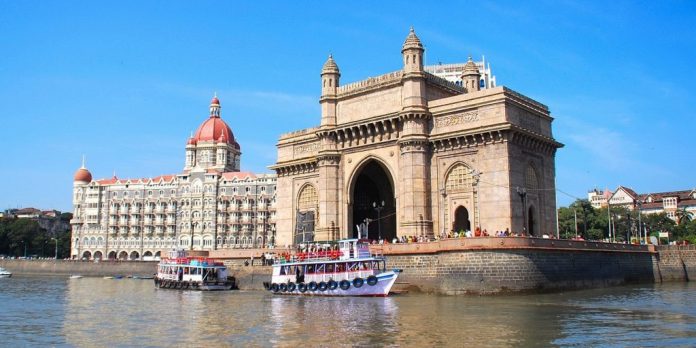
Image source: https://blog.ipleaders.in/top-10-law-firms-mumbai-makes-stand/

This article has been written by Avilash Kumbhar, pursuing the Diploma in Intellectual Property, Media and Entertainment Laws from LawSikho.

Introduction

We’ve all heard of trademarking logos, brand names, headings, labels, tickets, names, signatures, words, letters, numbers, shapes of items, colour combinations, and even sounds, but trademarking an architectural design has never been tried since the Trademark Act (“Act”) went into effect in 1999. 

The Indian Hotels Company (“IHCL”) created history by securing a trademark registration for the exterior design of the Taj Mahal Palace Hotel. While it is quite common to receive trademark registration for architectural structures across the globe, image registration of the Taj Mahal Palace is the first in India. 

The Indian Trade Marks Registry granted very first image trademark registration to IHCL under the Act for image/architectural design of the iconic building of ‘Taj Mahal Palace’ hotel in Mumbai, i.e., the elegant structure and iconic dome thereby making it the first in the country to secure such trademark registration as depicted below.

With this, the hotel joins a tiny but exclusive club of famous structures and monuments across the globe that have these properties registered, thus elevating its prominence in the worldwide hospitality business. To name a few – the Empire State Building, the Citicorp Center and Guggenheim Museum in New York; the Transamerica Pyramid in San Francisco; the Wrigley Building in Chicago; the Eiffel Tower in Paris and Sydney Opera House in Australia. This article discussed the legislative backing and Registry’s recognition of the ability of buildings and landmarks to be identified as a source identifier to be eligible for trademark protection. Firstly, this article discussed the scope of rights granted to Taj Palace, and buildings of such nature in general under Image Trademarks registration. It goes on to discuss the requirements that such buildings need to fulfil to qualify as registrable trademarks, the need to have such registration. Lastly, the article touches upon the public policy implication of such monopoly and whether such monopoly deprives fair dealing by other proprietors and the general public’s right to cultural heritage.     

Scope of the rights

As per the details available at the Indian Trademarks Registry (E-Register), IHCL has received registration over the outside facade/image of “Taj Mahal Palace” hotel for providing food and drink; temporary accommodation’ which is valid until October 13, 2026, and can be renewed by making a timely request of every 10 years from the date of application. As a result, no third-party can use the architectural design or even the image of the building to offer the same or similar services covered under the said registration, without IHCL’s prior permission. IHCL, can also enforce its registered trademark against any third-party use of the registered trademark to offer dissimilar grounds.  

However, trademark registration only grants exclusive rights in relation to services covered under the respective registration. To prevent such unlawful use of the registered trademark by a third party, IHCL will need to establish (1) reputation and goodwill subsisting in the registered trademark and that the public associate the building subject to the registration with IHCL only; (2) misrepresentation; and lastly (3) damage to the IHCL’s goodwill by such representation.

IP protection for building trademark

Since IHCL has trademarked the structure, any commercial use of the dome and majestic exterior Taj Mahal Palace photographs will require prior permission and licence from IHCL. Commercial photographers and filmmakers may need to alter their methods. This has paved the way for the registration of trademarks on architectural designs in India. We can expect many of the country’s key landmarks to be trademarked and exclusively used for various unique products and services.

Image trademark

The Act requires the trademark (1) to be graphically represented; and (2) be distinct enough to be capable of distinguishing the goods or services offered / to be offered thereunder from those of others. 

These criteria exist solely for practical purposes. A graphically represented trademark visibly indicating its each and every aspect not only aids in adequate scrutiny but it also allows the average consumer to perceive it as a trademark.  With change in time, we have moved beyond just word marks and logos as trademarks and to adjust to this paradigm shift, non-conventional marks were introduced. The registration of Image Trademark is yet another addition to the non-conventional marks. While copyright protection to building design, plans and layouts have been in place for a considerable period, image trademark over such architectural and architectonic designs is a new and rising phenomenon in India. The debate of such trademark protections revolves around whether they are eligible for this protection and to what extent of the granting of such architectural design be protected? However, from a practical perspective, the protection and enforcement of non-conventional trademarks will remain ambiguous and technically impeded. The present trademark application filing system, the scrutiny procedure and the necessity for a mark to be unique are inherent in these hurdles. Although it is difficult to evaluate the eligibility of nonconventional trademarks’, the new trademarks which are anticipated to emerge as a result of the Taj Mahal verdict is intriguing. 

Building’s name or a logo can be trademarked if the associated building’s name or logo is used as part of brand identity. For example, a very popular Los Angeles landmark, the ‘Walt Disney Concert Hall’ image is federally registered and is used on many products like shirts, magnets, and stationery, all of which are used to promote the building’s brand identity. 

If the name, logo or the architectural design (usually referred to as “trade dress”) of a building which is used to offers any products or services is visually distinctive enough to be identified as a source of origin/identity of the brand and distinguish itself from comparable things, it can be registered as a trademarked. For instance, the use of ‘Walt Disney Concert Hall,’ a well-known and registered trademark, on merchandise to promote the building’s corporate identity, is image trademarking.  

An image trademark is similar to any other conventional/non-conventional trademarks; however, it applies to architectural structures. Image trademark offers acknowledgment of the design and distinctiveness of such buildings and ensures that they are not imitated in any way.

Why is the trademark so important?

By registering for the image trademark, the IHCL reveals that it feels the very appearance of the building — or replicas of it — is so identifiable that anybody seeking to reproduce or exploit it for any commercial reason is seeking to cash in on its brand, and it so has to be protected. At its most basic, the registration implies that no person or entity may use photos of the Taj Palace exteriors for commercial purposes without permission. It also suggests that, according to the Indian Trademarks Registry, the Taj Palace is a recognisable and distinct architectural design in India. Buildings pass the criteria of graphical representation, as well as the capacity to operate as a source indicator and are thus entitled to be protected as a trademark.

The fundamental objective for obtaining an image trademark for the structure includes; 

  • Preventing copycat architecture, safeguarding the building’s distinctive design, and maintaining its originality and legacy; 
  • Restricting unauthorized use such as reproductions of the building in artistic works, photographic reproductions, unfair commercial use, by registering the structure as trademark etc.; and 
  • safeguarding the structure from being utilised in works that might tarnish and dilute its image, for instance, use of building design by cigarette/alcohol manufacturers on its product packages. 

As a result of the image trademark registration, any commercial use of the trademarked image to offer similar services or even allied goods will be deemed an infringement action.    

A significant point here is why, instead of going for a design or copyright registration, the IHCL opted to get a trademark registration. While Trademark registration not only promotes commercial income production through licensing, but it also indicates that a certain building functions as the source or works as a source identifier as well as safeguarding the building’s distinctiveness; a copyright registration solely preserves the building’s aesthetic value and design registration only aids in the expansion of commercial income production. Further, the life of copyright and design registration is limited, where trademark registration enjoys perpetual existence subject to timely renewal. 

To be eligible for registration, a landmark building must be used on or in relation to the promotion and sale of goods and services or displayed on materials used in offering the goods or services for sale, rather than merely as a landmark in and of itself. Further, the general public must identify such a structure as identifying and marking the source of specific goods or services.

Thus, no proprietor can acquire exclusive and monopoly right over any building if it cannot adduce evidence that the public associate the building with the proprietor’s goods/services.  In order to be protected as a valid trademark the building must create “a separate and distinct commercial impression which performs the trademark function of identifying the source of the identity of the origin of the mark and goods/services offered thereunder”. If the proprietor is not able to produce evidence to demonstrate that the public actually identified the building as a trademark. If the public does not rely upon the landmark to identify the source, then the landmark cannot be held to be a trademark. 

Taking photographs with the building

To put the debate away from the trademarks law, it is appropriate to point out here that the European Union copyright law provides for the picture and video footage of architectural structures to be permanently placed in public without infringing on them, as a colloquium called the ‘Freedom of Panorama’. It restricts the copyright owner’s right to take action against the producers and distributors of such pictures for copyright violation. This concept is also enriched in the Indian Copyright Act, 1957 under Section 52 (1) (s) and (t) as non-commercial fair use.  

The mainstream media widely and extensively covered this story erroneously suggesting that royalties be charged for photographing the structure in the future. Trademark Laws only prohibit unauthorized use as long as there is commercial exploitation by third-party proprietors. Tourists, on the other hand, are free to shoot pictures with the ‘Taj Mahal Palace’ hotel in the backdrop as long as the intention is not to financially exploit the image. 

The road ahead: conclusion

The Taj Mahal Palace Hotel, as the first Indian building to receive an image trademark, has undoubtedly piloted in a new era for the development of trademark protection and there will certainly be a flood of applications seeking trademark protection for their building, to protect their distinctiveness. Because the Taj Palace Hotel is now a registered image trademark, any person who seeks to exploit the structure’s image for commercial purposes may do so only after obtaining a license from IHCL.  This, however, does not interfere with the general public’s freedom to click photographs with the building as a backdrop, provided that the photographs are not thereafter commercially exploited without IHCL’s authorization. IHCL will have little trouble enforcing its trademark against third-party usage in regard to hospitality services or other connected goods or services. However, in the case of dissimilar goods or services, IHCL must demonstrate that dilution has happened by establishing that the general public links the mark with the mark’s owner, at least initially, when they see the mark in practically any situation.

References

  1. Devika Agarwal, “Granting trademark over buildings like Mumbai’s Taj Mahal Palace violates citizen’s right to cultural heritage”, First Post, June 21, 2017, Available at https://www.firstpost.com/india/granting-trademarks-to-buildings-like-mumbais-taj-mahal-palace-violate-right-to-cultural-heritage-3730735.html.
  2. Inika Charles, “Taj Mahal Palace Hotel First Building to Receive Trademark in India”, SpicyIP, June 29, 2017, Available at https://spicyip.com/2017/06/taj-mahal-palace-hotel-first-building-to-receive-trademark-in-india.html
  3. Reeba Zachariah & Vipashana V K, “114-year-old Taj Palace becomes first Indian building to get trademark”, Times of India, Jun 19, 2017, Available at timesofindia.indiatimes.com/city/mumbai/taj-palace-first-building-to-get-trademark/articleshow/59210141.cms.
  4. Andrew T. Spence, “When a Landmark Cannot Ser When a Landmark Cannot Serve as a Trademark: Trademark Protection for Building Designs, Vol 2 (2000), Washington University Journal of Law & Policy. Available at openscholarship.wustl.edu/cgi/viewcontent.cgi?article=1517&context=law_journal_law_policy.

Students of Lawsikho courses regularly produce writing assignments and work on practical exercises as a part of their coursework and develop themselves in real-life practical skills.

LawSikho has created a telegram group for exchanging legal knowledge, referrals, and various opportunities. You can click on this link and join:

Follow us on Instagram and subscribe to our YouTube channel for more amazing legal content.


Download Now

Ways as to where and how to report animal cruelty

0
animal cruelty

This article is written by Ridhi Mittal, a student of Symbiosis Law School, Noida. The article talks about cruelty in terms of animals. It provides information regarding how one can report animal cruelty and where can it be reported. 

Introduction

Cruelty is cruel or harsh behaviour towards someone. Animal cruelty means treating animals with brutality. It involves inflicting harm upon animals or killing them. Cruelty can be induced in various forms like kicking, burning, stabbing, beating, and shooting. In some religions, it is considered good fortune to sacrifice an animal to God as a peace offering and then start their work. This offering of animals is subjected to animal cruelty as we humans have no right to decide who lives and who dies and killing an innocent living organism is inappropriate. 

Where can you report animal cruelty

  • The Prevention of Cruelty Animals Act, 1960 prohibits animal cruelty. The act of animal cruelty can be reported to a police officer. One can call 911 if they witness any kind of animal cruelty or feel that it is likely to happen in any place. 
  • In India, to report cruelty on animals one needs to call on (0) 98201 22602. One can call the police or on the number of the police station of the respected area where the cruelty is conducted.
  •  In case one is unable to reach out to any law authority, one can contact the animal service agencies or human societies that help out animals.
  •  There are even online sites like ‘The Pet Nest’ where one can report an animal cruelty incident. 
  • PETA India provides different forms for a person to report different kinds of animal cruelty. For instance, if you were to report animal cruelty in a  laboratory, there is a different form and for reporting animal cruelty in a film or any television show there is a different form
  • Organisations like ‘The Humane Society’ come forward and ask people to report animal cruelty, either on their page or with the police. 
  • Alongside reporting animal cruelty, one shall also follow certain other steps like calling for veterinary care, standing up against the person who is in for animal cruelty, and immediately file an FIR.
  •  One can report animal abuse through the site of RSPCA– Royal Society for the Prevention of Cruelty to Animals, which has been an animal care organisation since 1824.
  • Different states have different ways of reporting. For instance, in  New York, one shall call 311 to report animal cruelty. In other countries, people can call 911 and also investigate who is responsible for animal cruelty and then file a complaint against him/her.
  •  Each country has its own codes and numbers for reporting both ongoing animal abuse and already held animal cruelty. One shall be aware of the codes of the respective country/state they live in. 

How can you report animal cruelty 

One can record the incident while making a complaint against it so that it helps the prosecutor further in getting the abuser punished. The report filed for animal cruelty should be as detailed as possible which means it should include the dates and circumstances that happened. A witness or evidence to the said act is a great benefit in proving the offence of the accused. It is not compulsory that the person himself comes forward for making the complaint. He/she can hide his identity and make an anonymous complaint as well.

For making a complaint one can notify the animal control or contact a police officer immediately when one comes in contact with any incident of animal cruelty. It is advised that if you are confused regarding whether the act constitutes animal cruelty or not, you should still notify animal control so that they can look into the matter and make sure that no animal cruelty takes place. 

While entering the premises where animal cruelty is taking place, one should be careful and well aware of his surroundings so that they themselves don’t put in any kind of danger because it is a very likely case that either the wrongdoer or the animal might react in a way which proves dangerous or deadly for the witness. 

One shall avoid entering another person’s property without his permission or invitation and exercise great caution around unfamiliar animals who may be frightened or in pain. Providing law enforcement with the names and contact numbers of the first-hand witnesses of the scene is also a great help to the authorities. 

A complete record shall also be maintained by the person filing the complaint himself or the person he contacted and who is in charge of the complaint so that in case of any nonfeasance or malfeasance by the official, the person can report to higher authorities. If one does not know the procedures or methods, they can contact the animal welfare association of their area or native place because they are a big help in fighting the case of animal cruelty. 

Who can report animal cruelty 

  • Anyone and everyone can report animal abuse.
  • Anyone who witnesses animal cruelty can file a case against it. 
  • In case one did not witness the incident of animal cruelty himself but got to know from a friend or a neighbour, he/she can still report for animal cruelty provided they have the details of its whereabouts. 
  • They can even make the eye-witness come forward for him to speak against the ill-treatment faced by any animal, be it a dog or a bird or even a wild animal.
  • No one should tolerate even the slightest of cruelty or harm being caused to any living organisms around them. There are provisions for reporting animal cruelty both via phone or online which one should be aware of. 
  • One can even report animal cruelty seen on TV or in movies or in any online series. 
  •  A report can even be made against the owner of the pet if the other person feels that it inflicts any kind of cruelty upon the pet by the owner. 

Conclusion 

Animal cruelty is something that exists around us but is still not reported, the reason being some are not educated about how and where to report and some are even unaware of what all is covered under the scope of animal cruelty. Animal cruelty is an umbrella term that includes almost everything that causes harm or any kind of threat to the life and limb of all the existing animals on this earth. One should have the knowledge that they can either call the police or the animal welfare societies for help against animal cruelty. A complaint can be filed in the police station against the incident resulting in animal cruelty. The animal welfare organisation has been dealing with animal protection work for a long time and have contacts, therefore, they are capable of stopping animal cruelty at earliest which is why contacting them in the absence of any contact with a police officer is really helpful. Reporting animal cruelty should be immediately done by the person either witnessing it or by listening to it from someone else. Our one call can make a lot of difference in an animal’s life. Sometimes one does not willingly engage in animal cruelty. When he/she feels threatened by the animal in front, they do something that ends up hurting the animal.  Instead of taking measures themselves, they should call the municipal corporation of the respective area or any other authority in charge so that animal cruelty is avoided. For reporting animal cruelty, one has broadly 2 options. First, call the helpline number (either of the police or animal control). Secondly, report through online websites for animal welfare. Reporting it is the right thing to do and thus shall be done by everyone. 

References 


Students of Lawsikho courses regularly produce writing assignments and work on practical exercises as a part of their coursework and develop themselves in real-life practical skills.

LawSikho has created a telegram group for exchanging legal knowledge, referrals, and various opportunities. You can click on this link and join:

Follow us on Instagram and subscribe to our YouTube channel for more amazing legal content.

Download Now

The need for All India Judicial Service (AIJS)

0

This article is written by Udita Prakash from UPES, Dehradun. Here it’s briefly discussed about the All India Judicial Service, its criticism, solution and need for having AIJS in the country. 

Introduction 

As early as 1961, a proposal for All India Judicial Service was first suggested at the Conference of the Chief Justice as a way to remove any room for judicial or executive intervention in appointments to the judiciary. The proposal was shelved after some states and superior courts opposed it until 1976 when the Constitution was amended to establish an AIJS under Article 312. The proposal was again presented by the governing UPA government in 2012, but the Bill was shelved again after opposition by a High Court Chief Justice who called this a violation of their rights. 

History of AIJS 

The formation of an All India Judicial Service (AIJS) has a protracted and active history. As the problem is amassing momentum because the central government finalizes a Bill to set up a judicial provider at some point in India, a Bill that remained withinside the history of the controversy on judicial reform for 65 years. 

This Bill aims to create a centralized cadre of district judges and to switch the powers of hiring and appointing those judges from the better courts and national governments to a centralized community as exists for different degree examinations throughout India. It is thought that this Bill will assist fill the present vacancies withinside the Judiciary. AIJS was first proposed through the 14th report of the Law Commission in 1958. This report encouraged the advent of AIJS with the little element in its structure. They were hoping that the advent of the AIJS could appeal to the nice expertise within the country. Then, in 1976, Article 312 that parallels the officer choice method for the I.A.S changed into amended withinside the Constitution through the 42nd  Amendment to create AIJS for the appointment of district judges. 

The 77th and 116th reviews of the Prison Commissions additionally encouraged the advent of an AIJS. Furthermore, the 116th Report has provided the structure, the plan, the evaluations of academics, jurists, and the good judgment in the back of the AIJS. It referred to 40% of strength through the promotion of subordinate judges, 40% through direct recruitment, and 20% elevation of the Bar. Rules for provider exams and promotions could be managed through a proposed National Judicial Service Commission. The Honorable Supreme Court of India additionally upheld the similarly in All India Judges Association v. Union of India (2001) mentioning that AIJS ought to be set up and the Union of India ought to take suitable movement in this regard, regarding the observations of the State Reorganization Commission that the advent of this type of provider for all of India is a “necessity essential and pressing “. In recent years, even the Minister for Trade Union Law, alongside others, have time and again expressed their guide for the advent of the AIJS, and these days the valuable authorities answered through getting a draft ready to cover the AIJS coverage. However, the proposed coverage has confronted a combined reaction from the prison profession. 

The AIJS is meant for the choice of judges on the district degree in competition to the country judicial exam that induces the lower judiciary which includes the Munsif courts and Additional Chief Judicial Magistrate, Additional Chief Metropolitan Magistrate, First Class Magistrate, Civil Judge-cum-first Class Magistrate, etc. The posted coverage definition consists of the choice procedure, the qualification standards of the chosen applicants. An attorney or a graduate devoted to the coaching profession from an identified law institute with seven years of experience is certified to take the AIJS examination.

A working towards deciding is likewise certified for the examination with the equal work revel in. Another critical component of the coverage is the age variety of 28 to 35 years of qualification for applicants who choose the AIJS examination. However, the previous consent of all superior courts is needed for the implementation of the policy. Unfortunately, HCs in India have proven a clean face to the concept of ​​a National Judicial Screening Exam each time it is proposed. One main cause is that the high courts now no longer need to lose administrative manipulation over the choice. This makes it a challenging job for the Law Ministry as even earlier because in 2012-13 a committee of secretaries backed the idea of a national common test for judicial appointments. The same received a mixed response from the states and their judiciaries with 13 states and 18 High Courts either declined the idea or sought several changes to it.

Criticism of AIJS 

Other than that, the policy itself has a few fundamental troubles because of which it has not got a fantastic response from felony specialists. The first query has to do with the age organization and the former enjoy that the examination seeks under its qualification criteria. The 7-year experience requirement could defeat the legislators’ cause of more participation through graduate students. Currently, the common age of a graduating pupil is 24 to 26, developing a difficult scenario wherein lawmakers agree that a 31- to 33-year-old will try and take a seat down for the examination after they may be on the identical level. 

Therefore, the age limit and a preceding enjoyment of seven years could be unfavorable to the goal of measuring the interest of younger law graduates. Another grievance of the Bill is the non-consideration of the language barrier particularly in non-Hindi-talking states in which English isn’t as popular. Finally, the union authorities solved this trouble by making an extra addition to the coverage by taking a look at 22 languages ​​indexed in Schedule 8 of the Constitution of India and by adopting the pattern of the United States. However, the trouble of interstate appointments nonetheless exists while a person from one country can’t be appointed in every other country. In that case, the AIJS follows the line of the State-Judicial exam, so it has now no longer added approximately any radical alternate withinside the current exam shape, other than a few areas. 

According to the 101 Grant Applications Report (2020-2021) of the Ministry of Law and Justice, there are 24018 sanctioned judicial officer positions in India, of which 5146 are vacant. jurisdictions together with Allahabad High Court, Patna High Court, and Madhya Pradesh High Court make a contribution to 42.7% of general vacancies in India. However, different superior courts constitute a far lower proportion. Vacancies in subordinate courts are a good deal higher than in district courts. Therefore, AIJS will fill a restrained percent of the full vacancies. The goal of filling vacancies is empty due to the fact that maximum vacancies are from those courts, and converting the present judicial shape because of its inefficient overall performance could be an unfavorable step that can cause poor results.

Suggestion to the criticism 

AIJS has been denoted as the answer to draw high-quality expertise to the judiciary, for vacancies, etc. However, the language barrier, the number of vacancies withinside the subordinate judiciary, and others are a number of the problems that can’t be resolved: 

  • First of all, to clear up the language barrier problem, applicants can fill in with the desired listing of the state that they need to join. And a small language-associated check may be taken earlier than or for the duration of the interview. The very last task listing may be primarily based totally on benefit and desire. 
  • Second, the union authorities and the judiciary have confronted the new AIJS draft and it’s far crucial to reap the consent of all of the superior courts earlier than imposing the new exam structure. To solve this dispute, the union authorities can make certain that every problem of the superior court is accommodated to AIJS coverage through growing a significant committee, which might have the registrar (exam) of every superior court as a member of the advisory body. 
  • Third, concerning the problem of subordinate advanced courtroom docket vacancies, the AIJS may be carried out in parts: one exam for the decrease judiciary, which might fill the subordinate courtroom docket positions, and the alternative for the energy advanced courtroom docket, as a way to deal best with district courts. 

The change has to be made in Article 312 of the Indian Constitution which permits the recruitment of AIJS, the best for the cadre of district judges, and now no longer for the subordinate judiciary. The change of this text will permit the advent of this coverage to perform this exam for each district court and subordinate courts.

Need of AIJS 

Huge vacancy of judges and postponement in hiring

There are presently around 5,400 vacant positions in lower judiciary across the nation and pendency of 2.78 crore cases in lower judiciary primarily due to inordinate delay in holding regular exams by states.

Lack of correct, excellent judicial officials

The ever continuing decline in their quality will delay delivery of justice, increase pendency of cases, impair quality of judgments, and in turn affect the competence of the higher judiciary as well.

Lack of price range with nation governments

State judicial offerings aren’t appealing to “pinnacle talent” because of low salaries, rewards, and reimbursement from state governments.

Lack of specialized nation schooling institutions

The award is a specialization that calls for modern-day schooling institutes and teachers, however, national institutes do now no longer permit such publicity to interns.

Discretion of a narrow body

The system of choosing an amazing choice is a tough activity and ought to now no longer be left to the discretion of some people (collegium) regardless of how sensible they are.

Timely recruitment

AIJS will allow a large number of judges to fill those vacancies in the lower judiciary through a trial across India. Applicants could be posted in states where more judges are needed to be selected through AIJS.

Better efficiency of the courts

The processing and the problem of the delay of cases would be eliminated with the timely hiring of judges for the lower judiciary in the district courts and subordinate courts through AIJS.

Improvement in the efficiency of judicial administration

AIJS would attract the best talents in the country and therefore could maintain high standards of judicial administration.

No more nepotism

The issue of corruption, nepotism, etc. that we notice in almost every selection process from now on, may decline. AIJS will lead to the appointment of quality judges, who have experience and have studied all types of cases, and public faith in the judiciary will be restored.

Promote national integration

AIJS will lead to the appointment of the best talents from other states in states with scarce resources.

Representation of the marginalized section

By following the reserve system in recruitment, underrepresented communities are represented in the judiciary.

Benefits of AIJS 

Responsibility and transparency

A career in judicial service will make the judiciary more responsible, more professional, and possibly also more equitable.

It infuses objectivity in hiring

The open competition would provide objectivity in the hiring process of the judiciary by reducing the discretion of the selection panel.

Securing the best talent 

AIJS will ensure a transparent and efficient recruitment method to attract the best talent in the Indian legal profession. The prospects for promotion to the superior courts, for the lower judiciary, at an early age would also increase, as they currently join at a much later age than Bar Association judges.

Uniformity throughout the country

The quality of adjudication and administration of justice would achieve uniformity throughout the country by eliminating differences at the state level in laws, practices, and standards.

Check case handling

The streamlined and objective recruitment process would ensure a regular flow of good quality judicial officers for vacant positions, reducing the handling of cases.

Representative character

AIJS will improve the representative character of the judiciary by hiring trained officials from underprivileged sectors of society, especially women and SC / ST.

Overall efficiency

A well-organized judicial service can attract talent from our law schools and young and well-informed judicial officers at the additional district judge level will make a difference. As ADJs and district judges, they can help the court system move faster and more efficiently. 

Conclusion 

It is through an All India judicial services exam performed by the UPSC with a view to maintain “excessive standards” in the judiciary. In addition to providing an AIJS as an answer for judicial vacancies, it could be more prudent to research the motives and reasons for a huge variety of vacancies in poorly acting States. AIJS is going through hurdles from the executive block and additionally from high courts, despite the fact that the Supreme Court has requested for AIJS twice. Therefore, AIJS needs to be designed in a way to get rid of its shortcomings and it is able to be a powerful technique to the vacancy in judiciary. Adequate judges may be made to be handiest if they’re recruited in huge energy through AIJS much like we see in the case of IAS, IPS, IFS, and different civil offerings. Hence there needs to be no greater delay. Moreover, after the selection, a judicial provider officer may be furnished with enough education to address the job. A meritocratic judiciary is the want of the hour that is viable with an aggressive recruitment process.

References 


LawSikho has created a telegram group for exchanging legal knowledge, referrals, and various opportunities. You can click on this link and join:

Follow us on Instagram and subscribe to our YouTube channel for more amazing legal content.

Download Now

The real estate brokerage agreement

0
Image source - https://bit.ly/314pylv

This article has been written by Kshitij Pandey, pursuing a Diploma in Advanced Contract Drafting, Negotiation, and Dispute Resolution from LawSikho.com.

Introduction

The real estate sector has been a driving force for India’s economy for many years. In India, the real estate sector is the second-highest employment generator, after the agriculture sector. The real estate sector in India is expected to reach US$ 1 trillion by 2030. By 2025, it will contribute 13% to the country’s GDP. The emergence of nuclear families, rapid urbanisation, and rising household income are likely to remain the key drivers for growth in all spheres of real estate, including residential, commercial, and retail. Rapid urbanisation in the country is pushing the growth of real estate. 

For people, apart from buying a permanent home for themselves, real estate has been the most stable form of investment with high returns on investment. Buying and selling of property are involved between buyer and seller with brokers and agents acting as intermediaries. Due to this, people dealing in real estate enter into various contracts especially when appointing a broker for buying and selling a property. For appointing a broker for buying and selling of the property, the most commonly used contract in the brokerage agreement. This paper will briefly discuss the use of real estate brokerage agreements in real estate.

Significance of a brokerage agreement

A brokerage agreement helps a property owner/buyer to authorize a real estate broker to find a buyer/seller for the property on their terms for which they pay the commission to the broker. This contract gives the broker the sole authorization to represent the seller/buyer and their properties to the prospective buyers/sellers. It is more of an employment contract rather than a real estate one.  It helps to ease the burden on the buyer/seller of the property to find third-party/buyer/sellers of their respective property by delegating that responsibility to the broker. The brokerage agreement states how the broker will advertise and find prospective buyers or sellers of the property for the highest possible price and maximum profit. It includes the commission fee as well for helping in the transaction. 

Types of brokerage agreements

Open brokerage agreement

In this type of brokerage agreement, the seller/buyer of the property retains the right to employ any number of brokers. It is a non-exclusive type of brokerage agreement. Here, the seller/buyer is obligated to pay a commission only to the broker who successfully finds a prospective buyer/seller. They retain the right to sell/buy the property. 

Exclusive right to sell brokerage agreement

An exclusive right to sell a brokerage agreement is the most commonly used contract as a brokerage agreement. In this type of agreement, a broker is appointed as the sole seller’s broker and has the exclusive authorization to present the property for buying/selling. The broker receives the commission no matter who sells the property while the brokerage agreement is in effect. 

Real estate broker

Under the provisions of real estate law. Only a broker can list, sell or rent as an agent of another person’s property. They have to procure a license to show the property to interested buyers/sellers, filling the contracts and listing agreements of the property. 

Legal compliance for broker under RERA, 2016

To be a broker in India, there is no need for any specific stipulation or knowledge requirement, as well as there, are no standards of practice that establishes any accountability, clearness or transparency, and professional standards. Henceforward to bring further accountability, clearness, or transparency, brokers have now been covered under the scope of RERA, 2016. A mandatory requirement is a registration that is set under Section 9 of the Act. It states that without formal registration, no real estate agent shall facilitate the selling and buying of properties.

For registration, a real estate broker has to make an application to the appropriate authority for the formal registration in the prescribed manner, within time, pay the appropriate fee mentioned in the schedule and all relevant documents as prescribed. Once the application is made to the authority, they can either: –

  1. a) Grant the license for a particular state or territory of India 
  2. b) May reject the application for the reasons which shall be recorded in writing if such application doesn’t follow the provisions of the Act.

    If the period prescribed under the Act is completed and the applicant doesn’t receive any further message about the paucity of information for rejection of his/her application, then the application is presumed to be registered. When the broker gets registered, he/she will receive a registration number by the appropriate authority and this number will be referred to by him in every purchase or sale transaction facilitated by him/her. Therefore, every broker who has registered themselves under RERA shall facilitate the sale or purchase under their name with a specific registration number. 

Punishment for non-compliance and non-registration

Brokers who have not registered themselves under the act have to be liable to a penalty up to Rs. 10,000 per day from the day of default, which may be extended up to 5 % of the cost of the property for sale facilitated by the broker.

Clauses

Because the same considerations arise in almost all real estate transactions, most listing agreements require similar information, starting with a description of the property. The description typically includes a list of personal property that will be left with the property when it’s sold, as well as a list of personal property the seller expects to remove (for example, appliances, and window treatments).

Here are the clauses that are covered in a standard real estate brokerage agreement

  1. Title- Title of the contract has to be mentioned as in any contract i.e., brokerage agreement.
  2. Parties- First and foremost the name of the parties who are entering into this agreement and their details. The sample clause would look like this as follows: –

‘This real estate brokerage agreement is made on____(Date), between the parties: –

a. Buyer

(Address_____________)

(Further details________)

b. Broker

(Address_____________)

(Further details________)

3. Recitals- Another common clause used in contracts. It should be used to give the background of the parties i.e. The buyer/seller and the broker and how they entered into this agreement. The sample clause would look like this as follows: –

“Whereas buyer/seller desires to buys or sells the property, whereas broker shall act as an intermediary finder of buyer/seller of property”

4. Legal compliance: – This clause ensures the broker will comply with the applicable law of the state and has the license to provide his services. The sample clause would look like this as follows: –

“As required by law, the broker shall comply with all applicable laws and has obtained necessary and appropriate licenses to provide broker services”

5. Services: – This is one of the key clauses of the brokerage agreement. It lists out the services which will be provided by the broker. This clause is significant from the buyers/seller’s perspective as it defines and lists out all the duties and responsibilities of the broker. The sample clause would look like this as follows: –

“The broker shall: –

  • Use his skills/knowledge and commercially reasonable efforts to find buyers/sellers of the respective property listed in this agreement;
  • Notify the buyer/seller of the property with immediate effect of any offers received. etc. “

6. Term and termination- This clause will state the commencement date of the agreement. The sample clause would look like this as follows: –

“The term of this agreement shall commence from______ (effective date) and shall continue in full force and effect as described by this agreement”

7. Fees and payment: – Another key clause of this agreement. This clause will state how the transaction between the interested parties will take place. The broker’s commission fee and how it will be calculated is to be stated. Conditions can be added for the broker in order to make the agreement more conclusive. The mode of payment is also to be stated. The sample clause would look like this as follows: –

“The broker will take part in the transactions between the parties, with the buyer/seller having the right of final approval of the deal.

The Broker’s fee shall be calculated as________ (Method of calculation of commission)

Acceptable forms of payments include_________.

8. Non-circumvention- This clause safeguards broker’s commission. It will state that the buyer/seller must not deal directly with the other interested party in order to circumvent the broker’s commission. The sample clause would look like this as follows: –

“During the term of this agreement, buyer/seller shall not do business with, or otherwise solicit any seller/buyer referred by the broker, to the buyer for the purpose of circumventing, the result of which shall be to prevent the broker from realising or recognising a brokers fee”

9. Exclusivity- This clause gives the broker the exclusive right to introduce prospective buyer/seller to his/her client. The sample clause would look like this as follows: –

“For the term of this agreement, Broker shall have the exclusive right to introduce prospective sellers/buyers to the buyer/seller”

10. Confidentiality- Common clause in all the contracts. This protects the confidential information about the buyer/seller and the broker and about the agreement. The sample clause would look like this as follows: –

“The broker shall safeguard and keep confidential the information and shall not disclose any confidential information to any other person or entity.

The term “Confidential property” shall include any proprietary information in whatever form, that: –

  • Information provided by the buyer to broker, including information regarding finances, etc.
  • Concerns about any agreements that the broker may aid the buyer in entering into, etc.

Any needed disclosures of confidential information shall be provided to the Seller for approval prior to such disclosures taking place.

Any information disclosed without the above consideration shall serve as a material breach of contract and will result in termination of this real estate agency agreement in its entirety.”

11. Assignment- Another common clause of any contract. It states that any portion or subject covered in this agreement is non-transferable. The sample clause would look like this as follows: –

‘No portions of this agreement shall be transferred or otherwise delegated without prior written consent between the parties.

12. Entire agreement- It states that whatever clauses or subjects are covered in this agreement will constitute the whole agreement. The sample clause would look like this as follows: –

‘This brokerage agreement along with any attached documents shall constitute the entire agreement between the parties.

13. Severability-This clause will state that in case any clause or provision of the contract becomes unenforceable or illegal, the rest of the agreement will remain operative. The sample clause would look like this as follows: –

‘In the instance, any provisions of this agreement shall be found unenforceable or illegal the parties shall work together to agree on a similar enforceable term. Remaining provisions shall remain in full effect and shall not be altered or removed.’

14. Applicable law- This clause will state the applicable laws that govern this agreement. The sample clause would look like this as follows: –

‘This real estate brokerage agreement shall remain under the jurisdiction of (State) India. Any and all legal proceeds from this real estate brokerage agreement shall be conducted under the above jurisdiction.’

15. Dispute resolution- another key and common clause of the contract. This clause will state the dispute settlement mechanism if any dispute occurs in the future. The sample clause would look like this as follows: –

1) This agreement shall be construed and enforced in accordance with the laws of India without regard to the choice of law principles thereof. 

2) Any controversy or claim arising out of or relating to this agreement, including but not limited to its enforcement, arbitrability or interpretation shall be submitted to final and binding arbitration, to be held in Delhi, India, before a single arbitrator, in accordance with Arbitration & Conciliation Act, 1996.  

3) The arbitrator shall be selected by mutual agreement of the parties or, if the parties cannot agree, then the arbitrator shall be appointed by the court.

4) The arbitration shall be a confidential proceeding, closed to the general public. The arbitrator shall issue a written opinion stating the essential findings and conclusions upon which the arbitrator’s award is based. The parties will share equally in payment of the arbitrator’s fees and arbitration expenses and any other costs unique to the arbitration hearing (recognising that each side bears its own deposition, witness, expert and attorney’s fees, and other expenses to the same extent as if the matter were being heard in court).

Violation of a brokerage agreement

Violations of broker agreements can happen in many different ways. For the client, the main source of a breach of contract occurs due to a failure to pay the broker on time or according to the amount listed in the contract. Another form of a breach is where the client begins working with another broker when the contract has provided exclusive dealing rights for the broker.

For the broker, a common breach of agreement is where they don’t exercise enough diligence in their efforts. For instance, if the broker is lax in placing listings for the property, or if they do not keep up with buyer offers, they could be held liable for a breach. Real estate fraud can also negatively affect the broker’s contract rights. In such cases, the non-breaching party may be awarded damages to pay for financial losses. The amount awarded will depend on several factors including market values and the terms of the contract.

Conclusion

Real estate is a booming sector with increasing middle-class population and investments, especially in India. For its robust functioning, brokerage and agency contracts form the backbone of the real estate sector with brokers and agents being the key player in buying/selling properties. Brokerage agreements need to be neatly drafted and reviewed as to their clauses like services, fees, and payment, etc. are crucial to the functioning of this agreement. With the introduction of RERA, the eventual buyers or sellers of the property will be more protected from fraudulent brokers with a licensing system in place. A proper governing authority in place and increased and robust use of real estate contracts will increase transactions helping the real estate sector to grow and eventually the economy.


LawSikho has created a telegram group for exchanging legal knowledge, referrals, and various opportunities. You can click on this link and join:

https://t.me/joinchat/J_0YrBa4IBSHdpuTfQO_sA

Follow us on Instagram and subscribe to our YouTube channel for more amazing legal content. 

Download Now

Critical appraisal of various schools of jurisprudence

0
Feminist Jurisprudence
Image Source: https://bit.ly/2qf2UId

This article is written by Akshita Rohatgi, a student at GGSIP University, New Delhi. It analyzes the major schools of jurisprudence and lays down their merits and demerits.

Introduction

Time and again, jurists have tried to give a clear-cut definition of what law is. They have examined this discipline from vastly different angles since jurists wanted to understand what constitutes law in different ways. However, they were unable to reconcile the difference in the approaches and were thus unable to arrive at a hard-and-fast test to determine what to categorize as ‘law’. As a result, as of now, there is no universally accepted definition of the law.

Instead, we study the different definitions of law given by various jurists to arrive at a better understanding of this discipline. Jurists and scholars have been classified into broadheads that comprise the various schools of jurisprudence for our convenience. This helps us understand their diverse approaches better and aids us in understanding the evolution of legal philosophy.

There are five major schools of law- Analytical school, Historical school, Sociological school, Philosophical school and lastly, Realist school. Since the scholars have been put into these heads by other contemporary scholars, there may be some shortcomings. For instance, those who formulated a theory did not put the theory in a particular school themselves so, these departments are not watertight and may overlap.

Analytical school

The Analytical school of law emerged as a reaction against the Natural school of law. It focused on creating a system of law in line with scientific and empirical methods and is also called the ‘imperative’ or ‘positive’ school of jurisprudence. It places emphasis on the will of the sovereign or that of the State, which further dictates what the law is. This will is enforced on the people through a system of punishments.

Major scholars of this school are-

John Austin

Austin defined law as the command of the sovereign backed up by sanctions. He claimed that law was an expression of the sovereign’s power and it was backed up by coercive methods, especially the threat of sanctions, to keep the political inferiors under its control. 

He delinked law from morality, saying that instead of law being based on ideals of morality, it derives its authority from the power of the political superior. He also claimed that law-making by the judiciary is unavoidable and is in the people’s interest. 

Merits

  • The theory given by Austin was definite and had no inconsistencies.
  • It separated law from morality, looking at it simply as a coercive tool. Thus, it had the clarity of expression that was absent in many other theories.
  • It was a starting pedestal for many other important theories of jurisprudence, as others developed in opposition to it. 
  • It treated doctrines independently from the specific discussions that were used, which increased their inherent importance. However, some might be of the view that this is a demerit.

Demerits

  • The view that it is the threat of sanctions alone that makes people obey laws is not true.  Force is just the last resort, however, people often follow laws because of social norms, morality, belief in its object etc.
  • International law was not considered law by Austin as it did not have the backing of sanctions. This was not acceptable to many, especially in the modern society where International law plays a major role.
  • Customs and social norms had no role to play here, neither did social morality. Only the will of the sovereign prevailed.
  • In Austin’s theory, the political superior- the sovereign was exempted from following the law. However, in the modern system of the law, laws also apply to those who make them. Thus, the lines between political superior and inferior have become blurred. Austin’s watertight categories are not of much use here.
  • A large part of the law consists of laws that neither command nor forbid people from doing certain things, eg- making a will, right to vote, etc. This falls out of the scope of Austin’s definition.

Jeremy Bentham

According to Bentham, the law is the will of the sovereign. It lays down the conduct that should be observed by a person or a class of persons who are subjected to its power. The law does not have any relation to morals and ethics. Here the sovereign is superior and does not owe obedience to any other. However, it can limit its power through external agencies (like international treaties). Thus, its power is not absolute. 

He also made a reference to sanctions and the need for the sovereign to impose them. However, unlike Austin, he also talked about the positive sanctions which reward those who obey the law, along with Austin’s punishments to those who don’t.

Bentham also gave a ‘Principle of Utility, which gave a yardstick for measuring each law. It said that a law was good if it maximized the good for the maximum number of people. This takes only the consequences of the act into consideration, not its intent. This concept led to the foundation of the theory of utilitarianism.

Merits

  • It placed limits on the power of the sovereign, which made it more pragmatic and closer to reality.
  • He took into account the concept of positive sanctions i.e. rewards, which adds a benevolent touch to the concept of the all-powerful sovereign.
  • The concept of utilitarianism, if viewed in terms of a majority opinion being in favour and a proposal being for the good of a majority of people without harming others, is close to the concept of modern-day democracy.
  • The ‘Principle of Utility’ encouraged activities that were beneficial to most of the community.

Demerits

  • Like Austin, he did not define the legal system. There was no attempt to relate the concept of sovereignty with the legal system of his contemporary period. Thus, the concept remains mostly on paper.  
  • His theory of utility tends to legitimize majoritarianism since the views of the majority would always prevail over the rights of minorities. This goes against the modern system of democracy, which protects the rights of all.
  • In the democratic system, the lawmakers owe obedience to the will of the people and the people are subject to the laws made by the lawmaker. So, his rigid definition of the sovereign does not apply here.
  • It did not take into account the intention of an action, whether it was done with good intent or with malice but took into account only its consequences.

Historical school

This school talks about law being a culmination of years of Historical development and places emphasis on both the commands and customs as being a source of law. Two main proponents of this school are-

Friedrich Carl von Savigny

He was a German philosopher, who is also called the ‘founder of modern jurisprudence’. He developed this theory to combat increasing acceptance of the ideas of the French Revolution. His theory laid emphasis on “popular consciousness” (Volksgeist, as he called it). He believed that this popular consciousness was the most authentic expression of the will of the people and it evolved with society. The legislation, according to this theory, was valuable only if it respected social norms and customs.

Merits

  • It was only after this work, that the tenants of the Historical school were fully understood. This paved the way for a fresh approach to the legal system.
  • It recognized an important tenet of the law, that the source of law is in the popular will of the people, even if it may have been exaggerated.
  • It gives importance to the will of the people and their views, instead of letting all the authority and power be usurped by a single individual or a group of individuals. This is in line with the modern-day concept of representative democracy.
  • It recognizes the fact that for the administration and enforcement of a particular law, it should have the endorsement of the people. These laws should not be translated to customs if they do not suit the needs of the given society.
  • This view acknowledged the importance of change and accepted that as society grows, customs and traditions need to change too.

Sir Henry Maine

Sir Henry Maine developed the ‘Historical comparative’ or ‘anthropological method’ to study the law, claiming that law developed through various stages:

  1. Kingly rule- Commands  given by the King
  2. Customary law- Commands turn into customs
  3. Administration of customs goes to a minority group- Like priests
  4. Codification- Law gets codified

According to him, static societies stop at this stage, but progressive societies go beyond-

  • Fiction- The operation of the law changes, while its letter remains the same.
  • Equity- Ethics start playing a role and start governing the law.
  • Legislation- It is obligatory (based on obligations) and derives its authority from a body of persons.

After this, in progressive societies, individuals’ standing which was determined by status, i.e. caste, gender, etc. now stops playing a role. The free will of all comes in. An individual becomes more important, as evidenced by their ability to contract out of their own free will.

Merits

  • This theory showed a clear and definite correlation between law and culture, placing a lot of importance on the evolution of society as a whole instead of simply focusing on law as an isolated subject.
  • It plugged in a criticism of Savigny’s theory, that customs are not always reflected in the popular consciousness and will of the people.
  • It balances the role of the sovereign as well as popular consciousness in his theory.
  • This theory inspired the principles of Historical evolution and was a valuable asset to many other researchers and scholars.
  • It emphasized that society evolves slowly at its own pace, but that progress is inevitable.
  • It claimed that progressive societies treat all the people equally, at least in the law. By characterizing progressive societies as more evolved, it showed equality as a desirable goal. It showed status and differentiation by the law on the basis of the same as something undesirable and marked it as a characteristic of a less evolved society.

Demerits

  • His theory of the evolution of society and the stages involved has been criticized for oversimplifications.
  • Maine’s theory does not hold good in some totalitarian states, where even if there was a movement towards freedom and liberty for all, there was a backward movement towards the growing importance of status. It failed to take into account this negative direction.
  • He claims that law and religion were one and same in ancient society. This has drawn criticism for a sweeping generalization as well as over-exaggeration.
  • This theory has also been criticized for idealizing Europe, calling it a progressive state. He says it is beyond statutes and laws simply because it has a desire to improve and develop. Dissenters claim that 19th century Europe was deeply conservative, patriarchal and racist, in various stages of colonizing the world and was directly involved in the two world wars thereafter. It is not worth idealizing and this theory represents a colonial view. 
  • Maine talks about how ancient society was one where the State commanded absolute control over all its people, as parallel to how the patriarch of the family had absolute, despotic control over all its other members. The empirical evidence here has been questioned, with many claiming that the ancient society was matriarchal instead of patriarchal.

Sociological school

This school views laws primarily in terms of their relationship with society and having no independent existence of its own. It places emphasis on studying the law ‘in action’ instead of in isolation. The main proponents of this school are-

Roscoe Pound

Pound viewed the law as a method of ‘social engineering, where the law is used to balance out competing interests. These interests were categorized into individual interest, public interest and social interest. He also laid down five jural postulates, allowing more to be added as and when the need arises. These were:

  1. Criminal law- No one should commit intentional aggression upon another.
  2. Patent law- A person who has created something has the right to own it.
  3. Law of contract- Men shall act in good faith in all transactions.
  4. Law of Tort- Men must not act in a way that could cause unjustified risk of harm to another.
  5. Strict liability- All harmful things must be kept within their boundaries.

Merits

  • The biggest contribution of Pound was perhaps that he drew an important link between society, laws and administration of the laws. He emphasized more fieldwork for a better understanding of the functioning of laws in society.
  • He brought to notice and discussed the various competing interests in society and the need to balance all of them.
  • This theory took a balanced position, avoiding over-emphasis on any one aspect. It recognized customs as important but also talked about social engineering and how customs can be modified or evolve over time. 
  • It pointed out the tremendous responsibility of lawmakers like legislators, judges and jurists to make a law suitable for society and highlighted its constructive character. 

Demerits

  • The various interests given by Pound aren’t exhaustive and need to be updated regularly, as society grows more and more complex.
  • There isn’t a proper criterion given to classify which interest falls under which head and in various cases, the lines may be blurred. Often, it’s up to an individual’s own perception, whether something is in the interests of individuals, or if it is in social interest. For instance, providing housing to the poor may be looked upon as a social interest by the poor, but as an individual interest (benefiting individual poor people) by onlookers. 
  • Some critics claim that Pound’s assertion of individual interests being the most important makes this theory vulnerable to being politically biased towards libertarian thought.
  • Pound’s theory has been called fit only for an “idealistic society” since it assumes various conflicting interests can be balanced in a perfect middle ground.
  • The word “engineering” has been criticized for being too “mechanical” and suggesting society can be used experimentally.

Leon Duguit

This theory viewed the law as a ‘social fact’ that is present because people live in a society. The people living in a society are interdependent on each other and often have common needs.  The social function of the law was to maintain social solidarity, which Leon regarded as a basic fact of human society. 

The theory claims that an individual’s rights by themselves do not hold any merit and the only right they do have is to perform their duty. In other words, he accords a low status to the rights of an individual, unless they are for the good of the entire society. No one should do anything to harm social solidarity. 

A State is simply a group giving commands backed by force. Its actions are legitimate only if they encourage social solidarity and if not, the people should revolt against it. He judges all activities and institutions using the yardstick of the good they do to social cohesion and how much they help in maintaining social solidarity. 

Merits 

  • He rejects the notion of an all-powerful State, claiming that it is simply an institution to codify what was already a fact of society. 
  • This theory became a starting point for various other theories and even played a part in formulating the theory of Natural law. It was used by Soviet jurists, who adapted it to their needs and by jurists like Renard and Hauriou for their “institutional theory”. Thus, it was supported by Marxists as well as sociologists. 
  • He defines justice in a primarily social context, trying to rule out all confusions and inconsistencies that may arise. 
  • His approach and study of the law and society paved the way for the acceptance of a more methodological study of the disciplines. 

Demerits

  • Even though this theory pretends to reject Natural law, it uses the same idea as the Natural law of ‘social solidarity is a natural fact of any society. Some say it merely repackages the same theory. 
  • This theory holds good mostly on paper, as it is usually not clear what the public opinion endorses and this opinion is often divided. 
  • It is not clear what criterion there is to and who would decide if a particular action/law would help social solidarity. Answers here tend to be subjective. For instance, one may feel that giving safeguards to minorities to practice their religion may foster social solidarity. On the other hand, others may feel that trying to suppress these voices in favour of a ‘unified’ one may help social solidarity. 
  • ‘Social solidarity’ can mean different things for different people. It places minimizing conflicts on the highest pedestal and this might mean silencing minority voices.
  • Indeed, this theory has been used by fascists to silence all dissent and ensure the rule of the powerful. Further, the denial of individual interests was used by communist regimes to deny individuals rights. 
  • Many claim that Leon confused what the law is and what it should be according to him since this theory said that if a law does not encourage social solidarity, it isn’t a law.
  • Further, he also confused the end and means to an end, by defining social solidarity as an end in itself. 
  • Some critics also claim that he completely divorced morality from law and tried to wipe out all differing opinions from the law. According to them, a law that does not provide options and take into account the will of the people is meaningless. 

Philosophical school

According to this theory, the purpose by which a law is made is significant. Law is a means to ensure justice in the society. Morals and ethics have a major role to play in jurisprudence, especially since a sense of right and wrong is intrinsic to the law. This sense of morality helps people decide the course of action which would help maintain law and order in the society and is concerned with a better future.

Most scholars under this school are also of the view that restrictions on people’s liberty are justified only if they promote the freedom of others in society.  The ostensible purpose of the law here is that it has the function of protecting human liberty. The end game here is human perfection. 

Some noteworthy supporters of this theory are: 

Immanuel Kant

German philosopher Immanuel Kant, in his essay “Lectures on Ethics” drew a hard line between law and ethics. He viewed both of these as two distinct concepts. The purpose of ethics was to crystallize noble ideals and lay down the model conduct of humans, which relates to the internal aspect of human behaviour. On the other hand, the law regulates the eternal aspect of human behaviour and tries to instil a sense of ethical behaviour among the people even if it involves the use of force. 

He supported the social contract theory which claimed that the State was the result of a pact between men and society. Thus, the people living in the society had a duty to obey their political superior. A Republican Representative State, without heredity, based on birth and one that protects free speech can help achieve a “united will” of everyone in the society. This is to be reflected in the legislation formulated by the political superiors. It also entailed the view that one could speak out against the laws but were also forced to obey them. Hence, no rebellion is ever justified. 

Merits

  • By emphasizing the importance of a representative government that listens to its citizens, Kant gives a lot of value to the will of the people. 
  • He defends individual liberty and freedom of self-determination and accords to it, a high position in his theory. 
  • His views as a philosopher give a refreshing insight into the sphere of morality and what the law should aim to achieve. 
  • This theory strikes a fine balance between providing powers to the State and then placing limits on it to ensure that it is for the good of the society.  

Demerits

  • The most prominent critique of this theory is that Kant is confused about what the law is and what it ought to be. 
  • He completely denied the right to rebel even against unjust and tyrannical governments. This attracted a lot of flak.
  • His support for the social contract theory and denying the right to rebel to the people since they formed the institution of a political superior, has drawn the same criticism as the social contract theory. This critique throws light on how the people are denied the right to rebel based on a contract that their forefathers entered into.
  • His theory does not work in fascist, totalitarian and communist States or any type of non-representative government. This is because the political superior does not take into account the views of the people and emphasis on individual liberty is little. 
  • It has also been criticized on the grounds that there is not always an ulterior future objective that society works on. Instead, the growth of society is rather spontaneous.  
  • His theory is subjective and many believe it is simply an expression of his own opinion. 

Hegel

Drawing inspiration from Kant, Hegel too accorded a lot of importance to the value of liberty in his theory. He used the idea of ‘evolution’, saying that whenever a new idea is put forward, in time, opposition to it comes up too. A battle between the ideas takes place and as a result, a middle ground (that might lean on either side) develops. This middle ground is accorded a higher position. He also asserted that the idea of freedom and liberty has prevailed throughout history. Thus, it is pre-eminent. 

He talks of a “collective moral will” which is objective and has universal applicability. His theory endorsed the view that morals and the law are both interlinked and law works towards an ‘ideal’ future of the legal system. 

Merits

  • It gave importance to the liberty of an individual and did not support the elimination of individual will in favour of the goals of the state. 
  • It gave great importance to “ideas” independently and their intrinsic value in social change. 
  • This theory gave importance to opposing views and the power of debate and discussion. It emphasised finding a common ground to resolve conflicts.
  • The object accorded working towards an “ideal future” of the law rectifies a criticism of Kant who mentioned “ideal society”. This is a more pragmatic and Realistic approach.

Demerits

  • The theory assumes that in the battle of ideas, the ideas are looked at independently from the specific socio-cultural contexts they emerged in. It moves on to assume that views are not imposed by the powerful on others and each view is given a chance. This supports yet another assumption, only the product of the discussion is carried forward, not just the opinion of the powerful. However, as history has shown, this is rarely the case as the strong often impose ideas on the weak.
  • He claims that certain objective morals that have universal applicability can be developed. However, this seems unlikely as there are great differences of opinion across a country, let alone the world. This is not a pragmatic approach.
  • On one hand, his theory endorsed human liberty. On the other, he spoke of subjective individual morals being eliminated in favour of those of the state. This duality presents a great contraction. 
  • Like Kant, his theory was subjective and an expression of his personal opinions. 
  • He seems to have taken opposition to an opinion and differentiation from that view as one and the same thing, to promote his dialectical view. For instance, one may support giving reservations to the oppressed, others may feel that another system of affirmative action would be better to empower the oppressed. These views are not diametrically opposite and are not accommodated in his theory. This has led many to condemn his theory as extreme and critically dangerous. 

Realist school

As part of the Sociological approach, the Realist school is among the most recent schools of law to have come up. It gives great importance to the law laid down by judges and concentrates on systematic observation of the process of law-making and working of the law. This school acknowledges that it is more concerned with what law should be, instead of what it actually is. It concentrates upon the social impact of laws, looking at the legal decisions made by jurists. It is divided into two subtypes: American Realism and Scandinavian realism.  

Some prominent jurists from this school are- 

Jerome Frank

Part of the American school of Realism, Jerome Frank believed that judges should evolve the existing law and not just stick to the letter of the law, rules and precedents. He claimed that law is not certain, that is just a common “legal myth”. We can only be sure of what a law is, after judges interpret it.  

He talks of two different types of Realists- the ‘facts sceptics’ who hold the view that legal uncertainty is primarily in the letter of the law and look for consistency in the judiciary’s decisions to mitigate this problem. The other type is “rules sceptic”, who contend that legal uncertainty is because of the different facts of each case. The latter is more probable since usually, cases do not dispute the letter of the law and the contention is the facts of the cases.  

Merits

  • This theory does not ponder over what the law should be but instead focuses on what it is as it said that only the judges can make it certain. This gets rid of a lot of needless conjecture. 
  • It emphasizes studying the law within its context and not away from it. 
  • It promotes objectivity and consistency, saying that law is whatever judges decide it to be. There is little room for others to claim otherwise. 
  • It brought attention to the attempt to portray judicial decisions as impartial, unbiased and free from political influence to the reality that they often aren’t. A judge’s personal background and lived experiences may affect their decision making. For instance, a judge living in urban areas may hold stereotypes against those from villages. This will adversely affect the outcomes of cases. Or, judges from conservative families may hold stereotypes that women must listen to their fathers and husbands, which would work against the women in domestic violence cases.

Demerits 

  • The most prominent critique of this theory is that it promotes that the courts administer the law. In actuality, courts just uphold the law made by the legislature and implemented by the executive. The courts simply help ensure it is not violated. 
  • It gives up too much control to judges in the court, claiming that they essentially make the law. These judges are not elected officials and are barely accountable to the public in any way. Concentrating powers in their hands violates the theory of separation of power and goes against the basic tenants of a modern government system.
  • This theory paves way for judicial overreach and allows arbitrariness in decisions. There is a lack of restrictions on judges. There is also a lack of any obligation on them to maintain any consistency with the letter of the law. 
  • He considers the letter of the law as a mere guide and encourages judicial discretion in most laws. In a proactive sense, this would lead to great uncertainty in society about which law to follow till the judges give their declarations. It would also be vulnerable to be overruled. This would make it hard for the public to understand which rules to follow.
  • This is also a misleading view as the law is not always uncertain and in most cases, there is no room for judicial discretion. Thus, it over exaggerates the role of judges and is mostly on paper, incapable of being reconciled with reality.

Karl Olivecrona 

An important proponent of Scandinavian Realism, Karl Olivecrona examined legal theories from a Philosophical point of view. He placed emphasis on the actual working of the law. It says that judges can give any creative interpretation of the law and make the law. He claimed that law was simply a “social fact” that has persuasive value for judges while they’re reaching a decision.  

There is no “binding force” of the law, as it is of no use in a case where a person commits an offence that goes undetected. He further explains that law has a coercive force, but only on the minds of the people. A newly born baby knows nothing of the law at first but later learns little by little about it by observing the conduct of others. This baby develops a sense of right and wrong, that is informed by the law. The law informs morality, not the other way round and that morality convinces a person to do or refrain from doing certain things. 

Merits

  • He refrained from explicitly defining what the law is and rather decided to analyze the existing laws and their working. Some claim this to be a positive thing since it has better practical applicability and does not merely stay on paper. 
  • It recognized an important reality that coercive power is needed to enforce the law. However, at the same time, this theory also claimed that the law could not bind someone to do a particular thing if not for their own psychological pressures. The theory is balanced, rules out loopholes and is Realistic. 
  • It does not give too much importance to the ends of the law. Rather it focuses on its functioning and on the observation of the law at work. 
  • He claimed that even an immoral law is enforceable, because of a ‘binding force’. This is a pragmatic and Realistic view. At the same time, he emphasized that the law should promote ends that are considered desirable by most, forming a very balanced approach. 

Demerits

  • Some critics claim that this theory ends up treating law as a set of unconnected judgements, allowing for no consistency. This theory claims law is just a personal fantasy of a judge and there is no objectivity or definiteness. 
  • It greatly overemphasizes the importance of judges in devising the laws. Their main function is to interpret the law. Even though judges contribute in making the meaning of a law certain, there are various checks and balances to stop them from stretching their power too much, especially in a modern system.
  • This theory ignores that some laws do not come to court at all, but are still enforceable. 
  • Realists have also overstated the role of personal biases in judicial decisions. This is because in many cases judges might not have any prejudices about either party. There are several other factors at play affecting court decisions. So, the decisions cannot be attributed purely to personal opinions and the prejudice of judges in most cases. 
  • Another major criticism is that realism is not an actual school, it is simply a branch of Sociological school or as some put it, “the left-wing of Functional school”. 

Natural school

The Natural school is also called the ‘Divine’ school of law due to its close relationship with theology and the concept of a natural state of affairs created by a superpower. It talks about a higher law that is ‘natural’ or ‘divine’, and this determines the fate of the laws made by people. All laws are measured by the yardstick of conformity to this Natural law and morality is closely linked to laws in this theory. Expression of the will of the law-makers, if it violates this Natural law, will lose its character and not be considered law.

This theory of the law is one of the oldest and has been classified using four time periods- ancient, medieval, renaissance and modern. It re-emerged because of the growing support for positivist theories and was a reaction against them. This school focused on the ends that law means to achieve, rather than its letter.

St. Thomas Aquinas

According to St. Aquinas, laws are the means to achieve certain ends and how to achieve the ends by the given means is decided by the legislator. Humans have flaws and yet, a desire to constantly improve with the goal of achieving perfection. Divine law is laid down by a superhuman legislator and people must try to conform to it for progress and for avoiding doing morally wrong acts. 

He divided laws into:

  1. Human law/ Positive law
  2. Law of scriptures/ Divine law
  3. Natural law- Part of divine law
  4. Law of God

Aquinas advocates for positive law following the laws of the scriptures. He bestows the church with the authority to decide whether a law is good, based on its conformity with divine law.

Merits

  • Aquinas allows the right to rebel, albeit only in cases that would result in a worse situation than before.
  • It is clear and lacks inconsistencies.
  • It gives humankind an idea of perfection to strive towards. This was especially important in the context, as this theory came up after the dark ages.
  • For the religious, it establishes a link between the divine and how to follow his path.

Demerits

  • This theory does not conform with the modern ideals of a secular State that is not governed by religion or individual senses of morality. 
  • Many critics, including G.E. Moore claims that goodness is not defined by nature, it is not analysable.
  • Opinions on morality may differ across religions. This defeats the claim of the theory’s universally applicable character. Those who do not believe in religion fall completely out of its scope.
  • The sense of morality does not conform across different states and societies. Further, opinions on what the religion promotes may differ within the religion. Vesting the Church with the authority to decide promotes absolutism and despotism.
  • It assumes that moral choices are based on reasoning. However, that is not often the case.

John Locke

According to Locke, before the conception of a State, humans lived in a peaceful state of nature. In this state of nature, a man possessed all the rights nature could give him. Men were born with the right to life and liberty. Men also had a right to property but lacked the means and organization to protect this right. Thus, they entered into a social contract to form a political society. He laid down various Natural rights of man. These include-

  1. Right to health (life)
  2. Right to liberty
  3. Right to estate

Through a majority vote, inalienable rights may be taken away or limited by the State. The state performs the role of a facilitator and would make laws on the basis of public opinion. If the state fails to perform this function and acts unjustly, the people can replace it by revolt and revolution.

Merits

  • This theory emphasizes that there are certain natural, inalienable rights that people possess against any despot. This idea was helpful in encouraging political consciousness among the people of their rights.
  • The concept of liberty espoused by Locke discourages authoritarianism and despotic powers.
  • It gave importance to individual existence, instead of working towards a higher good. Thus, it emphasized on the intrinsic value of an individual’s importance.
  • This theory had the effect of discouraging blind faith in authorities like the state and religious leaders. Thus, it decreased the sway of these powers on the masses and encouraged them to think for themselves.

Demerits

  • This theory is considered to be bad history since there was no evidence of this ‘social contract’ in history. According to David Hume, consent of the people was not taken for establishing the State.
  • Locke’s theory emphasized on the rights of man and man only. It did not allow women the same rights. He also justified slavery, claiming slaves forfeited their freedom on becoming captive.
  • His theory accords utmost importance to human liberty. However, restraints on liberty are required to ensure the peaceful coexistence of people in the society. For instance, allowing people to hold weapons like guns as an assertion of their liberty has a detrimental effect on the liberty of others.
  • A general criticism of the social contract theory is that people must not be forced to abide by the contracts made by their ancestors.
  • Locke allows rebellion if the political superior does not follow the terms of the social contract. The criticism here is that this would lead to an unstable political system.
  • This theory has also attracted criticism on the grounds that it assumes the concept of ‘Natural rights’. As history has shown, the concept of rights developed only with increasing political consciousness in the society. It is a social construct. The people, in the ancient stage were not conscious and did not assert any rights.

Conclusion

On a careful appraisal of various theories and schools of jurisprudence, it is apparent why various theories garnered support. Yet, it is also evident why they attracted a lot of criticism and flak and thus were not universally accepted as an authoritative definition of the law. This article has tried to provide an insight into the challenges of defining the law. It helps us to better understand the complexity and diverse perspectives towards this discipline.

References


LawSikho has created a telegram group for exchanging legal knowledge, referrals, and various opportunities. You can click on this link and join:

Follow us on Instagram and subscribe to our YouTube channel for more amazing legal content.

Download Now

Overview on healthcare business dispute resolution

0
Image source: https://rb.gy/wishkg

This article is written by Shyna Narula pursuing a Diploma in Business Laws for In-House Counsels from Lawsikho.

Mankind always sets itself only such problems as it can solve; since, looking at the matter more closely, it will always be found that the task arises only when the material conditions for its solutions already exist or at least are in the process of formation.

-Karl Marx

Introduction

Karl Marx was an acute social critic. According to him, the problems tend to be not noticed or even taken seriously until and unless there is the availability of their resolution. While it is true that there are multiple solutions that exist for the resolution of a wide range of disputes, most people require help in fitting and fashioning those solutions of the disputes in hand. People have always turned to the law as their favoured forum and lawyers as their first preference. However, many of them become disillusioned with the lawyers and also the cost of legal services. Hence, the alternatives of the same are available. The use of dispute resolution (mediation, arbitration, facilitation, etc) is a more appropriate method adopted and has been well received in various fields such as commercial disputes, family law, and even criminal law. In the healthcare business, ADR has been a slow road to adaptation but has been greatly helpful, there are definitely positive sides to it on the horizon. This article gives an overview of dispute resolution in the healthcare business and outlines its importance, methods, and growth in India. 

Dispute resolution and its importance

The usage of dispute resolution methods/techniques has produced many promising outcomes. Alternative Dispute Resolution (ADR) is a method used in order to settle a dispute/problem outside the periphery of the complex and time-consuming litigation process. It is practiced in forms like mediation, arbitration, conciliation, negotiation, and collaborative law. 

The main purpose of adopting these mechanisms is to avoid the lengthy and time-consuming litigation process. The ADR mechanism certainly in India has been termed as one of the finest and efficacious mechanisms to resolve disputes and owing to the current pandemic scenario, there are high chances of a rise in commercial disputes that can be settled through ADR mechanisms in India.

Rise of medical litigation in India

Alternative Dispute Resolution (ADR) is a great mechanism introduced in the legal system to allow settle disputes outside the periphery of the complicated and lengthy litigation process. It is practiced in forms like collaborative law, arbitration, mediation, conciliation, and negotiation.

The main purpose behind adopting such mechanisms is primarily to do away with a lengthy and also time-consuming litigation process. In India, the ADR mechanism certainly has been one of the efficacious and finest mechanisms in order to resolve disputes. Owing to the pandemic scenario currently, there are high chances of disputes to occur which can be solved via dispute resolution.

ADR mechanism in dispute resolution has been given a new scope in this pandemic. There is now an opportunity to examine the scope of the ADR mechanism and put an end to its limit as well. ADR is an arena for quick dispute resolution which will be a boon for the courts in India as it won’t be heavily burdened by the cases. Through dispute resolution justice is provided faster and as rightly said “delayed justice is denied justice.” A more serious outlook should be given to dispute resolution. 

Healthcare is a potential sector that should be acquainted with the ADR mechanisms as there has been a great increase in the medical litigation in India as compared to the previous year. A survey was carried out by the National Law School of India University (NLSIU), which clearly stated that there has been a 400% increase in medical litigation due to consumer awareness. That being the scenario, there can be expected a higher rise in medical litigation in the coming years, and a definite rise in this pandemic. Thus, India should adapt itself to the ADR mechanisms and help eradicate the medical disputes in a faster and easier manner.  

Scope of dispute resolution in the healthcare sector

Many healthcare providers are now stressing about including a clause of pre-dispute ADR in its admission agreement. These include the forms such as negotiation, mediation, or arbitration. The nature of healthcare disputes is also one of the important reasons for the shift in the redressal process from litigation to ADR. Healthcare disputes include cases of wrongful treatment, medical negligence, breach of trust and confidence, etc. All such cases are complex and technical in nature. Under the ADR forum the parties are given the liberty to appoint individuals to represent their case and who have the desired knowledge and experience in the area. The person appointed should be aware of the field and framework in use. 

Medical Council of India and/or the Indian Medical Associations acts as the dispute redressal bodies in India. They provide experienced panels on cases for effectuating the resolution process. Whereas in other countries a proper association of professionals has been constituted for dispute resolution.

There is a need to have proper clauses and provisions in the agreements signed by the health-care users and healthcare facility providers on admission in order to promote the need of addressing the healthcare disputes through ADR mechanisms. Clauses such as mandatory negotiation, mediation, or arbitration shall be included in the agreements in case any kind of dispute arises between the parties. Guidelines that are just, fair, and uphold the conscience of the parties to the dispute should also be issued to govern the ADR mechanism’s process.

Models of alternative dispute resolution : healthcare industry

1. VA Model

The Department of Veteran Affairs (VA) instituted this model. It is a policy where a full disclosure agreement was of great importance to the model. It includes complete disclosure of all the facts related to the error along with all the actions taken in order to mitigate the menace. The disclosure of this model also contained an apology from the Chief of Staff showing acceptance of responsibility for the adverse event. Compensation in this model includes the correct surgical or medical action and/or monetary compensation. Between 1987 and 2003, 3 settlements only out of 170 settlements resulted in trials. Thus, this model suits the needs of the parties and/or patient and this method is also frequently chosen over the traditional litigation.

2. University of Michigan Model

The University of Michigan Health System adopted this policy in the year 2001. The model is purely based on fair compensation in case the medical expenses are somewhat or completely unreasonable and further led to the patient’s injury. It emphasizes learning from the mistakes and further improving the experiences of the patient. It includes an open discussion that is related to the mistakes/errors made/caused by the medical staff. This policy has majorly been successful.

3. Pew Mediation and ADR Model

This model was adopted in the year 2002 in four Pennsylvania healthcare systems. It is mainly focused on improving the communication between patients who are in distress and the physicians, use of mediation to settle potential claims, briefing disclosure conversations. In this model, the process facilitates discussion and further increases the transparency between the patient and the physician. 

4. Rush Model

This model was developed in the year 1995 at Chicago’s Rush Medical Centre. It is by far the most widely used model worldwide in mediation. The process under this model begins by an early exchange of pre-mediation agreement submissions, brief presentations from both sides, and deciding the caucus procedures. The plaintiff selects the mediators who act as immense motivation for them in order to take part in the whole process. Over 80% of the cases that implemented this particular model were successful and were also resolved within a year of filing the complaint.

Globally there are many different Models of ADR in the healthcare industry. They are widely available as a precedent for all countries. The Indian healthcare providers can select any model that best suits them and adopt the same according to their functionality. Along with the above-mentioned models, there have been other models as well which have shown a commendable result. Such models have proved to be patient-friendly and are also seen as cost-effective in nature. India has seen a huge surge in medical litigation, working on such models by adjusting them according to the needs of the Indian legislative periphery can be a huge success and less burden on the courts of India. 

Why mediation and arbitration over lawsuit litigation?

Alternative Dispute Resolution (ADR) mechanisms provide many benefits, more than normal litigation. 

1. Less time-consuming

Various studies and surveys have proved that arbitration hearings require at max two to four days whereas court hearings require several weeks in traditional litigation. The very same study showed that the medical malpractice disputes took about nineteen months on average for medical malpractice arbitration and about thirty-three months for normal litigation. It has been clearly seen that ADR in comparison to the normal court proceeding is less time-consuming and has a faster process.

2. Less expensive

Studies have shown that disputes related to medical malpractices are costlier than ADR if solved through traditional litigation. The cost of the proceedings, lawyers and many more take up half of the expense whereas ADR does not require too much input of money.

3. Mediation and arbitration is fair

There have been various commentators who have concluded and stated that individuals do well in arbitration or mediation as compared to that of litigation, if not better. The trend has been changing in India. Individuals have now started receiving monetary awards/compensations in arbitration similar to those provided in courts. 93% of the people in a group study believed firmly that their cases were handled rather fairly and also without any bias or malpractices in arbitration and mediation.

Conclusion

The Supreme Court of India has time and again stressed the need for adopting ADR mechanisms over litigation as a mode of settling disputes.  In the case of Food Corporation of India v. Joginder Mohindarpal, the Supreme Court stated that “Arbitration has a great urgency today when there has been an explosion of litigation in the courts of law established by the sovereign power.” A sudden shift from litigation to ADR, in India, in the healthcare sector will not be easy as the sector has divergent cultures and includes value systems with an imbalance of power and control and widespread inequalities.

However, there is definitely a firm need/requirement to address all the technicalities for ensuring a smooth functioning ADR mechanism for most of the healthcare disputes that should offer open communication and also prompt solutions in a very transparent manner. The benefits of ADR should not be undermined at all and therefore, a proper Indian model shall be created in order to engulf ADR in the healthcare sector as soon as possible so that more reliance can also be put on such mechanisms that do not tend to shake or break the conscience of the society.

References


Students of Lawsikho courses regularly produce writing assignments and work on practical exercises as a part of their coursework and develop themselves in real-life practical skills.

LawSikho has created a telegram group for exchanging legal knowledge, referrals, and various opportunities. You can click on this link and join:

 

Download Now

What kind of security is provided to judges in different stages

0

This article is written by Vanya Verma from Alliance University, Bengaluru. This article talks about the security provided to Judges and the threats and attacks the Judges face.

Introduction

This is an interesting topic that many people are unaware of. In reality, there is no scheme in place for the security of Judges. Some Judges, on the other hand, write to the State requesting security. It is based on the representation given by the State. However, studying the functioning pattern of its security would necessitate great consideration.

If we consider the court and legal system to be the spine that keeps the democratic framework together, we owe it to ourselves to defend this critical organ from harm and attack from both within and beyond. We have recently witnessed threats, blackmail, harassment, and physical attacks against our legal system. In such circumstances, the independence of the entire Judicial Administration System (JAS) is jeopardised, and the effectiveness of its decisions as being free of bias, pressure, or intimidation is being hampered.

The Judges (Protection) Act, 1985, a reaffirmation of an 1850 legislation that only protects members of the judiciary from civil or criminal action for everything they do while performing their official activities or duties, made an insufficient attempt. Under the current circumstances, the legislature’s endeavour to protect the judiciary must also include protection from all other types of violent and psychological threats. The 104th Law Commission Report made no mention of this issue, and it’s past time for a thorough investigation into the matter.

Many of these attacks target the system’s most vulnerable and under-protected sections, particularly the district and sessions courts. By establishing a fool-proof security system, you can provide the essential structure and a protective umbrella for this section.

The recent horrible occurrence of what appears to be a purposeful hit-and-run case involving a District Court Judge in Jharkhand has shaken the legal fraternity’s conscience across the country, especially in light of widely distributed video footage. We need a well-protected system for the administration of justice today more than ever, one that comprises both Judges and attorneys, the two wheels of the chariots of justice.

The security provided to the Supreme Court and High Court Judges in India

There is no official report on this security cover, but this information has been collected from certain pertinent sources.

Chief Justice of India

Due to his coveted position, the CJI is generally provided security cover in the Z or Z+ range. Judges’ security is never downgraded throughout their tenure unless there is a compelling reason to do so. They also have the authority to decide or assess their security blanket and can raise or lower it as deemed to be fit.

Supreme Court Judges

Other sitting Judges are generally covered by a Y security blanket, although this can be extended to Z+ if necessary. When they live in the Lutyens zone, security is adjusted properly, but when they move outside, security is enhanced following the requirements. They, too, have discretionary power.

Chief Justice of High Courts

As the head of a state’s judicial organization, the Chief Justice of States enjoys nearly the same degree of benefits as the Chief Minister of State. As a result, their security levels range from Y to Z+, depending on the situation. Every country has its security arrangements for dignitaries.

Judges of High Courts

The other sitting Judges are given the same level of protection as provided to the state Cabinet Ministers.

Lower/District Court Judges

District Judges are normally provided with 2 to 4 arms guards as security cover in their separate jurisdictions, and CJMs are also provided with 1–2 arms guards, while the rest of the Judges are provided with 1 arms guard if necessary. However, the availability of this service differs by state.

These security covers are generally never downgraded during their entire service and cover 24×7 round the clock. The security range differs from post-to-post.

Chief Judicial Magistrate (CJM) and Principal District Judge (PDJ)

Four to five home arms and two gunmen are provided to the CJMs and PDJs at their residence. In addition to this, they are provided with escort vehicles from the headquarters of the District/Area Police when they go for inspection or some other duty purpose in the places of their district.

Supreme Court stays High Court order providing lifetime security to Ex-Judges

The Supreme Court delayed a Jammu and Kashmir High Court ruling requiring the state government to provide retired Judges and Advocate Generals with lifetime security coverage. The proceedings before the High Court were also stopped by a bench led by Chief Justice Dipak Misra and Justice A M Khanwilkar and D Y Chandrachud. The panel agreed with senior lawyer Rajeev Dhavan, who represented the state administration, that the March 14 order of the High Court was incorrect.

The state government argued in its filing that the High Court made a “grave error” by assigning a minimum of 1-4 security guards to all former Chief Justices and Judges of the HC for life. The state government in its plea through the senior lawyer Dhavan and advocate Shoeb Alam, contended that security cover provided to VIPs/protected persons throughout the country was done based on threat assessment and guidelines laid down by the Ministry of Home Affairs.

It stated that the Centre has established a complex system for providing security cover to protected individuals. The state government said, “As a result, the field is filled by a detailed policy that outlines the mechanism for conducting periodic threat assessments and providing security based on those assessments. As a result, it is not a subject unguided by any executive expert policy”.

The directions amounted to “usurpation of an expert function” by encroaching on an area where the state and security agencies had a unique experience, according to the complaint. “It is well established that a Court of law cannot interfere with the execution of an export function or the opinion of experts because it lacks the necessary resources to do so. It had stated that “the functions of an expert body are better left to the expert body which alone is equipped to deal with such concerns.”

On March 14, 2016, the High Court ordered the state to provide round-the-clock security at the homes of each former Chief Justice and Judge of the High Court, as well as one personal security officer. It had stated that security cover should be increased following threat perceptions, and that retiring District and Session Judges should be provided with extended security coverage for a year following their retirement. It also ordered the state to deploy 1-3 security guards personnel at the residence 24 hours a day, seven days a week, for each former State Advocate General and one PSO on demand.

Instances where the Court demanded security for Judges

Give security to Judicial Officers: Madras High Court

The Madras High Court bench converted news reports of unknown miscreants throwing stones at the home of a district judge in Ramanathapuram on Thursday into a suo motu public interest litigation petition, ordering the Home Secretary and Director General of Police to provide adequate security to all Judicial Officers in the state.

A division bench of Justices S. Tamilvanan and V.S. Ravi directed that security be strengthened up, particularly for Justices handling important matters. It also ordered the Home Secretary, the DGP, and the Ramanathapuram Superintendent of Police to provide a thorough report detailing their actions in response to the incident by March 9.

The bench questioned how the police department’s intelligence wing could have failed to prevent the attack by failing to gather advance information, noting that the attack was so severe that a glass splinter from a windowpane that broke during the stone-pelting caused a cut injury below the right eye of District Judge M. Prakasan.

The division bench stated, “People have faith and trust in the Courts to protect their rights. If the District and Sessions Judge, Fast Track Mahila Court, cannot find safety at his home, we can only fathom what will happen to ordinary people who come to the Court for their personal safety and to protect their rights”. 

“Independence of the judiciary is one of the key aspects of our Constitution, and it is a precondition for maintaining rule of law and also for the survival of democracy,” Justice Tamilvanan added. The unpleasant and sensitive news that has been published in several popular newspapers today poses a severe danger to the judiciary’s independence.”

Former Chief Justice Ranjan Gogoi had been granted Z plus security by the Centre. Gogoi was safeguarded by a dozen CRPF commandos at all times after being nominated to the Rajya Sabha by the government months after his retirement in November 2019. His residence was guarded by a similar contingent force.

According to sources, intelligence agencies assessed his threat and decided to grant him security cover at the highest level after the Prime Minister. Gogoi presided over the five-judge panel that handed down the Ayodhya decision in 2019.

According to sources, Gogoi was already protected by local police in Assam and during his visits to Delhi. “The protection was provided in anticipation of a threat to him as a result of the Ayodhya verdict. Other four Judges were also given security, albeit on a modest level, according to a Home Ministry official.

The difference this time, according to sources, is that Gogoi will be protected by a specialised VIP team under the authority of the Centre.

Suo motu cognisance by the Supreme Court on the alleged killing of Dhanbad Additional District Judge

The suspected death of Dhanbad Additional District Judge Uttam Anand prompted a concerned Supreme Court to take suo motu cognizance of the case, ordering the Jharkhand Chief Secretary and the DGP to disclose the status of the investigations within a week. Even though CJI N V Ramana spoke with Jharkhand HC Chief Justice Ravi Ranjan, resulting in the HC ordering a probe into the incident, a bench of the CJI and Justice Surya Kant decided to take up the Jharkhand incident alongside those on a pan-India basis, citing reports of attacks on Judges and lawyers from across the country.

The safety and security of Judicial Officers and lawyers, according to the bench, are critical for the justice system’s fearless and independent operation. Vikas Singh, president of the Supreme Court Bar Association, raised the Dhanbad incident before the CJI on Thursday and requested a CBI investigation, calling it a “brazen assault” on the judiciary’s independence.

The bench said it was taking suo motu cognizance of the Jharkhand event because of the proximity of the “unfortunate death of the Additional District Judge” to the murder of a Ranchi-based lawyer on July 26, 2021. The Supreme Court stressed, however, that its suo motu cognizance of the matter would not obstruct the Jharkhand High Court’s investigation into the death of the Dhanbad Additional District Judge.

The Supreme Court described the Dhanbad occurrence as “gruesome” and stated that “it was not a case of ordinary road accident” based on the widespread distribution of the videotape.

On a lonely stretch of the road early on July 28 morning, a vehicle swerved off the road and slammed into Mr Anand from behind, according to the footage. He was discovered bleeding on the side of the road and transferred to the hospital, where he was left for hours unidentified. After the family filed a missing person’s report, the police were able to locate the body. His family has filed a murder case after initially believing he died in a hit-and-run accident.

The bench in its ruling stated, “We direct the Chief Secretary and Director General of Police of the state of Jharkhand to jointly submit a status report of inquiry vis-à-vis the tragic demise of the Judicial Officer Uttam Anand with the Registry of this Court within a week”.

The CJI stated that the Supreme Court is taking suo motu cognizance “in light of other such events involving judicial personnel and attorneys in different areas of the country.” “It has been brought to the attention of this Court that similar events are occurring across the country,” the CJI-led bench remarked.

We believe it is necessary to take up this case suo motu, in light of the state’s role and obligation to create an atmosphere and provide full safety to Judicial Officials and the legal community so that they can execute their duties without fear.”

The panel directed the Jharkhand Chief Secretary and the DGP to outline the efforts taken to secure Judicial Officers, Judges, and the legal fraternity both within and outside the Court complexes, thus putting the Hemant Soren government in a tough place.

Other incidents where Judges have been attacked

  • A group of lawyers assaulted Unnao Additional District Judge Prahlad Tandon on March 25 in Uttar Pradesh, enraged over his decisions. The Judicial Officer had resigned after being humiliated in this manner. Eight lawyers were recognised by the State Bar Council as being involved in the assault.
  • A man threw motor oil onto Justice V Shircy of the Kerala High Court’s official car, blackening the driver’s side. Chittor magistrate V Ramakrishna claimed he was beaten by governing YSRCP supporters who were supposedly aides of Andhra Pradesh minister P Ramachandra Reddy in July last year. Ramakrishna said he was assaulted due to his differences with previous AP Electricity Regulatory Commission chairperson C V Nagarjuna Reddy. K R Deshpande, a senior Civil Judge in Nagpur, Maharashtra, was allegedly struck by an assistant public prosecutor who was upset with his ruling in a case in 2018.

In 1994, the UN Human Rights Commission decided to appoint a Special Rapporteur on the Independence of Judges and Lawyers in light of the increasing frequency of attacks on the independence of Judges, lawyers, and Court officials, the weakening of safeguards for the judiciary and lawyers, and the gravity of the frequency of human rights violations. The Special Rapporteur on the Safety and Security of Judges and Lawyers continues to issue negative reports.

Daniel Anderl, the son of US District Judge Esther Salas, and his husband, defence attorney Mark Anderl, were shot in their North Brunswick Township, New Jersey, home in July of last year. The tragedy prompted New Jersey to establish a statute named after Salas’ son, Daniel’s Law, in November of last year, making it illegal to disclose personal information about New Jersey Judges, prosecutors, and law enforcement officers, including their phone numbers and home locations.

Conclusion

It is important to provide proper security to Judges and Judicial Officers, including retired Judges of the High Court and lower Courts. Judges are particularly exposed to threats from criminals, terrorists, and others since they are expected to dispense justice in strict conformity with the law. Judges and Judicial Officers are neither allies nor foes; they follow the books of law, such as the Constitution, and their decisions and verdicts cannot be pleasant to everyone and dissatisfying to no one.

The legal system operates based on logic, which is codified in law books. A retired Judge of the High Court or subordinate Courts is just as vulnerable as a serving Judge to the threats of miscreants. As a result, the State must ensure that the retired judge is adequately protected.

Apart from ensuring the safety of Judges and Judicial Officers, it is also critical to ensure that the Courts’ facilities and the entire Court complex are secure against any attack by militants or other criminals. There are always large crowds at the Court complex and in the rooms where litigants, lawyers, Court officials, Judges, visitors, witnesses, and many others must come, meet, talk, and be examined because there are hundreds of cases to be resolved. If sufficient security measures are not in place in such a situation, security becomes vulnerable. Criminals can easily blend in with the masses to conceal their identities, resulting in a dangerous situation that disrupts the quiet environment in which Judges are intended to work.

References


LawSikho has created a telegram group for exchanging legal knowledge, referrals, and various opportunities. You can click on this link and join:

Follow us on Instagram and subscribe to our YouTube channel for more amazing legal content.

Download Now

All you need know about capital restructuring vis-à-vis buyback of shares

0
Image Source: https://rb.gy/siyq8p

This article is written by Suresh Gupta, pursuing Diploma in M&A, Institutional Finance and Investment Laws (PE and VC transactions) from Lawsikho.

Introduction

Buyback of shares is the repurchasing of own shares by the Company from existing shareholders at a premium that prices over and above market price. Buyback of shares is a method for reduction of share capital A working group on companies Act, 1956 constituted under the chairmanship of Dr K.R. Chandratre in 1997 and group recommended for introduction of law relating to buyback of shares in India vide Companies (Amendment) Act, 1999. 

Indian Companies like Reliance Industries, Ashok Leyland and Bajaj started to buy back their shares. It was a strong belief that repurchase of shares will be financially beneficial in many ways like if a company distributes excess cash and it helps to improve operational efficiency and earning per share will increase. The share prices will also increase due to an increase in P/E Ratio is expected after the buyback. 

A lower debt-equity ratio company may reduce equity capital through a buyback mechanism to achieve an optimal debt-equity mix to improve the cost of capital of the company. It is an alternative mode to reduce equity shares without the approval of the National Company Law Tribunal (NCLT) and prevent a hostile takeover bid, provide an additional exit route to shareholders specially unlisted company shares.

The important key aspect about buyback of shares

There are several conditions, restrictions and prohibitions for the buyback of shares:

  • The company will not borrow money to fund the buyback.
  • The company shall ensure that the buyback offer one announced can’t be withdrawn.
  • A company repurchasing its own shares will not issue fresh capital except the issue of bonus shares, for the next 12 months.
  • Only fully paid-up shares are eligible for the purpose of the buyback.
  • No company shall buyback its own shares;
  1. Through any of its subsidiary company, investment company or group of investment companies;
  2. If the default in the repayment of deposits and interest payable thereon, the redemption of debentures and payable interest or preference shares or payment of dividend or repayment of any loan or interest payable thereon to any financial institution. However, the buy-back can be made, if a period of three years lapsed from the date of such default ceased to subsist; and 
  3. In case of noncompliance of provisions Sections 92 (non-filing of annual return), 123(failure to pay a dividend), 127 (punished for the non-payment of dividend) and Section 129 (failure to prepare financial statement) of the companies Act, 2013.

Legal framework for buyback process 

For private companies and unlisted public companies

The Private Company and unlisted public company having a share capital shall be governed by the provision of Sections 68, 69 and 70 of Companies Act, 2013 and Rule 17 of Companies (Share Capital and Debentures) Rules, 2014 (“Rule”).

For listed companies 

A company listed on a recognized stock exchange shall have a compiled provision applicable on unlisted public companies and Securities Exchange Board of India (Buyback of Securities) Regulation, 2018 as well.

Source of funding of buyback 

A company may fund buyback from:

  1. Its free reserve (distributable profit i.e., the amount available for distribution dividend is a free reserve);
  2. The securities premium account; or
  3. The proceeds of the issue of shares or other specified securities. However, the Company shall not utilize the proceeds of an earlier issue of the same kind of shares for the buyback.

Authorization for buyback 

The company must be authorised by Article of Association(‘AOA’) of Company unless otherwise made amendment of Article of Association by the due procedure provided under the provision of Companies Act, 2013.

Quantum of buyback 

Approval of Board of Directors by way of board resolution

Buyback of shares up to 10% of total paid-up equity share capital and distributable profit of the company.

Consent of shareholders by way of special resolution 

Buyback of shares up to 25% of total paid-up equity share capital and distributable profit of the company. In the case of a listed company, a special resolution shall be passed by the shareholder only through postal ballot.

Every buyback of shares shall be accomplished within 12 months from the date of approval of buyback obtained through special resolution or resolution passed by the board, as the case may be.

In recent case D–Link India Limited vs. the Securities Exchange Board of India

In this case, D-Link India Ltd failed to initiate any buyback within a 12 months period, due to which its shareholder resolution lapsed. SEBI initiated action against the company on the ground that the company never had any intention of buying back its shares and passed a resolution for the purpose of misleading the investors. SEBI passed an order stating that the company violated regulation 5(1)(a) of SEBI(Prohibition of Fraudulent and Unfair Trade Practices Relating to Securities Market) regulation, 1995. The company was directed not to buy, sell or deal in securities in any manner directly or indirectly for a period of one month. The company has filed an appeal to the SAT against the SEBI order. SAT overturned SEBI’s order.

Filing of letter of offer 

The company authorized by a special resolution shall, before issuing of a letter of existing shareholders, be dated and signed by two directors, one of whom must be managing director, if any. Letter of the offer shall be filed with the Registrar of Companies in Form SH-8 along with an applicable fee.

Filing of declaration of solvency with Registrar of Companies (ROC)

A declaration of solvency in form SH-9 shall be filed to Registrar of Companies and Securities and Exchange Board of India (in case of a listed company) along with a letter of offer and applicable fee and signed by the two directors of the company, one of whom shall be the managing director, if any, and verified by an affidavit as specified in the said Form.

Dispatch of letter of offer

The letter of offer shall be forwarded to the existing shareholders immediately after filing with the Registrar of Companies but not later than twenty days from its filing.

Buyback offer period 

The offer for buy-back shall be open for a period of a minimum of fifteen days and not more than thirty days from the date of communication of the letter of offer.

However, shareholders may agree to a buyback period less than fifteen days from the date of communication of the letter offer.

Methods of buyback

1. Tender offer

The company repurchases its shares from existing shareholders at a fixed price within a stipulated time frame. The promoters and shareholders of the company are allowed to offer their shares for the buyback. Company shall issue a letter of the offer along with tender form to all existing Shareholders as on buyback record date. Eligible shareholders participate through Demat accounts.

2. Open market

Under the open market method, a company can do so either through a book building process or stock exchange.

Buyback of shares through the book building process 

Under this method, the buyback of shares shall be processed through an electronically linked bidding system. The company shall appoint a merchant banker to handle the buyback procedure and determine the buyback price. The company fixes the price band and shares to be purchased from the market during a given time period and the company has the option to lower the price and number of shares as per the prevailing market conditions. Promoters are not allowed to take part under this method.

Buyback of shares through stock exchange 

Under this method, companies fix the price at which buyback offers shall be made to the shareholders and shares purchased through stock exchanges having nationwide trading terminals via an order matching mechanism. All existing shareholders are allowed to participate in this offer except promoters. 

Buyback of shares through odd-lot holders 

An odd lot holder is a shareholder with shares less than a marketable lot as specified by the stock exchange. The company shall buyback shares directly from odd-lot holders. 

There was buyback of equity shares done by listed companies during the following financial year;

Financial Year  

No. of Buy-back Offer 

Method of Buy-back

Offer size of Buy-back 

Actual  Amount Utilized for Buy-back of securities 

Tender Offer 

Open Market 

Odd Lot

2019-20

58

42 Offer 

16 Offer 

Nil 

21,634 Cr

17484 Cr

2018-19

63

46 Offer 

17 Offer 

Nil

55,504 Cr

44,046 Cr

2017-18

60

55 Offer

5 Offer 

Nil

50,793 Cr

50,496 Cr

2016-17

51

41 Offer

10 Offer 

Nil 

37460 Cr

32956 Cr

2015-16

16

11 Offer

5 Offer 

Nil

1834 Cr 

1778 Cr

Source: SEBI Annual Report 

Acceptance and verification of buyback application 

In case of oversubscription of the buyback offer, the acceptance of buyback offer shall be on a proportionate basis.

The company shall verify all buyback offers within fifteen days from the date of closure of the offer. The company fails to verify that the within stipulated time frame shall be deemed to be accepted. In case of rejection of buyback offer within 15, communication of rejection shall be made within twenty-one days from the closure of the offer.

Now all companies shall have an International Securities Identification Number (ISIN) and shareholders shall convert their physical shares into Demat account to participate in the buyback process and private limited company shareholders are free to participate through physical shares.

Opening of separate account and payment to shareholders 

The company shall open a separate bank account after the date of closure of the offer and deposit such sum, as would make up the entire sum due and payable as consideration for the buy-back of shares.

The company shall make payment of consideration to those shareholders whose securities have been accepted within seven days from the date of verification of Buyback offer or return the share certificates to the shareholders whose securities have not been accepted at all or return of share certificate of balance securities, in case of partial acceptance. However, whereof shares in Demat account (electronic form) return of share of the certificate shall not be applicable.

Post buyback compliance 

  1. It shall extinguish and physically destroy the shares so buyback within seven days from the completion of buy-back;
  2. The company shall maintain a register of shares buyback in Form SH-10 and shall be kept in custody and authentication of entries shall be made by the company secretary or any person authorised by the board. The register of buyback shall be kept at the registered office of the company;
  3. The company shall file a return containing the particulars of buyback in Form SH-11 with the Registrar of Companies and the Securities and Exchange Board of India (in case of listed companies) along with the prescribed fee within thirty days of such completion and annexed a certificate in Form No. SH-15 signed by two directors of the company and one of them shall be managing director, if any, certifying that the buy-back of securities has been made as per conformity with the provisions of the companies Act, 2013 and rules made thereunder;
  4. When funding the buyback from free reserves or securities premium account, a sum equal to the nominal value of the shares so purchased shall be transferred to the capital redemption reserve account and such transfer to capital redemption reserve shall be disclosed in the balance sheet. The capital redemption reserve account may be used by the company, to issue fully paid bonus shares to shareholders of the company;
  5. The ratio of the aggregate debts owed by the company after buy-back shall not be more than twice the paid-up capital and its free reserves i.e. the ratio shall not exceed 2:1. However, the Central Government notified debt to equity ratio shall be 6:1 for the Non-Banking Financing Institution (NBFC) and Housing Finance Companies.

FEMA Compliance

In case of buyback of shares from person resident outside India Foreign Exchange Management Act, 1999 shall applicable and Reserve Bank of India (RBI) has now put the buyback of shares under automatic route subject following condition:

  1. The company must be eligible for automatic investment route under the FDI policy and must not be restricted;
  2. The pricing of shares as per RBI guideline;
  3. Form FC-TRS along with other annexures and information is filled with an authorised dealer.

Conclusion

It is an internal corporate restructuring mechanism used by Indian companies to increase earnings per share (EPS), provide exit routes to shareholders when IPO or individual deals fail and support the undervaluation of their stocks in capital markets. As per a news report published on Moneycontrol.com, Online brokerage firm Zerodha is planning to buyback shares issued to employees under the employee stock option scheme (ESOP) valued at $25 million (RS 150-200 crore). It offers an opportunity for the company to use its liquidity position to bring back its own shares today and issue them in future. The shareholder gets a premium price (in excess of the current market price) by selling their shares to the company during the buyback.


Students of Lawsikho courses regularly produce writing assignments and work on practical exercises as a part of their coursework and develop themselves in real-life practical skills.

LawSikho has created a telegram group for exchanging legal knowledge, referrals, and various opportunities. You can click on this link and join:

Follow us on Instagram and subscribe to our YouTube channel for more amazing legal content.

Download Now

Process of identifying legitimate red flags when performing due diligence

0
Image Source: https://rb.gy/mhbjkl

This article is written by Aswathy, pursuing Diploma in M&A, Institutional Finance and Investment Laws (PE and VC transactions) from Lawsikho.

Introduction

M&A transactions have the power to alter the future of an entity and put it on a track of growth if the acquirer/target is chosen rightly. On the contrary, if the wrong choice is made, it would adversely affect the acquirer’s growth and its stakeholder’s profits and can even lead to their decline. Therefore, such deals must be traversed with ample precautionary measures and this is where the importance of the due diligence process comes into the picture. 

The main object behind the process of due diligence is to minimize risk or allocate identified risk in another direction so that the risks get nullified, or in the cases of M&A deals the risks are to be resolved in a time-bound manner so that it won’t adversely affect the acquirer company post-acquisition. In some cases, some risks identified may be so dire that they may become a deal-breaker. Therefore conducting a proper due diligence process is one of the most important stages in the life cycle of a deal. Due diligence can be financial due diligence, business due diligence or legal due diligence. We shall analyse and look into the legal due diligence process and identification of red flags.

What are red flags?

During legal due diligence, risk factors related to key legal issues are identified through thorough scrutiny and identification of red flags. While conducting legal due diligence, a “Red Flag” is essential knowledge that appears to be contradictory or irregular to the legal norm or potential liabilities of the target company that may, if left unaddressed, may later come as surprise risks or dangers to the acquirers. It is an alert or a signal that the company could be faced with a potential legal issue. Red flags can be identified in a variety of contexts. During legal due diligence, red flags mostly relate to non-compliance of laws, ongoing litigation, outstanding liabilities, etc.

Different types of red flags

While conducting legal due diligence, one may come across and identify various different types of red flags. Following are the types of red flags to keep an eye out for :

1. Non-compliances 

This is one of the main focus areas during legal due diligence, and assessing the compliance level of a company is a meticulous process. Compliances essentially cover all the relevant and applicable provisions of various statutes, regulations and rules that the company is required to comply with. For an Indian business entity, this includes compliance  of:

  • Companies Act 2013 –  Compliance with this Act can be determined from the charter documents of the company, i.e the Memorandum and Articles of Association, maintenance of the meeting minutes record, minutes of the meetings of the board, maintenance of statutory registers and share certificates etc. Non-compliances should be noted and assessed.
  • Labour laws –   The company has to be in compliance with all central and state-level labour laws that are applicable to it. This includes the acts like the Employees State Insurance Act 1948, Payment of Gratuity Act, 1972, the Sexual Harassment of Women at Workplace (Prevention, Prohibition and Redressal) Act, 2013 etc. and compliance with applicable provisions of these acts. While conducting labour law due diligence, one must also check whether returns to be filed under various labour welfare and employee benefit laws have been filed in a timely manner.  
  • Licenses and permits –  For smooth conduct of the business of a company, licenses and approvals are necessary. Licenses are permits required by companies differ according to the nature of business undertaken by the company. These include the license to conduct business or in case of a regulated business, registration with the regulatory authority, an IEC in case of import-export business, tax-related registrations and trade licenses etc.
  • Intellectual property rights (IPR) – IPR is one of the major assets of a company and due diligence should include checking the statutory compliances involved in the licensing and assignment of any intellectual property.
  • Environmental law – Compliance with provisions of environmental law acts and regulations must also be reviewed. This includes obtaining environmental permissions for business where necessary and also environmental license in the case of manufacturing or hazardous industries.
  • Tax laws – Compliance with provisions of tax laws like the Income Tax Act 1961 and the Integrated Goods and Services Tax Act, 2017 etc. 

2. Violations 

Another important facet to look into is whether the company has violated any laws or rules and regulations which are applicable to it. Violations of certain laws can attract hefty penalties and even attract imprisonment. These include company law violations, labour law violations, environmental licensing violations etc. Tax law related violations such as tax evasions and tax fraud are also some areas that should be carefully looked into and assessed during the red-flagging process.

3. Liabilities

It should be checked whether the company has any continuing or impending financial liabilities arising from loans and advances, or borrowings from financial institutions or other companies or persons. Further, facility agreements entered into and sanction letters issued as part of such borrowings should be scrutinised with a focus on key clauses like the terms of repayment and breach of terms clause. There can also be a contractual liability, arising from agreements entered into by the company during the normal course of business. These include supply contracts, service contracts, maintenance contracts etc. One should record the rights and obligations arising from such contracts as these could have an impact on the proposed transaction or on the future operations of the business.

4. Litigation 

As part of the due diligence process, all litigation to which the target company is a party should be reviewed. In case the target company has numerous litigation matters, then the material litigation matters have to be determined. The opinions of legal counsels handling these matters must also be taken into account.

How to identify a red flag?

The process of due diligence consists of looking into the legal aspects of the business, which involves careful inspection of the entity’s legal records, registers, contracts, licenses etc. Once one has access to the documents or the data room of the company, the documents or records can be bifurcated into various subheads for ease of analysis. All of the documents can be categorised into the heads of : 

  1. Corporate records,
  2. Licenses and permits,
  3. Intellectual property,
  4. Loans and advances,
  5. Material contracts,
  6. Human resource.

Once the records have been categorised, each of the records in each category must be reviewed as against their legal requirements and standards to be met, and any laws that the particular document has to comply with or any liabilities that arise from it should be noted in order to identify a red flag. 

For identifying corporate non-compliance, corporate records of the company have to be assessed. In order to efficiently pinpoint issues, one must have statutory knowledge of the Companies Act, corresponding rules, forms and notifications as applicable to the company.  Whenever non-compliances are identified, they must be flagged and their consequences must be assessed in the light of the corresponding statutory provisions. 

While conducting due diligence on documents related to loans and advances, the facility agreements, sanction letters and executed contracts must be carefully reviewed. In the case of documents related to borrowings, it is very important to take note of the change of ownership or control clause, which may state that the lender’s consent may be required in order to consummate the proposed transaction. Any such clauses which may affect the proposed transaction or the future of the target company must be red-flagged. Contracts that would have a direct impact on the revenue of the company are called material contracts. While reviewing these contracts, one should make note of duties and liabilities, reps and warranties, novation, assignment, and change of control clause in order to determine whether the consent of the other party is required for the proposed transaction and also how the transaction will affect the material contract. One must also review IPR related clauses that may be present in business agreements like a distribution agreement or a service agreement. Any such key findings must be flagged. 

While reviewing the important litigation matters of the company, one must determine the total value of such litigation and the impact that it may have on the target company if it were to not succeed in the case. Statutory provisions invoked in the litigation, as well as the costs claimed by the litigants or the penalty, fine or imprisonment consequences, must be identified and all these possible adverse consequences must be red-flagged.

Case study: Significance of due diligence and red-flagging

In the case of Nirma Industries & Anr. v. Securities Exchange Board of India, Nirma sought to withdraw an open offer made by it as per the Takeover Regulations on the ground that the target company’s promoters had committed fraud and embezzled money. One of the important principles from the Supreme Court ruling, in this case, is regarding the obligation of buyer’s due diligence. The Court pointed out that due care and caution must be exercised both in the light of the interpretation of Regulation 27(d) of the Takeover Regulations and as per the obligations of an investor. Corporations must ensure that proper due diligence is performed on the target company.

Another case wherein the ignorance of red flags and lack of proper due diligence led to a write off of an astonishing $580 million dollars was the 2012 Caterpillar Inc. acquisition of ERA Mining Machinery Limited. The acquisition was for around $653 million. As the team at Caterpillar was simultaneously working on a far bigger deal it was looking to close, the due diligence on the current deal was rushed through. There were enough red flags before the acquirer; Siwei’s parent company, ERA Mining, was listed on China’s Growth Enterprise Market (GEM) index, and it was said to be “designed to accommodate companies to which a higher investment risk may be attached.” Yet another red flag was when the company disclosed, even before the due diligence began, that the company was cash-strapped and had multiple short term liabilities due; and it further recorded a net loss of $2 million in 2011. It was only a few months after the closing of the deal that Caterpillar’s team noticed discrepancies in the inventory records of Siwei. This led to the exposing years of forgery and fraudulent accounting that was going on at the company. As a result of this, the deal had to be written off. If only the due diligence process was more rigorous and thorough, this could have been avoided by Caterpillar.

Conclusion

Due diligence is, without a doubt, a demanding and time-consuming process. Because there are so many variables, it is complicated and intricate. The line of questioning used for gathering information may at times appear to be negative, intruding, and frequently misinterpreted. However, this will ensure that the process is exhaustive. Although a stressful and tedious process, it must be overcome if the transaction is to be completed successfully, especially considering the high stakes involved in most deals, as can be observed from the above case studies. The margin of error in such high-value deals are very thin and therefore the red-flagging process during the legal due diligence must be conducted methodically with maximum precision in order to avoid any risks for the buyer/investor.


Students of Lawsikho courses regularly produce writing assignments and work on practical exercises as a part of their coursework and develop themselves in real-life practical skills.

LawSikho has created a telegram group for exchanging legal knowledge, referrals, and various opportunities. You can click on this link and join:

Follow us on Instagram and subscribe to our YouTube channel for more amazing legal content.

Download Now

Different types of private equity funds

0
Image Source: https://rb.gy/bqepl7

This article is written by Tanya Gupta, pursuing Diploma in M&A, Institutional Finance and Investment Laws (PE and VC transactions) from Lawsikho.

Introduction

In various equity and debt instruments, the collective investment scheme is used for making investments which are called private equity funds. The tenure of the investment horizon ranges between 5 to 10 years with an option of annual extension. One significant feature of a private equity fund is that money that is invested for investment fund is not traded in the stock market and is not available for every individual for subscription due to which capital is usually raised from institutional investors (HNI & Investment Banks) who afford to raise large sum of money for longer period of time. A team of professionals investment from a particular private equity firm deals to raise capital which they further utilize for raising new capital, investing in other private equity firms, funding new startups or technology, future acquisition. It provides an excellent opportunity for a higher rate of return. Companies Act, 2013, Prospectus and allotment of Securities Rules, 2014 and Shares Capital and Debentures, 2014 is the regulatory legal frameworks that governs private equity funds

Shareholders loans and preferred shares, CCPO shares and ordinary shares are the four components of equity.

Types of private equity funds

Venture Capital funds

Small young companies and early-stage startups have limited or no financial source from outside so the funds which are invested in these companies are called Venture Capital Funds. These early-stage startups are generally in their initial stage of formation but eventually have a high chance of growth potential in the future. The new emerging companies with ambitious values and goals have venture capital funds as an excellent source of funding. Venture capital can generate extraordinary returns if it is invested in a bright young startup. In an early-stage startup or small companies venture capital plays the most important role in funding the capital. Limited, trust, corporation or another entity that accepts assets from investors and invests according to investment strategy for the benefit of its stakeholders can also be founded as venture capital funds. 

For example: Small companies have the potential to grow and need a certain amount of money so wealthy investors like to invest their money in such small startups with a long term scenario. This capital is known as Venture Capital.

Buyout or leverage buyout (LBO)

Leverage buyout differs in nature from Venture Capital. They generally invest capital in a larger business as compared to venture capital funds along with additional leverage to have favourable returns when invested in an organization. The capital invested is also larger as compared to venture capital. When a company borrows a large amount of money in the form of loans and bonds then leverage buyout takes place to facilitate its acquisition of another company. In order to have a favourable return, an individual should have a major stakeholding in a company for a longer period of time to manage the funds within a company.

The purpose of investment in leverage buyout is to have favourable returns on the acquisition of another company which will outweigh the interest paid on the debt. Leverage buyout is a good option when a firm performs LBO to have favourable returns while investing a small amount of capital. Private equity firms generally opt for a leveraged buyout as it enhances a large return on equity and internal rate of return (IRR) if it all goes well according to the plan by putting a small amount of money at risk. There is only one demerit is that as it increases equity returns simultaneously risk also increases.

For example: An investment firm is owned by David. He wants to buy Store Co, a retail chain. He wants to convert the company into a more cost-effective operation and then sell it. They agreed to purchase the company at $100 million. Now to carry a leveraged buyout. Firstly David promises to pay $10 million and then extend the time period for the rest of the money that is $ 90 million. He acquires Store Co and the Store Co is now liable for payment and if it is not able to pay then the bank will seize its land and other assets.

Real estate

Firms that raise capital to develop, acquire, operate, sell buildings to generate returns to their investors are called private equity real estate firms. Like general private equity firms, real estate private equity firms raise money from Limited Partners who are pension funds, university endowments and insurance companies. Real estate funds invest money in ownership of real estate properties. Such funds have strategies which are as follows:

  • Core: Predictable cash flowers with an investment made in low risk/ low return strategies.
  • Core Plus: Investment made in modern risk/ modern return strategies in core properties.
  • Value Added: Value-added strategies are applicable to properties that have some physical issues and require improvement. Investments are made in medium to high risk/ medium to high return strategy in which property is purchased to improve and sell it again.
  • Opportunistic: Investment is made in a high risk/ high return strategy in properties where it requires a massive amount of enhancements.

Growth capital

In mature companies which have generally successful business models, then growth capital private equity funds invest in order to expand, enter new markets, restructure their operations or finance a major acquisition. Growth Capital is generally a small investment as the company in which it invests is basically a large profit-generating enterprise. Such companies are not in the position to use their existing assets for financing the requirement of growth so they take the advantage of growth capital to fund to enter a new market, acquiring a company or other investments. Investors who fund the capital benefit from the high growth potential and moderates the risk of investment. Growth Capital investors generally opt for companies that have low leverage or no debt at all. These types of deals are basically executed by the minority investment and generally preferred shares are the mode of conduct for the investment.

For example: Investment made by Softbank in uber rival grab in 2016 of $ 75 mn was a growth capital investment. Softbank along with other investors led a Series F round of Investment. Now to compete in an efficient way with uber the capital was required. Now they plan to refine its strategy so as to build mapping data and technology, and also work on demand prediction and user targeting.

Fund of funds 

It is an investment strategy in which funds are invested in other funds. It is invested in any other type of funds instead of directly investing in stocks, bonds or securities. It has benefits for the investors as it diversifies the risk through investing in multiple funds strategies which are all wrapped in one portfolio. There are different types of funds that accordingly work on different investment schemes. Mutual fund, Private Equity, Investment trust, hedge fund in which the fund of funds can be incorporated. The fund of funds can be fettered or unfettered. Fettered means it can invest in a portfolio which is controlled by only one Investment Company and on the other hand unfettered means it can invest in external funds managed by other managers from other companies. Fund of funds attracts small investors with less risk as compared to directly investing in bonds or locks to get better exposure. Fund of funds provides the investors professional wealth management services and expertise.

For example: Fund manager instead of directly investing in securities holds a portfolio of other mutual funds.

Advantages of investing in private equity funds

  • A large amount of funding: An early-stage startup or emerging business can have a large amount of capital through a private equity fund. A private equity fund is the best source of funding as it has no debts. 
  • Untapped Potential: Though private equity has great potential mostly it is an untapped market as there are many options available in the market from unicorn startups to unlisted private companies and many more.
  • Active Involvement: As a shareholder to protect your shareholding interest they can hold the professional management private equity team
  • Incentive and returns: Private equity funds are managed by private equity firms which are very highly selective and spend a large number of resources to assess potential companies in which they could invest.

Exit route

Generally, private equity looks towards an exit in an average of 5 to 6 years. It is very important for an investor to plan the exit strategy before investing in any organisation. Unless it is a buyout the private equity investor never plans for long term or long term relationship with a company. So when investors plan for investing in any company it also makes a plan for an exit strategy that how they have to exit from a company because when the exit would be better the investment returns would also be better on investors. The sale of stocks at IPO, selling his stakeholding in the company to the third party, giving the first chance to the promoters to buy back the shares at the prevailing market price all comes under the exit plan. The investor executes their exit plan mainly at the two events when the investment is becoming non-performing and the company is not bringing the profit up to the level due to which there are very limited returns to the investors.

Second when the objective profit threshold has not been met by business venture for the investors. The exit would be profitable when the value for private equity investors lies in. This value is generally earned when the debt is paid back at which is used in funding the company, revenue is grown during the holding period, the company is sold at a higher price as compared to the price at which it was acquired.

For example: Some of the most common strategies for an investor to carry out their exit strategies

  • Increase your personal salary and pay bonuses to yourself in the years before exiting your company.
  • If you want to retire from the company you can easily sell all your shares to your existing partner and will be able to leave the company easily.
  • Liquidate all the assets at the market value. 
  • Go through an initial public offering.

Conclusion

The companies which are in their initial growth of development private equity are a blessing for them to raise the capital as they lack capital for further expansion. Not only the small companies or early-stage startups but the mature companies also depend on private equity for their expansion and other business deals. Generally, private equity firms invest for 5 to 6 years. Their main objective is to exit from the company with favourable investment returns. When the investor exercises their exit right they adopt a wait and watch approach because they evaluate the market recovery before exercising their exit right. As it has been seen, business activity is improving progressively with investment as the economy adapts it to the normal. 

References


Students of Lawsikho courses regularly produce writing assignments and work on practical exercises as a part of their coursework and develop themselves in real-life practical skills.

LawSikho has created a telegram group for exchanging legal knowledge, referrals, and various opportunities. You can click on this link and join:

Follow us on Instagram and subscribe to our YouTube channel for more amazing legal content.

Download Now
logo
FREE & ONLINE 3-Day Bootcamp (LIVE only) on

How Can Experienced Professionals Become Independent Directors

calender
28th, 29th Mar, 2026, 2 - 5pm (IST) &
30th Mar, 2026, 7 - 10pm (IST).
Bootcamp starting in
Days
HRS
MIN
SEC
Abhyuday AgarwalCOO & CO-Founder, LawSikho

Register now

Abhyuday AgarwalCOO & CO-Founder, LawSikho