Download Now
Home Blog Page 582

Important things to keep in mind while negotiating a term sheet in M&A deals

0
Mergers in the education sector
Image source: https://rb.gy/lwlmic

This article is written by Aswathy, pursuing a Diploma in M&A, Institutional Finance, and Investment Laws (PE and VC transactions) from Lawsikho.

Introduction

After setting up your business successfully, it is now time for you to move on and you have a potential buyer waiting around the corner. Or, it is time for you to bring in strategic investors and you finally have investors who are interested in your business. You may be the buyer/investor or seller/investee in the above scenarios. The next step for you as a buyer or a seller would be negotiation and setting out the key commercial terms for the proposed investment/sale. This article seeks to cover the key terms of negotiation and important things to keep in mind while negotiating the terms of a deal in order to ensure maximum risk mitigation for the buyer/investor and minimum risk exposure for the seller/investee company.

A term sheet, also known as a memorandum of understanding (MoU) is essentially a document that outlines the key commercial and legal terms of the transaction that the parties propose to enter into. It outlines the conditions or key terms of the investment such as pre-valuation of the company, investor’s rights, lock-in, degree of control, exit route, etc. Term sheets are mostly non-binding in nature, however, they may contain certain clauses which are binding in nature such as exclusivity or confidentiality clauses. The clauses of a term sheet must be carefully negotiated as it sets the tone for the deal. The important things to keep in mind while negotiating the key terms of a deal shall be delved into in this article. This will be addressed under the heads of fiscal aspects of the deal, investor’s rights, degree of control, and representations and warranties.

Fiscals of the deal 

Every investor’s core interest lies in maximising his returns from the company that he invests in, and every investee company’s core interest lies in the infusion of funds into their company. Therefore the economics of a deal are of primary importance. This includes pre-money valuation of the company, option pools, and dividends, etc.

Valuation of the company 

The amount of investment will be determined based on the pre-money valuation of the company. The primary aim of valuation is also for an investor to see how much a company is worth at the time and how much it will be worth after investment and the choice or decision of investment will be based upon this. There are various methods used for valuation, such as asset-based model, market-based model, comparable company technique, or the discounted cash flow model, etc. Determining pre-money valuation can be a difficult task, as there may often be disagreements on the price offered by the investors or the methods of valuation employed. This often becomes a tough negotiating point. Here are a few quick cues (QC)  for this stage –  

  • QC for founders/company – Know your worth, self-awareness is key. Be prepared for a fair fight for the right valuation whilst being aware of the market value of your company. This also includes being aware of everything your company brings to the table, including the factors which can be valuation subtractors as well as factors that you can use to leverage the valuation negotiation. Such self-assessment and awareness will also come in handy during the better/compromised terms for lower/higher valuation trade-offs.
  • QC for the investor –  The Right Offer/Lowball Offer – Although often frowned upon, the classic move of the lowball offer can prove to be useful if used correctly. The idea here is to start at a lower valuation and let that be the starting point of the negotiation. However, there are a few important things you must consider before fixing the lowball offer amount. Find out whether the company has other interested investors lined up who may potentially offer higher prices. Also, know the company’s market valuation or valuation based on any valuation model so that you can keep your low offer at a fairly reasonable level. These will ensure that you do not lose the company while maintaining your leverage. Lastly, be sure not to compromise too much on key terms in return for a lower price.

Option pool

Option pools are the set of stock set aside by the company to give to employees of the company and are often used as an incentive to attract talent into the company. These option pools are normally stock which will be given to the employees if and when the company goes public. Option pools are mostly part of the pre-money valuation. This assessment is valuable for both parties in order to understand how their individual stakes may be affected. When option pools are made a part of the pre-money valuation, it mostly so happens that the dilution of shares is borne by the founders of the company alone and the investor’s share remains unaffected. Although this scenario is not in favour of the founders, dilution of their stakes is not a favourable circumstance for the investors either, and therefore it is important to gain a middle ground here. 

  • QC for founders/company – You can protect your stake in the company from further dilution by pre-determining the hiring plan for the coming 12-18 months and sizing the option pool around the same. This way, you will be able to keep the option pool to the minimum and you can convince your investors of the same by showcasing your hiring plan in case they insist on keeping the option pool size larger than your estimate. Therefore, have a hiring plan to effectively negotiate on option pools. 
  • QC for investors – Including option pools in the pre-money valuation is all about yet another way of lowering the price. Although this effectively protects your interests, it is more advisable, to be frank about the price concerns with your founders and therefore keep the negotiation more transparent and conflict-free. If you are willing to settle for a lower price with a smaller option pool or no option pool, then do put this across! 

Investors’ rights : protecting your investment 

Once the economics of the deal are figured out, next are the terms that give the investor certain rights and ensure the protection of his investment in the company. These rights include founder vesting, right of first refusal or ROFR, and no-shop clause among others. Negotiations pertaining to these terms must be dealt with meticulously in order to ensure both parties’ interests are protected. 

  • Founder lock-in: Part of the reason that an investor chooses to invest in a company is in most cases his faith in the ability and talent of the management i.e founders of the company and therefore it is in their interest to retain the founders for the investment period. Founder lock-in clauses restrict the founders from selling, assigning, transferring, or pledging their shares. Typically, the period of this restriction goes on until the investor has completely exited from the company.
  • QC for founders – The founders can negotiate terms to be able to engage at least in the partial sale of their shares after a brief mandatory lock-in period during which shares cannot be sold. This will enable you to have some amount of personal freedom to manage your personal financial needs without getting into debt.
  • QC for investors – While negotiating terms of mandatory lock-in period and restrictions on the sale, it must be ensured that the lock-in restrains the founders from reducing their shareholding to below majority so as to keep them sufficiently interested and invested in the business.  

Right of First Refusal (ROFR)

A right of first refusal or (ROFR) clause entails that in the event that the founders decide to exit the company by selling off their shares to a third party, the investors should have the first right to purchase the founder’s shares. Typically in a ROFR situation, the founders, after receiving an offer on the shares from a third party, must offer the shares to the investor on the same terms and he can go ahead with the sale of the shares to the third party only if the ROFR holders refuse to buy those shares. This clause protects the interest of the investors in the event of the founder’s exit.

  • QC for founders/companies – Founders must ensure that the ROFR provisions are not overarching in nature and that they ensure the protection of their interests as well. For example, the founders can negotiate a term which states that the ROFR provisions cannot be exercised by the holders unless they agree to purchase all of the shares. Another option for founders is to try and negotiate a ROFO, that is right of the first offer instead of a ROFR. A ROFO entails that the shares must be offered to the investors first and the investors must make an offer price on those shares. If the founders find this price unsatisfactory, then the founders are free to accept a third-party offer which may be at a higher offer price. 
  • QC for investors – It is important to remember that the primary objective of the ROFR clause is to protect investor interest in the event that the promoters, who were the very reason for the investment in the company, chose to exit the company and not to gain any other kind of leverage and hence the negotiations must be carried out with this in mind.

No-shop clause

A no-shop clause, also known as the exclusivity clause, sets down that the founders of the company cannot enter into any negotiations or dealings with another investor while the deal is being negotiated upon. The clause essentially seeks to provide security to the investor that he can continue negotiations or dealings without the fear that the deal may fall through in the event that the founders receive a better offer. For eg. in the Microsoft acquisition of LinkedIn, the agreement they entered into contained a no-shop clause which additionally stated that in the event that LinkedIn solicited any third parties during the negotiations, it would be liable to pay a break-up fee of $725 million to Microsoft. LinkedIn in fact did receive an unsolicited bid from Salesforce, Microsoft’s competitor, and had LinkedIn accepted the offer, it would have had to pay the huge break-up fee. The nature and consequences of a no-shop clause differ on a case-to-case basis, and it is important to pay attention to the terms that are being agreed to.

  • QC for founders – There is no avoiding this standard clause. However, you can negotiate an exception that this shall not apply in the case of a bidder with whom discussions had already begun, if applicable. Another term that you could ask for is to require your buyer to also agree to exclusivity, preventing them from approaching other similar companies and thus protecting your interests.
  • QC for investor –  Along with the standard terms of the clause, it is advisable to also add that the founders notify the investor of any third-party offers received during this period by sending a written notice of the same. 

Degree of control 

While some investors may be investing for purely financial returns, some of them may be interested in exercising some level of control in the management and governance matters of the company. This is usually achieved through board representation, voting rights, and information rights.

Board representation 

This is one of the primary ways in which an investor exercises control, through a seat on the board. Although they may or may not participate in the day-to-day activities of the company, they can still exercise voting rights and other rights that come with being a director. 

  • QC for founders – Ensure that while the investors have board representation, one or more of the founders are also on the board and have control of the board. Say for example in a board of five directors, at least two of the seats must be occupied by the promoters themselves.
  • QC for investors – Being a director of a company is not an easy job and comes with its own liabilities and responsibilities. It is important to consider what exactly you are looking for while deciding the type of board representation you seek. Unless you are seeking to have director voting rights, you can also choose to have the right to appoint board observers on the board. Board observers appointed by the investors or the investors themselves as board observers shall be allowed to be present at all board meetings and gather information, and in some occasions even provide valuable insights or comments if required. Board observation rights can be considered as it is a safe and effective alternative to a seat at the table.

Voting rights (affirmative) 

Affirmative voting rights are essentially a list of mutually agreed ‘reserved matters’ in which the board or the shareholders cannot make a decision without the investor’s consent through an affirmative vote. These are not day-to-day matters but mostly key issues that are outside the ordinary course of business such as the fresh issue of shares, incurring loans or debts, dividend declaration, initiation of legal proceedings against another entity etc. Although most of these matters are standard for every deal, stipulations of the investors may differ depending on the extent of their involvement in matters concerning the business, their faith in the management, etc. 

  • QC for founders/company – The list of reserved matters may be brief or maybe a long list depending on the investor. In all cases, founders must look into the reserved matters carefully and check if matters that directly involve the ordinary business activities of the company are a part of the list. Further, there are certain matters, wherein it qualifies for an affirmative vote if it crosses a minimum threshold. For eg., an affirmative vote may be required to incur a loan whose value exceeds INR 15,00,000, then INR 15,00,000 is the threshold. In such cases, founders must lookout to ensure that these thresholds are not kept so low that it obstructs operational flexibility of the business activities of the company. 

Information rights 

Investors typically require the company to provide information relating to the affairs of the company and periodical performance reports as well. This may include periodic financial statements, projected budgets, etc. This helps the investors stay updated on the affairs and performance of the company.

  • QC for founders – Preparing financial statements and periodic reports is a time-consuming and expensive affair and therefore founders must try to negotiate the frequency and number of statements required to be furnished. 
  • QC for investors – Along with financial statements and reports, you could also ask for business and marketing plans and even an explanation statement explaining any deviations from projected statements and figures. This will enable you to have a more realistic and holistic idea of the performance and growth of the company. 

Representations (reps) and warranties

Although reps and warranties are mostly a standard clause, it is also one of the most negotiated clauses in an M&A deal. Representations and warranties are provided by the seller to the buyer or the investee. It is basically a statement of facts on the current state of affairs of the company which they accept as true. It could also be a statement which states that as of date there are no pending liabilities or obligations or even pending litigation against the company. These clauses are important due to the serious consequences they could entail in the event of their breach. Upon the occurrence, of such ‘breach’ the seller is required to indemnify the loss suffered by the buyer or the investor.

  • QC for founders – Founders can ask to include a ‘knowledge qualifier’ to warranties. For eg., ‘there is no pending litigation against the company to the best knowledge of the promoters.’ Further, founders must also ensure that the obligation to indemnify should not be in the nature of personal indemnification. Since the investment is in the company, the liability to indemnify should also be made applicable only to the company.
  • QC for investors –  Considering the objective behind a reps and warranties clause, it will be more useful to make the terms of the clause as wide as possible covering all important matters such as ownership and capitalization, legal compliance, material contracts, intellectual property, litigation, etc.

Conclusion 

The term sheet negotiation is one of the most important stages of an M&A deal and could even make or break a deal. Being the first formal document for the transaction, the term sheet sets the basis for the definitive documents that will follow. Definitive documents are extensive and rigid and once entered into are almost irreversible and therefore, the term sheet is the pre-transactional document that can be properly debated and negotiated upon. All terms must hence be well negotiated, preferably with proper legal guidance. 

References 


Students of Lawsikho courses regularly produce writing assignments and work on practical exercises as a part of their coursework and develop themselves in real-life practical skills.

LawSikho has created a telegram group for exchanging legal knowledge, referrals, and various opportunities. You can click on this link and join:

Follow us on Instagram and subscribe to our YouTube channel for more amazing legal content.

Download Now

A comparison of regulations of horizontal agreements in Japan, China and the EU

0
international law
Image source- http://bit.ly/2Fq6W4Y

This article is written by Vanya Verma from Alliance University, Bengaluru. This article covers horizontal agreements along with the comparison of regulations of horizontal agreements particularly in the European Union, Japan and China on various grounds.

Introduction

Horizontal agreements are the restrictive agreements between competitors that operate at the same level of the production/distribution chain. Horizontal agreements constitute per se violations if their object or effect is likely to affect the prevention, distortion or restriction of competition directly or indirectly. 

The most significant and common types of anti-competitive horizontal agreements include price-fixing, bid-rigging, market allocation/sharing and refusal to deal (group boycotts). Such horizontal agreements usually take the form of a cartel, which is explained in a separate sub-category.

Horizontal agreements for the exchange of competition-sensitive information may, depending on circumstances, qualify as anti-competitive horizontal agreements. Whether an agreement is legally binding is irrelevant in the scope of the competition law assessment;

A non-binding understanding between the direct competitors may, depending on circumstances, amount to a restrictive horizontal agreement.

Comparison of regulation of horizontal agreements in Japan, EU and China

Grounds for comparison

Japan

European Union

China

Special rules and exemptions that apply to the assessment of anti-competitive agreements between competitors in digital markets

Although the JFTC (Japan Fair Trade Commission) examines the features of digital markets in comparison to other industries when enforcing the AMA (Anti-Monopoly Act), anti-competitive agreements between competitors in digital markets are not subject to any special rules or exemptions.

The assessment of such agreements is governed by ordinary EU competition rules; there are no unique rules or exemptions for digital agreements.

Shortly, the Commission may propose a new legislation and amend recommendations, driven in part by the economy’s increasing digitization. The Commission is now reviewing whether and how to revise the R&D Block Exemption Regulation, the Specialisation Block Exemption Regulation, and its Horizontal Co-operation Guidelines concerning horizontal agreements in particular.

In the case of anticompetitive agreements between competitors in digital markets, there are no specific restrictions or exclusions. Business operators with competitive relationships are forbidden from engaging in the following horizontal monopoly agreements under Article 13 of the AML (Anti-Monopoly Law):

  • Fixing or changing commodity or service prices; limiting the production or sales volume of commodities or services;
  • Dividing the sales market or the raw material procurement market;
  • Restricting the purchase of new technology or new equipment or the development of new technology or new products; 
  • Jointly boycotting transactions with others, and other monopoly agreements as determined by the courts.

Horizontal monopolistic agreements are severely forbidden unless the business operators can demonstrate that the relevant agreement fits within one of the AML’s Article 15 exemptions:

  • Improving technologies or researching and developing new products;
  • Improving product quality, lowering costs, increasing efficiency,
  • Unifying product specifications and standards, or implementing a division of labour based on specialisation;
  • Increasing the operational efficiency and competitiveness of small and medium-sized businesses;
  • Realising public interests such as energy conservation, etc.
  • Resolving issues relating to a significant reduction in sales or obvious overproduction during a recession;
  • Protecting legitimate interests in overseas commerce or foreign economic cooperation, or other circumstances stipulated by laws and the State Council.

Addressal of horizontal restrictions by the competition authority on access to online platforms

The JFTC has taken a couple of enforcement actions against the online platform access restrictions. The JFTC has recently taken the following enforcement actions: in 2018, the JFTC achieved an agreement with a private rental home platform to resolve potential anti-competitive activity. The JFTC expressed worry about a contract between the platform and the room providers that limits the room providers’ capacity to give information to the platform’s competitors through the use of the API (application programming interface).

Horizontal limitations on access to online platforms have not been the subject of any enforcement actions by the Commission.

While not specifically competition legislation, the platform to business regulation puts several obligations on suppliers of online intermediation services (i.e., platforms). When a platform restricts the enterprises’ capacity to offer products and services to consumers through ways other than the platform, the platform must provide reasons. In its Digital Services Act proposals, the European Commission may incorporate access to a “gatekeeper” platform.

So far, no case has been addressed or adjudicated by the enforcement agency involving horizontal limits on access to online platforms, notably in the form of forbidding the platform from hosting rival products or services.

In China, however, a new type of online platform access limitation has emerged: the ‘choosing one from two (or exclusive dealing), in which an online platform limits its suppliers or users from dealing with other platforms using exclusive contracts and technological means. In internet sectors such as online retail, food delivery, and social media, the practice of “picking one from two” has become common. The competition authorities have been keeping a careful eye on such behaviour, noting that the ECL (Export Control Law), AML (Anti-Money Laundering) and AUCL (Anti-Unfair Competition Law) all expressly ban exclusive dealing and “choosing one from two” conducts. Even though competition authorities have explored using the AML to control exclusive agreements, no penalties have been imposed under the AML. This is mostly owing to the challenges of demonstrating an online platform’s dominating market position in the relevant market, which may necessitate large resources to conduct economic analysis. As a result, authorities frequently use the AUCL and the ECL to restrict such behaviour. Specifically, Article 35 of the ECL prohibits e-commerce platforms from restricting or imposing unreasonable conditions on deals, deal price, or an operator’s deals with other operators on its platform, or imposing unreasonable fees on its platform operators, through contracts or technologies; Article 12 of the AUCL prohibits a business operator from misleading, deceiving, or compelling its users to modify, close, or uninstall internet products or services legally provided by another operator.

Consideration by the competition authority in the application of competition law to the use of algorithms, in particular to algorithmic pricing

The JFTC has yet to address how the AMA pertains to the use of algorithms, namely algorithmic pricing. The JFTC established a study group in July 2020, inviting scholars to investigate the matter, although it is unclear whether this will result in any policy documents that clarify the JFTC’s position.

The Commission hasn’t taken any enforcement measures using algorithmic pricing or algorithms in a horizontal environment. A submission to an OECD roundtable on Algorithms and Collusion in 2017, summarised its perspective on the usage of algorithms in a horizontal environment. It was discovered that algorithms can be applied in several horizontal scenarios. First, to keep track of the pricing agreed upon by competitors and to detect any deviations. Second, to put in place a price that has been agreed upon by separate collusion. The Eturas (2016) case, which was referred to the CJEU (Court of Justice of the European Union) by the Lithuanian courts, is an example of this. A common online trip booking system was used by several Lithuanian travel businesses, and the system administrator advocated installing a software rule (i.e., algorithm) that limited discounts. If it could be established that the travel companies were aware of the message, the CJEU considered this to be a coordinated practice under Article 101. The case focused on this awareness, specifically the existence of collusion, rather than the algorithm utilised to carry out the collusion. Third, the Commission found that algorithms can be used as a means of communication for explicit collusion (i.e., online competitors agreeing to use specific repricing parameters and strategies in their pricing algorithms to achieve aligned and higher prices, including through “hub and spoke” collusion and signalling). The Commission also considered a fourth scenario in which algorithms are employed to engage in tacit collusion (i.e., pricing coordination without human involvement), but decided that it was too early to go into detail about this possibility. The Commission’s submission states that pricing algorithms can be analysed to a great extent using traditional reasoning and categories used in EU competition law and that enterprises engaging in illegal pricing activities cannot escape culpability because their prices were set by algorithms.

The use of algorithms has presented new obstacles to antitrust enforcement in China, according to the Competition Authority, because the monopoly agreements generated by algorithms are difficult to identify and relevant evidence may be difficult to get during investigations. The SAMR (Substitution, Augmentation, Modification, and Redefinition) also stated that they would take a tough stance against anti-competitive behaviour, including reaching and enforcing monopoly agreements in the digital sector.

Despite this, the SAMR has not launched any investigations or imposed any penalties in connection with the usage of algorithms, including algorithmic pricing. The SAMR has not specifically addressed whether two algorithms could coordinate pricing without human intervention.

Consideration by the Competition Authority on the application of Competition Law to ‘hub and spoke’ information exchanges or data collection in the context of digital markets

In the context of digital marketplaces, the JFTC has not yet evaluated the application of Competition Law to ‘hub and spoke’ information transfers or data collecting. In general, ‘hub and spoke’ types of cartels are banned under the AMA, and there is no reason why the JFTC cannot enforce similar practices in the digital market.

In the context of digital markets, the Commission has taken no specific enforcement measures against the hub and spoke information exchanges. The Commission acknowledged in a submission to the OECD (2017) that a hub and spoke scenario could emerge, in which an online platform acts as a facilitator of horizontal collusion. It was specifically stated that the use of online platforms may enable information exchanges between platform users to secure certain margins or price levels and that platforms may facilitate infringements by imposing operational restrictions on the system that prevent undertakings from offering lower prices or other benefits to final consumers (as in the Eturas case considered by the CJEU. It was also suggested that platform operators make pricing tools available to merchants and retailers selling goods and services on their marketplaces, which, if applied consistently, may align prices.

So far, the Competition Authority has not considered or decided on any issue involving hub-and-spoke data collecting or information exchange in the context of digital markets.

Nonetheless, the hub-and-spoke information sharing may promote cartel or concerted behaviour amongst competitors, based on the understanding of AML  The State Administration for Market Regulation (SAMR) may assess whether any competitively sensitive information between competitors was transmitted through the hub and if such exchange resulted in convergent market behaviour to determine the presence of a cartel or concerted practices. It’s worth mentioning that the AML’s Draft Revisions include paragraphs prohibiting undertakings from organising and supporting other undertakings in achieving monopoly agreements, as well as the same sanctions for CJEU agreements. This new clause, according to many practitioners, is intended to regulate hub-and-spoke cooperation. The enforcement agency is anticipated to continue to pay special attention to this new sort of plot.

Other key issues emerged concerning the application of competition law to horizontal agreements in digital markets

The JFTC has yet to take action against horizontal agreements in the digital sector. Vertical constraint and unilateral conduct by huge web platforms are the subjects of its enforcement activities.

The Commission is also aware that algorithms can improve market transparency and be used to track anticompetitive vertical agreements, which can worsen market effects. When a supplier employs algorithms to monitor downstream retailers’ resale price maintenance and other suppliers monitor the market as well, the consequences of resale price maintenance can be exacerbated (refer to Commission’s case against Asus, Denon & Marantz, Philips, and Pioneer).

All the key issues have already been covered and there are no other major issues that have emerged concerning the application of the competition law to horizontal agreements in digital markets.

Conclusion

From the above discussion, we can differentiate the regulation of horizontal agreements between Japan, the European Union and China on the grounds of special rules and exemptions, access to online platforms, algorithms, data collection and sharing, and other issues.

References


LawSikho has created a telegram group for exchanging legal knowledge, referrals, and various opportunities. You can click on this link and join:

Follow us on Instagram and subscribe to our YouTube channel for more amazing legal content.

Download Now

Here is all you need to know about vote from home in shareholders meetings

0
Image source: https://rb.gy/4blsoy

This article is written by Vishakha Bhandakkar who is pursuing a Certificate course in Companies Act from Lawsikho.

Introduction

In any company, general meetings or shareholder meetings are a tool for the owners or shareholders to interact with the managers or directors. The Companies Act, 2013 (the Act) provides for three types of shareholder meetings:

  1. Annual General Meetings (Section 96),
  2. Extraordinary General Meetings (Section 100),
  3. Class Meetings (Section 48),

Shareholder meetings are of importance because the company’s administrative and financial decisions such as fundraising, investment, employee appointment, and restructuring take place during these meetings. These meetings are usually held by a:

  1. Show of Hands (Section 107)
  2. Poll (Section 109)
  3. Postal Ballot (Section 110)
  4. Electronic voting (Section 108 read with Rule 20 of the Companies Rules, 2014).   

In recent times, a need for voting from home in shareholder meetings has been observed. One of the reasons that have amplified this need is the COVID-19 pandemic that hit the world in the year 2019. The Companies Act, 2013 does not have a specific provision for voting from home in shareholder meetings, but since it has become difficult to hold shareholder meetings physically, companies are compelled to look at the option of voting from home. As the COVID-19 pandemic grips the world in each and every aspect of life, the Ministry of Corporate Affairs (MCA) and the Securities and Exchange Board of India (SEBI) has provided companies the option of conducting shareholders meetings through video conferencing (VC) and other audio-visual means (OAVM).

Origin/history of the vote from home

The concept of virtual meetings is not foreign to Indian corporate law. It was provided not only in the 2013 Act but also in the erstwhile 1956 Act. The 2013 Act provides shareholders the option to vote electronically without being physically present at the meeting. The Securities and Exchange Board of India (SEBI) requires listed companies with more than 1,000 investors to provide electronic voting facilities. But the idea or concept of the vote from home in shareholders meetings seems to have originated mainly in the backdrop of the COVID-19 pandemic. Due to the COVID-19 pandemic, conducting shareholder meetings physically has become difficult, impractical, and even illegal in some cases. Companies cannot afford to suspend shareholder meetings because most decisions require the approval of the shareholders. The COVID-19 pandemic resulted in a worldwide lockdown which made it practically impossible to hold shareholders’ meetings physically. This is where vote from home comes into the picture. Companies are compelled to rethink their mode of conducting shareholder meetings. In view of this situation, the Ministry of Corporate Affairs (MCA) issued its circular General Circular No. 14/2020, dated 8th April 2020 permitting companies to conduct extraordinary general meetings (EGM) through video conferencing (VC) or other audio-visual means (OAVM) and General Circular No. 20/2020, dated 5th May 2020 permitting companies to conduct Annual General Meetings (AGM), if such meetings are unavoidable. Since then, the MCA has issued further circulars modifying the procedure of conducting such meetings.

What are the key circulars issued by the MCA?

  1. General Circular No 14/2020, dated 8th April 2020 – Provides for the procedure of conducting EGMs through VC or other audio-visual means OAVM.
  2. General Circular No 17/2020, dated 13th April 2020 – Provides for the procedure issuance of notice for EGMs, voting by show of hands and postal ballot.
  3. General Circular No. 18/2020, dated 21st April 2020 – Allows companies whose financial year has ended on 31st December 2019 to conduct their AGM by 30th September 2020.
  4. General Circular No. 20/2020, dated 5th May 2020 – Allows AGMs to be held through VC or OAVM. 
  5. General Circular No. 10/2021, dated 23rd June 2021 – Extends timeline up to 31st December 2021 to conduct EGM through VC or OAVM. 

Need for and importance of vote from home in shareholders meetings

The need for voting from home in shareholders’ meetings has been felt time and again due to geographical, logistical, and time constraints. In the light of the COVID-19 pandemic, these constraints have turned into even bigger challenges for companies. In many cases, government-imposed lockdowns have made it impossible for companies to conduct shareholders’ meetings physically. Moreover, key personnel such as directors, managers, owners, and shareholders required for such meetings may be quarantined or self-isolated making it impossible for them to attend the meetings physically. Companies do not have the option of suspending such meetings since crucial decisions on matters regarding the companies’ finance, administration, and appointments, etc, are taken during these meetings, thus making virtual shareholders’ meetings and voting from home indispensable.

Procedure and protocol to conduct vote from home in shareholder meetings

General Circular No. 14/2020 and General Circular No. 20/2020  contain the procedure and guidelines to conduct EGMs and AGMs for two categories of companies, viz., Category A., companies required to provide e-voting facility or have opted for e-voting (According to Section 108, Companies Act, 2013 and Companies (Management and Administration) Rules, 2014, every listed company and company having at least 1,000 members must mandatorily provide e-voting facility) and Category B., companies that have not opted for e-voting facilities. 

1. How is EGM to be conducted?

EGMs, wherever unavoidable, can be conducted through VC or other audio-visual means OAVM.

2. How are AGMs to be conducted?

AGMs, wherever unavoidable, is to be conducted for items of ordinary business and special business, through VC or OAVM.

For companies under category B, AGM may be conducted through VC or OAVM, if the company has email addresses of at least half of its members, who:

  1. In the case of Nidhi companies, hold shares of more than Rs 1,000 in face value or 1% of total paid-up capital, whichever is less.
  2. In the case of companies having the share capital, who represent at least 75% of such paid-up capital with voting rights.
  3. In case of companies not having the share capital, they have the right to exercise at least 75% of total power.

3. The time frame of meetings

The VC or OAVM facility shall be open 15 minutes prior to the scheduled time of opening of the meeting and 15 minutes after the closing of the meeting.

4. Is a ‘show of hands’ accepted for casting votes in such meetings?

For companies under category A, the responsibility is fixed on the Chairman for ascertaining the e-voting facilities available during the VC or OAVM. For companies under category B, it is accepted unless the number of members is more than 50 and unless a demand for a poll is made in accordance with Section 109 of the Act.

5. How is a poll conducted for casting votes during such meetings?

For companies under Category A, the poll is to be conducted during the meeting through e-voting. For companies under Category B, the poll is to be conducted by receiving emails at the designated email address. Such a designated email address should be sent to the members when sending the notice of the meeting. Privacy issues such as confidentiality of passwords and due safeguards with regard to the authenticity of email addresses shall be maintained by the company at all times.

6. How is the chairman to be elected?

The chairman shall be appointed in accordance with Section 104 if less than 50 members are present at the meeting unless the articles of the company require a specific person to be appointed as chairman. If more than 50 members are present at the meeting, the Chairman shall be appointed by-poll through e-voting, in case of companies under Category A and through the poll, in case of companies under Category B.

7. Sending out notices and content of the notice

The notice for the meeting shall be sent by email and must contain the procedure provided in the circular and instructions on how to access and participate in the meeting.  A copy of the notice should be prominently displayed on the company’s website. In case, of a listed company, the notice should be notified to the stock exchanges.

8. Attendance

For a company under category A, at least 1,000 members should be allowed to attend the meeting on a first-come-first-serve basis. For a company under category B, at least 500 members or members equal to the total number of members, whichever is lower, should be allowed to attend the meeting on a first-come-first-serve basis.

Large shareholders (shareholders holding more than 2% of shareholding), promoters, institutional investors, directors, key managerial personnel, chairpersons of committees, and auditors must be allowed to attend the meeting without the first-come-first-serve-restriction. At least one independent director and an auditor or his authorized representative must attend the meeting. Members’ attendance at the meeting shall be counted for quorum requirements under Section 103 of the Act.

9. Are proxies allowed?

Under Section 105 of the Act, a proxy is allowed to attend and vote at the meeting on behalf of a member who is not able to attend the meeting physically. However, proxies are not permitted in a meeting through VC or OAVM since the physical attendance of members has been dispensed with. However, under Section 112 and Section 113 of the Act, representatives of members may be appointed to vote through remote e-voting or voting in the meeting held through VC or OAVM.

10. Transcript of the meeting

The recorded transcript of the meeting shall be kept in safe custody by the company. In the case of a public company, the recorded transcript shall be made available on the company’s website.

11. Assistance

The company must provide a helpline number through the registrar and transfer agent, a technology provider for those members who require assistance with VC or OAVM technology before or during the meeting.

12. Filing of resolution

Resolutions and agreements are to be filed in accordance with Section 117 of the Act. All resolutions passed under this framework of the circular shall be filed with the Registrar of Companies within 60 days of the meeting indicating compliance with provisions of the circular and the Companies Act.

Conclusion

Permission to conduct shareholders’ meetings through VC and OAVM and permitting members to vote from home is a welcome move by the MCA amid the COVID-19 pandemic. Apart from its need in the backdrop of the COVID-19 pandemic, vote from home will not only help in reducing the organizational costs of conducting physical meetings but will also help companies to transact business in a timely and efficient manner. The Government should consider making virtual shareholders’ meetings permanent, as the corporate world becomes more inclusive of foreign shareholders and investors. It is important to review certain policies to overcome technological challenges and privacy concerns that virtual meetings might pose.

References


Students of Lawsikho courses regularly produce writing assignments and work on practical exercises as a part of their coursework and develop themselves in real-life practical skills.

LawSikho has created a telegram group for exchanging legal knowledge, referrals, and various opportunities. You can click on this link and join:

Follow us on Instagram and subscribe to our YouTube channel for more amazing legal content.

Download Now

Troubles faced by ex-convicts in finding jobs

0
Image source - https://bit.ly/31Ch7hA

This article is written by Sahaja, from NALSAR University of Law, Hyderabad. It explains the troubles faced by ex-convicts in finding jobs and how this is presently tackled in India.

Introduction

Offenders encounter several social, economic, and personal hurdles following their release from jail, which often becomes an impediment to living a crime-free life. It is common for the release to be more severe than the prison sentence itself. Faced with stigma, rejection, distrust, mistrust, and discrimination the ex-prisoners need tenacity and support to face society and make it past these hurdles. While there was a lot of focus on reducing jail capacity by releasing prisoners during the COVID-19 lockdown, there was little focus on handling the release and post-release difficulties.

In India, some of the released prisoners experience unique obstacles such as villagers’ rejection, a lack of housing and transportation, and a lack of food. Moreover, there are no halfway houses in India, and most states do not provide any kind of rehabilitation assistance. Only the wages gained by working in rehabilitation homes keep a few people afloat. Some prisoner families are hesitant to add another dependent to their household due to the surrounding stigma. The coronavirus epidemic has exacerbated the difficulties of re-entry.

Ex-convicts and unemployment

Most people who are released from prison had a job prior to their incarceration and wish to return to it once they are free. According to certain criminal justice studies, finding and keeping legitimate employment can minimise recidivism, and the higher the salary, the less likely people are to return to crime. However, the majority of former inmates have trouble obtaining work after their release. Many people lose their employment skills and have few opportunities to get relevant work experience while in prison.

A considerable number of former inmates have low educational attainment and work experience, as well as health issues and other personal qualities that make them difficult to hire. 

Stigma is defined as ‘a fundamentally disparaging attribute’ that can disrupt social and personal connections and modify them via the stigma theory’s perspective. People with a criminal record are stigmatised, making them vulnerable to being misinterpreted as untrustworthy, dangerous, and cruel. As a result, they may be treated with hostility, fear, and social isolation or marginalisation, making it difficult for them to find work.

Factors that make it hard for ex-convicts to find work

Why is it difficult for ex-convicts to find jobs and get employed? Many factors affect the employment prospects of prisoners once they finish their sentences and return to the outside world. There are many reasons as to why they are not employed and sometimes not even considered for employment. 

Limited education and cognitive skills

Long jail terms and prison sentences, whereby the offender cannot stay in touch with the skills that he or she possessed before going into prison affect their cognitive thinking. Most prisoners have stable jobs before going into prison, and being away for a long time from their job and not being able to hone their skills in prison makes them inefficient and unsuitable for the same job that they possessed skills for.

Some offenders are sent to prison at a young age and have to serve long jail terms before they can be let out. Such prisoners go to jail when they are teens or in their early twenties and are released after many years when they start looking for jobs. During this period they miss out on the formative years of their life when they need to pursue studies in colleges. Since most prison systems do not have educational training and the courses offered in prison are limited, the prisoners lack the education and the ability to look for suitable jobs. Thus, there is limited education received and cognitive thinking capacity in prison is diminished.

Limited work experience

Most job recruiters or companies demand work experience to decide and choose the one who is fit for the job that is being offered. For an ex-convict, this is one of the most important hurdles as he or she has limited recent work experience. The work experience attained in prison or before being incarcerated is usually negligible and does not serve the purpose as the skills possessed then would have perished. The work experience that they might have accumulated before going to prison would not serve the purpose of the jobs in the present day if many years have passed by as the market would have evolved and will have different demands. As a result, if and when individuals try to reenter the job market after being incarcerated, their weak skills and lack of work experience limit their employability and earnings potential.

Substance abuse and physical/mental health problems

When ex-convicts are released from prison, they are in a vulnerable position as they are usually mistreated by their own families and the people outside. Some of such prisoners get subjected to substance abuse which they might or might not have practised before incarceration. Such problems affect their prospectus to receive jobs and their inability to afford rehabilitation or therapy further worsens the situation that they are subjected to. 

The atmosphere in the prison and the atmosphere outside affect their mental health to a very great extent exposing them to depression or other mental health issues which in turn leads to inefficiency and a mental handicap when it comes to acquiring a job.

Employers hesitate to provide jobs

Employers recruiting most often do not prefer ex-convicts over the others even if they have better skill and knowledge in that particular realm or field of work. This is due to many reasons.

  • A common and very popular apprehension is that ex-convicts will go back to their old habits of committing crimes. Employers assume that ex-offenders cannot be trusted and simply state that the workplace would become unsafe just by hiring an ex-convict.
  • The social stigma that ex-offenders cannot be trusted, that they are dangerous, and that their moral code is well below the normative standard of society restricts employers from recruiting them. 
  • Employer attitudes about hiring and/or retaining workers are also influenced by the race/gender and geographic location of potential job applicants. As a result, even in the absence of their criminal histories, ex-offenders will have some trouble securing job offers from businesses. However, the fact that they have criminal records would further limit their options, as most firms are hesitant to recruit people with criminal records.
  • Under the theory of negligent hiring, employers can be held liable for their workers’ illegal acts. Negligence is based on the principle that a person who violates the duty of care owed to others in an organisation or the general public is legally responsible for any damages that ensue. Thus, vicarious liability which would lead to legal consequences restrains an employer from hiring an ex-convict. 
  • Ex-offenders are instantly called ex-prisoners, one of the most stigmatised statuses in the world because most job applications ask about prior convictions.

Employment laws in India

The Constitution of India

Articles 14 through 18 of the Indian Constitution contain provisions on the right to equality. The Indian Constitution’s Preamble also guarantees citizens of India the right to equal status and opportunity. The right to equality is enshrined in the Constitution’s fundamental framework, which cannot be changed. 

In topics relating to employment in the public sector, Article 16 of the Indian Constitution ensures equal opportunity to all citizens. In the field of employment or appointment to any office under the State, citizens shall have equal opportunity, according to Article 16(1). Only the state’s employment or offices are covered by the equality provision. Religion, race, caste, sex, descent, birthplace, domicile, or any combination of these are banned grounds of discrimination under Article 16(2). 

An ex-convict in India does indeed have fundamental rights guaranteed under Article 16 of the Constitution. In case this fundamental right is infringed and an ex-convict is discriminated against and denied equal opportunity in the field of employment to any office under the state, he or she may seek justice for the same under a court of law. 

As mentioned in the case of Sunil Batra v. Delhi Administration (1980), human dignity cannot be taken away from anyone, whether they are inside or outside of prison. This particular case also made clear the fact that no matter who, a prisoner or an ex-prisoner is entitled to enjoy fundamental rights that the Constitution provides and also has the right to claim these rights in a court of law. 

Contract Labour (Regulation and Abolition) Act, 1970

The Contract Labour (Regulation and Abolition) Act (CLRA) of 1970 is a piece of legislation aimed at protecting contract labourers and employees from being exploited, as well as introducing better and more comfortable working circumstances. These laws establish a regulatory framework for concerns such as minimum wage, workplace safety, social security benefits, health, and working conditions, among others.

It is known in many places that ex-convicts recruited for a job are often ill-treated and paid less for the same amount of work. 

In the case of Indian Oil Corporation v. Chief Labour Commissioner (2018), the issue of equal compensation for equal work was raised for the first time. The question was whether the Indian Oil Corporation’s contract labourers were entitled to the same compensation as the company’s permanent employees. When the Labour Commissioner determined in 1992 that the job performed by contractual labourers is similar to that performed by permanent employees, he issued an order implementing Section 25(2)(v) of the CLRA Rules.

The Supreme Court held in Randhir Singh v. Union of India (1982) that, while the notion of ‘equal pay for equal work’ is not officially recognised as a basic right by our Constitution, it is unquestionably a constitutional goal under Articles 14, 16, and 39(c) of the Constitution.

The same principle will be applied even in the case of ex-convicts who do the same nature of work but are paid less. 

International covenants

Articles 23 and 6 of the Universal Declaration of Human Rights and the International Covenant on Economic, Social, and Cultural Rights, both of which have been ratified by India, recognise the freedom to work in the occupation of one’s choice and the responsibility of the state to protect this right.

Directive Principles of State Policy

The freedom to labour is not explicitly recognised as a fundamental right in the Indian Constitution. It is in the Directive Principles of State Policy (Part IV of the Constitution), so it cannot be enforced in a court of law. Despite the lack of an express statement in the fundamental rights, the ‘right to work’ became a ‘fundamental right’ through judicial interpretation. 

The Supreme Court’s groundbreaking decision in the Olga Tellis case recognised the right as inherent in Article 21. Despite the fact that the ‘right to labour’ is not directly addressed in Part III of the Indian Constitution, it is now read alongside the ‘right to life’ under Article 21.

Solutions to reduce unemployment of ex-convicts

Offenders have the potential to make a constructive contribution to their communities and must be given opportunities to do so. Ex-offenders may be given the opportunity to reconstruct their lives and be free of any hidden punishments or stereotypes in order to reduce crime. 

  • The process of offenders’ after-care and rehabilitation is an important aspect of their institutional care and treatment. 
  • The fundamental goal of after-care is to provide assistance, advice, counselling, support, and the eradication of any social stigma to all released convicts as needed.
  • Rehabilitation is not a step-by-step procedure. It is multi-layered. The process begins when the convicts are imprisoned and continues long after they are released. It must be psychologically, socially, morally, and legally correct. 
  • Reintegration is a ‘two-way street’ that requires both the returning prisoner and society to reform. 
  • People should be judged not on their wrongdoings, but on how they learn from them. There will be numerous curves and bumps on the path to reintegration. As the journey of redemption progresses, it will undoubtedly become smoother from beginning to end.
  • Establishing more halfway homes and rehabilitation centres across states will go a long way in helping ex-convicts build a prospectus to find jobs and will go a long way in accepting them into society. 

Aftercare programmes in India

The Indian Constitution’s Article 39(f) expressly specifies that the government must ensure that “children are provided opportunity and facilities to develop in a healthy and dignified way, and that childhood and youth are protected against exploitation and moral and material abandonment”. The Article particularly mandates the state to provide adequate means of constitutional-maker envisaged progress in social, economic, and political spheres; they did not want to live in a society where citizens lacked individual dignity.

Juvenile Justice Act, 2000

The Juvenile Justice (Care and Protection of Children) Act of 2000 (JJ Act) establishes criteria for juvenile rehabilitation, after-care organisation, and coordination. Section 40 of the JJ Act states that a child’s rehabilitation and social reintegration should begin during the child’s stay in a children’s home or special home and that children’s rehabilitation and social reintegration should be carried out in a variety of ways, including adoption, foster care, sponsorship, and sending the child to an after-care organisation.

After-care and Model Prison Manual, 2016

The 2016 Model Prison Manual includes recommendations on the process, planning, and operation of after-care, as well as the responsibilities of the Probation/Welfare/Correctional Officer.

Conclusion

Finding jobs and getting employed is a very troublesome and difficult gear for an ex-prisoner. They have to undergo humiliation and are mistreated by society once released from jail. Society needs to think broadly and help reform the ex-convict and reduce recidivism by accepting them into society. As Mahatma Gandhi said, “Hate the sin and not the sinner”, we need to help the person become a morally and mentally stable citizen. 

Despite there being several laws aiming to help prisoners acquire jobs, the stigma residing in society is a hurdle keeping them unemployed. But it is also unfair to not notice some of the major steps taken by some to help the ex-convict. For example in 2019, Through the efforts of the state prisons department, 81 freed inmates from across Telangana were put in various positions, including marketing executive and technicians, with wages ranging from Rs 10,000 to 30,000.

Private organisations and companies can also play a great role in helping ex-convicts’ jobs after they are released. For example, the Ford Foundation recently announced a $250 million Justice and mobility fund to help ease the process of finding jobs for ex-convicts in the US. Such efforts go a long way in helping the desolated ex-convicts from being desolated and also reduces recidivism.  

References


LawSikho has created a telegram group for exchanging legal knowledge, referrals, and various opportunities. You can click on this link and join:

Follow us on Instagram and subscribe to our YouTube channel for more amazing legal content.

Download Now

How is RTI rejected under Section 11 due to third party information

0
Image Source: https://rb.gy/tiqswm

This article is written by Rajeshwari M V, pursuing Certificate Course in Introduction to Legal Drafting: Contracts, Petitions, Opinions & Articles from LawSikho.

Introduction

The Right to Information Act, 2005, hereinafter referred to as “RTI”, is a revolutionary act that aims at promoting transparency and accountability in government institutions in India. The Act was enacted on 22nd June, 2005 and it came into force on 12th October, 2005, and has been implemented ever since to provide information to crores of Indian citizens. Every responsible citizen needs to be aware of this right and how to use it. All the constitutional authorities come under this Act, making it one of the most powerful laws of the country. This Act is extended to all over India including Jammu and Kashmir.

It is termed revolutionary because it opens government organizations up for scrutiny, equipped with knowledge about RTI, a common man can demand any government agency to furnish information. This Act empowers every citizen to seek any information from central or state government, panchayati raj institution, the parliament, state legislation and other organizations and institutions including NGOs, controlled or substantially financed directly or indirectly by the government and Courts of law. In fact, the Supreme Court recently ruled that even the office of the Chief Justice of India is covered by RTI. 

As stated in Section 2 (n) of the RTI Act, 2005, ‘third party’ means a person other than the citizen making a request for information and includes a ‘public authority’. Public authorities have designated some of its officers as Public Information Officers. The power is vested in the public information officer, they are responsible to give information to a person who seeks information under the RTI Act.

Evolution of RTI in India

  1. 1975: Supreme Court observed in the landmark case of State of UP v/s Raj Narain that Right to Information is implied in the right to freedom of speech and expression (Article 19(1)) and right to life and personal liberty (Article.21)
  2. 1990: Social movement for RTI, first by Mazdoor Kisan Shakthi Sangathan (MKSS) in Rajasthan, which organized “Jan Sunwai” as community audit and accountability of public works by local government.
  3. Later on, the RTI movement was joined by many NGOs, civil society, people’s union for civil liberties, the association for democratic reforms, etc. Arvind Kejriwal and Aruna Roy were prominent RTI activists.
  4. The Rajasthan Government enacted RTI in 1999, many state governments such as; Delhi, Tamil Nadu, Goa, Karnataka, MP, J & K, Assam, Maharashtra followed Rajasthan and enacted RTI during 2000-2004.
  5. The 5th Central Pay Commission in 1997 and 2nd Administration Reform Commissioning 2002 also advocated Right to Information.
  6. 1997: Central Government set up a working group on Right to Information and Transparency.
  7. 2000: Freedom of Information Bill was tabled in Parliament, but couldn’t be enacted.
  8. December, 2002: Finally, the Freedom of Information Bill was enacted but was not made operational.
  9. 2005: The new Right to Information Bill was tabled in Parliament and was enacted, the old freedom of information Act was repealed. Finally in October, 2005, the RTI was made operational.

The basic objective: Good governance

Good governance will be achieved only when the public authority is:

The main aim of RTI is to provide clarity of the information to its citizens to contain corruption and promote accountability in the working of every public authority and also to grant freedom to its citizens in order to seek information from the government. By virtue of the RTI Act citizens can put their eye on the above-noted essentials of good governance.

Essentials of RTI applications

  • Eligibility

Section 1(2) says that this Act applies throughout India. Previously this act extended to the whole of India except Jammu and Kashmir but now it is enforceable to the newly created union territory after the removal of Article 370 and 35 A.

  • Format of RTI application

There is no prescribed format of application for seeking information. It can be made on a plain paper. But it must have the name and complete postal address of the applicant.

  • Language of RTI application

It can be made either in Hindi or English or any official area of that particular area.

  • Fees charged

Rs.10 is paid in the form of either cash, bank draft, money order or a court fee stamp to file the request. The stamp needs to be on the application. Applicants below the poverty line (BPL) need not make the payment but have to attach a copy of the BPL certificate along with the application.

  • Time limit

A fixed time of 30 days is given to provide information. But under section 7(1) if the information is concerned with the life and liberty of a person, in that case, the information shall be provided within 48 hours of the receipt of the request.

  • Information

Under section 2(f) information can be demanded in any form may it be in the form of records, documents, e-mails, opinions, advice, press releases, circulars, logbooks, contracts, reports, papers, diskettes, floppies, tapes, video cassettes or in any other electronic mode or through printouts where such information is stored in a computer or in any other device.

  • Governed by two major bodies

For the enforcement of RTI, the government established two major bodies. They are the Central Information Commission constituted under Sub-section (1) of Section 12 and State Information Commission under Sub-section (1) of Section 15.

Who can ask for information under RTI?

Any citizen can ask for information under these laws. Whenever an applicant wants to seek any information regarding any government organization or any ongoing program or any public authority etc., can go for filing an RTI application. The Act extends to the whole of India including Jammu and Kashmir, Overseas Citizen of India (OCI’s) and Persons of Indian Origin (PIO) cardholders can also ask for information under the RTI Act.

For citizens, OCI’s and PIO’s who are staying out of India, the RTI application can be filed with the PIO of the local Indian Embassy/Consulate/High Commission and they will inform you regarding the amount of application fee in local currency as well as the mode of payment.

When can an RTI application be filed?

Though RTI enables citizens to obtain information from a public authority, it has become an important tool for redressal of public grievances. In case of grievance or unattended issues, the affected person/citizen may ask for information about the status of the matter, decisions or non-decisions on the issues, etc.

This makes the concerned authority conscious of the public scrutiny of the matter. The authority, while replying to RTI, attempts to sort out the public grievance or highlight this to his superior.

For example, suppose a citizen, though eligible, was not given benefits of PM Awas Yojna, when he files an RTI application seeking details of the beneficiary in his village and decision criteria for selection, the authorities become aware of the issue and try to solve that.

Thus, RTI has become a very important tool and mechanism for redressal of public grievances.

Exemption from disclosure of information

Information related to national security, strategic matters for the state, foreign relation, incitement to offence, contempt of court, commercial interest, trade secret, third party personal information intellectual property rights, information related to physical safety and life of anyone, cabinet papers (Section 8(1)). The above information can only be disclosed if the public interest in disclosure overweighs the harm to the protected interest (Section 8 (2)).

On what grounds RTI application can be rejected

It can be rejected under Section 8(1) and Section 9. 

  • Central Public Information Officer or State Public Information Officer can reject the receipt of the request if the information demanded affects the sovereignty and integrity of India, the security, strategic, scientific or economic interests of the country.
  • It can be rejected if the information demanded leads to disclosure of information related to India’s relation with a foreign country or leads to incitement of an offence.
  • Under Section 9, Central Public Information Officer or State Public Information Officer may reject a request for information that would involve an infringement of copyright of any private sector.

Why is third party information not allowed?

Section 11 of the Act provides the procedure of disclosure of ‘third party’ information. According to it, if a Public Information Officer (PIO) intends to disclose information or record relates to a third party and has been treated as confidential by that third party, the PIO within 5 days from the receipt of the request, the PIO before taking a decision to disclose the information shall give written notice to such third party of request, shall invite the third party to make a submission in writing or orally, regarding whether the information should be disclosed. Such submission of the third party shall be kept in view while taking a decision about the disclosure of information.

The third party within 10 days from the date of receipt of such notice, be given the opportunity to make representation against the proposed disclosure. The PIO within 40 days after receipt of the request, make a decision as to whether or not to disclose the information or record or part thereof related to the third party and give in writing the notice of his decision to the third party. The PIO cannot disclose such information unless the procedure prescribed in Section 11 is completed.

What can one do upon such rejection?

There is a fundamental difference between RTI requests and RTI appeals.

RTI request is filing an application for the first time. The request is made by the citizen to one person (i.e., PIO) to provide information. This means that it involves only the citizen and PIO.

RTI appeal is an appeal before a senior officer against the decision of the PIO. This means that here, a third person (i.e., Appellate Authority) comes between the citizen and the PIO.

This means RTI request is the application process while RTI appeal is the appellate procedure against the decision on RTI application.

The appeal is only filed when the citizen is not satisfied with the reply of PIO or PIO rejects the citizen’s request for information.

Steps for filing RTI first appeal

When will the RTI first appeal be made?

Within the stipulated time to apply for information, if the public information officer did not provide information or provide incomplete information or provide the wrong information or did not give a written answer as to why the information was not provided, then applicants can make the first appeal within 30 days or citing reasons, the first appeal can be made even after 30 days. In other words, within 40 days of applying for the information, if the public information officer did not provide the information or provide incomplete information or gave the wrong information or did not give a written answer as to why the information was not provided, then 30days from this date or even citing reasons after 30 days, the first appeal can be made.

Where to apply?

Every government office has a public information officer or PIO, so similarly the person who heads the office or organization is the first appellate officer for that office. If the head office of that is located at the block or district level then the chief officer of that office is the first appellate authority to submit the RTI first appeal application to her/him.

How to apply?

This requires applying in a prescribed form. Paste a court fee of Rs.20 on this form. Though, court fees as set forth, so your case will be heard as a judicial type here. Applicants must be present at the hearing to provide a view or support.

Where can you get the application form?

This form is usually found in stamp vendors or magazine stores, xerox shops, etc. You can get this form from there. If not, enter your WhatsApp number in the comment box and this form will be sent to you.

How long will the hearing be?

The first appeals officer will hear the case within 30 days and announce his decision. He can take 45 days to hear it if necessary. The date and time of the hearing will be announced on his behalf. As stated earlier, the petitioner/applicant must be present on the day of the hearing to provide a view or support.

If the applicant is not satisfied with the decision of the first appellate officer, he or she may apply to the State Information Commission within 90 days from the date of the decision or 90 days after giving the appropriate reason.

Steps for filing RTI final appeal

When will the RTI final appeal be made?

If the applicant is not satisfied with the decision of the first appellate authority, the applicant can finally appeal within 90 days or the final appeal may be made after 90 days with appropriate reason.

Where to apply?

The final appeal must be made to the State Information Commission. So we need to submit the final appeal form to his/her office.

How to apply?

This requires applying in a prescribed form. Paste a court fee of Rs.25 on this form. The case will be heard as a judicial type. The petitioner may be present at the hearing, either by a lawyer or by a representative on his behalf. Yet, if he may not be present there, there will be no problem with his hearing.

Where can you get the application form?

This form is usually found in stamp vendors or magazine stores, xerox shops, etc. You can get this form from there. If not, enter your WhatsApp number in the comment box and this form will be sent to you.

How long will the hearing be?

No specific deadline has been set as to how long the Commission will take to hear. The date and time of the hearing will be announced on his behalf. The Commission’s decision will be taken as a final decision. If the commission feels that the Public Information Officer or PIO has knowingly or maliciously not provided the information or given incomplete or incorrect information. So the Information Commission can fine a public information officer (PIO) up to Rs.25,000/- which the public information officer has to pay out of his/her pocket.

Significant case laws

Kausa Education & Charitable Trust & Ors. V.S. Maharashtra State Information Commission & Ors. 

The petitioner claimed that the school run by the trust is a private unaided one and, therefore, it is not a public authority under the RTI Act. The authority has answered this issue in its favour and its concurrent findings have not been questioned by the respondent who sought information. The appellate authority, however, directed Education Officer (Secondary) to gather the information from the petitioners and to supply it, respondent no. 5, an ex-employee is sought to be achieved indirectly, thereby the powers or jurisdiction under the RTI Act are being exceeded and legal rights of the petitioner are violated.

The Hon’ble Bombay High Court held that a direction by respondent no. 1 in its order dated 10th February 2012 cannot be viewed as excessive. The contention that what is directly prohibited has been achieved indirectly through such a direction or course of action is misconceived and unsustainable. However, the petitioner has not been given a necessary opportunity of hearing before passing of impugned order. The impugned order passed without hearing the petitioners is unsustainable.

Puneet Kumar v/s State Information Commission, Haryana and Ors 

The petitioner had filed an application before the State Public Information Officer-cum-District Education Officer, Hisar seeking information pertaining to different public schools in Haryana regarding their affiliation; area and size of the schools in square meter; attested copies of NOC of fire safety certificate for last three years. The appeal filed by the petitioner has been dismissed on the ground that the information sought for by the petitioner, is related to the private schools which are neither Government aided institutions nor in receipt of any grant from the Government and are not covered under RTI Act. The petitioner submitted that the said observation regarding private schools being not covered under RTI Act is contrary to the statutory provisions as the private schools are under the supervision of the District Education Officer which is a statutory authority as such information sought for by the petitioner should have been provided under the provisions of RTI Act.

The Hon’ble High Court of Punjab and Haryana held that it is apparently personal information regarding the third party which is being sought for by the petitioner. There is no infirmity in the order passed by the State Information Commissioner.

Conclusion

The basic object of the Right to Information Act is to empower the citizens, promote transparency and accountability in the working of the government and make our democracy work for the people in a real sense. Information can be demanded in any form and it is the duty of the Public Information Officer to study the Act carefully and understand its provisions correctly and deliver the information. Some information that is confidential in nature and is not provided to the public can be excluded. Otherwise, all information is disclosed. Thus, RTI has become a very important tool and mechanism for redressal of public grievances.

References

[1] https://rti.gov.in/ 

[2] https://righttoinformation.wiki/explanations/third-party

[3] https://onlinerti.com/about-rti

[4] https://cis-india.org/internet-governance/blog/rti-and-third-party-info

[5] https://indiankanoon.org/doc/671631/


Students of Lawsikho courses regularly produce writing assignments and work on practical exercises as a part of their coursework and develop themselves in real-life practical skills.

LawSikho has created a telegram group for exchanging legal knowledge, referrals, and various opportunities. You can click on this link and join:

Follow us on Instagram and subscribe to our YouTube channel for more amazing legal content.

Download Now

Here’s what you need to know about proxy under the Companies Act, 2013

0
Companies-Act

This article is written by Sukruti Khandelwal, pursuing Diploma in General Corporate Practice: Transactions, Governance and Disputes from Lawsikho.

Introduction

The term ‘proxy’ is used in two ways under the Companies Act, 2013. The first refers to the individual appointed by a member to attend and vote in the meeting on his behalf as a representative. The other refers to the instrument/ document by which such an individual is appointed as a proxy. The facility of proxy allows a member to vote in a meeting which he personally cannot attend due to any reason. The concept of proxy is extensively dealt with under Section 105 of the Companies Act, 2013, Rule 19 of the Companies (Management and Administration) Rules, 2014, and Point 6 of Secretarial Standards-2 (SS-2). Although, the Articles of private companies may contain different provisions for proxy than these statutes; this is according to MCA Notification dated 5-6-2015. 

As far as history is concerned, common law never recognized voting by proxy. It was only when Articles of Association of a company conferred a right to vote by proxy, this became a contractual right. It was first statutorily recognized under Section 79 of the Companies Act, 1913 as amended in 1936. Then, it was recognized under Section 176 of the erstwhile Companies Act, 1956. Now, Section 105 of the Companies Act, 2013 deals with proxies. 

In this article, the fundamental aspects related to proxies such as appointment, form, statutory procedure and requirements, and rights/liabilities have been covered in depth. The article attempts to paint a comprehensive picture of the subject. 

Appointment of a proxy 

Under Section 105(1) of the Companies Act, 2013 (hereinafter, CA), any member who is entitled to attend and vote in a company meeting can appoint a proxy. However, a proxy cannot be appointed by a member of a company not having a share capital unless the Articles provide for it. The government can also prescribe a class or classes of companies that may not allow its members to appoint a proxy. 

A proxy can represent not more than 50 members whose aggregate shareholding carrying voting rights must not exceed 10%. In case a member has more than 10% shareholding carrying voting rights, then the proxy for this member cannot represent anybody else. As per 6.1 of the Secretarial Standard on General Meetings, if a proxy is appointed for more than 50 members, he has to choose and confirm 50 members before the inspection period starts. If he does not confirm, he will be appointed proxy for the first 50 members, and the other proxies (instruments) would be declared invalid. 

Apart from this, if the member of a company is a body corporate or the President of India or the Governor of a state, then such member’s authorized representative is empowered to appoint a proxy under his/her signature. 

Notice of the meeting

Under Section 105(2) of the Companies Act, the notice of the meeting must contain a statement that a member who is entitled to attend and vote in the concerned meeting may appoint a proxy, and that the proxy need not be a member of the company. The statement must appear with reasonable prominence in the notice. This is applicable to Companies having a share capital, or those companies whose Articles permit voting through proxy. In addition to this, as per Rule 19(1) of the Companies (Management and Administration) Rules, 2014, a member of a company can only appoint another member of the same company as a proxy. 

Any violation in complying with the requirements of the statement in the notice of the meeting [Section 105(2)] would attract a penalty of INR 5000 each on the defaulting officers of the company. 

Instrument of proxy

According to Rule 19(3) of the Companies (Management and Administration) Rules, 2014, the appointment of a proxy has to be in Form No. MGT.11. According to Section 105(6) of CA, this instrument must be in writing and has to be signed by the appointer or his duly authorised attorney. In case a body corporate is the appointer, then the form must be under its seal, or signed either by its officer or duly authorized attorney. 

As per 6.3 of SS-2, the form must also be properly stamped under the applicable law. Unstamped or inadequately stamped or uncancelled stamp proxies are invalid. The form that does not contain the proxy’s name is invalid. Similarly, a proxy form without a date is also invalid. 

If multiple proxies are received for the same member, then the proxy bearing the latest date would be valid. However, if these proxies either have the same date or no date, then all of them would be declared invalid. This is according to 6.5 of SS-2. There are two important precedents on this as discussed below. 

In the case of Virender Kumar Goel v. Raghu Raj, a question arose whether the proxies that have been executed last by the members would prevail over those executed earlier regardless of the date on the instruments. It is already a settled position of law that in case of multiple proxies given by the same member, the proxy bearing the latest date would supersede the earlier ones. Therefore, the court ruled;

Once the blank proxy without date has reached the hand of the appointee, it can safely be presumed that an authority was given to him to fill up the blanks with his own name or the name of any other person with date and to use the proxy for the purpose of voting at the meeting…If a shareholder signs the proxy in blank, it is his own fault, he should be careful enough not to do so. Once the proxy has been properly filled up on a particular date by the person to whom it is entrusted, the later date has to be taken as the date of signing of the proxy by the shareholder, even though another appointee may also be in possession of a blank proxy of the same shareholder, of prior date.”

In another case of B. Ramachandra Adityan v. Tamilnad Mercantile Bank Shareholders’ Welfare Association, it was held that when two proxy holders stake rival claims, the Chairman of the meeting has only two options, either to contact the concerned member and get his confirmation, or take a decision on the spot on the basis of the forms, if unable to contact that member. While exercising the second option out of necessity, it would not be possible for the Chairman to conduct a roving enquiry at that moment. Therefore, in such circumstances, the Chairman discharges his duties properly if he goes by the date indicated in both the proxies. The Chairman would be legally correct in accepting the form bearing the later date and rejecting both the forms if they have the same date. His decision is binding unless vitiated by fraud or misconduct. 

The instrument is valid only for the meeting for which it was created including any adjournment of such meeting. According to Section 105(7) of CA, this instrument cannot be questioned for not complying with any special requirements made in the Articles of the company. 

A copy of the form is attached here for reference purposes. 

Prohibition on invitation

An invitation issued at the company’s expense to any member, who is entitled to notice of the meeting and vote therein through a proxy, to appoint a person or one of the persons enlisted as a proxy is prohibited under Section 105(5) of CA. So, every officer who permits or authorizes or sends such an invitation would be liable for an INR 50,000 penalty. Be that as it may, the proviso to the same Subsection states that a company’s officer can still issue the proxy form and/or a list of persons willing to act as proxy on the written request of a member, provided that such form and list are available on request to all members entitled to attend and vote. 

Deposit of proxy and its authorization 

According to 6.6.1 of SS-2, the proxy form has to be deposited either in person or through the post with the company. This has to be done at least 48 hours before the commencement of the meeting. If the Articles of a company require more than 48 hours before the meeting to deposit a proxy, then it would have the effect as if a period of 48 hours has been specified. This is according to Section 105(4) of the CA. 

A member who had not appointed a proxy for the original meeting may appoint one for the adjourned meeting if the Articles of the company provide for it. This has to be done not later than 48 hours before the commencement of the adjourned meeting. 

A proxy will be accepted on a holiday if the last date of acceptance is a holiday. Identity has to be proved by the proxy on attending the meeting.

Inspection and record of proxies

This is given under Section 105(8) of CA. The request to inspect proxies has to be given in writing by a member entitled to vote at least three days before the meeting.  On acceptance of the request, such members can inspect the lodged proxies from 24 hours before the start of the meeting till its conclusion. Inspection will be permitted from 9 AM to 6 PM (business hours) in this period as per 6.8 of SS-2. A fresh request for inspection will have to be filed if the original meeting gets adjourned. 

The received proxies have to be recorded chronologically in a register. The reasons for the rejection of a proxy have to be given in the ‘remarks’ column of such proxy’s entry. 

Revocation 

A relationship of principal and agent exists between the member and his proxy. Such a member can revoke the proxy (agency) as and when he wants before it binds him. The Articles of the company may either impose certain restrictions/limitations on the power of revocation or make proxy irrevocable. However, if the Articles are silent on the issue of revocation, then Section 203 of the Indian Contract Act, 1872 (hereinafter, ICA) that provides for the Right of Revocation would prevail. This was held in S.T. Narayan Chettiar and Anr v. The Kaleeswarar Mills Ltd. and Ors. Moreover, limitation on the exercise of such power under Section 204 of ICA, the entitlement of the agent to compensation under Section 205 of ICA, the effect of revocation on third parties under Section 208 of ICA, and the termination of authority on the death of principal under Section 209 of ICA would also be applicable on the revocation of proxy by a member. This was iterated in B. Ramachandra Adityan v. Tamilnad Mercantile Bank Shareholders’ Welfare Association. This observation is particularly important for private companies that have the autonomy to frame rules for revocation in their Articles as per the 2015 MCA notification. 

A proxy can be revoked by many means as provided in 6.7 of SS-2. Generally, a proxy stands revoked when a written notice of such revocation, signed by the member appointing the proxy, is received by the company. This notice has to be given before the meeting commences. In the case of joint membership, the member(s) who signed the proxy must sign the notice of revocation. 

A proxy appointed for the original meeting gets revoked when a new proxy is appointed for the adjourned meeting of the original one. Then, the proxy appointed on a later date revokes the one appointed prior to this date. 

The right of a member to attend and vote in person is paramount to the right of the proxy. So, if a member attends the meeting despite there being a proxy appointed by him, then the proxy gets revoked if such member votes before his proxy. This was laid down in Knight v. Bulkeley.  In such a scenario, the exercise of the personal vote by a member does not revoke the proxy but prevents the exercise of the vote by the proxy. 

Rights and restrictions on proxy

There are very limited rights bestowed upon a proxy. He can attend the meeting for which he has been appointed. He can vote in the meeting only on a poll as per proviso to Section 105(1) of CA. If he fulfils the eligibility under Section 109 of CA, then the proxy may even demand a poll as a matter of right. 

On the contrary, there are many restrictions placed on the proxy. Firstly, the proxy is not counted for the quorum of the meeting. Secondly, he does not possess any right to speak at the meeting. However, the same may be granted for selected matters by the company’s Articles. Thirdly, he cannot vote by show of hands. Fourthly, he can represent only a limited number of members and shareholding as already discussed above.

Conclusion 

The concept of proxy was introduced to facilitate the participation of the shareholders in the affairs of the company even if they cannot attend personally. However, the restrictions placed on the proxy by not allowing them to speak, or not entitled to vote by show of hands renders this motive of participation fruitless. The management’s fear of nuisance or harassment by allowing proxies to speak, though not unfounded, cannot be allowed to become an obstacle for expanding engagement and contribution from these persons. Certain rules and penalties can be included to keep a check on such unruly behaviour. 

However, even if voting through the show of hands is permitted, a proxy representing many members would be unable to put forward conflicting interests of these members at once. Voting through the show of hands is feasible only when such a proxy represents a single member or many members with the same interest.

Hence, the need of the hour is to revise these laws relating to proxy to give room for more participation to assist in democratic decision making and better management of the company’s affairs. 

References

  1. https://indiacorplaw.in/2018/12/increasing-ambit-rights-available-voting-proxy.html#_ftnref7

Students of Lawsikho courses regularly produce writing assignments and work on practical exercises as a part of their coursework and develop themselves in real-life practical skills.

LawSikho has created a telegram group for exchanging legal knowledge, referrals, and various opportunities. You can click on this link and join:
Follow us on Instagram and subscribe to our YouTube channel for more amazing legal content.

Download Now

E-commerce and anti-competitive agreements

0

This article is written by Rohit, pursuing Certificate Course in Competition Law, Practice and Enforcement from Lawsikho.

Introduction

Anti-competitive agreements are agreements between competitors to prevent, restrict or distort competition. Such agreements cause or are likely to cause Appreciable Adverse Effect on Competition (AAEC) and are prohibited under the Competition Act, 2002. Anti-competitive agreements disrupt the smooth functioning of the market and it is the end consumer who suffers as his choice preferences get restricted. The Competition Act believed that the consumers should have the ultimate choice of choosing a product without any biases from the sellers. It was one of the factors that surfaced the idea of competition law in India. 

Section 3 of the Competition Act, 2002

Section 3 of the Competition Act, 2002 states anti-competitive agreements as:

(1) No enterprise or association of enterprises or person or association of persons shall enter into any agreement in respect of production, supply, distribution, storage, acquisition or control of goods or provision of services, which causes or is likely to cause an appreciable adverse effect on competition within India.

(2) Any agreement entered into in contravention of the provisions contained in subsection (1) shall be void. 

(3) Any agreement entered into between enterprises or associations of enterprises or persons or associations of persons or between any person and enterprise or practice carried on, or decision taken by, any association of enterprises or association of persons, including cartels, engaged in identical or similar trade of goods or provision of services, which;

  1. Directly or indirectly determines purchase or sale prices,
  2. Limits or controls production, supply, markets, technical development, investment or provision of services,
  3. Shares the market or source of production or provision of services by way of allocation of the geographical area of the market, or type of goods or services, or number of customers in the market or any other similar way,
  4. Directly or indirectly results in bid-rigging or collusive bidding shall be presumed to have an appreciable adverse effect on competition.

Burgeoning run of e-commerce            

The sudden augment in internet reach has paved the way for e-commerce to whole new levels. The rise of the e-commerce industry in recent times has initiated a paradigm shift in consumer behaviour. Consumers prefer to buy almost everything online. “Whatever you need, it’s just a click away” is the principle on which e-commerce works. From buying a small needle to buying an automobile, e-commerce has significantly changed the way people buy things. High discounts, gift vouchers, promo codes, gift hampers, cashback schemes etc proved to be a massive encouraging factor to induce people to switch to e-commerce. With such a great rise, there came massive hurdles in terms of quality, how products are offered to people, antitrust issues etc. The Competition Commission of India (CCI) wants to ensure free and fair trade practices and ensure that no entity or group of entities indulge themselves in activities or agreements that would eventually prove to be detrimental for the consumers and market economy as a whole.

Types of anti-competitive agreements in e-commerce

1. Exclusive agreements

It is often experienced on e-commerce websites that some products belonging to a certain corporate entity are sold on certain specific websites. Sometimes some e-commerce websites only allow a certain company’s product in a specific product line. All these actions take place because of an exclusive understanding between two or more entities. Exclusive agreements tend to make the user buy products from these specific websites only irrespective of price and availability of the alternate products, thus restricting their choice of buying the same product from different other platforms. The consumer is the one who suffers from such practice.
Recently CCI has ordered a probe into Amazon Seller Services Pvt Ltd and Flipkart Internet Services regarding contravention of Section 3(4) read with Section 3(1) and joint dominance under Section 4(2) read with Section 4(1) of the Competition Act, 2002.
Section 3(1) read with Section 3(4) of the Competition Act, 2002 (Act) regulates vertical agreements. The CCI noted that Flipkart and Amazon are e-commerce corporate entities following a marketplace based model of e-commerce. They basically provide online intermediation services to sellers on one side and consumers on the other. These marketplaces(platform) and the sellers selling on such marketplaces operate at different stages of the vertical supply chain. CCI’s assessment showed risks of the exclusive launch of mobile phones, preferring sellers, deep discounting thus making the physical retail market almost fruitless.

2. Predatory pricing

The cheap pricing of products is one of the major reasons why people buy online. But these trends have disrupted the market at unimaginable levels. Predatory pricing being at the top of the chain has shown how easy it is to destroy competition by offering goods and services at low prices, which results in augmentation of their market share and then exploiting the same market by increasing prices of the same goods and services. The main goal of predatory pricing is to drive out competition from the market as no established entity is strong enough to deal at such low levels of prices in the present market environment.
The case of predatory pricing is pretty peculiar in nature. For example; predatory pricing is treated as abusive when it is practised continuously with the intention of kicking out the competitors of the same product market.

Once the competitors are kicked out, the entities begin to cover their losses by gradually increasing the prices. On the other hand, predatory pricing is also seen as an extremely successful approach to enter any given market and capture the market by providing the customers with a more feasible option to buy from. Reliance JIO would have been a perfect example of predatory pricing had it been an already established entity. JIO literally slashed their prices to absolutely nothing, thus providing 4G internet and calling free of cost and if we take a look at the present scenario, the prices of the same such services are back at par with the market prices which were prevailing before JIO entered the telecommunication market. Since JIO was a new player and had no significant market share at the time, it got away by stating its 7% market share at the time.

3. Retargeting advertisements

This marketing practice is something that we all might have sometimes faced in our life while being on social platforms. Sometimes when you search for a specific product online and then realise you do not really need the product immediately so you just decide to buy this sometime in the future. You just add it to your e-commerce website’s cart and leave. Then you open social media and see the ads of the same product on all social platforms be it Facebook, Instagram or Snapchat etc. Such ads start popping up everywhere. The main idea behind these ads is to convert a possible lead into a sale. Your interest in a specific product is considered as a lead and is shown to you through different social platforms as a trigger to convert it into a sale. This is a very great concept for increasing the sale of a given product but from a consumer’s point of view, it restricts the alternatives to the product. Such advertisements are very specific in nature but fail to provide you with what would be a more feasible option rather it just shows you the product you left in the cart. But instead, such ads must also show similar products which can be used as alternatives to the product, thus giving the customers a range of variety to choose from. Such agreements between e-commerce websites and social media platforms should be channelled in a way to provide the best available option for a certain product to the consumer.

4. Listing

E-commerce websites earn a lot of revenue from listing services. This is a common practice in the modern-day to earn more by listing products of specific companies higher in the pecking order. Often the big companies pay subscription fees to list their product above everyone. The more they pay the higher they get in the result of a search. This is a great practice to promote a new product in the market which would ultimately provide competition and provide consumers with more choices. But in recent times it is quite evidently seen that mostly the big corporate houses usually purchase all the top spots in the listing for their product leaving absolutely no choice to small retailers but to just accept the list as it is. The small retailers and manufacturers suffer from such cruel practices as their reach to the customer market are restricted. Small scale manufacturers do not get the desired customer reach irrespective of how good their product is. 

Conclusion

The Indian e-commerce industry is as big as it can get. It becomes a tremendous task to keep a check on these websites while ensuring that consumers are not baited on any step. The Competition Commission of India should consider creative features of these online websites as technological advancement and should focus on brushing them for a better consumer experience and simultaneously ensuring that there are free and fair trade operations practised by all entities of the market. The CCI must ensure that any agreement or even a mutual understanding between two or more entities must not violate any regulation or indulge in any practice that would eventually affect the consumer’s ability to buy the best available product. 

For example;

  1. Listing of products should not be done according to which corporate house pays more but should be done according to the consumer needs (i.e. quality, durability, uses and other features of the product)
  2. Consumers rating mechanism should have more clarity. We often encounter these situations of products on their original websites where the negative reviews are deleted or are not posted just to maintain the reputation of the product in the market. Any entity undertaking these practices must be punished. Such practices should be treated as strictly as possible because such ratings do not provide an explicit picture of the product a consumer is paying so much on.
  3. The CCI must work on providing lucidity in retargeting ads. It should focus on providing alternatives or similar products of different entities so that the best possible product is made available to the consumer.
  4. Mutual exclusive agreements should be all about making the innovative products available in the most feasible way to a broader reach of people. The companies may sometimes need to join hands just to provide a better innovative and creative product to the market. Such agreements or understandings must not violate any rules or regulations and must work more ethically for a better consumer experience.
    In the end, I would like to conclude by saying, that the CCI must look for new opportunities to make the market transparent, restricting the giant e-commerce websites to take control over the industry, restricting them against the practice of favouring any specific entities simultaneously helping new players to enter the market and provide competition which will result in further innovation and making available the better product to the consumers. Thus the CCI must work towards more holistic development of the market.

Students of Lawsikho courses regularly produce writing assignments and work on practical exercises as a part of their coursework and develop themselves in real-life practical skills.

LawSikho has created a telegram group for exchanging legal knowledge, referrals, and various opportunities. You can click on this link and join:

Follow us on Instagram and subscribe to our YouTube channel for more amazing legal content.

Download Now

The Tata-Mistry court battle : a new era for corporate governance

0
Image Source: https://rb.gy/kpcb0u

This article is written by Ayushi Gupta, pursuing Diploma in M&A, Institutional Finance and Investment Laws (PE and VC transactions) from Lawsikho.

Introduction

The Tata-Cyrus Mistry feud is one of those corporate battles that rocked India’s leading business conglomerate. This legal spat definitely caught the eye-balls of many in the legal and business world. Spanning over a decade this battle was fought between businessman turned philanthropist, Mr. Ratan Naval Tata (“RNT”) and Mr. Cyrus Pallonji Mistry (“CPM”), scion of a wealthy business family. The judgment delivered by the Honorable Supreme Court on March 26 this year finally settled the dust over the ownership and control of the Tata Group. This piece does not seek to analyse the judgment of the Apex Court in detail. Rather, it is an attempt to analyze interesting and intertwined issues that may have a bearing on the governance of corporations in future. 

The fallout dates back to the time when CPM was removed from the post of executive chairman of Tata Sons Private Limited (“Tata Sons”) and subsequently from the directorship of other companies, whose holding company was Tata Sons. To provide a background, the Tata Trusts holds a majority shareholding of 66% in Tata Sons while the Shapoorji Pallonji Group (“SP”), namely Cyrus Investments Private Limited and Sterling Investment Corporation Private Limited led by CPM held 18% in Tata Sons. 

After his removal, CPM filed a petition under section 241, 242 read with 244 of the Companies Act, 2013 (“Act”) before the National Company Law Tribunal (“NCLT”) on the grounds of prejudice, oppression and mismanagement. NCLT passed an order in favour of Tata Sons stating that it was right in removing CPM from the position of executive chairman. It dismissed the petition holding that the de-minimis qualification stipulated under section 244(1)(a) is not satisfied to invoke Sections 241 and 242 of the Act. This is because the complainant companies owned only 2% (excluding preference shares) while the Act required at least 10% ownership stake in Tata Sons. CPM appealed to the National Company Law Appellate Tribunal (“NCLAT”) which reinstated CPM to his earlier position in the group. When the case came before the Honorable Supreme Court, it decided the issues in favour of the Tata Group. 

The foremost issue that arises for consideration is if the removal of CPM counts as oppressive and prejudicial to the interests of other stakeholders. Section 241 of the Act lays down the onus that must be met by the complainant to satisfy the criteria for presenting the case of oppression and management. This includes (i) affairs of the company should be prejudicial to the interests of its members or public and (ii) circumstances should raise just and equitable grounds to wind up the company, although the petitioner should also satisfy the court that winding up would unfairly prejudice him or a class of shareholders. Both these conditions should be satisfied in order to get relief under the aforementioned section. In this context, section 241 provides a high burden of proof for the complainant. 

This warrants scrutiny of Articles of Association (“AOA”) of Tata Sons, particularly Article 75. Article 75 entitled Tata Sons to purchase the shares of any shareholder at a price considered as a fair price. The Apex Court dismissed the argument made by CPM on the misuse of Article 75 thereby leading to oppressive or prejudicial conduct. It heavily relied on the fact that since CPM and his father were consenting parties to the amendments made to the AOA, the likelihood of using these articles as tools to prejudice the rights of minority shareholders could not be a ground for the challenge of the actions of Tata Sons. Furthermore, the Apex Court also stated that since Article 75 does not relate to actual conduct but the possibility of future conduct the challenge to Article 75 does not stand. The Apex Court pointed out the conduct relates to ‘past or present or continuous’. However, the conduct cannot be a distant past under the Act. 

In this light, the issue of re-conversion of Tata Sons to a private limited company becomes relevant in the light of the transfer of shares. Given that a private company has certain restrictions on the free transferability of shares, Tata Sons was in a hurry to make a conversion to a private company as Article 75 cannot be valid for a public company. The timing of the conversion was at the stage when CPM had already filed an appeal before the NCLAT. Therefore, instead of complying with the Act, reliance was placed on circular dated September 2013, contending that Tata Sons comes under the ambit of a private company to be able to change its status with the consent of the Registrar of Companies (“ROC”). The manner and the timing of such conversion raise serious questions on Tata Sons as it attempted to camouflage its intentions within a legal framework.

On removal of CPM, emphasis was laid on his conduct which includes his leakage of Tata Sons information to the media and sharing of information to Income Tax Authorities. The Apex Court was of the view that his removal was inevitable on account of trust deficit and loss of confidence in him and not due to legacy issues. CPM’s contention of removing him as a premeditated move did not cut ice with the court. The Honorable Court observed that mere removal of CPM from the directorship can never be projected as a just and equitable clause for triggering Sections 241 and 242 of the Act. The Supreme Court also looked at the power of NCLAT to grant relief under section 242 and held that NCLAT should not inquire if the removal of a complainant is illegal. Instead, to grant the relief the removal must be carried out to oppress and prejudice the interests of members. 

It is to be pointed out that NCLT dealt with every allegation of oppression and management and recorded its detailed findings. On the other hand, NCLAT did not examine all the allegations nor did it render any opinion on the findings of NCLT. NCLAT restricted its finding to core issues which include (i) Removal of CPM and (ii) Status of Private Company/Public Company of Tata Sons. Therefore, the Supreme Court concluded that NCLAT did not overturn the findings on the issues it did not deal with, thus it did not interfere with the issues already decided by NCLT.

Critical analysis

The judgment sets the tone and the precedent for potential corporate disputes that involve issues of oppression and mismanagement. In the present case, we noticed that the parties did not only share business interests over the course of 25 years but had a long history that was based on mutual trust and respect. Does this judgment settle the dust around the issues of corporate governance, transparency and management? Only time will tell.

The Apex Court took a strong position on a few issues favouring Tata Sons disregarding the facts surrounding the removal of CPM from his post. The removal of CPM without seeking any explanation due to loss of confidence is in contrast with the fact that his performance was applauded in the year 2016 by the nomination and remuneration committee. The removal, therefore, seems arbitrary but from corporate governance, standpoint cannot be questioned since the requisite majority of shareholders voted for CPM’s removal. This judgment makes oppression and mismanagement harder to establish and, therefore, significantly impacts the rights of minority shareholders. 

Though the judgment has put an end to the long-running dispute between Tata Sons and CPM, the years of accusations, counter-accusations and mudslinging has certainly damaged the reputation of one of the most upstanding corporate houses in India. Interestingly, the judgment may serve as a caution on drafting the Articles of Association for a public and private company. 

The Supreme Court judgment delivered by the bench presided over by Chief Justice S.A Bobde will make a significant mark in the history of corporate India. The Apex Court has left it to the parties to decide on the fair valuation stake of the company. Either both the parties can choose to resolve the issue amicably or there would be another messy legal battle awaiting them. CPM declaring an “all out war” against the Tata Sons to try to get back at them did not quite succeed. 

The statements of Apex Court on Mistry’s breach of loyalty and setting fire to his own house speaks volumes about how the Apex Court was swayed by emotions and did not properly consider the merits of the case. The fact that the winding up of Tata Sons was disregarded in its entirety due to the fact that the majority of its stake is owned by Tata Trust which is engaged in philanthropic activities seems glaring. 

CPM has filed a review petition in the Supreme Court seeking to review the impugned order. For a review petition to be admitted what is required is an error apparent on the face of the record. It remains to be seen whether the appointment of Justice N.V. Ramana, Chief Justice of India will impact the contours of this unfortunate corporate battle. 


Students of Lawsikho courses regularly produce writing assignments and work on practical exercises as a part of their coursework and develop themselves in real-life practical skills.

LawSikho has created a telegram group for exchanging legal knowledge, referrals, and various opportunities. You can click on this link and join:

Follow us on Instagram and subscribe to our YouTube channel for more amazing legal content.

Download Now

Animal cruelty and the Animal Welfare Board in India

0
Image source - https://bit.ly/3itRhWx

This article is written by Arundhati Roy, an intern of RTI Cell, iPleaders.

Introduction

In India, cruelty towards animals is ubiquitous. Despite India being a country where animals are considered holy and worshipped since time immemorial, the fact that innocent animals are subjected to brutality manifests the pathetic condition of our society, which is not just devoid of compassion but the onset of an era where humanity is on the verge of decline. As per the report submitted by the Federation of Indian Animal Protection Organization (FIAPO) and All Creatures Great and Small (ACGS), 4,93,910 animals were treated with cruelty and became the victims of the crime committed by humans. This data consists of the crimes which took place from 2010 to 2020. However, the compilation has been made only of the reported cases; on the other hand, there is a profusion of unreported cases which never came to light.

The FIAPO presented the report titled “In their Own Right – Calling for Parity in Law for Animal Victims of Crime,” unparalleled documentation of brutality and cruelty inflicted on innocent animals by humans. Animals are a victim of various crimes, including rape, murder, beating, stone pelting, kicking, attacking with sticks, poisoning, wrapping them in a plastic bag, and suffocating them to death.

These are a macabre series of acts that the animals have to face every day at the hands of humans. Pertinently, the laws in India for safeguarding and protecting the animals such as the Constitution of India, Prevention of Cruelty to Animals Act, 1960 (PCA Act), Indian Penal Code (IPC), Wildlife Protection Act, 1972, Prevention of Cruelty to Animals (Slaughterhouse) Rules, 2001, etc. to name a few have done a little in actually protecting the animals. In addition to this, the Animal Welfare Board of India has been established under Section 4 of the Prevention of Cruelty to Animals Act, 1960 with the sole purpose of formulating and regulating animal laws in India, suggesting time to time changes in animal laws and safeguarding the animals from any form of cruelty. The present article has been written to expose the predicament of animals in our country and critically analyze the laws enacted to protect animals against the barbaric acts inflicted upon them.

Atrocities against animals

The FIAPO has mentioned in its report that all the acts inflicted upon the animals were gruesome and intentional acts of violence that either caused the death of the animal or an irreparable injury. Some of the dreadful instances of violence documented by the FIAPO includes a dog who was raped in Goa with a screwdriver; a monkey hung and beaten to death in Telangana, a street dog not just beaten but tied to a scooter and then thrown off from the second floor of a building in Ludhiana, nursing students in Kolkata poisoned sixteen puppies. Moreover, there is no cessation in the commission of such barbaric acts against innocent animals.

The report goes on revealing about 1000 cases of assault which came to light wherein they have recorded 82 cases of sexual abuse, 266 cases of cold-blooded murders, and more than 400 cases of merciless attacks of throwing acid or boiling water, beating, torturing, kicking, lacerating their body parts, assaulting them with a knife or sharp glass, feeding them with poison, glueing them with firecrackers and then bursting such crackers, literally burning alive the animals. This points towards the wide-ranging methods of murdering animals such as burying them alive, being beaten to death, being injected with chemical shots, strangulating them by ropes and barbed wires, suffocated, stoned, and left to die with their limbs and mouth tied. 

It is to be noted that the report makes shocking disclosure as it says that it has recorded 20 cases of assault by children, and the year 2019 marks the year with the highest number of atrocities against animals. According to their data, mass culling drives were conducted across the country, which caused the killing of more than 4230 dogs. The report further highlighted that as per their findings, the street animals, especially stray dogs, form a substantial part of the target of animal abuse and mass culling.

Noteworthy to say that these are a mere handful of cases that were reported or somehow discovered; however, the real scenario is definitely not at par with the data available as most cases are never reported. What is disturbing is that regardless of how horrific or cruel these stories are, they are covered by the media or appear in newspapers & social media, animal lovers get agitated, file complaints, or try to find the accused, but eventually, a few days later, people forget about it these incidents. They either scroll past these stories or turn the page of their newspapers; that’s it! There is no action against these animal abusers or murders of animals even though there’s a law, the Prevention of Cruelty to Animals Act, 1960, which only exists and does nothing.

The year 2019 saw some of the horrendous cases wherein a tigress in the State of Uttar Pradesh was savagely beaten with sticks, and most notably, the act took place with her under a protected zone of the Pilibhit Tiger Reserve. One such cruel act came to light when a nilgai (antelope) video being pushed into a pit in Bihar and buried alive got viral. The story of a ‘Serial Dog Killer’ in New Delhi who allegedly beat, stabbed, and killed three dogs and a puppy had created quite a stir. Another video went viral wherein two children were throwing a dog in a pond after tying his legs. It is perturbing to see how sadistic people have become that they are obtaining pleasure from torturing these innocent animals and the extent that they either die or get permanent impairment for their lifetime. The point of concern is that these people upload these videos on TikTok to gain followers, and Tiktok allows such gruesome videos to be uploaded.

Recently in 2020, series of heinous acts of cruelty took place, which consists of killing a pregnant elephant in Kerala, a pregnant cow from Himachal Pradesh, and a Jackal from Tamil. What is common in these 3 cases is the means used for harming them severely by feeding them with edibles that had explosives inside them. The explosives that exploded in their mouths not just injured them grievously but instead gave them a painful death. 

The National Crime Records Bureau, which prepares an annual report of crimes committed in India and further provides state and district-wise information on murders, thefts, assault, sexual abuse and harassment of women and children, violent crimes, does not collect any data about crimes of cruelty against animals. It is significant to note that as per Hindu mythology, cow, elephant, tiger, lion, bull, snake, monkey are worshipped besides the deities; however, at the same time, animals are treated with such inhumane behavior, which draws our attention to the very fact that the law has failed to safeguard the lives of these animals. Also, according to the Bombay Society for prevention of Cruelty to Animals (BSPCA), during five years, 19028 cases of animal cruelty were recorded, but the data collated by them revealed that there were no such arrests or convictions.

The Prevention of Cruelty to Animals Act, 1960 and its implementation

The Prevention of Cruelty to Animals Act, 1960 was passed by the Parliament and received the assent of the President on 26th December 1960. The sole objective for the enactment of this Act lies in the statement, which reads as, “An Act to prevent the infliction of pain or suffering on animals and for that purpose to amend the law relating to the prevention of cruelty to animals.” These words clearly define the purpose behind the formulation of this Act which is to punish the persons severely who treat animals with cruelty and inflict pain upon them. Section 4 of the Act provides for the establishment of an Animal Welfare Board of India in a way to extend protection against animals from unnecessary pain or suffering. Section 11 of the Act has been enshrined to identify the varied forms of cruelty to animals.

Nevertheless, the Act fails to provide an exhaustive code for the protection of animals from cruelty, as the punishments prescribed by it are way too lenient. People who treat animals cruelly are punishable only with a fine of Rs 10, extending to Rs 50 on first conviction. At the same time, a subsequent conviction within three years of the commission of a previous offense is punishable with a mere fine of Rs 25, which may extend to Rs 100 or imprisonment of 3 months or with both. In addition to this, the Government has been given the power to forfeit or seize or destroy the animal. Any contravention of any order passed by the Committee with respect to experimentation on animals is punishable with a fine up to Rs 200.

The Prevention of Cruelty to Animals Act, 1960, was enacted during the colonial period and is an ancient law. The penalties prescribed by the said Act are not strict enough to deal with the prevailing condition.  The law fails to truly deter the crimes against the animals. Furthermore, there has been a lacuna in the implementation of the Act, which gives leeway to the animal abusers, thereby getting away with crimes of cruelty becomes easy for the culprits.

Animal Welfare Board of India

The Animal Welfare Board of India is a statutory advisory body on Animal Welfare Laws and promotes welfare in the country. It was established in the year 1962 under Section 4 of the Prevention of Cruelty to Animals Ac6, 1960 (No. 59 of 1960). It is to be noted that the Animal Welfare Board of India was started under the stewardship of Late Smt. Rukmini Devi Arundale. The Board has been set up to ensure that animal laws in the country are diligently followed, provide grants to animal welfare organizations, and the Government of India on animal welfare. It is considered the face of the ‘Animal Welfare Movement’ in the country for the last 50 years.

The Board consists of 28 members, including people from humanitarian backgrounds, Society for the prevention of cruelty to Animals, Animal Welfare Organizations, representative of Indian Board of Wildlife, a representative from Indian Veterinary Association, representative of Indian medicine, representative of allopathic medicine. The provision has been so made to include all these above-mentioned people to form the members of the Board so that animal welfare in all perspectives can be achieved in the truest sense. Section 9 of the Prevention of Cruelty to Animals Act, 1960 lays down the functions of the Board. One of the Board’s key functions, as per section 9(a), is to keep the law in force for the prevention of cruelty to animals under constant study and advise Government on the amendments to be undertaken in any such law from time to time. 

However, the Board has failed to perform its foremost duty as no amendment has been made until now in the Animal laws to deal with the increasing cases of cruelty or punish such animal abusers. It is with utter dismay to say that the Board has not been able to achieve the very objective for which it came into existence under the PCA Act, 1960. The animal welfare laws enshrined under the PCA Act, 1960 are so ancient that it fails to provide welfare of the animals. If the records are perused, animal cruelty in varied forms has been taking place everywhere in the country since the PCA Act, 1960 came into force and till now. If one goes on to find how many offenders have been punished for their acts of cruelty till now, not a single one. All of the offenders escape punishment with so much ease that even if they keep on repeating the same acts of cruelty, they are not held liable for such an act. Needless, to say that the PCA Act, 1960 as well as the Animal Welfare Board only exists for the sake of legislation. Otherwise, they have no other role to play.

The Constitution of India

The Constitution of India has imbibed in the form of Fundamental Duty under Article 51A, “the duty of every citizen of India to protect and improve the natural environment, including forests, lakes, rivers, and wildlife, and to have compassion for all living creatures.” Article 48A of the Constitution, which consists of the Directive Principles of State Policy, acts as a supplement to the constitutional duty of animal protection. Article 48A reads, “The State shall endeavour to protect and improve the environment and to safeguard the forests and wildlife of the country.” Even though the above-mentioned provisions of the Constitution are not directly enforceable in the court of law, they can be interpreted by bringing them into the scope of Right to life under Article 21 of the Constitution, which is a fundamental right and has judicial enforceability. Regardless of these duties and directives of the Constitution, the animals in India suffer mercilessly at the hands of humans.

Supreme Court on Animal Rights

In the matter of Animal Welfare Board of India vs. Nagraja & Ors., the Supreme Court of India in 2014 had held “Jalikattu as cruelty to Bulls” and banned the same. The Court had observed that “Jallikattu, Bullock Cart Race and such event per se violate Sections 3, 11(1)(a) and 11(1)(ii) of the PCA Act.” It was declared by the Court that “the rights guaranteed to the Bulls under Sections 3 and 11 of the PCA Act read with Articles 51A(g) & (h) cannot be taken away or curtailed.” Significantly, the Court has held that the scope of Article 21 of the Constitution, which enshrines the Right to life, extends to animals as well in the following words, “ Article 21 of the Constitution, while safeguarding the rights of humans, protects life and the word “life” has been given an expanded definition and any disturbance from the basic environment which includes all forms of life, including animal life, which are necessary for human life, fall within the meaning of Article 21 of the Constitution.”

Conclusion

To conclude, it can be said that the present animal laws in India are not strict enough to penalize the offenders of animal cruelty. Also, the laws are not adequate to meet the requirements as per changing times. India should take the example of Austria, which is considered as the safest and best country for animals in the world.” The laws in Austria are some of the strictest animal welfare laws. The penalties provided by the Austrian Animal welfare Act 2004 in case of violation ranges from $2420 to $18,160 in cases of extreme cruelty. In India, beating animals brutally is reported to be the most common form of assault, followed by their incarceration and then maiming them. Almost 70% of animal cruelty cases are not discovered by the people or covered by the newspapers or media houses.

This proliferation of cruelty towards animals has made their lives not just miserable but has given them a lifetime of mental agony and suffering. Humans who are considered as the friends of animals have become their biggest enemies. It is the need of the hour that we get away with our animal laws, which have continued since the British era. The existing law that stipulates a fine of mere Rs 50/- makes it evident how valuable an animal life is considered. Recently, in 2021 a draft proposal has been made to bring major amendments in the PCA Act, 1960. The Draft proposes a penalty up to Rs 75000/- or three times the cost of an animal with a term of imprisonment up to 5 years or both for different crimes against animals. Pressing priority should be given to legislate more stringent laws, including raising the number of monetary penalties to safeguard the life of the animals.

In view of the prevailing circumstances, it is essential to bear in mind that strict laws are not sufficient to prevent animals from cruelty, but steps should be undertaken to impart the children with qualities such as kindness, morality, compassion, empathy towards animals and treat them with respect.  The Supreme Court in India had ordered each and every state to establish a State Animal Welfare Board in Geeta Seshamani v. Union of India in the year 2008. The States should comply with the said order and take the initiative to protect the lives of innocent animals while penalizing the offenders. Every citizen should acknowledge that “Animals too have Right to life” and endeavour should be taken by each one of us along with the Central and the State Government to make the lives of animals cruelty-free and make this world a better place for them.

References


LawSikho has created a telegram group for exchanging legal knowledge, referrals, and various opportunities. You can click on this link and join:

https://t.me/joinchat/J_0YrBa4IBSHdpuTfQO_sA

Follow us on Instagram and subscribe to our YouTube channel for more amazing legal content.

Download Now

Liability of firm for wrongful acts

0

This article is written by Prachi Kashinath Gharat who is pursuing Certificate Course in Advanced Civil Litigation: Practice, Procedure and Drafting from Lawsikho.

Introduction

Partners collectively are known as firms. All partners in a firm are principals on his behalf and agents on behalf of other partners. In the case of a firm, every partner is jointly accountable for the acts of the firm and conversely, every firm is accountable for the wrongful acts done by partners on behalf of other partners.

Section 25 of the Indian Partnership Acts deals with the liability of a partner for the wrongful act of the firm and Section 26 and 27 of the Indian Partnership Act deals with Liability of the firm for wrongful acts of a partner, liability of firm for misapplication by partners respectively. 

There is a vicarious liability of the firm. Vicarious liability means the liability of a person for the wrong act done by another vicarious liability is based on two maxims which are ‘Quit facit per alium facit per see which means ‘He who acts through another does the act himself’ and ‘Respondeat Superior’ which means ‘Let the Superior be Liable’. 

In the case of Smt. Vunna Visali v. State of Andra Pradesh it was held by the court that every partner is liable for an ‘act of the firm’. ‘Act of a firm’ has been outlined to mean ‘any act or omission by all the partners or by any partner or agent of the firm which results in a right enforceable by or against the firm’. This is often the civil liability of the firm and its partners.

The firm is made liable in case of two situations:

  1. Liability of the Firm for Wrongful acts of a Partner
  2. Liability of Firm for Misapplication by Partners

Section 26: Liability of the firm for wrongful acts of a partner

Whereby the wrongful act or omission of a partner acting in the ordinary course of the business of a firm or with the authority of his partners, loss or injury is caused the firm is liable therefore to the same extent as any other partner. The principle of this section is a branch of the universal rule that everyone must answer for the acts and default of his servants or agents in the course of their employment. 

All the members of a firm will be liable for the negligent advice given by one of them to the client of the firm or for the negligent conduct of their client’s claim. The firm being a legalised entity, it is operated by its partners. 

The firm itself cannot transact its business. Contravention of any law by any one of the partners of the firm would be a contravention by the firm itself. If one partner in the ordinary course of business of the firm commits a breach of revenue laws, all the partners will become liable for the consequent penalties. 

A firm may also be accountable for money which has come into its funds by the irregular or deceitful act of either a partner or an agent who is not a partner and this whether the act was in the ordinary course of business, at all events if the partners knew or might have known of the payment and its source

The expression injury in section 26 indicates a tort. The liability of a firm for the torts of a partner rests on precisely the same principles as the liability of a master for the torts of his servant, in as much as both are merely branches of the law of principal and agent. Basically there is vicarious liability between the firm and the partners. 

Case laws Section 26

Venkat v. Natesa, (1939) I MLJ 905:

In this matter, N and K entered into a partnership to supply goods to jails wherein K provided capital for the partnership business and N did the work. K bribed officials to make entries in the account books as items of expenses. N also paid out firm funds in bribes. 

In a suit filed by N against K for the dissolution of partnership and taking of accounts, K objected to the amount spent in bribery by N being taken in account. N objected to the amounts spent in bribery by K. The Court held that neither N nor K was authorised to debit the partnership with money spent for an illegitimate purpose.

Hamlyn v. John Houston & Co 

In this case, X and Y were partners in a firm and X was a working partner out of the two. Hamlyn was a person who was operating a similar business to that of X and Y. Hamlyn clerk was bribed by X for getting some important information which was the confidential entries with the details of the third parties. 

This information was used by X for making his business successful. As soon as Hamlyn realised the fraud played on him by X and his clerk he sues X’s firm for damages. Damages were awarded by the court but an important question arose before the court of whether the Y is liable for the wrongful act done without his consent and knowledge. It was held by the Court that all the partners of the firm are responsible for the wrongful act committed by the partners of the firm.

Section 27: Liability of firm for  misapplication by partners

As per Section 27 of the Indian Partnership Act 

  1. Any money or property received by a partner from a third party in the exercise of his authority is misapplied by the partner or,
  2. Any money or property is received by the firm in the course of business, is misapplied by the partner.
    Then the firm shall be liable for the same.

Clause (a) of Section 27 varies from clause (b), under clause (a) to hold the firm liable it is necessary to prove that a partner while acting in an apparent authority has received money or property from the third party. 

The property so received shall be deemed as the property received by the firm. It is irrelevant whether the co-partners have any awareness of the delivery of that property. Because a partner receives that money or property as an agent of the firm.

However, the firm will not be liable for the property misapplied by a partner when

  1. The partner or agent has got that property, not in the course of business,
  2. Such property was received by him not under the authority of an agent but for his personal use. 

Clause (b) of Section 27 lays down that where a firm obtains money or property from the third party in the course of business, and any partner of that firm misapplied that property while the property is in the custody of the firm, the firm is liable to make the good the loss. 

Under this section to hold the firm liable, the following conditions must be satisfied 

(a) The firm has obtained that property in the course of business, and

(b) At the time of misappropriation, such property must be in the custody of the firm.

To make the firm liable under this section the following requirement must be fulfilled

(a) that the partner has acted in his apparent authority, 

(b) that the partner obtained money or property from a third party;

 (c) that the partner has misapplied such property; 

The firm will be liable when 

(a) it obtains money or property in the course of business; and

(b) such property was applied by its partners while in its custody. 

Case laws for Section 27

Rhodes v. Moules, (1895) 1 Ch 236

In this case, one of the partners of a firm of a solicitor was requested by a client to obtain a loan for the client on the mortgage of some property. The said partner told the client that the mortgagees wanted some additional security and thus obtained from the client some share warrants payable to the bearer. 

He subsequently misappropriated the share warrants and absconded. The other partners had no awareness of the deposits of the warranties and consequent appropriation thereof. It was found that on some earlier occasions such share warrants had been received through the same partner from the same client by this firm. 

It was, therefore, held that it was within the apparent authority of the partners to receive the share warrants, the partners were liable for the misappropriation of the warrants made in the case. 

To make the firm liable for the acts of a partner, it is necessary that such a partner while receiving money or property from a third party acted within his apparent authority. If the act done is not permitted under such authority, the firm cannot be made liable for the same.

Cleather v. Twisden, 28 Ch D 340

One of the partners of a firm of solicitors received some bonds payable to the bearer and misappropriated the same. It was found that the reception of such securities for safe custody was not a part of the business and consequently it was held that the other partners could not be held liable for the same. 

The position would have been different if receipts of such bonds had been within the implied authority of the partner concerned. Wherever a party has faith or deals with a partner and not within the firm, the firm may not be accountable. 

A customer of a banking firm deposited with the firm a box containing securities. Afterwards, he authorised one of the partners only to take out some of the securities and to replace them with some others. The firm was held not liable when that partner misappropriated some of the securities.

Conclusion

In the case of business, a firm and the partners to the firm are vicariously liable for the acts done. Statuary liabilities have been imposed as a firm and the partners may get involved with third parties in course of business. 

The circumstances and evidence determine who will bear the liability. A partner who ceases to be the partner to the firm would not be responsible for the acts however he will be responsible till the time he is a partner to the firm. 

The dissolution of the firm also does not make the partner free from his liabilities. But in case of public notice has been issued by the partner he will not be made liable. 

References


LawSikho has created a telegram group for exchanging legal knowledge, referrals, and various opportunities. You can click on this link and join:
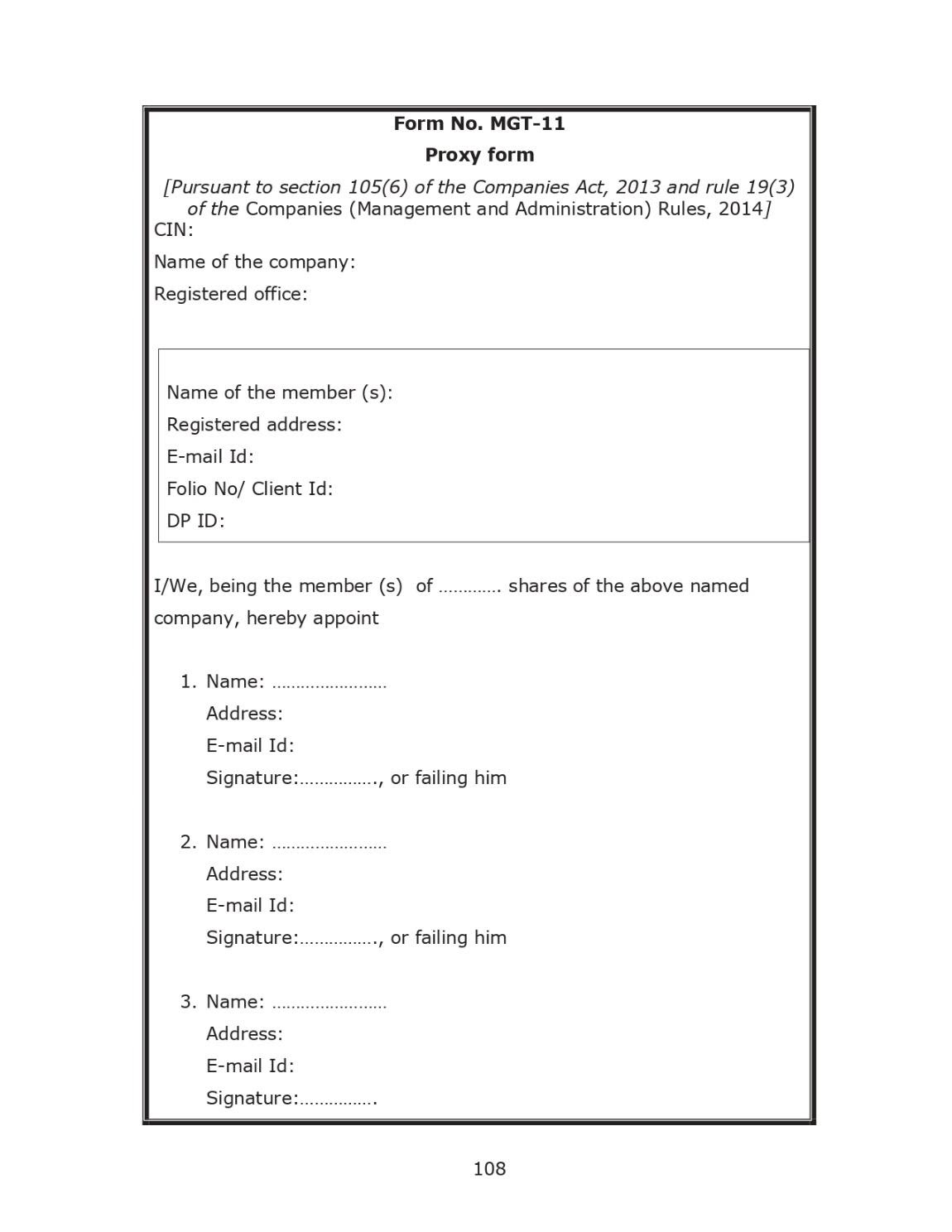
https://t.me/joinchat/J_0YrBa4IBSHdpuTfQO_sA

Follow us on Instagram and subscribe to our YouTube channel for more amazing legal content. 

Download Now
logo
FREE & ONLINE 3-Day Bootcamp (LIVE only) on

How Can Experienced Professionals Become Independent Directors

calender
28th, 29th Mar, 2026, 2 - 5pm (IST) &
30th Mar, 2026, 7 - 10pm (IST).
Bootcamp starting in
Days
HRS
MIN
SEC
Abhyuday AgarwalCOO & CO-Founder, LawSikho

Register now

Abhyuday AgarwalCOO & CO-Founder, LawSikho