Download Now
Home Blog Page 595

Considerations in Transition Service Agreements in mergers and acquisitions

0

This article is written by Yahaan Heerjee who is pursuing a Diploma in M&A, Institutional Finance, and Investment Laws (PE and VC transactions) from Lawsikho.

Introduction

A Transitional Service Agreement is a separate agreement from a purchase agreement that is made between the buyer and seller of a company. Transitional Service Agreement forms a crucial aspect of M&A transactions. When a company is sold there may be some obligations on the part of the seller that has to be fulfilled. This is an arrangement where the seller agrees to provide certain services at a predetermined price and for a specific time period. The acquirer may lack the back office to run the company. This is when the seller steps in to support the buyer in the smooth functioning of the company.

Back-office refers to the administration and support personnel who do not have to deal with the clients directly. The back-office consists of IT services, record maintenance, regulatory compliance, settlements, and accounting. The back office is basically the backbone of the company. For example, in a financial services firm the:

  1. The front office consists of sales, marketing, and customer support,
  2. The middle office consists of risk management; and the
  3. The back office consists of administrative and support services.

In a Transitional Service Agreement, the seller is the parent and the buyer is the child. Here, the parent pitches in for the child till the child is not independent. Furthermore, the seller provides its services to the buyer till the buyer is not capable enough to have the systems or framework in place to accomplish the tasks at hand.

When one company buys out another company there are hurdles to be crossed and quite often it is bumpy. A company that wants to take a leap of faith and buy out a well-established company often faces hurdles of operating that company independently. The selling company has its departments set up in handling various aspects of the company which is seldom in the buyer’s capacity. So, the Transition Service Agreement provides a framework of these departments vis-à-vis services until the buyer is capable of implementing it.

Transitional Service Agreement caters to the smooth separation and helps close the deal faster. Small carve-outs usually take 30 days to close whilst larger deals more than $1 billion take-ups 115 days to close. In this process, the buyer does not get enough time to respond to aspects like confidential information related to the transaction. Here, Transitional Service Agreement allows the business to transition and function separately quite quickly.

When a seller sells his business he has to keep certain objectives in mind. The main objective is to receive funds and focus on other aspects of their business rather than still investing the time and resources post-closing. The seller prefers the Transitional Service Agreement to be as less as possible and the services to be provided should be of the least time period. A transitional Service Agreement can prove to be a burden and a nuisance to the seller. A few considerations have to be kept in check whilst entering a Transitional Service Agreement.What are the key considerations?

  • The buyer and the seller should be clear of what services are to be provided by the seller and utilized by the buyer. It should be explicitly in writing to help identify both the parties of the services that are being catered. This avoids confusion on the part of the seller and the seller can provide inter alia appropriate solutions and resources.
  • Time estimation– The timeline and the affected cost are of vital importance while entering into a Transitional Service Agreement. The buyer and seller need to be realistic about the time frame of the agreement. An indefinite time period would not allow the buyer to adapt to the nature, system, and environment of the business. This is known as the exit strategy. The exit strategy has to be well planned since there are dependencies to prevent the system from breaking.
  • Cost and invoicing– Everything comes at a price and so does forming a Transitional Service Agreement. The cost to be incurred should be categorically discussed between the seller and the buyer. The costs to be calculated should identify variable cost elements as well as fixed cost elements. What drives the cost is of equal importance like the headcount, office, building, and location. Gradually, the buyer’s wills top is dependent on the seller and the costs will go down. Sometimes, there remains a constant dependency on resources until that wears out. Keeping all this in mind the cost structure should be crystal clear to avoid any disagreement in the future. Most sellers are not in the business of selling services and may lack the systems, tools, experience, knowledge, and skills to accurately analyze service costs. In such a case the seller outsources these services to accurately analyze the cost drives.
  • The services provided by the seller are set at a particular fee or charge. This fee or charge shall be discussed between the seller and the buyer before the closing. It should not be a hindrance on the part of the seller to provide services without charge.


  • Geographical region- There are agreements formed at the global and local levels. It is imperative to differentiate where the services are being provided to avoid confusion while working with multinationals.
  • Renewal- In case the buyer wants to retain the services of the seller or wants to renew the agreement, it is important to document this clause. After the time period of the existing agreement, the seller may refuse to continue providing the service, in that case, a renewal clause will help avoid a gap.
  • Dispute resolution- No business activity can be a hundred percent smooth and effective. Discrepancies are bound to arise. In order to resolve these discrepancies, a dispute resolution mechanism has to be put in place between the buyer and the seller.


Why does divestiture happen?

When a company grows, it realizes that it has too much on its plate. The company then decides to dispose of its assets by selling, exchanging, or shutting them down, or by declaring bankruptcy. Instead of being involved in too many business activities, divestiture helps the company to stay focused and remain profitable.

The relationship between the buyer and the seller takes a shift after the deal closes. The seller intends to clear up the mess in the end and eventually leaves it to the buyer to take it forward. The seller prefers to wrap it up as soon as possible and resume focusing on its other priorities.

Management of the Agreement

The overall relationship between the seller and the buyer needs to be managed and coordinated. To look into the affairs of the agreement and supervise the services being provided is a crucial aspect. In order to keep moving forward, each company should appoint a coordinator to manage the services. This helps avoid any confusion or chaos. The coordinator is similar to a manager in various organizations. They do not dwell deep into the work but need a holistic view and keep a check on the services being delivered as well as the separation of the activities.

A manager can take responsibility and help in case of any nitty-gritty of the services being provided as it is not always feasible to approach the buyer or seller directly. The vendors or third party in relation to the service provided may approach the manager directly. The manager basically acts as an agent to the principal.

Does the seller keep up with his promise of high-level services or do expectations on the part of the buyer exist?

It is important to note that the seller and the buyer must wrap up the transition quickly and efficiently. The buyer must make it specific in writing of the resources and departments required to fulfill the promise. The seller and buyer must put their focus on the transition by completing it as quickly as possible rather than trying to maintain high-end services to be provided. There has to be a balance between the service cost and the business needs. Anything beyond what is required would be a burden on either of the company’s. There should not be unduly expectations from the seller. In this case, the key consideration is to document the services to be provided explicitly. It is imperative for both parties to agree on the performance metrics.

Conclusion

Thus, the seller basically piggy-backs the buyer until the buyer is capable of himself. It is important to document all the key considerations. Mere verbal promises in a transitional service are not effective. The service to be provided could be denied by the seller post-closing if it is not documented as he has no responsibility after the transaction is completed. It might overburden the seller to still be stuck after the closing. In order to provide a smooth transition, the buyer and the seller must understand the Transitional Service Agreement and avoid any manholes that may come their way. The seller and the buyer should independently consider inter alia all the practicalities, time estimation, documents required, services to be provided, and to be received very thoroughly. This will help them to monitor correctly and stay in touch throughout the process.


Students of Lawsikho courses regularly produce writing assignments and work on practical exercises as a part of their coursework and develop themselves in real-life practical skills.

LawSikho has created a telegram group for exchanging legal knowledge, referrals, and various opportunities. You can click on this link and join:

Follow us on Instagram and subscribe to our YouTube channel for more amazing legal content.


Download Now

Significance of rule of law in Indian democracy

0
Rule of law
Image Source - https://rb.gy/1dywaj

This article is written by Millia Dasgupta, from  O.P. Jindal Global University (JGU). The article covers the rule of law and its applicability in India. 

Introduction 

In simple words, rule of law is the supremacy of law over the government. While the definition and various scholars who propounded the principle may make it appear to be a rigid rule, the application of rule of law varies depending on the circumstances and environment of the country in which it exists. The relationship between rule of law and government is complex, to say the least. It is impossible to give a definite stance on whether the rule of law is good or is bad. Considering India’s deep roots in colonialism and its multi-cultural political environment, the structure of the rule of law has changed throughout the years. In this article, the author tries to lay out the bigger picture with regards to rule of law. 

What is Rule of law

The principle of rule of law states that people who hold a certain authority should exercise their power within the framework of laws and norms, rather than left to exercise their power according to their own preferences. The rule of Law is based on characteristics such as legal certainty and predictability. Those who believe in the rule of law believe that such a setup provides freedom for those under the rules of law as they know the norms that regulate their life and thus can act accordingly so that they do not clash with the law. Rule of law is violated when those administering the law violate the law in some aspect or when they administer their power at their own discretion. If violation of the rule of law becomes a habit, then not only will people become disappointed but they will fail to develop any expectation as their trust in the rule of law will be lacking. 

In Lon Fuller’s ‘The Morality of Law’, the conception of the rule of law was outlined. According to Fuller,  the rule of law does not require anything substantive, for example, it does not require that we have any specific liberty. He believes that whatever the state does, it should be done in a predictable and organized manner and whatever the state plans to do should also be informed to the people beforehand and the state should stick to the norms they have informed the people of, being careful not to divert even if it is politically advantageous to them. While many may see such conditions as procedural, Jeremy Waldron in his paper states that he sees these as more formal and structural as they state the formal qualities the state or government should have when prescribing such norms. 

Albert Venn Dicey’s perception of the rule of law was more procedural on the other hand. According to him a procedural understanding of the rule of law necessitates not only that officials follow the rules as written, but also that they must carry out these rules with utmost care with regards to principles such as ‘natural justice’ and ‘procedural due process. Thus, if someone was to be accused of violating the law, they should have a chance to explain themselves under proper laid down procedure such as requesting a hearing in front of a court. The rule of law is violated when these procedural safeguards are undermined. Rule of law has been associated with ideas such as separation of power and the independence of the judiciary. 

Joseph Raz further gave his theory of the rule of law in his book ‘The Authority of Law: Essays On Law and Morality.  According to him, there are eight principles of law.

  • Laws should be clear.
  • Laws should be relatively stable.
  • The making of these laws should be guided by clear and stable principles.
  • The independence of the judiciary must be ensured. 
  • One should follow the principles of natural justice. 
  • Courts should have review power over principles that are implemented. 
  • The courts should be easily accessible.
  • The authorities should not abuse the law.

Colonial history 

India’s legal system is primarily made up of laws and legal ideas acquired from the British Raj. Most of these laws were framed in response to the flux of changes that were taking place in India and it was an attempt by the colonial rulers to understand India’s extremely different rule of law. To understand how the rule of law was applied in India and how it functioned in our jurisprudence, it is important to first see our history and understand its role. 

The law was seen as a tool by the British to control Indians. They saw our way of law and governance as despotic and wished to change it. The British Raj’s concept of the rule of law was used more as a moral tool to tame our oriental ways. Alexander Dow with regards to the ‘success’ of the British Raj in India stated “the deplorable condition of a people subjected to arbitrary sway; and of the instability of empire itself, when it is founded neither on law nor upon the opinions and attachments of mankind”. They thus prided themselves in replacing the personal system of law already established in India with the colonial rule of law which was impersonal and efficient. While they believed the system which valued procedure and efficiency was better for Indians, it alienated Indians from the law as the law had become too foreign to them. The laws were used merely as a rule to carry out the wishes of the British Raj.  The British had misunderstood a lot of our personal laws and scriptures when trying to accommodate them in the colonial system of law. The independence of the courts from the administration (the British raj) was also an illusion. At local levels, there was very little desperation between district officials as both collectors and magistrates and the higher courts hardly questioned the decision of the lower courts. 

When looking back at how central the rule of law was in establishing the British Raj, it is ironic that the man who led India to Independence was a lawyer himself. Mahatma Gandhi had very strong opinions on British Raj. He was well aware that British law, courts, and lawyers were complicit in keeping the British Raj afloat. “My firm opinion,” Gandhi wrote in Hind Swaraj, is that “lawyers have enslaved India”. But Gandhi capitalized on the ‘Rule of Law’ that the British had made. The British by trying to distinguish themselves from the pre-colonial Indian way of governance had made themselves into a foreign power. It was easy to replace the British Rule of Law with the Indian Rule of Law that was defined by self-control, self-discipline, and non-violence. Swaraj or self-rule, which would be accomplished through satyagraha was a way to cut off Indians from the British Rule and replace it with self-rule. 

Rule of Law in India 

With the influence of the international conception of what public law should look like, in modern times the rule of law is what sovereign powers and state conduct cannot do. There are certain accepted principles that are the norm. For example, governments can not commit genocide or practice ethnic cleansing. However, the rule of law does not put any obligation on states to follow these principles. This is especially true for developing countries that are required to pass laws to benefit foreign investors and players at the disadvantage of their citizens. While governments have an obligation to their citizens, these foreign entitled have no democratic accountability to their country, thus resulting in a perverse rule of law. But despite these anxieties, the rule of law does find a way to uphold accountability. Keeping this in mind we move forward to discuss the rule of law in the Indian scenario. 

While our laws, government machinery, and institutions may have a colonial past. However, conceptions of justice, rights, and development have less of a colonial heritage as compared to government machinery and institutions. According to Upendra Baxi, the rule of law in India can be defined through four aspects, i.e,  governance, rights, and justice, and development. 

Governance 

The Constitution of India is a major source of the rule of law in India. In theory, the rule of law is in the hands of the parliament. For example, with regards to states, they have the powers to create new states, redraw the federal map, shorten or increase borders or even change the name of states.  The law lays down procedures and gives them access to great amounts of power. But in reality, despite the law giving the parliament so much flexibility, they are not able to exercise it without repercussions. If they wish to make a new state, they will have to take many factors into consideration such as language and cultural identities, and they may face backlash in the form of state violence. However, one must not undermine the power of the parliament as they still do hold a heavy amount of influence. Take the distribution of powers for example. Upendra Baxi states “the Indian Parliament has generous residual authority that empowers it to legislate on matters not specified in the state and competitor lists; in addition, the laws that it can make often have a preponderant national authority.”

It is difficult to exploit the rule of law, especially through administrative laws that lay down so many checks and balances. There are many independent agencies such as NGOs that seek to protect the rights of minorities. India’s treasurer and auditor general, assisted by the Central Surveillance Commission help to combat corruption, and the Indian Electoral Commission helps with protecting electoral processes.  While despotic rule might be a difficult beast to tame, with the rise of social media, investigative journalism, and judicial activism, it is becoming more difficult for governments to do whatever they want without answering someone. 

new legal draft

Rights 

Rule of Law is usually seen as something that is constricted by rights. But contrary to popular belief it can also be used as a tool to lay down procedures for state progressive action. Examples are Article 17 which prohibits untouchability and Articles 14-15 which enable the state to fight against cruel forms of abuse. Thus, these rights which constitute a part of Indian rule of law are not only seen as a check and balance against oppressive government actions but are also seen as a means through which the state can protect. Judicial Activism also aids in keeping the rule of law in check where principles of the constitution are used to keep other laws in check (Article 13). Thus, we have a paradox where rights enshrined under the structure of rule of law expands it as well as limit it. 

Justice/Development

How has the rule of law assisted in justice or development? Principles of justice and development are written in the Constitution. But have laws enacted by the administration helped with this development? Rule of Law calls for governance through principles and norms established through due process and calls for no interference from the courts. If we look at the Indian scenario, we can see that while the government had tried to establish hegemony through the implementation of various administrative laws, they were defeated in the face of the power of the courts and judicial review. 

The Supreme Court has unparalleled jurisdiction. Laws established by courts (through decisions) are binding on all lower courts and by implications, on all citizens and state actors. State authorities must also assist the Supreme Court in enacting the laws set by them. With the aid of guiding principles such as protection of rights, the courts have kept the executive in check. They have erected fences about delegation of power. They stated that the government’s power to make laws should not usurp the legislative function of public policy.

Even the administrative laws that are allowed to pass were rigorously policed. Judges also have a steel grip over laws passed by the legislature. Laws that violate principles such as fundamental rights and federative principles are considered null and void. They also have the impressive power to subject constitutional amendments to judicial scrutiny. However, a main criticism of the judiciary is that despite their power, they fail to force authorities to act according to the decisions. While this criticism is mainly valid, one should also keep in mind the limitation of capacity and opportunity when forming expectations. 

Case laws 

There are numerous case laws set out by the judiciary which have shaped how rule of law operates in India. In the case of Kesavananda Bharati v. State of Kerala (1973), the court held that the rule of law is the basic structure of the constitution. The bench overruled the decision given in Golak Nath (1967), and stated that while the parliament has wide amending powers, these powers do not extend to the basic features of the constitution, including the limitations on amendment enshrined under Article 368 which are imposed by the rule of law. 

In the case of  Indira Nehru Gandhi v. Raj Narayan (1975), the court held that the rule of law embodied under Article 14 is a basic feature of the constitution and can not be amended. The case gives impact to the philosophy of rule of law and states that the law of the land is supreme and can not be amended due to the will of one person. 

In the case of  Maneka Gandhi v. Union of India (1978), the Hon’ble Supreme court established the rule of law, stating that no person can be deprived of his life and personal liberty except procedure established by law under Article 21 of the Constitution

 In the case of Union of India v. Raghubir Singh (1989), the Hon’ble Supreme Court with regards to the independence of the judiciary stated that any provision that takes away the right to judicial review is seen to go against the fiber of the rule of law.

 In the case of S.P. Sampath Kumar v. Union of India (1987), the courts reiterated that judicial review is a part of the basic structure of the constitution.   

Criticism of the Rule of law 

Regardless of the Indian scenario and the various accommodations built into Indian rule of law, it would be wrong to admit that many have not suffered under the rule of law. Many have suffered under acts committed under the government that were considered perfectly legal such as in the case of emergency.

It was Joseph Raz who stated that “the rule of law is a knife, a tool to enact rule and order”. But at times it can be a tool that suppresses one’s individual rights. This can lead citizens to become vulnerable to tyrannical governments. A substantive approach to rule of law on the flip side seems to offset the inadequacies of Raz’s rule of law by protecting fundamental rights that originate from rule of law. For example, Apartheid operated under Raz’s perception of rule of law which could have been rectified if there was a substantial aspect to rule of law. The laws that facilitated Apartheid were made under unfair conditions and institutionalized horrible crimes. 

A substantive approach would have provided a space to engage with criticism and hopefully reform broken law. A substantive approach to rule of law is derived from the natural theory of law. According to this theory, all people are ‘created equal and are given certain inalienable rights.’ Thus, any law that violates these fundamental human rights is not seen as law under a substantive approach. By considering this approach, we can thus adhere to a more flexible rule of law that considers fundamental rights.  

Conclusion 

As we can see in India, the rule of law was never used as a tool to save us from arbitrary power, rather it was used to enforce the power of the British Raj. With the passing years, despite growing anxiety with regards to struct rules, rule of law with the help of the judiciary has helped establish a mechanism that does a suitable job of regulating the complex plane of the Indian polity. 

References 


LawSikho has created a telegram group for exchanging legal knowledge, referrals, and various opportunities. You can click on this link and join:

Follow us on Instagram and subscribe to our YouTube channel for more amazing legal content.

Download Now

Delegated legislation : pathway to a practical governance

0

This article is written by Manya Dudeja, from the University School of Law and Legal Studies, Guru Gobind Singh Indraprastha University. This article talks about the role of delegated legislation in an ever-changing and complex society like India

Introduction

“There would be an end to everything, were the same man or the same body, whether of the nobles or the people, to exercise those three powers, that of enacting laws, that of executing the public resolutions and of trying the causes of individuals.”

-Baron de Montesquieu 

The way each organ of the human body performs a unique function suited to its mechanism and creates a harmonious balance for the overall healthy existence of a person, similarly, the three great instrumentalities of the government, namely, the legislature, the executive, and the judiciary are entrusted with their special purpose and existence. It is evident from the way every organ is independent of the other, yet they are interdependent as they depend on each other for the collective functioning of the body, or in this case, the country. Montesquieu’s principle of separation of power which talks about how the complete concentration of power in any one organ of the government leads to tyranny has influenced and has an impact on the Indian system of separation of power, however, India has not accepted it in toto and has customized it according to the needs of the country. The Constituent Assembly of India has rightly formulated a system of checks and balances, where each organ of the government, even though has a separate and independent functioning with no outside interference, keeps a check on the other organs and in turn prevents the abuse and arbitrary use of power by any organ.  

Delegated legislation refers to entrusting of law-making powers by a higher authority, in this case, the parliament to a lower or implementing authority, here, the executive or administrative authority. In other words, it is the delegation of law-making power to an organ other than the legislature by the legislature itself.

In this article, we will be understanding the accommodation of the principle of delegated legislation in India and its need in order to make governance effective in modern times, in the light of  the ravages of the pandemic. 

Evolution of delegated legislation in India

The roots of delegated legislation in India can be traced back to the pre-independence era. Till 1949, the Privy Council was the highest Court of Appeal and catered to appeals from India. It employed the doctrine of conditional legislation to meet the demand of administration and provided a subordinate status to the Indian legislature. 

In Queen v. Burah, the maxim, “delegatus non potest delegare” which means that delegated power cannot be further delegated was not applied by the privy council since the power had been limited by the act of the British Parliament.

However, there was a shift in the position after independence. The issue of delegated legislation was laid down in front of the Supreme Court in the case of Jatindra Nath Gupta v. Province of Bihar and the Supreme Court finally laid down its opinions on the same in the case of re Delhi Laws Act, 1912. The point of concurrence of all these opinions was that the parliament and the State legislatures have the power to delegate law-making power. However, there were differences as to the extent of their power to delegate. While one view was that the legislature should not delegate its essential function of law-making or rule-making and should set guidelines and policies in the parent act, the other one was that the delegation of legislative power should be allowed to any extent as long as the legislature did not retire from its legislative function. The court adopted the former view, whereby, the legislative policy or standard should be clearly mentioned in the parent act.

Need of delegated legislation

Delegated legislation is the only practical tool today to govern a huge and diverse population. It should not only be permissible but should be wisely and efficiently utilized to deliver the best results suited to ground realities. As modern society becomes more complex, there is a growing trend of delegation of the legislative process to the subordinate authorities. A large chunk of the legislation today is issued by the administering authorities and hence delegating law-making powers has become an absolute necessity. 

The following point out the need and advantages of delegated legislation for effective and practical governance in the country:

Reduce the legislature’s burden

The parliament is found to be overburdened and hence by delegating administrative rule-making, the quality of work can be enhanced as more attention to detail can be provided by the subordinate authority. Since the executive would be shouldered with the responsibility of taking care of specific tasks, they would be able to efficiently work out the minor and secondary details of the parent act as per the demand of the situation.  Unlike the legislature which has to deal with a large number of tasks related to law-making. This can save crucial time for the legislature which can be diverted towards other important work.

Decentralization of law-making

This can be best understood by the principle of ‘empathy is stronger than sympathy’. When power to make laws is delegated to people who can more strongly resonate with the needs of the people who need it on the ground, the laws thus made would have the acceptance of the people who are to be governed. The executive working at the local level would be better able to understand the needs of the local people and hence devise the rules accordingly. 

Expertise in specific subject matter

With the increasing advancement in every field, especially technology, modern societies have become complex environments. Due to this a lot of law-making requires technical knowledge of the subject matter that is being worked upon. By delegating the tasks, the parliament can ensure that officials who have specific knowledge related to the issue can propose more effective formulations and details. It is difficult to expect that members of parliament would have all the knowledge related to specific subjects on which the law is being made. 

Enables flexibility in legislation

Delegated legislation allows a certain degree of flexibility in the law, as this allows the parliament to only focus on the broad principles of law and allow the executive to work out the details as suited to the local people. If the details are to be set out by the parliament itself, any change to be done later would be very difficult due to the amendment procedure of the parliament. On the other hand, if details are delegated out to be set by the executive, the system would allow changes to be made depending on the time and the geographical location.

Experiment on a small sample

Certain laws can be implemented on a small scale by the executive to test their efficacy, this would help in improving governance as the law before being implemented at the national level would have been tried and tested at the local level. This would also mitigate the risk of implementation-level problems as they could be identified and ruled out at this point.

Looking at all the above-mentioned advantages of delegated legislation, it is understood that delegated legislation should be encouraged and widely used to make the governance of such a huge population easier and effective at the same time. 

The conflict between the theory of separation of powers and delegated legislation

According to the separation of power theory, the work of law-making and framing rules, regulations, and bye-laws rest with the legislature, while the part of executing these frameworks has been entrusted to the executive. The separation of power theory aims to prevent despotism. Even though considered important, the Indian constitution does not explicitly state the separation of power theory. It is only briefly mentioned in Article 50 of the Directive Principles of State Policy where it talks about the need for separation between the judiciary and the executive. According to the concept of delegated legislation or subordinate legislation, the law-making power of the legislature with respect to certain circumstances and parent acts has been entrusted to the executive. Though against the principle of separation of power, administrative legislation is considered a necessary infringement of the separation of power theory.

There have been attempts to bring together the two theories by using the word ‘quasi’ as in ‘quasi-legislative power’. It should be understood that the theories today function on ‘mutual restraint’ rather than complete separation. The Supreme Court also in the case of Ram Jawaya Kapoor v. the State of Punjab highlighted that the Constitution even though differentiated the functions of the three organs of the government, did not mention any rigid separation of one from the other. It is only through cooperation and the common intent of the three organs to work in the best interest of its people, that they can be brought together and the two doctrines can coexist.

Principles set to control delegated legislation

Parliamentary control

Since the delegation of law-making power to the executive is the work of the legislature, it is also responsible to ensure its proper exercise and prevent the misuse and abuse of this power by the executive organ. Legislative veto refers to the power of the parliament to criticize the executive in case of abuse of delegated power. The executive in India is responsible for the legislature. This control can be further classified into:

Direct general control

The parliament practices direct general control on the delegated authority by discussion and debate on the act under which such delegation is made. It also examines the requirement, nature, and extent of the delegation as well as the delegated authority. Members of the house have the power to question the delegation and thereby send a notice for discussion under Rule 59 of the Procedure and Conduct of Business in Lok Sabha Rules. Members also have the power to move resolutions if they feel dissatisfied with the answers of the government and feel that the matter of delegation requires immediate attention. A private member can also move a bill for amendment in the parent act.

Direct special control

This kind of control is practiced through ‘laying on the table’, which makes the legislature aware of the laws framed by the delegated authority and allows it a chance to question the delegated authority on the same. This laying down provision can be directory or mandatory. 

Indirect control

Indirect control over delegated legislation is ensured through the various committees and sub-committees formed by the parliament. The most important being the Committee on Subordinate Legislation. The work of this committee is to ensure that the delegated power is within the purview of the parent act and that the power is duly exercised. It also checks any transgression of power under the veil of subordinate legislation by the delegated authority. The Rajya Sabha Committee which constitutes 15 members was initially instituted in the year 1964 under the Rules 204-206 of the Rules of Procedure and Conduct of Business in Rajya Sabha.

Procedural control

A procedural control is a more effective measure than parliamentary control. The parent act which delegates the power to the executive also lays down the rules and guidelines which are to be followed during the exercise of this power. If these guidelines are termed as mandatory and the executive does not follow them, the rules framed thereby by the executive would become invalid. Procedural control can be practiced through various methods in India such as mandating prior consultation in cases where it is felt necessary. It can be done through ‘Antenatal publicity’ i.e by prior publicity of rules and regulations as deemed sufficient and when found necessary. This is done under Section 23 of The General Clauses Act, 1897. It is mandatory that the rules made under delegated legislation are published and adequate coverage is provided to them so that the citizens are prepared well in time and it does not come as a surprise. The popular maxim, “ignorantia juris non excusat”  which means, ignorance of the law is no excuse, can also be emphasized by providing enough coverage to delegated legislation. If the parent act does not mention a mode of publication, the same would be done in the Official Gazette of India.

Judicial control

Judicial review is the tool through which the judiciary can exercise control over delegated legislation. It can scrape off the legislation which it finds arbitrary, unreasonable, or unconstitutional. The grounds on which a delegated legislation can be declared invalid are: 

The parent act is ultra vires to the Constitution

The legislature is not allowed to delegate its essential functionality to the executive and if it does so, such delegation would be arbitrary and invalid. Further, if the parent act under which such delegated legislation is framed is found to be contrary to the constitution, the delegated legislation so made under it would become void.

new legal draft

The delegated legislation is ultra vires the Constitution

There can be a case where the parent act is in consonance with the constitution but the delegated legislation made under it is ultra vires the constitution and violates its provisions. In such a case, the constitutionality would be considered as it cannot be presumed to be authorized despite being ultra vires the constitution.

The delegated legislation is ultra vires the parent act

There can arise situations when the delegated legislation framed under the parent act is in excess power and the extent is not authorized by the parent act or that its rules are opposing the parent act. It can be arbitrary and unreasonable and infringing the private rights of the individuals. It could also be vague in its formulations and be in conflict with some other already existing statute.

Delegated legislation amid the covid pandemic

Covid 19 has exposed a collapsing system and has revealed to the people the inefficiencies of their government, both the Central and the State governments have failed their electorate. The pandemic is claiming the lives of a large number of people and hence any delay can be lethal, it is vital that quick decisions are made, formulated, as well as implemented, and hence delegated legislation during this time would ensure that life-saving policies are quickly enforced and lives are saved. A few examples of delegated legislation amid the pandemic are:

  • The Disaster Management Act, 2005 was enacted and the act delegated powers to both the Central and State governments to lay down and make policies appropriate to the situation. Power was also delegated to the Union Health Secretary by the Union Home Secretary to better administer the Covid situation.
  • Under the Epidemic Disease Act, 1897, states like Delhi, Odisha, Maharashtra, Karnataka formulated their own rules and regulations and quarantine measures. The local administration has also enforced systems of compulsory quarantine under the aegis of this act.
  • Recent times also saw the enforcement of Section 144 of CrPc to curb the spread of Covid 19, the power to impose this section has been delegated to magistrates and commissioners, who depending on the situation and need of the area take the decision.
  • In Tamil Nadu, an expert State appropriate committee comprising 19 members has been appointed to develop treatment protocols for managing cases and provide suggestions for intervention, prevention, and control of Covid 19 in the State. Similarly, an epidemiological committee has been set up in Andhra Pradesh to tackle the disease there. 

Hence, delegated legislation has immensely contributed to making administration more effective during this time of crisis. 

Conclusion

The theory of separation of power and the practice of delegating law-making power by the parliament has to work in concurrence for democracy to function. While separation of power is vital to ensure the independent decision-making power to the three great instrumentalities, the delegation of decision-making power ensures efficient governance of a complicated society. They both cannot be separated from each other and have to be balanced. Delegated legislation has indeed seen remarkable growth in recent years due to its ability to accommodate different interests. Especially in times like these, when the country is trying to swim its way through a global pandemic, delegated legislation has proved to be an asset. 

However, it is important to control and keep a check on the exercise of delegated legislation to prevent it from becoming arbitrary and over-powering the legislature and for this various mechanisms have been devised. Hence, delegated legislation if utilized wisely with careful scrutiny and correct limits can prove to be an asset to a country.

References


LawSikho has created a telegram group for exchanging legal knowledge, referrals, and various opportunities. You can click on this link and join:

Follow us on Instagram and subscribe to our YouTube channel for more amazing legal content.

Download Now

Battle of forms

0
Image source: https://www.google.com/url?sa=i&url=https%3A%2F%2Fblog.ipleaders.in%2Fcritical-ma-deals-india-2020%2F&psig=AOvVaw25DK5znBoHRta-aTJT-lAd&ust=1627964567658000&source=images&cd=vfe&ved=0CAwQjhxqFwoTCIjDq-K-kfICFQAAAAAdAAAAABAD

This article is written by Amay who is pursuing a Diploma in Advanced Contract Drafting, Negotiation and Dispute Resolution from Lawsikho.

Introduction

When there is a commercial contract between commercial industries, it often happens that the parties involved in the contract prefer to carry out the contract on their own standard terms and conditions because they have framed their standard terms to have an undue advantage. But the problem arises when there is a clash of the standard terms and it becomes difficult to understand whose standard terms were agreed to. This can be explained with reference to an example, A wants to buy a product X from B, so B sends an offer to A with standard terms of contracts attached. A on receiving the offer, sends a reply to B, agreeing to buy product X at the price mentioned but also sends the standard terms of the contract with which A would like to be bound. Then it happens that B sends the product along with new terms and conditions and A accepts the product and remains silent on the new terms and conditions.

Then later when there is a dispute between the parties on any issue, the party like in the above situation says that there was only agreement to buy the product but there was no agreement to the terms of standard terms which the other party had proposed. This situation is called the battle of forms.

The basic idea for parties to work according to their standard terms is that it saves time and helps them in reducing litigation expenses as they are well versed with the standard terms. But the battle of forms creates circumstances that counter the intention of having standard terms, thus it is necessary for businesses to come up with a quick fix for this situation.

Solutions to tackle the problem of the battle of forms

  • Last shot rule-  

The literal meaning of this rule is what has been established and is used to sort out the matters relating to the battle of forms. Under this rule, it is usually the party that fired the last shot wins and their terms and conditions are considered to be the terms and conditions of the contract. This means that the party which sends the last offer for terms and conditions and that offer is not explicitly rejected by the other party, becomes the terms binding the contract.

This rule came into existence by following the already established principles of offer and acceptance. The principles of acceptance state that acceptance can be implied by conduct and need not be implicit. Thus when one party sends new terms and conditions, and there is no express revocation or rejection of terms and conditions, then it is believed that there is implied acceptance to the new terms.

This last shot rule is applied in England in cases of the battle of forms. This is because England follows the rule that an acceptance is not an acceptance unless the terms proposed are the same that are being agreed to by the parties and that the agreement is given in the same sense. But it often does happen that there is no clear agreement given, thus then the implications have to take place and an implied acceptance has to be made the terms of the contract agreed to. A similar incident was in the case of Butler Machine Tool Co. v. Ex-Cell-O Corp. where this last shot doctrine was applied to reach a conclusion of which terms are going to govern the contract. In the case mentioned above, Butler Machine Tool Co made standard terms which included a clause for price variation and Ex-Cell-O Corp made another standard term that did not have the clause of the standard term. Then Butler Machine Tool Co sent a reply saying that they agree to the terms and conditions mentioned in the slip, and after a few days there being no reply from the other side, Butler Machine Tool Co sent goods which were accepted by Ex-Cell-O Corp. Later when there was a dispute in relation to the amount payable by Ex-Cell-O Corp, the court applied the last shot rule and held that the terms of the seller i.e. Butler Machine Tool Co will apply to the contract. 

In the shock cushioning seat case, the judges accepted the last shot rule as a valid rule for solving the situation of the battle of forms. The judges in the case explained the rule as ‘the party which exchanges the last document of terms before the contract is performed by both the parties. Another case for last shot doctrine is Magellan International v. Salzgitter Handel. In this case, judges applied the last shot rule and held that all the documents which were exchanged before the exchange of the last document, were all counteroffers. Here we see how the mirror image rule has given birth to the last shot rule. 

Another important factor that has to be taken from this case is the fact that Lord Denning who was part of the bench which gave the order in this case, has in many other cases said that the last shot rule is now out of date. He suggested that the overall exchange of documents between the parties have to be looked into to see the intention and then compare them to the terms agreed on by the last shot rule, and then if the terms were reconcilable, then the same should be done and where the parties have agreed to material clauses, those clauses should remain the same. If the terms are such that there is no conciliation possible, then the court will find the middle grounds to the same. 

The last shot rule is also followed by the United Nations Convention on Contracts for the International Sale of Goods (UNCISG). This is followed due to the application of the general rules of the contract. UNCISG deviates from the last shot rule to some extent and by following Article 19(2) of CISG, the rule becomes that if the last standard terms which were sent before acceptance of the goods, did not affect the material terms of the agreement, then the new terms will not be considered. But if the final shot terms alter the material terms, then the last shot rule applies as it is. Section 3 of the same article defines material terms and the definition is so wide that eventually at least one material term is affected and the traditional last shot rule becomes applicable.

In Northrop’s case Justice Posner of the United States of Appeal, in his judgment criticized the common law doctrine of last shot rule to conclude or resolve a battle of forms situation. He criticized the doctrine due to its rigid approach. He said that according to the last shot rule, if there is a discrepancy amongst the standard terms submitted by the party, then no contract could be entered into by the parties even if the differences in the standard terms were such that they could be resolved by the parties. 

  • Knock Out rule- 

Under this rule, there is a presumption of the terms of the contract that are accepted will form the terms of the contract. According to this rule, when there are different standard terms that are offered by the parties and when some of the terms proposed are similar and some are not, the terms that are similar for the terms that remain binding on the contract and the differing terms knock each other out and are replaced by regular rules of law. This is the general essence of the knock-out rule. This rule has been applied in many countries but they apply it a bit differently. For example in America, the terms which are in the second or subsequent reply, and do not contradict the terms in the initial document are called ‘additional terms and the terms that are contradicting to the terms of the initial document are called ‘differing terms’. The Uniform Commercial Code of America provides that if the parties that are contracting are not merchants then the additional and differing terms will not become part of the agreement. But if both the parties are merchants, then the additional and differing terms of second documents will apply if there is no explicit intention in the initial document that limits the acceptance of the party that sent the initial document to its terms only. This rule even applies in France and Germany. 

An important case where this rule has been used is the Powdered milk case. Here the court in Germany said that by execution of terms of the contract, the parties have given their assent that they agree to be bound by the terms which are not contradictory in nature and have agreed to be bound on the essential ingredients. In this case, the judges said that the contradictory terms are invalid and would be governed by the rules of CISG. Another instance where the knock-out rule was applied was in the case of Les Verreries de Saint Gobain, SA v. Martinswerk GmbH. This was a case in France and was not the conventional application of the rule. In this case, there was a difference of opinion between the parties on material terms, but the judges instead of holding the contract as invalid validated it by applying a knock-out rule.

UNIDROIT Principles of International Commercial Contracts (1994) and Principles of European Contract Law (1998) also follow the knock-out rule. Both of them have separate articles that mention the battle of forms and resolve the battle of forms. They both allow either of the parties to convey to the other party that they are not ready to be bound by the terms of the contract, either in advance or later, but without undue delay. 

This knock-out rule is seen as a legitimate solution to the problem of the battle of forms and unlike the other solution suggested or used in a few areas, i.e. last shot rule, the knock-out rule is accepted widely and has not been under much criticism.

Why knock out the rule over the last shot rule?

In this chapter, the discussion will revolve around why the last shot rule is not the most viable solution to the problem of the battle of forms and why the knock-out rule is a better alternative to the problem of the battle of forms. 

A wants to buy a product X from B, so B sends an offer to A with standard terms of contracts attached. A on receiving the offer, sends a reply to B, agreeing to buy product X at the price mentioned but also sends the standard terms of a contract with which A would like to be bound. Then it happens that B sends the product along with new terms and conditions and A accepts the product and remains silent on the new terms and conditions. The last shot rule would approach the situation in a way as to understand the acceptance of the product by the buyer to amount to an agreement enforceable by law. Thus the seller being the last person to fire the shot, the terms of the seller would become binding on the buyer. The unfairness in this is that there was no meeting of minds amongst the parties. It cannot be said that the buyer intended to be bound by the terms of the contract, the terms of contract which the buyer was against being implanted.

Germany at earlier times used the last shot rule, but later they shifted to the use of knock out rule. The primary reason for doing this was that the judges felt that the rule gave undue advantage to the sellers as they were the party that would usually be the one with the opportunity to fire the last shot in the series of standard term documents. 

This finding of the judges in Germany was not inaccurate. It is always or most of the time the situation that the seller would send the product that the buyer wanted to contract for and along with this, the seller would also send a document of standard terms and conditions to which the buyer will not accept but wouldn’t say anything about as the buyer would have received the product.

Another problem that this last shot rule creates is that it spoils the relationship between the parties that are contracting, and in a corporate and capital world, it is necessary to not strain business relations. The usual reason for the straining of relationships amongst parties is that, both the parties being aware of the application of the law when there is a situation of the battle of forms, the parties will try to be the party that fires the last shot. In this tussle for the last shot, the parties start to have some animosity or dislike for the other party. This will make the parties less inclined to work with each other in the future. The fact that will play in each party’s mind would be that if the opposition party can be so adamant at such an early stage, then what will be the reaction of the party when there is a dispute after the contract has been formed. 

The reason why parties enter into a contract is though self-centered but the premise of this is built on mutual agreement. By applying the last shot rule, the law looks at the contract to be something that is only going to benefit a particular party and be disadvantageous to the other. The basic rule that is applicable in the last shot rule is that the offer and acceptance should be the mirror image of each other. Unless the standard term documents of the parties do not exactly match, there can be no conclusion of the contract.

There can be a situation that the parties have reached an agreement with respect to the important terms, like the quality, quantity, date of delivery, price, etc, but have not decided on a minor matter because of which they cannot enter into a binding relationship. This is the perfect example of a situation where though the parties want to enter into a legally binding contract, still due to the stringent approach of the last shot rule, the parties cannot enter into a contract.

Thus the last shot rule fails in enforcing the reason behind an agreement i.e. mutual agreement between parties and it also prevents the formation of a contract though there is a mutual agreement and intention to form a legally binding agreement. This is a huge criticism of the last shot rule. At one end it enforces binding contract on parties that do not have the intention to enter the contract with the other party on the terms decided by the lat shot rule, and on the other hand, the same rule prevents parties from entering into a binding contract when they want to enter into a contract.

One of the reasons behind using standard terms of the contract is that it saves the time of the parties and reduces their costs. But when a battle of forms situation arises, all these reasons which are mentioned for the use of standard terms are not fulfilled if the last shot rule applies.

It is at first sight or at plain sight understood that the last shot rule helps in keeping the transaction costs low as it provides a fixed way for the businesses to approach and creates fixed rules which make law predictable which helps in regulating the conduct of the parties. If there is proper knowledge of the terms that are going to govern the contract, then it is also easier for the parties to come up with ways to limit its liability.

If it is known by the parties that the law in the area is made in such a way that the party that sends the document of standard terms last will be the one who dictates the contract, then the parties will keep on sending their documents of terms and conditions one after the other. There is no sure way that the party could follow to be the last party to send the document of terms and conditions. Thus parties keep on sending documents. Some may argue that businesses, being sensible, will try to sort out the differences. But it has been noticed that this is not the case because businesses being sensible know that if they mess up the terms and conditions of the contract, then they are keeping their businesses open to vulnerability. They understand that there is no need to play legal games as a mistake can cost them a fortune and can be disastrous for their company. The constant sending of documents of terms may also lead to a situation where the party loses interest in contracting and they believe that in the absence of good faith amongst the parties it is better not to have a legal relationship as it may lead to long and expensive litigation. Thus in some cases, the last shot rule will recoil disadvantage to the parties more than the benefit it shoots. 

Another major issue with the last shot rule is that it gives parties incentive to keep on sending the documents of terms. The parties being aware that the party that sends the last document before the commission of the sales will be the party that would control the contract. Thus parties to maximize their own profits create terms and conditions to be such that they get the maximum profit, even if it means exploiting the other party to the fullest. Thus only the profit made by one party goes up and the net or cumulative profit of both the parties together suffers. 

Some might argue that the market forces that play in the real world would not let anything like this happen and would force the parties to draft the contract in such a way that the mutual interest of the parties prevails. 

The argument stated above suffers from two shortcomings or uncertainties. The first shortcoming is that the argument assumes that the parties read each other’s terms and conditions before sending the new document of terms and conditions. This does not happen in businesses as there are no incentives for the business people in reading and understanding the terms. Understanding and elaborating and then even understanding the repercussions of a particular term out of the terms of the document provided by the other party consumes a lot of time and even a lot of money. There is also a need to get legal advice when a new document of terms is received by the party and this adds on to the expenses. Thus the parties do not read the other party’s proposal and just send their own terms. Even if it is assumed that the terms proposed would help in reducing costs incurred by both the parties and thus there is an incentive to read the document, this is also not beneficial for the parties as the benefits that might be reaped by agreeing to those terms is usually less than the costs incurred to get legal advice and to find the proper understanding of the terms. Thus even in best-case scenarios, there comes out to be no incentive in reading the terms and conditions provided by the other party. 

Knock out rule does not have to face these problems to the extent the last shot rule has to. Knock out rule involves that when there are conflicting terms in documents stating the terms and conditions of the party, the contract that becomes binding on them is the one that has similar and non-conflicting terms. 

If the parties have reached an agreement on the material terms like the nature of the product, the quality of product, the quantity, date of delivery, etc, then it is sufficient to conclude that the parties are at a stage where they can enter into a contract with each other. Unlike the last shot rule, the parties here having intention to enter into a contract can actually enter into a contract even if there are differences in respect to other terms of the contract. Thus this rule values the belief of trust and mutual understanding among the parties. Here the parties will not have to be consumed in the endless battle of documents as opinions of both sides matter. The parties can continue to have good relations.

The knock-out rule also reduces the costs substantially as there is no longer a need to have constant legal advice to draft new sets of documents for terms and conditions. The court by itself decides judiciously on matters where there are contradicting provisions involved. The knock-out rule keeps the spirit of a contract intact and does not lead to a heartless game of sending contracts endlessly in which only one party can benefit. 

Thus applying to knock out rule in the situation of the battle of forms leads to amicably resolving of situation, at least as compared to the last shot rule; and the knock out rule even reduces the overall costs that the parties had to incur in order to reach an agreement with the true intention of reaching an agreement. This shows that a last shot rule is no longer a viable option that can be used when faced with the problem of the battle of forms; and that there is a need to let go of this method so that modern contracts that look at mutual benefit and not just on self-enrichment. This method does not leave room for a particular party to be in a more advantageous position as compared to other parties. Thus the parties stand equally when the law has to be applied. 

Conclusion

India being a common law country follows the mirror image rule which requires the offer and acceptance terms and conditions to be exactly the same and unless they are exactly the same, there can be no rise to a contract enforceable by law. This holds true even if the parties have reached a stage where there are only minor differences that should not affect the contract as a whole. India when dealing with the situation of the battle of forms, uses the last shot rule which provides that the party sends the last document of terms and conditions before the execution or before the acceptance of goods by the buyer, without saying anything about not being bound or rejecting the documents of terms, will be the document of terms which will bind the contract. 

This last shot rule (as discussed above in the research article) is inferior and is no longer the most viable solution to the problem of the battle of forms. There are better methods available to overcome the same problem and this solution is used in other countries where earlier last shot rule used to be applied but was replaced with this superior rule (knock out rule) which has upheld the integrity of a contract and its values in an ordered society. This rule provides that those terms which are in conformity with each other should become the standard terms and conditions of the contract and the contradictory terms will knock each other out. These terms which were knocked out would be replaced by reasonable terms and these terms would be decided by the court. Though this principle brings in intervention which is against the idea of a contract, this is better than giving just a single party to draft the terms of the contract that will bind both the parties.  But all this depends upon the precondition that the parties have been able to reach a conclusion and a point of agreement on material terms of the contract. 

Thus through this article, the author has suggested that India should move away from the old rule of last shot rule and should adopt a more consistent approach to the battle of forms in way of knock out rule which fulfills the intentions of both the party and allows both parties to have a say in the contract to which they are equals. 


Students of Lawsikho courses regularly produce writing assignments and work on practical exercises as a part of their coursework and develop themselves in real-life practical skills.

LawSikho has created a telegram group for exchanging legal knowledge, referrals, and various opportunities. You can click on this link and join:

Follow us on Instagram and subscribe to our YouTube channel for more amazing legal content.

Download Now

The nexus between public opinion and legislature

0
Hung parliament
Image Source - https://rb.gy/dwb9z3

This article is written by Saswata Tewari from the University of Petroleum and Energy Studies, Dehradun. This article talks about the relationship of public opinion with the legislation in a well established democratic country.

Introduction

As Abraham Lincoln had said “government is of the people, by the people and for the people”, one must wonder what he exactly means?

Be it any government in the world, the decisions taken by government officials are always for the betterment of their people. But how does the government know what is good for the citizens? That’s where public opinion comes in. These are the opinions held by the general public for the common welfare of the nation.

The intertwining of the legislature with public opinion

There has always been a close relationship between the law and public opinion. The laws in a democracy are deeply ingrained in public opinion. In a democracy, the most influential source of law is the legislature, which is the body of people’s representatives which represents the will of the people. Now the general public may not make the laws for the nation but they surely have elected their representative officials to the legislature and it is the responsibility of these representatives to see that they shall not go against the will of the public who have elected them.

When these electors, or the general public, want specific laws replaced or changed, their elected representatives do what is necessary to carry out their wishes. In this way, it is quite transparent to see that the law and public opinion are inextricably linked as laws reflect the people’s will. It is the public opinion that determines the laws that have to be enacted.

Now, if the general public does not accept a statute, it becomes ineffective and very difficult to enforce. For example the recent conflict between the government and the farmers because of the three farm laws which were passed in September 2020. These laws are not getting supported by the general public opinion. Not only this, in 1962, the Indian government had enacted two laws: the Compulsory Deposit Scheme Act, 1963, and the Gold Control Rules. These laws were not well received by the general public, and as a result, people staged protests against them, forcing the Indian government to change them. It is the right of the people to hold nonviolent protests against laws that they believe are unfit for the public good.

Finally, it is self-evident to say that legislative powers are essentially vested in the people, and that the public’s general opinion must find its way into lawmaking, and that this opinion should be expressed through appropriate constitutional organs.

Efficiency of legislation 

Now before we dive into the heart of our topic, we ought to know how influential legislature is as a source of law. The author did a case study on the legislations of the ‘United States of America’ and ‘The United Kingdom’ to show what legislation is in democratic countries with a well-developed judiciary. 

United States of America

In the United States of America (“U.S”), the topic of legislation is complicated by the federal nature of the country. Every state has the authority to make laws within its boundaries. The national government also has the power guaranteed by the constitution to pass legislation that shall be implemented throughout the nation. As a result, there might be occasions when a state and the federal government have disagreements. But these disagreements are resolved by the courts. The Constitution, treaties and laws of the U.S are the supreme laws of the nation and state laws passed in violation of them are enforceable. The United States Supreme Court has the authority to review state laws to determine if it conflicts with the United States Constitution or with legislation passed by Congress. The Supreme Court of the U.S is the ultimate arbiter in cases involving federal legislation and state laws that clash with federal authority. The rules of state constitutions must also be followed by state legislation. The state courts have the final say on whether or not such enforcement is required. The courts have the authority to decide not only whether or not legislation is lawful, but also what it entails and how it fits into the whole legal system.

Law in the United States, as in all countries that share the Anglo-American legal tradition, is primarily based on judicial precedents developed in previous cases. The set of precedents is known as the common law. Common-law laws are sometimes changed by state legislation. The courts frequently have the power to limit or expand the scope of such legislation by interpreting it. Therefore, the courts can be considered a part of the legislative process. Another issue involves the relationship between courts and legislation. This refers to the degree to which courts can take statute law into account when making decisions.

United Kingdom

The legislation in the United Kingdom is divided into two parts:

Primary legislation 

This includes the primary laws enforced by the legislative bodies of the United Kingdom that are the UK Parliament, Scottish Parliament, Welsh Parliament and Northern Ireland Assembly. This also encompasses the Acts implemented by historical parliament, other main legislations for Northern Ireland and Church of England Measures which is the legislation made for the church in England implemented by the General Synod of the Church of England. These legislations are often referred to as statutes and the word ‘the statute book’ implies all the statute law currently implemented in the UK.

Primary legislation also includes the Prerogative Orders which are the legislative instruments established by the Crown and the Privy Council. Prerogative order can be either known as:

  • Orders in Council – Decisions made by the Queen on the recommendation of the Privy Council.
  • Orders of Council – Decisions made by the Lords of the Privy Council without any permission by the Queen.

It is important to know that all such orders can also be made under the powers granted by the statutory instruments. For instance, the orders in council containing legislation for Scotland.

Secondary legislation

This is the delegated legislation enacted by an individual or a body under primary legislation power. Ministers, the Crown, or public bodies are usually given the authority to enact secondary legislation. The Communications Act of 2003, for instance, gives the Office of Communications (OFCOM) some authority.

Now, secondary legislation can be divided into :

  • Statutory instruments, 
  • Statutory rules and orders, and
  • Church instruments.

Statutory Instruments can be divided further into; orders, regulations and rules. Nonetheless, there is no restriction on the descriptions that can be given to Statutory Instruments. 

Since 1999, Scottish statutory instruments have been created under the authority of Acts of the Scottish Parliament. Furthermore, in Scotland, statutory instruments known as ‘Acts of Sederunt‘ and ‘Acts of Adjournal‘ include court laws. Other definitions of Scottish statutory instruments may also exist.

Statutory Instruments relating to Wales are known as Welsh Statutory Instruments. Acts of the UK Parliament, Measures of the National Assembly for Wales, Acts of the National Assembly for Wales or Acts of Senedd Cymru can be used to make them. Both the English and Welsh languages are used to print Welsh Statutory Instruments.

Northern Ireland’s statutory rules are equivalent to the UK’s statutory instruments. They can be enacted under the jurisdiction of the Northern Ireland Assembly Acts. They can also be rendered under the jurisdiction of Acts of the UK Parliament or Orders in Council, which contain primary legislation for Northern Ireland during times of direct control by the UK government and are also used for matters not devolved to the Assembly.

The Archbishops of Canterbury and York make church instruments under the jurisdiction of Church Measures. They are almost exclusively used to put Church Measures into effect and are often referred to as ‘Archbishops Instruments’ in annotations to the revised legislation.

Different types of instruments serve different purposes, but they all have the same legal effect. The equivalent instruments were known as ‘Statutory Rules and Orders’ before 1948 when the Statutory Instruments Act, 1946 came into effect.

Transformations of public opinions into law 

While not everyone agrees that public opinion has an impact on the rule, some examples prove otherwise. Such an example is the passings of laws prohibiting partial-birth abortions in the United States of America, where the opinion of the general public prompted the lawmakers in doing the needful. The author has further discussed the full scenario of how public opinion shaped the necessary laws regarding partial-birth abortion and impacted the legislative behaviour regarding the issue.

The issue of partial-birth abortion laws

Since the 1900s, the United States of America saw an uprise in anti-abortion laws in most of its states especially about the legislation banning birth abortions. It became a salient subject due to the extensive media coverage and awareness about the topic that religious organizations devoted to it. Debates were held by Congress regarding the partial-birth abortion ban and later on the ban was passed which was vetoed afterwards. The whole attention that the partial-birth abortion had got resulted in the forming of decisive opinions by the American citizens which made the issue more salient in the 1990s.

As the salience of the issue grew more over time among the public of America, it was time for the legislators to realize that to get re-elected again, they should listen to the different opinion of the general public on the partial-birth abortion issue and based on that, vote on the issue. As the constituents of these public legislators were inclined to the partial-birth abortion issue and would keep an account of the decisions taken by the public legislators on this issue, the legislators were conscious of this fact and felt more obligated to listen to the wishes of the constituents to listen to their opinions. The increased salience of this issue heightened the probability regarding the impact of public opinion on the issue of partial-birth abortion that is to say that the whole seriousness regarding the partial-birth abortion problem all the more increases the likelihood that the public opinions of the American public will have a significant influence on how the lawmakers will take a vote on this issue.

Now controversial issues are more likely to make the legislators listen to the public opinions when legislative voting takes place on those issues. Now on the issue of partial-birth abortion, the public of America will take distinct sides as the problem is so evident, controversial and polarizing. If on the other hand, the issue was not that controversial then there would be less likely for the Americans to have distinct opinions on the issue which would have resulted in the situation where the legislators would have been confused on how to vote on the subject and would have used other things instead of the opinion of the public when voting on partial-birth abortion. Since the issue of partial-birth abortion has the power to divide the American public along religious and moral lines, politicians are likely to listen to their constituents and vote following their wishes. If their electorate is largely made up of either staunch supporters or opponents of a bill, legislators are more likely to vote according to constituency preferences. 

Furthermore, interest groups have also supported the connection between public opinion and state legislative action. This is because state lawmakers will use community groups to get a sense of how their constituents feel about abortion. If there is a lot of interest group activity around a specific topic, lawmakers will take it as an indication that their constituents are concerned about it. The debate regarding partial-birth abortion was mainly framed by the interest groups like churches and committees and these helped in extending the public opinion in the legislative circles. Evangelical Protestant churches have aided the anti-abortion movement by urging church members to contribute funds to the fight against partial-birth abortion. Interest groups like the National Association for the Repeal of Abortion Laws (NARAL) and the National Right to Life Committee (NRLC) had an important significance regarding the debate of partial-birth abortion in Congress. The members of Congress utilized these interest groups as their eyes into public opinion on this issue of partial-birth abortion and have voted based on the reasoning that these interest groups have influenced the issue. Not only this, these interest groups served as the cues for the legislators to decide how did the local constituencies felt on this topic, which allowed the legislators to vote on the issue according to the public sentiment on partial-birth abortion. 

Finally ruling of the case of Roe v. Wade (1973), demonstrates that public opinion has frequently affected how legislators vote on abortion legislation. Since the partial-birth abortion question is similar to the Roe vs. Wade decision, public opinion should factor into how politicians vote during the debate.

Conclusion

When developing policies for a nation, the government must understand the public’s sentiments. When the public’s views are used to create the laws of the country, the people feel valued because their government is listening to their concerns. For instance, Franklin D Roosevelt’s reluctance to join the anti-German war effort was inevitably determined by the bombing of Pearl Harbour in the middle of the Great Depression in the United States.

Even though many have suggested that religious views and personal ideological preferences of the legislators are more relevant than popular opinion, legislators still listen to the public’s preferences when making laws. A consequence of ignoring public opinion is the long memory of the public which can keep the legislators accountable for their actions long after they have left their office.

References


LawSikho has created a telegram group for exchanging legal knowledge, referrals, and various opportunities. You can click on this link and join:

Follow us on Instagram and subscribe to our YouTube channel for more amazing legal content.

Download Now

A beginner’s guide to drafting an affidavit

0
Image source: https://www.wikihow.com/Write-an-Affidavit

This article is written by Pratha Kotecha who is pursuing a Diploma in Advanced Contract Drafting, Negotiation, and Dispute Resolution from Lawsikho.

Introduction

We use affidavits to present evidence to the court. At times, the courts accept evidence orally from a witness, however, for evidence without a witness – like receipts, photographs, or personal accounts of facts in the case the evidence must be presented through affidavits. 

Affidavit- definition

An affidavit is a sworn written statement that is used in court proceedings. It can also be defined as a statement of facts accompanied by an oath. According to the dictionary definition of Merriam Webster, an Affidavit is a sworn statement in writing made especially under oath or on affirmation before an authorized magistrate or officer. An affidavit is treated as “evidence” within the meaning prescribed in Section 3 of the Evidence Act. Submitting a false affidavit before authority is a punishable offense.

An affidavit contains important facts that are within that person’s own knowledge which the party wants the judge to know. The witness swears it under affirm or an oath before a registry clerk or a lawyer. Swearing means making a promise that the information contained or made in the affidavit is accurate and true. An affidavit must be signed by the person who is giving the affidavit and their signature must be witnessed by a lawyer or some other well-qualified person.

Courts will usually only accept affidavits that are written and witnessed in compliance with that particular court’s rules. Most affidavits can be completed by any person but they must be notarized before they are considered valid. An affidavit can also have exhibits- which may be letters or other important documents attached with it. The affidavit is to be filed in the court registry and the copies of the same have to be given to all other persons who are named in the lawsuit. Who can create an affidavit and the parties involved?

In order to create an affidavit, an individual should not be a minor and must have attained majority. He should be in a position to understand the nature of the contents sworn. In other words, the person should not be insane or incapacitated to the extent of not knowing the meaning of the statements mentioned in the affidavit. However, minors may be asked to sign an affidavit in a family court matter, as long as the minor is of sound mind and is of an age where he or she is old enough to understand the facts and that the minor is signing a document that must be true and correct. In preparation for an affidavit, the following parties are involved:

  • Court or statutory body: The affidavit is submitted to this authority.  The purpose behind preparation is to authenticate the statement of truth before the relevant authority.
  • Deponent: The person who writes or files an affidavit for any reason is called a deponent.
  • The Oath Commissioner or the Notary Public: It is the person who testifies the signature of the deponent and further adds his signature and seal on the affidavit in order to authenticate it.
  • Witnesses: To prove the authenticity of the affidavit, normally two witnesses are required to sign it.

Uses of affidavit

Affidavits are used whenever there is an intention to swear an oath of any nature. For example- in passport requirements, divorce proceedings, verification, property disputes, notification, debt cases among others. It is also used in the event of loss of certificates or original documents of any nature, for purposes of changing names of individuals, and for a number of different reasons.

According to the laws of India, an affidavit can be used to substantiate a fact in an appropriate forum or before appropriate authority, provided that the court orders it. As affidavits are not included in the definition of ‘Evidence’ in the Indian Evidence Act, 1872, they can be considered as evidence only when the court finds it reasonable to invoke the provisions of Order 19 of the Civil Procedure Code, 1908. This provision is however subject to the opposite party’s right of cross verification of the deponent. An Affidavit in India is not only used in courts but also used in university during admissions, in banks while applying for loans, etc. 

The process of drafting an Affidavit

  1. Affidavit title or heading:  The affidavit starts with a heading or a title. The heading may be made of a case heading if the affidavit is for an open case, or it may simply say “Affidavit of ABC” if you do not have an open case but need to swear to something. The case heading includes the court your case is being heard in, the case number, and the names of the plaintiffs and defendants. After the case heading or general title, the county, and state where you will sign the affidavit will be listed. The heading or the title of the affidavit must inform what the sworn statement is about, or what the purpose of the affidavit is. It should include the name and the topic of the affidavit. The heading of an affidavit may look like “Affidavit of Residence”, or “Affidavit of XYZ”. 

All and any affidavit must be guided by the purpose behind making it. Since it is a technical document and not a venue for your client to vent their grievances, seek validation or enact retribution. The affidavit is being written for the judge, and for the client or their ex-partner, and not even for the opposing counsel. So, draft while thinking from the court’s position and write only that information which would be helpful to decide the case or the matter at hand. The statement you make in the affidavit and documents attached to the affidavit must be relevant to the matter before the court to make it a good affidavit. 

2. The appearance of affidavit: An affidavit is not written in typical paragraphs. It should contain a series of short, numbered statements called paragraphs. Each of those statements should set out a single fact relevant to the case. The affidavit should make an impression in the mind of the reader. The drafter should make sure that the affidavit is placed before the correct court form and looks neat and tidy. The margins should be wide enough and the use of bold or underlining for emphasizing points should be avoided.

3. Introduction or identity of the parties: The very first section of an affidavit starts by setting out personal information including your name, age, occupation, place of residence, and any other information relevant to the situation or case. The wordings may be “Before I come [name], whose residence is [address], and hereby swears to the following facts under penalty of perjury”.  You can also provide some small details about yourself at the beginning of your affidavit, about your family situation, qualifications or work experiences. Adding these helps the court to begin to form an impression of you and understand why you should be considered a trustworthy person. This section can also be used to preface who you are in relation to the facts you’re about to outline. However, you don’t have to include your whole life story, only include any relevant information to the claims you’re making. For example, if you were writing an affidavit providing an alibi for someone accused of a crime, you would need to include your relationship to that person in your statement of identity.

4. State the relevant facts: This may be the longest section of an affidavit, however, there is no fixed length of how much it should be. The only important thing is that it must include all the true and accurate information. Affidavits contain facts, not opinions. Opinion means what you think or believe. However, at times opinions are also important. For instance, in the case of doctors and other experts, they give their opinion.

Usually, clients constantly put pressure on their lawyers to cite all kinds of evidence which tends to impugn the character of the other party. Even if the fact is relevant, it need not be material. The issues in the case of litigation are defined by pleadings and, by extension, the legal tests that the court is obliged to apply. The materiality of a fact depends on the circumstances of each case. For example, a historic affair may be relevant to explain why the parties do not communicate, but it is immaterial unless the communication is an issue in the given case scenario. A good practice is to explain to the client before drafting an affidavit, the scope of what evidence is permissible and helpful to the court. It is natural for the client to include what they feel is important information. In the absence of explanation to the client, there is bound to be a gap between what the court finds important versus what the client expects to be important. Entrapped in an emotional condition, the client may want to start “mudslinging.”

While drafting each fact should be its own separate paragraph and should also have reference to any supporting documents as exhibits within that corresponding paragraph. The paragraphs should be numbered so that it’s easy for the reader to follow the chronology of the storyline. 

5. Write your affidavits in the first person: When narrating an event, a client will seldom make a distinction between what they have personally experienced and what they have learned from some other person.  If you write the affidavit in the third person, the mistake will not easily be identified by the client as they won’t be able to see anything incorrect about it since the whole affidavit is drafted in the third person. 

In the event the affidavit is used in court proceedings, it will act as the basis of the case and the opposite party will be permitted to cross-examine its contents. Therefore, the contents of the affidavit must be true and accurate.  One needs to avoid including submissions (argument) about what the outcome of the case should be in an affidavit. Except in certain situations, hearsay should not be included. When drafting in the first person, the client can also recognize the means by which he or she has learned the facts. This increases the chances to identify the source of that fact or information and additionally makes it easier for requesting specific supporting materials, like emails or text messages.

6. Reiterate the statement of truth: On recounting all the facts, another statement of truth can be made in the affidavit. A simple sentence giving a quick summary that everything outlined above (in facts) is true to the best of your knowledge and ability. This section need not be longer than a few sentences. 

7. Signing and Notarization: The last step in completing an affidavit is signing it and having it notarized. The deponent must affix the signature. Next, the signature of the Advocate is to be affixed, if the affidavit is for instituting a case in the court of law or else the signatures of the Authorized Personnel are affixed. The next step is writing the verification. After verification, the signatures of the deponent and witness are affixed. The majority part of the affidavit can be completed before having it notarized and witnessed, but signature should be avoided until unless in the presence of a licensed witness or notary. Signature is best completed in the presence of a witness. Further, write the place and date on which and where the affidavit is made and finally get the affidavit notarized by the Notary Public or the Oath Commissioner.

8. Exhibits: Additional letters or such other important documents can be attached which the judge may consider in the court as exhibits to the affidavit.

Conclusion

To summarise, an effective affidavit is one that advances the relief sought in the pleadings by presenting evidence in a structured and admissible way. The majority of the mistakes made in ineffective affidavits are easy to resolve, such as remembering the pleadings, writing in the first person, using headings, being updated about the exclusionary rules of evidence, identifying hearsay, removing conjecture and assertions, and explaining to the client about relevance/materiality of evidence, etc.

References 


Students of Lawsikho courses regularly produce writing assignments and work on practical exercises as a part of their coursework and develop themselves in real-life practical skills.

LawSikho has created a telegram group for exchanging legal knowledge, referrals, and various opportunities. You can click on this link and join:
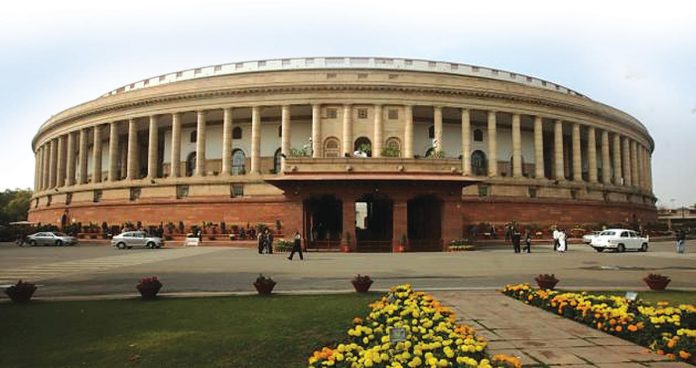
Follow us on Instagram and subscribe to our YouTube channel for more amazing legal content.

Download Now

Was it a wise idea to hold political rallies during covid19’s second wave

0
Covid 19

This article is written by Jannat, a law student from Chandigarh University, Mohali. The article discusses political rallies during Covid19’s second wave and their impact.

Introduction

A vigorous discussion is raging in the media against the backdrop of the horrible human catastrophe unfolding in India: Did political rallies contribute to the surge of COVID-19 cases that has swamped the frail healthcare system since the middle of April 2021? The answer appears self-evident. Regardless of the reason for the gathering, large crowds of individuals without masks or physical distancing might spread the COVID-19 virus. Political rallies drew significant crowds in each of the five states that had assembly elections. Masking and physical distance were almost totally ignored, according to newspaper reporting and television coverage of these gatherings. As a result, these events likely led to the virus’s fast spread and subsequent increase in COVID-19 cases.

Data analysis

Deepankar Basu (Associate Professor in the Department of Economics at the University of Massachusetts Amherst) gathered data on daily confirmed COVID-19 cases in India’s top 25 states, which together account for more than 99 percent of daily COVID-19 cases now, to test the theory that whether the surge in cases during the second wave of coronavirus is the result of political rallies. These 25 states were separated into two categories. The first category, which he dubs “The Election States,” includes Assam, Kerala, Puducherry, Tamil Nadu, and West Bengal, which all had elections in late March 2021. The remaining 20 states make up the second category, which he refers to as the “Non-Election States.”

From January 1, 2021, to April 29, 2021, he plotted the logarithm of the average number of daily COVID-19 cases in the two groups of states. The slope of the logarithmic figure depicts the pace of increase in the average number of COVID-19 cases each day. The daily number of confirmed cases is dropping overtime when the curve is downward sloping; when the curve is upward sloping, the daily number of confirmed cases is growing over time. The steeper the slope, the faster the daily number of confirmed cases increases.

In the early part of the year, the average number of daily COVID-19 cases was dropping in both groups of states. In both groups of states, the logarithm of the average number of daily COVID-19 cases decreased in January and February. This is what prompted the Narendra Modi government and its followers to believe that the epidemic had passed India by and the the country had achieved herd immunity. Beginning in mid-February, disparities in the trajectory of the COVID-19 epidemic in the two sets of states began to appear.

On February 10, 2021, the declining trend of daily COVID-19 instances in the non-election states was reversed. Since then, the average number of COVID-19 cases in non-election states has been significantly increasing. This reversal was most likely triggered by the introduction of new variants of the virus into the Indian population, as well as the lowering of the guard in areas like Maharashtra, Karnataka, and Gujarat in terms of masking and physical distance. What’s remarkable is that the average number of daily COVID-19 cases in the Election States has been falling for more than a month, while it has been climbing in the Non-Election States. The average number of COVID-19 cases in the Election States begins its fast-rising trend only on March 15.

The increase in cases in the Election States rapidly surpassed the average number in the Non-Election States. The increase rate of the average number of daily COVID-19 cases in the two groups of states is shown in the first two rows of Table 1 for four more recent times: March 1 to April 29, March 15 to April 29, April 1 to April 29, and April 15 to April 29. Table 1 shows that beginning in early March, growth rates in the two groupings of states diverged. While the growth rate in the Non-Election States was gradually falling, from 6.09 to 5.87 to 5.35 to 3.01, it was steadily increasing in the Election States, from 6.13 to 8.06 to 9.26, before decreasing slightly after April 15 to 7.99. The differential growth rates resulted in a disparity in average case levels. By the middle of April, the average number of daily cases in the Election States had surpassed that in the Non-Election States (see Figure 1). Thankfully, the rate of increase in the Election States has begun to slow in recent days.

Growth Rate(%) of Average Daily Number of COVID-19 Cases until 29th April


Since 1st March

Since 15th March

Since 1st April

Since 15th April

Non-Election States

6.09

5.87

5.35

3.01

Election States

6.13

8.06

9.26

7.99

Assam

10.04

12.58

15.49

13.34

Kerala

4.99

7.72

10.80

9.47

Puducherry

7.94

7.86

6.97

6.11

Tamil Nadu

6.79

7.09

6.79

5.62

West Bengal

8.87

10.47

9.61

7.59

                                                              Table 1 

The difference in COVID-19 outbreak trajectories between Election and Non-Election States corresponds to the date of the election process and suggests that election rallies may have contributed, at least in part, to the quick surge in cases in several Indian states. In early March, the Election Commission of India began notifying assembly elections in Assam, Kerala, Puducherry, Tamil Nadu, and West Bengal (on March 2 in West Bengal and Assam, and on March 12 in Kerala, Tamil Nadu, and Puducherry).

As seen in the bottom panel of the table there are variances among the five Election States. Assam is the poorest performer, with a growth rate that jumped from 10% to over 15.5 percent before falling to 13.34 percent. The next poorest performances are West Bengal and Kerala. Both Puducherry and Tamil Nadu do a far better job of containing the spread than the other three states. Tamil Nadu is obviously the greatest performer, with a growth rate that is just above 7%.

The one ray of hope is that the number of daily confirmed cases has begun to decline in all of the election states (as can be seen from the last column in Table 1). This is most likely the result of the election process winding down in the five states, as well as political and administrative authorities’ welcome, if tardy, response to the hazards of large gatherings in the context of the epidemic. However, this simply adds to the primary theory that political rallies in India led to the rise of COVID-19 cases and inflicted this massive tragedy on the Indian people.

The Disaster Management Act, 2005 act provides the provisions for passing guidelines in the instances of the current situation. The specifics of the act are listed underneath.

Disaster Management Act, 2005

The Rajya Sabha, India’s upper house of Parliament, passed the Disaster Management Act, 2005 on November 28, 2005, and the Lok Sabha, India’s lower house of Parliament, passed it on December 12, 2005. On December 23, 2005, the President of India gave his approval. There are 11 chapters and 79 sections in the Disaster Management Act of 2005. The Act applies to the entire country of India. The Act provides for efficient emergency prevention, as well as matters related to or incidental to disasters. The primary goal of this act is to help people who have been devastated by disasters in reclaiming their lives.

Section 3 of the act provides for the establishment of the National Disaster Management Authority. The prime minister is the ex officio chairman of the National Authority and other members include nine-person nominated by the chairman.

Section 6 provide for the powers and functions of the authority, which are as follows

  1. According to the provisions of this Act, the National Authority is responsible for establishing disaster management policies, plans, and guidelines to ensure a timely and effective response to disasters.
  2. Without limiting the generality of the provisions of sub-section (1), the National Authority may: 
  1. establish disaster management policies; 
  2. approve the National Plan; 
  3. approve plans prepared by Ministries or Departments of the Government of India in accordance with the National Plan;  
  4. establish guidelines to be followed by State Authorities in developing the National Plan.
  5. establish guidelines for different Ministries or Departments of the Government of India to follow in order to integrate disaster prevention or mitigation measures into their development plans and projects; 
  6. coordinate the enforcement and implementation of the disaster management policy and plan; 
  7. recommend the provision of funds for the purpose;
  8. provide such assistance to other countries affected by major disasters as the Central Government deems necessary; 
  9. take any other measures it deems necessary for disaster prevention, mitigation, preparedness, and capacity building in the event of a threatening disaster situation or disaster;
  10. establish broad policies and guidelines for the operation of the National Institute of Disaster Management;
  11. In the event of an emergency, the Chairperson of the National Authority has the authority to exercise all or some of the National Authority’s functions, but such action is subject to ex post facto approval by the National Authority.

Section 12 of the act provides that the authority shall recommend minimum guidelines for providing  relief to people

Section 14 provides for the establishment of the State Disaster Management Authority. The Chief Minister of the State shall be the ex officio Chairperson, and other members, cannot be more than eight, and they will be nominated by the chairperson of the State Authority.

Section 18 talks about the powers and functions of the State Authority.

  1. Subject to the provisions of this Act, a State Authority shall have the responsibility for laying down policies and plans for disaster management in the state.
  2. Without prejudice to the generality of provisions contained in sub-section (1), the State Authority may—
  1. lay down the State disaster management policy;
  2. approve the State Plan in accordance with the guidelines laid down by the National Authority;
  3. approve the disaster management plans prepared by the departments of the Government of the State;
  4. lay down guidelines to be followed by the departments of the government of the State for the purpose of the integration of measures for prevention of disasters and mitigation in their development plans and projects and provide necessary technical assistance therefor;
  5. coordinate the implementation of the State Plan;
  6. recommend the provision of funds for mitigation and preparedness measures;
  7. review the development plans of the different departments of the State and ensure that prevention and mitigation measures are integrated therein;
  8. review the measures being taken for mitigation, capacity building, and preparedness by the departments of the Government of the State and issue such guidelines as may be necessary.
  9. The Chairperson of the State Authority shall, in the case of emergency, have the power to exercise all or any of the powers of the State Authority but the exercise of such powers shall be subject to ex post facto ratification of the State Authority.

The stance of the Election Commission

The Election Commission (EC) states that the State Disaster Management Authority and its officials are responsible for enforcing COVID-19 protocol procedures (such as lockdown, restriction/curtailment on public gatherings, etc.) under the Disaster Management Act, 2005.

“During this time, the State Disaster Management Authority did not prohibit public meetings under the Disaster Management Act. The Election Commission instructed everyone to follow the rules and to report any violations to the police under the Disaster Management Act 2005. The EC has consistently ordered state/district administration to enforce the National Disaster Management Authority/current State Disaster Management Authority’s instructions,” the poll panel stated. 

In 2020, amidst the NDMA/SDMA mandated lockdown and other enforcement measures under the Disaster Management Act, 2005, the commission conducted the electoral exercise in Bihar,” the commission said. 

The concerned SDMA and notified agencies are responsible for ensuring compliance with the 2005 Act. The Commission highlighted in its August 2, 2020 judgment and all subsequent directives that state authorities must ensure COVID compliance in the context of public meetings and other campaign-related activities. The Commission will never take over the duty of enforcing COVID-19 guidelines from SDMA.

The Election Commission also said in a statement that it restated its COVID-19 safety instructions on February 26, 2021, while declaring the election in five states and a union territory, including Tamil Nadu, and that the campaign finished on April 4, 2021.

Remarks by various courts

Madras High Court

The Madras High Court slammed the Election Commission (EC), stating it was the “sole institution” to blame for the deadly COVID-19 second wave that is now sweeping India. Currently, four states and one union territory are holding assembly elections, and the EC permitted electoral rallies to take place as usual, although the COVID-19 protocol was not being observed. They also called it the “the most irresponsible institution” and said its officials might be booked for murder. This petition was being heard by a bench of Chief Justice Sanjib Banerjee and Justice Senthilkumar Ramamoorthy on whether proper COVID-19 safety protocols were in place during vote counting in the Karur constituency.

Delhi High Court

The Delhi High Court has asked the Centre and the Election Commission to respond to a petition demanding that everyone engaging in vote campaigns in various states and union territories wear face masks as a matter of course. Vikram Singh, the former DGP of Uttar Pradesh and the chairman of Think Tank Centre for Accountability and Systemic Change, filed an application with the Centre and the EC, and a bench of Chief Justice D N Patel and Justice Jasmeet Singh issued notice to the Centre and the EC, seeking their responses to the application (CASC).

Allahabad High Court

According to the Allahabad High Court, the Election Commission, higher courts, and the government “failed to understand the terrible ramifications” of allowing elections in a few states and the panchayat election in Uttar Pradesh. Covid has now reached villages in Uttar Pradesh, according to the court, with the state’s recent panchayat election contributing to the increase.

Insights gained from this emergency

For starters, India should avoid declaring victory over the virus too soon, and triumphalism should be avoided. In the case of future infection increases, people should also learn to adapt to short, local lockdowns. Given that India is still far from achieving herd immunity and its vaccination rate remains low, most epidemiologists foresee future waves. Professor Reddy stated, “We can’t freeze human life.” “If we can’t physically separate ourselves in congested cities, we can at least ensure that everyone is wearing a proper mask. And make sure you put it on correctly. That isn’t a difficult request.”

Conclusion

From the foregoing, it can be determined that holding electoral rallies during COVID 19 was a major blunder and that it also represents our institutions’ inability to enforce COVID regulations. If our political leaders had even a smidgeon of regard for the general population, public health regulations would have been rigidly enforced at election rallies and other mass gatherings, and this man-made disaster of massive proportions would not have occurred. A second wave was imminent, but India might have “postponed or delayed it and decreased its effects,” according to Gautam Menon, a physics and biology expert. Mr. Menon believes that India, like many other nations, should have started comprehensive genomic surveillance in January to discover mutations. Some of these mutations may be to blame for the uptick. “In February, we learned about additional varieties thanks to Maharashtra reports. The authorities originally disputed this, “Mr. Menon continued. “This was a watershed moment in history.”

While the leaders and government may come out with various excuses that elections couldn’t be delayed or that a second wave was inevitable, the truth is that the pandemic, which could have been managed and put under control if the right measures were taken at the right time became a man-made disaster because of sheer mismanagement and irresponsible attitude of those in power. Whereas the common people were the immediate sufferers. 

References


Students of Lawsikho courses regularly produce writing assignments and work on practical exercises as a part of their coursework and develop themselves in real-life practical skills.

LawSikho has created a telegram group for exchanging legal knowledge, referrals, and various opportunities. You can click on this link and join:

Follow us on Instagram and subscribe to our YouTube channel for more amazing legal content.


Download Now

Trademark Law in India in light of Neon Laboratories Ltd. v. Medical Technologies Ltd. and Ors.

0

This article is written by R Sai Gayatri, from Post Graduate College of Law, Osmania University. This article deals with Trademark Law in India and the case of Neon Laboratories Ltd. v Medical Technologies Ltd. and Ors.

Introduction

Have you ever noticed a TM or ® symbol on certain products and service advertisements? That symbol represents a trademark. A trademark is a unique sign or identification mark that is used by companies, businesses, an individual or any other legal entity to indicate the genuineness of a product’s or service’s source. In the case where a trademark is assigned to some service, then it is known as a service mark. A trademark can be in the form of a logo, word, symbol, name, image, design or a combination of these, however, a trademark may also deviate from these standard categories. The genuineness of products and services is established by a trademark, hence, the trademark owners protect their trademarks by registering them. However, the registration of trademarks is not easy as it seems. There are various instances where trademark registrations put the courts in complex situations. In this particular article, we will be dealing with the case of Neon Laboratories Ltd. v. Medical Technologies Ltd. and Ors. in detail. 

Definition of trademark   

Trademark, a kind of intellectual property right, includes any name, symbol, word, device or a combination of the said elements. It is used in commerce to recognize and differentiate the goods of one manufacturer from the others. It also indicates the genuineness and source of the goods. Trademark represents a brand name.

As per Section 2(zb) of the Trademark Act, 1999, a ‘trademark’ is a mark that is represented graphically, it is capable of differentiating the goods and services of one manufacturer from those of others. The trademark may depend on the packaging of goods, combination of colours used, shape of the goods and so on.

The term ‘mark’ is further defined under Section 2(m) of the Trademark Act, 1999. A ‘mark’ includes a brand, heading, label, device, name, word, numeral, ticket, packaging, a combination of colours, shape of goods or any combination thereof.

Owner of a trademark

A trademark protects the owner of a mark by providing exclusive rights to use it for recognition of the goods and services or to give authorization to another to use such mark in exchange for a payment. A trademark allows the owner of the mark or the registered proprietor to stop other traders from using their trademark unlawfully.

As per Section 28 of the Trademarks Act, 1999, a registered trademark provides the power to its registered proprietor the exclusive rights to use the trademark concerning the goods for which the trademark is registered and to obtain relief regarding the trademark as per the provisions of the Trademarks Act, 1999. In case an infringement of the trademark takes place, then the registered proprietor can file a suit in the court of law and obtain – an injunction, damages and account of profits.

Trademark registration

Section 18(1) of the Trademark Act, 1999 states that any individual who claims to be the proprietor of a trademark that is being used or intended to be used by him may apply in writing under the prescribed procedure for registration. The said application must enumerate the name of the trademark, goods and services, the category in which such goods and services fall, the name and address of the applicant and the period for which the trademark shall be used. Any individual, here, refers to an association of persons, a Trust, a Partnership firm, a company (either incorporated or not), the Central or State government.

Procedure for registration of a trademark 

  • Search for a logo, name, device and mark that is intended to be applied as a trademark for registration.
  • Apply for trademark registration.
  • The registry examines the application and issues an examination report raising objections under the respective sections of the Trademarks Act, 1999.
  • A reply to the objections of the registry must be provided and if required a hearing must be asked for. The applicant of the trademark must file evidence in support of the trademark application.
  • An advertisement must be published in the trademark journal or official gazette for the purpose of opposition filed by the public within 90 days from the date of such publication.
  • In case no opposition is received, a registration certificate is issued in favour of the applicant. The registration certificate shall be valid for a period of 10 years. After ten years, the same registration certificate can be renewed after paying the respective renewal fees. 

Trademark infringement

Trademark is an intellectual property right and if any person violates such a right it shall be considered as trademark infringement. Section 29 of the Trademarks Act, 1999 deals with trademark infringement. A registered trademark is said to be infringed when a person uses such a registered trademark as their trade name or part of their trade name or name of their business concern or part of the name of their business concern dealing in goods and services regarding which the trademark has been registered. In simple words, trademark infringement refers to the use of a trademark by a person who is not the owner or the registered proprietor of such a trademark.

The following acts shall be considered as trademark infringement according to the Trademark Act, 1999-

  • If the mark found is a copy of the whole registered trademark with few alterations and additions.
  • If such infringed trademark is being used in the course of trade.
  • If such infringed trademark is printed or represented in an advertisement. However, if a trademark is being used orally, it shall not be deemed as infringement.
  • If such infringed trademark closely resembles the registered trademark causing or likely to cause confusion or deception regarding the goods for which such trademark has been registered. 

Protection against trademark infringement

As per Section 29 of the Trademark Act, 1999 the unlawful use of a registered trademark by an individual who is not the owner or the registered proprietor or registered user of such trademark shall be considered as trademark infringement. The owner or registered proprietor of the registered trademark has the option to take action or obtain relief for such trademark infringement.

The Supreme Court stated that in an action for infringement, the two marks in question must be identical for the infringement to be made out. Similarly, the court shall compare the two marks in question with regard to their degree of resemblance based on visual, phonetic or other elements and whether such elements as represented by the owner of the trademark or the registered proprietor are put into use by another person, only then the court may decide the matter.

In the case of Hearst Corporation v. Dalal Street Communication Ltd., it was held that a trademark is considered to be infringed when a person with regard to his business uses a mark that is deceptively similar or identical to the registered trademark of another company.

Infringement and passing off

The action for infringement is a statutory remedy and the action for passing off is a common law remedy. Passing off is a common-law tort that is used to exercise unregistered trademark rights. It restricts an individual from misrepresenting their goods and services as that of another. To prove that a trademark infringement has occurred, it is imperative to show that the infringing mark is deceptively similar or identical to the registered trademark and no further proof is required. However, in an action for passing off merely proving that the mark is deceptively similar or identical to the registered trademark is not enough. The use of the mark must be causing or likely to cause deception and confusion with regard to the goods and services for which the registered trademark is being used. In a suit for infringement, it is not necessary that the mark being used by the defendant must cause an injury to the plaintiff. But in the case of passing off, it is important to note whether the use of the mark by the defendant is causing or is likely to cause damage or injury to the plaintiff’s goodwill.

A registered trademark is only concerned with a particular category of goods, therefore, the protection only extends to the extent of such goods. However, in a passing off action, it is not compulsory that the goods of the defendant must be of the same category, they may be related goods or even different goods. 

The case of Neon Laboratories Ltd. v. Medical Technologies Ltd. and Ors.

Brief facts of the case

  • Both the parties to the case i.e, Neon Laboratories and Medical Technologies were involved in manufacturing and marketing pharmaceuticals. In the year 1992, the Appellant i.e, Neon Laboratories filed an application for registration of the mark ‘ROFOL’ which was granted in 2001. However, Neon Laboratories did not introduce any product in the name of the registered trademark until 2004.
  • The respondent i.e, Medical Technologies in 1998 introduced a generic drug by the name ‘PROPOFOL’ in the Indian market, which was being marketed under the name ‘PROFOL’.  Later, an amalgamation of the predecessor-in-title took place which resulted in granting the trademark ownership of ‘PROFOL’ to the respondent. The respondent proceeded to register the trademark and also began using it.
  • In 2005, Medical Technologies learnt that Neon Laboratories had introduced a similar generic drug under the trademark ‘ROFOL’. As a result, Medical Technologies filed a suit against Neon Laboratories for using a trademark that is deceptively similar and identical to their trademark ‘PROFOL’. A suit was filed in the trial court of Ahmedabad for passing off by Medical Technologies. A temporary injunction was granted against Neon Laboratories by the said court. The same decision was reaffirmed by the High Court of Gujarat on an appeal. Neon Laboratories further appealed to the Supreme Court of India against the order of the High Court of Gujarat which represents the present case.

Issue before the court

The issue before the court was whether credence must be given to the party that registered the trademark first or the party that introduced the drug in the market first. 

Judgement of the case

The Supreme Court of India at the beginning of hearing the said case stated that an appeal against interlocutory order was not generally heard by it. However, due to the slow disposal rate and the far-reaching outcomes of temporary injunctions, the leave to hear the present case was granted by the Supreme Court.

The factors considered before granting a temporary injunction are as follows –

  • Whether a prima facie case has been established in favour of the applicant.
  • Whether the balance of convenience lies in favour of the applicant.
  • Whether the applicant will be subjected to irreparable damage and loss if the injunction is not granted.

The Supreme Court held that all three factors were in favour of the respondent i.e, Medical Technologies. The respondent successfully established a prima facie case by providing sufficient proof that they had been using their trademark way before the Defendant-Appellant i.e, Neon Laboratories started using a closely similar or identical trademark. Therefore, based on the ‘first in the market’ test the respondent was entitled to the ad interim injunction. Further, the factors of the balance of convenience and irreparable loss were also held in favour of the respondent by the Supreme Court considering the likely loss of business and goodwill. The Supreme Court opined that the injunction was granted by the trial court just a year after the defendant-appellant introduced its product so the balance of convenience would weigh in favour of the respondent.

Supreme Court stated that in case the defendant-appellant had started using its trademark ‘ROFOL’ before or simultaneously with or immediately after the respondent began marketing their products under the trademark ‘PROFOL’, the registration of trademark ‘ROFOL’ having retrospective effect from the date of its application would help the case to be decided in favour of the defendant-appellant. However, the defendant-appellant did not take any action in introducing its products under the trademark ‘ROFOL’ in the market. Also, when the application for registration was pending, the appellant was ‘legally lethargic’ to take any action that would restrict the respondents from using the trademark ‘PROFOL’. The Supreme Court also stated that the litigation was initiated by the respondents and not the appellants who could have objected to the use of a similar trademark by the respondent. The Supreme Court re-affirmed the decision of the Trial Court and the High Court of Gujarat that granted the injunction in favour of the respondent. 

Rights of the prior user of trademark

Under the Trademark law of India, it is a well-established judicial principle that the prior use of the goods will overpower the subsequent user even if such subsequent user has a registered trademark. As a result, the rights conferred by a registered trademark may be impacted by the rights of the prior user of such a mark. In the case of S. Syed Mohideen v. P. Sulochana Bai, the Apex Court had held that the scheme of the Trademark Act, 1999 is such that it identifies the rights of the prior user superior to that of the registered proprietor. Further, the registered proprietor shall not interfere with the rights of the prior user.

Section 34 of the Trademark Act, 1999 provides a statutory basis to the said principle. It states that a registered proprietor of a trademark shall not interfere with the use of any similar or identical mark which has been put to use by a person at an earlier date when compared to the registered proprietor. 

Conclusion 

A trademark belongs to the family of intellectual property rights. A trademark may be represented by a logo, word, symbol, name and so on. It helps the consumers to recognize the genuineness of various products and services. The existence of trademarks further helps the consumers to differentiate the goods and services of one manufacturer from the others. It also indicates the source of the goods. Trademark represents a brand name. Thus, it becomes extremely important to register a trademark. The Trademark Act, 1999 governs the trademark law in India. It enumerates procedures for the recognition, registration, infringement and various other aspects relating to trademarks. Through the case of Neon Laboratories Ltd. v Medical Technologies Ltd. and Ors., it has been established that mere registration of a trademark is not sufficient to stop prior users from using a mark similar or identical to the registered trademark. Therefore, it is essential to conduct thorough research before registering a trademark to avoid using a mark similar to the one being used by prior users even if not registered.

References 


LawSikho has created a telegram group for exchanging legal knowledge, referrals, and various opportunities. You can click on this link and join:

Follow us on Instagram and subscribe to our YouTube channel for more amazing legal content.

Download Now

Can contract managers, specialists and lawyers be automated : the future of contract lawyers

0
Image Source: https://rb.gy/mrmbje

This article has been written by Vidhya Sumra, pursuing a Diploma in Advanced Contract Drafting, Negotiation, and Dispute Resolution from LawSikho.com.

Introduction

Can contract managers, specialists, and lawyers be automated? The answer is NO. Lawyers are already using and interacting more closely with artificial intelligence-enabled software and will continue to do so in the future. 

Take a look around you. Artificial intelligence is no longer a revolutionary concept; it is already here. Artificial intelligence is already being used by twenty-first-century pioneer enterprises to innovate and grow quickly. The result is that businesses that can use artificial intelligence can gain a competitive advantage. Those who ignore it will be left behind. Which side do you support?

In this article, I am highlighting the various ways in which artificial intelligence is now being used in the legal profession and how technology vendors are attempting to streamline work processes. The present legal uses of artificial intelligence are divided into the following groups:

  • Assisting lawyers with research and due diligence
  • Using analytics to provide additional insights 
  • Automating creative activities 

What is a contract lawyer?

A business contract lawyer is a lawyer who specializes in assisting clients with business contracts. They have specialised training or experience in specific areas of law or business like realty, taxation, intellectual property, international tax, corporates, etc. They are familiar with contracts, contract requirements, and contract legislation in their area. Lawyers who specialise in business contracts regularly draft, evaluate, and negotiate contracts for their clients. 

As mentioned above, a contract lawyer’s duties and responsibilities are creating contracts, evaluating contracts, and ensuring the interests of their clients are safeguarded. Contract lawyers are familiar with contract requirements and how to ensure that they will be enforced. Certain legal components and wording are frequently required in these types of contracts.

What is artificial intelligence?

Artificial intelligence is the replication of human intelligence in robots that have been trained to think and act like humans. The phrase can also refer to any machine that demonstrates human-like characteristics like learning and problem-solving.

The majority of people immediately think of robots when they hear the words artificial intelligence. That’s because big-budget movies and literature have human-like computers wreaking devastation on the planet. However, this could not be further from the truth. Artificial intelligence is founded on the idea that human intelligence may be characterised in such a way that a machine can simply duplicate it and carry out activities ranging from the most basic to the most complicated. Artificial intelligence’s goals include simulating human cognitive processes.

Artificial intelligence in law and in legal practice

Artificial intelligence companies are still working on ways to develop technology that can handle time-consuming activities in a variety of industries with greater speed and precision. In the legal industry, artificial intelligence has already proven to be beneficial to both lawyers and clients. 

The application of artificial intelligence in the legal system is still in its early stages, but various countries, law firms, and judiciaries are slowly adopting it. It helps lawyers save money by pointing up legal flaws in court decisions, assisting with contract drafting, due diligence, and legal analytics, among other things. Similarly, artificial intelligence can help lessen the burden on the judiciary, particularly in cases involving minor offences, while leaving complicated matters to be resolved by human judges.

A law firm in the United States has employed the world’s first artificial intelligence lawyer, who will support the firm’s various teams in legal research. The ‘ROSS’ robot is based on IBM’s Watson cognitive computer and is largely used to review legal contracts, do legal research, and summarise case laws, among other things. Similarly, Linklaters LLP, a global law company, is creating Nakhoda, an artificial intelligence software to provide efficient contract administration and structured legal data.

Artificial intelligence is currently being used in legal practice in a variety of ways. This trend, according to Richard Susskind, one of the UK’s most respected thinkers on the interface of law and technology, will continue to increase in the coming years.

Susskind opines, “AI and other technologies are enabling machines to take on many of the tasks that many used to think required human lawyers and that’s not plateauing. It seems to be happening at quite a rate.” The developments, according to Susskind, will eventually warm up by 2020.

Recent progress in the Indian legal profession

In India’s legal field, artificial intelligence’s progress has been slowed. According to research, just approximately 4% of lawyers in India employ artificial intelligence in their profession. The Indian judicial system utilizes artificial intelligence in a variety of ways, including legal research, due diligence, contract generation (smart contracts), and more. Cyril Amarchand Mangaldas is said to be India’s first law practice to apply artificial intelligence, which is largely used to analyse and improve contractual and other legal texts. They have entered into a contract with Kira Systems to get access to their machine learning system, which helps them speed up their legal research and efficiency.

In an event held by the Supreme Court Bar Association on Constitution Day in 2019, India’s Chief Justice, Sharad Arvind Bobde, mentioned that “We propose to introduce, if possible, a system of artificial intelligence. There are many things which we need to look at before we introduce ourselves. We do not want to give the impression that this is ever going to substitute the judges.” 

Key areas of current applications

Current artificial intelligence applications appear to fall into six key areas, based on our review of firms and products in the legal field:

  1. Due diligence: Lawyers use artificial intelligence systems to uncover background information as part of their due diligence to incorporate contract review, legal research, and electronic discovery.

2. Prediction technology: An artificial intelligence programme delivers findings that predict the outcome of litigation.

3. Legal analytics: Lawyers would look for trends and patterns using data from previous case law, win/loss ratios, and a judge’s experience.

4. Documents automation: Software templates are used by law firms to fill up documents based on data input.

5. Intellectual property: Lawyers can use artificial intelligence tools to help them analyse huge intellectual portfolios and extract insights from the information.

6. Electronic billing: The billable hours of lawyers are calculated automatically.

How can artificial intelligence be used in due diligence?

Due diligence is the most crucial aspect of any M&A deal, a process in which lawyers have to go through thousands of documents to discover every possible risk in the company being acquired. 

It involves various records distributed over frameworks and hard drives, assessing the acquired information to identify any prospective threats, and preparing a due diligence report based on the findings. The lawyers need to put their time, attention, and often even their own money into this procedure. For lawyers, the completely tiresome scenario can occasionally lead to inaccuracy and mistakes, which can result in a bad reputation for the law firm.

The first and most obvious benefit of incorporating artificial intelligence into the due diligence process is that it will save M&A lawyers several hours of work. Manual due diligence requires lawyers to spend many hours in the process, making it a tiresome task that frequently results in errors on their part. Artificial intelligence will ensure that due diligence is conducted in a timely and efficient manner.

By giving it access to a variety of sources, such as different contracts and other relevant documents, artificial intelligence can be used to discover and define unique and ambiguous terms if it is correctly developed and trained. This will also put artificial intelligence’s ability to choose these unusual and contradictory terms to the test. Legal research, discovery, due diligence, contract drafting, and contract analysis have all become easier with the use of artificial intelligence. As mentioned above, M&A lawyers need a technology that can help them avoid all of these mistakes and deliver high-quality, error-free due diligence reports. Artificial intelligence enters the picture here.

Artificial intelligence applications

Now, we will look at the present artificial intelligence applications in law:

1. Kira systems

Kira system was founded by Noah Waisberg a former M&A lawyer. Kira Systems states that its software can undertake a more accurate due diligence contract assessment. Kira could be used to choose all of the provisions that you want to search for, and it will highlight the ones you want to review. It makes the exam a lot easier.  It can also be used to keep track of all the documents that have been evaluated and identify which clauses have caused issues. The company says that their system can accomplish the task up to 40% faster if used the first time and up to 90% faster for individuals with more experience.

2. eBrevia

Lawyers, on the other hand, may be overworked because of examining several contracts, and they may overlook critical revisions that result in legal complications later on. When Ned Gannon and Adam Nguyen, co-founders of eBrevia, were still working as junior associates, they faced the same issue. They formed a company in collaboration with Columbia University to speed up the document review process.

3. JP Morgan

JPMorgan has accessed artificial intelligence by establishing in-house legal technology solutions, as reported in June 2016. COIN (short for Contract Intelligence), according to JP Morgan, pulls 150 features from 12,000 commercial credit agreements and contracts in only a few seconds.

4. Legal robot

Legal Robot, a San Francisco-based artificial intelligence firm, on the other hand, is currently offering contract analytics, its response to the increasing contract review software market. The company claims that its software, which is currently in beta, is capable of converting legal content into numeric form and raising concerns on the document using machine learning and artificial intelligence.

5. TrademarkNow

TrademarkNow is a start-up that uses artificial intelligence to automate part of the manual knowledge labour involved in intellectual property application. It promises to employ a complicated algorithm to abbreviate lengthy searches for patents, registered items, and trademarks using the trademark clearance platform, which, according to the business, gives search results in less than 15 seconds.

6. Brightflag

Brightflag provides centralised legal pricing software that modifies line-by-line goods automatically. It also allows users to centralise invoice review, ensuring that all papers are sent to the appropriate approver. Furthermore, artificial intelligence provides analytics by recording and categorising all pricing data to determine alternative fee arrangements and budgets.

Limitations of artificial intelligence 

Artificial intelligence has had a significant impact on the legal profession as well as some corporate operations. According to numerous studies conducted around the world, technology is faster, more trustworthy, and efficient than humans. However, there are some gaps and concerns that have been noticed. They are listed below:

1. Higher cost 

Artificial intelligence is still very expensive in many countries because of an inadequacy of development capabilities, which drives up expenses and lengthens the time it takes to feed data into the software. 

2. No replicating humans

Machines, unlike lawyers and humans in general, are deprived of emotions and moral worth. They can only do what is programmed for them and cannot make moral judgments. This is especially true in the case of equity judgments.

3. Improvement

Today’s artificial intelligence, unlike humans cannot improve on its own without new codes and a new training methodology among other things. They are unable to apply their intelligence to any challenge with ease. Their cognitive capacities are limited and they are unable to perform tasks for which they were not designed.

4. Unemployment

The most serious drawback of artificial intelligence is the amount of job loss it would cause in the legal profession. According to Deloitte, artificial intelligence will automate over 100,000 legal-related positions by 2036. They also claim that by 2020, law firms will be at a “tipping point” in terms of developing a new talent strategy.

Conclusion

The most well-known advantage of artificial intelligence tools in legal practise appears to be increased efficiency. Procedures in artificial intelligence software speed up document processing while also detecting mistakes and other difficulties.

It is unclear how the legal artificial intelligence transition will take place. Large law firms, on the one hand, are likely to drive early adoption since they are the most able to pay for robust artificial intelligence-based tools and integrations. Because they don’t have to cope with the vast existing overhead of larger organisations, newer firms are more likely to start with a lean, automated, efficiency-driven approach.

Artificial intelligence will affect many aspects of the workforce; however, it is not now available in all countries, but this may change in the future. ‘Smart people won’t appreciate this technology; they’ll want it done the old-fashioned way,’ some lawyers do argue. Indeed, there may be no choice but to rely on human competence in some legal problems, but artificial intelligence will greatly augment other procedures and services, and the field itself will eventually have to evolve.

References


Students of LawSikho courses regularly produce writing assignments and work on practical exercises as a part of their coursework and develop themselves in real-life practical skills.

LawSikho has created a telegram group for exchanging legal knowledge, referrals, and various opportunities. You can click on this link and join:

Follow us on Instagram and subscribe to our YouTube channel for more amazing legal content.

Download Now

Concept of repugnancy under Article 254 : an insight

0
Image source: https://rb.gy/ipvr0l

This article is written by Anurag Singh from ILS Law College, Pune. This is a comprehensive article on repugnancy under Article 254.

Introduction 

India practices division of power between the State and the Centre. Hence, it is known as a federal state. Due to the existence of this division of power, sometimes the legislation formed by the Centre and the states do not align with each other and there are some inconsistencies between them. However, two laws with the same subject matter, inconsistent with each other cannot co-exist. One has to prevail over the other. Therefore, to decipher this inconsistency, the doctrine of repugnancy was formulated by the framers of the Indian Constitution.

Article 254: an overview 

In Colin Howard’s Australian Federal Constitutional Law, while describing the nature of inconsistency between the two enactments, it was observed that – “An obvious inconsistency arises when the two enactments produce different legal results when applied to the same facts”. The doctrine of repugnancy is an adopted concept from other federal countries like the United States of America and Australia. Therefore, the principles of the concept are similar when taken up in the Indian context. 

According to Article 246 of the Constitution, there are three lists on which the State and the Centre can make laws. These are mentioned below: 

  1. List – I: The ‘Union List’ includes subject matter on which the Parliament can make laws.
  2. List – II: The ‘State List’ includes subject matter on which the state legislatures can make laws.
  3. List – III: The ‘Concurrent List’ includes on which both the state legislatures and the Parliament can make laws.

Moreover, this concept of repugnancy has been developed under Article 254 of the Indian Constitution to deal with the conflict between the Centre and states regarding the legislation on the same subject matter in the Concurrent List. Sub-clauses of the Article are herein explained below:  

  • Article 254(1) clearly states that if any legislation enacted by the state legislature is repugnant to the legislation enacted by the Parliament, then the state legislation will be declared void, and the legislation enacted by the Parliament will prevail over the former.

Illustration: Education is a part of the concurrent list. Therefore, both the State and the Centre can amend the existing laws or make new laws for the betterment of the education system. However, if the state government formulates a law that is inconsistent in a way that disregards the essence in which the Parliament formulated the law on the same subject matter, then the state legislation will be declared void. Moreover, if the laws formulated are not entirely inconsistent but some parts of them are inconsistent, then the state legislature can enact that piece of legislation after removing the inconsistency. 

  • Article 254(2) clearly states that in case of a repugnant legislation passed by the state against the Parliament, the state can enforce the legislation if they receive assent from the President.

Illustration: The Parliament passed a law stating that taxation on land is 5% but the State Government of Kerala wants it to be 3%. Therefore, if the concerned state government obtains assent from the President, they can enforce their version of taxation on the land.

It will not be out of place to state here that the framers of the Constitution have vested more powers with the Centre than the state. It was done keeping in mind that the Centre has to formulate laws for the entire country, however, the state legislatures exercise their powers within the ambit of their particular state. 

In the case M Karunanidhi v. Union of India (1979), it was held by the Supreme Court that three conditions must be satisfied to conclude that repugnance exists. These are: 

  1. That there is a clear and direct inconsistency between the Central Act and the State Act
  2. That such an inconsistency is absolutely irreconcilable. 
  3. That the inconsistency between the provisions of the two Acts is of such a nature as to bring the two Acts into direct collision with each other and a situation is reached where it is impossible to obey one without disobeying the other.

This landmark judgment laid down that for the legislations to be repugnant to each other, it should not only be inconsistent but also be irreconcilable, meaning that the similar legislation passed are not repugnant unless and until they encroach on each other. This view was also held in the Animal Welfare Board Of India v. A. Nagaraja & Ors. (2014) and Chief Secretary to the Govt., Chennai Tamilnadu & Ors v. Animal Welfare Board & Ors, (2016).

Difference between ultra vires and repugnancy 

The phrase ‘Ultra vires’ is a Latin phrase that refers to ‘beyond the powers’. Ultra vires is a term used when legislative authority exceeds its power of making laws. For example, a state legislature makes a law on a subject that is part of the union list. In the given circumstance, the state is acting ‘beyond its powers’, therefore, it is not eligible to make laws. However, when we talk about repugnancy, then the Parliament and the state both are eligible to make laws but one of them cannot enact it because it is inconsistent with the other. For example, if the state and Centre make a law related to criminal law, which is a concurrent subject, none of them is acting beyond their powers. However, the legislation enacted is inconsistent with each other. Therefore, the law made by the Parliament will prevail. It will not be out of place to state here that the major difference between ultra vires and repugnancy is the eligibility to formulate laws.

Difference between pith and substance and repugnancy

The doctrine of pith and substances and the doctrine of repugnancy has often been with one another.it is essential to take note here that, doctrine of pith and substance deals with conflicts between state and Centre when they formulate legislation that is not a part of their list. However, the doctrine of repugnancy deals with the conflict that arises due to the legislation formulated on the concurrent list.

If the Union formulates a law that is part of the state list and vice versa and then the inconsistency arises between state and Center then that has to be dealt with under the doctrine of pith and substance and not under the doctrine of repugnancy. This view was upheld by the Supreme Court in the case of Hoechst Pharma Ltd. v. State of Bihar (1983).  

The importance of the doctrine of repugnancy

  • The doctrine of repugnancy helps to avoid confusion over the legislation on subject matter present in the concurrent list.
  • Public interest is given the utmost importance.
  • It gives the Center the power it needs, which is quintessential in the situation of ‘emergency’.
  • However, all the power is not with the Centre. States can also get their legislation approved if they get the assent of the President. 
  • State laws become operative once the legislation from the Centre is repealed. 
  • It keeps the state as well as the Centre under constant check.  
  • If the states are not under constant check, then they might formulate laws that are autonomous and against the public interest. 
  • When there is any inconsistency between the laws it can still be implemented by the state. It can simply remove the inconsistency. The entire legislation is not declared void at the outset.

Landmark judgments on the doctrine of repugnancy 

Deep Chand v. The State of Uttar Pradesh (1959) is a milestone case where the Uttar Pradesh Transport Service (Development) Act, 1955 was found repugnant to the Motor Vehicles Act, 1939 by the Parliament, when the State Government of Uttar Pradesh issued a notification under Section 3 of the impugned Act, directing that the said routes along with others should be exclusively served by the State buses, and followed up that notification by others under Sections 4 and 8 of the Act. Therefore, the Supreme Court, in this case, held that the U.P. Transport Service Act is void to the extent of repugnancy.  

The Supreme Court laid down the three tests to identify whether the two legislations are repugnant or not, they are herein mentioned below:

  1. Whether there is a direct conflict between the two conflicting provisions,
  2. Whether the Parliament intended to lay down an exhaustive enactment on the subject matter and to replace the law made by the State legislature, and
  3. Whether the law made by the Parliament and that made by the State legislature occupies the same field. 

These three tests laid down in this very judgment paved a way for many judgments that came after it.

  • In the case of Zaverbhai Amaidas v. The State of Bombay (1954), the State Government of Bombay felt the need to pass an amendment to the Essential Commodities Act, 1955 to intensify the punishment from 3 years to 7 years of imprisonment regarding production and distribution of essential commodities because the State felt that the punishment prescribed was not sufficient. Moreover, they also received the assent of the President for this amendment. But the Parliament also enhanced the punishment for the same offense in 1950.

The Supreme Court in the instant case observed that, “The important thing to consider with reference to this provision is whether the legislation is “in respect of the same matter”. If the later legislation deals not with the matters which formed the subject of the earlier legislation, but with other distinct matters, though of a cognate and allied character, then Article 254(2) will have no application”.

This judgment explained the meaning of ‘with respect to the matter’ in Article 254(2). The court, in the instant case, was of the view that the state legislation and the legislation enacted by the Centre are on the same field. Therefore, the court declared the state laws void as they were repugnant to the central legislation.

  • In the case Hoechst Pharma ltd. v. State of Bihar, the petitioner had a branch or sales store at Patna, under the Drugs (Price Control) Order of 1979 and was prohibited from selling these medicines and drugs in excess of the controlled price so fixed. Therefore, occasionally the manufacturers transfer the taxes on the medicine to the consumer. However, the Bihar Finance Act, 1981 (later renamed as Bihar Value Added Tax Act, 2005) prohibited such a dealer to collect the balance of the payable surcharge. 

The Supreme Court in the instant case observed that, “In short, the result of obtaining the assent of the President to a State Act which is inconsistent with a previous Union law relating to a concurrent subject would be that the State Act will prevail in that State and override the provisions of the Central Act in their applicability to that State only”.

In this judgment, the Supreme Court explained the effects of Article 254(2). In the instant case, the Supreme Court was of the view that the Essential Commodities Act and the Drugs (Price Control) Order function in two different areas of law. Therefore, there is no conflict between the two legislations. The question of repugnancy does not arise and they can coexist.

Conclusion 

India is a quasi-federal state. Hence, the division of power between the states and Centre is evident. However, when exercising their powers more often than not, both the authorities face conflict while formulating laws on the subject matter in the concurrent list. Therefore, it will be safe to say that the Union is given more powers herein than the state to formulate laws because in case of any inconsistency, the laws made by the Center, more competent with respect to the needs of the citizen, prevails on the point where the state laws are repugnant to the central law. Moreover, the state legislature can also enact their laws in case of inconsistency with the assent of the President.  

References


LawSikho has created a telegram group for exchanging legal knowledge, referrals and various opportunities. You can click on this link and join:

Follow us on Instagram and subscribe to our YouTube channel for more amazing legal content.

Download Now
logo
FREE & ONLINE 3-Day Bootcamp (LIVE only) on

How Can Experienced Professionals Become Independent Directors

calender
28th, 29th Mar, 2026, 2 - 5pm (IST) &
30th Mar, 2026, 7 - 10pm (IST).
Bootcamp starting in
Days
HRS
MIN
SEC
Abhyuday AgarwalCOO & CO-Founder, LawSikho

Register now

Abhyuday AgarwalCOO & CO-Founder, LawSikho