In today’s world, where there is a limitation on time, we neither get time to solve our problems nor do we get satisfactory solutions, even if we seek support from any human agencies. This leads to our frustration, and we search for a perfect solution to get rid of the issues.
Chatbots are only the solution to handling our problems. Let’s understand why.
Why chatbots
In our day-to-day work, we come across issues, and we find it difficult to manage these due to multiple reasons, like time constraints, human errors, delays in producing the output, poor quality work and many more. This has made us think and has drawn our attention to the need to make use of intelligent platforms or tools that can help us get the right and quick solution.
As mentioned, chatbots are seen as an upcoming solution for fast, perfect, reliable and good quality support. With the results produced by the chatbots, the outcome achieved is – reduced frustration levels and customer satisfaction.
Let us understand chatbots and AI-driven business:
A chatbot is software that simulates human conversations. It enables communication between a human and a machine, which can take the form of messages or voice commands. A chatbot is designed to work without the assistance of a human operator.
There are two categories of Chatbots. They are as below:
Rule-based chatbots: These chatbots are programmed to provide the solution based on a limited number of choices made by the customer.
AI-based chatbots: These chatbots are built on machine learning algorithms that understand the language and provide solutions to open-ended queries.
AI-Driven Business is a business which understands its customers in-depth and provides smart suggestions to meet their needs based on their likes, preferences, history, etc.
How can chatbots be used for customer support
Considering the challenges faced by customers, chatbots can be looked upon as an ideal solution for customer support, as below:
Handling customer service inquiries: Earlier, a customer seeking any service support was heavily dependent on the respective website for raising tickets/requests. Today, chatbots are used in handling customer service inquiries where customers engage with chatbots for their requests and make effective use of self-service options in seeking any solution to their problems.
Instant resolution: Before chatbots were introduced, the customers, after raising the request, had to wait for a long time to get the same accomplished. But chatbots are very helpful in providing instant resolution.
24x7x365 support: During odd hours, it was difficult for the customers to get help from customer care personnel. But chatbots are designed to provide 24x7x365 support to their customers.
Multilingual support for global business: Till-date, due to language limitations, it has been a great challenge for customers to use global services. But chatbots have successfully overcome this challenge by providing multilingual support. This has enabled customers to use the required global support.
Support on multiple channels: Earlier, customers relied only on websites to seek support. But, today, with parallel implementation of the mobile apps, social media, SMS services, etc., chatbots have become equally important in handling customer requests on multiple channels.
Dealing with different types of customers: For customers who have a tendency to ask the same question and might not be satisfied with the same answer, chatbots can be used to tailor the answer based on some additional criteria.
Areas of application
Although there are many areas where chatbots can be implemented for customer support. However, below are a few popular areas of application:
Troubleshooting and customer support
As per the survey conducted by Business Insider in 2017, it is understood that 67% of customers used chatbots to get their issues resolved. The different platforms used by chatbots for providing customer support were websites, mobile apps, social media, etc.
Human resource automation
Chatbots are most useful for performing redundant HR tasks such as sourcing candidates, scheduling interviews, providing employee benefits, and so on. This helps HR executives reduce their repetitive tasks and focus more on complex issues.
E-commerce industry support
Per e-commerce statistics, it is estimated that there are 12-24 million e-commerce sites around the globe and chatbots play a very crucial role in supporting their customers. They help in solving queries related to delivery, tracking orders, managing returns and exchanges, recording feedback, providing recommendations to the buyer, helping buyers place orders via a single click, and so on.
Healthcare automation
Chatbots are looked at as immediate assistance to patients seeking treatment from home versus visiting hospitals hospitals/doctors. For both hospitals and patients, chatbots are used in recording patient information and history, scheduling the online consultation, generating appointments for further tests and diagnoses based on the consultation, generating test reports and sharing them with patients, suggesting health care tips, etc.
Growth and marketing
According to a recent HubSpot survey, 47% of customers make use of chatbots before buying any product. These are basically the shopping bots (utility bots) and are used for recommending and shopping for items.
Sales and lead generation
Market research says that 21% of customers say that chatbots are the easiest way to contact a company for product inquiries, which generate leads based on customer preferences. As compared to traditional lead generation tools, chatbots generate 4x leads, which are further helpful in increasing sales and thus revenue growth.
Record keeping reviews and feedback
The outcome of any business is determined by the reviews and feedback provided by its customers. Chatbots play an important role in automating and receiving 100% true reviews and feedback from customers. With chatbots in action, the customers are happy and find it super easy to share their reviews and feedback.
Providing financial advice
Chatbots have an excellent ability to store and process data based on customer earnings and spending patterns. With this ability, they are used in providing financial advice to customers. This feature helps both customers and financial and non-financial organisations create a good rapport.
Social media automation
With an increase in the use of social media by customers, businesses are smartly automating and marketing their products. Chatbots used in social media automation are categorised accordingly – WhatsApp automation, Instagram automation and omnichannel automation.
Industry-based customer experience automation
The success of any industry depends on how well they provide their services to customers. So, a good customer experience is critical for any business to grow and automation in the customer experience has become the most necessary thing.
Benefits
For customers
The most common questions of the customers are handled directly by the chatbots. There is no need to raise and track tickets for issue resolution. With instant issue resolution using chatbots, the customers are satisfied as it has reduced their wait time to a greater extent and that too by just relaxing at home and without connecting to the customer representative. In addition, round the clock support (24x7x365) is available with chatbots. One can seek support on any device/platforms like websites, mobile apps, social media, etc. With the smart recommendations made by chatbots based on accurate and personalised data, it has become super easy for customers to make decisions quickly.
For customer representatives:
One becomes demotivated with the same routine tasks and customer representatives are the ones who face this issue. Chatbots have become a god-gift to such representatives as they can handle 70-80% of commonly asked questions. This has enabled the representative to focus more on the complex issues where human intervention is needed. Reducing repetitive tasks has improved motivation, which has resulted in more productivity and greater efficiency.
For businesses
Chatbots are a boon to businesses as they handle basic customer queries and in addition, they are proven to be cost-effective solutions as they handle multiple interactions simultaneously. This has reduced the need for more customer representatives, which has resulted in saving money to a greater extent. Businesses can gain easy insights and improve the customer experience. Owners look forward to building a strategy for providing accurate solutions to customers and keeping them engaged. This helps businesses with reduced drop-off rates, increased engagement and higher customer retention. And with a proper strategy in place, it helps them expand their business by increasing their sales through proper channels. Chatbots can be used across industries like banking, manufacturing, retail and e-commerce, energy and utilities, education, gaming, insurance, telecommunications, automobiles, etc.
Limitations
Though a chatbot is a revolutionary invention, it cannot be treated as a 100% perfect solution because it does come with some limitations/challenges as follows:
Dealing with complex issues
Chatbots operate on the data and information available or programmed within. When they encounter any complex query for which the data/information is not available, they either end up providing incorrect solutions or sometimes fail to provide the solution itself.
Sometimes there is a need to provide alternate solutions in dealing with complex issues and chatbots fail to provide alternate solutions to the way they have been programmed.
Lack of empathy
One of the pain points is that machines lack understanding of human emotions and since empathy plays a vital role in human communications, a few customers feel more comfortable talking to customer representatives than dealing with chatbots. This is because they think that humans can only understand their issues and the situation they are dealing with and can handle their concerns properly.
Limited ability to understand human language
For a few user queries, it becomes a challenge for chatbots to respond as they struggle to understand the nuances of language that include slang and sarcasm. With such queries, chatbots can misinterpret, and there is a chance of providing inaccurate solutions. This can lead to customer frustration and damage the business’s reputation.
Chatbot laws in India: a comprehensive overview
In India, there are a number of laws that apply to chatbots. These laws include:
The Information Technology Act of 2000
Enacted in 2000, this landmark legislation serves as the primary legal framework governing information technology in India. It encompasses a wide range of provisions aimed at regulating various aspects of the digital realm, including data protection, cybercrime, and electronic commerce. Key features of the act include:
Data protection: The act recognizes the importance of protecting personal information and establishes guidelines for the collection, storage, and use of sensitive data. It mandates that organizations obtain consent from individuals before processing their personal information and provides individuals with certain rights, such as the right to access and rectify their data.
Cybercrime: The act defines various cybercrimes, including hacking, cyberbullying, and online fraud, and prescribes penalties for such offenses. It establishes specialized cyber cells within law enforcement agencies to investigate and prosecute cybercrimes effectively.
Electronic commerce: The act facilitates electronic commerce by providing legal recognition to electronic contracts and digital signatures. It addresses issues related to online payments, consumer protection, and intellectual property rights in the context of e-commerce transactions.
The Consumer Protection Act of 2019
Passed in 2019, this act seeks to safeguard the rights and interests of consumers in India. It consolidates and amends several existing consumer protection laws to provide a robust framework for consumer protection in the digital age. Key features of the act include:
Unfair trade practices: The act prohibits unfair trade practices, such as misleading advertising, false claims, and deceptive marketing strategies. It empowers consumers to seek redressal in case they fall victim to such practices.
Defective goods and services: The act provides consumers with remedies in cases of defective goods or deficient services. It mandates that manufacturers, sellers, and service providers are responsible for any defects or deficiencies in their products or services and must offer appropriate compensation to consumers.
Consumer disputes redressal: The act establishes a three-tier grievance redressal mechanism, consisting of District Consumer Disputes Redressal Commissions, State Consumer Disputes Redressal Commissions, and the National Consumer Disputes Redressal Commission. Consumers can approach these commissions to seek resolution of their disputes with businesses.
The Personal Data Protection Bill of 2019
Currently under consideration by the Indian Parliament, this bill aims to provide a comprehensive framework for the protection of personal data in India. If enacted, it will significantly impact how organizations collect, use, and disclose personal information. Key features of the bill include:
Consent and notice: The bill requires organizations to obtain explicit consent from individuals before collecting, processing, or disclosing their personal data. It also mandates that organizations provide individuals with clear and concise notice about the purpose of data collection and the manner in which it will be used.
Data minimisation and purpose limitation: The bill promotes the principles of data minimization and purpose limitation, requiring organizations to collect only the personal data necessary for specified purposes and to limit its use to those purposes.
Data security and breach notification: The bill imposes stringent data security obligations on organizations, requiring them to implement appropriate security measures to protect personal data from unauthorized access, use, or disclosure. It also mandates organizations to notify individuals in the event of a data breach.
Rights of individuals: The bill grants individuals several rights with respect to their personal data, including the right to access, rectify, erase, and withdraw consent. It also provides for the establishment of a Data Protection Authority to oversee the implementation of the bill and address complaints related to data protection.
These three laws collectively form the legal framework governing information technology, consumer protection, and data protection in India. They aim to strike a balance between promoting innovation and economic growth in the digital age while safeguarding the rights and interests of individuals in the digital realm.
These laws provide a basic framework for the regulation of chatbots in India. However, there are a number of specific issues that need to be addressed, such as:
The liability of chatbot providers for the content generated by their chatbots.
The use of chatbots to collect and process personal data.
The use of chatbots to make decisions that have a significant impact on individuals.
Laws governing chatbots are still in their early stages of development, but there are a few key principles that are likely to be included in any future regulations.
Transparency: Users should be aware that they are interacting with a chatbot, and should be able to easily identify the chatbot’s limitations.
Accountability: Chatbots should be held accountable for their actions, just like human beings. This means that chatbots should be programmed to avoid harmful or discriminatory behavior.
Privacy: Chatbots should protect users’ privacy by not collecting or storing personal information without the user’s consent.
Safety: Chatbots should be designed to be safe for users to interact with. This means that chatbots should not be able to spread misinformation or incite violence.
The Indian government is currently working on developing a specific regulatory framework for chatbots. This framework is likely to address the issues listed above, as well as other issues that may arise in the future.
In addition to the legal framework, there are a number of ethical considerations that need to be taken into account when using chatbots. These considerations include:
The need to ensure that chatbots are used in a transparent and accountable manner.
The need to respect the privacy of users.
The need to avoid bias and discrimination in the design and use of chatbots.
By taking into account both the legal and ethical considerations, businesses can use chatbots in a responsible and ethical manner.
Conclusion
No matter what the business is, chatbots are the right solution for providing customers with accurate and instant support. With a good customer experience, they can prove to be the greatest asset of all time. They can automate every single interaction (text-based and voice-based) and take business success to the next level. As per ChatBot Head of Customer Support: Grzegorz Woźniczko, one chatbot handled 313,406 chats, which is 35% of the total traffic over the last 3 years. This is equivalent to the workload of 10 support agents.
So, it can be concluded by saying that the impact of chatbots on customer support in AI driven businesses is huge. Every single business that is serious about growing should consider deploying chatbots.
This article is written by Shalu Gothi and further updated by Shreeji Saraf. This article talks about the powers and functions of an arbitrator given under The Arbitration and Conciliation Act, 1996. This particular article deals in detail with the various responsibilities that an arbitrator possesses and the principles of law that the arbitrator is required to abide by. The article mentions certain case laws relating to power and duties of arbitrators.
Table of Contents
Introduction
The UNCITRAL Model Law, which had a significant contribution in the enactment of the Arbitration and Conciliation Act, 1996 in India, which was passed during the year 1985, by the United Nations Commission on International Trade Law (UNCITRAL). While giving effect to the Model Law, the United Nations General Assembly (UNGA) proposed or offered that all countries must give ample amount of recognition to the said Model Law with the intention of regularity or similarity of the law related to international commercial arbitration and conciliation. This is how Parliament passed the Arbitration and Conciliation Act, 1996, and it came into existence.
The mentioned Act consists of all the laws relating to domestic arbitration, international arbitration, and implementation of foreign awards in India. It further goes on defining conciliation and other matters related thereto. This Act has proved to be beneficial for both the consumers and businesses as it ensures cost-effective resolution to their disputes without any disproportionate delay. The intention behind implementing this Act is that it gives liberty to the parties to solve their dispute without any interference from the court, with the existence of an arbitrator appointed by themselves.
Who is an arbitrator
The role of an arbitrator is like that of a judge who acts as a neutral third party. The decisions made by the arbitrator in a dispute are considered obligatory and final. The arbitrator regulates a hearing, which is conducted in a formal way, and in this meeting, the parties produce evidence and arguments in relation to the dispute. In this case, the decision made by the arbitrator is considered as an award. The decision made by the arbitrator in regard with the dispute is enforceable in the court of law. The arbitrator acts according to the procedure that has been chosen by the parties to a dispute. In other words, an arbitrator is someone to whom the subject matter of the dispute is referred by the conflicting parties.
Appointment of the arbitrator (Section 10 and Section 11)
Section 10 of the Act goes on to state parties have the liberty to determine the number of arbitrators, but the number of arbitrators shall not be an even number. According to Section 11, the parties are at liberty to determine the procedure for appointment of an arbitrator or arbitrators in the arbitration agreement. But when no such procedure is determined or the parties fail to reach a consensus on the appointment procedure, then each party needs to appoint one arbitrator each, and then the appointed two arbitrators have to appoint the third one. If the parties are not able to appoint the arbitrator as per the mentioned procedure within 30 days from the date of request or the appointed arbitrators fail to agree on one person, then any party to the dispute may file an application to the Supreme Court or the High Court or any person or institution designated by such Court for appointment of an arbitrator on their behalf. In any case, if the parties are not able to agree on the method of nominating or designating one arbitrator or are not able to come on consensus on one person within 30 days from the receipt of an appeal made by another party, then the Chief justice shall designate one arbitrator at the demand of one of the parties. In any case where the assignment or arrangement method in relation to the appointment of arbitrator has already been fixed by the parties through the earlier contract and the parties fail to act as required, a party may appeal to the Chief Justice in the matter concerned. The decision taken by the Chief Justice will be considered as binding and final in that regard.
Qualification of arbitrators and requirements for filing a request for appointment of an arbitrator
One of the basic requirements that an arbitrator should possess is that he should be of sound mind, he must have accomplished the age of majority, i.e., he must be 18 years of age or above, and he should not be disqualified by any law in force. The arbitrator could be of any nationality. This is mentioned in Section 11 of the Act.
The parties have the right to regulate or decide the qualifications of the arbitrator according to their arbitration agreement. The arbitrators are required to have 10 years of experience in the field of the dispute. Impartiality, neutrality, and fairness are some of the additional qualifications that an arbitrator must have. He should not develop any profit making business or relationship with that of the parties that is likely to change the outcome of the proceedings or effect the same. The concerned arbitrator must not be a part of any legal proceedings. The arbitrator should not be convicted of any offence as mentioned by uu the law.
The parties have the right to consent upon the course of action adopted for the appointment of the arbitrator as stated under Section 11 of the Act. The same Section even mentions that if any of the parties fails to appoint an arbitrator as per the agreed procedure, then the Supreme Court or the High Court has the power to appoint the arbitrator either by filing an application in the concerned court or on request made by the parties.
Powers and function of arbitrator in an arbitration proceeding
The arbitrator is the one who will give the arbitral award, therefore, the Arbitration and Conciliation Act, 1996 provides several powers to him in order to determine the award.
Power to rule on the jurisdiction of the tribunal [S 16]
Section 16 of the Act deals with the jurisdiction of the arbitral tribunal. It states that the tribunal can rule on its own jurisdiction with reference to or validity of the arbitration agreement. It specifies the time frame when an application for the case of no jurisdiction can be filed and i.e., such application can either be filed at the initiation of the proceedings or when the arbitral tribunal has exercised the excess of jurisdiction. Whenever the party deems fit or correct can file an appeal or plea for the excess of jurisdiction. If the arbitral tribunal has adjudicated beyond what it can actually adjudicate, then it can be considered as excess of jurisdiction.
In the case of Gas Authority of India Ltd v. Keti Construction Ltd.((2007) 5 SCC 38) it was held that if any of the parties raises an appeal or plea on the ground that the arbitral tribunal had no jurisdiction in the concerned matter, it must be raised at the beginning of the proceedings to avoid the expense or setting aside if the arbitral award.
Power to make award
Section 29A of the Act provides that an arbitral tribunal shall pass an award within 12 months from the date of completion of the proceedings of the tribunal. The tribunal could be entitled to additional fees as agreed between the parties if the award has been passed within 6 months of the proceedings. If the parties mutually decide or agree upon, then the time period for passing the award could be increased to a period not exceeding more than 6 months.
Power of the arbitrators or tribunal to decide and the challenge to appointment of any arbitrator
Section 13 of the Act provides an opportunity to the parties to select a procedure on the basis of which the appointment of an arbitrator can be challenged. This Act provides for the settlement of the procedure through which the appointment of an arbitrator can be challenged by the way of agreement between the parties. If there is no agreement in this regard, then the party who is willing to dispute the appointment of the arbitrator has to inform the same to the arbitral tribunal within 15 days of the appointment of the arbitrator, and if the other party is also of the opinion to challenge the same, and after this, even if the arbitrator does not withdraw, the arbitral tribunal is the one who would decide the matter in this regard.
Power of an arbitrator to take interim measures
According to Section 17 of this Act, it provides a layout for various interim measures that can be granted by the arbitral tribunal to the parties. An appeal for the grant of interim measures can be made by any one of the parties at any stage throughout the pendency of suit. ANy part may file an application to arbitration tribunal to grant interim measures for following purposes-
The Appointment of a guardian for the protection of interest and rights of a minor or person of unsound mind and;
For the protection of:-
Interim custody and sale of goods which are subjected to the arbitration agreement;
Detain, preserve and inspect any property or thing which is subjected to arbitration;
Appointment of receiver;
Such other interim measures are necessary in the eyes of the Court.
Power to proceed to ex-parte
If any party fails to comply with the provision of this Act, the arbitrator has the capacity or ability to proceed to ex-parte i.e., in the favour of one party, in any arbitration proceeding. Section 25 of the Act, deals with the defaults on part of any party in regard with submitting the statement of claims or defences.
In any case where the claimant has failed on his part to communicate his statement of claim, then in that case the arbitral tribunal is entitled or permitted to terminate the proceedings. When the respondent is not able to pass on his statement of claim in accordance with Section 23(1) of the Act can proceed ex-parte. In a situation where the party fails at an oral hearing or also fails to put together the document, or turn out documentary evidence, the tribunal shall not conclude the proceeding.
In the case of Hemkunt Builders v. Punjab University ((1997) 1 Arb. LR 348 (Delhi)) the notice of appearance and pre-warning notices with regard to the ex-parte proceedings was served to the petitioner, but there was no interest or reply from the petitioner’s side on the same. The Delhi High Court mentioned that it has been inferred that the petitioner had no interest in the concerned matter, so ex-parte the arbitral award was sustainable.
Power to appoint an expert
Section 26 of the Act specifies that an expert could be appointed for expert evidence on the matters which have been referred before the arbitral tribunal. It empowers the tribunal to designate one or more experts for the matters which have been referred before the tribunal for resolution. The expert can even become a part of oral hearing only after he has submitted its written report and the participation of the expert could be made either on the request of the party or arbitral tribunal. The expert shall not make his report on the basis of the material facts which he is not aware of.
Duties of an arbitrator in an arbitration
In an arbitration, the arbitrator has some specific duties towards the parties of the dispute at the time of appointment. The general duties which the arbitrator is bound to fulfil in all kinds of arbitration are-
To determine time and place of arbitration
Section 20 of the Act comes up with the place of arbitration. It lays down a place where the arbitrator or arbitrators encounter and preside over with the proceedings. The place of arbitration has been left upon the discretion of parties to mutually agree upon and finalise. In such situations where the parties are not able to fix a place, the Act grants the arbitral tribunal with the power to determine the place of arbitration. While determining the place of arbitration, the ease of the parties should be given a thought to in order to avoid any hardship. The arbitrator can administer the meeting at any place which it deems fit for discussion among its members, for the motive of hearing witnesses or experts, inspection of documents, goods, and other property.
Duty to disclose
Section 12 imposes a duty on the arbitrator to reveal all the relevant facts which are essential to be in the knowledge of both the parties at the time of his first encounter with them. The essential knowledge which needs to be disclosed by the arbitrator when approached for appointment and such disclosure must be made in writing and they are as follows:
Any circumstances which might be past or present showing any direct or indirect relationship or interest with any of the parties
Or with regard to the subject matter of the dispute; any of these which could be considered as a ground for impartiality, likely to affect the subject matter of the proceedings.
In the case of Steel Authority of India v. British Marine (2016), the Court laid down that all such facts which are likely to affect impartiality or which might create the appearance of partiality or bias must have to be disclosed by the arbitrator.
Duty to determine the rule of procedure
As specified by Section 19 of the Act, the arbitral proceedings are not compulsory or obligatory to be bound by Code of Civil Procedure, 1908 or the Indian Evidence Act, 1872. This Section provides that it is parties’ liberty to agree or select a procedure or method that may be adhered to by the arbitration tribunal. It is always conditional upon the mutual consent of the parties, but if in any case or situation the parties are not able to determine the method of arbitration proceedings, then in that particular case the arbitrators are authorized to make a decision for the procedure of arbitral proceedings.
Duty to act independently and in an impartial manner
Section 12 and Section 18 of the Act have laid down certain duties that an arbitrator is bound to follow, which require him to act in an impartial way and independently during the time of arbitration proceedings. Acting independently means that the arbitrator shouldn’t have any relationship whether direct or indirect, past or present, with the parties concerned or any act or circumstances that display an interest in the parties or in the subject matter of the dispute that would cause or bring about a change in the outcome or decision of the arbitration proceedings. Being impartial clearly states or mentions that the arbitrator must be impartial and honest in performing the functions assigned to him as an arbitrator. The concerned parties of the arbitration must be given an equal opportunity of being heard, presenting their case, and making interim applications in relation to the case without favouring any particular side. As per the Section 12 and Section 18, the principles of natural justice are brought into play in this regard. Also, in regard to Section 12, the arbitrator is duty-bound to disclose any material information to the concerned parties that parties are required to be aware of at the time of the arbitration proceeding.
To interpret or correct the award
As stated in Section 33 of this Act, it lays down the procedure for rectification and clarification of an arbitral award. The Act confers three important functions on the arbitral tribunal. A party with notice to another party may apply for correction of mistakes to the arbitration tribunal. The mistakes could be either clerical or typographical or other mistake and error of the similar kind. A party with a notice to another party may request the arbitral tribunal for the interpretation of any specific point of the award. The Act even mentions that if on a valid or legitimate ground if an appeal is made to the arbitral tribunal, it can rectify the omission or fault or provide a clarification of the award within 30 days from the date of receipt of the request. The Act authorises the arbitral tribunal to amend its own resolution and rather remove faults or mistakes in the award within the time period of 30 days from the date of passing the award.
Functions of an arbitrator
The parties at the time of nominating an arbitrator may lay down certain duties or tasks on the arbitrator. The following mentioned below are things or acts for which the arbitrator could be held accountable for:
Duty to effectively resolve the dispute
The arbitrator is bound to make such judgements and decisions with respect to the dispute without being involved or doing any arbitrariness. Although there is no particular direction or instruction stated for effectively resolving the dispute, its scope depends on or varies from case to case. There should be a proper and effective decision-making process that the arbitrator should be required to follow and abide by the same. The following actions, if executed by the arbitrator, are considered as improper behaviour on the part of the arbitrator, and they are as stated:-
Passing of awards that are against or violate the laws enforced at that particular period.
Failure to act in accordance with terms that are expressly or impliedly given;
Granting awards that is against public policy;
The arbitrator is being bribed by the parties to the dispute;
The arbitrator fails to abide by the principles of natural justice
Selecting date, time, and place of arbitration
According to Section 20 and Section of 21 of the Arbitration & Conciliation Act, 1996, the parties to the arbitration are free and are allowed to choose a place and date of arbitration, respectively, which shall be decided with the mutual consent of the parties. If, in any case, they are not able to select a location for the arbitration, then it is the duty of the arbitrator to choose a place for arbitration. While the arbitrator is selecting the location of arbitration, they need to take into account or consider the convenience of the parties.
Unless the parties have agreed or mutually consented to a particular or specific place, the arbitrator can take into consideration other places for the purpose of inspection of documents, goods, or properties or for hearing the witnesses.
To determine the method that needs to be followed
As per Section 19 of the Act, the arbitral proceedings are not bound by the Code of Civil Procedure, 1908 or the Indian Evidence Act, 1872. This provision of the act gives the parties a liberty to decide which method or procedure they want to follow. It can be considered as one of the most liberal provisions that has been mentioned, and it provides the parties with the freedom to select the procedure that needs to be followed during the arbitration proceeding. The procedure or method that the parties are selecting or choosing should be done with mutual consent between them, and it should be in accordance with the agreement of the parties. In a situation where the parties are not able to decide or determine a procedure that should be followed, the arbitrator is free to conduct the proceedings in a manner that he thinks is appropriate and that he deems fit and proper. The concerned arbitral tribunal, or arbitrator, has been vested with a power through which he can determine the admissibility, materiality, and weight of any evidence produced before it.
Principles to be followed by an arbitrator
Complying with principles of natural justice
Arbitral proceedings are based on the principles of natural justice, which provide such proceedings legality and supremacy as an impartial, fair, and just mechanism for dispute resolution. Starting from the appointment of an arbitrator for arbitral proceedings to dealing with parties in an impartial way, principles of natural justice play a significant role in every step.
The principle of natural justice originated from the word ‘Jus Natural’ in Roman law. In simple terms, the principle of natural justice equates that on a particular issue, such decision-making procedure is followed that is sensible and reasoned. It simply mentions that justice should be fair, just, equal, and impartial and protect the rights of the citizens against irregularity, arbitrariness, and injustice.
The principle of natural justice includes two rules, namely:
Nemo Judex In Causa Sua
The above-mentioned principle is also termed as “Rule against Bias”. The authority making the decision must be a person who is impartial, does not have any interest in the subject matter of the case and makes the decision by following the principles of fairness and transparency. There are several circumstances where the arbitrator or judge can decide the matter on the basis of bias if that person has some sort of financial gain or personal bias (when the concerned authority is hearing a case in which that person’s relative is involved) or when the concerned authority has developed a bias because of the influence of an authoritative person. If any such decision is passed on the basis of bias, that decision can be declared null and void.
Section 12(1) of the Act mentions a part which relates to that of biasness and it further states that a duty on the arbitrator to reveal all the relevant facts which are essential to be in the knowledge of both the parties at the time of his first encounter with them. The essential knowledge which needs to be disclosed by the arbitrator when approached for appointment and such disclosure must be made in writing and they are as follows:
Any circumstances which might be past or present showing any direct or indirect relationship or interest with any of the parties
Or with regard to the subject matter of the dispute; any of these which could be considered as a ground for impartiality, likely to affect the subject matter of the proceedings.
Audi Alteram Partem
This rule means that the other party should be heard. Both sides of the proceedings should be given a fair chance of hearing without being unfair, and then after that, a decision or judgement should be pronounced.
The arbitrator should comply with the principles of natural justice at each and every step of the arbitral proceedings. Even while passing an arbitral award, he must abide by the said principles. The passed award should not violate the laws that are enforced at that particular time, it should be done after a fair hearing, and they should remain neutral. The arbitrator is even bound to maintain the confidentiality of the proceedings.
In Thademal v. Menghraj (AIR 1930 SIND. 190), the court held that if a party fails to appear for the proceedings despite having the knowledge or, in the case of verbal notice of the proceedings, that party does not have the right to challenge the validity of an arbitral award on the ground of absence of written notice. And such grounds do not necessarily terminate or cancel the proceedings.
Reasoned decision
The requirement of expressing the reasons serves as the following grounds:
It makes certain that the authority will apply its mind objectively in the case, considering all the relevant facts and ensuring that all the irrelevant facts have been left behind.
The aggrieved party feels satisfied that the authority before making a decision has considered and examined their views points before reaching any conclusion.
This principle helps in reducing arbitrary action.
Case laws
M. Mariyam U.I. Asia v. T.N. Muslim Women Education & Welfare Association
In the case of M. Mariyam U.I. Asia v. T.N. Muslim Women Education & Welfare Association (2011 (2) W 858 (MAD.)) the Madras High Court was of the view that once the appointed arbitrator had refused not to act or proceed, his mandate stood cancelled. In this case, the first opportunity would be given to the petitioner to appoint another arbitrator that would take the place of the outgoing arbitrator, and if there is a failure of appointment by the petitioner, then the arbitrator shall be appointed by the Indian Council of Arbitration.
Sankar and Sankar v. State of West Bengal
In the case of Sankar and Sankar v. State of West Bengal(AIR 1992 CAL 365), the court observed that if a person has been given the opportunity to appoint an arbitrator under the Arbitration Clause, and he has not appointed nor given any reference and there is no information in this regard for more than 1 year, it would be considered a case of failure for the appointment of an arbitrator on the part of the concerned person. Then, in that case, the court will appoint the arbitrator.
Anuptech Equipment Pvt. Ltd v. Ganpati Co-Operative Housing Society Ltd
In the case of Anuptech Equipment Pvt. Ltd v. Ganpati Co-Operative Housing Society Ltd (1999) the court observed that when an arbitrator has been appointed, and he does not meet the requirements or possess the qualifications that have been agreed upon by the parties at the time of the arbitration agreement, his appointment would be treated as void ab initio. In fact, any order passed by him would stand as cancelled.
In the case of Kesholal Ram Dayal v. Laxman Rao Ram Krishna, (AIR 1940 NAG. 386) the court is of the view that the arbitrator is not bound by any rules or procedures, but this does not give the arbitrator to follow the procedure that is opposed to the principle of natural justice.
Conclusion
The general powers and duties are important for an arbitrator to conduct fair arbitration proceedings, the arbitrator must also ensure that the duties mentioned under the agreement are complied with. These duties vary from case to case so for every particular case it is very impactful in every case. The arbitrator is a person who acts as a neutral party in the arbitration proceedings. The main objective behind arbitration is to act as a medium that provides cost-effective and speedy dispute resolution. The award passed by an arbitrator holds the same value as the decree passed by any court. To avoid intervention from the court, all the arbitrators must take into consideration the principles of natural justice, which are the very basis of any proceedings.
Frequently Asked Questions (FAQs)
Can an arbitrator proceed ex-parte?
Section 25 of the concerned act states that the arbitrator can proceed ex-parte, but before taking any such action, the arbitrator needs to inform the concerned parties about it.
Can parties go to court after receiving an award?
When the award has been passed, the winning party can approach the court to confirm the award if the other party does not want the award.
Is arbitration final or binding?
When the parties have agreed to abide by the decision of the arbitrator in that case it is final and binding, but in other cases, when neither of the parties has agreed to it, it is not final.
Can arbitration proceedings be challenged in the court of law?
Under Section 34 of the Act, an application has to be filed to challenge the arbitral award.
Is arbitration better than court?
Arbitration proceedings are faster as compared to court cases. The arbitration proceedings even provide confidentiality for the parties. The arbitration process is less expensive.
How many types of arbitration are there?
In India, three types of arbitration proceedings are practised: ad-hoc arbitration, fast-track arbitration, and institutional arbitration.
Students of Lawsikho courses regularly produce writing assignments and work on practical exercises as a part of their coursework and develop themselves in real-life practical skills.
LawSikho has created a telegram group for exchanging legal knowledge, referrals, and various opportunities. You can click on this link and join:
Starting a business of our own seems very lucrative; one envisions the creative fulfilment, the independence that comes along with it, and the ability to give shape to our dreams. However, many of us are rarely prepared to meet the challenges and risks that come along with a startup. We fail to recognise that it requires careful consideration of human resources, skills, operations and financial planning; it is unnecessary to add smart work and hard work.
Once the key challenges are weighed, one realises the delicate line involved in the balance of – taking the task independently or investing in expertise, which may not yield the desired results.
Remote working women with diverse skill sets
As an alternative, one can tap into the remote working capabilities of the female workforce. The emerging trend of women working from home/ women giving virtual assistance are the fast-catching contemporary trends post the 2020 world pause for startups.
The strategies adopted by remote working women as virtual assistants have proven to be an empowerment to startups.
Remote working women serving as virtual assistants empower startups with efficient task management and diverse skill sets with cost-effective solutions. This in turn optimises the operational expenses of the startup and, most importantly, frees up the time of the entrepreneur/individuals, allowing them to focus on the core strategies and give 101% to grow their businesses and enhance the startup’s overall efficiency.
Women are one of the most robust virtual assistants currently in the remote working world. Women often bring a high level of patience, empathy and interpersonal skills to the table. This enhances their ability to handle diverse tasks and communicate effectively, in addition to their strong organisational skills, attention to detail and multitasking abilities.
Emerging strategies adopted by women as virtual assistants
Some of the emerging strategies adopted by women as virtual assistants for startups with their inherent personalities and educational backgrounds are:
Virtual assistant: general
A general virtual assistant is a professional who provides administrative, technical or creative support to entrepreneurs or startups remotely. Some of the common tasks include scheduling appointments, managing emails, conducting research, arranging travel itineraries, etc., i.e., handling various administrative duties with the assistance of technology and communication tools to work from a distance. Women excel at being general virtual assistants due to their ability to bring attention to details and their multitasking capabilities, which are crucial in providing comprehensive administrative support to entrepreneurs who can free up their time to concentrate on core business matters.
Virtual assistant: marketing
A marketing virtual assistant specialises in devising a marketing strategy and implementing it. The task may include data research and analysis, social media management,content creation, email marketing campaigns, SEO optimisation , creating and managing online ads, tracking website traffic and user behaviour, etc. By leveraging digital tools and strategies , marketing virtual assistants contribute to brand promotion, customer engagement and overall marketing success and efficacy . One major factor,that contributes to women being great marketing virtual assistants is credited to their empathetic and interpersonal skills. Women delve into the intricacies and specific details of a problem and are able to understand, connect with, and empathise with target audiences, making them effective in building and maintaining positive brand relationships that would go a long way towards a startup’s success.
A data entry virtual assistant is a virtual professional who specialises in performing the task of collecting and entering the data needs of an organisation. This involves updating and managing data in a computer system database or customer relationship management (CRM). At certain levels, it involves a data entry operator reviewing data for deficiencies or errors, correcting any incompatibilities and checking output. Few industries require data entry professionals who perform the task of transcribing audio or video recordings into written documents.
From time immemorial, women have always dominated the data entry industry and it still holds true today for women as virtual data entry assistants. Data entry jobs often offer flexibility to individuals with basic typing/computer knowledge. This flexibility and prerequisites make them attractive to women seeking part-time or remote work or women trying to manage household responsibilities while still contributing monetarily to household expenses.
Virtual assistant: public relations
A public relations virtual assistant is one who supports individuals and businesses in the field of public relations digitally. Their Job profile requires them to build and maintain a positive public image for a business or organisation.
Women are ideal for Virtual public relations assistants as they can ideally execute the job profile from the comfort of their home – such as draft press releases, maintain media databases, organise virtual events to enhance the organisation’s image and reputation, engage in social media management, crisis management, collaborate with influencers, etc.
Virtual assistant: bookkeeping
Virtual bookkeeping assistants are those who perform financial tasks of firms in the field of bookkeeping remotely. Tasks such as financial data entry, reconciliation of accounts, preparation of financial statements, managing budgets, tracking expenses, payroll processes, etc. are generally the most sought after bookkeeping job descriptions for startups.
Women who have a working knowledge of finance and basic accounting principles are best suited to explore this kind of virtual assistance. Knowledge of accounting software is essential.
Virtual assistant: research
A virtual research assistant is one who works remotely, conducting any research work related to a business. A virtual researcher generally conducts online research, gathers data and analyses information for various projects and processes. It may also be in assisting with reviews, the compilation of reports and organising findings. This collected, compiled research can be used to generate new ideas that improve the startup’s performance, productivity, and outcome. A remote virtual research assistant is preferred by many startups as it offers them the flexibility to access talent from a wider pool of networks on a specific subject matter and is cost-effective i.e., mainly reduces overhead costs.
A few of the areas that women can explore as virtual research assistants are: Product and service research, travel and holiday planning, personal research, market research, and real estate research.
Virtual assistant: graphic designer
Virtual Graphic designers are ever in demand for startups, these virtual assistants are those who are professionals in working with graphic tools such as photoshop , Canva, etc. Virtual graphic designers can assist startups with:
Design social media posts, posters, banners, and websites
Create graphics to use on their social media pages and website
Design illustrations
Create and improve presentation decks
Edit and manipulate images for branding
Women are preferred as graphic designers in branding and marketing as they excel at creating visually appealing designs that resonate emotionally with the brand. They dominate the fashion industry as graphic designers with their designs of patterns, textiles, etc. for clothing and accessories. In the field of social impact and advocacy ( NGO’s) – women usually create visuals that effectively communicate messages and inspire action.
Virtual assistant: inventory management
A virtual inventory management assistant is a specialist who keeps track of the entire product-keeping system using software based solutions or applications designed to automate and optimise various aspects of inventory management. The profile typically requires the virtual assistant to perform tasks such as tracking stock levels, tracking lead time,managing reorder points, forecasting sales velocity, updating inventory records and generating reports.
One area where women can opt for a virtual inventory management assistant is in e-commerce businesses. Many ecommerce stores have multiple warehouses and complex drop shipping systems. With the work involved in managing online stores catering to a diverse geographical area, businesses find it crucial to hire virtual inventory assistants and not limit themselves to a specific geographical area.
As a virtual inventory assistant for startups, women can perform the usual task of an inventory specialist from the confines of their home. They can navigate businesses towards streamlining inventory processes, reducing manual workload, minimising errors and improving overall inventory control, with the added benefit of providing valuable insights for better decision making and managing inventory at different locations.
Laws for startups in India
The Indian government has been taking various initiatives to promote startups in the country. One of the key steps in this direction has been the enactment of the Startup India initiative in 2016. This initiative aims to create a conducive ecosystem for startups by providing various incentives and support measures.
The Government of India has launched the Startup India initiative to promote and support the growth of startups in the country. The initiative aims to create a conducive environment for startups to thrive and contribute to the economic development of the country.
Recognition of startups:
The Act defines a startup as an entity that has been in operation for not more than seven years and has an annual turnover of less than Rs. 25 crore.
This recognition is important as it enables startups to avail themselves of various benefits under the Startup India initiative.
Simplified registration:
Startups can register themselves online through a simplified process.
The process is designed to be quick and easy, so that startups can focus on their business rather than spending time on paperwork.
Tax benefits:
Startups are eligible for a number of tax benefits, including a tax holiday for the first three years of operation.
This tax holiday provides startups with much-needed financial relief during their early years of operation.
Access to funding:
The government has set up a number of funds to provide financial assistance to startups.
These funds provide startups with capital to invest in their businesses and grow.
Regulatory support:
The government has taken steps to streamline regulations for startups.
This includes simplifying the process of obtaining licences and permits and reducing the compliance burden on startups.
Benefits of the Startup India Initiative:
The Startup India initiative provides a number of benefits to startups, including:
Recognition as a startup by the government
Simplified registration process
Tax benefits
Access to funding
Regulatory support
Impact of the Startup India Initiative:
The Startup India initiative has had a positive impact on the startup ecosystem in India.
The number of startups in India has increased significantly in recent years.
Startups are contributing to the economic growth of the country by creating jobs and generating revenue.
In addition to the Startup India Act, there are a number of other laws that are relevant to startups in India. These laws include:
The Companies Act, 2013
The Companies Act, 2013, is a comprehensive piece of legislation that governs the formation and operation of companies in India. It contains several provisions that are beneficial to startups, including:
Sweat equity shares: Startups can issue sweat equity shares to their employees and directors in exchange for their contributions to the company. This is a tax-efficient way to compensate employees and attract talent.
Conversion from a private company to a public company: Startups can convert from a private company to a public company through an initial public offering (IPO). This allows them to raise capital from the public and increase their visibility.
Simplified registration process: The Companies Act, 2013 has simplified the registration process for startups. This makes it easier for startups to get started and focus on their business.
Relaxed compliance requirements: Startups are subject to relaxed compliance requirements compared to larger companies. This reduces their administrative burden and allows them to focus on growth.
Startup Advisory Council: The Companies Act, 2013 establishes a Startup Advisory Council to advise the government on policies related to startups. This helps to ensure that the government’s policies are supportive of startups.
The Insolvency and Bankruptcy Code, 2016
The Insolvency and Bankruptcy Code, 2016, provides a framework for the resolution of insolvency and bankruptcy proceedings. It includes several provisions that are designed to protect startups from insolvency, such as:
Moratorium on creditor actions: During the resolution process, creditors are prohibited from taking any action against the startup. This gives the startup time to restructure its business and find a solution.
Fast-track insolvency resolution process: The insolvency resolution process for startups is fast-tracked, typically taking no more than 180 days. This helps to prevent the startup from being dragged into a lengthy and costly insolvency proceeding.
Debt restructuring: The resolution plan may include debt restructuring, which can help the startup reduce its debt burden and become viable.
Sale of the startup: If the startup is unable to be revived, it may be sold to a new owner. This can help preserve the startup’s assets and jobs.
The Foreign Exchange Management Act, 1999
The Foreign Exchange Management Act, 1999, regulates foreign exchange transactions in India. It provides several provisions that are relevant to startups, such as:
Raising foreign currency funding: Startups can raise foreign currency funding from foreign investors. This can be done through equity investments, debt financing, or convertible instruments.
Repatriation of profits: Startups can repatriate their profits from India to their overseas investors. This is subject to certain conditions, such as the approval of the Reserve Bank of India.
Tax exemption on foreign currency earnings: Startups are exempt from paying taxes on their foreign currency earnings. This provides them with a tax advantage and helps them retain more of their profits.
The legal framework for startups in India is evolving rapidly. The government is constantly working to improve the ecosystem for startups and make it more conducive to their growth and success.
Conclusion
Identifying a niche and effectively marketing it to startups is crucial for women seeking opportunities as virtual assistants. Tailoring services based on one’s skill to meet the unique needs of startups can be compelling and overwhelming; however, the opportunities are endless for women exploring working remotely for startups; hence, one should embrace the diverse opportunities available and not limit themselves to a specific skill set.
This article is written by Easy Panda. The present article provides an in-depth study of the case Avinash Singh Bagri v. Registrar, IIT Delhi (2009), along with the facts, issues raised, arguments of the parties, and the rationale behind the judgement, the article also explains the laws involved and provides an analysis of the judgement given. This case particularly refers to Article 32 of the Indian Constitution.
Table of Contents
Introduction
“Men with merit need to be rewarded, but men without merit need not be insulted” – Amit Kalantri
Reservation in simple terms means to set aside something, an arrangement to have something, or something that is reserved for any special use. In India, reservation is about reserving seats in government jobs, educational institutions, and also in legislature to specific sections of the population.
Reservation in India dates back to British times. Reservation as an action is followed by the State to rectify the historical injustice done to definite castes by the people of “upper castes”. The idea of a reservation system based on caste was originally founded by William Hunter and Jyotirao Phule in the year 1882. It was introduced in India in 1933 when the ‘Communal Award’ was conferred by the British Prime Minister, Ramsay MacDonald. In 1932, Dr. Ambedkar and Mahatma Gandhi signed an agreement regarding the reservation system in India.
After independence, the provision of reservation in the Indian Constitution i.e. Article 15 and Article 16 was incorporated to promote social justice which means, there shall not be any kind of discrimination against any individual on the grounds of backwardness and there shall be equal opportunity given to each and every individual. Reservation was never included in the Indian Constitution to exclude poverty.
In the Indian Constitution, no provision for the reservation of seats in educational institutions was specifically mentioned. Governments used the principle of directive principle of state policy (DPSP) under Article 46 for the construction of reservation policies for educational institutions. The case of Avinash Singh Bagri vs. Registrar IIT Delhi (2009) is one such case where the process of reservation for the backward category of students was granted. Further, this case is discussed in detail.
Details of the case
Case Name: Avinash Singh Bagri vs. Registrar IIT Delhi
Case No: Writ Petition N0.535 of 2008
Case type: Civil Appeal
Equivalent citations: AIRONLINE 2009 SC 527
Acts involved: Constitution of India
Important provisions: Article 32 and Article 46 of the Constitution of India
Court: Supreme Court of India
Bench: K.G. Balakrishnan, P. Sathasivam, B.S. Chauhan
Date of judgement: 12 August, 2009.
Background of Avinash Singh Bagri vs. Registrar, IIT, Delhi (2009)
The current case Avinash Singh Bagri vs. Registrar IIT Delhi (2009) is one of the cases where a civil writ petition in the Supreme Court under Article 32 of the Indian Constitution was filed by the petitioner against his institution IIT-Delhi. Before looking forward to the facts of the case, we must get an idea about what Article 32 of the Indian Constitution actually talks about, for a better understanding of the case.
Article 32 of the Indian Constitution
One of the popular maxims of Common Law is “Ubi Jus Ibi Remedium”. The meaning of the mentioned maxim is “where there is a right, there is a remedy”.
Article 32 of the Indian Constitution lays down the right to Constitutional Remedies. It is a fundamental right, where any individual can look up to the Supreme Court to seek constitutional remedy when he feels that he has been deprived of his Fundamental Rights. The Apex Court is vested with the power to issue directions or orders or writs for the implementation of any of the rights preserved in the Constitution, as it is known as the “protector and guarantor of Fundamental rights” because it protects the fundamental rights of the citizens. As per Article 32, any court can be assigned by the Parliament to execute the functions of the Supreme Court, provided that it is within the ambit of its jurisdiction. The rights conferred by Article 32 of the Indian Constitution can not be suspended unless and until a Constitutional amendment is done.
Part III of the Indian Constitution lays down the legal remedies for the protection of fundamental rights against their violation by the State or other institutions/individuals. It enables the citizens of India to move to the Supreme Court under Article 32 or High Courts under Article 226 of the Indian Constitution for the implementation of these rights. The state is not allowed to make any law that may conflict with the Fundamental Rights accorded to its citizens. Under fundamental rights, all individuals are treated equally irrespective of caste, class, race, religion, birthplace, gender, etc.
What is a writ under Article 32
A writ is a written legal order provided by the Supreme Court of India to come up with constitutional remedies to protect the fundamental rights that are violated by the State. Writs play an important role in protecting the rights and liberties of individuals. This type of court petition is called a writ petition. There are basically five types of writs that are recognized by the Indian legal system. Let us understand each of them.
The writs are as follows:
Habeas Corpus
Quo Warranto
Mandamus
Certiorari
Prohibition.
Habeas Corpus
The writ of Habeas Corpus is one of the important writs under Article 32 for personal liberty which means “You have the Body”. It protects the fundamental right to liberty of an individual against any unlawful confinement. The individuals are protected from being harmed by the administrative system. It also safeguards the freedom of the individuals against inconsistent actions of the state that are violating the Fundamental rights.
In the case of ADM Jabalpur vs. Shivakant Shukla(1976) the Supreme Court held that the order for preventive detention during the time of emergency could not be challenged even if the right is violative of the parent act and thus this judgement was regarded as the. Later, the 44th Amendment Act, 1978 was passed which had the provision that the right relating to personal liberty and life under Article 21 can not be suspended even during the times of emergency. Thus, the writ of Habeas Corpus retains its strength even during the time of emergency.
Quo Warranto
The Quo Warranto is implicit with “By what means”. It is usually used in the cases of government offices and it is used to prevent individuals from acting in government offices to which he is not authorised to. Through this writ, the court makes inquiries that ‘by what authority’ the individual supports his or her claim and the court also makes an inquiry into the legality of a claim of an individual to a public office.
In the case of Bharati Reddy vs. State of Karnataka (2018) the Supreme Court held that a Quo Warranto writ can not be issued on the basis of any exceptions, inferences or any hypothesis considering the fact of achievement of qualifying conditions. There must be an institution of the fact that the lawful powers that are vested to a public officer within the authority of the public are being misused.
Mandamus
In Latin, Mandamus means “We Command”. The writ of Mandamus is issued to a lower or subordinate court, a government officer, or any corporation or other institution ordering the performance of particular acts or duties. Ensuring that the administration and the executive correctly fulfil their tasks and do not abuse their authority is the main objective of this writ. Also, it protects the general public against administrative bodies abusing their power.
In the case of Binny Ltd. & Anr. vs. V. Sadasivan & Ors (2005), the scope of the writ of Mandamus was laid down by the Supreme Court. It was declared by the court that a writ of Mandamus cannot be used to address any private wrong. It can only be issued when there is an execution of power wrongfully by any public authority or there is a refusal to perform the duty within the scope of law.
Certiorari
Writ of Certiorari means “to be certified”. When a wrongful execution of the jurisdiction is made and the decision of the case is given on the basis of it, then the writ of Certiorari is issued. It is issued only when an order is being passed. This writ of Certiorari can be moved to the courts of higher level such as the High Court or the Supreme Court by the parties affected. Writ of Certiorari may only be filed in opposition to the judicial or quasi-judicial orders and not against any purely administrative or ministerial order.
In the case of Surya Dev Rai vs. Ram Chander Rai & Ors. (2003), the Supreme Court gave a clear explanation of the meaning, ambit, and scope of the writ of Certiorari. The explanation in this case was that a Certiorari writ might be issued by a High Court against any High Court or benches that are inferior to the Supreme Court and any of its benches, but it could only be used against lower courts and not against equal or High Courts.
Prohibition
It is a writ issued by the Court of a higher level to a lower court to carry out idleness in the ambit of its jurisdiction. This only happens when the High Court determines that the case is outside the lower court’s jurisdiction. This writ can only be issued against judicial and quasi-judicial bodies. The main purpose of this writ of Prohibition is to prevent a lower court from exceeding its own jurisdiction or from acting opposite to the rules of Natural Justice. Prohibition writ is preventive in nature and this principle is known as “Prevention is better than cure”.
In the case of Bengal Immunity Co. Ltd vs. State of Bihar & Ors. (1955), the Supreme Court held that where a lower tribunal is shown to have seized jurisdiction that does not belong to it then that consideration is not pertinent and the writ of Prohibition is issued as a right.
Facts of Avinash Singh Bagri vs. Registrar, IIT, Delhi (2009)
Avinash Singh Bagri and five others are the petitioners in the case who filed a civil writ petition in the Supreme Court of India under Article 32 of the Indian Constitution. They were the students of IIT-Delhi, enrolled in the B.Tech program. They were of the SC, ST, and OBC protected classes. Through the All India Joint Entrance Examination, these petitioners were accepted for admission into IIT-Delhi in the academic year 2004-2005. In their second year, they were expelled from the B-Tech program because they failed to get the necessary marks for average credits. The reason behind this was that SC/ST/OBC category students were not given any kind of coaching, guidance, or other facilities to ensure they could have a competition with other general category students. More than 90% of the SC/ST/OBC category students drop out of these courses in their first or second year, despite having reservations in higher education programs like medical and engineering. Therefore, there are many empty and unfilled reserved seats available in these higher courses.
Approximately 90% of the students under the SC/ST/OBC category have dropped out from IIT courses over the past 10 years or have been provided with a failed grade in their first or second year. The Central and the State Governments’ reservations are not necessary anymore as the students of SC/ST/OBC categories are not given the necessary means to achieve the benchmark. The B.Tech course has a duration of around 4-5 years which is divided into 8-10 semesters. This duration may get extended over the period for an additional two years, which basically permits students to complete the course.
Since the respective students were unable to achieve the minimum credit required to appear in the further semester, they were expelled from the college. Aggrieved by the decision of the concerned institution, the student approached the Supreme Court by filing a writ petition.
Issues raised
Whether a chance should be given to the SC/ST students or they should be expelled from the institution?
Whether IIT-Delhi should have a “Slow Track Programme” or not?
Arguments of the parties
Petitioner
The petitioner in the above case was represented by Senior Counsel Mr. D.K. Garg. He argued that it was irrelevant of the Respondent to mention that the petitioners were admitted to the institute after clearing the All India Joint Entrance Examination which was conducted during the year 2006-07. It showed that the petitioners were successful enough to secure the minimum cut-off mark as required by the SC/ST category and therefore, are fit enough to be admitted to the institute. Mr. Garg further pointed out that there is no use in providing reservations in higher education and courses in IITs, Medical, and Engineering streams if no extra facilities are provided to the SC/ST and OBC students to enable them to compete with other general category students. He claimed that since these students are not provided with any extra coaching or facility, more than 90% of the SC/ST and OBC students drop out from these institutes in the first or second year of their courses. He further mentioned the fact that 85% of the reserved seats in the current year in the IITs are unfilled.
Mr. Garg pointed out that though the students along with their parents were given proper advice and warning, the fact that no extra coaching or special facilities were given remains unbeaten. He also pointed out that the duration of the B-Tech course is 4/5 years which is again divided into 8/10 semesters which depends upon the stream chosen. An extra two years is given to let the students pass their course.
Mr. Garg contended that the average number of credits for general category students to be promoted to next year is 20 while the average number of credits for SC/ST and OBC students is 16. If a student fails to get the required credit, he/she is expelled from the institution. Similarly, in the second year, the required credit is 50 for general students and 46 for reserved category students. He further contended that, unlike IIT Delhi, if a student fails to achieve the required credit in other similar IIT Institutes like Kharagpur, Bombay, Chennai, Guwahati, and Roorkee, they are enrolled in a slow track programme but are not expelled. The slow track programme has been introduced to help students clear their backlogs and make up their required credits.
The petitioner’s other complaint was with respect to the subjects’ passing grades. This particular aspect was left at the discretion of the concerned faculty. If the student gets passing marks decided by the concerned faculty, he is awarded full credit as assigned to the concerned course.
The petitioner pointed out another difficulty that reserved category students from the first and second year faced as compared to the students of the third year. There is a provision that allows students from the third year who do not have the required credit to make an appeal to the Dean of Undergraduate Students (UGS). It is the discretion of the Dean to allow those students to take up the next year or not. In most cases, such students are allowed to take up the next year. This leads the students to complete their courses in a maximum period of 6-8 years. The same opportunity is not given to the students of the first and second years.
Mr. Garg next argued that in all the IITs except Delhi, the students are permitted to take the summer examinations to make up for their credits, so that they are not expelled. He argued that through an order dated 5th January 2009, the Supreme Court had asked the Registrar of IIT Delhi to allow the students to attend the classes for the session 2008-09 until any further order has been passed. However, even after such an order was passed, no permission was granted to attend the summer course. If the permission would have been granted, each of the students could have achieved 12 credits which could have made it possible for the petitioners to secure the required credits. Another contention of the Petitioner was that the authority concerned with appeal was not following a uniform guideline. Two students namely, Shyamded Ranjan and Alok Singh Mahor did not have the minimum credits required, but their appeal was allowed by the competent authority.
Finally, the petitioner contended that they had suffered injustice by the institution as they weren’t allowed to appear for the exam and thus, they appeared in the Hon’ble Supreme Court by way of writ petition.
Respondent
The respondent (IIT Delhi) in the above case was represented by learned Senior Counsel Mr. P.P. Rao. He took the Court through the factual details of the case as mentioned in I.A.No. 4 of 2009 and submitted that none of the petitioners who filed the writ petition (C) No. 535 of 2008 were unable to achieve the minimum credits despite giving extra opportunities. He pointed out that petitioner No. 1 in W.P.(C) No. 535/2008 was admitted to the institute through clearing the All India Joint Entrance Examination in 2006-07. After the end of the first semester of the first year, his performance was not good enough as he earned only 12 credits. Therefore, his performance was reviewed by the Special Review Committee (hereinafter referred to as SRC) of the institute in the meeting held in December 2006. After the meeting, it was decided to send a letter to his parents so that they could ask their son to meet the course advisor for further help in his studies. Later in the second semester of the first year, after the Minor 1 examination, his performance was again reviewed by the SRC. It was found that there was no improvement in his academic performance and therefore, he was sent a letter on 28th February 2007 to meet the Departmental Monitoring Committee (hereinafter referred to as DMC) on 7th March 2007.
Petitioner No. 1 registered for the summer semester in 2007 for 3 subjects where he could earn 12 credits and uplift his grade but due to poor academic performance he could only secure 4 credits. In the 2nd semester of 2nd year, he could only earn 5 credits and therefore, was asked to meet the DMC on 26th February 2008.
The learned counsel also contended that even after such continuous failure, the institution gave the students a chance and asked them to meet the DMC. The DMC advised the student to focus more on his studies and attend classes regularly. The DMC also asked the student to get help from the concerned course coordinator in case of any difficulty.
Finally, after the end of the fourth Semester, SRC had a meeting on 20th May 2008 to monitor the academic performance of the petitioner and other students. The decision was taken that as per the regulations of the institute, the students who do not have the minimum credit required for the continuation of the course will be expelled from the institute. The SRC also made a note that no appeal is allowed for students who are terminated in the first and second year of their academic year. The learned Counsel finally pointed out that the petitioner had earned a total of only 32 credits against the minimum requirement of 46 credits for students who belong to the SC/ST category.
The Respondent finally justified the elimination of the petitioners by pointing out that they took all possible measures to help the students attain a certain credit but they failed. The institution needed to maintain a meritorious standard of education so it was a necessity to expel them from the course.
Judgement in Avinash Singh Bagri vs. Registrar, IIT, Delhi (2009)
After hearing the facts and arguments presented by each of the parties, the Hon’ble Supreme Court analysed the following aspects of the case –
The provision of appeal not being available to the first and second year students.
The extension of the duration of the course to 8 years.
Absence of slow mechanism of course for weak students.
Failure to allow students to appear for the summer course even after the court allowed for the same.
Inconsistency of institute authority in their work as they allowed students with fewer credits to appear for the examinations and not the petitioners.
The court was of the opinion that since three out of nine students were not willing to continue their course and only six were interested in continuing their course further, the court asked the respondent to give one more opportunity to those students by considering the above-mentioned aspects of the case. The court gave the respondent four weeks time to take necessary steps regarding the same. The court made clear that the respondent (IIT Delhi) has the sole authority to pass any order as it deems fit but it should consider the government policy in providing reservation to include the reserved class of people into the mainstream.
With the following suggestion, the Hon’ble court finally disposed of the writ petition.
Rationale behind the Decision
To deliver this judgement, the Supreme Court examined the arguments of the parties and finally reached a decision that the petitioners were not completely responsible for their expulsion. However, they were aware of the fact that IIT-Delhi in order to maintain its high standard of education had some rules which they could not take advantage of. The court analysed the credits secured by the petitioners and was of the view that if any extra coaching or help would have been provided to the petitioners they would have crossed the minimum required credit to attend the third year. However, the court discussed the negative discrimination of the respondents against the students of certain castes. The fact was well established that no special efforts were made for those students.
The information regarding the number of students who were expelled from IIT-Delhi being compared to other IITs such as Kharagpur, Guwahati, and Kanpur was found to be irrelevant by the court.
Precedents referred
The court referred to the case ofAshok Kumar Thakur v Union of India and Ors. (2008), where it was found that the court is aware of the fact that Schedule Caste (hereinafter referred to as SC) and Schedule Tribe (hereinafter referred to as ST) are separate underprivileged classes and the principle of creamy layer will not be applicable to them. According to Article 46 of the Indian Constitution, the State is required to encourage and uplift the Scheduled Castes and Scheduled Tribes people by providing them with special education and protecting them from all social injustice and other forms of exploitation. They need to be taken care of at each and every stage even in prestigious specialised institutions like IITs by providing them with additional coaching so that they can be on par with other general students.
Critical analysis of Avinash Singh Bagri vs. Registrar, IIT, Delhi (2009)
Although the ruling of the Hon’ble Supreme Court is now the precedent that has to be followed and the judgement will have an overriding effect on all previous matters, it is necessary to have a critical look at the judgement.
The first criticism of the judgement can be with respect to the point that the court instead of setting a mark that reservation solely on the basis of the caste system is not adequate and eliminating the caste system should be a top priority in order to advance equality, the court relied upon the age old practices of providing reservation on the basis of caste rather than the economic background.
Another criticism of the judgement is that it might result in reverse discrimination. I.e., students who are from non reserved groups may find that they have fewer prospects in the system which could make these people resentful and frustrated, resulting in creating social unrest.
The judgement will further undermine the standard of IIT-Delhi as the institute purely focuses on meritorious candidates who further grow to be excellent graduates. The court’s stance of granting an order in favour of the petitioners will undermine the meritocracy ideal since the students with lesser marks and knowledge may be given employment over those with higher qualifications. This will create questions regarding the fitness and effectiveness of such appointments.
Another critique can be with respect to the fact that since the students from the reserved category are already granted special privileges during the time of the entrance test, will it be fair to continue granting them such reservations during their institution life? If this process is continued, the students from the reserved category will never be able to survive the tough competition that awaits in their professional lives.
Conclusion
Article 32 of the Indian Constitution serves as a very powerful instrument for protecting and implementing fundamental rights. The provision has played a major role in promoting social justice, maintaining equality, and protecting the rights of individuals in the society. It can be considered that Article 32 of the Indian Constitution states the reasonable principle of natural justice. The most authoritative directives with immediate effect are the constitutional remedies granted to Indian citizens. The writs under the article are mainly issued against the State and are issued when the Public Interest Litigations (PILs) are filed in the courts. It provides for the most powerful weapon- the implementation of fundamental rights. This provision is also considered as the “Heart and Soul” of the Indian Constitution. A Constitution of people should be based on the principle of a welfare state which limits the use of its discretionary power. Hence, all decisions must be taken on the grounds of sound principles, rules, and regulations. However, Article 32 of the Indian Constitution is a fundamental right in itself that cannot be refused.
Frequently Asked Questions (FAQs)
Why is Article 32 considered as the most significant provision of the Indian Constitution?
Article 32 of the Indian Constitution is considered as the most significant provision because it protects the fundamental rights of the citizens of the country from its violation. It is considered as the heart and soul of the Indian Constitution as per BR Ambedkar. It is one of the greatest safeguards that can be provided for the safety and security of individuals.
Can anyone approach High Courts in cases when there is a violation of fundamental rights?
Anyone whose fundamental rights are violated can approach both the High Courts under Article 226 of the Indian Constitution and the Supreme Court directly under Article 32 of the Indian Constitution through the five kinds of writs. However, Article 226 is not a fundamental right like Article 32 of the Indian Constitution.
What is the percentage of reservations in higher education institutions or government jobs?
As per the data available till 2021, the reservation percentage for a certain class of people is as follows –
This article has been written by Suryanshi Bothra. It discusses in depth all aspects of a Sales contract, including its components, types, legal requirements, important clauses, objectives and performance. This article will also discuss breach of contract and relevant case laws.
Introduction
The sales process involves much more than just exchanging money for goods and services. A sales contract is often referred to as a sales agreement, purchase agreement, contract of sale, sale of goods contract, etc.
Sales contracts bind parties in a mutual agreement. It includes various types of sales contracts, including order forms, change order forms, master service agreements and many more. The main objective of the contract is to ensure that the product or service which was agreed upon is given in exchange for the promised payment. It is entered into by multinational corporations dealing in millions of dollars or individuals purchasing everyday items. A person buying something from the local store may not think it’s important to create a sale contract. In these contracts, the terms of sale are clear. The formation of sales contracts is especially essential for all business-to-business transactions, as it protects the interests of both parties. It allows businesses to protect themselves against future lawsuits.
The article aims to look at the different parts and details of how sales contracts are made, carried out and enforced. It will explain important aspects like legal requirements, terms and conditions, duties of the parties and some common problems that can happen during the contract process.
What is a sale contract
Earlier sales contracts were governed by Sections 76 to 123 of the Contracts Act of 1872. Currently, the Sale of Goods Act of 1930 governs sales contracts. Section 4 of the Act defines a sales contract. It is a contract in which the seller transfers or agrees to transfer goods to the buyers. The contract of sale may be absolute or conditional. The difference between a sale and a contract to sell is that in a sale, the goods are transferred from the seller to the buyer immediately. In a contract of sale, the transfer of goods takes place at a future time. According to Section 4(4), an agreement to sell becomes a sale when the conditions of the agreement are fulfilled and the goods are transferred.
Types of sales contracts
The common types of sales contracts are:
General sales contract
These contracts are involved in everyday transactions concerning goods and services. It contains detailed descriptions of the goods or services being sold and the prices. The payment terms as well as the delivery terms and delivery schedules are also mentioned in the contract.
Conditional sales agreement
In these contracts, the buyer takes possession of the goods only if the criteria mentioned are fulfilled. Usually, full payment is the condition that needs to be fulfilled before the ownership and possession is transferred. It includes provisions which state what actions need to be taken in case the buyer defaults. Typically repossession terms are also mentioned.
International sales contract
These contracts are drawn up when buying and selling happens between traders in different countries. Incoterms (International Commercial Terms) like buyers and sellers, risks and costs are mentioned in these contracts. It specifies the currency and method of payment. Responsibilities regarding customs clearance and payment duties of taxes are to be specified in the contract. International arbitration bodies that will be responsible for dispute resolution in such cases are mentioned in the dispute resolution clauses. It ensures adherence to international trade laws and regulations.
Upsell agreements
These contracts come into play when a seller offers additional products or services to the buyer, usually at the point of sale or after the initial sale. Pricing and Payment Terms: like additional costs for the upsold items are mentioned. Any discounts or special terms offered as part of the upsell too need to be clarified. The delivery or installation terms of the additional products/services are an essential element of these contracts. Lastly, conditions under which the buyer accepts the additional products/services too need to be specified.
Terms of service
These are primarily used by service-oriented businesses. It outlines the terms and conditions under which the services will be provided. It includes a detailed description of the services being provided. Pricing and billing frequency need clarification. It also places a limit on the liability of the service provider in certain situations. User or client responsibilities and obligations are also specified.
Commonly used terms in sales contract
Section 2 of the Sales of Goods Act of 1930 defines the following terms.
Buyer– Section 2(1) of the Sale of Goods Act of 1930 defines the term buyer. It refers to anyone who buys or agrees to buy goods. InHelby v. Mathews (1895), the court held that a person will only be considered a buyer if the purchase of a product subjects him/her to some legal obligation.
Delivery- Section 2(2) of the Sale of Goods Act, 1930, defines the term delivery. It refers to the transfer of possession of goods from one person to another.
Deliverable State- According to Section 2(3) of the Sale of Goods Act of 1930, a deliverable state is defined as a state in which the buyer is bound by law and contract to take delivery from the seller.
Document of title to goods- Section 2(4) of the Sale of Goods Act 1930 talks about the documents which are used as proof of possession and control of goods. The documents included in the document of title of goods are a bill of lading, warehouse keepers certificate, wharfingers certificate, railway receipt, warrant or order for the delivery of goods, etc.
Future goods- Section 2(6) of the Sale of Goods Act 1930 defines it as goods that are to be manufactured after the formation of a contract.
Goods- According to Section 2(7) of the Sale of Goods Act 1930, goods refer to all kinds of movable property, including shares, stock, growing crops, grass, etc. It also includes things attached to or forming a part of the land which are agreed to be severed before sale or under the contract of Sale. The interpretation of this can be observed in the State of Maharashtra v. Champalal (1971), where the court held that the timber growing on the land was considered good. In Bacha F. Guzdar v. CIT (1955), the court set a precedent that shares of a company will be considered goods. The definition excludes actionable claims like pledges, mortgages, etc. and money. As per Union of India v. Martin Lottery Agencies Ltd. (2009), lottery tickets are actionable claims and therefore not included in the definition of goods. It also excludes documents entrusted to lawyers. It was decided inR.D. Saxena v. Balram Prasad Sharma.
Specific Goods- As per Section 2(14) of the Sale of Goods Act 1930, specific goods mean goods identified and agreed upon at the time the contract of sale is made.
Formation of a sales contract
Section 5 of the Sale of Goods Act of 1930 describes how a contract of sale is made. According to the Act, a contract is made when an offer to buy or sell for a specific price is accepted. The contract can be about immediate delivery or delivery in instalments. The contract may be written or by word of mouth. Partly written and partly oral contracts are also enforceable. It could also be implied by the conduct of the parties. There must be a complete exchange of property to constitute a sale. According to this, the seller and buyer must be different people. This means that a man cannot buy his own goods. However, under this provision, there is an exception. This special provision takes into account that one person may have an interest in several entities. Therefore, one part owner may sell to another. The exception to this rule is that the sale must not be in distress. In some other exceptions, a bankrupt person may buy back his/her own goods from his/her trustee.
Section 4, when read with Section 2(10) of the Sale of Goods Act of 1930, requires that the contract of sale provide for the payment of money as a consideration for the transfer of goods. But Section 9 of the Sale of Goods Act 1930 allows parties not to fix the price at the time of transfer and to leave the determination of the amount of consideration for a later date. Therefore, a contract that provides for the future fixation of price has an element of uncertainty. Section 29 of the Indian Contracts Act specifies that any uncertain contract is void.
If the contract provides a condition that a third party will determine the price, and the third party, due to his fault, fails to do so, the agreement becomes void. If the third party can’t determine the price due to one party’s fault, the other party can sue for damages caused by that party’s fault. However, if the buyer has already received and accepted the goods, they are bound to pay a fair price for the goods.
Essential elements of a sales contract
Proposal
Section 2(a) of the Indian Contracts Act 1872 defines an offer as an instance when someone signifies to another his/her willingness to do something or to abstain from doing something in return for something from the other. In the context of a sales contract, it is related to the offer of selling goods at a particular price. An offer is distinguished from an invitation to offer. Just providing information, such as the price of the good or displaying the good, does not count as an offer. It is an invitation to offer. Sales proposals, business proposals, and product proposals are all offers or proposals, according to ICA.
Acceptance
Section 2(b) of the Indian Contracts Act 1872 defines acceptance. In this case, the buyer agrees to the terms offered by the seller or vice versa. It is essential that the acceptance be unconditional and communicated to the other party. The court in Brodgen v. Metropolitan Railway held that a contract between a buyer and seller was valid even if it was accepted by conduct.
Consideration
Section 2(d) of the Indian Contracts Act 1872 defines consideration. The definition includes some key features, like that consideration is given at the desire of the promise, it is given by the promisee or any other person on his behalf (privity of consideration), and it can be past, present or future. In India, there can be no valid contract without a valid consideration. Section 25 states that any agreement without consideration is void unless it is in writing and registered.
Consent
Section 13 of the Indian Contracts Act 1872 defines consent. It requires a meeting of minds to agree upon the same thing in the same sense. Consent is said to be free only when it is not caused by coercion, undue influence, fraud, misrepresentation or mistake. A contract entered into without free consent is voidable at the option of the party whose free consent wasn’t obtained.
Capacity
Section 11 of the Indian Contracts Act 1872 states who is competent to enter into a contract. It is premised on the fact that each party entering into a contract must understand the terms of the contract. The act bars the following people from entering into a contract like minors, people disqualified by law and people of unsound mind. Mentally incapacitated individuals and individuals under the influence of drugs or alcohol may lack the capacity to enter into contracts.
Legality
Section 10 of the Indian Contracts Act 1872 clarifies that for an agreement to become a contract, it must have a lawful object and lawful consideration. The purpose of the contract must not violate any laws or public policy. The goods and services being sold and bought must be legal. They should comply with all the relevant laws and regulations. Contracts that deal with the sale of stolen goods or that promote illegal activities are void and unenforceable. For example, a contract to sell illegal drugs would be void and unenforceable.
Essential clauses of a sales contract
Scope of work
This is one of the most important clauses in a sales contract. It answers questions like what will be delivered, how will it be delivered, and when and where will it be delivered. The terms are very clearly mentioned in the scope of work clause of a contract. It prevents any confusion or ambiguity. The description of the goods being delivered is given here. It is detailed and specific, providing details like quality standards, brands, sizes, etc. It should also lay down what is and isn’t included in the quoted price. If there are any deadlines or deliveries to be made after the completion of certain milestones, then those are to be specified. Acceptance criteria are also mentioned in the scope of work clause. The criteria mentioned could involve testing, inspection or other verification processes. These need to be very strictly worded to prevent future lawsuits. The location and mode of delivery should also be clearly specified to avoid misunderstandings that cause delays or additional costs.
Payment terms
This clause in a sales contract includes how much the buyer will pay to the seller for the goods. It must include the total price of the goods, discounts and applicable taxes. Also, if there are any penalties or fees, they should also be specified. The mode and date of payment are also mentioned in this clause. It should be clearly stated whether the payment is to be done upfront, half before delivery, half after or completely after delivery. The time period should be clearly mentioned. If the payment is to be done in parts, clear milestones need to be set. Lastly, the clause should also include what would happen if the buyer failed to pay on time.
Conditions and warranties
During negotiation, parties exchange many statements regarding the subject matter of the contract. Whatever the parties say during the course of such negotiations does not always become part of the contract. Therefore, if a particular statement is a part of the contract, it can either be a condition or a warranty. Conditions are essential clauses in a contract. There are some terms in the contract that talk directly about the substance of the contract. These terms are so essential to the contract that their non-performance may fairly be considered by the other party as a substantial failure to perform the contract at all. Such terms are called ‘conditions’.
According to Section 12 of the Sale of Goods Act 1930, conditions are stipulations that are essential to the main purpose; a breach of them could lead to the contract being repudiated. On the other hand, there are some terms that have to be performed but aren’t as essential as they do not form the root substance of the contract. These are called ‘warranties’. They are collateral for the main purpose of the contract. If it is breached, damages could be claimed, but the contract cannot be treated as repudiated. No specific words are prescribed to hold a particular term, a ‘condition’ or a ‘warranty’. The construction of a contract and its intention determine whether a clause is a condition or a warranty. A stipulation called a warranty in the contract may be a condition. The distinction between the two is important because of the remedies available. In both cases, the buyer is entitled to damages. But, in the case of a breach of a condition, the buyer has another remedy, namely, treating the contract as repudiated and rejecting the goods altogether.
Implied warranties
Section 14 of the Sales of Goods Act 1930 talks about implied warranties in a contract, which apply by default if something contrary to these implications isn’t specified in the contract. Some of the implied warranties are-
Section 14 (1) guarantees that the buyer has the right to sell the goods; he/she has legal ownership of the goods at the time of sale or, in case of agreement to sell, at the time of transfer of property.
Section 14(2) specifies that there is an implicit warranty in sales contracts that the consumer can enjoy uninterrupted possession of the goods. If the buyer is disturbed by using the goods, he or she has the right to sue the seller. It ensures that the buyer has peaceful possession of the goods and that he will not face any legal challenges regarding his ownership of the goods.
Section 14(3) talks about an implied warranty, which states that the goods being sold are free from any encumbrances or undisclosed charges. It ensures that the goods are not subject to any mortgages, liens or claims that could hamper the buyer’s possession of the goods.
Implied conditions
Section 15 of the Sale of Goods Act 1930 talks about a condition that is implied for every sales contract; it specifies that the appearance and functions of goods should be according to the description as mentioned in the contract. According to this implicit condition, the buyer has the right to refuse the goods if they do not adhere to the description. If a sales contract is made on the basis of both a description and a sample, then the product must be compatible with both.
Section 16(2) of the Sale of Goods Act of 1930 specifies that the goods sold to the buyer must be of merchantable quality. By merchantable quality, the act states that it should be sellable within the usual course of trade. It should be free from any latent defects. However, if the buyer has inspected the goods beforehand, this condition would not apply. Section 14(3) specifies that even if there is an express warranty of condition that goes against the provisions of this Section, it will not override the implied conditions unless there is a clear inconsistency between them.
Section 17 of the Sale of Goods Act 1930 states the rights of the buyer in case the goods are bought or a sales agreement is entered into on the basis of a sample provided by the seller. It states that there is an implied condition that the quality of the bulk of goods should be the same as the sample. Section 17(2)(b) of the Sale of Goods Act 1930 provides the buyer with a right of inspection of the goods. There is also a provision that there must not be any latent defect that makes the goods unmerchantable.
Termination and dispute resolution
This clause outlines the procedure that must be followed while ending the contract. The contract specifies the amount of notice period that is to be given in case of termination. It also mentions under what circumstances the contract may be terminated. All sales contracts need to have a termination clause. It is usually standard and doesn’t require much customisation. The consequences and the cost of termination are specified in this part of the sales contract. It provides an emergency exit for both parties while also maintaining peace between them; it also reduces conflict.
The dispute resolution clause states the proper procedure that is to be followed in case of a disagreement. Different methods of dispute resolution can be specified according to the convenience and preferences of both parties. The commonly chosen methods of dispute resolution are –
Negotiation– It is one of the most informal methods of dispute resolution. It allows the parties to reach an agreement on their own. Usually, a neutral third party, also known as a negotiator, helps the parties come to a consensus.
Mediation– This method of dispute resolution, when mentioned in a sales contract, signifies that both parties are open to the mediation process, eradicating the need to force one party.
Arbitration– This clause essentially means that the parties to the contract are required to submit to arbitration instead of litigation when there are disputes. In this case, the third party, instead of acting as a neutral body, reviews the contract and the dispute and then makes a binding decision. It provides a faster and cheaper way of dispute resolution.
A good dispute resolution clause clearly defines the rights and obligations of both parties, specifying the process that needs to be followed. When and how the clause will be initiated should be mentioned. It also provides for the ongoing performance of the obligations as per the contract during the process of dispute resolution. There should be a clause that defines what would happen if the decided dispute resolution process doesn’t work and the dispute resolution clause would survive if the contract itself was terminated.
Confidentiality and intellectual property
This clause in a sales contract outlines the obligation of the parties to the contract to maintain secrecy regarding certain sensitive aspects of the transaction and of the goods or services that are being transferred/offered. The clause must specify what would be considered confidential or intellectual property. This information may be trade secrets, proprietary data, customer lists, patented technologies, etc. The clause should specify how the intellectual property should be used, stored and protected to safeguard it from unauthorised use. Ownership of the intellectual property can be clarified in this clause. It may also include provisions for licencing intellectual property rights between parties. The clause could also specify information regarding royalties, fees and other compensations. Remedies for breaching this particular clause can be mentioned in the clause itself.
Indemnification clause
This clause in a sales contract aims to allocate risks between the buyer and the seller. Contracts for indemnification are governed by Section 124 of the Indian Contracts Act 1872. According to the said section, there must be a loss and the loss must be caused either by the promisor or by any other party. If both of these conditions apply, the indemnifier (the party who agrees to compensate) promises the indemnity holder (the party getting compensated) to save his/her losses. For buyers, the indemnity clause is mostly to protect against defective goods or poor quality, while for sellers, it is usually protection against breach of contract. The subjects of an indemnity clause are much wider than expressed in the above section, as it deals with only one particular kind of indemnity.
In some cases, the right to be indemnified arises out of operational law, that is, if it is provided in legislation. However, most rights arise when they are expressed or implied in the contract. An indemnity outlines the indemnifier’s obligations towards the indemnity holder. The specific events in which the indemnity clause would apply are also mentioned. It must mention in what cases or losses indemnification will not apply. The clause should include limitations and the extent of indemnification, such as caps on liabilities. The timeframe within which a notice of indemnifiable contracts should be issued must also be mentioned in the contract. It includes the timeframe that should be provided to the indemnifier in cases of any lawsuits or claims made against him/her. In the case of third-party beneficiaries, the details and terms should also be specified.
Force majeure
Section 56 of the Indian Contracts Act of 1872 talks about the force majeure clause of a contract. The law allows parties to make their own provisions in cases where the contract becomes impossible to perform. It is a clause that addresses what is to be done in case the contract is affected by an unforeseen and unavoidable event. For an event to fall under this clause of a contract, it has to be out of the control of the parties. Examples of events that fall under this category are strikes, wars and pandemics. These events can be classified under a force majeure clause. This section deals with events that are outside the scope of the contract. If a force majeure event is explicitly or implicitly mentioned in the contract, then it is governed by Section 32 of the Indian Contract Act of 1872. In this clause, the parties should mention how the happening of the event will be notified and verified; it should also discuss how such an event will affect the duties and obligations of both parties. It allows flexibility for the parties and helps mitigate potential risks.
Boilerplate clauses
These are also known as standard or miscellaneous clauses. They are predefined and non-negotiable conditions in a sales contract. These are usually readymade clauses, which are standard for almost all types of contracts. They just have to be inserted as per the needs of particular contracts and do not need many amendments and customisations. They receive very limited attention but play a crucial role in clarifying legal rights, procedures and obligations during disputes. It includes provisions about things like how official communications and notices should be delivered and severability. It also sometimes mentions which laws will govern the contract and which courts will have jurisdiction over any arising dispute. No waiver clauses are also included in these clauses, which assert that failure to enforce any rights or provisions does not mean a waiver of these rights.
Performance of the contract of sales
Chapter IV, Sections 31–44 of the Sale of Goods Act of 1930, deals with the performance of the contract.
Section 31 of the Sale of Goods Act of 1930 discusses the duties of the seller and buyer. It is the duty of the seller to deliver the goods and of the buyer to accept and pay for them, in accordance with the terms of the contract of sale.
Section 32 of the Sale of Goods Act of 1930 describes the delivery of the goods and payment as concurrent conditions. This means that the seller must be ready to sell and the buyer must be ready to pay in exchange for possession of the goods. This ensures that the exchange is fair and balanced so that no party is unduly unburdened.
Section 33 of the Sale of Goods Act of 1930 talks about the delivery of the goods. Delivery may be in any form agreed upon by the parties. The delivery must be made to the buyer or the authorised representative of the buyer.
Section 35 of the Sale of Goods Act of 1930 addresses when the seller is bound to deliver the goods. The first, according to the contract, is that it only applies to contracts where there is no explicit provision to contradict this section. Basically, the terms of particular contracts supersede the provisions of this section.
Section 36 of the Sale of Goods Act of 1930 stipulates what is to be done in cases where the contract doesn’t expressly or implicitly state if the buyer is supposed to collect the goods or the seller is supposed to send them. In such a case, according to the Sales of Goods Act, goods sold are to be delivered at the place at which they are agreed to be sold at the time of the sale or the place where they are manufactured or produced. In case the date or time of delivery is not specified, it is supposed to be delivered within what will be considered a reasonable time. The default responsibility for bearing the cost of delivery lies with the seller unless explicitly stated otherwise in the contract.
When the seller is expressly responsible for the delivery
Section 39 of the Sale of Goods Act of 1930 deals with scenarios where the seller, through a provision in the contract, is tasked with delivery either by a carrier or wharfinger. A wharfinger is the owner of a wharf who, in exchange for payment, receives and ships goods. They normally operate at places like ports, harbours, etc. In these kinds of contracts, the seller is said to have delivered the goods as soon as the goods are delivered to a carrier for transmission or to the wharfinger for safekeeping. It is important for the seller to ensure that the arrangements with the carrier are made keeping in mind the nature of the goods. In case the goods are not delivered or delivered damaged to the buyer, the buyer has two options. One is to reject the goods and sue the carrier. The other option is to sue the seller for the damages incurred in transit.
Partial delivery of goods
Section 34 of the Sale of Goods Act, 1930, talks about part delivery. If a seller delivers only a part of the goods with the intention to deliver the rest later, the act considers this partial delivery as equivalent to delivering the entire quantity of goods. Transferring ownership with partial delivery transfers the ownership of the goods It gives the buyer some rights before even receiving the complete delivery. However, if the seller delivers a portion of the goods, separating it from the remaining portion, then it does not have the effect of transferring the rest of the goods. In a case like this, only the goods that are physically handed over are considered delivered. The ownership of the remaining goods remains with the seller. This ensures that there is no manipulation of partial deliveries to retain control over the entirety of the goods.
Delivery of wrong quantity of goods
Section 37 of the Sale of Goods Act, 1930, deals with the delivery of the wrong quantity or wrong goods mixed with the right ones. The provisions in this section are subject to special agreements that supersede the default rules established in Section 37. The default rules state that in cases where the seller delivers fewer goods, the buyer has the right to reject all the goods. However, if they do accept it, they would have to pay the contract rate that was agreed upon. Conversely, if the quantity delivered by the seller exceeds the agreed-upon quantity, the buyer also has the option of rejecting or accepting the delivery. However, in this case, too, the payment would be at the contract rate. This ensures that the seller is compensated even if the quantity is exceeded. In the case of mixed goods, the buyer has the option of accepting the right goods and rejecting the rest.
Acceptance of the goods
Section 42 of the Act talks about acceptance of the goods. It states that acceptance occurs in the following cases.
When the buyer communicates to the seller his/her acceptance.
When the buyers perform actions with the goods that are inconsistent with the seller’s ownership, for example, using or reselling the goods.
When the buyer retains the goods without communicating the rejection for a long period of time, this can be considered unreasonable.
Section 41 of the Sales of Goods Act 1930, talks about the right of the buyer to examine the delivered goods. It states that in cases where the goods were not examined by the buyer previously, the acceptance will not be complete until the buyer has had the chance to examine them. It also talks about the seller’s obligation to provide the buyer with a fair chance of examination.
Refusal to accept the goods
In cases where the buyer refuses to accept the delivered goods, Sections 43 and 44 of the Sale of Goods Act, 1930, apply. If the buyer has the right to refuse the goods after delivery, he/she is not bound to return them to the seller. It would be sufficient for them to communicate the refusal to the buyer. The buyer will be held liable for any losses suffered by the seller in case he/she neglects or refuses the delivery. Neglect in this scenario would be if the buyer, even after requests from the seller, doesn’t take the delivery even though enough time has been provided to them.
Breach of contract of sales and its remedies
Sections 55 to 61 of the Sale of Goods Act 1930 deal with the suits for breach of contract. They primarily deal with the remedies that either the seller or the buyer has in case of a breach. The following are the provisions for remedies for different kinds of breaches.
Section 55 of the Sale of Goods Act 1930 deals with cases where the goods have been delivered to the buyer and accepted by them, but the buyer neglects to or refuses to pay the seller. In cases where the date of payment is decided upon in the contract, it is immaterial whether the goods are delivered before or on that date or not. The seller can sue the buyer even though the goods’ possession hasn’t been transferred.
Section 56 of the Sale of Goods Act 1930 deals with buyers’ wrongful rejection or neglect leading to sellers’ losses. It gives the seller the right to sue for damages for non-acceptance.
Section 57 of the Sale of Goods Act, of 1930, is about damages for non-delivery of goods. In cases where the seller neglects or refuses to sell the goods, the buyer has the right to sue the seller.
Specific performance is mentioned in Section 58 of the Sale of Goods Act 1930; if the seller does not deliver the goods or deliver some other wrongs, then the court can ask the seller to fulfil the contract and deliver the agreed-upon goods to the buyer. In this case, the courts do not allow the defendants to keep the goods by paying damages to the plaintiff.
Section 59 of the Sale of Goods Act 1930 talks about the remedy for breach of warranty. If there is a breach of warranty by the seller or the buyer elects to treat a breach of condition as a breach of warranty, the buyer has two options. The buyer cannot automatically reject the goods delivered; either he can set up a breach of warranty to reduce the price or sue the seller for damages that were caused by the breach of warranty.
Section 60 of the Sale of Goods Act, of 1930, deals with the remedy for repudiation of the contract before the due date. Repudiation of the contract refers to a scenario where one party clearly indicates that they do not have any intention of fulfilling their end of the contract. In cases where the repudiation happens before the due date, the other party can either treat that contract as still valid, wait for the due date, and then sue, or they can treat the contract as rescinded and sue for damages.
Relevant case laws surrounding sales contract
M/S. T. V. Sundram Iyengar & Sons vs. the State Of Madras (1974)
Facts
The government called for tenders from people who were willing to construct bus bodies on the chassis supplied by the government itself. The government had accepted TV Sunderam Iyengar’s tender. Accordingly, the assessee and the government entered into an agreement. The essence of the agreement was the terms and conditions on which the tender was being accepted.
Issue
Whether the supply of the bus body after constructing and fitting the same to the chassis provided by the government in pursuance of a sale or a work contract?
Decision
In M/S. T. V. Sundram Iyengar & Sons vs. The State of Madras (1974) the Supreme Court clarified that a contract of sale is a contract whose main object is the transfer of the property and the delivery of the possession of a chattel as a chattel to the buyer. In essence, the purpose of a sales contract is to transfer ownership and possession of the movable property to the buyer. The Supreme Court in this case also specifies what a contract of work is, where the main object of the work undertaken by the payee for the price is not the transfer of a chattel qua chattel; the contract is one for work and labour. This essentially means that a contract of work primarily focuses on providing services, skills or labour for the performance of a service or the creation of a customized product.
There is no transfer of chattel; if a product is readymade or made as per the specifications of the buyer, it plays no role in determining if a contract is a sales contract or a contract for work. The transfer of chattel is the crucial factor. Each case must be examined independently to ascertain whether a contract constitutes a sale of goods or a contract for work and labour. Merely considering ownership of materials is not enough. Ultimately, the court held that the supply of bus bodies after fitting them to the chassis amounts to the sale of goods and the assessee would be liable to pay sales tax.
State Of Andhra Pradesh vs. M/S Kone Elevators (India) Ltd, 2005
Facts
In the State of Andhra Pradesh v. M/S Kone Elevators (India) Ltd. (2005), the assessee agreed to supply and install a Kone Elevator for a price of Rs. 3,30,000. Under the agreement, it was agreed that the customer shall approve the drawings and shall make sure that the site is ready for the installation of the lift. Under the agreement, it was also agreed that Kone would deliver the lift only after the customer informed them that the site was ready as per the drawings.
Issue
Whether or not a contract entered into by the assessee and Kone Elevators was a contract of sale of a works contract, under the circumstances?
Decision
The Supreme Court stated that there is no standard formula that can help one differentiate between a “contract for sale” and a “works contract”. This question is more factual and depends on the terms of the contract. The factors could be the nature of the obligations to be discharged and the surrounding circumstances. If the intention of the contract is to transfer possession for a price, then the contract is a contract for sale. Ultimately, the true effect should be judged on the basis of intention and not artificial rules. The allocation of materials between the manufacturer and the customer is also one of the determinants of relative importance. If the material constitutes the major component of the end product and skill and labour are used only to convert the material into the end product, then the contract leans towards a sales contract. However, if the primary object of the contract is to avail the skills and labour of the seller and the material is just used in the process, in that case, it is a contract for work and labour. In this case, the court held it to be a contract of sale under the circumstances.
Conclusion
Sales contracts are crucial to ensuring the smooth facilitation of transactions between buyers and sellers. Throughout the article, we have explored what a sales contract is, the essential elements of the contract, how the contract is formed and what its essential clauses are. We have also looked at the performance of a sales contract and what distinguishes a sales contract from a contract of work and labour. Understanding the intricacies of a sales contract can be beneficial to both parties, as it ensures clear communication, fair treatment and proper enforceability. As transactions become more complex in the dynamic business environment, the importance of a well-defined sales contract cannot be overstated.
Frequently Asked Questions (FAQs)
Can a sales contract be oral?
Yes, a sales contract can be oral; however, for a contract that spans over a longer period of time with detailed specifications, written contracts are better. Since it would be easier to enforce, it would not leave room for ambiguities.
What do you mean by a sales agreement? How is it different from a sales contract?
An agreement where the possession and ownership of goods are transferred from the buyer to the seller is called a sales agreement. A sales agreement enforceable by law becomes a sales contract.
What are the benefits of a sales contract?
Preparing a sales contract can be beneficial for both the buyer and the seller. It provides clarity on what will be supplied, the mode of delivery, the delivery dates, etc. It also provides for means to resolve disputes in case they arise, which ensures that both parties are on the same page while entering into the contract. By setting clear expectations and obligations, it ensures a seamless transfer of goods.
Students of Lawsikho courses regularly produce writing assignments and work on practical exercises as a part of their coursework and develop themselves in real-life practical skills.
LawSikho has created a telegram group for exchanging legal knowledge, referrals, and various opportunities. You can click on this link and join:
As the global panorama of technology flickers and fluctuates rapidly in the face of a humongous amount of data, the need for better technology is being felt by scientists and technocrats alike. An information vortex, stemming as a direct corollary of this data deluge, is staring hard at humanity and threatening to run amok in every walk of our lives. The world is witnessing a massive convergence and integration among different fields of human activity. However, the emergence of artificial intelligence that promises to infuse machines with smart decision-making prowess, comes with the power to make sense of this fast-evolving state of affairs.
Need for AI technology
Spurred by the convergence among different disciplines of study and technology around us, this techno-renaissance is riding high on the shoulders of cutting-edge innovations. The volume of data being churned out daily would now take seconds to overwhelm the technology of yesteryear. Not only the technology but also our entire approach, would be outwitted by such large datasets. The legacy model of scientific experimentation and discovery is no match against the pressing demands of today. However, this gap in technology can be bridged with the help of artificial intelligence and its phenomenal power. With artificial intelligence, the brethren of the scientific fraternity feel truly empowered and are all set to reap rich rewards arising out of these multidisciplinary convergences.
Use of AI
With time, the ambit of scientific research has expanded manifold and grown extremely complex since the datasets have become colossal in size and complexity. Sifting through the labyrinthine datasets to find both similarities and anomalies required a revamp in technological infrastructure to undertake the task at hand. Artificial intelligence with its astounding computational power, assumes a crucial relevance here. From decoding the genomic structure to the jaw-dropping vastness of the cosmos, artificial intelligence is now at the forefront of many such human endeavours. AI technology with its sheer computational power can liberate the scientific community from the clutches of everyday nitty-gritty, which otherwise used to dot the path of discovery even a decade ago. The power to automate an entire process is truly revolutionising the process of inventing and discovering any new thing in an endto-end manner. AI algorithms are playing a pivotal role not only in deciphering the cryptic codes of mother nature but also in pushing the farthest periphery of human knowledge so that humanity makes commensurate steps to understand its unique place in the grand design of God. AI technology is being used, for instance, to improve various e-commerce applications so that the Gen Z and millennials are served in an exclusive way leading to an augmented shopping experience. AI technology is transforming the purchasing process and behavior of consumers so that a thoroughly personalised shopping experience is delivered to all consumers thus triggering a chain of repeat purchases. This creates a unique brand value specifically from the retention point of view. Quite concurrently, such clientele often go on to act as the natural brand ambassadors of the company while forming the first line of resistance against the poaching tactics of the rival companies. Artificial intelligence is also making deep inroads into providing thoroughly individualised shopping recommendations to all high-value consumers. Taking the technology a couple of notches higher than the present level of competition, companies are deploying chatbots that offer impeccable value in a 24*7*365 manner.
Our world is fast shaping up to be a hyper-connected civilisation where intelligent and optimised transportation is becoming a corollary reality. Thanks to AI technology, clogged road arteries in modern cities are soon becoming a thing of the past. Intelligent route recommendations are being suggested by the system that is taking real-time traffic conditions and congestion into account thus paving the way for optimised navigation through route planning.
Evolution of artificial intelligence
A system that can mirror human activity, emotions and decision-making prowess has long been an impossible dream for thinkers and intellectuals alike and perhaps can be traced back as early as Hellenic times. The history and evolution of artificial intelligence are essentially the history of progress and advancement of technology itself. From Aristotle’s syllogistic logic to the pathbreaking paper by Alan Turing in 1950 to the generative AI systems, the common thread of technological advancement can be found in each of them, irrespective of their time and age. From the nascent algorithmic and mathematical model to the very latest GPT4 generative AI model, the path and progress of AI technology seem to have been punctuated by crucial discoveries and inventions in each decade. The process of computing, to begin with, was monstrously expensive and cumbersome and the cost of leasing a computer was so high that the very technology proved to be affordable only to a select few.
However, efforts from the scientific community, requisite funding from influential organisations, powers that be and breakthroughs in computer science made today’s AI technology what it always promised to be. Today, the imprints of AI technology can be seen in various walks of our lives like transportation, supply chain management, robotics, education, healthcare, etc. Now, in many areas, AI is already churning out results and products that are difficult to differentiate from the products made by humans.
The future of AI technology
So, what does the future hold for humanity? As the world embraces newer concepts and ideas, the involvement of AI will be far more ubiquitous and comprehensive, making us breach the boundaries of possibility in an unprecedented way. Automobiles sans drivers, embodied AI, and sentient robots are just some of the possible examples that artificial intelligence can give shape to. AI technology is already helping us in our mission to cut down all sorts of redundancies and waste through design and architectural tools like BIM (Building Information Modelling). Through BIM implementation, we can weed out all the design flaws and excess at the conceptual level through sophisticated simulation, augmented reality and virtual reality (AR/VR). This is opening up a completely new door of improvement, where we can optimise the entire process even before the project has started.
Eventually, artificial intelligence will surpass human cognitive capacity and power and help unlock newer dimensions of possibilities while solving what remains unsolved till then. The domain of pharmaceutical research is another area, where AI technology can work wonders in terms of drug design, testing and implementation in a much shorter period thereby making new vaccines available to us even before the next epidemic strikes.
Embodied AI
One area that AI technology is most likely going to go into is embodied artificial intelligence. At present, AI models work according to the algorithm and data sets that are fed into it. But with embodied AI, not only the AI will have a definite shape and size (like a robot or something like it) but most importantly, it will transcend mere data processing and algorithm-fed mechanisms. Embodied AI will in all probability, mingle with humans and roam the natural world and will start to develop empathy and knowledge. In a way, in the case of embodied AI, it will start to “learn” in a first-hand manner about the natural world and its objects. Embodied AI will be able to experience things and will not be dependent on algorithms alone. In that way, AI will become much more intelligent and creative at the same time.
Embodied AI will, apart from its inherent capabilities, encounter, experience, and empathize in a much more natural and flexible manner, thus bringing it much closer to humans in a certain way. Endowed with embodied AI, these humanoids will be attuned in a far more subtle way to the range of complex human emotions that make humans, human. Another crucial and intriguing aspect of this entire thing is that these humanoids will be able to view and judge ethically the complex set of situations in which the question of ethics is very much involved. And in doing so, a very interesting and whole new chapter of human history will unfold where the machines will be interacting for the very first time, with us, the humans, in a far more nuanced and emotive manner. With embodied AI, they will have the capability to act more like a robotic counterpart to us in a range of different situations. In a nutshell, with embodied AI, artificial intelligence will cease to be a unidirectional and academic thing from a human perspective and will begin to reciprocate with us in a much more holistic and multi-directional manner.
The danger that lurks within
As the grip of technology over society becomes far more sweeping and strident, AI technology will need an architecture that pivots around accountability and truth rather than a hedonistic pursuit of technological sophistication. Sooner than later, humanity will arrive at the point of no return, where there will be an utmost need for accountability so that ethics and morality are not compromised in the name of technological supremacy. As AI technology and its results become starkly evident, there is a high possibility that a frantic race for technological supremacy among the wealthier nations may just kick in, compromising critical issues like the ethical application of AI and data privacy. Artificial intelligence requires large data sets, and exactly this is why the ethical application of AI and data privacy assume crucial significance. If the data sets on which the AI technology is trained prove to be biased, skewed, or doctored, the results will also be biased or prejudiced.
Algorithmic bias in AI technology is one such thing that can imperil the authenticity of the technology. Worse, such skewed results could then be exploited to cause harm to a particular group, person, race, or product unfairly. For example, in the name of providing a personalized shopping experience, some of the crucial personal details of any customer can be leaked to any third party thereby raising the prospect of compromised data privacy. Unauthorized access to personal information, breaches of sensitive and highly classified information, hacking, and the possible leakage of all such information assume paramount concern within the confines of discourse on data security.
Conclusion
As the debates on the specifics of how your personal information is being collected, stored, and monetized assume a raging crescendo, the integrity and confidentiality of all such data create a serious concern for the advocates and enthusiasts of AI technology alike. As the value of personal information takes on a dangerous duality of purpose in the world at large, AI governance, a framework of AI accountability, and ethical usage of such high-end technology become absolute imperatives. A comprehensive framework and a policy for AI governance should always be there to make artificial intelligence more responsible, ethical, and useful to the cause of true advancement and progress.
This article has been written by Saloni Bhatt. This article deals with the case of Vishram Singh Raghubanshi v. State of U.P. A detailed explanation has been provided regarding the facts and judgments of the case. It also explains the concept of contempt of court.
Table of Contents
Introduction
The case of Vishram Singh Raghubanshi v. State of U.P. (2011) revolves around the concept of contempt of court. Usually referred to as “contempt,” contempt of court occurs when any person defies a court order, or is disrespectful towards the court of law, or does or says something that taints the legal system or interferes with the administration of justice, authority and dignity of the court. When the same is done towards a legislative body, it is termed contempt of Parliament. The offence of contempt of court is usually of two categories that is when any person is disrespectful towards the judges in the courtroom or wilfully disobeys a court order.
Maintenance of certain legal standards and ethics is very important in courtrooms to uphold the dignity of the legal profession. As advocates, officers, and government officials should always maintain the decorum in the courtroom; they should always address the judge in a respectful manner and shall refuse to act in an illegal manner towards the judges or the opposing counsel. It should be kept in mind that there shall be no repeated signs of disrespect and misconduct in the court of law; doing so frustrates the judge as well as others appearing in the courtroom.
Background of the case
The Contempt of Court Act, 1971, defines the limits and powers of certain courts in punishing contempt of court and regulating their procedures.
Section 2(a) of the Act defines contempt of court as both civil and criminal, wherein Section 2(b) is civil contempt of court, which means wilful disobedience to any judgement, direction, decree, orde, or wilful breach of an undertaking given by the court, and Section 2(c) defines criminal contempt as the publication, whether by words, written, signs or visual representation, that scandalises or undermines the authority of any court, interferes with the due proceedings of the court or obstructs the administration of justice.
The history of contempt of court dates back to the offence being established in common law, which can also be traced back to the colonial legislation wherein the penalties for the offence were contained in the first and foremost Regulating Act of 1773, in which the Mayor’s Court of Calcutta would have the same powers as a court of the English King’s Bench to punish those who commit such an offence. The courts that were formed in India during those times followed the common law system that all courts were given the power to penalise the accused for contempt. The High Courts in Bombay, Madras and Calcutta were such courts that penalised anybody who disrespected the administration of justice.
Details of the case
Case name: Vishram Singh v. State of U.P
Case No.: AIR 2011 SUPREME COURT 2275
Type of case: Criminal Appeal
Name of the court: Supreme Court of India
Bench: Swatentar Kumar, B.S. Chauhan
Date of judgement: 15 June, 2011
Equivalent citations: AIR 2011 SUPREME COURT 2275.
Name of the parties: Vishram Singh Raghubanshi (Appellant) and State of U.P (Respondent)
Facts of Vishram Singh Raghubanshi vs. State of UP (2011)
The appellant has been practising as an advocate for the last 30 years in the district court of Etawah (U.P.). On the date of 25.7.1998, the appellant deliberately produced an individual named Om Prakash, impersonating him as Ram Kishan S/ o Ashrafi Lal, who was the main accused in the criminal proceeding in the court of the 2nd Additional Chief Judicial Magistrate. Certain concerns and doubts were raised regarding the genuineness of the person who was presented in court to surrender; therefore, the Presiding Officer of the court had raised issues regarding the same. To protect himself and the person presented before the court, the appellant misbehaved with the said officer in court and used abusive language as well.
On 27.10.1998, the Presiding Officer of the court made a complaint against the appellant to the U.P. Bar Council and referred it to the High Court for initiating contempt of court proceedings under Section 15 of the Contempt of Court Act, 1971, against him, wherein the Bar Council dismissed the complaint later on. The appellant, being an advocate himself, filed an appeal in the High court of Allahabad.
The High Court, after considering the matter, issued a show cause notice on 5.5.1999 to the appellant, wherein he denied the allegations made against him and put forward an apology in the form of an affidavit stating that he has respect for the court and has kept the court in the highest esteem.In the letter of complaint by the presiding officer, he mentioned that during a cross- examination, the appellant was advised to ask questions in a manner that is peaceful and does not hurt the witness, while he did the opposite by using abusive language during the court proceedings and hampering the cause of justice. Charges were framed against the appellant as the High Court of Allahabad did not think it appropriate to accept the appellant’s explanation or his offer of remorse.
The appellant filed a reply to the show cause notice which was delivered to him, expressing his regret on multiple occasions, which may or may not be acceptable to the High Court. After which, the appellant was given full opportunity to express himself in front of the Divisional Bench of Allahabad High Court.
Issues raised
Whether the appeal filed by the appellant will be accepted in the court of law?
Whether the appellant’s apology will be accepted in the court of law?
Arguments of the parties
Appellant
The appellant’s learned counsel, Shri Sanjeev Bhatnagar, presenting his arguments, said that he would not be in a position to defend the disrespectful behaviour of the appellant, although he made it known that the appellant is an elderly, sick individual who has repeatedly offered his apologies for disrespecting the court, wherein he contested that his apology may be accepted. The appellant submitted a reply in response to the show–cause notice issues to him, stating his apologies a number of times and that he is an elderly and sick man.
A second affidavit was filed by the appellant, tendering an apology. The apology was framed under pressure after charges were framed against the appellant in the High Court for criminal contempt after the appellant realised that he could be punished. The apology was tendered as a mere formality and just to escape the punishment of the court for the grossest criminal contempt committed by him. There was no remorse or regret on the part of the appellant; had it been so, rather than complaining against the Presiding officer, the appellant could have gone to the concerned judicial officer and rendered his apology. The learned counsel for the appellant failed to defend him as well and only stated that his apology may be accepted as he is old and sick.
Respondent
The respondent counsel, Shri R.K. Gupta, disagreed with the prayers offered by the appellant’s counsel, arguing that the appellant’s apology shall not be accepted as the language of the apology does not show any remorse on his behalf and he shall be punished for contempt of court. The respondent argued that the appellant has committed the gross offence of Criminal contempt and his apologies are rendered to escape the punishment that shall be granted by the court.
He further contended that the apology has not been tendered at the initial stage. The first apology was tendered only after receiving show cause notice from the High Court and under the pressure. Further, the appellant has shown no remorse in his apologies and has been very disrespectful towards the court of law. Moreover, the appellant tried impersonating another person to surrender for a serious crime. The appellant is also an officer of the court, wherein he was responsible for satisfying the court and establishing the real identity of the person concerned. Being an advocate himself, the appellant is accountable for maintaining his dignity and self-respect in court, which he did not do.
The respondents argued that such a person should under no circumstances be allowed to act independently and proceed to take the law into his own hands, in whichever way he wishes, disrespecting the very existence of the system of administration of justice at stake.
Law discussed in Vishram Singh Raghubanshi vs. State of UP (2011)
In this respective case, the appellant was said to be in violation of Section 1 of Chapter 2 (PART VI) of the Bar Council of India rules states that it is the duty of the advocate during the presentation of his case to conduct himself with dignity and respect; he shall submit his grievances to the judicial officer as well as have a respective attitude towards the court. He shall not try to influence the decision of the court in an illegal or improper way. He shall refrain himself as well as his client from entering into any unfair practices or from doing anything in relation to court.
An appeal was filed under Section 19 of the Contempt of Court, 1971, arising out of the judgement passed by the Divisional Bench of the Allahabad High Court in the contempt of court case.
Section 12 of the Act, lays down the punishment for contempt of court, which can be simple imprisonment up to six months, or a fine up to two thousand or both.
Section 15 of the Act empowers the court to initiate proceedings of contempt of court, and Section 35 of the Advocates Act governs the punishment for misconduct by advocates.
The Advocates Act of 1961 governs the enrolment, practices, and code of conduct of advocates in India. It also outlines the duties and responsibilities of advocates, including upholding the dignity and integrity of the court and their legal profession.
Judgement in Vishram Singh Raghubanshi vs. State of UP (2011)
In the case of Vishram Singh Raghubanshi v. State of U.P. The Supreme Court of India found Vishram Singh Raghubanshi, the Advocate, guilty of contempt of court. It was stated that a mere apology cannot be a concrete defence, justification or appropriate punishment for an act that is contempt of court.
The appellant tendered the apology after receiving a show–cause notice from the High Court as to why the criminal proceedings cannot be initiated against him. The Apex Court, after giving the case a thorough evaluation and going through every detail, concluded that the appellant had committed the offence of gross criminal contempt, that the complaint by the judicial officer against the appellant was admissible, and that the appellant was guilty of the said crime. The charge that stood proved against the appellant could not be taken lightly and in such a fact-situation the apology tendered by him, being not bona fide, was not acceptable.
Such an attitude by the appellant had hindered the dignity and respect of not only the judicial officers but also the court of law. The appeal filed by the appellant lacked merit and the apology tendered by the appellant had not been sincere nor worthy of acceptance. There were mainly two contentions of respondent which were addressed by the court-
1. Impersonation and;
2. Use of abusive language in court.
Let’s discuss these in detail.
Use of abusive language in court
The court made it quite clear that it is not required to accept an apology as a matter of course, an apology without any bona fide intention is just a paper apology. The court has the authority to reject the apology and impose punishment while documenting its reasoning. The use of derogatory language does not release the critic from any responsibility. If the comments are calculated and obviously meant to offend, any apology that is offered with no remorse, regret, or repentance is not worthy of being received. The apology rendered by the appellant had neither been sincere or bona fide, not worth acceptance.
With reference to the case of, M.B. Sanghi v. High Court of Punjab & Haryana & Ors(1991), it was observed that using disparaging and insulting words undermines the foundation of our judicial system, which relies on independence and impartiality of those who run it. Such derogatory marks made against a presiding judge has its own consequences, it is high time that we acknowledge the need of defending judicial independence, not only from legislative or execution but also from people who are a part of our judicial system.
Similarly, in the case of L.D. Jaikwal v. State of U.P, 1984 it was stated that expressing regret should come from the heart rather than the pen, an apology written down should also be felt by the contemnor. An apology for the criminal court of contempt should be made at the earliest.
Impersonation
The High Court of Allahabad found the appellant guilty of contempt of court, and the Supreme Court gave its reasoning, holding him accountable for the offence of contempt of court and for impersonating an innocent person for a crime committed by someone else. The court also stated that a lawyer cannot act beyond the bounds of what is acceptable in court. Mr. Raghubanshi’s actions amounted to an attempt to mislead the court and scandalise or demean the authority.
The Supreme Court found his apology insincere and the fact that Mr. Raghubanshi did not submit his apology at the earliest, and gave justifications for the same. The Supreme Court dismissed the appeal and upheld the decision of sentencing him to imprisonment.
Conclusion
The Court found appellant Vishram Singh Raghubanshi guilty of criminal contempt. The appellant was sentenced to 3 months of imprisonment and fine of Rs. 2000/- referring to the fact that he had impersonated the accused in the case by submitting a fictional accused for surrender, that he had acted abusively toward a presiding officer, and that the High Court had rejected his honest remorse. In rejecting the appellant’s appeal, the Supreme Court underlined the importance of maintaining the dignity and honour of the court. Distinguishing between contempt of court and free expression can be challenging. Although it’s usually acceptable to criticise a court’s decisions, making comments intended to undermine a case or show discord in the courtroom could be seen as contempt.
The penalty for contempt of court varies depending on the severity of the case; in some cases, the punishment can range from a fine imposed to imprisonment for six months, and in other cases, it can be mitigated by tendering a bona fide apology.
Frequently Asked Questions (FAQs)
What is the purpose of contempt of court?
Contempt of court exists to ensure the integrity and dignity of the court system. It ensures that judges can preside over a fair and just trial without fear of interference or intimidation.
What is the difference between civil and criminal contempt of court?
Civil contempt of court refers to willful disobedience of a court order or anything that hinders the process of administering justice. For instance, if someone fails to pay court-fees, destroys evidence in a case, or produces deceiving facts, they could be held in civil contempt.
Criminal contempt refers to any action that scandalises the court, prejudices a trial or interferes with the due course of judicial proceedings. Any action that hinders the dignity and code of conduct of the court can be criminal contempt of court. For instance, threatening a witness, using foul language, making inflammatory speeches in an ongoing case, or disrespecting officers of the court. Imprisonment for criminal contempt of court can vary from a fine to six months of imprisonment, depending on the facts of each case. In the respective case of Vishram Singh Raghubanshi v. State of U.P., the appellant was guilty of committing the offence of criminal contempt of court.
How is free speech balanced with contempt of court?
The line between free speech and contempt of court can be quite blurry. Generally, grievances and issues can be raised in court, but comments or actions that may disrespect the court of law, mislead a trial or create a hostile atmosphere in court can be considered contempt of court.
What if someone accidentally commits contempt of court?
Intention is a crucial factor in deciding whether a person has committed contempt of court. If someone unintentionally hinders the process or makes such remarks, they can be exempt from getting tried for the offence if they tender a bona fide apology or justify that they had no intention to do so.
What if you cannot comply with the court’s order?
If a person genuinely cannot comply with the orders of the court, he needs to inform the court immediately. If circumstances are beyond one’s control, the court may modify the order according to the given circumstances after providing a burden of proof. If one fails to do so, he shall be tried for contempt of court.
Students of Lawsikho courses regularly produce writing assignments and work on practical exercises as a part of their coursework and develop themselves in real-life practical skills.
LawSikho has created a telegram group for exchanging legal knowledge, referrals, and various opportunities. You can click on this link and join:
This article is written by Jaanvi Jolly. It attempts to provide a detailed study of the case Shyam Sunder Kohli v. Sushma Kohli 2004 SC. The article deals with the factual matrix and the ratio of the case in detail along with the contentions of the parties and the issues involved. The article discusses the concept of desertion, constructive desertion and irretrievable breakdown of marriage as a ground for divorce. It also briefly discusses the current judicial opinion on the grant of divorce on the ground of irretrievable breakdown of marriage.
Table of Contents
Introduction
The Traditional Hindu law believes in ties that last for seven lives and thus the concept of divorce was absolutely alien. The Hindu Marriage Act 1955 (hereinafter HMA) was the first step towards the unification and modernisation of the personal laws of the populace. The most drastic change was brought in by the introduction of the concept of divorce. In a way, it can be linked to the principles found in Article 21 of the Constitution of India which encapsulates the right to life and human dignity. Every individual has the right to live a fulfilling and happy life, thus in circumstances where in a relationship only sourness and bitterness remain the parties have been given a way out by Section 13 of the HMA which provides for the various grounds to seek divorce. In this case, two grounds have been raised: cruelty and desertion along with a plea of irretrievable breakdown of marriage.
Details of the case
Name of the case: Shyam Sunder Kohli v. Sushma Kohli @ Satya Devi AIR 2004 SC 5111
Case no: Appeal (civil) 2004 arising out of S.L.P. (C) Nos.1948-1949 of 2003
Name of the court: Supreme Court
Bench: Hon’ble Justice S. N. Variava & Hon’ble Justice H. K. Sema
Appellant: Shyam Sunder Kohli
Respondent: Sushma Kohli @ Satya Devi
Date of judgement: 1/10/2004
Background of Shyam Sunder Kohli vs. Sushma Kohli @ Satya Devi
A divorce petition was filed on 27th April 1991 by the appellant-husband on the grounds of desertion and cruelty by the respondent-wife. The Additional district judge (trial court) dismissed the petition after considering the evidence as the appellant- was unable to prove either of the grounds. Next, an appeal was filed by the appellant- husband as per Section 28(1) of the HMA before the single judge of the Delhi High Court, the Hon’ble judge rejected the contention on the ground of cruelty however held the ground of desertion to be proved, thus on that ground the appeal was allowed. Subsequently both the parties preferred letters patent appeals which were heard by a division bench of the Delhi High Court. The wife filed the appeal against the divorce granted on the ground of desertion, whereas the husband filed the appeal against the order refusing divorce on the ground of cruelty. The division bench allowed the appeal of the wife and dismissed the appeal by the husband. Finally, the appellant-husband preferred a civil appeal against the judgement of the division bench in the Supreme Court arising out of a special leave petition under Article 136 of the Constitution of India.
Additionally, a criminal complaint had also been filed by the appellant- husband against the wife accusing her of an offence under Section 494 of the Indian Penal Code 1860 (hereinafter IPC) which deals with bigamy. A criminal complaint had also been filed by the respondent- wife against the appellant- husband and his family under Section 406 IPC for the return of her streedhan.
Facts of Shyam Sunder Kohli vs. Sushma Kohli @ Satya Devi
The parties to the case solemnised their marriage in November 1981 and after a mere 6 years they started to live separately i.e in February 1989. The appellant- husband filed a divorce petition under Section 13(1)(ia) which deals with cruelty and Section 13(1)(ib) on the ground of desertion by the wife. However in the appeal before the Supreme Court in view of the concurrent finding of facts by courts below ground of cruelty had not been contented.
Issues raised
Whether the learned division bench of the high court erred in setting aside the divorce decree on the ground of desertion on the part of the respondent-wife?
Whether a decree for divorce can be granted on the ground that there has been an irretrievable breakdown of marriage?
Arguments of the parties
Petitioners
The contention of the appellant- husband was that the respondent- wife left the matrimonial home on 28th January 1987. Further, he alleged that the respondent- wife has had an illicit relationship with another person. He also claimed that the marriage between the parties has become emotionally dead and there has been an Irretrievable breakdown of marriage. During the proceedings before the Apex court the husband was unwilling to take back the respondent- on the ground of harassment by the respondent- wife.
Respondent
The contention of the respondent-wife was that she was driven out of the matrimonial home and that she had always been willing to cohabit with the appellant- and also made attempts to reconcile by sending her relatives to the appellant- husband’s house to iron out the differences.
Legal provisions involved in the case
Section 13 of the Hindu Marriage Act,1955
This provision has introduced an option for the parties to seek dissolution of their marriage whether contracted prior to or after the commencement of the HMA 1955, if the grounds mentioned under the section are satisfied. The concept of seeking dissolution of marriage by divorce was not recognised under the traditional Hindu law.
Section 13 (1)(ia) of the Hindu Marriage Act,1955
This provision allows the petitioner to seek dissolution of the marriage on the ground of cruelty. Where the petitioner anytime after solemnization of the marriage has been treated with Cruelty whether physical or mental, it is a valid ground to seek dissolution.
Section 13 (1)(ib) of the Hindu Marriage Act,1955
This provision allows the petitioner to seek dissolution of the marriage where the other spouse has deserted the petitioner, which means withdrawal from the society of the petitioner for a continued period of 2 years without a reasonable cause. It recognises the importance of marital companionship in the successful continuation of matrimony and its absence is made a ground to seek divorce.
Section 28(1) of the Hindu Marriage Act,1955
This section provides the period of limitation to be 90 days for appeals which may be preferred from any decree passed as per the Act.
Section 494 of the Indian Penal Code, 1860
This section deals with the offence of bigamy, it punishes the erring spouse who has contracted a second marriage during the subsistence of the first one where as per the law applicable to the parties the subsequent marriage is declared to be void. In the case of Priya Bala Ghosh v. Suresh Chandra Ghosh (1971) SC, court held the to constitute the offence of bigamy there must be a spouse from first marriage living, both the marriage must be performed as per required ceremonies and the subsequent marriage must be void as per law applicable to the parties.
Article 142 of the Constitution
It provides the Supreme Court with tremendous powers to pass any decree or order in any matter pending before in order to be complete justice in the case. This gives enormous powers to the Apex Court to provide solutions in situations where the legislation might be insufficient or absent.
Judgement in Shyam Sunder Kohli vs. Sushma Kohli @ Satya Devi
The Apex court held that the appellant- husband was unable to prove the ground of desertion by the respondent- wife, as the evidence reflected that it was the appellant- husband who had forced the respondent- wife out of the matrimonial house and his claims of making attempts to get her back seemed implausible.
As regards the allegations of bigamy and that the respondent-wife was holding herself out as the wife of one Hari Shankar were not proved. The documents related to alleged Life insurance policy taken by the respondent-wife with Hari Shankar were neither referred to nor relied upon by the appellant and thus were not considered by the court.
The claim of divorce on the ground of irretrievable breakdown was also rejected by the court by reiterating that a marriage shouldn’t be dissolved lightly and the applicability of such a ground is only in extreme and exceptional circumstances. On these grounds the appeal was dismissed.
Issue-wise judgement
Whether the learned division bench of the high court erred in setting aside the divorce decree on the ground of desertion on the part of the respondent-wife?
The Apex Court relied upon the findings of fact recorded by the trial court. The court held that the appellant- husband had not been able to prove the ground of desertion by the respondent- wife. Further, the appellant- husband had himself admitted that he had gone to bring back his wife, the first time after three years of the alleged separation which clearly shows his bleak intention to resume conjugal relations. Further, the court believed the unequivocal claim of the respondent- wife that she has always been and still is ready and willing to return to the matrimonial house.
Desertion means break up in the matrimonial house where the spouses are neither living together nor intend to do so. This might be mutual or by one of the spouses . In the latter case, it may amount to desertion if the following conditions are satisfied. The essential elements of desertion are as follows:-
The factum of separation- In the present case, the factum of separation stands proven. The parties have been living separately since February 1987.
Animus Deserendi- This element has not been proved by the appellant- husband rather it was the husband who drove away the respondent- wife from the matrimonial home. Thus it was the appellant- husband who was the deserting party.
Separation must be without the consent of the other spouse- In this case, the separation was not consensual, the respondent- wife has consistently pleaded that she has been and still is willing to cohabit with the appellant- husband.
The separation must be without a reasonable cause or excuse on the part of the deserting spouse- Herein the wife was the party who was forced out of the matrimonial home and she was the one who made attempts to resume marital relations by sending her relatives to solve the matter.
Continuous desertion for a period of two years immediately before the presentation of the petition for divorce, this period commences from the date from which the factum of separation and the intention to separate coexist with no intention to join back- This aspect is satisfied in this case. As far as the husband is concerned, he has admitted that he is no longer interested in living with the respondent- wife.
The intention to forsake the other spouse, and the matrimonial obligations permanently.
The petitioner has the burden of proving these elements. Desertion is a matter of inference to be drawn from certain facts and circumstances of each case. The act of desertion commences when the fact of separation and animus deserendi (intention to desert) coexist. It is not necessary that they should commence at the same time as de facto separation may have commenced without necessary intention.
Whether a decree for divorce can be granted on the ground that there has been an irretrievable breakdown of marriage?
The appellant- husband also sought divorce on the grounds of irretrievable breakdown of marriage, that the marriage is no longer workable and due to the harassment faced by him by the actions of the respondent- wife he no longer seeks to resume the conjugal relation. The apex court relied upon the judgement of V. Bhagat v. Mrs. D. Bhagat (1993) SC where in the exceptional character of divorce granted on the ground of Irretrievable breakdown was emphasised. The court also referred to the case of Sudhir Singhal v. Neeta Singhal (2000) DHC, wherein it was averred that the respondent- had left the house after collecting all her articles with no intention to return, the court refused to allow the ground of Irretrievable breakdown while at the same time reiterating that the Supreme Court is empowered to grant a divorce on such ground under Article 142 of the constitution only in exceptional cases.
The court stated that it is the institution of marriage that keeps the society knit together and thus the primary object of the society as well as the courts is to make every attempt to protect and preserve the sanctity of the matrimonial bond and thus the ground of Irretrievable breakdown must be applied only in exceptional cases as the last resort and not as a straitjacket formula.
The court observed that divorce on the ground of irretrievable breakdown should not be granted unless every avenue has been explored to see if it actually has reached that fate. In the present case, the respondent- wife has throughout expressed her willingness to restore the conjugal relations and it is the appellant- husband who made false accusations of bigamy against her and forced her out of the house thus the erring party who is the reason for the unworkability of the marriage cannot be allowed to claim that the marriage must be dissolved as being broken irretrievably.
Analysis of Shyam Sunder Kohli vs. Sushma Kohli @ Satya Devi
Desertion is not a mere withdrawal from a place rather, it is a withdrawal from a state of things, wherein one of the spouses has ceased to discharge the matrimonial obligations. Desertion was discussed in the case of Bipin Chandra v. Prabhavati (1956) SC, which enumerated the essential conditions to be satisfied by both spouses:
So far as the deserting spouse is concerned, firstly, the intention is to bring cohabitation to a permanent end that is ‘animus deserendi’ and secondly the factum of separation.
As regards, the deserted spouse, firstly, the absence of consent, and secondly the absence of conduct giving reasonable cause to the spouse leaving the matrimonial home to form the necessary intention to leave.
The act of desertion can be of two forms, actual and virtual or constructive. In the former, it is the spouse who leaves the matrimonial house who is considered the deserting party, while in the latter wherein one spouse by words or conduct compels the other to leave the matrimonial home. The former would be guilty of desertion even though it was the latter who physically separated from the other. Here the person who actually withdraws from the cohabitation is not necessarily the deserting spouse. The court will examine the fact that whether it was the petitioner who made it impossible for the respondent- to continue the marital life, if yes, then in such cases the petitioner cannot complain that the respondent- has persisted without a cause in the desertion.
On the issue of grant of divorce decree on the ground of Irretrievable breakdown of marriage there have been a series of cases reiterating the same principles. In the case of Anil Kumar Jain v. Maya Jain (2009) SCwherein it was a case of divorce by mutual consent and after the terms of the settlement were executed (the wife was transferred the property by the husband) she withdrew the consent. It was observed that the Supreme Court in special circumstances is empowered to pass orders under Article 142 to do complete justice to the parties, observing that the marriage ties have completely broken and there is no chance of reconciliation. Similarly in the recent case of Shilpa Sailesh v. Varun Sreenivasan (2023) SC where the court held that despite the absence of consent of one of the parties if the court believes that the marriage is broken beyond repair and prolongation would only increase agony and bitterness court as a matter of its discretion after considering factors like period of separation, period of cohabitation, nature of allegations may grant divorce on the ground of irretrievable breakdown. The case at hand was a clear and vicious attempt by the appellant- husband to get rid of his wife and he had not come to the court with clean hands as he himself was the party at fault, thus the court rightly refused to grant a divorce on the ground of irretrievable breakdown.
Conclusion
The matters of matrimony are made of delicate human connections that are built on tolerance, faith, trust, love, and affection, with sufficient play for reasonable adjustments with the spouse. Often when two different individuals come together to cohabit under the same roof some arguments and disagreements are bound to happen but when these aggravate due to faults by either party or by bilateral acts, the statute provides the remedy to the individuals to part their ways. In the present case, the court recognised that the express grounds mentioned under Section 13 of HMA relating to cruelty and desertion as alleged by the appellant husband were not sufficiently proved, rather it was the appellant himself who was guilty of deserting the respondent. Holding that the wrongdoer has no right to argue that the marriage must be dissolved as it is broken beyond repair. Dissolution on such claim could only be granted in exceptional cases where continuance of the relationship would only invoke misery and the divorce is warranted in order to do complete justice to both the parties, which is the rationale behind the wide powers granted under Article 142. The Apex court being granted such expansive powers is duty bound to strike a golden mean between the societal interest in the continuance of marital bonds on one hand and the right of individuals to exercise autonomy in decisions of their life on the other.
Frequently Asked Questions (FAQs)
What do you mean by a letter patent appeal?
The term originated from the latin word ‘litterae patentes’ which means open letters or expose the letters. In the context of Indian courts, it is a remedy by which an appeal can be preferred against the decision of a single judge of the High Court to a different bench of the same court consisting of more than one judge. It is an option available to the appellant- before approaching the Supreme Court. There may be a case where the decision of the single judge might go wrong due to misinterpretation of facts or law; he has the option to file a Letters Patent appeal before moving to the Supreme Court.
Whether the Supreme Court can grant divorce when it is satisfied that the marriage is irretrievably broken ?
In the landmark case of Shilpa Sailesh v. Varun Sreenivasan (2023) SC, a five-judge bench discussed whether the Supreme Court in the exercise of power under Article 142 can grant a decree of divorce when upon the prayer of one of the spouses it is satisfied that there is complete and irretrievable breakdown of marriage, such divorce may be granted despite lack of consent of the other spouse. The court stated that the grant of divorce on such a ground is not a matter of right but a discretion which is to be exercised with great care and caution. The court should be fully convinced and satisfied that the marriage is totally unworkable, emotionally dead, and beyond salvation. Some of the factors to be considered, in such a case the period of cohabitation, nature of allegations made against each other, number and result of settlements,period of separation etc. also observed that the parties cannot directly approach the Supreme Court or High Court under Article 32 and Article 226 respectively by filing a writ petition for grant of divorce decree on such ground.
Students of Lawsikho courses regularly produce writing assignments and work on practical exercises as a part of their coursework and develop themselves in real-life practical skills.
LawSikho has created a telegram group for exchanging legal knowledge, referrals, and various opportunities. You can click on this link and join:
This article is written by Pujari Dharani. This article provides an analysis of the case of Santi Deb Berma v. Smt. Kanchan Prava Devi (1990). It also explains the intricacies involved in proving the ceremonies for a Hindu marriage by establishing a case under Section 494 (offence of bigamy) of the Indian Penal Code.
Table of Contents
Introduction
“A man cannot be punished for the offence he did not commit.”
Criminal jurisprudence requires that the guilt of an accused person of any crime be proved beyond all reasonable doubt. This principle has also been followed in the Indian criminal justice system. Following this principle, the courts in India, in bigamy cases, always look at the evidence of whether the accused solemnised two marriages and whether both marriages are valid and are in subsistence. After the evidence adduced by both parties and, on perusal of the same by the court, either conviction or acquittal will result.
In Santi Deb Berma v. Smt. Kanchan Prava Devi (1990), the Hon’ble Supreme Court of India once again emphasised the requirement that both alleged marriages must be proved to be valid marriages in the eyes of the law and that mere cohabitation cannot be recognised as a valid marriage. This judgement became an important precedent in many subsequent, similar cases.
Details of the case
Name of the case: Santi Deb Berma v. Smt. Kanchan Prava Devi
Bench: Justice S.R. Pandian and Justice K. Jayachandra Reddy
Facts of Santi Deb Berma vs. Smt. Kanchan Prava Devi (1990)
The appellant, Santi Deb Berma, and the respondent, Kanchan Prava Devi, got married on July 7th, 1962. Such marriage, as recognised by the court, is valid and is in subsistence. After seven years, i.e., on February 24, 1969, the appellant solemnised another marriage with Namita Ghosh. All the parties involved in this case are Hindus. The respondent, Kanchan Prava Devi, lodged a case against her husband, along with other co-accused, by giving a complaint to Munsif-Magistrate First Class, Sadar, Agartala, alleging that he committed the offence of bigamy. The Trial Court took up the matter and, after hearing arguments from both sides, a conviction under Sections 494 and 119 of the Indian Penal Code, 1860 (hereinafter mentioned as “IPC”) against the accused, Santi Deb Berma, was made, and co-accused persons were convicted under Section 494 read with Section 109 of the IPC. The punishment awarded by the Trial Court was one and a half years of rigorous imprisonment, along with a fine of Rs. 1000.
The accused appealed against his conviction order in the Additional Sessions Judge, Tripura West, and the Court acquitted all accused persons on the ground that the prosecution did not adduce specific evidence to prove that, in the second marriage, there is a performance of saptapadi, which is the most essential ceremony in any Hindu marriage, as mandated by the provisions of the Hindu Marriage Act, 1955 (hereinafter mentioned as “HMA”) and judicial precedents. Not satisfied with the judgement of the Sessions Court, the complainant approached the Gauhati High Court.
The High Court, after examining the facts and evidence, especially the letters and oral evidence, concluded that the appellant, Santi Deb Berma, and the alleged second wife, Namita Ghosh, were leading a life as husband and wife in the eyes of society. The Court, thus, convicted only the appellant, Santi Deb Berma, under Section 494 of the IPC and confirmed the acquittal of the other co-accused. The punishment imposed on the convict was imprisonment till the rising of the Court, i.e., short-term detention in the courtroom until the proceedings came to an end, and sentenced with rigorous imprisonment for a period of six months, in default of the same penalty of Rs. 1500 as to be paid, out of which Rs. 1000 is directed to go into the hands of the complainant.
The appellant in the present case approached the Hon’ble Supreme Court of India by way of a criminal appeal to challenge his conviction made by the Gauhati High Court.
Provisions involved in Santi Deb Berma vs. Smt. Kanchan Prava Devi (1990)
Section 7 of the Hindu Marriage Act, 1955
Section 7 of the Hindu Marriage Act, 1955, provides the requirement for the performance of ceremonies for a Hindu marriage.
Clause (i) of Section 7 states that a Hindu marriage may be solemnised when the necessary ceremonies and rituals are performed by the parties to the marriage, the bride and bridegroom, while conducting such a marriage.
Clause (ii) of Section 7 explains the performance of saptapadi and when it will be complete and binding. As per this clause, saptapadi is performed when the bride and bridegroom take seven steps together before the Homa, the sacred fire. Such a performance of saptapadi is to be complete and binding when the last, i.e., the seventh step, is taken by the bride and bridegroom together.
Section 494 of the Indian Penal Code, 1860
Section 494 of the IPC provides punishment for the offence of bigamy. The law requires the prosecution to establish that the accused performed valid marriages to make him criminally liable. What kind of marriage will be considered as a valid marriage will be provided in the personal laws. For instance, in the case of a Hindu marriage, the provisions of the Hindu Marriage Act, 1955, specify requirements for a valid Hindu marriage.
Issues raised in Santi Deb Berma vs. Smt. Kanchan Prava Devi (1990)
The issue raised in this case before the Hon’ble Supreme Court was:
Whether living together in the same house as a husband and wife would amount to a valid Hindu marriage between such parties.
Arguments advanced
On behalf of the appellant
The learned counsel, Mr. Dutta, arguing for the case of the appellant, highlighted Section 7 of the HMA, which deals with essential ceremonies to be mandatorily performed, and stated that it is settled law that one such essential ceremony is saptapadi. The counsel strongly contended that a marriage without performing essential rites is no marriage in the eyes of the law, and, therefore, the Gauhati High Court made an error by considering that the appellant solemnised the second marriage without any solid evidence proving the performance of an essential rite, saptapadi.
The counsel also argued that the court’s finding that the appellant and Namita Ghosh are living together like a couple on the basis of oral evidence and three letters cannot amount to a valid Hindu marriage because, as per the provisions of the HMA, merely living together as husband and wife is not recognised as a valid marriage.
Judgement in Santi Deb Berma vs. Smt. Kanchan Prava Devi (1990)
The Hon’ble Supreme Court of India found that the Gauhati High Court made an error while considering a mere cohabitation as a couple to be a valid Hindu marriage and concluded that the appellant, Santi Deb Berma, committed the offence of bigamy under Section 494 of the IPC and was sentenced to grave punishment.
The Court, thus, emphasised that the prosecution must prove the performance of all essential ceremonies by the parties concerned to establish that a valid Hindu marriage is solemnised. Furthermore, solemnization of two valid marriages is mandatory to establish by the prosecution beyond all reasonable doubt to fasten criminal liability under Section 494 of the IPC.
By stating this, the Supreme Court set aside the Gauhati High Court’s conviction order and acquitted Santi Deb Berma.
Critical analysis of Santi Deb Berma vs. Smt. Kanchan Prava Devi (1990)
The Supreme Court in Santi Deb Berma v. Smt. Kanchan Prava Devi (1990) followed the principle of not assuming and making inferences that the allegations made by the complainant are true unless the prosecution proves them beyond all reasonable doubt, especially if it is a criminal case. In this case, the accused was alleged to have committed the offence of bigamy and sought justice by punishing him. However, as per the criminal law and the law of evidence, for punishing a man for the offence, mere actions like cohabitation and the intention of the accused to commit bigamy are not necessary. Section 50 of the Indian Evidence Act, 1872 stipulates that the opinion of a person as to the relationship is not enough to prove a valid marriage for prosecution of such person for the offence of bigamy. Rather, the actual performance of a valid marriage for a second time with a woman other than a wife, when the first marriage is in subsistence, is necessary to establish a case of bigamy to fasten criminal liability on that accused. However, in the instant case, the prosecution was only successful in proving cohabitation by the accused and alleged second wife like a couple in society, not solemnization of a valid marriage. To find out whether such cohabitation amounts to a valid marriage in the eyes of the law, one has to look at the personal laws that govern the parties involved. As the parties are Hindus, the Supreme Court, in this case, referred to the Hindu Marriage Act, 1955, which mandates the performance of essential religious ceremonies and rites to solemnise a Hindu marriage and, thus, held that it is not a valid marriage and cannot consider it as such for the purpose of convicting the accused under Section 494 of the IPC.
Conclusion
The prosecution, in Santi Deb Berma v. Smt. Kanchan Prava Devi (1990), was only successful in proving a mere cohabitation and leading a life as a husband and wife in front of society and, from this, the Gauhati High Court made an inference that their relationship is a valid marriage and convicted the accused. However, the Supreme Court corrected this error and acquitted the appellant. The Court reiterated the emphasis on the performance of all essential ceremonies, including saptapadi, for considering a marriage valid as per the Hindu law. Therefore, an accused cannot be convicted for an offence he did not commit on the basis of inferences and assumptions.
Frequently Asked Questions (FAQs)
Is saptapadi essential for a Hindu marriage?
Yes, saptapadi is an essential ceremony, as mentioned in Section 7 of the Hindu Marriage Act, 1955. Its performance is necessary for the solemnization of a Hindu marriage, and only then will it be considered a valid marriage in the eyes of the law.
In a landmark case,Bhaurao Shankar Lokhande & Anr v. State of Maharashtra & Anr. (1965), the Supreme Court held that “it is essential, for the purpose of Section 17 of the Act, that the marriage to which Section 494 of the IPC applies on account of the provisions of the Act should have been celebrated with proper ceremonies and in due form. Merely going through certain ceremonies with the intention that the parties be taken to be married will not make them ceremonies prescribed by law or approved by any established custom.”
What can a person do if his or her spouse leaves him or her and cohabitates with the other person?
If one’s spouse leaves him or her and starts cohabitation with another person but has not yet married that person, then the prosecution for bigamy will fail because Indian courts and the law require solemnization of marriage and, in the case of both being Hindus, the performance of all essential ceremonies needed to be proved by the prosecution.
So, the legal option available under the Hindu Marriage Act, 1955, is to repudiate the marriage by obtaining a decree of nullity of marriage, i.e., divorce. And the ground will be adultery, desertion, or both. Besides, if the spouse is female and wants to punish him and obtain justice for the sufferings she faced, she can charge him with Section 498A of the Indian Penal Code, 1860, provided the mental cruelty must be a grave one, not a mere mental pain. Nevertheless, before going for criminal action, one must be mindful and conscious of the misuse of Section 498A and check whether it is truly cruelty because Section 498A was provided to women to protect them, not to use it as a tool for satisfying their vengeance. If it is a true case of cruelty, and for more information on Section 498A, click here and here.
References
“Modern Hindu Law” authored by Dr. Paras Diwan.
“The Indian Penal Code” authored by Ratanlal and Dhirajlal.
Students of Lawsikho courses regularly produce writing assignments and work on practical exercises as a part of their coursework and develop themselves in real-life practical skills.
LawSikho has created a telegram group for exchanging legal knowledge, referrals, and various opportunities. You can click on this link and join:
The Competition Act in India was passed in 2002 and it received assent from the President on January 13, 2003. It didn’t become enforceable at once. Section 4 of the Act, which talks about “abuse of dominant position,” came into force on May 15, 2009. This law is a breed of Anti- Trust Law, which is prevalent to protect:
Consumers at macro level, and
Small and medium business from the abuse of the dominant position of large enterprises.
The Act promotes competition because lack of competition in the marketplace can lead to arbitrary increase in prices by producers to increase their profits , leaving consumers with no choice than to accept these prices and it will stagnate the market.We all are consumers of some goods or services, so welfare of consumers is welfare of people and welfare of people should be supreme law of the land (Salus populi suprema lex esto).
Having dominant position in the marketplace is not prohibited by Competition Act, 2002 (hereinafter : The Act), but abusing such position is against the provision of the Act.
India experienced an economic crisis toward the end of 1990 and had to open its domestic market for foreign players. The MRTP Act was unfit for this new situation. So a committee headed by Mr. S.V.S. Raghavan was formed by the Government of India during October, 1999. Committee submitted its report known as the “Raghavan Committee report” on May 22, 2000. Based on this report, Parliament passed the Competition Act, 2002 and MRTP Act was repealed in accordance with Section 66 of The Competition Act,2002.
Constitutional basis of prohibition of “abuse of dominant position”
Part Ⅲ of Indian Constitution provides Fundamental Rights to people. Article 19(1)(g) of the Constitution provides every citizen of India the right of freedom to carry out any occupation, trade or business. But there are some reasonable restrictions provided by the Constitution to this right. Article 19(6)(ii) empowers the State to make any law relating to state monopolies. Article 39(c) imposes a duty on the State that they shall direct its policy “in a way” that “it” ensures operation of an economic system that does not result in the concentration of wealth and means of production to the common detriment. We can say that the provision regarding prohibition of Abuse of Dominant Position is based on the above mentioned provision of Indian Constitution because “abuse of dominant position” does lead to concentration of wealth.
Abuse of dominant position
In a general sense, “dominant position” means having a superior position over others. Here, it means the capacity of an enterprise to control production, output or both, independently of its consumers or its counterpart.
The Competition Commission of India (hereinafter: CCI) held in the case of Shri Neeraj Malhotra, Advocate vs. North Delhi Power Ltd. & Ors. that “Holding of a dominant position in a relevant market place in itself does not fall foul on Competition Act. It is not dominance, but its abuse, which is prohibited in law.”
Section 4 of the Act talks about “abuse of dominant position.” Sub- section (1) of section 4 prohibits the abuse of a dominant position by any enterprise or group. “Enterprise” is defined under section 2(h) of the Act.
CCI determines abuse of dominant position by an enterprise by following the below mentioned steps:
By identifying a relevant market
By determination of dominant position
By identifying the abusive conduct
Relevant market
To determine if an enterprise enjoys a dominant position, the first thing CCI needs to recognise is the relevant market. In the definition of “dominant position” provided under explanation (a) of section 4 of the Act, it is stated that if an enterprise is capable of affecting the relevant market, then it will be considered to be in a dominant position. Market means a place where trade happens or service is provided. Traditionally there used to be only physical marketplaces, but nowadays online marketplaces are also very relevant.The boundaries of relevant market must be defined precisely by CCI in each case.The Act does provide the definition of “relevant market” under Section 2(r) and it talks about two types of relevant market-
Relevant Geographic Market [Section 2(s)]
Relevant Product Market [Section 2(t)]
Relevant geographical market
It means a marketplace where circumstances of competition for supply or demand of goods or services are homogenous and distinct from other places.
Factors which may be considered by CCI while determining relevant geographic markets are:
what are the local specification required for the local market
trade barriers which exist in a particular area,
National procurement policies,
preference of locals/consumers,
distribution facilities,
transportation,
language,
Need for secure or regular supplies or rapid after sale services
The provision that defines “relevant product market” was substituted by Act No. 9 of 2023. Earlier, to consider some products or services to be part of the same relevant product market, the only requirement was that they must be regarded as interchangeable or substitutable by consumers, but now, after amendment, the definition is widened. Now it also includes the products or services whose production or supply can be considered interchangeable or substitutable by the supplier.
Factors which may be considered by CCI while determining relevant product markets are:
Characteristics of goods or nature of service,
Price,
Preference of consumers,
Exclusion of in-house production,
If specialised producers exist or not,
Classification of industrial products,
Costs associated with switching demand or supply
Categories of customers.
Determination of dominant position
Determination of the dominant position of an enterprise or group is the next important aspect which is to be fulfilled by CCI. List of factors which CCI may consider while doing so is provided by the Act itself in sub-section (4) of Section 19. They are:
Market share of the enterprise or group,
Size and resources of enterprise or group,
Size and importance of competitors,
Economic power of enterprise or group,
Vertical combination or integration,
If the consumers are dependent on the enterprise,
If the status of monopoly or dominant position is result of being a government company, a public sector undertaking, or a statute,
If there are any kind of barriers for the enterprise to enter the marketplace,
Countervailing purchasing power,
Structure and size of market,
Social obligation and social costs,
If the enterprise or group enjoys relative advantage over its competitors, which might result in an appreciable adverse effect,
CCI can consider any other factor that it may deem fit.
Ways by which an enterprise or group can abuse its dominant position
Now that CCI have recognised the dominant position of an enterprise, it will determine whether said enterprise is abusing its dominant position or not. Sub-section (2) of Section 4 lists down circumstances/actions by enterprise or group which will come under the purview of abuse of dominant position.
Unfair or discriminatory imposition of condition or price(including predatory price) in sales or purchase of goods or services whether directly or indirectly.
Limiting or restricting the production of goods or scientific/technical developments regarding goods or services that will be beneficial for consumers.
Denial of market access to other enterprises or groups
Applying conditions that have no relation to subject matter of contract.
Using their dominant position in one market to enter into another market.
In the recent case of Umar Javed vs. Google LLC, the Competition Commission of India (CCI) imposed a penalty of Rs. 1337.73 crores on Google for abusing its dominant position in various markets of the Android Mobile Device Ecosystem. The CCI found that Google’s mandatory pre-installation of the entire Google Mobile Services (GMS) suite under the Mobile Application Distribution Agreement (MADA) amounted to the imposition of unfair conditions on device manufacturers. This contravened Section 4(2)(a)(i) of the Competition Act, which prohibits the imposition of unfair or discriminatory conditions in the purchase or sale of goods or services.
The CCI also found that Google’s conduct amounted to prima facie leveraging of its dominance in the Play Store to protect its relevant markets, such as online general search. This contravened Section 4(2)(e) of the Competition Act, which prohibits the use of a dominant position in one market to protect or strengthen a position in another market.
The CCI’s findings in this case are significant because they demonstrate the growing scrutiny of digital platforms by competition authorities around the world. The case also highlights the importance of ensuring that digital platforms do not abuse their dominant positions to stifle competition and harm consumers.
In addition to the penalty, the CCI also directed Google to take several steps to address its anti-competitive practices. These steps include:
Allowing device manufacturers to pre-install competing app stores on their devices.
Allowing users to uninstall pre-installed Google apps.
Providing users with more information about the data that Google collects and how it is used.
These measures are expected to level the playing field for competing app developers and provide users with more choice and control over their devices.
The CCI’s decision in this case is a landmark ruling that could have a significant impact on the global digital economy. It is a sign that competition authorities are increasingly willing to take action against digital platforms that abuse their dominant positions.
Who can approach CCI in case of abuse of dominant position
Section 19 empowers CCI to inquire into cases of alleged contravention of Section 4. It can take cognizance of information received in any of the following ways:
Information by any person.
Information by any consumer.
Information provided by any association or trade association of consumers.
References made to CCI by Central Government, state government or statutory authority.
Suo moto.
The period of limitation for approaching CCI is three years from the date such cause of action arose. The Commission may condone delay if it is satisfied that the informant had sufficient cause for not filing information or reference within the prescribed time.
Procedure for equiry
According to Section 26, if the commission feels that the information received by them have merits and a prima facie case exists, then it shall ask the Director General(‘DG’) to investigate in the said case.And if commission thinks otherwise then it can close the case.
Recent Amendment of 2023 inserted sub-section 2A in section 26 which prohibits the multiplicity of proceedings. It stated that if CCI has already decided a certain matter, the same matter may not be entertained by the commission.
Whenever the DG is asked by CCI to undertake an investigation, it is his/her duty to perform the investigation and submit its report within prescribed time. The Commission may direct DG to investigate further after the submission of the report by him.
If the report submitted by DG suggests that there is no contravention of any provision of Act, the commission must ask the concerned parties to file objections, if any.
Orders by Commission after inquiry
CCI may pass any or all of the following orders if it find there is abuse of dominant position:
Direct discontinuance of dominant position (Section 27)
Impose penalty of maximum 10% of average of turnover of last three preceding financial year (Section 27)
Pass any order as it may deem fit
Section 28 empowers commission to order division of an enterprise enjoying dominant position.
According to Section 33 of the Act, CCI may temporarily restrain any party from committing abuse of dominant position during inquiry. Such order will be in force till the conclusion of inquiry.
International perspective of abuse of a dominant position
The abuse of a dominant position, also known as monopoly abuse, occurs when a company with significant market power engages in anti-competitive behavior that harms consumers and competitors. This can include charging excessive prices, limiting production, or engaging in predatory pricing to drive competitors out of the market.
The abuse of a dominant position is a serious concern from an international perspective, as it can have a negative impact on trade and economic growth. For example, if a company with a monopoly in a particular industry charges excessive prices, this can make it difficult for foreign companies to compete in that market. Similarly, if a company engages in predatory pricing to drive competitors out of the market, this can reduce competition and lead to higher prices for consumers.
The international community has taken a number of steps to address the problem of the abuse of a dominant position. For example, the World Trade Organization (WTO) has a number of rules that prohibit anti-competitive behavior, such as Article 82 of the Treaty on the Functioning of the European Union (TFEU). In addition, many countries have their own competition laws that prohibit the abuse of a dominant position.
Despite these efforts, the abuse of a dominant position remains a problem in many countries around the world. This is because it can be difficult to prove that a company has abused its dominant position, and because companies often have the resources to delay or even block enforcement actions.
There are a number of things that can be done to address the problem of the abuse of a dominant position. These include:
Strengthening competition laws and enforcement mechanisms.
Promoting competition in key sectors of the economy.
Educating consumers about the dangers of monopoly abuse.
Supporting small businesses and entrepreneurs.
By taking these steps, we can help to create a more competitive and fair marketplace for all.
In addition to these laws and regulations, there are a number of other measures that can be taken to address the issue of dominant positions. These measures include promoting competition, encouraging innovation, and educating consumers about their rights. By taking these steps, we can help to ensure that markets remain competitive and that consumers have access to a wide range of affordable and high-quality products and services.
Categories of abuse of dominant positions under Competition Act of 2000
The Competition Act of 2000, which aims to prevent anti-competitive practices and promote fair competition in the Indian market, identifies several categories of abuse of dominant positions. Here is an elaboration and expansion of the input text:
Refusal to deal: A dominant firm may refuse to deal with certain customers or suppliers, thereby limiting their access to the market. This can have several adverse effects, including:
Restricted market entry for new competitors.
Reduced consumer choice.
Higher prices are due to limited supply.
Stifling of innovation and competition.
Exclusive dealing: A dominant firm may require its customers or suppliers to deal exclusively with it, preventing them from transacting with competitors. This can lead to:
Foreclosure of competitors from the market.
Reduced market competition.
Higher prices for consumers.
Limited product variety and innovation.
Tying and bundling: A dominant firm may tie the sale of one product or service to the purchase of another, or may bundle products in a way that limits consumer choice. This can result in:
Higher prices for consumers.
Reduced consumer choice.
Less competition in the tied product market.
Slower market entry for new competitors.
Predatory pricing: A dominant firm may engage in predatory pricing by selling products below cost with the intent of driving competitors out of the market. This can have several negative consequences, including:
Reduced market competition.
Lower quality products or services.
Market dominance by a single firm.
Higher prices once competition is eliminated.
Excessive pricing: A dominant firm may set excessively high prices for its products or services, exploiting its market power to extract higher profits. This can result in:
Reduced consumer welfare.
Limited market access for competitors.
Slower market innovation and growth.
Discriminatory pricing: A dominant firm may charge different prices to different customers for the same product or service, without any justifiable reason. This can lead to:
Unfair treatment of customers.
Reduced consumer choice.
Market distortions and inefficiencies.
Limit on production or supply: A dominant firm may restrict the production or supply of its products or services, artificially creating scarcity and driving up prices. This can result in:
Higher prices for consumers.
Reduced consumer choice.
Slower economic growth and development.
Market allocation: A dominant firm may allocate markets or customers among different competitors, thereby reducing competition. This can lead to:
Reduced market competition.
Higher prices for consumers.
Limited market access for new competitors.
Reduced market innovation and growth.
Punishment
In cases where an undertaking is found to have abused its dominant position in the market, the Competition Commission possesses the authority to impose various punitive measures. These actions aim to rectify the anti-competitive behaviour and restore fair competition. Here are some of the measures that the Competition Commission can take:
Cease and desist orders: The Competition Commission can issue cease and desist orders, directing the undertaking to immediately cease engaging in the abusive conduct. This measure aims to halt any ongoing anti-competitive practices and prevent further harm to competition.
Divestiture: In cases where the abuse of dominant position involves the acquisition of assets or merger of entities, the Competition Commission can order the undertaking to divest certain assets or unwind the merger. This action is intended to restore the pre-existing competitive landscape and create a more level playing field for market participants.
Structural remedies: The Competition Commission may also impose structural remedies, such as the separation of divisions or the creation of independent entities. These remedies aim to alter the structure of the undertaking to reduce its dominance and promote competition.
Behavioural remedies: Behavioural remedies involve imposing specific conduct requirements on the undertaking. These requirements can include restrictions on pricing, output, or market behaviour. The objective is to modify the undertaking’s conduct to ensure that it aligns with competitive principles.
Fines and Penalties: The Competition Commission has the authority to impose substantial fines and penalties on undertakings found guilty of abusing their dominant position. These financial sanctions serve as a deterrent against anti-competitive behaviour and compensate for the harm caused to consumers and competitors.
The penalties for abuse of a dominant position can include:
A fine of up to 10% of the average turnover of the entity for the preceding three financial years
A direction to cease and desist from the anti-competitive conduct
Divestiture of assets or businesses
Break-up of the entity
In addition to the above penalties, the CCI can also recommend to the government to take appropriate action, such as amending the relevant laws or regulations, to prevent further abuse of the dominant position.
Compliance monitoring: The Competition Commission may appoint independent monitors to oversee the undertaking’s compliance with the imposed remedies. The monitors regularly assess the undertaking’s conduct to ensure adherence to the prescribed requirements.
The Competition Commission’s actions in punishing undertakings that abuse their dominant position are crucial for maintaining a competitive market environment. By taking these measures, the Commission aims to protect consumers, promote innovation, and safeguard the overall health of the economy.
Landmark case laws
Ajay Devgn Films vs. Yash Raj Films Pvt. Ltd. & Ors. (2012)
In this case, Ajay Devgn Films (informant) is a company engaged in distribution of films. Informant approaches CCI claiming that Yash Raj Films (opposite party) has allegedly abused their dominant position The informant’s allegations were that the opposite party released a film Ek tha tiger on 15th August 2012 and at the same time they were planning to release film Jab tak hai jaan at the time of diwali. Opposite party included a condition on the contract for single theatres that if they want distribution rights for Ek tha tiger, they have to agree to exhibit Jab tak hai jaan at the time of its release and because Ek tha tiger was a mega starrer film which was bound to become super hit, most of the single screen theatre agreed to this condition.In the present case the informant failed to provide evidence that ‘film industry in India’ is the relevant market which they claimed.The counsels of the informant argued that the opposite party is dominant because it was a big banner production house and had a big name. CCI held that no enterprise can be considered dominant because of ‘big name’. Dominance has to be determined by the law using factors listed down in Section 19(4) of the Act and there was no prima facie contravention of Section 4 by the opposite party.
Together We Fight Society vs. Apple Inc. & Anr. (2021)
In this case, Together We Fight Society (“Informant”) a non-government organisation approached CCI claiming that Apple Inc. (‘OP-1’) and Apple India Private Limited (‘AIPL’) have allegedly contravened the provisions of section 4 of the Act. Informant has averred that Apple lets app developers reach users in their devices only if app developers go through ’App Store’ controlled by Apple. Furthermore, if an app developer wants to sell in-app content, the consumers have to use a single payment processing option offered by Apple, which has a 30% commission(which is more than other payment services). CCI was of the opinion that smart device ecosystem of Apple (based on iOS) is a major ecosystem and app developers would not like to exclude this ecosystem. It is also convenient for consumers to have certain popular apps available in all of the ecosystem. CCI stated that Apple does holds a monopoly in the relevant market and that Apple has violated provisions of Section 4(2)(a), 4(2)(b), 4(2)(c), 4(2)(d) and 4(2)(e) of the Act. It directed Director General to hold an investigation regarding this issue
Conclusion
The object of the Act is to promote competition in the marketplace. If an enterprise or group of enterprises enjoys a dominant position, it is not prohibited by the Act but abuse of such position is against the law. Competition in the market is beneficial for everyone as we all are consumers of one or other thing.










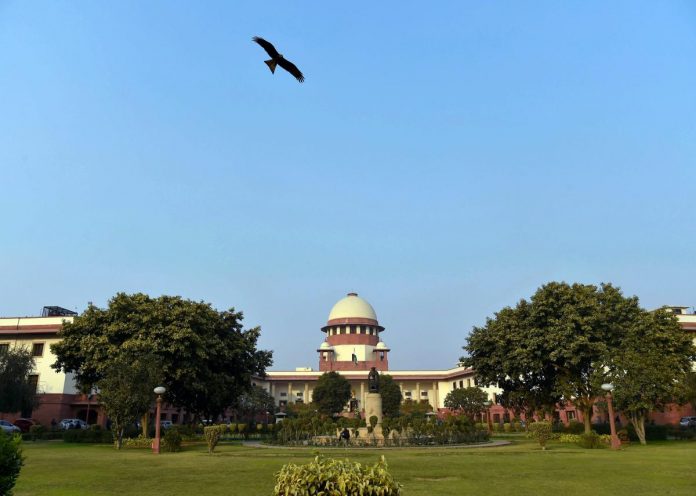





 Allow notifications





