This article has been written by Suryansh Singh and further updated by Mudit Gupta. This article discusses all the necessary details about the doctrine of territorial nexus and all other intricacies related to it.
Introduction
In 1949, when the Constitution was being drafted, the framers of our Constitution structured the Indian democracy on the legislative, executive, and judiciary. The legislative pillar of our democracy has a quasi-federal structure. Schedule VII of the Indian Constitution provides three lists, namely the Union list, the State list, and the concurrent list. These lists divide the powers of legislators at both the central and state levels and entitle them the power to formulate legislation. Though it is a very complex mechanism, but, it is the very purpose for which a federal state is formed and includes the distribution of powers between the Union and the states. The separation of powers is maintained by the Constitution so that both the Union and states have independence over the subject-matter of their legislative competence. As our Constitution is quasi-federal in structure, it establishes a dual-polity relationship between the Union and the State. They are conferred with sovereign powers, which are to be used in a manner directed by the Constitution.
Although the lists clearly demarcate the operational territory of the legislation made by both the Union and the State, some of the legislative provisions are applicable beyond the operational territory of that particular legislation. The Parliament has specifically been bestowed with the power to formulate laws for extraterritorial implementation, but the state legislature has not been conferred with any such power by the Constitution of India. The doctrine of territorial nexus, however, allows even the state laws to have extraterritorial operation. This article is an attempt to discuss all the intricacies of the doctrine of territorial nexus.
Division of powers under the Indian Constitution
The Constitution of India provides for two types of jurisdictions namely territorial jurisdiction and subject-matter jurisdiction. Article 245(1) of the Indian Constitution provides for territorial jurisdiction. Both the Parliament and the State Legislature have the power to formulate and enforce laws in their territories. Article 245(2) of the Indian Constitution enables the Parliament to have extra-territorial operation of any federal law. This empowers them to enforce their legislation in the foreign territory as well. However, the same has not been provided to the State by the Indian Constitution.
Subject-Matter jurisdiction
The power to formulate legislation has been divided at two levels in the federal structure of Indian democracy. One is the Central Government and the other is the State Government. Both levels have been provided with different scope of subjects on which the legislation can be formulated. These subject matters are provided in the three lists provided under Schedule VII of the Indian Constitution.Under Article 246, it has been stated,
Parliament has the explicit power to make laws for the subject matters enumerated in the Union list (List I of Schedule VII).
The State has the power to make laws for the subject matter enumerated in the State list (List II of Schedule VII).
Both the State and the Union have the power to make laws for the subject matter enumerated in the Concurrent list (List III of Schedule VII).
Detailed overview of all these 3 lists are as follows:
Central List (List I)
This list contains the subject matters on which the laws can be made only by the Union and are applicable in whole or in any part as decided by the Union while formulating the legislation. This list includes 97 subject matters like defence, foreign affairs etc., among many others. Apart from these 97 subject matters, if there is any matter which has not been listed in any of the three lists provided under Schedule VII of the Indian Constitution, then in that case, Article 248 of the Indian Constitution provides the power to formulate legislations on such a matter to the Parliament.
State List (List II)
This list contains the subject matters on which the laws can only be made by the State for their respective jurisdictions. This list contains 66 subject matters like agriculture, pilgrimages, libraries etc., among many other subject matters.
Concurrent List (List III)
This list contains subject matters on which the laws can be made by both the State and the Union, but in case of a conflict, the laws made by the Union shall prevail over the legislation made by the state. This list includes 47 subject matters like contracts, administration of justice etc., among other subject matters.
Concept of doctrine of territorial nexus
The concept of the doctrine of territorial nexus finds its place in Article 245(2) of the Indian Constitution. The doctrine gives the Parliament the power to formulate legislation that is operative in extra-territorial jurisdiction if necessary. This power is only provided to the Parliament and not to the State legislature. Under Article 245(1) of the Indian Constitution, it has been stated that:
Parliament has the jurisdiction to make laws for extraterritorial operation or laws for the whole or any part of the country.
The State legislature has the jurisdiction to make laws for the whole or any part of the state.
Thus, it can be said that both the Union and the states have their own territorial jurisdiction to make laws.
As per Article 245(2) of the Indian Constitution, Parliament has the power to make legislation having extra-territorial operation. Thus the validity of a legislation cannot be questioned on the sole ground that it has extra-territorial operation. In such a case, the courts cannot interfere with the laws having extra-territorial operations and the legislation cannot be invalidated or struck down on this ground alone. However, such a power has not been granted to the state legislatures. But if sufficient nexus is established between the subject matter and the legislation, then the legislation formulated by the state legislature may also have extraterritorial operation. This is known as the doctrine of territorial nexus. This view has been upheld by the courts in a plethora of cases, as discussed in the latter section.
Theory of doctrine of territorial nexus
As has already been discussed above, as per Article 245(1) of the Indian Constitution, the Centre and the State have the power to formulate laws for their respective jurisdictions. The Constitution provides the power of extraterritorial operation to the Centre, but the same is not provided to the State.
In Wallace Bros. And Co. Ltd. v The Commissioner Of Income Tax (1948), a company incorporated in the United Kingdom also carried out its business in India through a sleeping partner. The firm made a staggering profit in that accounting year. The income tax authorities sought to levy a tax upon the respondent company. This order of the Income Tax Authority was challenged by the respondent before the Bombay High Court, but it was held that the doctrine of territorial nexus is operative in this case and hence the levying of such tax is valid. It was also mentioned in the judgement that a major part of the income which was taxed was extracted from British India and it was considered as a sufficient ground to establish a territorial nexus.
This case is one of the very first cases which clearly define what an extraterritorial operation is and what conditions are required to be satisfied in order to enforce a legislation in extraterritorial jurisdictions.
Example of the doctrine of territorial nexus
One of the most commonly acknowledged examples of the doctrine of territorial nexus are various taxation laws imposed by the states. These tax legislations are sometimes operative in extraterritorial jurisdictions in addition to their operation in the territorial jurisdiction of the states. This is one example that clearly demonstrates that the state governments can implement the laws formulated by them in extraterritorial jurisdictions if the doctrine of territorial nexus is applicable.
Salient features of doctrine of territorial nexus
The doctrine of territorial nexus is a unique power given to the Parliament and state legislatures in India. Some of the salient features of the said doctrine are discussed below:
Only the Parliament can make laws for extraterritorial jurisdiction. This power has not been conferred on the state legislature by the Constitution of India. The doctrine of territorial nexus is an exception to this, as it provides the same power to the state legislature to implement laws made by them in extraterritorial jurisdictions.
The doctrine of territorial nexus is primarily based on the nexus between the state and the subject matter. If there is a nexus between the two, then the state legislature has the power to implement the legislation formulated by them in extraterritorial jurisdictions.
Any legislation formed by the state shall be deemed invalid merely on the ground that it has extraterritorial operation unless the second point mentioned above is fulfilled.
When is doctrine of territorial nexus invoked
The doctrine of territorial nexus is an exception to the general legislation which does not provide any power to the State to formulate to enforce legislation formulated by them in extraterritorial jurisdiction. But in some cases, states can enforce their legislations in extraterritorial jurisdictions as well. This can happen if the following two conditions are fulfilled:
The nexus must be real and not illusory in nature.
The liability sought to be imposed by the State must be directly related to that connection.
If these two conditions are fulfilled, the doctrine of territorial nexus can be used by the State for the enforcement of legislation in extraterritorial jurisdiction.
Landmark judgements on doctrine of territorial nexus
The powers conferred by the Parliament are not absolute. Laws made by the Parliament for extraterritorial operations are for the purpose of operating outside the geographical limits of India. The State legislature does not have the power to make laws for extraterritorial operations. However, if it is established that there is sufficient connection with the object, the laws enacted by the State legislature will have an effect outside the territorial limits of the state. This position of law has been affirmed by the higher courts in various cases, as discussed hereafter.
State of Bombay v. R.M.D. Chamarbaugwala (1957)
Facts Of the case
In this case, the respondent, who was not a resident of Bombay, conducted a prize competition of a crossword puzzle through a newspaper that was printed and published in Bangalore. This paper was widely published in Bombay too. For this competition, depots were established so that the forms and fees could be collected. It attracted a lot of buyers for the tickets to that competition.
The State government then taxed the respondents’ company for contesting a prize competition in the state. The respondent challenged the same in the Supreme Court on the point that the State cannot tax the company as it does not fall in the territorial nexus of the state.
Issue before the Court
Whether the tax can be levied on a person who resides outside the territorial limits of the state?
Arguments
The petitioner side based their arguments on the point that the company was running the competition within their territorial jurisdiction and the citizens residing in the state were participating in the competition and hence, the state had a nexus with the subject matter which was the company in this case. On the contrary, the respondents argued that the competition was run by a company situated in Bangalore which is outside the jurisdiction of the state.
Judgement
After hearing all the arguments of both the sides, the Supreme Court was of the view that since the news was published in the territory of the State and the depots were also set up by the respondent, there was a sufficient territorial nexus between the state and the competition and hence, the state legislature had the authority to tax the respondent for the revenue earned by his company through the prize competition.
State of Bihar v. Charusila Dasi (1959)
Facts of the case
In this case, a legislation was passed by the state of Bihar which dealt with the motive to safeguard the properties relating to Hindu religious trusts. This Act was applicable on all the trusts within the territorial limits of Bihar. So the respondent trust deeded several of its properties in Bihar and Calcutta, while the trust was situated, institutionalised and within the territorial limits of Bihar.
Issue before the Court
Whether the scope of the Act passed by the State of Bihar could be extended beyond the geographical limits of the state?
Arguments of the parties
The trust argued that as the properties were outside the territorial jurisdiction of the State, the laws made by Bihar cannot be enforced upon those properties. The state government argued that since the managing body of the trust is within the territorial jurisdiction of Bihar and the trust has complete control over any affairs related to those properties, the legislation made by the State legislature of Bihar was enforceable on those properties as well.
Judgement
In the judgement pronounced by the Hon’ble Supreme Court of India, it was held that the Act passed by the state of Bihar could have an effect on property situated outside the territorial limits of Bihar as the management body of the trust was there in the territory of Bihar and all those properties were belonging to the trust itself, therefore, drawing a direct nexus between the subject matter and the legislation as the relation between the trust and those properties was held to be real and not illusory in nature.
Other relevant cases on the doctrine
All these judgements clearly emphasise on the point that if there is a nexus between the legislation made by the State government and the subject matter, the enforcement of such legislation by the State is not ultra-vires in nature as it is covered by the doctrine of territorial nexus.
In the case of State of Bihar v. Shankar Wire Products Industries (1994), the State Legislature of Bihar formulated a legislation named the Bihar Weight and Measures (Enforcement) Act, 1959 which mandated the verification and stamping of weights for sale and delivery in other states. Regarding the validity of this legislation, the High Court ruled that this requirement is irrelevant, as it applies to weights manufactured in Bihar and not where they are sold. The Act aimed to protect consumers’ interests, requiring weights to be verified and stamped at the manufacturing site. The Hon’ble SC in its judgement upheld the State Legislature’s territorial legislative competence in verifying and stamping weights.
In the case of Shrikant Bhalchandra Karulkar v. State of Gujarat (1994), the Hon’ble Supreme Court held that the state legislature is conferred with the power to enact legislation for extra-territorial operations complying with the provisions enshrined under Articles 245 and 246. The laws made by the state legislature are applicable to a person, and his acts within the territorial limits of a state are not considered as extra-territorial.
In the case of Tata Iron and Steel Company v. Bihar State Tax Act (1958), the state of Bihar passed a sales tax Act for levying a tax on the sale of goods, whether it took place within the territorial limits of the state or outside of that limit. It was also stated that the goods should be manufactured in the state. In the instant case, it was held that there was an established nexus between the object that was to be taxed and the law. These are the two essential elements that constitute the doctrine of territorial nexus and since the same was fulfilled, the extra-territorial operation would be valid.
Conclusion
The doctrine of territorial nexus in India holds a significant importance in the Indian legal system. It enables the legislature to extend the operation of laws even outside the territorial limits in cases where the link between the subject matter and the legislation is real and not illusory in nature. Though the doctrine finds its roots in the Constitution of India, the Indian judiciary has played a crucial role in the development of this doctrine in Indian jurisprudence. The same is evident from various landmark decisions of various courts as discussed in this article. Before concluding, it is imperative to note that the doctrine addresses the complex relationships between the Centre and states and between two or more states. Hence, it becomes crucial that while analysing the law formulated by the Centre or state, the doctrine is applied with much caution to not encroach upon the jurisdiction of other.
Frequently Asked Questions (FAQs)
What is the doctrine of territorial nexus?
This doctrine empowers the Parliament and state legislatures to enforce their legislation in extraterritorial jurisdictions where there is a nexus between the subject matter and the legislation.
Does the Constitution of India give any explicit power to the state government to implement laws for extraterritorial operation?
No. The state government has not been provided any such power explicitly by the Constitution of India, but the doctrine of territorial nexus, as developed by the judicial precedents, enables them the same.
Does the Constitution of India give the central government power to formulate laws for extraterritorial jurisdictions?
Yes. Article 245(2) of the Indian Constitution explicitly provides this power to the central government.
Students of Lawsikho courses regularly produce writing assignments and work on practical exercises as a part of their coursework and develop themselves in real-life practical skills.
LawSikho has created a telegram group for exchanging legal knowledge, referrals, and various opportunities. You can click on this link and join:
This article is written by Monesh Mehndiratta. The present article provides a detailed analysis of the landmark judgment in State of Uttar Pradesh v. Radhey Shyam Rai (2009). It provides the background of the case, issues, judgment of the court, opinion of judges, and the law applied. It further provides a critical analysis of the case at hand and explains Article 12 of the Constitution and landmark cases related to it.
It has been published by Rachit Garg.
Table of Contents
Introduction
“State”—What comes to mind when you hear this term?
Many may think about the country, government, or components of government. However, this term is not limited to the country and government. Its ambit has been broadened with time. It is also possible that a society, company, or organisation may fall under the purview of the “State” because of certain factors. Now, this discourse may lead some to wonder how is that possible. How can a body owned by a person or a group be called a “State”’? What are the deciding factors?
Well, you need not worry as the present article will answer all such questions.
The definition of “State” is given under Article 12 of the Constitution of India. The Hon’ble Supreme Court of India has evolved the law at this point and widened the scope of the definition of “State”. It has laid down multiple tests and factors to determine whether a corporation or body is a “State” or not. The present article discusses and analyses the case of State of Uttar Pradesh & Anr. v. Radhey Shyam Rai (2009), where these factors and tests laid down in different cases were discussed to determine whether the body in question in this case is a “State” as per Article 12 or not. The article further explains Article 12 of the Constitution and other landmark judgments related to the said provision.
Article 12 belongs to Part III of the Indian Constitution. Though fundamental rights are enshrined in Part III, this Article does not guarantee any such right. In fact, it is a gateway provision to this Part which defines the term “State” for the different provisions concerning fundamental rights enshrined in Articles 14 to 32. It is presumed that fundamental rights enshrined in the Constitution are available against the state, which has the duty to protect the fundamental rights of the people, and when we talk about the state, most people understand the term as including government but other authorities can also fall under its ambit if the characteristics are satisfied. Thus, it was necessary to define the term ‘state’.
For the purpose of Part III, Article 12 defines the term “State” to include the following:
Government and Parliament of India, which means the executive and legislative organs of the Union government;
Government and legislature of each state, which means the executive and legislative organs of all state governments;
All local authorities within the country or under the control of the Government, such as panchayats, municipalities, district boards, etc.; and
All other authorities within the country or under the control of the Government, such as SAIL, LIC, and ONGC, to name a few.
Therefore, the term “State” has been defined in a wider sense under the Indian Constitution and includes within its ambit all its organs and agencies whether they are at the national, state, or local level. The Supreme Court has further deliberated on this definition through a string of landmark judgments over the years. For instance, in Rajasthan State Electricity Board, Jaipur v. Mohan Lal & Ors. (1967), the court held that the term “authority” used in Article 12 of the Constitution includes authorities that are created by a statute and empowered to carry on the governmental and quasi-governmental functions in the country. Further, in the case of Sukhdev Singh v. Bhagatram (1975), the Hon’ble Supreme Court held that Life Insurance Corporation, Oil and Natural Gas Corporation, and International Finance Corporation come within the meaning of “State” under Article 12 because they perform functions that are similar to those of government.
More landmark decisions on Article 12 are discussed later in the article.
Facts of the Case
The Uttar Pradesh Ganna Kisan Sansthan is a registered society under the Society Registration Act, 1860, established by a Government Order in 1975. Prior to its establishment, all its functions were performed by the Cane Development Department. Similarly, the training centres at Shahjahanpur, Muzaffarnagar, and Gorakhpur were also managed by the Cane Development Department. Later on, their management was transferred to the Sansthan whereas the financial expenses were to be met by the UP Sahkari Ganna Samiti Sangh and Sakkar Vishesh Nidhi.
On the other hand, the respondent, Radhey Shyam Rai, was appointed as the Computer Officer or Data Processing Officer of the Sansthan. However, its Governing Council, in a meeting, decided to abolish the posts and cancel the appointments made therein. As a result, the respondent’s employment was terminated. Aggrieved by such a termination order, he filed a writ petition before the Allahabad High Court.
The writ petition came before a Division Bench for consideration wherein the Bench observed a prior ruling by another Division Bench of the High Court, which suggested that appellant no. 2, i.e., the Uttar Pradesh Ganna Kisan Sansthan, did not qualify as “State” as per the provisions of Article 12 of the Constitution. The matter was then referred to a Full Bench of the High Court which held the opposite view. Aggrieved by the decision of the High Court, a special leave petition under Article 136 was filed before the Hon’ble Supreme Court of India by the Sansthan.
Issues involved in the case
Whether the Sansthan falls under the ambit of “State” under Article 12 of the Constitution?
Contentions of the parties
The decision of the Division Bench of the High Court was referred to its Full Bench wherein the Sansthan was the respondent and the person who filed the writ petition was the petitioner. However, before the Supreme Court, Sansthan was the appellant. Following are the arguments presented by both parties before the Full Bench of the High Court, which were later considered by the Apex Court while deciding the issue.
Arguments by petitioner
The petitioner argued before the High Court that, according to the functions to be performed by the Sansthan, it is a “State” under Article 12 of the Constitution. It was contended by the petitioner that the government, in order to manage and streamline the training conducted in training centres, constituted various committees consisting of various officers of the government. Moreover, the training centres were transferred to the Sansthan for their management while the expenses were managed by the Uttar Pradesh Sahkari Ganna Samiti Sangh and Sakkar Vishesh Nidhi.
It was further submitted that the state has deep and pervasive control over the Sansthan and it was dominated by the Government Council and the Minister of Cane Development and Sugar Industries was its ex-officio Chairman. The petitioner drew the attention of the Court to the memorandum of association of the Sansthan, according to which the Government decided to revise the payment scales of the employees of Sansthan, indicating that the Sansthan was controlled and managed by the government. According to the petitioner, the Sansthan falls within the purview of “State” for the following reasons:
90% of members in the governing council of the Sansthan are officers or members of the state government.
The expenses and share capital of the Sansthan are met from the state budget.
The Sansthan imparts education to cane growers which the Cane Department of the state did earlier.
The state Government has a deep and pervasive role in the daily affairs of the Sansthan, which has been established for the growth of the agriculture sector in the state.
The respondents (Uttar Pradesh Ganna Kisan Sansthan), relying on the judgment of Sukhdev Singh & Ors. v. Bhagatram Sardar Singh Raghuvanshi (1975), argued the question is that the authority or body in question is carrying on the business for whose benefit. According to the respondents, the Sansthan was established to run and maintain the training centres for the benefit of cane growers and to impart practical knowledge regarding the cultivation and management of cane to the people. It was further submitted that the Memorandum of Association (MOA) was signed by the Cane Commissioner of the state, Chairman of State Sugar Corporation Limited, Nominee of State Sugar Mills Association, Director of National Sugar Institute, Kanpur, etc.
The Governing Council of the Sansthan has the power to manage the affairs of the Sansthan, and its expenses, formulate principles and policies related to employees, conditions of service, etc. It also maintains proper accounts and records of annual income and expenditure paid by the Sansthan. The government only has the power to call for information and there is no provision regarding directions to be made by the government. This clearly indicates that the Sansthan is an independent body and there is no control of government on the same.
Any issue with respect to the pay structure of the employees is fixed by the Sansthan without any approval of the state government. Moreover, the employees are governed by the Uttar Pradesh Ganna Kisan Sansthan Service Rules. It was further contended by the respondent that the state government has no role to play in the Sansthan and does not interfere with its functioning administratively. For financial assistance from the government, it was submitted that on the establishment of the Sansthan, the government had sanctioned to grant half of the total expenditure, and thus, financial assistance was given from the Sugar Fund Committee.
Judgment of the High Court
The Allahabad High Court opined that the writ of certiorari will lie against any corporation or authority only when it falls within the meaning of “authority” under Article 226 of the Constitution. It also carved out various guidelines from the decisions of the Supreme Court in this regard:
The managing body of the corporation consists of officers or members of the government;
The government has a deep and pervasive role in the corporation;
The society or corporation carries on the functions important to the public; and
The government provides financial aid to such societies or corporations.
The court observed that the governor of the state in the present case was empowered to issue directives to the society regarding the security of the state and matters related to public interest. Also, 80-90% of the Sansthan’s expenditure was released by the government, and the Director and Account Officer of the Sansthan are government officers, clearly establishing the fact that the government plays a crucial role in the affairs of the Sansthan. The court held that the Sansthan is a state’s instrumentality and falls within the meaning of “person” or “authority” under Article 226 of the Constitution. Thus, the Sansthan comes within the ambit of “State” as defined under Article 12 of the Constitution.
The Supreme Court addressed the various tests that evolved over the years and further observed that no standard can be set to determine whether a body fulfils the requirement of law to come within the meaning of “State”. The Court considered the existing principles before determining whether the Sansthan in the present case falls within the ambit of “State”.
The Apex Court reiterated that the functions of the body in question are a major factor when it comes to deciding the issue at hand. It was observed that the Sansthan performed those functions which were earlier performed by the government. The main aim of establishing training institutes was to provide scientific ways of cultivation for sugarcane and management of its production, which is, no doubt, a function of the state. The State transferred its functions to the Sansthan along with its management and assets for it to take over the government’s functions. It also sanctioned a budget to cover 50% of its expenses while the other half was financed by the mills belonging to the State Sugar Corporation, Indian Mill Association, and Uttar Pradesh Sugarcane Cooperative Federation.
The Court also observed that the test laid down by the court in the cases of R.D. Shetty v. International Airport Authority of India (1979) and Ajay Hasia v. Khalid Mujib Sehravardi & Ors. (1980), among others were fulfilled by the Sansthan in the present case.
Obiter dicta
The Hon’ble Supreme Court of India upheld the decision of the Full Bench of the Allahabad High Court of declaring the Sansthan as a “State” under Article 12 of the Constitution. The Apex Court held that the state government had a deep and pervasive role in the affairs of the Sansthan since the Cane Commissioner was directly involved. Moreover, the majority of the members of its Governing Council were government officers. The body was also required to follow all the directions issued by the government and play a vital role in carrying out the functions of the Sansthan.
Critical analysis of the case
The present case dealt with the issue of whether the Sansthan falls under the ambit of “state” according to Article 12 of the Constitution. The Supreme Court in this case examined the tests laid down to determine whether a body is an authority or not and, hence, covered under Article 12. These tests were laid down in different cases by the courts and have evolved from time to time. It was also observed that there is no hard and fast rule to determine factors or tests that could provide whether a particular body is covered under the definition of “state”. This depends on the facts and circumstances of each case. Such cases also help in analysing the position of law already laid down by the courts in previous cases.
With the advent of technology and modernisation, there has been an increase in the number of organisations being established to help the public. These organisations seek financial assistance from the state or private sponsors. With the increase in such organisations and bodies, there has been an increase in the complexities of the administration of the country. It becomes necessary to determine whether the newly established organisations are a branch of government authorities and covered under the ambit of “state” or not as other rules and regulations will be applicable to them accordingly. If these bodies are covered under the ambit of “state”, they will have to abide by all the rules laid down by the government and courts and also ensure that they do not violate fundamental rights and other rights of people or else there will be consequences. Thus, it becomes necessary to determine and analyse the issue of whether the established body can be included under Article 12.
The Supreme Court in this case also reiterated the previous landmark cases wherein the law was developed in this regard. However, the same question arises again and again in similar cases. This indicates that every case is unique in its own sense and the issues have to be decided based on the current situation. The court rightly pointed out that there is no set rule to determine such issues. It cannot be decided by a single factor or criteria. If the body in question fulfils one criterion, it does not necessarily mean that it is covered under Article 12. Multiple factors together have to be taken into consideration to determine the same. The court also stated in various cases that if one criterion is fulfilled, does not mean that the body in question will have to be included in the ambit of ‘state’ but multiple factors have to be together taken into consideration to determine the issue. The Court had the right approach of revisiting the previous cases which also indicates that the court tried to determine and analyse whether the tests already laid down in those cases can be applied to this case or not.
It is better if the courts do the same in such cases in future and determine whether the law already laid down is applicable to that case or not or whether it has become obsolete in the current facts and circumstances of the case. If it is applicable, the court must decide the issue but if it is not, it is the task of the judiciary to interpret the law and devise the factors to finally determine the issues in a case. The Indian judicial system has been working tirelessly to devise new rules, interpret the laws from time to time and deliver justice in the favour of society. This has also strengthened people’s trust in the judiciary and courts of our country.
Landmark cases in Article 12
Rajasthan State Electricity Board v. Mohanlal & Ors. (1967)
Facts of the case
The appellant in this case was the Rajasthan Electricity Board. Prior to its establishment, the supply of electricity was controlled by the Electrical and Mechanical Department of the State government. The respondents were the employees of the Department and were placed on the Board on its constitution. It was also directed that the Board has to frame its own service conditions and the employees, who were transferred from the department, have to either accept the conditions or obtain relief from their employment. However, no new grades and service conditions were framed by the Board.
The respondent, Mohanlal was deputed and later reverted to the Board from the Public Works Department as Foreman. He, however, claimed that he was entitled to be promoted to Assistant Engineer, like other respondents. The Board and the state government did not accept his request causing him to file a petition under Articles 226 and 227 of the Constitution in the Rajasthan High Court on the ground that the Board violated Articles 14 and 16 of the Constitution. The court quashed the order of promotion of other respondents and asked the Board to make promotions again. Aggrieved by the order, the Board filed an appeal in the Supreme Court.
Issues involved in the case
Whether the board is a “State” under Article 12 of the Constitution?
Whether the decision of the High Court is correct?
Judgment of the court
On the issue of whether the Board is a State or not, it was argued that the Board is not a State as it is a body having its own separate existence and has been established mainly to carry on the business of commercial activities. The Supreme Court opined that the High Court made an error while applying the rule of ejusdem generis. It was held that the dictionary meaning of the term “authority” is very wide and includes bodies created by a statute to perform governmental and quasi-governmental functions.
Thus, the Board was held to be an authority within the meaning of “State” under Article 12 since it had the power to issue directions, control the generation and supply of electricity, make, alter, and amend schemes under the Electricity (Supply) Act, 1948, and perform governmental functions. It was further held that the Board violated Article 14 of the Constitution in not considering the respondent for promotion like other respondents. Thus, the court overruled the judgement in the case of University of Madras v. Shanta bai (1953).
Raman Dayaram Shetty v. International Airport Authority of India (1979)
Facts of the case
The respondent, in this case, was a body constituted under the International Airport Authority Act, 1971. A notice was issued to invite tenders to put up and run a second-class restaurant and snack bars at the Bombay Airport. Tenders were invited from the registered 2nd class hoteliers with a minimum of 5 years of experience in running a 2nd class restaurant and 3 years of experience for snack bars. It was provided that the Airport Director will accept the tenders and can also reject the tenders without any reason. Six tenders were received by the Director, out of which only one was complete. However, the person who filed the complete tender only had the experience of running canteens and was, thus, asked to present evidence that he was a registered second-class hotelier.
On receiving his reply, the tender was accepted. However, a suit was filed challenging the decision of the Airport Director to accept tenders in violation of the notice. Meanwhile, an injunction was passed against the respondent, restraining them from proceeding further with the tender. The possession of sites was handed over to the person whose tender was accepted and he proceeded with preparations to start the business of snack bars. However, the site for the restaurant was not available as it was still in the possession of the person, who was running a restaurant and snack bar under a previous contract and did not vacate the place even after the contract ended.
The writ filed by the appellant in the Bombay High Court challenging the decision of the Airport Director was rejected and thereafter, the appellant preferred to appeal to the Division Bench, which was also rejected. The appellant, finally, filed a petition for special leave to appeal before the Supreme Court.
Issues involved in the case
Whether the acceptance of tender by the Airport Director is against the terms and conditions of notice?
Whether the International Airport Authority comes within the purview of “State” under Article 12 of the Constitution?
Judgment of the court
While deciding the issue, the Court observed that it was necessary to determine whether the respondent is a State or not as the remedy for violating fundamental rights can only be claimed against the State. The Court further observed that several factors have to be considered while determining whether the body or corporation falls within the meaning of State or not and whether it is an agency or instrumentality of government. The factors are:
Any financial assistance given by the state,
Magnitude of assistance,
Whether the assistance given by the state is usual or extraordinary,
Whether the body is controlled and managed by the state,
Nature and extent of control,
Whether the body enjoys monopoly status protected by the state, and
Whether the functions performed by the body or corporation are public functions.
However, this is not exhaustive because of complexities in management and administration in the relations between corporations and government. It was also directed that the courts will have to observe the cumulative effects of various factors to determine the issue.
In view of the above factors, the International Airport Authority was held to be an “authority” under Article 12 and, thus, within the purview of the “State”. The acceptance of tender by the Airport Director was held to be violative of Article 14 as the person whose tender was accepted did not fulfil the eligibility criteria. There would have been a lot of people who did not meet the eligibility criteria but wanted to file a tender and the appellant himself claimed to be one.
Ajay Hasia v. Khalid Mujib Sehravardi & Ors. (1980)
Facts of the case
The writ petition in this case was filed challenging the validity of admissions in the Regional Engineering College, Srinagar. This is one among the 15 colleges that are sponsored by the Union government. Its administration and management are regulated by a society registered under the Jammu and Kashmir Registration of Societies Act, 1898. The admission procedure laid down by the Board of Governors provided that admissions were to be given based on merit, and examined by a written test along with viva. The division of marks was as follows:
100 marks written test testing English, physics, chemistry, and mathematics,
50 marks for the viva divided as:
15 marks for general knowledge and awareness.
15 marks for understanding a specific phenomenon.
10 marks for extra-curricular activities.
10 marks for general personality traits.
It was also decided that out of 250 seats, 50% was to be reserved for candidates from the state of Jammu and Kashmir, while the remaining 50% was for candidates belonging to other states out of which 15 seats were to be reserved for particular categories of students. The reservation of seats for the students belonging to the state of Jammu and Kashmir was according to the government orders for admission to technical institutes. The petitioners applied for admission to the colleges and appeared in the written examination. Thereafter, they were called for viva before a committee consisting of three people.
The petitioners contended that their viva lasted for 2-3 minutes each and only formal questions were asked related to residence, parentage, etc., and no questions of merit were asked. When the results were announced, the petitioners found that they scored high marks on the written test but were denied admission due to low marks in viva, while candidates having low marks on the written test had high marks in viva and were given admission. The petitioners then challenged the validity of these admissions in the court.
Issues involved in the case
Whether the society managing and running the college come within the purview of “authority” under Article 12?
Whether the admissions to the college are valid?
Judgment of the Court
The respondents argued that the society running and managing the college is not a creation of any statute. It is a registered society and thus, not an “authority” under Article 12, rendering the writ as not maintainable against it. The Court reiterated the test laid down in the case of Raman Dayaram Shetty v. International Airport Authority of India (1979) and ruled that the corporation will be the instrumentality of the government if the majority of the following conditions are satisfied:
Its entire share capital is held by the government,
It is financially aided by the state,
It enjoys monopoly status,
There is deep and pervasive control of the state, and
The functions of the corporation are closely related to governmental functions
If a department of government is transferred to the corporation.
The Court further pointed out that it was not important whether a corporation is created by or under a statute. The question is whether it is an agency or an instrumentality of the government. The Court held that, according to the memorandum of association of the society and its rules, it is an ‘authority’. Moreover, it consists of members appointed by the state and central government. It was also aided by the state and all the rules had to be approved by the central and state government. Thus, the state has deep and pervasive control over its affairs. Therefore, it is an agency or instrumentality of state and central government and is an “authority” according to Article 12 of the Constitution.
With respect to the merits of admission, the Court held that, if the students are denied admission based on viva which lasted for 2-3 minutes wherein no questions were asked related to the relevant factors, it is vitiated and arbitrary. However, the Court further held that it cannot set aside the selection made for the academic year in question, but cautioned the state government and society for future admissions. The oral round will be deemed reasonable and non-arbitrary if the marks given in the oral interview do not exceed 15% of the total marks, relevant questions were asked in the interview, and candidates were interviewed properly. The Court also suggested that it is desirable to record the oral interview to eliminate unnecessary disputes and controversies.
Pradeep Kumar Biswas v. Indian Institute of Chemical Biology (2002)
Facts of the case
This case is based on the case of Sabhajit Tewary v. Union of India (1975), wherein a junior stenographer was denied the claim of parity in remuneration, stating that the Council of Scientific and Industrial Research (CSIR) is not an “authority” under Article 12. A writ petition was filed in the Calcutta High Court by the respondent challenging their termination. The High Court refused the writ on the ground that it was not maintainable which led to an appeal before the Supreme Court of India.
Issues involved in the case
Whether CSIR comes within the definition of “State” under Article 12 of the Constitution?
Judgment of the court
The Court observed that the test laid down in the case of Ajay Hasia is not rigid in nature. All the factors have to be considered cumulatively and it must be established that the body in question is financially, administratively, and functionally controlled by the government. If the control is pervasive, the body will come under Article 12. However, if the control is regulatory, the body is not a state.
The Court held that CSIR comes within Article 12 and gave the following reasons:
It was established by the Department of Commerce of the central government to promote the growth of the industry.
It is managed and controlled by the members of the government.
The governing body is constituted of the Director General, directors of two national laboratories, two eminent scientists, etc.
The governing body has the power to amend, frame, appeal, or repeal the bylaws of CSIR with the approval of the government.
It is funded by the government.
Thus, the Court held that CSIR comes within the definition of “State” under Article 12 and the decision in the case of Sabhajit Tewary was overruled.
Virendra Kumar Srivastava v. Uttar Pradesh Rajya Karmachari Kalyan Nigam and Anr. (2005)
Facts of the case
The petitioner in this case filed a writ petition before the Allahabad High Court, challenging his termination from the services in the stores of Uttar Pradesh Rajya Karmachari Kalyan Nigam (respondent). However, the High Court rejected the writ on the ground that it was not maintainable since the respondent did not come within the meaning of “State” under Article 12. Hence, an appeal was filed by the petitioner before the Supreme Court.
Issues involved in the case
Whether the Uttar Pradesh Rajya Karmachari Kalyan Nigam come within the purview of the “State” under Article 12?
Judgment of the Court
The Supreme Court held that the respondent in the present case comes within Article 12 as it is deeply and pervasively controlled by the state with the control being not merely regulatory. This is because it caters to the needs of the employees of the government. The ex-officio members of the respondent are the top executives of governmental departments. Moreover, its affairs are supervised and controlled by the various departments of the state. Thus, it fulfils multiple tests to determine whether it comes within the meaning of “State” and falls under the purview of Article 12 of the Constitution.
Critical analysis of the case
The present case dealt with the issue of whether the Sansthan falls under the ambit of ‘state’ according to Article 12 of the Constitution. The Supreme Court in this case examined the tests laid down to determine whether a body is an authority or not and hence, covered under Article 12. These tests were laid down in different cases by the courts and have evolved from time to time. It was also observed that there is no hard and fast rule to determine factors or tests that could provide whether a particular body is covered under the definition of ‘state’. This depends on the facts and circumstances of each case. Such cases also help in analysing the position of law already laid down by the courts in previous cases. With the advent of technology and modernisation, there has been an increase in the number of organisations being established to help the public. These organisations seek financial assistance from the state or private sponsors. With the increase in such organisations and bodies, there has been an increase in the complexities of the administration of the country. It becomes necessary to determine whether the newly established organisations are a branch of government authorities and covered under the ambit of ‘state’ or not as other rules and regulations will be applicable to them accordingly. If these bodies are covered under the ambit of ‘state’, they will have to abide by all the rules laid down by the government and courts and also ensure that they do not violate fundamental rights and other rights of people or else there will be consequences. Thus, it becomes necessary to determine and analyse the issue of whether the established body can be included under Article 12.
The Supreme Court in the present case also reiterated the previous landmark cases wherein the law was developed in this regard. However, the same question arises again and again in similar cases. This indicates that every case is unique in its own sense and the issues have to be decided based on the current situation. The court rightly pointed out that there is no set rule to determine such issues. The court also stated in various cases that if one criterion is fulfilled, doesn’t mean that the body in question will have to be included in the ambit of ‘state’ but multiple factors together have to be taken into consideration to determine the issue. The Court had the right approach of revisiting the previous cases which also indicates that the court tried to determine and analyse whether the tests already laid down in those cases can be applied to this case or not.
In my opinion, the courts must do the same in such cases in future and determine whether the law already laid down is applicable to that case or not or whether it has become obsolete in the current facts and circumstances of the case. If it is applicable, the court must decide the issue but if it is not, it is the task of the judiciary to interpret the law and devise the factors to finally determine the issues in a case. The Indian judicial system has been working tirelessly to devise new rules interpret the laws from time to time and deliver justice in the favour of society. This has also strengthened people’s trust in the judiciary and courts of our country.
Conclusion
With time, there has been an increase in the number of organisations and authorities in the country, mostly aimed at performing functions of public importance. Some of these are controlled and aided by the central or state government. This has also increased the complexities regarding administration and relations between the authorities and/or organisations and the government. Now, whenever there is any dispute involving such authority or organisation, the primary concern is whether they fall under the ambit of “State” as defined in Article 12 of the Constitution. No doubt our Constitution is the lengthiest written constitution in the world. It covers almost every aspect of law and provides a detailed scheme of laws to the people. It has also defined various terms like ‘law’ under Article 13, ‘state’ under Article 12 etc. The makers have made the task of the judiciary to interpret the laws easy. The scope of these terms has been widened which has increased the number of issues to be determined by the courts.
The law of the issue at hand was made clear in various cases and multiple tests were laid down by the Supreme Court in this regard. However, the disparity still exists. The case discussed in this article is one such case where the principles laid down with respect to Article 12 were revisited by the Supreme Court. The Apex Court observed that there can be no hard and fast rule to determine whether a particular body comes within the purview of the “State”. This has to be determined depending on the facts and circumstances of each case. Every case is different from others and so if a body was declared to come within the ambit of “State”, it does not mean that in every upcoming case, the decision would be the same. The Supreme Court in State of Uttar Pradesh v. Radhe Shyam Rai (2009) reiterated previous landmark cases and cleared doubts with respect to the applicability of Article 12.
Frequently Asked Questions (FAQs)
Who represented Radhe Shyam Rai in the present case?
Advocate Akhilesh Kalra represented Radhe Shyam Rai in the above case.
Who represented Uttar Pradesh Ganna Kisan Sansthan in the present case?
The Sansthan was represented by advocates Ravi Prakash Mehrotra and Garvesh Kabra, etc.
Does the BCCI fall under Article 12?
In the case of Zee Telefilms Ltd & Anr v. Union of India & Ors. (2005), the Supreme Court applied the test laid down in the case of Pradeep Kumar Biswas and held that BCCI does not come within the purview of Article 12 as it is not controlled, financed, and administered by the government.
Is the judiciary a part of the ‘state’ under Article 12 of the Constitution?
Yes, it is. According to Article 12, the government and its organs are a part of the ‘state’. However, for the judiciary, consideration has to be placed on judicial and non-judicial functions. If the court exercises non-judicial functions like administrative or legislative functions, then it falls under the ambit of ‘state’ but it will not be covered under Article 12 if it exercises judicial functions.
What is the difference between Articles 12 and 13 of the Constitution?
Article 12 of the Constitution gives the definition of the term ‘state’ while Article 13 provides the definition of the term ‘Law’.
Students of Lawsikho courses regularly produce writing assignments and work on practical exercises as a part of their coursework and develop themselves in real-life practical skills.
LawSikho has created a telegram group for exchanging legal knowledge, referrals, and various opportunities. You can click on this link and join:
This article is written by Adv. Priyanka. This article deals with the detailed aspects of all eligibility criteria, assessment criteria, application fees, syllabus, technical requirements, and online exam rules of the National Committee of Accreditation exam. Further, common frequently asked questions and some tips have also been discussed in this article.
Table of Contents
Introduction
Are Indian lawyers allowed to work in Canada?
Are my professional qualifications enough to enroll for the NCA exam?
Do I need an LL.M. degree to practice in Canada?
Planning to embark on your professional journey by working as a barrister in Canada? But confused about the enrolment process in Canada?
As an Indian lawyer aspiring to practice in Canada, you will definitely have a lot of questions and confusion about the eligibility criteria, assessment process, fees, exams, etc. This guide will help you clear all your doubts. So, without any wait, get ready to unlock the doors of your Canadian legal career.
About the National Committee on Accreditation (NCA) exam
The National Committee of Accreditation (NCA) is a committee set up for the assessment of candidates who want to practice law in a Canadian jurisdiction but are law practitioners or law graduates from a non-Canadian jurisdiction or law school. This NCA exam is outlined in a way to check the practical as well as theoretical knowledge of the law of these candidates to ensure that they have a thorough knowledge of Canadian law. The NCA exams are administered by the Federation of Law Societies of Canada. The main aim of this exam is to assess the educational qualifications and legal experience of lawyers who want to practice in Canada. Here is an in-depth detail about the exam.
NCA exam format
The format of the NCA exam is almost similar to Canadian law school exams. The applicants are given 3 (three) hours to complete the exam. It is an open book and fact-based exam. The applicants are allowed to refer to paper notes but e-notes are not permitted. The exam is conducted online through a remote proctor system.
The questions in the examination will either be only problem questions or a mix of short answer and essay problem questions. Problem questions will include the actuality of the fictional statute and the candidate is required to state if it is consistent with the provisions of the Constitutional Act,1867 and 1982. These questions are asked to test the candidate’s knowledge of constitutional issues, legal rules, and case laws, and draw conclusions supported by analysis.
The short questions can be in the form of multiple choice or true/false. These types of questions test the candidate’s knowledge of correctly analyzing the statements on Canadian constitutional law and answering them. Further, the essay questions evaluate the candidate’s comprehension of the material listed in the syllabus and their ability to think critically and form an opinion about the strengths and weaknesses of Canadian law.
NCA online exam rules
The NCA online exam is conducted through resources of Paradigm Testing and MonitorEDU, which ensures that the NCA exams are conducted with integrity and security. Some basic rules of the NCA exam that every candidate must know:
The exam is conducted open book
No electronic notes or textbooks are allowed, only hard-copy material is permitted.
No scanned documents, attachments, or photographs will be allowed.
NCA exams syllabus
A total of eight subjects are in the NCA exam. However, the candidate will not have to take all eight exams, the subjects will be allotted to the candidates based on their jurisdiction and legal qualification. This is discussed in the heading ‘NCA exam process’. The detailed syllabus of each subject is as follows:
Canadian Administrative Law
Canadian Administrative law is a mandatory subject in the NCA exam. In Canada, administrative law plays a vital role. It touches every aspect of the state’s function in society. Therefore, lawyers in Canada need to have a thorough understanding of administrative law.
The assigned material on which candidates will be examined is Heckman, Mullan, Promislow, and Van Harten (referred to as CB), Administrative Law: Cases, Text & Materials (Toronto: Emond Montgomery Publications Ltd., 8th ed., 2021).
Challenge administrative decisions and remedies on Judicial review
Sources of procedural obligations and Procedural obligation triggers
Knight “Three-Prong” Trigger
Doctrine of Legitimate Expectation
Court’s view on procedural versus substantive promises
Legislative decisions and emergencies
Charter & Bill of Rights
Constitutional duty to consult and accommodate indigenous people
Content of procedural obligation
Right to be heard
Unbiased and independent decision-maker
Issues arising from institutional decision-making
Backdrop to the standard of review analysis
Vailov test for the standard of review selection and application
Venure and basic procedure for judicial review
Remedies
Note: You must thoroughly study these subjects. If you are under the assumption that giving a read once to the reading material listed below or the notes is enough, then you are wrong.
Canadian Constitutional Law Exam
Studying Constitutional law is important as constitutional laws shape the functioning of the government, resolve conflicts, foster a just and equitable society, and protect the rights of citizens. Thus, a lawyer must have a thorough understanding of constitutional law.
The syllabus (divided into four parts) and required readings are as follows:
Topics
Reading
Part 1: Basic Concepts
Sources and nature of the constitution
Hogg, chapter 1, “Sources” Reference re Secession of Quebec, [1998] 2 SCR 217
Amending procedures
Constitution Act, 1982, Part V, ss 38-49 Hogg, chapter 4, “Amendment”, and chapter 5.7, “Secession”
Part 2: Distribution of Legislative Powers
Federalism
Constitution Act, 1867, ss 91-95 Hogg, chapter 5, “Federalism”
Hogg, chapter 15.8, “Interjurisdictional Immunity” Canadian Western Bank v Alberta, 2007 SCC 22, [2007] 2 SCR 3 Quebec (Attorney General) v Canadian Owners and Pilots Association, 2010 SCC 39, [2010] 2 SCR 536
This subject is important as intricates a web of legal, constitutional, and societal factors shaping the justice system. Moreover, the risk of a prosecuted person losing liberty and facing social stigma along with the unique features of Canadian criminal law makes it a mandatory subject for lawyers.
The power to Create Criminal Offences and Rules of Criminal Procedure
Constitutional division of powers introduced
The Canadian Charter of Rights and Freedoms
The Procedural Classification of Offences
Interpreting Criminal Provisions
The Actus Rea
Mens Rea
Objective Mens Rea and True Crimes
Regulatory Offences
Aiding and Abetting
Counselling
Attempts
Corporate and Association Liability
Mental Disorder
Automatism and Involuntary Acts “Negativing” the Actus Reus
Simple Intoxication and Specific Intent Crimes
Extreme Intoxication and General Intent Crimes
Defence of the Person
Necessity
Duress
Provocation
Entrapment
Error of Law and Color of Right
The Adversarial Process
Police Power
Securing Jurisdiction over the Accused and Interim Release
Disclosure and Production
Preliminary Inquiries
The Jury Trial
Pre-Trail Motions
Trail with a Reasonable Time Application
General Principles of Sentencing
Appeal of Final Decisions and Judicial Review of Interim Decisions
Foundation in Canadian Law
This is another mandatory subject in the NCA exam because it provides the lawyers basic understanding of the legal principles, sources, and constitutional framework of Canadian law. Further, it also makes the lawyers aware of the judicial making process in Canada, with Canadian bijuralism and theories influencing Canadian legal thoughts.
The syllabus and required readings are as follows:
Topic
Reading
Basic Theories of Law; Racism & the Law
Forcese, Chapter 2 R. v. Morris, 2021 ONCA 6808573123 Canada Inc. v. Keele Sheppard Plaza Inc. 2021 ONCA 371R. v. Gladue [1999] 1 S.C.R.Michael Trebilcock, “Law and Economics” (1993) 16:2 Dal LJ 360Alyssa Clutterbuck, “Rethinking Baker: A Critical Race Feminist Theory of Disability”, 2015 20 Appeal: Review of Current Law and Law Reform 51, 2015 CanLIIDocs 49.
Indigenous Peoples and the Law
Forcese, Chapter 3Section 91(24) of The Constitution Act, 1867 (U.K.), 30 & 31 Victoria, c. 3Section 35 of The Constitution Act, 1982, being Schedule B to the Canada Act 1982 (U.K.), 1982, c. 11 “Introduction” in Summary of the Final Report of the Truth and Reconciliation Commission of Canada, Honouring the Truth, Reconciling for the Future.United Nations Declaration on the Rights of Indigenous Peoples: An Act respecting the United Nations Declaration on the Rights of Indigenous Peoples Douglas Sanderson, “Redressing the Right Wrong: The Argument from Corrective Justice” (2011) 62 University of Toronto Law Journal 93Indigenous Law Research Unit, Secwepémc Lands & Resources Law, SummaryReference to the Court of Appeal of Quebec in relation with the Act respecting First Nations, Inuit and Métis children, youth and families, 2022 QCCA 185, (Unofficial English Translation of the Court), pages 4-19, 120-192Chippewas of the Thames First Nation v. Enbridge Pipelines, [2017] 1 SCR 1099Clyde River (Hamlet) v. Petroleum Geo‑Services Inc., 2017 SCC 40Mikisew Cree First Nation v. Canada (Governor General in Council), 2018 SCCPastion v. Dene Tha’ First Nation, 2018 FC 648Nora Refai, “The Beaufort Sea Boundary Dispute: A Consideration of Rights of Inuit in Canada and the United States” (2022) 60 Alberta Law Review 267 • Dwight Newman, “The Economic Characteristics of Indigenous Property Rights: A Canadian Case Study” (2016) 95 Nebraska Law Review 432Newfoundland and Labrador (Attorney General) v. Uashaunnuat (Innu of Uashat and of Mani Utenam), 2020 SCC 4 Tsilhqot’in Nation v. British Columbia, 2014 SCC 44 Restoule v. Canada (Attorney General), 2021 ONCA 779, paras. 1-333, 360, 581-628Christina Gray and Hayden King, eds., “Treaty Interpretation in the Age of Restoule” (Yellowhead Institute, May 2022)
Sources of Canadian Law
Forcese, Chapter 4Grimard v. Canada [2009] FCA 47Reference re Supreme Court Act, ss. 5 and 6, 2014 SCC 21, [2014] 1 S.C.R. 433, paras. 1-12 and 72-107Irit Samet-Porat, “Equity” in H Dagan and B Zipurskey, eds., Research Handbook in Private Law Theories (2020)S. Lewis, “On the Nature of Stare Decisis” Forthcoming in Endicott, Kristjánsson, Lewis (eds), Philosophical Foundations of Precedent OUP, 2023.T. Skolnik, “Precedent, Principles, and Presumptions” (2021) 54:3 UBC Law Review 935 Housen v Nikolaisen, 2002 SCC 33Barnett, “Canada’s Approach to the Treaty-Making Process”, 2021, Library of Parliament Baker v. Canada (Minister of Citizenship and Immigration), [1999] 2 S.C.R. 817 (read headnote for factual context, read paras. 69-71, 78-81)R. v. Hape 2007 SCC 26, [2007] 2 SCR 292, (read paras. 1-56)Nevsun Resources Ltd. v. Araya, 2020 SCC 5, (read paras. 1-26; and 60-133)
Fundamental Principles of the Canadian Legal System
Forcese, Chapter 5 Rule of Law Singh v. Canada (Attorney General), 2000 CanLII 17100 (F.C.A.), paras. 13-44 • Cass R Sunstein, “The Rule of Law” R. v. Sullivan, 2022 SCC 19 Schmidt v. Canada (Attorney General), 2018 FCA 55 (CanLII)Reference re Code of Civil Procedure (Que.), art. 35, 2021 SCC 27
Parliament and its Components
Luke Beck, The Role of Religion in the Law of Royal Succession in Canada and Australia (2017) 43:1 Queen’s LJJoel I. Colón-Ríos and Allan C. Hutchinson, Constitutionalizing the Senate: A Modest Democratic Proposal, (2015) 60:4 McGill LJ 500 Forcese, Chapter 6
Functions of Parliament
Forcese, Chapter 7 Duffy v. Senate of Canada, 2020 ONCA 536 Chagnon v. Syndicat de la fonction publique et parapublique du Québec, 2018 SCC 39 Singh v. Attorney General of Quebec, 2018 QCCA 257Jennifer A. Klinck, Modernizing Judicial review of the Exercise of Prerogative Powers in Canada, Alberta Law Review, (2017) 54:4
The Executives and its Functions
Walter v. British Columbia, 2019 BCCA 221Tesla Motors Canada v. Ontario (Ministry of Transportation), 2018 ONSC 5062 (CanLII)Toronto v. Ontario (Attorney General), 2021 SCC 34Patrick F. Baud, “The Crown’s Prerogatives and the Constitution of Canada” (2021) 3 Journal of Commonwealth Law 219 Ontario (Attorney General) v. Clark, 2021 SCC 18
The Courts and the Judiciary
Forcese, Chapter 9Smith v. Canada (Attorney General), 2020 FC 629
Statutory Interpretations
Forcese, Chapter 10, pp. 408-516Agrium v Orbis Engineering Field Services, 2022 ABCA 266Sullivan, R. (2000). “The Plain Meaning Rule and Other Ways to Cheat at Statutory Interpretation,” in E MacKay (ed.), Law and Certainty, Les Certitudes de Droit. Ottawa: 2000
Constraints on Legislative and Administrative Action
Forcese, Chapter 11Brown v. Canada (Citizenship and Immigration) 2020 FCA 130 (read paras. 1-23; and 136-149)Shuttleworth v. Ontario (Safety, Licensing Appeals and Standards Tribunals), 2019 ONCA 518Highwood Congregation of Jehovah’s Witnesses (Judicial Committee) v. Wall, 2018 SCC 26Lorne Sossin, The Impact of Vavilov: Reasonableness and Vulnerability” Supreme Court Law Review, 2nd Series, Volume 100 (2021) pp. 265-277Mark Mancini, “The Promise of Habeas Corpus Post-Vavilov: The Principle of Legality” (2022) 100:2 Canadian Bar Review pp. 223-253.Teresa Scassa, “Administrative Law and the Governance of Automated Decision-Making: A Critical Look at Canada’s Directive on Automated Decision-Making” (2021) 54:1 University of British Columbia Law Review.
Canadian Professional Responsibility
Knowledge, skills, and professionalism are the three important keys recognized in the Canadian Legal Profession. To practice law in Canada the lawyer must have knowledge about the ethical responsibilities, ethical conduct, and professional manner. Canadian Professional is a mandatory subject in the NCA exam. The syllabus and the reading materials are as follows:
Topic
Readings
The Legal Profession: Lawyers in Society and a Society of Lawyers
Trevor C.W. Farrow, “Sustainable Professionalism” (2008) 46 Osgoode Hall Law Journal 51.Casebook, Chapter 1. Model Code (do a general review of the full Model Code).
Regulation of Lawyers and Regulations of the Legal Profession
Casebook, Chapters 2 (parts 2-3), 10, and 12.Model Code, Chapter 3 and Commentaries; Rule 7.2 and Commentaries.Briefly skim the basic governing and regulatory materials for one Canadian jurisdiction.
The Lawyer-Client Relationship
Casebook, Chapter 2 (excluding part 3) Model Code, “Preface”, “Definitions”, Chapters 3-4
The Preservation of Client Confidences
Casebook, Chapter 3.Model Code, Chapter 3, Rule 3.3 and Commentaries; Rule 3.5-6 and Commentary; Rule 3.7 and Commentaries.
Conflict of Interest
Casebook, Chapters 2 (part 4), 4.Model Code, Chapter 3, Rule 3.4 and Commentaries; Rule 3.7 and Commentaries
Ethics and Dispute Resolution: Counselling and Negotiation
Casebook, Chapter 6. Model Code, “tribunal”, Chapter 3, Rule 3.2-2 and Commentary; Chapter 5, Rule 5.7 and Commentaries; Chapter 7, Rule 7.2 and Commentaries.
Ethics and Practice of Criminal Law
Casebook, Chapter 7. Model Code, Chapter 3, Rule 3.5-6 and Rule 3.5-7 and Commentaries; Chapter 5, Rule 5.1 and Commentaries.
Government Lawyers
Casebook, Chapter 8. Model Code, Chapter 3, Rules 3.2-3, 3.2-7, 3.2-8 and Commentaries.
Lawyers in Organizational Settings
Casebook, Chapter 9. Model Code, Chapter 3, Rules 3.2-3, 3.2-7, 3.2-8 and Commentaries.
Access to Justice
Casebook, Chapters 10-11. Model Code, Preface; Chapter 3, Rule 3.1 and Commentaries; Rule 3.6 and Commentaries; Chapter 5, Rule 5.6-1 and Commentaries; Chapter 7, Rule 7.6 and Commentaries.
Business Organization
This subject includes the three forms of business organization i.e. the sole proprietorship, the partnership, and the corporation. The syllabus includes
Topic
Readings
Introduction
Casebook pp. 1-4 VanDuzer pp. 1-25
Partnerships
What is a Partnership?
Required Reading: Casebook pp. 4-30 VanDuzer pp. 28-51 Statutory References: Partnerships Act, R.S.O. 1990, c. P.5 (“P.A.”), ss. 1- 5, 45 Business Names Act, R.S.O. 1990, c. B.17 (“Business Names Act”), ss. 1(1)(“business”, “person”), 2, 6, 7, 10
How Does a Partnership Carry on Business?
Required Reading:Casebook pp. 39-43VanDuzer pp. 51-70Statutory References:P.A. ss. 6-19
Dissolution of the Partnership
Required Reading:VanDuzer pp. 70-72Statutory References:P.A. ss. 26, 32-44
Partnership Agreements
Required Reading:VanDuzer pp. 73-81
Other Relationships
Required Reading:Casebook pp. 43-58VanDuzer pp. 67-70, 81-92Statutory References:P.A. ss. 2, 3, 10, 44.1-44.4, 32(b)Limited Partnerships Act, R.S.O. 1990, c. L.16, ss. 2-18, 21, 22, 24-6, 33
The Corporation
Introduction
Required Reading:VanDuzer pp. 96-138,512-523Casebook pp. 68-69 Statutory References: CBCA ss. 5-9, 15, 19(2), 20, 20.1, 21, 106(1) Forms 1, 2 OBCA ss. 4-7, 15, 140, 141, 145, 146 Forms 5351E, 5351F, 5260E, 5260F
This subject covers topics related to the formation, breach, and performance of contracts. The contract exam will cover every aspect of the S. Ben-Ishai and D. Percy, Contracts: Cases and Commentaries, 11th ed., casebook. Therefore, it is very important to have a thorough knowledge of the casebook. Know more about the Syllabus.
Topics
Readings
Introduction
Contracts: Cases and Commentaries, 11th ed., edited by S. Ben-Ishai and D. Percy, 1-16J.D. McCamus, The Law of Contracts, 3rd ed. (Toronto: Irwin Law, 2020), Chapter 1
Indigenous Peoples and Contracts
Contracts: Cases and Commentaries, 11th ed., edited by S. Ben-Ishai and D. Percy , 20-24, 29-39
Offer and Acceptance
Contracts: Cases and Commentaries, 11th ed., edited by S. Ben-Ishai and D. Percy 39-146J.D. McCamus, The Law of Contracts, 3rd ed. (Toronto: Irwin Law, 2020), Chapter 2
Certainty of Terms
Contracts: Cases and Commentaries, 11th ed., edited by S. Ben-Ishai and D. Percy, 147-169, 180-186J.D. McCamus, The Law of Contracts, 3rd ed. (Toronto: Irwin Law, 2020), Chapter 3
Enforcement of Promises
Contracts: Cases and Commentaries, 11th ed., edited by S. Ben-Ishai and D. Percy : 189-209,214-232,240-261, 269-312J.D. McCamus, The Law of Contracts, 3rd ed. (Toronto: Irwin Law, 2020), Chapter 4,6(B),7,8
Privity of Contract
Contracts: Cases and Commentaries, 11th ed., edited by S. Ben-Ishai and D. Percy ,313-325, 337-352J.D. McCamus, The Law of Contracts, 3rd ed. (Toronto: Irwin Law, 2020), Chapter 9
Contingent Agreements
Contracts: Cases and Commentaries, 11th ed., edited by S. Ben-Ishai and D. Percy, 370-378J.D. McCamus, The Law of Contracts, 3rd ed. (Toronto: Irwin Law, 2020), Chapter 17
Representations & Terms
Contracts: Cases and Commentaries, 11th ed., edited by S. Ben-Ishai and D. Percy, 383-413,437-462,468-494J.D. McCamus, The Law of Contracts, 3rd ed. (Toronto: Irwin Law, 2020), Chapter 6(D), 10,15,16,18
Interpretation
Contracts: Cases and Commentaries, 11th ed., edited by S. Ben-Ishai and D. Percy,508-525J.D. McCamus, The Law of Contracts, 3rd ed. (Toronto: Irwin Law, 2020), Chapter 19
Exclusion Clauses
Contracts: Cases and Commentaries, 11th ed., edited by S. Ben-Ishai and D. Percy,558-596J.D. McCamus, The Law of Contracts, 3rd ed. (Toronto: Irwin Law, 2020), Chapter 6(C),20
Mistake
Contracts: Cases and Commentaries, 11th ed., edited by S. Ben-Ishai and D. Percy, 597-635,654-665J.D. McCamus, The Law of Contracts, 3rd ed. (Toronto: Irwin Law, 2020),Chapter 13
Frustration
Contracts: Cases and Commentaries, 11th ed., edited by S. Ben-Ishai and D. Percy 681-707,722-726J.D. McCamus, The Law of Contracts, 3rd ed. (Toronto: Irwin Law, 2020),Chapter 14
Protecting Weaker Parties
Contracts: Cases and Commentaries, 11th ed., edited by S. Ben-Ishai and D. Percy,760-782J.D. McCamus, The Law of Contracts, 3rd ed. (Toronto: Irwin Law, 2020), Chapter 11
Illegality and Public Policy
Contracts: Cases and Commentaries, 11th ed., edited by S. Ben-Ishai and D. Percy,791-794,812-825J.D. McCamus, The Law of Contracts, 3rd ed. (Toronto: Irwin Law, 2020),Chapter 12
Remedies
Contracts: Cases and Commentaries, 11th ed., edited by S. Ben-Ishai and D. Percy,833-1011J.D. McCamus, The Law of Contracts, 3rd ed. (Toronto: Irwin Law, 2020),Chapter 22,23,24
Torts
This subject will give in-depth knowledge about the substantive rules of the key subject areas of tort law and the ability to analyze and apply the law in a situation. The syllabus is as follows:
Introduction
The Concept of Torts
Bases and Scope of Liability
Intention and Related Concepts
Remedies
Vicarious Liability
Historical Roots: Trespass and Case
Standard of Proof and Burden of Proof
Trespass to Person
Battery
Assault
Wrongful Imprisonment
Wrongful Prosecution
Intentional Infliction of Nervous Shock
The Innominate Intentional Tort
Invasion of Privacy
Breach of Confidence
Trespass to Property
Intentional Interference with Personal Property
Intentional Interference with Real Property
Nuisance and Strict Liability
Private and Public Nuisance
Remedies
Strict Liability for Esacpe of Dangerous Substances
Strict Liability for Animals
Defences
Consent
Ex Turpi Causa Non-Oritur Actio
Defence of Self, Third Party, and Real Property
Defence and Recaption of Chattels
Necessity
Legal Authority
Appointment of Fault in Intentional Torts
Negligence
Elements of Negligence
Negligent Misrepresentation and Pure Economic Loss
Tort Liability of Public Authorities
Standard of Care
Factual and Legal Causation
Assessment of Damages
Special Defences and Consideration in Negligence Actions
Contributory Negligence and Apportionment of Liability
Voluntary Assumption of Risk
Property Law
For an understanding of the legal doctrines, principles, and rules regarding property law, this subject is covered in the NCA exam syllabus.The syllabus for Property Law is as follows:
Property – History and Categories
Sources of Candian Property Law
Basic Divisions in the Law of Property
Boundaries
Land: Airspace and Subsurface Rights
Lateral Boundaries
Fixtures
Possession
Acquisition of title by possession
The Relative Nature of Title: Finders
Transfer of Titles Through Delivery of Gifts
Estates
Fee Simple and Trail
The Life Estate
Aboriginal Property Rights in Land
Nature and Proof of Aboriginal Title
Role of Consent and the Infringement
Duty to consult and accommodate prior to recognition of Aboriginal title
Rights Short of Title
Reserves and Metis title
The Origin and Nature of Equitable Interests
Historic Development of Equity
The Statues of Uses
Creating a Modern Trust in Real Property after the Statuts of Uses
The Nature of Modern Equitable Interest
Conditional Transfers and Future Interests
Types of Future Interest
Vested and Contingent Interest
Determinable and Conditional Estates
Invalidity
The Rule Against Perpetuities
Lease and Licences
Nature of Lease
Nature of Landlord’s and Tenant’s Interest
Obligation of Landlords and Tenants
Termination and Remedies
The Proprietary Status of Licences
Residential Tenancy Reform: General Principles
Shared Ownership
Traditional Forms of Co-ownership
Joint Tenancies
Tenancy in Common
Severance of Joint Tenancy
Terminating Co-ownership
Servitudes Over Property
The Nature of Easement
Creation of Easements
Scope, Location, and Termination
Profits a Prendre
Convents Running With Property
Covenants and Conservation
Positive Covenants
Invalidity and Termination
Priorities and Registration
Priorities at Common Law and in Equity
The Advent of Registration
Titles Registration
NOTE: Do read the textbook and Case book (mentioned in suggested readings for Property Law).
Divorce (Including Corollary Proceedings for Support and Custody)
Emotional Dynamics of Marriage Breakdown
Jurisdiction
Effective Date and Effect of Divorce
Recognition of Foreign Divorces
Recognition of foreign order that varies parenting or contact order
Marriage Breakdown as Ground of Divorce
Bars to Divorce
Interim, Spousal, and Child Support Orders
Spousal Support Advisory Guidelines
Retroactive Spousal Support Orders
Variational Rescission or Suspension of Corollary Support Orders
Retroactive Child Support Orders
Parenting Arrangement after Divorce
Child and Spousal Maintenance under Provincial Legislation
Definitions of Child, Parent, and Spouse
Parentage
Statutory Support Obligations
Enforcement of Support Orders
Variation Proceedings
Care of and Time with Children under Provincial Legislation
Matrimonial Property
Definitions
Triggering Events
Nature of Interest
Determining and Valuing Family Property and Debt
Court Ordered Unequal Division of Family Property or Family Debt
Pensions
Exclusive Possession Orders
Spousal Agreements
Interim and Temporary Orders
Giving Effect to Property Divisions
Notional Disposition Costs
Judicial Civil Remedies
The lawyers who want to practice in Canada will be able to understand the nature and the reliefs ordered by the plaintiff to the court. The important topics for the exam are mentioned below. For a detailed syllabus click here.
Overview of Law of Damages
Damages for Breach
Tort Damages for Economic Loss
Damages for Harm to Property Interests
Punitive Damaged
Certainty and Causation
Mitigation and Avoided Loss
Date of Assessment
Specific Performance
Interlocutory and Perpetual Injunctions
Mareva and Anton Piller Orders
Evidence
For understanding which evidence should be admitted under the law and how that evidence is to be used, Evidence law has been included in the syllabus.
Introduction
The Forum: Adversarial Adjudication
Purpose
A Theory of Admissibility
Structural Elements of the Law of Evidence
Theories and Burdens of Proof
Relevance
Inductive Reasoning
Limiting Instructions
Exclusionary Rules
Mechanics of Proof
Formal Admissions
Judicial Notice
Real Evidence
Witnesses
Fact-Finding
Direct, Identification, and Circumstantial Evidence
Corroboration
Civil Procedure
The course of this subject gives an understanding of the rules and procedures used in civil dispute resolution. The syllabus is as follows:
Topic
Readings
Background to Civil Dispute Resolution Process
Rules of Civil Procedure, R.R.O. 1990, Reg. 194, as amended (Table of Contents) (skim10)Trevor C.W. Farrow et al., Everyday Legal Problems and the Cost of Justice in Canada: Overview Report (Toronto: Canadian Forum on Civil Justice, 2016), available online: Osgoode Digital Commons; SSRN (also through the CFCJ’s website, ) (skim this report to get a sense of the landscape of everyday legal problems in Canada, how people tend to deal with them, costs, etc.) Douez v. Facebook, Inc., 2017 SCC 33 at para. 25
Basic Institution and Processes
Constitution Act, 1867 (U.K.), 30 & 31 Vict., c. 3, reprinted in R.S.C. 1985, App II, No. 5, ss. 92(13), 92(14), 96-101 (skim) Courts of Justice Act, R.S.O. 1990, c. C.43 (skim) Small Claims Court Jurisdiction and Appeal Limit, O. Reg. 626/00, s. 1 (skim)Rules of Civil Procedure, R.R.O. 1990, Reg. 194, as amended (skim Table of Contents)Superior Court of Justice, Practice Directions and Policies, online: (skim)Federal Courts Act, R.S.C. 1985, c. F-7 (skim headings in Table of Contents)Supreme Court Act, R.S.C. 1985, c. S-26 (skim headings in Table of Contents) Statutory Powers and Procedure Act, R.S.O. 1990, c. S.22, ss. 3, 4, 4.8, 25.01 (skim) Ontario Human Rights Code, R.S.O. 1990, c. H.19 (skim headings in Table of Contents, with a particular focus on sub-headings in pt. IV) Arbitration Act, 1991, S.O. 1991, c. 17 (skim)
Limitation, Capacity, Standing, and Parties
Limitations Act, 2002, S.O. 2002, c. 24 Peixeiro v. Haberman, [1997] 3 S.C.R. 549 at paras. 33-41 (skim balance of case)Federation of Law Societies of Canada, Model Code of Professional Conduct (Model Code), r. 3.2-9 Rules of Civil Procedure, rr. 1.03(1) (“disability”), 13, 14.06, 15.01, 15.01.1; skim also rr. 5 and 7-11Canada (Attorney General) v. Downtown Eastside Sex Workers United Against Violence Society, 2012 SCC 45 at paras. 1-4, 18-52 (skim balance of case)Carroll v. Toronto-Dominion Bank, 2021 ONCA 38, paras. 31-41 (leave to appeal to SCC dismissed, 2021 CanLII 61407 (SCC))Crown Liability and Proceedings Act, 2019, S.O. 2019, c. 7 (skim)
General Matters, Commencing Proceedings, Pleadings
Rules of Civil Procedure, rr. 1.03 (“action”, “application”, “originating process”, etc.), 1.04(1) and (1.1), 4.05, 4.05.1, 5, 6, 6.1, 13.1, 14, 15, 18, 25-29, and generally skim rr. 1-4, 76Courts of Justice Act, R.S.O 1990, c. C.43, ss. 1, 22-23, 138 (skim) • O. Reg. 344/19: Rules of Civil Procedure (23 October 2019) (skim regarding simplified procedures)Moosa v. Hill Property Management Group Inc., [2010] O.J. No. 624, paras. 1-7, 101-117 Copland v. Commodore Business Machines Ltd. (1985), 52 O.R. 2d 586 (Master) • Whiten v. Pilot Insurance, [2002] 1 S.C.R. 595, paras. 1-4, 84-92, 141-142 Limitations Act, 2002, S.O. 2002, s. 21Model Code, rr. 5.1-1, 5.1-2 (skim)Negligence Act, R.S.O. 1990, c. N.1, s.1 (skim)
Class Proceedings
Class Proceedings Act, 1992, S.O. 1992, c. 6 Law Society Act, R.S.O. 1990, c. L.8, ss. 52, 55(1), 59.1-59.5 (skim) Class Proceedings, O. Reg. 771/92, as amended, ss. 5, 10, 11 (skim) Rules of Civil Procedure, r. 12 (skim) Hollick v. Toronto (City), [2001] 3 S.C.R. 158Rumley v. British Columbia, [2001] 3 S.C.R. 184 AIC Limited v. Fischer, [2013] 3 S.C.R. 949 (skim) Crown Liability and Proceedings Act, 2019, S.O. 2019, c. 7 (skim)
Jurisdiction, Service
Constitution Act, 1867 (U.K.), 30 & 31 Vict., c. 3, reprinted in R.S.C. 1985, App II, No. 5, ss. 91 and 92 Courts of Justice Act, R.S.O 1990, c. C.43, ss. 11(2), 106, 138 Rules of Civil Procedure, rr. 16-17, 25.03 Club Resorts Ltd. v. Van Breda, [2012] 1 S.C.R. 572
Discovery, Evidence, and Experts
Rules of Civil Procedure, rr. 1.03(1) (“discovery”, “document”, and “electronic”), 1.04(1), 1.04(1.1), 29.1, 29.2, 30, 30.1, 31, 32-36, 39.04, see also rr. 4.1, 12.03, 76.03-76.04 • Model Code, r. 5.1
Case Management, Pre-Trial Conferences, ADR
Rules of Civil Procedure, rr. 1.04(1), 1.04(1.1), 24.1, 50, 77, skim also r. 76.08 Model Code, r. 3.2-4 Practice Advisory Concerning the Provincial Civil Case Management Pilot – One Judge Model.Commercial Mediation Act, 2010, S.O. 2010, c.16, Sch. 3 (skim) • Arbitration Act, 1991, S.O. 1991, c. 17 (skim)
Motions, Interlocutory Relief
Rules of Civil Procedure, rr. 1.03(1) (“motion”, “moving party”), 4.06, 37, 39, 40, and skim rr. 41-45 Courts of Justice Act, R.S.O 1990, c. C.43, ss. 87, 101 RJR-MacDonald Inc. v. Canada (Attorney General), [1994] 1 S.C.R. 311 at pt. I (“Factual Background”) and pt. VI (“Analysis”)
Disposition without Full Trial
Rules of Civil Procedure, rr. 2.1, 19-24, 25.11; see also r. 48.14 (skim)Hryniak v. Mauldin, [2014] 1 S.C.R. 87 at paras. 1-7, 23-33, 34-79
Truth and Reconciliation Commission of Canada, Honouring the Truth, Reconciling the Future: Summary of the Final Report of the Truth and Reconciliation Commission of Canada (Truth and Reconciliation Commission of Canada, 2015), pp. 164-165, 166-170 (and skim balance), online: TRC Commercial Mediation Act, 2010, S.O. 2010, c.16, Sch. 3 (skim) Arbitration Act, 1991, S.O. 1991, c. 17 (skim)
Costs and Fees
Courts of Justice Act, R.S.O 1990, c. C.43, s. 131Rules of Civil Procedure, rr. 1.03, 1.04, 49, 56-57, 58 (skim), 76.13, Tariff A (skim)Class Proceedings Act, 1992, S.O. 1992, c. 6, ss. 31-33.1 Solicitors Act, R.S.O. 1990, c. S.15, ss. 15, 16, 20, 28.1 Model Code, r. 3.6
Access to Justice
Law Society Act, R.S.O. 1990 c. L.8, s. 4.2 Hryniak v. Mauldin, [2014] 1 S.C.R. 87 (skim regarding a “culture shift”) Trial Lawyers Association of British Columbia v. British Columbia (Attorney General), [2014] 3 SCR 31 (skim) Trevor C.W. Farrow, “What is Access to Justice?” (2014) 51:3 Osgoode Hall L.J. 957.Action Committee on Access to Justice in Civil and Family Matters, Access to Civil & Family Justice, A Roadmap for Change (Ottawa: Action Committee on Access to Justice in Civil and Family Matters, October 2013)
Other Topics and Issues
Rules of Civil Procedure, rr. 19, 23-24, 48.14, 60.11, and skim rr. 64-75.2 Penner v. Niagara (Regional Police Services Board), [2013] 2 S.C.R. 125 (skim) Joint E-Hearings Task Force of The Advocates’ Society, Ontario Bar Association, Federation of Ontario Law Associations & Ontario Trial Lawyers Association, Best Practices for Remote Hearings (13 May 2020)
Taxation
Through this subject the lawyers will be able to learn about Canada’s income tax system and personal income tax. The important topics include
Topic
Readings
Introduction: Policy, Politics, Design
The Tax system’s role as, an Economic and Social Policy Instrument
Krishna, Fundamentals of Canadian Income Tax 2nd Edition Volume 1: Personal Tas Law, (Toronto: Carswell, 2019) Chapter 1 32-68
ITA: Overview of Basic Structure
Krishna, Fundamentals of Canadian Income Tax 2nd Edition Volume 1: Personal Tas Law, (Toronto: Carswell, 2019) Chapter 4, 145-197, Chapter 12, 506-509Cockfield, O’Brien, Brown, Materials on Canadian Income Tax,16th ed. (Toronto: Carswell, 2020) 72-93Income Tax Act Section 2,3,4
Statutory Interpretation
Krishna, Fundamentals of Canadian Income Tax 2nd Edition Volume 1: Personal Tas Law, (Toronto: Carswell, 2019) Chapter 2, 78-93Cockfield, O’Brien, Brown, Materials on Canadian Income Tax,16th ed. (Toronto: Carswell, 2020), 737-745
Who is subject to Tax
Residents
Krishna, Fundamentals of Canadian Income Tax 2nd Edition Volume 1: Personal Tas Law, (Toronto: Carswell, 2019) Chapter 3,99-113,116-119Cockfield, O’Brien, Brown, Materials on Canadian Income Tax,16th ed. (Toronto: Carswell, 2020), 107-135Income Tax Act, section 2(1); 2(3); S 114; Sub-s 250(1)(a); 250(3); 250(5). S 253, 250(4)(a)(c) S 248(1)
Non-Residents and Tax treaties
Krishna, Fundamentals of Canadian Income Tax 2nd Edition Volume 1: Personal Tas Law, (Toronto: Carswell, 2019) Chapter 3, 113-116; 135-136Cockfield, O’Brien, Brown, Materials on Canadian Income Tax,16th ed. (Toronto: Carswell, 2020), 140-145; 156 -167
First Nation Taxation
Krishna, Fundamentals of Canadian Income Tax 2nd Edition Volume 1: Personal Tas Law, (Toronto: Carswell, 2019) Chapter 3,137-139Cockfield, O’Brien, Brown, Materials on Canadian Income Tax,16th ed. (Toronto: Carswell, 2020), 168-196
Employment
Who is an Employee
Krishna, Fundamentals of Canadian Income Tax 2nd Edition Volume 1: Personal Tas Law, (Toronto: Carswell, 2019) Chapter 3,137-139Cockfield, O’Brien, Brown, Materials on Canadian Income Tax,16th ed. (Toronto: Carswell, 2020), 168-196
Employment Income: inclusions
Krishna, Fundamentals of Canadian Income Tax 2nd Edition Volume 1: Personal Tas Law, (Toronto: Carswell, 2019) Chapter 3,137-139Cockfield, O’Brien, Brown, Materials on Canadian Income Tax,16th ed. (Toronto: Carswell, 2020), 168-196
Employment Income: Deductions
Krishna, Fundamentals of Canadian Income Tax 2nd Edition Volume 1: Personal Tas Law, (Toronto: Carswell, 2019) Chapter 3,137-139Cockfield, O’Brien, Brown, Materials on Canadian Income Tax,16th ed. (Toronto: Carswell, 2020), 168-196
Terminating Employment
Krishna, Fundamentals of Canadian Income Tax 2nd Edition Volume 1: Personal Tas Law, (Toronto: Carswell, 2019) Chapter 3,137-139Cockfield, O’Brien, Brown, Materials on Canadian Income Tax,16th ed. (Toronto: Carswell, 2020), 168-196
Income from Business and Property
Overview ad Characterization
Krishna, Fundamentals of Canadian Income Tax 2nd Edition Volume 1: Personal Tas Law, (Toronto: Carswell, 2019) Chapter 7, 328-351Cockfield, O’Brien, Brown, Materials on Canadian Income Tax,16th ed. (Toronto: Carswell, 2020), 285-303; 303-306; 503- 523Income Tax Act s 9
Tyoe of Property Income
Krishna, Fundamentals of Canadian Income Tax 2nd Edition Volume 1: Personal Tas Law, (Toronto: Carswell, 2019) Chapter 8, 361-363; 368Cockfield, O’Brien, Brown, Materials on Canadian Income Tax,16th ed. (Toronto: Carswell, 2020), 306-310; 315; 318-319 Income Tax Act Para 12(1)(c), Sub-S 12(3),(4)
Deductions to Determine Profit
Krishna, Fundamentals of Canadian Income Tax 2nd Edition Volume 1: Personal Tas Law, (Toronto: Carswell, 2019) Chapter 9,377-410Cockfield, O’Brien, Brown, Materials on Canadian Income Tax,16th ed. (Toronto: Carswell, 2020), 319-393Income Tax Act S 9, para 18(1)(a),(b),(h), S 67, 67.1, 67.2;67.6; 20(1)(c)(i)(ii);20(3); ITA 67.5
Capital Expenditure
Krishna, Fundamentals of Canadian Income Tax 2nd Edition Volume 1: Personal Tas Law, (Toronto: Carswell, 2019) Chapter 11,464-487Cockfield, O’Brien, Brown, Materials on Canadian Income Tax,16th ed. (Toronto: Carswell, 2020), 445-478
Capital Gains and losses
Krishna, Fundamentals of Canadian Income Tax 2nd Edition Volume 1: Personal Tas Law, (Toronto: Carswell, 2019) Chapter13, 527-539;543- 547;551-555; 561-566;571- 580 Krishna, Fundamentals of Canadian Income Tax 2nd Edition Volume 1: Personal Tas Law, (Toronto: Carswell, 2019) Chapter 19 717; 720- 523;527-528;732-735;Cockfield, O’Brien, Brown, Materials on Canadian Income Tax,16th ed. (Toronto: Carswell, 2020), 497-558Income Tax Act paras 3(b)(d), S 38, paras 39(1)(a),(b), Sub-s 39(9), paras 40(1)(a)(i),(b)(i),&(b)(ii), Sub-s 41(1), S 45, para 46(1)(a), Subs 46(2), scan SS 53, 54 & 68, paras 54(c),(h),(g)
Refining the basis of Liability
Subdivision e deduction and Tax Credits
Cockfield, O’Brien, Brown, Materials on Canadian Income Tax,16th ed. (Toronto: Carswell, 2020), 577-671
Tax, Evasion, and Tax Avoidance
Judicial limits
Krishna, Fundamentals of Canadian Income Tax 2nd Edition Volume 1: Personal Tas Law, (Toronto: Carswell, 2019) Chapter 22, 827-858Cockfield, O’Brien, Brown, Materials on Canadian Income Tax,16th ed. (Toronto: Carswell, 2020), 752-795
General Anti-Avoidance Rule
Krishna, Fundamentals of Canadian Income Tax 2nd Edition Volume 1: Personal Tas Law, (Toronto: Carswell, 2019) Chapter 22,827-858Cockfield, O’Brien, Brown, Materials on Canadian Income Tax,16th ed. (Toronto: Carswell, 2020), 752-795
This subject will make the candidate understand the doctrines of trust that apply in Canada, the rules, and how to apply the law in solving practical problems. The topic in the syllabus is as follows:
Topic
Readings
Equity and Overview
The Trust concept
Mark Gillen and Faye Woodman eds., The Law of Trusts: A Contextual Approach (3rd ed.)(Toronto: Emond Montgomery, 2015), 5-15, 37-68A. Oosterhoff, R. Chambers, and M. McInnes, Oosterhoff on Trusts (9th ed) (Toronto: Carswell, 2019) 3-34Eileen E. Gillese, The Law of Trusts (3rd ed.)(Toronto: Irwin Law, 2014), 1-18
Equity, Equity’s primary tools, and the common law
Mark Gillen and Faye Woodman eds., The Law of Trusts: A Contextual Approach (3rd ed.)(Toronto: Emond Montgomery, 2015) 369-406A. Oosterhoff, R. Chambers, and M. McInnes, Oosterhoff on Trusts (9th ed) (Toronto: Carswell, 2019) 671-807,1047-1151
The fiduciary concept introduced
Mark Gillen and Faye Woodman eds., The Law of Trusts: A Contextual Approach (3rd ed.)(Toronto: Emond Montgomery, 2015) 769-838A. Oosterhoff, R. Chambers, and M. McInnes, Oosterhoff on Trusts (9th ed) (Toronto: Carswell, 2019) 73-115
The constructive trust
Mark Gillen and Faye Woodman eds., The Law of Trusts: A Contextual Approach (3rd ed.)(Toronto: Emond Montgomery, 2015) 449-521A. Oosterhoff, R. Chambers, and M. McInnes, Oosterhoff on Trusts (9th ed) (Toronto: Carswell, 2019) 700-807Eileen E. Gillese, The Law of Trusts (3rd ed.)(Toronto: Irwin Law, 2014), 123-144
The Express Trust- The role of the participants
The settlor
Mark Gillen and Faye Woodman eds., The Law of Trusts: A Contextual Approach (3rd ed.)(Toronto: Emond Montgomery, 2015) 69-81A. Oosterhoff, R. Chambers, and M. McInnes, Oosterhoff on Trusts (9th ed) (Toronto: Carswell, 2019) 175-177, 311-316Eileen E. Gillese, The Law of Trusts (3rd ed.)(Toronto: Irwin Law, 2014), 39-43,47-53,81
The beneficiary
Mark Gillen and Faye Woodman eds., The Law of Trusts: A Contextual Approach (3rd ed.)(Toronto: Emond Montgomery, 2015) 73, 150-165,328-350A. Oosterhoff, R. Chambers, and M. McInnes, Oosterhoff on Trusts (9th ed) (Toronto: Carswell, 2019) 34-37,177-178, 316-360,1052-1059Burke v Hudson Bay Co. [2010] 2. S.C.R. 273, paras,1-6, 27, 29, 23-37, 41, 48- 60, 62, 72, 81-82, 86-88, 90, and 93.Eileen E. Gillese, The Law of Trusts (3rd ed.)(Toronto: Irwin Law, 2014), 90-105
The trustee
Mark Gillen and Faye Woodman eds., The Law of Trusts: A Contextual Approach (3rd ed.)(Toronto: Emond Montgomery, 2015) 394-402, 551-603, 603-629A. Oosterhoff, R. Chambers, and M. McInnes, Oosterhoff on Trusts (9th ed) (Toronto: Carswell, 2019) 1097-1153, 1155-1210Boughner v. Greyhawk Equity Partners Ltd. Partnership (Millenium) 2013 ONCA 26 Re Graphicshoppe Ltd. [2005] O.J. No. 5184 (C.A.). Horizon FX Investments Inc. (Re) 2010 BCCA 594 B.M.P. Global Distributions Inc. v. Bank of Nova Scotia [2009] 1 SCR 504 (read the facts and paras. 75-86. Easy Loan Corp. v. Wiseman 2017 ABCA 58
The Express Trust- Establishing the Express Trust
Establishing the trust
Mark Gillen and Faye Woodman eds., The Law of Trusts: A Contextual Approach (3rd ed.)(Toronto: Emond Montgomery, 2015) 70-73, 74-87, 376-393A. Oosterhoff, R. Chambers, and M. McInnes, Oosterhoff on Trusts (9th ed) (Toronto: Carswell, 2019), 175-177 Eileen E. Gillese, The Law of Trusts (3rd ed.)(Toronto: Irwin Law, 2014), 41-47, 51-53Antle v Canada [2010] F.C.J. No. 1317 (Fed.C.A.), leave to appeal refused [2010] SCCA No. 462
The Resulting Trust
Mark Gillen and Faye Woodman eds., The Law of Trusts: A Contextual Approach (3rd ed.)(Toronto: Emond Montgomery, 2015) 411-446A. Oosterhoff, R. Chambers, and M. McInnes, Oosterhoff on Trusts (9th ed) (Toronto: Carswell, 2019), 553-670Kerr v Baranow [2011] 1 SCR 269, paras1-3, 12-29 Rascal Trucking Ltd. v. Nishi [2013] 2 SCR 439
Registration for the exam
Once the registration is open, and the applicant has received the assessment decision by the NCA, they can register for the exam. Remember if the candidate has not attended a Canadian law school program to meet the NCA requirement or has not cleared the NCA assessment, they can’t register for the exam.
Fees
The exam fee is $475 CDN plus applicable taxes. You are advised to keep checking the NCA website for the latest fees.
Cancellation fees
If a candidate wants to cancel their exam, they are free to do so. However, a cancellation fee of $100 CDN plus taxes is charged for each exam that is canceled. Want to cancel your scheduled exam? Make sure to do it before midnight the day before the exam. The exam can be canceled by signing into your NCA Portal account. All you need to do is-
go to ‘My Course info’ look for ‘Exam History’ and select ‘Refund’.
Click on the refund button on the exam you want to cancel. (Remember to make a separate refund request for each exam)
The application fee is $500 and is non-refundable.
Assessment appeal fees
The assessment appeal fee is $280 and is non-refundable.
Exam fees
The exam fee is $475 plus taxes and is refundable upon request. However, if a candidate cancels their scheduled exam, they will have to pay administrative fees of $100 plus taxes. Regarding the refund, it is credited to the same credit card that the candidate had used to register for the exam. Further, the candidate will lose their entire exam fee if they don’t cancel the exam or don’t show up to write the exam.
Exam appeal fees
The exam appeal fee is $250 for each appeal filed and is non-refundable.
NCA exam schedule
The NCA exam is a three-hour long exam held in either the morning ( 07:00-10:00- eastern time), midday (11:00-14:00- eastern time), or evening shift (14:00-17:00- eastern time). The candidates are free to choose the time and date of the exam. The exam time will be posted on the candidate’s NCA portal. If the candidate wishes to change the time or date, the same can be requested by contacting MonitorEDU at [email protected]. Further, if an applicant wishes to cancel his/her exam, a request can be placed through the NCA portal of the applicant but before Midnight (Eastern) of the day before the exam.
For those who are planning to attempt the NCA exam in the 2024 session. Here is the schedule for the exam along with the exam registration opening and closing dates.
Date
Subject
Shift
January ’24
8
Canadian Constitutional Law
Morning
9
Canadian Constitutional Law
Afternoon
10
Canadian Constitutional Law
Morning
11
Canadian Constitutional Law
Afternoon
12
Commercial Law
Midday
15
Foundation of Canadian Law
Morning
16
Foundation of Canadian Law
Afternoon
17
Foundation of Canadian Law
Morning
18
Foundation of Canadian Law
Afternoon
19
Property
Morning and Afternoon
Registration: Opens on 20 November 2023Closes on 14 December 2023 ( 23:00 – Eastern Time)
Date
Subject
Shift
February ’24
5
Canadian Professional Responsibility
Morning
6
Canadian Professional Responsibility
Afternoon
7
Canadian Professional Responsibility
Morning
8
Canadian Professional Responsibility
Afternoon
9
Business Organizations
Midday
12
Canadian Criminal Law
Morning
13
Canadian Criminal Law
Afternoon
14
Canadian Criminal Law
Morning
15
Canadian Criminal Law
Afternoon
16
Torts
Midday
20
Contracts
Morning and Afternoon
21
Tax
Midday
Registration: Opens on 11 December 2024Closes on 4 January 2024 ( 23:00 – Eastern Time)
Date
Subject
Shift
March ’24
4
Canadian Administrative Law
Morning
5
Canadian Administrative Law
Afternoon
6
Canadian Administrative Law
Morning
7
Canadian Administrative Law
Afternoon
8
Remedies
Midday
11
Civil Procedure
Midday
Registration: Opens on January 15 2024 Close at February 8, 2024 (23: 00 Eastern)
Date
Subject
Shift
April ’24
2
Canadian Constitutional Law
Morning
3
Canadian Constitutional Law
Afternoon
4
Canadian Constitutional Law
Morning
5
Canadian Constitutional Law
Afternoon
8
Family Law
Midday
9
Foundation of Canadian Law
Morning
10
Foundation of Canadian Law
Afternoon
11
Foundation of Canadian Law
Morning
12
Foundation of Canadian Law
Afternoon
15
Evidence
Midday
16
Trusts
Midday
Registration: Opens on 12 February, 2024Closes on March 7, 2024 ( 23:00 – Eastern Time)
Date
Subject
Shift
May ’24
6
Canadian Professional Law
Morning
7
Canadian Professional Law
Afternoon
8
Canadian Professional Law
Morning
9
Canadian Professional Law
Afternoon
13
Canadian Criminal Law
Morning
14
Canadian criminal Law
Afternoon
15
Canadian Criminal Law
Morning
16
Canadian Criminal Law
Afternoon
17
Contracts
Morning and Afternoon
Registration: Opens on 4,March 2024Closes on 28, March,2024 ( 23:00 – Eastern Time)
Date
Subject
Shift
June ’24
3
Canadian Administrative Law
Morning
4
Canadian Administrative Law
Afternoon
5
Canadian Administrativel Law
Morning
6
Canadian Administrativel Law
Afternoon
7
Torts
Midday
10
Property
Morning and Afternoon
Registration: Opens on 15 April, 2024Closes on 9 May 2024 ( 23:00 – Eastern Time)
Date
Subject
Shift
July ’24
8
Canadian Constitutional Law
Morning
9
Canadian Constitutional Law
Afternoon
10
Canadian Constitutional Law
Morning
11
Canadian Constitutional Law
Afternoon
12
Commercial Law
Midday
15
Foundation of Canadian Law
Morning
16
Foundation of Canadian Law
Afternoon
17
Foundation of Canadian Law
Morning
18
Foundation of Canadian Law
Afternoon
Registration: Opens on 13 May 2024Closes on 6 June 2024 ( 23:00 – Eastern Time)
Date
Subject
Shift
August ’24
6
Canadian Professional Law
Morning
7
Canadian Professional Law
Afternoon
8
Canadian Professional Law
Morning
9
Canadian Professional Law
Afternoon
12
Canadian Criminal Law
Morning
13
Canadian Criminal Law
Afternoon
14
Canadian Criminal Law
Morning
15
Canadian Criminal Law
Afternoon
16
Business Organization
Midday
19
Remedies
Midday
20
Tax
Midday
Registration: Opens on 10 June 2024Closes on 4 July 2024 ( 23:00 – Eastern Time)
Date
Subject
Shift
September ’24
3
Canadian Administrative Law
Morning
4
Canadian Administrative Law
Afternoon
5
Canadian Administrative Law
Morning
6
Canadian Administrativel Law
Afternoon
9
Contracts
Morning and Afternoon
10
Civil Procedure
Midday
Registration: Opens on 15 July, 2024Closes on 8 August 2024 (23:00 – Eastern Time)
Date
Subject
Shift
October’24
7
Canadian Constitutional Law
Morning
8
Canadian Constitutional Law
Afternoon
9
Canadian Constitutional Law
Morning
10
Canadian Constitutional Law
Afternoon
11
Evidence
Midday
15
Foundation of Canadian Law
Morning
16
Foundation of Canadian Law
Afternoon
17
Foundation of Canadian Law
Morning
18
Foundation of Canadian Law
Afternoon
21
Trusts
Midday
Registration: Opens on 19 August, 2024Closes on 12 September 2024 ( 23:00 – Eastern Time)
Date
Subject
Shift
November ’24
4
Canadian Professional Responsiblity
Morning
5
Canadian Professional Responsiblity
Afternoon
6
Canadian Professional Responsiblity
Morning
7
Canadian Professional Responsiblity
Afternoon
8
Family Law
Midday
11
Canadian Administrative Law
Morning
12
Canadian Administrative Law
Afternoon
13
Canadian Administrative Law
Morning
14
Candian Criminial Law
Afternoon
15
Property
Morning and Afternoon
18
Canadian Administrative Law
Morning
19
Canadian Administrative Law
Afternoon
20
Canadian Administrative Law
Morning
21
Canadian Administrative Law
Afternoon
22
Torts
Midday
Registration: Opens on 9 September 2024Closes on 3 October 2024 ( 23:00 – Eastern Time)
No exam is scheduled in December 2024.
Note: Candidates are advised to regularly check the Advisories section for the latest updates by the NCA.
Rewrites and attempts
To write the NCA exam, a candidate has three opportunities. If the candidate is still not able to clear the exam, the candidate can request a fourth attempt (This will be the final attempt no further requests will be entertained by the NCA). To request a fourth attempt you need to submit a written request to the Executive Director stating that you understand that the fourth attempt is the last attempt, if you fail no more opportunity will be granted to you and you will be required to take the course in law school. Further, if the Executive Director raises any query the candidate must answer such queries within the specified time specified by the Executive Director. The candidate is required to pay the fees for every attempt.
Please note that it is not certain that you will be allowed for a fourth attempt. It is the sole discretion of the Executive Director. Once the Executive Director decides the same will be intimated to the candidate.
Timeline for completing the NCA exams
Particulars
Time Period
Registration
6-8 weeks before the exam date
Exams
Conducted 12 times in a year
Results
10-12 weeks after the last scheduled exam
Failure in exam
Register again after receiving the result of last attempt
Exam Appeal
2 weeks after the date of exam material is available for review.
Accommodation Request
If any of the candidates has a disability or medically diagnosed condition, the candidate can request accommodations from the Examination Department at [email protected]. Accommodation can be asked for special needs like exams with large fonts if the candidate is visually impaired or extra time if the candidate is disabled etc. The request should be made at least 30 days before the exam with the supporting documents. The request will then be reviewed by the examination department.
Language Proficiency requirements
Are you a candidate comfortable writing in French language? Don’t worry! Both English and French languages are Canada’s official languages and are acceptable by the Federation of Law Societies of Canada. The candidate just needs to send a written request to the Examination Department at [email protected] before the exam registration deadline.
Result
There is no rush in evaluating the candidate’s answers, the NCA releases the results once all the answers are thoroughly checked and evaluated. The tentative time of results is about 10 – 12 weeks from the last exam’s date in each session. The candidate will be declared either pass or fail in the exam. (Pass is when the candidate gets 50% of the total marks ). Once the results are evaluated, the candidate can check the results from the NCA Portal.
You must be thinking what if you a candidate fail an exam? In this case, the NCA gives a an opportunity to the candidate to review their exam with a memo from the examiner which explains the reasons for the marks. If the candidate is still not satisfied the candidate can appeal. The process of review and appeal is discussed in a later section.
NCA exam process
The NCA has a comprehensive process of assessment that is based on both the academic and professional profile of the applicant. It is a series of assessments that evaluates the individual before he or she may apply for admission to the law society in Canadian common law jurisdiction. The NCA exam process is as follows:
Self-assessment
The first step is to know whether your current qualifications make you eligible to apply for the NCA assessment process or not. This step is known as self-assessment wherein you need to answer a few basic questions. Here is a snapshot of the questions that are asked in self-assessment.
If you select ‘yes’ or ‘no’ in the question ‘Did you get your law degree through a distance education (online) program?’ you will get a message – Congratulations! Your legal education and training qualify you to apply for an NCA assessment. When you will scroll down you will get the assessment result. This assessment result mentions the law program you need to complete, the exams that you need to complete, or the additional subjects that may be assigned to you.
Law degree through distance education (online) program
If you have completed your law degree through online distance education, you must complete two years of in-person instruction in a law program acceptable to the NCA. However, this two-year requirement will be reduced to one year in person for applicants who hold a law degree from a program providing two years of Interactive Online Instruction. To learn about Interactive Online Instructions refer to the NCA Policies (Section 7.2). The law program includes 5 mandatory Canadian law courses (in bold) and optional subjects:
Canadian Administrative Law
Canadian Constitutional Law
Canadian Criminal Law
Foundation of Canadian Law
Canadian Professional Responsibility
Family Law
Contract
Torts
Property
Remedies
Business organization
Taxation
Evidence
Civil Procedure
Commercial Law
Trust
If an applicant has received some in-person instruction or instruction that involves direct interaction between the instructor and students (according to the national requirement) in an approved Law program, the two-year requirement can be reduced but it is the sole discretion of the Executive Director. However, in-person instruction or Interactive Online Instruction obtained at any Local Learning Centre will not be counted towards meeting the interactive learning requirement and will not be considered for reduction of the two-year requirement.
For completing your two years of in-person instruction, you have the flexibility to choose from the below three options:
Enroll in a one-year course-based LL.M program coupled with either a Legal Practice Course (LPC) or a Graduate Diploma in Law (GDL) in England, Wales, or Northern Ireland.
Pursue two one-year course-based LL.M programs at any accredited law school in any common law jurisdiction.
Opt for a two-year LL.M. program
To fulfill the one-year in-person requirement, you can choose from the following options:
Pursue a one-year course-based LL.M. at any accredited law school in any common law jurisdiction.
Undertake LPC or GDL either in England or another common law jurisdiction
Enroll in a course in common law J.D. or LL.B.
If additional legal studies are completed as a part of a one-year program, it must consist of a minimum of 50% in-person instruction. The remainder should be delivered through Interactive Online Instructions.
Law degree not through distance education (online) program
If you have not completed your law degree through a distance education (online) program, the assessment will be based on the 5 mandatory subjects along with a course in legal research and writing which is either approved by a Canadian common law program or the NCA legal research and writing module with the Canadian Centre for Professional Legal Education (CPLED).
Legal research and writing
This is not a subject that you need to take the exam for. However, a course that a candidate must complete if their legal qualifications are assessed after January 1, 2022. This course must be completed either by an approved Canadian common law program or through CPLED.
NCA legal research and writing module with CPLED
A nine-week online course with CPLED divided into two modules. After every module, the candidate will have to give a multiple-choice quiz and four assignments which include a research and writing component. Module 1 includes legal research, fact gathering and case management and Module 2 includes legal writing.
For admission to this course, a candidate needs to show proof of the assessment report given by the Federation of Law Societies of Canada.
Schedule of the course
Session
Registration open
Registration closes
Start Date of Course
Ends date of course
Result Date
Winter 2024
November 2, 2023
December 20, 2023
January 10, 2024
March 13, 2024
April 9, 2024
Fall 2024
February 14, 2024
March 20, 2024
April 3,2024
June 5, 2024
July 3, 2024
Fees of the course
The fees of this course is CAD 450 plus taxes. The candidates are advised to regularly check the website for updated fees. The fees are to be paid either through bill payments or wire transfers.
Once an application is submitted to NCA it is meticulously evaluated focusing on your educational and professional background.
Eligibility to apply
To be eligible to apply for NCA the applicant must have a Qualifying law degree. No matter where an applicant is from they can apply from any part of the world, as the assessment process does not take into account the citizenship, nationality, and place of residence. Further, the application is open for all internationally trained legal graduates irrespective if they are a:
a newcomer to Canada with a law degree
a Canadian citizen who has received legal education in another country
A legal graduate planning to immigrate to Canada
Canadian Law Graduate
Application process
Before applying for the NCA, the first thing that you should do is keep all the required documents handy. Once you have all the documents the applicant must complete the online application form. The first step of your NCA application requires you to fill in your name, date of birth, and Email.
Once you submit this form you will receive a file number and a password which will enable you to access your profile and track the status of your application.
Timeline for application process
Wondering how much time to apply to the NCA?
Process
Time
Gathering documents
2-6 weeks
Assessment process
6-8 weeks
Completing assignments
5 years
Required documents
The applicant is required to keep the following documents handy with them:
All the original documents for courses completed during the pre-law university-level education;
Online assessment application form;
All the official documents related to the course completed in an approved Canadian common law program or an approved law program;
Updates curriculum vitae (CV);
Documents related to the Applicant’s standing with the bar in the Relevant Jurisdiction if currently or formerly licensed,
Method of submitting documents
It should be noted that NCA will not accept these documents that are directly submitted by the applicant.
For submission of pre-law school documents
The original transcripts of the pre-law university must be directly sent by the applicant’s law school to the NCA
For submission of law school and licensing documents
These documents should also be sent directly by the issuing institution to the NCA.
You must be wondering whether these original pre-law school documents are returned or not. The NCA does not return your original documents unless the applicant asks for them. If the applicant wants the originals, they need to keep a copy of them along with the originals. Once the NCA receives the documents, they will keep the copies and return the originals to the applicant.
Mode of delivery of documents
All the above-mentioned documents must be sent by post, courier, or through a secure document share service to [email protected]. The following are the shared services that are accepted by the NCA:
Digitary CORE
eScript-Safe
ETranscript (Michigan State University)
ETX-NG
Grad Intel
HEAR
MyCreds
My eQuals
National Student Clearing House: Electronic Transcript Exchange
OpenCerts™
Parchment: Digital Credential Service
PremierCert
TranscriptsNetwork by Credentials Solutions
The mailing address of the NCA is as follows:
Federation of Law Societies of Canada
c/o National Committee on Accreditation
World Exchange Plaza
1810 – 45 O’Connor St.
Ottawa, ON
K1P 1A4
Submission of forged documents
If the NCA finds that an applicant or a third party on behalf of the applicant has submitted forged documents, the NCA may take any of the following actions (but not limited to) as it deems appropriate:
rejection of the application;
forfeiture of any fees paid;
Cancellation of existing assessment decision and invalidation of any requirements already met;
preparation of a written report on the applicant’s conduct to be shared with Canadian law Societies and the Regulatory Authority;
record of misconduct of the applicant file affecting eligibility for future application;
notation of misconduct on any issued certificate of qualification;
suspension or permanent expulsion from the NCA process;
initiation of legal proceedings by the NCA against the Applicant for damages;
pursuit by the NCA of any other available legal remedies; and
imposition of additional consequences as the NCA may deem appropriate.
Translation of documents
If the applicant’s documents as mentioned above are in a language other than English or French, they must be translated to English or French and should be submitted along with the original documents to the NCA. To be accepted by the NCA, the following conditions must be satisfied:
The translation must be of the original documents
The translation must be:
performed and certified by a certified translator; or
performed by a non-certified translator and accompanied by a affidavit of the translator, affirming their qualifications and validating the accuracy of the translation. It should be noted that the Executive Director holds the sole discretion of determining whether the translator’s qualification or the translation is adequate or not. For the translator’s qualifications, the Executive Director can also seek external opinions.
What after the submission of documents? Once the complete application form and the payment are received by the NCA, they shall within ten business days send the applicant an email explaining how to use the NCA portal. If required, the NCA can also ask for additional documents or information. When the NCA is satisfied with all the documents, they will require six to eight weeks to process the applicants; applications and email the applicants the assessment.
NCA assessment process
The NCA assessment process is very comprehensive. NCA evaluates every application on an individual basis. Once the assessment process is completed by NCA, they will send the applicants a letter informing the legal education the applicant would need. This is done to ensure that the applicant’s knowledge of Canadian law is similar to the knowledge of those who have received their law degree from an approved Canadian Common law program. The following is the assessment process of the NCA:
The first step is to submit an application. The required documents should be uploaded and the fees should be paid.
Once the application is submitted, the NCA will assess the candidate’s legal education and experience.
After assessment, the NCA will instruct you to complete certain assignments which will include writing NCA exams or taking courses at the Canadian law school.
Complete your assignments
Once all your assignments are completed and the requirements are met, you will be given a Certificate of Qualification by the NCA.
Assessment criteria
The NCA uses the following criteria to assess the applicant’s qualifications:
Pre-Law education
The NCA evaluates the applicant on whether they have completed a minimum of two years of full-time post-secondary education in a university-level program recognized by the post-secondary educational authority in the relevant jurisdiction before attending law school.
In case the applicant does not meet this criteria, the NCA assigns the applicant additional Legal subjects that need to be completed. However, the Executive Director can waive this requirement in the following cases:
If the applicant has a law degree from a program longer than three years in duration (like an integrated B.A./LL.B.)
If the applicant after completion of a law degree has also completed post-secondary education in a university-level program. This includes courses like B.A., LL.M, M.B.A.
If the applicant after completion of law degrees has completed a bar admission course or other legal education program required for licensure as a lawyer, barrister, or solicitor.
If the applicant has a minimum of five years of professional legal experience.
Legal education
The following aspects are assessed in the applicant’s legal education:
Academic program completion
As mentioned above, the main criteria for assessment is that an applicant must have a qualifying Law degree. The NCA assesses the applicant based on the courses completed under advanced standing, law degree obtained through Local learning centres such as distance learning, and law degree obtained licensure through regulatory authority.
Substantive Legal knowledge requirements
Under this the NCA assesses the competence of the applicant under the five core subjects–
Canadian Administrative Law
Canadian Constitutional Law
Canadian Criminal Law
Canadian Professional Responsibility
Foundations of Canadian Law, and Contract, Property and Torts.
These subjects must be completed in the NCA exam or by completion of a course approved by the Canadian Common Law program.
For demonstrating competence in the subject – Contracts, Property, and Torts, if the applicant –
is from a Common Law Jurisdiction, needs to complete courses in the subjects as part of a law degree obtained from an approved law program or licensing process in a common law jurisdiction. However, this is subject to the mode of study/interactive learning and legal academic performance requirements.
is from mixed law jurisdiction, is assessed based on the common law content of their qualifications. The applicant needs to demonstrate proficiency in additional legal subjects, but this is if the Executive Director finds that the applicant’s exposure to the common law is not sufficient.
is a Canadian civil law graduate licensed by Barreau du Quebec, will be granted a Certificate of Qualification upon review of their application
is a Canadian civil law graduate unlicensed by Barreau du Quebec can demonstrate competence by completing these subjects. The applicant must demonstrate proficiency in the contracts, torts, property, and Canadian professional responsibility unless already completed in an approved law program in common law jurisdiction.
is from non-common law jurisdictions outside of Canada, needs to have sufficient exposure to the common law which can be obtained by –
having a common law degree (LL.B, B.C.L, J.D., LL.M )
getting a license as a lawyer, barrister, or solicitor in common law jurisdiction by completing substantive course work and/or examination.
getting a certificate as a paralegal or notary in common law jurisdiction.
It should be noted that the Executive Director has the sole discretion to determine whether any course work and/or examination, paralegal, or notary certification process and some of the courses are sufficient to proceed in the NCA assessment process.
Length of the law program
Applicants will be assessed on whether they have completed three years in a law program or not. In case the requirement is not met, the applicant must demonstrate competency either by
completing additional legal subjects through the NCA examination or courses or programs (J.D., LL.B. LL.M), or
Having five years of professional legal experience practising as a licensed lawyer, barrister, or solicitor in a Common Law Jurisdiction or teaching in an Approved Law Program.
The additional legal subjects include business organizations, civil procedure, evidence, commercial law, family law, and remedies. How many additional legal subjects does the applicant need to study? This will depend on the length of the law program completed by the applicant.
Mode of study
NCA assesses the mode of study for courses along with the spectrum of interaction from in-person to interactive online instruction. To learn about Interactive Online Instructions refer to the NCA Policies (Section 7.2).
Academic performance
The applicant will be assessed on his command of the legal concepts studied during their legal education. Further, the applicant’s overall academic performance during a law degree and the academic performance in core subjects are also assessed.
For the applicant’s overall legal academic performance to be acceptable, it must qualify them for admission to the bar in the relevant jurisdiction. If the applicant’s overall legal academic performance is unacceptable they will not be acknowledged for the degree. The applicant need not worry, as unacceptable overall legal performance requirements can be rectified by completing additional legal studies. However, no credit will be granted for any course taken during the first law degree. Nevertheless, any core subject completed during additional legal studies will be considered.
The applicant must also complete courses in torts, property, and contracts to demonstrate acceptable performance. If an applicant receives a failing grade or grade less than 5% of 5 (five) marks, whichever is higher, above the passing grade in any of these courses, then this will be considered unacceptable legal academic performance. If an applicant’s legal academic performance is unacceptable, the applicant must complete the subject through NCA exams or Additional legal studies.
Currency of qualifications
This means that the qualification of the applicant should be up to date at the time the file was ready for assessment. To be deemed up to date, the applicant must show that during the past five years, he has been attending a qualified law degree program, pursuing additional legal studies, and gaining legal experience. Further, the applicant can also show that he or she has been taking part in a combination of legal studies and legal experience. There may be a case when the applicant’s qualifications are not current at the time the file was ready for assessment, in such a scenario the qualifications will be considered “stale” and the applicant will accordingly be assigned core subjects or additional legal subjects.
The applicant who does not have current qualifications will be assigned one of the contract, property, and torts for each five-year up to a maximum of fifteen years. Where these subjects have already been assigned, additional legal subjects shall be assigned. In case more than fifteen years have passed, the applicant must complete a minimum of four subjects and the final number of subjects will be determined by the Executive Director. If an applicant has been assigned more than 10 subjects, the Executive Director will require the completion of these subjects or accept alternatives through in-person instruction at an approved Canadian common law program or approved law program.
Skill competencies
The NCA will assess the applicant on their problem-solving skills, oral and written communication, and legal research skills. To showcase the problem-solving skills, the applicant should be able to demonstrate that he or she can:
identify relevant facts;
identify legal, practical, and policy issues;
research legal, practical, and policy issues;
analyze the outcome of the research;
apply the laws to the facts; and
Identify and assess the alternative for resolving the issue or dispute.
Applicant must be able to show proficiency in legal research by:
identifying legal issues;
choosing relevant sources and methods and conducting legal research relevant to Canadian law
using legal reasoning and argument techniques
identifying, interpreting, and applying results of research; and
effectively communicating the result of the research.
This requirement must be satisfied by completing a course in legal research and writing either approved by the Canadian Common Law program or through the NCA legal research and writing module with the Canadian Center for Professional Legal Education (CPLED).
Lastly, the applicant must be able to show proficiency in oral and written communication in English and French by:
Identifying the purpose of the proposed communication;
using the correct grammar, spelling, and language; and
Effectively formulating and presenting well-reasoned and accurate legal arguments, advice, or analysis.
Language proficiency requirements
One of the essential requirements that applicants need to demonstrate. English and French are the official languages of Canada, the NCA assesses the proficiency of the applicant in communicating in at least one of the official languages. The applicant should demonstrate that:
language of instruction of the applicant qualifying for the law degree was English or French, and
the qualifying law degree was obtained in a country where English or French is an official language.
What to do if the language requirements are not met? In this case, the applicant must provide evidence of completion within two years of their file being prepared for assessment. The evidence can be either a test accepted by Immigration, Refugees and Citizenship Canada:
as proof of English language proficiency with a minimum score set by the NCA; or
Immigration, Refugees and Citizenship Canada or Immigration Quebec as proof of French language proficiency, with a minimum score set by the NCA.
The Executive Direction sets the minimum score that is required in each of the following elements: writing, speaking, reading, and listening.
Please note that all the relevant documents regarding the completion of language tests and scores attained should be directly sent by the testing administration to the NCA.
NCA language test requirements
NCA accepts the following test and the required scores:
For English-
Canadian English Language Proficiency Index Program (CELPIP) – If the applicant selects this exam then the General CELPIP exam must be taken and a minimum of 9 must be scored in the Reading, Writing, Listening, and Speaking categories.
There may be applicants who at any time before applying for the assessment have been convicted of any misconduct. The NCA assesses this criteria as well.
Assignments
When the application is assessed by the NCA, they will send a letter to the applicant which will describe the legal education (assignments) the applicant would need. This is done to ensure that the applicant’s knowledge of Canadian law is similar to someone who has got their degree from an approved Canadian common law program. Any one of the following paths will be given to the applicant:
Combination of 1 and 2, i.e. pass the NCA exams and complete the assigned subjects at Canadian law school.
Note: Make sure to complete these assignments within five years of the date of assessment issued. In any case, if the applicant is not able to complete it within the stipulated time, an extension can be requested by emailing [email protected] along with the reason for the extension.
Certificate of qualification
Once all your assigned assignments are completed, the NCA will issue and also send you the hard copy of a Certificate of Qualification within 3-6 weeks of request. The candidate will have to place a request to get the certificate. This can be done in four easy steps:
Click on ‘Request Certificate’ and complete the form
Lastly, click on ‘Submit’.
Apply for the Bar admission programs
Congratulations! You are just one step away from your path to practice in Canada. All you need to do is start applying to the bar admission programs in Canadian common law jurisdiction. You can also become a member of the law societies.
The NCA gives the candidates a chance to review their exam material and also appeal in case the candidate is not satisfied with the result.
Review
If a candidate fails the NCA exam, they can request a review of the exam. Through review, the candidate gets a chance to go through their exam material and analyze the answers they have given. Once a candidate requests a review, he/she will be provided with their written exam, the exam questions, and a feedback memo from the examiner within 3-4 weeks after the result is declared. All these materials will be uploaded to the NCA Result Portal of the candidate.
The feedback memo can be downloaded from the NCA portal but the exam question and your answers can’t be downloaded. So how can the answers be reviewed? The candidate would need to click on the link in their NCA portal to review the exam materials. Once the link is clicked, the candidate will be connected with a proctor who will be with the candidate as he/she reviews the exam questions and answers.
If the candidate is not satisfied with the review, the candidate can appeal within two weeks after the exam is available for review. To know more about review and appeal read the NCA Policies.
Appeal
While reviewing your result you found a major error that led you to fail the NCA Exam or maybe you are not satisfied with your result. You can appeal the result of your exam within two weeks after the exam is available for review in three steps:
Open your NCA portal and click on ‘My Course Info’
Click on ‘Exam History’
Select the ‘Appeal’ button (green in color) beside the exam you want to appeal.
Fees for appeal
For each exam the candidates want to appeal, they will be charged $250 CDN plus tax which must be paid in advance. Note: The fees are non-refundable.
Evidence
When a candidate has preferred an appeal in a subject, he/she must be ready with the evidence to support that the examiner has failed to evaluate his result properly. This evidence must be submitted in the form of a letter (PDF format) along with the supporting documents, if any.
Note: The candidate need not mention his/her name in the letter, just the file number needs to be mentioned.
But does all evidence count as evidence? The answer is NO! The candidate needs to give specific details about the error that is made by the examiner. Just mentioning that a significant error has occurred, the examiner has not justified the grade, or you are not satisfied with the marking is not enough! Further, you should not include reasons like the need for additional marks, financial constraints, or any other emotional reasons for appeal. A justified evidence of appeal shall be that your answer matches the feedback memo however the examiner has failed to evaluate the answer.
The candidate is re-evaluated on what they have written in the exam. Therefore, an explanation beyond what is written in your exam or an exaggeration of your knowledge and experience won’t help. The NCA has its requirements for evaluating an appeal. If the candidate’s grounds are not on fairness of the evaluation they will not be accepted by the NCA.
Process of re-evaluation
Once the appeal is accepted by the NCA, they will send the examiner’s original comments and the candidate’s booklets to another examiner for re-evaluation and comments. Further, the candidate’s appeal may also be sent to the original examiner for opinion. The whole process of re-evaluation may take two to four weeks.
Technical requirements and testing for online exams
The NCA exams are held online through a secured browser-based platform. This platform locks the computer entirely. Once the computer is locked entirely it cannot be used for any other purpose. Your entire exam will be monitored by a proctor through the web camera. The proctor will also be checking your identification. For a detailed video on the work of the proctor and the purpose of the web camera click here. Here are some technical and testing area requirements laid down by the NCA for a smooth online exam experience.
Guidelines for testing area
The candidate is free to take the exam from anywhere be it home, local library, university co-working space, etc. However, the candidate must ensure that the following points are met for a smooth online exam experience:
The location from which the candidate is giving the exam must be free from disturbance, secure, tidy, and have a stable internet connection.
The work surface is clear and clean.
The chair you sit on is comfortable
The floor beneath the work surface is clear
The noise outside the room is limited.
Nobody enters the room during the exam
The laptop or computer and the phone are plugged in till the exam is complete.
Landlines, alarm clocks, or other non-required electronic items are turned off.
Technical requirements
Below are the technical requirements essential for a fair and smooth experience of the NCA exams.
Device compatibility and display settings
A personal laptop or computer with a web camera with an operating system of either Windows 7 or higher or MAC o/s 10.15 or higher.
Tablets including hybrids are not allowed for the exam but the camera of these devices can be used for monitoring.
1024*768 in 16-bit colour is the minimum recommended resolution of the computer display.
Only one computer screen is to be used for writing the exam.
Internet connection and browser
Make sure to have a stable internet connection with a speed of 3 Mbps for both uploading and downloading
Use of LAN is recommended
Don’t use a tethered network.
Google Chrome (50+) browser is recommended.
The latest version of Safari and Firefox can also be used.
Pop-up blocker
Make sure to disable the Pop-up blockers. You can do this by:
opening Chrome on your computer
clicking on the three vertical dots are the extreme right.
click on settings and go to privacy and security
click site settings
click pop-ups and redirect
Turn the setting to allow.
Secure browser
You will need a secured browser add-on. If you don’t have this add-on, download it before contacting MonitorEDU for system tests. Make sure to download this add-on before every exam.
Camera for monitoring
You will be asked to set up two cameras. One camera needs to be set on the laptop or desktop and the other on your phone or tablet. The main aim of setting up two cameras is to monitor you throughout the exam periods. The video of your exam session will be recorded for security and integrity purposes.
Power connection
Make sure you have a reliable power connection before you start your exam.
If you have any questions related to technical requirements you can contact the 24*7 MonitorEDU live chat line.
Preparing for online examination
Before the day of your scheduled exam, do a quick pre-check of the computer hardware, mobile phone/web camera, and Internet Bandwidth by MonitorEDU a day before your exam but not later than 6:00 pm (Eastern Time in Canada). Ensure that you have a secure or locked down browser on your computer or laptop and that the “cookies” are enabled before you contact MonitorEDU for a system test. Here is a list of programs that you need to close before you contact MonitorEDU:
The first thing that you should do on your scheduled exam day is to connect with the exam proctor at least 15-20 minutes before the exam starts. This is done by filling out the form of the Federation of Law Societies (NCA). Before connecting make sure you have your valid government-issued ID for verification with the proctor.
Meeting with Proctor
Before you fill out the form for connecting with a proctor make sure your mobile device has the Google Meet app installed. Most Android phones already have it but if you are an iPhone user or use any other device then you need to install it from the app store. Google Meet requires a Gmail account to run, you need to make sure you have one already and is accessible on your mobile device. If you don’t have a Google account, you can create one by clicking here.
Once you fill out the form, a proctor will connect with you. The proctor will ask you your email address to send the meeting details for connecting through Google Meets on your mobile device. Then you need to visit MonitorEDU, and enter the room ID given by the proctor through email, and click on Submit. Once you click on submit, the proctor will be able to see you through the webcam and the mobile phone.
Sequestering requirements
Wondering what is sequestering? This is a requirement that the Federation of Law Societies of Canada has implemented in the NCA exams and is enforced by MonitorEDU. In this, you will be under the vigilance of the proctor for the entire exam time. If you complete your exam before time you need to be seated and connected both with your cell phone and web camera. Once the exam is over, don’t close the screen and the computer immediately, wait for the closeout instructions from the proctor. If you fail to follow the instructions given by the proctor regarding sequestering, it will result in a violation of the Candidate Agreement and lead to disqualification from the exam.
Prohibited personal items during the exam
There are certain personal items that must not be accessed during the exam:
pagers
mobile phones
headphones or headsets
watches
Wallets or purse
Bags
Coats
Handheld computers or other electronic devices
Books
Notes or any other material not approved by the NCA
Hats or other coverings ( unless worn as a religious observance)
How to report technical problems
Technical problems like unstable internet connection or technical glitches might be experienced by a candidate while writing an exam. In this case, the candidate must immediately notify the proctor and inform the NCA about the problem you faced. The NCA should be informed within 5 days of writing the exam. Once the NCA is aware of the problems faced by the candidate they investigate and address the issues promptly.
Preparation for the NCA exam
The NCA exam’s difficulty level is high owing to the syllabus which the candidate needs to cover in a short period. The NCA exams are conducted every year and the syllabus is almost the same except for minor changes from NCA, as and when required. Here are some preparation strategies that can help you successfully clear the NCA exam.
Do’s and Don’ts before and during exams
Before the exam
Do’s
Don’ts
Take enough sleep, eat properly, and take breaks in between study sessions.
Ignore your health
Make a feasible study plan
Take open book exam lightly
Understand the NCA process
Ignore your weak areas
Understand the exam pattern
Take stress
Read the suggested reading materials by the NCA
Study for long period without breaks
Practice time management
Leave anything for last minute
Work on your typing speed
Rote learning
Make notes/summary of each subject
Forget to understand the syllabus
Practice sample papers
Avoid practice sample questions
During the exam
Here are some do’s and don’t that should be considered during your NCA exam.
Do’s
Don’ts
Manage your time effectively
Should not panic if there is a challenging question
Stay calm and compose
Never spend too much time on a single question
Read the instructions carefully
Try to indulge in cheating or illegal activities
Read the questions carefully
Disobey the proctor as it can lead to disqualification
Always keep time for revision
Use abbreviations or short forms that are not commonly known
If you don’t know a question, move to the next. You can always come back later!
Have access to the electronic copies of your notes from the textbook
Check the technical requirements as asked by the NCA
Think that you won’t do well
Follow the IRAC method
Take a break only if the proctor allows
Keep the reading material with you.
Do’s and Don’ts for the NCA Torts exam
Here are some do’s and don’ts that will help you write your NCA Torts Exam:
Do’s
Write your answers in clear and complete sentences.
The governing rules must be explained clearly and concisely in your own words. Only explaining the rule isn’t enough explaining how the rule applies to the fact of the question is important.
Make sure that you cite correctly the legal authorities including case laws, statutes or other relevant sources.
Before writing an answer carefully read and understand the question. Once you understand what is asked in the question, write only what is asked in the question.
When you answer and fact-based question, identify the legal issues and apply the relevant rule of law to the legal issue present.
Make sure to devote enough time to fact-based questions as it will help you in analyzing the issues in the question and consequently, you will be able to write the answer correctly.
Follow the IRAC approach (Issues, Rules, Application, Conclusion) when you write your answers. IRAC approach states that first, you need to identify the legal issues, state the relevant facts, apply the rules, and provide a conclusion.
When you are making assumptions, make sure you state what the assumption is and why you are making it.
Don’t forget to consider the scope of the question. If the scope is broad write a detailed analysis whereas if it is narrow write only what is asked in question
If you are writing an essay question, give a logical legal argument by citing the case laws, legal rules, and regulations, and identifying the key issues.
Understand the perspective of the examiner in asking the question and accordingly frame your answer.
Don’ts
At all costs avoid the art of copy-pasting from your notes, third-party sources, or template texts.
Don’t just list the relevant rules or legal concepts in the answer. You need to explain how the legal rules or legal concepts apply to the fact that it is related to the case.
Avoid writing the answer in pointers.
Don’t list all the facts, case laws, or doctrine on the issue, directly answer what is asked in the question.
Make sure you don’t plagiarize or present someone’s idea as your own.
How to answer fact-based Law exam questions
Fact-based questions are asked in the NCA exams to test the candidate’s skill of identifying the legal issues in the facts presented in the question, giving a detailed analysis of the issues including the rule of law applicable, and solutions to the issue. Fact-based law exam questions test the candidates:
theoretical knowledge along with the doctrines of law;
skill in analyzing the facts, identifying the important facts, and separating the immaterial from material facts;
caliber in evaluating the policy and theoretical bases of the law; and
ability to identifying the legal issues present in the facts, apply the law to the facts, and give a reasoned conclusion.
Knowing the material isn’t enough, the candidate must possess the following skills for success in the law examination:
Study skills
Wondering what study skills refer to? Under this skill, you need to have a comprehensive understanding of the reading materials from which you have studied. Make a summary of all the reading materials as it helps you in recalling when you are doing last-minute revision!
Writing skills
This is an important skill for the NCA exam. This exam not only checks your legal knowledge or the correct mention of the rule but also assesses your caliber to present that answer through your writing skills. It is thus important that you develop good writing skills. Make sure the sentences are grammatically correct. In case you are short of time, avoid writing your answer in paragraphs, use pointers instead, and include all the major crux of the answer in it.
Time management skills
Three hours for each paper! For some candidates, this time might be less and at the same time for some, it is just perfect. Due to a lack of time management skills candidates spend too much time on each question which results in less time for the other question. It all depends on how well the time management skills are of the candidate. So what should be done about this?
Make your plan! Plan on how to write your exam within three hours. How can I execute this plan? All you need to do is while you are practicing sample papers make sure to set time for each question before starting the paper. When you start the paper stick to the time, even if you haven’t completed the answer leave it and start with the next question.
While answering fact-based questions, the first thing that should be done is to read the facts carefully and analyze what is being asked in the question. Each fact-based question should be given sufficient time for analysis of the law or ‘legal issue’. (because it is the ‘law’ or ‘legal issue’ on which the candidate will be marked.
Reasoning skills
If a candidate has strong reasoning skills, he/she can easily analyze the legal issues present in the question, frame a good argument, and give a reasoned conclusion. Reasoning skills involve:
Reading the question carefully
What the candidate tends to do is they don’t answer what is asked in the question, they just identify the area of law and give an overview of the area, due to this candidates don’t get marks in the exam. Therefore, it is very important to read the question and understand what is being asked! On reading the question if the candidates find the scope of the question broad, the answer can include various issues. If the scope of the question is narrow, the answer should only have precise issues which are asked. Don’t overwrite or write less!
Analyze the relevant law
The next step will be to analyze the relevant law which is applicable to the legal issues of the question.
Frame the answer
Once the candidate has analyzed the relevant law it’s time to frame and write the answer. For writing your answers, make sure you follow the ‘IRAC’ method.
I – Identify the issue
R– describe the relevant rule
A– apply the rule to the fact
C– give a reasoned conclusion
One of the best ways in which these skills can be developed is by writing as many sample exam questions as you can!
Common mistakes made while preparing for the NCA exam
Every candidate has their own strategy of studying but there are some common mistakes that most of the candidates make while preparing for the NCA exams. If you are preparing for the NCA exam, keep in mind the things that you should avoid:
Lack of research on the NCA syllabus and process
Many candidates just fill out the application form and start studying for every exam without even knowing that they might not need to take every exam or maybe as per the NCA assessment the candidate needs to take training or complete a course. Some of them don’t even thoroughly go through the syllabus. It is very important that a candidate first understands what is the NCA process, what are the requirements that they need to pass the NCA exam, what is the syllabus, and the recommended study material that needs to be referred to. By doing this, you will get clarity on what approach they should follow to study and crack the exam.
Taking the exam lightly
Are open-book exams easy? Most of you will say ‘yes’. But in reality, they are not! You will never be asked direct questions. Moreover, the NCA exams have fact-based questions that need you to identify the legal issue and apply the relevant rule to solve the legal issue. You can’t find legal issues in the book. For this, you need to understand the concepts of the subjects.
Carrying a ‘cheat sheet’ in the exam
Wait, it’s not the ‘cheat’ that you are thinking about. Here a cheat sheet means a paper that includes all the important rules, legal concepts, and important pointers that can give you a quick reference in the exam. Carrying this will be much easier than flipping the pages of your reading material!
Not taking practice tests
Giving an exam without even trying some sample questions or taking a practice test will land you in trouble on the exam day. If you practice before your exam, you will be comfortable with the type of questions being asked and correctly answer them. Moreover, the exam needs to be completed in three hours and for some of you, this time might be less. You can figure this out by giving a practice test.
Managing time
Lack of time management in the NCA exam can negatively impact your results. Managing time while you are preparing for your exam can increase your confidence and give you revision time (which is very important!) Many candidates don’t work on their time, don’t make a proper study plan, don’t work on their speed, and end up performing badly in the exam. Therefore, it is important to dedicate enough time to each subject including revision. While taking practice tests make sure you give each question enough time and finish the paper within 3 hours.
Strategy for the NCA exam
Understand the NCA process
Before you make a timetable, purchase relevant reading materials, and enroll in a course to clear the exam, you need to get acquainted with the NCA process. You need to understand the syllabus, the exams you need to take, and the NCA assessment. The official website of NCA showcases the syllabus of the exam with detailed specifications of each of the required subjects. The NCA may require the candidate to take one or more additional subjects in the exam like civil procedure, tort, evidence, contract, etc after analyzing the legal qualifications of the candidates.
Analyze the syllabus
Going through the syllabus on the official website of NCA has detailed subject-wise topics and recommended reading materials. An insightful understanding of the syllabus will be very helpful in outlining a planned study of every subject. Once you divide the subjects and topics based on their extensiveness and difficulty level, it will make the subjects approachable. A smart analysis of the syllabus will help you point out the topics ranging from most important to least important.
Understand the exam pattern
Thirdly, it is very important to understand the pattern of the examination. If you don’t know the pattern of the examination you’re appearing in then despite your understanding of the syllabus, you’re in for a blunder. The NCA exam is a combination of short answers, essay questions, and fact-based questions. You should know that the NCA also acknowledges the IRAC method in long essay-type answer writing.
Create a study plan
After you are done analyzing the syllabus, it’s time to create a feasible study plan for efficient and effective preparation. For creating a study plan you need to assess your strengths and weaknesses in the legal areas, set SMART (specific, measurable, achievable, relevant, and time-bound) goals, prioritize subjects based on their weightage and importance, and then develop a study plan.
Enroll in courses
There are various preparatory courses available for the NCA exam. One such course is provided by Lawsikho – ‘Crack NCA Canada Bar Exam: Test Prep Course’. The 6-month crash course is curated by a team of experienced and knowledgeable instructors having experience in the legal field. The course offers live classes, feedback, and doubt-clearing sessions and covers all the relevant study material for the NCA exam.
Time management
“The lost time is never found again” Benjamin Franklin rightly said it!
There are 5 mandatory subjects and other additional subjects that the candidates need to study for, depending on the assessment by the NCA. 3 hours for an exam is fair enough if you follow time management before the exam and after the exam. Before the exam, when you are preparing, you can prioritize the subjects that you find difficult or are not confident about, divide your study sessions with breaks in between, study at the time when you feel you are most alert and focused, and avoid using mobile phones when studying.
On the day of your exam, to manage your time you should read the questions carefully, analyze what is being asked, start with the question that you are confident about, keep an eye on the time, avoid distractions, and stay calm.
Understand of foreign laws and case laws
Some candidates, after analyzing the syllabus, may be able to go through and understand the subjects and corresponding case laws on their own while others may think that they might need a mentor or professional help to master some or all of the syllabus. If you choose to do self-study then take help from official resources, online study materials, and online videos along with recommended books. This will make it easy for you to break down the subjects and have an in-depth knowledge of each topic. Also, make the note in your own words to increase your recalling capacity. The more you break the laws to your own understanding and in your own words, the more you will learn and grasp the laws. Do try to understand the similarities between the laws of India and Canadian laws. This will increase your wit and it will give you clarity of understanding their laws.
Revision, Revision, Revision
Revision plays an important part in your preparation strategy. Just like you create a study plan make a revision plan also. It can immensely help you in increasing your confidence and reduce anxiety ( as you will be well prepared for your exam). Allocate more time to the subjects you are less confident about. Make a reference sheet for every subject which includes all the important concepts, rules, and legal concepts.
Exam sample papers and reading material
Suggested readings for Canadian Administrative Law
Colleen Flood and Paul Daly, Administrative Law in Context (Toronto, Emond Montgomery, 4th ed., 2022).
Sara Blake, Administrative Law in Canada (Toronto: LexisNexis-Butterworths, 7th ed., 2022).
David Phillip Jones and Anne S. de Villars, Principles of Administrative Law (Toronto: Carswell, 7th ed., 2020).
Guy Régimbald, Canadian Administrative Law (Toronto: LexisNexis Canada, 3rd ed., 2021).
Steve Coughlan, Criminal Procedure, 4th ed. (Toronto: Irwin Law, 2020)
Kent Roach, Criminal Law, 8th ed. (Toronto: Irwin Law, 2022)
Latest Criminal Code (an annotated Criminal Code is highly recommended). The Code will contain the Canadian Charter of Rights and Freedoms in an Appendix.
Remember: To carry your Criminal Code when appearing for the exam.
Don Stuart, Canadian Criminal Law, 8th ed. (Scarborough: Thomson Carswell, 2020) (Optional)
Don Stuart et al, Learning Canadian Criminal Law, 14th ed. (Scarborough: Thomson Carswell, 2018) (Optional)
Kent Roach et al., Cases and Materials on Criminal Law and Procedure, 12th ed. (Toronto: Emond Montgomery, 2020)(Optional)
Canadian Legal Information Institute (https://www.canlii.org/)
The optional reading material are not necessary for the NCA exam. Here is a sample exam of Canadian Criminal Law.
Suggested readings for Foundation in Canadian Law
Forcese, Dodek, et al, Public Law: Cases, Commentary, and Analysis, Fourth Edition (Toronto: Emond Montgomery, 2020). [Referred to below as “Forcese”.]
Prescribed cases that are not included in the Forcese text are available free of charge from CanLII: www.canlii.ca/.
Prescribed articles that are not included in the Forcese text are available online free of charge (website address is specified).
Gerald Heckman. “International Human Rights Norms and the Substantive Review of Administrative Decision-Making” (Chapter 14 of Flood and Daly, eds., Administrative Law in Context, 4th Edition, Emond Montgomery 2021)
Eisenberg, M., The Nature of the Common Law, (Cambridge, Mass: HUP, 1991)
Fairlie, John, Introduction to Law in Canada, 3rd ed. (Toronto: Emond, 2023)
Forcese, Craig & Aaron Freeman. The Laws of Government: The Legal Foundations of Canadian Democracy, 2nd Edition (Toronto: Irwin Law, 2011).
Forsey, Eugene A. How Canadians Govern Themselves, 10th ed.
Sasha Baglay, Introduction to the Canadian Legal System, (Toronto: Pearson, 2015)
Hogg, Peter W. & Wade K. Wright. Constitutional Law of Canada, 2022 Student Edition (Toronto: Carswell, 2022).
Justice Canada, “Canada’s System of Justice”
Schauer, F., Thinking Like a Lawyer: A New Introduction to Legal Reasoning, (Cambridge, Mass: HUP, 2012)
Waddams, S.M., Introduction to the Study of Law, 8th Edition, (Toronto: Carswell, 2016)
P. Puri, A. I. Anand, E. M. Iacobucci, I. B. Lee, J. G. MacIntosh, CASES, MATERIALS AND NOTES ON PARTNERSHIPS AND CANADIAN BUSINESS CORPORATIONS, 6th ed. (Toronto: Carswell, 2016)
J. A. VanDuzer, THE LAW OF PARTNERSHIPS AND CORPORATIONS 4th ed. (Toronto: Irwin Law, 2018)
Consolidated Canada Business Corporations Act and Regulations (Toronto: Carswell, latest edition)
Consolidated Ontario Business Corporations Act, Related Statutes and Regulations (Toronto: Carswell, latest edition)
W. Gray, CANADA BUSINESS CORPORATIONS ACT (Toronto: Carswell, first published 1994, now looseleaf)
W. Gray & C.W. Halladay, GUIDE TO CBCA REFORM: ANALYSIS AND PRECEDENTS (Toronto: Carswell, 2003)
C. C. Nicholls, CORPORATE LAW (Toronto, Emond Montgomery, 2005)
B. Welling, CORPORATE LAW IN CANADA, 3d ed (Toronto: Carswell, 2006)
K. P. McGuinness, THE LAW AND PRACTICE OF CANADIAN BUSINESS CORPORATIONS, Vol 1, 3d ed (Toronto: Butterworths, 2017)
Robert M Solomon, Mitchell McInnes, Erika Chamberlain and Stephen GA Pitel, Cases and Materials on the Law of Torts, 10th ed (Toronto, ON: Carswell, 2019)
Erika Chamberlain & Stephen GA Pitel, eds, Introduction to the Canadian Law of Torts, 4th ed (Toronto: LexisNexis, 2020)
Once you are confident you have covered all the topics and did revision, it is time to do a practice paper to evaluate your performance and have an idea of the format and types of questions asked in the exam.
Here is a snapshot of what your exam screen would look like.
As you can see you will the given ample space to write and can increase the font size according to your comfort level. Further, you can insert a table, bold an important word or heading, change the font size and style, insert numbering, etc. You can also bookmark your questions.
Challenges and common issues
Every exam has its challenges that are faced by the candidates. So does the NCA candidates face! Below are some common difficulties that are faced by the NCA candidates and some tips on how to overcome those challenges.
Open book examination
You must be thinking how can this be a challenge, maybe we have written it wrong! But well we are under the wrong impression that an open-book exam is very easy due to easy access to the materials. But that’s the BIGGEST challenge! The challenge of spending too much time searching for information, chances of distractions, difficulty in determining what needs to be written, lack of knowledge due to reliance on the book, etc.
To overcome these challenges, you need to be thorough with the material you have. You need to master your topics to answer what is asked in the question and from which topic it relates. The key is to be smart and time efficient to obtain maximum benefit from your reference books and materials in those three hours.
Time management
The key element that binds every aspect of the candidate’s efforts to give desirable results. Whenever time plays an essential factor in your preparation and during your exam, be very conscious of maintaining proper time management.
Before you start preparing for your exam, make a realistic timetable that includes all the subjects and revision time as well. Revision is the most important part of preparation for any exam. Further, practice papers are the best to understand the speed with which you need to approach the paper. If you’re not able to recall any question then skip it to attend at last. Divide the time for each question, leave some buffer time, and stick to the allotted time. As soon as your allotted time for a specific question ends, try concluding it or leave it for the last and move on to the next question. Do remember that the allotted time for each question should also include understanding and analyzing the requirements of the question, referring to any suitable materials, structuring the answer, and finally typing the answer.
Typing speed
The NCA exam is conducted online. The main requirement for the candidates is fast typing to complete the paper on time. Again, this is a skill that can be polished through constant practice. While the candidates prepare their timetable, they must make sure to include some time to practice typing. While you’re solving practice papers and mock tests, make sure to complete them within 3 hours.
Language problem
The official languages of Canada are English and French. The NCA exams also accept only English and French language. If the candidate does not know both languages it will be difficult for them to clear the exam. To overcome this challenge, the candidate can work on their language skills by enrolling in crash courses, through workshops, and of course by practicing.
Stress
You will agree with this challenge! It is one of the most common challenges that the candidate faces. The Stress of clearing the exam, if not cleared then what next step should be taken and stress of the society. To overcome this stress the candidate can take regular breaks between the study sessions, exercise, do yoga, or speak their heart out with family or friends.
Conclusion
“There is no secret to success. It is the result of hard work, preparation, and learning from failure.”
Always remember these words of Colin Powell. To pass the NCA exam with flying colors, develop a strategic and informed approach. Understanding the syllabus, the NCA process, foreign judgments, and case laws can be challenging but it is all about fighting these challenges and embarking on your new journey as a lawyer in Canada. Just believe in yourself and everything will fall into place.
ALL THE BEST for your exams!
Frequently Asked Questions
What is the job structure in Canada?
Law is one of Canada’s top occupations. The starting salary of a good attorney in Canada is CAD 72,000 a year. The employment opportunities in the field of law are increasing due to the decline in lawyers in Canada. (good opportunity for those preparing for the NCA exam)
How to start working in Canada as a lawyer?
If you are planning to start your career as a lawyer in Canada you need to clear the NCA exam which is conducted every year and is an open-book exam.
How difficult are NCA examinations?
The NCA exam is challenging. But with the right strategy and hard work, you can easily clear the exam.
What is the process of the NCA exam?
The first step is to complete the individual assessment by the NCA. Once the NCA assesses the application they allot subjects for exams or in-classroom training based on the jurisdiction and legal qualification of the candidate. Now all you need is to successfully pass the exams and take your certificate of qualification from the NCA.
When are the NCA exams conducted?
The exams are conducted every year. For more details on the dates and timing of the exam, you can visit the Exam Schedule.
Does the NCA exam have multiple-choice questions?
The NCA exam includes short answers questions, and/or essay questions, and/or fact-based questions, and/or multiple-choice questions.
What are the passing marks for the NCA exams?
If you obtain 50% or more you will be considered as passing the NCA exam.
What will happen after I pass the NCA exam?
Once you successfully pass the NCA exam you will be given your Certificate of Qualification by the NCA. This certificate proves that you are now eligible to practice in Canada. Now, you can apply for Bar Council admission in Canada.
How many attempts are allowed in the NCA exam?
A candidate can give a total of three attempts. However, a candidate can request for a fourth attempt and grant it or it is the sole discretion of the Executive Director.
When can I apply for the NCA assessment?
There is no time specified for applying to the NCA assessment, you can apply at any time. However, the assessment will be processed only after-
the application form is complete
payment has been received by the NCA
all the official documents from the candidate’s law school or licensing body have been received by the NCA
What are the factors that are considered in the assessment of a candidate’s file?
The following factors are considered while accessing the candidate’s file-
the subjects studied
Nature and length of the legal education program and professional legal experience
legal experience and qualifications
academic grades in the core subject areas along with the overall grades
the type of legal system in your legal education (civil, mixed, common law, etc)
legal education program recognized and approved by the local authority
whether the candidate has studied full-time, part-time, in-person through online interactive instructions or distance education.
Is the jurisdiction where I obtained my law degree important in my assessment?
Through the jurisdiction, the NCA assesses the legal education and the experience of the candidates who wish to enter the law society in Canadian common law jurisdiction.
What are the five mandatory core subjects in the NCA exam?
The five mandatory core subjects in the NCA exam are Canadian Administrative Law, Canadian Criminal Law, Canadian Constitutional Law, Canadian Professional Responsibility, and Foundation of Canadian Law.
Does NCA take into consideration the nature of the legal system in the jurisdiction while assessing the candidate’s application?
Yes, the nature of the legal system in the jurisdiction is taken into consideration by the NCA. This includes the place where an applicant has completed their training and the jurisdiction’s relationship to the English legal tradition of common law.
Can an Indian lawyer apply for the NCA exam?
Yes, Indian lawyers can apply for the NCA exams.
What is common, mixed, and non-common law jurisdiction in the context of the NCA?
While assessing an applicant the NCA takes into consideration the nature of legal system jurisdiction. ‘Common Law Jurisdiction’ means it has common law legal tradition, ‘Mixed Law Jurisdiction’ has either a mixed common law and civil law legal tradition or a legal tradition that has substantial common law content, and ‘Non-Common Law Jurisdiction’ means it does not substantially include the common law in its legal tradition.
What if I finish the NCA exam early?
In case the candidate finishes the exam early, they need to stay in place for a full three hours.
How to avail the benefit of Advance Quicklaw resources of LexisNexis?
After a few weeks of the end of the registration, the NCA will be emailing the candidate the Advance Quicklaw ID and password. Once the candidate receives the ID and password, they can log in to Advance Quicklaw and start learning.
Are there any devices required for reviewing the exam?
Yes, there are certain device requirements that the candidate needs to follow. The feedback memo can be reviewed from any device. However, a second device will be needed for communicating with the proctor. For this purpose, the candidate can use either a cell phone or tablet.
How do I need to set up my device for reviewing the exam?
The device needs to be set up the same way as it was when you took the NCA exam.
Where should I take my NCA exam?
To take the NCA exam you must find a place in a private room that is quiet and free from any sort of distractions.
What if I don’t cancel my scheduled exam and don’t show up on the day of the exam?
In this case, you will lose the entire exam fee.
If I cancel an exam or fail to write a scheduled exam will it be counted as an attempt?
No, if you cancel the exam or fail to write a scheduled exam it will not be counted/recorded as an attempt. But you will lose the exam fee for that exam and will have to re-register and pay the full fees again.
Can the NCA cancel my exam?
Yes, the NCA has all the rights to cancel your exams if you don’t follow the policies and procedures as laid by the NCA.
Can the exam start time or the date of the exam be changed?
Yes, the exam start time or the date of the exam can be changed by contacting MonitorEDU at [email protected]. The NCA may not be able to accommodate the preferred start time given by you.
If I have any queries related to the exam how can I contact the NCA?
IRAC method covers all the aspects of the questions, the issue, how the relevant rule is applied, and a smart conclusion. This method makes your answer professional and organized.
Is there any time frame in which the NCA should be informed about the technical problems?
Yes, within 5 days of writing the exam, you should inform the NCA about the technical problem you faced while writing the exam.
Can I use wireless earphones during the NCA exam?
No, wireless or wired earphones, headphones, or headsets are not allowed during the exam.
Can I take my exam on office networks?
There is no restriction for taking exams on office networks. However, office networks have a strict security which may create a technology conflict with the MonitorEDU system (used for NCA online exams). It is recommended to take an exam on a personal computer.
Is taking a break during the NCA exam allowed?
A candidate can take a break during the exam only if the Proctor approves. Please note that the exam will not be paused if you take a break, the clock will keep running.
Can I write my answers in point form?
No, you should not write your answers in point form. Rather, use clear and complete sentences in your exam.
Are legal jargon allowed in the NCA exam?
It is recommended to not use legal jargon in the NCA exam except the ones that are commonly used. It is advised to write clear and plain language.
Can I highlight my exam material?
Yes, you can highlight or index the exam material.
How can I ensure that my responses are concise but comprehensive as well?
You can do this by focusing on the key issue of the question. While you write your answer make sure you avoid unnecessary details.
How to start the preparation for the NCA exam?
To start preparing for the NCA exam, you need to first understand the NCA process, exam format, and syllabus.
What type of questions are asked in the NCA exam?
There are three types of questions that are asked in the exam:
short answers wherein you need to answer the question in just a few sentences.
essay questions in which the candidate’s knowledge and ability to think and discuss the legal issues are tested, and
fact-based questions where the candidate needs to identify the legal issues, state the relevant fact, explain how the fact relates to the case, and provide a reasoned conclusion.
How to pass the legal research and writing course?
To pass the course the candidate must pass the two multiple-choice quizzes and the four assignments of each of the two modules.
What is the candidate agreement in NCA exams?
It is a legal agreement between the candidate and the Federation of Law Societies of Canada wherein the candidate reviews and agrees to the paradigm testing’s privacy policy, agrees not to engage in cheating, agrees to abide by the proctor’s instructions, agrees to not breach any terms of the NCA’s exams rules and protocol, etc.
How to connect with legal communities in Canada?
Some ways to connect with legal communities in Canada are to connect on social media, attend legal events and workshops, participate in webinars, and subscribe to legal publications in Canada.
Can I work as a paralegal after completing the NCA process?
Yes, you can work as a paralegal after successfully completing the NCA process
Students of Lawsikho courses regularly produce writing assignments and work on practical exercises as a part of their coursework and develop themselves in real-life practical skills.
LawSikho has created a telegram group for exchanging legal knowledge, referrals, and various opportunities. You can click on this link and join:
This article has been written by Neha Dahiya and is further updated by Rachel Sethia. This article explains the meaning, essential requirements, stages of proceedings, and advantages of international arbitration. It also covers the international conventions and forums regulating international arbitration. The article further talks about the key differences between international and domestic arbitration. In addition to that, the article also puts an emphasis on the evolution, need, rules, Indian laws vis a vis international arbitration, emerging issues with the same, and cyber security pertaining to international arbitration.
It has been published by Rachit Garg.
Table of Contents
Introduction
Globalisation has brought the world closer. It has facilitated cross-country contracts where people from different corners of the world can come together and carry out different forms of commercial and non-commercial activities. In such cases, disputes arising between the parties are common phenomena. International arbitration provides a simple, inexpensive, and efficient method of dispute resolution between parties belonging to different nationalities. It involves the appointment of a neutral person called the arbitrator to decide on the dispute between the parties as per the procedure agreed upon by the parties, outside the ambit of the domestic courts. International arbitration provides a more neutral platform than the domestic courts that follow the law of a particular state. Arbitration tribunals, on the other hand, are private institutions that are not bound by any particular country’s laws and can efficiently deal with disputes arising from transnational transactions.
What is arbitration
The most accepted meaning of arbitration is that it is a process in which the parties involved consensually agree to present the dispute to a non-governmental decision-maker known as an arbitrator. The arbitrator then carries out neutral adjudicative proceedings, giving all the parties the opportunity to be heard and make a binding decision in the end. Thus, there is no role for the courts established by law in arbitration cases. The process of arbitration is usually less time-consuming and less formal. Arbitration is a type of alternative dispute resolution system that is preferred by most people and businesses. It has many benefits, like flexibility, time efficiency, privacy, and many more, but with so many benefits, the bigger question that arises is whether to pursue litigation or arbitration for your case to which the answer depends on the nature, facts, and circumstances of your case.
What is international arbitration
International arbitration is a dispute resolution mechanism, similar to domestic court litigation, except it is carried out by private adjudicators called ‘arbitrators,’ and it extends beyond a country’s borders. It is a consensual, neutral, binding, and enforceable means of dispute resolution that is more efficient and faster than regular court proceedings. It facilitates the coming together of parties from different legal, linguistic, and cultural backgrounds and resolving their disputes.
Availing international arbitration can be optional, but it could also be made compulsory by inserting a ‘mandatory arbitration clause.’ Usually, parties enter into ‘arbitration agreements’ beforehand. Article II(1) of the New York Convention defines such an agreement as “an agreement in writing under which the parties undertake to submit to arbitration all or any differences which have arisen or which may arise between them in respect of a defined legal relationship, whether contractual or not.”
Thus, international arbitration, “provides businesses engaged in international transactions with a neutral form of dispute resolution.”
Essential requirements of an international arbitration clause
An international arbitration clause, a cornerstone of cross-border contracts, delineates the framework for resolving disputes outside the traditional courts system. Crafted with meticulous detail, these clauses outline critical elements such as the choice of arbitral institution, designated seat of arbitration and the governing law. Parties may stipulate the number of arbitrators, the language of proceedings and provisions confidentiality. Financial considerations, including cost and fees allocation, are addressed alongside mechanisms for entering measures and emergency relief. Importantly, the enforceability of arbitral awards across jurisdictions is carefully considered, ensuring the efficacy of the dispute resolution process. International arbitration clauses tailor to the unique needs of each contract, serve as vital safeguards against potential conflicts, promoting stability and certainty in global business transactions.
International arbitration clause to be in writing
In most jurisdictions, enforcing an arbitration agreement typically requires it to be documented in writing. This is also prescribed in Article 7 of the UNCITRAL Model Law.
International arbitration to be mandatory
The intention of the parties regarding taking the dispute to arbitration must be clear from the agreement clause. It may provide for mandatory arbitration in case of any dispute or contain permissive language, i.e., that any dispute may be referred to arbitration. In some cases, there may be a clause for unilateral choice of arbitration, i.e., either party may unilaterally choose between arbitration or court proceedings in case a dispute arises. However, these clauses are not enforceable in all jurisdictions.
In recent years, mandatory arbitration clauses have become a problem. Corporations usually insert mandatory arbitration clauses in agreements with consumers and employees. The problem that arises here is that these clauses take away the jurisdiction of domestic courts in case any dispute arises. Thus, the employees and consumers have no recourse left to the country’s judicial system; rather, they have to go for arbitration, which practically puts them in a disadvantaged position. That is why the relevance of such clauses has been disputed across the world recently.
Choice of the arbitral seat
The choice of arbitral seat is related to the country whose courts shall have supervisory jurisdiction over the arbitration proceedings. These courts of the arbitral seat have the authority to pass rulings on preliminary injunctions and any challenges related to the arbitral award. However, the arbitral seat is not the same as the venue of the arbitration, i.e., it need not correspond with the place where the hearings physically take place for these reasons, it is important to choose a seat in a place that has modern and arbitration-friendly laws and where the courts are cognizant of international arbitration principles to ease the entire process.
A pertinent case to mention here is that of the BALCO judgment. In Bharat Aluminium Company v. Kaiser Aluminium Technical Services Inc.(2012), it was held that Part I of the Arbitration and Conciliation Act, 1996 would not apply to the foreign-seated international commercial arbitrations. Section 2(2) of the Act outlines the territorial limitations of the Act, i.e., it applies only to arbitration seated in India. Thus, different countries have different laws regarding the arbitrations carried out on their soil or outside. The choice of the arbitral seat has serious consequences, including the applicability of domestic laws and the enforceability of the award.
Scope of the clause
It is important to clarify the scope of the arbitration clause so as to definitely outline the disputes arising out of, or in connection with the agreement that can be made the subject of arbitration, regardless of the types of claims asserted, like contract breach, business tort claim, etc. The parties may choose to keep certain claims like infringement of intellectual property rights, etc. out of the arbitration clause. In such cases, the claims left out may be preferred to any court of competent jurisdiction. Also, the matters that can be referred to arbitration may also differ according to the arbitral seat. Some jurisdictions prescribe that certain matters should be mandatorily resolved by courts of competent jurisdiction, and not referred to arbitration.
Applicable laws
The arbitration clause must also specify the substantive law to be applicable to the rights and obligations arising under the contract if they are not dealt with under any other relevant provision within the contract. The applicable law need not have any relation to the arbitral seat.
Arbitral rules
In case the parties wish to get their dispute resolved by a specific international arbitral institution, like the International Chamber of Commerce, the arbitration clause must specify that particular arbitral institution and the institutional rules as well.
Language of the proceedings
In international arbitration, the language of the proceeding is mostly decided by the parties to arbitration. However, if the parties have not agreed upon the language of the arbitration then, the decision falls to the arbitral tribunal. The tribunal will consider various factors which will include the language closely related to the language of the contract, the convenience and cost implication of that language, the language skills of the parties and their representative or any other important circumstance. The tribunal will usually issue a procedural order or ruling on tha matter detailing the language to be used for the proceeding.
Optional clauses
The following details, though optional, may be included in the international arbitration clause:
The number of arbitrators, or their specific qualifications;
The method of constituting a tribunal;
Rules regarding the confidentiality of the proceedings;
Allocation of the costs of arbitration;
Mandatory pre-arbitration negotiations or mediation;
Waiver of the right to challenge the arbitral award, adhering to the limits permitted under the law of the arbitral seat;
Powers of the tribunal to call for specific performance of the contract; or
Other specifics related to the dispute or arbitration.
Evolution of international arbitration
Arbitration has ancient roots, but these earlier forms of arbitration were rather more informal and were primarily based on customs. As trade and commerce expanded globally, businesses sought alternative dispute resolution mechanisms to resolve their disputes arising out of a commercial transaction and due to the added features like neutrality, flexibility, and convenience, arbitration turned out to be the most reliable process for the resolution of disputes. The modern era of international arbitration began in the late 19th century with the establishment of institutions like the Permanent Court of Arbitration and the International Chambers of Commerce.
The Hague Convention of 1899 laid the groundwork for international arbitration, among other things, by making rules and procedures for the resolution of disputes through international arbitration. The major evolution with respect to International Arbitration was the adoption of the United Nations Convention on the Recognition and Enforcement of Foreign Arbitral Awards (1958) which facilitates the recognition and enforcement of arbitral awards across national borders, enhancing the enforceability and effectiveness of international arbitration. In addition to addressing arbitration, the said convention aimed to promote international cooperation, disarmament and peaceful settlement of disputes through diplomacy and arbitration. Therefore, the convention played a crucial role in advancing international arbitration, its broader objective encompassed various aspects of international law and conflict resolution beyond arbitration alone.
The Convention for Pacific Settlement of International Dispute (1899) was also adopted in the Hague Convention. It established a mechanism for arbitration, conciliation and judicial settlement of international disputes. This convention has played a vital role in the development of international arbitration, as it formalised rules and procedure for resolving disputes amongst the states.
In the 20th century, investor-state arbitration gained prominence with bilateral and multilateral investment treaties. These treaties afford foreign investors the right to commence arbitration proceedings against the host state in case of treaty violation, ultimately culminating in the establishment of the International Centre for Settlement of Investment Disputes in 1966. This centre provides a neutral form for the settlement of investment disputes, primarily between investor and state, it aims to promote investment flows and economic development by providing fair, efficient and neutral mechanisms for resolving disputes arising out of international investment agreements, treaties, and contracts. In response to the evolving economic, political and legal landscapes, international arbitration has adapted. There has been a notable rise in the utilisation of technology, including advancement in e-arbitration proceedings, alongside significant endeavours to bolster transparency and effectiveness throughout the arbitration process.
International arbitration provides a neutral platform for resolving these disputes while ensuring fairness and impartiality. International arbitral awards are easily enforceable; the New York Convention provides for the enforcement of arbitral awards in over 160 countries. There are many different international arbitration institutions, which makes it more feasible for the parties in dispute to seek help from the experts around the world to resolve their disputes. These institutions have very knowledgeable and experienced individuals as arbitrators.
International Arbitration provides flexibility in terms of procedural rules, choice of law, language of arbitration which results in parties having great control over the process, enabling them to tailor it to suit their specific needs and preferences.
Stages of international arbitration proceedings
International arbitration, especially international commercial arbitration, consists of the following stages:
Application for arbitration
The proceedings begin with an initial pleading known as the Request for Arbitration or Notice of Arbitration. The pleading is a document (typically very short, consisting of 15 to 25 pages) that contains procedural information like the parties’ names, their contact details, addresses, and counsel. Besides this, it also includes a brief summary of the facts of the case and its background, along with the relief sought by the parties.
Answer to the request for arbitration
In response to the request for arbitration by the claimant, the respondent files an answer to this request, as per the institutional or procedural rules of the arbitration. The answer again is a brief and procedural document. Here, the respondent presents his case and puts forward counter-claims. The respondent’s appointed arbitrator is also nominated in the answer itself.
Constitution of the arbitration tribunal
After the submission of the initial pleadings, the arbitration tribunal is to be constituted. If the tribunal consists of three members, out of which two members nominated by the parties are examined for independence and impartiality. The arbitral institution then confirms their appointment, and the third member, or any other member, is designated as the president of the tribunal by the institutional procedural rules or the rules mutually decided by the parties. Any challenges or issues arising from the appointment shall be disposed of, and finally, the tribunal shall be constituted formally. Article 11 of the UNCITRAL Model Law talks about the appointment of arbitrators. It grants the parties to mutually determine the procedure of appointing arbitrators.
The hearing
After the tribunal has been established formally, the next stage is that of the procedural hearing. It is the first opportunity for the parties to interact directly with the tribunal constituted. If it is not physically possible for all the pirates and arbitrators to be present in one place, then it might happen via telephone or video-conferencing. It is at this first hearing itself that the timetable is set for the remaining proceedings.
Detailed pleadings and production of documents
After the first hearing, the detailed hearing takes place. There is an exchange of further detailed written pleadings, witness statements, legal arguments, and authorities. Basically, it is the stage where either party presents its case with full strength and all the supporting evidence. There may be a second round of pleadings if requested by the parties and granted by the tribunal.
After the first exchange of pleadings comes to an end, it is followed by the presentation of documents. Documents are usually presented only when requested, and it is proven that the presentation of documents is relevant and material to the dispute.
Article 23 of the UNCITRAL Model Law deals with statements of claim and defence. The parties are free to present all the documents to support their claims. The Article also permits the parties to amend their claims unless the arbitral tribunal considers it inappropriate to allow such an amendment owing to the delay in making it.
Witness statements and expert reports
If the tribunal feels that it is necessary, keeping in mind the nature of the dispute and the circumstances of the case, it can allow the presentation of expert witness evidence, after consulting all the parties involved. It can also happen that the pleadings and document presentation may be allowed after the expert evidence is submitted to focus on the factual issues at the core of the dispute.
The appointment of experts by the arbitral tribunal is covered under Article 26 of the UNCITRAL Model Law. It also adds that if the parties so request, the expert can be called into the proceedings after giving the evidence for questions and examination.
The formal hearing
After the detailed pleadings and all the evidence are presented, the tribunal then proceeds towards a more formal hearing of the matter. Usually, they are shorter in duration and do not last for more than ten working days. The formal hearing begins with both sides presenting their opening oral arguments, followed by a direct examination of the witness statements and cross-examinations.
The post-hearing brief
After the conclusion of the formal hearing, the parties may be asked to submit post-hearing briefs in place of oral closing arguments. In the post-hearing briefs, the parties reiterate their claims and defences along with all the supporting evidence.
The award
After the proceedings come to an end, the tribunal will issue a written award. The award is signed, dated, and distributed to the parties.
Article 31 of the UNCITRAL Model Law states that the award should be in writing and must include the reasons upon which it is based.
Appeal
The international arbitration awards have only limited grounds for challenge. However, the award can be set aside in the domestic courts of the arbitral seat. The challenge shall be governed by the domestic laws of the country that is the seat of arbitration. Usually, the law is consistent with the provisions of the New York Convention, if that country is a signatory to it.
Most countries have a restricted approach to appealing against arbitral awards. That is why many countries do not permit a de novo review of the evidence. Usually, the awards can be set aside on issues like grave procedural deficiencies, irregularities in the tribunal constitution, lack of jurisdiction, not following due process, or when the award goes against public policy.
Article 34 of the UNCITRAL Model Law lists the various grounds for setting aside the arbitral award. It includes grounds like procedural deficiencies, issues with jurisdiction or the appointment of arbitrators, etc.
Recognising and enforcing the arbitral award
Either party can bring a suit for judicial recognition and enforcement of the arbitral award in any country if the other party refuses to comply with the award. Recognition and enforcement are mostly governed by international arbitration conventions like the New York Convention in countries that are signatories to them.
As per Article 35 of the UNCITRAL Model Law, the arbitral award shall be recognised as binding and enforceable, irrespective of the country in which it was made, except on certain grounds mentioned in Article 36.
Advantages of international arbitration
There are the following advantages to opting for international arbitration:
Neutral platform: It provides a neutral platform for the parties to come together and present their arguments in front of the arbitrators outside of the formal court setting.
Enforceability: The arbitral awards are more easily enforceable across multiple jurisdictions, as compared to the court-awarded judgments.
Easy and flexible procedure: Arbitration procedures are often simpler and more flexible than those in civil litigation, allowing for customised processes tailored to the parties needs.
Expertise of arbitrators: Arbitrators appointed usually have expertise in the matter they are going to arbitrator, ensuring knowledgeable and informed decision-making.
Privacy and Confidentiality: Arbitration proceedings offer confidentiality protections, safeguarding the privacy of the parties and sensitive business information.
Binding outcome: Arbitral awards are binding on all the parties involved with limited opportunities for appeals, fostering finality and certainty in dispute resolution.
Cost-effectiveness: It is often less expensive than civil litigation due to streamlined procedure and reduced procedural complexities.
Direct participation: Parties get enough opportunities to directly participate in the proceedings, allowing for greater involvement and control over the resolution process.
Differences between international and domestic arbitration
Serial No.
Basis of difference
International arbitration
Domestic arbitration
1.
Meaning
It is a method of resolving disputes between parties from different countries outside of court. It involves using impartial arbitrators to make binding decisions according to the agreed upon terms , often outlined in a contract.
It is a process of resolving disputes between parties from the same country through arbitration rather than the traditional court litigation. It involves using impartial arbitrators to make binding decisions according to the agreed-upon rules, often outlined in a contract or governed by national arbitration laws.
2.
Jurisdiction
Disputes involve parties from different countries and transcending national boundaries
Disputes are within the boundaries of a single country
3.
Applicable law
Complex issues related to choice of law, often from different jurisdictions
Based on the laws of the country where arbitration occurs
4.
Enforcement of awards
Can be challenging due to sovereign immunity, differing legal system, and international treaties
Easier with jurisdiction where arbitration is held
5.
Language
Parties from diverse cultural background may require translation
Parties generally have common language
6.
Procedures
Follows institutional rules or ad hoc procedures
Institutional rules or ad hoc procedures, depending on preference and laws
7.
Arbitrator selection
Chosen for expertise in international law, familiarity with multiple legal systems
Selected based on knowledge of specific area of law relevant to disputes
8.
Cost/time
More expensive and time-consuming due to travel, language barriers, specialised expertise
Can be more cost-effective and efficient, especially if parties and arbitrators are in close proximity
Conventions governing international arbitration
There are several international conventions governing international arbitration. These conventions apply to the arbitrations carried out in countries that are signatory to them. Some of these conventions are:
The Geneva Convention
The two most initial modern conventions on international arbitration were the Geneva Protocol on Arbitration Clauses in Commercial Matters, 1923, and the Geneva Convention for the Execution of Foreign Arbitral Awards, 1927. The Protocol formally recognised international commercial arbitration agreements and required the signatory nations to refer such party agreements to arbitration. The Convention required the contracting parties to recognise the arbitration awards made in other contracting nations. However, the aftermath of the second world war weakened the effectiveness of the convention.
The main objective of the Convention was to establish uniform rules regarding:
National courts recognise and enforcing foreign arbitral awards;
National courts to recognise international arbitration agreements; and
National courts referring the parties involved to arbitration when they have entered into an arbitration agreement.
Main features of the New York Convention
It limits the recognition and enforcement of arbitration awards on grounds of procedural irregularities, jurisdiction issues, compliance concerns by the parties, and public policy.
The burden of proving the invalidity of the arbitral award lies on the party resisting its enforcement.
The previous ‘double exequatur’ condition, which required that the arbitral award must be first confirmed in the arbitral seat before it is enforced in a foreign jurisdiction, has also been abolished.
Substantial autonomy has been given by the parties to mutually decide the procedures and law applied to the arbitration agreement.
Additionally, it does not affect the validity of any bilateral or multilateral arrangements entered into by different nations regarding the enforcement and recognition of foreign arbitral awards.
The UNCITRAL model law is made to assist states in reforming and modernising their laws on arbitral proceedings so as to take into account the particular features and needs of international arbitration. It covers all the stages of arbitral proceedings, beginning with the arbitral agreement, the composition and jurisdiction of an arbitration tribunal, and the enforcement of an arbitral award. The UNCITRAL model law has been amended with changing needs, like modernising the form required of an arbitration agreement to better conform with international contractual practices.
Some of the features of UNCITRAL Model Law
Article 1 of the model law defines arbitration as international, so if the arbitration agreement makes the parties place of business in different states or one of the parties is located outside of the state in which the party to the agreement has their place of business.
It focuses on the essence of the arbitration clause or agreement that must be present if any individual is choosing arbitration as a method to resolve the dispute.
It mentions that the arbitral award will be enacted in the state if the seat of arbitration is within the territory of the state and will be enforced globally and also mentions the rules to be followed for passing an arbitral award, enforcement of arbitral award and appeal against the arbitral award.
It reflects the composition of the arbitral tribunal and limits the interference of the court in the arbitration proceeding and allows court assistance only in recording evidence, recognition of arbitration agreement and enforcement of arbitral awards.
The Inter-American Convention
Inter-American Convention was ratified in 1975 by the United States and most of the South and Central American Nations. Formally known as the Inter-American Convention on International Commercial Arbitration, it seeks to establish uniform rules regarding the recognition and enforcement of arbitral awards, similar to the New York Convention. It is also called the ‘Panama Convention.’
Some of its features that are absent from the New York Convention are the following:
If the parties have not consented to any institutional arbitration rules, then the rules of the Inter-American Commercial Arbitration Commission will apply.
The Convention prescribes the rules for the constitution of the arbitration tribunal and also gives parties the freedom to choose arbitrators regardless of their nationality.
It does not prohibit the national courts from taking up cases against the violations of the international arbitration agreement.
The European Convention
The 1961 European Convention on International Commercial Arbitration came into force in 1964. Currently, it has 31 states, mostly European, and some non-EU states as well. It deals with the arbitration process in three phases – arbitration agreement, the procedure, and the arbitral award. The Convention grants full autonomy to the parties and arbitrators to specify the procedure of arbitration.
It prescribes the following grounds for setting aside the arbitral award:
Incapacity of the contracting parties;
The invalidity of the arbitration agreement;
Violating the due process, like not adhering to the right to be heard and right to notice;
Arbitrators exceeding the limits of their authority; and
Irregularity in the composition of the arbitration tribunal or the procedure followed.
In a way, it complements the New York Convention. However, it has had a limited impact due to a smaller number of contracting parties, out of which the majority are already parties to the New York Convention. Nevertheless, it has a wider scope than the New York Convention regarding the appointment of arbitrators, the law applicable, objections to jurisdiction, and the competence of domestic courts.
Indian laws surrounding international arbitration
Indian laws for international arbitration are primarily governed under the Arbitration and Conciliation Act, 1996, amended in 2015 to align with the needs of the current scenarios. This act is a complete code and governs the procedural rights of the parties as well as the conduct of the arbitral proceedings. The act incorporated provisions of the UNCITRAL Model law to provide a framework to conduct international arbitration in India. One important aspect of Indian law concerning international arbitration is the enforcement of arbitral awards in India, subject to certain conditions, thereby promoting the principle of party autonomy and recognizing the finality of arbitral awards.
Part I of the Arbitration Act deals with domestic and international commercial arbitration seated in India. Part II deals with foreign seated arbitration and enforces the conventions and treaties signed by India. Parts III and IV deal with conciliation and other supplementary provisions, respectively.
Earlier, the Indian courts were infamous in international arbitration for adopting uncertain standards to interfere with arbitration and arbitral awards, in a manner inconsistent with internationally accepted standards. However, with the need of the hour, there has been a change in the legislative and judicial intent in India to adopt a pro-arbitration approach. This is reflected in the act as well as in the judgments pronounced by the Supreme Court and high courts, which have adopted a hands-off approach in arbitration proceedings and arbitral awards.
India has notably shifted its approach towards arbitration, particularly by legislatively recognising institutional arbitration. India has witnessed the emergence of numerous international arbitral institutions established within the country aimed at facilitating Indian parties to transition into institutional arbitration.
Despite all the advancements, there are some emerging issues in Indian law relating to international arbitration:
Institutional framework: While India has several arbitral institutions, they may not always meet international standards in terms of infrastructure, expertise and efficiency. Strengthening the institutional framework for arbitration in India is essential to enhance its credibility and attractiveness as a seat for international arbitration.
Judicial intervention: While the act aims to minimise judicial intervention in arbitration proceedings, Indian courts have often been criticised for excessive interference, particularly in cases involving international arbitration.
Interpretation of Public Policy: While enforcing the international arbitral award, public policies come in between and make the process of enforcement difficult, costly, and time consuming.
Confidentiality: Unlike some other jurisdictions, India does not provide complete protection for the confidentiality of the arbitral proceedings. This has been a concern for parties who have sensitive cases and where confidentiality is of utmost importance.
In the case of Venture Global Engineering vs. Satyam Computer Services (2008), the Supreme Court held that the Indian courts have jurisdiction to entertain challenges to international commercial arbitration awards under the Arbitration and Conciliation Act, 1996. This decision reinforced India’s pro-arbitration stance and affirmed the enforceability of foreign arbitral awards in India.
In another case of Oil & Natural Gas Corporation vs. Western Company of North America (2014), the Supreme Court clarified the principles of governing the enforcement of foreign arbitral awards in India. The court emphasised the pro-enforcement bias under the New York Convention and limited the scope of judicial intervention in the enforcement process.
Disputes solved through international arbitration
Commercial disputes
Commercial disputes arising from international trade agreements constitute a significant portion of cases handled through international arbitration. These disputes often include breaches of contract, non-performance or disagreement over the interpretation of contractual terms. Payment disputes, such as non-payments or delayed payments of goods or services, are also commonly addressed.
Construction disputes
Construction projects involving international parties frequently lead to dispute over project delays, changes in specifications or cost overruns. International arbitration provides a forum for resolving these disputes efficiently, addressing issues such as contractual obligations and payment disputes.
Investment disputes
Investment disputes typically arise between foreign investors and host states. Claims may be brought against the host state for treaty violations, including allegations of expropriation without adequate compensation or breaches of investment contracts or agreements.
Sports disputes
Sports related disputes including doping allegations, contract disputes and disciplinary matters, often resolved through sports arbitration bodies. Bodies such as the Court of Arbitration for Sports, provide a neutral forum for adjudicating disputes within the sports industry.
Intellectual property disputes
Intellectual property disputes encompass various issues such as patent infringement, trademark or copyright disputes or disagreement over licensing agreement. The World Intellectual Property Organisation is the institution for resolving international intellectual property disputes; it provides clarity and fairness in adjudicating these kinds of disputes.
Energy and natural resources disputes
Disputes in Energy and Natural resources may arise from joint ventures, regulatory changes or environmental concerns. International arbitration is frequently utilised to resolve these disputes offering expertise in energy and resource related issues.
Maritime disputes
Maritime and shipping disputes often include charter party disputes, cargo damage, loss claims or collision. Given the international nature of maritime trade, international arbitration provides an effective means of resolving disputes arising from shipping contracts and maritime incidents.
Cybersecurity in international arbitration
Arbitration involves regulated personal data and business sensitive information in high value disputes, which leads to increased risk especially with arbitral institutions, given their position as data repositories. Considering the nature of arbitration as a cross border process, complying with data protection and applicable legal requirements leads to a complex challenge that heightens the consequences of an incident.
The increase in the number of such issues shall prompt the International Arbitration Committee to properly address cybersecurity and the General Data Protection Regulation (GDPR). Under these circumstances, protocols and roadmaps shall be formulated by various international arbitration Institutions.
Investing in cybersecurity shall be the priority, not only to ensure that the proceedings are protected, but also to secure the credibility of this dispute resolution method. All the parties involved, along with the arbitral tribunals, shall carefully study all the risk factors, relevant national laws, and possible adherence to a well known and structured protocol.
Other areas
International arbitration is used in other areas like Cross-Border insolvency, Aviation and Aerospace, Healthcare and Pharmaceuticals, Real Estate and many more. International arbitration offers parties a neutral and flexible forum for resolving disputes across diverse areas, ensuring enforceable decisions by impartial arbitrators.
Forums for international arbitration
The forum of international arbitration comprises a diverse array of platforms, organisations and institutions dedicated to resolving disputes on an international scale through arbitration. These forums serve as neutral venues, fostering fairness and impartiality for parties involved in arbitration. Staffed by experts in international and commercial law matters, they ensure that disputes are handled with a nuanced understanding of global business intricacies. Offering flexibility in procedural rules, language and arbitrator selection, these forums empower parties to customise the resolution process to their unique needs.
International Chamber of Commerce’s International Court of Arbitration
The International Chamber of Commerce (ICC) was established in 1919 in Paris and stands as a cornerstone for global business with a mission to foster international trade and investment. It aims to promote open markets, advocate for trade liberalisation and establish international business markets and best practices. It actively engages with governments, international organisations and stakeholders to shape policies and regulations conducive to global commerce.
One of its notable developments is the International Court of Arbitration (ICA), an institution established in 1923. ICA deals with the resolution of international commercial disputes through arbitration. It has prescribed a set of guidelines for international arbitration called the International Chamber of Commerce Rules of Arbitration that are revised periodically. It is neither a court nor an arbitrator. Rather, it is an administrative body that acts as a supervisor by appointing arbitrators. It is also responsible for the approval and scrutiny of arbitral awards. It consists of a president, vice-presidents, and members, who are appointed for a term of three years by the ICC World Council. When the parties decide to approach the International Court of Arbitration (ICA), they give it certain decision-making powers.
These decision-making powers include:
The ICA has the power to appoint or replace the arbitrators and also decide on the challenges levelled against them.
The ICA also has the power to monitor the arbitral process in order to check that it is carried out timely and efficiently as per the procedure prescribed.
It examines and approves the arbitration award granted by the tribunal in order to ensure its quality and enforceability.
It can make decisions on the arbitration costs as well, like adjusting the fees and costs in advance.
It is also responsible for overseeing the emergency proceedings before the actual arbitration begins.
Primarily. It has three organs, which are as follows:
Administrative Council- It comprises the representatives of the member states which are signatories to the Hague Convention, and acts as the governing body of the PCA.
The members of PCA- they serve as potential arbitrators. Each member state can appoint up to 4 individuals.
The International Bureau- It functions as a registry or secretariat, providing administrative support to the arbitration proceedings.
London Court of International Arbitration
The London Court of International Arbitration (LCIA), with its headquarters in London, caters to the service of international arbitration for businesses and people around the globe. London is the seat of arbitration, unless otherwise provided in the agreement. The LCIA aims to focus on the provisions of an arbitral tribunal for the benefit of the parties undergoing arbitration. It also provides administration over other forms of alternative dispute resolution, like mediation. The LCIA covers everything from the selection of arbitrators to the conduct of arbitration, the form of request made by an interested party to the assignment of arbitration costs, and finally, the form any resulting decision will take.
The International Centre for Dispute Resolution (ICDR), in the international branch of the American Arbitration Association (AAA)
The ICDR is the international division of the largest arbitration institution in the world, the AAA. It has experience of more than 95 years, the ICDR administrative system offers a range of international alternative dispute resolution, services that provide time and cost savings, along with vetted, skilled arbitrators and advanced technology. ICDR is the pioneer of key rule mechanisms, such as access to an emergency relief arbitrator at the time of filing and mediation conducted currently with arbitration.
Arbitration Centre of the World Intellectual Property Organisation
The World Intellectual Property Organisation (WIPO) Arbitration and Mediation Centre was developed by leading experts in cross-border dispute settlement. The arbitration, mediation and expert determination procedures offered by the centre are world widely recognised as particularly appropriate for technology, entertainment, and other disputes involving intellectual property. The centre has its headquarters in Geneva, Switzerland, and an office in Singapore. The subject matter of the case being filed with the WIPO pertains to both contractual and non-contractual disputes. WIPO also has a segment of e-ADR which aims to make the proceedings hassle-free and accessible from anywhere in the world. It allows for secure filing, storing and retrieval of case-related submissions in a web-based electronic docket by the interested and related parties. In the online docket, it also provides a case overview, time tracking, and financial information.
Stockholm Chamber of Commerce Arbitration Institute (SCCAI)
The SCCAI is incorporated as a part of the Chambers of Commerce but is independent in its function. The SCC handles both commercial and investment arbitration and consists of a board and a secretariat to handle the proceedings. The SCC has adopted rules for arbitration and mediation. Rules of arbitration are like setting the default number of arbitrators as three, rules pertaining to submissions by a third party, and submissions by a non-disputing treaty party.
The SCC is a forum for the resolution of disputes between a foreign investor and a host state, which includes about 120 countries that have signed the investment protection treaties.
Singapore International Arbitration Centre (SIAC)
SIAC is a non-profit organisation that provides ad-hoc international arbitration. Its board of directors includes eminent lawyers and professionals from all over the world, and the board is responsible for SIAC operations, business strategies, development, and corporate governance matters. SIAC has a panel of over 600 expert arbitrators from over 40 jurisdictions. The criteria for the appointment of arbitrators include specialist knowledge, experience, and good track record. The SIAC rules provide a state of the art procedure framework for expert, efficient, and enforceable resolution of the disputes being resolved within the organisation. SIAC has full time staff that manages processing the tribunal fees and expenses, regular rendering of accounts, and collecting deposits towards the cost of arbitration. SIAC’s administration fees are highly competitive.
There are many more organisations around the world for international arbitration. While selecting the organisation for dispute resolution, one should always consider the following factors:
Whether the institution has developed rules with a specified kind of dispute in mind. The appropriate example for the same would be WIPO, as it only deals with disputes pertaining to intellectual property.
Another factor to be considered is the geographical location of the organisation, as it helps in deciding the seat and venue of arbitration. Therefore, the organisation should be chosen at the convenience of the parties involved.
International arbitration rules
Every international arbitration institution has its own set of arbitral rules that applies to the arbitration it administers. All the arbitral rules have similar features, like interim relief rules for fallback provisions for the appointment of missing arbitrators or the selection of arbitral seats, but with some aspects of the rules, there are significant differences pertaining to crucial elements like emergency arbitration provisions, investment arbitration, the default number of arbitrators, confidentiality, and scrutiny of awards and fees.
Some major institutes of international arbitration provide a set of rules that mentions that arbitral awards are reviewed before their release to the parties to ensure proper form and that the tribunal has dealt with all the issues before it while reviewing they do not interfere with the merits of the arbitral award.
Some institutions have a rule that the losing party has to bear the arbitral costs, on the other hand, some institutions like ICC, ICDR, etc. give arbitrators the discretion to decide the final allocation of arbitral cost between the parties.
Every institution has a different set of rules when it comes to confidentiality, like WIPO rules, which contain extensive confidentiality provisions, whereas other institutions only provide for the privacy of the hearing and the award, absent the party’s request for an order concerning the confidentiality of the arbitral proceeding, but one common rule amongst all is to expose the duty of confidentiality to both the parties and arbitrators.
Most of the institutions provide for the appointment of a sole arbitrator, but the China International Economic and Trade Arbitration Commission (CIETAC) has the default rule of three arbitrators, while some have no presumption on a number of arbitrators.
There are three ways according to which the arbitral fees can be determined: one is by the amount in dispute, and the other is by the time spent on the case. Some institutions, like ICC, ICDR, SIAC, and SCC, follow the former, and others, like LCIA and PCA, follow the latter, while on the other hand some institutions leave it to the parties involved in the arbitration proceedings to select one of the two ways to determine the arbitral fees.
Landmark Indian case laws on international arbitration
Enforcement of foreign arbitral award- Sundaram Finance Ltd v. NEPC India Ltd (1999), in this case the principle relating to enforcement of foreign arbitral awards was established, where the Supreme Court of India held that foreign arbitral awards are enforceable in India and are subject to limited grounds for challenge. They opined that the Indian courts shall interfere only if the enforcement of arbitral award would be contrary to public policy or if it is not in accordance with the law of the country where arbitration took place.
Application of A&C Act on international arbitration- The issue of whether the Arbitration and Conciliation Act, 1996 is applicable to international arbitration was answered by the Supreme Court in the case of Bhatia International v. Bulk Trading S.A (2002), in which the Hon’ble court held that Part I of the said act will apply to international arbitration as well unless the parties to dispute expressly or impliedly excludes its application but later on some ambiguity arose in this case which was clarified by the court in the case of Venture Global Engineering v. Satyam Computer Services Ltd, (2010) where the Supreme Court held that where the arbitration is seated outside India, the Part I of the said act will not apply unless the parties expressly or impliedly agree otherwise.
Seat of arbitration- In the case of PASL Wind Solutions Ltd. v. GE Power Conversion India Pvt. (2021) The Supreme Court ruled that Indian parties may choose a seat outside India for an arbitration to decide a dispute between them, and that there is no requirement for any party to be foreign and the parties can also approach Indian courts for interim relief. This has been a significant move because it not only helps the Indian parties but the foreign parties with Indian subsidiaries or affiliates. Non-Indian parent companies may opt to have their Indian subsidiary arbitrate in a jurisdiction with which the parent company is more familiar.
Conclusion
Arbitration is an efficient means of dispute resolution that provides the parties involved a chance to resolve their disputes by direct participation and through a neutral arbitrator. It also provides several other benefits over regular civil litigation. For these reasons, in recent years, arbitration has evolved as one of the most preferred modes of dispute resolution. Due to its growing popularity, there have been several international conventions signed to standardise the arbitration process and make it uniform across the world. There are several forms of arbitration that are practised across the globe. The international conventions seek to lay down some basic guidelines to govern these proceedings. Yet, we do not have any universal law that is applicable to the arbitration proceedings as the conventions are subject to the countries that sign them. Therefore, arbitration is still in its developing phase and needs more time to come up as an official and universal means of dispute resolution. On the bright side, most national laws pertaining to international arbitration are modeled on the UNICITRAL Model Law, and other countries are also trying to do the same. As seen through case laws, it is pertinent to mention that efforts towards harmonisation persist, and arbitration’s role as a global mechanism for resolving disputes is solidifying, promising continued growth and development in the years to come. India, being a developing nation, is aware of and well versed in the idea of international arbitration and is making efforts to promote the same.
Frequently Asked Questions (FAQs)
What are the key principles of International Arbitration?
All the arbitration proceedings are decided according to the choice of both parties. International arbitral awards are enforced globally, and there are treaties and conventions governing the same. The proceedings are hassle-free and more convenient.
What does the Arbitration and Conciliation Act, of 1966 say about International Arbitration?
It is defined under Section 2(f) of the said act and states that an arbitration relating to disputes arising out of legal relationships, whether contractual or not, is considered commercial under the law in force in India.
Can an arbitral award passed in the UK be enforced in India?
The international arbitral award is enforceable throughout the world. Even though the court does not have any role in the arbitration proceeding, it plays a crucial role in the enforcement of the arbitral award.
Can an appeal be made against an international arbitral award?
There is a very low scope for filing an appeal against an international arbitral award as the factors considered are applicable law and arbitration rules of the arbitration institutions, but nonetheless, there are a few circumstances for which an appeal can be made against the arbitral award are as follows:
Setting aside the award: If it can be shown that the proceedings were irregular, arbitrator was biassed, partial, or unfair, or if the award was passed against any public policy,
Annulment: The international arbitral awards can be annulled if they are procured by fraud, misrepresentation, corruption, etc.
An appeal can sometimes be based on point of law as well but the condition being that the appeal be made strictly based on point of law and not factual circumstances.
Correction: In the case of a clerical error, the parties can get the correction done in the arbitral award from the arbitral tribunal from the same institution that administered the arbitral proceeding.
Where can an appeal be filed against an arbitral award?
An appeal against the arbitral award may be filed in the jurisdiction where the arbitration proceeding took place or at the location where the arbitral award is going to be enforced.
Students of Lawsikho courses regularly produce writing assignments and work on practical exercises as a part of their coursework and develop themselves in real-life practical skills.
LawSikho has created a telegram group for exchanging legal knowledge, referrals, and various opportunities. You can click on this link and join:
This article is written by Diksha Shastri. It attempts to decipher Section 42 of the Arbitration and Conciliation Act, 1996 by contemplating the scope of jurisdiction in arbitration agreements in India. This article explains the applicability of Section 42 with an emphasis on the landmark judgements surrounding this issue.
It has been published by Rachit Garg.
Table of Contents
Introduction
The Arbitration and Conciliation Act, 1996 (hereinafter referred to as “the Act”) was introduced in India to govern and amend the laws related to domestic and international arbitration, conciliation and other connected matters. Both arbitration and conciliation are modes of resolving disputes without utilising the traditional ways of entering into lawsuits. Even though arbitration and conciliation happen outside the courts, there has to be an appropriate jurisdiction to regulate these grievance redressal mechanisms. That’s when Section 42 of the Act comes into the picture. In a broad aspect, Section 42 allows the parties to an arbitration agreement to request jurisdiction to a certain court.
The term jurisdiction refers to the power of the court to hear and decide on a particular application or matter. Moreover, without appropriate jurisdiction, the decision of a court is not held valid. Hence, figuring out the appropriate jurisdiction is crucial to reaching a solution in case an application from an arbitration agreement arises.
Let’s delve into the details of the provision.
All about Section 42 of Arbitration and Conciliation Act, 1996
Section 42 of the Act provides a clarification on the court’s jurisdiction for all matters pertaining to the arbitral proceedings. According to it, only one court has power over all different applications in an arbitral proceeding, once the initial application is made to that court. Simply put, irrespective of all other provisions in this Act, and other laws for the time being in force, when there exists an arbitration agreement between the parties, and either of the parties makes an application to a particular court under the terms of the arbitration agreement under Part 1 of the Act, then, that court shall have all the sole jurisdiction in hearing all matters and all other subsequent applications regarding that particular agreement.,
An application made under Section 42 shall also be valid and acceptable even in the below-mentioned circumstances:
When the application is not heard on merits; or
When it is not registered; or
When it faces rejection due to non-payment of processing fee to the court.
Example of jurisdiction under Section 42 of Arbitration and Conciliation Act, 1996
A company (XYZ Pvt Ltd), based out of Delhi, India enters into a relationship with an individual software developer (Person A), residing in Ahmedabad, Gujarat to get CRM software for their business. The parties enter into a Service Level Agreement with an additional clause of arbitration including:
That issues arising out of the agreement shall be resolved only through arbitration in Delhi, India;
Moreover, the Jurisdiction was also conferred to the courts of Delhi, India.
Four months after signing the agreement, a dispute regarding the ownership of intellectual property rights arose between the parties. Consequently, XYZ Pvt Ltd decided to file an application to hire an independent arbitrator in the court of Delhi, India.
Filing an application for the appointment of an arbitrator here invoked the powers of Section 42 of the Arbitration and Conciliation Act.
Consequences
Following are the effects of invoking Section 42 through making an application to the court in the present example:
The matter of appointing an arbitrator will be handled by the Delhi court;
All other matters related to this service agreement between the Company and Person A will also be handled by the Delhi court; and
Even though Person A is based in Ahmedabad, Gujarat – they are not entitled to make an application for this matter to the courts of Gujarat, India.
This example proves that the scope of Section 42 is to promote and maintain neutral decisions and clarity in arbitral proceedings.
Understanding Section 42 of Arbitration and Conciliation Act, 1996
According to Section 42 of the Act, when the parties to an arbitration agreement make an application in writing to a court under Part 1 (Section 1 to Section 43) of the Act. Then, that particular court shall have the jurisdiction to hear the matters arising from that arbitration agreement. Below are few circumstances under which an application under Part 1 can be made to a court with the exclusive jurisdiction under Section 42:
To challenge the appointment of an arbitrator
Once an arbitrator is appointed by the court, it is the duty of the arbitrator to possess relevant qualifications and stay impartial during the proceedings. So, during the proceedings, if either of the parties feels unfairness in the proceedings, they can challenge the appointment of an arbitrator. Under Section 42, an application can be made to the court to challenge the application of the arbitrator. The Act, under Section 12 also provides valid grounds to challenge an application for the appointment of an arbitrator. These include:
existence of a direct or indirect relationship with any of the parties, strong enough to raise doubts regarding the impartiality of the arbitrator;
non-completion of arbitration within 12 months; and
lack of qualifications agreed upon by the parties.
To seek interim relief
While the arbitration proceedings are going on, either of the parties, if they feel aggrieved, can seek interim relief pertaining to the original issues, to the court with jurisdiction under Section 42 of the Arbitration and Conciliation Act. Simply put, an interim relief is a temporary solution that any of the parties can seek, during the continuance of arbitral proceedings. Moreover, Section 9 of the Act, also provides powers to the court to resort to the measure of granting an interim relief for the following reasons:
for appointment of a guardian for a minor or unsound mind person;
preservation or custody of goods;
securing the amount in dispute;
inspection or disposal of property in subject matter;
for appointment of a receiver; and
other matters of protection as the court may deem fit.
Enforcement of arbitral award
Once the independent arbitrator gives their award, sometimes a party may avoid acting on it. In such a case, the other party can file an application to the court to turn the arbitral award into a reality. There is a specific time limit under which an aggrieved party can file an application to set aside the award. However, once this time limit passes, the award can be enforced, in accordance with the terms of Section 36. According to the Section, the enforcement of an arbitral award happens in the same way a court decree is enforced by following the Civil Procedure Code. Moreover, the Court also has the power to stay the enforcement of arbitral awards at their own discretion.
Recourse to revocation of arbitral award
Many times, a party may get aggrieved from the order passed by the arbitrator. In that situation, the aggrieved party can file an application to revoke or set aside the arbitral award. Section 34 gives the manner in which an application for setting aside an award can be made by the parties. Besides, it strictly defines the grounds for this application, which include:
lack of a party’s capacity;
invalidity of arbitration agreement;
improper notice of appointment of arbitrator;
award is ultra vires (beyond the scope of its subject matter);
issues in the composition of arbitral tribunals or proceedings;
subject matter falls outside the ambit of arbitrable issues; or
the award is against the public policy of India;
involvement of fraud or corruption in the proceedings and/or award; and
conflicts with public morals at large.
The time limit for filing such an application is 3 months from the date of receipt of award.
Jurisdiction under Section 42 of Arbitration and Conciliation Act
Jurisdiction means the power of a court to entertain a particular matter. In India, there are various types of jurisdiction applicable for different types of matters and issues. Moreover, even though the Act’s purpose is to reduce the burden of courts, there are still certain circumstances where the courts need to interfere. In those circumstances, it is vital to understand which courts shall have the jurisdiction. In this Act, Section 2(1)(e) defines the different courts that can have jurisdiction to handle matters in relation to the Act.
Meaning of court
The term ‘court’ is defined in Section 2(1)(e). In this Section of the Act, the meaning of court is divided into two different segments of arbitration:
Domestic arbitration
When all the parties to the arbitration agreement are based in India. Moreover, when the jurisdiction of an arbitration agreement is also within the territorial limit of India, it will invoke domestic arbitration. So, in cases of domestic arbitration, the meaning of court is either:
The Principal Civil Court of original jurisdiction in a District; or
The High Court within its ordinary original civil jurisdiction resolves such special issues of arbitration.
The meaning of court in domestic arbitration does not include the following institutions:
Civil Court of a grade inferior to Principal Civil Court; and
Court of Small Causes.
International commercial arbitration
All non-international commercial arbitrations are domestic arbitrations. Then, what is meant by international commercial arbitration?
Section 2(1)(f) of the Act defines international commercial arbitration as the commercial disputes arising out of legal relationships between two or more parties when at least one of the parties fulfil any of the following conditions:
a foreign national or a habitually resident in any other country apart from India; or
a body corporate incorporated outside India; or
an association or body of individuals managed outside the borders of India; or
a foreign country’s government.
In matters of international commercial arbitration, the meaning of ‘court’ refers to the following institutions:
The High Court within its ordinary original civil jurisdiction to resolve such special issues of Arbitration; and
High courts with the jurisdiction to hear appeals.
Seat of arbitration and territorial jurisdiction of courts
Originally the Act does not mention any seat of arbitration. It only gives a provision for the place of arbitration. Moreover, there has been a confusion many times between configuring if the place and seat of arbitration are the same or not. At a glance, they may seem similar to a layman.
Section 20 of the Act provides the place of arbitration. As per the provision, the place of arbitration can be determined in the following manners:
Any place of arbitration mutually agreed upon by the parties; or
In case the parties fail to decide, an arbitral tribunal aware of the facts can determine the place of arbitration, after taking the convenience of the parties in mind; or
The arbitral tribunal can decide and meet at any place of arbitration, on its own accord.
Since the seat of arbitration is not clearly defined in the Act, the courts have given many interpretations on the issue of the seat of arbitration and place of arbitration. One such prominent case is BALCO vs. Kaiser Aluminium Technical Services Inc. (2012), where the court has pointed out that the seat of arbitration is the court with the legal jurisdiction to entertain all issues pertaining to the arbitration agreement. It further stated that Section 20(1) and (2) deal with the seat of arbitration and clause (3) of Section 20 deals with the venue of arbitration which is the geographical location where an arbitration proceeding has taken place or will take place.
In a recent case of Southern Railway vs. MR Ramakrishnan (2023), the Kerala High Court, while dealing with an issue related to the determination of jurisdiction for an application for setting aside an arbitral award, reasoned that:
The meaning of court includes courts having subject matter of the arbitration. Hence, the supervisory control of the court having jurisdiction in the location of the place of arbitration was emphasised.
The court provided a difference between the legal interpretations of a juridical place of arbitration and a mere venue or location where arbitration took place. It emphasised further that the place of arbitration as per Section 20 was to be decided by the mutual agreement of the parties. Moreover, in case there is no agreement between the parties, the arbitral tribunal is the deciding authority. However, in the present case, the arbitration determined the venue of location of arbitral proceedings.
With all the points in mind, the court held that the court having territorial jurisdiction in the location of the seat/place of arbitration shall have the power to decide a matter under Section 34. Hence, it was held that the District Court of Ernakulam, Kerala shall have jurisdiction to hear the matter.
This recent judgement brings a lot of clarity on the point of the determination of appropriate jurisdiction between the place of arbitration and territorial jurisdiction of the arbitral proceedings.
Essential elements of Section 42 of Arbitration and Conciliation Act
Every provision of the law has its own unique set of features that make it so integral to maintaining the relevancy of the law. With that being said, even Section 42 of the Arbitration and Conciliation Act has certain unique characteristics, which include:
Existence of an arbitration agreement
Section 20 only applies to the parties of an arbitration agreement. Section 2(1)(b) of the Act defines a party as any party to an arbitration agreement. Moreover, the parties can either enter into a separate arbitration agreement or just add a clause of arbitration to their business agreement. However, to invoke the jurisdiction under section 42, the arbitration agreement must be legally binding and enforceable.
An application under Part 1
Part 1 of the Act pertains to the arbitral proceedings in India. Hence, the parties need to make an application in relation to the arbitral proceedings. This application can range from an application to appoint an arbitrator to an application for setting aside the award of an arbitrator. However, as all rules, this Section has an exception that applications made under Sections 8 and 11 are exempt from falling under the exclusive jurisdiction clause.
Exclusive jurisdiction
This Section confers exclusivity in jurisdictional powers to a specific court for all issues arising from an arbitration agreement. Moreover, it emphasises the fact that the first court having jurisdiction where the application was made will have exclusive jurisdiction over the issues in Part 1 of the Act.
Importance of exclusive jurisdiction conferred by Section 42 of Arbitration and Conciliation Act
Arbitration happens to avoid interference of the courts. So, why is it that the courts are given jurisdiction when applications are brought to them? The importance of this provision and defining a jurisdiction for a single court is due to the following reasons:
Avoids conflicts
When only one court has the power to deal with multiple issues arising from a single arbitration agreement, it helps in avoiding conflicts of jurisdiction among the various courts having territorial or any other scope of jurisdiction over the matter.
Streamlines proceedings
Arbitration is supposed to cut off the cons of a legal proceeding. However, when an arbitration agreement is the cause of a legislative action, this provision of jurisdiction under Section 42 streamlines the entire process. Consequently, maintaining the essence of arbitration.
Eliminates the risk of biases
Due to the prevalence of Section 42, the parties do not get a chance to choose their jurisdiction once an application to a court is made. Hence, it eliminates the risk of biassed decisions of the parties in selecting a forum of their choice.
Promotes consistency
When all the details of a matter are available with a particular court, then, it doesn’t make any sense to go to another court in a subsequent matter. Hence, having this single and exclusive jurisdictional power, under Section 42 also helps in promoting consistency in arbitral proceedings and matters related thereto.
Which court shall have jurisdiction to try subsequent arbitral issues?
A subsequent application means any application that is filed to the court after the preliminary application. This question has been prevalent in a lot of arbitration matters happening in India. Even after the existence of Section 42, the courts of India, on various occasions have interpreted its scope. To answer this question, as per the governing law, the court where the first application of an arbitral issue was made, will solely be responsible and empowered to hear and try all subsequent arbitral issues.
This again proves that the purpose of Section 42 of the Act is to protect the interest of parties to an arbitration agreement, by avoiding or eliminating conflicts of jurisdiction. Moreover, the courts in India have made the applicability of Section 42 by accepting such applications on merit, even in cases of non-registration of application or rejection due to non-payment of processing fee.
For example,
In case a company and its vendor sign an agreement with an arbitration clause. When the dispute arises, the company makes a preliminary application to the court in Delhi for the appointment of the arbitrator. An arbitrator is hired, and while the proceedings are ongoing if the company files an application for an interim order, it will be the subsequent application. The same court of Delhi shall have the authority to hear and deal with this subsequent application.
Understanding Section 42 of Arbitration and Conciliation Act as a non-obstante clause
Many times in law, there are contradicting provisions. Hence, increasing the chances of conflict. To avoid those conflicts, non-obstante clauses come into the picture. There have been many interpretations of non-obstante clauses. However, to put it simply, it is a provision that overrides the effect of certain specific or contradicting provisions. This type of clause usually begins with the words “Notwithstanding”.
It has been time and again witnessed that when it comes to an arbitral proceeding under Part I of the Act, the jurisdiction shall exclusively be dependent on the first application with respect to the arbitration agreement, notwithstanding anything else contained in the laws. This specificity in the provision is introduced to streamline the process and further avoid conflicts.
Validity of Section 42 in dealing with the execution petition of an arbitral award
As far as the applicability of Section 42 of the Act is concerned, there was confusion that the court has the jurisdiction to deal with the enforcement of arbitral awards as under Section 36 of the Act. The judgments below are a few examples of the judicial interpretation in this context.
InDaelim Industrial Co. Ltd. v. Numaligarh Refinery Ltd. (2009)while determining the court’s territorial jurisdiction to entertain a petition of enforcement under Section 36, the Delhi High Court held that the court with the jurisdiction had passed no decree to be able to pass an order of transfer petition, to facilitate the execution petition by the Delhi High Court. With this reasoning, the court held that Section 42 does not apply to execution petitions. Moreover, it stated that this execution petition also does not form a part of the subsequent applications as provided in Section 42.
This helps in dealing with the execution petitions of arbitral awards swiftly without much hassle. Moreover, in Sundaram Finance v. Abdul Samad (2017), the Supreme Court, after reflecting on various precedents, held that the application for execution petition of an arbitral award did not fall within part 1. The Supreme Court further held that the application for enforcement of an award can be filed anywhere in the country. Hence, Section 42 does not apply in dealing with the execution petitions.
Exceptions to Section 42 of Arbitration and Conciliation Act
The idea behind introducing Section 42 is to limit the issues related to jurisdiction in arbitral proceedings. It gives a single court the power to deal with the issues in arbitration proceedings. Section 42 applies to any application made under Part 1 of the Act. However, Sections 8 and 11 are beyond the purview of Section 42.
Referring parties to arbitration
Under Section 8 of the Act, judicial authorities refer parties to an arbitration to a specific court, if an application is made to that authority before the commencement of the arbitration proceedings, even in cases when a valid arbitration agreement does not exist. Since this Section confers the power on the judicial authority before the arbitral proceedings start, it limits the applicability of Section 42 in such cases. This makes it clear that when an application before any court is made, the parties cannot back down to arbitration later.
Appointment of arbitrators
When an arbitral proceeding undergoes this, the power of Section 42 is limited. Moreover, as per Section 11 of the Act, any person irrespective of their nationality can be an arbitrator. Moreover, as per subsection 6 of Section 11, if the parties:
Fail to act in accordance with the procedure;
Parties and arbitrators fail to reach an agreement; and
The person or institution fails to perform their tasks as required
Then, they can file an application to the Supreme Court or High Court with jurisdiction for the appointment of arbitrators.
To get a better understanding of this, let’s see the case ofIndus Mobile Distribution Pvt. Ltd v. Datawind Innovations Pvt. Ltd. (2017), where the parties entered into an agreement with an arbitration clause which was invoked when disputes regarding payments arose between the parties. The place/seat of arbitration as per this clause was Mumbai, India. An interesting issue brought before the Supreme Court through this case, was about whether, when the seat of arbitration as per agreement was exclusively in Mumbai, it would oust all other jurisdictions including Delhi High Court or not.
The order of the Delhi High Court was set aside by the Supreme Court. Moreover, the court emphasised the meaning of and the need for a neutral venue to be a place of arbitration for the parties. Hence, it was settled through the case, that, when more than one courts have jurisdiction, the parties can openly choose to exclude the others. Simply put, the moment a seat of arbitration is designated to the parties to an arbitration agreement, it is the same as invoking the jurisdiction clause.
Hence, in the case of Rodemadan India Limited vs International Trade Expo Centre (2006)it was held that Section 11(6) did not include the Supreme Court within its purview. Hence, upholding that Section 42 would only apply if the court falls within the meaning of Section 2(1)(e).
Besides, after the 2015 amendment, the term Supreme Court was specifically introduced in these provisions. Hence, reliance was heavily placed on the Indus case thereafter. In the case of Dalim Kumar Chakraborty vs Smt. Gouri Biswas & Anr (2018) emphasis on the applicability of Section 42, in existence of the arbitration agreement, was given. Moreover, it was also held that Sections 8 and 11 are outside the ambit of Section 42, even after the amendment.
Case laws on Section 42 of Arbitration and Conciliation Act, 1996
As stated above, there are many different cases and differing interpretations of Section 42 of the Arbitration and Conciliation Act. Let’s see a few landmark case laws to understand Section 42.
Gurumahima Heights cooperative housing society Ltd. v. Admirecon infrastructure pvt ltd (2023)
Facts of the case
In this case, the petitioner, a housing society, had entered into a business relationship for repairs and paint works with the respondent, contractor. They entered into an agreement, with an arbitration clause. With the passage of time, a dispute arose between the parties and the respondent filed an application under Section 9 for an interim order before the Principal District Court, Thane. The application was considered on merits and was dismissed. Consequently, the respondent moved to the High Court of Bombay and filed an application for appointment of arbitration under Section 11. After granting that application, the Bombay High Court appointed an arbitrator in Navi Mumbai. After the proceedings, in 2021, the solo arbitrator passed an order of award in favour of the respondent and asked the petitioner society to pay a certain amount with interest to the contractor. Aggrieved, the petitioner files an application to set aside the order of the sole arbitrator to the High Court of Bombay.
Issues raised
The main issue raised in this case pertains to the jurisdiction. Specifically, deciding whether the High Court of Bombay had jurisdiction or whether the Principal District Court, Thane had appropriate jurisdiction.
Judgement of the case
After contemplating the various grounds, and arguments of the parties, the court made certain observations:
It highlighted the lack of agreement between the parties in deciding the place of arbitration as they did not fulfil the criteria for place of arbitration as per Section 20(1) and Section 20(2). Hence, the court opined that there was a lack of agreement between the parties, due to a contradiction in terms of agreement;
The court contemplated the fact that out of a total of 24 arbitral hearings, 22 took place in Navi Mumbai and observed that as per Section 42, the first application under Section 9 by the respondent, was made to the Principal District Judge, Thane.
Hence, in the end, the court partly allowed the appeal by asking the petitioner to make an application to the Court of Competent Jurisdiction, ie., the court of the Principal District Judge at Thane. Moreover, the High Court of Bombay did not have the jurisdiction to entertain this matter.
State of West Bengal & Ors. v. Associated Contractors (2013)
Facts of the case
In this case, the petitioner and respondent were associated in a work of excavation, through a tender duly executed in 1995-96. The contract between these parties contained an arbitration clause. Consequently, when a dispute arose between the parties, associated contractors filed an application to the Supreme Court of India requesting interim orders. The order was passed in their favour, without hearing the other party (ex-parte).
The execution of this order continued while an arbitrator was appointed to resolve the disputes. Later, an appeal re-confirming the interim order was stayed. The arbitration proceedings ended in 2004 when a hefty amount was awarded to the claimant. The petitioner herein challenged this award to the learned district judge at Jalpaiguri, West Bengal. When the respondents were notified of this, they filed an application to the Hon’ble High Court Calcutta challenging their jurisdiction. This application was accepted by the Hon’ble High Court.
Issues Raised
The three main issues raised in this case are as follows:
Whether the High Court of Calcutta have jurisdiction to decide on this matter?
Whether SC falls within the ambit of “court” under Section 2(1)(e)?
Whether Section 42 would apply in cases where an application made in a court is found to be without jurisdiction?
Judgement of the case
While deciding on the first issue of whether the High Court of Calcutta has jurisdiction, the court stated that the meaning of court as per Section 2(1)(e) also included the original jurisdiction of a High Court. With this reasoning, the court concurred and held that nothing was proved to show that Calcutta High Court does not have the jurisdiction to entertain this case.
Moreover, it stated that in no circumstances would the Supreme Court be a court within the meaning of Section 2(1)(e), the reasoning for this was on the ground that the first application was to be made in the High Court of original jurisdiction in that state, or the Principal Civil Court.
Then, with reference to the final issue, the court held that Section 42 would apply to all applications as long as there was an arbitration agreement and that the application was made under Part 1 of the Act. However, since the application is supposed to be made in a court as per Section 2(1)(e), it was also held that an application filed without the subject matter, would not fall in the scope of Section 42.
Union Of India v. S.R. Construction Co. and Anr (2007)
Facts of the case
In this case, the petitioner had filed an application to set aside the arbitral award issued between the two parties in arbitral proceedings. The respondent had challenged the court’s jurisdiction to try the case of setting aside the order of arbitration on two grounds:
First ground: The arbitrator was appointed by the Additional District Judge. Hence, it was his jurisdiction to deal with this matter under Section 42.
Second Ground: Based on the amount of award, the High Court shall not have jurisdiction either.
Issues of the case
Two main issues were discussed in this matter. Additionally, both were pertaining to clarification:
First, to check the jurisdiction under Section 42 of the Arbitration and Conciliation Act
Second, to check the jurisdiction on the basis of the monetary value.
Judgement
The Delhi High Court cleverly pointed out that when the arbitrator is appointed by the Chief Justice, it is not covered under the meaning of ‘court’ in Section 42 of the Act. Hence, in the present case, the order of appointment of the director was considered to be passed by a representative of the Chief Justice. Hence, invalidating the purview of Section 42.
Moreover, with reference to the second issue, the court considered the amount of monetary value as the amount claimed before the arbitral proceedings. Which, in this case, was more than Rs. 20 Lakhs. Hence, giving the High Court of Delhi appropriate jurisdiction to decide on the application of setting aside of the arbitral award.
However, you need to note that in this case, the scope of Section 42 was extended only if they were covered in Part I. The actual conflict in views arises when the issue of enforcement of arbitral proceedings comes along.
Sunandram Finance v. Abdul Samad and anr (2018)
Facts of the case
In this case, the respondent had filed an application for a loan to the petitioner’s finance company. The loan was granted and the parties entered into a loan agreement in 2005. The other respondent was a guarantee under this agreement. Moreover, the loan had to be repaid in instalments by the end of January 2009. The first 19 instalments were paid properly. However, soon the appellant alleged that the respondent made defaults in payments from then on. This led to arbitration proceedings between these parties, in accordance with the clause of the loan agreement.
A sole arbitrator was appointed in 2011. When the respondents failed to appear to the proceedings, or even respond to the notices, an ex parte arbitration award was passed. In this award, the claimant was awarded a decent sum with an annual interest of 18% till realisation. As a result, the petitioner would first have to go to the court of competent jurisdiction in Tamil Nadu.
When the petitioner sought the execution of this order before a Trial Court, Madhya Pradesh it was held that there was a lack of jurisdiction. The court held that in order to initiate the execution petition in Morena, the petitioner would have to obtain the requisite transfer decree from a court with competent jurisdiction. Aggrieved by this order, the petitioners filed this Special Leave Petition to the Supreme Court of India.
Issues of the case
Whether or not a petition of enforcement of an arbitral award is required to be first filed in the courts having jurisdiction over the arbitral proceedings, and later obtaining a transfer decree or an application can directly be filed in the Court where assets are located.
The conflicting views of the High Courts
The judgement itself states that the issue reached there because of the diverging views of the different High Courts.
However, the Delhi High Court in Daelim Industrial Co. Ltd. v. Numaligarh Refinery Ltd (as referred above) had held that the rule of jurisdiction under Section 42 did not extend till the issue of the execution of the order. More specifically, its view supported that the application for execution can be directly filed without waiting to apply for a transfer order to the court with jurisdiction under Section 42.
Even a single judge bench of the Kerala High Court in the case of Maharashtra Apex Corporation Limited v. V. Balaji G. & Anr (2011). had the view that the court could not insist on transfer orders in such cases. The certified copy of the arbitration award would suffice for accepting an application for enforcing that award.
The Hon’ble Supreme Court held that the application for enforcement of an award can be filed anywhere in the country, as long as it can be executed there. This Act would not require a transfer order from the court having jurisdiction for arbitral proceedings under Section 42 of the Arbitration and Conciliation Act. Moreover, the Supreme Court also held that the jurisdiction of courts under Section 42 is over after the issuance of a final arbitral award by that court.
Finance Company Limited v. Uma Earth Movers and Anr (2024)
Facts of the case
This is a recent case brought before the High Court of Calcutta. The facts of this case are as follows.
The petitioner, finance company and respondent had entered into a loan agreement, with respect to a certain asset. When disputes arose between the parties, the finance company moved to the Calcutta High Court to appoint a receiver to obtain the asset back, and to pass an interim order to restrict the respondent from selling off the asset.
However, the respondents take a stand over the maintainability of this petition on the following grounds:
That the application is barred according to Section 42;
That the application was also barred by the Order XXIII Rule 1 Civil Procedure Code, 1908 under withdrawals of suit or abandonment of a part of a claim; and
The application was not filed in the appropriate court that has jurisdiction with respect to the arbitration agreement.
The respondents also argued that in the loan agreement, the exclusive jurisdiction was conferred on the city civil courts at Calcutta, especially considering that the first application for appointing the arbitrator was made there. Moreover, looking at the claimed amount, they also argue that the jurisdiction of the High Court is ousted. Lastly, they even argue that as per the clause of the arbitration agreement, the courts in Chennai should have exclusive jurisdiction.
In reply to this, the petitioner opposes all these contentions, by stating that the Act is a complete code in itself, ie., it also provides provisions for how a proceeding will take place. Moreover, the petitioner also states that there’s a heavy reliance on Section 2(1)(e) of the Act, and only such courts are concerned, that fall within this meaning. Hence, as per them, when there’s a contradiction between two courts, the superior court is chosen. Moreover, they point out the lack of any financial or claim restriction in the Act. Hence, it confirms that the city civil court will not be the superior court to entertain this matter, even if it had pecuniary jurisdiction.
Issues raised
Three main issues were dealt with in the case. These issues pertained to the following:
Whether the High Court of Calcutta have jurisdiction to entertain the matter?
Whether application to Calcutta High Court was barred under Section 42 of the Arbitration and Conciliation Act and the Civil Procedure Code, 1908? And
Whether the Calcutta High Court have the power to deal with this application?
Judgement
After careful consideration of all the facts and issues the High Court of Calcutta accepted the objections of the respondent and dismissed this petition. It emphasised on the following admitted facts:
The arbitration agreement was entered into at Chennai;
Termination of the agreement took place at Chennai; and
The registered office of the petitioner was also in Chennai.
The Calcutta High Court observed that the petitioner was trying to take advantage of the “or any other place as mutually agreed by parties” to get a decision in their favour. Hence, for the purpose of deciding the matter, both clauses of the arbitration agreement were read together by the court.
While deciding the issue of the lack of jurisdiction of Calcutta High Court, the court emphasised the meaning of court as per section 2(1)(e) and stated that the definition preserves the hierarchy of courts by excluding certain courts. However, it also stated that the choice of the court was not limited by the pecuniary limit. It stated that Section 42 has a non-obstante clause in Part 1. While deciding on the jurisdictional power in the context of the arbitration agreement, reading the two contradicting clauses together, the court held that it pointed towards Chennai being the relevant jurisdiction. Hence, they accepted all the preliminary objections of the respondents in this matter.
However, the core focus here is how the court again protected the scope of Section 42 and considered the bar on jurisdiction with respect to the arbitration agreement.
Conclusion
The Arbitration and Conciliation Act of 1996, is enforced to reduce the burden of the courts. Moreover, Part 1 of this Act pertains to the place of arbitration in India. Further, to make it even easier for the parties to resolve their disputes, Section 42 confers exclusive jurisdiction to a single court.
Today, with such high development of the Indian business economy, almost all business agreements and contracts have a clause of arbitration. To ensure that this clause of arbitration completes the objective that it’s supposed to meet, Section 42 of the Act factors in. Being a non-obstante clause, Section 42 gives the power of maintaining a single jurisdiction in the entire arbitral proceedings, irrespective of all other existing and enforceable laws in the country.
Even with such a broad scope and clear purpose of Section 42 of the Act, there have still been many occasions of disputes regarding jurisdiction in matters of arbitration. In this blog, by using a wide variety of landmark and recent judgements, we have tried to cover the differing perspectives of the Indian Judiciary on this matter. However, it is notable that even with the differing views of the courts, based on the situations, the literal meaning of the Section or its validity has never been brought into question.
The reason is, the fact that the provision has been specifically curated to avoid confusion and disputes in the arbitration proceedings happening within the territorial jurisdiction in India. Moreover, the main focus of this provision is to provide a single place of resolution for all applications and all the queries two parties may have with respect to their arbitration proceedings taking place validly under part I of the Act.
Frequently Asked Questions (FAQs)
What is included in Part I of the Arbitration Act?
The part I of the Arbitration and Conciliation Act consists of Sections 2 to 43. It mostly talks about domestic arbitration and helps in deciding the place of arbitration in India. Moreover, it also contains provisions for deciding the manner of appointment of arbitrators, arbitral proceedings, jurisdiction of the courts and more.
What types of applications are included in Section 42 of the Arbitration Act?
Applications made to the courts, within part 1 of the Act are included in the scope of Section 42 of the Arbitration Act. This ranges from appointment to arbitrator to application for setting aside an order of the arbitration.
Is an application for passing an interim order during the Arbitral proceedings covered by Section 42 Jurisdiction?
Yes, the applications for interim relief are also covered by the Section 42 jurisdiction.
What is the applicability of Section 42 of the Arbitration and Conciliation Act?
Section 42 of the Arbitration Act applies when either of the parties to an arbitration agreement makes an application to the court for matters pertaining to part I of the Arbitration Act.
Students of Lawsikho courses regularly produce writing assignments and work on practical exercises as a part of their coursework and develop themselves in real-life practical skills.
LawSikho has created a telegram group for exchanging legal knowledge, referrals, and various opportunities. You can click on this link and join:
This article is written by Adv. Komal Arora. The article is an Indian lawyer’s comprehensive guide to the National Committee on Accreditation, which is the committee deciding the qualifications to become a lawyer in Canada. It covers the basics of what NCA is, how to apply, eligibility, benefits of NCA, etc. It also covers the career options available after qualifying for the NCA exams, tips, and challenges faced by Indian lawyers.
It has been published by Rachit Garg.
Table of Contents
Introduction
For a lot of legal professionals across the world, Canada is a preferred destination where they can upgrade their skills and take their legal profession to new heights. If you are a recent law graduate looking for an opportunity to expand your practice, then immigrating to Canada might be a great idea. Becoming a lawyer in Canada can be a great boost to your career. To become eligible as a lawyer in Canada, you must pass the NCA assessments. NCA stands for National Committee on Accreditation. It is the committee that certifies foreign lawyers to practice as qualified lawyers in Canada.
The whole process of NCA can be complicated, which is why this article offers a simple explanation of each step in the process. The article here discusses in detail exactly what NCA and NCA assessment are, how to earn a certificate of qualification, and how to navigate through the NCA process.
The primary purpose of the Committee is to ensure that the foreign trained lawyers or individuals who wish to practice in Canada possess the knowledge and skills that are required to practice law in Canada. This is the Committee that is responsible for evaluating the certificates and documents of legal advisors before giving them the licence to practice in Canada. So, if any individual wishes to practice in Canada, they need to go through the NCA assessment, earn this certificate of qualification, and get the licence to practice in Canada. To put it simply, successful completion of the NCA assessment is a prerequisite for any foreign lawyer to be eligible for admission to a provincial or territorial law society in Canada.
The NCA has declared that law degrees in India are to be treated as equivalent to those in the UK and Australia. So, the Indian lawyers need to go through the whole NCA process.
Need of NCA qualification for Indian lawyers
The NCA plays a significant role in assessing the legal education and professional experience of individuals who obtained their legal education anywhere outside the jurisdiction of Canada. It decides whether the candidates have enough competence to practice in Canada or not and also mentions the exams they need to take in order to be competent to practice in Canada. There are numerous benefits to going through the NCA assessment, such as:
Starts process of Canadian bar admission
Firstly, NCA qualification is your gateway to Canadian bar admission. If you do not have the NCA assessment, you cannot get your certificate of qualification and will not be able to get admission to the Bar Association of Canada. So, the NCA assessment is a really crucial step for any internationally trained lawyer to start practising in Canada.
Individualized assessments
The NCA conducts a personalised assessment of each individual. Instead of following a one-size-fits-all approach, it evaluates each application in isolation and then considers the steps that need to be taken by the applicant. It tailors the requirements of each individual based on either legal education, background, professional experience or exposure.
Bridges different legal systems
It is only because of the NCA that the long distance between foreign legal education and the Canadian legal system is bridged. The NCA ensures that all applicants have the same legal knowledge and skills equivalent to a Canadian qualified and trained lawyer. Furthermore, successful completion of the NCA assessment also allows the applicant to proceed with the process of getting a bar licence in the jurisdiction that they want.
Enhanced rate of employability
The biggest advantage of meeting the NCA requirements is that it increases an applicant’s employability. It enhances the value of the skill set possessed by the applicant, making them much more likely to be employed.
Better career options
During the NCA process, the applicant might have a plethora of opportunities to connect with legal professionals, educators and other candidates seeking their assessment as well. This will result in facilitating networking opportunities with the Canadian legal community. For an Indian lawyer seeking to set up a practice in Canada, that is of paramount importance.
Attention to language
The NCA assessments are formulated in such a way that the candidates have language proficiency as a part of the evaluation, ensuring that the candidate has the necessary language skills, whether in English or French, to communicate effectively in Canada.
Practical skills
The NCA assessment not only evaluates a candidate’s theoretical knowledge but also practical legal skills, allowing them to be prepared for practical aspects of legal practice in Canada.
Diversity in the legal profession
The NCA assessment also reflects Canada’s commitment to recognise the credentials and skills of an internationally trained lawyer.
Exposure to the legal profession
Through the NCA process, the applicants gain invaluable exposure to the Canadian legal culture, practices and norms, which is important for them to delve deeper into the Canadian legal fraternity. They become well versed in Canadian legal conduct, practical assessments, etc. It is a multifaceted experience that goes beyond mere academic evaluation.
Abides by international rules
NCA is not important only from the point of view of Canada, but NCA assessments are designed in such a way that they align well with international standards, so the assessments are globally recognised and have value across the globe.
Purpose of the NCA assessment
The NCA ensures that the legal professionals practising in Canada have the requisite legal knowledge, skills and training that they need to practice in Canada. It does so through the process of an assessment, where the NCA reviews and evaluates a candidate’s academic and practical education and experience. Based upon the NCA evaluation process, the NCA has exams and assignments that must be completed by a candidate. All the NCA candidates have to meet this standard to qualify for bar admission in Canada. The purpose of the NCA assessment can be highlighted as follows:
For all the foreign trained candidates who wish to establish their legal profession in Canada, sitting through the NCA assessment is the most important purpose. The assessment allows the committee to evaluate the credentials of the candidates and compare them with the standards required by the NCA. The assessment has been curated in such a way that it verifies not just legal knowledge but also practical skills and cultural and ethical understanding that’s required to practice in Canada.
On the successful completion of the NCA assessment only, a candidate can apply for bar admission and get a licence to practice in Canada. So, the assessment is a vital step to getting enrolled in the Bar Association of Canada.
Moreover, the NCA assessment allows the foreign trained lawyers to adapt to the Canadian legal system. The assessment is crafted in a way that has separate space for different subjects such as Canadian constitutional law, administrative law, Canadian criminal law, etc.
NCA assessments also establish a set standard for all Canadian lawyers, and also helps bring the foreign-trained lawyers on par with their Canadian counterparts and help bring reliability, trust and confidence to all legal professionals. The assessment creates uniform standards for lawyers across various jurisdictions. This consistency goes a long way in ensuring that all individuals, regardless of their original nation, background or other factors, have to go through the same and comprehensive evaluation.
Moreover, doing the assessment successfully showcases a commitment on the part of the candidates to grow and develop in the profession. It encourages the foreign-trained lawyers to enhance their knowledge and skills.
Eligibility criteria for the NCA exam
In order to be eligible as an internationally trained legal graduate for the process of NCA assessments in Canada, every candidate is eligible to apply, whether they are:
A migrant to Canada with a law degree.
A Canadian citizen who received his or her legal education outside of Canada.
Law graduate moving to Canada.
Canadian civil law graduate.
Please note that the candidate must possess a qualification law degree, not a mere paralegal degree. Any foreign trained legal graduate can apply for the process; citizenship and nationality do not matter. This application can be made from anywhere in the world. Where a candidate resides doesn’t matter in the assessment process.
Syllabus for the NCA exam
There are a total of eight subjects in the NCA exam. Given below is the detailed syllabus for each subject:
Canadian Administrative Law
It is the body of law that regulates the functioning of the government. It applies to Crown, government departments, Cabinet officers, municipal corporations, etc. The assigned course on which the candidates are evaluated is Hechman, Mullan, Promislow and Van Harten, Administrative Law: Cases, Texts and Materials (Toronto: Emond Montgomery Publications Ltd., 8th Ed. 2021).
Challenging administrative decisions and remedies on judicial review
Sources of procedural obligations
Enabling and delegated legislation
Common law
General statutes about procedure
Charter of rights and freedom
Canadian Bill of Rights
Procedural obligation triggers
Knight three prong triggers
Doctrine of legitimate expectation
General statutes about procedure
Procedural obligation triggers which include legislative decisions, emergencies, the Charter and Bill of Rights, and the constitutional duty to consult and accommodate indigenous people
Contents of procedural obligations.
Right to be heard.
Unbiased, independent decision maker
Issues arising from institutional decision making
Backdrop to standard of review analysis
Review on substantive grounds
Vavilov tests for review
Venue and procedure for judicial review
Remedies
Canadian Criminal Law
It is very important for a lawyer to have the requisite knowledge and practical application of Canadian criminal law. The detailed syllabus for criminal law is as follows:
Sources of criminal law
Power to create criminal offences and rules of criminal procedure
Constitutional division of powers
Canadian Charter of Freedoms and Rights
Procedural classification of offences
Interpreting criminal provisions
Definitions
Purposive interpretation
Criminal code in French/English
The Charter
Actus Reus.
Acts and statutory conditions
The Act of possession
Consent as an element of Actus Reus
Causations
Omissions
Subjective Mens Rea
Objective mens rea and true crimes
Regulatory offences
Aiding and abetting
Counselling
Attempts
Corporate and association liability
Mental disorder
Involuntary acts negativing actus reus
Intoxication
Necessity
Duress
Provocation
Entrapment.
Error of law and colour of rights
The adversarial process
Police powersJurisdiction and interim release of accused
Disclosure and production
Preliminary inquiry
Jury trial
Sentencing.Appeal and review
Canadian Constitutional Law
The assigned reading begins Part I with introduction to the nature and sources of Canadian Constitution and overview of procedures for amending Constitution Then, in Part II, it deals with the distribution of powers. Part III examines constitutional protections for indigenous people. Part IV lays emphasis on the rights and freedoms guaranteed by the Constitution.
Interpreting and application of Canadian Charter of rights and freedom
Override of rights
Freedom of conscience
Freedom of expression
Liberty and security of person
Equality rights
Limitation of rights
Remedies
Canadian professional responsibility
The syllabus for the subject of professional responsibility is as follows:
Part I: Introduction and Administration
Fundamental concepts of professional responsibility
Critical thinking and skill enhancement
The course has two primary readings:
Alice Woodley, Richard Devlin and Brent Cotter, Lawyer’s ethics and professional regulation, 4th edition
The Model Code
The legal profession: Lawyers in society and A Society of lawyers
Law as a profession
Regulations of lawyer and legal profession
Ethics, Lawyering and Professional Regulation
Lawyer client relationship
Preservation of client confidence
Conflict of interest
The Adversary system
Specific practice areas
Dispute resolution and ethics
Ethics and practice of criminal law
Government lawyers
Lawyers in organisation settings
Access to justice
Foundations of Canadian aw
Evaluations for this subject is 100% open book tests. The exam consists of short / essay type questions or multiple choice based questions. The syllabus for the course is given below:
Basic theories of law, Racism and the law
Positivism and natural law
Feminist perspective on law
Critical legal studies
Law and economics
Indigenous people and the law
Aboriginal rights and titles
Indigenous self-government aspirations
Modern treaty making process
Sources of Canadian law
Common law and civil law traditions
Statutory law
International law
Fundamental principles of the Canadian legal system
Constitution of Canada.
Principles underpinning public law
Constitutional amendments
Parliament and its components
Functions of Parliament
Summoning
Prorogation
Dissolution
Key actors
Parliamentary procedure and lawmaking
Executive and its functions
Functions of executives
Sources of executive power
Executive institutions and political executives
Courts and judiciary
Structure of courts
Judicial appointments
Judicial independence
Statutory interpretation
Constraints on legislative and administrative action
Judicial review in democratic society
Judicial review of administrative action
Contracts
This exam syllabus includes problem based questions where the candidates are required to apply relevant laws to the facts and reach a conclusion. The reading mandatory for the course is S. Ben -Ishai and D. Percy, Contracts: Cases and Commentaries, 11th ed., (Toronto: Thomson Reuters, 2022). The supplementary readings include:
J.D. McCamus, The Law of Contracts, 3rd ed. (Toronto: Irwin Law, 2020)
A. Swan, J. Adamski, and A. Na, Canadian Contract Law, 4th ed. (Toronto: LexisNexis, 2018)
S. Waddams, The Law of Contracts, 6th ed. (Toronto: Canada Law Book, 2010)
Property
The syllabus for the property course is divided into the following topics:
History and categories
Source of Canadian property law
Divisions in property law
Boundaries
Land : airspace and subspace right
Lateral boundaries
Fixtures
Possession
Definitions
Acquisition of title by possession
Relative nature of title
Transfer of title through gift
Estates
Fee simple
Fee tail
Life estate
Aboriginal rights on land
Nature of aboriginal title
Proof of aboriginal title
Role of consent and infringement
Duty to consult and accommodate prior to recognition of aboriginal title
Canada has a stringent licencing and accreditation process that makes getting a bar licence in Canada quite a laborious task. The law requires foreign lawyers to navigate through complex procedures to go through NCA assessment, sit for NCA exams, earn a certificate of qualification, and get a bar licence. The complexity of these requirements makes it difficult and creates a barrier for many Indian lawyers to breach the borders and establish practice in Canada. The NCA exams can be challenging, but not impossible to achieve. It is also true that not many candidates get the NCA qualification, but there are some resources (including NCA resources, which can be accessed from here) available at the candidate’s disposal that can be used effectively and can lead to successful NCA examinations. Also, the candidate’s choice of method of self study or professional preparation course undertaken can be helpful in the process.
If you are interested in a preparation course for the NCA, do check out the Lawsikho NCA preparation course, which is specifically designed for candidates who wish to qualify for the NCA and become lawyers in Canada. To learn more, click here.
How to apply for NCA assessment
The following steps are required to be completed to apply for the NCA assessments:
Firstly, the candidate needs to complete the online assessment application form and submit it. The online application form can be accessed here. A page like this will appear-
Then, the candidate must arrange for the NCA to receive all the required documents. To see what the required documents are, click here and refer to the heading of documents.
It must be noted that the NCA does not process any application until the payment of $500 CDN, exclusive of taxes. This payment can be made online with a credit card only.
The website to apply can be accessed here. After these steps, you will be required to complete a few formalities that have been discussed in detail below.
Process of the NCA assessment
There are some formalities that the candidate needs to complete for a successful NCA assessment:
Complete your online assessment application
The first step of the process is to complete an online assessment application through the NCA. After you file for it, you will be given a file number and a password to access your candidate profile and follow your application through every stage of the process.
When to apply for the assessment
There are no given rules for when to apply for the assessment. The candidates may apply for the NCA assessment at any time. However, the NCA will process your assessment only after:
You have completed your online application form.
The NCA has revived your payment.
They have received all your official documents from the law school you attended and from the licencing body.
Documents required for the process
As part of the application process, the following documents would be needed:
An applicant can transmit original or official pre-law university transcripts or can have the university provide the NCA official pre-law transcripts to the candidate.
Formal transcripts from the law school are also needed. However, it must be noted that NCA doesn’t accept the original documents directly from the applicants. It must be noted that the NCA only accepts the official law school transcripts sent directly by the law school that issued them in the first place. If the candidate sends the documents directly to the NCA, they will not be accepted.
Next, an up-to-date outline of education and work details with the application form is also required.
If the applicant is a practising lawyer, then a letter or a certificate of good standing from the Bar Association or Bar Council is also a requisite document.
Steps when law schools cannot give the formal documents
If the law schools are unable to transmit the formal transcripts of the legal education of a candidate, then NCA can also accept the documents through Secure Share services. It includes some specific services, such as:
Dignitary core,
Grad intel,
Hear,
My equals,
Opencerts,
Escrip-safe,
Etx-ng,
My creds,
Premiercert,
Etranscipt,
National student clearing house: electronic transcript exchange,
Parchment,
Transcripts network by credentials solutions.
Language requirements for documents
It is a requirement that all the documents be in English or French. If that is not the case, they would require translations of the documents. So, the document must be sent to the NCA with a proper translation. This requirement can be completed in these ways:
A Canadian certified translator.
Non-certified translator or a translator who is outside of Canada, along with an affidavit that states the qualifications and experience of the translator, along with the fact that the translation mentioned is that of the original document.
Each of the applications is evaluated individually by the NCA to determine if the applicant has the eligibility to acquire a certificate of qualification. A lot of factors, such as a candidate’s experience, qualifications, length of the candidate’s programme, subjects covered in the programme, academic performance, type of legal system, and other factors, are taken into consideration in order to decide it. This stage of the process relies on whether the applicant has acquired the skills and knowledge base required of a Canadian graduate or not.
Provision for return of the documents
Generally, all the documents that the candidates submit to the NCA for the assessment process are retained by the NCA. They remain under the control of NCA as their property. If the candidates want their original documents to be returned to them, they would have to include a copy of the documents needed in their application. If the request is accepted, then NCA will keep the copies and return the original documents.
Please note that you do not need to wait for the original transcripts to be received by the NCA before submitting the application. You can still submit your application and arrange for original transcripts to be sent to NCA. You will receive a confirmation once your documents are received there.
Factors that are relevant in assessment of an application
The factors that are considered by NCA while assessing your file are as follows:
The type of legal system prevalent in your jurisdiction.
Length and nature of your legal education programme.
The subject areas you studied.
Academic performance in the core subjects required by NCA and overall academic performance.
Whether the legal education programme is recognised by local authorities or not (in India, it must be recognised by the Bar Council of India).
Whether you studied full-time or part-time, in-person or virtually through distance education.
The years of the degree, professional legal experience and qualifications.
Nature and length of professional exposure as well.
When the assessment application is delayed
The NCA processes the assessments on a ‘first come, first served’ basis. Once the NCA receives all the necessary documents and fees, your file will be queued for the assessment. So, if there is a delay in sending the documents, then the assessment might also be delayed. As a general rule, you will receive assessment results eight weeks after the receipt of the documents.
Confirmation of NCA processing the application
Once the NCA receives your application, they will send you a confirmation email within the next ten business days.
The address for mailing the documents to the NCA
All the documents must be mailed to the following address:
“Federation of Law Societies of Canada
c/o National Committee on Accreditation
World Exchange Plaza
1810 – 45 O’Connor St. Ottawa, ON
K1P 1A4”
Once the NCA gets all the documents that it needs, it takes about 6-8 weeks to process the applications and update you regarding your assessment process.
Complete your assignment
The next step after completing the application is to complete your assignment. Once the NCA evaluates your application, you will be informed as to what assignment you have to complete. The decision pertaining to the assessment by NCA remains valid for a period of five years from the date of its issue.
Get common law experience
The NCA application assessment also evaluates the common law knowledge of the applicant. The NCA evaluates each application on a case-to-case basis and considers whether a candidate has sufficient knowledge and skills of common laws or not. This can be checked by the following factors:
Enrolling in an LLM programme or by taking individual courses.
Obtaining a licence as a lawyer, barrister or solicitor in a common law jurisdiction.
Getting certification as a paralegal or a notary in a common law jurisdiction.
The NCA would consider your application only when you complete at least four common law subjects. India is a common law country, so it is a bit easier for the Indian lawyers wishing to obtain the NCA assessments.
Important points to know about the NCA examinations
Once the applicant gets the decision on the assessment from the NCA, they can register for the NCA examinations. Every candidate is permitted to write the examination three times within five years of the decision of the assessment.
After the assessment, the applicant is made aware of the subjects for which he has to give exams or get class training. All the mandatory subjects happen quarterly, that is, in the months of January, May, August and October. However, the optional subjects are offered bi-annually. Each of the subjects has to be successfully completed individually. However, it must be noted that there is no exact order to sit for these exams. A candidate can attempt these exams in any way that is suitable for them. The exams can be attempted in one sitting or divided into multiple sittings, depending on the ease and convenience of the candidate.
It must be noted that there is a registration deadline for each quarter. So, if the candidate wishes to appear for exams in one quarter, they need to look out for the registration deadline. Moreover, the registration for the exam can be cancelled at any time before the last 24 hours of the exam. The cancellation process charges a nominal cancellation fee.
Please note : These exams are all open-book exams, and the minimum passing criteria is 50% marks in each subject.
The exam structure
The NCA exams are an open book, and the questions are based on facts. The exams have a similar structure to those of the Canadian law school exams. So, to get a better understanding of the structure of the NCA exam, one can look up past papers on Canadian law schools. But it should not be believed that the exam would be easy to crack or that it is an open book exam, so it can be easily passed. These misconceptions prevent the candidates from trying their hardest to successfully complete the exam.
Subjects covered in NCA assessment
The list of subjects that are covered in the assessment by the NCA is as follows:
Canadian administrative law,
Canadian criminal law,
Canadian constitutional law,
Canadian professional responsibility,
Foundations of Canadian law,
Contracts,
Property,
Torts.
Each of these is discussed in detail in the above heading of the syllabus of the NCA exam.
For an internationally trained lawyer to get a licence in Canada, it is imperative that they have the same skills and exposure as a Canadian lawyer. Hence, the candidates are evaluated by testing their skills in subjects that are specific to the jurisdiction of Canada.
Preparation for the NCA exams
Though NCA exams are an extremely important part of becoming a qualified lawyer in Canada, they have a similar structure as that of Canadian law school exams. So, sticking to the basics of exam preparation would also be helpful. These tips might be helpful:
It is advisable to start reading early for the exams and not to hurry at the last moment.
Set up a proper schedule for yourself, as there is a good probability that you might have to give at least a few NCA exams. Spread your exams accordingly and devote enough time to each subject.
Though the exam is open book, do not undermine its difficulty level. Try to practice as many different types of questions as you can.
Try to stay away from any distractions and sit for three hours at a time.
Also, it is important that you stick to the Canadian legal concepts and do not mix them up with the Indian concepts. You will be graded for your knowledge of Indian legal concepts but only for your Canadian legal concepts.
Keep yourself updated on the recent legal developments in Canada that might be important for you.
Total subjects and the mandatory exams for NCA exams
There are five Canadian subjects that are mandatory for all the applicants. These are:
Canadian administrative law,
Canadian constitutional law,
Canadian criminal law,
Foundations of Canadian law, and
Canadian professional responsibility.
Other subjects may include contracts, torts and property laws.
Need for a language test for the NCA
You would need to do a language test only if:
Your law degree was offered in a language different from English and French
.Your degree was offered in English or French in a jurisdiction where it is not the official language
.The NCA assessment policy states that all candidates have to demonstrate proficiency in either of these languages. A candidate will be considered to have the required proficiency in the language if their qualifying degree is in English or French. But if it is not, the NCA also accepts tests by immigration, refugees and citizens as proof of English language proficiency, with a minimum score set by the NCA under the sole direction of the executive director and the same applies for French.
The tests that are accepted by the NCA are as follows:
For English:
CELPIP (Canadian English language proficiency index programme),
IELTS (international English language testing system).
For French:
TEF Canada,
TCF Canada.
You would need to provide proof of the successful completion of your language test to the NCA.
The duration of the exam
Each NCA exam lasts for 3 hours. However, if you finish early, you still have to be seated until the time is over.
Access to the NCA exam syllabus
Once you register for the exam, the syllabus will be sent to you as a part of the package you purchased.
NCA exams: whether mandatory or not
No, it is not. Any candidate can choose between three ways to show their competence. They are:
By writing the NCA exams,
Taking courses in the assigned subjects in a Canadian law school,
Combining both one and two.
So, it is not mandatory for you to write exams.
The procedure of writing the exams in French
Yes, you certainly can write your exam in French. If you wish to do so, then after you register for your exam, you would be required to send an email to[email protected] before the registration deadline, notifying them that you wish to write your exam in French. Doing so will allow the concerned authorities adequate time to arrange for the translation of the exam.
Checking the results of the NCA exam
The NCA exams are graded as per a pass/fail system, where 50% marks are considered to be the minimum pass percentage. The candidates can expect results within 10 to 12 weeks after the final exam. The results are posted in the NCA portal and can be checked by logging in to the portal. To access the NCA portal, click here.
Time of results for the NCA exams
You can expect results for your exams around 10 to 12 weeks after the date of the last scheduled exam in each session. If they are available earlier, the NCA will notify the applicant via mail.
Passing percentage for the NCA exams
A mark of 50% is considered to be a passing percentage.
Provision for review of the exams
If a candidate fails any of the NCA exams, they are allowed to review them without any additional fee. This can be done through the NCA results portal. After reviewing the results, the candidate can decide if they wish to appeal against the marks allotted or not. The candidate can get to review these documents within a month of the results:
Written exam,
The exam questions,
Feedback memo from the examiner.
There are no restrictions on the review of the marks, which can be done at any time as per the convenience of the candidate.
Appeal against evaluation of marks in the exam
If any candidate wishes to appeal against the evaluation of their marks, they may do so within two weeks of the exam being made available to them for review purposes. Follow these steps to appeal against the evaluation of marks:
To make an appeal, go to the “my course info” tab on the NCA portal, which can be accessed by clicking here.
Go to “exam history” and then select the green “appeal” button beside the exam that you want to appeal for.
The process is not over here. You also need to submit a separate letter (in pdf) that sets out the specific facts and the relevant evidence that your evaluation was wrong.
Then, if you have any documents that might support your contention, it is better to attach them as well.
Also, in order to ensure fairness, anonymity is essential, so remember not to include your name in your letter of appeal.
It is not enough for the candidate to mention that a significant error has occurred or that they believe that the examiner has erred, has not given them enough marks, or is not satisfied with your grading. The candidate needs to prove their point. Any hardship in the exam is not evidence of wrong marking. The candidate can appeal against what they wrote in their exam and not what they wanted to so the NCA does not entertain any appeal for the content that is beyond the explanations that they wrote in the exam.
If your appeal for the exam is accepted by the NCA, your answers and exam booklets will be sent to another examiner for further evaluation and comments. It might take another two to four weeks. To learn more about this process, you may refer here.
Knowledge about the exam schedule
To remain up to date about the exam schedule, you need to visit this link, which can be accessed here.
When will the exam start
When you register for an exam at the portal, you will be asked to select your exam date as per your convenience. At least two weeks before this fixed time, you will be able to find it in your exam history tab in the NCA portal.
The NCA also sends an email to the candidates to let them know about the date and time of the exam.
Taking a break in the exam
Yes, you certainly can take a break from your exam. To do so, you would need to let the proctor know. Once the proctor agrees, only then can you take the break. However, it must be remembered that the clock does not stop; the time keeps running even during the break, so take your breaks wisely.
Duration of exam
It must be noted that each exam can last up to three hours. The exams are scheduled in the morning, in the afternoon and also in the afternoon.
Arranging the study material for the NCA exam
The NCA does not provide the applicants with any study material. Every applicant has to curate their own study materials.
The number of exams to attempt in one session
There is no restriction on the number of exams that you can attempt in one session. It depends on each candidate’s discretion. It is advisable that, while deciding how many exams you wish to attempt in one session, you consider the subject, how prepared you are for that subject, the study material and the time that you can devote to its study.
Open book exams
Yes, the NCA exams are open-book exams. You can take any reference material with you to the exam. You may take with you your hand-written notes or typed notes that may be highlighted, annotated or marked as well. Among the other things that you may take with you to your exam are a clear water bottle and a bag for food. However, you are not allowed to take any electronic devices to your workstation.
Keeping study material after the exam
Yes, you can. You need not leave your study material at your workstation. However, whatever notes you took while writing your exam will not be allowed. The proctor will ensure that you destroy all the notes you took during the exam. If you do not agree to do so, you will be automatically disqualified.
Cancelling the exam
To cancel your exam, you need to do the following:
Sign in to your account on the NCA portal.
Select “Refund” under the “exam history” of “my course info” tab.
Click on the “Refund” button beside the exam that you wish to cancel.
You would have to make a separate refund request for each exam that you are cancelling.
The cancellation policy of the NCA
For every cancellation that you make, an administrative cost of $100 CDN is charged. You can cancel your exam up to one day before the exam. If you do not cancel, you will lose the exam fee in total.
Not sitting in the exams without cancelling it
If you fail to appear for an exam, it will be counted as an attempt. Also, you will lose your exam fee for that exam and will need to re-register for the exam and pay the amount again.
Provision to defer the exam
The NCA no longer accepts any deferrals. The candidates have the option to cancel their exam and re-register for any future session.
Provision of exemption if there is a special case or a medical emergency
No, the NCA conducts the exams only four times a year. Whatever your reason may be, you will be required to reschedule the exam for the next session.
Total number of attempts
An applicant is permitted to write the NCA exam in a particular course a maximum of three times. However, the Executive Director may, at their own discretion, grant the applicant a fourth and final attempt at the NCA exam in the assigned course. But it is important to remember that the applicant has to submit a written request to the Executive Director stating it, along with a remediation plan outlining how the applicant intends to prepare for the final attempt. This plan is approved by the Executive Director, who will also notify the applicant of his/her decision in writing.
NCA exam schedule for 2024
The schedule for exams to be conducted in 2024 has been released and can be accessed here.
Month of exams
Opening of registration
Closing of registration
January, 2024
20 November 2023
14 December 2023
February, 2024
11 December 2023
4 January 2024
March, 2024
15 January 2024
8 February 2024
April, 2024
12 February 2024
7 March 2024
May, 2024
4 March 2024
28 March 2024
June, 2024
15 April 2024
9 May 2024
July, 2024
13 May 2024
6 June 2024
August, 2024
10 June 2024
4 July 2024
September, 2024
15 July 2024
8 August 2024
October, 2024
19 August 2024
12 September 2024
November, 2024
9 September 2024
3 October 2024
Please note: There are no NCA exams scheduled for December 2024. For almost every month in 2024, there are exams scheduled, so the candidates are advised to carefully remember the important opening and closing dates of the registration process.
For more details about the exam calendar for the next year, click here.
For the month of January 2024, here is the schedule for each subject:
Dates
Subjects
Shifts
8
Canadian constitutional law
Morning
9
Canadian constitutional law
Afternoon
10
Canadian constitutional law
Morning
11
Canadian constitutional law
Afternoon
12
Commercial law
Midday
15
Foundation of Canadian law
Morning
16
Foundation of Canadian law
Afternoon
17
Foundation of Canadian law
Morning
18
Foundation of Canadian law
Afternoon
19
Property
Morning and Afternoon
Books and study materials for the NCA exam
The candidate’s preparation strategy depends largely on the type of books or study material they choose. The material in these resources makes us ready with a preparation strategy that is customised to our timing. The best method of preparing for the NCA exam is to take extra time during preparation and make short notes from these study materials. So, even during exam time, these notes can come in handy. Here are some resources that can be used for the NCA exam:
Refer to the UBC past law school examination by clicking here. These exams are available free of cost and give an idea of what might be asked in the exam. It includes subjects like: Contracts, Canadian Constitutional law, torts, etc.
Textbooks that are referred to in the syllabus itself should be read carefully. Hechman, Mullan, Promislow and Van Harten, Administrative law: Cases, Texts and Materials (Toronto: Emond Montgomery Publications Ltd., 8th Ed. 2021), Peter Hogg, Constitutional law of Canada, student edition, Steven Coughlan, Criminal procedure, 4th d. (Toronto: Irwin law, 2022), etc.
Sample questions: There are sample questions released by the NCA for each exam which can be accessed from here.
Practice tests: it is also important to complete the practice tests as given by NCA. The tests should be done in the settings of a real test to get an idea of how the exam might come. You can access the tests from here.
Certificate of qualification after the NCA exam
For the NCA to assess an applicant’s education and experience, the applicant must have completed a three-year qualifying law degree. Once the above steps are completed, an applicant can get a certificate of qualification. This certificate serves as confirmation that the applicant has completed all the tasks assigned by the NCA.
Process to get the certificate of qualification
To get this certificate, the applicant has to follow these steps:
Go to the NCA portal, then choose the option “manage yourself”.
Then, select the “request certificate”.
After filling out the form provided, you have to click “submit”.
After this, you will get your certificate of qualification.
It must be remembered that this certificate of qualification is not the equivalent of a candidate’s law degree. It is just a confirmation of the fact that the applicant has finished all the tasks of NCA and has a deep understanding of Canadian law that is similar to that of a person who earned their law degree from a recognised Canadian law school programme.
Once you get this certificate, you can also apply to Bar Admission programmes in Canadian common law jurisdictions except Quebec.
Duration to get a certificate of qualification
Generally, the average time to earn the certificate of qualification is around two years, starting from the time when the application for assessment is made. Though arranging all the requisite documents might take somewhere from two to six weeks, the assessment itself takes six to eight weeks, after which the candidate has to finish the assignments. The candidates have a total of five years to complete all the assignments. However, the minimum time for the same is ten months. Please note that the time given is just an estimate that may vary depending on the number of assignments, the number of attempts, and other relevant factors.
The purpose behind getting a certificate of qualification
As discussed above, the main aim of a certificate of qualification is to confirm that a candidate has equivalent legal knowledge, skills and experience as someone who got their law degree from an approved Canadian common law programme.
The role of the certificate of qualification in enrollment to the Canadian Bars
The certification of qualification does not admit the candidates to the bar. To become a licensed lawyer in a Canadian common law jurisdiction, you have to apply to the jurisdiction’s law society for bar admissions after you get your certificate.
Exemption from getting the certificate of qualification in order to practise law in Canada
No, there are no such exemptions. If you have studied abroad and wish to practice law in any common law parts of Canada, then you have to get a certificate of qualification from the NCA. There is no exemption or other way around this.
Whether the certificate of qualification is equivalent to a law degree from a Canadian law school
No, it is definitely not. Getting a certificate of qualification is very different from getting a law degree from a Canadian law school. The process is different, but getting a certificate of qualification does show that you have the same education as someone who has that qualification.
The time limit for the validity of the certificate of qualification
No, the certificate of qualification does not expire at any time. However, it is advisable that you contact the bar you are enrolling at directly for this purpose and read their rules in detail.
Canadian bar admission
The last step to getting a licence to practice law in Canada is to apply to the Bar. To get called into a Bar in Canada, the following steps are required to be completed:
Apply to the National Committee on Accreditation (NCA) for the purpose of assessing your legal qualifications.
Secondly, you have to complete all of your NCA requirements, such as NCA exams, course work, law school programmes, etc., as outlined in your NCA assessment.
Once it is completed, you can apply to get your certificate of qualification.
After this is done, you need to complete your articles.
Then, you can apply to the Bar Admission programme.
Lastly, if you are done with your articles and with the Bar Admission programme, then you can arrange to be called to the Bar at an Alberta court and subsequently apply to the Law Society of Alberta for a licence to practice law.
To get enrolled in a bar, you need to pay the requisite fees for it. Also, you would need to attach a few documents.
Documents required for bar admission
The following documents are required for the bar admission process:
An application for the licencing process that is properly signed and certified by a guarantor,
A certified proof of the legal name,
NCA certificate of qualification,
Two passport photos,
Certified proof of the legal name changes (if applicable),
All articling documents,
Articles of clerkship,
Certificate of services under articles,
Affidavit for taking the oath.
Steps for NCA assessments
The process of getting NCA assessments is quite simple once you get to understand it. But we realise that it may be difficult to understand as there are many steps involved. So, to assist in that aspect, here is a summary of all the steps you need to undertake for the NCA assessment:
Step 1
Send in your application, along with the necessary documents and required fees.
Step 2
Your legal education and experience would then be studied by the NCA, and they would be compared to the national requirements and policies.
Step 3
After due consideration of the above, the NCA would convey the steps that must be fulfilled for you to be eligible for law society admission. There is a fair chance that you would have to take the NCA tests or take courses in a Canadian law school to complete the tasks.
Step 4
After that, your assessment is wrapped up.
Step 5
Finally, you would be awarded a certificate of qualification where the NCA certifies that you meet all of its requirements.
Step 6
Then you can apply for the Bar.
Time needed for the entire assessment process
You must complete each of the assigned subjects within a period of five years from the date of your assessment result. The application process itself might take a few months to complete. The candidates would need around 2 to 6 weeks to gather all their relevant documents. However, this time may be extended in case your degree is old or the administration of your home country is not that efficient. The NCA generally takes around two to ten months to finish their assessment. Since this process may be time consuming, it is advisable that an applicant first apply to the NCA for the assessment and then move to Canada.
The minimal time needed for the application process is around ten months; however, on average, the application may take two years to be assessed for completion. Once the assessment is over, then the NCA allots the subjects that a candidate is supposed to give exams for or complete class room training. This would depend on the candidate’s grades and jurisdiction. Registration for the exam would be open around 6 to 8 weeks before the exam dates. The exams take place around 12 months each year. The results for the exam are available 10 to 12 weeks after the last scheduled exam.
If you wish to retake an exam, you need to wait until you have received the results of your last attempt. Further, if you wish to appeal, you can do so two weeks after the date your exam material is available to you for review purposes. Once your appeal is received and accepted by NCA, it might take another two to four weeks until you receive their decision. Lastly, the NCA takes around ten business days to issue a certificate of qualification. You will also receive a hard copy of your certificate of qualification within three to six weeks of your request.
Cost for NCA assessments
Cost for application
The costs of applying for the NCA assessment is $500 plus taxes. This has been effective since March 1, 2023.
Cost for appeal
If you wish to appeal the assessment results, the cost would be $280.
Cost for registration
The registration fees for each NCA exam is around $550 (Canadian dollars) plus taxes.
Steps to be followed for payment of fees
Steps to be followed for payment of exam fees
In order to pay the fees, the following steps have to be taken:
The candidate has to select the “my course info” tab on the NCA portal, which can be accessed by clicking here.
Then click on “purchase exams.” Select the exam that you wish to purchase and the location where you wish to take it, and add them to your cart.
You have to repeat this step for each exam that you want to take.
After you have made your selection of your exams, proceed to check out, complete the payment information, and select “submit”.
Steps to be followed for payment of appeal fees
If you wish to appeal for any NCA exam, it charges $250 for each exam. In order to do so, follow these steps:
Go to the “my course info” tab on the NCA portal, which can be accessed by clicking here.
Select the option of “exam history” and then select the green appeal button for the exam that you want to appeal for.
Provide the documents to support your appeal, and you are done.
Lastly, when you wish to ask for the certificate of qualification, you need not pay any costs. Just follow these simple steps:
All you are required to do is select the option “manage yourself” on the NCA portal, which can be accessed by clicking here.
Then click on the “request certificate” option.
Then you must complete the form and click on “submit.”
Cancellation fees
The cancellation fee for each exam is set at $100 plus taxes. The minimum cost for the NCA process is around $2450.00 plus taxes. If you wish to take the route of enrolling yourself in a Canadian law school, it might cost you somewhere around $35,450 for one year. This includes the application fee of about $150.00 plus taxes and the tuition fee of $35,000 to $56,000.
Language of assessment
The Federation of Law Societies of Canada provides services in two languages. The first is English, and the second is French. The details of the language testing requirements can be accessed here. Possessing language proficiency in either of these two languages is one of the criteria used to assess an applicant. In order to demonstrate sufficient competence in that particular language, the applicant must be able to identify the purpose of the communication and use correct grammar, spelling and language that is suitable for the purpose of communication as well as its audience. Also, the applicant must be able to effectively formulate and present well-reasoned legal arguments, analyses, advice or submissions in the language concerned.
NCA has the liberty to introduce a tool for assessing an applicant’s proficiency in the languages. It must be noted that not all people need to demonstrate their competence in either of the languages. Only those applicants have to demonstrate their competence whose language of instruction for the legal academic qualifications was not the required language or whose qualification was obtained in a country where English or French wasn’t an official language.
In case the applicant is not able to show competence in either of these given languages, they will be required to complete the following tests:
For English language, candidates need to pass the International English Language Testing System (IELTS) with a minimum score of 7.0 across all the elements.
For the French language, the candidates require a minimum score of 4.5 in TEF Canada across all the elements.
Once the applicant has done these tests, they need to have proper documents to show their competence.
Are there any other ways to be a part of legal fraternity in Canada
For every foreign lawyer to become eligible to practice in Canada, there are three ways:
Appear for the NCA assessments and get a certificate of qualification.
Pursue LLM course in Canadian universities.
A combination of both of the above-stated ways.
So, candidates who are interested in practicing law in Canada can also take up a professional LLM course for which no NCA accreditation is required. But for all the Indian law graduates who are keen on discovering career opportunities in Canada through the path of NCA, getting their Certificate of Qualification is the first step of the process. This certificate of qualification is not a law degree; it proves that the candidate has done the assignments given by NCA and is now eligible to apply for a bar licence. We know it might sound a little too complicated at first glance, but we have tried to make things easier for you.
Advantages of being a lawyer in Canada
Canada is considered to be the hub for education. When it comes to legal education, it has great potential for attracting international lawyers. It is the right time to qualify for the National Committee on Accreditation assessment and take advantage of being a qualified lawyer in multiple jurisdictions. So, here are some reasons why it is beneficial to become a lawyer in Canada.
Better career opportunities
Canada offers a wide variety of career opportunities for lawyers. With technology catching up, the role of a lawyer is not limited to simply criminal, corporate or constitutional lawyers. There is no limit to what a lawyer does, and it should be explored further. There are options of engaging in private practices, government jobs, in-house practices, legal entrepreneurs, etc.
Expansion of horizon
With the learning of new subjects and legislation specific to a particular jurisdiction, our expertise also expands. We can approach a variety of jobs that we qualify for and also increase our earnings. The job of a lawyer is now not restricted to their countries only; over time, it has become a global profession with interconnected responsibilities. It can increase our networking abilities and give us remote working opportunities on global legal issues.
Dual qualification
Needless to say, by qualifying for the NCA exams, we can possess dual qualifications. Many lawyers specifically wish to be qualified in multiple jurisdictions for its multiple benefits. It will advance your legal career in this highly competitive world by giving you an essential edge over other lawyers.
Distinct qualification
Having qualified for the NCA exams is in itself an accomplishment. Being a lawyer in Canada is a symbol of distinction and prestige and is well respected throughout the world. The legal profession in the country is known for its high standards, difficult educational requirements and commitment to uphold the rule of law in all circumstances. The prestige attached to a lawyer in Canada goes beyond the national borders, and it is not just a qualification but an extra level of achievement.
Robust legal system
Canada has a well-established legal system which gives legal professional a creative and stable environment to work in. Its strength lies in the foundational legal framework with strong adherence to ethics, democratic principles, human rights and common law traditions. Canada places huge emphasis on legal education and awareness and takes steps to ensure that the lawyers are well-trained and equipped with the requisite knowledge and experience.
High standard of living
Canada is one of the nationals achieving top ranks in the global standard of living. So, enrolling as a lawyer in Canada will not just be a lucrative career option; it would also allow individuals to get better healthcare, education, social services, etc. The high standard of living in Canada goes beyond the basic necessities; it also provides opportunities for personal growth amidst the cultural experience and diverse traditions.
Global recognition
Going through the NCA assessment is globally recognised and enhances the employability of lawyers who wish to practice across various borders. The Canadian legal education system has great respect worldwide and contributes to the acknowledgment of the credentials of lawyers.
Challenges faced by Indian lawyers in Canada
Indian lawyers who are interested in setting up an international practice, especially in Canada, might face a few challenges and hurdles in establishing their practice, such as differences in legal systems, cultural nuances and regulatory frameworks in both jurisdictions. This apparent difference in the legal professions of both nations necessitates and augments the role of NCA Assessments. Here are some frequent challenges faced by Indian lawyers wishing to become eligible lawyers in Canada. The purpose of this list is to ensure that the candidates are well prepared mentally for these issues and take all reasonable steps to accommodate these hurdles.
Unfamiliar legal system
Foreign lawyers may face complications in recognising their previous work experience outside of Canada or their foreign credentials. There are obvious differences between the legal systems of both countries. This duality of the legal system might pose a challenge for Indian law students. Settling in a different jurisdiction with a different legal system requires a much deeper understanding of the laws that may be difficult to achieve in such a short and restricted time span. They might face obstacles in global networking opportunities and building trust and confidence with the clients.
Language concerns
A lot of candidates may also face language barriers with flawed English or French. Overcoming language barriers is also significant for settling in Canada. English might not be the first language for a lot of candidates, and understanding such complex concepts and procedures in a second language is difficult.
Cost and time consuming
In addition to these, financial complications may arise because of the exuberant cost of the NCA assessments. Getting a bar licence in Canada is a time-consuming process, but it also gives a candidate ample time to make professional connections, get mentored by established practitioners, and complete immigration and other formalities.
Difficult subjects
The exam has a really wide ambit and may cover a plethora of concepts and issues. This requires a sound understanding of a lot of topics that are also shorter in duration. The large volume of these exams is a challenge in and of itself.
Cultural differences
To overcome these cultural differences, it is crucial for Indian lawyers to immerse themselves in effective communication, networking, and comprehending the local legal communities. They should take their time and attain a comprehensive understanding of Canadian legal concepts and jargon. Undertaking Canadian law courses or enrolling in a Canada based LLM might also prove significant in enabling a better understanding of Canadian legal concepts. It is equally important to stay updated on the recent developments in Canadian jurisprudence and other legal developments.
Tips to prepare for the NCA exams
In order to succeed in any exam, preparation is the most significant part. It is said that half of the battle is won if you prepare well. The same is true for the NCA exams. You need to understand the structure of the exam well so that you can strategize your preparation. To help you with the preparation for the NCA exams and give you a better understanding of the Do’s and do nots, we have curated a set of tips so that you can score well.
How to prepare before the date of exam
To begin preparing for any exam, the first step is to understand what the exam demands. Every candidate should know the exam pattern and what kind of questions are asked. Only then you can start your preparation.
Try to create a comprehensive study plan to cover all of your exam subjects. Make allocations to each subject wisely and stick to your study plan.
It is important to give yourself ample time to prepare for the exams. The exams have a wide syllabus and a lot of information to digest. So, it is advisable not to rush through the syllabus of each exam and take your time to improve your basic understanding of the law, brush up on all relevant concepts, and stay updated as well.
Every serious applicant should have a complete set of notes to help with such a wide-ranging syllabus. Making your own notes will help you gather all the relevant information in one place and make your revision much easier. Making your notes or collecting required notes before you begin your preparation will help you save quite a lot of time in preparation.
One of the most established ways of studying for any exam is by looking at and analysing past exams. Similarly, every candidate must go through the NCA past exams, understand the pattern, the type of questions asked, important parts of the syllabus, etc. This analysis and study of the past exams will help you make a better study pattern, optimising your time to the fullest.
To succeed in any exam, it is also important to keep assessing yourself and your preparation. Cramming the legal concepts will not just do it for you in the NCA Exams, as the exams are not just theoretical in approach but also practical. So, getting a deeper understanding of the legal concepts and then applying those concepts intelligently to the questions asked is important. So, it is crucial for every applicant to be able to bridge that knowledge gap and answer the questions with more practical insight.
Since the exams are subjective in nature, practising answer writing also serves to be valuable. Seeing pre-written answers on diverse conceptual points is useful for the candidates to prepare well for problem-based questions and also the essay style questions. These answers summarise the legal concepts and also refer to key case laws and recent legal developments. Understating this pattern will allow you to write better-framed answers.
Keep on revising the important topics, your notes and your answers until the examination. Repeating your revisions will confirm that you have a strong grip on the questions and are fully prepared for the exams.
If required, get professional guidance. Though getting such professional guidance is not a sure-shot way to success, it may prove beneficial for all the candidates. This would give you better and deeper insights into the exam structure, provide study tips, clarify any doubts and help you practice as well.
Practising mock exams will also help in simulating a similar environment to that of the NCA exams, improving your answer writing and time management skills. By practising more and more questions, you can learn about your strengths and weaknesses and improve accordingly.
What to do on the day of exam
Review the exam policies, what is allowed and what is not, and any specific instructions that are provided by the NCA. Also, comply with all these policies.
Before your exam starts, it is advisable to keep all your relevant materials ready. We know it is an open-book exam, so keeping your stuff ready in time will serve you well. Knowing your materials is also equally important so that the least amount of time and energy is wasted in turning pages of your materials.
Keep all your technical arrangements ready before the exam so that no technical glitch takes you down. By doing so, you can also avoid any unnecessary last-minute stress and settle easily before the exam.
Manage your time effectively while attempting the exam. Try to plan ahead as to how you want to spend your time and how much time you want to allocate to each question. If time permits, try to review your answers, check for any errors or mistakes, and make corrections accordingly.
Sleep well, eat well and do not panic before your exams. A lot of time, effort, energy and money have gone into the exams, so stress is inevitable. But keeping calm and taking good care of your health is important too.
Keep your notes well organised; make heading, subheadings, paragraphs, bullet pointers, flag what’s necessary, highlight accordingly, etc. This will save a lot of time during the exam.
Follow the IRAC approach.
I – Identify the issue in the question
R – explain the relevant rules and laws concerning the issue and the question
A – analyse the above
C – conclude your answer, summarising all of the above
This approach is widely used and recognised in answer writing for exams as it allows one to categorise thoughts and write a structured answer. You can divide the relevant information following this and not get confused by the overload of the question.
Have faith and confidence in yourself and your preparation. Reassure yourself that you have done everything that you could and that you will perform well, no matter what, to add confidence. Even if you get a question that you do not know, going into panic mode will not be of any help. Panicking leads to mistakes, so maintain a composed mindset and answer.
Stay hydrated and energised for the exam, and keep calm.
Tips for each exam
Canadian administrative law
The questions in Canadian administrative law are pretty simple and elemental. It is best to make notes out of the syllabus and stick to the practice questions without overthinking the types of questions that might come in the exam.
Canadian Criminal law
For lawyers in India, the law can be conceptually different and may need some extra time and effort to gain a better understanding. There are different concepts and their analyses that are asked in the exam; topics like the difference in all forms of mens rea need extra attention.
Canadian Constitutional law
This exam covers Constitutional law, but it should not be read in isolation. Other subjects with overlapping topics should be prepared simultaneously. It is important to pay attention to the questions relating to the charter, as many candidates may not take it seriously.
Canadian professional responsibility
It is a very straightforward exam. Sticking to the sample questions and the syllabus as given can prove to be fruitful. It is better to refer to cases for a code of conduct, as it makes it easier to understand the concepts.
Foundations of Canadian law
It is considered one of the most difficult exams for the reason that it includes questions on the overlapping areas of different laws. It contains elements of Canadian Constitutional law and Administrative law as well, so it is important to practice the questions while keeping it in mind. Also, attempt a good number of practice questions for this exam, as no single exam will be as reflective as the real exam.
Common mistakes made in NCA exams and how to avoid them
Mistakes during the NCA exams are quite common, and once you understand the pitfalls, you can easily avoid them. These are some of the mistakes most commonly committed by candidates while writing NCA exams:
Preparation in haste
Every exam requires detailed preparation, so diving into the exam right away would be the biggest fallacy. If you think that collecting the relevant materials for any exam is enough, then you might be wrong. Gathering your study material can only help you to a certain extent; it is your preparation method that determines your success. Also, every candidate has to sit for a bunch of exams as a part of the NCA assessment. So, it is highly recommended that you pick such exams to attempt at a time that is complementary to each other. You could take the exam for the foundations of Canadian law with Canadian constitutional and administrative law. Following this approach, you can manage your studies better. In addition, all the NCA exams are open book based which means that you have the opportunity to bring all your study materials and that liberty shouldn’t be undermined. All the candidates should bring a cheat sheet that means short and crisp notes instead of lengthy and detailed notes.
Poor time management
A lot of the candidates do not take time management seriously. Some candidates take too much time answering a single question and then are left with no time at all for the others. So, divide your time wisely.
Ignoring conceptual clarity
One of the most common mistakes made during the NCA exam is believing too much in cramming and memorising. Even though it is an open book exam, it is your conceptual clarity that will give you a lead over the others. Read every question twice before you start answering that question. Understand the question first, and then formulate your response after thinking about it.
Lack of practice
Another mistake that is commonly repeated is a lack of practice. Every serious candidate should practice answering at least a few questions to get a basic understanding of the types of questions asked and how to answer them. It will help you get comfortable with the exam pattern and the answer writing. The NCA exams often focus on the legal analysis and reasoning skills of the candidate. So, it is only with practice that you can write a well-structured answer that showcases your understanding of the concepts.
Not taking mock tests seriously
A lot of candidates do not take feedback from the mock test seriously. However, they should evaluate their performances, as not learning from past mistakes can hinder their improvement and growth. These mock tests help in understanding what the question is asking and teach the best way to answer it.
Lack of confidence
Another mistake is not believing in yourself and panicking easily. Believing that you have done enough and that you are capable of passing these exams can create a mental block, preventing you from outperforming your own expectations.
Bar licensing in Canada
To get a license to practice in Canada, there are three steps to be completed:
Getting a Certificate of Qualification or getting LLM in Canadian common law.
Articling or lawyer practice programme (exclusive to Law Society of Ontario).
Then, finally, sitting for the Bar Exam.
Every law society in Canada has its own requirements. For example, the Law Society of Ontario requires a certificate of qualification or LLM credentials to be submitted, after which the candidate must qualify for the barrister and solicitor licencing exams and finish the experiential training requirement. To learn more on the subject of admission into the Law Society of Ontario, click here.
To become a licenced lawyer in Canada, you need to not only get the licence to practice there but also comply with the immigration requirements. This implies that for an international law student seeking to practice in Canada, there are two processes that must be completed. The first is the NCA assessment, followed by the bar licencing process.
NCA exam support
The NCA also has an assistance system for all the candidates. It includes a list of certain law schools and programmes that help candidates meet the NCA requirements. It must be remembered that these support programmes are optional and are not at all mandatory for the applicants. They are neither required by the NCA nor by the provincial law societies. The NCA itself doesn’t endorse them. The list has the following programmes:
In person study at Osgoode Hall Law School
This school has additional seats, especially for the NCA applicants, specifically for the students who pursued their legal education from somewhere outside Canada. It provides a one-year study plan. For more information, click here.
Internationally trained lawyer programme at the University of Alberta
This university also has a newly announced internationally trained lawyer programme designed with the NCA to assist students in meeting the NCA requirements. The NCA programme is taught by world-class faculty, practitioners and judges in all the core subjects and more. For more details, refer here.
University of British Columbia distance learning programme
The university offers a distance learning programme on graduate-level legal courses such as property law, Canadian public law, business law, criminal law, procedure, torts, etc. The course has been structured in a way that meets the NCA requirements. If you need more information, click here.
University of Calgary Foreign Lawyers’ programme
The foreign-trained lawyers’ programme is a one-year post bachelor’s certificate that helps the candidates complete the educational requirements of the NCA assessment. It includes courses on the foundations of Canadian law, professional development, constitutional law, crime, administrative law, and ethical lawyering. Furthermore, it has a one-year course in professional development training that includes writing and communicating skills, etc. For more details, click here.
Point First Legal Writing Academy
This academy has been created by the University of Ottawa to assist students in improving their legal writing. It enhances the writing abilities of the applicants, such as drafting memorials, researching, making briefs, editing documents and the like.
Global Professional Master of Laws programme at the University of Toronto
Titled GPLLM, it is a 12-month executive-style LLM that enables the applicants to work full-time while also getting their degree. The course has nine courses designed in a way to meet the requirements of the NCA. These include the core subject areas such as the foundations of Canadian law, professional responsibility, Canadian administrative law, Canadian criminal law and others. To learn more about the course, visit here.
Professional development programmes by York University
The OsgoodePD also has a fully virtual NCA exam preparation programme. These courses are available on demand and can be completed at the candidate’s own pace. More details on the course can be accessed here.
Career opportunities for Indian lawyers after qualifying the NCA exam
The NCA assessment holds quite a lot of significance for an international lawyer who seeks to practice law in Canada. It is a crucial step that recognises a candidate’s foreign legal qualifications and ensures that the candidate has skills and expertise equivalent to those of a Canadian-based lawyer. It gives the candidates a pathway to earn a bar licence. It is only with this bar licence that a lawyer can actually be called a ‘lawyer’ in Canada. It is a vital step for every lawyer. After completing the NCA accreditation process, a lot of opportunities open up for foreign-trained lawyers in Canada. These are some of the potential career paths:
Independent practice
Most international lawyers go through the NCA assessment to set up their independent practice in Canada. Practising alone gives individuals more liberty, with no restrictions and no one to be dominated by. To practice, you would need a licence from the law society in the territory where you intend to practice. As an independent lawyer, you have the flexibility to choose your own practice area and to build a client base at your own pace.
Get into a law firm
A lot of NCA-qualified lawyers prefer law firms over independent practices because they give them a stronger foundation to start with and confirm their salary as well. These firms have specialisations in diverse fields such as corporate, commercial, intellectual property, real-estate, immigration, taxation disputes, etc. You can find great career options in law firms in Canada, ranging from boutique practices to larger full-service firms. Law firms also present international lawyers with a lot more opportunities to network and get practical experience with proper mentorship.
In-house legal departments
A lot of businesses and corporations in Canada have in-house legal departments that are always on the lookout for bright lawyers. Getting into an in-house legal department enables lawyers to practice in a diverse range of areas in a specific industry. Working in an in-house legal department gives candidates a unique blend of legal responsibilities and business insights.
Government and public sector
The federal, provincial and minimal government agencies also frequently hire lawyers for their legal advisory roles and regulatory compliance. This not only gives a candidate an opportunity to contribute to the public sector but may as well be a very lucrative field to work in.
Non-profits organisations
Lawyers contribute just as much to non-profit organisations as well by working with NGOs, charities and advocacy groups. Here, their role is to delve a little deeper in legal research, public policy and public engagement rather than litigation. This sector offers lawyers fulfilling roles where they can work on human rights and legal issues together and make a meaningful contribution to society.
Legal aid and public defence
Any qualified layer can also pursue roles in Legal Aid Organisations or in Public Defence Offices. This sector allows Indian lawyers to work on social issues that require a commitment to public service but also a comprehensive understanding of relevant laws.
Academia and research
Equal opportunities exist for the NCA qualified lawyers to get involved in teaching law or in legal research in different Canadian universities and research institutions. NCA is in itself equivalent to legal qualification, and achieving the NCA accreditation, it increases opportunities of academic growth.
Mediation and alternative dispute resolution
Similarly, the NCA Qualified lawyers may also look for career opportunities in mediation, arbitration and other forms of alternative dispute resolution. The field of ADR is filled with vast opportunities and having experience in an ADR certificate or training course can prove to be fruitful.
Corporate compliance and risk management
A lot of corporations also seek professional legal expertise to navigate through complex regulatory frameworks and abate any legal risks. So, lawyers who seek specialisation in corporate laws and risk management may have a lot of great opportunities.
Alternative careers
Other than the careers mentioned above, lawyers who want to settle in Canada can also find career opportunities in legal writing, journalism, legal technology, legal consulting and compliance etc. These roles give lawyers innovative positions where they can blend their legal knowledge and expertise with the emerging trends in the legal industry.
In pursuing any of these career paths, any foreign trained lawyer is advised to proactively engage with the Canadian legal community. Giving exams and passing the NCA assessments is not the end, staying up to date with legal developments, participating in professional organisations, and enhancing contacts are of paramount importance to establish a successful career in Canada. Gaining practical experience by means of internships, volunteering or articling is also invaluable for acquiring and honing your skills and building a wider client base. You should remember relocating to Canada for your profession isn’t just a change of place but it is a holistic transformation.
Conclusion
In conclusion, for Indian lawyers seeking accreditation in Canada, the NCA is a pivotal step to navigate through the process of becoming a qualified lawyer in Canada. The approach undertaken by NCA is structured in a way to suit foreign lawyers and demonstrates their legal competence and skills. The journey of undergoing NCA accreditation is not merely a regulatory requirement; it is also a chance for foreign lawyers to immerse themselves in the legal Canadian legal culture. Getting your documents right, qualifying the assessments or gaining legal experience should all be taken seriously. Afterall, being a qualified lawyer in Canada also signifies a commitment to justice, fairness and legal principles.
Frequently Asked Questions (FAQs)
FAQs on NCA assessment
How do I start the assessment process with NCA?
In order to start your assessment process with the NCA, click here. The assessment process includes some simple steps:
NCA assesses your education and experience and evaluates them against the national requirements according to its policies.
On the basis of evaluation, NCA gives you assignments to be completed.
On completing the assignments, you get a certificate of qualification.
Does it matter when I get my law degree? Will it impact my assessment results?
For a legal qualification to be considered acceptable, in three of the last five years, you should have pursued a qualifying law degree programme, some additional legal studies, acquired legal experience that is satisfactory to the executive director, or engaged in some combination of legal studies and legal experience. Depending on how many years have passed since you attained the degree (age of the decree), you would be required to complete some additional subjects.
For each 5-year period without the current qualifications and up to 15 years, you would be required to take one additional exam on these subjects -contract law, tort law, or property law.
The additional subjects may be any of the following subjects:
Business organisations,
Civil procedure law,
Commercial law,
Evidence law,
Family law,
Remedies.
If your degree is as stale as 15 years (i.e., 15 years have passed since the degree), then a minimum of four subjects will be assigned.
What are the requirements of NCA for long-distance education or virtual degree?
The NCA requirements for a distance or virtual law degree are according to the national requirements that were brought into effect in 2015. The national requirements have to be followed by all the graduates of common law programs, including Canadian graduates. In regard to a valid Canadian law degree, these requirements state that the law school’s academic programme for law must consist of three academic years or its equivalent in the course credits. The course should primarily consist of in-person instruction and learning. It must involve some direct interaction between the instructor and the students. The term primarily here refers to at least two-thirds of the total interaction. This goes on to mean that all the candidates must complete at least two years of their three-year degree as interactive instruction.
How do I qualify for the NCA if I did my law degree in an online education programme?
As stated above, every candidate has to complete at least two years of education as an in-person study. However, the NCA may accept some online instructions as well if they involve some direct interaction between the student and the instructor. But that online instruction must also have at least one year of an in-person instruction. The online instructions must also meet at least six of the total eight required components for the interactive online course, such as:
Reliable access.
Case laws, legislation, research tools, journals as study material, developing legal problems and legal communication skills, providing formative feedback to the students, etc. Furthermore, if you wish to meet the two-year in-person requirement, you could choose any of these:
One-year course based LLM with a legal practice course (LPC) or graduate diploma in law (GDL).
Two one-year course-based LLM programmes at any approved law school in any common law jurisdiction.
One two-year course-based LLM programme.
Courses in a common law JD or LLB.
In order to meet the one-year in-person requirement, you can choose any of these:
One-year course-based LLM at any approved law school in any common law jurisdiction.
Legal practice course (LPC) or graduate diploma in law (GDL) in England or another common law jurisdiction.
Courses in common law JD or LLB.
The additional legal studies that are completed as a part of a one-year LLM must consist of a minimum of 50% in-person instruction, with the remaining being delivered through interactive online instructions.
In order to get approval from NCA, it is advisable that you formulate your own plan of study and explain how you intend to complete this requirement. Once you send your plan of study with all relevant information to the NCA, you will get approval for it.
Is there a list of accredited non–Canadian law schools that are approved by the NCA?
The NCA does not approve of any law schools. What it does is that it takes into account the recognition of the law school by the National Accreditation Body in its assessment. To learn more about the law schools in various jurisdictions, you can refer to this link here.
How often do the NCA assessment policies change? What impact might it have if I am attending law school when it changes?
The NCA assessment policies change frequently, and only the most recent policies are applied at the time of assessment. If you are attending law school overseas and plan to practice law in Canada, then it is highly recommended that you regularly check for any such amendments in the policy. It is better if you keep yourself updated on the policies.
How do I notify the NCA if I want to change my name?
If your name has changed since you applied for the NCA assessment or since your original transcripts were issued, then you need to send a mail to the NCA with a copy of the proof of name change, which can be in the form of a marriage certificate, an official name change certificate, etc., by fax, e-mail or regular mail.
How do I make sure that the courses I take meet the requirements of the NCA? Will the NCA approve my courses?
The NCA does approve the courses for the applicants only to assist them in meeting their assignments. To get this approval, you would be required to send an application to the NCA at [email protected], with the name of your courses, your course code and the name of the school you are attending. Even if you are taking courses outside Canada, you can still get approval for your courses.
Is my academic performance relevant to my NCA assessment?
Yes, your academic performance is one of the several factors that are taken into consideration to assess an applicant’s eligibility. The NCA policies consider the overall academic performance and academic performance for individual grades in each of the core common law subjects. If your academic performance is not very good, you might need to take more exams than just 5. If the overall academic performance is poor—that is third class or below—it might not be recognised at all.
My assessment states that I haven’t met the requirements of NCA and that I do not qualify for the NCA process. How can I rectify it?
In case the assessment shows that you do not qualify for the NCA process, you can aim to improve your academic performance by doing any of the following:
Pass the Legal Practice Course (LPC) or Bar Professional Training Course in England or a similar programme in other common law jurisdiction countries.
Completing LLM from common law jurisdiction countries.
Completing graduate diploma in law (GDL) in England.
The grades must meet the NCA’s academic performance policy. Once this is done, you need to ask your institution to forward your original transcripts to NCA. Along with this, you can send a written request to the NCA to review your file again for eligibility.
Why do I have to show my competence in NCA in the core subjects?
Canada has its own national requirements that specify the skills and knowledge that an applicant must possess. Since foreign law schools cannot meet this bar and abide by the national requirements, the NCA requires the applicants either to take exams or attend an approved Canadian law school. This helps in ensuring that the candidate meets the standard of quality as required by the national requirements.
FAQs on Certificate of Qualification
When is the Certificate of Qualification issued?
It is issued only after the candidate fulfils the assignments given by the NCA and completes the NCA process.
Why do I need a Certificate of Qualification?
It is needed as it signifies that the candidate has successfully completed the NCA process and Canadian law societies require this certificate as a part of their process of admission to Bar Associations.
How to apply for a Certificate of Qualification?
To get your certificate of qualification, follow these steps:
What do I need to do to prepare to write my NCA exam?
Apart from studying, what you need to do to prepare for your exam is as follows:
Find a peaceful and quiet location where there will not be any interruptions.
Ensure that you meet all the technical requirements.
Have MonitorEdu test your computer at least one day before the exam to ensure that the system works okay during the exam.
Have some refreshments during the exam.
Present your government-issued photo ID to the proctor before you begin your exam.
What are the rules of the NCA online exams?
Here are a few rules for the NCA exams that the students should abide by:
The NCA exams are long response forms and it is an open book exam.
Only hard copies of study materials are allowed.
You will not be allowed to take any soft copies of your study materials.
You will not have access to electronic devices.
The exam is three hours long.
Any scanned documents, photographs, and attachments are not allowed.
Only typed responses are considered for evaluation.
What are the technical requirements for the exam that the candidates need to fulfil?
The candidates should keep in mind these requirements:
The NCA exams use a secure browser-based platform that locks your system so that you are unable to open any other application on your system.
The proctor will check your identification and monitor you through a web camera.
You must find a clean and tidy space with a good internet connection. Your system and phone should remain plugged until you complete your exam
Landlines, non-required electronics, and any security devices for recording are not allowed.
No one can enter your room while you are writing your exam.
If the candidates are interested in reading about the technical requirements in more detail, they can click here.
Are there any different rules for students with disabilities?
The NCA makes special accommodations for students with special needs. If any candidate needs such assistance, they need to contact the NCA exam manager to get an accommodation request form.
How many times can I attempt an exam?
Every candidate can attempt an exam a maximum of three times. The executive director of the NCA may grant you a final fourth attempt if you submit an earning plan that complies with the NCA policies. However, if you still fail on the fourth attempt, then you must complete the subject at a law school.
Can I alter my exam timing and dates during a session or not?
Yes, you definitely can. But if you wish to alter the timings, you would be required to send a mail to MonitorEdu at [email protected]. However, it must be noted that the NCA doesn’t generally accommodate any changes in the exam timings and dates, but it is worth trying. Even if mailing them does not work, the candidates always have the option to cancel the exam, that too without any penalty, but only if they do it at least 24 hours prior to the scheduled date and time of the exam.
How many exams would I be required to take to earn a certificate of qualification?
There is no precise number of exams to be given to get your certificate of qualification. The number of exams is subjective and would depend upon the legal education and professional experience of a candidate. Generally, a candidate takes around 4-5 exams for the mandatory Canadian law subjects. If the credentials of an applicant are evaluated after January 1, 2022, then they are also expected to complete a legal research and writing course that is offered by an approved Canadian common law programme or by the NCA legal research and writing module that is offered by the Canadian Centre for Professional Legal Education.
Would I still be required to give an exam of five mandatory courses even if I am more experienced than the other candidates?
Though the NCA takes a lot of factors into consideration while assessing an application, these factors do not cover the content of the core subjects of the exams, so every candidate has to give at least five mandatory exams. In short, yes, one has to give an exam of five mandatory courses even if they are more experienced than the other candidates
Can I get my exams graded sooner than the stipulated time of 10 to 12 weeks?
No, the NCA doesn’t take any such requests. In order to mark each paper fairly, the examiner grades all the exams together and not in isolation. This allows them to re-read and re-evaluate the exams. It also ensures that the checking is done consistently and fairly. So, the candidates need to wait for the given time to get their results.
Does the NCA offer any tutorials or classes to help the candidates study for the exams?
No, the NCA does not provide any free tutorials or classes for candidates. As already stated above, each candidate has to curate their own study materials. The NCA offers no reading materials or classes for that purpose.
Miscellaneous FAQs
How much does a lawyer earn in Canada?
Though the average salary of a lawyer in Canada may differ depending on the province, lawyers generally earn a median salary of $116,940 in Canada. The highest salaries are seen in Alberta, Ontario and Newfoundland, Labrador. In Alberta, it is reported to be as high as $140,808, while it is $131,203 in Newfoundland and Labrador and around $115,621 in British Columbia.
How do I know whether I qualify to apply for the NCA process?
If you are confused about the eligibility requirements of the NCA assessments and are unable to figure out if you qualify for the NCA process or not, then you can go for the self-assessment feature available on the official page of the NCA. The link to the website can be accessed by clicking here.
To know if your education helps you qualify for the NCA process, you would be required to answer the following questions:
Do you have a qualifying law degree?
In which country did you complete your law degree?
Did you get your law degree through distance education/ online programme?
After answering these questions, you will know if you are eligible to apply or not.
Is there a refund policy? If yes, what is the refund allowed?
It must be noted that the assessment fee is $500, and the application fee is non-refundable. Next, when a candidate sits for the NCA exams, the fee is $590 plus taxes, and this may be refunded only upon request. However, if the candidate cancels the exam, an administrative fee of $100 plus taxes is charged. The exam appeal fee is charged at $250, and this is also non-refundable. The refund policy can be read in detail by clicking here.
What if I want to practice law in Quebec?
If you want to practice law in Quebec, you would be required to undergo evaluation by the Barreau du Quebec for lawyers and the Chambre des notaires du Québec for notaries.
Do I become a lawyer in Canada once I complete the NCA process?
No, unless you are called to the bar in a different jurisdiction, you can’t be called a lawyer. To become a lawyer, you need to complete the bar admission process first with the Canadian Law Society.
Students of Lawsikho courses regularly produce writing assignments and work on practical exercises as a part of their coursework and develop themselves in real-life practical skills.
LawSikho has created a telegram group for exchanging legal knowledge, referrals, and various opportunities. You can click on this link and join:
This article is written by Tisha Agrawal. In this article, she discusses the practice of Muta Marriage under Islamic law, Conditions for Muta Marriage, registration and termination of Muta Marriage, consequences of the breach, statutes dealing with Muta Marriage, benefits and risks of Muta Marriage, Indian case laws, and practice in Britain and Iran.
Table of Contents
Introduction
As per Islamic Jurisprudence, elaborated by many schools of thought, the main objective of a marriage contract is to make intercourse between man and woman lawful. It also gives legitimacy to the offspring of such a union.
Muta’h or Muta is one such type of marriage under Islam. A Muta’h Marriage is done for a temporary and a fixed period of time. This feature distinguishes Muta from other types of marriages. Muta’h is only practised by the followers of Ithna Ashari School under the Shia Muslims. It is considered void under Sunni Law. It is believed by the Shias that performing Muta makes them stronger as a believer.
The word Muta’h means ‘Enjoyment, Pleasure, or Delight’. It is considered as a marriage for pleasure and enjoyment. The duration is fixed at the time of marriage itself. However, a Muta marriage is rarely found in India. This is a unique type of arrangement and is followed around the world in some Islamic countries. It is most prevalent in Arab countries like Iran and Iraq. It is also practised in Britain and the United States of America. Muta’h is a distinct practice. In Islam, marriages are of a contractual nature, and Muta Marriage is one of its forms.
Let us understand the concept and the legal stand behind such a type of arrangement.
What is Muta marriage
Marriages under Islamic Law are contractual by their very nature. Muta’h Marriage is one of its forms. The contractual nature of such marriages allows the Islamic people to make changes in the agreement at the time of marriage and incorporate terms to their liking. They can incorporate anything as far as it is legally allowed in that country. The agreement and the terms of the marriage shall be legal and enforceable in the court of Law. In the Quran, Mutah Marriages have been referred to as,
“And you are allowed to seek out wives with your wealth in decorous conduct, but not in fornication, but give them their reward for what you have enjoyed of them in keeping with your promise. (4:24)”
Muta’h is a survivor of pre-Islamic Arabic customs. In ancient times, Arab women used to entertain men in their tents. This union gave rise to the concept of Muta. The men entering the tent had to pay an entrance amount. The woman could kick out the man anytime she wanted. They shared no rights and responsibilities and came together just for pleasure. If any child was born out of such a union, it belonged to the woman. This concept later on developed to become a fixed-term arrangement upon the payment of some consideration by the man. Another story suggests that men used to contract concubines to harvest their crops, leave them during winter and hire different concubines the next year. This led to the rise of the Muta.
A very distinct aspect of Muslim marriages is that the conditions and customary practices are sometimes beneficial for the women. The wife is given a sum of money before marriage called the ‘Dower or Mehr’. The purpose of Mehr is to protect and support the rights of women.
In Mutah Marriages, partners have to predetermine the dower and the duration of the contract. The wives cannot claim maintenance from the husband upon the dissolution of the marriage unless it was expressly included in the agreement beforehand. The Calcutta High Court has taken a different stand on this matter which we will discuss ahead in this article. The wife cannot claim any right in the property of the husband. This is a significant and extraordinary nature of the Muta Marriage. Over the period of time, there have been certain legal developments which are discussed ahead in this article.
Conditions for Muta marriage
A Muta Marriage is a distinct arrangement between the man and the woman. There are a number of essential conditions which need to be fulfilled. There are four pillars for a Muta Marriage to be valid and enforceable as per the Mohammedan Law: –
Contract of Muta marriage
The contractual form of the Muta Marriage requires an act of Ijab-O-Qabool, i.e.offer and acceptance, to become legally valid. Essentials of a valid contract shall also be fulfilled. The declaration of such marriage is a prerequisite for the women. The words ‘I have married you’ (ankahtuka) or ‘I have espoused you’ (zawwajtuka) are generally used in the Nikah Nama or the marriage contract.The agreement shall not contain any terms or conditions which are against the Muslim Law or are considered unreasonable. Such marriage would be held void under Islamic law.
The contract can consist of a declaration and acceptance in any order. If a man says, ‘I have married you’, and the woman agrees to the same in a sound manner, then the contract is valid. Further, the marriage can also be concluded by their representatives and their father. If the father says that I give my daughter to you, then that shall also be considered valid. The legal deliberations also say that the person contracting must be worthy of such a contract.
Parties to a Muta marriage
As per Islam, a non-believer of Islam or an enemy of the Prophet cannot enter into Muta Marriage. The contract can only be concluded between a Shia male and a Muslim, Christian, Jew or fire-worshipper woman. The following exceptions need to be followed: –
A Muslim woman cannot marry a non-muslim man.
If a man has a permanent wife, he cannot enter into a Muta marriage without his wife’s permission. If he does so, then such a marriage will be held invalid until the wife gives her permission to such an arrangement.
If the woman is already in a Muta marriage with someone else, then the permission of such a man is required. There are many Hadiths which have recorded this practice.
A man cannot marry the daughter of his Sister-in-law or brother-in-law without obtaining permission from his wife.
Besides these exceptions, the ones present in the permanent marriage shall also be followed. It is also advised to the Muslim man to conclude a temporary marriage only with a chaste woman,i.e., the one who follows Sharia in all her activities. In general, a woman who is honest and uptight. A Quranic Verse also says that a man cannot marry a fornicator.
“The fornicator shall marry not but a fornicatress or an idolatress, and the fornicatress- none shall marry her but a fornicator or an idolator; that is forbidden to the believers”(24:3).
Time period of a Muta marriage
The time period for such a fixed-term marriage shall be predetermined. There cannot be any increase or decrease in the duration of the contract. As per the Imam Al Rida, a muta is a stipulated thing for a stipulated period of time. The absence of such duration would render the agreement void, and the absence of Mehr would render the agreement invalid. Besides this, the contract may mention certain sexual acts. If the contract contains a number of sexual acts which is to be fulfilled within the fixed term, then the woman would be free upon such completion. The time duration cannot bind the woman further to stay in the arrangement, it is forbidden. It is similar to general contracts. When the object of the contract is fulfilled, the contract is concluded. The same is the case with Muta marriages.
The woman shall be rendered free of any obligation towards the man if the specified sexual act is fulfilled. However, if the fixed time period comes to an end and the sexual acts are not performed yet, then the contract will conclude. The time period cannot be extended beyond what was incorporated at the time of marriage without the consent of both parties. If the cohabitation continues even after the expiry of the term, then it will be inferred that the marriage has become permanent.
If, by any chance, a time period is not specified in the Muta Marriage contract, then the marriage will be a permanent marriage. A wife can also inherit the property of the husband in such circumstances. This has been held by the courts in India. Hence, it is very crucial that the terms of marriage are specified.
Dower in Muta marriage
In Islam, Dower, also known as Mehr, is the money or property given to the wife by the husband to show respect and support before, during or after the marriage. It is an essential part of the Muslim marriage. The purpose of the Dower is to protect the rights of women.
A very important prerequisite of a muta marriage is the Dower. The contract shall mention the Dower of a known property, whether in cash or kind. In order to make sure of the Dower, it is sufficient that the woman sees it. Measuring or weighing is not mandatory. Any confusion which might arise from not seeing the dower shall be removed beforehand by showing it to the woman. The woman should not have any doubt or suspicion regarding the Dower.
Dower is a very important part of Marriage in Islamic Culture and more important in Muta Marriages. The Hadith says that a woman who enters into a Muta Marriage is rented. If the Dower is not mentioned, then the contract will be rendered invalid as there is no consideration. There are plenty of Hadiths which confirm the same. The woman might ask for a complete dower before the marriage. Husband cannot claim any part of the Dower in any circumstance. He is only entitled to it in case the marriage was rendered void. The contract for a Muta Marriage is not just an exchange of goods but a marriage. Sometimes, it is referred to as a Rental.
After entering into a Muta contract, if the husband does not wish to continue, then he can give the remaining time period to the wife. It is considered a gift of time given by the husband to the wife. In such cases, the marriage will be considered as terminated. The woman can still claim full Dower if the marriage was consummated. If not, then she will have a right to claim half of the Mehr. This is similar to a divorce before the consummation of a permanent marriage. In simple terms, one-half of the dower must be paid if the marriage has not been consummated, but the full dower will be paid if the marriage is consummated, even if the man wants to step out of the contract.
Dower is very important because of the temporary nature of the marriage. The woman shall get her dower for giving herself into the temporary marriage. As this marriage is considered Rental, this is her consideration for marrying the man.
If the woman fails to provide the man with conjugal rights because of the reasons sanctioned by the Sharia, that is, Menstruation or fear of an oppressor, then the dower may not be reduced. The death of the woman during such a period also does not reduce her dower.
There are certain situations in which the woman will have to return the dower. Those situations are as follows: –
The wife already has a husband, or she is forbidden to marry a man by familial relationships or If she is in a waiting period from a previous marriage.
When the marriage has been consummated, and the woman is ignorant of the fact that the contract was invalid during the time of sexual intercourse, then she will be given the fixed dower.
If a woman was aware of the invalidity of the contract and still consummated the marriage, she cannot claim a dower since she is considered as a fornicator under Islam, and there is no dower for fornication.
Legal incidents of a Muta Marriage
A Muta marriage does not create mutual rights of inheritance between a man and a woman.
Children conceived out of this arrangement are legitimate and can inherit from both the parents.
When the cohabitation commences in a Muta but there is no evidence as to the term of the Muta then it will be inferred that Muta continued during the entire period of such cohabitation. Children conceived during this period shall be considered legitimate.
When the cohabitation continues after the expiry of the term, the inference would be that the term was extended.
When the term expires, a muta marriage is dissolved unless it is extended by the parties.
There is no right to divorce in Muta marriages.
Dower is a necessary requisite of a Muta marriage.
A wife of Muta union is not eligible for maintenance.
Consequences of breach in Muta marriage
The breach of a valid agreement of a Muta Marriage will give the wife certain extra rights that she would not have in the normal course of such marriage. In case of an illegal agreement, there won’t be any rights or affect on the marital rights and duties of the parties because the court will not intervene in such an illegal contract. In case of breach of a contract, the result may be: –
The wife is allowed to live separately and the husband would not be given conjugal rights.
The wife might get the right to divorce in extreme situations.
Rights to dower may arise
The marriage may get dissolved Ipso facto.
Since marriages are a contract in Islam, they might be rendered void or invalid if any unlawful object is added. In a valid marriage, the husband has the right to restrain her movements, but this power is subject to contract which is contrary in nature. A marriage contract can confer many rights and duties decided by both parties consensually.
Concepts dealing with Muta marriage
As Islamic traditions and practices are not codified, only the holy books, Hadiths and other ancient texts are used to govern their marriages and other relations. As per the available texts and history on Muta Marriages, the following concepts govern such marriages.
Muta marriage contract can include conditions like: –
A specified time period for meetings between the husband and wife.
A specified number of sexual acts and what type of sexual acts in a fixed time period.
Not consummating the marriage would not have any impact on other duties and liabilities.
Coitus Interruptus
Coitus Interruption is a family planning method where the man is supposed to pull out the penis before ejaculation to prevent pregnancy. In cases of Muta Marriage, it is necessary to perform Coitus Interruptus even though it is not mentioned as a specific condition. If precaution is not taken and the wife becomes pregnant during the marriage, then the child will belong to the husband, even if he claims that he performed Coitus Interruptus. Several Hadiths also mention that a man can expend his semen as he wishes. But the objective of a Muta Marriage is enjoyment and avoiding the production of offspring. However, if a child is born out of such an arrangement, then the child will be considered legitimate. Although, the husband can still deny paternity.
A man has the right to deny the child born out of Muta Marriage. It does not require a sworn allegation like in a permanent marriage. It is considered that the bed of Muta is like the bed of a slave girl and is not considered as high as that of the permanently married wife. They hold different positions and values in Islam, however, between the statute established between a man and the god, which is considered as very pious and of great significance. The man shall not deny his child.
Divorce in a Muta marriage
According to the views of Ulama, a divorce cannot take place in a Muta Marriage. A muta marriage is for a fixed period of time. Such duration is decided at the beginning of the marriage. Therefore, a Muta marriage is concluded after the expiration of the time period. It can be concluded even when the man returns the remaining time to the woman at his own will.
Sworn allegation in a Muta marriage
Sworn Allegations are not a part of the Muta Marriages under Islam. It is said in hadiths that a free man does not make a sworn allegation against a slave girl, a non-muslim or a wife by Muta. In the case of denying parentage, it is unnecessary for the man to take a sworn allegation.
Forswearing in a Muta marriage
A forswearing deals with divorces in Islam. Therefore, it has no relevance in the Muta Marriages. A woman cannot demand any right to sexual intercourse in a Muta Marriage. She is only entitled to the Dower and can demand it since she is considered as a rented woman in a Muta Marriage.
Zihar in a Muta marriage
Zihar is considered as an insult in Islamic Law. It means that the man declares his wife similar to his mother, such a man is guilty of committing sin. There is no clear position as to whether Zihar can take place in a temporary marriage or not. The Quranic pronouncements are general in nature and do not restrict the meaning. The Quranic verse indicates that Zihar can be with any woman with whom the man is having legitimate intercourse. But, some other schools of thought say that it cannot happen in a Muta Marriage because, ultimately, you are leaving your wife.
Those of you who say, regarding their women: ‘Be as my mother’s back’, they are not truly their mothers’ (58:2)
Inheritance in a Muta marriage
In Muta Marriages, there is no right to inheritance between husband and wife unless it is expressly incorporated into the marriage contract. One of the spouses can be named as an heir to the other. If not such conditions are prescribed then there would be no inheritance in a Muta Marriage.
Imam Jafar says that Among Muta Statutes, you do not inherit from the woman, nor does she inherit from you. Inheritance as a condition is only permissible because of the universal applicability of the prophetic hadiths, the believers hold fast to their conditions.
If they stipulate such a condition in the contract of Muta Marriage, they must follow it. A child born out of such wedlock will have inheritance rights over the property of the father. But, the child will have one half of that of a child born out of permanent marriage. However, inheritance rights from the mother would be the same as permanent marriage.
Some Ulama hold a different stand and declare that no condition for inheritance could be added in a Muta Marriage contract.
Waiting period in Muta marriage
In Islam, there is a waiting period to be observed by the woman before marrying again. This is applicable to both permanent and Muta Marriages. The waiting period shall consist of three menstrual cycles for a woman, which simply means that she must get three of her periods before marrying anybody else. This is mandated to make sure that the woman is not bearing the offspring of her former husband. If she is pregnant, then she will have to wait till the child is born to marry again. This practice finds its basis in two hadiths, which say that “to divorce a slave, one must pronounce the formula of divorce thrice, her waiting period is three menstrual periods”
According to the Quran, in instances where the husband dies, the wife is required to wait for four months and ten days. This time period won’t change upon the fact that she is a free woman or a slave or whether the marriage was temporary or permanent.
The waiting period for a divorced woman is three months, and for a slave woman, it is one-half of three months. If the wife was a slave, then her waiting period shall be two months and five days. When the woman remarries the same man, there is no waiting period for her.
In cases where the woman is of menstruating age but for some reason doesn’t menstruate then the waiting period shall be of 45 days. The waiting period for Muta is weaker than the period of permanent marriage since Muta marriage is also considered weaker than permanent marriage.
Renewing of Muta marriage contract
A Muta marriage agreement cannot be renewed before the expiration of the time period set forth in the beginning of the marriage. If the parties wish to renew the term, the husband can return the remaining time to the woman, which implies divorce in the Muta marriage. In such cases, they may conclude the contract and start a fresh contract with a new time period. When the wife remarries the same man, there is no waiting period. This method has been established by the Hadith related to Imam Jafar.
Registration of a Muta marriage
In India, Muta Marriage is not recognised. It is also void under Sunni law. Some sects of Shia Muslims follow this tradition but there is no statute which talks about the registration of the Muta Marriage. Muta Marriage is a contractual agreement entered by the parties. It can be executed similarly to that of a permanent marriage. The contract shall contain details of the parties such as Name, Address, Signature of the Parties, Name of the Guardian/Parents of the parties, Name of witnesses, Name of Officiating Priest, Details regarding the Dower being paid to the woman, Mode of Payment, Express clause regarding the Muta Marriage and time period.
All the above mentioned details shall be there in the deed of marriage, also known as the ‘Nikah nama’. Such a document will become legally enforceable in the court of Law then. While entering into the contract, the essentials of a contract shall be kept in mind and followed precisely. Any error in the requirements might render the contract invalid.
Can a Muta marriage be terminated
A Muta Marriage can be terminated before the expiry of the stipulated time period in certain exceptional situations. Generally, it cannot be terminated before the expiration of the fixed time period. However, the husband may return the remaining period to the wife and that would be considered as termination of the contract before the duration expires.
A Muta Marriage contract will be terminated under the following circumstances: –
Expiry of the stipulated time period.
Upon the death of either party.
The husband gives the remaining time period to the wife as a gift.
It is believed that Muta Marriage was developed to fulfil the philosophy of Islam. Every man must marry at least once during his lifetime to support the religion of Islam. Therefore, if a Muslim man is going to war, then he can enter into a muta marriage even just for a day or week to fulfil this philosophy.
Benefits of a Muta marriage
Muta marriage has a lot of potential benefits. Some of them are: –
A temporary marriage allows a man and a woman to explore what they want and end the relationship without any commitment.
It provides a way for people to explore different sexual partners.
It gives people multiple opportunities to identify their compatible partner and then marry permanently.
It allows people to fulfil their sexual needs in an emotionally and socially acceptable manner.
Risks of a Muta marriage
There are a lot of risks involved in Muta Marriage. Some of them are: –
In some instances, the men exploit and abuse the women.
It increases the risk of spreading sexually transmitted diseases.
This arrangement of marriage causes psychological problems in women.
Women do not get equal rights.
Indian jurisprudence on Muta and surrounding case laws
The practice of Muta Marriage is not very prevalent in India. Regions dominated by Sunni Muslims or women of high society do not practise this type of marriage. As in Muta marriage, the wife is considered as a rented woman. This concept is not fruitful for society and for the betterment of the status of women. Because of this type of arrangement, men consider women as objects and disrespect them. However, it is followed by certain sects of Shia Muslim men. Hyderabad is considered as the epicentre of Muta marriages.
Indian Laws do not recognise temporary marriages like Muta. There have been several instances where people have knocked on the doors of courts for clarity on Muta Marriage Contracts. Let us understand the current legal position by reading some of the judgements by the Hon’ble Courts in India: –
Syed Amanuallah Hussain and Ors. vs. Rajammand and Ors. (1976) – In this case, a Shia male Habibulla entered into a Muta Marriage with Rajamma. This marriage lasted till the death of the husband in 1967. Upon his death, Rajamma inherited all his properties. Habibulla’s Brother challenged this inheritance as the marriage was a Muta Marriage, and in such marriages, the wife has no right to inheritance. Upon careful consideration and interpretation, it was held by the court that the term of the Muta Marriage was not specified in their contract. If the term is not specified, then it will be considered as a normal permanent marriage. The most important feature of a Muta marriage is the fixed term, therefore, if the contract did not mention the term, then it would not be considered as a Muta marriage.
Therefore, the marriage was held to be a permanent marriage, and the wife had inheritance rights over the properties of her husband. The claim by the brother was not accepted by the court.
Shoharat SIngh vs. Musammat Jafri Bibi (1914) – In this case, the court dwelled upon the meaning of a Muta Marriage and its importance amongst Muslims. It was stated that a muta marriage, as per Islamic law, is followed by the Mohammedans of the Shia Sect. It is a temporary marriage for a fixed period of time. This type of marriage does not confer any right to the woman on the property of the husband. Dower is a key component of such marriages.
Children conceived from wedlock are considered legitimate and capable of inheriting from their father. A nikah is a religious ceremony, whether it is permanent or temporary, and thus confers the position of a wife on the woman completely.
Mohammed Abid Ali Kumar Kadar vs. Ludden Sahiba (Minor) (1886)– It was held that the husband and the wife do not have the right to divorce. But the marriage can be terminated if the husband returns the time to the wife. A woman can also terminate the contract, but in that case, the husband can deduct some portion of the money from her Dower.
If the parties continue to cohabitate even after the expiration of the contract, then it is presumed that the contract is extended.
Bacchoo vs. Bismillah (1935) – In this case, the husband had agreed to pay a certain amount of maintenance to the wife for a certain period of time. Allahabad High Court held that the failure to do so could be considered as a ground for divorce and the contract itself will be a Talaqnama. Since the husband failed to perform his duty, the wife has accrued a right to divorce. Because of the default, the Talaq became effective without any pronunciation.
Shahzada Qanum vs. Fakher Jahan (1953)– In this case, it was clarified by the court that there is no difference between a muta marriage with an unspecified time period and a permanent nikah marriage. A muta marriage will be considered as a permanent marriage if no duration is specified. For a Muta marriage to be considered as a temporary marriage, it is necessary to specify a fixed time period for the marriage. Otherwise, it is a marriage like any other.
Luddun vs. Mirza Kumar (1882)– The petitioner in this case filed an application under section 536 of the Code of Criminal Procedure for obtaining an order of maintenance for herself as the wife. She was into a Muta Marriage. The parties to the marriage were both Shias. She alleged that the period was 50 years, while her husband alleged that it was only for a month and a half.
The magistrate observed that as per Shia law, a wife of Muta Marriage has no right to claim maintenance. However, this does not take away the statutory right to maintenance under Section 536 of the Code of Criminal Procedure. A right to maintenance, depending upon the personal law capable of being enforced, forms the subject of a civil suit. Therefore, the Calcutta High Court held that the wife was qualified for claiming maintenance under the Code of Criminal Procedure.
Sadiq Hussain vs. Hashim Ali (1916) – In this case, the Hon’ble Allahabad High Court held that children born out of Muta Marriage have inheritance rights over the properties of both the parents, and they will be considered as legitimate.
Akbar Hussain Sahib vs. Shoukah Begam Shaiba (1915) – In this case, it was discussed that the lowest form of marriage considered in the Mohammedan Law is Muta Marriage. Some consider it to be a low form of marriage so as to be non distinguishable from Concubinage. The two conditions for muta marriage are – there must be a specific time period, and there must be a consideration amount for the wife.
Hassan Ali Mirja vs. Nushrat Ali Mirja (1934) – In this case, it was stated that a muta marriage can be extended from time to time upon expiration of the time period. If the parties are willing to continue the marriage, they can do so in a Muta Marriage form.
Practice of Muta in Britain
In Britain, temporary marriages amongst Muslims are on the rise. Muta Marriage, which is an ancient practice under Islam, is a temporary form of marriage. In Britain, it is known as Nikah Al Mutah. The Nikah Al Muta consists of a verbal or written contract in which both parties enter consensually. This type of union can last for a few hours or for a few years. There is no time limit. The wives of such marriages cannot be counted among the four wives allowed in Islam.
Over the past few years, this practice has been revived in Great Britain. It is most popular amongst the new generation of Muslims in England and Wales. It is also known as ‘wife swapping’ in some parts of the country due to its nature and generality. The popularity of this practice shows how Muslims in Britain are using Islamic Sharia Law to establish different forms of marriage, which otherwise is illegal. Some schools of thought believe that temporary marriages are like religiously sanctioned prostitution, which makes the men feel good about their conduct and that they are not committing any sin.
A muta marriage, also known as the pleasure marriage, was established by the Muslim Prophet Mohammed himself. Due to the informal nature of temporary marriages, there are no official statistics to show how many unions are there in Britain. But in a documentary, it was revealed it is widespread and especially popular amongst the younger generation of Muslims.
However, Nikah Al Mutah is practised by Shia Muslims and considered void by Sunni Muslims. Sunni Muslims follow a more liberalised form of marriage, that is, Nikah-Al-Misyar, which means Travelers Marriage. The Misyar marriage is not a normal marriage. In this type of arrangement, the husband and wife only meet to perform conjugal obligations. The man, in such instances, is usually married and cannot afford another wife. The sole object of Misyar and Mutah marriages is for sexual fulfilment and pleasure. This type of arrangement also favours men like other practices under Islam.
Practice of Muta in Iran
In Iran, temporary marriage in the form of Muta is very prevalent and widespread. It is a contract between a man and a woman which lasts for a fixed period of time. The time period might differ from one hour to ninety-nine years. It is practised mostly amongst the Shiites of Iran and Iraq. This type of arrangement allows single men and women or teens to engage in sexual relations in a legitimate and acceptable manner. Under the Iranian Law, if boys and girls are found anywhere in public, even holding hands, then they can be punished, arrested or fined. To safeguard from these problems, a temporary marriage is used as a solution.
Such an arrangement is considered as a means of curbing sexual relations before marriage, which is considered unacceptable. It also allows men to have other temporary wives along with a permanent wife if they cannot afford more permanent wives. A wife from a Muta marriage does not hold any right over maintenance or inheritance. However, such a type of marriage is discouraged by educated families.
Conclusion
Muta Marriage is practised mostly by the followers of the Ithna Ansari School of Shia Muslims around the world. It is also considered as a form of prostitution by some believers as women in these arrangements have limited to no rights and get money for engaging in sexual relations with the man. This type of union only favours the men. The traces of sadness and misery can be seen in South Asia and the Middle East. Young girls are tricked into Muta Marriages, abused and thrown away. Temporary marriages like Muta are only for men to fulfil their sexual needs.
The association with Muta Marriages also spread the word that the woman is no longer a virgin and a blot of shame on the family. In this manner, women are insulted and used as objects in society. This arrangement shall be declared illegal by the central laws. For the betterment of society and to empower women, it is crucial to take a step ahead and discourage such types of marriages. In the end, the women suffer the most in such instances.
Along with this, the second most important point is Health. Engaging in sexual relationships with multiple partners can cause a number of sexually transmitted diseases. Because of the changing partners, diseases can spread drastically. Muslim preachers sometimes encourage their men to engage in pleasurable marriages with teen girls aged 14 and 15 as a way of punishing their enemies. Such means of exploiting young girls shall be declared illegal. Women and girls are often trafficked in different parts of the world for the purpose of sexual exploitation.
However, the men and women entering into such arrangements are fully aware of the consequences and the objective. It is their choice. There are different people under Islam with different opinions on Mutah Marriages. In today’s era, when women’s empowerment is a heated debate, with practices like these, we are moving backwards instead of moving ahead.
Some practices may be ancient and considered religious duty but are dreadful by their very nature. It is not necessary that everything is followed. Some practices like Triple Talaq, child marriage, and Sati Pratha were abolished and made illegal when it was realised that they were against the progress of society and women. Similarly, the practice of Muta marriage shall also be reconsidered. It is just a way for men to sexually exploit women and treat it as legitimate and acceptable. Despite many advantages of this, the disadvantages are more grave in nature. In the end, it is up to the people to decide whether to follow it or not.
Frequently Asked Questions (FAQs)
Whether Muta Marriages are legal in India or not?
In India, Muta Marriages are not recognised under the Special Marriage Act, 1954 or any other legislation. However, due to the contractual nature of the marriages in Islam, Muta marriages are also enforceable in a court of law. Under Islam, there are many practices which are per se not allowed by other religions of India and, therefore, not incorporated in the statute. Muta marriage contract is enforceable and there are many judgments of the High Courts and Supreme Court wherein they have decided conflicts arising out of Muta Marriages.
Are Mutah Marriages practised outside India?
Mutah marriages are a very common practice found in different parts of the world. Especially in Iran, Iraq and other Arab Countries. Muta marriage is also practised in Britain. The younger generation of Muslims is practising this type of arrangement a lot.
Students of Lawsikho courses regularly produce writing assignments and work on practical exercises as a part of their coursework and develop themselves in real-life practical skills.
LawSikho has created a telegram group for exchanging legal knowledge, referrals, and various opportunities. You can click on this link and join:
This article is written by Shubhangi Sharma and further updated by Soumyadutta Shyam The article explains about the forms of ADR and their procedure. This article discusses in detail the three main types of Alternative Dispute Resolution Methods, i.e., Arbitration, Conciliation and mediation, and enumerates the differences between the three. This Article also discusses the newly passed Mediation Act, 2023, which governs the process of mediation in India.
Table of Contents
Introduction
Alternative Dispute Resolution are methods of resolving disputes or differences through involvement of a third party whose decision is usually not legally binding on the parties. There are different kinds of Alternative Dispute Resolution (ADR) such as Negotiation, Mediation, Arbitration, Conciliation and others. However, the most popular and accepted methods of Alternative Dispute Resolution are Arbitration, Conciliation and Mediation. One of the main objectives of ADR is to get respite from the costliness, delay and adversarial situations associated with the traditional court system.
Arbitration is an alternate dispute resolution process, where the parties put forward their dispute to a third party i.e, an arbitrator or a panel of arbitrators who consider the evidence and arguments and then give a decision to the parties. The verdicts in arbitration proceedings are called arbitral awards. They are in general legally enforceable. Arbitration is much faster, flexible and private in comparison to judicial proceedings. It is normally favoured for settlement of commercial or contractual disputes.
Arbitration in India is governed by The Arbitration and Conciliation Act,1996. The number of arbitrators and their appointments are defined in Sections 10 and 11 of the Act. The parties are allowed to ascertain the number of arbitrators. However, such a number must be an odd number and if there is no consensus among the parties about the number of arbitrators then a single arbitrator can be selected. A citizen of any nation can be selected as an arbitrator, unless there is an agreement to the contrary. Thus, a foreigner can be appointed as an arbitrator. The parties are allowed to lay down the process for appointing the arbitrators. If the parties do not concur on the process of appointing the arbitrator and the number agreed is three, then each party will name one arbitrator and the third shall be nominated by the two arbitrators designated by the parties. The third arbitrator designated by the two nominated arbitrators will be the presiding arbitrator. The Supreme Court and High Court can also appoint arbitrators with the help of graded arbitral institutions in case the parties are unsucessful in selecting an arbitrator through the other methods mentioned in Section 11.
Arbitration Agreement
An arbitration agreement is explained under Section 2(a) of the Arbitration Act, 1940, as a written agreement to submit present or future disputes of the parties to arbitration, whether the name of the arbitrator is mentioned in it or not. An arbitration agreement is also called ‘reference’. According to Section 2 of the Arbitration Act, 1996 of the United Kingdom, an arbitration agreement denotes an agreement to put forward to arbitration present or future disputes, whether they are contractual or not. There are some essentials that need to be followed for a legitimate arbitration agreement, such as the agreement must be in a written form incorporating the essential terms of arbitration.The arbitration agreement forms the basis of arbitration, since it is a method of dispute resolution formed upon the consent of both parties. The agreement to present their disputes to arbitration must be mutual and signed by both parties. As per Section 2(b) of the Arbitration and Conciliation Act, 1996, an arbitration agreement stands for an agreement as stated in Section 7.
Section 7(1) of the Arbitration and Conciliation Act, 1996, elucidates that an arbitration agreement is an agreement through which the parties agree to refer to arbitration all or certain disputes that have arisen or may arise in the future among them regarding a legally defined relation, whether contractual or not.
According to Section 7(2), an arbitration agreement can exist as an arbitration clause in a contract or a distinct agreement. Sub-Section (3) says that the agreement must be in written form. Sub-Section (4) further clarifies that an arbitration agreement will be considered to be in written form if it is a document executed by the parties; an exchange of letters, telex or other forms of telecommunication; or an exchange of statements of claim and defence in which the existence of the agreement is claimed by one party but not refused by the other. Now a days, contracts commonly have an arbitration clause or a dispute resolution clause. Sometimes, a full-fledged arbitration agreement is also executed between the parties.
In K. Venkulu v. State of A.P (2004), it has been observed that no private parties, by their agreement or even the Government, can compel a civil court to arbitrate a dispute. Even Section 89 of the CPC does not oblige courts to conduct arbitration. It is not permissible to confer such power on a Court under the agreement between the parties.
There should be mutuality with regard to the initiation of arbitration proceedings. The arbitration agreement or clause must give a bilateral right of reference to both parties, i.e., either party, in the event of a dispute, can refer the matter for arbitration.
Types of arbitration
The following are the main types of arbitration
National Arbitration
National arbitration means an arbitration conducted in the country according to national laws. The term ‘Domestic’ or ‘National’ arbitration is not defined in the Arbitration and Conciliation Act, 1996. But if we carefully peruse through Section 2 sub-sections (2) and (7) of the Act, we will find that ‘Domestic Arbitration’ signifies an arbitration in which the arbitral proceedings are convened in India, and according to Indian law, the cause of action has arisen in India, or in the event that the parties are subject to Indian Jurisdiction.
Most countries have their own laws for dealing with arbitration within their jurisdiction. For example, arbitration in Canada is ruled by the Commercial Arbitration Act, 1985; in Finland, it is governed by the Arbitration Act of 1992; in the United Kingdom, it is governed by the Arbitration Act, 1996. In the United States of America, the American Arbitration Association (AAA) developed and publicised rules on proper methods of Arbitration for many years. However, the Federal Arbitration Act, 1925 is the main legislation that governs Arbitration at the federal level in the United States.
International Arbitration
In cases of arbitration where one of the parties is a foreign citizen or the subject matter of the dispute is placed outside the country, or the process of arbitration has taken place outside the country, it is called International arbitration. International arbitration has been developed to permit parties from various legal and national backgrounds to solve their disputes in a binding manner.
International arbitration can be of three main types – interstate arbitration, investor-state arbitration and international commercial arbitration. However, international commercial arbitration is the most common form of international arbitration. Section 2(1)(f) of the Act, explains international commercial arbitration as an arbitration concerning differences arising out of legal relationships, whether contractual or not, regarded as commercial under the law in force in India and where at least one of the parties whether an individual, body corporate or a company, is having business or staying overseas and in case of a government, the government of a foreign country.
In international trade and commerce, contracts are necessary in order to avoid disputes. But in trade and commerce, disputes are inevitable. International traders are generally reluctant to settle disputes in a court of law since the judicial process in any country is complicated. In such cases, arbitration is generally considered better than litigation. In international commercial transactions, the parties to the contract are residents of different countries. Differences in law among nations generally lead to uncertainties for the parties as to their rights and obligations, and these differences may hinder international trade and lead to disputes.
International traders often request for the inclusion of an arbitration clause in their contracts. The place of arbitration is often mentioned in the arbitration clause. The arbitration clause needs to provide proper mechanism appropriate to the international character of the transaction and enable the execution of the award in the various jurisdictions concerned.
When the statutes of the arbitration law are strictly adhered to during the arbitration process, and there is a formal arbitration agreement between the parties, it is formal arbitration. If the arbitration is not exactly in conformation with the arbitration law or there is no formal arbitration agreement, it is called informal arbitration.
Ad hoc Arbitration
Ad hoc arbitration means an arbitration agreed to and organised by the parties themselves lacking the aid of an institution. Ad hoc arbitration can be sought when a disagreement arises between the parties to a business transaction that could not be settled through mediation or conciliation. The proceedings are convened by the arbitrator(s) in conformation to the agreement between the parties. Ad hoc arbitration is less formal than institutional arbitration. Any third party does not administer it, and the parties have to make provisions for the choice of arbitrators, the determination of rules, and applicable laws and procedures. Ad hoc arbitration is generally considered more cheaper, flexible and quicker in comparison to institutional arbitration.
Institutional Arbitration
Institutional arbitrations are administered according to the rules laid down by a designated arbitral organisation. When the parties agree beforehand that in the event of prospective differences resulting among them in the process of conducting trade and commerce, they will present the matter to be settled by a designated arbitral organisation, it is called institutional arbitration. The arbitral institutions have their own published rules that are meant to complement the provisions of the Arbitration and Conciliation Act, 1996. They appoint arbitrators from among the panel of specialists in the concerned profession with the accord of the parties.
According to Section 6 of the Act, for enabling the supervision of arbitral proceedings, the parties may arrange for administrative assistance by a suitable institution or person. Section 2(6) further gives freedom to the parties to ascertain a particular issue, and that includes the right of the parties to authorise any person, including an institution, to determine that issue.
The most important advantage that institutional arbitration provides is that it saves the parties and their lawyers the trouble of going through the cumbersome task of determining the arbitration procedure. The parties and the arbitrators can also solicit help from the institutional experts, in charge of administering international commercial arbitration according to the institutional rules.
Private arbitration means arbitration that occurs as a result of a private agreement between two parties. Private arbitration is also described as consensual arbitration as it is conducted by mutual consent and not by force of law.
Statutory Arbitrations are arbitrations administered in conformation with the norms of specific statutes that provide for arbitration in respect of disputes arising out of matters covered by those statutes. Many statutes in India provide for arbitration in respect of disputes arising from matters covered by those statutes.
According to Section 2(4) of the Act, the provisions of the Act will be applicable to all arbitration proceedings under any other enactment for the time being in force, as if the arbitration was in accordance to the arbitration agreement and as if that other statute were an arbitration agreement, excluding the provisions of the Act are contrary to that statute or with any rules thereto. Section 2(5) further states that other than as stipulated by any statute at the time operational or in any agreement effective between India and another country or countries, the provisions of the Act shall apply to all arbitrations and proceedings relating thereto.
General and Specialised Arbitration
When the parties consent to refer to arbitration all or any disputes that have arisen or may arise in future, the agreement is general and not in relation to any specific dispute, it is called general arbitration. A general agreement may relate to a series of agreements under the same contract, and disputes may arise from time to time. Each dispute may be individually referred to the same or different arbitrators or through the same arbitral institution.
Specialised arbitration is arbitration administered under the supervision of an arbitral institution, which might have certain specified norms to meet the specific requirements for conducting arbitration regarding disputes of a distinct nature, such as disputes as to commodities, construction or specific areas of technology.
Contractual Arbitration
The parties generally include an arbitration clause as a crucial part of the contract to present their existing or prospective dispute for arbitration. By virtue of this clause, the parties agree to submit any or all disputes arising out of their legal relationship to arbitration. An arbitration clause of an agreement or contract is a clause contained in and forming part of the main contract for the reference of disputes arising between the parties to arbitration.
An arbitration agreement can also exist in the form of a separate agreement. An arbitration clause forming part of a larger agreement or a separate arbitration agreement is also valid.
Advantages of arbitration
Arbitration has the following advantages:-
1. Arbitration is more flexible than the judicial process.
2. The parties to the dispute select their arbitrator, who may be a specialist on the subject in dispute, whereas a judge may not be. This makes arbitration beneficial in complicated and specialised matters.
3. Arbitration is generally faster compared to litigation, particularly because the pronouncement is binding and not open to appeal. The right of appeal, even if present, is very limited in scope.
4. Arbitration is confidential in nature. This restricts the divulgence of trade secrets and potentially damaging information.
5. It is a cooperative process and not adversarial in nature.
6. Arbitration offers an agreeable outcome. The parties are assisted in coming up with a solution together.
7. The parties are allowed to nominate the arbitrators and the procedure for arbitration. Thus, arbitration offers a certain degree of control to the parties.
8. Arbitration mandates equal treatment of parties. Arbitrators are expected to be impartial and unbiased.
Disadvantages of arbitration
Though arbitration is often preferred over litigation and is often used for dispute resolution, it also suffers from the following disadvantages:-
1. Arbitration may be considered adversarial. It barely does anything to foster a win-win situation or boost relationships. Instead, it often intensifies a dispute, just as a court-based adjudication does.
2. Arbitration curtails the decision-making ability of the parties. Mediation is a better option in this regard.
3. Arbitration is informal and may be potentially unjust. Some observers believe that only the courts, with their carefully regulated procedures, can provide justice.
5. In arbitration, a decision is made final, there is very limited or no scope for appeal.
6. There are generally no specific rules of evidence in arbitration. Arbitrators can use any information that is brought before them.
7. Arbitration lacks transparency, which could be potentially disadvantageous to one party.
Landmark cases on arbitration
In R.V. Solutions Pvt. Ltd. v. Ajay Kumar Dixit & Ors (2019). the Court directed the dispute to arbitration in consonance with Section 8 of the Act. The Court said that indeed the parties who did not sign the agreement have been directed to arbitration in extraordinary cases. The Court elucidated the legal ground that may be enforced to bind a party who has not signed an arbitration agreement, which includes implied consent, third party beneficiaries and other transfer procedures of contractual rights. But, in an instance where the parties claimed that the arbitration agreement is nullified as a consequence of fraud, the court may decline to refer the parties to arbitration. In this case, the Court ruled that just accusations of fraud are inadequate to refuse to refer the parties to arbitration.
In M/S S.B.P & Co. v. M/S Patel Engg.Ltd & Anr.(2006) , the Supreme Court held that Section 11(6) of the Act, vests power not on the Supreme Court or High Court but on the Chief Justice of India or Chief Justice of a High Court. The decision made under this Section can only be contended under Article 226 of the Constitution. The authority vested is just an administrative power and not a judicial power. It was also observed the principle “duty to act fairly” relates here too and the Chief Justice must send notice to the person or persons that will probably be influenced by the decision under Section 11(6) of the Act.
Rajesh Verma v. Ashwani Kumar Khanna (2016) – In this case it was observed that it is well established that the jurisdiction of the Court under Section 11 of the Act is narrow and restricted to inspecting if there is an arbitration agreement between the parties to the contract and if there is an arbitration agreement, in case dispute has arisen between the parties out of such agreement which may necessitate appointment of an arbitrator to decide such disputes. After it had been established that differences had arisen between the parties in respect of such agreement which contained an arbitration clause for settling such disputes, the court was supposed to have made reference to the arbitrator allowing the parties to come forward to the arbitrator with their claims and counter-claims to permit the arbitrator to decide all such disputes on the basis of the case set up by the parties before him.
M/S Harsha Constructions v. Union of India & Ors. (2015) – In this case the Apex Court said that arbitration emanates from a contract and except when there is a definite contract in writing, a contract in respect of which arbitration shall not be assumed. Section 7(3) of the Act sepecifically says that the contract must be in written form. Therefore, as far as disputes which have been referred to in clause 39 are involved, it was not for the arbitrator to arbitrate on the said disputes as there was a particular clause which made certain disputes ‘excepted’. Plus, when the law particularly makes a stipulation with regard to the formation of a contract in a particular manner, there cannot be any presumption in relation to a contract if the contract is not entered into by the manner suggested under the Act. If an issue which is not arbitrable is submitted to an arbitrator and even if an issue is formulated by the arbitrator in respect of such dispute, there shall not be a assumption or a supposition to the effect that parties agreed to present the issue to the arbitrator. In the present case, the respondent authorities raised an objection regarding the arbitrability of the above mentioned issue in front of the arbitrator and yet the arbitrator gave his decision on the ‘excepted’ dispute. The Court opined that the arbitrator should not have decided on the ‘excepted’ issue.
Conciliation
Conciliation is the adjustment and settlement of a dispute in a friendly, co-operative and harmonising manner. It is a discretionary and non-binding technique of dispute resolution where a unbiased third party assists in settling disputes between the parties. If the parties arrive at settlement sucessfully then, they can execute a settlement agreement endorsed by the conciliator, which shall then become binding.
Part III of the Arbitration and Conciliation Act, 1996 deals with conciliation. The provisions of this chapter applies to all conciliation proceedings of disputes rising from legal relations, irrespective of the fact, they are contractual in nature or not. The process of conciliation starts by one party sending an invitation in writing to another party to conciliate an issue, identifying the substance of the dispute. If the other party agrees then the conciliation process can commence.
Conciliator
The conciliator is an impartial third party who assists in settling the dispute between the parties. The function of a conciliator is to aids the parties in a neutral and unbiased manner to reach an amicable settlement. Section 64 sets out the process for appointment of a conciliator, which lays down that if there is more than one conciliator, then the third conciliator will be the Presiding Conciliator. The parties can also select a single concilator. The parties can also solicit the support of an appropriate institution or person in appointing conciliators.
Procedure of conciliation
The aim of the conciliation process is to arrive at mutually agreeble, fast and inexpensive dispute settlement. Section 62 discusses that the commencement of conciliation will begin when one party sends an invitation in writing to conciliate on the point of contention to the other party. The procedure will commence if the other party accepts the invitation in writing to conciliate. If the other party turns down the invitation or the party who is willing for the conciliation does not get an answer from the other party in the timeline of thirty days, then it will be regarded as rejection of the invitation.
Section 65 states that each party should present a short written statement about the dispute as asked for by the conciliator. The statement has to explain the substance of the issue and the points of issue. Each party should send a copy of their statement to the other party. The conciliator may also call for the parties to present another written statement, which would encapsulate issues of the parties, grounds of settlement, etc. A duplicate of the same statement must be sent to the other party. The conciliator may also ask additional documents whenever he requires them. According to Section 69, the conciliator can arrange meetings for the parties or meet parties together or separately. Parties or conciliators can decide the place of the meeting.
Advantages of conciliation
The process of conciliation is confidential in nature. The documents, evidence or any other information used during the process should not be disclosed.
One of the major benefits is that it is an informal process and has a simple and uncomplicated process which the general people can follow.
The process depends upon the circumstances of the case. It is flexible and the parties can also choose not to participate in the process at any point.
It facilitates maintenece of amicable relationship between the parties. It is a co-operative process.
Conciliation is inexpensive compared to judicial procedure. It is a cost-effective and efficient process of resolving differences.
Disadvantages of conciliation
Conciliation does not posses the same the legal authority that a court proceeding has. The decision of the conciliator is not binding legally.
The procedure of conciliation is too informal and casual.
There is no guarantee that the conciliation procedure will conclude successfully. The proceedings may conclude without the parties settling their disputes.
Case laws related to conciliation
In Jaswant Sugar Mills Ltd., Meerut v. Lakshmi Chand & Ors (1963). the Supreme Court observed that the Conciliation officer is not a Court, and the impugned direction does not amount to a judgment or decree. The Conciliation Officer must act judicially when handling an application, but he is not entrusted with the judicial power of the state. Therefore, he cannot be treated as a “tribunal” within the meaning of Article 136 of the Constitution.
In Haresh Dayaram Thakur v. State of Maharashtra & Ors. (2000) the Supreme Court, while dealing with Sections 73 and 74 of the Arbitration and Conciliation Act, 1996, held that a conciliator helps the parties in settling the differences amongst them amicably. The Conciliator is entrusted with extensive powers to determine the process to be observed by him, unrestricted by law of procedure like the Code of Civil Procedure, 1908 or the Indian Evidence Act, 1872. Where the parties can settle the difference between them by mutual agreement, and it occurs to the Conciliator that there is a component of settlement which may be satisfactory to both parties, he may proceed according to the procedure set forth in Section 73. Thus, a efficacious Conciliation proceeding concludes only at the time the settlement agreement executed by both parties comes into being. This sort of an agreement has the status and legal effect of an arbitral award under Section 74.
In Mysore Cement Ltd. v. Svedala Barmac Ltd. (2003 ), the issue before the Supreme Court was if a letter of comfort presented on the day of the settlement reached during conciliation executed by the parties and endorsed by the conciliators is enforceable in the exact way as an arbitral award under Section 74 read with Sections 30 and 36 of the Act. The Court said that the settlement agreement and letter of comfort did not satisfy the essential requirements of Section 73 for it to be a valid settlement agreement. Therefore, the execution proceeding could not be accepted under Section 36 of the Act. The Court discarded the appeal but allowed the appellant to seek such curative measures as feasible in law on the basis of the memorandum of conciliation agreement and letter of comfort by approaching the appropriate Court or raising any arbitration dispute as authorised by law.
In Gujarat Ambuja Cement Pvt. Ltd & Ors. v. U.B Gadhe & Ors (2005). the petitioner challenged an award passed by the Labour Court. The Court held that there are two separate procedures for conciliation proceedings. First, where the workers give a notice of strike. Rules 76 and 77 provide for the same. Under Rule 76, the Conciliation officer attempts to interview both the employer and the employee and aims to settle the dispute. Rule 11 covers conciliation proceedings not covered by Rules 76 and 77.
Mediation
Meaning of mediation
Mediation is a process of alternative dispute resolution, and it is a voluntary and informal process for the resolution of disputes. The process of mediation is somewhat akin to a negotiation. The mediators enable the parties to listen to one another, mitigate risks and resolve the disputes between them harmoniously. Mediator in this case has the position of a unbiased and independent third party that aids the parties in amicably resolving their dispute. It is a discretionary, co-operative and responsive process.
In Mediation, the parties make decisions. The mediators cannot impose their judgement on the parties, but they can recommended and help the parties to reach a mutually accepted agreement. Mediators may convene joint meetings or can meet with the disputed parties together or separately and can suggest some possible solutions, provide options to compromise or provide suggestions and guidance, but they cannot enforce their views or try to solve the dispute by force. In mediation, both parties are obligated to reach an agreeable outcome. The role of the parties in mediation is not to convince the mediator but suggest a common solution which is acceptable by both parties.
Mediation can be divided into two categories, which are commonly followed in India:
Court-referred mediation
The court may direct a pending case to a mediator for solution if in their view there is a chance for settlement of the case. The rules relating to referring cases to mediation are provided for in Section 89 of the Civil Procedure Code, 1908. These kinds of mediation are used in matters like divorce or cases that deal with the Negotiable Instrument Act, 1881.
Private mediation
In this type of mediation, a professional and trained person acts as a Mediator. The general public, government authorities, personnel from the corporate sector or anyone from the court can approach them to settle their dispute through mediation.
Mediation in India
Mediation is one of the old methods of settling disputes between the parties. In ancient and medieval India, panchayats played an important role in mediating disputes at the village and community level. Different types of Mediation among merchants gained recognition during pre-British rule in India. The Mahajans were respected, impartial and wise businessmen who resolved disputes between merchants through mediation.
By 1753, Britishers had established their colonies, and British-style courts had come into existence in India. By 1775, Britishers started ignoring the native ideas of dispute settlement and established courts based on British legal system of that period. But, there were differences between British legal principles, which gave logical and direct decisions on cases and Indian values which promoted the parties to work with their differences and resolve it with some sort of settlement. British courts gradually became recognised for their integrity and for gaining people’s confidence. Commerce, trade, and industry began to expand rapidly in the 21st century, and the British system quickly dispensed justice while maintaining respect and honour.
Section 89 of the CPC which was altered in 1999 as well as in 2002, provided legitimacy to mediation as a way of solving disputes without the help of courts. This provision was very progressive for the time. Prior to the enactment of the Mediation Act, 2023, it gave legal recognition to mediation. Under the supervision of Justice R.C Lahoti (Chief Justice of India from 1st June, 2004 to 31st October, 2005) the Supreme Court set up the Mediation and Conciliation Project Committee on 9th April, 2005 to supervise the proper application of mediation and conciliation in India.
The Mediation Act, 2023
The Mediation Act of 2023 was approved by the Rajya Sabha on 1st August 2023 and by the Lok Sabha on 7th August 2023. It received the assent of the President of India on 14th September 2023. The Mediation Act of 2023 became effective from 9th October 2023; however, only certain parts of the Act came into force on that date. The purpose of the Act is to encourage, support and facilitate mediation, especially institutional mediation.
1. Definition of Mediation(Section 3(h)) – The Act describes “mediation” as including a process, whether specified by the phrase mediation, pre-litigation mediation, online mediation, community mediation, conciliation or a word of a comparable meaning, where the parties try to reach an harmonious determination of their dispute with the help of a third person called the mediator. The clause further adds that a mediator does not possess the power to force a settlement upon the parties.
2. Mediation Agreement (Section 4) – A mediation agreement has to be transcribed, by and between the parties or any person claiming through them to present to mediation all or particular disputes which have arisen or may arise in future between them. A mediation agreement may exist as a mediation clause in a contract or as a distinct agreement. Under Section 4(3), a mediation agreement shall be considered to be in written form if it is comprised in or recorded as any document signed by the parties, an exchange of communications etc., and electronic form as provided under the Information Technology Act, 2000 or any suit where the existence of a mediation agreement is claimed by one party and not refused by the other.
3. Pre-litigation mediation (Section 5) – This Act also provides an option for pre-litigation mediation in civil and commercial matters. Irrespective of the existence mediation agreement, the parties may, prior to initiating any suit or proceedings of a civil or commercial nature in any court, willingly and with mutual accord take measures to settle the differences by pre-litigation mediation. This provision may help reduce the burden of civil cases on courts in India.
4. Mediated Settlement Agreement (Section 19) – A mediated settlement agreement means an agreement in writing between some or all of the parties resulting from mediation and settling all of the differences among such parties. The mediated settlement agreement must be authenticated by the mediator. The agreement will be signed by the parties once settlement is reached.
5. Confidentiality (Section 22) – This Act recognises the importance of confidentiality in the dispute resolution process, and as such, it places an obligation on the mediator, mediation service provider, the parties and the participants in the mediation to maintain confidentiality regarding certain matters. Matters such as acknowledgements, opinions, proposals, apologies, admissions etc., made during the mediation, acceptance of or inclination to accept proposals made in the mediation, and the documents drawn up for the cause of mediation proceedings should remain confidential. Audio or video recording of mediation proceedings is also restricted under the Act.
6. Enforcement of Mediated Settlement Agreement (Section 27) – A mediated settlement agreement duly executed by the parties and endorsed by the mediator shall be final and binding on the parties. The mediated settlement agreement shall be implemented in conformation with the provisions of the Code of Civil Procedure, 1908, in the same manner like a judgment or decree passed by a Court.
7. Online Mediation (Section 30) – The most progressive feature of the Act, is that it recognises the online dispute resolution process. The Act allows online mediation, including pre-litigation mediation, to be organised at any step of mediation under the Act, with assent provided in writing by the parties. The Act permits the use of electronic form or computer networks but is not limited to an encrypted electronic mail service, secure chat rooms or, conferencing by video or audio mode, etc.
8. Mediation Council of India (Chapter VIII) – One of the notable features of this Act is the institution of the Mediation Council of India (MCI). It shall be a legal authority, having perpetual succession and a common seal. The Council shall perform duties such as promoting domestic and international mediation in India through proper guidelines, developing India as an important centre for domestic and international arbitration, laying down guidelines for continuous education, certification and assessment of mediators by the recognised mediation institutes, laying down standards for professional and ethical conduct of mediators; hold training, workshops and courses in mediation etc.
9. Community Mediation (Section 43) – The Act also provides for Community mediation. Any conflict which may impact the peace, harmony and tranquillity among the inhabitants of any area or neighbourhood may be settled through community mediation with preliminary mutual consent of the parties to the conflict.
Advantages of mediation
Mediation has the following advantages:-
1. The parties to mediation have control over the process in respect of its scope and its result.
2. Mediation is voluntary, and any party can draw out from the procedure at any step of the proceedings.
3. The procedure in mediation is fast, speedy, efficient and economical.
4. Mediation is very flexible and simple. It can be altered to suit the needs of every case.
5. The mediation proceedings are conducted in a cordial and conducive environment. The process promotes effective communication between the parties.
6. The mediation system is confidential and private.
7. Mediation helps to restore a good relationship between the parties.
8. Mediation is considered to be a just process. The mediator is impartial, neutral and independent. They provide support and act as a neutral facilitator.
Disadvantages of mediation
Mediation is considered as a simple, flexible and efficient mode of dispute resolution. However, mediation also suffers from the following disadvantages:-
1. Mediation is often considered informal and casual in nature.
2. In the case of mediation, it can be very tough to ascertain that the settlement is fair to both parties.
3. Mediation may conclude without the parties successfully arriving at a settlement agreement.
4. Though the parties may arrive at settlement agreement, the dispute may not actually conclude. A party may, at a later stage, consider that they are not really satisfied with the settlement agreement and may consider filing a lawsuit.
5. It is unusual for the parties to reveal the complete truth during mediation.
6. Mediation is a discretionary process and people cannot be compelled to participate in mediation proceedings.
7. The result of the mediation may depend upon the skills of the mediator. An unskilled or inexperienced mediator may make the mediation futile and pointless.
Case laws around mediation
In the landmark judgement of Salem Advocates Bar Association v. Union of India (2003), the constitutional validity of the amendments made to the Code of Civil Procedure, 1908 by the Amendment Acts of 1999 and 2002 were challenged. The challenge was rejected by the Supreme Court, but it was observed that modalities for the operation of Section 89 and other provisions introduced by way of amendments to the Code had to be formulated. A Committee led by a former Judge of the Court and Chairman of the Law Commission of India was set up to formulate guidelines for the operation of Section 89 and other provisions introduced by the amendment. The Committee was directed to formulate a model case management formula along with rules and regulations to be observed when resorting to Alternative Dispute Resolution (ADR) mentioned in Section 89. The model rules, with or without notification, could be accepted by the High Courts for implementing Section 89 (2)(d) of the code. This paved the way for the framing of the draft Civil Procedure Alternative Dispute Resolution Rules, 2003 (ADR Rules). This provided detailed guidelines relating to ethics and etiquettes to be followed by the mediator, which paved the way for establishing the Mediation and Conciliation Project Committee by the Supreme Court. The objective of this committee is to advance mediation as another efficacious way of dispute resolution. It was held in this case that the ADR rules made under the Code of Civil Procedure, 1908, could also be used to augment the Rules made under the Family Courts Act,1984.
InMoti Ram (D) Tr. LRS & Anr. v. Ashok Kumar & Anr. (2010), the Supreme Court ruled that mediation proceedings are confidential in nature. A verified settlement agreement or a statement that the mediation proceedings were ineffective should only be submitted to the Court by the mediator.
Perry Kansagra v. Smriti Madan Kansagra (2020)– The question before the Supreme Court in this case was whether the reports submitted by the Mediator and Counsellor were admissible in a child parenting issue and if the High Court was justified in applying the review jurisdiction. The Court ruled that in a situation when the purview of mediation is solving a child parenting issue, a report by the mediator or child counsellor concerning the demeanor of the child would not fall within the limit of confidentiality because no information shared by the couple is being brought on record. The Court further held that the Family Court’s option to involve or not to involve the counsellor is not delegable. The Court observed that the review was an appeal in disguise. The Court allowed the appeal, set aside the judgement passed by the Delhi High Court, and reinstated the earlier judgement.
Differences between arbitration and mediation
Arbitration
Mediation
Meaning
Arbitration can be regarded as a quasi-judicial process. It is a mode or system of solving disputes among the parties through a unbiased third party called the arbitrator whose decision is binding on the parties.
Mediation is a voluntary and party-centric procedure where the parties to the dispute settle their issues with the help of a neutral third party called the mediator. It is collaborative and non-binding.
Procedure
It is a formal procedure like judicial proceedings.
It is an informal process.
Third party
Third party is termed as the arbitrator.
The third party is termed as a mediator.
Number of third party
One arbitrator is known as the sole arbitrator, and there can be more than one arbitrator.
One mediator.
Nature of award
They are binding upon both parties.
They are non-binding in nature.
Control over outcome
The outcome of the arbitration depends upon the evidence, documents, etc.; the decision depends upon the arbitrators.
The outcome of the mediation depends upon the parties.
Decision
In arbitration the parties put forward their issue or difference before the arbitrator. The arbitrator after hearing both the parties gives their decision i.e, an arbitral award. The arbitral award is legally enforceable and binding upon both the parties.
The Mediator cannot pass any order. A binding settlement is concluded only when the parties arrive at a mutually agreeable solution.
Difference between mediation and conciliation
Conciliation
Mediation
Meaning
Conciliation is an alternative dispute resolution method in which an expert is appointed to resolve a dispute by convincing the parties to agree upon an agreement.
Mediation refers to a process of settling disputes by an independent and impartial third party who assists the parties to reach a common outcome.
Regulation
The Arbitration and Conciliation Act,1996
The Mediation Act, 2023
Number of Third party
More than one conciliator.
One mediator.
Confidentiality
In Conciliation, confidentiality is ascertained by the relevant legal provisions.
In mediation, confidentiality depends upon trust, and all parties are advised to sign a confidentiality clause for extra measure.
Nature of third party
In conciliation, the conciliator plays a more active role.
In mediation, the mediator should be impartial and objective to the parties’ dispute.
Third party
In Conciliation, the conciliator plays an active part in evaluating the contentions and providing suggestions on the disagreements between the parties.
In Mediation, the mediator does not give any judgment.
Difference between arbitration and conciliation
Arbitration
Conciliation
Meaning
Arbitration is binding in nature. The dispute is presented for adjudication in conformation with the agreement to an arbitral tribunal which passes legally binding awards.
Conciliation denotes a non-binding process in which an unbiased party, the conciliator, helps the parties to a dispute to reach a mutually satisfactory settlement.
Enforceability of decision
The arbitral award can be implemented in the same way as a decree passed by a court.
However, a conciliator has no right to enforce his decisions.
Nature of process
Arbitration has fixed rules and formal procedures which are governed by law.
It is an informal process and the procedure is flexible.
Prior agreement
There should be agreement in existence for refering a conflict to an arbitrator.
No need for a prior agreement.
Availability
Available for existing and future disputes.
Available for only existing disputes.
Outcome
Arbitral award is final and binding upon parties.
Conciliation may not result in a final or binding settlement of disputes.
Conclusion
Although, the judicial system is of vital importance to our society, but, alternative dispute resolution systems have no doubt increased access to justice for the common masses. These methods of dispue resolution have made settlement of disputes more simple, economical, flexible and efficient. With increase in cross-border business transactions and growth in trade and commerce the popularity of these methods have increased tremendously. Among all these methods; arbitration, conciliation and mediation are the most popular methods of dispute resolution. While, arbitration provides a mixture of both flexibility and finality; conciliation and mediation are simple, informal and collaborative in nature. The recently enacted statutes like The Arbitration and Conciliation Act, 1996; the Lokpal and Lokayuktas Act, 2013 and the Mediation Act, 2023 have vitalised alternative dispute resolution system in India. They have decreased the burden of case load on the Court system in India to an extent.
However, alternative dispute resolution systems do have drawbacks such as there is limited scope for appeal, informality and sometimes disputes are solved through ADR in such cases the parties have to invest time and money on both ADR and Court proceedings. On the other hand, court procedures are lengthy and expensive. Thus, both ADR and Judicial System have their advantages and drawbacks. In conclusion, both the systems supplement and complement each other and are working for the dispensation of justice and resolution of conflicts.
Frequently Asked Questions(FAQs)
Who is arbitrator?
An Arbitrator may be defined as a person to whom the parties submit the matters in dispute and whose function is to consider the law as well as the facts of the matter to settle the dispute between the parties. The arbitrator presides over the arbitration proceedings. There may be a sole arbitrator or a panel of arbitrators in a case.
Is arbitration better than litigation?
Arbitration is more flexible and faster than litigation. The parties have the right to choose their own arbitrator, which is advantageous in complex and technical matters. However, litigation offers the option of appeals and reviews to ensure that justice is served in each and every case. Thus, both arbitration and litigation have their own advantages and shortcomings.
What is Lok Adalat?
The term “Lok Adalat” translates into People’s Court. The purpose of Lok Adalats is to provide justice at a low cost. The Legal Services Authorities Act, 1987 under Chapter VI, deals with the organisation, powers and functions, procedures, etc., of the Lok Adalats. Lok Adalats have been established to promote equal access to justice. The awards passed by Lok Adalats are deemed to be decrees of the civil courts or the orders of any other Court and are binding on all parties to the dispute. No appeal lies against any award. All types of cases can be settled through Lok Adalats except criminal cases, which are not compoundable. Disputes at the Pre-litigation stage can also be settled through Lok Adalats.
Mediation is a process of dispute resolution where an impartial and neutral third party called the mediator, aids the parties to a dispute in reaching a mutually agreeable settlement of disputes.
Students of Lawsikho courses regularly produce writing assignments and work on practical exercises as a part of their coursework and develop themselves in real-life practical skills.
LawSikho has created a telegram group for exchanging legal knowledge, referrals, and various opportunities. You can click on this link and join:
This article is written by Naincy Mishra. This article discusses the concept of securities, security market, legal framework related to securities and the concept and whole procedure of listing and delisting of securities alongwith important judicial pronouncements.
In the present global economy, the security market has stood out as an important element, which serves the aspirations of investors as well as the capital needs of the corporations and the governments. This market includes a wide array of financial instruments such as stocks, bonds, derivatives, units of mutual funds, etc. Along with providing a mechanism for efficient capital allocation, the security market facilitates economic growth as well as innovation in a country.
India has emerged as one of the fastest growing economies in the world and this is often associated, among other things, with the growing importance of the security market in the country. The issuance of securities by corporate entities in India is as early as the introduction of joint-stock enterprises by the British Government. While there was emergence of many industries of tea, cotton and jute textiles, etc. in the 18th and 19th centuries, several companies were set up as joint-stock enterprises where the liability was limited by shares. These shares were purchased and traded by the urban businessmen which helped the financing of the companies. However, most of the companies were still more dependent upon the joint-stock British banks in India and other borrowings from abroad. Thus, it can be said that the British enterprises and British Government have helped the inception of securities markets in India. So far as the Government securities are concerned, it was only in the late 19th century that the British Government issued a few treasury bills and Government securities in rupees which then led to the development of the Government securities market in India.
One of the essential features of the security market ecosystem is the listing and delisting of the securities. ‘Listing’ may be defined as the admission of securities for trading on a stock exchange, so that it is available for the general public for trading. Listing is helpful for companies that seek access to public capital markets. It indicates credibility and invites participation from a wide pool of investors. On the other hand, ‘delisting’ involves the removal of securities from the stock exchange. Delisting can occur voluntarily or involuntarily. While delisting might indicate issues such as non-compliance with the regulatory standards or a shift in the corporate strategy, it also impacts investor perception as well as the market dynamics.
This article discusses the concept of securities, the security market and its types, the legal framework related to securities and the concept and whole procedure of listing and delisting of securities along with important judicial pronouncements.
What is security market
Every company or business needs funds for its growth. One of the ways to raise funds is by issuing and trading in securities. Generally, a ‘security market’ can be understood as a place where the investors (public) trade (buy and sell) the financial instruments. These financial instruments, commonly known as ‘securities’, include stocks, bonds, options, futures, units of mutual funds, etc.
The security market is a part of the capital market. It plays an important role in the economy by facilitating the flow of capital from investors to entities requiring funding. These entities include corporations, governments, or other institutions. This capital flow supports these entities in financing their operations, expansion, and projects, contributing to larger economic growth and development.
Security markets can be divided into two interdependent segments:-
Primary market
A primary market is where new securities are issued and sold for the first time. It is also known as the ‘Initial Public Offers’ or the IPOs. Corporations, governments, and other entities sell securities directly to investors in order to raise funds (capital). The transactions of the primary market thus provide the initial capital to the issuers.
There are several types of issues made in the primary market:-
Public Issue – This means the issuance of securities to the general public and anyone can subscribe to them. Eg, Initial Public Offer (IPO), Follow on Public Offer (FPO).
Preferential Issue – This involves the issuance of securities to recognized investors like promoters, employees, strategic investors, etc.
Rights Issue – When the existing shareholders of a company are given the right to subscribe to the newly issued shares in relation to their existing shareholding.
Bonus Issue – When the company issues additional shares to its existing shareholders, in ratio of their existing shareholding, without any additional cost.
Secondary market
Once the securities are issued in the primary market, they get listed on the stock exchanges and can be bought and sold (traded) among the investors from the stock exchanges in the secondary market. This trading does not involve the issuing entities directly. The secondary market provides liquidity, which means that investors can readily buy or sell securities without significantly affecting their price.
Significance of security market in India
In a developing country like India, the security market has a profound significance, touching various aspects of the economy and society. India’s security market has evolved substantially over the years, becoming an important component of the country’s financial system.
Below mentioned are some key points highlighting the importance of the security market in India:-
Mobilisation of savings
One of the most important benefits of the security market is its role in mobilising savings from individuals and institutions, channelling them into productive investments, in accordance with the Harrod Domar model (more savings lead to more investments). This mobilisation of savings supports economic growth as well as development by providing capital or funds to businesses for expansion, innovation, and infrastructure development.
Capital formation
By facilitating the issuance of new securities, the security market aids in capital formation. This process enables the financing of long-term projects and investments in various sectors, including manufacturing, technology, and infrastructure and thus, contributes to larger economic development.
Investment opportunities for individuals
The security market offers a platform for individuals to invest in a diversified portfolio of financial instruments, such as stocks, bonds, and mutual funds. This enables individual investors to earn returns on their investments, contributing to wealth creation as well as financial security for themselves.
Corporate governance and transparency
The Indian regulatory framework which governs the security market of the country mandates disclosure and transparency from the companies listed on the stock exchanges. This requirement helps in maintaining high standards of corporate governance, protecting investor interests, and enhancing the confidence of domestic as well as international investors.
Price discovery
The security market acts as a mechanism for the efficient discovery of prices through the market forces of demand and supply. The process of price discovery is important for the efficient allocation of resources and reflects the market’s perception of the values of different securities.
Liquidity
The secondary market offers liquidity, which allows investors to buy and sell securities with ease. This enables investors to convert their investments into cash quickly without significantly affecting the price of the securities.
Economic indicators
The performance of the security market is often seen as an indicator of the health of the economy. Movements in stock indices like the BSE Sensex and NSE Nifty can reflect investor sentiment and provide insights into the prevailing economic trends.
Global integration
The Indian security market has become increasingly integrated with the global financial markets which allows more foreign investments. This integration has helped bring in capital, expertise, and global best practices, further enhancing the market’s efficiency as well as resilience.
What are securities
Simply defined, securities are the financial instruments such as stock, bond, option, etc. that indicate an ownership position in a publicly-traded corporation. Essentially, they are tradable assets that carry value and can be bought and sold in financial markets. These instruments are a way and medium for entities to raise capital and for investors to potentially earn returns on their investments.
shares, scrips, stocks, bonds, debentures, debenture stock or other marketable securities of a like nature in or of any incorporated company or other body corporate;
Derivative (this includes forwards, options, future contracts, etc.);
units or any other instrument issued to the investors who are part of any collective investment scheme or mutual fund scheme (for example, Real Estate Investment Trusts (REITs), Infrastructure Investment Trusts (InvITs), Alternative Investment Funds (AIFs), etc.);
any certificate or instrument (irrespective of its name with which it is called), issued to the investors by an issuer which is a special purpose distinct entity having any debt or receivable, including mortgage debt, assigned to such entity, and acknowledging beneficial interest of the investors in such debt or receivable;
government securities;
any other instruments as may be declared by the Central Government to be securities; and
rights or interest in securities.
Scope of ‘securities’ under Section 2(h) of SCRA, 1956
The definition of ‘securities’ in the SCRA 1956 is an inclusive definition which means that it extends to other financial instruments as and when recognised by the SEBI or the judiciary. Here are some important case laws pertaining to the scope of the term ‘securities’.
Bhagwati Developers Private Limited v. Peerless General Finance & Investment Company Limited (2013)
In this case, the dispute was related to the legality of a securities transaction under the SCRA 1956. The core issue for determination by the court was whether the transaction constituted a ‘spot delivery contract’ as per the SCRA 1956 and whether shares of an unlisted public company fall under the ambit of ‘securities’ as defined by the SCRA 1956.
In this case, the appellant Bhagwati Developers had advanced a loan to Tuhin for purchasing shares of Peerless, which was an unlisted public company. The transaction was later contested, and the appellants argued that it was a case of a spot delivery contract and the shares, being unlisted, did not qualify as ‘securities’ under the SCRA 1956. The Company Law Board found that the transaction did not meet the criteria of a spot delivery contract as part of the consideration was passed much after the supposed sale of shares, and the SCRA 1956 applies to shares of a public limited company, whether listed or unlisted, due to their free transferability.
However, in the final judgement given by the Apex Court of India, it was held that the shares of an unlisted public company are also covered under the SCRA 1956, and the definition of securities also includes shares that are freely transferable, irrespective of whether they are listed or not. The court highlighted that the ‘marketability’ of shares, which is defined as the capability of being bought and sold in the market, can be equated with free transferability, thereby making the SCRA 1956 applicable to securities of even an unlisted public company.
Naresh K. Aggarwala and Co. v. Canbank Financial Services Limited (2010)
In this case, business transactions between the parties were in dispute, specifically concerning the contracts for the purchase and sale of shares. This also included a contested cancellation of a contract and some discrepancies in the share prices and delivery. The Supreme Court had to determine the validity of these contracts, proper accounting of the transactions, and whether the contractual obligations were met. The Supreme Court in this case interpreted the definition of “securities” under Section 2(h) of the SCRA 1956 and held that the SCRA 1956 does not create a distinction between listed and unlisted securities.
Sahara v. SEBI (2012)
In the case of Sahara India Real Estate Corp.Ltd.& Ors vs Securities & Exchange Board Of India & Anr (2012), Sahara group companies were accused by SEBI of violating public issue norms by raising over $3 billion from 30 million investors without proper regulatory approval. The Supreme Court ruled that the issuance of Optionally Fully Convertible Debentures (OFCDs) by Sahara was a public issue, which required SEBI registration and compliance. Accordingly, Sahara was ordered to refund the money to the investors along with interests. This was a landmark judgement which emphasised the importance of regulatory compliance as well as investor protection in financial transactions. So far as the question of OFCD being a security under Section 2(h) was concerned, it was held that the definition of “securities” under SCRA 1956 is inclusive and covers all “marketable securities”, whether they are listed or not.
Laws governing securities
Some primary laws of India related to the security market are as follows.
Securities Contracts Regulations Act, 1956
The Securities Contract (Regulation) Act (SCRA) 1956 was enacted with two primary objectives which are – the regulation of the securities market in India and the protection of the investors. The underlying purposes of the SCRA 1956 are to:-
prevent undesirable transactions in securities by regulating the business of dealing in them,
provide for certain requirements to be fulfilled for listing on stock exchanges, and
prescribe rules for the control and regulation of the stock exchanges.
Some key features of the SCRA 1956 include:-
Definition of the term ‘securities’: The definition of “securities” in Section 2(h) has evolved over time by the judicial pronouncements.
The regulation of Stock Exchanges: The Act requires stock exchanges to obtain recognition from the government as per Section 4. Further, under Section 5, the Act also provides the conditions under which the Central Government can withdraw the recognition given to the stock exchange. Furthermore, under Section 7, every recognised stock exchange needs to provide its annual report containing prescribed particulars before the Central Government.
Contracts in Securities: It specifies the conditions under which securities contracts are valid and enforceable. Section 9 of the Act provides that every recognised stock exchange has the power to make bye-laws for controlling and regulation of the contracts, however, prior approval of the SEBI is necessary for the same. It is crucial to note that the SEBI also has the power to make/ amend the bye-laws of any recognised stock exchange as per Section 10.
The Central Government has the power to declare as ‘illegal’ (Section 13) or ‘void’ (Section 14) any contract that is entered into between the members of a recognised stock exchange(s) in any state/ States/ area or through or with such members.
Further, to prevent undesirable speculation in particular securities in any State or area, the Central Government under Section 16 can declare that any person in the State or area shall not enter into any contract for sale or purchase of any such particular security.
Listing of Securities: The Act outlines requirements for the securities to be listed on recognized stock exchanges under Section 21.
Licensing of Dealers and Brokers: Under Section 17, the Act mandates the licensing of dealers and brokers in the securities market.
Penalties and Adjudication: It provides for penalties for violations along with an adjudication process for resolving disputes. The penalties have been given from Section 23 to Section 23H.
Securities and Exchange Board of India Act, 1992
The SEBI Act, 1992, was brought in to provide for establishment of the Securities and Exchange Board of India (“SEBI”) with the primary objective of protecting investor interests in the securities market, promoting the development of as well as regulating the securities market in India.
Chapter IV of this Act provides for the powers and functions of the Act. Section 14 enumerates the functions of the SEBI, which include – regulating the stock exchanges, mutual funds, and market intermediaries, enforcing the company listing agreements, and prohibiting fraudulent and unfair trade practices in the securities markets. The Act empowers SEBI with quasi-legislative, quasi-judicial, and quasi-executive functions, also enabling it to draft regulations, conduct investigations and enforcement actions, and pass rulings.
Depositories Act, 1996
With the transition of scripless securities to their dematerialised form, it was essential to enact a law to regulate the same by providing for the different factors involved in the process. Thus, the Depositories Act of 1996 was enacted in India to serve this purpose. The Act provides for the establishment of depositories in order to facilitate the dematerialization of securities in the financial market. This act formally allowed for securities to be held and transferred in electronic form and this significantly helped in improving the efficiency of the securities market by reducing the time for transfer of securities, eliminating the risks associated with physical certificates, and enhancing transparency in dealings. The Act governs the functioning of depositories, participants, issuers, and beneficial owners through the registration and regulation of depositories.
The various players in this regard can be understood through the following definitions:-
Depositories: These are the institutions which hold the securities in electronic form, thereby facilitating the transactions in the securities market. Eg. In India, there are two depositories – National Securities Depositories Ltd (NSDL) and Central Securities Depositories Ltd (CDSL). The Act defines “depository” under Section 2(1)(e) as a company formed and registered under the Companies Act, 1956 and having a certificate of registration under Section 12 (1A) of the SEBI Act, 1992.
Depository Participant: It is a depository agent which provides services to the investors according to the depository’s rules and regulations (similar to a brokerage firm). Thus, it acts as a link between the depository and the investor. Eg. Sharekhan, Motilal Oswal and Angel Broking, etc. Section 2(1)(g) defines a “participant” as a person registered as such under Section 12 (1A) of the SEBI Act, 1992.
Issuer: Any entity (company, government body, or any institution) which offers securities to the public for sale in order to raise funds is called an Issuer. Section 2(1)(f) defines this term under the Act.
Beneficial Owner: Although the securities are registered in the name of the depository, the beneficial owner is the real owner of securities held in the depository and he has all the rights and benefits of the ownership. Section 2(1)(a) defines “beneficial owner” as a person whose name is recorded as such with a depository.
Registered Transfer Agent (RTA): Simply defined, an RTA is an agent of the issuer company who is responsible for maintaining the records of holders of securities, transferring securities, and distributing dividends or interests. Thus, the RTA acts as a link between the issuer company and the depository.
Governing bodies
Securities and Exchange Board of India (SEBI)
In India, the chief regulator of securities market is the SEBI which was set up in 1988 and given statutory powers on January 30, 1992, by way of the SEBI Act, 1992. The primary functions of SEBI are – to protect the investors’ interests in securities, promote the development of the securities market, and regulate business in stock exchanges or any other securities markets in India.
Section 14 of the SEBI Act provides the main responsibilities of SEBI which include:
Regulation of the stock exchanges and securities firms to ensure their proper functioning;
Registration and regulation of the working of market intermediaries eg. brokers, sub-brokers, share transfer agents, trustees, merchant bankers, underwriters, portfolio managers, etc. who are related with securities markets;
Registration and regulation of working of collective investment schemes;
Prohibition of fraudulent and unfair trade practices in the securities markets;
Promotion of investor education and training of intermediaries in the securities markets;
Prohibition of insider trading in securities; and
Regulation of substantial acquisition of shares and takeover of companies.
SEBI is often regarded as the guardian of the securities markets, as it ensures that the markets operate in a manner that protects the interests of the investors and maintains the integrity and stability of the financial market. Other than SEBI, the Reserve Bank of India and the Ministry of Corporate Affairs are other regulatory bodies of financial market in India.
Reserve Bank of India (RBI)
The Reserve Bank of India was set up in 1935 as per the Reserve Bank of India (RBI) Act, 1934. RBI acts as India’s central banking institution as well as the regulator of the entire banking system in India including commercial banks, cooperative banks, and non-banking financial companies (NBFCs). It regulates the country’s monetary policy, foreign exchange and the issuance and supply of the Indian rupee.
Ministry of Corporate Affairs (MCA)
The MCA is responsible for regulating corporate affairs in India through the Companies Act, 2013, and other associated Acts, Bills, and Rules. It oversees corporate governance, corporate compliance, and the administration of the Companies Act.
Listing of securities
The ‘listing of securities’ can be defined as the formal admission of the securities of a company on the trading platform of a stock exchange, so that they are available for the general public for trading purposes. Listing of the securities on a stock exchange indicates that the securities have met the exchange’s requirements and standards for listing. These requirements may include minimum capitalization, a specific level of profitability, adherence to the norms of corporate governance, and compliance with financial reporting standards.
Advantages of listing of securities
Access to Capital
Listed securities enable the concerned companies to raise their capital from the public through the issuance of shares or bonds or any other type of securities. This capital can thereby be used for expansion, debt repayment, or other corporate purposes of the company.
Liquidity
Listing provides immediate liquidity to a company’s shares. This makes it easier for the investors to buy and sell the securities and can ultimately lead to a broader shareholder base.
Visibility and credibility
When the securities of a company are listed on a stock exchange, it improves the company’s visibility and credibility with the investors, customers, suppliers and other stakeholders of the company. Additionally, it can also attract media attention and coverage of the market analyst.
Valuation
The public trading of the shares helps in establishing a better market valuation for a company. This valuation can be important for mergers, acquisitions, or for raising additional capital.
Employee Incentives
Listed companies can offer stock options or shares as part of the employee compensation packages, which can also help attract and retain talent in the company.
Governing framework
Section 21 of SCRA 1956 provides that when any person makes an application for the securities to be listed in any Recognised Stock Exchange (“RSE”), such person is required to confirm to the conditions of the listing agreement with that stock exchange. Further, Regulation 19 of the Securities Contracts (Regulation) Rules, 1957 (SCR Rules) provides the requisites relating to the listing of securities on a RSE.
Application to Stock Exchange
Rule 19(1) of the SCR Rules, 1957 provides that any public company (as defined under the Companies Act, 1956), which wants to get its securities listed on an RSE has to make an application to the stock exchange for that purpose along with the following documents and contents:-
The company’s Memorandum of Association (MOA) and Articles of Association (AOA) along with a copy of the trust deed in case of a debenture issue.
Copies of all the prospectuses or statements related thereto that are issued by the company at any time before the application.
Copies of offers for sale and ads which have offered any securities for subscription or sale during the preceding five years.
Copies of audited accounts and balance sheets for the preceding five years, or, for any such shorter period for which the accounts have been formed, in the case of new companies.
A statement which shows—
dividends and cash bonuses, that have been paid in the preceding ten years (or such shorter period since the existence of the company, whether as a private or public company),
dividends or interest in arrears, if any.
Certified copies of agreements / other documents that are related to any arrangements with or between:—
vendors and/or promoters,
underwriters and sub-underwriters,
brokers and sub-brokers.
Certified copies of the agreements entered into with—
managing agents, secretaries, treasurers,
selling agents,
managing directors and technical directors,
general manager, sales manager, manager or secretary.
Certified copy of all the letters, reports, balance sheets, valuation contracts, court orders or other documents, any part of which is referred to in any prospectus/ offer for sale/ circular which has offered securities for a subscription or sale, in last five years.
A statement which contains the dates, parties involved, brief description of the terms and subject matter – of all material contracts, agreements (including the ones related to technical advice and collaboration), concessions, etc. (apart from the ones in the ordinary course of the company’s business).
A brief history of the company since its incorporation including the details of its activities relating to any reorganisation/ reconstruction/ amalgamation, changes in its capital structure and debenture borrowings.
Details of the issued shares and debentures—
for consideration other than cash, in part or in whole,
at a discount/ premium, or
in pursuance of an option.
A statement which contains details of any commission, discount or other special terms including an option for issuance of any kind of securities granted to any person.
Certified copies of—
acknowledgement card for filing offer document with the SEBI; and
agreements with the Industrial Finance Corporation, Industrial Credit and Investment Corporation and other similar bodies.
Particulars of forfeited shares.
A list of the highest ten holders of each class/ kind of company’s securities as on the date of application along with details as to number of shares/ debentures held by each such holder along with their addresses.
Details of shares/ debentures for which permission to deal has been applied. However, it has been provided that an RSE may by its bye-laws or for any particular case call for further particulars/ documents as and when it deems fit.
Satisfy the Stock Exchange
Moreover, Rule 19(2) of the SCR Rules, 1957 provides that the applicant company has to satisfy the stock exchange that-
Its AOAs, among other things, contains that—
the company will use a common form of transfer,
the fully paid shares of the company shall be free from all lien; and the partly paid shares, if the company’s lien exists, shall be restricted to the money called / payable at a fixed time with respect to such shares,
any amount paid up in advance of calls in respect of any share may carry interest but holder of the share shall not participate in any dividend that is subsequently declared in respect thereof,
there shall not be any forfeiture of unclaimed dividends before the claim becomes barred by the law,
no person shall be given option or right to call shares except with the company’s sanction in the general meeting.
Further, it has to be ensured that-
Minimum 25% of each class/ kind of company’s equity shares or debentures was offered and allotted to the public in terms of an offer document; or
Minimum 10% of each class/ kind of equity shares or debentures was offered and allotted to the public in terms of an offer document if the post-issue capital of the company is more than Rs 4000 Cr (calculated at offer price).
However, this requirement will not be applicable to a company whose draft offer document is pending with the SEBI on or before the SCR (Amendment) Rules, 2010 came into being, if it confirms to the conditions prescribed in Rule 19(2)(b) of the SCR Rules, 1957 existing prior to the commencement date.
A notwithstanding clause contained in this provision states that a public sector company has to offer and allot a minimum 10% of each class/ kind of equity shares or debentures to the public in terms of an offer document.
Undertakings
Rule 19(3) of the SCR Rules, 1957 provides that as a prerequisite, every company making an application for listing has to undertake among other things—
That –
letters of allotment will be issued simultaneously and if it is impossible to do so, a notice will be published in the press to be appeared in the morning after the letters of allotment have been posted,
letters of right will be issued simultaneously,
letters of allotment, acceptance or rights will be numbered serially, printed on good quality paper and examined and signed by a responsible officer of the company and when possible, the letters shall contain the individual numbers of the securities to which they relate,
letters of allotment and renounceable letters of right will contain a proviso for splitting and if asked by the stock exchange, the renunciation form will be printed on the back or attached to such letters,
letters of allotment and letters of right shall state the manner in which the next payment of interest or dividend on the securities will be calculated,
the company will as per the requirement, issue receipts for all the securities deposited with it, whether for registration, sub-division, exchange or any other purpose; and will not levy any fees for any of those purposes;
the company will issue certificates related to consolidation and renewal in denominations of the market trading unit to split certificates, letters of allotment or that of right, and transfer, renewal, consolidation and split receipts into smaller units, to split call notices, issue their duplicates and will not require any discharge on call receipts while accepting the discharge of stock exchange members on split, consolidation and renewal receipts as good and enough without requesting for the discharge of the registered holders;
in case the documents are lodged (submitted) for consolidation/ sub-division/ renewal through the clearing house of stock exchange:
the company will accept discharge of any official of stock exchange clearing house on the company’s split/ consolidation/ renewal receipts as good and enough discharge without requesting for the discharge of the registered holders, and
the company will verify, when it is not able to issue certificates or receipts of split/ consolidation/ renewal just after the submission, whether on the relative transfers the signatures of registered holders are in order;
when the necessary documents are produced by shareholders or members of stock exchange, the company will make an endorsement that the power of attorney (POA)/ probate/ letters of administration/ death certificate/ certificate of the Controller of Estate Duty (COED)/ any similar document has been duly exhibited and registered by the company;
the company will issue certificates with respect to shares or debentures submitted for transfer within 1 month of the date of submission and will also issue balance certificates simultaneously in the same time period where the transfer is being supplemented by a larger certificate;
the company will suggest the stock exchange regarding the date of meeting of the board on which there will be consideration of declaration/ recommendation of a dividend/ issue of right or bonus share;
the company will suggest or declare all dividends and/or cash bonuses at least 5 days prior to the onset of closure of its transfer books or the record date fixed for it and will also recommend in writing to the stock exchange of all dividends and/or cash bonuses suggested or declared just after the company’s board meeting is held to finalise the same;
the company will notify stock exchange about any material change in the general character or nature of the business of the company or any change related to—
the company’s directorate by death, resignation, removal or any other way,
the managing director, managing agents/ secretaries, treasurers,
the auditors appointed to audit the company’s books and accounts;
the company will forward copies of statutory as well as annual reports and the audited accounts as and when they are issued, including the directors’ reports, to the stock exchange;
the company will forward to stock exchange the copies of all other notices and circulars sent to the company’s shareholders on their immediate issuance (including the proceedings of the company’s ordinary as well as extraordinary general meetings) and will also file certified copies of resolutions of the company with the stock exchange as and when the resolutions become effective;
before intimating the shareholders, the company will notify the stock exchange when new securities are issued whether by way of right, privilege bonus or any other way and also about the manner in which the securities are proposed to be offered or alloted;
the company will notify stock exchange when any forfeited securities are re-issued or the securities held in reserve for future issue are issued;
the company will notify the stock exchange about any other alteration in the company’s capital including the calls;
the company will close the transfer books only for declaration of dividend or issue of right or bonus shares or for any other purposes to which the stock exchange may agree and will notify the stock exchange in advance as it prescribes from time to time, stating the dates of closure of its transfer books (or, where the transfer books will not be closed, the date fixed for taking a record of its shareholders or debenture holders) and specifying the purpose(s) for which the transfer will be closed (or the record is to be taken); and in the case of a right or bonus issue, the company will so close the transfer books or fix a record date only after the competent authority sanctions it, subject to which the issue is proposed to be made have been duly obtained unless the exchange agrees otherwise;
the company will forward to the stock exchange an annual return after each annual general meeting of minimum ten principal holders of each class of company’s security along with the number of shares or debentures held by those holders and their addresses;
the company will grant the right of renunciation in all cases of issue of rights, privileges and benefits to the shareholders and to permit them a reasonable time (at least four weeks) within which they will record, exercise, or renounce such rights, privileges and benefits. Moreover, where required, the company will issue coupons or fractional certificates or provide for payment of tan equivalent value except where the company or the stock exchange agrees otherwise;
the company will immediately notify the stock exchange of—
any action which will lead to redemption, cancellation or retirement wholly or partly of the securities listed on the exchange,
any intention to draw any such securities, and to convey regarding the date of drawing as well as the period of closing of transfer books for the drawing,
the outstanding amount of securities after any such drawing of securities take place;
the company will notify stock exchange of any other information that might be important so that the shareholders can appraise the company’s position and any establishment of a false market in the company’s shares can be effectively avoided;
if the listing is granted, the same shall conform to the rules and bye-laws in force of the stock exchange from time to time and the company will also follow the further listing requirements within a reasonable time, as may be promulgated by the stock exchange as general conditions in case of new listings.
Mandatory application in certain cases
Rule 19(4) of the SCR Rules, 1957 states that the application for listing purposes shall be mandatory in respect of the following cases:
all new issues of any class/ kind of the company’s securities which are to be offered to the public;
all further issues of any class/ kind of the company’s securities if those securities are already listed on an RSE.
Breach or non-compliance of these conditions
Further, Rule 19(5) provides that in case of a breach of or non-compliance with any conditions related to dealings in the securities of a company or a body corporate or for any other reason, the RSE has the power to suspend or withdraw admission to such dealings of the entity. While doing so, it is important to record the reasons in writing and to ensure that such action is justified in its opinion.
However, as a matter of natural justice, the concerned company or body corporate must be given a reasonable opportunity by a written notice stating the reasons, in order to show cause against the proposed action before any such action is taken by the stock exchange.
Appeal
It is further given that where an RSE has withdrawn the admission to dealings in any security, or in cases where the suspension of the admission to dealings has been continued for a time period more than three months, the concerned company or the body corporate has the option to prefer an appeal to the Securities Appellate Tribunal (SAT) constituted under Section 15K of the Securities and Exchange Board of India Act, 1992, and in that case, the procedure laid down under the Securities Contracts (Regulation) (Appeal to Securities Appellate Tribunal) Rules, 2000 will be applicable to such appeal. The SAT may vary or set aside the decision of the stock exchange, however, after giving the stock exchange an opportunity to be heard. The orders of SAT are then carried out by the stock exchange.
Waiver of strict enforcement of these requirements
Rule 19(7) provides for the power of SEBI wherein it may waive or relax the strict enforcement of any or all of the requirements with respect to listing prescribed by the rules, at its own discretion or on the recommendation of an RSE.
Continuous Listing Requirement
It is important to note that other than the basic requirements of listing, there are continuous listing requirements. Rule 19A provides for these requirements, wherein-
Every listed company, excluding the public sector company, is required to maintain a minimum public shareholding of 25%.
However, it has been provided that any listed company which has a public shareholding of less than the required 25%, on the commencement of the Securities Contracts (Regulation) (Amendment) Rules, 2010, has to increase its public shareholding to a minimum of 25% within a period of three years from the date of such commencement, in the manner as specified by the SEBI.
In case where the public shareholding in a listed company falls below 25% at any time, such company shall bring the public shareholding to the required 25% within a maximum period of one year from the date of such fall in the manner as specified by the SEBI.
A non-obstante clause in this provision says that every listed public sector company is required to maintain a public shareholding of a minimum 10%.
It is provided that a listed public sector company-
which has a public shareholding below 10% on the date of commencement of the Securities Contracts (Regulation) (Second Amendment) Rules, 2010 has to increase it to a minimum of 10%, in the manner as specified by the SEBI, within three years from the date of such commencement;
Where the public shareholding reduces below 10% after the date of commencement of the Securities Contracts (Regulation) (Second Amendment) Rules, 2010, the company is required to increase the public shareholding to minimum 10%, in the manner specified by the SEBI, within one year from the date of such reduction.
Right of appeal with public companies when the stock exchanges have refused to list their securities
Section 22 of the SCRA 1956 provides that where an RSE, which is acting owing to any power conferred on it as per its bye-laws, refuses to list the securities of any public company (or collective investment scheme), such company (or scheme, as the case may be) has the power to be provided with the reasons behind the refusal, and it may—
within 15 days from the date of receiving the reasons for the refusal, or
in case the stock exchange has omitted/ failed to dispose of the application related to the listing on stock exchange within the time specified in Section 73 (1) of the Companies Act, 1956 (“specified time”), within 15 days from date of expiry of the specified time or within such additional period (not more than 1 month), as the Central Government may allow when a sufficient cause is shown,
appeal to the Central Government against the refusal, omission or failure by the stock exchange. Thereafter, the Central Government gives the stock exchange an opportunity of being heard and it may—
vary or set aside such decision, or
grant or refuse the permission where the stock exchange has omitted/ failed to dispose of the application within the specified time,
and if the decision of the RSE is set aside or permission has been granted, the stock exchange is bound to act according to the orders of the Central Government.
Right of appeal to Securities Appellate Tribunal (SAT) when the stock exchanges have refused to list their securities
Section 22A of SCRA 1956 provides that where an RSE, which is acting owing to any power conferred on it as per its bye-laws, refuses to list the securities of any public company, has the power to be provided with the reasons behind the refusal, and it may,—
within 15 days from the date of receiving the reasons for the refusal, or
in case the stock exchange has omitted/ failed to dispose of the application related to the listing on stock exchange within the time specified in Section 73(1A) of the Companies Act, 1956, (“specified time”), within 15 days from date of expiry of the specified time or within such additional period (not more than 1 month), as the Securities Appellate Tribunal (SAT) may allow when a sufficient cause is shown,
appeal to the SAT which has the jurisdiction in the said matter against the refusal, omission or failure by the stock exchange. Thereafter, the SAT gives the stock exchange an opportunity of being heard and it may—
i. vary or set aside such decision; or
ii. grant or refuse the permission where the stock exchange has omitted/ failed to dispose of the application within the specified time,
and if the decision of the RSE is set aside or permission has been granted, the stock exchange is bound to act according to the orders of the SAT.
It has been given that every appeal under this provision has to be in the prescribed form and accompanied with the prescribed fee. Moreover, a copy of every order of the SAT has to be sent to the Board as well as to the parties related with the matter of appeal. Importantly, under this provision, the SAT has been obligated to make endeavours to expeditiously dispose of every appeal filed before it finally within a maximum time of 6 months since the date of receipt.
Appeal to Supreme Court
Section 22F further provides recourse to the persons aggrieved by any decision or order of the SAT. It states that such an aggrieved person may file an appeal to the Supreme Court within a period of sixty days from the date of communication of the decision or order of the SAT to him on any question of law arising out of such order. It has been provided that a further extension of a maximum 60 days can be allowed by the Supreme Court if it is satisfied that the appellant was prevented by sufficient cause from filing the appeal within the said prescribed period.
Delisting of securities
Regulation 2(j) of the Securities and Exchange Board of India (Delisting of Equity Shares) Regulations, 2021 (2021 Regulations) defines “delisting” as the permanent removal of the equity shares of the company from the trading platform of an RSE, either by way of voluntary or compulsory method. Thus, delisting of securities refers to the removal of the shares or other securities of a company from a stock exchange, so that they are no longer available for trading on that exchange.
Delisting can be either voluntary or involuntary:-
Voluntary delisting
In voluntary delisting, a company on its own may choose to delist its securities from a stock exchange. The reason could be a desire to go private, where the company’s shares are bought back and ownership is consolidated among a smaller group of investors; or because the company finds the costs and regulatory requirements of being publicly listed burdensome, or it may plan to consolidate its listings to fewer exchanges.
Involuntary or compulsory delisting
In involuntary or compulsory delisting, an exchange may forcibly delist a company’s securities due to non-compliance with the listing requirements eg. minimum market capitalization, shareholder equity thresholds, or failure to submit timely financial reports. Other reasons might include bankruptcy, merger or acquisition, or failure to meet the standards of corporate governance.
Consequences of delisting
Reduced Liquidity
After delisting, the securities typically trade on less regulated platforms, resulting in lower trading volumes and reduced liquidity, which makes it harder for the investors to buy or sell the securities.
Impact on Investors
Delisting of the securities can negatively impact the investors by reducing the visibility and potentially the value of their investments.
Access to Capital
Delisting might limit the concerned company’s ability to raise funds through the public market.
Governance framework
Section 21A of SCRA 1956 states that an RSE has the power to delist the securities, after recording the reasons therefore, based on the ground(s) prescribed under this Act. However, it has been provided that a reasonable opportunity will be given to the concerned company to be heard before its securities are delisted.
The provision also states that any listed company or an aggrieved investor has the option to file an appeal before the SAT against the decision of the RSE which has delisted the securities, within a period of fifteen days from the date of the decision of the RSE delisting the securities. It states that the provisions of sections 22B to 22E of the SCRA shall be applicable to such appeals. It also provides for an additional period of a maximum of one month to be allowed by the SAT in case of a company wishing to file an appeal if the SAT is satisfied that such company was prevented by sufficient cause from filing the appeal within the said prescribed period.
Conditions for delisting
Regulation 4 of the SEBI (Delisting of Equity Shares) Regulations, 2021 provides certain conditions which must be fulfilled in order to allow delisting of the equity shares of a company-
a period of 3 years must have been passed since listing of that class of equity shares on any RSE;
none of the instruments issued by the company, convertible into same class of equity share(s) sought to be delisted, must be outstanding;
in pursuance of buyback of equity shares by the company, including the ones relating to division or consolidation of all or part of the company’s overall equity share capital, at least 6 months must have been elapsed since the date of completion of the concerned buyback;
in pursuance of making of a preferential allotment by the company, at least 6 months must have been passed since the date of such allotment. However, this particular rule is inapplicable to delisting of equity shares when it is made by new acquirer(s) through an offer under Regulation 5A of the Takeover Regulations or by new promoter(s) in pursuance of re-classification according to the SEBI (Listing Obligations and Disclosures Requirements) Regulations, 2015.
Voluntary delisting
CHAPTER III of the SEBI (Delisting of Equity Shares) Regulations, 2021 lays down the provisions pertaining to the voluntary delisting.
Rule 21(3) of SCR Rules, 1957 provides that pursuant to the request of any company, an RSE may delist any securities listed thereon in accordance with the regulations made under the Act by SEBI. However, such delisting is subject to the following conditions:—
the securities of the company have been listed for a minimum period of 3 years on the RSE;
the delisting of such securities has been approved by two-thirds of the public shareholders of the company; and
the company, promoter and/or the director of the company purchase the outstanding securities from those holders who wish to sell them at a price determined in accordance with regulations made by SEBI under the Act. For this condition, it has been provided that SEBI may dispense with this condition if the securities remain listed at least on the National Stock Exchange of India Limited (NSEIL) or the Bombay Stock Exchange Limited (BSEL).
In voluntary delisting, there are two different procedures for delisting:-
Where the exit opportunity is not required
Where the exit opportunity is required
Where exit opportunity not required
In this, a company may delist its equity shares from one or more of the RSEs on which it is listed without providing an exit opportunity to the public shareholders, if after the proposed delisting, the equity shares remain listed on any RSE that has nationwide trading terminals.
Procedure for delisting
Regulation 6 of the SEBI (Delisting of Equity Shares) Regulations, 2021 provides the procedure for the delisting of equity shares of a company which desires to do so where the exit opportunity is not required. It states that in that case, the company has to –
obtain the prior approval of its Board of Directors (BOD);
make an application to the relevant RSE(s) for delisting the equity shares;
issue a public notice of the proposed delisting from the relevant stock exchange(s) in at least two national newspapers, one English and one Hindi, in their all-India editions and one vernacular newspaper of the region where the RSE(s) is located. It must also be ensured that the public notice issued mentions the name(s) of the RSE(s) from which the company’s equity shares are intended to be delisted, the reasons for the delisting and the fact that the listing of equity shares will be continued on the RSE(s) which have nationwide trading terminals;
Ensure disclosure about the delisting in its first annual report after the delisting.
It is important to note that any such complete application, made for the delisting of shares, must be disposed of by the RSE within a maximum period of 30 working days from the date of receipt of such application.
Where exit opportunity required
The concept of ‘exit opportunity’ can be understood with the help of its after effects. When an acquirer provides an exit opportunity to all the public shareholders who hold the equity shares that are sought to be delisted, then the equity shares of the concerned company may be delisted from all the RSEs that are having nationwide trading terminals on which they are listed. This takes place in conformity with the provisions of Chapter IV of the 2021 regulations and as per the procedure mentioned in Part-B of this Chapter.
Procedure for delisting as per Part B of Chapter III
Initial public announcement
Regulation 8 provides for the initial public announcement. As per this provision, when the acquirer(s) makes a decision as to delist the company’s equity shares voluntarily, it is the duty of the acquirer(s) to make an initial public announcement on the same date to all the stock exchanges on which the company’s shares are listed and thereafter, the stock exchanges will circulate it in the public. It is important to note that such an announcement must contain all the specified information, including:—
(a) the reasons for the delisting;
(b) an undertaking with effect to abidance by the sub-regulations of this provision.
It must not contain any misleading information or omit any relevant information. Further, it is given that a copy of the initial public announcement must be sent to the registered office of the company within 1 working day from the date of such an announcement.
Appointment of the Manager to the offer
Regulation 9 states that before making an initial public announcement (IPA), it is the duty of the acquirer to appoint a merchant banker (who is registered with the SEBI as ‘Manager to the offer’.) The Manager to the Offer is a person who shall undertake the IPA as well as the subsequent activities as mandated under these regulations. However, it is important to note that the person who is appointed as Manager must not be an associate of the acquirer.
Approval by the Board of Directors
Regulation 10 provides further steps after making the initial public announcement. It states that the company is then required to obtain the approval of its Board of Directors (BOD) in respect of the proposal of the acquirer to delist the equity shares of the company, within a period of 21 days from the date of the initial public announcement. However, before considering the proposal of delisting, the BOD of the company has to appoint a Peer Review Company Secretary (CS) and provide the following information to such Company Secretary for carrying out due diligence-
the details of buying, selling and dealing in the equity shares of the company by the acquirer or its related entities during the period of two years prior to the date of the board meeting held to consider the proposal for delisting, including the details of the top twenty-five shareholders, for the said period;
the details of off-market transactions of all the shareholders mentioned in clause (a) for 2 years;
any additional information, including the information mentioned in the preceding two clauses for a longer period of time, sought by the Company Secretary (CS) if he is of the opinion that the information provided under those clauses is insufficient for providing the required certification.
Certification by the Company Secretary
After obtaining the information from the company’s BOD, the CS carries out the due diligence (DD). Importantly, ‘due diligence’ or DD is an extensive process wherein the CS delves into different facets akin to the company such as its operations, functioning, audits as well as any potential risks. Thereafter, the CS submits a report to the BOD certifying that the buying, selling and dealing in the company’s equity shares that are undertaken by the acquirer or any of its related entities and the top 25 shareholders – is in accordance with the relevant provisions of the securities laws.
While considering the proposal for delisting, the company’s Board of Directors shall certify that—
the company is in conformance with the relevant provisions of the securities laws;
the acquirer and its related entities are also in conformance with the applicable provisions of the securities laws in terms of the report of CS including the compliance with regulation 4(5) of these regulations (where the acquirer is prohibited from certain actions related to any delisting of equity shares);
in their opinion, the concerned delisting is in the interest of the company’s shareholders.
Moreover, it has been provided that when the company communicates the BOD’s decision with respect to the proposed delisting, it is also required to submit the due diligence (DD) report of the CS as well as the audit report as mentioned in these regulations, to the RSEs on which the company’s equity shares are listed. Further, when the company conveys this to the stock exchanges, the same is disseminated to the public.
Approval by shareholders
Regulation 11 of the SEBI (Delisting of Equity Shares) Regulations, 2021 provides that after the approval of the BOD and the certification by the Company Secretary, it is mandatory for the company to obtain the shareholders’ approval through a special resolution within a period of 45 days from the date the BOD have its approval. It is important to ensure that such special resolution is passed by way of postal ballot and/or e-voting in accordance with the relevant provisions of the Companies Act, 2013 and its related rules. In lieu of this, the company shall disclose all the material facts in the explanatory statement sent to the shareholders with respect to such a resolution. Moreover, it is noteworthy that in order to act upon the special resolution, the public shareholders have to cast votes in favour of the proposal and the same must be at least twice the votes cast by the public shareholders against the said resolution.
In-principle approval by the stock exchange
Regulation 12 provides that the company is required to make an application in specified form and manner to the relevant RSE in order to obtain an in-principle approval in respect of the proposed delisting, within 15 working days from the date on which the special resolution has been passed or any other regulatory or statutory approval was received, whichever is later. It must be ensured that the said application is accompanied with an audit report as specified under Regulation 76 of the SEBI (Depositories and Participants) Regulations, 2018 with respect to the equity shares that are sought to be delisted, covering a period of 6 months before the application date.
As a matter of fairness and justice, it has been given that the RSE shall not unfairly withhold any such application, however, any concerned company may be required by the RSE to satisfy or inform it with respect to –
abidance with the preceding regulations 10 and 11 of these regulations;
the company’s resolution of the investor grievances;
payment of the listing fees due to the RSE;
compliance with any provision of the timely updated SEBI (Listing Obligations and Disclosure Requirements) Regulations, 2015, that has a material bearing on the interests of its equity shareholders;
any litigation/ action that is pending against the concerned company with respect to its activities in the securities market or any other matter having a material bearing on the interests of its equity shareholders;
any other relevant matter as the RSE may deem fit.
Compulsory delisting
Chapter V of the SEBI (Delisting of Equity Shares) Regulations, 2021 lays down the provisions relating to compulsory delisting by a stock exchange.
Regulation 32(1) states that an RSE has the power to delist the equity shares of a company on any ground prescribed in the rules (discussed in the next paragraph) made under the SCRA, 1956. However, it has been provided that the order for delisting must be a reasoned order and the concerned companies will be given a reasonable opportunity to be heard before an order is issued under this sub-regulation.
In accordance with this provision, Rule 21 of the SCR Rules, 1957 provides the grounds on which an RSE may delist any securities listed. However, the ground must not be prejudicial to any other action that may otherwise be taken under the SCRA 1956 or under any other law for time being in force. The said grounds are as hereunder:-
the company has suffered losses in the past 3 consecutive years and net worth of the company is in negative;
trading in company’s securities has continued to be suspended for more than 6 months;
the company’s securities have continued to be infrequently traded during the past 3 years;
the company or any of its promoters or directors has been convicted for failure to abide by any provisions of the SCRA 1956 or SEBI Act, 1992 or Depositories Act, 1996 or any rules, regulations, agreements under any of these acts and for the same, has been awarded a penalty of at least Rs. 1 Crore or an imprisonment of more than 3 years;
the company’s addresses of the company or address of any of its promoters or directors are unknown/ false addresses have been provided/ the company has changed its registered office in violation of provisions of the Companies Act, 1956; or
public shareholding of the company has come below the minimum level applicable to the company as per the listing agreement under the SCRA 1956 and the company has failed to raise the public holding to the mandatory level within the time specified by the RSE.
Regulation 32(2) further provides that the decision with respect to the compulsory delisting shall be taken by a panel to be constituted by the RSE which shall consist of –
two directors of the RSE one of whom is required to be a public representative;
one representative of an investor association that has been recognised by the Board;
one representative of the Ministry of Corporate Affairs (MCA) or Registrar of Companies (ROC); and
the Executive Director or Secretary of the RSE.
Regulation 32 (3) provides that before passing an order under Regulation 32 (1), it is the duty of the RSE to give notice of the proposed delisting in at least:-
one English national newspaper having a wide circulation,
one Hindi national newspaper having wide circulation in its all India editions, and
one vernacular newspaper belonging to the region where the relevant RSE is located.
Moreover, the said notice must give a time period of a minimum period of 15 working days from its date of being published, to make representations to the RSE by any person who is/may be aggrieved by the said proposed delisting. Furthermore, it must also be ensured that the notice is displayed on its trading systems as well as website.
The provision also provides that when the RSE passes any order, it shall consider the representations that are made by the company along with any representation that is received in response to the notice given under Regulation 32 (3). While doing so, the RSE must comply with the guidelines that have been given in Schedule III of these regulations.
Regulation 32(5) further states that where the RSE passes an order under Regulation 32(1), it is required to-
immediately publish a notice about such delisting in one English national newspaper having a wide circulation, one Hindi national newspaper having wide circulation in its all India editions, and one vernacular newspaper belonging to the region where the relevant RSE is located. It is also provided that the said notice must disclose the company’s name and address, the fair value of the delisted equity shares ascertained under Regulation 33(1) of these regulations as well as the names and addresses of the company’s promoters who would be liable under Regulation 33(4) of these regulations;
convey about such delisting to all other stock exchanges where the equity shares of the concerned company are listed; and
upload a copy of its order on its website.
Sub-regulation (6) provides that the provisions of Chapter IV of these regulations will be inapplicable to a compulsory delisting that is made by an RSE under this Chapter.
Rights of public shareholders in case of compulsory delisting
Regulation 33 of the 2021 Regulations lays down the rights of the public shareholders in the case of compulsory delisting of the shares of a company. Regulation 33(1) states that where the equity shares of a company are delisted by an RSE under Chapter V of these regulations, the RSE shall appoint an independent valuer(s) who shall determine the fair value of the delisted equity shares.
Further, a panel of expert valuers shall also be formed by the RSE, from which, the above-mentioned valuer(s) shall be appointed. The value of the delisted equity shares of the company shall be ascertained by the valuer(s) by giving due regard to the factors that are mentioned in Regulation 20(2) of these regulations.
As per sub-regulation (4) of Regulation 33, the promoter(s) of the company are required to acquire the delisted equity shares from the public shareholders by paying them the value ascertained by the valuer, within a period of 3 months from the date on which the shares were delisted from the RSE. However, it is important to note that the public shareholders will have the option to retain their shares otherwise.
Liability of the Promoters
Regulation 33 (5) pertains to the liability of the promoter to pay interest at the rate of 10% per year to all the shareholders, who offer their shares under the compulsory delisting offer, if the price payable in terms of sub-regulation (3) is not paid to all the shareholders within the time specified under sub-regulation (4). Nevertheless, it is provided that in case the delay caused was not due to any act or omission of the acquirer or if the delay was caused due to any circumstances that was beyond the acquirer’s control, then a waiver from the payment of such interest may be granted by the Board.
Consequences of compulsory delisting
Regulation 34 (1) provides that where a company has been compulsorily delisted under this Chapter, the company, its promoters, whole-time directors, all the person(s) who are responsible to ensure compliance with the securities laws, and the companies which are promoted by any of these, shall be barred from directly or indirectly accessing the securities market or seeking to list any equity shares or from acting under the role of any intermediary in the securities market for a period of 10 years from the date on which the delisting took place.
Regulation 34 (2) states that in the case of a company having positive fair value –
such company and the depositories shall not affect the transfer, by way of sale, pledge, etc., of any equity share that is held by the promoters/promoter group. Moreover, all the corporate benefits like dividends, rights, bonus shares, splits, etc. shall be frozen for all the equity shares held by the promoters/ promoter group, till the time an exit option is provided by the company’s promoters to the public shareholders in accordance with Regulation 33(4) of these regulations, as certified by the relevant RSE;
the promoters, whole-time directors and person(s) who are responsible for ensuring compliance with the securities laws of the compulsorily delisted company will also be ineligible to become directors of any listed company till the time an exit option is provided.
Lastly, it shall be the duty of the stock exchange(s) to monitor compliance with the provisions of this Chapter and to take suitable action in case of their non-compliance.
Conclusion
In conclusion, the processes of listing and delisting securities are crucial for maintaining the integrity and efficiency of the stock market. Listing provides companies with access to capital and visibility, while delisting ensures that only compliant and financially stable companies remain accessible to investors. These mechanisms safeguard the investor interests and also contribute to a fair, transparent, and better market environment, which is necessary for economic growth as well as investor confidence in the financial system. Some reforms could be suggested in order to further strengthen these processes, such as enhancing transparency in the delisting criteria, implementing stricter compliance mandates for the listed companies, introducing better measures for the protection of the investors, streamlining the process of listing for the SMEs (small and medium enterprises) and startups, etc. Lastly, in a technology-driven world, implementing some technology-driven solutions for real-time monitoring and compliance can also contribute to increasing market efficiency as well as investor confidence.
Frequently Asked Questions (FAQs)
What are securities?
Generally, securities can be understood as the tradable financial instruments that carry some value and can be bought and sold in the financial markets. These instruments may indicate an ownership position in a publicly-traded corporation (stock), a creditor relationship with a governmental body or a corporation (bond), etc. However, as per law, the definition of ‘securities’ has been given under Section 2(h) of the Securities Contracts (Regulation) Act of 1956. With judicial pronouncements, the definition given in Section 2(h) has evolved over the passage of time.
Which laws govern the security market in India?
In India, the security market is governed by some major laws such as the Securities Contract (Regulation) Act (SCRA) 1956, the Securities and Exchange Board of India (SEBI) Act 1992, the Depositories Act 1996 along with some general provisions under the Companies Act 2013.
The Securities Contract (Regulation) Act (SCRA) 1956 was enacted with two primary objectives which are – the regulation of the securities market in India and the protection of the investors. The main underlying purposes of the SCRA 1956 are to – prevent undesirable transactions in securities by regulating the business of dealing therein; providing for certain requirements to be fulfilled for listing on stock exchanges; and prescribing rules for the control and regulation of the stock exchanges.
The SEBI Act, 1992, was enacted to provide for the establishment of the Securities and Exchange Board of India (“SEBI”) with the primary objective of protecting investor interests in the securities market, promoting the development of as well as regulating the securities market in India. Some major functions of the SEBI under the Act include – regulating the stock exchanges, mutual funds, and market intermediaries, enforcing the company listing agreements, and prohibiting fraudulent and unfair trade practices in the securities markets, etc.
The Depositories Act 1996 provides for the establishment of depositories in order to facilitate the dematerialization of securities in the financial market. This act formally allowed for securities to be held and transferred in electronic form and this significantly helped in improving the efficiency of the securities market by reducing the time for transfer of securities, eliminating the risks associated with physical certificates, and enhancing transparency in dealings.
What is listing?
The ‘listing of securities’ can be defined as the formal admission of the securities of a company to the trading platform of a stock exchange, so that they are available for the general public for trading purposes.
Is listing required for every public limited company in India?
No, it is not mandatory for a company to get itself listed on the stock exchange. However, every such company must consider doing it as there are many advantages of listing such as improved access to capital, greater access to liquidity, enhancement of the company’s visibility and credibility with the investors, customers, suppliers and other stakeholders, etc.
What is delisting?
The ‘delisting of securities’ refers to the removal of the shares or other securities of a company from a stock exchange, so that they are no longer available for trading on that exchange. It can be done in two ways – either by voluntary or compulsory methods.
Is there any penalty for not-abidance with the listing or delisting procedures given in the law?
Yes. The Securities Contract (Regulation) Act (SCRA) 1956 provides under Section 23A that if any person fails to furnish any information, document, returns, report, etc. to a recognised stock exchange (RSE) or to maintain books of account or records, etc. as per the requirements within the specified time under the law, such person shall be liable to a penalty of Rs. 1 lakh for each day during which such failure continues or Rs 1 crore, whichever is less.
This article is written by Sakshi Kuthari. It discusses all the details one should learn about while reading about the landmark judgement of Mary Roy v. State of Kerala, passed by the Hon’ble Supreme Court in 1986. This judgement gave equal intestate succession rights to women belonging to the Indian Christian Community.
Table of Contents
Introduction
India has been known for its male dominated culture, which reflects the deep-seated male misogyny where women have faced various challenges in practising equal rights to those of men. Gender inequality and discrimination resulted in women facing various obstacles in every sphere of life and prevented them from living a dignified life. But with the advent of time, there has been a gradual change of approach towards women in Indian society. One such change is the enactment of the Indian Succession Act, 1925. It is a uniform inheritance law and defines the rules relating to the distribution of property in case a person dies intestate, i.e., without making a will. The question arose amongst the members of the Indian Christian Community residing in the former state of Travancore as to whether, after the enactment of the said Act, the Travancore Christian Succession Act 1092 relating to intestate succession will remain in effect or will now be governed by the Indian Succession applicability of intestate succession laws before the Hon’ble Supreme Court.
To understand the facts of the case, we need to understand the history of the members of the Indian Christian Community residing in the State of Travancore. Before July 19, 1949, the State of Travancore was a princely state and for the purpose of intestate succession, it was governed by the Travancore Christian Succession Act, 1092. The Act stated under Sections 16, 17, 21, and 22 that widows or mothers had only a life interest in regard to intestate succession of property which came to an end upon her death or remarriage. Unlike sons, the daughters did not inherit an equal share in the property but were only entitled to one-fourth of the son’s share or Rs. 5,000, whichever was lesser. This entitlement was void if Sthreedhanam had been provided or promised to the daughter by the intestate. But Section 30 of the said Act explicitly excluded the provisions of Sections 24, 28, and 29 for certain classes of Roman Catholic Christians belonging to the Latin Rite and Protestant Christians residing in the former territories of the State of Travancore.
During July 1949, Travancore merged with Cochin to form the Part State of Travancore- Cochin. For the purpose of unifying the laws across the whole of India, including Part B states. Parliament passed the Part States (Laws) Act, 1951, which included the implementation of the Indian Succession Act, 1925, in these Part States. Various judicial questions arose regarding the impact of the extension of the Indian Succession Act, 1925, on the Travancore Christian Succession Act, 1092, and whether it impliedly repealed the latter Act. The Court held that Section 29(2) of the Indian Succession Act, 1925, expressly exempted the provisions of the Travancore Christian Succession Act, 1092. Even after the enforcement of the Indian Succession Act, 1925, the Indian Christians residing in the Part State of Travancore-Cochin were governed by the Travancore Christian Succession Act, 1092.
In this case, Mr. P.V. Isaac had four children, two sons, John (who died in 1999) and George, and two daughters, Molly and Mary. He executed a deed of settlement in favour of his wife and gave his property as a life-estate to her in 1959. The youngest daughter, Mary, did not get Sthreedhanam at the time of her marriage since she got married to a Bengali Hindu. After a few years of marriage, her husband turned out to be an alcoholic. She then left him and moved with her two children to Ooty, where her deceased father owned a cottage. When George, his elder brother, got to know that Mary was residing in that cottage, he started harassing her. He wanted to evict Mary from their father’s property and for that purpose, he even hired thugs who intimidated and threatened her with bodily injury if she did not leave the property. Mary had no other place to reside and she kept staying on her father’s property.
Under Section 28 of the Travancore Christian Succession Act, 1092, George accused Mary of illegally occupying and claiming ownership of that property, but Mary was determined not to leave her father’s property. She realised that the Act of 1092 did not acknowledge equal coparcenary rights of successors to the property and her right to equality under Article 14 of the Constitution was being violated, which provides that the state shall not deny any person equality before law, which prohibits discrimination and equal protection of law.
Mary wanted to make herself financially independent so that she could become wealthier than her brother. She opened a small school in Kottayam, which started doing well and then filed a suit in the lower court against her brother to get equal succession rights in her father’s property. But the lower court rejected her suit. She then filed an appeal in the Kerala High Court, where her plea was granted and she got control over the property but not ownership. Mary was not satisfied with the Kerala High Court’s judgement. She moved to the Hon’ble Supreme Court to seek constitutional remedy since she was being deprived of her fundamental rights and filed a PIL under Article 32 of the Constitution, challenging the constitutional validity of Sections 24, 28, and 29 of the Travancore Christian Succession Act, 1092.
Issues raised in Mary Roy v. State of Kerala (1986)
The following issues were raised by Mary Roy in her petition:
Whether the provisions of the Travancore Christian Succession Act, 1092, violated Mary’s right to equality under Article 14 of the Indian Constitution?
Whether in the former State of Travancore, the provisions of Part B of the State Laws Act of 1951 are applicable?
For the purpose of resolving disputes relating to intestate succession, would the Travancore Christian Succession Act, 1092, or the Indian Succession Act, 1925, be applicable?
Whether the Kerala High Court’s verdict was legal and should have retrospective operation?
Arguments submitted in Mary Roy v. State of Kerala (1986)
Petitioners
The petitioner was represented by Ms. Indira Jai Singh and Ms. Kamini Jaiswal in the present case and challenged the validity of certain Sections of the Travancore Christian Succession Act, 1092, on the following grounds:
The counsel for the petitioner addressed several sections of the Travancore Christian Succession Act, 1092, that violated the fundamental right to equality under Article 14 of the Indian Constitution.
The counsel on behalf of the petitioner also pointed out that after the implementation of Part State (Laws) Act, 1951, and Indian Succession Act, 1925, Sections 24, 28, and 29 of the Travancore Succession Act, 1092, are not applicable entirely.
Respondent
The counsel for the respondents contended that the Travancore Succession Act, 1092, was enacted in the past and that abolishing the said Act would impact people’s beliefs and customs.
The respondents also claimed that the petitioner deliberately wanted to disrupt society’s norms to become independent and modern.
Law discussed in Mary Roy v. State of Kerala (1986)
The Indian Succession Act, 1925, deals with two types of succession, namely, testamentary succession and intestate succession. Testamentary succession occurs when the deceased individual explicitly makes provisions for the distribution of his or her property through a valid will. Intestate succession under the Indian Succession Act, 1925, varies for different religions. The Travancore Succession Act, 1092, violated the fundamental right to equality of the Indian Christian Community members who were governed by the said Act. The Christians in Travancore and Cochin were before 1986 under the belief that they were governed by the Travancore Succession Act, 1092, and the Cochin Christian Succession Act, 1921, respectively. Until the Hon’ble Supreme Court considered the impact of the Part B State Laws Act, 1951, the Schedule of the Indian Succession Act, 1925, and rendered the Travancore Succession Act inoperative with effect from April 1, 1951. The enforcement of the Indian Succession Act, 1925, came into effect in the former State of Travancore as well.
The probation of wills was not a mandate for the Christians of Travancore and Cochin because of their personal succession laws before 1951, whereas Section 213 of the Indian Succession Act, 1925, required the wills to be probated and any family settlement that was not probated became invalid after 1951. Any partition or family settlement made under the Travancore Succession Act, 1916, in the case of an intestate succession became ineffective and no longer served as securities for financial transactions. In addition to this, daughters (sisters), who were excluded from inheritance because of their personal succession laws, now became capable of contesting their share in the father’s property.
The Indian Succession Act, 1925, came in place of the Indian Succession Act, 1865, and merged various succession laws relating to testamentary and intestate succession. The application of this Act did not extend to the Indian Christian Community throughout India since it did not have an “extend clause.” State governments were given discretion under Section 3 of the Part States (Laws) Act, 1951, which exempted certain races, castes, and tribes from its operation, and under Section 29(2) of the Indian Succession Act, 1925, which preserved existing laws in force. The States of Travancore and Cochin were exempted before 1951 because they were Princely States and beyond British sovereignty and legislative authority.
After India’s independence in 1947, the states of Travancore and Cochin remained princely states. The Instruments of Accession by their respective Maharajas were signed in the year 1949 and under the Part B State (Laws) Act, 1951, they became Part B States, which therefore allowed for the extension of certain enactments listed in its Schedule to the Part B States. Section 6 of this Act further implied that any laws in force in these states corresponding to those Acts extended to Part B States would be repealed. The applicability of the Travancore Christian Succession Act came into question and the different courts focused solely on the provisions of Chapter II of Part V of the Indian Succession Act, 1925.
The rules relating to intestate succession for individuals other than Parsis are provided in Chapter II of Part V of the Indian Succession Act, 1925. Section 31 of the said Act explicitly excludes Parsis from this chapter. It provides intestate succession rules relating to Christians residing in the Part State of Travancore-Cochin and in the former territories of Travancore, but the respondents resisted its implementation on the ground that Section 29(2) of the Indian Succession Act, 1925, saved the provisions of the Travancore Christian Succession Act, 1092. Section 3 of the Part State (Laws) Act, 1951, extended the implementation of the Indian Succession Act, 1925, in the Part State of Travancore-Cochin and if there was any corresponding law to the Indian Succession Act, 1925, before April 1, 1951, it stood to be repealed.
Previous judgements
Solomon & Ors. v. Muthiah & Ors.(1970)
The Hon’ble Madras High Court in this case held that the Travancore Succession Act, 1092, was a law corresponding to the provisions of intestacy contained in Chapter II of Part V of the Indian Succession Act, 1925, and repealed the Travancore Christian Succession Act, 1092, by virtue of Section 6 of the Part-B State (Laws) Act, 1951 and it could not be held to be saved by Section 29(2) of the Indian Succession Act, 1925. Section 29(2) of the said Act made it clear that the provisions of Part V of the Act are of universal applicability until their applicability has not been excluded either expressly or impliedly by any other law for the time being in force.
It was also noted that if relating to intestate succession there is a custom or any other law, it will not lead to the exclusion of the applicability of Chapter II of Part V of the Indian Succession Act, 1925. A custom cannot exclude the applicability of the provisions of a particular statute, but a statute can do it. Until and unless the provisions of Part V of the Indian Succession Act, 1924, have not been excluded, Part V shall remain in force and there is no warrant for holding that Section 29(2) of the said Act saves an existing custom or existing law relating to intestate succession.
D. Challaiah & Anr. v. G. Lalitha Bai & Anr. (1978)
The Division Bench of the Hon’ble Madras High Court, in this case, overruled the Solomon Case by holding that even though after the enforcement of the Indian Succession Act, 1925, the Travancore Christian Succession Act, 1092, was in operation in the State of Travancore. The Act of 1925 will not be applicable to Christians even after the merger of the State of Travancore with the State of Cochin. There was not a major difference between Section 29(2) of the Indian Succession Act, 1925 and Section 29(1), since it included the application of the enactment to Hindus, Muhammadans, Buddhists, Sikhs, or Jains, as well as persons who are covered by any other law for the time being in force. The interpretation of Section 29(2) was done by the Court in a way to exclude the application of Chapter II of Part V of the Indian Succession Act, 1925. The Court also observed that when the Act of 1925 does not expressly apply to the Christians of Travancore, the application of the Travancore Regulations shall remain unaffected. It was also noticed that until the Indian Christian Act, 1925, operates with Sections 29(1) & (2), the Travancore Regulation cannot be said to be repealed because of the provisions of Section 6 of the Part-B State (Laws) Act, 1951.
Kurrian Augusthy v. Devassy Aley (1957)
The Hon’ble Travancore-Cochin High Court in this case upheld the applicability and existence of the Travancore Regulation. Indian Christians in the State of Kerala were governed by two different succession Acts, namely the Travancore Succession Act, 1916, and the Cochin Christians Succession Act, 1921. Justice Joseph Vithayathil was of the opinion that, by reason of Section 29(2) of the Indian Succession Act, 1925, it is deemed to have been adopted by reference to all laws for the time being in force relating to intestate succession, including the Travancore Christian Succession Act, 1092 so far as Indian Christians in Travancore are concerned.
Issue-wise judgement in Mary Roy v. State of Kerala
Issue 1
Women belonging to the former State of Travancore were governed by the Travancore Christian Succession Act, 1092. Sections 16-19 of the said Act dealt with intestate succession and were considered a violation of the right to equality under Article 14 of the Indian Constitution. It stated that the widow or mother would be entitled to only life-interest in the deceased’s property and the daughters were not entitled to inherit the property in equal proportion to that of the son. The Hon’ble Supreme Court held the following provisions as discriminatory and void as being a violation of Article 14 of the Indian Constitution.
Issue 2
On April 1, 1951, Part B of the State (Laws) Act, 1951, came into force, and the Travancore Succession Act, 1092, was repealed. Chapter II of Part V of the Indian Succession Act, 1925, came into operation after the said date and the intestate succession of the Indian Christians residing in the former State of Travancore was now governed by the Act of 1925.
Issue 3
Section 6 of the Part B State (Laws) Act, 1951, outlined the repealing provision, which expressly stated that before April 1, 1951, any law corresponding to any of the Acts or Ordinances extending to the Part B States was in force, unless otherwise expressly provided by the State (Laws) Act, 1951, and would stand repealed.
Section 3 of the Part State (Laws) Act, 1951, made the operation of the Indian Succession Act, 1925, applicable to the Part State of Travancore-Cochin and if there was any law corresponding to the Indian Succession Act, 1925, in the said area immediately before April 1, 1951, such law would stand to be entirely repealed. The provisions of Chapter II of Part V of the Indian Succession Act, 1925, extended to the territories of the former State of Travancore, thereby repealing the Travancore Christian Succession Act, 1092, in its entirety and Section 29(2) of the Indian Succession Act, 1925, could not save the continuation of the Act of 1092.
Issue 4
The Hon’ble Supreme Court ruled that the Kerala High Court’s verdict was appropriate and legal and that the decision in favour of Ms. Mary would have a retrospective operation. She received one third of the land.
Analysis of Mary Roy v. State of Kerala (1986)
The judgement in this case made the enforcement of the Indian Succession Act, 1925, applicable to the State of Travancore as well because of the provisions of the Part B State (Laws) Act, 1951. The Hon’ble Supreme Court renounced the contention that the Act is wholly applicable because of the saving clause under Section 29(2). The constitutional validity of Sections 24, 28, and 29 of the Travancore Succession Act, 1092, was not looked into by the Court to declare it unconstitutional and void, and it allowed the writ petition to declare that intestate succession to the property of the Indian Christian Community residing in the former State of Travancore is now governed by Part V of the Indian Succession Act, 1925. The only drawback is that the reasoning could not be sustained on any ground since the court did not examine the issue in the constitutional context and gave retrospective operation of the decision from the date of April 1, 1951.
The Christian Community Women at Large welcomed the judgement of the Hon’ble Supreme Court because it ended the discriminatory inheritance provisions against the Christian women of Travancore as well as the Christian women of Cochin, who were governed by the Cochin Christian Inheritance Act, 1921.
Conclusion
The decision was a milestone to bring gender equality into matters relating to intestate succession, but the Travancore Act was not completely struck down on the question of its constitutional validity but rather on the operation of the Part-B State (Laws) Act, 1951. It fails to be recognised as a precedent or even an obiter dicta since it does not establish the rights of inheritance for Christian women per se. It was only applicable to those Acts hit by the Act of 1951. The Court only took consideration of the discrimination against women in intestate succession matters and did not address the issues concerning inheritance laws alongside the Indian Succession Act, 1925. They only expanded the application of the Indian Succession Act, 1925, through the Part B State (Laws) Act, 1951. The negation of the Travancore Christian Succession Act, 1092, also meant the absolute application of the Indian Succession Act, 1925. In other matters as well beyond intestate succession, such as wills, it is mandatory under Section 213 of the Indian Succession Act, 1925 for the wills to be probated. The judgement also invalidated all the unprobated family settlement deeds that were made between 1951 and 1986 because of its retrospective operation.
Frequently Asked Questions (FAQs)
Who is a legal heir as per Indian Family Law ?
The legal heir is an individual who has a birth right and entitlement to inherit the wealth and property of the deceased individual. The property is received either through a registered legal will or through personal succession law applicable and other succession statutes like the Indian Succession Act, 1925.
What is the difference between a nominee and legal heir?
The nominee acts as a representative and custodian of the assets, looking after the assets of the owner. The assets belong to the legal heirs of the deceased member and cannot be replaced by the rightful legal heir. A legal heir is the individual who has the right to inherit the assets belonging to the deceased. Once the legal heir attains the age of majority, the nominee takes possession of the assets.
What does probate of a will mean?
To understand “Probate of a Will,” it is necessary to know the meaning of a will. A will is a legal document in which a living person, in his lifetime, mentions how his property is to be distributed after his death. The person who makes the will is known as the “testator,” and the one whose name is mentioned in the will who gets the document executed is known as the “executor.”
Section 2 of the Indian Succession Act, 1925, defines the term “probate” as a certified copy of a will signed and sealed by a court of competent jurisdiction having jurisdictional authority and having the power to grant administration over the assets of the testator. It is a process in which the authenticity, accuracy, and legality of the deceased’s will are confirmed.
Why is there a need for probate of a will?
There is a need to probate a will because when the testator (the creator of the will) dies, the legal heir could easily transfer all the assets if the will is probated. It might ease the process for the legal heir to transfer property in his/her own name when the testator might own different immovable assets in different areas or states. Probate is always granted to the executor of the will and holds the authority to distribute the testator’s assets, pay off bills, and satisfy creditors from that estate.
When does it become mandatory to probate a will?
There are only two conditions under the Indian Succession Act, 1925, where it is mandatory to probate the will. Firstly, when the testator has made the will within the geographical limits of the State of West Bengal and the municipal limits of Chennai, Mumbai, or any other area that was earlier under the rule of the Lieutenant Governor (1925). Secondly, it is mandatory to probate when the will is made by a Hindu, Jain, Sikh, or Buddhist, even though it does not deal with any immovable property.
How is ancestral property different from self-earned property?
An undivided interest in the property that is inherited from the great grandfather, father’s father, and father is known as an “ancestral property. If the property is inherited from the maternal side, it is not considered an ancestral property. The right to ancestral property is obtained by birth, not by the death of their predecessors. Daughters have now been given an equal share of the ancestral property to promote gender equality and restrict the willful disposition of an ancestor’s assets without the consent of all the legitimate heirs.
A self-earned property is purchased by an individual with his or her own money and has the right to be sold off by the owner without any other person’s consent or assistance. The rights acquired by the owner of such property give them the discretion to decide to whom to gift, lien, mortgage, etc. the property. The owner can show evidence in the form of a sale-deed, bank transfer payments or cheque clearance statements, possession letters, and a land patta to prove the ownership of the self-acquired property.
Does the married woman have the right to the ancestral property of the father?
Depending upon the religion practised and professed by an individual, inheritance laws may differ since each and every community has varied succession laws. India, being a secular country, provides different laws for all religions, such as the Hindu Succession Act of 2005, the Indian Succession Act of 1925, and the Muslim Personal Law Application Act of 1937. These Acts are the most prominent succession laws that are widely applicable in India.
Hindus, Jains, Sikhs, and Buddhists are governed by the Hindu Succession Act of 2005, which deals with the inheritance and sharing of property among members of these communities. It is a uniform and comprehensive system of inheritance and intestate succession provided by one single Act. The Muslims are governed by the Muslim Personal Law Application Act of 1937, which relates particularly to the laws relating to marriage, succession, inheritance, and charities amongst Muslims. It does not apply to the State of Goa, where the Goa Civil Code is applicable to all persons, irrespective of their religion. The Indian Succession Act of 1925 applies to Christians, Jews, and Parsis, governing the inheritance and sharing of property among members of these communities. It is so because Christians in India had earlier various laws on succession and familial relations. All these laws have several provisions and rules regarding the rights and sharing of property for men and women, which govern them for the purpose of succession of property.
Students of Lawsikho courses regularly produce writing assignments and work on practical exercises as a part of their coursework and develop themselves in real-life practical skills.
LawSikho has created a telegram group for exchanging legal knowledge, referrals, and various opportunities. You can click on this link and join:







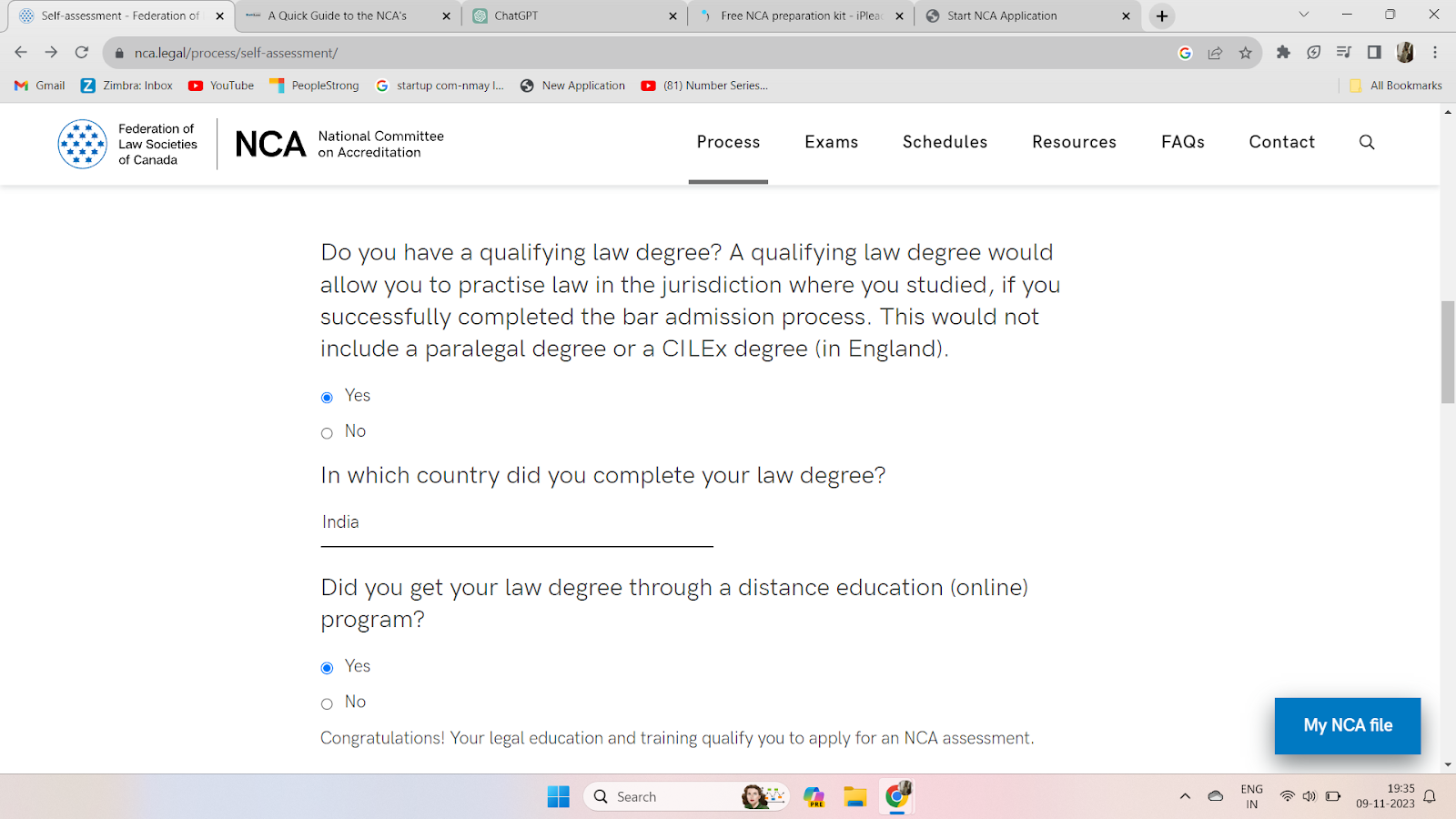
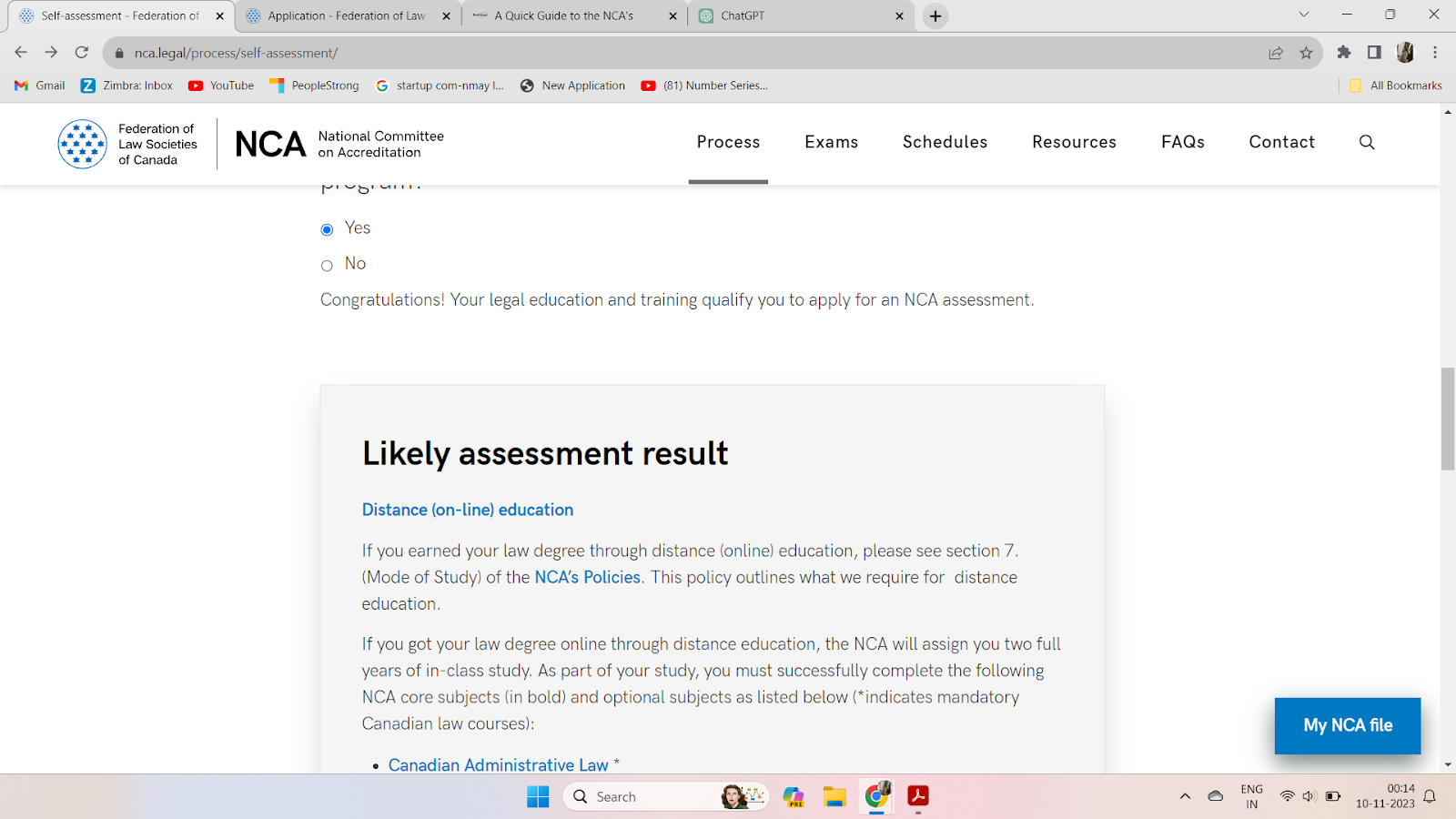
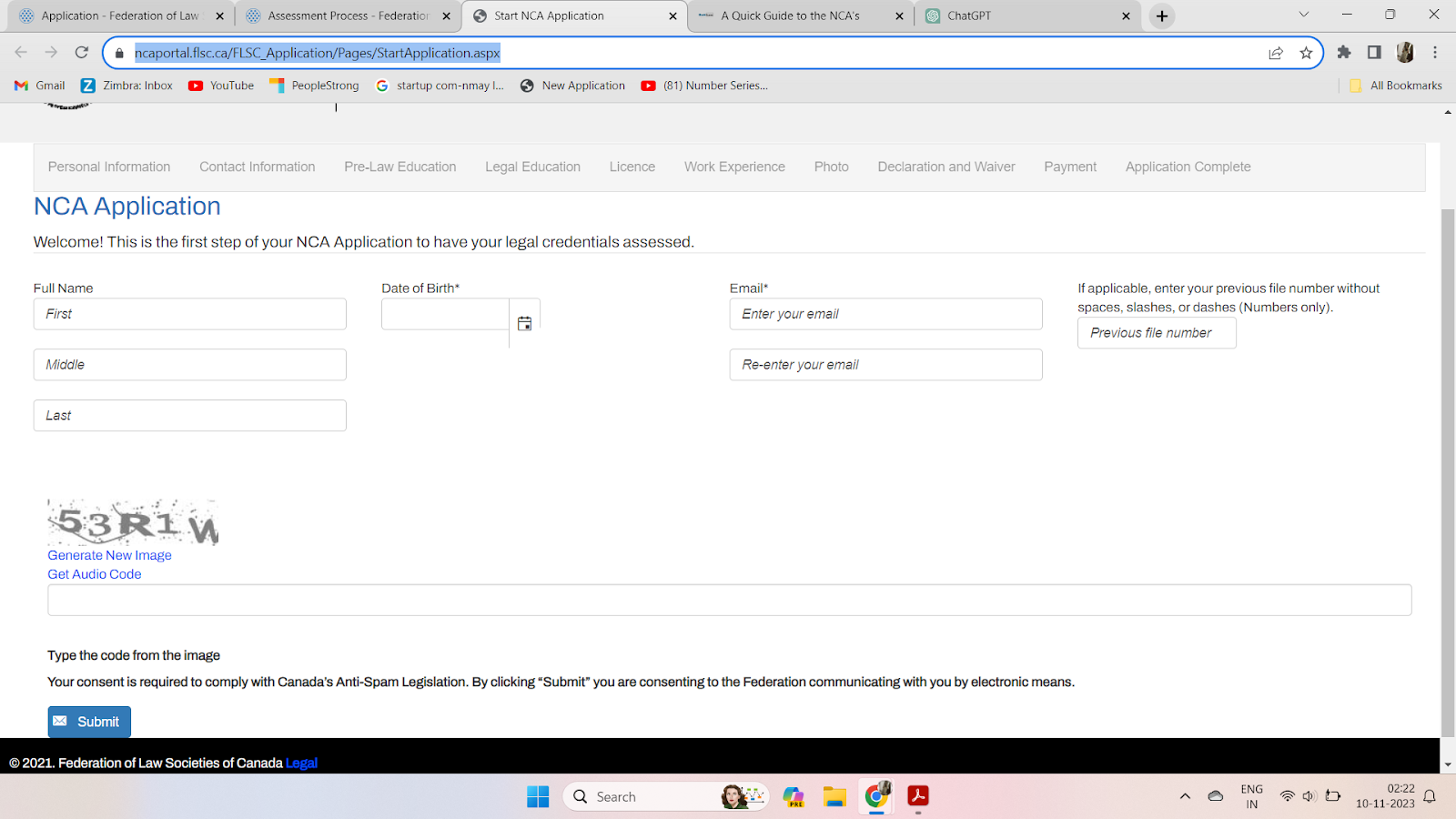
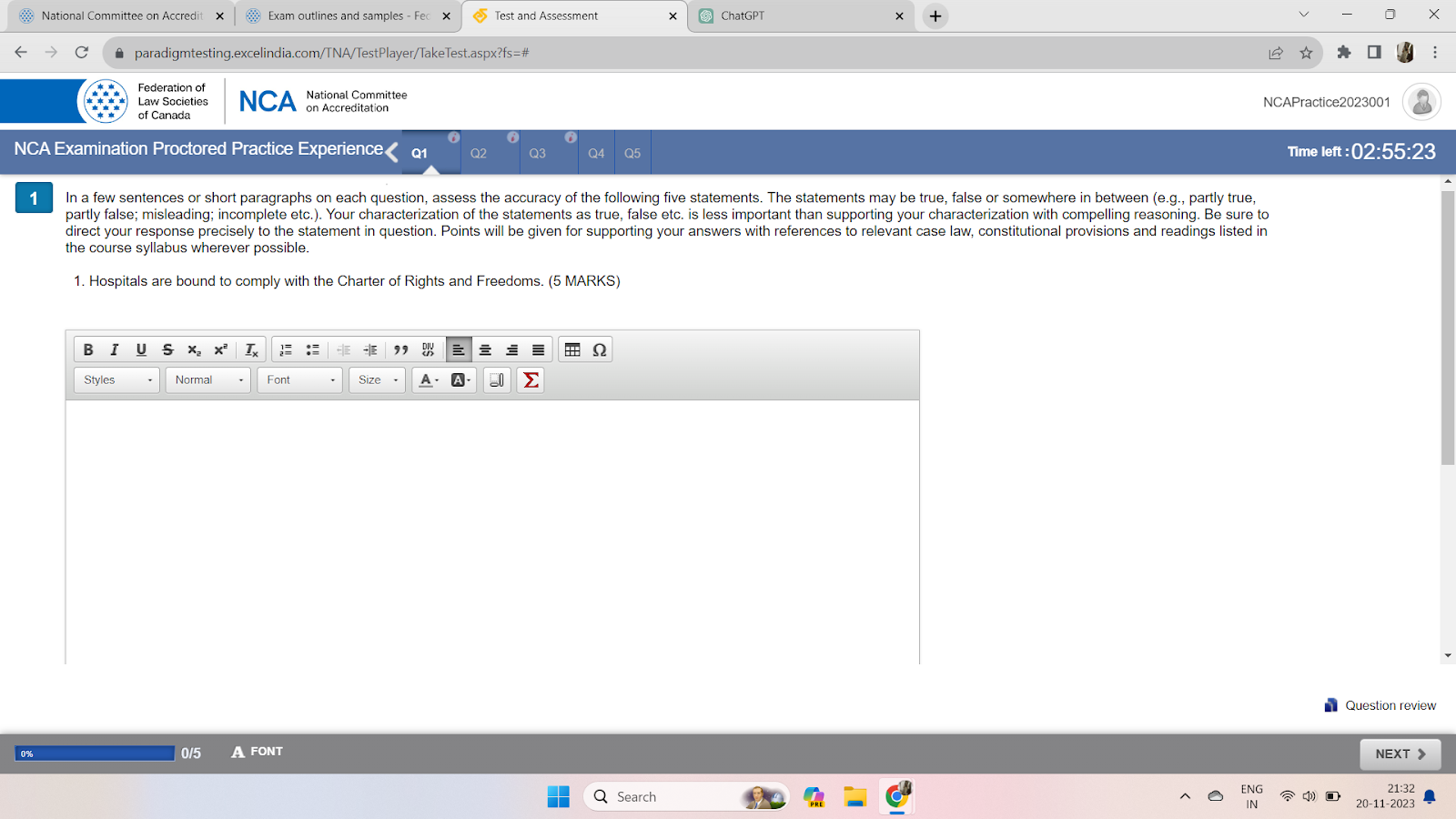
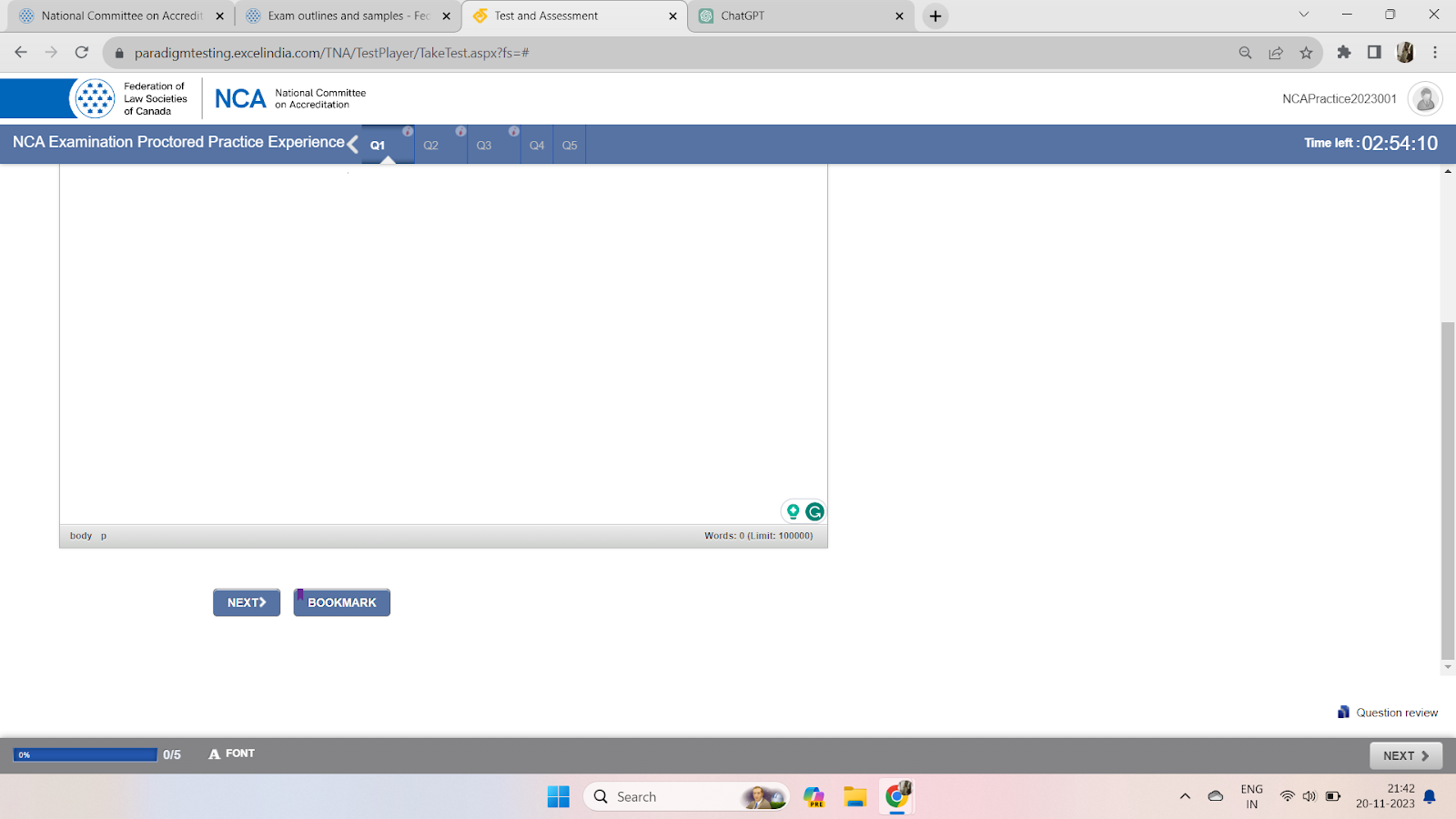











 Allow notifications





