This article was written by Nimisha Dublish. The article is an analysis of the very infamous case of KM Nanavati v. The State of Maharashtra. The case already inspired the judiciary as well as our film industry to show the readers its intricacies and how the case turned out to be an interesting interplay of emotions, justice, media roles and reality.
This article has been published by Shashwat Kaushik.
Table of Contents
Introduction
In this article, we will discuss the intricacies of the infamous case of Naval Officer KM Nanavati.The case became so famous that many TV series and movies were made about it. Each TV series and movie depicts the narrative of each party. We are going to explore the complexities of the case and its impact on Indian society. We will go through compelling narratives of the parties presented in the case and debates that were all around the nation and judicial system regarding grave and sudden provocation. The story of this case still continues to resonate with generations as to how truth, passion and justice collide in a case. The case received unprecedented media coverage. It is also known to be the last case to be heard as a jury trial in India since the government abolished the jury system as a result of this case.
Facts of K.M. Nanavati v. The State of Maharashtra
Kawas Manekshaw Nanavati 1925-2003 was a Parsi and a commander in the Indian Navy. He was second in command of the Indian Navy and was posted in Mysore. He settled in Bombay with his wife, Sylvia and their two sons and one daughter. Sylvia was a citizen of England.
Due to the nature of Nanavati’s job, he had to travel from Bombay to various other parts, leaving his wife and children behind. In Bombay, Nanavati was introduced to Prem Bhagwandas Ahuja and his sister Mimi Ahuja because of a consignment related to the purchase of a naval ship. With the passage of time when Nanavati used to be away from Bombay, the relationship between Sylvia and Prem Ahuja grew stronger, and they got into an adulterous relationship.
One usual day, when Nanavati returned to Bombay, he tried getting close to his wife. However, Sylvia refused to get close to him and started behaving in a rude manner. Nanavati, at first, let that go. However, when he noticed that this had become a pattern and Sylvia continued to behave distantly, he got confused and doubted her loyalty to him.
One fine day on April 29, 1959, Nanavati broke this silence and questioned Sylvia about her strange behaviour. She confessed everything to him about her relationship with Prem. After hearing this, he took his family to the Metro Cinema for the film Tom Thumb, which he had promised to take them to. He then headed to confront Prem. Nanavati went to the naval base and collected his gun on a false pretext. He took the pistol along with six bullets. He completed the formalities and decided to head towards Prem Ahuja’s office after it. He informed the authorities that he was to drive alone to Ahmednagar by night and would need the pistol for safety purposes, but he didn’t disclose his true intention. He put both the revolver and six cartridges in a brown envelope.
After the completion of official duties, he headed towards Ahuja’s office. After not finding him there, he went to his house and had a verbal confrontation with him. Nanavati said that he asked him to marry Sylvia and accept their children. To which Prem Ahuja replied negatively, three shots were fired, and he was found dead. Nanavati was emotionally weak at that moment and thought nothing beyond securing the future of his wife and children. He expected that Prem Ahuja might agree to marry Sylvia and take custody of his children, but when Nanavati questioned him, he allegedly said, “Am I supposed to marry every woman I sleep with?” To this, Nanavati got triggered and this statement of Ahuja provoked Nanavati. Upon knowing that Prem Ahuja does not respect Sylvia and does not at all care about her, Nanavati got into an argument with Prem Ahuja. As a result, they got into a scuffle, and eventually, bullet shots were fired.
After the event, Nanavati surrendered to the Deputy Commissioner of Police. The jury gave a verdict of 8:1, holding him not guilty under Section 302 of the Indian Penal Code. This particular Section prescribesthat anyone who commits murder will either be punished with the death penalty, life imprisonment, or a fine. He got a majority of 8 votes by the jury and only 1 vote was against the majority decision of the jury. However, the judge was not satisfied with the jury’s verdict and referred the case to the Bombay High Court under Section 307 of the Code of Criminal Procedure, CrPC. Section 307 prescribes that at any point between the initiation of a case and the issuance of a judgement, the Court may offer a pardon to any individual who is believed to have been directly or indirectly involved in the offence under consideration.
On reviewing the case, the High Court of Bombay overturned the decision of the jury and Nanavati was held guilty of the said offence under Section 302 of the Indian Penal Code. Subsequently, an appeal was filed before the Supreme Court of India.
Contentions of both parties in K.M. Nanavati v. The State of Maharashtra
Contentions of the petitioner
The counsel of Nanavati put forth his contention that after Nanavati heard the confession made by Sylvia, he wanted to kill himself. However, Sylvia managed to calm him down. After this, Nanavati wanted to know whether or not Prem Ahuja was ready to marry her. He dropped his wife and children at the movie theatre and went to the ship in his car.
After informing the ship authority that he wanted his revolver along with six rounds, he went off. He gave the reason that he was to drive alone to Ahmednagar by night and didn’t disclose his true intention. He put both the revolver and six cartridges in a brown envelope.
Nanavati went to Ahuja’s office, but he was not there, so he went to Ahuja’s flat. Upon reaching there, Ahuja’s servant unlocked the door, and Nanvati straight away walked towards Ahuja’s bedroom. He closed the door behind him and also carried the envelope containing a revolver and six bullets.
When Nanavati saw Ahuja inside the bedroom, he labelled him a dirty swine and asked if he would marry Sylvia and care for the children. Ahuja raged and said, “Am I supposed to marry every woman I sleep with?” To this Nanavati threatened to thrash him. When Prem Ahuja made a sudden grab at the envelope, Nanavati drew his revolver and asked Ahuja to back off. As a result, a scuffle arose between them, and during the struggle, two bullet shots were mistakenly fired, which led to the death of Prem Ahuja.
Nanavati, after the whole event took place, drove to the police station and surrendered himself. Hence, the petitioner’s shot at Prem Ahuja was a result of grave and sudden provocation, and he would be liable for culpable homicide not amounting to murder.
Contentions of the respondent
The respondent’s very first disagreement was on the point that Prem Ahuja had just gotten out of the shower and his towel was still intact. It was still on his body when it was discovered. It has not fallen, which is quite surprising because Nanavati and Prem Ahuja had a scuffle between them.
After Sylvia confesses to Nanavati, he calmly drives them to the movie theatre and drops them there. After this, he went to his ship and got the revolver on a false pretence. This clearly shows that he had sufficient time to cool down and that the provocation was neither grave nor sudden. Nanavati had premeditated the murder on his way.
Anjani Prem Ahuja’s servant was a natural witness who was present there and opened the door for Nanavati. He said that four shots were fired in rapid succession, and the entire event took place in less than a minute. Hence, it shows that no scuffle took place.
Nanavati, after shooting Prem Ahuja, left the place without informing his sister, who was present in the room next to him. If it was an accident, Nanavati must have informed her. As per the statement of the Deputy Commissioner of Police, Nanavati admitted that he shot Ahuja and even corrected his name, which was misspelt in the police record, which demonstrated that he was capable of thinking normally at that moment.
Issues before the Court
Whether the High Court lacked jurisdiction under Section 307 of the CrPC to examine the facts in order to determine the competency of the Sessions Judge’s referral.
Whether the High Court had the power to strike aside a jury’s decision on the grounds of misdirection in charge under Section 3073 of the CrPC.
Whether there were any misdirections in the charge.
Whether the jury’s decision was such that it might have been reached by a group of reasonable men based on the facts presented to them.
Whether the act was done in “the heat of the moment” or whether it was a premeditated murder?
Whether the pardoning power of the Governor and the Special Leave Petition can be clubbed together?
Tests and rules applied in K.M. Nanavati v. The State of Maharashtra
Test for grave and sudden provocation
The test involves the question of whether a reasonable man who belongs to the same class of society, would be provoked to act in the same way as the accused would in the same situation. The test when applied in India, also involves the gestures, words and former mental background developed by the victim. There must be sudden provocation, and the fatal blow must be a result of it. There should be no time for the calculation of the actions or any premeditation.
The rule applied and the cases referred
In Mancini v. Director of Public Prosecutions (1941), the court addressed the issue of whether the provocation could mitigate the charge of murder to manslaughter. The court noticed that when the provocation incites the intention to kill or cause grievous harm, the chances of applying the legal principle of reducing the murder to manslaughter rarely apply. This means that if a person, in the heat of passion triggered by sudden and grave provocation, forms an intention to kill or cause serious bodily harm, then the offence is more likely to be considered murder and not manslaughter.
The court also referred to the case of Attygalle v. Emperor (1936) to prove the burden of proof on the prosecution. In case of proof relating to the absence of an accident, Section 80 of the Indian Penal Code, 1860 is to be referred, notwithstanding the provisions under Section 105 of the Indian Evidence Act. Section 80 of the IPC is a general exception, it states that an act cannot be considered an offence if it is done accidentally or due to misfortune, given that there was no criminal intention or awareness of the same. The act must be done while engaging in a lawful activity by lawful means while exercising proper care and attention. If someone unintentionally commits an act while lawfully carrying out his/her duties without any criminal intention, then that person shall not be punishable under this Section. Section 105 of the Indian Evidence Act means that whenever an accused is charged with any criminal act, the burden of proof, under any of the general exceptions provided under the IPC or any other special laws, is upon the accused. The burden lies on the prosecution to prove the absence of the accident. This means that when a person claims that the act was done by accident, then, as provided under Section 80 of the IPC, it is the responsibility of the prosecution to prove beyond a reasonable doubt that the offence was not the result of the accident. This provision ensures that the prosecution bears the onus of proof. It upholds the presumption of innocence and the principles of a fair trial by the Court.
In the case of Empress v. Khogayi (1879), the court held that the use of abusive language constitutes a sufficient provocation to deprive a person of self-control. This judgement significantly highlights the cause and effect of verbal provocation and how the use of abusive language can provoke a person enough to lead them to commit an impulsive or violent act. This highlights the broader understanding of provocation under the umbrella of both verbal and physical provocation.
Test of Jury Trials
One of the most notable events that took place in this case was the utilisation of jury trials. This was inherited from the British legal system. In a jury trial, there is a group of citizens, which is typically 12 in number, and they have the responsibility of determining the guilt of the accused. The trial proceeds as a normal proceeding, like presenting evidence and arguments. However, in this case, we saw both the strengths and weaknesses of the jury trial in India. The jury provided diverse opinions in this case in order to promote the fairness and legitimacy of the trial. On the other hand, the case attracted immense public attention and media scrutiny. Every action of the parties and jury was being captured by the media. The case attracted a whole lot of media coverage. This was considered an influence on the jury. The complexity of the case and its emotional nature posed many challenges for the jury to arrive at a decision.
Despite the majority decision of an 8:1 vote for the acquittal, the presiding judge, Hon’ble Mr. Justice Ratilal Bhaichand Mehta, referred the case to the High Court for further review. The case served as a litmus test for the efficacy of the jury trial system in India.
The rule applied and the cases referred
In the case of Ramanugrah Singh v. King Emperor (1946), the court highlighted the words ‘the ends of justice’, this meant that the judge must be convinced that the verdict given by the jury is such that it cannot be reasonably concluded by a reasonable man. The judge must assess the decision of the jury and check whether it aligns with the principles of justice and reasonableness or not.
In the case of Emperor v. Ramadhar Kurmi (1946), the authority of the High Court to intervene in the decision of the jury was questioned. The High Court holds an inherent power to intervene in cases only when the jury’s decision is on the basis of grave misdirections. This implies that if the decision of the jury is influenced by such errors and misconceptions, then the High Court has the jurisdiction to review and overturn the verdict of the jury. This is to safeguard the integrity of the judicial proceedings and ensure that justice is delivered and duly J.J.ved.
High Court’s decision
The division bench of the High Court of Bombay consisted of Shelat and Naik, J.J, who heard the case. However, both judges gave separate decisions on the case, but later both of them agreed that the accused was guilty of murder under Section 302 of the Indian Penal Code. He should be imprisoned for life. They concluded that the jury had been misled, and judges, after evaluating complete evidence, concluded that Nanvati was guilty of murder. He also thought that the jury and their findings were perverse and irrational. They were also, at times, contrary to the weight of evidence.
However, Justice Naik was of the opinion that no reasonable group of people could have reached the conclusion that the jury had reached. The judges agreed that no case had been made out to reduce the offence from murder to culpable homicide not amounting to murder. The present appeal has been preferred against the said conviction and sentence.
Supreme Court’s decision
The Supreme Court runs into the deeper intricacies of the case and the legal principles applied that are given under the Criminal Procedure Code, the Indian Penal Code and the Constitution of India. The court first examined paragraph 1 of Section 307 of the CrPC. The Court referred to the discretionary powers of the court to refer a case to the High Court in case of disagreement with the jury. However, the said power is circumscribed to certain conditions, i.e., the court must reject the jury’s decision and be convinced that no reasonable person could have arrived at the jury’s verdict in such a case.
The Court cited cases such as Akhlakali Hayatalli v. The State of Bombay (1953) and Ramanugrah Singh v. Emperor (1946) to reiterate the requirement of competency. It was stated that “Under sub-section 1, two conditions are required to justify a reference. The first, that the judge must disagree with the verdict of the jury, calls for no comment since it is the foundation for any preference. The second, “that the judge must be “clearly of opinion that the ‘ends of justice must submit the case” is important, and in their Lord, ships’ opinion provides a key to the ‘interpretation of the section.”
In paragraph 3 of Section 307 under CrPC, the High Court’s pivotal role after the case referral is highlighted. It emphasises the comprehensive evaluation of evidence, and it shall be considered by both the jury and the judge. The Supreme Court further examined the actions of the accused to determine whether they were an outcome of sudden and grave provocation or were premeditated. It was found that there was enough time between the triggering event and the crime for the accused to have calmed down, suggesting that the crime was planned, not impulsive. The Supreme Court found that the conduct of Nanavati was inconsistent with the defence that he took, i.e., the deceased was shot by accident. It was established that he was mentally prepared and had the mindset of someone who had planned and calculated the act of vengeance. While Nanavati was procuring the revolver and six bullets, he was already planning something in his head. His intentions were quite clear from the way he directly headed towards Ahuja’s bedroom. He was given various opportunities until the trial to admit that the gunfire was shot by accident, but he didn’t confess until his trial. Also, the injuries that were found on the deceased body seemed to be a result of deliberate shooting. Also, the jury’s decision was not held valid, as the court believed that no reasonable group of persons could have reached the same determination as the jury based on evidence.
After taking into consideration all the facts and circumstances, the Court arrived at the conclusion that the accused had developed self-control and was considering the future of his family. After the confession of Sylvia, he had plenty of time to regain his emotional stability and calm himself down. His actions were premeditated and purposefully calculated. Therefore, the defence of grave and sudden provocation did not stand valid for him and the act was considered as a premeditated murder.
The Court further elaborated on the interplay between the power of the Governor to pardon under Article 161, which empowers the Governor to forgive or reduce the punishment of the convicted, and the Special Leave Petition SLP under Article 136 of the Constitution of India, which grants the discretionary authority to the Supreme Court to allow special appeals to be made by any court or tribunal in India. The Court further clarified the fact that these powers cannot be used together, if one is used, then the other becomes unavailable.
The Court agreed with the High Court’s decision to convict the accused and sentenced him to life imprisonment. It was found that the evidence supported the decisions, and there was no further requirement to interfere with it.
Post-judgment journey of KM Nanavati
A series of significant events took place after the judgement. Nanavati always had influential connections with the Nehru-Gandhi family. He also had massive support from the Parsi community. The communal angle also played a vital role in this case. R.K. Karanjia was the owner of the newspaper Blitz. He was also a Parsi, and he published the story of Nanavati to support him. Nanavati was portrayed as an innocent and faithful husband who was betrayed by his wife. His image was built as an upright officer who betrayed both his friend and wife. Prem Ahuja was always portrayed as a spoilt brat, and polarisation in the Parsi and Sindhi communities was created.
Amidst the whole controversy between Parsi and Sindhi, Sylvia’s story remained unheard. Sylvia met Nanavati in her hometown of England. Nanavati was there for his naval training. They both fell in love and decided to get married.They got married in Bombay in the 1940s. She accepted her mistake and stood by Nanavati during the whole trial. Throughout his ordeal, the Parsi community conducted rallies in his support. He was portrayed as a dedicated and honourable officer. He unjustly got caught up in the betrayal and deceit by his wife and his close friend. These connections helped him shape his narrative and also made his subsequent emigration to Canada possible.
On 8th September 1960, he was shifted from naval custody to civilian prison. After spending 3 years in jail, he was granted parole on health grounds. He then relocated to a bungalow at a hill resort. In her journey to seek solace and a fresh start, away from the lingering debates and controversies, Nanavati decided to move to Canada in 1968. He, along with his family, immigrated to Canada and led a private life until his demise in 2003.
However, Nanavati’s personal connections and community support helped him go through the trial and start a fresh journey afterwards.
Conclusion
Nanavati’s case stands as a landmark in the history of the Indian legal system and how it subsequently led to the abolishment of jury trials. It grabbed the headlines from the very beginning, was then followed by a surprising decision of the jury and ended with the Supreme Court stepping in. The case, from its very beginning, had media attention, which in turn grabbed the attention of the whole nation. Many media debates took place where both the supporters and those who were against Nanavati came.
Distinctions between various types of homicide and the limitations of the jury were explored in this case. The judgement provided great insights into the workings of the Indian legal system and how the media managed to influence the decision of the jury. It laid the basis for clarity and transparency in the proceedings. The case also shed light on the need for competent and experienced judges in the court of law to deal with complex legal matters. The case must always be judged on the basis of the contentions and evidence that are presented in court rather than what the media and public believe to be true.
The case’s legacy continues to resonate through generations of Indian jurisprudence. The case served as a guiding light for future generations of legal practitioners and scholars.
Frequently Asked Questions (FAQs)
What happened to K. M. Nanavati?
The High Court of Bombay found Nanavati guilty of killing Prem Ahuja and sentenced him to life imprisonment. However, the sentence was suspended by the governor of Bombay. Months later, the Supreme Court of India suspended the governor’s order, and Nanavti was sent to prison.
What was the role of Ram Jethmalani in Nanavati’s case?
Late Ram Jethmalani assisted the prosecution in the Nanavati case.
Who had the burden of proof in the case of KM Nanavati?
The onus of proving that it was an accident and not a pre-planned murder was on Nanavati. He was responsible for proving that it was an accident beyond a reasonable doubt.
This article is written by Prashant Prasad, the present article intricately deals with the objective, pivotal provisions and steps to register the clinical establishment in the Tamil Nadu Private Clinical Establishment Act, 1997. Furthermore, this article deals with the recent Amendments in the present Act via Tamil Nadu Private Clinical Establishments (Regulation) Amendment Act, 2018, 2019 and 2021. The present article also deals with the Tamil Nadu Clinical Establishments (Regulations) Rules, 2018 that are currently working towards the improvement of public healthcare facilities.
Article 47 of the Indian Constitution provides that it is the duty of the state to raise the level of nutrition along with the standard of living and additionally, it’s the state’s duty to improve public health. Considering the said duty, the state of Tamil Nadu enacted the Tamil Nadu Private Clinical Establishment Act, 1997, further amended to Tamil Nadu Clinical Establishment Act, 1997 (hereinafter called “the Act”) in the year 2018. The main motive of this legislation is to register and regulate clinical establishments existing throughout the state, while laying down standards for delivery of their service.
The state of Tamil Nadu was one among those states that had enacted legislation like this, on an early basis. Considering the significant impact and huge success of this Act, the Central Government enacted The Clinical Establishment (Registration and Regulation) Act, 2010. Initially, this Act came into force in four states namely Himachal Pradesh, Arunachal Pradesh, Mizoram, and Sikkim. Later on, a few other states adopted The Clinical Establishment (Registration and Regulation) Act, 2010 under Article 252(1). In total 11 of the states and all union territories except Delhi have adopted this Act till now. The adoption of this legislation pertaining to clinical regulation signifies a major step towards improving public health and the state of Tamil Nadu was a torchbearer for the same.
Objective of Tamil Nadu Clinical Establishment Act, 1997
The objective of the Act is not only limited to the registration and regulation of clinical establishments in the state but also to make sure that the clinical establishments must run without any repercussions which might be faced, such as registration, renewal issues, licence of doctors, speedy treatment in case of emergency etc. Another primary objective of this Act is to enable and ensure registration of clinical establishments, both through online and offline modes. Enabling digital means of registration has simplified the process of registration and hence encourages establishments to complete the same.
In many instances, the clinical establishments are being run by bogus doctors who do not hold genuine licences for the same. The Act seeks to prevent such malpractices by mandating the requirement of licences for the clinic itself, as well as for the doctors working there, irrespective of whether the clinic is located in an urban or rural area.
The most crucial aspect which the Act aims to work on is to improve the quality of healthcare facilities throughout all clinical establishments. The Act provides a minimum standard of facilities and services which clinical establishments need to fulfil.
Tamil Nadu Private Clinical Establishment Act, 1997
Important definitions
Competent Authority
Section 2(a) of the Act defines competent authority. For the purpose of this Act competent authority includes any authority whether an office or a person who is appointed by the government by notification for performing the functions. Different competent authorities may be appointed for different areas.
Government
As per Section 2(b), the government refers to the State Government.
Private Clinical Establishment
As defined under Section 2(c), The private clinical establishment includes any kind of general hospital, maternity hospital or dispensary. Further, private clinical establishments also refer to any institution (of any name), where any physically or mentally sick person is admitted (in-patient or out-patient) for treatment either with or without operative procedures. A clinic concerning radiological, biological or any other diagnostic or investigative service, is also included. All of the above would be established and administered by a person or body of persons (incorporated or not).
However, it is pertinent to note, a clinical establishment set up and maintained by a State Government or the Central Government, a local authority, a company a corporation owned or administered by a State Government or the Central Government, does not fall under the ambit of private clinical establishments.
Important provisions of Tamil Nadu Clinical Establishment Act, 1997
Section 3 – Registration of Private Clinic Establishment
On and after the commencement of this Act a person cannot run a private clinical establishment unless it has been registered as per the Act. Such establishments in existence on the date of commencement of the Act must apply for registration within three months from that date. However, four months from the date of commencement, the establishment would cease to exist, unless it has applied for registration and is so registered or until such an application is disposed of, whichever occurs earlier. The process for registration would be as prescribed by the competent authority, along with a maximum fee of five thousand rupees. In order for a private clinical establishment to be registered under the Act, the competent authority must be satisfied with the establishment’s manpower, equipment, skills and ability to provide the concerned specialised services and facilities.
Section 4 – Certificate of Registration
After holding an inquiry and being entirely satisfied that the applicant has adhered to the requirements prescribed under the Act, the competent authority may grant the certificate of registration, in accordance with such form and subject to such conditions as laid down under the Act.
If the competent authority is of the opinion that the applicant has not complied with the conditions and requirements of this Act, the competent authority shall reject the application for registration and record the reasons for the same, in writing.
A certificate of registration shall remain valid for a period of five years and may be renewed for a period of 5 years every time. The application for the renewal of registration shall be made within such time as may be prescribed by the provision of this Act. In case the certificate of registration is lost, destroyed or damaged, the competent authority may, on receiving an application and a payment as prescribed, issue a duplicate certificate.
Section 5 – Cancellation or Suspension of Registration
The competent authority on receiving any kind of complaint or on its own motion can ask the private clinic to show cause regarding why the registration of that clinic should not be cancelled or suspended for the reasons stated in the notice.
After giving the concerned clinic a reasonable opportunity of being heard, if the competent authority is satisfied that there has been a contravention of any of the provisions of the Act, the registration of such private clinical establishment will be suspended for a period as the competent authority deems fit or cancelled.
If the competent authority is satisfied that in the interest of the general public, it is necessary to do so, it shall record the reason in writing and suspend the registration of such private clinics without issuing a notice.
Section 6 – Power of Inquiry or Inspection
The competent authority holds the power to conduct an inspection or inquiry of any private clinical establishments, in terms of the building, laboratories, equipment, and the work performed by the clinic. The inspection or inquiry can be done by any person as directed by the competent authority, and the inquiry can also be made regarding any other matter which is connected with the private clinical establishment.
After inspection or inquiry, the competent authority shall communicate the results and the views of the authority on the same to the private clinical establishment, gather their opinion on it as well and then advise them on further action that must be taken.
Private clinical establishments must furnish to the competent authority, within such period as specified by it, a report regarding the action taken by them based on the authority’s recommendations. In case the action is not taken within a reasonable time, the competent authority may, after considering any explanation or representation by the private clinical establishment, issue any direction as it may deem fit and the private clinical establishment must comply with the same.
Section 7 – Appeals
In case a private clinical establishment is aggrieved by an order of the competent authority, rejecting an application under Section 4(2) or suspending or cancelling registration under Section 5 or any other direction under Section 6, it may, within 30 days from the date of receipt of the order, appeal to the authority and in the manner as prescribed by the Act.
Section 8 – Punishment for Contravention of Any Provisions of this Act
In case of a contravention of the provisions of this Act, a fine starting from five thousand rupees and extending to fifteen thousand rupees may be imposed.
Section 9 – Offences committed by Companies
If the offence which is punishable under this Act is committed by a company, every person who was in charge of and responsible for the conduct of the business of that company at the time the offence was committed, along with the company, shall be deemed to be guilty and liable for the punishment.
This Section further states that, if the person concerned proves that the offence was committed without his knowledge or that he had taken the due diligence necessary to prevent the commission of such an offence.
Section 9(2) states that notwithstanding anything contained under Sub-Section (1), if the offence is committed by the company under this Act and, it has been proved that the offence has been committed with the consent of, or due to neglect on the part of the secretary, director, manager or any other officer, they shall also be deemed to be guilty and will be liable to be proceeded against and punished.
For the purpose of this particular Section:-
Company – A body of individuals, any body corporate and which includes a firm society.
Director – With respect to a firm, a director refers to a partner of the firm. With respect to a society or association of individual directors, it refers to any person who is entrusted under the rules of society or other association with the management of affairs relating to that society of individuals.
Section 10 – Cognizance of Offences
No court is authorised to take cognizance of an offence, unless the complaint is made by the competent authority or any official which is authorised by the competent authority.
Section 11- Protection of Action Taken in Good Faith
There shall be no initiation of suit or any kind of legal proceeding against any person or the government, for anything which is done in good faith or was intended to be done for the furtherance of the provisions of the Act.
Section 12 – Furnishing of Returns etc.
Every private clinical establishment must furnish to the competent authority such returns, information, or statistics which it may require, within a period (may be extended by the competent authority) as prescribed by the competent authority.
Section 13 – Competent Authority etc. to be Deemed as a Public Servant
Every official, authority that is empowered to discharge their duty which is imposed on them for carrying out the purpose of this Act shall be deemed to be a public servant within the ambit of Section 21 of the Indian Penal Code.
Section 14 – Power to Make Rules
The government may by notification make rules for carrying out the purpose of this Act.
Any such rule and any order under Section 15 must be presented before the Legislative Assembly as soon as possible. The Assembly holds the power to modify or even reject these rules and orders.
It is pertinent to note that the modification of a rule or order, or any annulment in the rules or order shall be without prejudice to the validity of anything which was done previously under that particular rule or order.
Section 15 – Power to Remove Difficulties
In case of any difficulty in giving effect to the provisions of this Act, the Government may do anything as it sees fit, provided it is not inconsistent with the Act, to remove such difficulties. However, no order can be made after the expiration of 2 years from the date of commencement of this Act.
In this case, two writ petitions were filed by the respondent and among them, one was under the provisions of the Tamil Nadu Clinical Establishments (Regulation) Act, 1997. An order was passed under Sections 5(2) and 6(1), directing the respondents to not admit new patients to the hospital and the patients who were undergoing the treatment must be discharged within two weeks after giving appropriate treatment. Therefore, on this ground and aggrieved by the order, a writ petition was filed.
Issues
Whether the order passed, which prohibited them from admitting new patients, amounts to an infringement of their fundamental right i.e., the right to carry out any profession, as guaranteed under Article 19(1) (g) of the Indian Constitution.
Whether it is mandatory to give a reasonable opportunity to be heard before passing an order under Section 5(2) of the Act?
Whether the competent authority needs to be satisfied that there is a breach of provision before issuing such orders.
Judgement
It was held by the court of law that the order passed under Section 5(2) and Section 6(1), must be done so only after giving the reasonable opportunity of being heard before passing of any final order regarding suspension of registration. It was further stated that only in extraordinary circumstances registration can be suspended without any notice. Therefore the order which was passed previously by the single judge bench was set aside and the writ petition was allowed.
In this particular case, a writ petition was filed challenging the constitutional validity of Sections 2(a), 3, 4 and 5 of the Tamil Nadu Clinical Establishments (Regulation) Act, 1997 as amended by the Tamil Nadu Clinical Establishments (Regulation) Rules, 2018. It was contended that the provision of this Act is ultra-virus and arbitrary as the Act made applicability of consulting rooms for medical practitioners.
Issues
Whether the said Act and rules are treated as unequal and are therefore violative of Article 14 of the Indian Constitution.
Whether the consultation room forms part of the clinical establishment.
Whether a small medical practitioner giving consultation in a small room, after excessive restriction regarding the consultation is acting as an impediment to Article 19(1)(g) of the Indian Constitution.
Judgement
The court held that the Act is not violative of Article 19(1) (g) of the Constitution. The court further added that the Act provides for regulation of the clinical establishments in such a way that would ensure the safety and interest of the patient and cannot be held as violative of Article 19(1) (g). Furthermore, it was held that there is nothing on record to show that the restriction that is mentioned in the Act is violative of any rights that are provided under Part III of the Indian Constitution. Therefore, the said Act is not arbitrary and cannot be struck down.
Tamil Nadu Private Clinical Establishments (Regulation) Amendment Act, 2018
The name of the Act was amended to Tamil Nadu Clinical Establishments (Regulations) Act, 1997.
A general hospital which includes a dental hospital, maternity hospital, consultant room, dispensary, clinic, polyclinic, or nursing home.
An institution or centre by whatever name it may be called, where a physically or mentally sick, injured person is admitted either as an in-patient or out-patient for the treatment, which may be without the aid of operative procedures.
A clinic that is catering radiology, biology or other diagnostic or investigative services either with the aid of a laboratory or other medical equipment.
This clinic may be established and administered by any person or body of persons, whether incorporated or not or the state or central government or any department of state or central government or trust, whether public, private or a company, which might be owned or not owned by the government or local authority, but does not include such clinical establishment which is managed by the Armed Force.
Establishment of State Level Advisory Committee
Section 2-A – Constitution of State Level Advisory Committee
The government, by notification, shall constitute a committee and that committee will be known as the state level advisory committee. The state level advisory committee shall consist of the following members –
The Director of Medical and Rural Health Service, ex-officio.
Director of Medical Education, ex-officio or his nominee.
The Commissioner of Indian Medical and Homoeopathy, ex-officio or any of his nominees.
The Director of Public Health and Preventive Medicine, ex-officio or his nominee.
One member from Ayurveda, Siddha, Unani, Yoga and Naturopathy who shall be nominated by the state council on the rotation period of one year.
One member nominated by the Indian Medical Association.
One member nominated by the Tamil Nadu Medical Council.
One member nominated by the Tamil Nadu Dental Council.
One member nominated by the State’s Nurse Midwives Council.
Nominated members hold the office for the period of 3 years but can also be re-nominated for a further extension of three years.
Section 2-B– Meetings of State Level Advisory Committee
The state level advisory committee needs to meet at least once in a year at such place and time which may be prescribed. In case the chairperson is absent or not available then in his absence any member chosen by the committee shall preside over the meeting. The number of members required to form the quorum and the procedure of the meeting shall be as prescribed.
Section 2-C – Functions of State Level Advisory Committee
This Section states that the state level advisory committee shall advise the government regarding regulation of clinical establishment. Further, the state level advisory committee also performs such other functions as may be prescribed by the government from time to time.
Establishment of District Committee
Section 2-D – Constitution of District Committee
The government shall by notification constitute a committee for each district known as a District Committee. The members that constitute the District Committee are –
Deputy Director of Medical and Rural Health Services, ex-officio, who shall be the chairperson.
The Dean of the Government Medical College in the district.
The District Siddha Medical Officer or any of his nominees.
One of the members nominated by the Tamil Nadu Medical Council.
One member nominated by the Indian Medical Association.
One member from Ayurveda, Unani, Yoga and Naturopathy, Siddha and Homeopathy system of medicine nominated by the state council on the rotation period of one year in the order of Ayurveda, Unani, Yoga and Naturopathy, Siddha and Homeopathy.
One member nominated by the State’s Nurse Midwives Council.
The nominated members hold office for the period of 3 years but can also be re-nominated for a further extension of three years.
Section 2-E – Meetings of District Committee
The district committee shall meet at least once in every six months, at such time and place which may be prescribed. In case the chairperson is absent or not available then in his absence any member chosen for the committee shall preside over the meeting. The number of members that form the quorum and the procedure that needs to be followed by them shall be as prescribed.
Section 2-F – Function of District Committee
The District Committee shall aid and advise the competent authority of the district regarding the registration of the clinical establishment. Moreover, the district committee shall perform such other functions and duties as may be prescribed.
Substitution for Section 3(1)
This substituted Section states that no person shall carry any clinical establishment unless such clinical establishment is duly registered under this Act.
However, every clinical establishment in existence on the date of the commencement of the Tamil Nadu Private Clinical Establishments (Regulation) Amendment Act, 2018 (hereinafter called “notified date”), shall apply for registration within a period 9 months from such notified date and a clinical establishment established after the notified date, shall apply for registration within a period of 6 months from the date of its establishment.
It is further provided that every clinical establishment which is existing on the notified date shall cease to carry on its business after the expiry of 12 months from the notified date unless such clinical establishment has applied for registration and is registered or till the date such application is disposed of, whichever is earlier.
Amendment of Section 5
It has been added that, if a person holding the certificate of registration has been convicted under any of the provisions of this Act, three times in total, the competent authority shall cancel the certificate of registration and the clinical establishment shall not be permitted to apply for a fresh registration.
Provisions regarding services and duties of clinical establishments
Section 5-A- Maintenance of facilities and services by clinical establishment
It shall be the duty of every clinical establishment to maintain the minimum standard of facilities and services which may be prescribed. The government shall prescribe the minimum standard of facilities and services for the different categories of clinical practice across all systems of medicine.
Section 5-B- Duties and responsibilities of the Clinical Establishment
Every clinic establishment shall follow some duties and responsibilities, which are –
In medico-legal or possible medico-legal cases such as road accidents, criminal assault, poisoning, or accidental or induced burns, it is the responsibility of the clinical establishment to administer the first aid and other lifesaving or stabilising measures when the victim is brought to them.
The clinical establishment must participate in the implementation of National and State level health programs in any manner as the government may prescribe. Moreover, the report regarding the same must be furnished to the authorities concerned by the clinical establishment on a periodic basis.
The clinical establishment must maintain the medical record in any manner as may be prescribed for the respective system of medicine.
The clinical establishment must take necessary steps in order to prevent the spread of communicable disease and to control the non-communicable disease, as the government may from time to time specify.
Any other duties and responsibilities which may be prescribed.
Section 5-C – Annual publication of lists pertaining to the clinical establishment
The competent authority shall maintain a register of clinical establishments, in the prescribed form and every January, a list of registered clinical establishments along with their details needs to be published, in the Tamil Nadu Government Gazette.
Alteration of Section 8
Penalties
Anyone who breaches Sub-Section (1) of Section 3, shall be punished, with a fine which shall not be less than five hundred rupees which can further be extended to five thousand rupees. Furthermore, whoever breaches any other provision of this Act or any rule made or any other conditions of the registration, must be punishable with a fine which shall not be less than five thousand rupees but which may extend to fifty thousand rupees, provided that, for the purpose of Sub-Section (2) and Sub-Section (1), the Court may, for any adequate or special reasons in the judgement, may impose a fine which may be less than five thousand rupees.
Any person who disobeys any direction which is lawfully given by the authority or any person who is empowered under this Act, to give such direction, or if any obstruction is made while performing the function of the authority or the person empowered under this Act, shall be punished with a fine which may extend to thirty thousand rupees. Additionally, any person who is required to give any information under this Act, if wilfully withholds such information, or gives such information which he believes to be false, or believes not to be true, shall be punished with the fine which may extend to thirty thousand rupees.
Tamil Nadu Private Clinical Establishments (Regulation) Amendment Act, 2019
Amendment of section 3
Under Sub-Section (1), the expression “nine months” shall be substituted with “fifteen months” and the expression “twelve months” shall be substituted with “eighteen months”
Under Sub-Section (2), it shall be provided that no fee shall be collected from the clinical establishment which is administered and maintained by the state or central government or any department of central or state government or any company which is owned by the state or central government or local authority.
Tamil Nadu Private Clinical Establishments (Regulation) Amendment Act, 2021
Amendment of section 2-D
Under Sub-Section (2) of Section 2-D, which talks about the members of the district committee, after clause (a), the following clause shall be inserted –
(aa) – The Deputy Director of Public Health and Preventive Medicine in the district.
Tamil Nadu Clinical Establishments (Regulations) Rules, 2018
Important Definitions
Clinic
A clinic, under Section 2(c), is defined as a place where treatment for illness is offered either with or without injections, dressing, any minor operation etc. to the patients. A clinic for this purpose may include an endoscopic clinic, AYUSH clinic or any other establishment that offers treatment to the patient suffering from any kind of illness with the help of medicine or any therapy under Allopathy, Ayurveda, Siddha Yoga and Naturopathy or Homoeopathy (AYUSH) or any other systems of medicine recognized by the government.
Consultant Room
A consultant room, under Section 2(e), is defined as a room where the examination of a patient, issuance of prescription and conveyance of advice, take place.
Hospital
Hospital, under Section 2(k), includes a nursing home or health care or treatment centre or any other place as an in-patient for treatment of any illness which can be either with or without surgery or conduct of delivery etc., with or without out-patient facilities and diagnostic facility like laboratory etc., in any recognized system of medicine.
Patient
Patient, under Section 2(m), refers to any person who is brought to any hospital, including a dental hospital for treatment, consultation or to seek any kind of service which is offered by the hospital.
Polyclinic
Polyclinic under Section 2(n) is defined as a clinic in which more than one doctor offers consultation either with or without treatment, for illness in any recognized system of medicine.
Registered Medical Practitioner
Under Section 2(o), registered medical practitioners are those who possess any government recognized medical qualification or are enrolled in the register of the Medical Council, Dental Council, Siddha Council, Ayurveda Council, Unani or Homoeopathic Council or are registered by the Board of Indian Medicine or any such statutory body that is recognized by the Tamil Nadu Government.
Staff Nurse
As per Section 2(p), a staff nurse is any person who possesses the required qualification from any of the nursing Teaching Institute, which is recognized by the government of Tamil Nadu and the person who possesses that qualification must be enrolled in the Tamil Nadu Nurses and Midwives Council under the Indian Nursing Council Act, 1947. The qualification can also be from any of the State Nursing Councils in India which is recognized by the Indian Nursing Council and Indian Medicine for Ayurveda, Yoga and Naturopathy, Unani, Siddha and Homoeopathy establishments.
Important provisions
Section 3 – Procedure, Quorum and Minutes of Meeting of State Level Advisory Committee
This Section states that every notice calling for the meeting of the state level advisory committee must specify the place, date and hour of that meeting. The notice of the meeting must be given to each member of the committee at least 7 days prior to the date of the meeting.
The chairperson of the state level advisory committee shall prepare and circulate along with the notice, an agenda of the meeting, which would reflect the business to be conducted. It has been stated that the total quorum of the meeting must not be less than 4. However, if within 30 minutes of the time specified, the quorum fails to be present, the meeting shall adjourn to the same day at the same time and place in the following week. The presiding officer of the meeting must communicate this information to the members present and also to the other members by speed post. Furthermore, the government must be informed about the minutes of the meeting.
Section 4 – Procedure, Quorum and Minutes of Meeting of District Committee
This Section states that every notice calling for the meeting of the district committee must specify the place, date and hour of that meeting. The notice of the meeting must be given to each member of the committee at least 7 days prior to the date of the meeting.
The chairperson of the district committee shall prepare and circulate along with the notice an agenda of the meeting, which would reflect the business to be conducted. It has been further stated that the total quorum of the meeting must not be less than 4. However, if within thirty minutes of the time specified the quorum failed to present, the meeting shall adjourn to the same day at the same time and place in the following week. The presiding officer of the meeting must communicate this information to the members present and also to the other members by speed post. Furthermore, the government and the competent authority must be informed about the minutes of the meeting.
Section 5 – Duty of District Committee
Apart from the duties and responsibilities that are specified in the Act, the district committee shall perform the following as well-
Scrutinise the application which is received as directed by the competent authority.
Inspect the clinic establishment in the manner as specified by the competent authority.
Examine the complaint which is received, if any, regarding the implementation of the Act and must be referred to the government through the competent authority.
Any other duty which may be specified either by the competent authority or by the government.
Section 6 – Minimum Facilities of a Clinical Establishment
The floor space, the minimum number of staff and their respective qualifications, the minimum equipment and the other conditions which are required for a clinical establishment of different systems, to provide various medical services, including specialised ones, shall be in accordance with the norms and conditions as specified in Annexure-I of this rule.
Section 7 – Application for Registration
The application for the registration of clinic establishment can be made in person or through registered post with acknowledgment due to the competent authority in a manner as prescribed by Form I. The form for registration must be accompanied by a fee of rupees five thousand, in the manner of a demand draft or treasury challan drawn in favour of the competent authority.
If the clinical establishment offers services in more than one recognized system of medicine, a separate application of registration for each recognized system of medicine.
Section 8 – Certificate of Registration
When the competent authority receives an application for the registration of a clinical establishment, if it is satisfied that the applicant has fulfilled all the requirements of the Act and these rules, it may grant a certificate of registration within one eighty days from the date of receipt of such application, such a certificate is non-transferable.
Section 9 – Time Limit for Renewal
For the renewal of the certificate of registration, the clinical establishment must submit an application for the same, to the competent authority, ninety days prior to the expiry of registration.
Section 10 – Duplicate Certificate
There may be instances where the original certificate might get lost, or damaged. In that scenario, the clinical establishment can apply to the competent authority with an application for issuing a duplicate copy, along with a fee of three hundred rupees.
Section 11 – Duties of Clinical Establishment
Apart from the duties and responsibilities that are specified in the Act, the clinical establishment shall perform the following duties as well –
Display the certificate of registration in a conspicuous part of the premises which is open to the general public.
Maintain a record in an electronic form containing names, qualifications and addresses of its employees and equipment maintained by the establishment.
To record and preserve all the changes which might have been made in the equipment or in the employment of staff. Further, this change of record must be intimated to the competent authority.
Maintain the clinical records relating to its patients, such as any paper, printout, slide, or solution which can be used to indicate and diagnose the condition of the human body or any part of any material that might be taken out during the course of treatment undergone by a person.
Keep all the records for inspection by the competent authority.
Surrender certificate of registration in case the clinical establishment ceases to exist.
Section 12 – Maintenance of Medical Record
Every clinical establishment must maintain records relating to the observations made, tests performed, investigation done, diagnostic opinion, advice and treatment given to any person who has visited the hospital either as an in-patient or as an out-patient, under Form III.
Section 13 – Annual Publication of the list of clinical establishments
Every January, the competent authority shall publish the list of clinical establishments in the Tamil Nadu Government Gazette, in Form IV.
Section 14 – Appeal
In case a private clinical establishment is aggrieved by an order of the competent authority, rejecting an application under Section 4(2) or suspending or cancelling registration under Section 5 or any other direction under Section 6, it can be appealed before the Director of Medical and Rural Health Services, within 30 days from the date of receipt of the order.
The Director of Medical and Rural Health Services may pass an interim order if it sees fit. This Section further states that the Director of Medical and Rural Health Services may within sixty days of receipt of the appeal and after giving the parties the reasonable opportunity of being heard can pass such an order as he may deems fit. The decision given by the appellate authority must be communicated to the concerned person who has preferred the appeal, within seven days from passing of that order. The decision which is given by the appellate authority shall be final and will have a binding effect on the concerned parties.
How to register a clinical establishment under the Act online
Registration of a clinical establishment is the initial and most crucial stage. As per Section 7 of the Tamil Nadu Clinical Establishments (Regulations) Rules, 2018 which deals with the application of registration, it is mentioned that the application for the clinical establishment can either be made in-person or through registered post with acknowledgment due to the competent authority. The form for the registration must be accompanied by a fee of five thousand rupees. It is also possible to initiate the registration procedure online. The procedure for the same has been detailed below-
Step 1 – Creating a new account for registration
The first step for the registration of clinical establishments is to create a new account. One can directly go to the website at http://www.tnhealth.co.in/dms/tncea/login.php to do so.
The following instructions must be kept in mind –
Correctly choose the Revenue District, as it cannot be changed once your new ID is created.
Verify the presence of a Taluk for the chosen district.
Enter the name of the clinical establishment correctly, since it is the name that will appear on the certificate of registration.
Enter a valid email ID.
Step 2 – Get acquainted with the application form
There is a form of a specific format which needs to be filled. The person registering for the clinical establishment must gather the documents required by the form. The form can be accessed at – http://www.tnhealth.co.in/dms/tncea/Read_before_Registering.zip
Step 3 – Fill out the Application Form
The form must be filled with credible information, as asked for. Every detail put in the form will be verified by the competent authority at a later stage and should therefore be authentic and reliable.
Step 4 – Submitting the Application Form
After the form is filled, it can be submitted, along with the necessary documents. Once the application form is submitted, the person can log out and log in again, to avail the opportunity to download an acknowledgement as well as the submitted form.
Step 5 – Inspection by the Competent Authority
Once the application form is submitted, the competent authority shall verify the information given by the applicant for the registration of the clinical establishment. After it is satisfied that the applicant has complied with all the conditions and requirements of the Act, the competent authority may move ahead with the process.
Step 6 – Approval and Issue of Certificate
After the competent authority is satisfied that the application has complied with the necessary requirements of the Act, it may approve the application form, post which, the certificate of registration may be granted, within 180 days from the date of receiving the application.
Conclusion
Tamil Nadu Clinical Establishment Act, 1997 is a great initiative that is working towards the improvement of healthcare facilities throughout the state. The provisions of this Act work towards a wide range of healthcare facilities, from working to providing licences, setting standards for the clinical establishment, and addressing the grievances of the patient as well as the clinical establishment.
However, the effective implementation of this Act has been a matter of question. There is a pressing need for the proper implementation of this Act so that the subsisting problem with regard to healthcare facilities can be eradicated. All the stakeholders must collaborate and join hands together to achieve the ultimate goal of this Act with its proper implementation. The subsisting problems that have surged in contemporary times and which are marked as major lacuna in this legislation are the allocation of resources, compliance issues, infrastructure complications, etc. These problems need to be addressed in order to achieve the purpose of this Act. Awareness among the general people regarding this Act would make them vigilant about the importance of this Act which can be done with some social activities. The essence of this Act lays a solid foundation in the healthcare facility which is bringing and is expected to bring huge positive results in the upcoming times.
Frequently Asked Questions (FAQs)
What is the applicable standard for the infrastructure of consultation rooms mentioned under the Tamil Nadu Clinical Establishments (Regulations) Rules, 2018?
In the Act, the consultation room, which is the most important for carrying out the purpose of this Act, must be 100 square feet. Apart from the mentioned area, the consultation room must have sufficient light and ventilation, there needs to be a separate space for the patient waiting for consultation.
The article is written by Jyotika Saroha. The present article extensively covers the evolution of the right to information in Indian and international contexts. It deals with the growing need for this right and also discusses Article 19(1)(a) of the Indian Constitution in light of the right to information, which has been recognized as a fundamental right in India. It further discusses landmarks and recent judgements regarding the right to information. It also discusses the laws on the right to information in various countries. It further deals with the Right to Information Act, 2005, the necessary provisions under the said Act, and recent amendments to the Act. Lastly, it deals with the recent controversies surrounding the Right to Information Act.
India is the world’s largest democracy, and its main objective is to promote growth and development for its citizens in every sphere, be it social, economic, or political. One of the main factors that contributes to the development of any country is the transparency and accountability of the government’s working system. With the increasing advancement in these two factors and to curb the menace of corruption in India, the right to information came into existence as a fundamental right, which brought up many developments by itself. The right to information is considered as one of the milestones of legislation, and it plays a significant role in empowering citizens. It helps to make them aware of their right to know about the working system of the government. Not only in India, but legislation regarding the right to know is prevalent in various countries around the world.
Historical background of Right to Information
The term “information” comes from the Latin terms “formation” and “forma,” which mean to form a pattern or a shape. Information is something that has been added to our thoughts and ideas. The right to information also got legal recognition under Article 19(1)(a) as a fundamental right to speech and expression. The historical background of the right to information dates back several years.
The very first legislation regarding the right to information came in Sweden in 1776, namely the Freedom of Print Act (1776), which was issued in Stockholm. This particular legislation dealt with the freedom of the press. A great politician, Anders Chydenius, played a significant role in the development of this new legislation regarding information. With the advent of this legislation in Sweden, many countries in the world adopted this very idea of inculcating the same in the laws of their respective nations.
Under the French Constitution, the “right to know” has also been provided in the Declaration of Human and Civic Rights (1789) within Article 14 as a reference for the French citizens to know about the details of the tax that they are paying to the government.
After the declaration, in 1946, the United Nations General Assembly regarded the right to information as a fundamental right and remarked that it was the bedrock of all freedoms. It refers to the right to collect, transmit, and publish news everywhere. The assembly regarded it as an important right to be provided to citizens across the world in order to promote peace and development.
The Universal Declaration on Human Rights, 1948 is considered a milestone in the history of human rights. It laid down certain rights and freedoms that promoted the growth and development of society in various ways. Article 19(2) of the declaration mentions the right to freedom of expression, which includes the “right to seek, collect, and transmit information, be it in written form or in oral form”.
Further, the United States of America implemented the Freedom of Information Act, 1966 in order to set the framework for the public on the right to get information. Several amendments were made to the said legislation.
In India, during the pre-independence period, the Official Secrets Act, 1923, came into existence. In this legislation, it was mentioned that the government can maintain all the necessary information about the state as a secret. This law was prevalent until the pre-independence era; no new law was being implemented regarding the right to information in the post-independence period. However, an early provision related to access to public records can be found in Section 76 of the Indian Evidence Act of 1872, which is regarded as the initial statutory provision concerning the right to information.
In the development of the right to information, courts have always played a prominent role. The right to information became a highlighted topic in the case State of Uttar Pradesh v. Raj Narain (1975), wherein the Supreme Court stated that citizens of India have the “right to know.” Later on, in 1982, the Supreme Court, by giving a positive connotation, stated that the right to information is a fundamental right that is inhibited under Article 19(1)(a) as a right to free speech and expression.
In Indian Express Newspaper v. Union of India (1984), the Supreme Court opined that the citizens of India have the right to know about the functioning and working system of the government and information related to it.
Awareness about this right increased more after Aruna Roy and Nikhil Dey started a movement and formed ‘Mazdoor Kisan Shakti Sangathan’ in Rajasthan. They named the movement ‘Hamara Paisa Hamara hisab’. After the movement took pace, the Rajasthan government passed the Right to Information Act, 2001. The first Indian state to implement legislation regarding the right to information was Tamil Nadu.
Between 1985 and 1990, many applications were filed before the Supreme Court in order to obtain information from government offices regarding various incidents that had happened over the decade, including the Bhopal gas tragedy.
In 1996, the National Campaign for people’s right to information was formed with the support of the Press Council of India, and a draft bill regarding the right to information was prepared and sent to the government. For the aforesaid purpose, the government formed a committee under the chairmanship of H.D. Shourie, and the committee under his chairmanship submitted its report. In 2001, the parliamentary committee also gave its recommendations for the bill to be presented before both houses. In 2002, both houses passed the Right to Information Bill, and it got presidential assent in 2003, but due to some unexpected reasons, the bill did not get notified. In 2004, the Congress-led government formed the National Advisory Council (NAC), and after receiving the bill from the National Campaign for People’s Right to Information (NCPRI), it made certain changes to the bill. Finally, in May 2005, the bill was ratified, receiving presidential assent in June 2005. Consequently, the Right to Information Act, 2005, came into effect in October 2005.
Need for Right to Information
India is a democratic country where the government is elected directly by the people. The people who appoint the government expect them to work for the betterment of society and to help in the growth and development of the country. It is the responsibility of the elected government to work for their people without any bias, irrespective of their social, economic, or political strata. The right to information is a right that provides them with the opportunity to know about the workings and functioning of government. It brings accountability and transparency within the system and also promotes the development of the nation in every sphere. It is difficult for a nation to grow and develop if its citizens are not aware of the workings of their government and if no transparency is being maintained. The government is only the representative of the people, and all the information related to institutions and bodies vests with the public. Hence, in order to curb the menace of corruption and to bring forth transparency, accountability, and good administration in the country, the right to information is an essential fundamental right provided under Article 19(1)(a).
Significance of Right to Information as a Fundamental Right
Since the implementation of the Right to Information Act, 2005, there have been significant changes in the present times. The Act holds utmost importance for the general public because it provides them with the freedom to ask for information from the public authorities. This legislation is considered as a milestone in order to fight against the menace of corruption. The Act promotes accountability and transparency within the working system of government.
Helps in empowering citizens
The Act provides citizens with the right to ask for or receive information from the public authorities and empowers them to take part in the decisions of the government.
Helps to fight against corruption
The most important aim of this significant piece of legislation is to fight against the menace of corruption that is present at the grass-roots level. It helps in empowering the citizens to question the irregularities of public officials.
Helps in promoting good governance
One of the important objectives of this Act is to ensure good governance; it mandates the government to display and maintain proper records and files for the purpose of disseminating information.
Interpretation of Article 19 of the Indian Constitution through judicial decisions
Article 19 of the Indian Constitution lays down certain freedoms for the citizens of India. These rights are natural and not statutory in nature. The right to information is also inculcated in one such right provided within Article 19. Article 19(1)(a) provides the right to free speech and expression. The judiciary has played an essential role in interpreting Article 19 and inculcating the right to information under the right to free speech and expression under Article 19(1)(a). The right to information is considered one of the important rights enshrined under Article 19, especially for the media, whose objective is to provide reliable and true information to the public. In Romesh Thappar v. State of Madras (1950), popularly known as the Cross Roadsnewspaper case, the Supreme Court stressed on the people’s right to know. In the said case, the government of Madras imposed a ban on the distribution of journals, namely, the Cross Roads, as per Section 9(1-A) of the Madras Maintenance of Public Order Act, 1949. The owner of the journal challenged the said order passed by the government of Madras. The Supreme Court, in its verdict, held that the order passed by the government of Madras violated the petitioner’s right to free speech and expression enshrined under Article 19(1)(a) of the Indian Constitution, and hence the Court struck down the order.
Further, in Indian Express Newspapers Bombay Pvt. Ltd. v. Union of India (1984), the Supreme Court reiterated the concept of the right to know and the right of a citizen to be informed about the workings of its government.
In S.P. Gupta v. Union of India (1981), also known as the judges transfer case, the Supreme Court followed its earlier decision pronounced in State of Uttar Pradesh v. Raj Narain (1975) and stated that the citizens have the right to know what their government is doing and how it is functioning as a representative head of the people. The Supreme Court in this case again provided the right to information with the status of a fundamental right. The Hon’ble Court also stated that the right to know has now become a necessity to be recognised as a fundamental right, as it is important for the upliftment of the downtrodden sections of society. The Supreme Court expanded the scope of Article 19(1)(a), which deals with the right to free speech and expression, and included the right to information in it. It stated that every citizen has the right to free speech and expression, which also includes the right to obtain and transmit information, as laid down in the case of Secretary, Ministry of Information and Broadcasting, Government of India v. Cricket Association of Bengal (1995).
The Right to Information Act came into force in 2005 and is one of the important pieces of legislation that entitles citizens to know about the functioning and working of their government. It also aims to curb the sinfulness of corruption and bring good governance and accountability to the working system of the government. The main focus of this legislation is to bring transparency to the decisions of the government in order to promote the welfare of society. This legislation is considered a great step in terms of bringing awareness amongst the citizens about the functioning and working of government. All the government bodies, institutions, and authorities fall within the ambit of this Act, and it is applicable to all of them. The provisions of the Act mandate that the government authorities follow the procedure laid down in the Act in order to provide information to a citizen who is applying for it. It also provides for the provisions of appeals and penalties.
Important provisions of Right to Information Act, 2005
The Act consists of 31 sections in six chapters, which include the interpretation clause, the right to information, the duties of public authorities, the establishment of central and state information commissions, their powers and functions, provisions regarding appeals and penalties, and lastly, the miscellaneous provisions.
Definitions
Some of the important definitions under the Act are as follows:
Information
Section 2(f) of the Act defines the term ‘information’ as any important material in any form, be it a record, memo, email, report, contract, book, etc. It also includes any data contained in electronic form and information that can be accessed by a public authority.
Public Authority
Section 2(h) defines the term ‘public authority’; it says that any authority or institution of government that has been established or formed under the constitution, by any law made by the Parliament, by any law made by the state legislature, or by any order passed by the appropriate government and also includes any body or institution financed or controlled by the government.
Record
Section 2(i) defines the term ‘record’ and it includes any document, file, manuscript, microfilm, microfiche, any reproduction of images, or any other material shown by the computer, etc.
Right to Information
Section 2(j) defines the term ‘right to information’ which means the information that is accessible to under this Act and held by or under the control of public authority. This includes the inspection of documents, records, works, notes, extracts, information in the form of video cassettes, diskettes, floppies, tapes, etc., or through any electronic mode.
Right to information and obligations of public authorities
Section 3 of the Act provides citizens with the right to information. This provision is very important and provides citizens with the right to know about the functioning of their government.
Section 4 deals with the obligations and duties of the public authority, which include the maintenance of records and ensuring that all records are properly made in the manner prescribed. It laid down a list of obligations that needed to be fulfilled by the public authorities. Basically, the government has a responsibility to maintain proper records in order to disclose accurate information.
Request for obtaining information
Section 6 deals with the provision related to requests to obtain necessary information from the authority. Basically, it prescribes the manner in which a person can obtain the information by filing a request in writing or through the online mode. It further provides that the Central Public Information Commissioner or the State Public Information Officer will provide reasonable assistance to the person seeking information or requesting the same.
Exemption from disclosure of information
Section 8 deals with certain exemptions for the disclosure of information, which include information that affects the sovereignty and integrity of the country, information that has been prohibited from being published, information regarding trade secrets, commercial deals, etc. It also exempts information that impedes the process of investigation or hinders the process of justice.
Central Information Commission
Sections 12, 13, and 14 deal with the constitution of the Central Information Commission, which includes the establishment of the Commission, the tenure and conditions of service of the Chief Information Commissioner, their salary and allowances, and the procedure regarding the removal of the Chief Information Commissioner or information commissioner. Removal can be done on the basis of provisions laid down in Section 14.
State Information Commission
Sections 15, 16, and 17 deal with the constitution of the State Information Commission, and other provisions regarding tenure, salary, allowances, and removal. The provisions related to the State Information Commission are similar to those of the Central Information Commission.
Powers and functions of the information commissions, appeals and penalties
Section 18 deals with the powers and functions of the information commissions. It includes the power to inquire into the complaints received from any person, the power to summon the person regarding the complaints received, the power to receive the evidence on an affidavit etc.
Sections 19 and 20 deal with the provisions of appeal and penalties in cases of failure to provide the information to the citizens. Any person who is aggrieved by the decision of Central Public Information Commissioner or State Public Information Officer can appeal to the concerned officer who is senior in rank from that of the Central Public Information Officer or State Public Information Officer within thirty days from the expiry of receipt of such decision.
Recent amendments made to Right to Information Act, 2005
In 2013, an amendment was made to the definition of ‘public authorities’ and the political parties were removed from it.
The most recent amendment made to the Right to Information Act, 2005, was in 2019, which was related to the tenure of the Chief Information Commissioner and Information Commissioners. Earlier, the tenure was for 5 years, but now, after this amendment, the central government will notify people regarding the tenure of their offices. An amendment was also made regarding the salary and allowances of the Chief Information Commissioner, which will now be determined by the central government.
Lacunas and challenges in Right to Information Act, 2005
As the Act is designed to curb the menace of corruption and bring transparency within the system, it still lacks in some areas.
Proper records are not being maintained, and the procedure is quite poor.
The government sometimes shows a lack of support and does not actively publish the required information but makes up stories in order to avoid the disclosure of information.
Many frivolous or baseless RTI applications are also being filed by people in order to commit fraudulent activities with the government or with other institutions.
Though the procedure for filing an RTI is not difficult but for poor and illiterate persons, it cannot be said to be an easy one, as it involves the request application for obtaining the information in a written manner or through the online mode.
Landmark judgments on Right to Information
Girish Ramchandra Deshpande v. Central Information Commissioner (2012)
Facts of the case
In this case, the petitioner has filed an application before the Regional Provident Fund Commissioner, which comes under the Ministry of Labour, and asked for information about an officer working there. The information asked was regarding his salary details, disciplinary inquiries that had been initiated against him in the past, his income tax returns, etc. The request to obtain such information was denied by the Regional Provident Fund Commissioner office as well as by the Chief Information Commissioner as per the requirements of Section 8(1)(j) of the Right to Information Act, 2005. The said section of the Act exempts certain information that is personal and is a kind of information that has no relationship with or connectivity with the public interest. Aggrieved by this, the petitioner went to the High Court by filing a writ petition, wherein the single judge bench and later on the division bench also dismissed the petition and upheld the order of the Chief Information Commission. Lastly, the petitioner went to the Supreme Court by way of a special leave petition.
Issue before the court
Whether the Chief Information Commission was correct in rejecting the request for information about the respondent’s income tax return details and other details regarding his personal affairs as per Section 8(1)(j) of the Right to Information Act, 2005?
Judgement
The Supreme Court also upheld the decision of the Chief Information Commission and the High Court by stating that the information asked by the petitioner about the respondent comes within the ambit of ingredients laid down in Section 8(1)(j) and is deemed to be personal information of which the disclosure is not related to the public interest in any manner; hence, the release of such information would infringe the respondent’s right to privacy.
Bihar Public Service Commission v. Saiyed Hussain Abbas Rizvi (2012)
Facts of the case
In this case, the appellant, the Bihar Public Service Commission, has released advertisements regarding some vacancies for the post of state examiner of questioned documents in the Police Laboratory in the Crime Investigation Department, Government of Bihar, Patna. Due to the limited number of applications, the appellant decided to select the candidates on the basis of an interview rather than conducting a written examination. The respondent, Saiyed Hussain Abbas Rizwi, filed an application before the Bihar Public Service Commission seeking information regarding the selected candidates, but received no reply from the commission. Later, the respondent filed the application before the State Information Commission, which directed the Public Information Officer to provide the information that had been requested by him. The Bihar Public Service Commission replied to most of the queries but then denied further information related to the personal information about the name and address of the candidates as per the provisions of Section 8(1)(g) under the Right to Information Act, 2005. This section states that the public authority is not bound to provide information about an individual that would lead to danger to his life and security.
The respondent then approached the Patna High Court, wherein the single judge bench dismissed the petition filed by him. Further, the respondent challenged the order of the single judge bench before the division bench, which set aside the order of the single judge bench and ordered the appellant to provide the information sought by the respondent. The case then went to the Supreme Court.
Issues before the court
Whether it is the duty of the Commission to reveal the names of the candidates who have been selected for the interview?
Whether the Commission has the power to refuse the information on the grounds of exemptions laid down in Section 8 of the Right to Information Act, 2005?
Whether the Bihar Public Service Commission comes within the purview of ‘public authority’ given under Section 2(h) of the Right to Information Act?
Judgement
The Hon’ble Supreme Court stated that the Commission falls within the definition of public authority under Section 2(h), as the Commission was formulated under Article 315 of the Indian Constitution. The Supreme Court further stated that the appellant is not bound to furnish the information asked by the respondent as per Section 8(1)(g) of the Right to Information Act, 2005. The Supreme Court dismissed the order passed by the Division Bench of Patna High Court and stated that the revelation of information by the Commission would lead to damage to the security and safety of those individuals who were selected through an interview, and the exemption laid down in Section 8 allows the Commission to not disclose the said information.
Recent judgments on Right to Information
Saurav Das v. Union of India (2023)
Facts of the case
In this case, the petitioner, by way of a writ petition under Article 32 of the Indian Constitution, prayed for directions to states regarding the publication of chargesheets and final reports as per Section 173 of the CrPC on their websites in order to ensure transparency in the criminal justice system.
Issues before the court
The issues before the court were
Whether the charge sheets come within the definition of ‘public documents’ under Section 74 of the Indian Evidence Act, 1872?
Whether the charge sheets fall under the ambit of Section 4(1) of the Right to Information Act, 2005?
Judgement
In this case, the Hon’ble Supreme Court, looking into the provisions of the Code of Criminal Procedure (CrPC), 1973, and the Indian Evidence Act, 1872, held that charge sheets do not fall within the definition of ‘public documents’ as per Section 74 of the Indian Evidence Act, 1872, and putting them in the public domain would disturb the provisions of the CrPC. Further, the Court stated that such disclosure would also violate the rights of both victims and accused persons.
Anjali Bhardwaj v. CPIO, Supreme Court of India (2022)
Facts of the case
In this case, the petitioner preferred an RTI application on 26-02-2019 before the Central Information Commissioner and asked for a copy of the resolution and decision taken in the collegium’s meeting dated 12.12.2018. The application was rejected by the concerned authorities by stating that the information falls within the subject matter of judicial proceedings. The petitioner filed a writ petition before the Single Judge in Delhi High Court, and the Court, in its judgement, stated that no final resolution has been drawn yet and dismissed the said writ. The said appeal then went to the Division Bench of the Delhi High Court.
Judgement
The Court held that there is no interference required in the decision of a learned single judge. The Delhi High Court held that only final directions and decisions will be made to the public that have been decided in the meeting. The minutes of the meeting are not required to be published on the website for public access.
Global perspectives on Right to Information
At the international level, the right to information got so much recognition that, as of today, 124 countries have laws regarding information as a matter of right. The first country that recognised the right to access information was Sweden. Many renowned scholars, including Jack Rousseau, extensively discussed the significance of the right to information, particularly emphasising accountability and transparency within governmental operations. The right to information helps the citizens to get proper information about the workings of the government and also benefits the news reporters or journalists to use the information as a proper mode of spreading awareness and to help in bridging the gap between citizens and political decisions taken by the government.
In 1981, during a meeting of the committee of ministers, a recommendation concerning the right to access information was adopted. The recommendation stipulated that every citizen within the jurisdiction of a member state should possess the right to seek, receive, and access the information.
Further, in a significant step, the Council of Europe Convention on Access to Official Documents (2009), also known as the Tromso Convention, came into force in December 2020. It is a specific convention regarding the right to access information that has been brought into force in order to bring accountability and transparency.
Article 10 of the European Convention on Human Rights. Article 10 deals with the right to access information that has been kept under the supervision of the state. Firstly, it needs to be considered for what purpose the information is required. Secondly, the role of the applicant or the information seeker in obtaining such information. Thirdly, to determine the nature of information, which means that the information must be sought for the purpose of public interest. The European Court of Human Rights (1959) in Magyar Bizottság v. Hungary (2016) stated the conditions that need to be fulfilled in order to apply Article 10 of the European Convention on Human Rights.
Finland
After Sweden, Finland became the second country in 1951 to adopt a law regarding the right to access information. The Constitution of Finland, in Article 12, provides for freedom of expression and also includes the citizens’ right to access information.
Denmark
Denmark also implemented the law regarding the right to information; the Act on Access of the public to documents in administrative files formulated an intelligible programme related to the access of information. The records or documents of the public authorities can be accessed by way of the Access to Public Administration Files Act, 1985.
South-American Countries
Many countries in South America also adopted legislation regarding the right to information, one after the other. Colombia became the first country in South America to adopt legislation regarding the right to information. Apart from Colombia, countries like Chile, Mexico, and Uruguay also implemented stricter laws on the right to access information.
United States of America
After World War II, the US also implemented a law regarding the right to information. After the Watergate scandal, the law related to access to information became stricter in the US in 1966. In 1967, the Freedom of Information Act was passed, which has gone through several amendments later on. In the US, state governments have made different laws in order to maintain openness and accountability within the working system of the government.
Canada
The law relating to the right to information in Canada is the Access to Information Act, 1983, which provides the citizens of Canada with the right to ask for or request to obtain information about the public authorities or information regarding the functioning of government by way of this Act. This mandates that the information be given within 15 days of the request made by the information seeker.
Asian countries
In 2002, Pakistan became the first Asian country to adopt legislation regarding public access to information.
Nepal has also implemented the Right to Information Act, 2007, which provides its citizens with the right to obtain information from any branch of government, be it legislative, executive, or judiciary. One lacuna that exists in the present Act is that it provides information to those who present a justified reason for it.
Bhutan
Article 7 of the Constitution of Bhutan provides its citizens with the right to information as a fundamental right. The Bhutanese government also presented a bill in 2014 named the Right to Information Bill. The National Assembly of Bhutan passed the said bill on 5th February, 2014, and became the 100th nation to have a law on the right to information.
Recent controversy around Right to Information
The implementation of the Right to Information Act, 2005, is considered as good legislation in order to protect democracy. Ever since it has come into force, it has provided the citizens with significant help in order to maintain transparency and accountability. It helps in fighting against corruption in bureaucracy and protecting those who work honestly.
With the recent amendments and emerging laws in separate fields of law, there is a great impact on the working of the Right to Information Act, 2005.
RTI and Digital Personal Data Protection Act, 2023
The enactment of the Digital Personal Data Protection Act 2023 (hereinafter referred to as the Data Act) has significant ramifications for the Right to Information Act, 2005. A conflict has arisen between the right to information, which has been enshrined under Article 19(1)(a), and Article 21. The Supreme Court, in its earlier verdicts, has mentioned ‘right to privacy’ within the ambit of Article 21 and added ‘right to information’ within the ambit of Article 19(1)(a), which is freedom of speech and expression. The amendments proposed in the Data Act are likely to hinder the process of the RTI Act on the grounds of protection of privacy in order to maintain transparency and accountability.
The Data Act seeks to restrict the scope of the Right to Information Act, 2005, by affecting the public right to access information. It provides the central government with discretionary powers by limiting the scope of the Right to Information Act, 2005. The Data Act seeks to amend Section 8(1)(j) of the Right to Information Act, 2005, in order to exclude all personal information by giving power to public officials even if the information impacts public interest, which means that government officials are exempt from disclosing information that is sought through RTI applications.
There has been a lot of criticism over the implementation of the Data Act, as a lot of people have stated that soon the right to information will become the right to denial of information.
With the recent amendments brought in the year 2019, it gives powers to the central government to fix the salaries and allowances of information commissioners, which basically allows the central government to decide upon the matters that have been dealt with by the information commissioners earlier. This move has been heavily criticised for undermining the independence of the Chief Information Commissions at both the state and central levels.
RTI on PM-Cares Fund
A public interest litigation has been filed before the Hon’ble High Court of Delhi in order to put the fund within the ambit of the Right to Information Act, 2005, after a request for information was made to the Prime Minister’s office, which was later denied on the ground that the information would be used in a misappropriate way in order to divert the funds of public authorities under Section 7(9) of the Act.
The Central Information Commission heavily criticised this move by the Prime Minister’s office on the denial of information regarding the Prime Minister’s Citizens Assistance and Relief in Emergency Situations Funds (PM-CARES Fund). The Delhi High Court set aside the direction of the Central Information Commission for seeking the disclosure of information regarding the PM-Cares Fund. The Court stated that the authority could have followed the procedure laid down under Section 11 of the Right to Information Act before ordering or directing the disclosure of information as sought by the applicant.
Further, another Public interest litigation was also filed by the Centre for public interest litigation before the Hon’ble Supreme Court in order to direct the central government to disclose the funds collected through the PM-CARES fund during the COVID-19 pandemic. The petitioners contended that, as per the Disaster Management Act, 2005, the donations made by the public during pandemic times should be kept within the National Disaster Response Fund by way of Section 46 of the said Act. Putting them in the PM-CARES fund would disturb the functioning of the Disaster Management Act, 2005. They also stated that the reasons given by the Union government were not adequate. The Supreme Court, in its observation, stated that they did not find any merit in the said case and dismissed the prayer made by the petitioners. It stated that the emergencies covered under the National Disaster Response Force (NDRF) are different from those of ‘public health emergencies’. It was also stated that the NDRF does not provide for provisions covering emergencies regarding biological needs. The PM-Cares fund is a public charitable fund and not a statutorily created fund that needs to be audited by the Comptroller auditor general. The Hon’ble Court lastly stated that it is not correct for the petitioner to question the financial or monetary decisions taken by the Central government, especially when they are taken in the interest of the public.
Electoral Bonds and Right to Information
The electoral bond scheme was implemented in 2018 in order to make donations to political parties, wherein the bonds were issued with no maximum limit. The State Bank of India (SBI) was enabled to issue such bonds. As per this scheme, individuals and corporations can buy the financial instruments from the SBI and donate them to any political party.
As per the Association for Democratic Reforms, a total of 12,145.87 crores have been received by the political parties.
The scheme was challenged by two NGOs, namely the Association for Democratic Reforms and the Communist Party of India (Marxist), before the Hon’ble Supreme Court. The petitioners contended that the electoral bond scheme is unconstitutional, threatens the democratic process, is anonymous, and is violative of voters’ right to information. The Supreme Court in Association for Democratic Reforms v. Union of India (2024) recently delivered its verdict regarding the electoral bonds scheme and held it unconstitutional and violative of ‘right to information’ enshrined under Article 19(1)(a) of the Indian Constitution. The Court also put a ban on the sale of such electoral bonds with immediate effect. Also, the State Bank of India is directed to show all the details regarding the electoral bonds that have been purchased by the political parties till now.
Conclusion
In a nutshell, it can be stated that the right to information is an essential fundamental right that helps the citizens of a country to receive information related to their government and inform them about their right to know. It is an important subject in order to keep a check on the persons who are sitting in such positions to prevent them from misusing public property for their own convenience. The right to access information helps in maintaining openness and accountability towards citizens. Nowadays, almost every country in the world has implemented laws regarding public access to information in order to make their citizens aware of the workings and functioning of the government. This right has been used widely by the media as well in order to expose corruption at different levels. It helps the government achieve its goal in order to promote the welfare of citizens and ensure good governance. Also, the Act provides for citizen-friendly provisions to make sure that the citizens can exercise their right to know and to get adequate information properly without any incovenience. However, information that can affect the national integrity or sovereignty of the country is exempt from being available to the citizens of the country, but that is also necessary in order to protect against spreading any kind of misinformation or information that can pose a threat to democracy. However, it is considered one of the good legislations which helps in the betterment of the public and in maintaining good relations between the government and the citizens of the country.
Frequently Asked Questions (FAQs)
How does RTI help in fighting against corruption and promoting good governance?
The main objective of the Right to Information Act, 2005, is to promote transparency within the working system of government and to make citizens aware of the decisions taken by the government about how their funds have been used in promoting the general welfare of the public. This legislation is considered as a significant piece of legislation in fighting against the menace of corruption by promoting openness and accountability in the functioning of the government.
Whether the information sought includes “any kind of information” or whether there are certain exemptions regarding that in the Act?
No, the information sought must meet the requirements laid down in Section 8 of the Right to Information Act, 2005. The word information does not include ‘any’ or ‘every’ kind of information, but there are certain exemptions to it. Section 8 states the exemptions for the disclosure of information that is not required to be disclosed, and it includes information that affects the sovereignty and integrity of the country, information that has been prohibited from being published, information regarding trade secrets, commercial deals, etc.
What is the scope of the right to information in foreign countries?
Around 124 countries have implemented laws regarding the right to information in order to maintain accountability and transparency in the functioning of government procedures. The first country to implement a law regarding this was Sweden in 1776. Other countries that have implemented the law regarding the right to information after Sweden were Denmark, Finland, Canada, the United States of America, etc.
This article is written by Advocate Navya Prathipati and edited byVanshika Kapoor (Senior Managing Editor, Blog iPleaders). This article will cover all the details regarding qualifications, eligibility criteria, application form process, vacancies, syllabus, stage-wise preparation, tips and tricks, books to refer to, and a ton of FAQs that every judiciary aspirant must know and have in mind while preparing for the Karnataka Judicial Services Examination.
Introduction
Once in a while, every law student or graduate aspires to become a judicial officer. In fact, a majority of young students pursue law to become judges. Given the role that a judicial officer plays in creating an impact and transforming societal thoughts at young ages, the race for judicial exams is increasing year by year. Cracking the magistrate/junior civil judge exams became tough, vowing to increase competition. Especially in metropolitan states, the competition is at an intense rate. The Karnataka Judicial Services Examination is one such competitive exam in the country. Strategy and the right preparation are crucial to success in the judiciary exams. The format and style of the examination papers for the Karnataka Judicial Services Examination differs from that of other states. It tests the practical application of knowledge in addition to the theory. Hence, all Karnataka judiciary aspirants should know the exam pattern, its syllabus, and a basic preparation strategy before beginning the preparation journey. This article covers all the essential aspects that an aspirant must know about the Karnataka Judicial Services Exam. Without further ado, let us dive deep into the intricacies of the exam.
About the Junior Civil Judge/Magistrate roles
When we say ‘Judge’, people assume it is a kind of synonym. However, there are different categories of judges in which a legal professional or a common citizen with sound knowledge could decipher the real difference. The first level of judges is the junior civil judges/magistrates. The junior civil judges form part of the initial level of the hierarchy; they play a crucial role at the gross root level. All the junior level judges deal with the gross root level and the decision impacts the citizens. It is a prestigious position that comes with a lot of dedication and sincerity. To weed out the meritorious and talented judicial officers, every exam is conducted in the name of Junior Civil Judge examinations.
The posts of Junior Civil Judges are filled by direct recruitment through Junior Civil Judge cum Magistrate exams. All law graduates who are enrolled as advocates are eligible to appear for the examination. Initially, there was a requirement of a minimum of three years of practice; however, many states have done away with the requirement. In this way, the selection for the post of Junior Civil Judge is made all over India in each respective state. The position of judge comes with a lot of responsibility along with its perks.
Outline of the Karnataka Judiciary (KJS) exam
In accordance with the Karnataka Judicial Service (Recruitment) Rules, 2004, every year the High Court of Karnataka invites online applications to fill the posts of civil judges by direct recruitment. In 2023, applications were invited for the recruitment of 57 posts of civil judges, including 16 backlog posts.
Qualifications and eligibility for Karnataka Judiciary (KJS) exam
Aspirants appearing for the Karnataka Judicial Services Examination need to fulfil the following qualifications and eligibility criteria to appear for the exam.
Qualifications to appear for the Karnataka Judicial Services Examination
A candidate appearing for the exam should be a citizen of India. The term citizen is defined as per Articles 5 and 6 of the Indian Constitution.
Every applicant must hold a degree in law from a recognised university or any institution affiliated with any university recognised by the state or central government established by law in India. No other special qualification or professional experience is required except a law degree.
A candidate should be an ‘advocate’ as per the Advocates Act, 1961 and enrolled with any Bar Council of a State or Union Territory as of the date of notification.
A candidate should possess good moral character to be eligible for appointment as a judicial officer.
A candidate should be medically fit, as certified by the state health department, to discharge the duties of the post for which he is appointed.
Age criteria to be eligible for the Karnataka Judicial Services Examination
The age limit prescribed for the Karnataka Civil Judge post recruitment is as follows:
For general candidates (unreserved category), the candidate should be within the age of 35 years as of the date of release of the notification.
For Scheduled Tribes and Scheduled Castes (SCs and STs), the age relaxation of 3 years is granted as per provisions of the Karnataka Scheduled Castes and Scheduled Tribes Act, 1992. Hence, a candidate under this category should be at the age of 38 years as of the notification’s release date.
For ex-servicemen candidates, a relaxation of three years is granted to the upper age limit as prescribed above.
Qualifications and age-criteria for in-service candidates
Applicants should hold a degree in law from a recognised university or any institution affiliated with any university recognised by the state or central government established by law in India.
A candidate must not be above the age of forty years in case of the general category and forty-three years for candidates belonging to Scheduled Castes and Scheduled Tribes.
In-service candidates- The staff personnel of district courts and high court are eligible to apply for the posts of Civil Judge irrespective of the cadre. However, candidates should possess all the required qualifications.
In addition to the in-service candidates, the Additional Government Pleaders, Assistant Public Prosecutors, and those working in Government Litigation and Public prosecutor departments are also eligible for the posts of Civil Judge.
Verification of age is done through a stringent process. Documents such as a 10th pass certificate, a birth certificate, or any equivalent as prescribed are considered proof of age. On a few occasions, government ID cards can be used as proof of age documents.
Disqualifications for the Karnataka Judicial Services Examination
A candidate should not be dismissed, removed or compulsorily retired from service by the government, the High Court, or any statutory/local authority and permanently barred or disqualified by any High Court or any State Public Service Commission from appearing before any exam conducted by it or discharged from service during the probationary period as a judicial officer.
A candidate who has been removed from the role of the Bar Council, if he or she influences the recruitment authority directly or indirectly or if he/she has been convicted of moral turpitude, is ineligible and disqualified to appear for the examination.
If the candidate is found to be unsuitable for the judicial post due to the penalty or any punishment imposed by the Bar Council or by any disciplinary authority.
If the candidate directly or indirectly influences the recruiting authority for his/her application or position.
Married candidates (he or she) appearing for the examination should not have more than one spouse.
Vacancies and pay scale of Karnataka Judiciary (KJS) exam
The vacancies released for the recruitment of junior civil judges are classified into different categories as per the reservations under the state enactments. Below is the tabular presentation of the detailed classification of KJS exam 57 vacancies for 2023.
Categories
Unreserved
Women candidates
Rural candidates
Kannada Medium
Ex-servicemen
Persons with benchmark disability
Others
Total
General (Unreserved)
5
5
5
1
2
–
–
18
Scheduled Caste
2
2
2
1
–
–
–
7
Scheduled Tribe
–
1
1
1
–
–
–
3
Category-I
–
1+5*
1+1*
2*
2*
1*
–
2+11*
Category-II(A)
1
2
2
1
–
–
–
6
Category-II(B)
–
1
4*
–
–
–
–
1+4*
Category-III(A)
–
1
1*
1
–
–
–
2+1*
Category-III(B)
–
1
–
–
–
–
1
2
TOTAL
8
14+5*
11+6*
5+2*
2+2*
1*
1
41+16*
‘*’ represents backlog posts
Vacancies and categories under the Karnataka Judicial Services Examination
Notifications are released inviting applications from eligible candidates based on the yearly available vacancies. The number of posts varies each year, depending on the vacancies. The vacancies are categorised under different quotas as Unreserved (UR), Scheduled Caste (SC), Scheduled Tribes (STs), and Persons with Disability (PwD) to promote equal participation and encourage diversity. Reservations are made available for SC and ST candidates under the provisions of state Acts and government orders. Please find below the vacancies from previous years’ examinations.
S.No.
Year
Unreserved (UR)
Schedule Caste (SC)
Schedule Tribe (ST)
Other Categories
Total Vacancies
1.
2023
18
7
3
29
57
2.
2022
18
6
1
31
56
3.
2021
37
10
4
43
94
4.
2020
21
6
1
28
53
(Table 2: Vacancies in Karnataka Judicial Services (Junior Civil judges) posts from years 2023, 22, 21, and 20)
In accordance with the Rights of Persons with Disabilities Act, 2016, some of the posts are reserved for the PWD category (locomotor) or a similar percentage of disability. As explained above, the number of vacancies is distributed among various categories.
Can a candidate belonging to a state other than Karnataka apply for the KJS Exam
The reservations for SCs, STs, and other categories, as explained above, are not applicable to individuals not belonging to Karnataka State or candidates belonging to a state other than Karnataka. Candidates from other states are considered in the general category and cannot claim any reservations in the application form.
Aspirants or candidates applying for the examination should be aware of the vacancies in various categories. It helps to understand the competition and also helps in the formulation of strategies for preparation. To know more information about reservations and vacancies, click here.
Payscale of the Karnataka Judicial Services Examination
The latest unrevised pay scale of the Junior Judge of Karnataka State ranges between Rs. 77,840 – 136520/- per month plus allowances. The Karnataka Judicial Services Rules, 2004 regulate and prescribe the pay scale provisions, which are subject to change as per the amendments to the Act. The allowances, pensions, leave and other conditions of service are regulated corresponding to those of state civil servants.
Number of attempts for the Karnataka Judiciary (KJS) exam
The notification and judicial service rules of the State of Karnataka did not prescribe the number of maximum attempts that an applicant has for the exam. The limitation is only concerning the age, i.e., 35 and 38-40 years, respectively. Hence, an aspirant can write/give an attempt at the exam any number of times before the age limit.
Exam pattern and syllabus for the Karnataka Judiciary (KJS) exam
There are three stages in total to qualify for the exam. The aggregate marks obtained in the Mains Written Examination and Viva Voce determine the final merit list based on which the selection of candidates is made. The examination consists of three stages in total:
Preliminary Examination
Written Examination (Mains) and
Viva-Voce.
The marks for the Preliminary Exam are only qualifying in nature to appear for the main examination. The marks in Prelims are not added to the final aggregate. The stages and syllabus for each stage are as follows:
Preliminary examination (100 marks)
This is the first stage of the examination. The paper is for a total of 100 marks, consisting of objective-type questions. Each question carries one mark. The examination duration is two hours. There has been no negative marking announced till now by the Karnataka High Court. The instructions to answer the paper will be given on the first page of the question booklet.
Syllabus
The topics that cover the prelim exam paper syllabus are given below. The entire syllabus is divided into three parts. They are as follows:
General Knowledge (G.K) – To test the mental and reasoning ability
G.K., Aptitude, and English account for 40 marks, and the remaining law topics for 60 marks. No specific syllabus is mentioned in the Notification. However, previous years’ question papers help to understand the question pattern for that particular segment. To learn more about the preliminary examination syllabus, please refer to the FAQs.
Qualifying marks for the Karnataka Judicial Services Preliminary Examination
The preliminary stage is qualifying in nature, as the marks obtained in this stage will not be counted in the determination of the final merit list. The candidates in the general category need to obtain a minimum of 60 marks, whereas the candidates in the reserved category (Scheduled Castes and Scheduled Tribes) need to obtain a minimum of 50 marks to qualify/pass the preliminary examination.
With strong basics, candidates can qualify for the exam. The Karnataka Judicial Services Examination marking criteria in the preliminary examination will be notified by the High Court of Karnataka.
Mains written examination
All candidates that score minimum qualifying marks as prescribed above in the prelims are eligible to write the main written examination (equivalent to the mains). In the main written examination, there is 1 translation paper and 3 law papers. It contains both objective and descriptive type subjects. Except for the English and Language papers, which are completely descriptive, the other papers contain both objective-based questions (20 marks) and descriptive questions (60 marks). The time allotted for each paper is three hours.
Syllabus and subjects
S.No.
Subject Papers
Syllabus
Law Paper -I (100 marks)
The Constitution of India and Principles of Pleading The Code of Civil Procedure, 1908The Code of Criminal Procedure, 1973The Indian Evidence Act, 1872
Law Paper- II (100 marks)
Framing of issues and writing of judgments in Civil cases
3.
Law Paper -III (100 marks)
Framing of charges and writing of judgments in Criminal cases.
4.
Translation Paper (100 marks)
There is one translation paper for 100 marks. The paper contains: Translation of an English Passage into KannadaTranslation of a Kannada Passage into EnglishThe passages given for translation include depositions, judgments, and documents.
(Table 3: KJS junior civil judge mains exam papers’ subjects and syllabus of each paper)
Qualifying marks for Karnataka Judicial Services Mains Examination
The candidates in the general category need to obtain a minimum of 50 marks in each paper, whereas the candidates in the reserved category (Scheduled Castes and Scheduled Tribes) obtain 40 marks in each paper to pass the main written examination. This is the crucial stage, as the final list and ranks heavily depend on the marks of the written examination. Without obtaining the minimum number of papers in each paper, a candidate will not be eligible to appear for the Viva-Voce. So, at this stage, each mark counts. For more details, refer to the FAQ’s at the end of the article.
Viva voce (100 marks)
This is the last and final stage of the KJS exam. Viva Voce, which can also be called an interview, is conducted for 100 marks. The official notification does not prescribe any syllabus for this stage. An interview is nothing but a test of personality rather than theoretical knowledge. Your legal knowledge has already been tested through prelims and mains examinations. Hence, in this stage, aspirants need to focus on the personality development that is expected from a position as a judicial officer. An interviewer tests the thinking ability and communication skills of a candidate. The key sources for this stage are newspapers (focusing mainly on editorials) and legal current affairs. As the questions are unpredictable, aspirants must prepare from all perspectives. The parameters against which the viva voce is marked are the general knowledge of the candidate, grasp of principles of law, and suitability of a candidate for appointment as Civil Judge.
Qualifying marks for Viva Voce and final merit list for Karnataka Judicial Services Examination
The Viva Voce, which is equivalent to an interview, is the final stage of the exam. The candidates in the general category need to obtain a minimum of 50 marks, whereas the candidates in the reserved category (Scheduled Castes and Scheduled Tribes) need to obtain a minimum of 40 marks to pass the Viva-Voce. No separate or special syllabus is prescribed for the viva voce. Every candidate needs to obtain minimum qualifying marks to be eligible for the appointment as a Civil Judge. For example: if a candidate obtains maximum marks in the main written examination but fails to obtain minimum marks in the Viva Voce, then such a candidate will not be eligible for appointment. The qualifying marks for the interview are subject to amendments to the Karnataka Judicial Services (Recruitment) Rules, 2004.
In this way, a candidate must qualify with minimum marks as prescribed to succeed through each stage. Based on the final cumulative scores obtained by candidates from the Mains examination and interview, the final list is prepared. The selection against vacancies is usually in the ratio of 1:7. More about each stage is explained further in the article.
Computer test (25 marks)
The Karnataka Judicial Services Examination has this special test on computer knowledge. The main purpose is to ascertain the suitability and knowledge of the candidate. The marks obtained by a candidate in a computer test are not added to the total marks obtained in the Mains and Viva-Voce.
How to submit an application for the Karnataka Judiciary (KJS) exam
The application for the KJS exam should be made online through the Online Application Portal only. No hard copy applications are considered. The costs for the Prelims, main examination, and Viva-Voce are on the candidates alone. The reading instructions are provided on the website of the Karnataka High Court in a pdf file/notification named ‘General Instructions’. Applicants need to follow the instructions properly before applying to avoid mistakes. The steps that applicants should follow for applying to the KJS Examination are given below:
Step 1: Visit the official website of the Karnataka High Court, https://karnatakajudiciary.kar.nic.in/ where the online application portal for applications is available.
Step 2: On the Home page, go to the recruitment tab option to apply.
Step 3: Fill in all the details in the application form for the KJS exam with the help of the reading instructions manual. All the personal details, such as name, gender, category, etc., should be filled out carefully and correctly. A passport size photograph with a signature is to be uploaded along with the application.
Step 4: Each application form is assigned a unique registration number and a fee must be paid against the form. After the fee payment, click on the ‘submit’ button. Print a copy of the application form for your future reference. Payment of the exam fee can be made in two methods: Online payment and Challan payment.
For Online Payment – After submission of the application form, online payment has to be made through the State Bank of India (SBI) gateway.
Challan Payment- This is the traditional method of payment where fees can be paid offline through banks. In order to pay through the challan method, after submission of the application form, a challan in pdf format has to be downloaded from the payment gateway. After that, the fee amount has to be paid at the nearest branch of SBI.
Please note: Avoid submitting multiple applications, which might lead to unnecessary headaches. Complete the form with the utmost dedication and appropriate knowledge about the application procedure. Be mindful of deadlines and extended deadlines, if any. Never neglect the dates; try to submit the form as soon as possible.
Deadlines are another key aspect that every candidate should be mindful of. The notifications contain the last date for submission of the application and the last date for payment of fees. Hence, accordingly, a candidate has to plan to apply for the exam. Unlike other professional exams like CS, CA, etc., competitive exams like UPSC and judiciary exams do not give a chance for late fees and others. So, deadlines or the last date of payment are important when applying for the judicial service exams.
To clear up some doubts about the application procedure and admit cards, click here.
Application fees for the KJS Examination
The fee structure of the KJS Examination application form is as follows:
The Preliminary exam fee for the General merit and candidates belonging to Category-II(A)/II(B)/III(A)/III(B) is Rs. 500/-
For Reserved category (SC/ST/Category-I) candidates, the exam fee is Rs. 250/-
There is no refund option for the application fee and no adjustments can be made for any future events. Payment can be made through any online form, such as Credit/Debit Cards, net banking, wallets, cash cards, and UPI, with respective bank payments. There is also a facility for offline payment, i.e., through the Challan payment method.
Is there any separate examination fee for prelims-qualified candidates
Yes, there is a separate main examination fee for the KJS examination. All the candidates who qualify for the preliminary examination successfully and are eligible to appear for the main examination need to pay the main written examination fee within 15 days of the announcement of the results of the Preliminary examination. The fee for candidates belonging to General Merit and Category II is Rs.1000/- and for candidates of SC/ST/Category-I is Rs.500/-
Note: Candidature of prelims qualified candidates will not be considered if the application fee for mains is not paid within the deadline mentioned. Hence, candidates have to take serious note of the same.
How to check the Karnataka Judiciary (KJS) exam results
Verification of final results is the most awaited moment for any aspirant. A candidate can check/verify the Karnataka Judicial Services Examination by following the steps given below:
Open the ‘Civil Judge Recruitment’ tab on the website
The recruitment tab contains all the notifications and circulars pertaining to the Karnataka Judicial Services Examination. Click on the one that displays the final results of the year you appeared, such as No. 2 of 2023.
The link redirects you to a pdf file where the final list of selected candidates is displayed.
You can verify the results with your roll number and name.
If the result is positive, download a soft copy of the results for future reference.
Stage-wise analysis of the Karnataka Judiciary (KJS) exam
Exam preparation strategy for the KJS Preliminary examination
This is the foremost and yet crucial stage of the KJS examination. The questions in the prelims are objective based Multiple choice questions. Though the questions posed in this stage are direct, they require strong foundations, or the basics of a subject, to be answered correctly. The prelims paper carries 100 questions for a total of 100 marks, with each question scoring 1 mark. The negative marking of the examination will be prescribed in that particular year’s notification. With respect to the preparation strategy, the two effective mantras of this stage are Bare Acts and mock tests. Strong conceptual clarity of legal principles and legal topics is crucial. One can start with the reading of Bare Acts of all the subjects or enactments mentioned in the syllabus. While preparing, the local laws of the state, i.e., the Karnataka Rent Act,1999 should not be ignored. To get clarity on doubts and a better understanding of the concepts, the standard books must be referred to. One must customise the books and materials list; more about this is discussed in the further sections of this article. Because few people can read from different sources and yet retain the key points, while others go by a single book as they easily get confused. Taking all the factors into consideration, one can refer to the standard books listed by them for each subject. One can rely on the materials or books that were used by candidates during their law course. Because it will be convenient and also be like a revision of the previous reading. However, aspirants must make sure that all the important and basic concepts are covered exhaustively by the authors in the book.
In the prelims examination paper for KJS, the general knowledge part is a bit tricky, as the syllabus mentioned in the notification is not clear or precise. Yet, it cannot be ignored because it constitutes nearly 15 to 20 marks. At this point, the previous year’s question paper plays a significant role. The pattern and trend of the questions in this section can be analysed by analysing the previous year’s papers. The topics can be traced to the previous year’s question papers. Apart from previous year question papers, newspapers are another good source for general knowledge and current affairs. The subject-wise strategy for the prelims examination is as follows:
Part-A
Constitution of India – It is one of the lengthiest subjects of law. A good grip on the basic provisions of the Constitution, like the Preamble, amendments, key articles, etc., is a must. It is necessary to be thorough on article numbers, important amendments, and landmark judgments on the subject.
The Code of Civil Procedure, 1908 – CPC is a very useful subject both theoretically and practically. Going through and reading all the sections, orders and schedules is important to gain a good score, even when expected questions are asked. Nonetheless, the important provisions and core areas of CPC for preparation are Sections 1-25, 26-30, 33, 34, 38-40, 45, 50, 55, 57, 60, 61, 35, 35A, Order 1-10, 27-37.
The Indian Contract Act, 1872 – It is the foundational enactment for civil and commercial cases under substantive law. All the provisions related to contract law should be read. Aspirants should be thorough with the basic concepts and principles. In prelims, the MCQs are straightforward and can be answered with a good understanding of the basics. For the Main written examination paper, a deep understanding of concepts is needed to score good marks. The landmark judgments, such as the Carbolic Smoke Ball Company, Lalman Shukla v. Gauri Datt, etc., and important definitions of keywords should be covered.
The Negotiable Instruments (NI) Act, 1981– The NI Act is an important Act for the preliminary paper of the Karnataka Judiciary. As it is a simple Act with no complex concepts, covering all Sections is highly advisable. The definition clauses should be read well, as should topics related to cheques, promissory notes, bills of exchange, drawers, and others.
Karnataka Rent Act, 1999 – Rent Acts are state-specific legislations. Provisions of the enactment vary from state to state, certain sections that aspirants need to focus on are the number of days for eviction, notice period, rent scale, and other key provisions. No special strategy is required for the subject. As the minimum questions are asked from the act, a detailed study of the entire Act with an understanding of the topic will be sufficient to answer the questions.
Part-B
Part B contains criminal law subjects, i.e., Cr.P.C., Indian Penal Code, and Indian Evidence Act. 30 to 35 questions are from this section of the paper in the prelims. Though half of the questions are direct provisions from the enactment, the remaining questions are illustration-based type questions. A thorough revision of the bare acts helps to prepare for the direct questions; however, the illustration-based questions require a sound conceptual understanding of the basics of the provisions. Otherwise, candidates might get confused and choose the wrong answers to the questions. For the Indian Evidence Act, I.P.C., and Cr.P.C. Subject practice of illustration-based questions is crucial because questions related to I.P.C. and the Evidence Act are not direct and are based on illustration or analysis.
Indian Evidence Act, 1872 – It is one of the important subjects both for prelims and main examinations. A candidate should focus on the basics of the subject and concepts related to presumptions. The Sections that require in-depth reading are Sections 1-32, 101-146 and 136.
Code of Criminal Procedure, 1973 – Definitions of key terms like inquiry, investigation, complaint, bail, anticipatory bail, etc. are important. For purposes of Karnataka judiciary trials, Sections of the CrPC should be read thoroughly. An in-depth study of the investigation and charges is essential. Important provisions are Sections 1-40, 41-60, 154, and Sections 190-210.
The Indian Penal Code, 1860 – IPC subject should be read thoroughly. Along with conceptual understanding, the practice of applying concepts in MCQ form or illustration-based questions should be encouraged. Some of the important sections are 34, 35, 149, and 320. All the latest amendments made to the subject, such as Criminal Law Amendments should be studied.
Please notethat the important Sections mentioned are only for reference purposes and no accuracy should be attributed to the above guidance. The important topics and Sections vary each year based on exam papers’ trends and patterns.
Part-C
General knowledge is the only subject of this section. Every year, between 15 and 20 questions are from the section of G.K. The pattern of questions that can be drawn from the previous years’ question papers is that they cover legal knowledge/affairs questions related to legal and political history. Hence, the best strategy is to focus on legal history and political questions related to law. Candidates can take the help of guides to prepare well for this paper.
Some of the crucial tips and tricks that aspirants should be mindful of to successfully crack the KJS examination are as follows:
There are two patterns of questions asked in the prelims paper. They are concept based questions and provision based questions. For subjects like contract law, it can be observed that questions are usually concept based unlike those in CPC, which are provision based. Similarly, aspirants need to analyse the previous year’s questions and study accordingly.
The general knowledge questions include both static and current affairs. Important concepts and static knowledge of subjects like the Constitution should be read.
Candidates appearing for the exams should be aware of the rules and conduct of the exam. Whether any negative marking is announced should be seen. The practice of OMR marking should be taken care of. Admit cards issued by the examination authorities should be read thoroughly to avoid missing any important instructions.
Exam preparation strategy for the KJS Mains (Written) examination
Generally, the preparation for prelims and written examinations go hand-in-hand for judiciary exams in most of the states. However, the strategy and approach for the Karnataka judiciary exam should/must vary as the syllabus and pattern of prelims and mains examinations are different. The syllabus for both the preliminary and final written examinations is almost similar, pertaining only to Law Paper-I though the nature and depth of questions vary at each stage. Law Papers- II and III are practical application papers of theory and practice. Hence, a different approach should be followed for these two papers. Nonetheless, the preparation for both stages has to go simultaneously with differences in approach. This stage is crucial and also tough to clear. Mains determine the listing of your name in final selections. A different strategy has to be adopted for each paper.
Law Paper-I (100 Marks)
This paper contained the Constitution and the major civil and criminal enactments. It contains four subjects in total, in addition to the principles of pleadings. The paper is divided into four parts. The CPC, including the principles of Pleadings and CrPC, shares 30 marks each in the entire paper, totalling 60 marks. The Indian Evidence Act and the Constitution of India contain 20 marks each. The weightage is divided between 60 and 40 percentages. There are 5 marks and 10 marks questions. The subjects of CPC and CrPC can be said to be the foundations for these papers. The questions are simple and direct, based on the provision of a law, a concept or a legal draft. Parts I and II also contain analytical questions for 20 marks. As the questions are direct in this paper, aspirants need to utilise their critical and analytical skills while presenting the answers. Using these skills will help you gain a competitive edge over others.
Law Paper II (100 Marks)
This paper contains questions relating to framing issues and writing judgments in civil cases. There is no prescribed syllabus for this paper. It contains questions relating to framing issues for 25 marks and judgement writing for the remaining 75 marks. Hence, judgement writing occupies a huge chunk of the paper. The strategy for this paper should be to mainly focus on the judgement writing. Unlike the main papers of other state judiciaries’, where theory plays a key role, the Karnataka judiciary’s mains examination papers’ question patterns focus on the practical application of the law rather than being purely theoretical. This prepares and requires a candidate to gain knowledge of the practical application of theory in court practice. Case studies are given in each section of the paper, through which a candidate will get hands-on experience by presiding as a judge in real court scenarios. Hence, the best strategy that aspirants should adopt for papers like these is:
Practice. Yes, a lot of practice is required to gain maximum efficiency for this paper. Because this paper contains practical questions, i.e., framing of issues and judgement writing. In addition to the strong basics of the subjects or syllabus of civil law, only through consistent practice can one achieve good scores.
Law Paper-III (100 Marks)
Law Paper-III contains questions related to the framing of charges and judgments in criminal cases. The pattern of this paper is similar to that of Law Paper-II, the difference is only in the subjects, i.e., civil and criminal laws. 25 marks are allotted for framing of charges and 75 marks for judgement writing. In this paper, the questions are from criminal law. The Evidence Act is the common subject for both Law Paper-II and Law Paper-III.
The strategy for this paper is similar to that of Law paper-II. One should try to leverage the differences between the subjects. For example: in criminal law, the burden of proof is beyond reasonable doubt, whereas under civil law, the preponderance of probabilities is the proof. Similarly, one should identify the differences or variations of civil and criminal laws and focus on the relevant points. One should practise judgement writing for this paper too. The difference between the judgement writing of a civil and criminal varies from each other. Hence, a specific focus on the differences is essential.
Translation Paper (100 Marks)
This is the language paper for the KJS Examination. Generally, for a native speaker of Kannada, no specific books are required for the paper. Usually, there is a tendency among the aspirants where they ignore the language paper, assuming that they could clear it effortlessly. The translations, essay writing, and social context questions in the KJS Translation paper require aspirants to answer the questions in the grammatically correct local language. Questions or passages need to be translated from English to Kannada and from Kannada to English. The questions or passages in the translation paper are in the form of depositions, judgments and documents. The paper is divided into two parts, where the translation questions are for 30 marks and the essay writing is for 70 marks.
The preparation strategy for the paper would be: first, reading legal journals and daily newspapers to improve the language. A glossary of words can be prepared from the daily newspaper readings, which can be utilised for the exam. Second, through reading a local language newspaper (i.e., the Kannada language) and grammar practice, candidates can also try giving 2–3 mocks of the Kannada language paper to test their comfort with the language. A special focus on the language paper must be made by the candidates who hail from other or non-native states and are appearing for the Karnataka Judicial Service examination.
In this way, candidates can prepare for the Karnataka Judicial Services Mains Examination.
Some of the crucial tips and tricks that aspirants should be mindful of for successfully cracking the KJS mains examination are as follows:
Most of the preparation time should be allotted for the mains examination, as the majority of the marks of mains determine the final list. The mains preparation should be started along with the prelims for the initial few months; after that, the focus should be on the mains alone. Again, a month or so before prelims, one should go for revision and mock tests.
A schedule for the entire year must be prepared by aspirants to utilise the time effectively.
The preparation strategy and practice should be different for Law Paper-I and Law Paper-II, III. Because question patterns and answer writing styles are completely different for each paper. Hence, focus should be on effective practice of answer writing to score good marks.
For translation papers, a minimum amount of time should be allocated. Solving previous year question papers and regular practice would be sufficient to score good marks. The natives of the language, i.e., Kannada, need not worry much about the translation paper as the questions are simple and direct in nature. Weightage must be given to Mains Law-I, II, and III in comparison to translation paper.
Conceptual clarity and writing skills are essential to acing the Karnataka judiciary exam. For Karnataka, one should be able to write judgments to qualify for the examination. Special emphasis should be given to judgement writing, which is a crucial and unique part of the KJS Exam.
Writing practice for KJS Mains examination
Mains is one of the crucial and toughest stages of the KJS Examination. Because it is descriptive in nature, unlike objective in prelims. It is a subjective stage where there are no set standards. The marks are highly dependent on the quality of the answers that aspirants write. It is a competitive stage where each mark makes a huge difference. Hence, answer writing skills play a significant role for the mains. In addition to the number of hours an aspirant studies or reads content, if the aspirant fails to put it in writing appropriately, then the entire effort would be futile.
In the main stage, the knowledge has to be expressed in writing in a clear and precise way. In a given time, aspirants need to answer the questions, meeting the demands of the question and quality. Each candidate writes answers in their own style. Hence, the strategic edge of writing answers should be framed to gain extra marks. The answer writing practice tips for the KJS Mains examination are given below. Read further.
Answer writing practice for KJS Law Paper – I, II, and III
Writing is a skill in itself and requires lots of hard work and dedication to learn. Answer writing is an art that can be gained only through practice. One can start the answer writing practice tentatively after the first revision of the syllabus. The law paper-II of the Karnataka judiciary contains descriptive questions in question answer format. The paper is divided into Part-I, Part-II, Part-III and Part-IV based on the arrangement of syllabi. There are 5 marker and 10 marker questions. Similarly, in Papers II & III there are framing of issues questions for 25 marks. The practice for these questions can be carried along with the Paper-I questions.
Almost all the questions are direct in nature. Initially, one can start the answer writing practice topic wise or subject wise. After gaining a good grip on the basics, one can go for full length tests. During the practice, aspirants should be mindful of the structure of the answer, quality and time management. Quality content should be written within the given time. Answering the demands of the question is important. One more crucial aspect with respect to answer writing is consistency. Thorough practice is essential to increasing the ability to write quality answers. A study plan for answer writing practice must be prepared with targets. This way, fruitful results will be obtained. Attempting full pledged mock tests before the final main examination helps the aspirants identify their potential weaknesses and strengths.
Judgement writing practice for the KJS Mains Paper-II & III
Judgement writing plays a crucial role in the KJS Mains examination. Both Law Paper -II and Law Paper-III contain 75 marks solely for the judgement writing, i.e., almost half of the mains marks are covered by judgement writing. Hence, aspirants need to have a special focus on this aspect because judgement writing is usually not taught in law colleges. In fact, only states such as Madhya Pradesh, Tamil Nadu, and Karnataka have judgement writing. So, all KJS aspirants need to take guidance and formulate a strategy for judgement writing to score good marks. This segment is also a competitive edge for the candidates.
Law Paper -II contains judgement writing for civil cases and Law Paper-III for criminal cases. In civil and criminal cases, judgement writing differs from each other. In civil cases, issues are framed, whereas in criminal cases, charges are framed. Similarly, the law, pattern and format are different. A basic template for a judgement includes the following contents:
Title of Judgment- It contains the name of court, designation of judge and the place of court. In civil cases, the suit number, and similarly in criminal cases, the case numbers, along with the FIRs, police station, etc., have to be mentioned. The names of the parties should also be included.
Facts- The facts that are admitted by both parties should be written. A general overview of the admitted facts should be given first, followed by the facts at issue. The factual content depends on case to case. The disputed facts in both civil and criminal cases can be mentioned briefly.
Issues- This is the most important segment of a judgement. Candidates need to use their presence of mind and logic to frame the issues because correct framing of issues navigates a case through proper adjudication.
Evidence and applicable law- The evidence given in the question paper and also relevant law that decides the issue in hand need to be incorporated in this section.
Ratio of the decision- This is the most crucial part of the judgement. It explains or contains the reasoning for arriving at a particular conclusion in the case.
Exam strategy for KJS interview
Half the journey is done by the candidates who reach the stage of viva voce or interview. Nonetheless, the other half of the journey, i.e., the interview, is equally important. Aspirants continue to maintain equal amounts of energy consistently. During the course until the final stage, aspirants need to be engaged in the process. All the candidates who qualified in the mains will be called for the interview stage. There is no prescribed separate theoretical syllabus for the Karnataka Judicial Services Examination. The knowledge or preparation for the mains would be sufficient and could be used in the interview stage.
The right approach for the interview stage can be adopted when the purpose is understood. An interview is a personality test. The candidate’s capability and suitability for the position will be tracked down at this stage. Personality development is crucial to ace the interview. Aspirants need to start from day 1 of the preparation journey working on their personality development through a schedule. Newspaper reading and reading on legal issues should be part of the curriculum. Staying updated on news and legal issues is also important. Aspirants must be able to display or showcase their honesty, commitment, confidence and ability to the interview board. Guidance from experts and experienced individuals would be an added advantage.
Some of the crucial tips and tricks that aspirants should be mindful of for successfully cracking the KJS mains examination are as follows:
Aspirants who reach the stage of interview are only one step away from being on the final list. Hence, preparation for the interview should be equally focused on by the aspirants. Candidates should prepare themselves for the final stage throughout the year by working on personality development.
Never carry any burden in mind about the mistakes happening in the mains examination papers to the interview stage. One should be calm and composed during the interview. It will be achieved only when all the disturbances are cleared from the mind.
One key aspect is that candidates must show and display that they have traits to be a judicial officer and are the best fit for the position. In addition to knowledge, the personality of a candidate is tested. Confidence, ability and communication—all three are essential.
Mock interviews and feedback from experts or experienced people will be an added advantage to the preparation.
List of books and materials for the Karnataka Judiciary (KJS) exam
Bare Acts are the primary source of study for all law subjects. After that, the selection of books and materials that candidates rely on for competitive exams like the judiciary is crucial. At this point, almost every candidate will be in a confused state and have a number of doubts about the books/materials. Do not worry; it is a natural tendency.
Though the judiciary exams are held by states independently, the subjects of the syllabus are almost the same in all states except language papers. States such as West Bengal, Tamil Nadu and Karnataka have additional questions like that of judgement writing. However, standard subjects such as the Indian Penal Code (IPC), Code of Civil Procedure (CPC) and CrPC (Code of Criminal Procedure), Constitution, Indian Evidence Act, etc., are part of the syllabus across all the state judiciary exams in India. The notable differences can be found in the pattern of questions.
After Bare Acts, standard books are a key source of materials for the judiciary exams. There are more than two standard books authored by different persons available on the market. We advise the aspirants to select the standard books which a candidate is well-equipped or find easier to study and understand. For example: one might have already read or followed one author’s books during law school. One can continue with the same standard books, which will help in revision. One can use their class notes or any kind of study materials from the law course. Some of the standard books that we suggest are provided in tabular form.
Subjects
Standard books
Karnataka Rent Act, 1999
Bare Act of any notable publishers
Negotiable Instruments Act, 1881
The Negotiable Instruments Act, 1881, authored by R.K. Bangia
Judgments and How to Write them
A book authored by S.D. Singh
The Indian Evidence Act, 1872
Indian Evidence Act books authored by KD Gaur and Avtar Singh
Transfer of Property Act, 1882
The Transfer of Property Act by Mulla
Constitution of India
Indian Constitutional law books by M. P. Jain and A. K. Jain, or Avtar singh
Indian Penal Code, 1860
Indian Penal Code by K.D. Gaur
Indian Contract Act, 1872
Contract and Specific Relief Act by Avtar Singh
Code of Civil Procedure, 1908
Mulla’s Code of Civil ProcedureCivil Procedure Code by C.K. Takwani
The Code of Criminal Procedure, 1973
Code of Criminal Procedure by authors Sarkar or Ratanlal & Dhirajlal
(Table 4: Subjects of KJS junior civil judge exams and standard books list for each subject)
Please note: The book list is not exhaustive and merely suggestions. It can be modified by each aspirant based on one’s own preferences.
The book list needs to be customised by the aspirants rather than blindly following any toppers list or coaching materials. Depending on their efficiency and quality, the books of reputed authors can be selected. One can find state specific books for subjects such as the Karnataka Rent Act and Kannada language papers.
Important pointers and preparation tips for theKarnataka Judiciary (KJS) exam
Competitive exams like those in the judiciary demand a lot from aspirants. Patience and determination are two such crucial elements. Throughout the preparation process, aspirants In this section, some of the significant preparation tips are that every aspirant should be determined and stick to the schedule with patience. There is no one size fit exam strategy for all the aspirants. With the guidance of seniors, faculty members, and friends, one can formulate their own strategy for preparation.
Analysis of previous years’ question papers and syllabus
This is the foremost step that aspirants must follow without fail. Analysing the syllabus and previous year’s question papers for the KJS Exam. The syllabus for each paper should literally be at your fingertips because it helps aspirants make notes and read only relevant laws or content for the exam. Past year question papers help to understand the question paper pattern, trends, and demand of the questions. Aspirants will also get a fair understanding of important topics and scoring sections in each paper. However, it should be noted that scanning through the syllabus and previous year’s papers daily is important. A glimpse once or twice would not help much. So, some time must be allotted daily for the analysis of the previous year’s papers and syllabus. This step helps you score good marks.
Schedule for exam preparation
A schedule must be prepared for the preparation of the exam in the form of a timetable. It should list the timelines for each stage of the exam, starting from the Prelims to the viva voce. The allocation of time period for each phase and each paper of the exam has to be based on the toughness of the paper or subjects and the aspirant’s strengths and weaknesses on the subjects.
More months have to be allocated for the mains as it is the scoring phase of the exam. For the KJS exam, in addition to the critical answer questions, judgement writing plays a key role. Hence, candidates need to allocate time for each paper accordingly and schedule the preparation strategy. As prelims is a qualifying paper, the strong basics of every subject are sufficient. A maximum of two to three months would be sufficient for the prelims. Similarly, depending on the subject, the toughness of the concept, etc., an exam preparation schedule must be prepared. Remember that exam preparation strategy plays a key role in success. It is advisable to seek guidance and suggestions before preparing a schedule for preparation. The scoring concepts, questions, etc. should also be taken into consideration.
Preparation – setting goals
Now that you are better equipped with the exam’s pattern and previous year’s questions, prepare a timetable. The real game begins now. Law subjects are lengthy and subjective; hence, maintaining consistency throughout the process is a challenge. To overcome this, candidates need to set daily, weekly and monthly targets. It helps to focus on the useful content and increases efficiency. Again, setting targets varies; first, there is a target schedule for reading a subject or topic; second, there are targets for revision. For in depth reading and analysis of concepts, sufficient weekly or monthly targets have to be set. In the end, each goal and target must be realistic. Following the realistic timetable will be easy to follow.
Answer writing and judgement writing practice
Answer writing practice and judgement writing practice are crucial aspects of the KJS Exam. Without proper practice, candidates won’t be able to complete the question paper within time with quality answers. Hence, thorough practice is crucial to successfully cracking the exam. The writing skills should be sharpened. Separate practice should be done for different patterns of questions. In Law Paper-I, there are short, descriptive questions that are direct. Whereas in Law Paper-II and Law Paper-III there is the framing of issues, questions and judgement writing. The importance of judgement writing in the KJS exam cannot be emphasised enough. So, special practice for judgement writing is essential. The answering techniques and structure or styles should be adopted based on the type of question. Practice and analysis of the answers should be conducted separately for each question. Mock tests play a crucial role in writing practice.
Writing plays a crucial role in the Karnataka Judicial Services Examination. Candidates need to complete the paper within three hours. This means the candidate must be quick enough in not only the writing but also the content. Practising writing skills depending on context, such as a question, answer or judgement, helps to present the answers in an appropriate way. Daily or at least weekly answer writing and judgement writing will benefit the candidate immensely and add value to the preparation process.
Last minute tricks for the exam days of Karnataka Judiciary (KJS) exam
For competitive exams like the judiciary, all aspirants put in years of study and preparation with a lot of patience and dedication. Nonetheless, your attitude on the final exam days ultimately reflects in the results. The few hours of examination time determine your future and test your years of hard work. Hence, being equally prepared for ‘the Day’ is crucial. Some of the pointers that aspirants should be mindful of are:
Revision – No matter how much content you might have read throughout the preparation journey, if you can’t revise and allocate time for revision, then it can become an impediment to succeed in the exam. Hence, during examination days, aspirants should focus only on revision, preferably the revision of short notes. Relax and concentrate on revision. Do not overthink anything during these days.
For all mains papers, attempt all the questions (mandatory questions that are out of your choice). Entire 100 marks should be attempted without leaving any questions behind. Even the questions for which you did not know or were unsure about the answer, try to understand and attempt. The entire question paper should be completed within three hours. This is the crucial point that aspirants often neglect.
Remember, the interview is a ‘personality test’ more than a test of knowledge. Do not overread and struggle with your mind. Try to improvise on your personality and how to showcase your abilities to prove that you are the right candidate for the post of judicial officer. Have a positive thought process and presence of mind during interviews.
Role of coaching in the Karnataka Judiciary (KJS) exam preparation
This is the foremost and most important question that arises in the minds of aspirants. Whether there is a need for coaching? Before answering this question, let us first understand the role of coaching and to what extent it helps in the preparation process. Firstly, coaching provides guidance to the students/aspirants. An aspirant who newly enters the competition will not be in a position or might not accurately access the exam trends and patterns. That too within a short time (I am talking only in the context of freshers, not experienced aspirants). The tutors, who are experienced, can guide the aspirants about the syllabus, exam pattern, trends, preparation strategy, etc. In addition to that, notes will also be provided and topics of the syllabus will be explained either in audio or video format in context relevant to the examinations. Hence, coaching can lay the bedrock for your judiciary preparation journey.
Karnataka Judicial Services Examination, especially Mains examination papers, require keen analysis and an appropriate approach to crack the exam successfully. The questions in Law Papers -I and II are application based and require proper guidance to score well in the papers. Also, sharpening one’s skills in tasks such as judgement writing is nearly impossible without coaching or guidance. Strong basics and knowledge of concepts are also crucial. Through thorough practice, mock tests, and feedback, one can improve their performance. Coaching helps aspirants in terms of extra support, guidance and feedback. Having said that, ultimately, it is the personal choice of the individual as to whether to opt for coaching or not. In the end, an individual’s determination and perseverance ultimately determine success. One should know how to utilise coaching effectively to its fullest potential, such as mock tests, guidance, constructive feedback, practical insights, etc.
As explained above, there are several benefits that can be attributed to coaching. Ultimately, the decision depends on the financial capacity and capability of an aspirant. It is purely an individual choice. One sincere suggestion from our side is that every aspirant needs to take guidance from experts or experienced people or through a coaching institute before and during the preparation.
Karnataka Judicial Officers’ selection procedure and service conditions
Successfully cracking the judicial services exam is only half the race. The post-selection procedure is equally crucial and more challenging. Because it is the time when a candidate enters and deals with the professional world. The candidates from the first generation need to be aware and cautious, as they might not be aware of the nuances of the system. We suggest that every candidate who successfully cracks the judiciary service interacts with the judicial officers in service to gain practical insights into the workings of the system and the handling of responsibility. From our side, in this article, the significant post-selection steps and service conditions from the rule book are given for your reference.
Probation and service conditions for the Judicial Officers (junior -civil-judge) of Karnataka
A list of selected candidates for the post of judicial officer (junior civil judge) will be published on the official website of the High Court of Karnataka. Subsequently, posting orders will be issued to the selected candidates, upon which one officially joins the judicial services.
After the posting of orders, all the selected officers who joined the service will be sent for training at the Judicial Academy of the state. All officers will be paid salary even during the training period and provided with free food and accommodation at the academy. The initial period of training is crucial for the judicial officers. This training phase should be distinguished from the training provided during the service in the form of refresher courses. Candidates who didn’t pass or qualify for the Kannada language test need to clear it during this period.
After training at the Judicial Academy, an appointment order for official joining of duty will be issued to the officers. All the judiciary officers need to join the service and be on duty without any delay. Any officer who fails to join needs to go through the procedure or action prescribed in the service rules.
All the judicial officers need to go through a probationary period of two years as per the Karnataka Civil Services Rules. The one year training period is part of probation. During the probationary period, the performance of the officers is evaluated by the responsible authorities. Officers who successfully crack the probationary period will be posted with a formal regular appointment letter along with performance based pay scale.
Perks and benefits of the Karnataka Judicial Officers post
For judicial aspirants, cracking the judicial services exams is a milestone. However, if you are doubtful about the career prospects of the judicial services, then definitely one should know about the perks that the position offers. Judicial services are one of the most respectable and highest paid government services. Though the salary might vary from state to state, judicial officers receive a handsome salary with perks. Some of the perks and benefits provided for Karnataka judicial officers are as follows:
The pay scale for the judicial officers depends on the recommendation of the pay commission and on official orders or policies by the Karnataka state government. In addition to the salary, whose pay scale is currently ranging between Rs. 77,840 – 136520/- per month, allowances are provided to the judicial officers. The allowances include Dearness Allowance, Travel Allowances, House Rent Allowance and HRA.
Under Karnataka Judicial Officers (Medical Attendance) Rules, 2009, a judicial officer and his/her family members are provided with free-of-charge medical treatment, including medical attendance. Medical expenses and medical charges are reimbursed wherever applicable.
Retirement benefits are provided to the judicial officers in case one remains in service till the superannuation or qualifying service. The retirement benefits that can be availed of by judicial officers are death-cum-retirement gratuity, pension, service gratuity, and family pension.
The non-monetary benefits that judicial officers gain are reputation and honour in society. It is one of the most respectable and responsible positions that one can aim for.
Conclusion
In a state like Karnataka, which is metropolitan, high-end competition can be observed in professional exams, including the judiciary. Nonetheless, the exam pattern of the Karnataka Judicial Services Examination, especially the main examination paper, is designed in such a way that only truly talented and meritorious candidates will get shortlisted. Without a proper strategy and preparation plan, even a desired and talented candidate may miss out on the opportunity to crack the prestigious Karnataka Judicial Services Examination. Please reach out to us for any doubts or queries. All the best for the upcoming Karnataka Judicial Services Examination.
Frequently Asked Questions (FAQs)
How is the language paper of the Karnataka Judicial Services Examination different from that of other state judiciaries?
Every state judiciary exam has a language paper, also known as a translation paper.
What is the medium of language available for the main written examination papers and viva voce?
Though the papers are available in standard English, candidates can choose Kannada for both the main written examination and the Viva Voce.
How are candidates categorised under the general category?
All the unreserved candidates as per the state reservation policy fall under the ‘General’ category. A candidate belonging to a Scheduled Caste or Scheduled Tribe to be considered under the General category needs to obtain minimum qualifying marks as prescribed for general category candidates in all Preliminary, main written examinations and Viva-Voce.
Are all candidates eligible for Viva Voce shall be called for the final stage, i.e., Viva Voce?
Depending on the number of vacancies notified for a particular year, the candidates called for Viva Voce are equal to 7 times the number of vacancies. This particular selection or filtering of candidates is made as per Rule II (1)(e)(ii) of Rule 5 of the Karnataka Judicial Services(Recruitment) Rules, 2004 and subsequent amendments in the years 2011, 2015 and 2016.
What are the different categories of reservations that a candidate can claim while applying for the KJS Examination?
The Karnataka judiciary provides different categories of reservations for the candidates. The types of reservations and the process to claim the same are provided below:
Reservations for SC/ST/Category-I, II, III – To claim reservation under SC/ST/Category-I/II(A)/II(B)/III(A)/III(B), a candidate should possess with a valid caste certificate issued by the authorised authority in the prescribed format by the Government of Karnataka. It has to be submitted in pdf format while submitting the online application. The original copy should be produced before the selection committee.
Reservations for Persons with benchmark disability- To claim a reservation under this category, candidates need to produce a certificate such as a disability certificate issued by the competent authority and produce a copy to the selection committee whenever necessary.
Reservations for Ex-servicemen- Candidates should possess a certificate of release or discharge from military service to claim reservation under this category.
Reservations under the Rural category- Candidates who studied 1st to 10th standard in rural areas are eligible to claim the reservation. The rural study certificate in the prescribed format by the Government of Karnataka attested by the Headmaster of the School is necessary. A General Merit candidate should also possess the Form-1 certificate from the concerned Tahsildar certifying that the person does not belong to any creamy layer. Candidates who want to claim reservations under the rural category need to submit the documents online and also produce them before the selection committee whenever necessary.
Reservations under the Kannada Medium category- State candidates who studied 1st to 10th standard in Kannada medium can claim reservation with an appropriate certificate from the concerned authority with an attestation by the Headmaster of the School.
Reservations under the ‘Others’ category- The reservation under this category is in accordance with Section 6 of the Transgender Persons (Protection of Rights) Act, 2019. A candidate eligible can claim the reservation with the support of appropriate certificates.
Reservation for in-service candidates – The in-service candidates need to produce a “No Objection Certificate” from the concerned department as per the Karnataka Civil Service (General Recruitment) Rules, 1977 if the candidate is selected for the exam.
What are the details of the KJS Exam documents verification stage?
A. At the stage of Viva-Voce, candidates selected for the final stage will be called for document verification. Candidates need to submit three sets of self-attested copies of the following documents:
SSLC or equivalent examination certificate for the purpose of Date of Birth proof
ID Proof
Marksheet of the Law degree
Convocation Certificate
Certificates with respect to reservations claimed by the candidate
Two character certificates from a respectable person who is well acquainted with the candidate except a relative.
How to download the admit cards for the KJS Exam?
After submission of the application form for the KJS Exam, all the eligible candidates will be issued an admit card to appear for the exam. No person will be allowed to write the exam without an admit card. Hence candidates need to carry the admit card without fail to the examination hall. Admit cards are released at least before 15 days by the authority. It can be downloaded only from the Official website of the High Court of Karnataka. Where a link will be displayed on the website, after entering the registration or application number and password, do not forget to preserve the hall ticket till the last stage of the selection process.
What are the tips for the preparation of the timetable/schedule?
The more practical a candidate is towards the approach the better it is. Depending on work (if you are working or in practice) the schedule must be prepared. One size fits all approach does not work in preparation strategy. Maximum time should be allotted for law papers. A time table prepared by a candidate depending on one’s strengths and weaknesses would be the ultimate schedule anyone could ever prepare.
This article is written by Advocate Navya Prathipati and edited byVanshika Kapoor (Senior Managing Editor, Blog iPleaders). This article will provide information about the Indian judiciary, its history, structure, hierarchy, roles and responsibilities, appointment, and life of judicial officers. You can also find all the details regarding a career in the Indian judiciary and a ton of FAQs that every judiciary aspirant must know and have in mind while preparing for the Judicial Service examinations.
Table of Contents
Introduction
Well! Are you a law student, someone who wants to pursue a law degree, a young graduate, a lawyer/advocate or someone enthusiastic about the Indian judicial system? If you fall into one of the above categories, then you definitely cannot miss this article which was curated to provide you with significant pieces of information on the Indian judicial system. The judiciary is beyond a career option that one aspires for. As it is said, ‘Power comes with responsibility.’ The judiciary is a powerful authority coupled with the responsibility to do justice and serve the nation. Indeed, it is crucial to learn about such a prestigious institution, especially for aspirants in the judiciary who dream of being part of the system.
The law lays down the foundation upon which the entire society is organised. The legal system is entrusted with the implementation of rules and regulations to attain the ultimate objective of stability and order in society. It governs society through the lens of institutions like the judiciary, which contains the major institutions such as high courts and the Supreme Court, at the state and national levels and district courts at the village/local level. The justice system acts as a bedrock for society. It mirrors the social law and order prevailing in society. However, the jurisprudence of the law evolves and is a never-ending process. As they say, “Change is the only constant.” The law and legal system keep updating with the evolving global system. The current judicial system in India has not been created in days or years. It is a result of decades of historical events and evolution. India is one of the oldest ancient countries, known for its cultural and traditional history. The law and justice system described in the Dharma Shastras are vastly different from those of the present system. The law and justice administration system in India follows the common law system, which can be ascribed to British legacy.
In this article, the author tried to provide all the information regarding the Indian judicial system, i.e., historical background, types of courts, different types of judges, and the appointment of the judges to life as a judicial officer. So, without further ado, proceed to the article.
An overview of Indian Judiciary
The judiciary is one of the three pillars of the Indian administrative system, i.e. Legislature, Executive and Judiciary. It is an independent body whose functions should not be interfered with by the other two pillars. In India, the Indian Constitution is supreme and above all. The Indian judiciary is considered a guardian of the Constitution and a watchdog of democracy. The Indian judiciary works independently to administer justice and settlement of disputes within the realms of constitutional rights and powers. Hence, the judiciary is the premier and most respected organ of an Indian state. The main responsibility of the judiciary is to apply and interpret the law/legislation framed by the Indian Republic.
The Constitution prescribed for a unified judiciary with the Apex Court at the centre. The Indian judicial system is administered by judicial officers appointed at each stage. The structure, organization, and manner in which the current Indian judicial system works has evolved from centuries of developments, and influences from ancient, medieval, and modern (British colonial era) history, including post-independence reforms in India. Till today, there are instances where the past records and history are referred to decide any crucial issue by the courts in India. To know more about the historical evolution of the Indian justice system, read further.
History background of Indian Judicial System
From the ancient and medieval times, in India, religious books were followed to implement the law popularly known as ‘Dharma’ according to the Hindu religion. The Vedas and Dharma Sutras formed the basis of Hindu law. One of the significant documents from 300 B.C. that threw light on practical governance was the Artha Sastra by Kautilya. Similarly, in medieval times, Islam came up with Sharia law to resolve disputes between Islamic individuals. On the basis of these books, the ruler (the King) used to act as both an emperor and judicial head. In between, various rulers brought changes and amendments to the system. For example: during the reign of the Mughals, secular courts were established. Meanwhile, the Britishers who arrived in India played a prominent role in the governance of the country in modern India. They completely ignored the legal traditions of the country and attempted to restructure the legal system, citing reasons such as vagueness in legal tradition in India, etc. Given the reasons for diversity prevalent in India and other gaps in the tradition, the British Raj introduced the Common law system to India. Initially, a mixed approach was followed by the British to manage the resistance from Indians against the imposition of British laws in India. This laid the foundation stones for the evolution of the current legal system in India.
Reign of East Indian Company and British Raj in India
The Charter issued to the East India Company by King George I on the 24th of September, 1726, turned over a new leaf in the evolution of judicial institutions in India. It led to the establishment of the “Mayors Court” in three Presidency towns, i.e., Bombay, Madras, and Calcutta. Before this Charter, the judicial administration was different in each of the towns, namely Madras, Bombay, and Calcutta. The administration was divided into three phases, and changes were made in each phase by introducing new reforms like a court of admiralty and a mayor’s court. The same was followed in all other presidential towns, where the company expanded its judicial functions After the Battle of Plassey, that took place in the year 1772. The Charter of 1726 brought a major change in the judicial administration, providing a uniform judicial system for every presidency. Because of its great significance in the sphere of law and justice, the charter is usually characterised as the “Judicial Charter”. Subsequently, several other charters were introduced in the years 1753, 1773, 1813, 1833, 1853, 1858, 1861, 1892, 1909, 1919, and 1935 to bring about the amendment/ changes in the judicial structure or functioning of the country. Each charter has some important attributes.
In the year 1857, the first War of Independence led to a milestone in Indian judicial history where the British Crown took control of India. The mayor courts established by the company were replaced by the Supreme Courts in all three presidency towns under the Regulating Act of 1773. Later, these Supreme Courts and Sadar Adalats were abolished, and high courts were established under the Indian High Courts Act of 1862 through letters patent. The High Courts of Bombay, Madras, and Calcutta are the oldest courts established under the charters. The High Court of Calcutta was established in May 1862 under the charter of the High Court of Calcutta; similarly, under the charters of Madras and Bombay, the high courts of Bombay and Madras were established in June 1862. So, technically, the High Court of Calcutta is the first high court established in India. These high courts used to supervise the subordinate courts and enrol law practitioners. During the reign of the British, the Privy Council in England was the highest court of appeal presided over by the House of Lords.
Initially, the Indians were restricted to practising before the Supreme Court. The Legal Practitioners Act of 1879 opened the gates and granted the right to practice the profession irrespective of religion and nationality. After this, a need to simplify the Indian legal system for purposes of uniformity arose. Under the 1833 Charter, law commissions were set up to draft laws such as the Indian Penal Code, 1860, and the Indian Contracts Act, 1872, etc., which are still implemented in India. Under the Government of India Act of 1935, a federal court was established with wider jurisdiction than that of the high courts to resolve disputes between provinces and hear appeals from the high courts.
Indian independence, 1947 and aftermath
After independence, the Constitution became the guiding light for India, which came into effect on 26 January 1950. The Supreme Court of India came into existence on 26 January 1950. Initially, it used to carry out its functions in the Parliament House until it shifted to the current building in Tilak Marg, New Delhi. The Constitution emphasised and promoted the concept of social welfare, diverting the prolongation of colonial objectives or interests. The judiciary is entrusted with a responsibility to uphold the provisions and principles enshrined in the Constitution. The new India aspired for form rather than the structure. Hence, the judicial structure, i.e., the Supreme Court, the High Courts, and the district courts, remained the same as the decentralisation contributed to the reach of justice at the gross root levels. Principles such as the ‘Rule of Law’, and judicial supremacy have wider implications in the functioning of the current judicial system in India. In this way, the current judicial structure/framework has evolved in India.
Independence of Judiciary
Among the three branches of the government legislature and executive are interdependent on each other. However, the judiciary is the only independent organ and functions without interference from the other two branches. The independence of the judiciary is a universally recognized principle in the justice system. The main objective is to ensure the fair and free delivery of justice without any bias or violations. India has also adopted and incorporated the principle of independent judiciary into the Indian Constitution as per the United Nations Charter. Today, the independence of the judiciary is one of the cardinal principles of the Indian Constitution. The power has to be utilized for protecting the Rule of Law and upholding the supremacy of law.
Therefore, the judiciary cannot misuse the independence entrusted to it and should not act arbitrarily, as the Constitution ensures the independence of the judiciary in numerous ways throughout the document. The judiciary is accountable to the Constitution of India and to the people of India. The provisions of the Constitution that secure the independence of the judiciary are the tenure of judges, salaries and allowances of judges, powers and jurisdictions of courts, judicial conduct before parliament, contempt of court, and complete independence of the judiciary under Article 50 of the Constitution.
Indian Judicial Structure and its hierarchy
The Indian judicial structure consists of a three-tier system, i.e., the Supreme Court of India, the High Courts of State, and subordinate courts. The subordinate courts are further decentralised at district, municipal, and village levels. As the name suggests, the one and only Supreme Court is the highest court of appeals in India. There are 25 high courts and district courts in each state district. The main objective of such a hierarchical structure is to decentralise the justice system to the root level and also settle any kind of dispute for appropriate resolution without bias or prejudice.
The Supreme Court of India
The Supreme Court of India came into existence on 28 January 1950. It is the highest judicial authority in India and is also known as the Apex Court. The law declared by the Supreme Court is binding on all courts in India and is the law of the land. The Constitution of India provides authority to the Supreme Court under Articles 124-147. Among them, Articles 141 and 144 are the key provisions that enshrine the Constitutional authority and supreme jurisdiction exercised by the Supreme Court of India to uphold the law of the land.
Constitution
The Constitution of the Supreme Court consists of the Chief Justice of India and 33 other judges appointed by the President of India. The Chief of India is a prominent authority and heads the Supreme Court. The Supreme Court can have a total strength of 34 judges as per the Constitution.
Jurisdiction of the Supreme Court
The term ‘Jurisdiction’ can be defined as the authority of a court to deal with disputes for the purpose of administration of justice. The Supreme Court exercises Original, Appellate and advisory jurisdiction.
Original Jurisdiction– Insofar as the original jurisdiction is concerned, the Supreme Court deals with disputes between government and states, inter-state disputes that involve questions of law or fact, and the enforcement of fundamental rights under Article 32 of the Constitution. It can issue writs in the nature of habeas corpus, mandamus, prohibition, quo warranto and certiorari. The power of transfer of cases among high courts and for itself is exercised within the realms of original jurisdiction. The Supreme Court also exercises original jurisdiction under special enactments such as the Arbitration and Conciliation Act, 1996, international commercial arbitration.
Appellate Jurisdiction– An appeal can be filed in the Supreme Court against any decree, judgment or final order of a High Court in both civil and criminal cases that involves/requires interpretation through a certificate granted by the concerned high court under Articles 132, 133 or 134 of the Constitution. The conditions under which cases are appealed to the Supreme Court are: In civil cases, if the cases involve a substantial question of law or if the high court is of the opinion that it has to be dealt with by the Supreme Court, then the high court certifies the appeal. Similarly, in criminal cases, if any accused is convicted of death or life imprisonment or sentenced for not less than 10 years or the high court opines that it is a fit case, then an appeal is allowed before the Supreme Court. In criminal cases, the Supreme Court can admit any appeal as per the authority entrusted to it by Parliament.
The scope of appellate jurisdiction of the Supreme Court is wide in all courts and tribunals in the country. It exercises the discretion under Article 136 of the Constitution (Special Leave Petition) to admit an appeal from any order, judgment, determination, or sentence made by any court or tribunal in India.
The Supreme Court is the highest court of appeals in India and receives appeals from high courts and original suits, apart from writ jurisdiction. Under Article 145 of the Constitution, the Supreme Court Rules 2013 are framed to regulate the procedure and practice of the Supreme Court. Some of the significant powers of the Supreme Court and its functions are provided in this section.
Power of Judicial Review – The power of judicial review that vests with the Supreme Court is a reflection of the principle of an independent judiciary. It is an instrument through which independence can be protected. Under the power of judicial review, the Supreme Court can strike down any action by legislation or executive that is contrary to the provisions of the Constitution, such as in violation of fundamental rights or in violation of the distribution of powers between states and the Union.
Power of Transfer – The Supreme Court has two types of transfer powers. It has the power to transfer judges and the power to transfer cases. The Court has the power to transfer the judges of the high court from one court to another. It can also transfer cases from one high court to another or move any court before it.
Article 141 and Article 144 of the Indian Constitution-These two Articles require emphasis, as the Supreme Court derives the most important powers from these provisions, i.e., supremacy by precedent.
Article 141 is read as follows- “the law declared by the Supreme Court shall be binding on all courts within the territory of India.”
Article 144 of the Indian Constitution is read as follows: “All authorities, civil and judicial, in the territory of India shall act in aid of the Supreme Court.” This Article is conjectured with Article 141 which lays down and upholds the binding authority of the Supreme Court on all subordinate courts in India. Any violation or disobeyance of the Supreme Court orders leads to contempt of court.
Article 141enshrines the English law principle of stare decisis, which states that a law must be definite, consistent, fixed, and known. Through this, all the judgments/orders by the Supreme Court hold binding value for all courts and tribunals in India and become a land of India. The Supreme Court’s verdicts become a source of law by themselves. It must be noted that the binding nature of an order/judgment extends only to the operative part, known as the ratio decidendi. Ratio decidendi is the reasoning upon which a decision is arrived at by the court. Only the reasoning part would have a binding effect, and all other remarks made or said, by the way, are considered Obiter dicta. Unlike ratio decidendi, the obiter dicta has only persuasive value and has no binding effect. The principle incorporated under Article 141 of the Indian Constitution ascertains the authority of precedential value in supreme court judgments. The Supreme Court is the only body that is vested with the ultimate power to decide and authority to rely upon. All decisions of the Supreme Court are binding on subordinate courts as precedents. The precedents of English courts or privy councils are accepted when there exists no Indian case on the matter. In many cases, precedents become a source of law in place of legislation to promote the welfare of citizens. The instances of such scenarios are given for better understanding.
Illustration 1: The famous “Vishaka Guidelines” given by the Supreme Court on sexual harassment in the workplace is an important source of authority to date. It was the first time that the Court identified and addressed the serious problem in society against women. Later, based on the guidelines, the Sexual Harassment at Work Place (POSH) Act, 2013 was enacted. Here, the judgment of the Supreme Court is an important source of authority, and the enactment is an important source of law in modern times. In this case, both precedent and legislation became key sources of law.
Illustration 2: Countries like the United Kingdom, which abide by unwritten Constitutions, contain precedent as one of the important authorities for a source of law. They derive powers and rules from common law that consist of judicial precedents. On the contrary, a country like India has a written Constitution through which its powers are derived. Legislation and precedents were given recognition at various levels. In new Constitutions, especially civil law systems, legislation is the primary source of law. Precedents do not gain primacy in comparison to legislation and only give support to the legislative law.
Illustration 3: As per fundamental rights, every individual has the right to dignity and information. The judiciary, through a series of cases, established principles upholding the same. The enactment of the Right to Education Act,2009 and the Right to Information Act, 2005 legislations became key sources of law that formed the basis for effective implementation. In issues involving the constitutionality of an enactment, precedents play a key role in upholding or withholding the law. Generally, in these scenarios, reliance is placed on precedents.
The above illustrations show how precedents as sources of law are interdependent and recognized as authorities.
Public Interest Litigation (PIL) – Public Interest Litigation, also known as PIL, is a powerful instrument vested with the Supreme Court for the effective delivery of justice in India. PIL was adopted from the judicial system of the United States of America. The instrument can be effectively used for the betterment of disadvantaged and marginalized communities. Any citizen of India can file a PIL in case of any breach of fundamental rights. The only crucial aspect is that the party to the petition should prove his/her locus standi, i.e., connection to the case and how the wrong impacted the petitioner/victim. It is an effective tool through which a voice can be given to the voiceless and to uphold the fundamental/human rights of an individual.
Advisory Jurisdiction- In addition to the Original and Appellate jurisdictions, the Supreme Court exercises Advisory jurisdiction under Article 143 of the Indian Constitution. Under this, the President of India can request advice on any significant matters of public importance. Some of the cases that the Supreme Court dealt with under this jurisdiction are Cauvery Disputes (2019), In Re Delhi Laws Act (1951), and others.
High Courts of India
After the Supreme Court, the next highest court of authority in the country is the High Court. The High Court is the highest judicial court in a state. All high courts are subordinate to the Supreme Court. Every state shall have a high court of its own, as per Article 214 of the Indian Constitution. However, some high courts have jurisdiction over more than one state. For example: the High Court of Punjab and Haryana is common for the states of Punjab and Haryana, including the union territory of Chandigarh. The high courts are the supreme judicial authority within a state. Currently, there are 25 high courts all over India.
S.No.
Name of the High Court and year established
States and UT (Union Territories) covered
Seat and Bench of the High Court
1
The High Court of Bombay (1862)
Maharashtra, Dadra & Nagar Haveli Daman Diu and Goa
Seat: Mumbai Benches in Panaji, Aurangabad and Nagpur
2
The High Court of Madras (1862)
Tamilnadu and Pondicherry
Seat: Chennai Bench in Madurai
3
The High Court of Kolkata (1862)
West Bengal and Andaman and Nicobar Islands
Seat: Kolkata Bench: Port Blair
4
The High Court of Allahabad (1866)
Uttar Pradesh
Seat: Allahabad Bench: Lucknow
5
The High Court of Karnataka (1884)
Karnataka
Seat: Bengaluru Bench: Dharwad and Gulbarga
6
The High Court of Patna (1916)
Bihar
Seat: Patna
7
The High Court of Guwahati (1948)
Nagaland, Arunachal Pradesh and Mizoram
Seat: Guwahati Benches at Kohim, Itanagar and Aizwal
8
The High Court of Rajasthan (1949)
Rajasthan
Seat: Jodhpur Bench: Jaipur
9
The High Court of Odisha (1949)
Odisha
Seat: Cuttack
10
The High Court of Telangana (1954)
Telangana
Seat: Hyderabad
11
The High Court of Madhya Pradesh (1956)
Madhya Pradesh
Seat: Jabalpur Benches: Indore and Gwalior
12
The High Court of Kerala (1958)
Kerala and Lakshadweep
Seat: Ernakulam
13
The High Court of Gujarat (1960)
Gujarat
Seat: Ahmedabad
14
The High Court of Delhi (1966)
Delhi
Seat: Delhi
15
The High Court of Himachal Pradesh (1971)
Himachal Pradesh
Seat :Shimla
16
The High Court of Punjab & Haryana (1975)
Punjab, Haryana and Chandigarh
Seat : Chandigarh
17
The High Court of Sikkim (1975)
Sikkim
Seat : Gangtok
18
The High Court of Jharkhand (2000)
Jharkhand
Seat: Ranchi
19
The High Court of Uttarakhand (2000)
Uttarakhand
Seat: Nainital
20
The High Court of Chattisgarh (2000)
Chattisgarh
Seat: Bilaspur
21
The High Court of Manipur (2013)
Manipur
Seat: Imphal
22
The High Court of Tripura (2013)
Tripura
Seat: Agartala
23
The High Court of Meghalaya (2013)
Meghalaya
Seat: Shillong
24
The High Court of Andhra Pradesh (2019)
Andhra Pradesh
Seat: Amravati
25
The High Court of Jammu, Kashmir and Ladakh (2019)
Jammu and Kashmir, Ladakh
Seat: Jammu (winter) and Srinagar (summer)
Constitution
Each High Court consists of a Chief Justice along with other judges appointed. The total number of high court judges varies from state to state and is appointed based on the volume and pendency of cases. The Chief Justice of a High Court administers and manages the high court. He/she is answerable on behalf of the concerned High Court to the Supreme Court or state on any issue.
Jurisdiction of the High Court
The High Courts in the state have the following jurisdictions. They are:
Original Jurisdiction– The disputes are directly taken by the High Court at the first instance. The High Court exercises similar jurisdiction to that of the Supreme Court in cases of the enforcement of fundamental rights. Some of the matters that fall under the original jurisdiction are: divorce, marriage, will, company law and election petitions.
Writ Jurisdiction– High Court exercises writ jurisdiction under Article 226 of the Constitution. Under its jurisdiction, it can issue the writs of Habeas Corpus, Mandamus, Certiorari, Quo Warranto and Prohibition. The scope and ambit of writ jurisdiction of the High Court are wider than those of the Supreme Court.
Appellate Jurisdiciton– Any appeal to the high court can be filed against the judgment, decree or order passed by the district courts or tribunals within the state territory. An appeal is admitted when it involves a substantial question or issue of law. The jurisdiction can be further categorized into two: Civil and Criminal jurisdictions.
Powers and functions of the High Court
The powers and functions of the high courts in India are as provided below. The High Court can decide the cases within its state jurisdiction on the original side, hear appeals from the subordinate courts, and issue writs for fundamental rights.
Administrative Powers- The high courts of a state control and supervise all the subordinate courts situated in the state. It has the power to issue rules on the functioning of the subordinate courts. It has the power to transfer any case from one court to another, decide by itself, and call for the records of the proceedings of any case. The High Court appoints the administrative staff and determines subordinate courts’ salaries and service conditions. It also enquires into the records maintained by the subordinate court whenever necessary.
Suprevisory Jurisdiction- As per Article 227 of the Indian Constitution, the high court supervises all the courts and tribunals within its territories except the courts that deal with cases of armed forces.
High Court as a Court of Record – Court of record means the function in which high court proceedings and judgments are recorded for purposes of perpetual memory. No one has the right or power to question these records before any court. The court can impose contempt for any consequences.
Exercises or entrusted with multiple jurisdictions– It is said that the high court has more scope in comparison to the Supreme Court in admitting the cases. This is because of the number of jurisdictions that the court exercises. High Courts are entrusted with the Original Jurisdiction to deal with cases related to the state assembly, fundamental rights, transfer cases, admiralty law, etc., exercise Appellate jurisdiction to admit appeals from civil and criminal cases; to exercise Writ Jurisdiction under Article 226 of the Constitution and to exercise Supervisory Jurisdiction over subordinate courts. Under writ jurisdiction, the high courts issue writs of habeas corpus, mandamus, certiorari, prohibition, and quo warranto.
Power of Judicial Review- High Courts also exercise judicial review under Articles 13 and 226 of the Constitution. These provisions expressly entrust this power to the high courts. Under the power of judicial review, the high court examines disputes between the state or central government and the constitutionality of legislative and executive orders on any issue.
District Courts
District courts, also known as subordinate courts, are at the bottom of the judicial hierarchy. The state government establishes a district court in every district or group of districts, depending on the cases in the vicinity. The high courts of a state supervise and administer the district courts. All districts within a state are bound by the orders and judgments of the concerned High Court. Usually, the procedure in district courts is considered complex, and the different types of courts at the district level might cause confusion for young lawyers. District courts deal with cases that are civil and criminal in nature. In a broad category, there are different types of courts at the district level. The main purpose is to decentralize the justice system as much as possible to reach the remotest individuals living in the country. The further demarcation of courts at the district level is as follows:
Civil Courts
The civil courts exclusively deal with civil cases pertaining to civil wrongs committed by an individual or entity against another individual/entity. Some examples of civil cases are property and contractual disputes,etc. Civil courts are governed by the maxim Ubi jus ibi remedium, which means ‘for every wrong there is a remedy’. Civil courts are entrusted with the jurisdiction to try all civil suits unless barred by any law in force. These are governed by the Civil Procedure Code, 1908, concerning the procedure to be followed while administering civil suits under various civil statutes of law. The hierarchy in civil courts and further categorization are as follows:
Chart No.1: The civil courts structure in the Indian district judiciary
Any civil suit has to be filed before the lowest court possible, i.e., Munsif Court. However, based on certain aspects of jurisdiction, the competent court to try the matter will be decided. You can read more about the jurisdiction below.
As can be seen from the hierarchy, District Courts are the highest court of authority in civil matters in a district. The Sub-Judge courts are common all over India; additional sub-judge courts are established depending on the caseload in a particular district. Munsif courts deal with suits with a value of less than 1 lakh rupees.
Criminal Courts
Analogous to the civil courts, criminal courts exclusively deal with criminal cases pertaining to crimes committed against the body/reputation of an individual or entity against another individual/entity. Some examples of criminal cases are murder, attempt to murder, cheating, etc., and all other crimes as specified under the Indian Penal Code. All criminal cases are considered crimes committed against the public at large, apart from the real victim. Hence, criminal justice has an impact on society at large. Hence, states represent the victim in criminal cases and file cases against the accused. In criminal cases, there is a huge pendency of cases as the trial procedure is lengthy and most of the matters are resolved only through trial. The criminal courts are governed by the Criminal Procedure Code (CrPc), 1973, concerning the procedure to be followed while administering criminal cases under various criminal statutes of law. The functionaries that are involved in the dispensation of criminal justice, along with the court, are public prosecutors (representing the state/victim), defense counsel (representing the individual/entity accused of a crime), police (conducting an investigation), prison authorities and those involved in correctional services (for the dispensation of punishment). The hierarchy in criminal courts and further categorization are as follows:
Chart No.2: The criminal courts structure in the Indian district judiciary
Sessions Court- As per Section 6 of the CrPC, every district shall contain the court of sessions, judicial magistrates of 1st and 2nd class, and executive magistrates. Sessions courts are established for every session division presided over by a sessions judge appointed by the high court. The additional and assistant sessions judges can be appointed as and when required by the high court. These judges are subordinate to the session judges and have restricted powers. For example: the additional and assistant judges do not have the power to grant bail for serious crimes. The high court orders the place at which the sessions court sits and tries the cases. In exceptional cases, with the consent of the parties involved in a case, a sessions court can shift its place to decide a particular case as per the convenience of the parties.
Unlike the civil courts, the jurisdiction of the criminal courts is decided based on the level of punishment that a court empowers as per law. According to Section 29 of the CrPC, a session court can pass any sentence as provided by law except the death penalty. It cannot sentence a person to life imprisonment for more than seven years. It is the highest court of appeal in a district judiciary for criminal cases.
Magistrates – The place and number of judicial magistrates (1st and 2nd class) in a particular district are decided by the high court in consultation with the state government. However, these courts are not set up in metropolitan areas. In every district, the High Court appoints any judicial magistrate of the 1st class who is senior in the service as the Chief Judicial Magistrate. He is superior to all other judicial magistrates and supervises, subject to the superintendence of the district judge. The high court can also appoint Additional Chief Judicial Magistrates as required and designate any judicial magistrate 1st class as a sub-divisional judicial magistrate with prescribed responsibilities. The sub-divisional judicial magistrate supervises all other judicial magistrates in the sub-division except the Additional Chief Judicial Magistrate.
A judicial magistrate of 1st class can punish a culprit for an imprisonment period of up to three years and a fine of 10,000 (maximum); on the other side, a judicial magistrate of 2nd class can pass a sentence of up to one year with a fine of a maximum of 5,000 rupees.
The courts of metropolitan magistrates are established in every metropolitan area of a state, as notified by the state government under Section 16 of the CrPC. These courts can be seen in metropolitan cities like Hyderabad, Bengaluru, Mumbai, Delhi, etc. The jurisdiction of metropolitan magistrates extends throughout the metropolitan region. One metropolitan magistrate is appointed Chief Metropolitan Magistrate by the High Court. The hierarchy or structure of metropolitan magistrate courts is similar to that of district magistrate courts; the difference is only the jurisdiction/ region of the courts.
Revenue Courts
Revenue courts have original jurisdiction to deal with cases concerning revenue, rent, or profits arising from agricultural land in the state. The issues related to land boundaries, partition, and tenancy are also dealt with by this Court. Even the civil courts with original jurisdiction do not deal with revenue matters. In states like Uttar Pradesh, the scope of the disputes to be dealt with by revenue courts is extended to land transfers, holdings, encroachment cases, declaratory suits, trespasser evictions, and similar evictions. It differs from state to state. The Board of Revenue is the highest court in the district and receives appeals from the lower revenue courts. The authorities involved in the hierarchy of revenue matters are: Courts of Commissioners, Collectors, Tehsildars, and Assistant Tehsildars.
Chart No.3: The hierarchy and Structure of revenue courts in India
Tribunals are special bodies established to perform the quasi-judicial duties. The main purpose of establishment of tribunals is to reduce the case load on the judiciary and to resolve technical matters which require expertise. As per the Supreme court verdict, the tribunals should be granted independence similar to that of the judiciary. It helps in faster adjudication of cases in comparison to the traditional courts. By 42nd Amendment of the Constitution, Article 323-A and Article 323-B that empowers Parliament and state legislators to establish the Tribunals. The Tribunals can be categorized into two categories: Administrative Tribunals and Central Administrative Tribunals. Some of examples of Tribunals are: Income Tax Tribunal, National Company Law Tribunal (NCLT), National Green Tribunal (NGT) and others. Each tribunal deals with certain specialised and expertise field/subjects of law.
Constitution
Each District court is headed by the District Judges. In addition to that, additional and assistant district judges are appointed depending on the workload in a particular district. There are magistrates and junior and senior judges presiding in civil and criminal courts that form part of the district judiciary. The Principal District and Sessions Judge supervises and heads the respective district court.
Jurisdiction of District Court
The District Court exercises both Original and Appellate jurisdictions from both civil and criminal cases. The District and Session Courts also known as District Court admit the cases at first instance in matters that fall exclusively with the jurisdiction of district court and cannot be dealt by the subordinate courts. In other cases, district courts has power to hear appeal against the order/judgment given courts such as senior civil judge or magistrate courts. The District court also exercises the power of revision in criminal cases against the orders of the lower courts.
Powers and functions of a District Court
A District Court exercises both administrative and judicial functions. It supervises and administers all the civil and criminal courts in the district zone. District courts are vested with the power to try both civil and criminal cases. Hence, they are designed as District and Sessions Court/District and Sessions Judges. A District Court has jurisdiction to deal with serious criminal offences and hears appeals from its lower courts.
The Criminal courts, which are subordinate to the district court, initially try the cases and punish the culprit as per the criminal statute under which the case was instituted. The aggrieved party can file an appeal with the District Court. Similarly, appeals arise from civil courts. The district decides appeals arising from these courts.
Recording of Evidence- This is the significant function of a district court, also known as a trial court. Because only at the trial stage is the evidence recorded upon which one’s case is built. Hence, a trial court judge must ensure that the evidence is properly submitted.
Jurisdiction of Indian courts and their types
In simple terms, jurisdiction means the power of the court to decide a matter/case that was instituted by a party and pass a judgment or verdict. Owing to the hierarchical structure present in the judicial system, courts at each level are imposed with certain limitations and restrictions in the name of “Jurisdiction”. A court that has jurisdiction as per law/rules is only competent to decide a matter. A judgment passed by a court that is incompetent or lacks jurisdiction is a nullity. The jurisdiction can be broadly categorised into four types. They are:
Territorial jurisdiction of courts
Before instituting a case, a common question that arises in the mind of a litigant/lawyer is in which place the court would admit or hear the dispute. This is nothing but deciding the territory of the court. This is known as Territorial Jurisdiction of courts, which means to what extent of place or territory a court exercises its jurisdiction. It can be defined as the power of the court to deal with or inquire into the matter and proceed with trial. All civil, criminal, and constitutional statutes prescribe or demarcate the jurisdiction of each court. IIustrations of territorial jurisdiction are as follows:
In civil suits related to a mortgage/partition or sale, or any claim/ right on immovable property, a court where the property of the suit is situated has territorial jurisdiction to deal with the matter. Similarly, in criminal cases, the courts within whose limits the offence has been committed are entrusted with jurisdiction.
Pecuniary jurisdiction of courts
Once the territorial jurisdiction has been ascertained, the next one to be seen is the pecuniary jurisdiction. As explained above, within the civil courts, there are sub-divisions. In civil cases, pecuniary jurisdiction plays a key role. Depending on the value of the suit, a court has to be decided. Suits with a value of Rs. 3 lakhs are instituted with the primary court of the Junior Civil Judge, similarly with other courts as per hierarchy. The high courts do not have any pecuniary jurisdiction and can hear any appeals from the subordinate courts.
Subject-matter jurisdiction of courts
Subject-matter is the type and kind of law involved in a case or matter between the parties. It can be civil or criminal. Within civil cases, the subject matter is divided into contracts, succession, rent or lease, and several others. There are courts established under special statutes to deal with particular matters, like those of commercial courts exclusively for commercial disputes that fall under enactment. This is known as Subject Matter Jurisdiction. The courts should only entertain cases for which they are established.
For example: a civil court cannot decide a criminal case as civil courts are entrusted with jurisdiction to deal with civil matters only under the law, i.e., Section 9 of the CPC. Similarly, a district court cannot deal with commercial cases like the Section 34 petition under the Arbitration Act, as there are commercial courts established to deal with those kinds of cases.
Original and appellate jurisdiction of courts
Under the original jurisdiction, a court can hear the dispute at first instance, which means it is the first court that deals with the matter. Whereas in appellate jurisdiction, a case is referred to the higher court from the first court that dealt with the matter. The court with appellate jurisdiction has the power to reverse or reject the order. In India, all Civil, Criminal and Constitutional cases can be filed on both original and appellate sides.
Roles and responsibilities of Judges at various levels
It is an undeniable fact that the judiciary plays a key role in society. Some of the roles that the judiciary is entrusted with are as follows:
Acts as a Guardian of the Constitution and protector of fundamental rights – In India, the Constitution is the supreme. The judiciary should act in line with the Constitution and enforce rights embedded in the document. Fundamental rights are enforced by the Supreme Court through writs. It is also responsible for the resolution of disputes among states or between centre and state and violation of the fundamental rights of citizens. Any law in violation of the Constitution can be declared null and void by the Supreme Court.
Administration of Justice – This is one of the primary roles of the Indian judiciary. In case of any dispute, the court, with the support of the evidence submitted and applicable law, resolves the matter as per the procedure of law. A Judge decides the law applicable to a particular case and imposes a penalty on the culprit or guilty person.
Owing to the increase in workload due to the significant number of pendency cases, due to which there is a massive workload on the judges. It is expected that a judge diligently conducts his duty/responsibility to effectively dispose of the cases.
Ethics and ethos of a Judicial Officer
The main responsibility of a judicial officer is to resolve disputes between parties with the support of evidence and as per the legal statute. Knowingly or unknowingly, the conduct of judges influences the institution of the judiciary, ultimately reflecting on society. There will be situations where judges speak about what is right and wrong, ethics, and morals in relation to public affairs/relations. Hence, when holding such a position of authority, judicial officers are bound to conduct themselves within the realm of certain ethics and principles.
All the judicial ethics, values, and principles are propounded to uphold impartiality, independence, and impropriety. A judicial officer should act without any fear or bias. He/she should maintain integrity, equality, competence, and diligence while performing the duties of a judicial officer. In India, judicial ethics are yet to be codified. The documents which act as a guide to the judges on the ethics and conduct of judicial officers are
Oath of a Judge (In the Third Schedule of the Constitution)
A charter adopted by the Supreme Court in 1997 in Chief Justice’s Conference of India- Restatement of Values of Judicial Life, ratified in 1999
Banglore Principles of Judicial Conduct, 2022
In addition to the interpretation of the law, judges are expected to maintain high standards of ethics in their conduct. A judge must be knowledgeable on social and moral science along with the changes in law.
Appointment of Judicial Officers
The Constitution of India contains provisions and procedures for the appointment of Judicial Officers. In this section, the appointment, qualification, and eligibility of judicial officers are given.
Appointment of Supreme Court Judges
The President of India appoints the Supreme Court judges. Article 124 of the Constitution describes the appointment of the Chief Justice and other judges of the Supreme Court. As per the document, the strength of the Supreme Court judges can be increased as and when needed, depending on the caseload and circumstances.
Qualifications and eligibility
The qualifications required to be eligible for appointment to the Supreme Court are as follows:
He/she should be a citizen of India
He/she should not be above the age of 65 years.
He/she must have been a judge of the high court or two or more high courts in succession for at least 5 years or
He/she should be an advocate with a minimum of 10 years of practice in one or more high courts or
He must be a Distinguished Jurist in the opinion of the President of India
Tenure/ Removal
The age of retirement for Supreme Court judges is 65 years. Within the age of retirement, a Supreme Court judge can be removed only by the order of the president. A motion is passed before both houses of parliament with a majority of two-thirds of members present, and voting should be achieved before the presentation to the president. In the same session, if the majority of votes are attained, a Supreme Court judge can be removed on grounds of incapacity and misbehaviour as proved. Such an individual is barred from practising law before any courts in India.
Appointment of High Court Judges
The President of India is the appointing authority for the High Court Judges. The president, after consultations with the Chief Justice of India and the governor of the state concerned, appoints the Chief Justice of a High Court. To appoint other judges of the high court, in addition to the Chief Justice of India, the Chief Justice of the concerned High Court and the Governor of the State are consulted.
In the case of high courts, which are common to two or more states, the governors of each state are consulted.
Qualifications and eligibility
The qualifications required to be eligible for appointment as a high court judge are as follows:
He/she should be a citizen of India
He/she should have held the position as a judicial officer within the territory of India for at least ten years or
He/she should be an advocate with a minimum of 10 years of practice in one or more high courts
Tenure
The age of retirement for High court judges is 62 years. Only the President of India can remove a high court judge from the post before retirement.
Appointment of District /subordinate Courts
Article 233 of the Constitution mentions the appointment of District Judges. As per the Article, the governor of a state appoints all the judges of a district court with the recommendation of a high court.
Every applicant should hold a degree in law from a recognised university or any institution affiliated with any university recognised by the state or central government established by Law in India. No other special qualification or professional experience is required except a law degree.
A candidate should be an advocate as per the Advocates Act, 1961, and enrolled with any Bar Council of a state or Union Territory as of the date of notification.
A candidate should possess good moral character to be eligible for appointment as a judicial officer.
A candidate should be medically fit, as certified by the state health department, to discharge the duties of the post for which he is appointed.
Few states require a minimum of three years of experience to appear for the magistrate exams.
For general candidates (unreserved category): the candidate should not be above the age of 35 years as of the date of release of the notification.
For Scheduled Tribes and Scheduled Castes (SCs and STs), an age relaxation of 3 years is granted. Hence, a candidate under this category should not be above the age of 38 years as of the notification’s release date.
Age is a crucial eligibility criterion for which the verification process can be stringent. For proof of age, a birth certificate, 10th certificate, or any other equivalent exam is generally shown or accepted. In some cases, government identity cards will be verified to determine eligibility.
For District Judges through Direct Recruitment
In cases of selection for posts of District Judge, an advocate must possess at least seven years of law practice as an advocate or pleader and should be recommended by the High Court.
He/she should not be in the service of any Union or state
He/she should be above the age of 35 years with a minimum of seven years of practice in addition to merit in the exam. These are the recruitments at different levels of the judiciary.
Tenure
The concerned state government determines the age of retirement for district judges. Usually, it is 60 years in the majority of states. Even after retirement, the district judges are appointed to special courts.
Career in the Indian Judicial Service
As seen above, in India, the judicial services are structured in a hierarchy. At all levels, they share the common function of administering justice. However, as the level increases, the complexity of cases and the level of responsibility also increases. The selection procedure differs for each post. As per legal theory, the High Courts of states and the Supreme Court are superior in India, and all other courts are considered subordinate. However, when it comes to the selection/appointment procedure, the equivalence of the terms slightly varies.
For purposes of selection, the higher judiciary includes posts of Supreme Court Judges, High Court Judges, Registrars of High Court and Supreme Court and District Court judges. Under the lower judiciary, the Junior civil judge cum Magistrate posts are filled. The selection procedure for the judicial posts is explained in this section.
Higher Judiciary – Bar to Bench/elevation
Within the higher judiciary, the selection for the posts of high court and supreme court judges is similar. Experience is the key factor considered in the selection of these posts. There are two methods of selection: by elevation (promotion of district judges to the high court and high court judges to the supreme court) and selection of experienced practising advocates from the Bar to Bench. Either way, the judges of the High Court and Supreme Court are appointed through the collegium system and hence excluded from the competitive exam zone. No examinations are conducted for the selection of high court and supreme court judges; experience and expertise are the sole basis. In the appointment of high court judges, the Constitution did not provide for any quota between the Bar and the Bench. Therefore, the selection of these posts is quite ambiguous and often controversial.
Role of Collegium System in the selection of High Court/Supreme Court Judges
The collegium system is the buzzword in current legal news. Time and again, debates and discussions take place on the collegium system. Today, the collegium system is the main basis on which the judges of high courts and supreme courts are appointed. Nonetheless, the Constitution did not make any mention of a collegium system in the appointment of judges. The procedure prescribed under the Constitution for the appointment of judges was already explained above. The procedure to appoint the judges of high courts and the Supreme Court is a result of the Supreme Court opinions in the years 1982, 1993 and 1998, famously known as theThree Judges Cases. So what exactly is the collegium system? Read further.
Till the year 1993, the appointment of judges in the higher judiciary (i.e., the high courts and the Supreme Court) was made in consultation with the Chief Justice of the court along with two other senior judges of the concerned court. After the Supreme Court cases/judgments in the years 1981, 1993 and 1998, a collegium was formed to appoint the judges.
Supreme Court Collegium- A collegium consists of the Chief Justice of India and 4 senior colleagues/judges of the Supreme Court. The Collegium recommends the persons for appointment and transfer of the High Court and Supreme Court Judges, giving the President nominal authority for appointment. The Collegium recommends the individuals both for elevation (where high court judges are appointed to the Supreme Court) and direct appointment (appointment of senior lawyers from the Bar to become a judge). For the appointment of high court judges, the Supreme Court collegium consists of the Chief Justice of India and two senior judges. The difference is in the number of members constituted in the collegium, while for the Supreme Court, it is five; in the case of high courts, the number is reduced to three, including the Chief Justice of India. It is a mandatory requirement that the next upcoming chief justice in the line be part of the collegium. Currently, there are six members in the collegium as the senior judges not going to become the next Chief Justice of India.
High Court Collegium- Similar to the Supreme Court collegium, there exists a High Court collegium in each high court. The High Court collegium is formed by the Chief Justice of the concerned High Court and two senior judges as members. The Chief Justice of the High Court prior to the vacancy needs to take initiation for a proposal to appoint a judge to fill the vacancy. With reference to the appointment of high court judges, first, the High Court Collegium sends its recommendations to the Supreme Court Collegium. However, it is not a direct process. The procedure involved in the appointment of high court judges as per the memorandum is as follows:
Step 1: Either for elevations or direct appointment to the high courts, the high court collegium prepares a list of recommended individuals and sends it to the State government.
Step 2: The State government after perusal and adding its own opinions/comments sends it to the Centre.
Step 3: The Intelligence Bureau (IB) conducts background checks as per the list submitted by the Centre. The IB sends the reports to the Supreme Court collegium.
Step 4: The Supreme Court Collegium after going through the reports, gives the names to the Centre.
Step 5: At this stage, the central government has two options, either accept the appointment or return the list of names for reconsideration by the collegium.
Step 6: If the Supreme Court collegium reiterates the given names, then the centre has no option except acceptance of the suggested names.
Step 7: Finally, the selected names will be appointed as the Judges of the high court, officially by the President of India.
A similar procedure is followed for the appointment of Supreme Court judges. Except that the first list of recommended names is directly given by the Supreme Court Collegium to the Central government. This way, the procedure is followed. It is a collaborative, integrated and continuous process, as consultations with various authorities have to be taken and no prescribed time limit has been fixed for the appointments. The government is responsible for the time-bound filling of vacancies.
Selection of Posts of District Judges and Registrars of High Courts
For the remaining posts of the higher judiciary, i.e., the posts of district judges and registrars of the high court, the mode of selection is different. There is no collegium system involved in the recruitment of these posts. Selections are made in two modes: direct recruitment through merit and by promotion.
For direct recruitment, the candidates are selected on a merit basis by competitive exams, whereas, by promotion, the judicial staff personnel or senior judicial officers already working in the system are promoted based on experience and performance. As per theAll India Judges’ association case, the ratio of vacancies for recruitment by direct recruitment and promotion decided was 25% and 75%, respectively. In promotions, seniority is the key factor. But 10% of seats are allotted to meritorious individuals in the senior civil judge cadre with 5 years of experience. This is the selection procedure for District Judges.
Lower Judiciary competitive examinations
The junior civil judge-cum-magistrate exams are conducted for the posts of civil judge (junior division) cum magistrate in every state to fill the vacancies. Any fresh law graduate or a practising advocate before the prescribed age limit in the notifications (who is below 35-38 years of age for the majority of states, depending on the candidate’s category) can apply for a lower judiciary or magistrate examination.
Owing to the relaxation in age and practice experience, the magistrate exams, also known as junior civil judge exams, provide great opportunities to law graduates and young lawyers. A candidate can attempt to take the magistrate exams immediately after graduation except in the states, where there is a mandatory requirement of three years of practice to appear for the exam. Every state conducts its own junior civil judge/magistrate exams to fill the available vacancies. The respective high courts of the state or state public service commissions are responsible for conducting the state judicial examinations. Though every state conducts its own judicial exams, it does not restrict a candidate from applying to two or more states. The exam pattern is similar among all states, with variations in eligibility criteria, reservations, language paper, and difficulty levels. Candidates who want to appear for judicial exams in one or more states have to be accustomed to the local language of the state in addition to fulfilling the eligibility criteria. The exam procedure is common in almost all states, with slight variations. The exam is conducted in three stages.
Preliminary examination– This is the first stage of the examination conducted in a qualifying manner. The question format is in Multiple choice-based questions. Negative marking depends on the state. Some states do not have any negative markings, whereas others do have negative markings for preliminary examination. As it is qualifying in nature, the marks obtained are not added to the final list.
Mains (Written) Examination– All candidates that qualify for prelims enter the next stage of prelims. It is a written examination where questions are descriptive in nature. Usually, every state has law papers, English papers and one language paper. The language paper is qualifying in nature. The marks obtained in the Mains examination contribute significantly to making the name on the list. This is the crucial stage of the examination.
Interview/viva voce– This is the final stage of the examination. A candidate’s abilities, knowledge and skills are tested at this stage.
The merit list is prepared based on the marks obtained by a candidate in the mains and interview. Accordingly, the qualified candidates are appointed as magistrates after training and departmental examinations. An aspirant of the judiciary should refer to the official notification of the examination to learn about the application process, syllabus, dates and other details on the official websites of the high courts of the states.
Life as a Judicial Officer : protocols and pay structure
Joining the Indian judiciary as a judge/magistrate has been one of the conventional career paths in the legal field. It not only gives a chance to serve the nation but also provides numerous benefits. It gives authority and respect to society. If you are a true enthusiast of serving society, then the position gives you a sense of satisfaction when delivering justice through the realms of law. Notwithstanding the type of post, i.e., a judge of the higher judiciary or the lower judiciary, all judges are provided with government residence, assistance, security, a car, electricity and other conveyances. There are several other benefits, such as allowances, etc., to living a decent life. Some of the important aspects with respect to the life of a judicial officer are provided below.
Training – Learning is a continuous process, and judges are no exception to it. Training is a formal and compulsory part of the life of a judicial officer. The junior judges/magistrates are trained rigorously for a year before posting. Departmental examinations are also conducted. During the training, the practical aspects of the field are taught. The training period for the District judges lasts for around 2 to 3 months. Even the high court and supreme court judges are called for training sessions for discussions on the latest updates in law.
Timings– The Official timings of judges are 9 A.M. to 5 P.M. During this time, they check the cases and sit on the bench for adjudication of disputes. However, judicial duty does not end here. They do homework and write judgments in chambers or in the house chambers. The High Court and District Court judges who are in charge of the administration of the court need to deal with the records and affairs of the court in addition to their judicial functions. Magistrates/Junior Civil judges need to prepare daily to gear up for future promotions.
Payscale– There are three aspects Pay, allowances, and pension The judges are provided with all three perks. The salaries of the judges as per the pay commission are as follows:
S.No.
Posts
Salary
1.
Chief Justice of India
Rs.2,80,000/- per month
2.
Supreme Court Judges and Chief Justice of High Court
Rs.2,50,000/- per month
3.
Judges of High Courts
Rs.2,25,000/- per month
4.
District Judge
Rs.51550 to Rs.76540/- per month
5.
Senior Civil Judge
Rs.39530 to Rs 63010/- per month
6.
Junior Civil Judge/First Class Magistrate
Rs.27700 to Rs.54010/- per scale
Note: The pay scale might change if proposals from the 2nd National Judicial Pay Commission are allowed. In addition to the salary, an allowance and pension are also provided to the judges.
Demands of the profession– There is no doubt that reading and learning is a continuous process in the legal profession despite the pinnacle that one may reach. In the cases of judges, the expectations are higher. A judge must be well versed in the law and procedure and also the case files before adjudication. This requires a lot of reading and preparedness. The next important aspect is the intellectual. To grant the relief claimed by parties, a thorough analysis of facts, evidence and law is required. Only with the help of intellectual analysis and brainstorming this is possible.
Protocols – When it comes to the personal life of a judicial officer, it might not look as fancy or luxurious as one might think. To be part of a service institution like judiciary some personal sacrifices have to be made. A judge delivers justice to resolve disputes between parties and has an impact on the society. He must also cope up with the duties and responsibilities with expected certainty. Impartiality and fairness are essential traits required of a judge. Hence in order to ensure the above duties, a judge is expected to live a secluded life away from society. It is also for the purpose of maintaining the decorum of the institution in the society. The High Court and Supreme Court judges are also provided with protocols wherever they visit.
Judicial officers /Judges need to compromise on social life completely. Judges should avoid going to public places, markets or any social gatherings due to security concerns. Judges and their family members are restricted from meeting strangers because they can be parties or accused of any case. A judicial officer is transferred every three years to a new place within a state. Hence a candidate needs to be equipped with such changes and able to manage their personal lifes. Sometimes officers are posted in remote areas where basic infrastructure facilities also should be compromised and should be able to lead a normal life. transfers are very occasional for high court and Supreme court judges. Only the chief justice of high courts are transferred on a regular basis.
Apart from all the benefits, pride and respect that the judgeship gives to a person. It is equally tough and a responsible position. Despite the level of post i.e. a junior civil judge to a supreme court, a judge is associated with the reputation of an institution. Hence, a judicial must conduct cautiously both in professional and personal life.
Conclusion
Who does not want to become a judge and be part of a prestigious institution like the judiciary? It is an esteemed position that comes with equal amounts of power and responsibility. Reaching such positions requires a lot of dedication and determination. Magistrate exams are wonderful opportunities for graduates and young lawyers to become part of the system. If God permits, who knows? You might end up being a judge of the high court or supreme court by the time of your retirement. Hence, law graduates should not miss this opportunity.
Owing to the fewer vacancies in the posts in contrast to the high competition involved, cracking judicial service exams can be considered challenging. Day by day, the competition is also increasing. However, with the right guidance and preparation strategy, there is nothing that cannot be achieved.
Lawsikho’s Judiciary Preparation courses comprehensively and exhaustively cover everything required for the exam. Aspirants can take advantage of the courses from the comfort of their homes. In addition to the guidance for the preparation, you can get good mentorship throughout the preparation. To learn about Lawsikho judiciary preparation courses, clickhere. For any doubts or clarifications, you can contact us at +91 98186 78383.
Frequently Asked Questions (FAQs)
What are common law and civil law legal systems?
The legal systems across the globe are categorised into two types the Common Law system and the Civil Law system. The main difference is the source of law and conduct of case proceedings in each system. The common law system relies on case law, i.e., published opinions of the court, whereas in civil law systems, importance is given to codified law, i.e., statutes. There are around 150 countries that follow civil law systems for example: China, Japan, France, etc. Countries such as the United States, England, India and 80 other countries follow common law systems. In the majority of countries, the mixed approach, a combination of civil and common law system features, is implemented.
In civil law systems, lawyers do not play much of a central role, as judges, often called “investigators,” take the lead in the proceedings, from fact-finding, charges, examination of witnesses and legal remedies. In a common law system, lawyers make representations before judges on questions of law and fact and examine witnesses, playing a key role. There is flexibility for judges in the common law system in comparison to the civil law system.
Initially, were women prohibited from practising law in India?
The entry of women into the legal profession has not been an easy task. Since its inception, the legal profession has been dominated by men and considered a men’s profession. The Legal Practitioners Act 1879 contained provisions that only a person should be enrolled as a lawyer. The question that surfaced was whether a woman is included in the definition of ‘person’. During those times, courts were reluctant to include women and were prohibited from enrolling them. Later, several cases were filed, and protests were held for women’s entry into the profession. The Allahabad High Court was the first court to enroll women as advocates. This marked the entry of women into legal practice. The Legal Practitioners (Women) Act of 1923 prohibited discrimination on the basis of sex.
Do one or two states or union territories have the same high court?
Yes, as per Article 231 of the Indian Constitution, two or more states or a union territory can have a common high court. Some examples are The High Court of Bombay, The High Court of Punjab and Haryana, the High Court of Kolkata, etc. A total of six high courts in India have control over more than one state or Union Territory. Delhi is the only union territory that has a high court of its own.
How is the strength of high court judges decided?
The strength of judges in a high court is decided by the President of India, depending upon the workload. It can be increased by the parliament. The strength of the total number of high court judges in India has increased from 906 (in 2014) to 1104 in the year 2022.
Which High Court in India has the highest number of judges?
In India, the Allahabad High Court has the largest strength of judges, with 160 judges in total currently serving.
What is the Memorandum of Procedure (MoP) for the appointment of Judges?
In accordance with the Second Judges case judgment delivered on October 6, 1993 and the opinion in the Three Judges case of 1998, a Memorandum of Procedure (MoP) was prepared in 1998 on the procedure for the appointment of high court judges.
What are Lok Adalats?
Lok Adalats are alternate dispute settlement forums that promote amicable settlement of disputes. In villages, lok adalats are set up to resolve disputes between the parties. The Legal Services Authorities Act of 1987 grants statutory recognition to the Lok Adalats and is conducted by the NALSA (National Legal Services Authority). The award drawn during Lok Adalat is final and binding between the parties. No appeal lies against the Lok Adalat award.
How are tribunals different from courts?
Though both the tribunals and courts settle disputes, the purpose, manner and functions of both are different from each other. The Tribunals are also called quasi-judicial bodies and deal with disputes concerning administrative affairs such as tax, property registration and others. Whereas courts deal with any disputes involving the question of fact and law, compensation, damages, etc. Tribunals are established for the main purpose of administrative convenience. Courts are presided over by courts, where the tribunals include expert members from the concerned field in addition to the judges.
Why and how are Special Magistrates appointed?
Upon the request of the Central/state government, the high court is empowered to appoint any individual who holds a post in the government or any judicial magistrate of 1st class or 2nd class as a special magistrate to decide a specific case/cases. These are known as Special Judicial Magistrates. These are appointed for a duration of not more than one year. Later, the special magistrates can be appointed as metropolitan magistrates in metropolitan areas.
What is the difference between Judicial Magistrates and Executive Magistrates?
The main difference is the functions performed by each magistrate. A judicial magistrate conducts an enquiry or trial in a matter by weighing the evidence to make a decision for sentence, detention, fine, or penalty. Whereas the functions of an executive magistrate are administrative in nature, for example: permission to grant a license and similar tasks of this nature. The Executive Magistrates are appointed by a state government for the purpose of performing particular functions in specific areas,mentioning the local limits and jurisdiction. If no specific jurisdiction is specified by the state government, then the jurisdiction of executive magistrates extends to the whole district.
How is a judicial magistrate different from a Judge/Judicial Officer?
Both a judicial magistrate and a judge perform judicial functions. The difference lies in the powers, functions, and appointments of both officers. A judge has more power than a magistrate. Some of the differences are as follows:
Judicial Magistrate
A Judge
Judicial Magistrates are appointed by the concerned High Courts of a state
A Judge is appointed by the President of India
Deals with minor or petty cases
Deals with major or complex cases
Has limited jurisdiction with no power to award life imprisonment or a death sentence
Has vast jurisdiction and can award punishment depending on the seriousness of the crime
This article has been written by Soumyadutta Shyam. This article discusses in detail what is a conveyance deed, types of conveyance deed, essential clauses, and the difference between a conveyance and sale deed. This article also covers more practical aspects of conveyancing, likethe procedure for registration and the documents required for registration.
It has been published by Rachit Garg.
Table of Contents
Introduction
The word ‘convey’ in its legal sense means transferring, granting, or bequeathing the title of property from one person to another. It implies the transfer of property from one person to another by means of writing and other formalities. The words “conveyance”, “conveyancing”‘ and “conveyance deed” derive from the word convey and mean the mode, act, or instrument by which property is transferred from one person to another.
The word conveyance deed is a broad term and can include any instrument by which movable and immovable property is transferred from one person to another. The purpose of a conveyance deed is to facilitate the transfer of property. It is a legal instrument by which ownership, possession, or title of property is transferred from one person to another.
What is a conveyance deed
A conveyance deed is a legal instrument that is used to transfer the title or ownership of a property from one party to another. It is an instrument through which property is transferred. Conveyance deeds are vital, as they signify the transfer of property from one person to another. Conveyance deed conveys legal title from the grantor (transferor) to the grantee (transferee). The term Conveyance Deed is broad in nature and includes any legal document through which legal title and ownership are transferred, such as gift, lease, mortgage, exchange, sale, etc.
In order to properly understand the meaning of the term conveyance deed, we have to understand the meaning of the terms conveyance, conveyancing and deed.
Conveyance
Conveyance means a mode by which property is conveyed or voluntarily transferred from one person to another through a written instrument and other formalities. The expression is sometimes used to signify (i) the instrument itself; (ii) the act by which the title is claimed or attempted to be passed; and (iii) the effect produced by the operation of such act or instrument on the property and the title to it. According to Section 2(10) of the Indian Stamp Act, 1899, conveyance comprises a conveyance on sale and every instrument by which property, whether movable or immovable, is transferred inter vivos and which is not specifically provided by Schedule I of the Act. The term can mean any instrument by which title to the property is conveyed.
In Narandas Karsondas v. S.A Kantam & Anr (1976), it was observed that the combined effect of Section 54 of theTransfer of Property Act, 1882, and Section 17 of the Indian Registration Act, 1908 is that a contract for sale concerning immovable property of the value of more than one hundred rupees without registration cannot nullify the equity of redemption. In India, the mortgagor’s right to the property is rendered void solely on the execution of conveyance and registration of the transfer of mortgagor’s interest through a registered instrument. The bestowal of the power to sell without court’s intervention in a mortgage deed by itself will not deprive the mortgagor of his right to redemption. The extinction of the right to redemption has to be after a deed confers such power. This case clearly highlights the importance of conveyance and registration when it comes to immovable property in India.
Conveyancing
Conveyancing means the act of transferring titles to property from one person to another and the practice of preparing deeds for execution. The subject-matter of conveyance can be regarded as the law relating to the transfer of property and rights which are based on the nature of property, where any document is used for the purpose. Conveyancing has been interpreted as comprising all those transactions by which legal rights are created and legal relations between persons in relation to property are brought into existence. It means the transfer of property inter vivos, i.e, between two legal persons. The main object of conveyancing is to make sure that the property is transferred in a legal way, along with the appropriate documentation.
Conveyancing can be defined as the art of drafting deeds by which any right, title, or interest in corporeal immovable property is transferred from one party to another. In England, a class of trained lawyers have specialised as conveyancers, they have expertise in drafting deeds for transferring property. Conveyancing has been prescribed as a compulsory subject by the Bar Council of India. It is expected that in the coming years, lawyers will be better equipped and trained for the task of conveyancing.
Deed
A deed is a written document that transfers title to or an interest in property from one person to another. It is signed by the person transferring the property (grantor), conveying the title and ownership to another individual or legal entity (grantee). Since it is a written instrument, it serves the purpose of confirming or affirming the owner’s right or interest in the property. It serves as the legal proof of ownership and is an essential part of any transaction of immovable property. According to Legal Glossary, Government of India, deed means an instrument in writing that is signed and usually sealed or some other comprehensible representation of words on parchment or paper purporting to affect some legal disposition.
Examples of deeds include sale deeds, lease deeds, mortgage deeds, gift deeds, deeds of exchange, partition deeds, wills (Deed) and trust deeds among others.
In England, two kinds of deeds are recognised : (i) deeds poll and (ii) indentures. Deeds poll are unilateral in nature being executed by one party alone, and are drafted in person. There was a time when the top was polled and thus, the name. Indentures are executed by two or more parties and are usually drawn by third parties. The practice of indenting or cutting the top of the document has become outdated, but the term is still used.
Thus, conveyance deed means an instrument or document by which title or interest in property is transferred from one party to another. It is an important legal instrument that lays down the terms and conditions surrounding the transfer of property. The importance of conveyance deeds was highlighted in the landmark judgement of Suraj Lamp and Industries Pvt.Ltd. v. State of Haryana (2011) . In this case, the Supreme Court held that sales or transfers of immovable property through General Power of Attorney Sales (GPA Sales), or Sale Agreement/General Power of Attorney/ Will transfers (SA/GPA) are not legal and are invalid. The court noted that these kinds of transactions have developed to avoid prohibitions/conditions regarding certain transfers, to avoid payment of stamp duty and registration charges, to avoid payment of capital gains on transfers, and to invest black money. It was observed that a transfer of immovable property by way of sale can only be done by a deed of conveyance. In the absence of a deed of conveyance duly stamped and registered as required by law, no right, title, or interest in an immovable property can be transferred. A contract of sale that is not a registered deed of conveyance will not satisfy the requirements of Sections 54 and 55 of the Transfer of Property Act,1882 and will not transfer any title or transfer any interest in an immovable property. An immovable property can only be transferred or conveyed by a registered deed of conveyance.
In Duncan Industries Ltd. v. State of U.P & Ors (2000), a conveyance deed was executed by a company named ICI India Ltd. in favour of Chand Chhap Fertilizer and Chemicals Ltd. Upon presentation for registration, the Registrar referred the document under Section 47-A (2) of The Indian Stamp Act, 1899, to the Collector, claiming non-compliance with Section 27 of the Act and requested for the proper valuation to be made and penalty payable on the document. The Collector after an inquiry, levied a stamp duty of Rs.37,01,26,832/- and a penalty of Rs.30,53,167/-. The aggrieved party challenged the Collector’s order in a Revision under Section 57 of the Act before the Chief Controlling Revenue Authority. The said authority partly allowed the challenge, set aside the penalty and slightly altered the stamp duty levied by the Collector. After the order, the stamp duty payable on the conveyance deed was Rs.36,68,08,887/-. The appellant challenged the order before the High Court unsuccessfully.
The Supreme Court upheld the High Court’s finding that the plant and machinery in the conveyance deed are immovable properties. The appellant’s argument that a mere reference to an earlier agreement does not amount to incorporation of the terms and conditions of an earlier transaction or intention of the parties was rejected. The Court found no reason to interfere with the High Court’s acceptance of the valuation made by the authorities.
Purposes of a conveyance deed
A conveyance deed is an important legal document that serves many crucial purposes. The main purposes of conveyance deeds are as follows:-
1. In a legal dispute, a conveyance deed serves as evidence of ownership and title.
2. It provides validation that the process of transferring a property between the transferor and transferee has been completed.
3. It transfers the title to the property from the transferor to the transferee.
4. It serves as a proof of ownership.
5. It shows that the property is free from any liens, claims, mortgages, charges, or any other encumbrances.
6. It provides proof that the buyer is receiving a free and clear title from the seller.
7. A properly executed and registered conveyance deed provides legal protection and transparency for all property related transactions.
Types of conveyance deed
Conveyance deeds can be classified into the following main types:-
Conveyance deed on freehold property
The status of a property can be changed into freehold property by the concerned local or state authority. A buyer with a conveyance deed on freehold property has full authority and rights over the property. The seller provides the conveyance deed to the buyer as the final legal document.
The owner of a freehold property has absolute ownership and clear title to the property. It is free from any encumbrance. The owner has the right to transfer, gift, and lease the property.
Deemed conveyance deed
In case, conveyance does not take place under usual procedure or if the developer declines to execute the conveyance deed, then deemed conveyance can be an option. Deemed conveyance mainly takes place in the transfer of an interest in residential and commercial properties. It takes place when the promoter or developer of the project outright refuses to sign the conveyance deed. In such circumstances, the court can sign the same on behalf of the seller and note it in the government records. In a situation, where the promoter, developer, or owner of the building does not transfer the ownership of the property, an application can be made to the Registrar of Housing Societies to transfer ownership of the concerned premises. This kind of transfer is made through a legal instrument called the deemed conveyance deed.
Conveyance deed on leasehold property
A conveyance deed on a leasehold property provides rights to the property; this, however, excludes rights to the land. In contrast to freehold properties, leasehold properties are owned for a stipulated period of time, generally for a number of years, after which the ownership of the property reverts back to the landlord.
Leasehold property is only leased for a fixed period. Any modifications or changes to the property can only be made with the owner’s permission. The transferee in this case is neither the owner of the property nor the land on which the property is located.
Conveyance deed on property subject to mortgage
In the case of property transferred by conveyance deed subject to mortgage, the property owner is not permitted to reside on the property premises permanently. The owner, however, can enter its premises and use the property from time to time.
In order to understand what property is subject to a mortgage we need to understand the concept of mortgage. Section 58(a) of the Transfer to Property Act, 1882 defines mortgage as a transfer of an interest in specific immovable property in order to secure payment of money advanced or to be advanced by way of loan, an existing or future debt, or the performance of a debt that may give rise to pecuniary liability. It involves a transfer of interest in specific immovable property. The object of such transfer is that the property stands as security for the repayment of a debt or loan.
In conveyance deed subject to mortgage, the fact that the property was mortgaged must be mentioned. The owner’s right to use the property is subject to the covenant for redemption and other terms of the mortgage deed.
Gift deed
A gift deed is a legal instrument that signifies the transfer of an immovable property by gift. The donor (transferor) can freely transfer certain movable or immovable property to the donee (transferee) through a gift-deed. It is valid only when made voluntarily and without consideration, out of natural love and affection.
According to Section 122 of the Transfer of Property Act, 1882, a gift is the transfer of certain movable or immovable property made voluntarily and without consideration, by the donor (transferor) to the donee (transferee) and accepted by or on behalf of the donee. The gift must be accepted by the donee while the donor is still alive.
Section 123 provides that irrespective of the value of the property, the transfer must be effected through a registered gift deed signed by or on behalf of the donor and attested by at least two witnesses. In Mallo v. Bakhtawari (1985), a suit was filed by an illiterate lady for the cancellation of a gift deed executed by her on the ground that it was acquired by fraud. The donee did not produce any attesting witnesses. It was held that the attestation of the gift deed was not proved. An admission by the executant donor of a signature on the deed does not dispense with proof of its attestation. So that the gift deed in this case did not confer any right on the donee in respect to the property in question.
In Samrathi v. Parsuram (1975), it was held that if the gift deed is handed over to the donee or someone else on his behalf, there is adequate acceptance of the gift. In the case of Balwant Singh v. Mehar Singh (1974),it was held that if the donee signs the gift deed at the time of execution and at the time of presentation to the Sub-Registrar, his signatures must be held to be appended to the token of having accepted the gift. Section 123 does not mention any essentials of gift, the term gift has been defined in Section 122 of the Act.
The gift deed must mention the name and other personal details of the donor and the donee. A description of the property, which is the subject of the gift, should also be mentioned. In the recital section, it must be declared that the donor is making the gift out of love and affection for the donee, as well as the relationship between the donor and the donee. It must be signed by the donor and the donee, as well as signed by two attesting witnesses.
Deed of exchange
An instrument through which an exchange or mutual transfer of ownership of property is affected is called a deed of exchange. The registration of a deed of exchange is compulsory when one of the two properties involved in exchange is above rupees one hundred. In Srihari Jena v. Khetramohan Jena (2002), it was held that a deed of exchange executed with the intention of compromising some criminal cases between the parties is hit by Section 23 of the Indian Contract Act, 1872 and therefore, is not valid.
Exchange has been defined under Section 118 of the Transfer of Property Act, 1882 as a mutual transfer of ownership of one thing for the ownership of another, it may be money on both sides or property on both sides. A transfer of property in an exchange shall be regulated by the provisions of the sale of property.
In an exchange deed, the name and other personal details of both parties should be mentioned. In the recitals portion, it should be declared that both parties are the sole and absolute owners of their respective properties; a declaration that both properties are free from encumbrances and the valuations of each property should be made. The location of each of the properties to be exchanged and the intention of the owners to exchange their properties should be stated. The deed should be signed by both parties and two witnesses. There should be two schedules (generally mentioned as ‘Schedule I’ and ‘Schedule II’) describing the location and boundaries of the properties.
Relinquishment deed
A relinquishment deed is a legal instrument that transfers the ownership of a property from one person to another. It is generally used in cases where the co-owner or legal heir transfers their share of the property to another co-owner or legal heir. In this kind of transfer, the executants or releasors relinquish their claim to another co-owner or legal heir.
The members of the Hindu Undivided Family (HUF) may give up their rights in the immovable asset of the joint family by relinquishing their ownership. A legal heir can lawfully convey ownership of the inherited property to other legal heirs through a relinquishment deed. This kind of transfers are generally made out of love and affection by family members or relatives . As far as relinquishment of property is concerned, it can only be made to a co-owner. It cannot be made to a third party.
In a relinquishment deed, the transferor, or party relinquishing the property, is called the relinquishor/releasor and the transferee, or the party to whom the property is relinquished, is called the releasee. The relationship between the parties is usually mentioned. A declaration is also made by the releasor that they release all rights, titles, claims and demands on the property in favour of the releasee. The schedule of the property mentions the location and boundaries of the property.
In Tripta Kaushik v. Sub-Registrar, Delhi & Anr and Ramesh Sharma V. Government of NCT, Delhi & Anr (2020) the Delhi High Court dealt with both the cases together as they involved similar questions of law. In this case, the court laid down the test to determine whether an instrument can be considered a relinquishment deed or release deed, or gift deed. The nature of the instrument should be considered based on the following criteria :-
1. In ascertaining whether the document is a release/relinquishment or gift, the nomenclature used to describe the document or the wording that the party chooses to use is not a determining factor. The actual character of the transaction intended by the executants must be understood.
2. Determination of the character of the document is not a pure question of law.
3. When a co-owner renounces his/her right to a property in favour of another co-owner, words like consideration and transfer do not affect the true nature of the transaction.
4. Co-ownership may not always be through inheritance, but can also be through purchase.
5. Where the relinquishment of the right of the co-owner is only in favour of one of the co-owners and not in favour of all, the document would be gift/conveyance.
In Kothuri Venkata Subba Rao v. District Registrar of Assurances, Guntur (1986) , four of ten persons who jointly purchased two plots of land for constructing a theatre, executed four relinquishment deeds in favour of the remaining six members. The Court observed that in determining the character of an instrument, neither the nomenclature nor the language the parties choose to employ in drafting the document are decisive. The decisive factor is the actual nature and character of the transaction. Even if consideration exists, it can still be treated as a deed of release. The Court held that recitals of the documents clearly show the intention of the parties or the purpose for which and the circumstances under which the transaction came into being. The warranty of title stated in the documents clearly shows that they are not deeds of release. The Court further held that each document in this case was a deed of conveyance on sale and not a deed of release.
In Tahira Begum v. Sumitar Kaur (2010), the facts were such that the brothers of the petitioner executed and registered a deed of release/relinquishment in favour of the petitioner. Earlier in 1994, an oral gift was made and subsequently, a registered deed of declaration in 1997 was made in favour of her. These facts meant that the petitioner became the owner of the property, at least by adverse possession. The Court refused to accept the title of the petitioner on the basis of the relinquishment deeds. However, the Court found the petitioner to be the owner of the premises in question.
Essential clauses in a conveyance deed
A conveyance deed has the following clauses :
Title
The title of the deed should be mentioned at the top of the document, centrally aligned. The title of the deed states the main purpose of the instrument. The title of a conveyance deed should be either ‘Conveyance Deed‘ or ‘Deed of Conveyance‘. The title signifies the nature or purpose of the deed.
Description and date of the deed
A conveyance deed begins with the description “THIS DEED OF CONVEYANCE”. It is an established practice to begin a deed by giving it a name, for example, “THIS DEED OF SALE” or “THIS DEED OF MORTGAGE,” etc. The description of the deed is generally written in capital letters to put emphasis on the name of the deed. It may be noted that the nomenclature by which the deed is worded is not definitive. Thus, the use of words like release, relinquish, assign or transfer in a deed cannot ascertain the nature of the deed. The substance of the transaction has to be examined. The question in each case is one of the determination of the real character of the transaction, to be ascertained from the provisions of the deed viewed in light of the surrounding circumstances.
In Brijraj Nopani v. Pura Sundary Dasee (1914), it was observed that the meaning of the deed is to be decided by the language used, interpreted in its natural sense. The deed in this case stated in plain words that whatever right or title the Vendors possess should support the conveyance. It is a well established rule that the substance of a deed should be decided by the language construed in its natural sense.
It is a convention to state the date on which a deed is executed. A conveyance deed must state the date on which it is executed. According to the Indian Registration Act, 1908 a deed shall take effect from the date of its execution. Where, however, a deed is executed by several parties on different dates, the last of such dates shall be taken into account.
Parties to the deed
The date is followed by a description of the names of the parties to the conveyance deed. The names and descriptions should be given correctly. The description includes names of the parties, parentage, addresses, occupation, etc. Important details such as the Aadhar number and PAN number should also be mentioned for the proper identification of the parties. The question as to who are the necessary and proper parties to the deed would depend upon the circumstances of each individual case.
The parties may be described as vendor (transferor) and purchaser or vendee (transferee), seller (transferor) and buyer (transferee), and allottee (transferee). The nomenclature used to describe the parties may depend on the nature or type of the conveyance deed and the preferences of the parties. The term used to describe the parties should generally include all the heirs, legal representatives, executors, administrators, assignees, and successors in the interest of the parties.
Recitals
Recitals in a conveyance deed should mention the seller’s title and ownership of the property, as well as a brief description of the location and other details of the property to be transferred. It should also mention the purpose of the deed. Recitals start with the word “WHEREAS” and in the next paragraph, “AND WHEREAS”. Recitals are of two kinds:-
(i) Narrative Recitals, which set out the transferor’s title to make the transfer; and
(ii) Recitals, which describe the purpose of the deed.
The recitals must be exactly consistent with the operative part of the deed.
Description of the Property
A conveyance deed should accurately describe the location and other details of the property. It should mention the exact location of the property, such as locality of the town, city or village; District and State; and the Tehsil/Taluka/Mandal/Block/Subdivision/Circle in which it is located. The deed should also mention the plot numbers, survey numbers, and other relevant details about the property. The exact measurement of the property should also be stated in square yards or square feet.
Testatum
After the recitals comes the testatum, which is a witnessing clause that begins with the words: “NOW THIS DEED WITNESSES THAT” , “NOW THIS DEED WITNESSETH AS FOLLOWS”, or “NOW THIS DEED WITNESSES AS FOLLOWS”.
The testatum is considered the starting point of the operative part of the deed.
Consideration
The conveyance deed should state the consideration mutually agreed upon between the parties. This may be a monetary amount or any other type of consideration, such as assumption of debt liability or an exchange of property. Consideration is the compensation given by the party contracting for the order. It is a promise, a return, or quid pro quo, something of value which is received by the promisee as incentive to keep the promise. A valuable consideration, in law, may consist either in some right, interest, profit, or benefit resulting to one party, or some forbearance, loss, or responsibility given or undertaken by the other party. As per Section 27 of the Indian Stamp Act, 1899, the consideration if any and all other facts and circumstances affecting the chargeability of the instrument should be fully and truthfully stated in the deed. However, there are some specific types of conveyance deeds for which consideration is not a necessary element.
In Himalaya House Co. Ltd.,Bombay v. Chief Controlling Revenue Authority (1972), it was held that it is incumbent upon the parties to the instrument to fully and truly set forth therein, the consideration (if any) and all other facts and circumstances affectingthe chargeability of such instrument with duty or the amount of duty with which it is chargeable, failing which penalty as prescribed under Section 64 of the Act can be imposed, but the revenue authorities are not conferred with any power to initiate an independent inquiry of the value of the property so conveyed for determination of duty which is chargeable.
Granting Clause
This clause states that the seller (transferor) is transferring the property rights in favour of the buyer (transferee). It generally uses words such as conveys, warrants or grants, sells and conveys. The granting clause is a part of the clauses in an instrument of conveyance that in effect transfers the grantor’s interest (owner’s interest) to the grantee (buyer). It is one of the important clauses in a deed, also known as words of conveyance.
Covenants and Guarantees
It is customary for the transferor to include certain undertakings or warranties about the property’s conditions, legal status, and ownership in a conveyance deed. The transferor must declare that the property is free from all encumbrances, charges, mortgages, liens, court attachments, and litigation. The transferor should also declare that they have full power and absolute authority to sell the property.
Habendum
This explains the kind of ownership being transferred. It specifies the rights along with the restrictions in relation to the property. The Habendum clause defines the size and quantum of the property to be acquired by the transferee and is generally introduced by the words “TO HAVE AND TO HOLD”. According to Sir Edward Coke, the purpose of habendum is twofold – First, to rightly name the feoffor and feoffee, and second, to comprehend the certainty of the lands or tenements to be conveyed by the feoffment.
Delivery and Acceptance
A conveyance deed should incorporate a clause that confirms the delivery of the deed from the grantor to the grantee. A deed conveying property comes into effect and transfers ownership to the named grantee when the deed is delivered.A mere signing of a deed by the grantor/owner is not enough to divest the owner of his interest in the property. The delivery and acceptance clause has two purposes, to signify the grantor’s intent to convey title and the grantee’s intent to accept it. While the grantor may want to transfer title when they hand over the deed, if the grantee refuses to accept the deed, the deed will not be deemed to be delivered.
Testimonium
Testimonium affirms the fact that the parties to the deed have signed the deed. It is usually inserted in the following form :
“IN WITNESS WHEREOF the parties hereto have signed this deed on the date first above written.”
Testimonium is not a necessary part of the deed but the customary practice of inserting it in a deed may be advisedly continued.
Signature and Attestation
At the end, the deed should bear the signatures of the parties and also those of attesting witnesses. This should be done in all cases, whether legally required or not. Attestation proves that the signature of an executing party has been attached to a document in the presence of a witness. It does not involve the witness in any knowledge of the contents of the deed or affect him with the notice of its provisions. If it is shown that the witness knew more about the nature of the deed, more value may be given to his attestation, but by itself, it would neither create estoppel nor imply content.
Schedule of the property
There should be a schedule attached at the end of the deed describing in detail the location and measurement of the property. The schedule should mention in detail the town, city or village in which the property is located, the district and state, the tehsil/taluka/mandal/block, the survey number, and the plot number. The schedule should also properly establish the boundaries of the property.
Difference between conveyance deed and sale deed
Though sometimes the terms conveyance deed and sale deed are used interchangeably, it is important to note that there are significant differences between the two. Some of the important points of distinction between conveyance deed and sale deed are as follows:-
Conveyance deed
Sale deed
1. Conveyance deed transfers property rights and ownership from one person to another and may not always be for consideration.
1. Sale deed is required when a property is sold to the buyer for a mutually agreed upon consideration between the buyer and the seller.
2. Conveyance deed can transfer the legal title from one person to another in case of gift, exchange, lease, mortgage, etc.
2. Sale deed transfers the legal title in case of sale, i.e, the seller transfers his property to the buyer for a specific amount of money.
3. Conveyance deed is wider in scope, it includes various types of property transfers. It includes transfers of property through gift, exchange, lease, relinquishment, sale, etc.
3. Sale deed is a legal instrument that transfers in ownership and title from the seller to the buyer. It is a type of conveyance deed.
4. Consideration is not mandatory. It may or may not be there.
4. Consideration is necessary. The buyer has to pay the consideration amount to the seller to ensure the transfer of property.
5. The transfer of rights over the property may be for a limited period in some cases.
5. The transfer of rights over the property is permanent and forever.
Registration of a conveyance deed
A conveyance deed must be properly stamped and registered in order for it to be valid. Registration of a conveyance deed is mandatory. It should be registered at the Sub-Registrar’s office, within whose jurisdiction the property is located. Without a registered conveyance deed; no right, title or interest in an immovable property can be legally transferred. The stamp duty should be properly calculated based upon the valuation of the property.
Procedure for registration of a conveyance deed
Only a deed of conveyance duly stamped and registered can validly transfer title and ownership from one person to another. The procedure for registering a conveyance deed is as follows:-
Drafting the conveyance deed
The procedure for registration starts with drafting the conveyance deed. The deed should include details of the transferor and transferee, description of the property, consideration (if applicable), and other terms and conditions followed by signature and attestation. Clear and unambiguous terms should be used to avoid confusion and disputes.
Payment of stamp duty
Prior to registering the conveyance deed, the applicable stamp duty must be paid. Stamp duty varies from state to state and is usually calculated based on the value of the property. Consulting a legal professional or checking at the registrar’s office is advisable for knowing about the amount and method of paying the stamp duty. Stamp duty can also be paid online nowadays.
Notarization
In certain jurisdictions, a conveyance deed may be required to be notarized by a notary public or other authorised officer. Notarization requires verifying the identities of the parties to the deed and confirming that the documents presented are authentic.
Visiting the sub-registrar’s office
After the conveyance deed is drafted, executed, and notarized (if applicable), the buyer and the seller should visit the local Sub-Registrar’s office to register the deed.
Submission of the document
The conveyance deed should be submitted along with the required documents at the Sub-Registrar’s office. The required documents commonly include identity proof (for example: Aadhaar or PAN card), proof of address, relevant property documents, and payment receipts of stamp duty.
Verification
The Sub-Registrar’s office will check the documents for accuracy. A verification process may also be conducted to make sure if the property title is clear and it is free from any encumbrances or other legal issues. After verification is complete, the document will be registered, and the ownership transfer will be noted in the official records.
Collection of registered deed
After the conveyance deed has been registered, it can be collected from the Sub-Registrar’s office. The registered copy of the deed is the legal proof of the ownership and should be safely kept for future reference. Scanned copies of the registered deed can also be downloaded from the official website of the registration department of the state.
Documents required for registration of a conveyance deed
The documents required for registering and obtaining a Conveyance deed or further documentation are as follows:-
A registered agreement for sale of property with the seller
One of the important documents required for a conveyance deed is an agreement for sale with the seller, duly registered at the local sub-registrar’s office. An agreement for sale is executed between the seller and the buyer before drafting the conveyance deed or sale deed. It includes the terms and conditions for sale and the rights of buyers and sellers. It is only after the Agreement for Sale is signed, the conveyance deed or sale deed is executed. Agreement for Sale must be notarized and registered. It includes details such as details of the seller (transferor) and buyer (transferee), the agreed amount of consideration, if any, payment schedule (if applicable), amount of earnest/advance money (if applicable), default penalty for the buyer and seller, and a declaration that the property is free from all encumbrances.
Mutation entries or property card
Mutation entries are another important record required for conveyance deeds. The relevance of mutation entries lies in the fact that they are useful for establishing clear title to the property. Mutation entries are entries in revenue records that signify that there has been a transfer of title of property. They are records kept by the revenue department.
Mutation entries are relevant as far as determining the title is concerned, but they are not the sole determining factor. However, it must be remembered that mutation entries neither create any title nor are a conclusive proof of ownership. The Supreme Court in Smt. Bhimabai Mahadeo Kambekar (D) Th. LR v. Arthur Import and Export Company (2019) , said that it has been consistently held that mutation of a land in the revenue records does not create or extinguish the title over the land, nor does it have any presumptive value on the title. It just allows the person in whose favour mutation has been ordered to pay the land revenue for that land.
In the recent case of Jitendra Singh v. State of M.P (2021), the Supreme Court held that mutation entry does not grant any right, title, or interest in favour of the person, and it is recorded only for fiscal purposes.
Property card is an electronic document that holds important information related to property. This includes particulars of all past transactions for a plot of land, previous ownerships, survey numbers, village name, lease rent, etc. It was launched by the Government of India to increase transparency in land administration and bring clarity on the ownership title on a piece of land in particular.
Location plan and Survey plan
The location plan is an essential document required for conveyance deed. It represents the projected development in relation to the surrounding area. The location plan needs to be reviewed by town/city planning authorities to make sure that it does not breach any regulations laid down by them.
A survey plan is another essential document required for conveyance deeds. It gives a precise measurement of a parcel of land and also describes it. A survey plan is quite like a map of a property, as it gives a clear view of the location where the property is situated. Survey numbers can be accessed through the official website of the revenue department of the state.
Approved plot plan and structure plan from appropriate authority
A plot plan is a detailed blueprint that shows the specific layout of a property. It provides a view of the entire piece of land, including all its structures, features and improvements.
A structure plan is a graphic representation to guide the development of an area by describing prospective developments, land use patterns, areas of open space, the layout, and other key features that influence how the effects of urban and suburban development should be managed. It contains maps, plans, and representations of a proposed layout. The main purpose of structure plans is to establish aims and policies for the general progress of an area.
Commencement certificate, completion certificate and occupancy certificate
A commencement certificate also called a building permit or construction permit, is issued by the competent authority to permit the promoter to begin development works on an immovable property in accordance with the sanctioned plan.
A completion certificate is issued by the competent authority certifying that the real estate project has been developed and completed in compliance with the sanctioned plan, layout plan and specifications, as approved by the competent authority under the local laws.
An occupancy certificate is an important document that verifies that a building has been constructed in accordance with the approved plans and complies with all necessary safety norms and regulations. It is issued by the competent authority under local laws certifying that all civic amenities, such as water, sanitation and electricity, have been provided to the building.
List of Owners
A comprehensive list of all the owners, along with their names, addresses, occupation, age and parentage should also be submitted for a conveyance deed.
Stamp duty payment receipt
Stamp duty can be paid both by online and offline methods in India. Stamp duty is a type of tax payable by the property buyer. The amount of stamp duty required to be paid varies from state to state. The e-challan or payment receipt of stamp duty is one of the most important documents required for conveyance deeds.
Power of attorney and development agreement
If the power of attorney or development agreement, or general power of attorney, was executed during the process of the transaction of the property, it must also be mentioned in the conveyance deed along with their proper registration number.
A power of attorney is a legal instrument executed by the principal in favour of the attorney-in-charge or legal agent. It empowers the attorney-in-charge or legal agent to act on behalf of the principal. It is a formal authorization to represent or act on another’s behalf in transactions relating to property, business, or some other legal matter. In India, provisions relating to power of attorney can be found in the Powers of Attorney Act, 1882. Section 2 (21) of the Indian Stamp Act, 1899, defines power of attorney as any instrument empowering a specified person to act for and in the name of the person executing it.
Power of Attorney can be of two types-(1) general power of attorney (2) special power of attorney. By general power of attorney the principal vests a wide range of powers in the attorney; such as handling bank transactions, dealing with property related matters, managing business transactions and representing in legal matters. A special power of attorney vests the attorney with specific powers, such as selling or buying a property, representing in a particular case, etc.
Development Agreements cum General Power of Attorney (DAGPA) are useful in situations where the owner of potentially profitable land may not have sufficient knowledge regarding construction or may not have the required financial capability for starting a real estate project. Whereas, a developer may have sufficient funds and expertise but not land at prime locations. This is where a development agreement comes in handy, by virtue of the development agreement, the land owner receives ready benefits from their lands, while the developer benefits from developing the land and making a profit out of it without buying the land. The Development Agreement acts as a licence mentioned under Section 52 of the Indian Easements Act, 1882 for the developer to enter the land owner’s property and start construction. The General Power of Attorney authorises the developer to construct and market the property. However, it must be kept in mind that no title transfer takes place in the development agreement. The development agreement has provisions regarding the duration of the project, the duty of the developer to prepare plans, estimates and designs, the developer’s duty to obtain necessary permissions from authorities, etc.
Draft of conveyance deed
The draft of the conveyance deed is actually the chief requirement for registering a conveyance deed. The deed should be drafted in clear and unambiguous terms. The description of the parties and the property should be carefully drafted. Nothing should be omitted or added randomly. The draft of the conveyance deed should ideally be prepared by a lawyer who has knowledge and expertise in drafting legal instruments.
Cancellation of a conveyance deed
A Conveyance deed cannot be cancelled by the Registrar or Sub-registrar once it has been registered or executed. However, under Section 31 of the Specific Relief Act,1963 an aggrieved person may file a suit to have the deed cancelled if they feel that the instrument, if left outstanding, can cause serious injury. The aggrieved person may sue to have the deed adjudged as void or voidable. The Court may, in its discretion, decide the case and order it to be delivered and cancelled. If the instrument has been registered, the Court shall also send a copy of the decree to the officer in whose office the instrument was registered. The officer shall accordingly note on the copy of the instrument contained in his books that the instrument has been cancelled.
In Latif Estate Line India Ltd. v. Hadeeja Ammal (2011)a transfer through sale was made absolute by the transfer of property from the transferor to the purchaser. The Court said that such a transfer cannot be cancelled unilaterally by the vendor by executing a cancellation deed. Such a deed could not be accepted for registration. Cancellation of a sale deed can only be ordered by the court under Section 31 of the Specific Relief Act, 1963.
Under Section 32 of the Specific Relief Act, where there are different rights and obligations, the Court may cancel a part of the deed while allowing the rest to remain operable.
Conclusion
A conveyance deed is a legal instrument used to transfer title and ownership of a property from one person to another. The basic purpose of a conveyance deed is to enable the transfer or conveyance of property. It must be registered and stamped in order for it to be valid.
A conveyance deed is broad in scope. It includes several kinds of ways in which people can convey the legal title or ownership of a property from one person to another. The significance of conveyance deed lies in the fact that it assures legal ownership, provides proof of conveyance and enforces property rights. It signifies that the transferor has conveyed all authority and ownership regarding a property to the transferee.
Frequently Asked Questions (FAQs)
1. What is a conveyance deed?
A conveyance deed is a legal instrument that is used to transfer the title or ownership of the property from one party to another party. It is an instrument through which property is transferred. A conveyance deed conveys legal title from the grantor (transferor) to the grantee (transferee).A conveyance deed is broad in nature and includes any legal instrument through which legal title and ownership are transferred, such as gift, lease mortgage, sale, etc.
2. What is the difference between sale deed and conveyance deed?
A conveyance deed is broader in scope and includes various types of property transfers such as gifts, exchanges, leases, relinquishments, sales etc. Sale is a legal instrument that transfers ownership from the Seller to the Buyer. It is a type of conveyance deed. In conveyance deed, consideration is not mandatory, it may or may not be present. However, in case of sale, consideration is mandatory.
3. Can a property be transferred through Agreement of Sale, or is conveyance deed necessary?
As ruled by the Supreme Court in Suraj Lamp Case, property cannot be transferred validly through an Agreement of sale, it can only be transferred through a deed of conveyance duly stamped and registered.
4. Is registration of conveyance deed compulsory?
Yes, a conveyance deed must be registered in order for it to be valid.
References
Dr. G.P Tripathi ; The Transfer of Property Act ; Central Law Publications
Dr. K.K Srivastava ; The Law of Pleadings, Drafting and Conveyancing ; Central Law Agency
Students of Lawsikho courses regularly produce writing assignments and work on practical exercises as a part of their coursework and develop themselves in real-life practical skills.
LawSikho has created a telegram group for exchanging legal knowledge, referrals, and various opportunities. You can click on this link and join:
This article is written by Parth Verma and further updated by Pruthvi Ramkanta Hegde. This article emphasises the types of companies under the Company Act 2013. The article further covers the advantages and disadvantages of different types of companies, conversion of companies, prospectus issuance, and illegal associations. This article has been written in the context of “The Companies Act, 2013”. Hence, this article must be read in light of the Companies Act, 2013. To download the said Act, click here.
Table of Contents
Introduction
In India, there are different kinds of businesses, each with its own set of rules. These rules are set by Indian Company Law. Whether a person is starting a small or big business, it is very essential to know about the types of companies covered by Indian law. These types decide things like who owns the business, who is responsible if something goes wrong, how the company is managed, and what rules it must follow.
According to Section 2(20) of the Companies Act, 2013, a “company” means a company incorporated under the Companies Act, 2013 or under any previous company law. The Companies Act of 2013 replaced the Companies Act, 1956. The Companies Act, 2013 makes provisions to govern all listed and unlisted companies in the country. The Companies Act 2013 implemented many new sections and repealed the relevant corresponding sections of the Companies Act 1956. This is landmark legislation with far-reaching consequences for all companies incorporated in India.
It is needless to say that we have a multitude of companies of various kinds. From corporate companies to one-person companies, we have so many kinds of companies. Mainly, these companies can be classified on the basis of size of the company, number of members, control, liability, and manner of access to capital. This article shall be talking in-depth about all such companies and various other kinds of companies too.
Types of companies in Company Law
Types of companies on the basis of size or number of members in a company
Private company
According to Section 2(68) of the Companies Act, 2013 (as amended in 2015), “private company” is defined as a company having a minimum paid-up share capital as may be prescribed and which, by its articles, restricts the right to transfer its shares. It can have a maximum of 200 members. As per this Section, the private company consists of the following rules:
A private company needs to have a certain minimum amount of money invested in its shares. This amount is determined by the Act, but previously it was specified as one lakh rupees or a higher amount as prescribed by the government, but after the amendment made in the year 2015, it was omitted.
In a private company, the rules called Articles of Association (AoA) restrict how shares can be sold or transferred to others. This means shareholders cannot freely sell their shares to anyone outside the company without following specific procedures outlined in the company’s AoA.
Typically, a private company can have a maximum of 200 members. However, there is an exception for one-person companies, which can have only one member. If multiple people jointly own shares, they count as a single member.
Employees and former employees who still hold shares are not counted in this limit.
Private companies cannot publicly invite people to buy their shares or other securities. They cannot advertise or solicit the general public to invest in their company. These rules are designed to provide certain benefits and protections to shareholders while also regulating the operations of the company. They ensure that private companies operate within a controlled environment and maintain a close-knit structure.
Advantages of private company
A private limited company enjoys the following advantages:
Owners have more control over decision-making and operations since there are fewer shareholders.
Private companies have greater flexibility in terms of management structure, business strategies, and financial decisions.
There is less public scrutiny compared to public companies; therefore, it allows for greater privacy in financial matters and business operations.
Private companies can often act more swiftly in response to market changes or business opportunities without the bureaucratic processes required by public companies.
Private companies can focus on long-term growth strategies without the pressure of meeting short-term quarterly earnings expectations.
A private company can be formed merely by two persons. It can start its business just after incorporation and doesn’t have to wait for the certificate of commencement of business.
There are comparatively fewer legal formalities that are to be performed by a private company as compared to a public company. It also enjoys special exemptions and privileges under the company law. Thus, it can be concluded that there is greater flexibility in operations in a private company.
In a private company, fewer people are to be consulted. The core people of the company who are to make decisions have a closer relationship (so to speak) and thus a better mutual understanding; hence, obtaining consent is usually not a problem, therefore making the process of making decisions faster.
A private company is not required to publish its accounts or file several documents. Therefore, it is in a much better position than a public company when it comes to the maintenance of business secrets.
The same core people with close relations continue to manage the affairs of a private company. Due to their close relations, the continuity of policy can be maintained, as there is mutual trust and a low dispute attitude.
There is a greater personal touch with employees and customers in a private company. There is also a comparatively greater incentive to work hard and to take initiative in the management of business.
Disadvantages of private companies
Private companies may find it challenging to raise capital since they cannot sell shares to the public. They rely on personal savings, bank loans, or investments from a smaller pool of investors.
Without access to public markets, private companies may face constraints in expanding their operations or undertaking large-scale projects.
Private companies may have limited access to specialised skills and resources compared to larger public companies.
Since private companies often have limited resources and access to capital, they may face a higher risk of failure, especially during economic downturns or market disruptions.
Exiting or selling shares in a private company can be more difficult and may require the agreement of all shareholders. Thus, it makes it more challenging for investors to realise their investment.
Public company
Section 2(71) of the Companies Act, 2013 defines a “public company” as a company that is not classified as a private company and has a minimum paid-up share capital as prescribed by law. As per this Act, a public company consists of the following aspects:
As per Section 3(1) of the Companies Act 2013, a public company must have a minimum of seven members, and there is no restriction on the maximum number of members. As per Section 149(1) of the Act, a public company consists of a minimum of 3 directors.
As per Section 4(1)a of the Act, a public company having limited liability must add the word “limited” at the end of the name. The shares of a public company are freely transferable.
A public company differs from a private company in various ways. Unlike private companies, which have restrictions on share transfers, public companies have more flexibility in trading their shares and can have a larger number of shareholders. This distinction impacts how the company operates, its governance structure, and its obligations to shareholders and regulatory authorities.
Earlier, public companies were required to have a certain minimum amount of money invested in their shares. This is known as the paid-up share capital. The law sets the minimum threshold at five lakh rupees, but the government may prescribe a higher amount. This requirement ensures that public companies have sufficient financial backing and stability to operate on a larger scale. However, the minimum requirement of paid capital of five lakh was omitted in the Amendment Act of 2015.
If a company is owned by another company that is not private, such as a public company, even if it is still considered private according to its own rules, it is treated as a public company.
Registration of public company
In order to register the public company, the following aspects need to be considered:
There must be at least 7 shareholders and 3 directors to start a public limited company. Shareholders can be individuals, other companies, or Limited Liability Partnerships (LLPs), while directors must be individuals.
All promoters and directors must have a digital signature certificate for online document submission. These certificates are obtained from certifying authorities in India. For the Director Identification Number (DIN), a copy of a PAN card self-attested for Indian nationals and proof of address utility bills not older than 2 months, or a passport for foreign nationals, are required.
Choose a location for the registered office and decide on the authorised capital of the company. The registered office can be any identifiable address, and there is no minimum capital requirement for a public limited company.
The company’s name should end with ‘Limited’. Apply for name approval from the Registrar of Companies (ROC) through the Ministry of Corporate Affairs website. Submit multiple names in order of preference, and ensure they comply with the guidelines.
Once a company name is approved, one needs to prepare the Memorandum of Association (MOA) and Articles of Association (AOA) in the prescribed format. These documents are now prepared electronically (eMoA and eAOA). Submit the eMoA and eAOA to the ROC for registration of the company.
After due verification, the ROC will register the company and issue a Certificate of Incorporation (COI). After the issuance of the COI, a Corporate Identification Number (CIN) will be allocated to the company. For the Digital Signature Certificate (DSC), application forms need to be filled out and signed, and ID proof (passport, driving licence, PAN card, etc.), and address proof (passport, driving licence, utility bills, etc.) are required.
Within a period of approximately six months, that is, 180 days from the official date of incorporation, a newly established company is required to complete and submit a form.
Advantages of a public company
Public companies can easily raise funds by selling shares to the public through the stock market; this will facilitate their ability to expand and undertake activities like research. Thus, investors can easily buy and sell parts of a public company on the stock market. Hence, this makes it easier for investors to get in and out whenever they need.
Public companies have more opportunities to team up with or buy other companies, which helps them to expand and do different things.
Public companies are usually bigger and more noticeable, so they can offer better jobs and pay.
They have greater access to mergers, acquisitions, and partnerships, which can help them grow and diversify their business.
Public companies are more visible; hence, they can offer better job opportunities and pay.
Disadvantages of a public company
It’s harder to start a public company because one needs to create and file a detailed document called a prospectus, and rules must also be followed when giving out shares.
Public companies have many directors and managers. Decisions are made in meetings, which can take a long time.
Public companies must share lots of documents with the government. Their financial information is made public. So, keeping business secrets is tough.
Public companies must follow many rules. The government controls them a lot. This will limit the flexibility.
In public companies, the owners and managers are often different. Paid managers may not have a strong reason to work hard. Further, it’s hard to maintain close relationships with customers and employees. Sometimes, there are conflicts between shareholders, lenders, and managers.
Shares of public companies are traded every day. Some people may try to make quick money by gambling on these shares. This may have an impact on smaller shareholders.
The people who own parts of the company, called shareholders, often want quick financial growth. They might push for quick profits, even if it means sacrificing long-term growth.
When a company goes public, it loses some control. Shareholders and market expectations start to affect decisions, and the original owners might have less opportunity.
Public companies might get sued by shareholders or government regulators, which can cost a lot and impact the company’s reputation.
Public companies might face lawsuits from shareholders or regulators; this will be more costly and adversely impact the company’s reputation.
Some investors might try to influence the company’s decisions to serve their own interests; this can create conflicts and cause disruptions in how the company operates.
Small company
Section 2(85) of the Act defines ‘small company’ as a type of company that is not a public company. There are two main things that determine a small company, which include:
Paid-Up Share Capital: This is the total value of shares paid to shareholders. This amount should not be too high. It used to be fifty lakh rupees, but now it can be higher, up to ten crore rupees or five crore rupees.
Turnover: This is the total revenue a company makes from its business activities. In small companies, the turnover for the previous year should not be too high. It used to be two crore rupees, but now it can be up to four crore rupees or forty crore rupees.
Exceptions
There are some exceptions to the above mentioned amount criteria. The companies stated below are exempt from such requirements, which include:
Holding or Subsidiary Companies: These are companies owned or controlled by another company, known as a holding company, which manages and controls its subsidiaries.
Section 8 Companies: These are non-profit companies formed for specific purposes.
Companies Governed by Special Acts: These are companies governed by special laws for particular sectors.
Recent changes in the definition of small company
The definition of a small company changed recently. The Companies Act of 2013 introduced the idea of small companies based on their paid-up share capital and turnover. Recently, the Ministry of Corporate Affairs made changes to the definition of a small company through an amendment on September 15, 2022. Previously, the threshold for categorising a company as small based on turnover and paid-up share capital was two crore rupees and twenty crore rupees, respectively. However, with this amendment, the limit was increased to four crore rupees for paid-up capital and forty crore rupees for turnover. Now, the threshold for being small based on turnover and paid-up share capital is higher.
Effect of amendment
The changes in the definition of a small company reduce the certification requirements for e-forms submitted to the Register of Companies (ROC) by practising professionals such as Chartered Accountants, Company Secretaries, and Cost Accountants. However, holding a Certificate of Practice (COP) opens up various opportunities beyond ROC compliance, including areas like intellectual property rights, litigation, and investment banking.
Role of small companies
Small companies are important for the economy. They contribute to the growth and development of the economy. They are registered similarly to private limited companies, but their status is determined by their paid-up share capital and turnover, not by a separate registration process.
One Person Company
The Companies Act, 2013 also provides for a new type of business entity in the form of a company in which only one person makes the entire company. It is like a one man-army. Under Section 2(62), One Person Company (OPC) means a company that has only one person as a member. Features of OPC include:
One person can set up and run the whole company as both the owner and director.
While an OPC can have up to 15 directors, only one person can own it.
At least one director must be an Indian resident who has lived in India for at least 182 days in the last financial year.
No minimum capital is needed to register an OPC. The owner can invest as much as they want, and government fees are based on this.
The owner’s liability is limited to the capital they have invested. This means their personal belongings are safe if the business faces losses or debts.
OPCs are great for small businesses and startups with turnover below Rs. 2 crores and capital investment under Rs. 50 lakhs.
Only Indian citizens can register an OPC. Foreign investment is not allowed, ensuring full ownership by Indian residents.
The company’s name should include “One Person Company” in brackets as per Section 3(1)(c) of the law.
Members and directors
As per Section 3(1)(c), OPC can have only one member.
As per Section 152(1), the individual member is deemed the first director until other directors are appointed.
As per Section 149(7), an OPC can have a minimum of one director and a maximum of fifteen directors, and a special resolution must be passed by the OPC in order to exceed fifteen directors.
An OPC must select one person as a ‘Nominee’ who will take over in case the sole member is unable to run the OPC due to reasons like death or incapacity. The nominee will:
Become a new member of the OPC.
Receive all the shares in the OPC.
Be responsible for all the liabilities of the OPC.
The nominee’s consent to act as a nominee must be obtained and submitted to the Registrar of Companies (RoC) at the time of incorporation, along with the Memorandum of Association (MoA) and Articles of Association (AoA).
Withdrawal and replacement of nominee
The nominee can withdraw their consent by giving written notice to both the sole member and the OPC.
Upon withdrawal, the sole member must nominate another person as the new nominee within 15 days.
The OPC must inform the RoC about the withdrawal of consent, name the new nominee, and obtain the written consent of the new nominee within 30 days of receiving the withdrawal notice.
This information must be filed with the RoC using Form No. INC-4 along with the required fee, and the written consent must be submitted using Form No. INC-3.
The nominee can be changed at any time by informing the RoC.
Limit on multiple memberships
If a person is a member of one OPC and becomes a member of another OPC as a nominee, they must choose to remain a member of only one OPC within 180 days. They need to withdraw their membership from one of the OPCs within this period.
Registration of OPC
In order to register an OPC, here are the steps one needs to follow:
Get a Digital Signature Certificate (DSC) for the proposed director. This requires documents like address proof, an Aadhaar card, a PAN card, and contact details.
Apply for the Director Identification Number (DIN) using the SPICe+ form. This form allows for applying for DIN for up to three directors at once.
Apply for name approval for the company using the SPICe+ application. One needs to specify a preferred name. If rejected, another name can be submitted.
Once the name is approved, prepare the necessary documents including the Memorandum of Association (MoA), Articles of Association (AoA), proof of registered office, and consent from the nominee in case the director becomes unable to act.
File these documents along with forms like INC-9 and DIR-2 with the Registrar of Companies (ROC) using the SPICe+ Form, SPICe-MOA, and SPICe-AOA.
The PAN number is automatically generated during incorporation.
After verification, the ROC issues a Certificate of Incorporation, and the company can start operating.
The OPC must have at least one member and a nominee, with the nominee’s consent obtained in Form INC-3.
Make sure to comply with the Companies (Incorporation Rules) 2014 regarding the company name.
The whole process, from getting DSC and DIN to receiving the Certificate of Incorporation, usually takes around 10 days, depending on departmental approval and response times.
Advantages of OPC
Setting up an OPC is relatively easy and requires only one person to start.
An OPC offers limited liability protection to its owner; accordingly, personal assets are not at risk in the case of business debts.
The owner has complete control over the company without sharing decision-making power with anyone else.
An OPC is seen as its own legal entity, separate from its owner. This makes it look more credible and makes it easier to get funding.
Compared to bigger companies, OPCs usually have fewer legal rules to follow and less paperwork to deal with, making it simpler to run the business.
OPCs might enjoy tax benefits and incentives from the government, which can save money on taxes.
Since there is only one owner, decisions can be made easily without needing to consult or get approval from others. This makes it easier to adapt to changes in the market.
Disadvantages of OPC
Only one person can own an OPC, which might cause difficulty in growing and getting investments compared to larger companies with multiple owners.
OPCs are owned by just one person and have to deal with a lot of legal paperwork and rules, which can be more complicated compared to businesses.
Some people might think OPCs are less stable or reliable than bigger companies with more owners.
OPCs have to appoint someone else to represent them, which might bother entrepreneurs who want to make all the decisions themselves.
With just one owner, OPCs might find it hard to get enough money, expertise, or connections, making it tough for them to grow.
If something happens to the owner, like if they get sick or pass away, it can be hard to figure out what to do with the OPC next, especially if there is no plan in place.
Selling or giving away an OPC can be complicated and might scare off potential buyers or investors because of all the legal stuff involved.
Types of companies on the basis of control
Holding company
A holding company is a company that owns one or more other companies. These other companies are called subsidiary companies because they are controlled by the holding company. So, the holding company is like the parent company, and the subsidiaries are its smaller companies. Such a type of company, directly or indirectly, via another company, either holds more than half of the equity share capital of another company or controls the composition of the Board of Directors of another company.
Definition of holding company
Section 2(46) of the Companies Act, 2013 defines a holding company as “ a holding company, in relation to one or more other companies, means a company of which such companies are subsidiary companies.”
Provided that such class or classes of holding companies as may be prescribed shall not have layers of subsidiaries beyond such numbers as may be prescribed.
Further explanation
The composition of a company‘s Board of Directors would be deemed to be controlled by another company if that other company, by the exercise of some power exercisable by it at its discretion, could appoint or remove all or a majority of the directors;
The expression “company” includes any body corporate;
”Layer” in relation to a holding company means its subsidiary or subsidiaries.”
A company can become the holding company of another company in any of the following ways:
by holding more than 50% of the issued equity capital of the company,
by holding more than 50% of the voting rights in the company,
by holding the right to appoint the majority of the directors of the company.
How it works
A corporation can become a holding company in two main ways. One way is by buying enough shares in another company to have control over it. The other way is by starting a new company and keeping some or all of its shares. Even if a holding company owns just a small part of another company’s shares, like 10%, it can still control its decisions. The main connection between a holding company and the companies it controls is called a parent-subsidiary relationship. The holding company is like the parent, and the company it buys or controls is like the child, called the subsidiary. If the parent company owns all the shares of the other company, it’s called a wholly-owned subsidiary.
Types of holding companies
In general, these companies can be bifurcated into the following types:
Pure: A pure holding company only owns shares in other companies and does not do any other business.
Mixed: A mixed holding company not only owns other companies but also does its own business.
Immediate: An immediate holding company owns another company, even if it is already owned by someone else.
Intermediate: An intermediate holding company is both a holding company and a subsidiary of a larger corporation. It might not have to share financial records like a regular holding company.
Merits of a holding company
A holding company owns different businesses, so if one business faces problems, the others can step in to help, lowering overall risk.
By managing everything together, a holding company can save money on things like purchasing supplies or advertising because they buy in bulk for all their businesses.
A holding company can choose where to invest money, people, and technology to help its businesses grow and succeed.
Sometimes, a holding company can pay less in taxes because it can balance out profits and losses between its businesses, potentially reducing its tax bill.
A holding company can control its different businesses while still allowing them to make their own decisions. This gives it flexibility in how it operates.
Demerits of a holding company
Managing many different businesses can be challenging, and it will slow down decision-making processes.
Holding companies have to follow rules for each business they own, which can be a lot of work and cost money to ensure compliance.
If one business owned by the holding company faces financial trouble, it can affect the other businesses, potentially amplifying the problem.
Sometimes, the holding company’s objectives might clash with the goals of its businesses, which may lead to disagreements and conflicts in decision-making.
Subsidiary company
A subsidiary company is a company that is both owned and controlled by another company. The owning company is called a parent company or a holding company. The parent of a subsidiary company may be the sole owner or one of several owners of the company. If a parent or holding company possesses complete ownership of another company, that company is referred to as a “wholly-owned subsidiary.” There is a difference between a parent company and a holding company in terms of operations. A holding company doesn’t have its own operations but owns most of the shares and assets of its subsidiary companies. It is basically a company that operates a business and also owns another business, known as the subsidiary. The holding company runs its own operations, while the subsidiary might engage in a related business. For example, the subsidiary might handle owning and managing the holding company’s property assets to keep their liabilities separate.
Definition of subsidiary company
As per Section 2(87) of the Act, a subsidiary company is a company that is controlled by another company, called the holding company. Accordingly, a company that operates its business under the control of another (holding) company is known as a subsidiary company. Examples include Tata Capital, a wholly-owned subsidiary of Tata Sons Limited. This control can happen in two ways:
The holding company controls who sits on the subsidiary company’s Board of Directors.
The holding company owns more than half of the total shares of the subsidiary company.
Even if the control is exercised through another subsidiary company of the holding company, the subsidiary is still considered part of the group. For instance, if the holding company’s subsidiary controls the Board of Directors or owns more than half of the shares in another company, that company becomes a subsidiary too.
Types of subsidiary company
In general, the subsidiary company can be divided into the following categories:
Wholly owned subsidiary company: A wholly owned subsidiary is a company where the holding company owns all of its voting power. This means that 100% of the subsidiary’s shares are held by the holding company.
Deemed subsidiary company: A deemed subsidiary is a company considered to be under the control of a holding company, even if that control comes from another subsidiary of the holding company.
Determination of subsidiary company
It is important to know the difference between the money invested in a company’s shares and the voting power those shares carry. The ownership of a company is determined by its shareholders. The total value of shares that have voting rights is important. When a vote is taken at a meeting, each member usually gets one vote. But if there is a poll, the ‘one share, one vote’ rule applies.
For companies that are fully owned by another company, their AoA might give them special powers to appoint or remove directors. Checking these AoAs is important to understand the level of control the parent company has over the subsidiary.
Besides the AoA, there might be other agreements between the companies that outline their relationship and the powers the parent company has over the subsidiary. These agreements could come into play during mergers, acquisitions, or other business arrangements. Checking these agreements is important to understand the extent of control the parent company has over the subsidiary.
Shared relationships between holding company and subsidiary company.
A holding company and subsidiary have certain common grounds on which they share relationships, such as:
Consolidated balance sheet
It is the accounting relationship between the holding company and the subsidiary company, which shows the combined assets and liabilities of both companies. The consolidated balance sheet shows the financial status of the entire business enterprise, which includes the parent company and all of its subsidiaries.
Management and control
The autonomy of a subsidiary company may seem to be merely theoretical. Besides the majority stockholding, the holding company also controls the important business operations of a subsidiary. For example, the holding company takes charge of preparing the by-laws that govern the subsidiary, especially for matters pertaining to hiring and appointing senior management employees.
Responsibility
The subsidiary and holding companies are two separate legal entities; any of them may be sued by other companies, or any of these companies may sue others. However, the parent company has the responsibility of acting in the best interest of the subsidiary by making the most favourable decisions that affect the management and finances of the subsidiary company. The holding company may be found guilty in court for breach of fiduciary duty if it does not fulfil its responsibilities. The holding company and the subsidiary company are perceived to be one and the same if the holding company fails to fulfil its fiduciary duties to the subsidiary company.
Investment in holding company
A subsidiary company can’t hold shares in its holding company. Any company can, neither by itself nor through its nominees, hold any shares in its holding company, and no holding company shall allot or transfer its shares to any of its subsidiary companies, and any such allotment or transfer of shares of a holding company to its subsidiary company would be void.
Provided that nothing in this subsection shall apply to a case;
where the subsidiary company holds such shares as the legal representative of a deceased member of the holding company; or
where the subsidiary company holds such shares as a trustee; or
where the subsidiary company was a shareholder even before it became a subsidiary company of the holding company.
Types of companies on the basis of ownership
On the basis of ownership, companies can be divided into two categories:
Government company
“Government company” under Section 2(45) of the Companies Act, 2013 is essentially defined as “any company in which not less than 51% of the paid-up share capital is held by the Central Government, or any State Government or Governments, or partly by the Central Government and partly by one or more State Governments, and includes a company which is a subsidiary company of such a Government company.” The definition ensures that any company falling within the ambit of equal to or more than 51% ownership by the central government, any state government or governments (including more than one state’s government), or a combination of central and state ownership, is recognized as a government company. Further, this classification extends to subsidiary companies that are under the control or ownership of such government companies.
Some examples of government companies are National Thermal Power Corporation Limited (NTPC), Bharat Heavy Electricals Limited (BHEL), Steel Authority of India Limited, etc.
Overview of government companies
Government companies have to follow all the rules of the Companies Act, unless there are specific exceptions. They can be registered as either private or public companies, but their names must end with ‘limited.’ In the names of government companies, the word ‘STATE’ is allowed. When it comes to transferring shares or bonds in government companies, certain formalities, like executing transfer documents, are not needed when transferring securities held by government nominees. These companies can accept deposits up to a certain limit, and their annual general meetings must be held during business hours and on non-national holidays. A government company gives its annual reports, which have to be tabled in both the House of the Parliament and the state legislature, as per the nature of ownership.
In the director’s report of government companies, certain clauses about policies on director appointments and remuneration do not need to be included, as these requirements are relaxed for government companies. A subsidiary of a government-owned company is also considered a government company. These companies, managed by the government, have both government and private individuals as shareholders. They are sometimes called mixed-ownership companies. As per Section 188, the requirements for seeking approval for contracts or arrangements between government companies or between a government company and another entity have been relaxed. As per Section 188(1), transactions between two government companies or between an unlisted government company and another entity do not need special resolution approval, provided the administrative ministry or department gives prior approval.
Features of a government company
There are several features of a government company that are helpful in increasing the potential and efficiency of the company to a great extent.
Separate legal entity
Perhaps one of the most important features of a government company is that it is a separate legal entity, which helps a government company to deal with many legal aspects. One main legal aspect is the non-dependence on any other body. In legal terms, as it is a separate entity in itself, this makes the system more fluent and efficient.
Incorporation under the Companies Act 1956 & 2013
A government company is incorporated under “the Companies Act, 1956 & 2013”. This gives government companies boundaries to work within, and hence it profits the end-users of the services as there are fewer chances of fraud or improper working. Also, the employees get better working conditions and are not exploited, as they have the law as their backup to protect them.
Management as per provisions of the Companies Act
Management in a government company is governed and regulated by the provisions of the Companies Act. This makes sure that employees are not exploited and overburdened. This further ensures the smooth functioning of the company.
Appointment of employees
The appointment of employees is governed by the MoA and AoA (Memorandum of Association and Articles of Association). This ensures a fair appointment on the basis of meritocracy, and people don’t misuse their contacts and enter government companies.
Fund raising
A government company gets its funding from the government and other private shareholdings. The company can also raise money from the capital market. Hence, a government company has several fund raising mechanisms, which helps it to be financially less burdened as finances in a government company can be raised in a lot of ways.
Appointment of directors
As per Section 134L(3)(p) of the Act, listed and certain public companies must report on how they evaluated their board, committees, and individual directors.
According to Section 149(1)(b), government companies can have more than 15 directors without needing a special resolution to appoint them.
In Section 149(6)(c), which states the criteria for selecting independent directors, it is usually required that these directors do not have any financial connections to the company or its affiliates. However, this rule does not apply to government companies. So, even if a director has financial ties to the government company or its related companies, they can still be appointed as independent directors.
If the Central or State Government appoints a director, they do not need to formally consent to the appointment or file paperwork with the Registrar of Companies within 30 days.
Under Section 196, government companies are exempt from certain provisions related to appointing or re-appointing managing directors, whole-time directors, or managers for terms exceeding 5 years. Section 196(2), Section 196(4), and Section 196(5) are also exempt from the requirement to seek approval from the board and members for such appointments, if not in accordance with Schedule V. The notice for board or general meetings does not need to include terms and conditions of appointment. There is no need to file returns of appointments within 60 days with the Registrar of Companies. Acts performed by the appointed personnel before approval at a general meeting are considered valid.
Merits of government companies
Government companies have the freedom to make decisions independently. This autonomy allows them to respond quickly to changes in the market or in their operations.
Government companies play an important role in ensuring that the local market remains fair and competitive. They do this by controlling certain aspects of business activities, such as pricing or quality standards, to prevent unfair practices like monopolies or price gouging.
Government companies can bring together different strengths and resources to solve the complex problems of private companies. Private companies sometimes face challenges like not having enough money or struggling to achieve their goals. Government companies often have access to additional funding or resources that private companies may lack. By joining with government companies, private companies can benefit from the financial support, expertise, and networks of government companies to overcome obstacles.
Limitations of a government Companies
Government companies usually have to face a lot of government interference and the involvement of too many government officials. Hence, it has to go through lots of checks in order to make a stable decision. Governmental decisions are usually late as they follow an elaborate procedure before actual implementation.
These companies evade all constitutional responsibilities by not answering to the parliament because they are financed by the government.
The efficient operations of these companies are hampered, as the board of such companies comprises mainly politicians and civil servants, who have special emphasis and interest in pleasing their political party’s co-workers or owners and are less concentrated on the growth and development of the company. They (politicians and civil servants) are essentially focused on their promotions, which are essentially in the hands of their seniors; hence, they keep on pleasing their seniors. In order to please their seniors, they usually make the wrong decisions too.
Non-Government Company
All other companies, except the government companies, are known as non-government companies. They do not possess the features of a government company, as stated above.
Associate companies
According to Section 2(6 of the Companies Act, 2013, when one company owns at least 20% of the shares of another company, the second company is considered an “associate company” of the first one. For companies say X and Y, X in relation to Y, where Y has a significant influence over X, but X is not a subsidiary of Y and includes a joint venture company. Here X is an associate company. Wherein;
The expression “significant influence” means control of at least twenty percent of total voting power, or control of or participation in business decisions under an agreement.
The expression “joint venture” means a joint agreement whereby the parties that have joint control of the arrangement have rights to the net assets of the arrangement.
If a company is formed by two separate companies and each such company holds 20% of the shareholding, then the new company shall be known as an associate company or joint venture company. The Companies Act 2013, introduced for the first time the concept of an associate company or joint venture company in India through Section 2(6). A company must have a direct shareholding of more than 20%, and an indirect one is not allowed. For example, A holds 22% in B and B holds 30% in C. In this case, C Company is an associate of B but not of A.
Comparison of the definition of associate company with the Amendment Act 2017
Before amendment, the term ‘associate company’ refers to a company that another company has a significant influence over, but it is not fully owned like a subsidiary. Before an amendment to the law, this influence was measured by how much of the total share capital one company controlled or if it had a say in important business decisions through agreements. For instance, if Company A had between 20% and 50% control over Company B’s shares or business decisions, Company B would be considered an associate of Company A.
However, after the Amendment Act of 2017, the focus shifted slightly. Now, the level of influence is determined by the voting power rather than just the share capital. So, if Company A controls between 20% and 50% of Company B’s voting power or has a say in its business decisions through agreements, Company B is still considered an associate of Company A. Additionally, the amendment clarified what constitutes a joint venture by ensuring that all partners in such arrangements are properly recognised. These changes intend to make it clearer how much influence one company has over another and also ensure that all relevant parties, especially in joint ventures, are accounted for properly.
Foreign companies
A foreign company, as per Section 2(42) of the Companies Act, means a company or a corporate body that is incorporated outside India which either has a place of business in India whether by itself or through an agent, either physically or through an electronic mode, and conducts any business activity in India in any other manner.” The definition states that the company has some kind of physical location or representation in India. It could be an office, a store, a factory, or any other place of business. This presence could be established directly by the company itself or indirectly through an agent. Additionally, having an online presence or conducting business electronically also counts. For Section 2(42) of Companies Act, 2013, and Rule 2(c) of the Companies (Registration of Foreign Companies) Rules, 2014, ‘electronic mode’ means conducting activities electronically, regardless of whether the main server is in India. This includes:
Business transactions between businesses and consumers, exchanging data, and other digital supply transactions.
Accepting deposits, subscriptions in securities, or offering securities in India or to Indian citizens.
Financial settlements, online marketing, advisory and transactional services, managing databases, and supply chains.
Online services like telemarketing, telecommuting, telemedicine, education, and research.
Any related data communication services, whether using email, mobile devices, social media, cloud computing, document management, or voice and data transmission.
Section 381 of the Companies Act, 2013 states the rules or instructions about how a foreign company’s accounts are to be handled. It states that:
Every foreign company must, in every calendar year;
make a balance sheet and profit and loss account in such a form as contains all such particulars and includes or has annexed or attached thereto such documents as may be prescribed,
must deliver a copy of those documents to the Registrar, provided that the Central Government may, by notification, direct that, in the case of any foreign company or class of foreign companies, the requirements of above-pointer “a” wouldn’t apply or would apply subject to such exceptions and modifications as may be specified in that notification.
If any document as mentioned in Section 381(1) of the Companies Act, 2013 is not in the English language, there shall be annexed to it a certified translation thereof in the English language.
Every foreign company shall send to the Registrar, along with the documents required to be delivered to him under sub-section (1), a copy of a list in the prescribed form of all places of business established by the company in India as of the date w.r.t. reference to which the balance sheet referred to in sub-section (1) is made.
Registration requirements for foreign companies under the Companies Act
Submission of documents to registrar
As per Section 380, foreign companies must provide certain documents to the registrar within 30 days of establishing their place of business in India. These include:
A certified copy of the company’s charter, statutes, or memorandum and articles, translated into English if necessary.
Full address of the company’s registered or principal office.
List of directors and secretary with required particulars.
Name and address of persons in India authorised to accept service of process.
Address of the company’s principal place of business in India.
Details of previous establishment closures.
Declaration regarding directors and authorised representative’s history.
Any other prescribed documents.
Accounting obligations
As per Section 381, foreign companies must prepare a balance sheet and profit and loss account annually in the prescribed format and language. These documents, along with a list of Indian business locations, must be filed with the registrar. If not in English, certified translations are required. Accounts must be audited by a practising chartered accountant in India.
Name display requirement
As per Section 382, foreign companies must display their name and country of incorporation outside all Indian offices and on business correspondence. Additionally, if applicable, they must indicate limited liability status.
Service process on foreign companies
As per Section 383, any documents served on a foreign company must be sent to the authorised persons in India whose details are provided to the registrar. However, now electronic services are acceptable for this purpose.
Other compliance matters
As per Section 384, foreign companies must adhere to regulations concerning debentures, annual returns, registration of charges, and bookkeeping. Charges on properties, whether in or outside India, must be registered. They must maintain proper accounts at their principal place of business in India. Inspection procedures apply to their Indian operations.
Prospectus and winding Up
As per Section 391, foreign companies issuing prospectuses or Indian Depository Receipts must comply with relevant regulations. Procedures for winding up foreign companies in India are outlined, including penalties for non-compliance. A foreign company that ceases business in India may be wound up as an unregistered company, according to Section 376 of the Companies Act, 2013.
Capital Raising
Foreign companies can raise capital in India privately or through public offerings, subject to prospectus requirements. Indian Depository Receipts (IDRs) may be issued, provided specific conditions are met.
Foreign companies can register in India through various means, including:
Private Limited Company: This is the quickest option. Foreign nationals can establish a private limited company, allowing up to 100% Foreign Direct Investment (FDI) under the automatic route.
Joint Venture: Foreign entities can partner with local firms in India through a joint venture. A joint venture agreement outlines terms and must comply with legal standards.
Wholly-Owned Subsidiary: Foreign nationals or companies can invest 100% FDI in an Indian company, creating a wholly-owned subsidiary.
Liaison Office: This office facilitates communication between the foreign company and Indian entities. Expenses are covered by the parent company through foreign remittances.
Project Office: For specific projects awarded by Indian companies, foreign companies can set up project offices. Approval from the Reserve Bank of India may be necessary.
Branch Office: Large foreign businesses can establish branch offices in India, provided they demonstrate profitability and meet certain criteria.
Compliance for foreign companies operating in India
If a foreign company stops working in India, it might need to close down as per Section 376 of the Companies Act, 2013.
Foreign companies in India fall into categories like Liaison Office (LO), Branch Office (BO), or Project Office (PO) under the Foreign Exchange Management Act (FEMA), 1999.
When starting a Liaison or Branch Office, the company must inform the police within five days, as per FEMA regulations.
Branch and liaison offices must provide a yearly report along with financial statements to the Reserve Bank of India (RBI) by September 30, according to FEMA rules.
If a branch, liaison, or project office is closing down, it must submit the necessary documents to a designated bank by following FEMA provisions.
Indian companies receiving or investing foreign money must report their finances annually by July 15, as mandated by FEMA regulations.
For example, ABB is a foreign company that originally focused on manufacturing electronic equipment. ABB has since expanded its operations into various sectors, including robotics, automation, and rail transport. The parent company of ABB is owned by Investor AB, which is associated with the Wallenberg family.
Section 8 Companies (non profit companies)
Section 8 Companies, as defined under the Companies Act, 2013, are entities that promote various objectives such as commerce, art, science, education, research, social welfare, religion, charity, and environmental protection. These companies operate with the intention of utilising their profits for the betterment of society rather than distributing dividends to their members. If the Central Government is convinced that a person or group aims to form a company under the Companies Act, 2013 for purposes like promoting commerce, art, science, sports, education, charity, etc., intends to use its profits for these aims, and won’t distribute dividends to its members, it can grant a licence for registration. When a Section 8 company is registered, it does not need to include words like ‘Limited’ or ‘Private Limited’ in its name, unlike other types of limited companies. It is often referred to as a non-profit organisation because its main purpose is to benefit society rather than generate profits for its members.
History of Section 8 company
Under the Companies Act of 1913, there were rules made for starting companies that wanted to do good things, like helping people or the environment. These companies didn’t have to use words like ‘limited’ or ‘private limited.’ Later, the Companies Act of 1956 allowed for the creation of companies that were focused on doing charity work. These were called Section 25 companies. Later on, the Bhabha Committee suggested some changes to the laws about how companies are run and how charities are set up. In 2013, they updated the law, called Section 8, which replaced the old Section 25. It made it easier for companies to be formed for things like helping society, education, health, or the environment. These companies cannot give profits to their owners; instead, they have to use the money for their charity work. The Indian Constitution states that both the central and state governments can make rules about charities. ‘Trust and Trustees’ in Entry No. 10 of the Concurrent List, and ‘Charities & Charitable Institutions, Charitable and Religious Endowments, and Religious Institutions’ in Entry No. 28 of the Indian Constitution allow that both the central g and state governments have the authority to legislate and regulate charitable organisations.
Characteristics of Section 8 company
Section 8 Companies are established with a primary intention of social welfare and charitable activities rather than profit-making.
Unlike other companies, Section 8 companies do not require a minimum prescribed paid-up share capital.
These companies are licensed by the central government under Section 8 of the Companies Act, 2013, and are mandated to work for the betterment of society.
These companies often receive donations from the general public for their welfare projects.
Section 8 Companies operate with limited liability, similar to private or public limited companies, where liability of members is restricted to the extent of their share subscription.
Section 8 Companies are legally prohibited from distributing dividends to their members. Instead, they can reinvest their profits to further their charitable projects. The company’s objectives should align with promoting various social causes, and it should plan to use its profits for these objectives without distributing dividends to members.
Once a company is registered, it enjoys the benefits and must follow the obligations of other limited companies. Even a firm can be a member of such a company.
The company cannot change its memorandum or articles without prior approval from the Central Government. It can be converted into another type of company with prescribed conditions.
Existing limited companies with charitable objectives can apply to be registered under this section, omitting ‘Limited’ or ‘Private Limited’ from their name.
Regulatory Control
The Central Government can revoke the licence if the company violates the requirements or conducts affairs against the public interest. The government directs to change its name to include ‘Limited’ or ‘Private Limited.’
If the licence is revoked, the company may be wound up or merged with another similar company in the public interest.
In the public interest, the Central Government can force amalgamation with another similar company, specifying terms and conditions.
After settling debts, remaining assets may be transferred to another similar company or credited to a government fund, subject to conditions.
Failure to comply with these rules may result in fines or imprisonment for directors and officers, especially if fraudulent conduct is proven.
Steps to incorporating Section 8 companies
Start by selecting a name for the company and applying for its reservation through the SPICe Plus (SPICe+) form. If the chosen name is rejected, one can try again with two new names within 15 days of rejection.
Apply for a DSC for each proposed director and member. This certificate will be used for electronically signing forms.
Once the company name is approved, it is valid for 20 days, and further, one needs to fill out the incorporation application form online within the given timeframe.
The SPICe+ form combines multiple forms into one, allowing applications for name reservation, incorporation, DIN, TAN, PAN, EPFO, and ESIC registration simultaneously.
Provide details such as the total number of directors and members, authorised and paid-up capital, company address, director and member details, and attach necessary documents like MOA, AOA, and EPFO/ESIC registration forms. For Section 8 companies, additional documents like physically signed MOA and AOA drafts and declarations in Form INC-14 are required.
Upon approval of a company’s incorporation application and the issuance of the Certificate of Incorporation by the Registrar of Companies (ROC), it is necessary to obtain approval to commence business within 180 days.
Eligibility requirements for registration
To qualify for registration, the primary aim must be to advance social welfare, arts, education, science, commerce, or provide financial aid to underserved communities. All profits generated must be dedicated to furthering the organisation’s goals and fulfilling its objectives. No dividends may be distributed to any members or directors, either directly or indirectly. Directors or promoters are prohibited from receiving any form of remuneration. A well-defined vision and project plan for the company’s operations over the next three years are essential.
Advantages
These companies have a distinct legal entity separate from their members, offering protection from personal liability for company debts.
Member’s liability is limited to the extent of their shareholding, safeguarding personal assets from company debts.
Section 8 Companies can be incorporated without any minimum paid-up capital, facilitating easier establishment.
The incorporation of Section 8 companies incurs minimal stamp duty, as the government provides certain privileges to encourage such entities.
Unlike other companies, Section 8 companies may choose not to include suffixes like ‘private limited’ or ‘limited,’ by offering flexibility in naming conventions.
Section 8 Companies can avail themselves of tax benefits by obtaining registration under Sections 80G and 12AA of the Income Tax Act.
Disadvantages
Section 8 companies cannot share profits with their owners. This might make it harder for them to attract investors or make money compared to regular companies.
These companies have to follow many rules set by the government. This means they might need to spend more time and money to make sure they are doing everything right.
Section 8 companies often rely on donations or grants to keep going. If they don’t get enough donations, they might struggle financially.
they can’t share profits or pay their leaders; they might find it tough to attract talented people or change how they do things when needed.
Since they cannot keep profits to help them grow, they might not be able to expand or improve as quickly as regular companies.
Dormant Company
A dormant company is a type of company that is inactive or not doing any business activities for a certain period. In other words, a company may be considered dormant if it has not carried out any business operations or significant transactions for a specific period, typically two consecutive financial years or If a company has not filed its financial statements or annual returns for two consecutive years, it might also be labelled as dormant.
Being dormant does not mean the company has shut down. It is still registered, but it is not actively engaged in any business activities. Companies may become dormant for various reasons, such as waiting to start a new project, holding assets, or temporarily pausing operations. It is defined as an ‘inactive company’ under the Companies Act 2013. Even though a company is dormant, it still has some responsibilities. It needs to maintain a minimum number of directors, file certain documents, and pay any required fees to keep its dormant status. A dormant company can become active again by applying to the registrar and fulfilling the necessary requirements, such as submitting financial documents and paying any outstanding fees.
Definition
As per Section 455 of the Companies Act 2013, an ‘inactive company’ is one that has not done any business or significant transactions or filed financial documents for the past two years. A ‘significant accounting transaction’ is any transaction except for a few specific ones, like paying fees to the government or maintaining office records.
Registration of a dormant company
If a company hasn’t been active and wants to be officially recognised as ‘dormant,’ it can apply to the registrar, the official in charge of company registrations, in a specific way.
The registrar will review the application and, if everything checks out, grant ‘dormant’ status to the company. They will provide a certificate to confirm this.
The registrar will keep a list of all dormant companies.
If a company hasn’t filed its financial documents for two years in a row, the registrar will send a notice. If the company still doesn’t comply, it’ll be listed as dormant.
Requirements to maintain dormant status
A dormant company must have a minimum number of directors, submit certain documents, and pay a fee to the registrar to maintain its dormant status. If it wants to become active again, it can apply and fulfil the necessary requirements.
Removal from dormant register
If a dormant company does not meet the requirements or comply with the rules, the registrar can remove it from the list of dormant companies.
Annual return
Dormant companies file an annual return of Dormant Company (MSC-3) within 30 days from the end of each financial year, along with audited financials.
Board meetings
At least 1 board meeting every 6 months with a gap of at least 90 days between meetings.
Application for active status
Use Form MSC-4 along with the MSC-3 return for the financial year.
If a company remains dormant for 5 consecutive years, the registrar may initiate the process to strike off its name.
If a dormant company starts operating again, an application for active status must be filed within 7 days.
If the registrar suspects a dormant company is operating, an inquiry may be initiated. If it is confirmed, the company’s dormant status may be revoked.
Merits of the dormant company
Dormant status allows the company to remain registered and legally existent without actively engaging in business operations. This means the company can be revived and used in the future without the need for re-registration.
Dormant companies can hold assets such as properties, intellectual property rights, or investments without the need for an active business operation.
By maintaining dormant status, the company can retain its business name, preventing others from registering a company with the same name during the dormant period.
Reviving a dormant company is generally simpler and faster than incorporating a new company. This allows for a quicker resumption of business activities when needed.
Keeping the company dormant instead of closing it down entirely helps preserve its reputation and goodwill in the market.
Dormant status provides flexibility for future business ventures or projects. The company can be activated when there is a need to engage in business activities without the need for a new incorporation process.
Nidhi companies
Nidhi companies are a type of Non-Banking Financial Institution (NBFC) recognized under the Companies Act, 2013, primarily dealing with lending and borrowing within their members. Nidhi companies are mutual benefit societies, meaning they are owned by their members who contribute to and benefit from the company. The core activity of a Nidhi company is to cultivate the habit of thrift and savings among its members and to lend funds to them for their mutual benefit.
Section 406 of the Act deals with the power of the Central Government to modify the application of the Companies Act to Nidhi companies. Accordingly, this section states that:
A Nidhi is a company formed with the goal of encouraging thrift and savings among its members. It collects deposits from and lends to its members only, for their mutual benefit, and follows rules set by the Central Government.
The Central Government can decide which provisions of the Companies Act should or should not apply to Nidhi companies. It can specify exceptions, modifications, or adaptations for these companies through notifications.
Before issuing such notifications, a draft must be presented to both Houses of Parliament for review. This draft must be available for a total of thirty days during parliamentary sessions. If both Houses agree to disapprove the notification or suggest modifications within this period, the notification won’t be issued or will be issued in a modified form.
Characteristics of the Nidhi companies
Nidhi companies cannot deal with any other type of financial business except lending and borrowing among their members. They are not allowed to deal with the public.
To become a Nidhi company, one needs to register as a public company under the Companies Act, 2013, and meet certain criteria set forth by the Ministry of Corporate Affairs.
Nidhi companies need to comply with specific regulations outlined by the government to maintain their status and function as per the law. Membership in a Nidhi company is limited to individuals only. Other types of entities, like companies or trusts, cannot become members.
Nidhi companies cannot accept deposits or loans from people who are not their members, ensuring that their activities are focused solely on the mutual benefit of their members.
Doctrine of Ultra Vires
MoA of any company is the basic charter of that company. It is a binding document that narrates the scope of that company, about which it was written. Ultra vires is a Latin phrase, which means “beyond the powers.” In the legal sense, the “Doctrine of Ultra Vires” is a fundamental rule of the Company Law. It states that the affairs of a company have to be in accordance with the clauses mentioned in the Memorandum of Association and can’t contravene its provisions. Therefore, any act or contract is said to be void and illegal if the company doing the act attempts to function beyond its powers, as prescribed by its MoA. So, it can be stated that for any contract or any act to not fall under this criteria, one has to work under the MoA. It is noteworthy that a company can’t be bound by means of an ultra vires contract. Estoppel, acquiescence, lapse of time, delay, or ratification cannot make it ‘Intra Vires’ (an act done under proper authority is intra vires). An act being ultra vires the directors of a company, but intra vires the company itself, can be done if members of the company pass a resolution to ratify it. Also, an act being ultra vires the AoA of a company can be ratified by a special resolution at a general meeting.
Disadvantages of this doctrine
This doctrine stops the company from changing its activities in a direction agreed upon by all members, which, if done, would be profitable to the company. This is because clauses of the MoA don’t allow the company to go in that direction. If any Act done by the directors, on behalf of the company, contravenes the clauses of the MoA, the MoA can be amended by virtue of passing a resolution, pursuant to which the aforesaid Act will become intra vires, vis-a-vis the MoA. This defeats the whole purpose of having such a doctrine, as then any act can be done, no matter what, since the clauses of the MoA can be amended at any time in order to make any action legal.
When private limited company becomes a public limited company
A private limited company is usually preferred by businessmen because of all the special privileges it enjoys. In private limited companies, the capital is derived from close friends, relatives and known persons and not from the public. Therefore, the Companies Act, of 1956 does not impose stringent rules and regulations on private limited companies when compared to public limited companies. However, in certain circumstances, a private limited company would become a public company.
They are:
Conversion by default
Conversion by operation of law
Conversion by choice or by option
Conversion by default
A private company:
Restricts the right to transfer shares,
Limits the maximum number of members to 50,
Prohibits inviting the public for subscription of shares or debentures.
Upon violation of any of these terms, a private company would become a public company by default.
Conversion by operation of law : deemed public company
A private company is converted into a public company (by the operation of law):
When equal to or more than 25% of the paid-up share capital of a private company is held by one or more public companies,
When the average total turnover of a private company is more than or equal to Rs. 25 crore for three consecutive years,
When a private company holds more than 25% of the paid-up share capital of a public company.
When the private company invites, accepts, or renews the deposits from the public.
Conversion by choice or option
If desired, then, out of its own free will, a private company can get itself converted into a public company. Generally, when private companies want to expand and therefore require more capital resources, they convert themselves into public companies.
By becoming public companies, they (the private companies) can issue shares or debentures to the public and hence get the amount of capital required. In India, many organisations that commenced their operations as private companies got themselves converted into public limited companies in order to expand and diversify.
Any private company which desires to be converted into a public company has to make the necessary changes to its articles and follow the below-mentioned steps:
It should call for a general meeting and, therein, pass a special resolution by following proper protocols, hence altering the articles.
The copy of the resolution, along with the amended articles, is to be filed with the registrar within 30 days of passing the special resolution.
The number of members should be increased to 7.
The company has to apply to the registrar in order to obtain a fresh certificate of incorporation wherein the word ‘Private’ is deleted from its name.
Conversion of a public company into a private company
In order to convert a public company into a private company, it involves changing its legal structure and ownership from being publicly traded to being privately held. The following procedures are involved while doing such conversions:
Pre-requisites for filing an application for conversion from public to private company
Certain pre-requisites for filing an application for conversion from a public to a private company
Limit of shareholders
Although there is no limit on the maximum strength of shareholders in a public limited company, post-conversion into a private limited company, it becomes mandatory to ensure that the maximum strength doesn’t cross the threshold of 200 shareholders.
Non-invitation of funds from public
Post conversion, no funds or capital should be raised from the general public, either through the issuance of the prospectus or any other means.
Non-listing of company
Prior to conversion, it must be assured that the company was never listed on the stock exchange and if it was listed, all necessary procedures were compiled for the delisting of the shares in accordance with the applicable e-laws, as prescribed by the Securities Exchange Board of India (SEBI).
Procedure for conversion of a public limited company to a private limited company
Step 1
The first step is to hold a meeting of the Board of Directors (BOD) of the company for the following purposes:
For considering the reason for conversion and suitable alterations in the Memorandum of Association (MOA) and Articles of Association (AOA) of the company reflecting the changes arising due to conversion;
To provide authorization for filing the necessary application for conversion with the adjudicating authority.
Step 2
The next step is to hold a general meeting of shareholders of the company to obtain their consent to the said conversion and the necessary alterations in the MOA and AOA by means of passing a special resolution.
Step 3
To fill out the prescribed e-form with the Registrar of Companies (“ROC”) within 30 days of the passing of the aforesaid special resolution.
Step 4
To file an application for conversion to the adjudicating authority within 60 days from the date of passing a special resolution in the General Meeting of Shareholders. However, before proceeding with the filing of the application, the company must, at least 21 days before the date of filing the application with RD, advertise notice of conversion in both English and other regional newspapers widely circulating in the state wherein the registered office of the company is situated.
Step 5
The company must serve individual notice of conversion to each of its creditors by registered post. Further, the company must also serve individual notice of the conversion to both the RD and ROC or any other authority which regulates the company by registered post.
Step 6
Post the necessary publications and serving of notice of conversion, the company shall, within 60 days, file the application for conversion with the Regional Directorate (“RD”) in the prescribed e-form, from the date of passing the special resolution, along with the following documents:
The draft copy of the altered MoA and AoA of the company and a copy of the Minutes of the General Meeting of Shareholders wherein the said conversion was approved by the Shareholders;
Copy of the board resolution giving the authorization to file such an application with RD;
Prescribed declarations from Directors/KMP (key management personnel) of the Company with respect to restriction of the total number of members to 200, non-acceptance of deposits in violation of the law, and various other matters as elucidated under the relevant section of the Act;
A list of creditors drawn not older than 30 days from the date of filing the application is supported by an affidavit that duly verifies the said list.
Step 7
If no objections are received, then the RD shall pass an order duly approving the application within 30 days from the date when the application was received.
Step 8
On receipt of the order, the same is to be filed with the ROC in the prescribed e-form within 15 days from the date of the order. ROC will then close the former registration and issue a fresh certificate of incorporation, thereby evidencing the conversion from a Public Limited Company to a Private Limited Company.
Step 9
The company has to now apply for conversion in the database of all tax authorities i.e. PAN/TAN, and all other registrations. The company has to ensure that the letterheads, invoices, name plates, and/or any other correspondences are amended or altered and undertake the necessary updation of bank records.
Conclusion
The Companies Act of 2013 plays a very important role in keeping different kinds of companies in check and making sure they follow the rules. This law isn’t just good for the companies themselves but also for their workers, customers, and society overall. This defined scope ultimately helps the end-users, as the companies have a legal framework under which they are bound to work. Hence, these companies remain under a certain boundary wall, and hence they don’t misuse their power. Thus, it helps in many ways, as the employees get protected in terms of their labour rights, the end-users get good-quality products, and society as a whole faces comparatively less company-related fraudulent issues because the law has it all in its hands.
The Companies Act of 2013, replacing the Company Law of 1956, has given wonderful amendments which have improved the “quality of this law” to a great level. The Act also improves women’s employment in the corporate sector. It stipulates that certain classes of companies spend a certain amount of money every year on activities or initiatives that reflect corporate social responsibility. It has introduced the National Company Law Tribunal (NCLT) and the National Company Law Appellate Tribunal (NCALT) in order to replace the company law board for industrial and financial reconstruction. Such tribunals relieve the courts of their burden and simultaneously provide specialised justice. However, it is important to consider the pros and cons of each type of company before deciding which one best fits business goals and circumstances.
Avtar Singh, Company Law, 15th Edition, Easter Book Company.
Students of Lawsikho courses regularly produce writing assignments and work on practical exercises as a part of their coursework and develop themselves in real-life practical skills.
LawSikho has created a telegram group for exchanging legal knowledge, referrals, and various opportunities. You can click on this link and join:
https://t.me/lawyerscommunity
Follow us on Instagram and subscribe to our YouTube channel for more amazing legal content.
The question of the appointment of Supreme Court and High Court Judges has become the subject of debate lately. In the year 1993, the Collegium System came into existence as a result of a petition filed by the Supreme Court Advocates on Record Association (SCARA). This case has emphasised Article 50 of the Indian Constitution, which talks about the independence of the judiciary. It is pertinent to mention that this case not only overruled the Supreme Court’s verdict in the S.P.Gupta Case or First Judges Case, but also held the supremacy of the Chief Justice of India (CJI), binding the President to consult the CJI in the appointment of judges.
Due to the lack of transparency in the collegium system, the need to establish a transparent and accountable commission was strongly felt. This further gave rise to the National Judicial Appointments Commission Bill, 2014, which was introduced in the Lok Sabha on August 11, 2014, by the then Minister of Law and Justice, Mr. Ravi Shankar Prasad, with the intent to replace the current Collegium System. The 99th Constitutional Amendment Act of 2014 paved the way for the establishment of the National Judicial Appointment Commission (NJAC).
Thus, this article provides an overview of the NJAC vis the collegium system in India.
How does the collegium system work in India
The collegium system is a method of appointing judges in India. It is a system in which the Chief Justice of India and four other senior judges of the Supreme Court of India recommend candidates for judicial appointments to the President of India. The president then appoints the judges based on these recommendations.
The collegium system was introduced in 1993, following a decision of the Supreme Court in the case of S.P. Gupta vs. Union of India. This decision held that the Chief Justice of India and his four senior colleagues should have a say in the appointment of judges in order to ensure the independence of the judiciary.
The collegium system has been criticized by some for being opaque and lacking transparency. However, it has also been praised for its role in safeguarding the independence of the judiciary.
Here are some of the key features of the collegium system:
The Chief Justice of India and his four senior colleagues constitute the collegium.
The collegium recommends candidates for judicial appointments to the President of India.
The President appoints the judges based on these recommendations.
The collegium is not bound by any fixed criteria in making its recommendations.
The collegium’s decisions are final and cannot be challenged in court.
The collegium system has been amended several times since its introduction in 1993. The most recent amendment was made in 2015, which gave the government a say in the appointment of judges. This amendment has been controversial, and its constitutionality is being challenged in court.
The collegium system is an important part of the Indian judicial system. It plays a vital role in ensuring the independence of the judiciary and the quality of judicial appointments.
Collegium vs NJAC
As far as the collegium system is concerned, it can be understood as a forum that consists of the Chief Justice of India and four other senior judges of the Supreme Court. This collegium decides the appointment and transfer of the judges by creating a file of opinions upon the appointment of the recommended person. This recommendation is sent to the Law Minister, who further sends it to the Prime Minister in order to advise the President of India. In the case of the High Court Judges, the recommendation of the Collegium is sent to the Chief Minister, who further sends it to the Governor, ultimately reaching the Union Law Minister.
The term “collegium” is nowhere defined in the Constitution of India; it has evolved over time. In order to understand the Collegium System, it is important to learn about following three cases;
This case determined the role of the executive in the appointment of judges in the higher judiciary. The Supreme Court denied the fact that the term “consultation,” as per Article 124 of the Indian Constitution, meant “concurrence.”. Justice P.N. Bhagwati in this case suggested a collegium system with a broader perspective that would involve a wider range of interests for the appointment of judges. However, the Collegium, as contemplated by Justice P.N. Bhagwati, was overlooked, and the Collegium was limited only to the Judges of the Superior Court, thus resulting in “Judges appointing Judges.”. Therefore, this case laid the basis for the formation of a collegium system and further gave rise to the subsequent cases.
Supreme Court Advocates-on-Record Association vs. Union of India (1993) – (Second Judges Case)
This case has played a significant role in the emergence of the collegium system in India. The Supreme Court overruled its verdict passed in the S.P. Gupta Case and held that the term “consultation” in Article 124 of the Constitution of India, now meant “concurrence.”. Giving supremacy to the CJI, this case gave rise to the Collegium System.
This case reaffirmed the verdict passed in the Second Judges Case, thus binding the President on the recommendations made by the collegium. Now, the issue was regarding the meaning of the term “consultation.” Does the CJI’s sole opinion qualify as “consultation” U/Article 124, 217, and 222 of the Constitution? KR Narayanan, the then President of India, issued a Presidential Reference to the Supreme Court in 1998, questioning the definition of the term “consultation” under Articles 124, 217, and 222 of the Constitution. This led to the composition of the collegium system, which would consist of the Chief Justice of India and four senior-most judges of the Supreme Court.
These landmark cases played a significant role in shaping the process of judicial appointments in India. These cases not only established the supremacy and independence of the judiciary but also formed a collegium system, which serves as a fundamental method for appointing judges to the higher judiciary in India.
Rise and fall of NJAC
The National Judicial Appointments Commission Bill, 2014, introduced by the then Minister of Law and Justice, Ravi Shankar Prasad, was passed in Parliament, which proposed the NJAC as a replacement for the existing Collegium System. It was intended to add Article 124A to the Constitution The Collegium System received a lot of criticism for being ambiguous and opaque. Hence, NJAC was established by the 99th Constitutional Amendment Act, 2014.
Composition
The National Judicial Appointments Commission (NJAC) was a proposed constitutional body in India that would have been responsible for the appointment and transfer of judges to the Supreme Court of India and the high courts of the states. It was envisaged as a replacement for the existing collegium system, which is composed of the Chief Justice of India and four senior-most judges of the Supreme Court.
The NJAC was proposed in the National Judicial Appointments Commission Bill, 2014, which was introduced in the Lok Sabha, the lower house of the Indian Parliament, on August 13, 2014. The bill was passed by the Lok Sabha on December 13, 2014, but it was not passed by the Rajya Sabha, the upper house of Parliament, before the end of the 16th Lok Sabha.
The NJAC was envisaged to have a total of six members:
The Chief Justice of India (Chairperson)
Two senior-most judges of the Supreme Court
The Law Minister
Two eminent persons, who would be selected by a selection committee consisting of the Prime Minister, the Chief Justice of India, and the Leader of Opposition in the Lok Sabha.
The NJAC would have been responsible for recommending the appointment of judges to the Supreme Court and the high courts, as well as for transferring judges from one high court to another. It would also have been responsible for considering complaints against judges and recommending their removal from office, if necessary.
The NJAC was controversial from the beginning. Critics argued that it would undermine the independence of the judiciary, as it would give the government too much influence over the appointment of judges. Supporters of the NJAC argued that it would make the process of judicial appointments more transparent and accountable, and that it would help to improve the quality of the judiciary.
The NJAC was ultimately struck down by the Supreme Court of India in October 2015, which ruled that it was unconstitutional. The court held that the NJAC violated the basic structure of the Constitution by undermining the independence of the judiciary.
Violation of judicial independence
One of the primary reasons for the Court’s decision was that the NJAC would have undermined the independence of the judiciary. The collegium system, which is composed of senior judges, has been in place for decades and has been credited with maintaining the independence of the judiciary. The NJAC, on the other hand, would have brought in political interference in the appointment of judges, as it included members from the executive and the legislature. This would have compromised the impartiality and objectivity of the judiciary.
Lack of adequate safeguards
The Court also held that the NJAC lacked adequate safeguards to prevent political influence and ensure transparency in the appointment process. The NJAC’s composition was heavily tilted in favour of the government, with the Chief Justice of India being the only representative from the judiciary. This imbalance would have given the government undue influence over judicial appointments. Additionally, the NJAC did not have any mechanism to address complaints of bias or misconduct in the appointment process.
Lack of transparency and accountability
Another major concern raised by the Court was the lack of transparency and accountability in the NJAC. The collegium system, while not perfect, has a well-established process for the appointment of judges. The NJAC, on the other hand, did not have any clear criteria or procedures for the selection of judges. This lack of transparency would have made it difficult to hold the NJAC accountable for its decisions.
Process
The introduction of NJAC was done with a view to bringing transparency and plurality to the process of appointing judges, which was lacking in the Collegium System. Here, with regards to NJAC, the process was a direct recommendation. For instance, the NJAC would directly recommend the senior-most judge of the honourable Supreme Court for the office of Chief Justice of India and, in the case of other judges of the Supreme Court, the NJAC would recommend the names of judges on the basis of their merit and ability. However, this system also included a Veto Power, meaning if any two members of the commission disapprove of any name, NJAC would not recommend that judge.
Struck down
The goal of bringing transparency and accountability to the process of appointing judges was still not achieved by NJAC. Moreover, the involvement of the executive in the process was not favourable for the independence of the judiciary as described in Article 50 of the Constitution of India. The Act violated the Basic Structure Doctrine established in the landmark Kesavananda Bharati case (1973). Hence, the Supreme Court in October 2015 struck down the National Judicial Appointments Commission (NJAC) Act, 2014, considering it unconstitutional. The Act was repealed by a five-judge bench, in a case famously known as the Fourth Judges Case, 2015. They further held that the Collegium System would still be functional for judicial appointments, but there is a need to scrutinise the process of “judges appointing judges.”.
Every judge of the bench gave their opinions regarding the decision to strike down the Act. The final outcome is that the judiciary should be kept independent of the legislature and the executive. Justice Khehar questioned the legitimacy of the NJAC Act based on the following points:
The involvement of the legislature and the judiciary in the appointment process might lead to a culture of “reciprocity” of favours between the government and the judiciary. Justice Khehar questioned whether the future judges would be independent-minded if the Union Law Minister was one of the six members of the Commission appointing them. By “reciprocity,” Justice Khehar meant that the judges might feel obligated to favour the political executive who appointed them. He further explained the situation by giving suitable examples. In cases where there is the involvement of any political figure, this might put pressure on the judges and impact the decisions, and this feeling of reciprocity may lead to disastrous consequences.
Further concerns were raised regarding the veto power of the two eminent personalities. They were worried that there could be abuse of this power and with this, a valid appointment might be brought down. The Act did not provide any solutions for such situations, hence leading to confusion and ambiguity.
However, on the other hand, Justice Chelameshwar pointed out the merits of the Act and found it to be valid and constitutional. He further supported the involvement of the executive and the law minister in the commission, because, according to him, in a democratic setup, the executive cannot be completely excluded. He supported this by giving the example of the United States of America, where the power to appoint judges is vested in the head of the executive.
To sum up, it can be said that the Supreme Court struck down the NJAC in 2015 as it stood in violation of the basic structure of the Constitution, bringing down the supremacy of judicial independence, lacking adequate safeguards, and lacking transparency and accountability. The decision reaffirmed the importance of maintaining the independence of the judiciary as a fundamental pillar of India’s democratic framework.
Conclusion
The biggest challenge with respect to the appointment of judges to the higher judiciary is maintaining a balance to let the judiciary function independently while at the same time involving the government in the process. The Collegium System, started in 1993, is still under scrutiny, and the NJAC, introduced 10 years ago, couldn’t solve the problems. So, the challenge with this crucial part of democracy continues. It is thus advisable that proactive steps be taken in this regard by maintaining democratic values and strengthening and restoring trust in the process of judicial appointments.
This article has been written by Upasana Sarkar. In this article, the landmark judgement of Kesavananda Bharati v. State of Kerala has been discussed. This article gives a detailed understanding and an extensive analysis of this case. It also deals with other landmark judgements related to this case as well as recent judgements, highlighting the importance of the basic structure doctrine. It is the first case to limit the amending power of the legislature under Article 368 of the Constitution.
Keshvananda Bharati v. State of Kerala (1973) was the first case that established the basic structure doctrine. It states that the legislative bodies must follow this doctrine while exercising their amending powers. Though they are given the power to amend any part of the Constitution, they are not allowed to amend the basic structure under Article 368 of the Indian Constitution. It is one of the most landmark cases, where the Supreme Court formed a bench of thirteen judges to make a decision in this matter. This decision of the judges, till now, has a major impact in our society. It is a unique and thoughtful judgement passed by the Supreme Court. The judgement passed by the bench was approximately 700 pages long and included a solution for both Parliament’s right to modify laws under Article 368 and citizens’ right to safeguard their fundamental rights. The Kesavananda Bharati case is so important because it was the first case that came up with the doctrine of basic structure in order to safeguard the interests of both the citizens as well as the Parliament. Through this judgement, the Bench addressed the questions that were left unanswered in the case of Golaknath’. This case overruled the decision that was given in the Golaknath v. State of Punjab (1967) case by imposing certain limitations on the Parliament’s amending power. Though this case states that any part of the Constitution can be amended under Article 368 by the Parliament but certain restrictions are imposed on them. They do not have unlimited power to amend it. The doctrine of basic structure was introduced to ensure that the amendments do not infringe upon the basic rights of the citizens, which were guaranteed to them by the fundamental rights.
Historical background of Kesavananda Bharati v. State of Kerala (1973)
In India, the three main branches of government function autonomously, each fulfilling their distinct roles. While the legislature and executive collaborate closely, the Indian judiciary is deliberately maintained as an independent entity. The legislature makes laws, the executive enforces those laws, and the judiciary adjudicates those laws. In the beginning of the 1970s, India witnessed a clash between two major powers, the legislature and the judiciary. This led to this landmark judgement of Kesavananda Bharati v. State of Kerala case.
The Supreme Court of India passed a historic judgement that is useful in determining the powers of the three democratic government institutions. It took nearly five months to pass a decision in this case. This case preserved the dignity and integrity of the Indian Constitution. It set a basic structure doctrine for all the high courts and district courts in India.
Before the 44th Amendment of the Constitution, the right to property was considered a fundamental right. At that time, the Zamindars filed petitions in various high courts stating that their fundamental rights were being violated by the enactment of agrarian land reform laws. The High Court of Patna upheld the Bihar Land Reforms Act, 1950. After the enactment of this Act, the Constituent Assembly passed the 1st Amendment to the Constitution of India in 1951, which protected land reform laws from judicial review. Article 31B, which was added to the 9th Schedule, states that laws cannot be challenged on the ground that they violate fundamental rights. The doctrine of basic structure emerged from the following landmark cases:
Shankari Prasad v. Union of India
In the case of Shankari Prasad v.Union of India (1951), the Zamindars filed a suit against the 1st Amendment of the Constitution, which included amendments under Article 13(2) of the Constitution that prevented the Indian Parliament from making a law that could take away fundamental rights. The five bench judges of the Supreme Court dismissed the petition, stating that the courts cannot review constitutional amendments and that Article 13 is limited to ordinary laws only. The Supreme Court observed that Article 368 of the Indian Constitution empowers the Parliament to amend the Constitution, including fundamental rights.
This case helped in the addition of Article 31A and Article 31B that were included to enable land reform measures that were previously not possible due to the presence of the right to property provision under Part III of the Constitution. The Apex Court observed that Article 13 only includes ordinary laws and not amendments to the Constitution, which are made in the exercise of constituent power. So it is not subjected to judicial review.
Sajjan Singh v. State of Rajasthan
In the case of Singh v. State of Rajasthan (1965), the constitutional validity of the 17th Amendment of the Constitution that was passed in 1964 was challenged. This amendment added 44 additional provisions to the 9th Schedule of the Constitution. The petitioner contended that this amendment was infringing on fundamental rights as it was not made using the correct method. Though the opinions of the judges differed, Justice Mudholkar expressed his opinions regarding certain reservations that are necessary about the basic structure doctrine.
The Supreme Court dismissed the petition, stating that Parliament has unlimited power to pass an amendment under Article 368 of the Constitution. The Supreme Court confirmed the judgement passed in the Shankari Prasad case and held that Parliament can amend any part of the Constitution, including fundamental rights.
Golaknath v. State of Punjab
In the case of I. C. Golaknath v. State of Punjab (1967), the question raised was whether the Parliament has the power to amend the fundamental rights of the citizens of India. The landlords challenged the constitutional validity of the First, Fourth, and Seventeenth Amendments passed by the Parliament. An eleven-judge bench was set up to review the issue of the constitutional validity of these amendments and whether the Legislature has been empowered to amend fundamental rights. This judgement was passed by a majority of six judges, stating that the Parliament had no power to amend Part III of the Constitution to take away or abridge fundamental rights. This judgement curbed Parliament’s power to amend any fundamental rights under Part III of the Constitution. The judgement passed in this case overruled the judgement of Shankari Prasad v. Union of India. The viewpoint of Golaknath’s judgement was not accepted by many of the legal experts in the country.
There was an assertion that Article 368 of the Constitution included the substantive power of change in addition to dealing with the amendment process. This judgement was followed in a few cases until it was challenged in the landmark case of Kesavananda Bharati v. State of Kerala. This view was changed in this case, and it was held that Article 368 gives the Parliament the authority to change any provision of the Constitution, including Article 368 itself. But it also included certain limitations which said “essential features” of the constitution could not be altered or removed. The following amendments were made after the Golaknath’s case, which was challenged in the present case:
24th Amendment
In the case of Golaknath, the Supreme Court held that the judgement that every amendment made under Article 368 will be taken as an exception under Article 13. Therefore, in order to neutralise this effect, the Parliament, through an amendment to Article 13 of the Constitution, annexed clause 4, which states that laws implementing the directive principles of state policy may be passed by the government, even if they contradict or violate the fundamental rights of the Constitution, so that no amendment can have an effect under Article 13.
The Parliament, in order to remove any kind of ambiguity, added clause 3 to Article 368, which reads as follows: “Nothing in Article 13 shall apply to any amendment made under this article.”
The Supreme Court in the Golaknath case observed that Article 368 originally had a provision that granted the procedure of amendment rather than the authority. Therefore, Article 368 was modified by the Court, and the word ‘power’ was put in the marginal note in order to incorporate the word power within the article. The 24th Amendment was passed to ensure that the President is left with no other choice to refuse or withhold a bill. This Amendment was passed by Parliament with the intention to safeguard their amending power from the exception that is mentioned under Article 13 of the Indian Constitution.
25th Amendment
Through the 25th Amendment, the Parliament clearly specified that they are not bound to adequately compensate the landlords in case their property is taken by the state government. To implement that provision, the word ‘compensation’ was replaced with the word ‘amount’ by the Parliament under Article 31(2) of the Constitution. Therefore, the link between Article 19(1)(f) and Article 31(2) was removed and this lead to the addition of a new provision. It was added under Article 31(c) of the Constitution so as to remove all difficulties and to fulfil the objectives laid down under Article 39(b) and Article 39(c). It was decided that Article 14, Article 19, and Article 31 would not apply to any law. To bring Article 39(b) and Article 39(c) into effect, the court was immunised from intervening in any law made by the Parliament.
29th Amendment
The 29th Amendment was passed in 1972, which introduced the Kerala Land Reforms Act (1963) into the 9th Schedule. This Act stated that the matters related to the Kerala Land Reforms Act would be outside the scope of the judiciary to try. This was included in the 9th Schedule purposely to keep the matter out of the hands of the Judiciary. All the amendments that were made by the Central Government in some way protected the amendments made by the State Government from being tried in a court of law. So in the Kesavananda Bharati case, these provisions of the Kerala Land Reforms Act, along with the 24th, 25th, and 29th Amendments, were challenged in the court of law.
Summary of facts in Kesavananda Bharati v. State of Kerala (1973)
Keshvananda Bharati, the petitioner in this case, was the chief of the Edneer Mutt, which belonged to a religious sect in the Kasaragod district of Kerala. Kesavananda Bharati had certain pieces of land in the sect that were purchased in his name. Therefore, he was the owner of that land. The State Government of Kerala introduced the Land Reforms Amendment Act in 1969, according to which the government was entitled to acquire some of the sect’s land, of which Kesavananda Bharati was the chief. Kesavananda Bharati filed the suit in the Supreme Court on 21st March, 1970, under Article 32 of the Indian Constitution for enforcement of his rights, which are guaranteed under Article 25 (right to practise and propagate religion), Article 26 (right to manage religious affairs), Article 14 (right to equality), Article 19(1)(f) (freedom to acquire property), and Article 31 (compulsory acquisition of property). When the petition was still under consideration by the court, the Kerala government passed another act, i.e., the Kerala Land Reforms (Amendment) Act, 1971.
Issues before the court
Whether the Constitutional Amendment can be applied to fundamental rights as per Article 368 of the Constitution?
Whether the 24th Constitutional (Amendment) Act, 1971, is constitutionally valid or not?
Whether the 25th Constitutional (Amendment) Act, 1972, is constitutionally valid or not?
Whether the 29th Constitutional (Amendment) Act is valid, and to what extent can Parliament exercise its power to amend the Constitution?
Contentions by parties on issues
Petitioner’s contentions
It was contended by the petitioner that the Parliament cannot amend the Constitution in whatever way they feel like. Unlimited power cannot be granted to them as there are chances of it being miused. The Parliament cannot exercise its power to amend the constitution by changing its basic structure which was earlier propounded by Justice Mudhokar in the case of Sajjan Singh v. State of Rajasthan. It was argued by him that the 24th and 25th Constitutional Amendments violated the Fundamental Right, which was provided under Article 19(1)(f) of the Indian Constitution. Some of the important points of the arguments are as follows:
It was contended that Article 368 of the Constitution does not grant authority to change, amend, or abrogate the basic framework of the Constitution or the fundamental rights of the citizens.
It was also contended that the term ‘amendment’ does not mean the fundamental identity or framework of the Constitution can be altered or destroyed while exercising the amending power.
It was also argued that this amending power is granted by the Constitution itself and, therefore, is subjected to inherent limitations.
It was also contended that the Parliament is not given the power to amend the fundamental rights of the citizens of India.
Respondent’s contentions
The respondent was the state in this case. It was contended that the supremacy of Parliament is the basic principle of the Indian legal system, and therefore, Parliament has the power to amend the Constitution without any limitations. Some of the important points of the arguments are as follows:
The foremost contention made by the respondent was that Parliament is vested with unlimited amending power to amend any part of the Constitution without any kind of exception. This power is conferred on Parliament in accordance with the provisions of Article 368 of the Constitution.
It was also contended that the term ‘amendment’ means that Article 368 of the Constitution can be used to add, alter, modify, repeal, or abrogate any part of the Constitution.
Another argument made by the state was that there is no other inherent limitation to the amending power other than the procedural as laid down in Article 368.
It was also contended that the Indian Parliament is entrusted with the power to amend the fundamental rights by abrogating or abolishing them if they think it is necessary to do so by exercising its constituent power.
It was also stated that the members of the Parliament are elected by the people of India and therefore, can modify the fundamental laws according to the needs of the citizens.
Ratio decidendi of Kesavananda Bharati v. State of Kerala (1973)
Chief Justice S.M. Sikri, Justice K.S. Hegde, Justice J.M. Shelat, Justice Jaganmohan Reddy, Justice A.N. Grover, Justice Hans Raj Khanna, and Justice B.K. Mukherjea held the majority view, stating that the power to amend the Constitution does not mean that the basic structure of the Constitution can also be amended. It was held that the basic framework of the Constitution must not be affected while amending any part of the Constitution.
Justice Y. V. Chandrachud, Justice D.G. Palekar, Justice A.N. Ray, Justice M.H. Beg, Justice K.K. Mathew, and Justice SN Dwivedi stated that Article 368 has the capacity to introduce, amend, or remove any articles of the Constitution, aside from those that deal with fundamental rights. This power encompasses the introduction, modification, and deletion of any or all of the articles of the Constitution, with the exception of those that deal with basic rights.
Apart from the above views, Justice Khanna observed that the unlimited power to amend is not applicable to changing the basic structure of the Constitution.
Justice Mathew and Justice Ray concluded by agreeing with the notion of plenary rights. According to them, the Indian Constitution cannot be entirely repealed, creating a constitutionally void situation. They contended that the reforms must provide for the existence of government mechanisms in place for the creation, development, interpretation, and enforcement of laws.
Judgment in Kesavananda Bharati v. State of Kerala (1973)
The decision of the Kesavananda Bharati case was passed on 24th April, 1973, by a slight majority of 7:6, where seven of the judges were in favour of the view that the Indian Constitution is amenable like other Acts and statutes. It was permitted by the judges so as to fulfill the socio-economic obligations of the State that are given to the citizens of India. The fundamental rights are granted to them and those rights can never be changed by the Parliament by amending any of them. The basic structure must remain the same. Six of the judges, the minority, who were against this judgement were of the opinion that the Parliament must not be vested with the unlimited power of amending the Constitution.
The landmark case was decided on 24th April 1973 where the judgement was delivered by S.M. Sikri CJI, K.S. Hegde, B.K. Mukherjea, J.M. Shelat, A.N. Grover, P. Jagmohan Reddy JJ, and Khanna J. Whereas, the minority opinions were written by A.N. Ray, D.G. Palekar, K.K. Mathew, M.H. Beg, S.N. Dwivedi, and Y.V. Chandrachud J. The dissenting judgement was given by other judges, who were still reluctant to give unfettered authority to Parliament. The court upheld the constitutionality of the 24th Amendment entirely. But in the case of 25th Amendment, the 1st and 2nd parts were found to be intra vires and ultra vires, respectively. The Court, therefore, answered all those questions that were previously left unanswered in the case of Golaknath in relation to the powers of the Parliament to amend the Constitution. The answer to the question was found in this Kesavananda Bharati case, where the court observed that the Parliament has the power to amend the Constitution to the extent that such amendment does not change the basic structure of the Indian Constitution. It was laid down by the court that the doctrine of basic structure is to be followed by the Parliament while amending the provisions of the Constitution.
Critical Analysis of the judgement in Kesavananda Bharati v. State of Kerala (1973)
In Kesavananda Bharati case, the majority of the bench wanted to preserve the Indian Constitution by protecting its basic features. So they decided not to provide unlimited power to amend the Constitution as it can be misused by the government in future. It provided stability to the Constitution. Though the petitioner lost his case partially, the judgement that was given by the bench in this case worked out to be a saviour of Indian democracy and saved the Constitution from losing its spirit.
This case played an important role in re-evaluating the decisions that were made in the cases of Shankari Prasad v. Union of India, Sajjan Singh v. State of Rajasthan, and Golaknath v. State of Punjab. The Supreme Court observed that the Parliament has the power to amend the Constitution under Article 368, including Part III, which deals with the fundamental rights of citizens. Therefore, it was held that any part of the Indian Constitution can be amended, but the basic framework of the Constitution must not be affected. This upheld the doctrine of basic structure.
The judges of the Supreme Court gave their opinion regarding those parts that must be included in the basic structure and must not be changed while amending any part of the Constitution. Justice Sikri, who was the Chief Justice of India at the time, stated the following features as the basic structure of the Constitution that must not be changed:
The Supremacy of the Constitution,
Separation of the three major government institutions; legislature, executive, and judiciary,
The federal nature of the Constitution,
The secular nature of the Constitution,
The democratic form of government and its republican form.
Justice Grover, Justice Mukherjea, Justice Hegde, Justice Reddy, and Justice Shelat also added some more features to the basic structure of the Constitution, which are as follows:
The unity and integrity of the nation must be maintained.
The freedom of individuals must be protected.
The sovereignty of the nation must be upheld.
Parliamentary democracy must be preserved.
An egalitarian society must be formed.
The dignity of individuals must be preserved, which is granted by fundamental rights, and a welfare state must be built in accordance with the Directive Principles of State Policy.
The judges of the Supreme Court were not unanimous in bringing forward a fixed basic structure, but they succeeded in safeguarding the spirit of Indian democracy. This case succeeded in extending the scope of judicial review. The Apex Court, after this case, had the authority to both review and refute any amendment that is made in violation of the basic framework of the Constitution as a limitation to the Parliament’s unrestricted right to amend the Constitution. Therefore, the Supreme Court of India has the unfettered power to review the Constitution and assert its supremacy in interpreting the Constitution.
Implications of the judgement in Kesavananda Bharati v. State of Kerala (1973)
In the case of Indira Nehru Gandhi v. Raj Narain (1975), Clause (4) of Article 329-A of the 39th Amendment Act was struck down by the Supreme Court, which provided that the election issues of the Prime Minister and the Speaker of Lok Sabha should be kept outside the jurisdiction of all courts. The Supreme Court stated that this provision alters the basic framework and structure of the Constitution, and therefore, Parliament has no authority to amend it.
In the case of Minerva Mills v. Union of India (1980), the doctrine of basic structure was upheld by the Supreme Court. This landmark judgement is well known because of the addition of two new features to the list of basic structure doctrine. Firstly, the feature of judicial review was introduced, and secondly, a balance between fundamental rights and directive principles was made. It was stated by the Supreme Court that the Parliament is permitted to amend the fundamental rights for the implementation of the directive principles so long as the amendment does not destroy or hamper the basic structure of the Constitution.
In the case of Waman Rao and Ors. v. Union of India (1980), a suit was filed in the Bombay High Court challenging the reduced agricultural land holdings limit under the Maharashtra Agricultural Lands (Ceiling on Holdings) Act, 1961, along with certain other amendments that were passed. The petitioner filed the petition when the government of Maharashtra imposed a ceiling on agricultural holdings. This petition was filed during the emergency period. Articles 14 and 19 could not be enforced during that time of emergency. The constitutional validity of Article 31A, which deals with land acquisition provisions, and Article 31B, which is related to the validation of law and provides immunity to laws from judicial review, were challenged, and the Court observed their constitutional validity.
The judgement passed by the Supreme Court was that an act violating fundamental rights does not mean that it is also violating the basic structure doctrine. Both concepts are totally different. An act violating the fundamental rights under Part III does not mean it is also damaging the basic structure doctrine of the Constitution. The Apex Court also stated that orders passed before the introduction of the basic structure doctrine would remain valid. So as a result, it was decided in the Kesavananda Bharati case that all the acts and regulations that were passed after April 24, 1973, falling under the 9th schedule of the Indian Constitution will be included. In any case where the regulations fail to meet the requirements of the test or the established parameters or grounds, they will be removed from the schedule through the judicial review process.
In the case of S.R. Bommai v. Union of India (1994), a writ petition was filed by the Karnataka Chief Minister, S.R. Bommai, when his Janta Dal was dissolved on the ground of lack of majority support and the Presidential rule was imposed under Article 356 of the Constitution. In this case, the petitioner requested the governor to do a thorough investigation and floor test to review the party’s majority. The governor rejected his idea, and he failed to prove his majority. So he went to the Karnataka High Court and filed a writ petition against the decision of the Governor. However, the Karnataka High Court dismissed his petition. He then approached the Supreme Court and filed an appeal in which he stated that the removal of his government was merely a political strategy and that the imposition of presidential rule was mala fide, as there was no bona fide reason for doing it.
The Supreme Court passed a landmark judgement stating some of the important points that need to be followed in the future, which are as follows:
The power to impose the President’s rule in a state is not absolute, and it will need the prior approval of both Houses of Parliament.
The power to remove the government of a state by the president is not absolute. It should be done after getting the consent from both houses.
The President is only permitted to suspend the Legislative Assembly for the time being.
If the Houses of Parliament do not approve the proclamation, it will lapse after a period of two months, and the dismissed government will be revived. The suspension of the Legislative Assembly will also come to an end.
It was also stated by the Apex Court that the proclamation of the imposition of President’s rule under Article 356 of the Constitution will be subjected to judicial review so that no party is prejudiced. The judgement also stated that the test of majority must be done properly on the floor of the Assembly, and the Governor cannot give his opinion on this matter. The Supreme Court observed that if any actions taken by a state government go against a fundamental component of the Constitution, then the federal government has been granted the right to exercise its authority under Article 356. Following the demolition of the Babri Masjid, the Supreme Court employed the principle of “secularism,” a fundamental term in the Preamble, to justify the application of Article 356. This case stands as a landmark example where the Court invoked ‘secularism,’ an integral aspect of the basic structure doctrine.
In the case of I.R. Coelho v. State of Tamil Nadu (2007), a unanimous decision was taken by a nine judge bench, which has been led by Chief Justice Sabharwal. Some of the laws that were previously found to be arbitrary and unconstitutional in nature were added to the Ninth Schedule of the Constitution. Some of the Acts like Section 2(c) of the West Bengal Land Holding Revenue Act, 1979, and Gudalur Janmam Estates (Abolition and Conversion into Ryotwari) Act, 1969, were added by the 66th Amendment in 1990. While dealing with this case, the Waman Rao case was referred to. In this case, the judges passed a majority judgement stating that laws that were added to the Ninth Schedule after 24th April, 1973, could be challenged if it is seen that the law is acting in violation of Articles 14, 19, 21, and other related principles. Thus, a nine judge bench was formed to determine and re-examine the judgement of Waman Rao’s case.
In this case, the Supreme Court emphasised on protecting the fundamental rights of citizens. It stated that the Constitution permits the legislature to exercise the amending power under Article 368 and not the Constituent Assembly. The Court also stated that any law that violates the basic structure of the Constitution must not be shielded. The Court also stated the grounds that will permit the legislature to escape scrutiny, which are as follows:
It was stated that the basic structure is the core of the Indian Constitution. Therefore, any rules or regulations that are passed which violate the essence will not be tolerated, and they will be declared null and void.
In case of an amendment, if any law is added to the Ninth Schedule that is inconsistent with the fundamental rights of the citizens, it will be struck down by the Court.
The Ninth Schedule, being a part of the Constitution, cannot contain any provisions that violate Part III. Any changes made to a section of the Constitution must be made in accordance with the provisions, and any harmful pre-existing clauses must be removed.
The intention behind adding provisions to the Ninth Schedule is probably to violate the fundamental rights of citizens. In order to safeguard those rights, it is necessary to consider removing those specific provisions from the Constitution to protect the inherent rights if any kinds of violations occur.
Importance of basic structure doctrine
The basic structure doctrine is a kind of judicial review that is used by the judiciary to determine the legality of a particular law. The importance of the basic structure doctrine is as follows:
The fundamental principles and ideas of the Constitution are protected by the basic structure doctrine. It means that it safeguards ideas like separation of powers, the fundamental rights of citizens, and the rule of law. It places emphasis on the principle that the core concepts of the Constitution cannot be amended in a way that can compromise its essential ideas.
Any arbitrary constitutional amendments passed by a political party are prohibited by the Judiciary with the help of this basic structure doctrine. It acts as an essential tool for keeping a check on the absolute amendment power of Parliament. Therefore, the ruling party cannot modify the Constitution at their will.
The constitutional identity is preserved and maintained by the basic structure doctrine. It helps the Constitution to work in its true and original spirit.
The flexibility and rigidity of the Constitution are balanced with the help of this basic structure theory. It preserves the core concepts of the Constitution without compromising the essential constitutional revisions. Hence, this doctrine of basic structure acts as a saviour of long-standing constitutional principles.
How were the directive principles of state policy applied in Kesavananda Bharati v. State of Kerala (1973)
In this case, the 25th Constitutional Amendment upheld certain provisions of directive principles of state policy, namely, Article 39(B) and (C), over certain fundamental rights like Articles 14, 19 and 31 of the Indian Constitution in the interest of social welfare and economic democracy. As a result, a new Article 31(C) was inserted, and clause 31(2(a)) was replaced by another clause, that is, clause 2(b). With this new amendment, the right to own property was restricted, and the government was permitted to purchase private land for public use in exchange for compensation that would be decided by Parliament rather than the courts. In addition to the alteration, the Court’s ability to conduct a judicial review of any relevant case was further reduced by the amendment made by Article 31(c) that lessens the Court’s ability to conduct a judicial review of any relevant matter.
Issues relating to basic structure doctrine
There are certain issues related to basic structure doctrine, which are as follows:
The main issue in relation to basic structure doctrine is that there is no particular provision in the Constitution that specifies it has a basic structure beyond the competence of amending power.
Another issue is that this concept of basic structure doctrine is against the tripartite structure of government, in which the three organs have been vested with different powers within a defined jurisdiction.
Since the basic structure doctrine has not been defined in the Constitution, the judges of different high courts define it differently according to their subjective satisfaction.
Another issue is that the courts can declare any law null and void if they think a particular law passed by Parliament is against the basic structure doctrine. The Judiciary has the power to impose their decision on the government that has been formed democratically by the citizens of India.
Conclusion
Kesavananda Bharati v. State of Kerala was one of the landmark cases that established Indian democracy and the basic structure doctrine. It is one of the important constitutional cases that safeguarded the fundamental rights of the citizens by stating that any amendment that is inconsistent with the fundamental rights will be declared null and void. In this way, the Indian Judiciary limited the amending power of the Legislature and established democracy. The majority of the judges in this case wished to protect the interests of the citizens by making fundamental rights non-amendable. This case also laid down some major and significant precedents for the interpretation of the Constitution. A bench of thirteen judges was set up to hear this case and reach a decision. The bench observed that if the Legislature is given the unfettered power to amend the Constitution, then that power could have been misused or arbitrarily used by the ruling party at their whims. Such limitless power would lead to arbitrariness and dictatorship, which would change the very essence and spirit of the Indian Constitution. In the cases of Golaknath, Shankari Prasad, and Sajjan Singh, the basic structure doctrine was not given importance. So in order to uphold democracy, the Indian judiciary, therefore, introduced a doctrine that preserved the rights of the citizens without being infringed upon by any political parties. Therefore, the basic structure doctrine also removes the fear of misuse or abuse of power by any political party. This case, therefore, portrayed that the Indian Judiciary is independent and is not at all influenced by any government. Thus, the constitutional values and foundation of the Constitution were strengthened by this judgement.
Frequently asked questions (FAQs)
What was the outcome of the Kesavananda Bharati case?
The conclusion of this case was that the Parliament can amend the Constitution whenever they think it is necessary, but as per the provision of Article 368, they can never change or modify the basic structure of the Constitution. There is a certain limitation to the Legislature’s amending power.
When was the case filled?
The petition was filed on 21st March, 1970, by Bharati against the violation of his three fundamental rights of the Constitution, that is, Article 24, Article 25, and Article 29.
What is this case about?
It was claimed by the petitioner that the Kerala Land Reforms (Amendment) Act, 1969, has infringed on his fundamental rights, like the right to property under Article 31, freedom of religious denomination under Article 26, and the right to worship and propagate religion under Article 25.
Why is this case so important?
This case is so important because the validity of the 24th, 25th, and 29th Amendments was challenged by the petitioner, who argued that these amendments are directly violating his fundamental rights. The seven judges opined that the Parliament has the power to amend the Constitution but not its basic structure. The Apex Court also held the 24th Amendment to be entirely void and the 25th Amendment to be partly void.
Why is the Preamble an important part of the Constitution?
A Preamble is an introductory statement in a document that explains the document’s philosophy and objectives. In a Constitution, it presents the intention of its framers, the history behind its creation, and the core values and principles of the nation.
Whether the preamble is amendable or not?
The Supreme Court observed that the Preamble of the Constitution is also subjected to amendments under Article 368 of the Constitution since the Preamble is also a part of the Constitution. While passing this decision, the Apex Court further stated that this power can be exercised by the Parliament subjected to certain restrictions, i.e, the basic structure of the Constitution must remain unchanged.
This article is written by Kruti Brahmbhatt. It deals with the case of the State of Maharashtra v. Mayer Hans George. It provides a comprehensive analysis of each aspect considered by the court and the arguments made by both parties. Additionally, provides the details of the case, facts of the case, issues raised and arguments advanced by the appellant and the respondent, along with a detailed understanding of the cases considered by the courts while delivering the judgement.
Table of Contents
Introduction
This is a must-read for all legal students who wish to explore different legal effects and statutory interpretation. The case of State of Maharashtra v. Mayer Hans George (1965) holds significant importance while researching precedents on various legal issues like mens rea, ignorance of the law, strict liability, and implications of delegated legislation. This case deals with a foreign national, which allows the readers to explore and understand numerous legal implications regarding a foreign national committing a criminal offence.
This case made headlines because of a huge amount of suspected gold smuggling by a foreign national into India. The Supreme Court, in this case, interprets the crucial provisions of the Foreign Exchange Regulation Act, 1947 (Now repealed with the enactment of the Foreign Exchange Regulation Act, 1973). The court, in this case, has given a decision on a crucial aspect of criminal law, i.e., mens rea. This case is a perfect example of understanding the complexities which arise when the accused is a foreign national. Because of the decision in this case, this crucial issue regarding the applicability of Indian laws to foreign nationals was raised.
Details of State of Maharashtra v. Mayer Hans George (1965)
Case name: State of Maharashtra v. Mayer Hans George
Act involved: The Foreign Exchange Regulation Act, 1947, the Defence of India Act, 1962
Court: Supreme Court of India
Bench: Justice K Subbarao, Justice Rajagopala Ayyangar and Justice J.R. Mudholkar
Appellant: State of Maharashtra
Respondents: Mayer Hans George
Judgement Date: 24/08/1964
Important provisions:
Section 8(1) of the Foreign Exchange Regulations Act, 1947 (now repealed): This section prescribed rules for restrictions on dealing in any gold or silver, bank notes, or any currency notes whether Indian or Foreign. This section imposed a clear restriction on dealings with foreign exchange in India for persons not having general or special permission from the Reserve Bank of India. However, this section does not apply to any transaction of foreign currency that took place between a person and a money-changer.
The offender shall be penalised with a fine three times the amount of foreign exchange involved in the offence, or five thousand rupees, whichever is more out of both of them. This fine shall be determined by the Director of Enforcement.
If the court has convicted the offender, then the offender may be awarded imprisonment up to two years, fine or both.
Section 24(1) of the Foreign Exchange Regulations Act, 1947 (now repealed): In cases where any offender is accused of violating any provisions of the Foreign Exchange Regulations Act, 1947 or violates any rules and regulations which restrains him from doing an act without permissions then in these cases, Section 24(1) of the Act imposes the burden of proof on the accused to prove that he had the required permissions.
For example, if the act does not allow bringing gold into the territory of India without the permission of the Reserve Bank of India and the person is accused of violating this provision then the person has to prove that he had permission from the Reserve Bank of India for bringing gold into Indian territory.
Background of State of Maharashtra v. Mayer Hans George (1965)
The case deals with the important aspects of bringing and sending gold outside India without the permission of the Reserve Bank of India. Before looking into the facts of the case, it is important to look at some important notifications passed by the Government of India and the Reserve Bank of India to understand the case better.
On 25th August 1948, the Government of India exercised its power given under Section 8 of the Foreign Exchange Regulations Act, 1947, and issued a notification according to which the gold and gold articles should not be brought into India or sent to India without the general or special permission of the Reserve Bank of India. On the same day, the Reserve Bank of India granted general permission to bring and send such gold through transit to a place outside of Indian territory.
On November 24, 1962, the Reserve Bank of India published a notification which superseded its previous notification of November 8, 1962. This notification further imposed restrictions on the transit of the gold to places outside India. The notification made it mandatory to declare such gold in the “manifest” for transit in the same bottom cargo or the transhipment cargo.
Hence, this made it mandatory for the gold or gold articles to be brought into the territories of India or be sent outside India to either
have special permission from the Reserve Bank of India, or
declare in the manifest for transit.
Facts of State of Maharashtra v. Mayer Hans George (1965)
The respondent was a German national and was a sailor by profession. He met a person in Hamburg and got engaged in the transportation of gold from Geneva to Far Eastern locations. In these assignments of transportation of gold, the respondent used to wear a specially designed jacket which enables him to carry 34 bars of gold. The respondent had already completed such a project before and delivered the gold to Tokyo.
On 27th November 1962, the respondent, a passenger from Zurich, reached Santa Cruz Airport in order to further reach Manila. The Customs officers had received information about the respondent. The officers searched for the respondent and found him sitting in the plane. The officers asked the man if he had any gold with him. The respondent replied and reacted, “What gold?”. The officers asked him to get off the plane and his luggage was searched by the customs officers. Later the officers found out that he was carrying approximately 34 kilos of gold in his jacket, which had around 28 pockets. Out of these, in 19 of them, he was carrying gold with him. The respondent denied claiming ownership of the gold and stated that he did not have any interest in the gold.
As per the notification of the Reserve Bank of India, the respondent was supposed to declare such gold in the manifest for transit. However, the respondent said that he was unaware of the fact and was just sitting on the plane once it reached Santa Cruz Airport.
The respondent was charged under Section 8(1) read with Section 23(1-A) of the Foreign Exchange Regulation Act, 1947 and under Section 167(8)(ⅰ) of the Sea Customs Act, 1878. The respondent was held guilty by the Presidency Magistrate and sentenced to rigorous imprisonment for the period of one year on April 24, 1963.
However, the Bombay High Court set aside the order by the Presidency Magistrate on the grounds that the respondent carried the gold with him on his body and not in his cargo. Hence, the notification of the Central Government does not apply to him. Additionally, even if the notification was applicable to the respondent, there was an absence of mens rea, and mens rea is an essential ingredient for the offence.
This appeal, by special leave application, is against the said judgement of the High Court. The respondent was in prison till the judgement of the High Court that was on December 10, 1963. Following the judgement, the respondent was released the next day. Further, on the special leave application granted by the Supreme Court made by the appellant-State on December 20, 1963, the respondent was arrested again. The imprisonment continued until the judgement of the Supreme Court on May 8, 1964. The respondent had already partly served the imprisonment sentence by the Magistrate.
Issues raised
In the present matter, the following are the issues raised:
Whether mens rea is necessary or not for the offence under Section 23(1-A) of the Foreign Exchange Regulation Act, 1947?
Whether the respondent be held guilty of the offence of bringing gold to India under Section 8(1) and 23(1-A) of the Foreign Exchange Regulation Act, 1947?
Whether the ban imposed by the Central Government and Central Board of Revenue, under Section 8 of the Foreign Exchange Regulation Act, 1947, includes the transportation of gold through the territory of India by an individual who does not have the required permissions and whether respondents are liable for this offence.
Arguments of the parties
Appellant
In this case, the State of Maharashtra was represented by the then-learned Solicitor-General of India. The appellant argued that the purpose of the Foreign Exchange Regulation Act was to prevent gold smuggling activities and protect the economic stability of the country. The appellant argued that regardless of the goods being carried in the plane or ship, all these goods should be termed as “cargo”. The further arguments of the appellant were as follows:
Issue 1: The objective of the Foreign Exchange Regulation Act was to prevent gold smuggling in the country. There is no scope for the application of the common law principle of mens rea being an essential ingredient of the offence.
The provisions of the Act and the language of the law make it clear that mens rea is not necessary for the commission of the offence. Merely, the act itself is enough for a person to be convicted for the offence.
Issue 2: The appellant argued that there are certain conditions laid down in the notification dated 8 November 1962 by the Board of Revenue, which make it crystal clear that the person must disclose the gold in the Manifest as prescribed in the second proviso.
Since the gold was undisclosed in the Manifest, the respondent had contravened the terms laid down in the notification under Section 8 and Section 23(1-A) of the Foreign Exchange Regulations Act and should be held guilty under the mentioned provisions.
Issue 3: The appellant admitted the fact that if the notification of the Reserve Bank of India dated 25th August 1948 was applicable, then the respondent did not commit any offence because the respondent did not even get out of the plane and was just a passenger from Geneva to Manila. However, the notification dated 8th November 1962 makes transporting such cargo without declaring it in the Manifest a prohibited act. Therefore, The respondent should be liable for the act committed.
Relied case law:Indo-China Steam Navigation Co. Ltd V. Jasjit Singh (1964), in this case, under Section 52A of the Sea Customs Act 1878, there was an absolute prohibition on the entry of certain vessels. Such strict and clear provisions made the objective of the law very clear. The imposition of restriction was to conceal the goods in those vessels. Herein, the court held that since the objective of the law was clear, violating the law itself was enough to prove the guilt. Hence, it was not necessary to prove mens rea against the person violating Section 52A.
Respondent
The respondent’s counsel sustained their arguments, which were made in the High Court for the acquittal of the respondent. The arguments were as follows:
Issue 1: The respondent cited Halsbury’s Laws of England and the Book “Criminal Pleading, Evidence and Practice”, which states that the presumption that mens rea is an essential ingredient of the statutory offence. In the text from Halsbury’s Laws of England, the passage cited by the court explains the concept of mens rea and states that, where the laws expressly mention the necessary state of mind, it shall use terms like specific intention, malice, knowledge, willfulness, or recklessness. However, in certain cases, the law does not expressly mention anything about the necessary state of mind, in such cases it is crucial to look at the objects and terms of the statute. The respondent by citing this passage pointed out that, where the law does not expressly mention the necessary state of mind, the decision should be made relying on the object and terms of the statute.
Further, the court referred to a passage from Archbold’s book titled “Criminal Pleading, Evidence and Practice” which states that mens rea is an essential element under the common law for any criminal offence and, further, went on to state that this general presumption that mens rea is an essential ingredient may not always be true in cases of statutory offences as it depends upon the effect of the statute, its provisions and subject matter.
Thus, the respondent requested the court to consider mens rea while interpreting laws and statutes to decide upon the present matter.
The respondent herein argues by referring to the case of Srinivas Mall Bairoliya v. King- Emperor(1947). In this case, the appellant was a wholesale dealer and had a worker (or an agent) who was assigned the work of distributing salt to retail dealers and keeping a record of the same according to the rules prescribed by the Defence of India Rules, 1939. Herein the agent was supposed to follow the rules given by the Defence of India Rules, 1939. The agent failed to follow the rules and sold out the salt violating the Defence of India Rules, 1939. For the said act of the agent, the dealer was prosecuted and was held guilty of the offence of violating the rules of the Defence of India Rules, 1939 following the principle of vicarious liability.
The High Court stated that, even if the dealer has no knowledge of the action, he is still liable because, when absolute liability prohibits something. mens rea is not essential and the master is liable for the acts committed by his agent. While appealing this case further to the Privy Council, Lord Du Parcq disagreed with the High Court’s order and stated that they do not find any ground on which it can be held that the offence can be committed without a guilty mind. Further, the court stated Wright J. in the case of Sherras v. De Rutzen (1895) where the court held that a morally innocent being held responsible for an agent’s crime was surprising.
Herein, the respondent argued that he was unaware of the notification and had no intention of smuggling gold into the country. The respondent argued that he had no knowledge or intention to commit such a crime.
Issue 2: The respondent stated that the provisions of Section 8 of the Foreign Exchange Regulations Act, 1947, prevent the persons from bringing gold if it is not declared in the manifest of transit as “same bottom cargo” or “transhipment cargo”, the respondent argued that this could not be the objective of the Board of Revenue. The respondent argued that the law does not apply to articles or gold items that are personal items that are not listed for transport.
The respondent interpreted the term cargo while arguing that the items that are not listed in the manifest cannot be called cargo. The respondent, while proceeding with the arguments, contended that the second proviso of Section 8 is applicable only to cargo shipments. Hence, according to this understanding, the general permission shall apply in this case because it is not covered under the second proviso of Section 8.
Issue 3: The respondent, with respect to the above submissions, argued that only such persons should be held guilty under Section 8 of the Foreign Exchange Regulations Act, 1947, who bring gold in India with the intention and knowledge of the offence. The respondent argues that since the notification was a delegated legislation, the Latin maxim “ignorantia juris non excusat”, meaning ignorance of law is no defence, does not apply in this case. The Reserve Bank of India was empowered to grant permissions or make rules, but the mode of publication of the notification has not been prescribed.
Hence, in precise form, the respondent argued on three grounds which are:
Absence of mens rea.
Personal articles shall not be called cargo.
The notification was released by delegated legislation, and no provision for the publication of the notification was mentioned.
The person must have “mens rea” while committing the act.
The legal principle “ignorance of the law is no excuse” cannot be applied in this case because there were prescribed provisions for publishing the order or making it accessible for a person to know about the law.
Lord Evershed accepted this judgment in one of his judgments.
Since the publication of the notification was in question, the respondent argued that he must get certain relief under the said legal principle.
Emperor v. Isak Solomon Macmull (1948): The respondent relied upon the judgement given by a Division Bench of the Bombay High Court. In this case, the master was not held vicariously liable because of the absence of mens rea for an offence committed by the servant.
Judgment of the court in State of Maharashtra v. Mayer Hans George (1965)
In this case, where the respondent was charged under Section 8(1) and 23(1-A) of the Foreign Exchange Regulation Act, 1947, he was convicted by the Magistrate of Bombay for one year in prison. However, against which further appeal was made, the High Court found the respondent not guilty of the offence. A Supreme Court bench was constituted of three judges. Justice Rajagopala Ayyangar and Justice Mudholkar made the majority decision, and Justice Subbarao dissented. The court usually does not interfere with the sentence given by the lower courts. However, the courts interfere in matters only when either the sentence given by the lower court has any illegality or there is any question of law or principle. In the present matter, the respondent has already undergone the sentence passed by the Magistrate.
Ultimately, with a majority, the respondent was convicted by the Supreme Court of India and was ordered for imprisonment, deducting the time already spent in the prison.
Rationale behind the judgement
While delivering the judgement there were many aspects to the case which needed to be addressed. The judgement was delivered after considering the arguments made by each side. The court interpreted the laws and decided the scope of mens rea for such an offence. The court considered and interpreted the following issues and delivered the judgement.
Is mens rea an essential ingredient for an offence under Section 23(1-A) of the Foreign Exchange Regulation Act, 1947?
The respondent had raised two principal questions, one of which was regarding whether mens rea was an essential ingredient of an offence under Section 23(1-A) of the FERA Act, 1947. As per the respondent, the prosecution could not establish that the respondent had the intention of committing the offence. The principle behind this argument is the Latin maxim, actus non facit reum nisi mens sit rea, which means that a person cannot be held guilty unless the act is done with the intention of committing such an act.
In the case, Srinivas Mall Bairoliya v. King-Emperor (1947), dealt with by the Privy Council, Lord Du Parcq had stated that they did not see any ground for claiming that the offence in the matter could be committed without a guilty mind. He cited the judgement given by Wright J in the case of Sherras v. De Rutzen (1895) where the court stated that offences which are within that class are usually offences relating to a minor character, and it could be surprising if a person who was morally innocent of blame is so punishable for a crime which has punishment of imprisonment for a term which may extend to three years due the delegated legislation. This passage of Lord Du Parcq was approved in the case of Ravula Hariprasada Rao v. The State, where it states that the absolute liability was not just lightly presumed but was clearly established.
Further, referring to the case of Brend v. Wood (1946), which stated that mens rea is an essential element of an offence and a defendant must not be found guilty without a guilty mind unless the law or statute expressly states. Apart from these, the counsel of the respondent argued strongly citing the judgement of Lim Chin Aik v. The Queen wherein Lord Evershed had clarified the principles. It stated that mens rea or guilty mind must be held to be an essential ingredient of the offence.
The respondent hence strongly argued that the respondent was not aware of the notification by the Reserve Bank of India, and he could not be held guilty of the offence.
In this case, the court held that mens rea is not an essential ingredient for the offence under Section 23(1-A) of the Foreign Exchange Regulation Act, 1947. The court, in this context, used the term “the luckless victim”. Herein, the court meant that, as per the law, the act of bringing gold into India without the necessary permission is enough to constitute an offence under Section 23(1-A) of the Foreign Exchange Regulation Act, 1947. The provision places upon the accused the burden of proving that he had the necessary permits to do such an act.
The court while addressing the issue of mens rea stated that whether mens rea is necessary or not, depends on the wording of the laws, with a consideration of the objects and the purpose of the Act. Additionally, finding mens rea to be essential for an offence must not make the enforcement of the law futile.
The court stated that the bare text of the provision never mentions “state of mind” or uses words like knowingly, wilfully, etc., and the text does not give rise to absolute liability. The court refers to the principle of strict liability, according to which the respondent can be held liable without the presence of mens rea. There shall be no doubt that the terms “bringing” and “sending” mentioned in Section 8(1) of the Foreign Exchange Regulation Act, 1947 do not include involuntary bringing or involuntary sending. Hence, for instance, if a packet of gold was slipped into the pocket without the person’s knowledge, then this does not attract Section 8(1) of the Foreign Exchange Regulation Act, 1947. Secondly, if a person is travelling on a flight which was not supposed to land in India but under a certain situation has to make a forced landing in India, then in such a situation the provisions of Section 8(1) of the Foreign Exchange Regulation Act, 1947 does not apply.
After determining the state of mind, another crucial aspect of the case was the subject matter of the legislation. This was well-pointed out by Justice Wills in the case of R. v. Tolson (1889), stating that there must be a mind at fault (mens rea) for a commission of crime is a general rule. However, this is a flexible rule. A Statute may relate to the subject matter and may make an act criminal where there has been the intention to break the law or to do wrong or not.
The Foreign Exchange Regulation Act, 1947 aims to prevent unauthorised, unregulated transactions and eliminate smuggling in the country. With this note, further two important cases were referred to as follows:
The case ofJacob Bruhn v. The King (Singapore) (1909)refers to the plea of mens rea used as a defence in the case of importation of opium. Herein Lord Atkinson observed that there must be proof of mens rea of the accused person for the commission of the offence, but this also depends upon the statute or ordinance making the offence. There are certain things which must be done by certain persons, or under certain conditions. Herein the person must establish that he is allowed to commit the said act, or have fulfilled the required conditions. If the person fails to do so, then he must be held guilty.
The other case is Regina v. St. Margarets Trust Ltd. 1958 1 WLR 522 dealt with by the Court of Criminal Appeal wherein the court stated that the mens rea should be regarded as an essential element for the commission of the offence until the language of the statute clearly denies such presumption.
Another important case referred to was the Indo-China Steam Navigation Co. Ltd v. Jasjit Singh, Additional Collector of Customs & Ors.(1964) In this case, the interpretation of Section 52-A of the Sea Customs Act came for consideration. While dealing with this case, the then Chief Justice Gajendragadkar said that the intention of the legislature behind enacting Section 52-A is certainly to put an end to illegal smuggling activities in the country. These smuggling activities are conducted by operators who work on an International basis. These operators are nothing but the agents and behind them are well-knit organisations whose intentions are mere profit-making.
The court observed that the above-stated observation is very apt in the present matter in hand and clears the intention behind Section 8 and Section 23(1-A) of the Foreign Exchange Regulation Act, 1947.
The respondent did not come out of the aircraft and stayed in the plane does not make any difference because Section 8(1) of the Foreign Exchange Regulation Act, 1947 makes the act of “bringing” of gold without the required permission an offence.
Hence, the court held that mens rea is not an essential ingredient in the present case since the provisions of the Act punish the wrongful act itself and not the wrongful intention of the person.
Interpretation of the term ”cargo”
The notification issued on 8th November 1962 made it mandatory for such passengers to declare the gold in the manifest for transit as “same bottom cargo” or “transhipment cargo”.
The respondent made the argument that the gold carried with him was his personal luggage, which is not included in the category of “cargo”, “bottom cargo”, or “ transhipment cargo” and, hence, there was no need to enter the same in the manifest of the aircraft. The respondent stated that the second proviso could not be attracted to the case because it refers to goods which are handed to the ship or aircraft for transport. This does not include all goods or items which are carried by the passenger and created in their own possession. The respondent argued that the second proviso only applies to the cases where the goods or articles are handed over to the custody of the carrier and to the goods or articles carried by a passenger in his custody, it would not have served its objective as an exemption. The goods which are with the carrier would be entered in the manifest and if not, then it must be the fault on the part of the carrier. If goods which are in the custody of the passenger were exempt, there is no scope for application of the second proviso.
Hence, the term “cargo” mentioned in the notification of the Reserve Bank of India is different from personal luggage. Concluding the same, the respondent stated that the term “cargo” refers to goods which are handed over to the carrier and are different from the items or goods which the passenger carries.
The court held that the gold carried with the respondent certainly does not amount to personal luggage. The reason for the same is that the respondent would not have used gold during or after the journey. Therefore, the argument that gold was under the category of “personal luggage”, not “cargo” was not accepted by the court.
Further, the court referred to the International Air Traffic Association’s General Conditions of Carriage, which does not govern the contract between the respondent and the airline but provides the general practices of air transport. These articles prescribe the following:
Carriage of passengers and baggage (Article 8 of para 1(c)): The airlines shall not allow you to carry any merchandise, such as personal luggage or baggage.
Carriage of goods (Article 3 of part B): This provides that gold has to be packed appropriately, and its value must be mentioned in the consignment note under the heading “Quantity and nature of goods”.
Discussing the fact that, if the second proviso were applied in the present case, then it would even be applicable to a tie-pen or a fountain-pen which had a gold nib. This shall make the Indian laws unnecessarily harsh or unreasonable. However, this is incorrect. There must be a difference between what is personal baggage and what is not. Hence, if a person is carrying something which must be declared and listed in the aircraft’s manifest, one must do it. There should not be complaints of the Indian laws being unreasonable.
Whether subordinate or delegated legislation be in force from its date of issue and publication when published only in India?
The court referred to the respondent’s arguments that the notification was mere subordinate or delegated legislation. To the issue of whether such notification is in force from its date of issue and publication, the respondent argued that since it was only published in the Gazette of India on November 24, 1962, and the respondent left Zurich on November 27, 1962. There was a chance that the respondent would not have knowledge about the new provisions.
The court held that the notification had to be implemented and was meant to be known in India. The notification was published before the respondent left Zurich and, hence, it is not necessary for the law to be published or known outside the country. It had to be operated in India and, hence, the issue and publication were held valid.
Whether the principle of “ignorantia juris non excusat” applicable here?
The court held that the notification by the Reserve Bank had been published for the relevant public on November 25, 1962, and the publication was done as per the ordinary method of making laws and rules via the Official Gazette of India. Hence, in such a situation, the respondent’s plea that he was not acquainted with the law cannot afford him any relief.
Whether the respondent be liable under Section 8(1) read with Section 23(1-A) of the Foreign Exchange Regulation Act, 1947?
The court set out the provisions in the discussion of the present matter. The court held that the respondent is liable under Section 8(1) read with the Section 23(1-A) of the Foreign Exchange Regulations Act, 1947. Section 8(1) of the Foreign Exchange Regulations Act, 1947 prescribes that the mere physical act of bringing gold into the Indian territory is enough to commit the offence. The court held that the mental state or intention is not necessary to bring imposition of liability under Section 23(1-A).
Hence, the Court allowed the appeal and the sentence was reduced to the period already undergone by the respondent.
Dissenting view by Justice Subba Rao
Justice Subba Rao referred to a case of the Sherras v. De Rutzen, where a licensed victualler had delivered liquor to a constable on duty, bonafidely believing the constable to be off duty. Wherein Wright J. stated that mens rea is an essential element for the commission of a criminal offence but should be subject to the words of the statute or the subject matter of the offence. Both of these aspects are crucial to consider while deciding the matter.
Further, in the case of Privy Council in Jacob Bruhn v. King (1909), the case deals with the Straits Settlements Opium Ordinance, 1906. According to Section 73 of the Ordinance, every person other than an opium farmer is prohibited from importing or exporting opium. In case any person does the prohibited act then he shall be accused of committing a crime under the Ordinance. The Judicial Committee observed there that the burden of proving the facts rests on the accused, making the knowledge of the crime an essential element.
In the case of Rex v. Jacobs [1944] K.B. 417, an agreement to sell goods at a controlled price. But they sold at the higher prices stating that they were unaware of the correct price. Herein the jury while deciding the case stated that in this case, they do not need to prove the permitted price was known by the accused, but they must prove that they sold the goods at a higher price. This indicates that the mens rea is not a necessary element of the offence. Similar concepts and findings were stated in the case of Pearks’ Dairies Ltd. v. Tottenham Food Control Committee [1919] 88 L.J. K.B. 623.
In the case of the State of Coorg v. P.K. Assu & Anr. (1955), the driver and cleaner carried a lorry with them without the required permissions as per the Essential Supplies (Temporary Powers) Act, 1946. However, they were not held guilty because they did not have knowledge that the lorry contained food grains. This was also observed in the case ofState v. Sheo Prasad Jaiswal (1956), where the master was not held liable for the act of the servant, he did not have a guilty mind.
The Calcutta High Court in C.T. Prim & Anr. v. The State (1959) stated that unless the statute clearly set out mens rea from the essential of the crime, no person can be held guilty without having a guilty mind.
Justice Subba Rao observed that the respondent boarded the plane by November 27, 1962, due to which the respondent did not have the knowledge of notification to declare in the manifest for transit as transhipment cargo.
Justice Subba Rao made his dissent, stating that the respondent should not be held guilty because there was no knowledge or intention behind bringing gold into India. According to Justice Subba Rao, mens rea is an essential ingredient in a statutory offence. Regardless of the law framed to promote social welfare, it does not remove mens rea from being an essential ingredient for an offence.
Case laws considered in judgement and precedents
Imperator v. Leslie Gwilt (1944)
This case is related to Rule 119 of the Defence of India Rules, 1937, wherein the court held that the notification of an order was not properly published under the rule. Hence, the accused was not held guilty of violating the order.
The court in the case of State of Maharashtra v. Mayer Hans George observed that, if there are any specific compliances mentioned in the rules or laws, failure to comply with them may amount to an ineffective order. In the absence of any such statutory requirement, the usual form of publication in the country must be followed.
The Reserve Bank of India had published the notification in the Official Gazette of India, hence, even after considering the judgement of Imperator v. Leslie Gwilt, the respondent was held guilty.
Indo-China Steam Navigation Co. Ltd v. Jasjit Singh (1964)
In this case, mens rea was not considered an essential ingredient when, under Section 52A of the Sea Customs Prohibition Act, 1878, there was an absolute prohibition on the entry of certain vessels, which made the objective of the law clear.
Similarly, in this case, the smuggling of gold is a well-knit organised crime in which such persons, by various means, undertake such activities for profits. The intention of the section was clear enough to stop such illegal activities, and thus, the court held that this case was very apt in decision-making.
Srinivas Mall Bairoliya v. King Emperor (1947)
This case was dealt with by the court, wherein the questions were raised on the conviction under the Defense of India Act, 1939. Appellants had assigned a servant the task of salt distribution to retail dealers. The servant was supposed to comply with rules related to price control. However, the servant failed to comply with those rules. The master was held liable under the principle of vicarious liability, regardless of the fact that the employer did not have knowledge of the act.
Hence, referring to the case, the court had determined that this conviction had no relation to mens rea or ignorance of the law. This was the case of vicarious liability.
C.T. Prim and Anr. v. The State (1959)
The Division Bench of the Calcutta High Court delivered the judgement in a similar manner. In this case, it was stated that mens rea is an essential ingredient for a crime unless the law excludes it specifically. In criminal law, no person can be found guilty without having the intention of committing a crime. The bench mentioned that it was a settled principle under the common law that mens rea is an essential ingredient.
The court added that the object of the Act being public welfare or eradicating any public evil does not remove mens rea from being a necessary component of a crime unless mentioned in the law. It is important to note whether the statute or law is putting a person under strict liability to enforce the law efficiently. Hence, mens rea may not be considered necessary only in cases where the object of the statute or law gets defeated if mens rea is implied necessary.
Regina v. St. Margarets Trust Ltd. (1958)
In this case, the company, St. Margarets Trust Ltd., was accused of violating the Hire Purchase and Credit Sale Agreements (Control) Order, 1956. The objective of these laws was to control credit and maintain the economy of the country. The law stated that every hire purchase agreement must price the article and fix the maximum proportion to which a hirer shall be paid by a financing company.
St. Margarets Trust Ltd. provided the hirer more than the permissible percentage by the law. The company did the said act because they were misled about the price of the car they sold. Hence, the major defence of the company was that they were unaware of the actual price of the car and should not be convicted of the offence. This defence of the company brought the question of mens rea into the case.
The court here observed that the law aimed to strictly prohibit such acts in order to decrease the risk of inflation. The court observed that the prohibition was absolute and noted that the violation need not be intentional only. Considering the seriousness of the issue, the court observed that it was the court’s discretion to inflict nominal punishment or no punishment at all.
Hence, the court held that regardless of the intention or knowledge of the company, they can still be held guilty of violating the law. Additionally, the court felt that this view was more appropriate in matters where the Parliament intended to strictly prohibit certain acts.
Legal principles discussed in State of Maharashtra v. Mayer Hans George (1965)
The respondent, in this case, has strongly raised its defence on two major doctrines: mens rea and ignorance of law is no excuse. These doctrines have played an important role in the case, opening doors for a lot of discussions and interpretation. The explanation and meaning of the doctrines are as follows:
Mens rea
The concept of mens rea is based on the Latin maxim, actus non facit reum, nisi mens sit rea, which means that no crime can be committed without having a guilty mind. It is considered to be an essential element of a criminal offence. A person cannot be held guilty of a crime if that person did not have the intention or knowledge of causing such harm to the person or property in the eyes of the law. The defence of mens rea can be raised if the person has no intention, motive or knowledge of committing that particular act or offence.
In this case, the mere act of bringing or sending gold within the territory of India was termed to be a crime; there was no scope for the defence of mens rea.
Ignorantia juris non excusat
Where in mens rea, the concept is that a person does an act without having the intention of doing it or having knowledge of committing an act, under this principle of ignorantia juris non excusat, it is to commit an act, but being unaware that the act committed is illegal in nature.
This Latin maxim means that ignorance of the law is not an excuse. This principle is used in criminal and civil cases where the accused person makes a claim that they were unaware of the law of the land to escape from liability. This principle does not give relief to the accused from the guilt, but it reduces the liability and punishment of the offence.
In this case, the court did not entertain the plea of the respondent that he was unaware of the law because the notification of the Reserve Bank of India was deemed to be published as per the procedure followed in India and was brought to the notice of the public. Hence, in this case, the respondent did not get any relief from the liability.
Conclusion
The judgement of this case brings light to various crucial issues and Acts as an important landmark judgement for the Indian Courts. This brings us to the conclusion that where the objective of the legislation is clear and evident, where strict liability arises for the offender, in such cases, mens rea can be eliminated from the necessary ingredients of crime. The objective behind such a decision is to maintain the effectiveness and efficiency of the laws passed. Such decisions of the court demotivate the criminals and set a precedent for many more upcoming cases.
Frequently Asked Questions (FAQs)
What is the summary of the landmark judgement of the State of Maharashtra v. Mayer Hans George?
In this case, the Supreme Court held that:
Since Section 8(1) and Section 24(1) of the Foreign Exchange Regulation Act put the burden of proof on the accused that he had permission to bring gold to India, the question of mens rea does not arise. The provisions of the law clearly make the bringing or sending of gold without permission an offence. Hence, in such a case, there is a limitation to the scope of mens rea.
The notification of the Reserve Bank of India was held to be a valid publication and did not raise any defence of ignorance of the law for the respondent.
The court held that the amount of gold the respondent carried with him cannot be considered ‘personal luggage’ and shall be classified as ‘cargo’.
The court held the respondent was guilty and the imprisonment that he had already undergone was set off.
What is strict liability?
The concept of strict liability is where the cause of action is negligence, and intention does not matter. Merely, the act itself is enough to hold the person liable. In simpler words, whether the act was a negligent act, a careless act, or an intended act, it does not matter. Holding a person liable due to the risks and damages associated with the act is called strict liability.
In the cases of strict liability, the respondent has the burden of proof for his/her innocence. In the case of the State of Maharashtra vs M H George, the action of the respondent of bringing the gold into the country without permission attracted strict liability upon him under Section 8 with Section 23(1A) of the Foreign Exchange Regulation Act, 1947.
What is a luckless victim?
The concept of strict liability brings the idea of a luckless victim into play. The term luckless victim means where the person is held liable due to the principle of strict liability. Herein, the action of the person might not be intentional, but due to the laws of the land, a person is held liable under strict liability. Such a person is called to be a luckless victim.
The court, in the case of State of Maharashtra v. Mayer Hans George, coined the term luckless victim where the respondent was held strictly liable for the act of bringing gold into India without due permission. The court stated that in such cases where the legislature clearly imposes liability on the mere act, the intent does not matter. However, the court also stated that the imposition of strict liability should be fairly imposed and should be reasonable.
When can mens rea be used as a defence?
The defence of mens rea is used in cases where the accused is either unaware that the act was a crime or where the person did not intend to commit the offence. It refers to the state of mind of the accused at the time of committing an offence. The intention of the accused is the key in cases of mens rea.
Hence, the defence of mens rea must be used in cases where there is reasonable doubt about the intention and state of mind of the accused.
What is the popular maxim for ignorance of the law?
The Latin maxim of ignorantia juris non excusat means ignorance of law is not an excuse. This means that one cannot be saved from the liability of committing an offence on the ground that the accused was not aware of the law. The law does not provide any kind of immunity for such reasons in criminal cases.
Is ignorance of fact always a defence under the law?
The Latin maxim ignorantia facti excusat, which means that if an individual is unaware of a fact and acts in good faith due to lack of knowledge, the person cannot be held liable. Ignorance of fact can be used as a good defence, but it might not work every time.
What is subordinate or delegated legislation?
Delegated (or subordinate or subsidiary) legislation refers to those laws made by persons or bodies to whom parliament has delegated law-making authority. When any law or Act confers anybody or individuals with rule-making powers, it is known as subordinate or delegated legislation. These laws either vest the present State or Central governments to draft rules and regulations or shall create boards and authorities for the implementation of the laws brought by the Parliament or the state legislature.
In precise form, subordinate or delegated legislation means to give some executive powers for the efficient implementation of rules and regulations. Generally, such powers are given to make rules or guidelines for speedy and effective actions. For instance, in the present case, the government was vested with the powers to make rules regarding the imports, exports and transit of gold in India. These powers were provided under the Foreign Exchange Regulation Act, 1947.
Students of Lawsikho courses regularly produce writing assignments and work on practical exercises as a part of their coursework and develop themselves in real-life practical skills.
LawSikho has created a telegram group for exchanging legal knowledge, referrals, and various opportunities. You can click on this link and join:






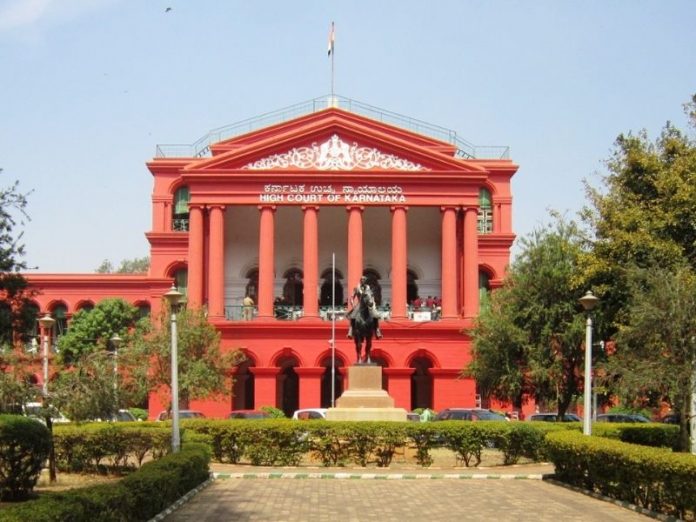










 Allow notifications





