Download Now
Home Blog Page 1447

Railway Claims Tribunal – Claims and Refunds

11
Image Source - http://odishatv.in/education/breaking-railway-to-fill-26000-apprentice-posts-next-fiscal-heres-the-detail-276463

In this article, Aditi Srivastava of Law School, BHU (Banaras Hindu University) discusses the Railway Claims Tribunal.

Railway Claims Tribunal

The administration of the Railways is not limited only to the running of the Railway, it is something beyond that. The functioning of the Railways also includes issues like the loss or damage to the goods of passengers travelling in the trains, non-delivery of the goods, thefts, accidents causing injuries and death of the passengers as well as of the common people and many more issues. Substantive liability of the Railway Administration for these issues is laid down in the Railway Act, 1989.

Since it is difficult to get fast adjudication in the normal courts since there are a large number of cases of all the areas running in these courts and all because the process to get justice in these courts is a bit complex. And, so the Railway Claims Tribunal was established under the Railway Claims Tribunal Act, 1987 which came into force from 8th November 1989 to provide the speedy justice to the rail users and passengers by way of expeditious payment of compensation to the victims of rail accidents, to give compensation to the people whose goods are lost or damaged while with railways. To provide better access to the people across the country, various benches of the tribunal are established in the country.

Chairman

The current Chairman of the Railway Claims Tribunal, Principal Bench (Delhi Bench) is Hon’ble Mr. Justice K Kannan.

The Chairman holds the office for a term of five years from the date on which he enters upon his office or until he attains, the age of sixty-five years.

Powers of the Chairman

  • Financial and administrative powers of Chairman

The chairman by the virtue of Section 11 of the Railway Claims Tribunal Act, 1987 has power to exercise such financial and administrative powers over the benches as may be vested in him under the Railways Claims Tribunal (Financial And Administrative Powers) Rules, 1989.

Rule 4 of the Railways Claim Tribunal (Financial And Administrative Powers) Rules, 1989 says that the Chairman shall have the powers in respect of matters specified in the schedule as are conferred on a General Manager of a railway administration.

  • Additional powers of Chairman

The Chairman as per clause 3 of section 4 of the Railway Claims Tribunal, 1987 has the power to transfer a Vice-Chairman or other member from one bench to another Bench.

As per clause 3 of section 4 of the Railways Claims Tribunal, 1987, the Chairman has a power to authorise the Vice-chairman or the other Judicial member or the technical member appointed to one bench to discharge also the functions of the Vice-Chairman or, as the case may be, the Judicial or the technical member of another bench.

Aim and Mission

The Railway Claims Tribunal is set up for meeting the goals discussed in the following paragraphs.

  • To provide for speedy and expeditious adjudication to the people
  • To provide a simple procedure which is consists of less formality by the medium of a specialized tribunal
  • To provide better access to justice by establishing benches in all throughout the country
  • To reduce the burden of the Courts of law as the railway cases go to a specialized tribunal now.

Jurisdiction

Jurisdiction of the Tribunal

The Railway Claims Tribunal exercises all such jurisdiction, powers, and authority as were exercisable immediately by any Civil Court or a Claims Commissioner appointed under the provisions of the Railways Act which are related to:

  1. The responsibility of the railway administrations as carriers under Chapter VII of the Railways Act in respect of claims related to:
  • Compensation for loss, destruction, damages, deterioration or non-delivery of animals or goods entrusted to a railway administration for carriage by railway,
  • Compensation payable under Sec. 124 & 124A of the Railways Act of the rules made thereunder; and
  1. Claims for refund of fares or part thereof or for the refund of any freight paid in respect of animals or goods entrusted to a railway administration to be carried by railway.

Territorial Jurisdiction of the Benches

The territorial jurisdiction of the various benches of the Railway Claims Tribunal are provided in the table below:

Sr. No. The Bench of the Railway Claims Tribunal Territorial Jurisdiction of the Bench
1. Ahmedabad Gujarat, Union Territory of Diu.
2. Bangalore Karnataka
3. Bhopal Madhya Pradesh and Chattisgarh
4. Bhubaneswar Orissa

5. Mumbai i) Districts of Mumbai, Thane, Raigad, Pune, Nasik, Ahmednagar, Satara, Ratnagiri, Sindhydurg, Kolhapur, Sangli, Solapur, Dhule, Aurangabad, Beed of Maharashtra

ii) Union Territories of Dadra and Nagar Haveli.

iii) Goa                        

6. Nagpur All District of Maharashtra except those included in item (i) of column (3) against serial number 5.

7. Chandigarh Punjab, Haryana, Himachal Pradesh, Jammu and Kashmir and Union territory of Chandigarh.

8. Kolkata(2) West Bengal, Union Territory of Andaman and Nicobar Islands.

9. Guwahati Assam, Sikkim, Mizoram, Arunachal Pradesh, Tripura, Manipur, Meghalaya, Nagaland.

10. Ernakulam Kerala, Union Territory of Lakshadweep.

11. Gorakhpur Districts of Gorakhpur, Deoria, Ballia, Ghazipur, Azamgarh, Mau, Basti, Siddharthnagar, Mirzapur, Robertsgang, Jaunpur, Faizabad, Gonda, Bahraich, Varansi, Maharaj Ganj, Kushinagar, Shravasti, Sant Kabir Nagar, Chandauli, Sant Ravi Das Nagar, Balrampur and Ambedkar Nagar of Uttar Pradesh.

12. Ghaziabad Districts of Agra, Bulandshahar, Moradabad, Bijnore, Mathura, Ghaziabad, Merrut, Aligarh, and Saharanpur, Jyotiba Phule Naagr(Amraha), Gautam Budh Nagar(Noida), Maha Maya Nagar(Hathras), Muzaffar Nagar, Rampur, Pilibhit and Mainpuri of the State of Uttar Pradesh, District of Hardwar & Dehradun of the State of Uttaranchal

12A. Lucknow All Districts of Uttar Pradesh and Uttaranchal except those included in Column (3) against serial number 11 and 12

13. Jaipur Rajasthan

14. New Delhi (2) Union Territory of Delhi

15. Patna Bihar

15 A. Ranchi Jharkhand

16. Chennai Tamil Nadu and Union Territory of Pondicherry

17. Secunderabad Andhra Pradesh

Benches across the Nation

The RCT (Railway Claims Tribunal) to provide better access to justice for the people has its benches throughout the nation. There are basically 21 benches of the RCT (including the principal bench at Delhi) at 18 major cities. The map provided will give you a clear idea of where the various branches are located.

Procedure Followed by the Railway Claims Tribunal

Section 18 of the Railway Claims Tribunal Act, 1987 talks about procedure and powers of Claims Tribunal.

  • The Claims Tribunal shall not be bound by the procedure which is laid down by the Code of Civil Procedure, 1908 (5 of 1908).
  • But, it shall be guided by the principles of natural justice and subject to other provisions of the Act and of any rules.
  • The Claim Tribunal is having the power to regulate its own procedure including the fixing of places and times of its inquiry.

Power of the Railway Claims Tribunal

The Section 18 of the Railway Claims Tribunal Act, 1987 mentions that for the purpose of discharging its functions under this Act, it shall have the same powers as are vested in a civil court under the Code of Civil Procedure, 1908, while trying a suit.

Compensation

The Railway Claims Tribunal basically provides for quicker relief and early payments of compensation in the following cases.

  1. Death and injury in case of railway accident & untoward, in this case, the claimant has to file the claim directly before the Railway Claims Tribunal.
  2. For loss, destruction, damage, deterioration, non-delivery of animal/goods booked by railway or for the refund of fare or freight in case the claimant is not satisfied with the relief that was provided by the railway administration.

Appeals

If a person is dissatisfied with the order of the Railway Claims Tribunal, he may file an appeal. The process of appeal is given under Section 23 of the Railway Claims Tribunal Act,1987.

  • Section 23 mentions that subject to sub-section (2) and anything contained in the Code of Civil Procedure, 1908 (5 of 1908) or in any other law, an appeal of every order of the Claims Tribunal ( not being an interlocutory order ), shall lie to the High Court having jurisdiction over the place where the bench is located.
  • Also, it is mentioned in Clause 2, of the same section, that no appeal shall lie from an order passed by the Claims Tribunal with the consent of the parties.
  • Clause 3, of the section, says that every appeal shall be preferred within the period of ninety days from the date of the order appealed against.

Do you have to hire a Lawyer or you can present your own case before the Railway Claims Tribunal

As per section 19 of the Railway Claims Tribunal Act, 1987 a person who makes an application to the Claims Tribunal has an option either to appear in person or take the assistance of a legal practitioner of his choice to present his case before the Claim Tribunal.

Also, the Railway administration may authorize one or more legal practitioners or any of its officers to act as presenting officers and each of this so authorized person may present its case with respect to any application before the Claims Tribunal.

Who sits as a judge in the Tribunal?

Section 4 of the Railway Claims Tribunal Act, 1987 says that the Claims Tribunal shall consist of a Chairman, four Vice-Chairman and such number of Judicial Members and Technical Members as the Central Government may deem fit.

It further says that a Bench shall consist of one Judicial Member and one Technical member.

Qualification

Section 5 of the Railway Claims Tribunal Act, 1987 talks about the various qualifications for appointment of Chairman, Vice-Chairman or other members.

Clause 1 of the Section, says that a person shall not be qualified for appointment as the Chairman unless he-

  1. Is, or has been, a Judge of a High Court, or
  2. Has, for at least two years, held the office of a Vice-Chairman.

The Chairman, Vice-Chairman and every other Member shall be appointed by the President only after consultation with the Chief Justice of India.

Tenure

The tenure of office (as in Section 7 the Railway Claims Tribunal Act, 1987) of the Chairman, Vice-Chairman or other Member is for a term of five years from the date on which he enters upon his office or until he attains-

  • Age of sixty-five years (in the case of the Chairman) and
  • Age of sixty-two years, (in the case of the Vice-Chairman or any other Member), whichever is earlier.

Resignation

Clause 1 of Section 8 of the Railway Claims Tribunal Act, 1987 talks about the process of the Resignation of the Chairman, Vice-Chairman and other Member.

It says that the Chairman, Vice-chairman or other members may, by giving notice in writing under his hand addressed to the President, resign his office.

Also, it is mentioned that unless the person resigning, is permitted by the President to relinquish his office sooner, he is bound to continue to hold his office till 3 months from the date of receipt of such notice or until a person appointed to succeed him enters upon his office or until the expiry of his office term (whichever is the earlier).

Removal

As per Clause 2 of Section 8 of the Railway Claims Tribunal Act, 1987, the Chairman, Vice-Chairman or any other member shall be removed by the President only on the ground of misbehaviour or incapacity only after enquiry is made by a Judge of the Supreme Court in which such Chairman, Vice-Chairman or other member had been informed of the charges against him and he was given a reasonable opportunity of being heard in respect of those charges.

Acts and Rules governing the Railway Claims Tribunal

  • The Railway Claims Tribunal Act, 1987

This Act provides for the establishment of a Railway Claims Tribunal to inquire into and determine claims against a railway administration for any loss, destruction, damage, deterioration or non-delivery of animals or goods entrusted to it to be carried by railway or for the refund of fares or freight or for compensation for death or injury to passengers occurring as a result of railway accidents or untoward incidents and for matters connected therewith or incidental thereto. Act discusses Jurisdiction, powers, and authority of Claims Tribunal and appeals and procedures related to appeals. Also, the Act discusses various miscellaneous provisions.

This Act also provides for the following:

  1. the jurisdiction, powers, and authority which may be exercised by the Claims Tribunal;
  2. the procedure (including provisions as to limitation) to be followed by the Claims Tribunal;
  3. the exclusion of jurisdiction of all Courts exercising ordinary civil jurisdiction relating to specified claims for compensation and refund against the railway administration;
  4. the transfer to the Claims Tribunal of any suit or other proceeding, other than an appeal pending before any Court or other authority immediately before the establishment of such Claims Tribunal as would have been within the jurisdiction of such Claims Tribunal if the cause of action on which such suits or proceedings are based has arisen after such establishment.

This Act is available here.

  • The Railway Claims Tribunal (Procedure) Rules, 1989

These are the rules made by the Central Government dealing with the procedure for filing applications, application fees, documents to accompany the application, and other rules.

See Rules here.

  • The Railway Accidents And Untoward Incidents (Compensation) Rules, 1990

These are the rules made by the Central Government dealing with the claim of compensation, limit of compensation given in the case of the Railway Accidents and Untoward Incidents.

See Rules here.

Important Judgments

Few important judgments will give a clear idea of how the Railway Claims Tribunal functions and how and where the appeals from tribunal are dealt with.

  • Abhinandan vs Union of India

In this case of the year 2017, the Delhi High Court was hearing an appeal filed under Section 23 of the Railways Claim Tribunal. In this appeal, an order passed by the Railway Claims Tribunal in the year 2015, was challenged, in which his claim was dismissed. The Delhi High Court refused to grant compensation to this man, who had lost both his legs in an accident while he was boarding a train, observing that he had been intoxicated during the occurrence of the accident.

The reliance of the claim by the appellant was made on the basis of Section 124A of the Act, which says a that the injured person or the legal heirs of a deceased passenger, in case of an accident is entitled to compensation. But, the Proviso to the provision, disqualifies a passenger if he suffers from an injury on account of the state of intoxication.

It was held in this case “The object of the different sub-sections mentioned in the Proviso of Section 124A of the Railways Act is to provide for situations where the accident is caused on account of self-inflicted injury, and in which circumstances on account of the injury effectively being self-inflicted, the accident is not covered under the term “untoward incident” as provided under the Railways Act.”

  • Shyam Narayan and others vs Union of India

In the present case, the Delhi High Court was hearing an appeal challenging order passed in May 2016 by the Railway Claims Tribunal, which was filed under Section 23 of the Railway Claims Tribunal Act. In that order, the tribunal had denied compensation for the death of a passenger as according to the tribunal the deceased had died due to criminal negligence.

Relying on the first proviso to Section 124-A of the Railways Act, which says that compensation will be denied, in case death takes place on the account of suicide or attempted suicide, self inflicted injury, bonafide passenger’s own criminal act or an act committed by the deceased in the state of intoxication or insanity, the court said that as the deceased had tried to board a speeding train, the act of the deceased was one of the criminal negligence, and upheld the order given by the Tribunal.

The court held that “negligence will not disentitle grant of compensation under the Railways Act, however, once the negligence becomes a criminal negligence and self-inflicted injury then compensation cannot be granted”.

Website of the Railway Claims Tribunal

The website of the Railway Claims Tribunal provides users an access to cause list, case status, judgments and daily orders of the Tribunal. It also provides information to the users regarding Acts, RCT (procedure) rules, the Railway Act, provisions and notifications about various circulars. The claim of loss and damage are also available in downloadable forms. Also, details about the Tribunal, its aims, objectives, jurisdiction, benches, etc. are given on the website.

See Website here.

RCT Member’s Fraud Case

Recently, in January, this year a shocking news of fraudulent disbursement of compensation came up about a member of Railway Claims Tribunal (RCT), R K Mittal who had alleged irregularities in disbursement of around Rs 50 crore between 2015 and 2017 and a prob is going against him, according to Indian Express report. Principal bench’s chairman, Justice (retired) K Kannan had sent a letter to the Railway Ministry, about findings of the internal probe showing that Mittal was allegedly “complicit” with a group of five lawyers in Patna. These lawyers represented 91 percent of all the applicants during May 2015 to August 2017 to commit ‘deliberate fraud’ on the Railways. One of the key findings was that Mittal allegedly issued 950 “warrants of recovery” directly to the Reserve Bank of India, Patna, ordering it to deduct the money claimed from the Railways’ account.

Later, in the Feb, this year the Railway handed over a case against a member of the Railway Claims Tribunal (RCT) regarding the fraudulent disbursement of compensation to the Chief Justice of India (CJI).

Conclusion

With the establishment of the Railway Claims Tribunal in the country definitely, the access to justice is available to all the people. The justice is now speedy and easy to get. The Railway Claim Tribunal with its benches across the nation has also reduced the burden on courts in the country.

Download Now

Judicial Reforms Brought by Lord Cornwallis

0

In this article, Shauree of MNLU discusses Judicial Reforms of Cornwallis.

Introduction

Lord Cornwallis succeeded Warren Hastings as the Governor General of India. He put forward certain conditions before The Crown before accepting the post of Governor-General. They were:

  • The office of Governor General and the commander-in-chief would be united under one person i.e. the Governor General.
  • The Governor General-in-council will have veto over the council on all decisions made concerning administration and military.
  • His aims as Governor General were to:
  • Uproot corruption from the present judiciary and administration system.
  • Tackle the problem of land revenue.
  • Develop a proper system of administration of justice.

Lord Cornwallis was Governor General from the year 1786 to 1793 and his most noted work was in the field of criminal judicature. He introduced changes in the judicial system in three years – 1787, 1790 and 1793. These were known as Judicial Plan of 1787, 1790 and 1793 respectively.

Judicial Plan of 1787

  1. Reorganisation of districts

The number of districts in Calcutta were reduced from 36 to 23.

  1. Appointment of collector

A collector was appointed in each district. He was an Englishman. Collector was assigned with two tasks – to collect revenue and to decide cases arising out of revenue matter.

He also presided over the mofussil diwani adalat (district level civil court) as a judge. In mofussil diwani adalat, he would decide civil cases and cases of zamindars. Appeals from the mofussil diwani adalat lay to the Sadr Diwani Adalat when the matters exceeded Rs.1000/-. The Sadr Diwani Adalat was presided was the Governor General.

He also presided over the Magistrate’s Court as a Magistrate, where he was empowered to try and punish cases of petty crimes and offence upto Rs. 200. Offences having value of more than Rs.200 would be sent to the Sadr Nizamat Adalat by the Magistrate.

  1. Establishment of Mal Adalats
  • Mal Adalats were revenue courts in each district which exclusively dealt with revenue matters.
  • This court was presided by the Collector who decided cases related to revenue as he was an in charge of revenue matters.
  • Appeal from the Mal adalat lay to the Board of Revenue in Calcutta and then to the Governor General-in-council.
  1. Establishment of Registrar Courts

An assistant officer of the collector was appointed who was known as the Registrar. He was appointed in each district who presided over the Registrar’s court which decided civil cases upto the value of Rs.200/-

But the decree passed by the Registrar was not final until it was signed by the Mofussil Diwani Adalat i.e. the Collector.

Judicial Plan of 1790

  1. Reorganisation districts into divisions

The districts were divided into four divisions – Murshidabad, Calcutta, Dacca, and Patna.

  1. Moffusil Faujdari Courts were abolished

Mofussil Faujdari Courts were the district level criminal courts. They were abolished and replaced with Court of Circuits.

  1. Establishment of Court of Circuits

A court of Circuit was Established at each of the four divisions. It was presided by 2 servants of the company and they were assisted by Muslim law officers – Qazi and muftis. It was not a stationary court. Instead it was a moving court which moved from district to district in their respective division to try criminal cases. They visited each district of their division twice annually.  

  1. Increase in Salaries

The salaries of all Judges of all court were fixed and increased to control corruption that was prevalent in the current system of justice.

  1. Collector to make a report of the working of courts

Collector to make a report of the working of courts he was incharge of i.e. the Magistrate, Mal Adalat and Mofussil Diwani Adalat; and send it to the British Parliament of England bi-annually and annually.

  1. The Post of Nawab was abolished

The post of Nawab, who used to preside over Sadr Nizamat Adalat was abolished as he did not carry out criminal justice properly and it was now presided by the Governor General-in-council instead.

  1. Court Fees

Court fees was introduced to reduce the burden on courts. Court fees was only charged for pleaders of the court and for calling the witnesses of the case.

  1. Questionnaire sent to the Magistrates

A questionnaire was sent to the magistrates asking for their opinions on the prevailing criminal judicial system.

Defects of the Judicial Plan of 1790

The magistrates’ opinions in the questionnaire sent to them revealed the evils of the criminal justice system. This made Cornwallis realize that certain vital changes were required in the system of criminal justice.

Two important sources of these evils were-(i) defects in the constitution of the criminal courts (ii) the gross defects in the Muslim law of Crimes.

Cornwallis resolved to abolish the authority of Nawab over the criminal judicature and to transfer the administration of criminal justice from Muslim Law officers to the Company’s legal servants.

Court of Circuits were moving courts which were overburdened with cases, which caused them delay in moving from one district to another and could not visit some districts twice annually due to the delay.

There was a lot of collective power of administration and judiciary vested with the collector which made him abuse his power.

Judicial Plan of 1793

  1. Separation of Executive and the Judiciary

The powers vested in the collector were administrative and judicial as he was also in charge of collection of revenue and for deciding cases arising out of revenue matter. Now, the collector was only responsible for the collection of revenue.

  1. Mal Adalats were abolished

Revenue courts which exclusively tried cases arising out of revenue matters and presided by the Collector as Judge, was now abolished.

All powers and pending suits of the Revenue courts were now transferred to Mofussil Diwani Adalats and thus not tried by the collector.

  1. Executive subjected judicial control

The Governor General and his council were now subject to judicial control. Any wrong acts committed by them while carrying out their functions and outside of it could be heard or tried and punished by the Diwani Adalats. Suits against the Government by private individuals could be brought forward and were tried by the Diwani Courts.

  1. Indian natives had to sign a bond with the British Subjects agreeing to go to court

British could recover claims from Indian natives and vice versa by signing a bond with each other agreeing to go to court.

  1. Establishment of Provincial Courts of Appeal at the four divisions

Earlier the appeal from the Mofussil Diwani Adalats lay to the Sadr Diwani Adalat situated at Calcutta. But this process for time consuming and expensive so provincial courts of appeal were established at each division i.e. Patna, Calcutta Murshidabad and Dacca. Appeals from the Mofussil Adalat now lay to the provincial court of appeal which were to be heard within three months of filing them. These courts were presided by three covenant English servants of the company. Quorum was of two servants. It was an open court and could try revenue, civil and criminal cases. They could also try cases referred to them by the Sadr Diwani Adalats.  

Cases valued more than Rs. 5000 were referred to the King-in-council.

  1. Native Officers given important posts

Native officers were appointed by the Governor General-in-council.Native officers were made Munsiffs of the Munsiff courts at district level. This court could try cases upto Rs.50. Zamindars, Tehsildars, etc appointed as Munsiffs.

Personal Laws of Hindus and Muslims were applicable in cases relating to marriage, inheritance, caste, religious usages and institutions. These personal laws were interpreted by the native officers who were appointed to assist the court to expound the personal law

7.Sadr Diwani Adalat

It was highest court of appeal in India. It was presided over by the Governor General and the Council who were the Judges of the Sadr Diwani Adalat. Their function was to supervise the lower courts and to hear appeals from the provincial courts of appeal when the sum of the matter of the case was more than Rs.1000.

Further an appeal from the Sadr Diwani Adalat lay to the King-in-council, when the sum of the matter of the case was more than Rs.5000.

  1. Reforms in criminal judicature

The court of circuit was merged with the provincial court of appeal. The power of the collector as a magistrate was taken away and was vested in the judges of the diwani adalats instead.

  1. Uniform pattern of Regulations

Until now, any new regulation that was issued did not follow an uniform pattern. This was changed by making it a rule that any new regulation that would be made would have a title to explain the nature of the subject matter and contain a preamble which would state the purpose for enacting the regulation.

  1. Reforms in Muslim Personal Law

The Sadr Nizamat Adalat was directed to to follow the muslim personal law to try and punish criminal cases, but with some modifications. The relatives of murder victims did not have a provision to pardon the murderer. The cruel and inhuman punishments such as cutting off limbs of the offender were replaced with punishment of imprisonment and hard labour for 14 years.

  1. Court Fees abolished

Court fees which was imposed in the judicial plan of 1787 was abolished. The court fee was abolished so that the people could easily reach to the court for securing justice.

  1. Legal Profession recognised for the first time in India

The legal profession was recognised in India for the first time. The pleaders of the case had to have prior legal knowledge to be eligible to be a pleader of the court.

Defects of the judicial plan of 1790

The provisions of multiple levels of appeals made the judicial machinery complicated and slow moving. Thus, large number of cases remained pending in the courts for long period.

The Indians were totally excluded from the judiciary except at very low level of munsif. Cornwallis was of a belief that the Indians were unworthy of holding any position of responsibility because of their character. This distrust shown towards the Indians generated the dissatisfaction among the native people as well as made the system less efficient as the English servants did not know and understand the customs, usages, etc. of the people; therefore Europeans could not understand nor provide solutions the problems of the natives.  

Cornwallis did everything on procedural side but he could not reform the substantive part of law mainly the criminal law which was based on Muslim law and had many defects.

Conclusion

Through his various judicial plans, Cornwallis was successful to uproot the evil of corruption. Though Cornwallis was a just administrator, he was seen as a racial discriminatory as he reserved all the high posts of judicature for the Europeans. Even though Cornwallis almost perfected the administration of civil judicature, the problem of criminal law was still prevalent as the criminal law was based on Muslim personal law which already had prevalent defects in it.

Download Now

Laws Punishing Cyber Stalking and Online Harassment

4

In this article, Chandrima Khare of Rajiv Gandhi National University of Law, Punjab discusses laws Punishing Cyber Stalking and Online Harassment.

Introduction

India has not only bagged one of the top ranks for having the highest number of internet users, but we also ace the statistics of global sexual harassment. The harassment faced by women online mirrors the image of harassment faced by them in the physical world. A survey conducted by Feminism in India underscored that 50% of women in major cities of India have faced online abuse. What is more striking is that instances of cyberstalking against men are on a surge. Experts have opined that the ratio is 50:50 vis-a-vis the instances of cyberstalking faced by men and women.

Cyber Stalking and Online Harassment

How British Crime Survey defines stalking

  • The British Crime Survey defines stalking as two or more incidents causing distress, fear, or alarm, of obscene or threatening unwanted letters or phone calls, waiting or loitering around home or workplace, or following or watching, or interfering with, or damaging personal property carried out by any person.
  • Cyberstalking is a criminal practice whereby a person uses the internet, cell phone, and/or any other electronic communication device to stalk another person.
  • The perpetrators are involved in the destruction of data or equipments, solicitation of minors for sexual purposes, threats, or any other form of offensive behaviour committed repeatedly.
  • The offenders make use of email, social media, chat rooms, instant messaging or any other online media to harass the victim.

How Forbes defines online harassment

  • Forbes defines online harassment or cyber harassment as repeated online expression amounting to a “course of conduct” targeted at a particular person that causes the targeted individual substantial emotional distress and/or the fear of bodily harm.

Online Harassment under the Sexual Harassment of Women at Workplace (Prevention, Prohibition, and Redressal) Act 2013

Online harassment also encompasses sexual harassment which is defined under section 2(n) of the Sexual Harassment of Women at Workplace (Prevention, Prohibition, and Redressal) Act 2013 as unwelcome

  • physical contact and advances; or
  • a demand or request for sexual favours; or
  • making sexually coloured remarks; or
  • showing pornography; or
  • any other unwelcome physical, verbal or non-verbal conduct of sexual nature;

To know more about the virtual reality of cyber stalking in India in brief, please refer to the video below:

What can constitute online harassment?

  • Public actions or threats
  • False accusations of defamatory nature
  • Hacking or vandalising the sites of the victim
  • Sexual remarks
  • Publish materials so as to defame a person
  • Personally targeting the victims of crime
  • Ridicule or humiliate a person in order to gang up against him

To know more about the scope of what to do when someone is stalking you in brief, please refer to the video below:

Legal Provisions on Cyberstalking and Online Harassment

Punishment for cyberstalking and online harassment under the Indian Penal Code

  • Section 354 D of the Indian Penal Code which was added by the Criminal Law (Amendment) Act 2013 specifically proscribes the act of stalking as Whoever follows a person and contacts, or attempts to contact such person to foster personal interaction repeatedly, despite a clear indication of disinterest by such person, or whoever, monitors the use by a person of the Internet, email or any other form of electronic communication, or watches or spies on a person in a manner that results in a fear of violence or serious alarm or distress in the mind of such person, or interferes with the mental peace of such person, commits the offence of stalking.
  • The victim can also additionally file a case of defamation (Section 499, IPC) against the offender. The section has bailed out those acts of stalking which are performed for the purpose of preventing and detecting crime by a person who has been entrusted with such responsibility by the state. Also, instances where pursuing such conduct was reasonable or where the person was authorised under any act cannot allude to the offence of stalking.
  • Section 354A of IPC punishes offence of sexual harassment with 3 years of imprisonment and/or fine.
  • Section 354C criminalises the offence of Voyeurism. It is defined as the act of capturing the image of a woman engaging in a private act, and/or disseminating said image, without her consent. The section prescribes 3 years of imprisonment for the first conviction and 7 years of imprisonment on second conviction along with fine.
  • Section 503 punishes criminal intimidation as threats made to any person with injury to her reputation, either in order to cause alarm to her, or to make her change her course of action regarding anything she would otherwise do/not do. The offences under S. 499 and S. 503 are punishable with imprisonment which may extend to two years, and/or fine.
  • Section 509 of IPC comes to your rescue if someone is constantly bugging you with derogatory verbal abuse because of your gender. The section provides that any person who utters any word or makes any sound or gesture, intending that such word, sound or gesture be heard or seen by a woman and insult her modesty, shall be punished with one-year imprisonment and/or fine.
  • Section 507 punishes criminal intimidation by an anonymous communication with a term which may extend to two years of imprisonment. Vengeful posting of images or videos of rape victims is punishable with imprisonment which may extend to two years and fine under section 228a of IPC.

The Information Technology Act, 2008

The IT Act of 2008 does not directly deal with the offence of stalking.

Section 72 of the Act is used to deal with the offence of stalking which reads as follows: Any person who, in pursuant of any of the powers conferred under this Act, rules or regulations made thereunder, has

  • secured access to any electronic record, book, register, correspondence, information, document or other material
  • without the consent of the person concerned
  • discloses such electronic record, book, register, correspondence, information, document or other material to any other person shall be punished with imprisonment for a term which may extend to two years, or with fine which may extend to one lakh rupees, or with both.

Section 67 prohibits and punishes with imprisonment extending up to three years and fine for the first conviction and to five years and fine upon second conviction, the publication, transmission and causing of transmission of obscene content.

Section 67A has culled out a special category called material containing a ‘sexually explicit act’. The publication, transmission or causing of transmission of such material is punishable with imprisonment extending up to five years and fine for first conviction and to seven years and fine upon second conviction.

Section 66A of IT Act, 2008 provides:

Any person who sends, by means of a computer resource or a communication device

(a) any information that is grossly offensive or has menacing character; or

(b) any information which he knows to be false, but for the purpose of causing annoyance, inconvenience, danger, obstruction, insult, injury, criminal intimidation, enmity, hatred or ill will, persistently by making use of such computer resource or a communication device,

(c) any electronic mail or electronic mail message for the purpose of causing annoyance or inconvenience or to deceive or to mislead the addressee or recipient about the origin of such messages, shall be punishable with imprisonment for a term which may extend to three years and with fine.

This section was struck down in Shreya Singhal v. Union of India in 2015 as it

arbitrarily, excessively and disproportionately invaded the right of free speech and was so wide that any opinion on any subject would come under its ambit.

How to lodge a complaint

The Information Technology Act provides that notwithstanding anything contained in the Code of Criminal Procedure, 1973, any police officer, not below the rank of a Deputy Superintendent of Police, or any other officer of the Central Government or a State Government authorised by the Central Government in this behalf may enter any public place and search and arrest without warrant any person found therein who is reasonably suspected or having committed or of committing or of being about to commit any offence under this Act. (Section 80)

Cybercrimes do not have a jurisdiction as these crimes committed without any barrier of boundaries. So, you can report a cyber crime to the cybercrime units of any city irrespective of the place where it was committed.

  • Cyber Cells: Cyber Cells have been established to provide redressal to the victims of cybercrime. These cells function as a part of the criminal investigation department and specifically deal with internet related criminal activity. If you do not a cyber cell at your place of residence, then you can file an F.I.R in a local police station. You can also approach the commissioner or the judicial magistrate of your city, if by any reason you are unable to file an F.I.R. Any police station is bound to register an F.I.R., irrespective of its jurisdiction.
  • Online Grievance Redressal: Police is the most notorious law enforcement agency in India when it comes to dealing with women victims. Even when women have easy access to a police station, they hesitate in reporting the incident to them, under the fear of being harassed and being made to suffer additional ordeal. As a result, such crimes committed against women remain swept under the rug and women continue to bear the brunt of harassment. So, women who do not want to come out in the open can file a complaint against stalking at the National Commission for Women. The Commission takes up the matter with the police and expedites the investigation. In cases of serious offences, the commission can set up an inquiry committee to probe into the matter and conduct spot inquiry, collect evidence, and examine witnesses, summon accused and police records, etc to further the investigation.
  • Report to the websites: Most of the social media websites where users make their accounts provide a reporting mechanism. These websites are obliged under the IT (Intermediary Guidelines) Rules, 2011 to act within 36 hours to disable information related to offending content. The intermediary shall have to preserve such information and associated records for at least ninety days for investigation purposes. The affected person can bring to the knowledge of the intermediary, any offending content which is hosted, stored, or published on his computer system, in writing or through email signed with electronic signature.
  • Report to CERT: The Information Technology Amendment Act 2008 has designated the Indian Computer Emergency Response Team (CERT-IN) as the national nodal agency for tackling the issues occurring in tow with computer security threats. They issue guidelines on the procedure, prevention, reporting, and response to cyber incidents, among other functions.

What can be reported to CERT?

Both the users and System Administrators can approach CERT-IN to report about computer security incidents and vulnerabilities. CERT-IN is at your disposal to provide technical assistance if the users experience any the following violations:

  • Email related issues viz. mail bombing, spamming etc.
  • Processing and storing data by unauthorised use of a system
  • Making changes into the software characteristics, system hardware or firmware without obtaining the consent of the owner or without the knowledge or instruction of the owner
  • Attempt to obtain unauthorised access to a system or data contained therein. Attempt includes both successful and failed attempt
  • Disruption or denial of service

How to report incidents to CERT-IN

You can report an incident to CERT by sending them an electronic mail, calling them, or filling up a form available on their website, or by fax.

  • Through Website: You can also report the incident on the website of CERT-IN by filling up an incident-reporting form. Try to fill all the details as it will help CERT to understand the gravity and nature of the incident and

        and assist in recovery as desired by you.

  • Through Electronic Mail: The CERT-IN email address for reporting incidents is [email protected]‖. For all other inquiries and correspondence, write to ―info @cert-in.org.in‖.
  • Through Telephone and Fax: Contact CERT-In on +91-11-24368572. Incident report can be faxed to CERT-In at +91-11-24368546.
  • Postal Address: Indian Computer Emergency Response Team (CERT-IN), Ministry of Electronics and Information Technology, Government of India, Electronics Niketan, 6, CGO Complex, Lodhi Road, New Delhi 110003, India.

DOs and DON’Ts

  • As cyber crimes are committed in a virtual world, it becomes difficult to collect evidence against the offender. So, do not immediately delete the photos, mails, or any other information sent by the stalker as this can help the investigators to trace the trail of his online activities and track him.
  • Cyberstalkers can easily hide evidence of their online activity, so preserving his evidence via printouts or screenshots can come very handy.
  • Report the incident to the website in question.
  • File a First Information Report to enable commencement of the investigation of the cyber crime.

Important laws relating to Cyber Stalking and Online Harassment one must know

Sl. No.                              Offences     Sections
1. Printing etc. of grossly indecent or scurrilous matter or matter intended for  blackmail Sec. 292 A IPC
2. Making sexually coloured remarks, guilty of the offence of sexual harassment. Sec. 354 A IPC
3. Offence of Stalking Sec. 354 D IPC
4. Sending defamatory messages by email Sec. 499 IPC
5. Criminal intimidation by an anonymous communication Sec. 507 IPC
6. Word, gesture or act intended to insult the modesty of a woman Sec. 509 IPC
7. Punishment for violation of privacy Sec. 66E IT Act, 2008
8. Publishing or transmitting obscene material in electronic form Sec. 67 IT Act, 2008
9. Publishing or transmitting of material containing sexually explicit act, etc. in electronic form Sec. 67 A IT Act, 2008
This is not a comprehensive list.

The International Journal of Science, Technology, and Management (issued on 4th April 2017) gave some useful links to report objectionable content to Social Media intermediaries like Facebook, Yahoo etc.

Facebook

https://www.facebook.com/policies/?ref=pf ii. https://www.facebook.com/about/privacy Ms. Ankhi Das, Facebook India, Public Policy Director Building No. 14, Raheja Mindspace, HiTech City, Main Road, Vittal Rao Nagar, Hyderabad, Andhra Pradesh, India E-mail id: [email protected],[email protected] and [email protected]

Yahoo India

Mr Robin Fernandes, Sr.Executive Compliance Building 12, 6th Floor, Solitaire Corporate Park, Guru Hargovindji Marg, Andheri (E), Mumbai 400 093 Tel: + 91 22 3308 9600 ,+ 912233089652 Mobile: +91 8452049536 Fax: +91 22 3308 9700 E-mail id: [email protected]

YouTube and Google India Pvt. Ltd. https://www.youtube.com/t/contact_us https://support.google.com/youtube/topic/2803240 ?hl=en&rd=1 Ms. Gitanjli Duggal, Legal Director, DLF Cyber City, Tower 8C. 9th floor, Gurgaon – 122002. E-mail id:[email protected]; [email protected]

Apple India Pvt Ltd.

19th floor, Concorde Tower C, UB City, No. 24, Vittal Mallya Road, Bangalore 0560001 India E-mail id: [email protected], [email protected]

Microsoft Corporation (I) Pvt. Ltd.

Ms. Madhu Khatri Associate General Counsel, Microsoft Corporation India Pvt. Ltd. 10th Floor, Tower B & C,DLF Building No.5 (Epitome), Cyber City, DLF Phase III, Gurgaon, 122002 Fax: 91-124-4158888 Dial toll-free: 1800 102 1100 or 1800 111 100 E-mail id: [email protected]

Twitter https://support.twitter.com/articles/80586 E-mail id: [email protected] ; [email protected]


Download Now

Law of Torts in India

1
law of torts

In this article, Krati Bhardwaj of New Law College, Bharti Vidyapeeth, discusses Law of Torts in India. 

Introduction

One moment you are walking on the road and the other you slip into the pit left open by the Municipal Corporation. Without having a glance around, you stand up quickly to cover up the embarrassment you have faced. But what can you do? This happens every now and then especially in a country like India. Is there anyone who could be blamed for this? I have sustained injuries so I should be more careful from the next time. Isn’t it? No, there was a responsibility of Municipality in this situation. They were negligent in fulfilling their duty. This is what law of torts talks about and much more.

What is Tort?

  • The word tort has been derived from a Latin word “tortum” which means twisted or crooked. According to Salmond, “Tort is a civil wrong for which the remedy is a common law action for unliquidated damages, and which is not exclusively the breach of contract, or, the breach of trust, or, other merely equitable obligation.”
  • It is different from breach of contract and trust. Tort is when the act of one party causes some harm to the other party due to negligence, carelessness on the part of another party. The one who sues is known as ‘plaintiff’ and the one who is sued is known as ‘defendant’.
  • The person who causes such harm shall be made liable to pay compensation to the injured party (plaintiff), this compensation can be in the form of money. This money received in the form of compensation is known as ‘damages’. In order to claim damages, there must be some breach of duty towards plaintiff which resulted in such injury.
  • Even if the harm which is caused was not intentional but due to carelessness or negligence, then also the other party can be sued. Tort allows people to hold the other person accountable for the injuries suffered by them.

Essentials of Law of Tort

  1. Act/omission: To constitute a tort there must be an act, which can either be negative or positive. There must be some breach of duty to constitute such wrongful act or omission. It means there was a duty to do or not to do a certain action, or to behave in a particular manner which a reasonable man is expected to act under certain circumstances. If a corporation maintains a children park which has a poisonous plant but fails to put proper fencing. If one of the children eats a fruit from that tree and dies, then the corporation can be held liable for such an omission. A person cannot be held liable for social or moral wrong. For example, if somebody fails to help a starving man then he cannot be held liable because it is a moral wrong unless some legal duty can be proved.
  2. Legal Damage: In order to constitute tort, breach of legal duty must be there. The legal right vested with the plaintiff should have been breached i.e certain act or omission have resulted in the breach of legal duty. The action can be instituted if there is a breach of legal right. For the injury sustained by the plaintiff, damages could be claimed by him. Legal damage could be understood more clearly with the help of following maxims:

1. Injuria sine damnum: “Injuria” means unauthorised interference with the right of the plaintiff. “Damnum” means harm or loss suffered in terms of comfort, money, health etc. When there is violation legal right without any harm to the plaintiff, the plaintiff can approach the court.

In Ashby v. White, the plaintiff was detained by the defendant, a returning officer. The plaintiff was a qualified voter at the parliamentary election but due to detention, his voting right was violated. The plaintiff sued the defendant for violation of his legal right. Since there is a right there is also a remedy available for it.

Similarly, in Bhim Singh v. State of J&K, plaintiff was an MLA of J&K who was detained wrongfully by the police officer while he was going to attend Assembly session. The fundamental right of personal liberty was violated and moreover, he was not presented before the magistrate within the requisite period. Here the wrongful and malicious act of the defendant was actionable so court awarded exemplary damages of Rs 50,000 to Bhim Singh.


2. Damnum sine injuria: According to this maxim, there is some injury caused to the plaintiff without any unauthorised interference to plaintiff’s legal right. A person cannot claim damages in law even if the injury is caused due to the deliberate act of the defendant, as long as the other party is exercising his legal right. For example, a defendant set up a school exactly in front of the school of the plaintiff. The plaintiff suffered loss because of the rival school as he has to lower the fees and many students took admission in defendant’s school. There is no remedy available for the loss suffered by him. The defendant has not done anything in excess of his legal right.

Development of law of torts in India

To deal with the malicious behavior of the people tort existed in Hindu and Muslim law but it can be said that tort was formally introduced by the Crown in India. It is based on the principles of equity, justice, and good conscience. The law of torts is based on the principles of ‘common law’ which is mainly the English law of torts. The application of the law of tort is an applied selectively in Indian courts keeping in mind if it suits the circumstances of Indian society.

Justice Bhagwati in M.C Mehta v. Union of India observed that:
“We have to evolve new principles and lay down new norms which will adequately deal with new problems which arise in a highly industrialized economy. We cannot allow our judicial thinking to be constructed by reference to the law as it prevails in England or for the matter of that in any foreign country. We are certainly prepared to receive light from whatever source it comes but we have to build our own jurisprudence.”

Is it Law of tort or Law of Torts?

  • Winfield theory of tort: According to the law of “tort” theory, all the unjustifiable harm for which there is no excuse will be treated as a tort. The Chief supporter of this theory in Winfield, according to him if any injury is done to the neighbor he can sue the other person no matter if the wrong happened has a particular name or not. The person held liable should prove lawful justification. Indian judiciary supported Winfield’s theory in the case of M.C Mehta v. Union of India. 
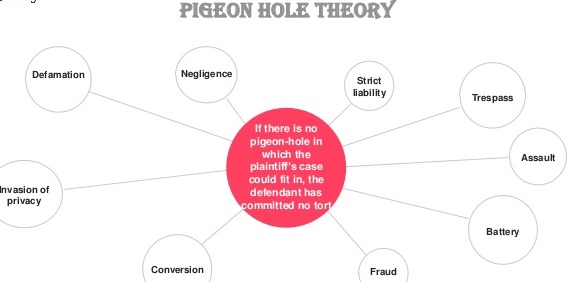
  • Salmond theory of torts: Salmond was the supporter of the law of “torts”, according to him the liability under this law arises only when the wrong is covered under one or other nominate torts. This theory is also known as Pigeon hole theory. In order to succeed under this theory, the plaintiff should place the wrong under the already present torts.

Each theory is correct from its point of view it depends on the question of approach or looking at things from a certain angle.

How law of torts is different from crime

S.NO               Tort                Crime
1. The person who commits a tort is known as ‘tortfeasor’. The person who commits a crime is known as ‘offender’.
2. Proceedings take place in Civil Court. Proceedings take place in Criminal Court.
3. The remedy in tort is unliquidated damages. The remedy is to punish the offender.
4. It is not codified as it depends on judge-made laws. Criminal law is codified as the punishments are defined.
5. Private rights of the individuals are violated. Public rights and duties are violated which affects the whole community.

Types of torts

Intentional tort

In order to commit an intentional tort, some action must be done with a purpose i.e there must be an intention to commit an act. For the welfare of the society, it is generally assumed that no one should attack the other person intentionally. For example, if you hit a person with an iron rod on the head, there was an intention to cause injury to that person in a particular way.

Intentional tort includes the following

  1. Battery:

When some force is applied physically to the body of another person in an offensive manner which causes some harm is called battery. Battery constitutes the offensive touching which is not consented by the other party. Even if the person did not intend to injure the other person but if he has the knowledge that his act could harm someone in any way then also the battery is constituted. The personal liberty of the person is interfered in any way with the intention to cause harm. Common examples of the battery include hitting a person with a stick, punching someone on the face.

Elements of battery include:

  • There must be an intent to use some physical force.
  • There must be actual physical contact with the body of another person.
  • There must be some harm.

2. Assault:

When the act of one person creates an apprehension in the mind of another person that such act is likely or intended to cause such harm. It could range from pointing a gun at a person to verbally threatening a person. Apprehension should not be confused with fear. Apprehension is when a person is aware that the injury is imminent. There is an assault if a person threatens to shoot another while pointing a gun another him, even if the victim later discovers that the gun was not loaded. Unlike the battery, there is no physical contact in an assault. For example, if a person makes a flinch but does not actually punch the person then there is an assault.

 Essential elements of assault are:

  1. There must be an apprehension of harm.
  2. There must be an intention to use force.

Difference between Assault and Battery

S.No            Assault              Battery
1. The purpose here is to threaten. The purpose is to cause harm.
2. There is no physical contact, only such apprehension. Physical contact is mandatory.
3. Pointing a stick towards a person is assault. Hitting with the stick is battery as there is a physical contact between the two people.

3. False imprisonment:

It is the unlawful confinement of the person without his will. It is not necessary that person should be put behind the bars, a mere impossibility of escape against the will of the person from a certain area is enough to constitute a tort of false imprisonment. It includes the use of physical force(actual expression of force is not always necessary), a physical barrier like a locked room, invalid use of legal authority. False arrest is the part of false imprisonment which includes detaining of the person by the police without lawful authority.

Essential elements are :

  1. There must be an intention
  2. Period of confinement
  3. Knowledge of the plaintiff
  4. Place of confinement

Malicious prosecution falls within the category of false imprisonment. It not only includes malicious proceedings and arrests instituted falsely but also includes malicious search, malicious bankruptcy and liquidation proceedings. In order to prove malicious prosecution, these essentials should be kept in mind:

  1. There must be malice towards the plaintiff
  2. The absence of reasonable cause
  3. Prosecution by the defendant
  4. Damage was suffered by the plaintiff as a result of the prosecution

4. Trespass:

It is the intentional, unreasonable invasion of the property, land, person or goods. The unreasonable interference can cause harassment or harm to the other person, no matter how slight it is. The legal right of the owner of the property is infringed because he is deprived of his right to enjoy the benefit of the property by the misappropriation or exploitation of his right. Types of trespass are:

  • Trespass to person: When a wrong is done to the individual and in some way personal liberty and interference is caused to the body of the person. It is an invasion of person’s right to freedom. The dignity of the person is protected by it, even if no physical injury is caused. For example, taking the fingerprints of a person forcefully. It consists of following torts: assault, battery, and false imprisonment. 
  • Trespass to land: Unlawful interference to the land of some other person is the trespass to land. Land here includes not only the building and the surface but also the subsoil and airspace. Even if there is no damage done to the property but if the person enter the land of another person without his permission, then it is trespass. If a delivery boy was supposed to deliver the goods at the front door of the house but seeing the house open he enters one of the rooms to which he was not entitled, then he has done trespass to land. A person will not be liable for trespass if he enters the premises or land to save the life of another person. For example, if a person sees in a baby trapped in a fire in a house, then if he enters the house to save him he will not be guilty of trespass. The owner of the property owes some duty to the guest. If any guest is injured on the property in possession of the owner then the owner can be held liable. 
  • Trespass to chattels: Also referred as trespass to personal property or goods, it is the interference or unauthorised use of person’s lawful possession of property without his permission. Chattel can be referred to personal property whether moving or not but it does not apply to land or real property. For example, two friends were studying together. After they were done with studies one of the friends took the book of another assuming it to his book. There is trespass to chattel as there was an intention to take the book. So the mistake of ownership cannot be used as a defense in this case. The person can recover actual damages which are measured by the diminished value of the chattel that resulted from the defendant’s actions.

5. Defamation:

It is an injury or harm caused to the reputation, goodwill or character of the person. There are two types of defamation in the form of Libel and Slander. Libel is the publication of a false statement which is likely to cause harm to the reputation of another person. Publication means it should come into the notice of the third party. It must be in printed form for example writings, pictures, cartoons, statues etc. When the false spoken statement results in lowering the reputation of another person then it is slander. In, Harash Mendiratta v. Maharaj Singh, it was held that only the person who has been defamed can maintain an action and not his friends, family or relatives. Sometimes the statement may appear to be innocent but there might be some hidden meaning to it. In order to file a suit for defamation, the plaintiff must prove such hidden meaning. Defamation in the law of tort deals mainly with libel. To prove that the statement was libelous, it must be

  • False
  • Written
  • Defamatory
  • Published

If the defamation is proved when a suit is instituted, damages can be given to the plaintiff as compensation and in some cases, injunction can also be granted to restrain certain publication because of which a person has an apprehension of being defamed.

Some of the defenses to defamation are:

  • A substantially true report was published.
  • When the case has been decided by the court it is not defamatory to express any opinion on the merit of the case in good faith.
  • Any truth which is published for the public interest.

Tort-based on Negligence

Negligence is the absence of reasonable care which is imposed on all persons so as not to place the other person at foreseeable risk of harm through his conduct. It is the failure to act is a particular way by taking into account the apprehended injury that could be sustained due to carelessness to one party.

Elements of negligence are:

  • Duty: There must be some duty or an obligation which one person owes to another. If the defendant fails to fulfill the duty which he owes to the plaintiff in the eyes of law then he can be held liable. So at first, it should be assessed whether the defendant owes any duty of care to the plaintiff or not. Sometimes the relationship between the plaintiff and defendant creates a legal duty or obligation to act in a certain manner. For instance, the doctor owes a duty of care to the plaintiff i.e to treat the patient in an appropriate manner. If the doctor while treating the patient left a ring in his abdomen, then he can be said to be negligent in giving appropriate medical treatment. The doctor owed a duty of care towards his patient which he failed to do so. 
  • Breach: once it has been assessed that defendant owes a duty of care to the plaintiff, it should be further established that there was some breach of duty i.e one person failed to exercise a take. “Amount of care” means the care which a reasonable person would have taken in those circumstances. Whether there was any breach of duty is both a subjective and objective test. The defendant can be said to be negligent if he knew that his action would affect the other person if he does not act in a particular way, for eg. if the owner of the dog knows that his dog is of ferocious nature then he should put some warning on the gate like “Beware of dog” or “Enter at your own risk”. If he fails to do so then he can be held negligent in taking such care. 
  • Causation (cause in fact): This element aims at establishing that there should be some negligence on the part of the defendant which caused such injury or harm to the plaintiff. The plaintiff should prove that the loss suffered was caused by the defendant. The (but for) rule is used in proving the causation i.e whether the injury suffered would have happened but for the action of the target of your suit. 
  • Proximate cause: If a person cannot foresee that something bad could happen to another person then how could he be held liable. To make the person liable for alleged action it should be proved that his action was the remote/closest cause for the injuries sustained. If the act is foreseeable then only the person is liable otherwise not, for eg. If a motorcyclist hit the pedestrian on the road due to which he suffered a severe injury on the head. Seeing the sight on the internet, a woman whose house was on the road had a heart failure. The motorcyclist was liable to the pedestrian as he failed to take reasonable care while driving. But he is not liable to the woman who had a heart attack because that was not foreseeable. 
  • Damages: The last element of negligence is damages. The person who had sustained injury should be compensated for such harm. The test of (reasonable person) is important to decide if the plaintiff is entitled to compensation or not. The compensation given to the plaintiff should be capable of putting him back in the position in which he was before the incident took place. For eg., if the car driver hit the motorcyclist due to which he sustained injuries and had to miss work, the compensation that the car driver could be made to pay should bear his medical expenses, lost earnings and the pain and suffering endured by him.

Defenses:

i) Volenti non fit injuria: If a person acts voluntarily and is aware of the risk associated, he cannot recover damages if he suffers harm. This is the voluntary acceptance of risk. The person should be free to make a choice when the employer forces an employee to take the risk of which he is aware but is not willing to undertake. Here, the defense cannot be used by the employer if an injury is sustained by the employee because the employer had forced the employee to undertake the risk against his will.

Essential of Volenti non fit injuria:

  1. There was knowledge of risk by the plaintiff
  2. He voluntarily undertook such risk

ii) Contributory negligence: When the damage which the plaintiff has suffered was partly due to his fault and partly due to the fault of the defendant, this constitutes contributory negligence. In order to prove contributory negligence, it must be proved that the plaintiff failed to take reasonable care for his safety. In a collision between two cars, the defendant was driving negligently at high speed. It was discovered that the plaintiff was not wearing seat belt due to which he sustained the higher amount of injuries than if he had been wearing a seatbelt. The plaintiff failed to take reasonable care which was expected on his part. So he is liable for contributory negligence.

iii) Ex turpi causa: it means no defense or legal remedy can be initiated if the cause of action which arose was due to the illegal conduct of the plaintiff i.e no action can be found on a bad cause.

For example, Mr. Anil took a lift in a car which he knows was stolen by the other person. Later, the car met with an accident, Mr. Anil cannot initiate an action against the other party under this principle.

Strict liability under law of tort

It is the type of tort in which the defendant is held responsible for the injuries sustained. The plaintiff need not prove whether the tort occurred or not, he can sue the defendant for defective action. Under certain circumstances, if any wrong happens then the perpetrator can be held responsible for such an act when the activities are known to be fundamentally dangerous. This rule is applicable in India as much as in England.

For example, ‘X’ stores flammable propane tank in a factory near to ‘Y’ house. As the consequence of mischief of rat the tank was set on fire tank because of which Y’s property was damaged. Although there was no fault of ‘X’, still ‘X’ is liable as ‘Y’ suffered because of him.

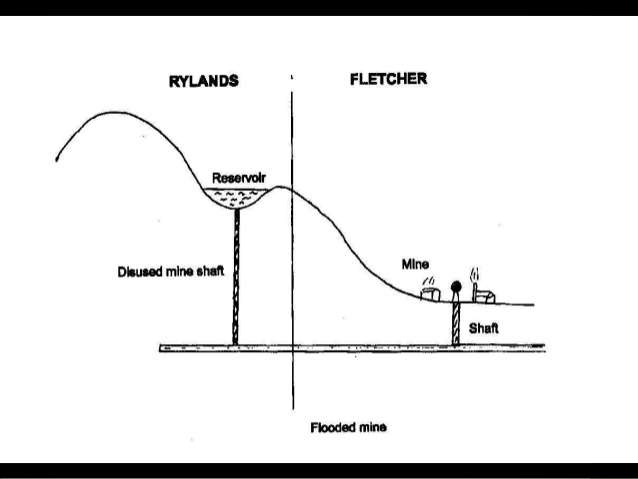
In Ryland v. Fletcher, the defendants employed independent contractors to construct a reservoir on their land for providing water to his mill. The contractor failed to seal the unused mines which he found while digging. When the water was filled in the reservoir, it burst through the shafts wand and water flooded in plaintiff’s mines. Although the defendant has no idea about the shaft and was not negligent. The incident took place because of the fault of the contractor still the defendant was held liable.

Following torts must be present to constitute the tort of strict liability:

  1. Some dangerous thing must have been brought by a person on his land.
  2. The thing kept on land must have escaped.
  3. Non-natural use of land.

Exception to this rule:

i) Plaintiff’s own fault: If some intrusion by the plaintiff in defendant’s property causes some harm to him then the defendant cannot be held liable. In Ponting v Noakes, the plaintiff’s horse ate some poisonous leaves from the defendant’s tree after which he died. The defendant was not held liable as it was the wrongful intrusion by plaintiff’s horse. No damage would have been done if the horse would not have entered defendant’s property.

ii) Act of god: Circumstances which are not under the control of human beings or which are not foreseeable fall under this rule. The defendant cannot be held liable if some natural event leads to the escape of dangerous thing.

iii) Consent of the plaintiff: If the plaintiff has consented to the accumulation of some dangerous thing on plaintiff’s land and the source of danger was for the common benefit of both the plaintiff and defendant then defendant cannot be held liable for such escape.

iv) Act of third party: If the act of third person causes some harm to the plaintiff over which the defendant has no control or the person is not defendant’s servant then he cannot be held liable under this rule. If the act of third party is foreseeable then due care must be taken by the defendant.

v) Statutory Authority: Act done under the authority of statue is a defense provided there is no negligence.

Another liability which arose after the case of M.C Mehta v. Union of India was that of Absolute liability. According to this liability, if a person is engaged in some dangerous activity which is the source of his commercial gain then he owes some duty of care to the society if the escape of dangerous thing could cause catastrophic damage. He cannot take the exception of act of god or third party.

In M.C Mehta v. Union of India, oleum gas leaked from one of the unit of Shriram Foods fertilizer Industry in the city Delhi. Due to the leakage of this gas, many people were affected. If the rule of strict liability would have been applied in this situation then it would have been easy for the defendant to escape by saying that the damage was due the act of stranger. The Supreme Court was of the opinion that they do not have to follow the 19th century rule of English Law and could evolve a new rule suitable to the economic and social conditions existing in India. The court in this case by applying the rule of absolute liability held the defendant liable. As per the directions of the court, the organisations who filed the case could claim the compensation on behalf of the victims

Other Tort

Nuisance: It is derived from a French word “nuire” which means to annoy or harm. The person in possession of the property is entitled to free use and enjoyment of his land and property without any unauthorised interference. If any interference is caused then the tort of nuisance has occurred. It is different from trespass which is the interference of plaintiff’s possession through some tangible object or material whereas nuisance is the interference with the right accessory to possession.

Elements of nuisance:

  1. There must be some wrongful act committed by the defendant.
  2. The wrongful act must result in some injury to the legal right of the plaintiff.

Kinds of Nuisance

  • Public Nuisance: When the act of the person affects a large number of people then it is termed as public nuisance. The aim of this tort is to avoid unwarranted disturbance and ensure the right to safety and right to enjoy the possession peacefully. For instance, shooting firecrackers in the middle of the road. The claimant should prove that they have suffered “special damage” over and above the effects on the other affected people in the “class”.
  • Private Nuisance: It is the interference with the enjoyment or use of land or some right connected to it. The interference can be caused due to things like smell, noise or any kind of vibration etc. For example, damage caused to the health of person due to noxious fumes or the breaking of the window by a cricket ball. In order to initiate the tort of private nuisance, the person should prove that there was some interference, then the interference caused was unreasonable. Nuisance can be caused either to property or some physical discomfort.

Defenses

  • If a private nuisance continues for 20 years then it is a special defense and the right to continue a private nuisance may be acquired as an easement by prescription. This type of nuisance can be enjoyed for a period of 20 years and after that, it will be legalised.
  • If a statute has allowed or authorised to do a particular act, all remedies, whether by way of indictment or action, are taken away, provided that every reasonable precaution consistent with the exercise of the statutory power has been taken away.

Remedies

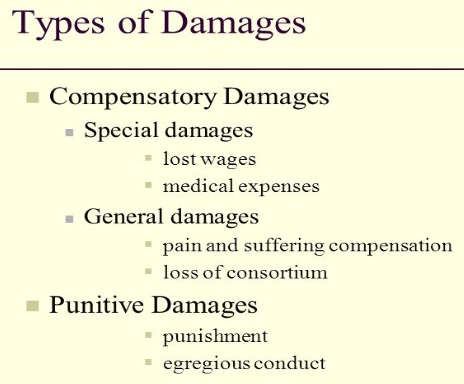
  • Damages: To restore the plaintiff in the position he was if the tort would not have been committed, damages are awarded to the claimant. The injury caused includes not only physical injury but also emotional, economic or reputational injury and many other. Damages payable to the plaintiff are made in terms of money. Damages depend upon the cause, fact and the circumstances of the case. Damages can be awarded more than that claimed by the defendant.

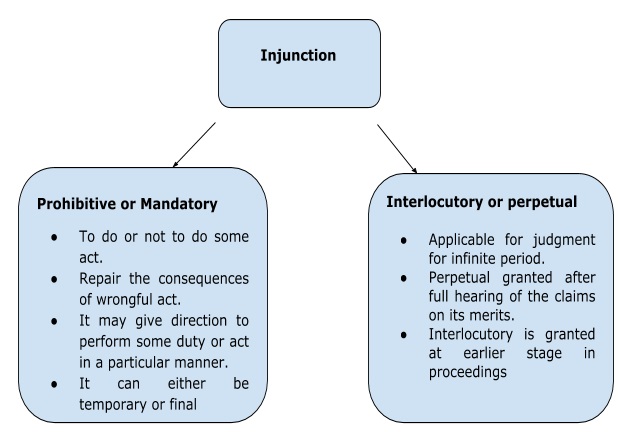
  • Injunction: it is granted to refrain the party from further continuing an act. Sometimes damages are not enough to compensate the party, the act which is causing such harm needs to be permanently to be stopped. It is granted at the discretion of the court.

References

Download Now

Best corporate law internships in India

0

In this article, Astha Gupta of Rajiv Gandhi National University of Law, Punjab gives a list of best corporate law internships in India.

Introduction

Internships are imperative for any law student to understand the pragmatic and experiential aspects of the theoretical knowledge provided for in the textbook learning of law schools. Internships act as a facilitator to clueless law students in deciding their career path. It helps them understand which field of law fascinates them the most and at the very same time, helps them discern the type of work they are good at.

Corporate Law Internship

Corporate law is a very pivotal branch of law as a profession. A corporate law internship helps in an in-depth understanding of the corporate issues that are of great importance to all the members of the corporate world.

As far as a corporate law internship is concerned, it benefits the law student in multifarious ways. Some of which are listed below:

  • Better professional network

A corporate law internship helps in building a good professional network which subsequently leads to better job opportunities in the future. Additionally, as law students, maintaining a good professional network is as important as having firm knowledge and understanding of the intricacies of law.

  • Pre-Placement Offers (PPOs)

The interns get to know a lot about the company and its functionality during their tenure. Hence, they become the obvious preference of the company in case of good work being done by them. Hiring them as full-time employees save a lot of time and energy wasted in the in-job-training of the new employees.

  • Practical understanding

As aforementioned, these kinds of internships provides a practical understanding of the theoretical knowledge. Also, these internships are the closest to the actual corporate work culture and hence help in brushing up a student’s skills to do a corporate job later in life.

In a nutshell, corporate law internships are recommended immaterial of being interested in that field of law or not because the learning that it entails is imperative for any law student’s overall learning.

Best corporate law internships in India

Luthra and Luthra Law Offices (L&L)

L&L is one of the premium law Firm’s of the country and they surely strive every day and every hour to be there. The Firm also works with several International Law Firms advising them and their clients on various aspects of Indian law.

Main Practice Areas

  1. Arbitration
  2. Aviation
  3. Banking and Finance
  4. Capital Markets and Securities Law
  5. Antitrust law
  6. Corporate
  7. Education
  8. Energy and Natural resources
  9. Environmental Law
  10. Human Resources and Employment
  11. Infrastructure
  12. Insurance
  13. Intellectual Property
  14. Managed funds
  15. Pro Bono work
  16. Venture capital, funds and private equity
  17. Project Finance
  18. Real Estate
  19. Tax
  20. International Trade

Key clients

  1. Apple Inc.
  2. Asian Development Bank,
  3. Citibank,
  4. DLF Group,
  5. Dr Lal Path Labs,
  6. Emerson Electric Co.
  7. Facebook Inc.
  8. Ford Foundation
  9. Godrej Group
  10. Goldman Sachs
  11. Google Inc.
  12. Intel Corporation
  13. JP Morgan India
  14. LVMH Moët Hennessy Louis Vuitton SE
  15. Maruti Suzuki
  16. Morgan Stanley
  17. Ola Cabs
  18. Samsung
  19. State Bank of India
  20. Tata-Starbucks
  21. The World Bank
  22. Yahoo Inc.
  23. Yes Bank
  24. Zee Group

Offices

New Delhi

103, Ashoka Estate,

Barakhamba Road,

&

9th Floor, Ashoka Estate,

Barakhamba Road,

New Delhi – 110 001

Ph.: +91-11-4121 5100

Fax: +91-11-2372 3909

Email: [email protected]

Mumbai

Indiabulls Finance Center,

Tower 2 Unit A2,

20th Floor,

Elphinstone Road,

Senapati Bapat Marg,

Mumbai – 400 013

Ph.: +91-22-6630 3600, +91-22-4354 7000

Fax: +91-22-6630 3700,

Email: [email protected]

Bengaluru

3rd Floor, Onyx Centre

No.05, Museum Road

Bengaluru – 560 001

Karnataka (India)

E-mail: [email protected]

Hyderabad

3rd Floor, Plot No. 8-2-619/1

Road No. 11, Banjara Hills

Hyderabad – 500 034, Telangana

Tel: +91 40 66206662

E-mail: [email protected]

To view maps to the offices, click here.

Stipend

Usually no stipend is given. However, when it is given (very rarely), preference is always given to students from National Law Universities.

Main tasks assigned

Major tasks involve research and drafting. However, you can be handed over any kind of work including even clerical tasks. They have a wide range of areas that they specialise in and hence, you get to work in varied practice areas.

Work Culture

However professional the work environment might be, there is complete accountability of the associates. Interns can approach the authorities and ask their queries and doubts regarding the work assigned. Also, interns from all the good law schools show up and hence a healthy interaction makes it all the more a learning experience.

Application Procedure

To apply for the internship, one has to send their CV to Miss Khushboo Chester (HR Assistant Manager) at [email protected]. Since they respond quite late, it is advisable to send applications well in advance to the internship dates.

Trilegal

Trilegal was established by former graduates from NLSIU; the three graduates did independent practice for a year and then subsequently got merged and the newly formed firm which came to be known as ‘Trilegal’. It is now one of the leading law firms in the country.

Main Practice Areas

  1. Corporate
  2. Mergers and Acquisitions
  3. Financial Services
  4. TMT
  5. Energy and Infrastructure
  6. Disputes
  7. Competition
  8. Capital Markets
  9. Employment
  10. Real Estate
  11. Tax

Key clients

  1. Shriram Properties Pvt. Ltd. and Sun-Apollo Investment Holding LLC
  2. Tata Communications Limited
  3. Axis Trustee and Standard Chartered Bank
  4. Thomson Reuters
  5. Telenor ASA
  6. Abu Dhabi National Energy Co. PJSC (TAQA)
  7. Axiom Telecom
  8. Noble Group

Offices

Mumbai

Peninsula Business Park

17th Floor, Tower B,

Ganpat Rao Kadam Marg,

Lower Parel (West),

Mumbai:- 400 013

T: +91 22 4079 1000

Gurgaon

5th Floor, Tower 4B

DLF Corporate Park

DLF City Phase-3

MG Road, Gurgaon 122002

T: +91 124 625 3200

Bangalore

The Residency

7th Floor, 133/1, Residency Road

Bangalore 560025

T +91 80 4343 4646

Delhi

311 B

DLF South Court, Saket

New Delhi 110017

T: +91 11 4163 9393

To view maps to the offices, click here.

Stipend

One thing that remains common to all the offices is that no stipend is given to people who come through contacts.

Stipend for interns who got in themselves usually is ₹15,000/- for a month which varies a bit from office to office.

Main tasks assigned

The main tasks assigned are two-fold, research work, and work based on due diligence. However, you can be allotted any kind of work from the plethora of areas they specialise in.

Work Culture

Work environment is a blend of professionalism and casual chit-chats. All of this comes down to the quality of work that you do. The associates usually friendly, but if you don’t complete your assignments on time and matching a particular standard, you are sure to get bashed.

Application Procedure

Go to their official website (or click here). The following form will open up. You can fill in your details and wait for an assessment mail.

After filling up the form, prospective interns are required to complete a minimum of five legal assessments related to a general law issue wherein you will be required not only to research on the given topic, statute, and related case laws but also to give your opinions on the possible outcome.

Khaitan & Co.

Founded in 1911, Khaitan & Co. is one of the oldest and largest Indian law firms. Combining a rich heritage of over a hundred years with a modern and cutting-edge practice, the firm offers full service legal solutions to our domestic and international clients.

Main Practice Areas

  1. Banking and Finance
  2. Corporate and Commercial
  3. Estate planning, trusts and private clients
  4. Labour and Employment
  5. Technology, media and telecommunications
  6. Capital Markets
  7. Dispute Resolution
  8. Funds
  9. Real estate
  10. White collar crime
  11. Competition/Antitrust
  12. Energy, Infrastructure and resources
  13. Intellectual Property
  14. Direct tax
  15. Indirect tax

Key clients

  1. Royal Dutch Shell
  2. International Finance Corporation (IFC)
  3. Alkem Laboratories
  4. Kalyani Group
  5. Hindalco Industries
  6. Indus Towers
  7. Jindal Steel & Power

Offices

Corporate office (Kolkata)

Khaitan Electricals Limited

46C. J.L. Nehru Road,

Kolkata – 700 071, (WEST BENGAL, INDIA)

Ph. No : +91-33-2888391,40505000

Fax No : +91-33-2883961

Email: [email protected]

New Delhi

Khaitan Electricals Limited

1/23B, Asaf Ali Road

New Delhi – 110 002.

Ph. No.: +91-11-30481007/8/9

Fax No.: +91-11 23236321

Email: [email protected]


Khaitan Electricals Limited

46, Janpath (Tolstoy Lane)

New Delhi – 110 001.

Ph. No.: +91-11-30484748/47474749

Fax No.: +91-11-30484746

Email: [email protected]

Mumbai

Khaitan Chamber

143/145, Modi Street Fort

Mumbai- 400 001. (Maharashtra)

Ph. No.: +91-22-66102468/67/64

Fax. No.: +91-22-66102473

Email: [email protected]

Chennai

Apex Chamber

20/18, Sir Thiagaraya Road,

T. Nagar, Chennai- 600 017 (TamilNadu)

Ph. No.: +91-44-24355933/34

Telefax No: +91-44-24355935

Email: [email protected]

Also, there are branches in Faridabad, Panchkula, Ghaziabad, Ranchi, Rishikesh, Guwahati, Bangalore, Chandigarh, Raipur, Patna, Kochi, Indore, Jaipur, Cuttack, Ahmedabad, Kanpur, Calcutta.

Stipend

There is absolutely no uniform rule for the amount of stipend given. A decent amount usually ranging from ₹5,000/- to ₹8,000/- a month is given. Again, this entirely depends on the kind of work you do at the firm.

Main tasks assigned

There is no specific kind of work that will be allotted as the firm specialises in a plethora of areas and you’ll be mostly assigned a good amount of work. However, at the very same time, you may even have a dearth of work depending on your performance. Also, be ready to do quite a bit of clerical work.

Work Culture

Quite different from the popular perception of a top-notch law firm, the place has a rather congenial work culture. The associates and partners are very friendly and usually ready to help. Even after having a lot of work to do, the positive atmosphere and the ability to learn a lot about the corporate culture makes the experience a lot less taxing.

Application Procedure

Students from law schools with which the company runs coordinated internship programs can contact their respective campus coordination committee for further details.

Others can write to the firm at [email protected] with their resumes and transcripts.

AZB & Partners

AZB aims to provide clear, concise and practical advice based on an in-depth knowledge of the legal, regulatory and commercial environment within which our clients operate and a full understanding of their overall business objectives. The legal services rendered by AZB & Partners covers the corporate, commercial, regulatory, financial and tax planning aspects of modern businesses.

Main Practice Areas

  1. Arbitration
  2. Aviation
  3. Banking & Finance
  4. Competition/Antitrust
  5. Corporate M&A
  6. Litigation
  7. Private Equity
  8. Projects & Infrastructure
  9. Real Estate, Tax
  10. Regulatory Practice & Securities Law
  11. Funds Practice
  12. Micro-Finance
  13. Derivatives
  14. Intellectual Property
  15. Media & Entertainment
  16. IT & Business Process Outsourcing
  17. Employment
  18. Insurance
  19. Pharmaceuticals & Biotechnology

Key clients

  1. Lafarge Holcim’s
  2. KKR & Co. Ltd. Yokohama Rubber
  3. Standard Chartered
  4. Kotak Mahindra Bank
  5. HDFC
  6. SBI Life Insurance IPO
  7. Flipkart
  8. Central Depository Services Ltd

Offices

Mumbai

Peninsula Corporate Park,

Ganpatrao Kadam Marg.,

Lower Parel,

Mumbai,

Maharashtra

India

400013

Tel +91 22 66396880

Fax +91 22 66396888

Email : [email protected]

Website : www.azbpartners.com

&

Sakhar Bhavan,

4th Floor,

230 Nariman Point,

Mumbai,

Maharashtra

India

400021

Tel +91 22 6639 6880

Fax +91 22 4910 0699

Email : [email protected]

Gurgaon

Unitech Cyber Park,

602 Tower B,

6th Floor,

Sector 39,

Gurgaon,

Haryana

India

122001

Tel +91 124 4200296

Fax +91 124 4038310

Email : [email protected]

Pune

Onyx Towers, 1101/B,

11th Floor,

North Main Road,

Koregaon Park,

Pune,

Maharashtra

India

411001

Tel +91 20 6725 6666

Fax +91 20 6725 6600

Email : [email protected]

New Delhi

Plot No. A8, Sector 4 Noida,

New Delhi,

Delhi

India

201301

Tel +91 120 417 9999

Fax +91 120 417 9900

Email : [email protected]

Bangalore

7th Floor,

Embassy Icon,

Infantry Road,

Bangalore,

Karnataka

India

560 001

Tel +91 80 4240 0500

Fax +91 80 2221 3947

Email : [email protected]

Stipend

The stipend here completely depends on the quality of work done. You may not get any stipend at all or may get upto maybe ₹5,000/. You will have to work very hard to get a decent amount.

Main tasks assigned

Like most of the law firm internships, you’ll get to work on varied topics and areas of the profession. However, they mostly stick to the area you choose to work in. Rarely you are given work that is outside the purview of the chosen area. However, you should be ready for whatever work is given to immaterial of whether you have studied that topic or not.

Work Culture

Apart from getting good work, the second best thing is the amiable work environment which is common to almost all the big firms. You’ll get good associates who will guide you and help you whenever required.

Application Procedure

Send your CV and cover letter to the HR at least 6-7 months before the date of internship at recruitment ’place of internship’@azbpartners.com.

Cyril Amarchand Mangaldas

Cyril Amarchand Mangaldas is set up on the foundation of this outstanding legal practice. The firm embraces this legacy, while also bringing its partners and associates together with a new blueprint for the future, based on a strong client-focused value system, a collaborative work culture and a pragmatic and solution-oriented approach to problem-solving.

Main Practice Areas

  1. Corporate & M&A
  2. Financing
  3. Capital Markets
  4. Litigation & Dispute resolution
  5. Competition
  6. Real estate
  7. Employment
  8. Private Client Practice
  9. Financial Regulatory Practice
  10. Tax
  11. Investment Funds
  12. Intellectual Property
  13. TMT
  14. Bankruptcy
  15. Investigation
  16. Life Sciences

Key clients

  1. Adani Group
  2. Birla Estates
  3. KKR India Asset Finance Private
  4. Prestige Estate Projects
  5. Sequoia Capital
  6. Kohlberg Kravis Robert (KKR)

Offices

Mumbai

Peninsula Chambers, Peninsula Corporate Park, GK Marg,

Lower Parel, Mumbai – 400 013, India.

t: +91 22 2496 4455

f: +91 22 2496 3666

email: [email protected]

New Delhi

4th Floor, Prius Platinum, D-3, District Centre,

Saket, New Delhi – 110 017, India.

t: +91 11 6622 9000

f: +91 11 6622 9009

email: [email protected]

Bengaluru

201, Midford House, off. M. G. Road,

Bengaluru – 560 001, India.

t: +91 80 2558 4870

f: +91 80 2558 4266

email: [email protected]

Also, there are branches in Hyderabad, Chennai and Ahmedabad.

Stipend

Most of the interns who work for four weeks are given a stipend. The amount of which depends on the quality of work that you do.

Main tasks assigned

Most of the work is usually research-oriented. However, the work assigned will depend on the team that you are working with.

Work Culture

The work environment is enriching and the associates that you will have to work for are also always ready to help.

Application Procedure

To apply, send your resume and cover letter to the HR at [email protected] or to the anyone else on the HR team.

Shardul Amarchand Mangaldas

Shardul Amarchand Mangaldas & Co (SAM & Co), founded on almost a century of legal achievement, is one of India’s leading full-service law firms. The firm’s mission is to enable business by providing solutions as trusted advisors through excellence, responsiveness, innovation and collaboration.

Main practice areas

  1. General corporate
  2. Banking & Finance
  3. Competition law
  4. Insolvency & Bankruptcy
  5. Dispute Resolution
  6. Projects & Project finance
  7. Capital markets
  8. Tax
  9. Intellectual property rights
  10. Venture capital.

Key clients

  1. Amazon India
  2. Rabo Equity Advisors
  3. IDFC Limited
  4. PVR Limited
  5. ReSources India
  6. Grofers

Offices

New Delhi

Amarchand Towers

216 Okhla Industrial Estate, Phase III

New Delhi 110 020

T: +91 11 4159 0700, 4060 6060

Bengaluru

Prestige Sterling Square

Madras Bank Road

Off Lavelle Road

Bengaluru 560 001

T +91 80 6674 9999

Mumbai

Express Towers, 23rd Floor

Nariman Point, Mumbai 400 021

T +91 22 4933 5555

41/42, Lloyds Centre Point, 4th Floor

Appasaheb Marathe Marg, Prabhadevi

Mumbai 400 025

T +91 22 2438 1196

Lentin Chambers

36, Dalal Street, Fort, Mumbai 400 001

T +91 22 2261 2131

Also, there are branches in Kolkata, Gurugram, Chennai and Ahmedabad.

Stipend

Usually, no stipend is given.

Main tasks assigned

The work given to the interns is diverse from research-related to even basic clerical work. The work is given irrespective of the area of work you have chosen.

Work Culture

Work culture, as can be expected from the top law firm in the country, is highly professional. However, most of the associates are easily approachable and helpful.

Application Procedure

Send your application to the HR of the firm, Ms. Manu Goel on her email [email protected] or to the anyone else on the HR team.

Apart from the aforementioned, the following are some of the firms which can be considered as good options:

  1. S&R Associates

  2. J Sagar And Associates (JSA)

  3. DSK Legal

  4. Lakshmisri (LKS)

How to boost your corporate law internship experience

Following are some of the courses by lawSikho that the law students can take up to further boost their internship experience at a corporate law firm-

  1. LawSikho Diploma in Entrepreneurship and Business Laws: The Diploma in Entrepreneurship Administration and Business Laws course is an online 12-month long immersive program designed by LawSikho to equip you with practical skills for the world of corporate law. The course brings over 50 leading lawyers from the corporate law sector to train our students in the practical aspects of business law. With a resource library of over 100 lectures, focused skill-development exercises, and institutionalized mentorship, the course brings learning, professional skills and job opportunities for students.
  2. LawSikho Diploma in Companies Act and Corporate governance: This course will tell you the issues which you may face during a ‘How to’ procedure on things – something that you won’t know until you have actually gone and made your hands dirty at a transaction. This course will also tell you about how corporate governance mechanisms are useful to identify a problem or solve one, something that managements will never get, until they meet someone who shows them the benefits.
  3. Certification in Corporate governance: This course will train you in using available legal mechanisms for ensuring better corporate governance within a company. The course covers techniques that can be used to keep abuse of the board’s powers in check, disclosure requirements, shareholders rights and fraud-related provisions. You will be able to use the knowledge and insights in creating or advising a client on most appropriate mechanisms for them, depending on the type of company and their objectives.

Check out many more enhancing courses for law aspirants by clicking here.

How to Ace your Internship

To hone your internship skills, do look through Ace your Internship program at lawSikho.

This course is designed to enable law students to tackle two major challenges: secure corporate internships (at corporate law firms or companies) and perform extraordinarily well so that you can get a job offer. Typical ways are securing a PPO (pre-placement offer), a job interview or a call back for a subsequent internship (with a sense that it may convert into a job offer).

LawSikho has created a telegram group for exchanging legal knowledge, referrals and various opportunities. You can click on this link and join:

https://t.me/joinchat/J_0YrBa4IBSHdpuTfQO_sA

Follow us on Instagram and subscribe to our YouTube channel for more amazing legal content.
 
Download Now

Lifting of Corporate Veil vis-à-vis the Determination of Enemy Character of a Company

0
lifting

In this article, Aarthi S, pursuing Diploma in Entrepreneurship Administration and Business Laws from NUJS, Kolkata discusses on the determination of the enemy character of a Company

Introduction

One of the fundamental advantages of incorporation is the creation of an artificial person functioning distinctly from that of its constituents. Yet, there is an ever-evolving jurisprudence on situations in which this artificial personality can be forsaken. This article seeks to emphasize on the concepts of separate legal entity and lifting of the corporate veil with special emphasis on the enemy character of a company.

Separate Legal Entity

The separate legal entity of a company is a term used to denote the fact that the identity of a company is distinct from that of the members who constitute it. This is by virtue of the fact that once a company is incorporated, the law imputes a legal fiction upon a company and it attains an artificial personality distinct from that of the ones who constitute it. Therefore, the rights and responsibilities that flow from this are also distinct.  

The implications of this was first fully grasped by the courts in United Kingdom in the case of Salomon v. Salomon. Lord Macnaghten rendered that the company is at law a different person from that of its shareholders and is not an agent or trustee of the company. Therefore, the shareholders cannot be held personally liable for the company’s debts.

This principle was first applied in India in the case of In Re Kondoli Tea Co. Ltd. where an exemption from ad valorem duty was claimed for transfer of a tea estate by certain persons to a company in which the same persons were shareholders. This exemption was claimed on the ground that they effectively transferred the same to themselves. The court dismissed the claim on the ground of a company having a separate legal entity. A plethora of other judgements have since reiterated and upheld this position of a separate legal entity.

However, this does not give blanket immunity to the persons acting illegally, fraudulently and the like under the cloak of a company. Courts and legislatures across the world have evolved situations to pierce this corporate veil and impute liability upon persons who run the company but hide behind its façade as discussed in detail in the section below.

Lifting of Corporate Veil

The most fundamental advantage of incorporation is that it creates a separate legal entity. A company being an artificial creation of the law is in reality run by and under the control of some individuals. Although a corporation is a legal fiction forming a distinct entity, in reality, it is an association of persons who are the real beneficiaries. Therefore, the veil of a corporation can be used by their underlying beneficiaries to commit frauds or such other illegal acts keeping their self-interest in mind as opposed to the collective and common interest of the company. In certain circumstances of this nature, where it would be illogical to impute liability upon the company, an artificial entity, the corporate veil is lifted to identify the persons committing such acts who use the corporate entity as a cloak. These identified persons as individuals are imputed with liability. Although courts refrain from interfering with the separate legal entity of a company,  it may often be in the interest of the company or in the interest of the public to identify the persons who misuse this corporate entity.

The Supreme Court in Life Insurance Corporation of India v. Escorts Ltd. noted that although a company is a separate legal entity distinct from that of its members, the corporate veil may be lifted and the corporate personality may be ignored. The individual persons are to be recognized for who they are in exceptional circumstances. It may be lifted where the statute itself contemplates it or in other circumstances such as evasion of tax, fraud, improper conduct and the like. The Apex Court also opined that it is not desirable to enumerate class or classes of companies where lifting of the veil is permissible as it must depend on several factors such as the statute, the object sought to be achieved, conduct, an involvement of public interest, the effect on parties etc.

The Supreme Court in State of U.P. v. Renusgar Power Co. noted that the concept of lifting of the veil is a changing concept and is becoming more and more transparent in modern jurisprudence. In the expanding horizon of modern jurisprudence, lifting of corporate veil is permissible, its frontiers are unlimited and it primarily depends on the facts and circumstances of each situation.

On this pretext, lifting of the corporate veil can be brought under 2 heads, namely: under statutory provisions or under judicial interpretations. The lifting of the corporate veil of a company to determine its enemy character falls within the latter i.e., it is a result of judicial interpretation.

Enemy Character of a Corporation

It is logical to infer that a company being a result of a legal fiction and having an artificial entity cannot be an enemy or a friend. Therefore, at the time of war, it becomes essential to lift the corporate veil and identify whether the persons behind the veil – who run the company – are enemies or friends of that nation.

Daimler Case

An important landmark judgement in this context is that of Daimler Company Ltd. v. Continental Tyre and Rubber Co. (Great Britain) Ltd. In this case, the Respondent company was incorporated in London, United Kingdom for the sale of tyres which were manufactured in Germany by a German company. All shares except one of the Respondent company were held by German residents and all the shareholders were German as well. A suit was filed to recover a trade debt when Germany and England were at war (First World War) in 1914.

The Court of Appeal upheld the separate legal entity of a company and held that it is a legal body clothed with the form prescribed by the Legislature and not a mere mask or cloak to conceal the identity of persons forming it. The character of the company would not change due to the outbreak of war.  

The House of Lords reversed the above decision and held that the analogy is to be found in the “control” of the company and it is not a necessary implication of a separate legal entity status to say that owing to the corporate veil, the character of the persons constituting the corporation would be irrelevant. It was further held that, since the acts of the company are through its directors, managers, secretary and the like, their character becomes important to determine that of the company’s.

Nationality of company vis-à-vis its enemy character

At this juncture, it becomes necessary to examine the nationality of a corporation and the role that it plays in determining the rights, duties and character of a company.

As stated above, upon incorporation, a company is a legal entity on its own, distinct from that of the ones who constitute it. According to the Halsbury’s Laws of England, nationality and domicile of a company is the place of its registration. A company though incorporated in one nation may still be regarded as having enemy character if the de facto control of its affairs are in an enemy country or are under the control of enemies.  

In the case of State Trading Corporation of India Ltd. and Ors. v. The Commercial Tax Officer, Vishakapatnam and Ors., the Supreme Court held that the persons operating a company are regarded as its brain and where the brain functions the corporation is said to function. The rights of a corporation during the time of peace include all such as is permitted by the municipal law such as owning of property, conducting business and the like and this extends to foreign corporations as well based on comity of nations. At the time of war, law of nationality becomes pertinent to determine the enemy character of the company and is not a law that recognizes nationality in a political or municipal sense.

The Daimler case also clearly iterated that setting aside the question of residence of a company, it is not right to say that the legal entity of a company can be completely identified with that of its shareholders and their nationality does not become its nationality.

It is also important to note that a company incorporated in a nation does not lose its nationality merely because it is under enemy control. In so far as nationality is supplied to a juristic person, it is determined in an inalienable manner by laws of the country from which its personality is derived.

Therefore, at the time of war, nationality does not serve as a criteria to determine the enemy character of a company. This veil of nationality is pierced to determine that of the ones in de facto control of its affairs.

Conclusion

Determination of enemy character of a company is judicially evolved jurisprudence on piercing the corporate veil of a company. This is seldom used as it bears relevance only in the context of war. The same analogy used for determining the enemy character of the company is used for determining malice of a corporation in pursuing malicious prosecution where the malice of a company is determined by the actions and malice of the persons controlling the company.

Download Now

Corporate Governance- What Do Shareholders Really Value?

0

Learning too many things at once can either fry your brain or help you become a jack of all trades! So I try to keep at it, hoping that I fall in the latter category.

As I have just moved from my city, I don’t have access to the physical books, so I thank god for the internet! I read journals, articles, watch videos on YouTube to learn! I am also considering taking up some courses like company law, corporate governance and SEBI regulations, just to fine-tune the ideas. I don’t want my brain to get idle again, and it takes longer to get it up and to run each time!

One of my tasks these days is to work on webinars for students and lawyers. We get an industry or subject expert as a panellist and have them talk about a relevant topic for an hour. Now the problem with me is that by the time the webinar starts, I have reached my full capacity for the day. So I don’t watch the live webinars, but instead, view them the next day.  

Recently I was watching a couple of webinars on basics of company law and corporate governance. This made me realise how much I did not know about the practical aspects of a company. So I started researching at the very beginning. In the process, I realised that I had studied for my company law and CS exams about how to establish a company, types of companies, directors’ duties, shareholders rights, etc. I knew quite a bit about the legal provisions, but what I didn’t know where the interests of the stakeholders.

Who are the stakeholders in a company?

Stakeholders are the interested or affected parties of a company. They are the ones who are affected by or can affect the company’s actions, objectives and even policies. Some of the critical stakeholders are directors, shareholders, government, employees, suppliers, creditors, community, etc.

My interest grew in the shareholders as they are the owners of the company. Then I started wondering why do they invest in the first place. Apparently, it was for better returns on their investment. I recalled once working behind the scenes in an annual shareholders meeting. The shareholders were treated like kings!

A whole spread was laid out for them before the meeting, and after. During the session, the shareholders posed various questions to the panel of CEO, CFO, CS and other top bosses. They inquired about the annual report figures, last year’s product launches, revenue growth, next year’s plan of actions, etc. It was an interesting perspective to see the people you answer to, being answerable to someone else.

The questions from the shareholders were several, but it made me think about their underlying reason.

The power of the ownership is that it demands accountability. A company needs to demonstrate the transparency in its functions and effectively communicate that to the shareholders from time to time, This is done through annual reports, general and annual meetings,etc. The company must be governed by an effective corporate governance mechanism to retain the trust of the stakeholders. The company needs to be able to ascertain the requirements of the various stakeholders in order to address them. It helps them fulfill their objectives and satisfy the investors. A employee may want bonus, a shareholder may want controlling rights, government may want fulfillment of new compliance, etc.

What do the shareholders really want?

‘The social responsibility of business is to increase its profits’

Milton Friedman observed this in one of his articles. According to the 1972 article, the famous economist wanted the board and managers to focus on the maximisation of wealth of the shareholders.

Friedman believed that shareholders were the owners of the company. So by that logic, the real want of shareholders should be the maximisation of profits or wealth, right?

But how accurate is that theory? Does a shareholder really want just the profits?

In India, there are generally two types of shares which are issued – equity shares and preference shares. The main difference between the two is the rights offered to the shareholders regarding dividend and voting rights. A preference shareholder gets paid a fixed annual or cumulative dividend, before the equity shareholders. The equity shareholders receive the dividend when the company declares a profit, but they have voting rights. The preference shareholders do not get the voting rights.

Shareholders enter into a shareholder agreement with the company for buying their shares and have the rights and duties laid down for dispute resolutions. The key provisions of a shareholder agreement are available here.

Companies mostly work towards shareholder value thinking, i.e., to increase the value of shares.

Many times, in a quest of increasing the share value in the short run for the investors, the company takes poor and irrational steps like cutting safety corners, or reducing expenditure on research and development, or reducing workplace safety, or cut back on customer support, etc.

While this may generate a short-term increase in the share value and appease the investors, this not what they want. The shareholders invest their money in a company which they trust in as a whole. They want better returns but not only in the short run. They want steady and increasing dividends from their investments. People generally invest for the future both short and long-term.

What happens when a company focuses on short-term wealth maximisation?

If the company is focused only on short-term goals and does not take into account the welfare of the other stakeholders like the employees, customers, suppliers, creditors, etc., the long-term growth of the company will be affected.

Disgruntled employees, unsatisfied customers, unpaid creditors or suppliers will not stick around for long, and it will affect the business and eventually the profits of the company.

In the long term, these tendencies of cutbacks of a company reduce the investors’ faith in the company, it also harms the existing investors in the long-term.

The shareholder wants a stable and continued return on his investments in the next five or ten years instead of just a quarter or two. So for the benefit of all stakeholders involved, a company should have a transparent, accountable system where each stakeholder is taken care of.

There needs to be a balance between managing the shareholders’ investment and the business judgment by the directors. They cannot disregard their corporate responsibility towards other stakeholders and the community they draw from.

Are the shareholders the real owners of the company?

In my attempt to understand the complex relation of stakeholders, especially shareholders, I came across an interesting perspective in a video lecture (at 13:35) by Prof Lynn Stout, the Paul Hastings Distinguished Professor of Corporate and Securities Law at UCLA.

She had said that from a legal point of view the shareholders are not the owners but a mere contractual party, just like an employee or a supplier or a bond holders. The shareholders get the residual payments or dividend only if the company declares dividend after paying off the expenses. According to her from a finance perspective, the shareholders get retained earnings which is nothing but revenue after deduction of expenses. She further clarified that the expenses are not controlled by the shareholder, but the company and its directors

The idea behind this is that employees enter an employment contract which gives some statutory and contractual rights and obligations to them. Same goes for a creditor, supplier, etc. and even the shareholders.

The company is a legal entity which can own property, enter into a contract, has rights and obligations. It comes into being first and then shares are created for the shareholders. The shareholder enters into an agreement with specific rights and responsibilities. Even the name itself suggests someone who holds shares, not ownership.

So are shareholders owners or mere contractual parties?

In India the shareholders are the owners of the company. A company cannot be established without shareholders. It is only when shareholders subscribe to the shares and become members that the company is formed. Shareholders have the ultimate authority in appointment and removal of directors. 

So from an Indian perspective, Prof. Lynn Stout although interesting, is not valid.

For us it is imperative to understand the complexities of company laws and the principles of corporate governance for all stakeholders, i.e., the employees, suppliers, creditors, shareholders, even the community. One can read journals, take company law courses, attend workshops, etc. to gain the necessary expertise. But the practical experience is crucial to become an expert in the subject matter.

In conclusion, the objective of a company should not be limited to the shareholders, but to the other stakeholders and community at large. Only then can they gain the trust of their investors in the long term by displaying stability and steady growth. Shareholders want to increase their wealth but not just in the short-term. They really want and value- a wholesome growth in the long run.


Download Now

Why Should Human Resources Personnel Know Labour Laws

2

I always had reservations about the human resources (HR) personnel. Like any private employee, I used to think that all they do is conduct HR interviews, throw birthday and retirement parties, organise additional workshops, cricket matches and the likes. To put it mildly, I didn’t think much of them for a long time.

However, I had met the perfect HR before that, during an internship. She was hardworking and dedicated. She had answers to all the queries from any department and always greeted everyone with a wide grin. She was first to come into work and often the last to leave. One day I overheard her talking to someone about labour laws. I was curious as to why is an HR talking about laws. So during lunch, I asked her.

She told me that as an HR she has to deal with a multitude of labour laws during her daily work. Since the company was governed by the Shops and Establishments Act, it was governed by a variety of labour laws like Payments of Bonus Act, Equal Remuneration Act,  Payment of Gratuity Act, Employees Provident Fund and Miscellaneous Provisions Act, Employees’ State Insurance Act, Maternity Benefit Act, etc.

For an HR in a factory setup, they will have to know the industrial relations laws like the Factories Act, Minimum Wages Act, Trade Unions Act, Industrial Employment Standing Order Act, Industrial Disputes Act, etc.

The HR personnel are required to have the necessary knowledge while preparing employment contracts and service conditions like provident fund, house rent allowance, leaves, working hours etc. In short, wherever there are employment-related terms or benefits or conditions, the relevant laws will apply.

This conversation was a revelation to me. Not only because I had my preconceived notions about an HR’s job, but I was also somehow thinking less of them too. I am sure I am not the only employee to make such an error in judgment about HR personnel. In fact, they do so much more than we give them credit for. They not only have to know how to manage the resources, but they also need to know the laws too!

Here’s why an HR should know about labour laws:

Knowing the Employment Agreement

Although a lawyer drafts the contract, the HR needs to have the necessary knowledge of the service conditions and a clear understanding of what is being offered. The employment agreement is the holy grail for both the employer and employee.

Any rights, obligations, disputes arising out of the employment agreement have to be kept in mind by the HR. They are the ones managing the employees. Therefore, they need to know the terms and conditions assured to the employees and their obligations under the Payments of Bonus Act, Equal Remuneration Act,  Payment of Gratuity Act, Employees Provident Fund and Miscellaneous Provisions Act, Employees’ State Insurance Act, Maternity Benefit Act, etc.

The employee will first go to the HR for any day-to-day issues. For instance, the insurance has be to facilitated through HR. Any insurance claim has to be informed to HR before issuance. The HR gets in touch with the insurance agency representative to facilitate the claim payments.

Ensuring a Healthy Working Environment

The HR has to ensure that employees have the necessary amenities, safety, and hygiene at the workplace. The work environment should be conducive to the output. The HR has to ensure that the workplace is adhering to the standards assured under the labour laws.

HR personnel work closely with the employees. They need to be able to ensure a healthy work environment for the employees. The Factories Act, The Shops and Commercial Establishments Act(s) of the respective States generally contain provisions relating to registration of an establishment, working hours, overtime, leave, privilege leave, notice pay, working conditions for women employees, etc.

The HR has to ensure that the work environment is safe for all employees. If female employees are working overtime, there should be suitable transportation provided to them after hours. The HR also looks into providing things like clean premises, hygienic restrooms, etc.

Prevention of Sexual Harassment At Workplace

For a healthy work environment, based on the realistic situations, legislation like Sexual Harassment (Prevention, Prohibition and Redressal) Act, 2013 are in place. The HR personnel have to be involved in the drafting of the policies and its implementation.

In many companies, mandatory workshops are conducted by HR to create awareness about sexual harassment prevention at workplaces. These workshops help both men and women to recognise the unwelcome advances at work and can avoid them. The employees also learn the process to address such issues.

Due to the nature of such offence, it becomes imperative for the HR to be informed and handle it with sensitivity. There are labour law courses which help HR personnel learn about the nuances of the workplace sexual harassment. Many companies hire HR personnel based on their knowledge of such compliances.

Grievances Redressal

The first person we go to for a minor disturbance to a significant turmoil at work is our HR personnel. They are the ones who keep an eye on the retention failures, nepotism, corruption, etc.  HR personnel need to know the laws like Factories Dispute Act, Sexual Harassment (Prevention, Prohibition and Redressal) Act, etc. to address the employees’ grievances.

Any grievance of the employee is dealt by the HR personnel first. It can be as small as a request for an ergonomic chair at work, to as severe as a sexual harassment complaint. The HR personnel are the first to hear these grievances. They accordingly guide the employee based on the law and the company’s policies. Then they facilitate the grievance through the different departments and channels, to ensure that the adequate relief is given to the aggrieved employees.

The HR personnel are in a crucial position to address the issue suitably and help avoid any expensive future lawsuits for the company. They are the first responders in a company, and this makes them a crucial aspect of the grievance redressal process. A concerned HR can help calm an employee simply by hearing them out and guiding them accordingly. They are the link between the company and the employee during the whole process.

Handling the Salary Components

Now comes the most critical aspect of a job for any employee – salary. While the finance department deals with the actual disbursement of your salary, an HR has to manage the components related to it to make the salary payment easier. They streamline the whole process and oversee the appraisals too. They need to understand the Payments of Bonus Act, Equal Remuneration Act,  Payment of Gratuity Act, Employees Provident Fund to allocate the necessary brackets on the taxable income.

I learned the taxation of my salaried income by sitting with my HR, rather than the other way around. I knew the theory and the limits, but a very patient HR explained the entire process to a rookie like me. I did not know how to claim my taxes at the end of the year. All my informed investments are thanks to him!

They go over and beyond in their jobs to ensure that the employees have attended the compulsory seminars, filled out the appraisal application, income tax returns, etc. on a regular basis. I remember one of the HRs used to send a reminder email to all employees and then go to each department physically to remind them. She need not do that, but that’s how dedicated they are to the job.

They have to assess and review the attendance, leaves taken, insurance, taxable components and requisite documentation, etc. before the salary every month. They work harder before the salary week to ensure all the salaries are released on time.

The HR personnel do all these and more. You can know more laws that an HR needs to know in this article. Imagine if you had to do your job and arrange activities on top of it to keep the employees entertained and engaged all the time! That is not easy an easy profile.

So here’s my sincerest apologies to all the misunderstood HR personnel who bring it all into the job, every day. I hope this article helps remove a lot of misconceptions about HR personnel.


Download Now

7 Useful Tips on Setting up a Startup in India

2

This article is written by Shreya Tripathy.

Supported by a wide range of Government initiatives and backed by new funding mechanisms, India is indeed in the midst of a startup boom breaking even into the global lists. In the year 2017, India shot up to be the third largest tech startup location globally, trailing only behind the UK and USA.

The three cities of Bangalore, Delhi-NCR and Mumbai play host to 66% of all startups in the country, each of which is vying for the top spot. With 72% of the Indian startup founders below the age of 35 years, India is also making a name for itself as the youngest startup nation in the world. Lacking only in the aspects of gender equality (only 9% of entrepreneurs are women), India seems to have it almost right in the startup ecosystem.

While the world of startups maybe unconventional, enthusiastic and fast-paced, if you are aiming to start one or already have one, you must keep in mind certain regulations and compliances that need to be religiously adhered to keep it that way. The rise in the number of startups also led to a need for operational transparency consequently giving rise to the need for statutory compliances. The following comprehensive checklist that most startups follow will help you avoid any legal complications in the future as well as help you with you maintain the traction of investors:

1. Business Registration

Registration of your startup with the right business structure in India is essential to the smooth functioning of your company. Registration of companies in India is a legal compliance that needs to be done by all businesses. You may register your startup as a partnership, sole proprietorship, private limited company, Limited Liability Company or a one-person company. You must opt for the structure that best suits your company as it will determine your Income Tax Return as well as the level of compliances that you need to adhere to. The Limited Liability Partnership form and the Private Limited Company form of registration is generally seen to be best suited for startups in India.

A Limited Liability Partnership in India has unique features which are useful for small and medium enterprises. It is the favoured business set-up for the service industry or for such activities where professionals are involved. The benefits of an LLP are:

  • It allows its members to independence over their internal management and at the same time provide such benefits which limited liability companies have.
  • LLP functions as a separate legal entity with perpetual succession.
  • The partners in an LLP are only liable to the extent of their agreed contribution to the company and not accountable for the unauthorized actions of any of the other partners.

Private Limited Company is the most preferred form company registration. There are many benefits of registering your startup as a Private Limited Company in India:

  • It acts as a separate legal entity (has a separate identity from that of its members) with perpetual succession.
  • The members have limited liability to the extent of the face value of the shares that they own.
  • It provides for easy and free transferability of shares to any other person by a shareholder.
  • A private limited company can own, acquire and alienate property in its own name. This limits the power of the shareholders any claim upon such property as the company itself is its true owner. It can also sue and be sued in its own name.
  • The scope for borrowing funds also increases.

The structure of the business also determines the investment that you will be raising therein. Having an investor-friendly structure helps to gain the trust of investors and hence, it is essential that you think this over carefully and make an informed decision.

2. Funding for the Startup

Funding is an essential aspect of the success of a startup. As many as 65% of venture capitalists have stated the major roadblock for startups is the lack of funding. Here are a few documents that you should essentially maintain:

  • Term Sheet: A term sheet outlines the terms and conditions of the agreement between potential investors and a startup. It includes such details as the structure of payment, conditions precedent, confidentiality clauses, etc.
  • Share Subscription Agreements: This agreement lays down all details of a share issue including any representations or warranties made to the subscriber.
  • Shareholders Agreements: This is an agreement laying down the shareholders’ rights and obligations and the modus operandi of the company.
  • Share Purchase Agreements: This agreement lays down the terms and conditions of the purchase and sale of shares.

3. Internal Management Structure of the Startup

It is essential that you define the roles and architect the internal management structure of your startup early on so as to prevent conflicts when your startup scales. A few things that you should factor in are as follows:

  • Co-founders Agreements: Co-founders Agreement is an agreement laying down the terms and conditions between the co-founders laying down how the business will be executed between them. It is a written agreement giving insurance to any potential dissonance and the rights and liabilities of the co-founders.
  • Employment Agreements: Employment agreement or employee agreement is a legally binding contract laying down the stipulations regarding the duties, rights and responsibilities of the employees during the course of employment.
  • Board of Directors: depending upon the registration of the company under the Companies Act, 2013, a Board of Directors must be created and such adherence to the provisions of the Act such as holding Board meetings, Annual General Meetings, etc.
  • Employee Stock Option Agreements: ESOP Agreements lay down rules regarding which employees are eligible for the stock purchase program and other specifications regarding the same such as when they become eligible to start buying, etc.

4. Shop and Establishment Certificate

All commercial establishments and shops are needed to be register under the Shops and Establishment Act of the respective states. Under this Act, all commercial establishments including any commercial, banking, trading or insurance establishment have to get registered. All states have their own Acts and have specific amendments in accordance with the necessities of that state, so you have to be careful so as to adhere to all the provisions of the Act in your State. A current bank account for your startup can only be opened after obtaining the Shop and Establishment Certificate. Moreover, there are provisions in the Act for regular inspection of registration and registering pronto will prevent you from being harassed by inspectors later.

5. Labour Law Compliances

The Government of India has come up with a policy on labour law compliances for startups to encourage startups in the country. The Government allows self-certification of 9 labour and environmental laws. Exemption from complying with certain laws such as The Payment of Gratuity Act, 1972, The Employees’ Provident Funds and Miscellaneous Provisions Act, 1952, The Water (Prevention & Control of Pollution) Act, 1974, etc.

The provisions of the Factories Act, 1948, Payment of Wages Act, 1936, Employees’ State Insurance Act, 1948, Payment of Bonus Act, 1965, Minimum Wages Act, 1948, Maternity Benefits Act, 1961, Sexual Harassment of Women at Workplace (Prevention, Prohibition and Redressal) Act, 2013, etc., also have to be adhered to.

6. Website Documents

If you are a startup based around web startup ideas or you are a startup looking to get a head start in the game, you must create a website that reflects you and your company appropriately. Additionally, you must ensure that your website has the following legal documents laid out for the website users:

  • Terms of Use: the terms of use basically lay down the rights and responsibilities that any customer or user are agreeing to adhere to.
  • Disclaimer: Disclaimers are mostly used for two purposes, to warn the customers of such actions that may raise liability and limit liability on the user of the website.
  • Privacy Policy: A privacy policy lays down all the information that you may gather from your customers and clients and what you do with that information.

7. Special Permissions for Specific Startups

You may need certain specific permissions or have to fulfil certain compliances depending upon the nature of your startup and you must ensure that you take careful consideration of all such provisions and fulfil them. For instance, if you want to set up a food truck business, it involves many activities such as manufacturing, storing, selling and transporting food and food products. You must ensure that you take vending permits, FSSAI license, etc. You must also look into all health and safety rules and ensure that you abide by them and ensure that you are not violating any laws that are in place. Similarly, if you have a health startup, you have to take permits for the land and construction, permits regarding electricity and water supply, waste disposal, fire and health licenses, etc.

Conclusion

In a country abound with new startups, you need your startup to be ahead of the rest. While having a brilliant idea and putting together a team of dedicated and like-minded individuals is necessary, ensuring that your procedural and organizational structure is equally important. By following the above tips, you can ensure that you have laid down the groundwork to be able to build up and establish a startup that is able to sustain in this competitive market.

Download Now

History of Andhra Pradesh High Court

0
Andhra Pradesh High Court
Image Source - http://www.newindianexpress.com/states/andhra-pradesh/2017/dec/29/andhra-pradesh-ready-to-set-up-temporary-high-court-1739315.html

This article is written by Aditi Srivastava of Law School, BHU (Banaras Hindu University). In this article, Aditi discusses the History of Andhra Pradesh High Court.

History of Andhra Pradesh High Court – A brief introduction

The Andhra Pradesh High Court is situated in the city of Nizams, Hyderabad, on the south bank of Musi river. The Andhra Pradesh High court is now known as the High Court of Judicature at Hyderabad for the States of Telangana and Andhra Pradesh and is the common High Court for two States.

The Andhra Pradesh High Court was renamed as the High court of Hyderabad in view of the division of the State into Telangana and smaller Andhra Pradesh. From 2 June 2014, after the Andhra Pradesh Reorganisation Act, 2014 came into force, it has been renamed and serves as a common high court for both the states by the virtue of Article 231 which empowers the Parliament to establish a High Court for two or more states or for two or more states and a union territory.

In the coming years after a separate High Court for Andhra Pradesh is established, High Court of Judicature at Hyderabad shall remain the High Court for Telangana State.

When was the High Court set up?

The High Court of Andhra Pradesh was set up in the year 1956 as the consequence of the State Reorganization Act 1956. In the same year, the Judges strength was increased to 12 (from 6).

History of the High Court building

Situated amidst the city, the High Court building is one of the finest buildings in the city, built in red and white stones in Saracenic style, by Nizam VII Mir Osman Ali Khan the ruler of the princely state of Hyderabad. The plan of the High Court was drawn up by Shankar Lal of Jaipur and the local engineer who executed the design was Mehar Ali Fazil. The construction of the main building by the Nizam’s Government started on 15 April 1915 and was completed on 31 March 1919.

  • On 20 April 1920 the High Court building was inaugurated by Nizam VII Mir Osman Ali Khan.
  • It accommodated six Judges besides accommodation for the Office Staff, record rooms and Advocates’ Hall.
  • Also, an amazing fact is that while the foundation for the building was dug up, the ruins of Qutb Shahi Palaces (Hina Mahal and Nadi Mahal) were also unearthed.
  • If you take a look of the building you will find that it is based on Islamic architecture consisting chiefly of mosques and tombs and characterized by decorated surfaces, bulbous domes, and horseshoe etc. The view of the High Court building from the Naya Pul at sunset gives a view of the glory of Saracenic architecture at its best.
  • In the year 1936, on its silver jubilee celebrations, a silver model of the High Court with a silver key was presented to the Nizam by the judiciary.
  • Also, in August 2009, a major accidental fire broke out in the building and caused severe damage to the library housing rare England law reports, Privy Council journals and a life-size portrait of the Nizam and portraits of judges. The record of the court was reported to be safe.

Creation of additional buildings

After the reorganization of the Andhra State in 1956, the existing accommodation at that time was found inadequate to meet the requirements of the larger High Court and so the additional building was constructed in 1958-59.

By 1970, a large number of cases were flooding and the institution of cases of the High Court has gone up to 35,000 as against 20,000 in 1958. There was also an increase in the Judges strength from 14 to 21.

Again in order to facilitate and to provide additional accommodation for Judges, Staff and Advocates and Law Officers, the third building was proposed and the work of that building was completed in 1976. The Law Officers strength was increased from 8 to 18 by 1980 and the institution of cases had gone up to 55,593 cases.

Again in the year 1979, a plan was drawn for the four-story Annexe building but due to lack of funds that could not be taken up. There are at present 20 Court Halls and 24 Chambers located in the High Court main building and Annexe buildings.

The institution of cases had risen from 20,078 in 1958 to 1982,123 including miscellaneous cases in 1985. So, the pendency has also increased in High court as on 24 July 1987 are 84,855 (i.e., 66,276 main cases + 18,579 miscellaneous cases).

History of the Judiciary in Andhra Pradesh

The State of Andhra Pradesh was formed by the merger of the Andhra area of the Madras Presidency – Governed by the British and the Telangana area of the former Indian State of Hyderabad ruled over by the Nizam of the Hyderabad. So, basically before the reorganisation of the Andhra State in the year 1956, the court system differed in these two different regions i.e. in the Andhra area of the Madras presidency the journey began from the setting up of the Fort St.George in Madras in 1639 by the East India Company to establishment of Supreme court and further developments in Madras Presidency. Andhra, being part of Madras presidency was also governed by the same developments in the judiciary.

If we talk about the judiciary in Telangana region before state reorganization in 1956, it was governed by the Islamic System of administration of Justice introduced by the Mughals and governed from the beginning to end by the same Islamic System of administration.

The Consequence of Andhra Pradesh Reorganisation Bill, 2014

A division bench of Hyderabad High Court in 2014 comprising of Chief Justice Kalyan Jyoti Sengupta and Justice P V Sanjay Kumar declared that the Hyderabad High Court shall continue to be the common court for both the states of Telangana and Andhra Pradesh, till a separate high court for AP State is formed.

It was held that article 231 of the Indian Constitution, says that parliament has the power to establish a High Court for two or more states or two or more states and a union territory, but there is exigency to create a separate high court.

Also, the bench held that section 30(1) of the Andhra Pradesh Reorganisation Act, 2014 specifies that “ on and from, the day of the appointment, the High Court of Judicature at Hyderabad shall a common High Court for Telangana and Andhra Pradesh, till a separate High court for the State of Andhra Pradesh is constituted under article 214 of the Indian constitution read with section 32 of this act.

 List of former Chief Justices

Sl.No. Name Tenure
01 HON’BLE SRI JUSTICE KOKA SUBBA RAO (1956 – 1958)
02 HON’BLE SRI JUSTICE P.CHANDRA REDDY (1958 – 1964)
03 HON’BLE SRI JUSTICE P.SATYANARAYANA RAJU (1964 – 1965)
04 HON’BLE SRI JUSTICE MONOHAR PERSHAD (1965 – 1966)
05 HON’BLE SRI JUSTICE N.D.KRISHNA RAO (1966 – 1966)
06 HON’BLE SRI JUSTICE P.JAGAN MOHAN REDDY (1966 – 1969)
07 HON’BLE SRI JUSTICE N.KUMARAYYA (1969 – 1971)
08 HON’BLE SRI JUSTICE K.V.L.NARASIMHAM (1971 – 1972)
09 HON’BLE SRI JUSTICE GOPAL RAO EKBOTE (1972 – 1974)
10 HON’BLE SRI JUSTICE S.OBUL REDDI (1974 – 1976) &

(1977 – 1978)

11 HON’BLE SRI JUSTICE B.J.DIVAN (1976 – 1977)
12 HON’BLE SRI JUSTICE A.SAMBASIVA RAO (1978 – 1979)
13 HON’BLE SRI JUSTICE C.KONDAIAH (1979 – 1980)
14 HON’BLE SRI JUSTICE ALLADI KUPPU SWAMI (1980 – 1982)
15 HON’BLE SRI JUSTICE K.MADHAVA REDDY (1982 – 1984)
16 HON’BLE SRI JUSTICE KOKA RAMACHANDRA RAO (1984 – 1984)
17 HON’BLE SRI JUSTICE P.CHENNAKESAV REDDI (1985 – 1985)
18 HON’BLE SRI JUSTICE K.BHASKARAN (1985 – 1988)
19 HON’BLE SRI JUSTICE YOGESHWAR DAYAL (1988 – 1991)
20 HON’BLE SRI JUSTICE S.C.PRATAP (1991 – 1992)
21 HON’BLE SRI JUSTICE S.B.MAJMUDAR (1992 – 1993)
22 HON’BLE SRI JUSTICE SUNDARAM NAINAR SUNDARAM (1993 – 1994)
23 HON’BLE SRI JUSTICE SAIYED SAGIR AHMED (1994 – 1995)
24 HON’BLE SRI JUSTICE P.S.MISHRA (1995 – 1997)
25 HON’BLE SRI JUSTICE U.C.BANERJEE (1998 – 1998)
26 HON’BLE SRI JUSTICE M.S.LIBERHAN (1998 – 2000)
27 HON’BLE SRI JUSTICE SATYABRATA SINHA (2000 – 2001)
28 HON’BLE SRI JUSTICE AR.LAKSHMANAN (2001 – 2002)
29 HON’BLE SRI JUSTICE DEVINDER GUPTA (2003 – 2005)
30 HON’BLE SRI JUSTICE G.S.SINGHVI (2005 – 2007)
31 HON’BLE SRI JUSTICE ANIL RAMESH DAVE (2008 – 2010)
32 HON’BLE SRI JUSTICE NISAR AHMAD KAKRU (2010 – 2011)
33 HON’BLE SRI JUSTICE LOKUR, MADAN BHIMARAO (2011 – 2012)
34 HON’BLE SRI JUSTICE PINAKI CHANDRA GHOSE (2012 – 2013)
35 HON’BLE SRI JUSTICE KALYAN JYOTI SENGUPTA (2013 – 2015)
36 HON’BLE SRI JUSTICE DILIP BABASAHEB BHOSALE (2015 – 2016)
37 HON’BLE SRI JUSTICE RAMESH RANGANATHAN   (2016-till present)

Recent major developments in the High Court of Judicature at Hyderabad

  • India’s first e-court opened at Hyderabad High Court

India’s first e-court was opened in the year 2016 at High Court of Judicature at Hyderabad which is a common high court for the states of Telangana and Andhra Pradesh.

Key features :

  1. Speedy justice for the litigants
  2. Easy and better justice access to justice for the public
  3. Solution to a large number of pending cases
  4. Will make the work of judges, advocates and all those related with work of judiciary more effective.
  • Gender Sensitization and Internal Complaints Committee (GSICC)

The High Court of Judicature at Hyderabad has committee known as Gender Sensitization and Internal Complaints Committee (GSICC) which takes up the issues of Gender Sensitization and Sexual Harassment of Women.

The ‘aggrieved woman’ may make a complaint to Member Secretary of the High Court Gender Sensitization and Internal Complaints Committee with regard to the sexual harassment which includes any one or more of the unwelcome acts or behaviour as mentioned under rules and regulations (whether directly or by implication) which includes physical contact and advances, any demand or request for sexual favours ,making sexually coloured remarks, voyeurism (which means the practice of gaining sexual pleasure from watching others when they are naked or engaged in sexual activity) including overt or tacit observation by the Respondent by any means of the aggrieved woman in her private moments and other form of misbehaviour as mentioned in the regulations.

  • Andhra Pradesh Legal Services Committee

In the year 1987, the Legal Services Authorities Act was promulgated by the parliament with a view to provide free and competent legal services and to ensure opportunity for securing justice to the weaker section of the society.

Also, along with the Legal service authority at National, State, and District level, Legal service committee has also been set up at the high court to establish a society in which social, economic and legal justice is available to all on equal footing.

Andhra Pradesh Legal Services Committee is one such committee established to provide justice to all sections of people.

  • Juvenile Justice Committee

The high court of Judicature at Hyderabad is having a Juvenile Justice Committee consisting of Hon’ble judges and the committee is effectively monitoring the functioning of juvenile justice Courts and juvenile justice Boards.

  • ICJS (Integrated Criminal Justice System)

Telangana and Andhra Pradesh are the first states in the country where Integrated Criminal Justice System (ICJS) has been launched in the years 2017. ICJS is best defined as the integration of CCTNS (Crime and Criminal Tracking Network and Systems) along with E-Courts, E-prisons, Forensics, and Prosecution– the key components of the Criminal Justice System. This will ensure that everyone has fast access to the information required not just for investigations but for faster and better prosecution of cases in courts. ICJS will simply connect (link) all the courts, police stations, prosecution, forensic science laboratories and Jails in Telangana and AP.

OTHER IMPORTANT COMPONENTS OF THE HYDERABAD HIGH COURT

  • THE A.P.HIGH COURT ADVOCATES ASSOCIATION

The A.P.High Court Advocates Association was formed in 1956 upon merger of Hyderabad High Court Advocates Association and Andhra High Court Advocates Association consequent on the formation of State of Andhra Pradesh.

The first President was Late Sri.D.Narasa Raju who was the first Advocate General of our state and also the first Chairman, Bar Council of Andhra Pradesh. Many luminaries succeeded as Presidents of the Bar Association.

  • HIGH COURT MEDIATION AND ARBITRATION CENTRE

High Court Mediation and Arbitration Centre is an initiative of the High Court of Judicature at Hyderabad. It has been conceived as a project for giving effect to Section 89 of the Code of Civil Procedure 1908 more particularly Arbitration and Mediation.

The Centre is responsible for Arbitration and Mediation related activities in Andhra Pradesh and Telangana State within the framework of Rules. The Centre functions under the immediate supervision and guidance of The Hon’ble The Chief Justice / Acting Chief Justice and The Hon’ble Board of Governors.

The Centre provides space for conducting Mediations and Arbitrations in well furnished Air Conditioned Mediation Rooms and Arbitration Halls with attached Chamber for the Mediators / Arbitrators. Current President of the center is Hon’ble Sri Justice Ramesh Ranganathan.

Important Andhra Pradesh High Court Judgements

The Andhra Pradesh High Court (as known earlier) has played important role in revamping the Indian laws. The Court has given many judges to the Supreme Court as well as many landmark rulings in all the areas of law. The AP High Court has played a dynamic role in the environment field –

  • Damodar Rao v. Special Officer, Municipal Corporation, Hyderabad, 1987

In this case, the court gave a landmark judgment and held that any construction of a residential house on the land allotted for a recreational park would upset the ecological balance of the area. It directed the Government to remove any such construction on recreational zones.

  • MP Rambabu v. Divisional Forest Officer,2002

In this case, the Andhra Pradesh High Court had to deal with the problem of salinity of the underground water.  The court said that deep underground soil and water belong to the state in the sense that the doctrine of public trust extends to them. Manifestly, their use is subject to the state regulation even in the absence of a specific law. The underground water can be used only for a purpose for which the superjacent land is held. If it is used for a different purpose and causes pollution of underground water or soil, the state can interfere and prevent contamination.

  • Ambuja Petrochemicals Ltd. v. A.P.Pollution Control Board,1997

In the case, one of the industries covered by Patancheru belt was served with the notice for violating the Water(Prevention and Control of Pollution) Act. Though the industry replied to the notice, the board found the reply unsatisfactory directed its closure. The court upheld this direction of the State board as the effluent treatment plant of the industry was not in operation and partially treated water was being discharged causing water pollution which in turn brought danger to public life.

By giving such landmark judgments, the AP High Court has contributed tremendously to the protection of the environment.

Internship at Andhra Pradesh High Court

If a person is interested in an internship at the High Court of Judicature at Hyderabad, then this is really a good opportunity to intern at the highest level of the judiciary in the state for the person. Also, various lawyers, senior advocates provide the opportunity to intern under them. From learning to the basics of the court to observing the court proceedings in the various courtrooms of the court, an intern will get a very wide exposure of court system. The court is well designed from inside as well as outside with white and red pattern of architecture, which adds charm to the court environment.

Court Calendar

The calendar provided by the Hyderabad High Court is for the court itself and the offices working under the control of the high court including A.P. Judicial Academy, Secunderabad, A.P.State Legal Services Authority, Telangana State Legal Services Authority, Telangana State Legal Services Authority, Mediation and Authority, Mediation and Arbitration Centre and High Court Legal Services Committee .

The calendar provides holidays on all public holidays, Sundays and second Saturdays. Also, the calendar provides for a summer and a winter break when the courts and other offices remain closed. This year the winter break was for a period of 10 days in the month of January. The summer break was for a period of days from Thursday the 3rd of May 2018 to Friday the 1st of June 2018 (both days inclusive).

See more details about holidays here.

Conclusion

So, till date a separate court is created, the high court of Judicature at Hyderabad shall be a common court for both the states of Telangana and Andhra Pradesh. Let us see in future how many landmark judgment and initiatives like ICJS, the introduction of e-court Hyderabad High Court shall bring in the public interest.

Download Now
logo
FREE & ONLINE 3-Day Bootcamp (LIVE only) on

How Can Experienced Professionals Become Independent Directors

calender
28th, 29th Mar, 2026, 2 - 5pm (IST) &
30th Mar, 2026, 7 - 10pm (IST).
Bootcamp starting in
Days
HRS
MIN
SEC
Abhyuday AgarwalCOO & CO-Founder, LawSikho

Register now

Abhyuday AgarwalCOO & CO-Founder, LawSikho