Download Now
Home Blog Page 1449

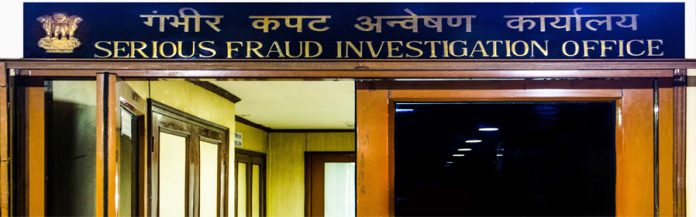
SFIO – A go-to Investigating Agency for White Collar Crimes

0
investigating agency
Image Source: http://sfio.nic.in/images/right1.jpg

In this article, Animesh Tiwary, pursuing Diploma in Entrepreneurship Administration and Business Laws from NUJS, Kolkata gives a glimpse into the working of the Serious Fraud Investigation Office, an investigating agency for white collar crimes.

Introduction

Serious Fraud Investigation Office (SFIO),  has been formed under the Companies Act, 2013 to investigate serious fraudulent crimes committed by senior executives of large organizations (generally known as “white collar crimes”). It is a multi-disciplinary organization having requirement of experts from various fields such as corporate law, criminal law, banking, accounting, forensic audit, capital markets, taxation, etc. It was set up on the recommendation of a committee headed by Naresh Chandra, a former Cabinet Secretary on corporate governance in order to tackle serious crimes related to corporate financial fraud.

Historical Background

With the evolution of a corporate form of business organizations in India, especially in the late 20th century, the emphasis was now given more and more to the idea of corporate governance framework in the organization. This was done to streamline the functioning of a corporate organization, thereby, ensuring its good legal compliance and financial health. Various committees were constituted with the help of Securities and Exchange Board of India (SEBI), industry associations like Confederation of Indian Industries (CII) and Association Chambers of Commerce and Industry (ASSOCHAM) in order to recommend a standard corporate governance framework. One of the important committees was Naresh Chandra Committee formed in 2002 after instances like a failure of non-financial banking institutions, fraud in the stock market, falsification of books of account, etc. It proposed the formation of a statutory body in the form of SFIO on the lines of SFO in the UK, in order to investigate into all aspects of fraud and launch the prosecution in appropriate courts. However, the then central government did not find it necessary to create a separate statute for its working framework. According to some observers, this has affected the efficiency and effectiveness of SFIO negatively.

Need for SFIO

The sole purpose of the establishment of SFIO was the protection of the interest of investors as they are the ones who invest their money and bear actual risks. They may be regarded as the real owner of the company. However, the management of the company may be under the Board of Directors. These directors may commit fraud.

Recommendations of Naresh Chandra Committee

The committee suggested the formation of SFIO, inter-alia. Some of the recommendations made have been mentioned below: (Chandra, 2002)

  1. A Corporate Serious Fraud Office (CSFO) is needed to be set up under the Ministry of Corporate Affairs which would deal with corporate frauds. This body may comprise of experts on basis of transfer/deputation or term contract.
  2. Its duty will be multidisciplinary. It must be able to uncover fraud, direct and supervise its prosecution with the help of relevant agencies before appropriate courts.
  3. It should have a Task Force for each case under a designated team leader.
  4. A committee headed by a Cabinet Secretary should oversee the functioning of the office, appointments made and coordinate the work of various departments in order to maintain efficiency and control.
  5. A legislative framework must be set up later to enable CSFO to investigate all aspects of fraud and lead prosecution in appropriate forums. This can be done on the lines of SFO in the UK.

Improvements recommended by Shri Vepa Kamesam Committee

A committee under the chairmanship of Shri Vepa Kamesam, former Deputy Governor of RBI, was constituted in order to review the functioning of SFIO and suggest changes to make it more effective. The committee suggested certain administrative, statutory and organizational changes in its report on 29.04.2009. After this report, the SFIO attained a statutory recognition and various other changes related to the investigation of companies operating inside or outside the country and defining the term ‘fraud’ along with proposing the punishment for same was done in the new Companies Act of 2013. (Press Information Bureau, 2011)

Sections Related To SFIO Under Companies Act (2013)

Section 211 – Establishment of SFIO

SFIO is a multi-disciplinary organization having the primary task of investigating white-collar crimes in the companies. It has requirement of experts from various fields such as corporate law, criminal law, banking, accounting, forensic audit, capital markets, taxation, information technology, etc. It was established after receiving approval from the central government on 09.01.2003 under the jurisdiction of Ministry of Corporate Affairs.

It has its headquarters in New Delhi. However, it also has regional offices in Mumbai, Hyderabad, Kolkata and Chennai.

Section 212 – Investigation by SFIO

According to this section, any matter may be referred to SFIO by the Central Government if it is of the opinion that such investigation into affairs of the company is necessary on basis of:

  1. Where the Registrar of Companies or an inspector sends a report to the MCA under section 208 and further investigation into affairs of the company is necessary in such cases.
  2. Where the resolution passed by a company demands that such investigation needs to be performed.
  3. Where it appears to be in the greater public interest.
  4. Where there has been a request made by the Central Government or the State Government for the same.

However, there are some basic guidelines laid on which SFIO normally take up the cases:

  1. If the case is complex in nature and has inter-departmental and multi-disciplinary ramifications.
  2. If there is substantial involvement of public interest which may be measured either in terms of monetary misappropriation or number of persons affected,
  3. If there is a possibility that the investigation may lead to improvement in the system of law and procedure.

According to Section 212(2) of the Act, in case of the Central Government assigning a case to SFIO for investigation, no other investigating agency shall have the right to investigate in respect of any offence under the Act in such assigned case, irrespective of operating under the Central or State Government. Moreover, all existing cases will be transferred to SFIO.

Section 217 of the Act grants power of an inspector to the investigating officer of SFIO. Moreover, the officials and employees of the company, who are presently working or previously worked in the company, shall be responsible to provide all information, documents and assistance as required by the investigating officer. This section also prescribes the manner set forth by Ministry of Corporate Affairs in which the letter of request for investigation may be transmitted.

Companies (Inspection, Investigation and Inquiry) Rules, 2014 contains rules for the overall establishment, constitution, working of SFIO under the Companies Act 2013 for the inter-departmental investigation of white-collar crimes in the company. It came into force on 01.04.2014.

These rules contain provisions for appointment of experts having expertise in various fields such as cyber forensics, management accounting, financial accounting, cost accounting, etc. required for efficient working of SFIO. (TG Team, 2014)

Constitution Of SFIO

  • The SFIO is headed by a ‘director’ which must not be below the rank of a Joint Secretary to the Government of India having knowledge and experience in dealing with the matters relating to corporate affairs.
  • It may appoint experts from various fields such as corporate law, criminal law, banking, accounting, forensic audit, capital markets, taxation, information technology, etc. and other fields as may be required.

Terms and Conditions of service

The terms and condition of service of directors, inspectors or other employees of SFIO has been mentioned under Section 211(5) of the Act which states that terms and conditions of appointment of director, experts and other officials must be carried out as per recruitment rules notified by Government of India according to Article 309 of the Indian Constitution. Moreover, experts or professionals may be appointed on the contractual basis as may be approved by Ministry of Corporate Affairs. (Gorsia, 2017)

An applicant requesting for investigation through SFIO may be required to deposit some amount as security for payment of costs and expenses for investigation before the appointment of inspector by the government under Section 210(3). This amount is decided based on turnover as per previous year balance sheet.

  1. Turnover up to ₹ 50 crore – ₹ 10,000 as security
  2. Between ₹ 50 crore to ₹ 200 crore – ₹ 15,000 as security
  3. More than ₹ 200 crore – ₹25,000 as security

However, this amount is refundable in case the investigation results in prosecution.

Amendments introduced with respect to Power to Arrest of SFIO

Certain amendments were introduced by the Ministry of Corporate Affairs recently through a notification issued on 24.08.2017 in the form of Companies (Arrest in connection with Investigation by Serious Fraud Investigation Office) Rules, 2017 introduced under subsection (8) to (10) of Section 212 of the Companies Act in order to increase the working efficiency of SFIO. This notification lays down that in cases of other than government companies, an arrest can be made on basis of material information possessed by Director or Additional Director or Assistant Director of SFIO by a general or special order if he believes that the person under investigation is liable to be arrested under Section 212(6) and must inform the reason for the same to that person. Further, the Sections 212(9) and 212(10) lays down the procedure for making such an arrest. (Wadhera, 2017)

In case, the matter is involving a government or foreign company, such an arrest must be made with prior approval of Government of India and managing director of that company must be informed of such an arrest.

After the arrest, the procedure followed is similar to that of C.r.P.C i.e. producing the arrested person before a judicial or metropolitan magistrate within 24 hours of such arrest.

Conclusion  

Serious Fraud Investigation Office (SFIO) was formed in order to tackle such corporate cases which were complex in nature and involved a larger public interest. A need was felt for an agency which would be dedicated solely to solving complex white-collar cases such as ‘Satyam Computers’ case as it would have experts of various fields dealing with such cases more efficiently and effectively and could coordinate with other investigating agencies like CBI, SEBI and others. It was believed that establishment of SFIO under Companies Act would meet this purpose. However, looking into the records of SFIO, the situation has hardly improved. According to its website, most of the cases filed against companies are pending at various stages before different courts due to lengthy legal process. Moreover, SFIO has been constantly struggling from problems like insufficient manpower, delay in getting approvals and involvement of multiple agencies in some cases, thus, bringing down its overall efficiency. Therefore, there is a need to cater to these problems and ensure smooth functioning of this special investigation agency so that perpetrators of large corporate frauds can be prosecuted and investor’s, as well as public interest, can be protected.      
Download Now

Form and contents of a Memorandum of Association as prescribed under Company Law

0
MoA

In this article, Samadrita Bhattacharjee, pursuing Diploma in Entrepreneurship Administration and Business Laws from NUJS, Kolkata discusses the form and contents of a Memorandum of Association (MoA)

Introduction

What is the Companies Act, 2013?

The Companies Act, 2013 (hereby referred to as the “Act”) is a Parliamentary Act on Indian Company Law that regulates the affiliation, authority and disintegration of a company along with laying concrete rules about the roles and responsibilities of the directors, board members, stakeholders, investors, creditors and other members of the company.

What is a Memorandum of Association?

According to Section 2(56) of the Companies Act 2013, the “Memorandum” refers to the memorandum of the company as drawn up initially during the formation of the company or as changed periodically to carry out any action as per any other law of the Act.

Memorandum of Association is a document of prime importance for a company. It depicts the objectives, extent of authority, competency, liabilities and legal rights of the company. The memorandum acts as a legal code or constitution for a company and regulates the relationships between the company and its shareholders, investors, beneficiaries and other members.

Refer here for definition as mentioned in the Act.

Why is a Memorandum of Association necessary for a Company?

A memorandum of association allows people like the shareholders, creditors, investors and other members of a company to know the purpose for which a company has been formed. It allows them to know the range of activities that the company is permitted to be involved in and authorises them to learn about the company’s objectives.

https://lawsikho.com/course/diploma-entrepreneurship-administration-business-laws
click above

The memorandum of association also curbs the company’s flexibility by preventing it from getting involved in any kind of activities other than the ones mentioned in the memorandum while the company is in its initial stages of formation.

Some definitions and purpose of the Memorandum of Association as observed by judges such as Lord Cairns, Lord Macmillan, Lord Selborne and Charles Worth in historical cases can be accessed here.

Contents of Memorandum of Association

Under Section 4 of the Companies Act 2013, a Memorandum of Association should comprise of the following clauses as discussed below:

  • Name Clause: It is mandatory to mention the name of the company while drafting the Memorandum of Association. A company may select any name that it prefers but it should not be identical to an existing company. The chosen name of the company as it appears in the Memorandum of Association should be exactly the same as the one approved by the Registrar of Companies. A Public Limited Company should end with the word “Limited” and likewise, a Private Limited Company should end with the words “Private Limited”.
    A company should restrain from using words like “King, Queen, Emperor, Government Bodies and names of World Bodies like U.N.O., W.H.O., World Bank etc”. In order not to mislead the public a company must not use a name which is prohibited under the Emblems and Names (Prevention of Improper Use) Act of 1950. A company is restricted from using any name which may connect it to the government of the state, without obtaining prior permission from the government.
https://lawsikho.com/course/diploma-companies-act-corporate-governance
click above
  • Situation Clause: The Memorandum of Association of a company must contain the name of the state where the company operates and the jurisdiction of the Registrar of Company must be specified. It is mandatory for the company to have the registered office within 15 working days. Likewise, the verification of the registered office must be completed in 30 days. This procedure is done to fix the domicile of the company which may or may not be the place where the company is operating.

    In the event of a change in location of the registered office the memorandum needs to be altered, the procedure for the same is mentioned below.
  • Object Clause: The objective for which the company is formed must be mentioned in the Memorandum of Association. It is one of the key clauses and should be drafted carefully mentioning all the types of businesses that the company may possibly engage in the future. A company is legally prohibited from carrying out any activity that is not specified in the object clause. The objects are classified as ‘Main Objects’, ‘Ancillary Objects’ and ‘Other Objects’. The objects must be stated articulately and must not be ambiguous in nature. The objects must not also be illegal or against the prohibition of the Act or the public policy of the country. 
  • Liability Clause: The liabilities of the members of the company must be clearly stated in the Memorandum of Association. They may be limited by shares or by guarantee. In case of unlimited liability company, the entire clause can be eliminated.

    When a company is limited by shares, the liability of its members remains limited to any unpaid amount on the shares owned by them. When it is limited by guarantee the members of the company are liable to pay the amount stated in the memorandum at the time of liquidation of the company. In case of unlimited companies, the liability of the members is unlimited, involving personal assets.
  • Capital Clause: The maximum amount of authorised capital that can be generated by the members of the company is ought to be specified in the Memorandum of Association. Stamp duty is applicable on this amount. Although there is no legal limit to the maximum amount of capital that can be raised by a company, it cannot increase the authorised share capital once it has been incorporated. The denomination for each such share has to be either RS 10 or RS 100 in case of equity and preference shares respectively. A company should make sure that the raised authorised capital is sufficiently high for further expansion of business in the future. All other rights and privileges, as agreed upon by shareholder, creditors, investor and other members of the company may also be specified in this charter.

    It is not mandatory for an unlimited company having an authorised share capital to mention it in the memorandum.
  • Association or Subscription Clause: The amount of authorised capital and the number of shares owned by each member of the company should be mentioned in the Memorandum of Association of the company. The subscribers to the memorandum must own a minimum of one share each. Each subscriber must write the number of shares owned by him and sign the memorandum in the presence of at least one witness who is required to attest the signature.

    Click here to read what Section 4 of the Companies Act 2013 states.

Form of Memorandum

The memorandum of a company should be formulated in accordance with the respective forms as mentioned in the tables A, B, C, D & E under Schedule 1 of the Companies Act, 2013.

  • Form in Table A is applicable to companies that are limited by shares.
  • Form in Table B is applicable to companies that are limited by guarantee and do not have an authorised share capital.
  • Form in Table C is applicable to companies limited by guarantee and have an authorised share capital.
  • From is Table D is applicable to unlimited companies that do not have an authorised share capital.
  • Form in Table E is applicable to unlimited companies that have an authorised share capital.

Click here to read what Schedule 1 of the Companies Act 2013 states about the form of Memorandum of Association.

Sample Memorandum

Click here to view the sample memorandum of association of Beat The Blues Studios.


Printing and Signing of Memorandum of Association

It is mandatory for every company to print its Memorandum of Association and have it signed by each of its members. The address, occupation and shares held by each member of the company must also be mentioned in this charter.

For the formation of a Private Limited Company, a minimum of 2 members are necessary. For a Public Company, it is 7. In case of a One Person Company, the nominee has to be stated in the Memorandum of Association as in case of death of the founding member or his incapacity to perform, the legal rights of the company will be transferred to him or her.

Alteration, Amendment & Change in Memorandum of Association under Companies Act 2013

A memorandum of association needs to be amended if any of the following changes occur in the company:

  • An alteration in the name of the business.
  • A change in the office of registration.
  • An alteration in the object clause of the business.
  • An alteration in the authorised capital of the business.
  • Any adjustments made in the legal liabilities of the members of the business.

The procedures for making any amendments in the Memorandum of Association as prescribed under Section 13 of the Companies Act 2013:

  • It is advisable to conduct a board meeting to uphold the proposal to the members of the company for consideration, by passing a special resolution.
  • It is recommended to issue a notice of an Extraordinary General Meeting in which the special resolution will be passed. The notice must mention the location, date, day and time of the meeting and a statement specifying the objective of the meeting and the business to the carried out in the meeting.
  • As mentioned under Section 102 of the Act, an explanatory statement must accompany the notice for the meeting.
  • As specified under Section 61 of the Act, in the event of an amendment of the authorised share capital, approval of the members by way of an ordinary resolution is necessary. However, for amendment of all other clauses, approval of members by special resolution is mandatory.
  • For amendment of a Memorandum of Association with the Registrar of Companies, a company must file a special resolution which has been passed by its shareholders. In order to register the special resolution, Form MGT 14 is required to be filed within 30 days of passing such a motion.
  • A validated copy of the special resolution, the notice and the explanatory statement of the Extraordinary General Meeting must be attached with Form MGT 14, along with the altered memorandum of the company.
  • In the event of an alternation in the name of the company or a change in the registered office, a copy of approval from the Central Government is necessary.
  • Any such alterations and amendments made under Section 13 of the Act shall not be in effect unless registered.

Conclusion

A Memorandum of Association is a document of vital importance in the incorporation of a company. It should be drafted with utmost sincerity. To amend and alter the name of the organisation, the office of registration, object clause, the authorised share capital of the company and any other legal liabilities, the company is required to a follow a complicated legal procedure as mentioned in the scope of this article. All other social responsibilities and supporting activities and range of other related activities should also be clearly stated in the Memorandum of Association to provide flexibility to undertake new projects as and when the opportunities arise. Hence it is advisable to present the company’s scope of activities in a more generic manner instead of mentioning any particular area of focus.

Download Now

All you need to know about Section 8 Companies

7
Section 8 Companies
Image Source: https://www.jkgupta.com/wp-content/uploads/2016/01/non-profit-company.jpg

In this article, Jitika, pursuing Diploma in Entrepreneurship Administration and Business Laws from NUJS, Kolkata discusses Section 8 Companies in India.

Introduction

What is Section 8 and what are Section 8 Companies?

Section 8 of the Companies Act 2013 provides for the formation of the companies with charitable objects etc. Section 8 Company, (earlier Section 25 Company of the Companies Act, 1956), is a legal entity for Non-Government or Non-Profit Organizations.

Examples of Section 8 Companies

Infosys Foundation, Reliance Foundation, TATA Foundation, Reliance Research Institute, OTC- Over the Counter Exchange of India, etc

Objectives of Section 8 Company

It is a type of company which is established with the objective to promote commerce, arts, science, sports, education, research, social welfare, protection of the environment or any other such object. The main purpose of Section 8 Company is essentially to work for the welfare of society in any of the above-mentioned fields and is formed in Public Interest

A Company, whether Private Limited, LLP or Public Limited, who work towards the objective of social welfare, without any intention to get any kind of profit or dividend can function as a Section 8 company.

A Section 8 company is registered under the central government under the Ministry of Corporate Affairs.

Features of Section 8 companies

No dividend

Members of the Company don’t get any dividend.

Profits

Any kind of Profit or incomes of the Company is applied only for the promotion of the objects of the Company.

Special License

Also called Licensed Company, unlike the formation of any other company, it is essential for Section 8 Company to get Special License from Central Government. Every requirement to form a company must be followed but in case of Section 8 Company, a Special License is required for its incorporation by submitting an application to ROC. Rule 19 of the Companies (Incorporation) Rules, 2014 provides for the issue of the License for the Section 8 Company under a procedure to be followed.

https://lawsikho.com/course/diploma-companies-act-corporate-governance
click above

Status

According to the Section 8(2) – Section 8 Company shall enjoy all the privileges and shall be subject to all the obligations of the Limited Company.

Incorporation under Form INC-29

The Section 8 Company cannot be incorporated by the Form INC-29.

Use of Suffix

Section 8 Company cannot use suffix ‘Pvt Ltd’ or ‘Ltd’ with its name.

Not a Small Company

A Section 8 Company shall not be treated as a Small Company.

Power of Registrar of Companies (‘ROC’)

The Central Government’s power is delegated to the ROC, which has jurisdiction over the area where the Registered office of the company is to be situated.  Hence, the application for registering the company is to be made to the ROC.

Conversion into a One Person Company

Section 8 Company cannot be converted into One person Company.

Amendment in Articles

https://lawsikho.com/course/diploma-entrepreneurship-administration-business-laws
click above

Articles of Section 8 Company can only be amended with prior approval of Central Government, otherwise, the Articles cannot be amended.

Firm as the member of Non-Profit  Company

According to the Section 8(3) of Companies Act, 2013, a partnership firm can become a member of the non-profit company registered under the Section 8. Such membership of the firm shall cease upon dissolution of the firm. Though, partners of that dissolved firm can still continue to be the members of the company in their individual capacity.

Transferable Ownership

Unlike other businesses, where it is not possible to transfer ownership easily, In Section 8 company, the shares and other interest of the members are considered to movable property and are easily transferable as provided by the Articles. Due to which it is easier to leave the membership of Section 8 Company or to transfer its ownership.

Shareholders and Directors

  1. The Company must have at least 2 shareholders.
  2. At least 2 Directors are essential.
  3. The Directors and the Shareholders can be the same person.

Share Capital

No minimum share capital required. The necessary funds are brought in the form of donations, subscriptions from members or the general public.

Limited Liability

One of the benefits of Section 8 Company is its Limited Liability. In simple words, in case any liability rises, the members of the company are not personally affected; members are liable for unpaid shares held by them and not more than that.

Greater Flexibility

A Section 8 company is not required to perform as many legal formalities as a public company. It tends to enjoy the special exemptions and privileges under the company law.

Separate Legal Entity

The most prominent quality of a Section 8 Company is its Separate Legal Identity. In a Section 8 Company, the company and its members have completely distinctive identities.

The Registration Procedure

The steps of the procedure for the incorporation of the Section 8 Company is as follows:

Step 1: To obtain the required documents and arrange them in the necessary order

The essential documents are –

  • Identity Proof: Copy of the Permanent Account Number (PAN) of all the Directors and Promoters (Mandatory);
  • Proof of Address:  Copy of a valid Passport/Driving License/Aadhar Card/Telephone or Electricity Bill, not older than 2 months;
  • a recent passport size photograph of the Directors/Promoters;
  • Incase if the office premises are taken on rent then A Rent Agreement or Leave & License Agreement is mandatory;
  • The Utility Bills of the registered office
  • The Consent to act as the Director in the Form DIR-2
  • The details of Directors’ Directorship in any other Companies/LLPs, if any.

Step 2: Preparing DSC and DIN

Obtaining Digital Signature Certificate (DSC) and  Directors Identification Number(DIN) for all the directors and promoters of the company.

Step 3: Name Approval

An application should be filed in Form INC-1 to the Registrar of Company (Central Registration Centre – CRC of Ministry of Corporate Affairs). For name approval maximum six names may be provided by the applicant. The approved name has the validity of 60 days. The name must include the words such as foundation, association, forum, council, chambers, etc. as in accordance with the Company (Incorporation) Rules, 2014.

Step 4: Drafting MOA and AOA

Draft the Memorandum of Association and Articles of Association of the proposed company in Form INC – 13

Step 5: Applying for License

File an application in form INC 12 along with the prescribed fees to register for a license and after the attachment of required documents.

Step 6: Filling forms with ROC

Forms like Form No. INC – 7, Form No. INC – 22, Form No. DIR – 12 along with the appropriate documents are to be filed with ROC.

Step 7: Getting Certificate of Incorporation from ROC

If the Concerned ROC is satisfied with the incorporation forms, A Certificate of Incorporation is issued by the Registrar of Companies with a unique Company Identification Number (CIN), after the ROC is satisfied with the filed forms and documents.

Revocation of the license

As per the Rule 8(6) the Companies (Incorporation) Rules, 2014 the Central Government may revoke the license of the company if the company breaches any of the requirements of this section or violates any of the conditions or any activity of the company which are conducted fraudulently or are  in contrast to public interest.

Without prejudice, the Central Government can direct the company to convert its status to Private or Public Company and change its name by adding the suffix ‘Limited’ or ‘Private Limited’ and there upon the Registrar shall register the company accordingly.  The Central Government may direct such company to be wound up or amalgamated with another company that is registered under this section. But such orders can only be given after the company has been given a reasonable chance to be heard. And then a copy of the order is given to the Registrar.

Penalty

In case a company violates the term laid down in Section 8, Sub-section (11) of Section 8 of the Companies Act states the company shall be punishable, subject to the fraudulent actions of the company –

  • with fine not less than 10 Lakh rupees and which can be extended up to 1 Crore rupees,
  • Every directors and officer of the company in default shall be punishable with imprisonment for a term which can be of three years with fine which shall not be less than 25,000 rupees but which can extend to 25 Lakh rupees,
  • Or with both.

Exemptions for Section 8 companies (only applicable to Section 8 Companies)

Company Secretaries not mandatory

The companies are not required to appoint a company secretary. This relaxation results in cost reduction of the Section 8 companies but also leads to loss of work for the company secretaries.

No requirement for minimum share capital

As with the relaxation announced for private limited companies, Section 8 companies are also no longer required to have a minimum share capital.

Shorter notice period for Annual General Meetings

By the amendment in Section 101, the new provision states that only 14 days’ notice shall be required to summon an Annual General Meeting ‘AGM’ of a Section 8 company. Earlier the limit was 21 days same as Private Ltd or Ltd companies.

The recording of the minutes of meetings is not needed unless required

Section 118 requires recording of minutes of the proceedings of the general meetings, board meetings or any other resolutions, including the ones passed by the way of postal ballot, shall now no longer apply to the non-profit enterprises. 

Number of directors required

  • Section 149(1) shall no longer apply to the Section 8 Company, this implies that the companies shall not be required to have a min. no. of directors on its board.
  • The quorum for board meetings is fixed at 2.
  • Likewise, clauses regarding the appointment of independent directors are waived. Now no independent directors are required to be appointed by the Section 8 Companies.
  • Though a meeting of the directors is still being required to be held once in every six months, Section 8 companies are no longer required to take the first meeting of the board within the 30 days of its incorporation.

Directors taking up positions in other companies

A person can, now, be a director in more than 20 Section 8 Companies. Restriction however still is the same for other types of companies.

No committees required

Section 8 companies are, now, not required to form committees to determine the individuals for the nomination to the board, or to determine the remuneration of the existing and the incoming directors.

Meetings only for certain decisions

The board has been further empowered by the modification of section 179 to take decisions regarding the borrowings, investments and granting of loans or the advances by the way of circulation unlike where such decisions were made by calling a meeting of the board.

Income Tax Exemptions

Section 8 Companies

According to Section 12AA, an application is to be filed to the Income-tax commissioner with the required supporting documents. On the satisfaction of the commissioner, he shall grant the tax exemption to the company.

Though, it is essential to comply with Section 11 to Section 13 so as to avoid revocation of exemption.

Donators

This exemption is claimed under the section 80G. Only on the registration of the Section 8 Company, a donator is exempted from the tax. This exemption can be filed along with Section 12 Exemption or anytime after that.


LawSikho has created a telegram group for exchanging legal knowledge, referrals and various opportunities. You can click on this link and join:  

https://t.me/joinchat/J_0YrBa4IBSHdpuTfQO_sA

Follow us on Instagram and subscribe to our YouTube channel for more amazing legal content 

 
Download Now

8 Important Rights of Private Employees Under the Indian Labour Laws

69

Recently, while I was switching jobs, I went through my erstwhile employment contract and the engagement letter to analyse what are the real-life implications of my resignation. Sadly, due to lack of legal understanding, I could not claim my bonus based on the agreement.

I realised I had to know how to draft a resignation letter! However, the rest of the process was still unclear to me as an employee. This goes to show how clueless even a lawyer can be sometimes. In my defense, I was just excited to get my first job and went through the agreement for vulnerabilities. But I at that time did not think through about the implications of my resignation. There is no justification for my ignorance, even being a rookie.

Turns out that my employment agreement had made it binding for me to serve a notice period of three months before leaving the job. Imagine staying in a position you have formally given up on! It is not easy.

I had to either pay an equivalent of three month’s salary or serve the notice period. I, like many, had not thought through while signing the employment terms. But my ignorance had come back to bite me! Thankfully there was no non-compete or non-solicitation clauses; otherwise, I would have been restricted from working in the same industry for a while.

https://lawsikho.com/course/labour-law-hr-managers
click above

While I wait for my full and final settlement payment which has been due for over a month, I figured why not find out more about employment and labour laws. I have again signed a contract, which was one-sided. Who knows what I need to know this time around?

To say there is no method to this madness is untrue. There are laws and regulations in place which are to be adhered to. What all don’t I know? I have never paid much attention to the labour laws, and my rights or claims thereof. I mean, I did do that one semester (or two?) in college, but I don’t remember much of it.

I thought I would put down my papers and after three months, I will be free. But was I wrong or what? Turns out there are ‘inner mechanisms and protocols in place to facilitate a successful transition’. Not my words, it is a direct quote from my Human Resource Manager. As a lawyer, am trained to read between the lines, but this was a no-brainer. I had to fulfil and do a set of things before attaining freedom.

Some of the routine tasks were reasonable like fulfil my ongoing responsibilities and create a smooth handover of work. But then there were weird requests from bosses to share the hard disk before I had done the hand-over! I mean how can I possibly work till the end of three months if I hand over my hard drive 3 days prior! Then I had to remind my HR for my Form 16 repeatedly. By law, my employer has to provide me with certain documents. But it took a month of nagging, begging and cajoling to ensure that I get what is rightfully mine!

Not knowing about industrial and labour laws did not bode well for me in hindsight.

So here is a quick refresher for all the in-house lawyers, practising lawyers and anyone who wishes to be employed someday- know your laws.

So what are the important rights of a private employee protected by the law?

Although there are terms of employment defining the specific terms, the employees in the organised private sector are governed by various laws such as Payments of Bonus Act, Equal Remuneration Act,  Payment of Gratuity Act, Employees Provident Fund and Miscellaneous Provisions Act, Employees’ State Insurance Act, Maternity Benefit Act, etc.

The right to safe working place with basic amenities, right to appropriate working hours, right to any assured incentive etc. are protected under the law. Here’s a list of essential rights of an employee under the various laws and regulations:

Employment Agreement

These days the norm is to enter into an employment agreement which details out the terms of employment like, compensation, place of work, designation, work hours, etc. The rights and obligations of both the employer and employee are listed out clearly like non-disclosure of confidential information and trade secrets, timely payment, provident fund etc. In case of a dispute, the agreement also contains a mechanism for effective dispute resolution.  

I remember when a client came to me with his first employment agreement after 30 years of service! He wanted me to have a look and tell him whether or not to agree to those terms. In a cursory glance, it was evident how one-sided the whole agreement was. From retrospective deductions and penalties to an ineffective dispute resolution mechanism, it was dreadful! The owner had made appointed himself as the binding authority in case of a dispute. After my advice, the client went and renegotiated and got his old terms of service renewed.

But the point remains that without a written employment agreement in place, the employee does not have much protections afforded to him in case of a dispute.

Maternity Benefit

The Maternity Benefit Act, 1961, provides for prenatal and postnatal benefits for a female employee in an establishment. Post-2017 amendments, the duration of paid leave for a pregnant female employee has been increased to 26 weeks, including eight weeks of postnatal paid leaves.

In case of a complicated pregnancy, delivery, premature birth, medical termination, female employees are entitled to one month paid leave. In case of tubectomy procedure, only two weeks of additional paid leave is provided for.

Pregnant female employees cannot be discharged or dismissed on account of such absence. Such employees are not to be employed by the employer within six weeks of delivery or miscarriage. If dismissed, they can still claim maternity benefits.

In India, men do not get any paid paternity leave. The Central Government provides for child care leave and paid paternal leave. But in case of private sector, it is a discretionary right of the employer.

Provident Fund

Employee Provident Fund Organisation (EPFO) is the national organisation which manages this retirement benefits scheme for all salaried employees. Any organisation with more than 20 employees is legally required to register with EPFO.

Any employee can opt out of the scheme provided they do it at the beginning of their career. The amount cannot be withdrawn at will. The rules limit the withdrawal amount and term of years in service. Once registered, both employer and employee have to contribute 12 % of the basic salary to the fund. If the employer does not pay his share or deduct the entire 12 % from the employee’s salary, he can be taken to PF Appellate Tribunal for redressal.

The amount can be withdrawn subject to a waiting period of maximum two months for emergent needs and necessary expenses. The rules specify limits of withdrawal and the necessary years of service for each purpose. An employee can withdraw a maximum of 3 times, and if withdrawn before five years the amount becomes taxable. A list of withdrawal rules of EPF is available here.

Gratuity

The Payment of Gratuity Act, 1972  provides a statutory right to an employee in service for more than five years to gratuity. It is one of the retirement benefits given to the employee. It is a lump sum payment made in a gesture of gratitude towards the employee for their service. The amount of gratuity increases with increment and number of years of service.

However, the employee if dismissed for proven lawless or disorderly conduct, forfeits this right upon dismissal.

Timely and Fair Salary

The whole point of providing service for an employee is fair and appropriate remuneration. Article 39(d) of the Constitution provides for equal pay for equal work. The laws under The Equal Remuneration Act, The Payment of Wages Act, mandates timely and fair remuneration of an employee. If an employee is not receiving his/her remuneration as per the employment agreement, can approach the Labour Commissioner or file a civil suit for arrears in salary. An employee cannot be given wages less than the legal minimum wages, as per law. A more detailed look into the remuneration under the Equal Remuneration Act, is available in this article.

Appropriate Working Hours and Overtime

All employees have a right to work in a safe workplace with basic amenities and hygiene.

The Factories Act provides and the Shop and Establishment Acts (statewise) protects the rights of the workers and non-workmen.

Under the most recent laws, an adult worker shall work over 9 hours per day or 48 hours per week and overtime shall be double the regular wages. A female worker can work from 6 am to 7 pm. This can be relaxed to 9.30 pm upon explicit permission, and payment for overtime and safe transportation facility. Apart from this weekly holiday, half an hour break and no more than 12 hours of work on any given day is mandated. The working hours for child workers are limited to 4.5 hours a day.

Right to Leaves

An employee has the right to paid public holidays and leaves such as casual leave, sick leave, privilege leave and other leaves. For every 240 days of work, an employee is entitled to 12 days of annual leave. An adult worker may avail one earned leave every 20 days whereas its 15 days for a young worker. During notice period an employee can take leaves for emergencies, provided the employment agreement does not bar it.

Prevention of Sexual Harassment at workplace

Sexual Harassment of Women at Workplace (Prevention, Prohibition and Redressal) Act, 2013 protects women at the workplace from sexual harassment. The Indian Penal Code also provides a penalty of upto three years imprisonment with or without fine, for sexual harassment.

For organisations with ten or more employees, there has to be an internal complaint committee constituted for the aid of the victims of sexual harassment.  The law mandates that a grievance redressal policy and mechanisms be in place in such organisations which outlines what constitutes sexual harassment, penalties, redressal mechanism, etc. The committee should also include a senior woman as a member, two other employees as members and a non-governmental member. The detailed duties of an employer are available in this article.

My attempt here is, simply to demystify the jargons used with an employee who does not fully understand and agree to it anyway. The HR or the company is not always going to educate you about all this. It is not their job, but yours to learn about your rights.

This is by no means an exhaustive list of rights and obligation of an employee under the laws and regulations. There are so many laws governing different aspects of labour and employment-related laws!

How does one learn about the labour laws which directly impact most of us everyday?

Well, I will not say its an easy task to accomplish. You have to do a lot of reading and research to understand the labour and employment laws, and their implications. Although there are  easier way to learn like the comprehensive online courses covering the relevant aspects of industrial and labour law. But all of this is incomplete without hard work and dedication.

There is no shortcut here. You have to put in the time to know your rights and obligations as an employee or even as a lawyer advising one’s clients. The employment agreement is the holy grail for an employee, but one must proceed with caution while signing one. You have to know the prevalent laws and what you can or cannot do. I mean I have learnt my lesson, why else will I research about this and write an article to talk about it?  But please don’t be as ignorant as me, and get stuck in the nitty-gritty of things.

Just be more proactive, learn and be wiser!


Students of Lawsikho courses regularly produce writing assignments and work on practical exercises as a part of their coursework and develop themselves in real-life practical skills.

LawSikho has created a telegram group for exchanging legal knowledge, referrals, and various opportunities. You can click on this link and join:

https://t.me/lawyerscommunity

Follow us on Instagram and subscribe to our YouTube channel for more amazing legal content.

Download Now

Do You Aspire To Be A Successful In-House Counsel?

0
doctrine
Image Source: https://i.amz.mshcdn.com/eiS86TBqczjIVzcBQLtESEqJc94=/950x534/filters:quality(90)/https%3A%2F%2Fblueprint-api-production.s3.amazonaws.com%2Fuploads%2Fcard%2Fimage%2F741262%2F269457f3-54a9-4556-8155-58c3f87d741d.jpg

This article is written by Mohona Thakur from Team iPleaders.

The road to law firms is well paved as many of your seniors may have walked it. However, what is the strategy to follow if law firms don’t appeal to you and what you really want to do is work in the in-house legal team of an MNC or a well-known company? What if you want to be a lawyer at Google, Hindustan Unilever or ICICI Bank, all of which pay stellar salaries, better parks and definitely amazing growth opportunities only very few law firms can match?

What does it take to not follow the herd and take the path less taken? How does one strive to make a career as an in-house counsel? How is it different from a job at a law firm? Is it really just a nine-to-five desk job? Does it pay well? Is it worth the effort?

On Thursday, we had one of the longest sessions in the history of our daily webcast, An Hour With LawSikho. We had Mr. Surup Ray Chaudhuri, Corporate Director, Legal at the Taj Group, and a former in-house counsel of Hindustan Unilever as the panelist, and he spoke about what it takes to succeed as an in-house counsel. Since the webcast ran for about two hours, we decided to shorten, edit and distil the magic formula for you. You can also hear it from the horse’s mouth over here.

Here are three skills that will set you apart if you are aiming for an in-house legal job:

  • Know the business inside out!

At the heart of everything is a genuine understanding of the internal clients business.

A lot of in-house lawyers talk about how adept they are to understanding the business, and to be absolutely fair, I believe some of them do have a good grasp over their internal clients business. However, there are plenty of them who glaze over when they are faced with a situation where they need to identify what is really important for their client.

Here, we are not talking about the legal aspects of the business such as IP ownership, product liability clauses, etc. We are talking about real business issues. What is the difference between a really profitable deal and an average one? What is it going to take to grow the business? What are the business’ pain areas?

Let’s begin with the basics. For any law student aspiring to be an in-house counsel, you need to understand the needs of the business and the business environment that the company thrives on. By the needs of the business, what we mean are the commercial basics – how does it make money, what are the products it sells, what is the profit margin, what are the issues employees facing, what kind of challenges your salespeople face when they go out on the field. As far as the business environment is concerned, it encompasses knowledge revolving around customers, competitors and the supply chain.

Now, for a senior lawyer looking to move in-house, the expectations would be different in terms of knowing the business. He would be particularly expected to have an understanding of the company’s goals and strategy. You may want to know why is it important for a lawyer to understand business strategy? The answer to this question is rather simple. Not only will knowing the business strategy help the in-house legal team perform better, think ahead and assess the legal implications of the same, but it will also allow alignment of legal with business objectives. This in itself is a critical tool in order to maximise the value of the business.

If you’d like to hear it from the panellist, here and here are the bits of the session on An Hour With LawSikho where our panellist mentions the need of knowing the business.

  • Be the “Jack of all trades”

In-house lawyers have very different deliverables as compared to law firm associates.

While law-firms have a lot of work in terms of volume, most law firms have segregated work departments – real estate, media and entertainment, telecom, trademarks, general corporate, private equity, etc. Hence, unless you are working in a firm that exposes you to a variety of work, you’re stuck specialising in one field of law.

The problem with law-firm roles is that an attorney becomes niched into a particular area of practice, whether it is litigation, contracts or otherwise. To be effective, in-house counsels need to address directly or oversee all legal needs of their company or organization. This means they may need expertise or at least a passing knowledge (to “know what they don’t know and should find out,” as the phrase goes) in commercial matters, corporate governance, employment, litigation, compensation, compliance and risk management, in varying orders and degree.

I believe it is rightly said that in-house counsels are required to be ‘jack of all trades’. In the exact words of Mr. Ray Chaudhuri, as an in-house counsel you do not have the liberty to say no to an M&A transaction deal because you specialise in Intellectual Property, or for that matter not be comfortable doing litigations because you are better at drafting contracts. You can listen to him speak about the necessity of being well-versed in all kinds of laws here.

This would mean that you would have to step out of your comfort zone to advise the business on an unfamiliar area of law so that you can help the business move faster. How do you ensure that as an in-house counsel you are not only up to date with the law, but also the practical applications and implications of it? Internet today is a boon. There are multiple newspapers, legal blogs, courses that deal with the basics as well as practical implementation of all relevant commercial laws are available today that cater to solve this very problem. As a lawyer, it is important to remember that learning never stops!

  • Keep at it, never let go!

Most law students as well as lawyers lose hope and get disheartened when their applications are rejected or when they do not hear from the interviewer after an interview.

It is important to stick to the struggle, stay true to yourself and not give up. During the almost two-hour long webcast this was a constant – keep at it, do not give up, it will happen. Coming from someone who waited for about a year to hear from Hindustan Unilever, I believe it is a very valuable piece of insight.

It is important for lawyers and law students to engage themselves in legal work, in some form or another, whether it is by way of working with a law firm, pursuing litigation, working with a not-so reputed company. What is important is not where you are working; it is what skill-sets are you picking up from the law firm while pursuing litigation or working with a smaller company. People management, drafting, networking as well as project management are key-skill sets that would find a place in an in-house role.

If you’re super ambitious, follow Mr. RayChaudhri’s advise and start writing articles, engage in blogging,  avail online courses and strengthen your knowledge base and increase your resume value!

In case you’d like to watch this entire webcast on An Hour With LawSikho, to know the kind of work that in-house lawyers are required to do on a daily basis and to understand the myth behind why it is considered a considerably relaxed job-profile as compared to a law-firm, you can watch it here.

What are the courses we offer to those who are interested in working as an in-house counsel?

Whether you are a young lawyer looking to move in-house or a law student with an ambition to work for top in-house legal teams, we have some courses for you:

A business law course for in-house counsels covering wide range of issues that companies deal with in different stages of growth cycle. Also relevant if you are interested in working as a business lawyer in a law firm or engage in corporate litigation.

A course for those who want to work at a technology company, fintech and other emerging technology ventures. Also relevant if you want to work with TMT team in any law firm or litigate in this area.

A course for those who want to work for media/entertainment companies or production houses. Also relevant if you want to work with any law firm working on media and entertainment work or litigate in this area.

Those looking to specialize in companies act and corporate governance (a very good area to gain expertise for in-house counsels). Also relevant if you are interested in corporate litigation or general corporate practice of a law firm.

Good luck!


Download Now

Doctrine of Indoor Management

0
doctrine
Image Source: https://i.amz.mshcdn.com/eiS86TBqczjIVzcBQLtESEqJc94=/950x534/filters:quality(90)/https%3A%2F%2Fblueprint-api-production.s3.amazonaws.com%2Fuploads%2Fcard%2Fimage%2F741262%2F269457f3-54a9-4556-8155-58c3f87d741d.jpg

In this article, Anshika Sharma, pursuing Diploma in Entrepreneurship Administration and Business Laws from NUJS, Kolkata discusses the doctrine of indoor management

Introduction

The ‘Doctrine of Indoor Management’ which is famously known as the ‘Turquand’s Rule’ is an old established principle which came to be recognized 150 years ago in the context of ‘Doctrine of Constructive Notice’. The Doctrine of Indoor Management is an exception to the Doctrine of Constructive Notice. The doctrine of Constructive Notice seeks to protect the company from the outsider whereas the Doctrine of Indoor Management seeks to protect the outsider from the company.

This doctrine emphasizes on the concept that an outsider whose actions are in good faith and has entered into a transaction with a company can have a presumption that there are no irregularities internally and all the procedural requirements have been complied with by the company. This is the protection which is provided by the Doctrine of Indoor Management. Though it is necessary for the outsider to be well versed with the Memorandum and Articles of Association of the company in order to seek remedy for the same. The government authorities are also within the purview of this doctrine.

Origin

The Doctrine of Indoor Management has originated from an English case called Royal British Bank v. Turquand [1].  Hence, the alternative name to this doctrine is the ‘Turquand Rule’. In this case, the directors of the company had been authorized by the Articles to borrow on bonds that sum of money as they should from time to time by passing a special resolution in a General Meeting of the company. A bond under the seal of the company which was signed by the secretary and the two directors were given to the plaintiff to draw on the current account without the authority of any resolution. Turquand sought to bind the company’s action on the basis of such bond. Thus, the main question of law in this matter was whether the company can be held liable for that bond. The court, in this case, held that the bond was binding on the company as Turquand was entitled to presume that the resolution of the company has been passed in the general meeting.

The Memorandum and Articles of Associations are Public documents and hence can be inspected by the public. But whatever is happening internally in the company is not known to the public. An outsider is oblivious to the internal procedures of the company and hence the outsiders are entitled to presume that all the internal procedures are catered by the company.

Position under the Indian Companies Act, 1956

The Doctrine of Indoor management can also be traced in the Indian Companies Act, 1956 under Section 290, which is explained as follows:

Validity of acts of Directors

Acts done by a person as the director shall/can be valid notwithstanding that later it may be discovered that his appointment was invalid due to any disqualification or defect or was terminated by any provision of the Act or the Articles. Provided that nothing in the section shall give validity to any of the acts done by a director after his appointment has been shown to the company to be invalid or terminated.

Judicial Interpretation of Doctrine of Indoor Management

The Judicial interpretation of the Doctrine of Indoor Management is viewed in light of the purpose of this doctrine. Business is a field which demands the protection of all parties under a contractual relationship. This doctrine of Indoor Management is apparently for protection of the outsiders dealing with the company but additionally, it’s more important purpose is to promote the investments in the business sector in order to strike a balance between the business and the economy.

In the case of Dey v. Pullinger Engg Co.[2]  Justice Bray had rightly pointed out that the wheel of commerce would not go smoothly if outsiders dealing with companies were forced to conduct an investigation of the internal procedure and machinery of the company to see if something is not wrong.

Additionally, Lord Simonds in the case of Morris v. Kanssen[3] Stated that the people in the business world would be shy in entering into transactions with companies if they were to check into the depth of the internal workings of the company.

An Investor only has a tendency to invest in companies if they are secured in all aspects. If the Investors are not secured, then the companies will lack investments which overall will negatively impact the economy. Thus, the protection given to the investors under this doctrine is a pertinent step towards promotion of trade and commerce.

Exceptions to the Doctrine of Indoor Management

The Doctrine of Indoor Management is more than a century old. The companies in today’s time have come to occupy the centric position in economic and social life in the modern communities, it is important to widen the scope of this doctrine, else it stands narrow and in complete favour of the outsiders to the company and brings a lot of risk to the Companies. Eventually, in the modern time, the Doctrine of Indoor Management has been subjected to various exceptions which are as follows:

Knowledge of Irregularity

When an outsider who is entering into a transaction with a company has constructive or actual notice of the irregularity in relation to the internal management of the company, then He/she cannot seek remedy under the doctrine of Indoor Management. There can be some cases, where the outsider is himself/herself a part of the internal procedure.  

For example, in the case of T.R. Pratt(Bombay) Ltd. v. E.D. Sassoon & Co. Ltd.[4]  Company A had lent money to Company B for mortgaging its assets. The procedure for the same which was laid down in the Articles for such nature of transactions were not complied with. The Directors of both the companies were the same. It was held by the Court that the lender was aware of such an irregularity and hence the transaction was not binding.

Another Example of the same is, X and Y are two directors of a company. A transfer of shares in the company had been approved by both X and Y.  X was not validly appointed and Y was disqualified by reason of being the transferee itself. These material facts were known to the Transferor of the shares; Hence the transfer of shares was not binding and stood ineffective.

Forgery

It is pertinent to note that the Doctrine of Indoor Management does not apply in cases where an outsider relies on a document which is forged in the name of the company.   A company can never be held liable for the forgeries committed by its officers.

For example, In the case of Ruben v. Great Fingall Ltd.[5] The Plaintiff was a transferee of the share certificate issued under the seal of the defendant company. The certificate was issued by the Company’s secretary who has forged the signature of the two directors of the company and had affixed the seal of the Company. The plaintiff, in this case, had contended that whether the signature was forged or genuine comes under the purview of the internal management of the company, therefore the company shall be held liable for the same, But it was held by the court that the doctrine of Indoor Management has never extended to cover a forgery. Lord Loreburn had interpreted that an outsider dealing with companies are not bound to inquire into their indoor management and will not be affected by any irregularities of which they are unaware of.

Negligence

Where an outsider entering into a transaction with a company could discover the irregularities in the management of the company if he/she would have made proper inquiries, then he/she cannot seek remedy under the doctrine of Indoor Management. The remedy under this doctrine is also not available where the circumstances and situations surrounding the contract are so suspicious that it invites inquiry, and the outsider of the company does not make any efficient inquiry for the same.

For example, in the case of Anand Bihari Lal v. Dinshaw & Co.[6] The Plaintiff had accepted a transfer of a company’s property from the accountant of the company.  It was held by the court that the transfer is void in nature as such a transaction was beyond the scope of the accountant’s authority. It was the duty of the plaintiff to check the power of attorney that was executed in favour of the accountant by the company.

Acts that are beyond the scope of apparent authority

Acts done by an officer of a company which are beyond the scope of its apparent authority will not make the company liable for any of the defaults caused by the officer. In such a case, the outsider cannot seek any remedy under the doctrine of Indoor Management simply because Articles did not delegate the power to the officer to do such acts. The outsider can only sue the company under the doctrine of Indoor Management if the officer had the delegated power to act on those grounds.

For example, in the case of Kreditbank Cassel v. Schenkers Ltd.[7], the branch manager of the company had endorsed a few bills of exchange in the name of the company in favour of a payee to whom he was personally indebted. The Company did not give him any authority to do so. It was held by the court that the company was not bound. Additionally, it was also stated that if the officer of the company commits fraud under his apparent authority on behalf of the company, then the company will be held liable for the act of fraud committed by the officer.

The same can be observed in Sri Krishna v. Mondal Bros. & Co.[8]  The manager of the company had the apparent authority under the Memorandum and Articles of Associations of the company to borrow money. The manager borrowed money on a hundi but did not place the same in the strong box of the company. It was held by the court that the company was bound to acknowledge the hundi, As the creditor had a bona fide claim for recovering the money on the grounds of fraudulent acts done by the officer of the company.

Representation through Articles

This exception is the most confusing and highly controversial aspect of the Turquand Rule.  Articles of Association generally contain a clause of “power of delegation.” For example, in the case of Lakshmi Ratan Cotton Mills v. J.K.  Jute Mills Co.[9] One B was the Director of the company. The company comprised of managing agents of which B was also a Director. The Articles of Association authorized the directors to borrow money and also empowered them to delegate this power to one or more of them.  B borrowed a sum of money from the plaintiff. Further, the Company refused to be bound by the loan on the ground that there was no resolution passed directing to delegate the power to borrow given to B. Yet it was held in the case that the company was bound by the loan as the Articles of Association had authorized the director to borrow money and delegate the power for the same.

Conclusion

The doctrine of Indoor Management which is a century old concept has been knitted in accordance to the needs of the modern time. This doctrine is solely for protecting the interests and the rights of the third party who enter into transactions with the company in good faith and to whom the company stands indebted.  This rule mainly emphasis on the fact that outsiders entering into transactions with a public company are not bound to conduct a proper enquiry into the company’s internal procedures and processes and additionally will not be affected by any of the irregularities in the internal processes which they are unaware of. The Turquand rule has subsequently been applied in many Indian cases for protecting the interest of the third parties against the companies. In due course of time, for the correct application of this doctrine, several exceptions have emerged to serve the purpose of the doctrine in the modern era like forgery, negligence, knowledge of irregularity, acts done beyond the scope of the apparent authority, etc which strikes a balance in providing reasonable protection to both, the outsiders to the company and the company.

References: 

[1] : Royal British Bank V. Turquand, (1856) 119 E.R 886.

[2]:  Dey v. Pullinger Engg Co. (1921) 1 KB 77.

[3]: Morris v. Kanssen (1946) 1 ALL ER 586,592.

[4]: T.R. Pratt(Bombay) Ltd. Vs. E.D. Sassoon & Co. Ltd. (1936) 6 Comp. Cas. 90.

[5]: Ruben vs. Great Fingall Ltd,(1906).

[6]: Anand Bihari Lal Vs. Dinshaw & Co. A.I.R. (1942) Oudh 417.

[7]:  Kreditbank Cassel V. Schenkers Ltd. (1927) 1 KB 826.

[8]: Sri Krishna V. Mondal Bros. & Co. AIR 1967 Cal 75.

[9]: Lakshmi Ratan Cotton Mills v. J.K.  Jute Mills Co. AIR 1957 ALL 311.


Download Now

Criminal Liability of Directors of a company under Companies Act 2013

3
criminal liability

In this article, Animesh Tiwary, pursuing Diploma in Entrepreneurship Administration and Business Laws from NUJS, Kolkata discusses the criminal liability of directors under Companies Act, 2013

Introduction

The director of a company is responsible for smooth carrying out the business and managing the day to day affairs of the company. They are appointed by the shareholders for the efficient and effective running of the company as professionals.

The relationship existing between a director and the shareholder is that of a ‘fiduciary one (i.e. based on trust). Therefore, directors are exposed to liabilities whether it may be ‘civil’ or ‘criminal’ in nature in case of breach of duties by them. In cases of civil liabilities, the liability is set off by making payment or compensating the affected party whereas criminal liabilities, mentioned under various statutes, attract punishments for the person responsible for such breach. In this article, the discussion is based on the criminal liability of directors under the Companies Act, 2013.

Who is held responsible under the Companies Act?

It is to be noted that no person can be held liable on the basis of their designation. In order to fix liability, that person needs to fulfil certain legal requirements to be held responsible in law. Therefore, the persons who are held criminally liable for any non-compliance are those who were in charge or responsible for conducting the business at the time of the commission of the offence, i.e. the directors or ‘officer-in-default’ under whose directions any one or more directors is/are accustomed to act. The concept of ‘vicarious liability’ has also evolved in recent years which has brought senior management officials such as directors under the court’s purview for imposing liability.   

Sections determining Criminal Liabilities under Companies Act (2013)

Section 34 – Issue of Prospectus with untrue or misleading statements

According to this section, every person who authorizes the issue of such prospectus which contains untrue or misleading statements in the form of inclusion or omission thereby inducing another person to buy shares on that faith will be subject to imprisonment which may extend from minimum 6 (six) months to 10 (ten) years.

Section 53 – Issue of shares by a company at a discount

This section prohibits any company to issue shares at a discount. Non-compliance of this section results in a fine for the company which can range from one to five lakh rupees. The officer-in-default is held criminally liable and is punishable with imprisonment a period up to 6 (six) months or fine of one to five lakh rupees or both.

Section 68 – Buying back of shares by a company

This section contains provisions and guidelines to be followed by the company while buying back its own shares or other securities. According to Section 68 (11), in case of default by the company in complying with the provisions of aforesaid section or guidelines laid down by SEBI, criminal liability of the officer in default of such company shall be imprisonment up to 3 (three) years or fine of not less than one lakh rupees or both.

Section 71 – Issue of debentures by the company

This section deals with issuing of debentures by the company for financing with an option to convert such debentures into shares, wholly or partly, at the time of redemption. Accordingly, the company must appoint a debenture trustee for protection of rights of debenture holders. In case, when the debenture holder feels that the company would not be able to discharge the principal amount as and when required, the debenture holder may file a petition before Tribunal which may, after hearing the interested parties, pass the order restricting the company from incurring any further liability in the interest of debenture holders.

Moreover, when the company fails in redeeming the debentures at the time of maturity, the debenture holders or debenture trustees can file the petition before the Tribunal which may by order ask the company to make payment of principal amount and the interest due without any delay.

Non-compliance of such an order of Tribunal shall make the officer in default liable for imprisonment for a period which may extend up to 3 (three) years or fine of 2 (two) lakhs to 5 (five) lakhs or both.

Section 92 – Filing of annual return by the company before RoC

This section mandates the preparation of annual return by the company in the prescribed format end of every financial year. The annual return must contain such information as has been prescribed under Section 92(1). This return needs to be filed before the Registrar of Companies(RoC) within 60 (sixty) days from the date of AGM or time prescribed under Section 403. Failure to file the annual return may lead to a fine for the company in tune of fifty thousand rupees and criminal liability for the officer-in-default in form of imprisonment for a period extending up to six months or fine between fifty thousand to five lakh rupees or both.

Section 118 – Preservation of minutes of meetings by the company

According to this section, every company has to ensure that the minutes of proceedings of every general meeting, Board meeting and resolutions passed by postal ballot is prepared and signed in the manner as has been prescribed under the section and must be preserved for at least 30 days of the conclusion of such meetings. These minutes must contain all relevant information related to the meeting and decisions made in the course of such meetings. Further, sub-clause 12 of the section contains the provision for punishment in case a person-in-charge is found guilty of tampering with the minutes. He shall be liable for imprisonment for a period extending up to two years or a fine which may be in between twenty-five thousand rupees to one lakh rupees or both.

Section 128 – Maintenance of proper books of account by the company

This section makes it mandatory for a company to maintain proper books of account including the financial statement for every year and may keep these in an electronic mode in the prescribed form. Further, this information may be provided to investigating agencies as and when required and may be kept for a reasonable period of time.

This section further states that if the managing director or Chief Financial officer or the officer in default fails to comply with such provisions, he shall be criminally liable for imprisonment for a term of one year or a fine, not less than fifty thousand rupees and extending up to five lakh rupees or both.

Section 129 – Financial statement should be in the prescribed form

It deals with the provision that mandates a company to provide the financial statements in the prescribed form for respective class and which give a true and fair picture of the actual financial position of the company and complies with the approved accounting standards. Moreover, a company also needs to attach financial statements of its subsidiaries or associate companies, if any. According to Section 129(7), in case of the company’s failure to comply with the requirements of this section, the managing director or Chief financial officer or officer-in-default shall be punishable with imprisonment for one year or fine of at least fifty thousand rupees which may go up to five lakh rupees, or both.

Section 134 – Approval of financial statement by officials of the company

According to this, it is mandatory for every company that the financial statement, which may include the consolidated ones, must be approved by the Board of Directors through getting it signed by Chairman of such company authorized by Board or by two directors out of which one may be managing director and CEO, CFO and company secretary of such company. In case of non-compliance with the provisions laid down under this section, the officer-in-default shall be punished with imprisonment extending up to three years or fine in the range of twenty-five thousand rupees to five lakh rupees or both.

Section 167 – Vacation of office of the director of the company

This section is related to conditions or events which leads to the vacation of office of director. There are various events specified in this section which leads to the vacation of office such as disqualification under specific sections of the Act or by a court of law or Tribunal, acting in contravention of Section 184 while entering a contract or disclosing his interest in such contract, etc.

However, Section 167(2)(a) provides that if a person continues to hold the office of a director in the company even after having knowledge of vacation of office under him, such person is criminally punishable with imprisonment for term extending up to one year or a fine which may be in between one lakh rupees to five lakh rupees, or with both.

Section 185 – No advancement of loan to a director by the company

This section provides that no company shall advance an amount as loan represented by a book debt to a director or any such person for whom director gives a guarantee or any security against such loan, except as provided otherwise in the Act. According to Section 185(2), if any such act is committed in contravention to the above provision, such director or another person shall be criminally liable for imprisonment which may be extended up to six months or fine which may amount to minimum five lakh rupees and may extend up to twenty-five lakh rupees, or both.   

Section 188 – Cases of related party transaction

This section states that no company shall enter into a contract or transaction with a related party commonly known as ‘related party transaction’ without the approval of Board of Directors through a resolution passed in the Board meeting. These transactions may include sale or purchase, or supply of goods, an appointment of an agent or a related person to the office of profit in a company, etc. As per subclause 5 of this section, non-compliance of above provisions in case of listed companies may result into criminal liability of the director for imprisonment for a term extending up to one year or fine between twenty-five thousand rupees to five lakh rupees or with both.      

Section 229 – Penalty for False statement and destruction of documents

This section provides for a penalty for furnishing false statement, mutilation or destruction of documents by any person bound to cooperate during an investigation. If the statement made by him turn out to be false he shall be liable for punishment under the provisions of Section 447.

Section 447 – Penalty for fraud

This section is related to commission of fraud by any person of the company or wrongful loss to shareholders or wrongful gain to himself, such person shall be liable for imprisonment for period of at least six months which may extend to ten years or fine which shall be equal to amount of fraud and not any less but which may also extend to three times of the amount involved.

Section 448 – Penalty for providing false statement or omission of fact

This section provides for punishment for false statements. It states that if any report, financial statement, return, prospectus, filing or another document under any provision of this Act made by any person is false or omitted any material fact despite having knowledge of the same, then such person will be liable under provisions of Section 447.

Section 449 – Penalty for providing false evidence to authorities

This section deals with punishment for providing false evidence. According to this, if any person intentionally provides false evidence in the course of the examination upon oath or in the form of deposition, affidavit or winding up process of the company. Then, in that case, such person would be liable for imprisonment of at least three years which may extend to ten years or fine which may go up to ten lakh rupees.

These are the various sections under which a director of a company can be held criminally liable for any contravention of the provisions specified under the Companies Act, 2013.

Conclusion   

This article can be concluded as every director or officer-in-default (person who takes decision) of a company has huge responsibility of complying with various provisions of the Companies Act while dealing with the matters of the company and failure to abide by the provisions of the Act can lead to huge penalties to the company as well as themselves individually which can be in both civil and criminal form. Thus, they must be aware of the various compliance which is needed to be performed. There is also the concept of vicarious liability which plays an important role in determining the liability of a director. Therefore, a director must be careful while dealing with the affairs of the company and must ensure the maximum amount of transparency in his actions.

Download Now

The unexplored problems in the Aadhaar Act, 2016

0
Aadhar problems
Image Source - https://scroll.in/article/848431/the-daily-fix-supreme-court-has-guaranteed-right-to-privacy-next-task-to-halt-misuse-of-aadhar

This article is written by Shubhra Baghel & Saina Sonali Mohapatra of The West Bengal National University of Juridical Sciences, Kolkata. The article discusses the unexplored problems in the Aadhaar Act, 2016.


Abstract

The present article challenges the vires of Section 6, 23(2)(f), 23(2)(g), 31(3) and 54(2)(e) of the Aadhaar (Targeted Delivery of Financial and other Subsidies, Benefits and Services) Act, 2016 (hereinafter “the Act’’). The pending Aadhaar case in the Hon’ble Supreme Court does not talk about these provisions. The aforesaid provisions of the Act are ultra vires of the Constitution of India because the said provisions are hit by excessive delegation which grants unguided discretion and power to the Unique Identification Authority of India (hereinafter “the Authority”). Also, a bare perusal of the said provisions would reveal a lack of clear legislative policy or guideline to the Authority for exercising its power to update/deactivate Aadhaar Numbers of various residents under the Act.  In accordance with the Statement of Object and Reasons of the Act, it was imperative on the part of the Legislature to provide adequate time frames and checks for the update process instead of leaving it to the sole discretion of the Authority. Moreover, the said provisions have provided an increased scope for executive inaction/error for which rights of the citizens under Article 14, 15, 19 and 21 are under a high risk of getting violated. Thus under the doctrine of proportionality and arbitrariness, the said provisions are hit by Article 14 of the Constitution of India.


1. Problems in the Aadhaar Act, 2016

The Act provides excessive powers to the Unique Identification Authority of India (hereinafter “the Authority”) to update the biometric and demographic data of an individual under sections 6, 23(2)(f), (23(2)(g), 31 and 54(2)(e). The said provisions read as under:

“Section 6.Update of certain information.

The Authority may require Aadhaar number holders to update their demographic information and biometric information, from time to time, in such manner as may be specified by regulations, so as to ensure continued accuracy of their information in the Central Identities Data Repository.

Section 23. Powers and functions of Authority.

(f) maintaining and updating the information of individuals in the Central Identities Data Repository in such manner as may be specified by regulations.

(g) omitting and deactivating of an Aadhaar number and information relating thereto in such manner as may be specified by regulations.

Section 31. Alteration of demographic information or biometric information.

(1) In case any demographic information of an Aadhaar number holder is found incorrect or changes subsequently, the Aadhaar number holder shall request the Authority to alter such demographic information in his record in the Central Identities Data Repository in such manner as may be specified by regulations.

(2) In case any biometric information of Aadhaar number holder is lost or changes subsequently for any reason, the Aadhaar number holder shall request the Authority to make necessary alteration in his record in the Central Identities Data Repository in such manner as may be specified by regulations.

(3) On receipt of any request under sub-section (1) or sub-section (2), the Authority may, if it is satisfied, make such alteration as may be required in the record relating to such Aadhaar number holder and intimate such alteration to the concerned Aadhaar number holder.

(4) No identity information in the Central Identities Data Repository shall be altered except in the manner provided in this Act or regulations made in this behalf.

Section 54. Power of Authority to make regulations

(2) In particular, and without prejudice to the generality of the foregoing power, such regulations may provide for all or any of the following matters, namely:—

(e) the manner of updating biometric information and demographic information under section 6.”[1]

Nowhere in the provisions mentioned above, has a rigid time period been provided to complete the update process. The Authority has enacted the Aadhaar (Enrolment and Update) Regulations, 2016 (hereinafter “the Regulations”), published in the official Gazette on September 14, 2016 under which also no time period has been provided for completion of the update process.[2] The Authority has also enacted the UIDAI Data Update Policy (hereinafter “the Policy”) which also does not provide for any time period for completion of the update process.[3] Further, if the request for update is rejected, the authority needs to send a rejection letter to the resident. The Policy does not mention a time limit within which the letter should be sent. This shows that the Regulations and the Policy confer an arbitrary, unguided and uncontrolled power to the Authority. Due to this, there have been a huge number of complaints addressed by the people to the Consumer Forum concerning unacceptable delay in updating of Aadhaar.[4]

2. EXCESSIVE DELEGATION

The Authority can appoint registrars or enter into an agreement or MoU with other agencies to update the data. The provisions empowering the Authority for the same are:

Section 23 (3) The Authority may,—

(a) enter into Memorandum of Understanding or agreement, as the case may be, with the Central Government or State Governments or Union territories or other agencies for the purpose of performing any of the functions in relation to collecting, storing, securing or processing of information or delivery of Aadhaar numbers to individuals or performing authentication;

(b) by notification, appoint such number of Registrars, engage and authorise such agencies to collect, store, secure, process information or do authentication or perform such other functions in relation thereto, as may be necessary for the purposes of this Act.[5]

The Authority and the registrars are also free to appoint private agencies for updating the data which gives immense arbitrary powers to them as well. All these provisions do not fulfil the requirements of Doctrine of Permissible Limits under Delegated legislation.  Reliance has been placed on Gwalior Rayon Silk Mfg. (Wvg.) Co. Ltd. v. CST

But there is danger inherent in such a process of delegation. An over-burdened Legislature or one controlled by a powerful Executive may unduly overstep the limits of delegation. It may not lay down any policy at all; it may declare its policy in vague and general terms; it may not set down any standard for the guidance of the Executive; it may confer an arbitrary power on the Executive to change or modify the policy laid down by it without reserving for itself any control over subordinate legislation. This self-effacement of legislative power in favour of another agency either in whole or in part is beyond the permissible limits of delegation.”[6]

The formulation of policy, procedure and systems for update and deactivation of Aadhaar Number cannot be delegated to the Executive without any detailed legislative guideline mentioned in the Act. The update, assignment and deactivation of Aadhaar numbers are vital to the objective of good governance and efficient targeted delivery of subsidies and services to all the citizens of India. Therefore without issuance of guidelines by the Legislature, such a task cannot be delegated to the Authority who in turn has the power to delegate it to the Registrars and other agencies under the Act.

No legislative policy with respect to a rigid time frame for completion of the update/assignment process can be discerned from Section 23, 31 or 54 of the Act. Further, under Section 31, whether the biometric or demographic information of the citizens would be updated is wholly dependent on the satisfaction of the Authority. The Act itself doesn’t provide any grounds under which the Authority should refuse to update.

The provision for wide powers of policy formulation by the Authority under Section 23, Section 6, Section 31 and Section 54 of the Statute are ‘essential legislative functions’. Therefore these provisions are hit by the vice of excessive delegation.  Reliance has been placed on Harishankar Bagla v. State of Madhya Pradesh where it was held that the essential powers of legislation cannot be delegated. In other words, the legislature cannot delegate its function of laying down legislative policy in respect of a measure and its formulation as a rule of conduct. The legislature must declare the policy of the law and the legal principles which are to control any given cases and must provide a standard to guide the officials or the body in power to execute the law.[7]

These impugned provisions, through excessive delegation are conferring ‘arbitrary power’ to the executive which in turn increases the scope for violation of numerous fundamental rights. It is true that a liberal construction can be given to a statute considering its object, policy and the legislative history but it should not lead to handing over excessive arbitrary powers in the hands of the few. With respect to this, in Kishan Prakash Sharma v. Union of India, it was held that rule of liberal construction should not be carried by the court to the extent of always trying to discover a dormant or latent legislative policy to sustain an arbitrary power conferred on the executive”.[8]

2. VIOLATION OF ARTICLE 14

The unguided administrative discretion provided to the Authority under the Act in the impugned Sections violates Article 14 of the Constitution of India, 1950 as neither Section 31(3) of the Act or the Regulation enacted under this Section provide specific grounds with respect to which update requests will be accepted and which will be rejected. Further, the updating agency is not mandated to mention reasons for rejecting the same. This gives a wide discretion to the updating agencies. Section 31(3) of the Act reads as

Section 31. Alteration of demographic information or biometric information.

(3) On receipt of any request under sub-section (1) or sub-section (2), the Authority may, if it is satisfied, make such alteration as may be required in the record relating to such Aadhaar number holder and intimate such alteration to the concerned Aadhaar number holder.[9]

The term ‘if it is satisfied’ gives the Authority an unbridled and an unguided discretionary power to reject or accept the request for update. Further, any guideline to exercise such discretion cannot be inferred from the statute anywhere. In Subramanian Swamy v. CBI, the Supreme Court has held that one of the two dimensions of Article 14 is:

excessive delegation of powers; conferment of uncanalised and unguided powers on the executive, whether in the form of delegated legislation or by way of conferment of authority to pass administrative orders—if such conferment is without any guidance, control or checks, it is violative of Article 14 of the Constitution.”[10]

Moreover, the statute is of beneficial nature, especially enacted to ensure proper delivery of benefits under various financial and other subsidies, other benefits and services. Besides the legal rights under the Statute, the requirement of Aadhaar in all walks of life vide several government notifications under Section 7 of the Act has also vital implications on the rights under Article 19 and Article 21.

In light of the above mentioned rights, the unguided and excessive discretion provided in the impugned provisions violates the principle of proportionality as it disproportionately affects the civil rights of citizens. Under this principle, the court will see that the legislature and the administrative authority maintain a proper balance between the adverse effects which the legislation or the administrative order may have on the rights, liberties or interests of persons keeping in mind the purpose which they were intended to serve”.[11] In the latest landmark judgement of the Hon’ble Supreme Court in Shayara Bano v. Union of India, it was enunciated that when something is done which is excessive and disproportionate, such legislation would be manifestly arbitrary. Such manifest arbitrariness would apply to negate legislation as well under Article 14.[12]

In light of these principles, the impugned provisions in the present scenario would fall under the category of manifestly arbitrary and would thus violate Article 14 of the Constitution. Further, considering the nature of the statute and the rights and liabilities thereunder, it was imperative on the legislature to provide a time period for updating Aadhaar. Also, no information is provided regarding the approximate time consumed in each step which is to be undertaken by the updating agency for updating the Aadhaar.

The impugned provisions are also against the principles of ‘Good Governance’. This principle was explained by the Hon’ble Supreme Court in a recent judgement of Manoj Narula v. Union of India, wherein it said that the expectation of the citizens is that the Government would treat the public interest as the primary one and any other interest secondary.[13] It further held that:

“…The faith of the people is embedded in the root of the idea of good governance which means reverence for citizenry rights, respect for fundamental rights and statutory rights in any governmental action, deference for unwritten constitutional values, veneration for institutional integrity, and inculcation of accountability to the collective at large. It also conveys that the decisions are taken by the decision-making authority with solemn sincerity and policies are framed keeping in view the welfare of the people, and including all in a homogeneous compartment.[14]

The powers given to the Authority are not in consonance with the welfare of the people, the interest of the public is not given central focus while formulating mechanism for updating Aadhaar and no reverence has been given to the fundamental and citizenry rights of the people. Also, the provision itself makes the purpose of the statute fatal by not providing a time limit.

According to the principal enunciated in Rajesh Awasthi v. Nand Lal Jaiswal, progress is achieved when there is good governance and good governance depends on how law is implemented.”[15] The implementation of the law in Aadhaar Act is done in an arbitrary manner which is against the principles of good governance.

4. VIOLATION OF ARTICLE 19

The impugned provisions lead to infringement of the fundamental rights guaranteed under Article 19 of the Constitution as when a person faces delay in getting his/ her Aadhaar updated, he is prevented from exercising his Article 19 freedoms as he will not be able to use his Aadhaar which has become mandatory for various purposes.

5. VIOLATION OF ARTICLE 21

The impugned provisions are violative of Article 21 of the Constitution. They have not been enacted after following due process of law and they violate the right to live with dignity. According to Maneka Gandhi v. Union of India, ‘procedure’ in Article 21 means fair, not a formal procedure. It requires both the procedure established under the provisions and the provisions themselves to be fair, just and reasonable, not fanciful, oppressive or arbitrary.[16] A procedure should be designed to effectuate the substantive right itself and therefore it must rule out anything that is arbitrary or bizarre.[17] It further held that:

 “… What is fundamental is life and liberty. What is procedural is the manner of its exercise. This quality of fairness in the process is emphasised by the strong word “established” which means “settled firmly” not wantonly or whimsically.”[18]

These principles when applied will render the impugned provisions unconstitutional as the process for updating the Aadhaar has been formulated in an unfair, unjust and unreasonable manner providing excessive arbitrary powers to the Authority. It neither provides any directions to the Authority regarding the time limit for updating the Aadhaar nor does it direct the Authority to provide proper reasons for rejection of update request. Also, the poor and the illiterate population of India will be most affected and inconvenienced by the insufficient guidelines provided under these provisions. This unguided discretionary power does not fulfil the requirement of due process under Article 21, making the impugned provisions unconstitutional.

The Act does not provide any specific guidelines for grievance redressal mechanism. Under Section 23(2)(s) of the Aadhaar Act, the power to set up facilitation centres and grievance mechanism has been conferred to the Authority itself with no specific guidelines by the Government. Therefore, even the mechanism for providing a remedy for any grievance is at the whims of the Authority as the Act does not provide for any guideline for the same. This also shows the unfair nature of the impugned provisions and arbitrary powers.

There is a ‘duty to respond’ on the Authority when a request is made for updating the Aadhaar data. According to the Hohfeld’s correlatives, there exists a corresponding duty for every right. Thus the rights provided to people under this Act would be no use if the Authorities fail to respond to the requests and the grievances of the residents.

The impugned provisions affect the ‘right to live with dignity’. Reflections of dignity are found in the guarantee against arbitrariness (Article 14), the lamps of freedom (Article 19) and in the right to life and personal liberty (Article 21).[19] According to the Hon’ble Supreme Court in K.S. Puttaswamy v. Union of India, dignity is intrinsically related to freedom of an individual, each being a facilitative tool to achieve the other.[20] It further says that:

“… The expression “dignity” carried with it moral and spiritual imports. It also implied an obligation on the part of the Union to respect the personality of every citizen and create the conditions in which every citizen would be left free to find himself/herself and attain self-fulfilment.[21]

The unguided discretion under the impugned provisions affects the dignity of the person whenever he is denied of his constitutional and legal rights. It is also affected when a person has to face any inconvenience or harassment caused due to the incorrect information on the Aadhaar. When there is a delay in updating this information, his right to live with dignity is affected further.

6. CONVENIENCE FEE FOR UPDATING DATA

The Regulations give power to the Authority to fix convenience fee for residents even for updating their data. This regulation is ultra vires to the Act as it frustrates the purpose of the Act which aims to provide direct financial and other benefits to all residents especially to the poorer sections of the society.  For example, the regulation does not take into consideration the manual labours that might need to change their Aadhaar biometrics from time to time and who might not be able to pay the convenience fee for the same. Updating Aadhaar is not a voluntary choice. It has become a mandate. Therefore, the regulations cannot overlook the financial disparity among the residents of India while fixing a convenience fee.

7. CONCLUSION

There have been a huge number of complaints addressed by the people to the Consumer Forum concerning unacceptable delay in updating of Aadhaar.[22] Since it is not practically possible for the Authority to supervise the day to day working of all the updating agencies, it gives them more scope for using their position arbitrarily. As a result, the only option available to the residents is to file a complaint in the UIDAI Grievance Redressal Cell against any unreasonable delay in updating of data. It is to be noted that the formulation of a framework for grievance redressal has been left to the discretion of the authority vide Section 23(2)(s) which is again problematic. This creates huge inconvenience to people as under Section 7 of the Act, Aadhaar has been made necessary for availing benefits of various subsidies, services and schemes provided by the Central and State Government.[23] In light of this, any delay or executive inaction in providing or updating the Aadhaar would prove fatal to the objective of the Act and would also negatively affect a number of fundamental rights of citizens. Therefore, these provisions which allow for any delay and the provision for levying convenience fee from everyone are unconstitutional in nature.

 References

[1] Aadhaar (Targeted Delivery of Financial and other SubsIbIbidies, Benefits and Services) Act, 2016.

[2] Unique IbIbidentification Authority of India (Transaction of Business at Meetings of The Authority) Regulations, 2016.

[3] UIBIBIDAI Data Update Policy, 12th December, 2014.

[4] National Consumer Complaint Forum, UIBIBIDAI Complaint Board, available at https://www.complaintboard.in/complaints-reviews/uIbIbidai-l261629.html (last accessed on 6th June, 2018).

[5] Aadhaar (Targeted Delivery of Financial and other SubsIbIbidies, Benefits and Services) Act, 2016.

[6] Gwalior Rayon Silk Mfg. (Wvg.) Co. Ltd. v. CST, (1974) 4 SCC 98, ¶ 15.

[7] Harishankar Bagla v. State of Madhya Pradesh (1955) 1 SCR 380,  ¶ 9.

[8] Kishan Prakash Sharma v. Union of India, (2001) 5 SCC 212, ¶ 18.

[9] Aadhaar (Targeted Delivery of Financial and other SubsIbIbidies, Benefits and Services) Act, 2016.

[10] Subramanian Swamy v. CBI, (2014) 8 SCC 682, ¶ 49.

[11] Om Kumar v. Union of India, (2001) 2 SCC 386 at page 399, ¶ 28.

[12] Shayara Bano v. Union of India, (2017) 9 SCC 1, ¶ 101.

[13] Manoj Narula v. Union of India, (2014) 9 SCC 1, ¶ 82.

[14] IbIbid.

[15] Rajesh Awasthi v. Nand Lal Jaiswal, (2013) 1 SCC 501, ¶ 50.

[16] Maneka Gandhi v. Union of India, (1978) 1 SCC 248, ¶ 81.

[17] Ibid, ¶ 82.

[18] Ibid.

[19] K.S. Puttaswamy v. Union of India, (2017) 10 SCC 1, ¶ 108.

[20] Ibid, ¶ 298.

[21] Ibid, ¶ 542.

[22] National Consumer Complaint Forum, UIBIBIDAI Complaint Board, available at https://www.complaintboard.in/complaints-reviews/uIbIbidai-l261629.html, last seen on 29/6/2018).

[23] Ministry of Rural Development Notification (3rd January, 2017).

Download Now

Frequently Asked Questions on Non-Banking Financial Companies in India

2
frequently

In this article, Nritika Sangwan, a student of Army Institute of Law, Mohali, pursuing Diploma in Entrepreneurship Administration and Business Laws from NUJS, Kolkata answers frequently asked questions on Non-Banking Financial Companies in India

An important sector in our country’s financial ecosystem is constituted by the financial intermediaries that play a pivotal role in promoting an all-inclusive growth of our economy. These are called the Non-Banking Financial Companies. Over the last few years, the NBFCs have grown substantially, undeterred by the current economic slowdown. With regard to the year-over-year growth rate, the NBFCs trounced the banking sector in most years from 2006 to 2013, growing by 22% on an average, every year. In this article, the author has attempted to succinctly lay down everything important about NBFCs by answering certain FAQs.

What is an NBFC?

As the name suggests, a Non-Banking Financial Company is a Company that offers financial assistance and other banking services without actually being a bank. It is a Company registered under the Companies Act, 1956 and undertakes the following kinds of businesses:

  1. Loans and advances,
  2. Acquisition of shares/stocks/bonds/debentures/securities,
  3. Leasing,
  4. Hire-purchase,
  5. Insurance business, and
  6. Chit business

Further, Companies whose primary business constitutes receiving deposits either in instalments or lump sum in any manner are also deemed as NBFCs. However, NBFCs exclude institutions engaged in the following kinds of business:

  1. Agriculture activity,
  2. Industrial activity,
  3. Purchase or sale of any goods (other than securities) or
  4. Providing any services and sale/purchase/construction of immovable property.

What are the financial activities of NBFCs?

A company is deemed to be an NBFC if its primary business is “Financial Activity”. Now, the question that arises is “When can it be said that a company’s principal business is financial activity?”

Financial activity is said to be the principal business of a company if the company’s financial assets form more than 50% of its total assets, and the income from the financial assets account for more than 50% of its total income. This test is commonly called the 50-50 test and is used to determine if a company is engaged in financial business or not. A company which fulfils both these criteria can then be registered as an NBFC by RBI or other regulatory bodies.

How are NBFCs different from banks?

In terms of lending and making investments, the Non-Banking Financial Companies are similar to banks. However, there are some important differences between them which have been underlined hereunder:

  1. NBFCs cannot accept demand deposits
  2. NBFCs cannot issue cheques to its customers as they do not form a part of the payment and settlement system
  3. As opposed to banks, NBFCs cannot avail the deposit insurance facility of DICGC.
  4. They cannot issue demand drafts

Do NBFCs need to be registered with RBI?

Section 45-1A of the RBI Act, 1934, makes it mandatory for all NBFCs to be registered with the Reserve Bank of India for the purpose of commencing any business or carrying on the businesses defined in clause (a) of Section 45-1 of the Act of 1934. However, this comes with an exception.

Certain categories of NBFCs like Venture Capital fund, Chit funds, Housing Finance etc are regulated by regulators like SEBI, State Governments, National Housing Banks etc. To eliminate the possibility of dual regulation, these categories of NBFCs are spared from the requirement of registering with RBI.

What are the different categories of NBFCs?

Infrastructure Finance Company (IFC)

IFCs are companies in which infrastructure loans constitute at least 75% of the gross assets, they have at least 300 crore INR worth of net fund and have a CRAR of 75%.

Systemically Important Core Investment Company (CIC-ND-SI)

These are companies which are only engaged with investment activities. Evidently, investment in securities of companies constitutes 90% of their gross assets which are over 100 crore INR. Investments in equity shares of such companies should form at least 60% of its total assets

Non-Banking Financial Company-Factors (NBFC-Factors)

These companies are engaged in the business of factoring. It is required that they obtain at least 50% of its gross assets through factoring and factoring should constitute more than 50% of its total income.

Mortgage Guarantee Company (MGC)

These are companies possessing a net fund of ₹100 crore and obtaining at least 90% of its gross income from mortgage guarantee.

What categories of NBFCs are to be registered with RBI?

The NBFCs registered with RBI have been classified as:

Asset Finance Company (AFC)

These are companies whose primary business is financing the physical assets (like automobiles, generator sets etc) that support production and other economic activities.

AFC’s are of two types:

  • AFC’s accepting deposits
  • AFC’s not accepting deposits

Investment Company (IC)

Investment Companies are those which are engaged in the acquisition of securities like shares, debentures, equity etc.

Loan Company (LC)

These are companies engaged in providing financial assistance in the form of loans or advances for different activities and businesses.

Residuary Non-Banking Companies

Residuary Non-Banking Company is a category of Non-Banking Financial Company mainly engaged in the business of receiving deposits, under any scheme, arrangement or in any other manner which is not an AFC, LC or IC. These companies are required to sustain investments in accordance with directions of RBI.

What are the requirements to register with RBI?

3 Requirements

  1. It should be registered under Section 3 of the Companies Act
  2. They should possess a minimum net owned fund of ₹ 200 lakh
  3. The company is required to submit its application for registration in the prescribed format along with necessary documents for bank’s consideration.

What is the role of RBI with regard to NBFCs?

The Reserve Bank of India has been conferred with various powers and functions in relation to NBFCs under the RBI Act 1934. They are authorized to register all NBFCs, formulate policies, issue directives, inspect, regulate, supervise and monitor NBFCs that satisfy the’ 50-50 test of financial activity as the principal business’. RBI is also empowered to penalize NBFCs in case they violate any provision of the RBI Act or any instruction, direction or order issued by RBI under the RBI Act. The penalty may even result in RBI cancelling the registration certificate issued to the NBFC, and prohibiting them from accepting deposits and disposing of their assets or filing a winding up petition.

What regulations are applicable to NBFCs?

Reserve Bank of India has issued detailed directions on prudential norms, vide

  1. Non-Banking Financial (Deposit Accepting or Holding) Companies Prudential Norms (Reserve Bank) Directions, 2007
  2. Non-Systemically Important Non-Banking Financial (Non-Deposit Accepting or Holding)
  3. Companies Prudential Norms (Reserve Bank) Directions, 2015; and
  4. Systemically Important Non-Banking Financial (Non-Deposit Accepting or Holding) Companies Prudential Norms (Reserve Bank) Directions, 2015.

The regulations that are applicable t these NBFCs depend upon the deposit acceptance or systemic importance of the NBFC.

These directions inter alia, formulate guidelines on income recognition, asset classification and provisioning requirements applicable to NBFCs, exposure norms, disclosures in the balance sheet, requirement of capital adequacy, restrictions on investments in land and building and unquoted shares, loan to value (LTV) ratio for NBFCs predominantly engaged in business of lending against gold jewellery, besides others. Deposit accepting NBFCs have also to comply with the statutory liquidity requirements. Details of the prudential regulations applicable to NBFCs holding deposits and those not holding deposits are available in the section ‘Regulation – Non-Banking – Notifications – Master Circulars’ in the RBI website.

Which NBFCs are entitled to accept public deposits?

Public deposits cannot be accepted by every NBFC. NBFCs need to hold a valid certificate that validates their registration and authorises them to accept and hold public deposits. It is mandatory for these NBFCs (those accepting public deposits) to comply with the guidelines which the bank issues and maintain a stipulated net owned fund.

At what rate of interest and for how long can NBFCs accept deposits?

Currently, the maximum interest rate at which an NBFC can accept deposits is 11%. Further, the interest can be compounded or paid at rests longer than monthly rests.

The minimum period for which the NBFCs are allowed to accept or renew these deposits is 12 months and maximum period is 60 months. However, they are not entitled to accept deposits that are repayable on demand.

Conclusion

According to P Vijaya Bhaskar, ex-Executive Director, RBI, NBFCs are the game changers of the economy because of various reasons: – The lower costs incurred by NBFCs make them more profitable when compared to the banking sector. This allows them to offer cheaper loans to their customers. As a consequence, the credit growth of NBFCs i.e. the escalation in the quantum of money being lent to customers has become higher than that of the banking sector with more customers opting for NBFCs.

Another major contribution of NBFCs is via infrastructure lending, i.e. lending to infrastructure projects, which form the foundations of a developing economy like India. Owing to the requirements of very high capital investments and long gestation lags, these infrastructure projects are considered to be very risky, thereby deterring the banks from lending. As a result, the last few years have seen a greater contribution from NBFCs to infrastructure lending when compared to banks.

Furthermore, NBFCs cater to a plethora of customers; in rural as well as urban areas. They finance projects of small-scale companies and provide small-ticket loans for affordable housing projects; thereby accelerating growth in rural areas.

Download Now

Functioning of Debt Recovery Tribunals in India

0
functioning

In this article, Unnati Arora, currently pursuing the Certificate Course in Investment and Banking Due Diligence at LawSikho discusses the functioning of Debt Recovery Tribunals in India   

Introduction

The banks and financial institutions had been facing problems in recovery of loans advanced by them to individual people or business entities. Due to this, the banks and financial institutions started restraining themselves from advancing out loans. There was a need to have an effective system to recover the money from borrowers. This lead to the formation of Debt Recovery Tribunals (DRTs) after the passing of Recovery of Debts due to Banks and Financial Institutions Act (RDDBFI), 1993. DRTs handle the cases in relation to disputed loans above Rs. 10 lakhs. Debt Recovery Appellate Tribunals (DRATs) deals with the appeals against the order passed by the DRTs. Presently, there are 33 DRTs and 5 DRATs working all over India.

Origin Of Debt Recovery Tribunals

  • Pre-DRT Resolution Process

In order for recovery of money from borrowers, the banks and financial institutions had to file a suit in the civil court. The suit was tried and decided as per the provisions of Civil Procedure Code (CPC), 1908 which used to be long and complicated. A committee was formed in 1981 to suggest reforms under the Chairmanship of Mr. T. Tiwari. It was observed by the committee that since the court was burdened with so many cases, importance was not given to cases in relation to the recovery of dues due to banks and financial institutions. The committee suggested different measures one of which was establishing quasi-judicial bodies that would deal only with recovery matters. However, establishing of such bodies was not initiated for about a decade later around Indian financial market and economic liberalization.

  • The 1993 RDDBFI Act

In 1991, Narasimham Committee supported the perspectives of the Tiwari Committee and suggested setting up Special Tribunals. The recommendations of Narasimham Committee lead to the enactment of Recovery of Debts Due to Banks and Financial Institutions Act (RDDBFI), 1993. It established two forms of agencies namely Debt Recovery Tribunals (DRTs) and Debt Recovery Appellate Tribunals (DRATs) gave upon them extraordinary forces for arbitration of debt recovery matters. The first DRT was inaugurated in  Kolkata on 27th April 1994.

Role of DRTs

The primary objective and role of DRT is the recovery of money from borrowers which is due to financial institutions and banks. The Tribunals power is restricted to try and settle cases recuperation of advances from NPAs as stated by the banks under the RBI guidelines. The Tribunal has all the powers vested with the District Court. The Tribunal also has a Recovery officer who helps in executing the recovery Certificates as passed by the Presiding Officers. DRT followed the proficient legal procedure by emphasizing on speedy disposal of the cases and fast implementation of the final order.

Jurisdiction of DRTs

Section 17 of the RDDBFI Act vests the authority with  DRT to entertain applications from banks and financial institutions for recovery of debts which are due to such banks and financial institutions. Section 18 of the Act bars all other Courts from the adjudication of matters relating to debt recovery apart from the Supreme Court and High Court, exercising jurisdiction under Article 226 and 227 of the Constitution. In other words, relief against the order passed by the DRAT can be pursued only by High Court or Supreme Court.

DRT Process

Filing of Application

An application can be made to DRT either through direct application or through SARFAESI route.

Application Route

The recovery procedure through this way requires making of the application to the DRT and paying off the required fees. DRT location chosen under this route matters. Currently, there are 33 DRTs in 22 locations. Section 19 of the RDDBFI Act mentions the prerequisites for a choice of DRT to make an application. Bank or Financial Institution can make an application to DRT which has jurisdiction in the region to which the financial body carries business. An application may likewise be filed to a specific DRT if the cause of action completely or in part emerges within the limits of its jurisdiction.

SARFAESI Route

An application can likewise be made to the DRT under the Securitization and Remaking for Enforcement of Security Interest Act (SARFAESI), 2002. SARFAESI perceives the need to strengthen the rights of secured creditors to help them in recouping their dues. It sets out the procedure for doing as such without the intercession of courts or councils.

Section 13 (2) of the SARFAESI Act states that a notice is to be sent to the borrower after a loan has been classified as a Non-Performing Asset (NPA) by the secured creditor. This notice must mention the amount that needs to be repaid in full by the borrower within a period of 60 days. If the borrower fails to comply with it, then the creditor would be held entitled to exercise his rights under Section 13 (4) of the Act by taking ownership of the secured asset including the right to transfer the asset by way of lease, taking over management of the business or to appoint any person to manage the secured asset.

The transition into DRTs happens when the collateral asset is not sufficient enough to fulfil obligations to the creditors. In such cases, the creditors may file an application to the DRT for the recuperation of the rest of the part of the dues.

As per Section 17 of the SARFAESI Act, borrowers can appeal against any action taken by the creditor under section 13 (4).

Service of Summon/Notice

The Registrar of DRT or any other officer that has been authorized by the Presiding Officer will issue a notice which will be served by the applicant to the defendant. The summon also includes the paper book of the petition which is served to defendant generally by hand or registered post with Acknowledgement Due (AD) or speed post. With the consent, of Registrar, Summon/Notice can likewise be additionally sent through email or fax, in any case, in such occasion, it must be guaranteed that defendant gets a duplicate of the paper book on the primary date of his appearance. If the Summon/Notice has been sent through registered post or email or fax, an affidavit ought to be filed expressing method of dispatch and the accuracy of the address where it was sent.

Hearing of the case before Presiding Officer

Filing of reply

The defendant is required to file for the reply within one month from the date of service of the notice. The defendant can be allowed to file the reply after some time only with the permission of the DRT. DRT may proceed ex-parte if the defendant even after the extension of time is not able to file his reply.

The claim for counterclaim

The defendant can file for counterclaim only on the first hearing. After that, the permission of DRT would be required. The claim for counterclaim will have the same impact as a countersuit would in any proceedings.

Admission of liability by the defendant

The Presiding Officer would pass an order if the defendant admits his liability, instructing him to pay the required amount within a period of 30 days from the date of the order of DRT.

Affidavits

In a situation where the defendant tries to deny his commitment in that occasion, Presiding Office may require the parties to him to file an affidavit for proving any fact which will be read in the hearing as per DRT wishes. If the case requires a witness to be present for cross-examination, which needs to be recorded, then DRT may order the witness to be present for cross-examination and if the witness is not present at the time of the hearing, the affidavit would not be taken into evidence.

Interim Order by DRT

As per Section 19(12) of RDDBFI, DRT has the power to pass an interim order against the defendant, restricting him from disposing or transferring his property without the prior assent of the Tribunal. DRT is also authorized to confine the defendant for a period of three months on the ground of disobedience of any order issued under Sections 19(12), 19(13) and 19(18) of the SARFAESI Act.

Judgement and Recovery Certificate by DRT

DRT after hearing both the parties and their submissions would pass the final judgement within 30 days from hearing. DRT will issue a Recovery Certificate within 15 days from the date of judgement and pass on the same to Recovery Officer. RC shall have the same effect as the decree of the civil court.

Appeal

An aggrieved party can file for an appeal to Debt Recovery Appellate Tribunal (DRAT) having the jurisdiction to entertain the matter, against the order passed by the Debt Recovery Tribunal (DRT) within 30 days from the date of passing of the order by DRT. However, an appeal will not be entertained if the judgement given by the DRT was discharged with the consent of both the parties. DRAT shall entertain the appeal after the expiry of 30 days from the date of passing the order by DRT if he is satisfied that there was a sufficient cause for the same.

In Axis Bank v/s SBS Organic Pvt. Ltd. & Ors., the Supreme Court held that the appeal in DRAT would be entertained only on the condition that the borrower deposits the 50% of the amount in  terms of the order passed by DRT or 50% of the sum due from the borrowers as asserted by the secured creditor, whichever is less. The DRAT in his discretion may reduce the amount to 25%.

Conclusion

With the aim of providing financial bodies with a speedier and more proficient method of recuperation of debts, the legislature has provided for the introduction of special courts for the purpose, called as Debt Recovery Tribunals. Debt recovery Appellate tribunals have been set up to take up the appeal against the decision passed by DRT. These Tribunals have contributed to lessening the burden on civil courts.

There are 33 DRTs in India but DRATs are only 5 in number. This clearly shows that there is the need for more number of DRTs and DRATs. Also, there should be a fixed time period for disposing off the cases in order to speed up the recovery process. The functioning of DRTs should be improved by the enactment of efficient laws to ensure that banks are able to recover their existing loans.

Download Now
logo
FREE & ONLINE 3-Day Bootcamp (LIVE only) on

How Can Experienced Professionals Become Independent Directors

calender
28th, 29th Mar, 2026, 2 - 5pm (IST) &
30th Mar, 2026, 7 - 10pm (IST).
Bootcamp starting in
Days
HRS
MIN
SEC
Abhyuday AgarwalCOO & CO-Founder, LawSikho

Register now

Abhyuday AgarwalCOO & CO-Founder, LawSikho