Download Now
Home Blog Page 1479

Key Highlights of ICC Rules of Arbitration

1
ICC Rules of Arbitration

In this article, Sandip Kumar pursuing Diploma in Entrepreneurship Administration and Business Laws from NUJS, Kolkata discusses the Importance of the ICC Rules of Arbitration.

Introduction

The Rules of Arbitration are made to resolve the cross-border disputes by building a neutral framework of operations. It is built to control the progress of the cases submitted to the International Court of Arbitration and the forum is built to help any individuals, business enterprises and Governments in solving important disputes at every level.

The standard clauses which are applicable in ICC Arbitration

The disputes among the parties to an agreement must be settled under the Rules of Arbitration of the ICC in presence of one or two arbitrators appointed under the guidelines defined in the rules.

  • Parties can adapt any clauses suitable for their kind of arbitration.
  • Parties are free to take the number of arbitrators given in the rules.
  • Any risk of ambiguity should be avoided while adapting the clause, and
  • Any unclear words should be omitted to resists the dispute.

The Rules of Arbitration

Introductory Provisions Article 1

The International Court of Arbitration is the independent arbitration body of the ICC and it is known as the Court.

  1. The Court is not responsible for resolutions of any disputes but it directs the resolution of disputes through arbitral tribunals and as per the Rules of ICC.
  2. The Court is the only authorized body who can administer the proceedings, providing approval for the awards and other functions such as setting the internal rules etc.
  3. The President of the Court on his absence or by the request to one of his/her vice-Presidents can ask him to take urgent decisions as an when required on behalf of the Court on condition that the decision to be brought into the notice of the Court in next session.
  4. As per the Internal Rules, the Court may allocate one or more committees consisting of its members the power to take certain decisions, provided the decision to be brought into the notice of the Court in next session.
  5. The proceedings of the Court are carried out under the Secretariat of the Court and under the direction of its Secretary-General.

Article 2 Elaboration of the Rules

  1. The Arbitral tribunal could have one or more arbitrator.
  2. There could be more than one claimant, respondents & additional parties.
  3. The party or parties could include the claimants, respondents or additional parties.
  4. The claim or claims can be raised against any party or any other party.
  5. The Award can be partial, interim or final.

Article 3 Explanation about the time limits of the written notification and its submission

  1. A sufficient number of copies of pleadings, written communication, and documents applicable are required to get submitted by any party to each party including individual copies for the arbitrator and secretariat. If any copy of notification from the arbitral tribunal had been sent to parties, a same copy must be given to secretariat as well.
  2. The notification or communication should be delivered keeping an acknowledgment such as receipt, by registered post with AD, courier, email, which provides a record of sending.
  3. The notification or communication shall be or would have been received on the day by the party itself or by its representative.
  4. The time period is fixed under the Rules and it has to start on the mentioned date. If the day is a holiday count in that particular country the next business day will be counted as the date of commencing of the arbitration.
  5. The Official holidays and non-business days are included in the calculation for this period of time. The period of time will expire in the first following business day if the last day of the relevant period of time granted is an official holiday or a nonbusiness day in the country where the notification or communication are supposed to be made.

Article 4 Explanation of the request for Arbitration

The party wishes to have an alternative to the arbitration rules may submit a request to the Secretariat at the office as mentioned in the Internal Rules of the Arbitration. The Secretariat must make aware of the receipt date of the request to the claimant and respondent. The date of the request received by the Secretariat is considered as the date of the beginning of the arbitration.

The following details are required while filing a request

  1. Full name of the party or parties, complete description, address and contact details must be available.
  2. The details such as full name, address and other contact details of the claimant or his /her representative in the arbitration must be available.
  3. The detailed description of nature and situation which gave the birth of the dispute and the claim intended thereof.
  4. A statement of relief is required to know the amount of any calculated claims and to some extent an estimate of the monetary value in case of any other claims.
  5. The presence of any relevant agreements especially the arbitration agreement(s).
  6. In case of claims done under multiple arbitration agreements, a clue must be provided against the arbitration agreement.
  7. As per the relevant particulars and any observations or proposals concerning the number of arbitrators and their choice and any further nomination of an arbitrator is required.
  8. The place or area, language for the arbitration are to be selected as per the relevant particulars.

Commencing the Arbitration

The Claimant may support the arbitration by providing some necessary documents or information which can enrich the chances of providing an effective decision towards the resolution of the disputes.

  1. The number of copies needs to submit as per requirement in arbitration as mentioned in Article 3 (1).
  2. The payment as per the rule needs to be done on the date of filing of the arbitration. In case the fees couldn’t be cleared as per the conditions, the Secretariat will fix a time limit in which the claimant must clear the payment else the file will be closed without in prejudice followed the same claims to be put forward on another date by another request.
  3. The Secretariat will only process the request and the documents to the respondent once the Secretariat receives the required no. of copies and the fees as per the standard rules.

Article 5 Rules apply against the reply of the Request and the Counterclaims

  1. The respondent is supposed to get back with the Answer within a time limit of 30 days upon receipt of the request from the Secretariat office, with the following information:
    1. The full name of the respondent, description, address and contact details must be mentioned.
    2. Full name, address and other contact details of the person(s) representing the respondent in the arbitration.
    3. The situation which gives rise to the dispute and the base on which the claims registered.
    4. Response to the relief pursued.
    5. The number of arbitrators to be selected on the basis of the proposals and according to the provisions in the rules by the claimant.
    6. Proposal regarding the place of the arbitration can be done as per the law and the language used in the arbitration.
    7. The Answer with some relevant documents can be submitted by the claimant which will contribute in terms of providing an effective solution to the dispute.
  2. The respondent may request for some additional time while putting forward its answer from the Secretariat, provided the respondent’s application must contain fruitful observations or proposal regarding the selection of the number of the arbitrator and the choice of nominating the arbitrators. The Court will follow its own rules in case if the respondent fails to do the same.
  3. As discussed in Article 3(1) the number of copies of the Answer should be provided to the Secretariat.
  4. The Secretariat should share the related answer and the documents among all the other parties.
  5. While raising the counterclaims the respondent must submit the Answer according to the following points given below:
    • Nature and the circumstances under which the dispute has arisen and the counterclaims had been done including specific ground to do the same.
    • The statement of the relief to be provided including the amount of any précised counterclaims and a rough estimate of the monetary value proposed through any other claims.
    • The presence of any relevant agreements especially the arbitration agreement(s).
    • In case of claims done under multiple arbitration agreements, a clue must be provided in the arbitration agreement to find out exactly under which the claim is done.
    • The Answer with some relevant documents can be submitted by the respondent which will contribute in terms of providing an effective solution to the dispute.
  6. The Secretariat allowed the claimant to file a reply within a time limit of 30 days from the date of receipt of the counterclaims, the Secretariat can allow some more time to the claimant before submitting the file to the arbitral tribunal.

Article 6 Points mentioning the effect of the Arbitration Agreement

  1. The parties must agree to put forward the arbitration under the Rules, submitting the documents on the starting date of the arbitration unless they have agreed to provide it on the mentioned date in the arbitration agreement.
  2. While agreeing to the arbitration under the Rules, the parties have to acknowledge that the arbitration shall be controlled by the Court.
  3. The arbitral tribunal is responsible for taking a decision if the Secretary-General had referred it to the court on the following points:
    • If the party did not reply to the claim made against it.
    • The claim can be decided in a single arbitration if any party raises one or more about the existence in any arbitration agreement or concerning whether all of the claims made in the arbitration could be decided as a single entity.
    • The arbitration must go on and the arbitral tribunal is the authorize body to decide on any question arose on the jurisdiction of the claim or the decision of claim to be determined in that arbitration.
  4. The cases referred to the Court as per Article 6(3), the Court is the deciding authority for the proceedings in the arbitration and determines its age. The arbitration will continue till the Court is satisfied with the arbitration agreement under the Rules and as mentioned in the given particular:
    • In case of two parties, the arbitration may carry out between the two.If any additional party joins as per the Article 7, the Court must be satisfied according to the arbitration that binds their existence.
    • The claims as per Article 9 which are made under more than one arbitration agreement, the arbitration proceedings will be carried on those cases on which the Court is satisfied.
    • If the Court found the arbitration agreement under which the claims had been made is well matched.
    • All parties will agree that the claims which are made can be resolute under a single arbitration. The decision of according to Article 6(4) is without any prejudice and to the admissibility or merits of any party’s plea or pleas.
  5. The matters that are mentioned under Article 6(4), if decided by the Court against any decision under the jurisdiction of the arbitral tribunal, if it except as to parties or claims with respect to which the Court decides that the arbitration cannot proceed, the arbitral tribunal can put it forward itself if necessary.
  6. The parties reserve a right to ask the Court beyond their jurisdiction if they are not told by the Court as per Article 6(4) that the arbitration cannot proceed without the presence of some or all of them.
  7. As per the Article 6(4), if the Court decides that any arbitration could not proceed in respect to any claims, it must not restrict the parties to submit the claim once again at another date in other proceedings.
  8. The Court proceedings should not be interrupted with the refusal or failure of attending it by any parties in any stage of the proceedings.
  9. The Arbitral tribunal plays a vital role in deciding the validity of the arbitral agreement and shall not stop any proceedings against any allegation raised by the parties of not being it as valid or null and void. Even though the contract is found not valid or null and void then also the arbitral tribunal reserves the right to regulate the parties’ rights and to decide their claims and pleas.

Article 7 Joinder of Additional Parties

  1. The party who wishes to join an additional party must give a notification of arbitration against the additional party known as Request of the Joinder to the Secretariat. The date on which the request is received by the Secretariat will be considered as the starting date of arbitration against the additional party. Any such joinder shall follow the requirements as mentioned in Articles 6(3) to 6(7) and 9. After the confirmation, no additional party will be allowed to join unless all parties including the additional party agree to do so.
  2. The Request for Joinder must contain the required information as followed:
    • Correct reference to the case for which the arbitration will be carried out.
    • The complete name, address and contact details of the parties including the additional party to be mentioned.
  3. The provisions mentioned in Articles 4(4) and 4(5) shall apply, after the necessary changes were made after the request for joinder.
  4. The additional parties may submit the Answer after making the necessary changes according to the provisions mentioned in Articles 5(1) to 5(4). The Claims made by the additional party must be made as per the points mentioned in Article 8.

Article 8 Claims between Multiple Parties

In case of multi-party arbitrations claim can be registered against any party by other party provided the provisions mentioned in 6(3) to 6(7) and 9. There is a restriction in submitting any new claims after signing the Terms of Reference beyond the approval of the Court and the authorization of the arbitral tribunal.

Article 9 Many Contracts

As per the provisions provided in Articles 6(3) to 6(7) and 23(4) the claims or in connection with more than one contract are addressed in a single arbitration, despite the claims registered in one or more than one arbitration agreement under the Rules.

Article 10 Merging of Arbitrations

With the request of the party the court can agree to join two or more arbitrations and put it under a single arbitration, keeping following points in line as follows:

  • It can only happen if the parties agree to consolidation.
  • If the claims are registered under the same arbitration agreement.
  • The claim can be merged if it is done under more than one arbitration agreement and done between the same parties. The disputes are connected to the same legal relationship and the Court discovers the arbitration agreements to be well-matched.

Before merging the Court can take any relevant circumstances under consideration for including one or more arbitrators confirmation or appointment in more than one of the arbitrations the same or different persons have been confirmed or appointed. The arbitration commenced first are taken into account for consolidation unless or otherwise agreed by all parties.

The internal rules of International Court of Arbitration

Article 1 The working procedure of Confidential Character in the International Court of Arbitration

  1. The President and the Vice-president are included by the Court members for the smooth driving of the Court procedures.
  2. The Court sessions as a whole are opened only for the members and to the Secretariat.
  3. In special circumstances, the President of the Court can authorize an outsider who can attend the session, provided he/she have to keep the confidentiality of the work as per the rules decided by the Court.
  4. The person authorized by the President during the Court session including the members are been communicated through the Secretariat regarding any documents submitted or withdrawn during the Court proceedings.
  5. An investigator or a researcher can be appointed by the President or the Secretary-General for undertaking any work related to academic nature to familiarize themselves with the awards and other documents which is of general interest, have an exception in notes, declarations, and papers forwarded by the parties within the outline of the arbitration proceedings.
  6. The authorization shall be provided to the beneficiary with an undertaking for keeping the confidentiality of the character in the documents. It can only be published with a prior approval of the text by the Secretary-General of the Court.
  7. In each case, the Secretariat have to submit the arbitration under the Rules recollect in the records of the Court for awards, Terms of Reference and decisions of the Court, and the relevant communication done by the Secretariat.
  8. The documents, communications or correspondence submitted by the parties or the arbitrators for the Court proceedings shall be destroyed if it is not been claimed by a party or an arbitrator in the form of written requests within a standard period of time given by the Secretariat to return the documents, communications or correspondence. The related costs and expenses for the return of those documents shall be borne by the party or arbitrator.

Article 2 Discussion related to the Participation of Members of the International Court of Arbitration in ICC Arbitration

  1. The President and the members of the Secretariat of the Court are not allowed to act as arbitrators or as counsel in the cases submitted to the ICC arbitration.
  2. The Court shall not appoint Vice-Presidents, President or any members of the Court as arbitrators. They might be selected for any other work related to Court proceedings on an agreement with the parties or pursuant in a matter of validation.
  3. The President, Vice-President or a member of the Court or the Secretariat is involved in any kind of job in proceedings pending before the Court, he must inform the Secretary-General of the Court and made him/her aware of their involvement.
  4. The person should not be involved or his/her presence is not required in the Court session if decided by the Court while having any discussions or taking decisions by the Court.
  5. The person is not permissible as per the above point to receive any material documentation or information pertaining to the actions.

Article 4 The Committee of Court

  1. As per the Article 1(4) of the Rules and Article 5, the Court can create a Committee of the Court.
  2. The members of the Committee have a president and at least two other members of the Court. The President of the Court can act as the president of the Committee. In the absence of the Court president or in request of him, a Vice-President of the Court or, in exceptional circumstances, another member of the Court who is eligible can act as President of the Committee.
  3. Regarding the two members of the committee as mentioned in the above points should be appointed from the Vice-Presidents or any other members of the Court. The court has to appoint the members before every full session.
  4. The Committee meets held whenever decided by the President. Minimum two members of the committee are required to start the discussion.
    1. The decision taken by the committee is regulated by the Court.
    2. The compact decisions must be taken by the committee.
    3. The committee can transfer any case to the next session if they cannot reach a decision, by making a proper suggestion.
    4. The decision made by the Committee must be brought into the notice of the court in the next session.
  5. In case of a requirement of any urgent procedure as per the provisions mentioned in 1(4) and Article 5, the Court may prepare a Committee consisting of one member.

Article 5 Court Secretariat

  1. In the absence or request of the Secretary General ’s, the authority lies with the Deputy Secretary-General or the General Counsel to refer any substances to the Court with a confirmation of the arbitrators and by certifying true copies of awards and by requesting the payment of a provisional advance.
  2. As per the rules the Secretariat’s office should be outside the headquarters of the ICC. The list of offices must be with the Secretariat. All the request of the Arbitration will be submitted to the designated offices only. Any functions under the Rules are performed with the instruction of the Secretary-General, Deputy General or General Counsel.

Article 6 Inspection of Arbitral Awards

During inspection for providing the Awards, the Court considers the extent practicable and the mandatory law implementation at the place of arbitration.

Amendments done in the Rules

The Arbitration Rules were amended on March 1, 2017, and the most important changes made are the advance procedure for arbitration with low fees. The procedure is applicable to the cases not exceeded US$ 2 million unless the parties decide to opt out. It is applied to only those cases of arbitration agreements that end after 1 March 2017.

Some more features are available below:

  • According to the new procedure, the ICC court can appoint a sole arbitrator despite the arbitration agreement.
  • The expedited procedure is also available as per choice to participate in the cases having a higher-value and will be a smart answer to users’ who are concerned about the overtime and cost.
  • The removal of Terms of References in case of expedited procedure in the new format had not only boosted the procedure wherein it has also affected in terms of efficacy of ICC arbitrations, by reducing the time limit for establishing Terms of Reference which has been reduced from two months to one month.
  • Under the 2017 Rules, The ICC arbitrations will become even more transparent, the Court will have to provide adequate reasons if demanded by the parties.

Download Now

Prerna Bhargava: On how BarHacker Course from Lawsikho helped her cracking AIBE (All India Bar Examination)

0
Success
Image Source - https://www.halogensoftware.com/blog/3-signs-you-are-successfully-leading-a-team

Prerna Bhargava: On how BarHacker Course from Lawsikho helped her cracking AIBE (All India Bar Examination)

When did you take the course? How did you find out about it?

I took the course in the month of November. While Having no clue regarding the Bar Exam, I thought about looking for something to prepare for the exam by means of online notes or questions from past years. When I googled I landed up on a page, where I found the course Bar Hacker.

Why did you decide to take the course?

Since the exam was nearby and no book or no other source could provide me with the guidance which I needed, I happened to land up in a talk with Mr Abhuday Agarwal, who depicted well-planned study material to me, with the assurance of passing the bar exam and that too with a money back guarantee. Which inspired me to opt for this course.

How was your experience, good bad and ugly?

Very Good learning experience. I revised all subjects of law studied in my Law School, in a nutshell.

What modules did you like the most?

The Code of Civil Procedure Module and the Contract Act Module, and that each module consists of Quiz to check your knowledge.

Which modules need improvement?

All modules need to be made a little more presentable, the way modules have been presented are in a flow Like notes owing to the online pattern and the less interactive part, it can be made a little more interactive in the form of video lecture or at least in the form of power point scenario.

What are the strengths of the course?

The contents of the subjects are covered in a very descriptive and explanatory manner. Also, the Hack sheets are enough to help you in the exams, instead of carrying numerous books follow the pattern suggested in the course.

How did you find our customer support?

The customer support is well versed and very helpful, always available to help and support with all queries Special Thanks to Manoj and Priyanka, who have been a constant support in times of times of technical support.  

Were your questions or doubts quickly resolved?

Yes, always my questions or doubts were quickly resolved.

What can we improve about this course?

The presentation of the course may be made more into a continuous flow or in more of interactive session like the other courses offered on the same portal.

Would you recommend this course to anyone? What sort of people do you think can benefit from this course best?

Yes, would recommend the course to all those aspiring to pass the Bar exam and have hectic schedules and less time, so they have a 20-hour Plan to prepare for the exam and also readymade hack sheets to carry with me to the exam hall and refer the same in the exam.


Download Now

What to do if your employer refuses to pay gratuity?

0
employer refuses to pay gratuity

In this article, Satish Anand pursuing Diploma in Entrepreneurship Administration and Business Laws from NUJS, Kolkata discusses, steps to take when your employer refuses to pay gratuity.

What is Gratuity?

Gratuity is a monetary benefit given by the employer to his employee at the end of the employment period due to:

  • Resignation from work
  • Retirement from work
  • Death at work, or
  • Termination of work.

It is a defined benefit plan where no contributions are made by the employee. Gratuity is a statutory right of the eligible employees enforced as payable under the Payment of Gratuity Act 1972.

Applicability of the Payment of Gratuity Act, 1972

  • This Act applies to any company, establishments where ten or more persons were employed at least for one day over the preceding twelve months.
  • The Act is applicable in all parts of the country except the state of Jammu & Kashmir.
  • Once a company comes under the purview of the Payment of Gratuity Act, an organization remains covered even if the number of employees drops below 10 at some point or the other in time.

Eligibility for Gratuity

An employee who has provided at least five years of continuous service becomes entitled to the said benefit. As per the Payment of Gratuity Act 1972, an employee is deemed to have offered continuous service in a year if he is employed for more than or equal to:

  • 190 days, if employed at an underground mine
  • 240 days in all the other cases barring any seasonal establishment
  • 75% of the total days the seasonal establishment was in operation for the preceding 12 months.

This eligibility criterion of five years of continuous service for payment of gratuity is not a necessary criterion where the termination of the employment of any employee is due to death or disablement which harms an employee to the extent that it renders him incapacitated for the work he was performing before the event that affected such disablement.

In case of death of the employee, the Act states that the gratuity payable to the employee shall be paid to his/her nominee or, to his/her heirs if no nominees have been stated, and in case where such nominee/nominees or heirs are currently minors, the proceeds shall be deposited with the Assistant Labour Commissioner who shall invest the same for the benefit the minor in a bank or other financial institution until the minor becomes a major.

Gratuity Calculation

Gratuity Due = a*b*c

Where a = Last drawn Basic Salary plus DA

b = 15/26

c = Years in Service, where “c” is greater than 5 years of continuous service

In the calculation, ‘c’ which is the years in service is rounded off to the nearest integer, so for cases where the number of months in the last year of work has been greater than 6 months, the no. of years will include the last year and in cases where the months are less than or equal to 6, the last year would not be added to compute the gratuity due.

Points to note for the employee at the employer site

  • Act and Rules at a conspicuous place near the main entrance of the establishment as given in Form U in English and the local language.
  • The employer should also clearly display a notice at or near the main entrance of the establishment in English and in the local language specifying the name & designation of the officer who has been authorized by the employer to receive on the employer’s behalf notices under the Payment of Gratuity Act or the rules made thereunder.

Forfeiture of gratuity

As per the Act, gratuity of an employee can be partially or fully deprived under the following circumstances:

  • Any act of omission or negligence which lead to any damage or loss to the employer or destruction of property belonging to the employer will reduce the Gratuity amount proportionate to the severity of the damage/loss.
  • Complete forfeiture of the Gratuity amount can happen:
    • If the employee was forced to resign due to his violent or disorderly conduct or an act of violence, or
    • If the employee was involved in an immoral act/ offense and for which he was forced to offer a resignation.

Taxation on Gratuity

Gratuity received by a government employee is fully exempt from tax but capped to the maximum amount receivable at INR 20 Lakh as per amendments made following the 7th Pay Commission recommendations. However, for private employees the maximum tax-exempt gratuity limit is INR 10 lakh which is likely to be raised to INR 20 Lakh as the government has cleared the Payment of Gratuity (Amendment) Bill, 2017 and has tabled it in Parliament to raise the maximum tax-exempt gratuity level to INR 20 Lakh, same as applicable for government employees.

Application for Gratuity

An employee who meets the eligibility criteria for the payment of gratuity or any authorized person acting on behalf of the employee should apply within thirty days from the date the gratuity became payable, in Form ‘I’ to the employer. The employee can also apply 30 days in advance if the date of retirement is known.

Available time to apply Note
Employee Nominee Heir/Heirs If the applicant offers sufficient reasons for the delay in applying for the claim then the applicant can file the application even after the due date and any rejection from the employer shall be deemed invalid on the basis that the applicant failed to present his application within the specified period.
30 days – Form I 30 days – Form J 1 Year – Form K

Employer Responsibility

The employer is liable to pay the amount of gratuity to the retiree by thirty days starting from the date it becomes payable to the person. In all situations where the Gratuity amount has not been paid or delayed, other than for reasons that the employee was at fault and the employer has previously obtained permission from the Assistant Labour Commissioner for the delayed payment, the employer shall pay a simple interest as determined by the Central Government charged on the amount due from the time gratuity becomes payable till the date it is paid.

Procedure to claim Gratuity in case of refusal and other situations

Payment of gratuity is a statutory requirement and non-payment of the dues is an act of offense according to the “Payment of Gratuity Act, 1972” and therefore, the employer becomes liable for punishment.

Complaint to the Assistant Labour Commissioner

In case of:

  • Refusal to pay gratuity
  • Lower than expected gratuity
  • Reject of eligibility status
  • No response from the employer within 15 days of applying for Gratuity,

the applicant can file a complaint to the Assistant Labour Commissioner situated in the area where the employee’s company is situated by using application Form “N” for issuing a direction within 90 days after the period of 15 days since applying to the employer.

As per the Act, on receipt of an application for direction the Assistant Labour Commissioner will then issue a notice, Form O summoning the employee and employer to appear with all necessary relevant documents and witnesses. On the specified date of hearing, after completion, the Assistant Labour Commissioner shall record his finding as to whether any amount is payable to the applicant under the Act.

Direction for payment of gratuity

If the Assistant Labour Commissioner records his finding from the hearing then the applicant is entitled to receiving the payment of gratuity. Under the Act, the Assistant Labour Commissioner then issues a notice to the employer concerned, in Form R specifying the amount payable and directing the employer to pay to the applicant within thirty days from the date of the receipt of the notice by the employer.

Recovery of gratuity

Failing to make the amount of gratuity payable under this Act within 30 days from issuing the direction by the Assistant Labour Commissioner, the retired employee can make an application complaining the employer’s refusal to pay the Gratuity. The application format is illustrated in Form “T”. The Assistant Labour Commissioner issues a certificate for that amount to the Collector to recover the same, together with interest charges accrued at such rate as specified by the Central Government.

Cognizance of the offense

Six months from the expiry of the prescribed time, the court shall authorize the Assistant Labour Commissioner to make a complaint against the employer. The authority shall, within fifteen days from the date of such authorization, make such complaint to a Magistrate having jurisdiction to try the offense.

Punishments

  1. Once proved by the court that there has been an offence conducted by the employer towards refusal to pay any gratuity payable under this Act, the employer is punishable with imprisonment for a term not less than six months but may extend to two years unless the court decides otherwise based on a fine justified for the inconvenience caused to the employee in the case.
  2. An employer who is found guilty of breaking any provisions of the 1972 Act or any rule or order made there under the Act is punishable with imprisonment for a term not less than three months but may extend to one year, or with fine which shall not be less than ten thousand rupees but may extend to twenty thousand rupees, or both.
  3. Any false statement or representation by the employer for avoiding any payment to be made under this Act or coercing any other representative with an intention to avoid such payment is punishable with imprisonment for a term which may extend to six months, or with fine which may extend to ten thousand rupees, or with both.


LawSikho has created a telegram group for exchanging legal knowledge, referrals and various opportunities. You can click on this link and join:

https://t.me/joinchat/J_0YrBa4IBSHdpuTfQO_sA

Follow us on Instagram and subscribe to our YouTube channel for more amazing legal content.
Download Now

Who can apply for Trademark? Company or its promoter?

0
who can apply for trademark
image source - https://www.bananaip.com/ip-news-center/evidences-required-determining-well-knowness-trademark-part-iii/

This article is written by team LegalWiz. The article discusses who can apply for trademark under the Indian law. LegalWiz.in is a premier online legal service provider. Experts at LegalWiz can help you with business establishment along with registration of trademark and allied services.

The person registered as Applicant while filing the application will reserve the rights granted on registration of Trademark in India. The person that uses the brand name for business purpose is the rightful owner of the trademark. Therefore, apart from individual, a legal entity like company or LLP can also act as an applicant and filing for registration of the application.

A Registered Trademark is not only part of assets of company (or other business entity), but it also has a huge impact over a company’s numbers in terms of turnover or market worth for which this kind of registration is investment rather than a cost. Therefore, the question arises is who shall be the owner of the trademark? The company or the promoter?

The promoters or the partners of the company/LLP are those who promote the company to the operation stage. Until a company is not in existence, the name cannot be entered as applicant. In this case, the promoters of the proposed company can apply for the Trademark in their own name (as applicant). Here, after online trademark registration, the rights can be assigned by the owner to the company for usage for business and growth purpose. This application may also support the application for name approval for the company registration. Thus, this is a major benefits of trademark registration before company incorporation apart from protecting the brand name from upcoming competitors and threats.

By Trademark registration, the promoters will be assured to start operations with security and a relief that no one can make an unauthorised usage of their brand name. After applying for Trademark, the Company can start using ™ or ® symbol which is an indicative signal of ownership to all its competitors as well as customers who wants to approach the entity.

Further, a company already incorporated may get the Trademark in its own name on the basis of the Goodwill earned and get protection against infringement.

Company as Applicant for Trademark Registration

The Trademark is to be registered under the Trademark Act, 1999 by following the procedure specified therein.

The appropriate classes based on business activities and product is selected to make a brand name search. Confirming the availability of brand name, online trademark application in name of company is made after appointment of Authorised Signatory (any director) and an Attorney (professional, who files the application e.g. LegalWiz.in).

The name under registration can be same of company’s name or a different brand name. Apart from the brand name or company name, one can file separate applications for the name of products by which the product or services of the company are marketed and known in market. For Example, Paytm is a consumer brand of “One97 Communications”, where the product is known in the name of Paytm. In the same manner, a company can produce its goods in another name and can get the Trademark in its product name also.

Documents Required for Trademark Registration in name of company:

While filing Trademark Registration Application in the name of company the documents required to be submitted as the applicant are enumerated below:

  1. Certificate of Incorporation
  2. PAN card of Company
  3. General Power of Attorney (GPA)
  4. Additional Representation
  5. Documents to claim for user date, if any
  6. Board Resolution authorising Authorised Signatory and Attorney

Filing application of trademark registration online avails reduction of 10% on Government fees. an important note while filing application in name of company is about the Government fees, which is INR 9,000, whereas fees for registration in name of individual is INR 4,500 only. The key point is to claim rebate on Government fees, company can obtain the Registration Certificate under MSME Act or Start-up India Scheme. Application supported by this certificate can claim rebate of 50% on the registration fees.

However, if company visualize its expansion in near future, it may, irrespective of rebate offered in the Government fees, directly proceed for online trademark registration considering the benefits offered including value of intangible asset produced for the company.

Application by individual and assignment to company:

In case, the application is made prior to registration of company i.e. in name of any of the promoters, the promoters can transfer the rights and ownership to company by way of assignment. The same can be adopted by company by way of passing resolution for entering into agreement with the Promoters/Director with respect to IP Assets held by them. The process covers few applications, affidavits and Declaration to be submitted before the Registry for successful transfer of the Brand name to the Company.

Key Points

Examination and hearing are stages of trademark registration process, during which the Registry might ask the applicant to provide proof to support the application. At given time, normally the invoices, accounts, etc. are requested. Here, the proof containing name of owner and brand name are required to be furnished. In case, the trademark is applied in name of individual other than company, he shall provide supporting proof of right to use the name. Hereby an agreement of usage by company and promoter or third party can be executed. If the company is making an application in its own name, the proof in name of company will be necessary to be presented on demand. Thus, on application for trademark, the applicant must keep in mind to make available considerable proof on demand by the registry.

Application under numerous classes

If the company deals in more than one product or activities, it is more beneficial to file an application under all applicable classes as it will provide protection for all related product(s) and activities. Reason to why this is important is that a competitor may apply with same or deceptive name that can affect the business negatively.

For example, a company engaged in manufacturing and online trading of leather bags will attract at least two classes. Class 18 will cover the manufacturing whereas class 35 will cover online trading. If the product is protected under class 18 only considering protection to manufacturing, the online trading can be missed. A competitor can use the same brand name for online trading because activity of “online trading” is not covered by class 18. Therefore, the value created by brand name can benefit the competitor and once he obtains the rights on the brand name, he can confine the company to use it for online trading. Therefore, application under both applicable classes is necessary for the company to secure its brand name and value.

Conclusion:

The application of trademark registration is a careful step where each element is decided after consideration of situational facts and provisions of law. This requires hiring a trademark attorney, who can assist and guide you for registration process. Here the expenses made on registration is more of value rather than cost as the business entity can gain considerable advantages and profit based on this intangible asset.

Download Now

How a Debt Consolidation Loan Can Save Your Startup Business from Going Bankrupt

0
Image Source: https://bit.ly/2JLlaA2

This article is written by Marina Thomas. 

Startups are the results of brilliant ideas that innovative minds bring to life. Though it sounds impressive, it is incredibly difficult to execute. The aspiring entrepreneurs often start from scratch, with insufficient funds to keep them going. Startups are under more pressure, both financially and in terms of day to day operations. Their journey is filled with more ups and downs than businesses that have already established themselves. Starting and running a business does not just require guts but also a clear foresight.

It is an uphill climb for startups

Even with the right ingredients and maximum diligence, a business may fail to deliver the desired results. It may be because of the lack of sufficient funds. To secure both the present and the future of their companies, many aspiring entrepreneurs attempt to gather money from multiple sources. It means that these new business owners have to pay off numerous creditors at regular intervals and ensure that the business is performing well enough to provide for those payments. After a point of time, the intense hard work and uncountable sleepless hours start to get frustrating. Entrepreneurs, with their constant worry about paying off loans and making ends meet, often lose sight of their business goals. In fact, one out of four businesses fails due to the lack of funds.

This crisis makes one wonder, isn’t there a better way to manage business debts, especially for new businesses? Bargaining or negotiating with creditors does not do much as far as reducing interest rates are concerned, and it may even affect one’s credit scores adversely. However, not all hope is lost for new entrepreneurs. You can go for a debt consolidation loan.

What is a debt consolidation loan?

Debt consolidation refers to the process of taking out one loan to pay off many other debts. This type of loans typically has low rates of interest. After combining the multiple lines of credit, you do not have to worry about arranging for the various loans at regular intervals. You just have to make one payment every month, and you are sorted!

What are the factors that one must consider before consolidating their loans?

  1. Debt consolidation may be convenient as well as the best option for your business, but there are still specific factors that you need to understand to get a clearer picture of your financial situation.
  2. The first fact to acknowledge and understand is that even with consolidation, you will still have to pay the loan. You have not repaid your debt as yet; you have just reduced the number of monthly payments to one, which will give you mental peace and ease of planning your finances.
  3. Also, acknowledge that if you are unable to pay off your loans on time, and your creditors are calling up to demand payments, your company’s finances may be slipping out of your hands. It is time to re-evaluate your income and your expenses, cut down the expenditure wherever possible and set up a plan to accumulate some savings. You can focus on amplifying the promotional activities of your products/services, which may lead to more sales. You may also need to adjust your lifestyle to increase the rate of savings considerably.
  4. Just as your primary goal would be to pay off the existing loan, you would also need to refrain from availing any other loan until the existing one is fully paid off. Opening a new line of credit will keep you forever stuck in the vicious cycle of debt. So, stabilize your income sources and see how you can keep your expenses in check.

How can one consolidate their business debts?

First, you need to be entirely sure that debt consolidation is the right option for you in the current situation. Start by looking up debt consolidation service providers and shortlist a few out of the ones that you think will be able to broker you a new loan. Once you finalize one, that company will be responsible for consolidating all your existing loans into one and negotiating a new one on your behalf. The consolidation company will also take care of the payments that you owe your previous creditors. If you are tired of getting repeated calls from your creditors, rest assured as those will soon stop; right after your debt consolidation loan is approved.

Debt consolidation loans come in two types — secured and unsecured. The former requires collateral and has a lower interest rate, whereas the latter does not require a security deposit but has a higher interest rate. If you still have some control over your finances, you can consider going for the former option, but if your business is in serious trouble, it would not be wise to choose the secured loan just to avail the lower interest rate. In the worst-case scenario, if your business goes bankrupt, you may risk losing your home or other properties that you had put up as collateral.

Unforeseen circumstances keep rising in business. Dealing with them can become extremely difficult, especially during a financial crisis. Fortunately, debt consolidation loans can help. From the above factors, it is evident that being a little careful about finances and consolidating debts can go a long way in making a business debt-free. A new entrepreneur must be cautious about possible creditors. Also, while choosing a company to consolidate business loans, it is crucial to conduct research. Experts opine that before finalizing a debt consolidation company, the entrepreneur must be sure about one thing – the company must have experience of consolidating debts for startups. Startups are different from established enterprises and have specific requirements, which require particular attention.

Wrapping up

Before signing on the dotted line, check the reviews and testimonials given by previous clients. If needed, you may also consider financial or debt counseling. In fact, consultation can help a new business owner to find better debt management or consolidation services. An important point to note is that a good company would never try to force consolidation loan on someone without making attempts to reorganize their bills, payments as well as income options. In conclusion, one point that needs to be stressed is that one needs to work hard to pay off debts, but even harder work is required to stay out of the habit of borrowing.


Download Now

Junior Advocate or a Munshi under the garb!

0
Image Source - http://www.eltoma-property.com/how-to-choose-a-lawyer-in-cyprus/

This article is written by a Practising advocate at the Bombay High Court.

As a Young law student, just about to begin his Internship at the Delhi High Court, I was extended pearls of wisdom by my father, (An established Advocate at the same Court having a fair renown), which went like,

‘Always offer to carry the files for your senior(s)’

And like all obedient Sons, I always did so, with every office, every ‘senior’. Having lost a few years in the process of becoming an advocate, meant that some people younger than me in age, were my ‘senior(s)’ in office, nonetheless, sticking to the pearls of wisdom, I never had any qualms offering to carry the files/coats/gowns, or whatever my ‘senior(s)’ might have asked me to carry while accompanying them to court. No wonder my father thought that this way of functioning would be crucial in conveying (in an unspoken manner) utmost regard and respect for my seniors at office.

Now I met some really generous people on the way, advocates who would refuse to let me carry their files, or prefer to carry it themselves, and as a mark of respect, I sometimes got a hug as well. One female advocate at Madras High Court went so far to even express that, ‘Respect lies in the heart, and not in such activities’.

Cut to 2018, as a Practising advocate at the Bombay High Court, I have become a keen observer of people, and especially Interns/Junior Advocates, (since I myself spent a considerable amount of time being an Intern, so much so that I went so far as coming up with a new Designation for me called, ‘Senior Intern’), I can’t help but notice, the sheer amount and quality of the work that is asked / expected from them. And most people like me, having been extended Pearls of Wisdom from their fathers/seniors alike, None would ever dare to decline any such ‘requests’ from Office Bosses.

In India, needless to say, we function in a ‘High – Power Distance Index’, as more beautifully explained by Malcolm Gladwell in his book, The Outliers. According to Gladwell, it is

Of all of Hofstede’s Dimensions, though, perhaps the most interesting is what he called the “Power Distance Index” (PDI). Power distance is concerned with attitudes toward hierarchy, specifically with how much a particular culture values and respects authority. To measure it, Hofstede asked questions like “How frequently, in your experience, does the following problem occur: employees being afraid to express disagreement with their managers?” To what extent do the “less powerful members of organizations and institutions accept and expect that power is distributed unequally?” How much are older people respected and feared? Are power holders entitled to special privileges?

Meaning, I believe I would speak for the masses when I Say that, a Junior Advocate / Intern first month at office, is terrified to say the least, unsure about even her / his walking style, walking slowly (unless while following a senior in Court), Not wanting to commit a single iota that would annoy or according to them (intern/Junior Advocates), Not be appreciated by the seniors, We at the young level are ready and willing to do almost anything asked of us.

Now let me introduce you to another category of workpeople commonly found in all law chambers across India. This is the ‘Munshi’, roughly translated into English, a ‘Clerk’. Munshis are responsible for the menial / petty / administrative but in no terms small, jobs in and around the office. Their work profile would normally include, Photocopying documents, keeping a stock of Court fee stamps, filing documents, getting them notarised, maintaining the office register, carrying the heavy loads of briefs to courts (as all advocates love Coming to Court with a heavy bag of documents), going around Different courtrooms and Stashing a copy of case files at the Advocates’ table early in the morning, so as to enable easy access to the files when the matters reach later on in the day. It won’t be wrong to admit that an Advocate’s Job begins Only where the Munshis’ (Job) comes to an end.

Owing to their massive experience, some Munshis’ working at chambers of Senior Advocates hold more legal knowledge than a fresh law graduate. Munshis’ are the people that form the foundation of an advocates’ practise. Munshis’ are paid for their jobs, twofold. They are paid for their work from the advocates with whom they are hired with, AND clients on some occasions pay them tip amounts as well. This is with reference to Clerks who are permanently employed to an advocate office, of course, there does exist another variety of freelance clerks who are clerical equivalents to Advocates. They would work and charge fees according to the number of briefs that they need to file, instead of a fixed monthly remuneration.

Moving on, I would like to throw some light on the life of an Intern / Junior Advocate. It is not uncommon for me, practising at the Hon’ble High Court of Judicature at Bombay to note on a daily basis an Intern / Junior Advocate, walking behind her/his senior carrying heavy court files, whereas the senior is enjoying his walk, looking at his phone or talking on it. On certain occasions, I have even noticed these Interns / Junior Advocates carrying coat gowns, bands and other dressing material behind their respective seniors. Most often at fault are some of the established ‘Designated’ Senior Counsels who would treat the office Intern / Junior Advocates like, for the want of a better word, their own private butler. Of course, Interns / Junior Advocates would dare not object to a duty of any kind.

Certain sources, would firmly believe in the idea that in order to prosper as a successful advocate, every person needs to start at the level of the ‘peon’. She/he needs to know each and every nook and corner of the court premises and be able to do all the duties as a court clerk does and thus quite often, the first job an intern is assigned, is to follow the Office clerk on his routine trips to court. I personally subscribe to such a school of thought, and I myself have done all the running around (to an extent, still do) across court premises. It has benefitted me immensely. But at this juncture I would like to put a question, but where do we draw the line?

Clerks or Munshis, get paid for their time and work that they put in, it’s their profession, their bread and butter and their primary source of income. Interns on the other hand, only manage a meagre stipend and that too if they are lucky enough to join a decent law office. Most seniors would not pay junior advocates a farthing, let alone paying Interns. Now in such a situation, getting all clerical work done from Interns / Junior Advocates, and having them carry the heavy loads of case files, briefs, coats, gown, bands, etc. to court is tantamount to slavery and is violative of the fundamental basic human rights of Interns / Junior advocates i.e. Right to live a life with dignity. Quite often, law offices would hire interns instead of clerks, just coz of this feature, that an intern would function the same way as a clerk and would incur far less costs than an actual clerk would.

Therefore, with all due respect, I would like to ask this very important question, does this kind of conduct especially on the part of advocates who are Seniors, referred to as ‘Learned Counsels’ in and out of Court, in special light of the fact that interns are seen in public carrying coat gowns and heavy case files for their Seniors, appropriate?

While returning to office from the Court one day, I thought to myself:

Interns / Junior Advocates or an Underpaid / Unpaid Munshi under the garb?


Download Now

4 Basics Of Turning Your Passion Into An Online Business

0
Image Courtesy : http://nourishtheplanet.com/2016/03/how-to-turn-your-passion-into-a-sustainable-business/

In this article Sarang Khanna, Content Marketing Executive at iPleaders, talks about the basic things to keep in mind while turning your passion into an online business. 

Look around, and there will always be someone in sight who is running an online business. Look some more, and the cousin brother, the maternal aunt, the part time cook, everyone is either running or contemplating to run a successful business online. With the advent of internet and technology, the scope of starting up is only shooting up.

The idea of having an online business is a fairly average one, and most of these ideas die a sudden death because there is little knowledge of how to proceed. The failure to take step no. 2 is where most business plans find the dust. Tapping the business potential of one’s passion requires one to effectively envisage a business plan and then materialize the same.

Below are some considerations to start thinking on, in order to effectively transition from passion to business.

Identify Your Product Or Service

Your passion can be anything. It can flow from your field of work, your childhood hobbies, your inborn talent, or even something that you are currently figuring out yourself. If you have established that there might be an audience for a product or a service, then there is also a business potential to be maximized on.

Don’t we all know of a business that was once started through a blog? Of course, we do. If you like writing, blogs are a great first step towards building a brand and then effectively turning it into a business. Not a writing person though? No problem, host a podcast. Portals like iTunes and others can instantly get you an audience of millions to talk to. Where you take it from there is up to you. An added advantage is that you don’t have to be an expert as a podcast host. You can just invite experts to talk on different subjects and grow and learn together with the community.

Blogs and podcasts are just two in the whole sea of options. Often, the simplest and most obvious ideas make the biggest businesses. Vijaya Pastala’s startup called Under the Mango  Tree is one such example that got successful by just packaging and selling honey. It had an annual turnover of INR 60 Lakhs. It got featured in a piece done by Economic Times amongst many other similar simple ideas that made millions.

Be Unique And Innovate

By unique innovation I don’t mean you have to reinvent the wheel, but carving a space for your brand is important. To be a business, you need to be able to sell; and to sell you need to market. We will come to marketing later in the article, in just a bit, but to manage to do it effectively, we must first find our niche. (Order, you see? Order is crucial. Always remember.)

If you venture into a space that is already brimming with top end players, what are the chances of you even being noticed, let alone surviving? Do you think you could open another Flipkart or Amazon right now? Of course not. Never be the second Facebook. First movers advantage is not just a term, it’s a principle. For first movers, even their competition is their advertisement.

But if you create an online business that has found a niche that will never decline, you exponentially increase your chances of building something long lasting. Something that will grow and generate for years to come. So, don’t try too hard, but figure out your USP (Unique Selling Proposition).

Don’t Forget The Legal Checklist

Now that you have decided to start your own business, it’s only sensible for us to remind you of the legal requirements of setting up an online business. The legal requirements in India can be fairly extensive and intimidating, but having in-depth knowledge about them is your only recourse. Do you think you can comfortably manage it on your own? Read ahead to find out.

Registration – The incorporation of your company will require you to get it registered. Sole proprietorship, LLP, one person company, partnership firm are some of the types of business structures you would have to choose from. Each of these types have distinct features with pros and cons. To know more about which company structure would best suit your needs, you can read this article by my friend Aditya for the best understanding.

VAT Registration – Apart from just basic registration of your company, online businesses require an additional VAT registration to facilitate online transactions. This can be done at the Sales Tax Department of the subject State.

Payment Gateways – To process online transactions, a recognized payment gateway is required. It provides access to your customers to make transactions via credit cards, debit cards, online banking, etc. Although a payment gateway is not a mandatory requirement if you are not a marketplace and/or have collaborated with another platform for sales transactions.

Bank Account – Bank account in the name of your company or LLP is a must. Once your company/LLP is VAT registered, it is eligible to have a bank account in its name. No company without a bank account can be given access to online payment gateway.

Compliance with Cyber and other laws – Ensuring cyber law compliances is another requirement for your online business. Cyber due diligence is extremely strict in India and you do not want to be compromising on that front. Further, your business will often require to deal and comply with various contract laws, labour laws and other  relevant laws, and you must be extra cautious on this front so as to attract legal implications. More about everything related to business laws can be learnt here.

Legal agreements and documents – For your online business, you will need proper documentation and contracts to protect it from any hassles. Be it for sales, company policies, co-founder/employee/vendor agreements, or any other documents. You need to draft various agreements for smooth functioning of your enterprise. As tough and intimidating as it may sound, contract drafting is not solely a lawyer’s job. Getting these contracts made can cost your  new startup a huge hole in the pocket, and when there are more genuine uses for the limited finances that you have, this expenditure can definitely be avoided. Online resources can prove to be of major help and you can draft all these documents and agreements on your own, with no external help required.

Finally, market and monetize

The acceleration of your online business is improbable if you don’t have a strong marketing or advertising strategy in place. Whether it is by the means of social media, content marketing, affiliate marketing, or one of the other ‘n’ number of ways it can be done, marketing is vital to make your brand grow.

After you have successfully found the niche of your business operations, you must advise a plan to draw traffic and turn them into your long term customers. Engaging with your community can be really effective and asking for feedback directly from potential customers really helps.

The details of online marketing require dealing with SEO, SEM, Content, Affiliation, Google Adsense, Sponsorships, among others, but there are various ways of doing marketing for free as well. Multimedia platforms like YouTube, Instagram, etc. are a popular way. Joining a community relevant to your product and audience is another alternate to be recognized in the  community and it costs nothing.

Overall, building trust with your user base is important to your new business and you can find several ways of doing that. Both free and expensive, marketing ways can rightly be said to be the single most important thing to take your business to new heights. Extensive literature is available online to help you understand the fundamentals of marketing best suitable for your business.

Lastly, turning your passion into a business is not only an opportunity to make a living along with doing something you love, but it also sets you up for long term success. Most importantly, when passion is central to making decisions and long term interests of the company and customers are kept in mind, it ensures sustainability and longevity for your brand.

In time, when setting up and making money through an online business has become so accessible, it is only practical to be completely prepared before commencing on this journey of a lifetime. Starting and sustaining a business is tough and no one wants to experiment and get it wrong. The best way is to learn and understand the basics of entrepreneurship, and tread with confident footsteps with the shield of knowledge.

Here’s hoping for a bright future for you and your dreams!

Download Now

4 Foreign Businesses That Failed In India And Lessons To Be Learnt From Them

1
Image Courtesy : http://money.cnn.com/2015/02/26/investing/stock-market-crash-bubble-investing/index.html

In this article Sarang Khanna, Content Marketing Executive at iPleaders, talks about 4 foreign businesses that failed in India and the lessons we can learn from them.

Today, India is one of the biggest markets. Got a product? Chances are that there’s enough potential in this one country alone to make your sales and profits skyrocket. Businesses in the West realize this colossal reach that India has, and are always aching to invest and expand operations around our thriving economy. In fact, the West has always looked at India and seen only profits waiting to be reaped. Doesn’t this remind you of the East India Company?

Just like them, many other foreign businesses have also fared terribly in the country with some being forced to move out. This articles attempts to take a look at some of the biggest conglomerates who entered the Indian subcontinent but their aspirations soon came crashing down.  

GENERAL MOTORS

One of the world’s largest car makers, General Motors (GM), re-entreated India in 1994 (after leaving in 1954) as well. After 21 long years in the country, the company decided to stop selling vehicles in India in 2017. Reason? No profits, of course. During all these years, General Motors’ market share never went up to double digits in India

Why Did It Fail?

Primarily, bad networking and several structuring issues were the reason behind its shutting shop in India. The company was known to be struggling with various management issues, which contributed hugely towards this failure. In 21 years, GM India had 9 different CEOs with an average tenure of only 2.5 years. Meanwhile, Maruti, for example, is still on their 5th CEO in over 35 years of operations in India. CEOs at GM could never really focus on building a strong network, presence, or any strategy, as internal conflicts and problems continuously surrounded the brand.

Further, launch and withdrawal of products were rather frequent with General Motors, which also led to the lack of a long term reputation, which can arguably be said to be a must for the automobile industry.

This inconsistency, outdated practices, lack of trustworthy reputation, and the failure to sense the Indian market, led to the demise of operations for General Motors in India.    

https://lawsikho.com/course/diploma-entrepreneurship-administration-business-laws
Click Above

NOKIA

The Finnish company Nokia reached its finishing point in 2014 when it was sold to Microsoft. Although, the use of its name in technologies and branding still continues, but the Nokia we knew is now no more. Having been the industry leader for a long time almost all across the globe, Nokia’s sudden nose-dip into failure was a mystery for many.

Nokia Corporation started with products like paper items, bicycle tires, rubber boots and various other electronic items before getting into mobile phones. For 14 years straight Nokia was the largest global mobile phone maker.

Although the failure of Nokia was global, many argued that it started with losing its grip in the Indian market. Rightly so, it seems, because Nokia was the biggest name in India when it came to mobile technologies and also the reason behind many firsts, in the country.

The first phone call through a cell phone in India was made on a Nokia mobile in 1995. The first camera phone, business phone and even a torch phone were all launched by Nokia in India. The invention of the ever-so-popular Snake-game and the Sare-jahan-se-acha ringtone are both accredited to them. So, basically, Nokia was everywhere and was the definition of mobile phone in India.

Why Did It Fail?

The reason for their failure can accurately be summed in two A’s – Apple and Android. Apple and Android crushed Nokia. Relying only on Symbian operating systems, Nokia failed to adapt early to the software shift in the market and concentrated only on producing better hardware. They also overestimated the strength of  their brand and assumed they will be able to catch up quickly even if they started late. With Samsung expanding base in India and investing heavy in Research & Development, and with the launch of the iPhones and iOS, along with increasing purchasing power in the country, it didn’t take time for the crowds to move on and forget about Nokia.

Again, for a company that at one point forced it competitors to be mere spectators in the industry, lost the game because of lack of innovation, over-estimations and the failure to adapt. Business strategies seem fairly simple until you start practicing the business. The fundamentals of any business require extensive knowledge and expansive research. This is a course that has not only helped people take their already established businesses to unimaginable heights, but has also given us many success stories amongst first time starters. It is a must for any entrepreneur, I would say!

KELLOGG’S

Kellogg’s was and still is a mighty brand. It’s cereals are known and consumed worldwide more than any of its rivals. With various other popular sub-brands under its belt, at one point Kellogg’s sat on a staggering 40% market share of all ready-to-eat products due to their cereal products alone.

However, tough times began for Kellogg’s in the 1990s. Market share fell as competition increased, and therefore, Kellogg’s attempted to look beyond the traditional markets of the USA and UK, and entered India in 1994, three years after the opening of international trade barriers in the country. Their top brand Corn Flakes was launched after a heavy investment in the country and positivity ensued due to the huge market potential.

Why Did It Fail?

Cereal-eating was a new concept for India. For light breakfast, the subcontinent relied mostly on a bowl of hot vegetables, of which there were many brands in the country. Moreover, Kellogg’s was expensive. Other, widely accepted alternatives were available in almost one third the price of this foreign breakfast habit.

Without bowing down on the prices and with little to no research on the market, more products like Wheat Flakes, Honey Crunch, All Bran, etc. were introduced. As a result, the sales continued to go from decent to poor and Kellogg’s became a one-off novelty purchase for many, with limited returning customers.

Even the attempt to ‘Indianize’ the products with Masala variants didn’t work out too well, and now Kellogg’s is trying to venture into the biscuits space. All in all, in over 20 years, the ride is still going tough for this huge brand in India, no where close to as good as they expected. Yet, optimism is high and Kellogg’s is still willing to explore future prospects in the subcontinent.  

KODAK

The American company Kodak was the pioneer in camera technology. Built on the strong foundation of innovation and change, Kodak is rightly credited for many inventions in the photography industry. It was always such a huge name that it’s tagline ‘Kodak Moments’ was synonymous to having happy times in life, and was used in events around the world.

Why Did It Fail?

The story of Kodak is as ironic as it gets. The first ever digital camera was designed in 1975 by Steve Sasson. Where did Steve work? Yes, Kodak! When Steve introduced his revolutionary technology to his bosses at the company, their response was “that’s cute – but don’t tell anyone about it”, as reported in The New York Times.

As Kodak was also one of the biggest producers in camera films, the management saw this invention as a threat to that business. Result – no marketing of this brand new invention. It wasn’t long before other competitors like Sony, Fujifilm, Nikon got hold of the technology and capitalized heavily on the opportunity. Kodak remained in denial and was adamant to not go ahead with this filmless digital technology.

The world moved ahead, but Kodak failed due to its slowness in transition. Regarding digital photography as the enemy, Kodak chose not to adapt to the change that the market needed. It only got into digital photography when it was too late. Failing to lead the way with the innovation, Kodak itself gave to the world, the company announced bankruptcy in 2012 and exited the image capturing business. Kodak Moment enough!?

WHAT ARE THE LESSONS WE CAN LEARN FROM THEM?

  1. Learn – Do your homework. Every business operates on some rudimentary principles of operations; some general and some industry specific. Failure to  identify and abide by these can result in fatal finishes. You can learn about everything that is required to know about managing your business here.
  2. Research and adapt – Market research and careful scrutiny of the same is vital for any business and helps in assigning realistic goals and making necessary changes. The importance of adapting in accordance with the research cannot be emphasized enough.
  3. Don’t underestimate (or overestimate) – Being truthful to your company and its standing is the biggest gift you can give to it. From the many examples above, you must realize that underestimating your competition or overestimating your strengths are some of the first anti-business practices. Kellogg’s underestimated its local competition, Nokia overestimated its market stature. Results? Scroll up to read, re-read, and re-re-read.
  4. Consumer is boss – Changing regional dynamics and consumer behavior in different cultures can make it really tough for even the biggest businesses to understand and adapt to.  Nevertheless, if one is willing to treat customers as the boss of the company and keep their wants and expectations at the top, the going can get a lot easier. This is also a must for any brand who wants to succeed in India, or any other culturally diverse market for that matter.

Good luck!

LawSikho has created a telegram group for exchanging legal knowledge, referrals and various opportunities. You can click on this link and join:  

https://t.me/joinchat/J_0YrBa4IBSHdpuTfQO_sA

Follow us on Instagram and subscribe to our YouTube channel for more amazing legal content 
Download Now

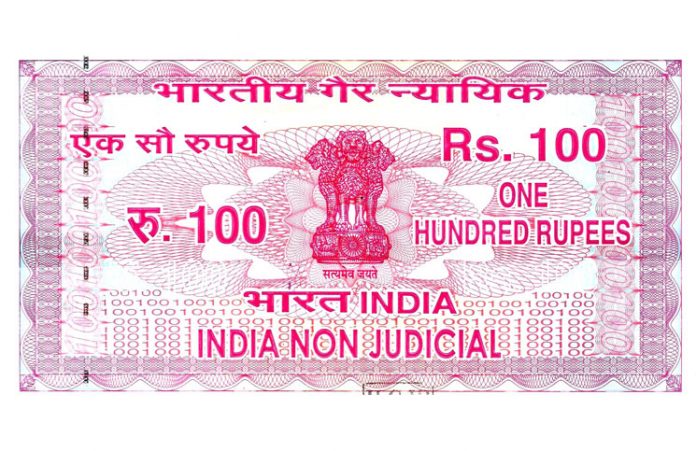
Does stamp paper expire? What is the validity of agreements on old stamp paper?

4
image courtesy - https://blog.ipleaders.in/stamp-duty-types-of-stamp-duty/

This article is written by Harsh Jain. Along with holding degrees in LLB, and LLM, Harsh is NET, JRF qualified. Harsh has successfully cleared Rajasthan Judicial Services, Mains Examination, Gujarat Judicial Services pre, SBI specialist officer scale II online exam and many other competitive examinations. Many of his students are posted as ADJs, JMs, MMs, Lecturers, APPs etc. Also, Harsh is pursuing Diploma in Entrepreneurship Administration and Business Laws from NUJS, Kolkata. This article discusses the validity of agreements on old stamp paper .

Stamping your agreements is critical for enforceability. Stamp paper Can you buy stamp paper in advance and store it? Sometimes, you may a situation arises that you purchase a stamp paper but due to some reasons, were not able to use them. It is entirely possible that if you need a stamp paper of same value or a value more than the value of that stamp, you may want to use the same stamp instead of wasting more money to buy a new one. Here is everything you need to know about its validity and usage.

Validity and expiry of old stamp paper:

As per Section 54 of the Indian Stamp Act, if you do not have any immediate use of a stamp paper, then you can deposit it back to the collector within six months from the date of purchase and take back your money as a refund after deduction of 10 paise per rupee.

In Thiruvengada Pillai Vs. Navaneethammal & Anr. (see here), it was held by the Supreme Court that a stamp paper, even if it is more than six months old, is valid to be used. Section 54 just bars taking refund after six months of purchase, but it does not restrict the use of such old stamp paper for an agreement. Thus, nothing prohibits you from using it even after years of its purchase. Law does not have any prescribed period of limitation for its validity.

But Maharashtra and Gujarat are the two states which have specific provisions stating that if a stamp is not used or surrendered back within six months of the date of issuing them, they will be treated as expired. Section 52B(b) of The Maharashtra Stamp Act (see here) and Section 52C of Bombay Stamp (Gujarat Amendment) Act, 2016 states that if any stamp has been purchased and it is neither used nor any allowances are claimed on it within a period of six months, it will be treated as invalid.

What to do with an old stamp paper?

If you have an old stamp paper, you can do any of the following:

Deposit back to Collector to get a substantial refund:

If such stamp is not spoiled or rendered unfit or useless and you don’t have any immediate use for it, you can deposit it back to the collector within six months of its purchase. According to the provisions of Section 54 Indian Stamp Act, he will pay back your money to you after deducting 10 Paise per Rupee.

In such situation, you will have to satisfy the Collector that:

  • You purchased them for a bonafide intention to use,
  • you have paid the full price of the stamp.
  • And they were purchased within three months before the date of depositing.
  • If you are a stamp vendor, then Collector may pay you full amount without any deduction.

This provision is also present in several state acts. For example, Section 63 of the Rajasthan Stamp Act, 1998.

This provision may be very beneficial to you if you have purchased stamps costing thousands, lakhs or even crores and due to some reasons, you do not need them immediately. In such cases, you can easily surrender your stamp papers back and get a refund back from the collector.

Use it for a new agreement, but purpose must be same for which you purchased it:

You can use such old stamp paper for a new agreement. But, you must keep in mind that according to Section 29 Indian Stamp Act, stamp vendor makes an entry in the record and on the stamp paper regarding full details of the person buying the stamp and the purpose for which it was purchased. Such stamp paper can be used only for that purpose. For eg., if a stamp paper is purchased for sale deed, then it cannot be used for any purpose other than executing a sale deed.

Such stamp paper can be used in two ways.

For executing a new agreement:

You can use it for executing a new agreement or another purpose for what you had purchased it. If the agreement needs a stamp paper of a higher value, then also such stamp paper can be used by adding another stamp paper (new) for the remaining amount. But if by mistake you use a stamp of lesser value, then also you will be required to deposit the amount of difference only, and if you deposit such amount within the prescribed time, then such stamp cannot be rendered invalid.

https://lawsikho.com/course/diploma-entrepreneurship-administration-business-laws
click above

For executing an old agreement:

You can use such stamp paper to execute an agreement which is dated after the date mentioned in stamp paper but was executed before the date of registration. Such kind of old agreement can be executed on such stamp paper. But, if you are doing so just to defraud the government or to deprive it with the duties and penalties as per Indian Stamp act or Registration Act or Any other law in force in India, then you may be penalized.

According to provisions of Section 64 of Indian Stamp Act if you are doing so to defraud the government, or doing any act which is calculated to deprive the government of any duty or penalty under Indian Stamp Act or any other act or law in force in India, you may be penalised for an amount up to five thousand rupees. Similar provisions are present in various state laws to penalize in such cases. For example under Section 75 Rajasthan Stamp Act, for similar kind of activities, you may be imprisoned for up to three years or may also be fined up to twenty-five thousand rupees. You may also be liable under various provisions of IPC. For eg., you may be held liable under Section 465 Indian Penal Code for Forgery, Section 420 Indian Penal Code for cheating and so on.

According to the provisions of Section 25 of The Registration Act, 1908, you may have to pay fine up to 10 times the amount of registration fees for not presenting the document (which is duly executed) for registration. In addition to that, you may have to pay additional fine up to ten times or more according to state-specific laws. For, eg. As per Delhi Registration Rules, 1976, according to Rule 43, you may have to pay fine up to 10 times of the registration fee amount.

Can you execute an agreement of a prior date on a stamp paper which has a new date on it?

Unless it is mandatory to get an agreement registered, as per contract act, Indian Registration Act or any other law in force in India, you are not bound to register documents. But it is possible that you have entered into an oral agreement at the first instance, and after some time you want to get it registered. For that, you will need to execute an agreement of prior date on a stamp paper which is having a new date on it.

According to Indian Contract Act, Section 2(e) “Every promise and every set of promises, forming the consideration for each other, is an agreement.”

According to section 10, every agreement made with free consent, by parties competent to contract, for a lawful consideration, with a lawful object and not expressly declared void by law, is a contract

Section 9 provides that proposal and acceptance of any promise can be made expressly or impliedly.

According to Section 2 and 3 to 10  Indian Contract Act, an agreement can be oral or written. It is not necessary to enter into a written contract. There is no limitation or condition prescribed by Indian Contract Act regarding executing an agreement on stamp paper.

So we can say that if we enter into an oral agreement, we can get it enforced by a court of law in India if we fulfill other conditions required by contract act. Unless an agreement is compulsory to be registered under any law in force in India, you do not have to get it registered. For eg., Section 17 of Indian Registration Act provides for documents for which registration is compulsory.

As generally law considers oral agreements as valid agreements, you can enter into an oral agreement first and then acknowledge it in a later written and registered document. Unless such document is not mandatory to be registered by a provision of any law, it will be completely lawful for you acknowledge an agreement of prior date executed on a stamp with a new date on it without any legal complications. But if you have done anything to defraud the government or to deprive it of any duty or penalty under Indian Stamp Act or any other law, you may get penalized.

What will happen to agreement put on old stamp papers?

As discussed above, agreements put on an old stamp paper are valid. In Thiruvengada Pillai vs. Navaneethammal & Anr. (see here), it was held by the Honorable Supreme Court, that, Indian Stamp Act does not prescribe any expiry date for the use of a stamp paper. The period of 6 months mentioned under Section 54, merely states that if a person is in possession of a stamp paper for which he did not have any immediate use and such stamp is not spoiled or made unfit or useless, he can surrender it to the Collector and get refund for the value of stamp paper after deduction of 10 Paise per Rupee. Section 54 does not compel a person to use a stamp paper within six months of purchase. Therefore, refund of an old stamp paper cannot be taken after six months, but there is no restriction for its use.

Future plans of government

According to the reports published by Business Standard newspaper, Finance Ministry of India is planning to amend a century old Indian Stamp Act, in which stamp papers will come with a validity of only one year. The purpose of such amendment is to stop misuse of stamp papers by preventing people from buying backdated papers to stake their claims on property in future, even when no deal had happened on such date. In addition to this, electronic payment of stamp duty is proposed under the new bill to check the same issue.

They are valid as per current law, but future is doubtful:

Although the use of old stamp paper is valid even after six months of purchasing it, still it is better that you must either deposit it back to collector within six months and get your refund from him or use it as early as possible. It is very risky and costly to use old stamp papers for backdated agreements, but they can be used for new agreement according to current law in force. In future government is planning to limit the validity of stamp papers only up to 1 year. It can remove stamp papers in paper form and introduce e stamp papers to make the process more transparent and prevent loss of revenue to the government. If you still have any old stamp papers kept with you, it is better that you should either use it or surrender it.

LawSikho has created a telegram group for exchanging legal knowledge, referrals and various opportunities. You can click on this link and join:

https://t.me/joinchat/J_0YrBa4IBSHdpuTfQO_sA

Follow us on Instagram and subscribe to our YouTube channel for more amazing legal content.

Reference:

  1. https://taxguru.in/finance/stamp-papers-are-valid-even-after-six-month-of-purchase.html
  2. http://www.business-standard.com/article/economy-policy/stamp-papers-may-come-with-1-yr-validity-113041200025_1.html
  3. https://indiankanoon.org/doc/14125/
  4. http://delhi.gov.in/wps/wcm/connect/doit_revenue/Revenue/Home/Registration+Acts+and+Rules/
  5. http://taxboard.rajasthan.gov.in/Images/rajasthanstampact_13.pdf
  6. http://bombayhighcourt.nic.in/libweb/acts/1958.60.pdf
  7. http://letspedia.com/validity-stamp-papers/
  8. https://taxguru.in/corporate-law/stamp-paper-validityyes.html
  9. http://www.advocatekhoj.com/library/bareacts/indiancontract/index.php?Title=Indian%20Contract%20Act,%201872
  10. http://www.advocatekhoj.com/library/bareacts/registration/index.php?Title=Registration%20Act,%201908
  11. http://www.theindianlawyer.in/blog/2017/10/31/compulsory-registration-documents-registration-act-1908/

Students of Lawsikho courses regularly produce writing assignments and work on practical exercises as a part of their coursework and develop themselves in real-life practical skills.

LawSikho has created a telegram group for exchanging legal knowledge, referrals, and various opportunities. You can click on this link and join:

https://t.me/lawyerscommunity

Follow us on Instagram and subscribe to our YouTube channel for more amazing legal content.

Download Now

How to crack Gujarat Judicial Services in the first attempt: Decoding the uncrackable exam

1
image courtesy - https://www.9curry.com

This article is written by Harsh Jain. Along with holding degrees in LLB, and LLM, Harsh is NET, JRF qualified. Harsh has successfully cleared Rajasthan Judicial Services, Mains Examination, Gujarat Judicial Services pre, SBI specialist law officer scale II online exam and many other competitive examinations. Many of his students are posted as ADJs, JMs, MMs, Lecturers, APPs, etc. Also, Harsh is pursuing Diploma in Entrepreneurship Administration and Business Laws from NUJS, Kolkata. This article is a guide on how to clear Gujarat Judicial Services Examination.

Gujarat Judicial Services exam is one of the toughest exams to crack. Looking from outside it may appear a very easy exam to crack, but when we see there trend we get to know that there are very less candidates being selected, then there are vacancies. Let’s find out if the exam is really that tough to crack down or you have to approach it in some different way to crack it.

First of all few statistics:

What if I say that you have more then 100% chances of cracking GJS? Yes, this is a reality. At Least the figures and data support this statement. When we look at the number of candidates selected as compared to vacancies we find that there are lot more vacancies than candidates are being selected. Recruitment process of GJS 2017 has just completed on 25th March 2018.

Year of examination Number of vacancies Declared Number of candidates who got selected in GJS pre Number of candidates who cleared mains Number of candidates who finally got selected
2016 112 (12 regular and 100 Ad-hoc) 86 31 24 (12 regular and 12 ad-hoc)
2017 129(97 regular and 32 Ad-hoc) 519 69 Result awaited


From the above table, only you can observe that what is the situation.

But the other side of the coin is that as you start clearing the different stages one by one, your chance starts becoming more than 100%.

Eligibility:

  • You must possess a Degree of Law from any University which is recognized by law in India.
  • Must be practicing as an Advocate in Courts of Civil and/or Criminal Jurisdiction on the last date fixed for submission of Online Application. You must be a practicing advocate in any civil or criminal court in India on or before the last date of submission of online application for examination.
  • You must possess a certificate for having basic skills of computer applications/ operation issued by a government institute or other recognized institute as prescribed by Government of Gujarat in General Administrative Department Resolution No. PRCH-102005-1532-K, dated 30/09/2006 and Resolution No.CRR-10-2007-120320-G.5 dated 13/08/2008.
  • Age limit:
Category Upper Age limit (in years)
General 35
SC, ST, SEBC, Orthopedically disabled persons and ex-servicemen 38
Employees working in the Courts or other Allied Departments 40

Syllabus and Scheme of exam:

The whole process of examination is divided into three stages, i.e., Preliminary examination, Mains examination, and interview/ viva voice. Details are as follows:

Preliminary examination:

Pre is an elimination test of 100 marks, and you will get 2 hours to solve these 100 questions. These questions will be of multiple choice type. You will be awarded one mark for each correct answer and, 0.33 mark will be deducted (negative marking) for each wrong answer. 25 questions out of these 100 questions will be in Gujarati language only, and all remaining 75 questions will be in English language only. Pre can be divided into three major parts. Part A, B, and C. Details for each part is as follows:

Part A:

Indian Penal Code The Code of Criminal Procedure
The Indian Evidence Act The Negotiable Instruments Act (Only Chapter XVII)
The Gujarat Prohibition Act


Part B:

The Code of Civil Procedure The Limitation Act
The Indian Contract Act The Constitution of India – [Part-III – Fundamental Rights (Articles 12 to 35A) & Part-IVA – Fundamental Duties]


Part C:

General Knowledge English Language
Test of Reasoning Numerical & Mental Ability
Basics of Computer Applications


Mains examination:

If you clear pre than you will have to appear for mains examination. Mains exam will be divided into three papers, i.e., Criminal paper, Civil paper and Language paper, and there will be 7-8 question in each paper of law while 5-6 questions in language paper. Law papers will of 2.5 hours each and maximum marks are 75 each and language paper will be of 2 hours duration, and maximum marks are 50. Paper 1 and 2 (law papers) will come only in the English language, and you can answer them in English or Gujarati language only, while language paper will be only in the Gujarati language. The syllabus is as follows:

Paper 1 (Criminal):

The Indian Penal Code The Code of Criminal Procedure
The Indian Evidence Act The Probation of Offenders’ Act
The Juvenile Justice (Care and Protection of Children) Act The Protection of Women from Domestic Violence Act,
The Immoral Traffic (Prevention) Act Pre-conception and Pre-Natal Diagnostic Techniques (Prohibition of Sex Selection) Act
The Negotiable Instruments Act (Only Ch.XVII) The Registration of Births and Deaths Act
The Gujarat Prevention of Gambling Act


Paper 2 (Civil):

The Code of Civil Procedure The Limitation Act
The Indian Contract Act The Indian Partnership Act
The Specific Relief Act The Gujarat Court Fees Act


Paper 3:

જોડણી સમાનાર્થી અને વિરૂધ્ધાર્થી શબ્દો
રૂઢિપ્રયોગોના અર્થ અને વાક્યપ્રયોગ, વગેરે (આ વિભાગનું ધોરણ ગુજરાત સેકેન્ડરી એજ્યુકેશન બોર્ડના ધોરણ-12 ના ગુજરાતી વિષય (ઉચ્ચતર કક્ષા) ની સમકક્ષ રહેશે.). ભાષાંતર (ગુજરાતીમાંથી અંગ્રેજી અને અંગ્રેજીમાંથી ગુજરાતી)


For your convenience, I am giving a translated version of this, but that is solely for giving you an idea regarding the syllabus and actual things may vary from this:

Jodni (sort of sandhi in Hindi) Samanarthi and Virudharthi shabd
Rudhiprayog and vakyaprayog etc. ( this will be equivalent to the class 12th level of Gujarat Secondary Education Board). Bhashantar, i.e., Translation ( from Gujarati to English and from English to Gujarati).

Viva-Voice:

In viva, your mental alertness, knowledge of the law, clear and logical exposition, a balance of judgment, skills, attitude, ethics, the power of assimilation, the power of communication, character and intellectual depth and the like will be judged.

How to deal with Preliminary examination:

The preliminary exam is the most tricky part of the whole recruitment process. In it, you have to deal not only with legal questions but also with the question related to GK, maths, reasoning, etc. These are generally weak points for law candidates. If we see it from all India perspective, then we will find that all the candidates are not well acquainted with English and Gujarati languages. When these questions are combined with maths, reasoning, etc. then they become even tougher. Many candidates don’t even fill the forms due to this factor.

But here I have good news for you. You have to score just 50% marks in pre, and you get qualified for mains. In other words, there is no cut off for GJS pre. Every candidate who scores more than 50% marks in pre, qualified for mains. They select 10 to 15 times of the declared vacancies candidates. But the bad news is that if you see the statistics table above, you will find that even that much candidates are not being able to qualify for mains.

Dealing with these issues is not as difficult as it appears. Let’s break-up the pre syllabus in parts and find out how to deal with them.

Legal questions:

These questions are of average toughness level generally. Few are very tough while few are very easy also. Don’t get misled by just seeing the questions in a normal manner. These questions come only in two languages, i.e., the English language (75 questions) and the Gujarati language (remaining 25). Sometimes it is observed by students that questions in the Gujarati language maybe even up to 30+. But students are not allowed to take pre-paper out of the examination hall, and hence, no statement can be made on this issue authoritatively.

It is very challenging for students from many parts of India who are from Hindi medium or some other language background to deal with these questions. It becomes even more difficult even for English medium students to deal with these questions when they are asked in the Gujarati language.

To deal with this issue, you will have to make some strategies. There are some questions from local acts of Gujarat also. Just remember that The Gujarat Prohibition Act is only in pre and it is not covered in the syllabus of mains. There is no need to study it deeply and make detailed notes as it just needs a superficial knowledge. Moreover, it covers only 1-3 marks in the whole paper.

The Constitution is also limited to pre and not covered in mains and in pre also only Part-III – Fundamental Rights (Articles 12 to 35A) & Part-IVA – Fundamental Duties are included in the syllabus. So you don’t have to study Constitution deeply.

They have a very limited syllabus for pre, so you must study all other subjects deeply to have an advantage. There are questions based on Section numbers, case laws, etc. also. So you must possess a good knowledge of at least leading and current case laws and important sections of each subject so that it becomes easy for you to attempt them.

Just read the question carefully and if needed, read it twice before attempting. They may be very easy questions with some twist which you can’t recognize at first look. They will tempt you and force you to commit mistakes. Remember, if you attempt it wrongly, then it will cost you a negative 0.33 mark.

General Knowledge:

These questions are generally divided into three parts. First parts consist of questions from Gujarati GK, second consist off questions from current GK and third from general GK. GK has a weightage of 5-7 marks in the paper. If GK is your weakness, it may be difficult for you to deal with these questions. Moreover, it’s not possible and advisable to study such a huge syllabus of GK which does not have any start or end, just for five marks.

English Language:

English language questions are of secondary (10th standard) and senior secondary (12th standard) level of CBSE and Gujarat board. Any student who has even a basic knowledge of English can deal with them. Just buy some grammar books of 10th and 12th CBSE level and practice from them. This is sufficient to attempt these questions. Don’t waste time and money on high-level grammar books as they are not going to help you get good marks at all. Similarly, a basic level vocabulary is enough, you don’t need an excellent sort of vocab to deal with them.

Reasoning:

These are a bit tricky questions. You must practice well to deal with them. They consume your time while attempting your paper and if your reasoning is weak then you may end up getting negative marks for them.

Numerical and Mental Ability:

Just like reasoning, they are also tricky. Although they are just elementary level questions but sometimes, if not attempted carefully, they end up getting negative marks for you.

Basics of Computer Applications:

Some of these questions are so basic that you don’t have to study at all for them. If you have a basic knowledge of computers (which is a must as per terms and conditions of GJS and even a certificate is required), you can attempt them. Other questions are so high standard that only a person having computers as his subject can deal with them. So again you don’t need to study for them also.

Gujarati language questions:

There is not even a single question directly from the Gujarati language. By that, I mean that they do not ask questions based on Gujarati grammar, etc. in the paper. They use Gujarati as a deadly weapon to eliminate students. They just ask the legal questions, reasoning questions, GK, Maths, Computers, etc. in the Gujarati language.

Imagine a person who is not well acquainted with legal Gujarati terminology, which almost all of you would be. Even the simplest of simple questions become very difficult in such conditions. Questions are easy and tempting, but answers are so confusing that you generally end up marking a wrong option due to lack of knowledge of legal Gujarati language and end up getting negative marks.

Similarly, reasoning and maths are already weak points for many candidates. When they are being asked in Gujarati, there is no way you can attempt them. They become a nightmare for candidates during the examination.

Strategy to deal with pre:

You just have to score 50% marks to get eligible for mains. There is no cut-off for pre. If you score 50%, you are going to appear for mains. Every person who scores more than 50%, marks is on equal footing. Marks you score in pre will not be added to mains or your final score. So no matter how high you score, you have no special advantage.

Just identify your weaknesses and strengths in the syllabus. For someone maths and reasoning may be weakness while GK and English may be his strengths. While for other Maths and Reasoning may be strengths. Just concentrate on your strengths and practice them well. Those who have Maths and Reasoning as their strength have the edge over others. As these people score well in these areas, they also attempt current GK and general Gk question which do not need many efforts. They can also score well in English as it only needs basic knowledge. So it becomes very easy for them to get their score above 50% mark.

Knowledge of Gujarati language is a must. You can’t attempt a question if you can’t even understand it. If you’ll try to guess, it may cost you some negative marks also. Learn legal Gujarati terms. They will pay you a lot during the exam. Just read and understand questions asked in Gujarati twice and then answer them.

You can buy some Gujarati language learning books like Rapidex learn to speak Gujarati or Learn to speak Gujarati in 30 days, to learn some basic Gujarati. You can also take some Gujarati coaching if you are in Gujarat. You can find some Gujarati people (neighbors, uncle, aunty, etc.) and request them to teach you basic Gujarati. You can use Youtube channels providing Gujarati language lessons to learn it. You can also use few language learning mobile apps which connect you with Gujarati people who may teach you Gujarati. The most time consuming and difficult thing in the whole process is the Gujarati language. Once you have mastered it, your chances to clear exam increases to a great extent.

For practice, you can purchase or download some Maths, reasoning etc. books in the Gujarati language.

If you have a good command on Gujarati language and at least three out of maths, reasoning, English, GK and computers along with average knowledge of law, probabilities are that you will easily score 50% marks. You just have to attempt questions carefully and avoid getting negative marks. I again repeat, you just have to score 50% to get eligible for mains. Just leave those question where you have any kind of doubt. Questions asked in the examination are of very average level ( neither easy nor hard). If you have good command on Gujarati and any three of five-part-C components you will easily score 50%. Don’t take a risk by attempting doubtful questions as if you get them wrong, you may get eliminated just because of negative marking.

You never know what will come in exam. You also need a plan B in case level of questions turns into hard from Average. In such case, you just have to manage your paper well rest will be automatically done. Just try to sort questions in few categories from the very beginning as you start attempting them.

For, eg. I used to categorize questions in the following manner: first those which I am 100% sure that I know correct answers for them, second those for which I am more than 90% sure about the correct answer, third those which I am more than 75% sure about the correct answer, and forth those for whom I am 50% sure about the correct answer. I used to cross all the other questions which meant that I don’t have to attempt them as there are high chances of answering them wrongly and getting negative marks. Then I used to start marking first category questions. Suppose you got 38 question for which you are 100% sure. Then start marking second category questions. Suppose you got 9 question for which you are almost sure that they are correct. Now start marking third category questions for which you are more than 75% sure that they are correct. Suppose you got 12 questions in this category. This will bring you to 38+9+12= 59 questions. Avoid attempting fourth category questions in such situation. Attempt them only when you have got less than 55 questions in first three categories. Now suppose you got 5 questions wrong out of these 59. Still, you will be getting more than 50% marks which will safely land you into the mains.

Everybody has his own strategy for the exam I have shared mine with you, but you may make a better strategy for yourself. But you must have some sort of strategy in your mind to attempt a competitive exam paper and also a backup plan to deal with new situations that may come as a surprise. Only studies will not get good scores for you. These strategies will bring a lot of value to your studies. It’s only the way you deal with exams which gets you through it.

No coaching is required for GJS pre, and you will just need some good practice material for MCQ pattern questions. There are few books also which are available in the market for this purpose. You can go to the shop and choose the one which is best for you. You must also have a good command of your bare acts.

How to deal with mains examination:

Dealing with mains examination is not as tricky as it is dealing with pre. GJS mains can be cracked only with a bit of preparation in a strategic manner.

Law:

If you have studied well for mains and have your own notes, then they are more than sufficient for mains. Having good command on bare acts is a must for pre as well as mains. Questions which they give in mains are of very basic nature and general. Anybody with a good level of legal preparation for competitive exams can easily attempt these questions.

Gujarati language:

This is the key to clear GJS mains examination. You have to clear this paper if you want to clear GJS. If you successfully clear this paper then there is no one who can stop you from becoming a GJS. To clear this paper, you may need some guidance. As I mentioned above, either you will have to go to Gujarat to specially learn this language by an expert, or you can take help of some Youtube channels and few Gujarati teaching mobile apps and books.

Learning Gujarati is not a difficult task as it is very similar to Hindi. But practicing it is very necessary. You can take help of any Gujarati relative or neighbor or friend to practice Gujarati with you regularly.

Strategy to deal with mains:

Trends have shown that candidates much less than declared vacancies clear GJS mains. That, in turn, means that if you score even the minimum required marks to clear mains then also you will reach up to interview. This also means that as soon as you clear mains you have more than 100% chance to become a GJS as there are more seats and less candidates. So your first target must be to get minimum passing marks in mains anyhow. Minimum pass marks for individual paper is 40% and for overall aggregate is 50%.

For this just make or get some good notes and learn them thoroughly. Secondly, just learn all the bare acts covered in the syllabus as deeply as possible. You must know all the important sections numbers and provisions in them in your mind. You can also read my article on How to crack Rajasthan Judicial Services. In this article, I have given few tips on making and learning notes in a better way and how to remember them. Just purchase past year papers of GJS mains from the market. There is a trend that they give few questions which have been already asked in past year papers.

Just by learning bare acts well, making and learning good notes on all important topics and solving past year papers you will easily get more than 60% marks in law papers in GJS mains.  You will get 7-8 questions in each law paper. Each question has internal choices available. You have to attempt any one of few available choices. You will get a separate copy for each question, and you have to attempt each question in that separate copy allocated for that question only, and no other copy can be used for it.

Take advantage of these choices available in the questions and attempt those which you know the best. It’s because of this reason only that I have advised that even if you learn bare acts, notes on important topics, and past year papers, you will find enough questions in your paper to score at least 60%.

One question in each paper will be based on true and false. In this question, you get two marks for each correct answer, i.e., two marks for just writing a correct true or false and nothing else. You will have to attempt 8-10 question out of given number of questions. This means you may score at least 15-20 marks straight away in few minutes only. This, in turn, means that even if you have scored 15 marks then you have already got 20% marks (maximum marks for law mains is 75) in your bag and now you just have to score remaining 40%. This is why I advise that good knowledge of bare acts is necessary. To score well in these questions, you must also have good knowledge of leading and current case laws. Questions may come directly from them or even indirectly but they will be based on principles and concepts laid down in them.

When you have scored well in law papers now clearing Gujarati paper is just a formality to reach interview. You need at least 20 marks out of 50 marks (40% minimum) to pass in language paper. Now you will again have to purchase some good Gujarati grammar books to learn it. In this paper, you have 30 marks for grammar and 20 marks for translation. In translation also 10 marks for English to Gujarati translation and 10 for Gujarati to English translation. In grammar questions again you will get plenty of choices.

If you again try to find out a reasonable strategy, you will see that English to Gujarati translation is a bit difficult for a candidate who is not Gujarati and who do not have excess to a good teacher of Gujarati language. But if you have a decent command of Gujarati language with your efforts, then you can easily understand what a given Gujarati paragraph is saying. You just have to write it in English which is not a big deal. You can subscribe a Gujarati paper and read at least one legal topic related news in it. It will not only help you to understand the meaning of what is written in Gujarati but also will give you a good knowledge of legal terminology in the Gujarati language. This will help you to attempt English to Gujarati translation as well. You can also download any free Gujarati news app from app store. I had downloaded Sandesh newspaper app from android store ( there are fake apps also, so please download the newspaper app only) if the app is not related to Gujarati news then it’s a fake Sandesh app. You can choose any other Gujarati news app also as per your preferences. There are websites like Tutor India etc. where you can pay per hour charges and take online classes ( many of such websites take a lot of money and may not be that useful to you. I personally do not recommend them. This was mentioned just to provide information to you. In the end, it’s your choice. Be wise enough to choose. There are free and cheap options available, and I and my students have cleared exams using them). 

Similarly, if you have some good grammar books of Gujarati language just try to do as much as possible from them. If you have a good Hindi grammar, then I have a shortcut for you in this. There are partitions in grammar like synonyms, antonyms, sandhi, muhavare, etc. So if you go through the grammar book, you will find that many of them are same as we say in Hindi. For eg., Bhaskar is a synonym for Surya and so on. In the language paper, they just ask you to write only one synonym, antonym, etc. for that work and you have to make a sentence on that word.

In such situation, if you know how to write a Hindi word in Gujarati, you can easily attempt that question. Don’t try to make complex sentences. Just make as simple sentences as possible. Complex sentences may take away some marks from you as probabilities of mistakes increases, while simple sentences ensure good marks as the probability of them being correct is more. Remember they have just asked you to frame a sentence and not to show your Gujarati knowledge.

Again if you have done this in the manner described by me, then there are chances that you will get at least 25 out of 50 and in no case less than 20 marks. Which means that your aggregate marks will be more than 50% and you will be going for an interview.

Interview/ Viva-voice:

An interview is a topic which needs a separate article to be written on it. But still, you can read my article on How to crack Rajasthan Judicial Services where I have given some general tips to crack RJS interview which applies here also. Here I will give some special tips only for GJS interview.

By the time you reach the interview make sure that you have a very good command of the Gujarati language. Even before the interview, a special interview will be taken by a very high-level Judicial Officer regarding your language. He will test your Gujarati reading ( by giving you a complex text in Gujarati to read) and will also ask its meaning from you. He will also ask you to translate few sentences from Gujarati to English and vice versa. He will also tell you to write in Gujarati, English, Hindi, etc. Then he will issue a certificate to you declaring you pass or fail in this test. You will get a chance to face interview even if you fail in this exam, but chances of impressing interview board after failing here are negligible. But there are candidates who have made this also possible.

It doesn’t mean that because your test has been taken and a certificate has been issued, the board will not test your Gujarati skills. Be assured that they will test it at each and every level and only those who will survive these tests will become GJS. Main emphasis and criteria for selection will be Gujarati language only.

To make your Gujarati better I have already told you that you can practice it with some of your Gujarati friends, take help of some Youtube channels or mobile apps and Gujarati language newspapers and news channels also. But all of them are bit boring methods of learning and practicing. So I have found an innovative method to practice Gujarati and have fun. You can subscribe my facebook page (not group) Gujarat Judicial Services where you will get some Gujarati comedy videos. They are generally 5-15 minutes videos. They do not take much of your time. When you get bored studying and need some rest, you can just start a Gujarati comedy video. In that manner, you will not waste your time, and at the same time, your mind will get refreshed. There are reviews of all new movies in the Gujarati language. There are few, and I will be posting more motivational speeches in the Gujarati language. All this will help you to learn and practice Gujarati language but in a lot interesting manner than all the conventional ways.

Also here you will learn the ‘desi Gujarati’ instead of bookish Gujarati, which will give an impression to the examiner that you are a Gujarati person and this may get you some more marks than what you could have got otherwise. You can connect and ask me also there regarding various legal competitive exams as I mentor and guide absolutely free there or you can also develop some innovative ideas of your own to learn Gujarati by yourself.

Conclusion:

Gujarat Judicial Services exam is a very complicated exam. Some people take it very lightly and fail due to overconfidence while some consider it so difficult that they don’t even try to attempt it. In recent trends, we have seen that although vacancies are being declared, but a lot less candidates are being selected then there are vacancies available. This makes it a golden opportunity for those who study strategically and dream to become a judicial officer. Although this exam is designed for English medium Gujarati people or people with a good Gujarati knowledge including those outsiders who have completed their LLB from universities in Gujarat and settled in Gujarat only and have good Gujarati knowledge of Gujarati language, but still if you work with a proper strategy it is possible for you also. In that case, this exam which is most difficult to clear in terms of selected candidates may become the easiest exam to crack for you. For any kind of further mentorship and guidance, you can contact me on my facebook page Gujarat Judicial Services or on my facebook account personally (here) or on my LinkedIn account (here).

Reference:

Latest Advertisement of GJS from the official website of Gujarat High Court: https://hc-ojas.guj.nic.in/AdvtDetailFiles/Civil%20Judge%20Detail%20Advt_2017.pdf

Download Now
logo
FREE & ONLINE 3-Day Bootcamp (LIVE only) on

How Can Experienced Professionals Become Independent Directors

calender
28th, 29th Mar, 2026, 2 - 5pm (IST) &
30th Mar, 2026, 7 - 10pm (IST).
Bootcamp starting in
Days
HRS
MIN
SEC
Abhyuday AgarwalCOO & CO-Founder, LawSikho

Register now

Abhyuday AgarwalCOO & CO-Founder, LawSikho