Download Now
Home Blog Page 1490

How to tackle professional troubles in your law career

0
comfort zone
Image Source - https://twitter.com/rabehemarketing/status/835066994277830656

This article is written by Aditya Shrivastava, content marketing executive at iPleaders.

Where is the star, you used to be?

Where is the shine, in all your deeds?

I see you shine, once in a blue moon now.

It is not as bright, as it used to be.

These lines are not by any famous personality that I can quote, this is a mere feeling I’ve been going through for the past couple of days. Maybe even months.

Some of us grew up very used to being in the spotlight. We were appreciated for things that we did naturally, easily, effortlessly. If that doesn’t make sense to you, think of the guy in your class who didn’t study much but always got good grades. I am one of those people. I would not study much during school, but always end up doing well in exams. My talent and achievements made me easily stand out in the crowd. College life was wonderful because everyone wanted to be my friend and at the very first job, my boss almost fell in love with my work.

Then I decided to take a leap of faith and join my dream job. I was selected over many qualified and experienced people, so when I joined, I was on top of the world. However, as the initial euphoria settled down, I was faced with some pretty big challenges. I knew it will be hard but I had no idea how hard it will be to go the the next level of expertise and capability.

It doesn’t feel like I am on the top of the world anymore. If you are where I am standing, we have reached a point where it feels like no-one appreciates us enough, our hard work mostly goes unnoticed, and the spotlight is on other people now. I feel like sulking all the time! I am trying my best to do what I have always been good at. Still, I am either intimidated or have been developing immense inferiority complex while facing my colleagues or boss. What is going on? When did life come to this?

All of this will impact anybody’s performance, and my efficiency which I always boasted of seems to be tanking. My best days are not as happy and worsts days are far too many. My expectations from myself are so high already, that I frequently do not meet them and therefore feel dejected and disappointed. I feel frustrated, it’s like I feel off the charmed zone!

It happens to the best, and best only. It happens when we step out of our comfort zone.

Fast growth is not like sitting in a private jet sipping martinis. Growth, most of the time, is painful. It requires you to step out of comfort zone and be extremely uncomfortable. It is like going to gym and lifting weights beyond what you ever imagined you could. It is running a marathon when you have your feet covered with blisters and every cell of your body is aching but still not giving up. It is standing for an idea or for a belief when the whole world thinks you are crazy, but you got to recruit more people anyway if you want to succeed. Growth is going for one more sit up when your body can’t take any more. It is not a picnic in the garden of prima vera on a sunny day.

What are my choices?

I can go and find an easier job where I will be appreciated everyday for what I do. Or I can put growth first and chose to toil it out till I get really good. The second one is the hard choice, and I need to make it again and again, because everytime I fail, I will feel like giving up. That’s human nature. I must fight it and I must win.

If you work hard and you are honest to your work, your biggest nightmare would be not meeting your targets and not being good at what you do. Being in a highly productive state is ofcourse addictive. You want to always take the charge and make sure deliverables are met. You want your boss to appreciate you, and entrust you with more responsibilities. You might often see your colleagues and also wonder, how do they get as much time to relax, when you are swamped with work?

The answer to it is that I made this choice. I like it this way. Where I am today matters less for a person like me than where I want to get. Whatever we may do, we want to be excellent at it. When we do not meet our absurdly high standards, there is the danger that we may start considering ourselves as failures. It has happened to me. When the bug bites, we stop interacting with people who are near us, our sleep starts getting affected, we get cranky and we get too harsh on ourselves. It is quite typical of young high achievers who sets themselves continuously bigger and higher goals.

Let me share with you how I got a grip on myself.

A little background about myself first. An avid writer, and a speaker, I found my love in pen and mic quite early. Trying to make my own nursery rhymes and accompanying my grandmother and father for a radio show, in no time, I got a small but regular segment in my grandmother’s own show. Growing up, writing for various student magazines, I also happened to land a radio show of my own with one of the leading radio stations. This happened even before I graduated from high school, so I became pretty famous as a young achiever.

However, life took it own twists and turns, and I ended up in a law school. Doing fairly well there as well, I ended up with a job offer from one of the leading law firms, solely because of my hard work. I opted out, however, and moved into an MNC. After joining the compliance team, I realised, I didn’t like the work. At this point, I finally answered my calling – writing. I ended up as a content marketing executive with iPleaders.

Getting a dream profile at a really cool company and that too in Goa could be anyone’s best moment in life. However, for me, things didn’t shape up as good. It took me a great deal of time to understand how content writing works (my boss laughs at me when I say this as it is still under two months). I mix up things while writing, get the presentation wrong frequently and make tons of typos. I found it difficult to proofread my own work. While writing was my dream, writing as a day job every day is very demanding on my creativity, diligence, writing skill and abilities.

As I was uninterested in a career in law practice, I always thought that I could still manage with my limited knowledge of law, and compensate with strong argumentative/convincing skills. In my new job I soon learnt that I cannot get away with lack of knowledge. Writers must know stuff. If I want to write about law and legal career, I can’t help but read up, talk to people and research. There is no shortcut.

Always labelled as the “best” at work previously, I was not even anywhere close to what best really looks like. It was just a comfort zone. When you really meet people who are good at their craft, it is a humbling experience. iPleaders has a high standard of writing which you must be familiar with as a subscriber to this mailing list. I still have a lot to learn, and a long way to go to perfect my writing. The amount of new things to learn is simply overwhelming.

It boiled up to the extent, that I almost started considering if quitting was an option. However, things changed for good today morning.

While I was making my breakfast in the morning, I gave it a thorough thought. Is validation that important? Is appreciation that necessary? What is it that is going wrong? There were a couple of questions I had to ask myself in order to make up my mind. However, what I realized was, the solution lies in the very same problem. What do I mean when I say that?

I had to go back to all that I have done in my life so far to understand that this is a mere challenge life is throwing at me. You see, life has been really kind to me and people like me. We didn’t study much to get good grades, our previous bosses loved us because technically there was no one there to be better than us. This is not the case anymore, right? Isn’t that great? If I win this challenge, will I not emerge a better writer, better professional, more knowledgeable about law and legal career than I ever was?

So, why play small games and get consolation prize when the world is out there to be conquered? Is growth more important or do I want more hollow appreciation?

Why were you hired?

Understand this, why were you hired in the first place? Because, you were better than everyone else who applied with you. Can anyone take that away from you? If there are people at work you are intimidated with (trust me, I am!), why not start learning from them? If it hurts your ego, then why not try to get yourself to a position where you prove yourself to be as good or even better than them?

I used to be a pretty decent achiever in my university. In fact, I was amongst those who were usually consulted for advice by juniors. And that is pretty cool, because law students are generally very high on themselves. I have never felt embarrassed to accept when I didn’t know much, but I somehow always managed to appear smart. I was practically the jack of all trades, but I used to present myself as the master of all of them.

After joining my current organisation, I stopped doing that, and relentlessly accepted that I don’t know zilch about anything remotely legal. Probably, I felt too naive in front of the individuals who have hands on experience with legal proceedings, especially because I am a fresher. But, today when I was trying to prove to myself that I know less, I thought, why the hell I am even doing it? I know things, and I can be pretty good at what I know, why am I shying away?

I realized that I am an individual with two dimensions to myself. Either I am that lion who roars and establishes that he is the best in the jungle, or I am that cat which is drenched and left extremely at the disposal of others. I realized, I am slowly letting go of my lion and being more and more a drenched cat. I realized, I need to stop doing that.

I tried, and came to a conclusion that the days which were not my best days were actually the stepping stones and building blocks to my best days. I don’t think I would have ever felt the need to write better, learn more, understand law or even start updating myself with the current affairs had I not landed in this office. If I didn’t beat myself up, if I didn’t feel frustrated, I wouldn’t have felt the need to introspect and understand why do I need to be better in the first place. I wouldn’t have found many insights which later on combined to lead to the days which were magical.

Remember, the time when you played with younger kids and could easily win every game? How did you feel? Now compare it with winning a competition with the best cricketers in the district. Or maybe the state, maybe Ranji trophy or even international cricket. There are whole new levels of cricket to explore. Would you like to play with the younger kids all your life? It gets a lot difficult as you level up, of course. I am sure you will know what I am getting at. The more hardships you go through the better you turn out in the end.

When faced with challenges beyond us, we need to pull up our socks and take it as an opportunity to grow. In all that discomfort we often forget this simple truth. Bring out the inner lion in you, and prove to yourself that you are no less than your peers. In case you are convinced that you are the kitten in the picture, then train and work hard enough till you are the numero uno.

Ramanuj, my boss, shared a personal story with me. English wasn’t his strongest forte when he took NUJS exam for the first time, having studied in a vernacular medium school upto that point, despite being quite good at every other subject. He cracked NUJS through the waiting list on his first attempt, but that was unacceptable to him. He chose not to join any college and worked extremely hard on his English for the next 1 year. He just didn’t crack NUJS in his 2nd attempt, but also was amongst the top 3 in the National Admission Test. Today, it is because of his language and insights that he is one of the top bloggers and TEDx speaker in the country. He gets invited by IITs, IIMs and ISB to teach workshops, deliver lectures and people pay to attend his talks that he delivers in English. Imagine, what would have happened if he gave up trying to master English and rather accepted that he is not good at it?

How much can you push yourself to get back in the zone? What would you have to own the zone like a boss? How much are you willing to give?

What can I do to become more fierce and impactful?

I walked the extra mile. I just didn’t want to reduce myself to being another content marketing executive anymore. I want to be a writer, who is better because of the things he know, analyze and explain. I want to be a lawyer who writes to create impact. I took up this course in order to quickly build up my knowledge of law, which being in the industry I knew would help me to achieve my goal.

I confess, I messed up. My head messed up. But what I realized was, I cannot keep beating myself for messing up. I need to buck up and do what is needed. If I need law, if I need knowledge, if I feel low for not knowing enough, I would become best at it and then see who can challenge me next!

It is the game of thrones for me, a personal one. I know for a fact that I will do whatever it takes to claim back my throne of glory. Even if that means taking out 4 extra hours from my hectic day and spending a month’s salary. It is a price I happily paid to get out of the cobweb that I had settled around myself.

That question can be worth your time, no matter what you do, what state you are in or what you are going through in life.

Are you ready to get out of your comfort zone, take on new challenges, be the best in your field and get what you want from life?

Then get out of your comfort zone, things you normally do, and do something new. Please walk that extra mile you never walked before.


Download Now

Supreme Court Advocate On Record (AOR) Examination

0

In this article, Vedant Shadangi of KIIT School Of Law discusses the syllabus for AOR Exam Of Supreme Court.

Introduction

Advocate On Record exams is conducted and regulated by the Board of Examiners who are governed and regulated by the Supreme Court.

What do you mean by an Advocate on record?

  1. ‘Advocate on Record’ is an advocate who has cleared the AOR exam and is entitled under the Order IV of the Supreme Court Rules, 2013, framed under Article 145 of the Constitution to act, as well as to plead for a party in the Supreme Court of India.[1]
  2. For appointment of Advocates On Record Supreme court of India has issued rule 2, 4 and 6 of Supreme Court Rules 1966.
  3. As per the rules also, no advocate other than an advocate on record shall be entitled to file an appearance or act for any party in the Supreme Court of India. No advocate other than an advocate on record can appear and plead in any matter unless he is instructed by an advocate on record.
  4. An advocate can be registered as an advocate on record if he qualifies the requirements as laid down by the Supreme Court in the Supreme Court of India Rules, 1966.[2]

Eligibility criteria

If an advocate wants to practice as an advocate-on-record in the Supreme Court he or she needs the following qualification

  1. The advocate must have a practice for five years as an advocate.
  2. And thereafter has to intimate to the Supreme Court that, he or she has started taking training with a Senior Advocate on the record because he or she intends to become an Advocate-on-record.
  3. After the expiry of one year’s training, the advocate has to appear for an examination conducted by the Supreme Court itself.
  4. After an advocate passes this examination, he or she must have a registered office within a radius of 10 miles from the Supreme Court building and a registered clerk. It is after this that the Chamber Judge of the Supreme Court accepts him as an advocate-on-record.

Significance of AOR Examination

Practicing at the top court of law requires expertise. Therefore, having a concrete standard of court craft and litigation practice is a must. This standard is ensured by the Advocate on Record Examination. Taking the AOR exam and conquering it is not an easy task. This 2011 report says, only 18% of the test takers pass the AOR examination. 

Passing criteria and format of exam

  1. It’s a 3 hr. exam and is held in-between the month of May and June.
  2. The exam held for four days for four different papers.
  3. The whole exam consists of a total of 100 marks and a total of 27 question divided into four papers.

The passing criteria for the exam are 50% for each subject and a combined aggregate of 60% in all the subjects. Link to the previous year question papers can be found here

Advocate-on-record exam syllabus

There are four set of paper of four different subjects namely,

Practice and procedure of Supreme Court – This includes

  • Learning important provisions of the constitution of India relating to jurisdiction of the court.
  • Supreme Court Rules and provisions of Civil Procedure Code, Limitation Act and the General Principles of court fees Act.

Drafting – This includes,

  • Petitions for Special Leave and Statements of Cases, etc.
  • Decrees, Orders, and Writs, etc.
  • Syllabus includes petitions of appeal, plaint and written statement in a suit under Article 131 of the Constitution of India; review petitions under Article 137 of the Constitution of India; transfer petitions u/s 25 of the Civil Procedure Code; Article 139 of the Constitution of India and Section 406 of the Criminal Procedure Code, 1973; contempt petitions under Article 129 of the Constitution of India, interlocutory applications including criminal miscellaneous petitions for bail, condonation of delay, exemption from surrender, applications for revocation of special leave, etc.
https://lawsikho.com/course/certificate-course-in-advanced-civil-litigation-practice-procedure-and-drafting
Click Above

Advocate and Professional ethics – This includes,

  • The Advocates Act and Cases reported under the Advocates Act, particularly disciplinary proceedings.
  • Cases relating to the Contempt of Court involving Advocates.
  • The Bar Council of India Rules.
  • The Supreme Court Rules, 2013.

Leading cases 

This includes all the cases as notified by the exam department. The list of the cases as according to exam of 2017 can be found here

Study materials

In its official site, the Supreme court has also provided the study materials which could be found here

Result of the exam

For result relating information, Regulation 11(i) & 11(ii) are reproduced:-

Regulation 11(i)

“A candidate, who fails to obtain 50 per cent in one paper only but obtains 40 per cent in that paper and also obtains 60 per cent in the aggregate in the remaining papers, shall be allowed to appear in that paper at anyone subsequent examination on payment of the full examination fee and he shall be declared to have passed the Advocates-on-Record Examination if he obtains 50 per cent marks in the paper in which he has so reappeared and the marks so obtained in the paper he has reappeared taken with the marks obtained in the remaining papers at the earlier examination are 60 percent of the aggregate marks in all the papers.

Regulation 11 (ii)

“A candidate who passes in all the papers at any single examination but fails to obtain 60 percent of the marks in the aggregate may, on payment of the full examination fee, appear at anyone subsequent examination in one of the papers only and shall be declared to have passed the Advocates-on-Record Examination if the marks obtained by him at the subsequent examination taken with the marks obtained in the remaining papers at the earlier examination are 60 percent of the aggregate marks in all the papers. The option will have to be exercised by the candidate at the time of filing of a proforma application for appearing in the subsequent examination and the option once exercised shall be binding on the candidate.

The Candidates are informed that in ensuring examination those who are given roll number and who absent themselves in examination without assigning sufficient reasons in writing to the secretary will be treated as not sufficiently prepared and will be dealing with under regulation 5(b) without giving further opportunity, and time may be prescribed within which they shall not present themselves again for examination except with prior permission of the chairman of board of Examiners.

Bar on reappearing for the AOR exam – Regulation 5 (b)

5(b) “If the committee on the recommendation of the Board of Examiners is of the opinion that a candidate has not sufficiently prepared himself for the examination they may prescribe a time within which he shall not present himself again for examination.

The candidates are further informed that as per registration 11 (iii) of the Regulations regarding Advocates-On-Record, a candidate, who fails in all the papers of the examinations, shall not be permitted to appear in the next examination.

The candidates are further informed that as per Regulations 11 (iv) of the Regulations regarding Advocates-On-Record Examination, a  candidate shall not be allowed more than five chances to appear at the examination. Appearance even in any one of the papers in an examination shall be deemed to be a chance.

Professional ethics an AOR must know

  1. It is not an individual service rather, it’s a public service, and hence trust is attached to the work and the advocate should not involve in any work which hampers the trust.
  2. Should follow the principle of integrity and morality in his/her work.
  3. Should do nothing which will detract the dignity of the court.
  4. Should never indulge in any misconduct.
  5. Should maintain secrecy and trust between himself and his client.
  6. Should commit his/her work towards the welfare of the society, and not towards focussing on only earning money.  
  7. Fees charged should be according to rules.
  8. Should never abuse his/her powers to fool clients.
  9. Should strictly follow the court rules and orders and should respect the court.
  10. Should work for the activity of social welfare rather than just using skills for litigation and adjudication[4].
  11. Should not use any unfair means against the opposite parties.

Difficulty level of the AOR exam

It’s true that every year the questions paper gets difficult and lengthy, and according to a source, the passing criteria has also increased[5]. There are various views on the AOR exam, and on many interviews, it is found that some find it difficult while others find it lengthy though, it’s their own perspective.

Few interviews can be found out here.

Conclusion

As a constitutional right, the AOR Exam conducted by the supreme court evolves out as a standard of eligibility for appearing, pleading and acting before the supreme court. It ensures that a lawyer appearing before it has the right knowledge, skill, and authority and is fit to take the case from people and fight for them in the best possible manner.

LawSikho has created a telegram group for exchanging legal knowledge, referrals and various opportunities. You can click on this link and join:  

https://t.me/joinchat/J_0YrBa4IBSHdpuTfQO_sA

Follow us on Instagram and subscribe to our YouTube channel for more amazing legal content 

References

[1]https://www.legallyindia.com

[2]http://supremecourtofindia.nic.in/supreme-court-rules-2013

[3]www.supremecourtofindia.nic.in

[4]http://supremecourtofindia.nic.in/pdf/aorexam/Lecture%20regarding%20Professional%20ethics%20-%20Mr.%20R.Venkataramani,%20Senior%20Advocate-%20Supreme%20Court.pdf

[5]https://www.legallyindia.com/the-bench-and-the-bar/pune-university-symbi-top-june-2016-aor-exam-pass-rate-drops-20170209-8296

www.lawpreparation.com

http://supremecourtofindia.nic.in/pdf/aorexam/Lecture%20regarding%20Professional%20ethics%20-%20Mr.%20R.Venkataramani,%20Senior%20Advocate-%20Supreme%20Court.pdf

Download Now

Best business structure for incorporating your E-Commerce Business

1
E-Commerce Business

This article is written by team LegalWiz.

E-commerce industry has achieved remarkable growth since half a decade in India. The step of planning the business is achievable by the promoters in no time because of their proficiency in the field. The business model is when finalised, next step will be to get the business on plot through business registration. The entrepreneurs seek the guidance for establishing their business to commence the activities as legal entity. The article here gives gist on how to register an e-commerce business in India.

  1. Which form of organisation is most suitable for an e-Commerce Business?

Priority concern for the e-Commerce organisation should be limited liability of the promoters as the e-Commerce business inherent higher risk in nature of the business. The corporate organisation structures like Limited Liability Partnership and Companies provide the benefit of limited liability. LLP ensures the entry for the medium scale businesses easy with the scope of business’s business. Further, it also allows working with the flexibility as per agreement of the LLP.

What are the aspects you should consider for choosing the form of organisation for an e-Commerce Business?

Capital requirement:

The introduction of capital will depend on the scale of operations. When the business will operate on large scale, capital will be infused more with the help of capital through private equities or public issues; hence a Company will be preferable for this. However, the business that is to be established to operate at medium scale will require limited capital to be introduced. The limited capital requirements can be gratified through capital of Partners or loans from financial institutions. Here, formation of LLP  will be suitable option.

Ownership and control

In case of Limited Liability Partnership, the ownership share will be divided as per the LLP Agreement and terms thereof. However, if the Companies bring the capital through equities or public, it will divide the ownership rights and control of the operations. Close control over operations and administration will be available in case of Limited Liability Partnership Registration.

Growth Aspects

The business established as Private Companies will be having higher scope of growth compared to Limited Liability Partnership as it will have option to convert the Private Company into Public Company. However, in case the LLP can also be converted into public or private company by following the procedure prescribed. The conversion procedure is also made easy in Companies (Amendment) Act, 2017.

Compliance Cost:

In comparison of both Private Company and Limited Liability Partnership, the cost of incorporation, as well as post incorporation compliance, is less in case of LLP. The LLP will not be required to appoint statutory auditor until crossing the prescribed limit.

  1. Whether the domain should be registered before its registration of business?

The domain name for an e-commerce business is most important to secure as the whole industry will know from its domain name. The domain name should be easy to remember and spell that uniquely represents the activity or characteristic of the business. However, the concern arises while the establishment of business as LLP or company that when should the domain name be secured for registration purpose.

In case the promoters wish to keep both domain name and organisation’s name as same, it is advisable to make the application for name approval first and then secure the domain name. First, the applicant shall make a search for both name availability at MCA portal for LLP and domain name availability. As the approval criteria for the name approval of the LLP is stringent, promoter shall make sure the approval of from MCA.

  1. What will be the next step?

As soon as the promoters receive the Name Approval, they should proceed with the Limited Liability Partnership Registration by filing of application of incorporation. Upon approval of the firm, the promoters can commence the business under this name of the LLP and undertake the business activities. The form for incorporation will be filed in Form 2 and subsequently, LLP Agreement shall be executed and filed within 30 days of formation of LLP in India.

  1. Bank Account and Payment Gateways

After registration of Limited Liability Partnership, a current account at the bank shall be opened to route the transactions of the LLP. Further, as online e-commerce operators, receipts of payments from third parties. The payment gateways will allow accepting the credit card, debit card and internet banking transactions from the third parties. The accumulated payments in the payments gateways will be transferred to the bank account of the LLP within decided period.

  1. Tax and other Registrations

Under GST Regime, it is mandatory for the online platform providers and aggregators to register themselves under GST Law irrespective of their turnover and activities. Hence, registration under Goods and Service Tax will be the step next to opening the Bank Account in name of LLP. If the LLP will indulge in the international market to transact across the country’s boundary, the registration under IEC will also be required. In India, the entities are required to obtain Importer – Exporter Code to indulge in import or export of goods.

  1. Legal Documentation

Legal Documentations will be must for the dealers or service providers under this category. As the organisation will be communicating with the third parties through web portal, disclosures and privacy policies are necessary after LLP registration. Terms and conditions as well as privacy policies customised as per the specified business.

Flexibility and less compliance cost assured by Limited Liability Partnership make it easy for the start-ups to commence and operate as e-Commerce in India. Where formation of Limited Company is more preferable to commence business as e-Commerce, the formation of LLP in India is also a considerable option for this business. Read a comprehensive guide on formation of LLP in India here.

About Author:
Get in touch with experts at LegalWiz.in for free consultancy with regards to LLP incorporation in India. Visit www.legalwiz.in for simple, affordable and transparent Incorporation process and seek advice from our experienced Professionals at 1800-313-4151 or [email protected].

Download Now

Why is my internship application getting rejected and what can I do about it?

1
Ace your internship
Image Source - http://hizmetnews.com/23467/internship-opportunities-rumi-forum/#.WoE5--bhWf0

This article is written by Mohona Thakur of team iPleaders.

Today morning my boss asked me to take over my colleagues work till the colleague recovers from his illness and returns to office. Had this been my previous office, it would have meant just another day at court, appearing and possibly arguing before a judge. Here, at iPleaders, it meant writing; writing a well researched article, and that’s something I haven’t done since I graduated from law school.

I consider writing as a gift. Unfortunately, I can only write when I can personally connect to an issue, or if it’s a research proposition for a moot or a real case. Then I can draft. So, I conveniently decided to procrastinate instead and put my effort towards completing my daily target list. I began with the easiest – ‘Review Internship Applications’.

On Saturday, iPleaders sent out a ‘Call for Interns’ on Lawctopus. Since then, we have had a large number of applications pouring in. During the course of the past two days, I’ve been reviewing these applications to find a suitable intern. It’s not been a pleasant experience. Out of about 50 applications that we have received so far, there is just one that makes the cut. This made me think. Is it really that difficult to apply for internships? Is drafting a cover letter really that difficult?

Barring the applications that just had “PFA CV for Internship” written in the body, there were internship applications that addressed us as an ‘esteemed law firm’ or thought we work on Intellectual Property Rights. Majority of the applications were for a different period than what was specified on the post. However, what bothered me the most were the applications that needed serious spell-checks.

Let me give you some perspective: the post published was on behalf of an online legal education platform (this was mentioned in the post), for the period of February-March and for the content-marketing team which means, we require you to be able to communicate.

Imagine if you were at the receiving end of an application that read this way:

“Dear Sir/Ma’am,

I XYZ from ABC Law School wishes to apply for a internship at you’re esteemed law firm for the period of May-June 2018. Please see CV attached.”

OR

“Greetings Sir,

I, XYZ from ABC Law School is writing to apply for an internship under your firm for the month of july 2018. I was acquainted with your organization through web sources. Already mentioned in my CV, I have already intern at three district courts.”

Now, do we recognise a problem here?

I vividly remember how during my initial few attempts at writing a ‘full-proof’ cover letter, I’d send it to my mother for a review. She consistently told me that I couldn’t market myself. Apparently, I was too modest! Her inputs added more value to the letter; it was only an add on that she was an HR manager!

While I was reviewing these applications today, looking at the poor quality, I realised: “But what about the majority of law students who don’t have an HR for a mother?” So I decided to write a post trying to impart everything my mom taught me about applications from an HR’s perspective!

Here is what you can do to ace that internship

Research: Shows Potential & Effort

Know where you are applying to! It is absolutely necessary that you research about the place that you are applying to, whether it is a law firm, a company, an NGO or a blog. You cannot call a company an esteemed law firm. It is unacceptable; shows how uninterested you are in the internship.

Today, thanks to Google and LinkedIn, information about everyone is available on the internet. Go a step further, figure out who is it you are applying to? A letter addressed as ‘Dear Sir’ when it is ideally supposed to be a ‘Dear Ma’am’ won’t help you bridge the gap between an application and an internship!

Be Specific About The Duration Of The Internship: Shows Attention To Detail

If you are applying to an organisation that has specifically asked for interns for the period of May-June, then apply for that period only. If you are occupied, don’t apply.

Do not treat this as a lottery ticket where you think your luck might rule in your favour. Please understand that the requirement of the organisation is for that specific period, if they required interns for September, they would advertise for September.

Customize Your Applications: Shows Effort & That You Are Smart

Let’s say you are applying to a corporate law firm for an internship. Will writing two paragraphs highlighting various internship experiences with TUV and PQR litigation firms help? Think about what the firm is looking for in an intern. Does a corporate law firm require its intern to have attended courts? Which team are you applying to? Does it add any value to your application?

If you are writing specifically to the Telecom, Media and Technology team of a reputed law firm, would highlighting your litigation experience matter? Maybe, if you’ve appeared or assisted in such cases. Will your diploma in media and entertainment law help? Definitely. Domain knowledge is an add on.

Identify what it is that you have that makes you sell, gives you an edge over others for that particular internship!

Proof-Read Your Applications: Spelling Mistakes Are An Immediate Put-Off

Would you like to read an application that says: ‘I would like to apply for this internship for a period of 4 weaks beginning from 1st May, 2018.’ I’m sure the answer to that is a no.

Proof-reading is inherent to law students, whether it’s for research papers, examinations, moot court memos or a cover-letter. You lose marks for spelling mistakes, bad grammar and formatting. Your first impression is the last impression. The ones reading your application may have never met you, this is your chance to make it or break it.

Presentation & Communication: Write Simple Applications, Fancy Language Doesn’t Get You Brownie Points

Simple applications are the most effective applications. This is something I learnt while I was applying to companies for internships. The simple, straight-forward applications got me through to Unilever, Hindustan Times, L&T and Godfrey Phillips India (now that I’ve mentioned this, please avoid asking me for their contact details).

What did I do right? I wrote short and crisp cover letters keeping in mind that the HR Department of these companies would be swamped with such applications. I took care of the finer details – the font and the font size were constant, there were one line gaps between paragraphs. Anything that looks good is attractive, isn’t it?

Why do you need to look at your applications from the HR Manager’s point of view?

Do you remember giving the board exams? I certainly do. I scored a 77% in my tenth board exams. Did I not study enough? Was I dumb? Two years down the line, I scored a 95% in my twelfth boards. How did I manage an eighteen percent jump? I figured that I had to make it easy for the examiner to check my paper. I had to give them the answers that they were looking for instead of writing the answers I thought were right. Now apply the same logic to internship applications!

I come from a background of no lawyers, not even in my distant relations. I had chosen law because I wanted to be different – different from the engineers, doctors and teachers. I started interning from the very first semester of law school and, without default, interned during every semester break.

Having no connections in this industry might have not worked in my favour. However, I’m sure if I had a mentor who guided me on how to go about the application procedure and consequently what to do and not do (HR mom can only help you so far) in order to convert my internship into a job, I would have considered myself lucky! iPleaders now has a course to address this very problem.

Ace Your Internship is not only going to guide you through the process of CV building, drafting an effective cover letter, arrange mock interviews, but also help you perform extraordinarily well at your internships!

How do we do this? We begin with the basics. We help you build a strong LinkedIn profile, apart from your resume. Recruiters google you, it’s true! We also allott tasks and assignments just like you are allotted while interning at firms or companies and continuously review them. What’s better? We have a mentor for each student. The mentor will guide you through the process. If you’re interested, you can access the course module here.

Here’s hoping to review better applications and your chance to rise up to the opportunity and grab it with both hands while it lasts!

Download Now

Right to strike under Industrial Dispute Act, 1947

0

This article is written by Tanishq Khandelwal, from School of Law, University of Petroleum and Energy Studies. The following article talks about the legality of strikes, its fundamental values and what are the after consequences of strikes.

Brief Overview

Right to strike is recognized globally. Article 19(1) the Constitution of India 1949 guarantees the protection of certain freedoms as fundamental rights.

All citizens shall have the right

  1. To freedom of speech and expression;
  2. To assemble peaceably and without arms;
  3. To form associations or unions;
  4. To move freely throughout the territory of India;
  5. To reside and settle in any part of the territory of India; and
  6. To practise any profession, or to carry on any occupation, trade or business

However, strike is not expressly recognized in the Constitution of India. The Supreme Court settled the Case of Kameshwar Prasad v. The State of Bihar on 7 July 1958 by stating that strike is not a fundamental right. Government employees have no legal or moral rights to go on strikes.

Industrial Disputes Act, 1947

India recognized strike as statutory right under Industrial Disputes Act, which came into force on April 1, 1947. Prior to Industrial Disputes Act, 1947, India had enacted its first industrial disputes legislation i.e. Employer & Workmen Disputes Act, 1869 and subsequently Trade Disputes Act, 1929 and Rule 81A of Defense of India Rules.

Experiences from Employer & Workmen Disputes Act, 1869 reveal that this act was much against the workers. Trade Disputes Act, 1929 had brought in a special provision of strikes, however, such legislation could not establish peace in the industries due to strike problems and disputes kept on continuing. Further to overcome this, Rule 81A of defense rule was brought in during the Second World War. After the Second World War Industrial Disputes Act, 1947 came into the picture to sort out the disputes in industries. Its applicability is extended to the whole of India. It is applicable to existing industry and not on dead industries.

Meaning of Strike

As per Cambridge Dictionary “Strike is to refuse to continue working because of an argument with an employer about working conditions, pay levels, or job losses”.

General Meaning

A strike is a powerful weapon used by trade unions or other associations or workers to put across their demands or grievances by employers or management of industries. In another way, it is the stoppage of work caused by the mass refusal in response to grievances. Workers put pressure on the employers by refusal to work till fulfilment of their demands. Strikes may be fruitful for workers’ welfare or it may cause economic loss to the country.

Types of Strikes

Based on the phenomena of strikes around the world, strikes can be categorised into economic strike, sympathy strike, general strike, sit down strike, slow down strike, hunger strike and wildcat strike have been experienced.

https://lawsikho.com/course/diploma-industrial-labour-laws
click above

Economic Strike – Such strike happens due to economic demands like increment of wages and allowances like house rent allowance, transport allowances, bonus etc.

Sympathy Strike – In such strike union or workers of one industry join the strikes already hailed by other union or workers.

General strike – This strike intended to increase the political pressure in the ruling party by all unions or members in a region or state.

Sit down strike – In such case, workers hold strikes at the workplace and none of the workers stays absent from duty but they all refuse to work till their demands are fulfilled.

Slow down strike – It means workers or unions don’t refuse to work but put pressure on industries to get their demand by reducing or restricting the output of the production of an industry.

Hunger strike – It is one of the painful strikes by the striker where workers go on strike without having food/water to redress the grievances. The employees of Kingfisher airlines went on hunger strikes for salary dues of several months.

Wildcat strike – Such strike happens by the workers without the consent of union and authority. In 2004, advocates went on wildcat strike at civil courts in Bangalore to protest the remarks allegedly made by an assistant commissioner against them.

However, if we see the history of strikes, it is found that strikes mostly occur due to issues related to wages by the employers to the workers.

Few Instances of Strikes in India

In March 2012, nurses employed by different hospitals in Chennai went on strike for 7 days demanding from hospital management hike of basic wages to Rs 15000/-, apart from leave benefits and annual increment. All the well-known hospitals like Apollo, Fortis, Max etc.came to a standstill because of the strike.

In January 2014, Kingfisher employees went on hunger strike due to non-payment of salary for 17 months.

In September 2016, tens of millions of Indian workers of public sector had gone on strike demanding higher wages. Banks, power stations were kept shut and public transportation systems froze in some of the states. Later the government considered their demands and increased the wages. It was the world’s largest-ever strike.

Strike under Industrial Dispute Act, 1947

For strike, the industrial dispute act under 2 (q) defines strikes as “a cessation of work by a body of persons employed in any industry acting in combination, or a concerted refusal, or a refusal, under a common understanding of any number of persons who are or have been so employed to continue to work or to accept employment”. 

In the case of “Cox and Kings Limited v. Their Employees”, the Court held that a strike can be considered justified if it is in connection with a current labour dispute or directed against an unfair labour practice of the employer.

Under the following situation as given under section 22, on these grounds the strikes can be considered as illegal:

  1. Without giving to employer notice of strike within six weeks before striking; or
  2. Within fourteen days of giving such notice; or
  3. Before the expiry of the date of strike specified in any such notice as aforesaid; or
  4. During the pendency of any conciliation proceedings before a conciliation officer and seven days after the conclusion of such proceedings.

But herein it is important to notice these that these arrangements don’t forbid the labourers from demonstration yet expect them to satisfy the condition before taking to the streets. Further, these arrangements apply to open utility assistance in particular. The Industrial Dispute Act, 1947 doesn’t explicitly specify who takes to the streets. Nevertheless, the definition of the strike itself suggests that the strikers must be persons, employed in any industry to do work.

Further, the provisions under section 23 are general in nature. It imposes general restrictions on declaring strike in breach of contract in both public as well as non- public utility services in the following circumstances mainly: –

  1. During the pendency of conciliation proceedings before a board and till the expiry of 7 days after the conclusion of such proceedings;
  2. During the pendency and 2 months after the conclusion of proceedings before a Labour Court, Tribunal or National Tribunal;
  3. During the pendency and 2 months after the conclusion of the arbitrator, when a notification has been issued under subsection 3 (a) of section 10 A;
  4. During any period in which a settlement or award is in operation in respect of any of the matter covered by the settlement or award.

The main purpose of this section is to maintain the untroubled and discipline atmosphere when conciliation, negotiation proceedings are on the process without any disturbance.

As held in the case of Ballarpur Collieries Co. v. The Presiding Officer, Central Government Industrial Tribunal, “It was held, if a person was employed in public utility services then, he/she cannot go for a strike without the consent and gathering the procedures which must be satisfied in the provisions.”

  • Illegal Strikes

Section 24 of the Industrial dispute Act, 1947 provides that strikes which are in non-compliance to section 22 and section 23 are illegal.

  1. A strike or a lockout shall be illegal if,
    1. It is commenced or declared in contravention of section 22 or section 23; or
    2. It is continued on contravention of an order made under subsection (3) of section 10 of subsection (4-A) of section 10-A.
  2. Where a strike or lockout in pursuance of an industrial dispute has already commenced and is in existence all the time of the reference of the dispute to a board, an arbitrator, a Labour Court, Tribunal or National Tribunal, the continuance of such strike or lockout shall not be deemed to be illegal; provided that such strike or lockout was not at its commencement in contravention of the provision of this Act or the continuance thereof was not prohibited under subsection (3) of section 10 of subsection (4-A) of 10-A.
  3. A strike declared in the consequence of an illegal lockout shall not be deemed to be illegal.

Constitution stand on the legality of the strikes

Contrary to the international laws where the right to strike is generally considered as a fundamental human right; but here in  India Right to Strike is not expressly recognised by the law, it is not an absolute right, exceeding this right comes with reasonable restrictions which are being imposed by the state. 

Under entry 29 in list III, (Concurrent List) of the VII the schedule of the constitution of India, deals with the matter of trade unions, industrial and labour dispute; entry 61 (concurrent list) dealing in the matter of industrial disputes, concerning union employee, empowered the central as well as the provincial and presidency legislatures to legislate on the following matter.

According to the concurrent list, it specified that the trade Union, Industrial and Labour disputes related to entry 22; entry 23 deals with social security and social insurance, employment and unemployment and entry 24 deals with the welfare of labour, including the condition of work, provident funds, employers liability, workmen’s compensation etc. Thus, both the parliament and the legislature have the competence to legislate on this subject.

In article 19(1) of the Indian constitution guarantees the protection of certain freedoms as a fundamental right. The constitution of Indian has specified that all citizen shall have the right i.e, To freedom of speech and expression, To Assemble peaceably and without arms, To form associations or union, To move freely throughout the territory of India, To reside and settle in any part of the territory of India, and to practise any profession, or to carry on any occupation, trade or business. But the principle of the right of the strike is not expressly defined or recognized under Indian constitution 

In the case of ‘All India Bank Employees Association v. I. T.’,

Supreme Court held that “the right to strike or right to declare lockout may be controlled or restricted by appropriate industrial legislation and the validity of such legislation would have to be tested not regarding the criteria laid down in clause (4) of Article 19 but by totally different considerations.”

The Supreme Court concerning strikes has the same point of view that the right to strike is an important weapon in the armoury of employees as a mode of redress. It is a right earned by the employees as a form of direct action during their long struggle. It is a weapon to safeguard and preserve liberty. It is an inherent right of every employee. Being an essential right for every employee, right to strike is an inherent legal strike, despite the fact it cannot be raised to the status of the fundamental right. 

Both Indian constitution and industrial dispute act, 1947, are on common grounds, both of them thinks that the right to strike is a legal right and to the sustainment of this right comes with reasonable restrictions. The significance of the right to strike is the core of significance to the principle of collective bargaining of each worker.

Hence, the constitution provides guaranteed fundamental right to for association and union under article 19 of Indian constitution but it’s doesn’t provide the fundamental right to go on strike.to till date, it remains a disputable topic whether the right to strike is a fundamental right or not? No clear view has been provided by courts on strikes. But one thing is clear and cut that the right to strike is a statutory implied right with certain restrictions.

Consequences of illegal Strike

Economic Consequences: Losses incurred by strikes are humungous and serious, in some cases can even lead to the bankruptcy of the industry. The economic losses caused by the strike may be serious for the employer. During strikes, production stops, sales go down, due to which rival companies use this opportunity to capture their market and industry loses its consumers and their trust, strikes badly affects the market goodwill of the company. 

Both parties i.e, employer and employee are at loss; for employers the quick losses capital loss, loss of profits, the delaying of orders and loss of goodwill as well as the possible incurring of insurance or strike-breaking expenses while on the worker’s side there is the loss of wages, the contracting of debts and all the personal hardships that may be involved.

The losses incurred by a strike are difficult to be calculated economically. Strike can have adverse effect leading to an unstable foreign investment in an economy. Furthermore, the negative effects on international trade include the hindrance of economic development and creating great economic uncertainty – especially as the global media continues to share details, images and videos of violence, damage to property and ferocious clashes between strikers and security.

Social Consequences: the social consequences of the strike are serious, and mostly affect the employees; as they are the ones who are losing their wages, they are at greater risk of losing their jobs. Loss of wages or loss of jobs will directly affect in curtailing their consumption and expenses and further strikes in essential utility services effects the tripod of any industry i.e, suppliers, manufactures ( both employer and employees ) & customers.  

A hostile attitude on the part of the employer towards their employees lead Dismissal of workmen

In Punjab National Bank v. Their Employees, court observed that in the strike, the employer might bar the entry of the strikers within the premises by adopting the effective and legitimate method in that behalf. He may call upon employees to vacate, and, on their refusal to do so, take due steps to suspend them from employment, proceed to hold proper inquires according to the standing order and pass proper orders against them subject to the relevant provisions of the Act.

The effect of a strike is that the workmen cannot claim wages for the period during which an illegal strike continues. It is observed that if the strike is legal the workmen are entitled to wages. A strike is legal or illegal, justified or unjustified is the question of fact which is to be judged in the light of the fact which is to be judged in the light of the facts and circumstances of each case.

In Cropton Greaves Ltd. v. Workmen, Supreme Court observed that the if a strike is legal as well as justified then, the worker is entitled to wages for the period of strike, the strike should be legal and justified. Whether a particular strike is justified or not is a question of fact, which has to be judged in the light of the fact and circumstances of each case. The use of force, coercion, violence or acts of sabotage resorted to by the workmen during the strike period which was legal and justified would disentitle them to wages for the strike period.

A strike is legitimate if it doesn’t disregard any arrangement of the provision. Again a strike can’t be said to be unjustified except if the purposes behind it are altogether unreasonable or irrational. It is likewise all around settled that the utilization of power or brutality or demonstrations of treachery turn by the labourers during a strike disentitles them to compensation for the strike time frame.

Legal consequences: The legitimateness of a strike may rely upon the article, or reason, of the strike, on its planning, or the direction of the strikers. The article, or items, of a strike and whether the articles are legitimate are matters that are not in every case simple to decide A strike, legal or illegal, justified or unjustified does not dissolve the employer-employee relationship.

Normally taking part in the illegal strike amounts to misconduct on the part of a workman for which they invite the punishment of dismissal. Whether the employer is free to punish dismissal from services in such cases has been subject to regular domestic enquiry to determine the quality of misconduct and quantum of punishment by finding out whether they were peaceful strikes or violent strikers. It is only after complying with these requirements, a workman if found guilty of the charges may be dismissed.

The question of whether the workmen are entitled to strike pay or not is generally based on the dilemma is the strike is justified or not?

Supreme court in Bank of India v T.S. Kelawala, “held that where the contract or standing orders or the service rules regulations are silent on the issue of workers entitlement to wages during the strike period, the management has the power to deduct wages for absence from duty when the absence is concerted action on the part of the employees and the absence is not disputed, irrespective of the fact whether the strike was legal or illegal. There is no statutory provision either in civil law or in industrial law prescribing payment of strike wages. Strike pay cannot, therefore, be claimed as a legal right.”

Common Reasons for Strike

Strikes generally occur in industries due to disputes between employees and employers, employees and employees or among employers and employers mostly due to the following issues:

  • Working hours
  • Working Conditions
  • Salary, Incentive etc
  • Time payment of wages
  • Reduction in salary/wages
  • Issue related Minimum wages
  • Leave/Holidays
  • Dissatisfaction with the company policy
  • PF, ESI, Profit Sharing etc
  • Retrenchment of workmen and closure of establishment
  • Any other issue.

Conclusion

It is observed that strike is not a fundamental right in India and government employees have no right to go on strikes. Industrial Disputes Act, 1947 limits the rights of strikers and given the legal right of going on strikes as stipulated in sections 22, 23 and 24, right to strike under Industrial Disputes Act, 1947 is very much limited and regulated.


LawSikho has created a telegram group for exchanging legal knowledge, referrals and various opportunities. You can click on this link and join:

https://t.me/joinchat/J_0YrBa4IBSHdpuTfQO_sA

Follow us on Instagram and subscribe to our YouTube channel for more amazing legal content 

Download Now

Pushpa Kurup: Managing Director of Vitalect Technologies India (P) Ltd. Speaks on how Executive Certification in Sexual Harassment Prevention & Workplace Diversity course from NUJS helped her

0

I found the perspectives were very interesting. I will thank iPleaders for their helpful and prompt responses to support me to complete the course on Executive Certification in Sexual Harassment Prevention & Workplace Diversity from NUJS in due time. I had a very good learning experience.

As per work profile, I already have an exposure to laws related to workplace diversity, however, while doing this course, it was like I have learnt something which I don’t know. The course contents are truly an eye-opener. The webinars are full of practical guidance, though I was not able to attend all of them. All the modules are updated and well documented. I like the module on ‘Setting up ICC Capacity Building Programs (For ICCS)’. It enhanced my knowledge and clarified lot of doubts.

I am currently implementing whatever I have learnt from this course. And, I keep on recommending courses of iPleaders to people as they are very professionally designed not only for the aspiring law students but also for the working professionals those who require the application of law in their day to day official activities.

Download Now

Chief Justice of India – Master of the Roster

0
office of profit
Image Source - https://bit.ly/2StaRFc

In this article, Prathiksha Ravi, a law graduate from Institute of Law, Nirma University discusses the role of the Chief Justice of India as the ‘Master of the Roster’.

Introduction

Chief Justice of India is the head of the Judiciary in the country. He presides over the Supreme Court of India along with thirty other judges. The Chief Justice of India is appointed as a Supreme Court Judge as per Article 124 of the Constitution of India and then is recommended to the position of Chief Justice of India by the outgoing Chief Justice of India.

Mostly the senior most, based not on age but by the date of appointment or elevation to the Supreme Court and other factors gets appointed as the Chief Justice of India. This is the usual convention followed. This was overhauled during the Indira Gandhi regime when the then President appointed Justice A.N Roy over three other senior judges.

The Chief Justice of India is in charge not only of the judicial functions but also the administrative functions of the Supreme Court.

Role of the Chief Justice of India

The Chief justice of India (CJI) has various powers and functions. Some include:

  1. Swearing in of the President and Governors.
  2. Consultation by the President to the Chief Justice of India for the appointment of judges in the Supreme Court and the High Courts.
  3. Appointing ad-hoc Supreme Court judges under the Article 127 of the Constitution.
  4. Appoint retired judges to sit in the Supreme Court. [Article 128, Constitution of India]
  5. With the approval of the president, the Chief Justice of India can change the seat of the Supreme Court from Delhi to any other place. [Article 130, Constitution of India]
  6. The Appointment of officers and servants of the Supreme Court will be made by the Chief Justice of India. [Article 146, Constitution of India]
  7. Chief Justice of India has the power to move High Court Judges to other High Courts. [Article 222, Constitution of India]
  8. The Chief Justice of India can appoint an arbitrator to resolve a financial dispute between the Centre and the states.

Master of the Roster

Along with the above-mentioned powers and functions, the Chief Justice of India also has the power to constitute benches to hear cases in the Supreme Court. The Chief Justice of India decides which judge will hear which case and when. The term “Master of the Roster” was coined by the present Chief Justice of India, Justice Dipak Misra. He declared that:

The Chief Justice is the master of the roster and he alone has the prerogative to constitute the Benches of the Court and allocate cases to the Benches so constituted.”[1]

How is the Roster actually decided?

Chapter VI in the Handbook on Practice and Procedure and Office Procedure talks about the Roster of the Supreme Court. According to it, the Roster is prepared by Registrar under the orders of the Chief Justice of India. The principle behind the working of the Roster is to save judicial time.[2] The Registrar also lists the cases before the various benches as per the Roster in accordance with orders from the Supreme Court.[3] In the case where any judge transfers the case to be heard by another bench, the Registrar must place the said case before the Chief Justice of India for further decisions.

The Case that started it all

Two separate petitions were filed by Ms. Kamini Jaiswal and the Campaign for Judicial Accountability and Reforms before a two-judge bench headed by Justice Chelameswar. Both cases were put forward seeking a SIT probe into a corruption case and it was pleaded that the case not be put before Chief Justice of India, Justice Dipak Misra who had presided over this case previously and due to the allegations made against him. Justice Chelameswar ordered the formation of a five-judge Constitution Bench and hear the present case. Another petition filed by the Campaign for Judicial Accountability and Reforms on the same case was transferred to the Chief Justice of India for “appropriate orders” by the two-judge bench.

The Constitution bench was formed, headed by the Chief Justice of India which heard the case which was shadowed by hue and cry from the Bar Association and other senior lawyers calling to hold the petitioners for contempt due to the accusation laid down against the Chief Justice of India himself.

Justice Dipak Misra, the Chief Justice of India held that “no advocate can ask the CJI not to preside over a case”. He also held that no provisions were given in any law that allowed the Chief Justice of India to be named in an FIR.

By nullifying Justice Chelameswar’s order, The Chief Justice of India, Justice Dipak Misra held the only the Chief Justice of India has the power to constitute a Constitutional bench to hear any case and held that “there cannot be any kind of command directing the CJI to constitute a Bench”.[2]

To add more on this, Chief Justice of India, Justice Dipak Misra also stated that no judge of the Supreme Court can take up cases on their own unless it is allotted by the Chief Justice of India.

Powers of the Chief Justice of India as “Master of the Roster”

By upholding the convention followed by the Supreme Court, the Chief Justice of India declared himself as the “Master of the Roster”. The powers that are included with the said title are as follows:

  • Only the Chief Justice of India has the right to direct the formation of any bench to hear cases.
  • The Chief Justice has the power to allocate cases to judges, in short, he decides which judge hears which cases and when.
  • The Roster of the Supreme Court is in the exclusive domain of the Chief Justice of India

Why does it matter?

The process of allocation of cases is nothing but an administrative duty carried out by the Chief Justice of India. He decides which judge/bench gets which case. It is tremendously important which case goes before which Judge. Every judge has their own opinions formed based on their context and experience. For example, one judge can be pro-labour while the other may not, One judge may commute the death sentence while the other may uphold. In the mid-2000s, Justice Sinha and Justice Payasat were known for pronouncing differing judgements in the matters of the Death Penalty. While one commutes, the other upholds, the life of accused would be based on whose Court the case gets sent to by the Chief Justice of India.[3]

The unprecedented move by 4 judges against the ‘Master of the Roster’

The judgement which was passed by the Constitution Bench, headed by the Chief Justice of India held that only the Chief Justice of India as the ‘Master of the Roster’ has the powers to allocate cases to the other judges of the Supreme Court and to form benches to decide cases.

This was challenged by 4 sitting senior judges of the Supreme Court, Justice Chelameswar, Justice Ranjan Gogoi, Justice Lokur, and Justice Kurian Joseph who wrote a letter of grievance to the Chief Justice of India stating their views against the administrative functioning of the Court in relation to allocating cases/benches.

They agreed to the principle that the Chief Justice of India is the ‘master of the roster’ and while confirming that, they held that this does not give any higher stature to the Chief Justice and as per the jurisprudence of the country, all the judges are equal in terms of hearing and adjudicating cases. The Chief Justice of India is just ‘first among equals’ in the case of administrative functions of the Court.

Contentions raised

  • They reported against the manner by which the Chief Justice of India, Justice Dipak Misra was governing the administrative functions of the Supreme Court i.e. in the allocation of cases.
  • The cases were allocated to the ‘judge’s preference’ or ‘will of the Chief Justice of India’ and not according to seniority or experience.

Conclusion

The disturbing situation where four sitting judges appearing to the press with their grievance against the Chief justice of India makes us question the effective functioning of the Supreme Court. In the absence of laws relating to the allocation of cases and formation of benches, the Chief Justice of India has taken it upon himself and declared himself to become the ‘Master of the Roster’ wherein he has the sole authority to allocate cases to the sitting judges and form benches according to cases.

This is quite disturbing especially if the Chief Justice of India is allocating the cases not based on experience or seniority but by selective-ness or his preference. Rules on such procedure must be formulated soon by the Legislature to avoid a centralised system from taking afloat.

References

[1] The Hindu Explains: ‘master of the roster’, http://www.thehindu.com/news/national/the-hindu-explains-master-of-the-roster/article22437561.ece (Date of Visit: 05/02/2018, Time of Visit: 11:31 am IST)

[2] Chapter VI, Handbook on Practice and Procedure and Office Procedure http://supremecourtofindia.nic.in/pdf/LU/ppop2017.pdf [Date of Visit: 09/02/2018 Time of Visit: 7:20 pm IST]

[3] Chapter XIII, Handbook on Practice and Procedure and Office Procedure http://supremecourtofindia.nic.in/pdf/LU/ppop2017.pdf [Date of Visit: 09/02/2018 Time of Visit: 7:20 pm IST]

[2] The Hindu, ‘Constitution Bench establishes CJI’s dominance as master of roster’ http://www.thehindu.com/news/national/constitution-bench-establishes-cjisdominance-as-master-of-roster/article20102631.ece (Date of Visit: 05/02/2018 Time of Visit: 12:00 pm IST)

[3] The Indian Express, ‘Master and the roster’ http://indianexpress.com/article/opinion/columns/supreme-court-judiciary-chief-justice-jasti-chelameswar-master-and-the-roster-5024588/ (Date of Visit: 05/02/2018 Time of Visit: 4:48 pm IST)

The Hindu, ‘Constitution Bench establishes CJI’s dominance as master of roster’ http://www.thehindu.com/news/national/constitution-bench-establishes-cjisdominance-as-master-of-roster/article20102631.ece (Date of Visit: 05/02/2018 Time of Visit: 12:00 pm IST)

Download Now

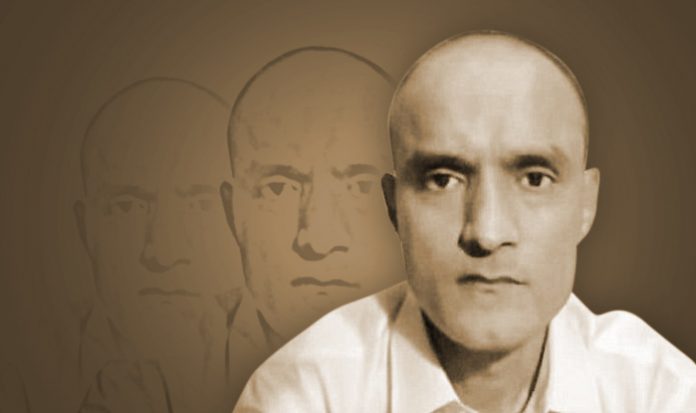
Role of the ICJ in the Kulbhushan Jadav Case

1
Kulbhushan
Image source -https://rb.gy/g6oafn

In this article, Siddhant Sarangi of  School of Law, KIIT, throws light on the role of the ICJ in the Kulbhushan Jadhav Case.

Background

The Republic of India instituted proceedings against the Islamic Republic of Pakistan for the violation of the Vienna Convention on Consular Relations for the arrest and detention of an Indian National, Mr Kulbhushan Jadhav, who was tried and sentenced for death by a military court in Pakistan. The Government of India claims that it came to know about the death sentence from a Press release and after diplomatic channels failed, it approached the International Court of Justice on the 08th of May 2017 seeking:-

  1. The immediate suspension of the death sentence of Mr Kulbhushan Jadhav.
  2. Declaration of the military sentence of Mr Kulbhushan Jadhav to be in violation of the Vienna Convention on Consular relations as well as in defiance of Article 14 of the International Covenant on Civil and Political Rights.
  3. To restrain the Pakistani government from executing the sentence given by the military court.
  4. And on Pakistan being unable to annul the decision the court to declare the decision as illegal and being violative of International Laws and treaties.

India claims that

  • Mr Jadav was kidnapped from Iran, where he had been to on a business trip since retiring from the Indian Navy and that the Pakistani government shows him to be arrested from Balochistan in Pakistan on the 8th of March 2017.
  • India repeatedly sought consular access from 25th March 2017 onwards but was denied. India further alleged that the Pakistani government sought assistance from the Indian government on its investigation from 23 January 2017 for espionage and terrorist activities in Pakistan in exchange for consular access, which according to the Indian Government was itself a violation of Vienna Convention on Consular Rights.

India approached the ICJ, pursuant to Article 36(1) of the statute of the International Court of Justice and the operation of the Article 1 of the Optional Protocol Concerning the Compulsory Settlement of Disputes which states that any dispute arising out of the interpretation or the application of the Convention on Consular Relations shall lie within the compulsory jurisdiction of the International Court of Justice bought to it by an application made by a party in dispute.

On 08th May India also filed a request for provisional measures so as to till the pendency of the trial at the ICJ, the court must indicate to the government of the Islamic Republic of Pakistan to take all necessary measures so that Mr. Jadav is not executed, and then report to the Court about the actions that it has taken in pursuance to that and to not take any actions that might be prejudicial to the rights of the Republic of India or that of Mr Kulbhushan Jadhav.

The International Court of Justice in the Jadav Case accepted the contention presented to it by the Republic of India that:-

  • it has jurisdiction over the matter, as it arises from Article 1 of the Optional Protocol, which satisfies 36(1) on matters of interpretation and application.
  • The Court accepted the prima facie jurisdiction on the grounds that Pakistan’s failure to provide access to India appeared to be capable of falling within the scope of the convention and also the existence of a bilateral agreement between the two, established the jurisdiction of the court.
  • It held that India’s contention regarding the violation of Article 36 of the Vienna Convention on Consular relations which states about the Rights of consular notification and the access between a state and its national, in this case to be plausible and that being satisfied of the urgency of the case indicated to Pakistan to take all necessary measures to stop the execution of the Mr Jadav.

Jurisdiction of the International Court of Justice

The International Court of Justice is the successor of the Permanent Court of Justice established in the year 1945, at the Hague, and is the principal Judicial body of the United Nations. The Member states to the United Nations Charter automatically become signatories to the Statute of the International Court of Justice.

ARTICLE 36 of the Statute of the International Court of Justice

Pursuant to Article 36 of the Statute of the International Court of Justice, the jurisdiction of the court arises from all cases referred to it by the parties to the United Nations Charter or any treaties or convention. Jurisdiction of the Court also emanates from Article 36(2) which states that the state parties at any time, through a declaration, accept the compulsory jurisdiction of the ICJ on all legal disputes concerning the interpretation of a treaty, a question of international law , or existence of a fact which would constitute a breach of an international obligation or on the nature and extent of repartationand all questions of jurisdiction is to be settled by itself.

An analysis of the question of jurisdiction raised in the Jadav Case.

Breaking down Article 36 of the Statute of the International Court Of Justice which states that the jurisdiction of the Court arises from all cases referred to it by the parties on all matters specially provided in the United Nations Charter and other treaties and conventions in force, or the parties to the dispute may declare ipso facto that they accept the compulsory jurisdiction of the court on matters of

a) Interpretation of a treaty

b) Question of International Law

c) Existence of a fact which if established would lead to the breach of International obligation and

d) The nature and extent of the reparation to be made for the breach of an international obligation. 

Article 36(3) states that the declaration may be conditional or unconditional or be based on reciprocity of the parties and lastly Article 36(6) states that the question of Jurisdiction shall be settled by the parties.

Pakistan in the 1960s had accepted the compulsory jurisdiction of the International Court of Justice with two reservations. 57 years later just before the hearing of the Jadav Case in the ICJ, Pakistan added 6 more clauses to the declaration in which one of them were that it won’t accept the compulsory jurisdiction of the Court on grounds of national security.  

Pakistan has continually claimed that Kulbhushan Jadhav was an Indian spy and was responsible for various terrorist attacks in Pakistan and that being detrimental to the national security of Pakistan it wouldn’t accept the jurisdiction of the ICJ. However the acceptance of Jurisdiction in the Jadav case doesn’t derive from Article 36(2) but from 36(1) as India has brought the claim under Article 36(1) of the ICJ statute i.e. jurisdiction derived from other treaties.

A Precedent

In the appeal relating the Jurisdiction of the ICAO (India Vs Pakistan) where India had approached the ICJ against its decision that interfered with the sovereign right of the Republic of India to ban Pakistani overflights over its airspace, and at that time Pakistan existed both on the western as well as eastern borders of India. India had argued that the dispute could be resolved without reference to the ICAO and the International Air Services Transit Agreement as New Delhi had terminated them post a hijacking in 1971, countering this Pakistan argued that the ICJ had no jurisdiction due to the effect of India’s reservation on disputes with other Commonwealth nations in its declaration for accepting compulsory jurisdiction. ICJ held that the treaties and declarations were separate and independent and that India’s further declaration of accepting the compulsory Jurisdiction to be of no relevance.

Therefore there is enough precedent to establish that the subsequent declaration by Pakistan to have no relevance and moreover the case has been brought to the ICJ under Article 36(1) of the Statute of the ICJ.

Plausibility of the contentions made by India

The Republic Of India contented the following:-

  1. The immediate suspension of the death sentence of Mr Kulbhushan Jadhav.
  2. Declaration of the military sentence of Mr. Kulbhushan Jadhav to be in violation of the Vienna Convention on Consular relations as well as in defiance of Article 14 of the International Covenant on Civil and Political Rights.
  3. To restrain the Pakistani government from executing the sentence given by the military court and,
  4. On Pakistan being unable to annul the decision the court to declare the decision as illegal and being violative of International Laws and treaties.

Article 5(a) of the Vienna Convention on Consular Relation provides one of the functions of the consulate is to protect the interests of the sending states and its nationals, body corporate and individuals within permitted limits of international law.

  • Article 36 of the same convention provides that consular officers shall be free to communicate with the nationals of the sending state and also the national has the same right of communication.
  • Secondly the competent authorities of the receiving state shall inform the consulate of the sending state, when its national is arrested and any communication to the consular post shall be done with any delay.  
  • Thirdly sub-clause (c) of Article 36 establishes the right of consular officers have the right to visit a national of the sending state who is in prison, custody or detention and arrange legal representation for him. They also have similar right of visit a national in pursuance of a judgement.

The Islamic Republic of Pakistan seems to have met the obligations arising from 36(a) by notifying the Indian authorities of the arrest and detention of Jadav, however, it did not comply to the provisions of 36(1)(c) of the convention.

  • The Commentary to the Convention on Consular relations states that it is mandatory obligation to allow the consular officers of the sending state access to the detainee and the denial of grant of access to Jadhav was therefore in violation of Article 36(1)(c) of the Convention
  • Article 14 of the International Covenant on Civil and Political rights states that, “in determination of any criminal charge against him, or of his rights or obligations in a suit of law, everyone shall be entitled to a fair and public hearing by a competent, independent and impartial tribunal established by law.” The Article further states that the charges must be explained to him promptly and in a language he understands and he is to be provided adequate time for preparation of his defence and communicate with a counsel of his choice.
  • Pakistani Military courts have gathered a lot of infamy with the ongoing Kulbhushan Jadhav case, having been decried by almost all Global Human Rights body.
  • The report of the United Nations Human Rights Commission’s report on the implementation of ICCPR recommended Pakistan to reform its military courts to bring them in conformity with Articles 14 and 15 of the International Covenant on Civil and Political Rights so as to ensure transparency to legal proceedings in criminal matter and also recommended the state to provide the accused, counsel of his own choice and also forbids the state from taking a forced confession. The UNHRC interprets ICCPR to be applicable to even military courts.
  • The International Commission of Jurists revealed that” Military courts are neither independent or impartial. The Judges are military officers and still a part of executive. They neither have judicial competence or any legal training, therefore, this raises the question did Kulbhushan Jadhav get a fair trial in the military court.

Therefore the Republic of India under these grounds contends that the judgment of the military court was in violation of the ICCPR and also other principles of natural justice recognized all around the world.

The link between the contentions and the provisional measures

  • In view of the above-mentioned contentions, India in its application to the ICJ for the indication of provisional measures was made under great urgency as the statute of limitations for appealing the death sentence ran out in 40 days after the judgement.
  • The conviction was on the basis of a confession made in captivity and without consular access and having no confidence that Mr Jadav will seriously be able to challenge the conviction and the sentence
  • It was of utmost necessity that the International Court of Justice to suspend the execution of the death sentence as a provisional measure. This application for provisional measure taken to protect the life and liberty of Mr. Jadav, who would otherwise be executed
  • this will affect the Court’s ability to grant the relief that India seeks and India will be deprived of the opportunity to vindicate its rights. Hence the application for provisional measures was done.

Enforcement Mechanism Of The ICJ

Dependent On The UNSC

The International Court of Justice has gone a long way in installing faith of the world community in the settlement of disputes and has done wonders in the maintenance of International Peace and Security. Article 94(1) states that “each member undertakes to comply with the decision of the International Court of Justice.” This is based on the premise that all parties shall comply with the decision in good faith. Whereas Article 94(2) provides that “If any party to a case fails to perform the obligations incumbent upon it under a judgment rendered by the Court, the other party may have recourse to the Security Council, which may, if it deems necessary, make recommendations or decide upon measures to be taken to give effect to the judgment.”

The Veto

The interpretation of the Article 94(2) states that the UNSC ‘may, if deem necessary’ take actions. Here there comes the line of difference between international relations and politics. Jurist say that International law is the interplay of International politics in many ways this is proved when the United Nations Security Council has to enforce the judgment by the ICJ. One of the most notable precedent of UNSC enforcement of a judgement of the ICJ can be seen in the case of Armed Activities in Nicaragua (USA Vs Nicaragua) where the ICJ held the USA accountable for arming of rebels and ordered for repartition. Owing to the enforcement, the United States vetoed the enforcement of the judgment against itself.

Why is the Jadav Case important to Indian Politics?

With India trying to re-establish its footing in International Politics, the Jadav Case provides the perfect fiddle for it. If one looks at it from a neutral point of view, if Pakistan loses the case, and goes on to execute Jadav, that would make the Islamic Republic of Pakistan look bad on the International Sphere. Also if the enforcement mechanism under Article 94 of the United Nations Charter fails owing to a Chinese veto, India gets a chance to gain momentum in its campaign for restructuring of the United Nations Security Council.

The previous government’s failure to secure the release of Sarabjit Singh who was arrested on similar grounds, the current government would be looking to learn from the previous government’s mistake to save the life of an Indian citizen and to establish a precedent and an impression that the Government shall protect its citizens.
And if the ICJ judgement comes out in favour of India, and is enforced by Pakistan, then also its a win-win for the Government of India.

Was approaching the ICJ the way to have gone about it?

The Government of India was notified about the arrest of Mr Kulbhushan Jadhav on grounds of espionage and terrorism, but was not given consular access in pursuance to the Vienna Convention of Consular Relations.

As the death sentence passed by the military court in Pakistan, and all other diplomatic channels failed and it is a bilateral dispute did not necessitate the involvement of a third party to pressure Pakistan into not executing Jadav.

Approaching the ICJ was questioned by few legal experts as it would open the gates for Pakistan taking India to the World Court for the determination on the status of Kashmir, however with the failure of all diplomatic channels between India and Pakistan meant India had no other option.  

Approaching the ICJ was the best path it could have taken. Moreover, the interim measures granted by the ICJ did indeed postpone the execution of Mr Jadav, and hence it can be considered as best recourse for the settlement of the dispute. And if India wins the case and is successful in saving the life of Mr Jadav. it will not only be a moral or diplomatic victory, it would be one where the life of a person was saved.  

Does this open the gates for an ICJ trial on the Kashmir dispute?

A Junior officer for the Foreign Ministry of the Government of Pakistan recently indicated that it might take India to the International Court of Justice on the question of Kashmir. However, the statements were not reteriated by the former Prime Minister Nawaz Sharif or even any senior level office in the ministry.  

India and Pakistan both are bound by the Lahore Declaration and the Shimla agreement to resolve it bilaterally. However, since no bilateral agreement can override the effect of an International treaty or resolution. If Pakistan approached the International Court of Justice for enforcement of the resolutions requires Pakistan to remove the Tribes from the areas of its occupation of Kashmir, and India needs to remove all military personnel from the valley except a force for the defence of Srinagar. Following which a plebiscite is to be held for the self-determination by the people of Kashmir.

So to approach the ICJ means that it has to fulfill the terms of the Resolution first and that would mean pulling out of Pakistan occupied Kashmir which would be strategically illogical from a military perspective. Therefore, if Pakistan takes India to ICJ on the issue of Kashmir, it might just bite more than it can chew.

Conclusion

India and Pakistan have been at loggerheads since 1947. India has been a party to at least 6 ICJ cases out of which 4 of them have been against the Islamic Republic of Pakistan such as the Appeal regarding the Jurisdiction of ICAO in 1971, the Case Concerning the trial of Pakistani POWs among many others. The International Court of Justice now has the responsibility to decide on an issue which may not determine the fate of two nations but the life one human being.  

References

  1. Statute of the International Court of Justice, accessed from http://legal.un.org/avl/pdf/ha/sicj/icj_statute_e.pdf at 11:00 AM on 02.02.2018
  2. United Nations, Vienna Convention on Consular Relations, 24 April 1963, available at http://www.refworld.org/docid/3ae6b3648.html [accessed 2 February 2018]
  3. Press Release, International Court of Justice, accessed from http://www.icj-cij.org/files/case-related/168/19420.pdf at 11:15 AM on 02.02.2018
  4. https://thewire.in/135141/icj-india-pakistan-kulbhushan-jadhav/
  5. CASE CONCERNING THE APPEAL RELATING TO THE JURISDICTION OF THE ICAO COUNCIL, Judgment of 18 August 1972 accessed at http://www.icj-cij.org/files/case-related/54/5667.pdf at 12:08 PM on 02.02.2018
  6. Charter of the United Nations, accessed from https://treaties.un.org/doc/publication/ctc/uncharter.pdf at 12:29 PM
  7. UNSC Resolution S/RES/39 (1948) accessed from http://www.un.org/en/ga/search/view_doc.asp?symbol=S/RES/38(1948)
  8. UNSC Resolution S/RES/39 (1948) accessed from http://www.un.org/en/ga/search/view_doc.asp?symbol=S/RES/38(1948)&referer=http://www.un.org/en/sc/documents/resolutions/1948.shtml&Lang=E
  9. https://economictimes.indiatimes.com/news/politics-and-nation/pakistan-indicates-it-could-take-kashmir-issue-to-icj/articleshow/61769983.cms
  10. http://www.huffingtonpost.in/2017/06/05/kashmir-issue-must-be-solved-bilaterally-cant-be-taken-to-icj_a_22126371/


Download Now

Delhi-NCR GRAP (Graded Response Action Plan)

1
Satyam
Image Source - https://stylewhack.com/air-pollution-delhi/

In this article, Amanjot Singh Chadha of IMS Law College, Noida discusses the legal provisions of the Delhi NCR GRAP (Graded Response Action Plan).

What is GRAP (Graded Response Action Plan)

  • GRAP, Graded Response Action Plan is a plan to combat air pollution of Delhi NCR.
  • The Hon’ble Supreme Court in its order of November 10, 2016, directed framing and submission of graded response action plan GRAP for various categories of National Air Quality Index (AQI).
  • Finally, on 12 Jan 2017, the ministry of environment forest and climate change provided a notification regarding the GRAP for Delhi NCR.
  • The supreme court mandated EPCA Environment Pollution (Prevention and Control) Authority to prepare the GRAP.
  • GRAP laid down a stratified action which is required when the concentration of pollution reaches a certain level.
  • Under GRAP the pollution level is divided into four categories for which actions are required to be taken when the concentration of pollutants, reaches a certain level.
  • This is the first ever plan of its kind that designates short, medium and long-term measures for all key sources of pollution and will help the Delhi NCR region to make a sustained improvement in air quality.
  • These measures can be accessed from the report submitted by the EPCA to honorable Supreme Court.
  • The National AQI  and the likely health impact of the AQI was launched by MOEF&CC
  • The GRAP focuses on taking steps together progressively and actions as pollution cross each level without imposing any strict measures at emergency situations.

The need for GRAP

During the 70’s and 80’s Delhi, the national capital saw an unprecedented growth in population, vehicles and small-scale industries, which caused serious ecological imbalance and environmental degradation. The problem got further aggravated by increasing migration from neighboring states.

Earlier on Dec 29,2015, the Action Plan to deal with Delhi’s air pollution under section 18(1)(b) of the Air (Prevention and Control of Pollution) Act 1986 and on Nov 2016 under Section 5 of the Environment Protection Act 1986.

Because during the first week of November 2016 after Diwali the pollution level of Delhi got into severely alarming situations and the pollution level got so high that severe actions were taken like shutting Badarpur power plant, restricting entry of trucks into Delhi and stopping the construction and on 10 Nov 2016 the Supreme Court directed CPCB and EPCA to frame smog alert system and on 2 Dec 2016 the court asked MOEF&CC to notify the GRAP and on 12 Jan 2017 the GRAP was notified

How graded response action plan works

The MOEF&CC has formed a monitoring committee of seven members headed by Environment Secretary, to formulate short and long-term measures to solve air pollution of Delhi NCR.

The graded measures according to Air Quality Index are listed from public health emergency level to downward. These measures are listed in the lower levels of AQI including Very Poor, Poor, and Moderate. And the actions listed in the poor category need to be implemented throughout the year.

The job of implementation of the action plan is of EPCA under Environment Protection Act 1986 and which will then delegate the responsibility to the concerned departments.

The job of ensuring implementation of the action plan will be EPCA’s, which will delegate the responsibility to the concerned departments. According to EPCA’s report, at least 16 agencies will have to work together to implement the various parts of the plan.

The average concentration of pollutants AQI of the entire city is collected and communicated to EPCA by a task force. And this task force will include officials from Central Pollution Control Board and Indian Meteorological Department

EPCA then ensures the implementation of the graded response action plan and for this it delegates responsibility to 16 agencies which will work together to implement this the concerned department are like Municipal Corporation, Traffic Police, Transport Departments, Residents Welfare Association, Public Works Department, Delhi Transport Corporation, Central Public Works Department, Delhi Metro Rail Corporation etc.

Each body carries its own task and function which has been set to be carried out when EPCA asks it to do.

The idea behind this is to put in place some sort of action in a manner that the level of an emergency situation is never reached. This plan focuses on taking tougher actions progressively as the pollution crosses each level, without waiting for emergency situations to arrive so that some strict measures are imposed to pacify such alarming situation.

In emergency situations, the required measures will be implemented under Air(Prevention & Control of Pollution)Act 1981 and Environment Protection Act 1986.     

For monitoring, the air quality 25 Continuous Ambient Air Quality Monitoring Stations (CAAQMS) are set up in several places of NCR which are as follows.

Air Quality Index Monitoring stations of NCR

17 stations in Delhi.

UP: 3 stations in Noida and Ghaziabad  

Rajasthan: 2 stations – Alwar and Bharatpur

Haryana: 3 stations  – Gurgaon, Faridabad, Rohtak

Table regarding Graded Response Action Plan for reducing air pollution.

When PM2.5 levels cross 300 µg/m3or PM10 levels cross 500 µg/m3 (5 times above the standard) and persist for 48 hours or more – ACTIONS TO TAKE

AGENCY RESPONSIBLE FOR THE IMPLEMENTATION OF THE ACTION

Stop entry of truck traffic into Delhi (except essential commodities) Municipal Corporations and Traffic Police of Delhi and NCR Towns
Stop construction activities Delhi Pollution Control Committee/Municipal Corporations of Delhi and NCR towns
Introduce odd and even scheme for private vehicles based on license plate numbers and minimize exemptions Secretary cum Commissioner of Transport Department, NCT of Delhi, and Transport Commissioners of NCR towns
Task Force to take decision on any additional steps including shutting of schools


Severe level


When PM2.5 levels are above 250 µg/m3or PM10 levels are above 430 µg/m Agency responsible/Implementing Agency
Close brick kilns, Hot Mix plants, Stone Crushers Chairpersons Delhi Pollution Control Committee, State Pollution Control 6 Boards of Haryana, Rajasthan, and Uttar Pradesh / Superintendent of Police and Deputy Commissioner of respective districts
Shut down Badarpur power plant and maximize generation of power from existing natural gas based plants to reduce operation of coal based power plants in the NCR. Chairpersons Delhi Pollution Control Committee, State Pollution Control Boards of Haryana, Rajasthan, and Uttar Pradesh
Intensify public transport services. Introduce differential rates to encourage off-peak travel. Secretary cum Commissioner of Transport Department, NCT of Delhi, and Transport Commissioners of NCR towns Chairperson, Delhi Metro Rail Corporation (DMRC) Chairpersons, State Transport Corporations
Increase frequency of mechanized cleaning of road and sprinkling of water on roads. Identify road stretches with high dust generation. All road owning agencies including Municipal Corporations of NCT of Delhi and NCR towns, Public Works Departments and National Highway Authority of India


Very Poor level


When PM2.5 levels are between 121-250 µg/m3or PM10 levels are between 351-430 µg/m3 Agency responsible/Implementing Agency
Stop use of diesel generator sets Chairpersons Delhi Pollution Control Committee, State Pollution Control Boards of Haryana, Rajasthan, Uttar Pradesh
Enhance parking fee by 3-4 times Municipal Commissioner Municipal Corporations of NCT of Delhi and NCR towns
Increase bus and metro services by augmenting contract buses and increasing frequency of service Principal Secretary, Department of Transport of NCT of Delhi Delhi Transport Corporation (DTC) Delhi Integrated Multi-modal Transit System Ltd (DIMTS) Delhi Metro Rail Corporation (DMRC) 7 State Transport Corporations in NCR towns
Stop use of coal/firewood in hotels and open eateries Municipal Corporations of NCT of Delhi and NCR towns
Residential Welfare Associations and individual house owners to provide electric heaters during winter to security staff to avoid open burning by them Resident Welfare Associations
Alert in newspapers/TV/radio to advise people with respiratory and cardiac patients to avoid polluted areas and restrict outdoor movement. Alert in newspapers/TV/radio to advise people with respiratory and cardiac patients to avoid polluted areas and restrict outdoor movement.
Moderate to poor level
Poor – When PM2.5 levels are between 91-120 µg/m3or PM10 levels are between 251-350 µg/m3 Moderate – When PM2.5 is between 61- 90 µg/m3or PM10 is between 101-250 µg/m3 Agency responsible/Implementing Agency
Stringent enforcement of stopping garbage burning in landfills and other places and impose heavy fines on person responsible Municipal Commissioner Municipal corporations of Delhi and NCR towns
Close/stringent enforcement of all pollution control regulations in brick kilns and industries Chairpersons, Delhi Pollution Control Committee, State Pollution Control Boards of Haryana, Rajasthan, and Uttar Pradesh
Stringent enforcement of pollution control in thermal power plants through PCB monitoring Plant in-charge of power plants in NCR, and Delhi Pollution Control Committee and State Pollution Control Board
Do periodic mechanized sweeping on roads with heavy traffic and water sprinkling also on unpaved roads every two days Municipal Commissioner, Municipal Corporations of NCT of Delhi and NCR towns Commissioners, Traffic Police of Delhi and NCR towns to identify roads with heavy traffic and provide information to 8 respective Municipal Commissioners Chief Engineers of officers in charge of CPWD, PWD of Delhi and NCR towns to identify unpaved roads with heavy traffic and provide information to respective Municipal Commissioner
Strict vigilance and no tolerance for visible emissions – stop plying of visibly polluting vehicles by impounding or heavy fine, Strict vigilance and enforcement of PUC norms Commissioner or Officer in Charge, Transport Department and Traffic Police of NCT Delhi and NCR towns
Stringent enforcement of rules for dust control in construction activities and close noncompliant sites Commissioner or Officers in charge of Police Departments of Delhi and NCR towns
Deploy traffic police for smooth traffic flow at identified vulnerable areas Commissioners Traffic Police of Delhi and NCR Towns
Strictly enforce Supreme Court order on diversion of non-destined truck traffic and ensure only trucks registered after 2005 are allowed entry into Delhi Municipal Corporations of NCT of Delhi and NCR towns Traffic Police of NCT of Delhi and NCR towns
Strictly enforce Supreme Court ban on firecrackers Chief Controller of Explosives Petroleum and Explosive Safety Organisation (PESO) Commissioner of Officer in charge of licensing in the police departments of Delhi and NCR
Ensure fly ash ponds* are watered every alternate day during summer months (March – May). Plant in charge of Power Plants in Delhi and NCR towns
Information dissemination Social media, mobile Apps should be used to inform people about the pollution levels, contact details of control room, enable them to report polluting activities/sources to the concerned authorities, and actions that will be taken by government based on the level of pollution. Chairpersons, Delhi Pollution Control Committee, State Pollution Control Boards of Haryana, Rajasthan, and Uttar Pradesh


The Daily alert and Information for action is provided through AQI Air Quality Index and what is the situation last day which is done by CPCB. The Forecasting report on what is the wind speed and direction is shared by MOES and What are the problem areas, based on weekly inspection is done by CPCB and then the reports are sent to all pollution control boards for action and to monitor with local agencies.

The Daily Air Quality Index Report can be checked at https://app.cpcbccr.com/AQI/

Comparison of Delhi NCR with cities (Bejing and Paris) where GRAP has a been implemented

Beijing and Paris, most notably, have implemented graded action plans over the past few years. Paris recently implemented the odd-even road rationing scheme when PM 2.5 levels crossed 95 µg/m³. It also made public transport free to encourage people to leave their vehicles at home.

Several Chinese cities have a road rationing scheme when pollution reaches severe levels. They also shut schools and industries when particulate matter levels stay higher than around 300 µg/m³ for more than two days in a row, and a Red Alert is triggered.

Challenges in implementation

Things which need to be done so that the air pollution levels are brought down:

  • There is a great need for better weather forecasts so that agencies have an advance notice of the measures that need to be taken. As all around the world, where such smog alert systems are in place, a robust and reliable weather forecasting system is essential for action.
  • The other important step which needs to be taken is to have a significantly strengthened system of health advisories to people to take preventive action.
  • There is a huge demand for deterrence and a mechanism should be built and by the court’s direction, such plan should be implemented so that there is some deterrence for the offenders.
  • A far-reaching action is needed to immediately ban pet coke and furnace oil in entire NCR and for this, a strict monitoring of emissions in industrial areas is required.
  • Switching over to gas from traditional sources of energy is required in vehicles power plants and industry. The second transition to natural gas and clean fuel is required further we need a transition to electric vehicles and ensuring supply of power to stop the use of generator sets.
  • An enormous enhancement of public transport within and intercity is required as it will curb down the pollution crisis
  • A massive action plan is required to change the garbage management system and to stop the burning of garbage.

What can you do to stop air pollution

You can forward your complaint against the sale of imported firecracker/illegal/unauthorized burning of waste (plastic/general) in open in NCT of Delhi. By uploading a photograph with address of location regarding illegal/unauthorized burning

At: complaint number (WHATSAPP) 9717593574

Download Now

Ayush Gupta: BA.LLB. 3rd year student shares his experience on how Certificate Course in International Taxation and Transfer Pricing from NUJS is helping him

0

Currently, I am pursuing my BA LLB 3rd year from Mumbai University, along with that I am also doing the Company Secretaryship course from The Institute of Company Secretaries of India. My experience with iPleaders while doing the Certificate Course in International Taxation and Transfer Pricing from NUJS went really well.

I was searching for good course content for Transfer Pricing Laws. One of my friends referred me this course. Liked the contents of the course, it is full of various illustrations on practical approach of transfer pricing. I have referred this course to few of my friends as well as they were also looking for some constructive guidance on Transfer Pricing. All the modules are very well explained. I liked the module on ‘Guiding Concepts for Transfer Pricing’ the most.

This course has helped me a lot in clarifying lot of doubts in both LLB as well as Company Secretaryship. Webinars are good and informative. Faculties are experienced enough and their lectures were also very educative and practical. However, I personally felt that the duration of the webinars should be a little bit lengthier and comprehensive, than being only for 2-3 minutes. As after listening to the webinars, I had to browse online for comprehending the concepts. It would be great if the user is allowed to download the course material.

Moreover, I would suggest to increase the length of webinars to gain comprehensive understanding on critical concepts of taxation, and a few animations could be inserted for portraying an International transaction or on how transfer pricing works across territorial frontiers of different nations, to bring more clarity of the subject matter for visual memories are the best memories.

Overall, the course was very helpful and I am contended to subscribe for it at the right time. I’ll definitely make use of the knowledge imparted by this course and recommend it to others.

Download Now
logo
FREE & ONLINE 3-Day Bootcamp (LIVE only) on

How Can Experienced Professionals Become Independent Directors

calender
28th, 29th Mar, 2026, 2 - 5pm (IST) &
30th Mar, 2026, 7 - 10pm (IST).
Bootcamp starting in
Days
HRS
MIN
SEC
Abhyuday AgarwalCOO & CO-Founder, LawSikho

Register now

Abhyuday AgarwalCOO & CO-Founder, LawSikho