Download Now
Home Blog Page 1489

Corporate National Pension Scheme

0
Corporate National Pension Scheme
Image Source - http://infornicle.com/tips-and-tricks-to-excel-in-corporate/

In this article, Akanksha Singh of Meerut College discusses the benefits of Corporate National Pension Scheme for Employees.

Introduction

The Central Government has introduced the National Pension Scheme (NPS) with effect from January 01, 2004. NPS Corporate Sector Model is the tailored version of body NPS to suit numerous employer-employee relationship. This would ease corporate entities and other registered bodies to move their current and eventual employees to NPS architecture.

The ‘Corporate Model’ of NPSis laid out for workforce employed in the corporate sector. Let us know more about NPS-Corporate Sector Model and how it can help us be well-heeled.

Corporate National Pension Scheme

  • The Central Government has introduced the National Pension Scheme with effect from January 01, 2004 (except for armed force).
  • The Pension Fund Regulatory and Development Authority (PFRDA), the regulatory body for NPS, has appointed the NSDL as the Central Recordkeeping Agency (CRA) for the National Pension Scheme.
  • CRA carries out the functions of record keeping, administration and also the customer service for all subscribers under NPS.
  • CRA shall issue a Permanent Retirement Account Number (PRAN) to each subscriber and record database of each Permanent Retirement Account along with recording transactions relating to PRAN.
  • It is another way for retirement planning, available to the organized sector and does not reduce their responsibilities under any other statutory provision like the Provident Fund etc.[1]

Eligibility For Corporate To Join NPS

  • Companies registered under Companies Act
  • Registered Bodies under various Co-operative Acts.
  • Public Sector Enterprises
  • Public Sector Enterprises of State
  • Limited Liability Partnership which is registered under the Act
  • Body under any act of Parliament or State legislature
  • Proprietorship
  • Trust Society. [2]

NPS Architecture-Corporate Sector Model

A separate model has been launched by the Pension Fund Regulatory and Development Authority (PFRDA) to provide NPS to corporate employees including PSUs since December 2011. The NPS architecture under the corporate sector model is given below:

Pension Fund Regulatory and Development Authority (PFRDA)

  • PFRDA is a regulator for the NPS.
  • It is responsible for the appointment of intermediaries in the system such as NPS trustee Bank, Custodian, Central Record Keeping Agency (CRA), etc.
  • Intermediaries performance are monitored by PFRDA.
  • Regulatory guidance to PFMs for investment of funds received under NPS is provided by PFRDA.

Point of Presence

Between the corporate/subscribers and the NPS architecture the Point Of Presence will be the interface. The POP service provider is the authorized branches of registered POPs.

Functions which are performed by POP are :

  • Registration of corporation and subscriber
  • Know Your Customer verification
  • Instruction from corporate
  • Receiving contribution
  • Transmission of the same to designated NPS intermediaries

How can corporate join NPS

  • Corporate desirous of extending the National Pension Scheme (NPS) to their employees would need to tie up with any of the approved Point of Presence (POP) under the NPS through a Memorandum of Understanding (MOU).
  • The format of the Memorandum Of Understanding is to be arranged by the Point Of Presence (POP) with mutual understanding with the corporate subject to the maximum charge as prescribed by the Pension Fund Regulatory and Development Authority (PFRDA) and compliance of service level requirement/turnaround time as applicable to POP within the NPS architecture.
  • Through POPs as per the existing model available, any eligible corporate entities may enroll their employees under NPS.
  • Deliberation with the corporate client POP shall create in house mechanism and procedure for approval of consolidated data and aggregated fund for upload to trustee bank and Credit Rating Agency (CRA).
  • The CHO-1 form would be complete by corporate and submit along with the details of Corporate Branch Offices, CBO (CBO may be zonal/regional controlling offices where the underline employees are posted) to the designated POP.
  • It would be ensured by POP that the forms are received and subscribers registered before receipt of the contribution from the corporate. Under NPS Usual turnaround time (TAT) as prescribed would be applicable for receipt of money.
  • CRA, trustee bank, and other intermediary structure be same as all citizen model.

Investment Choice

There is a flexibility to provide investment scheme preference to the Personal Financial Management (PFM and investment choice) either at corporate level centrally or subscriber level for all its subscribers in NPS.

Selection of PFM

The corporate or subscriber (employee) can select any one of the following PFMs:

  • SBI Pension Fund Private Limited
  • LIC Pension Fund Limited
  • UTI Retirement Solution Limited
  • ICICI Prudential Pension Funds Management Company Limited
  • Kotak Mahindra Pension Fund Limited
  • Reliance Capital Pension Fund Limited

(the latest list of PFMs is available on PFRDA website)

Investment choice for Asset Allocation

The subscriber, as well as the corporate may have any of the two choices for their asset allocation:

  • Active Choice

How your NPS pension wealth is to be invested across asset class E (up to 50%), asset class C and asset class G is available to the corporate/subscriber and these options should actively decide by the corporate/subscriber.

  • Auto Choice

In this option, the investment will be made in a life-cycle Fund. Across three asset classes, the fraction of the fund is invested and will be determined by a pre-defined portfolio (which would change as per the age of subscriber).

Table for the life-cycle fund is given below:

Note:

Asset Class E: Investment in predominantly equity market instrument.

Asset Class C: Investment in Fixed income instruments other than Government Securities

Asset Class G: Investment in Government Securities

Table for Lifecycle Fund

Age Asset Class E Asset Class C Asset Class G
Up to 35 years 50% 30% 20%
36 years 48% 29% 23%
37 years 46% 28% 26%
38 years 44% 27% 29%
39 years 42% 26% 32%
40 years 40% 25% 35%
41 years 38% 24% 38%
42 years 36% 23% 41%
43 years 34% 22% 44%
44 years 32% 21% 47%
45 years 30% 20% 50%
46 years 28% 19% 53%
47 years 26% 18% 56%
48 years 24% 17% 59%
49 years 22% 16% 62%
50 years 20% 15% 65%
51 years 18% 14% 68%
52 years 16% 13% 71%
53 years 14% 12% 74%
54 years 12% 11% 77%
55 years 10% 10% 80%

How to raise a grievance?

NPS has various layered grievance redressal mechanism which is easily accessible, quick, responsive, simple, fair, and effective. As an option for registering grievance or complaint, the following alternatives are present with the subscriber.

Call centre/interactive voice response system (IVR).

CRA call center toll-free telephone number is 1-800-222080 the subscriber can contact the CRA on given number and register the grievance. On successful registration of your grievance, the token number will be allotted by the customer care representative for any further reference.

Web-based interface

At https://cra-nsdl.com, the subscriber can register the grievance with the use of the I-pin allotted to him at the time of opening a permanent retirement account. If a registration is successful, a token number will be displayed on the screen for future reference.

Physical form

In the prescribed format the Subscriber can submit the grievance to the corporate/POP who would forward it to CRA Central Grievance Management System (CGMS).

Who Can Subscribe To NPS

One should be the citizen of India, can be resident or non-resident, and must be subject to the following conditions:

  • A person must have attained the age of 18 and should not be more than 60 years old at the time of submission of applications.
  • A person must adhere to the Know Your Customers (KYC) Guidelines. The applicant, all terms, and conditions mentioned therein should be complied with.[3]

Benefits Of Corporate National Pension Scheme For Employees

Tax benefits for Employees

An employee can contribute directly to the NPS and also can make the contribution through his employer. Both the contribution is acceptable for tax deduction is given below.

Contribution deposited by Employee

  • Investment up to 10% of Salary which includes Basis + Allowance is deductible u/s 80CCD (1) of Income Tax Act, 1961 subject to 1.5 lakhs limit of Section 80C from taxable income.
  • Up to 40% of Corpus withdrawn is exempt from tax amount invested in the annuity is fully exempted.

Contribution routed through the Employer

  • An investment made up to 10% of salary in which Basic = Dearness Allowance is included will be deductible from taxable income u/s 80CCD (2) of Income Tax Act 1961.
  • Tax exemption for contribution towards the NPS by employers on behalf of employees is provided by the Government.
  • Employee contribution is eligible for income tax deduction under this.
  • The contribution made by an employee up to 10% of basic+dearness allowance is eligible for deduction u/s 80CCD within the Rs. 1 lac limit.
  • Companies have to offer their employees the mandatory retirement saving. [4]

Lower Cost

Whenever the comparison is made of investing in other financial funds, such as mutual funds, the costs of investing in the National Pension System are less than others. This means a higher integration of the contribution is invested, which makes subscribers to earn higher returns on the investments which are made by them.

Flexibility and transparency

If employees change their location/employment they can move their NPS accounts. The scheme is regulated by the PFRDA and it is transparent. Subscribers do have control over how their contributions are invested in different, area, assets, in equities, corporate bond, and government bonds, etc.

UK Pension Scheme For Corporate Employees

Pension Schemes Bill 2014 to 2015 to Parliament on 26 June 2014. It sets out a new legislative framework for private pensions. It aims to make greater risk-sharing between employers, individual members and third parties easier. The Bill is intended to encourage pension schemes and schemes that provide ‘collective benefits’.For example, it corrects an anomaly in Sections 3 and 5 of the Pensions Act 2008 which can produce a duty to automatically enroll and re-enroll jobholders. The Act deals mainly with proposals for a single-tier state pension.

The Pensions Act 2008 put into law changes to the private pension system set out in the white paper, ‘Personal Accounts: a new way to save’, which was published in December 2006. It included the changes to workplace pensions that came into effect in 2012. [5]

National Employment Savings Trust

  • To support automatic enrolment they have introduced a new workplace pension scheme which is known as the NEST (National Employment Savings Trust). It is a qualifying scheme for automatic enrolment purposes and available for every employer who wants to use it to meet their duties.[6]

Who can avail benefits under the scheme?

  • Employees of the Corporate Sector.
  • Employees of the other Registered Bodies,
  • Employees of Central and State Government cannot take the benefit of the Scheme.
  • Those who are working in entities which registered under the Companies Act and cooperative Acts, registered under partnership act, and proprietorship concerns, trusts and societies can avail of the additional tax exemption under this model.
  • On December 2011 after the announcement in the Union Budget early the year the tax benefit on employer’s contribution was introduced.

Conclusion

After going through the above states, the below can be drawn as a conclusion

  1. All the employees of Corporate Sector can take the benefits of Corporate National Pension Scheme can avail of the additional tax exemption under this model.
  2. Only the person between the age of 18 to 60 can subscribe for NPS. Also one should comply with the Know Your Customers Guidelines.
  3. Corporate National Pension Scheme provides tax benefits to the employees.
  4. National Pension Scheme was introduced by the Government for the welfare of employees.
  5. The benefit of the Corporate National Pension Scheme can only be taken by Companies registered under Companies Act and cooperative Acts also by the registered partnership firms, proprietorship concerns, trusts, and societies.
  6. The costs of investing in NPS is comparatively less than other funds.

References

[1]Eligibility for corporate to join NPS

https://www.npscra.nsdl.co.in/organised-sector.php(Date of visit is 05/02/18 and the time of visit the site is 10:05 AM IST)

[2]Eligibility for corporate to join NPS

https://www.npscra.nsdl.co.in/organised-sector.php(Date of visit is 05/02/18 and the time of visit the site is 10:30 AM IST).

[3]Who can subscribe to NPS

https://www.npscra.nsdl.co.in(Date of visit is 05/02/18 and the time of visit the site is 11:15 AM IST)

[4] Exemption in tax ( Book of Companies Act 1956 and 2013)

[5]UK pension scheme for corporate employees

https://www.gov.uk/government/collections/pension-schemes-bill-2 (Date of visit is 05/02/18 and time of visit the site is 12:00PM IST)

[6]National Employee Saving Trust

http://www.nestpensions.org.uk/schemeweb/NestWeb/public/home (Date of visit is 05/02/18)

[7]https://npscra.nsdl.co.in/download/government-sector/corporate/Corporate-Brochure.pdf(Date of visit is 16/02/18 and time of visit the site is 12:00AM IST)


Download Now

Professional Misconduct by Chartered Accountants

15

In this article, Prathiksha Ravi, a law graduate from Institute of Law, Nirma University discusses how to complain against professional misconduct by Chartered Accountants in India.

Introduction

Chartered Accountants play a pivotal role in our society. We rely on them for sound financial accounting, management, and advice on a variety of business and taxation matters. Every accountant is duty bound to follow basic fundamental principles such as[1]:

  • Integrity
  • Objectivity
  • Professional Competence and Due Care
  • Confidentiality
  • Professional behaviour and
  • Technical Standards

Chartered Accountants in India are governed under the Chartered Accountants Act, 1949. Enacted with the view of providing regulations for the profession of Chartered Accountants and the Institute of Chartered Accountants of India (ICAI) established under the Act is in charge of regulating the profession of Accountancy in India[2].

What is Professional Misconduct?

As per the Chartered Accountants Act[3], Professional Misconduct is defined to include any acts/omission of acts described under the First and Second Schedule of the Act.

A Chartered Accountant will be guilty of professional misconduct if they commit the following acts

FIRST SCHEDULE

SECOND SCHEDULE

Allow names – If someone else practices in his name unless they are also a chartered accountant in practice and is in a partnership or employed by him

  • Share / Accepts Profits – Pays or agrees to pay/accepts or agrees to accept any share, commission or brokerage or profits of his professional business to any person other than a person in his Partnership, a person employed by him or a member of the Institute.
  • Partnership with an unqualified person – Enters into a partnership with a person other than a person qualified to be a member of the Institute
  • Secures work through another person – Secures any professional business through any person who is not employed by the Accountant or by means which are not open to the Accountant
  • Solicits work by advertising – Tries to get clients or professional work through circular, advertisement, interview or personal communication.
  • Advertises his attainments – Advertises his professional attainments or services or using a designation other than that of a Chartered Accountant.
  • Becoming an auditor without prior written communication – He accepts to become an ‘auditor’ which was previously held by another chartered accountant without a written communication to him.
  • Accepts the role of an auditor without complying with Company Law provisions – Accepts the appointment as an auditor of a company without duly complying with Section 225 of the Companies Act, 1956[4]
  • Engages in other business – Engages in a business or occupation other than that of a Chartered Accountant
  • Accepts Commission – Accepts commission from any lawyer, broker or another chartered accountant
  • Sharing of fees – Shares his fees/salary of his employment with another person
  • No registration done – Not being an accountant registered with the Institute but acting as one
  • Non-compliance – Does not supply information or does not comply with the requirements called for by the Institute, council or any of its committees
  • False Information – Providing false information while inviting professional work or accepting tenders and enquiries.
  • Guilty of an offence – Held guilty by any court for an offence punishable by the term of imprisonment not exceeding six months.
  • Disrepute – Brings disrepute to the profession and the Institutes by his actions.
  • Breach of confidentiality – Disclosing information provided by the client to a person other than a client without his/her consent.
  • Submits report not made by him – Submits a report of financial statement not made by him as made by him/his firm.
  • Using his name with estimate of earnings – Permits his name/ name of his firm to be used in connection with an estimate of earnings based on contingency
  • Expression of opinion based on substantial interest – Expresses his opinions on a financial statement of a business/firm in which he has a substantial interest in
  • Failure to disclose – Fails to disclose a necessary fact known to him in a financial statement without which the financial statement would be misleading
  • Failure to report misstatement – Fails to report a material misstatement in a financial statement known to him which is under his professional capacity
  • Negligence / No due diligence – Does not exercise due diligence or is grossly negligent
  • Failure to obtain information required – Fails to obtain sufficient information needed for his expression of his opinion
  • Failure to report departure from procedure – Fails to report any material departure from general procedure of audit in the current circumstance
  • Misappropriation of moneys – Fails to keep moneys of his client other than fees and not using it a manner required to be done in a reasonable time.
  • Against rules and guidelines under the Act/Council – Does not follow/goes against any provisions of the Chartered Accountants Act and its regulations or guidelines issued by the Council
  • Sharing of confidential information – Discloses confidential information of his employment other than when required by law
  • Including False Information – Including false information in any statement or document to be submitted to the Institute, Council or any of its Committees.
  • Embezzles money – Embezzled money received in his professional capacity


The Council of the Institute of Chartered Accountants of India, as per the Act has the right to establish a Disciplinary Directorate headed by the officer of the Institute (Director, Discipline) to investigate on any complaint received to it on professional misconduct.

Example

What happens in the case of breach of confidentiality by a Chartered Accountant?

Breach of Confidentiality is the act of revealing information by the accountant which is considered to be “confidential” for the client unless when required by law. For example – If a client discloses information about the working of his firm/company, and the accountant has disclosed the said information to another, it is considered to be a breach of confidentiality. Breach of Confidentiality is an act of Professional Misconduct which is included in the Second Schedule of the Chartered Accountants Act.

How to report instances of Professional Misconduct committed by a Chartered Accountant?

PROCESS OF DEALING WITH A PROFESSIONAL MISCONDUCT BY A CHARTERED ACCOUNTANT

  • A complaint can be filed in three copies in English to the Director (Discipline), The Institute of Chartered Accountants of India, along with the prescribed fee (Rs.2500/-).
  • The Director shall give a prima facie opinion on the alleged misconduct
  • If the Director is of the opinion that the accountant is guilty of an act that falls under the First Schedule – then the complaint is forwarded to Board of Discipline
  • The Board of Discipline will follow a summary disposal procedure. If the member is found guilty of misconduct, the member will be given an opportunity to be heard and the following steps can be taken:
  • Reprimand the member
  • Remove his name from the Register for a period of up to 3 months
  • Impose any fine it may think as fit that extends up to one lakh
  • If the Director is of the opinion that the accountant is guilty of an act that falls under the Second Schedule or both Schedules – the complaint is forwarded to the Disciplinary Committee.
  • If the member is found guilty of misconduct, the member will be given an opportunity to be heard and the following steps can be taken:
  • Reprimand the member
  • Remove his name from the Register for a period it may deem fit
  • Impose any fine it may think as fit that extends up to five lakhs
  • Any member of the Institute aggrieved by the decision taken by the Board of Discipline/Disciplinary Committee may within 90 days appeal to the Appellate Authority located in Delhi under the Chartered Accountants Act, 1949 (2011 Amendment).
  • The Appellate Authority can take the following steps
    • Confirm / modify / set aside the order
    • Impose / set aside / reduce / enhance the penalty imposed
    • Return the case back to the Board of Discipline or Disciplinary Committee for further enquiry
    • Pass any order it may deem fit

In the case of withdrawal of the complaint, the Director may place it before the Board of Discipline or the Disciplinary Committee as per the case. The Committee / Board can permit or deny the withdrawal of the case at any stage based on the circumstances.

Can a Chartered Accountant hold the property of clients under lien in the cases of non-payment of fees?

In a recent decision by the Ethical Standards Board of the Institute of Chartered Accountants of India (ICAI)[5], it was held that the Chartered Accountant cannot hold money/formal records as a lien in the case of non-payment of fees.  

The term ‘right to lien’ as under the Indian Contract Act is a right to have possession over a property belonging to someone else due to pending payment/outstanding debt. In the case of RD Saxena v. Balram Prasad[6] held that holding of documents/formal records of a client as ‘lien’ to get his fees is considered as unethical.

Conclusion

Professional misconduct refers to the act/omission on the part of the Chartered Accountant which is contrary to the law given under the Chartered Accountants Act, 1949.

The following steps must be kept in mind while filing a complaint against a Chartered Accountant:

  1. Go through the First and Second Schedule of the Chartered Accountants Act, 1949 and find out within which clause the act/omission falls in.
  2. File a complaint with the Director (Discipline) using the prescribed form along with the given fees.
  3. The complaint must be filed in triplicate i.e. in three forms and must be in English. If you’re filing a form in Hindi / other Regional Language then a translation in English must be attached.
  4. The Director (Discipline) will judge whether there is a prima facie case and forward the complaint to respective Board / Committee.
  5. If you’re aggrieved with the order, you can file an appeal within 90 days to the Appellate Authority located in Delhi constituted under the Chartered Accountants Act, 1949 (2011 Amendment).
  6. In the case where you want to withdraw your complaint, The Director (Discipline) will place the case before the Board / Committee and they will decide to permit/deny the withdrawal of the complaint

References:

[1] Code of Ethics for Chartered Accountants http://cvc.nic.in/codeethics.pdf [Date of Visit: 01/02/2017 Time of Visit: 4:36 pm IST]

[2]Section 3, Chartered Accountants Act, 1949

[3] Section 22, Chartered Accountants Act, 1949 amended by Chartered Accountants (Amendment) Act, 2006

[4] Corresponding Sections – 139,140 and 142 read with Section 141 of the Companies Act, 2013

[5] Ethical Standards Board, ICAI https://www.icai.org/post.html?post_id=958 [Date of visit: 16/02/2018 Time of Visit: 2:20 pm IST]

[6] AIR 2000 SC 3049

Download Now

Can workmen be deemed as an Employee of the Principal Employer where there is no Registration or License under the CLRA Act in India?

1
Labour Laws in India
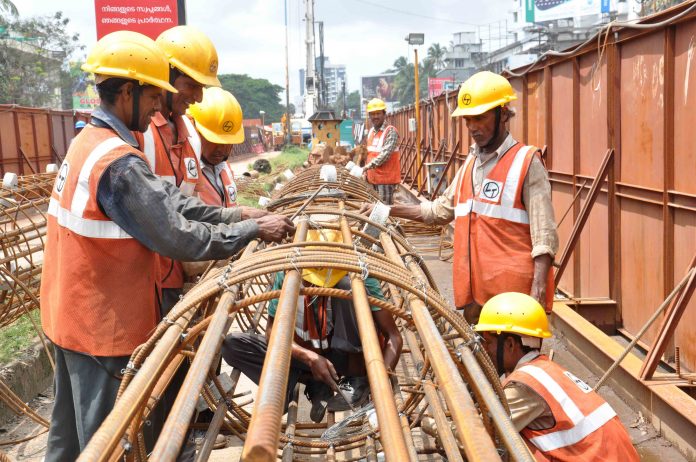
Image Source - http://blog.kochimetro.org/2013/09/19/labourissuessettled/

In this article, Pradipta Nath discusses, whether workmen can be deemed as an Employee of the Principal Employer where there is no Registration or License under the CLRA Act in India or not.

Introduction

In India, the outsourced employees are regulated under the Contract Labour Act, 1970.

There are four stakeholders under the CLRA Act, the Principal employer, the Contractor, the Contract Labours and the Government.

Under section 7[1] of the Act, the Principal Employer who is engaging the contract labours needs to obtain the Registration certificate. On the other hand, under section 12[2] the Contractor who is supplying labours to the Principal Employer need to obtain CLRA License.

Under section 9[3] of the CLRA Act, it proposes the consequences for not taking registration that the principal employer cannot employ or engage the contract labours. In other terms, the principal employer cannot engage the outsourced employees.

Consequences for not obtaining registration/license under the Contract Labour (Regulation and Abolition) Act, 1970

The Contractor depends upon the Principal employer for obtaining its license as it is the Principal employers who give Form-V to the Contract Labour for obtaining CLRA License.

There may be reasons that the Contractor had not obtained CLRA License wilfully, but there are also some other reasons where the Contractor actually is unable obtain a license. But where the Principal employer is not issuing CLRA License and it is done deliberately, then, in that case, the Act is silent and hence we need to refer the Courts Interpretations.

The consequences of not obtaining registration/license can be summarised below

  1. Under section 9 of the CLRA Act, the Principal employer cannot employ contract labour at any time or until the time specified by the Government Authority, if the registration is revoked.
  2. Under section 23[4], despite not obtaining registration under the CLRA Act the Principal employer engages the Contract labours, then the Principal employer will be punishable with imprisonment of three months or a fine of Rs 1000/- or with both.
  3. The Workmen cannot be deemed as an employee of the Principal Employer irrespective the registration under CLRA Act is obtained or not: – The workmen cannot claim permanent placement in their respective employment irrespective of the case that the Principal employer or the concerned Contractor do not have or obtained Registration or License respectively. The same was the view of the Hon’ble Kerala High Court in P. Karunakaran vs Chief Commercial[5], that the contract labourers cannot claim for permanent absorption in the employment to which they temporarily have been employed. If the contract labours are allowed to do so irrespective in Private or Government sector then a mass injustice will be done to the youths of India and as against the principle of equal opportunity in the matter of employment.
  4. In Dena Nath And Ors vs National Fertilizers Ltd. And Ors.[6], the Hon’ble Supreme Court of India uphold the view of the Kerala High Court that the principle of equal opportunity of work at all sector and also state that in case the Principal employer or the Contractor violates Section 7 or 12, the only consequences are the penal provisions envisaged under section 23 and section 25[7] of the Act.

Interpretation of the provision by the Hon’ble Supreme Court of India

“The Act does not provide for total abolition of contract labour but it provides for abolition by the appropriate Government in appropriate cases under Section 10 of the Act. In the present case and the other connected Special Leave Petitions, no notification has been issued by the appropriate Government under Section 10 of the Act vis-a-vis the type of establishment with which we are concerned.

It is not for the High Court to inquire into the question and decide whether the employment of contract labour in any process, operation or in any other work in any establishment should be abolished or not. It is a matter for the decision of the Government after considering the matter, as required to be considered under Section 10 of the Act.

The only consequences provided under the Act where either the principal employer or the labour contractor violates the provision of Sections 9 and 12 respectively, is the penal provision, as envisaged under the Act for which reference may be made to Sections 23 and 25 of the Act.

We are thus of the firm view that in proceedings under Article 226 of the Constitution merely because the contractor or the employer had violated any provision of the Act or the rules, the Court could not issue any mandamus for deeming the contract labour as having become the employees of the principal employer. We would not like to express any view on the decision of the Karnataka High Court or of the Gujarat High Court since these decisions are under challenge in this court, but we would place on record that we do not agree with the afore quoted observations of the Madras High Court about the effect of non-registration of the principal employer or the non-licensing of the labour contractor nor with the view of Bombay High Court in the aforesaid case. We are of the view that the decisions of the Kerala High Court and Delhi High Court are correct and we approve the same” source of this statement is https://indiankanoon.org/doc/1087622/ visited on 07-02-18 at 05:29 PM IST.

Liability of the Principal Employer

Whether the Principal employer has taken registration under the Act or not, the Principal employer cannot run away from the liabilities as enacted under section 20[8] read with section 21[9] of the CLRA Act. Therefore, still the Principal employer has to ensure that the welfare provisions like canteen, rest-rooms, drinking water, first aids facilities are complied by the Contractor. In case the Contractor has not complied, it is the obligation of the Principal employer to extend those facilities to the Contract Labours.

Duties of the Contractors

Whether the Contractor has obtained Form–V or license thereafter or not, by virtue of section 21 of the CLRA Act, it cannot escape from its duties of disbursing wages to the Contract Labours as per the date prescribed under the Payment of wages Act.

Implied duties of the Principal employer and the Contractors

Though not held directly under the Act, it is the duty of the Principal employer to obtain registration under the CLRA Act and issue Form-V to the Contractor. Subsequently, it is the responsibility of the Contractor to obtain the License thereafter with no delay and inform the Principal Employer.

Simply Put

The CLRA Act is a welfare legislation to ensure that the contract labourers who are engaged are not exploited and are extended with the benefits as provided under the Act. The reason for obtaining the License or registration under the Act may be for any reason but an obvious reason is to maintain a record or an MIS for the Government so that it can monitor and inspect the discrepancies. Any non-adherence of section 7 or 12 on either of the parties will not enrich them to escape from their liabilities as whether obtaining registration or license or not, it will not detract from each other’s status from being a Principal employer or Contractor, as the case may be.

On either term, a contract labour cannot be deemed to be an employee of the Principal employer, if the P.E or the Contractor has failed to obtain registration/license under the CLRA Act.

[1] https://indiankanoon.org/doc/1711982/ (visited on 07-02-18 at 11:46 AM IST)

[2] https://indiankanoon.org/doc/476610/ (V visited on 07-02-18 at 11:46 AM IST)

[3] https://indiankanoon.org/doc/731638/ (visited on 07-02-18 at 11:52 AM IST)

[4] https://indiankanoon.org/doc/790314/ (visited on 07-02-18 at 03:24 PM IST)

[5] https://indiankanoon.org/doc/312304/ (Visited on 07-02-18 at 04:57 PM IST)

[6] https://indiankanoon.org/doc/1087622/ (Visited on 07-02-18 at 04:60 PM IST)

[7] https://indiankanoon.org/doc/539839/ (Visited on 07-02-18 at 05:20 PM IST)

[8] https://indiankanoon.org/doc/1227679/ (Visited on 07-02-18 at 05:51 PM IST)

[9] https://indiankanoon.org/doc/32346/ (Visited on 07-02-18 at 05:51 PM IST)


Download Now

Is online selling of sex toys illegal in India?

37
Sex toys

In this article, Aseem Nandan of KIIT School of Law, Bhubaneswar discusses whether an e-commerce website in India can sell sex-toys or not.

Introduction

Sex toys are openly sold in India, however, it is unclear whether it is legal to do so or not. Products categorized as sex toys, may violate obscenity laws and fall within the grey area of law. In this article, we indulge in this conundrum.

Sale Of Sex Toys In India

For a long time, adult lifestyle products have been in the grey market, sold often by the street vendors.

In Delhi’s Palika Bazaar or Mumbai’s Crawford market, one could easily find sex toys as they are so accessible and easy to find. The last couple of years, there’s been an explosion in the e-commerce segment for sale of adult or sex toys varying from all kinds and types of them. According to the survey, most of the sex toys are bought by the male community in our country i.e. 65% whereas, only 35% are bought by the female community.

Section 292 – Law prohibiting the sale of sex toys

Display or exhibition of sex toys in an obscene manner violates the provision of Indian Penal Code on grounds of obscenity.

Section 292 of Indian Penal Code (IPC), 1860 deems the sale, advertisement, distribution and the public exhibition of obscene books, sketch, drawing or any other “obscene” object, illegal.

Obscenity is a criminal offence under Indian law which is punishable with imprisonment and fine both.

Do Sex Toys Fall Under Definition of “Obscenity”?

For any object to be considered obscene, it must be

  • Lascivious or appeals’ to prurient interests and
  • Have a tendency to ‘corrupt or deprave.’

In 2011, The Calcutta High Court addressed the issue whether sex toys sold in India comes under the charges of “obscenity”. The Court held that the charges on obscenity cannot be held as they were not legally sustainable. Just because the toy brings out sexual desires, it cannot be labeled as ‘obscene’.

How Did It Happen: E-commerce Players Dragged To Court

https://lawsikho.com/course/certificate-criminal-litigation-trial-advocacy
click above

One of India’s largest e-commerce player i.e., “Snapdeal”, was dragged to court in 2015 for selling different types of “Sex toys and accessories.” Delhi-based Supreme Court lawyer, Suhaas Joshi, filed a complaint saying e-commerce players were selling products which were “aiding or promoting gay sex.

Joshi further said that he wanted to “test the limits of India’s stand on homosexuality and it’s laws” and stated that there was no clarity if such products were legal or selling of such products were legal.

The Snapdeal Case

In Snapdeal’s case, the court asked the police to immediately investigate the matter which was complained about and submit a report to the court.

  • It’s a myth that there is any specific set of Indian laws defining ‘sex toys’. There are certain laws that govern ‘obscenity’ and the producers have to keep in mind when they are marketing the products.

Section 292 of the Indian Penal Code prevents the sale of any material or product that is ‘obscene’ in nature in India. But, no statement has been mentioned regarding the ‘Ban on Sex Toys in India’. No clear points have been mentioned or stated otherwise.

  • As mentioned by the Indian laws, any individual who sells, distributes, publicly displays or has any obscene material in his/her possession, sketches, drawing, painting, or any obscene material which showcases ‘obscenity’, is punishable with both imprisonment and fine. Therefore, from the above- mentioned view, everything related to sex toys is banned by our so-called democratic government. Still, there is a list of Indian brands which sell various types of sex toys online. Many online Adult websites have been selling these various items in the nation and people have been actually buying them. Statistics show a rapid growth in the number of buyers for adult stuff in India over the last couple of years. The main thing that the retailers or sellers have to keep in mind is the marketing strategy in order to make sure that the products that they are selling are legal in every perspective and are under the guidelines laid down by the government.
  • The complaint states that the website was condoning gay sex and was displaying obscene adult products by indexing vibrators and lubricants.
  • India is seeing a silent sexual revolution. Men and women both are buying adult products and are experimenting with their sex life.

On The Other Hand

The Section 377 of the Indian Penal Code, which criminalizes different sexual activities “ averse the order of nature, also comes into picture in the current scenario. As the act itself is illegal, the toy simply becomes an aid to the illegal activity as well. But, there is nothing to worry about as long as an individual is being private about it. There is no proper law regarding this. A lot of speculation has been around this issue and it’s rapidly increasing growth in India. ‘Sex Toys’ has a wider concept and has even complex importing and exporting policies.

Best Example Of An E-Commerce website selling sex toys

  • ‘IMbesharam’, is a company which is currently operating imbesharam.com, which sells different types of adult ‘LIFESTYLE’ and sexual salubrity products. Products vary from sex toys, sex kits, edible lingerie, different types of lubricants, different flavours and types of condoms, vibrating rings, etc. online, and the company asserts that they compile with all of the existing rules and regulations of selling sex-toys online in India.
  • The co-founder (Raj Armani), said to the newsstands that, “they’re ready to switch the operations if the laws of the nation demand them to do so.”
  • They gave this above statement after a report filed by a newspaper stating the websites, imbesharam.com, thatspersonal.com and ohmysecrets.com and stating that they are under the government scanner for “openly promoting and selling objectionable sex products unlawfully and displaying undesirable content on their particular websites.”
  • The riveting point here is that IMbesharam, which focuses to be known as the ‘Retailers of the Kama Sutra’, is a US company which has been selling different types of sex toys in India past its e-commerce gateway. It has stated that it also sells Adult sex products through other e-commerce gateways.
  • Laws in India are speculative regarding the sale of different types of sex toys and products. The major concern is associated with different types of ways that these products are being sold, demonstrating redolent pictures and graphics elucidation. “OBSCENITY” is a crime which is punishable in India both with imprisonment and fine.
  • Different startups are searching for a juridical alternative to bringing different types of sex toys in India.

Some Frequently Asked Questions

Is keeping sex toys at home an offence?

No, keeping sex toys at home is not an offence unless the individual is private about its usage and functioning. Every individual has his/her private life and hence, they have the full right to do whatever they want to under those boundations.

Can you import sex toys? Is it legal?

The main question arises here is how to classify which sex toys should be allowed for import and which should not be. From what I know, the obscenity laws of our country i.e. IPC 292, 293 and 294 are speculative when the issue comes regarding the import and sale of sex toys. According to the Calcutta High Court, any product or manual suggesting any kind of stimulation for the enjoyment of sex, if not expressed in any dishevelled language, cannot be stated as obscene. So, yes import of sex toys is legal only if it doesn’t contain any obscene language or objectionable pictures.

Selling of sex toys – Whether any provision of Information Technology Act is attracted?

Yes, a provision of Information Technology Act is attracted. Section 67 of the Information Technology Act bestows publishing of information which is obscene in any electronic form. The section states that whoever publishes or disseminate in electronic form any material which is salacious or tend to bestialize an individual shall be punished on the first conviction with imprisonment which may prolong to five years and with a fine which may extend to one lakh rupees and in the instance of second conviction with imprisonment which may prolong to ten years also with a fine which may extend to two lakh rupees.

How to report instances of sex toys being sold online?

The Ministry of Information and Broadcasting (Ministry of I&B) is a branch of the Government of India which is apotheosis body for the establishment and legislation of the rules and regulations and laws which are analogous to information, broadcasting, press and the films in India.

The Ministry is responsible for all the report related to instances of sex toys being sold online. If an individual wants to report any instance of sex toys being sold online he/she could directly contact the Ministry of I&B via phone or via email. The Ministry of I&B will revert back in 24 hours.

Conclusion

The conclusion which can be derived from the above-discussed article is that selling of sex toys manually through street vendors is prohibited and punishable whereas, selling of sex toys online is not banned and punishable as long as the retailer is keeping in mind the marketing strategy and the rules and regulations laid down by the government i.e., ‘Obscenity’ of any kind or manner should be prohibited whether it is in graphical form or physical representation. Laws regarding the online selling of sex-toys in India are speculative.

India is a developing country, both economically and socially and is rapidly pursuing the western culture and its following. Hence, online selling of sex toys is not banned in India.


LawSikho has created a telegram group for exchanging legal knowledge, referrals and various opportunities. You can click on this link and join:  

https://t.me/joinchat/J_0YrBa4IBSHdpuTfQO_sA

Follow us on Instagram and subscribe to our YouTube channel for more amazing legal content.
 

References:-

  1. https://economictimes.indiatimes.com/industry/cons-products/food/hotels-can-charge-more-for-bottled-water-supreme-court/articleshow/62044477.cms
  2. http://www.business-standard.com/article/current-affairs/hotels-restaurants-sell-water-food-for-more-than-mrp-what-you-must-know-117121300212_1.html
  3. http://www.thehindubusinessline.com/companies/Getting-kinky-Indians-are-ordering-sex-toys-online/article20830246.ece
  4. http://www.huffingtonpost.ca/petra-zebroff/safe-sex-seniors_b_4761831.html
  5. https://qz.com/355528/startups-are-searching-for-legal-loopholes-to-bring-sex-toys-to-india/
  6. https://www.reddit.com/r/india/…/snapdeal_taken_to_court_for_selling_sex_toys/
Download Now

Living Will in cases of Passive Euthanasia

0
Passive Euthanasia
Image Source - https://www.everplans.com/articles/what-you-need-to-know-about-creating-a-living-will

In this article, Tanya Nayak of KIIT School of Law discusses the legal position of passive euthanasia and living wills in India.

Passive Euthanasia

Passive euthanasia means the withdrawal of life support to patients in a vegetative state. Euthanasia cannot be justified with the common word i.e. killing because there is a difference between deliberately carrying out an act in order to get the desired result and simply omitting an act. Killing includes an action which is intended in order to get the consequences so desired whereas euthanasia refers to withdrawal of life support in case of patients who are in a complete vegetative state.

Acts amounting to passive euthanasia are

  •         Switching off life support systems.
  •         Disconnecting feeding tubes.
  •         Not carrying out a life-extending surgery.
  •         Not providing life-extending drugs.

’Thou shalt not kill but needst not strive, officiously to keep alive’’- Arthur Hugh Clough[1].

Legal position of Passive Euthanasia in India

  • Active euthanasia is a crime under section 302 or 304 of IPC.
  • Passive euthanasia is legal in India under exceptional circumstances. The theory of passive euthanasia got its legal status in the year 2011.
  • In March 2011, the supreme court of India, passed a judgment in support of passive euthanasia, it permitted the practice of passive euthanasia in India.
  • It all started in the year 2009 when Pinki Virani approached the highest court with a PIL as the ‘’next friend’’ asking the legislation of euthanasia so that Aruna Shanbaug’s continued suffering could end by withdrawing medical support. Further, it was contended by Pinki that the patient had been in a permanent vegetative state for the past 42 years and did not have any chance of recovery at all[2].
  • The Supreme Court accepted the petition and immediately constituted a medical board, comprising of three eminent doctors. The report from the committee was that the patient was not brain dead and responded to some situations in her own way. They felt that there was no need for euthanasia in Aruna’s case. Further, the staffs at KEM Hospital and the Bombay municipal corporation filed their counter petition, in this case, opposing euthanasia for Aruna.
  • The court in its decision elaborated the difference between active and passive euthanasia and said that active euthanasia means killing a person through the use of lethal substance or force, and passive euthanasia means withdrawing or discontinuing medical support necessary for the continuation of life.
  • The court rejected the plea for euthanasia for Aruna Shanbaug but legalized passive euthanasia in the country[3]. The Court rejected the ambit of euthanasia but legalized passive euthanasia under special circumstances and also decriminalized the attempt to commit suicide by removing the punishment which was there under section 309 of IPC.
Download Now

Law of Sedition in India

3
Law of sedition
Image Source - http://www.seditionwine.com/

In this article, Sudarshna Thapa of Law College Dehradun, Uttaranchal University discusses the enforceability of law of sedition in India.

Introduction

Every citizen has been given freedom to speak and express their views under Article 19(1)(a) of the Indian Constitution. However, this freedom is not absolute and some reasonable restrictions have been imposed on freedom of speech and expression under Article 19(2). But when a person does an act by his words, signs or representation which is held to be contemptuous towards the Government of India, then such act is punishable under section 124-A of Indian Penal Code, 1860. Sedition is an offence that criminalizes speech that is regarded to be disloyal to or threatening to the state.

The provision of Section 124A is very wide and it covers the act of defamation of the Government excluding any criticism in good faith of any particular measures or acts of administration.

Law of Sedition

The term ‘Sedition’ means “conduct or speech which results in mutiny against the authority of the state”. Law of Sedition deals with section 124A of IPC, 1860, is considered as a reasonable restriction on freedom of speech. It was drafted by Thomas Macaulay and introduced in 1870.

The following points describe the origin of sedition law:

  • Origin of Sedition law in India is connected to the Wahabis Movement of the 19th century.
  • This was an Islamic revivalist movement and was led by Syed Ahmed Barelvi.
  • Since 1830, the movement was active but in the wake of 1857 revolt, it turned into armed resistance, a Jihad against the British.
  • The British termed Wahabis as rebels and carried out military operations against Wahabis.

History

In British Era, Section 124A was not a part of Indian Penal Code, 1860. But this Section was inserted into IPC by the IPC (Amendment) Act, 1870. By an amending act of 1898, this provision was later replaced by Section 124A. According to the British Era Law, under the old IPC, “Exciting or attempting to excite feelings or disaffection was considered as Sedition”.

Meaning of Sedition under Section 124A of IPC, 1860

Whoever, by words, either spoken or written, or by signs, or by visible representation, or otherwise, brings or attempts to bring into hatred or contempt, or excites or attempts to excite disaffection towards the Government shall be punishable with Life Imprisonment”.[1]

Explanation I to the Section defines the scope of disaffection and in Explanation II and III indicate what under the English Law is not considered seditious intention.

What are the activities that are Seditious in nature?

In India, what constitutes as ‘Sedition’ is highly debated. As per the Indian Penal Code, for an act to be called “seditious”, it should have the following components:

  1. Any words, which can be either written or spoken, or signs which include placards/posters (visible representation)
  2. Must bring hatred/contempt/disaffection against the Indian Government
  3. Must result in ‘imminent violence’ or public disorder.[2]

As per the interpretation of the Court on Section 124-A of the Indian Penal Code, 1860 the following acts have been considered as “seditious”

https://lawsikho.com/course/certificate-criminal-litigation-trial-advocacy
click above
  • Raising of slogans against the government – example – “Khalistan Zindabad” by groups. Raising of slogans by individuals casually once or twice was held not to be seditious. [3]
  • A speech made by a person must incite violence / public disorder for it to be considered as seditious [4]. Subsequent cases have gone to further interpret it to include “incitement of imminent violence”.
  • Any written work which incites violence and public disorder.

Sedition found in other Laws

The following are some laws which cover Sedition law:

  • Indian Penal Code, 1860 (Section 124A)
  • The Code of Criminal Procedure, 1973 (Section 95)
  • The Seditious Meetings Act, 1911 &
  • The Unlawful Activities (Prevention) Act (Section 2(o) (iii)).

How legal mechanism sets in motion

Sedition is considered as a high-value crime in the Indian Penal Code which is against the sovereignty of the country. It is a cognizable offence which allows arrest without a warrant and police can start the investigation without the permission of the court. There are some legal procedures regarding the charges of Sedition:

  1. Go to the Jurisdictional Police Station

It is the person’s legal right to file a case against the person who is committing an offence against the state such as Sedition. A person can file the complaint with the nearest Police Station where such offence when committed.

Lodging an F.I.R

The First Information Report (F.I.R.) is a written document which is prepared by the police organizations when they receive any information about the cognizable offence. In the case of seditious offence, it is filed by the person who has come to know about such offence and also can be filed by the police officer.

How Police take Cognizance

When any credible information is being registered by the complainant regarding the sedition offence, then it is the duty of Police Officer to take action for such complaint. Police have the right to arrest without warrant for such offence. There are some procedures when Police are able to arrest without warrant:

    1. When the seditious act is going on before the police inspector, District Magistrate or Executive Magistrate, then they can arrest such person without any warrant.
    2. If any information is received from another police officer for the arrest of the person committed a seditious offence, then the other police officer can arrest such person.
    3. F.I.R. when lodged against the person for the seditious offence.
    4. When a person who is being suspected of Sedition, then the police officer may arrest such person for the further investigation.

Investigation

After giving the information to a police officer in charge of a police station, the investigation is initiated. A magistrate can order a police officer in charge to investigate on cognizable offence such as Sedition. A magistrate is empowered to take cognizance upon receiving any complaint or upon a police report or upon information received from any person other than a police officer who is having knowledge of such offence is committed. A police officer may require to take the.. attendance of witnesses in writing.

Charge Sheet

After the completion of the investigation, police submits charge sheet which consists of F.I.R. copy, statement of the complainant, statement of witnesses etc.

Sedition: Disloyalty In Action

“Sedition” has been described as disloyalty in action. The object of sedition law is to induce discontent and insurrection, and stir up opposition to the Government and bring the administration of justice into contempt. Sedition is a crime against the society as it involves all those practices that result in conduct disturbance in the state or to lead to civil war which contempt the sovereign and promotes public disorder.[5]

Defences Available to a Person Charged With Sedition

To get the exemption from Criminal Liability, the following are the defences:

  1. That he did not make the sign or representation or not speak or write the words, or not do any act in question.
  2. He did not attempt into the contempt or attempt disaffection.
  3. Such disaffection should not be towards the Government.

Sedition and Article 19(1)(a) of the Indian Constitution

The Concept of Free Speech has attained global importance and all have supported it as a basic fundamental right of a human being. In India, such rights are provided under Part-III and Article 19 of the Indian Constitution. The said right has no geographical indication because it is the right of the citizen to gather information with others and to exchange thoughts and views within or outside India.

Courts have been given the power to act as guarantors and protectors of the rights of the citizen. Article 19(1)(a) secures the ‘freedom of speech and expression’ but it has been bound by the limitation which has been given under Article 19(2) which states the permissible legislative abridgement of the right of free speech and expression.

In Niharendu Dutt’s case [6], for sedition, the Federal Court had taken chance to interpret the Section 124A of the IPC in alignment with British Law. It had ruled that tendency to disturb public order was an essential element under Section 124A. The Privy Council held that the incitement to violence or a tendency to disturb public order was not necessary under section 124A.

In Tara Singh v. State[7], the validity of Section 124A of the IPC was directly in issue. In this case, it curtailed the freedom of speech and expression, so the East Punjab High Court declared this section void.

By the Constitution (First Amendment) Act, 1951, two changes were introduced relating to freedom of speech and expression, are:

  1. It considerably widened the latitude for restrictions on free speech by adding further grounds;
  2. The restriction imposed on Article 19(1)(a) must be reasonable.

Therefore, the question now arises of whether Section 124A of IPC is in conflict with Article 19(1)(a) or not. It has been reflected by the following points:

  1. Section 124A of the IPC is ultra vires the constitution in as much as it infringes the fundamental right of freedom of speech in Article 19(1)(a) and is not saved by the expression “in the interest of public order”.[8]
  2. As the expression “in the interests of public order” has a wider connotation and should not be confined to only one aspect of public order, then the Section 124A is not void.
  3. Section 124A IPC is partly void and partly valid. In Indramani Singh v. State of Manipur [9], it was held that Section 124A which seeks to impose restrictions on exciting mere disaffection is ultra vires, but the restriction imposed on freedom of speech and expression covered under Article 19(2) can be held intra vires.

In 1959, Allahabad High Court declared that Section 124A was ultra vires to Article 19(1)(a) of the Constitution.

Indian Freedom Fighters who were charged with Sedition during the Freedom Struggle

Mahatma Gandhi was charged with sedition

Gandhiji had written three ‘politically sensitive’ articles in his weekly journal Young India, which was published from 1919 to 1932 so that he was jailed on the charges of sedition. He was sentenced to a six-year jail term.

Three charges were imposed on him:

  1. Tampering with loyalty;
  2. Shaking the manes and
  3. Attempt to excite disaffection towards the British Government.

He wrote the first part of his autobiography during his imprisonment- The Story of my Experiments with Truth- and about the Satyagraha movement in South Africa. He was released after two years as he was suffering from appendicitis.

Bal Gangadhar Tilak was convicted under this [10]

Bal Gangadhar Tilak was charged with sedition on two occasions, are:

  1. Firstly, his speeches that allegedly incited violence and resulted in the killings of two British Officers for which he was charged with Sedition in 1897. He was convicted but got bail in 1898.
  2. Secondly, he was defending the Indian revolutionaries and called for immediate Swaraj or self-rule in his newspaper ‘Kesari’ for which he was convicted under sedition and sent to Mandalay, Burma from 1908 to 1914.

Take on abolishing the law of sedition – Should the Indian legal system abolish the laws punishing seditious activities?

In today’s scenario, the sedition law expects that citizens should not show enmity, contempt towards the Government established by the law.

  • There are some dark areas which lies between actual law and its implementation.
  • Thus the laws need to amend those dark areas.
  • In India, there are so many divisive powers acting together in which such laws are necessary evils in a country like India.
  • It is the need for such law that those activities which are promoting violence and public disorder should be stopped

Disaffection and the State

  • A seminar titled with ‘Azadi, the Only Way’ was organized by the Committee for the release of a Political prisoner in Srinagar.
  • The controversy arises when Sedition was charged against Arundhati Roy, Syed Ali Shah Geelani, Varavara Rao and others who spoke at the said Seminar.
  • Media reported that the Central Government was not in favour of initiating proceedings in this case.
  • There are reports though of cases having been filed in New Delhi.
  • Intimidation of cases being filed in other parts of the country against Roy, Geelani and other who spoke at the seminar.

Famous Trials of Sedition

  1. Jogendra Chunder Bose [11]

Jogendra Chunder Bose was an editor of Bangobasi. He was charged with Sedition for voicing against Age of Consent Bill, 189

Cartoonist Aseem Trivedi

During a rally of Anti-Corruption crusader Anna Hazare in Mumbai, he had been accused of putting up banners mocking the constitution and posting the same on his website. He was charged under Section 124A of IPC, Section 66A of Information Technology Act and Section 2 of Prevention of Insults to National Honour Act.

Kashmiri Students

60 Kashmiri Students were cheering for Pakistan in a Cricket Match against India. So they were charged with Sedition in March 2014.

Folk Singer S Kovan

He was charged with sedition for two songs criticising the state government for allegedly profiting from state-owned liquor shops at the expense of the poor.

Binayak Sen

He was a pediatrician by profession and was allegedly supporting Naxalites. For which he was charged with Sedition by Chhattisgarh Government.

Akbaruddin Owaisi

On December 22, 2012, he purported hate speech at Nirmal. He was slapped with the charge of sedition by the District Police of Karimnagar.

Kanhaiya Kumar, Student of JNU [12]

JNU Student Leader, Kanhaiya Kumar was arrested in February 2016 on the charge of sedition. He was arrested for inciting violence through unlawful speech, allegedly spread not all over India but also across the world. This arrest has raised political turmoil in the country by which academicians and activists protesting against this move by the Government. On March 2, 2016, the videos purporting to show this activity were found to be fake and he was released after three weeks in jail.

Constitutionality of Law of Sedition in India

Kedarnath Singh v. State of Bihar [13]

  • It was held that the law is constitutional and covered written or spoken words that had the implicit idea of subverting the Government by violent means.
  • With an intention to create public disorder, Citizens can criticize the Government as long as they are not inciting people to violence against the Government.
  • Supreme Court upheld the validity of Section 124A, it limited its application to acts involving intention or tendency to create disorder, or a disturbance of law and order, or incitement to violence.

Balwant Singh and Anr v. State of Punjab [14]

  • After the assassination of Prime Minister Indira Gandhi, the accused had raised the slogan “Khalistan Zindabad” outside a cinema hall.
  • It was held that two individuals casually raising slogans could not be said to be exciting disaffection towards the Government. Section 124A would not apply to the circumstances of this case.

Romesh Thapar v. State of Madras [15]

  • The petitioner contended before the Supreme Court that the said order of banning his paper ‘Cross Roads’ by the Madras State.
  • It has contravened his Fundamental Right of freedom of speech and expression conferred on him by Article 19(1) of the Constitution.
  • The Supreme Court held that the Article 19(2) where the restriction has been imposed only in the cases where problem to public security is involved. Cases where no such problem could arise, it cannot be held to be constitutional and valid to any extent.
  • Supreme Court quashed the order of Madras State and allowed the application of the petitioner under Article 32 of the Constitution.

The following acts are not considered seditious

  • Improvement or alteration by lawful means with the disapproval of the measures of government.
  • The strong words which are expressing disapprobation of actions of the Government and not encouraging those feelings which generate public disorder by acts of violence.
  • To improve the condition of the people or to secure the alteration of those acts by lawful means without the feelings of enmity and disloyalty which involve excitement to public disorder or the use of violence.

National Crime Records Bureau Statistics on Sedition

When all the crimes are committed against the state or government, it disturbs public order. According to the data from 2014-2016 of NCRB, 165 people were arrested on the charge of sedition. During 2014, 47 cases were reported under sedition. Of the total sedition cases, Jharkhand and Bihar have reported 18 cases and 16 cases respectively. Besides, 5 cases in Kerala, 2 cases each in Andhra Pradesh, Assam, Chhattisgarh and Himachal Pradesh were also reported during 2014.

According to the NCRB, the latest crime data shows the cases of sedition fell from 2014 to 2015. A total of 30 sedition cases were registered in 2015, less than in 2014. Tamil Nadu topped the list for committing the crime against state including sedition. Of the 6,986 cases were registered in 2016, 1,827 cases were reported from Tamil Nadu, followed by U.P. 1,414, Haryana 1,286 and Assam 343 cases. In the last three years across the country, 165 people were arrested on the charge of sedition. According to the reports of NCRB, 111 people were arrested in four state i.e., 68 in Bihar, 15 in Haryana, 18 in Jharkhand and 10 in Punjab.

Conclusion

Sedition is the serious offence in the violation of Article 19. So there is a need that sedition laws should have expressly contained words which satisfied the restrictions of Article 19(2). The purpose of restricting speech under Sedition Act is the protection of National Security. Sedition laws should be interpreted and applied according to the guidelines given by the Supreme Court.


LawSikho has created a telegram group for exchanging legal knowledge, referrals and various opportunities. You can click on this link and join:  

https://t.me/joinchat/J_0YrBa4IBSHdpuTfQO_sA

Follow us on Instagram and subscribe to our YouTube channel for more amazing legal content. 
 

References

[1] Section 124A of IPC, 1860 https://indiankanoon.org/doc/1641007/ (Date of visit the site- 09/02/2018, Time of visit the site- 11:55 AM IST)

[2] Indra Das v. State of Assam

[3] Balwant Singh v. State of Punjab

[4] Kedarnath Singh v. State of Bihar

[5] Nazir Khan v. State Of Delhi (2003) 8 SCC 461

[6] https://indiankanoon.org/doc/256394/ (Date of visit the site- 09/02/2018, Time of visit the site- 1:00 PM IST)

[7] Tara Singh Gopichand v. State, AIR 1951 E.P. 27

[8] Ram Nandan v. State, AIR 1959 All. 101

[9] AIR 1955 Manipur

[10] Queen Empress v. Bal Gangadhar Tilak https://indiankanoon.org/doc/890587/ (Date of visit the site- 09/02/2018, Time of visit the site- 2:15 PM IST)

[11] Queen Empress v. Jogendra Chunder Bose (1892) https://indiankanoon.org/doc/334102/ (Date of visit the site- 09/02/2018, Time of visit the site- 3:00 PM IST)

[12] Kanhaiya Kumar Case http://www.newindianexpress.com/cities/delhi/2017/apr/28/police-question-jnu-students-in-kanhaiya-sedition-case-1598800.html (Date of visit the site- 10/02/2018, Time of visit the site- 11:20 AM)

[13] AIR 1962, SC 955 Supreme Court, 5 Judges https://indiankanoon.org/doc/111867/ (Date of visit the site- 10/02/2018, Time of visit the site- 1:20 PM IST)

[14] AIR 1985 SC 1785 https://indiankanoon.org/doc/123425906/ (Date of visit the site- 10/02/2018, Time of visit the site- 2:05 PM IST)

[15] [1950; SCR 594] https://indiankanoon.org/doc/456839/ (Date of visit the site- 10/02/2018, Time of visit the site- 2:45 PM IST)

Download Now

How to file your complaint and grievance before the Insolvency and Bankruptcy Board of India

0
drones

In this article, Rajeev Kumar discusses step by step procedure for filing of complaint and grievance before the Insolvency and Bankruptcy Board of India.

The Insolvency and Bankruptcy Board of India came up with the regulations called Insolvency and Bankruptcy Board of India (Grievance and Complaint handling Procedure) Regulations, 2017 in reference with the section 196 (powers and functions of the Board) and section 240 (power to make regulations).

These regulations came into applicable from 07.12.2017. These regulations help IBBI for disposal of grievances and complaints in transparent manner against the mischievous service providers within the time bound. However, as per leading newspaper economics dated 08.12.2017, Senior Official of IBBI made the alleged delay in naming the resolution professional in the case involving Shree Shyam Metaliks and steel and Power. The National Company Law Tribunal (NCLT) has ordered the official Sreekara Rao, a deputy general manager of Insolvency and Bankruptcy Board of India to explain the reason behind it and why the action against him will be not taken up.

Meaning of Grievance under the Insolvency and Bankruptcy Board of India (Grievance and Complaint handling Procedure) Regulations, 2017

It is a written expression given by stakeholder of his suffering due to the conduct of a service provider or associated persons with it.

A proprietor, director, partner, officer or an employee of a service provider, a professional or a valuer engaged by a service provider or any other person acting for or on behalf of a service provider is called associated persons.

Further regulations define stakeholder who may be a debtor, a creditor, a claimant, a service provider, a resolution applicant and any other person having an interest in the insolvency, liquidation, voluntary liquidation, or bankruptcy transaction under the Code.

These regulations empowered the stakeholder who may be a creditor, a debtor, a service provider, a claimant, a resolution applicant and any other person having an interest in the insolvency, voluntary liquidation, liquidation or bankruptcy transaction under the Insolvency and Bankruptcy Code, 2016 to file the complaint and grievances against the service provider like an insolvency agency or an insolvency professional or an insolvency professional entity or an information utility.

The stakeholder may file the complaints and grievance in details that have caused suffering to them by the service providers. It enables IBBI to redress the complaint and grievance raised by stakeholder in transparent manner. These regulations help stakeholder in preventing and reducing the suffering caused by the service providers.

Meaning of Complaint under the Insolvency and Bankruptcy Board of India (Grievance and Complaint handling Procedure) Regulations, 2017

A complaint as a written expression by a stakeholder alleging contravention of any provision of the Code or rules, regulations or guidelines made thereunder or circulars or directions issued by the Board by a service provider or any of its associated persons and includes a complaint-cum-grievance.

Section 2(f) defines the expression complaint-cum-grievance as a complaint and grievance in the same matter.

Grievances need to file by stakeholders with the Board

As per the regulations act 2017, the grievance shall state in details of the identity of the aggrieved, the concerned service providers, conduct of the service provider who has caused the suffering of the aggrieved, suffering whether pecuniary or otherwise, how the conduct of the service provider has caused the suffering of the aggrieved and details of his efforts to get the grievance redressed from the service provider and how the grievance may be redressed.

PROCEDURE FOR FILING OF GRIEVANCE AND COMPLAINT

A stakeholder who wants to register a complaint needs to file it with the board in Form A.

The following information is required by stakeholders to file a complaint or grievance prior to fill the Form A,

  • Address of the Board.
  • Name of the complainant
  • Identity of the complainant – Aadhaar No / CIN
  • If complaint is filed on behalf of the stakeholder/ complainant – Authorised representative Name is to be mentioned.
  • Aaadhar No is to be provided for the proof of the Identity of the authorised representative.
  • Complete address with Email ID & Phone No of complainant / authorised representative is to be provided for future correspondence.
  • Name of the service provider / its associated persons whom complained to be registered.
  • Aaadhar No/CIN (If known) is to be provided for the proof of the Identity of the service provider.
  • Complete address along with Email ID & Phone No of the service provider. Details of the alleged contravention of any provision of the Code or rules, regulations, or guidelines made thereunder or circulars or directions issued by the Board by a service provider or its associated persons.
  • Details of alleged conduct or activity of the service provider or its associated persons, along with date and place of such conduct or activity, which contravenes the provision of the law. Details of suffering, whether pecuniary or otherwise, the complainant has undergone.
  • How the conduct or activity of the service provider or its associated persons has caused the suffering of the complainant or to any other stakeholder.
  • Details of evidence are to be provided in support of alleged contravention.
  • Does the complainant have a grievance? If so, how it may be redressed?
  • Explain the reasons for delays If complaint is not filed within forty-five days of the occurrence of the cause of action for the complaint.
  • Whether the fee of Rs.2500 has been credited to the IBBI? Amount can be paid to IBBI through Demand Draft or online.
  • The details of the bank account and the complainant to be provided in order to refund the fee to the stakeholder when the registered compliant found to be not “frivolous or malicious.
  • Complainant can keep their identity confidential; hence same need to be confirmed in form A i.e. Yes or No.

Following documents to be attached for proof of the complaint:

  1. Authorization letter in case complaint is registered on behalf of the stakeholder.
  2. Original Demand draft or transaction receipt for online transaction for an amount of Rs.2500 towards the fee to the account of the Board;
  3. Any other details in support of the complaint.
  4. The Form A to be submitted along with demand draft for an amount of rupees two thousand and five hundred in favour of the Insolvency and Bankruptcy Board of India payable at New Delhi towards the fee.
  5. Rupees two thousand and five hundred can be also be paid through online to the boards towards the fee.
  6. A grievance or a complaint is required to file within forty-five days of the occurrence of the cause of action for the grievance or the complaint. A grievance or a complaint may be filed after the 45 days with the sufficient reasons which justifying the delay but delay period should not exceed 30 days.
  7. A stakeholder can also file a grievance or a complaint online with the Board online. In such case a grievance or complaint shall be filed by mail at [email protected] or by post or hand delivery at the Office of the Board, until the Board provides a facility for online filing of grievances and complaints

IDENTITY OF THE STAKEHOLDER

  • Regulation shall disclose the identity of filing stakeholders namely debtors, creditors etc or their authorised representative who is authorised to file a complaint or grievances.
  • Board can keep the confidential the identity of stakeholders who are filing the complaint or grievances, on their request unless its disclosure is necessary to display for processing the grievance or complaint or under any law as per regulations.

UNIQUE REGISTRATION NUMBER

  • A stakeholder will receipt a unique registration number assigned by the board to every grievance and every complaint and registration number will be communicated to the aggrieved or the complainant within a week of receipt of complaint or grievances.
  • Board may club the grievance or complaints together for disposal when compliant or grievance receipt are more than one and in the same matter.
  • The board will not accept any cognizance of any anonymous grievance.

PROCEDURE FOR DISPOSAL OF GRIEVANCE

  • The board may obtain additional information and records from the aggrieved and concerned service provider in order to decide whether grievance requires any redress by the service provider.
  • Information and records sought by the board from the aggrieved and concerned service provider to be submitted within fifteen days thereof.
  • If grievance found by the board does not require redress then he will close the grievance within forty-five days of its receipt.
  • In case if it is required to redress the grievance then the board will order the service provider to redress the grievance within forty-five days of its receipt.

PROCEDURE FOR DISPOSAL OF COMPLAINT

  • The board of IBBI may ask further additional information and records from the complainant and concerned service provider in order to get a prima facie view to verify whether the alleged complaint is correct or not.
  • The information and records sought by the board has to be submitted within 15 days by the complainant and service provider.
  • The boards will analyse the case based on the received information and records from complainant and service provider and the make the opinion within 45 days of the receipt of the compliant whether the case is prima facie or not. If cases found does not exist a prima facie then board will be communicated to them.
  • If the complainant is not satisfied with the decision of the board, they may request a review of decision given by the board. Further the board shall persuade the review within thirty days of the receipt of review with an opinion whether case is prima facie by an order.
  • If board found exists case is prima facie they may order for inspection, investigation or issue a show cause as may be warranted as per the regulations.
  • When board opinion is to found to be not frivolous, deposited amount fee rupees two thousand five hundred rupees will be refunded to the stakeholder.

STATISTICS SUMMARY

As per the regulations, it is necessary to display the summary statistics about receipt and disposal grievances and complaints on its web site by the Board.

A large number of cases have been registered after the Insolvency and Bankruptcy Board of India (Grievance and Complaint handling Procedure) Regulations, 2017. As per the leading newspapers of India as on December 2017, total 470 cases were acknowledged by The National Company Law Tribunal (NCLT) under the Insolvency and Bankruptcy Board of India and in which there are 12 big cases are corporate defaulters. As per RBI data over 4300 applications were filed in all over the National Company Law Tribunal (NCLT) as on November 2017 under the corporate insolvency resolution process (CIRP).

Videocon and Jaiprakash Associates Limited (JAL) are in the hit list of defaulters as per the RBI under the Insolvency and Bankruptcy Code, 2016. Apex court asked to JAL to deposit Rs 550 Crore towards the defaulting loan of IDBI.

As per RBI report total, outstanding debt amount as on September 2017 for top 50 borrowers in India is Rs 3,72,379 crore, which funded by scheduled commercial banks.

Time has come to watch how such huge cases will be sorted out in the time bound manner and it is becoming the question mark whether IBBI board is sufficient to handle such huge number cases. Now Government of India needs to designed methodology to speed up the resolution process of Insolvency and Bankruptcy defaulters.

A stakeholder has to pay fee Rs 2500/- for a complaint with duly filled specified form to the board of IBBI, which may be refunded if the case found to be not frivolous or malicious. Details of the complaint to be narrated in the complaint form by the stakeholder how, when and where the service provider has caused the suffering to the stakeholder or complainant. Depending on the nature complaint IBBI may inspect, investigate or issue the show cause notice to the service provider.

Footnote

  1. http://www.ibbi.gov.in/
  2. http://www.mca.gov.in/MinistryV2/insolvency+and+bankruptcy+code.html
  3. https://economictimes.indiatimes.com/industry/services/property-/-cstruction/jp-associates-jsw-keen-on-resolution-of-jaypee-infra/articleshow/61631308.cms
  4. http://www.mondaq.com/india/x/660778/Insolvency+Bankruptcy/The+Insolvency+And+Bankruptcy+Board+Of+India+Grievance+And+Complaint+Handling+Procedure+Regulations+2017
  5. https://taxguru.in/corporate-law/ibbi-grievance-complaint-handling-procedure-regulations-2017.html
  6. http://corporatelawreporter.com/2017/12/12/ibbi-notifies-regulations-for-handling-of-grievances-and-complaints
  7. http://pib.nic.in/newsite/PrintRelease.aspx?relid=174227
  8. https://www.taxmanagementindia.com/web/tmi_blog_details.asp?id=502413&kw=Insolvency-and-
  9. https://www.makaan.com/iq/news-views/jaypee-in-insolvency-case-home-buyers-to-raise-claims-till-august-24


Download Now

Hindu Women’s right in ancestral property

1
Hindu Women's right in ancestral property

This article is written by Dr Suresh Patil, Ph.D., Former Deputy Director, Ministry of Culture, Government of India.

In our great nation, often while one issue is resolved, yet another is born. We have such a situation in the very beginning of 2018 — thanks to latest Apex Court judgment regarding women’s share in ancestral property.

The Supreme Court in a civil appeal number 7217 of 2013 (Prakash & Ors  Versus Phulavati & Ors), had already declared irrespective of the date of birth, women are entitled to equal share as per Amendment of 2005 to Hindu Succession Act of 1956 (HSA). The only condition the Hon’ble judges, Adarsh Kumar Goel and Anil Dave, had laid down was that both father and daughter should be alive on 9-9-2005 in order to claim the equal rights. This condition emanated from the very text in the Amendment of 2005 itself. Amended Section 6(3) reads as,

“Where a Hindu dies after the commencement of the Hindu Succession (Amendment) Act, 2005, his interest in the property of a Joint Hindu family governed by the Mitakshara law, shall devolve by testamentary or intestate succession, as the case may be, under this Act and not by survivorship …”.

The Hon’ble said judges interpreted this as,

“The text of the amendment itself clearly provides that the right conferred on a ‘daughter of a coparcener’ is ‘on and from the commencement of Hindu Succession (Amendment) Act, 2005’. Section 6(3) talks of death after the amendment for its applicability. In view of plain language of the statute, there is no scope for a different interpretation than the one suggested by the text of the amendment. An amendment of a substantive provision is always prospective unless either expressly or by necessary intendment it is retrospective. In the present case [Prakash Versus Phulavati], there is neither any express provision for giving retrospective effect to the amended provision nor necessary intendment to that effect” (P. 14 of the Judgment, 2015).

Therefore, the above judges laid down the condition that equal rights apply to ‘living daughters of living father (co-parcener)’ that too ‘on and from the commencement of the Hindu Succession (Amendment) Act, 2005’. Thus if a woman is claiming partition from her co-parcener father, he should have been alive on 9.9.2005, otherwise, she cannot claim equal rights. This landmark judgment of Supreme Court was delivered in October 2015. This was an extra-ordinary judgment because the judges had bunched nearly 14 Special Leave Petitions of similar kind. Indeed this judgment became a milestone in Indian legal history.

Many courts across the country high courts, district courts, etc. disposed of thousands of pending partition suits for property, quoting the above landmark judgment as a well settled point in law. Everybody believed that this is the final position of law, as regards women’s right in ancestral property is concerned. However, once again clouds of doubts have arisen in early 2018 with yet another judgment of Apex Court on the same matter.

On 4th February, 2018, Justice A.K. Sikri, J and Justice Ashok Bhushan in civil Special Leave Petition Nos. 10638-10639 of 2013 (Danamma Versus Amar & Ors.) delivered their judgment providing equal rights to Appellants who had been denied rights in lower courts on account of the fact that they were born before 1956 when Hindu Succession Act (1956) came into vogue.

True, in an earlier judgment delivered on 19 March 2010 at Karnataka High Court (RFA 326 of 2004, Pushplatha NV Versus Padma and Others), Justice N Kumar and Justice AN Venugopala Gowda had taken this position. They actually held that the Amendment of 2005 to HSA 1956 was retrospective in nature as it is a social legislation. However, they had put a cut-off that in order to avail equal rights, a woman should have been born in or after 1956 when the said Act came into force.

Their logic was,

“When the amending act came into force in 2005, naturally the question and doubt would arise, as to when the daughter would get that right. The parliament realized this problem and did not want to leave any one in doubt about its intention. It is expressly stated in the section itself that this ‘right is by birth’ leaving no scope for interpretation. The amendment is introduced by way of substitution. The result is, this amended provision is there in the statute on the day it came into force, i.e., 17-6-1956. From that day till the amendment Act came into force on 9-9-2005, the daughter of the coparcener was not a coparcener and she became a coparcener only from 9-9-2005. Though her status was so declared on 9-9-2005, she has been given right in the coparcenery property from the date of her birth. It would result in absurdity. Therefore, what the parliament did was to use the phrase, ‘on and from the commencement of Hindu Succession (Amendment) Act 2005’, as the opening words of the Section thus removing the absurdity” (RFA 326 of 2004, page 51-52).

As per this logic, Justice N Kumar and Justice AN Venugopala Gowda, concluded that women born before 17-6-1956 cannot get the benefits of Amendment of 2005. The present Supreme Court judgment of February 4, 2018, has reversed this by granting equal rights to women born before 1956 also. While doing so, unfortunately, the present judges (Justice A.K. SIKRI, J and Justice Ashok Bhushan) have apparently ignored another issue settled by Justice Adarsh Kumar Goel and Justice Anil Dave in their judgment of October 16, 2015 (above cited). These judges had concluded that Amendment of 2005 applies only to ‘living daughters of living father’ as on and after 9-9-2005. If father had died before this date, the daughters of such father would not get equal rights, though they still got a share as per earlier law.

The present 2018 case dealt by Apex Court is the one where two sisters approached the SC for the reason that they were denied rights in property for being born before 1956. Their father was one Gurulingappa from whom they claimed right in coparcenary property. Both trial court, as well as High Court, denied their right as they were born before 1956. This was in consonance with the interpretation by Justice N Kumar and Justice AN Venugopala Gowda.

On 4th February 2018, Justice A.K. SIKRI, J. and Justice Ashok Bhushan said in their judgment,

“We are of the view that amendment to the aforesaid Section vide Amendment Act, 2005 clinches the issue, beyond any pale of doubt, in favour of the appellants. This amendment now confers upon the daughter of the coparcener as well the status of coparcener in her own right in the same manner as the son and gives same rights and liabilities in the coparcener properties as she would have had if it had been son” (p. 10 of the judgment).

In the instant case, the father of the Appellants (Gurulingappa) had died in 2001. Justice A.K. Sikri, J. and Justice Ashok Bhushan did not consider this fact into account and they declared that the Appellants have equal share in ancestral property of Gurulingappa. Strangely, they also quote the lines from the judgment of Justice Adarsh Kumar Goel and Justice Anil Dave (16th October 2015) – i.e., “we hold that the rights under the amendment are applicable to living daughters of living coparceners as on 9-9-2005 irrespective of when such daughters are born” (wordings of Justice Adarsh Kumar Goel and Justice Anil Dave at page 15 of their October 2015 judgment).

It appears that Justice A.K. Sikri J and Justice Ashok Bhushan did not take into account the earlier judgment of October 2015, which proclaimed, “Rights under the amendment are applicable to living daughters of living coparceners as on 9-9-2005”.  Justice Adarsh Kumar Goel and Justice Anil Dave had taken pains to explain the text in the Amendment 2005 at Section 6(3).

It was necessary to elaborate and interpret Section 6(3) of the amended HSA 2005 wherein the statute talked about applicability after the death of coparcener-father post 2005. In order to claim equal status, the daughter has to be factually alive on 9.9.2005, and in order to settle such claim, the coparcener-father also has to be alive on that date, as a logical requirement under the amended Act 2005.

That is how amended Act 2005 became “applicable to living daughters of living coparceners as on 9-9-2005”. As things stand, the Amendment being prospective and the cut-off being at 9.9.2005, i.e., ‘on and from the commencement of the Hindu Succession (Amendment) Act, 2005’, then the blanket declaration by Justice A.K. Sikri, J and Justice Ashok Bhushan granting equal rights, without taking into account the text at Section 6(3) of the Amendment 2005, could lead to considerable chaos.

For the sake of clarity, if they did not agree with Justice Adarsh Kumar Goel and Justice Anil Dave on this point, they could have provided their own argument. In the absence of any reference to October 2015 judgment on the same issue, there would only be confusion for the judges at lower courts as well as for the common people of the country, since both these judgments continue to be valid points for disposing cases at High Courts and lower courts.

If 2015 judgment was negated, by providing necessary argument and set aside, there would have been no confusion. In which case, the judgment of 2018 would have automatically superseded 2015 judgment. However, that has not happened.

All or most of the partition suits/property suits that have been disposed of since November 2015 based on the judgment by Justice Adarsh Kumar Goel and Justice Anil Dave (dated 16 October 2015) could be re-opened or challenged in upper courts. Further, courts across the country could be flooded with thousands of property suits as this apparently opens Pandora’s Box.

No doubt practicing legal fraternity will witness busy days ahead. Judges in High Courts and lowers courts will find it perplexing — which one to follow? 2015 judgment or 2018 judgment? or both? Different High Courts and lower courts may take different views of the same issue as per their logic and there would again be different judgments. However, as far as the Apex Court is concerned, there will have to be same ruling on same issue, for the simple reason that the Apex Court is the last milestone for any legal process in India.

It appears that inevitably the Apex Court will have to interfere, and clear the ambiguity, either by referring the matter to three-judge bench of five-judge bench. As and when the matter is sorted out, dreams of those seeking justice may come true. However, until such time, ordinary people of India seeking justice will face yet another enigma.


Download Now

Parliamentary Privileges and Immunities

1
socialist

In this article, Sheetal Sharma of School of law, from KIIT university and Harsh Agrawal.

Introduction

Parliamentary privileges are defined in Article 105 of the Indian Constitution. The members of Parliament are exempted from any civil or criminal liability for any statement made or act done in the course of their duties. The privileges are claimed only when the person is a member of the house. As soon as he ends to be a member, the privileges are said to be called off. The privileges given to the members are necessary for exercising constitutional functions. These privileges are essential so that the proceedings and functions can be made in a disciplined and undisturbed manner.

The privileges individually enjoyed by the members are

Freedom of speech in parliament

The members of the parliament have been vested with the freedom of speech and expression. As the very essence of our parliamentary democracy is a free and fearless discussion, anything said by them expressing their views and thoughts are exempted from any liability and cannot be tried in the court of law.

Sir John Eliot’s Case- The House of Lords recognised that the court should never have assumed jurisdiction over the charge of seditious speeches, which was “fully answered by the plea of privilege” and reversed the decision of Court of King’s bench in which they have convicted Sir John for delivering a seditious speech in House of Common.

The freedom of speech and expression guaranteed to a citizen under Article 19(2) is different from the freedom of speech and expression provided to a member of the parliament. It has been guaranteed under Article 105(1) of the Indian constitution. But the freedom is subject to rules and orders which regulates the proceedings of the parliament.

This right is given even to non-members who have a right to speak in the house. Example, attorney general of India. So that, there is fearless participation of the members in the debate and every member can put forward his thought without any fear or favour.

Some limitations are also present which should be followed in order to claim immunity

  • Freedom of speech should be in accordance with the constitutional provisions and subject to rules and procedures of the parliament, stated under Article 118 of the Constitution.
  • Under Article 121 of the Constitution, the members of the parliament are restricted from discussing the conduct of the judges of the Supreme Court and the High Court. But, even if this happens, it is the matter of the parliament and the court cannot interfere.
  • No privilege and immunity can be claimed by the member for anything which is said outside the proceedings of the house.

Freedom from arrest

The members enjoy freedom from arrest in any civil case 40 days before and after the adjournment of the house and also when the house is in session. No member can be arrested from the limits of the parliament without the permission of the house to which he/she belongs so that there is no hindrance in performing their duties.

If the detention of any members of the parliament is made, the chairman or the speaker should be informed by the concerned authority, the reason for the arrest. But, a member can be arrested outside the limits of the house on criminal charges against him under The Preventive Detention act, The Essential Services Maintenance Act (ESMA), The National Security Act (NSA) or any such act.

Freedom from appearing as a witness

The members of the parliament enjoy special privileges and are exempted from attending court as a witness. They are given complete liberty to attend the house and perform their duties without any interference from the court.

Power to make rules of procedure

Under Art. 118 Each House of Parliament has the power to make rules and regulates its proceeding and conduct of its business. Both Houses had enacted their rule book which is known as Rules of Procedure and Conduct of business in Lok Sabha and Rules of Procedure and Conduct of Business in the Council of States respectively.

Privileges enjoyed by the members collectively as part of parliament

Right to prohibit the publication of proceedings

As stated in Article 105(2) of the Constitution, no person shall be held liable for publishing any reports, discussions etc. of the house under the authority of the member of the house. For paramount and national importance, it is essential that the proceedings should be communicated to the public to aware them about what is going on in the parliament.

But, any partial report of detached part of proceedings or any publication made with malice intention is disentitled for the protection. Protection is only granted if it reflects the true proceedings of the house. If any expunged proceedings are published or any misrepresentation or misreporting is found, it is held to be the breach of the privilege and contempt of the house.

Right to exclude strangers

The members of the house have the power and right to exclude strangers who are not members of the house from the proceedings. This right is very essential for securing free and fair discussion in the house. If any breach is reported then the punishment in the form of admonition, reprimand, or imprisonment can be given.

The right to punish members and outsiders for breach of its privileges

The Indian Parliament has the power to punish any person whether strangers or any member of the house for any breach or contempt of the house. When any breach is committed by the member of the house, he/she is expelled from the house.

This right has been defined as ‘keystone of parliamentary privilege’ because, without this power, the house can suffer contempt and breach and is very necessary to safeguard its authority and discharge its functions. This power has also been upheld by the judiciary in most of the cases. The house can put in custody any person or member for contempt till the period the house is in session.

The right to regulate the internal affairs of the house

Each house has a right to regulate its proceedings in the way it deems fit and proper. Each house has its own jurisdiction over the house and no authority from the other house can interfere in regulation of its internal proceedings. Under Article 118 of the Constitution, the house have been empowered to conduct its regulation for proceedings and cannot be challenged in the court of law on the ground that the house is not in accordance with the rules made under Article 118. The Supreme Court has also held that this is general provision and the rule is not binding upon the house. They can deviate or change the rule anytime accordingly.

Punishments prescribed for breach of privileges or contempt of the house

  1. Imprisonment – If the breach committed is of a grave nature the, punishment can be given in the form of the imprisonment of any member or person.
  2. Imposing fine – If in the view of the parliament, the breach or contempt committed is of economic offence and any pecuniary gain has been made from the breach then, the parliament can impose fine on the person.
  3. Prosecuting the offenders – The parliament can also prosecute the one committing the breach.
  4. Punishment given to its own members – If any contempt is committed by the members of the parliament then, he is to be punished by the house itself which could also result in the suspension of the member from the house.

What constitutes parliamentary breach or contempt of the house?

There is no codification to clearly state that what action constitutes a breach and what punishment it entails. Although, there are various acts which are treated by the house as the contempt. It is generally based on the actions which tend to obstruct the proceedings of the house and creates a disturbance for the members. Some of them are briefly discussed.

Giving any misleading statement in the house

The acts which are done solely with the purpose to mislead are considered as the contempt of the house. If the statement is made by a person who believes the information to be true then, there is no breach involved. It has to be proved that the statement was made with an intention to mislead the house.

Disturbance by the outsiders

Any disruption created by shouting slogans or throwing leaflets etc. with the purpose of disturbing the proceedings of the court is regarded as a major contempt by the house. The person is imprisoned by the house for a specified period of time or a warning is given depending on the seriousness of the case.

Any kind of assault on the members

Here, the privilege is available when the member is performing his duties. An assault done by any person on the member of the parliament in the course of performing his duties is treated as contempt of the house.

Writings or speeches about the character of the member

any speech published or libel made against the character of the member is regarded as the contempt of the house. These are regarded to be necessary because it affects the performance and function of the member by reducing the respect for him.

So, clearly, any attack on the privilege of the members by any means is considered as a breach of the privilege and the parliament can take action regarding the same.

Freedom of press and the parliamentary privileges

The parliamentary privileges restrict the freedom of the press, which is a fundamental right. Caution to a great extent has to be taken by the press while publishing any report of the proceedings of the parliament or the conduct of any member. There are instances where the press can be held liable for the contempt of the house

  1. Publishing any matter concerning the character of any member of the parliament
  2. Any pre-mature publication of the proceedings
  3. Misreporting or misrepresenting the proceeding of the house
  4. Publishing the expunged portion of the proceedings

In spite of the fact that the freedom of the press is subject to the parliamentary privileges, certain enactments have been made for the protection of the freedom of the press. If the fundamental right is being violated, there is no meaning of democracy. The freedom of the press has to be protected because we need to be informed about the acts of our representatives. Parliamentary Proceedings (protection of the publication) Act, 1977 protects the rights of the press under certain given circumstances

  1. The reports of the proceedings are substantially true.
  2. The report is made without malice.
  3. The report is made for public good.
  4. The report should not constitute any secret meeting of the house.

Codification of the parliamentary privileges

Our Indian parliament enjoys supreme powers as being a member of the parliament. There is also misuse of the privileges given to them because they do not have many restriction on the rights. They have the power to be the judge of their own proceedings, regulate their proceedings, what constitutes the breach and what punishment should be given for the breach, are solely decided by them.

The power vested in them is too wide as compared to the fundamental rights vested in the citizens. With no codification of the privileges, they have gained an undefined power because there is no expressed provision to state the limitations on their powers. The privilege from any civil arrest 40 days before and after the session and during the session results that they are exempted from arrest for even more than 365 days. No comprehensive law has been till date enacted by the parliament for the codification of the parliamentary privileges.

It is mostly resisted by the members because then it will be subject to the fundamental rights and would be in the purview of judicial review. Justice M.N. Venkatachaliah heading the Constitution Review Commission also recommended to define and delimit the privileges for the free and independent functioning of the legislature. This is based on the apprehension that codification will involve interference of the court as the matters would be presented in the court of law. Non-codification of privileges has led to greater powers being enjoyed by the members. But, now the time has come to codify and define the privileges and actions must be taken so that there is smooth functioning of the parliament without any conflict.

Judicial review of the parliamentary privileges

The Indian judiciary has been vested with the responsibility of the protection of the fundamental rights. Parliament members claim absolute sovereignty over their powers and in any case does not want the judiciary to interfere. But, the judiciary is regarded as the guardian of our Constitution and it cannot sit quietly if any fundamental right of a citizen is violated due to privileges or when there is an escape from any criminal liability.

The judiciary has to take a stand on the wrongs committed by the members who are taking the shelter of the privileges. The Supreme Court in Keshav Singh’s case observed that the privileges conferred on the members are subject to the fundamental rights.

The Supreme Court has also held that any conflict arising between the privileges and the fundamental rights would be resolved by adopting harmonious construction. The judiciary is very well aware of the fact that it does not have jurisdiction over parliamentary matters but it is necessary for the society that any violation should be resolved by the court as it deems fit.

Parliamentary privileges and the principle of natural justice

In a recent judgment by the Supreme Court judges in the case of Algaapural R. Mohanraj v Tamil Nadu Legislative Assembly, it was held that the principle of the natural justice cannot be violated by the privilege committee.

Facts of the case

On 19-02-2015, some members of the Tamil Nadu Legislative Assembly was suspended on the ground of unruly conduct. In furtherance of this, a privilege committee was formed to inquire about the conduct of the members and further proceedings related to breach of privilege. It was found and recommended by the take necessary action against six members for the breach of privilege.

By a resolution dated 31-03-2015, the members were suspended for a period of ten days for the next session. Further it was extended to cutting of their salaries and giving any other benefit till the suspension period. A writ petition was filed by the members in the Supreme Court under Article 32 of the Constitution.

Contentions raised by the members

The contention was raised by the petitioners that their fundamental rights under Article 19(1)(a), 19(1)(g), 14 and 21 of the Constitution have been violated by the said resolution.

Judgment by the court

The court rejected the contention of the petitioners that the resolution violated Article 19(1)(a) and 19(1)(g). It further accepted the contention that the rights was violated under Article 14 of the Constitution. The court observed that the video recording which showed the act of the members amounting to the breach was not presented before the petitioners. If it would have been presented then they might had the chance to explain their conduct. It was further directed by the court to restore the salary and other benefits of the petitioner.

Conclusion

The privileges are conferred on the members for smooth functioning of the parliament. But, these rights should always be in conformity with the fundamental right because they are our representatives and work for our welfare. If the privileges are not in accordance with the fundamental rights then the very essence of democracy for the protection of the rights of the citizen will be lost. It is the duty of the parliament not to violate any other rights which are guaranteed by the constitution. The members should also use their privileges wisely and not misuse them. They should always keep in mind that the powers do not make them corrupt. The parliament cannot adopt every privilege that is present in the house of commons but should adopt only those privileges which accordingly suits our Indian democracy.

References

[1]http://iasscore.in/national-issues/Judicial-Review-of-Parliamentary-Privileges

[2]http://www.thehindu.com/opinion/op-ed/bring-the-house-up-to-date/article19253239.ece

[3]http://www.ebc-india.com/lawyer/articles/2006_2_1.htm

[4]https://www.importantindia.com/12240/parliamentary-privileges-and-immunities-in-indian-constitution/

[5]http://www.legalserviceindia.com/articles/parliamentary001.htm

[6]https://www.lawctopus.com/academike/parliamentary-privileges/

[7]http://archive.indianexpress.com/news/breach-of-privilege/290881/

LawSikho has created a telegram group for exchanging legal knowledge, referrals and various opportunities. You can click on this link and join:

https://t.me/joinchat/J_0YrBa4IBSHdpuTfQO_sA

Follow us on Instagram and subscribe to our YouTube channel for more amazing legal content.
Download Now

Surrogacy and its Legal Implication

1
Surrogacy and its Legal Implication

In this article, Monika Rahar discusses Surrogacy and its Legal Implication.

“What’s wrong in being a Surrogate? It’s good to do this than doing any immoral acts (referring to prostitution). I heard that Surrogacy is going to be closed. We pray that this place remains open. We support Dr Nayana. My daughter wants to study in an English medium school and with this money, I can pay her fee and have my own house”- Devi Parmar, 26, a surrogate mother from Akanksha clinic, Anand, Gujarat.[1]

Is it a practice to be revered as a noble profession or is it commercialization of the very basic biological process that starts the human race? Are poor women being exploited by couples cursed with infertility but having a ray of hope to have children who are genetically theirs?

These questions are troubling the Capital of baby producing factory; INDIA.

Having a child is the most beautiful blessing showered on humans by God, but about 80 million couples [2], that is to say,‘1 in every 6 couples’ around the world are cursed with infertility. “Infertility” as defined under the new Surrogacy (Regulation) Bill 2017 means the inability of couples to have their own children even after 5 years of regular sexual intercourse.[3]

Traumatized by biological distortion and societal boycott, Alternative Reproduction Techniques, are the last resort for these couples to have their own children. Surrogacy is one such Alternative Reproduction Technique. As defined in the draft Assisted Reproductive Technologies (Regulation) Bill 2010 it is, “an arrangement in which a woman agrees for a pregnancy, achieved through assisted reproductive technology, in which neither of the gametes belongs to her or her husband, with the intention of carrying it to term and handing over the child to the person or persons for whom she is acting as surrogate.” [4] It is broadly classified into two types “traditional” and “gestational”.

India, home to almost 20 million infertile couples[5] made commercial surrogacy legal in the year 2000. Right from 1997 when India saw the first baby delivered through gestational surrogacy in Chennai; to 2008 Baby Manji Yamada case[6] that stir the debate about laxity in surrogacy laws and to Surrogacy (Regulation) Bill 2016 India has emerged as a surrogacy hub. Now, with the approval of cabinet on 24th August 2016 to BAN commercial surrogacy[7], the discourse of legal implication of this baby producing business is brought back on tables. Under the new draft bill, only childless infertile Indian couples married for 5 years can opt for altruistic surrogacy and homosexual couples, foreign couples, people in live in relationship and individuals are prohibited from commissioning baby through Surrogacy[8].

The need for this ban arose due to; exploitation of poor surrogate mother who opts to be one ‘out of poverty’ and the ‘commercialization’ of as pious a process as giving birth to a baby. Mostly the terms of the surrogacy contract are arbitrary, the surrogates get only a small proportion of what the ART clinics earn and in case of a miscarriage she is not given even a single penny. There have been conscience pricking cases in the past where the children are either left behind by their commissioning parents (Dev, a baby boy left by Australian couple) or not given citizenship (Baby Manji Yamada v. Union of India, 2008), or sold in the market. We are forced to question humanity when doctored implant multiple embryos in a surrogate and either ‘kill’ or sell the “extra” children when not needed by their clients. The foreign couples have always been shown in the bad light due to the above-mentioned reasons but the fact that needs the attention of appropriate authorities is that even these couples are exploited by ART clinics. 21st Century world is a global village and any service available in any corner of the world is wide open for anyone to avail its benefits. So it’s reasonable for foreigners to come to India where they get quality Surrogacy services at reasonable prices.

The good news is that the $2.3 Billion[9] mega industry, which was earlier governed by non-binding guidelines issued by Indian Medical Council for Research in 2005, will now have appropriate authorities both in the states and union territories working under close supervision of State Surrogacy Board and National Surrogacy Board respectively. These authorities and boards are given the power to set standards of conduct, inspect the condition of the physical infrastructure of ART clinics, look into the medicines administered to a surrogate and also address complaints of the aggrieved parties. Therefore, owing to these provisions CHILDLESS foreign couples, single parents, unmarried couples and homosexual couples should also be allowed to have a baby through surrogacy.

This ban does not address the core issue rather it has surrounded India by the clouds of ambiguity and justifying the violation of several fundamental right guaranteed by Indian Constitution viz., article 14 ‘Right to equality before law (only married couples are allowed), article 19 ‘right to freedom of trade’ for surrogate mothers and article 21 ‘right to live with dignity and personal liberty’ (childlessness is a social stigma) [10]as was laid down in Francis Coralie v. Union Territory of Delhi, on the grounds of cultural and ethical values.

Surrogacy is a commendable innovation but unfortunately government has very aptly said, “once a convenience, it has now become a luxury” and many celebrities like Ronaldo, Amir Khan, Shahrukh Khan, Krushna Abhishek and Kashmera Shah[11] have opted for this technique just because they don’t want to enter into marital ties or don’t want to disfigure their bodies or don’t want to under the pain of pregnancy. Moreover, India has around 20 million orphan children who can be adopted by these couples but it is on them to choose, a complete ban on commercial surrogacy (if properly regulated) cannot be justified legally.

Conclusion

Surrogacy Capital of the world cannot be shut down overnight rather it will operate undercover and will further exploit the illiterate surrogates and infertile commissioning parents. Whenever the need to address this issue arose the medical fraternity simply termed it as a practice where the demand of both the parties viz., the surrogate and the commissioning parents were met while the government and the National Commission of Women could only manage to come up with a complete ban without realizing their responsibility to come up with such a draft bill that suits the changing form of society and at same time protects the rights of the surrogates, the commissioning parents and the children.

The government should rethink this draft Surrogacy regulation bill 2017 and certainly ban on commercial surrogacy should be lifted. Provisions like establishment of appropriate authorities, state surrogacy board and national surrogacy board, fixing the age of both surrogates and commissioning parents, limiting the number of times a woman can become a surrogate and disallowing couples having single child be it natural or adopted, form commission surrogate child amongst others are welcomed and in fact are need of the hour.

CHILDLESS & INFERTILE foreign couples, homosexual couples and single parents (divorced or widowed) should be allowed to have a baby through surrogacy in India only in the presence of fully functioning central and state regulating authorities. The claim that homosexual couples (the third gender) are not recognized in our culture cannot deprive a significant size of India’s population of their basic fundamental rights, moreover everything that is prevalent in culture and law for that matter (section 377 IPC) cannot be always right, as was the case with the practice of Talaq-e-bidat. Indian surrogacy industry plays a significant role in expanding the medical tourism and if regulation is properly done and if surrogates are happy to earn money by blessing someone with a child then it is not wrong.

Citations:-

[1] Despair over Ban in India’s Surrogacy Hub, BBC NEAWS (Nov. 22, 2015), http://www.bbc.com/news/world-asia-india-34876458)1

[2] 2 (T.K. Rajalakshmi, Abetting Surrogacy, 25 FRONTLINE (Oct. 25-Nov. 07, 2008), www.frontline.in/static/html/fl2522/stories/20081107252210000.htm

[3] The Surrogacy (Regulation) Bill, 2016, No. 257, Bill of Parliament, 2016 (India))

[4] Associated Reproductive Technologies Bill, 2010, Bill of Parliament, 2010 (India)

[5] Vidya Venkat, There are 20 Million Infertile Couple in India, THE HINDU (Sep. 28, 2014, 02:22 PM) www.thehindu.com/sunday…m…there…infertile-couples…india/article6453374.ece

[6] Baby Manji Yamada vs. Union of India and Another (2008) 13 SCC 518(India)

[7] Nidhi Gupta, What is Wrong with the Surrogacy Bill, THE HINDU (Sep. 9, 2016, 06:23 PM) www.thehindu.com/thread/politics-and-policy/article9090866.ece

[8] Supra note 3.

[9] Supra note 1.

[10] INDIAN CONST. art. 14, 19 & 21

[11] Krishnadas  Rajagopal, Supreme Court Opens Surrogacy Widow for Singles (Mar. 7, 2017, 11:36 PM), www.thehindu.com/news/national/sc-opens-surrogacy…for…/article17424011.ece

Download Now
logo
FREE & ONLINE 3-Day Bootcamp (LIVE only) on

How Can Experienced Professionals Become Independent Directors

calender
28th, 29th Mar, 2026, 2 - 5pm (IST) &
30th Mar, 2026, 7 - 10pm (IST).
Bootcamp starting in
Days
HRS
MIN
SEC
Abhyuday AgarwalCOO & CO-Founder, LawSikho

Register now

Abhyuday AgarwalCOO & CO-Founder, LawSikho