As a house-wife with an LLB degree and a diploma course in computers I was working as a business analyst with IBM. I was searching for a useful distant education course to upgrade my career. Came across the portal of NUJS for distant education and found contents of Diploma in Entrepreneurship Administration and Business Laws are amazing. Searched for the reviews of the course, all of them were very encouraging. Gone through the real time practical experiences. It actually helped me a lot to change my perspective.
After a certain age, there are many people who cannot attain colleges for further studies for betterment of their career. But iPleaders surpasses others as far as online Law course contents are concerned. Technicalities of this course are better than the traditional LLB course. One can undoubtedly take up any online Law course to upgrade their career as per their requirements for a remarkable positive change.
My overall experience with iPleaders went extremely well. Diploma in Entrepreneurship Administration and Business Laws from NUJS has changed my career perspective. It gave me a new platform, helped me to get a new job with a Law firm as a ‘Legal Manager’. Saying just a ‘Thank You ‘will be very less, as far as my new accomplishment is concerned. All the modules are great. Specially, Cloud Computing, Taxation and I.T Law were very helpful for me as I did not had any idea of the same. Currently I’m able to implement what I’ve learnt from this course in my current job profile as a Legal Manager. Thank you again.
In this article, Deepshikha Sarkar does a case Study of Ericsson’s dispute with Indian Mobile Manufacturers.
Background of the case
Ericsson is an IT and communications equipment and services Swedish multinational who sued Micromax an Indian mobile handset manufacturing company.
Ericsson being the largest holder of SEPs regarding technology including 2G (GSM, GPRS, EDGE),3G ( UMTS, WCDMA, HSPA),4G (LTE) sued Micromax for patent infringement in March in the Delhi High Court as-as result of which the court ordered the parties to enter into a contract under FRAND terms on an ad-interim basis for one month with certain prescribed royalty rates a mediator was appointed too.
This step above failed, and in June 2013 Micromax sued Ericsson with the allegation that the setting of royalties by Ericsson was completely unfair and abusive.
Intex is a company incorporated in India with a business which includes TVs, DVD players, Headphones and predominantly mobile phones. In 2013 Intex sued Ericsson on the same terms as Micromax stating that their royalty setting was discriminatory and abusive also. The suit also contained a patent infringement claim against Intex for the same patents it had sued Micromax for initially in March 2013.
What is Ericsson’s business model and what was the issue in this case?
Ericsson is a Telecom giant incorporated in Sweden. As a part of its business model, it believes in licensing its Standard Essential patents and the reinventing the royalties receives into research. This facilitates global collaboration and commercialization for best technological standards in the business.
ISSUES
Whether Ericsson is the registered proprietor of the suit patents?
Whether Ericsson has offered to Intex a license on fair, reasonable and non-discriminatory (FRAND) terms and conditions?
Whether Ericsson has offered to Intex a license on fair, reasonable and non-discriminatory (FRAND) terms and conditions?
Whether Intex and Micromax are an ‘unwilling licensees’?
Whether Intex and Micromax has negotiated in a bonafide manner with the Ericsson to take a license in respect of the Ericsson’s Standard Essential Patents
Whether Intex and Micromax are infringing the suit patents?
Whether the suit patents are invalid in nature and are liable to be revoked in the light of the grounds raised by Intex and Micromax in its counterclaims?
Whether Ericsson is entitled to damages/payment of royalties from the Intex and Micromax for sales made by it of devices working as per the Ericsson’s patented technology and if so, since what period and for what amounts?
How Ericsson tried to use Indian customs law to protect its IP rights?
Intellectual Property Rights (Imported Goods), Enforcement Rules, 2007 was used the by Delhi High Court to hold that Ericsson would be allowed to work with Customs officials to inspect the importation of the consignments of Micromax and Intex.
As per the Judgement, the Ericsson was able to direct Customs authority to restrict importation of Intex’s mobile devices which infringed the suit patents.
During the pendency of the suit, the Micromax was asked to pay money to the court if they intended to keep importing and selling its products in India without the customs impounding their consignment.
Along with that, in the Licensing agreement which was entered into by Micromax and Ericsson also contained a clause in which Micromax undertook to make a deposit of interim payments in Court within five working days of the intimation by Customs of the arrival of their consignment. After which Ericsson shall inspect the consignment and inform the Customs Authorities that it has no objection and only then would the consignment be handed over to Micromax.
The effect of this clause continued as a director of the Court as a part of the final judgment of as well.
Did the court grant favorable interim or final orders for Intex?
No, there were no favorable interim or final orders for Intex in the matter, in fact, all the orders passed were adverse.
Regarding the issue of Patent infringement, the Court held that since the SEPs (suit patents- AMR, EDGE, 3G) are incorporated in the handsets sold by Intex and hence there is an infringement of the suit patents.
It was also held that the royalties set by Ericsson were justified as they were equal to that asked from other licensees and there was no discrimination.
The court directed the Central Board of Excise and Customs and Commissioner of Customs not to allow import of such goods which infringe the suit patents.
For the interim period of pendency of the suit the court decided royalty rates and fixed the period for the payment of the same, and this payment was to continue in 6 months till the disposal of the suit. 50% of which amount was to be paid to Ericsson directly and 50% as bank guarantee to the Registrar General of the Court. There was a restraining order on the manufacture, assembly, importation, sale, an offer of sale or advertisement of any product that used the suit patents as a part of their technology during the pendency of the suit.
About the time period before the suit, Intex was directed to furnish accounts form the date of use of the suit patents to date of filing of the suit.
Also, the court dismissed Intex’s claim of the invalidating the suit patents. The court held that the suit patents were compliant with the Patents Act, 1970.
The court held that the infringement suit by Ericsson was valid and not only had Intex infringed the patents but also acted in bad faith when it did not negotiate to enter into a licensing agreement on being approached by Ericsson for monetary benefit.
Did Indian players dispute Ericsson’s rights or was there a dispute on the quantum of royalty?
Intex and Micromax questioned both the Indian companies claimed the following:
One of Micromax’s complaint to the CCI in 2013 was that Ericsson was abusing its dominant position by charging exorbitantly high royalty in a discriminatory manner.
Intex challenged Ericsson practice of “charging royalties on the basis of the sale price of the mobile phone as opposed to the profit margin on the sale price of the baseband processor/chipset.”
Intex asserted by citing US Courts decisions that ‘use of exclusionary remedies by owners of alleged SEPs has been frowned upon by US courts as well which are usually perceived as being pro-patentees,’ thus arguing that the court should not grant an injunction against Intex.
The Indian Companies also alleged that the statutory obligations laid down under Sec 8 of The Patents Act,1970 were not followed by Ericsson and enough foreign prosecution details about corresponding patents were not disclosed.
The validity of the suit patents were challenged as well, on the basis of Sec 3(k) and Section 3(m) of the Patent Act 1970.
How did they calculate royalty?
The interim Royalty rates decided were as follows:
Date
Phones/ GSM Devices
Phones/ GSM + GPRS Devices
Phones/ GSM + GPRS + EDGE Devices
WCDMA/HSPA phones/devices,
19/03/13-earlier interim order
1.25% of Net Selling Price
1.75% of Net Selling Price
2% of Net Selling Price
2% of Net Selling Price
Date of filing of the suit to 12/11/15-later interim order
0.8% of Net Selling Price
0.8% of Net Selling Price
1% of Net Selling Price
1% of Net Selling Price
13/11/15-12/11/16
0.8% of Net Selling Price
0.8% of Net Selling Price
1.1% of Net Selling Price
1.1% of Net Selling Price
13/11/16-12/11/20
0.8% of Net Selling Price
1% of Net Selling Price
1.3% of Net Selling Price
1.3% of Net Selling Price
Micromax complained that the royalty demanded by Ericsson was unfair related to the SEPs. They contended that the royalty should be based on the patents relating to the chipset technology and not in an unfair and arbitrary manner by calculating royalty as a percentage of Net Selling Price of the licensed downstream product.
According to Ericsson since there was no one in the market with even a close alternate technology and that is why they believed that they had the right to charge royalty at the rates mentioned above.
The Court agreed with Ericsson and held that the net Selling Price of the downstream product is a valid base for calculation of royalty. The Court ordered that FRAND licensing agreement should calculate royalty derived from “sound economic reasoning.”
When the case(Micromax) was before the CCI before coming to the Delhi High Court. On 12/11/2013, the CCI held that as per Section 26(1) of the Competition Act, 2002, “Ericsson holds a dominant position in the market for devices that use GPS/GPRS/EDGE standards as it is the largest holder of SEPs in India relating to 2G,3G, and 4G.”
Did Indian players dispute Ericsson’s rights or was there a dispute on the quantum of royalty?
Although there was an Issue framed regarding the validity of the suit patents and whether Ericsson’s patent rights were valid or not? The primary issue ( and discussion) was regarding the method of calculation of royalty and whether such royalty was charged on FRAND terms or not.
Is this an IP issue or a competition law issue? What is the competition law angle?
This case had issues related to both Competition Law as well as Patent Law as well.
One issue regarding the “jurisdiction” of the CCI. It was dismissed simply by highlighting the fact that the matter had issues concerning purely Competition Law as well. Namely, Whether there was a prima facie case of abuse of dominance as the royalty charged by Ericsson was on the sale price of the product and not on the value of the technology of the SEP.
The judgment on the above-mentioned issue was challenged by Ericsson in the High Court saying that the Patent Act had the remedy about Licensing and the Patent Act, 1970 would override the Competition Act, 2002.
After dealing with this question of “inconsistency,” of both the Acts the Court held that the remedies for abuse of patent rights provided by both laws are quite different. The Patent Act provides the remedy of compulsory licensing for abuse of patents, i.e., a remedy in personam, while Section 27 of the Act provides various remedies that include levying penalties, cease and desist order, i.e., remedies in rem.
And hence, there was no such issue of inconsistency between both the regimes which could not be harmonized. Also, it was held that the CCI could exercise jurisdiction even though there was a pending civil suit for infringement.
Great lawyers and strategists know that when it comes to high performance in a particular transaction, dispute, client meeting, interview or even an internship, specific subject matter expertise is important.
You can’t afford to spend time acquiring new skills after you have been briefed by a client, or, if you are an in-house adviser, after a situation has already arisen. In fact, corporate and work is largely based on advance planning and strategy. Contracts and financing decisions predict and minimise all chances of doubt or confusion when a deal is entered into. Similarly, dispute resolution strategies do not anymore involve use of adjudicative mechanisms in a knee-jerk manner.
At the end of January, we have decided to conduct 3 unique lectures and workshops on highly specialised subjects.
Workshop on Technology Transfer Agreements – Drafting and Negotiation, by Bhumesh Verma, Founder of Corp Comm Legal, Author of Contract Drafting Textbooks and Former Partner at Khaitan and Link Legal (details below)
Lecture on Negotiation in Dispute Situations for Law Students and Lawyers, by Arjun Natarajan, litigator and certified mediator (IIAM and IICA, under the aegis of Ministry of Corporate Affairs – Government of India), retainer counsel for TRAI, Founder and Publishing Editor of Indian Mediation Law Blog (www.indianmediationlaw.wordpress.com).
Workshop on Debt Finance: Private Placement, Listing and Loan Agreements, by Neha Mary Koshy, Former Associate with Cyril Amarchand Mangaldas, Trilegal and HSB Partners (details below)
Saidulajab, (Around 100m walk from Saket Metro Station (Saidulajab Exit) on the main road)
New Delhi – 110030.
Landmarks: Next to Lingaya’s Building / Red Onion Restaurant Near Saket
Seats: 30 (Registration is on first-come, first-served basis)
In case you have any questions, feel free to call us on 011-33138901 or write to [email protected]
Detailed syllabus and outcomes of each workshop
Workshop on Technology Transfer Agreements – Drafting and Negotiation
Ownership of IP by transferor
Due diligence for Technology Transfers
Methods of transfer
Ownership of new rights and alternative methods of structuring and negotiation
Termination and how that works
Regulatory limitations on payment of royalty
Technology transfer from India to offshore companies
In which country should Indian inventors house technological innovations?
How should you use this knowledge in interviews?
Prior knowledge of contract law or contract drafting is not necessary as we will be using an intuitive approach which anyone can grasp.
All participants who attend the workshop will receive a checklist for negotiating an agreement effectively and a template of a real-life agreement which can be customized based on the situation.
Participants will also receive a certificate of participation.
Interview Tip: In case you are attending the workshop for being interview ready, make sure you articulate what you learnt in the workshop and how that will help you specifically in the work you do for a recruiter in your interview. That is inspiring, compared to a cursory mention of the fact that you attended the workshop or pointing to your certificate or your CV.
Faculty: Bhumesh Verma, Founder of Corp Comm Legal, Former Partner at Khaitan & Co, Paras Kuhad & Associates and Link Legal India Law Services
Lecture on Negotiation in Dispute Situations for Law Students and Lawyers
Why should you attend this lecture?
When it comes to appreciating situations from an adversarial perspective, law students and lawyers tend to do well, as they are trained to do so from the very beginning of their education in law.
In practice, it becomes very necessary to examine commercial disputes from a point of view, which is different from an adversarial point of view. Often, negotiation is the first step taken by parties to a commercial dispute. Opening up the minds of law students and lawyers to negotiation would make them well-rounded professionals, who can appreciate disputes from not just an adversarial perspective, but also show negotiation skills and have that all important component – the ability to communicate complex ideas to clients. In fact, it is quite difficult for lawyers to get by with clients, with only adversarial skills.
Parties to commercial disputes rely heavily on strategic inputs from such lawyers while negotiating to resolve disputes. Such lawyers are frequently engaged by a party to a commercial dispute, to manage expectations and protect its interests. They play key negotiating roles in such situations.
Whether you are a litigator or a corporate lawyer, if you are equipped with negotiation skills, potential clients are more likely to engage you to manage their expectations, protect their interests and to play key negotiating roles, especially in commercial disputes. The thought process of a lawyer equipped with negotiation skills has elements of commerce and strategy, in addition to law. Negotiation skills will enable you to think and strategize, keeping in mind your client’s commercial intent. That apart, as a lawyer, you can additionally guide your clients to look for consensual, amicable and innovative solutions, which have legal backing.
Negotiation skills add a new element to your professional expertise.
Furthermore, negotiation skills lie at the heart of conciliation and mediation. Hence, mastering negotiation skills definitely makes law students and lawyers better users of conciliation and mediation. In the sense that, such an equipped lawyer could effectively represent his clients before a conciliator or a mediator.
As a lawyer with good negotiation skills, your communication with your clients and with lawyers’ of your clients’ opponents is likely to be far more effective and persuasive.
Most importantly, in an era when the premium for legal tasks is falling because of artificial intelligence; negotiation skills could give you an edge.
What will you learn during this lecture?
The recent past has witnessed an unprecedented rise in discussions on negotiation. Undoubtedly, this has immensely contributed to the body of knowledge pertaining to the skills which are essential to negotiate. It has also created more awareness about negotiation and the advantages of negotiation.
As much as several principles of negotiation with foreign origin are largely of universal applicability, it is important to tweak the principles and make them suitable in the Indian context. During the course of this lecture, keeping in mind the Indian context, broadly speaking, the endeavour shall be to enable you to learn the following:
How to use negotiation as a process and mechanism to satisfy different needs and interests of parties
How to use negotiation to arrive at positions that really reflect a satisfaction of needs and interests of the parties
How should you prepare for a negotiation (keeping in mind the Indian context)?
Negotiation tips based on Arthashastra by Chanakya that are still relevant and used in the modern day
Legal and professional ethics in context of negotiation for lawyers, as per Indian law
Drafting settlement agreements and enforceability of settlement agreements.
Faculty
Arjun Natarajan
Arjun is a litigator as well as an accredited and certified mediator (IIAM and IICA under the aegis of Ministry of Corporate Affairs – Government of India). He is the retainer counsel for Telecom Regulatory Authority of India. He is the Founder and Publishing Editor of INDIAN MEDIATION LAW BLOG
Debt Finance: Private Placement, Listing and Loan Agreements
From a businessman’s perspective, the cost of debt is cheaper than equity (if he is certain of his cash flows and places a premium on control).
If you work in a company (in finance or legal & compliance or strategic roles), this kind of knowledge will be crucial. Many businessmen are looking to raise loans and struggle with the options available and how to negotiate their contracts.
Knowing how companies raise debt through different mechanisms is crucial if you work in a corporate law firm in banking and finance, capital markets or general corporate teams or if you aspire to work in them.
Even as a litigator, this expertise can be a useful source of revenue and clients. In fact, occasional advisory work can lead to a successful entry point into the world of dispute resolution for your clients. If you are involved with the client when the deal is being entered into, you are likely to be involved if there is a dispute (assuming that the client is satisfied with your services).
Syllabus
Loans vs. Debentures – How are they different?
How to decode a loan agreement and key clauses
Why and how should you raise ECBs?
How to understand and prepare a debt information memorandum as per SEBI regulations
Private placement compliance requirements under Companies Act
Due Diligence in debt financing transactions and material risks
Secured loans vs. unsecured loans – what is the difference?
What is the legal work involved for secured loans?
Options in the case of default
Participants who attend the workshop will receive sample templates for future reference and analysis and a certificate of participation.
Interview Tip: In case you are attending the workshop for being interview ready, make sure you articulate what you learnt in the workshop and how that will help you specifically in the work you do for a recruiter or a client in your interview. That is inspiring, compared to a cursory mention of the fact that you attended the workshop or pointing to your certificate or your CV.
Faculty: Neha Mary Koshy
Corporate Lawyer (Neha has earlier worked as an associate with Bharucha & Partners, Cyril Amarchand Mangaldas and Trilegal)
Chief Information Officers came to be in the 90s when companies started to get into the digital age. CIOs were appointed to make sure the IT changes within internal operations ran smoothly. Over time, people in this position have gone on to make significant contributions to their companies and the tech sector overall.
CIOs are in charge of IT strategy, the computer systems required to support an enterprise’s objectives & goals and development of policy & strategy, amongst others. Although these responsibilities might differ from one company to the other, what remains the same, is that they have to make very tough decisions.
Many of these decisions rely on the ability to negotiate with the different vendors that provide those systems to their company, put in the right terms and conditions in contracts as well enforcement of those contracts. As the CIO they are responsible for technologies that run their business internally. And to do that they are the company’s representative to all these various vendors.
CIOs have to strategize not only about what their company needs to function more efficiently but also about the execution of those strategies that more often than not require them to engage external consultants, developers, service providers or even SaaS platforms.
In 2015, we introduced an online course on contract drafting and negotiations. When we researched on who are the most likely beneficiaries of a course like this within India Inc., many fingers were pointed at one category of people – CIOs. They are after all custodians of some of the most important contracts and vendor relationships for a company hurtling into the new age of business, taking full advantage of the digital revolution.
It is important to note that most big companies who need a CIO tend to have in-house counsels and law departments to guide CIOs through law, regulations and negotiations. However, the CIOs are often required to make critical decisions about contractual negotiations, and lawyers perform a lot better when they have clear instructions to act on. The strategy part is better taken care of by the CIO who has far more ground-level knowledge about requirements of the company while the lawyers are happy to implement the strategy given to them while negotiating. Also, many CIOs find it refreshing and empowering to be able to hold their own in a negotiation rather than leaving it all to lawyers.
This is why we thought of writing an entire post dedicated to what CIOs need to watch out for while negotiating contracts.
So what are the most critical elements that CIOs should watch out for while negotiating contracts?
#1 Automatic Renewal
A lot of service providers include an automatic renewal clause in the fine print which is hardly ever read by the representatives that negotiate these contracts. Say you want a certain service for one year. You enter into a contract for this. The contract says that the duration is one year only, but it may be automatically renewed for another year unless you specifically give a notice before the 12th month! This is great as it avoids extra paperwork or paying of stamp duty on another agreement if you want to renew next year. So many people tolerate this clause. However, what if you want to cancel and forget to give a notice for cancellation of the automatic renewal before the 12th month? You will be stuck with this service for another year.
So think about whether your organization have the process to remember to cancel or not. Otherwise paying stamp duty next year again may be cheaper.
#2 Termination Clauses
As CIO or any executive, you should always review the termination provisions of a contract well before signing it.
Most vendor agreements come with a long list of provisions for termination. These work for both sides. However, any vendor with the slightest monopoly/ unique products or services will try to strong arm you into signing a contract with no wriggle room to terminate when you may need to.
Focus on when your company can terminate a contract and what it takes to terminate. It helps to negotiate to get as much flexibility as possible. Do you need to give a long notice period before terminating? What about the scenarios in which the other party is failing to live up to their promises? Can you terminate without in such cases? Can they easily terminate and leave you in trouble as you scramble to find a replacement?
Even if a vendor is at fault and there is a defect in their work, you may still want to give time to your vendor to remedy the situation. Should you write this in the contract? Should there be a penalty clause for delay instead of termination?
Would you have to give an official notice before terminating? These are all strategic questions and answers will vary depending on specific business cases. Are you ensuring that strategic planning is happening before you sign your contracts?
#3 One-sided first drafts
If you were to talk to any commercial lawyer who specializes in drafting agreements for big vendors, you will realise how contracts drafted in a totally one-sided manner to suit the side that drafts the contract first. More often than not, people sign these highly onerous documents without a second glance and end up paying the price for it.
Big vendors, who either have a sizeable amount of the market share or have established a good reputation do not like give any breathing room to their purchasers. If you have to source your service from such entities, and you have negligible leverage, to begin with, you have to rely on great negotiation skills and strategic planning.
Most importantly, don’t get intimidated. It is a standard trick in the book. The correct answer is to take that one-sided contract and change all the clauses extensively to protect your interest. Do not hesitate thinking that you are making too many changes. You have to fearlessly and mercilessly turn the text of the contract into your favour. Then both sides will negotiate, and something reasonable will be eventually arrived at. This is a standard process. If you see a tough one-sided contract and give up on a few things without fighting for them, you may lose ground on things that you really care for. When negotiating high stakes contracts, often the guy with the longest list of demand tends to win. Yes, you will give up on many of those demands later in the negotiation, but the question is which ones. You must plan for that.
However, you can also use this to your advantage. If you haven’t already, create a standard form contract which is heavily in your favour and demand that all vendors and service providers sign the same. Many will.
#4 Liability Waivers
Waivers are generally an agreement to release or not to assert a right. But in terms of corporate contracts, liability waivers primarily absolve businesses of their responsibility in case of an accident. Vendor agreements have comprehensive liability waivers to protect either party from blame in case something does not go according to plan.
Since liability waivers are contractual, they can be cause for action under section 63 of the Indian Contract Act. Liability waivers are put in place to make sure that any subsequent financial obligation, etc. in case of a delay in providing services, may be losses that are caused by any unforeseeable natural calamity, unforeseeable third-party actions etc. are not causing financial loss to the vendor. As the CIO it is very important that you negotiate these provisions very carefully and make sure that you do not sign off on waiving liability unless there is an absolutely valid commercial justification to do so.
You also need to make sure that your company is not put in front of the crosshair in case of a delay in payments and that there remains ample wiggle room. A small delay should not trigger a massive penalty. Negotiating these waivers are like walking a tightrope. You need to assert your company’s privileges while making sure that your vendor is not screwed over either. These provisions need to be driven by genuine commercial concerns and fairness, not ego or clever posturing. You have to find the fine line and decide on mutually acceptable ways to deal with future mishaps and risks that may or may not materialize.
What can be done to make the negotiation go better?
CIOs are in a position of power and authority. They can command a lot of influence and power if they are good at negotiating.
Always be prepared
Take into consideration previous experiences, talk it through with the CEO or other important people in the company who may have a say or may be affected by a contract about their concerns. You should research the vendor thoroughly, gain insight into their operations and what their competitors offer.
Make it a priority to devise a comprehensive negotiation strategy and delegate all responsibilities accordingly.
Keep things clear, concise and brief
Your goal should be to get the best services for your company, making sure that the contracts are in your favour but also not unfair to the vendors. If you work for a big company, chances are vendors are gonna fight amongst themselves to give you the best option. However, they might give you a great deal that they cannot sustain later – and while it will affect them quite badly, you will not really walk out of it scratch free either.
Keeping all conditions and terms clear in writing will make the negotiation process simpler and leave little or no room for miscommunication.
Streamline the negotiation process
As a CIO, you will have the authority to make decisions. Make sure the representative of the other party has the same level of authority. That way, they’ll be able to negotiate accordingly and won’t have to spend time running post to pillar to people with authority to get a counteroffer. It will make the process more streamlined and get rid of costly delays and save a lot of time. It is the simplest things that make a lot of difference in the course of a negotiation.
As Daniel Shapiro, director of the Harvard International Negotiation Program points out,”Most effective strategies for negotiation are really just common sense, but people fail to recognize them as soon as a negotiation gets difficult.” You have to deal with more vendors than ever before, for niche products and services, so adapt accordingly.
What actions can you take towards becoming a better negotiator?
One of the best things that you can do is to find a mentor with whom you can simulate various negotiation scenarios and get practice before the really important negotiations. Also, having team members with whom you can discuss and thrash out various outcomes before any negotiation is useful. However, if I am frequently negotiating high-value transactions, getting some proper training in negotiation and even contract law is a great idea, which is now easily available through online courses like this course on contract drafting and negotiations. Also, you might want to check out a specialized course on technology contracts which CIOs deal with most frequently. There are many live trainings too, like this one you could get from Harvard. You could also watch some youtube videos, and pick up some basic negotiation strategies. In your next negotiation, go prepared to the tee!
In this article, Divya Sharma discusses religious conversion and freedom of religion in India.
Introduction
India is always known for its cultural, linguistic and religious diversity. As evident, it is the birthplace of four major religions of the world: Hinduism, Buddhism, Jainism, and Sikhism. In 1950, Constitution through 42nd Amendment Act, 1976 declared India as a secular state which means everyone has a right to practice his or her religion peacefully. In India, there is a Constitutional safeguard for religious conversion as a right to freedom of religion. But the question arises to what extent these religious conversions are protected under freedom of religion? So, the main object of this article is to analyze the scope of freedom of religion guaranteed under a fundamental right and to solve as many as queries in the context of religious conversions.
Right to Freedom of Religion in India
Part III of the Indian Constitution guarantees various fundamental rights. Article 25- 28 provides for the right to freedom of religion which is largely based upon Irish Constitution. Article 25(1) states that “Subject to public order, morality and health and to the other provisions of this part, all persons are equally entitled to freedom of conscience and the right freely to profess, practice and propagate religion”. So it is very much evident from the words of article 25(1) that this right is not restricted to Indian citizens only but also extends to all persons including aliens,[1] individuals exercising their rights individually or through institutions;[2] and whether he belongs to a religious minority or not.[3] Clause(2) provides that nothing in this article shall affect the operation of any existing law or prevent the state from making any law. It talks about state interference in matters related to any economic, financial, political or any other secular activity which is associated with religious practice and any other activity related to social welfare and reform.
Article 26 states that subject to public order, morality and health, religious denominations or any section shall have the right to freedom to run or manage religious affairs. So, both Articles 25 and 26 are not absolute but are subject to certain limitations to maintain public order, morality, and peace in the country. For example, no one can practice sati in the name of freedom of religion.
Article 27 mandates that no person shall be compelled by the state to pay any taxes, the proceeds of which are specifically appropriated in payment of expenses for the promotion or maintenance of particular religion or religious denominations.
Article 28 states that no religious instruction shall be imparted in the state-funded educational institutions.
Religious Conversion
Meaning
India does not have any state religion nor it patronizes any specific religion. Religion is basically a matter of choice, faith or sets of belief. According to Webster’s Comprehensive Dictionary,religion means a belief binding the spiritual nature of man to a supernatural being as involving a feeling of dependence and responsibility, together with the feelings and practices which naturally flow from such a belief. Everyone should be left free to choose the religion of their choice. For this, Indian Constitution provides the freedom to profess, practice and propagate any religion to all persons. Religious conversion is one of the most heated issues in the society and politics which can be defined as the adoption of any other religion or of a set of beliefs by the exclusion of other i.e. renouncing one religion and adopting another. There are various reasons for which people do convert their religion like:
Voluntary Conversions i.e. conversions by free choice or because of change of beliefs.
Forceful Conversions i.e. conversions by coercion, undue influence or inducement.
Marital Conversions i.e. conversions due to marriage.
Conversion for convenience.
Right to propagate any religion
The question whether ‘right to convert’ comes under the ambit of ‘right to propagate any religion’ holds fundamental importance to determine the constitutionality of anti-conversion laws. Article 25 talks about the term “propagate” which means to promote or transmit or merely a freedom of expression. At the time of drafting of the Indian Constitution, drafters used the word “conversion” but in the final draft they went with the recommendations made by the Sub-Committee on Minorities (M. Ruthnaswamy) and used ‘propagate’ in place of ‘conversion’ and left the debate open as to whether the right to propagate included conversion. Even today this question cannot be answered that whether the right to propagate any religion includes right to conversion or not. There is no expressed provision for ‘conversion’ in the Indian Constitution but still, there are some whose contention is in the favor that right to conversion is implicit under Article 25 which emerges from freedom of conscience and on the other hand there are some who opposes this.
In Yulitha Hyde and Others v. State of Orissa and Others,[4] The Orissa Dharma swatantrya Adhiniyam, 1968 (the Orissa Freedom of Religion Act) was challenged on the ground that the extended meaning which is given by the Act to the words ‘force, fraud and inducement’ is beyond the scope of Indian Penal Code, 1860 and the Act infringes the fundamental right guaranteed under article 25. Act penalized those conversions which took place due to force, fraud or inducement. Court held the Act unconstitutional and declared it ultra vires. Later, Supreme Court overruled the decision and made the Act constitutional.
In Stainislaus Rev. v. State of M.P,[5] Supreme Court held that the right to propagate one’s religion means the right to communicate a person’s beliefs to another person or to expose the tenets of that faith, but would not include the right to ‘convert’ another person to the former’s faith because the latter person is “equally entitled to freedom of conscience” which words precede the word ‘propagate’.[6] So, nobody has any fundamental right to convert the religion of someone without his free choice. Further, Court held that the word propagate does not give rise to the right to convert.
What are the various actions that can be taken against people forcing such conversions?
At the central level, India does not have any law which provides any sanction in case of forcible conversions. In 1954, an attempt was made to pass the Indian Conversion(regulation and registration bill) but Parliament failed to pass it due to heavy opposition. Later, various attempts were made at the state level. In 1968 Orissa and Madhya Pradesh passed some Acts to prevent forcible conversions by force or inducement. Orissa’s anti-conversion law prescribes the punishment of maximum two years imprisonment and a fine of Rs. 10,000 in case of forced conversion. With this various other states like Tamil Nadu and Gujarat passed similar laws which made forced conversions as a cognizable offense under section 295A and 298 of the Indian Penal Code, 1860. According to these provisions, a person responsible for forceful conversion shall be punished with imprisonment of a term which may extend to three years and with a fine.
What does the Law say about those who Convert their Religion for some Wrongful Gain?
There are people who convert their religion for other trivial reasons which have been seen are polygamy, to get reservation benefits, for gaining admission benefits in some institutions that favor people of a certain religion only, divorce etc. The question is what does the law say about such people? There are some landmark judgments in this regard. In Smt Sarla Mudgal, President Kalyani and others vs. UOI and others,[10] a Hindu husband converted his religion to Islam and solemnized a second marriage as polygamy is permitted in Islam. Supreme Court held that such marriages would be void on the grounds of bigamy under section 17 of the Hindu Marriage Act, 1955 and such person will be held liable under section 494 of the Indian Penal Code, 1860. Also, such conversions to Islam will not be considered as a valid conversion if it is done for the purpose of polygamy. So if a conversion takes place for any wrongful gain then it will not be considered as a valid conversion. The same rationale was given in Lily Thomas, Etc. vs. Union of India & Ors., case. In Faheem Ahmed vs. Maviya @ Luxmi, respondent converted to Islam for getting membership of the library at Jama Masjid. Court held the conversion invalid as it did take place for the wrongful gain only. So, any conversion for any wrongful gain would not be considered as a valid conversion.
Are Anti-Conversion Laws violative of Fundamental Rights?
Till date, there are in all seven states who have managed to pass anti-conversion laws but only Madhya Pradesh, Odisha, Gujarat, Chhattisgarh and Himachal Pradesh are the states in which anti-conversion laws are in force. Recently Jharkhand has also proposed an anti-conversion bill which aims to prohibit forced conversions in which a person who is responsible for forced conversion shall be imprisoned for a term of 4 years and fine of Rs. 100,000. Anti-conversion laws basically came into the picture to stop religious conversions made due to fraud, force, inducement or allurement. But the problem arises in the ambiguous definitions of these terms fraud, force, inducement etc. But Christians had a totally different view in this regard. Christians argued that these laws are basically to prohibit conversions in general. There is a report which highlighted the rise of attacks on Christians in 2016 in the states having anti-conversion laws. This report advocated that these anti-conversion laws are not at all useful because in practice they only obstruct conversions instead of prohibiting forced conversions. Secular forces believe such laws as unconstitutional and violative of human rights but judiciary in a plethora of cases as mentioned above has already held them constitutional.
Click Above
What is the Legal Procedure for Religion Conversion in India?
Changing one’s religion to another does not govern by any law. Supreme Court has held in the plethora of cases that conversions do not need any particular legal requirements, formalities, religious rituals or ceremonies. In Perumal Nadar (dead) by Legal Representative v. Ponnuswami Nadar (minor)[7], it was held that no formal ceremony of purification or expiration is necessary to effectuate conversion.
Any person can convert his or her religion with good faith. A mere declaration whether oral or in writing does not amount to conversion. Credible evidence of the intention to convert followed by definite overt acts to give effect to that intention is necessary.[8] A bona fide intention accompanied by subsequent conducts unequivocally expressing that intention would be sufficient to reach the conclusion that genuine conversion takes place.
Once conversion of religion has taken place then it has to be notified in Government Gazette so that converted religion can be mentioned in all the legal documents too. In Kailash Sonkar vs. Smt. Maya Devi,[9] Supreme Court adopted the same approach for reconversion. In case if clergy wants to convert his religion, he can do so with the permission of the district magistrate. The absence of any statutory provision creates a legal vacuum which puts the burden on the Registration Officer to take a decision whether conversion took place is genuine or not.
Anybody who is interested in conversion of religion may do so by complying with the personal law of that religion. The various personal laws provide the rituals which need to be performed in a specified manner at the time of conversion.
Conversion to Islam
It is not necessary that a Muslim should be born a Muslim. A person can easily convert to Islam by accepting the unity of God and the prophetic character of Muhammad. Islamic law theory talks about the religious belief i.e. a believer of Islam can adopt the religion of Islam irrespective of the fact that he is not born Muslim. Any person who has attained the age of majority and having a sound mind at the time of conversion may convert to Islam in two ways:
By declaration: He has to declare publicly that he has renounced his original religion in order to profess Islam. He has to have a belief that there is no god except Allah and Muhammad is the messenger of Allah. He must be a believer of Allah only and that the Holy Quran is the literal word of God. He must accept Islam as his religion.
Through ceremonies: A person can convert his religion to Islam by performing various ceremonies as prescribed in Islam itself. Firstly, the person needs to go to the mosque where imam asks him to say “Shahada” i.e. the testimony of faith. It should be pronounced like “La ilaha illa Allah, Muhammad rasoolu Allah.” He cannot hear the testimony just like that. He should say this with conviction and by understanding it’s full meaning which is “that there is no true deity except Allah and Muhammad is the true messenger sent by God to humankind”. After he reads Kalema, a Muslim name is given to him which has to be registered in the Imam’s register.
So, these are the two simple ways through which one can renounce his original religion and may convert to Islam. But such conversion should be done without any fraud or any wrongful gain. If the conduct and behavior of the person who is converting his religion go contrary to Islam the presumption of conversion may be rebutted.
Conversion to Hinduism
Hindu Scriptures do not provide any procedure to convert to Hindu from any other religion as Hinduism is regarded as the way of life. The moment where one has made pure intentions to convert to Hinduism, he will be regarded as a Hindu. To become a follower, one can approach Arya Samaj which is a religious organization for any help. An application for the conversion by free will can be made to any Arya Samaj temple along with a document of proof of age and residence signed by the applicant and two other persons as a witness. Also, it provides for a procedure which involves a Vedic purification ceremony of “Shuddhi Karma”. Shuddhi Karma basically involves conducting a “Homam” which can be understood as a Hindu ritual which is done in front of the fire. By this, a certificate of conversion would be issued to the applicant.
Conversion to Christianity
There is no uniform ritual or ceremony which should be performed during the time of conversion to Christianity. Different sects of Christianity believe in different-2 rituals or ceremonies. Any non-Christian person can renounce his original religion in order to adopt the religion of Christianity by taking a vow of repentance from past sins and by having faith in Jesus as their savior and vow to follow his teachings as found in the New Testament. Baptism is the ceremony which is regarded as the universally accepted ceremony for conversion among Christians. A Person has to perform baptism in the name of the father, son and holy spirit.
LawSikho has created a telegram group for exchanging legal knowledge, referrals and various opportunities. You can click on this link and join:
In this article, Kajal Shrivastava discusses steps and techniques for reading judgments quickly and efficiently.
Introduction
“For our purpose, I define “reading” as looking at printed words and getting enough meaning from them to satisfy your purpose.” (Peter Cumb)
There exists a large number of Legal Principles, which get strengthened by the legal verdicts of the Court of Law. As we are well known with the fact that the best way to provide authentication and legality to a set of arguments is to connect them with a maximum number of relevant case laws, and in order to do so it is essential to get the Zeist of the case without wading it in full.
Myth about having quick reading
Though such strategy might get contradicted by many of the legal expertise and the Law Students. In order to have a good speed at reading basically, an individual must have a strong power of comprehending the things. The judgments and the cited case Laws in them are the way in which the knowledge is being shared with the students, and the other people in general. In order to bring transparency and ensuring an appropriate Justice System in the Country, the Judiciary adapts to the changes as per the requirements, by bringing amendments in the existing Laws and Statutes: the efficiency and perfection in the sphere of a Legal scenario of an aspirant are majorly examined through the authorities and the judicial precedents. Thus along with hard work, it becomes essential to add some texture of smart work as well.
How to think legally
Judges who are assigned with the task of ensuring the justice by following the notion of “audi alteram partem” render the justice by attaching more and more of Legal texture into their verdict. They strictly make a clear distinction between two things namely,
Question of Law,
Question of Fact
In the same manner, while reading a judgement the reader should centralise his attention majorly towards the Legal issues rather than focusing upon the factual issues, though the factual things have to be noted for having a clear picture of the case; but the prime concern must be made for those substances which have some relevance to Law.
Never forget to use your own creativity while reading the judgment, always critically analyze the verdict and utilize your own Legal knowledge and own understanding in ascertaining the accuracy of the same, this practice helps you to enhance your creativity.
Last but not the least, always ask yourself “Why”, and try to reach upon a decision as that of a judge in the Court of Law based on your understanding, which will help you to become a “Legal Eagle”.
Challenges faced while reading the judgment
Non-familiarity with the legal terms.
Making a distinction between essential and non- essential content of the judgment.
How to overcome these challenges?
As you proceed with the reading try to bring an answer to the following things.
Who was the plaintiff and who was the defendant when the case was filed for the first time? The complaint has been made for the violation of which law?
What was the root cause of the filing the complaint?
What were the legal issues involved in the case?
What was the decision of the trial court? (in case the decision has been appealed)
What tests or rules were taken into account for giving the verdict?
Important note – Sometimes the Court initially gives the tests/reasons that have been utilized in order to reach the verdict.
Prerequisites for reading Judgments quickly and efficiently
The art of a fruitful reading has to be essentially accompanied by the element of having a clear comprehension, the more you understand the more you grasp and your understanding becomes the best.
Good vocabulary – In order to have a clear and precise picture of the judgment, the reader must be well acquainted with the Latin terms and maxims which are used by the professionals in the due course of reaching upon the verdict. A good Legal professional must have an excellent command over the language.
Knowledge – The judgment revolves around several Legal facts which could be either in the form of any recent amendment brought into the existing Law or may involve the application of some international Conventions.Thus if the reader is already aware of the applied statutes then it becomes quite easy to excavate the maximum from the reading.
How to be a master at analyzing judgments
Know and understand the root cause of filing the case- The prime and the foremost thing which should be done is to know the root cause of getting the case registered. For example, if the subject matter invokes the constitutionality of any statute then you can apply your basic understanding and knowledge for the purpose of analyzing the judgment.
Create a distinction between the submission of the parties- Though in order to have a critical analysis of the judgment it becomes essential to have a clear and precise understanding of the written submissions made by the parties, it would be more efficient if the reader creates a distinction between the arguments made by the parties.
Have the relevant laws readily available- The judgments involves statutory provisions and various reports prepared by the Law Commission, which are long enough to be remembered in such a situation keep the bare Acts and the reports readily available on a separate window in your laptop.
Keep the practice of reading the judgments on a regular basis in order to master in the art of learning the judgments, and then you can see the change.
How to approach extra lengthy judgments such as Keshavananda?
Kesavananda Bharati vs. State of Kerala, the landmark judgment which has to be read by every person involved in the field of law runs in around 2100 pages which might create a fear in your mind regarding the approach to deal with it. Keep the fact in your mind that a good case brief is always a sincere attempt made by a gentle reader who knows very well to interpret the terms in the required manner.
Here Comes the time when you need the application of your observation skills try to go through the first paragraph of the judgment and mark the important and the relevant things involved in it.
There will be instances throughout the course of your reading when you will find that certain paragraphs and the content involved in them are of trivial aspect try chucking them down.
The paragraphs which are too lengthy and are majorly involving the repetitive facts rewrite them in your own language in order to have a convenient reading and a better understanding.
At the end of this activity, you will find that the paragraphs have been reduced up to a bit extent and now you can have a comfortable reading and understanding of your own valuable inculcation throughout the journey of your reading.
Things you should include in your case note
Your case note should have a basic standard which essentially involves the following,
Clear
Concise
Relevant
Useful
However, in order to make it more effective, you should try to inculcate the essential elements in it, and eliminate the non- essential things which simply reduces your efficiency. An effective case note should have the following
When did the cause of action arise?
When the complaint was registered?
What legal issues were involved?
What statutory provisions were used in declaring the verdict?
What not to do while reading a judgment
Avoid reading the judgment in full- It is to be noted that each and every content involved in a judgment is not necessary for you. Being a reader, you should centralize your attention towards the conclusion and the introductory part which contain the Zeist of the judgment.
Observe the essential and the relevant piece of text – A good reader always selects the essential content and then proceeds further, select the essential piece of content and then apply your critical thinking.
Do not read every text in the same manner – The terms involved in a judgment are not similar as that of a normal text they have much wider implications to be applied in the field of law, so do not make the mistake of considering the same as that of a normal textbook content.
Ways of doing quick and precise reading
There are several skimming techniques which do not involve the trivial aspects and majorly focuses on the informative part. It actually helps to comprehend more and grasp the maximum, without any sacrifice.
There are certain instances when you need to have the full comprehension, here comes the time to apply the principle of cognitive science where we remember the things about which we think. So, when you want to remember the essential things of a judgment, highlighting the crucial contents seems to be the best idea.
Survey skim and scan the entire judgment, try to read the mind of a judge based on your readings, observe the important aspects such as headnotes, the cited Case Laws, and the Legal Provisions. Use your reading to prepare at least one or two research questions.
Advantages of quick reading
Helps to eliminate the trivial aspects, and increases the extent of efficiency.
Involves the use of both (i.e), Hard work along with smart work.
Enhances the critical thinking of the reader
Recommendations for quick reading
The reader can use some good casebooks, rather than going through the whole judgment, in such books the compiler gathers all the necessary case Laws, a summary of the case facts, along with the commentary and the reasoning behind the decision.
Furthermore, there are renowned and eminent scholars who make their contribution in the form of writing the case summary along with the proper reasoning which is one of the best ways to have the knowledge of a judgment without any sacrifice of comprehension.
Conclusion
Speed or the quick reading is a skill through which everyone can be benefited, and this technique involves the proven instances of how fast you can grasp the things, without any sacrifice of comprehension, moreover it even evaluates your current reading rate and provides you the opportunity to inculcate the necessary improvements into it.
In this article, Akansha Vidyarthi discusses legal steps to take if a false FIR is filed against you.
Introduction
The First Information Report (FIR) is lodged in Criminal cases under Sec 154(1)(X) of Crpc before the police. The FIR can be lodged only in case of Cognizable Offences defined in Sec 2(c) of Crpc and not for Non-cognizable offences. Schedule I of Crpc contains the list of Cognizable offences for which FIR can be lodged. There are various Instances where False FIR is lodged against a person in order to harass him or to falsely implicate him in a false case. Therefore, this Article explains the action which the victim of such False FIR can take against the person who has lodged such False FIR.
Operation of Machinery in Cognizable cases under Criminal Law
For the Cognizable offence, the machinery starts by-
Lodging an FIR before Police u/s 154 of Crpc.
If the police do not register an FIR u/s 154, then the victim can submit his FIR u/s 154(3) to Senior Police officer or SSP in writing or by a registered post.
If then also his FIR cannot get registered, then he can approach the Magistrate u/s 156(3), and where the Magistrate directs the police officer to register an FIR, then such officer shall register it and start the Registration.
To know more about the legal steps to take if a false FIR is filed against you in brief, please refer to the video below:
What Action can one take against a person who has lodged a false FIR against him?
Most of the time it happens that person deliberately lodges false FIR against someone in order to falsely implicate him in a false case.So the question arises that where he can seek a remedy? What action can he take against such person? Whether he can take any action against such person or not?
click above
Where a false FIR is lodged against a person by someone to falsely implicate him in a false case, then in such a case-
Application filed u/s 482 of Crpc for Quashing frivolous FIR
The Application can be filed by a person under Sec 482 of Crpc to the High court for getting the frivolous FIR filed against him quashed.
Sec 482. Saving of inherent powers of High Court. Under this Section, High court has been vested with the inherent powers to pass any order which is necessary in order to-
Prevent abuse of process of Courts; or
To secure ends of justice to the people.
In Som Mittal v. Govt. of Karnataka, the Supreme Court held that,
When grave miscarriage of justice would be committed if the trial is allowed to proceed; or
Where the accused would be harassed unnecessarily if the trial is allowed; or
When prima facie it appears to Court that the trial would likely to be ended in acquittal.
Then the inherent power of the Court under Section 482 of the Code of Criminal Procedure can be invoked by the High Court either
To prevent abuse of process of any Court, or otherwise
To secure the ends of justice
Grounds on the basis of which one can go to High Court under Sec 482 of Crpc for Quashing a frivolous FIR
The Person can approach the High Court for getting the false FIR quashed by filing an application under Sec 482 of Crpc on the following grounds-
The Acts or omission on the basis of which the FIR has been lodged does not constitute an offence.
The Offence for which the FIR has been registered against the accused has never happened;
The FIR contains merely baseless allegations without any reasonable ground to prove an offence against the accused.
In the case of Abasaheb Homme versus the State of Maharashtra, it was held that the power of the court to quash the FIR should be exercised sparingly and subject to the satisfaction of the condition precedents to exercise of such power.
The doctrine of inherent power is the basic support for the exercise of such power. The court is invested with such power to do justice and to ensure that basic rule of law is not violated. In the provisions of section 482 of the Code.Power to quash is one of the powers where the court would be empowered to quash the FIR or even a criminal proceeding in furtherance thereto;
Different stages when Application under Sec 482 can be filed for quashing a false FIR
The Application under Sec 482 of Crpc can be made to High Court for getting false FIR quashed-
Before Filing the charge sheet by the police;
After Filing charge sheet by the police;
During the pendency of Trial or after the Commencement of the Trial.
Before Filing the charge sheet by the police – Where an application has been filed by a person under Sec 482 of Crpc for getting the FIR quashed, The High court can quash such false FIR if it is against the principle of Natural justice cause a grave miscarriage of justice to the victim.The court also has the power to reprimand such police officer or can issue certain directions for such officer.
2. After Filing charge sheet by the police – If the charge sheet has been filed on the basis of frivolous FIR, and the case is committed to session judge and before commencement of trial, the accused can file a discharge Application u/s 227 of Crpc, in order to get discharged from the offence charged with on the basis of false FIR against him on the following grounds–
That the charge sheet contains no prima facie evidence against the accused in respect of the offence with which it is charged.
The trial cannot be commenced against the accused because of insufficiency of evidence on record.
The evidence on record is inadmissible as evidence under the Indian Evidence Act.
3. After the Commencement of trial – If the discharge Application u/s 227 of Crpc filed by the accused has been rejected by Session court, and the charge is framed and the trial is commenced then Application under Sec 232 of Crpc can only be made for the Acquittal of the Accused.
Guidelines by Supreme Court where the false FIR can be Quashed u/s 482 of CrPC
The Guidelines has been laid down by Supreme court explaining the Circumstances in which the False FIR can be Quashed in Sundar Babu & Ors vs. State of Tamil Nadu.
Where the FIR lodged against the accused does not contain any prima facie evidence against the accused in respect of the offence with which it is charged.
Where the allegation made in the FIR does not disclose any Cognizable Offence against the accused.
Where the Allegations made in the FIR and the evidence collected by the police on the basis of such evidence does not disclose commission of any offence that constitutes a case against the accused.
Where the offence disclosed in the FIR is a non-cognizable offence in such a case, the police cannot start the investigation without the order of the Magistrate u/s 155(2) of CrPC.
Where the Allegations made in the FIR are unbelievable, absurd that there is no ground to initiate the proceedings against the person.
Where there is an express bar to initiate the Legal proceedings in any Act dealing with criminal matters.
Where the FIR has been lodged Maliciously or proceedings are instituted wrongly, in order to falsely implicate a person in a false case to satisfy his personal grudge.
2. Writ petition under Art 226 of Constitution
Where a false FIR has been lodged by a person against an individual, such individual can approach the High Court for quashing such FIR by filing a writ petition under Art 226 of the Constitution. If the High Court found that great injustice has been done by to such a person, it can quash such false FIR. In Such a case, The High Court can issue writs of-
Mandamus writ- Writ of Mandamus can be issued against a police officer who has lodged such a false FIR directing him to perform his duty in a lawful manner;
Prohibition Writ– The Writ of Prohibition can be issued to the Subordinate Court which is conducting the trial of a person which is based on false FIR lodged against such Accused, in order to Stop such criminal proceedings.
3. Is there any Punishment for a person who lodges a false FIR against someone?
The person who files a false FIR against someone can be held guilty under Sec 182 & 211 of IPC, but only after the accused had applied to the High Court for quashing the false FIR lodged against him and the High Court had quashed such false FIR or if the accused is acquitted or discharged by High Court.
(A) Where the person lodged a false FIR against an Individual, that individual may u/s 182 of IPC file a complaint with the police officer with whom such FIR has been lodged or to his Senior police officer, who is empowered file a case against such police officer who has lodged the FIR before the Magistrate court.
What section 182 of the Indian Penal Code has to say about lodging of false FIR
There are situations where a person knowingly facilitates false information to public servants causing wrongful loss to others. Our legal system has prescribed punishment where a person maliciously furnishes false information to a public servant.
Situation – When a person furnishes false information to a public servant thus making him do an act which under the law, the public servant must not have done or convinced him not to do something (omission). An example is, X registers false information of theft and blames Y for the theft in the FIR. X knows Y is not guilty of the theft, however, uses the legal machinery for wrongful gain to himself. This situation will be covered under the ambit of section 182 IPC. Causing of injury is one important aspect which must be present in any act or omission.
Punishment for such act is
Imprisonment which may extend to six months, or
With fine which may extend to one thousand rupees,
or with both.
Harbhajan Singh Bajwa vs. Senior Superintendent of Police, Patiala & Anr., it was held that:
“Whenever any information is given to the authorities and when the said authority found that the accusations made in the complaint were false, it is for that authority to initiate action under Section 182 I.P.C. The offence under Section 182 I.P.C. is punishable with imprisonment for a period of six months or with fine or with both.
When the authorities themselves found after investigation that the accusation made by Ashwani Kumar in his complaint was false, it is for them to initiate proceedings immediately or within the prescribed period as provided under Section 468 Code of Criminal Procedure.
The acceptance of the cancellation report by the Court is immaterial. It does not save the limitation under Section 468 Cr.P.C. which prescribes the period of one year for taking cognizance if the offence is punishable, with imprisonment for a term not exceeding one year.
Since the offence under Section 182 I.P.C. is punishable with imprisonment for a period of six months only, the authority should file the complaint under Section 182 I.P.C. within one year from the date when that authority found that the allegations made in the complaint were false.
Since more than four years elapsed from the date when the authority found the allegations were false, no question of filing any complaint under Section 182 I.P.C. at this belated stage arises”.
(B) Under Sec 211 of IPC, the Accused person against whom false FIR has been made can file application u/s 156(3) or a Complaint u/s 200 of Crpc before the Magistrate Court against such person.
What Sec 211 of IPC has to say when a person has been Falsely charged with an Offence?
Situation- When a person with the intention of causing injury commences any false criminal proceedings or makes any false charge against any person, then the person is liable under Sec 211 of IPC. Example – A instituted false proceedings against B under a false charge of Defamation with intent to cause injury to his reputation and he knows that B has not defamed him, therefore this situation will come within Sec 211 of IPC and A would be held liable under this section.
Then, such person shall be punished with-
Imprisonment which may extend to two years, or
With fine, or
with both; and
If such criminal proceeding has commenced on a false charge of an offence which is punishable by Death or imprisonment for life or Imprisonment for 7 years or upwards,
Then such person shall be punishable with-
Imprisonment for a term which may extend to seven years, and
Liable for fine.
(C) Sec250(2) Compensation for accusation without reasonable cause – If the Magistrate acquits the accused against whom the false FIR has been Made, then he can claim for Compensation u/s 250 of Crpc against the person who has lodged such false FIR against him.
4. Whether a police officer can be held liable for deliberately or negligently lodging false FIR against a person?
The Instances of harassment of a common man and usually the poor person by the police is not an uncommon or rare thing. There are various instances in news every day where the person being harassed and tortured by the police by deliberately or negligently lodging false FIR against the person. In such a case, the common man is put to great hardship.
In such a case, the Accused person can file application u/s 156(3) or a Complaint u/s 200 of Crpc against such police officer for deliberately or negligently lodging false FIR.
Under Sec 167, 218, 220 of IPC, the police officer can be held guilty of deliberately lodging a false FIR against a person with intent to cause injury to him.
Section 167 of IPC – Public servant framing an incorrect document with intent to cause injury
Situation –When a public servant has a duty to prepare a document and he prepares that document in such a manner with the intention of causing injury to any person then he is liable under Sec 167 of IPC. Example –X a public servant is under a duty to lodge an FIR, has lodged false FIR against B with the intention to harass B. Therefore such situation will come within Sec 167 of IPC and X would be liable under this Section.
Then such Public Servant shall be punished with-
Imprisonment which may extend to three years, or
with fine, or
with both.
What Sec 218 has to say when Public Servant frames Incorrect Record with the Intention of saving a person from punishment?
Situation—When any public servant has a duty to prepare any document and he prepares that document in such a manner with the intention-
To cause injury to any person; or
To protect any person from legal punishment; or
To save any property from forfeiture under any law
Example- Y a police officer is under a duty to lodge FIR against the Accused X who has committed the Cognizable offence. But Y, in order to save X from the Legal Punishment, had not lodged the FIR against him. Therefore such situation will come under Sec 182 of IPC and police officer would be held liable under this section.
Then such Public Servant shall be punished with-
imprisonment which may extend to three years, or
with fine, or
with both.
Commitment for trial or confinement by person having authority who knows that he is acting contrary to law
Situation—When any person by misusing his legal authority, wrongfully commits any persons for trial or wrongfully confine such person. Example-X a public servant has the authority to commit a person for trial, has lodged false FIR against B and on the basis of such false FIR trial has been commenced against B. Therefore, such a situation would come within Sec 220 of IPC and X would be liable under this section.
Then such person shall be punished with-
Imprisonment which may extend to seven years, or
with fine, or
with both.
5. Can the victim apply for Anticipatory Bail where false FIR has been lodged against him?
Anticipatory bail is provided under Sec 438 of Crpc. The person can apply for Anticipatory bail only in case of Cognizable and Non-bailable offence. If a false FIR has been lodged against a person in order to implicate him in a false case, he has the option to apply for the Anticipatory Bail under Sec 438 of CrPC. The Person can apply to the High Court or Court of Session for the grant of Anticipatory Bail. The Court can grant the Anticipatory bail taking into consideration following factors-
Nature and gravity of the offence with which the accused is charged;
Whether the accused had undergone any previous conviction in ration to the Cognizable offence.
Where the accusation has been made with the intent of causing injury or implicating a person in a false case.
If Anticipatory Bail is Rejected – After taking into consideration these factors, the High Court or Court of the session may grant Anticipatory bail or may reject it. Where the Anticipatory bail has been rejected by the High Court or Court of Session, the police is free to arrest the accused.
If Anticipatory Bail is Granted – Where after taking into consideration following factors, the High Court or Court of Session has granted the Anticipatory bail then the court may impose following Restrictions on the Accused-
The Applicant should make himself present for interrogation by a police officer whenever required;
The Applicant shall not make a threat, promise to any person in order to prevent him from disclosing any facts to the court or any police officer;
May Restrict the Applicant from leaving India without prior permission of the Court.
In Gurbaksh Singh Sibbia v. the State of Punjab, It was held in this case that the discretion under Section 438 cannot be exercised with regard to offences punishable with death or imprisonment for life unless the Court at that very stage is satisfied that such a charge appears tobe false or groundless.“The distinction between an ordinary order of bail and an order of anticipatory bail is that whereas the former is granted after arrest and therefore means release from the custody of the police, the latter is granted in anticipation of arrest and is therefore effective at the very moment of arrest. In other words, unlike a post-arrest order of bail, it is a pre-arrest legal process which directs that if the person in whose favor it is issued is thereafter arrested on the accusation in respect of which the direction is issued, he shall be released on bail.”
6. Can the victim file a complaint of Defamation against the person who lodged a False FIR against him?
Where false or frivolous FIR is filed by the person in order to wrongly implicate some person in a false case. By doing this, he causes a great harm to the reputation of the person, as though the under the law, the person is presumed to be innocent until proven guilty but the society in which we live today, presumes a person guilty once the person is accused of an offence irrespective of whether false FIR has been filed or later he gets discharged or acquitted by the court, but he cannot get that respect in the society as earlier.
Therefore, where the victim has suffered the harm to his reputation he may file a complaint of Defamation against the person who lodged false FIR against him.
Guidelines Laid down for Police – Registering an FIR in Various Case Laws
Some Guidelines has been laid down for Police Officials for Registering an FIR in various Case laws-
In Munna LaI vs. State of H.P.It was held that when the petitioner approaches the police for the registration of FIR, the police is under a statutory duty to register a cognizable offence and therefore cannot deny to register it and has to register it in the form in which it receives and then starts an investigation.
In Nauratai Ram vs. the State of Haryana,It was held that the police has no discretion or authority to-
(a) Enquire about the credibility of the information before registering the case; or
(b) Refuse to register the case on the ground that it is either not reliable or credible.
In Tulsi Ram vs. the State of M.P., It was held that Where the police refused to register FIR on the grounds of false allegations founded in the preliminary inquiry, the High Court directed the registration of the FIR and fresh investigation in the case.
Conclusion
Law is Made in order to protect our rights, but it cannot be misused to cause injury to someone. Today, the number of cases has considerably increased where false or frivolous FIR is filed by the person in order to wrongly implicate some person in a false case. By doing this, he causes a great harm to the reputation of the person, as though the under the law, the person is presumed to be innocent until proven guilty but the society in which we live today, presumes a person guilty once the person is accused of an offence irrespective of whether false FIR has been filed or later he gets discharged or acquitted by the court, but he cannot get that respect in the society as earlier. Generally, such false FIR is filed in cases of Dowry demand, Cruelty to women, Dowry Death by the women.
Therefore, it’s time to raise your voice against such harassment and torture faced by a person because of false FIR lodged against him by taking action against such person who has lodged false FIR. Thus, in order to take action against such person, there is a need to make people aware of the law and procedure through which they can take such action.
Reference
Sec 482, Criminal procedure Code
Abasaheb Homme versus the State of Maharashtra, CRIMINAL APPLICATION NO. 766 OF 2007
Sundar Babu & Ors vs. State of Tamil Nadu, Criminal Appeal No. 773 OF 2003
Sec 182, Indian Penal Code
Harbhajan Singh Bajwa v. Senior Superintendent of Police, Patiala & Anr, Criminal Misc. No. 9841-M of 2000 (Dated April 18th, 2000)
Sec 211, Indian Penal Code
Sec 167, Indian Penal Code
Sec 218, Indian Penal Code
Sec 220, Indian Penal Code
Gurbaksh Singh Sibbia v. the State of Punjab,[1980] INSC 70 (9 April 1980)
Munna LaI vs. the State of H.P., 1992 Cr LJ 1558 (HP)
Nauratai Ram vs. the State of Haryana, 1995 Cr LJ 1568 (P&H)
Tulsi Ram vs. the State of M.P., 1993 Cr LJ 1165 (MP)
LawSikho has created a telegram group for exchanging legal knowledge, referrals and various opportunities. You can click on this link and join:
Follow us on Instagram and subscribe to our YouTube channel for more amazing legal content.
Students of Lawsikho courses regularly produce writing assignments and work on practical exercises as a part of their coursework and develop themselves in real-life practical skills.
LawSikho has created a telegram group for exchanging legal knowledge, referrals, and various opportunities. You can click on this link and join:
iPleaders is accepting applications for internship in February 2018.
Work
Interns are given work related to legal research, upcoming PILs, writing blogs and articles and will be trained to become excellent researchers and writers.
Training Sessions
There are regular training sessions organized for interns to make them effective.
In this article, Sushant Pandey of Vivekananda Institute of Professional Studies, Delhi, discusses the impact of the criminal conviction on the ability to be a partner of an LLP.
The Limited Liability Partnership (LLP in short) is much long awaited form business type. Many of the countries in the world adopted this type of business. Limited Liability Partnership Act, 2008 was enacted with the objectives to make provisions for the formation and regulation of limited liability partnership and for the matters connected therewith or incidental thereto.
Limited Liability Partnership
The Limited Liability Partnership is the hybrid of the provisions of Partnership Act and the Companies Act, 1956. limited liability partnership is a body corporate and therefore a legal entity separate from its partner is like the general partnership but having one important difference. Unlike partnership the individual partners are liable for the partnership firms liability or organisation, LLP provides each of its individual partners with limited liability for the firm’s liability.
Does a criminal conviction in Indian courts impact ability to be a partner of LLP?
A person’s ability to become a partner of the LLP will be affected if he is convicted by Indian courts. If any of the disqualifications mentioned under Sub-rule (1) of Rule 9 of LLP Rules is found, he will be disqualified which includes the criminal conviction mentioned as a disqualification to become a partner of LLP, under Rule 9(1)(3).
According to Rule 9 of Limited Liability Partnership rules, 2009, which says:
A person shall not be capable of being appointed as a designated partner of a limited liability partnership if he –
Has at any time within the preceding five years been adjudged insolvent; or
Suspends, or has at any time within the preceding five years suspended payment to his creditors and has not at any time within the preceding five years made, a composition with them; or
Has been convicted by a Court for any offence involving moral turpitude and sentenced in respect thereof to imprisonment for not less than six months; or
Has been convicted by a Court for an offence involving section 30 of the Act.
The disqualification mentioned under sub-rule 9(1)(1) and Sub-rule 9(1)(2) can be removed by the Central Government by notification in the Official Gazette, either by generally or in connection to any Limited Liability Partnership or Limited Liability Partnerships specified in the notification.
Putting things Simply
While dealing with the first sub-rule, a person who has been adjudged insolvent at any time within preceding 5 years cannot be said to be qualified to become a partner of limited liability partnership.
The second Essential if a person has been suspended or in the past 5 years’ payment of his creditors and has not been a close composition with them if preceding 5 years.
The third essential says when a court has convicted a person of the offence involving moral turpitude and has been accordingly sentenced to imprisonment for not less than 6 months.
Hence if a person is being convicted offence relating to moral turpitude for not less than 6 months cannot be qualified as a partner of the limited liability partnership And lastly a person who has been convicted for the fraud committed two partners or to the firm.
Criminal conviction
In layman’s term, criminal conviction means “the judgment of a jury or judge that a person is guilty of a crime as charged”
Rajasthan High Court in Nanda @ Chhittar vs The State Of Rajasthan defined what is a criminal conviction. The old. Judge said
“6. Therefore, there can be no doubt that the term “conviction” has two meanings. In the general sense, it means “a finding of guilt” but in legal parlance, it means “a finding of guilt followed by some order”. Maxwell on the interpretation of statutes, twelfth Edition at page 279, while dealing with “Identical expressions” and referring to the safety rule that the same word is used in the same sense in a statute has observed “the presumption as to identical meaning is, however, not of much weight.
The same word may be used in different senses in the same statute and even in the same section”. The author has again said, “there are many modern examples of the same word being given distinct meanings.” He further says at page 280, “the usual reason for attributing different meanings to the same word is simply that it occurs in different contexts”.
Criminal conviction as a ground for disqualification of a partner
Under rule 9(1)(3) of LLP Rule,2009, it talks about a criminal conviction, which says that if a person has been convicted and sentenced for imprisonment for not less than 6 months, shall be disqualified for becoming the partner of a limited liability partnership. If a person has been convicted by a Court of law in India and has been punished following essentials are necessary:
There must be conviction for any offence
That offence must be of nature involving moral turpitude
The person must be sentenced to imprisonment
Period of punishment shall not be less than 6 months
If a person who wanted to become a partner and fulfils essentials is disqualified for becoming a partner of LLP.
There must be conviction
A person should be convicted of the offence. Conviction is defined as a formal declaration by a verdict of jury or decision of a judge in a court of law that someone is guilty of a criminal offence. Similarly, the person has been charged any offence cannot be made liable unless until he has been convicted. A person who has been charged with an offence and later acquitted well not fall under this sub-rule.
Offence related to moral turpitude
Firstly, there must be an offence. An offence is described as the violation or breach of law or rule etc. or public wrong or crime. Hence the presence of offence is accordingly mandatory.
Secondly “Moral turpitude” is an expression which is used in law as also societal parlance to describe conduct which is inherently base, vile, depraved or having any connection showing depravity”
Kerala High Court in Joy Alias Itty Abraham And Anr. v. State Of Kerala And Ors observed that:
The expression “moral delinquency” or “moral turpitude” has not been defined. All offences do not necessarily involve moral turpitude, e.g., violation of traffic Rules or non-compliance with certain statutory requirements such as filing of returns or remittance of money, etc., are not offences which can possibly be said to involve any moral turpitude or moral delinquency.
Madras High Court in A.Padmanabhan vs Joint Commissioner Of Labour held that,
The term ‘moral turpitude’ can safely be understood to mean that it is a conduct which is not only contrary to the accepted behaviour, but also a behaviour which is grossly misdirected.
The application of the term depends upon the facts of each case, which, in turn, depends upon the act or behaviour which is sought to be described as moral turpitude. The standard of application of the term cannot be the same when it concerns with criminal jurisprudence and civil jurisprudence, particularly when the application of provisions of labour laws, which are beneficial in nature and in both cases, the consideration may entirely vary.
Imprisonment
The person must be convicted of the offence and is imprisoned and sent to Jail. If a person so not been sentenced to imprisonment but has been ordered to pay fine, this sub-rule will not attract and the person will be qualified.
Period of sentence
The sentence should be more than 6 months and if it is less the person will be qualified to become a partner. This is made to exclude all the trivial matters and If a person possesses these essentials he/she shall be not legally eligible for becoming a partner of LLP
How will penal action on errant partners who are not residents of India be taken?
The limited liability partnership act provides for freedom to appoint more than one resident directors and for statutory compliances provisions of at least one resident directors partner in every LLP is would ensure that one partner is available in India for at least six months for regulatory compliances requirement. The liability of LLP as an entity would be for regulatory or other compliances. For civil liability on such partner would be tried by the courts under the civil laws which recognise “Foreign awards” and for criminal liability would require adjudication or enforcement by the courts including the extradition process.
Does an ongoing case impact the stability of a partner inside an LLP?
Rule 9(1)(3) of LLP Rules,2009 states there must be a conviction for any offence and it does not talk about the ongoing case/ prosecution. If a partner against whom a case is pending before any of the courts in India will not vitiate the stability of the partner inside an LLP, unless the agreement between the partners i.e. LLP agreement, expressly provides for such a disqualification. Hence, if the agreement talks about the stability in case of ongoing case/ prosecution, then only a person can be disqualified to stand as a partner in LLP, else no disqualification.
If disqualified person becomes a partner fraudulently
Even after possessing any of the disqualification a person becomes Partner, he can be removed by a majority of the other Partner but the LLP agreement must expressly provide such powers. If the LLP Agreement provides such power, a Partner can be removed and to affect the removal Form 4 must be filed.
Filing of LLP Form 4
To effect a resignation or removal or cessation of Partner from LLP, LLP Form 4 mentioned under LLP Rules, 2009 must be filed within 30 days of removal or resignation or cessation of Partner. Form 4 must be signed by the Designated Partner of the LLP and must be filed along with a Certificate from a Chartered Accountant or Company Secretary or Cost Accountant in practice. The Chartered Accountant or Company Secretary or Cost Accountant must also certify that the books and records of the LLP have been found to be true and correct.
Conclusion
A person who wants to become a partner of limited liability partnership must fulfil both the essentials mentioned under section 5 of LLP Act, 2008 and Rule 9 of LLP Rules, 2009. If he is criminally convicted of an offence of nature involving moral turpitude and has been convicted for more than 6 months he cannot be said to be a qualified person for becoming a partner of LLP.
In this article, Kunal Ahuja of VIPS discusses the role of shell companies in corporate restructuring.
Shell Companies
The moment we come across any news or headlines expatiating about the shell companies, we fleetly surmise some fraud or illegitimate impersonation attached to it. But there are certain objectives with which the concept of ‘The Shell Companies’ actually came into existence.
Shell companies are the corporation existing only in papers without any significant business or assets. Shell companies are the entities established by the corporations to raise more funds or go public by adopting reverse mergers. These shell corporations function as transactional vehicles for firms and abet for multitudinous purposes. The primary purpose of shell corporation is legal corporate restructuring.
Role of shell companies in corporate restructuring
Corporate restructuring is redesigning of the corporation in one or more aspects to tackle the financial difficulties, business expansion or to make it a more profitable enterprise which is possible either through organizational restructuring or financial restructuring or both, however incorporation of shell company is one of the methodology embraced by the firms for efficient corporate restructuring. Corporate restructuring is generally adopted as a solution to the financial crisis phase to which the enterprise is going through.
“ the First firm gets the oyster, the second one gets the shell”
Shell companies are the entities which substantiate the purpose of corporate restructuring by the firms. Incorporation of a shell company is one of the expeditious ways to go public via the acquisition of a public company and merging a private company into it, commonly termed as ‘reverse merger’.
Going public is beneficial for a private company as it becomes easier for a private company to broaden the market and fundraising capacity of the private company by attracting both private as well as public investors. It enables the private firm to expand easily and recapitalize its operations by using their stock or equity for funding their business. In this process of the reverse merger, the shareholders of the operational private company undertake the management of the, listed but not so active, public company and then merge it with the private company. The consequential corporation is called the ‘shell’. The shareholders of the private company receive a momentous number of shares in the public company and control of its board of directors of that company. The shareholders of the private company invest in the public company through their shares in the private company they own and in lieu of which they receive major shares in the resultant ‘shell company’. Hereinafter this share exchange completes the reverse merger and incorporation of a shell company which would be managed by the same shareholders including future investors if any.
Reverse merger by a public shell company
Generally, reverse merger involving public shell company takes place as following-:
A public shell company which has no assets and is not actively operating acquires a private company which requires funding in the capital markets. During the acquisition, the shareholders of the private company get a large majority of shares in the public shell company by giving their shares in the private company. Shareholder gets accretion in controlling interest as well as voting power in the post-merger public shell company. Moreover, the shareholders of the private company takes over as the board of directors and are empowered to manage the affairs of the public shell company. All the assets and functions performed by the public company formerly belong to the private company.
Reverse Merger by private company
The private company takes the recourse of reverse merger to easily access the capital markets along with the liquidity which comes with the listing of the company in exchange.This mechanism is followed by instituting a company after the acquisition of a public company listed under IPO which is doing no significant business and does not hold any assets in its name. Through this route, it becomes easier for a private company to become a public company as compared to the traditional route of IPO which tends to be time consuming and costlier. Reverse merging means the acquisition of the Reverse merging furnishes the private company with a moderately inexpensive method of going public which is the key reason for private companies to adopt this method of corporate restructuring In addition to the capital, the company being a public may give a company increased value in the eyes of the potential acquirers.
A reverse merger is even a viable approach by the Indian private firms as it provides immediate liquidity. Like unlisted Hardcastle Restaurants (master franchisee for McDonald’s in the west and south India) merged with Westlife Development, a shell company, post-merger the share price of the Westlife Development has doubled in one month.
Benefits of Shell company in Corporate Restructuring
No doubt shell companies play a key role in reverse mergers as they deliver time-efficient and cost-effective means for the transformation of a private company into a public company. Along with the easy process here are some more benefits.
Lower foremost cost
No over extravagant banking fees
Reduction of a time frame in the conversion of the private company into a public company.
No amenity of getting approval from any regulatory authority
No supervision over transactions
Capitalization is possible through the stock of the private company so no need to raise funds for acquisition or merger.
Easy fundraising as investors will have a defined exit strategy.
Apart from all the above-said benefits, it is incumbent for the public company to be clean, else the private company has to carry the unnecessary burden of lawsuits pending against the public company moreover the sole purpose of the private company in adopting this method of going public would be defeated easily. Therefore the shell companies play a very significant role in corporate restructuring through reverse mergers.
Demerits of post reverse merger Public Company
Compliance with more government regulations or other authorities.
Compliance with SEBI regulations
Cost of reporting about the compliance
Spread the word about listing to sell your share in the broader market
Dilution in promoter’s ownership
Reduction in promoter’s control over the company
Volatility of the market will impact the ownership of the promoter
Nature of the business no more the sole factor to determine the wealth
Landmines in following reverse merger companies
It is not illegal to incorporate a shell company especially for purpose of corporate restructuring which drives the private company towards more investment and easy access to the broad market. However, under the legitimate umbrella of corporate restructuring, many firms have started misusing the concept of reverse merger and incorporation of shell companies to evade the tax and use promoters for diverting funds from unlisted or listed companies. Moreover, many companies either fail to remain viable following a reverse merger.
Along with another kind of investments, there have been instances of fraud and other abuses involving reverse merger companies. The investors should not forget to consider that there are foreign companies that after following reverse merger have been able to access the local markets of other countries usually take the help of auditing firms of that country, some of which may not have the resources to meet its auditing obligations when all of the private company’s operations are in another country due to which such auditing firms might not determine instances where such companies may not be complying with the applicable accounting standards which would increase the risks for potential investors. Whenever such incident occurs the regulatory authority suspend trading in such companies which does not file the complete and accurate information in public filing concern but repose heavy liability upon the investors who have already invested in such companies.Therefore, investors should be careful when considering investing in the stocks of reverse merger companies and should make sure that they have accurate and up-to-date information about a company before investing.
How are these shell companies misused?
Many studies show that this type of corporation is a viable choice if you’re empirical to save taxes or hide assets. It has become one of the most prevailing unethical practices used to hide the assets and real income of the business owners and the actual owner of this corporation is not registered in any public records. Shell company works as a prominent tool existing merely on papers, no employees, no office or no assets which are registered to the company that facilitate the setting up of shell companies in a tax haven. These shell companies repose criminal effect when these are used for the criminal purposes like black money laundering, tax evasion. The setting of these shell companies also doesn’t require much identification, therefore, provides the corporates with an easy way to evade tax and enjoy the fruits of black money earned by evading the taxes to be applied as per the government regulations.
Reverse Merger Management
A reverse merger is a captivating choice for the private companies to rise to the recognition as the public company which is less time to consume and cost-effective alternative than the conventional IPO through which the business managers enjoy proficiency in terms of financing alternatives. However, the managers should be conscious of the supplementary compliances to be followed by the companies and they should even work efficiently to expand the business then only the value of the stock will be increased and the objective with which the reverse merger mechanism was adopted could be fulfilled. Hereinafter the investors should be alert before investing in any reverse merger company and they need to research very well that if all the regulatory requirements have been met by the companies.
Risk Merger Investment
As the name implies, the shell company is hollow, indulged in nothing but the business of managing the money inside of them with the help of solicitors or financial consultants. The biggest task of the authorities is to find whose money is invested in such firms. There are some places that mandate the shareholder’s information public yet it is the cake walk for the owners to achieve the anonymity which is possible by registering the company in someone else’s name or materializing the shareholders as further companies registered somewhere to maintain the secrecy of the real owners.
Inference
For example, taking a cue from the US, some companies are not required to file reports with the SEC. These are known as “non-reporting” companies. The investors should be aware of the risks of trading the stock of such companies, as there may not be current and accurate information that would allow them to make an informed investment decision. An operating company that is not required to file reports with the SEC is, by definition, a non-reporting company, and therefore, transactional information about that company is likely to be limited. Further, information about a public reporting shell company that a non-reporting operating company merges into, in a reverse merger, would not be relevant to the operating company. Thus, the concept of reverse merger providing private companies a more convenient alternative to the IPO process, seems to come in an attractive package, with its array of benefits. However, it is important to look beyond the package to see if there are potential risks associated with transacting with the public shell company. Only if the public shell company is clean, and all the regulatory compliances are in order, should one go ahead with the corporate restructuring scheme?
Legitimacy with regard to shell companies in India
As per the Indian legislation setting up of shell companies is legal in India which has paved way for the companies to evade taxation and money laundering for many years. But to curb these illicit practices prevailing in the country central government has taken various crucial steps to crack down upon the fraud companies set up for merely hiding the assets of the real owners. The primary step is government’s recent notification according to which there will be a limit upon the no. of subsidiaries a company can have i.e. two which means a company can have only two layers of separation between themselves and the holding company. Although it’s is true that these subsidiaries can be used as shell companies for illegitimate purposes which would help in unlawful monetary accretion but this corporate layering also has some lawful objectives due to which this corporate structure layering has been given legal sanction.
The Even supreme court has explicitly upheld that an involute corporate layering structure is legal.
Such structures are established in the domestic market where moderately sized firms can have different corporate structures or subsidiaries for diverse sectors of performance which later on set up various other layers for tax havens or hiding the assets in the name of the owner of the former subsidiary.no doubt the recent regulation will lower the rate of investments or funding as new funding often requires new subsidiary to set up. This will harden restrict the companies from arranging higher and much more diversified investments.
The proportionately major concern is on addressing shell companies and illegitimate use of corporate layering. Each layered structure can be misused and codification and unification of the suggested policy can increase the transparency across the jurisdiction. Therefore instead of straight jacket formula or restriction, shell companies cases should be dealt case-by-case as it will not defeat the purpose of the businesses and objective of the concept of corporate layering.





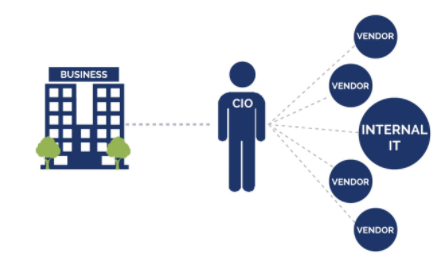










 Allow notifications





