Download Now
Home Blog Page 1498

How derivatives are regulated in India

0
derivatives

In this article, Smita Singh discusses how derivatives are regulated in India. The article was written while Smita was pursuing DEABL at NUJS.

Understanding Derivatives

The expression “derivative” indicates that it has no independent value. Its value is entirely derived from the value of the underlying asset. The underlying asset can be securities, commodities, bullion, currency, livestock or anything else. Derivatives can take the form of Forward, Future, Option or any other hybrid contract. They are of predetermined fixed duration, linked for the purpose of contract fulfillment to the value of a specified real or financial asset or to an index of securities.

Futures are legally binding agreement to buy or sell the underlying assets on a future date. These are standardized contacts in terms of quantity, quality (in case of commodities), delivery time and place for settlement on any date in future. On expiry, futures can be settled by delivery of the underlying asset or cash.

Forwards are over-the-counter negotiated derivative contracts by which one party agrees to deliver underlying assets to another party on a predetermined date at a predetermined price.

Option contract, another species of derivatives gives the buyer or the holder of the contract the option i.e. a right, however without an obligation, to buy/sell the underlying assets at a predetermined price within or at the end of specified period. The seller/writer of the option is required to settle the option as per the terms of the contracts whenever the buyer/hold exercises his rights.

Future contract based on an index i.e. the underlying asset is the index are known as index futures contracts. The option contracts which are based on some index are known as index option contracts. An index derives its value from the prices of securities that constitute the index and this is meant to represent the sentiments of the market as a whole or of a particular sector of the economy.

Currency Derivatives are Future, Forward and Options contracts to buy or sell specific quantity of a particular currency pair at a future date. These allow investors to hedge against foreign exchange risk. Currency futures are exchange-traded contracts and they are standardized in terms of delivery date, amount and contract terms.

In India, derivative products have been introduced in the phased manner. Index futures contracts were introduced in June 2000. Index options and stock options were introduced in June 2001. In November 2001 stock futures were introduced. Sectoral indices were permitted for derivatives trading in December 2002. Trading in Exchange Traded Currency Derivatives (ETCD) began in India in August, 2008.

The regulatory framework for derivatives in securities

Securities Contract (Regulation) Act, 1956 (SCRA) is enacted to prevent undesirable transactions in securities. Initially, Bombay High Court in Brooke Bond India Limited v. UB Limited,: (1994) 79 Comp Cas 346 took a view that that the SCRA, is not intended to regulate private transaction in shares of public limited companies, not listed on the stock exchange. However the Supreme Court in Bhagwati Developers (P) Ltd. v. Peerless General Finance & Investment Co. Ltd., (2013) 9 SCC 584 did not endorse the view of Bombay High Court and made it clear that the provisions of the SCRA apply to public limited company, though they are not listed in the stock exchange.

Regulation of options

Section 2(d) of the SCRA expressly defines “option in securities” to mean a contract for the purchase or sale of a right to buy or sell, or a right to buy and sell, securities in future, and includes a teji, a mandi, a teji mandi, a galli, a put, a call or a put and call in securities. The definition makes it clear that it is not the contract for sale of securities but a contract for sale of a right to sell securities in future. Section 20 of the SCRA specifically provided that all options in securities entered into after the commencement of SCRA or those entered before SCRA but remained to be performed were illegal. Thus options were expressly prohibited under SCRA. However, this provision was deleted by the Securities Laws (Amendment) Act, 1995.

Regulation of forwards under SCRA

The Central Government vide Notification dated 27/6/1969 (1969 Notification) issued under Section 16 of the SCRA (which empowers the Central Government to prohibit certain contracts in specified securities), had prohibited all kinds of contracts for sale or purchase of securities except spot delivery contract or contract for cash or hand delivery or special delivery in any security under SCRA. Any other contract could only be entered into with the permission of the Central Government. The 1969 Notification sought to restrict forward contracts. In 2000, the 1969 Notification was rescinded. Securities Laws Amendment Act 1999 with effect from 22/2/2000 amended the definition of “securities” in SCRA to include “derivatives”. It also inserted the definition of “derivatives” which reads: “Derivate”  includes -(A) a security derived from a debt instrument, share, loan whether secured or unsecured, risk instrument or contract for differences or any other form of security; (B) a contract which derives its value from the prices, or index of prices, of underlining securities. By the aforesaid amendment, section 18A was inserted in SCRA providing that a derivative contract shall be valid if they are settled in the stock exchange.

Stand of SEBI

SEBI vide its Notification No SO 184(E) dated 1/3/2000 had issued directions having effect similar to that of the 1969 Notification. It is relevant to note that forward contracts which were prohibited by 1969 Notification are not the same as option contract. Unlike an option, a forward contract does not depend upon the exercise of an option by one of the parties. The distinction between a forward contract and options, is noticed by in decision of Division Bench of the Bombay High Court in Jethalal C. Thakkar v. R.N. Kapur, AIR 1956 Bom 74,  as below:

“A clear distinction must be borne in mind between a case where there is a present obligation under a contract and the performance is postponed to a later date, and a case where there is no present obligation at all and the obligation arises by reason of some condition being complied with or some contingency occurring.”

This distinction was also recognized by the Division Bench of the Calcutta High Court in the matter of East Indian Produce Ltd. v. Naresh Acharya Bhaduri [1988]64 Comp Cas 259 (Cal)(DB) wherein it held that restriction on spot delivery contracts applied to contracts for sale or purchase of securities and not options in securities which were separately prohibited under the erstwhile Section 20 of SCRA. In BOI Finance Ltd. v. Custodian (1997) 10 SCC 488, Supreme Court ruled that in case of a ready-forward contract, a ready leg (i.e. purchase or sale of securities at a stated price which is executed on payment of consideration for the spot delivery of the security certificates together with transfer forms) is valid and lawful but the forward leg (i.e. repurchase of the same securities on the later date at a specified price to be paid) is hit by the provisions of the SCRA and accordingly shall be ignored.

Yet and inspite of deletion of Section 20 of the SCRA in the year 1995, SEBI for long took a stand that options are not a spot delivery contracts but forward contracts. In informal guidance note given to Vulcan Engineers Ltd. relating to the purchase and sale of shares of the company at a pre-agreed price under the put/call options, SEBI stated that:

“As [this] (put / call) option would be exercised in a future date…the transaction would not qualify as a spot delivery contract under SCRA S. 2(i), nor as a legal and valid derivative contract in terms of S. 18A.”

In relation to the public takeover of Cairn India Limited where the parties had entered into put and call options arrangements, SEBI took a view that put option and call option arrangements and the right of first refusal do not conform to the requirements of a spot delivery contract nor with that of a contract of derivatives as provided under Section 18A of the SCRA and, therefore the put and call option arrangement along with the right of first refusal are in illegal.

Bombay High Court in the case of MCX Stock Exchange Ltd vs Securities & Exchange Board of India & Ors 2012 (114) BomLR 1002 held as follows:

 “In the case of an option, a concluded contract for purchase or repurchase arises only upon the exercise of the option. Under the notification that has been issued under the SCRA, a contract for the sale or purchase of securities has to be a spot delivery contract or a contract for cash or hand delivery or special delivery. In the present case, the contract for sale or purchase of the securities would fructify only upon the exercise of the option in future. If the option were not to be exercised by them, no contract for sale or purchase of securities would come into existence. Moreover, if the option were to be exercised, there is nothing to indicate that the performance of the contract would be by anything other than by a spot delivery, cash or special delivery.”

Bombay High Court thus took a view that once a contract is arrived at upon the option being exercised, the contract would be fulfilled by spot delivery and would, therefore, not be unlawful. However SEBI’s petition for special leave was disposed of by the Supreme Court with the consent of the parties and with an observation that in making amendments in the Regulation, SEBI shall not be bound by any observations or comments made by the High Court in the impugned judgment.

Eventually, by Notification dated 3/10/2013, SEBI rescinded the notification number S.O.184(E), dated the 1/3/2000, and declared that contracts in derivatives, as are permissible under law and options shall be valid provided inter alia the price or consideration payable for the sale or purchase of the underlying securities pursuant to exercise of any option contained therein, is in compliance with all the laws for the time being in force as applicable. With the aforesaid notification of SEBI a long standing debate on validity of options came to be settled.

Regulation under Foreign Exchange Management Act (FEMA), 1999

Derivatives are also subjected to exchange control regulations.

Reserve Bank of India (RBI) originally took a stance that contracts which offer a guaranteed return to the investor are more in the nature of debt as opposed to equity, and hence the same should be covered under External Commercial Borrowing (ECB) norms. Assured returns would allow a private equity investor to floor a minimum return from his investment and eliminate his risk of business exposure to which other equity investors are exposed. This made option contracts akin to debt. Later, RBI issued Circular No. 86 RBI/2013-2014/436 A.P. (DIR Series) dated 9/1/2014 allowing optionality clauses in securities issued to Non Resident Indian (NRI). The optionality clause can oblige the buy-back of securities from the investor at the price prevailing/value determined at the time of exercise of the optionality so as to enable the investor to exit without any assured return.

Derivatives in Foreign Exchange

As detailed in Master Direction issued by RBI on Risk Management and Inter-Bank Dealings (Updated as on March 21, 2017), to hedge direct and/or indirect exposures of Resident Indians to specified foreign exchange risk, they are permitted to book Forward Foreign Exchange Contracts, with the Authorized Dealer Banks.

Foreign Exchange Management (Foreign Exchange Derivative Contracts) Regulations, 2000 dated 3/5/2000 as amended from time to time, permitted persons resident in India and persons resident outside India viz., foreign portfolio investors (FPIs) to participate in the currency futures and exchange traded currency options market in India subject to the terms and conditions mentioned therein.

Until recently, non-residents Indians (NRIs)were permitted to hedge their rupee currency risk through over the counter transactions with banks authorised to deal in foreign exchange. With a view to enable additional hedging products for NRIs to hedge their investments in India, RBI by notification No. FEMA. 384/RB-2017 issued on 17/3/2017 has permitted NRIs access to the Exchange Traded Currency Derivatives (ETCD) market to hedge currency risk arising out of their investments in India. This allows NRIs to access the exchange traded currency derivatives market to hedge the currency risk arising out of their investments in India. NRIs may take positions in the currency futures/exchange traded options market to hedge the currency risk on the market value of their permissible rupee investments in debt and equity and dividend due and balances held in NRE accounts.

Commodity derivatives

As per F. No. 1/9/SM/2015 S.O. 2362 (E) and F. No. 1/9/SM/2015 S.O. 2363 (E) SEBI also regulates the commodity derivatives market under SCRA with effect from 28/9/2015.

References

  1. http://www.sebi.gov.in/faq/derivativesfaq.html accessed on 27/3/2017
  2. https://www.rbi.org.in/ accessed on 27/3/2017
  3. Securities Contract (Regulation) Act, 1956
Download Now

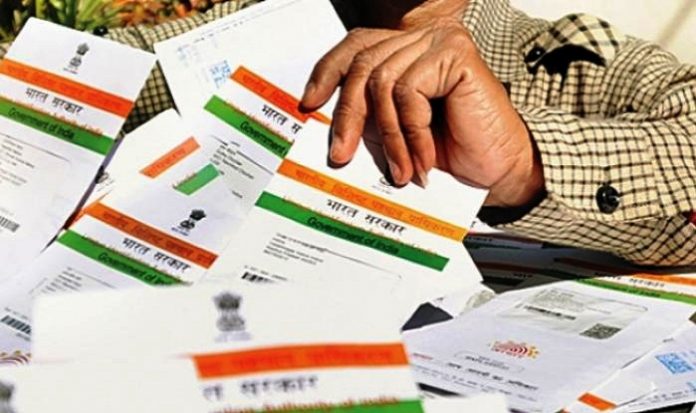
Aadhaar Case Update – All you need to know about Aadhaar Proceedings in the Supreme Court on Day 1

0
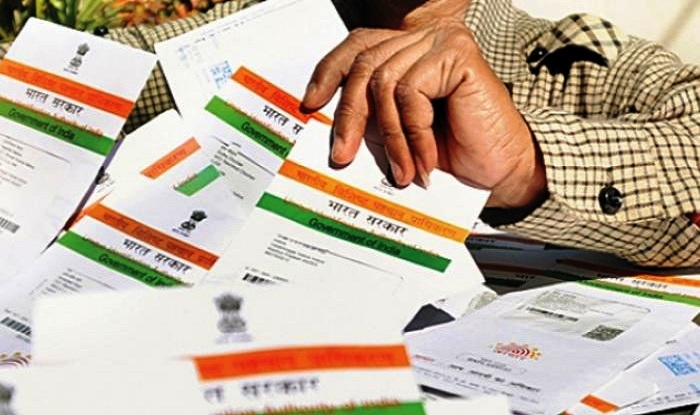
image courtesy - http://www.india.com/

This post has been written by Aditya Shrivastava from team iPleaders

image courtesy – http://www.india.com/

Aadhar has been facing a sufficient amount of criticism ever since it was proposed. The hearing of the validity of Aadhar is currently progressing in the Supreme Court of India with a five judge bench taking over the issue. The court has dispersed for lunch and will reassemble at 2:30 PM for further hearing. The Senior Advocate Shyam Divan submitted the opening statements and had a plethora of concerns to raise. He started off by saying “We will out before you what Aadhar Project is all about.”

A brief history of Aadhar can be summed into following list of dates and events.

Date Event
2009 Vide notification UIDAI was established
2010 Adhar program was launched in Maharashtra
Dec 2010 Bill introduced in the Parliament. Very similar to what finally became the Aadhar Act.
Post-2010 Bill was referred to the standing committee on Finance, which pointed out lacunae pertaining to privacy, security, private players.
2012 PIL filed against Aadhar scheme
2013 2 judge bench referred the matter for final hearing and made it clear that no one should suffer from the lack of an Aadhar card.
2014 UIDAI filed a petition against the Bombay high court order that had directed it to disclose biometrics in a criminal case. Interim order making Aadhar voluntary was sustained through multiple hearings.
October 2015 Use of scheme partially extended
Till 2016 Citizens were functioning only under an administrative direction. No checks and balances
2016 Aadhar act passed.
January 2017 Notification issued making Aadhar mandatory for multiple services. Aadhar has been made mandatory for opening bank accounts, holding insurance policies, making transactions, mutual funds.
January 2018 Final hearing for the Aadhar case listed before the five-judge bench.


In the words of Shyam Divan, “Aadhar inverts the relationship between the citizens and the state.” After taking the court through a list of dates and events, Shyam Divan introduced the petitioners who come from extremely diverse backgrounds. He introduced them as individuals from rural India who work on field for whom Aadhar is proving to be a system of exclusion, petitioners who work for children and schools, former military personnels who have concerns about safety and national security, manual scavengers. His point was essentially to discard the state’s claim that this is an elitist concern and establish that these are issues which might make a democratic system hollow.

He then goes ahead to explain how the whole system is probabilistic and  how that is flawed because right to entitlement cannot be based on mere probability. And points out how the various agencies which have been working in association with UIDAI  have been working for seven years without checks and balances with such high security data.

Post the lunch break, Shyam Divan took the bench through the composition and functions of UIDAI. He emphasized that through the progress of the case, he will be able to establish that there was negligible government control or oversight over such highly confidential data. His contention was “ when you are picking up sensitive data there must be some standard of governance.” Shyam Divan also pointed out that prior to the Aadhaar Act, there was no mention of biometrics in the legal instruments that govern Aadhar.

It was during this contention, when Justice A.K. Sikri raised a concern as to whether it is the result of illegality of biometrics that the database needs to be destroyed? To which Shyam Divan agreed and said, “biometric collection is patently illegal and that illegality doesn’t get cured by passing Aadhar Act alone.”

Going further, Shyam Divan explains how authentication works by giving an example of how it works at an airport. Stating that a biometric reader any or may not have GPS. It is possible to know due to the gps that at such time, Mr. X entered the airport. Even when one does not have gps, the fingerprint is transmitted by the CIDR and can be traced back.

Two things can be determined through this :

1) There was an authentication at such time.

2) The location (because of the GPS.)

When you scale this up, you get a complete profile of the individual’s actions.

Earlier in the morning, Mr. Divan stated that UIDAI captures all ten fingerprints of the individual, a facial photograph and the two irises. This particular data is stored. They have a template. The template scales the fingerprint. Then pick up lets say, a 100 distinctive points called minutae. The UIDAI then sets a number – how many of those 100 points should match? If the number is set 100 by 100 it will never work. Thus, UIDAI needs to make a value judgement. So, you are departing from a deterministic system to a probabilistic system.

Shyam Divan exclaimed that the difference is between a pervasive and a non pervasive system.The system is one that throughout the day there will be an electronic trail. The question is not whether they are actually tracking or not, but whether such an architecture is possible.

It was at this point when Justice Chandrachud questioned the petitioner “would it be taken care of if the data was used for the purpose for which it was collected?” Mr Divan replied stating that the core issue is that the design in itself is bad and enables state domination. In the words of Shyam Divan: ” while that one point UIDAI projected the purpose of Aadhar was to give everyone give an identity, RTI revealed that for the total number of people for whom Aadhar was the first identity very small.”

Justice D.Y. Chandrachud went ahead to further ask the petitioner : “why the can’t the State say that biometrics are needed to prevent social welfare leakage and go to the right persons.” To which Shyam Divan said that, “the question shall remain even if Aadhaar plugs leakages. Is it a proportionate method of doing so?”

Shyam Divan took the bench through the standing committee on finances report on the old Aadhaar bill. He pointed towards the concerns expressed by the standing committee on issues of privacy, security and data theft; concerns with respect to manual laborers, concerns about civil liberties, surveillance and profiling – in the absence of a data privacy law in India. Mr. Divan also discussed the concerns expressed by the NHRC about the privacy.

While taking the bench through the observations and recommendations of the standing committee, which pointed out that pending any law, any bi-executive action would be unethical and in violation of parliamentary prerogatives, Shyam Divan made sharp references to the finding of the standing committee that executive operation of Aadhaar scheme even as NIDAI bill which was pending before the parliament was unethical and unconstitutional.He went ahead and pointed out the concerns of the financial committee about illegal immigrants. It was throughout this argument that he time and again remarked that the scheme appears to be not thought well through.

CJI Dipak Misra the probed : “How is the standing committee report of 2010 is relevant to 2016 act?” Mr. Divan then explained that the reference is inevitable because the problems pointed out then continue to exist even in the current model, and it is relevant to establish the same. Justice Misra then raised the issue of the Money Bill. Mr. P. Chidambaram Senior Advocate along with Mr. Arvind Dattar, Senior Advocate took over and explained the position with respect to the arguments in regards with the money bill.

Shyam Divan continued quoting the standing committee report categorically stating that “the old bill in its present form is unacceptable.”

In the few final minutes Mr. Shyam Divan took the court through a few notifications that came in after the standing committee ; and the passage of the Aadhaar act. With this Mr. Divan complete the pre-act chronology.

The bench rose up at 4:00 PM. The bench shall resume hearing the case tomorrow at 11:30 AM.

The link to the report of the Standing committee on finance, to which Mr. Divan has made time and again reference to can be found here!

We will be back with the live updates tomorrow. Follow our facebook page or twitter account for live updates. Do not miss our blog for more such interesting updates about law.


Download Now

How to register Private Limited company in 4 easy steps

20
Image Source -

This article is written by team Legalwiz. The article discusses how to register a Private Limited company.

Establishment of Business is very crucial phase for any businessman as one has to comply with all legal requirements in addition to launch the business market. The entrepreneurs, willing to focus on launch and set-up business, search to start business without any hassle concerning the legal procedure for incorporation of company. Where approaching professionals at local area is difficult and costly, LegalWiz.in provides the services of online registration of company at affordable prices and quick turn-around time.

How to register Private Limited company

Ensure flawless start of business without hassle on legal part by company incorporation online in following 4 steps only.

Step 1: Procure Digital Signature Certificate:

The first and foremost step is to procure the DSCs of the Personnel involved in Private Company Incorporation in India. The requirement of DSSCs arises for filling of e-forms on online portal of MCA as the Ministry has prescribed provided for online registration procedure for company incorporation and other applications. Digital Signature Certificate, commonly known as DSC are issued by the Certifying Authority in token form and is valid for 1 or 2 years.

The personnel involved in company formation in India are Subscribers and Directors for proposed company. The Subscriber is a person who is the promoter of the company and proposed shareholders. The said shareholders are required to file e-MOA and e-AOA by affixing DSCs whereas proposed directors shall obtain DIN by making an online application in next step.

List of Documents for Digital Signature Certificate:

  • Passport size photograph of applicant;
  • Self-attested Address proof of applicant; and
  • Self-attested PAN card of applicant.

To know more about how to register a Private Limited Company in brief, please refer to the video below:

Step 2: Obtain Director Identification Number

Director Identification Number (DIN) is a unique number assigned by Ministry of Corporate Affairs to the individual making an application for allotment of DIN. The number is allotted for lifetime by the Ministry unless it is surrendered or withdrawn.

The directors of the company shall obtain and intimate the DIN while Private Ltd company incorporation. Hence, obtaining DIN is mandatory to be appointed as Director in any Company. The Director Identification Number obtained can also be used for appointment for any other company and appointment as Designated Partner in the LLP.

What are the documents required for application of DIN?

  • Passport size photograph of applicant;
  • Self-attested Address proof of applicant; and
  • Self-attested PAN card of applicant.

Step 3: Reservation of Name

Before making an application to incorporate and register Pvt Ltd Company in India, the name for the proposed company shall be reserved. An Application for Reservation of Name of Private Limited Company shall be made in e-Form INC – 1 by making payment of requisite fees. In one application you may provide maximum 6 names in preferential order along with the significance for application for proposed name(s). The appointed professional shall make a search for availability of name before filling the application so that the applicant can make application of the names accordingly. The Registrar enjoys 100% discretion for approval of name application.

The person shall make an application for name approval considering the provisions laid down by the Act. Further, following general practise are adhered to choose and apply the name:

  • The name should be easy to spell and remember;
  • The name shall be able to provide a distinct identity to the company;
  • It should be short & simple;
  • The name should not contain any word as opposed to public policy or prohibited;
  • It should not infringe any Trademark registered nor shall be similar or identical to any company/ LLP registered.

As stated above, the application for name reservation can be made with maximum 6 names, out of which the registrar may approve any one name or may ask to provide additional names with remarks.

https://lawsikho.com/course/diploma-companies-act-corporate-governance
click above

Once the application made is approved, the registrar shall reserve the same name for a period of 60 days. The promoters in guidance with the Professional shall make the application for incorporation of company within prescribed period of 60 days, failing to which the name reserved shall lapse and therefore fresh application shall be made for reservation of name for further period of 60 days.

Step 4: Certificate of Incorporation

After reservation of the name for proposed company by submitting form INC – 1, the application for issuance of Certificate of Incorporation shall be made. The application for online registration for company is also required to be made by online submission of Simplified Proforma for Incorporating Company Electronically i.e. SPICe forms.

Drafting MoA & AoA

Both, MoA and AoA are charter document for a Private Limited Company. MoA stands for Memorandum of Association of company and AoA is abbreviated form of Articles of Association.

Memorandum of Association of Company prescribes the scope of operations of company by enumerating the main object and activities of the company. Whereas the Articles of Association provides in what manner the operations and administration shall be carried on. Both documents having vital importance shall be drafted very carefully after consultation of Professional.

The memorandum and Articles of the company shall also be filed in SPICe forms along with application for company formation and registration in India. The subscription to MoA and AoA shall be made by affixing DSCs of subscribers in electronic form.

Documents to accompany the Application

  • Utility Bill and NOC from the owner for the Registered Office address of the Company;
  • Rental Agreement with the owner of registered office & Rent receipts, if premises is rented;
  • Consent to act as a Director of the company in form DIR – 2;
  • Affidavit and declaration by first subscriber(s) and director(s) in form INC – 9 (duly franked and notarized);
  • Certified True copy of the self-attested Identity proof of the first subscriber(s) and director(s).

The application is submitted by paying the requisite Government Fess and Stamp Duty as applicable in case of concerned state on the portal. The application and allotment of PAN and TAN are also processed with the same application.

On review and verification of the application made for certificate of incorporation in SPICe forms, the Registrar on his satisfaction may issue the Certificate of Incorporation under his seal and signature in electronic form. The Certificate of Incorporation (CoI) issued will include the date of incorporation as well as the Permanent Account Number (PAN) of the company.

Start your Business Now!

On receipt of Certificate of Incorporation, the Private Limited Company comes into existence in the eyes of law. The promoters and directors may now commence the operations and business activities in the name of the company. Also, the amount of subscribed and paid-up share capital shall be deposited in the Current Account in the name of the company.

The details of incorporation and directors of company will be available on MCA portal under Master Data of the Private Limited Company. In addition, the details and documents of the company will also be accessible by public through payment of fees prescribed.

Conclusion:

The registration of Pvt Ltd Company in India can be processed with ease by consultation of Practising Professional. Further, after online ltd company incorporation, the promoters and directors are required to maintain the active status of the company by compliance with the provisions of the company by filing the annual returns and forms as prescribed by Indian Companies Act, 2013.

About Author

LegalWiz.in is premier online legal service provider. Experts at LegalWiz.in can help you for incorporation of company, allied registrations and compliance of provisions. Visit http://www.legalwiz.in/private-limited-company for more information regarding the incorporation of Private Limited Company.


LawSikho has created a telegram group for exchanging legal knowledge, referrals and various opportunities. You can click on this link and join:

https://t.me/joinchat/J_0YrBa4IBSHdpuTfQO_sA

Follow us on Instagram and subscribe to our YouTube channel for more amazing legal content 

 
Download Now

5 unconventional roles you can take up after getting a law degree

2
law degree

In this article, Aditya Shrivastava of team iPleaders discusses 5 unconventional roles you can take up after getting a law degree.

Law was never a road which I wanted to take. It is not that I was forced to walk on it either. I wanted to become a journalist and my parents wanted me to get a degree first, which in their opinion would make my life more ‘stable’  – whatever that may mean. However, at one point they asked me: “everyone who wants to become a journalist will have a bachelors in journalism or mass communication or an English honors, what different will you have to offer? This country is anything but talent starved.” Well that did drive the point home. That’s how I decided to study law.

Since day 1 in law school, I knew that I am here to just spend my time and get the degree which was a matter of time. Still, I couldn’t just sit idly and while away my time. I got involved in the campus and academic life. Soon it began to look like that I am pretty good at law too. I fetched decent grades, enjoyed my projects, got appreciation at my internships, loved moots and aced debates. However, somewhere deep down, I knew I wasn’t meant for this. After rejecting an offer from a big law firm, and working in an MNC for 6 months, I came back to my first love – writing.

I know there are many of you out there just like me. You did opt for law because it is excellent liberal arts education, or a respectable professional degree, and perhaps you are not too bad at it either, but it’s not your heart’s calling.

Are we crazy?

Maybe you want do something more artistic, maybe you want to do something that involves being in the middle of people, or maybe you just want to do something with your hands rather than something intellectual. Maybe you just want to travel and start a small cake shop in a Himalayan town noone has heard of. Maybe you want to be on the covers of Fortune magazine as an entrepreneur. Are these bad choices given our 5 years of expensive legal education? Are we throwing away our career in law in search of a mirage? Is it even a valid choice?

The booming legal sector in India: headed for a saturation point?

Indian legal sector has seen a sudden boom in the past decade. More than 20 new National Law Universities emerged in less than a decade. There were another 1200 law colleges including state university affiliated colleges and private colleges and universities in 2014 itself. In 2018, the number has certainly increased, but the BCI has not made any data with respect to this available. The total number of seats in these law colleges have crossed almost a lakh per year. Is law going to face a saturation just like engineering? The total number of lawyers in India is perhaps at the threshold of 15,00,000, and with many fake lawyers being weeded out, it could be even lesser. If 1 lakh new lawyers are added to the market every year, what would be the state of competition? Will we reach a situation like USA where lakhs of students studied law in the hope of well paying jobs only to hit a saturated market where no more lawyers were needed?

In India, many engineering and management schools have been shutting down due to lack of students. There are many people who graduated from these colleges and got no jobs as the job market was not ready to support such a big number of job seekers. Many parents lost their life’s savings and children learnt the hard way that degrees are not the answer to their problems. I dare say, in a few years we will reach that situation in the Indian legal market too.

The never-ending chase for the first break as a lawyer

The never ending quest to bag a good role with a big law firm, or becoming an in-house counsel or settling up as a litigator is becoming more and more competitive and ridiculously difficult with every passing year. Even the 2nd or 3rd tier law firms that earlier offered a job to anyone who came with decent CV, are now taking months to even give an internship. They are flooded with emails and phone calls from job seekers and internship seekers. Most companies now refuse to hire fresh law graduates at all, and insist on a minimum 2-3 year experience before considering any lawyer to be hired. Senior Advocates usually take up a handful of extremely skilled lawyers, leaving limited scope for new entrants.

How do you get your first opportunity to build and demonstrate your skills as a lawyer? It’s a very tough world for budding lawyers out there.

Why do you want to be a lawyer in the first place?

When the going gets difficult, you must touch base with what inspired you to be a lawyer in the first place. That’s the moment of reckoning. You must figure out if you are really ready to fight the uphill battle to become a successful lawyer. If it does not mean a lot to you, you are probably going to give up midway anyway. Why not chase a passion that you really care about? For me, that was being a writer. Once you chase your passion, opportunities find you. At iPleaders, I am paid to write mails and articles like this for you.

There can be right and wrong reasons for which one might want to practice or join a law firm/company. If you are determined to join a law firm because that’s what you always wanted to do, or you like a specific stream of law then go ahead. However, if you are trying to get into legal practice for any of the following three reasons, you might want to give it a second thought :

  1. Becoming a lawyer is very glamorous and financially empowering

You must have probably watched all episodes of Suites and imagined law firms to be like Pearson Hardman, and life of lawyers working in these firms as glamorous and luxurious. Well, I find it immensely cruel to break it to you. Working in a law firm may be many things, but I never heard anyone describe it to me as glamorous. Yes, there are some touches of luxury. But most of them never have time to enjoy that. Imagine you have gone to a new city to do a due diligence and clients put you up in a 5 star hotel. You may not get any time to enjoy the amenities. A swim in that mazing blue pool? Forget it. You are not even going to get time to eat the buffet breakfast. You may pass out in the bathtub at night, after working for 16 hours straight.

There is no doubt that you might earn relatively better if you end up with any of the top 10 law firms, however, the chances of that, unless you are exceptionally good or work really hard on developing your skills are extremely bleak. There are about 3000 lawyers working in the top 6-7 law firms, and no more than 300 jobs are created for fresh graduates every year in those firms. There are over 3000 NLU graduates, and graduates of other good law schools competing for those same jobs. Always remember that.

How much money do you make if you don’t get into a big law firm?

Yes, there are still jobs in other law firms, even if they don’t pay 1 lakh starting salaries to fresh graduates. In tier 2 or Tier 3 firms, you could hope to start with a starting salary of INR 30-50,0000. If you end with a low tier law firm, your salary is likely to be about INR 20-25,000. If you end up going for litigation, you would probably start with 10,000 per month, which is a meagre amount even for sustaining yourself in a city like Delhi or Mumbai. If you look at the return on investment of your education to your salary at the entry level, it looks quite bleak. It is all about surviving these lows and proving your mettle over time, and becoming a successful lawyer who everyone is eager to hire. That’s gonna take time. That means you will be living in opposite of luxury and glamour for a very very long time. Thus, if money or glamour is your driving factor to opt for a legal career, you might want to rethink.

2) Lawyers are their own bosses, they can live life on their own terms and conditions

While lawyers are crusaders of aggrieved employees, it is a very rare occasion to see an associate working in a law firm fight for their own rights. There are many instances of various 1st year associates quitting top tier law firm because they got frustrated of the extreme work culture in a law firm. Imagine coming to work at 9am before your partner arrives, work till 3 am because the case recently saw some development and reporting back at 9am the next day, even if it is a Sunday. The same is true for litigation firms as well, irrespective of whether you get paid peanuts, you need to be in court till 5:30 pm till the next day’s listing is displayed, come back to office and prepare for the next day till you are done. You will usually finish by midnight or even dawn. There are innumerable instances of even the partners missing various important occasions with their families because of the work pressure, so as newly minted associates, very disposable, your options are very very limited.

If you wanted to avoid being a corporate slave by becoming a lawyer, you need to think of some pretty innovative ideas to escape this trap.

3) Law is an extremely creative field and has a lot of scope for people with original ideas

This actually might be true, in the sense that with law you can explore various genres and industries as a lawyer. You could start with criminal law and end up as a general counsel 5 years down the line. However, the freedom that appears to exist in theory very rarely materialize for most lawyers.

However, the sad news is, that most of the companies and law firm teams look for people with experience in the field they operate in. Everybody is accepting of people with any experience whatsoever at a junior/entry level. However, as the role increase the more expertise conscious these firms become. You could probably answer it yourself. Who would you hire for a senior associate for an M&A team that handles deals worth several hundred crores in a year? Someone with 4 years of experience in M&A from another law firm or someone with 10 years of experience of media or criminal laws? As a lawyer, you soon feel the pinching need to specialize and stick to one area of law.

Apart from this, legal profession is extremely hierarchy driven, relies on tradition and resists change a well as new ideas in general. Be it a law firm or a chamber of a celebrated senior advocate, what they expect from a junior is very clear and they do not usually indulge the juniors to either come up with path breaking ideas or introduce innovations to systems. If you are a creative or innovative person, you will find yourself very frustrated at the average law firm or a chamber of advocates.

If you have original ideas, law firms and chambers are unlikely to become the places that will adopt your revolutionary ideas.

So what do we, the rebels, the dreamers, the misfits do in the legal industry?

Quite early in my career, I felt that climbing the legal corporate ladder will be futile for me. I did not really like the work culture of a law firm, which I observed closely as I repeatedly interned in one of the top tier law firms and removed it from the list of possible career choices. I was working at an MNC working on global compliances when an opportunity finally knocked on the door and I swooped in.

You have to know what you don’t want before you find something that you really want. You have to watch out. You have to convert half a chance into a full opportunity, with your alertness and hard work.  

Life gave me the half chance, to work in Goa for iPleaders, in marketing. My job description includes writing insightful articles on career in law and developments in the legal profession. Life gave me an opportunity for working on developing my writing skills and become a powerful writer and influential campaigner as I always wanted to be.

I want you to find your passion, and follow it. The law you learnt, the time you spent in law schools, law firms or courts will be an asset, not a baggage of bad investment. I will share below some ideas with you, but you may find something totally outside of this and chart out your own way. If you do, please do drop me a mail and let me know.

The point is that there are some professions where lawyers have a huge natural advantage. You should at least consider a few of them if law is not the real passion and calling for you.

Following are my top 5 picks if you want to pursue an offbeat career after becoming a lawyer or studying law. Do share with me your top 5 too! So here is to the road not taken.

1# Entrepreneurship

Lawyers are sometimes considered to be the biggest troublemakers by business folks. Risk-averse attitude of lawyers, and their need to analyze legal viability in almost everything make them seem anti-business to non-lawyers. However, contrary to the popular belief, lawyers make excellent businessmen. Many top CEOs and founders of Fortune 500 companies, and indeed several iconic Indian companies are law graduates or former lawyers.

Have you heard of Ardeshir Godrej? He was the founder of Godrej group, and was indeed a lawyer to start with. MDs of companies like Goldman Sachs, Disney, IndiGo and CCavenue are all lawyers.

I asked Ramanuj Mukherjee, the CEO and co-founder of iPleaders, about this. Is it a good idea to pursue law if you eventually want to become an entrepreneur? “Law gives you a broader perspective. As a lawyer you get glimpse into many industries and businesses” Said Ramanuj, “you see the risks, the consequences and rewards from the sidelines. That kind of prepares you for your own business at some level.”

One can find a lot of common skills between an entrepreneur and a lawyer. Lawyers do have some advantages when they start their own business. If you think you have some of these aptitudes, or if you are at least ready to develop them, you could perhaps become a successful entrepreneur.

  1. Ability to convince others
  2. Foresight
  3. Research skills
  4. Market knowledge
  5. Leadership
  6. Ability to mitigate risks
  7. Self assessment and constant strive for improvement

It’s a tough road, to be an entrepreneur. This definitely requires a lot of confidence in yourself, ability to build a team in the early days when resources are meager, being willing to suffer poverty and failure if things do not work out and a constant hunger for success when the whole world is against you. It’s not for the faint-hearted. However, it is certainly a thrilling adventure, and nothing is perhaps more satisfying than seeing your idea come to materialize as you win battle after battle. It is pivotal for you to know what challenges you are about to take and what can be the consequences of it. You need to prepare, you need to pull up the socks and research, read as much as you can. Talk to people, take up courses like these, research, read, discuss and create a network before undertaking the challenge. If you are all set, then there is nothing that can stop you.

Legal industry is full of broken systems and inefficiencies. It is predictable that hundreds of new companies will have to be set up to cater to the humongous legal industry in India as things mature. As a lawyer, you know better about the market than others. Will it be a good idea to team up with some engineers are build some products that solve some real life problems, something that millions of people will have to use?

#2 Journalist

If you are someone like me, then I will tell you why opting for journalism post your law degree is the best thing to do.

  1. PTI says that law graduates do not need any journalism degree or diploma to join its ranks. This is an exception, and all others who want a job at PTI must get a recognized journalism degree or diploma first.
  2. You don’t need a training for researching and drafting. Your law school has taught you enough.
  3. Your communication skills are probably better than a lot of journalism graduates.
  4. You also know how the system works. For example, you can get information out through RTI that other journalists who do not know law will struggle with.
  5. You have been taught liberal arts in the course of your law degree.
  6. There are few people who pursue journalism after a law degree – means you have very little competition. Your understanding of things like constitutional law to patent laws will enable you to write quality articles and analysis that other journalists without legal background will find very difficult to match.

A journalist needs to be proactive, probing, argumentative and driven by logic. All these qualities are usually highly developed in a lawyer as well. If you are someone who has a flair for writing or speaking and can convince people with your communications, it might just be the right field for you. Coming to the economic front of it, as per payscale.com, a journalist on an average earns Rs. 3,46,511 per year during his initial years, which grows significantly over time going upto over 1 lakh per month as you become a senior journalist. If you find litigation/corporate law to be frustrating then chances are that you might never succeed. However, if you are passionate about media or journalism, the options are endless. You could be a news anchor, host a legal show on the TV, become a legal correspondent, or become producer of your own shows.

There are also now numerous legal media, starting from lawctopus.com to livelaw.com, which are doing well as specialized media on their own right. India suffers from a dearth of powerful specialized legal media unlike the developed legal markets like the USA and the UK. However, with a massive legal industry still growing and government deciding to lift the ban on advertisements on lawyers, the golden age of legal media is about to come.

What new legal media could you start?

#Policy Analyst

Are you someone who actively participates in parliamentary debates in your university? Are you someone who knows how policies are framed and want to be actively involved in the formation of such legislations? Public policy analyst can be just the right job for you.

A policy analyst, almosts acts like Chanakya to the king. If subjects like public administration and governance, abstract concepts, projections or making sense of statistics appeal to you, and you want to impact the governance and businesses in India at the policy level, you can consider this as a career option.  As a policy analyst you need to be continuously updated with latest laws, amendments and changes in the various policies. You should have a never ending quest for learning new updated, and ensure that you have enough expertise on various subjects. An easy way to do it is by taking up such courses which can help you up your game and get a lead amongst your peers.  After all, legal dexterity and policy making just go hand in hand.

“The lawyers are well equipped with various tools of planning and understand legislations which makes them the most fit for the job,” says Shashank Atreya, public policy analyst.

P.S. Arun, another public policy researcher calls this as one of the most challenging and rewarding job for everyone who plans to make a difference. “While I heard a lot of people having an issue with the current policy, nobody did anything about it, however, I am glad I took this option. It’s true that we cannot change the ideology a certain government believes in. However, we can always try our best to push a better agenda.”

A public policy analyst is mostly recruited by various think tanks in the country like Vidhi Centre for legal policy, Centre for Law and Policy Research, Bangalore, NIPFP Delhi, ORF Delhi, Centre for Policy Research Delhi, Takshashila etc. Various policy makers like MPs (through LAMP Fellowship, Swaniti Sparc Fellowship, Vision India Foundation), CMO’s (Andhra Pradesh, Haryana, Maharashtra,  Madhya Pradesh etc), Niti Aayog are amongst other recruiters of policy analysts.

There are also policy advocacy firms like Dua, PLC Chambers and others who focus only on policy advocacy on behalf of high paying corporate clients. Companies like Uber also have large policy advocacy teams where they hire experienced policy advocates. In India policy analysts often do the job that lobbyists do in other countries.

A policy analyst earns from INR 25,000 to 1 lakh per month depending on the organisation they work with.

4# Content Creators/Bloggers

India has recently come up as a booming sector for content creators, in any given field, and law is not far behind. What is the reason for this? Law firms are barred from solicitation or advertising as per the rules mentioned in the Advocates Act. However, law firms these days apply smarter approaches to market themselves. This is done through content marketing, where they create relevant content on most of the current legal issues and post it on various forums. The traffic that they generate out of it helps them to get leads to make better clients.

Apart from law firms and lawyers, there are also large companies like Vakilsearch, Akosha (now Tapzo), India Filings, MyAdvo and LawRato, amongst an increasing number of various legal services and technology providers which hire numerous content writers. Many PR and reputation management firms for lawyers have also sprung up over the years, helping with their branding, public profiles and websites.

Being a legal content writer can be fairly rewarding, with salaries going upto INR 50,000 to 1 lakh. Even big law firms hire legal content writers and marketing managers at substantial salary. To get started with this, you need to have a knack for writing, research and promotion.

Moreover, just like travel blogs, a small section of legal blogs are gaining major success as well. Jay Sayta, founder of Glaws.com started out by blogging on gambling laws in India. However, right from the second year he found his followers in various entrepreneurs, business leaders and bureaucrats. He has a strong following in the gambling industry which looks to him for gambling law advice. One can possibly build a successful blog and then make money by providing consultancy to the readers who need expert help.

On an average, a blog or a content creation job can fetch you a low salary of INR 25,000 to 30,000 if you aren’t really good at it. However, good content writers are very rare and highly sought after. You could easily make anywhere between INR 50,000 – 1,00,000 per month if you are actually good at it.

Freelance writers often charge per word for their writing and it can be between 50 paisa per word to INR 3 per word depending on how good you are and what results your writing can produce.

5#

Teacher for competitive law exams.

When I said earlier that I was not forced into taking up law, what I meant was I chose to do it, ofcourse there was certain influence from my parents too. However, the real man behind this choice was Mr. Deepu Krishna, who is a very well known CLATt teacher/mentor and NLIU, Bhopal graduate. I happened to attend one of his seminar’s while exploring my options to get a stable degree and I knew after listening to him that law is something that might help me spread my wings.

Being a teacher at the competitive law exams preparation institute is very rare, but certainly very rewarding. Although teaching is not an easy profession at all. It is very difficult to connect with students and teach them as per their requirements. Knowledge is not sufficient, a passion for teaching is. Remember, we all have that one faculty who knows a lot but is not able to deliver it? Teaching is not a profession, it is actually a passion to help others in the noblest way.

To top it all, you just don’t become a mentor, you become someone who has an immense following. Students actually become very close to the mentors. They look at them as philosopher, guide, friend and most importantly a teacher, which has helped them shape their future. Also, it is a highly rewarding job, and if you manage to get a lot of selection, and end up having a good brand image, chances are you might not have to worry about your finances at all, right from the start of your career.

Not just CLAT there are a bunch of competitive exams that you can start your prep institute/teaching for. For example, AILET, LSAT, SET, CET, GGSIPU, DU LLB, CLAT for LLM students, UPSC, NE and a lot of other judiciaries and clerkship exam. All of these provide a huge scope for you to venture into and help all the interested candidate with their career options.

You need to be constantly updated with every legal development in terms of the above mentioned competitive exams and be sure that you have enough knowledge to answer any question that pops up the mind of the students. In my opinion, the task of becoming a legal competitive exam mentor is probably the most difficult of all preparation courses, because you are not just dealing with young, impressionable minds but also dealing with the most unsettling, probing and inquisitive minds of all. However, if you are ready to take up the challenge, it is equally noble, rewarding and challenging – thus, becoming the perfect package.

If you believe your law degree will help you in any of the endeavors, it will. However, you will have to develop yourself enough to it. If you have a great idea to start your business, then develop it further by understanding how to go about it. If you want to become a journalist, write regularly for various newspapers/magazines. If you want to become policy analyst, an intern at the right place. If you want to become an investment banker, enhance your knowledge if you want to become a blogger, start writing NOW! Develop yourself, speak to as many people as you can, take up courses like this to enhance your skills and knowledge and to become successful.

However, remember to be brave. It takes a lot of effort to, first of all, get a law degree and then do something which is slightly different from the conventional roles. Just remember, nobody can take your degree away from you and in case of a failure you can get back to practicing. However, take that first step.

All the best!

Download Now

I want equal rights and justice!

1

Peace and security are necessary prerequisites for social harmony as well as political and economic development. It is a truism that peace in any country is dependent on social justice and the availability of economic opportunities.

It would not be far from the truth to say that as Indian citizens, we are being manipulated into slowly but surely losing our humanity. Social and economic inequality manifesting in conspicuous consumption by a few,  side by side with the poverty of the many, exacerbated by infrastructure deficits and dysfunctional schools and healthcare all over the country have led to deep feelings of injustice and hopelessness among our youths. Lack of opportunity, shameless corruption and a capricious political culture have destroyed institutions and entrenched a climate of impunity. Add these together and the cocktail that results is unprecedented insecurity and an attitude of self-help by citizens.

Social injustice impedes growth and development, hampering or even halting improvement in living standards, fair distribution of income, creation of opportunities, and the elimination of inequalities. The inadequacy of economic growth, imbalances in economic structures, and imperfections in education and training systems contribute to, and are aggravated by, unjust conditions in the world.

The most extreme form of exploitation in employment is slavery. Most groups which are exploited in employment are underprivileged groups, such as indigenous populations, women, children, immigrants, the illiterate, and the lowest levels of national society, the aged, and the disabled. Such groups may not have the knowledge or other means to combat exploitation and may sink into a state of apathy and resignation.

Poorer people suffer most from environmental problems in a wide range of areas — food, transport, factories and fuel. Other groups also bear an unjust burden of environmental problems, including ethnic communities, women, children, and people in developing countries and future generations, not to mention non-human species.

Society is so stratified that many groups and individuals find themselves unable to make a significant contribution in the job market. This is more apparent in minority groupings of age (both the youngest and the oldest), sex (most often women), and race.

Violence against women is a problem around the world. It affects women of all races, ethnic groups, classes and nationalities. It is a life-threatening problem for individual women, and it is a costly problem for societies. Because women are ‘easy’ victims, they experience a great deal of direct behavioural violence in every society. The use of violence against women as a form of control is not only pervasive, but varied in its expression. Such variations reflect social and cultural differences which have resulted in battering, rape, dowry death, selective malnourishment, female infanticide, gang rape, forced prostitution, homicide, sexual harassment, international sexual trafficking and slavery, sexual degradation, child prostitution, violent pornography, child sexual abuse, abuse of widows and elderly women and many more.

Security is one of the basic needs; it can also be seen as a basic value in our modern societies where more and more systems are developed to guarantee security. Security is a highly valued goal, which may be difficult to reach because of different threats and risks in personal lives and in near and global environments.

Law can be a double-edged sword: although it may serve to reinforce prevailing social and economic relations, it can also be a powerful tool of those seeking to resist, challenge, and transform those relations. At the local, national, and global levels, states, elites, and citizens increasingly turn to law as an important tool for bargaining, enshrining, and challenging norms, policies, and their implementation. By its nature, law is a device that provides a particular language, structure, and formality for naming and ordering things, and this characteristic gives it the potential to become a force independent of the initial powers and intentions behind it, even beyond the existence of independent and effective legal institutions. Law is thus simultaneously a product of social and power relations and a tool for challenging and reshaping those relations.

Here , at iPleaders, a pioneer in online legal education having students in over 20 countries and track record of delivering legal and compliance learning solutions to companies like Samsung, Microsoft and BCG, offers cutting edge online courses focused on practical aspects of law and business. On completion physical copies of certificates are awarded.

One of our popular courses will guide you How to file an FIR when you witness a crime, where to file an FIR, how to file a complaint or lodge a general diary, pointers for drafting effective FIRs, that is, FIRs which police is likely to register and taken action on, and which enable criminal trial to be effective. You will also learn what can be done if the police refuse to register the FIR. So, hurry up! Currently huge admission is going on. To enrol, please click HERE

Another most popular course of ours teaches you how to use the Right to Information Act to secure information, identifying the correct public authority and public information officer, how to prepare and file a proper RTI application, what to do in the event the public information officer refuses to accept RTI application and how to file appeals and complaints.Currently huge admission is going on for this course. To enrol, please click HERE

You can pursue these courses from anywhere in the world. Though focus is on Indian law and practices, these courses are globally relevant and attract a large number of international professionals. Our courses are pursued by CEOs, Managers, Entrepreneurs, Accountants, General Counsels, Corporate Lawyers, Civil and Criminal Litigators, Government Officials and Students from all disciplines.

Our alumni include Bureaucrats, Directors of PSUs and listed companies, Presidents of Banks, Lawyers from reputed firms, and General Counsels of Airlines, major finance groups and big tech companies.

Everything is judged by its appearance; what are unseen counts for nothing. Never let yourself get lost in the crowd, then, or buried in oblivion. Stand out. Be conspicuous, at all cost. Make yourself a magnet of attention by appearing larger, more colourful, and more knowledgeable, than the bland and timid masses.

Burning more brightly than those around you is a skill that no one is born with. You have to learn to attract attention. It’s your responsibility to attach your name and reputation to a quality, an image, which sets you apart from other people. This image can be something like a characteristic style of dress, or a personality or knowledge that amuses people and gets talked about.

So, let’s come and join us for a better and a bigger picture!

Download Now

C.A. Harsh Patel : Founder & Chairman, Water and Shark Group expresses his opinion on Certification of International Taxation and Transfer Pricing

0

C.A. Harsh Patel, Founder & Chairman of Water and Shark Advisers Pvt. Ltd.Currently Founder and Managing Partner at HARSH PATEL & ASSOCIATES, PATEL PALKAR & ASSOCIATES LLP.,  with 3 years’ experience in Taxation, Assurance, Legal Compliance, Offshore Advisory is a Chartered Accountant from The Institute of Chartered Accountants of India.

He successfully completed the ‘CERTIFICATE COURSE IN INTERNATIONAL TAXATION AND TRANSFER PRICING’.  Over here he shares his experience: My overall experience was good while doing the course. It helped me to upgrade my knowledge in both theoretical & practical understanding of International Taxation.

Remotely if one can acquire so much knowledge and enhance their skill set in International Tax, then why not go for it? The course materials are too good to be available anywhere, so downloading option for the study materials should be provided at least during the course duration. Though it is understandable that it is subject to copyrights, but after one year if I am in requirement of these course materials, then it will be not available to me. So something must be done in this aspect. However, the rest is all fantastic.

All the modules are good, but I liked module ‘International Tax Planning’ most. Suggested to quite a few of my friends, of my field of practise to go for this course. I’m even eager to enrol for Diploma in Business Law in near future. iPleaders was really of great help.

Download Now

Vikram Bhalla: A Banking Professional with 18 years of experience in Banking and Entrepreneurship. Worked with various private sector banks for a period of over 15 years shares his experience on NUJS Diploma course

0

Vikram Bhalla , a Banking Professional; a Certified International Finance Analyst, a Certified IFRS Professional, have expertise in Investment Law; Taxation (ID). Accounting partner, Auditing, Taxation, Investment Law, Institutional Finance, IFRS Professional.

As he said, “My experience with iPleaders was very satisfying. The courses I have completed are Diploma in Entrepreneurship Administration and Business Laws and Commercial Contract Law, Drafting and Negotiation. The contents of the courses are an eye-opener. It changed my perspective and helped me a lot in a wider aspect.”

I have a total 18years of experience in banks like ICICI Bank, YES Bank and others in import/export, foreign exchange. Was searching for some quality content courses online for of Institutional finance. Company law, IPR, Indirect Taxes which will help me further in my career. Came across iPleaders and the courses they are offering. I must consider myself as fortunate enough that I found iPleaders in the right time. Currently I am working as a Vice President in a reputed Bank. All the course contents are simply fantastic; however the module I liked most was Negotiable Instrument Act.

I am already associated with ‘iPleaders Club’ as a Mentor. I have already referred lot of students to iPleaders to take up Law courses for their career improvement. Currently I am pursuing my M.A. in Business Law course from iPleaders. I have a future planning for a lecture on Banking Opportunity. I am immensely thankful and grateful to iPleaders for the amount of knowledge I have acquired so far. It truly HELPED!

Download Now

Debobrata Rakshit: Working as a Head, Administration, Narayana Multispecialty Hospital on why he enrolled for the NUJS Diploma Course

0

I was searching for a legal course which can enhance my career motives. Came across many sites, however, did not find anything interesting though. One fine day, came across this Diploma in Entrepreneurship Administration and Business Laws course of NUJS, wherein I found the course material was amazing which can help me in my current job profile. I’ve already completed this course and waiting for the results. In addition to this I’ve enrolled myself for M.A in Business Law course as well. Moreover, I’ve referred to few of my colleagues to go for these courses as the practical impact of the course is immensely helpful. So, those who are looking forward to learn something about the Business and Entrepreneurship Law can be benefitted to a great extent from the courses that iPleaders is offering.

The total experience was wonderful with iPleaders; I must say they have been very helpful. Even at the age of 67 years I felt motivated to go ahead with this course because of the content of the modules of the course. This was indeed a lifetime opportunity for me. Both theoretical and practical aspects of the course made me very efficient in my day today job. It is not only about one’s job or profession; this course can be very helpful in every aspect of one’s life. There are many legal proceedings in my day today work life which requires good amount of knowledge in Law. This course has taught me a lot. Now I can do all his legal drafting, contracts and agreements, arbitration and negotiation clause related to business confidently. It gave me immense ‘Value Addition’ in my current job profile.

It’s not only about our career or professional life; can we really do anything serious about our property or family matter without the help of Law? What’s the harm if we acquire a good amount of knowledge, both theoretical and practical at such a reasonable cost?

Download Now

Jacob Pratap, a Retired Deputy Labour Commissioner at Punjab Government with 25 years’ experience in Government, speaks on how ‘Sexual Harassment Prevention and Work Place Diversity’ course is helping him

0

Mr. Jacob Pratap a Bachelor of Laws (LLB) from Punjab University, is Qualified for nomination as External Member of Complaints Committee under POSH Act, 2013 has his own Consultancy firm on Labour Law. His dream was to always to venture into the field of Legal Advisory. As he said, “The ‘Sexual Harassment Prevention and Work Place Diversity’ course from NUJS gave me confidence in advising my corporate clients (mostly from Punjab, Haryana and Chandigarh).”

I must say this is a fantastic course. All the modules are excellent. So far, the experience is very good. I have scored 94% in the exam. Since, I do not get much time to travel; hence I’m very much eager to join ‘iPleaders Club’ to keep a check on the regular updates to keep myself updated.

This course has helped me immensely. I did this same course from fro IALM (Indian Academy of Law and Management) also. But I found the ‘Sexual Harassment Prevention and Work Place Diversity’ course with iPleaders is much better as far as the contents and the practical guidance are concerned. I’ve even referred and will always refer people to take up legal courses from iPleaders for the enhancement of their career.

Download Now

How to set-up a Multi-State Cooperative Society

1
Multi-State Cooperative Society
Image Source - http://moziru.com/explore/Society%20clipart%20diversity/

In this Article, Aditi Bohra of National Law University, Delhi gives an overview of Multi-State Cooperative Society and provides for the procedure to set up a multi-state cooperative society.

Introduction

The Multi-State Cooperative Societies (MSCS) Act 2002 which came into force in 2002 was enacted to consolidate and amend the laws relating to cooperative societies and to substitute the Multi-State Cooperative Societies Act, 1984. The objective of this Act is to facilitate the incorporation, functioning, and organization of the cooperative societies which have jurisdiction in more than one state. The Act facilitates voluntary formation and functioning of multi-state cooperative societies which are member driven institutions and are based on self-help and mutual aid. The Act also helps these societies to further their economic and social advancements and provides for their functional autonomy.

Definition of Multi-State Cooperative Society

Multi-State Cooperative Society has been defined under section 3(p) of MSCS Act 2002. It says that “multi-State co-operative society” means a society registered or deemed to be registered under this Act and includes a national co-operative society and a Federal co-operative.” The Act provides for the formation of both the types of cooperative societies viz primary (with both individual and institutional members) and Federal Cooperatives (with only institutional membership). The main objectives of the society are to work in the interest and welfare of its members in more than one state. It is not necessary that a society should have branches in more than one state, it may have branches limited to one state and it shall not cease to be a multi-state co-operative society, so long as it serves the interest of members in more than one state.

Procedure for registration of Multi-State Cooperative Society

The procedure for registration of Multi-State Cooperative Society has been prescribed in the MSCS Act 2002. Section 5 of the Act lays down that No multi-State co-operative society shall be registered under this Act unless its main objects are to serve the interests of members in more than one state and its bye-laws provide for the social and economic betterment of its members through self-help and mutual aid in accordance with the co-operative principles. Section 6 of MSCS Act 2002 provides for application of registration which shall be made to the Central Registrar in such form and with such particulars as may be prescribed. The application shall be signed:

  • In the case of a multi-State co-operative society of which all the members are individuals, by at least fifty persons from each of the state concerned;
  • In the case of a multi-State co-operative society of which the members are co-operative societies, by duly authorized representatives on behalf of at least five such societies as are not registered in the same state.
  • In the case of a multi-State co-operative society of which another multi-State co-operative society and other co-operative societies are members, by duly authorized representatives of each of such societies: Provided that not less than two of the co-operative societies referred to in this clause, shall be such as are not registered in the same state;
  • In the case of a multi-State co-operative society of which the members are co-operative societies or multi-State co-operative societies and individuals, by at least,
    • fifty persons, being individuals, from each of the two states or more; and
    • one co-operative society each from two states or more or one multi-State co-operative society.
  • The application shall be accompanied by four copies of the proposed bye-laws of the multi-State co-operative society and the persons by whom or on whose behalf such application is made shall furnish such information in regard to the society as the Central Registrar may require.

Documents required for setting up a Multi-State Cooperative Society

  • Four copies of proposed Bye-Laws ;
  • List of contributors to the share capital including List of contributors to the share capital including details of the amount contributed by each member;
  • A certificate from the bank showing credit balance in the account of the proposed multi-state co-operative society;
  • A scheme showing economic viability of the proposed society and further state that registration of society shall be beneficial for the social and economic betterment of the members.
  • A resolution providing name and address of the chief promoter for any communication by the Central Registrar.
  • Copy of resolution in favor of the person authorized to make the alteration in the Bye-Laws of the proposed society.

Registration

Section 7 of MSCS Act provides for registration of society and its bye-laws if the application complies with requirements prescribed in the Act.

When is application deemed to have been accepted?

  • The application for registration shall be disposed of by the Central Registrar within a period of four months from the date of receipt thereof by him.
  • If the application for registration is not disposed of within a period of four months or the Central Registrar fails to communicate the order of refusal within that period, the application shall be deemed to have been accepted for registration and the Central Registrar shall issue the registration certificate in accordance with the provisions of this Act and the rules made thereunder.

Procedure for passing the refusal order

  • Where the Central Registrar refuses to register a multi-State co-operative society, he will give the opportunity to the society to be heard before passing such order.
  • He shall communicate, within a period of four months from the date of receipt of the application for registration, the order of refusal together with the reasons therefor to the applicant or applicants, as the case may be.

Other Relevant Provisions

Section 8 of the Act implies that certificate of registration, issued by the Central Registrar will be conclusive evidence of registration of the society under the Act.

Is Multi-State Cooperative Society a body corporate?

Section 9 lays down that registration of Multi-State Cooperative Society render it a body corporate which shall be/have-

  • Perpetual succession;
  • Common seal;
  • Empowered to acquire, hold and dispose of the properties, movable and immovable;
  • Empowered to enter into contract;
  • Empowered to institute and defend suits and other legal proceedings; and
  • Empowered do all things necessary for achieving the purpose of its constitution.
  • Empowered to sue or be sued.
  • All transactions entered into in good faith prior to the registration shall be deemed to be its transactions after registration for the furtherance of the objects of its registration.

Bye-laws of a Multi-State Cooperative Society

Section 10 provides for the important aspects which bye-laws of multi-state cooperative society may cover. The Bye-Laws must be consistent with the provisions of this Act and the rules made thereunder. Bye-Laws may either provide for all the following matters or any of them.

  • The name, address and area of operation of the society;
  • The objects of the society;
  • The services to be provided to its members;
  • The eligibility for obtaining membership;
  • The procedure for obtaining membership;
  • The conditions for continuing as member;
  • The procedure for withdrawal of membership;
  • The transfer of membership;
  • The procedure for expulsion from membership;
  • The rights and duties of the members;
  • The nature and amount of capital of the society;
  • The manner in which the maximum capital to which a single member can subscribe;
  • The sources from which the funds may be raised by the multistate co-operative society;
  • The purpose for which the funds may be applied;
  • The manner of allocation or disbursement of net profits of the multi-State co-operative society;
  • The constitution of various reserves;
  • The manner of convening general meetings and quorum thereof other than those provided under this Act;
  • The procedure for notice and manner of voting, in general and other meetings;
  • The procedure for amending the bye-laws; 9
  • The number of members of the board not exceeding twenty-one;
  • The tenure, of directors, chairperson and other office bearers of the society, not exceeding five years;
  • The procedure for removal of members of the board and for filling up of vacancies;
  • The manner of convening board meetings, its quorum, number of meetings in a year and venue of such meetings;
  • The frequency of board meetings;
  • The powers and functions of the Chief Executive in addition to those provided under section 52;
  • The manner of imposing the penalty;
  • The appointment, rights and duties of auditors and procedure for conduct of audit;
  • The authorisation of officers to sign documents and to institute and defend suits and other legal proceedings on behalf of the society;
  • The terms on which a multi-State co-operative society may deal with persons other than members;
  • The terms on which a multi-State co-operative society may associate with other co-operative societies;
  • The terms on which a multi-State co-operative society may deal with organisation other than co-operative societies;
  • The rights, if any, which the multi-State co-operative society may confer on any other multiState co-operative society or federal co-operative and the circumstances under which such rights may be exercised by the federal co-operative;
  • The procedure and manner for transfer of shares and interest in the name of a nominee in case of death of a member;
  • The educational and training programmes to be conducted by the multi-State co-operative society;
  • The principal place and other places of business of multi-State co-operative society;
  • The minimum level of services, to be used by its members;
  • Any other matter which may be prescribed.

Section 11 provides for the procedure for the amendment of the bye-laws of multi-state cooperative societies.

Publication of name by Multi-State Cooperative Society

Section 15 talks about the publication of name by Multi-State Cooperative Society. It provides for following ways for publication of name by MSCS.

  • Paint or affix the name and the address of the registered office and keep the same painted or affixed, on the outside of every office or place in which its business is carried on, inconspicuous position, in letters easily legible;
    • if the characters employed therefor are not those of the language, or of one of the languages in general use in that locality, also in the characters of that language or of one of those languages.
  • Engrave the name in legible characters on the seal.
  • Mention the name and the address of the registered office in legible characters in all its business letters, in all its bill heads and letter paper, and in all its notices and other official publications;
  • Mention the name in all bills of exchange, hundies, promissory notes, endorsements, cheques and orders for money or goods purporting to be signed by or on behalf of the multi-State co-operative society, and in all bills of parcels, invoices, receipts and letters of credit of the multi-State co-operative society.

Cancellation of registration certificate of Multi-State Cooperative Societies in certain cases

Section 21 provides for following certain cases in which registration certificate of Multi-State Cooperative Societies stands canceled.

  • In case of transfer of the whole of the assets and liabilities of a multi-State co-operative society to another multi-State co-operative society or to a co-operative society in accordance with the provisions of section 17. In such cases, the registration of the first-mentioned multi-State co-operative society stands canceled and the society is deemed to have been dissolved and ceases to exist as a corporate body.
  • In case of amalgamation of two or more multi-State co-operative societies into a new multi-State cooperative society in accordance with the provisions of section 17. In such cases, the registration of each of the amalgamating societies stands canceled on the registration of the new society, and each of the amalgamating societies is deemed to have been dissolved and ceases to exist as a corporate body.
  • In case of division of a multi-State co-operative society into two or more multi-State co-operative societies or two or more co-operative societies in accordance with the provisions of section 17. In such cases, the registration of that society stands canceled on the registration of the new societies and that society is deemed to have been dissolved and ceases to exist as a corporate body.
  • The amalgamation or division of multi-State co-operative societies does not in any manner whatsoever affect any right or obligation of the resulting multi-State co-operative society or societies or render defective any legal proceedings by or against the multi-State co-operative society or societies, and any legal proceedings that might have been continued or commenced by or against the multistate cooperative society or societies, as the case may be, before the amalgamation or division, may be continued or commenced by or against the resulting multi-State co-operative society or societies.

Amendment in the laws governing Multi-State Cooperative Society

The Multi-State Cooperative Societies (MSCS) Act 2002 was enacted to substitute the Multi-State Cooperative Societies Act, 1984. Keeping in view the changing economic policies and in order to enable the cooperative societies to gain the advantage of emerging opportunities, a grave need was felt to make further amendments in the MSCS Act 2002.

These amendments were based on the interaction and feedback of various stakeholders and on the recommendation of High Powered committee which was constituted by Government of India under the chairmanship of Shri S.O.Patil.

This Act was amended in 2010 with an intention to increase the faith of the public in cooperatives and to ensure better accountability of the management towards its members and law of land. The key amendments to the Act pertain to the time limit for disposal of application for registration, distribution of shares, the constitution of the interim board, holding of elections, constitution of fund and dispute settlement.

  • Disposal of registration: The Bill has extended the time of disposal of application to five months after giving reasons in writing. The Bill has also added that if an application is not disposed of within the time period of five months, it shall be deemed to have been accepted as a member.    
  • Distribution of shares: The Bill has added the proviso that the cooperative society may refund the share capital held by the government. The redemption of shares shall be on face value or book value of shares, whichever is higher.
  • Constitution of the interim board: The Bill allows the Central Registrar to declare any multi-state cooperative society as sick. The central government may, on the recommendation of the Registrar appoint an interim board for a maximum of five years. The Central Registrar can also declare a cooperative to be viable within the five years. The board of directors before the cooperative was declared sick shall be reinstated.
  • Elections: The Bill states that the central government may appoint a Cooperative Election Authority to conduct elections in cooperative societies to be prescribed.
  • Constitution of Fund: The Bill states that the central government shall set up the Cooperative Rehabilitation and Reconstruction Fund. A cooperative society shall credit 0.005% to 0.1% of its turnover to the fund, provided it does not exceed Rs 3 crores per year.
  • Dispute settlement: The Bill amends dispute settlement scheme by stating that all disputes shall be referred to the Central Registrar. If there is a question as to whether a dispute touches the constitution or management of a society, it shall be decided by the Central Registrar and shall not be questioned by the court.

With the introduction of New 97th Constitutional Amendment Act 2012, the major amendments made in the Act are-

  • 2 ladies in governing body are the must.
  • 1 member of either SC/ST is compulsory on the governing body list.

Further, in the year of 2016, The Central Government in an exercise of the powers conferred by section 124 of the Multi-State Co-operative Societies Act 2002, made the Multi-State Cooperative Societies (Amendment) Rules, 2016 in order to amend the Multi-State Cooperative Societies Rules, 2002.

Conversion of a co-operative society into a multi-State co-operative society

A cooperative society may extend its jurisdiction and convert itself into a multi-State co-operative society by an amendment of its bye-laws, provided amendment of bye-laws of a co-operative society shall be registered by the Central Registrar. The steps for converting the cooperative society into a multi-state cooperative society have been laid down in section 22 MSCS Act 2002.

Steps involved

  • Every proposal for such amendment of bye-laws shall be forwarded to the Central Registrar in accordance with the provisions contained in sub-section (4) of section 11.
  • Central Registrar, after consulting the Registrars of Co-operative Societies of the States concerned may register the amendment within a period of six months from the date of receipt thereof by him after satisfying himself that such amendment—
    • fulfills the requirements of the members being from more than one state;
    • is in accordance with the provisions contained in sub-section (4) of section 11,
    • Provided that no co-operative society shall be deemed to have been converted into a multi-State cooperative society on any ground whatsoever unless such society is registered as a multi-State co-operative society.
  • A copy of the registered amendment together with a certificate signed by Central Registrar shall be forward to the co-operative society by the Central Registrar
  • Where the Central Registrar refuses to register an amendment of the bye-laws or a co-operative society, he shall communicate the order of refusal together with the reasons therefor to the society in the manner prescribed within seven days from the date of refusal.
  • Once the amendment of bye-laws has been registered by the Central Registrar, the co-operative society shall, as from the date of registration of amendment, become a multi-State co-operative society.

Along with these steps, the Central Registrar shall forward to the co-operative society a certificate signed by him to the effect that such society has been registered as a multi-State co-operative society and also forward a copy of the same to the Registrar of Co-operative Societies of the State concerned. The Registrar of Co-operative Societies shall thereupon make an order directing that the society had, as from the date of registration by the Central Registrar, ceased to be a society under the law relating to co-operative societies in force in that state.

Members of Multi-State Co-operative societies and their duties, rights, and liabilities

Chapter IV of the MSCS Act provides for qualification, rights, duties, and liabilities of members of Multi-State Co-operative society. Section 25 provides for qualification for being a member of Multi-State Co-operative society. Section 26 says that a multi-State co-operative society may admit a person as nominal or associate member if it is provided in its bye-laws, provided such nominal or associate member shall not be entitled to-

  • Subscribe the shares of such society;
  • Or have any interest in the management thereof including the right to vote, elect as a director of the board or participate in the general body meetings.

Section 27 makes it mandatory for every Multi-State Co-operative Society to organize cooperative education programmes for its members, directors, and employees. Section 29 lays down conditions for disqualification of a member and section 30, in furtherance of that lays down the procedure for expelling a member of Multi-State Cooperative society. Section 31 entitles every member of Multi-State Co-operative Society a right to vote and section 32 provides for the manner of exercising this right. Section 33 and 34 put the restriction on members on holding of shares and on the transfer of shares or interest respectively. Section 36 provides for the transfer of interest on death of members and section 37 provides for Liabilities of past member and estate of the deceased member.

Managing bodies of Multi-State Cooperative Societies

Chapter V of MSCS Act 2002 lays down provisions for direction and management of Multi-State Cooperative Society. It provides for constitution, power, and functions of Multi-State Cooperative society. It further provides for general and special meetings of general body, board of director, association of employees in management decision making process, conditions for Disqualifications of a member of board, certain cases prohibiting chairperson or president or vice-chairperson or vice president to hold office, elections of members of board, removal of elected members by general body, nominee of Central Government or State Government on board, powers and functions of board, meeting of board, position of Chief Executive, powers and functions of Chief Executive, committees of board and certain cases in which possession of records, etc can be secured.

Privileges of Multi-State Cooperative Society

Chapter VI of MSCS Act provides for privileges of Multi-State Cooperative society. A Multi-State Cooperative Society may charge and set-off in respect of share or contribution or interest of members. Along with it, share of contribution or interest is also not liable to attachment, any register or list of members or shares kept by any multi-State co-operative society shall be prima facie evidence of-

  • The date on which any person entered in such register or list became a member;
  • Or the date on which any such person ceased to be a member.

It also provides for the admissibility of the copy of entry as evidence, exemption from compulsory registration of instruments, deduction from salary to meet the claim of multi-State cooperative society in certain cases and Government aid to multi-State cooperative societies.

Audit, Enquiry, inspection and surcharge of Multi-State Cooperative Society

Chapter VIII of MSCS Act provides for Audit, Enquiry, inspection, and surcharge of Multi-State Cooperative Society. It prescribes provisions for appointment and remuneration of auditors, provision as to resolutions for appointing or removing auditors, qualifications and disqualifications of auditors, powers and duties of auditors,signature of audit report, provision for reading and inspection of auditor’s report, right of auditor to attend general meeting, power of Central Government to direct special audit in certain case, inspection and inquiry of multi-State cooperative societies, inspection of books of indebted multi-State cooperative societies, provisions for costs of inquiry and inspection and recovery and repayment of such costs.

Is Multi-state cooperative society a banking company?

Section 5(c) of Banking Regulation Act provides for the definition of Banking Regulation Act, 1949. Multi-state cooperative society is not a company under Banking Regulation Act and therefore it is not a banking company.

Position held by Supreme Court

The honorable Supreme Court in the case of Greater Bombay Co-op. Bank Ltd. V M/S United Yarn Tex. Pvt. Ltd. & Ors. held that “Multi-State Cooperative Societies registered under Multi-State Co-operative Societies Act, 2002 are not Banking Companies under Section 5(c) of Banking Regulation Act 1949. The similar position was held by Supreme Court in its interim order passed in the case of Vinayak Credit Co-operative society Ltd V State of Rajasthan and Others.  

References

Download Now
logo
FREE & ONLINE 3-Day Bootcamp (LIVE only) on

How Can Experienced Professionals Become Independent Directors

calender
28th, 29th Mar, 2026, 2 - 5pm (IST) &
30th Mar, 2026, 7 - 10pm (IST).
Bootcamp starting in
Days
HRS
MIN
SEC
Abhyuday AgarwalCOO & CO-Founder, LawSikho

Register now

Abhyuday AgarwalCOO & CO-Founder, LawSikho