Download Now
Home Blog Page 1504

Corporate Governance and Shareholder Activism

1
Shareholder Activism

In this article, Pradipta Nath discusses Corporate Governance and Shareholder Activism.

Introduction

The word ‘Corporate ‘means an organization or an association of person, who work together to attain a common goal. The most unique feature which set a corporate different from other is that the ‘common goal’ is linked with making profit. Hence, mere an association of person will not form a corporate. To look it like a corporate it has to be engulfed with the following features: –

  1. Organized – Unless an association of person is organized, it cannot attain the goal.
  2. Vision and mission – Like say the association of persons will have to share common vision and mission.
  3. Common goal – The association of person should work together for the attainment of common goal.
  4. Profit – Whatever the vision and mission may be, but the main feature has to be that it should be linked with making profit and not loss.
  5. Investment – In order to attain the common goal, the organization must have entered into business with an amount, better known as ‘Investment’.
  6. Policy – The organization must be not following the whims of its own. The organized feature has to be backed by a well structured policy, which is followed by the organization.

In India, the corporate obtain registration under the following laws –

  1. Municipality Act – These are State specific Acts, on which the entrepreneur took registration for obtaining Trade License and carrying out business.
  2. S&E Act – These are also state specific Act. The organization has also need to take registration under these Acts provided on completing certain eligibility conditions.
  3. Welfare Laws – These are often called as the Labour Laws. The organizations also need to obtain registration under the welfare Acts which are implemented and executed time to time by the Government.
  4. Companies Act – This is the most important Act concerning to the Corporate. The Organization gets registered in the Registrar of Companies under the Companies Act.
  5. Limited Liability Partnership Act – For the purpose of ease of doing business, the Government in-order to attract more young entrepreneurs introduces the LLP Act. An important feature of this Act is that though the registration process is not guided by the Companies Act, but the registration process has been entrusted with the ROC of Companies Act.

The reason why the Corporate obtain registration under the above mentioned laws because of legal sanction. Here it is noteworthy to mention that here also in this case we are getting the ‘Rule of Law’ concept. As if anybody wants to start a corporate, it has to obtain registration under the Laws of the land else the law will impose legal risk on the body.

One of the other objectives of taking registration is that the Government ensures that the body follows the sets of rules and regulation which the statute refers.

CORPORATE GOVERNANCE

So after analyzing the definition of Corporate, the term governance implies to the act or manner by which the Corporates are governed or administered. As it has been discussed before that the corporate cannot run or do form rules whatever it likes, at the same time if rules are made by the individuals of the organization there may dispute arise, so the Government determines the modes of running the business through its legislature in the form of ‘Corporate Governance’. But that doesn’t mean that the corporate will constrain itself within the rules of governance by the Government. It may make rules which are better known ‘policies’, but need to ensure that the statute referred governance are followed.

‘Return’ is one of the features of Governance through which the Government monitors on the deeds of the Corporate that whether it is following the framed rules and regulation and working ultra-vires.

Who’s responsible for governance

In simple the corporate governance is the way through which the Company is regulated and the main who are entrusted with the responsibilities are the Directors. The Directors of the Company direct the CEO of the Co. on various aspects to run the Co.

The corporate governance can be further explained in the Model is furnished below: –

  1. F – Fairness

The Corporate Governance ensures Fairness. As the individuals who manage the business are after all the representatives of the members or the shareholders.

The rules and regulation as enumerated in the Statutes ensures that the funds are spend in attaining the actual goal of the organization and not spend in the personal use of the members who are entrusted with the management of the business. In case the ‘fairness’ is lost the corporate governance provides means to enforce the fairness.

  1. A – Accountability

The corporate governess also provides for filing returns under the different statutes. Like in the LLP Act, it provides for engaging a ‘designated partner’ who will be responsible or accountable for all the statutory compliances.

In the Companies Act the Directors are the one who are accountable for conducting of the business from the view point of the objective for which the business was set up.

In the Factories Act the ‘Occupier’ is the one who is responsible for ensuring health and safety inside the factory.

  1. T – Transparency

Governing a business is useless unless there is transparency. The accountable will have to provide evidence of their fairness as and when want for by the stakeholders. In a Company, the maintenance of books of accounts, whistle blower policy, etc may serve to some extent

OBJECTIVES OF THE CORPORATE GOVERNANCE

  1. Focus: The main objective of the business does not get diverted to something worthless so good governance ensures the focus.
  2. Predictability: If risk is often monitored at regular intervals, then the risk can be easily predicted or forecasted.
  3. Transparency – Corporate governance ensures transparency so that the belief and trust do not get deflected. The stakeholders get a clear cut picture on maintenance of books of accounts.
  4. Accountability checks frauds and prevents from abusing the power of the Directors or the Authorized Signatory.
  5. Efficiency & Effectiveness: The good corporate governance ensures efficiency and effectiveness of the Organization. The profit of the organization gets higher due to enforcement of transparent and good governance.
  6. Stakeholder’s satisfaction: The stakeholders are not meant to say only the shareholders, but also the employees, Government, Society and the environment at large. Efficient and transparent governance provides satisfaction to the stakeholders.
  7. Compliance of Law: If any Company has implemented good and effective governance, it implies that the Co. has been complying with the rules and regulation of the Authority.
  8. Ethics: Corporate governance standards not only set goodwill in-front of the foreigners but also set an ethics into the business world which is beyond the law.

Listing Agreement – Clause 49

In order to enforce the law of Corporate Governance the ‘Listing Agreement Clause – 49 plays an important role.

The fact is that if any Limited Company wants to raise fund from the general public at large, it needs to issue share through getting enlisted from the SEBI authorized or recognized like BSE, CSE etc.

HISTORY OF CLAUSE 49

The reason why it is called Clause 49 because it is not any section of any Act but a provision of an agreement which was first referred in the year 1992 the CII or Confederation of Indian Industry brought the concept that the corporate governance should follow an ethics. While the Corporates wants to get enlisted in the recognized stock exchanges, it needed to sign an agreement with the Stock Exchanges. In the agreement there it contains a clause which is better known as the ‘Clause – 49 Listing Agreement’.

Thereafter in the year 2006 Mr. Narayana Murthy of INFOSYS revised the Clause – 49 Listing Agreement when the USA just passed few years back the SOX Act (Sarbanes-Oxley Act, 2002), which influenced the whole corporate sectors very much. The principles behind the Act were readily very much accepted by the Corporate Fraternity.

Afterwards around the year 2015-16 the SEBI – LODR Regulations came, which uplifts the Corporate Governance more than before stated in the Companies Act. The clauses of the Listing Agreement are now has been a part of the SEBI –LODR Regulations and the beforehand Clause – 49 which uses to be around 20-25 pages reduced into only 2 pages after the enactment.

So, if we analyze the corporate from the view point of stakeholders than it gives an implication as the diagram depicted in the form of a Triangle Preferential Hierarchy here under also known as 3 Ps:

So we see that a corporate governance do not limit itself to administration of the business but also signifies ethics which kept profit at the last and give emphasis to People and Philanthropy. The philanthropy or better known as the CSR or Corporate Social Responsibility, which the Companies Act laid down in Schedule VII. But the contents therein are illustrative, not exhaustive and hence not limited to that. Therefore the Cos. which are engaged into the recent ‘Swach Bharat Abhijan’ are also doing their Corporate Social Responsibility.

The Companies Act makes it mandatory for the Co. to expense 2% of their three years profit which makes: –

  1. Making profit of Rs 500 Cr.
  2. Making profit of Rs 100 Cr.
  3. Making profit of Rs 5 Cr.

Shareholder’s Activism

To begin with the Shareholder’s Activism, we will, first of all, know the meaning of Activism and shareholders.

The shareholders are the owner of the Co. They engaged the Directors to run the business and to look that the business ethics is not infringed. Business ethics not only mean the Statutory Compliances but beyond that, mean to say the right moral duty of the Directors, responsibility, accountability and Fairness. In a company where there are many shareholders, it becomes necessary to protect the interest of all the stakeholders. The shareholders are considered as the owner of the company, the managers control the company and the Directors give them direction on the administration of the Company. As the shareholders are unable to participate in decision making or nevertheless practically it is not possible to monitor or supervise the daily activity of the Co. also may be due to collective action problems. In such a case, the lack of minority shareholders participation augurs to the benefit of controlling shareholders, and managers appointed with their concurrence.

Activism, on the other hand, means the awareness, the fight against any odds or wrongs, participation, interference in the activities with an intention to prevent wrong. Since the cost of coordination among minority shareholders is high, these shareholders are either abstain from voting or merely vote in favour of management (or controlling shareholders as the case may be). The continuous oppression of the rights of shareholders (especially minority shareholders) evolved the concept of Shareholders Activism in India.

So, we find that where there is any wrong or fraud, activism plays it own role of action. And when in any Co. the members are divulged into frauds, the other shareholder can prevent it through active protest in any form in accordance with the law.

The famous Fraud case in the Indian Corporate history is the Satyam Fraud Case, where one Mr Raju the promoter of the Co. made some financial frauds. He showed that the finance were been utilized whereas in actual terms there was not finance invested or utilized. The PWC Audit firm, one of the most renowned audit firms in India did the audit and actually encouraged the fraud by not highlighting that in the audit. In consequence, the share price of Satyam which use to be somewhere Rs 120/- got reduced to Rs 12/- within 10-15 minutes. It actually shocked the shareholders of the Co. For this reason not only Mr. Raju was criticized and faced trial but also the famous Audit Firm PWC was roughly criticized and penalized.

Here would like to say that if the Satyam had followed the Business ethics or the Govern the Corporate in its true ability neither he nor the shareholders would had faced so much trouble and ashamed.

Modes of Shareholder’s activism

  1. Participation of the Shareholders in the management of the business :-

Though it sound impossible, but the shareholders can easily make a sense by self awareness, like through inspection of the audit report, the balance sheet. Where it is doubted that any funds were used for personal gain, the shareholders can blow the whistle and inform other shareholders for its prevention and putting pressure.

  1. Exercise of the Voting right

This has been a wonderful mechanism to preclude the wrongs or whims of the Directors in the hand of Shareholders. The Companies Act 2013 enumerates the e-voting rights. S.108 of the Act states that the Central Government may prescribe the ways towards e-voting. Generally the shareholders, who are based far from the Co. where it is situated, will find more comfortable if the vote are casted via email or any other electronic form.

  1. SEBI E-voting right recognition

Even the SEBI makes it mandatory through its 2012 amendment and states that where in cases of the listed Cos. it will be mandatory for them to make arrangements for e-voting rights and ensure that no shareholders are deprived of their voting rights[1].

  1. Prevention from the related party transaction

In order to understand this point, we first of all need to know the meaning of the related party transaction. It means, where the Director or any management member makes secret profit or makes any financial gains without the knowledge of the shareholders. Example: –

  1. Director of the Vatsal Ltd. a listed Co. make an agreement and provides a consultancy service or order to M/S GIGA Pvt. Ltd. where Mr. A is the owner.
  2. Director of the Vatsal Ltd. entered into an agreement and purchased raw materials from M/S Khushi LLP, where his brother in law and wife are the partners.
  3. Section 188 of the Companies Act 2013, provides that the related party transaction can take place if the same has been taken approval from the Board of Directors. The contracts which will be entered while in the related party transaction should be reported in a report which has to be validated from the Board of Directors to the Shareholders stating the justification on entering to the very contract or transaction.

And whereas the related party transaction has been entered into without obtaining resolution from the Board, then within three months from the date of agreement, it has to be put in-front of the Board for its decision. In case the resolution is taken that the contracts or the transaction will not be sanctioned then the contracts remains voidable at the instance of the Board of the Directors and the authorized signatory or the Director who entered into the transaction will stand personal indemnifier to the company[2].

  1. Recourse from NCLT

As per S.245 of the Companies Act, 2013, any member whose right is getting infringed or are prejudicial to the interest of the organization due to the act of the Director can made an application before the Company Law Tribunal asking from its intervention. It is note-worthy to mention that the application U/s 245 may not only bear the compensation against the Directors or the management of the Company but also against the audit firm who assist the Company to mislead or fabricated false audit statement in an unlawful and wrongful manner[3].

  • 241(2) of the Companies Act also provides that if in the opinion of the Central Government the affairs of the Company has been conducted or is conducting in a manner which is prejudicial to the public interest, then it may on suo-moto apply before the NCLT and pray for its prevention or such other orders in the interest of Justice[4].

Mandatory disclosure of financial statement

The shareholder’s activism and awareness are the two side of same coin. Because after all if the Management has been mandated to make aware of the financial statement, it will indirectly or directly put them in pressure and they will be afraid to make any decision on their whims and will.

In this junction, the Securities Exchange Board of India had come up with a circular which provides that the Companies who are into providing services on ‘Assets Management’ or the Mutual Fund Companies should share their financial statement in their official website and the general policy of the Company in respect to its administration. This had actually enabled the shareholders or the stakeholders to become aware of the position of the Co[5].

  1. Directors appointed by the small shareholders
  2. Section 151 of the Companies Act, 2013 provides for the appointment of Director to represents their rights. It requires the Companies which are listed, need to have or include one Director nominated and elected by the small shareholders in such terms and manner as prescribed by the Central Government in this purpose[6].

Small shareholders means a shareholder holding shares of nominal value of not more than twenty thousand rupees or such other sum as may be prescribed by the Central Government in this regard.

  1. Activism by the Foreigners

The proxy advisory firms have started growing since 2010. The proxy advisory firms use to recommend on the corporate proposals relating to various listed Cos. in India. These include but not limited to appointment of Directors, engaging of auditors, mergers and accusation; as a result of which the management remains always in pressure and nevertheless can ignore the presence of the small shareholders.

  1. Recourse under the High Courts of India

Like how the minority shareholders approached the Hon’ble Bombay High Court against the Cadbury India Ltd. and where the Hon’ble High Court directed the Co. to pay Rs 2,014.50 per share to buy back its stock, 50% more than its original offer of Rs.1,340 made in 2009 to its minority shareholders.

In 2012, Children’s Investment Funds filed many cases against the Coal India Ltd. and against the Union to prevent the company from signing fuel supply agreements with the private firms due to the price was lower than the market prices. Children’s Investment Funds also raised question on the pricing policies followed by Coal India Ltd.

  1. Recourse under the Labour Welfare provisions

The stakeholders where feels that the welfare provisions as laid down by the legislators are been deprived off, they can approach to the labour inspectors or the Commissioner or even the Labour Tribunal or Court to save their rights. Like the payment of Bonus Act state to provide bonus out of the profit made by the Co. and it’s a statutory mandatory bonus.

Conclusion

  1. The Companies Act 2013 and the SEBI Rules has ensured a better Corporate Governance.
  2. The role of the lenders may be limited as to the financial aspect of the Co. is concerned, but the private equity players and the large shareholders groups can give a wonderful corporate governance and shareholders activism as well.
  3. A 2014 report on corporate governance in Asia by the ‘Asian Corporate Governance Association’ ranked India seventh out of the 11 Asian markets, suggesting that the country still lags behind peers in setting and implementing governance standards where at the same time Hong Kong and Singapore has jointly emerged as topper in the list.
  4. Though the condition of India in respect to the corporate governance has improved from 2012 onwards due to tightening of the statutory norms by the regulators and self awareness of the shareholders.

[1] Security And Exchange Board of India, Amendment to the Equity Listing Agreement – Platform for E-Voting by Shareholders of Listed Entities, Circular CIR/CFD/DIL/6/2012 (Jul. 13 2012)

[2] Companies Act, 2013, S.188

[3] Companies Act, 2013, S.245.

[4] Companies Act, 2013, S. 24(2).

[5] Securities and Exchange Board of India, Circular for Mutual Funds, SEBI/IMD/CIR No 18 / 198647/2010 dated 15th March 2010.

[6] Companies Act, 2013, S.151.

Download Now

Steps to start a startup

10
start a startup

Did you just graduate and have an idea that can turn into a full-fledged business?

Are you clueless about what do you want to do with that idea?

You know what to do but have no idea where to start?

Ola, Flipkart, Paytm, Zomato, MakeMyTrip, need no introduction today. These are only a few big names of the Indian Startup Ecosystem. However, they started small too. Flipkart, for instance, was started by IIT Delhi alumni and ex-Amazon employees. What started as an online book retail store, is now India’s biggest online retail platform.  With unlimited innovations, fresh approach towards the market and increased investors, the Indian market is blooming at this hour. Success stories like Flipkart inspire new entrepreneurs to enter into the Startup world and prove their mettle, every day. Nasscom has reported as many as 1000 new additions to Indian Startup ecosystem in 2017.

However, not all that shines is gold. According to a study done by IBM Institute for Value (IBV) along with Oxford Economics, 90% of Indian startups are bound to fail in the next five years. With new players coming up every day, availability of a plethora of products, increased focus on funding and stringent regulations, to start a business can take a sharp turn from being a dream into a nightmare. However, CB Insights, a New York-based technology research company reveals that 29% startups in India which fail because they run out of cash, while 18% startups fail because of cost issues and another 8% are not able to attract the interests of the investors. The same study by IBV reveals that 65% of the venture capitalists revealed that funding is a major roadblock for a startup.

It is highly probable, that you have freshly graduated from best of the university or you have just dropped out of your glorious career at an MNC, because you wanted to be a boss at your bootstrap. Congratulations on saying no to corporate slavery. You might have a fantastic idea, big deal! Everyone has one. However, as soon as you put that plan on a paper and are ready to go, you need to ask yourself, do you have enough funds to get this blueprint into reality? Do you have a sense of the market to see your product’s viability? Do you know who is going to be your competition? Do you know whom to approach for funds?

Before getting into ABC of funding, make sure that you are ready for the following.

Steps to start a startup

Step 1 – Push the “Idea” Envelope (Create, Develop and Test)

Create

It all starts with an idea, but just like you, there are thousands who have an idea just as unique or maybe better than yours. You need to make yours stand out. For that, you need to push your idea to an extent that you can break it into its uniqueness. This uniqueness will transform into your unique selling point later. Imagine, what would Sheldon Cooper be without his absurd knowledge? What would Khaleesi be without her Dragon? Your product just cannot be a fancy rainbow for people to look at. It needs to be a solution to a certain problem which can be related to by everyone. When Paytm was a mere mobile-recharging application, it wasn’t successful. It managed. However, the day it became an e-wallet in an economy trying to be cashless, it swept the market clean. Your card might not work at shops, but Paytm does. Similarly, you need to look at what problem you are catering to and how well your product can solve the problem like no one else does.

Once your idea is in black and white, USP has been identified,  develop a sample out of it. By sample, I don’t mean you create a Beta version of your application and launch it on play store, but merely a diagrammatic representation, or an animated video or a fancy presentation should suffice. Prototyping your product is extremely important because this will not only give you an idea of how your product is going to look like but even to raise initial funds, your investors would like to know what they are getting into.

Test

This is the make or break point for you. Testing your waters is extremely essential before you get yourself into trouble. You need to pull up your socks and identify your potential market/customers. Through a survey/ or a demonstration and feedback event, identify whether your product is relatable to them or not. While you are surveying, keep your sample audience diverse, relevant for your market and in a massive number. For example, if you are starting a dating profile, you might want to survey people of different age groups, sex, sexual orientation, and ethnicity. This survey will give you, your first market report which will help you to understand where you are going wrong. You need to stay strong and be open to criticism. Remember, for this process the compliments are irrelevant. You need to work in a way that all criticism are resolved before transforming your prototype into a product. Do not get disheartened if your idea is not liked by everybody, that probably means you still have time to develop it further.

Step 2 – Product Team and Traction

Product

Once your blueprint is devoid of all the loopholes, you need to now get into the real world. Get your prototype out of paper and develop it into a test product. Yes, Beta version, if you may. It might sound very easy, but believe me, when I say this, it is one of the most difficult steps in reality. Your product needs to be unique and defensible. It should be strong enough that people can’t copy or improvise it. It might also require an early stage of funds, but you mostly try to do it through your pocket or by seeking support from friends and family. This is more or less like a pilot episode. Just like the pilot episode decides whether the series will be launched by a network or not, your product’s sample will decide whether it would get any investors or not.

However, at the same time, I would urge you to be very careful. The ground tends to get very slippery and your idea, if not protected might slip to any of the individuals you are seeking help from. Remember what happened with Winklevoss twins? They did not protect their idea of ConnectU or sign any non-disclosure, non-competitive agreement with Mark Zuckerberg. It’s been a decade since Zuckerberg is alleged of copying the concept of ConnectU into Facebook. But the reality is all that while Winklevoss twins had to settle down for $65 Million settlement, Facebook continues to be world’s leading MNC.

Having warned you, develop smartly with trustworthy people and protect yourself. Which also brings me to my next step.

Team

Once your product is ready, develop a team of trustworthy individuals. It is your team which will be executing your idea on various fronts. Further, the team is also very necessary because they set things in perspective for you giving you a reality check. For this purpose, you need to first identify the various roles you want to create. Since you do not have a budget, you need individuals who are passionate and patient. Also, your need for talent is extremely high, as you might want to hire individuals who can multitask. For example, let’s assume your startup is a Training and Development establishment which deals with personality development for school students. You do not need profiles like HR manager, marketing associate, accountant etc. You simply need a trainer who can also create modules, design templates and give you inputs for your business plan and a person who can get your sales working and get you tie-ups from different schools and coach to start with. You might also need certain consultation from a lawyer, who will take you through the course of legal compliances. However, you can also avoid that by taking up courses like these.

Traction

You enter difficulty level 2 when you reach this process. Traction is the ability to attract and acquire potential customers. You might have an extraordinary product but unless people are aware of it, it doesn’t sell. With limited budget and resources, pulling crowd your way becomes even more challenging. It is at this point you need to use social media platforms to its best. However, do not expect an overnight success just because you managed to launch a website or a blog post. You need to keep going on. Make the best use of all social media tools available to you, promote yourself through ads and subscribe to necessary websites which can get you enough customers interested in your product. Associate yourself with other Startups, conduct events, launch parties, make it to the newspaper and ensure having sufficient views on your page.

As a thumb rule remember you won’t get traction at all unless you have a brand to associate with. A little jazz does not hurt. Make sure you have a logo which is attractive and relatable. However,  as a caution, do not start scaling your product at this stage. Your sole attention should be just to grab attention. If you become too aggressive with your approach start engaging your customers with deliverables you might fail miserably as you might not be ready to enter the market yet.  It might take some patience but trust me if you are worth it, you will be great.

Step 3 – Create your pitch

This is extremely crucial for yourself to get any funds. After you have identified your USP, create a confident pitch that can convince anyone to invest in your funds. Attend few pitching events and sessions and get a first-hand experience of it. Having a presentation always helps.

Practice many times and with people who can guide you through.

Seek courses like this which can provide you with professional guidance to improve your pitch. These courses have helped many entrepreneurs like you to get adequate funds. Remember, the place is brutal, and in order to ensure that you are standing out, you need to make an extra effort.

Most importantly, be prepared with every possible question which could relate to your product, the money involved and what’s in store for future. Do not lose patience and understand, no one succeeds at their first pitch.

You are all set to raise investments now. But remember, unless you have 1 of the PTT absolutely unbeatable, do not seek investors.

Step 4 – Funding – WHAT!

You have reached that stage where you can start approaching investors now. But before doing that you need to understand what are the various kinds of funding options that are available for you. Indian funding scenario has changed massively over the last decade. While earlier the Indian startups just had the option of borrowing money from family and friends, a loan from banks which took forever, IPOs and borrowing facility from some other institutes like IDBI, SIDBI, and IFCI. It was SEBI (Venture Capital Funds) Regulation, 1996 which introduced capital financing to India and introduced angel investor community in late 2007. India recently is witnessing a cascading effect in venture capital availability. From seed to growth, from series A to C.

In 2012, SEBI for the very first time introduced SEBI (Alternative Investments Funds) Regulations, with an aim to define and introduce AIF as a new asset class and promote investing by external investors in the secondary market.

As per SEBI, AIF refers to any fund established or incorporated in India as a trust/company/LLP which pools investment from investors, Indian or foreign, for investing in accordance with the regulations and is not associated with any other regulation which deals with funds. Eg. SEBI (Collective Investment Schemes) Regulations, 1999, SEBI (Mutual Funds) Regulations, 1996 etc.

There are different financing stages that you need to know in order to understand what you are about to get into.

Pre – Seed Funding

At the stage where you are, this is the kind of funding you are looking at. This funding is essential for those who have just finalized their prototype or probably needs financing to develop one. Pre-seed capital is intended to cover for your first cycle of the project. However, try to first exhaust your own resources before you get into this sort of funding. You need to start your bootstrap with your funds and only when they exhaust approach others. There are 3 sources of pre-seed funding:-

The 3 Fs – Friends, Family, and Fools

This needs no explanation. After you have exhausted your own resources, approach your immediate people. These investors are those who might give money with no interest, humbly to support you. This funding is also safe because just in case you are not able to work it out, the risk of returning and bearing costs is much simpler and dependable on your equation with your loved ones.

Business Angels

These are generally those individuals who raised money but couldn’t functionally raise a startup. These individuals look forward to investing in startups with potential looking at the estimated growth and market dynamics. They might not understand your technology but their bet is generally in their gut feeling. Often the money they invest in their own and thus they can be a little pushy about how you run your startup. However, their guidance generally is helpful for a new entrant in the market.

Accelerators

Generally known as the “Godfathers” of Startups, Accelerators give a clarity of ground realities, set up more visibility in the market for your product and raise follow-on rounds for you. If you were to look for them 5-10 years ago, they were negligible, but now Startup accelerators are found everywhere. These are those which give you an office space, capital, and mentorship for 5-10% equity, depending on how much you can bargain. A list of active accelerators can be found here.

Seed Funding

Also known as incubators, this kind of funding companies generally provide capital for trying your product and finding a market for it. Incubators are generally like parents to a child. They nurture and guide you thoroughly and invest more amount in you. They help you when your business is just an idea to make it fully functional. They can be broadly divided in three:-

Angels

These are individuals who invest their own money in relatively smaller proportions. They are very easy to raise and often tend to be very guiding and forgiving. It is possible to raise an angel in a matter of a week, as the money involved is not very huge. However, you might want to avoid too many of them as they are generally very involved in your business and it might be difficult to cater to all of them at once.

Super Angels

Super angels are similar to that of angels but their investment capacities are greater. They can invest anywhere ranging from 50 lakhs to few crores. These investors are more professional and you can call it their business to invest in startups like yours. The biggest benefit of having Super Angels is that you can do away with having more investors and liability on your head.

Early stage venture capital firms

These are those companies which have most funds to offer. These investors come from those companies who invest in dozens of companies around the globe and thus if you manage to land on a VC, you can get a kick start to your business. Apart from funds you also get attached to a brand name which can help you develop a goodwill in the market. What’s more? If you manage to do well, they might also help you fund your next rounds. This might sound like a win-win deal but such companies are generally very difficult to crack, and it might take months to convince a VC to get on board.

Crowdfunding

Simply put, crowdfunding is raising money through various social media channels. In modern times, crowdfunding is considered as a method to connect with the investors using online portals and mitigating potential barriers to enter the startup ecosystem. In India, crowdfunding works on three major models:

  1. Donation Model – Investors not expecting returns.
  2. Lending Model – Money is lent subject to various terms and conditions
  3. Investment Model – Money is lent in return of equity stake in the startup.

With websites like Ketto, Wishberry, FuelADream, Catapool and Crowdera, crowdfunding has become rather easy. However, one must not forget that although crowd-funding is gaining momentum in India, it still is not legalized and might become problematic in future. 

Syndicate Investing

Although still not very popular in India, this kind of investing essentially promotes angel investors to syndicate deals with other angels and get more investment to the business. The benefit that angels have out of it is that they don’t have to invest single-handedly in one business, and you as a startup gets more money. There are platforms like AngelList which provide syndicate investments in India.

SME Lending

Startups can also opt for small loans, secured or unsecured, offered by multiple small groups or micro-financing firms. However, the only challenge is that these loans come with monthly interest to be a paid, a lot of complications to be approved and higher interest percentage.

Grants

There are various government schemes which provide aid to the startups which align with their goals. For example, if your startup is about providing eco-friendly bin bags, you probably can seek a grant from the government as a part of their “swach bharat abhiyan.” It’s all about finding the right place for your funds after all.

Once you are through with setting up the basics of your business straight, you can move on to the next level of funding. Which is series A, B, and C, but that will come at a later stage.

Stage 4 Follow Up

While many people might have shown disinterest in your business, there must be few positive possibilities which would have come your way. Make sure you duly follow up with them and give them updates on your progress. This should continue even after you have received the money to build a stronger relationship for the future and gain more funding during advanced stages.

Do not forget the law

While raising investment you are governed by multiple regulations. SEBI (Alternative Investment Funds) Regulation, 2012, SEBI (Venture Capital Funds) Regulation, 1996, Companies Act 2013, Companies  (Acceptance of Deposits) Rules, 2014 to name a few. While raising funds you need to ensure that you are adhering to them, to save you massive trouble in the future. The way to prepare is reading from various sources or taking up a course which can give you a thorough knowledge and save you from future disasters.

You need to prepare for the best, but be prepared for the worst. Funding is the most difficult part of a bootstrap, but also the one with most returns. Your startup might be vulnerable but remember if you have an amazing product, a strong team, and traction, if your pitch can turn heads and make them say yes, and you have the right idea of where they get the funds from, no one can stop you from reaching great heights.

Good luck!

Team iPleaders.


LawSikho has created a telegram group for exchanging legal knowledge, referrals and various opportunities. You can click on this link and join:

https://t.me/joinchat/J_0YrBa4IBSHdpuTfQO_sA

Follow us on Instagram and subscribe to our YouTube channel for more amazing legal content. 
Download Now

Can you make a career as an expert on sexual harassment compliance and redressal in India?

0
sexual harassment at workplace

This article is written by Aditya Shrivastava from iPleaders.

HRs and in-house counsels are sometimes bad mouthed as most evil professions of all as they tend to spoil the party of employees on behalf of the management. Many employees passionately hate them and gossip about them. On the other hand, these are also the most overburdened professionals one would find. Every time the government makes a new law, they have a whole new process to create and take care of, usually without no extra resources or budget. HR professionals have now been given an added responsibility to create, administer and take care of Sexual Harassment policies and redressal mechanism of their companies. As usual, it is a new and heavy responsibility many of them are not ready to handle. There comes an opportunity for external experts to guide them and consult them, apart from fill the positions created by law of an external expert to be installed in each internal complaint committee.

Usually, lawyers or those with some expertise in handling sexual harassment occupies the position of external expert who also in turn has to guide the HR department in matters of sexual harassment, bot prevention and redressal. Therefore, apart from lawyers, CAs, NGO workers and women rights activists often get these roles given that they have some credibility and qualification in the domain of sexual harassment. Most importantly, they should have some knowledge of how to deal with things on the ground. However, is this really a viable career for people interested in this area or just a way to earn some side income while earning good karma?

The response of much of Indian corporate sector to addressing sexual harassment can be termed as ridiculous. The company might be huge, the headcount and turnover might be in huge but ensuring an environment safe for women is a mere checkbox on the compliance to-do list for most of them.

Devika Singh, an expert lawyer working with Clasis Law points out, “It is appalling to see that out of 10 companies only 2 take it seriously, 4 merely fulfil the obligation and other 4 do not comply with it at all” Even after the act being implemented in 2013, 36% of Indian companies and 25% of MNCs had not come even close to formulating ICC till 2015, reports a research study by FICCI. R50% out of them confessed to have a dysfunctional/ untrained ICC.

However, even this dark cloud has a silver lining. The number of reported cases has increased from 76 in 2013 to 445 in 2017. Although the actual number is much higher in reality, however, one can certainly correlate the higher reporting with increasing awareness and more women asserting their rights with changing time. It is also remarkable that companies are coming forward and reporting such cases, which is reflective of their compliance and monitoring mechanisms being in the right place. Cases like Tehelka have made companies, big or small, realise the importance of a robust Internal Complaints Committee and some companies are finally taking some positive steps under pressure of women employees or local authorities insisting on the same.

For someone who feels strongly about the issue, or an advocate who knows how to deal with such cases, HR managers with experience in policy creation, compliance officers with expertise on the issue and even for certified trainers, proficiency regarding sexual harassment law has turned out to be a great boost for their careers. For one, there is a steadily growing need inside organizations for people with strong understanding and experience around sexual harassment laws. On the other hand, legal provision and compliance driven external expert opportunities are certainly helping a large number of women to find consulting and freelancing opportunities.

However, there is a great confusion over who should be appointed as an expert on sexual harassment in internal compliant committees, a mandatory body every workplace with 10 or more employees have to constitute as recommended by statute.

“At least one employer who has approached NCW for advice said it was tough to decide who was credible enough and claimed that the solution lay in ‘certified experts’ from the women’s panel”, points out a report by ABP Live, India. As most HR managers need help with compliance and other more complicated aspects of the laws such as conducting hearings, writing orders and even dealing with police, the best way to position yourself as a great external member for ICCs, which come with sitting fees and monthly retainers in most cases, is to show that you have a brilliant understanding of all legal and procedural aspects of sexual harassment prevention as well as redressal.  

There are already several consultancies working in this area, but the supply of experts is greatly out matching the requirement. It only seems valid that faced with a scarcity of experts, larger companies are willing to pay handsomely for well known experts. However, there is a lot of opportunity for newcomers too.

With lakhs of professional having degrees around HR and allied subjects, about over 15 lakh lawyers and compliance officers, and NGOs running in every nook and corner of the country, many face difficulties in making a substantial career. The primary reason for this is a failure to specialize. Sexual harassment as one of the most contentious issues of today’s workplace is an excellent area to develop expertise in. While it may be a little early as the sector is still discovering the ground to stand on, an early entry can be a great advantage too.

This profession also offers a great flexibility to mothers and homemakers who cannot work full time. Being an ICC member is not a full time job. It’s more like consulting, and doesn’t require one to go to the office all the time.

However, I won’t give you any false hopes. It is not very easy to make a career in this industry either.

I had a tete-a-tete with the very experienced Ms. Sonal Mattoo on this subject. Ms. Mattoo has been in the industry for over 20 years now, and spoke extensively about how there is a lack of experienced professionals in the industry. She mentions that there is a huge scope, and companies indeed look for individuals who have a thorough understanding of human behaviour, however, they fail to find them because of availability of very few who understand the spirit of the 2013 statute.

Even Devika Singh confirms this point and points out how many of the firms have managed to form ICCs, but with untrained or clueless internal members. In her words, “Most of them depend on external members to deal with such issues, who are also very few in number. If the expert member is also clueless, which is often the case with some of the companies who want to appoint their friends or trusted service providers like lawyers and CAs, only the god can save the company in a desperate time.”

Ever since cases like Tarun Tejpal, Phaneesh Murthy and David Davidar has come into limelight, demand for real experts have gone up. With the #MeToo campaign and attack on alleged sexual harassers in the educational campuses, the trend of accusations against those who engaged in harassment, even if a few years back, is now being dredged up, making the role of sexual harassment experts more critical.

It is very simple. The repertoire of a sexual harassment expert requires verifiable education around sexual harassment and a way with complex human behaviour, accompanied with an insight on principles of natural justice. If management schools taught about it, or the employees could themselves understand it, it would have been a different ball game altogether. It is only because lack of specialization and proper skills that companies are often sceptical to hire so called experts on a regular payroll.

“So, am I suggesting that you cannot make a career as a POSH Expert at all?”

The answer to that is in strict negative. Let’s take the example of Pallavi Pareek. She knew from the very start what she wanted to start something of her own, which could bring about a change in the way the society functions. However, she was pretty clueless about what she wants to do. Being deeply inspired by her professor and mentor Gil Jocson, she decided to study about this field. However, it was post marriage when she decided to take up the charge and right now she amongst the top workplace diversity and sexual harassment prevention expert in the country. “It is always a challenge”, says Pallavi, “as a single, divorced, thirty year old woman, working in the field of sexual harassment laws – trust me society isn’t always kind.” However, if Pallavi can, so can you.

Your concerns are understandable. Not everyone can be Pallavi. To enter a field blindly without a mentor or without any degree can be a tough nut to crack. However, surviving is not that difficult either.

Shalini Khanna, Director, NAB India Centre for Blind Women and Disability Studies started off as a market researcher. After successfully working for more than 10 years, she was approached by Genpact to join them as an expert member due to her work with blind women in the past. It’s been 13 years, and she is a regular expert with more than 13 companies. She still does not have any degree or certification around sexual harassment, as many older experts don’t. It’s their experience which has brought them this far.

My interaction with Shalini was very short but extremely pleasant. She says, that to leave a full time marketing job and get into this field was challenging. I got my calling through working with my NGO, and I saw a purpose here. Genpact just happened, but now I enjoy investigation. I don’t know what why the law makers thought it was important to have an expert member on board, but I know that it takes a lot more than mere legal knowledge to solve such issues. It’s about having a compassionate approach.

My approach about writing this article has changed particularly due to my interaction with these wonderful ladies. These are individuals who understand about complex human behaviour. If you are somebody who understands that these issues are results of a constant struggle in ever changing workplaces for power and attention, if you can keep your biases aside and strive forward to make the situation better for the victim, go ahead and understand what’s in store for you.

As a sexual harassment expert, you will be required to create policies, ensure that the working environment is healthy for all the genders, conduct awareness programmes and investigate. A very popular choice for the companies is to conduct awareness programmes for the top level and senior level management. While any trainer can conduct a regular training, however, if this one goes wrong, the entire culture and environment which trickles down from top level falls flat. It could possibly destroy the entire fabric of a particular workplace.

The challenges are innumerable. You are dealing with India, where individuals irrespective of sex come with divergent mindsets, which may or may not be very progressive. Shalini recalls how during one of the investigations, the company was in need of someone for legal advice. She asked a lawyer friend who deals in Human Rights to help her. “She said she is not comfortable, can you believe that?” Shalini’s disbelief was evident to me, even so many years after the incident.

Imagine the situation, if a lawyer who deals with human rights was uncomfortable, will you be able to manage that? Imagine the discomforts of a court, where you are entrusted with the responsibility of a judge. Will you able to take up the responsibility?

Challenge doesn’t end there. You need to have a strong willpower along with a strong personality. In most of the cases, evidences go missing, people don’t turn up for hearing and even companies want you to delay the decisions. There can be many obstacles is the way of being true and fair in this job. It is a lot of pressure; do you think you can manage?

I know you are reading up till now because either you are someone who has got onto the panel or as someone who looks forward to making a career in this field. Keep in mind that this area is not for those who want to make a lot of money quickly. Only enter this field when you are ready to compromise on the money for the initial few months. Maybe a few years even. For most companies, you are only a part of their compliance process, and they want to spend as less as possible. It only needs you when it either needs a trainer or when it has a case cropped up which could lead to trouble. Naturally, it is only willing to pay you those circumstances.

However, if you are a trainer or an HR or a Manager having some ICC experience, or having thorough knowledge about POSH, it could only make you shine out and get a bang on your investment. Do the math yourself. With 13,94,819 companies in India, and not even 10 L&D companies training on such an important compliance, your market value can be much more if you can signal knowledge and expertise around sexual harassment. It can be the one thing that makes a difference between two good candidates for a job.

Even Devika points it out, “there are Corporates especially with attorneys abroad who understand the value of such compliances and tend to hire individuals on a regular payroll for such jobs. The fact is that most of them do not find individuals with such specializations.”

Cases might not be very regular but queries are. If you are someone who wants to start up an awareness company or a training institute, start up with POSH and I can assure you, you will thank me for this suggestion. With policies to be made, workshops to be conducted and cases to be investigated, your passion can certainly end up being your business too and a profitable one at that. Even if you are an HR or a manager who is entrusted with such a responsibility, make sure you are well equipped with knowledge and experience to give it your best shot.

But another hurdle is that none of the universities provide any course on it, with the exception of National University of Juridical Sciences, Kolkata which offers an online course for executives. “A professional course can certainly help. You know there are so many loopholes in the law. Most of the times a district officer is not available or to figure out exit process for an ICC member is also a challenge, the case laws are not clear and these are those issues which even experience can’t help. A course to give clarity would be a breather for everyone associated with the field and even the new entrants,” Devika emphasises. Devika strongly recommended the NUJS course on sexual harassment prevention saying that the practical knowledge can go a long way. The course also lists leading practitioners like Sonal Mattoo as industry-academia panel members.

You can be an HR professional, a consultant, an in-house counsel, or someone who wants to make a difference. If you get the opportunity to take up this responsibility of ensuring that dignity of two involved individuals are not tarnished, be prepared for it and do full justice to it.


Download Now

Ensuring consumer awareness this Christmas

0
Image Source - http://www.springfieldlakeshotel.com.au/christmas-shopping-at-orion-springfield-central/

In this article, Sushant Pandey, Trina Banerjee, Suyash and Anubhav Pandey talk of steps for ensuring consumer awareness this Christmas.

Introduction

If the holidays are an exciting time for you to buy things then it is even more exciting for the retailers and manufacturers. There are ways for the marketers target their customers. And they do it in such an intelligent fashion that we get fish-hooked by them. It is not at all surprising for you may already know that you are a victim too.

It is all about reading the psyche of the general population. Hiking the sales in the time of festivals, especially Christmas holidays, does not require an MBA graduate. What it does indeed require is the basic sense that the customers will hover around the shop in dire need to shop for friends and families. And in case they don’t, they can always make you an offer you cannot resist.

From the design of the packaging to the fake pricing strategies, they are determined to lure your deepest desires. So one would say, it’s a festive season after all and why not treat yourself? After all, that’s what holidays are all about. But don’t be fooled by the marketing pranksters trying to make profits out of your loss.

Often it happens that when families go out to shop during festivals, they see these flashy offers outside retail shops or, for that matter, at the malls too. A washing machine or a T.V. or clothing articles are bought with the utmost excitement. Oh, what a joy it is to shop with family! But the sad story begins when the items turn out to be defective. And when you ask for an exchange, you are denied of\ such kind of services. These only are the tricks for the manufacturers and sellers to increase their sales in the holiday season. And the easy targets are those who do not research their rights as consumers and the validity of such ‘no exchange no return’ policies.

How do they get away with this?

There are numerous routes by which shoppers are abused. A couple of them are:

Sub-standard Products – Items whose quality is far beneath the required standard;

Defilement – Adulteration of food is exceptionally basic in food articles during Holiday seasons things and could turn out to be profoundly damaging to one’s well-being;

Item chance – Drugs that are unsafe, restricted or past expiry date, electrical apparatuses with lacking wellbeing precautionary measures, and so forth;

Offering at higher costs – The cost charged for the item won’t be proportionate to the quality;

False Claims – Manufacturers make false portrayals about their items in the media with a view to deceive the customers. Guaranteeing that utilization of a specific oil will cure hair loss, utilizing an organization’s decency cream for a particular period will make one reasonable, and so forth., are for the most part run of the mill cases of overstated, misdirecting promotions; and

Guarantee/Annual Maintenance Contract – In many cases, however, the item will have a guarantee or will be under yearly upkeep contract (AMC), when an issue emerges, the purchaser is informed that specific parts won’t be secured and they should pay.

No Return No Exchange policiesSince the sellers sell a good bulk of products during the holidays, they very smartly use this policy to avoid exchanges. For a customer who liked a product and from it home with him, he is bound by the policy which ensures that he does not get any money back or the item returned in case it turns out to be non-functional and defective.

Let us understand how consumers are deceived with this fictional Christmas tale

X from Christmas Land requested a combo bundle including the cake from Christmas Cake Store, an online bakery specialist and blessing store that ensures same day conveyance and the “conveyance of crisp items – dependably.” Christmas Cake Store neglected to convey the item on a predetermined day, and when they, at last, delivered it the following day, the cake was “crushed up, made of modest wine” and of a quality that was completely inadmissible to the client.

At the point when X endeavored to grumble about the non-conveyance of the item on the booked day, she found that the client mind numbers showed on the site were not going to. She figured out how to discover contact points of interest of their Lala land based sub-merchant, just to be informed that they had just gotten their requests from Christmas Cake Store to India the morning after the planned date.

After five days, X griped about the deferred conveyance of a substandard item finished a talk discussion with the organization agent, of Christmas Cake Store, who, as indicated by her was impolite and paid no regard to her dissensions.

X at that point moved toward a group which helped the consumers on such issues. X realised whatever took place was an Unfair Trade Practices under Section 2 (1) (r) of the Consumer Protection Act. On the off chance that the merchant did not discount everything to X and pay Rs 50,000 as remuneration for her misfortunes, badgering and burden.

Things consumer should keep in mind this Christmas

  • Keep in mind the 4 P’s when shopping this Christmas – Price, Place, Product and Packaging.
  • Christmas can be a season loaded with weights to purchase the most recent must-have toys. Stock deficiencies can send edgy guardians into the arms of fake dealers with shoddy, conceivably unsafe fakes.
  • Government agencies are constantly attempting to handle the issue yet it is fundamental buyers stay cautious as well.
  • Guardians ought to be careful when purchasing toys this Christmas and not fall for the main arrangement they see.
  • Make a point to purchase from trustworthy shops, be careful with items that are radically less expensive and take a look at the bundling of the wholesaler’s subtle elements.

Do not be deceived by the HO HO HO offers! Check the product quality and ensure genuiness before buying.

Fake product trends

Brand business, its development/rivalries and so forth has prompted accessibility of fakes due to the reality mark offers and makes you outstand and accordingly the need to duplicate, privateer, fake has risen alongside the development of brands.

The greatest concern is, in any case, the clients’ fascination towards these privateer items is specifically relative to the cost of these items which are sold at 40 to 45% lesser incentive than the first. A typical man with constrained information falls for the fake items because of its modest or marked down costs. The requirement of laws against forging isn’t so strict in India which is another enormous shock for the brand business.

As counterfeiting has become an economic problem of international importance and has been growing dramatically across the globe, manufacturers of the original products and government find themselves in a constant battle against counterfeiters. This has led to a variety of countermeasures based on lawful, political, administrative, or business techniques. The framework also considers the interplay of attitudes, purchase intentions, and dissonance that leads to coping processes and in turn influences attitudes and decisions. Counterfeiting appears in two different forms, as deceptive and non-deceptive counterfeiting. Under receptive counterfeiting, the consumer is not aware of the fact that he/she purchases a copy rather than the original product and cannot be held accountable for the behavior. Focus is on non-deceptive counterfeiting, where consumers intentionally purchase fake products

The most well-known fake market is apparel, trailed by shoes, watches, cowhide products, and adornments. Louis Vuitton, Gucci, Burberry, Tiffany, Prada, Hermes, Chanel, Dior, Yves St Laurent, and Cartier are every now and again counterfeited.

Survey on fake product

A survey by the Associated Chamber of Commerce and Industry (Assocham) has discovered that there is a flourishing business in counterfeit items in the State.

The report says:

  • Fake items crosswise over different areas, for example, car parts, pharma, natural prescription and beauty care products have caught a market size of Rs. 15,000 crores through illicit channels.
  • The chamber gauges say counterfeit items esteemed at Rs. 4,000 crores were sold in vegetable oils, ghee, flavors and watch segments, of which an extensive piece originated from the offer of watch parts.
  • The chamber said the laws in the State do not prove to be effective deterrents for the offenders either by way of monitoring penalties, damages or criminal prosecution.
  • It has suggested setting up of separate economic offense courts for trying cases in this connection
  • The requirement for stringent techniques to counter the offer of deceiving items.
  • The offer of fake items isn’t kept on top of the line ones.
  • There are even makers who join the `Made in China’ tag, as the items from China have popularity.

Tactics and techniques used by the shopkeeper for misleading consumers

The festive season is on, and you can find the market areas filled with people buying, bargaining, fighting with the shopkeepers and even doing window shoppings. India is a multicultural, multilingual country where you will come across with lots of festivals of different culture and religion and these festival times are considered to be the gems for the shopkeepers because its brings lots of profits into pocket of the shopkeeper and they make full use of the advantage of the increase in demand for the festival product and thus shopkeepers often use the method of fraud to mislead the consumers.

In early days it was difficult to mislead the consumers because of the limited demands and conservative type of living but today, with increased industrial revolution, liberalisation and globalisation, our wants have increased manifold and this has given plenty of scope for malpractices and when any festival falls in between it gives the green signal to the shopkeepers and companies to apply different techniques to mislead the consumers.

Some of the techniques usually used by the Retailers/Shopkeepers are:

  • No Exchange No Return Policy

Shopkeepers usually use this policy in the festive season which means the consumer who has purchased a product will be restricted from returning back to the shopkeeper even if he has witnessed some defects or problems in that product. By this, consumers are restrained from returning it back to the shopkeepers in exchange for the price given to the shopkeeper.

  • No Guarantee & Warranty Policy

The products are being sold to the consumer with no guarantee or warranty over it. Shopkeepers and retailers use the advantage of festival demands and thus employ such unethical policies which are not in the interests of the consumers but only serve the interests of the shopkeepers/retailers.

  • Packing Chinese Products with the label of “Made in India”

As the present Government is focusing on boycotting the Chinese products and awaring people not to buy Chinese products because it leads to an outflow of money from India. This initiative of Government has become a challenge for those retailers who are dealing in Chinese products. You can find the great impact Chinese products in Indian Festivals be it Diwali where you will find Lakshmi Ganesh made in China or be it Holi where You will find Chinese colours or Christmas where You will find Santa’s mask or dress made in China.

Now coming into the question how the retailers are misleading consumers to purchase such Chinese products in festivals. They do not employ any rocket science but by simply packing those Chinese products with the label of “Made in India” so the patriotic citizen with the proud heart can buy those Chinese products which are of low quality and does not has any guarantee over it.

  • False Claims

Manufacturers make false representations about their products in the media with a view to mislead the consumers. Claiming that use of a particular oil will cure baldness, using a company’s fairness cream for a specific period will make one fair, etc., are all typical examples of exaggerated, misleading advertisements.

  • Selling Products at higher price in Festive Season

This is the most common malpractice and technique used by the seller. When any festival knocks the door or is in the pipeline the demands of the festive products gets increased then the shopkeepers sell the products at the higher price even if the product is not proportionate to the quality.

  • Adulteration of food products

This malpractice is considered to be serious because such malpractice is linked with the health of people as it can affect the health, such practices are usually done by retailers or shopkeepers in the festive season where they get the full chance to make the profit by doing adulteration in food items.

What should be the modes of Awareness?

Awaring people about such malpractices and also the laws has become important. It is important to make a layman know about the malpractices so he can easily differentiate between wrong and right because consumers often comes into the influence of the shopkeepers even if the shopkeepers is talking nonsense and is totally wrong.

And awaring the people about the laws has become important which protects the interest of people and which provides for the remedy to the affected consumer.

Such awareness can be made through:

  • Advertisements

Advertisements has its own craze. Jaago Grahak Jaago” or Advertisements on purchasing of gold which has ISI mark. Such advertisements draws the plot and scene are done by the professional actors so as to have an impact on the minds of people and it could be easy for a layman to understands the laws on consumer protection when it is accessed through advertisements.

  • Newspapers

Awaring people through newspapers has also an impact on the people and people who follow the newspapers can get aware oft such malpractices and laws through print media.

  • Consumer Protection Programme

This programme is considered to be the best initiative by The Department of Consumer Affairs where their focus lies on educating more than 100 crores of people of various categories on various subject matters of consumer interest which are being dealt with by different Ministries/Departments is a gigantic task and the same cannot be undertaken as a sustained national programme unless the Planning Commission approves a substantial budget. Therefore, Department of Consumer Affairs has proposed an allocation of Rs.200 crores during the 10th Plan period for generating and strengthening consumer awareness in the country.

  • Social Media

With the fast changing life and increase in trend of social media among the people the people are getting more attached to social media. Thus the Social Media has become a tool to aware the people and especially youth about such malpractices

What are the laws which ensure consumer protection?

Interest of the consumers are being protected by different enactments such as Sale of Goods Act, 1930, the Agricultural Produce (Grading and Marketing) Act, 1937, the Drugs and Cosmetics Act, 1940, the Indian Standards Institution (Certification Marks) Act, 1952, the Food Safety and Standards Act, 2006, the Essential Commodities Act, 1955, the legal Metrology Act, 2009 and the most Important Consumer Protection Act, 1986.

Consumer Protection Act, 1986

Consumer Protection Act enlightens the rights such as:

  • Right against the marketing of goods and services which are hazardous to life and property
  • Right to be informed about the quality, quantity, potency, purity, standard and price of goods or services, the consumers have the right to know the full details of the product he is buying
  • Right to choice, wherever possible through access, to a variety of goods and services at competitive prices
  • Right to be heard and to be assured that consumers’ interests will receive due consideration at appropriate forums;
  • Right to seek redressal against unfair trade practices or restrictive trade practices or unscrupulous exploitation of consumers
  • Right to consumer education and
  • Right to clean and healthy environment

And provides the remedies such as

  • Removal of defects from the goods
  • Replacement of the goods
  • Refund of the price paid
  • Award of compensation for the loss or injury suffered;
  • Withdrawal of the hazardous goods from being offered for sale or
  • Award for adequate costs to parties.
  • Removal of defects or deficiencies in the services.

Before initiating legal proceedings follow this step

Before starting any legal process, a legal notice is to be handed over to the defaulter whom you want to sue. The legal notice is to inform him of the complaint and non-resolution of which might lead the matter to consumer forum. A sample legal notice format is provided here which might be of your help.

Sample Legal Notice on redressal of Consumer grievance

Date

Address of manufacturer

SUB: NOTICE BEFORE FILING CONSUMER COMPLAINT

Dear Sir,

  1. Give details of your purchased product or service (cash memo number and date).
  2. Give information about the warranty or guarantee promised to you at the time of purchase.
  3. Give details of the deficiency in the product or service.
  4. List the problems you are facing due to this deficiency.
  5. Give the details of your efforts to inform about the grievance in the past to which the party has not responded.
  6. Give a time limit of at least 15 to 30 days to settle your grievance by asking for a refund of full amount with suitable interest, or replacement of the product along with proper compensation, else you will file a consumer complaint with the Court as you are protected under the Consumer Protection Act of 1986.
  7. Inform that if your problems are not redressed within a reasonable time, appropriate legal steps will be taken against him and you seek compensation for the deficiency in services or defect in goods.

Yours truly,

Your signature, name, and address

How to file a consumer complaint

Step 1 – Approaching the right court.

There are two ways of deciding which court to appear.

First is the place where the sale of good took place or the territorial jurisdiction. Deciding on the basis of the area where the goods are purchased or the service is availed is not the sole criteria for deciding the court.

Second, on the basis of the cost of the product is the second criteria. If the price of good bought is upto 20 lakhs, one will have to approach District consumer forum, or, if the price of the good bought is above 20 lakh but below 1 crore then State consumer forum, and, if the price of the good bought is above one crore the National Consumer forum. The two criteria have to be kept along together for deciding which court one has to appear.

Step 2 – Drafting of Consumer complaint.

For this purpose, one should consult a lawyer as consulting a lawyer will be more effective rather than drafting the complaint on your own. Here are few key points which must be in your draft complaint.

  • Introduction: Introducing yourself in 2-3 lines.
  • Transaction: Detail of goods purchased, date of purchase, memo number, other such details.
  • Defect: In this complaint about the defect in the goods or service. An example can be a deficiency of services arising out of refusal to honour a valid warranty.
  • Rectification: In this complainant should rectify what steps were taken by him to redress the matter before approaching the court. An example could be, approaching the manufacturer many times, informing him about the defects over phone and letters, etc.
  • Evidence: In this, the complainant should mention the memo receipt, eye witnesses, which supports such purchase and defects.
  • Jurisdiction: Here is where a lawyer will come handy. If a complaint is made to court with no jurisdiction over the matter, the complaint will outrightly get rejected.
  • The relief claimed: It is here all the relief which one seeks as a compensation is to be mentioned. An example could be, new mobile phone (in a case where the phone had latent defects, and the warranty was also not honored by the manufacturer.) Along with this, one should always claim litigation expenses incurred while fighting the matter in the court as a relief.

Step 3 – Payment of court fee.

If one is approaching district forum, the court fee is

  • INR 100 for matters upto 1 lakh rupees,
  • INR 200 when the matter is between 1-5 lakh,
  • INR 400 when the matter is between 5-10 lakh,
  • INR 500 when the matter is between 10-20 lakh INR.
  • When matter concerned with is above 20 lakh then matter will be with state commission.
  • INR 2000 for matters between 20-50 lakh,
  • INR 4000 for matters between 50 lakh- 1 crore and
  • Matters above 1 crore is dealt by National consumer forum and the court fee in such cases is INR 5000.

Step 4 – One can argue the case on their own or may hire a lawyer. If arguing on your own, here are few points to be kept in mind-

  • Dress code → Person arguing must not necessarily be in lawyer’s attire. A Decent formal dressing will suffice the situation.
  • Copies of complaint → three set of copies if the matter is in District Forum or State forum and four set of copies if the matter is in National Forum.
  • What will be the complainant called in the court →  A complainant will be referred to as Consumer Complaint (C.C.) and
  • After result → Free certified copy will be given to the litigants.

Within how many days should a consumer complaint be filed

The complaint must be filed within two years from the date of receipt of purchase. If the limitation time has exceeded then an additional time might be granted on providing with sufficient reason which will be subject to the understanding of the court.

Beware of Adulterated Food products this Christmas

How to lodge a complaint about food adulteration

It is Christmas and New year season. Be aware of fake products and adulterated food . Enjoy your consumer rights as well as uphold your duty to raise voice against consumer malpractices. Merry Christmas from team iPleaders!

Download Now

Detection and Impounding of Counterfeit Notes

0
counterfeit notes
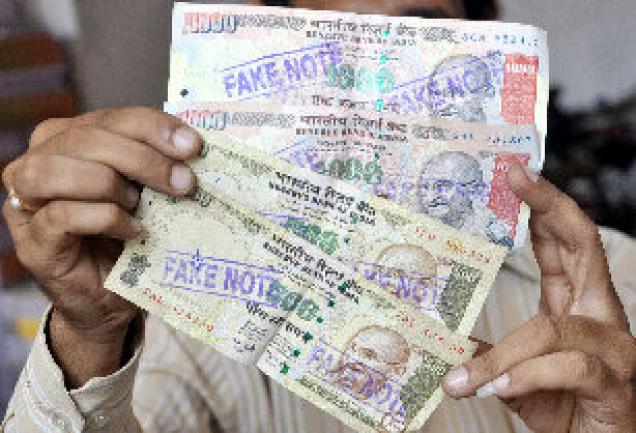
Image Source - http://www.thehindubusinessline.com/economy/rs-500-note-a-favourite-with-counterfeiters/article3746854.ece

In this article, Shubha Kumar discusses detection and Impounding of Counterfeit Notes.

Introduction

Everyone has once in his lifetime received a counterfeit note. In day to day life, people don’t take the pain to report one or two fake notes received, to the police and tend to pass them off to others. However, doing such a thing is a crime punishable with imprisonment. The Reserve Bank of India from time to time comes out with various notifications regarding detection and impounding of counterfeit currency. The latest notification was issued by the RBI on July 20, 2017. In the Master Circular for Detection and Impounding of Counterfeit notes, RBI issues guidelines on impounding such currencies. For detailed rules mentioned in the circular see here.

What does impounding mean?

Impounding means to take into ‘lawful custody’. In India, RBI has designated various authorities to impound counterfeit currency.

Authority to impound counterfeit notes

  • All Banks
  • All treasuries and sub-treasuries
  • Issue office of the RBI

What are the steps to be followed while impounding counterfeit currency?

Step 1: Detection of counterfeit currency

  • All banknotes which are presented by customers at the bank counters or received directly in currency chest should be examined through machines.
  • According to the guideline issued by the RBI on May 11, 2010, on Installation of Note Sorting Machines-Note Authentication and Fitness Sorting Parameter (see here) all bank branches, as well as bank offices, should be equipped with ultraviolet lamp detection machine. The guidelines also provide other requirements to be fulfilled. At all currency chest branches of banks, there should be verification, processing, and sorting machines. Such machines help in detecting the counterfeit currency.
  • The customers account should not be credited with the amount of fake currency.
  • The fake currency should not be returned to the tenderer or customer and should not be destroyed by the branch.
  • If the banks do not follow these guidelines, it will be considered that the bank is wilfully involved in circulating the counterfeit currency.

Step 2: Impounding of counterfeit notes

All counterfeit notes received at the bank branches cannot be destroyed by the bank. Counterfeit notes should be stamped as “COUNTERFEIT NOTE.” The size of the stamp should be 5 cm x 5 cm, and the following should be inscribed:

  • COUNTERFEIT BANKNOTE IMPOUNDED   
  • BANK / TREASURY/ SUB-TREASURY   
  • BRANCH / CURRENCY CHEST  
  • SIGNATURE  
  • DATE

Step 3: Issue of receipt to tenderer

  • If any counterfeit currency is detected, an acknowledgment slip is to be given by the bank to the customer, mentioning the serial number of notes and signed by the cashier and counter-signed by the customer.
  • The receipt is to be issued even when the customer is unwilling to sign it.

Step 4: Reporting to the Police

  • In the case where, in a single transaction four pieces of counterfeit currency are detected, a report is sent by the Nodal Bank officer to the nodal police station along with the counterfeit notes, at the end of every month. Every bank should appoint a nodal officer at the district level, and the same should be notified to the regional office of the RBI.
  • In a case where, in a single transaction five or more pieces of counterfeit notes are detected, the notes are sent to the police station by the Nodal Bank Officer. The police after that register an FIR and start investigation.
  • A copy of all FIRs registered in a month is sent by the police to the Forged Note Vigilance Cell. A Forged Note Vigilance Cell is established by all banks at its Head Office. The Forged Note Vigilance Cell submits a quarterly report on counterfeit notes to the Chief General Manager, Department of Currency Management, RBI.
  • In order to identify persons circulating counterfeit currencies and to help police in investigation banks should have CCTV cameras at cash counters.
  • The data on counterfeit notes is to be forwarded by the banks to the Issue Office of the RBI every month.

Step 5: Preservation and disposal of counterfeit notes

  • All forged notes received back from the police by the bank should be kept in a safe custody and record of such notes needs to be maintained.
  • They should be preserved for a period of three years from the date of receipt from the police.
  • After three years these notes are sent to the Issue Office of the RBI with full details.
  • In cases where the counterfeit note is a subject matter of litigation in the court, it should be preserved till the time court gives it decision.

ATMs dispensing counterfeit notes – Where to report

  • For currencies of denomination more than INR 100, all notes are to be examined by machines before putting it into the ATMs. This instruction is applicable to all banks. Non-compliance with this instruction will be taken as a violation of the Directive No.3158/09.39.00 (Policy)/2009-10 dated November 19, 2009, issued by the Reserve Bank.
  • If ATM of any bank dispenses forged currencies, it will be considered as an attempt by the banks to circulate counterfeit note.

Where to file a complaint if ATM is dispensing forged currency?

ATM machines dispensing forged currency has become common these days. It becomes difficult for customers to prove their case and they lose their money. To protect consumers, RBI has issued guidelines to be followed by banks before filling cash in the ATMs (rules to be followed by banks have been discussed above). If someone gets a fake currency from an ATM here is what he should do:

  • Identify fake notes.
  • Write down the serial number of the notes.
  • Present the transactional slip and the passbook to the police.
  • The police will register an FIR, followed by an investigation.
  • If the bank is found guilty RBI will penalize the bank and refund your money.
  • ATM security guard cannot be an evidence for supporting your claim while filing an FIR. Thus it is advisable that if you spot a fake currency, show it in the CCTV of the ATM.

Security features of the new 2000 and 500 rupee note:

For 2000 rupee note:

  • Numeral 2000 can be seen when the note is held against the light.
  • A latent image of 2000 when the note is tilted.
  • Micro letters ‘RBI’ and ‘2000’.
  • Colour shift security thread,
  • Numeral panel growing big from left to right.
  • Seven angular lines in raised print.

For 500 rupee note:

  • Numeral 500 can be seen when the note is held against the light.
  • A latent image of 500 when the note is tilted.
  • Micro letters ‘RBI’ and ‘500’.
  • Colour shift security thread,
  • Numeral panel growing big from left to right.
  • Five angular lines in raised print.

For detailed security features, please refer these notes as well as new 200 rupee note, 50 rupee note, 100 rupee note refer to https://paisaboltahai.rbi.org.in/#.

What are the laws in IPC under which I can be prosecuted for counterfeit currency?

Under Section 489A to 498E of the IPC, possessing or circulating counterfeit currency has been made an offence.

Section 498A states that any person who tries to counterfeit any bank note or performs any part related to counterfeiting shall be punished with imprisonment for life and shall also be liable to pay fine.

Section 489B states that any person who buys anything from another using a forged currency, knowing such currency to be forged or having reason to believe the same to be forged shall be imprisoned for life and shall also be liable to pay a fine.

Section 498C states that any person possessing forged currency having reason to believe it to be forged shall be liable for imprisonment for life along with fine.

Section 498D states that any person having any material which can be used for forging currency like paper, machine, inks, etc. or in any way he is related to the process of counterfeiting can be imprisoned for life.

Am I liable, for possessing any forge currency, unknowingly?

It may sometimes happen that you are not aware of the fact that the currency which you are holding with yourself is forged and present such note at the bank counter or at any shop. In such cases will you be liable under Section 498B of the IPC?

No, you won’t be liable. One of the most important ingredient for proving criminal liability is to prove Mens Rea, i.e., guilty mind or wrongful intention. If you are not aware of the fact, that the currency you are holding is forged, you cannot have the intention to use it wrongly. Thus, your liability does not arise. In the case of Umashanker vs. the State of Chhattisgarh, the Supreme Court held that mens rea is very essential to prove an economic offence under Section 489. Mens Rea can be inferred from the facts of the case or from the act of the guilty person.

It needs to be proved by the state that the person possessing forged currency at the time of possession knew it to be forged and he intended to use it as genuine.

Where to file a complaint if someone passes me off their fake currency?

If you receive a forged note from someone, and instead of filing a complaint you are thinking to pass it off, then you can be in serious trouble if you are caught.

To avoid this, you need to go to your nearest police station and report the matter to the police who will register an FIR against the accused for violation of Section 489 of the IPC. Then the police will carry out further investigation, and the court will prosecute him.

Problem of Cross-Border trafficking of fake currency notes

To deal with the problem of cross-border trafficking of fake currency, India has signed the International Convention for the Suppression of Counterfeiting Currency in 1929. Under this convention, the parties to the convention criminalise the creation, use, and exportation or importation of counterfeit currency. Under the agreement, no distinction is to be made as to what currency is the subject of the crime. Under the treaty, currency counterfeiting is an extraditable offence. States also agree to establish a central office that will forward to all other state parties cancelled specimens of their state’s currency and notify the other states when changes to their currency are implemented. The Financial Action Task Force is the statutory body which frames policies to prevent illegal trafficking.

Management of currency

For details regarding management of currency please read https://blog.ipleaders.in/mechanics-of-currency-management/.

Money laundering

For details regarding money laundering laws in India please read https://blog.ipleaders.in/money-laundering-prevention/.

Conclusion

Counterfeiting of notes is a serious problem to the economy. Due to this every year the country loses billions of rupees. RBI and the Union Government constantly work towards curbing this menace by adding additional security features to the notes and being vigilant at the borders to prevent the neighbouring country from draining fake currency in our economy. RBI and the government have adopted a policy of ‘Zero tolerance’ to ensure the integrity of the notes in circulation. In the last eight months, 1.57 lakh currency notes have been detected as fake. To curb this problem public should be aware of the process of detecting fake notes, RBI should conduct regular training in rural areas to help rural people identify fake currencies, promote digital payment, in addition to this ATMs should have the latest technology to identify fake currency and rest of the burden rests on us to be vigilant while making transactions in cash.

Download Now

How to Extract Information of a Listed Company

0
Image Source -

In this article, Yash Tandon of TNNLS talks about How to Extract Information of a Listed Company.

What is a Company

A company, abbreviated as co., is a legal entity made up of an association of people, be they natural, legal, or a mixture of both, for carrying on a commercial or industrial enterprise. Company members share a common purpose, and unite in order to focus their various talents and organize their collectively available skills or resources to achieve specific, declared goals. Companies take various forms, such as:

  • voluntary associations which may include a non-profit organization
  • business entities with an aim of gaining a profit
  • financial entities and banks

A company or association of persons can be created at law as a legal person so that the company in itself can accept limited liability for civil responsibility and taxation incurred as members perform (or fail) to discharge their duty within the publicly declared “birth certificate” or published policy.

Companies as legal persons may associate and register themselves collectively as other companies – often known as a corporate group. When a company closes it may need a “death certificate” to avoid further legal obligations.

So as the company is very important, one should know the whereabouts of companies so that one can understand the procedure. Below are certain important features of the company which is the basic understanding one should know.

How to know latest corporate announcements of a company

To find the latest corporate announcements of a particular company, first, we have to go to the BSE (Bombay Stock Exchange) website, then go to the corporate sector, as shown in the image below.

After going through this, go to the 3rd column which is named as corporate filings, and under that list click on the corporate announcement. Then type the name of the company which you want to search (for example I searched for Tata Chemicals Ltd.), and then you click on the submit button. As soon as you click that submit button, all the latest announcements of that respective company will come.

So in this way, one can check the latest announcements of a particular company. 

How to know corporate actions of a company

Corporate actions mean all actions taken by the company in relation to the shares or shareholders i.e. a stock split, a bonus issue, a rights issue or a dividend declaration.

The same procedure listed above has to be followed to reach the BSE website and then going to the corporate filing column. Now if we need to check the corporate action of a company, then in the list of corporate filing, the second item is corporate actions, we need to click on that section and then a page will appear like in the image below. We just need to type the name of the company in the security name box and then all the actions of that particular company will appear (In the image below corporate actions of Tata Chemical Ltd. is shown).


How to know Board Meeting and Shareholders Meeting of a company, and its quarterly results

Board Meeting

This is one of the most important things one should know of a particular company. Under the list of corporate filings, board meetings are also listed. After clicking it, a page like an image below will appear. From there one can check the board meetings happened in a particular year and also the results of that meeting which is very crucial to know.

Shareholder Meeting

To know the shareholding meeting of a company, again go down the list of corporate filings and in that list click shareholding meeting. A page will appear as shown below, after this type the name of the company in the security name box (like in the image I have done of Tata Chemical Ltd. company).

NOTE – This is not the desired result, what we are looking. After getting this below page, one has to click on the company name, which will be hyperlinked now.

After clicking on the company name a new window will open and in that window of “Security Wise Corporate Action” will open, as shown below in the image, under the heading of the same.

Security Wise Corporate Action

How to check Offer Documents of a company

What is Offer Document

Offer document means Prospectus in case of a public issue or offers for sale and Letter of an offer in case of a rights issue, which is filed with the Registrar of Companies (ROC) and Stock Exchanges. An offer document covers all the relevant information to help an investor to make his/her investment decision.

Offer Document is also one of the most important things one should know of a particular company. This can also be found under the list of corporate filings. After clicking on the offer documents, a page will open as shown in the image below.

So from here, one can download, from the green bar which is shown below in the image.

Download Now

What is the punishment for possession of marijuana?

4
possession of marijuana
Mage Source - https://www.theatlantic.com/international/archive/2011/03/time-travel-allen-ginsberg-on-marijuana-tourism-1966/73168/

In this article, Sarthak Modi discusses the punishment for possession of marijuana.

What is Marijuana?

Marijuana refers to the dried leaves, flowers, stems, and seeds from the Cannabis sativa or Cannabis indica plant. The plant contains the mind-altering chemical THC and other similar compounds. Different forms such as hashish, ganja, charas are banned and their possession is deemed to be unlawful.

According to section 2 (iii) of Narcotic Drugs and Psychotropic Substances Act, 1985 cannabis (hemp) means :

  • Charas which is the separated resin, whether in the crude or purified form, obtained from the cannabis plant and also includes concentrated preparation and resin known as hashish oil or liquid hashish.
  • Ganja is the flowering or fruiting tops of the cannabis plant (excluding the seeds and leaves when not accompanied by the tops).
  • Any mixture, with or without any neutral material, of any of the above forms of cannabis or any drink prepared from that place.

Marijuana is the most commonly used illegal drug in the world, with about 125 million people consuming it in one form or another every year. In India, the use of marijuana is historically linked to faith and mysticism. It is said that it is a drug that helps the user to get “ecstasy in the original sense of the word”. India is consuming charas (hash), bhang and weeds for centuries. However, the implementation of strict laws in 1986 made the sale, consumption, production, and transport of marijuana in the country illegal.

Cannabis cultivation in India

It is estimated that sixty thousand kg of hash and forty thousand kg of opium are produced in Himachal Pradesh. But only a small fraction of it is seized i.e. approximately five hundred kg annually. According to reports, there are currently more than sixteen hundred hectares of arable agricultural land and five hundred hectares of illegal public forests under cannabis cultivation.

  • In the small towns of Himalayas, the plant is considered as part of their tradition and empathizes with people in steep, remote villages who consider cannabis the only cash crop they can grow in severe weather and geographic conditions.
  • Marijuana grows wild in Indian Himalayas, and it’s almost impossible to fight its illegal cultivation.
  • After the harvest of cannabis indica, farmers spend hours slowly rubbing the resin from the plant’s flowers to create charas, a kind of hash that is considered to be one of the best in the world. It can cost up to twenty dollars per gram in the West. Cannabis is illegal in India, but many villagers have indulged themselves in the cultivation of this plant as the market price of this plant only rises with time.
  • Most fields are small, and fifty buttons of Cannabis produce only ten grams of Malana cream.
  • In addition, it is quite easy to buy Marijuana in India and its consumption is widespread among the youth. It is therefore fair to say that the ban did not curb the problem.
  • In India, merchants often mix cannabis and weed with chemicals or other substances, to improve the taste, color, texture or “high” of the good. Legalisation will improve the quality of Marijuana sold to users, as the government will regulate the production and sale of the drug.
  • In states like Himachal Pradesh and Tamil Nadu, where cannabis plants grow, marijuana is the only source of income for many local residents. But as a prohibited drug, farmers are forced to sell it to the drug dealers at a very cheap price.
  • They also receive additional pressure from the police, who are paid to destroy the cannabis plantations. By legalizing marijuana, this ‘war on drugs’ will end.
  • Marijuana has used dozens of medical benefits. It prevents cancer spread to other parts of the body, reduces anxiety, retards the progression of Alzheimer’s disease, improves metabolism, and even promotes creativity in our brain.

Why is possession of Marijuana illegal?

After withstanding the United States’ pressure for twenty-five years, India finally gave into the demands of its Western counterpart in 1986 by clubbing marijuana with other hard drugs and criminalizing it.

Marijuana is included as a Class 1 drug. Schedule 1 (Class 1) drugs are illegal because they have high abuse potential, no medical use, and severe safety concerns; for example, narcotics such as Heroin, LSD, and cocaine.

Punishment for possession of marijuana

Section 20 Of the NDPS Act, 1985 deals with the offenses related not only to the consumption but also cultivation, possession, use, sale/purchase, import/export, transportation and warehousing of cannabis, except for medical or scientific purposes.

  • Under section 20, In the case of cultivation, a fine of up to one lakh rupees and rigorous imprisonment of up to 10 years might be levied.
  • For possession of small quantities (100 grams for charas and hashish, 1000 grams for ganja), a penalty of ten thousand rupees or a jail term of 6 months to 1 year.
  • If someone is caught with commercial quantities (1 kg for charas and hashish, 20 kgs of ganja), the court can serve a stern imprisonment for up to twenty years and pay a fine of two lakh rupees.
  • Courts also at their own discretion can penalize a regular offender for a 30-year imprisonment term. It is also not compulsory to give away a mandatory death sentence for repeated convictions in cases of trafficking large quantities of drugs.
  • Section – 25 states that if a person knowingly allows one’s premises to be used for committing an offense under NDPS Act, 1985 he will be deemed to the same punishment as under section- 20.
  • Section – 28 deals with attempts, abetment and criminal conspiracy with regard to marijuana.

The laws might vary from one State to another as each State has the power to control, permit and regulate these activities.

For instance, under Uttar Pradesh excise rules there’s a potential prison term of two years and payment of a fine if someone:

(a) Imports, exports, transport or possess any intoxicant other than charas.

(b) Cultivated any hemp plant (cannabis sativa).

(c) Collects or sells any portion of the hemp plant (cannabis sativa).

(d) Collects or sells any portion of the hemp plant (cannabis sativa) from which any intoxication drug can be manufactured.

In spite of a legally enforced ban, marijuana is still used in various forms by an ever-increasing consumer base. This is primarily because the plant grows unchecked in the wild in several states across the country.

View of NDPS Act on Bhang

Bhang does not fall within the definition of cannabis (hemp) as defined in section 2 (iii) of the NDPS Act, 1985. The act only prohibits the use of certain parts and preparations of the cannabis plant, namely hash resin created from the plant or its buds. The act provides for the use of the leaves of the plant, the precise element used in bhang.

This case has been discussed in detail in various judgments of different courts. In 2004, for example, a local court in the state of Haryana, ruled that “bhang does not fall under the definition of cannabis” in the law. Thus, its possession is not an offense that is punishable under the law.

https://lawsikho.com/course/certificate-criminal-litigation-trial-advocacy
click above

Therefore, the provisions for different narcotics and psychotropic drugs under the NDPS Act, 1985, do not apply to cannabis in bhang form. The National Drugs and Psychotropic Substance Policy acknowledges this fact and further states that ‘the production and sale of Bhang is allowed by many state governments.

Exemption in certain cases

  • Addict accused of using drugs under section 27 or with offenses, including small quantities, will be released or protected against any prosecution if they volunteer for dead-diction. This exception can be withdrawn if the addict does not take full treatment (Article 64A).
  • State or Central governments can provide immunity to an offender to get his testimony in the case. This immunity is allowed by the government and not by the court (Article 64).
  • Minors, violations committed under any law by individuals under the age of 18, will be protected by the Juvenile Persons Act. This Act aims to improve such juvenile instead of punishing them under the various Acts. It is superior to any other law in respect of people under the age of 18. Therefore, such persons cannot be prosecuted under the NDPS Act as well.

Why has the authority not been able to impose the ban properly?

Cannabis consumption is inherent in the culture and the hilly terrain makes the area almost inaccessible to enforcement agencies, making it a safe haven for drug traffickers.

  • Lack of coordination between different authorities such as the police and the Directorate of Revenue Intelligence (DRI) was also identified as a major problem in dealing with the problem.
  • Lack of coordination between different agencies and political will are major roadblocks to combat the threat.
  • The fact that there is a lack of proper monitoring of the movements of foreigners by the enforcement agencies is also the problem.
  • In many cases, it is found that the passport of the arrested person has already expired, but investigative agencies did not discuss it under foreigners’ actions.

Medicinal use of Marijuana – Does Indian legal system comply with this provision?

It is a well-known fact that marijuana has several medicinal benefits. Studies have shown that marijuana use has dozens of medical benefits. It treats glaucoma, prevents cancer from spreading to other parts of the body, reduces anxiety, slows the progress of Alzheimer’s disease, improves metabolism and is even said to spur creativity in our brain. The NDPS Act allows the medical use of narcotic drugs and psychotropic substances.

View of other countries on possession of marijuana

While in most of the countries selling marijuana and consumption is illegal, Uruguay and several states in the USA have legalized the cultivation of cannabis for recreational or medical use in recent years.

The Netherlands has long pursued a policy where the police do not take any legal action against use and sale of Cannabis under certain strict conditions.

However, the Single Convention on Narcotic Drugs prohibits countries to legitimize marijuana except for medicinal uses.


LawSikho has created a telegram group for exchanging legal knowledge, referrals and various opportunities. You can click on this link and join: 

https://t.me/joinchat/J_0YrBa4IBSHdpuTfQO_sA

Follow us on Instagram and subscribe to our YouTube channel for more amazing legal content.

 
Download Now

Guidelines on compensation for motor accident claims

0
motor accident claims

In this article, Sarthak Modi discusses SC guidelines on compensation for motor accident claims.

Motor accident claims

A claim under a motor insurance policy could be because of either of the two injuries:

  • Damage to Other, which includes injury or damage to property related to someone else. This person is called the “third party”.
  • Damage to Self, which includes damage to a person’s own insured vehicle. This is called “own damage claim” and one is entitled to it if they are holding a package or a comprehensive policy.

Third-party claim

In a third party claim where a person’s vehicle is involved, it is necessary to report the accident immediately to the police authorities as well as the insurance company. However, for a third party who has suffered loss because of someone else’s vehicle, the injured party must obtain the insurance details of the vehicle and make an intimation to the insurer of that vehicle.

Own Damage Claim

In the event of an own damage claim, which is where the person’s own vehicle is damaged due to an accident, the person must immediately inform insurance company and police, wherever required, to enable them to depute a surveyor to assess the loss.

Who can file a claim?

In case of damage to property, the application for compensation must be made by the owner of the damaged property. It is implied that in case of death of the owner of the property, the legal representatives of the deceased owner can competently claim compensation. An application for compensation arising out of an accident under Section 166 of Motor Vehicles Act, 1988 may be made:-

  • People, who have been injured in accidents on the road, can themselves file for compensation or route the claims through their advocates.
  • But accident victims, under the age of 18, cannot file for compensation themselves. They have to go through their lawyers.
  • Legal heirs of people who have died in accidents can also claim compensation. Alternatively, they can route their claims through their advocates.

Jurisdiction of Claims Tribunal

A victim of an accident arising out of use of motor vehicles may file their claim application to the Motor Accident Claims Tribunal (M.A.C.T.) within local limits of whose jurisdiction the claimant resides or carries on business.

What all documents should accompany the petition?

  • Copy of the FIR registered in connection with the said accident.
  • Copy of the MLC/Post Mortem Report/Death Report as the case may be.
  • The documents of the identity of the claimants and of the deceased in a death case.
  • Original bills of expenses incurred on the treatment along with treatment record.
  • Documents of the educational qualifications of the deceased, if any.
  • Disability Certificate, if already obtained, in an injury case.
  • The proof of income of the deceased/injured.
  • Documents about the age of the victim.
  • The cover note of the third party insurance policy, if any.
  • An affidavit detailing the relationship of the claimants with the deceased.

Time as an essence while reporting for motor accident claims

Although the established limitation period for the Motor Crash Claim Tribunal to claim a claim for compensation (under the provisions of the Motor Vehicle Act, 1988) is not mentioned, an appellant must approach a court for such a claim within a reasonable time.

No-Fault Liability

Chapter X of the Act deals with such cases. It imposes no-fault liability on the owner of the motor vehicle. Although such liability arises only in the event of accidents leading to the death or permanent incapacity of the victim.

Article 140 of the Act stipulates the principle of no liability. According to this principle, liability for compensation is imposed on the owner of the motor vehicle, even if there is no fault in connection with the accident investigated by the court.
Under section 140 (2) The compensation to be paid in the event of no liability is INR 50000 for Death and INR 25000 in case of permanent disablement.

Motor accident claims – Hit and Run cases

The term Hit and Run motor accident has been defined in Section 161(1)(b). Hit and run motor accident are those accidents arising out of the use of a motor vehicle or motor vehicles the identity of whom cannot be ascertained in spite of reasonable efforts for the purpose.

Thus one of the essential of hit and run motor accident is that the vehicle which caused the accident is untraceable. Even though positive efforts have been put in to ascertain the identity of the vehicle.

Guidelines By Supreme Court on the fixation of future prospects in cases of motor accidents for victims.

A five-Judge Bench of the Supreme Court while hearing the case ‘National Insurance Company Limited v Pranay Sethi’ agrees with the view on the standardization of the addition to revenue against future prospects in accordance with Article 168 of the Motor Vehicle Act 1988. It also noted that the concept of “fair compensation” should be determined on grounds of fairness, reasonableness and on acceptable legal standards, since such a provision “can never be in arithmetical exactitude”. The key takeaways from the guidelines are :

  • While the income is determined to follow the doctrine of actual income at the time of death and not to add any amount of future prospects to income for the determination of multiplicand, it would be unfair. The determination of income in the calculation of remuneration must include future prospects so that the method will come into the line of just compensation as mentioned in terms of Section 168 of the Act.
  • An addition of 50% of actual salary to the deceased’s income relative to future prospects, where the deceased had a permanent job and was under 40 years old. The addition should be 30% if the age of the deceased was between 40 and 50 years. If the deceased was between the age of 50 and 60, the addition must be 15%. Actual salary must be read as actual salary less tax.
  • If the deceased was self-employed or on a fixed salary, an addition of 40% of the income should be the warrant where the deceased was less than 40 years old. An addition of 25% where the deceased between the ages of 40 to 50 years and 10% where the deceased was between the ages of 50 and 60 should be regarded as the required calculation method. The established income means the income less the tax component.
Deceased with a permanent job (salaried) Addition Made Where deceased was self-employed or on a fixed salary Addition Made
Below 40 years 50% Below 40 years 40%
40-50 years 30% 40-50 years 25%
50-60 years 15% 50-60 years 10%

For the determination of the multiplicand and the deduction for personal and living expenses, the tribunals and the courts should refer to paragraphs 30 to 32 of Sarla Verma. The multiplication is normally based on the net annual value of the dependency on the date of death of the deceased. As soon as the net annual loss (multiplicand) is assessed, taking into account the age of the deceased, such amount is multiplied by a “multiplier” to compensate for the loss of dependence.

Multiplier Table in Claim Cases under Section 166

Age of the Victim Multiplier to be adopted for accidents
Up to 15 years 15
15 to 20 years 16
21 to 25 17
26 to 30 18
31 to 35 17
36 to 40 16
41 to 45 15
46 to 50 13
51 to 55 11
56 to 60 8
61 to 65 5
Above 65 5

In some cases, the Supreme Court said that the determination of multiplier is determined by the age of the deceased, the age of plaintiff’s, marital status, education and employment of the plaintiffs and loss of financial benefits.

  • The income of the deceased per year must be determined. From the income mentioned, a deduction must be made in respect of the amount that the deceased would have spent on his / her personal and living expenses. The balance which is to be considered to be the contribution to the dependant family constitutes the multiplicand.
  • A reasonable amount on conventional heads, i.e., Rs. 15,000/- for loss of estate, Rs. 40,000/- for loss of consortium and Rs. 15,000/- for funeral expenses should be awarded to the victim. The aforesaid amounts are to be enhanced at the rate of 10% in every three years.

Few things to keep in mind

  • According to Section 163-B, where a person is entitled to claim compensation under section 140 and Article 163-A, he must lodge the claim under one of the aforesaid sections and not under both.
  • When a road accident compensation is granted, the person paying the amount must pay it within 30 days of the announcement of orders.
  • Even simple interest is applied to the amount from the date of making claims. When the person paying the road accident compensation is willing or otherwise not paying the amount, the tribunal may order the collector to recover the money as it happens in cases of unpaid land revenue.

How much compensation one can expect?

If a driver is involved in an accident in India and if it caused victim’s death then, a minimum of INR 50,000/- and if permanent disablement is caused then, a minimum of INR 25,000/- must be paid as compensation.

A claims tribunal can pay even more after considering the case. The owner of the motor vehicle or the authorized insurer shall be liable to pay in the case of death or permanent disablement due to accident arising out of the use of a motor vehicle under section 163A.

References

https://blog.ipleaders.in/road-accident-compensation-claim/


Download Now

Confidentiality in Mediation – How Confidential are Mediation Proceedings?

0
divorce case india

In this article, Yash Tandon of TNNLS discusses the confidentiality in Mediation Proceedings.

Introduction

In a world becoming ever more litigious, the need for alternative forms of dispute resolution became increasingly popular. This is because of speedy resolvement of the issues between the parties, unlike in court where the matter is rested at least after a couple of years, and in some cases like divorce or property matters it goes on endlessly.

What is Alternative Dispute Resolution?

Alternative dispute resolution is a process where the parties try to resolve the dispute, identifying their needs and generating creative options that lead to an outcome which parties can themselves craft and implement.

Mediation, a form of alternative dispute resolution, is becoming more commonplace in the legal environment. It is a decision-making process in which the parties are assisted by a third party, the mediator who attempts to improve the process of decision making and to assist the parties to reach an outcome to which each of them can agree i.e. a conclusion by which both the parties are satisfied. It is generally accepted that mediations are confidential. Absolute confidentiality, however, does not necessarily result in improved access to justice.

Firstly, before going into the confidentiality issue in mediation proceedings, we should know what is mediation?

What is Mediation?

Mediation is a procedure in which the parties discuss their disputes with the mediator who is a trained impartial third person(s) who assists them in reaching a settlement. It may be an informal meeting among the parties or a scheduled settlement conference. The dispute may either be pending in a court or potentially a dispute which may be filed in court.

Generally, the disputes suitable for mediation are as follows-:

  • Dispute of Commercial Transaction
  • Personal Injury
  • Construction workers, laborers and community relations
  • Divorce
  • Domestic Relations etc.

A mediator is a person with patience, persistence and common sense. Mediator has an arsenal of negotiation techniques, human dynamics skills, and powers of effective listening, articulation, and restatement. The mediator is a facilitator who has no power to render a resolution to the conflict. The parties will fashion the solution as the mediator moves through the process.

Now as we can see the nature of work of the mediator is very important, and he comes to know the issues of the parties. So there can be some issues which are private and confidential, but in order to resolve the issue, the mediator has to know such confidential matters and so how these matters are kept confidential by the mediator? Is there any agreement that mediator signs, not to disclose confidential matters to the public? Or, is there any contract between the mediator and the parties involved in the mediation?

Confidentiality In Mediation Proceedings

Need of Confidentiality in Mediation

To comprehend the focal issues, the inspirations, the weight focuses and the dangers of the case, the members must be guaranteed the discourses can\’t and won\’t be unveiled to others so they can talk straightforwardly. Every now and again, a portion of the rousing powers behind claims are lawfully insignificant but then outstandingly vital to understanding the contention and encouraging determination. As often as possible, customers uncover private occasions, observations or issues in mediation they would not need revealing to anybody. Clarifying their worries and fears is frequently basically critical to them so as to determine the contention. In the event that discourses with the middle person are not private and special, the intervention procedure, the mediator part and the potential for determination are fundamentally lessened.

To bullet list some of the above mentioned points, confidentiality is essential-:

  • To Strengthen the level of trust
  • To Increase Confidence in the Impartiality of the Mediator
  • To Increase the Integrity of the Mediation
  • To Beseech Full and Frank Disclosure
  • To Release Parties from the Strict Confines of the Rules of Law

Mediators often tell the parties at mediation that the mediation process is

private and confidential. This may be generally reinforced by a mediation agreement, which is usually prepared by the mediator, and signed by the parties and the mediator. However, is this clause or section in the mediation agreement, enforceable? What if the court orders for such information to impart justice? There are no easy answers to these critical questions.

How Mediation Agreement Ensures Confidentiality?

Mediation is a shut entryway private issue and the prime preferred standpoint related to intervention is privacy. Not at all like court procedures, third parties don\’t approach mediation procedures. The mediator intervention is private regardless of whether it brings about the settlement and determination of the question.

Eventually, the parties are likewise expected to keep private, all issues identifying with the mediation procedures. Notwithstanding amid the procedures when one party gives data to the mediator subject to a particular condition that it is to be kept classified, the middle person is blocked from unveiling that data to the other party.

On the off chance that intervention is unsuccessful, what unfolded in the mediation procedures isn\’t to be revealed. This is in spite of the reality that privacy in intervention has no statutory sponsorship [1] in light of the fact that the procedure of mediation is naturally thought to be secret.  In case of court-annexed mediation conducted by the mediation centers at Delhi also, confidentiality has been accorded due importance[2]. The courts have also emphasized upon the aspect of confidentiality in mediation proceedings[3].

Rules on confidentiality in Mediation: International Chamber of Commerce

While parties are allowed to concur on terms relating to privacy in a mediation agreement, principles of most establishments that manage mediation cases make arrangements for the same. For instance, the Mediation Rules of the International Chamber of Commerce (ICC) give that unless generally concurred by the parties or required by pertinent law, the intervention (yet not the way that it is occurring, has occurred or will happen) is private and classified. Therefore, entries made by another party or by the mediator in mediation may not be delivered as confirmation in any intervention, prosecution or comparable procedures, unless they can be gotten autonomously by the party looking to create them in those procedures. The same is made appropriate to sees communicated, recommendations made in regards to the settlement, or any confirmations made by another party in mediation.

What does the Arbitration and Conciliation Act, 1996 mentions on confidentiality in Mediation

India ordered the Arbitration and Conciliation Act, 1996 in accordance with the UNCITRAL Model Law. Article 75 of the said Act gives that the mediator and the parties should keep secret all issues identifying with the pacification procedures including the settlement understanding, aside from where its revelation is essential for reasons for usage and requirement.

Section 89 of Code of Civil Procedure Code,1908 on Confidentiality in Mediation: Need to Reform

Section 89 of the Code of Civil Procedure, 1908 as amended by the Code of Civil Procedure (Amendment) Act, 1999 enunciates provisions for the settlement of disputes outside Court.

The difficulty with the provisions of Section 89 lies in the fact that it commands that where it appears to the Court that there exists a component of settlement which might be satisfactory to the parties, the Court should detail the terms of settlement and in the wake of accepting remarks of the parties may reformulate the terms of conceivable settlement after which parties might allude to arbitration, conciliation, judicial settlement or mediation.

The necessity that the Court must detail the terms of conceivable settlement puts a critical weight on the Court even before alluding the parties to intervention. The Court in such a case might be required to invest an impressive level of energy and exertion in begging parties to settle their debate and to draw up the terms of a conceivable settlement.

The very object of mediation or conciliation is to put the parties under the facilitative capacity of a mediator who will then empower them to investigate their interests and to think about different alternatives for arranging settlements. Putting the weight of planning the terms of a conceivable settlement on the Court even before the parties allude to mediation is in this way not proper in light of the fact that it is just when parties have taken recourse to mediation that the full range of option can be explored by them.

Can Courts Demand the Confidentiality Agreement, undergone in Mediation Proceedings?

Indian courts and quasi-judicial bodies have upheld the important role that confidentiality plays in mediation. Take the interesting case of Moti Ram & Anr. v. Ashok Kumar & Anr[4], the Supreme Court of India, in this case, had referred the matter for mediation to a Mediation Centre to attempt to resolve the dispute between the parties. Subsequently, a report by the Mediator was placed before the Court that mentioned the various settlement proposals made by the parties, among other things. As a result, the Supreme Court stressed that mediation proceedings are strictly confidential. It observed that when successful, the mediator should send the settlement agreement signed by the parties to the Court without mentioning what transpired during the mediation proceedings. When unsuccessful, the mediator should simply state that mediation has been unsuccessful. The Supreme Court was of the view that any disclosure of the happenings in a mediation proceeding destroys the confidentiality of the mediation process.

Salem Advocate Bar Association v. Union of India[5], this case led to the formation of Mediation and Conciliation Rules of Delhi 2004. Under Rule 19 of Mediation and Conciliation Rules, 2004[6], Confidentiality is mentioned which states that- Parties shall maintain confidentiality in respect of events that transpired during mediation/conciliation and shall not rely on or introduce the said information in any other proceedings as to:

  • “views expressed by a party in the course of the mediation/conciliation proceedings
  • documents obtained during the mediation/conciliation which were expressly required to be treated as confidential or notes, drafts or information given by parties or mediator/conciliators
  • proposals made or views expressed by the mediator/conciliator
  • the admission made by a party in the course of mediation/conciliation proceedings
  • the fact that a party had or had not indicated willingness to accept a proposal.”

NOTE- There shall be no stenographic or audio or video recording of the mediation/conciliation proceedings.

Confidentiality in Mediation – Is there an Exception?

In the case of Rama Aggarwal v. Delhi State Legal Service Authority[7] that came up before the Central Information Commission (CIC), the CIC held that a party cannot seek information pertaining to mediation proceedings under the Right to Information Act, 2005 as the same attracts exceptions under provisions of the said Act. The CIC observed that “Information regarding negotiation, mediation, conciliation, and counseling will fall under exempted clause of information of another spouse, being personal and given in fiduciary capacity and, no public interest is established in disclosure, while there is larger public interest in protecting that information as that would help mediation to flourish, hence such information shall not be disclosed.”

[1] Arbitration & Conciliation Act is different from Mediation. Article 75 of the said act ensures confidentiality in Arbitration and Conciliation Proceedings. This act is not applicable to Mediation Proceedings.

[2] http://ecourts.gov.in/sites/default/files/mediation%20rules.pdf (RULE- 19 and 20).

[3] Moti Ram & Anr. v. Ashok Kumar & Anr (2011) 1 SCC 466.

[4] Id.

[5] AIR 2003 SC 189.

[6] Supra note 2.

[7] https://indiankanoon.org/doc/3176933/

Download Now

Causing death by negligence

1
death by negligence

In this article, Shubham Prakash discusses the penal provision for Causing death by negligence.

Introduction

In law, ‘Negligence’ is defined as an act of carelessness which damages the property of a person. The negligence is caused when a person has acted illegally or carelessly. There are four basic elements that the plaintiff (the person who has been injured) has to prove against the defendant (the person who has caused the injury) to show that he acted negligently.

  • Duty: In order to assess an act is negligent or not it is necessary to see that the defendant has taken the legal duty of care towards plaintiff.
  • Breach of Duty: The next thing that a court sees is that whether the defendant has acted like a ‘reasonable prudent person’ in the given circumstances. It means that the person never had the knowledge about the outcome of his actions and there was a breach of duty from his or her part.
  • Causation: In order to prove negligence, it is important for the plaintiff to prove that the defendant has caused an injury. It simply means that the action or inaction of the defendant has caused injury to the plaintiff or his property.
  • Damages: If there is an act of negligence from defendant which has resulted in the injury of plaintiff then the court is liable to compensate the plaintiff.

When Indian Penal Code, 1860 came into existence there was no provision which gave punishment for causing death by negligence. The causing of negligence was nowhere defined in IPC but fall outside the offences ranging from Section 299 and 300 of IPC. But in the year 1870, an amendment was made in IPC which inserted a new provision Section 304A. It states that:

Causing death by negligence

“Whoever causes the death of any person by doing any rash or negligent act not amounting to culpable homicide, shall be punished with imprisonment of either description for a term which may extend to two years, or with fine, or with both.”

In order to apply Section 304A of IPC, it is necessary to prove that there was no intention on the part of the defendant and the act done would result in causing death to the plaintiff. In Ravi Kapur v. State of Rajasthan[1], the SC held that in an order to attract the provision of Section 304A it is important to see that the death of a person is caused due to rash and negligent act of the accused. In this particular case, the appellant was charged with an offence under section 304A for causing the death of ‘M’ by a contact with an electrically charged copper wire. It was held that the voltage of current passing through the naked wire being high enough to be lethal, there could be no dispute that charging it with current of that voltage was a rash act done in reckless disregard of the serious consequences to people coming into contact with it for which the accused is solely responsible under Section 304A. It is important to know the difference between rash and negligence in order to decide a particular case.

Difference between rash and negligent act

Serial

No.

Rash Negligent Act
1. A rash is a hasty act which is opposed to an intentional act. Negligence is a breach of duty which is not done intentionally.
2. Rashness is done without deliberation and caution. In negligence, defendant has caused injury to the plaintiff or his property.


3. The act of rashness is generally a criminal act depending upon the recklessness. The act of negligence can be civil or criminal depending on the nature and gravity of the offence.

Whether causing death by negligence is a criminal act or not?

The act of negligence can be civil and criminal. In civil negligence, if the act of defendant resulted in the injury of the plaintiff, the defendant is liable to compensate. But what happens when a person has acted negligently which has resulted in a death of a person. Let us take a case of a doctor who has acted negligently which has resulted in a death of a person. It is a case of medical negligence which is defined as any act or omission by a doctor or a physician which has resulted in a bad injury or death of a person. Medical negligence can be of civil or criminal nature. But during the treatment of a patient it is the duty of the doctor take reasonable care and if they do not follow the accepted norm practices then it would result in a death of a person. The doctor will be criminally liable.

Other cases of criminal negligence

  • If a person is drinking and driving and kills someone on the road, then the person is criminally liable and can be sued. They are criminally liable because the death of a person is a crime so driving and drinking will also be a crime.
  • If a nurse forgets to feed the patient on time which has resulted in the death, then the nurse is criminally liable because he or she has killed a person.
  • A doctor who prescribes an addictive drug to a patient knowing that he is allergic and which has resulted in a death of a person, then the doctor is criminally liable.
  • A person who drives a car at above 40 miles per hour (i.e. above the speed limit) which has resulted in a death of a person, the person is criminally liable.

What defence can we take for causing death by negligence?

If the action of a person has resulted in a death of a person, then the defence that can be taken as:

  • Contributory negligence: It is based on the doctrine of common law which states that if a person is injured due to his or her negligence, then the injured party is not entitled to collect any damages from another party. This is because in law it will be considered as to be the author of his own wrong. In Butterfield v. Forrester[2], the defendant put a pole across the public place although he was not authorized to do so. The plaintiff was riding in the evening and got stuck with the pole. The court held that plaintiff cannot claim for damages because the light was visible and he was negligent.
  • An act of God: If there is injury or death of a person caused due to any natural disaster, then the person will not be liable if he or she proofs the same in the court. In Nichols v. Marsland[3], the defendant had series of artificial lakes on his land in the construction or maintenance of which there had been no negligence. Due to the heavy rain, some of the reservoirs burst and carried away four country bridges. The court held that the defendant was not liable as the water escaped by the act of God.
  • Inevitable Accident: If the death or injury of the person has been done inevitably then the person can take a defence of negligence. Inevitable accident means that the person has taken an ordinary care, caution and skill that has resulted in the death or injury of a person. In Brown v. Kendal[4], the plaintiff’s and defendant dogs were fighting. As the defendant was trying to remove them separately, he accidentally hit the plaintiff in his eye. The injury of the plaintiff was held to result in an inevitable accident.

Can a doctor take the plea for causing death by negligence?

A doctor can take a plea for causing death by negligence on the ground that they have taken reasonable care (duty of care) while treating the patient. They will not be vicariously liable for the act of his junior doctor or nurse. It means if they have not worked in accordance with a proper instruction of the doctor, then the doctor will not be liable. The burden of the proof lies on the doctor to prove that he has acted reasonably and there was a breach of duty.

Important cases on causing death by negligence

In Prabhakaran v. State of Kerala[5], the court held that Section 304A IPC applies in case of rash and negligent acts and does not apply to cases where death has been voluntarily caused. Section 304A IPC applies to cases where there is no intention to cause death and no knowledge that the act done in all probability will cause death.

In Dr. Suresh Gupta v. Govt. of N.C.T. of Delhi and Anr.[6], the court quashed the proceedings for medical negligence for fixing criminal liability on a doctor or surgeon, the standard of negligence required to be proved to be as high as can be described as “gross negligence” or recklessness. The doctor did not take reasonable care due to which the patient died. As per medical opinion produced by prosecution cause of death is because of not introducing a cuffed endotracheal tube of proper size as to prevent aspiration of blood from the wound in respiratory passage. This act attributed to a doctor, even if accepted as true, can be described as negligent act as there was lack of due care and precaution, for which he may be liable in tort. The court held that the said act cannot be described as so grossly negligent or reckless as to make him criminally liable under section 340A of IPC.

In Somabhai Mangalbhai Dabhi v. State of Gujarat[7], the session judge passed an order of conviction against Petitioner for an offence punishable under a section of 304A of IPC for causing the death of a 10-year-old girl by rash and negligent act of driving a motor bus. The issue before the court was whether there was any negligence or rashness on part of a driver. It was held that it was not possible that benefit of probation was required to be given to accused. The driver was driving a vehicle at uncontrollable speed and he went to utter the wrong side of a road and dashed against an innocent girl of 10 years. The negligence and rashness were of grave category and there was no mitigating circumstance and hence, a benefit of probation could not be extended to Petitioner.

Where to file a complaint in case of criminal negligence?

If there is the death of a person, then a family member or friend or any person can file a complaint by following the procedure Code of Criminal Procedure, 1973 (hereinafter referred as CrPC).

  • FIR (First information report): An FIR will be filed under section 154 of CrPC with police at the police station. The officer-in-charge of police station will reduce the statement of an informant in writing that will be signed by an informant. The copy of FIR will be provided to the informant at free of cost provided by the State Government.
  • Vakalatnama: An informant who has filed an FIR will file a Vakalatnama where he or she will authorize an advocate to represent them in front of a court.
  • Investigation: The police will start its investigation under section 156 of CrPC, where they will collect all the evidence and will seal the place where the crime has been committed. It is their duties to take investigate on every matter that is related to a case.
  • Charge sheet: When an investigation is over the police will file a charge sheet under section 173 of CrPC which will include- the names of the parties, the nature of the information, the names of the persons who appear to be acquainted with the circumstances of the case, whether any offence appears to have been committed and if so by whom, whether the accused has been arrested, whether he has been released on his bond and if so whether with or without sureties, whether he has been forwarded in custody under section 170. The police will also frame charges before submitting the charge sheet to court.
  • Inquiry: Inquiry is something that is defined under section 2(g) of CrPC which other than trial. It will commence in front of a Magistrate or Court. The main motive of inquiry is to determine whether an innocent is guilty or not. While the inquiry is going to the statement will be recorded under section 164 of CrPC, where the accused will be required to say whether he feels he is guilty or not and he can admit guilty.
  • Trial: When the inquiry is over the trial process will starts. The trial is something that has not been explicitly defined under CrPC. Trail means judicial proceedings where evidence are allowed to be proved or disapproved, and guilty of a person is adjudged leading to acquittal or conviction.
  • Arguments: Both the lawyers put both the lawyers put forth their arguments for the determination of the guilt of the accused.
  • Judgment: After hearing both sides’ arguments and after the examination of witness the court decides whether the person has caused the death negligently or not.

Punishment

If a person has been proven guilty by the court for causing death by negligence, then the person will be punished with imprisonment of either description for a term which may extend to two years, or with fine, or with both.

Proving negligence in Motor Accident Cases

If there is a death of a person due to the collision of the motor vehicle, then the defendant can have to prove that the accident was incidental and there was no intention involved. For example, that a truck driver cuts off the driver and as a result the driver dies. The plaintiff has to prove that there was no duty of care by the defendant has taken while driving the car which resulted in the death of a person. The duty of care plays a major role in proving the negligence in case of a motor accident.

Conclusion

When a death is caused by a minor then the victim should not be punished for an offence because he or she never had the knowledge about it. Section 304A of IPC should be considered as non-bailable offence or at least compensation should be paid if the person has been injured. If there is an unexpected accident happening, then the court should see the merit of the case before giving a judgment.

References

[1] AIR 2012 SC 2986

[2] (1809) 11 East 60

[3] (1875) LR 10 Ex 255

[4] (1859) 6 Cussing 292

[5] AIR 2007 SC 2376

[6] AIR 2004 SC 4091

[7] 1989 CriLJ 1945

Download Now
logo
FREE & ONLINE 3-Day Bootcamp (LIVE only) on

How Can Experienced Professionals Become Independent Directors

calender
28th, 29th Mar, 2026, 2 - 5pm (IST) &
30th Mar, 2026, 7 - 10pm (IST).
Bootcamp starting in
Days
HRS
MIN
SEC
Abhyuday AgarwalCOO & CO-Founder, LawSikho

Register now

Abhyuday AgarwalCOO & CO-Founder, LawSikho