In this article, Ranjit Krishnan Ramanath who is currently pursuing M.A. IN BUSINESS LAWS, from NUJS, Kolkata, discusses Assignment and Licensing of Trademarks in India
Abstract of the research undertaken
The trademark assignment in the handling to license under the original Trade markets Act 1999. (The exchange of the former Trademark Act 1958) is concerned only to the ‘permitted use’ and ‘registered use ‘ because the former Act was expanded to reach the range of the word ‘permitted use only. The trademark should be accomplished to authorize the outsiders without need to enroll the license as the ‘registered user’. The demand is to note with a Government Agency, Which is the trademark Office has been eliminated to with the failure to enroll should not permit a license invalid (Anon, 2010). In the course of recent years, the law of government trademark licensing has adjusted radically in the reaction of the new commercial factors of supplying the trades and administrations. Because the slow adjustment is to move towards the licensing.
It slowly accepted in point of commercial development in the law. It refuses that the license trade markets has turned into a commercial practicing hub. However, in the meantime, the law has given to satisfaction of specific conditions, viz. ‘quality control’ or ‘association in course of exchange’, which should be confirmed to as the trademark holder chooses to go into a permit game plan. Also, it is recommended that a trademark proprietor ought to maintain a strategic distance from a restrictive permit since it might be perused as a task. Likewise, despite the fact that the arrangement of keeping records of enlisted clients of the trademark is not any more predominant, enrollment keeps on conveying extra points of interest for a trademark proprietor under the present plan of the Act. Moreover, area 53 of the Indian Trademark Act, 1999 makes a motivating force for enlistment by denying the unregistered licensees of the privilege made by the excellence of Section 52.
Assignment and Licensing of Trademarks in India
The thought of responsibility for a development and its security is not new to humankind. To make a clear distinction of clear process for the prevention of crime over individual attempted goals will do have a low quality of merchandise creation process in the infringer reassessed. Taking a trademark process well known that would help in developing a trust in merchandise and have potential customer process. Taking a point of recheck and their implied need for maker directly reflects individual personal stake.
In the medieval times two essential sorts of imprints could be found:-
Merchants Mark
Production Mark
Using these process for Mark demonstration of these production needs and their origin are made as per specifications. It is more of additionally etched process in boats and other given specifically for their technique for trademarks for their occurrence for ship destruction for a proof ad there conceivable. Other individuals working together or in societies began declaring it as a blemish on their merchandise. This made the producer in charge of the nature of the merchandise that was being created and helped them to hold their clients[1].
What is trademark authorizing?
Trademark permitting is the point at which you as a trademark proprietor approve an outsider to utilize your check in course of exchange thought of sovereignty over the offers of items or administrations authorized under the trademark[2].
By and large, there is “established trademark permitting” done under which the licensee can make items utilizing the trademark authorized. Different types of permitting incorporate marketing, diversifying and so forth. So trademark[3] permitting is the point at which a trademark proprietor permits others to utilize the check without exchanging of possession.
Why would it be a good idea for one to permit a trademark?
It’s the most ideal path in which you can extend your business in locales you haven’t, as of now. All the more imperatively, it is monetarily truly gainful for both the licensor and the licensee. To be more particular, from the licensor’s perspective, it is that compelling business methodology that will just outcome in your officially all around perceived trademark to end up distinctly much more rumored. Like specified before, it is likewise a decent approach to extend your trademark’s topographical reach, enhance mark deceivability and other like things.
From the licensee’s perspective, it allows you to partner yourself with a very much perceived trademark; in this manner giving you a high ground on your rivals. Similarly as on account of physical property, for example, arrive, each proprietor of a Brand or Trademark has the privilege to offer, permit, exchange, and so forth its particular image or trademark as per legitimate strategies. Taking a view on varied factors of branding and trademark will make an impact with that of rights and its methods and task. As per Indian process, the trademarks Act,1999 would have authorization based on it. Simply put, if there should be an occurrence of a task of a trademark, there is an adjustment in the responsibility for enlisted mark and in the event of permitting; the privilege in the exchange stamp keeps on resting with the first proprietor yet just far few confined rights to utilize the brand/check are given to the outsider.
Business Objectives
Entities can negotiate lump some prices for the transferring of assignment of their respective trade mark for which is ethically a new arena of business in the current society. The business objectives further extends to allowing entities from other part of the world to render service or manufacture goods under the owner’s trademark by duly establishing a relationship through a trademark licence agreement.
Having a trade mark also benefits by teaming up with respective partners , increasing the capacity of producing , services and marketing without the requirement to expanding ones own company. This opens up new route for delivery or partitioning in the market. By getting the Trade mark licensed, the Company enters into a new area of business which is not used by any entities in the market of the specific geographical area.
Every entities can have their selections based on what appears to be challenging and more appealing for them in terms of the concerned business the party intends to participate. In case if there disputes, insurgency, acquisition or insolvency of the Company, the owners can take decision to converge a few or can be abandoned by the owners of the Company.
The Owner can also retain such ownership of the trade mark or can lease it to somebody else so that the owner could continue in doing the business under the said trade mark without abandoning its business in the Public Domain. The owner can still acquire revenues having the same trademark license. In the current world, Partnership licensing is beyond the horizon of merely lending a logo into establishing a true partnering of business relationship which gives a lot of drive and success to the key business of the Company. For example when Paper pulp manufacturer and a Temporary ceasing Contractor teamed up to develop false ceiling tiles which was not a simple Licensing but was an established business tie up of developing a product which was truly a great success for both the parties.
Sometimes the mark is fringed by another entity with an object to tampering the brand name, quality and compromising the reputation of the Company. In several instances, many local vendors use others brand to promote their sale of goods. The infringers can basically convince the owners of potential business in a tie up and get into business. For most of the Companies, registering a trademark is mere a recognition than a source of revenue. Company shows keen interest in increasing the Customer recognition of the product that the revenue or sales as a part of promotion or advertisement. While another Entity partners the brand, the promotional or the advertisement costs are shared.
Financial and Commercial considerations of a Trademark
The Royalties or the payments can be paid or received in a form of a lump amount wherein at the time when the rights of the license is granted upon another entity. This can either be a fully paid agreement or can be periodically paid until the period over the term of the License. Under the royalties, the most common kind of consideration provided by the Entities by some kind of upfront fee or based on the success in sales.
Royalty has to be dealt with in the following ways,
We need to ascertain when the Royalties are required to be paid,
What kind of penalties are to be imposed for failing to pay on time,
Any issues of holding international taxes where there were a requirement to pay out the monies in the Country of established business,
Any accrued interest on the outstanding payments or due to kind of payment.
Typically if we look into various Trade Mark Licensing agreement , the Royalty calculation would depend on a number of other factor which would include a relative bargaining skill of the Licensor and licensee, Its potential to acquire profit and how well the TM could be known in the marketplace that deals with that particular kind of product or service. The Competitive situation of the market is quite challenging and the Royalties would surely depend on the extent of its success through the market. The base calculation of Royalties whether it is from the gross sale or the net sale, all other associated costs of the overheads , profit margins , the calculation depends
The base calculation of Royalties whether it is from the gross sale or the net sale, all other associated costs of the overheads, profit margins, the calculation depends on a pre-determined rate at which the owner feels would be appropriate within a range of his profit margins. In short, Royalties is a rewarding gesture from the Owner in connection with his performance and appreciation of the parties involved in the business mutually supporting to enhance business.
Procedure of Registration of Trademark in India
The process required for the enrollment of the trademark in India is shown in the figure,
Assignment of Trademarks in India
The assignment of a trademark takes place when the ownership of such trademark is transferred from one entity to another, which may either be along with or without the goodwill of the trademarked business and which has to be recorded in the register of trademarks.
Following is the process of assignment of trademark in India:
Complete Assignment of trademark from one entity to another: The owner transfers all his rights held in the trademark to the other entity.
Assignment of trademark with respect to only certain goods and services: Here, the ownership of trademark is limited to only certain products or services. For example, “A” is the owner of a brand and uses his trademark for selling computers, television sets, and air-conditioners. “A” assigns “B” the rights in the brand with respect to only the Air-conditioners, and whereby “A” retains the rights in the brand with respect to computers and television sets.
Assignment with the goodwill: Here, the absolute ownership over the rights and value of a trademark associated with the product is transferred from one entity to another. For example,”A” is the owner of a brand and uses his trademark for selling computers. “A” sells his brand to “B” whereby “B” retains all such rights vested in the brand and can use the brand trademarks for selling computers as well as other electronic products of his choice.
Assignment without the goodwill: The assignment without goodwill is also known as “gross assignment”. Here, the assignment refers to restrictions of rights of the buyer whereby it limits the new owner of using the brand on products that the original owner is already For example, “A” is the owner of a brand and uses his trademark for selling computers. “A” sells his brand to “B” such that “B” will have no rights to use the brand trademark for selling his computer products. However, “B” can use the brand trademark in the chain of businesses other than a computer.
Using the case process of Trademarks Act 1999, there is a restriction of these process as per the registered process and their confusion amid various other clear public users and other clear deliverables.
Such restrictions are
Giving an account of these assignments and their results would have rights in a more desperate work have effective goods and services. It further has a clear need for association as per deeds.
Taking the approach of these Assignments and their results would have different effective process in a larger Spectrum.
Licensing of a Trademarks in India
The licensing of a trademark allows the licensee to use the trademark, albeit the trademark itself is not assigned to the other entity, that is to say, the ownership has not been transferred but the mere use of the trademark is permitted to be used by the licensee.
Licensing of trademark has a plethora of benefits for both entities. Here, the licensor may enjoy his rights to the trademark by generating royalties for its use, whereby the licensee is able to broaden his market chain operations by using the said trademark for building reputation and brand value.
In layman words, a licensor has the right to license his rights over the trademark as he may be pleased with, such as by restricting the rights of the licensee in the trademark with respect to products or services. The licensor may restrict the time and area within which said trademark can be used by the licensee with respect to the product and services.
Agreements for Transmission
Trademark assignments are generally executed by way of trademark assignment agreements under which the transmission of transfer takes place from one entity to another[1].
The following points are to be ensured while drafting such agreements for the assignment and licensing of trademarks in India,
That the rights of the trademark brand do not tend to cause harm due to obligations prescribed in such agreement.
The provision with regard to the assignment is with or without the goodwill of the business should be properly negotiated and explicitly mentioned in the agreement.
The agreement must be drafted in accordance with the purpose of the transaction in question.
The rights and duties of the licensee must be distinctively pre-determined and defined.
The license agreement should be registered with the trademark Registrar, although it is not compulsory but in a legal perspective, it is most advisable.
It is more of the licensed for their agreement for Trademark Act 1999, relieved which do provide registration for the license agreement. Using the process of the Trademark Assignment will do make an impact in rights and duties for their distinctively determined and further relieved.
Conclusion
Understanding the process of assignment and licensing of trademarks in India is a paramount issue. The process of marketing and strategic management would surely open a plethora of broadening horizons in this domain, for the licensor and licensee likewise. It all depends upon the development of a brand, and the use of the brand, which collectively form a factor to boost marketing in various sectors.
Having an agreement which set an example for creating IPR and do allow intellectual property transfer of these commercial returns. It is further ensured that various deliverable monetary gain will have utilization as per the Agreements and have purchase value using the benefit of right made up and also provide legal and equitable rights for law and other important Issues. Further acceleration of these IPR would do study the IP rights more rigorously and have companies own valuable needs more carefully understandable and have IPR made out of scope and address the needs of the resource.
It further defines and also provides clear obligations for not able to disclose and create clause to address the issue with the jurisdiction of Alternative Agreement clause for these issues legal contract for their compliance exist laws.
It is, however, worth to note that the ability of a Company to Sell or buy is very much required to sustain in the market. Although the Trademark does not take much of space, too much of IP can actually be a burden to the Company due to the funds required to maintain the registering fees, for its proper defense if there is any third party claim or for manufacturing and sale for a final production. , or creating and marketing a final product. For a Company to sell an unused IP, this can usher the Company’s financial position and could generate revenues and decrease the overall Costs. Selling unused or surplus intellectual property can have an immediate positive effect on a company’s finances, generating revenue and decreasing costs. When the Company plans to enhance its business, Company looks forward in purchasing trademark to support their business motive, creating an identity for themselves and ensure that this is properly marketed.
This was all about Assignment and Licensing of Trademarks in India. Please comment below and let us know what are your views on Assignment and Licensing of Trademarks in India. Do not forget to share.
Bibliography
Ng, D. L. a. P. W., 2010. Intersect between Intellectual Property Law and Competition Law. Journal of Management.
Anon, 2010. REGULATION OF INTELLECTUAL PROPERTY IN THE LEGISLATIVE CONTEXT WITH SPECIAL REFERENCE TO. Journal of Management.
Anupam Goyal, 2003. “Recognizing the property rights regime for indigenous knowledge of biodiversity in face of TRIPS Agreement”. National Capital Law Journal, 6(9), pp. 129-153.
Dutta, R., 2008. Critical Analysis: Reflection of IP in Competition Law of India.
kumar, B. a., 2006. law of trademarks in India. 2nd ed. Delhi: center for law.
L, W. B., 2000. law relating to patents, trademarks, copyright, designs and geographical indications. 2nd ed. Delhi: universal law publishing co pvt .
S.Chakravarthy, 2005. Evolution of Competition Policy and Law in India. New Delhi: Academic Foundation.
In this article, Dheerajendra Patanjali, who is currently pursuing M.A. IN BUSINESS LAWS, from NUJS, Kolkata, discusses how to start a collective investment scheme: Process, compliance, best practices and relevant law
Introduction
An investment for better return has several avenues in securities market to avail and collective investment scheme is one of them. Collective Investment schemes serve as a flexible savings vehicle for individuals, corporate bodies etc. to add funds for future needs.
The term Collective Investment Scheme (commonly referred to as ‘CIS’) is a general term used to describe a number of different ways in which Investors can pool contributions and invest collectively in certain investments. This mechanism not only provides larger chunks for investment to investor but also provide good opportunity to contributors to earn higher return.
In India, CIS operation is regulated one and onus to regulate the same lies on securities and Exchange Board of India (SEBI). SEBI has prescribed a detailed mechanism to properly run the CIS and same has contained in Securities and Exchange Board of India (Collective Investment Schemes) Regulations, 1999(CIS Regulations), as amended from time to time. The Regulation deals with all aspects of CIS in detail.
Development Collective investment scheme In India
Collective investment scheme is not a new phenomenon for India, it was present in our society since long although in scattered and non-uniformed manner. Investor used to collect money from the contributor and same was invested primarily in agro-related activities.
However, post-independence the CIS has grown greatly. The non-uniformed and largely irregulated environment has provided good scope to mischief to misuse the funds. Large scale miss-utilisation of funds and consequent fraudulent activities lead to establishing a regulated system for the operation of CIS.
The Government of India, vide its press release dated November 18, 1997, decided that an appropriate regulatory framework for regulating schemes through which instruments like agro bonds, plantation bonds etc. are issued, has to be put in place. The government decided that the schemes through which such instruments are issued would be treated as “Collective Investment Schemes” coming under the provisions of the SEBI Act[1].
Towards this end, and in order to examine and finalize the draft regulations for Collective Investment schemes, market regulator SEBI appointed a committee under the Chairmanship of Dr. S. A. Dave in 1997. The committee was tasked to come with a detailed regulatory framework for the operation of CIS in India duly taking into account the best practices of other countries and with an aim to provide a Philip to such activities.
The preliminary report and regulations were released by SEBI to the public on December 31, 1998. Subsequently, a number of suggestions were received from investors and corporates alike, these were sifted through by the Dave Committee and the ones found to be appropriate for the transparent working of CISs were incorporated in the Final Report dated April 5, 1999.
Thus, on the basis of the recommendations of the Dave Committee, Section 11AA was added to the SEBI Act and the CIS Regulations were framed[2]. CIS Regulations were framed primarily for the protection of investors in the schemes launched by various entities seeking to dupe bonafide investors into putting their life savings at risk by promising high returns.
It is important to note that committee also took great pain in defining the term CIS. The definition finalised by the Committee reads as[3],
“collective investment scheme” means any scheme or arrangement:-
With respect to property of any description, the purpose of which is to enable the investors to participate in the arrangements by way of contributions and to receive profits or income or produce arising from the management of such property or investments made thereof; and
The contributions of the investors, by whatever name they are called. are pooled, and are ·utilised solely for the purposes of the scheme or the arrangement; and
The property or such contributions is managed as a whole on behalf of the investors, whether or not such properties or contributions and the investments made thereof are evidenced by identifiable properties or otherwise; and
The investors do not have day to day control over the management/operation of the property/scheme.
The committee recommended that a collective investment scheme shall be constituted in the form of a trust and the instrument of the trust shall be in the form of a deed registered under the provisions of the Indian Registration Act, 1908 and executed by the Collective Investment Management Company (CIMC) in favour of the trustees named in such an instrument.
As a result, presently CIS is Any scheme or arrangement made or offered by any company under which the contributions, or payments made by the investors, are pooled and utilised with a view to receive profits, income, produce or property, and is managed on behalf of the investors is a CIS. Investors do not have day to day control over the management and operation of such scheme or arrangement[4], and same is regulated under Securities and Exchange Board of India (Collective Investment Schemes) Regulations, 1999 and is required to fulfil the criteria led down in the regulation.
Definition and CIS Participants
The expression Collective Investment Scheme (CIS) has been understood to mean any scheme, whereby funds were raised from the members of the general public for the purpose of making investment in any property with an objective of having good return. However, SEBI Act defines Collective Investment Scheme (CIS) under Section 11AA of the SEBI Act, 1992 and lays down the conditions which need to be satisfied before any scheme or arrangement launched by a particular company can be called a CIS. The section runs as under-
Section 11AA of the SEBI Act, 1992
(1) Any scheme or arrangement which satisfies the conditions referred to in sub-section (2) shall be a collective investment scheme.
(2) Any scheme or arrangement made or offered by any company under which,-
(i) the contributions, or payments made by the investors, by whatever name called, are pooled and utilized for the purposes of the scheme or arrangement;
(ii) the contributions or payments are made to such scheme or arrangement by the investors with a view to receive profits, income, produce or property, whether movable or immovable, from such scheme or arrangement;
(iii) the property, contribution or investment forming part of scheme or arrangement, whether identifiable or not, is managed on behalf of the investors;
(iv) the investors do not have day to day control over the management and operation of the scheme or arrangement.
(3) Notwithstanding anything contained in sub-section (2), any scheme or arrangement-
(i) made or offered by a co-operative society registered under the Co-operative Societies Act, 1912 (2 of 1912) or a society being a society registered or deemed to be registered under any law relating to co-operative societies for the time being in force in any State;
(ii) under which deposits are accepted by non-banking financial companies as defined in clause (f) of section 45-I of the Reserve Bank of India Act, 1934 (2 of 1934);
(iii) being a contract of insurance to which the Insurance Act, 1938 (4 of 1938), applies;
(iv) providing for any Scheme, Pension Scheme or the Insurance Scheme framed under the Employees Provident Fund and Miscellaneous Provisions Act, 1952 (19 of 1952);
(v) under which deposits are accepted under section 58A of the Companies Act, 1956 (1 of 1956);
(vi) under which deposits are accepted by a company declared as a Nidhi or a mutual benefit society under section 620A of the Companies Act, 1956 (1 of 1956);
(vii) falling within the meaning of Chit business as defined in clause (d) of section 2 of the Chit Fund Act, 1982 (40 of 1982);
(viii) under which contributions made are in the nature of subscription to a mutual fund; shall not be a collective investment scheme.”
For above it is very clear that under sub section 2 of above section the detailed condition of CIS scheme i.e. the money collected from investors should be pooled and then utilized as a whole for the purposes of the scheme, the investors should have contributed their money with the objective of deriving profits in any form, whether “income, produce or property”, the entire working and operation of the scheme is managed by the concerned company on behalf of the investors, and the investors have no modicum of control over daily activities with respect to the arrangement in question, has been provided.
CIS Participants
Collective Investment Management Company
A Collective Investment Management Company is a company incorporated under the provisions of the Companies Act, 1956 and registered with SEBI under the SEBI (Collective Investment Schemes) Regulations, 1999, whose object is to organise, operate and manage a Collective Investment Scheme.
Trustee
A person who holds the property of the collective investment scheme in trust for the benefit of the unit holders, in accordance with these regulations and safeguards the assets and ensures compliance with the laws and rules. it is required under the CIS regulation 1999 that A collective investment scheme shall be constituted in the form of a trust and the instrument of trust shall be in the form of a deed duly registered under the provisions of the Indian Registration Act, 1908 (16 of 1908) executed by the Collective Investment Management Company in favour of the trustees named in such an instrument. Further, Collective Investment Management Company shall appoint a trustee who shall hold the assets of the collective investment scheme for the benefit of unit holders.
A fund manager or investment manager who is a professionally qualified person and manages the investment decisions of the scheme and also provides the trading, reconciliations, valuation and unit pricing of the scheme.
The shareholders or unitholders who contribute the money in the scheme and are the owner (or have rights to) the assets and associated income generated by the scheme.
Legal Framework
In India, establishing, operating and winding-up a CIS is a regulated activity and has to be carried out by duly following the related acts, rules, and regulations. We may trace the evolution of regulatory framework with press release dated November 18, 1997, of Government of India, whereby it was decided that an appropriate regulatory framework for regulating schemes through which instruments like agro bonds, plantation bonds etc. are issued, has to be put in place. The government decided that the schemes through which such instruments are issued would be treated as “Collective Investment Schemes” coming under the provisions of the SEBI Act.
Accordingly, SEBI, notified the provisions of section 12(1) (B) of the SEBI Act which prohibits any person from sponsoring or causing to be sponsored any Collective Investment Scheme without obtaining a certificate of registration from the Board in accordance with the regulations.
The section specifically says that “No person shall sponsor or cause to be sponsored or carry on or cause to be carried on any venture capital funds or collective investment schemes including mutual funds, unless he obtains a certificate of registration from the Board in accordance with the regulations”. That is to say registration by the Board is sine qua non for starting of Collective Investment Scheme.
The Board shall not consider an application for the grant of a certificate unless the applicant satisfies the following conditions, namely,
The applicant is set up and registered as a company under the Companies Act, 1956;
The applicant has, in its Memorandum of Association specified the managing of collective investment scheme as one of its main objects;
The applicant has a net worth of not less than rupees five crores: Provided that at the time of making the application the applicant shall have a minimum net worth of rupees three crores which shall be increased to rupees five crores within three years from the date of grant of registration;
The applicant is a fit and proper person for the grant of such certificate;
The applicant has adequate infrastructure to enable it to operate collective investment scheme in accordance with the provision of these regulations;
The directors or key personnel of the applicant shall consist of persons of honesty and integrity having adequate professional experience in related field and have not been convicted for an offence involving moral turpitude or for any economic offence or for the violation of any securities laws;
At least fifty per cent of the directors of such Collective Investment Management Company shall consist of persons who are independent and are not directly or indirectly associated with the persons who have control over the Collective Investment Management Company;
no person, directly or indirectly connected with the applicant has in the past been refused registration by the Board under the Act.
The CIS regulation made it mandatory for every CIS to be registered by providing that no person other than a Collective Investment Management Company which has obtained a certificate under these regulations (CIS Regulation) shall carry on or sponsor or launch a collective investment scheme[6] and must be launched by collective investment management company through a registered trust by categorically stating that a collective investment scheme shall be constituted in the form of a trust and the instrument of trust shall be in the form of a deed duly registered under the provisions of the Indian Registration Act, 1908 (16 of 1908) executed by the Collective Investment Management Company in favour of the trustees named in such an instrument[7]. Further, the trustee shall hold the assets of the collective investment scheme for the benefit of unit holders.
SEBI has further prescribed other condition to instill confidence of the contributor and maintain more transparency in the operation of the scheme. It obligates Collective Investment Management Company to make such disclosures to the unit holders as are essential in order to keep them informed about any matter which may have an adverse bearing on their investments[8].The regulation further deepened the trust control by mandating that no appointment of Director of CIMC shall be made without the prior approval of the trustee. Furthermore, to curb these companies from fooling the innocent masses, it has been made strictly prohibited for these companies to provide guaranteed or assured returns[9]. The restriction on business activities of Collective Investment Management Company has been provided by prescribing that CIMC shall not undertake any activity other than that of managing the collective investment scheme or to act as a trustee of any other collective investment scheme[10].
Thus CIS Regulation prescribes as referred above, that there has to be a minimum capital requirement. It has prescribed certain corporate governance in the company. For example, at least 50 per cent directors should be independent directors. There should be a trust. The trustees and directors should be fit and proper. They have to be approved by SEBI Board. They cannot appoint on their own. The type of investments that they can make, that has been prescribed along with restriction on the activities of CIMC.
Countries in which CIS are well established have been perfecting standards within their domestic financial systems sector for decades. At the same time, there has been considerable sharing of experience among officials responsible for CIS oversight in various countries and articulation of common standards.
As a result, a considerable body of international standards and best practices has evolved over the past few decades. The objective of international cooperation in CIS regulation is to strengthen domestic legal and regulatory foundations for CIS and to limit the potential for cross-border CIS activity to affect investors’ interests adversely in order to foster the development of the CIS sector.
In subsequent years, the International Organisation of Securities Commissions (IOSCO) has assumed the leading role in setting global standards as part of IOSCO’s broader mission of promoting international cooperation among securities market regulators. In 1994, IOSCO issued “Principles for the Regulation of Collective Investment Schemes”, and in 1997 issued “Principles for the Supervision of CIS Operators”. 37.
Both the OECD Standard Rules and the subsequent work of IOSCO address the basic features that all CIS should have in order to be acceptable for public offerings. Such features include an adequate legal and regulatory framework, the segregation of the CIS assets, the role of the depositary/custodian, norms for valuation of assets and the redemption of positions and the obligations of full disclosure.
Despite agreement on international principles for CIS governance, no legal form or governance regime for CIS has been acknowledged as inherently superior to other systems. Thus each country must choose its own means of implementing international principles. In implementing international principles for CIS governance in their own jurisdictions, countries may wish to make use of the experience of countries that are acknowledged to have high quality CIS sectors.
Domestic standards and practices should be consistent with internationally accepted standards and principles developed by recognised international bodies. The legal and governance forms and practices in countries where high quality CIS sectors are found constitute an additional source of standards, which are required to be followed.
Conclusion
Collective Investment scheme, a scheme or arrangement made or offered by any company under which the contributions, or payments made by the investors, are pooled and utilised with a view to receiving profits, income, produce or property, and is managed on behalf of the investors, is not a new phenomenon for India and was present in different structure primarily for the investment in agro-related activities.
In the 1990s, in order to regulate such entities and their businesses, the Government issued a press identifying schemes which would be treated as Collective Investment Schemes under the SEBI Act, 1992. SEBI was tasked with formulating regulations to govern CISs which would lead to the furtherance of licit investment in the securities market. With this goal, a committee was formed under the deft chairmanship of Dr. S. A. Dave by SEBI. Thus, on the basis of the recommendations of the Dave Committee, Section 11AA was added to the SEBI Act and the CIS Regulations were framed primarily for the protection of investors in the schemes launched by various entities seeking to dupe bonafide investors into putting their life savings at risk by promising high returns.
CIS Regulations, inter alia, prescribes certain condition for establishing, running and winding up of the CIS scheme e.g. that there has to be a minimum capital requirement. It has prescribed certain corporate governance in the company. For example, at least 50 per cent directors should be independent directors. There should be a trust. The trustees and directors should be fit and proper. They have to be approved by SEBI Board. They cannot appoint on their own. The type of investments that they can make, that has been prescribed along with restriction on the activities of CIMC.
Apart from the above salutary efforts of market regulator SEBI, Domestic standards and practices should be consistent with internationally accepted standards and principles developed by recognised international bodies. The legal and governance forms and practices in countries where high quality CIS sectors are found constitute an additional source of standards, which are required to be followed.
References
[1] SAT, Appeal No. 124 of 2013,DOD 23.07.2013,page no 18
In this article, Bhargav Chetankumar Thakkar who is currently pursuing M.A. IN BUSINESS LAWS, from NUJS, Kolkata, discusses Delhi High Courts Rules On The Amended Provisions Of The Arbitration And Conciliation Act, 1996.
Introduction
The amendments made under various sections of the Arbitration and Conciliation Act, 1996 (the “Act”) and rules made thereof, have recently been enforced by the Delhi High Court (“Court”). It was held by the Court, with respect to the pro-arbitration approach that the choice of a foreign law or a foreign seat or foreign institutional rules does not amount to implied exclusion of Section 9 of the 1996 Act.
The Court demonstrated its pro-arbitration approach in adopting an effective and purposive interpretation of the provisions to further the intention of the legislature regardless of an apparent lacuna in the law so as to make the provisions of the Amendment Act effective immediately.
Further, in Picasso Digital Media Pvt. Ltd (“Picasso”) v Pick-A-Cent Consultancy Service Pvt. Ltd (“Pick-A-Cent”) the court held that the Court would necessarily have to appoint an arbitrator where a valid arbitration agreement has been entered into by the parties. The arbitrator would examine any allegations as to arbitrability of the dispute or the jurisdiction of the tribunal and not by the court.
The Court, in the Dream Valley Farms Pvt. Ltd & Anr. (“Dream Valley”) v Religare Finvest Ltd & Ors. (“Religare”) on the grounds held that the arbitrator presiding over the arbitral proceedings had made misleading disclosures, entertained a petition seeking an appointment of the arbitrator. There was a mandatory obligation on a person approached in connection with the appointment of an arbitrator to disclose any circumstances which were likely to give rise to justifiable doubts as to his/her impartiality of the independence as per the emphasis of Court on the amendments made to Section 12 and 13 of the Act. In same manner the Court also give some significant lead to the Law Commission for amendment to the act through the Judgement in the case of Sri Krishna vs Anand.
The significant cases as mentioned hereinabove are discussed in brief as follows.
The Delhi High Court has given such rules to amendment provisions of the Act through the various judgements in the following cases:
Raffles Design International India Pvt. Ltd. vs. Educomp Professional Education Ltd
In Raffles Design International India Private Limited and Ors V Edu comp Professional Education Limited and Ors, the High Court of Delhi held that an award passed by an emergency arbitrator seated outside India will not be enforceable in India. The party will have to file a suit under Section 9 to enforce such an award.
They have stated a relevant part as follows: ““It is relevant to mention that Article 17H of the UNCITRAL Model Law contains express provisions for enforcement of interim measures.
However, the Act does not contain any provision parameter to Article 17H for enforcement of interim orders granted by an Arbitral Tribunal outside the India. Section 17 of the Act is clearly not applicable in respect of arbitral proceedings held outside India.
The Court clarified that Section 26 of the Amendment Act is in two parts, the first couched in negative form, and the second in the affirmative. Relying upon the decision of the Supreme Court in Thyssen Stahlunion Gmbh v. Steel Authority of India273, the Court observed that the usage of the word ‘to’ in the first limb instead of ‘in relation to’ clearly restricts the import of the first limb of Section 26.
The Court therefore holds that the use of the phrase “in relation to” indicates that the legislature intended the second limb of the provision to have a wider sweep thus covering all proceedings connected to arbitral proceedings, and that therefore the amendments would apply to Court proceedings instituted post commencement of the Amendment Act.
In coming to such a conclusion, the Court has upheld recent judgments of the Madras High Court274, the Bombay High Court275 and the Calcutta High Court276which came to similar conclusions.
The Court however, also observed that the two limbs of Section 26 of the Amendment Act are not exhaustive as the first limb refers only to proceedings commenced in accordance with Section 21 (found in Part 1) of the 1996 Act, and that therefore Section 26 is silent regarding applicability of the Amendment Act to proceedings which are not expressly indicated therein.
Due to the lack of any express indication as to the applicability of the Amendment Act to arbitrations instituted outside India, the Court adopts a purposive interpretation, sets out the legislative intent behind the Amendment Act, and holds that even in cases where there is no express provision regarding retrospective applicability of the new law, the Courts should look to further intention of the legislature.
Considering that the very purpose of the amended Section 2 (2) of the 1996 Act was to enable a party to approach Indian Courts for interim relief even in foreign seated arbitrations, the Court clarifies that the position regarding non-applicability of Part I of the 1996 Act in foreign seated arbitrations, as held in Bharat Aluminum Company Vs. Kaiser Aluminium Technical Services Inc., stands amended as far as Section 2 (2) of the 1996 Act is concerned and that parties now have recourse to Section 9 of the 1996 Act even in foreign seated arbitrations. The Court, therefore, allowed the Petition and made it clear that the choice of a foreign law or a foreign seat or foreign institutional rules does not amount to implied exclusion of Section 9 of the 1996 Act.
The question of law regarding the retrospective applicability of the Amendment Act to arbitral proceedings vis-à-vis court proceedings however, is currently pending before the Supreme Court.
Picasso Digital Media Pvt. Ltd. v. Pick-A-Cent Consultancy Services Pvt. Ltd
On July 1, 2009, there was a Memorandum of Understanding (“MoU”) between Picasso and Pick-A-Cent, according to which Picasso was to grant Pick-A-Cent a franchisee of the “Picasso Animation College” in Bangalore. The disputes arising from the agreement were to be referred to a sole arbitrator as mentioned in the MoU.
The existence of a valid MoU or arbitration agreement was not contested by either party, but there was an allegation by Pick-A-Cent that Picassso had made certain misrepresentations regarding ownership of intellectual property transferred between the parties. Pick-A-Cent argued that allegations of fraud must be settled in Court and not through arbitration relying on N. Radhakrishnan v M/s Maestro Engineers & Ors.
The Court noting that the decision cited had been passed prior to the amendments to the Act denied the claim. Sub- section 6A of Section 11 under the amended Act, requires that the court should confine its examination of petitions under Section 11 to the existence of an arbitration agreement.
The court, at this stage of proceedings, observed that it was impossible to examine whether Pick-A-Cent has a justified claim of fraud against Picasso which arbitrator in the arbitration proceedings would have to determine. Thus, the court was bound to appoint an arbitrator as long as the parties agreed about the existence of an arbitration agreement.
The Court restricted itself to only examining the existence of an arbitration agreement, even though the Respondent had raised a defence that Petitioner’s claim was based on allegations of fraud which were non arbitrable according to the Respondent.
Rather than towing the line of the Supreme Court in Swiss Timings Ltd. v. Commonwealth Games Organizing Committee, wherein the Supreme Court in an application under Section 11 of the 1996 Act for appointment of an arbitrator, had held that even allegations of fraud are arbitrable, in the present case, the Delhi High Court has left it upon the arbitral tribunal to adjudicate upon its jurisdiction in line with the internationally recognized ‘Kompetenz Kompetenz’ doctrine.
Dream Valley Farms Pvt. Ltd. v. Religare Finvest Ltd
A sole arbitrator was appointed in pursuance of the arbitration proceedings started by the Dream Valley and Religare. The arbitrator was required to disclose in writing any circumstances that were likely to give rise to justifiable doubts as to the his independence or impartiality as per the amended Section 12, sub-clause (1).
The arbitrator in the declaration in the format of the Sixth Schedule of the amended Act, stated that he had been presiding over 20 arbitrations out of which a majority formed a part of disputes in connection with the group companies without mentioning their connection to Religare.
A further disclosure after the commencement of the proceedings by the arbitrator revealed that he had been appointed by Religare in twenty matters, where in fact he was serving as an arbitrator in twenty-seven matters related to Religare. Dream Valley instead of initiating a process of challenging the appointment of the arbitrator under Section 13, filed the present petition under Section 11 for appointment of a new impartial arbitrator.
The Court held that the arbitrator to stringent and onerous obligations of disclosure that the amended Act has introduced. While the obligation to disclose had existed prior to the amendment, it remained at the discretion of the arbitrator acting in good faith. The amended Section 12 has defined the obligation to narrow down the scope of discretion resting with arbitrators.
Further, the Fifth Schedule has identified specific circumstances which give rise to justifiable doubts as to the independence, in the present case the arbitrator had contravened Clauses 22 and 24 of the Fifth Schedule while misleading Dream Valley- suppressing facts that ought to have been disclosed in the first instance, having the option of application under Section 13 in the normal course.
Thus, the Court held noting that the arbitrator had become de jure disqualified from continuing in his position in terms of Section 14(1)(a) of the Act, having his mandate terminated accordingly. The Court thus deviated from the procedure established under the Act which may lead to a situation where parties come forth with petitions for appointment of arbitrators and contest removal of the serving arbitrators thereunder.
Sri Krishan vs. Anand
The amended section 12(5) has now mandated that arbitrator cannot be appointed if the arbitrator and any of the parties to the dispute are in a relationship which falls under the categories mentioned in the Seventh Schedule of the Act. Thus, employees cannot be appointed as arbitrators by the government or private companies under the amended law.
The case of Assignia –VILJV v Rail Vikas Nigam Ltd further solidified the position of law. High Court of Delhi decided the case by placing reliance on Section 12(5) of the Amended Act and further held that in-house arbitrators can no longer be said to be impartial. The importance of compliance with the Seventh Schedule was stressed by the judgement while appointing the arbitrators was stressed by the court.
For the arbitration agreement been entered into before 2015 Amendment i.e 23rd October, 2015, the judgement reflects that if the dispute arises after the Amendment Act, then Section 12(5) will apply and the arbitrator to be appointed will have to be in compliance with the Seventh Schedule.
The case of Sri Krishan v Anand made Delhi High Court to resolve the lacuna of Section 17 as mentioned by laying down the principle that any person falling to comply with the order of the tribunal under section 17 would be deemed to be “making any other default” or “guilty of any contempt to the arbitral tribunal during the conduct of the proceedings” under section 27 (5) of the 1996 Act.
The aggrieved party can apply to the arbitral tribunal for making a representation to the Court to mete out appropriate punishment for a remedy. The Court once the representation is received from the arbitral tribunal would be competent to deal with such party in default as it is in contempt of an order of the Court i.e either under the provisions of the Contempt of Courts Act, 1971 or under the provisions of Order Rule 2A of the CPC.
The 2015 amendment has gone ahead of the Model Law even though arbitration agreement has limited scope of the arbitral tribunal in passing interim orders has ensured that the interim orders of the arbitral tribunal will be enforceable as an order of the Court under the CPC.
There has been a deletion of the words “in respect of the subject matter of the dispute” in this amendment and also powers have been granted to the arbitral tribunal to pass an interim measure of protection which it feels is just and convenient. A party can approach an arbitral tribunal for interim measures of protection not only during the arbitration proceedings, but also after the making of the award under Section 17(1).
Hence, power is given to the arbitral tribunal for retaining the jurisdiction to order interim measures even after it has made a final award. An inconsistency exists for the above mentioned power of the arbitral tribunal as it is in conflict with Section 32 of 1996 Act that provides the determination of the mandate of arbitral tribunal after making the final award.
Thus, on the arbitral tribunal ceasing to have jurisdiction after passing the final award, it is inconceivable of determining how it would have the power to order interim measures after making the final award. The conflict is expected to be rectified by appropriate amendments to Section 32.
Further, Section 9 has been made available subject to relief under Section 17 of the 1996 Act. The amount of intervention by the judiciary in terms of interim measures is reduced by the insertion of Section 9(3). The powers under Section 9 and 17 could be exercised concurrently which was a danger.
If an express change was given, ordinarily Section 9 proceedings will not be available to the parties during the pendency of the arbitration. The measures can be resorted to when Section 17 proceedings are ineffective. A party which will specifically plead would prefer an application seeking interim measures from the Court under Section 9.
It was held in Sri Krishan v Anand by the Delhi High Court that a person failing to comply with an order of arbitral tribunal then the remedy of the aggrieved party would be to apply to the arbitral tribunal for making a representation to the Court to mete out appropriate punishment.
The report by Law Commission held that the judgement of the Delhi High Court in Sri Krishan v. Anand is not a complete solution and recommended amendments to Section 17 of 1996 Act due to which the orders of the Arbitral Tribunal would be enforceable in the same manner as Orders of a Court.
The remedies of enforceability of interim measures under Section 17 are provided in the 2015 Act. The main aim of the above amendments to Section 9 of the 1996 Act are to ensure that parties ultimately resort to the arbitration process and get their disputes settled on merit through arbitration.
Analysis
The following steps have been undertaken by the Court for giving effect to the amended provisions of the Act,
The Court in the case of Raffles Design International India Pvt. Ltd. vs. Educomp Professional Education Ltd demonstrated its pro-arbitration approach in adopting an effective and purposive interpretation of the provisions to further the intention of the legislature regardless of an apparent lacuna in the law so as to make the provisions of the Amendment Act effective immediately. Such an approach adopted by Courts would go a long way in enhancing the effectiveness of the alternate dispute resolution scenario in India. Parties can now choose a foreign seat and foreign law and still retain the benefit of seeking recourse to Indian courts for interim measures.
The Court in the case of Picasso Digital Media Pvt. Ltd. v. Pick-A-Cent Consultancy Services Pvt. Ltd restricted itself to examining only the existence of an arbitration agreement, even though according to the Respondent, the Petitioner’s claim was based on allegations of fraud which were non-arbitrable.
The Delhi High Court in the present case has left it upon the arbitral tribunal to adjudicate upon its jurisdiction- in line with the internationally recognized competenze-competenze doctrine, rather than towing the line of the Supreme Court of India (“Supreme Court”) in Swiss Timings Ltd. v Commonwealth Games 2010 Organizing Committee, wherein the Supreme Court in an application under Section 11 of the Act for appointment of an arbitrator held that even allegations of fraud are arbitrable.
The Court in the case of Dream Valley Farms Pvt. Ltd. v. Religare Finvest Ltd. held that the arbitrator to stringent and onerous obligations of disclosure that the amended Act has been introduced. Though the obligation to disclose existed prior to the amendment, it remained at the discretion of the arbitrator acting in good faith. The obligation to narrow down the scope of discretion resting with arbitrators has been defined in the amended Section 12. There are specific circumstances identified which gives rise to justifiable doubts as to the independence in the Fifth Schedule. Disclosure would be compulsory and not at the discretion of the arbitrator in the cases of circumstances that fall within the Fifth Schedule.
However, before the removal of the serving arbitrator, in the second case, the Court had admitted a petition for appointment of an arbitrator. For removal, Dream Valley should have filed an application under Section 13 of the Act. Thus, there comes a situation where parties come forth with petitions for appointment of arbitrators and contest removal of the serving arbitrators thereunder when court deviates from the procedure established under the Act.
Thus, the approach of the Court towards implementing the amendments to the Act as well as its support in affirming the best practices of arbitration is commendable.
Conclusion
From the above-mentioned legal propositions, the following conclusion can be drawn,
While deciding an application for appointment of an arbitrator, the scope of inquiry must be confined to the existence of an arbitration agreement.
It has been ruled that the arbitrators prior to their appointment are ought to make active disclosures about any relations with the parties in the arbitration that may give rise to justifiable doubts about their impartiality or independence.
The amendments have made disclosures in terms of the Fifth Schedule of the Act mandatory even though disclosure was at the discretion of the arbitrators in the pre-amendment regime.
In this article, Harshit Anand who is currently pursuing M.A. IN BUSINESS LAWS, from NUJS, Kolkata, discusses How to increase authorised share capital of a company in India: Process, compliance, best practices and relevant law
Introduction
A company upon its incorporation records the foundation upon which it is built – its objectives, founding members and importantly its authorised share capital in its charter documents. The Companies Act, 2013 (Act) defines “authorised capital” or “nominal capital” to mean the maximum amount of share capital, as authorised by the company’s memorandum i.e. the maximum value of shares the company may issue. What this denotes is the maximum value of securities that the company can issue in a legal manner.
Now, as the business grows and expands, its natural needs foremost include getting funding. This can be in the nature of either debt or equity. Whenever a company chooses to go for the equity route to raise money, it is then supposed to first check the value of share capital already issued and subscribed against the authorised share capital of the company.
Generally, in all cases of share subscription fresh shares are issued to a new investor in the company and in all such cases where the ceiling of the authorised capital has already been reached, the company has to first undertake an increase in its authorized share capital.
For a better understanding, please see below sample language in the Articles and Memorandum of a company related to the authorized share capital:
Articles
Definition of “Authorised Equity Share Capital”
Authorised Share Capital shall mean Rs. 10,00,00,000 (Rupees Ten Crores) divided into 1,00,00,000 (One Crores) equity shares of Rs. 10 (Rupees Ten).
Capital
The Authorised Share Capital of the Company is Rs. 10,00,00,000 (Rupees Ten Crores) divided into 1,00,00,000 (One Crores) equity shares of Rs. 10 (Rupees Ten). Subject to other provisions of these Articles, the Company has the power from time to time to increase or reduce its capital or divide the shares in the capital for the time being into other classes, and to attach thereto respectively such preferential, deferred, or other special rights, privileges, conditions or restrictions, as may be determined by the Directors in accordance with these Articles and to vary, modify or abrogate any such right, privilege, condition or restriction in such manner as may for the time being be permitted by these Articles or the legislative provisions for time being in force in that behalf.
If at any time the share capital is divided into different classes of shares, the rights attached to any class (unless otherwise provided by the terms of issue of the shares of that class) may, subject to the provision of the Act, and whether or not the Company is being wound up may not be varied except as provided in these Articles and with the consent in writing of the holders of three-fourths of the issued shares of that class, or with the sanction of a special resolution passed at a separate meeting of the holders of the shares of that class.
click above
The rights conferred upon the holders of the shares of any class issued with preferred or other rights shall not, unless otherwise expressly provided by the terms of issue of the shares of that class, be deemed to be varied by the creation or issue of further shares ranking pari passu therewith.
Subject to the provisions of the Act, the Company shall have power to issue preference shares and the resolution authorizing such issue shall prescribe the manner, terms and conditions of such preference shares.
The Company may subject to the provisions of the Act, from time to time by special resolution reduce its capital and any capital redemption reserve account or any share premium account in any manner for the time being authorised by applicable law, and in particular, capital may be paid off on the footing that it may be called up again or otherwise.
Memorandum
The Share Capital of the Company is Rs. 10,00,00,000 (Rupees Ten Crores) divided into 1,00,00,000 (One Crores) equity shares of Rs. 10 (Rupees Ten).
So now that we have a basic idea of what is the authorised capital of a company and the related provisions under the Articles of Association of the company and its Memorandum of Association, we can proceed to look at the procedure that a company has to follow whenever it proposes to increase its share capital.
Procedure for increase of share capital
Before we delve into what is the procedure, we may briefly look into the relevant provisions of law which govern the increase of share capital of a company:
Section 61 of The Companies Act, 2013 – Power of limited company to alter its share capital
The key feature of the section is:
A limited company which is authorised by its Articles of Association to do so, may at a general meeting of its shareholders alter its memorandum to, “S. 61 (1)(a) increase its authorised share capital by such amount as it thinks expedient”
“61. Power of limited company to alter its share capital
(1) A limited company having a share capital may, if so authorised by its articles,
alter its memorandum in its general meeting to—
(a) increase its authorised share capital by such amount as it thinks expedient;
(b) consolidate and divide all or any of its share capital into shares of a larger
amount than its existing shares:
Provided that no consolidation and division which results in changes in the
voting percentage of shareholders shall take effect unless it is approved by the Tribunal
on an application made in the prescribed manner;
(c) convert all or any of its fully paid-up shares into stock, and reconvert that
stock into fully paid-up shares of any denomination;
(d) sub-divide its shares, or any of them, into shares of smaller amount than is
fixed by the memorandum, so, however, that in the sub-division the proportion between
the amount paid and the amount, if any, unpaid on each reduced share shall be the
same as it was in the case of the share from which the reduced share is derived;
(e) cancel shares which, at the date of the passing of the resolution in that
behalf, have not been taken or agreed to be taken by any person, and diminish the
amount of its share capital by the amount of the shares so cancelled.
(2) The cancellation of shares under sub-section (1) shall not be deemed to be a
reduction of share capital.”
Section 64 of The Companies Act, 2013– Notice to be given to Registrar for alteration of share capital
The key feature of the section is:
Notice is to be given to the Registrar of Companies, “1) Where— (a) a company alters its share capital in any manner specified in sub-section (1) of section 61;”
“64. Notice to be given to Registrar for alteration of share capital
(1) Where—
(a) a company alters its share capital in any manner specified in sub-section (1)
of section 61;
(b) an order made by the Government under sub-section (4) read with
sub-section (6) of section 62 has the effect of increasing authorised capital of a
company; or
(c) a company redeems any redeemable preference shares,
the company shall file a notice in the prescribed form with the Registrar within a period of
thirty days of such alteration or increase or redemption, as the case may be, along with an
altered memorandum.
click above
(2) If a company and any officer of the company who is in default contravenes the
provisions of sub-section (1), it or he shall be punishable with fine which may extend to one
thousand rupees for each day during which such default continues, or five lakh rupees,
whichever is less.”
Procedure
Authorisation in Articles of Association
To increase the authorised share capital, the company’s Articles of Association must authorise it to increase the authorized share capital of the company. It is important to note here that Section 61 of the Companies Act, 2013, mandatorily requires that to increase the authorised share capital of the company, there must always be such an authorization in the Articles of Association of the company.
Basically, the company’s Articles of Association must always contain a provision authorising it to increase its authorised share capital. This is also very important to note while drafting the Articles of Association of a company, thereby, keeping in mind the potential future needs of a company.
Now, in case there is an enabling provision in the Articles of Association of the company for increasing the authorised share capital of the company, we may move to the next step, otherwise, in case there is no such provision in the Articles of Association of the company, then the company has carry on the alteration of its Articles of Association as per Section 14 of the Companies Act, 2013, with the objective of inserting a clause which allows an increase in the authorised share capital of the Company.
Board Meeting of the Company
A notice has to be issued as per Section 173(3) of the Companies Act, 2013 so as to convene a meeting of the board of directors of the company. The agenda for such a board meeting of the company should among other things (as applicable) for the purposes of increase in the share capital of the company include the following items:
Obtaining an in-principal approval of the directors of the company to increase the authorised share capital of the company;
Fixing of the date and time and the place for holding an extraordinary general meeting of the company so as to get the approval of the shareholders of the company for increase in the share capital of the company, by passing an ordinary resolution for increase in the authorised share capital of the company. This increase in the authorised share capital of the company has to be in accordance with and as per the requirement of Section 61 of the Companies Act, 2013;
The board of directors will have to approve the notice of the extraordinary general meeting of the company along with the agenda and the explanatory statement to be annexed to the notice of the extraordinary general meeting of the company as per the requirement of Section 102(1) of the Companies Act, 2013;
The board of directors will have to authorise a director or the company secretary of the company to issue the notice for the extraordinary general meeting of the company to authorise the increase in share capital of the company.
A notice of the extraordinary general meeting of the company to authorise the increase in share capital of the company has to be issued to all members, directors and the auditors of the company in accordance with Section 101 of the Companies Act, 2013 read with the mandatory provisions of the Secretarial Standard – 2 issued by the Institute of Company Secretaries of India;
Extraordinary general meeting of the company
At the extraordinary general meeting of the company held on the due date and time, the shareholder of the company have to pass the necessary ordinary resolution under Section 61(1)(a) of the Companies Act, 2013, and thereby approve an increase in the authorised share capital of the Company.
Form filing with the Registrar of Companies
The company is mandatorily required to file form SH-7 (within 30 days of the resolution passed at point 4 above, with the concerned Registrar of Companies, and Form SH-7 has to be accompanied with the following attachments as per the requirement of Section 64 of the Companies Act, 2013:
notice of the extraordinary general meeting of the company to authorise the increase in share capital of the company;
certified true copy of the resolution passed at the extraordinary general meeting of the company to authorise the increase in share capital of the company; and
the altered memorandum of association of the company
The Registrar of Companies will thereon first verify the form and the attachments thereto and thereafter the Registrar of Companies will approve the increase in the authorize share capital of the company.
Stamp duty is also required to be paid for increase in the authorised share capital of the company which can be paid electronically.
Form MGT-14 is also required to be filed along with a certified true copy of the resolution, notice of the extraordinary general meeting of the company to authorise the increase in share capital of the company, and explanatory statement thereto within 30 days from the passing of resolution along with the amended memorandum of association of the company and the articles of association of the company along with the requisite fee as specified in the Companies (Registration Offices and Fees) Rules, 2014. It is important to note here that unlike in the case of form SH 7 the date of filing of form MGT-14 would not be the effective date regarding the increase in the authorised share capital of the company.
As a matter of best practice it is always advisable that the company while passing the relevant board resolution and shareholder resolution authorises two or more – directors and/or company secretary of the company for the purposes of carrying on relevant actions to give final effect to the increase in the share capital of the company, and also, more importantly, to ensure that all legal compliances have been carried on properly and in due time.
Further, it must always be kept in mind that there should be a complete compliance of any sectoral laws that may be applicable to the company, thereby requiring additional compliance to be undertaken by the company – these may depending on the nature of the business undertaken by the company, include filing and consent requirements with respect to the relevant sectoral regulators.
To supplement the practical knowledge, the relevant minutes of the resolution to be passed by the company for the above process is provided below, the language of the shareholder resolution may be seen therein.
MINUTES OF THE EXTRA-ORDINARY GENERAL MEETING OF___HELD ON ___ FROM ____ To ____ AT ____
Present
____
Authorized Representative of ___
____
Authorized Representative of____
_______ was unanimously elected as the Chairman of the meeting. The Chairman took the Chair and welcomed the members present to the Extra-Ordinary General Meeting of the Company.
After ascertaining the presence of proper quorum, and taking note of the consents received from both the shareholders of the Company for holding the Extra Ordinary General Meeting on a shorter notice, the Chairman declared the meeting to be duly constituted and commenced the proceedings.
Due to certain prior commitments, ____ and _____, Directors of the Company were unable to attend the meeting. Further, the Chairman informed the members present that ____, the statutory auditors of the Company have been exempted from attending the meeting.
The notice of the meeting already circulated amongst the Members was taken as read.
Special Business
Authorizing increase in the authorized share capital of the Company, and the consequent amendment of the Memorandum of Association of the Company
The Chairman informed the meeting that the authorized share capital of the Company was proposed to be increased from the existing Rs. __ to ___ and accordingly appropriate amendments would be required to be made to the memorandum of association of the Company to record the proposed increase in the authorized capital. The Chairman accordingly proposed the resolution in relation to increase in the authorized share capital of the Company, and the consequent amendment of the memorandum of association of the Company, in accordance with the applicable provisions of the Companies Act, 2013. The said resolution was put to vote as an ordinary resolution and the following resolutions were passed unanimously by the shareholders authorized to vote on the same, by way of show of hands as an ordinary resolution:
“RESOLVED THAT in accordance with the provisions of Section 61 and other applicable provisions of the Companies Act, 2013 and applicable provisions of the Articles of Association of the Company, the authorised share capital of the Company be and is hereby increased from the existing_____consisting of ___ equity shares having a face value of Rs. 10/- (Rupees Ten) each to ___ equity shares having a face value of Rs. 10/- (Rupees Ten) each by creation of additional ____ equity shares having a face value of Rs. 10/- (Rupees Ten) each.
RESOLVED FURTHER THAT the existing Clause ____ of the Memorandum of Association of the Company be substituted with the following new clause:
“V. The authorized share capital of the Company is___divided into ___ equity shares of Rs. 10/- each.”
RESOLVED FURTHER THAT each of the Directors of the Company be and are hereby authorised, jointly and/ or severally, to take all necessary steps that may be required to give effect to the aforesaid resolution including but not limited to filing of relevant forms with the Registrar of Companies.”
Vote of Thanks
There being no other business to discuss, the meeting ended with a vote of thanks to the chair.
____________
Chairman
Place: ____
Date:____
To further supplement practical knowledge a sample clause of a share subscription agreement whereby share subscription is undertaken and the company is thereafter required to increase its share capital is provided below:
Subscription of allotment of shares
Subscription of Equity Shares
Subject to and in accordance with the terms and conditions contained in this Agreement, and in reliance of the representations, warranties, covenants and undertakings of the Company and [],_____ agrees to subscribe to the Subscription Shares at a price of INR ____ per Subscription Share and agrees to pay the Company an aggregate sum of Subscription Amount on the Closing Date. The Company agrees to, issue and allot the Subscription Shares, free and clear of all Encumbrances, to_____, in lieu of the Subscription Amount.
As on the Closing Date, the Subscription Shares shall represent such percentage of Shareholding in the Company on a Fully Diluted Basis, as stated in Schedule ____ of this Agreement.
The Subscription Amount for the Subscription Shares shall be paid on the Closing Date by wire transfer of funds into a designated account of the Company simultaneously against the allotment and issue of the Subscription Shares, provided that details required to make the wire transfer are delivered to [] at least three (3) Business Days prior to the Closing Date by the Company.
In this article, Raghav Gupta who is currently pursuing M.A. IN BUSINESS LAWS, from NUJS, Kolkata, discusses Financial investment solutions for Non-Residential Indians (NRI).
Areas to invest in India
Real estates
Financial estates
Real estate assets
Popular investment scheme amongst NRI’S
Lots of legislative measures to be followed
Possession and maintenance need physical presence and attention
Time and effort consuming because it needs attention
It is more likely this invites black money into investing activity
It is a long term investment
Financial estate investment
Not popular amongst NRI investors because they have various alternatives out of our country
Free of many legalities
Online facility helps the NRIs to take easy care of their documents
Online finance handling takes few minutes as its intangible form of asset
There is zero possibility of black money investment
Over the years the opportunities to invest for Non-Resident Indians (NRIs) in safe investment options has increased tremendously.
There was a time when NRIs found it safe to invest in real estate. But banks today also offer a great number of financial solutions. If you are an NRI, it is suggested to invest in financial assets rather than real estate. Real estate is a popular option but comes with its own set of challenges which NRIs and even locals routinely underestimate, only to repent later.
Financial assets are much easier to handle from abroad and are free from legal issues, possession and maintenance issues, require lower time and effort from you, and of course, don’t require you to handle “black” money. Also, most transactions can be done online from wherever you are, giving you significant control. NRIs can also consider fixed deposits or mutual fund schemes. Mutual funds tend to be slightly risky investment as compared to some of the other instruments. Fixed deposits can be considered the best plan for financial investment in India.
It is important to remember for NRIs that some additional documentation may be required. These include a passport photocopy with a valid visa, overseas employment letter, PAN Card and a local address proof.
The length of your financial investment in India depends upon you and your assets. However, these are the few commonly available options,
Very short term – A few days/weeks/months: Bank Fixed deposits, Liquid/Ultra Short Term Funds
Short Term – 1 to 3 years: Short Term Debt Funds
Medium term – 4 to 7 Years: Combination of Debt and Equity Funds with Debt portion being higher
Long Term – 8 to 14 Years: Combination of Debt and Equity Funds with Equity portion being higher
Very Long Term – 15 years or more: Equity Funds
Always consider the taxation policy before investing in India. It should never be taken for granted that the tax policy of one country is same as the other. If you are new to the entire investment scenario, it is advised to seek professional help. Professional services will help you chalk out your entire investment plan. You can also learn about new methods of investment.
If you’re considering investing a significant portion of your hard earned money in India, do look for customised, honest and professional advice by engaging a qualified, fee-based financial planner/advisor in India.
Investment opportunities
For very short term say one week or a month
Bank fixed deposits, liquid
Ultra soft term funds
For 1 to 3 years
Short term debt funds
For 4 to 7 year investment
Combine debt and equity fund with high debt proportion making it less risky+
For 8 to 14 year investment
Combination of debt and equity funds with higher equity
For 15 or more years investment
Equity is preferred because it is viable to take risk for such period of time
Channels of banking for NRIs
NRE- NON RESIDENT RUPEE
NRO- NON RESIDENT ORDINARY RUPEE
FRCNR- FOREIGN CURRENCY NON-REPATRIABLE ACCOUNT
PROCEDURE TO OPEN SUCH ACCOUNTS:-
SR NO.
POINT OF DIFFERENCE
NRE
NRO
FRCN
1.
Time to open account
After winning NRI status
After or before winning NRI status
After winning NRI status
2.
Joint account
Yes, only with close relatives
Yes
Yes, but with close relatives
3.
Currency nature in savings account
Indian rupee
Indian rupee
Foreign currency
4.
Can open current or savings account?
Yes
yes
No
5.
Can have fixed account
Yes
Yes
yes
6.
Aim
Can invest the income earned from abroad
Can invest income earned from Indian asset
Can keep fixed deposits for 5 years
7.
Income from India
Can’t be kept
Can be kept
Can’t be kept
8.
Repatriation
Yes
Income from deposits can be repatriated only
Yes
9.
Income tax on deposit’s interest
No
Yes
No
10.
Transferability of funds into any normal Indian bank account
Yes
Yes
No
Interest Rate
ON FIXED DEPOSITS FOR 5 YEARS:-
NRE- 8.50%
NRO- 8.50%
FCNR- NA
ON SAVINGS ACCOUNT EARNING:_
NRE- 4%
NRO- 4%
FCNR- NA
Investment into real estates
Smart city projects offer great upside for the NRI investors
In recent years Indian government has announced an allocation of 7060 crore rupees for new smart city projects. Gurgaon was a part of this plan too. A total of 100 new smart cities are planned. The possibility of high returns and safety gives the NRIS a great opportunity to invest in such projects all over India. Since most of these big budget projects are developed with the help or coordination or in joint venture with international realty developers, there are lesser chances of delays in project and the projects also finish on time. What’s more various smart city projects on which work is currently underway are already reaping good rewards with impressive returns of 10 to 15% in than one year.
According to the FEMA and RBI an NRI is allowed to make specific investment in Real estate. An NRI is allowed to do following investment in REAL ESTATE
Any immovable property can be purchased by any NRI in India except an agricultural land, plantation property and a farm house.
He can get an immovable property mentioned above as a gift from any Indian resident, Indian citizen residing outside Indian or anyone who is of Indian origin.
Obtain any property by inheritance.
He can transfer the immovable property to any resident of India by the way of sale.
He can transfer agricultural land, plantation property or farm land as a gift to any resident of India.
He can also transfer his residential or commercial property to anyone residing in India or abroad or a person of Indian origin by the way of gift.
Source of finance
NRIs consider financial institutions as easy option available in India for purchasing any property. At the same time financial institutions think that NRIs are their main clients. Financial institutes provide home loans easily, efficiently and sooner to those people living out of India as they are prompt with repayment. Further remittance can be easily done through proper banking channel. If someone is already getting income in India from rent or dividend he/she can directly repay the loan.
Norms by RBI
A maximum of 80% amount can be financed by Financial institutes as per RBI regulation and the rest have to be paid by the NRIs
The remittance of the amount of down payment can be done from the place of residence by normal banking channels i.e NRO/NRE account in India.
The NRI has to repay the principal amount as well as the interest part from the similar channel only.
Documents required to buy property in India
A copy of passport and visa of the person who intends to invest in real estate in India.
Salary certificate in English, specifying name, date of joining, designation and salary details.
Both domestic (NRO/ NRE/ FCNR) and international bank statements for last six months.
If you are available in India when the application form is submitted, then a general power of attorney duly attested by the Indian consulate in your resident country needs to be submitted. If you will be in India then the power of attorney can be locally notarised.
A copy of your appointment letter as well as a contract.
In case you are employed in merchant navy, you need to submit a copy of your CDC as well as your contract slip with income details.
Passport size photographs.
Tax implications for NRIs on property
An NRI has to shell out stamp duty as well as registration fees during the time of the purchase. He is entitled to avail all sorts of benefits at par with Indian resident for interest paid in home loan.
As the amount of income received from such actions comes under heads of house property then standard deduction under IT act is applicable as per standard slab. In this case the NRI has to pay the applicable tax if he is residing in the country where the worldwide income is taxable unless the country has double tax avoidance agreement with India.
The special advantage for the NRI is that the amount paid by him for the interest of home loan is deductible from NRIs taxable income without any upper limit. The NRI is legally responsible to pay tax under capital gains tax of Income tax act in case he sells his property.
For a hassle free transaction
The name of property ought to be clear of problems and the vendor ought to have the specified right to sell it, particularly if it is inherited or any joint property.
Without fail check whether there is any outstanding water bills or electricity bills or any other dues unfinished with the property. Take a no dues certificate from the vendor at the time of the purchase.
It is always good to acquire bank release letter from the concerned bank to check whether the property has been mortgaged in past or not.
In terms of construction the property of approval must have all approvals and permits from the civic authority.
NRI Investment in financial market
How can NRIs invest in Indian stock market?
India being one of the fastest growing economies of the world is an investment heaven for the NRIs. More and more people are becoming drawn towards investing in Indian stock market nowadays. Indian law allows foreign individuals to invest in the domestic market.
What can NRIs buy in Indian stock market?
Dated government securities (other than bearer securities) or treasury bills
Units of domestic mutual funds
Bonds issued by public sector undertaking (PSU) in India
Shares in public sector enterprises being disinvested by the government of India
Exchange traded funds (ETFs)
How to start investing in India?
All investments made by the NRIs should be in local currency that is rupees and not in any foreign currency at all. Mutual Funds in India are not allowed to accept investments in foreign currency and they can only accept our domestic currency that is rupees. In order for an NRI to invest in Mutual funds in Indian stock market he needs to have one of these three bank accounts and they are NRO, NRE or FRCN account mentioned above. If any of the three accounts are not opened then the NRI won’t be able to invest in the mutual funds. The relationship managers help the NRIs to open NRI/ NRO/ FRCN account to attain PIS approval ad open a DEMAT and trading account.
Taxation for NRIs in India for investing
Financial year ending in India is March 31st
Last date for filling IT returns is July 31st
Long term capital gains (LTCG): zero or exempt. Any gains made on stock held on for more than one year is exempt from any taxes.
Short term capital gain (STCG): 15% on any gain made on stock before one year.
Trading income from F and O: considered as business income and taxed according to the income tax (IT) slabs in India.
Trading in derivatives can only be done from an NRO account by an NRI. An approval from the clearing member to clear trades for the allotment of the custodial participants (CP) code. The NRI client must have only one clearing member at any given point of time.
Important points for NRIs to invest in Indian stock exchange
NRIs need to go through Reserve bank of India guidelines to start investing in India.
NRIs wants to invest in shares of any particular company there is a limit of 5% in paid up values of shares.
They have to invest in stock market in Indian currency
An NRI cannot hold more than 10% of the total holdings in an Indian listed company (20% in case of public sector banks)
NRIs cannot trade shares in India on a non delivery basis, which means they cannot do day trading or short selling. If they buy a stock today they can only sell after two days.
An NRI cannot hold more than one PIS account each for repatriable and non repatriable shares.
A power of attorney to a person in India must be assigned to manage the assets. Power of attorney can be assigned generally (all powers with one individual) or particular to particular asset class (property, bank account etc)
The tax liabilities arousing out of stock investment must be ignored. Although tax liabilities of an NRI investing in India are the same as that of a resident investor, tax is deducted at source (TDS) in case of former. This leads to a question that are NRIs subjected to double taxation once in India and again in the country of residence? Well, it depends on the country of residence. If the Indian government has an avoidance of double taxation treaty with other country. NRI will be saved from double taxation.
General documents required to open a share investment account
Self attested copy of passport and visa
Self attested copy of Indian address proof and international address proof
Self attested copy of pan card
Passport size photos
Bank statement of 3 months
A cancelled cheque and a cheque for an initial investment.
The banks and share brokers are increasingly interested in bringing back money of the NRIs and make investment in Indian stock market, mainly because of huge investment potential of NRI’s and opportunity of making revenue from the investment.
Advantages of investing in India
FDI up to 100% in many sectors and activities which include many manufacturing activities, non-banking financial services, hospital, private oil refineries, software development, electricity generation (non-atomic), transmission and distribution, roads& highways, hotel & tourism, research, and development etc.
Multiple forms of entry are allowed for a corporation depending on its requirements and needs. Different forms include entry through setting up a Joint Ventures, Wholly Owned Subsidiaries, Liaison or Representative Office, Project Office or Branch Office.
A mature and favorable taxation system with low custom duties and excise duties and low corporate taxes. Numerous tax holidays or rebates depending on the sector and geographical location of investment provided. For an example, there is a tax holiday often years for foreign investment in infrastructure projects taken up in certain backward areas of the North Eastern States and Sikkim, units located in specified zones, projects which are 100% export oriented etc
India has already entered into a Double Taxation Avoidance Agreement (DTAA) with 65countries, under which the income generated in India will be taxed in India only and would not be re-taxed in the home country of the investor. Only the difference in the tax rate between the home country and India would be payable. This is quiet a relief for the NRIs who are worries about investment in India which will ead to double taxation and instead of earning some profit they will incur losses.
Establishment of Foreign Investment Implementation Authority (FIIA) to assist in implementation of FDI approvals along with the formation of the Foreign Investment Promotion Board (FIPB) to assess FDI proposals and appointment of Grievances Officer-Cum-Joint Secretary in the Ministry of Commerce and Industry to cater to the complaints of potential and current investors
Various rules and regulations to protect intellectual property rights such as The Trademarks Act, Patents Act, Geographical Indicators of Goods Act and The Designs Act.
Liberal foreign exchange regulations, under the Reserve Bank of India.
Huge availability of skilled workforce added by a low average age close to 25 years make India a suitable destination for investor.
To ensure up-to-date information on current policies and procedures, various points of call have been set up which are easily accessible. For example, the Secretariat for Industrial Assistance (SIA) has been set up for this purpose
As we all know every coin has the other side and this question has always been raised is it worth investing in India even though it is the fastest growing economy in the World. This question is asked by many NRIs and its not easy to answer because there are flaws and loopholes in our system which at times make it difficult for NRIs to invest so few of them are :-
The faulty infrastructure is a big problem. Though India has developed impressively fast and the after we have our new Prime Minister we are suddenly seeing a boom in FDI but still the infrastructure in our country is not up to the mark.
Corruption is another huge predicament that has to be minimised as much as possible if India is to become an apple of the investors’ eyes. The Indian courts have huge backlog of more than 27 million cases, with many cases taking more than a decade to get solved! Unfriendly labour laws, difficulty in getting patent rights, and various other legal and ethical challenges add to India’s affliction. What officials put forth is not exactly how the true picture is.
The laws are too vigorous and there are different amendments happening almost every year which makes it tough and unpredictable.
The sudden decisions like the demonetisation scheme which was introduced to kill the shadow economy and black money also had a bad troll on the investment cycle. Our GDP fell and stock market was at a loss but these steps surely insure a better future for NRIs investing in India as it will lower the black money rate and bribery will be reduced at a huge rate making things easier.
On a whole India has been a breeding ground for investors and businessmen always so why not an NRI investment. There are far more advantages than disadvantages in investing in the fastest economy of the world.
In this article, Rittika Chowdhary who is currently pursuing M.A. IN BUSINESS LAWS, from NUJS, Kolkata, discusses what structuring advice will you give to an Indian entrepreneur who wants to expand to UK?
India, the land of opportunities! But is it really!
India is a huge market with entrepreneurs carrying out their business in various forms and manners; a country with 29 states and 7 union territories, which proudly boasts of population of approximately 1’25 billion, being second highest in the globe, with the commendable network of 4.69 Mio Kms of road networks, 70,000 Kms of railway networks and approx. 346 airports across the country, India stands as one among the top nations in the matter of connectivity.
No doubt it is touted as the next big superpower in the world economy; gone are the days when India was part of the “Third World”. With GDP of US $2.2T, it has made a remarkable growth rate of 7.3% in the GDP in FY 2016; with FDI inflow of USD 25 Billion in FY 2014, and not to mention that the Inflation factor is improving over the years in the country.
Yet one has to admit that it is a notoriously difficult place to do business, and having local help on board is the key to unlocking the country’s vast economic potential. With this vast economic potential, traversing the diverse and complicated corporate landscape can be a daunting task without the right help on board.
Not only is India one of the fastest-growing countries in the world, it is also going through a period of unprecedented economic liberation, with opening its vast consumer base to international firms and granting overseas investors more access to its vast and varied market than ever.
A large, young population and a strong export sector awaits for expansions of businesses, with a potential consumer base that far outstrips most other nations in the developed and developing world.
The hassles of doing business in India
Irrespective of all these potential opportunities there are some critical factors which are stopping and making one rethink while establishing/establishing their business in India. Let’s have a glance of these critical factors.
Establishment of business
The cost of starting a business in India is extremely huge, and the procedures corresponding in establishing the business is more laborious. There are stringent laws which are to be adhered with, various licenses and permissions which are to be availed by the businessman.
A series of compliances await an entrepreneur on the central government level, and state specific laws as well. There are 12 procedures to complete in the initial set up of a business costing 49.8% of income per capita. It takes almost a month (27 days) to complete the tasks on average, which is well above the OECD average of 12 days. Furthermore, there is no single window concept for complying with all procedures.
Registering property
Registering a property requires quite a bit of legal work and can also incur substantial charges. Stamp duty of 5% of the property and another 1% charge on the market value of the property incurred at the Sub-Registrar of Assurances are the 2 fees to look out for, although the lawyer charges and fees at the Land & Survey Office also add to the bill.
Getting credit
India performs the best of all South Asian economies for ease of getting credit, ranking 23rd in the world according to the World Bank and International Finance Corporation. The 2013 report this to when a “unified collateral registry, which is centralized geographically, became operational in India strengthening access to credit and the secured transaction regime”.
Protecting investors and enforcing contracts
Concept of protection of investors has gain prominence of late; there are new bodies viz SEBI which has been set up late 90’s. Enforcing contracts will also be an area that must be looked at; India ranks as one of the worst countries in the world for the ability to enforce a contract, taking an average of 1,420 days.
Paying taxes
India is witnessing extremely complicated tax structure across the globe. Business units are bound to bare the huge burden of taxes and to undergo the stringent procedures for the compliances. There are several tax laws some are unified by Central government and some are specified by the individual state government. India has miserably failed to unify its tax structure across the country.
Trading Across Borders
Despite India opening its borders to international trade, there are still several hurdles to overcome when importing and exporting goods. Several layers of bureaucracy make it very challenging to move goods efficiently, and companies must file a long list of documents before moving goods across borders.
Culture: India is a cultural hotbed, and business is more about building relations than presenting figures and sums.
Exploring other opportunities
Across the globe, in order to attract the attention of entrepreneurs, governments are on a spree and are ready to shell out money and stops so as to figure out the best way to keep business in their country. New startups bring about innovativeness and exciting business opportunities, which are seen as a great way to stimulate the economy; they help in creation of new jobs and are in a unique position to generate real value just from an idea.
According to the World Bank, the UK is the seventh easiest place to do business in the world.
An article published by Forbes had listed a couple of reasons as to why UK is one of the most attractive business hub, given the fact that the UK government had been regularly (and annually) announced changes in their budget so as to help nurture the growing ecosystem.
The barriers to starting a company have been falling: whether it is for a freelancer or for a exploring other commercial ventures, the regulatory and legal requirements have been made lot more simpler; be it getting registered as self-employed and doing your tax return through UK’s color-coded online system, or incorporating a company within an hour or so for £14, the barriers to getting started have been steadily getting lower.
The British tax man is dealing with startups more intelligently: the fact that a business does not necessarily start yielding profits from day 1 has been adequately addressed in almost all countries’ tax structure now, and UK has not been far behind; for example, allowances on research & development expenses, a benefit which can later enable a switch to tax credits after the business is at break-even point is an attractive tax rule from the business point of view.
A variety of helpful financial schemes: Various financial schemes are offered by the British government, which provides significant tax benefits to smart investors, founders and even employees of companies, regardless of who can afford expensive tax advice.
The benefits are not just limited to British citizens: Anyone resident in the European Economic Area can relocate to Britain, but from last year, a new category of visa was created to allow anyone from anywhere in the world to enter the UK and establish a company, so long as they have £50,000 of UK-based investment.
Doing business in the United Kingdom
Now that we can see that UK is such an attractive business hub, the following are the considerations that one must keep in mind while thinking of doing business in the UK.
We are looking at this from the perspective of expanding a business. The website of the Government of the United Kingdom is an extremely structured one which lists out the actions for an entrepreneur wanting to set up a business in the UK.
As is applicable for each type of business, there are separate registration procedures for,
Since we are expanding our business to the UK, it is pertinent to take a registration as an overseas company; in addition to the normal procedure for setting up a business, Form OS IN01 needs to be filled out and sent it to Companies House within 1 month of opening for business along with £20 registration fee with the form (cheque or postal order).
Register (incorporate) a company in the UK
By incorporating a company, there will be a formation separate legal entity in the UK, which is known as a private limited company. The process to register (incorporate) a private limited company in the UK is straightforward and shall typically take less than 24 hours.
Before commencing the process of registration, an entrepreneur shall keep following information ready,
A name for the company
An address, which can be any UK address, to act as the registered address of the company
At least one director (does not need to be UK resident)
At least one shareholder (can be corporate or an individual)
Memorandum of Association is a compulsory document for the incorporation of an UK company. These documents must be in place at the time of incorporation. One can select standard documents at the date of incorporation, or professional advisers can prepare and file tailored documents on behalf of company.
While it is not a legal requirement to have a UK resident director or shareholder to set up a UK company, many banks will prefer this before they will open a UK business bank account for business establishment.
Register a UK branch of a foreign company
By registering a branch in the UK, a foreign company does not create a separate legal entity but is registering a foreign entity to do business in the UK. A branch does not offer the limited liability benefits that come with a UK company.
This is known as the registration of a UK establishment of an overseas company.
It will take longer to register a UK branch because the foreign registering company must submit additional documents and information to Companies House. The review process for this can take up to 4 weeks.
Compliance and Procedures regarding Accounting and Business Tax
Any company which is a registered entity in the United Kingdom, and carrying out its operations, has to comply with the established provisions for accounting and business tax:
In the United Kingdom, the financial year runs from 1 April to 31 March for the purposes of corporation tax and government financial For the self-employed and others who pay personal tax the fiscal year starts on 6 April and ends on 5 April of the next calendar year.
Accounting period of a corporation can’t be longer than 12 months, however shorter period is allowed in the event of newly formed company or during closure of its operations.
Accounting year will affect the deadlines for payment of Corporate Tax. After the end of financial year, every company is required to file its accounts and tax returns with Companies House and HM Revenue and Customs (HMRC). Following table summarizes the deadlines for filing the accounts and tax returns with HMRC:
Action
Deadlines
To File first accounts with Companies House
21 months after Company registered with Companies House
To File annual accounts with Companies House
9 months from the end of financial year
For the payment of Corporation tax or intimating HMRC about zero tax liability
9 months and 1 day after your ‘accounting period’ for Corporation Tax ends
To File a Company Tax Return
12 months after your accounting period for Corporation Tax ends
Capital Gain Tax on Business is also applicable when a business entity sells business asset viz. Lands and Buildings, Furniture and Fixtures, Plant and Machinery etc.
Corporate Tax rate in United Kingdom stands at 20%.
United Kingdom follows Value Added Tax as an Indirect Tax for the purpose of taxing the trading transaction. VAT is charged on transactions like:
business sales – for example when transaction involves buying and selling of goods and services
hiring or loaning goods to someone
selling business assets
commission transactions
items sold to staff – for example canteen meals
when business goods are used for personal purpose which are potential VAT transactions.
It’s a duty of every business house to charge VAT on all their goods and services irrespective of the fact that they receive cash in return or it involves any barter transactions.
Every business house must register with HMRC if the turnover exceeds £83,000 unless every product sold by the business house is exempt from payment of VAT. Upon the registration for the VAT business house will receive VAT Number and the registration certificate.
Every registered business house shall submit the VAT return along with payment for VAT before the deadline date details are provided in website https://www.gov.uk/vat-returns
HMRC is the monitoring authority of both direct and indirect taxes in United Kingdom. However, any assessee is having a right to appeal with the tribunal established by the law of country. Appealable topics and the procedures of an appeal are provided in the website. https://www.gov.uk/tax-tribunal/appeal-to-tribunal
Importing Procedures
When a business house involves in wider volume of transactions transaction across the country becomes more important. In United Kingdom, following procedures shall be followed by the business entities while indulging in Imports.
Procedures and Compliances are depending on from where the imports takes place,
Within the European Union
Outside the European Union
Procedures while importing from the European Union
When moving goods from European Union (EU) countries, one need to get a commodity code and pay VAT, but not import duty. Import licenses are not mandatory for this.
Imports within the EU are called ‘acquisitions’. However following procedures shall be strictly adhered with.
Commodity codes
Business House needs a commodity code if the goods are moving out from other EU countries. The code classifies the materials involved for tax and regulations.
Import licenses
Import licenses are need not be obtained for while moving goods from the EU countries except if the goods involved in the transaction is fire arm.
Paying VAT for EU acquisitions
If we move goods from another EU country we must add these acquisitions and any tax due in the VAT Return. One can reclaim the VAT paid if the goods are for you to make taxable supplies or use in your business.
Instant declaration shall be submitted to the authorities if the value of the goods involved in the transaction is more than £1,500,000.
VAT shall be paid at the rate specified in the United Kingdom for the goods imported within the European Union.
Paying duty on acquisitions from EU countries
One need not pay any duty on goods that have been produced in the EU. These goods are ‘in free circulation’ in all EU countries.
This also covers goods from outside the EU if duty has already been paid on them.
Procedures while importing from Non-European Union Countries
When an organization involves in the importing of goods from non-European countries briefly the following procedures shall be followed with.
Finding out the appropriate commodity code to classify the goods for tax and regulatory purposes.
Registration for EORI Numbers.
Declaring the value of imports with customs.
Payment of duty
Import license may be necessary for restricted items.
Payment of duty on imports from Non- European Union Countries
If the goods are routed through the EU countries then the business house is need not pay the duty. However if the goods are imported directly from Non EU countries duty shall be paid on it.
The amount of duty you pay depends on how the goods are classified under the UK Trade Tariff and how they’ll be used.
Business houses have an option to apply for reduced or zero rate duty for goods from certain countries as long as you can prove their origin. This is known as ‘preference’.
Goods will not be released by customs until you’ve paid all duty and UK VAT.
Customs warehousing
It’s possible to import goods from non-EU countries without paying duty or VAT as long as they stay in a customs warehouse. These warehouses are places where duty is suspended.
For example, business house can import goods from the USA, store them in a customs warehouse in the UK and move them into a customs warehouse in Spain without paying duty.
Import Duty and VAT will only be paid when the goods are put into free circulation within the EU.
Other points
Sectors identified for doing business in the UK: With pro-business legislation and an appetite for innovation, UK business sectors are renowned for being world-leading. From revolutionary developments in automotive components through to filming the latest and greatest blockbusters, the UK is the next logical step for your business.
Aerospace
Advanced Manufacturing
Automotive
Creative
Energy creation
Financial services
Food and Drink manufacturing
Health and life sciences
Retail
Technology
Asset management
Automotive research and development
Automotive supply chain
Creative content and production
Data analytics in the UK
Freeform foods
Medical technology in UK
Motorsport
Nuclear Energy
Offshore wind
Oil and gas in the UK
Pharmaceutical manufacturing in the UK
Licenses and licence applications is a separate and detailed topic, with sector specific licencing requirement, which has been explained in detail in the website
Across the globe there are multiple UK Trade and Investment desks are established to help investors who are keen to explore the business in UK.
Conclusion
Any business regardless of how it is conducted works best when it gets the adequate environment for flourishing. In this context, as has been pointed out earlier, governments are in a continuous upgradation process, so as to attract more and more investors, and bring about more entrepreneurs who are bubbling with energy, who can contribute to the economy in smarter ways which were unthought of in the past.
Bringing in tax holidays for such entrepreneurs, opening up software and technology parks which are exclusively dedicated to the promotion and development of technology are some measures which have been taken by governments across the globe. The place where European countries take the lead from their Asian counterparts is availability of right resources to the right person in the right format, that is to say that doing business is not seen as a means of “only” earning profits in these countries, they are also looked up as a means to make lives simpler.
Business is not an option; it is a matter of choice. The choice is made more attractive by means of easier policies, lesser regulations, stricter compliances and stringent penalties. The cost of non-compliance is far more than the benefit drawn out of the floating of law. Our Indian lawmakers can take a strong cue from such measures which have upheld the idea of innovation and conducting business across the globe.
Several Initiatives has been put forward by the government of India viz. Make in India, Export Promotion schemes, exemptions etc. Inspite of all this we have a long way to go in ensuring proper inflow of the investment and retaining the domestic investment. More emphasis shall be given on providing the ease of doing business, with the single window procedure to comply with the provisions of law and regulations. Corruption free Procedures, better infrastructures will improve the business scenario in India.
In this article, Debarati Tripathi who is currently pursuing M.A. IN BUSINESS LAWS, from NUJS, Kolkata, discusses Indian laws and policy on generic drugs.
Introduction
The Pharmaceutical industry in India was more or less non-existent prior to 1947, there were no production units of allopathic medicine in the country. Today, in the 21st century the Indian pharma sector is well recognized and a major provider of medicines and healthcare products globally.*India is now a leading pharmaceutical producer, with a fast-growing generics and biosimilar market. India currently ranks fourth in the world among the highest generic pharmaceuticals producers and contributes 20% of global generic drug exports – as per a report by Equity Master.
Several attractive reasons for India’s rising prominence in pharmaceuticals can be cited, including economic labor, strong government support, infrastructure and legislature, and lower production costs. While India’s domestically-owned pharmaceuticals companies may be few in number, many multinational pharma giants appear to be taking advantage of the country’s inexpensive labor through India-based subsidiaries. India also boasts lower research and development (R&D) and manufacturing costs, given government initiatives that support the pharmaceuticals sector, including fiscal incentives and streamlined development procedures.
The cost of production has been a leading source of India’s industry strength, as India is 60% cheaper than the U.S. and 50% cheaper than Europe in terms of drug production costs.
The growth and development of any business are dependent on infrastructure, policies, and legislations of the land for ease of doing business; Pharma is no different. It is worthwhile to mention that the flexible provisions of the Patent Act of 1970 and other supportive policies of the Government of India played an instrumental role in the growth and development of this industry.
We recognize the importance of public policies in influencing the present structure of the industry and aim to present in brief the important policy changes that have taken place in this sector and also the current status of the legislature.
In India, the approval, production, and marketing of quality drugs at reasonable prices is ensured by the following regulatory bodies,
The Central Drug Standards and Control Organization (CDSCO),
CDSCO functions under the Ministry of Health and Family Welfare
Prescribes standards and measures for ensuring the safety, efficacy, and quality of drugs, cosmetics, diagnostics and devices in the country;
Regulates the market authorization of new drugs and clinical trials standards;
Supervises drug imports and approves licenses to manufacture the above-mentioned products;
The National Pharmaceutical Pricing Authority (NPPA), 1997
The NPPA functions under the Department of Chemicals and Petrochemicals.
fixes or revises the prices of decontrolled bulk drugs and formulations periodically
updates the list under price control through inclusion and exclusion of drugs in line with prescribed guidelines priodically;
maintains data on production, exports and imports and market share of pharmaceutical firms;
monitors the shortage of medicines in addition to providing inputs to Parliament in issues pertaining to drug pricing.
The Ministry of Health and Family Welfare examines pharmaceutical issues within the larger context of public health while the focus of the Ministry of Chemicals and Fertilizers is on industrial policy. In July 2008,the cabinet Secretariat, created a new department under Ministry of Chemicals and Fertilisers – the Department of Pharmaceuticals, with the objective of giving greater focus and thrust on the development of Pharmaceutical Sector in India and to regulate various complex issues related to pricing and availability of affordable medicines, research & development, protection of intellectual property rights and international commitments related to pharmaceutical sector which require integration of work with other ministries.
All the drugs and pharmaceuticals, unless specifically allotted to any other department, would come under the purview of the Department of Pharmaceuticals. The main functions and responsibilities of the Department are as follows,
All matters relating to NPPA including its functions of price control and monitoring.
Responsible for the drugs and pharmaceuticals, excluding those specifically allotted to other departments, and for the development of infrastructure, manpower and skills for the pharmaceutical sector
Work for the promotion and coordination of basic, applied and other research in areas related to the pharmaceutical sector and for international co-operation in pharmaceutical research.
Entrusted with the task of maintaining inter-sectoral coordination between organizations and institutes, both under Central and State Governments, related to areas concerning the subject.
To deal with all matters relating to planning, development, and control of, and assistance to, all industries in the pharmaceutical segment.
Promotion of Public Private Partnership (PPP) in pharmaceutical related areas.
However, other ministries also play a role in the regulation process.
The Ministry of Environment and Forests, Ministry of Finance, Ministry of Commerce and Industry and the Ministry of Science and Technology also have a part to play in the regulation process. The process for drug approval requires the coordination of different departments, in addition to theDCGI, depending on whether the application in question is a biological drug or one based on recombinant DNA technology.
The Department of Industrial Policy and Promotion and Directorate General of Foreign Trade, both under the aegis of Ministry of Commerce and Industry and the Ministry of Chemicals and Fertilizers, look into matters related to industrial policy such as the regulation of patents, drug exports, and government support to the industry.
Licensing, quality control issues, market authorization is regulated by the Central Drug Controller, Ministry of Health and Family Welfare, Department of Biotechnology, Ministry of Science and Technology (DST) and Department of Environment, Ministry of Environment and Forests.
State drug controllers have the authority to issue licenses for the manufacture of approved drugs and monitor quality control, along with the Central Drug Standards Control Organization (CDSCO).
The important regulatory mechanisms are summarized below to give an understanding of the various legislatures that are present and govern the Pharmaceutical practice in India.
Drugs and Cosmetics Act of 1940 and Rules 1945
In India, drug manufacturing, quality and marketing is regulated in accordance with the Drugs and Cosmetics Act of 1940 and Rules 1945. Over the last few decades, this act has undergone several amendments. The Drugs Controller General of India (DCGI), who heads the Central Drugs Standards Control Organization (CDSCO), assumes responsibility for the amendments to the Acts and Rules. Other major related Acts and Rules include the Pharmacy Act of 1948, The Drugs and Magic Remedies Act of 1954 and Drug Prices Control Order (DPCO) 1995 and various other policies instituted by the Department of Chemicals and Petrochemicals.
Some of the important schedules of the Drugs and Cosmetic Acts include:
Schedule D: dealing with exemption in drug imports,
Schedule M: to control spurious drugs, incorporated in 1995 that lays down Good Manufacturing Practices(GMP) at par with WHO standards.involving premises and plants
Schedule Y: which, specifies guidelines for clinical trials, import and manufacture of new drugs
In accordance with the Act of 1940, there exists a system of dual regulatory control or control at both Central and State government levels. The central regulatory authority undertakes approval of new drugs, clinical trials, standards setting, control over imported drugs and coordination of state bodies’ activities. State authorities assume responsibility for issuing licenses and monitoring manufacture, distribution and sale of drugs and other related products.
The Act has been amended several times as listed below,
The Drugs (Amendment) Act, 1955 (11 of 1955)
The Drugs (Amendment) Act, 1960 (35 of 1960)
The Drugs (Amendment) Act, 1962 (21 of 1962)
The Drugs and Cosmetics (Amendment) Act, 1964 (13 0f 1964)
The Drugs and Cosmetics (Amendment) Act, 1955 19 of 1972)
The Drugs and Cosmetics (Amendment) Act, 1982 (68 of 1982)
The Drugs and Cosmetics (Amendment) Act, 1986
The Drugs and Cosmetics (Amendment) Act, 1995 (71 of 1995)
Narcotic Drugs And Psychotropic Substances Act
The Narcotic Drugs and Psychotropic Substances Bill, 1985 was introduced in the Lok Sabha in August 1985 and subsequently passed by both the Houses of Parliament.It came into force on 14 November 1985 as The Narcotic Drugs And Psychotropic Substances Act, 1985 (shortened to NDPS Act). Under the NDPS Act, it is illegal for a person to produce/manufacture/cultivate, possess, sell, purchase, transport, store, and/or consume any narcotic drug or psychotropic substance. Under one of the provisions of the act, the Narcotics Control Bureau was set up with effect from March 1986. The Act is designed to fulfill India’s treaty obligations under the Single Convention on Narcotic Drugs, Convention on Psychotropic Substances, and United Nations Convention Against Illicit Traffic in Narcotic Drugs and Psychotropic Substances. The Act has been amended three times – in 1988, 2001, and most recently in 2014.
Prevention of Illicit Trafficking in Narcotic Drugs and Psychotropic Substances Act
The Prevention of Illicit Trafficking in Narcotic Drugs and Psychotropic Substances Act is a drug control law passed in 1988 by the Parliament of India. It was established to enable the full implementation and enforcement of the Narcotic Drugs and Psychotropic Substances Act of 1985.
The Narcotics Control Bureau (NCB) is the chief law enforcement and intelligence agency of India responsible for fighting drug trafficking and the abuse of illegal substances. It was created on 17 March 1986 to enable the full implementation of the Narcotic Drugs and Psychotropic Substances Act (1985) and fight its violation through the Prevention of Illicit Trafficking in Narcotic Drugs and Psychotropic Substances Act (1988).
There exists a published list that mentions the names of all substances banned or controlled in India under the NDPS Act – 237 line items. The list uses the International Nonproprietary Name (INN) of the drugs but in some cases mentions drugs by their chemical name also widely known drugs such as ganja, cocaine, heroin etc. are mentioned as such. Cultivation/production/manufacture, possession, sale, purchase, transport, storage, consumption or distribution of any of the following substances, except for medical and scientific purposes and as per the rules or orders and conditions of licenses that may be issued, is illegal and a punishable offense.
The Patents Act
Concerned by the high price of medicines and the lack of domestic infrastructure, the government constituted the Hathi Committee in 1974 ‘to probe into the problems and suggest a rational drug policy that would meet the medicinal needs of the country’. Recommended by the Committee’s report, the government amended the Patent Act of 1970 and enacted the Foreign Exchange Regulation Act (FERA) 1973 in its New Drug Policy (NDP) of 1978.
The Patent Act of 1970 recognized only process patents. The life of the patent was also reduced significantly from 16 to 5 years from the date of sealing or 7 years from the date of filling a complete application, whichever is shorter; in other words, the maximum period of patent was 7 years. Further, in the amended Act an MNC could patent only one process.
The Patent Act of 1970 and the changes in domestic regulation virtually curbed the monopoly of MNCs. Adopting the flexible provisions of the amended patent act, indigenous companies started imitating the patented product and could eventually come out with better processes for the same product.
The industry also embarked on the path of high growth during this period. The other significant outcomes were fall in the prices of the medicines and the introduction of a large number of generic versions of patented products. The drug policy of 1978 was, however, revised in 1986 to dilute the mechanism of check and control with respect to the production of certain categories of drugs. NDP 1986 also regularized the production of a large number of drugs that were earlier questionable on regulatory grounds.
The Patent Law was amended under the WTO compulsion to recognize product patent from 2005 onward. This was implemented in a staggered manner in three phases. The first phase of it was implemented in 1995 in which the ‘mail-box’ system was recognized.
On January 1, 2000, a Second Amendment was introduced where the salient features were re-defined patentable subject matter, extended the term of patent protection to 20 years and amended the compulsory licensing system.
A third amendment of patent law was made on January 1, 2005 to introduce product patent regime in areas, including pharmaceuticals that were hitherto covered by process patents only.
In summary, there is a gradual shift in public policy from the regime of control and process patents to a regime of decontrol and product patents.
Pricing and tax policies through DPCO and NPPA
Price control on medicines was first introduced in India in 1962 and has subsequently undergone evolution through the Drug Price Control Order (DPCO). As per the directive of NPPA, the criterion for price regulation is based on the nature of the drug in terms of whether it enjoys mass consumption and in terms of whether there is lack of adequate competition for the drug.
In 1978 selective price controls based on disease burden and prevalence was brought about by the Government. Thereafter, the list of prices under DPCO underwent a gradual decrease over a period of time. Around 80% of the market, with 342 drugs, was under price control in 1979. The number of drugs under DPCO decreased from 142 drugs in 1987 to 74 in 1995.
The major objective of DPCO 1995 was to decrease monopoly in any given market segment, further decrease the number of drugs under price control to 74 and the inclusion of products manufactured by small scale producers under price control list.
In 1997, the National Pharmaceutical Pricing Authority [NPPA] was constituted in order to administer DPCO and deal with issues related to price revision.
The NPPA also regulates the prices of bulk drugs or pharmaceutical actives. The MRP excise on medicines was levied by the Finance ministry in 2005 with the objective of increasing revenue and lowering prices of medicines by using fiscal deterrent on MRP. This change may have had some impact in terms of magnifying the advantage to industries located in the excise free zones.
Drugs with high sales and a market share of more than 50% are part of the price regulation exercise. These drugs are referred to as scheduled drugs. Historically the NPPA would intervene only if the annual price increases were more than 20%.
However, post-2007, the NPPA intervenes in cases where drugs have significant sales and where the annual price increases by 10%.
The National Pharmaceuticals Policy 2006, proposed various measures such as increasing the number of bulk drugs under regulation from 74 to 354, regulating trade margins and instituting a new framework for drug price negotiations so as to make drugs more affordable for the Indian masses, to name a few.
Good Manufacturing Practices and policies
World Health Organization GMP guidelines were instituted in 1975 in order to assist regulatory authorities in different countries to ensure consistency in quality, safety and efficacy standards while importing and exporting drugs and related products. India is one of the signatories to the certification scheme.
The WHO-GMP certification, which possesses two-year validity, may be granted both by CDSCO and state regulatory authorities after a thorough inspection of the manufacturing premises.
WHO defines Good manufacturing practice (GMP) as a system for ensuring that products are consistently produced and controlled according to quality standards. It is designed to minimize the risks involved in any pharmaceutical production be it manufacturing, packaging, testing, labeling, distributing and importing, that cannot be eliminated through testing the final product – drug or device or any formulation. The GMP protocols are largely concerned with parameters such as drug quality, safety, efficacy and potency.
India has made progress in the domain of GMP through the enforcement of Schedule M Compliance. The requirements specified under the upgraded Schedule ‘M’ for GMP have become mandatory for pharmaceutical units in India from July 1, 2005. Schedule M classifies the various statutory requirements mandatory for drugs, medical devices and other categories of products as per the current Good Manufacturing Practices (cGMP). Schedule M contains various regulations for manufacturing, premises, waste disposal, and equipment.
Schedule M protocols have been revised to harmonize it along the lines of WHO and US-FDA protocols. These revised protocols include detailed specifications on infrastructure and premises, environmental safety and health measures, production and operation controls, quality control and assurance and stability and validation studies.
Schedule M compliance is the next thing, smaller pharmaceutical units may take longer to be compliant whereas large-scale firms have shown greater willingness to comply with the revised norms in order to increase their competitiveness in the global arena. According to state regulatory sources, units in states like Gujarat, Karnataka, Maharashtra and Andhra Pradesh have achieved a high percentage of Schedule M compliance in comparison to units in other states.
Export of drugs, devices, and formulations to developed countries from India requires that Regulators from these countries visit Indian manufacturers to carry out a thorough inspection of their manufacturing units before registering the concerned product.
A large number of domestic players are seeking international regulatory approvals from agencies like US-FDA, MHRA UK, TGA Australia and MCC South Africa in order to export their products, mostly generic medicines, in these markets. Indian drug makers have the largest number of FDA-approved plants outside the US and accounted for 39 per cent of all approvals for generic drugs during 2013.
Policies relating to clinical trials
Till about a decade ago, there was little or no visibility with regard to the conduct of quality clinical trials in India-compliant to regulatory standards and ethics. The Central Drugs Standards Control Organization (CDSCO) has played a critical role in bringing about a positive change in the clinical trials landscape for India.The progression towards Good Clinical Practice (GCP) has largely been a gradual and slow process.
In 1988 local clinical trials for new drug introductions were first made mandatory in India. Along with the changeover to product patents in January 2005, India also amended the schedule Y of the ‘‘Drugs and Cosmetics Rules’’ to allow drug trials without a phase lag in the country, that is, Phase II and Phase III trials were permitted only after these had been carried out elsewhere in the world.
The new rule permitted conducting the concurrent trials of the same phase in India. Also Drugs Technical Advisory Board (DTAB) made GLP practices mandatory for all laboratories and in-house units of pharmaceutical firms and Contract Research Organizations (CROs).
Reports of incidents of ethical violations related to informed consent and conduct of trials by multinational and domestic organizations were known prior to the year 2000. In 2000, the regulators – the Central Ethics Committee on Human Research (CECHR) and Indian Council of Medical Research (ICMR) took proactive initiative to conceptualize and issue the Ethical Guidelines for Biomedical Research on Human Subjects.
The Good Clinical Practice (GCP) guidelines were developed in line with the latest WHO and ICH guidelines in 2001 by Central Expert Committee -set up for the purpose by Central Drugs Standards Control Organization (CDSCO)
Subsequently in 2005, the requirements of data submission on animal testing for permission to undertake Phase I, Phase II and Phase III clinical trials were laid down in the revised Schedule Y of the Drugs and Cosmetics rules.
Clear responsibilities for investigators; and sponsors were specified and notifying changes in the protocol were made mandatory. Expert clinicians & scientists from the industry assist the evaluation of the relevant data submitted to the Drugs Control General of India (DCGI)
Similarly, for registration and approval of new drugs, which have already been registered and used in the country of origin, The DCGI mandates Phase II trials in about 100 prior to allowing such products to be marketed in India. Normally, new drug approval is usually granted for a period of about two years. The trials are conducted only after clearances are obtained from the Institutional Ethics Committees. Consent of patients for participation in such trials is an integral part of the regulatory framework.
However, there remains a need for the establishment of pharmacovigilance centers at national, zonal and regional levels to monitor adverse drug reactions to be met.
Policies and guidelines are evolving in the allied fields of Medical devices and Biotechnology in India.
Medical devices
The JJ Hospital controversy, involving the use of unapproved and untested stents on 60 patients and the subsequent recommendations made by the Mashelkar Committee in 2004 resulted in the Department of Medical Education and Research (DMER) banning the use of unapproved stents and stressing on regulatory approvals from the country of manufacture or US-FDA approval for medical devices.
Following on from the incident, in June 2007, the DCGI introduced a new set of guidelines for the import and manufacture of medical devices in the country.
The Mashelkar Committee subsequently recommended the creation of a specific medical devices division within the CDSCO in order to address the management, approval, certification and quality assurance of all medical devices.
This essentially consisted in alteration of the status of sterile medical devices, intended for internal or external use to medical drugs and creation of suitable provisions and amendments to the Drugs and Cosmetics Act of 1940.
The Drugs Consultative Committee approved these recommendations in 2005, ensuring that in future all devices would be licensed for manufacture, distributed and sold by the CDSCO, with special evaluation committees in order to ensure that the concerned manufacturing units complied with the requisite GMP requirements.
Biotechnology and related products
The Department of Biotechnology [DBT] constituted under the Ministry of Science and Technology is the parent body for policy, promotion of R&D, international cooperation and manufacturing activities.
Together with DBT, Genetic Engineering and Approval Committee [GEAC] constituted under Ministry of Environment and Forests [MoEF] is the key regulatory body in Biotechnology in India. Several committees have also been constituted under the said ministries to regulate the activities involving handling, manufacture, storage, testing, and release of genetic modified materials in India.
The Institutional BioSafety Committee (IBSC), Review Committee on Genetic Manipulation (RCGM) and the Genetic Engineering Approval Committee (GEAC) to monitor rDNA research, product development and commercialization. The ISBC functions as the nodal point for interaction within the institution for the implementation of the rDNA Biosafety guidelines. The RCGM essentially monitors the safety related aspects of activities involving genetically engineering organisms or hazardous microorganisms.
The GEAC undertakes the responsibility of approval of activities involving large-scale use of genetically modified/hazardous microorganisms and products thereof in research and industrial production and their safety in terms of environmental protection. In addition, the DCGI and state drug controllers as per the Drugs and Cosmetics Act 1945 and its subsequent amendments regulate biologicals.
With continuous improvements in laws and policies along with mechanisms for enforcement viz. checks, audits and enablement of the sector by the Government, the pharma industry has emerged as a stable, long term sector across decades and through various economic trends. This latest report from India Brand equity, cited below shows the increasing investments in the sector, with a projection of crossing $ value of 50$ by 2020.
In this article, Meet Chandresh Kachhy who is currently pursuing M.A. IN BUSINESS LAWS, from NUJS, Kolkata, discusses What structuring advice will you give to an Indian entrepreneur who wants to receive foreign direct investment.
What is Foreign Direct Investment (FDI)
Businesses need capital to grow, and capital needs to be put to its most optimal use for it to grow, generate returns and create value in the society. It is a simple supply-demand situation where excess capital finds its way to businesses which are in need of capital.
The situation today is such that a lot of innovation and growth is happening in economies and regions which are deprived of capital, whereas a lot of capital is waiting to be deployed in developed regions where the scope for growth isn’t as much.
When this surplus capital is invested in business across geographical borders, it is referred to as Foreign Investment in the recipient country. One of the forms of this investment is FDI. Hence, FDI is just another form of investment into growing businesses, albeit coming from outside the country, and hence it is governed by certain rules and regulations.
Foreign investment can come into a country in various forms, but the three predominant forms are as below:
Foreign Portfolio Investment (FPI)
Refers to any foreign entity which invests in the financial assets of an Indian company, such as stocks, bonds, mutual funds, etc
Typically, a FPI investor is not interested in having any operational or management control in the company, but only interested to the extent of making a financial return on its investment
As a benchmark, the amount up to which point an investment is considered a FPI is a 10% stake in the investee company
This is considered a short term investment, typically done in liquid assets for a purely financial return
Foreign Institutional Investment (FII), which is another class of FPI but is done only by institutions registered with SEBI
Foreign Direct Investment (FDI)
Refers to any investment by a foreign individual or entity into creating or building a business in India, via obtaining a controlling (operating or management) stake in an Indian business
It typically refers to an equity stake of more than 10% in the domestic investee company, and could involve setting up a business or investing in assets such as manufacturing facilities, plant & machinery, technology transfer, organizational skills, participating in a joint venture or a merger, re-investment of profits in host country, etc.
It has the connotation of a lasting interest in the domestic business, and not just a passing financial investment
This is the subject of interest in the present case.
FDI in India
As per the economic survey of 2016-17, India has become of the leading recipients of Foreign Direct Investment, running currently at an annual rate of USD 75 billion, very similar to the kind of amounts China was receiving about a decade ago.
The FDI limits for some key sectors is as follows:
Sector
FDI limit
Lottery business, Gambling, Betting, Casinos, Chit funds, Nidhi company, Trading in Transferable Development Rights, Construction of farm houses, Manufacture of cigars, cigarettes or tobacco or tobacco substitutes, Atomic energy, Railway operations
Prohibited
Mining (except Titanium ), Oil & natural gas exploration, Manufacturing (Ex-defence), Broadcasting content (ex-news & current affairs), Airports (Greenfield), Air transport (except domestic scheduled airline), Construction development, Industrial parks, Cash & carry wholesale trading, B2B e-commerce, Duty free shops, Railway Infrastructure, Asset Reconstruction Companies, Credit Information Companies, White Label ATM operations, NBFCs, Pharmaceuticals (Greenfield)
100%, automatic
Satellites, Printing of Scientific Journals, Pharmaceuticals (Brownfield)
Terrestrial broadcasting FM, uplinking of news and current affairs, Pvt Security Agencies
49%, government
Print media (Newspapers, magazines)
26%, government
Banks (public sector)
20%, government
Eligible investee entities
Any Indian company can accept FDI and issue capital against it
Partnership Firm or Proprietorship
A Non-Resident Indian (NRI) or a Person of Indian Origin (PIO) resident outside India can invest in the capital of a firm or a proprietary concern in India on non-repatriation basis provided
Amount is invested by inward remittance or out of NRE/FCNR(B)/NRO account maintained with Authorized Dealers/Authorized banks.
The firm or proprietary concern is not engaged in any agricultural/plantation or real estate business or print media sector.
Amount invested shall not be eligible for repatriation outside India.
Investments with repatriation option:
NRIs/PIO may seek prior permission of Reserve Bank for investment in sole proprietorship concerns/partnership firms with repatriation option.
The application will be decided in consultation with the Government of India.
Investment by non-residents other than NRIs/PIO:
A person resident outside India other than NRIs/PIO may make an application and seek prior approval of Reserve Bank for making investment in the capital of a firm or a proprietorship concern or any association of persons in India.
The application will be decided in consultation with the Government of India.
Restrictions: An NRI or PIO is not allowed to invest in a firm or proprietorship concern engaged in any agricultural/plantation activity or real estate business or print media.
Trusts
FDI is not permitted in Trusts other than in ‘VCF’, registered and regulated by SEBI and ‘Investment vehicle’.
4. Limited Liability Partnerships (LLPs)
FDI in LLPs is permitted subject to the following conditions:
FDI is permitted under the automatic route in Limited Liability Partnership (LLPs) operating in sectors/activities where 100% FDI is allowed, through the automatic route and there are no FDI-linked performance conditions.
An Indian company or an LLP, having foreign investment, is also permitted to make downstream investment in another company or LLP in sectors in which 100% FDI is allowed under the automatic route and there are no FDI-linked performance conditions.
FDI in LLP is subject to the compliance of the conditions of LLP Act, 2008.
Investment Vehicle
An entity being ‘investment vehicle’ registered and regulated under relevant regulations framed by SEBI or any other authority designated for the purpose including Real Estate Investment Trusts (REITs) governed by the SEBI (REITs) Regulations, 2014, Infrastructure Investment Trusts (InvIts) governed by the SEBI (InvIts) Regulations, 2014, Alternative Investment Funds (AIFs) governed by the SEBI (AIFs) Regulations, 2012 and notified under Schedule 11 of Foreign Exchange Management (Transfer or Issue of Security by a Person Resident outside India) Regulations, 2000 is permitted to receive foreign investment from a person resident outside India (other than an individual who is citizen of or any other entity which is registered / incorporated in Pakistan or Bangladesh), including an Registered Foreign Portfolio Investor (RFPI) or a non-resident Indian (NRI).
FDI in other Entities FDI in resident entities other than those mentioned above is not permitted.
Sectoral Rules for FDI
Foreign Direct Investment into an Indian entity can be done by individuals and/or entities. As far the FDI policy is concerned, it treats individuals and body corporate/partnerships the same with regards to the FDI policy. Any foreign investment in an Indian entity will be governed by the latest FDI policy circular (http://dipp.nic.in/English/Policies/FDI_Circular_2016.pdf). The said circular defines in very clear terms the amount of foreign shareholding allowed, the mode of investment, and the definition of a non-resident investor.
Amount of foreign shareholding allowed
The government of India has defined the maximum thresholds of the foreign shareholding allowed in various sectors of industry.
For example, the government allows 100% FDI in ‘non-news and current affairs’ television channels, but only 49% in ‘news and current affairs’ television channels.
Mode of investment: There are two approved modes of FDI into an Indian company
Automatic route: Under the automatic route, the investor doesn’t require any approval from the government for its investment. It is possible that a particular sector could have automatic approval up to a certain level of investment, beyond which government approval is required. For example, investment up to 49% stake in any defence undertaking is covered under the automatic route, but government approval is required for investment above 49%
Government route: Under the government route, prior approval of the government is required for the investment to go ahead. This approval is provided by a body called the Foreign Investment Promotion Board (FIPB), which comprises of secretaries from ministries of finance, commerce & industries and external affairs.
Definition of foreign investment
Foreign investment into an Indian company includes both direct and indirect foreign investment.
Direct investment means investment which has come from a non-resident entity directly into the target resident entity
Indirect foreign investment means that investment which has come from a non-resident entity into a resident entity, which then further invests into the target resident entity.
If the investing resident entity is such that even after the non-resident investment, it is still owned and controlled by an Indian person/entity, then downstream investment into the Opco will not be considered as a foreign investment
So any decision about the proposed structure of the entity accepting the FDI will first have to be filtered through the above-described FDI rules and regulations.
What is the optimal structure to attract FDI?
FDI into LLP Structure
An LLP structure could be a very attractive option for the entrepreneur and the investor, as long as it would operate within the constraints described above with respect to FDI into LLPs
FDI into a Company
In light of the above rules governing FDI into an Indian company, there are various options to structure the business depending on the level of FDI planned for and the kind of business the company is in. Below we look at some of the options and discuss their suitability for different kinds of businesses.
Let us define two entities first, Hold-Co (Holding Company), and Op-Co (Operating Company).
FDI into the main operating company
The FDI comes into the entity which is conducting the underlying business, also known as the Op-co or the Operating Company
This means that the underlying business of the Op-Co should be such that it is eligible to receive FDI in the first place, as the respective sectoral & modal restrictions will apply
This structure will work best when the underlying business of the Op-Co is one where the extant FDI policy allows up to 100% FDI under the automatic route.
The promoter must note that once the FDI crosses 50%, the company becomes classified as a foreign company, and hence will be liable to pay taxes at a higher rate of 40%, and any downstream investment by the company will be considered FDI
From an operational perspective, this structure will have a lot of compliances as any FDI coming in at this level will be governed by the extant FDI regulations as well as all the required RBI filings
FDI into an operating Hold-co, with Op-co as a subsidiary of the Hold-Co
The FDI comes into a holding company, or Hold-Co, which holds the Op-co as a subsidiary. It is critical that the Hold-Co has some business operations and is not a pure investment vehicle Hold-Co
This is one of the most flexible structures as the Hold-Co can have FDI upto 49% while continuing to be classified as a domestic entity. This allows the Hold-Co to invest downstream as a domestic entity, without any restrictions
In such a structure, the underlying business of the venture can be split into a regulated portion, and an unregulated portion which would sit in the Hold-Co
Once the Hold-Co receives FDI under the automatic route, as long as the FDI at Hold-Co level remains < 49%, it will be able to make any investment downstream like a domestic company.
This structure only makes sense where parts of the underlying business can be separated, and are treated differently under the extant FDI regulations
For example, if a company has a news broadcasting-cum-website business, then the website / digital business can be taken into the Hold-Co, which would have a subsidiary housing the news broadcasting business
Digital and website businesses do not have any restrictions on FDI limits or mode of approval, essentially allowing up to 100% under automatic route, while news uplinking businesses have an FDI limit of 49%, which also requires government approval
As long as the FDI in Hold-Co remains < 50%, the Hold-Co continues to be classified as a domestic company. This allows the Hold-Co to attract FDI at the parent level, and then invest downstream into the new uplinking businesses, as a domestic parent, without any restrictions.
Operationally, this structure provides the most flexibility as once FDI has come into the company, and as long as it remains < 50%, there is complete flexibility on usage of funds downstream, without any regulatory requirements
Once the FDI in Hold-Co > 50%, then the Hold-Co is classified as a foreign entity, and any downstream investment by the Hold-Co will be treated as FDI
A drawback of this structure is that any FDI will have to come at Hold-Co level, thus making it difficult for potential investor to make targeted investments into specific subsidiary businesses
FDI into a pure Hold-co, with Op-co as a subsidiary of the Hold-Co
The FDI comes into a Hold-Co, which is essentially a pure investment vehicle Hold-Co
In such a structure, the Hold-Co is classified as an NBFC, in which FDI is allowed up to 100%, but only via government approval
Also, any downstream investment will be treated as an indirect FDI, and hence any sectoral FDI restrictions applicable to the subsidiary will be triggered, regardless of the extent of FDI at the Hold-Co. Hence, there is no flexibility at the Hold-Co level with regards to usage of funds downstream
Additionally, since the Hold-Co will be classified as a NBFC/CIC, it will need to get a NBFC CoR and all the NBFC compliances and restrictions will apply as well
The only benefit of this structure is that it allows a single platform for any investor to come in, especially when the business of the company can be split into multiple subsidiaries, and investors are interested in different parts of the businesses
For example, if a company has a news broadcast businesses, a news website and a newspaper, then any investor who is interested only within one or two of these businesses, will prefer a structure where a pure Hold-Co has 3 subsidiaries each housing a different businesses, and each investor can pick and choose which subsidiary to invest in
Operationally, this can be a challenging structure as each time FDI comes in, the Hold-Co will have to clearly specify the exact downstream investment use, and seek relevant approvals depending on the sectoral rules applicable to the downstream investment
Foreign investment into a pure investment company
Foreign investment into a company engaged only in the activity of investing other Indian business entities, will require prior Government approval for any amount of investment
These companies, which are classified as CICs under the RBI, will have to follow all relevant RBI compliances
For undertaking activities which are under automatic route and without foreign investment linked performance conditions, Indian company which does not have any operations and also does not have any downstream investments, will be permitted to have infusion of foreign investment under automatic route
However, approval of the Government will be required for such companies for infusion of foreign investment for undertaking activities which are under Government route, regardless of the amount or extent of foreign investment.
Whenever such a company decides to make downstream investments, it will have to comply with the relevant sectoral conditions
Which structure is best suited from a Returns perspective?
One of the main reasons for new businesses to be formed, and invested into, is that the promoters and investors are looking to make outsized returns from betting big at an early stage into what they believe would be successful businesses of the future. While promoters can often start a venture out of passion for the underlying business, and could even continue doing the same for many years, non-promoter investors are always investing from the perspective of generating returns, either for themselves or for their clients whose money they are managing.
Hence, one of the key points of discussion & negotiation in any such deal is the exit strategy of the business, and the various exit options available to the investors. These options and rights can be materially impacted by the corporate structure of the business. Below, we examine the question at hand and how it will impact the return of capital to the investors:
Dividends
Once the operating business has paid its income taxes, and subject to the rules governing dividend distribution under the Companies Act 2013, it is free to pay dividends to the Holdco after withholding the dividend distribution tax
The above rule is applicable regardless of whether the parent (Holdco) is domiciled in India or abroad
In terms of the 3 options applicable to a company, the best option for the investor is option 1 as the other two options (with Hold-Co/Opco structures) will lead to tax leakage on account of dividends being taxed at two company levels
Exit via sale/listing of shares
This is the primary mode of exit as well as the primary motivation for investors to invest into a business
In any exit scenario, having a pure Hold-co structure at the top invariably leads to a valuation discount due the tax leakage inherent in such a structure, so long as the exit is being done at the Hold-co level
All the value is created in the underlying subsidiaries, and any return of such value to the ultimate investor will be taxed at two levels (operating company, and Hold-Co)
If the intention is to spin-off/exit subsidiaries independent of each other, then the pure Hold-co structure would be more beneficial as it could provide for a clean exit
In this article, Sankalp Jain who is currently pursuing M.A. IN BUSINESS LAWS, from NUJS, Kolkata, discusses Patent enforcement through courts in India.
Patent enforcement through courts in India
The word ‘Patent’ is used to denote a set of exclusive rights to be used or monetized in regards to an invention. Patent is a grant made by the governmental authority to an inventor, assigning and confirming him the exclusive right to make, use and sells his invention for a term of 20 years. Patent is granted if the invention is new and beneficial. Patents are jurisdictional rights and are therefore restricted to a nation that allows the patent. The use or exploitation of a patent may be affected due to a conflict with other laws of countries which have not awarded the patent. The law relating to recognition and enforcement of patent rights in India is mainly governed by the Patents Act 1970(‘the Act’) and the rules issued under the Act. The Act has been substantially amended by the Patents (Amendment) Act 2005 in order to bring the Indian patent regime into line with the Agreement on Trade-Related Aspects of Intellectual Property Rights 1994 (TRIPs). The Indian Patents (Amendment) Act, 2005 provided for the launch of product patents in India and heralded the beginning of a new patent regime aimed at protecting the intellectual property rights of patent holders.
Sources of development of Patent Law
India has developed a patent law regime with application of various sources of law i.e. by adoption of principles of international law, enacting the principles laid down through global best practices in IPR and through ongoing refinement of domestic statutory laws and judicial decisions. Court decisions are a relevant source of patent law in India. Indian courts also rely on decisions of both European and US courts as sources of patent law.
In recent years, Indian courts have decided on a number of substantive patent law issues including,
Infringement (Merck Sharpe and Dohme Corporation v Glenmark (CS(OS) 586/2013 judgment dated 7 October 2015); F Hoffman La Roche v Cipla Ltd. (RFA(OS) 92/2012, judgment dated 27 November 2015));
Patentability (Novartis v Union of India ((2013) 6 SCC 1); Merck Sharpe and Dohme Corporation v Glenmark (supra); F. Hoffman La Roche v Cipla Ltd. (supra));
Fair, reasonable and non-discriminatory licensing (Telefonaktiebolaget LM Ericsson v Intex Technologies (Cs(Os) No.1045/2014, judgment dated 13 March 2015);
Telefonaktiebolaget LM Ericsson v M/s Best IT World (India) Pvt Ltd (iBall)). (CS (OS) 2501/2015, judgment dated 2 September 2015)).
International treaties/conventions
India is a signatory in the following international treaties:
India ratified TRIPS in 1995.
India ratified WIPO Paris Convention for the Protection of Industrial Property 1883 on 7 December 1998.
India ratified Patent Cooperation Treaty on 7 December 1998.
India ratified Budapest Treaty on the International Recognition of the Deposit of Microorganisms for the Purposes of Patent Procedure 1977 on 17 December 2001.
On 18 February 1994, India ratified Convention on Biological Diversity 1992.
On May 25, 1990, India ratified Washington Treaty on Intellectual Property in Respect of Integrated Circuits 1989
In case of a conflict in the application of different sources of law, the order of priority is as follows,
National statutory law.
The law made by the Indian Parliament or the state legislatures is considered binding law and is the main source in the case of conflict between sources.
Judicial pronouncements.
Decisions passed in India through various Courts i.e. High Courts and Supreme Court of India.
International treaties.
Provisions of international treaties or conventions cannot be applied directly by courts. Domestic legislation influenced by the outcome of these international conventions gives effect to these conventions based on laws passed by the Indian Parliament or the state legislatures. However, in certain unique situations, where there is no statutory guidance, courts draw reference and are inclined to the direct application of international conventions.
Enforcement of Patents
In India, there are four dispute resolution machinery and their scope of jurisdiction with respect to patent disputes is as under:
Indian Patent Office (IPO)
The IPO examines patent applications and grants them if they conform to Indian patent laws. It also maintains records of renewal and working of patents. The IPO participates in resolving disputes related to grant of patents and post-grant oppositions. The key administrative functions of the IPO include formulating and implementing rules and procedures.
IP Appellate Board (IPAB)
In April 2007, the IPAB became operational to hear patent related disputes in the country. It is equivalent to the Indian High courts. It hears revocation proceedings and the appeals arising out of decisions of the controller of patents. The IPAB has technical and legal experts to handle IP matters.
District courts and High courts
The Indian district courts are the first judicial machinery (adjudicating body) which can hear cases concerning patent infringement in the form of suits. The Indian High courts hear and decide upon the appeals arising out of the decisions of the district courts.
Supreme Court
The Supreme Court of India hears and decides appeals against the decisions of the IPAB and the High Courts. Since, Supreme Court is the highest court of appeal, the decision of Supreme Court is final and is not appealable.
Civil proceedings
Patent infringement is the unauthorized manufacturing, using, offering for sale, selling any patented invention within India, or importing into India of any patented invention during the term of a patent.
Patent infringement proceedings take the form of a civil suit instituted before a civil court exercising its original jurisdiction. A patent holder can start civil proceedings when seeking to enforce its rights. No Criminal proceedings for patent infringement cannot be instituted under the Patents Act 1970.
Under the Patents Act 1970, the District Court is the court of first line for patent infringement actions. Patent infringement disputes in India starts with a suit that a plaintiff files in the District Court, which is followed by a reply to the suit by the defendant. Subsequently, a hearing is held in the District Court, taking into consideration evidences, scientific experts testimony, statements of the witness etc. After considering the defenses put by defendants the District Court decides the dispute and awards the damages or prescribes the penalties, provided the infringement is found. If any of the plaintiff and the defendant are not satisfied, they can approach the High Court and further to the Supreme Court.
Injunction
An injunction is an equitable remedy in the form of a court order, whereby a party is required to do, or to refrain from doing, certain acts. An injunction may be preliminary or permanent. A preliminary injunction is a provisional remedy granted to restrain activity of a defendant on a temporary basis until the Court can make a final decision after trial and a permanent injunction is one which is granted after the trial. Preliminary (temporary or interim) injunction and permanent injunction are provided under Order 39, Rule 1-2 of Code of Civil Procedure, 1908.
For the court to order an injunction, the plaintiff has to fulfil the following criteria,
Establish his case only at a prima facie level, i.e., the plaintiff has to show that he has potential to succeed and that his claim is not vexatious;
Demonstrate irreparable injury if a temporary injunction is not granted; and
Demonstrate that the balance of convenience is in favor of the plaintiff (i.e. the plaintiff will be more disadvantaged because of the non-grant of the injunction that the defendant will be disadvantaged because of the grant of one).
Permanent injunction is granted only after the trial when the Court concludes that the defendant’s product infringes the patent of the plaintiff.
Judicial process of the Court.
Concerned parties, plaintiff and defendant, are notified in advance of the judicial rights and the judicial obligations they shall comply with during lawsuits.
Before the trial begins, the parties are required to exchange the evidence. When the plaintiff accuses the defendant of infringement, the plaintiff is responsible for providing the proof. During the trial, parties concerned are required to verify and cross-examine disputed facts and evidence. If the defendant is accused of infringing a process patent, then reversal of burden of proof is implemented. Therefore, the party who is accused of infringement is responsible for providing evidence for the manufacturing process of such product.
Either of the plaintiff and the defendant may appeal to the Appellate board against the decision of the Controller and other matters within 3 months from the date of the decision.
The plaintiff should bring the suit in the court within 3 years from the date of infringement (being the limitation period). The limitation period for the suit starts from the date of infringing act and not from the date of the grant of the patent.
Section 77 of the Patents Act, 1970 confers powers of a Civil Court on the Controller General of Patents, Designs and Trade Marks (‘PatentController’) in following matters:
The Patent Controller can summon and enforce the attendance of any person and examine him on oath;
Every party is entitled to know the nature of his opponent’s case. The Patent Controller can direct and obtain the documents from plaintiff for handing it to defendant or vice versa;
The Patent Controller can receive evidence on affidavits from the plaintiff or defendant;
During the proceeding of suit some people are exempted from appearing in person. In such circumstances, the Patent Controller is empowered to issue Commissions for the examination of witnesses or documents;
The Patent Controller can award costs which are reasonable with regard to all the circumstances of the case;
The Patent Controller can be requested to review his decision. This can be done by filling form 24 along with prescribed fee within one month from the date of decision;
The Patent Controller can set aside an order passed in absence of any party at the hearing. However, the affected party should make a request to set aside an order. This can be done by filing form 24 along with the prescribed fee within one month from the date of communication; and
The Patent Controller also has the power of taking oral evidence. He may also allow any party to be cross-examined on the contents of his affidavit. The Patent Controller may also accept documentary evidence unaccompanied by an affidavit.
Time Frame
Indian courts, specifically the High Court of Delhi, have appreciated the idea of fast-track litigation in intellectual property matters. Expedited litigation is becoming increasingly common in patent litigation in light of the relatively lower chances of obtaining an interim injunction, as well as the limited term of exclusivity available under the patent regime. It is expected that the full trial of an infringement suit can be easily concluded within two or three years from the institution.
Several cases in which intellectual property cases have been disposed of within a few months, including:
Bajaj Auto Limited v TVS Motor Company Limited (2009) (2009 (41) PTC 398 (SC), where the Supreme Court directed the lower court to dispose of the suit within two and a half months from the date of the order.
F Hoffmann-La Roche Ltd, & Anr v Cipla Limited (2009), where the court direction was to conclude the trial as expeditiously as possible.
B Braun v Rishi Baid (2010) (2009 (40) PTC 193 (Del)), where the court direction was to dispose of the suit within four months, and the court set up a schedule to that effect.
The courts have developed a speedy process under which they set out a timeline for the submission of evidence and to proceed with the matter towards final arguments within about 18 months of the institution of a claim. This ensures that the interests of the parties are balanced, as the lawsuit is decided quickly and effectively and the defendant is not prevented from carrying on activities during the pendency of the suit.
New Development/alternatives
The Commercial Courts, Commercial Division and Commercial Appellate Division of High Courts Act 2015 (‘CC Act’) has been enacted by the Indian Parliament to hear commercial disputes, including IPR disputes related to patents. It provides for a separate division in High Courts to deal with commercial matters (including intellectual property disputes), and unique procedures will be followed for these matters.
Patent enforcement actions are subject to the regular rules on litigation before civil courts. The civil courts have exclusive jurisdiction to hear and decide issues concerning patent infringement. However, the IPO and the IPAB have jurisdiction to decide on issues of patent invalidity.
Prior to the CC Act, the lawsuits involving commercial disputes were being tried by the regular Civil Courts and judges taking up all civil cases. The Commercial Courts have been formed to address the concerns related to pendency of law suits and slow disposal of commercial matters which include disputes related to intellectual property rights (IPRs).
Under the CC Act, the IPR’s would include unregistered and registered trademarks, patents, copyright, geographical indications, designs, domain names and semiconductor integrated circuits. The Commercial Courts will have jurisdiction to try all suits and applications pertaining to commercial disputes of a specified value (subject matter of which is not less than INR 10 million (approx. USD 160,000) or such higher value as may be notified by the Central government).
The CC Act provides for the establishment of Commercial Courts by the State government (total 29 states). The territories where the High Court acts as the court of first instance e.g. Delhi, Chennai, Mumbai, Kolkata and J&K commercial division will be established at the High courts.
Further, the Commercial Appellate Division will be constituted to hear appeals from the Commercial Courts/Commercial Division. The CC Act requires that all concerned suits and applications qualifying the specified value pending in a Civil Court/High Court be transferred to the Commercial Division. The CC Act has created special Commercial Courts with an objective of speedy and effective resolution of commercial disputes and also brought amendments into the Civil Procedure Code (CPC) of India to speed up the trial process for such disputes.
The below amendments, in particular, are aimed at controlling undue delays and simplifying the procedures resultantly curbing the practice of seeking adjournment of hearing without any tangible basis.
Strict time lines have been provided for the following activities
Arguments to be concluded within six months from the date of first case management hearing;
Written arguments to be submitted before four weeks of the oral hearing following revised written arguments, if any post oral hearing within one week.
Judgement to be pronounced within 90 days of the conclusion of arguments;
Recording of evidence on a day to day basis;
Six month period for disposal of appeals;
No Adjournments permitted on account of appearing advocate not being present.
Global Best practices
Case management hearing – A mandatory meeting will be arranged by the Court between the parties to decide upon a timeline for most important stages in a proceeding such as the recording of evidence, instituting written arguments. The court is further authorized to pass a wide variety of orders at such case management hearings to ensure the smooth and effective disposal of the suit.
Disclosure of documents – The CC Act has provided detailed procedures regarding discovery, disclosure, inspection, admission and denial of documents. These procedures will reduce the current practice of denials of even basic pleadings and documents or further having the pleadings amended at any stage and without proper reasons.
Summary Judgements – For summary disposal of cases, elaborate procedures have been laid down. Any party can request for such summary judgment at any stage prior to framing of issues. The CC Act follows the principles of natural justice and requires both parties to provide their individual explanations including documentary evidence as to why a summary judgment should or should not be passed.
Costs Issues – The CC Act empowers payment of costs against the defaulting party in case of procedural delays in the suit. The guidelines reflecting the manner of determination of costs payable by one party to the other have been clearly laid down. The CC Act has specifically provided that “legal fees” and “fees and expenses of witnesses” are to be taken into consideration while awarding costs to the successful party. Thus, bringing in the principle of real costs to be imposed on the party.
The CC Act would require the four High Courts (Delhi, Bombay, Kolkata, Chennai) that hear the majority of IP cases, exercising original jurisdiction or acting as a court of first instance, to designate benches to hear commercial matters. The old cases that do not fall within the specified value, that is INR 10 million (approx US $ 147,000), will be transferred to district court unless of course the Plaintiff amends the prayer and pays the additional court fees (of approx. US $ 1350) to take advantage of the new procedure.
Summary
The effectiveness of procedures for enforcement of patents is more than ensuring that intellectual property rights are revered. The obligations under the TRIPS Agreement are now being widely implemented in national legislations of the member states of the WTO. Most countries implement various procedures and remedies for intellectual property enforcement. However, intellectual property right owners, especially multinational companies which make huge investments in research and development, innovation, constantly demand further government-led efforts for strengthening intellectual property right protection. Developing countries like India are facing increased pressure from developed countries to increase their efforts on the enforcement of IPR. India needs to improve its enforcement record to a level that potential innovators believe that the public will respect their IPRs whether voluntarily or for fear of official enforcement. However, there are existing challenges which India needs to navigate, with regard to enforcement, the major problem being judicial delays. There is an inadequacy of the enforcement machinery resulting in slow judicial process.
To strengthen the enforcement and litigation system powerful, it is proposed that India should implement a progressive court driven IP litigation system. The objective is to ensure that IP disputes can be dealt with in a sophisticated way using a variety of procedural tools; the legal costs involved can significantly be well reduced and that the disputes can well be adjudged with a reasonable time frame (less than a year). Although establishment of commercial courts is a boon and seeks to expedite the resolution of IP disputes, there is still a big backlog of large cases and full implementation is a challenge. Irrespective of the complexity or the nature of the case, this system can ensure effective adjudication of IP disputes which can be handled by experts with appropriate fairness and justice.
References
http://www.ipindia.nic.in
The Patents Act, 1970, No. 39, Acts of Parliament, 1970 (India).
Bajaj v. TVS, Supreme Court, Sep. 16, 2009; TVS v. Bajaj, Madras High Court, May 18, 2009; Bajaj v. TVS, Madras High Court, Feb. 16, 2008
Commercial Courts, Commercial Division and Commercial Appellate Division of High Courts Act, 2015.
This article is written by Sourav Ghosh, iPleaders’ Digital Marketing Consultant; who has 10+ years of experience in MLM industry as a Distributor and an Educator. Sourav runs a Facebook group MLM Eye Opener, teaching distributors from various MLM companies unbiased generic industry education.
MLM or ‘Multi-level Marketing’ is also known as Network Marketing / Direct Selling / Social Selling / Referral Marketing in different marketing cultures across the globe.
MLM or ‘Multi-level Marketing’ is an alternate form of distributing products and services.
Image Source: FICCI Direct Selling Report 2015
Instead of using the traditional distribution channel (Distributor – Retailers – Consumers), MLM companies sell their products & services directly to consumers using ‘word-of-mouth’ referrals from existing consumers.That’s why it’s called Direct Selling.
As a happy customer/consumer in an MLM company, you are given opportunity to become a distributor and earn retail commission for the sales generated by your referrals. Now your customers might like the products/services & decide to become distributors. When distributors referred by you refer other customers, they earn retail commissions & you earn team commission or group commission according to the total sales generated by your Network of distributors.
Every MLM distributor can earn retail commission for the sales generated by personal referrals & team commission for the sales generated by multiple levels of distributors in their network, according to the compensation plan of the company.
Contrary to common misconception, you are not paid to recruit people, you are paid depending on the total sales volume generated by your entire team. Instead of spending money on traditional advertisements & other marketing methods, Direct Selling companies rewards their consumers turned distributors for their word of mouth advertisement effort.
Is MLM Legal or Illegal?
Whether MLM is legal or not, is a Global confusion. There are people who believe that every MLM is some kind of illegal pyramid scheme and there are people who literally worship this industry.
To give you a rational perspective, neither all Direct Selling / MLM / Network Marketing are illegal nor every company claiming to be another revolutionary MLM is legitimate. Even in legitimate MLM companies, unfair trade practices & exaggerated misrepresentations by certain distributors makes this industry so controversial.
Amway Safeguard Rule
In 1975, the FTC accused Amway of operating as an illegal pyramid. After four years of litigation, in 1979, Amway prevailed. An administrative law judge ruled that Amway’s multilevel marketing program was a legitimate business opportunity as opposed to a pyramid scheme. In case you want to study, here is the complete legal document for the case.
This decision has become known as the “Amway Safeguards Rule,” which is currently one of the most significant sets of legal standards by which courts and regulatory agencies determine the legitimacy of an MLM/network marketing/direct sales company.
Let us help you to differentiate between a legitimate MLM company and an illegal pyramid scheme.
If the business plan focuses on rewarding participants for recruiting rather than for selling products/services to the end customer, then it’s illegal.
If any distributor makes money from things other than selling products/services (personally + group volume), then it’s illegal. Earning from event tickets, earning from selling training materials etc are illegal.
Legitimate Direct Selling companies don’t require large upfront investment or buying a large quantity of inventory.
Any program offering big money but claiming “no selling required” is illegal.
Products or services provided by Direct Selling company must be a legitimate one, that people would buy at the retail price at the open market (without participating in the compensation plan).
If the direct selling company distributes health and wellness products, no miraculous claims (like our products cure cancer) must be made without being approved by the medical association.
Check this searchable database of scams & unviable business models prepared by Strategy India. I will strongly advise against participating in the companies listed here. You can also report a scam if that is not already listed there. My friends at Strategy India will investigate and update the list.
Negative Press vs Positive Praise
There are certain significant figures like Billionaire Hedge Fund manager Bill Ackman & popular comedian talk show host John Oliver, who went too far to trash the concept of MLM.
Click Above
On December 19, 2012 CNBC’s Kate Kelly reported that Bill Ackman’s hedge fund has taken a massive short position – about $1 Billion worth, in a nutrition company called Herbalife (It’s a 37-year-old, 8,000-employee nutrition company that sells 5,300 products in 91 countries via MLM, including weight-loss powders, vitamins, performance sports drinks, and a skin-care line).
Next day, Ackman presented a “public short” ( A public short is a risky, fairly rare phenomenon in which an investor not only bets on a stock to go down—known as short-selling—but publicly announces that he has done so, explaining why) calling Herbalife the “best-managed pyramid scheme in the history of the world”. He expected the stock not just to decline but to go to zero, he made clear. If his bet paid off, he’d donate his personal profits to charity, because he considered any proceeds from a corporation so villainous to be “blood money.”
Naturally, Herbalife retaliated and other billionaire Investors like Carl Icahn stood by the company buying more shares of it. Over last 5 years, this battle is continuing. Both parties are accused of playing dirty. You can read more details about it in this massive Fortune magazine article – The Siege of Herbalife.
The latest development is a documentary Betting on Zero that is claiming to expose Herbalife as an evil pyramid scheme and Bill Ackman as a righteous savior.
But a website www.bettingonzero.com, probably created by Herbalife, tells you another side of the story.
Though the stock market didn’t follow Ackman’s prediction …
… Herbalife had to pay $200 fine to settle FTC charges, due to some unfair trade practices. Read complete details in the Facebook post below.
So we can safely say that Herbalife is not an illegal pyramid scheme but had some unfair trade practices that they had to change and pay fine for.
Now let me show you John Oliver’s funny and damaging take on MLM
Though I agree with some of the issues raised by John, like ‘overhype’ in this industry etc; I expected a person like John to shed some light on positive aspects of this industry as well. But that didn’t happen.
Glad someone (outside MLM industry) decided to point that out and actually explained the MLM business model with all positives and negatives.
Global thought leaders are sharing their thoughts about this industry for ages
Understand this. Most of these thought leaders have their global reputation, that they wouldn’t risk endorsing an industry if it was not legitimate and promising.
And in case you didn’t know, top Global brands below distribute some or all their products through Direct Selling.
Now let’s discuss MLM in the context of our country – How old is MLM in India, how it evolved over years, current data and applicable laws.
How important India is for MLM / Direct Selling industry?
The current population of India is 1,339,357,345( ~ 1.33 Billion) as of Wednesday, 19th April 2017, based on the latest United Nations estimates. Which is 17.84% of the total world population. Like every other industry, Direct Selling industry is also aiming to capture a share of this huge human resource, both as customers & distributors. Many Global MLM / Direct Selling companies believe that India has the potential to give this industry an exponential growth.
From FMCG to electronic goods, India’s huge customer base is an ideal market for many MLM / Direct Selling companies.
History of MLM in India
MLM is not new in India. When I joined this industry in 2007 at the age of 19, I remember my Dad warning me giving an example of his friend who failed terribly in Amway.
Point being, MLM / Direct Selling has been in India for quite a long time (possibly from 90s) but very few people actually understood the business model & potential.
Early Perception
Either the shopkeepers were selling Amway, Oriflame, Avon products with their regular retail products to their customers. Or people with big dreams kept selling dreams to others promising ‘big money’ ‘easy money’ by recruiting, earning this industry a shady reputation of ‘member making scheme’.
Some people kept joining this industry, investing big money to stock their houses with more products than they’d ever use or have the skill to sell. As they were misled to believe that the products would sell themselves making them rich in a year/months/even days. Well when that false expectation bubble burst, most left this industry with scars taking a silent mission to save everyone else from ‘MLM Trap’.
To be very honest, the words ‘MLM’ or ‘Direct Selling’ or ‘Network Marketing’ were used very less. Our industry was better known as ‘Amway type business’ or ‘That business where you need to beg people to join you’. People started forming a perception about this industry from their friends, family or little-known acquaintances who were supposedly expert about this industry after failing terribly ( or should I say ‘after giving up too soon without learning what this industry was all about’?)
Rise of MLM / Direct Selling in India in Last Decade
Things started changing slowly in last decade. Young India was adopting technology, social media & turning into Entrepreneurship. MLM industry was also upgrading itself globally to improve its positioning, operations.
Some global MLM / Direct Selling company started doing great business in India. And then some top Indian leaders from those companies started their own Direct Selling companies here. Some failed terribly. But those who survived started doing business like wildfire.
“The direct selling market in India has grown at a CAGR of 16 percent over the past five years to reach INR75 billion today. The market grew at a lower rate of 4 percent in 2013-14 due to a slowdown in the industry.
The Indian Direct Selling Industry is well placed to successfully foray into international and domestic markets. However, there are many issues and challenges that need to be overcome to make that vision a reality. The factors hampering full-fledged growth include: fly-by-night Ponzi and pyramid schemes which are often confused with direct selling, a clear legal definition of the industry, and clear and centralized regulations.
In states such as Andhra Pradesh, Telangana, and Kerala, the direct selling business has been impacted due to lack of regulatory clarity. There is a need for the central as well as respective state governments to arrive at a comprehensive policy for the industry, which would enable the industry to grow and create both direct and indirect employment.”
Overall Direct Selling industry started growing in India very fast. During this growth, there were legitimate companies & distributors running this business properly. But the earning potential gave birth to foul players who wanted to cash in this trend. New companies started popping up everywhere, either with copied products & business model or with some baseless products just to hide the true intention. These companies started chasing distributors from existing companies. Bought top leaders, lured entire teams to shift company promising a better return.
Lack of proper education about this industry led many distributors to fall into these traps & lose time, money & reputation. Most of these new companies fell apart within few years. And some of the old companies got too much damaged by this loss, to recover. Normal distributors & this industry suffered.
Even many distributors from legitimate companies started misrepresenting this business in flashy seminars & events, making big money promises, showing off their cars bought on EMI.
In an industry where the true benefits were incredible enough; too much exaggeration, lies, hype attracted unnecessary suspicions not only from rational common people but also from legal officials & Govt. regulators.
The fundamental principle of Direct Selling – ‘the commission paid is on the basis of total sales generated by you & your team’, was highly neglected & rarely talked about. The amount of effort needed by a person to learn the skills & actually sell the products, were tactfully omitted during the representation of this business. Entire focus on earning big money & enjoying luxury lifestyles by recruiting others raised red flags of ‘quick/easy money’ & ‘money circulation schemes’.
Hence started the phase where police & legal officials started going after big legitimate Direct Selling companies, whereas smaller illegal companies stayed under the radar fooling as many people as possible.
Around the country, police raided Direct Selling events, arrested distributors & company officials, filed cases against companies.
MLM Laws in India
Can’t blame them as India didn’t have any defined regulations for Direct Selling industry, more importantly, India didn’t have any clear official guidelines to differentiate between legitimate MLM / Direct Selling companies & illegal pyramid schemes.
This PCMC act differentiated between Conventional Chits & ‘Prize Chits & Money Circulation Schemes’
Section 2(c) the PCMC Act defines “money circulation schemes” as:
… any scheme, by whatever name called, for the making of quick or easy money, or for the receipt of any money or valuable thing as the consideration for a promise to pay money, on any event or contingency relative or applicable to the enrolment of members into the scheme, whether or not such money or thing is derived from the entrance money of the members of such scheme or periodical subscriptions
Highlights from this complex documents with legal jargons
Any person breaching this act & participating in such illegal schemes will face an imprisonment extending to three years or with fine extending to five thousand rupees or with both.
Any person involved in any kind of activities related to such illegal schemes shall be punished with imprisonment which may extend to two years, or fine of rupees three thousand, or both.
Any police officer with minimum rank of officer-in-charge of a police station or any officer appointed by State Government can enter any premises connected to such illegal schemes, by force if necessary. They can search & seize anything found there. Take the involved people into custody & present before Judicial Magistrate lodging a complaint.
Any newspaper and publications containing PCMC schemes will be forfeited.
The clause “on any event or contingency relative or applicable to the enrolment of members etc” did not clarify for the special case of multi-level marketing models used by direct selling companies. That started all confusion.
For years MLM / Direct Selling companies, distributors, industry associations and industry advocates in India, kept requesting Indian Government to come up with a separate regulatory framework for this industry, that would protect consumers and legitimate companies while exposing scams.
Finally, that happened on 12th September 2016.
Direct Selling Guidelines 2016
Finally Shri Ram Vilas Paswan, Minister of Consumer Affairs, Food and Public Distribution; announced these Model guidelines on Direct Selling with a press release on Monday, 12th September 2016.
Let’s try to simplify the guidelines with a summary infographic
Recently after Supreme court ordered a stay on the proceedings on Qnet, legitimate MLM companies are seeing ray of hope for doing business in India without unexpected legal hassles. Attaching an article from Business India magazine below.
Most founders of new MLM companies, that vanish within few years, have no idea about what they are getting into!
And now numerous MLM software providers are convincing people that anyone can start and run their own MLM companies with their MLM software. Wish running an MLM company was that easier.
Assuming you are informed and confident about starting an MLM company in India, here are the basic requirements to structure a legal, permissible & sustainable Multi-level Marketing Company in India (borrowing experience of Direct Selling Consultation Firm Strategy India):
Company
The company needs to be registered under Companies Act 2013 anywhere in India.
It should be a direct selling Entity with acquired licences as per the law of the land where the business would prevail.
The licences to be obtained are PAN number, TIN number, CIN Registration number, labour Licence and a bank account in a Nationalized Bank of India.
The person starting a Multi-level Marketing Company should make the company’s status and structure clear by the way of MOA (Memorandum of Association) and/or in the partnership deed. Nature of business should be specified by the documents of the company.
As per the requirement and the norms, the Company shall comply with all the applicable statutory formalities of central government, including Income tax, Service tax, Food Safety and Standards Act of India, etc. and also of respective state governments (VAT, CST, Trade license, Shops and establishments Act, etc.).
Minimum net worth of the Promoters of the company should be INR 50,00,000 (Fifty lac Indian rupees) and its paid-up capital should be a minimum of INR 5,00,000 (Five lac Indian rupees)
Company should clearly mention and formulate the rate of incentives and profits to be distributed to the independent contractors/down lines and also the time limit within which the company should pay their share of incentives.
The company should have an official website which clearly shows its total information and even shows the names of the authorized direct sellers appointed by the Company and their Personal Identification Numbers.
The Company should have an independent department handling the Consumer Grief within 7 days of such grievances get registered. Consumer Complaint registration should be easy and straightforward.
A file should be maintained in the Company office (READY INFORMATION FILE) containing the following documents:
Certificate issued by Registrar of Companies, Memorandum of Association (MoA), Articles of Association (AoA) and Management and Operations Memorandum (MoM);
Copies of Taxpayer Identification Number (TIN), Director Identification Number (DIN) of Directors, Tax Deduction Account Number (TAN), and Permanent Account Number (PAN);
Certificate of Sales Tax, Service Tax and CST Registrations;
Copies of all Sales Tax Returns filed with the authorities;
Copies of Service Tax Returns filed with the authorities;
Copies of IT Returns of the company filed with the authorities;
Tax Deducted at Source (TDS) Statements of Distributors and respective challans paid;
Copy of the latest balance sheet, profit and loss account and reports of the auditors or directors of the applicant.
Records of Know Your Customer (KYC) and Know Your Direct Sellers (KYDS), the formats of which should be available on the company website (password protected).
Price – MRP of the product/s should be clearly displayed on the package and the official website of the company. The company should give a notice of at least 30 days to all its active direct sellers before increasing/decreasing the price of any product.
Tax – the company should pay the applicable tax at MRP (Maximum retail price).
Satisfaction Guarantee – A Satisfaction Guarantee / Refund Policy of at least 30 days from invoicing of the product. This would be applicable if not more than 30% of the product is consumed in case of consumable products. The consumer should be refunded 100% (minus the taxes) of the amount collected against the product by the direct seller. In case of non-consumable products, the product may only be returned if in marketable condition. The consumer should also be given an opportunity to exchange the goods within 30 days if they find any manufacturing defect or the product is not useful for the purpose it was meant.
Money back Guarantee – A money back guarantee of 30 days from invoicing of the product. This would be applicable to all products returned in marketable condition. The direct sellers should be refunded 100% (minus the taxes) of the invoiced amount.
Service support – for products promoted by the company is the responsibility of the company.
Non delivery of product/s – On non-delivery of the products / services to the direct seller within 20 days of invoicing (after the receipt of the payment by the company), the company, on request by the direct seller via email or post, will refund the entire amount paid by the direct seller by cheque / demand draft / pay order / reverse transaction within 7 working days of receiving the request.
Product Claims – all the claims made by the company (on the official website and literature, including brochures, packaging, and labels) for the products should be supported by evidence in the form of certifications from competent authorities (e.g., laboratories).
The laws applicable on the category of products in India would apply (Sale of Goods Act. 1930, etc.).
Negative list: (not to be promoted by companies deploying direct, single level and multilevel marketing compensation plans):
Deposits / Investments – in / for / in the form of – Stocks, Shares/I.P. O, Debentures, Currencies, bullion markets, Preferential shares, Forex Trading, Plantations, Farming, Infrastructure projects, Resorts, Trading in commodities, Birds (Poultry, Emu, Quail, etc.), Livestock (Rabbit, Goat, Sheep, Cow, Buffalo, etc.), Media, Car Lease and Real Estate.
Crowd funding ventures
Discount coupons / Vouchers / Currency
Betting / Gambling activities
Quiz portals
Recharge portals
Peer to Peer transactions in any names as Support, Gift, Help, Assistance, Donations, etc.
Bid coupons / Vouchers
Websites / Web space / Bidding portals
Buy in to get paid- to click, to give surveys, to watch advertisements, to receive SMS and to receive emails and to invest in advertising medium
Products used for intoxication
Tobacco based products
Any product, which exceeds its validity period / use by date / expiry date.
Products to be promoted on special conditions:
Gift Vouchers – commissions / incentives to be generated / paid out after redemption of the vouchers.
Discount vouchers / coupons / promissory notes – commissions / incentives to be generated on purchase of products bought using the same.
Insurance – promoted only if the direct selling company is allowed by the IRDAI or if the direct sellers selling insurance are licensed as per the norms of the IRDAI.
Online products including software applications/products, e–learning, websites, video mails, etc. should have money back guarantee of a minimum of 30 days after activation by the consumer. In case of non-activation of an online product for more than one month, the sale would be considered invalid, after which the consumer would have full right to demand his money back. Activation should include confirmation via email registered to the consumer and mobile number.
Holiday/Timeshares coupons / vouchers/packages – commissions / incentives to be generated/paid out after successful redemption of the coupon by the consumer.
Compensation Plan
Most new MLM startups (even the ones with good products) fail because of ineffective compensation plans. Please note that basic knowledge or finance, copying other company’s compensation plan or taking advice of any financial expert, won’t help you to craft an effective compensation plan. You need guidance from experts, who has actually crafted sustainable business plans for companies that are growing in the market.
“To really balance a plan is a science. You want the beginning distributor to be able to start earning profit as quickly as possible, yet have the plan allow leaders to build up to and keep, big-dollar incomes. Depth should be paid in proportion to width.” ~ Randy Gage, Global MLM Influencer.
Following are few characteristics of successful, sustainable, legally compliant MLM compensation plans in India:
Commissions can only be paid on the basis of successful retail sales of the products/services.
A distributor should be able to earn retail commission, without any compulsion to recruit other distributors.
No enrolment fees.
No remuneration for recruitment or any other activities other than sales of products or services.
Distributors should receive their entire commissions earned as per the compensation plan without fail or delay, after deduction of applicable taxes.
Illustration of compensation plan in any form (online or offline) should be done and shown in INR.
No compulsion to buy products to qualify for income.
Multiple business positions should be forbidden.
No additional incentives other than what is mentioned in the compensation plan.
The company should not offer commitments of returns on investment/s (on purchase of product/s or without the purchase of product/s) in the form of interest, salary, loan, help, donation, market development fees and support fund to/through the direct sellers, to any individual/s.
The company should not generate or payout or commit commissions/incentives against part payment or advance received against sale or future commitment to sell any product/s.
The company should deduct (Tax deducted at source) from the pay-outs to the direct sellers
TDS @10% in case of availability of the PAN details of the direct sellers.
TDS@ 20% in case of non-availability of PAN details.
The company should ensure that the distributors earning INR 10,000,00 (Ten lacs Indian rupees) or more in a financial year register for and pay the service tax as applicable.
No commissions/incentives and/or rewards should be generated on purchase/retail of marketing/promotional material/Events including Brochures. Posters, Motivational books (hardcopy/softcopy), Audio/Video media and Event passes/tickets.
Income disclaimer to be the part of the compensation plan literature and should be displayed prominently before or after the presentation of the compensation plan every time.
Types of MLM Compensation Plans
There are various types of compensation plans. But if you understand the following major ones, you’ll be able to understand other ones. And if you find anMLM compensation plan too complicated to understand, know for sure that it is not going to be effective in the long run.
A 3 x 3 Matrix ( Source: ‘How to Build a Multi-level Money Machine’ by Randy Gage)
This plan limits a distributor’s network to a specific configuration.
E.g. In a 3 x 3 matrix MLM plan, every distributor in the company can sponsor only 3 people in their front level and can earn for volumes produced by 3 levels of distributors (3+9+27=39). Volumes produced by 4th level & beyond, are out of pay range of each distributor.
In a 3×9 matrix
3 x 3 = 9
9 x 3 = 27
27 x 3 = 81
81 x 3 = 243
243 x 3 = 729
729 X 3 = 2187
2187 x 3 = 6561
6561 x 3 = 19683
Total size of the matrix is 29523. That means you will be able to put 3 people in your front level and eligible earn commission on the basis of volume produced by your 9 levels i.e. your 19683 distributors.
Due to this structure, there is a limit to the no. of distributors that can be put in each level. Once all available positions are filled up in a particular level, new recruits are put in available positions in next levels. This is known as spillover.
Some companies fill up levels automatically. Some allow you to choose positions to place your new recruits among all available positions.
Matrix plan can be of advantage for a new distributor if he/she is sponsored by an active distributor and also placed under another active distributor. Increased support can help them to grow their business faster.
Matrix Plan Issues:
No. of personal recruits you can put in your front level is limited. Once your front level is filled up, you have to put your new personal recruits at an available position in your network. If you have to put a personal recruit outside your matrix, you’ll not get benefitted from the volume generated by that recruit.
You need to be very careful about filling your matrix. Inactive distributors in your Matrix can dramatically hurt your potential earning. Though in Matrix with higher width and/or depth, this risk is comparatively lower.
Nature of Matrix plan allows putting your personal recruits under your downlines when your front level is filled up. That gives birth to wrong expectation in new distributors that they will become rich doing nothing, as their uplines will fill up their matrix with new recruits. In fact, some distributors lure people to join Matrix MLM plans with such false promises. Both results in inactive distributors and eventually quitters badmouthing the industry.
Normally, most companies that begin with a Matrix compensation plan, either move on to some other plan or add other plans to compensate for the limitations in Matrix plan.
Binary MLM Plan:
Think of Binary as 2 x Infinity Matrix plan.
That means, every distributor in the company can put only 2 people in their frontline and can earn for volumes generated by infinite levels of distributors. In a way, this overcomes the limitations of m X n Matrix plans, where your earning is limited by depth.
In Binary, your 2 sides are often called legs – right leg or left leg.
The leg, that gets benefits from automatic placements of new recruits not only from your personal effort but also from efforts of your upline (which is called spillover), is called power leg / outside leg / stronger leg.
The other leg is called profit leg/ income leg/ weaker leg where you won’t get any spillover from your uplines, and can only be filled with your personal recruits and theirs.
There are some unique features of Binary MLM plans:
You are allowed to sponsor positions (or ‘income centers’) instead of sponsoring people. Income Centers are determined by volume. E.g. If 2500 INR volume is equal to an Income Center, someone entering with 7500 INR is taking three income centers.
A sponsor can enter his her own organization.
You only get paid on the volume that is in 1:1 or 1:2 /2:1 between your 2 sides.
Binary Plan Issues
Binary plans often are abused and attract a lot of legal troubles for various reasons.
Very often people are encouraged to join with multiple income centers with the prospect of multiplying their income potential. Similarly, distributors with one side stronger than the other, are encouraged to buy new income centers on the weaker side to balance ratio and qualify for earning. Such acts turn a Binary MLM plan into an illegal Ponzi/Pyramid scheme.
Balancing both legs, is not everyone’s cup of tea. When unmatched business volume in the stronger leg get ‘washed away’, the company and few distributors get rich, but most of the distributor doesn’t make a single paisa.
This plan is perfect bait for hype. One can show off big cheque, company rewards, cars by buying multiple income centers overnight. Though he/she is getting paid from own money, prospects don’t know that and get lured to enter.
Due to the Spillover effect like we’ve seen in Matrix plan, many new distributors either wrongly believe or are lured to join with false promise that their uplines will build one leg for them and they can become rich just by growing one leg. This unrealistic expectation results in wrong people entering this business.
Many legitimate MLM companies worldwide are working hard for years improving their Binary systems to prevent abuse.
2 important corrections:
Prevention of extra volume getting ‘washed’.
Restrictions regarding purchasing high volume to create more Income Centers.
The advantages of Binary system are that
It’s very simple to understand and explain to others.
If you can balance both legs, your income is not limited by depth.
StairStep BreakAway MLM Plan
This plan actually combines 2 plans:
Stairstep plan: It pays based on your personal volume.
Breakaway plan: You get paid for the people who ‘break away’ from your organization after reaching top rank and lead their own organization.
Things you should know about this plan:
This is the oldest among all MLM compensation plans.
Long established MLM companies have run this plan successfully for years.
It’s a bit complicated.
You can put all your personal recruits in your 1st level.
Like a staircase, each level represents a commission level. The lowest level represents lowest commission rate & the highest level represents the highest commission rate.
Depending on your company determined combination of your personal & group volume, you’ll be able to achieve different commission levels.
When you are at lowest level, you’ll earn commission at the lowest rate (5% in the above example) for your commissionable volume.
When you reach next level (Supervisor with 10% rebate in the above example), you earn 10% commission for your commissionable volume.
When you are at the supervisor level with 10% commission rate and one of your personal recruits is at trainer level with 5% commission rate. You’ll receive (10-5)=5% override for the commissionable volume generated by that recruit’s organization.
You will not receive any override commission for volume generated by a recruit’s organization if both of you are at same rank/level/step. But their group volume will count towards your group volume hence your level.
There is another way to explain it.
Say you are a Supervisor with Rebate SR & volume SV. If you don’t have any Trainer, then your commission is SR x SV.
But if you have a trainer in your organization with Rebate TR and volume TV, then their commission is TR x TV. And your commission is SR x SV – TR x TV = SR x (SV-TV) + (SR-TR)xTV. (SR-TR) is the override you are getting for your trainer’s volume TV. And for rest of your group volume (SV-TV), you are getting commission at your level rebate SR. Keep in mind that your level is being determined by SV.
If one of your recruits reaches the highest level, they’ll breakaway from your organization and will form their own organization.
Their organization volume will no longer count to your organization volume but you’ll receive a flat override for their volume. Consider it as a residual income.
Extending from last example, say you are a Supervisor with Rebate SR & volume SV, have 1 Trainer with Rebate TR & volume TV, have 1 Director broken away with Rebate DR & volume DV. If breakaway override you are qualified for is DBR,
Then
You are qualified as a supervisor with SV-DV, as volume of the organization that broke away, doesn’t count towards your volume.
Income = SR x (SV-DV-TV)+ (SR-TR) x TV + DBR x DV
People often complain about this plan, because they can’t rip off other people in this plan. Consider an inactive distributor having a Director downline breaking away. That inactive distributor might not qualify for breakaway override as they’ve lost most of their group volume when that organization broke away.
But this is the right way to craft compensation plan. If you want to enjoy the benefits of depth in your network, you have to build the width. More people you personally sponsor & more products you personally retail, more you’ll earn in this system.
Stairstep Breakaway Plan Issues
This plan can also go bad with ‘top heavy’ or ‘bottom heavy’ approaches
If the qualifying criteria to receive breakaway override is too high, 99% of distributors will not be able to qualify. Making the company and few at the top richer. Average distributors will not be able to make any significant money. Eventually, they’ll leave & badmouth this industry.
On the other hand, if the plan over rewards new people, specially to attract distributors from other companies, eventually it will die. Why? Becuase you’ll not be able to pay top leaders what they deserve. Top leaders will eventually leave realizing that they can make way more money with same volume and organization in another company.
So balance is the key!
Unilevel MLM Plan
Source: Medium.com
Unilevel plan is very simple and easy to understand.
You can put any number of personal recruits in your frontline. There is no width limitation.
The limitation is in depth. You are eligible to earn for volumes generated by distributors from a certain number of levels below you.
You can think of it an ‘infinity times certain depth’ matrix plan.
There is no breakaway.
Unilevel plan issues
New recruits often don’t get much support as their sponsors get busy in finding more recruits. That results in early discontinuation of distributors.
You don’t get compensated for the volume generated by top leaders in your organization beyond your commissionable depth.
‘Bottom heavy’ unilevel plan is very attractive to new distributors, as they can start earning quickly. But as their organizations grow, they get disheartened due to the lack of proper earning potential.
Though these are the most popular and fundamental MLM plans, now a days companies are coming up with many hybrid plans combining elements of different elements of the plans mentioned above.
If these hybrid plans actually make up for the limitations in the original plans, that’s good. But often, new MLM plans don’t survive the test of time.
If you are going to start your own MLM company, I’ll recommend you to get expert advise in crafting your compensation plan.
Keep it simple.
Keep it win/win/win/win for your customers/new distributors/top leaders/your company.
If you are planning to join an MLM company as a distributor, I will recommend you to do proper research about the compensation plan before joining.
Is it simple to understand and explain?
Is this plan time-tested or new sensation?
Is it fair both for new distributors as well as top leaders?
To conclude this article, I want you to understand that MLM / Network Marketing / Direct Selling is a booming industry and India is going to see an exponential growth in coming years.
Joining as a distributor in a legitimate MLM company, whose products you really find useful & shareworthy, is a great way to start a business at least possible startup cost & least headache. If you do due diligence, get yourself educated about this industry, work 5-7 hours/week for 5-10 years with a good MLM company, possibilities are limitless. Even if you keep the money aside, what you learn doing the journey is priceless and can help you to transform your personal and professional life.
On the other hand, if you get trapped by ‘get rich quick’ scams promising you ‘easy money’ ‘no selling’ etc etc you not only put yourself at risk of losing your reputation, but also get arrested for participating in illegal pyramid scheme.
If you want to start your MLM company, think twice or thrice or maybe a million times. If anyone (generally the MLM software providers) is trying to convince you that you can make a lot of money by starting your MLM company and they are not telling you the humongous responsibilities associated with running an MLM company, trust me they are not your well-wisher.
Growing a business as an MLM distributor is one of the simplest ways to run a business, as the MLM company is taking care of everything – manufacturing, shipping, support, payout & a lot more.
But running an MLM company is not everyone’s cup of tea. Most time-tested MLM companies have more distributors than the total number of employees in biggest corporations (outside MLM industry). It’s not easy to train, manage & be accountable for so many unqualified associates (anyone without any background in sales, marketing or business can join as a distributor in your MLM company) of your company. Battling legal troubles arising due to the misconducts of your distributors or just lack of awareness about this industry in law enforcement isn’t easy either.
So get into this bandwagon only if you know what’s coming and you are confident that you have what it takes to successfully run an MLM company for long term.
That’s all for now. Let me know in the comments if you found this article useful. Enlighten me if I missed including some important information, I’ll update the article accordingly. Have a query? Drop me a message on Facebook.
LawSikho has created a telegram group for exchanging legal knowledge, referrals and various opportunities. You can click on this link and join:



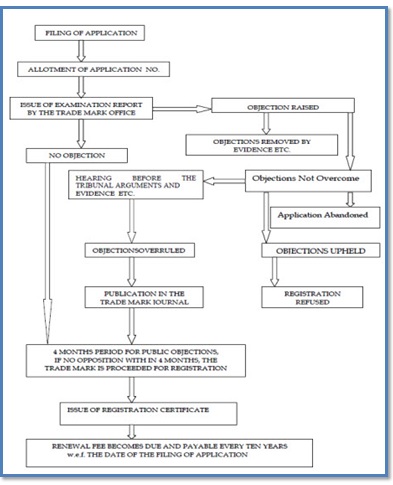









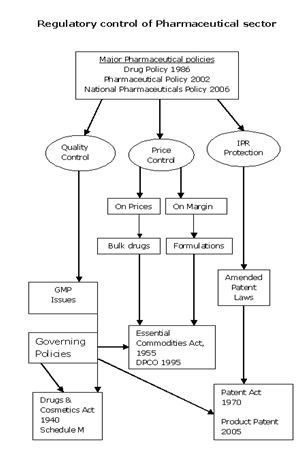
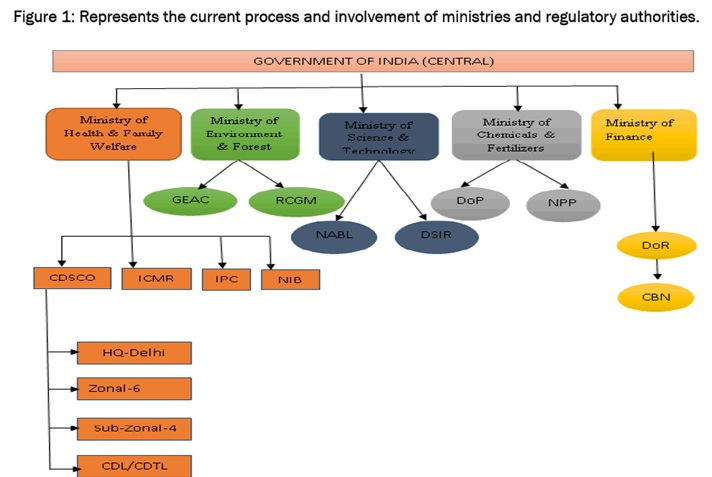




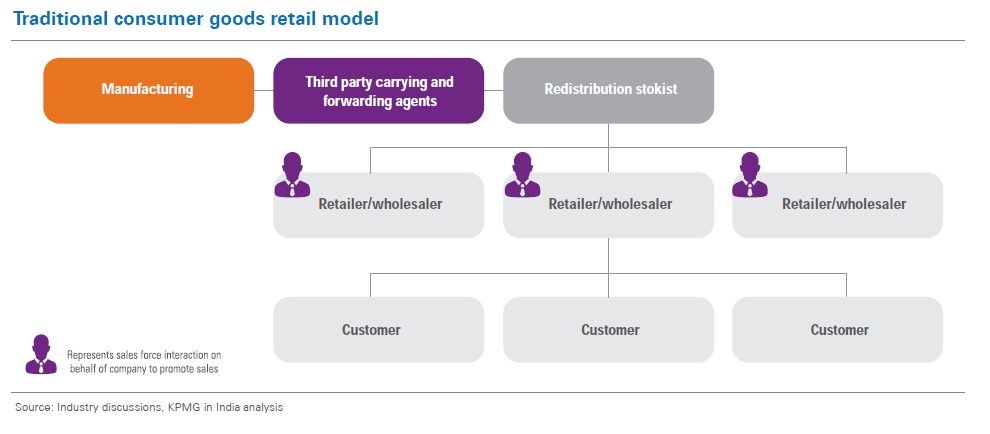





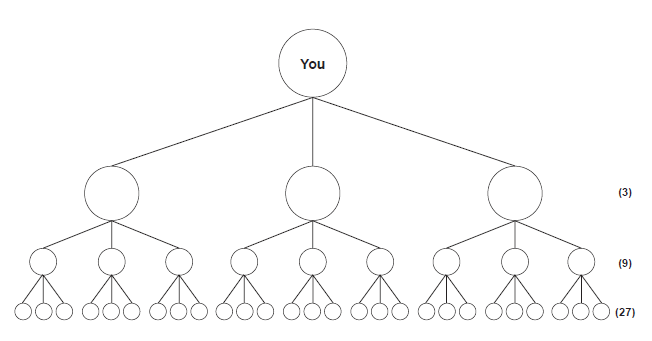

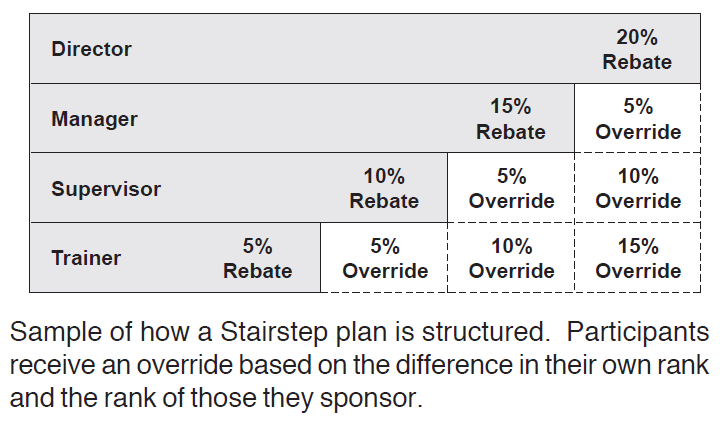
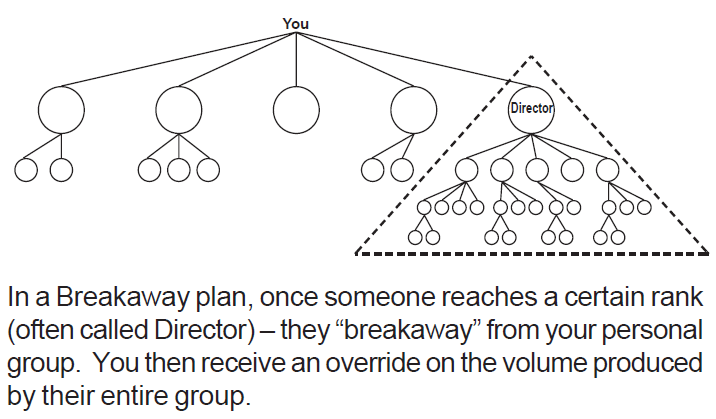



 Allow notifications





