This article was submitted by Prashant Motsara from NUALS, Kochi. His areas of interest are SARFAESI, RDDB, IBC and Corporate Laws. He writes about how the new bankruptcy code deals with insolvency of corporates and their liquidation.
Indian Banking Industry is in the throes of a crisis. NPA (non performing assets) have been piling up. The total amount of stressed assets in in trillions of INR. Freeing up this money is crucial for the banking sector. In order for a market to function and economy to thrive, there needs to be a proper flow of money. If the input and output of cash is not balanced in a system, it will have greater chances of collapsing. Based upon this simple principle, debts owed by Companies need to be recovered so as to save the financial institutions and also to maintain the equilibrium in the market. Till 29th November 2016 the procedure for recovery of debts was governed by many statues in India like Sick Industrial Companies Act, Recovery of Debt Due to Banks and Financial Institutions, Securitization and Reconstruction of Financial Assets and Enforcement of Security Interest Act (SARFAESI).
And because of having so many statues, it was rather cumbersome to understand and proceed for the recovery of money in case of default from a debtor. This lead to the need of having a comprehensive statue that would deal with such issue in a time bound manner. Consequently, Central Government on 30th November 2016 enacted the Insolvency and Bankruptcy Code, 2016.
This Code has radically changed and simplified the entire procedure for the liquidation of corporate persons. This code also provides for the insolvency and bankruptcy of individuals and the partnerships firms. A new option o fresh start is also provided for those small partnership firms and businessmen who would want to pay their debts and start afresh.
The Insolvency and Bankruptcy Code, 2016 has shifted the entire load from the shoulder of creditors to a new entity called Resolution Professional. It is his duty, under the statue, to conduct the entire process of insolvency and liquidation of corporate person. Since the entire procedure has changed and the code has made significant changes in Companies Act, 2013 it is required that we look into the code and understand the technicalities.
Initiating Proceedings for insolvency resolution and liquidation under Bankruptcy Code
The Code empowers both financial and operational creditors with the right to initiate the proceedings by filing application before the adjudicating authority. In case of Corporate Persons, the adjudicating authority is National Company Law Tribunal. A financial Creditor is one to who financial debt is owed or to who such debt is legally assigned. An operational creditor is one to who operational debt is owed. Operational Debt includes any debt in respect of provisions of goods and services.
This means that Operational Creditors generally arise form import-export dealings. Any person, other than financial creditor or operational creditor can initiate the proceedings provided he submits the required documents like book of accounts etc. Such person is called Corporate Applicant.
The resolution will start only after the admission of this application. The entire process of resolution and liquidation needs to be finished with a period of 180 days. However, the Adjudicating Authority, if it thinks fit, can extend this period with a maximum period of 90 days. Hence the maximum time that can be taken in 180+90 days.
Admission of Application for Resolution and Liquidation
Once the application is accepted, a notice will be issued in public regarding such application. Along with this notice, an interim resolution professional will be appointed whose primary task will be to collect all the relevant information and constitute a committee of creditors.
From the date of admission of application or also called the date of commencement, a moratorium period will begin during which the assets of the debtor cannot be interfered with in any way. Even the execution of any judgments, decrees or orders will not take place against such assets during moratorium period.
Resolution Professional: What is his role?
Once the interim resolution professional creates the committee of creditors his part of job is done. However, the committee may continue with the interim resolution professional or may appoint new resolution professional. The newly appointed resolution professional has a larger responsibility.
He will have to conduct, manage and supervise the entire resolution process till the debtor is discharged. The Resolution Professional shall make information memorandum which will contain all the relevant information required to make resolution plan.
Based upon this memorandum he shall submit a resolution plan to the committee. This resolution can be submitted to resolution professional by anyone. The committee of creditors than decide whether to admit or reject the resolution plan.
Liquidation of a company or other incorporated body: the process
After the admission of resolution plan by the committee, Official Liquidator is appointed and the process of liquidation commences. Official Liquidator creates Liquidation estate which includes all the attachable assets of the corporate person. Official Liquidator shall consolidate, verify, admit, determine and evaluate the claims of the creditors.
In the meantime, certain transactions that are detrimental to the creditors or which were entered into for the purpose of deceiving creditors are avoided. These transactions are preferred transactions, undervalued transaction, defrauding transactions and Extortionate Credit Transaction.
These kinds of transactions are avoided mainly because such transactions were entered into in order to deceive the creditor and deny them their share.
After the Official Liquidator is thorough with the claims of the creditors, he distributes the assets according to the list of priority of creditors. The Insolvency and Bankruptcy Code, 2016 has entire changed the priority list of creditors.
The priority of creditor list is as follows:
- The insolvency resolution process costs and the liquidation costs to be paid in full.
- Workmen’s Dues and Secured Creditor.
- Wages and dues to employees (other than workmen)
- Financial debts to unsecured creditors.
- Central and state governments and debts owed to a secured creditors for any amount unpaid following the enforcement of security interests
- Any remaining debts and dues.
- Preference Shareholders
- Equity Shareholders or partners
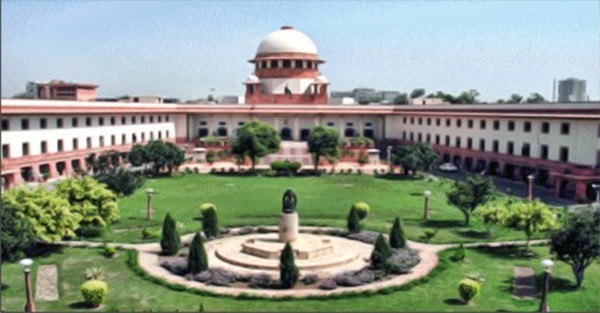
After the distribution of assets to the satisfaction of the amount of debts, dissolution of Corporate Person takes place. This order can be appealed to National Company Law Appellant Tribunal. The final adjudicating authority is Supreme Court.
Appeals
An appeal can be made against the order of the adjudicating authority to National Company Law Appellate Tribunal (NCLAT). The application needs to be filed within 30 days of the order. However, the tribunal may allow to file after the expiry of this term provided it believes that there was sufficient cause for the delay. Appeal can be made on the following grounds –
- The approved resolution plan is in contravention of the provisions of any law for the time being in force.
- there has been material irregularity in exercise of the powers by the resolution professional during the corporate insolvency resolution period.
- The debts owed to Operational Creditors of the corporate debtor have not been provided for in the resolution plan in the manner specified by the Board.
- The Insolvency resolution process costs have not been provided for repayment in priority to all other debts.
- The resolution plan does not comply with any other criteria specified by the Board.
- An appeal against a liquidation order passed may be filed on grounds of material irregularity or fraud committed in relation to such a liquidation order.
The highest adjudicating authority up to which appeals will lie is Supreme Court. The code also talks about fast track resolution which will get completed within a period of 90 days. However, the same has not been notified and central government is yet to form rules for the same.
Conclusion
The Insolvency and Bankruptcy Code, 2016 has no doubt strengthened the grip of creditors over the assets of corporate debtors. It would be difficult for the debtor to escape liquidation or defraud creditors by entering into Extortionate Transactions. However the Code shall face certain hiccups during implementation since it will be difficult to find so many resolution professionals and also NCLT will be bombarded with enormous number of cases since the earlier applications are also transferred to NCLT now. All in all, the Code has eased the recovery process for the creditors.













 Allow notifications





