Download Now
Home Blog Page 1650

Experience of a Young Litigating Lawyer

0
Experience of a Young Litigating Lawyer

The field of litigation though the oldest one is not the most famous one among law school students. Here is an interview of Ms Deboleena Mitra who graduated from NLU Jodhpur in 2009 and thereafter joined the chambers of Mr. Joymalya Bagchi, who was recently inducted as a judge in the Calcutta High Court on experiences of young litigating lawyer. I would like to thank Shambo Nandy, an IVth yr student of NUJS for taking the interview.

Q 1. What are the biggest challenges one has to face when he enters the field of
litigation?
A. The initial period of slogging, not getting paid enough, given mostly menial clerical work. If one can stick through this initial period, it gets better eventually.
The most important thing is that one must actually want to go into litigation to be able to stick it out. If one loves the profession, then no amount of hard work will deter him. And once one is established, the sky is the limit.

Q 2. Considering that after graduation he/she works diligently with a fairly reputed senior, then how long will it take for him to earn a decent income?
A. A year or two.

Q. 3. How long does it take for a person to get his own clients after he/she graduates?
A. It depends upon whether the person has developed any contacts of his own who would pass on cases to him, like a family member or a friend who is also an advocate.

Q 4. How long does it take for a person to entirely be independent and move away from working for his senior?
A. On an average 5-10 years, depending upon how good the person is.

Q 5. Considering that a person wants to litigate, then is there any use to first do a law firm job/in-house counsel? If yes, then after how many years should he decide to quit his job?
A. If one wants to litigate, the best thing to do is to get in early. Once a person gets used to regular fixed pay every month and a comfortable desk job, it is very hard to come into litigation since the initial period is very tough.

Q 6. Is the work, ethics or professionalism (the things that one gets used to in a law school) a major hindrance in the path of a person who wants to litigate?
A. Of course not. It actually helps.

Q 7. What type of a senior should one work under initially? (meaning what are the qualities that one should look in a senior)
A. Firstly, someone who is senior enough or good enough to be getting enough matters so that he can give some to you. Secondly, someone who will actually give you work fit for an advocate and not just make you run around doing clerical work. Thirdly, someone who will let you appear in court so that you have enough experience when you want to litigate on your own.

Q8. Considering that a person wants to litigate, then what type of internships should he look at? Or what other skills should he try to acquire while in law school?
A. He should intern under a practicing lawyer, preferably the senior he wants to join later on. He should also try to familiarize himself with the court procedures by going to court regularly since this is something that cannot be taught in law school.

Q 9. What should be his expectation of remuneration in the first five years?
A. He should not expect any. So whatever he gets would make him incredibly happy.
But jokes apart, the first few years are very tough and remuneration depends upon
what actual work one does and hence is very flexible.


Q 10. Any other comments that you want to make.
A. The senior counsel I am attached to, even though one of the best advocates practicing in Calcutta High Court, is also one of the best people I have ever met and very fair and just who actually gives due importance to all his juniors. Which is why I did not face too much problem even though I am absolutely at the bottom of the food chain and do not even have a family background in law. Mostly, if the senior you are working with passes on matters to you and lets you learn and you are reasonably good at it and have built up a good enough impression of yourself in court, it will not be long till you can make it on your own.
Most of the time spans that I have mentioned here are based on my own experience as well as experiences of other juniors under my senior counsel. They will most probably vary from junior to junior and senior to senior.
The answers here are also specific to Calcutta High Court since the trends, work ethic, pay scale etc. differs from court to court and city to city. For e.g. in Delhi, senior counsels pay a fixed monthly salary regardless of how much work a junior does whereas, in Calcutta, one gets paid according to the work he does.

Download Now

An Interview With Ankit Dhadda, Founder of GyanCentral

0
An Interview With Ankit Dhadda, Founder of GyanCentral

Republished from A First Taste of Law archives.

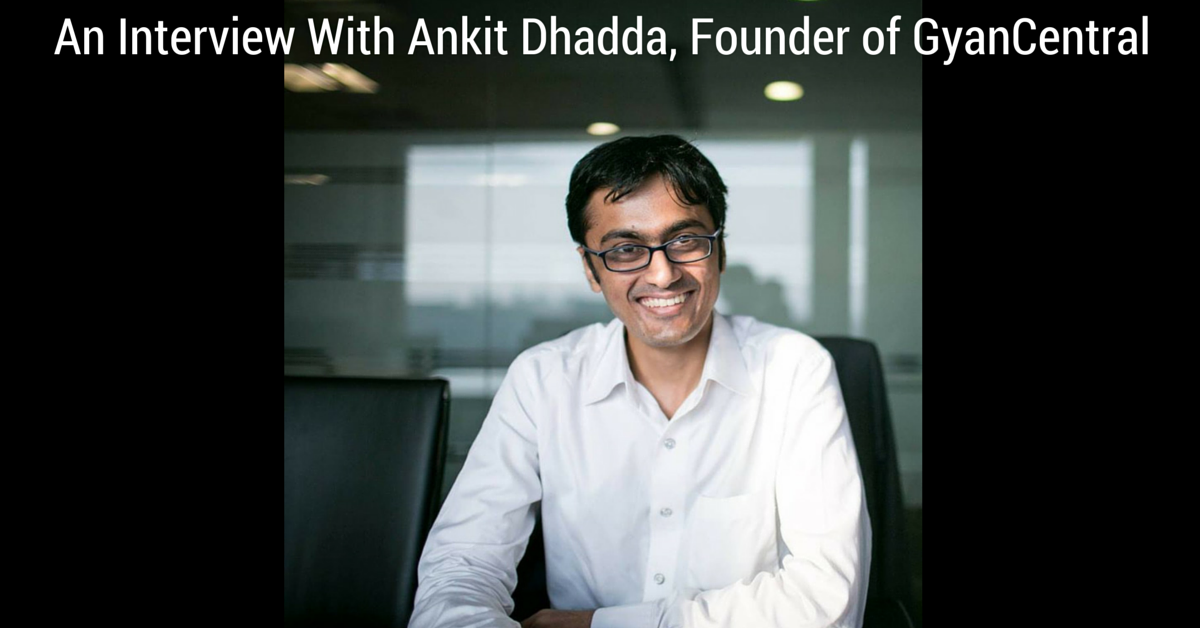
After a long time, I decided to take an interview. Let me introduce Ankit Dhadda, the founder of GyanCentral which has started to become a common destination for many law students and law aspirants. GyanCentral also caters to engineering students and covers news with respect to law schools, IITs, and other engineering colleges. Ankit has ambitious plans with respect to GyanCentral (GC). He regularly interacts with law students and aspirants – so I quizzed him a bit on that. Let me know what you guys think of this interview.

Let’s talk to Ankit.

Q. Please tell me a bit about yourself. Where are you from and what did you study? Did you work anywhere before starting Gyancentral?

Being born and brought up in Mumbai, I had a lot of career options to choose from. I was always interested in technology and advertising. After doing my bachelor’s in management, I followed the routine path of pursuing an MBA degree. Fortunately for me I did not indulge in academic learning and concentrated on traveling to different cities and participating in various competitions. After passing out of NMIMS, I worked in a seed/angel investment company as an entrepreneur in residence and thus GyanCentral was born.

Q. How did you decide to become an entrepreneur? How did you think of starting GC?

I was on the investment side of the business when I saw a huge opportunity in education information and products and hence decided to take the plunge. Investing in startups gave me a perspective of how to go about starting a company but my non-technical background was a big handicap. In the past year, I have focused on learning the technology (though I still can’t code) and that has helped me leaps and bounds in providing better value to users.

Q. If you ok to disclose, what are your future plans for law students as far as GC is concerned? What is the gap you are trying to address?

The gap that we seek to address is available as information and tools for law students and aspirants. We focus a lot on editorial content and stories. We were the first ones to address the issue of CLAT 2012 paper concerns for students by interviewing the convener and called for collective action. We also covered every law entrance exam in detail.
Apart from content, we have also developed an online platform for students to give free online tests called TestCentral. The purpose is to help students who do not go for coaching classes and augment practice for those who have the luxury of training institutes.
We are also developing video tutorials for law aspirants and students and have a CLAT mentorship program underway for students on the forums.
Our aim is to serve students.

Q. Will you ever hire law students for working with Gyancentral? How do you think they can help Gyancentral’s initiative if they want to contribute?

We started just a year ago, hence we have not actively hired law, students. However, in the coming months we are looking to hire law students and interns. We want law students who are passionate about legal education in India and want to contribute towards improving it. The ways in which a law student can associate with GyanCentral are:
1. Work on creating a community which ensures that information is available to law students and aspirants. Create a community which can serve their needs.
2. Work on our existing products like TestCentraland gives an awesome experience to law students.
3. Work on new initiatives like creating digital content for law students or simplifying law school rankings for aspirants.
Any law student interested can get in touch with Ankit – [email protected]

Q. Do you hire law, interns?

We have hired interns from the IITs but not from law schools yet. But we do plan to in the coming academic year.

Q. How did you deal with legal issues for your company?

We were fortunate in that aspect. Our investors have a strong legal team comprising of lawyers and company secretaries who helped in company formation. As far as web copyrights, etc. was involved, it was a gradual learning process.
Currently, we are rolling out ESOPs for employees and have taken external and internal help for it.

Q. Do you think law students should start blogging? How can they start writing and what can they write on in your opinion?

I am quite surprised that very few law students are on twitter or are actively blogging, and they have a plethora of topics that they can write on. I believe they can do three steps – first, get off Facebook because that’s where I find majority of the national law school students; Second, stop complaining that they have a tight schedule because everyone does and third, start writing – religiously one blog spot every day on any topic which interests them. Using platforms like blogger or WordPress should not be a technology related challenge.

Q. How do non-lawyers perceive lawyers these days? Has there been any change in recent times?

For the layman, a lawyer is still Sunny Deol shouting over the top of his lungs in Damini. In reality, however, lawyers today don’t have litigation as the only alternative and have a host of career options (legal journalism, copyright expert, legal advisor in corporate sector, etc.) to choose from. However, a lot of old school people do believe that lawyers are only interested in consulting jobs that pay a lot and have no interest in acquiring practical knowledge. I believe that law is a profession which is still maturing in India and will get more lucrative in the coming years.

Download Now

An Argument For Not Working Until Your Ass is On Fire

0
An Argument For Not Working Until Your Ass is On Fire

You get up in the morning with the resolution to finish all the due work, do your chores, sit over work till it turns alive and starts panting for breath. But guess what, you have an obligation to give some breathing space to that alive piece of work howling at you, right?

So, you decide to check what people are up to. One click. New tab. Facebook, Twitter, Gmail. And then you have notifications to check, emails to reply to. Fifteen minutes, one hour, three hours spent. You realize you have to get back to work. You start working again.

But then you have been sitting like that for hours and its getting boring and you need a break. That follows, well, facebook, twitter, mail, and other things on the web that attracts you like a magnet.

In the end, time wasted- seventy percent, work done- thirty percent, remorse- hundred percent.

Phew! Isn’t it a vicious cycle, most of us are subject to?

Slacking and Procrastination: Lead heroes of your vicious cycle

The problem is with the habit of slacking, of sitting over a thing for ages. Why do we do that?

But then at the end of the day, before you hit the bed you realize, oh heck, I have so much to do and I have been procrastinating. You pull up your socks then and get done with your work and sometimes you don’t, giving it as a gift to your tomorrow.

Still, at the end of the day you are exhausted. You didn’t work throughout the day, but you didn’t take a break either.

Where did the time go? Oh, but you did waste your time on that wicked thing called the internet, remember?

You would have definitely heard about ten books and 15 blogs that tell you how you should keep yourself focused, concentrate on the task in hand and keep looking at the goals. Most of us even try.

But heck! it doesn’t work. Stop jordaning and admit the irresistible urge one face to do everything that has nothing to do with the work in hand.

As a matter of fact, the last minute work when your ass is on fire (constituting 10% of your time you sat on your work), produce 100% result. The remaining 90% of your time, you just sat on it, slacking and procrastinating. This causes your efficiency to nosedive and fall on you as exhaustion and drench you with ennui.

So, let’s party!

Spend only that 10% of the requisite time on the work. That is any way all it takes. And let your mind and time do other things in the remaining time, eat, pray, love, read, romance, travel and yes, party!

Download Now

A Fireball of Ideas

0
A Fireball of Ideas

I want to write articles, but I can’t think of a topic.

I will do my projects well this time, but I can’t choose a topic for my term assignment in contract law.

Have you ever thought you were unable to think in such a situation?

Many people prevent themselves from taking action because an inner voice: <span><i>I don’t know how to start, or where to begin.

Where you start is not important, it’s important how you execute, the way you make for yourself, and what you leave behind that others can carry on from.

Here’s how you can start. Is the world around you perfect? Is everything perfect with the domain you are thinking of working on? Can you think of anything that is not right with it?

Are you capable of exploring how to fix it?

That’s where you can start for now.

Download Now

Never Eat Alone: Review

0
A New Way to Think About Meeting New People: Never Eat Alone

A book that has been translated into so many languages that no one kept track!

This is a post by Anuttama Saha Ghosh on a book that I recommend to my friends and students all the time. The good thing is that Anuttama made some notes when she read it, which she has converted into a pretty nice blog post. Let me know if you guys find this.
How does the thought of joining college, leaving hometown, staying in hostel make you feel? I am sure the first reaction would be: excited to go to a new town, a new college, and above all, being on your own – nobody to tell you when to wake-up and when to go to bed! Leaving home to stay in a hostel is further loosening of child-parent ties…so some will miss their family, while some will try to enjoy the liberty to the fullest – not because they don’t care about their parents but because healthy absence of parental guidance helps adolescents to become independent and autonomous smoothly.

The next challenge is to interact with the new people – teachers, friends, seniors – do you feel nervous or lack of confidence while interacting with strangers? Especially when you are thrown in a completely new atmosphere and asked to interact with seniors trying to establish their superiority over you or classmates who seem to be very focused and talented and you would be afraid that they may judge you at the drop of a hat?
Well, I was facing the same problem! I find it is easier to converse with people through Facebook and other social networking sites but not when they are directly in front of us!

The Solution: Never Eat Alone

While going through such a mental conflict, few days ago Ramanuj suggested to me to read a book named “Never Eat Alone” by Keith Ferrazzi. Well, to be very honest the book didn’t seem to be very interesting at first (it’s not your average love story or detective- suspense thriller that I would find thrilling and interesting), but still as I didn’t have much to do I continued reading. After a while, quite suddenly I found a typical interest from within, as I realized that it is helping me to build confidence within myself and giving birth to a desire to know the new world with a new perspective!

Although the book is clearly business-focused, its concepts are equally applicable to our personal lives as well. The book enlightened me to the fact that human relationships are one of the most important keys to success. After some time, the author takes the concept to the next level by telling us stories about his entire career and lifestyle built around relationships! The book shows that professional relationships should also be rooted into friendship and generosity! And just like personal relationships, they can be based on authentic connection.

The book is packed with insights and practical tips about how to build up your social confidence and how to interact with an open mind with the new people from different backgrounds and move forward towards achieving your goals and destination at the same time. I decided to share a few tips from the book which we are more likely to follow.

  •  If you do something to make someone else more successful, they’re more likely to value your relationship with them, and the more relationships you have with value in them, the more valuable you become, not only to yourself but to the world generally. It is better to help people around without any immediate selfish motives so that when we are in need of help ourselves, they would anyway love to help someone who helps them unconditionally without any specific agenda on mind!
  • We need to set a goal first then plan how to move towards it, and try to be in contact with those who can help us in our way! You must not be shy to ask for help!
  • If you want something, be up front about it. Hidden agendas are not good. It takes courage and a bit of talent! Keith Ferrazzi says that to find the courage we should:
Download Now

CLAT-apult: a law coaching by NLU grads

0
CLAT-apult asks: Who Should Teach You To Paint?

Who should teach you to paint?

Some of my juniors from college have started the latest CLAT coaching – and they seem to be very thorough and extremely passionate about what they are doing. Here’s something they wanted to communicate – and I thought of sharing the same with you guys. Even if you are not a law aspirant, read this piece to see the candid, effective communication of their USPs, which does not make you feel like turning off the TV and leave the country out of boredom. My best wishes to the CLATapult team and I hope it CLATapults many students to good law schools in coming years. Over to CLATapult.

They were also covered by the Economic Times, check out here.

Who should teach you to paint? A businessman or a painter? I’ll bet on the painter.

Who should teach you to write? A businessman or a writer? I’ll bet on the writer.

And who should teach a law, aspirant? A businessman or a law student? I’ll bet on the law student.

Been there, done that.
You’ve been at war. You know the trenches. The mines. The bunkers. The enemy. You know the bullets. And the machete. Because you’ve been at the war. And you know how to avoid the trenches and use the bunker. How to use the machete and avoid a mine.
Been there, done that.
That was why CLATapult came into being. We were saddened by the mushrooming of law coaching business. Every Tom, Dick, Harry and Rabbit came up with a CLAT coaching business. The existing CAT coaching institutions added a legal reasoning module to their existing study material and the CAT became CLAT.
For such coaching institutions, L was just another alphabet. L was just a few more coins in their already bludgeoning purses.
For us, L holds a special meaning. L is our life, it’s our livelihood. L stands for law, for a powerful career option. With these ideas, CLATapult came into being.

Law coaching by law students. Not by businessmen.

For now, we can tell you the story of how our faculty came to being recruited. We are based out of Kolkata and called for applications from NUJS students. 60 students applied.
We gave them a tough, written test. Bloody tough; tougher than hell. If you aren’t knowledgeable enough, you aren’t fit to teach. We short-listed around 20 students.
These students then had to give a demo class. A 10-minute demo class. A 10-minute class where we checked whether the candidate could teach. A 10-minute audition sort of an exercise. If you aren’t exceptional, you are gone.
Is the candidate a top-notch communicator? Could she make the class sit up and take notice? How did she handle the questions, the bloody tough ones? Did she sometimes sound confusing?

We finally selected 5 teachers. And the feedback we’ve received from students coming to the CLATapult centers has been phenomenal.

Our study materials to are undergoing a rigorous process: they’ve been made with a poet like flourish and flair. And now they are being subjected to a physicist like a scrutiny. Wait till they are out. Am sure you’ll find them great.
That’s not all. How many CLAT coaching institutions have speed reading sessions? Or externships with lawyers and law-related NGOs? That happens when you care for that L that is law, and for that L which is life. And we do.

Visit us at www.clatapult.com

Download Now

What is the Key To Success

0
Here's a Key To Success

Key to success is: Enjoy what you are doing

When we do something we really enjoy doing, we succeed. When we don’t enjoy what we are doing, we fail.

Enjoying the process is not the same as liking the result though. It was good that I cracked law entrance, but unlike many of my friends, I absolutely love the process of preparing for it.
I love teaching – not because teaching earns money, but because I enjoy teaching. I need the result too, but I enjoy the process.

What should you do if you do not enjoy whatever you are doing? You have two choices.

  • Choice 1: Teach yourself to enjoy the process. It is possible.
  • Choice 2: Just drop that and do something you know you enjoy.

What if you don’t enjoy anything? Choice 1 is still there.


Download Now

Getting Past Scepticism

0
Scepticism

I know you are sceptic about whatever I have to say. You should be.

You should question everything everyone tells you – if people asked questions, the right ones, and truly tried to appreciate the answers, we’d live in a different world. People would not accept religious or political rhetoric, politicians who make a career out of misleading people’s sentiments would be looking for more productive jobs, companies will spend less money on advertising and more on making great products at lower costs.

However, being sceptic should not stop you from listening. If you are not listening for the new, you are missing out. It is easy to be sceptic about the latest invention of science, but it is nevertheless real. It is difficult to be sceptic about something that has been accepted by everyone else, something that no one questioned for a long time – but usually that is where scepticism is most useful and apt.

Your scepticism is a weapon, use it to destroy long-established myths, not to nip the buds of fresh ideas and new voices.

Download Now

Who Are You – Explore Your Identity Canvas

0
Who Are You- Explore Your Identity Canvas

What do you do?

“I am studying mechanical at IIT Bombay. Also working with this startup side by side”.

Who are you?

“I am XYZ. I work at McKinsey.”

And who are you?

“I am ABC. I studied BMS. Now I am doing a marketing job.”

How much do any of these answers tell you about the persons? A lot right? You have been able to put into a stereotype, haven’t you?

XYZ goes home and plays with his kids every day. He didn’t tell me that. ABC writes small poems on his on his way to home in Mumbai local. He’ll never tell me about that. It is more important to  impress me with his big credentials. He will sweep aside the most human and beautiful aspects of his life to achieve that.

But isn’t there much more to every human being? Is our background and professional association the only way to define our identity? Why do we have to complicate the introduction to our existence with “socially accepted” entities and seek for approval? Why are we limiting ourselves to the miniscule aspects of our being? This being human – having the most sophisticated machine at our disposal – why do we fail to explore it to its full potential and limit ours and others perception of with social pigeon holes? Why this mad rat race to fit into a good stereotype, that the society accepts and values?

Are we assuming the people we are introducing ourselves to are dumb? Not intelligent enough to understand who I really am? Or is it my immediate need to seek social approval that prevents us from introducing ourselves as a human being and show the full spectrum of our real being?
Next time you meet a person you really want to connect with, can you tell them about your most beautiful passion, and not about the work you don’t like to do?

Why fit yourself into a stereotype right at the beginning of an interaction? Why fit yourself into a small frame when the entire canvas is for you to explore?

Written by Pallavi Pareek

Download Now

How to Build Your Own Professional Network

0
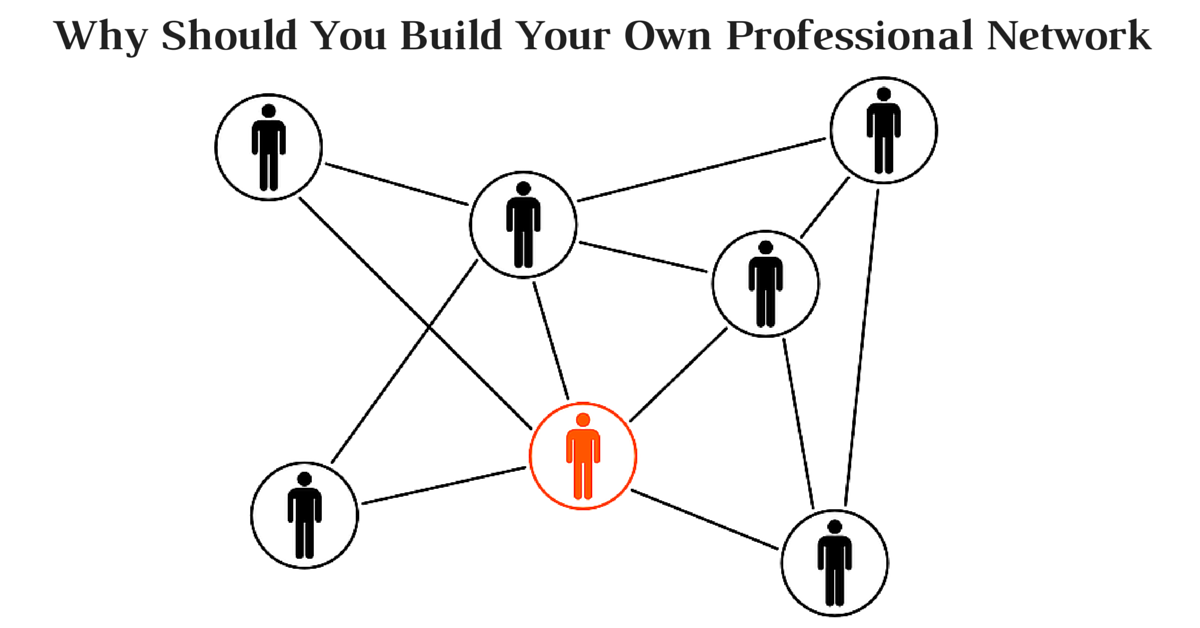
Why Should You Build Your Own Professional Network

We all know the story. Some law students come from illustrious legal backgrounds – they have close family members who are doyens of the bar of a High Court, partners in top law firms or judges or civil servants. It is not necessary that such family connections exist only at the bar or bench, it often extends to MNCs, political parties or even policy organizations. It is very easy for these kids to score the best internships just at the time when they want, get an interview at the best law firms, get great career advice and mentorship as they go up the ladder of professional success.

This is, however, intimidating for a lot of first generation law students, especially those whose family do not bring a lot of professional network on the table.

They often wonder if they will ever be able to compete with the law students with senior counsel uncles and equity partner moms. When young students try to decide if they should study law, this can be a major factor. Almost every week I am asked if being a first generation lawyer would be a serious disadvantage. Even after studying law for several years, students still ask this question. There are lawyers who accept this as hard reality and limit own ambitions to what they consider more achievable dreams if not what they wanted for themselves at the beginning.

Is this perception real?

When I was in law school, I was led to believe, by some well-wishers nonetheless, that the bar is an elite old boys club – and there is a glass ceiling that prevents even the most meritorious lawyers from achieving the highest levels of success. Early on in my career, this worldview led me away from a career in litigation. While I don’t regret that decision, I must confess that it was not the most well-informed decision. In the years after college, I have seen numerous former colleagues, classmates and seniors doing well in the practice of law, according to their abilities rather than just their family connections.

We often take away unfairly from the success of the well-connected law students. Their connection to successful people may get them a foot in the door, but it rarely guarantees the kind of professional success that we covet. From a certain point, it is long hours, smart decisions, and arduous hard work for everyone – well-connected or not. However, there is little doubt that being well connected is a competitive advantage that all of us should strive to achieve.

Having parents or relatives who can get you the internship or make a good introduction is cool. But do you know what is really cool?

It is having your own professional network.

If you can build your own professional network, find your own mentors, create your own circle of influence – which you would have to do someday anyway if you want the kind of success that everyone is jealous of, the factor discussed above will be relegated to non-significance. In fact, you may even thank your luck like I do.

My father is the last person to ever build any network or influence. He is reserved and reclusive in his professional as well as personal life, and my mother has never attempted to build a professional network. In their generation, people looked for very different jobs and career success was defined in a very different way. However, things have changed!

I am a first generation lawyer who rebelled against his parents to study law.

I never even imagined getting any professional support from them. It was clear right from the beginning that I am going to be on my own.

However, I believe that this helped me to learn the importance of building a professional network early on. I will not be where I am unless my friends, colleagues, mentors, and peers supported me throughout. As I grew through the years in law school, I sought out mentors, collaborators and even my own set of mentees with whom I shared my learnings and who I helped to grow. Starting to teach CLAT aspirants was definitely a turning point. All of a sudden I had my students in law schools all over the country, which exponentially increased my professional network. Every time I did an internship, I made an effort to connect with those who gave me work and those who worked with me. I made it a point to keep in touch even later and offer to help people in every way I could.

The next big step was starting to attend professional networking events.

I was in my third year when I went to a startup event called Startup Saturday for the first time. The first speaker I heard there was also the first client I ever had in my life. How did that happen?

When this startup founder finished his talk and stepped out for a smoke, I simply followed. His company was working in the area of data protection. So I told him about the newly developing data protection laws in India. I introduced myself, offered to help in any way I can, took his card and had a long chat about startups. Later, whenever I would find an article on data protection, I will send it to him. Soon, one day he called me and offered a job. I politely declined the job but helped him out through several rounds of funding negotiations. Now he is CEO of a rapidly growing business. Even today if he faces a legal issue he calls me to discuss – even though I do not practice law.

However, my professional network reached a whole new proportion when I really started to put some effort into blogging.

This is an amazing tool available to every modern professional. Share your expertise through a blog with your target group – and you will not only build an audience that is tuned into what you have to say but a network that brings you new opportunities on a regular basis.

You can start building your professional network today – just start to help out people, add value to others – and all that value will come back to you many times over.

Download Now
logo
FREE & ONLINE 3-Day Bootcamp (LIVE only) on

How Can Experienced Professionals Become Independent Directors

calender
28th, 29th Mar, 2026, 2 - 5pm (IST) &
30th Mar, 2026, 7 - 10pm (IST).
Bootcamp starting in
Days
HRS
MIN
SEC
Abhyuday AgarwalCOO & CO-Founder, LawSikho

Register now

Abhyuday AgarwalCOO & CO-Founder, LawSikho