Download Now
Home Blog Page 1658

Why you should consider doing an LLM

0
In Defence Of The Beaten Track- Making The Right Choice.

Republished from A First Taste of Law archives.

[Deepak is a good friend of mine, and a spectacularly good lawyer. His influence on NUJS mooting culture is the stuff of legends. Recently a comment of mine on Facebook generated a lot of heated debate – some of which was out of misunderstanding of my statement (some people on social media are very quick to judge others without bothering to know the context). Deepak for some reason believes that I have some sort of influence on college going kids, and wants to make some counter arguments about some things I had to say. I will write a reply soon, but here is some food for thought. I am glad that my status message on Facebook wall seems to be sparking a healthy debate about such important things. – Ramanuj Mukherjee]

In mid-July 2011, three young graduates from NUJS moved into an apartment opposite August Kranti Maidan in Bombay – Ramanuj (Ramu), Abhyudaya and me. By early 2012, all of us had quit our corporate law jobs and were chasing our dreams. While Ramanuj and Abhyudaya started iPleaders, I went on to do an LLM at Cambridge and am now interning with the Appellate Body of the WTO. During our time as housemates, we developed very close friendships and yet, fiercely disagreed on a number of points. Sometimes, our discussions on random topics would go on for the whole night.

During our time together, I had the benefit of discussing with Ramu his ideas about legal education, his thoughts on revolutionising it, our future plans and a lot more. Today, Ramu has written a Facebook post which tells the law students to ‘shoot for the sky’. He tells them that grades are not important. He tells them attending lectures is a waste of time. He assures them that even grad schools don’t care about grades of the applicants, asks ‘anyway, who cares about grad schools?’ and goes on to state ‘for me a LLM or MBA abroad is just an excuse for a very expensive holiday’.

I spoke to Ramu about his comments and expressed my disagreement over some of them. He clarified that his position on many of the points of discussion were not as extreme as I gathered from the post. For instance, he clarified that when he referred to lectures as ‘useless’ he was not referring to all lectures. More importantly, he clarified that his comments were in the context of a particular student’s behaviour. However, I would like to respond to the statements made my Ramu, given his massive influence over law students in India. In addition, I would like to respond also to some more extremist positions that Ramu has disassociated himself from, since his comments could possibly be (mis)understood as supporting those positions.

At the very outset, I need to clarify this post is not to criticise the career decisions that have been made by Ramu or to take away from the huge success that his venture has achieved in a short span of time. There were very few of my classmates in NUJS who commanded my genuine respect and Ramu has been one of them – simply for achieving success, and motivating others to do so, despite starting with a worse hand than the average N-school student. So this is a healthy debate, like the ones we used to have in our Bombay apartment (which I dearly miss) and I hope the readers will see it in that spirit.

Purpose of legal education – or of life

One of Ramu’s favourite questions during our nocturnal debates, which he used to throw at the housemates and any unsuspecting visitors, was ‘what is your purpose in life?’ Ramu has always been clear that the purpose of his life was to change the way the conventional legal education system worked in India. However, what one needs to appreciate is that it is for each individual to arrive at her own purpose in life and that not everyone, at every stage has a crystal clear idea of a purpose.

The same goes for legal education. Students enter law schools with all sorts of purposes. These purposes undergo a process of refinement as a student progresses through law school. It is incorrect to assume that one purpose or one set of purposes is superior to another purpose or set of purposes. As free agents, each student needs to discover her own purpose for legal education and make the best use of the facilities offered by law schools in light of that purpose. Hence, it is wrong to assume that revolutionising legal education or practice (or anything else for that matter) is the singular legitimate purpose of legal education.

In our subsequent discussion, I realised that Ramu and I agree on this diversity of purposes. Yet, it is important to highlight this diversity as the key premise on which rest of my points lean.

Lectures

Ramu characterises attending lectures in law schools as a waste of time. He clarified in the subsequent discussion that he was not referring to all lectures. During my undergraduate days, I took a mid path on this. There were a lot of lectures that I believed were colossal wastes of my time. I have walked out of those lectures and told some of those teachers the exact reason why I walked out. I have always maintained that the mandatory attendance requirement in Indian law schools is comparable to a restaurant that serves bad food and forces the customer to remain at the table till the last morsel of that food was eaten.

On the other hand, there were teachers who provoked my thought. I remember coming out of a class in ADR and writing an article based on a debate I had with the teacher. The discussions in that class eventually motivated me to start an arbitration blog (lexarbitri.blogspot.com). Similarly, several interactions, within and outside the class, with my teacher in international trade law culminated in him kindly inviting me to co-author several pieces with him. That teacher certainly had an influence on my later decision to take WTO law as one of my subjects in Cambridge and to intern with the WTO. At the masters level, I was fortunate to be taught by some stalwarts including Prof. James Crawford. These are only a few examples.

It is dangerous to make general statements characterising lectures as a waste of time. This would inculcate a feeling in the students that lectures are useless and lower their expectations from lectures and lecturers. Students should feel entitled to good lectures, and demand amends when bad lectures are served. Taking classroom teaching lightly or avoiding lectures is not the solution to bad lectures.

Grades

Ramu tells the students that nobody asks how much you scored in law school. To the contrary, every time I have applied for a job or an internship, I have been asked about my rank. A friend of mine who had done almost all the moots I had done, published as much as I did, ran a popular legal blog and (I will admit grudgingly) has better research skills than me was rejected for an LLM at Cambridge. The only perceivable difference was class rank.

The reason why Ramu has not been asked about his grades is because he is his own employer. Other employers and grad schools are certainly sensitive to class ranks. It is true that as one progresses in the profession, the relevance of the rank diminishes (I don’t know what Fali Nariman scored in his law degree). But for those first few crucial steps in the profession (except may be, for those choosing to litigate) rank continues to be an important factor. It is true that other achievements may, to some extent, make up for academic performance. However, there is no guarantee of the same and a lower ranked applicant starts with a handicap compared to his higher ranked counterpart.

Theory v Practice

In our discussions, Ramu used to emphasise the dichotomy, and a perceived disconnect, between theory and practice of law. I think, it is this perception that informs Ramu’s position on lectures being useless. It is true that our lectures in law schools do not teach us to draft non disclosure agreements or share transfer agreements. But I believe that building strong theoretical foundations of all areas of law is an essential undertaking that law schools undertake. I learnt how to draft a share transfer agreement on the job. But the theoretical distinction between offer and invitation to offer that I learnt in law school was something I found immensely useful in an important real life situation. Theory informs practice. It is the ability to engage with the abstract that distinguishes a lawyer from a robot or iPhone app that can churn out standard form contracts.

Does this mean there is no value in learning, as a student, the art of drafting or other relevant ‘practical skills’? Of course not. Having these skills gives a head start in several career paths that law students can choose. This is why I believe the iPleaders courses have a value addition to offer. But no amount of practical skills can substitute for strong theoretical foundations of law.

Is LLM a vacation?

I cannot fathom where Ramu gets the notion that LLM is an expensive vacation. For me, it was not. Listening to some of the best academics in my field, interacting with some of the best students in my discipline and other disciplines, and being a part of eight centuries of intellectual heritage were all extremely enriching experiences for me. It is also a whole lot of hard work. It has opened a lot of doors for me which were otherwise inaccessible. But above that, the pure joy of learning is something I value. Thus, I strongly object to Ramu’s comment that an LLM is a vacation.

Why the beaten track still holds value

A law degree is almost unique in the variety of choices it offers. It goes without saying that judges, practicing lawyers, academics, in house lawyers, etc. provide valuable services to the society. So does the novelist or politician with a law degree. The value addition on the part of legal entrepreneurs like Ramu is attested to by their success in the market place.

The career goals that students have will obviously affect their activities and priorities in law school. Unless one is absolutely certain that one wants to be self employed and does not want to do further studies, it is best to keep things safe by maintaining a good academic performance. But above all, learning the law is an exciting intellectual journey that law students should not miss out on.

One of the best things about Ramu’s success story is that he never let anyone tell him what he should do. I don’t think he imitated anyone. It was about him figuring out what his goals and priorities were and working like a maniac towards those goals. In a broad sense, that is worthy of imitation. However, it would be dangerous to imitate Ramu or any other person when it comes to the specifics. Ramu’s goals were his own. Similarly it is for each student to figure out their own goals. Whether a choice falls within the labels of conventional or revolutionary should not impact its worthiness. Those of us who make one set of choices do not, by that fact, gain an entitlement to ridicule those who make other choices. [Note from Ramanuj: while I have been at the receiving end of many a ridiculing sessions for the choices I made such as starting a business on my own and even studying law instead of medicine, I have never in my good senses have ridiculed anyone else for the choices they have made. I do not think Deepak wants to imply that I had ridiculed anyone, although it may seem so. I am sure he will clarify this in the comments to this post if that is not the case.] Only time can tell which of our choices will pay off and which will not.

I leave the impressionable younglings with my favourite quote from Aamir Khan: “Beta kabil bano kabil, Kamyabi to sali jhak mar ke tumhare piche ayegi” (revealed in the subsequent discussion to be one of Ramu’s favourite quotes as well).

Download Now

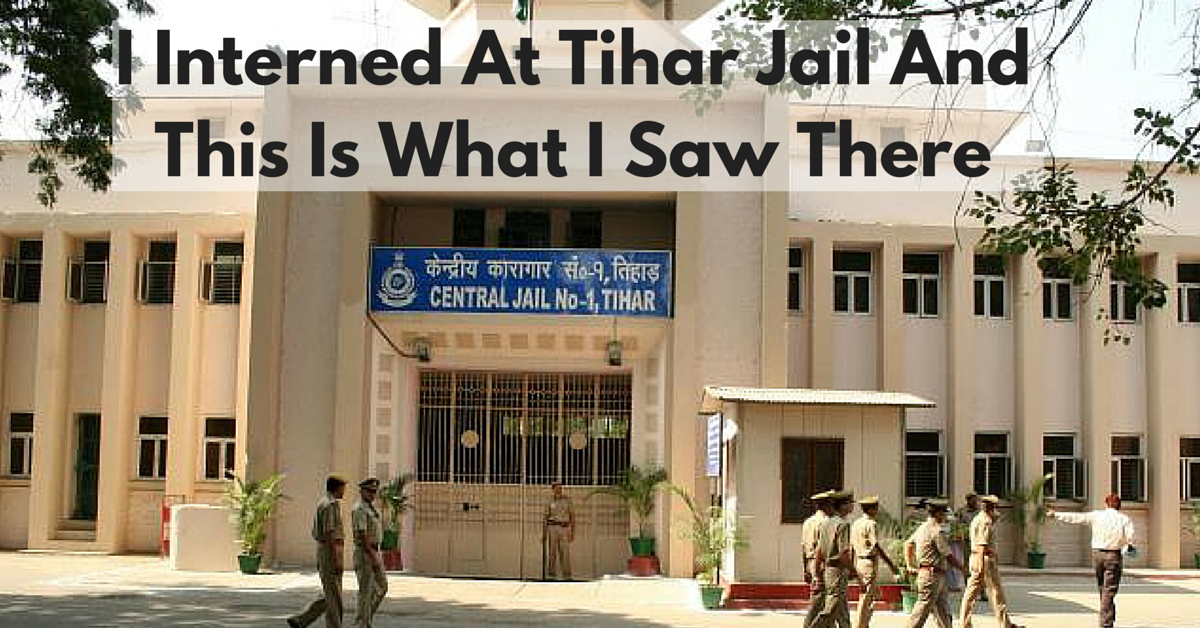
I Interned At Tihar Jail And This Is What I Saw There

0
I Interned At Tihar Jail And This Is What I Saw There

Dhruv Dhawan, a law student, interned at Tihar Jail for some time. We asked him about his experience, and this is the story he shared. Over to Dhruv.

Tihar Prisons, also called Tihar Jail and Tihar Ashram, is the largest complex of prisons in South Asia. Run by Department of Delhi Prisons, Government of Delhi, the prison contains nine central prisons, and is one of the two prison complexes in Delhi, along with a district prison at the Rohini Prison Complex. The prison is styled a correctional institution. Its main objective is to convert its inmates into ordinary members of society by providing

Download Now

How to tell which startup will work

1
Identifying Great Startup Ideas: How Do I Decide Which Ideas Are Worth Chasing?

Some crazy ideas do work.

The truth is, there is nothing great about just starting up. It’s hard work, sometimes adventurism, many of the startups end up doing no business. Some people just do better in life when they are working for others, with an employer to harness their productive ability. Indeed, many people build great careers that involve no adventurism.
Nonetheless, there are people who want to work with startups, maybe for the thrill of building a business on their own, for the simple joy of giving shape to your own dreams and ideas, or maybe for the money making possibility. In any case, the startup is no fun unless it finds success – in terms of money, achievements, networking or career progression.

In my opinion, even a startup that fails in terms of pure economic success or sustainability can be valuable for a founder or an employee. How? Read the last line of the previous paragraph again.

A startup which is progressing in the right way generates immense value for the people who work in it, with it – not only economic value, but in terms of learning new skills, having hands on experience with respect to ground reality, network with super-connectors, bloggers, influential people, experience of building a team and running an organisation. It all helps in the long term, even if the company fails in getting enough traction to sustain, at least if one recognises what have been gained in the process and how it can be used to chase further targets.

Except for that, what are the ways in which one can evaluate a startup? I faced this question for the first time when a third year student of IIT KGP asked me how he should choose between various startups, the correct place for him to intern. It is not just the interns who face this dilemma – it is a perennial question of all co-founders, founders, startup employees – is the risk, is the hard work on this project worth it? Once the startup fails – things become clear. Is there are some measures that can be used when the venture is being set up?

I think the following criteria should kind of help in finding a good direction:
Vision and impact: what is the startup looking to achieve? Is the vision great enough, inspiring enough? If it succeeds if everything goes well, will there be a grand impact on how things are done? Great companies start out with great vision. Companies with narrow vision may achieve their narrow objective, but they can never reach great success unless someone with a great vision comes along and takes charge, which is very rare to happen.
Basically if the company succeeds in what it sets out to do, and still doesn’t change how people think, work, have fun, live, read, travel or something similarly important, it may not be worth working for, and there is little chance that it will actually succeed.

Team: right at the beginning, the startup is as valuable as its team is. The value is not to be calculated by what salary the team could command elsewhere though that is what many people look at. It is not even what college the people have gone to though that could be some sort of indicator. Look at the leader of the team. Look at the determination and obsession. Do they have a vision? Do they know how to have fun? Are they networking well? What do people think about them? Are they always looking for improving their skills and abilities? Are they practical? Most important of all, do they have goals and strategies? Do they have a plan to keep the team focused and disciplined?

The cost of client acquisition: What is the model of client acquisition? Do they have existing clients? Do they take too much time to find one client? DO they rely on advertising to find clients? Any startup that relies on advertising is kind of doomed – it just does not work at that scale. The existing clients, their spending patterns tell a lot about the chance of success of the startup. But most important is the cost of client acquisition. If clients are found quickly and easily in the model, it is kind of failsafe. Like Facebook – its client acquisition cost is zero. People invite their friends because they want them to be on facebook.

Similarly, many businesses are able to transfer the cost of acquisition on existing clients through innovative models – like all franchise businesses, such as eBiz, would do. If this is done well, that is again a recipe for success. On the other hand, a lot of outsourcing service provider companies fail because of high search cost of clients.

Operating and transactional costs: many businesses will be very good businesses only if the transactional costs didn’t exist. Maybe the ultimate service or product provided is good on a prototype level, and people are out there who will buy it if available at a reasonable price. Still, a startup can fail if the cost of organising a team, keeping them together, training the team, managing etc is very costly. This is the prime consideration for service based companies, especially outsourcing companies.

Proof of concept/model on a small scale: If the company has developed something already, or it has a model, it should have taken steps to test it on a small scale. If it is successful on a small scale, only then it makes sense to invest more into it to take it to the next level. Can the concept/model be tested? If yes, was it tested with success? This is a crucial point of decision.

If you enjoyed reading this post, do subscribe to our newsletter for more such updates!

Download Now

How To Write Internship or Job Application Cover Letter for Law students

0
How To Write Cover Letters In Three Easy Steps

Republished from A First Taste of Law Archives.

This article has been written by Bhavna Jha, from the graduating batch of NUJS (they are actually done with University as they finished writing their last exams) originally in her personal blog. We liked it so much that we asked for her permission to repost it. Read this carefully, and while enjoying her writing style – do not forget to apply what you learn. Over to Bhavna.

Over the last five years, I have had a fair number of friends have me go through their CVs and Cover letters prior to rushing off to the Owlery. Some of these were friends applying for a job to that enigmatic entity: the Foreign Firm, some were applying for internships to NGOs and policy research organizations, and some were friends applying to universities abroad. A couple, but only a few, were friends applying to indigenous law firms. (Don’t ask me why!)

College is just about done for me, and cover letters and CVs have been winging their way from my email account to various destinations. As a result, I have lately gained some personal insights into the art of writing cover letters. Further, I recently read Pallavi Pareekh’s write up on “cover letters that grab attention”, something you should definitely check out! Here, in this article, I am listing down some things that I have learned in my experience.

The cover letter is your way of conveying to the addressee the following three things:

1. What makes you want this position

2. Why they are important for you

3. Why you are good for them.

1. What makes you who you are.

Begin your cover letter by conveying to the reader your personal experiences. These experiences should explain why you want to do this job, or apply to this university, or for this internship.

For example, consider that you are applying for an internship at an NGO which works in the area of Labour Laws. The first part of your cover letter should begin with why you are interested in this subject area. You can describe your school environment, or something related to your life at home, or maybe an incident that took place in college or at a prior internship, or perhaps a discussion in a class lecture that lead to your interest in this subject. This paragraph should be engaging and conversational. Use it to give the reader an idea of your personality.

2. Why they are important for you.

Obviously, the reader must have understood some part of why you are applying to their organization or firm or university by now. In the second portion of your letter, you must explain what attributes of their organization make them the best place for you to enhance your knowledge in the subject of your interest. Do not actually compare them with other organizations. Instead, explain why the work they do, or courses they teach, are the kind of work/courses that you want to be doing/ taking. (Complainants would be well received here, but don’t go over the top. Sincerity is always the best course to take.) Keep this brief, because you don’t want to distract their focus from You.

E.g.: Tell the Labour Law NGO that they do cutting edge and “relevant” work, or that they write policy briefs that are tabled in front of Ministers and helps in shaping laws and policies, and that is exactly the kind of work you see yourself doing.

3. Why you are good for them.

The concluding paragraph is best utilized for extolling your own virtues, and singing your own praises. Be modest, but be lucid about what your talents are, and why a combination of your talents, interests and experience(s) shall be a great asset for them. Tell them why You + Them = A Great Team!

E.g. Tell the Labour Law organization that you are great at writing. Show them proof of this claim by mentioning here that you were part of the Editorial Board for your University’s Law Review, or that you are a great researcher and have done two moots, one being on labor law, or about how an internship at another policy research organization gave you great experience writing policy briefs.
Use this paragraph to integrate the claims on your CV in a way that reflects your suitability for this post.

4. Conclusion.

Conclude with reiterating why You + Them = A Great Team, but more gently. Remind the reader how grateful you shall be if they consider you for the position. Sound enthusiastic, but stay polite.

Some very important things

1. Ensure that the tense you use remains uniform throughout, unless the context requires a change in tense.

2. When transitioning between paragraphs or even sentences make sure that there is continuity in thought process. Don’t jump into a new/ different idea; ease into it.

E.g.: “Among other things, I have handled a lot of responsibility as a member of the Election Committee. Labour law is a very interesting area of study as it has real life implications.” <— This is a bad jump.

Instead, try: “… I have handled a lot of responsibility as a member of the Election Committee. The best part of this experience was the knowledge that my work had indirect but tangible impacts on the quality of college life for most students. Work in labour laws also possesses the same element of having real life implications.” The transition from one idea to another is much more organic in these three sentences.

3. Check your spellings and read your cover letter aloud to someone.

NB: On reading out loud, if it doesn’t make sense instantly, it won’t make sense to your reader. In such cases, edit.

4. Use short sentences. Use uncomplicated words. Use standard grammar. [Beware of grammar-Nazis! They could be hiding anywhere. And they usually aren’t very tolerant or generous people.]

When in doubt, Google. Always remember, it’s better to err on the side of the Oxford comma.

Ta-da! You’re ready to send!
Found this on huff post 😀

I am, as of now, anxiously awaiting responses to emails where you may “kindly find attached” my CV and Cover Letter. Being a firm believer in Karma, I hope this write-up helps you write a kick-ass cover letter. For all I know, it will enable you to get that job you really want, leaving space for me to fill in your entry-level shoes.

#Note: The above “general writing tips” have been absorbed, processed, applied and only then expressed in the above form by the writer. They are attributed with the utmost gratitude to Prof. Saurabh Bhattacharjee, NUJS. His comments on the writer’s Labour Law and Law and Impoverishment project papers are the (chronologically) second most useful writing feedback she has received in her life.


Download Now

How to Draft a Good Moot Court Memorial

7
accountancy

This article was written by Surbhi Agrawal from UPES, Dehradun. You can share your write ups on law school by sending an email to [email protected]

final_argument_national_moot_court_2008 What is a moot court?

Artificial courts for the law students are called moot courts. It is a kind of a debate on the specific case decided by the court or specific subject or issue or an imaginary case prepared for this purpose. It is an extracurricular activity organized at many law colleges in which students take part in mock court proceedings that involve drafting memorials and speaking at oral argument.

It is a great method of learning law and legal skills that require the students to analyze and argue both sides of a hypothetical legal issue using procedures. Mooting is considered a specific form of stimulation in which students are asked to argue points of law before a stimulated court. Moot court, however, does not involve actual testimony by witnesses or the presentation of evidence, but is based solely on the application of law to a fabricated legal issue.

The Moot problem is designed to argue before the appellate form because in most colleges they are conducting National level or International Level moot courts where judges pretend to belong to the Supreme Court or International Court of Justice. In fact, the moot problem can also be designed to argue before the trial court. Practically, it is done rarely.

What does it take to participate in a moot court competition?

Participating in moot court requires great skill and a great research work. Without research most submissions of any counsel would be hot air. When I participated for the first time in my college UPES, Dehradun I did not know where to start and how to do research work. I was totally caught unprepared. Many issues arose between my team members because we didn’t know how to divide our work and how to start, but anyhow I submitted my memorial. The moment I submitted the memorial I was very happy and afterwards during oral submission I had a great experience too though I came to know my mistakes. I had showed my laziness in my memorial and for this reason I was out in preliminary round only but as we know that “success comes from experience and experience comes from bad experience.”

Though I had a very bad experience, I learned a lot. My memorial was of a very high legal quality but I lost my points on editorial technicalities and on my research work. Considering the fact that the memorials make up 50% of the total score, making a good memorial is actually critical. A well-written submission, a logically built-up argument is easier for a judge to understand. Judges are more likely to pick up counsel’s line of argument and, hopefully, approve of the submissions. A well written, neat and uniformly presented document will show the judge that the effort has been put into the case.

Where to get started in a moot problem

The best way to start a memorial is to read the problem as many times as you can and clear up your basic regarding the topic involved in proposition. A lot of reading skill is required. Your initial reading will give you a lot of insight as to how to go about the entire research and then accordingly members can divide their work.

Firstly, issues should be decided and divided among team members. It is very important to maintain a constant coordination regarding the research involved and keep on discussing various lines of arguments. It will make the work easier for all the team members and then all members can carry out their work accordingly.

Every moot, like every court proceeding, has two sides, the appellants and the respondents. Usually you have to prepare for both sides. A Moot team comprises of, generally, 2 speakers and 1 researcher.

Every moot has 2 aspects you are judged on. They are:

– Written submission called the memorial

– Oral submission

The written submission of memorial must contain the following things. The facts have to be arranged in the following manner. They are:


Cover page
The cover page of each written submission of Memorial must have the following information:

The name of the forum before which the proceedings are being conducted;
The title of the competition;
The name of the case;
The Title of the Memorial (“Memorial submitted on behalf of the Plaintiff or Petitioner or Appellant” or “Memorial submitted on behalf of the Defendant or Respondent or Respondent”).
The cover pages must be Blue for Plaintiff or Petitioner or Appellant and Red for Defendant or Respondent or Respondent.
Plaintiff (Blue) v. Defendant (Red);

Petitioner (Blue) v. Respondent (Red);

Appellant (Blue) v. Respondent (Red);

The upper right side of the cover page must contain the Team Code that shall be assigned to each participating teams during Registration. Names of Participants, or Colleges or Universities should not to be mentioned anywhere on the Written Submission of Memorial (you should check the specific rules regarding this though).

https://lawsikho.com/course/diploma-entrepreneurship-administration-business-laws
click above

Table of contents
It contains a list of chapters and paragraphs that are included in the memorial. We can also mention page numbers of chapters and paragraphs. By mentioning page numbers it will be easy for the judges and speakers to find out the mentioned arguments. The argument is the most complex part of the brief. Therefore, the headings and subheadings used within the argument section should also be listed in the Table of Contents with the corresponding page number.

Index of authorities
In this all the materials which support your argument have to be added. The authorities of Supreme Court and High courts, foreign judgments, statutes, and parliamentary debates are mentioned under the index of authorities. Sources refer through articles, text books, journals, and websites are also mentioned. This is not only helpful for the speaker but also useful for the judge and other side speaker to easily determine what case laws, constitutional provisions, statutes or other materials are being cited. Uniform citation method has to be followed. Citation is crucial part of memorial; it should be in correct format. Citation helps to determine from where the certain cases, statutes or other materials have been taken. It gives easily reference to the judges from where certain part has been taken.

List of abbreviations
It should contain all the abbreviations used in your memorial. Each abbreviation should contain the full meaning and in whole memorial same abbreviation should be followed. It is also necessary for the speaker to know what abbreviations they are citing in their memorial.

Statement of jurisdiction
Jurisdiction is the most important part of memorial. The jurisdiction of the court should be clearly mentioned with the reason. Finding the proper jurisdiction is very important. Judges surely ask questions and thereby it is important to know the jurisdiction of the court.

Statement of facts/ Synopsis of facts
These statements of facts/ synopsis of facts are an important part in memorial presentation. It generally convinces the court about your client’s position and its point of view. A judge may be well versed in law but he doesn’t know about the facts of your particular case. So, a brief summary of facts have to be written clearly in the beginning of the memorial but generally it should not be more than two pages. Knowing of facts in brief is very necessary, so it is important for a speaker to go through the facts carefully and only relevant facts should be mentioned in your memorial. Facts should not be uninteresting. It should be in a manner that a person enjoys reading and it proves on your side. The facts should not be assumed one; it should be real as given in the proposition.

Statement of issues
This is a short introductory statement of the legal issues or points of law involved in the case. It tells the judges precisely what legal issues the speaker wants the court to decide. These statements should be phrased to help one to argue for a particular conclusion rather than simply against the other side. These issues are stated in question form and should be phrased in such a way that it showed on its favor side. These issues are very short and not lengthy so as to make an individual understand the very essence of it. They are not more than one sentence. The sentence should start with ‘Whether’ and end up with the ‘Question mark’.

Summary of arguments
This is a brief summary of arguments based on the issues raised. It is short introductory of issues mentioned in your memorial and each argument should not be more than one paragraph. It only shows what you are arguing for in brief.

Arguments advanced
This is the heart and soul of the memorial. Every part of the argument must be supported by legal authority. Arguments should be well-organized and convincing. Each point the team wants the court to consider in deciding the case must be described, the reasons explained with appropriate references to research materials used, and text citations should be inserted as frequently as needed. Arguments should address legal precedent and policy issues. Each part of the argument first addresses the issues supporting one’s own case.

Then, address contentions anticipated to be brought up by the opposing party. The argument should be written in forceful, active, positive language. It is best to avoid the passive tense. Headings and subheadings are used to help in clearly organizing the arguments. The same structure of headings and subheadings should be summarized in the Table of Contents. The idea is to do everything in terms of both form and substance to help the court understand the reasonableness and logic of the argument, and thus decide in one’s favor.

Prayer
It is the relief claimed by the parties which should be clearly mentioned. More than one relief can be claimed in one cause of action. Following the prayer signature of the council must be stated.

This acts as the ending of the Memorial. This clearly declares what an individual be it a petitioner or the defendant actually wants from the Court in his favor. This is the relief mentioning sentence, and in it the basic motive of filing the suit is mentioned through reliefs claimed.

The above written memorial must be in well versed English. It does not mean a typical type of English; by reading one should understand and writing should contain legal quality. After preparing memorial it is very necessary to go through the memorial at least 3-4 times and it is necessary to write in a correct format no grammatical mistakes, otherwise it will not bring out the true essence of the memorial.

Memorial writing is an art of writing. For writing a proper memorial one has to be thorough not only with the facts but also with the laws that have to be applied. It is a tedious task and mooting altogether involves many of such tedious tasks. This was just about the Memorial writing, but for insights about various other aspects of Mooting, this revolutionary online course is second to nothing. If an individual knows the facts very well but does not know what all laws have to be applied, the facts known will act as null and void. Before making the memorial or start up with his work one should get well versed with the particular area of law which is going to be applied because a single memorial does not contain a single law but a series of laws from various sources. A proper knowledge as well as patience is needed in making a good or even the best memorial. A person cannot complete his memorial in one or two weeks but need a months’ time to draft his memorial.

Ignorantia juris non excusat!


LawSikho has created a telegram group for exchanging legal knowledge, referrals and various opportunities. You can click on this link and join:

https://t.me/joinchat/J_0YrBa4IBSHdpuTfQO_sA

Follow us on Instagram and subscribe to our YouTube channel for more amazing legal content 


Download Now

A Dual LL.M. from NYU and NUS?

0
How About a Dual LL.M. from NYU and NUS?

This is being republished from A First Taste of Law archives.

Shruti Hiremath, my classmate from NUJS followed up her graduation by an LL.M. that required her to attend two of the world’s best-known universities – New York University and National University of Singapore. Read on for more details.

What was your motivation behind doing LL.M.? When and why did you decide that you need to do master?

I decided to do my masters when I was in my final year. While many are of the opinion that it is best to do an LL.M after getting some work experience under one’s belt, it is my belief that if you are certain about the area in which you want to specialise in, having just graduated should not deter you from applying for a masters (it might, in fact, be beneficial to do so as you get to learn from the experiences of your classmates even before you start on your first job). An in-depth study of my chosen subjects and international exposure were my primary motivations in applying for an LL.M.

How did you choose the university/ college? Where else did you apply? How should one go about choosing a university?

In choosing a university/college, it is very important to focus on whether a given university/college offers the specific courses that you want to do and who the faculty taking those courses are. It is also crucial to think about any other objectives you may have in doing masters. Personally, I was certain I wanted to focus on business laws. Also, I wanted to attend a program with a smaller class size as I think this allows you to interact closely with more people. The NYU@NUS program met these requirements to a tee. Being a dual masters program, I was able to study more subjects in my chosen specialty and the class consisted of only 45 students.

I also applied to the Masters in Law and Finance at Oxford University, but withdrew my application once I received a positive response from NYU@NUS for two reasons: first, I would get greater international exposure, not only in terms of a diverse class but also in terms of giving me the opportunity to experience life in more than one international city (the program allows you to study in three international cities – Singapore, New York and Shanghai); and second, I was offered the Deans’ Award, a merit-based scholarship.

What did you study? Why did you decide to take this particular subject?

I did my LL.M from NYU in global business laws and the LL.M from NUS in corporate and financial services. This is an area that has been of interest to me for very long and since I hoped to work on the transactional side, I decided to take up this field of specialization.

How was your experience? Tell us about the faculty and facilities. Anything memorable that is stuck in your mind?

I had a very enriching experience both within and outside the classroom. The facilities were fantastic both at NYU and at NUS be it academic or otherwise. There was no point where I felt that something was missing. As for the faculty, I couldn’t have asked for better. Both NYU and NUS have renowned faculty and the NYU@NUS program really gives one the best of both worlds – be it Prof.Joseph Weiler (World Trade Law and EU Law), Prof. Franco Ferrari (CISG), Prof. Soornarajah (International Investment Law), Prof. Michal Gal (Competition Law), Prof. Gary Born (International Commercial Arbitration) or Prof. Umakant Varottil (Indian Business Law) to name a few.

I got an opportunity to learn from the best in these fields which I will always cherish. The one thing that really stands out is that most of these professors were not pure academicians but had either practiced law at some point or did so alongside teaching.

This I think is very beneficial for the students as these professors are able to adapt the courses to make them more relevant to actual practice.

How’s the Indian fraternity over there? Are there many Indian students?

On the NYU@NUS program itself we were six Indians. During the NUS terms, we attend classes with NUS students. The NUS program has a very strong representation from India at the LL.M level.

How is the recruitment/ placement situation for overseas students?

Being a dual masters program, students are able to use the career services of both NYU and NUS. The career services organize fairs and also conduct practice interview sessions with various law firms. Students can also attend the International Student Interview Program in New York where many international firms come to recruit.
How was the academic schedule? was there a lot of academic work?

Being dual masters, the academic schedule was hectic. During the NYU terms, we had intensive sessions where we studied only one subject at a time for three weeks at a stretch instead of having one class a week over a semester. I found this system quite effective as it gives one’s study a sense of continuity.

Classes with the NYU professors were extremely interactive. The readings would be allocated/uploaded the previous day and we would have to come prepared to have a discussion on the topic. The NUS terms were like the usual semester system. In addition to classes, we also had to write papers and make presentations.

What about accommodation?

In Singapore, NUS offers a place called College Green to NYU@NUS students. This is 3 bedroom houses that are very close to the campus. I chose to live at a private hostel called Evans Lodge which was also very close to the campus and more reasonably priced. In New York, I lived at D’Agostino Hall which is one of the NYU halls of residence. These are two or three bedroom flats that you share with other students. I shared a flat with another NYU@NUS student and a JD student at NYU.

Tell us about your classmates – was there a predominantly international crowd? What was the general age group of students?

Most students were in their late twenties or early thirties. The crowd was undoubtedly international. Even though we were a class of only 45 students, 23 countries were represented. The diversity was amazing. It gave me a chance to learn about so many different cultures and realize how we are all so different and yet so similar.

Did you get time for any extra-curricular activities?

There’s always time to do anything you want to if you manage your time well! Being dual masters, the program was very hectic. But people did manage to take out time to play sports or get involved in other extra-curricular activities. Personally, I used my time to work as a research assistant for Prof. Umakant Varottil which was a very enriching experience.

How does one go about scholarships? Does the program offer any scholarship?
There are a number of scholarships offered for Indian students going to study abroad such as the ones offered by the Tata endowment, Inlaks Foundation and so on. Each has its own application procedures.

It is important to research their requirements well in advance and keep track of the deadlines. While I did apply for these scholarships and was shortlisted for various interviews, since the program starts earlier than other masters (in May), I was unable to attend any of the scholarship interviews. The program itself does offer various scholarships such as the Deans’ Award, the Singapura scholarship and the David Marshall Scholarship.

What are your future plans? Going forward, how do you expect this experience to influence your career?

I am currently working in London at Allen & Overy. The in-depth knowledge of various business laws and the international exposure gained on the NYU@NUS experience has been extremely beneficial for the cross-border nature of work I am involved in here. Also, the program meets eligibility requirements for taking the New York bar exam. This is an added advantage as it increases one’s mobility and enables one to advise on a broader range of transactions. As for future plans, I plan to continue working in this field.

Download Now

Foreign Law Firm – Work Culture and Opportunities

0
Foreign Law Firm - Work Culture and Opportunities

The opportunities beyond the geographical limits of a foreign law firm job, excite a good lot of Indian law school students. These foreign law firm provides a training contract of two years first which is followed by a permanent job there.

How is the work culture, working hours, opportunities in a foreign law firm? A senior of mine was helpful enough to let me know about the life in a foreign law firm.

What is it to work as a trainee in an international law firm?

Trainees usually sit with a Principal who is their direct boss, but they work for everyone in the department.

A trainee can get a range of work from proofreading legal documents, preparation of bibles (which is sort of a big folder where all the transaction documents are kept as a record), legal research etc. At the trainee level you don’t get to interact with the clients, that starts at the associate level.

As trainees we move every six months into a new department, and at the end of it can choose one to qualify in. This bit is quite different from India where you are assigned your department rather than getting the chance to experience different kinds of work and seeing what suits you best. Having said that trainees will usually make decisions regarding the departments they want to sit in based on the chances of qualification into that group, larger departments will need more associates than little ones. So it’s not too much of a choice as it would appear.

In terms of work hours, even though you are a trainee since you are trying to prove yourself so that you can eventually qualify into a group, you will stay as long as the associates you are working for require you to even if that means staying all night. No leeway in that respect.

What are the best opportunities of working at a top international law firm?

The opportunity of staying in a new country by yourself and meeting people from all around the world. Since these firms are very cosmopolitan you actually end up having friends from all around the world. Not limited just to London. There are also secondment opportunities where you can visit international offices within the span of your training contract.

Culture: As far as culture of the firm is concerned I’m not sure if it is very different from India, you are expected to work hard and put in the hours when you have regardless of the amount of time you spend in office just like in India.

Download Now

Everyone Thought I Will Fail My Boards. I Was Not Ready To Be A Failure: Journey of a Law Student

0

This article was written by Pritish Chatterjee, now practicing law in Mumbai.


Enter Law

Savan mein lagi aag! This aptly describes how I entered law. It all started from 1st pre-boards in November of 2009 of class 12. The results had come. I had failed in all four subjects PCMB (Physics, Chemistry, Maths and Biology). Yes, you heard it right! I had failed in all exams. There were teachers saying take a year drop, parents upset & friends let down. I was a shame!

That evening I went to the park which is in front of my house. I sat there almost crying thinking what a mess I am in. At this rate, I won’t be even able to pass boards & even if I pass I won’t get decent marks. I had almost quit. I was drowned in silence. I was distraught.

Then suddenly a voice came from inside. Pritish wake up! There is no reason to get upset. Just bad results of 1st pre-boards mean absolutely nothing. You weren’t prepared well this time. You have already hit the lowest point of your life. Now there is no way you can go further low. At the end of the tunnel comes light. After every night comes day. When the going gets tough, the tough gets going. I told this to myself and took a fresh guard. This time around I was determined. There was fire in my eyes, a burning desire to succeed. I started putting hard work. My mind, heart and soul had just one mission- to do well in next preboards. My total percentage in 1st pre-boards was around 12%. I had to set a realistic target and build on to it. So I targeted to pass in each subject. For next months my parents saw the metamorphosed Pritish. There was no TV, no sports no nothing except for one goal in life. I had already garnered support from my parents and I must thank my Principal, Mitali Rudra Madam, for believing in me during that dark phase.

Then came 2nd pre-boards. It was time to show everyone what I was doing for one month. Results came, I had passed in all subjects except Maths. My percentage was around 37% which meant I just passed. But from 12% to 37% was a quantum jump for me. My parents, principal were happy and showed more faith in me. They told me I could score around 70% easily in boards. I was surprised, but at the back of my mind I wanted to give it shot!

Now the next big question was even if I score minimum 50% what will I pursue my career as. More importantly, would I be eligible for those exams. CLAT had eligibility of 55%, AIEEE had 50%.So, and there was another crucial decision to make of my life. There was so much confusion and clutter in my head.

I started soul- searching. I knew I was good in pursuing & influencing people which is repeatedly told by my parents and friends. I also had decent public speaking skills (or I would like to think so), I had no stage fear. Throughout the life I have been that kind of a student who asks a lot of doubts, questions the status quo and irritates the hell out of teachers! I was often termed argumentative by my friends. I was keen on building a skill-set that could help me participate in multiple areas. I wanted to work on my growth in terms of broadening perspective, networks, opportunities, and ideas.

With this in mind,all put in one, I figured law will be my best bet. I had got my career choice. Immediately, I searched online about law coaching and books. I asked some of my seniors too. They all recommended LST (Law School Tutorial) crash course for 1 month. Luckily, one of my batch mates used to go to LST. I was friends with him. I asked him about the books, courses and all relevant information. I saw there are 5 sections in law entrance exams:

Legal analysis
Analytical reasoning
G.K.
English
Maths

I asked him for all his LST books at one time. He agreed as he was then not reading them. It was January and I had found my career choice and the target of scoring decent marks in boards. I started going through LST materials and board exam studies. I had to strike a balance between the two. So, I retained just the legal analysis and GK books and returned the rest to him as these two subjects had maximum weightage. It was March. The boards started- Physics, Maths, Chemistry, Biology and English. It ended before I realized. Battle was over, but not the war.

Immediately, I joined crash course LST for one month. I got books of all 5 sections as I had mentioned. To my delight, the topics of legal analysis and GK sounded familiar. I had already completed two of the 5 subjects. With this advantage, I was slightly ahead of others. I had a burning desire to succeed in entrance exam. I kept relentlessly fighting for whole month with precious little relaxation. It was May, time for CLAT (Common Law Admission Test) and SET (Symbiosis Entrance test). I did well in both the exams, or at least I thought so. In the meanwhile, CBSE results were declared and I scored 68% (almost my target 70%) with personal highest of 84 in biology and 80 in chemistry. Wow! From 12% to 68% , an improvement of 58%.

I was happy with my results. Soon results for CLAT and SET were declared. I didn’t make the cut for CLAT in the law schools I wanted (I was getting in CNLU, Patna which I didn’t want). In SET, I scored 90 whereas the cut off was 92. My father was delighted by the effort and decided to get me a seat via management quota (yeah yeah I am a management quota student) but I did work hard for it. I got admission to one of the top 10 law schools of the country. I couldn’t be happier. My parents, my principal who supported me through all tough moments were really proud. Arguably my happiest moment of my life, given the huge battle I fought. Savan mein lagi thi aag!

Download Now

Economics: Is it a science at all?

0
Economics

An economist is an expert who will know tomorrow why the things he predicted yesterday didn’t happen today’, Said the eminent educationist, Laurence J Peter.

But hey, why should we listen to an educationist’s opinion on Economists? Fine, let us hear what some real economists have to say about what has been dubbed as the ‘dismal science’.

George Bernard Shaw, who, among other things, founded the London School of Economics said – “If all economists were laid end to end, they would still not reach a conclusion”

Late John Kenneth Galbraith, once a tenured Economics Professor at Harvard said, “The only function of economic forecasting is to make astrology look respectable.”

Fredrich Hayek, a Nobel prize winner in Economics had this to say – “The curious task of economics is to demonstrate to men how little they really know about what they imagine they can design.”

It is way beyond my pay grade to critique any of these towering figures. However, in my teeny weeny humble opinion, there is a human tendency to vastly overestimate the potential to control large adaptive complex systems such as economies.

“In theory, theory and practice are the same. In practice, they are not” – Albert Einstein

Social science seems to diverge from theory to theory owing to its dynamic nature. During the cold war, the University of Chicago was promoting laissez-faire theories, while the University of Moscow taught the exact opposite—but their respective physics departments were in partial agreement.

In fact, economics has been accused of physics envy – Modern economics research papers contain a level of mathematical sophistication you would usually find in Mathematics or Physics Journals.

Greg Mankiw, a Professor of Economics at Harvard makes an argument that macroeconomists are like scientists and engineers. John Aziz, an independent economist laments the ‘Mathematization’ of Economics here. Deirdre McCloskey, a Harvard educated Distinguished Professor of Economics (and many other subjects) at the University of Illinois-Chicago says “Most of what appears in the best journals of economics is unscientific rubbish.

I find this unspeakably sad. All my friends, my dear, dear friends in economics, have been wasting their time….They are vigorous, difficult, demanding activities, like hard chess problems. But they are worthless as science.

The Nobel prize winning physicist Richard Feynman called such activities Cargo Cult Science…By “cargo cult” he meant that they looked like science, had all that hard math and statistics, plenty of long words; but actual science, actual inquiry into the world, was not going on. I am afraid that my science of economics has come to the same point.” In her treatise, The Cult of Statistical Significance : How the standard error costs us jobs, justice and lives, she laments that statistical significance is not the same thing as scientific importance or economic sense. It is a great read for the technically inclined or epistemologically curious.

Quoting Ronald Coase, the Economist at UChicago, “If you torture the data long enough, it will confess to anything.” Recently, there was a massive expose of glaring errors in the work of arguably the best economists in the world, Ken Rogoff and Carmen Reinhart (both Harvard Professors). There are allegations of cherry picking in the form of selectively omitting data, or using questionable methodology to suit vested interests. Both have served at the International Monetary Fund. Reinhart was a chief economist at investment bank Bear Stearns in the 1980s, while Rogoff worked at the Federal Reserve, passing through Yale and MIT before landing at Harvard.

In practical matters, it makes far more sense to trust the judgments and opinions of entities which have their fate tied to the accuracy of their predictions. Howard Marks, an Investor worth 1.5 billion $, dubbed Warren Buffet 2.0, runs an Investment firm called Oaktree Capital. Their results depend on how well they can decipher the global macroeconomy. He believes that Economics is more Art than Science.

David Einhorn, another astute investor worth billions of dollars, believes that mainstream economists misunderstand human nature. Mark Spitznagel, an investor who has worked with Nassim Nicholas Taleb of ‘The Black Swan’ theory fame swears by the Austrian school of thought. In his article he says – “To Mises, “What distinguishes the Austrian School and will lend it immortal fame is precisely the fact that it created a theory of economic action and not of economic equilibrium or non-action.” The Austrian approach to the market process is just that: “The market is a process.”

Moreover, the epistemological and methodological foundations of the Austrians are based on a priori, logic-based postulates about this process. Economics loses its position as a positivist, experimental science, as “economic statistics is a method of economic history, and not a method from which theoretical insight can be won.” Therefore, it is needless to say that economics orthodoxy has quite a few question marks over it.

The root of the problem seems to lie in some of the naïve assumptions behind the mathematical models that economists employ. Assumptions such as human beings behaving like computers, our decisions being rational and unaffected by emotions.

There is a mind boggling amount of mathematics behind the ‘theory’ of how an individual chooses between two goods. I doubt if anybody solves differential equations in their head while making choices. It enables mathematical modeling theorists to move conveniently towards their goals, unencumbered by a whole bunch of assumptions about human behavior. There is a whole body of knowledge built upon this unstable foundation.

An anonymous economist says on a forum, “We make mathematically rigorous predictions starting from a set of assumptions about human behavior (rationality) and price formation (equilibrium or no-arbitrage) in market. Experimentalists repetitively have demonstrated that almost all those assumptions are completely wrong when it comes to real human attitude towards risk and uncertainties.

This is especially true in Finance. Almost all theoretically well-grounded models in finance are disastrously empirical failure. Think about the little empirical success of the CAPM or the Black-Scholes/Merton formula. The models which approximately work in Finance are the pure empirical models with no theoretical foundation.”

Eugene Fama, the inventor of the Achilles’ Heel of Finance Theory, the ‘Efficient Markets Hypothesis’ says about behavioral economics in an interview, “I think that behavioural finance literature is very good at the micro level-individual behavior. But the jumps that are made from the micro level to the macro level- from the individual to the markets-aren’t validated in the data. That’s too flexible in my view; It is not a science”. As I had mentioned earlier, on a macro level, the level of complexity is so high that impractical theories and their use is probably impossible, or worse, harmful for society.

If we are to go by the discussions at EconJobMarketRumors, a forum for economists which is supposedly populated by the best professors and students at Universities such as Harvard, MIT, Princeton and Stanford, Macroeconomics is a lot like religion. We all know religion and science mix like oil and water. I will leave it that.

Economists need to make a living too. If academic publications with unrealistic assumptions advanced their careers at the cost of distancing the discipline from reality and empirical approaches, one can understand. To quote Late John Kenneth Galbraith again, “Economics is extremely useful as a form of employment for economists.”

However, the real danger to society lies in the application of those unrealistic models and theories to practical scenarios, especially when the economists and policymakers do not have to face the negative consequences of their actions. John Maynard Keynes captures this best when he says, “The ideas of economists and political philosophers, both when they are right and when they are wrong are more powerful than is commonly understood. Indeed, the world is ruled by little else. Practical men, who believe themselves to be quite exempt from any intellectual influences, are usually slaves of some defunct economist.” A great case in point would be the collapse of Long Term Capital Management, a hedge fund run by Nobel Laureates, which threatened the financial system and required a taxpayer funded government bailout.

However, all is not doom, gloom and astrology. Hyman Minsky, a Harvard Educated Economist came up with the ‘Financial Instability Hypothesis’ back in the 1950s which describes the evolution of the global economy over the past decade and a half with poetic charm.

The Nobel Prize winning work done by Daniel Kahneman and Amos Tversky called ‘Prospect Theory’ explores economic decision making from a behavioural perspective, accounting for our biases and emotions. More work is being done on these lines, and it is heartening to know.

A tongue in cheek mention of a note I saw outside a Chemistry Lab would be appropriate here.

“Theory is when you know everything but nothing works. Practice is when everything works but nobody knows why. In our lab, theory and practice are combined – Nothing works and nobody knows why”.

There is probably no holy grail or utopia in Economics, despite what proponents of the different ‘schools’ of Economics say. It would serve economists well to pay heed to what Bruce Lee said – “Adapt what is useful, reject what is useless, and add what is specifically your own.”

About the author
Anmol Sharma is a graduate (BE – Electronics & Instrumentation Engineering), a post-graduate (MSc – Economics) from the Birla Institute of Technology & Science and holds a Diploma in Mathematics from the London School of Economics & Political Science. Anmol has worked with JP Morgan, the National Council of Applied Economic Research, Carleton University (Canada) and Indian Overseas Bank in a wide variety of research roles.

He currently develops strategies for quantitative hedge funds trading financial instruments. Since Albert Einstein said, “If you cannot explain it to a 5 year old, you do not understand it yourself”, he is trying to hone this particular skill.

In the future, he sees himself as a Researcher, Teacher and Investor/Speculator in the Markets, a promoter of the Socratic method in education and Vipassanna meditation in society.

Download Now

What’s Wrong With Legal Education In India

8
Law of Injunction

In this blog post, Pranusha Kulkarni, an Assistant Professor at Tamil Nadu National Law School, Tiruchirappalli describes the problems with legal education in India. 

Download Now
logo
FREE & ONLINE 3-Day Bootcamp (LIVE only) on

How Can Experienced Professionals Become Independent Directors

calender
28th, 29th Mar, 2026, 2 - 5pm (IST) &
30th Mar, 2026, 7 - 10pm (IST).
Bootcamp starting in
Days
HRS
MIN
SEC
Abhyuday AgarwalCOO & CO-Founder, LawSikho

Register now

Abhyuday AgarwalCOO & CO-Founder, LawSikho