Download Now
Home Blog Page 1696

Employer’s Responsibilities for Tax Filing of Employees

0

In this blog post, Pritishree Dash, a student, pursuing her fourth year LLB at National University of Advanced Legal Studies, Kochi and a Diploma in Entrepreneurship Administration and Business Laws from NUJS, Kolkata, discusses the responsibilities of employers concerning tax filing of employees 

 

pritishreedash


Introduction

The Income Tax Act has made the income of a person chargeable to tax. The employer is responsible for the payment of Tax Deducted at Source (TDS) on the salary that is paid to the employees whose annual salaries are above the maximum amount exempted from tax.

Persons Responsible for Paying

Section 204(i) of the Act mentions “persons responsible for paying” which means the employer himself or if the employer is a Company, the Company itself including the Principal Officer. Section 2(35) of the Income Tax Act has specified principal officer to mean:

  1. Secretary, Treasurer, Manager or agent of the company.
  2. Any person connected with the management or administration of the company or upon whom the assessing officer has served the notice of his intention to treat him as a principal officer.[1]

The DDO, responsible for crediting, or as the case may be, paying such sum is the “persons responsible for paying” as per Section 204(iv), in the case of credit, or as the case may be, if the payment is by or on behalf of Central Government or State Government or PSUs.


Process of TDS

Although there are many ways of a tax deduction, Tax Deduction at Source aims at taxation at the very source of income. It is essentially an indirect method of “collecting tax which combines the concepts of pay as you earn” and “collect as it is being earned.”[2] While for the taxpayer this is a convenient and hassle-free form of tax payment, for the Government it’s a regular source of revenue.tds-rate-chart

Every person responsible for paying any income which is chargeable under the head ‘salary’ shall deduct income-tax on the estimated income of the assessee under the heading salaries.[3] The tax is required to be calculated at the average rate of income tax by the rates that are given by the Government at that point of time, and the tax shall be deducted at the time of each payment. Tax on salaries won’t be deducted unless they exceed the maximum amount not chargeable to tax (Rs. 2,00,000/- or Rs.2,50,000/- or Rs. 5,00,000/-, that varies with the age of the employee). The employer is required to deposit the same with the government within the prescribed time. Later, a certificate of deduction of tax at source (Form No.16 or Form 16AA) is to be issued to the employee. Finally, the employer/deductor is required to prepare and file quarterly statements in Form No.24Q with the Income-tax Department. Sub-Section 2 of Section 192 provides that where a person has more than one employer, he may furnish the particulars of salary payments and TDS to the employer of his choice.[4]


TDS Amount

As per Section 192, the employer is required to deduct tax at source on the amount payable at the average rate of income tax. Thus, the employer is required to compute the total salary income payable to an employee during the financial year in the beginning. After considering the incomes exempt, the tax liability of the employee should be determined by the rates as applicable in a given year. Every month, 1/12 of this net tax liability, as computed above, is required to be deducted from the employee’s salary. An Education and Higher Education Cess of 3% on the income tax is levied on the income tax.income-tax-form-13-tds

The employer may, at his option, make payment of the tax on non-monetary perquisites given to an employee himself without making any TDS from the salary of the employee under Sections 192 (1A) & 192 (1B) of the Income Tax Act. The employer will have to pay this at the same time when he pays income chargeable under the head “salaries” to the employee. The employer has a right to adjust any shortfalls or excess in the deduction of tax already made.

The deductor is also required to deposit the tax so deducted in Government account within the prescribed time and format as per Section 200 of the IT Act. The tax has to be deposited to the credit of the Central Government in any of the branches of RBI, SBI or any authorized bank either in cheque or cash or draft drawn on local banks.[5]

Every deductor is required to furnish a certificate to the employee to the effect that tax has been deducted along with certain other particulars. In a case of employees receiving the salary, the certificate has to be issued in form No.16. Form 26AS shows the amount of TDS, which has been deducted and is available as a credit against our Income Tax liability if any and has to be furnished by the income tax authority.images

A return of TDS is a comprehensive statement containing details of salary paid and taxes deducted thereon from the employees along with other prescribed details.[6] It is mandatory to file a return as it certifies that the tax has been deducted and has been paid along with all other details. Such a return was to be prepared and signed by the DDO or the prescribed officer in a case of a government office, the managing partner/partners in the case of a firm or the principal officer in the case of every company, etc.

T.A.N. or Tax Deduction and Collection Account Number is a unique number allotted to the deductor/collector of tax at source for the purpose of identification of every deductor.  The deductor has a responsibility to quote TAN in various challans and certificates. The deductor is responsible for quoting the PAN of the employee as well.


TDS Under the Head Salary or Income Other Than Salaries

Estimation of tax on salary and deduction of tax is the responsibility of the employer. 12tds1For that, the employer is required to fix the salary payable and accordingly determine the tax liability. The employer is required to compute the gross salary and then deduct the amount that is exempt from taxation. Deductions are made according to S. 16 to arrive at the net salary payable. Salary received from partnership or business; as MP or MLA and family pension.

An employee may have other income chargeable to tax such as interest income, capital gains and income from house property, etc. Subsection 2B of Section 192 enables the employee to furnish particulars of such income and any TDS thereon to the employer/drawing & disbursing officer. The person responsible for making payments shall take such income and the loss, if any, under the head income from house property into account for the purpose of computing tax-deductible under S 192.


Penalties

Where the employer has failed to deduct tax, he is liable to pay interest. monetary_penaltyWhere the employer has deducted the tax at source but failed to deposit wholly or partly, he is an assessee in default and liable to pay interest. In the case of Yashpal Sahni v. Assistant Commissioner[7], The court said it was the employer’s responsibility towards employees to deduct the applicable tax at source on their income at the applicable rates, and where the tax was deductible at source, the taxpayer shall not be called upon to pay the amount himself to the extent of deduction. But if the employees’ total income exceeds the maximum amount not chargeable to tax and the employer is deducting no TDS, then the employee is under an obligation to pay tax through the advance tax route.[8]



[divider]

References:

[1] Tds On Salaries, Income Tax Department, available at            http://www.incometaxindia.gov.in/booklets%20%20pamphlets/tds-on-salaries.pdf

[2] Ibid

[3] Section 192 of the I.T.Act, 1961

[4] Supra, note 1.

[5] Supra, note 1.

[6] Ibid.

[7] 2007 (109) Bom L-R 1537.

[8] http://taxguru.in/income-tax/tds-on-salary-employees-responsibility-if-employer-defaults.html


Download Now

Periodic Compliance and Information Sharing under SEBI Regulations for Listed Companies

0

In this blog post, Priyasa Patnaik, advocate and a student of Diploma in Entrepreneurship Administration and Business Laws by NUJS, provides an overview of periodic compliance and information sharing under SEBI regulations for listed companies. 

received_893986527303460


Introduction

The significance of listing a company on a recognized stock exchange is to protect the interests of investors in securities[1].download (2)In order to protect the interest of the investors in securities; there are listing requirements which the company adheres to so as to be to be listed. Such listing requirements include disclosures which are mandatory for the listed company. The Securities and Exchange Board of India (‘SEBI’) has issued the SEBI (Listing obligations and disclosure requirements) Regulations, 2015(‘Listing Regulations’) specifying the periodic compliances and other disclosures of information to be made by the listed entities. The provisions of the Listing Regulations are aligned with the Companies Act 2013 in respect of the listed companies so as to enhance corporate governance.

Periodic Compliances

The periodic compliances which a listed company has to comply with such as compliance certificate, compliance report, shareholding pattern, quarterly reports, etc. are as described herein below:

  1. The listed company is required to submit a compliance certificate to the stock exchange where it is listed, duly signed by the listed company’s compliance officer and authorized share transfer agent, wherever applicable, within one month of end of each half of the financial year and the compliance certificate states of physical and electronic transfer facility either in-house or by Registrar to an issue and share transfer agent registered with the Board, as applicable are maintained in the listed company[2].Other-Compliance-Chalkboard-845x321
  2. The listed company is required to file a statement with the stock exchange where it is listed within 21 days from the end of each quarter enumerating the number of investor’s complaints pending at the beginning of the quarter, received during the quarter, disposed of during the quarter and remains unresolved at the end of the quarter[3].
  3. The listed company is required to submit a compliance report in every quarter within 15 days from the close of the quarter. However, those listed companies who have paid up equity share capital not exceeding rupees ten crore and net worth not exceeding rupees twenty-five crore, as on the last day of the previous financial year and who have listed their securities on the Small and Medium Enterprise (SME) Exchange, do not have to file compliance reports[4].
  4. The listed company is required to furnish its shareholding pattern before and after being listed on the stock exchange, i.e. 1 day prior to the listing of its securities on the stock exchange, within 21 days from the end of the quarter, within 10 days of any capital restructuring of the listed company that has resulted in exceeding 2% of the total paid-up share capital. However, if the listed company is an SME, the said statements are to be furnished biannually within 21 days from the end of six months[5].
  5. The listed company is required to furnish standalone quarterly and yearly financial results to the stock exchange within 45 days from the end of the quarter and 60 days from the end one financial year, respectively. The quarterly result shall be submitted along with the Limited Review Report or Audit Report as applicable. In the case of the yearly financial result, the listed company shall also submit the audit report with modified or unmodified opinion. In the case of the quarterly financial result of a listed company which is an SME shall be read as a half-yearly financial result[6].ci_information_sharing.jpg
  6. The listed company is required to furnish annual reports to the stock exchange within 21 working days of it being approved and adopted at its annual general meeting as stipulated in the provisions of the Companies Act, 2013[7].
  7. The listed company is required to ensure that the share transfer agent or in-house share transfer facility furnishes a certificate from a practicing company secretary certifying that certificates pertaining to the transfer, sub-division, consolidation, renewal, exchange or endorsement of calls/allotment monies has been issued within 30 days from the date of the said activities[8].

Further, the Listing Regulations stipulate that material information about the listed company is required to be furnished to the stock exchange in which it is listed. Such information includes price sensitive information or any action that affects the operation of the listed company[9]. The material information of a listed company is enumerated in Schedule III of the Listing Regulations including disclosure to be made to the stock exchange in an application or without application[10]. Any change in the shareholding pattern by way of acquisition of shares or scheme of arrangement (amalgamation / merger / demerger /restructuring) or sale or disposal of any unit(s), division(s) or subsidiary of the listed entity or agreements (viz. Shareholder agreement(s), joint venture agreement(s), family settlement agreement(s) (to the extent that it impacts management and control of the listed entity) or any other restructuring  reference to the Board for Industrial and Financial Reconstruction (BIFR) or winding up of the listed company require the listed company to disclose this information without making an application.  The stock exchange where the listed company is listed are also required to be informed of any change which has an effect on the Non-convertible Debt Securities & Non -Convertible Redeemable Preference Shares[11], Indian Depository Receipts[12], Securitised debt instrument[13].


Conclusion

By enforcing the Listing Regulations, SEBI has made an effort to create an umbrella of necessary compliances that a listed company needs to ensure and therefore, compliances on the part of the listed companies are enhanced. However, effective implementation of the same is yet to be realized.


[divider]

References:

[1]The Preamble of the Securities and Exchange Board of India Act, 1992, No. 15 of 1992 – “An Act to provide for the establishment of a Board to protect the interests of investors in securities and to promote the development of, and to regulate, the securities market and for matters connected therewith or incidental thereto”.

[2] Regulation 7 (3) of the Listing Regulations.

[3]Regulation 13 (3) of the Listing Regulations.

[4]Regulation 27 (2) of the Listing Regulations.

[5]Regulation 31 of the Listing Regulations.

[6]Regulation 33 of the Listing Regulations.

[7]Regulation 34 of the Listing Regulations.

[8]Regulation 40 (9) of the Listing Regulations.

[9][9]Regulations 30of the Listing Regulations. See also – http://taxguru.in/sebi/analysis-sebi-listing-obligations-disclosure-requirements-regulations-2015.html accessed on 29th March 2016.

[10]Regulation 30 (4) of the Listing Regulations.

[11]Regulation 51(2) of the Listing Regulations.

[12]Regulation 68(2) of the Listing Regulations.

[13]Regulation 83(2) of the Listing Regulations.

Download Now

Due Diligence Checklist – An Overview

0

In this blog post, Rohan Chawla, a student of Delhi University and pursuing a Diploma in Entrepreneurship Administration and Business Laws by NUJS, provides a brief overview on the importance of the preparation of a due diligence checklist. 

Rohan C

Introduction

Buying a car is an exhausting process. The buyer can compare the car models endlessly. Is the car within the buyers’ budget? Does the car suit the needs of the buyer? Does the car meet the latest environmental standards? Which model of the car is best suited? Which financing option/financier should be selected?4263.DueDiligence.jpg-550x0

There is no limit to these questions. If this is the effort that is put in to buy a car, imagine the extent and degree of questioning when it comes to buying/acquiring a business! The due diligence checklist was invented to provide for such a situation. The Due Diligence Checklist provides a rational framework through the use of which a reasoned decision can be made in transaction situations (such as merger, acquisition, IPO, restructuring, etc.).

Due Diligence is a detailed and thorough process of understanding the target (i.e.: the business to be acquired, merged, going public et al.). The aim of the due diligence is to obtain as much information about the target as can be acquired, merged, etc. The sources of information are both internal (asking documents from the target company), as well as external (i.e.: annual reports, press releases, broker reports, industry reports, etc.).

But how meaningful is it to conduct a due diligence? And if it is useful, then how does having a due diligence checklist help in any way?


Facets of the Checklist

Due diligence is of utmost importance in the transaction process. For instance, in the case of an acquisition, the target business will become a part of the acquirer and the acquirer will absorb all assets and liabilities of the target. The acquirer will be in a position to govern and control the business of the target. Thus, it is essential for the acquirer to develop an in-depth perceptive of the target. The acquirer must know what it is dealing with and if it is worthwhile to make an acquisition.istock_000012781059xsmall

A checklist facilitates the process of due diligence. A transaction situation involves a plethora of considerations and requires assessment of various limbs of the targets business. Questions that must be answered include (but not limited to) – What is the valuation of the target business? How has been the historical performance of the target? What are the sectors of activity of the target and what are the synergies that can be achieved through the deal? What is the industry outlook of the target? Will the transaction violate any of the laws of the land? What were the business plans of the target before the transaction? What are the various licenses, intellectual properties, approvals and certifications that the target has received? What is the indebtedness and credit worthiness of the target business? Who are the major suppliers, customers, and distributors of the target?

Thus, the elements involved are not just financial but also qualitative and would require access to a wide variety of information. The checklist notes down the individual aspects (accounting policies, capital structure, financial performance, customer, and vendors, etc.) to be looked into and the different sub-steps to be taken up under those aspects. This allows the acquirer business to go meticulously over each aspect and ensure that every detail has been investigated. Greater the investigations, larger are the chances of success of the transaction.

For instance, under the Valuation aspect of the checklist, the following sub-aspects might be worth considering – What have been the returns of the company in the last five years? Have the returns exceeded the cost of capital? How has the company grown over the last five years (organically or inorganically)? Are there any accounting peculiarities on this company/industry?sponsor-reporting

Such analysis usually requires a large number of internal documents. In such cases, a list of required documents is appended to the checklist and handed over to the target. The target is expected to supply as much information as it can be based on that list.

The renowned finance professor Ashwath Damodran remarks that when it comes to valuation, there are two types of people – the numbers people (who focus on numbers while assessing a business and rely heavily on their excel model) and the others are the storytellers (who focus on the narrative or overall story of the business). He suggests a process to bridge the gap between numbers and narrative[1]_. Borrowing from that context, a due diligence checklist has a similar objective. It aims to consolidate the various facets of a deal so that a cohesive decision can be made. Once all the information is available (which the checklist ensures), it becomes easier to analyze the target and connect the dots.

The width of a due diligence compels the engagement of more than one person in the process. The checklist provides a ready mechanism for distribution of work among the due diligence team members. Thus, each aspect of the checklist can be delegated to a single individual, and that individual can be made responsible to source the information and analyze it thereon. Thus, the checklist ensures not only that all the work is done, but that the work is done efficiently and without duplication.

The checklist is also a tool to gauge progress. It defines the scope of the task at hand and allows the team members to check their progress in the exercise. It helps them identify the quick wins and the difficult areas of the due diligence; enabling them to take appropriate steps.

Each of the facets carries different weights, and the same factor may not carry the same weight in every deal. The checklist helps the acquirer assign the relative weights to each factor. Thus, personnel policy might be a significant factor in IT companies, where the employees are the major asset of the company. Similarly, employee benefit schemes might be an important factor in labor-intensive industries. Further, licenses may be an important factor in the telecom industry. Thus, the disclosures of the checklist provide a holistic picture of the target and may perhaps provide information which was otherwise unknown to the acquirer.

Conclusion

The due diligence checklist is of immense importance. It lays down the scope of work, enables the parties to track their progress, ensures that all work is done, provides a mechanism to distribute work and through all of this helps arrive at a reasoned decision for the transaction.

Nevertheless, like any framework, the checklist will also fail if flexibility is not allowed. Not all matters listed in the checklist will be achieved. Not all information will be available. In those cases, prioritization of issues should be kept in mind. In case, no information is available on a high priority issue; an effort should be made to gauge the same from the information available on the other issues. Thus, if direct client testimonials are not available, then the degree of repeat purchases might give information regarding product quality and service.

Indeed a checklist is indispensable in due diligence.


[divider]

References:

[1]Reliable Investment Valuations Balance Numbers and Narratives, Aswath Damodaran(https://blogs.cfainstitute.org/investor/2014/12/10/aswath-damodaran-the-most-reliable-investment-valuations-balance-numbers-and-narratives/)

Download Now

Powers of the SEBI Takeover Panel

0

In this blog post, Seuj Bikash, an Advocate, presently practicing in the Gauhati High Court and currently pursuing a Diploma in Entrepreneurship Administration and Business Laws from NUJS, Kolkata, describes the powers of the SEBI takeover panel. 

photograph Seuj Bikash


Introduction

The Securities and Exchange Board of India (SEBI) was established by the Securities and Exchange Board of  India Act,1992 (hereinafter referred to as the Act) with the objective to protect the interests of Investors in securities, to promote the development of, and to regulate the securities market and for matters connected therewith or incidental thereto.SEBI

One of the major power of the SEBI, prescribed by the Act [under Section 11(2) (b) of the Act] is to regulate the substantial acquisition of shares and take-over of companies. Section-30 of the Act empowers the Board to make regulations to carry out the purposes of the Act and in exercise of the power conferred under the said Section of the Act the SEBI made the “Securities and Exchange Board of India (Substantial Acquisition of Shares and Takeovers) Regulations, 1997” (hereinafter referred to as these Regulations).

Chapter III of these Regulations provides for provisions concerning the substantial acquisition of shares or voting rights in and acquisition of control of a listed company. However, whenever exemption from the operation of the said Chapter-III is sought, an application is to be made to the Board and such application is forwarded by the Board to a panel constituted by the Board, i.e., “the takeover panel,” to make recommendations to the Board on such Application after scrutinization.

Constitution of the SEBI Takeover Panel and Powers of the Panel

Regulation No. 4(1) of these Regulations has provided for the constitution of a panel consisting of a majority of independent persons from within the categories mentioned in sub-section(5) of section 4 of the Act. These persons, also including the Chairman of the Board, shall be persons of ability, integrity and standing who have shown capacity in dealing with problems relating to securities market or have special knowledge or experience in law, finance, economics, accountancy, administration, or in any other discipline which, in opinion of the Central Government, shall be useful to the Board.

Under the Act, an acquirer means any person who, directly or indirectly acquires or agrees to acquire shares or voting rights in the target company, or acquires or agrees to acquire control over the target company, either by himself or with any person acting in concert with the acquirer.notary

Regulation 4(2) provides that for seeking exemption under the Clause (1) of the Sub-regulation (1) of Regulation(3) (of these Regulations) the acquirer shall file an application supported by a duly affidavit with the Board, giving details of the proposed acquisition and the grounds on which the exemption  has been sought. Along with such application, a fee of fifty thousand rupees shall be paid to the Board, either by a banker’s cheque or demand draft for the Securities and Exchange Board of India, payable at Mumbai [Regulation 4(3)]. The Board shall meet within five days of receipt of an application under the Sub-regulation (2) forward the application to the Panel [Regulation 4(4)].

Sub-regulation 5 of the Regulation 4 of these regulations provides that the task of the panel is to make a recommendation on the application above to the Board within 15 days from the date of receipt of the application.Minority_Shareholders

Sub-regulation (6) of the Regulation 4 provides that the Board shall after affording reasonable opportunity to the concerned parties and after considering all the relevant facts including the recommendations, if any, pass a reasoned order on the application under sub-regulation (2) within 30 days thereof. The Board shall publish such order of the Board under the said Sub-regulation (6).

Thus, the powers of the SEBI Takeover panel are advisory in nature. It scrutinizes the Application forwarded to it by the Board, examines details of the proposed acquisition and the grounds on which the exemption has been sought, etc. After that, it makes its recommendations to the SEBI and by such recommendations, the SEBI decides whether to exempt the acquired from the proposed acquisition or not.


Download Now

Five Major FDIs In The Food Processing Industry In India In The Last Two Years

1

In this blogpost, Aditi Sampat, Advocate, Nabco Enterprises Pvt Ltd and a student of the Diploma in Entrepreneurship Administration and Business Laws by NUJS, analyses the five major FDIs in the food processing industry in India made over the last two years. 

aditi


FDI Policy in India

Foreign Direct Investment, commonly known as FDI, has been defined in the Dictionary of Economics as an investment in a foreign country through the acquisition of a local company or the establishment of a new operation in the foreign country. In other words, FDI refers to the capital inflows from abroad which are invested in enhancing the production capacity of the economy.

Foreign Direct Investment in India is governed by the Foreign Direct Investment Policy of the Government of India and the provisions of the Foreign Exchange Management Act, 1999. The Reserve Bank of India has also issued a notification in this regard under the Foreign Exchange Management (Transfer or issue of security by a person resident outside India) Regulations, 2000 which are amended from time to time. The Government of India through the Ministry of Commerce is the nodal agency for monitoring and reviewing the Foreign Direct Investment Policy on a continuous basis and 1461305746-FDInotifies the changes in the sectoral policy and the sectoral equity cap. The Foreign Direct Investment Policy notifications are issued through Press Notes by the Secretariat for Industrial Assistance, Department of Industrial Policy and Promotion. Foreign Investors are free to invest in India, except in a few sectors wherein the prior approval of the Reserve Bank of India or the Foreign Investment Promotion Board is mandatory. The FDI inflows in India have been growing steadily since the Year 2000 and peaked in the Year 2008, just before the global financial crisis. The year 2008 saw the net FDI inflows being 3% of the world FDI flows.

Post the global financial crisis; there has been a sharp downward trend and the resulting sluggish recovery of FDI due to a host of domestic factors such as policy changes, issues of governance, inadequate structural reform and tax and political uncertainties. However, India has a long way to go if it wants to achieve the pre-global financial crisis peak. The present Government has been reiterating that the country’s FDI regime is highly open and conducive to attracting Foreign Direct Investment. Until 2012, about 40% of the FDI inflows came from Mauritius, 10% from Singapore and 5% from Netherlands. However, in 2013, FDI inflows from Singapore increased to 25%, Mauritius contributed 20%, and Netherlands remained the same at 5%.


FDI and Food Processing Industry in India

The Indian food processing industry is one of the largest in the world regarding production, consumption, export and growth prospects. With the emergence of new markets and technologies, the sector has widened its scope. Production of ready-to-eat food, beverages, processed and frozen fruits and vegetables, marine and meat products, etc. have been able to meet the increased demand for food worldwide. The establishment of post-harvest infrastructure in the form of cold storage facilities, food parks, packaging centers, value-added centers and irradiation facilities have helped in the preservation of food for the increase in demand for food products across the world.food-processing-FDI-DIPP

Food processing sector is indispensable for the overall development of an economy as it provides a vital linkage and synergy between the agriculture and industry. It helps to diversify and commercialize farming by enhancing the income of farmers and creating markets for export of agro foods as well as generate greater employment opportunities.

Post-1990s, liberalization of the Indian economy and world trade as well as rising consumer prosperity has opened new opportunities for the diversification of the food processing sector and also open new avenues for growth. To meet the demand, companies are offering consumers with newer high-quality food products produced by using the latest state of the art technology.food-processing

Primarily, the Indian food processing industry is export oriented. Post Liberalisation, the government has been providing incentives for Foreign Direct Investment in the Food Processing Sector to achieve economic growth. FDI works as a means of integrating developing countries into the global marketplace and increasing the capital available for investment, thus leading to increased economic growth needed to reduce poverty and raise living standards.

The inflow of FDI in food processing sector in the last three years is as follows:

  • FY 2010-11 = $1,271.77 million (Rs.5,796.22 Cr)
  • FY 2011-12 = $1,652.38 million (Rs.7,677.74 Cr)
  • FY 2012-13 = $529.09 million (Rs.2,887.03 Cr)

The ever-increasing demands of the consumer, supply advantages and encouraging support from government policies have been instrumental in attracting foreign investors in the food processing segment of India.


Five Major FDIs in the Food Processing Industry in the Last Two Years

  • India’s leading FMCG player – Ruchi Soya Industries has penned down a JV (Joint Venture) with Japan’s Toyota Tsusho Corporation and J-Oil Mills Inc. to supply processed food products to institutional clientele by 2013.
  • In 2015, ITC majorly invested in the Indian food & consumer products sector.
  • Mini Melts has merged with HoneyBee Amusements to control a major percentage of India’s ice-cream industry.
  • Costa Coffee had made plans to include 200 more outlets and spread out their presence in India by 2015.
  • Cargill intends to invest for setting up corn milling plant and for the expansion of the active edible oil plants in Karnataka.
  • Twinings India, a subsidiary of Associated British Foods (UK) plans to bring malted drink by the Ovaltine brand to India by 2014. The growth and expansion plans of Twinings India are expected to increase by five times by 2016.

Food Park in India

The food processing sector has emerged as the fastest growing sub-sector in India during the last financial years. The setting up of food processing units have been promoted through Mega Food Parks containing the basic infrastructural facilities like warehouses, storage facilities, testing labs and fruit ripening chambers.Screen Shot 2016-08-20 at 2.10.25 pm

With the ever-increasing growth rate of the food processing industry, the Government has recognized the need to boost the sector. The Ministry of Food Processing Industry had announced as an incentive, the setting up of mega food parks coming up at different places in the country. The scheme under a Mega Food Park would be under an ‘open ended’ scheme of the center, and hence no ceiling on their number was fixed. To keep up with the plan, the center has cleared 30 mega food parks, 17 of which are in-principle approval.

The main features of the scheme are cluster based and demand driven approaches. The parks are aimed at providing direct linkages from the farm to processing units and finally to the consumer markets through a network of collection centers and primary processing centers.  Through backward linkages, Special Purpose Vehicle (SPV) of the Mega Food Park enters into an arrangement with farmers groups in the catchment area for production of desired variety and quantity of farm produce to ensure regular supply of raw material to the Mega Food Park. The farmers, in return, are assured of the market for their farm produce and get remunerative prices thereby increasing their income considerably. The farmer would provide state-of-the-art infrastructure for food processing and sustainable supply chain solution for reducing waste and ensuring value addition, especially in perishables like fruits and vegetables.dc-Cover-nvuiumasbkfirsv6ukmv2o5vv3-20160411175432.Medi

The Ministry has also constituted District Coordination Committees under the Chairmanship of concerned district collectors for coordinating various activities of these parks.

Dankuni Food Park in West Bengal has become one of the biggest foreign direct investments (FDI) in food processing sector in India which has been signed by the Chief Minister of West Bengal and Keventer group.


Download Now

From Yanni to Ujaan: Why Is It Difficult to Have Big Concerts in India and why Michael jackson didn’t pay entertainment tax

0
From Yanni to Ujaan: Why Is It Difficult to Have Big Concerts in India and why Michael jackson didn't pay entertainment tax

From Yanni to Ujaan: Why Is It Difficult to Have Big Concerts in India and why Michael jackson didn't pay entertainment tax

We are publishing this article from archives of defunct blog A First Taste of Law. How easy or difficult is it to hold a rock concert in India? Why doesn’t bands like Coldplay perform regularly in India, a country where they have the very substantial fan following? For very long, the explanation given was that it is not profitable enough to play in India.
Well, those days are gone. Look at what the top Indian musicians earn, or for that matter the fact that Iron Maiden plays in Bangalore almost annually speaks for itself.Still, because all states in India do not have the same laws and regulation, the difficulties in organising a massive concert has varying degree from state to state. There are a wide range of laws that seek to regulate these concerts – starting from environmental and sound pollution laws, to entertainment taxation laws, administrative orders in metros that control large public gatherings and nightlife, public nuisance laws and even various police acts.

Very often the inexperience and lack of legal support on the part of organisers add to the trouble. Let’s look into the recently postponed UJaan festival to get an idea about how things play out in reality. Enters Bedavyasa Mohanty, who researched into the mystery of legal provisions that deal with large concerts.
Ujaan
The Ujaan festival, which created quite a bit of excitement in our friend circles, was intended to be a collaboration of artists, musicians and art lovers from all over the country to raise awareness about the various environmental and social issues that plague the Sunderbans delta. The festival stated its aim as to bring to the fore problems like the imminent environmental threat to the delta, the constant man-animal conflicts taking place in the region and the issue of human trafficking that haunts the residents of the area.
The organisers also aim to undertake community development projects and aid the various other organisations working in the region. The festival, which was originally supposed to take place from the 10th to the 12th of March, 2011 at Frasergunj, West Bengal, has now been indefinitely postponed due to the change in the schedule of the Madhyamik Exams in West Bengal that now conclude on March 23 instead of March 7th owing to a law that restricts loud music during exams.

PROBLEMS FACED BY THE UJAAN FESTIVAL:

The leakage of exam papers of the West Bengal Madhyamik Exams let to it ending on the 23rd of March instead of the 7th of March as had been originally planned. This change in the schedule of the exam invoked an order of the West Bengal Pollution Control Board that discourages the playing of loud music during the commencement of state board exams like Higher Secondary or Madhyamik. The Order reads:
‘In exercise of powers conferred under Air (prevention and control of pollution) Act 1981 and Environment Protection Act 1986, read with Noise Pollution (Regulation and Control) Rules 2000 and in conformity with the order passed by the Hon’ble high Court Calcutta in connection with C.0. No . 4303(W) of 1995 (Om Brighana Religious Society v. State of West Bengal and Ors.) all concerned are hereby directed not to issue any permission for use of microphones, loudspeakers, sound boxes or amplifiers, in open air functions before three days of the commencement of the Secondary, Higher Secondary and Council Examinations, till such examinations are over.’1 The aforementioned Noise Pollution (Regulation and Control) Rules, 2000, in Rule No. 5, explicitly provides that the State Government with a view of reducing noise pollution can impose restrictions on the use of loudspeakers/ public address systems and sound producing instruments, while also allowing for exemption periods during festivals. Rule 8 (1) (b) also provide that the authority has the power to prohibit ‘the carrying on in or upon, any premises of any trade, vocation or operation or process resulting in or attended with noise.’
On 3rd March, Arka Mukhopadhyay, a Kolkata-based poet and theatre practitioner wrote an open letter2 expressing concerns over the ecological implications of organising a rock concert in an environmentally fragile area like the Sunderbans. In his letter, Mukhopadhyay mentions that the festival that will involve several hundred people will be a huge burden on the ‘natural and social fabric’ of the region. The letter also criticises the intention of the organisers and their insensitivity towards the greater ecological threat that they might pose. The letter even goes so far as to call the event ‘a way of legitimizing one’s beach party in the name of a cause, at perhaps a great environmental cost to the local community and ecology.’ The author also mentions his intention of filing a PIL to obtain a stay order against the festival and encourages potential participants to refrain from attending the event.
There are, apart from the above-mentioned problems, a multitude of other problems that arise in the process of organising a concert of this magnitude. The organisers of Ujaan are visibly paranoid after the open letter by Mukhopadhyay and maintain that the letter and all subsequent controversy was a result of a ‘huge communication gap.’ Opashona Ghosh, the head of curation and publicity at Magic Wall rush Studio who is in charge of PR and Media for the event confirmed that they had obtained clearance from six different ministries to conduct the festival including the Ministry of Environment and Forests. On being asked what other legal encumbrances they had to face in the organisation of the event, she replied that they ‘did not really have to pay taxes’ but refused to make any further statement regarding the legal questions surrounding the concert. She however said that she would be in a position to answer all questions once their new website was up and running from the 15th of March and agreed to answer my questions in person but not on the phone.

The Yanni concert at the Taj Mahal

This, however, is not a singular incident and many a times concerts and big events face organisational and operational difficulties in their execution. The Case of M.C. Mehta v. Union of India3 famously known as the Yanni Concert case also arose because of the potential damage that the concert, which involved the congregation of thousands of motor vehicles and consequent release of obnoxious gasses into the air, could cause to the Taj Mahal. Although the concert had been given clearance by the Ministry of Environment, the Supreme Court directed the establishment of an independent body to look into the environmental hazards associated with the Yanni concert. The body that took into account the advanced ambient air quality monitoring system laid down guidelines for all subsequent concerts in the vicinity of the Taj Mahal.
Entertainment Tax
Apart from the environmental concerns that arise with big public events, there is also the economic consideration that needs to be kept in mind. Big commercial events like Ujaan or the Yanni concert or even commercial movies for that matter are subject to an entertainment tax under the stipulation of the Entertainment Duty Acts of the respective states or the The Delhi Entertainment and Betting Tax Act, 1996. ‘With every ticket, a certain amount of tax is tagged which is paid while buying the movie tickets and is included in the price of the tickets. The entry tickets to any cinematographic exhibitions have the entertainment tax included in it, which is 25-30 percent. The Entertainment Tax Department is a major source of revenue for the Government of India.4The Michael Jackson Concert in Bombay and ongoing litigation
The controversy relating to entertainment tax has arisen in a very recent case where a division bench of the Bombay High Court consisting of Justice D.K. Deshmukh and Justice K.K. Tated is all set to review a section of the Entertainment Duty Act in order to find out why a Michael Jackson concert at the Andheri Sports Complex on October 30, 1996 was exempted from tax duty. The matter was taken up by the court on 1st March, 2011, fifteen years after a PIL in that regard was filed by the Mumbai Grahak Panchayat. Throwing the spotlight backwards on the Shiv Sena-BJP government’s entertainment tax exemption to the 1996 Michael Jackson show, the Bombay high court observed that the blanket power given to government under the Entertainment Duty Act can be misused.5
The Bombay Entertainments Duty Act, 1923 identifies cinema theatres, open touring cinemas and even discotheques as a form of entertainment where an individual has to pay money to gain access to the entertainment. The High Court has however issued a notice to the Advocate General of Maharashtra seeking his assistance on review of Section 6(3) of the Entertainment Duty Act which gives power to the state government to exempt duty to public charitable trusts or any such events, where the payments for admission to any entertainment would be wholly devoted to ‘philanthropic or charitable purposes.’ The PIL alleges that the event manager company as well as Shiv Udyog Samiti, which is a Shiv Sena outfit, misrepresented the event as a ‘classical concert’ and obtained the exemption. The Entertainment tax, had it been levied could have made the Exchequer richer by Rs 11.60 crores.
We want to throw light on more relevant aspects of organising concerts in India. If you have any questions or perspective on this matter, please share it below in the comment. We shall be most happy to follow up this issue in future posts.

  1. Memo No. 143 13/WPBQ/96 (Part File) of the WEST BENGAL POLLUTION CONTROL BOARD, 3.2.2009
  2. Arka Mukhopadhyay, Fw: Open Letter About A Proposed Rock Concert in the Sunderbans Dist, March 3, 2011, available at: http://groups.yahoo.com/group/hrm/message/1805
  3. M.C. Mehta v. Union of India
  4. Entertainment Tax in India available at: http://business.mapsofindia.com/india-tax/entertainment.html
  5. Rosy Sequeira, Government can misuse Entertainment Duty Act on Wednesday, Mar 2, 2011, available at: http://www.dnaindia.com/mumbai/report_government-can-misuse-entertainment-duty-act_1514288If you enjoyed reading this post, do leave a comment!
Download Now

Godmen And Signals

0
Godmen And Signals

Who is a godman?

What purpose does it serve to call someone a godman?

It is a signal.

As people, we are quite bad at making choices. When a person is branded as a godman and elevated on a pedestal, it makes easier for everyone else to follow him without buyer’s remorse or hesitation. It is a working system especially when the person on a pedestal is able to live up to the task.

However, the people on the pedestal are after all human beings – and they can make mistakes. Since they are on a pedestal, we tend to ignore their mistakes in order to save our investments in putting them up on the pedestal, because otherwise we would look like fools. Hence godmen keep getting away with things, start believing in their infallibility and commits bigger mistakes. This is a downward spiral.

A godman is a signal to the public, but who or what signals are there for them?

It is more important than ever to not let godmen off easily, but it is going to make a lot of people who invested in those godmen feel like losers, so they will resist a lot. Some people will take more entrenched, blind and extreme positions in this matter, but as a society, we must uphold our standards of justice and apply the same standards against the people on a pedestal.

Download Now

How First Year Law Students At UPES Started Jagriti, A Social Initiative In Dehradun

0
How First Year Law Students At UPES Started Jagriti, A Social Initiative In Dehradun

How First Year Law Students At UPES Started Jagriti, A Social Initiative In DehradunWe all can contribute in our own ways. However, a few of us take action and most people don’t. We wait for other people to get us a chance. This Christmas, pick yourself. Don’t wait for your turn. Sow seeds right away to do great things, to make the world a little better, to become a better person and to go the extra mile to achieve all the potentials you have. Here is Kunal Dey, who in his first year of college decided to do something meaningful and didn’t say “I am just a first year student, how can I do something awesome?” or “but I have projects to write and exams to prepare for – how will I find time?” Like most good things, he had the support his friends and batchmates, and they together are making some real difference.

So, over to Kunal because we want to know the whole story.

—————————————————–

“The darkest of places in hell are reserved for those who maintain their state of neutrality during the time of moral crisis”- Dan Brown.

The first year of Law School, especially the first semester, is a dream come true for any law aspirant who not only wants to make a mark but on the same hand wants to fulfill the obligations one has towards the society at large. I had inculcated the need for serving the society by being a good lawyer and more than that, by becoming a good human being since I started teaching differently-abled and underprivileged children in an organization in my city called Hope Foundation. The few things that I got to learn while serving that special institution for two years is something which motivated me to start off an organization of my own someday.

U.P.E.S, Dehradun has a unique location; something which cannot be forgotten in a lifetime. The mountains, rivers and mostly the calm atmosphere, makes it the perfect place to gain knowledge. After the Dhabas named as D1, D2, D3 etc based on their distances from the University, the most famous of all was “Zaid Bhaiyyas Juice Stall”. Zaid Rao, is a boy of 23 years, from the Dunga district of Dehradun. Due to financial difficulties he could not continue his education beyond Class VIII and that is something he always regretted. When I met him, the only thing that I could conclude after our conversation that he is the most humble and compassionate person I have ever met and more than that, I could feel his regret for not being able to complete his education. I came back to my hostel and it was then that my roommate, a Chemical engineering student, spoke about starting a group just like his classmates did. I grasped on that idea and put forward to him my motive of serving the society by establishing a group that would work on educating mostly middle-aged adults and underprivileged children.

Next was planning. I started off my work towards the formation of the group by drafting the Constitution for the group; I initially named the group as AWAAZ. As I was drafting the Constitution for this group I understood that this cannot be a one man show and I need people with me if I would like to give myself any chance of making the slightest of difference to the present situation. I arranged up a meeting with all the interested people, mostly of my hostel and the nearby hostels so that it becomes easier for me to coordinate better and also to take quick action in cases of any difficulty. I explained to them my plan and the approach I would like to take. (A copy is annexed herewith, marked as Annexure A). They all agreed to it though certain amendments were required in the procedure and it was finally after the entire procedure was completed, we had a brainstorming session and we ended up naming the group as JAGRITI, to enlighten people with knowledge. The planning was upto the mark but what required was the execution of the plan and for that I needed someone who is influential and at the same time has a good resource base and that is when I approached my classmate and a very close friend, Gandharv Garg. We together decided to change the teaching procedure and make it more interactive like besides the text books, we decided to carry out Personality Education classes and probably that was the best idea I could have ever got.

Every social group has to undergo struggle before it can emerge and the same happened with our group as well. Promotion of the group and spreading awareness to the people about the group was a major task but with the help of all my fellow group members it was finally accomplished. Problems started when there occurred a shortage of teachers for the children. The Sarpanch had given us permission to work within 8 kms from the college campus and that included 4 villages, namely, Bidholi, Kandholi, Paundha, Nanda Ki Chowki. We did not have enough funds to pay for the rent in the places we thought of teaching and also there was dearth of enough teachers give adequate time to towards the group. Thus our area of work automatically got restricted to only Bidholi and Upper Kandholi.

The first student of our group was Zaid Bhaiyya who was extremely happy for finally being able to start fulfilling his dream of studying once again. We started teaching Zaid Bhaiyya`s brothers and for that we used to provide them with books (oxford dictionary hindi to English, grammar books, story books, literature books, handwriting made easy books etc.) For reaching out to the people of these two villages we created an outreach department in our group who used to visit these two villages and inform people about the group working their area. We motivated even the adults to join and come along with their kids but one does not always get what he wants and there are always some other story involved. After few days of work I started receiving information from our group members that there is extremely low turn-up of female students and the main reason for it being we were a group involving only boys and thus their parents were not considering our group to be safe. I respected their concern and immediately formed another department consisting only of female teachers who were my classmates and batch-mates and started off a new Saturday and Sunday session exclusively for girls but that was not all as again another issue of permission and legitimacy of our affairs came up. We dealt with that as well. When I was in second semester of my law school, I got a call from the Head of the Directorate of Student Affairs, U.P.E.S who wanted my group to come under the umbrella of the U.P.E.S social group “Social Soldiers”. I disagreed and refused to come under the umbrella and probably that made all the difference. I wanted to keep my group independent but in due course of time we again faced challenges with regard to finances and permission. The group members started losing their patience and after a point of time almost everyone parted their ways from the group.

I thought of ending the group and the same was communicated to all the families who were still interested or had faith in us. It was a difficult decision and it was truly heartbreaking. When I went to inform Zaid Bhaiyya about the problems that we were facing and the decision that we have taken, his eyes became moist and in his eyes I could again see that regret coming back and he said to me, “You taught me to read and write once again, I don`t feel that I am an illiterate anymore, I don’t want anything from you but keep this group alive for those who need it.” This statement gave me a new hope altogether and I decided to keep my group alive for those who needs it and wants it and for doing that I am ready to face all the difficulties that comes my way.

It has been a year now since the formation of Jagriti and I am proud to say that even though we are not a big social group operating in Dehradun, but we are a group who works for the people in need and we make people happy. Every human being needs to understand his or her responsibility towards the people in need and do their part of duty being a citizen of this Nation. The day everyone will realize that, surely we will have a better India.

———————————

More about Jagriti
JAGRITI

JAGRITIis a non-profit organization which has been formed with the help of the students in the fresher’s batch of UPES 2013. It aims at teaching under-privileged children and those middle-aged adults who have started working at an early age and have not received the opportunity to study in spite of possessing the urge to learn. JAGRITI aims at recognizing such unfulfilled urges and desires and provide them with a platform where they can fulfill their dreams of being an educated human being.

MEMBERS

The organization consists of a committee of Core members who mainly reside in the Bidholi area hostels as it is thought to provide ease in coordinating and bring flexibility in the Management procedure. The list of Core Committee members are as follows:

Kunal Dey
BBA.LLB (2013-18)

Avalon Greens Boys Hostel

Mob: 7830945562

Email: [email protected]

Gandharv Garg
BBA.LLB (2013-18)

DUAA`S BOYS HOSTEL

Mob: 8954596568

Abhinav Gera
C.S. TELECOM INFOMATICS (2013-17)

AVALON GREENS BOYS HOSTEL

Mob: 9456226008

E-mail:[email protected]

Samarth Singh
Chemical Engineering

Avalon Green Boys Hostel

Mob: 9536064579

E-mail: [email protected]

Akshay Singh Siwach
BBA.LLB (2013-18)

UPES Campus Hostel

Mob: 9811744076

MANAGEMENT

The Management of the group is divided into 5 Departments namely:

The Finance Department
The Planning Department
Food and Health Department
Education Department
Transportation Department
The Finance Department
The Finance Department will be headed by Kunal Dey and Akshay Singh Siwach

The Core Members along with the other members of the Organization will be contributing to the Fund of the group. The amount of contributionby every single person will be noted down along with their phone numbers; e-mail id and a receipt of their money being utilized for a specific purpose will be sent to their respective e-mail id or will be texted to them on their mobile phone numbers.

Vision: 1) Optimum utilization of resources

2) Opening a Bank Account

3) Utilizing a portion of the funds towards donations to orphanages and old age homes.

The Planning Department
All the Core Committee members will collectively manage the Planning Department. All the modifications in the organization plan will be notified to each and every member and their opinion will also be taken into consideration while taking any decision regarding the group.

The Food and Health Department
The Food Department will be managed by Gandharv Garg. Our aim is to provide nutritious and healthy food to the children. Home cooked food shall also be provided once in a month with the help of our friends who are localites of Dehradun.

The Health Department will be managed by Kunal Dey and our aim is to provide Basic First Aid to the children and adults in cases of emergency.

Education Department
The Education Department will be managed by Abhinav Gera, Gandharv Garg and Samarth Singh. We aim at providing education in an interactive manner like it was conducted in the Personality Education Program classes in the UPES. The subjectswhich are going to be taught in the order of necessity and importance are:

English
Computer
Mathematics
History/ General Knowledge
More subjects are going to be added on taking into consideration the degree of progress of the children and adults.

Books will be purchased as per the needs and stationary will be also be provided.

Reason behind formation of JAGRITI

Each and every human being deserves a chance to get educated and achieve their goals in their life. Each and every member of our group believes in the concept that KNOWLEDGE IS WEALTH. If a person is educated he can achieve whatever he or she wants to in their lives. Basic education is necessary for the survival and self-sufficiency of every human being. In a country like India where poverty is such a big issue, efforts are bound to be taken to educate the mass because a country can only develop when its mass is educated and people possess the power to distinguish between what is right and what is wrong and as claimed by Mr. Arvind Kejriwal, to develop India one must develop the rural India. With this view and motive all our members decided to form into this group and make an effort to change the present scenario.

WHERE THE GROUP WILL OPERATE

With the permission from the Gram Sarpanch we have been allotted the Bhartiya Sarva Shiksha Abhiyan School located near the Doon Public School. Classes will be held on Saturdays and Sundays from 1 pm to 3 pm (timing is subjected to change as per the preference of the children and their parents)

HELP EXPECTED FROM UPES

Official recognition of the Group.
Permission to spread awareness about the group in the University.
Permission to organize workshops and presentations on topics related to the group.
Permission to use the UPES Medical Facilities in case of any emergency.
Permission to recruit members from the University by setting up Registration Benches.

Download Now

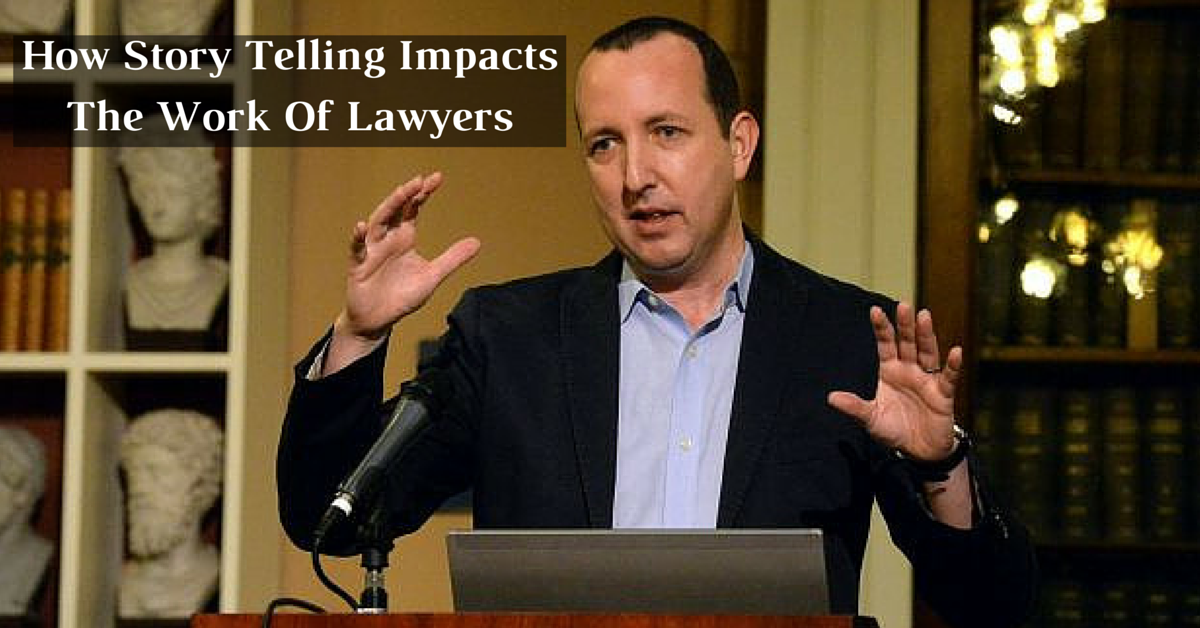
How Story Telling Impacts The Work of Lawyers

0
How Story Telling Impacts The Work Of Lawyers

How Story Telling Impacts The Work Of LawyersArchit Srtivastava from Amity Law School, Delhi writes why storytelling is a very important part of lawyering. I will recommend it to all lawyers and law students, because he points out a very important side of the profession which is often overlooked. When I represented my University at Vis moots or even judged later on, I came to realise how important the skill of storytelling is for a lawyer. We have to tell stories to the judge, the arbitrator, the client, the negotiator on the other side of the table, the bureaucrat and sometimes the public, to demonstrate our points. Archit does a great job of explaining why – over to him.

“It’s like everyone tells a story about themselves inside their own head. Always, all the time. That story makes you what you are. We build ourselves out of that story.”

Thus says Patrick Rothfuss in “The Name of the Wind”. The dawn of the new millennium has thrown up a plethora of new opportunities that were hitherto unknown. But the nature of the man and his needs essentially remain the same. Each one of us feels in the same manner as our ancestors used to do, the laws of the universe remain the same, no matter in which century you are born in, the thought process essentially remains the same though the thoughts vary from person to person. Story telling is also a skill which has been passed over from generation to generation and is thus deeply embedded in the veins of man. As we are a social and creative species, each one of us has some experiences, they may be sweet or bitter, yet they are real life experiences. It is the narration of these experiences that bring to surface the creativity and intellect in us and hone our story telling skills. Ever wondered that why listeners routinely enter a trance like state when listening to a well told story, or why the teachings or religious texts are narrated in the form of parables and anecdotes. There you get a hint!! It is a scientific fact that human mind thinks in the form of pictures and not letters or alphabets. Parables make truth into a concrete picture people can see and understand and hence relate to in their day to day activities. Just look at the world around you. From advertisement commercials to your favourite authors, everyone realizes the fact that the surest way to grasp the interest of the masses is by telling a story.

Although story telling is an art, there are skills, tools, and techniques that can be learned in order to develop the talent. For professionals like lawyers, the story telling skill assumes even greater importance. It is an uncontested fact that lawyers are storytellers, the only difference being they are ethical and truthful storytellers who have to do away with the element of fiction. Their imagination is informed, shaped and limited by evidence. Just ask any lawyer, or for that matter, any law student who actively takes part in mooting ,that what is the premise of any legal argument which he/she presents before the Court, and the answer would be, the facts of the case along with the relevant precedents and legal propositions. It is impossible to make any legal argument without coating it with some stories related to the facts of the case or about the law. Even Henry Miller, an effective litigation attorney from Memphis agrees to the proposition, “The truth of a story is in its telling.” The legal arguments presented in a case are nothing but a story in disguise.

Do you realize the vitality of a plot in a story? If no, then courtroom is the place where you should be. Plotting can be construed as the soul of legal storytelling and the foundation of advocacy skills. There is a battle of competing stories going simultaneously in the courtroom, where each opposing side endeavors to advocate his own version of the story. And all this happens without you and me realizing this. All we focus on is the outcome or the decision of the case, which is nothing but a more convincing and probable version of the story, in accordance with our taste and pre-conceived notions. Here a philosophical concept called ‘Verisimilitude’ comes into the picture, which distinguishes between the truth and the falsity of assertions and hypotheses. The problem of verisimilitude is the problem of articulating what it takes for one false theory to be closer to the truth than another false theory. The Judges particularly, apply this concept in order to ascertain the facts of the case and render justice.

Pardon me if I am being over-imaginative, but I strongly believe that the work and professional role of a lawyer is specifically akin to that of the movie director. Proficient litigators typically storyboard evidence into clear and purposeful plots as they are adept at converting evidence into a carefully constructed and well drafted story. The Judges, passively watch and witness the drama of the trial as it unfolds in the courtroom theater, as the lawyer has already gauged the narrative story structure and has framed in his own mind that how the Judges will process and interpret evidence, which gives him an edge in the deliberations and arguments taking place in the Court.

Having discussed a lot about the courtroom, now let us throw light on some basics. All the budding lawyers out there, ever came across those Legal Reasoning questions while preparing for your law entrance examinations. What are you really being tested on in those questions?? Is it your vocabulary or your communication skills?? No, what you are really being tested on is your ability to read the facts of the case, which in essence form a short story, in connection with the legal principle. This itself, brings home the point that story telling and its comprehension form an integral part of the legal profession.

All those people out there who perceive tale- telling as a mere waste of time, do give it a second thought.

Download Now

Mediation essentials – case study of Delhi High Court rules

1

mediationmenWhat can you do if you think your case cannot be resolved by mediation?

What can you do if you feel the mediator is being coercive or imposing his or her personal views on your case?

Mediation is of two types – court-annexed mediation and privately arranged mediation. Certain types of cases such as family matters and motor vehicle accident cases are, as a matter of default, referred by Courts to mediation first (court-annexed mediation). This reduces the workload of courts and also gives opportunity to parties to arrive at an amicable settlement. The Code of Civil Procedure gives courts the power to explore mediation in all civil cases. In different states, high courts have attached mediation centres which handle these matters.

In commercial transactions, parties may also incorporate mediation as one of the dispute resolution mechanisms, whereby they will first try to resolve a dispute by mediation before going to court. They could use the support of institutions such as London Court of International Arbitration or LCIA (arbitration institutions also provide mediation services).

In either situation, the role of a mediator is very different from that of a judge or an arbitrator – his or her role is to facilitate, but he or she cannot issue a binding order or force parties to arrive at a binding conclusion. In this post we will explore these issues from the perspective of the Delhi High Court’s Mediation and Conciliation Rules, 2004.

Can a mediator impose a settlement?

A mediator is expected to “facilitate voluntary resolution of the dispute(s) by the parties, and communicate the view of each party to the other, assist them in identifying issues, reducing misunderstandings, clarifying priorities, exploring areas of compromise and generating options in an attempt to solve the dispute(s), emphasizing that it is the responsibility of the parties to take decision which effect them; he shall not impose any terms of settlement on the parties.” However, he or she should also make parties understand his or her role as a facilitator and must explain that not settlement can be imposed and no assurance can be given that the mediation will result in a settlement. This is also an ethical responsibility of the mediator.

(Refer Rules 16, 17 and 27)

However, to what extent a mediator can keep put aside communicating the impression that he or she is imposing a settlement (or forcefully stating his or her personal opinions is debatable). For example, consider family-related matters, in which everyone is likely to have an opinion, whether in favour of marriage or against it, in favour of a woman or against her, etc. I know several individuals who feel that the mediator is opinionated, coercive or trying to impose his or her personal views on the parties.

What can you do if you land up in a situation where the mediator is imposing a settlement?

Unlike in arbitration or in a judicial proceeding where you will need to challenge the arbitrator, in mediation since it is a consensual process you have the additional option to disagree with the mediator and let the mediation fail.

You got it right – there is no personal responsibility on any of the parties to have a successful mediation. Mediation can fail. Parties only have a duty to act in good faith, with the intention to settle the dispute (Rule 19). This does not mean that they are bound to take responsibility for a consensual outcome. If it doesn’t work, parties have an option to walk out. Further, a mediation lasts 90 days, and can be extended further by 30 days, but it is not necessary for parties or mediator to necessary play the full 3 or 4-month duration out before concluding that it has failed.

It may not, however, be a prudent idea to not attend mediation proceedings at all – the other party or the mediator can apply to the Court for suitable directions in that situation. That can lead to unpredictable outcomes. (Rule 13)

Consequences of a failed mediation and does your behavior during the mediation impact your court case?

What are the consequences of a failed mediation? Nothing – a failed mediation just goes to court. I have seen that there is a fear about what can happen if mediation fails, since the dispute will go back to court. Note that mediation proceedings are confidential, cannot be recorded and absolutely nothing that occurred there can be used in other proceedings (including when the matter goes to court). What does this mean?

The court proceeding will not begin from where the mediation left off, but from scratch. Any statement admitted by a party in a mediation will not hold good in a court proceeding – the other other side will be asked to prove it independently. Any confidential documents supplied in the mediation cannot be used in the court proceeding.

Whether a party had accepted or not accepted a proposal in the mediation is irrelevant and any further suggestions will have to be freshly stated. Even during the mediation, there are strict rules to regulate the communication between a mediator and the court. The mediator can only communicate any information to which the parties have consented to send the court, failure of a party to attend proceedings, or about failure or success of the mediation proceedings. For example, where the proceeding fails, the mediator will simply make a note that the mediation has failed and send it to the court. (See Rules 20 and 23)

Have you participated in mediation before? What has been your experience?

Are there other issues pertaining to mediation you would like us to discuss?

Write to me at [email protected].


Download Now
logo
FREE & ONLINE 3-Day Bootcamp (LIVE only) on

How Can Experienced Professionals Become Independent Directors

calender
28th, 29th Mar, 2026, 2 - 5pm (IST) &
30th Mar, 2026, 7 - 10pm (IST).
Bootcamp starting in
Days
HRS
MIN
SEC
Abhyuday AgarwalCOO & CO-Founder, LawSikho

Register now

Abhyuday AgarwalCOO & CO-Founder, LawSikho