Download Now
Home Blog Page 1725

What To Do When You’re Being Sexually Harassed

4

In this blog post, Srishti Khindaria, a student of Amity Law School, Delhi, Guru Gobind Singh Indraprastha University, looks at the legal provisions provided to victims of sexual harassment via modes of communication and what action can be taken against those who commit such offenses.

1184841_601046539971928_459524019_n

Stalking or sexually harassing through means of communication is on the rise now and nearly everyone- especially girls- have faced this problem at least once, if not more. Such instances could be missed calls in the middle of the night, or lewd messages/emails or even sending inappropriate pictures or asking for sexual favors.Such acts lead to severe mental discomfort and hamper the everyday lives of the victims. These calls are used not only as a tool for eve-teasing women but may also by extortionists and for blackmailing. Such incidents are ignored by many if they happen just once but if these are repeated and if your stalker repeatedly makes such calls at frequent intervals and refuses to identify himself then action must be taken.

According to The National Crimes Record Bureau (NCRB), such crimes are increasing rapidly. From 2013 to 2014[1] there has been a 63.7% rise in just cyber offenses and during this period the category of “transmission of obscene content in electronic form” has grown even more with a 104.2% increase.

Legal Provisions and Rights Given To Victims of Such Crimes

phone2

The term sexual harassment has been defined under Section 354A of The Indian Penal Code, 1860 as – an unwelcome sexually determined behavior (whether directly or by implication) as:

a) Physical contact and advances;

b)A demand or request for sexual favors;

c)Sexually colored remarks;

d)Showing pornography;

e)Any other unwelcome physical, verbal or non-verbal conduct of sexual nature

The Criminal Law (Amendment) Act 2013 suggested that Section 354 of the Indian Penal Code provide a more comprehensive definition of sexual harassment.

Before 2015 there was Section 66A of the Information Technology Act, 2000 which could have been of substantial help to anyone who was intimated or harassed online. This section provided punishment for sending offensive messages through means of communication. These messages can be transmitted, created or received by a computer system, resource or device and could be attachments in the form of text, audio, video, images or any other electronic record. It specifically dealt with messages which were grossly offensive or menacing, proffered false information intending to cause annoyance, inconvenience, insult, etc. or intended to deceive the addressee about the message’s origin. However, owing to a lot of flaws in this section because of which it infringed upon the fundamental rights granted by the constitution, the section was struck down by the Honorable Supreme Court of India in the case of Shreya Singhal v. Union of India.[2]

Section 66A of the IT Act dealt only with generic category i.e. of “offensive messages” there are other sections which have been additionally included to address specifically acts such as stalking, obscenity, sexually explicit acts, etc. with heavier punishments than section 66A carried. The Indian Penal Code, 1860 contains various provisions that address the issue of crimes of verbal abuse and the harassment of women. Some of these are as follows:


Section 509 of the Indian Penal Code, 1860

Section 509 of the IPC lays down that if anyone with an intention to insult the modesty of a woman utters any word, makes any sound or gesture or exhibits any object, intending that such word or sound shall be heard, or such gesture or object shall be seen by the woman, or intrudes upon the privacy of the woman, they shall be punished with simple imprisonment which may extend up to a term of 1 year, or a fine, or both.”

This section is referred to as the eve-teasing section, and its main objective is to protect the chastity and modesty of a woman. Though initially designed to address the issue of eve-teasing or street-sexual harassment, this section has also been applied to the cyber space to curb online stalking and harassment. In 2001, a teenage boy in 11th grade was convicted under section 509 for making vulgar remarks about his female classmates on a website known as amazing.com.

Also, as per the Justice Verma Committee Report, which was set up for amendments in Criminal Law, has suggested that certain amendments must be brought about in section 509[3]. The committee suggested that use of words, gestures or acts that create a threat of an unwelcome sexual act or are of sexual nature should be termed as sexual assault and be punishable by one year imprisonment, fine or both.This is a step further as the creation of threat is also seen as a crime.


Section 354D of the Indian Penal Code, 1860

Section 354D pertains to stalking specifically, including crimes that involve monitoring the electronic communication of a woman and also deals with cases where any man attempts to contact a woman to foster personal interaction repeatedly despite a clear indication of disinterest by the woman.


Section 507 of the Indian Penal Code, 1860

This section deals with criminal intimidation by anonymous communication. This is another provision that can be used by a woman facing harassment and threats online, given the fact that the most serious form of verbal harassment faced by women is rape threats.

In present times the notion of anonymous communication comes into significant play given the fluidity of identities in the virtual space which prevents them from knowing the true identity of their harassers. Any person who is convicted of committing the offense of stalking shall be on first conviction punished with imprisonment which may extend up to three years and on second or subsequent conviction with a term of up to five years and shall also be liable to pay fine.


Section 67 of the Information Technology Act

Under section 67 of the Information Technology Act, publication or transmission of obscene material in electronic form is a punishable act. On first conviction, the offender may be imprisoned for a term of two to three years and a fine of up to five lakh rupees and in the event of second or subsequent conviction with imprisonment for a term of five years and a fine up to ten lakh rupees.This section gives a wider scope to the law mentioned under Section 507 of the Indian Penal Code as it deals with all aspects of electronic communication.


Precautions and Action That Can Be Taken Against Such Offenders

FeaturedImages_harassment

The very first step for any woman who receives questionable phone calls or text messages is to block such numbers using mobile applications such as Truecaller or Call Blacklist, which can be easily be downloaded from mobile app stores. But if the offender still continues to call/message through another number then action can be taken up which will ensure that an investigation is imitated, and the offender can be punished. Also, record the calls- if possible, using a call recording app if your phone does not have an inbuilt provision- and keep a screenshot of the messages, to use as evidence later.

Such instances can also be reported to the Women’s Helpline Number at 1091. UP Police has also launched a special “Women Power Line” which can be reached at 1090 which has till date dealt with 5,58,188 complaints.[4] For further action, you may approach the nearest police station to file an FIR as it is only after an FIR has been filed that further investigation can be undertaken.

A complaint with National Commission for Women: Under section 10 of the NCW Act, the Complaints and Investigation Cell of the commission processes oral or written complaints from women who have faced any violation of their rights. And victims of cyber-crime too can approach the commission with their complaints.[5]

Some states also have dedicated cyber cells and of the 1,203 cases, there have been arrests in over 730 of them at a 61% conviction rate. [6] It has been seen that victims of abusive/threating phone calls prefer using helplines to seek help for the fear of embarrassment and rejection from family and members of the society and do not wish to step into a police station to lodge complaints.

The 24-hour helpline in Chennai, operated by three women cops receives at least 150 calls a day, and many of these callers complain of vulgar, abusive calls from strangers or extortion threats from ex-lovers especially in the middle of the night.

However, The Women’s Helpline, in most cases does not entertain complaints and merely advises the victim to visit the nearest police station or takes action too late.[7] According to a Times of India Report, a woman approached the helpline with a complaint against a man who kept on terrorizing her via calls by making lewd remarks. However, the police failed to react in time which resulted in further harassment.

In another incident- when the helpline had just been launched- when a call was made to it about a girl being harassed by a few youths they were assured that help would reach the spot in 10 minutes but even after an hour nobody turned up, and a reporter was told by a policeman in the area that “Don’t call the helpline; call 100 instead.”[8]


Conclusion

It is clear that there are certain laws and special state initiatives which are available to the victim. However, their implementation is fragile. But as responsible citizens, it is essential that we are aware of our rights because once an official recognizes that you are well versed with your rights, they are more likely to fulfill their responsibilities effectively.

However some awareness and a grave situation can be avoided. You can learn a lot more about sexual harassment prevention by taking up with course.

Lastly, always remember that such offenders count on the silence of their victims to get away with their heinous crimes, so do not be ashamed or afraid. They are the ones guilty of committing a heinous act and you’re completely innocent. So do not be afraid be speak up and do seek help, especially from your family and friends.

Footnotes:

[1]http://ncrb.nic.in/StatPublications/CII/CII2014/Compendium%202014.pdf

[2]WRIT PETITION (CRIMINAL) NO.167 OF 2012

[3]http://www.prsindia.org/uploads/media/Justice%20verma%20committee/js%20verma%20committe%20report.pdf

[4]http://1090up.in/

[5] Complaints can be directly filed at- http://ncw.nic.in/onlinecomplaintsv2/frmPubRegistration.aspx

[6]PrathamNarendra Kumar &Apoorva, Revenge Pornography

[7]http://timesofindia.indiatimes.com/city/ahmedabad/Call-1091-to-report-phone-harassment-too/articleshow/35799022.cms

[8]http://www.thehindu.com/todays-paper/dial-1091-but-dont-expect-help-soon/article4278567.ece

 

Download Now

iPleaders is looking for a Relationship Manager

1

iPleadersLogo-Hi-Res_vectorized

Job Role – Relationship Manager

iPleaders, a Delhi-based legal education startup is looking for a suitable candidate for the role of Relationship Manager who will manage student affairs, assist in administration of online courses and keep in communication with students and management.

Experience – Not necessary, but a person with atleast 2 years of experience in the domain of customer relations will be preferred. However, the applicant should be accustomed to work with Microsoft excel.

Essential skills

  • Excellent communication and inter-personal skills
  • Should be tech-savvy and have experience of working with MS Excel (should be able to handle functions like VLOOKUP, HLOOKUP, conditional formatting, etc.)
  • Should be able to work independently and take responsibility of the outcome

Function Details

  1. Managing mailing lists and communication with students
  2. Follow up with universities and course partners
  3. Replying to student queries
  4.  Enrollment and certification process
  5. Approving students on iPleadersClub, LinkedIn and Facebook Group
  6. Scheduling and following up on Career counselling calls
  7. Ensuring data-integrity and consistency is maintained regarding student database
  8. Collaborating with sales and marketing team with insights and feedback as and when needed
  9. Ensuring engagement, communication and interaction with students
  10. Placement and internship assistance
  11. Collecting suggestions by students on improving course, etc.
  12. Keeping the rest of the team aligned with the tasks as per requests from students
  13. Managing databases
  14. Responding to special requests from students – transcripts, provisional certificates, etc
  15. Analysis of students – profiling, etc, shortlisting for marketing
  16. Maintaining records of re-examination application, fee payment, etc.

Salary range: 2.5-3.6 Lakh per annum depending on qualification and experience. We will provide high quality training and comfortable, homely and no-frills work environment. If you are interested in joining a rapidly growing startup, be part of the legal education and technology revolution in India, and make a difference, then this is the right opportunity.

If you are interested, send your CV to [email protected] with the subject line “Application  for Relationship Manager”.

Download Now

Mergers and Acquisitions – The Concept of Due Diligence

0

In this blog post, Pramit Bhattacharya, Student, Damodaram Sanjivayya National Law University, writes about the principle of due diligence in cases of mergers and acquisitions. The post also highlights the importance of due diligence from a strategic point of view. The blog post also looks into the steps and factors involved in the process of due diligence in cases of mergers and acquisitions.

1451539_599879256736892_1144192258_n

Due diligence can be defined as a continuous process through which companies, corporates, and entities ensure that rights of the stakeholders are being protected and also the entity do not contribute to any conflict. Due diligence is both a proactive and a reactive process.[1] In simpler words, due diligence can be considered as the process which any corporation undertakes which brings to light the negatives and positives impacts of any significant transactions such as securitization, the issue of securities, financing of a project, mergers, acquisitions, etc.[2] The primary motive behind the process of due diligence is to minimize the level of unknown risks and liabilities as much as possible. Due diligence is a very dynamic process and covers almost all the facets of a business operation like accounting, finance, tax, etc. Due-diligence hasn’t been denied in any statute. Nevertheless, the Securities and Exchange Board of India (SEBI) makes it mandatory for certain parties to undertake the process of due diligence when the securities of a company are being issued.

The business world has expanded a lot in the present age. Policies of liberalization and globalization are helping corporate houses and companies to expand their business all over the world. In such a scenario, corporate governance, and due diligence is very vital. Both have a very wide field of ambit, and sometimes these areas overlap each other. Every company or entity, regardless of their size and location, should give high priority to corporate governance and due diligence if they want to survive in the market.


Due Diligence from a Strategic Point of View

Due diligence relates to many sectors of business. Legal and financial due diligence by a corporate determines the potential benefit of a deal and if the deal is being done at the right price and cost or not. Strategic due diligence looks into the question that whether such a potential deal is realistically possible or not, however, good the deal may look. Strategic due diligence tests the rationale behind any deal by ascertaining whether the deal is commercially viable or not and whether the company can achieve the target value they have set for themselves. The first issue requires examination and consideration of external factors. The second issue demands an internal focus. When looking at the bigger picture, it can be realized that strategic due diligence ensures that no two transactions are treated in the same manner. Each transaction has its positives and negatives, and thus, the process must take different considerations for different transactions. This is what makes strategic due diligence so important. Due_diligence

When a company is analyzing its business for any merger, acquisition, investment while considering the past and present trading performance, it is a very easy process. But when it comes to future strategies, the process becomes a bit complicated, as there may be many unforeseen issues which the company or the entity did not consider. Due diligence from a strategic point of view thus, makes sure that all the factors are taken into consideration and acts as a transaction-screening filter. The company must ensure that the deal is not only viable and beneficial in the long run, but the entity also can achieve the targets.

Due Diligence in case of Acquisition and Mergers

Due diligence becomes critical in the event of a merger or acquisition. No two entities have the same set of rules, goals, and cultural values. Each company has a different investment policy, leadership style, work environment, communication networks, etc. in such a scenario due diligence plays a crucial role. It ensures that the two companies change and adapt to different environment smoothly, and to what extent, the change and adaptation are possible. If there is a wide cultural gap between the two entities, the complicated the process of merger or acquisition will be.  Due diligence considers several factors which are vital in the integration of different entities in case of a merger or acquisition.

Workforce Assessment

The total operating cost and efficiency of a company depends on the number of employees, and their way or working. The way in which the labor force of an organization is also distributed has a significant impact on the efficiency of an organization. Thus, it becomes crucial to determine whether the employees allotted to each job category is at the optimal level or not. If it is not at the optimal level, the company should allocate them to different jobs as per their skill inventory to get the best out of them.

000016130451_IP-OCDD-350

Remuneration

Remuneration of the employees is one of the most important issues that is to be considered. It is one area which takes a longer time to resolve. If the staff in an organization is underpaid, the other organization which is acquiring or merging has to spend a lot to bring the labor force at the market price, because a massive hike in the wages is an almost impossible task. In case the staff is overpaid, then the organization will have to pay them out of their pockets and incur extra expenses. Therefore, it is important that the market position and remuneration data is ascertained before a pending acquisition or merger.


Talent and Cultural Indicators

Culture is the aggregate result of how all the individuals of the company behave in certain situations. It becomes important that members who have vital information about the behavior of the employees, or about the overall culture of the organization impart the knowledge to the other organization before a merger or acquisition. Collecting information about skills and talents of different personnel also helps in making long-term strategies. This process is vital because if a cultural conflict exists, the employees will not work to their full potential, intentionally or unintentionally.


Legal Compliances and Employee Agreements

It becomes necessary to know what type of agreement and relations did the employees had with the previous owners. Legal compliances such as mandatory insurance for the employees, trade union agreements, etc. should also be taken into account to avoid any conflicts later on.[3]


Director’s Duty in Due Diligence

A director of a company has a fiduciary relationship with the company, i.e. a relationship of trust and confidence. In furtherance of this relation, the director must act in the best interest of the company. The director has the duty to show skill and care while representing the company. It is presumed that the director, while entering into any transaction or dealing, acted in good faith and on an informed basis, and his or her actions were in the best interest of the organization. The position of a director comes with significant responsibilities. The degree of care and diligence on the part of the director should be exorbitant. Following the recent trends of the business world, it can be said that the relationship between the director and the organization is not only a fiduciary one but also an affirmative one, to protect the interest of the company. The management and the directors do not get any protection of the law in case they did not act reasonable manner and care, and due diligence was absent from their actions.


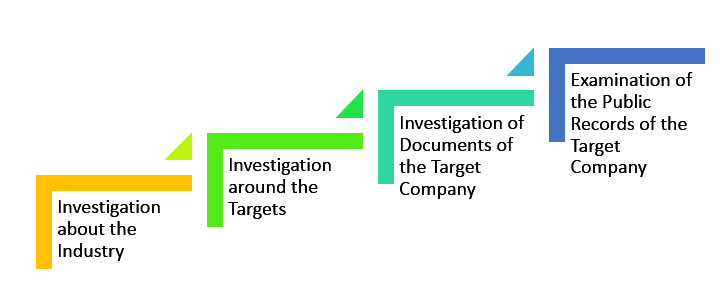
Levels in the Process of Due Diligence

Due diligence has four distinct levels. The first level involves investigation about the industry. The investigation is limited not only to the business operations but also human resource management in the industry.

The second level in the process of due diligence is investigation around the targets. Investigation at this levels focuses on the net worth of the company which the organization wants to acquire or merge into. At this stage, Directors of the acquiring company play a crucial role as they assess the potential growth. Current market position, reputation, etc., of the company to be acquired. 1

The third level of the process of due diligence involves investigation of documents of the target company. The acquired company has to make certain that everything is in proper order like financial records, tax returns, regulatory and mandatory filings, etc., in some cases, the target company may not disclose all the information. Therefore, it is important for the acquirer to show due diligence and carry out the process of scrutinization properly.

At the fourth level, public records of the target company should be examined properly. Public records include records of incorporation of the organization, records of litigation if any, outstanding debts, etc.

These four levels as a whole constitute the procedure of due diligence before a merger or acquisition is done.


Concluding Remarks

With the increase in globalization, the number of mergers and acquisitions are also increasing. For any merger or acquisition to be successful, it is vital that a proper strategic due diligence is done to ascertain the risks and unforeseen liabilities which may arise in the future. When the process is carried out properly, it not only absorbs a lot of unforeseen risks, but it also helps in maintain transparency and fairness in the dealings. To learn more about mergers and acquisition, you can click here.


[divider]

Footnotes:

[1]http://www.oecd.org/daf/inv/mne/48004323.

[2]http://www.divest.nic.in/due_diligence_process.pdf

[3]Francis Cherunilam (5th edition). International Economics

Download Now

Corporate Social Responsibility

2
CSR

In this blog post, Pramit Bhattacharya, student, Damodaram Sanivayya National Law University, writes about the concept of Corporate Social Responsibility. The article looks into the CSR Rules and Section 135 of the Companies Act, 2013, which obligates CSR for Corporates in case they fulfill certain conditions. The post also highlights the advantage of following CSR obligation for the companies.

1451539_599879256736892_1144192258_n

Corporate Social Responsibility rests on the theory that since corporates are using the valuable resources provided by the Society for its operations, the corporates should act as trustees towards the society and ensure the welfare of the society. Companies must understand that their business operations affect not only the shareholders but other parties also. This theory is known as the stakeholder’s interest theory.

In the Indian context, there is no fixed definition of the term CSR, but to understand the meaning of it in simple words, one might go through the definition which has been given by the European Commission. The definition states that “CSR is the responsibility of the enterprises for their impact on the society…Enterprises should have in place a system to integrate ethical, social, environmental and consumer concerns in their business and core strategy, in close collaboration with their stakeholders.[1]

CSR cannot be considered as an alternative to legislation towards protection of the environment and the society, but it is supplementary to the legislations. It has been proved that CSR helps the enterprises in the long run. Investing into technology which is environment-friendly reduces the cost of operation for the company. Also promoting basic obligations in the social area like better-working conditions, training of the working personnel, better management of the relationship with the customers have a positive effect on the productivity of the company.


CSR under the Companies Act, 2013

CSR has been a point of debate for a long time between the corporate sector. CSR is widely regarded as the responsibility of an enterprise towards its proximate society. Before the Companies Act, 2013 was introduced, there were two views regarding CSR, that whether the expenditure on CSR should be mandatory or voluntary. However, after the introduction of the Companies Act, 2013, these questions were put to rest as the Act laid down specific provisions with relation to the Corporate Social Responsibilities of the enterprise towards the society.

Schedule VII to the 2013 Act, as well as Section 135 of the Companies Act, 2013 operate, govern and decide the CSR initiative for the corporate houses.

The Ministry of Corporate Affairs laid down the following guiding principles concerning CSR in the Preamble to the CSR rules: [2]

  • CSR is not any donation or charity.
  • CSR is a way of carrying business operations, by which enterprises contributes towards the good of the society.
  • CSR is a process through which an organization develops its relationship with the stakeholders, in such a way that it is for the common good of everybody.
  • CSR should be used to integrate the business operations and goals with social, environmental and economic objectives.

corporate-social-responsibility

CSR under Section 135 of the Companies Act, 2013

The applicability of mandatory CSR is restricted to the following companies by way of Section 135,[3] Companies Act, 2013 

  • Any company which is having a net worth of Rs 500 crore of more in a financial year;
  • Any company which is having a turnover of Rs 1, 000 crores or more in a financial year;
  • Any company having a net profit of Rs 5 crore or more during a financial year.

moneyfile--621x414If all or any of the following condition is satisfied by a company, then the CSR provisions will apply to such companies mandatorily. The CSR provisions apply to a company on year to year basis. However, the rules given under Section 135 is relaxed if a company does not fulfill any of the above-stated conditions for the period of three consecutive financial years.  The conditions under Section 135 will start applying again when the company subsequently fulfills any of the stayed stipulation.[4]

Under these provisions, the Board of Directors has to ensure that at least two percent (2%) of the average net profit of the enterprise (average of profit during the previous three financial years) is being spent towards CSR as per the plan which has been adopted by the company.

Scope of CSR under the CSR Rules

  1. CSR activities do not include those activities which are undertaken in the normal course of business.[5]
  2. CSR activities should be undertaken by the company in the area which it operates or the local area which is in proximity to the company.
  3. CSR projects or programs undertaken by the enterprise should include activities as mentioned in Schedule VII to the 2013 Act.[6]
  4. Only those activities which do not exclusively for the benefit of the company or its employees will be considered as CSR activities.
  5. The company can undertake CSR activities themselves or any registered body or society which has been established under Section 8 of the Companies Act, 2013, or through its holding or subsidiary company or otherwise subject to compliance of conditions mentioned therein and a cap of maximum 5 % of total CSR expenditure of the company in a financial year.[7]
  6. An enterprise can also undertake CSR activities in collaboration with other enterprises.
  7. Any surplus which arises out of CSR activities wouldn’t be considered as profits from business operations.[8]

CSR Expenditure and the Income Tax Act, 1961

Before the introduction of Sec 135 of the Companies Act, 2013 and the CSR Rules, the expenditures made for carrying out CSR Activities were considered to be business expenditures under Section 37 (1) of the Income Tax Act, 1961.[9] Section 37 (1) states that any expenditure which does not qualify as revenue expenditure under Section 30-36, or is a capital expenditure or personal expenses of the assessee, if used wholly and exclusively for the purpose of business activities will be considered as business expenditure and shall be deducted from the total income, and can be used to claim an exemption.

Point of Conflict Regarding CSR Expenditure

A point of conflict arises when CSR Expenditures are to be categorized. Expenditure in various forms has been allowed under the CSR. For example, these are a few kinds of expenditure allowed under the CSR-

  1. Any Grant provided by the Company to a Society or a Trust.
  2. Direct Expenditures on Charity (including expenditure in the local area).
  3. Transfer to other enterprises for pooling of expenditures to carry out CSR activities.
  4. Donation to any Government Recognized funds where tax exemption to the full extent is available.

The point to be considered here is that donation, grants, etc. are voluntary activities, and they can’t be charged as expenditures against the income earned. But the CSR Rules allow this kind of grants, and donations as expenditure. Also, interpretation of Sec 135 of the Companies Act, 2013 makes it kind of mandatory to spend money on CSR activities. Hence, these grants, donations, etc. can’t be termed as voluntary.

Conflict-MahangemetThere are also some activities which result in the creation of new capital assets for the enterprise like the construction of a hospital, school, etc. The question here arises what kind of expenditures these will be?

  • CSR in India has been considered as a benevolent and humanitarian activity. As a result, although, CSR activities have been carried out, they’ve never been deliberated much. In India, the CSR activities are still within the range of philanthropic activities (where building social institutions were prefer) like constructing hospitals and schools. But slowly, the activities are moving towards community development programs also.
  • Due to trans-boundary business and globalization, CSR Activities are also going through a change. The community has become more demanding and active. While CSR is still largely restricted to the development of the community, it is becoming more and more strategic and is getting linked with the business.
  • The idea of CSR has been introduced to the forefront with the introduction of the Companies Act, 2013. Giving a deeper thought to the concept of CSR, one should realize that CSR should go beyond the concept of community service and philanthropy only. Corporates are not doing a favor to the society by engaging in CSR Activities. It is their responsibility towards the society.


Benefits of engaging into productive CSR Activities[10]

  • Society gives the License to Operate: Apart from internal factors like value and ethics, some other factors like the investors, government, and the customers also plays a large role in influencing corporate behavior. In recent times, the society or the community is also seen as a stakeholder. Many companies now accept the fact that the license to carry out business operations is not given legally only but is also given socially by the community. Engaging in strong CSR activities will meet the aspirations of the society and will provide the companies with a license to operate “socially.” 201406_01a
  • Communities as Suppliers: Many companies have started engaging in such CSR activities; wherein the companies are increasing the livelihood in the community by making them a part of the supply chain. This has benefited the community by increasing their income. This benefits the companies in the long run as they secure additional supply chains.
  • Attracting and Retaining Employees: A company’s ability to draw out and retain employees also depends on their CSR Commitments. These commitments encourage the employees. They also increase the morale of the company and their sense of belonging to the company. They want to be associated with a company which is socially accepted.
  • Enhances the Reputation of the Enterprise: Companies who engage in CSR activities, reap the traditional benefits of generating goodwill for themselves and creating a positive image in the eyes of the community. This allows the enterprise to present itself as a responsible body corporate.


Building a society which is accessible to all, and which negates disparities among people is a collective responsibility, and the corporate houses, enterprises, and companies should play their part in it as socially responsible entities.


[divider]

Footnotes:

[1]EC, Green Paper, Promoting a European Framework for Corporate Social Responsibility, COM (2001) 366 (18/07/2001), para 20, available at http://eur-lex.europa.eu/legal-content/EN/TXT/PDF/?uri=CELEX:52001DC0366&from=EN

[2]Available at http://www.cuts-international.org/pdf/Draft-CSR_Rules_2013.pdf

[3]http://www.mca.gov.in/SearchableActs/Section135.htm

[4]Rule 3 (2), The Companies (Corporate Social Responsibility Policy) Rules, 2014 (“CSR Rules”).

[5]Rule 2 (e), The Companies (Corporate Social Responsibility Policy) Rules, 2014 (“CSR Rules”).

[6]http://www.mca.gov.in/Ministry/pdf/CompaniesActNotification3_2014.pdf

[7]rules 4 (2) and 4 (6), The Companies (Corporate Social Responsibility Policy) Rules, 2014 (“CSR Rules”).

[8] Rule 6 (2) , The Companies (Corporate Social Responsibility Policy) Rules, 2014 (“CSR Rules”).

[9]http://www.gnlu.ac.in/centredoc/gcbit/Income-Tax-Act-1961.pdf, 1.246

[10]https://www.pwc.in/assets/pdfs/publications/2013/handbook-on-corporate-social-responsibility-in-india.pdf

Download Now

Police Reforms- A Dire Need For A Dying Democracy

0

In this blog post, Suhani Chanchlani, a student of Amity Law School, Delhi, writes about the imminent need for carrying out police reforms in letter and spirit throughout the Union of India.

IMG-20160409-WA0007

In a democracy, the police are the nodal point between the government and the people. If any issue perturbs an individual, he/she is likely to approach the police rather than the politicians. Therefore, the strength of a democracy can very well be tested by the accessibility of the police to the public and also by the kind of relationship that exists between them.  If the relationship is marked by animosity or suspicion, the democracy in that society is eroding from within. The reason being the government failing in its very objective of being representative of the people. If the basic link between the people and the government has snapped, how can the governors be aware of the problems faced by the governed?

ALL_9_SunStory__TH_1405650g

Sadly, this is what is happening in the largest democracy of the world. Police have become a convenient tool in the hands of the powerful. The situation is so murky that it is no longer news when the police

  • Do not meet out people with due respect and courtesy.
  • Refuses to lodge a valid complaint.
  • Takes bride for rendering its services which it is legally bound to do otherwise.
  • Violently beats up the peaceful protestors.
  • Does not impart its duties with due seriousness and promptness.
  • Arrests someone arbitrarily or kills someone extrajudicially in an ‘encounter’.

On the face of it, the police itself is responsible for its untoward behavior. However, on closer investigations, it comes to the surface that police is just a cog in the wheel. Can we blame the police when their bread and butter depends on upon fulfilling favors of the powerful? This is not to say that the police should not be prosecuted for its excesses but that the police in India functions in an inherently broken system.

Indian Police Act of 1861

1251_police_act

To elucidate this point, consider the Indian Police Act of 1861. This is the parent legislation which underpins policing in all the states and union territories. Among other shortfalls some of its lacunae are enlisted as hereunder:

  • It vests the political executive with the power of superintendence over the police. However, it never laid down the scope of this ‘superintendence’. The Chief Ministers, in practice, remove the head of the police force without being obliged to provide any reasons.Promotions, demotions, transfers, everything, depends on the political favors that a police officer does but not on the rules and regulations that she/he follows or by their performance. The arbitrariness is not just prevalent in the upper rungs but is pervasive throughout the ranks and files of the police force. The higher police officers have the power to dismiss, promote or transfer their juniors without assigning any reasons. Thus, the police fail to perform its functions in a democratic manner. The reason being that the political elite uses the police as a tool against those who are opposed to This is well reflected in the political interference in the investigation processes leading to the false criminal implication of the innocents and exoneration of the defaulters.
  • This act has nowhere made the police accountable to the public. The performance of the police force is not adjudged on a rational basis. The areas that report least number of crime rates are deemed to be ideal. This gives an impetus to police officers to fabricate crime statistics of their areas to showcase their ‘good’ performance.
  • The duties of a police officer that have been provided in this Act are very limited in its scope. In its preamble, the prime objective of the police has been recognized as “the prevention and detection of crime.” This, however, does not take into account recent developments across the world that has resulted in giving a new meaning to the police. The role of the police in today`s conception of a welfare state is no longer restricted to prevention and detection of crime. The idea of community policing that is absent in this Act envisages the police to ensure a feeling of peace and harmony in the society. Thus, the police, among other things, is expected to play a meditative role to minimize conflicts, smoothen the process of legal proceedings to ensure rendering of justice and prevent the exploitation of the vulnerable sections of the society.

Besides this regressive legislation that governs the state of affairs, the police are acutely understaffed and poorly funded. According to a Human Rights Watch Report of 2008-09, there is just one civil police officer for every 1,037 Indian residents, far below Asia’s regional average of one police officer for 558 people and the global average of 333 people. To make matters worse, police besides performing its functions of law and order and crime investigation is also saddled with the burden of giving protection to VIPs and celebrities on a routine basis. Moreover, most of the ground work is delegated to low-ranked officers who do not even have any chances of being promoted to lucrative positions. These constables work under degrading conditions with the insurmountable amount of work. There is no system of shifts which means that the officers have to work continuously for long stretches that sometimes can even extend to 24 hours a day.

In today`s fast-changing world, the nations of the world are battling new security threats like terrorism, cyber-crime, et cetera. Moreover, Indian cops also have to combat Maoists and insurgent tendencies in J&K and tribal belts of the country. Even in such a scenario, the government is treating the police like a peripheral institution. The much-needed funds for modernisation of a police force that had been allocated in the union budget of 2014-15 have been substantially reduced by a recent central cut on a budget. The Ministry of Home Affairs has on the brighter side sanctioned non-planned expenditure for weapons and technology acquisitions. However, this would be of no avail if the police do not have infrastructure such as campuses where the forces need to be trained before they can use new weapons. This is the state of affairs even after India witnessed the most shocking terrorist attacks in Mumbai on 28/11 2008. This series of terrorist attacks apart from shaking the conscious of the nation brought to the surface the serious shortcomings in the infrastructure of the police. Even the top officials in the cadre used guns of the World War era. However, the terrorists possessed better arms and ammunition than the police themselves.

indian-police

This leaves the states to fund their police forces on their account. But the police budgets in most states is committed to the extent of over 90% to the salaries alone. Thus, the police forces have to fend for themselves in most of the cases to maintain the fuel in the vehicles and also for the upkeep of the stations. This is done from the under the table bribes that the police routinely receive. Thus, most of the excesses committed by the police can be attributed to the lacunae in the system.

The rule of law runs like a golden thread in the Indian Constitution. However, this ideal is not reflected in as an integral institution as police. Keeping in mind the nation`s resolve for democracy and the rule of law, police reforms are the need of the hour.

There is already so much of literature in place on police reforms. The most prominent ones include National Police Commission`s Model Police Act, and also the one made by the Police Act Drafting Committee. The Supreme Court in Prakash Singh v. The Union ofIndia, has passed seven directives to the states for kick-starting police reforms. All that the states have to do is to follow the mandate of the Court either by formulating a new legislation or by issuing an executive order. Whereas most of the states have at least initiated police reforms to some an extent in the wake of this judgment. None of the states, however, have enacted police reforms in letter and spirit.

Conclusion

Thus, to enact police reforms, there has to be a political consensus. This is unlikely to happen as initiating police reforms would mean decimation in the powers of the political executive that they get to enjoy in the prevailing system. Unless the voters themselves unanimously pressurize the government for enacting reforms, they would never see the light of the day. Staying aloof from the police and other democratic institutions is not the solution. As a citizen of a democratic nation, every Indian has a right to be a part of a system that upholds their rights and not abuses them.


Download Now

International Law Simplified

0
sources

In this blog post, Suhani Chanchlani of Amity Law School, Delhi simplifies the concepts of international law for newbies. Emphasis has also been laid on the difference between international law and municipal law and the sources of international law for better understanding.

IMG-20160409-WA0007


What is International Law?

Simply put, it is the set of legal principles and rules that apply to the world in dealings of one state with other states and international organizations. For this reason, it is also known as the law of the nations.International Law, more often than not, is underpinned by consent. Each source of international law is it treaties or custom would only apply to a country that espouses its application to its affairs either through commission or omission of a particular act. It is divided into two kinds: Public International Law and Private International Law.

International law systems, justice, human rights and global business education concept with world map on a school globe and a gavel on a desk on blue background.

Public International Law primarily though not exclusively deals with the conduct of the sovereign states and international institutions in an international sphere. Whereas Private International Law is also known as Conflict of Laws, deals with cases that germinate within the legal framework of nation-states but involve the determination of aspects that affects more than one nation-states. Private International Law, thus, involves the application of foreign law, and disputing parties may sometimes approach foreign courts too.


Can International Law be termed as law?

The municipal law has an element of certainty, stability and predictability. Most of the civilized nations of the world have a determinate body that legislates laws. Such laws command authority over individuals within states. These are executed by governing authorities. Persons infringing laws are met with sanctions accorded by judicial authorities. In the case of international law, however, there are no such determinate bodies that can be said to be either legislature, executive or judiciary.

The General Assembly of United Nations, though performing the functions of a legislature cannot be said to be so as the resolutions passed by it are not binding on members.

Security Council, though vested with powers to enforce international laws, cannot be said to be the executive as it has failed to function at many crucial junctures on account of the veto powers of the permanent members. These members have, more often than not, exercised their veto powers for the furtherance of their national interests and rarely for the common good of the humanity. Thus, the Security Council has failed to take conclusive steps in many cases for the implementation of international law.

International Court of Justice too, cannot be deemed to be the principal judicial body for the adjudication of international law as its jurisdiction is limited to those cases where both the sides agree to approach the court.

Thus, it can be said that in the international sphere the legal order is not as cohesive as it is in nation-states. But does that mean that there is no international law as such? Certainly not. International law is the creation of states. In a world where states are connected more than ever before in the pursuance of the greatest good for the humankind, international law is the key to cooperation. It is in everyone`s interests to reach on common grounds with other statesto install satellites, exploit the resources of oceans, abate the deleterious onslaught of climate change or myriad of other activities to reach new commanding heights of progress. International law, in a way, is a reflection of rationality that in the common good of all, the welfare of each can be achieved. Thus, despite the absence of an element of force per se, states are more likely to be compliant with the law of the nations, as whatever they would do to others would be reciprocated by them in the equal or even higher measure.


What is the difference between international law and municipal law?

hqdefault (2)

To understand International law, it is often compared and distinguished from the municipal laws of nations. However, it must be kept in mind that the basis of both of these systems of law is entirely different.

Firstly, the principal subject of international law is the nation-states. Whereas for the municipal law, it is the individuals.

Secondly, as is the case with the laws of most of the countries, the law is deemed to be above individuals. Whereas in international law, states themselves create law. Although the principle of supremacy of law is well recognized, the states often obey or disobey laws or create laws by their interests.

Thirdly, there is a vast difference when it comes to sources of law.

As for Public International Law, Article 38 of the Statute of the ICJ (from now on Article 38) is considered to be the most authoritative statement of the sources of law. These are law creating sources such as treaties and conventions, international customs with evidence of state practice, general principles of law recognized by civilized nations and subsidiary means for determination of law such as judicial decisions and teachings of highly qualified publicists. It is arguable whether the order of sources of law as given in Article 38 reflects hierarchy or not.

Whereas in the case of municipal laws in countries where a stable legal order is established, there is a determinable hierarchy of laws with one type of legal commandment being of more authoritative value than others. For instance, in common law countries, there is a hierarchy of courts wherein the judgments of higher courts are of more authoritative value than that of lower courts.

On the other hand, most of the publicists of international law are of the opinion that there is no such hierarchy of sources of law for the law of the nations. However, as is outlined in Article 38, treaties and customs are of relatively higher value than the judicial decisions or teachings of highly qualified publicists as the latter have been termed as subsidiary means of determination of law.


What are the sources of international law?

For the public international law, as mentioned before, sources of law are treaties, custom, general principles of law recognized by civilized nations, judicial decisions and teachings of highly qualified publicists.


Treaties

treaty

Treaties are based on a customary law principle pacta sunt servanda, which means promises must be kept. It is similar to a contract as countries create their set of rights and obligations out of their volition. Thus, a treaty can be said to be a written agreement between two or more states which lays down the manner in which every state would act in its dealings with other participating states. Terms such as conventions, charters, declarations, and statutes are often used in place of the term treaties. However, there is a slight difference in meaning of these terminologies.

Treaties are of three kinds:

Bilateral treaties: It is in a written agreement between two states. Example: Free Trade Agreement between two states.

Multilateral treaties: It is also known as the law creating treaties in which a large number of nations participate to create laws of general application. Example: Vienna Convention on the Law of the Treaties (VCLT).

Plurilateral treaties: A limited number of states enter into a written agreement on account of their special interest in the subject matter of the treaty.

The term ‘conventions’, although used synonymously with the term treaties is of relatively lesser scope as it only relates to multi-lateral treaties.

‘Charter’ is often used to mean a document that establishes basic norms of international legal institutions and bodies.

‘Declaration’ is of relatively non-binding nature than treaties and charters. It is an expression of the acceptance or willingness to accept a principle of law by a large number of state. It reflects the position of the international community on certain issues that are global in nature.

Treaties are not binding on those who do not sign and ratify it. However, if a treaty reflects a rule of customary international law, then that rule would be binding on even non-parties not because it a rule laid down in a treaty but because a treaty reaffirms the existence of a rule of customary international law.


Custom

Custom is considered to be one of the primary sources of international law. It is of particular importance in international law because of its decentralized nature. There are two essentials for an act of a state to constitute as custom:

The first being the state practice itself. It is unimaginable to conceive of a formulation of custom without anything done on the part of a state. The act of a state does not necessarily need to be positive in nature. The passive conduct of a state would also constitute state practice. For instance, the acquiescence of a state to the conduct of another state by its failure to protest. State practice must be extensive, consistent and uniform and prevail for at least such a period as would establish it as an accepted and recognized act of states.

The second essential is opinio juris, that is, the psychological belief of a state that its act is creating a legally obligatory position for itself.  States today perform myriad kinds of activities. Not every activity of a state would necessarily create binding rules of customary law. Thus, a state`s act would be binding upon itself if it is done in its legal capacity in an international sphere. For instance, if a state is voting in a particular pattern on a particular issue in General Assembly, it is reflective of its opnio juris.


General Principles of Law

As already enunciated before, international law is relatively undeveloped than the municipal law given that there is no cohesive body for legislating laws or a court that have the power to set precedents. Even in the presence of such bodies (though not as authoritative as they are in states), they have not legislated enough laws or administered enough cases so as to determine every point of dispute that may arise in the international sphere. For such a scenario, Article 38 provides for ‘general principles of law recognized by civilized nations’ as a source of law. This term implies that for adjudication of a dispute, the judge would employ legal principles that underpin international law and or legal systems of civilized nations.

For instance, in the Chorzow Factory Case[1], the Permanent Court of Justice recognized the general principle of international law that upon the breach of an international obligation, it is the duty of a state to make reparations.

International law heavily employs analogies from the municipal law especially for determining the procedure, evidence or judicial process. In the Corfu Channel Case[2], the ICJ while referring to circumstantial evidence, pointed outthat ‘this indirect evidence is admitted in all systems of law, and its useis recognized by international decisions’. The principle of res judicata too, which means that the decisionin the circumstances is final, binding and without appeal, was recognized to be part of international law through various judicial decisions.


Judicial Decisions

international-law (1)

Although in the words of Article 38, judicial decisions are only subsidiary means of determination of law. Article 59 of the Statute of the ICJ too declares that the decisions of the Court have no binding value on the Court except between those parties who bring their case to the Court. Despite this position, the Court follows its judgements of previous cases to maintain a certain level of certainty. Thus, in international law the doctrine of stare decisis as followed in common law countries is not present. Still the previous judgments of the Court are accorded some value and in some cases are even deemed to be authoritative.


 Writings of the Publicists

As per Article 38, teachings of the highly qualified publicists of international law are to be considered as the subsidiary means of determination of law. Despite being mentioned under the head of ‘subsidiary means,’ the impact of publicists in the development of international law has been profound. For instance, the works of Oppenheim, Rousseau, Grotius and Gidel has been formative in the development of international law. The role of the writers is especially significant in providing coherence and structure in as diverse a field of inquiry as the international law.


Footnotes:

[1]PCIJ, Series A, No. 17, 1928, p. 29; 4 AD, p. 258.

[2]ICJ Reports, 1949, pp. 4, 18; 16 AD, pp. 155, 157.


Download Now

Webinar On Challenges Faced By Women Lawyers And How To Succeed

0


iPleadersLogo-Hi-Res_vectorized

Join us for a webinar with Shriya Maini, Advocate, Supreme Court of India, Pallavi Sharma, Legal consultant, Common Cause and Ramanuj Mukherjee, Co-Founder, iPleaders on “Challenges Faced By Women Lawyers And How To Succeed (Sunday,10th July’16) between 2 – 3 PM IST. The webinar is organised by iPleaders  as a part of the NUJS Diploma course in Entrepreneurship, Administrative and Business law (http://startup.nujs.edu).


The webinar will be accessible to all on the link:

startup.nujs.edu/webinars/


About the  guest speakers

Shriya Maini, is a practising advocate at the Supreme Court of India, the Delhi High Court and District Court at New Delhi. She is a graduate of Gujarat National law University, India and University of Oxford. At Oxford, she completed her Bachelor of Civil Law programme on a full scholarship and obtained a Master’s in Law majoring in International Crime. Shriya has also received the Oxford Global Justice Award 2015 for Public International Law and has also assisted the President of the International Residual Mechanism for the Criminal Tribunals (MICT). Now, as an ardent feminist and human rights activist lawyer, she has recently resumed practice in the Indian courts.


Pallavi has been a Legal consultant with Common Cause for two years. After a year long stint of commercial practice with a Delhi based top tier law firm, she moved to full-time human rights advocacy in 2014. She is a graduate of National University of Juridical Sciences, Kolkata and is presently pursuing her Masters in International Human Rights Law at University of Oxford on the  Commonwealth scholarship.


Ramanuj is an alumnus of National University of Juridical Sciences, Kolkata. He is a co-founder of iPleaders, a startup that creates cloud-based legal and “access to justice” courses. Ramanuj focuses of strategy and partnerships at iPleaders. He has consulted several law schools, MNCs, incubators and entrepreneurship support organizations on teaching practical aspects of business law to various types of learners. He has more than 300 hours of classroom training experience. Ramanuj has taken guest lectures at NUJS, NLU Delhi, IIT Delhi, BITS Goa, NIT Rourkela, GLC Bombay amongst many other colleges and events such as Startup Saturday, Rodinhood Delhi and Barcamp. Before starting iPleaders, Ramanuj worked at Trilegal, Mumbai, in the Private Equity and M&A team. He also independently advised startups as well as conglomerates for over 5 years on investment and legal risk management.


See you there!!

Download Now

An Analysis Of The Apprenticeship Act, 1961

0

In this blog post, Suhani Chanchlani of Amity Law School Delhi analyses the relevant provisions of the Apprenticeship Act 1961. This Act regulates and promotes the training of apprentices in India and is of utmost importance in the context of the new government`s flagship program Skill India. Skill India seeks to create a manpower of skilled individuals who would be able to contribute to the progress of the country. Apprenticeship is one of the essential methods through which skills can be developed.

IMG-20160409-WA0007


Who are apprentices?

An apprentice is a person who undergoes a period of training under an employer to learn the skills and crafts of a particular trade.The Apprenticeship Act (Act) defines apprentices to be those persons who undergo a period of apprenticeship or training under an apprenticeship contract.  The basic qualifications that need to be met for a person to be recruited as an apprentice are that he/she must have attained a minimum age of 14 years and for the trades that are designated to involve hazardous activities, a minimum age of 18 years. Other than this qualification, additional qualifications can be prescribed for different trades and different categories of apprentices.

The terms and conditions of an apprenticeship are mandated by an apprenticeship contract that is entered into between an employer and an apprentice. In case, an apprentice employed is a minor, his/her guardian would enter into a contract with the employer.

The terms and conditions so stipulated in the contract must be agreed to by the parties to contract. In any case, these terms and conditions cannot be in derogation under this Act or be inconsistent with the provisions of this Act.

Apprenticeship 

Applicability of this Act

According to clause (a) of sub-section 4 of section 1 of the Act, the provisions of this Act would only apply to those industries or trades that have been notified by the Central Government in the Official Gazette and the date from which the application would commence would be as per the stipulations of those particular notifications. The Central Government has included almost all industries under the purview of this Act by its publication of notifications in the Official Gazette from time to time.

This Act also does not apply to Special Apprenticeship Training Programmes of the governments unless especially notified by the Central Government in the Official Gazette. For the removal of doubts, this Act only applies to those categories of apprenticeship wherein practical training is essential to trade. Thus, this Act does not cover so-called ‘internships.’


Duties of an Employer

  • An employer is obligated to send a copy of every apprenticeship contract that he enters into within 30 days from the date of entering to the Apprenticeship Advisor. Once a portal website is made by the Central Government for this purpose, then the employer would have to send the details of contracts within seven days from the date of entering.
  • He shall reserve training places for apprentices belonging to Scheduled Castes, Scheduled Tribes, and Other Backward Classes. The number of places reserved for these categories must be by the prescriptions of the government, having regard to the population of each category in every state.
  • The apprentices must be provided with adequate training as per the provisions of this Act and also by the terms of the apprenticeship contract. For this purpose, an employer must make adequate arrangements for the purpose of imparting practical training.
  • Adequate instructional staff must be provided if the employer cannot undertake the responsibility of training the apprentices himself. The staff so appointed must possess prescribed qualifications for the purpose of imparting theoretical and practical training and also to facilitate trade test of the apprentices.
  • The employer would be liable to compensate for any personal injuries that an apprentice may sustain in the period of apprenticeship. Such compensation shall be payable under the provisions of the Workmen`s Act 1923 insofar it is applicable.
  • The employer is obligated to pay the prescribed minimum wages to every apprentice or the prescribed minimum wages that an employer was supposed to give on 1st January 1970, whichever is higher.
  • The provisions of the Factory`s Act, 1948 and Mines Act, 1952 shall apply to apprentices working in factories and mines, respectively, insofar as the matters relating to health, safety and welfare of the apprentices is concerned.
  • An employer cannot make an apprentice work overtime unless he has a due permission from the Apprenticeship Advisor, who shall not grant such permission unless he is satisfied that an apprentice must work overtime in his interest or public interest.
  • An apprentice must be allowed by the employer to take such leaves or holidays in a week as are observed in the establishment.


Duties of an Apprentice

apprentice-clipart-occupations_carpenter3

  • An apprentice must learn the trade so chosen with utmost diligence and conscientiousness. He must try his level best to qualify himself as a skilled person in the trade for the duration of the apprenticeship.
  • He must attend practical and instructional classes imparted by the employer or a person designated on his behalf on a regular basis.
  • An apprentice must carry out all the lawful orders of his employer and other superiors.
  • An apprentice must work for such hours in a day and a week as determined by the employer which would be subject to the prescribed duration of the training period.
  • He must carry out all the obligations that are stipulated in the apprenticeship contract.
  • The conduct and the discipline of the apprenticeship shall be governed by those set of rules and regulations that apply to corresponding employees in an establishment.


Number of Apprentices

  • The Central Government after consulting with the Central Apprenticeship Council prescribes for the number of apprentices that a designated trade is permitted to engage.
  • For the purpose of providing training to apprentices, employers are allowed to join by the guidelines issued by the Central Government from time to time and after getting an approval from the Apprenticeship Advisor.


Termination of Apprenticeship Contract

  • On expiration of the apprenticeship period: – The contract of apprenticeship terminates on the expiration of the period of the contract.
  • By sending an application to the Apprenticeship Advisor: – Either of the parties can terminate the apprenticeship contract by sending the Apprenticeship Advisor. A copy of this application must also be sent to the other party. The Apprenticeship Advisor after considering the application and the objections to it if any, may terminate the contract if he is satisfied that it is in the interest of the parties or any of the parties.


Practical and Basic Training of Apprentices

vocational-training-1

  • An employer must make adequate arrangements for the purpose of imparting practical training to apprentices.
  • The Central Apprenticeship Advisor must be allowed to access the establishments to determine if the training is being given to the apprentices by the approved program.
  • Those apprentices who have not undergone institutional training in a school or other institution recognized by National Council or other institution recognized by a Board or State Council of Technical Education shall be allowed to undergo basic training in establishments that have adequate facilities for this purpose.
  • The Central Government after consulting Central Apprenticeship Council shall approve the syllabus and or the equipment to be utilized for practical and basic training of apprentices other than a technician or vocational apprentice.
  • The Central Government in consultation with the Central Apprenticeship Council shall approve the programme of apprenticeship training and the facilities required for it for technician and vocational apprentices.
  • The recurring costs of basic training (inclusive of stipends if any) for apprentices other than a technician or vocational apprentices shall be incurred by the employer if such employer employs 250 or more workers. If the employer employs less than 250 workers then, the cost of basic training of such apprentices shall be incurred by the employer and the Government up to a limit as laid down by the Central Government.
  • The recurring costs of basic training (inclusive of stipends if any) for technician and vocational apprentices shall be incurred by the employer alone.
  • The recurring costs of practical training (exclusive of stipends if any) for the training of graduate or technician apprentices or vocational apprentices shall be borne by the employer alone. However, the costs of their stipends shall be incurred by the employer and the government up to the limit as laid down by the Central Government.
  • An employer at his cost must also impart training in a course of related instruction (which shall be approved by the Central Government in consultation with the Central Apprenticeship Council). This is to ensure that an apprentice is also equipped with such theoretical knowledge so as to make him qualified skilled craftsmen.


Settlement of Disputes

  • Any disagreement or dispute that may arise under the apprenticeship contract shall be referred to the Apprenticeship Advisor for decisions.
  • If any party to the apprenticeship contract is not satisfied with the decision of the Apprenticeship Advisor, then it may approach the Apprenticeship Council which shall appoint a Committee for the purpose of hearing the appeal of the parties and for making a decision. The decision so made would be final.


References:

  1. http://www.dget.nic.in/upload/uploadfiles/files/ApprenticesAct1961_updateed.pdf.
  2. http://www.dget.nic.in/upload/uploadfiles/files/Group%20of%20Industry.pdf.
  3. http://www.prsindia.org/billtrack/the-apprentices-amendment-bill-2014-3354/.
  4. http://lawyerslaw.org/the-apprentice-act-1961/.


Download Now

Concept of Strict Liability and Absolute Liability

2

In this blog post, Pramit Bhattacharya, Student, Damodaram Sanjivayya National Law University, writes about the rule of Strict liability and Absolute liability. The post looks into the essential and exceptions to the rule of strict liability. The post also highlights how the rule of absolute liability evolved.

1451539_599879256736892_1144192258_n

Strict Liability

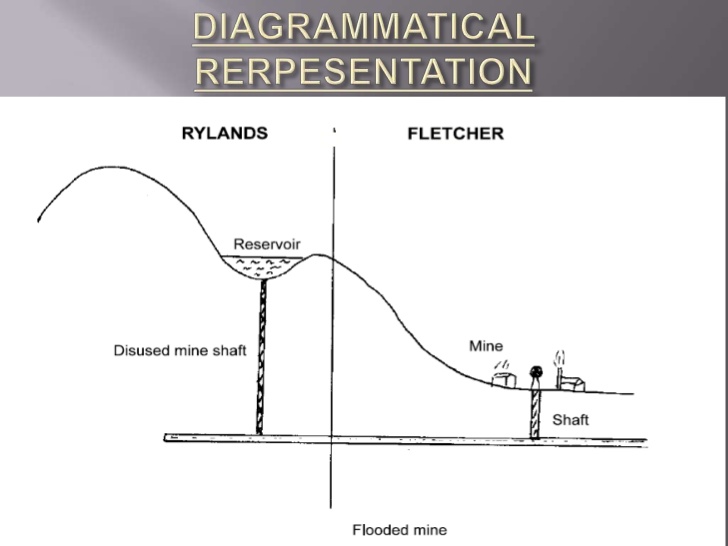
The principle of strict liability evolved in the case of Rylands v Fletcher[1]. In the year 1868, the principle of strict liability states that any person who keeps hazardous substances on his premises will be held responsible if such substances escape the premises and causes any damage. Going into the facts of the case, F had a mill on his land, and to power the mill, F built a reservoir on his land. Due to some accident, the water from the reservoir flooded the coal mines owned by R. Subsequently, R filed a suit against F. The Court held that the defendant built the reservoir at his risk, and in course of it, if any accident happens then the defendant will be liable for the accident and escape of the material.

case-study-of-rylands-v-fletcher-4-728Going by the principle laid in this case, it can be said that if a person brings on his land and keeps some dangerous thing, and such a thing is likely to cause some damage if it escapes then such person will be answerable for the damaged caused. The person from whose property such substance escaped will be held accountable even when he hasn’t been negligent in keeping the substance in his premises. The liability is imposed on him not because there is any negligence on his part, but the substance kept on his premises is hazardous and dangerous. Based on this judicial pronouncement, the concept of strict liability came into being. There are some essential conditions which should be fulfilled to categorize a liability under the head of strict liability.

Essentials of Strict Liability

Dangerous Substances: The defendant will be held strictly liable only if a “dangerous” substances escapes from his premises.

For the purpose of imposing strict liability, a dangerous substance can be defined as any substance which will cause some mischief or harm if it escapes. Things like explosives, toxic gasses, electricity, etc. can be termed as dangerous things.

Strict-Liability-What-To-Know-About-ItEscape: One more essential condition to make the defendant strictly liable is that the material should escape from the premises and shouldn’t be within the reach of the defendant after its escape.

For instance, the defendant has some poisonous plant on his property. Leaves from the plant enter the property of the plaintiff and is eaten by his cattle, who as a result die. The defendant will be liable for the loss. But on the other hand, if the cattle belonging to the plaintiff enter the premises of the defendant and eats the poisonous leaves and die, the defendant would not be liable. In the judicial pronouncement of Reads v. Lyons & Co.[2] it was held that if there is no escape, the defendant cannot be held liable.

Non-natural Use: To constitute a strict liability, there should be a non-natural use of the land. In the case of Rylands v. Fletcher, the water collected in the reservoir was considered to be a non-natural use of the land. Storage of water for domestic use is considered to be natural use. But storing water for the purpose of energizing a mill was considered non-natural by the Court. When the term “non-natural” is to be considered, it should be kept in mind that there must be some special use which increases the danger to others. Supply of cooking gas through the pipeline, electric wiring in a house, etc. is considered to be the natural use of land. For instance, if the defendant lights up a fire in his fireplace and a spark escapes and causes a fire, the defendant will not be held liable as it was a natural use of the land.

These three condition needs to be satisfied simultaneously to constitute a strict liability.

Exception to the Rule of Strict Liability

There are certain exceptions to the rule of strict liability, which are-

Plaintiff’s Fault: If the plaintiff is at fault and any damage is caused, the defendant wouldn’t be held liable, as the plaintiff himself came in contact with the dangerous thing.

In the judicial pronouncement of Ponting v Noakes,[3] the plaintiff’s horse died after it entered the property of the defendant and ate some poisonous leaves. The Court held that it was a wrongful intrusion, and the defendant was not to be held strictly liable for such loss. Warning_sign_180

Act of God: The phrase “act of God” can be defined as an event which is beyond the control of any human agency. Such acts happen exclusively due to natural reasons and cannot be prevented even while exercising caution and foresight.[4] The defendant wouldn’t be liable for the loss if the dangerous substance escaped because of some unforeseen and natural event which couldn’t have been controlled in any manner.

Act of the Third Party: The rule also doesn’t apply when the damage is caused due to the act of a third party. The third party means that the person is neither the servant of the defendant, nor the defendant has any contract with them or control over their work. But where the acts of the third party can be foreseen, the defendant must take due care. Otherwise, he will be held responsible.

For instance, in the case of Box v Jubb,[5] where the reservoir of the defendant overflowed because a third party emptied his drain through the defendant’s reservoir, the Court held that the defendant wouldn’t be liable.

Consent of the Plaintiff: This exception follows the principle of violenti non fit injuria.

For instance, if A and B are neighbors, and they share the same water source which is situated on the land of A, and if the water escapes and causes damage to B, he can’t claim damages, as A wouldn’t be liable for the damage.

https://lawsikho.com/course/certificate-criminal-litigation-trial-advocacy
click above

Absolute Liability

The rule of absolute liability, in simple words, can be defined as the rule of strict liability minus the exceptions. In India, the rule of absolute liability evolved in the case of MC Mehta v Union of India.[6] This is one of the most landmark judgment which relates to the concept of absolute liability.

image003The facts of the case are that some oleum gas leaked in a particular area in Delhi from industry. Due to the leakage, many people were affected. The Apex Court then evolved the rule of absolute liability on the rule of strict liability and stated that the defendant would be liable for the damage caused without considering the exceptions to the strict liability rule.

According to the rule of absolute liability, if any person is engaged in an inherently dangerous or hazardous activity, and if any harm is caused to any person due to any accident which occurred during carrying out such inherently dangerous and hazardous activity, then the person who is carrying out such activity will be held absolutely liable. The exception to the strict liability rule also wouldn’t be considered. The rule laid down in the case of MC Mehta v UOI was also followed by the Supreme Court while deciding the case of Bhopal Gas Tragedy case. To ensure that victims of such accidents get quick relief through insurance, the Indian Legislature passed the Public Liability Insurance Act in the year 1991.

The Public Liability Insurance Act, 1991[7]

This act was introduced with the aim of providing immediate relief to people who are victims of accidents in which handling of hazardous substances is involved. The main focus of the Act is to create a public liability insurance fund which can be used to compensate the victims.

juridical concept with hammer and judge, selective focus on metal part,

The Act states that any person who is carrying out inherently dangerous or hazardous activities should have insurances and policies in place where he will be insured against liability to provide compensation to the victims in case any accident takes place, and some injury occurs. This liability is based on the principle of “no fault liability” or in other words, the rule of strict liability and absolute liability. Inherently dangerous or hazardous substance covers under its scope any mixture, preparation or substance which because of its properties can cause serious harm to human beings, animals, plants, property or the environment. If any substance is inherently dangerous or hazardous due to its handling also, then also the absolute liability of the defendant arises.

Concluding Remarks

The rule of strict liability and absolute liability can be seen as exceptions. A person is made liable only when he is at fault. But the principle governing these two rules is that a person can be made liable even without his fault. This is known as the principle of “no fault liability.” Under these rules, the liable person may not have done the act, but he’ll still be responsible for the damage caused due to the acts. In the case of strict liability, there are some exceptions where the defendant wouldn’t be made liable. But in the case of absolute liability, no exceptions are provided to the defendant. The defendant will be made liable under the strict liability rule no matter what.

LawSikho has created a telegram group for exchanging legal knowledge, referrals and various opportunities. You can click on this link and join:

https://t.me/joinchat/J_0YrBa4IBSHdpuTfQO_sA

Follow us on Instagram and subscribe to our YouTube channel for more amazing legal content.
[divider]

Footnotes:

[1] (1868) L.R. 3 H.L. 330

[2][1947] AC 156  House of Lords

[3](1849) 2 QB 281

[4]http://legal-dictionary.thefreedictionary.com/act+of+God/

[5]LR 4 EX Div 76

[6]A.I.R. 1987 S.C. 1086: 1987 ACJ 386

[7]file:///C:/Users/Administrator/Downloads/IND51969.pdf


Students of Lawsikho courses regularly produce writing assignments and work on practical exercises as a part of their coursework and develop themselves in real-life practical skills.

LawSikho has created a telegram group for exchanging legal knowledge, referrals, and various opportunities. You can click on this link and join:

https://t.me/lawyerscommunity

Follow us on Instagram and subscribe to our YouTube channel for more amazing legal content.

Download Now

Due Diligence In M&A Transactions

1

This article is written by Srishti Khindaria, from Amity Law School, Delhi, and Shubhanker Jhingta, pursuing a Diploma in Advanced Contract Drafting, Negotiation and Dispute Resolution from Lawsikho.com

What is an M&A?

Mergers and Acquisitions (M&As) have become a common phenomenon throughout the country ever since the introduction of New Economic Policy (NEP) of 1991 which lead to liberalization and the opening of Indian markets to the foreign ones.

The merger is a combination of two companies, where one company merges itself into the other and loses its identity, while the other prominent company gains greater importance and consolidates itself with or absorbs the other company.The term ‘amalgamation’ has been used synonymously with a merger in The Companies Act, 1956 and both these terms are used interchangeably, but both are not precisely defined.

In an acquisition, there is an acquiring company and an acquired company. The acquiring company purchases the interest of the acquired company’s shareholders. Thus, a merger is an arrangement through which two or more companies are brought together, and their control is vested in one company. Here both companies pool in their interests. While in an acquisition the ownership of one company is bought in tangible or intangible assets by another company in ways such as purchasing the controlling interest in share capital or the voting rights. In a highly competitive environment globally, mergers and acquisitions have turned out to be one of the fastest ways for companies to gain a competitive advantage.

What is due diligence?

Due diligence refers to any reasonable person/business entity must take before entering a legal contract or business transaction. Performance of thorough due diligence before any investment or acquisition is made by the business is a fiduciary duty entrusted with the officers of companies

Due diligence is a through and through examination of all the critical aspects of business. Every aspect of the business must be examined through due diligence- financial, operational, tax, commercial, tax, IT, integrity, social, environmental, health and safety, regulatory, etc. It is seen as a comprehensive appraisal of the business by a prospective buyer to evaluate the assets and liabilities and other factors of business.

Role of due diligence in M&As

Mergers and Acquisitions involve a reasonable amount of due diligence by the buyer as before committing to the transaction it essential for the buyer to know what it will be buying and what all obligations it will assume with the purchase, the nature, and extent of liabilities of the target company, litigation issues, intellectual property issues, etc. This is particularly important in the case of private companies where the target company has not yet been subject to the scrutiny of the public and where the buyer has very little ability to obtain information that it could ordinarily obtain from public sources.

Thus it can be said that the basic function of due diligence in any merger or acquisition is to assess the potential risks involved in the proposed transaction by inquiring into all relevant aspects of the business to be purchased in its past, present and predictable future.

The four core areas of due diligence in a merger transaction are as follows;

  • Financial statements review: This is done to confirm in the balance sheet the existence of assets, liabilities, and equity, and analyze the income statement of the company to determine its financial health.
  • Management and operations review: This is done to determine reliability and quality of financial statements, and to gain a sense of contingencies which exist beyond the financial statements.
  • Legal compliance review: This is done to review and check for potential legal problems that could arise in the future stemming from the target company’s past.
  • Document and transaction review: This is done to ensure that the paperwork of the deal is in proper order and that the transaction structure is appropriate.

In 2008 Bank of America’s acquisition of Countrywide Financial for about $4 billion serves as a perfect example as to why due diligence is important.[1] Countrywide Financial has been a key player in subprime mortgage market through the 21st-century real estate boom.

 A subprime mortgage refers to those mortgages which are given to borrowers who have less than perfect credit score. Analysts discover years after the deal took place a lack of oversight on the part of employees and brokers- who had financial incentives in the way of commissions backing their actions- who pushed through mortgage approvals on overvalued properties that the borrowers may have trouble repaying.

Subprime mortgages held by major financial institutions such as Lehman Brothers, Countrywide Financial and Bear Stearns, in the form of securities. However as these securities had no market price and were illiquid, the firms were not able to value them on a market-to-market basis and subsequently went on to value them for many times their actual worth. Countrywide Financial too had a large inventory or such securities on its books, and they were valued using spurious methods.

When Bank of American acquired Countrywide Financial, while conducting due diligence, its officials failed to recognize that these subprime securities where worth much less than stated and as a result along with the $4 billion purchase price there was over $40 billion attached as a liability that Bank of America was unaware of.

Another example to showcase the importance of due diligence would be that of the deal between Dai-Ichi Sankyo and Ranbaxy. Initially, Dai-Ichi Sankyo paid Ranbaxy $4.6 billion for 63% of its share however late wrote down the acquisition’s value by $3.6 billion. The reason being that they were never fully aware of the extent of the Food and Drug (FDA) Investigation into Ranbaxy when it was asked to shut down all its pending and future drug applications from its Ponta Sahib plant in 2009. The first-to-file atorvastatin which was the greatest attraction for Dai Ichi was fraught with many problems. As Dai-Ichi failed to conduct adequate due diligence, they ended up suffering huge losses.

“Only Fools Rush”

Why is due diligence important for any M&A transaction?

Though a slightly time-consuming process due diligence is essential before any M&A is undertaken. And the companies entering into an M&A must make sure it is conducted in a proper manner as it is essential to investigate the affairs of business as a prudent person would.

The other advantages of Due Diligence are as follows;

  • It helps assess the risks and opportunities that shall be present in the proposed transaction and reduces the risk of unpleasant post-transaction surprises.
  • It confirms all material facts of the business and that the business is exactly as it appears without any discrepancies.
  • Due diligence helps create a relationship of trust between two otherwise unrelated parties.
  • It helps identify potential deal killers and defects in the target business that help avoid bad business transactions.
  • It helps gain information which would be useful for valuation of assets, indemnification and also negotiation processes.
  • It also helps verify that the target business has bene complying with norms of the industry and identify potential “red flags.”
  • Lastly, due diligence also helps in analyzing the target before a controlling interest is acquired in it.

As it has been said, “Due diligence is not judgment making it just bringing out all facts to the fore.”[2]

Steps involved in due diligence

Commercial transactions are usually complex in nature, therefore, it is very difficult to come up with a single analytical method for performing due diligence. However, there are a few tools that can help us with the same. 

Tools of due diligence

One of these methods involves preparing a questionnaire for the target company, which helps us in identifying the risks involved in the business of the Company and also gives an overview of the General and Financial health of the Company.

Another way is to ask the Seller to make Representations and Warranties regarding the conduct of business in a contractual agreement.

The third method involves reviewing the financial analysis of the targeted company’s business, analyse and identify the legal risks associated with the same.

Procedure concerning due diligence

There are two ways of conducting due diligence:

  • In the first method, the seller Company presents predetermined data to the Buyer in a data room.
  •  The Second method involves analysing the data provided by the Seller in response to the questionnaire.

In the Data Room method, the Potential bidders are supplied with large amounts of data, which is then studied and valued. Each Buyer is presented with the same amount of data and information and any discrimination in the supply of information or documents may end up vitiating the whole process. Therefore, in this method, due diligence is conducted on a large amount of data and information provided by the Seller/target company.

In the questionnaire method, negotiations are done on a one to one basis based on the answers supplied by the Seller Company. A due diligence report is prepared by the lawyers based on these answers and further negotiations can be done based on this report.

Initially, the buyer sets up a team of legal and financial experts. This team consists of investors, lawyers, accountants, personal consultants, and other service providers based on the business your company is involved in.

In the next step, the due diligence team gathers all the material information and documents. Once the confidentiality agreement is signed between the parties, the due diligence team can request the seller company to provide the necessary documents. The objective of this preliminary survey conducted by the team is to identify some critical issues like statutory non- compliance, concealment of facts and figures, pending legal proceedings, any imbalances in internal controls of the company, and so on. As a result of this preliminary survey, the buyer is able to identify any potential risks and deal breakers issues before money and other resources are committed to the target company.

If there is any problem during the review process, the team will decide on abandoning the deal altogether or modifying their offer. The team can hold meetings with the seller company to address any grievances on time. A certificate of completeness of disclosures should also be obtained from the target company stating the authenticity and completeness of documents provided, and that no material information has been withheld by the seller company. If the buyer is satisfied with the information, it can proceed with the transaction and send a purchase agreement to the seller company for approval.

Elements of due diligence

Financial due diligence

Financial due diligence is considered to be one of the most important types of due diligence. It aims to ensure that the financials provided by the target company in the Confidentiality Information Memorandum are accurate. It also involves an analysis of major customer accounts, analysis of profit margins, and inspection of internal control procedures. The Company’s order book and sales pipeline order are also examined,  to make better projections.

Intellectual property due diligence

Intellectual property assets are considered to be some of the most valuable assets in possession of a company; these intangible assets are what differentiate a company from its competitors, vis-à-vis the products and services they provide.  Therefore, it is important that a due diligence review is conducted over some items like a schedule of patents and patent applications, schedule of copyrights, trademarks, pending patent clearance documents, and any pending case against the company in regard to intellectual property.

Taxes due diligence 

Due diligence concerning tax liability involves a thorough review of all the taxes the target company is under an obligation to pay and ensuring their proper calculation. Furthermore, the status of any pending tax-related cases also needs to be examined.

Customer due diligence

Customer Due diligence is essential to a transaction as it provides the buyer company with a close look at the target company’s customer base. It involves an examination and review of the following:

  • Top customers of the company, customers who are indispensable to the company regardless of their current spending with the company.
  • The current credit policies, service agreements, and insurance coverage.
  • Customer Satisfaction Score and a list, with explanations of any important customers lost by the target company in the past three years.

Legal due diligence

In any acquisition, a company wants to avoid acquiring any unwanted legal liabilities from the target company. Legal due diligence, therefore, includes a review and examination of the following:

  • The Memorandum and Articles of association of the company.
  • Minutes of Board meetings of the preceding years.
  • Shareholder Certificates issued to important management personnel of the company.
  • All the material contracts and agreements to which the company is a party to.
  • Copies of all credit agreements, bank financing agreements, licensing, and franchise agreements.

These are some of the key elements of due diligence that need to be kept in mind before entering into a mergers and acquisition transaction. Additionally, diligence in antitrust and regulatory issues, insurance, material contract and employee management issues are some other key areas where due diligence is required.

Is due diligence mandated by indian law?

Securities and Exchange Board of India and several provisions in the Companies Act, 2013, cast an obligation on the director to act in the best interests of the company. He is supposed to exercise due care and skill while doing the same. In the case of Smith v. Van Gorkom, the Court held the directors personally liable for approving a merger proposal which assured shareholders a premium of 39-62% over market price, The US Supreme Court opined that the directors failed to exercise reasonable care and also stressed on the fact that the Board participation needs to be carefully planned and structured when a decision has to be taken regarding a major corporate transaction such as the sale of the company.

In Nirma Industries and Anr v. Securities Exchange Board of India, the Supreme Court opined that under Regulation 27 (d) of the SEBI, 1997, an investor Company needs to ensure that appropriate due diligence is carried out regarding the target company before investing. The Court stated that Nirma Industries were aware of various litigations, the plea of ignorance of litigation and dangers of investment was thereby denied.

Challenges associated with conducting due diligence in india 

  • In most transactions, there are confidentiality and secrecy covenants, which prevent the disclosure of any material data or information.
  • In case of a distressed M& A transaction, the investor company is dependent on the IRP, COC, and the management for providing basic data and information. This may lead to a discrepancy in information being shared, leading to disputes. 
  • A correct assessment of the contingent and past liabilities and making recommendations for the same, make the task of a due diligence expert difficult.
  • Due diligence requires a variety of experts; therefore, the procedure can end up being an expensive one for the acquirer.
  • In many transactions, there is also insufficient basic data provided to the acquirer, which makes the procedure challenging.

How to effectively undertake due diligence exercise

Before making the last move, it is essential to keep the following things in mind to effectively undertake due diligence:

  • Firm and clear strategies and a well-defined objective are one of the fundamentals of an effective due diligence exercise.
  • Allocate clear responsibilities and formulate procedures for the personnel involved in data management, project management, and core due diligence team and so on.
  • Have an integrated approach towards the due diligence process and seek the expertise of technical consultants whenever necessary.
  • It is also expedient to store the data in electronic form, which makes it easier to transfer to and being accessed from remote locations. 
  • Use the latest technology for retrieving, analysing, and reviewing data.
  • It is important to deal with the media reports, although paying too much attention should be discouraged.
  • On-site visits should be encouraged; the on-site conditions give a firsthand view of the prevailing scenario which can never be available on paper.
  • Lastly, there needs to be a continuous dialogue between the acquirer and the target company and there should be no hesitation in seeking clarifications.
  • Conclusion
  • A comprehensive due diligence process is essential for the success of any merger and acquisition transaction. The fundamental purpose of due diligence is to validate assumptions on identification and valuation of risks. It must be ensured that the scope of investigations is tailored to the nature of the transaction. Due diligence is of utmost importance and it cannot be emphasized enough that most deals fail due to nothing more than inadequate due diligence due to which the buyer ends up overpaying or experiencing major integration problems or assuming unknown liabilities.

References

[1]http://www.investopedia.com/ask/answers/010615/why-due-diligence-important-company-acquisition.asp

[2]http://www.assocham.org/upload/event/recent/event_1096/Pavan-Kumar-Vijay.pdf

Download Now
logo
FREE & ONLINE 3-Day Bootcamp (LIVE only) on

How Can Experienced Professionals Become Independent Directors

calender
28th, 29th Mar, 2026, 2 - 5pm (IST) &
30th Mar, 2026, 7 - 10pm (IST).
Bootcamp starting in
Days
HRS
MIN
SEC
Abhyuday AgarwalCOO & CO-Founder, LawSikho

Register now

Abhyuday AgarwalCOO & CO-Founder, LawSikho