
Download Now
Home Blog Page 1762

What Cannot Be Trademarked In India

1

download (24)

In this blogpost, Kriti Bhatnagar, Student, National Law Institute University, Bhopal, writes about what is a trademark, different kinds of trademark and what cannot be trademarked in India.

A great trademark is appropriate, dynamic, distinctive, memorable and unique.

– Primo Angeli

Introduction

The word, trademark, denotes words legally registered or established by use as representing a company or product. When competition is spurting in every nook and cranny of the world, it becomes almost essential to differentiate our goods or services from others present in the world. India has emerged as the third largest base for start-ups in the world, according to the NASSCOM Start-Up Ecosystem Report, 2015. The strife to stay in the market makes one cautious about his products. Trademark concept to Indians may be quite new, but it is interesting to know that about 3000 years ago, Indian craftsmen did engrave their signature on their artistic creations. With the advent of globalization and interconnectedness, trademark laws have fastened their grip over the Indians.

The first legislation with respect to trademarks was the Trade Marks Act, 1940 which was similar to UK Trade Marks Act, 1938. As time elapsed, it was seen that the act was inept to meet the requirements of the society. Thus, the Trade and Merchandise Marks Act, 1958 was enacted which was finally repealed by the Trade Marks Act, 1999. This act was in compliance with the provisions of the TRIPS. It provides a platform for the registration of trademarks of goods and services, thereby, providing the exclusively identifying the product with its manufacturer and thereby also providing the manufacturer relief in case of infringement of his trademark.

Trademarks, in India, have been governed by the principles of the common law.

But after the enactment of the trademarks act, 1999, section 2(1)(zb) of the act defines trademark as-

“trade mark” means a mark capable of being represented graphically and which is capable of distinguishing the goods or services of one person from those of others and may include shape of goods, their packaging and combination of colours; and-

(i) in relation to Chapter XII (other than section 107), a registered trade mark or a mark used in relation to goods or services for the purpose of indicating or so as to indicate a connection in the course of trade between the goods or services, as the case may be, and some person having the right as proprietor to use the mark; and

(ii) in relation to other provisions of this Act, a mark used or proposed to be used in relation to goods or services for the purpose of indicating or so to indicate a connection in the course of trade between the goods or services, as the case may be, and some person having the right, either as proprietor or by way of permitted user, to use the mark whether with or without any indication of the identity of that person, and includes a certification trade mark or collective mark;

Certification mark

This mark basically identifies the origin, material, quality and characteristics of goods and services offered by a manufacturer/dealer from his competitors. They are also used to assess the worth of labour in manufacturing goods or services.

Collective mark

These marks differentiate the members of a collective group, which can be a cooperative organisation or an association.

What cannot be a trademark

Trade Marks Act, 1999, sections 9 and 11 give the grounds for refusing a trademark. Section 9 mentions the absolute grounds and section 11 provides with the relative grounds for refusal. Mentioned below are the grounds for refusal in India-

Devoid of distinctive nature

The criterion of being distinct has been interpreted widely in the Indian law. The mark of a product or service which is not of a distinctive nature would not be a trademark. The registration of descriptive trademarks is prohibited under Section 9(1)(b) of the Trade Marks Act, 1999, unless they are distinctive.

Names/ Surnames

Names or surnames cannot be used as a trademark in India if they do not possess a distinctive character. Also, if such names are used dishonestly, they would not be given the status of a trademark. For example, in Prathiba M. Singh v Singh and Associates 2014 (60) PTC 257 (Del), the court observed that “‘singh’ is a very common surname, and nobody can have a monopoly over it.”

Numerical

Numbers cannot be said to exclusivity to be used as a trademark, per se. In certain cases, the courts in India have concluded that numbers do not have a distinctive nature attached to them, thereby, not qualifying to be a trademark. In the case of Radico Khaitan Ltd v. Carlsberg India Pvt Ltd, the Delhi High Court observed that “a numeral cannot be said to have a distinctive character.”

Geographical location

Geographical locations cannot be used as trademarks. In Imperial Tobacco Company of India Ltd v. Registrar of Trademarks, AIR 1968 Cal 582, the Calcutta High Court held that “the trade mark “Simla” with the label is composite in character. It is a well-known hill– station of India. Its geographical signification is, therefore, plain and unequivocal.”

Colour

The Trade Marks Act does not specifically refuse the usage of colour. But Indian Registry and Courts do not prefer the idea of using colours as trademarks, for the reasons that the available stock will be depleted and the courts will be piled up with cases.

Sound

Musical notes in the form of musical notations are accepted as trademarks in India, but noises such as dog barking cannot be a trademark.

Smell

Smell has not been registered as a trademark in India. It is difficult to distinguish between different smells.

Characteristics of the goods or services

If there is any indication which serves in the trade as to designate the kind, quality, quantity, intended purpose, values, geographical origin or the time of production of the goods or rendering of the service or other characteristics of the goods or service, it shall not be used as a trademark. In the case of ELGI Ultra Industries Limited v The Assistant Registrar of Trade Marks, MANU/IC/0062/2008, the Intellectual Property Appellate Board [IPAB], held that “the words “ultra” and “perfect” are highly descriptive and laudatory. They cannot be seen as trademarks.”

Customary

The trademarks which consist exclusively of marks or indications which have become customary in the current language or in the bona fide and established practices of the trade shall not be registered. For example, Otis’s trademark “Escalator” for moving staircases became a generic word and therefore, the Trademark Office concluded that Otis cannot use its trademark since the mark has become customary in respect of moving stairs.

Deceitful

A trademark should not be deceitful to the public. For example, if a company starts to make biscuits by the name of Parle-J, it would be an infringement of the right of Parle-G, since it is highly deceptive.

Hurtful to religious sentiments

If certain marks become offensive to the religious sentiments of a person, they will not be considered as trademarks.

In the case of Lal Babu Priyadarshi v. Amrit Pal Singh (Civil Appeal No. 2138 of 2006, Supreme Court), the appellant had applied for registration of the mark “Ramayan” with the device of a crown in relation to incense sticks and perfumeries. The court observed that “no person can claim the name of a holy text as a trademark.”

Scandalous Matter

If any word is to be trademarked, it should not be scandalous or obscene, in any manner.

Prohibited under the emblems and names (prevention of improper use) Act, 1950

If the use of a mark is prohibited under the aforementioned act, it shall not be used as a trademark.

Shape of goods

Section 9(3) of the Trade Marks Act, 1999 states-

A mark shall not be registered as a trade mark if it consists exclusively of—

(a) The shape of goods which results from the nature of the goods themselves; or

(b) The shape of goods which is necessary to obtain a technical result; or

(c) The shape which gives substantial value to the goods.

For example, the shape of Vanilla ice cream that resulted from the nature of the product itself was not registered as a trademark.

Identical/ similar products

Any mark which is similar to an earlier mark cannot be used as a trademark for another product. For example, TATA motors cannot be assigned as a trademark again. There should be no unfair advantage.

Contrary to law

If a law of passing off is protecting an unregistered trade mark, such marks cannot be used by other persons as trademarks.

Registrar

It is open to the registrar to decline to register the appellant’s trade mark if he wishes to.

In the case of Geep Flashlight Industries Ltd. vs. Registrar of Trade Mark, AIR 1972 Delhi 179 even when the appellant’s proposed trademark satisfied the conditions under the act, the appellant was not entitled as a matter of right to the registration of the trade mark.

Conclusion

Trademark has provided a person with exclusivity over his work, but India is yet to explore in this field, to deal with the emerging innovations every next day. In India, for the registration of trademarks, the NICE classification of goods and services is followed which classifies products into 45 classes. When a product or service needs a trademark, it should fit in one of the classes. Thus, we see that the products and services have been limited to such classes by the Government.

It is not necessary to have a registered trademark, but the prior usage of the trademark is important. The problem is that nobody could save rights for products and services which would innovate in the future, especially in India. Trademarks being a self-serving aid to the society should be available on such platforms.

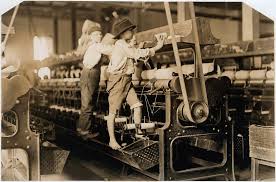
Download Now

What Are The Laws For The Prevention Of Child Labour

1
Prevention Of Child Labour

images (15)

In this blogpost, Sonal Srivastava, Student, Amity Law School, Lucknow, writes about the meaning of child labour, places where children are found working and the laws working for Prevention Of Child Labour.

Child labour refers to the employment of children in any work that deprives them of their childhood, interferes with their ability to attend regular school, and that is mentally, physically, socially or morally dangerous and harmful. This practice is considered exploitative by many international organizations.

What is child labour?

Labour is the work done by the worker. Child labor is something that is distinguished from labor per se. Child labour is when a child under the legal age (fourteen) are made to do work that is physically and mentally harmful and which interrupts their education or social development. Child labourers are involved in all type of jobs – agriculture, the sex industry, carpet and textile industry, brick making, construction work, quarrying and many other types of hazardous work.

Understanding the concept of child labour

Universally the age for considering a person to be child is less than 18 years. Child labour is present everywhere but invisible, toiling as domestic servants in homes, labouring behind the walls of workshops, hidden from view in plantations. But some of us get confused with the light work a child is doing at that age with child labour. A hidden concept behind this the differentiation between

  1. Hazard Work
  2. Decent Work.  
  1. Hazard Work: It implies to the work done by the person of age less than 18 years involving risk. And by the definition set by ILO- International Labour Organisation, ‘Risk= Severity of harm * Probability of harm’.
  2. Decent Work: It refers to the work which is of no harm instead it helps in the all round development of a child. For instance, the children undergoing internships during their adolescent age cannot be defined as child labour, and no preventive laws are meant for such work.

Prevention Of Child Labour

Child labour is a practice of engaging small children in the works either part-time or full-time basis. It is any kind of work that harms children and keeps them away from attending schools. It may have either of characteristics such as violating Nation’s minimum age laws, threatens children’s physical, mental or emotional wellbeing, involve intolerable abuse, forced labour, prevents children from going to school, etc.

Works where children are involved

  • Factories- many children are employed in factories dealing even hazardous substances, in carpet industries, clothing, glass and bricks, etc.
  • Agriculture- Children are often put to work on fields, where they have to harvest crops, they are even involved in commercial agriculture where they are exposed to long hours of extreme heat, temperatures, health risks from pesticides, little or no pay, no adequate food, water, etc.
  • Mining and quarrying- Children often suffer high health risks when they are engaged in underground mines, etc.
  • Domestic Help- Domestic help services are the most common. Children of the age of 7-8 years are kept as domestic help and many times treated very badly, beaten and even subjected to sexual violence.
  • Flesh Trade- young girls of the age of 4-14 years are sold and forced into flesh trade. In such circumstances, they not only lose their childhood but also lose the happiness of their lives.

Laws for protection of children against child labour

  • The Factories Act of 1948- It prohibits employment of children below the age of 14 years in any factory.
  • The Mines Act of 1952– It prohibits the employment of children below the age of 18 years in any mines as it is one of the most dangerous occupations and many accidents have happened in the past where children were severely injured or even killed.
  • The Child Labour (Prohibition and Regulation) Act of 1986– According to this Act, children below the age of 14 years cannot be employed for the work involving the use of hazardous substances and the list of the works involving hazardous substances is provided in the Act. According to section 3 of the Act, any person who violates the provisions of the act shall be liable for an imprisonment of not less than 3 months and which can be extended to 1 year or with a fine of rupees 10,000 which may extend to 20,000 rupees or with both.
  • The Juvenile Justice (Care and Protection) of Children Act, 2000– This Act for the first time penalized the offence of child labour. Any person who contravenes the provisions of the Act is penalized with an imprisonment for a certain term and fines or with both.
  • The Right of Children to Free and Compulsory Education Act of 2009– According to this Act, every child up to the age of 14 years is entitled to free education and this being a fundamental right under article 21 Also, there shall be reserved 25% seats in private institutions as well, and no child shall be deprived of education or admission into any school on the grounds of him being from a poor family.

Under the Indian Constitution

For the protection of children and prevention of child labour the constitution of India itself provide many safeguards;

Part 3 of Indian Constitution: Fundamental rights

  • Article 15 – The State shall not discriminate against any citizen…..Nothing in this article shall prevent the State from making any special provisions for women and children.
  • Article 21A- Added by 86th constitutional amendment – The State shall provide free and compulsory education to all children of the age of 6-14 years in such manner as the State may, by law, determine.
  • Article 24- No child below the age of 14 years shall be employed to work in any factory or mine or engaged in any other hazardous employment.

Part 4 of Indian constitution: DPSP

The Directive Principles Of State Policy (DPSP) are guidelines for the framing of laws by the government. These provisions, set out in Part IV of the Constitution, are not enforceable by any court in India, but the principles on which they are based are fundamental guidelines for governance that the State is expected to apply in framing policies and passing laws relating to it.

  • Article 45 – The State shall endeavor to provide early childhood care and education for all children until they complete the age of 6 years.
  • Article 243G read with Schedule 11 – provide for institutionalisation of child care by seeking to entrust programmes of Women and Child development to Panchayat (ITEM 25 of SCHEDULE 11), apart from education (ITEM 17), family welfare (ITEM 25), health and sanitation (ITEM 23), and other items with a bearing on the child welfare.

Other Acts safeguarding the right of children

In order to implement the constitutional and international obligation towards eradication of child labour in different occupations, the following legislative enactments have been in force, and continue after the Child Labour (Prohibition and Regulation) Act, 1986. It would be better to appraise various statutes and statutory provisions enacted in the existing labour laws to tackle the problem of child labour.

  • THE PLANTATION OF LABOUR ACT, 1951:

It applies to plantations in Tea, Coffee, Rubber or Cinchona, etc in which 30 or more persons are employed. It prohibited the employment of children less than twelve years in the plantation.29 The child worker (A person who has completed 15 years) can be allowed to work if employed only between 6 am. and 7 pm.

The Plantation Labour Act, 1951 has now been amended by sec. 24 of Child Labour (Prohibition and Regulation) Act, 1986 to bring the age of the child in line with the definition under the said Act.

  • THE MERCHANT SHIPPING ACT, 1958:

The Act prohibits the employment of children in any capacity, who are below 14 years of age on sea-going ships, except (a) in a scholarship or training ship; or (b) In a ship in which all persons employed are members of one family; (c) In a homemade ship of less than two hundred ton gross; or (d) Where such person is to be employed on nominal wages and will be in the charge of his father or other adult or a male relative.The Act also makes provision for modest penalty of a fine of Rs. 50/- for violating these provisions.

  • THE MOTOR TRANSPORT WORKERS ACT, 1961:

Minimum age required for employment in every transport undertaking employing five or more workers is 15 years. The State Governments are authorized to apply all or any of the provisions of the Act to any motor transport undertakings employing less than 5 workers. Now as amended by section 26 of the Child Labour (Prohibition and Regulation) Act, 1986, by which word ‘fifteenth’ in clauses (a) and (c) of section 2 has been substituted by word ‘Fourteenth’.

Part-III of the Act (Regulation of Conditions of Work)

Part-III of the Act runs from section 6 to 13 deal with regulation of conditions of work of children. This part prescribes the norms for working hours and period of work, weekly holidays, guidelines to deal the disputes as to age, imposed legal responsibility to maintain the register on the occupation and health and safety of the working children.

Part-IV of the Act (Procedure for Prosecution of Offences)

Part-IV of Child Labour (Prohibition and Regulation) Act deals with procedure for prosecution of offences and penalties under the Act. It provides a procedure relating to the offences. A positive feature of the Act under section 16 is that :

(a) Any person, police officer or inspector may file a complaint of the commission of an offence under this Act in any court of competent jurisdiction ;

(b) Every certificate as to the age of a child which has been granted by a prescribed medical authority shall, for the purposes of this Act be conclusive evidence as to the age of the child to whom it relates ; and

(c) No court inferior to that of a Metropolitan Magistrate or a Magistrate of the First Class shall try any offence under this Act.

The penalties under this Act are relatively more stringent than the earlier Acts and violating the provisions relating to child labour in certain other Acts results in a penalty under this Act.

Present Scenario of Child Labour: Data Analysis

  1. Recent Child Labour Survey (2011) estimates that, 1.68% of 5 to 14 years of age children were engaged in child labour, where, 1.68%=4.35 million of children out of 259.64 million children with age group 5-14 years in India.
  2. Reports by UNICEF estimates that, India may reach the level of the top most country with highest number of child labours ,i.e. 4.35 million.
  3. Also, The International Labour Organization (ILO) estimates that there are more than 200 million children today which are involved in child labour. Some of these children are as young as 5.

Judicial Pronouncements: Origin of preventive laws.

  • Joseph Valamangalam, Rev. Fr v. State of Kerala: [AIR 1958 Ker. 290]

Art.45 was held to be not justiciable, being only directive in nature. The Article does not confer legally enforceable right upon primary schools to receive grants-in-aid from the government.

  • M.C.Mehta v. State of T.N.: [(1991) 1 SCC 283]

The Supreme Court directed that children should not be employed in hazardous jobs in factories for manufacture of match boxes and fireworks, and positive steps should be taken for the welfare of such children as well as for improving the quality of their life.

  • M.C.Mehta v. State of T.N.: [(1996) 6 SCC 756; AIR 1997 SC 699]

The Supreme Court directed that the employers of children below 14 years must comply with the provisions of the Child Labour (Prohibition and Regulation) Act providing for compensation, employment of their parents / guardians and their education. Also Bandhua Mukti Morcha v. Union of India [(1997) 10 SCC 549; AIR 1997 SC 2218].

  • Sakshi v Union of India: [(1999) 8 SCC 591]

In this Public Interest Litigation matter, the Supreme Court of India asked the Law Commission to consider certain important issues regarding sexual abuse of children submitted by the petitioner and the feasibility of amendment to 375 and 376 IPC.

Achievements So Far

SL. No. Government Schemes on prohibition of child labour Year
1. IT Platform- PENCIL 1 August, 2017
2. National Child Labour Project (NCLP) 1988
3. National Authority for the Elimination of Child Labour (NAECL) 26 September, 1994
4. National Child Labour Policy 1987
5. Sarva Shiksha Abhiyan (Education for All) 2001
6. INDUS: India-US-DOL Project 2001-2009


Steps to take if you see activities relating to child labor around you

Dial to CHILDLINE- 1098

For taking preventive measures to stop the exploitation of a child from the harsh labor which he/she has to undergo the most important step as an individual can take is to dial on the free helpline number of ‘CHILDLINE’- 1098. CHILDLINE is a 24-hour service provider for children at times of need and assistance. Apart from providing emergency services they also link to other organizations for a child’s long-term care and rehabilitation.

Working Procedure

CHILDLINE provides outreach services and works more than counseling a child. It is currently found in 372 cities/ 34 states and UTs and is aiming to establish their centers in more than 600 districts in upcoming years. Each center is assisted with a team of trained youth who within 60 minutes after being contacted rushes to the child. Their working procedure involves contacting to police, Juvenile Welfare Board or a hospital and then providing with rehabilitation to the child.

Generally, no other non-profit children’s helpline provides such an outreach service. It reaches to the children who are: –

  1. Child labourers working in the unorganised and organized sectors
  2. Street children and youth living alone on the streets
  3. Domestic help, especially girl domestics.
  4. Children affected by physical / sexual / emotional abuse in family, schools or institutions.
  5. Children who need emotional support and guidance
  6. Children of commercial sex workers
  7. Child victims of the flesh trade
  8. Victims of child trafficking
  9. Children abandoned by parents or guardians
  10. Missing children
  11. Runaway children
  12. Children who are victims of substance abuse
  13. Differently-abled children
  14. Children in conflict with the law
  15. Children in institutions
  16. Mentally challenged children
  17. HIV/ AIDS infected children
  18. Children affected by conflict and disaster
  19. Child political refugees
  20. Children whose families are in crises.

Individual’s Responsibilities

There are various ways in which one can support CHILDLINE. For instance, one can Volunteer CHILDLINE because under section 35AC a donor is having a profit of 100% tax exemption for donating more than Rs. 5000/- and also under section 80G a 50% of tax exemption for donating less than Rs.5000/-.

  • Call 1098 when you see a child in distress.
  • Tell every vulnerable child you see, about CHILDLINE 1098.
  • Make a donation to CHILDLINE India Foundation to reach more children in more cities for providing rehabilitation.

Contact detail of the child welfare NGOs currently working in India:

S.no Name of the NGO’s Contact detail
CRY – Child Rights and You, 189/A Anand Estate, Sane Guruji Marg, Mumbai – 400-011 E-Mail:[email protected]

Ph.no:-022- 23063647/3651/1740

022-23098324/6472/6845

   2. CRY – Child Rights and You, Madhavi Mansion 12/3-1, Bachammal Road Cox Town, Bangalore – 560-005 E-Mail:[email protected]

Tel:080-2548 8574/4952/4065

   3. CRY – Child Rights and You, S – 1, 2nd floor, Abdul Rafar Building, No .15/7 , Basha Street, Choolaimedu, Chennai – 600-094 E-Mail:[email protected]Tel :044 -23745545 / 23745547 / 23745549
   4. CRY – Child Rights and You, 632, Lane No.3, Westend Marg, Near Saket Metro Station, Saiyad-ul-Ajaib New Delhi – 110 030 E-Mail :[email protected]
Tel :011-29533451/52/53
011-29531835
   5. CRY – Child Rights and You, 152, Kalikapur, Gitanjali Park, New No. 8,2nd Street, Kolkata – 700 099 E-Mail:[email protected]

Tel :033-2416 0007/8057/8069

Conclusion

Children are the future of any country, and if the future is treated badly then not only the future is shaken but also the present tumbles down. Children should be free to live their childhood and enjoy it rather than being burdened with the responsibilities to raise up their family and even if due to circumstances they are forced to do so, then also they should be given the basic amenities of life as well as childhood such as education, fooding, lodging, clothing and biggest of all “time” to live their childhood. The laws made need to be propagated, and the people should know of these laws so that they can take benefits of the same and, at least, get their children elementary education, protect children from getting socially, physically and mentally abused.

To build a strong nation, the pillars of the nation should be strong, and children are the pillars of a nation, and if they are weak, then the nation also becomes weak.

Download Now

What Are The Grounds On Which Karta Can Alienate The Property Under Hindu Law

0

Gingerbread_House_Essex_CT

In this blogpost, Sudhi Ranjan Bagri, Student, National Law Institute University, Bhopal, writes about different ways in which a property can be alienated by Karta under the Hindu Law in india

Introduction

The ownership in order to be complete needs the alienation of the property as a right. The alienation hence is one of the basic incidents of ownership. A coparcenary is a subset of Joint Family, and hence, all the coparceners have an equal right over the property among them. So no single coparcener can acquire the power to alienate the whole joint family property, unless and until the co-owners authorizes him to do so.

The position of Karta in a Joint Family is different from the other members of the family. He is entrusted with the management of the joint family property. But this doesn’t mean that he owns the property as a whole, but he also has an interest in it just like any other coparcener. With regards to the alienation aspect, if all the members consent to sell the property then such a transfer would absolutely be valid and will be binding on all the members, but if one of the members withholds his consent to this transfer then ordinarily the property cannot be transferred. This can however lead to a situation where such transfer is important for the benefit of the members but due to the absence of consent, the alienation cannot take place and hence the failure on the part of the Karta regarding maintenance of the members of the family.

So to avoid such a situation where actually because of the absence of consent of one of the coparceners, the remaining members might face difficult situations, the ancient texts regarding the Hindus have mentioned some situations where the alienation of the property can take place even without the consent of the coparceners.

Situation in Dharmashastras

In Dharmashastra there are 3 ways to alienate the property:

Apatkale

Kutumbarthe

Dharmarthe

Apatkale: It refers to a situation where the family as a whole or one of its members faces an emergency, or with respect to its property. This nature of this transaction is meant for averting the danger, or an attempt to avoid the calamity for which money has to be raised. When it refers to the property, it indicates the transfer as being necessary for its protection, or conservation, and for which immediate action is to be taken.

This is not a mere profitable transaction, but a transfer which if not effected may result in the loss to the family, to this property, or any other property owned by the family.

Kutumbarthe: Kutumbarthe means “benefit of Kutumb,” kutumb meaning the family members. It, therefore,  allowed as the proceeds of such transfer are utilized for the sustenance of the family members, such as for providing for their needs of food, clothing, shelter, education, medical expenses etc.

Dharmarthe :The term Dharmarthe means “for pious purposes” which is for the performance of religious and charitable purposes.

With the evolution of time and due to the colonial influence and their attempt to codify the Hindu laws, these terms were translated as a Legal necessity, Benefit of Estate, Religious and Charitable Purposes, respectively.

Legal Necessity

Legal necessity means any necessity which can be sustained by law or is justified by law. This concept has emerged as a combination of the Apatkale and Kutumbarthe. With respect to the joint family, it means a necessity with respect to its members and also with respect to its property, which can be justified in law.

The term “legal necessity” itself explains enough about the concept. The term “legal” here signifies its justification in law, “necessity” signifies the existence of a situation, need or a purpose that requires money and that the family does not have that kind of money or alternative resources, with which that need can be satisfied.

Conditions which need to be fulfilled for validating a transaction under legal necessity are:-

  1. Existence of need or purpose, i.e. a situation with respect to family members or its property which requires money,
  2. Such requirement is for a lawful purpose, i.e. it must not be for an immoral, illegal purpose.
  3. The family does not possess monetary or alternative resource which the requirement can be met with, and
  4. The course of action taken by the Karta is such as an ordinary prudent person will take with respect to his property.

However while such alienation, the consideration for the sale of coparcenary property must not be inadequate.

In Dev Kishan v Ram Kishan, the Karta affected a mortgage, a sub-mortgage and a sale of two houses belonging to the joint family worth around 8000 to 9000, for a consideration of Rs 400 to Rs 900, which according to him were to be utilized for the marriage of his 3 minor children. The court invalidated the transaction and stated that:

  • The transaction is void as it is opposed to the public policy, i.e. child marriage,
  • The members of the family had alternative incomes. And hence, no mortgage was needed,
  • The transfer of the property was grossly undervalued as the transfer should have been made inadequate consideration.

Benefit of Estate

This term has evolved with time and is not capable of precise definition. But if by the transfer of joint family property or by its sale proceeds, their property or any other family estate is benefited, the transaction would be for the benefit of the estate.

‘Benefit’ means an advantage, betterment or to profit, ‘Estate’ means landed property. Since here the expression is used in connection with joint family property, ‘estate’ would mean joint family landed property.

The term ‘benefit of estate’ to begin with covered cases purely of defensive nature, such as to protect it from a threatened danger or destruction, but gradually also included alienations that an ordinary prudent man would view as appropriate for the given set of situations.

Defensive Transaction

This type of transaction has been illustrated in the case of Hanooman Prasad Pandey v Mussammat Babooee. In this case, Hanooman was in a business of providing loans. He entered into a loan contract with Raja Singh. After taking a loan, he died leaving behind a minor son Lal Singh and his wife, Mussammat. There was an order of Malgoozaree which stated that there can be confiscation of property, so the wife entered into a transaction of the mortgage.

On attaining majority, Lal singh challenged the transaction on the grounds that:

  1. Mussammat was a pardanashee woman and, therefore, the transaction was a vitiated one.
  2. The transaction was with specific reference to ancestral property, and hence, she cannot deal with that kind of property and hence the transaction is void, and the appellant must return the property.

The court for the first time used the term ‘benefit of estate’ but did not explain it properly. But it laid down certain facts:

  1. Mussammat was de facto guardian whose guardianship with respect to the property matters are not in dispute, and the revenue is proof of that.
  2. The transaction entered into was for avoiding the danger which was impending on the shape of malgoozaree, which could have led to the confiscation of property.
  3. Mussammat was very much capable of entering into a contract for the reason that she didn’t enter into the unequal

Hence, the court concluded that the transaction entered into was validated in law as it was in the nature of averting a danger to the ancestral property.

Prudent/Imprudent Transactions

This type of transactions has been discussed by the court in the case of Balmukund v Kamlavati. In this case, a Hindu joint family owned a small portion of a big plot owned by the alienee, who approached the Karta for the purchase of the joint family land, and offered him a higher consideration than the market value. Initially accepting this offer, the Karta accepted the earnest money, but he later failed to execute the sale deed. The alienee, therefore, filed a suit for specific performance of the contract, but the other coparceners objected to it on the grounds of invalidity.

Court held that the doctrine of ‘benefit of estate’ emerged from the doctrine of ‘defensive transaction.’ However such transaction also requires a minimum degree of prudence on the part of the Karta. The idea of ‘benefit of estate’ doesn’t fit in this case as the family was in affluent circumstances and that there was no evidence to show that the Karta was finding it difficult to manage this property.

The courts have laid down some guidelines so as to check that validity of transaction under this doctrine:

  1. When the alienation is for defensive or protective purpose.
  2. When it brings any sort of advantage or improvement to the family estate.
  3. Where the Karta exercises his prudence suitable to family estate subject to:
  4. The degree of prudence is higher than the level expected in the case of exclusive property.
  5. How the sale proceeds are used; because it has to be used for the benefit of the family property.

Indispensable Duties

This term implies the performance of those acts which are religious, pious or charitable. Examples of indispensable duties are the obsequies of father, marriages, grihapravesham, it may also include many rituals and religious duties like sradha, upanayana, and performance of necessary Sanskara.

There is a difference in the powers of Karta while alienating properties for indispensable duties and gifts for charitable purposes. While discharging indispensable duties, the Karta has unlimited powers in the sense that he can alienate the entire property for that purpose, whereas in the case of gifts for charitable purposes, only a small portion of the property can be alienated.

The obligation to get the family members married would come under the purview of both legal necessity as well as a pious obligation as it is considered as the most essential sanskara.

Conclusion

The position of Karta is such which has a duty to maintain all the members and to take care of their needs and must act for their welfare. With such a duty, he needs to be entitled to some rights by which he can fulfill the duties he is expected to. The right to alienate is one such right given to him by the law so as to fulfill the duties of his office. However, there are certain loopholes which are present and needs to overcome by passing the requisite legislations.

The burden of proof of the alienee to prove that he took sufficient care to ascertain whether there was actual need should be lifted, instead in cases of invalid alienation it should be demanded of the transferor to prove that there was an actual condition which demanded instant redress. This should be so because the alienee being an outsider is not in a favorable position to ascertain it and such an obligation imposed on these transactions would make lenders unwilling to deal in joint property which would in turn adversely affect the rights of joint family members.

Another such loophole is the law according to which the purchaser loses all his interest in the joint property along with all the chance of getting back the purchasing amount is grossly unjust. It should be noted that the courts in their haste to safeguard the interest of the non-alienating coparceners, forget the interest of the innocent purchaser who has made a bona fide deal. Hence sufficient recourses should be made for this.

The concept of alienation has come a long journey, and the courts have also played a very important role in its development still the flaws are present in the present situation, and they also need to overcome, and hence to make much favorable laws keeping in mind the interests of all the individuals concerned.

Download Now

Gender Biasness And The Need For Uniform Civil Code

0

2000px-Combotrans.svg

In this blogpost, Vernita Jain, Student, National Law Institute University, Bhopal, writes about the need for Uniform Civil Code, its relation with the Constitution of India and judicial opinion on it. 

The Constitution of India recognizes Fundamental right to equality as one of the basic rights of an individual. Despite that, the inequality between men and women continues to exist in personal laws. Even after the adoption of secularism, the parliament of this country has been unable to resolve this problem, as personal religious laws are the main law which still have gender discrimination, but these religious laws are considered by the constitution and its makers as the one that is immune to state control.

 There is an urgent need to address the women empowerment in the core areas of health, security, etc. The Constitution of India provides for a code for all the citizens of India, called Uniform Civil Code[1]. However, the uniformity exists only in the criminal law, as criminal law is applicable equally to all the citizens of the country irrespective of the religion. In the case of civil law, there is no uniformity especially in the matter of Personal laws. The laws that govern marriage, divorce, inheritance, etc. vary depending on religion.

In India, there are different laws, ex- Hindu Marriage Act, Shariat Law, Indian Christian Marriage Act, etc. Thus, it is clear that there is no uniformity in all personal laws as they confer unequal rights depending on the religion and the gender.

Personal Laws And Discrimination Against Women

In The Holy Quran women has been given equal rights as men and it places women in respectable positions. However, there are certain areas where the women had been granted status lower to men. Quran provides for the concept of ‘Hiba’. This concept provides that the men are the guardians of women since they are the bread earner of the family. It is, therefore, his duty to feed his woman.

Quran gives permission to men to have 4 wives. However, such right has not been given to women. In the case of divorce, women have been helpless. Quran provides the manner of divorce which requires men to pronounce ‘talaq’ thrice, and he is granted with a divorce. This method is highly discriminatory against the women. In the matter of succession, women are given not more than half of the share as compared to the proportion that is given to men. For example, if brother and sister inherit the property as successors, the brother gets two shares whereas the sister gets only one share.

Iddat period is the period after the divorce or the death of the husband in which a Muslim woman has to remain unmarried. During this period she is not allowed to remarry. In the matter of divorce, she is not entitled to any maintenance beyond the iddat period.

The Indian law provides that it is mandatory for every husband to provide his wife with the maintenance until she is able to maintain herself.[2] But whether such a law is applicable to Muslim Law or not, has been a matter of debate. It was held by the Supreme Court in a case that even Muslim women are entitled to the maintenance for the period beyond iddat.

In the case of Danial Latif v. Union of India, [3] it has been held that

“when the act of 1986[4] is challenged, a Muslim husband always has the duty to maintain his wife after the divorce and has to make a fair and reasonable provision for the future of his wife.[5]
Similarly, among the Christians and Parsi Women, there is disparity in the rights of the women as compared to the men.

The constitution of India and Uniform Civil Code:

Article 44 of the Constitution of India, directs the State to provide a Uniform Civil Code throughout the territory of India. But, because the concept of Uniform Civil code comes under the DPSP it does not put any obligation on the part of the government to enforce it. During the incorporation of the UCC there has been a great opposition by the Muslim members of the parliament.

Naziruddin Ahamed, Mohd. Ismile Sahib, Pocker Sahib Bahadur and Hussain Sahib etc., made a scathing attack on the idea of having a Uniform Civil Code in India. They claimed that it is the right of the people to follow their personal religious laws, that their personal laws are the part of the culture that they follow and their religion. They claimed that the introduction of UCC would lead to a considerable amount of misunderstanding and resentment amongst the various sections of the country and that in a country so diverse it is not possible to have uniformity of civil law. Many members of the parliament like K.M Munshi felt that if the personal law of inheritance, succession etc is considered as a part of the religion, the equality of women can never be achieved.

Dr. BR Ambedkar, who was the chairman of the drafting committee, gave many examples of Transfer of Property Act, Uniform Civil Law, etc. that are applicable uniformly to all in the territory of India. Succession and Marriage are the only areas where this uniformity has not been made applicable.
The foregoing discussion clearly establishes that the framers of the constitution were aware of the gender injustice and sexual inequality of women, and they incorporated Article 44 in the constitution hoping that it would be introduced in future at the appropriate time.

Judicial Opinion and Uniform Civil Code

There have been cases in the Indian courts when the judiciary has realized the injustice done to women in the name of personal laws and have upheld the usage of uniform laws above the personal laws.

Supreme Court in Mohd. Ahamed Khan vs. Shah Bano Begum [6] held that even though it has not been given in the Muslim Law, but it is the duty husband to maintain his wife beyond the Iddat period. Therefore, S. 125 Cr. P. C which makes it mandatory for the husbands to maintain their wives is secular in nature.

Chinappa Reddy, J. in the case of Ms. Jordan Deigndeh vs. S.S. Chopra, stressed for the immediate need of a Uniform Civil Code. He focused on the unsatisfactory state of affairs that is the result of the absence of a uniform civil code.

Again in the case of Sarala Mudgal vs. Union of India[7], the Supreme Court strongly felt the need of introducing Uniform Civil Code in India. The judges, in this case, declared that those marriages that had been done by the Hindu male upon conversion to Islam with the intention of conducting polygamy are void[8]. In case, a Hindu male converts himself to Islam, while his first marriage is still subsisting, in such a case there has been an injustice to his first wife therefore, his second marriage would be considered to be void.

The bench, in this case, said that the personal laws of the minorities should be rationalized to develop religious and cultural amity preferably by entrusting the responsibility to the Law Commission and Minorities Commission.

Conclusion

Thus, it is clear that the  Article 44 talks about the uniform civil code throughout the territory of India and is made to promote unity and integrity in the territory  of India. Such an intention is provided in the preamble of the Constitution.

There has been a drastic change in the Hindu laws, in the first decade of the commencement of the constitution, but there has been a constant opposition from the Muslim community in this respect. The present scenario in which there is discrimination between men and women is unjust and inhuman. Justice Kuldeep Singh has rightly said that personal laws and religion are not connected. Marriage, succession are the matters that are secular in nature and that, these cannot be brought within the framework of Right to Religion.[9]

The inhuman practice of polygamy has been said to be against the morals of public in many countries like the USA. There have been various Islamic countries that have abolished polygamy.  Therefore, there is a need to make Uniform Civil Code, applicable to all throughout the India.

There is a need for a Uniform Civil Code that is made up of some of the best laws in each religion, with the objective of removing gender bias. Until and unless the women have been granted equal rights as men, under personal laws, the right to equality that is ensured by the constitution of India cannot be said to be fully implemented. However, while ensuring equality, adequate care should be taken to see that only the rights are made uniform and not the rituals which are an inherent part of the culture and religion as otherwise it would violate the basic structure of the constitution viz. secularism.

[1] Article 44.of the Constitution of India.

[2] S. 125 of the CrPC.

[3] of Danial Latif Vs. Union of India, (2001) 7 SCC 740

[4] the Muslim Women (Protection of Rights on Divorce) Act, 1986

[5] 3(1) (a) of the Act

[6] Mohd. Ahamed Khan vs. Shah Bano Begum AIR 1985 SC 945

[7] Sarala Mudgal vs Union of India AIR, 1995 1531,

[8] S. 494 IPC.

[9] Article 25-28 of the Constitution of India.

Download Now

Need For Enacting A Central Law To Govern Sports In India

0

sports-150518_960_720

This article is written by Shristi Debuka, a student of Jindal Global Law School. 

India as a growing economy, is emerging as a preferred venue for sports events like Asian Games, Commonwealth Games, and world cup of cricket as well as Hockey. However, the world of sports has been affected by controversies and scandals in past few decades.  Some of the examples of these scandals can be the recent IPL scandal, the Olympic Bidding Scandal and the allegations of sexual harassment of Indian women’s Hockey team. Moreover, the Indian Hockey team who won six gold medal from the year 1928 to 1956, have failed to qualify for the 2008 Olympics. This incident has clearly exposed the narrowness and maladministration of the system.

One of the most important point to note here is that except few sports which are popular like shooting and cricket, India’s performance continues to be disappointing in other sports.  Even after having a large amount of public and private investments, sports have failed to achieve a significant improvement. Accusations such as fiefdom, financial irregularities, nepotism and unaccountability are popular in sports federations. Thereby these failures are generally attributed to the governance of sports in India.

It is vital that the reliable and a transparent sports governance mechanism is established and maintained so as to maintain the sustainability and reputation of sports in India.  However, a central enactment is required for the competent monitoring system and a punishment mechanism to restore reliability in the field of sports in India.

There is no such law in India to punish the unethical activity happening in sports because the Indian Penal Code does not adequately cover the issues faced by the sports.  Moreover, the recent individual governing bodies for sports are not enough to bridge the gap. The central sports law shall clearly demarcate the probable cause of actions and the punishment for the potential offenders, whereby serving as a deterrent. The central sports law will also help to ensure that there is uniformity across the country to overcome the unethical activities in the sports.

 There are various sport’s governing body for different sports, with different policies, in India who execute their own laws.  However, they forget issues such as the labor issues, illegal termination of contracts, poor wages, exploitation of minimum working hours, etc. Therefore the central law on sports would be helpful in addressing these issues and would bring an end and ensure fair play.

The second major concern regarding the sports in India is to exploit sports to make money, since agreements generally do not provide records for the expenditure, and therefore has become common for the sports board. The third major concern related to sports is the harassment of women athletes, protecting the rights of the sportsmen should be one of the priority of the sporting law. Therefore a strong central sports law would ensure that these boards are unable to engage in such activities, also that these activates can be punished.

The issue of broadcasting of sports is another major issues. Since the sports like football and cricket generally find a desirable broadcasters, but the sports which are not so frequently watched like boxing, wrestling, hockey, kabaddi, etc have a tough time finding the broadcasting rights and have to go for under paid broadcast services. Therefore the central sports law would help in ensuring unexploited broadcasting rights for all the major sports throughout India, whereby giving access to a large number of people across the country and will benefit the sports field at large.

Except these issues, Indian sports also face problems regarding drug usage  by players to enhance their performance, absence of proper organization, inability to look after retired sportsmen and corruption and various other problems. Creation of central sports law will take care of such problems and will further strive to become a well-governed mode of national recreations.

A well-defined, exhaustive and an independent authority of law is required to govern sports in this era. Moreover, the central sports law will help to promote the sportsmen spirit amongst the competitors and will also establish the desired rules of ethics which will help in solving the legal issues in a uniform manner. This central sports law will then help the administrative body to govern their respective sport in an organized manner.

There are certain things which could be done while enacting the central sports law like putting a cap on the salary of the players, making provision for new entrants. Moreover former players of the respective sport should be appointed for the better administration rather than a politician or someone with a vested interest. Age restriction, salary cap and tenure cap should be put on the office bearers of the federation, this provision may help in checking corruption. Moreover, any misuse of authority should be dealt with severely.

There have been a lot of scams, scandals in the field of sports from ages so, as to reduce such misuse, a central law for the governance of sports in today’s time have become a necessity. Enactment of the central sports law will help in good governance in the field of sports.

SOURCES

http://theopusway.com/2015/12/10/the-necessity-of-sports-laws-and-related-issues/

http://iasscore.in/national-details-61.html

http://www.business-standard.com/article/opinion/country-needs-a-central-sports-fraud-law-115080200755_1.html

http://tejas.iimb.ac.in/articles/Tejas_September%20Edition_Article%201.pdf

Download Now

What Constitutes Abuse Of Dominant Position Under Competition Law

0

law-753482_960_720

In this blogpost, Sonal Srivastava, Student, Amity Law School, Lucknow, writes about the meaning of dominant position, how is it identified and what are remedies available under the Competition Act, 2002 in India.

Meaning of Dominant position

According to Explanation appended to section 4 of the Competition Act, 2002, dominant position means the strength of an enterprise in the relevant market in India which enables the enterprise to operate independently of competitive forces prevailing in the market and to affect the consumers or competitors or the market in its favour. In Jai Balaji Industries Ltd v. Union of India[1], the Guwahati High Court observed that supply of water to citizens is not a sovereign function of the Government. The court found that the Development Authority was neither producing DI pipes nor controlling the price of DI pipes in the market. Hence, it had no dominant position in the market. The question of abuse of a non-existent position did not arise. Section 4 had no application.

Identification of abusive use of dominant position [section 4(2)]

There are five kinds of abusive use of dominant position-

  1. Unfair or discriminatory trade practices– According to this, abuse of dominant position happens when an enterprise or group directly or indirectly imposes discriminatory conditions on the sale of goods or rendering of prices or price in sale or purchase of predatory price of goods or services.
  2. Limiting production or technical or scientific development– An abuse of dominant position happens in the market where an enterprise or group directly or indirectly imposes conditions that limit the production of the goods or technical or scientific development resulting in the production of the goods or services.
  3. Denial of access to market, barriers to entry and expansion– Any condition that causes denial to access to the market in any manner shall constitute an abuse of dominant position.
  4. Imposition of supplementary obligations– when an enterprise makes the conclusion of contracts subject to an acceptance of supplementary obligations by other parties, and those obligations are such that by their very nature or according to commercial usage in that field, they have no connection with the subject-matter of the contract.
  5. Protection of other markets– when an enterprise uses its position in a relevant market to enter into another market, then there is an abuse of dominant position.

Prohibition of abuse of dominant position

Section 4(1) of the competition Act, 2002 prohibits abuse of dominant position by any enterprise or group. Sub- section (1) says that no enterprise or group shall abuse its dominant position.

Remedies

Once the abuse of dominant position has been established, the competition authorities can take the following measures-

  1. A cease and desist order
  2. Penalty which may be 10% of annual turnover
  3. Direct the enterprise to take action which the authority deems fit
  4. Give any other order which it may think fit
  5. Divide the dominant enterprise
  6. In the case of appeal to competition appellate Tribunal, the Tribunal may order for compensation to the party bearing loss.

Conclusion

The Competition act, 2002 was formulated as there was a need to shift the focus from curbing monopolies to promoting competition both internal and external. Thus, through its authorities the Competition Act keeps a check on the abuse of the dominant position and other malafide trade practices in the relevant market and on receipt of any complaint, it takes necessary actions and on proving of the allegations respective penalties are imposed on the defaulters.

[1] AIR 2011 Gau 109

Download Now

RIGHT TO EDUCATION: A MOVE TOWARDS AN EDUCATED INDIA

1

download (31)

In this blogpost, Sonal Srivastava, Student, Amity Law School, Lucknow, writes about right to education in India and few mandates of the Right To Education Act in India.

Right to education granted by Indian Constitution is a milestone in the way to building a strong and educated India. Education is a fundamental value of life; it is the way to bridge the gap between rich and poor. An educated person not only has a better livelihood but education also brings rationality in the thoughts of the individual and a rational person certainly brings change in the society, nation and the world at large. Many children were deprived of education because of their financial status and constraints but the amendment in 2002 in the Indian Constitution on which a law was passed in the year 2010 has brought right to education as one of the fundamental rights and states that the state shall provide free elementary education to all up to the age of 6- 14 years.

Right to Education in India

In the original enactment of the Indian Constitution, the education was a subject of state list, but an amendment was added in the year 1876 which brought education in the concurrent list under Article 42 of the Indian Constitution enabling both Centre and State governments to enact and legislate on the matters related to it.

The 86th Amendment Act of 2002 brought education in the ambit of fundamental rights. The amendment was done after the landmark case of Mohini Jain v. State of Karnataka[1], in which the state of Karnataka in the year 1989 issued a notification to charge exorbitant tuition fees from the students other than the government seat quota. Ms. Mohini Jain, who was a medical aspirant, filed a petition before the Supreme Court and the Supreme Court observed that “mention of ‘life and personal liberty’ in Article 21 of the Constitution automatically implies some other rights, those are necessary for the full development of the personality, though they are not enumerated in Part III of the Constitution. Education is one such factor responsible for overall development of an individual and therefore, right to education is integrated with Article 21 of the Constitution.

The 86th Amendment has inserted Article 21 A in the Indian Constitution making education a fundamental right, and it states that the state shall provide free and compulsory education to all children between the ages of 6- 14 years in such manner as the state may by law, determine.

Right to Education Act has been enforced from 1st April 2010. A few mandates of the act are as follows

  1. Free education to children between the ages of 6- 14 years.
  2. Education shall be the fundamental right of every child, and the state shall endeavor that every child gets an education.
  3. Even the private institutions have to reserve 25% seats for weaker sections.
  4. The act states that no school can deny admission, and they shall have trained teachers.
  5. The schools shall have minimum facilities such as playgrounds, trained teachers
  6. The state governments and local authorities shall build primary schools within walking distance of 1 km of the neighbourhood.

Conclusion

The above-mentioned things state that what the government and legislation have done to improve the status of education in India. But there is a bigger picture to it, that what is been done has it actually been implemented and if it has been implemented then why is the illiteracy rate so high in India? There is no control mechanism in RTE Act, 2010. Is the mandate of private institutions being actually followed? The answer would be no. The primary schools are the least equipped and in fact the condition of the most of them is pathetic. There is no proper sanitation, no trained teachers, and no facilities. In such a scenario, it becomes difficult rather impossible for children to study and no heed is paid for the improvement of the same. Recently the Allahabad High Court, Lucknow Bench gave a ruling that the IAS officers and other VIPs should get their children educated in government schools. The rationale behind it was that in such circumstances the conditions of the school would get much uplifted rather than getting deteriorated. This is a welcome move but the question is that how many would follow it? Rarely a few! The legislation on education would take quite a few years more to run with pace and all that can be said is that we all need to keep striving for it catch its pace because an educated India would be a developed India and children are the future of a nation and an uneducated future would become a reason for the downfall of the country.

[1] 1992 AIR 1858

Download Now

Copyright Infringement And The Liability Of Internet Service Providers

6

images (11)

In this blogpost, Vernita Jain, Student, National Law Institute University, Bhopal, writes about the liability of internet service providers in case of copyright infringement in India

In this new era of technological advancement, copyright infringement cannot be a topic that one can be unaware of. But the biggest concern in the present scenario is the protection of online copyrights.

In this era where the internet is given so much importance, various courts all over the world have seen cases where Internet Service Providers (ISP’s) are sued for a number of  issues relating to evasion of privacy, copyright, etc.

The concept of territoriality in the case of law applicable within a particular territory becomes a little confusing in the case of the internet, as internet travels cross borders. The Indian law does not have any law on the liability of ISP’s as are provided in the USA.

ISP LIABILITY IN INDIA:

In India, the law applicable to the infringer depends upon which part of law deals with that particular infringement. Therefore, due to the absence of such law, the Copyright Act and the Information Technology Act includes the liability of ISP’s:

Copyright act 1957

As per Section 51(a)(ii) of the Copyright Act;
“the Indian Copyright Act, the act of infringement is when, a person without any licence by the registrar or the owner of the particular copyright, does an act that is in the contravention of the conditions of a that licence or condition imposed by a competent authority under this Act permits for profit any place to be used for the communication of the work to the public where such communication constitutes an infringement of the copyright in the work, unless he is unaware as and had no reason to believe that the particular communication to the general public would result in copyright infringement.”

Nowadays the Internet service providers, instruct their servers transmit and store their users data across the network. This act of ISP’s helps them to hold any third party liable in case of any infringement. In order to be liable for the infringement, it is very necessary that the ISP should benefit financially from it. The ISP’s earn even if they offer some copyrighted illegal material because of the advertisements that come along with it. Therefore, an ISP can be held liable not only when they transmit such infringed material but they are liable even if they store it.

Criminal Liability

An ISP can be held criminally liable when, he does an act of infringement or abets infringement of:
(a) the copyright in a work, or
(b) any other right conferred by this Act,

If a person does such an act than the Copyrights Act provides for the punishment to be given to him, i.e  of imprisonment which may extend to one year, or with fine, or with both.[1]
However, the Copyright Act clearly states that the ISP can be held liable only in the case he was unaware infringing material stored or being transmitted through their servers. This provides an exception to the liability.

Information Technology Act, 2000

S. 79 of the Information Technology Act states the ISP( a Network service provider in the case of this act) as an “Intermediary”, which is  defined as “ any person who on behalf of any other person receives, transmits or stores any message or provides any service with respect to any message.”[2] This section also provides that, no ISP can be held liable if he proves that he was unaware of the infringement that was caused by the third party that he had exercised all due diligence to prevent the commission of such offence.

Therefore, the ISP can get away from being liable for the copyright infringement  if it is proved under this section[3]

(a) That the ISP was unaware of the infringement,

(b)  That he took all the due diligence to prevent such infringement.

However, data has passed through an ISP’s servers or stored in them, that is likely to infringe the copyright of another, it is considered that such ISP had  to have ‘knowledge’ of such data and he has the duty to take appropriate measures to prevent such infringement. In such a case, the ISP cannot take a defence that he was unaware of such infringement.

A person is said to have done an act with due diligence when in the layman’s terms he had done that act or prevented an act by  reasonable standards expected out of a prudent person who is said to have the knowledge about such illegal activity.[4]

Drawbacks of Copyright Act

(a) The IT Act provides a wider scope to the authorities to harass ISPs in matters where their liability is the question.

(b) Which actions can be termed as done with ‘due diligence’ is not defined anywhere in the act.

(c) Who is an ISP?  The answer to this question is not given under the IT Act. Also, the IT Act does not provide for the liability of ISP. The liability of ISP is as same as for anyone who is simply a communication carrier.

Liability in the countries like USA and Europe

The arguments/defence that are taken by the ISP’s in these countries are that:

(a)That, ISPs are mere “passive carriers” and that they are nothing but a mere messenger. The court in the case of Sony v Universal Studios, was of the opinion that,

“If one provides means to accomplish an act of infringement is not sufficient to hold the person liable in the absence of any constructive knowledge of such infringement”.

(b) Every day plenty data flows in through the servers; therefore, it is impossible to check that all the data that flows through it is not an infringement. Moreover, it is impossible to achieve 100% accuracy even post-screening.[5]

It was held by the courts in the case of Religious Technology Service Centre v Netcom,  that the ISP’s are unable to exercise any influence on the data. Their duty is to offer an opportunity to publish what people say on the internet.
In the United States the law regarding online copyright infringement is dealt with in the Digital Millennium Copyright Act (DCMA) that provides the limitations the a person’s liabilities for online infringement[6]. The act protects the ISP’s from any liability in the case, he, on the receipt of an instruction from the copyright owner, had blocked the alleged infringing.

If a person or a publisher wants to limit the use of his material after the sale, he can do so with the help of Digital Rights Management (DRM).  DRM along with the other technologies restrict the user interactions with the online content and help in reducing the risk of infringement.
In the European Union, Directive on e-Commerce of 2000 provides for the liability for ISP’s. This act provides rules regarding online information requirements and transparency, commercial communications.

Both the laws of the United States and the European Union provides for the protection of both internet service providers as well as content providers. Both of these countries do not hold the ISP liable unless they are expressly notified of the alleged infringement.

Conclusion

There is an urgent need to incorporate certain laws or bring amendments in the acts because the absence of specific laws regarding the liability of the ISP in the Indian Law results in the ISP’s escaping the liability in case of infringement. In order to pave way for sound legislation with regard to ISP liability in India, it is essential to address some of the key issues mentioned hereunder;

a) There is an urgent need to provide a definition of Internet Service Provider. Unless it is done, it would always create confusion as to who can be put under the liability. It is also important to define “due diligence”
b) effective tools like DCMA can be used. Various effective measures should be adopted so that the liabilities of ISP’s are clearly identified.

c) It should be made sure that, the Information Technology Act makes it obligatory for ISPs to terminate services of subscribers who frequently violate.
 

[1] S.63 of the Copyright Act..

[2] S. 2(w) of the Act.

[3] S. 79 of the act.

[4]https://www.researchgate.net/publication/268049156_Liability_of_Internet_Service_Providers_for_Third_Party_Online_Copyright_Infringement_A_Study_of_the_US_and_Indian_Laws

[5]Protection Of Copyright In The Digital Age The Role And Liabilities Of ISPs In India see at http://www.legalservicesindia.com/article/article/protection-of-copyright-in-the-digital-age-the-role-and-liabilities-of-isps-in-india-1638-1.html

[6] S. 512 of the Act.

Download Now

Whether Getting Bail Is A Fundamental Right In India

0

download (30)

In this blogpost, Vernita Jain, Student, National Law Institute University, Bhopal, writes about what is bail, the legal position in India, judicial trend and whether getting bail is a fundamental right or not.

Meaning of Bail

What is contemplated by bail is to “procure the release of a person from legal custody, by undertaking that he/she shall appear at the time and place designated and submit him/herself to the jurisdiction and judgment of the court.”

By reading the above definition of bail, it is evident that money and bail are not connected. In the case of India, a large number of the population does not have money to buy food and clothing, yet they are expected to pay money even for the cases in which they have the legal right to bail i.e in the case of bailable offense.  As a result of not having enough money a person who is poor is subjected to the atrocities of the authorities of the jail and he has to remain behind the bars.

The Legal Position in India

The Criminal Procedure Code, 1973 does not define bail or the amount of security that is necessary to be paid by the accused for securing his release. Therefore, the amount to be paid for the bail is the matter of discretion of the court. But, it is usually seen that the courts of India are not sensitive towards criminals with petty offenses and poor household, as the courts demands a sum that is unreasonable for bail. Their economic plight is not taken into consideration.

According to the 78th report of the Law Commission,  nearly 55% of the prison population is of under-trials, the reason for such a large number of people still behind the bars is that they are poor and thus unable to pay the amount that is demanded from them.

Judicial Trend

The only reason that one is denied justice and is kept behind prison is that he is poor. India has a highly unsatisfactory bail system. The bail system in India is a property-oriented approach which gives only one way out of this justice system – money.

The bail system is very harsh on poor, as only a person with money and property is capable of getting a bail, and when they are unable to pay for the bail, they have to remain in jail for a greater period. This results in these people incurring huge amounts of debts that they take for their release. This may also lead in:

  • Even though they are innocent, they have to go through physical and psychological deprivations of jail life,
  • They are prevented from contributing to the preparation of their defense and
  • When they are under-trial, they tend to lose their job and thus are unable to support their family.

This is the very reason that a large number of populations in India find this system of bail oppressive.

Justice Krishna Iyer raised his voice against the unfair bail system in India in the case of  State of Rajasthan v Balchand , He said that the time has come to rethink the traditional  system of pecuniary bail. It may well be that in most cases an undertaking would serve the purpose.

In Moti Ram and Ors. v State of M.P, where the accused was ordered to give the amount of Rs. 10000 as security for the bail, the case went for appeal, Justice Krishna Iyer condemned the act of the CJM, and demanded that the judges should be more inclined towards bail and not jail.

Further in Hussainara Khatoon and others v. Home Sec, State of Bihar, the Court laid down the ratio that when the man is in jail for a period longer than the sentence, he is liable for then he should be released.

Refuse to give Bail- against the Fundamental Right

Article 21 of the Constitution provides us the right to life and liberty. Such right guarantees everyone in the territory of India, life with all the freedom to enjoy one’s life and liberty. But, the refusal of the right to bail or demanding the amount that a person is unable to pay is said to be an infringement of article 21 of the Constitution.

As Iyer puts it with the full authority of the Supreme Court: “Personal liberty is deprived when bail is refused, is too precious a value of our constitutional system, that the crucial power to negate it is a great trust exercisable not casually but judicially with lively concern for the cost to the individual and the community”. The constitutional emphasis was made clear in Balchand (1977): “The basic rule may perhaps be tersely put as bail, not jail”.

From this, three things are clear: (i) Bail is a fundamental right (ii) The norm is bail not jail (iii) Good reasons, with full explanation in writing must exist for denying bail. By following these norms, it can be said that if a person is denied the right to bail due to any reason, it is the infringement of his right to life and liberty.[1]

A right to bail was not inserted as a right in the constitution of India, but it is quite implicit that it has been devolved as a right under Article 21 as a component of personal liberty. But, the system of bail in India is a property-oriented approach, and it is erroneous on the part of anyone to think that if one has money he can flee from the justice system. Thus, the focus of judicial discretion in bail should always be upon the aspects of personal liberty and equality of the individual provided under Articles 14,19 and 21 of the Constitution of India.

Conclusion

A perusal of the above cases highlights the strong anti-poor bias of the Indian criminal justice system. Courts in many cases have laid down guidelines to be followed in deciding the amount of bail, but nothing has been done about it. There is an urgent need to review the bail system in the country so that even the economic condition of the criminal is kept in mind and it is important for the court to behave compassionately. Following facts can be taken into account before granting bail to a person:

(1) The nature of the offense committed by the accused.

(2) His financial condition and employment history.

(4) His character, reputation and economic conditions.

(5) Prior criminal records, if any.

(6) The identity of those who vouch for his reliability.

 (7) Any other factors, taking into consideration the risk of the criminal’s failure to appear.

[1] http://indiatoday.intoday.in/story/right-to-bail-v.-r.-krishna-iyer-kanimozhi-in-2g/1/158977.html

Download Now

Right To Die: Diverse Judicial Opinions

0

download (29)

In this blogpsot, Sonal Srivastava, Student, Amity Law School, Lucknow, writes about the different judgements on the validity of Section 309 of the Indian penal Code.   

Right to die has always been a controversial topic of Indian law. It has been a point of debate, and many judicial precedents have been laid down on the topic. There has been a constant debate that when Article 21 of the Indian Constitution promotes and guarantees right to life than it should also include right not to live that is right to die in the same way as Right to freedom of speech under Article 19 of the Indian Constitution includes freedom not to speak as well. Different High Courts have been of different views on the topic, and the Supreme Court has differed invariably on the point. So lets us have a look at the judicial approach towards the right to die.

Section 309 of IPC valid or not

In the case of State of Maharashtra v.  Maruti Sripati Dubal[1], the Bombay High Court struck down section 309 of IPC and declared it to be violative of Article 21 of the Indian Constitution. In the opinion of the court right to die was not unnatural instead an abnormal activity wherein there could be many instances when a person would want to end his life.

An opposite view was held in C. Jagadeeswar v. State of Andhra Pradesh[2], the High Court held section 309 of IPC to be valid and observed that it in no case violated the norms of Articles 14 and 21 of the Indian Constitution. The court observed that section 309 is very wide in scope, and it gives enough discretion to the court to decide that under what circumstances the suicide could take place. Thus, section 309 of Indian Penal Code was held to be valid.

The judgement of the Supreme Court in the case of P. Ratinam v. Union of India[3] was a shocking one as the five-judge bench by a majority held that Article 309 of IPC was inhuman and irrational. The court observed that section 309 of IPC should be deleted from the statute in order to humanize our penal law. According to court, a person who attempts to commit suicide is already undergoing agony and, in that case, the interference of the state shall make the situation more pathetic. Thus, section 309 is violative of Article 21of the Indian Constitution.

The decision was soon overruled by Supreme Court in the case of Gian Kaur v. State of Punjab[4], where the Supreme Court overruled the judgment in P. Ratinam v. Union of India and held section 309 of IPC to be valid. The court observed that right to life does not include right to die. It was held that right to life as enshrined under Article 21 of the Indian Constitution was a natural right and right to suicide or die was an unnatural right and inconsistent and incompatible with the right to life.

Euthanasia or Passive Killing

In C.A. Thomas Master v Union of India[5], the High Court of Kerala dismissed the writ petition filed by a citizen wherein he wanted the government to set up Mahaprasthana Kendra (Voluntary Death Clinic) for the purpose of facilitating voluntary death and donation/transplantation of bodily organs, relying on Gian Kaur’s case.

In the case of Aruna Shaunbaugh v. Union of India, a petition was made to Supreme Court by the social activist Pinki Virani, a friend of Aruna Shaunbaugh who was completely in a vegetative state for the past 36 years after she was attempted for rape. The Supreme Court gave various guidelines which were to be strictly followed for passive killing though it did not legalize euthanasia. A few among them are-

  • The person should be completely in a vegetative state and there should be no chances of the person to get recovered from the same.
  • Before euthanasia the consent of the nearest family member should be taken and then the permission from the High Court should be taken.

In Naresh Marotrao Sakhre v. Union of India[6], Lodha J. affirmed that Euthanasia or mercy killing is nothing but homicide whatever the circumstances in which it is carried out.
Thus from the principles laid ‘down by the Courts in several cases, it is clear that (i) in the case of a patient who is seriously ill, but competent, his refusal, not to take medical treatment and allow nature, to take its own course, it is lawful and does not amount to ‘attempt to commit suicide’, (ii) Likewise, (a) where doctors do not start or continue medical treatment in such cases because of such patients’ refusal, they are not guilty of abetment of suicide or murder or culpable homicide and (b) if the patient is a minor or is incompetent or is in a permanent vegetative state, or (c) if the patient was competent but his decision was not an informed one, and if the doctors consider that there are no chances of recovery and that it was in the best interests of the patient that medical treatment is withheld or discontinued, the doctor’s action would be lawful and they will not be guilty of any offence of abetting suicide or murder or culpable homicide. In such case, as the doctor is acting in good faith, his action in withholding or withdrawing medical treatment is protected, and he is also not liable in tort for damages.

Conclusion

Right to die should be legalized or not would remain a topic of debate. In my opinion right to die should not be legalized as it could lead to adverse effects as well. It would become easy for miscreants to execute their evil plans in the shadow and umbrella of the “right to die”. Whereas in the cases of complete vegetative state or other medical conditions, Supreme Court has already laid down various guidelines for the same and those should be strictly followed. As it is easy to take someone’s life but impossible to put it back into the person so such sensitive issues should be dealt with utmost carefulness, sensitivity and rationality.

As, “Life is a gift of God and only he has the right to take it back”, so the humans should as long as possible refrain from making any unnatural  law”.

[1] (1987) Crl. LJ 743

[2] (1987) Crl. LJ 549

[3] AIR 1994 SC 1844: 1994 Cri. L. J. 1605: (1994) 3 SCC 394,
P. Ibdi

[4] 1996

[5] 252000 Cri LJ 3729

[6] 1995 Cri L J 96 (Bom)

Download Now
logo
FREE & ONLINE 3-Day Bootcamp (LIVE only) on

How Can Experienced Professionals Become Independent Directors

calender
28th, 29th Mar, 2026, 2 - 5pm (IST) &
30th Mar, 2026, 7 - 10pm (IST).
Bootcamp starting in
Days
HRS
MIN
SEC
Abhyuday AgarwalCOO & CO-Founder, LawSikho

Register now

Abhyuday AgarwalCOO & CO-Founder, LawSikho