Download Now
Home Blog Page 1780

Whether some designated senior advocates are in actuality deserving of this designation

8

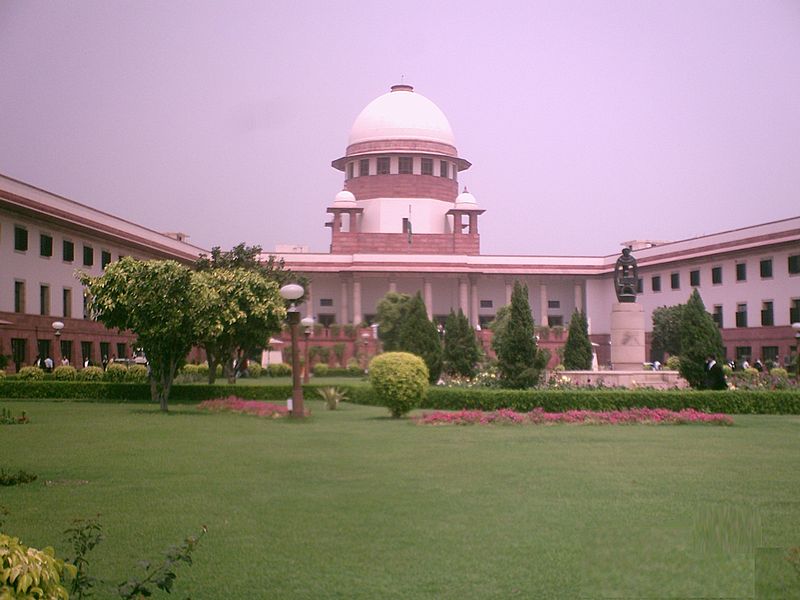
Supreme_Court_of_India_-_200705

This article is written by Sunklan Porwal, Senior Legal Associate, AB & Co. Law Offices

I am writing this article not to hurt any sentiments of the legal fraternity but to unveil the darker side of this practice. At, this point of time when everyone including media personnel, socialist and lawyers debating for and against selection procedure concerning appointment of judges of High Court and Supreme Court, opining their burly view on National Judicial Appointments Commission Vs. Collegium system, I thought why to emphasize issue which is already being resolved, rather it will be better to call attention towards the issue pertaining to the designation of senior advocates across different High Courts in India. It is being observed that most of the time where there is miscarriage of justice or justice being prolonged, mass raises questions on accountabilities and errands of judges, fewer are the instances were designated senior advocate has also faced the heat.

The duty of senior advocate is not only to earn currency but he or she ought to assist society and legal framework to act proficiently, they must help underprivileged and deprived in getting justice from higher judiciary however instead of doing such kind acts, they keep themselves far away from gratis legal services, it is the standard which matters for them and not the societal maturity. There are exceptionally a small number of senior advocates who really fights in court of law for social causes and upliftment of the social order. This is happening because various advocates with genuine aptitude and capabilities, not able to qualify the existing procedure of designation of senior advocate whereas affluent advocates with very few appearance and attainment are being designated as senior. The advocates with higher status and contacts are designated as senior advocate with no trouble and efforts since in their personal capacity they know the judicial members who finally elect and designate them as senior advocate. If advocates who in reality fighting for social causes, who is thoroughly into public interest litigation and writ petition fighting against existing disorder and lawlessness, hardly have any chances to be designated as a senior advocate since such kind of advocates are more into their profession and lesser into lobbying, socializing and buttering judicial members.

At present there is no uniformity in guidelines concerning designation of a senior advocate, each high court follows their own system and guidelines. I feel that evenhandedness and impartiality in designation procedure is missing at large. It is seen that an advocate who has some kind of associations/relation with judges of other high court where he is not even practicing, he is designated as senior advocate from such high courts. I personally know advocates though practicing in Delhi High Court since decades, designated as senior advocate from High Court of other states.  Several high courts are equipped to do this as a matter of favour to the well-connected. So, some people get designated from those courts even though they are not practicing there.

It was also published in newspaper namely Times of India dated 2nd May 2015, that after collegium system with NJAC was substituted by Parliament, in order to inculcate transparency and fairness in the selection procedure of judges, activist senior advocate Indira Jaising has questioned the Supreme Court’s fairness in selecting lawyers for the ‘senior advocate’ designation. She even wrote letter to Chief Justice of India, questioning the selection of five advocates as senior out of fourteen applicants. “The impression has long been growing at the bar that only relatives of seniors of those who come from particular chambers get designated. What is worse, there seems to be an imbalance between caste and communities and I can only hope that this is not conscious as that would go against the ethos of the Constitution by which we are all governed,” Indira Jaising said in her four-page letter.

Subsequently, petition was also filed before apex court raising the same question but in response to this petition, Supreme Court specifically states that no lobbying involved in designating lawyers as senior advocates. The apex court, at the same time, said there is a need for uniform rules across the country in designating senior advocates.

As published in newspaper namely The Economic Times dated 24th July 2015:-  A bench headed by Justice T S Thakur observed “We ensure that among judges there have never been in the Supreme Court any lobbying. People here who are judges have come from various parts of the country and there have been no intention pulling anybody down or pushing anybody up,” However, the bench also comprising Justices V Gopala Gowda and R Bhanumathi, conceded that “there appears to be general disenchantment among the members of the Bar on the issue” and “there is a need for rules, something that can be applied uniformly to all high courts in designating senior advocates”. The Supreme Court also sought the assistance of Attorney General of India for evolving the uniform rules and guidelines for designating senior advocates which in the recent times have been mired in controversy.

That after looking into these issues as queried by apex court, Attorney General of India Mukul Rohatgi has favoured a paradigm shift in the manner of designating Senior Advocates in the apex court. Acting as an amicus, Mr.Rohatgi, in his final report to a bench led by Justice T S Thakur, said that the existing system of designation required changes. He added that the Full Court should consider names only after scrutiny by another body.

The aforementioned depiction reflects how suffocating and revolting the exiting guidelines are for designation of senior. There are some high courts were very few advocates are being designated as senior advocates, some high courts were even if advocate is not practicing is being designated as senior advocate and some high courts acting as factory for designating senior advocates in huge numbers. The uniformity on guidelines for designating senior is yet to be achieved. A transparent and open procedure should be adopted to trounce existing favoritism leading to nepotism.

(All views expressed are those of the author.)

Download Now

Rajiv Gandhi Assassination: Does The State Have The Power to Remit the Terms of the Convict

0

download (1)

In this blogpost, Priyanka Kansara, Student, National Law University, Jodhpur analyses the Supreme Court recent judgment on Rajiv Gandhi Assassination case, while referring and discussing the various governing provisions which were taken into consideration by the Apex Court.

What is the issue involved here?

The Supreme Court of India, on July 2015, came up with a decision allowing state governments to exercise its powers of remission to release life convicts with a rider that this will not apply to cases probed by central agencies like CBI and for those incarcerated under central laws such as TADA. The Five Judge Bench comprising of Chief Justice H. L. Dattu had authoritatively dealt with the issue raised by the smaller bench and held that the State does not have unilateral power to decide remission for convicts of heinous crimes without the consultation with the Centre, in cases ‘where the matter has been investigated by a central agency’.

On the same footpath, The Apex Court came with a new verdict, though similar to that on July 2015, on December 2, 2015, while stating that the state governments cannot remit jail terms of convicts in cases of national importance without the Centre’s approval. The Apex Court further has reserved its verdict on constitutional issues arising out of Tamil Nadu government’s decision to set free the convicts in the Rajiv Gandhi assassination case.

The bench, led by Chief Justice H. L. Dattu, held that cases such as the killing of a former Prime Minister would mean assassinating “national figures of very high status by resorting to diabolic criminal conduct” and that “such a situation should necessarily be taken as the one coming within the category of internal or external aggression”.[1] The Hon’ble former Prime Minister was murdered on 21st May 1991; about 24 years back, which means that the convicted persons have spent about 23 years of their life in the Jail; but the issue which is raised and needs to be decided is that ‘isn’t it a kind of Constitutional aggression’? Our Supreme Law seeks to provide Justice for the victims but is also states that due to some discrepancies the accused should not be victimized.

Legislative Analysis of the issue

Section 432 (1) of the Criminal Procedure Code (hereinafter the Cr.P.C.) states that “When any person has been sentenced to punishment for an offence, the appropriate Government may, at any time, without conditions or upon any conditions which the person sentenced accepts, suspend the execution of his sentence or remit the whole or any part of the punishment to which he has been sentenced.” The interpretation of the ‘appropriate Government’ as mentioned under Section 432 of the Cr.P.C., depends upon circumstance and veracity of the case; in cases where the sentence is for an offence, which is related to restricting the personal liberty of any person or impose any liability upon him or his property, the Central Government has the executive power to remit the sentence[2], whereas, in other cases, the State Government within which the offender is sentenced, or the said order is passed has the power to do so[3].

The Apex Court in various decisions has held that the power of remission cannot be exercised arbitrarily. In the case of Mohinder Singh vs. State of Punjab[4], it was held that the decision to grant remission has to be well informed, reasonable and fair to all concerned.[5] In the same case, the Apex Court had held that the appropriate Government under sub-section (1) of Section 432 of the Cr.P.C. cannot be suo motu for the simple reason that this is only an enabling provision and the same would be possible subject to fulfilment of certain conditions.

Power to remit the sentence is the one issue but the second issue, which arises, is that while taking approval from the Central Government, how much liberty will the State have, to decide the matter. The Supreme Court needs to guide as to whether the approval would amount just to consult with the Central Government or concurrence also. The Legislators, on the other hand, have already mentioned as to whom these powers must be conferred and has laid down that the Judiciary has the power to interpret this legislative piece as per its discretion.

Another issue which needs to be settled is the importance of consulting the Central Government and the due weightage which would be given to the same, in matters where a convict has already undergone several numbers of years in the jail as a part of the punishment imposed upon him. Wouldn’t, this time, lag amount to delay in justice? One of the convicts in Rajiv Gandhi assassination case, Nalini Sriharan has already undergone 23 years of imprisonment in the Special Prison for Women, Vellore. She urged before the Supreme Court for premature release along with other co-convicts in the case while challenging Section 435 of the Cr. P.C., which facilitates consultation with the Centre before a State Government, exercises its remission powers to release life-sentenced convicts. The Supreme Court, in the same series, made it clear that there is a need for a categorical response on whether states have any role on the question of remission for life convicts in cases handled by the CBI or any central investigation agencies for that matter.

Where the matter has been investigated by a central agency: An Interpretation-?

Investigating Officers of CBI are authorized to conduct an investigation into the offences notified by Central Government under Section 3 of the Delhi Special Police Establishment Act, 1946 (hereinafter the DSPE Act). The CBI’s power to investigate cases is derived from this Act. While investigation of the said offences may be taken up in the Union Territories upon the orders of the Central Government, a notification from the Central Government is required to be issued under Section 5 of the DSPE Act, 1946 with the consent of the concerned State Government under Section 6 of the said Act to enable investigation to be conducted in the territories of such State. The powers of investigation as granted by the DSPE Act aren’t  different from the powers laid down by the Cr.P.C. 1973. Under Section 156 of the Cr.P.C. 1973, all officers of and above the rank of an officer in charge of a Police Station have statutory authority to investigate cognizable offences. Under Section 157 (1) of Cr.P.C., 1973, such officers are empowered to depute subordinate officers to proceed to the spot to investigate the facts and circumstances of the case and, if necessary, to take measures for the discovery and arrest of the offender(s). Officers of CBI of or above the rank of Sub-Inspector are empowered under Section 2(3) of the DSPE Act, 1946 to exercise the powers of the Officer-in-charge of a Police station for the purpose of investigation of any case. Therefore, no independent enquiries/ investigation can be entrusted to Assistant Sub-Inspectors of Police or Head Constables in the CBI.

Now, if the Supreme Court verdict says that the investigations were done by the CBI or any centralized investigation authority, then what would happen to Article 21 of the Constitution? Many cases are investigated by CBI, and thus, the State Government would need Centre’s approval in each and every case, which is investigated by the CBI or any other Centralized authority at par with the CBI. The judgment of the Supreme Court, in the case of Ankush Maruti Shinde and Others vs. State of Maharashtra[6], is relevant here, it was held in this case that “Inasmuch as Article 21 is available to all the persons including convicts and continues till the last breath if they establish and prove the supervening circumstances, viz., undue delay in disposal of mercy petitions, undoubtedly, this Court, by virtue of power under Article 32, can commute the death sentence into imprisonment for life.” It is a well-settled law that executive action and the legal procedure adopted to deprive a person of his life or liberty must be fair, just and reasonable and the protection of Article 21 of the Constitution of India inheres in every person, even death row prisoners, till the very last breath of their lives.[7] The distinction of the convicts insofar as it relates to the exercise of executive powers under Sections 432 and 433 of the Code is concerned, cannot be termed to be either arbitrary or discriminatory being violative of Article 14 of the Constitution.

Specific Overview-

The matter is simple, but the procedure is complex; the complexity is in the systematic implementation of the procedure established by the Legislation; procedure established by the Constitution i.e. the Rule of law. The Rule of Law principle enshrines for the Justice. Though the Supreme Court’s verdict on this matter can be Constitutional and hence sustainable but, the Hon’ble Apex Court should also take into account other aspects of the issue as well rather than merely looking into the gravity of the crime, so as to enabling itself to deliver Justice to the people concerned.

[1] TN can’t release Rajiv killers without consulting Centre, says Supreme Court, Utkarsh Anand, The Indian Express, December 3, 2015, http://indianexpress.com/article/india/india-news-india/convicts-in-rajiv-gandhi-assassination-case-will-remain-behind-bars-sc-rules/ (accessed on December 5, 2015).

[2]s. 432 (7) (a), Criminal Procedure Code 1973 (Act No. 2 of 1974), 25th January 1974, (hereinafter the CrPC 1973).

[3] s. 432 (7) (b), the CrPC, 1973.

[4] (2013) 3 SCC 294

[5] Ibid

[6] AIR 2009 SC 2609.

[7] Shatrughan Chauhan v. Union of India, a (2014) 3 SCC 1.

Download Now

5 Renowned Lawyers who Inspire Me – Surbhi Agarwal

1
5 Renowned Lawyers Who Inspire Me - Surbhi Agarwal

5 Renowned Lawyers Who Inspire Me - Surbhi Agarwal

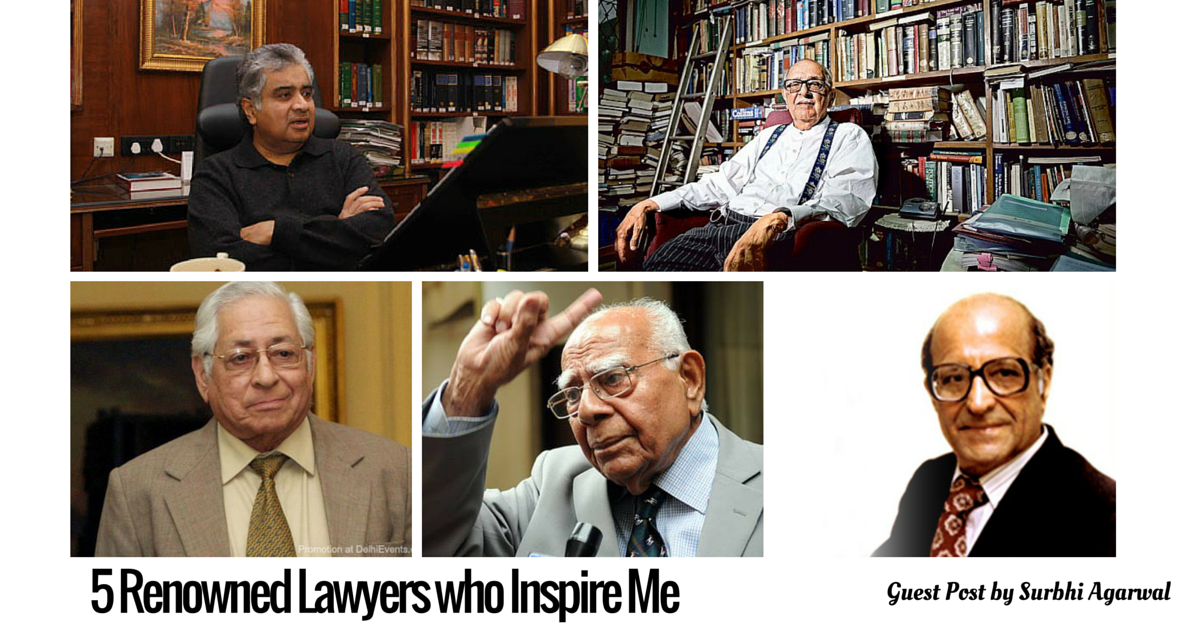
Charles Dickens said it right: “If there were no bad people, there would be no good lawyers” . There are many good lawyers in India. But Nanabhoy Palkhivala, Ram Jethmalani, Harish Salve, Fali Nariman and Jehangir Sorabjee are the five renowned lawyers who inspire me most. It’s nearly impossible to give an idea about their vast achievements and great qualities within an article, but let me try.

5 Renowned Lawyers – My Inspiration!

Nanabhoy Palkhivala

Renowned lawyer Nanabhai Pakhiwala

Image Source: libertarianism.org

Palkhivala is “a man of genius who never lost the virtue of humility; a man of singular simplicity graced with unbounded warmth and kindness, a man of letters as much as of the law”.

  • He was born on 16th December 1920 in Bombay and after leaving his footprint on the sands of time he died on 11th December 2002.
  • He was an Indian Jurist and an economist too.
  • In his school days, even though he was hampered by a bad stammer, he was a dedicated scholar and excelled.
  • His incredible professional success inspired several generations of youngsters to improve their own performance & become better professionals.
  • He entered into the bar in 1944 and served in the chambers of the legendary Sir Jamshedji Behramji Kanga in Bombay.
  • He quickly gained a reputation as an eloquent and articulate barrister. He used to be the center of attention in the court, where law students and younger members of the bar association would flock to watch him.
  • Palkhivala used to welcome the legal problems and complications as he enjoys solving these problems as the way ordinary people enjoys solving crossword puzzles.
  • Palkhivala did not regard the work as ‘work’ or as something that one had to do to earn a living while craving to do something else. For him, work was itself a source of pleasure; a tool of amusement and something that would refresh him.
  • He had an incredible ability of making his argument sound so simple and convincing that the Judge would be left spellbound.
  • His speeches are full of quotations, statistics and lots of other information that he would recite from memory and without a single scrap of paper before him.
  • He was a stickler for time discipline.
  • He received unmounted recognition from academics, academic institutions and the government.
  • Every lawyer in his legal career must read about him, he cannot be condensed in few lines.

Learn more about him from Wikipedia & Taxtitans.

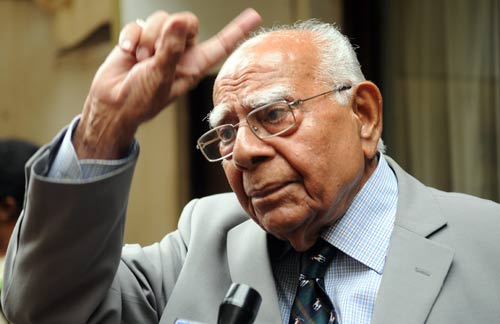
Ram Boolchand Jethmalani

Renowned Lawyer Ram Jethmalani

Image Source: Kollytalk.com

  • Jethmalani was born on 14th September 1923 in a small town called Shikhapur, located in the Sindh region.
  • He is known as a maverick lawyer with many distinctions to his credits. Genius, flamboyant, and contentious are some of the words that are commonly used to describe his life and career.
  • He is the lawyer who got the double promotion in his school and completed his matriculation at the age of 13 years and therefore, he became the youngest lawyer at the age of 18 years, where a minimum age of becoming a lawyer is 21 years. A special resolution allowed him to become a lawyer at his very early age.
  • Ram Jethmalani started his career as a lecturer in a Pakistani educational institution.
  • Then he started his own law firm with his friend, A.K. Bhori.
  • Then he started his new life in Mumbai as a visiting lecturer in GLC, Mumbai and then started practicing law.
  • Then in year 1971, he entered into the world of politics by standing as an independent candidate. He is both Indian lawyer and a politician.
  • He has served as India’s Union Law Minister and as Chairman of Bar Council of India.
  • In 2010, he was elected to be the president of the Supreme Court Bar Association.
  • He has represented a sweep of cases from the high profile to the controversial, for which he has often faced severe criticism.
  • He is the highest remunerated lawyer.
  • He claims that 90% of the cases he fights are free of cost.
  • He is also the best criminal lawyer in the country.
  • He has been the recipient of prestigious awards such as International Jurist awards, World Peace through Law Award and Human Rights Award by World Peace through Law for his work in against fascism in the Philippines.

Learn more about him from Wikipedia & iLoveIndia

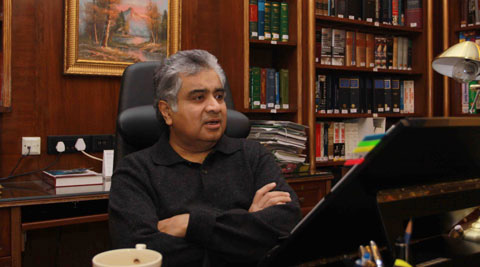
Harish Salve

renowned lawyer harish salve

Image Source: IndianExpress.com

  • Harish Salve was born on 22nd June 1956 in Warud, Maharashtra.
  • Today, he is one of the India’s leading lawyers, in the areas of Constitutional, Commercial and taxation laws.
  • He is considered to be an all-time favorite professional, the one that we aspire to be.
  • Before qualifying as a lawyer, he was qualified as a Chartered Accountant and practiced as a CA specializing in taxation.
  • During his CA exams, he failed three times and after failing, he said with a wink,

    “Failure teaches you more in life that success does” and so you should never be afraid of failure.

  • He is a role model for professionals on how one can balance professional work with his personal life and work hard while enjoying the fruits of that work.
  • He is capable of immense hard work and has a never-say-die approach. Like in the case of Vodafone matter, he gave up all other matters to focus on it. During that time he even shifted his office in London for concentrating on it. (Read How India’s biggest tax battle was won and lost – LiveMint )
  • He always emphasizes that:

    “you must have the ability and the desire to work long hours with great concentration and enthusiasm. You must keep thinking about the matter and always keep your mind open for fresh ideas. And you must never give up.”

  • He is totally inspired from Nani Palkivala as Palkhivala use to do a number of matters for his father and Salve was part of that environment. Therefore, he discovered that accountancy was boring and he thoroughly enjoyed income-tax, so he decided to practice income-tax as a lawyer.
  • On the personal front, Harish salve is also inspiring for his outlook on life and his obsession with personal fitness. Therefore, he is considered to be a perfect role model for today’s emerging lawyer.

You can learn more about him from Taxtitans.

Fali Sam Nariman

renowned lawyer fali sam nariman

Image Source: dailymail.co.uk

  • Fali S. Nariman was born on 10th January 1929 in Rangoon, Burma (Myanmar).
  • He is a distinguished Indian Constitutional jurist and a senior advocate to the Supreme Court of India and has remained the President of the Bar Association of India since 1991.
  • He is one of India’s most distinguished constitutional lawyers and has argued several leading cases.
  • He has also remained as Additional Solicitor General of India.
  • He is an original thinker, never willing to give up and always optimistic.
  • In a court, while arguing he always think of how a point can make all the difference in the matter, he does not stop thinking of how a new approach or a new angle can make the difference in the matter. He can turn a point around on its head and discover an argument missed by others. That quality is what makes him different
  • He is known to be quick-tempered and very impatient with his juniors. A conference with him leaves a person feeling breathless and helpless. He will shoot ten questions at the same time and if you don’t have the quick answers to them, he will glare you down.
  • Nariman’s personality also frequently intimidates the judges. They dare not question the propositions of law that he formulates for fear that Nariman will lash out and they will appear ignorant. The foundation to this is the confidence that Fali Nariman will never formulate a proposition that is wrong or can be faulted.
  • He came first in his advocate’s Examination and has been awarded the Kinlock Forbes Gold Medal and Prize for Roman law & Jurisprudence. He has also been awarded the Padma Bhushan, Padma Vibhushan and Gruber Prize for Justice.

You can learn more about him from Wikipedia & Taxtitans.

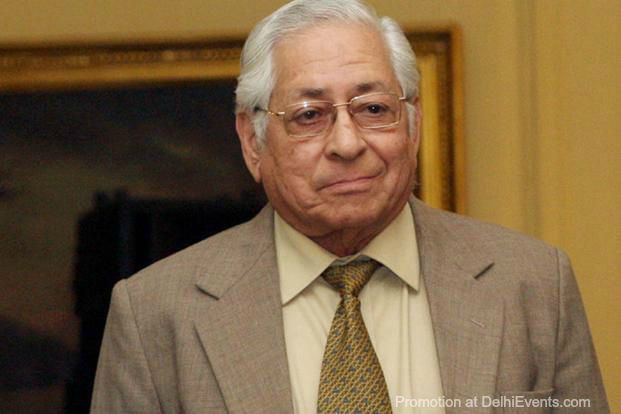
Soli Jehangir Sorabjee

Renowned lawyer soli sorabjee

Image Source: DelhiEvents.com

  • He is popularly known as “the Brahmin without a sacred thread”.
  • Soli J. Sorabjee was born on 9th March 1930 in Bombay.
  • He is a leading legal luminary of the country. He brings with him an extraordinary Constitutional knowledge and International experience.
  • He is a renowned Human Rights lawyer.
  • He has been a Chief Law Officer of India and the Attorney General of India.
  • He was appointed by the UN as a special Rapporteur for Nigeria, in 1997 to report on the human rights situation in that country.
  • He is a member of the United Nations Subcommission on Prevention of Discrimination and Protection of Minorities.
  • He has also served as a member of the Permanent Court of Arbitration at The Hague and he has also appointed to hold several other posts.
  • Soli Sorabjee is a champion of freedom of speech and expression. He has defended Freedom of Press in many landmark cases in the Supreme Court of India and has been instrumental in revoking censorship orders and bans on publications.
  • He was honored with the Padma Vibhushan award, the second highest civilian award in India for his defense of Freedom of Speech and the protection of Human Rights.
  • With a lawyer, he is also a prolific writer on the issues of protection of Human Rights, upholding Constitutional Law and Freedom of Speech and Expression. He has also written many books, essays and articles and has been published for the same.

You can learn more about him from Brandeis.

Want to share anything important and interesting about these renowned lawyers that I missed mentioning? Let me know in the comment section. I’d also love to know about the lawyers who inspired YOU most.

[divider]

Guest Author:
Surbhi Agrawal
B.B.A., L.L.B. (Hons.) IIIrd Year
University of Petroleum & Energy Studies

Download Now

The Law Related to Anti Defection in India

0

3044867827_6e619a0f80_b

In this blogpost, Shipra Prashant, a student of IInd year, University of Petroleum and Energy Studies, Dehradun writes about the law relating to anti-defection in India, advantages, disadvantages and the issues related to the law.

What is Anti Defection law?

The Rajiv Gandhi government by the fifty-second Constitutional Amendment in the year 1985 introduced Anti-Defection Law in India. The term ‘Defection’ has been derived from a Latin word ‘Defectio’ which means to abandon a position or association, often to join an opposing group.

“Defection covers the change of party affiliation both from the opposition to the government side or vice versa as also change as between the parties on the side of the house i.e. between the different constituent units of coalition government or between the different parties sitting on the opposition benches.’’ [1] Traditionally this phenomenon was known as ‘floor crossing’ which had its roots in the British House of Commons, where the legislator could change his allegiance when he crossed the floor and moved from the side of the government to the side of the opposition or vice-versa as the case may be.

The tenth schedule of the Constitution of India contains the following provisions with respect to the disqualification of members of Parliament and the State Legislature on the ground of defection:

Interpretation

In this Schedule, unless the context otherwise requires,— (a) “House” means either House of Parliament or the Legislative Assembly or, as the case may be, either House of the Legislature of a State; (b) “legislature party”, in relation to a member of a House belonging to any political party in accordance with the provisions of paragraph 2 or paragraph 4, means the group consisting of all the members of that House for the time being belonging to that political party in accordance with the said provisions; (c) “original political party”, in relation to a member of a House, means the political party to which he belongs for the purposes of subparagraph (1) of paragraph 2; (d) “paragraph” means a paragraph of this Schedule.

Disqualification on ground of defection

If a member of a house belonging to a political party:

– Voluntarily gives up the membership and affiliation to a political party or

– Votes, or does not vote in the legislature in compliance to the direction of his political party he shall be liable to be disqualified from being a member of the House.

However, if the member has taken prior permission on the particular issue, or is condoned by the party within 15 days from such voting or abstention, the member shall not be disqualified.

The other grounds for disqualification of a member are-

  • If an independent candidate joins the party after the election.
  • If a nominated member joins a party six months after he has become a member of the legislature.

Power to disqualify

a) The Chairman or the Speaker of the House has been conferred with the power to take the decision to disqualify a member.

b) If a complaint is made with respect to the defection of the Chairman or the Speaker, a member of the house elected by that House shall have the right to take the decision.

Exception

A person shall not be disqualified if his original political party merges with another, and he along with other members of the old party become the member of the new political party or he, and other members do not accept the merger and they opt out in order to function as a separate group. This exception shall only operate if not less than two-third members of the party in the house have agreed to the merger.

History behind the Anti Defection Law:

The phenomenon of defection despite the fact that it was acute became apparent after the fourth general election in 1967.  Up to 1967 the cases of defection were 400 which subsequently rose to a figure of 500 odd cases of defection, in which 118 were by the persons who exercised a great amount of power and responsibility such as the Ministers or Ministers of State. Therefore, in 1967, a committee was formed to deal with the issue of defection. There were several recommendations made by the committee on defection. Those recommendations were considered and were introduced in the form of a bill in 1973 that was later passed as Anti Defection law in 1985.

There are various instances today where the governments have fallen due to defection or due to split in a political party. For instance, in Sri Lanka, there have been two occasions in years 1964 and 2001 where the Government has fallen particularly due to Defection. In India, even after the Anti-Defection law came into operation, various governments have faced the consequences of defection particularly in states like in Goa in 1989, Sikkim in 1994 and Arunachal Pradesh in 1999 and 2003. [2]

Advantages of Anti Defection Law:

The law related to defection ensures stability in the government since there aren’t shifts of party allegiance. The purpose of the Anti-Defection Law is to prevent unsteadiness within the government governing the citizens.

Defection is not only confined to India, but it is also rampant and prevalent in the countries having a Parliamentary form of Government.  Anti-Defection law provides for punitive measures against a member who defects from one party to another. Anti-Defection Law, therefore, seeks to provide safety measures to protect both the government and the opposition against the instability that arises due to defection and shift in party allegiance.

When a citizen is voting for a particular candidate, it is because of the personal agenda of the candidate as well as the political party’s agenda or beliefs. A candidate is bound by the promises made by his party during the elections, and therefore, he is expected to remain loyal to the party as well the citizens voting for him.

Disadvantages

By preventing parliamentarians from changing their allegiance, it reduces the accountability of the government to the parliament and the people. It is restraining the basic freedom of speech and expression of the parliamentarians and the people.

While it is agreed that the stability of the government is important, equally desirable is the accountability of the house which consist of members who in turn are accountable not only to their political parties but also to the electorate.

Some of the issues regarding Anti-Defection Law:

  • The first and foremost issue that needs to be addressed is whether the Tenth schedule curtails the right to freedom of speech and expression.

In the case of Kihoto Hollohon v. Zachilhu and Others[3], the Supreme Court stated that the provisions under Schedule X are not violative of Article 105 and Article 194 of the Constitution of India. They do not infringe the democratic rights of elected members of the Parliament as well as the State Legislature.

  • The second issue raised is whether only resignation can constitute as the voluntarily giving up of the membership and affiliation from a political party

The Supreme Court has settled this issue in the case of Ravi S Naik v. Union India [4]. It held that the phrase ‘Voluntarily giving up of membership has a wider meaning and even the conduct of the member can come under the ambit of this phrase.

  • The third question in regard to the Schedule X is whether a member can be said to have voluntarily given up his membership of a party he has been expelled from such party and he joins another party.

This question is answered in the case of G. Vishwanathan v. Speaker, Tamil Nadu Legislative Assembly[5] in which it was laid down that once a member is expelled, he is unattached and does not have any affiliation with any political party, so if he joins a new party after being expelled it shall be considered as ‘voluntarily giving up of membership’.

  • Another issue for consideration is whether granting the power to take the final decision on disqualification of a member to the Speaker can be considered valid or not.

In the case of Kihota Hollohon v. Zachilhu and others[6], the Court said that such a provision is valid. However, the Supreme Court and the High Court has the power to review the decision made by the Speaker.

  • Whether the Speaker has the power to review its own decision on disqualification of a member.

The question was answered in the case of Dr. Kashinath G Jhalmi v. Speaker, Goa Legislative Assembly[7]. The court held that the Speaker of a House does not have the power to review his own decisions, such power has not been provided for under the Schedule, and neither is implicit in the provisions.

However, only five out of the older thirty six democratic nations have laws on Anti-Defection. Thirteen out of the fifty four newer democratic nations have adopted for Anti-Defection laws.  Still there are many countries which do not have any legislation on defection activities and even if they have, such laws are not effectively implemented. The need of the hour is that the countries need to adopt measures that tend to protect the sanctity of a political formation as well as the life of a government.

[1] Cited from S.K. Khana, Reforming Indian Political System, p.174

[2] G.C Malhotra, Anti-Defection Law in India and the Commonwealth, 2005 p.5

[3] AIR 1993 SC 412

[4] AIR 1994 SC 1558

[5] (1996) 2 SCC 353

[6] AIR 1993 SC 412

[7] (1993) 2 SCC 703

Download Now

Lending The Womb – Surrogacy

0

Mother's_Love

In this blogpost, Deiya Goswami, a student of IInd year, University of Petroleum and Energy Studies, Dehradun writes about different kinds of surrogacy, rights and interests of the parties involved in surrogacy and the features of new bill which intends to resolve conflicting interests of parties of commercial surrogacy.

The word ‘surrogate’ comes from a Latin term “Surrogatus” which means to substitute, that is, a person appointed to act in the place of another. The Black’s Law Dictionary defines Surrogacy as a process of carrying and delivering a child for another person.

Section 2(aa) of the Draft Assisted Reproductive Technologies (Regulation) Bill, 2010 (popularly called the ART Bill) defines “Surrogacy (gestational) as an agreement in which a woman agrees to a pregnancy achieved through an assisted reproductive technology in which neither of the gametes belong to her or her husband, with the intention to carry it till term and hand over the child to the person or persons for whom she is acting as a surrogate”.

The ART Bill 2010 also defines the term ‘surrogate mother’ as a woman who is a citizen of India and is resident in India, who agrees to have an embryo generated from the sperm of a man who is not her husband and the oocyte of another woman, implanted in her to carry the pregnancy to viability and deliver the child to the couple/ individual that had asked for surrogacy.

TYPES OF SURROGACY

  • Traditional or Partial Surrogacy

In the customary case, the surrogate mother will be inseminated with the sperm of the expected father or the sperm from a benefactor, in case the sperm count is low. Here the mother would be hereditarily related to the child in light of the fact that in either case the surrogate’s own egg will be utilized. Because of this reason the two parties’ i.e. fruitless couple and surrogate mother go into an agreement where surrogate mother is artificially inseminated with the sperm of male accomplice of that couple.

  • Gestational Surrogacy or Total Surrogacy

A pregnancy all together requires a sperm, an egg, and a uterus. In the event of gestational surrogacy, the eggs are extracted from the intended mother or egg donner and blended with sperm from the intended father or sperm giver in vitro. If arises an occurrence of aggregate surrogacy, an incipient organism made by the procedure of In-Vitro Fertilization is embedded into the surrogate’s uterus. One thing qualified to say in setting of gestational surrogacy is that here the mother is not hereditarily related with the baby. The gestational surrogacy goes under the ambit of helped regenerative advances. Gestational surrogacy can be depicted as “Womb Renting Process”. The motivation to call it so is that the surrogate mother only permits her womb to be utilized for conveying encourages the regenerative procedure.

  • Surrogacy on the Basis of Financial Reward

It is that form of surrogacy wherein the surrogate mother is paid not only for the medical and other expenses to deliver the child, but in addition to that a hefty amount is also paid to carry the child till maturity in the womb. Generally in this form of surrogacy, the intended parents and surrogate mother are not known to each other before entering into an agreement. Due to this reason, this form of surrogacy is purely guided by monetary considerations. In commercial surrogacy arrangements, the surrogate mother enters into an agreement with the commissioning parents or single parent to bear the burden of pregnancy. In return for her agreeing to carry the term of the pregnancy, she is being paid by the commissioning parents. The usual fee is around $ 25,000 to $ 30,000 in India which is around 1/3rd of that in developed countries like the USA. Thus money plays an important role in this type of surrogacy. Its nature is purely commercial. In India, the greed for money is responsible for the increase in the cases of commercial surrogacy. This form of surrogacy is very complex in nature and has generated a heated debate all over the world amongst academicians and legal luminaries.

  • Altruistic or Emotional Surrogacy

It is that form of surrogacy in which the surrogate mother does not receive any financial reward for the pregnancy or for the pain to be undertaken by her or for the handing over of the child to the commissioning parents. It is also known as non-commercial surrogacy or emotional surrogacy. However in altruistic surrogacy, all expenses such as reimbursement of medical and other expenses related to the pregnancy and birth would be paid to surrogate mother by intended parents. In nutshell it can be said that when the surrogate mother does not receive any monetary gain in order to give birth of child for intended parent it is known as altruistic surrogacy.

Thus, Surrogacy is commercial or altruistic depending on whether the surrogate receives financial reward for her pregnancy or for the relinquishment of the child or not.

FACTORS RESPONSIBLE FOR SURROGACY

Extreme poverty and social and economic backwardness in India are some of the forces which are driving women into this ethically unacceptable business.

Surrogacy arrangements are motivated by a desire for a genetically related child and the disincentive arising out of the prolix adoption procedures coupled with the difficulty in finding a suitable child for adoption.

The costs of medical treatment are less in India, and it is proving to be an attractive hub for foreigners to procure benefits of medical tourism especially surrogacy. Thus, India is witnessing a hike in cases of commercial surrogacy due to medical tourism boom fuelled by low medical costs.

It has been noticed that the day to day changing lifestyles as well as the higher cost of living are also forcing women to adopt surrogacy as a business to earn money.

Some of the countries have either banned commercial surrogacy or have enacted stringent laws to deal and regulate the commercial surrogacy as a money making profession. In countries like Japan, England, Australia, commercial surrogacy is illegal. Opposite to this, in India the commercial surrogacy is considered legal.

LEADING CASES

Interests and Rights of Surrogate Child

In P. Geetha v. The Kerala Livestock Development Board Limited 2015 SCC Ker 71, the Kerala High Court while dealing with an urgent issue as to whether or not a biological mother is entitled for the maternity leave in a case where she has obtained the baby through surrogacy, gave a landmark judgement in favour of the genetic/biological mother. The court held that a mother who has obtained the baby through surrogacy is entitled to all the benefits of an employee on post-delivery, i.e. the child specific statutory benefits. In the instant case, the respondents refused to grant maternity leave to the petitioner (an employee in the government of Kerala undertaking) to take care of the new born on the ground that the Kerala Livestock Development Board Ltd. Rules and Regulations, 1993 only provide maternity leave envisaged under normal circumstances. It was contented on behalf of the petitioner that “motherhood does not end with the delivery of a baby, but continues with more vigor through the process of child rearing, which is an equally difficult task”.

Interests and Rights of Surrogate Mother

Baby Manji Yamada v. Union of India, 2008 11 SC 150, popularly known as Baby M case wherein the surrogate mother after handing the child over to the intended parents became deeply disturbed, disconsolate, stricken with unbearable sadness and had to have her child back. She could not eat, sleep or concentrate on anything other than her need for her newly born baby. The Court held that such an agreement is not in the interest of the mother. Despite this, the Supreme Court, in this case, held that the Surrogacy Agreement was valid in India.

Interests and Rights of Commissioning Parents

The individual’s interest in domestic relation also includes interest in relationship of parents and child. The infertile couples have a right to family and child which are important individual interests. But the question is whether interest in becoming parents of a child is permissible at the cost of health of surrogate mothers. It is true that the right to family and to have children, right to procreation and right to access to modern scientific technology are some of the rights which cannot be denied to commissioning parents. Modern reproductive technology has brought up a ray of hope for such infertile couples.

The Assisted Reproductive Technologies (Regulation) Bill, 2010

The aim of law is to build and maintain the efficient structure of a society which sustains the satisfaction of the maximum desires with minimum friction and waste. Therefore law is concerned with satisfaction of individual or social needs, wants, claims and interests.  The law has to recognize just interests-individual, public and social and it has to satisfy the competing claims to satisfy the just claims, demands and expectations keeping in view the total common good. This aim can be accomplished through the process of social engineering which facilitates balancing of conflicting interests.  The Ministry of Health and Family Welfare along with the Indian Council of Medical Research (ICMR) drafted the Assisted Reproductive Technologies (Regulation) Bill in the year 2008 to balance and resolve conflicting interests of parties of commercial surrogacy. Unfortunately, the ART Bill 2008 was appearing ineffective to address the all concerns of the parties of surrogacy and therefore recently the Parliament of India revised it and passed a new Bill in 2010. It would not be out of place to mention here that before drafting of the aforesaid mentioned Bills on reproductive technology, the ICMR had also framed guidelines for ART clinics which were functioning within the country to deal with surrogacy. However, the draft of both the Bills is somewhat similar to the ICMR guidelines of 2002. The draft of ART Bill 2010 to some extent is affording the protection of the rights and interests of the parties involved in surrogacy and trying to reconcile the conflicting interests of the surrogate mother, rights of the children and commissioning parents.

Features of the Bill

Some of the salient features of the new bill are:-

  • Legal Enforceability of Surrogacy Contracts
  • Guardian to Take Care of Surrogate Mother
  • Screening of health and age of Surrogate mother
  • Issuing of Certificate to Surrogate Mother
  • Confidentiality of Surrogate Mother
  • Abnormalities of a Child no Bar in Adoption
  • Legitimacy of Child born out of Surrogacy
  • Right of the Surrogate Child to Obtain Information


Download Now

Legal Rights Of A Woman In India

0

women rights

In this blogpost, Mayuri Khandelwal, a student of IInd year, Hidayatullah National Law University, Raipur writes about the rights and reliefs available to a woman in India under various laws of the country.

The increasing rate of crimes against women and the declining sex ratio has forced the judicial and the legislative bodies of our country to enact various laws particularly aimed at providing security and protecting the integrity of women. This article highlights the laws of India, which deal with special rights and protection of a woman.

Filing a complaint through E-mails

There are certain guidelines issued by the police that entitle a woman the privilege of lodging their complaint through emails or registered post. In case she cannot go to the police station, she can send a written complaint by e-mail, and registered post addressed to the Deputy Commissioner or the Commissioner of Police. The officer will then forward the complaint to the SHO of the police station where the incident took place that will then verify the complaint and lodge an FIR.

Police Procedure

Under the High Court mandate, each police headquarters must have at least one woman officer not below the post of Head Constable, accessible round-the-clock particularly dealing with rape casualties of any degree by providing guidance towards the advancement of the casualty. Furthermore, the victim must be looked by a woman officer and can be captured only in the vicinity of a woman officer with appropriate poise.

The Supreme Court has held that women can’t be detained before dawn or after dusk. Women must be ceased, kept, and addressed by a lady officer. In the absence of such female officers, women can’t be arrested or taken away.  Section 160 of the Criminal Procedure Code provides that a woman can’t be called to the police station for interrogation. She can be interrogated at her residence in the presence of female constable and family members.

The Supreme Court by its ruling has provided relief to rape victims by putting forward the concept of Zero FIR. Many a times the police headquarters under whose jurisdiction the incident happens declines to register the complaint of the victim in order to avoid the responsibility and forwards the complaint to other police stations. In such cases, she has a right to file a complaint at any police station irrespective of the place of incident under the Zero FIR ruling. The SHO of the concerned police station then needs to take immediate action on the FIR. However,few women are aware of this right. Therefore, the need is to make them aware of the various benefits to which they are entitled today.

Rights at Workplace

Minimum Wages

The Minimum Wages Act, 1948 provides for the least wages to be paid to any gifted, semi-talented and incompetent laborers. The lowest pay permitted by law for a talented laborer in Delhi is Rs 423, be it a man or a woman.

Employers must be secured

The Supreme Court in Vishakha case laid down certain guidelines for protecting the women at the workplace. According to the said judgment, all work environments ought to have an in-house board to manage inappropriate behavior dissensions. It recommended setting up a complaints committee at all workplaces, headed by a woman employee with at least half the members being women. A business’ inability to constitute an Internal Complaints Committee will be liable for punishment of up to Rs 50,000.

Rights under Succession of Property:

Under the Hindu Succession Act, 1956, any individual who is entitled as a beneficiary to the property of predecessor, ought to get the property irrespective of his/her gender.

Offensive Propaganda

The Indecent Representation of Women (Prohibition) Act, 1986, prohibits any individual or association to distribute or post, distribute, display or promote – online or disconnected from the net – any sort of representation of women that can be thought to be profane. This is mostly used in the cases of advertisement where the portrayal of women is outraging her modesty.

Maternity Benefits

Maternity Benefits Act of 1961 states that each woman has a right to profit paid maternity leave for a period of 12 weeks. The law also provides that no business ought to intentionally require a pregnant woman to do any kind of strenuous physical labor including an extended period of time of standing or any work that is likely to interfere with her pregnancy or cause complications like premature birth miscarriage or adversely affect her health.

Right to Abort

Medical Termination of Pregnancy Act or the MTP Act, 1971 provides that pregnancy not surpassing 12 weeks may be ended in light of the assessment of a solitary specialist. However, if the time of pregnancy exceeds 20 weeks, then the opinion of two specialists must be taken before initiating an abortion.

Right to privacy while recording statement

Section 164 of the Criminal Procedure Code states that the statement of a woman who was raped can be recorded only before the district magistrate when the case is under trial, and nobody else should be available. On the other hand, she can record the statement with stand out cop and lady constable in an advantageous spot that is not crowded and does not give any probability of the statement being heard by a fourth individual. The cops need to, by law, upkeep the lady’s entitlement to protection. It’s vital for the individual to feel safe and not be under any sort of anxiety while portraying the occurrence.

Time doesn’t matter

The police can’t decline to register an FIR on the ground that sufficient time has elapsed since the occurrence of an event. In the event that the police refuses to lodge an FIR stating that considerable time has elapsed, one need surrender. Assault is a frightening occurrence for any lady, so it’s usual for her to go into stun and avoid reporting it quickly. For this very reason, the Supreme Court has laid down that the police must register an FIR irrespective of the gap between the incident and the reporting.


Download Now

Constitutional validity of Notification Imposing License On Consumption of Liquor in Maharashtra

0

celebration-159859_960_720In this blogpost, Priyanka Kansara, Student, National Law University, Jodhpur writes on the validity of the notification which has been issued by the Maharashtra Government, which makes it compulsory for the people attending the New Year parties, to get a FL-4 licence.

Recently Maharashtra State Government has issued a notification[1] to put control and maintain the public order by giving power to the state excise officials to put an eye on the house parties and crack the whip of those organising and serving liquor without permission in their premises[2]. The notification states that the person/group of persons, who want to organise a party to celebrate New Year in their apartment or at a restaurant, will have to get a FL-4 licence of Rs. 13,500 and a group of friends will have to get a licence worth Rs. 5 to liquor themselves up for the New Year celebration on the New Year eve. The logic behind putting different values for the licence is the different populace and in the former one, it would be for private enjoyment and in the latter one partying with a large number of people, it could be for commercial purposes. But the real purpose behind this is more or less the same, that is to recognise those groups consuming liquor so that they can be controlled and can be kept under observation.

Questioning the jurisdiction of excise officials

The question which directly comes into our mind, and is apparent is, that whether the excise officials have the jurisdiction to snoop down all these activities; whether the rule can be held to be sustainable as per the Constitution. It is clear that the powers to deal with the transactions related to liquor, that is to say, the production, manufacture, possession, transport, purchase and sale of intoxicating liquors comes under the purview of the State List in the Seventh Schedule of the Constitution of India[3]. Moreover, as per section 3 of the Bombay Prohibitions Act, 1949[4], ‘the State Government, may by notification in the Official Gazette appoints an officer to be called the Commissioner of Prohibition or Excise, who subjected to the control of State or special order as the State Government may from time to time issue, shall excise such powers and shall perform such duties and such functions as are conferred upon, by or under the provisions of this Act and shall superintend the administration and carry out generally the provisions of the Act[5]’.

So, the questions regarding the jurisdiction of the excise officials cannot be sustained, as it is clear from the reading of the Seventh Schedule of the Constitution of India, that the powers to make rules regarding regulation of liquor is with the State Government. The Maharashtra State Government, while exercising the powers conferred upon it by Section 3 of Bombay Prohibitions Act, 1949, can delegate such function to any officer as it thinks fit, to exercise the powers given under the Act. So, in short, it will be proper to conclude that the excise officials do very well have the jurisdiction in this regard. The next part is regarding the constitutionality of the notification.

Constitutionality of the Notification-

Another question which needs to be discussed is the Constitutionality of the present notification. Article 13 of the Constitution of India clarifies the way for the State Government to issue a notification, which will come under the aegis of ‘Law’, which can be challenged for the purpose of Part III of the Constitution. Several questions with regard to the Constitutionality of the notification would be arisen such as, whether the notification is infringing right to equality as a reasonable classification[6] should be established; whether Article 21 of the Constitution is being infringed as right to life envisages within itself the right to enjoy; whether the notification puts a restriction on forming association or assembly ensured under Article 19(c) of the Constitution. All these questions need to be answered so as to establish the constitutional validity of the regulation.

In the case of Budhan Choudhary vs. State of Bihar[7], the Supreme Court has put forth two important criteria for the reasonable classification i.e. (i) the classification must be based on an intelligible differentia, which distinguishes persons or things that are grouped together from others left out of the group and (ii) that differentia must have a rational relation to the object sought to be achieved by the statute in question[8]. The same was held in the case of Chiranjit Lal Choudhary vs. Union of India[9] that the differential treatment for the different classes or sections of people should be based on their differential needs and necessity[10].

In the present matter, the State Government needs to ensure a reasonable classification between the person/group of persons having a party for the New Year and the person/group of persons having a party on ordinary days. The logic behind putting a notification for the New Year eve party is, to ensure Constitutionality in the transactions regarding production, manufacturing, possession, transport, purchase and sale of intoxicating liquors, which is definitely a matter of concern for the maintenance of ‘Public Order[11]’. Article 19 (2), of the Constitution of India, empowers the Government to put some reasonable restrictions on the Freedom of Speech, Expression and Right to movement as ensured under this constitutional provision for the  interests of the sovereignty and integrity of India, the security of the State, friendly relations with foreign States, public order, decency or morality or in relation to contempt of court, defamation or incitement to an offence[12].

Moreover, Article 21 of the Constitution is governed by the notion of necessity; it prevents encroachment upon personal liberty and deprivation of life except in accordance with the law[13].  In the case of, Francis Coralie Mullin vs. Administrator, Union Territory of Delhi and Ors.[14], Apex Court while interpreting Article 21 of the Constitution has stated that, “the right to life includes the right to live with human dignity and all that goes along with it, namely, the bare necessities of life such as adequate nutrition, clothing and shelter over the head and facilities for reading, writing and expressing oneself in diverse forms, freely moving about and mixing and commingling with fellow human beings”. Hence, it can be said that right to enjoy with friends by way of parties can be a luxury but not a necessity[15].

Author’s views

The above-mentioned points clearly lays down that the notification issued by the Maharashtra Government, which is in being questioned here, isn’t unconstitutional and the State Government is authorised to delegate its powers to any officer as it thinks fit.

In a nutshell, these points can be given to prove its sustainability-

  • It is reasonable and non-arbitrary;
  • It is at par with the Constitutional values as it under the purview of Part III of the Constitution; and
  • It is the duty of the state to put some regulations on the commercialization and consumption of liquor and after all, it is not a ban, it is just to regulate and inspect these activities.

The concerned Notification thus is perfectly valid and constitutional.

[1] Hosting a house party on New Year eve? You can land in jail!, DNA, December 22, 2015, http://www.dnaindia.com/mumbai/report-hosting-a-house-party-on-new-year-eve-you-can-land-in-jail-2158255 (accessed on December 23, 2015).

[2] id.

[3] Seventh Schedule (Article 246), Constitution of India, http://lawmin.nic.in/olwing/coi/coi-english/Const.Pock%202Pg.Rom8Fsss(35).pdf (accessed on December 23, 2015).

[4] The Maharashtra Prohibition Act 1949, Bom. XXV, http://bombayhighcourt.nic.in/libweb/acts/1949.25.PDF (accessed on December 23, 2015).

[5] id, s. 3, pp. 7-8.

[6] Budhan Choudhary vs. State of Bihar, AIR 1955 SC 191.

[7] id.

[8] id; also mentioned in Shri Ram Krishna Dalmia vs. Justice S.R. Tendolkar & Ors., AIR 1958 SC 538.

[9] AIR 1951 SC 41.

[10] id.

[11] Article 19 (2), the Constitution of India, http://india.gov.in/my-government/constitution-india/constitution-india-full-text (accessed on December 23, 2015).

[12] id.

[13] id, Article 21, the Constitution of India.

[14] AIR 1981 SC 746.

[15] id;

Download Now

What Documents To Carry While Driving and How to obtain a Driving License?

1
what documents to carry while driving

In this blogpost Apoorv Singh, student, NALSAR, Hyderabad, writes on what documents to carry while driving and also explains the procedure to obtain a driving license.  

Download Now

MARKETING BY THE MEDIA AND CONSUMER PROTECTION LAW IN INDIA

0

images

In this blogpost, Priyanka Kansara, Student, National Law University, Jodhpur writes on misleading marketing practices, laws related to them and also the consumer protection law related to the advertisement in India. 

Consumers should have the right of access to non-hazardous products, as well as the right to promote just, equitable and sustainable economic and social development and environmental protection,”- United Nations Guidelines for Consumer Protection

In the shining valley of technology and  modernization, on one hand, we have got the boon  of more and more tech-savvy substances; on the other hand, it has created chaos for the Consumers. In the era of competition, the technical evolution has drastically changed the face of marketing and advertising sector. the advertisement  is the entrance gate for the Marketing and Business Sector. Consumers while purchasing a product on the basis of advertisements does not only purchase the product but looks at the goodwill of the Company also. Advertisement and Consumer Behavioural pattern should balance well with each other. The misstatement in the advertisement creates class consciousness, materialism, conspicuous consumption and other universally non-acceptable values[1].

The Broadcast Regulatory Authority of India and  the Advertising  Standard  Council of India play an important role in the  advertising sector for the proper Customization, Standardization, Competition and Control of the mismanagement. It is essential to put an eye on the Media Sector through certain other Policies, such as, Development of Virtual Community,  the media is keeping in mind the Consumers’ moral and ethical values as well as their basic needs. Besides this, sensitization of the Market holder is needed to ensure the understanding of them towards the Customers. Right to Information and Right to Choice should be the benchmark for any advertisement.

What is Misleading-?

Advertising through several media broadcasting sources for the promotion of several articles, which affects the consumers’ day to day life, lifestyle, health are a cause for concern because it directly impacts on the consumers’ rights ultimately. As per the IRDA (Insurance Advertisements and Disclosure) Regulations, 2000[2] misleading or unfair advertisement means any advertisement (a) that fails to clearly identify the product as insurance; (b) makes claims beyond the ability of the policy to deliver or beyond the reasonable expectation of performance; (c) describes benefits that do not match the policy provisions; (d) uses words or phrases in a way which hides or minimizes the costs of the hazard insured against or the risks inherent in the policy; omits to disclose or discloses insufficiently, important exclusions, limitations and conditions of the contract; gives information in a misleading way; illustrates future benefits on assumptions which are not realistic nor realisable in the light of the insurer’s current performance; where the benefits are not guaranteed, does not explicitly say so as prominently as the benefits are stated or says so in a manner or form that it could remain unnoticed; implies a group or other relationships like sponsorship, affiliation or approval, that does not exist; makes unfair or incomplete comparisons with products which are not comparable or disparages competitors[3].

Advertisement Standard Council of India, which is a self-regulatory body, was established in 1985 to promote and control  advertising  sector. The objectives of  the establishment of ASCI are to ensure the truthfulness and  honesty in representation and claims made by an advertisement.  To ensure generally accepted the standard of public decency in  the advertisement, to safeguard against the indiscriminate use of advertising for the promotion of products regarded as hazardous to society or to individual, to ensure the fairness in the competition in the advertising sector and to ensure the generally accepted competitive behaviour in the advertising sector.[4] Furthermore, any complaint can be lodged with regard to the misleading in advertisement against media sector (lodge your complaints ), and we can trace our complaints (trace your complaints )

Several important legal provisions in the advertising sector

The Drugs and Magic Remedies (Objectionable Advertisements) Act 1954 prohibits certain kinds of advertisements such as, the procurement of miscarriage of women or prevention of conception in women, the maintenance and improvement of the capacity of human being for sexual pleasure, and correction of menstrual disorders in women[5]. Section 4 and section 5 prohibits the advertisement of drugs[6] and magic remedies[7] which may put some false impressions either directly or indirectly respectively. Though in this era of competition in the pharmaceutics industry, there is a need of advancement in the law.

The Cigarette and other Tobacco Products (prohibition of Advertisement and Regulation of Trade and Commerce, Production, Supply and Distribution) Amendment Act 2003[8] provides that no person will engage in or purported to be engaged in the production, supply or distribution of cigarette or any other tobacco product shall advertise, and no person having control over a medium shall cause to be advertised cigarettes or any other tobacco products through that medium, and no person shall take part in any advertisement which directly or indirectly suggests or promotes the use or consumption of cigarettes or any other tobacco products.[9] Furthermore, an amendment was introduced   in section 7 of the Act 2003 that “the specified warning including a pictorial depiction of skull and cross bones and such other warning as may be prescribed, the words such specified warning including a pictorial warning as may be prescribed” shall be substituted[10].

Furthermore, the Food Safety and Standard Act, 2006[11] prohibits the false representation about the sale, supply, use and consumption of articles of food or adoption of any unfair or deceptive practice including the practice of making any statement.[12] Section 25 (2) of the Act provides for certain norms as per the Act while prohibiting, restricting or otherwise regulating the import of article of food under the Foreign Trade (Development and Regulation) Act, 1992 (22 of 1992)[13]. Furthermore, certain legal norms such as the Bureau of Indian Standards Act, 1986[14], Infant Milk Substitute, Feeding Bottles and Infant Foods (Regulation of Production, Supply and Distribution) Act, 1992[15] and the Infant Milk Substitute, Feeding Bottles and Infant Foods (Regulation of Production, Supply and Distribution) Amendment Act, 2002[16].

Moreover, certain regulations were made, such as, the Telecommunication Regulatory Authority of India (TRAI) had  come with a regulation on March 22, 2013, titled, Standard of Quality of Service (Duration of Advertisement in Television Channels) (Amendment) Regulations 2013, restricting advertising time on television channels to twelve minutes per hour[17]. As per TRAI, some channels show an advertisement for more than thirty minutes[18]. The reason for making this regulation is prescribed under the notification by stating that the duration of advertisements carried, during the programs in the TV channel is closely related to the quality of the viewing experience of the consumers, and the quality of viewing experience of the consumers is akin to the quality of the service provided by the service providers to the consumers[19].  Moreover, all the advertisement should be routed through the Directorate of Advertising and Visual Publicity (DAVP).[20]

Author’s remark

Bollywood actress Kangana Ranaut had turned down the offer to advertise for a fairness product as she thought that as an actor she has some responsibilities towards the society[21]. The featuring of actors for certain products should be based on a value system. Certain benchmarks for the actors should also be put forth to remove the delusion in the advertisement sector. The advertisement is not just a mousetrap to catch the Consumers; it is also to create awareness among the Consumers about the product so that they can enable themselves to realize the value of the product as per their needs. It is important to understand as to how media plays an important role in influencing consumer behaviour towards the market from legal perspective and how they should know that, not all that is lovely

[1] Misleading Advertisements and Consumer, Pushpa Girimaji, Centre for Consumer Studies: Indian Institute for Public Administration, http://consumeraffairs.nic.in/WriteReadData/userfiles/file/misleading_advertiesment_and_consumer%20(1).pdf (accessed on December 22, 2015).

[2] The IRDA (Insurance Advertisements and Disclosure) Regulations, 2000, Insurance Regulatory Development Authority, IRDA/Reg./7/2000, the Gazette of India, July 14, 2000, https://www.irda.gov.in/ADMINCMS/cms/frmGeneral_Layout.aspx?page=PageNo61&flag=1 (accessed on December 23, 2015).

[3] id.

[4] The Advertising Standard Coucil of India, http://www.ascionline.org/; also mentioned in India: Advertising and Marketing Advertising Law, Global Jurix, http://www.globaljurix.com/our-publications/advertising-and-marketing-law-india.pdf (accessed on December 22, 2013).

[5] S. 3, the Drugs and Magic Remedies (Objectionable Advertisements) Act, 1954, Act No. 21 of 1954, April 30th, 1954, http://www.rfhha.org/images/pdf/Hospital_Laws/Drugs_magic_remedies_(%20advertisement)_act.pdf (accessed on December 23, 2015).

[6] S. 4, id.

[7] S. 5, id.

[8] Act No. 34 of 2003 (published on May 18th, 2003).

[9] id, s. 5, Prohibition of Advertisement of cigarette and other tobacco products.

[10] The Cigarettes and Other Tobacco Products (Prohibition of Advertisement and Regulation of Trade and Commerce, Production, Supply and Distribution) Amendment Bill, 2007 Bill No. 62 of 2007, http://www.prsindia.org/uploads/media/1187692259/1187692259_CIGARETTE.pdf (accessed on December 22, 2015).

[11] S. 24, the Food  Safety and Standard Act 2006 (Act No. 34 of 2006), August 23rd, 2006, http://www.fssai.gov.in/portals/0/pdf/food-act.pdf (accessed on December 23, 2015).

[12] id.

[13] id.

[14] ss. 3 & 4, the Infant Milk Substitutes, Feeding Bottles and Infant Foods (Regulation of Production, Supply and Distribution) Amendment Bill, 2002, http://indiacode.nic.in/incodis/whatsnew/Infant_Milk.htm (accessed on December 23, 2015); also cited in Misleading Advertisements and Consumer, Pushpa Girimaji , Supra Note 1.

[15] ss. 3 & 4, Feeding Bottles and Infant Foods (Regulation of Production, Supply and Distribution) Act, 1992 (Act No. 41 of 1992), http://www.bis.org.in/cert/G-258.pdf (accessed on December 23, 2015).

[16]

[17] Telecom Regulatory Authority of India Notification, to be published in the Gazette of India, Extraordinary, Part III, Section 4, http://trai.gov.in/WriteReadData/WhatsNew/Documents/draft%20amendment.pdf (accessed on December 22, 2015).

[18] TRAI notifies 12-minute per hour advertising rule for TV Channels, live mint, March 22, 2013, http://www.livemint.com/Consumer/V5AWQ1qyD8XeIxg26HMRpJ/Trai-notifies-12minute-per-hour-ad-rule.html (accessed on December 22, 2015).

[19] id.

[20] Directorate of Advertising and Visual Broadcasting, terms and conditions for creative agencies empanelled with DAVP, http://davp.nic.in/term_cond.html (accessed on December 22, 2015).

[21] Kangana Ranaut rejects fairness cream ad deal worth 2 crore, the Express Tribune, May 24, 2015, http://tribune.com.pk/story/891486/kangana-ranaut-rejects-fairness-cream-ad-deal-worth-rs-2-crore/ (accessed on December 23, 2015).

Download Now

DRUGS- ‘Can Lead You Behind The Bars’

0

Drug_abuseIn this blogpost, Kamakshi Gupta, a law student, University of Petroleum and Energy Studies, Dehradun writes on the influence of drugs, punishments and defenses available under DUID.   

INFLUENCE OF DRUGS

“Drugs are a bet with your mind.”

Some people consume drugs for adventure while others to change the way they feel; but by drinking or consuming drugs, they haven’t changed the situation. They’ve only distorted it for a little while. And since many of these substances are depressants, the “escape” isn’t necessarily happy, and can be more unpleasant than anything else. People, who have gone through recovery for substance problems, often say drugs and alcohol ended up isolating them from friends and family and made them feel alone. Taking drugs can make you feel good and look cool around your friends-especially if they’re all using drugs, too. In the beginning, a person may feel it’s just gripping and thrilling but, it just turns into ‘addiction.’

INTRODUCTION

There are various side effects of using drugs both physical as well as mental. It’s not just the body that is harmed it can lead to other consequences such as:

  • Physical injuries

Under the influence of drugs chances of getting hurt or accidents increase.

  • Violence

Some drugs can increase the likelihood of violent behavior. Violence is never an acceptable way to react to  a situation, and if one becomes violent  when  consuming drugs, it’s a good idea to re-evaluate the drug use. Drug-induced violence can lead to serious injury to you and to others. Brutality is never a satisfactory approach to responding to a given circumstance

  • Internal damage

Consumption of drugs can harm one’s interior organs, like liver, brain, lungs, throat and stomach. The use of Marijuana can hurt the parts of the brain that control memory and learning capacity. Drug use can likewise adjust your temperament when you’re high, and notwithstanding when you’re most certainly not.  It can also trigger anxiety or emotional instability, or compound officially existing issues. One may surmise that utilizing certain medications will offer you some assistance with relaxing and disregard the issues that cause stress. Be that as May, long haul medication use can affect the way your mind works, and prompt expanded uneasiness and anxiety. Feeling low in the wake of utilizing a few medications including liquor is basic. You may feel discouraged on account of the drug itself, or in view of something that happened while you were utilizing. Once in a while, individuals use drugs as an approach to adapt to their dejection, yet medication use can regularly intensify these emotions. In spite of the fact that researchers, for the most part, concur that there is a connection between medication use and genuine dysfunctional behaviors like schizophrenia, the National Institute on Drug Abuse says that it’s still hazy whether genuine medication use prompts these diseases, or if having a sickness builds a man’s opportunities to mishandle drugs.

  • harming relationships

Drug use can likewise adjust your temperament when you’re high, and notwithstanding when you’re most certainly not. Medication use can make trigger anxiety or emotional instability, or compound officially existing issues. One may surmise that utilizing certain medications will offer you some assistance with relaxing and disregard the issues that cause stress. Be that as may, long haul medication use can affect the way your mind works, and prompt expanded uneasiness and anxiety. Feeling low in the wake of utilizing a few medications including liquor is basic. You may feel discouraged on account of the drug itself, or in view of something that happened while you were utilizing. Once in a while, individuals use drugs as an approach to adapt to their dejection, yet medication use can regularly intensify these emotions. In spite of the fact that researchers, for the most part, concur that there is a connection between medication use and genuine dysfunctional behaviors like schizophrenia, the National Institute on Drug Abuse says that it’s still hazy whether genuine medication use prompts these diseases, or if having a sickness builds a man’s opportunities to mishandle drugs. Your connections and your future will definitely be at stake. So just, think before heading to such a menace; as your life is precious to many other people apart from yourself.

DRIVING UNDER THE INFLUENCE OF DRUGS.

 Driving under the influence of drugs or DUI for prescription drugs is usually associated with alcohol. Driving impaired laws are resolved at the state level. The material statute characterizes the wrongdoing as per certain components. For instance, the state law may express that a driver is affected by drugs in the event that he or she is driving and if his or her driving capacity is significantly impeded. Driving affected by drug laws, as a rule, doesn’t separate between lawful drugs and unlawful drugs in figuring out if or not a man is blameworthy of the offense. A driver may be impeded by illicit medications, for example, cocaine, marijuana or methamphetamine. He or she could likewise be weakened by physician endorsed tranquilizes lawfully acquired, for example, Xanax or Vic Odin. Indeed, even over-the-counter prescriptions can bring about such charges.

Measuring Drug Impairment

Driving with a blood-liquor fixation (BAC) over a sure level – ordinarily 0.08 percent or higher – is unlawful in each of the 50 states. Liquor is flushed from the body quickly, so it’s generally simple to gauge a driver’s BAC at the season of an activity stop. What’s more, since breathalyzer tests are very precise, with readings of 0.08 percent or higher regularly bringing about a liable supplication or conviction on DUI accusations if the activity stop was done by convention.

That is not the situation with drugs other than liquor. For instance, the psychoactive segment of marijuana (THC) is noticeable in a man’s pee or circulatory system for up to four or five weeks after consumption  and there is no real way to definitively distinguish real debilitation at a specific time. Cocaine, then again, ordinarily leaves the body after only a day or two. NHTSA conceded in a letter to Congress that present information about medications other than liquor is “lacking to permit the distinguishing proof of measurement constraints that are identified with lifted accident hazard.”A few ward use what are called “Drug Recognition Experts” (DREs) – extraordinarily prepared cops who take after particular rules to decide drug debilitation in drivers. DREs nearly look at a man’s eye developments, conduct and different prompts indicating medication impact. Forty-four states and the District of Columbia have Drug Evaluation and Classification Programs set up to prepare DREs. The vicinity of medications normally is measured through urinalysis or a blood test

A few ward use what are called “Drug Recognition Experts” (DREs) – extraordinarily prepared cops who take after particular rules to decide drug debilitation in drivers. DREs nearly look at a man’s eye developments, conduct and different prompts indicating medication impact. Forty-four states and the District of Columbia have Drug Evaluation and Classification Programs set up to prepare DREs. The vicinity of medications normally is measured through urinalysis or a blood test[1]

PUNISHMENT FOR THE OFFENCE

 Jail time:

Numerous locales have a base and greatest sentence for a conviction of driving affected by medications. For instance, Colorado’s base sentence is 10 days, and the most extreme discipline is 12 months in area prison. In a few circumstances, a sentence may be suspended as per the guidelines under the state law. For instance, a few states offer this choice that if it is a first time offense and if the respondent finishes other commanded steps, for example, entering a recovery program, then that person may be excused.

 Criminal Charges

A man who is accused of driving affected by medications may be accused of different wrongdoings, for example, ownership charges. Another potential result is that the litigant will be required to finish group administration hours. Here and there the judge has carefulness regarding how long the respondent will be required to finish. There are normally particular rules in regards to what kind of group administration will be considered in that capacity.

Fines

Robust fines might likewise be forced, going from a few hundred dollars to thousands. The measure of the fine as rule increments with the quantity of feelings the respondent has obtained. Dissimilar to different sorts of obligation, a fine can’t, as a rule, be released through insolvency, and there is not, for the most part, a statute of impediments for to what extent it can be gathered.

Driver’s License

A conviction for driving affected by medications may prompt a disavowal or suspension of a driver’s permit like driving affected by liquor feelings. Be that as it may, the procedure is diverse in a few states on the grounds that there is not a fundamentally infringement identified with a medication case. In liquor related cases, as far as possible is typically 0.08 BAC. Notwithstanding, there is not, as a rule, a particular lawful limit identified with drug utilization. The inquiry is usually whether the driver was disabled by the drugs. drugs may stay in a man’s framework for a considerable length of time in the wake of ingesting them; however this does not, as a matter of course, imply that the driver was debilitated by them at the season of the stop.

Lawful Assistance

Being accused of driving under the effect of drugs can bring about a criminal record of wrongdoing or lawful offense, contingent upon state law and the circumstances included for the situation. A criminal resistance lawyer can investigate the points of interest of a case to figure out whether there is any infringement of the suspect’s rights that happened that could give defense to present its confirmation in court. A criminal lawyer can likewise handle the situation and help in dealing a lesser accusation or lighter sentence to a criminal respondent.

DEFENCES AVAILABLE UNDER DIUD.

 As with every single criminal accusation, there are various guards that may emerge. A percentage of the basic safeguards incorporate the accompany.

  • Uncalled for Traffic Stop

As with other criminal cases that are started as a movement stop, a criminal resistance lawyer may address whether the law requirement officer had the lawful right to stop the suspect.

  • Invalid Blood Tests

In a few examples, the blood test that is utilized as proof of debilitation might not have been gathered appropriately. The sample may be polluted in the laboratory, or the specimen could have twisted up without an appropriate chain of guardianship. Lab specialists may have dishonorably taken the blood.

  • Not Receiving Miranda Rights

Another contention may be that the litigant was not educated about his or her Miranda rights before being questioned. Miranda right is a right to silence warning given by police in The Unites States to criminal suspects in the police custody before they are interrogated to preserve their statements which can be against them in the proceedings.

CONCLUSION

After analyzing all the issues and aspects which relate to the influence of drugs we can come to a conclusion that In the event that you or a friend or family member are captured for DUI, you may require an accomplished DUI legal counselor. A talented lawyer who has practical experience in shielding DUI cases will assess all the confirmation, including the technique and aftereffects of any field balance and substance tests, to guarantee that your legitimate rights are secured. The fundamental reason individuals take drugs is to fluctuate their cognizant experience. Obviously, there are numerous approaches to change awareness, for example, listening to music, moving, working out, staring off into space or maybe taking part in religious ceremonies. Do not let drugs ruin your happiness it’s just another gamble of life.

[1]Available at; http://dui.findlaw.com/dui-charges/driving-under-the-influence-of-drugs.html

Download Now
logo
FREE & ONLINE 3-Day Bootcamp (LIVE only) on

How Can Experienced Professionals Become Independent Directors

calender
28th, 29th Mar, 2026, 2 - 5pm (IST) &
30th Mar, 2026, 7 - 10pm (IST).
Bootcamp starting in
Days
HRS
MIN
SEC
Abhyuday AgarwalCOO & CO-Founder, LawSikho

Register now

Abhyuday AgarwalCOO & CO-Founder, LawSikho