Download Now
Home Blog Page 1781

Facebook’s Free Basics Program and Net Neutrality in India

0

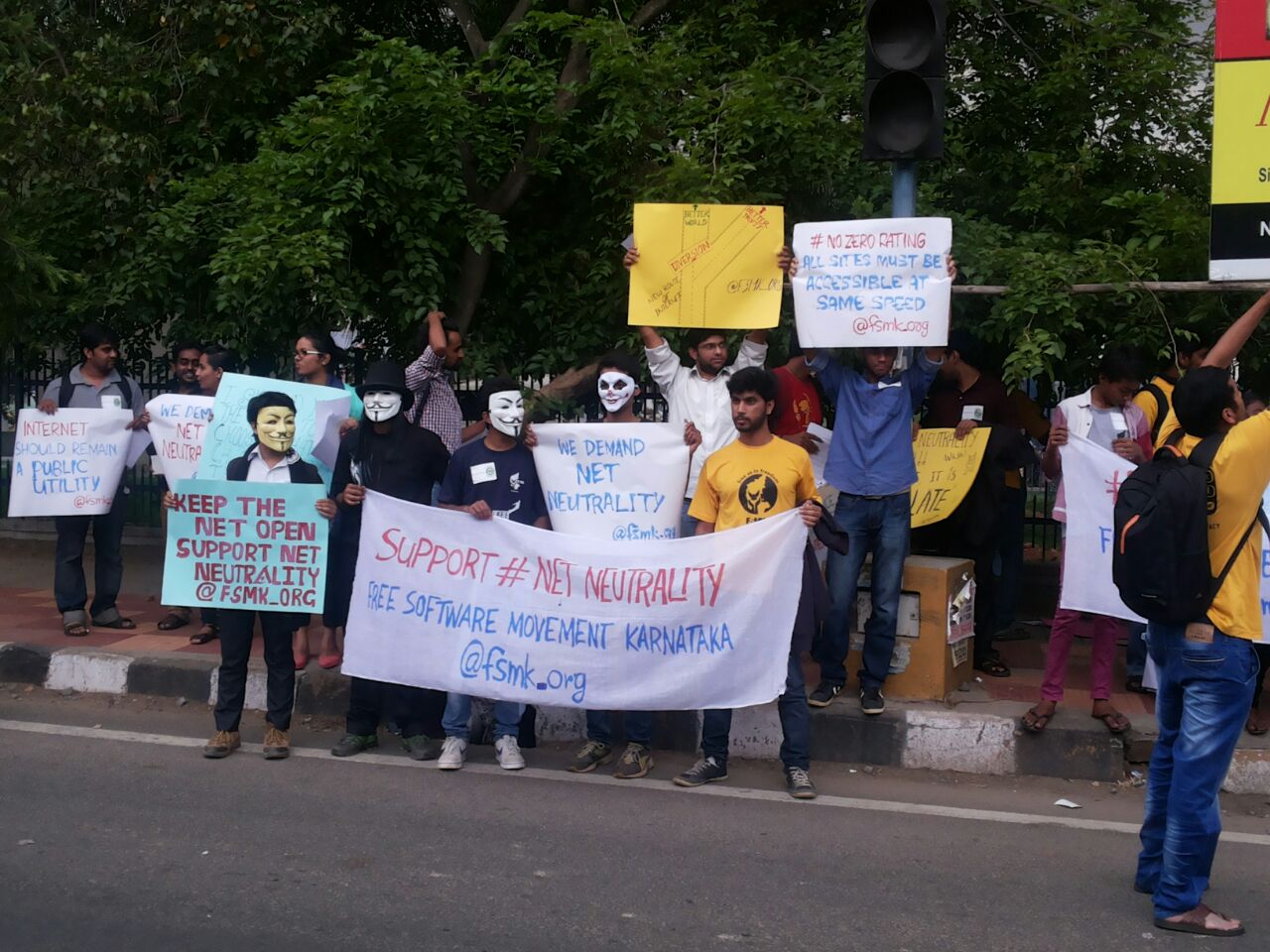
FSMK's_walkathon_in_support_of_NetNeutrality

In this blogpost, Priyanka Kansara, a law student from National Law University, Jodhpur writes on net neutrality and facebook’s free basics program.  

“Internet never discriminate, everyone is important.”

-Savetheinter.in[1]

Have you seen our Prime Minister’s profile picture on Facebook? So, it is his prerogative towards Digital India. Digital India is a campaign for creating more and more Internet connectivity for the citizens of India, especially in rural India. But Digital India is not the only phenomenon in the area of Cyber Revolution in India; we have the concept of Net Neutrality also, which should be taken care into. The concept of ‘Free Basics’ is in the debate, why? Because, it is alarmed that the new initiative of Facebook could have astringent impacts on the doctrine of net neutrality and the right to information in the country in the name of connectivity at a broader level.

The Concept of Net Neutrality in India

The concept of Net Neutrality is based on the principle that all the telecom stakeholders will treat all internet traffic on an equal pace. There must be a balanced approach between all the endpoints connected to the internet, without any arbitrary restriction. Further, the discriminative traffic management such as blocking, throttling should be prohibited[2]. There should be no restriction on the part of Internet Service Providers to interfere in the internet users’ right to free access contents. In the arena of Net and accessibility the users’ rights to freedom to expression and freedom to access the information should be protected. Moreover, the objective of Net Neutrality is not confined only to the balanced approach towards the internet access; it is also meant by optimization and prioritization of time-sensitive traffic for better user experience and better data and money saving strategies[3]. In prudent language, Net Neutrality is to make the online platform neutral for all the services provided by the Internet stakeholders. In the language of Public International Law, The internet is a common heritage of mankind and the limitation should be ensured so that everyone can legitimately access this heritage without any arbitrary intervention.

In India, the issue of Net Neutrality was raised several times i.e. in the case of Shreya Singhal vs. Union of India[4], Justice Nariman while declaring some censorship laws in the Information Technology Act passed by the Parliament unsustainable, had emphasized that liberty of thoughts and expression and right to access the information are the cardinal principles of the Constitution[5]. Though, the Digital India campaign centres towards three important objectives i.e. digital infrastructure as a utility to every citizens, governance and services on demand, and digital empowerment of citizens[6], in April 2015 Prime Minister Modi’s initiative towards Digital India Campaign by shaking hands with the top Silicon Valley’s CEOs puts a question on the subsistence of the Net Neutrality principle in India.

What exactly Free Basics concept is?

Free Basics System, also known as Internet.org (it is the same service against which net neutrality supports including certain Indian organizations i.e. IT for Change[7], MediaNama[8], SavetheInternet.in[9] etc. have been fighting for a year[10]) is a Campaign launched by Facebook, the objective of which is to provide connectivity for 4.5 billion people including 1 billion Indians to the opportunities Online and to achieve digital equality in India. For this matter, Facebook needs a click from all the Internet stockholders as a support so that the campaign could be made a reality in India; merely by clicking on ‘Free’ we are sending a message to the Telecom Regulatory Authority of India (TRAI), which reads as- “To the Telecom Regulatory Authority of India, I support digital equality for India. Free Basics provides free access to essential internet services like communication, education, healthcare, employment, farming and more. It helps those who can’t afford to pay for data, or who need a little help getting started online. And it’s open to all people, developers and mobile operators. With one billion Indian people not yet connected, shutting down Free Basics would hurt our country’s most vulnerable people. I support Free Basics – and digital equality for India, Thank you[11]

Facebook’s initiative claims to provide free access to certain basic Internet services that are approved by Facebook and local ISPs[12]; by doing the same, it is building a ‘walled garden[13]’ for the targeted communities.

It is claimed that the Campaign will provide free access to basic internet services such as Education, Communication, Healthcare, Employment, Agricultural information and many other things[14].  It is also claimed that besides there is a risk of disruption in the Net Neutrality in India, the Facebook is putting a misstatement before the consumers of providing access to full Internet while in reality it is providing access to some limited Internet services.

The Telecom Regulatory Authority of India has proposed a Consultation Paper, wherein a tariff framework was provided to the telecom service providers, which include Internet Service Providers and Data Service Providers (hereinafter referred to as TSPs) the freedom to design the tariffs according to the prevailing market conditions. The internet stakeholders are advised to send their suggestions till the end of the month of December.[15] It should be remembered that the consultation paper issued by the regulatory authority raises concern because it offers zero- rating platform by TSPs in particular[16].

On the contrary, a campaign is being initiated by “savetheinternet.”in against the Facebook’s Free Basics concept, wherein a response will be submitted to the Chairperson of the Telecom Regulatory Authority of India to execute comprehensive network neutrality regulations, and it is emphasised that freedom of choice in information seeking is central to the value of the internet and contributes significantly to knowledge creation for citizens[17].

Conclusion

As per the Net Neutrality concept, every citizen has a right to access all the internet services without any prejudice, but the Free Basics concept will provide the internet accessibility to some limited extent, which means the user will not be the choosers, but it will be the Facebook, who will choose the selected Internet Service Providers (ISPs) for the users. Moreover, the campaign would be regulated by Facebook’s terms and conditions, and all the data would be under the possession of Facebook; it means Facebook would be having non-exclusive access to the data[18].

Having concurred with the opinion of the billionaire industrialist Sunil Mittal, it is advised that if the objective of the Facebook’s Free Basics concept is to provide free access to the internet services; to attain this it is necessary to open this project with the philanthropic intentions, the Government should make spectrum free, and there should be a free internet.[19]

[1] www.savetheinternet.in.

[2] Regulative Framework for Over-the-top (OTT) services/internet services and Net Neutrality: An abridged version of TRAI’s Consultation Paper (no. 2/2015), March 27, 2015, https://docs.google.com/document/d/1kNXtANR9UV6fSjV2DNrkcIMAJVVN4CJfHHiq_0kkx8E/preview#heading=h.4aduumx4pf3r (accessed on December 22, 2015).

[3] Net Neutrality in India: that’s what telcos said, Nikhil Pahwa, Medianama, November 12, 2014, http://www.medianama.com/2014/11/223-net-neutrality-telcos-india/ (accessed on December 22, 2015).  

[4] (2013) 12 SCC 73; http://supremecourtofindia.nic.in/FileServer/2015-03-24_1427183283.pdf (accessed on December 22, 2015).

[5] id.

[6] Digital India at the expense of Net Neutrality?, The Statesman, October 08, 2015, http://www.thestatesman.com/news/section-ii/digital-india-at-the-expense-of-net-neutrality/95497.html (accessed on December 22, 2015); Digital India, Department of Electronics, and Information Technology, Government of India, http://deity.gov.in/sites/upload_files/dit/files/Digital%20India.pdf (accessed on December 22, 2015).

[7] Open letter to Mark Zuckerberg regarding Internet.org, Net Neutrality, Privacy & Security, May 18, 2015, https://www.facebook.com/notes/accessnoworg/open-letter-to-mark-zuckerberg-regarding-internetorg-net-neutrality-privacy-and-/935857379791271/ (accessed on December 22, 2015).

[8] A change of name to Free Basics doesn’t make Facebook’s Zero Rating service neutral, Nikhil Pahwa, MediaNama, September 25, 2015, http://www.medianama.com/2015/09/223-free-basics-internet-net-neutrality/ (accessed on December 22, 2015).

[9] Save The Internet (part 3). Tell TRAI that we need net neutrality, once again (Dec 2015), http://www.savetheinternet.in/ (accessed on December 22, 2015).

[10] Facebook is asking you to sign up for ‘Free Basics’, which is just another name for Internet.org, Adrija Bose, THE HUFFINGTON POST, December 17, 2015, http://www.huffingtonpost.in/2015/12/17/facebook-free-basics_n_8824378.html (accessed on December 22, 2015).

[11]id; Facebook ripped for campaign backing free basics in India, David Cohen, Social Times, December 21, 2015, http://www.adweek.com/socialtimes/facebook-campaign-internet-org-free-basics-india/631806 (accessed on December 22, 2015).

[12] Supra Note 6.

[13] Supra Note 6.

[14] Facebook Launches ‘Save Free Basics’ Campaign in India, Sriram Sharma, Gadget 360: An NDTV venture, December 16, 2015, http://gadgets.ndtv.com/apps/news/facebook-launches-campaign-called-save-free-basics-778647 (accessed on December 22, 2015).

[15] Consultation Paper on Differential Pricing for Data Services, Telecom Regulatory Authority of India, Consultation Paper No. 8/2015, December 9, 2015, http://www.trai.gov.in/WriteReadData/WhatsNew/Documents/CP-Differential-Pricing-09122015.pdf (accessed on December 23, 2015).

[16] Facebook notifies users in India to save Free Basics, Express Computer, December 18, 2015, http://computer.financialexpress.com/news/facebook-notifies-users-in-india-to-save-free-basics/14995/ (accessed on December 23, 2015).

[17] Supra Note 8.

[18]Supra Note 2.

[19] Sunil Mittal calls it right: what Zuck is doing with Internet.org isn’t philanthropy, Shashidhar KJ, MediaNama, March 9, 2015,  http://www.medianama.com/2015/03/223-sunil-mittal-calls-it-right-what-zuck-is-doing-with-internet-org-isnt-philanthropy/ (accessed on December 23, 2015).

Download Now

iPleaders is looking for a Content and Communications Manager 

0

iPleadersLogo Hi-Res_vectorized

We at iPleaders, a Delhi-based legal education startup is looking for a suitable candidate for the role of Content and Communications Manager. We are working on some exciting projects around legal education and access to legal education. Some of our exciting projects includes:

  1. superlawyer.in – An online portal which captures interviews from lawyers in India. We are in the process of creating a multi-city organization around SuperLawyer, and we invite you to play a pivotal role around this.
  2. LawSikho.com – An upcoming marketplace for online legal courses.
  3. barhacker.in – India’s oldest Bar Exam preparation toolkit with 99% success rate.
  4. startup.nujs.edu – An online business law diploma course run in collaboration with NUJS, Kolkata.
  5. Master in Business Laws – An online 2-years master program run in collaboration with NUJS, Kolkata.

Qualification and Experience – A law graduate with work experience of atleast 1-year. Candidates having prior experience of working in a corporate law firm, LPO, or as a law teacher will be preferred.

What will you be doing if you are selected?

As a Content and Communications Manager, your primary responsibility would be to develop and manage content for the courses run by iPleaders. Additionally, you will have the opportunity to work with senior lawyers and law firm partners in the course of creating content and conduct webinars/interviews with them. Working in a fast-paced startup like iPleaders, will require one to juggle multiple roles throughout the day, including, course administration, developing content marketing strategies and involved in career counseling for students.

Remuneration:  INR 3-3.6 LPA (candidates having higher qualification or experience may be remunerated suitably)

Opportunities and perks

  • Learn how a startup works – taking independent decisions and working with a small team
  • Being part of a fast growing legal startup with an open door policy
  • Work directly under partners and senior management of the firm
  • Receive one-to-one feedback and counseling
  • Meet and interact with top lawyers, law firm partners and general counsels
  • And the best perks are always unwritten

Interested candidates are requested to send their CVs to [email protected].

Download Now

Are You A Lawbreaker If You Don’t Stand For The National Anthem

0

download

In this blogpost, Priyanka Kansara, a student from National Law University, Jodhpur writes on is it necessary to stand when the National Anthem is playing and what are the laws related to it.

As per section 3 of the Prevention of Insults to National Honour Act 1971[1], whoever intentionally prevents singing of the Indian National Anthem or causes disturbance to any assembly engaged in such singing shall be punished with imprisonment for a term, which may extend to three years, or with fine, or with both[2]. Though there is no provision of Law, which obliges anyone to sing the National Anthem nor it is disrespectful to the National Anthem, if the person, who stands up respectfully when the National Anthem is sung does not join the singing[3]. However, Article 51A of the Indian Constitution[4] states that it is the duty of every Citizen of India to abide by the Constitution and respect its ideals and institutions, the National Flags and the National Anthem[5].

Article 19 (1) (a) of the Indian Constitution[6] states that All Citizens shall have the right to freedom of speech and expression, but at the same time, as per Article 19 (2) of the Constitution[7], Nothing in sub-clause (a) of clause (1) shall affect the operation of any existing law, or prevent the State from making any law, in so far as such the law imposes reasonable restrictions on the exercise of the rights conferred by the said sub-clause in the interest of the (Sovereignty and Integrity of India[8]), the security of the State friendly relations with other States, public order, decency, or morality, or in relation to the Contempt of Court defamation or incitement to an offence[9].

The National Anthem is sung on several occasions, for which the Ministry of Home Affairs provides the directives as to on certain specific occasions, the National Anthem can be sung; as per the directives[10], the National Anthem shall be played on any other occasion for which special orders have been issued by the Government of India[11].

The General Provision of the directive says that whenever the National Anthem is sung or played, the audience shall stand to attention. However, when in course of a newsreel or documentary the Anthem is played as a part of the Film, it is not expected of the audience to stand as standing is bound to interrupt the exhibition of the film and would create disorder and confusion rather than add to the dignity of the Anthem[12]; the same provision was upheld in the Case of Karan Johar vs. Union of India[13], wherein the National Anthem was shown in the middle of the movie as a part of it, so there was no need of standing in the mid as it could interrupt the exhibition of the Movie.

Is it mandatory to stand up while the National Anthem is being played-?

Maharashtra has made it mandatory by an executive order to play the National Anthem before the screening of the Movie since 2003. Different exhibitors have started playing different versions of the National Anthem, which could sometimes go for about ten (10) minutes. The Constitution provides for the exhibition of films under State List[14]. Despite not having a proper list of the occasions, wherein the Anthem could be played, the mass singing of the Anthem is allowed under the Directives[15].

A person, with his family, was thrown out in Maharashtra for not standing, while the National Anthem was being played[16], this matter raises a question before us that whether standing is mandatory as per section 3 of the Prevention of Insults to National Honour Act 1971[17]. The careful perusing of this provisions clearly states that ‘whoever intentionally prevents singing of the Indian National Anthem or causes disturbance to any assembly engaged in such singing’; it means that a person, who avoids standing or singing without any intention to prevent the singing or causes disturbance, will not amount to an offender as the ‘not standing phenomenon’ does not indicate disrespect necessarily.

It also raises another question, whether throwing out of that person for not standing during the National Anthem disrobes his Fundamental Right to Freedom of Speech and Expression. The National Anthem and the Constitution are, undoubtedly, our Pride; they signify the Dignity, Integrity & Sanctity of our Nation. But, above all, the protection of the persons’ Fundamental Rights shows the Constitutional Spirit; any Law, which is against the Constitutional Values and Constitutional Spirit, is not a Law at all. The matter is simple for the persons, who cannot stand because of the Physical Disability; though it is not mentioned anywhere in the Rule or other Legal Provisions. But, the situation turns its face, while dealing with this complex matter.

Article 19 (1) (a) of the Indian Constitution talks about Freedom of Speech and Expression on the benchmark of Reasonable Restrictions in the Public Interest. The Reasonable Restriction phenomenon depends upon the Basic Structure of the Constitution and besides that as per 1951 Amendment State was allowed to make laws with the objective of imposing reasonable restriction on the exercise of the Article 19 (1) (a) in the interests of[18]

  • Security of the State,
  • Friendly relations with the Foreign States,
  • Public Order,
  • Decency or Morality,
  • In relation to the Contempt of Court,
  • Defamation,
  • Incitement of an Offence,
  • Sovereignty and Integrity of India[19].[20]

Whether it is a moral responsibility of the Citizens of the Nation to stand to show respect towards the National Anthem-?

After looking into all these above-mentioned points, it is interesting to think whether ‘not standing up’ infringes Security of the State, or Public Order, or Morality, or, Sovereignty & Integrity of the Nation. The Logic behind making it mandatory to stand up while the National Anthem is being played is to pay respect, love & to be  Proud of the National Anthem.

The provision of running the National Anthem before the exhibition of the Movie was also a general phenomenon in West Bengal, but there it is a matter of choice, not a matter of compulsion to play the National Anthem. If the playing of National Anthem is a matter of choice for the exhibitors, then how it could be a matter of compulsion for the spectators to stand up which it’s being played to show the respect for it.

Conclusive Remarks

People would prefer to go some 15-20 minutes late in the cinema theatre just to avoid this ‘formality’ of standing up for the National Anthem while it is being played. It is also clear that it is not a part of the movie. Hence, it makes necessary for the people to stand up in respect of the National Anthem. But what makes an obligation as mandatory is not just the private morality, but the public morality at large, as what is moral for a certain group of person doesn’t make it moral for all. The concept of morality should be measured on the benchmark of constitutional spirits.

Making it mandatory by way of rules does not make an action legally binding. For making it legally valid, one has to look into whether those rules are not infringing someone’s Fundamental Rights and whether the so-called rules can make any change or will it be beneficial for the attainment of the objective for which, it was enacted. The author doesn’t mean that the State Government Rules are not sustainable. But, it is also true that sometimes a compulsion makes the people lawbreakers.

[1] The Prevention of Insults to National Honour Act 1971: Act No. 69 of 1971 (hereinafter the Act 1971), 23rd December 1971, http://home.bih.nic.in/Acts_Rule/Prevention_Insults_National_Honour_Act1971.pdf (accessed on December 16, 2015).

[2] id, s. 3, the Act 1971.

[3] Bijoe Emmanuel & Ors. vs. State Of Kerala & Ors., AIR 1978 SC 748.

[4] The Constitution of India, Government of India: Ministry of Law and Justice (as modified up to the December 1st, 2007), http://lawmin.nic.in/coi/coiason29july08.pdf (accessed on December 16, 2015).

[5] id, Article 51A (a), Part IVA, Fundamental Duties; Ins. by the Constitution (Forty Second Amendment) Act, 1976, s. 11 (w.e.f. 3-1-1977).

[6] Supra Note 4.

[7] id.

[8] id, Ins. by the Constitution (Sixteenth Amendment Act), 1963, s. 2.

[9]Supra Note 4.

[10] Orders relating to the National Anthem of India, Ministry of Home Affairs, http://www.mha.nic.in/sites/upload_files/mha/files/pdf/NationalAnthem(E).pdf (accessed on December 16, 2015).

[11] id, Section II (3).

[12] id, Section V (1).

[13] (2004) 5 SCC 127.

[14] Article 246, List-II: State List, No. 33, Theatres and dramatic performances; cinemas subject to the provisions of entry 60 of List I; sports, entertainments and amusements, http://lawmin.nic.in/olwing/coi/coi-english/Const.Pock%202Pg.Rom8Fsss(35).pdf (accessed on December 16, 2015).

[15] Supra Note 9, Section III (4).

[16]Family evicted from theatre for ‘disrespecting’ national anthem, Namrata Joshi, THE HINDU, December 1, 2015, http://www.thehindu.com/news/cities/mumbai/news/family-evicted-from-mumbai-theatre-for-disrespecting-national-anthem/article7934105.ece (accessed on December 16, 2015).

[17] Supra Note 1.

[18] The Constitution (First Amendment) Act 1951, http://www.constitution.org/cons/india/tamnd1.htm (accessed on December 16, 2015).

[19] Supra Note 7.

[20] Supra Note 17.

Download Now

What is the relevance of Black Money Act, 2015 after September 2015

0
Black Money Act, 2015

In this blog post, Shachi Kalani, who is currently pursuing a Diploma in Entrepreneurship Administration and Business Laws from NUJS, Kolkata, writes about the relevance of the Black Money Act, 2015 after 30th September 2015.

The Black Money Act, 2015

The Black Money (Undisclosed Foreign Income and Assets) and Imposition of Tax Act, 2015 raises the stakes for those who take advantage of offshore tax havens. It aims to curb black money, or any undisclosed foreign assets and income and imposes tax and penalty on such income. The Act received assent of the President on 26th May 2015, and it came into effect from 1st July 2015.

The Relevance of the Black Money Act, 2015 after September 2015

When Finance Minister Arun Jaitley announced his intentions to pursue black money stashed overseas, he was only the most recent in a long line of Government officials to denounce tax avoidance. However, when the government passed the black money law and notified foreign asset disclosure rules in July, it signalled that the time for talking tough on off shore accounts had run out.

However, one of the highlights of this law is the Compliance window. The window allows people with undisclosed offshore accounts and assets to disclose all such assets to the Government. Those with unaccounted assets or funds outside would be given a clean chit after 30% tax and 90% penalty on such tax. The government will then not prosecute those coming under Black Money and Imposition of Tax Act, 2015. The government has maintained that the motive of the Act is not to generate revenue through a one-time compliance window but to deter future tax violation. There is no universally accepted estimate quantum of black money stashed away by Indian citizens. However, the compliance window ended on September 30, 2015, and the Government received 2428 crores tax from 644 entities till the compliance window closed.

The non-disclosure of overseas assets and income would become a very risky affair from 2017 as the government will be then starting to get information from foreign countries. Those caught with undeclared overseas assets or income once the compliance window closes will be imprisoned, which could be up to 10 years.

Certain vulnerable sectors of Indian economy are more prone to the underground economy and black money than others. These sectors need systematic reforms. As for example, gold trading was one of the major sources of black money generation and even crime prior to the reforms induced in that sector. While gold inflows into India have remained high after reforms, gold smuggling is no longer the menace it used to be. Similar effective reforms of other vulnerable sectors like real estate can yield a significant dividend in the form of reducing the generation of black money in the long term.

The real estate sector in India constitutes about 11 percent of its GDP. Investment in property is a common means of parking unaccounted money, and a large number of transactions in real estate are not reported or are under-reported. This is mainly on account of very high levels of property transaction taxes, commonly in the form of stamp duty. High transaction taxes in property are one of the biggest impediments to the development of an efficient property market. Real estate transactions also involve complicated compliance and high transaction costs regarding search, advertising, commissions, registration, and contingent costs related to title disputes and litigation. People of India find it easier to deal with real estate transactions and opaque paperwork by paying bribes and through cash payments and under-declaration of value. Unless the real estate transaction process and tax structure is simplified, the report suggests this source of black money will be difficult to prevent. Old and complicated laws such as the Urban Land Ceiling Regulation Act and Rent Control Act need to be repealed, property value limits and high tax rates eliminated, while Property Title Certification system dramatically simplified.

Effective and credible deterrence is necessary in combination with reforms, transparency, simple processes, elimination of bureaucracy and discretionary regulations. Credible deterrence needs to be cost effective. Such deterrence to black money can be achieved by information technology (integration of databases), integration of systems and compliance departments of the Indian government, direct tax administration, adding data mining capabilities, and improving prosecution processes.

Along with deterrence, public awareness initiatives must be launched. Public support for reforms and compliance are necessary for a long-term solution to black money. Also, financial auditors of companies have to be made more accountable for distortions and lapses. Whistleblower laws must be strengthened to encourage reporting and tax recovery.

In order to check black money, the Central Board of Direct Taxes (CBDT) has notified norms under which cash receipts and high-value transactions beyond a certain limit will have to be reported to the Income Tax authorities with effect from April 1, 2016.

India has Double Tax Avoidance Agreements with 82 nations, including all popular tax haven countries. Of these, India has expanded agreements with 30 countries which require mutual effort to collect taxes on behalf of each other, if a citizen attempts to hide black money in the other country.

To curb black money, India has signed TIEA with 13 countries -Gibraltar, Bahamas, Bermuda, the British Virgin Islands, the Isle of Man, the Cayman Islands, Jersey, Liberia, Monaco, Macau, Argentina, Guernsey and Bahrain – where money is believed to have been stashed away. Accordingly, India has made significant progress under the NDA government in tracking the black money and received good cooperation from the Swiss Bank. Adding to that cooperation, Mauritius government will begin Automatic Exchange of Tax Information from September 2018.

In the most recent news regarding the black money, RBI has started inviting applications for regularisation of declared wealth. It said that those who have declared unaccounted overseas assets under the Black Money Act should file an application with its central office for regularisation of declared wealth within 180 days of such declaration.

In its true effect, the Black Money Act, 2015 has shown many positives bringing in much of the undisclosed income to the Government, with its increased goodwill and support from its allies, India can expect an increase in disclosure of the black money, however it’s still a long journey and many hurdles to overcome, including domestic political environment. The implementation of the Act has been a positive step, but the government has to investigate thousands of trusts where the black money is hoarded in India itself. Where the individuals are asked to show the various bank accounts held, the same provision is not there for corporate entities or trusts. The government is willingly allowing these people to get away with this scam as most of the politicians and influential peddlers are involved in it. It is high time that the government takes a positive step towards unearthing the black money hidden in India itself by various means. Therefore, the effective execution of the Act will be a challenge for the NDA Government.


Download Now

Juvenile Justice (Care And Protection Of Children) Act, 2000- In Contrast With U.S And U.K Juvenile Justice System

0

Handcuffs01_2003-06-02

This article is written by Shubham Kumar, a student of Dr. Ram Manohar Lohiya National Law University and is an Assistant Editor for iPleaders Blog.

Introduction

The Juvenile Justice (Care and Protection of Children) Act, 2000 is the primary legal framework for juvenile justice in India. The Act comprehensively deals with prevention and treatment of juvenile delinquency and provides a framework for the protection, treatment and rehabilitation of children in the purview of the juvenile justice system. This law was brought in compliance of Child Rights Convention 1989, repealed the earlier Juvenile Justice Act of 1986.

JJ Act is considered to be an extremely progressive legislation and Model Rules 2007 have further added to the effectiveness of this welfare legislation. A resolution was passed in 2006 and later reiterated again in 2009 whereby several High Courts have constituted “Juvenile Justice Committees” which are monitoring committees headed by sitting Judges of High Courts. These Committees supervises and monitors the implementation of Juvenile Justice Act in their Jurisdiction.

The United Kingdom JJ System

In United Kingdom there is Youth justice it comprises the organs and processes that are used to prosecute, convict and punish persons under 18 years of age who commit criminal offences.

The American JJ Model

The American Juvenile Justice System is made up of a network of juvenile courts across the country. A juvenile court (or young offender’s court) is a court that has special authority to try and pass judgments for crimes committed by children or adolescents who have not yet attained the age of majority. While Juvenile court is a universal rule, every American jurisdiction has provided for exceptions to it-circumstances and procedures that transfer those within the age boundaries of juvenile court to criminal court instead.[1]

Comparative Analysis between the Indian, American and British Model

  • The Indian law that governs Juvenile justice system is The Juvenile Justice (Care and Protection of Children) Act, 2000
  • The United States law which governs Juvenile justice system is Juvenile Justice and Delinquency Prevention Act 1974
  • The United kingdom law which governs Juvenile justice system is Crime and Disorder Act 1998

Criminal Responsibility

  1. India
  • The age of responsibility in India under JJ Act, 200 is 18 years.
  • The law defines a “juvenile or child’” as a person who has not completed their 18thyear of age.

2. United States

  • In US, the age of criminal responsibility is established by state law.
  • Most states rely on common law, which holds that from age seven to age 14 children cannot be presumed to bear responsibility but can be held responsible.
  • In US criminal law, some state statues allow for juveniles as young as age 7-years old to be held responsible for some law violations.
  • The minimum age for imposing adult liability for children, is as young as age 10-years old. If the sole aim of delinquency jurisdiction were the assistance and the best interest of the minors, then kids of any age and capacity would be eligible for such help, no matter the level of their comprehensions.[2]

3. United Kingdom.

  • In England and Wales Now, children aged 10 and 17 are capable of committing offences and it is not possible for a child to avoid liability by showing he does not know the difference between right and wrong.[3]
  1. Judicial Process

India

  • Under this act children are not to be taken to a regular criminal court.
  • The purpose of a separate court is that its purpose is socio-legal rehabilitation and reformation, not punishment.
  • The aim is to hold a child culpable for their criminal activity, not through punishment, but counseling the child to understand their actions and persuade them away from criminal activities in the future.
  • The JJB consists of a metropolitan magistrate or a judicial magistrate of the first class and two social workers, at least one of whom should be a woman.
  • JJB are meant to resolve cases within a four month period.

United Kingdom

  • When a young person is charged with an offence, they will appear before the youth court.
  • If a young person pleads not guilty, a date will be set for the trial when the magistrates will hear all the evidence and decide whether or not the young person is guilty.
  • If the decision is guilty, they will then decide on the most appropriate sentence.
  • If the case is very serious, the youth court will send the case to the Crown Court for trial and or sentence.

United States

  • Youth courts are programs in which youth sentence their peers for minor delinquent and status offenses and other problem behaviors.
  • The primary function of most youth court programs is to determine a fair and restorative sentence or disposition for the youth respondent.[4]
  1. Penalties And Restoration

India

  • In India the act provides following powers to Juvenile justice Board.
    • Observation homes(Section 8)
      • Set up for the temporary reception of any juvenile in conflict with law during the pendency of any inquiry regarding them under this Act.
      • They are to be established by the State Govt.
    • Special homes (Section9)
      • To be established by the state Govt. to provide for the management of special homes, including the standards and various types of services to be provided by them which are necessary for re-socialisation of a juvenile.
    • Children’s homes (Section 34 )
      • The State Government may establish and maintain itself or in association with the voluntary organisations, children’s homes, in every district , for the reception of child in need of care and protection during the pendency of any inquiry and subsequently for their care, treatment, education, training, development and rehabilitation.
    • Shelter homes (Section37)
      • The State Government may recognise, reputed and capable voluntary organisations and provide them assistance to set up and administer as many shelter homes for juveniles or children as may be required.
    • Adoption (Section 41)
      • Adoption shall be resorted to for the rehabilitation of the children who are orphan, abandoned or surrendered through such mechanism as may be prescribed.
    • Foster care (Section42)
      • In foster care, the child may be placed in another family for a short or extended period of time, depending upon the circumstances where the child’s own parent usually visit regularly and eventually after the rehabilitation, where the children may return to their own homes.

United States and United Kingdom

Juvenile courts have a wide range of sentencing options that they can impose on juveniles or youth offenders.

  • Incarcerating Juvenile Delinquents
    • After a child is held delinquent a JJ Court may order incarceration as a penalty. But this incarceration is different from those used in adult criminal justice system. Some common ways that the judges can order confinement for a juvenile who has been found delinquent:
    • Home confinement :The judge can order the minor to remain at home, with exceptions (attend school, work, counseling, and so on).
    • Placement with someone other than a parent or guardian :The judge can require that the minor live with a relative or in a group or .
    • Juvenile hall/juveniledetention facility :The judge can send the minor to a juvenile detention facility. These facilities are designed for short-term stays.
    • Secured juvenile facilities : These facilities are designed for longer term stays. Juveniles can be sent to secured facilities for months or years.
    • Juvenile and adult jail :In some jurisdictions, judges can send delinquent juveniles to a juvenile facility, and then order transfer to an adult facility once the juvenile reaches the age of majority. [5]
  • Non-Incarceration Options for Juveniles
    • Verbal warning : The sentence for the juvenile can be as simple as a verbal reprimand.
    • Fine : The minor may be required to pay a fine to the government or pay compensation to the victim.
    • Counseling : Often, judges require juveniles to attend counseling as part of a disposition order.
    • Community service : Juveniles may be ordered to work a certain number of hours in service to the local community.
    • Electronic monitoring.Juveniles may be required to wear a wrist or ankle bracelet that verifies their location at all times.[6]
  • Probation
    • Probation is a program of supervision in which the minor’s freedom is limited and activities restricted.
    • Probation is the most common disposition in juvenile cases that receive a juvenile court sanction. In an average year, about half of all minors judged to be delinquent receive probation as the most restrictive sentence.[7]

Conclusion

The JJ Act,2000 is a modern and a progressive legislation which is intended to bring change and restoration in the juveniles, this legislation brought in 2000 brings forth a whole set of guidelines which are also open to abuse. While undertaking the work of comparison between all the three legislations of the countries many things were found out. When question of age was compared it was found out that the approach of Indian law is very strict i.e. it does not provides much room for the discretion of the courts, unlike United States and United Kingdom where the fate of the juvenile is decided by the magnitude of crime juvenile committed, the court is empowered to consider juvenile as an adult and he is punished according to adult laws.  Whereas the JJ Act creates a juvenile justice system in which persons up to the age of 18 who commit an offence punishable under any law are not subject to imprisonment in the adult justice system but instead will be subject to advice/admonition, counselling, community service, payment of a fine or, at the most, be sent to a remand home for three years.

After the Delhi Rape case, 2013 there was a huge demand to lower down the age of juvenile. Justice Verma commission denied to the demand for amendment to the act and reducing the age and the contention given by him in this regard was, a general lowering of the juvenile age would not work. A Public Intrest Litigation was filed by Subramanian Swamy to consider the emotional, mental and intellectual maturity of the accused juvenile, which was considered by the court. A revision is required to this issue but no strict amendments should be bought as demanded that the age of responsibility should be lowered to 16, because generalisation of these important issues sometimes result in injustice rather the task should be left to judicial discretion and they should decide the criminal responsibility based on the circumstances, understanding of the juvenile and the mental intent of the juvenile.

[1]Franklin, Zimering. American Juvenile Justice . 1st. Chicago: Oxford University Press, 2005. 23. Print.

[2] Zimering E. Franklin, American Juvenile Justice (Oxford University Press, 2005)

[3] Ian Blakeman, ‘The Youth Justice System of England and Wales’, 139TH INTERNATIONAL TRAINING COURSE VISITING EXPERTS’ PAPERS accessed on 24 Mar 2014 <http://www.unafei.or.jp/english/pdf/RS_No78/No78_13VE_Blakeman.pdf> accessed on 24 Mar 2015

[4] Zimering E. Franklin, American Juvenile Justice (Oxford University Press, 2005)

[5] http://www.nolo.com/legal-encyclopedia/juvenile-court-sentencing-options-32225.html

[6] Ibid

[7] Preventing and Reducing Juvenile Deliquency : A Comprehensive Framework, Howell c. James ( 2nd edn, Sage, Lon Angeles)

Download Now

Is it mandatory to be a matriculate in Punjabi for appearing in any of the examinations for recruitment conducted in the State of Punjab?

2
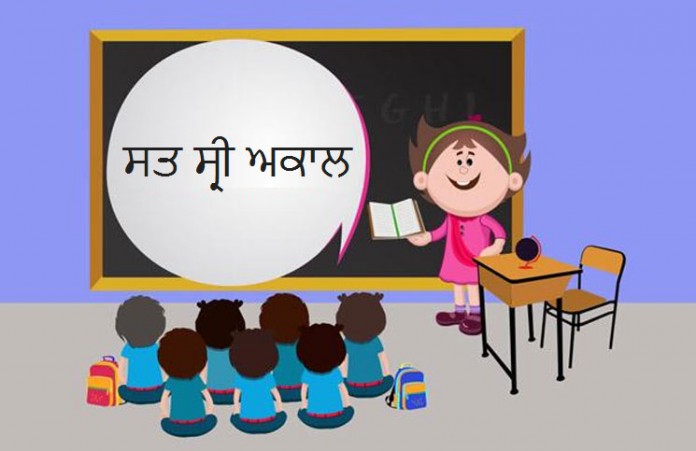
punjabi

This article is written by Bhavpreet Singh Dhatt, Advocate, High Court of Punjab and Haryana.

To appear in any of the entrance examinations conducted by Punjab Public Service Commission for appointments to various govt posts, including prestigious services like the Punjab Civil Service (Executive Branch) as well as the Punjab Civil Service (Judicial Branch), one of the requirements is to pass the Punjabi examination, equivalent to the level of 10th Standard. For eg., the recruitment of officers to PCS (Executive Branch) through the recently held Punjab State Civil Services Combined Competitive Examination – 2015 required that “the Candidates must have passed Punjabi of matric or its equivalent standard as on the last date of receipt of Online application Form i.e. 5th October, 2015” and the Commission even uploaded on the website a list of students who did not fulfil the said condition. Similarly, the “Punjab Civil Service (Judicial Branch) Examination 2014–2015“ for filling up 118 vacancies of Civil Judge (Junior Division) Cum Judicial Magistrate required “Punjabi upto Matric or its equivalent Standard” as one of the essential qualifications. Same condition was stipulated in the recent examination conducted for recruitment of Assistant and Deputy District Attoney which again required “Punjabi of Matric or its equivalent Standard is essential for both the posts.” The same requirement is mandated across all examinations and therefore, applies whether one wants to be appointed as a Scientfic Officer or a Medical Officer (Dental). This requirement has often been the ground to challenge and set aside appointments and selections, and the law has been settled and crystallised by several important decisions rendered by the Punjab and Haryana High Court and the Supreme Court over the last two decades.
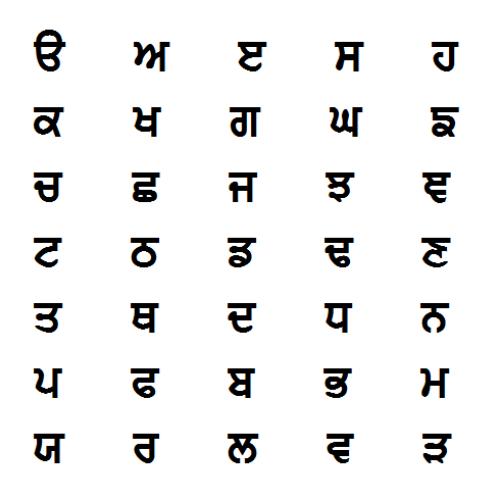
Whether the requirement to have a matriculation in Punjabi language is mandatory or can it be waived off?

The question whether the qualification is mandatory if the same has been provided in the advertisement came up before the Supreme Court in Umrao Singh v Punjabi University, Patiala and Ors., (2005) 13 SCC 365. Punjabi University, Patiala had advertised for lecturers in Department of Defence and Strategic Studies and the eligibility conditions, inter alia, required matriculation in Punjabi or Punjabi Prabodh or Punjabi Praveshika Exam. The petitioner therein alleged that one of the selectees did not fulfil the required conditions. The selectee contended that he had subsequently cleared the exam and the same was in accordance with the decision of the University Syndicate which had subsequently provided relaxation (the decision of the University syndicate allowing relaxation was after the last date of receipt of applications). The Supreme Court held that the selectee was required to already have passed the Punjabi examination in terms of the advertisement before appearing for the interview, which admittedly had not been done by the selectee and subsequent decision of the University couldn’t confer any benefit on him. The Court went on to observe that the eligibility of passing Punjabi examination was a condition which went to the root of the eligibility.

The said requirement also now forms a part of the stature book and has been provided for by Punjab Civil Services (General and Common Conditions of Service) Rules, 1994 (hereinafter referred to as “1994 Rules”). The said rules apply to Group ‘A’, Group ‘B’ and Group ‘C’ services. (Group ‘D’ services are governed by Punjab State (Group ‘D’) Service Rules, 1963 which require passing examination of middle standard with Punjabi as one of the subjects).

Rule 17 of the 1994 Rules is as follows:

“17. Knowledge of Punjabi Language – No person shall be appointed to any post in any service by direct appointment unless he has passed Matriculation examination with Punjabi as one of the compulsory or elective subjects or any other equivalent examination in Punjabi language, which may be specified by the Government from time to time.

…………………………………….“

The interpretation of Rules 17, 19 and 20 have often come before the Punjab and Haryana High Court. One of the most important judgements on this issue was delivered in Dr. Parul Dham v. State of Punjab and Ors1, CWP No.16462, 17675, 17160, 17366 to 17368 of 2010.

In Parul Dham, the advertisement had been issued to fill up 34 posts of Medical Officer (Dental). The requirements set out in the advertisement required a B.D.S. Degree with the added requirement that the candidates should be registered in part ‘A’ of the register of the State Dental Council as prescribed by the Dentist Act, 1948. Clause 3 (ii) of the advertisement stipulated that knowledge of Punjabi up to Matriculation Standard was essential and candidates who do not possess the said qualification will have to acquire the same within six months of their joining. It was argued that under Rule 5(2) of Punjab Civil Medical Group ‘A (Dental) Service Rules, 2009, read with Appendix-B provide the qualifications and experience for joining the service. It was further argued that the operation of the 1994 Rules would be excluded as the 1994 Rules apply only in a situation where any matter is not specifically provided in the 2009 Rules and since the 2009 Rules read with Appendix B dealing with “educational qualifications” did not provide for matriculation in Punjabi, the 1994 Rules would not be applicable.

The above argument did not find favour with the Court. Ranjan Gogoi, C.J. observed as follows (vide Para 7):

“Rule 17 of the 1994 Rules prescribing Matriculation with Punjabi as one of the subjects is a general requirement that would apply to any and every post in Group ‘A’, ‘B’ and ‘C’ Services in the State of Punjab. Rule 17, by prescribing Matriculation with Punjabi as one of the subjects, does not really lay down an educational qualification. According to us, it lays down a general condition applicable to all services in the State of Punjab. Therefore, it is our considered view that Rule 5 of the 2009 Rules, prescribing the educational qualifications and experience, cannot stand in the way of the operation of Rule 17 of the 1994 Rules prescribing Matriculation with Punjabi as an additional requirement. The 1994 Rules being statutory in character, the terms of the advertisement, which runs contrary to the provisions of the statutory Rules, cannot be allowed to prevail over and above what has been prescribed by the statute. We, therefore, take the view that Rule 17 of the 1994 Rules must be allowed to have a free-play to determine the eligibility of the candidates and only those who have passed the Matriculation with Punjabi as one of the subjects would be eligible. We have also noticed that Rule 17 of the 1994 Rules carves out several exceptions to the main part of the Rule under which different categories of candidates are permitted to acquire the “qualification” (Matriculation with Punjabi) after joining service.”

In Dr. (Capt.) Navjot Singh Khurana v. State of Punjab2, CWP 18714 of 1998, the Division Bench of the High Court was seized of a matter wherein the petition was filed to quash the appointment as Medical Officer (Dental). The writ petitioner was aggrieved by the decision of Punjab Public Service Commission not to consider him on the ground of not having passed Punjabi matriculation although the petitioner claimed to be fully eligible. It was argued that passing of Punjabi up to matriculation level was not among the eligibility conditions for Medical Officer (Dental) and that in any case, the petitioner was shortly about to appear in the Punjabi matriculation exam.

The Division Bench held that Rule 17 of Punjab Civil Services (General and Common Conditions of Service) Rules, 1994 was mandatory and would have overriding effect in terms of Rule 20 of the said rules. Justice G.S. Singhvi, speaking for the Division Bench observed as follows:

“5. After considering the submissions of Shri Jindal, we deem it appropriate to dispose of the writ petition by directing him to make a representation to the Commission for consideration of his candidature keeping in view the provisions of Rule 17 of Punjab Civil Services (General and Common Conditions of Service) Rules, 1994 (for short, the 1994 Rules’) which have overriding effect by virtue of Rule 20 thereof.

…………………………………

  1. A bare reading of the above extract provisions shows that the condition of eligibility which can be insisted is that the candidate must possess knowledge of Punjabi language of Matriculation Standard or equivalent.”

Whether the said requirement must be fulfilled on the date of application or can be acquired subsequently?

Concessions are often provided in relation to passing Punjabi matriculation examination by providing a certain time period within which the candidate may appear and qualify the same, as a measure of relaxation, especially for those who have just finished their graduation or have graduated from colleges located outside the State of Punjab. For eg., several advertisements prescribe that this criterion may be fulfilled within 6 months of the last date for receipt of applications. In such cases, the relaxation provided in accordance with the terms of the advertisement will prevail and the benefit conferred may be availed.

However, where the advertisement does not provide for any relaxation in fulfilment of this condition, then the candidate is required to fulfil the condition on the last date of receipt of applications. The issue was settled by the Supreme Court in Umrao Singh wherein it was held that the eligibility criteria must be fulfilled on the last date of receipt of applications. The Supreme Court in a line of judgements has gone on to hold that the terms of advertisement are sacred and all participants in the exam are required to conform to those.

In Karambir Singh v. State of Punjab and Ors., CWP 10880 of 2009, the issue raised before the Single Judge of the High Court was that the duly qualified writ petitioner was selected as Junior Basic Teacher only to be rejected on account of not having passed Punjabi as a subject in matriculation. The Court held that the petitioner was required to submit a proof of having passed Punjabi at the matriculation level in terms of the advertisement, and his candidature had been rightly rejected on account of failure to do so.

Similar view was taken by the Court in Anuradha Soni v. Secretary, Department of Health and Family Welfare3, CWP 21502 of 2012, wherein the petitioner seeking appointment as a staff nurse acquired qualifications even after the counselling was conducted. The argument advanced on behalf of the petitioner was Rule 17 of the 1994 Rules would be applicable only at the time of appointment and not prior to that. The argument did not find favour with the court and it was reiterated that the said requirement must be fulfilled on the date of appointment and not subsequently, and that the petitioner had rightly been declared as ineligible. The Court also relied upon the Supreme Court judgement of Bhupinder Pal Singh and Ors. V State of Punjab, (2000) 2 SCT 826 wherein it had been held that if the cut off date (for acquiring all required eligibility conditions) was contained in the statutory rules, the same was to prevail and in its absence, the cut off date stipulated in the advertisement would prevail.

The issue again arose before the High Court in Ashu Garg and Anr v State of Punjab and Ors.4, CWP 16672 of 2010.The advertisement issued was in relation to 37 posts of Drug Inspectors under Deptt of Health and Family Welfare, State of Punjab. The writ petition was filed at the stage of short listing of candidates and the grouse of the petitioners was that authorities are proceeding with the process of recruitment in terms of calling such candidates for the interview by not adhering to the qualifications and other eligibility conditions prescribed in the advertisement as also the statutory provisions. One of the grounds of challenge was that the subsequently issued corrigendum requiring qualification of passing of Punjabi upto Matriculation issued before the last date for submission of application which declared them to be ineligible and be set aside and the petitioners be considered in the light of eligibility conditions stipulated in the original advertisement.

The above plea was rejected by the Court by placing reliance on Rule 8 of 2001 rules read with Rule 17 and 19 of 1994 Rules. Rule 19 of the 1994 Rules has an overriding effect and there is no power to relax the same.

Under the Punjab Health and Family Welfare (Group `B’) Service Rules, 2001 Rules, Rule 8 provides as under:

“8. Application of the Punjab Civil Services (General and Common Conditions of Service) Rules, 1994 – (1) In respect of the matters which are not specifically provided in these rules, the members of the service shall be governed by the Punjab Civil Services (General and Common Conditions of Service) Rules, 1994, as amended from time to time.”

After extracting the provisions of Rule 8, the Court went on harmonise it with Rules 17 and 19 of 1994 Rules.

“16. Rules 17 and 19 of the Punjab Civil Services (General and Common Conditions of Service) Rules, 1994 read as follows:

  1. Knowledge of Punjabi language – No person shall be appointed to any post in any service by direct appointment unless he has passed Matriculation Examination with Punjabi as one of the Compulsory or Elective subject or any other equivalent examination in Punjabi language, which may be specified by the Government from time to time.
  2. Where the Government is of the opinion that it is necessary or expedient so to do, it may by order, for reasons to be recorded in writing, relax any of the provisions of these Rules with respect to any clause or category of persons.

Provided that the provisions relating to educational qualifications and experience, if any, shall not be relaxed.”

  1. A bare reading of the statutory provisions re-produced hereinabove would clearly reveal that in terms of Rule 17 of the 1994 Rules which would govern appointment to any post in any service by direct appointment, qualification of Matriculation Examination with Punjabi language is a must. That apart, under Rule 19, there is no power as regards relaxation of educational qualifications. Accordingly, the 2001 Rules would have to be read along with Rule 17 of the 1994 Rules and wherefrom it would clearly emerge that passing Matriculation Examination with Punjabi would be essential qualification for purposes of appointment to the post of Drug Inspector.”

In Sidharth v State of Punjab and Ors., CWP 25521 of 2013, a Single Judge of the High Court held that differential treatment meted out to certain categories like Ex-servicemen, riot victims, terrorist victims or their dependants by permitting them to pass Punjabi matriculation exam within 6 months of joining as compared to the general category candidates, was valid and rational. The same was within the domain of the recruiting agency and no interference from the court was called for.

Whether the candidate is required to qualify specifically in Punjabi matriculation exam or is it permissible to have an alternative qualification in Punjabi higher than matriculation?

In Narinder Kaur v. State of Punjab5, CWP 9062 of 1997, the petitioner applied for the post of Hindi mistress in the Govt of Punjab in the reserved category of Scheduled Caste. The post of Hindi mistress is governed by Punjab State Education Class III (School Cadre) Service Rules, 1978. She was selected and appointed but subsequently refused joining on the ground of not having passed Punjabi matric. The authorities were oblivious of the purport of Rule 17 of 1994 Rules which required knowledge of Punjabi language of matriculation standard or its equivalent and not passing of Punjabi language. The authorities despite knowing the fact that the petitioner had not passed Punjabi matriculation exam, had still considered her candidature and selected her. Subsequently, the petitioner cleared the Punjabi matriculation exam. The Division Bench of the High Court allowed her writ petition and she was subsequently allowed to join.

In Ripudaman Sachdeva v. State of Punjab6, CWP 15467 of 1993, regularised nursery teachers working in a school were aggrieved by the order for lowering their pay scale. An objection was also raised about their not possessing Punjabi up to matriculation. The petitioner averred that she had already qualified Punjabi as an additional subject in B.A. prior to her appointment. This writ petition was allowed, inter alia, on this ground.

In Krishma Kumari Chawla v. State of Punjab7, CWP 16470 of 1995, the writ petitioner had served as a J.B.T. teacher and super annuated after putting in 25 years of service. She was aggrieved by the fact that she was unable to provide a certificate of having passed Punjabi matriculation exam and, as a result, deductions were made from her pension. The Division Bench of the High Court held that J.B.T. included the subject of Punjabi, and therefore, by passing J.B.T. the petitioner had ipso facto passed Punjabi. It was further held that J.B.T. was a higher qualification than matriculation and therefore, the petitioner certainly had “knowledge of Hindi and Punjabi language of matriculation or equivalent standard”, as required by Rule 6(2) of Punjab Privately Managed Recognised Schools Employees (Security of Service) Rules, 1981. The petitioner’s plea for computation of pension on the basis of last pay drawn by her was allowed.

The position that a person having a higher qualification in Punjabi than matriculation would be eligible stands further strengthened by the judgement of the Full Bench of the Punjab and Haryana High Court in Manjit Singh v State of Punjab and Ors.8, (2010) 3 SCT 706  wherein it was held that candidates possessing higher qualification in the same line cannot be excluded from consideration as such exclusion will be violative of Articles 14 and 16 of the Constitution.

In Roopa Sharma v State of Punjab and Ors.9, CWP 15494 of 1996, the Division Bench of the High Court was confronted with the issue as to whether a candidate who had passed Punjabi Parbodh exam would be considered as having the knowledge of Punjabi of matriculation standard. The aggrieved petitioner, holding a B.A.M.S. degree, had applied to be selected to the post of Ayurvedic Medical Officer. Though she had passed Punjabi Parbodh exam conducted by Language Department, Punjabi University, Patiala, the same had not been done on the last date of receipt of applications. The applicant was not allowed to participate in the interview on the ground that she didn’t fulfil the requisite eligibility condition of Punjabi matriculation, but was subsequently allowed to participate on the strength of an interim order from the High Court. The petitioner made it to the merit list above the rank of the selectees.

The Division Bench rejected the first argument advanced on behalf of the petitioner that special qualifications had already been separately provided for the post of Ayurvedic Medical Offer and therefore, the general conditions of eligibility stipulated therein would not apply. The Court observed that the non-obstante clause contained in Rule 20 of the 1994 Rules will make the 1994 Rules prevail irrespective of what the other rules would provide. The terms of the advertisement were to be harmoniously construed and the general as well as special conditions of the advertisement would have to be read together for determination of eligibility.

The Court also went on to make a distinction between possessing knowledge of Punjabi language of matriculation standard and passing an exam in Punjabi of matriculation standard. The Court held that the rule making authority had only stipulated a condition of having knowledge and therefore, the Court could not rewrite the provision by incorporating the requirement of passing Punjabi matriculation exam.

The Division Bench finally held that the condition for testing the knowledge of Punjabi language of matriculation standard would only arise at the stage of interview and not prior to it, and therefore the Board was bound to interview the petitioner to test her knowledge of Punjabi.

It seems that the logic adopted by the Division Bench as to the stage of testing the knowledge of Punjabi fails the test of precedent. The judgement does not refer to any fact showing that the relaxation was permitted as per the advertisement. Unless the advertisement or the rules permit, the Court would not be justified in jettisoning the terms of the advertisement and imposing own requirements. A catena of Supreme Court judgements have laid down the law that the terms of the advertisement are sacred and should not be interfered with.

In Mrs Rekha Chaturvedi v University of Rajasthan, AIR 1993 SC 1488, it was observed as follows:

“5. The contention that the required qualifications of the candidates should be examined with reference to the date of selection and not with reference to the last date for making applications has only to be stated to be rejected. The date of selection is invariably uncertain. In the absence of knowledge of such date the candidates who apply for the posts would be unable to state whether they are qualified for the posts in question or not, if they are yet to acquire the qualifications. Unless the advertisement mentions a fixed date with reference to which the qualifications are to be judged, whether the said date is of selection or otherwise, it would not be possible for the candidates who do not possess the requisite qualifications in praesenti even to make applications for the posts. The uncertainty of the date may also lead to a contrary consequence, viz., even those candidates who do not have the qualifications in praesenti and are likely to acquire them at an uncertain future date, may apply for the posts thus swelling the number of applications. But a still worse consequence may follow, in that it may leave open a scope for malpractices. The date of selection may be so fixed or manipulated as to entertain some applicants and reject others, arbitrarily. Hence, in the absence of a fixed date indicated in the advertisement/notification inviting applications with reference to which the requisite qualifications should be judged, the only certain date for the scrutiny of the qualifications will be the last date for making the applications. We have, therefore, no hesitation in holding that when the Selection Committee in the present case, as argued by Shri Manoj Swarup, took into consideration the requisite qualifications as on the date of selection rather than on the last date of preferring applications, it acted with patent illegality, and on this ground itself the selections in question are liable to be quashed. Reference in this connection may also be made to two recent decisions of this Court in A.P. Public Service Commission, Hyderabad and another v. B. Sarat Chandra & others, (1990)4 SLR 235 and The District Collector and Chairman, Vizianagaram (Social Welfare Residential School Society), Vizianagaram and another v. M. Tripura Sundari Devi, (1990) 4 SLR 237.   

The judgement in Rekha Chaturvedi was rendered much prior to the Division Bench judgement of Roopa Sharma and therefore Roopa Sharma does not seem to have laid down the correct law on this specific issue.

Note: To read the judgements (the older ones are unlikely to be available on the High Court website), please search on the Internet or Indian Kanoon, or refer to the Doc ID provided along with the citations in the Footnote. The Doc ID must be entered at the URL: http://www.lawfinderlive.com/Docid.

——————————–

1 – 2011 (2) PLR 149. (Doc ID: 251986).

2 – 1998 (8) SLR 693 (DB), 1998 SCC OnLine P&H 1706.

3 – 2013 (3) SCT 72. (Doc ID: 427853)

4 – 2013 (4) SCT 386. (Doc ID: 472496)

5 – 1998 (1) RSJ 28. (Doc ID: 581625)

6 – 1997 (2) SLR 215. (Doc ID: 20488)

7 – 1997(1) CLJ (Service) 293. (Doc ID: 247369)

8 – Doc ID – 214218.

9 – 1997 (2) SCT 706. (Doc ID: 20708)

Download Now

Can Husbands Claim Alimony in India

0

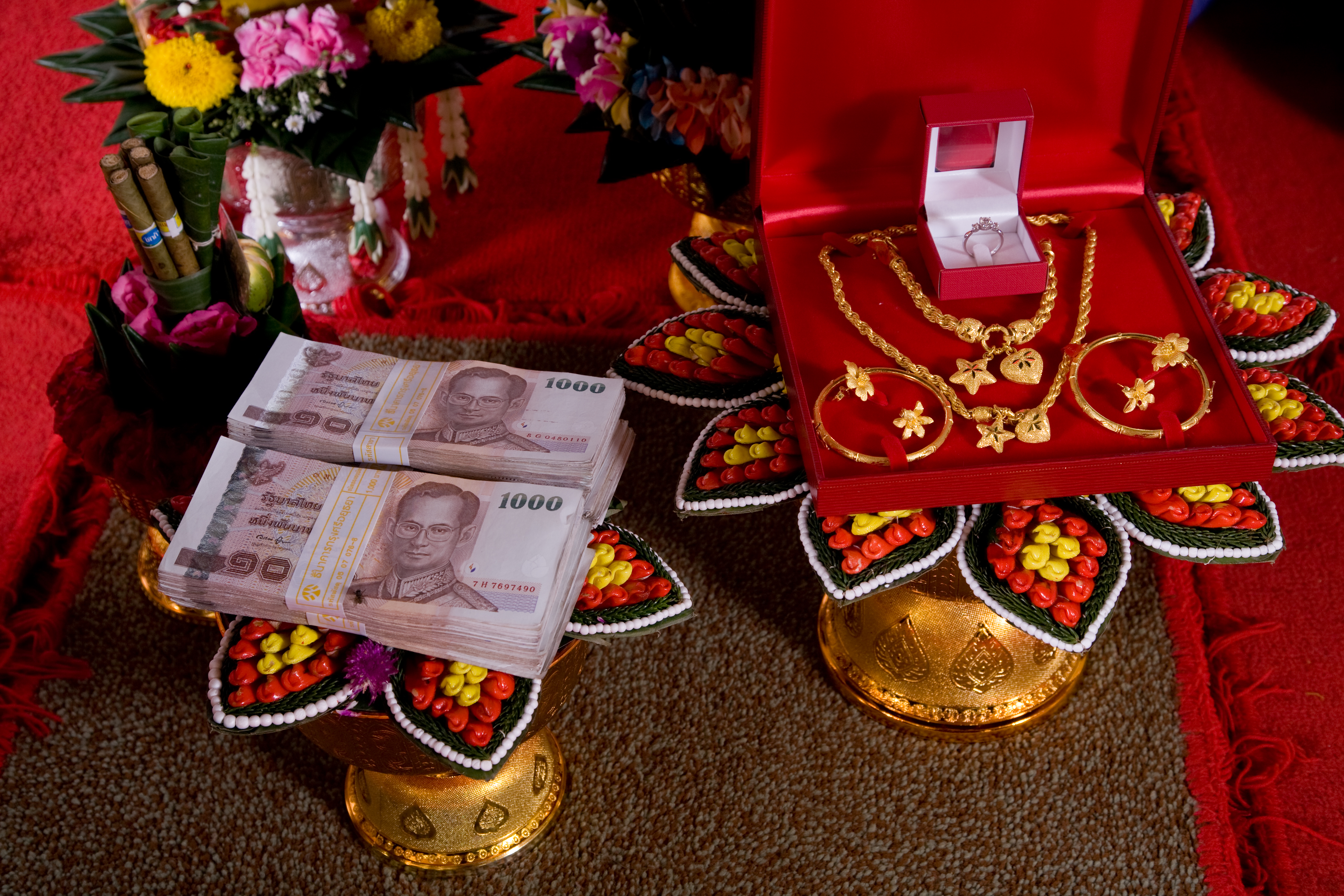
Thai_Bride_Price_2008

In this blogpost, Mayuri Khandelwal, a student of IInd year, Hidayatullah National Law University, Raipur writes on what is alimony, condititons court considers before granting alimony and whether husbands can claim alimony in India or not

There was bit cheer in the husband’s camp lately when a family court in Gandhinagar, Gujarat held that a husband is entitled to claim alimony from his wife if he is incapable of maintaining himself. In this case, husband filed a petition in family court for claiming maintenance from his wife. The husband was a former cricketer and played with Sachin Tendulkar in Under 17 team. He accused his wife of causing mental and physical torture. Here the court held that wife is liable to maintain his husband as he is physically disabled due to a road accident. The husband was awarded alimony of Rs 10,000 per month. But, was this decision valid. Can a husband ask for alimony from his wife?

What is alimony?

Alimony is also called as maintenance or spousal support and spousal maintenance it is a legal obligation to provide financial support to one’s spouse before or after the marital separation or divorce.

Who can ask for alimony and who should pay? The alimony also known as spousal support which literally means an obligation by law that is imposed on either spouse. It is expected that both the spouses irrespective of their gender must bear the maintenance support during and after marriage. Today’s modern society treats both men and women equally, as a result, the burden of alimony can now fall upon either the husband or the wife depending upon their financial conditions. In the present age of equality where both men and women are equal before the law but in practice men are more liable to provide interim support to his ex- spouse during the litigation process. After the divorce, either of the spouses has the right to claim alimony. Though this is not an absolute right and can be granted by the court depending upon the circumstances and financial conditions of both the spouses.

It is given that a husband has to pay alimony to his wife irrespective of that the fact he is employed or unemployed. The court order came on a plea by a woman seeking alimony from her husband, who has been refusing to pay alimony on the grounds of being unemployed. The court granted the interim relief to the woman after considering the inflation rate, social position and educational qualifications of both the wife and the husband.

Additionally, of lately family court in Mumbai had drummed up some excitement by the decision that a woman who is well-qualified and is sitting idle cannot claim maintenance from the husband after she is divorced. In spite of the fact that the decision was particular to this case and can be challenged in a higher court, in India men usually pay the alimony in the event of divorce. However, there are certain exceptions, and it helps to understand the basics of maintenance laws. In this way, monetarily abled women don’t get support or they may even need to pay upkeep to their spouses if there should arise an occurrence of separation.

In the event that you are separating with an unemployed companion, it has any kind of effect whether his absence of work is intentional or automatic, for instance, a spouse is not working, he may approach the court for support as a major aspect of the separation if amid the marriage, his life partner concurred that he ought to stay home and tend to the house and the kids while she is working, the courts will mull over this. Yet at the same time a sexual orientation inclination frequently exists when the non-working life partner is the spouse. Lawfully, he is qualified for the same contemplations as an unemployed wife. Be that as it may’ a few courts view non-working spouses suspiciously, accepting they could work and procure cash on the off chance that they decided to.

As it is common in our Indian culture, the wife is always a homemaker. Subsequently, a noteworthy piece of our female populace never wandered out of her home to win as a profession. Consequently, being, more significant, “upkeep” came to be connected with ladies yet as indicated by Hindu Law; the husband also has the right to claim maintenance which is subject to certain conditions. In the event of the husband becoming incapable due to some disease or accident, and thereby, is rendered unequipped for acquiring for an employment, he then has the right to claim alimony. At the same time, one should keep in mind that if the husband is capable enough to earn on his own, and yet does nothing for a living; he cannot be entitled to any maintenance.

Even the law states the same as given in the Hindu Marriage Act, 1955 which is about maintenance pendente lite and expenses of proceedings. Where in any proceeding under this Act it appears to the court that either the wife or the husband, as the case may be, has no independent income sufficient for his or her support and the necessary expenses of the proceedings, it may, on the application of either party order the other party to pay the expenses of the proceedings, and monthly expenses during the proceeding, having regard to the petitioner’s own income and the income of the respondent, as the court may deem fit.[1]

The law on alimony and maintenance varies from religion to religion as governed by their personal laws. For example, under the Hindu Marriage Act, 1955, both the husband and wife are legally entitled to claim permanent alimony and maintenance. However, if the couple weds under the Special Marriage Act, 1954, only the wife is entitled to claim permanent alimony and maintenance.

The present society treats both men and women equally, subsequently the weight of divorce settlement can fall on either side of the gathering relying on the money related circumstances of the life partners. In spite of the fact that in the present period both men and women are currently equivalent according to law, still men are more at risk to give maintenance to their life partner at the time of the prosecution.

conditions on which the court relies for deciding alimony

After separation both the life partners have the privilege to claim support. In spite of the fact that it is not an absolute right, but rather can be conceded by the court contingent on the circumstances and monetary states of both the life partners. The accompanying are the conditions relying upon which support is granted by the court:-

  • Alimony is not allowed to the life partner already married to some one else in the event that he or she is as of now accepting backing amid the season of separation. Despite the fact that the remunerating of divorce settlement can be modified on such occasions taking into account the contentions for guaranteeing the backing.
  • In the instance of a contested divorce, life partners fail to understand the concept of alimony or how much amount should be paid. In such circumstances, the court takes up the undertaking of settling on a choice on the measure of support to be paid.
  • Only under certain convincing circumstances the court ventures out to change the officially encircled support. Now and again the court may even hand over the weight of paying for the upkeep to an open body.

It should be taken into consideration by the judges while affirming the judgment that men are also sometimes in a disadvantageous position at the time of divorce. So they should grant the alimony to the husbands also as the law is gender neutral.


LawSikho has created a telegram group for exchanging legal knowledge, referrals and various opportunities. You can click on this link and join:  

https://t.me/joinchat/J_0YrBa4IBSHdpuTfQO_sA

Follow us on Instagram and subscribe to our YouTube channel for more amazing legal content.


[1]  Section 24, Hindu marriage act, 1955

Download Now

Reaction On Social Media WIth Regards To Destruction of Terrorist Camps in Myanmar by Indian Army

1

Indian_soldiers_in_Batalik_during_the_Kargil_WarIn this Article, Mayuri Khandelwal, a student of II year, Hidayatullah National Law University writes on reaction of people on social media with regards to destruction of terrorist camps in Myanmar by Indian army.

INTRODUCTION

The Indian army jointly with the Indian Air force attacked the militants group camps situated in Myanmar and successfully destroyed them without inflicting any casualties from India’s side. The minister for broadcasting Mr. Rajyavardhan Singh Rathore himself confirmed the operation the next day. Soon this became an international news though the details of the incidents remained unclear.[1] There was a reaction from the people on the social media after there was official confirmation by the union minister. The members of political parties praised the prime minister for giving orders for this brave move by the army.

This incident marks a shift in the policy of India against terrorism from doctrine of self-defense to the doctrine of hot pursuit[2]. This incident had an impact on the image of India in the international arena. The main point of contention was whether the attack was done after informing the military of Myanmar or not. Though there is no clear stance of government on this question but it appears as no prior consent of Myanmar was taken because any leak of information from their side could have resulted in the failure of the mission. It is notable here that India and Myanmar had a treaty to do cross-border terrorist encounter but only after informing the Myanmar government.

The incident is quite important because India sees itself as a vital player in the international legal order, and has for some time now been claiming a permanent seat in the United Nations Security Council. Therefore, it is imperative that India is seen, within the community of nations, as a country that appreciates and respects the international legal system.

There were various reactions from different parts of the world as well as from India about this incident. The opinion of people differed widely following different arguments from morality to the legality of this act of the Indian army. An interesting observation here was that people from different regions had different views in respect of the incident which took place. The opinion was divided on the basis of their geographic location. Also, there is unrest in the whole of south East Asia after this incident. There were reactions from Pakistan both from the leaders as well as the masses.  The shift in India’s counter-terrorism policy made the leaders of neighboring nation awestricken.

There was also a lot of politics done on this issue both by BJP and other opposition parties. On one side by appreciating the prime minister the ministers in the government posed a problem for the government as the legality of this act is still in question. While the opposition also should not have spoken against the government considering the sensitivity of the issue. The regional parties of the northeast also stated their stand on the incident.[3] There is suspense on the fact that whether the attack was done to stop the terrorist activities or was just done for killings of the 18 Indian army personnel. The project will discuss all these aspects and point of view of the people on social media about these issues.

Analysis

The analysis given below are based on the comments mentioned on the Page ADGPI- Indian army[4]

Social networking site- Facebook

The page is the official Indian army page on Facebook and after the operation of the Indian army in Myanmar, it posted a status on the same evening that how in view of the imminent threat, an immediate response based on intelligence, operations were conducted to counter these planned assaults. The post received a large number of responses through comment. More than 2500 people commented on the post. People who commented were mostly Indians probably because the page belonged to the Indian army.

The responses received on this page were mostly in appreciation of the act done by the Indian army. This could also be because of the reason that the people who have liked the page are probably fans of Indian army and hence have liked the page. The act done by the army was indeed of unmatched bravery and it is very logical that every person who likes the page will like this operation of the army.

The regional difference also was not that evident on this page. People from different regions and religions seemed to be united. The people from The North-east also responded to this post. Surprisingly they did not comment anything against the Indian army or the atrocities done by the army in their region. They, in fact, were of the opinion that terrorism is the reason for the backwardness of their region. But there were two responses which were against the army operation and tried to bring the attention of other people on the atrocities faced by them. One of them belonged to Manipur and other from Nagaland.[5] The people from other regions of the North-east doesn’t seem to have a problem with the Indian army as such. The main argument was why India does not impose draconian law in mainland India and only in the North-east. He then quotes Indian Army Chief that they are against using AFSPA in troubled areas in the mainland as they are the citizens. Continuing the same line of argument he says that attacks in Chhattisgarh were more brutal than this attack which killed 76 of the armed forces people. But the government was not harsh on the local people as they were on the northeastern people.

The arguments made by these people were not a reaction to the Myanmar attack, but they were just fed up of AFSPA[6]. They didn’t comment on the attack on the terrorist in Myanmar but were rather concerned about the racial discrimination done to them by the government and the people of the mainland of the country.

This also shows that how people try to stereotype whole of a community or religion on the basis of the opinion of few people. Like in the present case only two people out of fifty plus north east people who commented on the page were not happy with the actions of the army in their area. But most of them blamed terrorist for the backwardness of their area.

Social networking siteFacebook

The analysis given below are based on the comments mentioned on the Page Test Cracker[7]

The page is a general knowledge page created for the purpose of preparation for various entrance exams and government job exams. Various kind of students who prepare for IAS/ IPS, CLAT, etc are a part of this page. It provides the students with the daily dose of current affairs which are generally asked in these type of exams.

The news on Indian army killing terrorist in Myanmar was also published on this page. The page received responses from nearly five hundred plus people and interestingly most of the people commenting were from the northeast. The trend of reactions of people other than that of north-east remained the same. They were quite enthusiastic about the success of Indian army in the operation.

The stand of the people from north-east changed considerably on this page. Leaving a single person who supported Indian army all others seemed in opposition of the army and tried to criticize their act in all possible ways. The majority opinion was that the operation was fake, and army failed miserably in Myanmar and did not kill even a single terrorist. According to them, the army was incompetent of killing any terrorist and could only kill the innocent people of the north-east. Thereby their comments tried to express the brutality done by the army in their region and how the central government is not bothered about the problems in their areas. Some students from Nagaland went up to the extent of saying that they were forcibly being made part of India and should be granted freedom otherwise these killings of army persons will not stop in that area. Some went to the extent of asking that why are the people struggling for the freedom of north-east labeled as a terrorist if the people who struggled for the same in 1947 were labeled as freedom fighters.

While these people wanted to show their pain and anguish against the army the people from other parts of India replied to the comments in much uncivilized manner thinking it to be patriotic and further increasing the tension and hatred among them. Using such language and trying to suppress the voice which they think to be anti-national does not in any manner benefit the country. Having such hatred for the citizens of the same country cannot be said as patriotism. Saying that they should leave the country if they don’t respect it is not a solution. The people whom they consider to be of mainland behave in such a way that they are ought to believe that they are not an integral part of the country.

Social networking site- Twitter

The analysis given below are based on the comments mentioned on thePage Trending- #myanmarstrikes by Indian army[8]

The Tweet was done by Saikat Datta on his two-part series on the MyanmarStrikes by Indian Special Forces. The topic of discussion was how India has confused a successful military operation by political messaging. It was a healthy discussion on how India still does not know to best use special operations to further its long-term objectives. By making some irresponsible statements, the politicians of India themselves conceived the point that they violated the International law. This declaration was unnecessary as India has never involved itself in hot pursuit rather has always covered all its attack under the doctrine of self-defense. The operation was unnecessarily disclosed to get public support rather Indian government should have never admitted openly about this incidence. Most of the people in the discussion were of the same opinion leaving some fanatic followers of BJP who were just congratulating Modi for the bold step taken and were not interested in giving any relevant counter to the point of discussion. They also said that the act was justified on the account that even U.S. and Israel uses the same tactics for fighting terrorism. But the point still remains that India wants a permanent seat in the Security Council, and this act can have some disastrous effect on India’s claim. This discussion was less about the operation and more about the politics behind the operation and thinking of the possibilities that such attacks would have taken place earlier also, but the information may not have been leaked. This act of Indian government has also put into questioned the sovereignty of Myanmar. This could also affect the relations between the two neighboring countries.

Social networking site- Reddit

Topic- Fake pics of the operation by government news channel[9]

The operation of the army got into more controversy when ANI news channel showed pictures of the operation in which the faces of the army personnel were blurred but then they turned out to be old photos of the year 2009.  The very common response received on this page was that whether the operation really happened or it was also fake like the pictures which were passed by the official defense website to the news channels. Some people were of the opinion that the government should not be held responsible for the mistake of news channel.[10]  The Pakistani social networking forum siasat.pk also took up this matter of the fake pictures and Indian army was heavily criticized by the people of Pakistan questioning the authenticity of the operation. The news channel probably in the quest of delivering news before their competitors, latched on to the pictures without probing any further. I don’t think that the army or the government should be blamed for such goof up by the media though it gave everyone a chance to criticize the government. Though the chest thumping by the ministers of the government over the issue needs to be criticized.

The analysis given below are based on the comments mentioned on the Social networking site – Siasat.pk[11]

Topic- Myanmar rejects Indian claim, says operation on militants was on the Indian side of the border.

The site is Pakistani social discussion forum which discusses all national and international issues. The views expressed are mainly in Urdu and English and all most all the people in the discussion are Pakistani. The neighbors were worried after the operation of the Indian army. After Myanmar had rejected the claim, which was a very obvious thing from Myanmar’s side and was probably false, the Pakistan people got a chance to mock over India’s operation.

The language used is not very decent on the forum and nothing much substantive was said on the thread other than abusing Indian army and the people of the country. The allegations were on the Indian army that it can only attack smaller nations and want to establish itself as a superpower by exploiting the small nations of south Asia. Also, Pakistan is not Myanmar, and it will not tolerate any such attack on their soil.

The fear could be easily seen in the people of Pakistan after this operation. Though they tried to insult the Indian army but their arguments lacked logical consistency. It seemed they were criticizing the army just to criticize and lacked rationale.

Conclusion

Online social media have gained astounding worldwide growth and popularity which has led to attracting attention from a variety of researchers globally. Although with time all generations have come to embrace the changes social network has brought about, teenagers and young adults are the most fanatic users of these sites. Of all the sites analyzed in this project, the type of discussions and views differ. On the official army page there was very less criticism of the army and even the north-eastern people were not against the army. But when we looked at the comments on an academic page the views of the people differed. This was because of the type of people affiliated with one of the pages. The administrator of a social networking site has his own biases, and people who will be a part of that page will probably have the same orientation as the administrator.

The stereotyping of people that is done on social media is flawed in the sense that when people go on stereotyping others they start looking at those places where that particular community will make that kind of comments.For instance, if we will see the comment of Muslim people of our country on the page of some anti-national leader the views expressed will be more likely anti-national. That does not mean that whole community holds such a view. Similarly, on the official page of Indian army many people from north-east were supporter of Indian army which we fail to see. Also while examining the Pakistani site the people who were expressing the view had clear objective in mind i.e. to try and criticize India.  So it can also be concluded that for any healthy discussion it is necessary to see that the people have their biases before an incident takes place and the review of that incident is always influenced by their biases.

The subversion of law is also examined differently by different people. For some it was a good and brave act, for others India could have long term disadvantages by doing such operations. All these opinions are formed from the understanding of people about a particular issue and on social media not many are keen to learn or respect the understanding of other people rather try to force their understanding of the issue on others.


[1]Government unhappy with Rajyavardhan Rathore’s remark that Army entered Myanmar for covert strike, Times of India availabale at http://economictimes.indiatimes.com/articleshow/47635425.cms?utm_source=contentofinterest&utm_medium=text&utm_campaign=cppst, last seen on 16/08/2015.


[2]Ibid.

[3]Ibid.

[4]ADGPI- Indian Army, Facebook available at https://www.facebook.com/Indianarmy.adgpi/posts/383413671855268, last seen on 16/08/2015.

[5]Ibid.

[6]Testcracker, Facebook available at https://www.facebook.com/TestCracker/posts/954048344615647:0 last seen on 16/08/2015.

[7]Ibid.

[8]#myanmarstrikes,Twitter at https://twitter.com/hashtag/myanmarstrikes, last seen on 16/08/2015.r

[9]Indian Army Myanmar Operation Photos Are Fake. The Media Fooled Us All, Topyas available at http://topyaps.com/indian-army-photos, last seen on 16/08/2015.

[10]Indian Special forces have just concluded an OP in Myanmar to kill the terrorists [Unverified], Reddit available at https://www.reddit.com/r/india/comments/395hhg/indian_special_forces_have_just_concluded_an_op/,

last seen on 16/08/2015.

[11]Myanmar rejects Indian claim, says operation on militants was on Indian side of border, Sisyasat available at http://www.siasat.pk/forum/showthread.php?353628-Myanmar-rejects-Indian-claim-says-operation-on-militants-was-on-Indian-side-of-border, last seen on 16/08/2015.

Download Now

Should Juveniles in Conflict with Law Face Similar Punishment As Adult Criminals

1


Handcuffs01_2003-06-02In this blog post, Apoorv Singh, IInd year student from NALSAR, Hyderabad  writes on possible reasons for minors committing crime, should the age for punishment be reduced from 18 to 16 and what possible affects will it have on the person if the age is reduced from 18 to 16.

The matter of juvenile being sentenced for three (3) years for the infamous Nirbhaya rape case has highlighted the issue of the easy getting away of minor for committing a heinous crime like rape. It has been argued and discussed since then that the minors should be treated as adults for committing the offence of rape.  The minister for child and women rights protection Mrs Manika Gandhi has given a reason for punishing the children of age group 16-18 as adults she states that the teenagers are involved in offences such as murder and rape because they are aware of the fact that they can easily get away and will have to face negligible consequences. According to the data collected by the NGO Pro Child Network only 1388 rape cases were registered against minors in the age group 16-18 years. The claim of the government is not justified by the statistics provided by the NGO, it looks like that this law is being amended merely on the basis of emotions. Due to the loophole in the laws, the minor convict in the Delhi gang rape case got a comparatively lesser punishment but this cannot be a justified by just changing the age limit from 18 to 16. What if a minor of the age 15 years and 11 months is involved in a heinous crime? He will get away with a punishment of 2-3 years. At that point of time will the government reduce the age limit to 14? This shall continue till this age limit is completely removed. The concept of juvenile will have to be done away with in future and everyone should be considered equal. But will that be justified?

Possible reasons for minors committing crimes

According to the reports by various child rights network and psychologists, the children of the age group 16-18 are not mature like adults, they are most of the time driven by their emotions, they have not reached a stage where they can control their emotions and think rationally. The kind of educational background also heavily impacts the thinking of the individual. No wonder that most of the teenage criminals come from a deprived background. If they are from the deprived background, many of them lack basic education how can the government claim that they commit crime at this age because they are aware of the fact that they can easily get away? The probability of the minor involved in the Delhi rape case knowing about the exclusion he will be getting because of him being a minor is quite low. He was not from such social setting to be aware of his legal rights.  The point here is not that he was any less guilty as he has not attained majority, the point is will this reducing the age limit create any kind of deterrence among the minors? As the crimes committed at this age are mostly not properly planned and are driven by passion treating them as adults will not create a deterrence among them.

What will happen if minors are considered as majors for awarding punishment

Keeping the minors in the same setup where the hardcore criminals are kept will also have a huge negative impact on their mindset. They may also turn into hardcore criminals instead of reforming and being a responsible citizen of the country. They need to be given counselling sessions for getting them back into the society and not to let them stay in the prison and abandon them from the society. The deterrence if it was created by giving capital punishment then there would be less number of rape cases after the Delhi rape case and the Mumbai Shakti mill case because in both the cases the accused were given the death penalty. But the things haven’t changed since then. The problem of reporting the consensual sex between the minors as rape is also a serious problem. If the age limit is reduced to 16 for rape cases than these minors will also be treated as adults and punished for having a sexual encounter. Mostly there is a tendency to report wrong cases in India by the parents if their minor girl elopes from home with her lover. Right now if the age of the boy is below 18, he is not harshly punished for crimes. But the situation changes once they are treated as adults.

The country has already failed in terms of certain promises done to its citizen. The RTE (right to education) grants right to every child under the age of 14 to be educated. There is a law against prevention of children to work in hazardous industries. Has the government fulfilled those promises? Is every child under the age of 14 educated? Are they not working in hazardous industries? If they are into crime is it the fault of the government that they were unable to protect innocent minds. Reducing the age of juvenile will only make them hardened criminals if kept in the same prison with adults.

Download Now

Legality of a Live-in-Relationship

1

breakup-908714_1280

In this blogpost, Priyanka Kansara, a law student from National Law School, Jodhpur writes on the legality of live-in-relationship and on the right to maintenance available to a woman in a live-in-relationship.

Unlike Marital Relationship, Live-in-Relationship is purely an arrangement between the parties; once a party to a live-in- relationship determines that he/she does not wish to live in such a relationship, that relationship comes to an end. Hence, it is called as a walk-in & walk-out relationship.  Live-in-Relationship is neither a Crime nor a Sin; though it is unacceptable to the certain extent. In a country like India, where marriages are considered as a social foundation to legalize the relationship between a man and a woman; the concept of Live-in-Relationship has set up a new dimension in the arena of men-women relationship, though it is not a novel phenomena. Two adult people i.e. man and woman agree to live together without pushing them towards all the traditional formalities, but they have certain mutual duties towards each other. The question of legality of the Live-in-Relationship was raised in several cases, but the Live-in-Relationship poses a question before the Society i.e. how far can the Society accept it for Social Reformation.

Maitri Karar (friendship agreement) was a concept similar to the contemporary live-in-relationship and was practised in the state of Gujarat. It was a system in which a man and woman would live together and share an intimate relationship without being legally wedded; even during the lifetime of a married partner. The man was expected to provide financially for his companion who was in turn in a sexual relationship with him, even during the lifetime of his legal wife. This concept has menaced the society with the increasing possibility of Bigamy, which is illegal under Indian Law; though certain religions accept it by way of including the provision under their law i.e the Muslim Law, it could infringe the rights of the spouse.

Legality i.e. Legitimacy of Live-in-Relationship Concept-

A general principle was evolved in the case of A Dinohamy v. WL Blahamy[1], wherein the Privy Council stated that Where a man and a woman are proved to have lived together as a man and wife, the law will presume, unless the contrary be clearly proved, that they were living together in consequence of a valid marriage and not in a state of concubinage. The contrary opinion was stated in the case of Mohabbat Ali vs. Imran Khan[2]; on the same footing in the case of Gokul Chand and Pravin Kumari[3], it was held that cohabitation for a long time doesn’t guarantee to earn them legitimacy. The concept of Legitimacy was also discussed in the case of Badri Prasad vs. Dy. Director of Consolidation[4], Hon’ble Supreme Court has held that to acquire the Legitimacy, the couple has to Cohabit together for a long period and be known in society as husband and wife. This means either have children or get their names registered in some document, for example by property jointly as husband and wife; it means the Court left no evidence to allow anyone to defend their relationship.

In the Case of Alok Kumar vs. State[5], Hon’ble Delhi High Court held that Live-in-Relationship is a walk-in and walk-out relationship. There are no strings attached to this relationship, neither this relationship creates any legal bond between the parties. It is a contract of living together which is renewed every day by the parties and can also be terminated without the consent of the other party; one party can walk out on his will anytime. Those, who do not want to enter into this kind of relationship, they enter into a relationship of marriage, which has legal implications and obligations. Thus, people who chose to have ‘live-in-relationship’ cannot complain of infidelity or immorality as live-in-relationship are also known to have been between a married man and unmarried woman or between a married woman and an unmarried man.

In Tulsa & Ors vs Durghatiya & Ors[6] ( popularly known as Loli and Radhika case), Hon’ble Supreme Court held that if a man and woman live together and cohabit for a long period as husband and wife, there is presumption of a valid marriage between them and that child born out of such relationship would be legitimate and have inheritance and succession. In the same case the Supreme Court Bench consisting of Justices Arijit Parayat and P. Sathasivam declared the child born out of such relationship will no longer be called illegitimate.

Applicability of various Legal Provisions on the Live-in-Relationship-

The next question arises as to whether a live-in-relationship would amount to a relationship in the nature of marriage falling within the definition under Domestic Violence Act 2005 (hereinafter the Act 2005). The Act 2005 has been enacted to provide a remedy in Civil Law for the protection of women from being victims of domestic violence. Section 2 (f) of the Act 2005 defines Domestic Relationship, it is a relationship between two people who live or have, at any point of time, lived together in a shared household, when they are related by consanguinity, marriage, or through a relationship in the nature of marriage, adoption or are family members living together as a joint family.

Hon’ble Supreme Court in the case of D. Velusamy v. D. Patchaiammal[7] held that, a ‘relationship in the nature of marriage’ under the Act 2005 must also fulfil the following criteria: (a) The couple must hold themselves out to society as if they are spouses, (b) They must be of legal age to marry, (c) They must be otherwise qualified to enter into a legal marriage, including being unmarried and (d) They must have voluntarily cohabited and held themselves out to the world as being akin to spouses for a significant period of time, and in addition the parties must have lived together in a ‘shared household’ as defined in Section 2(s) of the Act 2005.

On the Contrary, in the case of Indra Sarma vs. V K V Sarma[8], a two-judge bench in the Apex Court has stated that Domestic relationship between an unmarried adult woman and an unmarried adult male, who lived or, at any point of time lived together in a shared household, will fall under the definition of  Section 2 (f) of the Act 2005 and in case, there is any domestic violence, the same will fall under Section 3 of the Act 2005 and the aggrieved person can always seek reliefs provided under Chapter IV of the Act 2005.

Whether a woman in a live-in relationship has the right of maintenance

After the establishment of a ‘domestic relationship’ between two adults in the context of Live-in-Relationship, another question arises of whether a woman in a Live-in-Relationship has a right to be maintained under Section 125 of the Criminal Procedure Code, 1973. In the case of Chanmuniya vs. Virendra Kumar Singh Kushwaha[9], the Supreme Court observed that in those cases where a man, who lived with a woman for a long time and even though they may not have undergone legal necessities of a valid marriage, should be made liable to pay the woman maintenance if he deserts her. The man should not be allowed to benefit from the legal loopholes by enjoying the advantages of a de facto marriage
without undertaking the duties and obligations. Any other interpretation would lead the woman to vagrancy and destitution, which the provision of maintenance in Section 125 is meant to prevent. Justice Malimath Committee as well as the Law Commission of India in its Report in 2012[10] stated that if a woman has been in a Live-in-Relationship for a reasonable time, she should enjoy the legal rights of a wife.

Furthermore, in the case of Varsha Kapoor vs. UOI[11] the Delhi High Court while taking the assistance of the Supreme Court’s Verdict in Koppisetti Subbharao Subramaniam vs. State of Andhra Pradesh[12] in the context of section 498A of the Indian Penal Code, held that female living in a relationship in the nature of marriage has right to file complaint not only against husband or male partner, but also against his relatives.

Author’s Remark

While discussing this issue in the Parliament on December 15, 2008, the then Union Law Minister has stated that if Live-in-Relationships are acceptable by Society, then the Government can make laws. Laws are made keeping in view the trends prevailing in the Society. But, just to counter Hon’ble Minister’s argument on not to make Legal Provisions on Live-in-Relationship, the Author would like to state that if the Parliament makes Law by looking into the Social Stigma and needs, then why has the Parliament not taken any step for the deterrence of the Honour Killing. Unless a substantive Law in the realm of marriage deals with this question comprehensively is included, it would be futile to interpret and apply certain Legal Provisions deal with the concern subject matter on this Live-in-Relationship issue.

It would be an inconvincible argument to counter the Concept of Live-in-Relationship that it could infringe the sanctity and the dignity of marital rites, because Marriages can be established not by way of marital sacraments but by way of mutual respect. One negative aspect of this relationship with the lack of proper Legal Provision could be that it could inflate the cases of Bigamy, as earlier discussed also in the Maitri Karar; it could also pose a threat on the rights i.e. Conjugal Rights of the other Spouse.  On the similar subject matter, Hon’ble Supreme Court in the case of S. Khushboo vs. Kanniammal & Anr.[13], placing reliance upon its earlier decision in Lata Singh vs. State of U.P. & Anr.[14], held that live-in-relationship is permissible only in unmarried majors of heterogeneous sex. In case, one of the said person is married, he may be guilty of the offence of adultery and it would amount to an offence under Section 497 of Indian Penal Code.

A proper Legislative Rule can make a difference by giving a different and legal status to this relationship; for that purpose, the Parliament need not to rely on the Social trends or the societal thinking; In the Metropolitan areas, the Concept of Live-in-Relationship is kept flourishing nowadays. If two persons want to live together without binding themselves into any societal knot; it is the Fundamental Rights of the Person under Article 21 of the Constitution of India to live as they want to.

In the lack of proper Legal sanctions, the person can be deserted in the mid of the relationship. A balanced approach is needed to ensure the protection of the Fundamental Rights.

[1]  (1928) 1 MLJ 388 (PC).

[2] AIR1929 PC 135.

[3] AIR 1952 SC 231.

[4] AIR 1978 SC 1557.

[5] Cri. M.C. No. 299/2009 (Del. H.C. (Aug. 9, 2010)).

[6] (2008) 4 SCC 520.

[7] AIR2011SC479.

[8] 2013 STPL(Web) 944 SC.

[9] (2011) 1 SCC 141.

[10] Abhijit Bikaseth Auti vs. State of Maharashtra, (Criminal Writ Petition No. 2218 of 2007), 2009 CriLJ 88.

[11] WP (Crl.) No. 638 of 2010; Del. High Court.

[12] AIR 2009 SC 2684.

[13] JT 2010 (4) SC 478.

[14] AIR 2006 SC 2522.

Download Now
logo
FREE & ONLINE 3-Day Bootcamp (LIVE only) on

How Can Experienced Professionals Become Independent Directors

calender
28th, 29th Mar, 2026, 2 - 5pm (IST) &
30th Mar, 2026, 7 - 10pm (IST).
Bootcamp starting in
Days
HRS
MIN
SEC
Abhyuday AgarwalCOO & CO-Founder, LawSikho

Register now

Abhyuday AgarwalCOO & CO-Founder, LawSikho