This article is written by Deepti Dhanank and Debottam Chattopadhyay, fourth Year, B.A.LL.B, School of Law, KIIT University,Bhubaneswar
Introduction
E-commerce has been a buzz word in the field of not just technology but also in context of regulating it. To, many regulating e-commerce might be similar to herding the proverbial cat. The Information Technology Act, 2000 (IT Act, 2000) and the Information Technology (Intermediaries Guidelines) Rules, 2011 (Rules) thereunder pose more questions than they answer with respect to E-Commerce, despite otherwise being fine pieces of legislation. Thus, there is a need more than ever to enact a statute to tame this mammoth creature that E-Commerce has become. Interestingly beyond the abovementioned Act, other statutes and Government policies are examined in this article to gauge the implications that E-commerce creates from an intermediary aspect. Further an analysis on other jurisdictions is made to see how the challenges can be tackled. This article attempts to find solutions to fill in the current regulatory lacunae and ambiguities with respect to E-Commerce. The relevance of this article is amply judged by the ambivalent attitude of the public towards E-commerce. Further, such analysis is required because there is a clamour for amelioration of laws from the industry.
The Current Regulatory Framework
The Information Technology Act, 2000 (IT Act, 2000) and Information Technology (Intermediaries Guidelines) Rules, 2011 (Rules) govern all Information Technology intermediaries. Section 79 of the IT Act provides that an intermediary is not liable for any third-party content hosted/made available through such intermediary when:
The contravention is done without its knowledge, or
The intermediary observes due diligence and abides by other guidelines prescribed by the Government.
The 2011 Intermediary Rules provide for a diligence framework to be followed by intermediaries in order to avail of the exemption under Section 79. Numerous procedures have been recommended which need to be adhered to by an intermediary, such as:
The need to inform the users of the computer resource not to transmit any information that, inter-alia is harmful, obscene or defamatory. Further, it cannot infringe any patent, trademark, copyright or other proprietary rights.
The intermediary is compelled to “act” within thirty six hours and where applicable, work with user or owner of such information to disable such information that is in contravention of such Rules regarding not posting of the above mentioned prohibited matter.
The intermediary will have to shall strictly follow the provisions of “the Act” or any other laws for the time being in force.
The Lacunae and the Ambiguity
The IT Act defines intermediary as “any person who on behalf of another person receives, stores or transmits that message or provides any service with respect to that message”. Further Section 79 makes it very clear that an intermediary and a “network service provider” are one and the same. Thus, the Statute makes it clear that Section 79 defences are applicable to all intermediaries including those in E-Commerce and this represents the clarity in drafting and explains legislative intent. But beyond this starts the conflicts. The Rules talk about strict adherence to the IT Act, but how shall the non-Indian entities be brought under this Act? This question has haunted not only lawyers but the industry at large due to the global nature of transactions in some e-commerce websites and the unique models they have created. The lack of clarity does not only stem from unclear legislation but also from things not explicitly said and leaving things to open interpretation. For instance an e-commerce website which now has a liability to observe due-diligence to get protection under Section 79 of IT Act has to observe and adhere to way too many statutes. Let us take a look at some possible statutes:
Indian Penal Code, 1860 (“IPC”): Section 3 of the IPC provides extra-territorial jurisdiction to the IPC. So even, if an intermediary is operating from abroad or a person posting content is from abroad, the intermediary has to see provisions of IPC are not affected, if the website is accessed in India.4
Indecent Representation of Women (Prohibition) Act, 1986 (“IRWPA”): An indecent representation of a woman which includes depiction of the figure of a woman, her form or body or any part which has the effect of being indecent, or derogatory to, or denigrating, women, or is likely to deprave, corrupt or injure the public morality or morals is punishable under the IRWPA. This statute also has to be complied with.
Now add to this list of statutes, matters such as Taxation, Data Protection, Intellectual Property and General Corporate Laws and one can feel the overburdening of regulations that an E-Commerce entity has to comply with in India.
Judicial Developments
In the case of Super Cassettes Industries Ltd. v. Myspace Inc.[1] -the Court found Myspace guilty of primary copyright infringement for allowing the viewing and sharing of images and music over which Super Cassettes claimed ownership. Clearly showing how important is to adhere to copyright laws by any intermediary.
Laws in Other Jurisdictions
Online intermediaries being the key actors in the virtual space, the problem of their liability on the Internet was one of the initial problems to grab attention in the early 90s. The United States (US) and European Union (EU) have the highest concentration of established online intermediaries. US was the first to enact regulatory laws dedicated to the online intermediaries. In 2001, EU adopted E-Commerce Directive which dealt with online intermediary liability in the European Union. There are two mechanisms for regulating the liability: vertical and horizontal. United States adopted the vertical approach i.e. different liability regimes are established for different areas of law, while European Union applied the horizontal mechanism i.e. every kind of liability has been dealt under one Act only.
The United States which adopt the vertical approach have several laws regulating the liability of the online intermediaries. The Communication Decency Act, 1996 regulates the liability of the online intermediaries regarding any matter but intellectual property if the content is provided by third party. The US Digital Millennium Copyright Act, 1998 which contains the Online Copyright Infringement Liability Limitation Act (OCILLA) regulates copyright related liability. Further, Telecommunication Act, 1996 regulates the exoneration from liability arising out of violation of other areas of law. European Union, which applies the horizontal mechanism, regulates the intermediary liability through E-Commerce Directive, 2001. All sorts of illicit content including copyright, trademark, pornography etc are dealt under this Directive. The structure and regulatory activities of both OCILLA and E-Commerce Directive are very similar. The E-Commerce Directive was drafted based on the cautions adopted by OCILLA.
The liability pertaining to caching and transmitting (mere conduits) providers are identical and appropriate in both the jurisdictions. The E-Commerce Directive falls short in certain areas. Hosting providers are one of the most significant intermediaries. The liability regime prescribed in both the jurisdictions relating to hosting providers vary widely in formal procedures. US enjoys higher degree of control through the “notice and take down” procedure established by them. The lacunae in the Directive poses a problem regarding the determination of actual knowledge. However, both US and EU have to deal with this problem relating to actual knowledge and freedom of speech and expression. The type of liability imposed in EU would be according to the national laws which are based on fault which would be dependent on the knowledge of the sender. Further, the European legislators have took a dangerous step and left certain areas like public educational body and liability of information location tools. The information location tools include Search engines which play a very dominant role in the development of internet. US through DMCA protects an intermediary from liability subject to the fulfilment of certain conditions. EU is exposed to a reasonable anxiety due to lack of legislation with regard to Information Location tools. Further, internet plays a major role in education these days. The US practice for both the above ignored areas can be referred to by the EU.
The EU and US in specific have laid down a fair mechanism dealing with intermediary liability which is appropriate and practical in almost all areas except the mentioned above. Being the jurisdiction with the maximum online intermediaries they have established a mechanism which deals with intermediary liability in specific and clarifies almost all the ambiguities possible. Indian legislation on online intermediary liability is yet to achieve such legal certainty and clarity.
Conclusion
Thus the need for the hours is for the passing of a law or the Government of India formulating a policy or rules under IT Act, 2000 which may be a self-contained code on E-commerce. E-commerce is an emerging industry with infinite possibilities and is making a deep impact on Indian Industry. The mushrooming of e-commerce start-ups is a very positive step in providing employment to the vast amount of Indian youths with technical education or business education. But to induce more international players to come to India and make the Indian e-commerce industry reach the zenith it can reach, there has to be clarity in the law that these Intermediaries have to follow in one code. The EU model can be adopted and shall offer ease of doing business for these e-commerce intermediaries.
[1] IA No.15781/2008 & IA No. 3085/2009 in CS (OS) No. 2682/2008
This article is written by Eklavya Malvai, a student of Amity Law School and an Assistant Editor of iPleaders Blog.
INTRODUCTION
Diwali, widely known as the ‘festival of lights’ is around the corner and is one of the most celebrated festivals in India. A weeklong affair where families come together to celebrate this festival and burning crackers has often been the highlight of this occasion.
With the increase in sound and air pollution levels, the number of cases been reported due to the same have increased and has created a cause of concern among the citizens and the government. The number of breathing ailments among infants has significantly risen, leading to various awareness campaigns and other actions by the government authorities.
We as Indian citizens must be aware of certain rights and duties which are attached to these celebrations and must be adhered to at all times, not just for the benefit of the society as a whole, but for our own well-being as well.
THE ISSUE OF NOISE AND AIR POLLUTION
Over the years, a large part of the pollution started voicing their concerns over the rising levels of noise and air pollution, which together combined can be extremely lethal since individually they lead to various health problems.
With the various types of crackers, the level of pollution caused is extremely high, which makes the air unbreathable and noise levels intolerable.
As per a study, fire-crackers increase the level of sulphur dioxide 200-fold above the safety limits prescribed by World Health Organisation (WHO). The pollution can trigger asthma attacks and cause new cases of asthma.
Not only humans, but every year hundreds of dogs are injured on the spot of such activity, or lost never ever to be found. An animal or bird need not be absolutely nearby to suffer – deafening loud sudden sounds cause panic in almost every creature in the vicinity. A dog’s hearing capacity is 3,000 times more than a human’s. Even a 90-decibel sound, the noise level of an average cracker, is enough to scare a dog.
Every year, numerous cases are reported in the national capital of India, Delhi related to burn injuries as well as 30% to 40% increased cases of wheezing, respiratory diseases, exacerbation of bronchial asthma and bronchitis patients have been reported during and post-Diwali.[1]
Therefore, the government took up this issue seriously and enacted various legislations, including the Supreme Court giving out certain judgements and orders to curb this increasing level of combined pollution.
click above
LAWS AND REGULATIONS
Over the years, none of us has really paid attention to any of the laws that are attached with burning crackers and the various restrictions over the type of crackers that can be manufactured and sold. Hence, as a result, the implementation of many of these laws has been weak, which has led to public injury due to lack of awareness among the citizens.
As per the “Environment Protection Act, 1986 and the Environment Protection Rule, 1986 and 1999 (amendment) rules”;
Rule 89 lays down that “The manufacture, sale or use of firecrackers generating noise level exceeding 125 dB(AI) or 145 dB(C) pk at 4 meters distance from the point of bursting shall be prohibited.”
Determining dB (decibel) levels is something which requires an expertise and hence it must be on the part of the manufacturer to adhere to, and a duty of the citizen to not buy crackers which violate this provision.
Hence, how does one identify such crackers?
The Explosives Rules 2008 (Rule 14) mandates that “every manufacturer shall on the box of each firecrackers shall mention details of its chemical content, sound level and that it satisfies requirements laid down by the chief controller”
Hence, one must keep in mind the above provisions mentioned before purchasing any fire crackers to ensure highest standards of safety.
SALE OF IMPORTED CRACKERS
The Department of Industrial Policy & Promotion, Ministry of Commerce & Industry has banned the illegal import, possession and sale of fireworks of foreign origin. The manufacture, possession, use, sale, etc. of any explosive containing sulphur or sulphurate in admixture with any chlorate is banned in the country.[2]
The central government recently instructed the state governments to take action against the sale of Chinese crackers and ordered a stringent crackdown on any such sale, as these crackers are much more harmful and contain certain chemicals which are beyond the Indian permissible limits of safety standards.
THE SUPREME COURT ORDER OF 2005
In the landmark case of 2005; “Prevention of Envn. & Sound Pollutionv. Union of India”[3], the apex court laid down a few essential guidelines relating to firecrackers and addressing other problems of sound pollution. The key highlights being;[4]
The Department of Explosives may divide the firecrackers into two categories– (i) Sound emitting firecrackers, and (ii) Colour/light emitting firecrackers.
There shall be a complete ban on bursting sound emitting firecrackers between 10 p.m. and 6 a.m. It is not necessary to impose restrictions as to time on bursting of colour/light emitting firecrackers.
Every manufacturer shall on the box of each firecracker mention details of its chemical contents and that it satisfies the requirement as laid down by Department of Explosives.
This order came into force 10 years ago, in pursuance to Articles 141 and 142 of the Constitution. The authorities have been reluctant and apprehensive in implementing this order which has led to the Supreme Court being discontent and expressing concern over the same. The court has directed that non-implementation of the same is leading to gross violation of the Fundamental Rights which must be preserved and respected at all times.
Arguments have often been made against such restrictions on the grounds that it violates Article 25 of the Constitution, i.e., to practise and propagate our religion freely. What one must keep in mind that Fundamental Rights are not absolute in nature and falls under the umbrella of certain reasonable restrictions. Diwali, per se, is considered to be a festival of lights.
The apex court in its landmark judgement; “Church of God in India vs. K.K.R Majestic Colony Welfare Assn” held that the court can put certain restrictions on controlling the noise, even if such noise was a direct consequence of any religious ritual or activity being held. This judgement puts certain reasonable restrictions and in no way violates the basic fundamental right to practise one owns religion.
The question to ban crackers
In a recent case, 3 toddlers moved to the Supreme Court with a petition to take action against the rising levels of air pollution, which has led to lethal levels of toxic in the air, which is directly affecting the youngest of the population.
The Supreme Court dismissed this petition which was aimed at putting a blanket ban on bursting of crackers on Diwali or designating a particular place for bursting crackers. The Supreme Court exclaimed that such a blanket ban would be lethal and would cause an unnecessary uproar in the society. The court, however, has directed the government to spread awareness about the hazardous effects of crackers.
CONCLUSION
Bursting crackers has been a custom in our society which is now proving to be lethal for the coming generations. Article 21- Right to Life, is a basic human right and subsequently a Fundamental Right for Indian Citizens, and to breathe clean air constitutes the same. Hence, it is necessary to exercise certain prudence and caution in this situation and one must give precedence to various rights in terms of their necessity.
The rest is up to your fine sense of judgement and wisdom.
Happy and a safe Diwali to one and all!
LawSikho has created a telegram group for exchanging legal knowledge, referrals and various opportunities. You can click on this link and join:
This article is written by Diksha Trivedi, a student of Nirma University.
After months of consultations among intellectuals of state governments and the Prime Minister’s Office (PMO), Indian Environment Ministry has issued a draft bill to amend the Environment (Protection) Act, 1986 and the National Green Tribunal Act, 2010, scaling up monetary sanction for absolving substantial damage to environment, termed as Environment Laws (Amendment) Act, 2015. The bill is the major move made by Prakash Javadekar heading ministry to ratifying violation of environmental laws. This bill is against the soft look of ministry showered upon industrial sector, giving green norms to follow up while handling clearances. The government is purporting an omnibus law to regulate the environment and govern environment protection is expected to be tabled in Parliament’s winter session. The penalties are most focused part of the Environment Laws (Amendment) Bill, 2015, which the ministry has published online, inviting suggestions and objections over the next 15 days.
PENALITY PROVISIONS
The proposed amendments provide for an effective deterrent penal provisions and concept of monetary penalty for violation and contraventions and ensuring compliance to environmental norms. The amount collected as penalty could be used for remediation and reclamation of polluted sites and improvement of environment.
In hard line with violators, on Friday the environment ministry proposed stiff penalties for substantial environment damage, a minimum fine of 5 crore in a radius of 5-10km radius counting from outer perimeter of a project, extending to Rs.10 crore and in the case of continuing damage, entail an addition of Rs.50 lakh per day and imprisonment of seven years.
In cases where the damage goes beyond a 10 km radius from the project site,15 crore, counting with Rs.75 lakh per day if substantial environmental damage. The fine can go up toRs.20 crore and the imprisonment can even extend to a life term in case of serious violations.
The fine for a minor violation is in the range of1,000-10,000, with an additional penalty of Rs.5,000 for every day that the violation continues after its detection. A minor violation is an act of omission or commission by a person causing environmental damage due to failure of compliance with green laws.
Any violation which can neither be termed minor nor substantial will be construed as non-substantial damage. In the case of non-substantial damage, the violator will have to cough up1 lakh, extendable to Rs.5 crore, and pay an additional penalty of Rs.1 lakh per day of continued damage.
The draft defines substantial damage to the environment caused by direct violation and omission of statutory environmental laws resulting in adversely affecting the environment. The factors taken into account for deciding on penalties are repetitive nature of damage, quantum of damage caused, unfair advantage, disproportionate gain, and counting the extent of injury caused to the ecosystem including public, living organism or to property and health.
Gaps in Draft Environment Laws (Amendment) Bill, 2015:
Bill focuses on environment protection but on hazardous substance as a source of environment pollution and no provision are there for the control of environment ills like deforestation, noise pollution, slum congestion in the Bill.
Environment pollutants like solid, liquid and gaseous substances were only included as the pollutants and substances like heat which causes thermal pollution, nuclear radiation and noise pollution are absent.
Bills include certain unclear terminologies like offences marked as minor violation, non-substantial damage and substantial damage. Categorical division of the damage as minor violations, substantial damage and non-substantial damage is highly condemned. As there is no defined prospective as to what degree of damage will categorically ascertain them. As factually any biological, chemical and physical act is sufficient enough to cause damage to the environment.
Constitution of the adjudicating authority is also very unclear. It seems like an additional layer to National Green Tribunal and there is no reason as to why it has been created? And obviously the appointment procedure is also undefined. Whether the adjudicating authority is separated from the Government. There are certain like questions which are unanswered.
No provision talks about the measures for mitigating the damage done already by the company that seems after paying required fine, the polluted soil, lake, river will remain as they are. There must be a provision for creating responsibility on the pollution creators for cleaning polluted body.
There is no provision for any public account or committee supervising the amount collected by means of penalty that will be used by the government for the protection and improvement of environment.
A major drawback is official bodies are excluded from the ambit of punishment or penalty if they fail to perform the duty if environmental pollution continues to happen within their jurisdiction.
The penalty can’t be a fixed cap amount rather it should depend upon the intensity of damage caused by the pollutant. There is also no robust calculation amount put forth by ministry for deciding the amount of penalty. This creates a doubt, how MOEFCC decided the fixed penalty amount for violations of environment laws is highly unconvincing.
SUGGESTIONS
There should be a third party or agency which can handle the responsibility of inspection, filling grievances by affected citizens, monitoring industries and auditing large-scale industries on a regular basis.
Provisions under this Act geared towards penalty in case of environmental damage. But making certain set rules of technology used should also be provided to which companies should strictly adhere to.
Instead of implementing a fine regime and imprisonment which many corporate companies and industries can take advantage of a provision can be made for shutting down the company/industry temporarily, till set standards are complied with.
For greater transparency, quarterly or annual report on environmental norms followed mandatorily is put on company’s website. Keeping track of company’s standards and false reports, especially during surprise visit will become easy
Each state should carry out public consultation to know people’s views regarding the proposed bill.
CONCLUSION
The T S R Subramanian Committee, which submitted its report in November 2014, looked at what troubles India’s environmental legislative ecosystem, and suggested that the Centre disencumber the mess of environmental regulation by bestowing a single umbrella law to subsume the various statutes governing this area. The Environmental Laws (Amendment) Bill, 2015 is an act in the same direction. Given that it would amount to a major inspection and repair of current ecological laws, the prime minister’s office is justly to invite suggestion and recommendation from the public. However, the point to remember is that research into optimum environmental governance follows that the stricter the liabilities drive upon polluters, the more inducement will be there to avoid them. The important fact to note is that effective pollution-control requires periodic inspections and approves which act as discouragements and encourage compliance. This bill has certain good features but not ultimate to prevent all the causes responsible of environmental damages. These loopholes are escaping ways for the pollutant and will hamper the picture of healthy environment. Like the proposed law do not address wildlife protection, forest ecology and its conservation. The government in this bill brought up new rules and order but did not look upon updating of the existing law. Laws catering to the protection need of environment, air and water were being legislated for past 12 years separately, now by new provision government tried to amalgamate all the laws into single legislation in accordance with the recommendation drawn by the Subramanian Committee. And to check the feasibility of the new provision is on the comments of the public within 15 days of its publishment in the website of ministry for regulating the environment. This would obviously create a picture of transparent government and once again an act to prove that we are part of democratic reform but ultimately the thread will always be in hand of the government.
Do you want to build an independent practice? Do you want to target the SME sector?
Do you want to become an extraordinary corporate lawyer?
Do you want to have abundant wealth as a litigator, even in the early stages of your career?
Business law skills were once considered to be highly specialized and were the domain of a select few who had fully dedicated themselves to an advisory practice. Only the most respected law firms were in existence for many decades and had high-paying clients.
However, today’s reality is very different – many more people are doing business (60,000 new companies register annually with the Ministry of Corporate Affairs), many disputes are being settled out of court, or being avoided through structuring commercial arrangements more carefully. Large law firms are breaking up, lawyers are starting out as independent practitioners or building their own law firms as businesses are unwilling to pay top-dollar for legal advice.
Despite the career option you choose, we have noticed that practical business law skills have proven to be highly valuable for various categories of lawyers, even if they do not work in a corporate law firm.
How can any lawyer make use of practical transactional skills, strategic legal and business insights and intricate corporate law understanding? Let’s take a look at the different career goals of a young lawyer and explore how these skills can be useful for them:
1. Lawyers who want to work in commercial law firms or as in-house consultants
Practical business law skills are extremely useful for understanding your work and client expectations better. Ask anyone who has started working in a law firm – it takes at least a few years to just begin to understand and appreciate your client’s interests, whether you are in an M&A team, capital markets team, banking and finance team, an IP law firm or a tax firm. This is largely due to the fact that the legal education system does not focus on these issues. For this reason, even various practising litigators do not have enough opportunities to grasp a variety of commercial skillsets. Systematically developing practical skillsets can significantly stabilize your learning curve and give you an edge over your peers.
2. Those who aspire to become independent legal consultants or start their own law firms
Did you know that there are over 4 crore Small and Medium Enterprises (SMEs) in India? These SMEs employ 80% of India’s population and are responsible for 40% of India’s GDP – moving forward, India’s growth will to a large extent be shaped by the expansion of these SME businesses in future. Startups and SMEs are not able to afford the services of big law firms which primarily serve foreign investors and large industrial houses, and India’s complex legal and regulatory framework with voluminous and sometimes overlapping rules and regulations poses a significant challenge to their growth. For independent practitioners this represents a huge opportunity – as we already pointed out, over 60,000 new companies register annually with the Ministry of Corporate Affairs, and this number is increasing every year (this is greater than the number of lucrative corporate law firm jobs available every year).
Working knowledge of a broad spectrum of issues such as raising capital, investment and contract negotiation, how to protect intellectual property or how to enable a business to bid for government tenders can even give you an edge over peers working in corporate law firms whose knowledge may be limited to the areas of their specialization – although an SME cannot usually hire a specialist on each of these areas, but a person who can help with all or many of these will be indispensible to a growing SME. You can build a thriving practice with SME clients if you learn these skills.
3. Lawyers who plan to pursue (or are currently pursuing) an LLM or move into teaching and policy
LLM with specialization in commercial subjects has become a popular choice for lawyers and law graduates. Business law specializations in an LLM can help those who intend to work in various teaching positions (full-time or part-time), while working with organizations on economic or financial policy-related issues (National Institute of Public Finance and Policy, Indian Institute of Corporate Affairs, Competition Commission are some examples) or to improve their career prospects as business lawyers once they obtain their degree.
Want to powerfully leverage your LLM degree to get a law firm job? Having a sense of the strategic and day-to-day legal issues faced by businesses can be a great complement to the sharpened research and analytical abilities you develop while pursuing an LLM.
Want to get into teaching? Teachers with industry experience and practical knowledge are being increasingly valued by law universities across the country – some private universities have started offering salaries comparable to those offered to top law-firm associates to their faculty.
Also, LLM courses are the best places to meet a variety of new people, and your understanding of Indian business law can help you in building a stronger network at foreign Universities while you are studying there, particularly since India is considered to be a high growth market and specific business law skills are highly in demand.
If you intend to leverage your degree and acquired commercial law skillsets to improve your career prospects in a law firm, it is a great idea to supplement with some practical skillsets that you can implement right away while working in a law firm.
4. Litigators
It takes at least 5-10 years to establish a thriving litigation practice – and young lawyers face financial crunch during this period. However, clients often approach litigators for commercial consultancy work. You will notice that many successful lawyers with a flourishing litigation practice also do some corporate consultancy work (in fact, some of them specifically establish large teams for the consultancy work). Even young litigators have started taking up corporate retainerships, which bring with them a heavy component of transactional and advisory work, to have a useful source of supplementary income. Sometimes, the retainer amount under these arrangements may even exceed top corporate law firm job salaries!
The importance of persuasiveness has been hugely undermined by young lawyers in court – when you are representing a business or arguing on a commercial issue, a nuanced understanding of commercial interests of the parties involved can significantly alter the course of the hearing.
Domestic and international commercial arbitration (and domestic arbitration of commercial disputes) is becoming increasingly popular with time – note that by its very nature, such arbitration requires a lawyer to have detailed understanding of elaborate contracts in the relevant industry sector (which could run into hundreds of pages), apart from the case law and statutes.
Regulatory litigation at tribunals and authorities such as income tax appellate tribunal (ITAT), SEBI, TDSAT and Competition Commission presents a great opportunity for young litigators – those who are interested in building a practice in regulatory litigation must understand the entire sectoral legal framework, technical contracts and keep abreast with how updates affect the interests of their clients.
Corporate retainerships are the bread and butter of litigators in the early stages of their career. A corporate retainership entitles you to earn a fixed amount every month for working on a fixed set of matters faced by the company every month. It really stabilizes the monetary flow for litigators – who cannot otherwise predict their income on a monthly basis. Think about it – would a company be comfortable giving you a retainership if you weren’t comfortable with business laws? Would you be able to even convince the client about your ability to handle its matter?
If learning business laws excites you, we invite you to check out India’s most comprehensive and cutting edge business law course, conducted online, by the National University of Juridical Sciences (NUJS), Kolkata: http://startup.nujs.edu/
It has been taken by young law corporate lawyers, litigators and in-house counsels from multiple continents. Want to get a taste of what it is like? Sign up for the free course on the link above.
Don’t believe that you can achieve stellar results? I bet you really want to see what our students have achieved (this will blow you away): http://blog.ipleaders.in/?s=success+stories
In case of any queries, write to [email protected] or call Rithi at 8010189157 to speak to an NUJS representative.
This article is written by Diksha Trivedi, a student of Nirma University, on the possibility of registering FIR in a Police Station without Jurisdiction
This article is written by Surabhi Sharma, a student of Symbiosis Law School, Pune.
What is Plea Bargaining?
A sense of confidence in the courts is essential to maintain the fabric of ordered liberty for a free people and three things could destroy that confidence and do incalculable damage to society: The first being that people come to believe that inefficiency and delay will drain even a just judgment of its value[1]
The above statement, written by Warren E. Burger, in an address to the American Bar Association point to the importance of timely justice in a free society. The biggest problem that Indian justice system is facing is the huge backlog of cases. Noted jurist Nani Palkiwala rightly said, “The law may or may not be an ass, but in India, it is certainly a snail”. More than three crore cases are languishing in the Courts for various reasons. .One of the major reason behind this abysmally low disposal of cases by Judiciary is the lack of number of judges in the respective courts. Apart from huge backlog of cases, the conviction rate in our country is also very low hence the credibility of judgment is doubted. Judicial process is additionally time consuming, cumbersome and expensive.
All these problems call for an alternative. A way that would lead to speedy trial and efficient sentencing. A proposed alternative to this would be bringing the opportunity of plea bargaining into the Indian Criminal Justice System.
Plea Bargaining can be described as “pre-trial negotiations between the accused and the prosecution during which the accused agrees to plead guilty in exchange for certain concessions by the prosecution.”[2] They are also referred as plea agreement, plea deal or copping a plea. The procedure for a plea bargain is simple – A bargain or deal is struck between the accused and the prosecution whereby, the accused will agree to plead guilty to the charge when enquired by the trial Judge and in return will get a lesser sentence or plead guilty to one or more charge in return for the promise that the other charges will be dropped against him. The trial Judge takes an active part in this process.
In the US, plea bargaining was introduced in the 19th Century and has proved to be very successful. It has been an integral part of their justice system. Though Plea Bargaining has not specifically been mentioned in their Constitution, its legality has been upheld in their judicial pronouncements. Today, almost 90 to 95% of criminal cases in the US are disposed off by plea bargaining rather than jury trial.
History Of Plea Bargaining In India
As far as India goes, the country has a long history of opposing the introduction of plea bargaining. The practice of plea bargaining was considered unconstitutional, illegal and immoral as far as criminal trials are concerned. The legality of this procedure and its usefulness was for the first time realised in State of Gujrat v. Natwar Hachandji Thakor.
In Chandrika’s case[3], The Court held Plea Bargaining to be an immoral compromise in criminal trials and was for a long time held to be against public policy in the criminal justice system, although it may be allowed in a civil case. The Court held that the sentencing of a person must be decided only on the merits of the case. The fact that the accused has pleaded guilty should not be a reason to award him a lesser sentence. The Court said that accepting plea bargains is against the interest of the victim and the society at large. It only serves to satisfy the shallow requirements of the culprit who does not want to face the horror of an Indian Jail, the prosecutor who does not want to make multiple trips to the Court filling revisionary appeals and the overworked trial magistrate is more than happy to accepts these “sub rosa ante room settlements” as he is burdened by a docket of cases.[4] It was widely recognized stated that if the Courts wanted to be lenient with the accused they could grant a lighter sentence but entering into a bargain for money was completely looked down upon.[5] In the case of Kachhia Patel Shantilal v. State of Gujrat,[6] the Court strongly disapproved of plea bargaining and went to the extent of stating that it would encourage corruption, collusion and pollute the front of justice. Therefore, for a long time it was settled law that plea bargaining could not be used to dispose of criminal cases, the Court has to decide the case on its merits and if the accused pleads guilty the Court has to impose the appropriate sentence.
Procedure For Plea Bargaining
Plea Bargaining can happen in a number of ways:
The Law Commission of India advocated the introduction of plea bargaining in India (even though the Supreme Court vehemently opposed it) in its 142nd, 154th and 177th reports.
The Criminal Law (Amendment) Act of 2005 introduced a chapter XXI A into the Criminal Procedure Code, 1973. This came into effect on 5th July 2006. It allows plea bargaining to be used in the following circumstances–
Only for those offences that are punishable with imprisonment below 7 years.
If the accused has been previously convicted for a similar offence by any court, then he/she will not be entitled to plea bargaining.
Plea Bargaining is not available to offences which might affect the socioeconomic conditions of the country. For eg, for offences under the Dowry Prohibition Act, 1961, Commission of Sati Prevention Act, 1987, Juvenile Justice (Care and protection of Children) Act, 2000
It is also not available if the offence if committed against a woman or child below 14 years.
Plea Bargaining is not available for serious offences such as murder, rape
Plea Bargaining Can Happen In The Following Ways –
Withdrawal of one or more charges against an accused in return for a plea of guilty
Reduction of a charge from a more serious charge to a lesser charge in return of a plea of guilty
Recommendations by prosecutor to sentencing judges for lesser sentence in lieu of plea of guilty.
It may happen in many cases that the accused entering into plea bargaining may not do so voluntarily. Therefore, to ensure that the plea bargaining has happened in a proper way and justice has been ensured, the Court must adhere to the following minimum requirements,
The hearing must take place in Court
The Court must satisfy itself that the accused is voluntarily pleading guilty and there is no existence of coercive bargaining to the prejudice of the accused
Any Court rejecting a plea bargaining application must be kept confidential to prevent prejudice to the accused.
CONCLUSION
The concept of plea bargaining has been in dispute in India for a long time. The parties that oppose and support it have strong reason for doing so, most of which are valid. Plea bargaining being made a part of Criminal Justice System only in 2006 is still in its nascent stages and only time will tell if it will conquer the objectives it set out to achieve.
[1] Warren E. Burger, “What’s Wrong With the Courts: The Chief Justice Speaks Out”, U.S. News & World Report (vol. 69, No. 8, Aug. 24, 1970) 68, 71 (address to ABA meeting, Aug. 10, 1970).
[2]State of Gujrat v. Natwar Hachandji Thakor 2005 CrLJ 2957
[3]State of Uttar Pradesh v. Chandrika 2000 Cr. L.J. 384
[4]Murlidhar Meghraj Loya v. State of Maharashtra, [1976] 3 SCC 684
[5]Madanlal Ram Chandra Daga v. State of Maharashtra, [1968] 3 SCR 34
You must listen to others. Efficiency or intelligence is not the substitute of good listening skills. One of the biggest impact you have on people is simply by granting them a patient hearing. This is most important when you are in the service business or just trying to build a network. The time you spend in hearing people out directly goes into shaping their perception of you – and perception of how you treat them.
When you are dealing with your clients or providing some sort of service, ensure that you patiently listen to what your client is saying. If you are listening to your friends problem or trying to sort out some issue, ensure that you listen to it, ponder over it, before passing your judgment or giving your solution.
Now you will ask why am I repetitively saying that you should take a reasonable amount of time in hearing and thinking over a problem?
Take a simple example, when you go to the doctor to get your treatment and if he just after seeing you write the medicines on a piece of paper and dismiss your case by telling you that you will be fine then chances are high that you will get skeptical about the doctor. You might think that you are so ill and how did this doctor just give some medicines even without seeing you properly, taking less than two minutes!
The diagnosis of doctor might be right, however in almost all probabilities he will not be able to satisfy you because he did not take out time to listen to your trouble.
We as human beings want the time from our relationship, from our friends, family and everyone else we are dealing with. If the person you are talking to does not patiently listen to you, you lose your interest and drift away from that person gradually, even if they are doing their duty competently otherwise.
Everyone requires attention. Ensure that you give enough time and pay adequate attention to whoever you are dealing with. Though you may not need much time in solving a problem, don’t fail to show that solving this problem is important to you and you shall give it due consideration.
There is another counter-intuitive benefit of listening. Listening is a key tool of persuasion. Most people tend to think that they need to speak more in order to persuade. Speaking less and listening more can be a great persuasion technique that only the masters follow.
Listening gives a chance to the person in front of you to speak up whatever they may hold against you at the moment, which may prevent you from persuading them. people often find that persuading strangers is easier than people who are in proximate relationships and know you for a long time. The reason here is simple – those people are holding some past experience against you – and only way for you to get past those thoughts they induluge into about you is to listen to them without any objection, verbal or through body language. This way you get a chance to set aside all such things and then persuade them about a new possibility.
Listening is also an important tool of persuasion because it lets you learn what is important to the other person. Listening gives you the chance to discover the world of another person. Once you have done that, persuasion is only a matter of aligning what you want with their interest. They will see the connection between what is important to them and what you want them to do as you speak in that language. That language is itself a derivative of the right kind of listening. Very powerful persuasion can take place when you do that after discovering the world of the person you are persuading.
It is very important to listen with a blank mind, without an agenda when the act of listening is taking place. It is typical of most human beings to listen with a lot of active thought process in their head. They are not just listening but also thinking what question will the ask next, or what clever thing will they say as soon as the person speaking in front of them takes a pause. Others listen from a resigned and cynical point of view, through filters of their own thoughts and feelings. However, if you can train yourself to listen to others without any thoughts in the background, you will not only hear the words, but also the underlying moods or feelings, even the intent with which people speak.
A listening ability like that can really make a world of difference in interpersonal interactions.
Apar Gupta, is a lawyer practicing in New Delhi, India. He can be contacted on [email protected]
There are four major changes with respect to the interim reliefs made to the Arbitration Act after the promulgation of the Arbitration and Conciliation (Amendment) Ordinance, 2015 (the, “Amendment Ordinance”). Interim reliefs are one of the first provisions where changes made by the Amendment Ordinance will be caused to parties initiating arbitrations.
Interim reliefs are contained under Sections 9 and 17 of the Arbitration and Conciliation Act, 1996 (the, “Arbitration Act”). Both are contained in Part – I of the Arbitration Act and were applicable to domestic arbitrations, i.e. arbitrations seated in India. While Section 9 contains the power of a court to grant interim measures, Section 17 is a similar power conferred to an arbitral tribunal. Interim measures are generally granted to preserve the status of the property in dispute, or to prevent prejudice to any party before the commencement or during the pendency of the arbitration. Several defects were noticed in the practical implementation of these remedies that resulted in several amendments being made to them.
The changes to these provisions include, (1) extension of interim measures under Section 9 to international commercial arbitrations; (2) fixed timelines for initiating an arbitration after obtaining an interim relief under Section 9; (3) bar on parties to approach a court for interim reliefs during the pendency of the arbitration; (4) interim reliefs are now enforceable as decrees of courts. Each change with its intended effect is explained below.
Interim Measures under Section 9 now extend to International Commercial Arbitrations
Amendment
A proviso has been added to section 2 of the Principal Act, which now makes Section 9 of the Arbitration applicable to international commercial arbitration even if the place of arbitration is not in India.
Reasoning
Section 2(2) of the Arbitration and Conciliation Act, 1996 mentioned in Part I of the Act, earlier used to state that, “[t]his Part shall apply where the place of arbitration is in India.” In comparison, article 1(2) of the UNCITRAL Model Law, which had been mentioned in the preamble of the Act, stated that “the provisions of this Law…apply only if the place of arbitration is in the territory of this State.” The preamble of the Act mentions that it is expedient to frame laws regarding arbitration and conciliation keeping the Model Law in regard.
The fact that the word “only” was not included in the Indian statute despite being mentioned in the Model Law, which the Indian statute seeks to implement, has raised some confusion whether this leads to a conclusion that the Indian Act is applicable for even those arbitration proceedings for which the seat is not India. This issue has been dealt with in two significant Supreme Court cases. These areBhatia International vs. Interbulk Trading SA [(2002) 4 SCC 105] and Bharat Aluminum and Co. vs. Kaiser Aluminium and Co. (BALCO)[(2012) 9 SCC 552].
The Supreme Court in Bhatia, held that Part I mandatorily applied to all arbitrations held in India. In addition, Part I applied to arbitrations conducted outside India unless it was expressly or impliedly excluded. This position was followed in several cases until the BALCOjudgment. The Supreme Court inBALCO decided that Parts I and II of the Act are mutually exclusive of each other and the intention of Parliament was that the Act is territorial in nature and sections 9 and 34 will apply only when the seat of arbitration is in India.
Though the BALCO judgment was although for the favourable purpose of reducing judicial interference but it also led to certain unwanted results. The Law Commission has provided certain instances to illustrate this point. For example, when the assets of a party are located in India, and there is likelihood that that party will dissipate its assets in the near future, the other party will lack an efficacious remedy if the seat of the arbitration is abroad. It is a possibility that a foreign party would obtain an arbitral award in its favour only to realize that the entity against which it has to enforce the award has been stripped of its assets and has been converted into a shell company. Due to this the Amendment Ordinance has made changes and now parties to arbitration proceedings taking place outside of India will be able to approach Indian courts for interim measures even before the commencement of arbitration proceedings.
Click Above
Fixed timelines for initiating arbitration after interim measures under Section 9
Amendment
The amendment has inserted sub-sections (2) and (3) to the original section 9 which has been renumbered as section 9(1) now. Section 9(2) states that if a court passes an interim order under section 9(1) before the commencement of arbitral proceedings, the arbitral proceedings shall commence within a period of 90 days of the passing of such order.
Reasoning
Prior to the amendment there was no express duty on a party approaching a court for interim relief (usually prior to the commencement of the arbitration) to initiate arbitration. This resulted in a situation that a party would obtain interim reliefs and would prolong intiating the arbitration given that its interests were protected. This would not only pose risks of abuse of process but also delay the initiation and the determination of the dispute through arbitration. The insertion of timelines is a positive change made overall in the scheme of the act to ensure discipline and speedy resolution of disputes through arbitration.
Section 9 cannot be availed during the conduct of the Arbitration
Amendment
The insertion of Section 9(3) reduces the amount of intervention by the judiciary in terms of interim measures. It states that the after the arbitral tribunal has been constituted, the court shall not entertain any application under section 9(1) unless there are circumstances which can render remedy provided under section 17 ineffective.
Reasoning
The position in the amended statute was largely being followed by courts however there still remained a fear of forum shopping by parties. This danger was given the powers under Section 9 and 17 could be exercised concurrently. Given an express change ordinarily Section 9 proceedings now will not be available to parties during the pendency of the arbitration. Such measures though may be resorted to when Section 17 proceedings are ineffective. This will now be required to be specifically pleaded by a party which prefers such an application seeking interim measures from the Court under Section 9. One instance where such an application can be made, and such an exemption may be availed is when the interim measure concerns a third party which is not before the Arbitral Tribunal. Given that the Arbitral Tribunal is a creature of specific agreement between parties, it can only pass interim orders under Section 17, which bind persons before it. This limitation of jurisdiction does not apply to interim measures that can be granted by Courts under Section 9.
Interim Measures under Section 17 now enforceable as decrees
Amendment
Section 17 of the principal Act has been replaced with a new section that gives more teeth to interim measures by arbitral tribunals. Under the old section, the tribunal could pass interim measures but such measures could not be implemented, as they were not treated at par with an order of court. The new section lays down that any order passed by the arbitral tribunal under section 17 will be deemed to be an order of the court for all purposes and be enforceable under CPC as if it were a on order of the court
Reasoning
Under section 17, the arbitral tribunal has the power to order interim measures of protection, unless the parties have excluded such power by agreement. But section 17 of the principal Act lacked effectiveness due to the absence of statutory mechanism for the enforcement of interim orders of the arbitral tribunal.
In Sundaram Finance Ltd v. NEPC India Ltd. [(1999) 2 SCC 479], the Supreme Court held that though section 17 gives the arbitral tribunal the power to pass orders, the same cannot be enforced as orders of a court. In M.D. Army Welfare Housing Organisation v. Sumangal ServicesPvt. Ltd. [(2004) 9 SCC 619], the Court had held that under section 17 of the Act no power is conferred on the arbitral tribunal to enforce its order nor does it provide for its judicial enforcement.
The Delhi High Court tried to find a solution to this problem in the case of Sri Krishan v. Anand [2009) 3 Arb LR 447 (Del)]. The Court held that any person failing to comply with the order of the arbitral tribunal under section 17 would be deemed to be “making any other default” or “guilty of any contempt to the arbitral tribunal during the conduct of the proceedings” under section 27 (5) of Act. The remedy of the aggrieved party would then be to apply to the arbitral tribunal for making a representation to the Court to mete out appropriate punishment. Once such a representation is received by the Court from the arbitral tribunal, the Court would be competent to deal with such party in default as if it is in contempt of an order of the Court, i.e., either under the provisions of the Contempt of Courts Act or under the provisions of Order 39 Rule 2A Code of Civil Procedure, 1908.
The Law Commission in its report felt that the judgment of the Delhi High Court in Sri Krishan v. Anand is not a complete solution and recommended amendments to section 17 of the Act which would make orders of the Arbitral Tribunal enforceable in the same manner as the Orders of a Court. Keeping these suggestions in mind the Arbitration Ordinance remedies the enforceability of interim measures under Section 17.
LawSikho has created a telegram group for exchanging legal knowledge, referrals and various opportunities. You can click on this link and join:
This article is written by Nikita Hora, a final year student of Jindal Global Law School.
INTRODUCTION
Coke Cola is considered to be the world’s best brand for 11th year in a row by Interbrand.[1] In 2013 Integrated Report ranked it amongst the top three beverage companies and was under top 10 companies with the best reputation amongst US customers[2]. In 2014 Coke has first position in 100 top Corebrand power ranking and top 10 most respected Corporate brands. It ranks sixth in the world’s most admired campany by Fortune and third in official Top Consumer super brands by The Centre for Brand Analysis. [3] The question is does Corporate Social responsibility play a significant role in improving their goodwill. In this article I want to reflect taking the example of Coke Cola that CSR is a smart and nimble-witted way to bring a social impact and on the same hand to increase company’s profitability or its only Political – Anthropological Concerns. The discourse of CSR that companies adopt and engage with ethics and social and environmental sustainability in addition to making profit was largely constructed by the multilaterals, partly in an effort to fend off political ideological attacks and partly to work around the crisis of legitimation that form a part of the larger derailment of ethics in the public sphere. Even it also reflects the fact that construction of CSR is the interventions that were due to the outcomes of the restructuring of global accumulation.
WHAT IS CORPORATE SOCIAL RESPONSIBILITY ALL ABOUT?
Early thoughts of CSR on an academic level can be followed back to the 1960s. In 1991 Carroll’s multi-layered idea of four interrelated viewpoints consisted of: ethical, philanthropic responsibilities, legal and economic.
Carroll proposed a pyramid that examines the measurement of CSR.
It begins with economic responsibilities; He explains that Business organization’s main goal is to make profits by providing goods and services. This is the base whereupon the other three obligations rest.
The second layer comprises of the legal responsibility of an organization. The moral responsibilities are practices that have not been classified into the law. Societal partners anticipate that an organization will do the right thing and in a reasonable manner.
Ultimately, at the highest point of the pyramid organizations have philanthropic responsibilities. Business associations are required to be great corporate nationals, which focus on enhancing the quality of life.
Around year 2000, distinctive sections of society gradually started to investigate multinationals and their operations. Thus CSR developed into a complex idea and currently became a key part of the corporate decision making of various multinationals.
Notwithstanding, this development accompanied a cost that different enterprises needed to pay. Campaigns, scandals and environmental issues etc. brought undesirable media attention, which raises the issues that whether reputation damage is a fundamental inspiration behind adoption of CSR strategies by multinationals.[4]
COCA-COLA’S CONFLICTS
An Indian NGO Centre for Centre for Science and Environment (NSE) in 2003 came up with the report in which it published several campaigns and demonstration. In the report through dozen of samples which were sold in India they proved the evidence of the pesticides present in the product to a level exceeding European standard.[5] With the help of these evidence CSE asked the government to legally enforce water standards.[6] The report gained so much of media and public attention that it caused the immediate effect on the company’s revenues.
There were three allegation which the NGO came up with against the Coca Cola company that were first the product contained unacceptable levels of pesticides second the company extract large amount of groundwater and third that it has polluted the sources.
Few years back in March 2010 the Kerala state government panel had recommended to fine the company’s subsidiary about a total of $ 47 million because it has damaged and degraded the water and soil of Kerala very badly.[7] After this recommendation a special committee was appointed by the committee members to look into the matter of the community members getting affected by the water pollution happened by the company.
The consequences that Coca Cola had to go through the long legal procedures were lost in consumer trust and reputation damage both in India and abroad. After the release of the CSE report in 2003 the overall sales dropped in India was 40%. The impact in annual sales was a decline of 15% in overall sales in 2003 in comparison to prior annual growth rates of 25-30%[8].
Click Above
Coca Cola was considered as a corporate villain in India that only cared of profits instead of public health. The conflict which the company was undergoing with India got highly published that it caught the attention if the US consumers. The students joined the two activist groups in the US after the series of demonstration which resulted in the temporarily stoppage on the Coca Cola product in 10 American universities at their campus facilities.[9]
After the environmental impact report Coca Cola realized that it could have both positive and negative impact on business. After the Indian NGO has released the report that stated that Coca Cola beverages has pesticides the company’s stock dropped by 30-40% and the ending what was a 75% growth trajectory over the prior five years.[10]
REASONS FOR INVESTING IN COCA COLA
Coca- Cola corporate as an example that demonstrates the first theatre of CSR’s priority is generating environmental and social value it is not definitely something which would create an economic return for the corporation.
The company always come up with strategic philanthropy through which they get intangible benefits in the form improved social capital and brand awareness which ultimately translate into business profits but this is not CSR goals. In fact philanthropic CSR is typically considered to be cost that necessarily the company needs to spend so that corporate would prove charity as their priority. Additionally, philanthropic CSR initiatives in the first theatre typically reside under the purview of corporate and community affairs is that the managers are hardly tied with the business operations. Example in philanthropic CSR the role that business expenditure is not expected to generate a tangible financial value. It may, in a sense, be considered the “purest” form of corporate social responsibility.
The illustration of the philanthropic CSR is only the side of the story where corporation come up with the voluntarily CSR with the good intentions. However in other cases the company might engage in charitable or CSR activities due to societal pressures instead of their choice. Most of the time the journalists, activist and civil social organization cast aspersions on business to work on improving the environmental or social consequences.
The company may or may not to culpable they launch philanthropy campaign so that they could fend off their potential reputation damages. There are a lot of time company launch philanthropic campaigns so that they could repair their reputation and after they are being penalized or sanctioned for their regulatory infractions or unethical practices. Regardless of being it reactive or pro active the company is motivated of undertake CSR initiatives as its first step because it is very loosely connected to the business strategy. In the proactive approach the reason of the CSR ties more directly to the purpose and value of the people in the business while in reactive instances the primary motivation is to annul the protesting voices. [11]
INCENTIVES IN SPENDING IN CSR ACTIVITES
The first step taken by the Coke Cola after the lawsuit and loosing consumers and stakeholders trust was Aqueduct Alliance[12]. Coca-Cola’s involvement in the Aqueduct Alliance was a showcasing move that was undertaken to strengthen the corporation’s reputation, while at the same time evading personal liability and furnishing the enterprise against future claims concerning groundwater.
Coca-Cola’s cooperation in the Aqueduct Alliance was a showcasing move that was undertaken to strengthen the company’s reputation in regards to
i) General society and shareholders
ii) Evading any type of personal liability,
iii) Arming the organization against future claims concerning groundwater consumption.
Thus increment in ecological transparency and combining shareholder values into the organization’s environmental decision-making process would be a profound solution in these regards.
Coca-Cola’s involvement in the Aqueduct Alliance reflects upon the rising corporate movement, which focuses upon addressing ecological concerns as a component of taking decisions which are directly related to marketing practices and resonating with the stakeholders.
Earlier there was an assumption among the corporations that effects of their activities is a method for complying with legal actions but later on there was a shift among corporates, diverting there focus towards using environmental alertness as a strategy for booming profits.
According to Coke Cola Company the world is interconnected the work of America’s business and humanitarian organization helps children and families in the developing world improve their lives it is not only the right thing to do but the smart thing as it helps to increase company’s profit as well as strengthen national security and economic prosperity. The company believes that it is very important to do strategic investment in development and diplomatic programmes as it provide tremendous returns not only for national interest but also brings values to the company. The American business like Coca-Cola cannot expand overseas business alone. Working to alleviate poverty, illiteracy and poor health is an essential building block for stable societies and families and the support of the from the individual donors, corporate partner like Coca Cola and its partner from U.S. foreign assistance allows Save the Children to carry out its significant work. It is considered that in a stable society there are likely to have less chance to succumb to terrorism and extremism.
To be successful Coca-Cola requires clean water, electricity and roads. It helps Coca Cola when the company employees largest employer in Africa and is the top leader providing people with opportunities overseas to earn better living, as well as benefitting in the developing countries.[13]
Recently Coca Cola has come with a new dialogue on the role of the business in the society “Combing profit and purpose”. The company strongly believes that the upcoming leaders of next generation will have different idea in the context of social purpose returns and benefits. The social purpose is viewed as a key return to the future survival. It is important for the company to build trust and reputation with the stakeholders as the current and future or up coming leaders considered return on their investment in creating social purpose. The company gives importance to the future generation for business survival and so that they could create closer relationship with the customers and this can be achieved by engaging in social purpose strategy as they cite increased innovation, increased trust and engaged employees in business as major returns.
According to this dialogue 86% of the both current and future leaders feels the company will have competitive advantage now and in future if the business have a focus on both societal, environmental and economic value.
HOW COCA COLA SEE SUSTAINABILITY?
The company firmly believes that businesses and brands are increasingly beholden to healthy communities and constituents for their bottom line growth. The company intent on growing the business by making a difference whenever our business touches the world and the world touches there` business. The sustainability of Coke’s business depends on the health of the communities they serve. The company considers to reach 2020 Vision of doubling the business is not possible without embedding sustainability into their business to drive efficiency and effectiveness.[14]
(a) What is the “ 2020 vision of Coca Cola” ?
The company feels that world is filled with the opportunities that range from doubling their business revenue by 2020 by developing new beverages products that meet consumers evolving preference and need, by creating social value and by making positive difference in the communities throughout the world. 2020 vision provides the business goal of converting long term aspiration into reality what the company can accomplish together with the customers, global bottling partners and along with consumers sustainability is achieved with measurable growth.[15]
2020 vision it can be clear example that the strategy which companies makes for the social impact and welfare makes in such as manner that through which the company could increase their profit and goodwill in the eyes of stakeholder and consumers of the company.
The goal of 2020 vision in reference to the profit to have more than double system revenue while increasing systems margins. To maximize company and bottler long term cash flow the system priorities three key features that is first to boost system investment in sales and market execution. Secondly operate the lowest cost manufacturing and logistics in every market, while maintain the products quality standards and third to use the size and expertise to create economies of scale. Company’s matric is total shareholder return, economic profit growth and systematic cash flow.
In regard to “productivity” the goal of the company is to manage time, money and human resources for greatest effectiveness. To achieve these goals the company has designed and implemented the most effective and effective and efficient business system by prioritizing four keys things. That is first redirect resources to drive profitable growth. Second create a competitive cost advantage across the entire supply chain.third building continuous improvement and cost management culture and fourth by minimizing company’s energy use.[16]
(b) 2020 Sustainability Commitments
“Me, We, World” is the latest framework of sustainability that the company has come up through which is share the vision of working together so that they could create socail value and make positive difference for consumer, shareholder and communities they served.
“Me” stands for enhancing personal well being. The company has come up with few non- alcoholic beverages with very fewer calories under this commitment as obesity has become one of the major issues. By 2015 Coca Cola has aimed to reduce 1.5 calories from the grocery by introducing more than 100 no- and low calories product. According to the manufacturer the company has exceeded its goal by 400% that translate to 78% fewer calories per person per day in the United States.
Through this commitment company’s sells has increased along with reputation and goodwill therefore company has profited with this commitment.[17]
“We” stands for “building Stronger Communities”. The company has started 5by20 strategy under this commitment in which the company helped 5 million women to empower their women entrepreneur. In 2010 5by20 commitment was started in India, South Africa and Philippines now this initiatives is in 12 countries and since then 3,00,000 women have participated in it. The companies aims to expand 5by20 in 20 to 30 countries reaching 1.5 million women and by 2020 5 million women in 100 countries.
The company in its strategic social investment has come up with five different stage of the value chain, identifying key success for sustainability and increase in the sale of the product for the duration of the program and beyond.
Producers
In Kenya and Uganda the company initiated Project Nurture in which it aimed to bring 50,000 smallholder mango and passion fruit framer into the value chain. This was a clear business techniques as the producers are one step removed from the Company and its bottling partner in the value chain. This initiates is consists of the procurement cost and security supply of a regional juice business with ambiguous growth target. The company is expecting to recoup several times more than its investment in next 3-5 years from Project Nurture as Minute Maid Mango is very profitable.
(2) Distributors
In Tanzania Coca-Cola came up with Kwanza Micro Center Model in which they build the capacity of 170 independent small scale distributor which helped the company to distribute their product in the congested urban environment to the small scale outlets. In the business model of Coca Cola these Micro distributor center are the integral part to the bottler’s business model which accounts 95% of its sale volume. Through this Coca Cola’s sales growth increases as small scale retailer outlets constitutes majority of the consumers.
(3)Retailers
In Philippines Coca Cola have initiated the STAR programme which empowers 1000 women which are into small scale retailer to grow their business through that their incomes also increases. The case study done by Coca-Cola Philippines and its bottling partner Coca-Cola FEMSA Philippines they observed through helping women grow economically the company have increased sales through development of long term relationship wit both existing and new seller of Coca Cola products.
(4) Recyclers
In Brazil Coletivo recycling is the cooperatives of 500 waste pickers Coca Cola helped to them to diversify their markets and sources of supply which help them to increase their sales and incomes with their self esteem. With the help of the member’s income increased from $250 month/ month in its initial stage of development to $1000 per month. The past experience has shown that as compare to the earliest stage development the highest- performing cooperation can generate approximately three times as per income per member. The benefits that Coca got was that it was capable of collecting and sorting larger volumes of water and selling directly to recycling plants instead of the broken for the higher cost. Coca Cola profited in the medium to long term it helped the company to reduce cost and increased security of supply of recycled PET for the production of recycled bottles.
(5) Articans
Cola Cola in Coletive Artes helped to build self esteem of 100 cooperatives of artisans through enchasing the attractiveness of their design eventually increasing their sales and incomes. This helps Coca Cola to enhance its goodwill, reduces environmental impact and helps to generate the supply of unique Coca Cola themed products for corporate promotional uses. The overall benefits which company is getting through strategic social investment for CSR increases sales, reduces cost of production, supply security, lessen environment impact and strengthen stakeholder relationship and reputation.[18]
CONCLUSION
Through this article I would like to conclude that companies like Coke Cola does a smart work and make good social strategies at the name of CSR so that it could increase increases its profit and reputation or goodwill in such a manner that it could bring social impact through the world. Moreover the strategic social investment that they come up is with the mindset that it could benefit the society at large and the environment also. Through this the company makes the consumers, stakeholder, employers, NGOs and government happy and contented so that no one would raise their voice against them. As the company does so much for the society and environment that it becomes difficult for any country to reject or cancel their license. All the countries where Coca Cola has its market they have increased employment and help to raise the standard of living which has help to strength national economy. In this paper I have tried to prove that Coca Cola has smart approach towards CSR in which they increase their profitability and brand image so that their shareholders are satisfied with the performance of the company and on one hand and is bringing social impact on the other hand.
LawSikho has created a telegram group for exchanging legal knowledge, referrals and various opportunities. You can click on this link and join:
Follow us on Instagram and subscribe to our YouTube channel for more amazing legal content
BIBLIOGRAPHY
Alyssa Carro, Have a Coke and a Smile”: Is the Aqueduct Alliance Coca- Cola’s Solution to Escape Future Liability for Groundwater Depletion, 26 Global Bus. & Dev. L. J. (2013).
Ravi Raman, Community- Coco Cola Interface, Political Anthropological Concerns on Corporate Social Responsibility, 51 Soc. Analysis 103-120 (2007)
Dan O’Brien, Integrating Corporate Social Responsibility with Competitive Strategy
Cristina A.Cedillo Torres et al., Four Case Studies: On Corporate Social Responsibility: Do Conflicts Affects a Company’s Corporate Social Responsibility Policy?, .
[4] K. Ravi Raman, Community- Coco Cola Interface, Political Anthropological Concerns on Corporate Social Responsibility, 51 Soc. Analysis 103-120 (2007). Dan O’Brien, Integrating Corporate Social Responsibility with Competitive Stratege
[5] Centre for Science and Environment (CSE), ‘CSE Study on Pesticide Residues in Soft Drinks, 2003 Media Reports, vol. 1, pp. 12-14,
[6] J. Hills & R.Welford, ‘Case Study: Coca-Cola and Water in India’, 2005 Corporate Social Responsibility and Environmental Management12, p. 168.
[7] N. Vedwan, ‘Pesticides in Coca-Cola and Pepsi: Consumerism, Brand Image, and Public Interest in a Globalizing India, 2007 Cultural Anthropology 22, no. 4,pp. 659-684.
[8] M. Pirson & D.Malhotra, Unconventional Insightsfor Managing Stakeholder Trust, 2008 Working Paper, Kennedy School of Government, pp. 9-10.
[9] Cristina A.Cedillo Torres et al., Four Case Studies: On Corporate Social Responsibility: Do Conflicts Affects a Company’s Corporate Social Responsibility Policy?, .
[11] Kash Rangan , Lisa A. Chase & Sohel Karim , Why Every Company Needs a CSR Strategy and How to Build It , 2012 Harvard Bus. Sch., Apr. 05, 2012 at (2012).
[12] Alyssa Carrol, Have a Coke and a Smile , 2014Global Bus. & Dev. L. J., Jan. 17, 2014 at (2014).
Jabi Manneh completed the NUJS diploma in Entrepreneurship and Business Law in 2015. He has completed his civil service management course from Gambia and is currently working with the embassy of Gambia in New Delhi, India as a finance attaché.
Over here he talks about his experience with the NUJS diploma course, and how it helped his career. Over to Jabi.
I had completed my civil services management course from Gambia and was working with the Gambian embassy as a finance attaché. I was searching for a course online, which would enhance my legal knowledge and enterprebural skills and came across the NUJS diploma in Entrepreneurship and Business Law. I looked at sample chapters and syllabus which was being offered by NUJS. It was very impressive and educative. I was sure that the kind of knowledge imparted in this course would empower me professionally and academically. After all the thorough research, I decided to enroll for the NUJS diploma in Entrepreneurship and Business Law.
I’m happy with my decision, as I’m very satisfied with the course content and its relevance. Based on my learning and knowledge gained from this course, I’m able to advise my family and friends, who are not even based in India on legal matters related to business and startup. This course would help me in my further studies also, as I’m pursuing a course in business administration and looking forward to a Law degree.
I believe that this diploma is very relevant for people who are based in other parts of the world as well and has a bearing on day-to-day business. The course will be relevant for people based especially in Gambia as the laws are similar there.
The course will be of help for me in future, if I start a business and in advising my friends and other people who are looking to start a business. I think every professional person should do a course like this and increase their legal acumen. On the face of it one may not find law directly applicable in life, but in reality it is really useful.








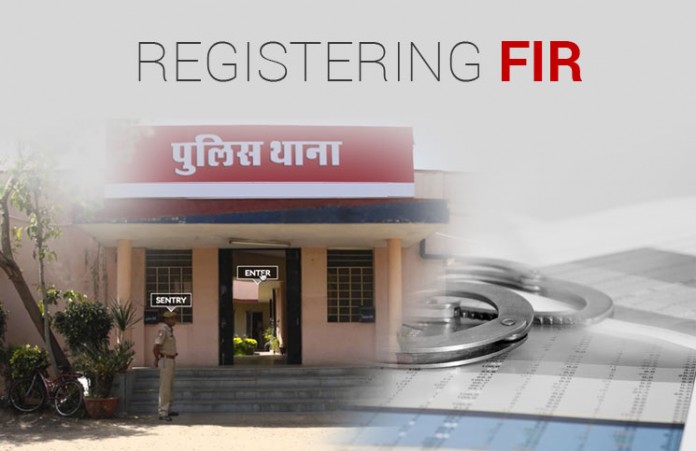










 Allow notifications