Download Now
Home Blog Page 1810

The need for policy practitioner’s to pay attention to human development

0

Development is indispensable to achieve over-all growth that is inclusive. But before we reach there we need to define for ourselves our notion of development. Whether it confines itself to development of infrastructure or something that’s desirable to the society as whole or are we ready to look beyond infrastructure to define our idea of development? But the development of a project doesn’t restricts itself to just a piece of land or water body whatever the case may be. The results of such developmental projects are much more diverse and far-reaching which need to be comprehended and accommodated in the project. In order to make sure that development is reinforcing itself, we have to take look after and restrict any encroachment of the inherent dignity and of the equal and inalienable rights of all the citizens of country as it is the foundation of freedom, justice and peace. Human  rights is a set of rights without which it’ll be impossible to lead a dignified human life and keeping in mind this definition it becomes prerequisite of any proposed project to adhere to the definition of human rights. But for better realization and demand of human rights, people must be equipped with resources and facilities and development is a means to achieve this end. That’s when the question whether development without due importance given to human rights comes into the picture. The question has gained more and more importance over the period of time that you can’t do away with it anymore.

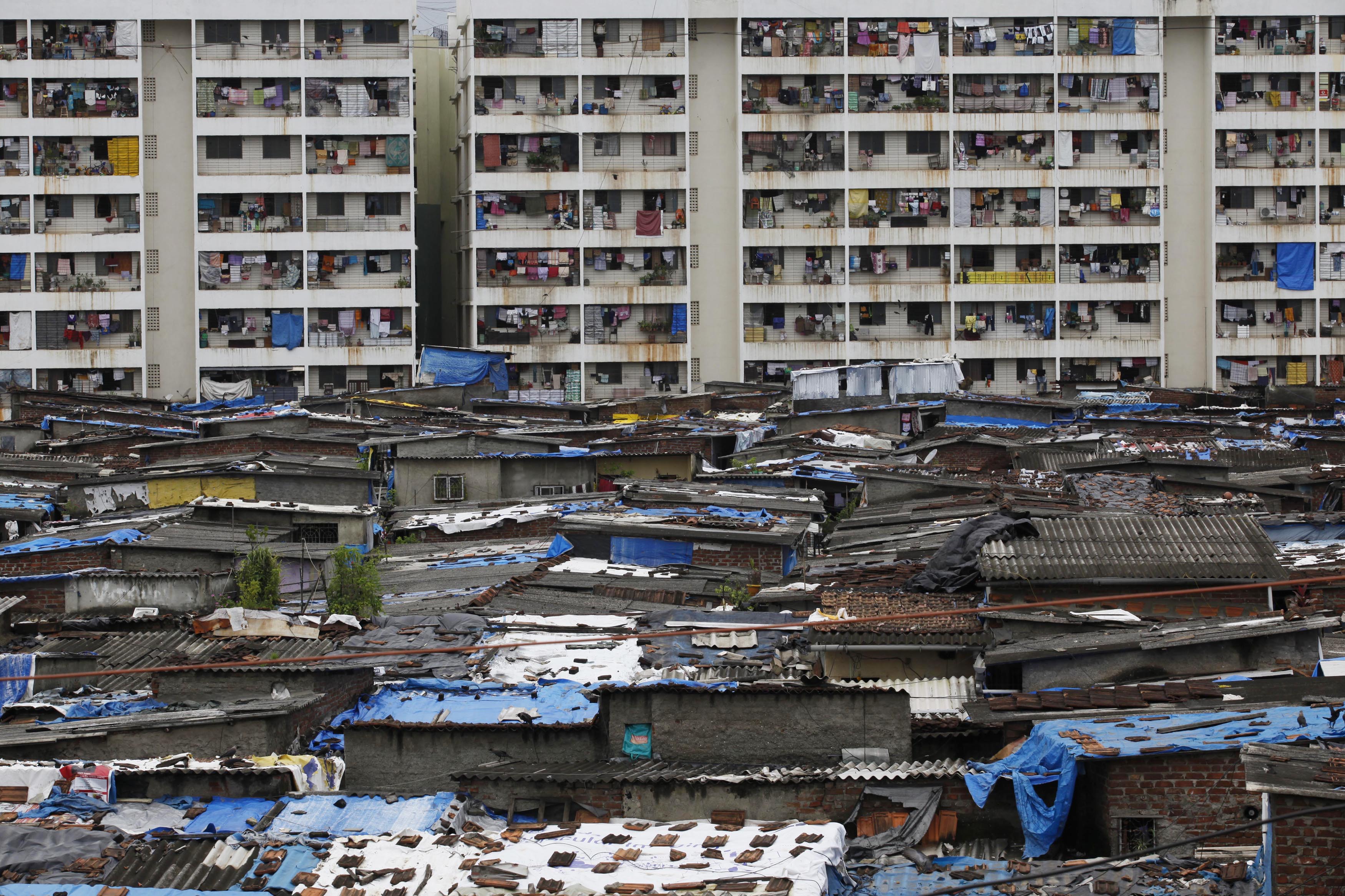
In case of India being Indian has been more or less a story of displacement. But those were most of the times had been instances of voluntary displacement. Development on the other hand has led to involuntary or forced displacement, and thus most of the development projects are conceived on the grounds of violation of human rights. Available reports indicate that more than 21 million people have internally displaced in India as a result of developmental projects. In order to promote faster economic growth India has invested extensively in industrial projects, dams, highways, power plants, mines and expansion of cities this would not have been possible without acquisition of land which itself is based on displacement of people. As most of these projects were supported and implemented by the government it led to state-induced displacement. If we take a closer look at geographical location of these projects we will find that most they have been located on areas with concentration of tribal population. Tribal people are highly dependent on forest or common property as they derive their livelihood from there and that the only asset which they possess. Taking away these lands or forests mean depriving these people of their only claim to livelihood. As they form the minority of the population their participation in the political processes is also low reducing their capacity to negotiate on the terms and conditions of rehabilitation and resettlement. Also given the condition of ownership of land in rehabilitation and resettlement policy, tribals and landless laborers are being affected the most as they are marginalized people without any entitlements whose livelihood is entirely dependent on the piece of land now owned by government/private parties. Globalization and resultant policies of this force like SEZ have added to the agony of indigenous people as now more people are being forced off their land due to foreign conglomeration, MNC’s under the guise of building industrial infrastructure for the country. Also there have been instances where a community was displaced more than once. One can find communities which have been displaced several times in span of just few decades. This underlines the apathy towards the cause of human rights of development induced displacement on the part of government and implementing authority at the same time. To impose the trauma of displacement and rehabilitation on any community underlines reflects bureaucratic insensitivity and callousness at its worst. The resultant impoverishment of such displaced population due to unemployment, breakdown of social support system, homelessness if they fail to receive any compensation by the government as they don’t fit into criteria that makes them eligible for one; all these factors need to be taken into account while assessing the impact of any developmental project.

This discussion brings us to a question which needs to be taken into account and addressed before advocating for such growth pattern. Is it really desirable to develop certain section of the population at the cost of the other section which might lack any bargaining power? Are we going to promote that pattern of development wherein one section of population is snatched off of its means of livelihood only for the betterment of the other section of the population? This is quite evident where dams are built on rivers in villages to provide for the growing demand for water of cities which denies right to water (interpreted under right to life by Supreme as well High courts) of the rural/tribal community. The first step in this direction should be calculating and monitoring the actual number of development induced displaced population as it’s the prerogative in order to assess the extent of the problem to reach towards a solution. If development ought to reflect upon human rights of displaced people there’s to be a way in which this approach can be incorporated. The people who’ll be at the receiving end of such projects should be consulted and brought to the table for negotiation. Also government, bureaucracy and vertical hierarchy has to understand resettlement has to go beyond compensation as livelihood is not only about monetary term but it also includes social, cultural aspects of a community.

About  Author: Neha Rane is a graduating student of Master’s in Public Policy at Jindal School of Government and Public Policy, NCR Delhi. Her research areas include urban policies, health studies strategies for rural development, microfinance, financial inclusion and decentralization in particular.

Download Now

Everything you want to know about Delhi University Law Entrance Exam

14
Delhi University Law Entrance Exam

This guide is prepared by Shruti Pandey, a student of Campus Law Center, Delhi University, on Delhi University Law Entrance Exam.

Delhi University Law Entrance Exam Syllabus and Exam Pattern

The Faculty of Law, University of Delhi is currently offering 3 year after graduation LL.B. course. Any person with a Graduate / Post Graduate Degree from the University of Delhi or any other Indian or Foreign University recognized as equivalent by the University of Delhi with 50% marks or an equivalent grade point in the aggregate, 40% marks for the SC/ST is eligible to appear in the entrance examination but he/she should not be less than 21 years of age and there is no upper limit to age.

SYLLABUS

DU LLB Entrance Exam 2015 shall have one paper comprising Objective Type Questions from the following sections:

  • English Language and Comprehension
  • Current Affairs
  • General Knowledge
  • Quantitative Aptitude
  • Analytical and Logical Reasoning
  • Legal Awareness and Aptitude

There are 25-30 questions from English language and comprehension section including reading comprehension, idioms and phrases, antonyms, synonyms, one word substitute, jumbled sentences, odd one out etc.

 Current Affairs will be mostly form past one year.  Not more than 5 questions are asked.

There are 30 questions from General Knowledge section covering history, geography, economics, literature, science, etc.

 There are 10-15 questions from Quantitative Aptitude which includes preliminary maths (up to 10th standard).  Questions from Speed and distance, Profit/Loss, Average, Ratio are the most frequently asked.

There are 20 questions from Analytical and Logical Reasoning. 5 out of these questions are based on data and usage. Coding- decoding, relations, directions, make a meaningful word from jumbled words are other important areas.

Maximum 85-90 questions are from Legal Awareness and Aptitude. Current legal knowledge, questions based on Principle and Reasoning, Constitution(fundamental rights and duties, powers of President, Vice-President, Governor and Prime Minister , Loksabha, Rajya Sabha), headquarters of famous organisations across the world, basics of criminal and civil law, Law of tort.

EXAM PATTERN:
There are total of 175 questions which are to be solved in 120 minutes.  For each correct answer 4 marks are rewarded and 1 mark is deducted for every wrong answer.  15 minutes go towards filling the OMR sheet and other formalities, so basically one has 105 minutes in hands to solve all the 175 questions i.e. 35 seconds for each question.

Best way to prepare for DU law entrance exam

There is no particular time to start the preparation. It’s never too late since you have to pay special attention to your English language, correct logic and quick comprehending ability. However one should start little beforehand, 3- 4 months time is enough to cover the entire syllabus. One should be well aware of not only the pattern but also the nature of the exam. For instance, current affairs are not what is to be focused rather Static GK should be paid special attention. More than 90 questions are from Legal Awareness and Aptitude, so this area has to be paid special attention.

The following are some good sources:

  1. Universal’s Guide to CLAT and LL.B. Entrance Examination (this is easily available in market and online).
  2. SS Guide for LL.B. Entrance Exam by Anand P. Misra.
  3. IMS India CLAT Correspondence Course (http://www.imsindia.com/Home/study-in-india/graduate/clat-law-preparation/ImsPage/177/clat-correspondence.html )
  4. The Hindu Dairy of Events for current affairs, ClatGyan’s General knowledge Compendiums (http://www.clatgyan.com/), IMS CLAT Correspondence current affairs material.
  5. Delhi University Law Faculty LL.B. Entrance Test Solved Papersby Universal Publication (it’s online available on http://www.unilawbooks.com/search.asp?searchon=maincat&searchtext=115&subj=LL.B )
  • Universal’s Guide to CLAT and LL.B. Entrance Examination is sufficient for Constitution, basics of criminal and civil law, law of tort and the entire legal knowledge and aptitude preparation. There are ample of multiple choice questions for practice and memorization.
    You may find some very easy questions like who is the Chief Justice of India or Chairman of Bar Council of India or Union Minister of HRD. So, information about courts, lawyers and judges is most important in Legal GK. At the same time paper may contain some difficult questions for them who do not follow legal news and developments in the country. For example, there was a question about Supreme Court judgment dated 22.03.2010 interpreting Articles 72 and 161 of the Constitution. There was another question about Delhi High Court’s judgment dated 22.03.2010 about protection of women from domestic violence. Another question related to IP litigation between Toyota & Prius Industries for trademark ‘Prius’.
  • The best way to prepare Static GK is to solve every question from Universal’s Guide to CLAT and LL.B. Entrance Examination and Lucent’s General Knowledge book.
  • Don’t miss to solve past years entrance papers, minimum 50 questions are repeated every year.
  • You need to master three areas of English:
  • Vocabulary
  • Grammar & Sentence Correction, and
  • Reading Comprehension

Building vocabulary on a daily basis from every possible source is important i.e. from your daily newspaper to your text books or from books like Word Power Made Easy by Norman Lewis. Similarly, doing some grammar and sentence correction exercise daily is important from any good book on objective English like ‘English is Easy’ of Chetanand Singh or a book on similar subject by R.S. Agarwal . For mastering comprehension, reading habit as well as practice from papers given in aforementioned books is needed. A two-month plan working two-hours daily on English can do the magic even for students of non-English medium.

  • Though a look at DU 2008-2010 papers suggests that this area is not-so-important as very few questions (5-10) are asked each year, still students should practice this area thoroughly because 40 to 50 questions from reasoning were asked in DU LL.B. Entrances of year 2001 to 2006.

As the pattern of DU LL.B. exam keeps on changing and is highly unpredictable, students must solve at least few exercises from all type of reasoning questions to be on the safer side. Many good text-books on reasoning are available in the market but taking just one like that of M.K. Pandey’s Analytical Reasoning or any such similar book will suffice.

https://lawsikho.com/course/certificate-course-in-advanced-civil-litigation-practice-procedure-and-drafting
Click Above

Is it necessary to take coaching for DU exam? What are the best coaching centres?

It is not at all required to join any coaching to crack DU Law Entrance Exam. A planned study of 2 to 3 months of intensive preparation is sufficient to pass DU Law Entrance Exam. A cool 5-6 hours of studies every day is required. Candidates must make a plan to study at least 2 subjects every day and have at least one vocabulary/English and one reasoning exercise daily. Reading a good newspaper like The Hindu and taking note of important points is important. For revision The Hindu Dairy of Events and other GK Compendiums could be referred.  Students may also trust Universal’s Guide to LL.B. and Universal’s book on Legal GK.

It’s advisable for every law aspirant to get past papers of CLAT and DU available at the respective law schools on payment or on University website for free in case of DU. Students can find some really wonderful communities on social networking sites like Facebook where thousands of law aspirants network and interact, without wasting precious time, one should keep abreast of the knowledge shared around.

The best way for ensuring time-management in the exam and getting right amount of confidence to crack the exam is to solve as many past papers and full-length mock papers as possible under strict time-limit and exam conditions.

A good distance learning course or classroom training programme can make a huge difference to your preparations. Some of the good coaching centres for DU Law entrance preparations are:

  • Delhi Law Academy: Delhi Law Academy located in Staya Niketan, Dhaula Kua, Delhi offers a 15 days crash course for DU Law Entrance Exam. The fee is ₹ 9000 approximately. They provide an online course too for ₹7000 approx. Test series are also available. The details are available here http://www.delhilawacademy.com/main/du-llb/  .
  • Ambition Law Institute: It’s located in Mukherjee Nagar in Delhi. They offer regular, weekend, summer vacation and crash courses. The fee ranges between 25 to 32k depending upon the course. For more details contact on 9312548656.
  • Juris Law Academy: It’s located in GTB Nagar and provides regular, weekend, summer vacation and crash courses. The fee ranges between 25k to 35k. For further details contact on 8010905050.
  • AB Tutorials: AB Tutorials in Hauz Khas, Delhi provide regular course and crash course. The fee for regular course is approximately 32k and that of crash course is 22k. For further details contact on 011-42270040 or check their website http://www.abtutorials.com/3year-LLB-examination.php .

What to expect on the exam day of DU entrance exam.

The entrance examination is conducted every year in the month of June. The centres are allocated in various colleges of the north campus. It is suggested to reach atleast 30 minutes before the scheduled time to grab the seat allotted to you, recollect your breath and calm down in the insanely hot weather. Not every room has an air conditioner, so you would be lucky if you happen to get one with an AC. Even otherwise the rooms are large, well lit and ventilated. Exams start on time and delay of more than half an hour to reach the centre after the exam has been started is not at all entertained. If are from out- station and have come along with your parents or relative, the staff is quite considerate to accommodate them for those 2 hours in the library and other vacant classrooms.
The environment inside the examination hall is quite decent, the classrooms are comfortable and cool even without air conditioners for the sake of old buildings and thick walls, the seats are comfortable and you are provided cold water at your seat every 15 minutes.
The invigilators are considerate and soft spoken. But if you feel they are shouting at your head or talking loud you would not have to point it out for more than one time. The management is quite good, you are given the OMR sheet and question paper 15 minutes before but you are not allowed to write anything over it until the invigilator asks you to start. That means you can go through the paper and sought out questions from English or general knowledge section.


LawSikho has created a telegram group for exchanging legal knowledge, referrals and various opportunities. You can click on this link and join:  

https://t.me/joinchat/J_0YrBa4IBSHdpuTfQO_sA

Follow us on Instagram and subscribe to our YouTube channel for more amazing legal content 

 
Download Now

Is marrying twice a crime in India?

2
marrying twice

This article is written by Nipasha Mahanta, a student of NUJS, Kolkata, on the issue of bigamy or marrying twice.

Download Now

What are the legal rights of a nominee?

1

5599532222_7dbf74b450_o

Is Nomination a Myth?

By making a nomination in your assets would the assets devolve as mentioned in your Will or would it go to the person nominated absolutely? Increasing amount of misconceptions about the consequences of appointing a nominee are prevalent.

A nomination is made during the life of the holder / owner of the asset and comes into force after his death. The primary uncertainty appears to be whether after a nomination is made the nominee derives absolute right as the owner or the nominee is merely a trustee on behalf of others and acts in a fiduciary capacity for the legal heirs as per the succession law. A recent judgement passed by a learned single judge of the Hon’ble High Court at Bombay as discussed below has considered in detail the question as to whether by virtue of the nomination a person can claim exclusive rights to and ownership of the investments.

It is important to understand the effect of nomination under various laws.

The Black’s Law Dictionary, 8th edition, defines a “Nominee” as
“…..2. A person designated to act in place of another, usu. in a very limited way
3. A party who holds bare legal title for the benefit of others or who receives and distributes funds for the benefit of others”

There are various Acts, namely Companies Act, 1956 as also Companies Act 2013, the Maharashtra Co-operative Housing Societies Act, 1960, Banking Regulation Act, 1949, Provident Funds Act, 1925, Insurance Act, 1938, Government Saving Banks Act, 1873, Depositories Act, 1996, Mutual Funds Regulations, 1996, etc., that have provisions pertaining to nomination. Though all these Acts have provisions for Nomination the language of the provisions are different in the Acts.

It is pertinent to note that the Companies Act, 1956 as also Companies Act, 2013, Banking Regulation Act, 1949, Provident Funds Act, 1925, Government Savings Banks Act, 1873, Depositories Act, 1996 have a “Notwithstanding provision” with respect to nomination which is also notwithstanding the Testamentary Succession. It appears that it is this notwithstanding provision which caused the confusion with respect to the rights of the Nominee. Thus, due to the above Notwithstanding provision (which is notwithstanding Testamentary Succession) it was interpreted that upon the death of the Nominator the Nominee in respect of his assets is vested with all the right of the Nominator and becomes the owner of the asset.

The above interpretation was tested by the Hon’ble Supreme Court and various High courts in the following cases:

  1. Smt. Sarabati Devi and Anr. Vs. Smt. Usha Devi [1]
  2. Ram Chander Talwar and Anr. Vs. Devender Kumar Talwar and Ors. [2]
  3. Shri. Vishin N. Kanchandani and Anr. Vs. Vidya Lachmandas Khanchandani and Anr. [3]
  4. Shipra Sengupta Vs. Mridul Sengupta and Ors [4]
  5. Mr. Antonio Joao Fernandes Vs. The Assistant Provident Fund Commissioner and Ors. [5]
  6. Shashikiran Ashok Parekh Vs. Rajesh Virendra Agrawal & Ors [6]

After hearing the respective parties, it appears that though the legislature and the draftsman have opted to use the language as Notwithstanding provision including the Testamentary succession, the Courts are of the view that the above Acts cannot override the succession law and succession can be governed only by Succession Law i.e. Testamentary or Intestate as the case may be and not by any other Act. Such an interpretation is a deviation from the normal rule for interpretation of a statute, wherein a Notwithstanding provision would prevail over other provisions. In the above cases while dealing with the provision of nomination the Courts have held that despite the provision being “Notwithstanding” the same would not overrule the law of Testamentary and Intestate succession. The Nominee does not become the owner of the asset and is merely a trustee who holds for and on behalf of the legal heirs of the Nominator.

However, the Hon’ble Bombay High Court, in the case of Harsha Nitin Kokate Vs The Saraswat Cooperative Bank Ltd. and Ors [7] (“Kokate“) dealing with nomination in the Companies Act, 1956 held that as the provision is “Notwithstanding any other provisions in law” and also vests the asset in the nominee, the nominee takes the asset to the exclusion of the other heirs and becomes the owner of the asset. In this decision the court did consider the decision of the Supreme Court in Sarbati Devi, however, the Courts attention was not drawn to several binding decisions of the Supreme Court and Bombay High Court.


Subsequently, in or around March 2015, the same issue again came up before the Hon’ble Bombay High Court in the case of Jayanand Jayant Salgaonkar and Ors. Vs. Jayashree Jayant Salgaonkar and Ors [8] wherein it was contended that the Kokate case was per incuriam as the same did not consider all the Supreme Court and High Court Judgments. Accordingly, the Hon’ble Bombay High Court, after considering all the cases and argument of both the sides came to the conclusion that the Judgment in the Kokate case is per incuriam and therefore bad law.

Thus, in view of the Judgment in case of Jayanand Jayant Salgaonkar, it appears that whatever be the language of the section in the Acts relating to Nominee, a nominee is a mere trustee and holds the assets for and on behalf of the legal heirs. On death of the Nominator, the Company will confer the rights on the nominee but the same will not make the nominee the owner of the asset but only a trustee who holds the asset for and on behalf of the legal heirs of the deceased.

Thus, while carrying out succession planning, it is important to note that Nomination may not really serve the purpose as the Nominee will only act as a Trustee for and on behalf of the legal heirs of the Nominator.Nomination does not really serve the purpose for the Nominator in fact it helps the organisation (i.e. Bank, Mutual Fund, Insurance, etc.) as in case a Nomination has been effected, the organisation merely confers the right on the Nominee so that does not have to hunt / search for the legal heirs of the deceased. The assets of the Nominator (irrespective of Nomination) will devolve upon the beneficiaries in case of a Will and upon the legal heirs in the absence of a Will as per the respective laws of succession.

Therefore, it appears that the compliance of the procedure of nomination is merely a myth as it does not substitute a Will and merely appointing a nominee will not suffice. Further, it will not be out of place to point out that there appears to be a gap / disconnect between the legislature, draftsman and final interpretation by the Courts of the provisions of the various Acts. Needless to state the interpretation of the Courts would prevail and Nominee is considered only as a Trustee and not the owner.

– By Nirav Jani (Senior Associate & Team Leader) & Ritu Shetty ( Associate), Hariani & Co

Editor: Trupti Daphtary

[1] 1984 AIR SC 346
[2] (2010)10 SCC 671
[3] (2000)6SCC724
[4] (2009)10SCC680
[5] 2010(3)ALLMR599
[6] in the high court of Bombay Notice of Motion No. 2024 of 2011 in Suit No. 1267 of 2011
[7] 2010(112)BOMLR2014
[8] Notice of Motion No. 822 of 2014 in Suit No. 503 of 2014 and Testamentary Petition No. 457 of 2014 Decided On: 31.03.2015

hariani

Disclaimer: This article is for informational purposes only, and not intended to be an advertisement or solicitation. This article is not a substitute for professional advice. Hariani & Co. disclaim all responsibility and accept no liability for consequences of any person acting or refraining from acting on the basis of any information contained herein.

Copyright © : Hariani & Co. All rights reserved. Reproduction of this newsletter in whole or in part is allowed with proper reference to Hariani & Co.


LawSikho has created a telegram group for exchanging legal knowledge, referrals and various opportunities. You can click on this link and join:  

https://t.me/joinchat/J_0YrBa4IBSHdpuTfQO_sA

Follow us on Instagram and subscribe to our YouTube channel for more amazing legal content 
 
 
Download Now

How acquisition of land for laying down of petroleum pipeline is done in India?

3

This article was submitted by Ayush Agarwal, a student of UPES as a part of a blogging contest which may lead to his selection as an iPleaders Energy Law Fellow. The fellow will be selected on the basis on engagement on these posts as well as quality of writing and research. We emphasise on engagement because it shows one’s ability to generate interest in an otherwise arcane subject like energy laws. The selected fellow will receive a paid internship with a boutique energy law firm in Delhi (stipend of INR 7000), an opportunity to be mentored by very senior lawyers  and a free course worth INR 5000 from iPleaders. If you want to participate, write to r[email protected] for instructions.

The Amendments to the bill related to the acquisition of Land had been adverse with the Government bringing in reforms from time to time. Acquisition of land in the cases where the land is acquired for laying down the pipelines for transport of petroleum from place to another, the right of the owner in the land remains preserved with him subject to certain limitations. The Land Acquisition Act takes away the right of the owner and transfers it to the other person for the commercial purpose but under this act i.e The Petroleum & Minerals Pipelines (Acquisition of the Right of the User in Land), 1962, limits the power of the owner in the ownership of the Land, but the land still remains with the user.

With the increase in policies, demand and development of petroleum resources in the country there had been substantial increase in the production of crude oil, natural gas and petroleum products. It is a necessity to lay down the petroleum pipelines in the country to serve as an efficient and cheap means of transportation and distribution of petroleum and related products.

The procedure laid down under the Land Acquisition Act for acquiring the land is long drawn and costly. Petroleum pipelines are generally laid down under the land, so therefore is no specific needs to acquire the ownership of the land. Therefore, in the case of these pipelines it is considered sufficient to acquire the mere right of the user in the land or laying and maintaining the pipelines.

Notification of Acquisition

Under Section 3 of the Act, Central government and the state government by notification in the official gazette, may declare its intention in the interest of Public. The purpose behind notification is that it appears to the government that it is necessary in the interest of public that for the transportation of petroleum from one locality to another pipelines to be laid down. The government through notification shall give brief of the land and the competent authority shall cause the substance to be published at such places and the manner as prescribed.

Power of the Government upon the Notified Land

After the issue of the notification by the central or the state government for laying down the pipeline, an authorized person will be appointed. The authorized person will have power to:

  1. Enter upon and survey and take levels of any land specified.
  2. To dig or bore into sub-soil
  3. To set out the intended line of work.
  4. To mark such levels, boundaries and line by placing marks and cutting trenches.
  5. To take and make boundaries and line marked to cut down and clear away any part of any standing crop, fence or jungle
  6. to do all  other acts necessary to ascertain whether pipelines can be laid under the land.

The injury caused to the land should be minimum so that the land could be used for future purposes.

Objections

The government after the notification of acquiring the land gives rooms for raising objections. Without this provision of raising objections the act of the government will be arbitrary and will no room for the rule of law. To avoid this arbitrariness the government gives provisions of raising objections.

Section 5 of the said act deals with hearing of the objections and making the inquiry in the acquisition of the land. The notice for the objections needs to be served within twenty-one days from the issue of the notification.

The objects raised within twenty-one days needs to raise before the competent authority. The notice shall be in writing and should set out all the grounds thereof. The competent authority shall give the objector an opportunity of being heard either in person of by a legal practitioner.

It is at the discretion of the competent authority to look into the merits of the objections and to decide on it. After the hearing of the objection the decision took by the competent authority shall be final.

Land excluded from Acquisition

Under Section 7 of the Act limits the Government from laying down the pipelines. The lands excluded from acquisition under the act include:

  1. If the land notified under the notification was used for residential purpose.
  2. Land on which stands any permanent structure which was in existence immediately before the notified date.
  3. Land appurtenant to dwelling house.
  4. Land at a depth which is less than one metre from the surface,

 The land acquired under the act shall be used only for laying the pipeline and for maintaining, examining, repairing, altering or removing any such pipeline. If any dispute arises with the use of pipeline, the decision of the competent authority shall be final.

Restrictions to the Use of Land

The basic purpose of the act is to make the use of the land for the public purpose. Section 9 of the act gives power to the owner of the land. The land after acquisition shall be entitled to use for the purpose for which such land was put immediately before the date of notification. The limitations to the use of land include:

  1. Owner is not allowed to construct any building or any other such structure
  2. Owner is not allowed to construct or excavate any tank, well, reservoir or dam.
  3. Cannot plant a tree.
  4. The owner or the future occupier of the land is not permitted to do any act which is likely to cause any damage in any manner whatsoever to the pipeline.

Compensation

Under Section 10 of the Act, every person is liable to be compensated under this act whose land had been acquired under the notification by the government. When there is any objection with respect to the inadequacy of the compensation received by the competent authority, a suit can be initiated under this Section before the District Judge within the limits of whose jurisdiction the land or any part of the land is situated.

While determining the amount of compensation, the court should take in due regard the damage or loss sustained by any person interested in the land by reason of:

  1. Removal of trees of standing crops from the land.
  2. Temporary severance of the land which the pipeline has been laid from other lands belong, to or in the occupation of, such person
  3. In case of injury to any other property whether im/movable or the earning of such person caused in any other manner.

In addition to the compensation, the owner is liable and any other person who has right of enjoyment under the land has been affected, compensation calculated at a ten per cent of the market value of that land on the date of notification.

Penalty

Any person who destroys damages or displaces any trench or mark made under section 4 or wilfully does any act prohibited under section 9, shall be punishable with imprisonment which may extend to six months or with fine or with both.

Whoever wilfully removes, displaces, damages or destroys any pipelines laid under section 7, shall be punishable with rigorous imprisonment for a term shall not be less than one year, but which may extend to three years and shall also be liable to fine.

Download Now

Sole proprietorship vs. OPC – Is taxation the decisive factor?

2
one-person-business-pop_4015
Ever since One Person Company (OPC) was introduced by the new Companies Act 2013, entrepreneurs have struggled with the question of how it compares with the traditional proprietorship. This question was addressed at a basic level here.
In this post, we will specifically explore tax considerations that you can factor in while evaluating whether to start an OPC or sole proprietorship, as their financial impact is direct and significant for any new business.
First, you will be able to pay income tax as per your personal tax slab in case of a proprietorship (i.e. 30 percent tax rate kicks in only if your income crosses INR 10 lakhs, 20 percent on income between 5 – 10 lakhs, 10 percent on income between 2 – 5 lakhs and nothing on income below that). For an OPC you will always be paying 30 percent tax on any income.

Second, while making payments (for salary, consultancy fee, rents, etc.) if your business is structured as a company you will have to deduct TDS and make necessary filings in all cases. This provision to deduct TDS does not apply if payments are made by individuals, unless your business turnover (revenue) crosses INR crore.
Third, you also don’t need to bother about conducting tax audit for a sole proprietorship business unless a turnover of INR 1 crore is crossed. However, all companies (including OPCs) need to conduct an audit no matter what their income.Whether it is a proprietorship or OPC, all income from the venture will be classified as business income for income tax purposes. That implies that you will be able to deduct salaries and ‘client’ lunches from the revenues to arrive at your real profit. Similarly, the provision for set-off implies that business-related losses can be carried forward to future years and adjusted against profits. On this count, both OPC and proprietorship are similar.

A basic document that is used to explain the differences to students of an online business law course from NUJS is accessible here.

Download Now

5 reasons why blanket bans on pornography through content filters may not serve any larger purpose

1

This article is written by Mayank Labh, a student of NALSAR, Hyderabad.

Dear Sunny Leone fanatics,

Has the fact that porn is blocked in your hostel or in your office ever troubled you? Have you ever thought why it is blocked and on what grounds it is justifiable? I am not saying that the blocking is unjustifiable under any circumstances, but I am explaining why five of the most obvious reasons based on which we think access to porn should be curtailed or restricted may not be tenable.

For the purpose of this article I am sharing a working definition of porn here: Porn is the portrayal of sexual subject matter for the purpose of sexual arousal. I must make it clear at the very outset that the arguments are not made for such kind of porn which is grotesque, highly violent and which exploits minor children, but it’s for such where two or more consenting adults are engaging in sexual adult for commercial purposes. Unfortunately, content filters are not being used in a way that recognizes this.

With the advancement of technology it has become popular and accessible to almost every adult legally and to everyone practically. The extent of its impact, positive or negative whatever it is, is such that a guy quipped “Are we the first generation to masturbate with our left hand?” And another said “it is like potato chips, everywhere and cheap, to be consumed and tossed”. But this potato chip is banned in colleges and universities for reasons best known to them. Be that as it may, here are the reasons why there should not be blanket ban on pornography

  1. Many people think that college authorities can ban pornographic websites since they are illegal. But is it really so?

 According to the laws of India, consumption of pornography is no offence. So, an individual is well within his rights when accessing it in personal capacity.  All that the law forbids is its publication, transmission or distribution of something which is obscene. It must be noted that it bans obscenity and not pornography.

The question is whether a government can ban porn websites which distribute or transmit pornographic materials.

The reason being that there are no relevant laws which states or infer that there should be blanket ban on pornographic websites.  According to Section 69A of Information Technology Act, 2000 of India a pornographic website can be blocked if it disrupts public order. It seems highly unlikely that a pornographic website can disrupt public order.

Even if the government goes on to block all pornographic websites it would be overreaching its jurisdiction. It is because many pornographic websites are hosted in United States where it is legal and therefore Indian government would be seriously overreaching if it blocks such websites. So, removal of content is only possible if the servers hosting such websites lie within the government’s jurisdictions.

 Secondly, such a blanket-ban would be tantamount to violating the rights to free speech and privacy (Articles 19 and 21 of the Constitution respectively) since proactive blocking of objectionable content would require ISPs to sift through all content on the internet, including private user-data. Such obscenity laws from which ban seek to gain legitimacy is that it used to protect dominant patriarchal moral beliefs at the expense of women’s human rights. These laws tend to problematise expressions of women’s sexuality rather than considering the question of consent on the part of women.

Thirdly, according to a study commissioned by the High Court of Bombay any “scientific” filtering would amount to censorship. There is no such filtering available which can fairly make a distinction between videos which are obscene or not. Often, it happens that many websites like sex-education also get blocked along with obscene websites.

Now, given that porn websites are available on the Internet what makes an individual not watch such porn websites in their personal capacity? What makes the higher educational institutions in India block porn websites for college students? Do they really serve any point? What are the assumptions behind making such porn websites block?

  1. One of the assumptions is that viewing porn provokes a person to rape. It is a widely popular belief that watching porn induces negative attitudes towards women. Oh, really? The truth is that there is no such conclusive research and in fact there are many researches which say to the contrary that porn helps understand basic human necessity in a better way.

So, according to a 2010 study by Manjima Bhattacharjya and Maya Indira Ganesh, exposure to pornography may benefit women.[1] The reason for this is that it becomes a new avenue for women to explore and express their sexuality whose sexual autonomy in the “real” world is restricted to a great extent. It was found by the study that exposure to pornography gives women a space  to gain information on sexuality, reproduction related issues and to seek pleasure and to claim their equal sexual citizenship rights.

Similarly, according to a psychological research by Bryan and Kelley (1984), exposure to pornography may generate positive attitudes towards women in men.

To add to the argument, it must be brought to notice is that after the censorship law on pornography was repealed in Ireland, there was a significant decrease in sex crimes including rape which was growing before the annulment of the law. (Donnerstein, Linz and Penrod, 1987). If we particularly talk about India, it is found that sexual crimes against women happen where Internet is not even available to the people. Although mobile phones are there but it is found that many of the mobile phones are not able to play videos.[2]

 Similarly, Ferguson and Hartley demonstrated an inverse relationship between pornography consumption and death-rates.[3] Another evidence which supports this view is a study of juveniles who are sexual offenders. It was seen that such sexual offenders were less exposed to pornography than the non-offenders of same age group. In fact, such sexual criminals reported sexually restrictive behaviour of parents.(Goldstein, Kant and Hartman, 1974).

In fact, according to some experts, such watching of porn lead to satisfaction of the sexual needs by fantasy induced masturbation and not by with innocent victims.

There is an end number of research to that effect. Even though these researches seem convincing, one might argue that even he/she can also come up with research on the other side. It is agreeable that it might be possible. But does that merit a blanket ban on pornography in Hostel? Somebody once said “if it aint broke, dont fix it” which means that if you are not able to figure out whether something is broken or not then you should not rush to fix it.

  1. What the administration authorities from the college must know that the people coming for higher knowledge are not kids with some possible exceptions like 11 year old guy Tanishq Abraham who just graduated from college. They know what is good for them and what’s not. The question is whether watching porn has an impact on them. Asurvey of 4,600 young people in the Netherlands, aged 15 to 25, found the behavioural impact of pornography—most of it online now—to be small.(You could access the survey from The Guardian website.) The argument that it is addictive, which is also highly debated, could be extended to sports and other form of entertainment as well. It is inexplicable as to why there is a differential treatment to pornography. (But please do not let this argue with the patriarchal and medieval authorities for they are low in logic and high in hyperbole and it’s not going to be fruitful!)
  2. Sexual control and social control are usually co-occurring. What often happened in the colleges that in the name of pornography are that many sexual education websites and other websites are blocked. So in the name of banning porn websites the British government banned sites like help lines for children suicide and domestic violent. [4] There is no reason why educational authorities can’t do such things if given the latitude to ban sites which are pornographic.
  3. There is an increasing trend that if you ban something it gets more popular. Such ban does not lead to any deterrence and does not serve any purpose whatever that is. People still watch it by using VPN access and proxy servers which are in them legitimate software. It would be very draconian of the government to ban all such legitimate software in order to have a complete ban on pornography. It should not be pornography but it should be mindset that needs to be changed. It can only be achieved through openly engaging in dialogue about sex. The problem is that we live in a sexually deprived and depraved society which leads to distasteful treatment on women and not pornography.

Apart from the problem of high bandwidth consumption due to large sized pictures and video content, or forcibly monitoring that people who use internet within the network (students, employees), use their time for no other purpose except for what they have committed to doing, the ban may not serve any other purpose.

[1] https://www.academia.edu/1762454/Negotiating_intimacy_and_harm_Female_internet_users_in_Mumbai

[2]Making the most of Mobiles. LiveMint, 14 July 2013,http://www.livemint.com/Opinion/9JIPq3l8YOerKa3s7dMN7O/Making-the-most-of-mobiles.html

[3] http://www.christopherjferguson.com/pornography.pdf

[4] http://www.theguardian.com/commentisfree/2014/jan/03/david-cameron-internet-porn-filter-censorship-creep

Download Now

What are the legal safeguards available to prisoners of war under international law?

0

mural-539830_1280

This article is written by Prateep Sarkar, a student of Aligarh Muslim University.

The 21-century world has become the ‘Ground Zero’ for the barbaric and inhumane acts of different military and individual groups which are a clear violation of the cherished principles of  Human Rights. There are various basic rights which are guaranteed to all human beings for the sake of being a human and those rights are inalienable and indivisible, the rights which are of utmost necessity for a human to live a dignified and respectable life, known as Human Rights. It is said that Human rights are rights inherent to all human beings, whatever their nationality, place of residence, sex, nation or ethnic origin, colour, religion, language, or any other status. Everyone is equally entitled to human rights without discrimination. These rights are all interrelated, interdependent and indivisible.[1] Human rights are norms that help to protect all humans anywhere in the world from severe political, legal, and social abuses. Human rights include the right to freedom of religion, the right to equality, the right to life and liberty, the right to a fair trial when charged with a crime, the right not to be tortured, and the right to engage in political activity. At national and international level these rights can be witnessed in law and morality both. No matter how good or bad a person is or in what condition and what place he is in, he cannot be deprived of the fundamental Human Rights. These inalienable and indivisible rights extend from a comfortable bed to the dark gallows and from lords of the world to the captives of war. International humanitarian laws from the very beginning have shown a great interest in safeguarding the rights of Prisoners of War (hereafter ‘POWs’). In last decade we have witnessed a barbaric and inhumane treatment to the POWs whether by the US army in Guantanamo Bay, IS forces in Iraq & Syria or by Boko Haram in Nigeria. Every now and then, we read and hear about the spine chilling acts of the militants groups like IS and Boko Haram groups which include genocides, mass killings, massacre of men, women and prisoners of war. For instance, it was reported few months back that ISIS paraded around 250 captured soldiers through the desert and shot them dead.[2]

Meaning and concept of POW

Before making an in depth analysis regarding the safeguards provided to POW’s under international and Islamic laws we must first of all have a brief idea regarding certain important terms relating to the subject.

WAR

Learned Jurists and authors have given their own perception of the term. ‘Professor Oppenheim defined war as “a contention between two or more States through their armed forces in the process of trying to overpower each other and imposing such conditions of peace as the victor pleases”. Further the learned American jurist Professor Westlake has defined the term as “the state or condition of Governments contending by force”. The third definition of war as pointed out by Professor Schwarzenberger follows: “the Powers are in a state of war with each other and neutrality towards third States, subject to limitations of international customary and treaty laws, if they choose to apply against each other to the utmost military as well as political and economic power”. The striking feature of the German’s definition is that unlike the others he takes into account the position of ‘third states’ which is ‘neutral States’ whose role often impinges very significantly on outcome of the conflict.’[3] These above mentioned definitions of ‘War’ has one thing  similar; they all describe it in relation to states and do not take into account the situation where a group or organisation which is not a state by the virtue of not possessing the essentials required by the International Law for being a state. Post 9/11 in the name of ‘Fight Against Terrorism’ most of the conflicts have one such entity involved in a war and that is why a modern definition of war must include such entities too. For the purpose of this academic venture we will be considering all such armed conflicts within the meaning and definition of War.

PRISONERS OF WAR

Prisoner of war means any person captured or interned by a belligerent power during war. In the strictest sense it is applied only to members of regularly organized armed forces, but by broader definition it has also included guerrillas, civilians who take up arms against an enemy openly, or non-combatants associated with a military force.[4] Article 4 of the Third Geneva Convention which defines the term also clearly sets out those who are categorically recognized as prisoners of war: “1. Members of the armed forces of a Party to the conflict as well as members of militias or volunteer corps forming part of such armed forces. 2. Members of other militias and members of other volunteer corps, including those of organized resistance movements, belonging to a Party to the conflict and operating in or outside their own territory, even if this territory is occupied, provided that such militias or volunteer corps, including such organized resistance movements, fulfil the following conditions: (a) that of being commanded by a person responsible for his subordinates; (b) that of having a fixed distinctive sign recognizable at a distance; (c) that of carrying arms openly; and (d) that of conducting their operations in accordance with the laws and customs of war.”[5]

After going through the above definitions a safe conclusion can be drawn that war is a state of restlessness between two or more nations or armed forces that forces the governments of the participating nations to use force against each other and hence allowing the victor state to impose such conditions as it deems suitable. Moreover, prisoners of war are a direct outcome of the war that constitutes between different nations or groups.

SAFEGUARDS TO POWs UNDER INTERNATIONAL LAW

Considering the historical background and the barbaric and inhumane treatment that the POW’s have been subjected to in the disturbances around the globe, they have been given a special status under international law and as a result have been granted with a plethora of safeguards to make sure that their basic human rights are well and duly protected. The international humanitarian laws as  have casted a duty upon the states to treat the war captives or the POW’s in accordance with the provisions of the laws. The Third Geneva Convention of 1949, also known as the “Convention relative to the treatment of prisoners of war,1949”  is the authoritative statement concerning prisoners of war which defines the term as well as lays down their safeguards. This convention deals with the plight of those persons who are taken captives during the armed conflict between the parties. This convention regulates to the smallest detail the treatment of prisoners of war. The prime responsibility of the treatment of the POW’s falls upon the detaining authorities and not upon the individuals. The Detaining Power is under a general obligation to treat prisoners humanely and protect them from danger.[6]They always retain their legal status even while they are kept as prisoners of war which is evident from the fact that they are allowed to wear their uniforms and that they continue to be subordinate to their own officers who are themselves prisoners of war .Moreover  at the end of hostilities they are to be returned to their own country without delay. They must be supplied with food, clothing and medical attention.[7] They should be protected from public curiosity.[8] They are also entitled to elaborate due process guarantees, including trial by the courts that respect the same standards of justice as those respected by the courts that would try the military of the detaining state.[9] Medical and scientific experiments are prohibited. Prisoners are to be treated alike regardless of race, nationality, religious beliefs or political opinions.[10]

At the time of detention, the prisoner is required to give a minimum of information. He is only obliged to give name, military number, date of birth and serial number only. He is not to be subjected to torture and may retain his personal effects.[11] Conditions at the detention camp must meet standards provided in the convention.[12] The work that the prisoner is required to perform must not be inherently dangerous(unless he has voluntarily consented to do such dangerous work) humiliating or directly connected with the operations of war.[13] The prisoner must be permitted contact with his family and correspondence privileges.[14] Procedures must be established for registering complaints against the administration of the detention camp.[15] Penal and disciplinary sanctions, including procedures for determining guilt, are prescribed by the convention.[16] The convention also provides that the properties of prisoners shall not be disposed of them when arrested.[17] When hostilities have ceased, POWs must be repatriated.[18]

A very important group of provisions have been specifically dedicated for the repatriation of prisoners of war. The three categories are distinguished; Firstly, the severely wounded and the sick must be repatriated directly and without delay, i .e. as soon as they are fit to travel .This is a humane gesture towards such persons who may never participate in war again. Secondly, all other prisoners of war must be released and repatriated without delay after the cessation of active hostilities. Thirdly, without waiting for the war to end, the parties to the conflict should repatriate prisoners of war on humanitarian grounds, possibly on a reciprocal basis.

CONCLUSION AND SUGGESTIONS

The Convention Relating to Prisoners of war 1949 or commonly known as the third Geneva Convention has proven to be the “Bible” for the prisoners of war. The ill experiences of the second World War and the collective hue and cry amongst the peacekeepers regarding the  human  rights violations that occurred during this period as regards the prisoners of war ,made it the need of the hour that certain necessary and indispensible safeguards must be enacted for them. The result of this deliberation was the Third Geneva Convention which laid down a large number of rights for the war captives. But as we all know, the biggest problem isn’t “THE LAW” but “ITS IMPLEMENTATION”. Though, the convention has necessarily provided for a wide range of rights but we can see the powerful states making a complete mockery out of  it. The most glaring example is that of the infamous Guantanamo Bay which has been referred to as the “Gulag of our times” by the Amnesty International. It has been reported that the Prisoners aren’t even provided with the Basic of protections as provided under the common Article 3 of the Geneva Conventions.   Moreover, in the present era we can see different militant groups like Boko Haram and ISIS taking war captives and bluntly refusing to observe the safeguards as provided  under the Geneva convention to the extent that they even entertain the public execution of these prisoners of war so that a stern message can be sent round the globe.

What is required is that the mere documentation of the safeguards isn’t enough. They must be brought into actual application as well. This is only possible when the United Nations stop acting like a “toothless dog” and take strong measures against the states who have been continuously involved in the violation of the safeguards provided to these victims of war. The situation is so lethargic that these prisoners of war are not even provided with the basic of amenities like food and water. An example is required to be set up and it is possible only when the UN takes action against the states violating the laws so that it may set a precedent requiring the states to act in the manner provided in the conventions.

[1] “What are Human Rights?” available at http://www.ohchr.org/EN/Issues/Pages/WhatareHumanRights.aspx (Visited on 02 March, 2015)

[2] Available at http://www.dailymail.co.uk/news/article-2736764/Marched-deaths-Sickening-ISIS-slaughter-continues-250-soldiers-captured-Syrian-airbase-stripped-led-desert-mass-execution.html (Visited on 03 March, 2015)

[3] Aziz M. Kurtha, “AffairsPRISONERS OF WAR, WAR CRIMES AND THE GENEVA CONVENTIONS” 25PH at p. 99 (1972)

[4] Available at http://www.britannica.com/EBchecked/topic/477235/prisoner-of-war-POW (Visited on 02 March, 2015)

[5] Norfadhilah Mohd Ali, “WHEN CIVILIANS “CROSS THE LINE”: THE INTERNATIONAL AND ISLAMIC LAW PERSPECTIVES”, 1 IJHSS, at p.225 (2011)

[6] Article 19 GC III

[7] Article 20 GC III

[8] Article 13 GC III

[9] Article 84, 99-108 GC III

[10] Article 16 GC III

[11] Article 17 GC III

[12] Article 22 and 23 GC III

[13] Article 51,52 and 56 GC III

[14] Section V Article 70-73 GC III

[15] Article 78-90 GC III

[16] Article 82-88 GC III

[17] Article 18 GC III

[18] Article 118 GC III provides that ‘POWs shall be released and repatriated without delay after the cessation of active hostilities.’


Download Now

Is “grey market” goods legal in India?

1

This article is written  by Mayank Labh, a student of NALSAR, Hyderabad.

What is Parallel Importing?

Parallel Importing or “Grey” importing is where goods are brought from the different network than the authorised network and sold at cheaper price generally than the price by the authorised dealer. So for example, The Economist sells their magazines in different countries at different prices. Now if I buy The Economist Magazine from X country where it is cheaper than India and then sells it in India at a relatively higher price but not as high as the price of the price of authorised network. Now, if restrictions on parallel importing are applied, then I can’t import the Economist magazine from X country without the permission of The Economist. (By the way, The Economist is an ardent support for parallel importing.)

What’s so Grey about Parallel Importing?

The goods are produced and sold legally. After that, it is subsequently imported to be sold further in the importing countries. So, what’s so grey about that? Actually, it is not the goods but it is the distribution channels by which the goods find their way to the importing country. Such sale may create havoc for the entrepreneurs who sell their goods through the authorised distribution channel and perhaps more expensively. To block this unwelcome competition, they argue that if the products sold by third party come within their trademark, copyright, patents right then such sale is infringing their rights. For, according to them, the owner or licensee has the exclusive control to put such items on the market. However, on the other hand, there is a concept of ‘first sale doctrine’. The ‘first sale doctrine’ is a limitation on the copyright holder’s exclusive right of distribution. It basically means that once the owner of a product or services sells it in market, he/she loses his/her exclusive control to sell and distribute the product or services. Therefore, first sale leads to an “exhaustion” of rights of owner to exclusively control the sale and distribution of the product or services.

There is a legal dispute in India as to such exhaustion of right is national or international. If it is national exhaustion then parallel imports is illegal because right is exhausted only in the country where the first sale has been made. But if India recognizes international exhaustion then parallel imports is legal for as the name suggests right to exclusively control sale and distribution is exhausted on an international level.

There is no clear legislation as to whether India recognizes doctrine of national or international exhaustion. However, there are cases which suggest that India recognizes principle of international exhaustion and thus consider parallel imports as legal.

Landmark cases on parallel import

Kapil Wadwa v. Samsung

 Delhi High Court recognized the principle of International Exhaustion after interpreting Section 29 and Section 30(3) and Section 30(4) of the Trademark Act.

Section 29[1]: Basically, any unauthorised use of a registered trademark will amount to infringement under Section 29. The bench observed that sale of the imported goods without the permission of registered proprietor would be considered as “use of the mark”.

Section 30(3)[2]: The Section basically says that if a person has “lawfully acquired” a product  then he can sell the good in the “market” without infringing the trademark act  even if a) registered trademark has been assigned by proprietor to another and b) the goods has been put on the market by the registered proprietor.

The bench argued that lawfully acquired does not mean that you need to take the consent if you acquire it for the purposes of import. You need not.

Most importantly, the bench recognized that the scope of Section 30(3) is not limited to domestic market and the import does not require the consent of registered proprietor.

It also relied on external aids like Statement of Objects and Reasons of the Trade Mark Bill 1999, India’s communications at the Uruguay Rounds and report of the Standing Committee on the Copyright (Amendment) Bill, 2010 to infer that it was the legislative intent to recognize doctrine of international exhaustion.

Section 30(4)[3]: It states that if there are legitimate reasons like the goods are changed or impaired to oppose the sale and distribution of goods. The Bench while upholding the contention that deficiency in services by unauthorised dealer might affect the standing of the owner in the market but it did not find it a sufficient ground to impose restrictions on parallel importing.

Philip Morris Products S.A & Anr vs Sameer

It upheld the doctrine of international exhaustion if the good is lawfully acquired however it puts burden on the importer to prove that the purchase made by him was legal.

[1] http://indiankanoon.org/doc/84096/

[2] Where the goods bearing a registered trade mark are lawfully acquired by a person, the sale of the goods in the market or otherwise dealing in those goods by that person or by a person claiming under or through him is not infringement of a trade by reason only of—

(a) the registered trade mark having been assigned by the registered proprietor to some other person, after the acquisition of those goods; or

(b) the goods having been put on the market under the registered trade mark by the proprietor or with his consent.

[3] Sub-section (3) shall not apply where there exists legitimate reasons for the proprietor to oppose further dealings in the goods in particular, where the condition of the goods, has been changed or impaired after they have been put on the market

Download Now

Jurisdiction of civil court in company law matters

3
appeal reference and revision under crpc

This article is written by Priyanshu Upadhyay, a student of School of Law, Christ University.

CIVIL COURT AND ITS JURISDICTION

Civil courts are the lowest courts which take cognizance of all the suits of civil nature except few of which the jurisdiction is specifically ousted. In India, the functioning of civil court is guided by the Code of Civil Procedure, 1908. Section 9 of CPC brings out the jurisdiction of Civil Courts which reads as under,

  1. Courts to try all civil suits unless barred:- the courts shall (subject to the provisions herein) have jurisdiction to try all suits of a civil nature excepting suits of which the cognizance is either expressly or impliedly barred.

Explanation– A suit in which the right to property or to an office is contested is a suit of a civil nature, notwithstanding that such right may depend entirely on the decisions of questions as to religious rites or ceremonies.  

It can be inferred from the above that the civil courts can adjudicate upon all the suits of civil nature except those where the jurisdiction has been expressly or impliedly barred. The expression ‘expressly or impliedly barred’ has been discussed by courts in several cases and now it is settled principle that, the jurisdiction can be barred either through an express provision under any statute or by the legislative intent which is clearly implied from the statute. In the landmark decision of Secretary of State v. Mask & Co.[1], the Privy Council observed that:

“it is settled law that the exclusion of the jurisdiction of the civil court is not to be readily inferred, but that such exclusion must either be expressed or clearly implied.”     

From the observance of the Privy Council it is clear that the position in relation to the jurisdiction of civil court was made clear in very beginning. The Supreme Court of India discussed the matter much later in the year 1963 in the case of Radha Kishan v. Ludhiyana Municipality[2] wherein it was held that:

“Under Section 9 of the civil procedure code the court shall have jurisdiction to try all suits of civil nature excepting suits of which cognizance is either expressly or impliedly barred. A statute, therefore, expressly or by necessary implication can bar the jurisdiction of civil court in respect of a particular matter. The mere conferment of special jurisdiction on a tribunal in respect of the said matter does not in itself exclude the jurisdiction of civil courts. The statute may specifically provide for ousting the jurisdiction of civil courts; even if there was no specific exclusion, if it creates liability not existing before and gives a special and particular remedy for the aggrieved party, the remedy provided by it must be followed. The same principle would apply if the statue had provided for the particular forum in which the remedy could be had. Even in such cases, the civil court’s jurisdiction is not completely ousted.”

Form the two judgments it is clear that civil court can adjudicate upon all the suits of civil nature unless its jurisdiction is expressly or impliedly barred. It should also be kept in mind that the term ‘impliedly’ should never be given liberal interpretation rather strict approach should be adopted and clear implication from the statute is mandatory for ousting the jurisdiction of civil court.       

JURISDICTION OF COMPANY LAW BOARD

Companies Act, 2013 introduced the National Company Law Tribunal (NCLT) to replace the existing Company Law Board. The intention behind establishing a new tribunal is to relieve the courts of the unnecessary burden and all the matters pending before the Company Law Board are to be transferred to the NCLT as per the Company Act, 2013. But the tribunal is yet not established and the Company Law Board is presiding over all the pending and fresh matters in relation to the company law.

https://lawsikho.com/course/diploma-companies-act-corporate-governance
Click Above

Company law Board was established vide Notification No. 364 dated 31st May, 1991. The procedures for filling the applications/petitions before the Company Law Board have been laid down under the “Company Law Board Regulations, 1991”. The powers and functions of Company Law Board are enumerated under Section 10E of the Company Act, 1956, wherein sub-section (4C) and (4D) lays down several matters upon which it enjoys the powers vested in a Court under the Code of Civil Procedure, 1908 and sub-section (5) states that powers and functions shall be guided by the principles of natural justice and on the board’s discretion.                                                                                                                                          

CIVIL COURT’S JURISDICTION IN RELATION TO COMPANY LAW MATTERS

The jurisdiction of civil court over the company law matters has always been a debatable issue. The main contention put forth against the civil court’s jurisdiction is that the position of Company Law Board has been kept at par with that of Civil Court because of which the appeal against any decision or order of company law board is to be filed before High Court. It is always debated that, since a special body has been established to adjudicate over the matters related to company law it automatically ousts the jurisdiction of civil court.

The issue at hand can be best understood with the help of the decided cases wherein the courts have minutely analyzed and read Section 9 of CPC, 1908, in relation to the intention and powers conferred to company law board under the Companies Act, 1956. Some of the important decisions are as under:

  1. Maharaja Exports and Another v. Apparels Exports Promotional Council[3], the Delhi High Court held,

“Under Section 9 of the CPC, 1908, Civil Court have jurisdiction to try all suits of a civil nature excepting suits of which their cognizance is expressly or impliedly barred. Unlike some statutes, the Company Act does not contain any express provision barring the jurisdiction of the ordinary civil courts in matters covered by the provisions of the Act. In certain cases like winding up of companies, the jurisdiction of civil courts is impliedly barred.”

  1. Dwarka Prasad Agarwal v. Ramesh Chandra Agarwal[4] in this case it was held that

“the ouster of jurisdiction shall not be readily inferred. If the matter is of civil nature and if ouster of the jurisdiction is not implied or expressed then the jurisdiction of civil court cannot be questioned.”

  1. CDS Financial Services (Mauritius) Limited Vs. BPL Communications Limited and ors.[5] in this case it was held that,

“when there is no express provision excluding the jurisdiction of the Civil Courts, such exclusion can be implied only in cases where a right itself is created and the machinery of enforcement of such right is also provided by the statute. If the right is traceable to general law of contracts or it is a common law right, it can be enforced through the Civil Court, even though the forum under the statute also will have jurisdiction to enforce that right. Sections 397,398 and 408 of the Companies Act, 1956 do not confer exclusive jurisdiction on the company court to grant reliefs against oppression a nd mismanagement. The scope of these sections is to provide a convenient remedy for minority shareholders under certain conditions and the provisions therein are not intended to exclude all other remedies.”

  1. Greeneline Transit System Pvt. Ltd. v. Secy Cum Commissioner[6], the issue in this case was that whether the Civil Judge had jurisdiction to decide on matter under the Section 397 and 398 of Companies Act, 1956. It was observed that,

“where a breach of the provision of the shareholder’s agreement between the parties is involved along with other acts of oppression and mismanagement, the Civil Court may exercise their jurisdiction.”        

CONCLUSION

From the above it can be inferred that there is no express provision under the Company Act, 1956, which bars the jurisdiction of civil court over the company matters. It is very clear from several judgments that whenever a civil dispute arises, even if under Company Law, the Civil Court’s jurisdiction can never be ousted.

It is also clear from the judgments that express or implied condition barring the jurisdiction is very important. The jurisdiction of Civil Court can be barred only under those situations where it has been expressly excluded under the provisions of the act. Section 9 of the CPC states that Civil Courts have jurisdiction to try all the suits of a civil nature excepting suits of which their cognizance is expressly or impliedly barred. Best example for this is that the jurisdiction of Civil Court is barred under the Securitization Law and Civil Court’s very rarely get into the matter related to it.

Lastly it is very difficult to bar the jurisdiction of civil court in relation to company law matters and the position in relation to it has already been settled through various case laws.


LawSikho has created a telegram group for exchanging legal knowledge, referrals and various opportunities. You can click on this link and join:  

https://t.me/joinchat/J_0YrBa4IBSHdpuTfQO_sA

Follow us on Instagram and subscribe to our YouTube channel for more amazing legal content 
 
 
References:

[1] (67 I.A. 222)

[2] 1963 AIR 1547, 1964 SCR (2) 273

[3] 1986 (60) CC 353.

[4] (2003) 117 Com cases 206 (Sc): (2003) 4 Comp LJ 385

[5] (2004) 121 Comp Cases 375

[6] C.M. (M) No. 490/2012

Download Now
logo
FREE & ONLINE 3-Day Bootcamp (LIVE only) on

How Can Experienced Professionals Become Independent Directors

calender
28th, 29th Mar, 2026, 2 - 5pm (IST) &
30th Mar, 2026, 7 - 10pm (IST).
Bootcamp starting in
Days
HRS
MIN
SEC
Abhyuday AgarwalCOO & CO-Founder, LawSikho

Register now

Abhyuday AgarwalCOO & CO-Founder, LawSikho