
Download Now
Home Blog Page 1811

How 3 lawyers used blogging for professional success

4

 Swaraj

Swaraj Paul Barooah

What is the name of your blog? On which area is it focussed? 

SpicyIP.com. It is focused on Indian IPR and Innovation policy.

Why did you choose that area? 

I was doing some research for Prof Basheer, the founder of the blog, when he invited me to write for the blog. Since I had a fledging interest in IPR, I decided to go ahead and see how I liked it. The fact that it was a popular blog already well recognized and read by the IPR fraternity also appealed to me. Though at first it was a little intimidating to put my thoughts out there to an audience that contained experts in the field, I soon realized that this type of fear could only hold me back. Moreover, with so much information available on the internet, no one really spends time reading a bad post and quickly forgets about them, but they certainly notice and remember the good ones.

How much / for how long did you write? 

I’ve been writing since the latter half of 2008 till date, so 7 years so far. A few years ago, I was bumped up to chief editor of the blog. In my 7 years, I’ve probably written about 300 posts and edited another 150 or so.

Did it help you professionally in any way? 

It’s helped me with everything. I’ve been quoted by newspapers across the world, by academic journals, by magazines. I’ve been asked to write in other blogs, journals and magazines based on my blog posts. I’ve been called to IP conferences to speak and be on panels, all as “Chief Editor of SpicyIP”. Certain SpicyIP blog posts have even been used in IP courses at Harvard, Yale and Berkeley, amongst the places that we’ve heard of. A good example of how powerful good reputable blogging can be is: earlier this year, I wrote about a case regarding a Hepatitis C drug. Within 24 hours of writing that, I had received emails and calls from the World Health Organization, from the Big Pharma company manufacturing that drug, from the Access to Medicines folks, and from about 3-4 journalists.

I haven’t ever applied for a job, so I haven’t needed to mention SpicyIP, but I have been doing consultancies and oftentimes the client has heard of me because of SpicyIP. Earlier, I had mentioned SpicyIP when I applied for my LLM and JSD degrees at UC Berkeley. Now, because of SpicyIP and the backing from Prof. Basheer, I’m launching my own research organization.

What barriers did you face while writing? How did you overcome them?

Two issues:

  1. Balancing time for posting with other obligations. This comes down to discipline. Making sure your choices reflect your priorities. If anything is high on your priority list, you need to make time for it, not wait for time for it.
  2. Finding the “sweet spot” in terms of writing moods. If I’m writing to fill pages, its bound to be boring. And if I don’t feel like writing it, I shouldn’t expect anyone to read it. So, first, making sure I completely understand the relevance and implications of an issue, and then actively engaging myself with it. For e.g., there’s a difference between thinking “I’m writing about Section 84 of the Patents Act”, and thinking “I’m writing about whether an ordinary citizen of the country afflicted with kidney cancer can be expected to pay 2.8 lakhs a month to survive, when there is the ability to produce that drug for Rs 8,800”. Getting into the zone where you’re able to engage (with your material), empathize (with the affected stakeholders), analyze holistically and then communicate your thoughts is critical to writing effectively.

Finding that zone is different for different folks. For me, it usually means finding a place where there is a certain amount of background noise but no jarring foreground noise, not having any interruptions, and having something to munch on. You need to find what works for you.

It also helps a lot to make writing a habit. Even if for just 15-20 mins a day, and on something you don’t want to share with others. Just like everything else, regular practice helps a lot, especially when one doesn’t find the exact circumstances that one is ordinarily most comfortable writing in.

How did you take out time for writing blog posts?

As mentioned above, one needs to make time for it. If you don’t think its important, don’t do it. If you think it’s important, make time for it.

Did you promote and share your writing? Did you learn anything from the process of sharing your work online?

I write about what I’m actually passionate about. So, I share my writing on social media the same way I’d share anything else I found interesting or thought that people should read. Sharing online also helps receive quick critical feedback from people, and when the post is good, it is kind of a positive feedback loop to see your work being appreciated or shared further. While its always nice to see ‘likes’ from your friends on Facebook, I find that building an active presence on twitter with people engaged in your subject area can help provide terrific substantive feedback on your writing, help it get shared much more widely, and help you connect with other people interested in your subject area.

Was it worth writing a blog? How would your life or professional capability be if you wouldn’t have started the blog? Would there be any difference in that and where you are today? 

As mentioned above, for me personally, blogging on SpicyIP has changed everything for me. Of course, this also had a lot to do with being in the right place at the right time and having the right people blogging with me, so I wouldn’t put out a blanket statement that anyone who blogs can build a career from it — but it is possible.

If I hadn’t started blogging, I would’ve probably been making a 10 year plan to reach where I am today. i.e. starting my own research organization.

Is there anything else you would like to share?

Whether it’s through blogging, or through just writing for yourself, I think there’s a lot to be gained by writing on a regular basis. Regardless of the topic – serious academia or personal interests – writing about something on a regular basis forces one to convert vague ideas and thoughts one might have over something into concrete tangible form, thus strengthening the parts of the brain which help with analysis and forming connections. I’d strongly recommend dedicating even just 15 mins a day (minimum) to writing, as it can help one a lot.

DSC03981

Puneet Bhasin

On what areas do you write? Why did you choose that area? 

(Was it out of your interest, or possibility of growth potential, lack of expertise, or a personal experience related to that area or a combination of these reasons. Please explain in detail.)

I write articles and posts in the cyber laws domain. When I started practicing in this field in 2011, most people did not know about cyber crimes or E-commerce compliances. The only way to create a practice was to educate people about this field, and this idea was suggested to me by Abhyudaya, the Co-founder of iPleaders. He was very insistent from our first conversation that I should write blogs and connected me to Ramanuj, the Co-founder of iPleaders. I call Ramanuj my friend, philosopher and guide, all rolled into one, and he guided me on the art of blogging and gave me insightful tips on how to write and promote blogs. I had never written a blog before and this was a new experience for me. I used to teach Post Graduate Diploma in Cyber Laws, so writing about this subject came naturally and I loved writing about the intricacies of the law and the leading cases in it. I have not written about any other arena of law, as this is the only field that excites me and all I have to do is sit in front of my laptop, and within hours I have articles ready for publishing because it just flows from my mind and takes the form of an article. It is simply effortless.

How much / for how long did you write? 

I have been writing blogs on cyber laws for the past three years now. My articles have been published on the CAclubindia, Lawyersclubindia, iPleaders and Linkedin blogs. I have my own blog too www.indiancyberlawyer.wordpress.com

What is the most rewarding aspect of writing? Does it help you professionally in any way? 

(Getting an internship / job / getting quoted in a newspaper / being invited to a conference or interview, did you speak about it in job interviews? If so, please describe)

Writing has been extremely professionally rewarding. As advocates we cannot advertise, and in my area of practice, people did not know what cyber laws were; so writing has become a medium for me to reach out to people, educate them and that converts to clients in case they are victims of cyber crimes or run E-commerce portals. I believe that that the articles I have written have helped people know about my work and despite me being extremely young, I have had the opportunity to be a panelist and speaker at National Conferences on Information Technology Laws. I definitely consider this to be a reward of writing and elucidating the law for people to be able to trust your knowledge and authority over the subject.

What barriers did you face while writing? How did you overcome them?

When I started writing, I found it difficult to write articles that could appeal to the masses. The article had to be long enough, yet interesting and had to answer the reader’s doubts, yet keep the reader coming back to you for more answers. I think I started getting the hang of it with each article I wrote, getting better at writing with each successive blog.

How did you take out time for writing blog posts?

I have a habit of allocating an hour before I leave from office to writing a blog post, and I complete the same at night before sleeping, by dedicating another hour to it. I keep a target of writing atleast 4 blog posts each month, though sometimes I manage to write just 2 because of pressing work commitments.

Did you promote and share your writing? Did you learn anything from the process of sharing your work online?

Yes! I did promote and share my work online, and it brought in more clients. My friends knew I practiced in cyber laws, but did not know what cases were encompassed in its domain; and through the articles, they also started referring matters that fall into my domain. Sharing my writing online lead to a large number of professionals following me on LinkedIn and connecting with me. Also, organizers of Information Technology Law events starting getting in touch with me to talk about cyber crimes and E-commerce laws at their events.

Was it worth writing a blog? How would your life or professional capability be if you wouldn’t have started the blog? Would there be any difference in that and where you are today? 

I would say that starting to blog was one of the major steps I took towards trying to make my space and mark in the field of cyber laws. If I would never have blogged, my practice would have stagnated and I would have been unable to reach out to a large number of people. Today, clients from even remote parts of India get in touch with me when they become victims of cyber crimes. There have been clients from semi-urban areas too whose loss was not large in terms of the financial standards of cities, but each of these cases from diverse backgrounds gave me rich experiences. I have clients from places in India I have never heard of before and they found me through the blogs!

Is there anything else you would like to share?

Lawyers invariably have a knack for writing, and I definitely think that they must put this talent to use and let people know of their professional skills through their blogs. Let their work speak for itself!

Jay Sayta (2)

Jay Sayta, Founder, GLaws.in

What is the name of your blog? On which area is it focussed? 

My blog is http://glaws.in/It is focused on gambling laws and tracks legal and regulatory developments in the gaming, betting and lottery industry.

Why did you choose that area? 

In 2010, out of personal interest and passion for gaming, I started researching on the subject. Since there was lack of quality information on the subject I decided to start the blog.

How much / for how long did you write? 

I have been writing on the subject for around five years now. I still continue to write whenever I get time. I have written over 150 posts on my website as well as certain guest posts on other blogs.

Did it help you professionally in any way? 

Definitely it has helped me in my career. Since I have zealously followed the subject, various persons including industry experts, lawyers, policy makers, journalists have appreciated my work and contacted me for help. I have been quoted in Times of India, Financial Times, Mint, Statesman etc. on the subject of gambling laws. I was also invited for a FICCI-ICE gaming conference in London. All this has added value to my resume as my writing has been widely circulated. It has also added value to my resume which has helped me in job interviews and internships etc.

What barriers did you face while writing? How did you overcome them?

It is difficult to find interesting topics which readers will find interesting. For that, one has to be abreast with latest developments through Google alerts, business journals, latest case laws and interactions with stakeholders in the industry. For instance, to find files on some legislations I have filed RTI applications and got relevant information from government departments. I have also tracked ongoing litigation and reported about it. Sometimes, I have just interviewed important people in the industry. 

How did you take out time for writing blog posts?

I am interested in reading and researching on the subject. So just while surfing the internet, I find some time to read and write. It need not be every day, maybe couple of hours in a week should be enough to write blog posts.

Did you promote and share your writing? Did you learn anything from the process of sharing your work online?

I shared my posts through social media like Facebook, Twitter etc. I have also created separate pages of my website on social media. Apart from that, once you persistent writing on a subject, it will be on top of Google and other search engine results for particular keywords and hence automatically your site will generate more traffic automatically.

Was it worth writing a blog? How would your life or professional capability be if you wouldn’t have started the blog? Would there be any difference in that and where you are today? 

It was definitely worth writing a blog. It helped me gain industry wide recognition and all industry stakeholders appreciated my work as well as got to know updates and analysis in a structured way.For instance several journalists from Financial Times, Wall Street Journal, Reuters, The Hindu etc. have approached me for gaining perspective about the gaming industry. Top gaming executives from Indian and International companies have also appreciated my work.

Is there anything else you would like to share?

One should start writing a blog if he/she is really passionate about the subject and able to continuously follow-up, interact with relevant people and keep abreast with latest developments. Just to write a one-off article, it is not advisable to start a dedicated blog, it is better to get published in a periodical or journal. Again, one must be careful to write concise posts in a lucid language and not unnecessarily complicate legal issues. The posts ideally should not be more than 1000 words (or should be split into two if its too long). Some of the posts could be news and updates, others could be analytical pieces. 

Do you want to write blog posts and leverage blogging professionally? If yes, contact Ramanuj at [email protected]

Download Now

Change in Effective Rate of Service Tax post Union Budget 2015– Conflict between Finance Act and Point of Taxation Rules, 2011

4
AIBE: taxation
Image Source: www.SeniorLiving.Org

Feel free to use this image, just link to www.SeniorLiving.Org

This article is written by Aishwarya Dhakarey, a student of Symbiosis Law School, Pune.

The purpose of having a point of taxation is to determine the rate of tax, value of taxable service and due date of payment of service tax as envisaged under the principal statute i.e. the Finance Act, 1994. The piece intends at elaborating upon the disagreement between one of the provisions of the principal act and one of the rules of the PoTR, viz. S. 67 A of the Finance Act, 1994 & Rule 4 of the Point of Taxation Rules, 2011.

The amended charging section, S. 66B of the Finance Act, 1994 (for brevity, the Act) reads as, “There shall be levied a tax at the rate of 14 % on the value of all services, other than those services specified in the negative list.” The said bill received President’s assent on 14th May, 2015. The increased rate of 14 % is going to be effective from 1st June of this year.

As per Rule 2(e) of Point of Taxation Rules, 2011, Point of Taxation means the point in time when a service shall be deemed to have been provided. It is relevant to determine the due date of payment of tax.

Section 67A of the Finance Act, 1994 provides that-‘The rate of service tax, value of a taxable service and rate of exchange, if any, shall be the rate of service tax or value of a taxable service or rate of exchange, as the case may be, in force or as applicable at the time when the taxable service has been provided or agreed to be provided.’ The section stipulates that the applicable rate of service tax is the one prevailing at the time of completion of service or when the service is agreed to be provided.

Point of Taxation Rules, 2011

Point of Taxation Rules, 2011 were brought into effect from April 2011 to ascertain the point of taxation (POT) i.e. point of time when a service is deemed to have completed.

The intendment of the Rules is to appropriately define the taxable event (i.e. ‘Point of Taxation’) in a transaction relating to taxable service, so that the liability for payment of service tax can be found out with reference to such taxable event. Chiefly, the Point of Taxation Rules provide different points of taxation with reference to the taxable event of provision of service as discussed below –

(i) Point of Taxation as a general rule

(ii) Point of Taxation in case of specified services

(iii) Point of Taxation in case of specified class of persons

(iv) Point of Taxation in case of specified events

POT in case of change in the rate of service tax (Rule 4): The event of change in rate of service tax includes the event of change in rate or change in the value of taxable service due to some exemption (or rebate) or other notification issued by the Government.

Rule 4 of the POT Rules prescribes that in case of change in the effective rate of tax, POT shall be determined as under:

  • When service is provided before the change of rate, and

– Both invoice issued and payment received after change of rate – POT would occur after change of rate at the earlier of the two dates of invoice and payment

– Invoice issued before change of rate and payment received after change of rate – POT would be before change of rate, i.e. date of invoice

– Payment received before change of rate and invoice issued after change of rate – POT would be before change of rate, i.e. date of rect. of payment

  • When service is provided after the change of rate, and

– Both invoice issued and payment received before change of rate – POT would occur before change of rate at the earlier of the two dates of invoice and payment

– Invoice issued after change of rate and payment received before change of rate – POT would be after change of rate, i.e. date of invoice

– Payment received after change of rate and invoice issued before change of rate – POT would be after change of rate, i.e. date of rect. of payment

Table illustrating the above Rule

  1. If service is provided before the date of change in rate.
Date of provision of service Date of Invoice Date of receipt of payment

Point of taxation and applicable rate.

May 2015 1st July 2015 1st August 2015 1st July 2015 – 14 %
May 2015 1st August 2015 1st July 2015 1st July 2015 – 14 %
May 2015 30th June 2015 15th July 2015 30th June 2015 – 12.35 %
May 2015 15th July 2015 30th June 2015 30th June 2015 – 12.35 %
  1. If service is provided after the date of change in effective rate.
Date of provision of service Date of Invoice Date of receipt of payment Point of taxation and applicable rate.
July 2015 30th June 2015 1st August 2015 1st August 2015 – 14 %
July 2015 1st May  2015 30th June 2015 1st May 2015 – 12.35 %
July 2015 30th June 2015 1st May  2015 1st May 2015 – 12.35 %
July 2015 15th July 2015 30th June 2015 15th July  2015 – 14 %

Section 67A – Finance Act, 1994

Section 67A provides that-‘The rate of service tax, value of a taxable service and rate of exchange, if any, shall be the rate of service tax or value of a taxable service or rate of exchange, as the case may be, in force or as applicable at the time when the taxable service has been provided or agreed to be provided.’ Thus in terms of this Section, the applicable rate of service tax shall be the one prevailing at the time when a taxable service is provided or agreed to be provided

S.67A is a substantive provision whereas POT Rules deal with the procedural aspects of the determination of the point of taxation.

The apparent conflict between the two provisions

In terms of Section 67A, rate prevailing at the time of provision of service is relevant. Let’s say, if the service got completed by May 30th 2015. The rate prevailing on this date i.e. 12.35 % is applicable. On the other hand, if the Invoice is issued and payment is received after the change in service tax rate i.e. in June month. In terms of Rule 4, new rate of service tax i.e. 14% is applicable.

Thus, on conjoint plain reading of the provisions, the rule seems to be ultra vires of S. 67 A of the Act.

See the table below:

S. No. Date ofcompletion

of service

Date ofinvoice Prevailing rate Point of taxationas per the Rule POT as per the Act
1. May 25th, 2015 June 4, 2015 14 % June 4, 2015 12.35 %
2. May 10, 2015 May 28, 2015 12.35 % May 28, 2015 12. 35 %

General Rules of Interpretation

The rule’s (delegated legislation) construction should be in consonance with the statutory provision in the event of conflict.[1] The courts will try to reconcile both to make the rule consistent with the specific provision.[2] However, if the harmonious construction is not possible, the statute will prevail.[3]

Therefore, technically, the provision 67 A of the parent statute (the rate will be of the date when the taxable service was provided) will prevail leaving rule 4 redundant and ultra vires of S. 67 A of the Act.

Also, it is to be noted that the due date for payment of service tax is still in accordance with the Point of Taxation Rules, 2011 only. In the days to come, the CBEC will have to notify the provisions otherwise the burden will shift on the courts to judicially interpret the two sets of conflicting laws.

[1] Pandit Prahlad Dutta v State of Madhya Pradesh 1966 MPLJ 595

[2] M/s Halax Store v Commissioner of sales tax, Orissa (1996) 1 OLR 493 (Ori) (DB)

[3] L C Singh v Chief Commissioner, Manipur AIR 1958 Mani 1,reiterated in the recent judgment in Intercontinental Consultants and Technocrats Pvt. Ltd. 2012-TIOL-966-HC-Del-ST

Download Now

Striking down of Section 66A of IT Act 2000 – What are the current restrictions on posting offensive comments online?

0

workstation-405768_1280

This article is written by Ayush Agarwal, a student of UPES, Dehradun.

Celebrations mainly among the social networking tweets were at peak with the Supreme Court striking of Section 66A of the Information Technology Act. Hang on, restrictions still exists, 66A is a history now. There are many other similar provisions in the Indian Penal Code that could restrict and could be responsible for your arrest for posting offensive comment online on any of the sites. 66A was just a tool to put charges.

The reason which Supreme Court gave while quashing Section 66A was that it the section makes no distinction on whether communication has any impact on public order. Things that are offensive to one may not be offensive to another and what may or may not be annoying to one, could be annoying to another. The reasons cited above rendered 66A unconstitutional and vague.

Due to the response of disapproval over the arrest of two girls in Palghar, Kapil Sibal, ex-IT minister, issued in the form of advisory to all the state governments that no arrest under Section 66A could be made by the police unless the concerned Superintendent of Police will issue an written order.

Concluding to what Kapil Sibal has said, in most of the cases where a person is arrested for posting indiscrete content on social networking sites, the police under the written order has invoked section 153 and 505 of the Indian Penal Code along with Section 66A of IT act, the offence was a bailable offence. Only by invoking these two additions sections with the 66A had allowed the police to arrest those persons. Section 153 and 153A provides for registration of a case against a person who gives a statement either in writing or orally that indicates communal rights or provokes communal tension and enmity between communities. IT was punishable with imprisonment from period extending between six months to one year with fine. Section 505 punishes persons who spread rumor through their statement to cause public order with an imprisonment up to 3 years.

Section 69A- Upheld in its entirety

Section 69A grants power to the government to issue directions for blocking for public access of any information through any computer resource. Under this Section, the Central government or any of its officers specially authorized for the task can block any website, interned services or content from public access, if he is convinced that there is logicality in doing that task. Government has power or order website block, if the government with the compulsion of doing it. The government has to go about blocking procedure set out in the Blocking rules, which were notified on in October 2009.

The common reasons where websites are blocked are, if it poses a threat to sovereignty and integrity of India, defense of India, Security of the state, friendly relations with foreign state, public order, preventing incitement to the commission of any cognizable offence relating to above.


Section 79(3)

According to Section 79(3), if the person filing the matter in the court feels that an intermediary is not censoring content and some part of the content is highly objectionable and the content should be taken down, the person can seeks court’s approval. The intermediary can take down the objectionable content once the court order had been issued to the person of if the government under the specified condition orders to do so.

In the interim, the bench which quashed section 66A has included Article 19(2) of the constitution. The judgement read, there are “three aspects of freedom of expression: discussion, advocacy and incitement. Only when discussion and advocacy reach the level of incitement, is Article 19 (2) (of the Constitution of India), which puts reasonable restrictions on freedom of speech, applicable. This actually means that the state can put ‘reasonable restrictions’ on our freedom of speech.

Conclusion

The best part of a democratic country like India is that we have freedom to express with minimal objection. Freedom of Speech and Expression is not an absolute freedom. If freedom becomes absolute then the egos will clash and the world will again turn into a battle field. If ones want to express his thought, he can do without making it come under the definition of objectionable content. The Apex court serves its part by citing the obsolete clause of Section 66A to be constitutional but with that the Supreme Court issued a warning that the Freedom should not be used to bring out the grudges, it should be used to communicate and make India a welfare state. Still the country is free with the Law prevailing over the evil intentions of the persons and putting all the reasonable restriction of the people and to persons who break it at large.

Download Now

Application of consumer protection laws on goods sold online – who is liable for defective goods?

1

466605397_22014eddaa_z

This article is written by Satya Vrat Yadav, a student of University Of Petroleum and Energy Studies. 

Indian Market has noticed a significant growth in its e-commerce sector since its introduction. A report about the future prospects of e-commerce industry in India was presented by Forrester Research in 2012; this report revealed that in coming days, revenue of e-industry will notice some serious increment in revenue in comparison to that of revenue in 2012.  Report claimed that, by 2016, revenue in the e-commerce industry will be five times to the revenue in 2012[1]. Reports claimed the revenue increment up to USD 8.8 million in 2016 which was USD 1.6 million in 2012[2].

Indian e-market lived up to the expectation and noted down some phenomenal growth in the field of e-commerce. Indian shoppers primarily used these online portals for the services like traveling, software, books. Banks have upgraded their facilities their business method, providing privilege to do business online. Now a days, some of the e-commerce organizations claims to sell the goods of every utility.

Product and services put into use create some rights for the buyer i.e. consumer while liabilities on part of seller as well as manufacturer. The checks and measures on these rights and liabilities are well imposed by Common law principles and also by a number of statutes, such as, Sales of goods act 1930, Indian Contract Act 1872, but in case of any grievance, cognizance is taken under the Consumer Protection act 1986 on the complaint made by the consumer.

An acute case of e-commerce and Consumer Protection laws

If the sales of goods act 1930 and Indian Contact Act 1986 are interpreted with respect to the e-market, then it becomes clear that these statues can perfectly regulate online market as well. Sales of Goods Act, lays down the conditions of how sales shall be made which also replicate manner in which the goods are sold online.  One basic difference of practical market and e-market is that:

  • In case of e-commerce, goods are sold on the basis of their description, while in case of physical market buyers can try the product before they buy it.

Sale of Goods Act 1930, provide buyer with ample opportunity to check the product before taking delivery, if buyer has not examined it before[3]. If buyers are not given sufficient chance to examine the goods, buyer always has right to reject the goods[4].

Indian legislature has not enacted any separate statute for the product and services provided online instead, all such transactions done in lieu of goods and services provided online are governed by the consumer protection laws and principles of justice equity and good conscience. Also, cases of negligence in service can be claimed under Tort Law, with reference to principle of strict liability laid down by House of Lords in landmark case Donoghue vs. Stevenson[5]

Who are Consumers and Manufacturers?

This part of the article, discusses who are considered as complainant and manufacturer with reference to the definition clause in Consumer Protection Act 1986. According to definition of complainant[6] given in Consumer Protection Act 1986; any consumer, the voluntary consumer association, central/ state government, one or more aggrieved person having same interest or if the consumer is dead then his legal representative can file a complaint in case of any grievance.

A consumer if aggrieved in the manner given in Consumer Protection Act 1986 can compliant to the competent Dispute Redressal Forum established under the act. Grounds on which a consumer can approach the forums are[7]:

  • Unfair trade practice of the service provider.
  • Goods bought by consumer, suffers defect.
  • Services hired or availed suffer deficiency of any kind.
  • Trader charging for the service, excess to the price i) price fixed by any law ii) price printed on the goods package iii) agreed by consent of both the parties.
  • Services hazardous to the life and public safety.
  • Goods provided to public are in contravention to laws regulating standard of product.

Consumer Protection Act defines consumer as a person who buys any goods for some consideration, or any person who uses that goods with the permission of person buying the goods[8]. Manufacturer, as per the definition given in CPA 1986 is a person who manufacture the goods or any person who assemble the parts manufactured by some other person[9].

Any transaction done whether online or in normal markets can be regulated by the laws prevalent in Indian. Online market describes the goods to the buyer and if buyer likes the specifications of the goods so described, they order the goods it to be delivered to the address so given by the buyer. Once product is ordered, a contact is formed between the buyer and seller. If seller fails to deliver the product as per the contact, that amounts to deficiency in service. To tackle the problem arising on the situation discussed above, Court took stand and ruled that “If somebody does not perform his part of the contract, it amount to deficiency in service.[10]

Online portals mostly act as a mediator between the manufacturer and the consumers or in some cases, they buy the product of manufacturer and then sell it to the ultimate consumers and hence an e-commerce hub becomes consumer with respect to manufacturers.

In case the of Raj Kumar vs. S.C Verma[11]  honorable court held that “If  a person buy goods either for re-sale or for the large scale profit making activity will not be considered as consumers and will not be protected under Consumer Protection act 1986”. Hence theses online hubs can’t claim protection for the rights been violated as a consumer to manufacturers under Consumer Protection Act 1986.

Application of Consumer Protection Laws

Consumer protection laws and product liability jurisprudence in India are still evolving, through enactments amendments and judicial interpretations. Consumer Protection Act, 1986 is sufficient proof to depict the importance of consumer rights. In the cases before consumer forums, consumers can be mooted as privileged because consumer courts adopt pro-consumer approach to award compensation to aggrieved person.

Criminal laws may also be used in cases to regulate defective products. For Example: In case of creation of misconception in the minds of people through advertisement, though the manufacturer will carry tortious liability but manufacturer can also be prosecuted under Cheating[12] and Fraud under Indian Penal code 1860.

In case of Wheels World vs. Pradeep Khurana[13], aggrieved party, complained about poor service for not repairing a technical fault, in his new case which occurred during the warranty period of car and then not delivering the car for 4 years. National Consumer Dispute Redressal Forum, punished, the accused with imprisonment, in addition to the damages paid to the plaintiff by the accused.

Consumer protection laws of some countries such as USA, European Union, Turkey and India mostly provide some common relief to the grievance of the customers, like in case of any flaw in the product by manufacturer, consumer can ask for the free repairing if possible or consumer may also ask for the exchange of the defective product delivered and also legal action can be brought against the party which appears to consumer to violate his consumer right. Mostly Legal action is brought against Manufacturer.

In case of products sold online, manufacturer only can be held responsible for any fault in the product, and for the bad service  (Bad services consist of Poor customer support system, Poor product delivery mechanism) of the portals, they are themselves to be blamed. In case of poor services of the online retailers, legal action can be brought against them. In case of action against the manufacturer, retailer shall also be made a party to meet the proper ends of justice.

Consumers have Right to Choose from the variety of the product, and also have the right to be informed about the product. These two rights invested with the Consumers are well reflected on the products sold online as the shoppers has all the freedom to look for each and every possible product available with retailers and then to buy it on the basis of specifications provided by the retailer. Sale of goods made on the basis of description shall correspond to the discretion if in case condition[14] is not fulfilled, and then buyer has the right to return the goods. In case of any wrong information provided to the consumer, legal action can be bought the responsible party.

Damages for Defective Product

Products bought, shall be consistent with the laws regulating the quality and standard, thus fit for the use y consumer; in case of any contradiction, action can be brought by affected party against the accused under consumer protection laws prevalent in the state.

Under consumer protection laws 1987 of England, which provide quite wide range of rights to the consumer, enforces the implementation of strict liability of in case of default, manufacturer is responsible for any kind of defect in its product. Legal action may be brought against the manufacturer and the compensation is granted to the consumer.

Concept of product liability is not absolutely applicable in India, due to which any defect in product, does not make manufacturer prima facie liable for default. For defective product, liability can either be fixed on manufacturer or retailer. Burden of proof lies on the consumer, to prove the injury suffered.

In common law scenario, landmark case of Donoghue vs. Stevenson[15] Lord Atkins, laid down the principle of neighbor, where even in the absence of direct contact between the parties compensation can be claimed in lieu of defective product hazardous to public safety. It is important to establish that manufacturer was at fault to avail the remedy available.[16]

Some of the benefits to the consumers, due to applicability of product liability are[17]:

  • Incentives to reduce product risk generated.

If consumer believes of risk in buying a product, they will avoid buying the product. For example- In mid-1980’s sales of Audi was dropped by 69% after the problem of sudden acceleration was reported[18].

  • Regulation of risk on product

Statutes set standard for the product, which are made available to the public.

For example- FSSAI Act (Regulates the safety standard for the food products available in the market.).

Product liability might lower a product risk in the absence of market force and regulation; it will turn out to be superfluous if a desirable safety precaution has already been taken because of these two factors[19]. Consider, for example, electronic stability control in automobiles, a feature that can reduce the risk of skidding and rollovers. Market pressure could lead to adoption of this feature if consumers appreciate its value, or a regulator might require it. Hence, product liability might not be necessary to induce automobile manufacturers to adopt electronic stability control- and, apparently, market forces have played a role in stimulating this improvement[20].

The jurisprudence of Product liability is still under development in India. Indian consumer laws need some wide amendments, to vest some more rights with the consumers. Concept of product Liability if gets an absolute introduction in India, it will help Indian market to improve the prospects of the market, reduce the product risk and grow. Introduction of product liability might change the scenario of market product and decrease in product risk, no matter whether it is in case of regular market or on online market.

[1]‘Trends in India’s e-Commerce Market’: Report provided by Forrestor Research for ASSOCAM’s 2nd National Conference on e-Commerce 2012.

[2] Nishith Desai and associates 2015, E-Commerce in India(2015),

[3] Section 41, Sales of Goods Act 1930

[4] Ibid

[5] [1932] UKHL 100

[6] Section 2(b), Consumer Protection Act 1986

[7] Section 2(c), Consumer Protection Act 1986

[8] Section 2(d), Consumer Protection Act 1986

[9] Section 2(j), Consumer Protection Act 1986

[10] Smt. Ramala Roy  vs. Rabindra Nath Sen, 1994 (I) CPR 66

[11] 2001 (1) CPR 437

[12] Section 415 Indian Penal code 1860

[13] I (2008) CPJ 324 NC

[14] Section 15, Sales of goods act 1930

[15] [1932] UKHL 100

[16] Principles of Law of Tort, Vivienne Harpwood (2000)

[17] Mitchell Polinsky and Steven Shavell, the Uneasy Case for Product Liability, Harvard Law Review, Vol. 123, No. 6 (APRIL 2010), pp. 1437-1492

[18] Bradley A. Stertz, U.S. Study Blames Drivers for Sudden Acceleration, Wall St. J., Feb. 2, 1989

[19]   Mitchell Polinsky and Steven Shavell, the Uneasy Case for Product Liability, Harvard Law Review, Vol. 123, No. 6 (APRIL 2010), pp. 1437-1492

[20] Ibid

Download Now

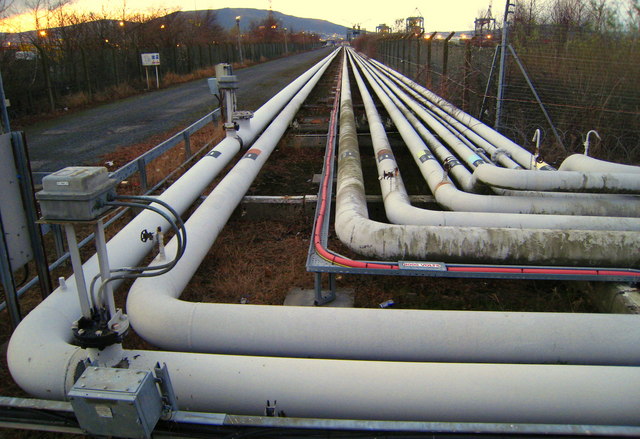
This is how City Gas Distribution (CGD) network is laid down: Regulatory process

1

Arpita Sharma, is  a 4th Year, B.A. LL.B. (Hons.) student, College of Legal Studies, University of Petroleum & Energy Studies, Dehradun. This article was submitted as a part of a blogging contest which may lead to her selection as an iPleaders Energy Law Fellow. The fellow will be selected on the basis on engagement on these posts as well as quality of writing and research. We emphasise on engagement because it shows one’s ability to generate interest in an otherwise arcane subject like energy laws. The selected fellow will receive a paid internship with a boutique energy law firm in Delhi (stipend of INR 7000), an opportunity to be mentored by very senior lawyers  and a free course worth INR 5000 from iPleaders. If you want to participate, write to r[email protected] for instructions.

Petroleum & Natural Gas Regulatory Board (PNGRB) constituted under the PNGRB Act, 2006 is the regulatory body which is regulating the city gas distribution licenses in India. Though, the preamble of the Act lays down the objective of the board to regulate whole of the downstream sector but actually, the board is regulating only the activities related to natural gas in the downstream sector. The reason behind it is that there already exists other legislations like Petroleum Act and Petroleum Rules to regulate the activities related to petroleum and petroleum products but no specific legislation is targeting the gas division.

PNGRB puts down regulations for City Gas Distribution (CGD) with respect to authorization, pipeline tariff, pipeline access and exclusivity. The CGD regulations lay down the decisive factors for authorization of a CGD network in a flanking geographic area for all companies that want to lay, build, operate or expand a CGD network that is at present not authorized by MoPNG earlier to the notification of PNGRB on October 1, 2007.

The authorization process is either initiated by an entity through submission of an EoI i.e. Expression of Interest or by PNGRB suo moto inviting bids. If the entity puts forward an EoI, the PNGRB embark on the first round assessment based on the availability of gas in the area and probable connectivity with the already existing or anticipated pipeline networks. If the PNGRB is pleased with its preliminary assessment, it will instigate a public consultation process for a period of 30 days from the date of submission of Expression of Interest.

The Board after the completion of 30 days concludes up the area to be allotted for the inviting of bids, on the basis of the EoI and the public consultation process. These bids are invited from the entities within the completion of 15 days from the date of conclusion of public consultation process. Separate regulations are laid down for different networks and the eligibility and bidding criteria is specified in the regulations. Now, entities which are interested in laying, build or operate the CGD network have to prove its potential to get the bid in its favour. One of the foremost prerequisite is the financial solidity and competence of the entities to undertake such ventures.

There might be situations when no entity has been selected, in such a case, PNGRB opts for re-bids, and else the authorization is granted within 30 days. Now, this authorization is granted to the entities for a period of 25 years. During this period the entities are supposed to carry on the tasks such as maintenance of pipeline network, online compressors and associated facilities. However, as and when required, it is the responsibility of the entities to technically upgrade and expand the pipeline network. After the completion of this exclusivity period of 25 years, the entities owning the network may apply for re-apply and the period can be extended based on the quality of work and the satisfactory performance of service.

The regulations provided by the PNGRB for the process of transmission and distribution ensure a transparent and fair mechanism and hence, the probability of higher returns on investments from the point of view of the entities. However, there are certain limitations and restrictions on the powers of PNGRB. For instance, PNGRB is regulating the prices only to a certain extent, i.e. it can only regulate the tariff charged for the transportation of city gas but not the prices at which this gas is sold to consumers. Also, yet another limitation is that PNGRB only has the jurisdiction to the disputes between entities and not the consumer.

Undoubtedly, PNGRB has changed the CGD network scenario and has provided with the indispensable thrust for the growth of gas markets in India. With so much of dedication and perfection on the part of PNGRB, it can be very well foreseen that Indian gas market will expand at a very high rapidity and this will be enormously advantageous for the population of India.

Download Now

Everything you want to know about laws which prevent witch hunting in India

1

This article is written by Rimjhim Vaishnavi, a 2nd year student of  National University for Study and Research in Law (NUSRL), Ranchi

INTRODUCTION

The concept of witch hunting has its traces in past, may it be primitive age, medieval age, modern age and now industrial age, the concept of witchcraft and the incidence of witch-hunting has been witnessed. Witch hunting is considered as an infectious disease which is slowly spreading to newer areas. The concept of witch hunting initially aroused in Europe and till date it is being continued with tragic consequences. In early Europe the woman who were against the church were considered as witches, were regarded as one who brings misfortune and thus to protect the society those woman were burnt. Later on women were held responsible for all the calamities let it be famine, flood, and epidemic diseases which caused death of livestock. And the only solution of coming out from this dismay was by killing them who were responsible for it. Further it was seen that incidents which could not be answered was thought to be the act of women who were having supernatural power and gradually this concept was bedded in the society and which still has mark able effect in society.

WITCH-HUNTING IN INDIA

India is a land where the women are treated as symbol or are considered as a token of their community, family, caste and all other diverse divisions. Where people on one hand worship them in name of Goddesses on the other hand kill them considering them witch. This practice of killing is not new for Indian society rather it has its deep roots in history. Initially when the concept of witch was discussed people thought of ugly women with a broom who can fly, who can disappear. Now the concept has changed a bit, witch now denotes women who acquire supernatural powers and are indulged in evil practices which are omen. It is believed that they are associated to negative energy and for their betterment and for enhancing their power they kill innocent members of society. The may be called in different names as ‘Chudail’, ‘Dayan’, Tohni’, etc. but the zest is that they possess supernatural powers which they use to hamper others. Therefore Witch Hunting is a process of killing these people in order to protect the society from being harmed by them. In name of witch hunting people kill innocent women, rape them, to acquire their property and some time it is being used as a tool for vengeance.

Witch hunting is stigmatization of specific groups of people, which mostly contains widowed women, women who are childless, old couples, women of lower caste. Other than this many are targeted due to local politics. It has been witnessed in tribal and rural areas that if wild spread diseases occur or famine occurs which causes death of animals as well as human the allegation develops on the most vulnerable people of the society for witch craft and then violence. Witch hunting is more prevalent in 12 states of India which are situated in like Jharkhand, Bihar, Haryana, West Bengal, Madhya Pradesh, Maharashtra, Gujarat, Orissa, Chhattisgarh, Assam, Rajasthan and U.P. the governments most recent report indicates that about 119 people were killed in the year 2012 in name of witch hunting and around 1,700 women were murdered for witchcraft during 1991-2010. These data shows the recorded cases, there are many instances which have never been recorded as due to the fear.

SOME INSTANCES OF WITCH-HUNTING IN PAST FEW YEARS

Areas which are tribal and rural, where literacy rate is low and where people are guided by blind faith and superstition, these blind faiths invokes them to subject the victims  accused of witchcraft to inhuman atrocities ranging from gang rape, mob lynching, naked parades, blackening of face, shaving of head, beheading and burning alive and coercing to consume human excreta.  It is ironical on one hand our country being a democratic country talks about equality, right to life and liberty but on the other hand it takes away the same rights of others.

As per the report of National Crime Record Bureau (NCRB) 2008, in Jharkhand there were 52 witchcraft related murders, in Haryana around 26 cases of witch-hunting was reported, whereas in Andhra Pradesh and Orissa 23 cases were reported, in Madhya Pradesh 17, in Chhattisgarh 15, in Maharashtra 11 and in West Bengal and Meghalaya 4 and 3 respectively. According to NCRB, government of India the instances of witch- hunting has increased when compared to previous years data.

https://lawsikho.com/course/certificate-criminal-litigation-trial-advocacy
click above

Also as per Human Right Committee report in last 15 years approximately 2,500 women in were killed in name of witch-hunting. Previously it was seen that witch-hunting is only associated to women but in 2013 in Orissa police reported a case where a boy was killed as he was accused of practicing witchcraft. Statistics also display a case in Assam were a girl was raped in name of witch-hunting in 2011.

LEGISLATIVE APPROACH TO WITCH-HUNTING

There is no specific and particular national level legislation that penalises Witch hunting hence the provisions under the Indian Penal Code 1860 can be used as an alternative for the victim. The different sections invoked in such cases are Sec.302 which charge for murder, Sec307 attempt for murder, Sec 323 hurt, Sec 376 which penalises for rape and Sec. 354 which deals with outraging a woman’s modesty.

Apart from the provisions under Indian Penal Code different states have come up with different legislation to tackle the problem of witch hunting.

  • Bihar though being most backward was the first state in India to pass a law against witch hunting in the year 1999, which was named “Prevention of Witch (Dayan) Practices Act.”
  • Jharkhand followed it and established “Anti Witchcraft Act” in 2001 to protect women from inhuman treatment as well to provide victim legal recourse to abuse. Basically Section 3, 4, 5 and 6 of the concerned Act talks about the punishment which will be granted if any one identify someone as witch, tries to cure the witch and any damages caused to them. Whereas Section 7 states the procedure for trial.
  • Chhattisgarh government passed a bill in 2005 named “Chhattisgarh Tonhi Pratama Bill”, which was established to prevent atrocities on women in name of Tonhi.
  • Rajasthan government has also passed a bill “Rajasthan Women (Prevention and Protection from Atrocities)” 2006,which makes it illegal as well punishable for calling any woman as “dayan” or to accuse a woman for practicing witchcraft, which extends to three years of imprisonment and Rs 5000 fine.
  • Till now there is no specific laws enacted in Maharashtra against witch-hunting and the sole reason behind it is opposition from some religious groups who believes that the enacted law might take away their ancient rites Now after the incidents of witch-hunting has increased the state government has planned to pass a bill to eradicate the social ills and human sacrifice.
  • Among the states where witch-hunting is prevalent, some areas of West Bengal like Purulia, Bankura and Birbhum comes under the ambit of those states. Still the state government has failed to establish a separate legislation to tackle it. Hence, there is a need of national legislation which will have a binding effect over all the states in prohibiting it.

All these acts not only prohibit one from directly hampering a woman but also punishes the one who instigates other to harm them, to displace her from the house place and property. At the same time it is punishable if due to torture a woman commits suicide

Apart from these state legislation there are other bodies established to prevent witch-hunting and promote protection to women and to ensure those rights necessary for them to live a peaceful life with dignity.

  • Partner for Law in Development (PLD) 1998, which is a group of legal resource working for social justice and women’s right in India. It considers women’s rights as an integral part of the society and hence protects women’s right from getting violated through families, on basis of sexuality, culture, caste, etc.
  • Other than this many NGO’s are working for preventing and protecting women from the social evil of witch-hunting.one among those is Rural Litigation and Entitlement Kendra, which had also filled a PIL in Supreme Court relating to the abuse of women in name of witch-hunting on behalf of 1000 rural women in Jharkhand who were victimised of witch-hunting.
  • Apart from these NGO’s and some local bodies working against witch hunting, a bill “Prevention and Prohibition of Witch-Hunting” has been drafted by members of Human Rights Defence International, which is still pending. It aims at establishing national legislation relating to witch-hunting.

The Indian government has an obligation to protect women from discrimination on the basis of gender and also provide basic rights and security granted by different international treaties, covenant and laws.

  • The Universal Declaration of Human Rights (UDHR) 1948, which being international law provides protection against any discrimination and promotes equality before law. It also confirms right to life and liberty to every human being.
  • International Covenant on Civil and Political Rights (ICCPR), India associated with it in 1979, which being an international body promotes equality between men and women by ensuring equal rights to men and women in civil as well as political sphere and prohibits others from subsuming anyone’s basic rights. Article 7 explicitly mentions prohibition of cruelty, inhuman or degrading treatment and by associating with the covenant it is obligatory for Indian government to implement these rules.
  • In addition to UDHR and ICCPR, India has signed Convention on the Elimination of All Forms of Discrimination against Women (CEDAW) on 1993 and had agreed to eliminate discrimination and social cruelty against women. In addition to it Sec.5 (a) of the concerned convention explicitly provides that the states should take appropriate measures to modify the social and cultural patterns of conduct of men and women.

Hence not only protection of women is obligatory but also it is obligatory to affirm different actions which have been designed for ensuring the enjoyment of rights in a positive manner.

WHY WITCH HUNTING IS STILL BEING CONTINUED?

  • The question of evidence – In order to punish one for practicing witch hunting, the court needs proof. In case of witch hunting, it is a crime which is socially manifested hence out of either fear or acceptance of the practice people remain silent, which becomes huddle in collecting evidences. Hence due to lack of evidence proper justice is not achieved. Apart from it generally it is seen that the person who commits witch hunting are influential people and due to the fear and threat of those people no speaks against them. As in a case of Tula Devi& Ors. v. State of Jharkhand[1], a case of brought in Jharkhand High Court were the court dismissed the case on the basis that the victim has failed to prove that the accused her of being witch and harmed her and there was lack of eyewitness.

Another reason behind lack of evidence is delay in reporting the incident. Due to the geographical reason and societal pressure very few incidents are reported and that too after a long gap, hence it makes the witness testimony unreliable, which was a ground for not convicting the accused in Madhu Munda v. State of Bihar[2].

  • Absence of National Legislation – As it has been mentioned earlier India does not have any specific national legislation or laws for preventing witch hunting. It is being covered under the sections of Indian Penal Code and according to it punishment are being granted. Therefore there is a need of proper legislation to eradicate this heinous practice from the society.

This failure to establish a specific law relating to witch-hunting violates several core rights provided by different international treaties and conventions, which includes the right to non-discrimination, the right to security, the right to life, right to access national tribunals and the most important right to live a decent life free from cruel and inhuman treatment.

  • Poor implementation of prevalent laws – as mentioned above few states still does not have a separate law to tackle with the societal wrong of witch-hunting, though the rate of witch-hunting is high there. And the states which have enacted laws and not effective as it lacks legal backing due to lack of national legislation. The ineffectiveness of states legislation is witnessed through the increasing incidents of witch-hunting after its implementation over states.

Also due to the quantum of punishment which is granted to the accused is lesser than the gravity of crime they have committed, as the punishment merely extends upto 1 year with a fine of Rs.1000, which lack to set deterrence in society. Hence, this adds to the poor implementation of the existing laws.

CONCLUSION

Till date the practice of witch-hunting is still prevalent in India. The reasons behind it are lack of national legislation, lack of evidence and issuing of report, ineffective implementation of established rules. Hence the problem can be solved by strict enforcement as well as implementation of Anti-witchcraft law which will also prevent witch-hunting practices, also by sensitizing of police and welfare department and establishment of NGO’s who will work for sensitization purpose. As witch hunting are more prevalent in backward areas to raise awareness witchcraft can be added as a subject in school as it is necessary to change the perspective of society and believe over superstition. However it is very difficult to eliminate believes prevalent from centuries in the society but we can try to eliminate by taking above mentioned steps.


LawSikho has created a telegram group for exchanging legal knowledge, referrals and various opportunities. You can click on this link and join:  

https://t.me/joinchat/J_0YrBa4IBSHdpuTfQO_sA

Follow us on Instagram and subscribe to our YouTube channel for more amazing legal content 


REFERENCES:-

  1. Crime in India 2012 Statistics, National Crime Records Bureau. Online at

http://ncrb.nic.in/CD-CII2012/Statistics2012.pdf.

  1. Rakesh k. Singh, “Witch-Hunting: Alive and Kicking”
  2. International Law Memorandum: Jharkhand’s Obligation to Prevent Witch-Hunting.
  3. “India needs national law against witch hunts and other superstitious practices”, 22nd June, 2011, The Telegraph.
  4. Contemporary Practices of Witch-Hunting-a report on Social Trend & the Interface with Law, 2013.

[1] 2006 (3) JCR 222

[2] 2003 (3) JCR 156

Download Now

Can hit and run cases lead to murder or culpable homicide Accusations? Lessons from the Salman Khan order

0

 lamborghini-618356_1280

This article is written by Mayank Labh, a student of NALSAR, Hyderabad.

In India, more than thousand cases every year are of hit and run. As evident from their words, hit and run cases are typically ‘accidents’ caused by careless driving. The intention is not directly to kill, or to commit any act which would lead to the death of a human being, but to drive a motor vehicle on a road.

Under the Indian Penal Code, 1860 a specific provision was inserted to deal with this issue through Section 304A in which death is caused by negligence and prescribes a punishment which may extend to two years and with fine as well.

 Salman Khan case, however, is interesting in that a hit-and-run case led to charges for culpable homicide (the equivalent of manslaughter), which prescribes a much more serious punishment.

Does the court have the power to make the prosecution charges more severe?

Under which circumstances can motor vehicle accidents be treated as culpable homicide cases? Does the Salman Khan case provide a test for that?

Are there circumstances under which hit-and-run case be treated as a murder (instead of merely culpable homicide)?

One such case is of Hit and Run case of Salman Khan in which he allegedly killed one person and injured four pavement dwellers. Initially he was charged under Section 279[1] of I.P.C., 304A but later he was also charged under Section 304 Part II of IPC.[2] Even though the bare act has not divided the Section 304 into two parts but it has been the legal practice to divide it into two. The basic difference between the two is that the first part requires intention while other does not.

The moot question is whether the charge of culpable homicide not amounting to murder can be applied to negligent motor-vehicle “accidents”.

It is well settled by the Indian court that the charge of culpable homicide can be applied. A Supreme Court Bench comprising Justices R M Lodha and Jagdish Singh Khehar ruled that “a person responsible for a reckless or rash or negligent act that causes death which he had knowledge as a reasonable man that such act was dangerous enough to lead to some untoward thing and the death was likely to be caused, may be attributed with the knowledge of the consequence and may be fastened with culpability of homicide not amounting to murder and punishable under Section 304 Part II IPC”.

So, in simple terms, if you are driving the car in a negligent way and you are aware that it may cause death to someone then you can be charged under culpable homicide not amounting to murder.

[1] Rash driving or riding on a public way.—Whoever drives any vehicle, or rides, on any public way in a manner so rash or negligent as to endanger human life, or to be likely to cause hurt or injury to any other person, shall be punished with im­prisonment of either description for a term which may extend to six months, or with fine which may extend to one thousand rupees, or with both.

[2] Whoever commits culpable homicide not amounting to murder shall be punished with imprisonment of either description for a term which may extend to ten years, or with fine, or with both, if the act is done with the knowledge that it is likely to cause death ,but without any intention to cause death, or to cause such bodily injury as is likely to cause death.(Part ( is quite the same with the intention part lacking.)

Download Now

Procedure to alter Memorandum of Association and Article of Association of a Company

3
MoA

 This article is written by Saman Siddiqui, a student of DSNLU, Vizag. He explains in detail about the procedure to alter memorandum of association and article of association of a company.

Download Now

How to take licence for playing music in restaurant or cafe?

0

restaurant-449952_1280

This article is written by Mayank Labh, a student of NALSAR, Hyderabad.

When you get in a restaurant, you often listen to the music being played in a background. Sometimes, there are beautiful classical songs of Beatles, The Doors and sometimes you have to bear the songs of Rapper Yo Yo Honey Singh(Argh!). But the music is always there and it seems like there is a connection between restaurant lovers and music lovers. Be that as it may, the point is have you ever wondered that restaurant owners need a licence to play such music otherwise they would be liable to pay hefty damages? Many people think that if they buy a Music CD then they have unfettered rights to play it at any place. However, it is not so simple. It gives them only the right to listen to it in private and not in public. So, how to get licence to play such music in public? Which is the entity responsible for such issuance of licence?

Copyright Society

A sound recording generally comprises various rights. It is necessary to obtain the licences from each and every right owner in the sound recording. This would, among other thing, include the producer of the sound recording, the lyricist who wrote the lyrics, and the musician who composed the music. Now, for a customer, it would be a very cumbersome task to procure the licence from each and every one. So, to facilitate such licences to the consumer there is a concept of Copyright Society.

The idea of copyright society is that the owners join a national society which because of its organisational facilities and strengths gives licences to the customers and keep better vigil over the uses of the works of owners. The advantage of such copyright is two-fold:

  1. i) It helps customers to get the licence of every field at one place without much difficulty.
  2. ii) It helps the owners of the respective work that their work is in better vigilance.

A Copyright Society has to get registered under Section 33(3) of Copyright Act, India to perform its duties. It is for the period of 10 years and after it has to be renewed. The registration allows and entitles the society to issue licence to the users of its member’s recordings under Section 30 of Copyright Act and to charge and collect licence fees from the users of sound recordings. According to the judgement of division bench of Delhi High court, such copyright society does not only have the power to administer license and collect but also to prosecute someone who is infringing the copyright of its members.

There is a number of Copyright Societies.  But to play a sound-recorded music in a restaurant or café, you need to register with PPL(Phonographic Performance Limited (PPL) for it exclusively controls public performance rights in respect of music which is sound-recorded as the music is. For example, if you are playing the songs of Ranjhana from a CD then you should take the licence from PPL. On the other hand, if only musical scores and lyrics are used, like in live concerts, then you have to take the licence of IPRS(Indian Performing Rights Society).

Punishment

If you don’t do that you are committing a cognizable and non-bailable offence with huge penalties which can extend up to 3 years and 2 lakhs respectively under Section 51 and Section 63 of Copyright Act.

How to get the licence

What you need to do is you have to make a application in a prescribed format to PPL or IPRS as the case may be.

You have to pay a fee which is published in their tariff scheme which they have to publish according to Copyright Act of India. If you have any problem with the tariff scheme you are welcome to complain against such scheme to the Corporate Board and if the Board  find any problem it will take suitable steps.


Download Now

When and How a Slogan can be registered as a Trademark in India?

1

This article is written  by Mayank Labh, a student of NALSAR Hyderabad.

Trademark is defined under section 2(zb) of Trademark Act which is “mark capable of being represented graphically and which is capable of distinguishing the goods or services of one person from those of others and may include shape of goods, their packaging and combination of colours”. A mark is defined under section 2(m) which  defines it as something which includes a device, brand, heading, label, ticket, name, signature, word, letter, numeral, shape of goods, packaging or combination of colours or any combination thereof.

 It is a “legally binding dibs” that means that you are not going to use such name, device etc. if it has been registered as a trademark unless you are fine with paying huge amount of damages to the owner of the trademark.

It is a matter of great legal interest whether slogans can be registered as Trademark. By the way, Slogans are the expressions used as marketing and communicating tool to boost the sale of products. One of the examples of slogan is “Once you Pop, You cannot stop”.(No, it’s not of a condom as you might be guessing but it’s a registered trademark of Pringles, a snack,)

When can a slogan be registered as Trademark

As it is clear what is a trademark and slogan it becomes important to see whether slogans can be within the meaning of Section 2(m) and 2 (zb) of Trademark Act which defines Trademark.

The answer is definitely yes but with some qualifications. Yes, because it is capable of representing graphically and distinguishing the goods of one from another and it creates a connection with the person who is selling such goods with the slogan. So, for example, “I am loving it” (Again this is not a slogan of condom company) make you think about McDonalds company and it makes McDonalds product distinguished from another.

However, there are certain qualifications. Under Section 9(1) of Trademarks Act which lays down ground for refusal of registration which is, in nutshell, is that it should be distinctive in nature and not distinctive.

In a landmark case Anchor Health and Beauty Care Pvt Ltd. v. P&G Manufacturing Co Ltd the distinction between  distinctive words and descriptive marks was elaborated. It said that descriptive words/marks  are which communicate only about the products feature, intended purposes, kind, quality but distinctive words are such that which communicate the particular/peculiar quality/qualities or features of product of one and which may not exist or do not exist in the same product being provided by others. So, if anything is unique to the goods of one and which may not be present in the same goods and services provided by another can be registered under the Trademark Act.

The reason being that such words/mark highlight and communicate to the consumer the difference from the similar goods or services of another available in the market.

In a foreign case, Paris Hilton won a huge lawsuit over Hallmark for infringing on her trademarked catchphrase: “That’s Hot!” she sued Hallmark for using the expression and she won for it was considered as unique and distinctive to her reality show. That’s incredibly hot win by a hot actress. Who says blondes are dumb?

How to register a trademark?

Documents required

  1. a) A soft copy of the logo in JPEG format
  2. b) TM 48 (form of authorization).
  3. c) Date of first use of the mark.
  4. d) Name and address of the proprietor of the mark
  5. e) Required fee

What is the process

You have to make an application to the Trade-mark Registry with a prescribed fee of Rs. 2500.(Not a big amount for you can gain a lot by filing even frivolous lawsuits claiming your trademark rights!)

You need to see if there is already a trademark of such words/marks.

After you are done with the registration, you will be issued an official receipt with a TM number.

After this an examination report has to be filed within three months after the application. The purpose of it is to see whether it is conflicting with any of the registered trademarks or not.

As you clear off the objections, your application is then published in Indian Trade Marks Journal with an endorsement that it has been accepted.

Once it is published and if no objection comes within 3 months of publishing then your application is completed and you will enjoy your trademark rights for 10 long years.


Download Now
logo
FREE & ONLINE 3-Day Bootcamp (LIVE only) on

How Can Experienced Professionals Become Independent Directors

calender
28th, 29th Mar, 2026, 2 - 5pm (IST) &
30th Mar, 2026, 7 - 10pm (IST).
Bootcamp starting in
Days
HRS
MIN
SEC
Abhyuday AgarwalCOO & CO-Founder, LawSikho

Register now

Abhyuday AgarwalCOO & CO-Founder, LawSikho