Download Now
Home Blog Page 1809

Product Liability and its Provisions under Consumer Protection Law

0

headlamp-2940_1280

This article is written by Shruti Pandey, a student of Campus Law Center, Delhi University.

Defective and dangerous articles and products are the cause of thousands of injuries. Consumers are cheated and agitated by being provided with inferior or lesser quality goods than actually demanded or are charged with excess price. The manufacturers and service providers try to deceive the consumer in every possible way. Therefore, the legal rules concerning the liability of manufacturers and service providers and the course of action against them should be known.

What is Product Liability?

In India, Product liability has not been defined in any statute. Product liability is the ability of all the parties along the chain of manufacturing process of any product for damage caused by that product. This includes the manufacturer of component parts (at the top of the chain), an assembling manufacturer, the wholesaler, and the retail store owner (at the bottom of the chain). Products having inherent defects that cause harm to a consumer of the product, or someone to whom the product was loaned, given, etc., are the subjects of products liability suits.

While products are generally thought of as tangible personal property, product liability has stretched that definition to include intangibles (gas), naturals (pets), real estate (house), and writings (navigational charts).  In India, the Supreme Court of India itself has defined the term ‘product’ in Collector of Central Excise Duty v. Protein Products of India Ltd., as “anything produced or obtained as a result of some operation or work.” A product is the item offered for sale. A product can either be a service or an item.

In India, there is no specific statute which governs the product liability claims. However, the product liability claims could be ascertained under following Indian Statutes:

  1. The Consumer Protection Act, 1986
  2. The Sales of Goods Act, 1930
  3. Specific statutes pertaining to specific goods

Provisions under the Consumer Protection Act, 1986

The Consumer Protection Act has laws surrounding a manufacturer’s and supplier’s liability for defective products. Subject to some exceptions, the Act holds any producer or importer, distributor or retailer of any goods liable for any harm caused wholly or partly as a consequence of:

  • supplying any unsafe goods;
  • a product failure, defect or hazard in any goods; or
  • inadequate instructions or warnings provided to a consumer pertaining to any hazard associated with the use of the goods,

Irrespective of whether such harm resulted from any negligence on the part of the producer, importer, distributor or a retailer.
For the purpose of this Act, a supplier of services who applies, supplies, installs or provides access to any goods, will be regarded as a supplier of those goods to a consumer. If more than one person is liable to a consumer, their liability is joint and several.

Are there any exceptions to the liabilities of a manufacturer or supplier?

There are certain exceptions to the strict liability imposed under this act. Some of these exceptions include the situations where:

  • The characteristic, defect, failure or hazard did not exist in the goods at the time it was supplied to another person who is alleged to be liable;
  • The harm was wholly attributable to compliance by the person blamed with instructions provided by the person who supplied the goods to that person;
  • It is unreasonable to expect the distributor or retailer to have discovered the unsafe product characteristic, failure, defect or hazard, having regard to that person’s role in marketing the goods to consumers; or
  • The claim is brought after the expiry of certain

Consumers may claim under this Act for harm which includes death, injury or illness to any natural person, any loss of or physical damage to any property, and any contemplated economic loss that results from that harm.

The implications of the Consumer Protection Act for entities forming part of the manufacturing process or the supply chain appear to be quite severe. Furthermore, a supplier may not deprive a consumer of any right in terms of the Act.

Who can file a Consumer Suit?

The Consumer Protection Act provides that a consumer itself; any voluntary organisation registered under The Companies Act, 1956 or under any other law for the time being in force; the Central government or State government or one or more consumers (where there are numerous consumers having same interest) can file a complaint under the Act.

Besides them, any person who is a beneficiary of the goods or services, legal representative or legal heir of the deceased consumer, husband or relative of the consumer can also file a complaint.

Can the complaint be filed without hiring the services of an Advocate or lawyer?

Yes. The consumer protection Act has provided a very simple procedure to file the complaint that even a person from non-legal background can file the complaint on its own. There is a nominal fee to be paid in form of a crossed demand draft drawn on a nationalized bank or through a crossed Indian Postal Order in Favour of the Registrar of the State Commission & payable where it is situated.  But the complaint has to be filed within two years from the day the deficiency in service or defect in goods has arisen/detected, however this is not a strict rule, in certain circumstances if you are able to satisfy the court the reasonability in the delay causing the case can still be taken up.

How to file a consumer suit?

In cases where the value of goods and services involved is less than Rs. 20 Lakhs in value, the complaint has to be filed with the District Forum constituted in the specified districts of a State. In cases where the value of goods and services involved is more than Rs. 20 Lakhs in value but does not exceed Rs 1 Crore, the complaint has to be filed with the State Commission constituted in the capital cities of the different states and where the value of goods and services involved is more than 1 Crore then the complaint is to be filed with the National Commission which has been constituted in New Delhi.

To file a complaint, firstly, the jurisdiction of the complaint is determined by the facts of the case and where the cause of action arises. The area in which the opposite party resides or carries on his work or business will also have to be taken into consideration by you. If you file a complaint against a service provider for a sum below 20 Lakhs, the District Forum in the jurisdiction where the cause of action arose is to be approached. If the matter is above 20 Lakhs but below 1 Crore then complaint has to be filed with the State Commission within which State the trader/ service provider/ manufacturer resides or works in.

A prescribed fee along with the complaint before the District Forum, State Commission & the National Commission as the case may be, has to be paid. The complaint should state the facts necessary to establish a cause of action. The name, description and address of the complainant and the name, description, address of the opposite party/parties against whom relief is claimed has to be mentioned. Also, put on record the copy of the bill of the goods bought, warranty and guarantee documents and also a copy of the written complaint and notice made to the trader requesting him to rectify the product. Complaint must clearly state as to what relief is sought against the opposite party. An affidavit along with the complaint that facts stated in the complaint are true and correct.

Online Complaint Procedure

In case any person has consumer grievances against a company or service provider an online complaint can be filed at http://www.nationalconsumerhelpline.in/ComplaintFile.aspx

Download Now

Abhilash Acharya – Social entrepreneur and freelance business consultant, Ex-IIM, on how he used the NUJS business law diploma course

0

IMG-20150608-WA0002

Let’s say you are an accomplished professional having degrees from top business schools and other professional qualifications. Maybe you have already started to chart out a fantastic career and taking up leadership roles in professional life. How can the NUJS business law diploma course help you?

A number of IIT/IIM grads who were already doing great in their professional career have taken up this course in order to master business law and regulatory skills in the last few years. Their stories and how they used these skills are inspiring to say the least.

We have not done justice in terms of sharing these success stories in the past. We have now decided to put these stories out in the universe – so that they continue to inspire others to join this extraordinary program and our dream of empowering the doers, dreamers and entrepreneurs through legal knowledge and skills become a reality.

Let us introduce you to Abhilash Acharya, a versatile professional who started his career as an engineer, then veering towards fashion and finally finding his place in IIM Ranchi. He is active as a consultant in the social entrepreneurship and governance space. He has also taken up important political positions in a national political party and continues to engage with cultural preservation projects and a number of events aimed at promoting Jharkhand as a tourist and business destination.

Abhilash signed up for the course in 2012 and finished it in 2013 while he was doing his PhD at IIM Ranchi. We recently caught up with him to ask if he has been able to use what he learned in the course. What he told us was astonishing. He has been able to use both the qualification (as he received a diploma from NUJS, one of India’s top law schools) as well as the knowledge to his benefit as he participates in new projects and sow seeds of future ventures.

Let’s hear it from Abhilash himself.

I wanted to become a lawyer at one point of time in life and that never happened. I have studied across disciplines and hold degrees in Engineering, Fashion and Management from premier (yes, triple-lettered) institutes and had other serious social and political engagements beyond academics. However, I still nurture my never-lost dream of becoming a filmmaker someday!! It sounds crazy? Well, I’ll be happier if it does 😀

Things do happen in some way, down the line, when you remain patient and have genuine objectives — at times, things even happen as search-ending accidents!!

Well, iPleaders and this course happened to me in a similar way. I was looking forward to take up a programme in law when suddenly I came across a notification informing of the Diploma in Entrepreneurship Administration & Business Laws. As usual, I Googled it up and discovered that this is exactly what I was looking for!! Heavy legal theory that has little practical implications was entirely done away with and as such, the readings became friendlier — the focus remained on learning to get things done as opposed to rote-learning.

This course has been quite a journey for me as at the end of it all, I could turn towards entrepreneurship in a big way — I have a number of projects lined up, of varied nature. Unfortunately, I can’t give away too many details at the moment.

At present, I am working towards skilling the youth for a better nation – and contribute in the areas of sports (especially kabadi & archery), tourism, hospitality, education (including digital literacy) and take a step further in preserving cultural heritage and promoting ethical practices in businesses, services & elsewhere in various capacities. Besides, I also advise political aspirants & even veterans on strategy, community-building, policy-making and frameworks of standardization to carry-out/implement meaningful projects. In the pharma & mining sectors, a couple of growing organizations had communicated their expansion plans on which I provided specific guidelines to undertake the same. All of that has been both inspiring and enriching – builds confidence and makes one a capable, independent individual.

In the future, I would continue to be an entrepreneur – social & otherwise, and try to fill in where the nation would need me the most. Err, does my dream of becoming a filmmaker go into oblivion?! NO — I’m already halfway into the process and also into managing events and promoting social causes (through mini-documentaries or even without those). Perhaps dabbling in film-making won’t be a bad idea at all – specifically the ones that would showcase women empowerment and child rights (such subjects can be both sensitive & entertaining at the same time, just the proper recipe has to be in place)!!

Was it easy for me to pursue this course? Honestly, I have been running too many schedules at my end and it more often than not became really difficult for me to go through the modules over a lengthy stretch — thankfully, the team was generous enough to put the contents in our smartphones via a pocket-friendly version of the same course (and I managed to go through those on the move 🙂 ) Basic tutorials on legal strategy, corporate governance, sources of finance, taxation were the most useful. Also, the nature of start-ups – the way one has to proceed considering future timelines to make it big!!

I was sceptic at some point if I will be able to put into use all the hi-fi skills I was being taught. To my surprise, opportunities sprung up as I learned new things. Any advisory role would demand some exposure to fundamental legal knowledge too. The nitty-gritties of setting up a trust, NGO and LLP were immensely valuable. The relevant modules came in handy whenever a step had to be taken.

No matter who you are, where you are or what you do — in case you seriously wish to make it big in life as an independent brand, then do follow your dreams, and this course is something that would simply catalyze the process and help you in creating the best path for yourself. Being armed with a diploma in law from a prestigious national law school in itself speaks volumes – it gives the signal to the people working with you that your understanding of legal and regulatory situation should be and can be taken seriously. Given the kind of work I’m into, it does help a lot indeed, especially as one climbs the stairs of seniority and responsibility. The early headstart in legal strategy making and insights into dispute resolution is also a superb advantage.

Also, joining the course has given me a new fraternity. It indeed feels great to have been associated with iPleaders…and I would be glad to continue with this relationship. I continue to get professional support from them. You can always reach out to the alumni or iPleaders founders themselves and ask for a favour.

I would strongly recommend this course to people (age no bar, beyond fulfilling the eligibility criteria) who are interested in bringing out something new (in any form) which shall be innovative and meaningful in the long run, and those who are interested in organization building – as the course helps in minimizing the number of legal and strategic hurdles that one may face after taking the plunge. You will be much more educated and smart with respect to a whole range of things once you even go through the course even partially.

This is Abhilash, signing off — until we meet again!! Maybe someday I’ll see you at your nearest theater 🙂

Good luck and best wishes — may all our endeavours see the bright light of the day.

Download Now

What to do when the Police shows up at your party?

4

This article is written by Shome Bhattacharjee,  a student of Campus Law Center, Delhi University.

Today many young students and professionals move away from their home towns to a bigger city in search of work or education. If you happen to work or study in a big city, you may have experienced or have heard of a friend being harassed by policemen. It does happen that a party is gatecrashed by police. Incidents of abuse are not uncommon in these situations. There are a few things you need to know in order to deal with these situations.

Here is a case to show you what I am talking about:

Imagine that you throw a party make new friends in the new city. There is some alcohol flowing and music pumping to get everyone to dance and have a great time. Its 10:30 PM on a Saturday night and everyone is having a blast and its at about this time that the cops show up, force their way inside the apartment and find many bottles of alcohol. The cops then proceed to rip out the cables of your expensive new music system because they somehow seem incapable of understanding the concept of remote controls.

Common fears while interacting with cops

Here are some things that might be going on in your mind-

  1. None of your guests wants to go to a jail or to have a criminal case pending against them. What would they tell their parents? How would they justify all the loud music and the drinking to them? This means that contacting their family for help is out of the question.
  1. Let’s say the inspector threatens to call the press and show the media how these rich brats blow away their parent’s money. That starts off another scenarios like
  • What if the article also slanders the name of their college and the college authorities decide to suspend or even rusticate them?
  • What would the parents say?
  • The idea of such a scandal is particularly disturbing for your female guests, who have been in the city for less than a month. This would ruin their reputation in college as everyone would brand her as a “Party Girl” which may be a euphemism for slut.
  1. The Inspector tells these scared young party goers that since it’s a Saturday, and the local court is shut because of some festival, it is going to be two weeks before they can be produced before a court and they will have to stay in jail till then. Your mind unleashes its creativity and here are the pictures it comes up with, each darker than the last one. Basically you see yourself getting the Shiney Ahuja treatment in prison.
  2. What if there was something “other” than just alcohol involved in the party? If you did smoke up, every one of your guests knows that this would probably get them in trouble.

Curiously enough, even though it has been almost an hour, these cops have made no move to actually arrest anyone. The suspense and the waiting is now unbearable and everyone just wants the night to end. You know that these cops will let you all go, if you pay them off. The questions that you are probably asking yourself at this stage ar

  1. Who makes the offer?
  2. How much?
  3. Will he be jailed for trying to bribe a cop?

 In all the commotion, a friend of yours comes up to you and tells you that he can’t find his brand new phone. He says that he had plugged in the phone for charging in the bed room, before the cops came and that was the last time anyone saw it You remember that the police officers forced you to show them every inch of your house, including your bedroom. It was only you and two or three cops in the room for a few minutes. After their “investigation” you locked the room again. Could it really be that these policemen are corrupt enough to steal from your house? You don’t want to think about it, but there is no other alternative, is there?

Here are the issues involved–

  1. Can the police arrest anyone in this situation?
  2. Can they enter your home without your permission?
  3. If you are arrested, then how long will you have to stay in jail?
  4. When can you call a lawyer?
  5. Can the police actually get this incident published in a newspaper?
  6. What can you do about the missing phone?
  7. How much trouble are you in because of the alcohol? What if you also had some recreational drugs at your party?
  8. Should you just bribe them and be done with it?

Here are the Answers:

  1. The short version- no.

The long version- There are some offences which the police can arrest you for without a Warrant. These offences tend to be serious in nature (like murder or theft). For other offences, i.e. those which are less serious, the police cannot arrest you without a warrant. Offences where the police can arrest without an arrest warrant are called cognizable offences.  The offence that you may have committed is that of “public nuisance”. Sections 268 and 290 of the IPC are the relevant provisions for this offence. Sec 268 remains silent on the issue of whether it is a cognizable offence, but Sec 290 makes it clear that it is not.

In order to arrest, the police will need an arrest warrant. What you need to know here is the offence which you are being accused of.

What you absolutely must do here

Ask the policemen if you are under arrest. If they say that you are, then you can take legal action against them. Even contacting the area SP can result in a departmental action against these cops for infringing on your right to freedom illegally.

If they say that you are not under arrest, you have no obligation to go with them. These are the most common example of the cops trying to trick you into coming with them.

  1. They may try to convince you to ‘cooperate’ with the investigation.
  2. They may try to get you to a police station for “questioning”.
  3. They may “just want to have a chat”.

The rule of thumb here is do what your mom told you- Never get into a stranger’s car, even if they are policemen.  Cooperating with the investigation is a common excuse. Cooperation, however, does NOT mean that you have to go with them to the station. There is no such legal duty on you, in connection with public nuisance. For non-cognizable offences you may be required to report to the station only if a magistrate orders it. For cognizable offences,  like a

murder or rape or another serious crime, it will be different).

You do not have to go with them. This is important because once you are in the station, you are in their environment, and they have more leverage on you.

Remember the fact that you always have a right to ask why you are being arrested.

  1. No, the police cannot enter your home without a search warrant for this matter. You can refuse them entry to the house.
  1. In case you are arrested (for a cognizable offence and without a warrant) the police must present you to the concerned are magistrate within 24 hours.

In the present case, the magistrate will order the police to free you as they had no authority to detain you in any way, since public nuisance is a non-cognizable offence.

  1. You have the right to call your friend/ relative/ lawyer within 24 hours. For all practical purposes, you need to insist on this right, as the police officers in question, probably would not bother to let you know about this in most cases.

You also have the right to ask for a medical examination when you are arrested. This will ensure that the police will have to answer for unexplained injuries or bruises on your body.

  1. Yes, there is no specific law barring the police from getting a bunch of reporters. This is, however, a clear case of police misconduct and you can file a complaint against them with the SP. You have the option of initiating legal proceedings against them for the offence of Defamation. You can also use this as an example of how these police officers tried to (on the face of it) scare you into bribing them.

This attempt to get you to pay them off commit an offence under the Sec 7, Prevention of Corruption Act and Sec 420 Indian Penal Code.

If the SP does not take any action, then you can approach a Magistrate to compel proceedings to be initiated.

  1. The matter of missing property is very tricky. Legally speaking, even if you can establish the misconduct of the police, and that they were trying to get you to bribe them, you don’t have much of a case. Your case, in the absence of any eye witness is circumstantial at best. In this situation, a complaint to the SP can be made, and a complaint can be filed for theft with either the area Magistrate or the Officer in Charge of the Police Station.
  1. Drinking alcohol, even if you are underage, is not an offence. Selling alcohol to underage persons is. This limit varies from state to state. Thus, you are in the clear. As far as other substances are concerned, it depends on the substance itself and depends from case to case. There are provisions in the Criminal Procedure Code which allow policemen to act on their own to prevent a crime or catch criminals red handed. The prerequisites for such action are –
  • The officer must either they receive some information or have reason to believe that a cognizable (i.e., a serious crime) is about to be committed.
  • There is no scope to inform the magistrate first and get a search warrant from him, due to the urgency of the situation. If they do not act immediately, the criminals will escape/ the crime in question would have been committed.
  • After the criminals are apprehended or the crime is prevented/intercepted, the police officers must intimate the concerned magistrate as soon as possible.

Thus, in case of any drug use in a party, the police officials can claim that they received information about a drug They can also claim that they didn’t have any time to get a search warrant or arrest warrant. Now, what you need to keep in mind is the first prerequisite- a cognizable offence. Thus, the kind of drug and the quantity of drugs are going to be relevant.

Here is what a government website has to say-

“Possession of drugs is itself an offence under the NDPS Act(Narcotic Drugs and Psychotropic Substances Act, 1985) as much as sale, purchase, production, etc. The punishment does not depend on whether the possession or purchase is for personal use or for resale but depends on the quantity of the drug.

Consumption of drugs is an offence under section 27 of the NDPS Act and is punishable with imprisonment of up to one year (in case of some drugs) or six months (in case of all other drugs).”

So, if the type and amount of the drug in question is punishable with imprisonment for 6 months, then the offence is not a cognizable one, thus the search is void. In case you have just one joint in your party, you are not at risk of being jailed, since the search and seizure itself was illegal. This is not true if there is an independent witness which the police produces, or if one of your guests becomes a witness against you

Here is some good news about the NDPS Act

Even with the allegation of drug use, section 58 of the NDPS Act () makes arbitrary and baseless search and seizure by police officers punishable with imprisonment of up to 2 years. So if the cops make the argument about a tip off relating to drugs, you have another weapon against the,Thankfully, this provision makes sure that blatant abuse of power by the guardians of our society are kept in check.In some casesthese corrupt policemen have been known to carry away bottles of very expensive alcohol and other property. Most people don’t object due to a combination of ignorance and fear. Now you know what you can do.

Your rights against seizure of your property

Anything that is taken from your flat as “evidence” must be recorded in writing by the senior officer and be handed to you for your signature. Any evidence which is not collected in this manner by a search is about as useful to the prosecution as a fridge is to an Eskimo.

If they can submit a sample of the evidence in some other way (for example, finding suspicious substances outside the flat, where it seems that the substance was thrown from the flat) it is possible that the court will admit it. This is because these things were not in your premises when they were obtained by the police. There still needs to be something which links the accused (you) to these “samples”, independent of the police search for a conviction. The testimony of an eyewitness that corroborates the “sample” in question being thrown from the balcony may be such an independent link.

  1. That is up to you, although I hope that you do not. You could attempt to record the entire transaction on your phone and use it against these cops.

Practical solutions

In the present case, what you need to do is remain calm and polite, while letting the policemen know that you know what your rights are and that their game will not work.  Here are a few things that need to be remembered.

  1. Ensure that the policemen are aware of the fact that you know about the limits on their powers. This is especially important for arrests and searches without warrants.
  2. Any “evidence” that they collect is going to be inadmissible, since it was obtained without a search warrant.
  3. I would ensure that the entire thing is being recorded by as many people as possible on their phones (in secret). This recording needs to be uploaded to either an online storage service (like Google drive and Dropbox) or a pen drive. This is important because the cops will, if they come to know if the recording, try to seize/break the phones or delete the files. Remember to keep backups of these videos, even if you are submitting a copy to the SP or a Judicial Officer.
  4. Show absolutely no fear.
  5. Maintain some physical distance as it will help to keep you outside striking distance and also to keep things from escalating to a physical confrontation.
  6. As far as the missing items is concerned, assuming that you have ensured that you have greater leverage in this situation, and that the cops know it as well, and that the risk of doing this seems acceptable to you in light of the circumstances-
    1. Hint to the second highest ranking (NOT the senior most) officer in group. The reason for not talking directly to the senior is that even if he wants to hand back the property, he will not be able to do so if it means submission to you in front of his subordinates.
    2. Suggest that it would be convenient if you could find the phone, say with the watchman of the society or at a spot that you point out to them. Mention, as politely as possible, that if you don’t find a phone, you will have to report everything to the concerned authorities (the Anti-Corruption Bureau, the SP, Commissioner of Police or a Magistrate). Even if the allegation of the theft of the phone does not stick, the cops know that they will be put on the spot because of all of the other misconducts. Once you are done with explaining your point to the cops, take all of your friends and get back inside the flat. Make sure that no one is left behind. Once you know that the cops are gone, check the spot you had indicated to them earlier. If you are lucky, you just might get the phone back.
Download Now

Sexual harassment in India’s educational institutions and how to stop it

0
Is sexual harassment in Universities and colleges disconnected incidents or a widespread systemic problem?
Are sexual harassment incidents in Universities and colleges disconnected incidents or symptom of a widespread systemic problem?

How long can you keep something like this under the wraps in the age of internet?

Sexual harassment in educational institutions, based on newspaper reports, is an everyday affair. Students may get sexually harassed by other students, members of non-teaching staff or teachers. Researchers can be harassed by their guides and teachers are as often harassed by other teachers or others in high places. The usual power structures and dynamics of sexual harassment that are seen at all other workplaces also manifest themselves in educational institutions.

However, these unique organizations are vulnerable at a whole different level. Colleges and educational institutes are not just places where classes take place. They are also symbols of pride, association and nostalgia. One’s fortune in career is often linked to the prestige of the places where they were educated. There is a constant influx of thousands of people, and people are leaving it every year. As a result, demographics change drastically every year in these institutions. They have their own cultures, decades old rituals and campus environments shaped by the individuals studying there at any point of time. It is way easier to stop or even talk about sexual harassment in a corporate campus as opposed to a college campus.

Recent news of sexual harassment in educational institutions

My alma mater was rocked by allegations of sexual harassments – that of a member of the non-teaching staff by another. Then two students alleged that they were sexually harassed by sitting Supreme Court judgments in course of their internships which was arranged by the University.

2014 was marked by Jadavpur University students protesting and eventually going on a hunger strike over alleged sexual harassment of a student by other students, which they claimed the Vice Chancellor was trying to hush up. The VC had to eventually resign in face of hunger strike by students.

Over 71% of girl students of Punjab University who participated in a survey said that they have faced sexual harassment, according to a report on ToI on March 5, 2015.

An unofficial safety audit reported in Times of India on March 8 found that students don’t consider Delhi University’s North Campus a very safe place.

A professor of Sambalpur University was arrested on March 9 for allegedly sexually harassing and assaulting a PhD scholar inside the law department.

These stories continue to hit the mainstream media even as the highly publicized case of R K Pachauri, Director General of The Energy and Resources Institute (TERI), who was accused of sexually harassing an intern, is yet to phase out of the media. This happened pretty much within an educational institution, no less than one as prestigious as TERI.

In another shocking incident last month, the executive council of Delhi University sacked professor Sapna Jain, who alleged sexual harassment by vice-chancellor Dinesh Singh, ex-registrar Alka Sharma and her colleagues in the mathematics department.

I could go on and on. However, all it would take is a Google search for anyone to find out that sexual harassment is very much a burning issue all over India in all sorts of educational institutes, in cities, villages and towns.

Where are the academicians and where is the debate?

Surprisingly, rampant sexual harassment in our campuses is not a matter being debated as much as one would think it should be or might be. There is almost no one talking about it in the media or even the world of academics – which I find to be shocking to say the least. While the academics and social activists have gone on to beat war drums on the establishment on the issue of gender justice, safety of women and even sexual harassment over the last decade, and especially the last few years – the zeal seems to be missing when it comes to freeing our campuses from sexual harassment. None of the high profile sexual harassment cases or the passing of a sexual harassment law that equally applies to educational institutions have made a difference.

Number of people willing to go public or report a sexual harassment case they face in college or University may have increased, but we can only speculate on all those who will never report sexual harassment for all sorts of reasons.

Yes, people do talk for a few days when the news cycle picks up a story and makes a hero or villain out of a person. However, so far it seems the debate around sexual harassment in our places of education has been limited to discussing whether a person is guilty or not, and whether he or she should be sacked, suspended or sent to jail. The quality of debate has been terrible to say the least, and no wonder that there has been little institutional reforms or creativity to solve an issue that affect such a large number of stakeholders.

Well, why is there hardly any debate about the sexual harassment that take place every day in India’s educational institutes – schools, colleges and Universities? Why do we tolerate absence of gender justice in the places where we get educated? Why are our otherwise vocal academicians not kicking up a storm over this issue? Whereas foreign Universities are going to great lengths to counter the “lad culture” and introducing systemic changes, Indian Universities are behaving like ostriches – trying to sweep things under the carpet.

Why isn’t stopping sexual harassment a top priority in our campuses? And why aren’t even the students, who are probably the largest affected group, not talking about the problem as much as, let’s say the Jadavpur University students did? Why are the women on Indian campuses keeping quiet, if they do feel unsafe everyday – like those who participated in the audit of safety of women in the Delhi University North Campus?

I don’t have all the answers to this question and I will not pretend that I have done all the research needed to answer it. I, however, wish that you will consider a few things that maybe coming in the way of addressing sexual harassment in a fitting way though a very large number of students continue to suffer (consider the 71% from Punjab University survey). It is important we look at the system rather than writing off such widespread sexual harassment as isolated problems created by a handful of bad guys.

Repercussions on career after alleging sexual harassment can be serious

As can be seen from the DU case, where the executive council sacked a professor who complained of sexual harassment against the Vice Chancellor even while her complaint of pending investigation and hearing, consequences for complaining can be serious. Even the student from National University of Juridical Sciences who complained against Justice Ganguly, had mentioned in her blogpost that she could find courage to indict the very powerful judge because she was employed with an NGO that was supportive of her stance. Not every victim of sexual harassment is equally fortunate. They often have to consider what impact a public showdown or a complaint may have on their career. Clearly quite a few people occupying powerful positions in the academia have a penchant for sexual harassment as number of allegations against such people is to be taken as an indication. This is the space where a lot can be done to improve the system, to protect victims who blow the whistle on powerful people who think they are beyond the law and may be able to get away using their influence.

For instance, you can easily check if your institution or organization is compliant with sexual harassment using this checklist, but if you find out that it is not – will you risk belling the cat by raising your concerns about it?

Small incidents, in small increments and large numbers: how many will one complain about

Outright sexual assault is one thing, but sexual harassment in campus can take various forms. For instance, insulting women over their looks, attractiveness, clothes or physical attributes can be sexual harassment. Incidents of passing of comments, gestures and staring can be by definition sexual harassment – and above mentioned reports from Punjab University and Delhi University suggests that these are frequent occurrences in Indian campuses.

The problem with the formal complaint and hearing based dispute resolution system around sexual harassment is that it takes a lot of energy and effort on part of the complainant to establish sexual harassment. In case of harassments that are faced routinely – like passing of lewd comments and gestures by strangers – victims often choose not to take action. How many people will they take action against? How many productive hours will they waste collecting and producing evidence before a committee, or appear for hearings after hearings? They preserve the option to file a complaint as a matter of last resort for extreme cases, and choose to ignore and live with the rest where they can manage, even at the cost of self-respect and dignity.

A lot can be done on this front by the establishment as well. It is important to recognize that the institutions duty to ensure safety and dignity of women on the campus does not end with setting up an internal complaint committee where women can lodge complaints and get heard. It is also necessary to proactively create an environment where women feel safe and appreciated, rather than being at the receiving end of unpleasant and lewd comments or other forms of indirect harassment.

Lack of awareness amongst students and faculty

Forget proper sensitization, the Universities do not even bother to ensure routine awareness campaigns about sexual harassments. There is little planning or professional involvement, or even engagement of the top leadership to create a sensitized University environment where women feel safe, and men feel responsible to ensure this. As reported in the above Times of India report, 2 out of 3 Delhi University students had no clue about the sexual harassment laws. In Punjab University, a majority of students surveyed did not know about the existence of a sexual harassment committee where they can take their complaints. This indicate that a basic requirement under the 2013 enactment is either being completely ignored by Universities, or they are doing ineffective compliances by ticking boxes, and achieving none of the intended results.

Proper sensitization has proven to be time and again a powerful tool to stop sexual harassment. This is why it has been made a mandatory requirement under the law. Every workplace in the country with 10 or more employees are required to comply to this requirement of sensitization. However, Universities have mostly made a mockery of sensitization. An University I visited recently dealt with this by getting students to put up a few posters against sexual harassment in their canteen area. This was meant to substitute professional intervention to sensitize thousands of students and faculties on the campus through town halls and focus group discussions.

A great initiative dedicated to creating awareness is this course launched by iPleaders along with National University of Juridical Sciences. The course covers all aspects of Sexual Harassment Prevention and should be taken by everybody for proper knowledge and staying prepared for the future challenges. One can also look at another course here which can update you with the implementation of Sexual Harassment Laws.

We are scared to wake up the disciplinarian ogres and right wing fundamentalists

How do vast majority of Indians respond to threat to the women they care about? Stop them from venturing out and deny them freedom. This is supposed to protect them.

Have you heard any of these things ever?

Don’t go to college, it is not safe.

Let’s put in place a curfew – from now you cannot step out after dark.

You cannot wear those dresses anymore.

Let’s stop men and women from studying in the same college.

This happens when girls and boys party together.

All these things are happening because we are going against Indian culture.

People actually say these things. They want to curb the hard earned freedom of women rather than finding solutions to the real problems. Openly discussing about sexual harassment problem of our campuses is bound to draw these people to the debate like zombies to the Halloween party. A vast majority of the young Indians in campuses don’t want to attract the wrath of these people, and would prefer to keep things under the radar.

This will bring a bad name to our hallowed institution

It is not funny how many times things are swept under the carpet using this excuse. People do buy into this as well – because they have invested their lives, dreams and often a lot of money into getting a degree. What is the point of bringing bad name, bad press to that degree or the institution that is giving it? Even if a rebel wants to follow a cause, the other students will be quick to explain the betrayal of this action. Everything is great with our college – this is the message that should go out anyway! This attitude is a big barrier on the way to tackle sexual harassment in Indian campuses.

Way forward

It is an urgent need to start open and transparent debate in our educational institutions. Sensitization of students and staff is an urgent necessity. Everyone needs to be made aware of the steps that can be taken if sexual harassment takes place, and a robust system rather than stopgap compliance measures need to be put in place. It is important to break the silence, and to bring in competent professionals with prior experience to deal with campus harassment specifically. It is not always necessary that the institution or the authorities will do the right thing – but even the students can get the ball rolling, because status quo in this matter is not at all acceptable!

Download Now

What’s next for Captain Saurabh Kalia?

0

This article is written by Tarun Gaur, a student of Nirma University.

On Monday the NDA government assured the nation as well as the parents of the brave soldier that it is determined to break the general norms and will take the necessary steps in the march for justice for the Captain. Earlier the government contended that they seek the advice of the Supreme Court whether to proceed to International Court Of Justice , and on Monday the court said that the government should move to the ICJ for the justice for the Kargil martyr.

WHO IS CAPTAIN SAURABH KALIA?

 Captain Saurabh Kalia; officer of the Indian Army of 4 Jat Regiment ( Infantry) was posted in the Kargil sector in 1999.  ON fateful night of 15 May 1999, Captain Saurabh and five other soldiers were patrolling mission when they were attacked by the Pakistani Rangers who had intruded into the Indian territory  and eventually when the Indian soldiers were out of armour were surrounded by the Rangers and were taken as Prisoners of War and were brutally tortured  for twenty-two days. Autopsy reports stated that the Pakistani had brutally tortured them by gouging their eyes, chopping  off their private parts and breaking their teeth and bones, burning their bodies with cigarettes before killing them and shooting them at their temples. The dead bodies were sent back to India.

It has been 16 years since the incident took place and many governments came and retired, but none of them did anything for the justice to the martyr family. They have been left helpless by the Indian Government, but now as the Indians unite as one to demand justice for the Captain, even the government has decided to take a u-turn and termed the incidence as an exceptional one and thus believe that they have valid reasons to move to the ICJ.

WHY IS THE GOVERNMENT HESITANT?

Diplomatic sources believe that even if the Supreme Court asks the government to move to ICJ, Pakistan will not accept the court’s decision. The government is hesitant to go to the ICJ because they believe if India weakens its stand on the jurisdiction of multilateral treaties, Pakistan could demand that the ICJ arbitrate the Kashmir dispute as well, as Delhi had violated UN Security Council resolutions.[1]  India joined the International Court of Justice in 1974, by  initiating 11 exceptions in which  New Delhi will not accept the Jurisdiction of the ICJ and the second exception states that “ disputes with the government of any State which is or has been a Member of the Commonwealth of Nations”, this clause is considered as an obstruction for India which further restricts them to move to the ICJ.

Further both the nations should accept the jurisdiction of the ICJ then only the case can be dealt by the International Court of Justice.

WHY NOT CONSIDER GENEVA CONVENTION?

The Geneva Conventions are the rules that have been agreed upon by various nations and apply usually in the times of conflict. The convention aims to protect the people who are not taking part in hostilities, including sick people, prisoners of war and civilians.

There were four Geneva conventions :

  1. First Geneva convention was towards the protection of the wounded and the sick Armed Forces and Field.
  2. Second Geneva Convention “for the Amelioration of the Condition of Wounded, Sick and Shipwrecked Members of Armed Forces at Sea”
  3. Third Geneva Convention highlighted the” treatment of Prisoners of War “, which enumerated how the war prisoners should be treated and laid down certain clauses with which the enemy soldier be treated.
  4. Fourth Geneva Convention related to the “Protection of Civil Persons during the war time” .

WHEN DOES GENEVA CONVENTION APPLY?

Geneva conventions do not apply to the civilians in non-wartime period. The conventions are designed to provide mutual assurances between nations that the troops, sailors and  civilians can expect human treatment. They are intended to those who are caught during these conflicts will not be treated inhumanely. While these conflicts are difficult to enforce during open conflict. The UNSC rarely invokes its authority regarding the Geneva Convention. However some issues regarding the Geneva Convention are resolved by the regional treaties related to it by national laws. Although the most serious violations are called “grave breaches”, and occasionally classified as war crimes.

Now that the NDA government has classified Captain Saurabh Kalia an exceptional case and even the Supreme Court even given assent to refer to the ICJ, the country awaits what the current steps that would be undertaken by the Indian Government.

[1] http://www.newindianexpress.com/nation/MEA-Blinks-may-Drag-Pakistan-to-International-Court/2015/06/02/article2844885.ece

Download Now

Liabilities of celebrities endorsing products in India: An analysis in the light of Maggi fiasco

2

MaggiOatsWebBanner

This article is written by Divya Kathuria, 3rd year B.A.LLB student(School of law, Raffles University, Neemrana).

Taste bhi, Health bhi!

Maggi mili din ban gya!

These slogans used while endorsing for 2-minutes noodles by big celebrities like Amitabh Bachan, Madhuri Dixit and Preity Zinta attract even more consumers to it than it would be able to attract if such slogans had been uttered by a non-celebrity. May be, nobody would pay any heed towards such two-liners then. It is the celebrities who bring the charm in the advertisement, reduce half of the marketing work for companies and attract numerous customers. It is a usual trend in India that people would love to follow the celebrity or say, idolize them. People here consider Sachin Tendulkar as God, public who desperately wants justice in every case wants Sallu Bhai to be forgiven in Hit and Run case for being human and what not happens in our country full of emotions and emotionals. So, watching Shahrukh Khan applying fair and handsome on his face would fetch more customers than Vicco turmeric which is endorsed by a non celebrity, watching Katrina Kaif using veet would definitely attract girls because every other girl in the country wants flawless skin like her and same is the case with maggi. Watching the fitness queen Madhuri who is not only a role model for girls but also for mothers, making her children eat maggi after an exercise session will undoubtedly affect the minds of younger as well as older ones. So, there is no doubt that promotion of any product by such stars makes the product effective and its hold on the market gets stronger. The positive acceptance of celebrity endorsements is quite pervasive and it’s not surprising that more than 50% of commercial ads portray them. When a brand or product is promoted by a well-known personality, it helps to increase the volume of sales, creating a mutual benefit to the company and the celebrity.[1] It is the influence of celebrity that the company wants to create otherwise, a company is not foolish to pay crores of rupees to famous actors and cricketers for endorsing their product which a non-famous artist would be ready to do in just thousands.

What is Maggi Fiasco?

All glitters is not gold! That’s the message the recent controversy gives us. Healthy oats maggi might be endorsed by Madhuri, but need not necessarily be the secret of her and her children’s fitness while consumers most of the time foolishly believe so.

Union Food and Consumer Affairs Minister Ram Vilas Paswan on Wednesday (3rd June, 2015) ordered safety checks on Maggi instant noodles after food inspectors in several states said the test batches of the popular snack were found to contain dangerous levels of lead.[2] The Food Safety and Drug Administration in Uttar Pradesh found lead content of 17.2 parts per million (ppm) in routine tests on Nestle instant noodles – seven times the legal limit.
In response, Nestle India said that it had conducted internal and external tests of 125 million Maggi packets which showed “lead levels are well within the limits specified by food regulations and that Maggi noodles are safe to eat.”[3] The prescribed maximum limit of lead is 2.5 ppm,” the Delhi government statement said. Stating that “five samples of masala were also having monosodium glutamate without proper label declaration”, the government said it falls “under the category of misbranding”. This follows a recall order for a particular batch of the noodle brand by the Uttar Pradesh Food and Drugs Authority in April this year, after allegations that its samples were found to have higher-than-permissible levels of lead.[4]

How far are the celebrities liable as per law?

First of all, it falls within the category of ‘misbranding’ as the government too stated. It is defined under Section 2(zf) of Food Safety and Standards act, 2006:-

(zf) “misbranded food” means an article of food – (A) if it is purported, or is represented to be, or is being – (i) offered or promoted for sale with false, misleading or deceptive claims either; (a) upon the label of the package, or  (b) through advertisement … (B) if the article is sold in …or (ii) the package containing the article or the label on the package bears any statement, design or device regarding the ingredients or the substances contained therein, which is false or misleading in any material particular, or if the package is otherwise deceptive with respect to its contents; … (C) if the article contained in the package – (i) contains any artificial flavoring, coloring or chemical preservative and the package is without a declaratory label stating that fact or is not labeled in accordance with the requirements of this Act or regulations made there under or is in contravention thereof; or … under this Act.

If the allegations on the famous product are true, it would fall within the category of misbranded food as defined by FSSAI that is, it offers false, misleading and deceptive claims about quantity of lead and MSG in it upon the label of package as well as through advertisements that it provides taste as well as health. The article does not focus upon discussing whether the company is liable or not or if the allegations raised by government against the company are true or not. It just seeks to discuss if the allegations are true, how far it is practicable to blame its present and previous brand ambassadors.

Well, going in the same direction, we come across Section 24 of the 2006 Act which puts restrictions of advertisement and prohibition as to unfair trade practices:-

  1. (1) No advertisement shall be made of any food which is misleading or deceiving or contravenes the provisions of this Act, the rules and regulations made there under. (2) No person shall engage himself in any unfair trade practice for purpose of promoting the sale, supply, use and consumption of articles of food or adopt any unfair or deceptive practice including the practice of making any statement, whether orally or in writing or by visible representation which – (a) falsely represents that the foods are of a particular standard, quality, quantity or grade-composition; (b) makes a false or misleading representation concerning the need for, or the usefulness; (c) gives to the public any guarantee of the efficacy that is not based on an adequate or scientific justification thereof: Provided that where a defense is raised to the effect that such guarantee is based on adequate or scientific justification, the burden of proof of such defense shall lie on the person raising such defense.

So, as per law, anybody who is endorsing a product which is misleading or deceiving would be liable under the law, not just celebrities. Not only this, but a penalty too can be imposed upon them as per section 53.[5]

Well, in short, the laws of country clearly shout that celebrities can be made liable about which every other newspaper has stated. Now, the question is whether it is right to do so or not? If yes, why?  If no, why not? Like every coin has two sides, this controversy too can be argued either ways.

Yes! They can be made liable

No doubt can be posed to the fact that advertisements a strong impact on the society and celebrities become a part of customer preferences as a strong impact on the society and celebrities become a part of customer preferences. Celebrities are celebrities because people and their fans made them so. They make huge profits in their profession because their fans spend money to watch their movies and other stuffs. So, what I mean to say here is that if they take so much from the society then, don’t they owe just this much to the society that they must not endorse the products without looking into their quality just for the sake of making huge monetary profits. In this modern world where the law has evolved to such an extent that even a corporation or a company being an artificial person has a corporate social responsibility, then why should the highly privileged citizens of the country not be made liable for endorsing the low quality products or for being so highly irresponsible towards the countrymen who have given them the status they are enjoying. Such kind of false and misleading endorsement is nothing but the exploitation of the fan following by celebrities and the big brands. With great power, comes the greater responsibility! It seriously needs to be realized by our influential and rich celebrities.

Also, it is worth noticing that endorsement has become quite competitive and it is common that celebrities to remain ahead of another chose to endorse certain production without checking their quality.

To those who say that endorsements are part of their profession, I would say that the argument makes neither rhyme nor reason. While acting in a movie or a television series, first of all, it is clearly warned that all the characters are fictitious in a disclaimer. Is that done in an advertisement too? Obviously no, because it is presumed and actually it is made for spreading information which has to be genuine. A perusal of the abovementioned legal provisions also makes it clear that the actors misleading through any advertisement can be made liable. So, I mean to convey that an advertisement related to the health of consumers can not be treated at par with a fictitious TV series or a bollywood film. They have to be beholden towards society morally as well as legally. So, it is the legal as well as social duty of celebrities to draw a line between the products they should endorse and which not. Recent example of this can be of Kangana Ranaut who refused to endorse a fairness cream because according to her being dark complexioned is not a social stigma and must not be considered inferior.[6] She does not want to send a message to the society that is against her ideology. As simple as that! Another example is of Sachin Tendulkar when he refused to endorse a liquor brand because that is hazardous to health[7] or as like P. Gopichand refused to endorse cigarettes. This means that celebrities themselves confess that they send a message to the society through such advertisements and Amitabh Bachan himself said so after he stopped working for pepsi[8] that we would not endorse anything that is misleading. This clearly means that they actually know what their responsibility is but, are ignorant. Ignorance of law is no defense. All the three celebrities in Maggi fiasco thus, had a legal responsibility to verify if maggi is healthy before claiming it to be so. Advertisement is no fiction or a source of entertainment; it is a piece of information that cannot be misleading. Actors have ignored the law on their own peril, so they have to face the consequences too.

Some might definitely say that there is freedom of speech but, in our country this freedom comes with less freedom and more restrictions mentioned in the Constitution and laws like IPC are also full of such restrictions on speech and expression. Well, if they blindly ignore laws in the wake of free expression then, I feel pity for the fans who worship such celebrities and blindly follow them.

When a celebrity is endorsing a product, common man believes their words more than any other person. So, in that sense, there exists a fiduciary duty on the part of endorser towards the consumers. It is all about trust common man poses in a celebrity when he/she endorses a product. In that case, any misuse of their position causing harm to common man should constitute as criminal breach of trust.[9]

No! they cannot be made liable

This is another side to this maggi fiasco coin. In this era, where advertisements by celebrities have become a part and parcel of our life, even a customer below the level of reasonable prudence is aware of the fact that such endorsements are just to lure the customer and nothing else. The celebrities have nothing to do with the manufacturing of the product, they just represent the product say, like an agent or however they are directed to. No doubt, they must ensure about the quality and standard of the product but, at last, they are not scientists or experts in the manufacturing of that product. They would obviously believe what the company tells them. How can you expect Madhuri Dixit to go to the laboratory for checking the samples of our national food? She will anyway have to believe what the experts of Nestle say like recently she admitted that she met the experts and was reassured about the high quality of the product. What else is she supposed to do? Also, celebrities do not enforce any personal insistence upon anybody to buy the product they are endorsing then, how can they be held liable for misrepresentation. Why don’t we question the food safety board for letting the products hazardous to health enter Indian market?

Celebrities in our country are being held liable for misleading through endorsements, accepted! Is there anybody to question the misleading advertisements by politicians in their manifesto during elections? Are they all fulfilled? The answer is obviously in negative. The problem with countrymen is that they forget to question what they should actually question. For example, BJP in its 2014 election manifesto promised that it will work to control price rise by evolving a sinle agriculture market, by setting up a price stabilization fund and what not.[10] The irony is that none of us would sue the politicians or government for misleading public but, would over hype an issue which certainly does not demand that much attention and can be tackled without so much hustle and bustle.

Conclusion

No doubt, the celebrities would be liable under FSSAI provisions but still I would recommend that issue must be resolved peacefully without any over hype. At the same time, it is definitely against the Food Standard Authorities that certain product has entered into the Indian market and has not been checked upon. Prevention is much better than cure, so, any product must not be even allowed to enter the market which does not abide by the safety and health standards of the people of country.  In my opinion, such costly endorsements by celebrities are bad for the society itself no matter the product is useful or not. It is nothing but, just wastage of money by the company which they can use for a social cause or for the welfare of the society. A law must come up that limits the amount charged by celebrities for endorsements or say, as costly the advertisement gets, more the company must be abided by law to contribute in charity or for society. The idea behind this is that it is consumers who buy the product and help in elevating the company, then, why should their money go to that portion of society which already has a lot. Such costly advertisements also tend to increase the price of the product which again is gross violation of rights of consumers and thus, needs to be curbed.

[1]http://archive.financialexpress.com/news/why-celebrities-in-india-have-runaway-success-withbrandendorsements/1178390, Why celebrities in India have runaway success with brand endorsements last visited on 4th June, 2015

[2] http://www.ndtv.com/india-news/maggi-noodles-controversy-centre-orders-safety-checks-delhi-orders-temporary-ban-768615 last visited on 4th June, 2015

[3] Ibid

[4] http://www.mid-day.com/articles/maggi-noodles-the-entire-controversy-explained/16262172 last visited on 4th June, 2015

[5] Penalty for misleading advertisement. (1) Any person who publishes, or is a party to the publication of an advertisement, which– (a) falsely describes any food; or (b) is likely to mislead as to the nature or substance or quality of any food or gives false guarantee, shall be liable to a penalty which may extend to ten lakh rupees. (2) In any proceeding the fact that a label or advertisement relating to any article of food in respect of which the contravention is alleged to have been committed contained an accurate statement of the composition of the food shall not preclude the court from finding that the contravention was committed.

[6] http://www.thehindu.com/features/metroplus/kangana-ranaut-turns-down-offer-to-endorse-fairness-cream/article7244344.ece last visited on 5th June, 2015

[7] http://www.dnaindia.com/sport/report-sachin-tendulkar-turns-down-record-rs20-crore-a-year-offer-to-endorse-liqour-brand-1479578 last visited on 5th June, 2015

[8] http://articles.economictimes.indiatimes.com/2014-02-03/news/46963015_1_pepsico-india-kalyan-jewellers-amitabh-bachchan last visited on 5th June, 2015

[9] Section 405(IPC):- Criminal breach of trust—Whoever, being in any manner entrusted with property, or with any dominion over property, dishonestly misappropriates or converts to his own use that property, or dishonestly uses or disposes of that property in violation of any direction of law prescribing the mode in which such trust is to be discharged, or of any legal contract, express or implied, which he has made touching the discharge of such trust, or willfully suffers any other person so to do, commits “criminal breach of trust”

[10] BJP Election Manifesto 2014, ‘Ek Bharat Shrestha Bharat’ ,http://bjpelectionmanifesto.com/pdf/manifesto2014.pdf

Download Now

Licensee neither paying nor leaving? Here is the solution

0

This article is written by Mayank Labh, a student of NALSAR and Pragya,  a student of BVP Pune.

Are you a helpless Licensor whose Licensee is neither paying the rent nor leaving your house? Do you really want to know the reason why? It is because you are ignorant of the law, didn’t draft your leave and license agreement well and now you must have realized that ignorance is not always bliss. See how you have to endure sounds of loud hammering and drilling at all hours of day and night. It seems like “seems to me a perfect tenant” is not so perfect. But it’s better late than never. What recourse do you have to make tenant leave?

Beat the shit out of him!

This is the best option you have. Consult a good lawyer who is an expert in Contract Act and Transfer of Property Act. Make him draft an excellent legal notice for eviction. For example: – If you’re not going to pay my client within 15 days, my client will be forced to take legal actions against you. This will scare your licensee’s guts and he will be forced to vacate your house due to the fear of Court proceedings!

Call the Police!

Nope. It is a civil matter and there is something called jurisdiction which does not allow police to interfere in civil matters. Police could only come when your licensee is indulging in some illegal activities in your premises. But your licensee is simply not paying the rent and still living in your house, I guess? Find out about the activities of your licensee and if you succeed in finding out some hidden secrets, call the police and they will take care of the rest.

Go to Competent Authority

Confused? If you’re planning to approach the Small Cause Court, do NOT do so. Remember that the relationship between you and whomever you’ve kept in your house is not of Landlord and Tenant. It is of a licensor and licensee. So, there is a bar on the jurisdiction of Small Causes Court[1]. Directly approach the High court (In case you’re thinking I’m saying so then it’s a big NO, it’s the High Court which is saying so.)[2]

What if you are not satisfied with the judgement?

If you are not satisfied with the judgement you can go to the Supreme Court. I know it takes a lot of time but do remember that “The wheels of justice turn slowly, but grind exceedingly fine.” Still not satisfied with SC judgement, boss, something must be wrong with you!


[1]Section 19, Presidency Small Causes Court Act, 1882.

[2] Govindram Salamatrai and Anr. vs Dharampal Amarnath and Anr, AIR 1951

Download Now

Kathputli Colony rehabilitation project: Will it really benefit its residents?

0

8568628225_676573009d_o

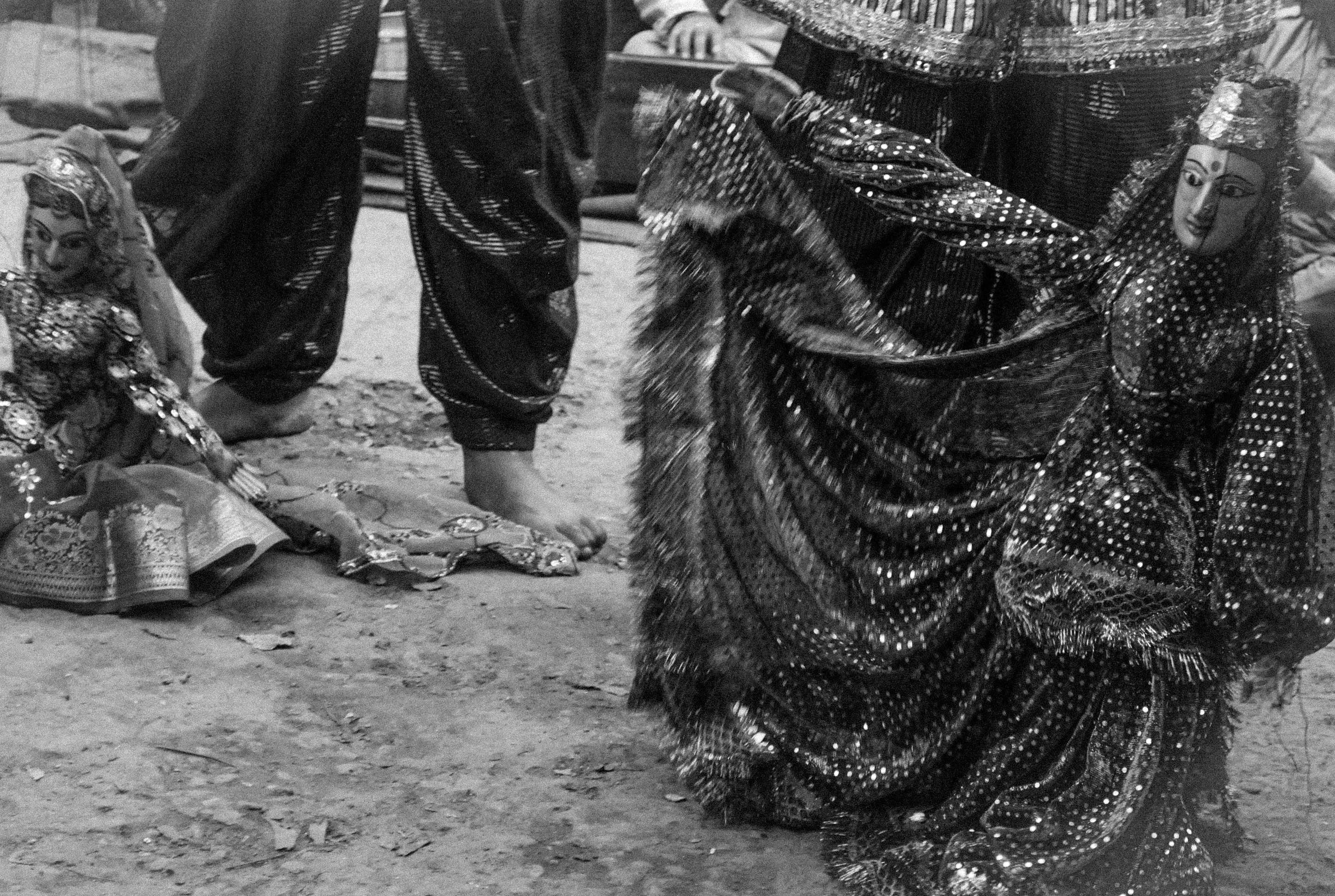
Kathputli Colony in Shadipur area of Delhi has provided shelter for over 10000 families over a period of five decades. It’s been in news and has attracted attention from academia, researchers and scholars working as urban planners, development practitioners. If we examine this particular case closely we realize that this is not a usual case of urban renewal rather it’s many facets to it which one can’t do away with. The timeline of this slum studied together with its distinctive features and nature brings out a whole new dimension of developmental studies, the much talked about conflict of development vs. culture. The inhabitants of these slum i.e. traditional artists from across the country make it essential that we pause and reflect before making any choice. It’ll set a precedence of our priority for development over any other considerations i.e. cultural heritage in this particular case.

The talk of rehabilitation and renewal of this land has been doing rounds since 80s’ but the project was included in a policy document in Millennium Delhi Plan 2020 and that’s when the actual procedure initiated. This is to be considered as a pilot project as its first project in Delhi based on in-situ developmental plan. The plan which seems to be technically sound; fails on terms of livelihood issues. The current arrangement of jhuggi-jhopdi settlement provides them with space which is a prerequisite for their traditional occupations and also the locality is critical for their survival. The proposed plan takes away with this freedom of choice to choose one’s own livelihood, traditional artists in this case. This falls in line with utilitarianism since this is an attempt to upgrade the city based on the demands of majority of urban elite while marginalizing the slum dwellers of Kathputli colony. There’s inherent conflict between the authorities in-charge of this redevelopment procedure and the slum-dwellers due to lack of clarity on terms and conditions of the project which’s added to the mistrust. The slum-dwellers find themselves against the State and capitalist at the same time which in turn reduces their bargaining power and further adds to their marginalization. Also there’s a sense of cynicism when it comes to intention of in-situ rehabilitation as these people are aware of the contradiction within their lifestyles. This adds to resistance by the slum-dwellers with all the possible means at their disposal, with the recently added tool of RTI. In case of Kathputli colony there’s a blend of activism by civil society, NGO’s and the population under consideration itself.  Lack of trust and confusion on the part of the slum dwellers has resulted in proactive resistance by most of them managed by them though guided by NGO’s. Taken all these factors together this issue brings forth the persistent question of freedom to choose one’s own livelihood and how it’s been denied to the marginalized sections of the society which’s been unorganized to a great extent but when it becomes existential question it brings them together to fight for their equal rights.

The denial of equality and freedom on for the cause of development further creates imbalance in justice making sure that it favors the privileged sections of the society. This utilitarian concept development needs to be checked and controlled as the marginalization of weaker section is ever increasing. Though they’ve new tools like RTI at their disposal; that can’t guarantee justice at any given level of implementation of the proposed project.  The residents of Kathputli colony needs to be assured of their entitlement to in-situ rehabilitation at the same time their livelihood opportunity should be secured rather than depriving them of it completely. As this is a pilot project for in-situ rehabilitation in Delhi this case it could have been used to provide an example of trust building between the slum-dwellers and the authority but given the current circumstances it seems to be less likely to happen. The paper-work, criteria of eligibility for rehabilitation and ways to minimize the marginalization needs to be taken care of before going ahead with any project of this scale in order to ensure justice is meted out to the slum-dwellers. The noble cause of betterment of living condition of slum-dwellers and that of development of the particular locality as stated by the authorities in support of any redevelopment project can’t be questioned but the process through which it’s being implemented needs to be scrutinized at every stage by the parties involved in it which would ensure participation that would in turn lead to fair procedural outcomes.

About  Author: Neha Rane is a graduating student of Master’s in Public Policy at Jindal School of Government and Public Policy, NCR Delhi. Her research areas include urban policies, health studies strategies for rural development, microfinance, financial inclusion and decentralization in particular.

Download Now

Censorship Raj: The Indian obsession with banning and gagging

1

This article is written by Namratha Keshava, a student of NUALS, Cochin.

Voltaire once said “I may not agree with what you are saying but I’ll defend to death your right to say it”. The freedom of speech and expression is the corner stone of every democracy. It is the right to express one’s views however unconventional or non-conformist they are which ensures the survival of a democracy. It is the crucial pillar of any democratic edifice – the right to free expression which is being rapidly eroded, with ominous implications. In the largest democracy in the world we are faced with the problem of having to deal with a blow to this freedom. India has always been a country which has given utmost importance in protecting the right to expression, we are a country which has always accommodated diverse views and given our citizens a right to have an opinion and express it freely.

However, in the recent times this has changed. The Censor Board is on an overdrive to ban every possible movie and song, Intellectual freedom is under direct attack where books are being banned, documentaries are being banned; Movies are being banned, Cartoonists being arrested, People being arrested for posting comments on social media.

We clearly have turned into a very intolerant country and society. Let us trace the reason why this intolerance has creeped in. One of the main reasons is the hypersensitivity of society. We have become a hypersensitive society where every movie released, every book published, every documentary broadcasted, so much so even a comedy roast video seems to offend some section of the society or the other. Another major reason is our inability to accept an issue we are facing as a country. Acceptance is the first step towards addressing an issue. Every time the freedom of speech and expression is curbed we console ourselves by saying there were valid grounds, such as to prevent communal tensions, to keep the peace in society, for the greater good and most recently to save our reputation on the international forum. Unless we as a state and society accept that our inability to accommodate and respect varied views is a symptom of a greater problem in society, we will never be able to address the issue of censorship and ensure a liberal and free space for thought and expression.

Another very important reason for the intolerance is the lack of respect for another person’s views, as a society we need to learn to agree to disagree.

Let’s take recent events and analyze this issue further. Recently a documentary directed by Leslee Udwin which was a documentary based on the infamous Delhi gang rape incident was banned, It contained interviews of the accused as well as the lawyers involved .It was a documentary which gave an insight into the perception of rape as seen by an average Indian citizen, It gave us an insight into the way we perceive rape as a society. However this documentary produced by BBC was banned by the Indian Government stating that the documentary defamed India on an international level. This move was international suicide where India received international criticism for banning the video on such trivial grounds.

Another incident which caused uproar among the intelligentsia was the banning of the book Madhurobagan written by Perumal Murugan on the grounds of it causing communal violence. It was a book based on an ancient custom in Tiruchengod in the district of Nammakal in Tamil Nadu where a woman could pair up with any man she fancies during the temple festival and have a child. This was practice which was rampant during the annual temple festival of the deity Ardhanariswara.

The main contention that was raised against the book was that the protagonist is seen making a statement against the dalits. The groups which caused the protest clearly didn’t understand the context in which the statement was made in the book. The statement where the protagonist tells his wife not to take part in the temple festival because there will be dalit men  was not meant to hurt the dalit community of which the author himself is a part of, the  particular statement was merely a  mirror to Indian society existing at that point in time. This statement was taken out of context and caused a lot of protests in the dalit community which ended with the author Perumal Murugan issuing a public apology and giving up writing. The ultimate conclusion of this whole event was India losing out on a great writer.

India has a glorious history on banning books on the pretext of communal grounds, religious sentiments, misrepresenting India and obscenity. The recent example where the comedy roast produced by a group of comedians called All India Bhakchod being banned on the basis of obscenity mirrors the attitude of the government towards artistic freedom. The video was in the form of a Roast or insult comedy which is a popular form of comedy world over where the participants in the show poke fun at each other. The Government claimed that the comedy show was too vulgar and obscene. However what they clearly overlooked was the fact that all the participants in the show were there by consent and that no one was forced to watch the video. The Government also failed to understand the simple fact that this level of censoring and banning in the era of the internet is futile. For example the documentary India’s Daughter though it has been banned in India majority of Indians have watched it, thanks to downloads , torrent and proxy servers .

Another incident which is worth mentioning in the free speech debate is the case of Wendy Doniger’s book Hindus; An alternative History which was banned by court orders because of the petition filed by   Shiksha Andolan Bachao, or the Save Education Movement, a Hindu fundamentalist group seeking to purge India’s educational curriculum and bookstores of works it deems insulting or threatening to Hindu culture.

India is not new to the act of banning of books. The most famous being the banning of the book Satanic Verses by Salman Rushdie by the Rajiv Gandhi Government. India has always been a country which is overly enthusiastic to make all communities feel secure. However, one thing the Government fails to realize is that every time it bans a book or say an artist in the case of M.F.Hussain because of being held ransom by Right wing propagandists, The government is giving out a signal to these propagandists that the government will give into any of their demands made on the most trivial grounds as long as it has a communal shade. This act of the Government is also seen as support by the right wing activists and communal propagandists to continue protesting against any form of art, book, and view against their ideology. Another important point to note would be the fact that every time the government bans a book or movie or documentary it creates so much publicity among the public and people invariably get access to the banned material out of curiosity .As they say the forbidden fruit is the sweetest .By banning the Government more often than not does a great Publicity job for the banned material.

 Keeping in mind the rate at which the Government is banning videos, documentaries, books and other forms of media,  The Government will have to create a different ministry called the Ministry of Gagging affairs  for banning and censoring of all material online videos, tweets, books, articles etc which falls under the ambit of offensive to any part of society.

 It will eventually reach a stage where artistic freedom and intellectual freedom is curbed to such a extent we are stuck with a society which stinks of diplomacy and being politically right at the stake of losing out on originality and a sense of reality. Such a highly censored society will eventually raise future generations who are too scared to think different, too cautious to be adventurous, too protected to face reality; Basically will lead to future generations of Robots which are programmed to think ,to behave ,to act in a certain way .We as a society will lose out on the diversity of ideas, the birth of all those revolutionaries who will be silenced before they are born and most importantly we will stop evolving as a society. The only whiff of fresh air is the recent Supreme Court judgment which has held the draconian section 66A of the Information Technology Act 2000 unconstitutional .This Act was used to arrest people on the most trivial grounds, as per the whims and fancies of the police if they found any material posted online offensive.

It is time the Government wakes up and the Judiciary takes a proactive role in ensuring that our fundamental right, the freedom of speech and expression is protected. Being the largest democracy we cannot afford an attack on the basic foundations of a democracy, free speech because such an attack will leave the whole institution of democracy shaken.

We need to ensure that the censorship doe not stay for too long. We need to teach society

 not only to  be tolerant of opposing views but also respect them. We need to learn to embrace and appreciate non conventional views. Most importantly we need to ensure that the censorship raj is replaced with a free, liberal space which gives everyone the space to think, to create, to dream, to innovate, to share, to discover and make this world a better place.

A free bird leaps

On the back of the wind

And floats downstream

Till the current ends

And dips his wing

In the orange sun rays

And dares to claim the sky.

But a bird that stalks

Down his narrow cage

Can seldom see through

His bars of rage

His wings are clipped and

His feet are tied

So he opens his throat to sing        -Maya Angelou

Download Now

Counter-terrorism and the law in India

0


This article is written  by Raghav Nagar,  a student of Campus Law Student, Delhi University.

INTRODUCTION

In this age of conflicting development, terrorism has emerged as the main tool of disruptive power in the hands of zealots, fanatics and also the people who have been trampled upon for what the governments of different states and in turn the society deem to be “The greater good”. The word terrorism comes from the French word terrorisme, the Jacobins used this term when they imposed a reign of terror during the French revolution, and after they lost power, the word came to denote an act of violence or causing bloodshed

In spite of the efforts of nations around the world over the past years, to solve this problem at the individual and global levels, there has been no definitive solution which can primarily apply to India. Terrorism has been used to define different types of acts by terrorists, the motives as well as perpetrators of terrorism differ on a case to case basis, for example the 26/11 Mumbai attacks were perpetrated by foreign nationals of a terrorist group (allegedly with the extensive aid of the Pakistani ISI), the ULFA though comprising of Indian nationals who seek separation of Assam from India, are still Indian nationals.

 Section 121 of the Indian Penal Code groups offences of this nature under the broad heading of “”waging war against the state” to deal with the issue of insurrection, but it has not been entirely effective. The problem with terrorism is that it is a kind of asymmetric warfare, where the terrorist, though limited in number and resources (as compared to the state) are still very good at creating fear in the hearts and minds of the citizens of the nation.

In order to tackle this threat and to safeguard its citizens, our government has adopted the strategy of Counter Terrorism Counter-terrorism is a mix of public and foreign policies designed to limit and eliminate the actions of terrorist groups and their support network – both men and material – in an attempt to protect the general public from terrorist violence. Such policies are usually in the form of laws, thus to understand the concept of counter terrorism it is essential to holistically analyse the ambit and purpose of these laws.

Counter-terrorism

Perceived as “an integral component of its [India’s] development process,” it has become part of the very “essence of India’s being.” In fact, India is one of the worst affected countries by terrorism. In the recent period, India has witnessed more terrorist incidents than any other country in the world.[1]The focal points of India’s anti terror initiative have been militancy in Jammu and Kashmir, insurgency in the northeast of the country, and left-wing extremism in east. Insurgents routinely infiltrate India’s borders from neighbouring states in order to carry out their missions. This applies to those insurgents who, though of Indian citizenship, travel across the border to India’s neighbouring states in order to receive weapons and training.

Keeping the reality of India’s security concerns in mind, the Legislature has drafted special anti-terror laws which have been implemented over the years. The basic argument placed during the enactment of such special laws is that the existing criminal laws are as follows-

  1. The ordinary laws relating to crimes are incapable of dealing with terrorism effectively.
  2. Conventional criminal laws do not recognize the fact that acts of terrorism are movements that collectively subvert and disrupt the structures of governance and enforcement themselves.[2]

Such views reverberated with that of the international community wherein in the aftermath of the 9/11 terrorist attacks, arguments on terror laws got bolstered by the anti-terrorism initiatives of developed countries like the United States and the United Kingdom and stipulations from the United Nations Security Council (UNSC). In response to terrorism and other threats to security, many special laws have been enacted/repealed in India from time to time since independence. It seems, however, that the extensive punishment for the act of terrorism is not enough. What is required is a policy framework which has a much wider ambit, and enhances the powers of the Law Enforcement agencies to gather intelligence, track suspects, monitor funding sources, etc. It is keeping these objectives in mind, that many nations have enacted specific counter terrorism (for example, the USA PATRIOT Act of 2001).

COUNTER TERRORISM LAWS IN INDIA

  1. The National Security Act, 1980

This legislation was one of the starting points for development of an effective Anti-terror legal framework. It empowered the Union Government or the State Governments to

  1. Detain a person to prevent him from acting in any manner prejudicial to the defence of India or the foreign relations of India, or the security of India,
  2. Regulating the continued presence in India of any
  3. Detain any person suspected of the planning to conduct any of the activities lists in (a.)in a pre-emptive manner. Preventive detention can also be made with a view to preventing a person from acting in any manner prejudicial to the security of the State or from acting in any manner prejudicial to the maintenance of public order or from acting in any manner prejudicial to the maintenance of supplies and services essential to the community.
  1. The Unlawful Activities (Prevention) Act, 1967

This law was enacted to provide a more effective prevention of certain unlawful activities. It empowered the authorities to declare any activity or association as unlawful, if it was averse to the interest of an individual or society at large. This law was comprehensively amended by the Unlawful Activities (Prevention) Amendment Act, 2004.. This amendment contains most of the substantive provisions from the Prevention of Terrorist Activities act, 2002. It does not define a terrorist but it does define a ‘terrorist act’ as well as  a “terrorist organisation” (an organisation listed in the Schedule).The amendment  further provided that the special courts established under POTA to try such cases should be done away with and should be tried under the general criminal courts.

The main objective of this act was to amend the extreme provisions of POTA which were eclipsing the basic rights of the people act that is why this act was implemented. Thus specific safeguards were built into it, namely:

  1. For taking cognizance of any offence under this Act, prior sanction of the Central or the State government, as the case may be, is necessary. Within the Criminal Procedure Code, 1973, it is made applicable in matters of arrest, bail, confessions and burden of proof. Those arrested are to be brought before a magistrate within 24 hours.
  2. No officer lower in rank than the deputy superintendent of police can investigate offences under this act.
  3. Confessions made by a person before to a police officer were made inadmissible except in certain exceptional cases.
  4. The courts power to try the defendant in absentia was also done away with.

3. Armed Forces (Special Powers) Act,1958

This act was passed on the 11th of  September, 1958 to confer special powers to the members of the armed forces in disturbed areas in the states of Assam and Manipur after an amendment in 1972, it was extended to the whole north-eastern region. Under the Act, armed forces personnel were given broad powers to ensure “maintenance of peace and security”. The same Act was invoked in the state of Jammu and Kashmir in 1990 under the Armed Forces (Jammu and Kashmir) Special Powers Act, 1990. The main objective of this act was to reign in increasing level of insurgent activities across the national borders. According to the Armed Forces Special Powers Act (AFSPA), in an area that has been designated as “disturbed”, an officer of the armed forces has been given powers to:

  1. Use any kind of force (including lethal force) deemed necessary against the person who is “acting to disrupt the law and order. This is conditional on a prior warning from the security personnel.
  2. Destroy hide-outs / fortified positions/shelters/training camp from which armed attacks are made by the armed volunteers or armed gangs or absconders wanted for any offence.
  3. To arrest without a warrant anyone who has committed cognizable offences or is reasonably suspected of having committed such offences (See Code of Criminal Procedure) In order to execute such arrest, the security personnel may use any amount of force necessary for the arrest.
  4. To enter and search any premise in order to
    1. make such arrests (as described above),
    2. Or to recover any arms, ammunition or explosive substances and seize it from such premises.

Provided that any person arrested and taken into custody under this Act shall be handed over to the officer in charge of the nearest police station with the least possible delay, together with a report of the circumstances leading to that persons arrest.

Under the AFSPA, security personnel have legal immunity for their actions. There can be no prosecution, suit or any other legal proceeding against anyone acting under the AFSPA in any court of law. The government’s judgment on why an area is found to be disturbed is not subject to judicial review. There is the probability of a court marshal against an officer of the army who acts in bad faith.  The act itself was not intended to be specific to counterterrorism, it was meant to ensure maintenance of  law and order in the “Disturbed Areas”. In practice however the broad powers under the AFPSA enable security forces to conduct Counter Terrorism operations as well.

COUNTER TERRORISM LAWS IN INDIA: AN ANALYSIS

The provisions of the said counterinsurgency laws have proved to be more of a bane than a boon as it has been seen that such wide powers given in the hands of the authorities have not been judiciously exercised. Such powers have a very wide scope which has led to unjustified violations of  the rights of the people as can be seen in the POTA Act.

  1. Firstly, POTA allowed for the police to detain a suspect for upto180 days without the need to file a charge sheet with the Magistrate. It also allowed for 30 days police custody There was also a denial of bail if a prima facie case exists (which is easy on a well-written FIR) and the blanket denial of bail to foreigners (including, perforce, suspect Bangladeshis)
  2. Secondly, the definition of ‘terrorist act’ was very vague as well as overarching. In the Mehndimasroor Biswas case,the supreme court adjudged that the powers of the investigating authorities are too wide to ensure the basic rights of the citizens and especially the minorities.
  3. Whereas under the AFSPA there have been grave violations of the law by the army,which has led to a series of debate to discuss the absolute powers given to the army. In Manorama Vs AFSPA[3], Thangjam Manorama was allegedly killed in 2004 by Assam Rifles,the Government of India was directed to award compensation to Manorama’s mother. But the serious concern was that in spite of such direction, the court could not spell any judgment against the culprits. There have been many instances in the Maoist affected states that where the innocent tribals have been castigated due to the abhorrent activities of the fringe elements, use as most of the times the security forces use the villagers as tools for apprehending such elements. It is also alleged that the security personnel use collective punishment against the Tribal population to coerce them into submission.

The enactment of powerful, nation-wide anti-terrorism laws without sufficient safeguards to constrain their misuse and ensure accountability in their application has led to human rights abuses and disparate patterns of enforcement throughout the country. Such laws have also been misused for political purposes. In the Vaiko case, a leader of a political outfit was apprehended based on his opinion in support of the LTTE (Lankan Tamil Tigers Elam).Ironically, his party had supported the bill in the parliament which legislated the Unlawful Activities (Prevention) Act. UAPA. This shows that the laws can be subverted for unlawful means and purposes

CONCLUSION

After studying the evolution of ant-terror legislation, as well as the way these laws were applied, we can see a consistent trend of violations of the rights of  people, all in the name of the greater good and security of our nation. It seems that such laws, since their very inception, were made to give absolute authority to the state under the garb of protecting its security to use it as a political tool or to carry out illegal activities which the government itself cannot authorise. What is needed, above all else, is a greater level of transparency and accountability. The availability of actual facts from the grassroots level can help us analyse the issues in a manner that is specific to the area. It will also help us to strike a balance between the right of an individual to freedom and the right of society to security.

We, as informed (and hopefully conscientious) citizens of India have something to learn from  Benjamin Franklins idea about liberty, “Those who would give up essential liberty, to purchase a little temporary Safety, deserve neither Liberty nor Safety” . When we think of the trade off between security and liberty, Mr. Franklin’s idea seems almost prophetic in light of the security concerns of today.

[1]In 2004, 45 percent of the total terrorist incidents took place in India.

[2]Gill, n. 12

[3]Special Leave Petition 14726-14730 0F 2011 [UNION OF INDIA &ANR Vs.  STATE OF MANIPUR & ANR.

Download Now
logo
FREE & ONLINE 3-Day Bootcamp (LIVE only) on

How Can Experienced Professionals Become Independent Directors

calender
28th, 29th Mar, 2026, 2 - 5pm (IST) &
30th Mar, 2026, 7 - 10pm (IST).
Bootcamp starting in
Days
HRS
MIN
SEC
Abhyuday AgarwalCOO & CO-Founder, LawSikho

Register now

Abhyuday AgarwalCOO & CO-Founder, LawSikho