Download Now
Home Blog Page 1812

Whether SMS/WhatsApp message will be considered as an admissible evidence in courts of India?

4
whatsapp

This article is written by Mayank Labh, a student of NALSAR, Hyderabad.

There is a revolution in the way that evidence is produced before the court”. said the SC in Anwar’s case. With the advancement of technology where more and more documents are getting digitised, it becomes necessary to look at how the law and the judiciary are able to keep its pace with rapidly changing technologies. So, this article is just a small step in this direction as it tries to analyse whether SMS/WhatsApp message is considered as an admissible evidence in courts of India.

To bridge the widening gap between law and technology, Parliament enacted the Information and Technology Act, 2000 that, among other things, provide the re-definition of electronic records.

https://lawsikho.com/course/diploma-cyber-law-fintech-technology-contracts
click above

Electronic Records

According to Section 2(1) (t) of the IT Act, an electronic record is “data, record or data generated, image or sound stored, received or sent in an electronic form or micro film or computer generated micro fiche”.

Section 65B of Indian Evidence Act

It states that irrespective of the sections in the act, any electronic act  which can be printed on a paper, stored, recorded or copied in optical or magnetic media produced by a computer shall be deemed to be a document.

Section 2(i) defines computer as “any electronic magnetic, optical or other high-speed data processing device or system which performs logical, arithmetic, and memory functions by manipulations of electronic, magnetic or optical impulses, and includes all input, output, processing, storage, computer software, or communication facilities which are connected or related to the computer in a computer system or computer network”. This definition also includes the mobile phones as well. It means that SMS/WhatsApp message would be admissible under the court of law for the documents are admissible under the Section 65 of Indian Evidence Act, 1872. However, it has to fulfil four conditions mentioned in the section before it can be deemed as a document. Such conditions are a) the computer that produced it must have been used regularly at the time of production of such electronic documents; (ii) the kind of information contained in the computer must be such that it is regularly and normally supplied to the electronic device; (iii) the computer should be in proper condition and must work properly at time of creation of electronic record; and, (iv) the duplicate copy must be a reproduction of the original electronic record.

Position of Indian Courts

It is now well-established by the court that SMS, MMS and e-mails are admissible. In State of Delhi v. Mohd. Afzal & Others, it was held that electronic records are admissible. It also cleared the doubt that even if there is a scope of misuse of system or failure of operating system or interpolation as to affect the accuracy of such electronic data then it is the onus on the person who is challenging such electronic data. The court said that mere theoretical and general apprehensions cannot make clear evidence inadmissible in court.

LawSikho has created a telegram group for exchanging legal knowledge, referrals and various opportunities. You can click on this link and join:  

https://t.me/joinchat/J_0YrBa4IBSHdpuTfQO_sA

Follow us on Instagram and subscribe to our YouTube channel for more amazing legal content 


Download Now

Business development: how I found my first client for consulting work

2


When I found my first client for consulting work, I wasn’t even looking for any. I did not even know that I had any services to offer. I was just a little unsuspecting law student in the third year of my law school. Only half way through the law school, I couldn’t even imagine that anyone will want to hire me for my legal skills.

In any case, I came to know of an event called Startup Saturday mentioned on my Facebook feed one afternoon after class. It sounded interesting, so I decided to turn up at the event even though it did not feature in my plans at all. I consulted a senior before leaving as to whether I should go. This was a person who had already started up – and he made a face and said that such events are rarely worth the trouble of attending.

I decided to find out for myself. By the time I arrived at the venue, the event was already underway, and a speaker was talking about how he was building his start-up. His name was Vikram and he was running a software start-up after graduating from IIT Kgp. As I listened with rapt attention, I realized that there were data protection law elements which would be very important to his business. I decided to talk to him after the talk was over. However, after finishing and sitting down for 2 minutes, he got up and left the auditorium as another person went to the mic to share something. For a minute I thought I have lost the chance to share my idea with the entrepreneur. However, then I decided to follow him.

As I caught up with him, he told me he was going to get himself a smoke and invited me to join him. For the next ten minutes, I exuberantly shared my ideas about data protection laws with him. He gave me his card and told me to stay in touch. That’s it.

Over the next month, every once in a while, whenever I will come across any article related to data protection or some other legal issue that I felt could be relevant for Vikram, I would send it across to him. By the end of the month, Vikram invited me to his office and made me an offer to join his start-up as an employee. He even offered me some equity in his company. I rejected.

Then he offered me some legal work. I had to draft a Non-disclosure agreement. As I continued to engage with Vikram and his company, that summer I also worked on an investment transaction of a significant value (I can’t disclose the amount) for the first time. I had no clue how do work on such a transaction. Vikram knew this, but he was fed up of trying to work with traditional lawyers in Kolkata who did not value his time and made him run around in circles. He showed confidence in me, and told me that it was while he was still in IIT Kgp that he started building his company, and he sees to reason why I being from a top law school could not handle documentation and negotiation of an investment contract.

That was incredibly brave and supportive of Vikram. And guess what, I didn’t let him down. I worked extra hard, got advice from seniors on how to run a transaction like this, and pocketed a significant fee. Let’s just say that it was more than starting salary of most law firms in India. When Vikram exited this company 6 years later, I wasn’t practicing anymore. He still insisted that I represent his interests (by this time he had become a great negotiator himself and he can school any average lawyer on corporate governance or investment laws) as his exit from the company was finalized. I am also involved in his next project. If any of us visit the city where the other person is, we make it a point to catch up. I always bounce new ideas off Vikram and acknowledge him as a great inspiration behind me starting up a product company. Perhaps, seeing him in his early stages of his company made me reluctant to take funding in the early stages of my own company iPleaders.

Why am I telling you about the relationship I have with Vikram? Some of you think about business networking as a sleazy activity of soliciting work and exchanging business cards. That doesn’t work. At best of times, such networking will only produce mediocre results.

Take genuine interest in the people you meet. Take a stand for their success. Understand what they need today and tomorrow. Lend a helping hand. Make a difference in their life. You will never be without work and your professional success and level of energy will baffle others.

Why did Vikram give me his work, that he could easily give to a law firm or people much more qualified than me?

He knew I have taken a genuine interest in his business and his success. He saw it when I was emailing articles to him. He saw it when we met and I asked him questions about his business. He will still see my interest and care for him when we meet next time. That is why he still wants me on board on any of his projects.

This is not an one off incident though. Whenever I had great success in developing long term, productive relationships with clients, partners, vendors – it has always been like this.

If you want to forge strong professional relationships that will make your practice thrive, start taking real interest in the business of other people.

Bonus: my interest in legal issues entrepreneurs face led me to explore this area for the next two years, and culminated in creation of a course called Diploma in Entrepreneurship Administration and Business Laws.

My first paying client, however, was found in my 2nd year in college. More than one and half years before I met Vikram. That wasn’t really a consulting project prima facie, though consulting was involved in every step of what I did. The story of how that happened is very interesting as well and I will share that before I wrap up this post.

I was at this time preparing for my end semester exams. Rajneesh Singh of IMS Learning Solutions, a giant in CAT coaching at that time with hundreds of centres all over the country approached me for my opinion on the study material for a law entrance course they were about to launch. I was very passionate about law entrance having cracked the formula myself couple of years back. I was guiding a couple of my friends to crack some law entrance exams informally as well.

I took a look at the study material, then sat down and wrote detailed comment on each pages, and then I emailed the file to Rajneesh. Next day I got a call from him asking me if there is anything I can do to improve the study material keeping in mind that the launch is very close!

There was a moment of hesitation as I tried to decide if this will harm my prospects for the upcoming semester exam – but I took it up. And boy, did I do the right thing. I am quite sure now, with 20/20 hindsight that a few more marks, or even topping in those exams would have done nothing for me compared to what I gained over the next few years. It was completely unforeseeable. However, with my first paid gig, that paid me INR 9,000 for a few days of work transforming 50 pages of boring study material to something I will love opened a flood gate of new possibilities for me. Next month, I submitted a proposal to create one more new module and eventually I would go on to create many things from all the legal modules of IMS that have been studied by thousands of students ever since, to hundreds of test papers, instructor’s notes, class planning, hundreds of hours of classroom training and a number of other things that will change the course of my career and even life in the next 5 years.

This will lead me to eventually create CLAThacker.com, followed by Barhacker and later iPleaders, where I have helped universities and other bodies to create online courses like this and this.

Opportunities are almost always knocking on your door. However, are you even ready to take advantage of them? Have you been preparing yourself for that moment in some way? Maybe the opportunity that seems to be taking you off your immediate goal is going to change the course of your life for better.

Say yes to opportunities, even when they come disguised as work.

How to find your first client? It starts from knowing that you got to be professional in your general approach to people, that you have to add value to the people who come across you even when there is no expectation of any returns and then you should also become really good at something. After that, you got to put yourself in the way of opportunity.

Every person you speak to has some opportunity for you, and you have something for them – the only problem is that neither of you yet know what that opportunity is. It would take some imagination and openness from both of you to find out what you could do together.

Keep at it. Most people will come across clients and never know that they did, and walk past. You could be different. Even if you are a student, or a full time employee, you can easily develop a supplementary stream of income. Earn your first income on the side, and see your life change from there.

If I get a good response to this post, I am going to write next on how to identify a good consulting opportunity, a service you can offer on the side and how to amaze your client so that they come back for more.


Download Now

Juvenile Justice Bill, 2015 – An analysis of the controversial provisions

0

This article is written by Mayank Labh, a student of NALSAR Hyderabad.

The Juvenile Justice Bill, 2015 was recently passed by Lok Sabha in India. One of the most controversial changes is the change which will allow the juveniles of age 16-18 to be treated as adult if they commit certain types of crime. Other major changes are the following:

  1. i) No death-sentence or life imprisonment to juveniles.
  2. ii) Corporal punishment and ragging committed on persons below 18 years is a criminal offence under this act.

iii) It also gives measures for facilitating faster adoption of children and setting up foster care homes.

The changes in the Juvenile Justice Act, 2014 was criticized from across the parties, child activists particularly for the treatment of juveniles of 16-18 years as adult. The bill was welcomed by one of the members of opposition party Shashi Tharoor as “Attempts2inject humanity into JuvenileJusticeBill crushed by Govt’s brute majority in LokSabha. To kids, suit-boot sarkar=brute-jhoot sarkar.”

What exactly is the change? Why is there so much brouhaha over the said change? Does it have any merit or is it just a vain attempt made by “Sickular” parties and leftist “intellectual terrorists” to prevent the government from doing its exercise in pursuit of justice”. This article seeks to understand and analyze this.

Transfer System

It is a system in which juveniles of 16-18 years who commit heinous crimes like rape are “transferred” as to be treated as an adult. It is based on an assessment whether the crime was committed as a “child” or as an “adult”. The assessment would be done by psychologists and social experts of Juvenile Justice Board.

Secondly, any 16-18 year old, who commits a lesser, i.e., serious offence, may be tried as an adult only if he is apprehended after the age of 21 years.

Problems advocated by Experts

Ideational problems

One of the problems which were raised by ministers was that this approach is based on retribution rather than on reformation and rehabilitation. It is argued that this amendment is introduced particularly to adhere to illiberal voices of the mob after the 2012 Delhi Gang-Rape.

One of the major motives to pass this amendment was that there is a perception that many of the crimes, particularly rapes, are committed by juveniles of 16 to 18 age groups. However, according to NCRB, only 3.4 percent of the rapes were registered against the juveniles of 16-18 age group.  Moreover, this statistics is based on the FIR filed against such juveniles. It must be noted that many a times FIR of rape, kidnapping are also filed against teenagers in elopement cases as well. So, the perception that juveniles commit most of the heinous crime is not really well-founded.

Secondly it was thought that children are as blameworthy in a similar manner as the adults for the conducts done by them. It is argued by the supporters that such crimes reflect the mental culpability of offenders and such commission of heinous crimes is a mature act in itself. However, according to a recent brain studies conducted by TISS, according to which risk-taking tendency is really high during adolescence. It is discovered by neuroscientists that prefrontal lobe which is responsible for functions such as planning, reasoning, controlling the impulse, etc. develop only after 25 years.

Statutory problems

It is pointed out by experts that this bill is in violation of the norms of United Nations Convention on the Rights of the Child since it requires every child under 18 to be treated as equal. Article 14 Right to equality can also be violated in that sense.

Moreover, it seems to also violate the article 20(1) of Indian Constitution for it is according higher penalty to the same offence if the adult is apprehended after 21 years of age.

Technical Glitches

Even though if we assume that there are some juveniles who have enough mental maturity to commit such crimes still it is very difficult to determine the maturity of the juveniles. Such psychological tests are highly subjective and arbitrary. It is also argued by experts that some mature master-mind juveniles can crack the test and pass-off as immature while some susceptible immature juvenile minds can still be considered as mature.

Deterrence

This system is imported from U.S. where it is shown in many states that it does not serve as an effective deterrence. In fact, U.S. is closing down prisons and is looking for some other ways like community-based treatment programmes for prisoners.

If we look at the background of the juveniles against whom the complaints are filed then we find that more than 80 percent of the juveniles family income is less than 50,000 or so per year. They do not even have primary education. The need of the hour is to focus on such issues that provoke them to commit crimes instead of targeting these juveniles with stringent punishment without any logical base. But, the today’s government has only provided 633 crore i.e. (0.8 percent of the total allocation) for the welfare of children.


Download Now

Can police search your house or office without a warrant in India?

3
police

This article is written by Vasu Khera.

Let’s start with a basic. What is a search warrant? A search warrant is a court order that a magistrate, Judge or Court issues that authorizes law enforcement officers to conduct a search of a person, location or vehicle for evidence of a crime and to confiscate illegal items or evidence of crime, if they find any. In order to get a search warrant, the police must convince a judge that there is evidence of a crime at that place and if the judge is convinced, he shall issue a warrant and the warrant must be very specific, as it should clearly state where exactly the search should take place, including a specific date and time. In India, Article 19 (Right to Freedom) and Article 20(3) (Protection against Self Incrimination) of the Indian Constitution give protection to the accused person against testifying against themselves which implies protection of citizens from unreasonable searches.

The power to issue search warrant should be exercised with all the care and circumstances. According to the provisions of the Criminal Procedure Code, search warrant can be issued under specific circumstances. Three of the circumstances are covered by section 93 which provides:

  1. (a) Where a court has reason to believe that a person to whom a summons or order under section 91 or a requisition under sub-section (1) of section 92 has been addressed will not produce the document as required by such summon.(b) where such document or thing is not known to the court to be in the possession of any person, or(c) where the court considers that a general search will serve the purpose of any inquiry, trial or other proceeding under this code ,it may issue a search warrant.2. Where the court specifies in the warrant the particular place or part to which only the search shall extend.3. Nothing contained in this section shall authorize any magistrate other than a district magistrate to grant a warrant to search for a document, parcel or another thing in the custody of the postal services.4. A warrant for search of a place suspected to contain stolen property, forged document can be issued under section 94.

    5. If any person is confined under such circumstances that the confinement amounts to an offence, a search warrant shall be issued for the person so confined. This has been provided by section 97.

    The law usually makes an exception for hot pursuit as Section 165 of the code has been enacted as an exception to this general law of searches because it is recognized that in certain exceptional emergencies it is necessary to empower police officer to carry out searches without first applying to the courts for authority.

    So, the answer of the question as to whether police can search your house without warrant is “Yes”. The police can enter your private residence or office without a warrant, but only under very limited circumstances.

The circumstances in which a police officer does not need a search warrant to conduct a search are stated in section 165, and these grounds are as follows:
1) Whenever an officer in charge of a police station or a police officer making an investigation has a reasonable grounds to believe that anything necessary for the purpose of an  investigation into any offence which he is authorized to investigate may be found in any place and that thing cannot in his opinion be obtained without undue delay without a search, such officer may search for such thing in any place within the limits of such station.

2) Police officer proceeding under sub section (1), shall if practicable, conduct the search in person.


3) If police officer is unable to conduct the search in person and there is no other person competent to make the search present at the time, he may, after recording in writing his reasons for so doing, require any officer subordinate to make the search and order him to search for such thing in such place.


4) If a police officer remained outside the house while the search was being made inside by some subordinate officer, the search was not held to be illegal.


5) Copies of any record made under sub section (1) shall be sent to the nearest magistrate empowered to take cognizance of the offence.

https://lawsikho.com/course/certificate-criminal-litigation-trial-advocacy
click above

The question arose before the Hon’ble supreme court of India as to whether issuance of search warrant infringes fundamental rights and the Hon’ble apex court held AIR 1954 SC 300 that a search and seizure is only a temporary interference with the right to hold premises searched and the articles seized. Hence, no question of violation of Article 19 is involved. Also search and seizure of documents from accused does not amount to infringement of fundamental rights under Article 20(3) of the constitution.

As a search warrant is drastic invasion upon the privacy of a person, the code has imposed certain limitations upon this powers:
1) The document or the thing being searched for must be distinctly specified.
2) A magistrate other than a district magistrate or a chief judicial magistrate cannot issue a search warrant with a respect to a document of postal authority.
3) The magistrate must exercise his judicial discretion while issuing search warrant.
4) Search and seizure should be made in compliance with the provision to section 100 of Cr.P.C.


Unless the fact-pattern fits one of the exceptions discussed above, a warrant is required to police to conduct a search. But police may not use this as an arbitrary power  like as if the police search your home and a court says that the search was unlawful, any evidence they seized during search can’t be used against you in court and  some rights are given to an occupant like person can ask for identification and explanation as to why they are at your location and can also restrict the search to the area specified in the warrant or if they search in an area where they are not supposed to or not listed in the warrant then person can challenge the search.

However, in reality, police in India is known to use the power given in Section 165 in a very wide manner to fish for evidence in houses of any suspect or non-suspect, and sometimes even as a tool for harassment and oppression. Due to the general language of Section 165, police can first search your house on a whim and subsequently validate such search retrospectively if the Station In-Charge backs up the search.

It is not a good idea to restrict the police from searching if they demand to search your house or office even if they do not have an warrant to do so, since they can use force with impunity and later on justify the search under Section 165. They can also arrest you for obstruction of a police officer, which is an offence.

At best, you may demand that a police office be present during the search. You can also demand that respectable civilian people in the area be present during the search. Also, the police should prepare a seizure list and make you sign the same.

The real danger is that one may plant evidence against you during a search and police may use this against you in a case. This is why, if possible searches should be video recorded.

If search is not video recorded and it appears that evidence has been planted against you – the best recourse you have is in the court of law, and it is unlikely that you will be able to reason with the police.

It is possible to demand that your lawyer, if immediately available, be present during a search. In fact, it is a great idea to have a good lawyer present during a raid or search of your premises.


LawSikho has created a telegram group for exchanging legal knowledge, referrals and various opportunities. You can click on this link and join:  

https://t.me/joinchat/J_0YrBa4IBSHdpuTfQO_sA

Follow us on Instagram and subscribe to our YouTube channel for more amazing legal content 

 
Download Now

How to remove images from Internet?

0

Content-in-b2b-eCommerce-van-engagement-naar-conversie_900_450_90_s_c1_smart_scale

This article is written by Mayank Labh, a student of NALSAR, Hyderabad.

Often, on the internet, you come across images which you find inappropriate for various reasons like the image is obscene, too gratuitous or it has violated your copyright etc. So, this article is about what legal recourse do you have to remove such images from the internet.

There are various laws that govern content on internet like IT Act, Copyright Law, Indian Penal Code etc.

Information Technology Act, 2000

Information Technology Act 2000 regulates the content on the internet or mobile media including the images on the internet.  In order to understand how to remove images or contents it is necessary to understand some legal jargons which are as follows:

Intermediaries

Intermediaries are defined as any person who on behalf of another person stores or transmits that message or provides any service with respect to that message.

Who is an Intermediary?

It is specifically mentioned in the Act that Telecom Service Providers( like Airtel or Reliance),  Network Service Providers(It provides connectivity to Internet Service Providers), Internet Service Providers( like BSNL), Web Hosting Service Providers( It provides people space to launch their websites like godaddy.com), Search Engines, Online Payment Sites, Online Auction Sites and Cyber Café.

Moreover, in a Delhi High Court[1] judgement, it was held that social networking websites fall within the definition of Intermediaries.

“Due Diligence”

Now, these intermediaries have to observe due diligence while discharging their duties:

1) They must lay down terms and conditions which informs the users not to host, display, upload, modify, publish, transmit, update or share any information that[2]

  1. a) he does not have any right to;

(b) is grossly harmful, harassing, blasphemous defamatory, obscene, pornographic, paedophilic, libellous, invasive of another privacy, hateful, or racially, ethnically objectionable, disparaging, relating or encouraging money laundering or gambling, or otherwise unlawful in any manner whatever;

(c) harm minors, no matter in what way;

(d)  violates any patent, trademark, copyright or any kind of  proprietary rights;

(e) infringes any law for the time being in force;

(f) deceives or misleads the addressee about the origin of such messages or communicates any information which is grossly offensive or menacing in nature;

(g) impersonate another person;

(h) contains software viruses or any other computer code, files or programs designed to interrupt, destroy or limit the functionality of any computer resource;

(i) threatens the unity, integrity, defence, security or sovereignty of India, friendly relations with foreign states, or public order or causes incitement to the commission of any cognisable offence or prevents investigation of any offence or is insulting any other nation.

What can you do if you get offended by some images

If you get offended by any image or find something which comes within 79(3) of IT Act then you can file a written complaint to the intermediary with an electronic signature. It is the responsibility of the intermediary to take it down within 36 hours.

What if Intermediary does not do so

If an intermediary does not take the image down within 36 hours then the intermediary is liable to be punished for imprisonment which may extend up to Section 69(a)(3) of IT Amendment Act and fine as well. It is important to note that there is no legal liability of the person uploading it under this act. However, the intermediary might inform the person uploading it about the complain and can ask him/her to remove the objectionable images.

N.B.: This article specifically deals with images only. The said I.T Act is applicable to other contents as well.

[1] K GovindAcharya v. Union of India

[2] Section 79(3) of Information Technology Act, 2000.

Download Now

Application of principles of natural justice in a sexual harassment proceeding

0

This article is written by Madan, a law student from ILS, Pune and an IDIA scholar.

“Natural justice is a great humanizing principle intended to invest law with fairness and to secure justice” – Justice Bhagwati in Maneka Gandhi v. UOI

Introduction

Natural Justice can be described as ‘commonsense justice’ or ‘universal justice’. It is the sense or an implied obligation on the part of a person who is placed in a position of a judge and can pass binding decision to the prejudice of any person to act in a fair, just and reasonable manner.

It is a matter of common sense that if a person is a Judge, then there is an implied duty on him to do justice in a fair and just manner. The law may not expressly tell him that he has to act judicially but the position he is placed comes with a tag that he must act reasonably and fairly in the discharge of his duties.

This is known as natural justice and some call it as ‘fair play in action’.

Origin

The concept that a judge has to act fairly has its origin in Common Law i.e. developed by the courts in England and would be binding on lowers courts in similar cases.

Indian Constitution expressly does not recognize these principles. The positivist judges of the Supreme Court in the early years of 1950’s adopted a narrow approach and interpreted the Constitutional provisions not to include these principles.

However, the liberalist judges of the Supreme Court in the late 1970’s breathed these principles into all such judicial, quasi-judicial and administrative actions by holding that these principles are ancient and for public good and that it is ingrained in the Indian Constitution.

Since, then every person who acts in the capacity of the judge has to observe these principles, else his decision would be bad in law and would not have any effect.

What are these principles? What are the rights available under natural justice?

These principles are easy to recognize but are difficult to define with precision. The purpose we have such a law is that Justice must be rooted in confidence, and confidence is destroyed when right-minded people go away thinking, the Judge was biased.

All such things that needs to be done by a person who is acting in the place of a Judge so as to inspire public faith in the process adopted by him to judge are known as principles of Natural Justice.

These rights differ from case to case depending upon the nature of the dispute, facts and circumstances of the case and other factors. It is not possible to give an all- comprising list of these rights and tell if one of them is not observed then the decision is void. The essential element must be that at the end of the decision, any reasonable person must agree that the procedure adopted under such circumstance were fair and just to for a person to do.

However, there are two well-recognized principles of natural justice-

  1. No one can be a judge in his own cause.

The rule is clear that a person having an interest in the subject matter of the proceeding shall not act in the capacity of a judge. Such an interest must be direct and not something which is remotely connected.

If a person acts a judge in a case of accident involving his son, even though the judge may render justice impartially, there would always be a presumption of bias in the eyes of the public. Hence, to be fair and inspire public confidence this rule exists.

  1. Hear both the parties before arriving at a decision.

It means that before condemning a person as wrong, it would be duty of the judge to give an opportunity to that person to explain as to why he should not be punished. The accused or respondent must be given a reasonable opportunity to make his defence.

This rule has evolved over time giving rise to other principles such as-

  1. A party to an action is prima facie entitled to be heard in his presence
  2. He is entitled to dispute his opponent’s case, cross-examine his opponent’s witnesses and entitled to call his own witnesses and give his own evidence before the person acting as a Judge
  3. He is entitled to know the reasons for the decision rendered by the person acting as a Judge.

The other settled principles are:

  1. The parties to a proceedings must have due notice of when the Judge or person in his capacity is going to decide his matter
  2. The person who is making the decision must act honestly and impartially and not under the dictation of other persons to whom authority is not given by Law.

It is to be noted that these principles are not hard and fast and need to be present in all proceedings. These can be altered according to the facts and circumstances of each case. The total sum must be that the public faith in the process is not shaken.

For, example is it a part of natural justice that an accused be always present in his criminal trial. But, in a trial under Goonda Act, the accused will not be present during the deposition by the witness. This is because no witness will dare come out to speak the truth if he is made to stand in front of a Goonda. In such circumstance, there would not be any violation of natural justice.

The Sexual Harassment of Women at Workplace (Prevention, Prohibitory and Redressal) Act, 2013 and application of principles of natural justice

Sexual Harassment at workplace is a serious infringement of rights of a woman. Hence, the legislature has enacted the above legislation providing for ICC- Internal Complaints Committee and the LCC- Local Complaints Committee for redressing the loss caused to the victim.

This committee which is to be constituted from among the staff of the employer in accordance to the provisions of the act. It is vested with such powers that it can reprimand, transfer, deduct salary or increment and even terminate the services of the respondent. It also has the powers to award damages to the victims.

Hence, it becomes inevitable that such a committee observe the principles of natural justice when disposing of the matters before it. Rule7 (4) of the Sexual Harassment of Women at Workplace Rules, 2013 makes it expressly clear that the committee shall observe the principles of natural justice when inquiring into complaints of sexual harassment. The rules provides for some basic procedure to be followed and leaves out the other parts to the common sense of the committee to act fairly and do justice.

Hence, the procedure needs to be one which is specific from case to case and should be such that it should appear to have rendered justice.

Recommended procedure to be adopted by the Internal Complaint’s Committee

  1. Composition: The committee must be composed of persons who are not interested in the outcome of the committee. The act clearly provides for the appointment of persons with certain qualifications as the members of the committee. However, the composition must be such that the members are not related directly or indirectly with any of the parties- both the victim as well the respondent.
  1. The victim and the defendant or their witnesses should be called separately so as to ensure freedom of expression and an atmosphere free of intimidation.
  1. If the victim requests then, she can be allowed to be accompanied by a representative.
  1. The Committee must endeavor to arrive at decision as early as possible.
  1. The Committee must on the receipt of a complaint must fix a date of hearing and give notice of that date to both the parties before such time that would enable them to make their case before the committee.
  1. The defendant must be served with the true copy of the complaint along with the list of the witnesses and also a copy of the policy on Sexual Harassment of the workplace if any.
  1. The defendant must be given a reasonable time to respond to the allegations against him and a reasonable opportunity to make his defense.
  1. The committee may call a person as a witness or require the discovery and production of things or documents if it is of the opinion that it is necessary in the interest of justice.
  1. The character of the victim in as much as it indicates is of easy virtue of otherwise is not relevant to the proceedings before the ICC.
  1. If the respondent fails to appear before the committee, then the committee can proceed against him ex- However, such a decision must be made only after giving notice to the respondent.
  1. The identities of the victim and all witnesses should be kept confidential by the committee.
  1. The victim and the respondent shall have the right to cross-examine the witnesses. It is expedient to conduct such cross-examination in a written format and responses via committee.
  1. The proceedings before the committee should be in writing.
  1. A copy of any evidence taken by the committee must be given to the other party and the person must be given an opportunity to rebut it.
  1. The committee must record the reasons for its findings along with the action to be taken and penalties to be imposed and submit it to the employer.
  1. A copy of such a finding must be given to both victim and the defendant.
  1. It would be desirable to have a higher committee whereby any aggrieved party can appeal against the findings of the lower committee. Such a higher committee must be constituted on the lines of provisions of the act and must observe the principles of natural justice.

However such principles and procedures are more complex than they seem and while many might understand the need for such policies in place they might not understand the nitty-gritty involved. For this purpose, National University of Juridical Sciences has come up with this course. One can also refer to this course which talks about how to implement sexual harassment laws in your organization.

Download Now

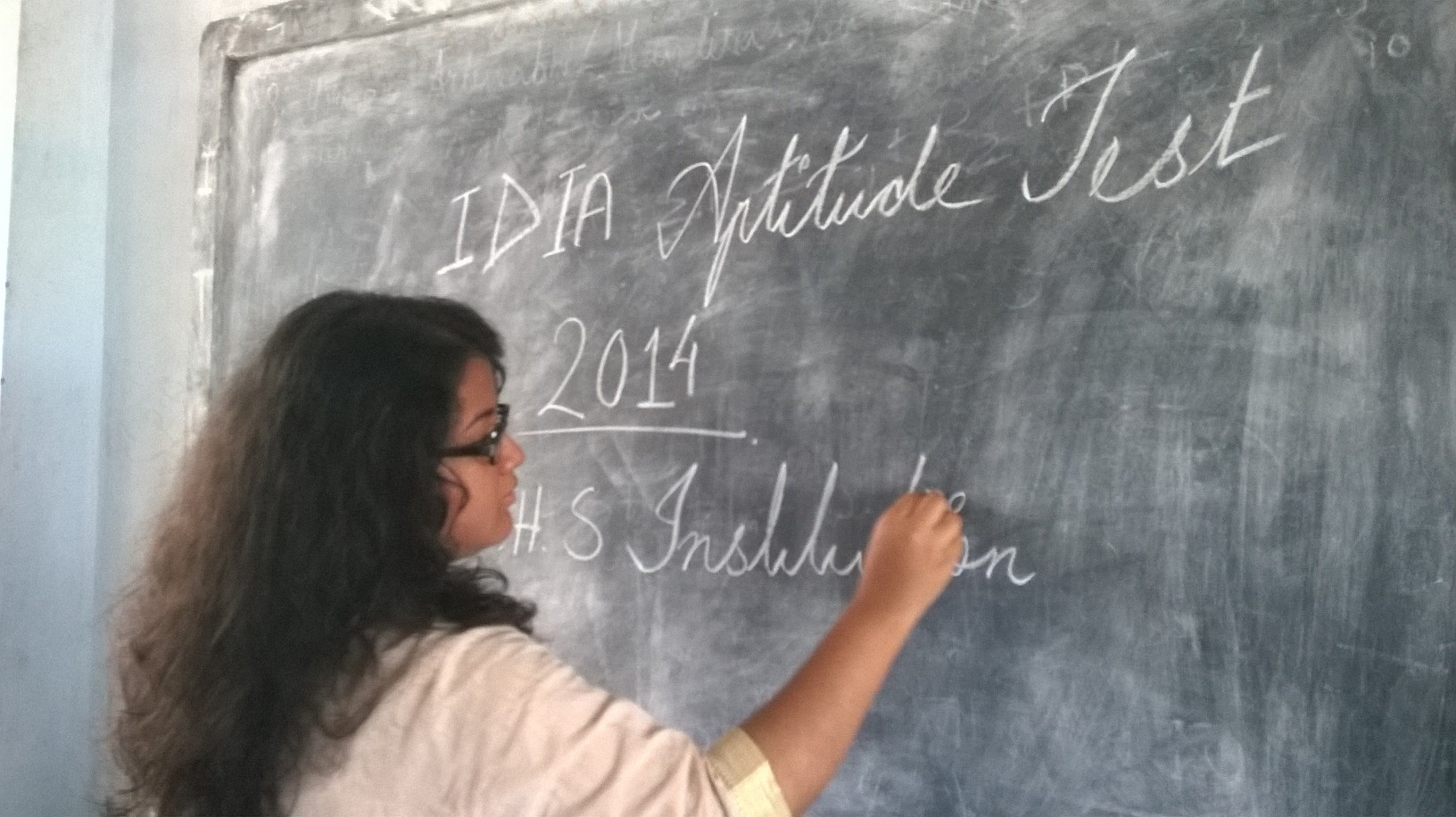
My Experience as an IDIA Team Leader, North-East India Chapter: Nipasha Mahanta

1

WP_20141119_006

Nipasha Mahanta is a student of NUJS, Kolkata and IDIA Team Leader for NE India.

They tell you that it is the biggest and the greatest quarter of your life. They fool you into believing that if you win this game, the world will bow down before you. They feed you to thrive in the spirit of rivalry pumped by hatred where you are motivated to live through many a sleepless nights burning the midnight lamp and skip day or two’s hygiene chores not to achieve and maintain excellence but to guiltelessly enjoy the defeated expression which would overshadow the otherwise blatant arrogance for that so called “class rival”. A gap of a mere two years and a parallel tread in a chosen road incongruent with the conventional and popular choices, one realises the futility of such empty wars which were fought at the school battleground. The consecutive usage of these two terms seems paradoxical. School should be the ground where seeds of brotherhood and virtues are sowed. It should not stimulate the sadistic nerves in one. All this definitely seem abnormally preaching in its spirit devoid of any relevance to the real scenario. The above stance might just be dismissed on the premise of being full of impractical motives and theoretical notions. The above blabbering might miss the aimed relevance when I confess to the fact that I devoted a year of complete “donkey slavery” in the pursuit of making it to a top notch law school and I, very well realised that dream. I do not wish my memoir to trigger pessimistic nausea, rather, I wish otherwise. By the end of the piece, I want to present to the reader a first-hand experience of finding passion in a state of utter disillusionment in the law school journey. It would be completely wrong to say that it is an expression of wishful thinking. It is, rather otherwise. It explores how my law school journey though strives in the languor of mediocrity till now yet, no longer, makes me crib about it. It sketched how the emotion of being the well chosen agent of change in the lives of a few unlucky downtrodden, cooks the most blissful dish which when melts in your palate, transports you to the seventh heaven of satisfaction for being able to attach some value, no matter how minuscule, to life as a whole. Two years into law school has been a metamorphosis for me on a personal stature. The toxic judgmental mind set has been shed, the lack of courage to face failure no longer haunts me to wake up every morning, the negative mind construction to expect to always win has been dismantled thoroughly and the fact that increasing and decreasing returns is not regular phenomenon which blankets all goodwill endeavours and the consolation that it is all right even if one’s bona fide actions do not get well received has sunk in my being firmly.

Hailing from Assam, one of the picturesque sites of North-East India, combined with the impact of taking up law school education for a conducive field of graduation and the choice of devoting a major chunk of law school life in trying to ease the lives of budding learners by not only being the agent of incepting unfound dreams in their minds but also being a catalyst in their preparation and walk alongside till they are capable enough to undertake the adventurous challenge on their own. Increasing Diversity by Increasing Access to Legal Education ( IDIA) is not just an NGO. It is much more than that. Though, on one hand, law school wipes out most of your irrationality and in that bet diminishes your religious affiliation, it also ends up making you agnostic. What prevents you to get absolutely  drowned/enlightened in atheism is initiatives on the likes of IDIA. I would like to distance myself from making generalised statements on theism. However, when I view the role expected of me under the IDIA banner, I realise I am one of the few chosen ones to be able to serve mankind in my own small manner.

Education is the only path of liberation from all societal bondages. It is true that there no longer remains any foreign contingents looming overhead our countrymen constantly posing threats of pushing them is states of uncertain warfare in future but it would be an example of shameless denial if it is concluded that each part of the country is equally exposed to all opportunities. Law education has time and again proved itself to be the machinery to any social transformation. It is built upon tradition, needs of the society and works in favour of progressive gallops. The advent of the national law schools in India; the comprehensive and innovative five year degree programme, has revolutionised the sub-standard degree in which law education breath in India. This, again, is not the wholesome version of the picture. The national law school era has rather reinforced elitism which reverberates in the law fraternity and has further distanced the rulers, the protectors of the rules and the ruled.  Family tradition, availability of resources (both monetary and social environmental) are what which decides the new entrants in the legal field. This, in a way, completely defends the purpose which law education proposes to achieve. Again, regional representation languishes in crisis at such hubs of imparting knowledge of law. Limiting this educational excellence to only a few minds hailing from the economically privileged, upper caste, English speaking mass dwelling in the plethora of overwhelming opportunities in the developed cities creates an imbalance. Empathisers, not sympathisers, are the ones who can spearhead the movement of restoration of rights of the aggrieved. The problems of our country are varied across societal and geographical contexts and these can only be addressed when representatives from these cross sections are give power to ventilate the unique issues which is suffered by the group they belong to so that they not only have the enthusiasm to start the battle of rights but also maintain the zest in the face of all odds fighting till reasonable demands are met. Assam is one of the ‘Seven Sisters’ of North-East India and Guwahati is the commercial/educational hub of the region. There lies immense quantum of angst around a number of junctures from the annexation of the region into the Indian Union being a game of fraud political play to bouts of encounters of ego clashes because of continued negligence in terms of allocating resources, respect and recognition from the mainstream national power holders, to unhealed wounds of being mocked upon for holding dissimilar racial and cultural heritage. The question whether these are mere allegations or do they encapsulate reality is something from which I would refrain to instil debates. The purpose my mentioning the above context is to present a clear picture to reader how opportunities are amiss in the region , how, consequently, talents die in utter oblivion of their true calls, how it is a risk to take up something unconventional out there and how regional backwardness makes an otherwise smooth journey a rather threatening one.

1799060_939293556099578_505297433898310093_o (1)

I was reading at my study in the scorching month of May, 2011 when the local news channels in Guwahati flashed the success story of Padmini Barua, AIR 1 CLAT 2011. She is among the only two students from North-East India featuring in the top 500 who had managed to clear CLAT that year. She gave me a reason to consider an idea which I was so callously dismissing since long. When I say Guwahati is the commercial and educational hub of North-east India, I cherish and cringe at the same time on this fact. Guwahati ‘boasts’ itself of having the two operative CLAT coaching centres in North-East India led by India’s premier law entrance examination coaching ‘businesses’.  I have deliberately chosen the word ‘businesses’ to elucidate the meagre and low quality coaching imparted there. This, however, bears no effect on the unreasonable fees they demand which is not at all at par with what their plate offers. I consider myself lucky to be born in one of the few developed and well connected cities of North-east India and hence, got the resources (although those were far from being sufficient) required to prepare for  the test.  However, this has not been true for students from other parts of North-east India. I would like to insert a disclaimer here that this memoir in no way wishes to be a self –acclaimed boast of victory amidst all troubles. I believe I am no better than an average Indian student who happened to be lucky despite of the environmental constraints. I still remember gaping at awe and respect to one of my classmates who travelled from Shillong (some 4 hours away from Guwahati) to attend the weekend sessions at my coaching centre. I was aghast at the below average success rate of the students of North-east who took CLAT that year (2013).  All these built up as a fierce source of frustration in my mind. The tipping point was when one of my classmates who happened to be fortunate enough to be adorned with all qualities of a hard-working student but was unfortunate enough to not have the monetary resources to back it up had to forgo the NLU seat which she achieved at NLU, Assam (NLUJAA).  Finally, when I managed to get a seat at one of the coveted law schools of India, NUJS, IDIA became the apt solution to all my woes. It gave wings to my earnest wish to be the harbinger of opportunities (at least in the sector of law education) to the people of my region breaking the shackles of upper income class and English speaking hegemony.  IDIA enters the battle field at that time- to neutralise the inherent multitudinal class and regional biases which run as an undercurrent in law school fraternity. It aims to erase financial incapacity as a negative agent to kill potential. It becomes the magic wand and casts a magic spell answering the woes of economical backwardness.

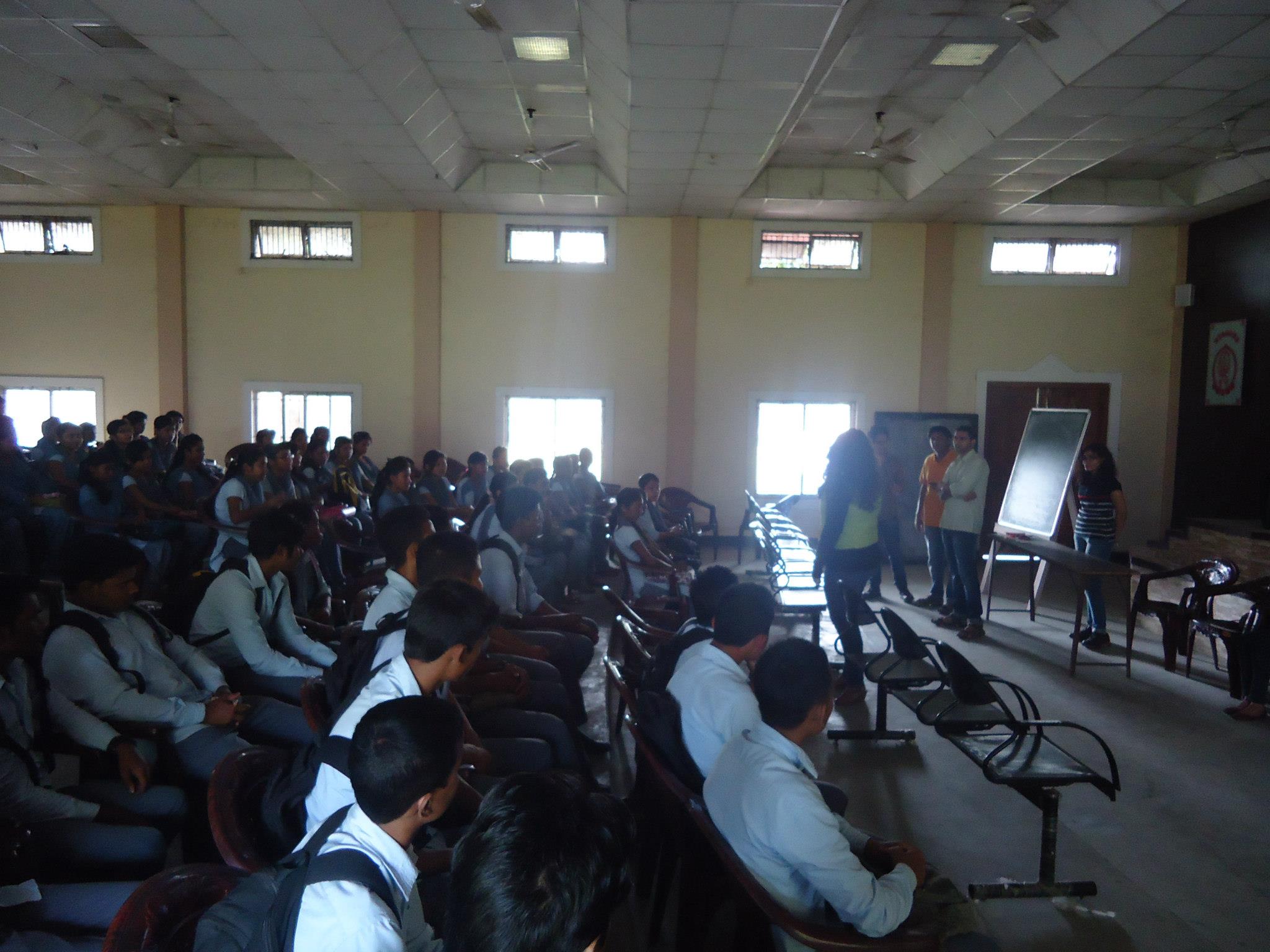
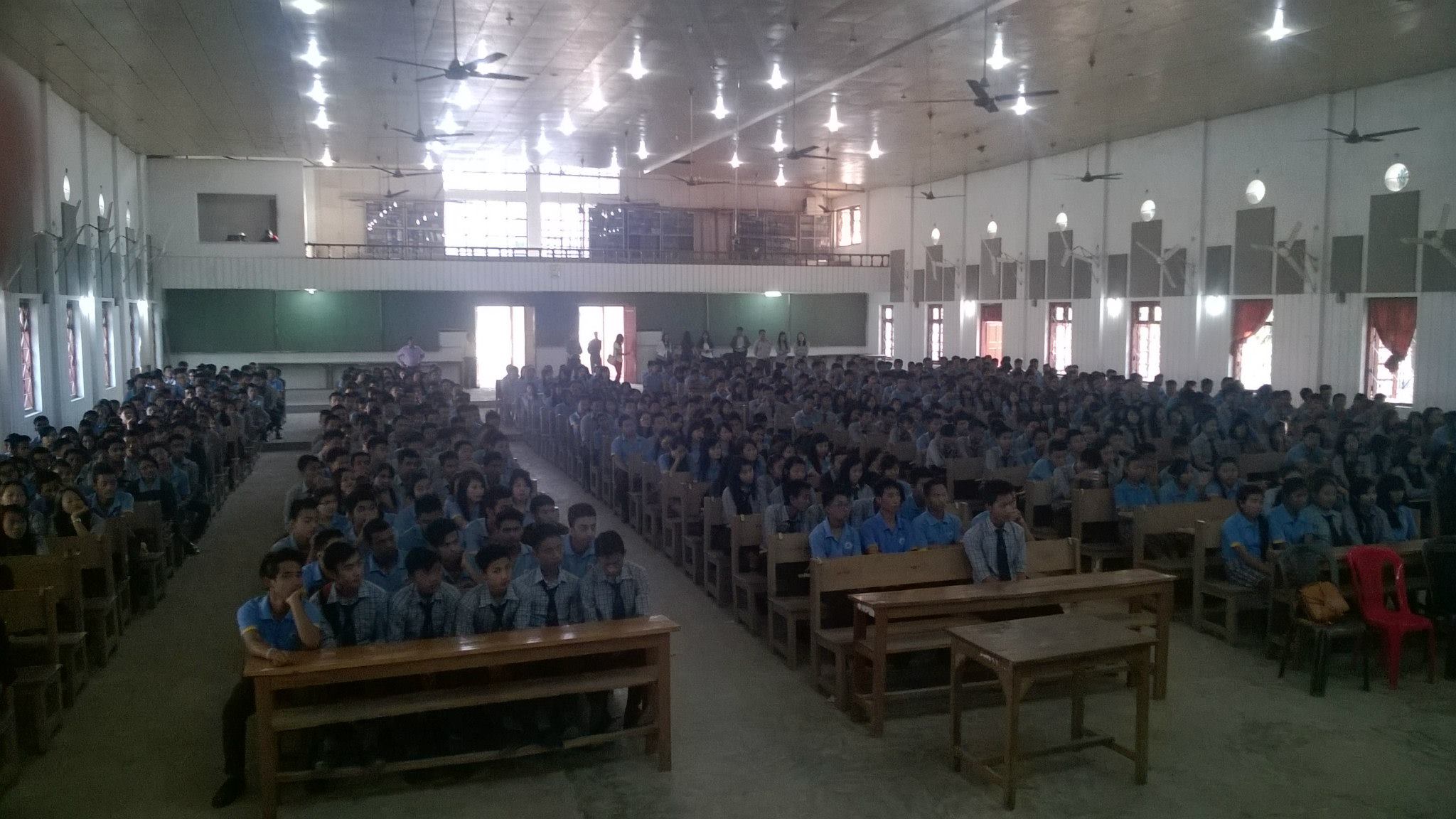
However, life is not a fairy tale and so is my IDIA engagement far from being what one can call a cakewalk. Though IDIA strives for reaching out far and wide yet the inbuilt logistical contingencies have tried to dampen its schemes. However, human mind is biologically atuned to find solutions whenever any hurdle rises and the volunteers at IDIA are inspired to hone the problem-solving instinct. On this, one of the supreme master minds behind IDIA, Prof. Shamnad Basheer  had commented in one of his engaging sessions with the volunteers , “I know there are problems in implementing the policies of IDIA. I know the road is not smooth. I do not want you to come to m with problems and surrender at that. I want you to come to me with solutions to problems.” Little was I able to grasp what he meant by ‘problems’ until my first two years of law school and volunteering at IDIA when I , myself, got exposed to the shocking realities at the sensitization and training  camps in the states of Assam, Nagaland and Sikkim. The process of selecting deserving trainees is the toughest one. It is a myth that goodwill is always reciprocated honour. The North-east chapter of IDIA operates from NUJS, Kolkata.  Indifference, doubts surrounding the organisation’s credibility, questions regarding its reasons for low profile campaigning, unthinkingly tagging IDIA as unauthentic and making it suffer the repercussions of fraudulent acts of other  profit based coaching centres are only few of the troubles we face every year. Human beings are paranoid; it’s only the wavering  intensity of the disease which saves a prescription of mental ill-being. A hand offered for help is disgruntled at more than a hand snatching away rights. The society has numbed people into thinking that there cannot at all be any good done without the giving end expecting anything is return. Though I have faced several questions to prove my authenticity, the most frequent one is “What will you get out of it?”. Incentives drives the man to wake up every morning, race through the day and retire at night. People fail to buy when we say that imparting opportunities to deserving candidates is our only incentive. I despise the connotations of the term ‘social work’. It is seen as something similar to altruism. I beg to differ on that vehemently. My engagement with IDIA is not a one way rewarding process. I derive utmost satisfaction my work. The fact that I hold a position to contribute the least bit to my people, the fact that there are some ten scholars who are being able to get law education because of my team and my unflinching toil and the fact that I am the help to people who need it and which, even I needed but could not get it, qualify as incentives which feature far above the clichéd numerical digit based remuneration.   Our chapter conducts its month-long selection session involving only the students studying in class eleven in that scholastic year in the months of October-November in the targeted states of the region, publishes the final list of trainees by early January and kick-starts the training by early May, with exactly one year in hand for preparing the trainees. This chapter, being headed by profound and remarkable leaders before me, has been able to place a number of students from North-east across different law schools in India and have continuously funded their education expenses in different dimensions. As IDIA trainees, they are enrolled in the local coaching centres, allotted mentors who conduct timely evaluation and guidance sessions throughout the year from Kolkata, through virtual means and in-person visits.  The trainees are also offered a month-long crash coaching sessions at NUJS, Kolkata subject to their willingness to travel all the way from North-east India. IDIA is not just a goodwill organisation. It is a movement against elitism and hereditary privileges. It seeks to distribute power from the concentration in the hands of the selected few to people from all strata of the society. The present pattern of CLAT is such that it is extremely biased towards well versants of the English language and towards the ones to whom technology is easily accessible. CLAT uses English as a ward-stick to measure an individual’s aptitude in legal reasoning. It’s present decision to hold the examination online has further aggravated the issue. It is a shame that vernacular languages are shown the red card and inability to access gadgets is sure enough to bury the dream of receiving quality law education. I would refrain from commenting a general statement but the level of disrespect shown to pragmatism by the initiators of such schemes is worth criticizing. The schemes are founded on the assumption that and well built prior skill of reading and writing English is essential for being able to acquire global knowledge and that the  online formats do not require any computer skills except an average common sense is a myth. The objective of the examination of filtering students based on legal reasoning aptitude gets marred by these short-comings.  I do not wish to ignite any anti-English education or anti-technology debate.   What I wish to assert here is that the ones who have not been able to acquire the above ‘skill’ (mind you, not ‘aptitude’) because of their situational misfortune should not be thrown out of the race. This is because I have closely experienced fear, hostility, low self confidence in potential candidates hailing from rural-low income families studying in vernacular medium when exposed to conversation in English. I have experienced how the sight of the computer; something which they have only seen in televisions and the expectation that they be able to access internet in a place which thrives in constant turbulence, is enough to get them nauseated and scare them off the field. Whilst the knowledge of English language and computer skills should have come as extra weapons in the battlefield, they rather act as deterrents to turning dreams to reality. I have witnessed IDIA’s strong reservations against the aforementioned and I have been thoroughly involved in sympathising with the cause. IDIA’s battles are far from being won. However, considering that we are only few years old, I harbour extreme optimism in the struggles which IDIA takes up.

 They say “With great power, comes great responsibilities” and I could not have agreed more before my stint with IDIA as the Team Leader of North-east chapter. It fills up with both joy and fear that I have the power not only to make people see new dreams, but also the resources to turn them into reality. I am vested with the expectation that I successfully select deserving candidates from the remotes corner of North-east India and expose them to the global window of knowledge. I have the power to wipe off tears of despair because of financial misfortune of budding potential is something which becomes a reason to wake me up every morning and also runs a chill down my spine every night thinking what if I falter. As the Team Leader of IDIA North-east chapter, I have time and again thanked time and circumstances to grant me the best ever volunteer force who are not ‘CV driven to work’ but who unconditionally devote their sincere efforts and energy to enlivening IDIA’s dream.

10549241_938988876130046_411612374273937438_o

After all, the emotion triggered when a certain young lad/girl of your own hometown recognise you as an idol, refer you as their ‘Godmother’ (Cinderella alert; not a single bit of exaggeration there) and look up to with hope that you will help them change their own fate and dawn unprecedented light upon them is unparallel. It fills you up with overwhelming satisfaction, so much so that you do not mind spending a few hours for composing this piece of memoir, just before your end semester commences, because if it were possible you would never let IDIA be a past chapter in your life. No matter which walk of life you are at, every time you read/hear ‘IDIA’, your heart would wrench in happiness and would flash unbound smiles because IDIA is not just an organisation, it is a life changing experience.

Download Now

The Compulsory Promotion, Utilization, Supply and Access of Renewable Energy Bill, 2014: An Analysis

1

Akshay Shandilya is a IVth Year Student of B.A.LL.B. (Hons.) at Hidayatullah National Law University, Raipur. This article was submitted as a part of a blogging contest which may lead to his selection as an iPleaders Energy Law Fellow. The fellow will be selected on the basis on engagement on these posts as well as quality of writing and research. We emphasise on engagement because it shows one’s ability to generate interest in an otherwise arcane subject like energy laws. The selected fellow will receive a paid internship with a boutique energy law firm in Delhi (stipend of INR 7000), an opportunity to be mentored by very senior lawyers  and a free course worth INR 5000 from iPleaders. If you want to participate, write to r[email protected] for instructions.

Anyone with a genuine concern for environment, let alone people familiar with basic environmental law, would know the position of Kyoto Protocol in addressing the challenges posed by global warming.  The Protocol is both praised (for its time bound carbon reduction format) and condemned (for the difference between signatories and ratifications). Industrial countries have recently been making attempts to formally embrace the Protocol and India is one such country; which had ratified the Protocol way back in 2002. However, international commitments do not become obligatory for India even when the State has ratified the document containing them. This is due to the supremacy of Article 253 of the Indian Constitution.  The lucidly framed Article read with Entries 13 and 14 of Schedule VII empowers the Union legislature to statutorily implement those commitments made by the executive in order to fulfill the ratification process municipally. This is further confirmed by a Consultation Paper released by the Law Ministry in 2001 titled ‘Treaty-Making Power under our Constitution’. The paper states: “it cannot be disputed that the creation of the obligations undertaken in treaties and the assent to their form and quality are the function of the Executive alone.  Once they are created, while they bind the State as against the other contracting parties, Parliament may refuse to perform them and so leave the State in default.” Therefore, it becomes proper for Parliament to make law to implement treaties, agreements and international conventions. This marks an induction of international commitments into domestic framework for better execution.

Early this year, “The Compulsory Promotion, Utilization, Supply and Access of Renewable Energy Bill, 2014” (hereinafter Renewable Energy Bill, 2014) was introduced in the Rajya Sabha.[1] By means of the legislation, the law-makers intend to give effect to two international documents in the domestic framework namely, Kyoto Protocol (a certain part thereof) and a UN General Assembly Resolution. This is evident from a simple reading of the Preamble along with the Statement of Objects and Reasons of the Bill.

Preamble to the Bill 

The preamble of the Bill is divided into three sets:

  1. The first is the broad intention to provide for the formulation of a comprehensive renewable policy in the country taking stock of the energy resources to facilitate sustainable and affordable energy planning.
  2. The second recognizes the ratified Kyoto Protocol to reinforce the promotion of sustainable development and increased use of new and renewable forms of energy and of advanced and innovative environmentally sound technologies. It is Article 2(1) of Kyoto Protocol that commits Contracting Parties to promote sustainable development. Then Article 2(1)(a) lists the policies and measures that Contracting Parties shall implement or further elaborate in accordance with their national circumstances such as “Enhancement of energy efficiency” [sub-clause (i)] and “Research on, and promotion, development and increased use of, new and renewable forms of energy…and of and of advanced and innovative environmentally sound technologies” [sub-clause (ii)]. The Preamble restricts the scope of the Bill to these two parts of Kyoto Protocol and does not directly address other facets such as emission reduction, sustainable forms of agriculture However, the need of a special law to give effect to renewable energy policies domestically was certain. If policies are executed in accordance with a statute then an accountability system would also follow ensuring efficiency and success of the plan.
  3. Third part mentions the UN Resolution A/RES/58/210 which recognizes the need for increased usage of renewable energy resource, more efficient use of energy and greater reliance on advanced and cleaner energy technologies.[2]

It can be deduced that the Bill is a conscious effort by the legislature to fulfill what India had signed up for more than a decade ago. This shows that the commitment is not only on paper or diplomatic level but the pursuit is active on a practical echelon as well.

According to Black’s Law Dictionary, “Preamble” to a statute is the introductory statement explaining its basis and objective; especially a statutory recital of the inconveniences for which the statute is designed to provide a remedy. When the Preamble is read with the Statement of Objects and Reasons, the inconvenience the Renewable Energy Bill, 2014 attempts to remedy is evident. While the Government has, throughout the last decade, been initiating plans, policies and schemes to promote renewable energy in the country, several factors have impeded their progress. These factors, as the Objects and Reasons of the Bill point out, are: lack of private financing, enforcement and compliance for renewable purchase obligation, lack of comprehensive renewable energy policies, rapid mechanism for setting standard industrial norms and monitoring the minimum compliance by organizations. Aimed at addressing and removing all the foregoing factors, or as the Bill likes to term it – “barriers” – the comprehensive legislation would be critical to build a strong institutional framework for utilization and development of renewable energy in the country.

National Renewable Energy Policy

Section 3 of the Bill specifies the formulation of a National Renewable Energy Policy. The Central Government, with consultation from State Governments, is tasked with formulating the Policy within one year of the Bill becoming an Act. It would stipulate national renewable energy targets in terms of total renewable energy generation for the next 20 years with a 5 yearly break-up of the targets. The Central Government would also define and set up what has been termed as the “renewable energy quota”. Finally, the progress of the policy provisions, targets and issues would be reviewed annually by a review panel established under the Section.

The system of postulating renewable energy targets is nothing new. The government had been doing it vide Five Year Plans but their inconsistency and lack of achievement is also well known. The other event was when the UPA government released the National Action Plan for Climate Change in 2008.[3] Though it did not spell out the exact percentage of renewable energy targeted out of the total energy mix, simple mathematics revealed that a share of 15% was envisaged by 2020. The National Renewable Energy Policy, on the other hand, indicates that the target stipulation should span a period of 20 years with 5 yearly break-up of the targets. The break-up mechanism is installed as a means to secure better target achievement.

On another note, reading clauses (2) and (3) under Section 3, I strongly believe that the words “sub-section (2)” should be substituted by “sub-section (1)”. This is because of the fact that the power to issue notifications to change targets is laid down in sub-section (1) but the same is wrongly mentioned as being under sub-section (2). This is not merely a misprint as it appears twice and should be rectified.

National Committee on Renewable Energy

Section 4 of the Bill requires the appropriate government to establish a National Committee on Renewable Energy “for the purposes of advising the government on all matters related to renewable energy including those referred to in or arising from the implementation of this Act.” The Section does not lay down the maximum number of members in the Committee but states that it shall have the following as its constituents:

  1. A Chairperson with “special knowledge in the field of renewable energy development and climate change issues”.
  2. One member each, representing the “Central Electricity Regulatory Commission and the State Electricity Regulatory Commission”. This clause also raises a particular doubt. Presently, there are 28 State Electricity Regulatory Commissions (SERCs) in operation in the country. Since the proposed Committee is to be a “National Committee”, established by the Central Government at the national level, then one member each from every SERC need be present. So the provision should end with “State Electricity Regulatory Commissions” rather than just “State Electricity Regulatory Commission”. Probably this was what the law-makers intended but couldn’t convert the intention accurately in the Bill, which cannot be overlooked.
  3. At least two members with judicial The term “at least” has left the cap open-ended on the number of such members who can be nominated once the two seats are filled.
  4. A member representing the Union Ministry of New and Renewable Energy.
  5. A member representing the Bureau of Energy Efficiency (BEE).
  6. Two members representing NGOs working in the field of renewable energy and climate change.

Except the members from CERC and SERC, all other members are stipulated to be nominated by the Central Government. This raises another doubt as to whether the Boards would refer the names of the persons to the government or the Central Government would nominate them. The provision needs to see a clarification on this issue.

Renewable Energy Obligations

Section 14 talks about the renewable energy obligations as laid under Electricity Act, 2003, (hereinafter as EA Act, 2003) and obligates the appropriate Commission to ensure its compliance.[4] Section 86 of the EA Act, 2003, requires SERCs to promote generation of electricity from renewable sources. It further requires state commissions to set targets for obligated entities to purchase a certain percentage of their total power requirement from renewable energy sources. This is called as Renewable Energy Purchase Obligation or simply as Renewable Purchase Obligation (RPO). However, the EA Act, 2003, does not spell out the RPO in numeric terms but calls for SERCs to indicate the same. This means that there can be as many RPOs as there are SERCs and this is where the problem stems out from.

Consequently, different state commissions fix different purchase obligations. This creates a disparity as the regulations also differ in each case.[5] Obligated entities, which are legally obligated to meet RPO terms, in some States claim that the renewable energy capacity in the State is not adequate to even meet the RPO. For eg. Delhi, which does not have enough renewable energy output potential. The concern is amplified by the fact that there is no mechanism for procurement of renewable energy generated outside the State for fulfillment of RPO compliance. Existing RPO regulations across SERCs recognize procurement from only within the State. Under this plea, some electricity tribunals either allow Distribution Companies (DISCOMs) to carry forward their RPO from last year or refrain from imposing penalties. This is causing serious injury to the government and the policy goals are not being achieved.

The Renewable Energy Bill, 2014, seeks to plug this valve as well. Section 14(1)(a) of the Bill specifies that the RPO target shall be fixed at 5% in the initial year and increased by 1% in every successive year. Commissions are also empowered to determine a mechanism whereby increased penalties and stricter regulations are prescribed for RPO non-compliance. SERCs are statutorily obliged to ensure the timely and firm implementation of this penalty mechanism.  Section 14(2) further compels Central and State generators of conventional thermal power plants to generate a particular amount of renewable energy during a specified period. This would be called as Renewable Generation Obligation and the targets thereof would be fixed by the appropriate Government. Such a target would be increased by 0.5% every successive year. The Renewable Energy Certificate mechanism resolves the issue of lack of green energy potential in a State.

Renewable Energy Certification

Section 15 of the Renewable Energy Bill, 2014, states “the appropriate Commission shall promote the obligated entities to use the current Renewable Energy Certificate mechanism for meeting their RPO targets”. It goes on to further state that it shall also promote Government Organizations, Public Sector Undertakings (PSUs) and private companies to undertake voluntary purchase of RECs.

The EA, Act, 2003 contained two provisions Section 66 and Section 178(2)(y) which when read together empowered the Central Commission to make appropriate regulations to develop the power market, including trading thereof. The Renewable Energy Certificate era was launched in this way. The CERC (Terms for Issuance and Recognition of Renewable Energy Certificate for Renewable Energy Generation) Regulations, 2010 contained detailed rules for the same.

Under the REC system, when a generator of renewable energy generates electricity, the obligated entities have an option of purchasing a certain quantum of commodity electricity directly or purchasing a certain amount of Renewable Energy Certificates. These certificates represent the environmental attributes of electricity generated from renewable energy sources and are thus, unbundled from the physical electricity. For every 1 MWh generated the Central Agency (designated to issue the certificates) would issue 1 REC in electronic, dematerialized form. So a REC is market based instrument which provides evidence that a generator has produced a certain amount of electricity from a renewable energy resource.[6] Therefore, it is not actual physical electricity which is purchased but signifies an environmental attribute of renewable energy. RECs can then be traded in the market to meet Renewable Purchase Obligation (RPO), which can be fulfilled by purchasing commodity electricity too. The two categories of certificates are: (1) “solar certificates”, issued to eligible entities for generation of electricity based on solar source and; (2) “non-solar certificates”, issued to eligible entities for generation of electricity based on renewable energy sources other than solar. This means that the obligated entities have to purchase either power from solar power projects or RECs generated by them.

However, the REC sector did not flourish as expected as state distribution utilities failed to honour their purchase obligations, putting entrepreneurs and investors of green energy at risk.[7] While supplies run high, the paucity of buyers and consequent lack of demand compels green companies to drop prices. The Renewable Energy Bill, 2014, intends to revive the promising sector and provide a surge to investments in green energy. Section 15(1) of the Bill allows the Central Commission to define REC in a comprehensive manner. This means that the sector could see a new and improved regulation addressing the loopholes in the present framework.

Investments in Renewable Energy

The Bill provides a safety net to the sector by obliging the Centre and the State Governments under Section 16 to “ensure availability of adequate funding options, incentives and financing means for renewable energy projects to attract private sector investments.” It states further “the financial instruments shall also be promoted to mobilize funds from institutional and retail investors.” Section 17 empowers the appropriate Government to “specify a percentage of electricity supply to be drawn from renewable energy sources as mandatory for private sector companies”. Such companies can meet this obligation by either setting up captive renewable energy plants at their site, purchasing commodity electricity or RECs, or allocate CSR funds for renewable energy installations. Moreover, Section 15 of the Bill empowers the appropriate Commission to introduce renewable energy purchase as a specific activity under the list of Corporate Social Responsibility (CSR) activities. Appropriate Government is authorized to punish non-complying private companies vide Section 17 (2) with monetary penalty, increased targets in successive years and withdrawal of financial benefits and amount so collected shall be contributed to the state clean energy funds.

The provisions further requires the Government to publicly recognize private sector companies which surpass their renewable energy obligation targets and incentivize them through various schemes and rebates. This will encourage capital hungry private corporations to readily outperform when it comes to green energy. Section 17(5) calls for the Government to give priority to products from such companies in case of usage or consumption in Government projects and schemes. The companies would happily oblige because it would not only put them at good terms with the Government but also with the public, as they are reducing the carbon footprint in the environment.

Section 17(6) allows the Government to make it mandatory for SEZs, industrial clusters and upcoming projects to procure a percentage of their energy requirement, if not entirely, by utilizing clean and renewable energy. Before clearing and certifying any project, the Government must also ensure that all avenues of using clean and renewable energy are exhausted. Further, sub-section 7 links the grants and benefits to non-governmental individuals or bodies, by the Government, to their utilization of clean and renewable energy for meeting requirements of the energy component of their projects. So the Bill guarantees enough security to green energy sector by statutorily maintaining a market for renewable energy.

Rural Energy Supply

Finally, the Bill also serves the purpose of providing a roadmap to electrify rural areas by utilizing renewable energy sources. Under Section 18, the appropriate Government is obligated to include a detailed, time bound plan for ensuring energy access and supply to un-served and underserved rural areas and people with the help of clean and renewable energy sources. As a pre-requisite to the same, the sub-section suggests that the household level electrification and energy supply status in the entire country shall be mapped within six months of the coming into force of the Act. Practically, this is a difficult task and the time period is insufficient to match the enormity and the scale of the job. Maybe an amendment could give more flexibility in terms of the time period so that the job can be done efficiently.

The Government is also to promote renewable energy based electrification in local areas and take necessary steps for the same as outlined in Section 20 of the Bill. One of the steps is to “promote innovative business models and support local entrepreneurs through appropriate incentives as may be prescribed by the Central Government”. This step is in complete compliance with point no. 5 in the UN Resolution A/RES/58/210 which is mentioned in the Preamble to the Bill. The point reads “[The General Assembly] Recognizes that rural energy services, including their financing, should be designed to maximize local ownership, as appropriate”. The Government must also ensure that all regional rural banks mandatorily allocate a certain percentage of their funds for lending to the off-grid renewable energy systems.

Conclusion

The Renewable Energy Bill, 2014, is a game changer for companies generating renewable energy. It is slated to provide a steady market for green electricity so that the demand never goes down. This was a major issue which impeded the growth of the sector ever since it was embraced via Electricity Act, 2003. The Government intends to make procurement of renewable energy mandatory in many cases and Commissions have the power of notifying a better mechanism to promote renewable energy. This framework is unique in the sense that it is a mixture of both the worlds. On one hand, India progresses on an ambitious nuclear energy expansion roadmap, on the other; it promotes green energy to the maximum extent possible and inducts stricter penalties for non-compliance with renewable energy obligations. It is a determined act of the Government wherein it recognizes not only its concern to achieve energy security via all possible means but also to maintain adherence with its international commitments to reduce its carbon footprint. Sustainable development is key to active policy planning today, and India cannot take the excuse of being a developing country, disregard all concerns to reduce pollution and industrialize mindlessly. The Statement of Objects and Reasons of the Bill rightly concludes: “Clean and Renewable Energy is no longer an option but the need of the hour.” At the Stockholm Convention Indira Gandhi was quoted as saying “poverty is the worst form of pollution”. Her words have been consistently manipulated to shift the focus of responsibility for environmental degradation on to the world’s poorest people. But in fact it is the poorest who continue to be its worst sufferers. It is as much the responsibility of the State to emancipate the poor as it is its duty to protect them from the perils of pollution and environmental degradation. The enactment of “The Compulsory Promotion, Utilization, Supply and Access of Renewable Energy Bill, 2014” shall go a long way to prove that India is a progressive State with a passionate policy of energy generation which not only seeks to honor its international commitments but also provides a better standard of life for its people.

[1] The full draft of the Bill is available at http://164.100.47.4/BillsTexts/RSBillTexts/asintroduced/Renewble-E.pdf.

[2] Available at: http://www.un.org/en/ga/search/view_doc.asp?sym-bol=A/RES/58/210.

[3] National Action Plan on Climate Change, Government of India, http://www.moef.nic.in/sites/default/files/Pg01-52_2.pdf.

[4] Electricity Act, 2003, http://www.cea.nic.in/reports/electricity_act2003.pdf.

[5] Report on ‘Conceptual Framework for REC Mechanism in India’, ABPS Infrastructure Advisory Pvt. Ltd., June 2009,  http://mnre.gov.in/file-manager/UserFiles/MNRE_REC_Report.pdf.

[6] Trading Renewable Energy Certificates (REC), Power Exchange India Ltd., http://www.powerexindia.com/PXIL/rec.aspx.

[7] Debjoy Sengupta & Peerzada Abrar, Renewable energy certificate market crashes as state distribution utilities fail to meet norms, Economic Times, November 22, 2012, http://articles.economictimes.indiatimes.com/2012-11-22/news/35300733_1_energy-certificates-solar-power-producer-renewable-energy.


Download Now

4 Scary Risks about Director’s Responsibilities for anti-sexual harassment law violations

0

one-person-business-pop_4015

The Sexual Harassment of Women at Workplace (Prevention, Prohibition and Redressal) Act, 2013 imposes a penalty of INR 50,000 on the ‘employer’ for its violation and risk of cancellation of business license by the concerned regulator (it could be the local authority or the sectoral regulator, but exact procedures to avail of this remedy are not specified).

For various reasons, ranging from an attitude of disappointment or cynicism over law enforcement, there has been a continued attitude to remain non-compliant and manage any risks that subsequently arise from such non-compliance. Here, we want to point out popular myths that are preventing us from appreciating the real risk that arises from non-compliance. Even paper-based compliance may not be sufficient, without full, effective and sincere discharge of all responsibilities.

#1 – Rs. 50,000 as penalty for violation is insignificant

INR 50,000 can be peanuts if imposed on the company. What if it is imposed on a director or the CEO? Consider the stigma it would bring. Anti-sexual harassment proceedings are confidential, but proceedings for violation of law by companies are not. Here is the reason how directors can be held at risk.

Under theSexual Harassment of Women at Workplace (Prevention, Prohibition and Redressal)2013 Act, the employer is defined as any person responsible for management, supervision and control of the workplace. With respect to government departments and undertakings, the person who is the head of the organization. Who is responsible for management, supervision or control of a workplace? For example, in case of a partnership or LLP, any of the partners are likely to be covered under this provision (with the exception of sleeping partners who are not responsible for day-to-day management). In case of a company, it could be the branch head, the managing director, CEO are obvious guesses.

Where the entity is a company, reference to the terms ‘officer-in-default’ or ‘key managerial personnel’ may also be made while determining the employer. These concepts are used to determine responsibility for a Companies Act violation, but will most probably be used by courts and regulatory authorities for guidance in attributing responsibility to officers of the company. Typically the persons considered to be officers in default or key managerial personnel are:

  • CEO,
  • CFO,
  • Managing Director, Manager,
  • company secretary,
  • a whole-time director,
  • any other director who has specifically consented or charged with responsibility of compliance with a particular function
  • any other person who has been authorised by the board with a responsibility (especially with respect to keeping accounts or other records)
  • or a person who provides management-related advice to the board (except in professional capacity).

It is not necessary that the full ambit of the concept of officer-in-default or key managerial personnel will be incorporated into the meaning of ‘employer’ when the non-compliant entity is a company. However, as seen above, CEOs, CFOs, managing directors and whole-time directors are at maximum risk, as they are also understood to be in charge of the management, supervision and control of the workplace.

In addition, with respect to branch offices and project offices, the persons heading those offices will be responsible for compliance in their respective workplaces.

#2 – Threat of cancellation of business license is not real

Anti-sexual harassment violations are a little like Trojan horses – you will never know what hit you. Although procedures for cancellation of business license are not specified in detail, check with any company which has been inspected under Shops and Establishment Act for legal compliance. They will tell you that how real this risk is.

In fact, the risk is getting more serious over time. Recently, Maneka Gandhi wrote to industry bodies (FICCI, CII, etc.) to report compliance of their members on a monthly basis to the ministry. The first step on collection of information to ensure organized compliance (punish for non-compliance in an organized way) has already begun.

In fact, the investor community reacted quite early – venture capitalists and private equity investors are insisting that companies are compliant with the law before they make an investment, indicating that they appreciate the magnitude of the risk.

In fact, after the mishap, Delhi Government was quick to ban Uber on other grounds, that is, for not taking a radio taxi license, instead of making a case for anti-sexual harassment non-compliance. Businesses will need to take care of this. It is too dangerous if anti-sexual harassment non-compliance triggers other unrelated regulatory risks in a magnified form.

#3 – Companies Act does not directly impose responsibility on directors

As per Section 166 of Companies Act, directors must are responsible to act in such a way that they promote the objects of the company, for the benefits of the company as a whole, and in the best interests of the company, its employees, community shareholders and for protection of environment. If they do not take active steps towards compliance, are they acting in the best interests of the employees? Since they are not taking steps to handle sexual harassment, what impact it is having on the employees and their work environment? How is that impacting the best interests of the company? Are directors discharging this responsibility effectively?

Note the grave penalty here – if a director of the company contravenes the provisions of this section such director shall be punishable with fine ranging between one to five lakh rupees.

#4 – Directors can get away by taking minimal action for compliance

Uber conducted some verification for all drivers, but the checks were woefully insignificant. No one held its management responsible till everything was fine. When something did go wrong, all hell broke loose. Could it really get away? In fact, under the Companies Act, directors are supposed to furnish a “Responsibility Statement” as part of the Board’s Report (on an annual basis).  As per Section 134(5)(f), the Directors have to declare that they have devised proper systems to ensure compliance with the provisions of all the applicable laws and such systems were adequate and operating effectively.

Can directors declare this in their statement if their company is non-compliant with anti-sexual harassment?

Can directors declare that the systems are adequate and operating effectively if the compliance is just paper-based?

If only form filings and reporting is made but effective information and training to employees and complaints committees is not given, can the systems be adequate and operating effectively?

Here comes the bomb – penalty for violation of this responsibility is INR 50,000 to twenty five lakhs. Every officer in default will be punishable with imprisonment up to 3 years. Scary, isn’t it?

This is not enough. Section 164 of the Act states that a person punished for an offence exceeding 6 months’ imprisonment cannot be appointed as a director for a period of five years. This means that if by chance, a director is sentenced to imprisonment for more than 6 months for such a violation, he or she cannot be appointed as a director again for 5 years. This is not required to be kept confidential either. Imagine the impact on his or her career.

This is also a point of caution for all directors, including independent directors. Many companies have appointed lawyers on their board, who will need to note this.

Some useful references

Not sure if you are compliant? A checklist for compliance and compliance deadlines by the employer is provided here.

Want to conduct organization-wide sensitization and enable your internal team on compliance? Try an online compliance toolkit to ensure 100% sensitization of workforce and assist ICC in implementation is provided here.

Want to build a career as an independent professional or consultant in helping companies comply with sexual harassment laws and ensure a harmonious and diverse workplace? Take a look at India’s only executive certification on Sexual Harassment Prevention and Workplace Diversity, started by National University of Juridical Sciences (NUJS), one of the top 3 law universities in India which is conducted online.


Download Now

END OF AN ERA: WHAT DID WE ACTUALLY ACHIEVE?

1

refinery-514010_1280

Arpita Sharma, is  a 4th Year, B.A. LL.B. (Hons.) student, College of Legal Studies, University of Petroleum & Energy Studies, Dehradun. This article was submitted as a part of a blogging contest which may lead to her selection as an iPleaders Energy Law Fellow. The fellow will be selected on the basis on engagement on these posts as well as quality of writing and research. We emphasise on engagement because it shows one’s ability to generate interest in an otherwise arcane subject like energy laws. The selected fellow will receive a paid internship with a boutique energy law firm in Delhi (stipend of INR 7000), an opportunity to be mentored by very senior lawyers  and a free course worth INR 5000 from iPleaders. If you want to participate, write to r[email protected] for instructions.


Envision a day when you are getting late for your office and you do not have enough fuel in your car’s tank to commute, you rush towards petrol pumps one after the other but you are flabbergast, the petrol pumps are out of fuel too. Just a mere thought of this situation gives you Goosebumps, what if some day this nightmare comes out as reality?

Nine rounds of bids have been concluded so far under New Exploration Licensing Policy since 1999, yet we are not self sufficient in energy sector. 80% of our energy needs are met by imports from the middle-east, if some day their energy market crash, we are in serious trouble too. Even the storage capacity for fuel in India is not that much that it will be able to meet the demands even for one single day. The 254 blocks that have been awarded under the Production Sharing Contract have not generated much prolific results. The last round of bidding took place in the year 2012, which means that for almost 3 years now, India has not awarded any blocks to any investor, which is a very shocking fact in itself in a time when the world is fighting for energy security, India is sitting so calmly with its hands folded as if we have huge oil reserves to meet our demands.

Under the NELP, a level playing field was provided to the bidders and 100% foreign direct investment was also allowed which attracted major players like Cairn in India for exploration and production. However, only this is not enough. We need to understand that unlike middle-east countries and USA we do not have huge oil reserves. There is a huge risk involved in this sector, because of the very high investment and uncertain results. So, the government should formulate such laws and policies that benefit the investors as well.

One of the major factors that drew away foreign investors from investing into exploration and production business in India is multi-window clearance. For each and every small clearance, the investors have to approach various authorities, which make it a very tedious and time taking process. Also, at times even if the companies have obtained clearances, the investors have to face superfluous postponements because of the conflict of interest between the investor and Defense, for instance.

It is the time to look at the bigger picture now; utilizing renewable sources isn’t a pragmatic alternative as of now. We need a lot of research and development in that area yet, but we can still extract whatever we have, non-renewable. So, instead of keeping unrealistic targets, the government should focus on extracting the already existing resources we have and researching in utilization of renewable resources, simultaneously.

It is high time that the government understands the need of aggression towards energy security. There are certain measures that India need to take on priority basis like going for single window clearance, providing enhanced benefits to the foreign player to make India an attractive option for them, improving the governmental policies that have always acted as the hindrance in the smooth functioning of the sector and the most important step that is needed to be taken is that India must stop behaving like a lazy lad and make a move that sends positive signal all around the world.

Apart from this there is a need of a differential treatment for the players that have done major discoveries. The problem here is that the government has this “We don’t care” attitude which costs them heavily. For instance Cairn India has done major discovery in Rajasthan but still we remember that it really had to run from pillar to post in the matter of Vedanta stake acquisition. In a country when already investors don’t see much opportunity such treatment further worsens the situation.

The change in the political scenario of India has surely sent a positive signal all over the world and it is an apt time to use this to the advantage of the country and attract investors and to convince that India is serious and open for business in the oil and gas sector. It is also well known fact that the third world war will be for oil and in that case it is definitely not desirable for a country like India to continue with this “we don’t care” attitude.

Download Now
logo
FREE & ONLINE 3-Day Bootcamp (LIVE only) on

How Can Experienced Professionals Become Independent Directors

calender
28th, 29th Mar, 2026, 2 - 5pm (IST) &
30th Mar, 2026, 7 - 10pm (IST).
Bootcamp starting in
Days
HRS
MIN
SEC
Abhyuday AgarwalCOO & CO-Founder, LawSikho

Register now

Abhyuday AgarwalCOO & CO-Founder, LawSikho