

This article is written by Anuraag Shukla, a student of Amity Law School, Lucknow, on Laws related to sound pollution in India.

This article is written by Anuraag Shukla, a student of Amity Law School, Lucknow, on Laws related to sound pollution in India.
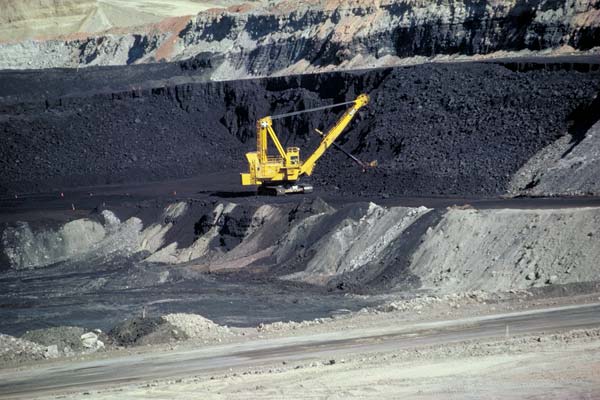

Spare we Black Lung, ain’t a deterrent here: clamors of damped Indian Mineworkers, a far cry to legislature – A Study of India’s lex loci on Mine Hazards wherein Coal Respiratory Diseases, with a reference to American Black lung Laws
This article was submitted by Adarsh Raj Singh Chaudhary, a 2nd year student of B.A.LL.B. (Hons.), University of Petroleum and Energy studies, Dehradun as a part of a blogging contest which may lead to his selection as an iPleaders Energy Law Fellow. The fellow will be selected on the basis on engagement on these posts as well as quality of writing and research. We emphasise on engagement because it shows one’s ability to generate interest in an otherwise arcane subject like energy laws. The selected fellow will receive a paid internship with a boutique energy law firm in Delhi (stipend of INR 7000), an opportunity to be mentored by very senior lawyers and a free course worth INR 5000 from iPleaders. If you want to participate, write to [email protected] for instructions.
“Ours is truly a mineral civilization, a civilization which stands and falls on its capacity to produce staggering amounts of some minerals and varying quantities of many others” [1]
Tis considered, work enables a man to get strong, sufficient and independent, thus in today’s world life, or to live means work, thus work is a reason to life, but the reason this paper is written is death, and life is our purpose, thousands of miner die each year,[2] thus for their support an initiation has been lead, therefore this paper is truly aimed towards enhancing the work conditions and benefits for miners suffering from occupational hazards in India with a contrast on Indian miner’s occupational health laws and American coal miners health law, with a special emphasis on occupational disease also case study is been supplied wherever it deemed necessary.
Albeit, there might be a plethora of occupational diseases, in the present Century assorted communicable and non-communicable and some yet to be defined, but with the recent administrative advancements most of them had got legal status too under varied laws, still when it comes to execution of such laws for serving of the purpose of such acts, whereby behind such laws the sententia legis on certain occasions have been complacent, as if the conundrum of these attenuated miners was a far cry to the legislative ears, though the legislative actions too can’t be completely disregarded as well because even though enough recognition of Black Lung hadn’t been seen in India, still their diddley concerns for the mineworker’s health can be seen through various legislations i.e. The coal provident fund (…)[3], The coal mines pension scheme,1998, Payment of wages (mines) Rules,1956 etc. Hence on such a huge subject (say) occupational disease an attempt had been made against the rife conditions and ongoing exploitation of such occupational employees with a research purely based upon Coal mining Respiratory diseases called Pneumoconiosis and alike – silicosis, Chronic Obstructive Pulmonary Disease (hereinafter COPD), coal worker’s pneumoconiosis(hereinafter CWP) perhaps commonly known as Black lung;[4] a ghost which have had been daunting and haunting the miner’s lungs long past decades whereas the reason why black lung is foremost among occupational diseases being the consequences of it up on the miners, which may equalize with any other natural catastrophe and the incompetence of the Indian laws and processes to protect the mineworkers from such hazard erstwhile, but what can bring much shame than that every year where such thousands of miners are croaking and more thousands are marching forward to their tomb, they still haven’t got any recognition of suffice by the media, law commission and as afore mentioned the legislature of India, and proper reliable surveys could had been possible for these miners in the past decades post-independence.
Mining “means any excavation where any operation for the purpose of searching for or obtaining minerals has been or is being carried on . . .”[5] the same had been lucubrated as:
Mining is one such activities[Sic.] pose variety of problems. Main dangers of mining are related to faulty mining procedures, equipment used, roof collapse, fire, gas-dust explosions, flood. While the risks are lower in modern times, they always exist in some form or other, Lack of safety regulations, failure to comply with, account for many, and if not most of all mining accidents. Many of the mines operate without safety licenses and employ inexperience workers. Mining also presents a series of health hazards, which are mostly ignored.[6]
One of the contributors to GDP of India, mining has contributions “vary[ing] from 2.2-2.5%.”[7]
. . . [To] GDP of the total industrial sector it contributes around 10% to 11%. Even mining done on small scale contributes 6% to the entire cost of mineral production. Indian mining industry provides job opportunities to around one million individuals for direct employment and ten times of this figure indirectly [all over].[8]
Globally, the mine worker’s force contributes 1% to total workforce of world, specifically 30 million of which one third being coal workers, mining supports 300 million people all around the world, Wherein mining is also a fatal job as it accounts for 15,000 deaths annually, where mining workers are subject to approx. 8% of all work related fatalities.[9]
Shifting over Mining to occupational health, it has gained global attention since various mining accidents like in West Virginia’s mine accidents of 20th century is one of the most influential incidents which attracted eyes from worldwide, hence also got recognition in ILO & WHO which defined occupational health as “[o]ccupational health encompasses the social, mental and physical well-being of workers, that is the whole person.”[10] Whereas occupational health and safety can be expressed as follows:
Occupational health and safety is a discipline with a broad scope involving many specialized fields. In its broadest sense, it should aim at:
Work is one of the vital contents of a human lifestyle, wherein it shall be presumed that an average person from mine, office, factory or plantation etc. works at least 8 hours a day, hence for such works safety and healthy environment becomes a necessity under Article 21 of Indian Constitution and that too under U.N Human rights charter, perhaps the employee’s vulnerability to hazard differs from one workplace to another. Whereby hazards at a mining site can be from:
So, considering the hazards from dust, where from the most common and yet lowly discussed disease being BLACK LUNG! And other coal related respiratory diseases have germinated, and went pandemic. “[While] [ ] work[ing] [in] coal mines these miners are covered with dust. It’s in their Hair, clothes and their skin. It gets between their teeth and they swallow it they suck so much of it into their lungs until they die they never stop[Sic.] spitting up.”[13] Their breaths get heavier each day, and in case they need to catch their breath, they have to stop their bread and butter, Whereas Bauxite pneumoconiosis, also known as Shaver’s disease, corundum smelter’s lung, bauxite lung or bauxite smelters’ disease, is a progressive form of pneumoconiosis caused by exposure to bauxite fumes which contain aluminum and silica particulates, similarly when CWP becomes persistent for 15-20 yrs. Then it is known as Advanced CWP [14] known as “. . . miner’s asthma, silicosis, pneumonoultramicroscopicsilicovolcanokoniosis [Sic.], coal workers’ pneumoconiosis, or black lung-they are all dust diseases with the same symptoms.”[15] Etymology for Black lungs can be traced from past 190 years ago in 1822 where breathlessness, coal dust spitting, coughing to miners was coined as ‘miner’s asthma’ by doctors for identification. Later after advances in medical technologies and with further research on the subject the disease came to known as Coal worker’s pneumoconiosis famously known as Black lung.[16] Whereas the term coal worker’s pneumoconiosis was first used by British in 1942, the same year another respiratory disease germinated called silicosis, caused when consumed quartz or silica dust, which occurred in mine workers of metal and non-metal.[17] Though in early times consider 18th century in Europe specially Britain, there was a huge devaluation of threat from Black lung, which got indulged in too much of corrupt practices by the industrialists who tried to prove that improved ventilation system had eliminated the Black lung, whereas some medical experts particularly those which were company oriented said that coal dust was beneficial and did no harm to the miners, to save the profit interests of the company.[18]
One of the major incidents reported can be of Hawk’s nest Tunnel near Gauley Bridge, West Virginia during 1930, where many people being on cloud 9 at getting jobs but the wave of shock arrived when they never returned home, at 1936 congressional investigation, a witness accounted 476 deaths, though after various efforts were made for compensation, still it’s performance went unsuccessful.[19]
The major achievement sought in this field was of British who went successful in 1927 by examining the miners’ chest X-rays differences between silica and coal mine dust exposure, Later, concerned with increasing disability among miners, the British medical research council(hereinafter BMRC) which did an empirical study on such elusive chronic pulmonary disease, in 1937, with wales coal miners. Then in 1945 “[t]he BMRC, laid the foundation of Pneumoconiosis Research Unit near Cardiff, Wales [whose] [ ] contributions have played a major international role in . . . prevention of the disease.”[20] “The International Labor Organization (hereinafter ILO) released a standardized method of describing and classifying the X-ray changes developed by British, these international classification was further refined in 1958 and 1968,”[21] thence “these photographs and X-rays evidencing compartmentalization were made public from the ILO.[22]
ILO, projects around 6 million artisan miners over the globe, especially in poverty struck regions. Thus causing a huge fuss, as these miners do not have any legal status and are also not associated with the mines legally, and thus are the ones who are at ultimate loss, therefore ILO has also came up with some steps against the mining respiratory diseases such as Basic Occupational Health Service (hereinafter BOHS) policies for expansion of coverage and occupational health services across the globe. [23]
Whereas the status quo regarding occupational diseases in India under laws are discussed in workmen’s compensation act, factories act and for miners in various other legislations as follows:
Under the Mines rule, 1955 chapter IV-A, a mandate has been provided with for medical examinations of employee’s and upcoming employees. And thus has following regulations – which “. . . the medical exams are for employees who have done work in mines for at least 6 months.”[24]
“There shall be an owner, agent or manager made on arrangements in behalf of Mining co. which shall be appointed by the central govt. under an official gazette for arrangements of:”[25]
Provided that in the case of a mine where a system of carrying out of such medical examination (of a comparable standard as determined by the Chief Inspector) is already in existence before the date aforesaid, a person who has undergone a medical examination under such a system on a date not earlier than five years before the date aforesaid, shall be deemed to have undergone an initial medical examination under this sub-clause and the last date of his medical examination under the said system shall be taken to be the date of his initial medical examination under these rules;[27]
“Provided . . . the periodic medical examination or the X-ray examination or both, shall be conducted at more frequent intervals if the examining authority deems it necessary to confirm a suspected case of dust-related disease” [30]
Explanation:
Provided that a person who renders himself so liable to be discharged for failure to submit himself for medical examination shall be required to show cause why he could not comply with the notice within the time specified therein. If his explanation is found satisfactory by the management, he shall be given another chance to appear for medical examination. In case his explanation is not found satisfactory by the management, his service shall be terminated by the management:
Provided further that in case of any dispute, the same shall be referred to the Chief Inspector for his decision within 60 days of the order communicated by the owner, agent or manager of the mine to the said person.[Sic.][35]
Exception:
Provided that, if the Medical Officer carrying out the initial medical examination under clause (a), or the periodical examination under clause (b) of rule 29B, or the Appellate Medical Board carrying out the medical re-examination of persons already in employment is of the opinion that the disability of the person examined is of such a nature and degree that it will not seriously affect or interfere with the normal discharge of his duties, it may recommend his continuation in employment in the mine for a period not exceeding six months during which such person may get his disability cured or controlled and submit himself for another medical examination and be declared fit.[37]
The reason for which in the afore mentioned paragraphs the Indians laws being called draconian of the nature is because these provisions never very specifically favor the protection of miner’s health as in case of miners the CWP is a gradually developing disease which cannot be detected at the very early stage and in some cases may take more than a decade, whereas when it comes to litigation in the very court of law, the miners who are of low economic standards, can’t afford good lawyers or lawyers itself at times, thus the cause of these diseases gets highly debated, where in certain cases it was observed in American courts that, the lawyers of mining corporations turned the face of the case during the trails by proving that the CWP so caused in the lungs of the miners were due to their smoking habits, which conclusively excluded the miners from taking the compensation, and when such situation occurs where these miners don’t get compensation they are also expelled from their jobs which at the end force them to continue their jobs even under such a detrimental disease without raising a voice against their authority for such working conditions, tis believed a mirror view of Indian mines can be gained from here too, where same can be made possible through the application of section 3 of workmen compensation act, 1923
Under the occupational disease laws the next legislation is the coal mines regulation – 1957, the aim of such legislation is to provide a mine with precautions and standards from the standpoint of workplace environment in the mines, wherein our focus point is the occupational disease provisions, which is provided in Regulation no. 11 which talks about notice of disease as that when any person contacts with a disease while in course of employment under a mine notified in official gazette of govt., “. . . the owner, agent or manger shall, with three days of his being informed or the disease, give notice thereof in Form V to the District Magistrate, the Coal Mines Labor Welfare Commissioner, the Chief Inspector, the Regional Inspector and the Inspector of Mines (Medical).”[40]
Occupational health comes under inspection cadre of Directorate General of Mines Safety (Hereinafter DGMS), at administrative central Tier under the Ministry of labor and Employment, where:
Occupational Health cadre formerly known as Industrial Hygiene cadre was constituted as Medical Inspectorate in 1942 to administer the health and welfare provisions under Mines Act and Rules. The work of the officers in Occupational Health Cadre in Directorate General of Mines Safety relates to the enforcement of the provisions of Mines Act relating to the health, first aid, sanitation and welfare in mines; overseeing the medical surveillance exercised by the mines management; acting as secretary / convener of various medical boards under the statutes and carrying out occupational health and hygiene investigations and surveys.[41]
The functions of DGMS under occupational health include:
The Judicial endeavor, one of the pillars of Indian democracy and epitome of justice, the works of judiciary especially Supreme Court’s judgment can be counted as one of the most credible works as the honorable court in its recent judgment of Occupational Health and Safety Association … Versus Union of India and others[43] laid the recommendations put forward as suggestions:
Now, after analyzing Indian laws on Coal respiratory disease we may turn to the American Legislations on Black lungs which are counterpart to Indian occupational health laws,
The American Black lung law, after 1977th amendment is an outcome of series of legislations from 20th century which were intended to safeguard the miners, but due to their incapacity they went through long scrutiny by the legislature and finally the American congress came out with a final draft on health of miners or occupational health which had got broadened scope and various other advancements if compared to earlier legislations such as “the federal coal mine health and safety act of 1969”[45] which targeted for maintaining coal mineworkers health conditions. Later came up the black lung benefits act, 1972 which enlarged the claiming person’s eligibility.[46] The final change made in the legislation was brought by the “black lung reforms act,1977 which was enforced from 1st march of 1978,”[47] the major relief was to rail road industries wherein, the miners got delineate which now included a worker who has or did coal construction works or logistics of coal or had or have been working in the vicinity of a coal mine, and the work done was of such a nature that the worker working might have got queered to the coal dust. The definition of miners was also brought up in the following cases below in the next section of judicial works –
The case of Roberts v. Weinberger,[48] in appellate court, the new defined miner inscribed the worker performing jobs like carrying, uploading and transportation of coal till consumer.”[49]
Later advancements were also made in silicosis where:
Damages for silicosis were awarded under the Federal Employers* Liability Act to an engine service man who was required to work in more or less a cloud of silica dust in loading sandboxes of locomotives. The jury in that case found that the dust was necessarily inhaled and entered the employee’s lungs, destroying the tissues by reason of which “tuberculosis has been superimposed, resulting in total permanent disability.’ ” ‘Silicosis’ is a definite occupational disease of the lungs, caused by breathing in air containing sharp particles of dust which lodge in the lungs.[50]
However, the structure of act (black lung benefits act) is as follows:
To be ennobled, for Black lung benefits there have to be these three stipulations fulfilled which are:
if a miner was employed for fifteen years or more in one or more underground coal mines, and if there is a chest X-ray . . . interpreted as negative with respect to (the irrefutable presumption), and if other evidence demonstrates the existence of a totally disabling respiratory or pulmonary impairment, then there shall be a rebuttable presumption that such miner is totally disabled due to pneumoconiosis, or that at the time of death he was totally disabled by pneumoconiosis . . .[54]
“The regulations cited also contain the requirements for evidence to counter the rebuttable presumptions. When length of coal mine employment is less than ten years, proof that the disease arose out of such employment must be established on the basis of actual evidence.”[55]
For claims filed under Part B, the persons entitled to benefits are set out in Section 922(a) of Title 30, U.S.C.; Section 932(c) states that the same categories of persons set out in Section 922(a) are also entitled to benefits under Part C. Those claimants are listed in the statute and in the regulations promulgated by the Secretary of Labor, and published in 20 C.F.R. Section 725, as follows:
3) The child of a miner’s surviving spouse who was receiving benefits under Section 925 or Part C of the Act at the time of such spouse’s death; or
4) The surviving dependent parents where there is no surviving spouse or child, or the surviving dependent brothers or sisters, where there is no surviving spouse, child, or parent of a miner who was receiving benefits under Section 925 or Part C of the Act at the time of death, or who was totally or partially disabled due to pneumoconiosis at the time of death, or whose death was due to pneumoconiosis.
5) The eligible survivors of a miner employed in the mines for twenty five or more years prior to June 30,1971, if the claim for benefits was filed before March 1, 1978, 6) Benefits to an entitled miner or surviving spouse will be increased where there are dependents who meet certain relationship and dependency requirements.[56]
The miner’s monthly benefits are awarded only up to when the disease ceases to exist or the deceased dies, for spouse they continue until whole life or until remarriage. And in case of child these are the conditions – death, marriage, had been of 18, and are not a student or disabled, in case of student till the age of 23 with no disability or when he/she is no longer disabled. [57]
“Provision is made under both Parts B and C for reduction of any benefit payments by the amount of any compensation received under or pursuant to any federal or state workmen’s compensation law because of death or disability due to pneumoconiosis.”[58]
One of the major altruist amendments made in 1977 also includes the limitation on filing of claims, and changed the period for filing a claim to 3 years from date of disability to determination of it.
Under medical benefits are and can only be claimed by the miners affected from occupational disease, the benefits includes medical, surgical, treatment, nursing and hospital services (also logistics), medicines, and any other aesculapian service or supply.
“Operator [who has to]provide benefits . . . [can] participate in the adjudication of the claim, and May . . . miner to . . . [produce evidence] in determining . . . medical benefits.”[59]
While the worker is getting necessary accompaniment such as medical benefits now for survival of him and his family the worker or his/her representative will get monetary benefits too.. Which is discussed as follows?
The amount decided for black lung benefits at monthly intervals is coded in sec.922(a) of the U.S CODE in 30th title, whereas section 932(d) adopts for claims avowed in part C, and the similar amount is provided in section 922 for claims filed in part B, as below:
1) In the case of total disability of a miner due to pneumoconiosis, the disabled miner shall be paid benefits during the disability at a rate equal to 50 per centum of the minimum monthly payment to which a Federal employee in grade GS-2, who is totally disabled, is entitled at the time of payment under Chapter 81 of Title 5 (“basic rate”).
2) In the case of death of a miner due to pneumoconiosis or of a miner receiving benefits under this part, benefits shall be paid to his widow (if any) at the rate the deceased miner would receive such benefits if he were totally disabled.
3) In the case of a surviving child … he shall be paid benefits at the rate specified in paragraph (1). If there is more than one such child, the benefits paid shall be divided equally among them and shall be . . . increased by 50 per centum of such rate if there are two such children, by 75 per centum of such rate if there are three such children, and by 100 per centum of such rate if there are more than three such children.
4) In the case of an individual entitled to benefit payments under (1) or (2) who has one or more dependents, the benefit payments shall be increased at the rate of 50 per centum of such benefit payments, if such individual has one dependent, 75 per centum if such individual has two dependents, and 100 per centum if such individual has three or more dependents.[60]
Hence, up till here we had been discussing what and how about of Mine respiratory diseases, in two different continents as sufferers of pandemic, thus after all the discussions made and references produced, the subject is still left to describe about is nothing but the solution, well solution to black lung or other mine respiratory disease lies in Prevention! Than cure but at places where the disease haven’t turned into in complete shape or rather not reached the last stage the cure suggested is Lung transplant,[61]
“Thus we may also conclude that a corporation running absolutely by the principles of capitalism,”[62] cannot be a society and environment friendly, and same is suggested to Indian mining corporations, that the law should not be created at need of the hour rather prevention is a better and the new cure, so from the inferences made above of American legislations and of the supreme court case, tis believed that miners will see a better and promising future and mining as a career will also provide with equally healthy conditions as of other safe occupational workplaces. Thus being a sanguine visionary it is believed that there will be a tomorrow, a tomorrow better than today and far better than the past, where if the malady not cured completely at least would come down to a level below of nose.
[1] See generally, erich zimmerman, world resources and industries(1933)
[2] richard l. trumka, The Prevention of Dust Diseases in Coal Miners 338(Sep 1938) http://www.jstor.org/stable/3342159
[3] the coal mines provident fund and miscellaneous provisions act, 1948
[4] Occupational Respiratory disease surveillance(Jan. 2015)available at, http://www.cdc.gov/niosh/topics/surveillance/ords/CoalMiningRelatedRespiratoryDiseases.html
[5] mines act,1952 s.(2)
[6] See generally training modules on basic occupational health services occupational health in mining(Jan 2015) http://www.iaohindia.com/home
[7] Id.
[8] Id.
[9] Stephanie Joyce, Major Issues in Miner Health A538 (Nov. 1998), http://www.jstor.org/stable/3434253
[10] Supra n.7 at 2
[11] Id.
[12] Id. n.11 at 3
[13] lorien e. kerr, black lung 50(Mar. 1980) http://www.jstor.org/stable/3342357
[14] Id.
[15] Id.
[16] Id,
[17] Id., see also, stephanie joyce, major issues in miners health A540 (Nov 1998), http://www.jstor.org/stable/3434253STEPHANIE JOYCE, MAJOR ISSUES IN MINER HEALTH A538 (Jan 2015), http://www.jstor.org/stable/3434253
[18] Supra. n.14 51
[19] Id. n.14 51-52
[20] Id. 52
[21] Id. 53 (the international classification talked hasn’t been described much but in brief tis reported to show characteristic chest x -ray changes which have been Observed in workers exposed to anthracite or bituminous coal-mine dust And some other carbon dusts both in Britain and the United States lung Changes observed after death are specifically characteristic.) See also, (The standard films provide differing types “shape and size” and severity “profusion” of abnormalities seen in persons with pneumoconiosis, including Coal Workers’ Pneumoconiosis, silicosis, and asbestosis. The reader then classifies the subject film, often recording the findings on the NIOSH Roentgen graphic Interpretation form. The ILO Classification system pertains to pulmonary parenchymal abnormalities “small and large opacities”, pleural changes “pleural plaques, calcification, and diffuse pleural thickening” and other features associated, or sometimes confused, with occupational lung disease)
[22] Id. 53
[23] Supra, n.7 at 2
[24] the mines rules, 1955(hereinafter mr.) s.29(a)
[25] mr. s.29(b)
[26] Id. s. 29(B)(a)(i)
[27] Id.
[28] mr. s. 29(B) (a) (ii)
[29] Id. s. 29(B) (b)
[30] Id.
[31] Supra, n.7 at 2
[32] mr. s.29(D)(1)
[33] Id. s.29 (D) (4)
[34] Id. s.29 (D) (3)
[35] Id. s.29 (E)
[36] mr. s.29(I)
[37] Id. S.29(M)
[38] Id. 29(N)
[39] Supra n.25 at 6 s.29(0)
[40] Supra n.7 at 2
[41] Id.
[42] Supra n.7 at 2
[43] 2014 AIR SCW 952
[44] Supra n. 44 at 10
[45] c. keith meiser, the black lung benefits act 813(1982) http://www.jstor.org/stable/25762670
[46] Id.
[47] Id.
[48] 27 F.2d 600 (4th Cir. 1975).
[49] Supra n.46 at 11 815
[50] Id. 824
[51] Id. 816
[52] Id.
[53] Id.
[54] Supra n. 46 at 11 816-17
[55] Id. 817
[56] Id.
[57] Supra n. 46 at 11 818
[58] Id. 820
[59] Id. 821
[60] Supra n.46 at 11 822
[61] See generally Barbara Ellen smith, Digging Our Own Graves: Coal Miners and the Struggle over Black Lung Disease,(1988) http://www.jstor.org/stable/40933403 Also See, (the review made by Curtis Seltzer, is also equally helpful and can provide with ample data regarding black lung), Also see ( the article written by Richard l trumka it has specially focused on the miners health issue, the article is named as the prevention of disease in coal miners) Also see (Massive Fibrosis and Simple Pneumoconiosis in Ex-Miners by W. M. Maclaren and C. A. Soutar) (emphasis supplied) Accord (for details one may check the Appalachian journal specially the mining editions)
[62] barbara ellen smith, digging our own graves: coal miners and the struggle over black lung disease,(1988) HTTP://WWW.JSTOR.ORG/STABLE/40933403
Accord id. (the review made by Curtis Seltzer, is complementary to the article, enables reader to clear the stand of writer’s as well as of the reviewer)

This article is written by Geetika Chawla, a 4th Year student of Symbiosis Law School, Noida.
In the golden words of the Great Abraham Lincoln the concept of Democracy is described as of the people, for the people and by the people. Thus, every change which had to be brought in a democratic country has to be made in consonance with this principle which makes the change in a fashion which is of the people’s opinion, for the people’s benefit and by the people’s consent. India, being traditionally a Democratic country, has been following the conventional rules of a welfare state which includes following the social contract theory [1]wherein the people of the state give away their freedom and in return the State provides with protection to their fellow citizens with the charter of Fundamental Rights and Duties. However, when it comes to applying those traditionally accepted conventions Indian regime has shown vivid means to achieve the contrary. A simple illustration can be seen in the working of Indian Government, by first making a contrary law and then putting it under the Ninth schedule[2] of the Indian Constitution which restricts the power to judicially question the same protected through Article 31 A and 31 B of the Constitution. Another issue, is that most of the time, the law of the land has been misused by the ruling government and issue the opposition, benefiting at the cost of the people of the State. The phase of Land Acquisition Laws has been the result of such conflicts, victimizing the people of the state and defeating the concept of Democracy.
The concept of Land Acquisition has been retrieved from the concept of the Eminent Domain[3] which empowers the State to take away the private property owned by the people of the State for development, industrialization and urbanization of the State. The essence of the Land laws has been drawn with the abolition of zamindari system[4] and then redistribution of land amongst the peasants with the fresh trend of industrialization and urbanization in the Indian regime. In this regard the most significant legislation is Land Acquisition Act, 1894, which had prescribed three basic principles for acquiring the land within the purview of this Act i.e., Public Purpose[5], procedure for such Acquisition[6] and Compensation[7] to be received by the displaced one’s. The most crucial aspect of this Act is validating any acquisition of the private property only on the condition if it’s made for the benefit of the people of the state. However, the term public purpose has always been a disputable issue dependent on the facts and circumstances of the case. Other than this, the major lacuna in the legislation was with respect to the term interested person which did not include the one’s whose livelihood was dependent on that land, but did not have any entitlement to it like the people who for a part of Bata System or the Tenancy created over the land. Further, the 10th Law Commission report had also criticized this legislation over the point-lack of public participation to make the legislation overriding the concept of democracy[8].
The continuous implementation of this Act worsened the conditions of the poor farmers and peasants which resulted in widespread public outrage calling for development of Land Acquisition, Rehabilitation and Resettlement Bill, 2011. Earlier, two other bills were introduced on similar lines in 2007, but were lapsed due to dissolution of 14th Lok Sabha session. The 2011 Bill was introduced to rule out the mischief of the prior legislation which has been done by amending the meaning of public interest and further developing the principles of democracy by redefining the Compensation clause as Rehabilitation and Resettlement. This Amendment also brought in the concept of social impact assessment (SIA)[9] which is to analyze the other two principles i.e., compensation in the form Rehabilitation and Resettlement and the entire purpose of conducting acquisition. SIA also provided with the anticipation of loss and expenditure of a particular project to provide with a clear picture whether such a project shall be executed risking the lives of millions. Other major changes were that the Compensation and Consent Clause: compensation to the displaced people would be five times the market value in rural areas and twice in case of urban areas and the consent clause which provides that in case of public private partnership (PPP) and private companies the consent of 70 percent and 80 percent of the displaced ones will be required respectively. However, these provisions didn’t apply to 16 Special Acts like SEZ Act, 2005, Atomic Energy Act, 1962, etc.[10]
However, the political arrangement changed the entire outlook of these legislations when the need of that hour was to repeal the 1894 Act but it was only in September, 2013 with certain changes in the form of Right to Fair Compensation and Transparency in Land Acquisition, Rehabilitation and Resettlement making it effective from the beginning of 2014[11]. Herein two other prominent changes had been seen wherein the most significant aspect of this legislation had been given to fair compensation to the displaced one’s by providing with such a right to seek for a fair and transparent method for compensation the victims by way of Rehabilitation and Resettlement. Also, transparency was seen in its complete sense where the public participation was encouraged at every level, especially in the expert committee of SIA, which provided due weightage to public opinion.[12] The 2013 Act repealed the 1894 Act, however provided with a different retrospective effect which upholds the application of 1894 Act wherein the land acquired and compensation is given as per 1894 Act. The only exception to this is when the acquisition has not been taken place in its true sense i.e., physical possession of the land has not been taken and compensation has not been received by the affected one’s and this has to be 5 years or more before the enactment of the Act, 2013.[13]
Now, with the change of Government, a new set of changes have been introduced to undo the effect of Act of 2013, through the enforcement of Right to Fair Compensation and Transparency in Land Acquisition, Rehabilitation and Resettlement (Amendment) Ordinance, 2014. This ordinance was introduced to[14] remove the consent cause of the people by 2013 Act from 5 major areas i.e., PPP projects, industrial projects, improvement of rural infrastructure and other relation to defense and national security. The government claims this ordinance to be a pro-farmer legislation with better compensation to the affected and displaced one’s and inclusion of 13 Special Acts[15] within the purview of this legislation. The changes introduced by this ordinance have now been taken up as the Land Acquisition Bill, 2015. Another significant change in this is taking away the former step of analyzing and assessing the social impact by removing the SIA.
On 24th February, 2015 an amendment over the current law had been introduced in the name of The Right to Fair Compensation and Transparency in Land Acquisition, Rehabilitation and Resettlement (Amendment) Bill, 2015. This Bill has been introduced to revoke the prior Ordinance and to amend the 2013 Act. The major change brought in is the revocation of the consent clause which again allows the mischief of 1894 Act to prevail. This legislation has been quoted as Anti-Farmer Bill[16] by various opposition leaders which withdraws and takes away the right of consenting to the displacement and the compensation received by the affected and the displaced ones and encouraging public participation at every stage.
The present position is that the Bill has been passed by the Lok Sabha[17] in March, 2015; however, the bill has been opposed by Congress. The result of this amendment has been such that now the plight of the farmers have been muted down but against this trend a petition has been filed by Bharatiya Kishan Union, Gram Sewa Samiti, Delhi Grameen Samaj and Chogama Vikas Avam, and others farmer related organization against this re-promulgated land ordinance in the Apex Court of the Country.[18]
A hype over this issue is created because of the social impact which is overrated by the demographics and culture of the Indian Country where, the land is not seen as a piece of property but greeted as Mother Land or Dharti Maa. This bond is shared among all the farmers and peasants which hold about 70 percent of India’s population. Further, the acquisition is not just a matter of displacement of a segment of population for development but it’s a matter of providing the citizens with the all means to development and not depriving them from mere means of survival. The impact of acquisition is not just over the social condition but the repercussions are seen over the entire social, environment, political and economic condition of the country. Therefore, the consent of people of the country is important as this would impact their present and future. With the implication of this new bill, the sorrow and plight of the peasants, farmers and other displaced ones is muted out which contradicts the entire concept of democracy.
[1] Social Contract Theory, Internet Encyclopedia of Philosophy, available at, < http://www.iep.utm.edu/soc-cont/ >, last accessed on 21st April, 2015 at 9:00 pm.
[2] Article 31 B of the Indian Constitution, 1950
[3] A word on Eminent Domain, International Law Environmental Research Centre, available at , <http://www.ielrc.org/content/a0902.pdf,>,last accessed on 21st April, 2015 at 9:00 pm
[4] Namita Wahi, Land Acquisition, development and the Constitution, available at, <http://india-seminar.com/2013/642/642_namita_wahi.htm>, last accessed on 21st April, 2015 at 9:15 pm.
[5] As per Section 3(f) the Land Acquisition Act, 1894 the expression “public purpose” includes–
(i) the provision of village sites or, the expression, planned development or improvement of existing village sites:
(ii) the provision of land for town or rural planning;
(iii) the provision of land for planned development of land from public funds in pursuance of any scheme or policy of government and subsequent disposal thereof in whole or in part by lease. assignment or outright sale with the object of securing further development as planned:
(iv) the provision of land for a corporation owned or controlled by the State;
(v) the provision of land for residential purposes 10 the poor or landless or to persons residing in areas affected by natural calamities. or to persons displaced or affected by reason of the implementation of any scheme undertaken by government. any local authority or a corporation owned or controlled by the Slate:
[6] As per Section Section4, 5A, 6 and 18 of the Land Acquisition Act, 1894
[7] As per Section 23 and 24 of the Land Acquisition Act, 1894
[8] Supra note 4
[9] As per Section 7(3) and 38 of Land Acquisition, Rehabilitation and Resettlement Bill of 2011.
[10] The Land Acquisition, Rehabilitation and Resettlement Bill, 2011, PRS Legislative Research, available on, <http://www.prsindia.org/billtrack/the-land-acquisition-rehabilitation-and-resettlement-bill-2011-1978/>, last accessed on 21st April, 2015 at 10:00pm
[11] Land Acquisition Bill to be notified early next year, says Jairam Ramesh, IBN Live, available at, <http://ibnlive.in.com/news/land-acquisition-bill-to-be-notified-early-next-year-says-jairam-ramesh/422184-3-239.html>, last accessed on 21st April, 2015 at 10:15 pm
[12] All you wanted to know about new land acquisition Bill, Livemint, available at, <http://www.livemint.com/Politics/FXZ9CrJApxRowyzLd8mb2O/All-you-wanted-to-know-about-new-land-acquisition-Bill.html>, last accessed on 21st April, 2015 at 10:30 pm.
[13] Bill Summary, The Right to Fair Compensation and Transparency in Land Acquisition, Rehabilitation and Resettlement (Amendment) Bill, 2015, PRS Legislative Research, available at, <http://www.prsindia.org/uploads/media/Land%20and%20R%20and%20R/Bill%20Summary%20-%20LARR%20Bill%202015.pdf>, last acessed on 21st April, 2015 at 11:00pm
[14] Cabinet approves ordinance on amendments to Land Acquisition Act, The Economic Times, available at, <http://articles.economictimes.indiatimes.com/2014-12-29/news/57495164_1_land-acquisition-act-resettlement-act-consent-clause>, last accessed on 21st April, 2015 at 10:45 pm.
[15] These 13 Legislation includes: Coal Bearing Areas Acquisition and Development Act 1957, the National Highways Act 1956, Land Acquisition (Mines) Act 1885, Atomic Energy Act 1962, the Indian Tramways Act 1886, the Railways Act 1989, the Ancient Monuments and Archaeological Sites and Remains Act 1958, the Petroleum and Minerals Pipelines (Acquisition of Right of User in Land) Act 1962 and the Damodar Valley Corporation Act 1948, the Electricity Act 2003, Requisitioning and Acquisition of Immovable Property Act 1952, the Resettlement of Displaced Persons (Land Acquisition) Act 1948 and the Metro Railways (Construction of Works) Act 1978.
[16] ‘Land acquisition bill anti-farmer’, The Times of India, available at, <http://timesofindia.indiatimes.com/city/patna/Land-acquisition-bill-anti-farmer/articleshow/46808414.cms>, last acessed on 21st April, 2015 at 11:25pm
[17] Land bill passed in Lok Sabha, The Hindu, available at, <http://www.thehindu.com/news/national/lok-sabha-takes-up-debate-on-land-bill/article6978072.ece>, last acessed on 21st April, 2015 at 11:45pm.
[18] SC to hear plea against re-promulgated land ordinance today, The Hindustan Times, available at, <http://www.hindustantimes.com/india-news/sc-to-hear-plea-against-re-promulgated-land-ordinance-today/article1-1336612.aspx>, last acessed on 22nd April, 2015 at 12:00Am.
Conducting sensitization of employees on sexual harassment is a responsibility of employers as per the Sexual Harassment of Women at Workplace Act, 2013. Unlike the responsibility to create internal complaints committees for handling complaints, which is triggered only if the number of people working is at least ten, sensitization responsibility exists irrespective of the size of the organization. This is not known to most people.
This is a short master guide explaining a roadmap for employee sensitization, which can be used by HR, training departments, compliance professionals, anybody else in the organization who conducts training or even third-party experts engaged for the purpose.
You can train employees working in virtually any kind of capacity and job description on this. Feel free to fine-tune it over time and add further. You will discover your own personal touch with practice. Do not forget to share your learning with us. You can also have a look at our courses to learn more and update yourself with the minute intricacies involved.
We have written this because we realized that opening people up is difficult. Technical talk doesn’t work. Sexual harassment is not a cerebral subject. It is a topic people have strong views and opinions about. To influence behaviour in any meaningful way, objections need to be handled in light of real life, confrontational situations and hard personal experiences.
The objective of the introductory conversation is to ask participants why you are there. Most of them will say it is a training. Explain that the meaning of training appears to be that something about them needs to be changed or they need to be taught how to do something.
Acknowledge that you are not there to train them on how to behave with women.
Establish trust that you don’t think that anyone will misbehave or sexually assault or rape a woman. However, we all have some confusion, doubts and perversions, whose roots we will discuss. In this context, also mention that there is a new law that regulates sexual harassment at work. In some cases there may be too few women and men may not believe that interactions with them are likely to take place. This may not be a permanent situation and the discussion cannot stop here in any case, so take it out of the context of the workplace into a general environment.
The trainer can also ask how many people are married, have working wives, children (who go to school/ college or are working). Ask if they are worried about their safety at work. Explain how the law plays a role in alleviating their apprehensions by creating systems to protect their loved ones.
This also gives an opportunity to them to ask their families if there is an ICC in the wives’ workplace, in the child’s school / workplace? It makes them messengers. It gets them invested in the conversation.
The objective of this conversation is to open the participants to a free exchange where they share their views, pre-conceived notions and opinions about sex and physical relationship between a) men and women or b) men and men and c) women and women. The expert must be able to engage with participants on their genuine views if the rest of this session is to proceed. It can also lay the foundation for a gender-neutral sensitization.
The second objective is to directly enable participants (men included) to relate to the feeling of discomfort caused by sexual harassment, or at least a feeling of being unsafe. The trainer can prompt by suggesting situations which are related to the participants’ lives.
The first step is to ask what sex brings to the minds of the participants and start a frank conversation on intimacy between men and women, their opinion of physical attraction, etc. Draw attention to the possibility of physical relationships between men and men, and between men and women and women and women. Get participants to acknowledge that talking about sex is not taboo – it is possible and prevalent (even behind closed doors) in society. You can source examples from scriptures, media, paintings, etc. The trainer should plant suggestions and get the participants to suggest answers. His or her role is that of a facilitator only, not a lecturer.
You may need to ask sudden questions to a participant to so that their response is genuine and spontaneous – for example, did someone (from the same or opposite sex) show sexual or emotional interest? Was there any situation where it crossed a line, or where they wanted to get away from it but couldn’t? How did it feel? They may or may not acknowledge it. This will help them relate the conversation to their perspective and life, establishing the foundation for their participation.
Get men to acknowledge how it feels to have sexual interest generated towards them. Try to find out examples from the life of someone in the group discussion. (If not unwelcome advances, get them to acknowledge that girlfriends and wives showed interest in them, which opens the possibility that they could also be objectified. That will later on enable them to appreciate how someone else feels when objectified. This is where the discussion becomes relevant to them. Get men to step out of the zone where they think that it is shameful for men to be shown physical interest in.
Point out that sexual harassment can lead a person to feel unsafe at work. Emphasise that safety is not a risk which is unique to women. Help the participants in identifying situations where they feel unsafe, irrespective of their gender. For example, they could feel unsafe about their wives, mothers or sisters traveling to work, staying outside at late nights, their children going to school or for any classes, etc.
Communicate that this is how a woman can feel when sexually harassed. This will help participants relate the conversation to their perspective and life, at least from the perspective of safety, and make them empathetic to the cause. It will help in establishing a strong foundation for their participation.
Once there is a foundation for a free discussion on sex, we can move to the next part of the conversation. It is based around participants themselves recognizing when sexual attention can become uncomfortable. This is a bold and highly charged conversation. A common question which arises in any discussion around sexual harassment is how a person can recognize what is acceptable conduct and what isn’t. What is normal conduct and when does it become unacceptable?
Here, the trainer (if a woman) can start using her physical identity to explain how people who see her would perceive her. The focus is on physical perceptions – a person with a voluptuous figure, gorgeous looks, dangerous smile, etc. She could identify portions of the attire that could generate sexual interest. This demonstrates that women are aware of how men perceive them, that momentary or fleeting ideas and perceptions that do not translate into action are not problematic. It explains that people recognize and appreciate being considered attractive, but also helps a third person in assessing when this can become uncomfortable.
If the trainer is a man, he can directly start explaining (even with humour) examples of how he has felt desirable, and share incidents where there was excessive attention from another man or woman that made him uncomfortable.
The purpose is to identify a universally agreeable line of tolerance or acceptable conduct for everyone at work, without making employees uncomfortable about whether ordinary and everyday work interactions are also capable of being perceived as sexual harassment.
How do we know whose perception about the act being harassing is relevant – the complainant or the respondent? It is important not to get into this and take the argument that post-sensitization, both the complainant and the respondent are brought to such a level that they are both able to recognize unwelcome situations in the same way.
Discussion on ‘unwelcomeness’ of sexual harassment
Men can deny or feel numb or incapable of identifying / reading / recognizing suggestive and unwelcome actions that they take towards women. In a vast majority of cases, they can argue that their behaviour was inadvertent and that in any case their conduct need not have been perceived as having any sexual connotations. It is important that such arguments are not used in hearings.
This situation can be prevented by suitable sensitization, so that there is clarity on what is and what is not unwelcome. However, the tone used to explain what is unwelcome needs to be carefully chosen – the session will backfire if it is sensed that the organization has a pedantic or a ‘we will teach you how to behave’ attitude.
Therefore, if one is attempting to explain how a victim feels, it can may make a listener more defensive or feel guilty and horrible about himself or herself. These feelings may not necessarily encourage alteration of one’s conduct. Instead if a trainer makes the participants connect to experiences of unwelcome conduct in their own lives, they will automatically relate to the pain of a complainant / victim. . Hence, the trainer can make them recall an experience where they experienced or gave in to welcome or unwelcome sexually suggestive action. The purpose is for them to acknowledge that it has or could have happened with them as well.
When do you feel sexually harassed in the most obvious manner? When someone forces you? What do you feel then? Describe a physical action (e.g. undressing, tearing clothes) that makes obvious what the physical form of sexual harassment is. Extend it to rape so that people understand the seriousness, gravity and reality of the situation – otherwise it is understood at a very superficial level.
Next, take it to the stage of a forceful conversation between two people, where there is some persistent suggestion about sexual activity that one of the persons is not agreeable to or visibly uncomfortable about. See if participants can identify situations in their own lives (even without sharing them fully) and relate to them. Expect to face resistance and sluggishness – men find it the hardest to do this.
Next, take it to the level of intent, where someone just has a natural or perverted sexual desire which keeps arising all the time. What can be done about it? Make people admit that they have sexual desires (re-deploy the trainer’s objectification to get them to acknowledge this – create examples where they are tempted by the trainer’s physique, dress, skin, etc.). Explain that men may not always lead in sexual situations and have often found themselves to be seduced or at the other end of the sexually motivated actions of their spouses or companions at different points of time. This will open them up a little.were newly married, or when they are sexually inviting towards them.
Ask men about when they feel most attractive about themselves, and whether they appreciate attention. They will all accept and admit their secret wish about being considered desirable and for being acknowledged. Ask them when it feels like appreciation, and ask them when it gets uncomfortable. Participants may initially deny accepting that it ever gets uncomfortable, or they may say that they have the ability to manage the discomfort – but that still means that it is uncomfortable. Point out that the law is there to address that feeling of discomfort.
If they don’t still appreciate, the trainer can conduct a quick simulation. Ask a person to stand up. The trainer can scan that person person persistently (in a somewhat lecherous manner) to make them feel the discomfort. They will themselves admit to it.
Next, talk about the woman’s perception. What will she do? Explain how just like it is for men, women also like being admired and acknowledged. It is just a trait any human being has irrespective of gender. However, there is a clear and identifiable difference between admired and persistently ogled at. Just because somebody wants to be admired does not imply that that person is inviting unwanted sexual comments or attention, or is of loose character. This realization is extremely important for participants.
Conclude this conversation by emphasizing that the problem does not arise with sexual desire, attraction or attention but on subsequent perverted thinking (if unrestrained) or action that follows from it.
The confusion about whose perception on whether sexual harassment occurred is relevant (i.e. the doer or the complainant) was touched upon earlier, but it is compounded by diversity issues. How can these be dealt with?
At first, it is important to establish the difference between what actually happened and any inferences that were drawn from what happened. The trainer can take the lead and share examples from his or her own life. For example, what is the first impression of:
Explain how these are obviously only first impressions which need not be true. A woman wearing a sari may drink and smoke and may be promiscuous, while a woman who smokes may be committed, hardworking and dedicated. It is important that the relevance of impressions is destroyed. There is a difference between what actually is and all the noise which is introduced in the process of interpretation.
Explain that this is not related to the above situations only, but it is happening all the time. If there are 40 women in the workplace, their male co-workers may have drawn certain inferences or conclusions about them (it is irrelevant whether they are innocent and harmless or negative – the purpose is to explain how we continuously keep drawing inferences).
Give example of somebody who has the habit of more intimate physical contact – someone who talks from a closer distance, someone who habitually pats on the shoulder, back or thigh. Make people recognize what is actually harassment from the previous conversation and what appears to them as harassment due to a different conditioning or background. Do you really need to live in suffocation in such as case? Do you even need to approach an ICC?
Identify as many factors of diversity that could lead to a difference in perception in the context of that organization. Take help from the audience to list down wide categories of situations that could arise in their work context. The expert should be capable of explaining new situations that participants may introduce.
Referring to the above, expand the ambit of sexual harassment at work to include third parties, visitors and outsiders within the work context. Explain workplace. Explain management responsibilities.
The objective of this conversation is to explain to employees what they can do if there is an incident. It is also to inspire trust in the functioning of the complaints mechanism – if it is not used there is danger of unreported complaints, which can adversely impact work environment or unexpected escalation (to media or police) when matters go out of control. .
Explain that the key purpose of the session is:
The purpose is to inform participants about an available workable solution in case an incident happens.
Before proceeding further, it is possible that there is a feeling of dissatisfaction or mistrust amongst participants due to past experiences of inaction or inappropriate action by the company towards some incidents. The confidence will not be fool-proof. People will relate to their past experiences with the company.This should not obstruct the discussion from proceeding and the trainer needs to distil it from the participants and make them place it aside. How can this be done?
The trainer can check if some event had occurred earlier. Ask participants if they know about any event. Ask how they know. Ask if their families know. Ask if them they were the victim or the accused, would they have wanted everyone to know?
This enables them to appreciate the importance of confidentiality, otherwise it remains a technical concept. Explain that the ICC (the Internal Complaints Committee) is an ‘internal’ mechanism that maintains confidentiality, a forum to file ‘complaints’, a ‘committee’ because it is not an individual and has institutional sanctity.
If you still find them reluctant to move forward, ask them why it is not possible to trust The organization. The participants also need to give up what they feel. How else will trust be established going forward if they continue to hold it against them? Are they themselves handling confidentiality, bias, judgment-related issues about the incidents that are around in the right way? Use examples from the above discussion to say how they were mistaken about certain concepts, and how it is possible for officers in the internal machinery of the organization to have made mistakes due to similar dilemmas.
Make people agree to work forward on their grudges and establish that the company and the ICC are working on their responsibilities. Conducting this sensitization is one such proof of this effort. Say that ICC wants help and they should inform whenever there is a problem. This helps them get on board, irrespective of whether they trust right now.
Next, they will be eager to inquire into the legitimacy of the committee. They will ask about appointment, qualifications, role of management, independence of the committee, etc. The trainer needs to be prepared to explain this. Get a briefing from the organization on how they went about constituting the committee (including appointing the external member). The trainer should also go through the 2013 Act and Rules. Also, if they ask if there is a committee in their organization and who the members are, it will give you insights on whether the organization itself has done an adequate job of informing others (putting notices is not enough – if people haven’t really read and understood its implications).
Explain how ICC members have a certain credibility and ability to keep things confidential. Explain how ICC is specifically trained on decision-making like the participants are on certain aspects of sexual harassment.
Simulation exercise: Here, the trainer can create a quick simulation activity and invite 5-6 people who are allocated roles (complainant, respondent, members of the ICC). Explain the basic duties – that they must hear each side and ask questions to find out what really happened.
Ask the mock ICC members to inspire confidence in the complainant to open up. If they fail, show that ICC members are trained to not fail on this. Explain why people will not open up – due to fear of being ridiculed, perception of bias, inability to connect or relate to the ICC or trust him or her.
To connect, ask people who are parents how they find out when their children fight. They ask questions. They ask for evidence (if a toy is broken, where is the broken toy? Relate how complaining children brought others who were present (witnesses) to say how insulted/ embarrassed you were). They relate with this.
This serves two purposes – it enables participants to appreciate the unique role and responsibilities of the ICC and also encourages them to be open with the ICC in future if a situation arises.
Draw the outline of what you explained:
Your work as a trainer is not complete with just one sensitization. Sensitizing workers at one workplace cannot make a huge impact, although it can start a wave. You can give some home work to participants – they can start talking about all these issues in the family and check whether there are systems where their wives / husbands work, in schools or colleges where their children study, etc. If they are not, explain how important it is that their family members talk about it in their respective workplaces. You can ask them to briefly explain what they learned in this session.
If you are stuck or face a breakdown, schedule a call with Pallavi by writing to [email protected]
(With special thanks to Pallavi Pareek, Co-founder, iPleaders.)

.jpg)
This article is written by Raghav Nagar.
“Our lady the Common Law is a very wise old lady though she still has something to learn in telling what she knows”.[1] – FREDERICK POLLOCK
The common law, as aptly put by the fabled English jurist Sir Frederick Pollock resounds of the comprehensive nature of law. This quintessentially universal and sentient law, since its inception has acted as the derivative of human conduct, used to maintain order where there was none. But what is common law? The term in itself may seem self-explanatory though most people do not know exactly what it means: It refers to the unwritten, judge made law as opposed to written law (statutory law). Common law was developed by judges through the decisions of the courts. A common law system was first developed in England from where, with the aggressive expansion of the English empire this system of law too traversed to different parts of the world, of which India became one of its destinations. In the subsequent paragraphs we will discuss the origins of this form of law and its application within the Indian context.
The Common Law is a body of law derived from judicial decisions known as case laws, rather than from statutes. The Common Law derived its authority from the universal consent and practice of the people from time immemorial. This system of jurisprudence initially originated in England. Common Law is unintelligible until expressed in a judgment. It includes those rules of law which derive their authority from the statement of principles found in the decisions of courts. This system of law includes tradition, custom and usage, fundamental principles and modes of reasoning. It is the embodiment of broad and comprehensive unwritten principles, which were derived out of natural reasoning and innate sense of justice.
A Common Law system requires several stages of research and analysis to determine the appropriate law in a given situation. The facts are ascertained properly, relevant cases and statutes are to be identified, and the principle, ideas by various courts need to be understood and applied in order to determine how they would help in understanding the point of law in question within that case. The common law is quite different from codified law as it follows the judgment while the codified law precedes it. Therefore it can be said that it is a system of rules and declarations of principles from where the judicial ideas and legal definitions are derived. This law is ever changing as its principles are influenced by the changing conditions and requirements of the society.
The origin of the common law system can be traced back to England, where after the Norman conquest (1066 A.D.) . The new ruler of England William II brought about a varied number of governmental reforms, as a consequence he also overhauled the legal setup of England.Earlier the legal system of England comprised of county courts presided by the bishop and the county sheriffs, who exercised both criminal and civil jurisdiction. William II introduced the system of Eyre, wherein four judges were appointed by the King, their main function was to review the activities of the county courts and hear cases of appeals. It was used as a tool to centralize control over local courts, thus it provided a basis for the development of common law in England.
The dawn of this system came with Henry II ascendance to power. He is considered the harbinger of a common law system as he created a system of law, common to the whole of England. Some of the features of this system were; firstly a practice developed of sending judges from his own court i.e. a central court established at Westminster, to places around the country for deciding cases in the local courts. These cases were decided with the help of local customs. Secondly, these cases were recorded and filed at the permanent court in Westminster, with the due passage of time these decided cases began to be referred in other cases having similar facts. This principle of law came to be known as precedents. Thirdly, local customs became the primary source of law as they were used in trials to decide points of law. A system of jury was also developed where citizens decided matters of law based on common law knowledge and local customs. Hence the culmination of a centralized system of law with the practice of keeping record of decided cases for future reference wherein customs also played an exemplary role to decide nuanced points of law together gave birth to what is referred to as “The common law”.
The existing Indian legal system can be said to have a contemporaneous existence i.e. with the advent of the English in India. During the 1600s when the enterprising English East India Company forayed into India on the backdrop of trading interests little did the Indian masses or even their future rulers know that they would shape the very foundation of the modern Indian society. This transformation happened in various ways but the most relevant of those developments was the setting up of a new type of judicial system, which was primarily based on the common law system followed in England. As the East India Company took control of territories, leased to them by the Mughals for trading purposes, they were anointed the power to govern all persons belonging to the English government and the company within these territories according to the English common laws by the Crown.
After the company won the battle of Plassey (1757), the Mughal legal system was slowly replaced by the English legal system. In the seventeenth-century admiralty courts were set up in the three presidency towns of the British i.e. Bombay, Madras, Calcutta. These courts derived jurisdiction directly from the company and not the crown to decide civil and criminal matters. In the eighteenth century through a royal charter Mayors were established, they derived authority from the crown. This was the first step in the establishment of a uniform legal system in India. A system of appeals to the Privy Council (a body of advisors to the crown) from such courts was also initiated. In the late eighteenth century, the mayor’s court was replaced with a supreme court in the presidency towns. “This was the first attempt to create a separate and independent judicial organ in India, under the direct authority of the King. The Chief Justice and puisne Judges were appointed by the King. This court had jurisdiction over civil, criminal, admiralty and ecclesiastical matters and was required to formulate rules of practice and procedure. Appeals from this court lay to the Privy Council.”[2] It was to be a court of record and was to hold such jurisdiction as the court of Kings Bench had in England by the common law of England. Local civil and criminal justice was left under a system known as the “adalat system”.

Later by the mid nineteenth century through another act of the crown i.e. Letter Patents Act of 1862, the High Courts were established in place of the Supreme Court in each of the presidency towns and were further established in other provinces as well. These courts exercised the same powers as that of the Supreme Courts and appeals lay to the Privy Council. The setting up of The Law Commission to review the Indian legal setup lead to the coding of the laws, such as the Indian Penal Code of 1862 regarding criminal matters was drafted under the stewardship of T.B Macaulay. The Evidence Act of 1872 and The Contracts Act of 1872 were envisaged by the same commission. Thus all these developments lead to the creation of a judicial system, which was predominantly based on the Common Law system of England.
The application of common law has been overarching in the Indian context; it has been enshrined in the Indian legal system over the space of two centuries by the English to the point that one can’t allocate an individual identity to Indian jurisprudence. Thus it can be said that common law has been applicable here though in a different format than that of England as the needs and demands of the Indian society were different from that of the English. It is to be found out that much of the law compiled in codes we have today were primarily derived from the Common Law principles. The basic statutes governing civil and criminal justice are the Indian Penal Code, 1860, Indian Evidence Act, 1872, the Code of Criminal Procedure, 1973 and the Code of Civil Procedure, 1908. It has already been discussed how these laws came into being, one thing can be said about these legislations is that they have stood the test of time with minimal amendments. Codification of laws made the law uniform throughout the country and fostered a kind of legal unity in fundamental laws. The Codes apply uniformly throughout the nation.
Another contribution to Indian legal system by Common Law has been the adversarial system of trial. In this system the accused is presumed to be innocent and the burden is on the prosecution to prove beyond reasonable doubt that he is guilty. The accused also enjoys the right to silence and cannot be compelled to reply. The truth is supposed to emerge from the respective versions of the facts presented by the prosecution and the defence before a neutral judge. Both the parties have a right to question their witnesses and the opposing side has a right to test their testimony by questioning them. . The judge acts like an umpire to see whether the prosecution has been able to prove the case beyond reasonable doubt and gives the benefit of doubt to the accused, his ultimate duty being to pronounce the judgment regarding the matter.
The system of Precedents derived from the Common Law too has wide application within the Indian legal system, a precedent in Common Law parlance means a previously decided case which establishes a rule or principle that may be utilized by the court or a judicial body in deciding other cases that are similar in facts or issue. Initially the English judges and barristers presiding and practicing in the Indian courts followed the decisions of the courts in England, thus slowly the concept of precedents came to be ardently followed within the Indian courts. This law has been carried forward in the present day Legal system as in regard to the judgments of the Supreme Court of India the Indian Constitution provides that “The law declared by the Supreme Court shall be binding on all courts within the territory of India.”[3]Hence it can be said unequivocally that Common Law has wide application within the Indian Legal fold as many of the features of this system have been adopted and further developed from that of The English Common Law System, even though its application hasn’t been discussed in entirety and only the major principles derived from it have been discussed.
Thus it can be said that common law traces back its origins to England and is primarily a method of administering justice, which has incorporated different aspects of the legal pedagogy and practice with the help of deliberations of laymen and the learned over the course of time. In the Indian context the common law initially was applied for the convenience of the English, so they could govern their territories properly but, as they became the overlords of India the common law became common for Indians. There developed a symbiotic relationship between the Indian customary law and the common law which gave birth to the modern day Indian legal system. Hence we can say India has an organic law as a consequence of the common law system
LawSikho has created a telegram group for exchanging legal knowledge, referrals and various opportunities. You can click on this link and join:
https://t.me/joinchat/J_
[1] (Pollock Fredreick, The genius of the common law, 1911).
[2] KG Balakrishnan, An Overview of the Indian Justice Delivery Mechanism,2008, http://www.supremecourtofindia.nic.in/speeches/speeches_2008/abu_dhabi__as_delivered.pdf.
[3] Indian Constitution, Art. 141.


This article is written by Niharika Malhotra, a student of Jindal Global Law School, Sonepat.
BDSM (BD- Bondage and Discipline, DS- Dominance and Submission, SM- Sadism and Masochism) constitutes a part of sexual activity that couples indulge into to give pleasure. In the case of BDSM, partners involved are deeply intimate and have a need to explore their sexuality through other means. It involves administering pain to get pleasure and usually it is limited to penetrative sex and not necessarily peno-vaginal. This also involves heavy power exchange and gives absolute control to one of the partners.[1] The sadist/ dominator or dominatrix does the act and the pain is inflicted upon the other partner known as the submissive. The idea behind BDSM is to enjoy the pain. This is because psyche of desires is vast and in search of one’s sexual likes and dislikes, people indulge into various activities, infliction of pain being one of them. Since BDSM involves a notion of power exchange, Foucault spoke about this kind of discipline and its relation with sexuality. He describes power not as a privilege to conquer but as a strategy or a tactic that is deciphered in a relationship.[2] It is a model that focuses on perpetual battle. According to him BDSM, amongst many other projects, is a different discourse that will focus more on desires and challenges heteronormative norms.[3] BDSM can be best explained using Foucault’s idea of power dynamics that states power is not external; it is internal and has rationality behind it. Furthermore, Foucault concentrates on the point that in BDSM is a kind of sexual practice that goes beyond societal meanings of dominance and submission, masculinity and femininity.[4] For example, a kind of BDSM- Femdom, which denotes female dominant, does not have a notion of anything abnormal when a male is a submissive.[5] That male will not be and is not defined by other BDSM practioners, thereby, not giving any stringent definition to any particular attribute.[6] What is more interesting is that the true notion of BDSM does not give a male submissive to think himself of unmasculine just because he prefers to be a submissive.[7] In other words, there is no normalization of attributes restricted to one sex like masculinity/femininity or dominance/ submission.
Therefore, making BDSM more liberal than any “normal” sexual intercourse. However, exploring sexuality in such a liberal manner becomes complicated for two reasons- first being the idea of consent and secondly intervention of state when a private activity involves intentional bodily injury for pleasure.
Consent factor in BDSM plays the most important role not only because the act itself can be injurious towards the submissive but also because it is the only factor that distinguishes any healthy sexual act, like BDSM from a coerced sexual act constituting sexual assault, sexual harassment or even rape after the 2013 amendment. The partners indulging into BDSM perform a scripted ‘scene’, negotiate to set limits and only then consent is given. However, according to literature of BDSM, practitioners of BDSM often test their limits and this way the concept of consent becomes slightly confusing. Therefore, as a rule there are hard limits, soft limits and safe word. A safe word is used to indicate that the submissive wants to end the act and at that very moment the consent cease to exist. Therefore, if the dominator/ dominatrix continues to do so despite the use of safe word by the submissive, it’ll be constituted as sexual assault or sexual harassment or even rape.
This is a simple notion and couples who practice this are mostly aware of such rules. The problem starts when BDSM activities involves breath play (erotic asphyxiation) or any other form of BDSM act that involves temporary loss of consciousness of the submissive. In the case of R v. JA[8], where in the couple was involved in breath play and once the submissive was unconscious the dominator (JA) inserted a dildo in her anus. After regaining consciousness, JA took off the dildo and thereafter they had normal intercourse. After two months the submissive (KD) lodged a complaint against JA for sexual assault and said that her consent was only for breath play not for inserting a dildo in her anus. The court then discussed the issue of consent and came to the conclusion that consent must be continuous conscious consent and prior consent is not enough as mind should be ‘capable’ of consenting.[9] In other words, if a submissive is unconscious, he/she is not capable of consenting and therefore, it will be assumed by the court that no consent was taken even though the submissive might have given prior consent. In the article, “Asking for it: Erotic Asphyxiation and the Limitations of Sexual Consent”[10] by Ingrid Olson, the author has criticized the judgment. Olson argues that prior consent is enough and loss of consciousness should not cease the consent given prior to the sexual act. This argument is problematic at various levels and puts hard burden on the victim to prove otherwise. This argument is also problematic as it can easily dilute existing rape law as even a discussion like “we should try this” between couples can be counted as consent and rapes can be justified. Furthermore, BDSM has an aspect of using safe word, which is used by a submissive to cease the consent. If prior consent is accepted then using a safe word will loose its existence. In the same case, the defendants argued that breath-play within BDSM must form a different category just like medical surgery. This argument has no relevance as a different level of care and diligence is involved. A surgeon is well trained and various kinds of obligations are also involved, as opposed to a dominator/dominatrix who might be unaware of the consequences. Thus, defining the line between a healthy BDSM act and sexual assault, sexual harassment or rape. Therefore, the idea of prior consent seems problematic. However, it is still unlikely to make people aware whoever practices BDSM after taking inputs from pornography or erotica about consent issue. This is only possible if mindset of the society is exposed to such ideas.
This exposure seems problematic, as government might not recognize BDSM as part of sex culture. At the same time assistance from the legislature seems tempting to make laws and convict the dominator/dominatrix for inflicting pain on the submissive. However, is it right to let state interfere in a private sex life? Such a question was posed in England in the case of R v. Brown[11]. In this case, the men had videotaped their BDSM act for their private viewing and this police got to know about this videotape. They charged them for assault for causing bodily injury with or without weapon. The court did realize that none of the partner had lodged a complaint or required medical care, but the focal point of the case was that an illegal act of causing bodily injury was being committed. The defendants argued that the act being done in private, all possible precautions were taken, consent was taken and they were used to such BDSM activities. However, the Crown responded by saying that society must be protected from the cult of violence and one cannot legally consent to it. Thus, by following a similar ideology they saw the submissive partners as abetting in a crime by consenting to it. This entire paternalistic approach disregards the fact that one may have a sexual agency or desire. State often ignores psyche of desire and looks at everything from a lens of obscenity. Therefore, state intervention should also be very well thought of and must not be taken too quickly.
Before everything else, it is very important to understand that before making State understand psyche of desire and its unwanted hypocrite attention, we needs to educate people about what healthy BDSM sexual act constitutes. This process by no means curbs or bans erotica or pornography material, but merely sensitizes people about exaggeration of depiction. One of the best ways to do so is to engage in a dialogue, which should constitute a strong and definitive meaning of consent (ruling out the consent debate on rape) and various components of BDSM like hard limits, soft limits and usage of safe word. It is important to understand that BDSM is a different aspect of sexuality and should not be seen in an isolated manner just because it involves a different technique to explore one’s sexuality.
[1] “Consent v. Coercion: Interactions Highlight a Fine but Immutable Line”, by Dulcinea Pitagora, The New School for Social Research, Published by The New School Psychology Bulletin, 2013, Volume 10, No. 1
[2] “The Pleasure of Discipline and Punishment: A Foucauldian Analysis of Power Exchange in Female Domination”, by Carlon Robbins.
[3] Id
[4] Id
[5] Id
[6] Id
[7] Id
[8] R. v. J.A., 2011 SCC 28
[9] Id
[10] “Asking for it: Erotic Asphyxiation and the Limitations of Sexual Consent”, by Ingrid Olson, Published by Jindal Global Law Review. Volume 4, Issue 1, August 2012
[11] R v Brown [1993] 2 All ER 75

-2.jpg)
This article was submitted by Ayush Agarwal, a student of UPES as a part of a blogging contest which may lead to his selection as an iPleaders Energy Law Fellow. The fellow will be selected on the basis on engagement on these posts as well as quality of writing and research. We emphasise on engagement because it shows one’s ability to generate interest in an otherwise arcane subject like energy laws. The selected fellow will receive a paid internship with a boutique energy law firm in Delhi (stipend of INR 7000), an opportunity to be mentored by very senior lawyers and a free course worth INR 5000 from iPleaders. If you want to participate, write to [email protected] for instructions.
We may be concerned about environment, sustainable development and depleting resources but the fact that price of oil affects us the most cannot be turned down. Petroleum becomes the prime concern of every individual, be a common man or a rich man. This sector directly or indirectly effects every business operation and every government unit includes this agenda of petroleum in its manifesto. I don’t need to address the importance and benefits of petroleum sector in India, we run and live on it.
The problems that we face today is that despite of Petroleum and Natural Gas sector being the most profitable and the most known sector, remains judicially undeveloped when compared to the nuclear, electrical and coal sector of the energy. The prime issues of this sector which remains untouched is that the absence of competitiveness. Bill was introduced in the year 2005 to deal with issue. The bill was named as the Petroleum and Natural Gas Regulatory Board Bill (PNGRB), 2005 and bill was notified on 31st March 2006.
The objective behind introducing the Petroleum and Natural Gas Regulatory Board Bill (PNGRB) was to establish a board to regulate the refining, processing, storage, transportation, distribution, marketing and sale of petroleum products and natural gas. The bill was introduced to protect the interest of consumers and entities, to ensure uninterrupted and adequate supply of the petroleum, petroleum products and natural gas in all parts of the world. The bill was introduced to promote competitive markets and for the matters connected with it.
The bill mandates the Board to appoint a Registrar to register down all the activities related to the Petroleum, Petroleum and Natural Gas. Under this act registration is compulsory for marketing and establishing any activity related to petroleum, petroleum products and natural gas. The registrar had been given power to make authorization for laying, building or expanding city or distribution network or any common carrier.
The registrar had been given power to register entities, to make authorization, to receive application and to grant the required permission. After the process is completed, it’s the responsibility of the registrar to make the authorization public.
The board will act as Arbitration unit where any matter related to Petroleum and Natural Gas agreements can be referred.
The funds will come from the Central Government for paying in the salaries and allowances payable to the Chairman and the other board members and the administrative expenses including the salaries, allowances and pensions payable to the officers and employees of the board. All the grants, fees, penalties and charges received by the Board shall be credited to the Fund, apart from those received from sources approved by the Central Government. The creation of such a fund aims to make the Regulatory Board, financially independent of the Government, to an extent as otherwise the very purpose of setting up an independent regulator would be undermined. The Bill expressly empowers the Central Government to constitute a committee to determine the budgetary
The Board under the act is empowered to levy fines for non-compliance with the regulations:
The present act will regulate all the downstream activities such as the refining, storage, transportation, distribution, marketing and sale of petroleum, petroleum products and natural gas.
Framework for Transportation and Marketing
Petroleum and Natural Gas sector had been a great concern in the past. The Government while making the bill, kept the same in mind and following this gave huge power to override the decision made by this Board.
The major problem which came into existence before this act came into picture was the Construction of Pipeline. Constructing a pipeline is very capital intensive process and it’s not economically viable to setup more pipelines in a place where one pipeline already exists. Pipelines act as natural monopolies. The act will grant access to the other uses to use the pipeline already installed on payment basis. All transmission pipelines (except pipelines to a specific customer and upstream pipelines) will be either common or contract carriers.
Authorization for laying a pipeline will be done through a competitive bidding process. Parties will be given three months to declare interest in laying the pipeline. The total capacity of the pipeline will be that of the proposer as well as contracts entered into. The proposer will have to satisfy the conditions that in future, capacity can be increased by 25% within a 120 day notice period. This excess capacity will be available for use on a non-discriminatory, open access, first come first serve basis.

This article is written by Shivam Dubey, a student of Christ University.
Shareholders Activism is considered to be a set of “proactive efforts on the part of shareholder to change firm behavior or governance rule.” It signifies the efforts on the part of shareholders or minority shareholders to influence the management in governing the company. Shareholder activism can take shape in an atmosphere where the regulators demand that minority shareholder interests are protected. The Companies Act 2013, following revisions to Clause 49 of the Listing Agreement and other regulatory changes by SEBI have ushered in many changes that enhance the corporate governance landscape in India.[1] The requirements for greater degree of disclosures by companies aided shareholders to analyze particular actions and make better-informed decisions.
In a large public company where shareholdings are diffused, while shareholders are the owner of the company, the managers control the company as shareholders are unable to participate in decision making due to collective action problems. Even in controlled companies, which are predominant in India, collective action problems prevent minority shareholders from, coalescing, which reduce their effective participation through the exercise of corporate franchise. In such a case, the lack of minority shareholders participation augurs to the benefit of controlling shareholders, and managers appointed with their concurrence. Related to collective action problem is “shareholder apathy”. Since the cost of coordination among minority shareholders is high, these shareholders are either abstains from voting or merely vote in favor of management (or controlling shareholders as the case may be). The continuous oppression of the rights of shareholders (especially minority shareholders) evolved the concept of Shareholders Activism in India.
Shareholders participation in India has been enhanced by new capital market rules and Company Act 2013. These regulations empowered the minority shareholders and now they can make their views known, and more actively defend their interests. Shareholders participation in the management of company has been enhanced by following ways:
Section 108 of Company Act 2013 says that a Central Government may prescribe the class or classes of companies and manner in which a member may exercise his right to vote by the electronic means. Moreover, Companies may provide video conferencing connectivity during such meeting in at least five locations in India.[2] General meeting of company are held at their registered office, therefore it is very difficult for the shareholders to travel to such a location. In particular, members holding a few shares of the company find it futile to travel so far to cast their vote. E-voting has eliminated such problems and now shareholders can cast their vote electronically and participate in a decision making policy of a Company.
In July, 2012 SEBI amended the listing agreement requiring large companies to provide electronic voting (e-voting) facility in respect of matters requiring postal ballot. According to this dispensation, the top 500 listed companies on the Bombay Stock Exchange and the National Stock Exchange now provide e-voting facility and this is quickly being extended by all listed companies.[3]
Section 188 of Company Act 2013 requires consent of a Board of Directors by a resolution for a Company to enter into any contract or arrangement with related party. Such contract or arrangement shall be referred to in the Board’s report to the shareholders along with the justification for entering into such contract or arrangement.[4] Where any contract or arrangement is entered into by a director or any other employee, without obtaining the consent of the Board or approval by a special resolution in the general meeting and if it is not ratified by the Board or, as the case may be, by the shareholders at a meeting within three months from the date on which such contract or arrangement was entered into, such contract or arrangement shall be voidable at the option of the Board and if the contract or arrangement is with a related party to any director, or is authorized by any other director, the directors concerned shall indemnify the company against any loss incurred by it.[5]
Section 245 of the Companies Act 2013 empower the member, members, depositor or depositors or any class of them can file an application before the Tribunal on behalf of the members or depositors, if they are of the opinion that the management or conduct of the affairs of the company are being conducted in a manner prejudicial to the interests of the company or its members or depositors.[6] Where the members or depositors seek any damages or compensation or demand any other suitable action from or against an audit firm, the liability shall be of the firm as well as of each partner who was involved in making any improper or misleading statement of particulars in the audit report or who acted in a fraudulent, unlawful or wrongful manner.[7]
Greater efforts have been made by Government of India and SEBI to encourage participation of mutual funds in corporate decision making. In 2010, SEBI has enacted a circular to mutual funds requiring them to play an important role to exercise their voting rights in the investee company in a responsible manner. Moreover, the circular says that the asset management companies of the mutual funds to disclose on their websites their annual reports and their general policies regarding the exercise of their votes in the listed companies.[8]
Since 2010, the proxy advisor industry has blossomed in India. Within a span of 2 years three proxy advisor firms have been established in India, and they have already published hundreds of recommendation regarding corporate proposals relating to various listed companies in India. Their recommendation includes companies proposals relating to appointment of directors (especially independent directors), the appointment of auditors, and major corporate transactions such mergers and takeovers. No longer can management and controlling shareholders ignore the influence of minority shareholders. The recommendation of a proxy advisor firms have the effect of shedding greater light on corporate proposals, and of galvanizing minority shareholders to overcome collective action problems and shareholders apathy and to participate more effectively in corporate decision making.
Section 241 of Companies Act 2013 says that any member of a Company (including minority shareholders) can file an application before the Tribunal if the affairs of the Company are being conducted in oppressive and prejudicial manner.[9] The Central Government, if it is of the opinion that the affairs of the company are being conducted in a manner prejudicial to public interest, it may itself apply to the Tribunal for an order.[10]
Section 151 of the Companies Act 2013 requires that a listed company should have one directors elected by small shareholders in such a manner and with such terms and conditions as may be prescribed by the Central Government. small shareholders includes a shareholder holding shares of nominal value of not more than twenty thousand rupees or such other sum as may be prescribed.
In a large Indian Companies, the Public or Private, shareholders have relatively small stakes and these do not provide sufficient incentives for them to act together and form coalitions to meaningfully participate in the decision making of the company. But, the recent Company Act 2013 and rules and regulations enacted by SEBI have protected the rights of Shareholders (especially minority shareholders). It galvanizes minority shareholders to overcome collective action problems and shareholders apathy and to participate more effectively in corporate decision making.
[1] Shriram Subramanian, Shareholder Activism In India, http://www.ingovern.com/wp content/uploads/2015/02/Shareholder-activism-in-India.pdf (Last accessed 10/04/15 at 12:55).
[2] Ministry of Corporate Affairs, Government of India, Green Initiatives In Corporate Governance- Participation by shareholders in General Meetings under the Companies Act, 1956 through electronic mode , General Circular No. 27/2011 (May 20, 2011).
[3] Security And Exchange Board of India, Amendment to the Equity Listing Agreement – Platform for E-Voting by Shareholders of Listed Entities, Circular CIR/CFD/DIL/6/2012 (Jul. 13 2012).
[4] Companies Act, 2013, §188 (2).
[5] Companies Act, 2013, §188 (3).
[6] Companies Act, 2013, § 245 (1).
[7] Companies Act, 2013, § 245 (2).
[8] Securities and Exchange Board of India, Circular for Mutual Funds, SEBI/IMD/CIR No 18 / 198647/2010 (Mar. 15, 2010)
[9] Companies Act, 2013, §241(1).
[10] Companies Act, 2013, §241(2).

This article is written by Ashwini Sharma, a 2011 graduate of NUJS, Kolkata.
The Small and Medium Scale Business (SMB) sector has been struggling in India, as it continues to groan under the burden of license raj era labour laws that do not take into account the different challenges and work environments prevalent in the SMB sector, when compared to the larger cap companies. On another note, the online retail business is still perceived as an unknown beast that may turn out to be an insurmountable challenge for brick and mortar retailers.
The online retail space in India has undergone a big bang stage of growth and now faces the challenge of maintaining a steady rate of expansion. This, of course, is the difficult part, especially when the highly competitive space of e-tail has commoditized online offerings. Most digital marketplaces have the same categories and the same offerings and the same delivery plans. Any new innovative change is quickly replicated throughout. The only differentiating factor then boils down to a race to the bottom pricing strategy, which, if extrapolated, has the potential to make few disappear through sporadic black hole like implosions.
E-tailers’ woes are further compounded by specialist e-tail websites that market only one type of product. Pepperfry.com is an example. Such websites are rational first choices for consumers looking for a specific type of product. So how are Indian e-tailers planning to overcome these challenges?
Digital markets are increasingly looking at integrating the SMB ecosystem to fuel the former’s future growth aspirations. So we see, Amazon and Snapdeal typing up with the Govt. of Karnataka for giving a push to the SMB units(SMBUs) in that state. Amazon has also tied up with Murthy’s Catamaran Ventures to create a joint venture entity that aims to provide a fillip to small and medium enterprises in India. Snapdeal.com recently opened an exclusive store for regional jewellery. Most recently, Snapdeal.com also entered into a deal with www.dharavimarket.com to sell products made in Mumbai’s Dharavi residential area.
It’s a symbiotic benefit exchange for both the e-tailers and the SMBUs, both of who faced competitive resistances from the big brick and mortar stores. It’s an example of ‘co-operation competitiveness’, i.e., unlocking of competitive efficiencies through synergies generated from co-operation. It is akin to a tag-team strategy to bowl down the Goliaths. E-tailers benefit the following way:
As for the SMBUs, they get a worldwide market place to position their wares on digital shelves. The benefits are immense and hence any fears of online retail marginalizing offline ventures should be set aside. Hope the government does not stultify this energetic horse racing through the business map of our country, by implementing regressive regulations for the e-tail sector.
This article is written by Diksha Chandok, a student of Amity Law School, on difference between Senior advocate and junior advocate.
Section 16 of the Advocates Act, 1961 states that there shall be two classes of advocates, namely, senior advocates and other advocates. A lawyer, with his consent, may be designated as senior advocate if the Supreme Court or a High Court is of that opinion that by virtue of his ability, [standing at the Bar or special knowledge or experience in law] he is deserving of such distinction.
Collaboration: Capability or ability to show case your talent to multi-party work environment and this process shows your talent of working well in a team as well as it sets a collective contribution so as to satisfy the client. The main aim is to settle the ego and positions of each other to reach the maximum outcome.
Time management: Law demands hard work and hard work needs time and with that it also needs to prioritise their work, task and also delegate the work.
Credibility: Credibility is based on trust. The keystone of you career is built on this level of trust with your colleagues, clients, judges and sometimes even opposing counsel. But this quality or a trait which is not by birth but it is earned with time. The only effective way to build your career is trust and human interaction is a way to maintain it or destroy it. In this profession, one should be a man of words.
Confidence: Both personal and professional confidence is needed to become a senior advocate as analysing power of your decision time, advantages and disadvantages should be high. Confidence can be seen within yourself and it define you as you walk and talk. Even your gestures play a major role.
Attention to detail: While drafting any paper, misplace of single word can convert the meaning of the sentence. An advocate must have an accurate approach towards their work. Any mistake application can lead to rejection of your application.
Experience: Experience speaks. With your practise experience comes. It is one of the traits that a senior advocate has and through this experience an advocate can handle all the cases, circumstances and even all the unwanted situations. His handling power becomes prominent with comparison to others.
Logical Thinking: A good lawyer always keeps his personal life separate from professional life and they usually are not emotional. But they need to understand the feelings of the other person and apprehend their issues. This trait is very important your personality. Your ability is tested when you can think in any circumstances or situations without even consulting your associates and then present that case in your favour in a reasonable or logical manner so as to win your case. Never take your opposite counsel personally because it’s about your client not about you and always be harmonious even with opposite counsel also.
Self control: Whether your case is on a negative track or a positive track control on emotions, expression and thoughts is also essential. You always need to think before you speak. If words are beneficial they can be harmful too. .
Stability : A senior lawyer always have a stability in this thoughts as well as in his career. He can tackle every situation in a peaceful manner and have a conversation calmly without any aggression. Stability and maturity in professional or personal life comes with experience.
But this does not mean that it gives special favour or do any discrimination and if it does then it will violate Article 14 that is equality and Article 18 conferment of any title of the constitution
Senior advocate is recognition of his skills, experience, knowledge and expertise. If one is aspiring to become a senior advocate, then it needs lots of sweat taking hard work and with that special knowledge in the field of law. But only hard work is not the key to success with that you also need to do some smart work. Among that- building your communication skills, advocacy skills, counselling skills and use of your brain in multiple directions.
To become a senior lawyer and a have a special ability is not so easy task. Experience is one of the major factors which creates your confidence and leads you to the success.
LawSikho has created a telegram group for exchanging legal knowledge, referrals and various opportunities. You can click on this link and join:
https://t.me/joinchat/J_
[1] The Advocates Act, 1961-chapter 3






 Allow notifications

