Download Now
Home Blog Page 1816

How to Conduct a Legal Due Diligence?

7

This article is written by Yavanika Shah, a student of RGNUL, Patiala.

Introduction

‘The mistake is thinking that there can be an antidote to the uncertainty.’[1] In a corporate world, where a shed load of transactions take place at a light blazing speed, the degree of uncertainty achieves its highest form. This is so as no one knows how the government’s policy towards the company might affect it, or what would happen by a key personnel’s resignation from the company, or if the company loses its top notch investor. Anything is possible at anytime. For these above mentioned reasons, every company should conduct a legal due diligence and be prepared for the unpleasant surprises (if any) before entering into any merger & acquisition deal.

What exactly does this term mean?

For a layman, the term ‘Due diligence’ means the reasonable verifications and precautions taken to identify or prevent foreseeable risks.[2] It is the process in which an action is arrived at before consummating it. Legally speaking, due diligence is “ a measure of prudence, activity, or assiduity, as is properly to be expected from, and ordinarily exercised by, a reasonable and prudent person under the particular circumstances; not measured by any absolute standard but depends on the relative facts of the special case.” In the words of Crilly’s Due Diligence Handbook it is a process whereby an individual, or an organization, seeks sufficient information about a business entity to reach an informed judgment as to its value for a specific purpose.[3]

It is that part of the acquisition wherein the buyer company needs and demands to know whether they will be able to get the returns for as much investment they’re making to buy the company. For this, the company would carry on a detailed and an in-depth investigation of the obligations of the company including its debts, leases, pending and potential lawsuits, distribution agreements, compensation agreements and the likes.

In R v Steinberg, Ontario judge Harris wrote:

“To require the steps taken by the company to absolutely prevent these occurrences under any circumstances whatsoever would go beyond due diligence, and would make the company a virtual insurer against any error. I do not think that was the intention of the legislation; the words all due diligence import an area of precaution sufficient to

prevent the foreseeable, but not the unforeseen, the unexpected, the unknown, or the unintended.”

Why Legal Due Diligence?

In today’s globalised world, legal due diligence is not just a task to be undertaken during M&A, but also stands as a necessity as M&A deals have the power not only to transfer the asset value but also the liabilities associated with that asset. This further means that the value of the company that is being brought cannot be understood without keeping in mind all the relevant legal issues under consideration which makes the process of legal due diligence all the more necessary. It is therefore considered to be a critical component of all the transactions in this 20th century.

The main agenda for which undertaking due diligence is necessary is to minimize the risks, allocating the risks in another direction so that the risks gets nullified and thereby maximizing the shareholder value. By carrying out a proper due diligence, the risk factor related to the key issues that would be discovered later is reduced as a thorough scrutiny of the business is already conducted which gives a better idea for ascertaining the fair purchase price as well as helps to know the ups and downs of the subject therefore saving the money as well as the time that is involved in the whole deal process.

For a buyer, the due diligence process attempts to reveal the facts and the potential liabilities of the company under consideration thus saving them from the instability as well as surprise risks and dangers. There are many processes involved in the due diligence including the business due diligence, special due diligence, accounting due diligence and the legal due diligence. This article deals primarily with the legal due diligence part.

The Process

In a legal due diligence, the buyer company mainly focuses on two key subjects. The first is to determine the current status of the company. Determining the current position holding of the company to be brought up is the most intrinsic part of the legal due diligence as it sets a base for knowing the future of the company to a large extent. It very comprehensively helps in understanding that what exactly the buyers are buying as well as to lay out a plan for future projects related to it.

Secondly, a good legal due diligence should be able to tell about the consequences of the business as well as the ways to make the consequences favorable for the buyer company. The advisor will carry out a cost-benefit analysis to understand the impediments on the acquirer and the pros and cons of the transaction.

  • Step I- The Plan

According to Justin Levy, Partner at Winston & Strawn, the buyer should always hire the specialized services of a legal advisor or a consultant as this process is in itself complicated wherein both business and the industry issues need to be understood and one would be certain that the right questions are being put up and the probable risks are uncovered. Hence, the first step in this process should be to hire the professional legal services which would plan and strategize the whole process of the investigation.

  • Step II-The Research

For a successful legal due diligence process, both the buyer as well as the seller needs to cooperate together in helping each other to understand the broader picture first. Before the parties enter into legal agreements, the buyer party needs to go through the company’s accounts and data. If the company under consideration is a public one, the buyer can easily go through the governmental reports of the company whereas in case of a private company the buyer must ask the seller to show him with the summaries including the audits, balance sheets, websites et al. Particular attention on the legal due diligence should be paid if the company under consideration is a small one as they are not professionalized from a legal perspective. This is so as they do not have the infrastructure and the resources as much as the larger companies have. Another point to be considered is in respect to the deals with the regulated industries. One must have to be really cautious as they have stringent rules and it is very important to understand these industries and advise the client appropriately in helping him the mitigate the high risk factor.

Once all the legal documents which would include the incorporation document, shareholders warrants, any outstanding warrants, licenses & permits, the process should move on to the further task of inspecting all the litigations concerned with the subject company. It is a major task as it establishes a firm overview of the outstanding risks that the buyer company would have to deal with as well as forms a ground for a better understanding of the market.

The assets and the liabilities of the business should also be known. The target companies assets like cash, securities, inventory, intellectual property (copyrights, trademarks, patents, domain names, and other proprietary rights) as well as the liabilities like bank debt, licensing violations, bonuses earned and yet not paid should be paid a thorough investigation in the process. The list of all the employees as well as their current salaries should be keenly scrutinized in order to know the way the company pays its people.

After this, the major problem of locating and managing the hidden assets and liabilities has to be tackled as there are certain assets and liabilities in every company which do not appear anywhere in the balance sheets such as the unregistered lands, assets held by a nominee, unregistered intellectual property, contractual rights and obligations. For reviewing this, the historic financial records, internal announcements and the likes need to be investigated. The customers’ complaints on the internet should also be searched for as it would lead to know the good and the bad of the company in a better way. The public registers should also be searched for in the process not only with the current company name but also with its former name.

If possible, the current personnel of the company should be interviewed to know the company better.

  • Step III- The Analysis

After the company has cleared stage II of the legal due diligence process, the buyer with the help of their advisors need to analyze all the findings in a proper systematic way. It is always advisable to chase the ‘red flags’ or any questionable or a suspicious document found in the process of investigation to its root. Preferably a due diligence questionnaire must be prepared highlighting all the key areas that are needed to be examined. In this way, the main areas which are to be examined can be highlighted giving a better picture. The purpose of filling the questionnaire is to help the researcher make sure that he has considered all the major areas of the legal due diligence.

The duration of the process of legal due diligence normally varies depending upon the size of the company under consideration. It can take place for a few days, for a relatively smaller company to a several months if the company is larger and has more complex transactions. The process of legal due diligence then ends when the buyer is fairly satisfied and had analyzed all the relevant issues related to the company and is able to understand the market fairly well. Every buyer of the company would try to complete the due diligence process before carrying out the primary agreements with the seller party.

  • Step IV- The Presentation

Lastly, the legal due diligence findings need to be presented to the buyer by the counsel/advisor that carries out the investigation. As the buyer would be unknown to the legal terminology, the report should be presented in the easiest and the most user-friendly way. For small deals, the presentation should preferably be presented in the verbal form while for the big deals involving more financial resources, the legal due diligence findings should be presented in a memorandum format listing all the documents investigated, key issues discovered and the solutions thus suggested for resolving the issues. The buyer should explicitly convey to its advisor about his priorities and expectations from the deal in order to get a more streamlined report highlighting his main concerns and keeping them at a priority.

Conclusion

Legal due diligence, although a very complicated and tiresome process but once the buyer undertakes it and get the results, he can be sure whether his investment in the company would be a good decision or not. To top it all, the buyer gets a clear picture as to how he would need to run the company as he knows all the grey areas related to the company as well as the working in the market. Not only this, the memorandum which the buyer’s counsel prepares during his process of investigation also helps in drafting the merger and acquisition agreement and the related ancillary agreements. The information thus derived will be useful in allocating the risk while drafting the company’s warranties, its pre-closing promises and the post closing indemnification rights of the buyer. Thanks to his worthy investigator and legal advisor.

In this article, the concept of legal due diligence is highlighted with respect to the buyer. In certain cases, where the seller accepts consideration other than money, it may happen that he performs his part of legal due diligence too.

So, the next time one enters into any business transaction of M&A, one would know what he needs to do and go with his legal due diligence process which would give him a clear picture about his future with the subject company.

In the end, in the words of Jeffrey Weiner, eternal vigilance is more likely to be the price of successful deal making, and performing adequate, if not excellent, due diligence—the path to salvation.[4]

[1] Quote, David Levithan, The Lover’s Dictionary.

[2] Duhaime’s Legal Dictionary.

[3] WILLIAM M. CRILLY, DUE DILIGENCE HANDBOOK (American Management Association, 1998).

[4] Jeffrey M Weiner, Due Diligence in M&A Transactions, 2010 Edition.

Download Now

What every Indian should know before entering into a valid contract

1

5480863464_8eb0a25cdb_o

This article is written by Mayank Labh, a student of NALSAR,  Hyderabad.

Many people from India enter into a Contract without even realising that they are entering into a Contract. Look at virtually any of the activities which they do and you would find some sort of Contract involved in that. Purchasing of goods from a retail store, using a car park, employment agreement, bank accounts are just the few examples of the Contract. However, not many Indians understand what it takes to make a contract valid.  Do not blame them; blame the law-makers who had the faculty for defining the simplest in terms of legal gibberish, so that poor Indians can’t understand it! But, do not worry. Here is an attempt to make it as simple as possible but not simpler.[1]

Valid Contract

When we say that a contract is a valid contract we mean that it is legally binding and enforceable. Section 10 of the Indian Contract Act contains the essential elements for a contract to be termed as Valid Contract. According to Section 10, “All agreements are contract if they are made by the free consent of the parties, competent to contract, for a lawful consideration and with a lawful object and are not expressly declared to be void.”[2](Bear with it for a while!) For the convenience of readers, all the essential elements of contract are dealt with in a step-by-step manner. So, presenting you the essential elements of Contract:

1.1 Agreement between the Parties

An essential element of the contract is that they should agree on the issues involved in the contract.[3] This is, if you like, perhaps stating the obvious, but that is the way it is. There should be a meeting of mind and the agreement must be on the same thing in the same sense. It is necessary to understand the thin line between the full agreement and the preliminary discussion about the possibility of making an agreement.

1.1.1 Offer and Acceptance

The most basic rule of contract is that one party must give an offer and the other party accept the offer. An offer should be intended to give rise to legal consequences and in case of no such intention there is no valid contract. Same goes with acceptance as well.[4] Its term must be certain and not vague. It cannot be a mere quotation or an invitation to offer. Every offer must be communicated to the other party enabling him to accept it or not.[5]  The example of the offer would be like you ask somebody to sell you his only car in return of 3 Lacks rupees from you. It is necessary to understand when and what is an offer. So, for example, If A asked  “ Will you sell me the car? SMS lowest price. And B replied “lowest price for the car is 2 lacks.” What A asked was only a question. B’s reply was a statement of the lowest price and cannot be an offer.[6]

There is no contract until and unless the offer is accepted by the person to whom the offer is made. Acceptance is the “magic moment” when contract comes into being.[7] Acceptance must be absolute and unqualified. When we say that we mean that it must be the mirror image of the offer and any departure from it would make the acceptance ineffective.

1.2 Lawful Consideration and object

Sorry, this is what we law students are taught for calling a “thing of value” for exchange. It may be something that is or isn’t done in exchange of a promise. When a person decides to do (selling the car) or not to do something (not selling the car for a period of 30 days) he must gain something or be promised to gain something. Under section 2(d) of the Contract Act, any kind of act or abstinence which is done or undertaken to be done at the desire of the offeror is a sufficient consideration. Under Section 25 of Indian Contract Act, agreement without consideration is void (Whoa, void contracts are such contract which does not have any legal effect). Moreover, Consideration must be of some value in the eyes of law.[8] So, you can’t give your Rolls-Royce(assuming if you have!) to someone if he fetches it for you from the garage. In a case Dunton v. Dunton[9] a judge said that “a contract founded upon such illusory considerations appears to be invalid as a promise by a father made in consideration that his son would not bore him.

Moreover, consideration and the object of the agreement should be lawful in nature. An agreement cannot be enforced be enforced by law if its consideration or object is not lawful in nature. So, the consideration and object of the contract would be unlawful in following cases[10]:

  1. i) If it is forbidden by law: If the law in force expressly provides that any said activity is unlawful then it is forbidden by law. It is presumed that both parties know the law since the ignorance of law is no excuse. An example would be that an A asks B to give him 500000 rupees if B obtains A admission in NALSAR The agreement is void since the consideration is unlawful.
  2. ii) If it defeats the provisions of law: The term “Law” includes any of the law in force in India. So, any agreement that defeats the provisions of any legislative enactment would not be enforceable. For example, an agreement to give a son in adoption in return of annual allowance will not be enforceable.[11]

iii) If it is fraudulent: Fraudulent activities are such activities where the ultimate objective is to cheat the other party by concealing some material facts or so. For example giving the exam of CLAT in 2014 by concealing that your age is above 20.

  1. iv) If it involves injury to the person or property of another.
  2. v) It is unlawful. The example is asking a Dalit guy to do manual scavenging at railway stations.
  3. v) If it is opposed to public policy: Ex dolo malo non oritur action is the guiding principle of public policy. So, it means that court will not help someone who is found indulging in some immoral act.[12] Types of agreement opposed to public policy are trading with enemy, stifling prosecution [13]

1.3 Getting Serious about keeping Children and Lunatics protected, BAR THEM ALL!

So, under the Section 11 of Indian Contract Act the following persons are incompetent to contract:

1) minors 2) persons of unsound mind and 3) persons disqualified by law to which they are subject.

They are not allowed to contract because it is presumed by the law that they do not have the required knowledge and maturity to enter into such serious business like Contract.

1.3.1 Minors

Minors are the people who are below the age of 18. In Mohori Bibi v. Dhurmo Das case,[14] it was held that a contract with a minor is absolutely void. But in modern world, it does not seem to be possible, much less desirable, for law to make such a categorical declaration that a minor’s agreement is absolutely void. Minors are appearing in public life today more frequently than ever before. They have to do a lot of necessary work ranging from purchasing things necessary for the sustenance of life and taking admission in educational institutions. In such cases if the other party brush aside the minor on the ground that the engagement is void, the legal protection for minor against contractual liability would be too dear to minors.[15] So, in Srikakulam Subrahmanyam v. Kurra Subba Rao[16] it was held that guardian had the capacity to contract on the behalf of the minor.

1.3.2 Persons of Unsound Mind

A person of unsound mind is incompetent to contract. In English Law, the contract is voidable at his option which means that it becomes binding on him only when he affirms it.[17]But in India the agreement with unsound person is absolutely void.[18] However, a person who is usually of sound mind but occasionally of unsound mind cannot make a contract when he is of unsound mind and a person who is usually of unsound mind but occasionally of sound mind may enter into a contract when he is of sound mind. The bottom line is that if you are capable of understanding and forming a rational judgement then you can enter into a contract.

1.3.3 Persons who are disqualified by law to which they are subject

Unlike the minors and lunatics, they are barred to protect the society from them because of their unreliability in keeping up with the promises they make. So, in a case it was held that agreement with housing society agreed to sell land before it became a person by registration is not enforceable. (For the information of reader under the Indian Law, a society can become a legal person.)

1.4 The Calculus of Free Consent

According to Section 10 free consent is one of the essential elements of valid contract. Free consent is defined in Section 14 of Indian Contract Act[19] which say that “consent is said to be free when it is not caused by:

1) Coercion(Section 15)

2) Undue Influence(Section 16)

3) Fraud (Section 17)

4) Misrepresentation (Section 18)

5) Mistake (Section 20, 21 and 22)

1.4.1 Coercion

A contract cannot be enforced against a person who was coerced into entering the contract. Consent is said to be caused by coercion when it is obtained by pressure exerted by either of the following techniques:

  1. i) committing or threatening to commit any act forbidden by the Indian Penal Code; or
  2. ii) unlawfully detaining or threatening to detain any property.[20]

It must prejudice the person to whom the coercion is applied to enter into the contract. For example, consent obtained at the point of Magnum Sniper Rifle is said to be because of coercion.[21]These contracts are voidable at the option of other party who was coerced into entering the contract.

1.4.2 Undue Influence

A contract is said to be induced by “undue influence” where the relations are such that one of the parties is in a dominating position over another and such position is exploited by the dominating party to force the other party to enter into the contract. It should be such that the dominating party is able to dominate the will of other. For example, in a Allahabad High Court case[22] a spiritual Guru asked his devotee to gift him his entire property and in return he would secure him a place in heaven. It was held that it was undue influence for any reasonable man cannot give away his entire property for the sake of that. It is important to know when we can say that one party is able to dominate the will of the other. The answer is in any case where there is some active trust and confidence(Fiduciary Relationship) between the parties or the parties are not on the same level.[23]  Examples of fiduciary relationship could be of a lawyer and client[24], doctor and patient[25], parent and child[26]etc. Secondly, in one of the cases[27] where the parties were not on the same footing was held to be voidable at the option of other party who was getting dominated.

1.4.3 Fraud

Fraud was defined in Derry v. Peek. It is proved when it is shown that a false representation has been made-

  1. i) knowingly, or
  2. ii) without belief in its truth, or

iii) recklessly careless whether it is true or false.

One of the examples of fraud is that when a husband persuaded his illiterate wife to sign certain documents telling her that he was going to mortgage her two lands to secure his indebtedness and in fact mortgaged four lands belonging to her. It was done with an intention to deceive her. It was held that there was fraud.[28]

1.4.4 Misrepresentation

It goes without saying that an agreement based on misrepresentation is unenforceable. It is any statement or expression which is simply not true with the facts of the situation. It does not have to be intentionally misleading or false. Misrepresentation is when a person positively asserts that this fact is true when it is not necessary to be true on the basis of the facts which the assertor has.[29] For example, in a case the defendant stated that the ship was certainly not more than 2800 tonnage register even though the ship was wholly unknown to him. It was held that there was misrepresentation on the part of defendant.[30]

Secondly, the breach of duty which brings an advantage to the person committing it by misleading other to his prejudice is a misrepresentation.[31] For example, the plaintiff due to the paucity of time signed the deed on the impression given by the defendant that it contained nothing but formal matters which were already settled between them.The deed however contained a release favouring the defendant. It was held that there was misrepresentation since the plaintiff placed confidence on the defendant and it became a duty for defendant to tell the plaintiff about everything in the document.

Thirdly, if one of the parties, even if innocently, to make a mistake as to the nature or quality of the subject-matter, there is misrepresentation.[32] For example, the government auctioned certain forests having the knowledge that a part of the land was occupied by tenants to a purchaser. There was misrepresentation.

1.4.5 Mistake

Where both the parties to an agreement are under a mistake as to a matter of fact essential to the agreement, the agreement is void. For example, Mayank asks Sancheti to deliver  the sweat-shirt to Mr.Garg who is studying in Ist yeat at NALSAR University in return of getting 5000 Rs. It turns out that there are two Gargs studying in NALSAR University; Lovish Garg and Kushal Garg. Mayank wanted the sweat-shirt to be delivered to Lovish but instead it was delivered to Kushal Garg. The contract was held to be void.

The important point that is important is that mistake should be on the facts which are essential to agreement. They are:

  1. i) Mistake as to identity: Mistake as to identity occurs when one of the parties represents himself to be some other person than he really is. So, in a German case, it was found by the hotelier that the couple was affianced and not married. The room was subsequently refused. The hotelier was not held liable.[33]
  2. ii) Mistake as to Subject-Matter: Such agreement is not enforceable. For example, the sale of a horse which was dead at the time of the bargain and which was not known to either of the parties was held to be void.[34]

iii) the nature and content of promise itself: When the parties fails to identify the true nature of the document and thereby enters into an agreement under an impression that the document is the one which they believe to be, such agreement is void under Section 20 of Indian Contract Act. For example, when one of the parties executed a deed under the mistaken impression that it is of a different character, then such deed was held to be wholly inoperative.[35]

So, that’s it. Happy Contracting!!!

[1] Albert Einstein.

[2] Section 10 of Indian Contract Act, 1872.

[3] Pollock, The Indian Contract Act 150.

[4]  Balfour vs. Balfour(1919)

[5] Id.

[6] Harvey v. Facey 1983 A.C. 551.

[7]Acceptance and unilateral contracts, http://netk.net.au/Contract/03Acceptance.asp.

[8] Smith and Thomas, A casebook of Contract, 2nd Edn, (1961), p. 144.

[9] Dunton v. Dunton, Supreme Court of Victoria, (1892) 18 VLR 114.

[10] Section 23 of Indian Contract Act.

[11] http://elearning.sol.du.ac.in/mod/book/view.php?id=1128&chapterid=1177

[12] Gherual Parek V. Mahadeodas,1959 AIR SC  781

[13] Avtar Singh,Law of contract and specific relief 258(10th Ed. 2008).

[14] Mohori Bibi v. DhurmoDas (1903) 30 IA 114; 30 Cal 539

[15] Supra note 13, 154.

[16] Srikakulam Subrahmanyam v. Kurra Subba Rao, (1949) 75 IA 115.

[17] Imperial Loan Co v. Stone, (1892) 1 QB 599.

[18] Machaiman v. Usman Bari, (1907) 17 Mad LJ 78

[19] Section 14 of Indian Contract Act, 1872.

[20] Section 15 of Indian Contract Act, 1872.

[21] The Siboen and Sibotre, Re (1976) 1 Lloyd’s Rep 293.

[22] Mannu Singh v. Umadat Pandey (1890) 12 All 523.

[23] Devki Nandan v. Golki Bai (1886) 2 Punj LR 325 P&H.

[24] Pushong v.Mania Halwani (1868) BLR AC 95.

[25] Wajid Khan v. Raja Ewaz Ali Khan, (1891)18 IA 144.

[26] Lakshmi Doss v. Roop Lall, (1907) 30 Mad 169.

[27] Williams v. Besley (1866) LR 1 HL 200.

[28] Ningawwa . Byappa Shiddappa Hirekurabar AIR 1968 SC 956.

[29] See Illustrations to Section 19 of Indian Contract Act, 1872.

[30] Oceanic Steam Navigation Comapany v. Soonderdas Dharamsey (1890) 14 ILR Bom 241.

[31] Oriental Bank Corporation v. John Fleming (1879) 3 BoM 242

[32] Section 18(3) of Indian Contract Act, 1872.

[33] (1975) 28 New Juristiche Wachen Schrift 1363.

[34] Strickland v. Turner, (1852) 7 Ex 208: 86 RR 619.

[35] Apanna v. Venkatappadu AIR 1953 Mad. 611.

Download Now

One for the Tobacco Companies

0

bench-cigarette-man-1461-825x550

Since the Modi Government case to power, there have been successive increments on taxes levied upon cigarettes. eaollowing a strong stance against smoking, the Modi Government has brought forward several regulations such as increased warning labels and preventing sale of single cigarettes to prevent individuals from smoking. These measures have found a general acceptance from the society as smoking is considered, rightly so, as harmful to an individual.

Freedom of Choice

The entire debate on cigarette smoking belies a deeper underlying debate on the restriction by the State and individual freedom of choice. Even assuming smoking is seriously harmful for an individual, allowing the State to curtail it confers upon it the right to prevent an individual from exercising his freedom of choice to his own detriment. Bestowing such power on the State is antithetical to democracy. The entire concept of democracy including the formation of State is dependent on the individual exercising his freedom of choice. One of the fundamental and irrefutable assumptions of democracy is that an individual is the best judge of her own well-being and thus she has an unfettered right to make her own choices. If the State is allowed to restrict the sale of cigarettes merely because it is harmful to an individual, exercising her freedom of choice and choosing to smoke them, we are essentially allowing the State to encroach upon our fundamental freedom of choice. This is a slippery slope as we are letting the State be the judge of our well being and thereby allowing the State to impose upon us its opinions and perspective. The State may, in future, also interfere in choice of marriages, employment, and education of an individual to ensure that her choices are not “harming” her well-being.

While the State cannot prevent individuals from making their own choices, the State does exercise the right to restrict such choice but only in the greater interest of the society. Since responsibility of the State is only limited to ensuring the welfare of the public collectively and it owes no obligation to an individual, the rights awarded to the State is also limited to the public as a whole. It is therefore neither the right nor the responsibility of the State to ensure the well-being of every individual. Colloquially, a State cannot exercise any control, and should completely unconcerned, over the action and inaction of an individual as long as the only person he harms is himself. Therefore, it can also be argued that a State has no right to punish an individual for attempted suicide, as the only party being harmed is the individual himself.

Since, in smoking, the individual primarily harms only himself, the State has no right or responsibility to regulate or restrict the demand for cigarettes. The manner of smoking might be restricted so as to prevent passive smoking and other harm to the public but regulating the consumption of cigarettes with the intention of influencing individuals into smoking less is beyond the scope of power awarded to the State.

Cigarettes and other Narcotics

Reverting to cigarettes, it is important here to draw a distinction between cigarettes and other narcotics. As mentioned above, the State is responsible to ensure the welfare of the society at large and can do so even at the cost of the freedom of choice of individuals. All narcotics can be divided into two categories: one that compromises the decision-making power, mens rea, of the individual and other that does not. Narcotics that compromise the decision making power of an individual, makes him volatile and unpredictable. Since under the influence of such narcotics, he exercises no control over his actions, he can pose a danger to the society without even being capable of having a specific intention to commit a crime, that is, mens rea. In layman’s terms, as long as the individual, under the influence of the narcotic, is not an increased danger to public safety and public security, the State has no right to restrict the sale of that narcotic. Cigarettes have not been shown to increase the risk to public order and security from an individual who takes up smoking.

Restrictions by the State

State is therefore only permitted to restrict the use of narcotics or the manner of use of narcotics if it is against greater public interest. For example, the State can create laws that prevent smoking in public places citing the requirement of a clean environment, free from passive smoking, for the public. It is also well within its rights in increasing the warning labels on boxes of cigarettes to help individuals make more informed choices, which is not the same as restricting their choice, and further dissemination of knowledge falls under the domain of public interest. However, State cannot create regulations with the only intention of reducing the sale of cigarettes. Therefore, increasing taxes to indirectly restrict the sale and consumption of cigarettes is a violation of the fundamental right to choice afforded to every individual in a democracy. Further, preventing the sale of single cigarettes and increasing legal age to smoke merely with the intention of preventing individuals from smoking can also not be permitted.

Download Now

Five questions to tackle before making Foreign Contribution Regulation Act (FCRA) applications

0

8474532085_02a9566eac_k

For the uninitiated, FCRA is the law that governs how non-profit ventures accept donations from foreign sources. Although we have written a lot of blog posts pertaining to the Foreign Contribution Regulation Act, 2010 and its predecessor in 1976 (FCRA) here, we realized that there are some very common clarifications that people still have.

We are providing some background here – while non-profits operate without a profit motive, they will still need funds to pay their expenses, hire employees, take office space and conduct operations. Investors and lenders do not see business sense in making investment or granting loans to these ventures. Therefore, funds for non-profits can be generated through revenues from operations, external donations or a combination of both. Without FCRA, donations can only be taken within the domestic market (which is of course, very limited). Your horizons widen significantly if you can access foreign sources of money. In fact, even accepting donations from Indian companies which are subsidiaries of foreign parents (Google India, Microsoft India) requires FCRA compliance as these are considered foreign sources of money.

What is the opportunity that lies?

Many people (especially wealthy individuals) are taking to non-profit ventures to find an outlet for their charitable instincts. Profitable companies are also establishing independent non-profit arms. These non-profits or non-government organizations can be structured as trusts, societies and non-profit companies often need to find professionals who can help them with FCRA related work.

For structuring and obtaining donations, they typically need a manager or an internal resource person at the strategic level who understands FCRA and who can find and liaise with professionals. There is also significant career opportunity for professionals such as lawyers, secretaries and especially Chartered Accountants who have experience in FCRA work. The work includes preparing FCRA applications, replying to clarifications from the Ministry, getting registrations and making filings.

The questions

  1. What is the time period required for getting registration certificate after sending signed application with all documents. What is the time period required for getting prior permission after submitting documents to Ministry?

The law prescribes a 90-day period for granting registration / prior permission. In reality, it can take up to 6 months. Where a donation is being taken for multiple projects, e.g. a slum development program, education, environment preservation, etc. then it can even take longer.

  1. Who can certify documents, whether CA certification will do?

Self-certification by the Chief Functionary in the organization is sufficient for the application and the undertaking. If you like, you can get the incorporation documents certified by a gazetted officer.  Under the law there is requirement for a certificate of recommendation to be provided by the District Collector or a Ministry/ Department of the Central or State Government. In practice, a letter from the branch manager of the bank where a separate bank account has been opened to obtain foreign donations is typically supplied. Banks also attach a disclaimer stating that they are not responsible for the actions of the company (other than what is imposed under law).

  1. Whether there is a need to visit Ministry in Delhi for registration or only postal communication will serve the purpose.

After filing from FC-3 / FC-4 online, postal communication is all that is required to send a hard copy form to the Ministry. You do not need to visit the Ministry in person. However, the Ministry may request clarifications from you in case it notices any defects or inconsistencies in the application. You can send replies through registered post (so that you get an acknowledgement) or you can personally visit the ministry to take a receiving on a copy of the documents you file.

  1. If prior permission is taken for a specified number of donors, whether that will be permission for one time and we need to get prior permission again if further contribution is to be accepted.

Prior permission is only valid for one-time donation. A fresh application will have to be made for any new donation, and there must be a minimum gap of 6 months.

  1. Whether there will be visit by authorities to verify trust.

The Ministry does not undertake or arrange for any visits/ inspections to verify the trust. They will only scrutinize the documents and point out defects (if any), which you can rectify and then re-submit the relevant documents.


We thank Mr. Ansari Akhlaque, a Pune based Chartered Accountant for asking us these questions and probing us to provide answers to them for the benefit of our readers.


Download Now

Everything you want to know about the Mullaperiyar Dam dispute

8
Mullaperiyar Dam dispute

This article is written by Chandrika Choudhary, a student of DSNLU, Visakhapatnam, on the Mullaperiyar Dam Dispute.

Mullaperiyar dam issue is between two south Indian states that is between Tamil Nadu and Kerala. It was 116 years ago; the dam was built on the Periyar River to restore the water. The dam totally belongs to the state of Kerala but it was given on lease to the Tamil Nadu on 29th October, 1886 for 999 years. The disputed state that is Tamil Nadu totally depends on the water of Periyar River in fulfilling its needs in agriculture and basic needs therefore they are asking to raise the water level of the dam. In this dispute Kerala is not opposing to give more water but it opposes to provide more water to Tamil Nadu because there is a threat to 119 years old dam by raising the water level to higher extent. The dam is also declared as endangered construction and any further addition into the water pressure may result in collapse of the dam, which may take life of many people from the state of Kerala as well as Tamil Nadu.  This is a very big issue that is still going on in the Supreme Court for which Supreme Court has appointed Justice A.S. Anand to look into the matter and to do the investigation as well as to recommend government on its judgment. The latest judgment issued by the government was that the government did not entertained the claim of government of Tamil Nadu as to raise the level of the dam to 136ft. but it also did not entertained the desire of Kerala government that is to decrease the level of the dams and maintain it at 120ft.

The scope of the article shall be limited to brief study of inter-state water dispute in context with Mullaperiyar dam and to provide a mechanism for the settlement of inter-state water dispute. The object of the article is to analyze condition of the people of Tamil Nadu as well as Kerala and the problems faced by them.

INTRODUCTION

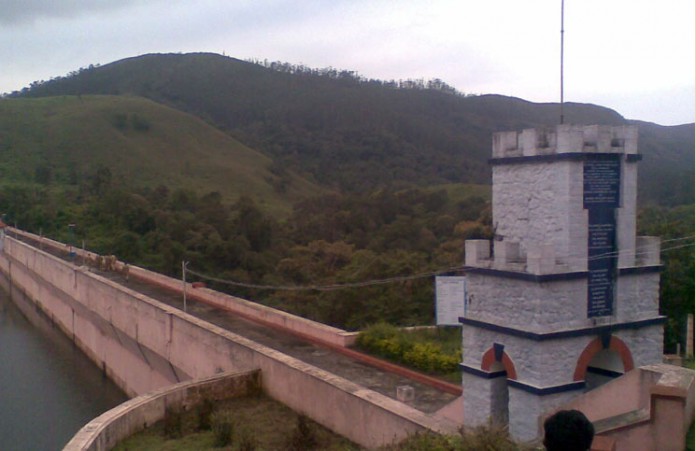
In making and caring all irrigation works, the agreement gave 8000 acres of land for the reservoir and another 100 acres to construct the dam. Because India is a federal democracy, and because the rivers cross state boundaries, constructing efficient and equitable mechanisms for allocating river flows has long been an important legal and constitutional issue. Numerous inter-state river water disputes have erupted since independence and one of those is Mullaperiyar Dam issue. The Mullaperiyar Dam is on the River Mullayar and its tributary, the Periyar in the state of Kerala. It was constructed between 1887 and 1895 by the British Government to divert the water eastward to service the farmers in the Madras presidency which now a days known as Tamil Nadu. Earlier it was known as Periyar Dam as it was basically meant to be the dam of Periyar River. The present name of this dam is derived from portmanteau of Mullayar River and Periyar River so together it is called as Mullaperiyar Dam. The Mullaperiyar Dam is located 881m which means 2,890 ft above mean sea level on the Cardamom Hills of Western Ghats in Idukki District of Kerala. Its height is 53.6m (176ft) and length 365.7m (1,200ft). There is also a National park which is known as the Periyar National Park in Thekkady located around the reservoir of dam.

The main purpose of the construction of this Mullaperiyar Dam is to provide water to the arid shadow region of Madurai which was in greater need of supply of water. That is why the Periyar River which flows westward of Kerala was diverted towards the Bay of Bengal to provide water to the people of Madras presidency. This dam is owned and operated by Tamil Nadu Public Work Department.


HISTORY OF MULLAPERIYAR DAM

On 29 October 1886, a lease agreement for 999 yrs was made between the Maharaja Travancore, Viakham, Thirunal Rama Varma and the British Secretary of state for India for Periyar irrigation works. The lease agreement granted full right, power and liberty to the secretary of state for India to construct

After independence 1947, the Kerala government said that the earlier agreement signed between British Raj and Travancore was invalid and needed to be renewed. The agreement renewed in 1970 when C Achutha Menon was Kerala chief minister, and accordingly Tamil Nadu government has been operating the dam and has been paying to Kerala government for the past 50 yrs.

https://lawsikho.com/course/certificate-criminal-litigation-trial-advocacy

MULLAPERIYAR INTER-STATE WATER DISPUTE

The dispute between Kerala and Tamil Nadu states is because of the control and safety of the dam and the validity and fairness of the lease agreement. The dispute began in 1998 when Tamil Nadu wanted to raise the height of water level and Kerala opposed to it. The dispute came to Supreme Court on 27 February, 2006 after being tried in the Madras and the Kerala High Court. The Supreme Court in February, 2006 allowed Tamil Nadu to raise the water level of the dam to 152ft (46m). In response to which Kerala government enacted Irrigation and Water Conservation (Amendment) Act, 2006 to ensure safety of all endangered dams in the state, according to which the second schedule of Mullaperiyar Dam which was constructed in 1895 as endangered  and fixes its maximum water level to 136ft. and restrain from obstructing Tamil Nadu government to raise the water level. According to Kerala government, if the water level would be increased then it will add more pressure to be handled by the already leaking dam. While the Tamil Nadu government wanted the 2006 order of Supreme Court to be implemented so as to increase the water level to 142ft.

Kerala in its suit also claimed that the Periyar River was an inter-state river. So Tamil Nadu cited a 1950 report signed by then Kerala state irrigation minister VR Krishna Iyer recording the Periyar was an inter-state river since drainage area lay in Madras.

For Tamil Nadu the Mullaperiyar dam is like a lifeline for the people of Madras Presidency for irrigation, drinking, and also for the generation of the power in lower Periyar water station and as we know the region of madras presidency is shadow and arid. So, the government of Tamil Nadu insisted on raising the water level in the dam to 142ft. pointing out the failure of crops. According to an estimate the crop losses due to the reduction of height of the dam between 1980 and 2005. Tamil Nadu has also raised an issue that the dam is given to Tamil Nadu in lease for 999 yrs. So, it has full right over the control of the dam and its water but Kerala obstructs Tamil Nadu to do so by calling the lease as invalid.

And Kerala has the issue about the fairness of the lease agreement. According to them the lease agreement which was signed in 1886 was unfair and they have challenged its validity in the Supreme Court.

Kerala’s main concern is the safety of the 119 yrs old dam and the people living around the reservoir. As it has been already mentioned above that there is a National Periyar Park nearby the dam reservoir which consists of animals which has been declared as endangered species. So, if the height of the dam water will be increased then it will also be a great threat for these endangered species.

Kerala proposed for decommissioning of the dam and construction of a new dam which has been challenged by the Tamil Nadu.

COMMITTEES APPOINTED TO LOOK INTO THE ISSUE

SUPERVISORY COMMITTEE

A three-member supervisory committee was appointed by the centre and the Supreme Court in 2006 which was headed by senior Central Water Commission (CWC) officer, LAV Nathan. The commission consisted of one representative each from both the states. It was constituted to make periodic visit to inspect the dam before and after the monsoon and to supervise the safety of the dam. The committee was empowered to oversee the repair work and allowed to take the required necessary safety measures for the benefit of both the states and the dam. It was also free to issue necessary directions to the Kerala and Tamil Nadu required for the safety of 119 yrs old Mullaperiyar Dam.

A.S. ANAND COMMITTEE

A.S. Anand committee was set up by the Supreme Court in February 2010 during the course of argument in Tamil Nadu’s suit questioning the law enacted by the Kerala to restrict the water level of the dam to 136ft. The committee was constituted to look into the dispute and prepare a report within six months. The committee was mandated to study all the aspects of the 119 yrs old dam including its safety.

Meanwhile, the Tamil Nadu government also requested to scrap the idea of formation of a new committee which the Supreme Court refused to do.

JOINT INSPECTION COMMITTEE

The Supreme Court also constituted a joint inspection committee on Mullaperiyar Dam to conduct a chemical test of the samples of seepage water from over the 119 yrs old dam. This committee was constituted to supervise the restoration of full reservoir level (FRL) in the Mullaperiyar Dam to the elevation of 142ft.

REPORT OF A.S. ANAND COMMITTEE

The justice Anand committee which was set up in February 2010 gave its 250 pages report to the Supreme Court in April 2013. Its report was based on the studies and investigations done by many agencies.

According to the reports of the committee appointed by the Supreme Court which was headed by former chief justice of India A.S. Anand the dam is structurally and hydrologically safe and Tamil Nadu can raise the water level from 136ft to 142ft after carrying out certain repairs. The report also says that the dam is seismically safe.

On demand of Kerala for the construction of the new dam, the committee said that in view of the age of existing reservoir building a new one could be considered as an alternative proposal. If the new dam will be constructed the maximum water level of that dam should be fixed at 155ft and a fresh agreement should be signed between the two states on water sharing and maintenance.

Therefore the empowered committee has concluded the existing Mullaperiyar Dam is safe on each of the hydrologic, structural, and seismic consideration and said that the water level can now be raised to 142ft from the existing 136ft.

SUPREME COURT JUDGEMENT

In 2006 Tamil Nadu’s plea for raising the water level of the reservoir to 142ft from 136ft was upheld by the Supreme Court and the law which the Kerala promulgated which declare the dam as endangered and restraint Tamil Nadu government to raise the water level was stucked down and it was said that the law framed by the Kerala was unconstitutional since it interfered with the judicial functions and violated the doctrine of separation of power. The bench headed by R.M. Lodha said that the water level must be increased from 136ft to 142ft to redress the grievances of Tamil Nadu. The bench also allowed Tamil Nadu government to carry out necessary repair works in the dam.

In 2012 the Supreme Court rejected the plea of Kerala government which was to bring on record new data to counter an expert’s committee report which was appointed by Supreme Court that the Mullaperiyar Dam structure was safe.

While the Tamil Nadu has welcomed the Supreme Court verdict, Kerala government said that it was an unfortunate that the apex court did not consider safety of the people in the state while striking down the legislation passed by the state. “The court, it seems, did not look into the safety of the people living near the old dam. The Supreme Court on May 7, 2014 upheld its earlier decision and allowed Tamil Nadu to raise the water level in the controversial Mullaperiyar dam to 142 feet (43.28 m). The court quashed the Kerala Irrigation Water Conservation Act 2006 that restricted raising the water level in the dam above 136 feet (41.45 m) on safety grounds.

PROVISIONS FOR THE DISTRIBUTION OF WATER IN INDIAN CONSTITUTION

The relevant provisions of the Indian Constitution are

  • Entry 17 in the State List,
  • Entry 56 in the Union List, and
  • Article 262.

The first provisions makes water a state subject, but qualified by Entry 56 in the Union List, which states: “Regulation and development of inter-state rivers and valleys to the extent to which such regulation and development under the control of the Union is declared by parliament by law to be expedient in the public interest.” Article 262 explicitly grants parliament to legislate over the matters in Entry 56, and also gives it primacy over the Supreme Court. As documented by Iyer (1994), Parliament has not made much use of Entry 56. There are various river authorities which are been proposed, but they are not legislated or established which are vested with powers of management, instead of that there are river boards that are that are vested only advisory powers are created. Therefore, the distribution of the river waters is dominated by states. This also results into disputes and for that purpose there is “Inter-State Water Disputes Act, 1956 which was legislated to deal with the matters of conflicts between states, along with this it also had the provision for establishing tribunals. Though there are tribunals to deal with the conflicts, sometimes the decision of the tribunal is denied and thus it results in bigger disputes. However, states have sometimes refused to accept the decisions of tribunals. Therefore, arbitration is not binding. Significantly, the courts have also been ignored on occasion. Finally, the center has sometimes intervened directly as well, but in the most intractable cases, central intervention, too, has been unsuccessful.

An unambiguous institutional mechanism for setting inter-state water disputes does not exist. Water disputes are sometimes settled. Economic analysis is necessary to illuminate whether and how water disputes get resolved in India.


MEASURES TO RESOLVE DISPUTE

In India there are several mechanisms adopted for resolving all such disputes and for the purpose of such government has enacted Interstate water disputes Act, 1956, along with this government has also established tribunals that award the decisions in disputes which come under those tribunals.

 The Inter-State Water Disputes Act, 1956

Pursuant to the power conferred by the Constitution (article 262), Parliament has enacted the Inter-State Water Disputes Act, 1956. Its main features can be thus summarized:

 (a)        A State Government which has a water dispute with another State Government may request the Central Government to refer the dispute to a tribunal for adjudication.

 (b)        The Central Government, if it is of opinion that the dispute cannot be settled by negotiation, shall refer the dispute to a Tribunal.

 (c)        The Tribunal’s composition is laid down in the Act. It consists of a Chairman and two other members, nominated by the Chief Justice of India from among persons who, at the time of such nomination, are Judges of the Supreme Court.

 (d)        The Tribunal can appoint assessors to advise it in the proceedings before it.

 (e)        On the reference being made by the Central Government, the Tribunal investigates the matter and makes its report, embodying its decision. The decision is to be published and is to be final and binding on the parties.

 (f)         Jurisdiction of the Supreme Court and other courts in respect of the dispute referred to the Tribunal is barred.

 (g)        The Central Government may frame a scheme, providing for all matters necessary to give effect to the decision of the Tribunal. The scheme may, inter alia, provide for establishing an authority for implementing (section 6A).

CONCLUSION

Looking at the above case and dispute that takes place between two states i.e. Tamil Nadu and Kerala and a procedure to resolve those disputes that is by the way of tribunals which look into the disputes according to their jurisdiction and there is also an act which deals with the interstate water dispute but, looking at the way and time consumption it can be observed that the dispute take lot of time to get resolved as result of that it is the states who have to suffer for that in their daily matters related to water like development and meeting all the basic needs, which ultimately results in hindrance in the development of the state.

Therefore other than establishing tribunals, speedy justice should also be done so that it does not affect any of the concerned party.


LawSikho has created a telegram group for exchanging legal knowledge, referrals and various opportunities. You can click on this link and join:  

https://t.me/joinchat/J_0YrBa4IBSHdpuTfQO_sA

Follow us on Instagram and subscribe to our YouTube channel for more amazing legal content 

 
Download Now

Laws that protect rights of mine labourers in India

1

This article is written by Neha Sharma, a student of DSNLU, Vizag.

INTRODUCTION

Labour in India basically refers to the people who are employed in organized or unorganized sector and contributing to the economy of India. Organized sector includes workers who are  employed by the government, state-owned enterprises and private sector enterprises. Unorganized sector, which is also named as informal sector or known as own account enterprises, refers to all unlicensed, self-employed or unregistered economic activity such as handicrafts and handloom workers, rural traders, farmers, etc. The term ‘unorganized labor’ is defined as workers who have been unable to organize themselves in the pursuit of common interests. Due to the illiteracy, poverty, ignorance, and small and scattered size of work establishment these workers are exploited by the employers. These types of workers who are highly distressed become bonded labors, migrant labors and contract labors.

Mines means any excavation where any operation for the purpose of searching for or obtaining minerals has been or is being carried on which includes all borings, oil wells, all protective works being carried out in or adjacent to a mine etc. and when it comes to define a person who is employed in mines then according to section 2(h) of The Mines Act 1952 a person is said to be “employed” in a mine who works as the manager or who works under appointment by the owner, agent or manager of the mine or with knowledge of the manager, whether for wages or not.

Major quarries of India are spread over the states of Madhya Pradesh, Chhattisgarh, Rajasthan, Jharkhand, Karnataka, Tamil Nadu, and Andhra Pradesh. Almost everywhere in these states migrant and bonded labors are employed to carry out the works because they are a very deprived class of people and easily they get ready to work for low wages. The people of the mining villages receive extremely low wages with no benefits. An adult male worker working in mines receives only Rs.70-120 per day, depending upon his skill, after 8-10 hours of work. Comparatively, the daily wage for a woman is Rs. 45-55, and a child receives Rs. 30-40 a day.[1] These workers don’t get any holidays, no weekly days off for these people, and no maternity leave.

Unsafe working conditions in the mines lead to high number of accidents and health care has been always a serious issue among the mineworkers. Lack of safety equipments, hard physical labour and presence of health hazards in mines lead to widespread health problems. The mine worker people are poor so they can’t afford expensive medical treatment and their isolated location and poverty deny them access to health care and the diseases often prove fatal.

Funding will provide health and preventive care in these type of isolated areas where the access to health care is not that easy. Patients should be provided with diagnosis and treatment, including low-cost medication.

Working Group in Mining

Women Workers

Women are paid less than men. This is not even half of the official minimum wage for unskilled labor, which is 100 rupees.  In quarries they have to do separate task from men like handpicking, loading and crushing the stones. It takes many skills but then also they are regarded as unskilled labors because there is no formal upgrading of skills and there is no recognition of these tasks. Not only they get less wage then men but they are also sexually harassed by mine owners and contractors. Many interview report shows that Dalit and tribal women are the most exploited sects of people in the mining sector.

Child labor in Mining

Children who are born in remote mining areas starts with a big disadvantage as they could not get any child care facilities there, and often no schools exist in the neighborhood, mothers are only left with the choice to take them along to their work in the quarries. In their childhood only when they should learn how to write and speak, they learn to crush the stones or help with loading the stones on trucks. It’s not that no Government schools exist in these types of area, schools exist but because of the very poor quality and teacher absenteeism, these government schools can’t provide proper education to these children and they remain illiterate. These children also don’t get proper food to eat due to which majority of children are chronically malnourished.

Cheap child labour is welcomed by the contractors and due to the poverty and hardship child workers family allow their children to work in mines and quarries and  it’s no surprise that  majority of these children are working in mines. These children also don’t get proper food to eat due to which majority of children are chronically malnourished.

Reports show that many children are working in the mining sector, because of the remoteness of quarries and mines and the informal character of the sector but the response from the Indian labour department is complete denial. They argue that child labour in mining and quarrying is illegal and it’s the violation of their right to education. They are often displaced migrants, living in huts and tents and as a result they are very vulnerable for other forms of exploitation and abuses, and they often involved in illegal activities by the mafia and trafficking.

Dalits and Adivasi

Large scale mining projects are basically operated in tribal or adivasi areas. What the government, politicians and big businessman or industrialist do is to take away the land from their owners and force them to migrate. In case of displacement owners of the land are compensated with the cash amount or sometimes they are also offered jobs but in case of Dalits they hardly receives any compensation as they do not work on their own land themselves but work as landless laborers on other people’s land. Discrimination on the basis of caste with Dalits in workplace is very common and they get excluded from social services such as health care and training. Also they never get the chance to be promoted as they are viewed as unskilled labours.

Laws that protects the rights of mine laborers

A committee was appointed by the government of India 1895 to frame suitable rules and regulations for the protection of workers working in mines in such cases where they have reasonable claim on state for protection. The committee submitted its report in 1896. This report led to the enactment of first Mine Act in India which came into effect from 22th March 1901.

Some of the provisions of the act is minimum age of employment is 12 years, Penalties were prescribed for various contraventions, Inspector was allowed to enter into the mines and he can inspect and make enquiries.

This was enacted in 1910 and 1914. Then a new Indian Mines Act was enacted in 1923. The act was further amended in 1925, 1927, 1928, 1931, 1935, 1937, 1940 and 1946.

The amended act of 1935 made a new changes in the age of employment. The age of children was raised to 15 years. Mining Boards were required to be set up by the provincial governments.

The amended act of 1940 stipulated that salaries and wages of manager, supervisory staff should be paid by the owner of mine and not by the raising contractor.

Mines Act 1952

The Mines Act, 1952 contains the provision related to health, safety and welfare of the workers working in coal, oil and  metalliferous mines. The act define mine as “any excavation where any operation for the purpose of searching for or obtaining minerals has been or is being carried on and includes all borings, bore holes, oil wells and accessory crude conditioning plants, shafts, opencast workings, conveyors or aerial ropeways, planes, machinery works, railways, tramways, sliding, workshops, power stations, etc. or any premises connected with mining operations and near or in the mining area”.

According to the provision of the Act it is the duty of the owner to manage mines and the mining operations and health and safety in the mines. The act also prescribes number of working hour in the mines, what should be the minimum wage rate and other related matters.

This Act is administered by the Ministry of Labour and Employment through the Directorate General of Mines Safety. It’s the Government regulatory agency for safety in mines and oil fields. The main work of DGMS is to reduce the risk of occupational diseases and injury to persons employed in mines and to improve safety and health standards. For this they do periodic inspections of mines to keep vigil over the status of safety and investigate into accidents and complaints.

The Mine act  1952 was amended in 1959 and 1983. Vocation training rules 1966 were framed under  the Mines Act 1952. In this the rule provided that refresher should get specialized training.

 Constitutional Obligations

The constitution of India has empowered the parliament to frame laws for the safeguard for the person working in the mines and also for the regulation of labor and safety in mines.

Article 246 of Indian Constitution: Article 246 and entry 55 of the seventh schedule of Indian constitution talks about the  regulation of labour and safety in mines and oilfields.

Article 24: Article 24 of Indian constitution says that no child below the age of fourteen years be employed to work in any factory or mine or engaged in any other hazardous employment.

Article 39: Article 39(e) speaks that the state shall directs its policy towards securing the health and strength of workers, men and women , and the tender age of children are not abused and that citizens are not forced by economic necessity to enter vocations unsuited to their age or strength.

Article 42:  Article 42 of Indian Constitution says that the state shall make provisions for securing just and humane conditions of work and for maternity relief.

Conclusion

In the mining industry safety is vital factor. To avoid any types of unwanted accidents all mining industry follows some basic precaution. To avoid loss of material and damaging of human health, protection system as well as communication system is necessary inside the underground mines. To increase both safety and productivity in mines, a reliable communication must be established between workers. The workers including women, children dalits and adivasis came from a very backward society and they are the most suppressed section of the society. Just because they are poor and illiterate and come from a weaker section of the society, they should not be deprived from their fundamental and basic rights. They should also get equal opportunity to be promoted, they should get the wages prescribed by law. They also have the right to get holidays, maternity leave and safety measures. The laws should be implemented more effectively to uplift these people. Since they are illiterate, they can’t read and write so they are unaware of their rights and the owners and the contractors take this benefit and the workers continue to be the victim of humiliation and harassment. A proper camp should be organized from time to time for the mine worker where they should be informed about the rights which they have and what are the rules and regulations which are made to protect them so that in case of harassment they can also raise their voice.   Article 14 of the Indian Constitution talks about right to equality, then this article should not be limited to a specified or we can say only to the people of high status. It should be enjoyed by each and every individual of the nation whether he or she comes from poor family or rich family , whether he is literate or illiterate. There should not be any discrimination between two individual on any ground.

The laws are made by the legislatures should not remain in the paper only, it has to come into effect practically .

[1] http://mlpc.in/

Download Now

What is it like to intern at national human rights commission

1

NHRC-4

This experience was shared by Sumit Kumar Ganguly of National Law University, Jodhpur.

I had interned at the National Human Rights Commission in their Summer Internship Programme-2014. The internship programme is a mandate under Section 12(h) of the Protection of Human Rights Act, 1993 under which the National Human Rights Commission is supposed to promote Human Rights literacy and awareness. The internship offer is not limited only to law students, it is also available to students pursuing Master’s degree in any branch of social sciences. Also, the internship policy is to give representation to all categories of students. This time, the internship programmme was during the period of 2nd June, 2014 to 1st July, 2014. Two interesting facts deserve mention here. Firstly, the number of female interns was more than the male interns. There were 37 girls and only 13 boys out of the total 50 interns. Secondly, the number of non-law students was more than law students. There were 20 law students and 30 non-law students. Out of the non-law students, there was diversity. There were students pursuing Sociology, Political Science, Economics, International Relations, Social Work, Anthropology, Criminology, Development and Development Communication. The Delhi University and Jawaharlal Nehru University was highly represented.

All of us had made the internship application on seeing the advertisement of the offer in the website of National Human Rights Commission. The ‘Application Form’ was supposed to be duly filled up and then attested by the Head of the Department. Along with Application Form, photocopies of all the marksheets from Class XII onwards duly attested and a hand-written ‘Statement of Purpose’ was supposed to be attached. Moreover, there was an ‘Undertaking’ to be given by the parent of the applicant concerned, attached to the Application Form. I had sent the whole thing by ‘Speed Post.’ The whole programme was coordinated by Dr. Sudershan Kumar Jain, Senior Research Officer, Training Division.

The first day of internship, we were registered and given our internship bag which contained the study material, notebook and our respective interns’ badges. There were classroom sessions throughout the programmme on various human rights issues, taken eminent personalities on that particular field. The following sessions were conducted:

  1. Protection of Human Rights Act, 1993: Role and functions of NHRCby Dr. Sudershan Kr. Jain, SRO (Training), NHRC.
  2. Functioning of Law Division of NHRCby Shri A.K. Parashar, JR (Law), NHRC.
  3. UN and Human Rightsby Shri J.S. Kochher, JS (Training and Research), NHRC.
  4. Functioning of Investigation Team of NHRC by Shri Sanjay Kr. Jain, SSP-III, NHRC.
  5. Complaint Management System of NHRCby Shri Sanjeev Sharma, SSA, NHRC.
  6. Functioning of PRP and P Divisionby Dr. Savita Bhakhry, Joint Director (Research), NHRC.
  7. Functioning of I & PR Division and Role of Media in Protecting Human Rightsby Shri J. K. Srivastava
  8. Police and Human Rights: Need of Reformsby Shri Chaman Lal, Former Spl. Rapporteur, NHRC.
  9. Functioning of Training Divisionby Dr. Sudershan Kr. Jain, SRO (Training), NHRC.
  10. Mental Healthby Dr. Lakshmidhar Mishra, Former Spl. Rapporteur, NHRC.
  11. Prison and Human Rights: Police Reformsby Shri Chaman Lal, Former Spl. Rapporteur, NHRC.
  12. Bonded Labourby Dr. Lakshmidhar Mishra, Former Spl. Rapporteur, NHRC.
  13. Persons with Disability byShri P.K. Pincha, Chief Commissioner for Persons with Disabilities.
  14. Human Rights and Environmentby Prof. Vinod Kr. Sharma, Indian Institute of Public Administration.
  15. Human Rights issues relating to SC/ST/OBCby Shri R.C. Durga, Ex-Director, National Commission for Scheduled Tribes.
  16. Refugee related issues and Human Rightsby Ms. Ragini Zutshi.
  17. Waste Management and Rights of Ragpickersby Ms. Chitra Mukherjee, Chintan (NGO).
  18. Women Rights: Violence Against women and Criminal Laws Amendment Act, 2013by Sr. Teresa Paul, Advocate.
  19. Human Rights of Elderlyby Shri Mathew Cherian, Executive Director, HelpAge India.
  20. Armed Forces and Human Rights with special reference to AFSPAby Maj. Gen. Dhruv C. Katoch, Addl. Director, Centre for Land Welfare Studies.
  21. Manual Scavenging- Stark Realityby Shri Bezwada Wilson, Safai Karamchari Andolan.
  22. Health and Human Rightsby Ms. S. Jalaja, Spl. Rapporteur, NHRC.
  23. Leprosy Issuesby Dr. Vineeta Shanker, Executive Director, and Ms. Rituparna Das of Sasakhawa Foundation (NGO).

NHRC-5

It must be mentioned that the sessions taken by Shri Chaman Lal was really great. His extempore skills motivated us to listen to his lectures. The sessions taken by Shri Lakshmidhar Mishra were really educative as he actually taught like a teacher after he prepared himself with the topics. Shri P.K. Pincha who took the session on Disability was himself visually impairedShri Mathew Cherian gave us one golden advice in end that we should do exercises regularly to stay fit when we are elderly. Shri Bezwada Wilson had appeared in the ‘Satyamev Jayate’ Season 1 show with Aamir Khan.Dr. Vineeta Shanker requested me and another intern to write for the website of Sasakawa Foundation. I actually gave certain opinions and suggestions, with respect to the leprosy problem in India from a legal perspective.

Some important features of the NHRC that we were told:

  1. The NHRC is purely a recommendatory body. However, 99% of its recommendations are implemented.
  2. The NHRC has issued specific guidelines with respect to ‘custodial death’ and ‘custodial rape.’Any such incident must be reported to the NHRC within 24 hours.
  3. The NHRC guidelines in cases of ‘encounter deaths.’It must be reported to the NHRC within 48 hours, an FIR must be registered, the matter must be investigated by CB-CID and the weapons must be tested by forensic experts.
  4. In cases of SC/ST atrocities, the NHRC gives open hearing. The NHRC hears the complaints to which the authorities have to explain the charges. The officials cannot be absent without any reasonable cause. The victims are provided with travel expenses for the hearing. Before, the hearing an advertisement of the same is published in the local newspaper.
  5. In the Godhra case, all the accused were acquitted. The witnesses became hostile under intense pressure. The NHRC moved the Supreme Court. For the first time, the NHRC ordered retrial of the case in Maharashtra. All the accused were convicted in this trial.

On the first day itself, we were given the membership of the NHRC Library. The NHRC Library had a vast collection of books not only on Human Rights issues but also non-fiction that included books on law, autobiography, politics, history, economics and others. It also had copies of bare acts, journals and charters. The library was equipped with the facility of computers along with internet. Our first assignment was a ‘Book Review’ on any of the books present in the library. It was supposed to be submitted a week later. I chose the book titled ‘Beyond Terrorism – New Hope for Kashmir’ authored by Salman Khurshid, which was published by UBSPD Publishers, New Delhi. The book gives a vivid account of the history of Kashmir from the ancient period to the constitutional developments of Jammu and Kashmir, after it acceded to the Indian Union. It also gives an account of the killings and rape committed by the militants on the common people. The book focuses on the UN Human Rights Commission meet at Geneva where the Indian delegation was led by Shri Atal Behari Vajpayee that included Dr. Manmohan Singh, the then Finance Minister and the author who was at that time Minister of State for External Affairs.

The next assignment was the ‘Project Work’. There were 8 topics on which the 50 interns were divided to work upon. The groups were made in such a way that it included at least 2 law students. The topics are as follows:

  1. Critical analysis of the Right of Persons with Disabilities Bill, 2014.
  2. Implementation of the Bonded Labour (Abolition) Act, 1976.
  3. Implementation of the Maintenance and Welfare of Parents and Senior Citizens’ Act, 2007.
  4. Implementation of the Mental Health Act, 1987.
  5. Right of Prisoners and Prison Reforms.
  6. Implementation of the Pre-Conception and Pre-Natal Diagnostic Techniques (PCPNDT) Act, 1994.
  7. Implementation of the Juvenile Justice Act, 2000.
  8. Silicosis in India.

Our project topic was ‘Implementation of the Maintenance and Welfare of Parents and Senior Citizens Act, 2007’. The project was quite big in volume and covered 6 Chapters in detail. Firstly, Section wise analysis of the Act. Here, we have given our comments on each and every section and proviso under the said Act. Secondly, report of Parliamentary Standing Committee. The 28th Report of the Standing Committee on Social Justice and Empowerment, headed by Smt. Sumitra Mahajan gave certain recommendations with respect to the Bill introduced in Lok Sabha after which it was referred to the Committee. Thirdly, literature review. There were many articles on issues relating to Elderly Persons, like in publications by HelpAge India. Fourthly, comparative study and provisions under law. There is a separate law applicable in Himachal Pradesh. Also, there are provisions on this issue under the personal laws and Sec. 125 of CrPC. The case laws under them have also been discussed. Fifthly, case studies. The incidents which were reported in the newspapers relating to the abuse and welfare of the elderly were also cited. Lastly, suggested amendments to the present law. Experts like Prof. P.K.B.  Nayar, Sugan Bhatia, R.N. Mittal and Dr. S.P. Kinjwadekar had made many recommendations for changes in the present law so that it is beneficial to the target group.

Another important assignment was the ‘State Presentation’. The students were given the task of giving a presentation on the human rights scenario of the state they belonged to. Here, it was not the state from where the students were domiciled, but of the state where they were pursuing their higher education. Since, the students pursuing their studies in Delhi were very high, only few were allowed to represent the National Capital Territory of Delhi. Others shifted to either their state of domicile or to any random state of their choice if they belonged to Delhi.

The state which were represented in this exercise were Andhra Pradesh (including Telangana), Assam, Jharkhand, Gujarat, Delhi, Rajasthan, Haryana, Madhya Pradesh, Punjab, Tamil Nadu, Kerala, Karnataka, Maharashtra, Uttar Pradesh, Odisha and West Bengal.

Since, I am pursuing my 5-year integrated law course from National Law University, Jodhpur, I was part of the group that gave the State Presentation on Rajasthan. The main human rights issues include rape, caste atrocities, child marriage, child labour, dowry demand, female foeticide and flurosis. Along with the presentation, the respective groups had to submit a report of the same in hard copy.

In the meantime, we had sessions with the Hon’ble Chairpersons and Members. Shri Sharad Chandra Sinha (Retd. IPS), who was the Director-General of the National Investigation Agency (NIA) was the first person to take a session. He gave his Email ID and said that he will take cognizance of matters himself if we communicate the same to him. The next on the list was Justice (Retd.) K.G. Balakrishnan, former Chief Justice of India. He was supportive of capital punishment in India. He also answered questions on judicial accountability. Justice (Retd.) D. Murugesan, former Chief Justice of Delhi High Court also took a session. He discussed the Bonded Labour (Abolition) Act, 1976 in detail and other matters relating to the Criminal Justice Administration.

We were also shown short films on the issue of Human Rights. The first one was on manual scavenging. The other one was on HIV/AIDS. There were some more short films, but we were unable to see them due to paucity of time.

The most important part of the internship was the ‘Field Visits’. The following Field Visits were undertaken:

  1. Police Stations
  2. Dasna Jail, Ghaziabad
  3. Naz Foundation (NGO)
  4. Bal Sahayog (NGO)

The first Field Visit was to the different Police Stations in the city of Delhi. The students were divided into 5 groups of 10 each for the visit to 5 different police stations. The following police stations were visited by the students.

  1. Vasant Vihar
  2. Parliament Street
  3. Shakarpur
  4. Kotwali
  5. Kamla Market

NHRC-1

We were accompanied a personnel of Delhi Police who were on deputation at the Investigation Division of the NHRC. We had to give a detailed report and a presentation for the same to our SRO, Training Dr. Sudershan Kr. Jain and SSP-III, Shri Sanjay Kr. Jain. The report was a specific format and we had to take down our observations on the matters mentioned in the list provided to us by the NHRC. There were also photographs along with the report. Some of items listed in the format included:

  1. Compliance of Supreme Court Guidelines in D.K. Basu Case on Arrest (Arrest Register, Daily Diary, Arrest memo).
  2. Display Board (RTI, Vigilance, D.K. Basu Case Guidelines, SC/ST (PoA) Act Guidelines, Juvenile Welfare Officer).

The Police Station visit was on 20th June, 2014. Our Group visited the Vasant Vihar Police Station. It had good population of north-east people. Moreover, there were foreign High Commissions and Embassies in the area. We saw the working of the police station. There are many registers in a police station for various purposes. For example, there is a ‘Roznamcha’ (Daily Diary) which records each and every incident with respect to the police station. There is also a ‘Malkhana’ where the government property is stored. There are barracks in the police station.  It worthwhile to mention here, that the Nirbhaya rape case was registered in this police station. The Addl. SHO with whom we had interacted was the Investigating Officer in this case. He told about how efficiently the police completed all the procedure and investigation and thereafter, the chargesheet was filed. The death penalty awarded to the 4 convicts in this case is pending in appeal in the Supreme Court.

The next Field Visit was to the Dasna Jail in Ghaziabad, Uttar Pradesh on 23rd June, 2014. We assessed the conditions of the prison. Dr. Rajesh Talwar, a convict in the Arushi Talwar murder case was running his dental clinic there. I got my teeth checked up by him. We also met Moninder Singh Pandher, an accused in the infamous Nithari killings inside the jail premises. In the jail hospital, there was an accused named Jagdish Kumar Arya, who was employed in the Delhi Police. He claimed that since he belonged to a Dalit family, he was framed as act of jealousy. We were guided throughout the visit by a dowry death convict named Rajesh Jha. He was the Head of the Legal Dept. in the jail. He was vociferous of the corruption in judiciary. We had an interactive session with the officials in the prison. We were greeted with snaks and cold drinks.

The inmates were pursuing their profession. Some of them were involved in cooking, some in gardening, music etc. There was also an inmate who was a painter, and his paintings were sold in the art gallery. There was provision of pursuing education from the secondary level to doctorate. There were inmates who participated in body-building. The library had a good collection of books. The prisoners were given training in Computer skills and tailoring. The female ward had a creche and a park to cater to the needs of the minor children of the inmates. Television facilities were also there. But, the sanitation facility in the jail was horrible and not up to the mark.

The same day we paid a visit to the ‘Naz Foundation’. We all know that Naz Foundation was one of the parties to the suit that prayed for decriminalization of homosexuality under Section 377 of IPC. What we don’t know is that this NGO is working for sensitization of people about HIV/AIDS.

They have programmes for this purpose, such as:

  • Home Based Care
  • Peer Education
  • Care Home
  • Training, Education and Community Development
  • Advocacy

We visited their Care Home, which is the only one they have. Children between the age of 7 and 17, who are orphans and are HIV-infected are taken care of. The NGO takes the responsibility of their school education and ensures the confidentiality of their identity in the school. In the Home, the children are given tuition. They also have classes on extra-curricular activities, like yoga and classical dance. The children are given training in Computer skills in collaboration with NIIT. The children are given care 24 hours by trained ‘Care Givers’.

Our last Field Visit was on 30th June, 2014 to a NGO called ‘Bal Sahyog’ at Connaught Place. It was founded by Smt. Indira Gandhi. They deal with street children. Although it is an NGO, it is controlled by the Government. The Prime Minister is a member of the governing body. It is funded by the Government. The Care Home houses many children and they are provided education in the school within the premises of the NGO, and later in the Government schools. The government teachers teach in the school within the premises of the NGO. Along with the hostel for the students, there is a dispensary for medical care of the children. The institution is providing employment to the children once they become adults. They are being placed in the retail outlets of companies like Dominos and Bata.

The penultimate day also saw a cultural programme by the interns. It started with ‘Saraswati Vandana’. Then, I myself recited a poem in Bengali titled ‘Kandari Hushiyar’ (‘Captain Beware’) written by Kazi Nazrul Islam. Two interns presented the poems authored by them, one in Hindi and another in English. An intern sang a Hindi song but it was in form of a karaoke. A girl from Assam performed the ‘Bihu’ festival dance. Another girl sang a romantic song in Assamese and then one in Hindi. A student sang a classical devotional song. Four Punjabi girls performed the ‘Gidda’ dance. There was a skit at the end which dealt with the issue of ‘transgender’ persons.

The last day was the ‘Valediction Day’Justice (Retd.) Cyriac Joseph, Hon’ble Member of NHRC and former judge of the Supreme Court, gave the valedictory speech. Many senior staff of the NHRC attended the programme. It included Justice (Retd.) D. Murugesan (Member), Shri Sharad Chandra Sinha (Member) and Dr. Parvinder Sohi Behuria (Secretary-General). Before his speech, some of the interns including me summed up the whole month-long internship programme, in our own words. I raised the issue of personal laws being violative of the human rights to which the Hon’ble Member replied that it was an area where the founding fathers of the Constitution didn’t want to intervene. After it was over, the certificates were given to the interns. Then, the ‘Best Intern’ awards were given to 4 interns. Rs. 15,000 was awarded proportionally to the 1st (jointly held), 2nd and 3rd position holders. After that, there was a group photo with everyone. It was followed by a grand lunch. After that, we went to the Accounts Section for the payment of stipend and travel allowance. Then, we were asked to disperse.

NHRC-3

The NHRC authorities provided us with food on all days of internship. We were provided with breakfast, lunch as well as with evening snacks. The food at the NHRC canteen was awesome. Although, sometimes we had to wait for long to get the food, still we enjoyed having the food with our friends. I was given the responsibility of distributing coupons on most of the days. Moreover, I also had the duty in other clerical work, like collecting certificates, etc. Probably, it was because I had been very active.

We were also provided with travel allowance and stipend for attending the programme. The students who were pursuing their education in any educational institution in Delhi and National Capital Region were paid Rs. 4000. Others, who were not from Delhi or NCR, were paid Rs. 8000 along with the second-class train fare from their place of study to Delhi and back to their place of study. Remember, the payment was made on the basis of place the students were pursuing their education, and not domicile. I left with an amount of Rs. 8,632.

This internship is highly recommended for students pursuing not only law, but also for other fields of education if they have an interest in Human Rights. I went back with a lot of memories of this internship. I made lots of friends, across diversities in education and region. We co-interns visited different places in the city of Delhi together. I am personally in touch with the vast majority of them.  But, a word of caution to everyone who wants to apply for this internship. There is strictness with respect to punctuality, attendance and discipline.

Download Now

All about anticipatory bail in India – Legal aspects

2
anticipatory bail

This article is written by Pragya, a student of  New Law College, BVDU, Pune, explains all about the anticipatory bail in India and all its legal aspects.

Download Now

How to draft a sexual harassment policy in India?

1

document-428334_1280

Amongst other responsibilities, the Sexual Harassment of Women at Workplace (Prevention, Prohibition & Redressal) Act, 2013 requires the employer to provide:

  1. a safe working environment, and
  2. display the consequences of involvement in sexual harassment in a prominently noticeable way at the workplace
  3. display the order constituting the Internal Complaints Committee.

Implementation of the above responsibilities is conventionally undertaken through a written sexual harassment prevention policy. Drafting an effective sexual harassment prevention policy requires one to ask the following questions:

What is the purpose of the policy?

What is the benefit of a well-drafted policy?

What are the ideal elements that any policy must include?

There is no legal requirement on what components should be included.  However, here are the 5 important pointers that must be kept in mind while drafting sexual harassment policies:

  1. Policy should be in consonance with the need of the organisation: Assessment of different workplace settings in an organization is important before starting work on a sexual harassment policy, so that possible scenarios in which workplace related harassment can occur can be assessed and covered. For example, the Act covers sexual harassment in schools and educational institutions as well. However, the anti-sexual harassment policy of such educational institutions would be different from that of an ordinary organization, as apart from the employees, the policy would be applicable on students as well. Such a situation will require a different kind of disciplinary action The drafter should take inputs from the management and employee to identify the needs of the organization and the potential areas of risks that need to be mitigated through the policy.
  2. Policy should be in consonance with the ideology of the organisation: The management and relevant company officers should take a consistent management stance on sexual harassment in light of the act for necessity of compliance with the law and risks. A well-drafted policy articulates a uniform organizational stance enables the employer and his team which is associated with sexual harassment, such as counsellors, committee members, HR or other support staff to act in a coherent and consistent manner. It leaves little room for adhocism or inconsistency in the actions of different organizational participants, which is always beneficial.
  3. The policy should be in consonance with the provisions of the new Act: In a number of companies that we have worked with, it is found that the organizations are blindly “copy-pasting” the policies adopted by some foreign organizations or copying from each other. Although, the basic principles of anti-sexual harassment law remain the same throughout the world, and there is no harm in considering the best practices of the industry globally. However, mere copy-pasting the provisions without giving much thought about the ramifications of the text in context of the operating sector of the business or cross-checking if they actually meet all the required standards under the 2013 Act might be counter effective and will not be able meet the purpose. It is important that the policy is drafted in accordance with the provisions of the new Act.
  4. The language should be concise, clear and written in simple language with examples: While drafting an effective policy, one should remember that the policy will be uniformly applicable to all the employees, which might include the working class, blue-collared workers, drivers or janitors in the organization. Hence, it is important that the policy is drafted in very simple and clear language. If possible, the organization should strive to prepare translated copies of the policy in Hindi and in the local language where the office is situated in (Hindi and local translations may be drafted in simple conversational language instead of technical language so that staff members are easily able to understand contents of the policy).
  5. The policy should cover all the entire essential points required to make a watertight policy: Typically, a sexual harassment prevention policy should incorporate necessary provisions of the law, any additional organizational practices and have sufficiently detailed points, illustrations or examples which enable employees to understand the policy in a simple manner. It is also essential that the policy covers all relevant points – for reference, a detailed checklist of the provisions has been provided.

Sample Sexual Harassment Policy

You can download free Sample Sexual-Harassment Policy or your reference. This policy has been made keeping in mind all applicable provision of sexual harassment laws in India.

Can you help an organization create tailor-made sexual harassment policies, set up and train complaints committees, conduct employee sensitizations, create systems for confidentiality, implement a consistent management stance and perform compliance under existing law? Can you help an organization implement a gender-neutral framework to tackle workplace-harassment? Organizations will highly value a professional, who can enable them to adequately implement the sexual harassment law as per the needs of the organisation. If you are willing to add value to your existing skillsets by becoming a Sexual Harassment Law Prevention and Workplace Diversity Expert, certified by one of the India’s top law school, National University of Juridical Sciences (NUJS), visit http://sexualharssment.nujs.edu or to know how this course might help you in your career send a mail to [insert mail id].


Download Now

What every Indian should understand about how Judges are appointed in India

0

 Supreme_Court_of_India_-_200705

This article is written by Shruti Pandey, a student of  Campus Law Center, University of Delhi.

A Brief History

An honest, efficient and independent judiciary is indispensable for the survival and functioning of our democratic system, for the protection of the fundamental rights and liberties of the people and for the unity and integrity of the country with moderate protection of the rights of the minorities. The system of appointment of judges has gone through various changes in order to attain such efficient judicial system. The Supreme Court has played an important role in making such changes.

The constitution was amended in the year 1976 by 42nd amendment.  The power of Judicial Review was put to an end and 2/3rd majority was mandated for striking down any legislation. Although it was later annulled by the Constitution (44th Amendment) Act, 1978. In 1981 the political executives again attempted to regain the power of the transfer of the High Court judges leading to the famous 1st Judge’s Case.

In S.P. Gupta v. Union of India the apex court laid down that the recommendation for appointment made by the Chief Justice of India is not pre-eminent and his recommendations can be turned down by the ruling politicians at the Center but only for ‘Cogent’ reasons. [First Judge’s Case]

Later in the year 1993 in Advocate on Record Association v. Union of India the Supreme Court rescinded the ruling laid down in S.P. Gupta Case and created the Collegium system under which appointments and transfers of the judges are decided by a forum of Chief Justice of India and two senior most judges of the Supreme Court. [Second Judge’s Case]

But in many cases, Chief Justice of India took unilateral decision without consulting the other two judges and the President became only an approver.

It would be pertinent to mention that earlier too when the Constitution was being drafted the Hon’ble member of Drafting Committee Mr. Mahboob Ali Baig Sahib had moved an amendment exactly on the same issue “That in the first proviso to clause (2) of Article 103, for the words ‘the Chief Justice of India shall always be consulted’ the words ‘it shall be made with the concurrence of the Chief Justice of India’ be substituted.” But the proposed amendment was rejected by the Constituent Assembly.

To deal with this inadequacy, in 1998, President K.R. Narayan issued a reference to the Supreme Court as to what the term “consultation” means in Article 124, 217 and 222 of the Constitution related to appointment and transfer of Supreme Court and High Court judges.
In answer to this Supreme Court laid down various guidelines for the transfer and appointment of judges and strongly reinforced the concept “primacy” of highest judiciary over the executive. [Third Judge’s Case]

Drawbacks of Collegium System

In Collegium system the judges were appointed on the basis of seniority and therefore merits and talent of junior judges and advocates were overlooked. Also there were critical issues of transparency relating to the appointments and transfers of judges.

Legislative initiative

Various steps were taken to remove the inadequacies of the Collegium system and to introduce equal participation of Judiciary and executive in making appointments in order to make the system more accountable.

The Constitution (98th Amendment) Bill was introduced in the Loksabha in the year 2003 seeking to create a National Judicial Commission.

The Law Commission in its 214th report suggested an equal role for judiciary and executive in selection and appointment of Supreme Court and High Court judges.

The Judicial Appointments Commission Bill, 2013 was introduced in Rajyasabha but the bill proved ineffectual and failed to become a law.

Finally, the National Judicial Appointments Commission was introduced in the Constitution (121st Amendment) Bill 2014 which was finally established in the Constitution (99th Amendment) Act. Together with the Constitutional Amendment Act the National Judicial Appointments Commission Act, 2014 was also after passed by the Loksabha and the Rajyasabha and subsequently assented by the President last year on 31st December 2014.

 The National Judicial Appointments Commission Act, 2014 has laid down the procedures for the selection of judges of higher judiciary.

Mechanism of Appointment of Judges at present

Who appoints judges of Supreme Court and high Court?

‘The judges of Supreme Court and high court are appointed by the President on the recommendations made by National Judicial Appointments Commission.’  Clause 2 of Article 124 and clause 1 of article 217 of constitution on India provides the power to President to make such appointments.

Who are the members of National Judicial Appointments Commission?

The National Judicial Appointments Commission consists of the Chief Justice of India (who shall also be the chairperson of the commission), two other senior judges of Supreme Court, the Union Minister in charge of law and justice, two eminent members nominated by the committee consisting of Prime Minister, the Chief Justice of India, the Leader of opposition in the Loksabha (where there is no such leader of opposition, then, the Leader of single largest opposition party in the Loksabha).

One of the eminent persons shall be nominated amongst the persons belonging to the Schedule Cast, the Schedule Tribes, Other backward class, Minorities or Women.

These eminent persons shall be nominated for a period of three years and are not eligible for renomination. [Article 124A of the Constitution of India]

Procedure for selection of Supreme Court Judges

As laid down in section 5 of The National Judicial Appointments Commission Act, 2014:

* The NJAC shall recommend the senior most judge of the Supreme Court for the appointment as the Chief Justice of India provided he is fit to hold the office.

* Other judges of Supreme Court are appointed on the recommendation of NJAC on the basis of merit, ability and any other criteria of suitability if such person is eligible to be appointed as such under Clause 3 of Article 124 of the Constitution of India, which provides that:

“A person shall not be qualified for appointment as a Judge of the Supreme Court unless he is a citizen of India and—

(a) has been for at least five years a Judge of a High Court or of two or more such Courts in succession; or

(b) has been for at least ten years an advocate of a High Court or of two or more such Courts in succession; or

(c) is, in the opinion of the President, a distinguished jurist.

Explanation I.—In this clause “High Court means a High Court which exercises, or which at any time before the commencement of this Constitution exercised, jurisdiction in any part of the territory of India.

Explanation II.—In computing for the purpose of this clause the period during which a person has been an advocate, any period during which a person has held judicial office not inferior to that of a district judge after he became an advocate shall be included.”

Procedure for selection of High Court judges

As laid down in section 6 of The National Judicial Appointments Commission Act, 2014:

* The chief justice of High Court shall be appointed on the recommendation of NJAC on the basis of interse seniority of High Court judges and ability, merit and any other criteria of suitability as may be specified by regulations.

* Other judges of High Court are appointed on the recommendation of NJAC after seeking nomination from the Chief Justice of the concerned High Court and the views of Governor and Chief Minister of concerned state on the basis of ability, merit and any other criteria of suitability amongst the persons who are eligible to be appointed as such under Clause 2 of Article 217 of the Constitution of India, which provides that:

“A person shall not be qualified for appointment as a Judge of a High Court unless he is a citizen of India and

(a) has for at least ten years held a judicial office in the territory of India; or

(b) has for at least ten years been an advocate of a High Court or of two or more such Courts in succession;
Explanation for the purposes of this clause

(a) in computing the period during which a person has held judicial office in the territory of India, there shall be included any period, after he has held any judicial office, during which the person has been an Advocate of a High Court or has held the office of a member of a tribunal or any post, under the Union or a State, requiring special knowledge of law;

(aa) in computing the period during which a person has been an advocate of a High Court, there shall be included any period during which the person has held judicial office or the office of a member of a tribunal or any post, under the Union or a State, requiring special knowledge of law after he became an advocate;

(b) in computing the period during which a person has held judicial office in the territory of India or been an advocate of High Court, there shall be included any period before the commencement of this Constitution during which he has held judicial office in any area which was comprised before the fifteenth day of August, 1947, within India as defined by the Government of India Act, 1935, or has been an advocate of any High Court in any such area, as the case may be.”

Before making any such nomination the Chief justice of concerned High Court shall consult two senior most judges of and other judges and eminent advocates of that High Court as may be specified by regulations.

Safeguards

It is provided in The National Judicial Appointments Commission Act that if two members of NJAC do not agree, then the commission shall not make such recommendations. It is also provided in section 7 of the Act that the President may, if necessary require the commission to reconsider the recommendation. However, if the commission makes the unanimous recommendations on such reconsideration, then the President shall make the appointment accordingly.

Conclusion

An independent judiciary is the basic feature of our Constitution and absolutely essential safeguard against political excesses. The Constitutional 99th Amendment Act is the disenchantment with the secrecy in appointment and transfer of judges which was not on the basis of merit. But there are various flaws in the new appointment system as well which threatens the transparent and merit based appointment. Firstly the bill seeks to achieve the equal participation of Judiciary and executive to make the system more accountable and thereby increase the confidence of public in the institutions but it no where attempts to create an independent institution that will ensure the independence of the Judiciary and the process of appointment free from executive interference.

Secondly in National Judicial Appointments Commission Act the clause “fit to hold the office” in section 5(1) and “any other criteria of suitability as may be specified by regulations” in section 6(1) are vague, ominous and designed to rein in an independent judge. The manner in which the Bill is structured gives complete power to the executive and the legislature. Section 5 and 6 deal with recommendations for the Chief Justice of India as well as Chief Justice of the High Courts, this provision can be changed by parliament by ordinary law. Normally the senior judge should become Chief Justice of India which also be can be altered by parliament by an ordinary law. Similarly while appointing chief justices of the High Court the inter-seniority amongst High Court judges is considered, that too can be altered. Further central government has to appoint all the officers and treat the judicial appointments commission as the government department. Now if it is a government department there is no independence left at all.

Besides this, the Executive is the largest litigant in the country before any court with vital interest in judicial decisions and to allow it to sit in a committee which recommends the appointments and transfer of judges is unjustifiable.

An opportunity has been missed again to secure the independence of judiciary form the legislation and the executive. The highest judiciary is still open to post- retirement offices of profit under the Government. Such constitutional amendments were proposed by Hon’ble Drafting Committee member Mr. Jaspal Roy Kapoor and Prof. T.K. Shah but were rejected by the Constituent Assembly.

The idea of National Judicial Appointments Commission has been borrowed from the U.K. The Constitutional-Reform Act 2005 has curtailed the powers of the Lord Chancellor and the Act provided for establishment of a Supreme Court to hear Appeals. The Act also provided for establishment of an independent Judicial Appointments Commission. But there the changes have been made to implement the doctrine of separation of power and to ensure that the judiciary is independent of the executive and legislature unlike in our country where the objective is not to ensure the independence of judiciary but to make the decisions of the executive and the legislature dominant in the appointments and transfer of judges.

This mechanism will certainly have to stand the scrutiny of the Supreme Court in Judicial Review that is bound to follow.

Download Now
logo
FREE & ONLINE 3-Day Bootcamp (LIVE only) on

How Can Experienced Professionals Become Independent Directors

calender
28th, 29th Mar, 2026, 2 - 5pm (IST) &
30th Mar, 2026, 7 - 10pm (IST).
Bootcamp starting in
Days
HRS
MIN
SEC
Abhyuday AgarwalCOO & CO-Founder, LawSikho

Register now

Abhyuday AgarwalCOO & CO-Founder, LawSikho