Download Now
Home Blog Page 1826

Introduction to Call and Put options

0

option strategy

This article is written by Nakul Bajpai, a student of NLUO.

What is an Option?

An option can be defined as a contract which grants the right to the buyer, and does not create any obligation, to buy or sell any underlying asset on or before any certain date at a specified price. Such certain date and specified price are known as the expiration date and strike price. These options are like securities and constitute to be binding contracts with respect to its terms and conditions. Options can broadly be divided into two types, ‘Put Options’ and ‘Call Options’.

What are Call Options?

Call option provides the owner a right to buy an underlying stock at a certain price, known as the strike price and at a certain date, known as the expiration date. To buy a call option, a price in the form of option premium must be paid. Hence, strike price, expiration date and premium are three basic characteristics which define a Call Options. Further, it is on the discretion of the owner to exercise the option as the owner can even let the option expire worthless if the same appears unprofitable. The seller, on the other hand, has an obligation to sell the shares desired by the buyer. One thing that would attract investors towards owing call options is that losses are limited to the option premium, whereas profit is technically unlimited. These call options are like security deposits.

Call options are like security deposits, for example if X bought one call option of General Electrics on 26th June, it comes with the  term that X could buy shares of GE at $50 per share (strike price) at any time before the third Friday in July (expiration date). If GE rises anywhere above $50, say for example $60, before the expiration date in July, X can still buy the stock for only $50 when the rest of the world has to buy the shares at an increased market value of $60.

What are Put Options?

The Put Option is the right to sell the underlying stock or index at the strike price within the expiration date. It allows investors to lock in a minimum price for selling a stock. In a case where the market price is higher than the strike price, then investors can sell the stock at the market price and thereby not exercise the Put option.

Put options on the other hand are like insurance policies, for example if Y brought one put option of General Electrics on 26th June, it comes with the term that Y could sell shares of GE at $50 per share (strike price) at any time before the third Friday in July (expiration date). If GE falls anywhere below $50, Y can still sell the stock at the strike price and earn profit.

Put and Call option trading is meant for all those average investors who have reached a comfort level in trading stocks and wish to exploit ‘option trading’ to increase their profits and maximize gains on short term stock movements. Option traders, unlike stock traders, tend to be fond of the volatility in the stock market because they believe it’s easier to make profitable trades when the market is moving up and down on a day to day basis. The key advantage of trading calls and puts is that it can be profitable in bull markets, bear markets and sideways markets.

What is the stand of RBI and SEBI w.r.t. Call/Put Options?

Before the Indian Regulators turned their faces towards the investment agreements, they were all covered by call/put options. Indian regulators like SEBI and RBI expressed their consent for not allowing such types of contracts. Both had different reasons for not allowing the call/put options.

SEBI objected to such options because they were in violation to certain provisions contained in the SCRA (Securities Contract (Regulation) Act, 1956. According to SEBI, Section 18A of SCRA states that derivatives are permitted only if they are listed into stock exchanges. Hence, any private contractual agreement specifically entered into by two private parties, which involves grant of options, shall be in violation of Section 18A of the SCRA. It was because of these reasons only that SEBI objected to the Vedanta Acquisition of Cairn India.

Subsequently, SEBI agreed that such interpretation given to Section 18A is a ‘farfetched’ one. Further, SEBI has agreed to allow call/put options subject to its conditions laid down in the notification dated 3rd October, 2013.

RBI, on the other hand, was not in favour of such contracts being allowed because in it’s view these contracts are modes of ensuring a valid exit to the foreign investors. However, RBI in its circular dated 9th January, 2013, has allowed the call/put options to be included in the investment agreements.

This circular issued by RBI is a welcoming step for the inclusion of call/put options. RBI has still maintained its stand that these options are responsible for the creation of ‘debt alike instruments’. RBI has tried to regulate these options by limiting them to certain specified conditions which have been mentioned in its aforementioned circular.

The Companies Act, 2013 has introduced newer provisions like Section 58(2) and 194 to recognise  and facilitate inclusion of put and call options in share transfer agreements.

Download Now

An Open Letter by a Woman: Body Shaming vs. Human Rights

0

Female-Body-Shapes-500x309

This  open letter  in written by Pranusha Kulkarni, a Karnataka based lawyer and the Country Coordinator of  The International Youth Alliance for Family Planning.

Hello Everyone,

Warm Greetings.

It is with optimism that I write this letter to you, to each and every one of you who may be reading this letter. Why do I write this letter anyway? Isn’t writing a letter meant to be a personal exercise? Does anyone publish a letter like this? Well, the situation has so arisen in my life that I am compelled to write a letter like this. An open letter. Why should you even read it then? What does it have for you? Friends, read on, you will find all the answers you are looking for.

So, who am I? I am a woman. Which woman, you ask? Any woman you can think of, and every woman you have ever known in your life. I am not any one particular woman about whom you may be thinking of right now. I am the one who gave birth to you, I am the one who is your companion, your friend, your sister, your guide, your teacher, your root.

So far so good. This brings us to the next question. Why am I writing this letter to you? Well, please consider this letter not as a mere rant of a tired heart, but as an earnest appeal of a hopeful soul. Yes, I am tired of it all, but yes, I am definitely hopeful. I am giving you the benefit of doubt.

Body shaming. This is an appeal regarding body shaming. You, who is reading this letter, may be a man or a woman. But, I am sure you have been a part of the body shaming culture at least once in your lifetime. So, what am I referring to here, when I refer to the word “body shaming”? I am referring to all those filthy comments which you and/or your peers may have passed on women, no, to be precise, on women’s bodies.

A fat woman, a thin woman, a short woman, a tall woman, a fair woman, a dark woman, you have left none outside your body shaming loop. If a woman is fat, you say she is very fat, if she is thin, you say she is very thin. If she is fair, you say she shouldn’t have been that fair, and if she is dark, you say she can’t be seen in the night! But you have made it certain that your comment has to be passed on every woman you encounter. And when I say “passing the comment,” it doesn’t necessarily imply eve-teasing. It also includes you judging her, solely on the basis of her body, albeit in your own minds, or whispering it to friends of yours.

It’s as if we as a society are not happy with the way women are. We always try to find flaws in her, however trivial or imaginary the flaw may be. It seems that we are searching for something out-of-the-world, some imaginary “perfection” in women’s bodies. And if a woman doesn’t possess this imaginary “perfection” in her body, she is not considered as “beautiful”. This herd mentality of judging a woman, based on her height, skin colour, body shape and size, has grown into a mass hysteria wherein young boys and girls, not older than 12 or 13 years of age, start having these notions of the ideal body and pressurize themselves to the extent of going into depression or committing suicide, just because they are constantly mocked at by their peers, or the society in general.

Well, you say this is a psychological problem, and law has got nothing to do with it? Think twice before you arrive at such a hasty conclusion. Body shaming today, has grown into a big threat to the protection and preservation of human rights and the dignity of life, especially of women. It is also a challenge to the maintaining of societal peace and harmony. The Fundamental Duties enunciated in our Constitution, exhort us to renounce practices derogatory to the dignity of women and to develop a scientific temper, humanism, and a spirit of inquiry and reform. But, do acts like body shaming preserve the dignity of women? Are we developing scientific temper, humanism, and a spirit of inquiry and reform? Are we living up to the lofty ideals we have set up for ourselves through our Constitution? These are some of the questions we have to ponder over.

On the other hand, I do not say that men are not judged on the basis of their body. But, unfortunately, since we live in a male-dominated society, the pressure on women to look “perfect”, and to look “beautiful” is huge, as compared to men. The constant pressure of media adds to this societal pressure put on women. It has always been so, that men are valued more based on their intellectual or physical prowess, whereas women are considered worthy on the basis of their beauty or good looks.

Because of this mental bias against women and their abilities, ample number of studies have shown that women’s right to equality in employment, and also their right to equal pay, are jeopardized, as they do not easily get promoted to higher posts, when compared to men, merely because they do not fulfill the biased notion of “perfection” in the eyes of their bosses. This phenomenon is called “lookism,” which entails discrimination of employees solely on the basis of their looks, or their physical beauty. This prima facie is a blatant violation of the constitutionally guaranteed right to equality and right against discrimination solely based on sex and other trivial criteria. Thus, because of this, women are forced by circumstances to work twice or thrice harder, to prove just the half or one quarter of their abilities as compared to men, most of the times even this effort going waste.

How else does body shaming violate a woman’s human rights? To drive home my point, I would like to quote an article titled “Western and Indian Concept of Human Rights: An Overview”, written by Raj Kumar Upadhyay (AIR 2010 Punjab & Haryana (Vol. 97) Jour 127). In this article, it has aptly been stated that “To be happy is considered a natural right – the most important and comprehensive human right.” This way of looking at human rights, though simple, is profound! Of course, it is but logical that this right to happiness is subject to the reasonable restrictions put on them by the State, against causing harm or sadness to others. Thus, it is clear that body shaming violates this natural and most comprehensive human right! Added to this, case laws are many which highlight the fact that the right to life and personal dignity does not amount to mere animal existence. In P. Rathinam v. Union of India, (1994) 3 SCC 394, the Supreme Court of India has held that the meaning of ‘life’ in the Right to Life and Personal Liberty u/a 21 of the Constitution is broad. It has held that:

“The right to life u/a 21 includes the right to live with human dignity and the same does not connote continued drudgery. It takes within its fold some of the fine graces of civilization, which makes life worth living and that the expanded concept of life would mean the tradition, culture and heritage of the person concerned.”

Thus, analysed in light of the above judgment, it’s clearly seen that body shaming is an inhuman act. The amount of mental angst, disturbance and agony caused due to constant body shaming can as well be construed to amount to mental torture, psychological harassment and sexual harassment, clearly giving locus standi to the victim, to file a criminal complaint or an FIR or even a writ petition against the torturer, because of the violation of the fundamental right to life and human dignity of the victim.

Thus, friends, it’s very clear from the above discussion that body shaming is an uncivilized, barbarous and heinous act that we have all been a part of, knowingly or unknowingly. It’s high time that we stop this meaningless way of judging people. We as a civilized society, have to pledge not to indulge in such uncivil activities, be it against a man, or a woman. I hope you now understand the gravity of the situation, and the reason I write this letter to you.

यत्रनार्यस्तुपूज्यन्तेरमन्तेतत्रदेवता: ।
यत्रैतास्तुनपूज्यन्तेसर्वास्तत्राफला: क्रिया: ।।

meaning,

Where women are honored, Divinity blossoms there;

Where they are dishonored, all actions remain unfruitful.


Such is the reverence attached to womanhood in our ancient scriptures. Let us collectively pledge today that we learn to respect womanhood in all its manifestations, and by doing so, let us hope that we as a society shall truly be blessed.


With warm wishes,


Regards,

A Woman

Download Now

How Indian police saved me 4 times in 4 years

1

Indian police

Download Now

When, why and how to approach a state human rights commission?

0

This article was written by Varakala Trinayana Kumar of UPES, Dehradun. If you are interested in contributing guest posts to this blog, please email your articles to [email protected]

Varakala Trinayana

What are human rights? Human rights in general refer to all the rights which are in the nature of the right in rem or rights in personam that are provided to an individual by the virtue of his existence as a person. These rights are enforced through the force of the Constitution or a government.

Section 2 (d) of the Protection of Human Rights Act, 1993 defines human rights as rights relating to life, liberty, equality and dignity of the individual, guaranteed by the Constitution, or embodied in the International Covenants and enforceable by courts in India.

The Government of India to keep a check on the violations of these Human Rights has set up a National Human Rights Commission (NHRC) and with each state having its own Human Rights Commission i.e. the State Human Rights Commissions (SHRC’s) under the NHRC to address and redress all the violations of human rights that takes place so as to protect the rights of an individual of a country by the force of law.

For the Commission, the protection of human rights has become the resistance of democracy itself, a democracy that is comprehensive in character and caring in respect of its most vulnerable citizens. That democracy, in turn, has enabled the Commission to task without fear or hesitation and to pull attention to those acts of the State and its agents that can or do result in the abuse of human rights whether through acts of commission, omission, abetment or negligence.

The Commission has a wide obligation including civil and political rights, economic, social and cultural rights, and group rights. Section 12 of the Protection of Human Rights Act, 1993 lies down that the Commission shall perform all or any of the following functions, namely:

• Inquiring suo motu, or on petitions, presented to it by victims, or any persons on their behalf, or on a direction or order of any court, into complaints of violation of human rights or abetment thereof, or negligence in the prevention of such violation, by a public servant.

• Intervening in any proceeding involving any allegation of violation of human rights pending before the Court, with the approval of such Courts.

• Visiting, notwithstanding anything contained in any other law for the time being in force, any jail or other institution under the control of the State Government, where persons are detained or lodged for purposes of treatment, reformation or protection, for the study of the living conditions of the inmates thereof and making recommendations.

• Reviewing the safeguards provided by, or under, the Constitution, or any law for the time being in force, for the protection of human rights, and recommending measures for their effective implementation.

• Reviewing the factors, including acts of terrorism, that inhibits the enjoyment of human rights, and recommending appropriate remedial measures.

• Studying treaties and other international instruments on human rights, and making recommendations for their effective implementation.

• Undertaking and promoting research in the field of human rights.

• Spreading human rights literacy amongst various sections of society, and promoting awareness of the safeguards available for the protection of these rights, through publications, the media, seminars and other available means.

• Encouraging the efforts of non-governmental organizations, and institutions working in the field of human rights.

• Undertaking such other functions as may be considered necessary for the promotion of human rights.

WHEN:

Complaint Redressal and Inquiry is one of the major activities of SHRC. SHRC accepts grievances written in any language by post, telegram, fax, email or even on mobile, and also through assistance counter. It charges no fees.

• The Commission takes support of a number of legislative Bills/Acts from the human rights perspective:

– The Terrorists and Disruptive Activities (Prevention) Act, 1985 (TADA)

– The Prevention of Terrorism Bill, 2000

– The Prevention of Terrorism Ordinance, 2001 (POTO)

– Freedom of Information Act

– Domestic Violence Bill

– The Child Marriage Restraint Act

– National Rural Employment Guarantee Bill, 2004

– Food Safety and Standards Bill, 2005.

• The Commission has a very exclusive function of nursing the execution of its recommendations. Commission regularly monitors, through visits of Members of the Commission and its Special Rapporteur, regular response from the Ministries of State and also from other related agencies on the following issues:

– Prison environments

– Custodial deaths

– Hospitals for mentally ill patients

– Status of bonded and child labour

– Homes run by the Government

– Rights of internally displaced persons

– Monitors Vishakha (Supreme Court) guidelines on sexual harassment at work place

– Encounter deaths

– Deaths of children in protection homes

• The Commission has laid equivalent position on Civil and Political Rights as well as Economic, Social and Cultural Rights. The Commission has abetted in narrowing concerns and recommendations resulting in concrete curative steps.

As mentioned above, there are many types of human right violations that takes place but out of them, majority are against the police official regarding Custodial deaths, inhumane treatment of criminal and violations of human rights.

HOW:

If there is any situation of violation of human rights guaranteed under the Constitution, the injured party may himself file a petition for violation of his human rights in the Commission or that the Commission may by Suo Moto take up the case based on any newspaper report or any other probable source of information. Once he petition is filed in the Commission, it goes through various stages of scrutiny to achieve justice. The following are the various structural sections in the State Human Rights Commissions.

  1. INWARD SECTION: 

This section constitutes the primary step of the process involved in registering a complaint. This is where the petitions are generally filed in person or say that those sent through post, telegram or any means are accepted or say filed. Petitions for violation of human  rights  are generally in the form of letters sent through post or telegrams addressing either the Chairperson, Secretary or Head of the HRC and under-signed by the petitioner. The petitions are here sorted out and forwarded to the Scrutiny department.

  1. SCRUTINY SECTION:

Once a petition is received and registered, it is then received by this section which accepts the petition forwarded by the Inward Section, then scrutinizes the content and checks if there is any violation of Human right. If there is any abuse of human right the petition is forwarded else is dismissed. The forwarded petition is first fed into the computer thereby it generates a random code that would be the petition code.

  1. PUBLIC RELATIONS SECTION:

 Parties to the case or say that the petitioners or the aggrieved parties are not always educated or well versed with their rights. The parties to the case are mostly people unaware of the current scenario of the abuse of legal right and the process that is concerned with it. This section is specially set up so that people can discuss their issues, get suggestions, any necessary information or knowledge from the available Public Relations Officer as a professional help.

  1. JUDICIAL SECTION:

 Immediately as the petitions are accepted, the petitions forwarded by the Inward are sorted out and then a Cause list is prepared. Cause list is a summary of various cases that are going to be heard on various allotted date and that it gives a brief of the cases pending, their hearing dates and the progress of the case.

  1. COURT HALL:

 Once the Cause List is prepared, various petitions according to their dates of hearing are heard in a Court room of the Commission with a bench of judges with the relevant authority. The case is heard in the same manner as done in a court of similar stature and that either a judgment is passed or further postposed based on the pending issues of the case and if the case is mostly of civil nature than that of human right violation or say of any other nature, then the case is directed to the concerned forum or court.

  1. RECORD ROOM:

Once the hearing of a court is done, either the case is closed or further hearing date is given. In any case, the petition and its Order, Comments, Report, etc. are stored in this particular section. All the details of every case that enters the court hall are maintained for future record.

CONCLUSION:

India being the largest Democracy in the world has a duty to protect the kings of democracy i.e. the people or say citizens of a country. The Constitution of India gives various rights to citizens of India which are enforceable in the Court of Law if violated. Any violation if occurred and reported, the government is duty bound to redress it and see that the injured party is compensated for his loss. The Government of India to keep a check on these violations has set up a National Human Rights Commission (NHRC) and with each state having its own Human Rights Commission i.e. the State Human Rights Commissions (SHRC’s) under the NHRC. Setting up of Commissions at the State level has made it easy for people to approach the court at ease and that the reach of the Commission has also reached the micro level successfully.

Download Now

Applicability of principles of tortious liability for sexual harassment on employers in India

2

-sexual-harassment-lawyer

Even though, the damages awarded in India is comparatively quite low, however, considering the stigma attached and growing consciousness on sexual harassment, there is a potential for huge liability for companies in India as well. A complainant may consider filing a suit for vicarious liability against the employer for sexual harassment done by another employee of the organisation in a civil court having appropriate jurisdiction. The law in Australia, US and Canada (which are also backed by a statutory law) in sexual harassment cases is very clear, except when the employer has actually taken reasonable steps to prevent the incident of sexual harassment at the workplace, it will liable for the acts of sexual harassment by an employee. However, in India, the Sexual Harassment of Women at Workplace (Prevention, Prohibition and Redressal) Act 2013 does not lay down any  such provisions which makes the employer liable for the acts of the employees. However, it might be possible for complainants to bring a civil suit against the employers in certain circumstances.   Let us understand the applicable principles evolved in other jurisdictions around the world and their possible applicability under Indian law.

Vicarious liability

Application of the principles of vicarious liability on cases involving sexual harassment has long being a contentious issue. Generally to bring a successful claim of vicarious liability the claimant has to prove the following elements:

I.  There was a relationship of employee and employer between the parties

II. That the action was done in the course of employment

III.  The committed act was either authorised by the employer, or a wrongful and unauthorised mode of an act that was authorised by the employer

In most cases of sexual harassment, it is difficult to prove that the employer intended the wrongful conduct. However, most common law countries have developed newer principles of tortious liabilities taking into account the development in the society and on the grounds of good conscience. In Canada in Bazley v. Curry, the Supreme Court of Canada laid down a two-step process in such cases:

i) The court should take into account broad policies of fair compensation and deterrence while deciding the cases

ii) that when misconduct is sufficiently related to the act which is authorised by the employer, the employer will be vicariously liable for the act of the employee.

To determine the sufficiency of the connection, the following factors should be

considered:

a) the opportunity afforded for the employee to abuse his power;

b) the extent to which the act is furthered by the employer’s aims;

c) the extent to which the act is related to friction, confrontation, or intimacy;

d) the extent of the power of the employee over the victim; and,

e) the vulnerability of the potential victims.

In short, if the employer’s authorisation to the employee materially increased the risk of sexual harassment and thus caused the harm, the employer would be liable. However, the application of the principle would be strict and made strictly based on policy consideration in certain cases, for example on vulnerable groups like school children, children in day care centres, patients in nursing homes and hospitals, physically handicapped people, etc. Similar principle has been applied by the House of Lords in UK in the case of Lister v. Hesley Hall. The principle has been expanded to include assault made closely in connection with the duties of an employee.  The application of the principles in two major common law jurisdictions and their subsequent expansion to other similar cases can guide the development of similar jurisprudence in India as well as Indian judgments in tort cases are heavily influenced by the judgments in other common law countries. Recently, a PIL (public interest litigation) has been filed in Delhi High Court, to direct the Central Government to lay down guidelines for schools to prevent sexual harassment of children. It is important for employers who operates in a sector which operates with vulnerable groups to follow the following guidelines:

Takeaways

  • In case you are an employer who operates in a sector which operates with vulnerable groups, for example schools, day care centres, hospitals and nursing homes, medical diagnostic centres, etc. must be extra careful with the people they are appointing, and should take reasonable measures like installation of CCTVs in appropriate places, appointment of multiple persons to supervise.
  • The employees must be sensitised about the applicable laws on sexual harassment and their consequences.
  • The vulnerable groups (if they are in a position to understand) must be taught about “bad touch and good touch” and teach them whom to complaint in case of such acts.
  • The employers should have an explicit clause in the employment agreement which will indemnify the employers from any liability arising out of a sexual harassment case.

Are you compliant with the new sexual harassment law? If you have not complied with the law and  looking for an effective, accessible and super-fast way to comply with law, visit http://sexualharassment.nujs.edu/ to find out more about a course that helps in organizational compliance, ICC capacity-building and employee sensitization for 100 percent of the organization.


Download Now

Monetisation from Open Source Software

0

Open-Source-on-Windows-Azure

This article is written by Pragya Dhoundiyal.

In today’s close-knit world, the tech-savvy generation is using open source software in some form or the other completely unaware about how it is so crucial in shaping their lives. There is a growing interest and hence an increment in the investments in such software. A perfect example is of Mozilla, which makes products like FireFox so as to empower the web users. There has been 70% increase in investments in OSS according to industry research.

What is Open Source and how did it come to existence? :

Open source software is software that is free for everybody to access and use, like Wikipedia. This concept of open source was perceived by Richard Stallman in 1980’s. He believed that restricting unlicensed access to the software was a crime against humanity. The introduction of the U.S. Copyrights Act, 1976 led to an increase in the number of companies that were using copyrights in order to prevent usage of the ‘source code’ of their software on their competitor’s computer. So there was a rise in such proprietary software. Richard Stallman himself became a victim of this close source system, which prompted him to take up the GNU project to develop Unix-like computer operating system composed of free software.

It was basically a ‘Copyright vs. Community’ issue. Stallman argues that the term “intellectual property” is designed to confuse people, and is used to prevent intelligent discussion on the specifics of copyright, patent, trademark, and other laws by lumping together areas of law that are more dissimilar, than similar. Now, open source software makes the source code available, with a license by the copyright holder. The copyright restrictions are either relaxed or non-existent. A license defines the rights and obligations granted by a licensor to a licensee. So the user of the copyrighted work is not completely at will to use it the way s/he wants to and it has been held by the U S federal court that such terms are legally binding. Hence it is not that the person loses the copyright over his work, it is just that the original owner is making his copyrighted work available for further modifications. It is just that there are many co-developers who set into the picture once the project is brought out in the open.

Benefits of Open Source Software:

The first and foremost benefit is that everybody can freely access the source code. Not only can people access it but they can make additions and subtractions to it, in order to make it function in a better manner. The license permits users to inspect, use, improve, expand, and distribute it further freely. 80% of the internet infrastructure is based on open source software. This is because they have much to offer, has system security, reliability, interoperability, managing backend activities of the organizations, all this in turn helps in power management which contributes to IT assets savings.

This is a highly competitive field which needs a much higher degree of cooperation and hence puts an end to the helplessness due to predatory lock-ins. Everybody in the community is free to share their tips and tricks which is a very healthy trend for any society to grow as innovation is encouraged. Since the software is an open source, people don’t need to start from the scratch and can simply save time by just adding the required features, so the productivity goes on increasing in the process. It is a well-known fact that to grow in a society we need everybody’s cooperation and cannot grow single-handedly as each one has some limitation. Most importantly this cuts the dependence of the society on a few privileged people as now each one in the society has the source code. The companies using such software have a higher penetration capability and also a competitive advantage.

CTO lastminute.com stated that: By switching to OSS they were expecting to cut 20% of their IT budget.

Myth Busters:

Some believe that the control over their work is lost, which is not the case, because it is the initiator of the project who actually gives direction to where ever the project is heading.

The prefix open is believed to connote something unsafe. On the other, since so many people are involved, the product turns out to be much safer as there are so many vigilant eyes who would keep the unauthorized people at bay.

The biggest misconception plaguing this industry is that free implies there is no monetary value involved; it is not a matter of price instead it means liberty. It is just the access that is made free, but it has to be ensured that the software is maintained and customized according to the needs. It helps in mitigating the risks and costs associated with vendor lock-ins.

Commercialization of OSS:

In order to make money out of open source software, one needs to look at options other than selling the software. Though there is nothing in the definition of open source that prohibits anyone from selling it, but practically since the software is free to be modified when it passes down different hands, there is not much money that one can make out of selling software.

One can indulge in selling service contracts that are needed to support the software. Like Zimbra though easy and free to download, setting it up does need some kind of expertise for which one can charge a decent fee. Maintaining the server needs some kind of know-hows. Another way of minting money in the related businesses is to sell add-ons which enhance the performance of the software, like Woothemes for WordPress.

Though the code may be freely available, they are not under the obligation of providing the documentation. Some software has little use without documentation, so this is another aspect that one can look into. One can come up with a manual sharing his or her expertise and then sell it. Source codes cannot run directly in some computer languages, so these need to be first compiled into binary languages which are specific to each operating system. Free access to the binaries is not an obligation on the creator, so everyone has to make one for their own depending on their operating systems. This again needs a computer language expert. These binaries can be sold legally.

There are some who do not know how to channelize their expertise in the above mentioned fields, so a consultation in this field which would help them connect with employers who will be ready to pay for his/her expertise can be another business option. Elance and guru.com are some such sites.

Conclusion:

Though the open source software has a lot of advantages, the picture is not always very rosy. There have been instances when some have failed miserably like SourceXchange. Since all the developers are working at ease with no pressure of commercializing the product, the detections of defects may happen late. The focus is on technical aspects rather than the commercial aspects, so building a sound business model is a little difficult to design.

Nonetheless, there have been more success stories than the failed ones. It has been drawing investments at a greater pace, not only have the developers benefitted, but even the general public has been able to enjoy the fruits of development. It can go a long way ahead if we have all the legislation in place to counterbalance any threat to cyber security.


Download Now

Who is the Account & Audit Regulator of India? NFRA or ICAI?

0

Determine the tax and the cost with a calculator

This article is written by Narendra Mohan, a student Faculty of Law, Lucknow University

The Companies Act, 2013 has introduced a new regulatory authority under Section 132 for financial reporting known as National Financial Reporting Authority (NFRA) which has wide powers to recommend, enforce and monitor the compliance of accounting and auditing standards. The Companies Act, 1956 empowered the Central Government to form a Committee for recommendations on Accounting Standards, which is National Advisory Committee on Accounting Standards (NACAS). This is now being renamed with enhanced independent oversight powers and authority as National Financial Reporting Authority (NFRA).

Before the passing of companies Act, 2013 the account & audit actions were regulated by the world’s 2nd biggest accounting body ICAI but through the Companies Act, 2013 a quasi-judicial body named National Finance Reporting Authority of India (NFRA) which is the renewed form of NACAS also empowered with the account & audit regulation power. Therefore, the issue of distribution of power as to the audit & account regulation between NFRA & ICAI is very debatable between both the authorities.

The NFRA by the virtue of new company legislation is empowered with various powers like suo moto investigation in case of professional misconduct, recommendation to government about formulation of accounting and auditing policies and standards, imposing penalties, debarring members of the institute etc. All these powers are also entrusted to the ICAI by virtue of Chartered Accountant Act, 1949.

Now the question arises as to who is the account and audit regular of India? On this question Mr. Sachin Pilot, the then Union Minister for corporate affairs had stated that

NFRA and ICAI shall co-exist and NFRA will be the overarching body, with large canvas to operate. NFRA will be a nodal agency for financial reporting with quasi-judicial powers and the power to suspend auditors.”

But is it possible to say that two largest body made by the government will co-exist? Let’s have a look to the points on which these two authorities can collide:

  • By this change, the role of ICAI is reduced to issues which are very intrinsic and essential to the profession. For instance, the rule is that a CA cannot advertise, however, if a CA is caught advertising, under the new law NFRA will step in on issues of professional misconduct, which was earlier, the function of ICAI. At the same time, NFRA and ICAI will investigate the same person for professional misconduct so there is a chance for overlapping of various other powers and it would surely results in conflict between these statutory bodies. Also, it is specified that no other institute or body (including professional institutes) shall initiate or continue any proceeding in such matters of misconduct where the authority has initiated an investigation under this section.  Therefore, it would not be wrong to say the NFRA is an eclipse on the powers of ICAI.
  • Further, the power to formulate the policies and standards for accounting and auditing can be exercised by both bodies. By this power, there is possibility that both the authorities differ in opinion as to the standards or policies, or it would result in the duplication of work within both NFRA & ICAI.  This thing will also lead in confusion to government at several times.

NFRA is entrusted with a step up power from ICAI, which is to punish the audit firm also which ICAI cannot exercise. ICAI is empowered to punish only individual not the firm. As shown in landmark accounting fraud case of Satyam computer in 2008 in which the audit firm which prepares the fraudulent company accounts were never booked and only the partner who signed the accounts sheets was booked. Therefore, the NFRA is the body which can book the audit firm also for their misconduct in relation to the profession.

Download Now

A Comprehensive Analysis of Laws Regulating Smoking in India

0

image007

The recognition of smoking as a public health hazard is not new. For decades, countries across the world have worked assiduously to address the legal, attitudinal and societal challenges that are connected with this problem. The situation is no different in India. Studies indicate that smoking accounts for 40% of cancers in India and is a major cause of respiratory infections, heart diseases and TB. As this article shows, India is believed to be the world’s third largest producer of tobacco. In India, tobacco is estimated to provide livelihood to over 6 million farmers and 20 million industry workers. India accounts for a sizable portion of the world’s smokers, and it is predicted that tobacco consumption will lead to 13% of all deaths in India by 2020. Against this backdrop, this article seeks to analyze all pertinent laws in India that grapple with the production, distribution, consumption and advertising of most commonly used smoking products.

A brief overview of the history of smoking laws in India

The first law that sought to regulate the use of tobacco products in India was the Cigarettes (Regulation of Production, Supply and Distribution) Act, 1975. The Act not only mandated the display of statutory health warnings on cigarette packages, cartons and advertisements, but also exhaustively delineated the language and structure of the warnings. It gave law enforcement agencies substantial powers to regulate the production and commercialization of tobacco products and prescribed the penalties for breaching the law, including the confiscation of tobacco products. However, the law was strongly criticized by health experts for two principal reasons. First, it did not encompass any provisions to regulate the production or use of noncigarette tobacco products such as beedis, gutka, cheroots and cigars. Secondly, and more fundamentally, the law was predicated on the belief that, as the tobacco industry accounted for a substantial share of public revenue, law enforcement agencies should interfere in the working of the industry only if it was necessary to do so. Thereafter, in the 1990s, some steps were taken to regulate smoking in certain contexts. First, in 1990, by way of an Executive Order, the central government prohibited smoking in some public places where a large number of people could be present. Educational institutions, planes, trains, buses and conference halls were primarily brought within the auspices of this Order. The aforementioned places were not only required to declare clearly that smoking was banned, but the use of ashtrays and sale of smoking products was strictly prohibited in these places. In 1992, the manufacture and use of tobacco products in toothpastes and toothpowder was banned vide an amendment to the Drugs and Cosmetics Act, 1940.

Furthermore, The Supreme Court in the case of Murli S Deora vs. Union of India and Ors., AIR 2002 SC 40 eloquently articulated the deleterious effects of smoking, especially on passive smokers. Citing statistics showcasing the effects of tobacco consumption, the Apex Court emphatically asserted that the economic losses attributable to tobacco use clearly outweigh its advantages. The Court prohibited smoking in public places such as auditoriums, hospital buildings, health institutions, educational institutions, libraries, court buildings, public offices and public modes of transport, including the railways. In the light of these developments, a comprehensive tobacco control bill was introduced in the parliament in the budget session in 2003. The bill, which became the Cigarettes and Other Tobacco Products (Prohibition of Advertisement and Regulation of Trade and Commerce, Production, Supply and Distribution) Act, 2003 received the President’s assent on 18th May, 2003. COTPA not only includes the provisions of the erstwhile Act of 1975, but also includes within its fold provisions governing the use of noncigarette tobacco products, ban on public smoking, advertisement of tobacco products, sale of tobacco products in certain contexts, etc. The Ministry of Health and Family Welfare, by way of several soft law instruments, seeks to regulate smoking in accordance with the Act.
After enacting a comprehensive law to make the country smoke-free, India became a member of the WHO Framework Convention on Tobacco Control on February 5, 2004.

Ban on public smoking

Section 4 of COTPA seeks to curb the menace of smoking in public places. This desire finds expression in the Prohibition of Smoking in Public Places Rules, 2008 which came into force on 2nd October, 2008. As per the new regime, smoking is prohibited in auditoriums, health institutes, educational institutes, cinemas, modes of public transport (planes, buses/taxis, trains including metros and monorails) airports, bus stops/stations, railway stations, hotels and restaurants, all kinds of offices, libraries, shopping malls, canteens/refreshment rooms, post offices, amusement parks, courts, discothèques, pubs, bars and coffee houses. The Railways Act, 1989 also prohibits smoking in trains.
The law permits smoking in airports, hotels having more than 30 rooms, restaurants having a seating capacity of more than 30 and other enclosed places that have designated smoking areas or spaces. The legal age for smoking is 18. The fine for violating these provisions is INR 200. The Ministry of Health and Family Welfare has set up a helpline number for reporting violations of this provision or for seeking greater clarity with regard to the provisions of the law. The 24×7 helpline number is 1800-110-456. All complaints are forwarded to the authorities of the concerned state for taking appropriate action.

Packaging and labeling of tobacco products

Section 7 of COTPA explicitly prohibits the production or commercialization of tobacco products without displaying a pictorial warning on the package containing a tobacco product in the prescribed manner. The health warnings must necessarily occupy 40% of the principal display area on the front panel of the packet and must frequently be rotated in accordance with the directions of the central government. Moreover, the warning cannot be in more than two languages in order to ensure that it is legible and clearly visible. The government notified a set of rules mandating pictorial warnings on tobacco products on 3 May, 2009 which came into force on 31st May, 2009. The law strictly prohibits the display of misleading descriptors including, inter alia, ‘light’, ‘ultra-light’ and ‘low-tar’ or any pictorial representations or designs to that effect. Interestingly, the law does not focus on the display of qualitative statements indicating constituents or emissions.

Advertising of tobacco products

Section 5 of COTPA explicitly prohibits advertisement, promotion and sponsorship of cigarettes and other tobacco products, with the exception of on-pack advertising and point of sale advertising which have also been significantly restricted. The National Tobacco Control Programme (NTCP) mandates the setting up of monitoring committees at the state and district level in addition to a national level steering committee to take cognizance of advertisement of tobacco products. The Cable Television Networks (Regulation) Act, 1995 (CTNA) and its 2009 implementing rules clearly prohibit advertising of tobacco products on Indian cable networks. Despite these restrictions, 28% of Indian adults are exposed to cigarette advertising, and 47 and 55 percent, respectively are exposed to beedi and smokeless tobacco advertisements as per the Global Adult Tobacco Survey, 2010. This can primarily be attributed to the innovative and surreptitious techniques that are adopted by the tobacco industry to circumvent the existing restrictions by way of social media advertising, dark advertising, brand stretching, distribution of free samples, etc.

Display of advertisements to spread awareness about the effects of tobacco consumption

It is pertinent to note that a study involving approximately 4000 adolescents in Delhi clearly showed that students who are exposed to tobacco use in Bollywood films are twice as likely to become tobacco users as those who are not exposed to such use. The details of the study can be found here .
As a result, in recent years, the Indian government has sought the assistance of the film industry to disseminate information about the adverse effects of tobacco consumption among those who need the information the most. On 2 October 2012, the government began showcasing two advertisements, titled “Sponge” and “Mukesh” in movie theaters and cable networks across the country. These were later replaced by advertisements titled “Child” and “Dhuan”. The primary goal of these advertisements has been to inform various stakeholders about their role in the battle to prevent tobacco consumption. Similarly, it is mandatory for theaters to display a disclaimer at the bottom right hand of the screen when smoking scenes are displayed in a movie. A Ministry of Health and Family Welfare directive, issued on 21 September 2012, empowers the Censor Board to deny certification to films that do not run the health warning. Furthermore, Section 5B(2) of the Cinematograph Act of 1952 requires the Central Board of Film Certification to ensure that certain types of smoking scenes do not appear in movies. Many filmmakers find this intrusion oppressive and unnecessary. Due to the aforementioned requirements, Woody Allen refused to release his film Blue Jasmine in India because he was of the view that the warnings would divert the attention of viewers away from the scene in question.

Tobacco sale near educational institutions
Section 6(B) of COTPA prohibits sale of tobacco products within a radius of 100 yards of educational institutions. Heads of educational institutions are empowered to clamp down on the sale of tobacco products within this limit. However, it is dismaying to note that neither school/college authorities nor administrative agencies have been able to enforce this provision scrupulously. Surveys indicate that minors are increasingly getting addicted to tobacco products due to the lackadaisical approach of law enforcement agencies in this regard.

Other developments

Various cities in India have launched campaigns to make their environment smoke-free in the last decade. Chandigarh became the first smoke-free city in India in 2007. Another interesting development has been the ban on hookah bars. Previously, the authorities used to apply Sec. 144 of the CRPC to shut down hookah bars, but in recent years, cities like Bangalore, Jaipur, Gurgaon, etc. have explicitly banned hookah bars.

In an interesting development, a committee headed by Adoor Gopalakrishnan advised the Kerala government to remove health warnings accompanying smoking scenes in August 2014. The view of the committee is that these warnings unnecessarily impede the flow of the movie and prevent viewers from enjoying the movie in question to the fullest extent possible. Even if the warnings have to be shown, they must be shown at the beginning or the interval, the committee stated. Reports indicate that the Kerala government has accepted this suggestion in principle.
Reports indicate that the Narendra Modi – led NDA government is planning to amend the existing tobacco law to provide for a stricter enforcement mechanism and more severe fines. An expert panel set up by the Ministry of Health has recommended the imposition of a fine of INR 20,000 for smoking in public. As this article indicates, the committee has also recommended the banning of loose cigarettes and increasing the minimum age for tobacco consumption from 18 to 25 and making public smoking a cognizable offence. These changes are expected to be introduced in the winter session of Parliament later this year.

Conclusion

Several countries have put in place stringent and robust frameworks to regulate tobacco use in pursuance of the endgame principle which seeks to reduce tobacco use to less than 5% by 2040. Even though, measures undertaken by the Indian government have yielded substantive results, a lot more still remains to be done for fanning the flickers of progress that these measures have generated. It is necessary to craft health laws in every state to meet the peculiar challenges that every state faces in the context of smoking. Traditionally, health laws in India have worked more efficaciously when they have been enacted at the state level as opposed to the national level. This is because every state faces a unique set of health risks and the causes for those health risks also significantly differ from state to state. As a result, it is undesirable and infeasible to seek uniformity in this regard.
As Dr. Judith Mackay of World Lung Foundation and his colleagues have rightly argued in a recent paper, “The (tobacco) epidemic cannot only be solved in the corridors of clinics and hospitals, but must also be solved in the corridors of power.”

Download Now

Are Persons with Disabilities Provided Equal Access to Public Places?

0

674002-Quality-1392834979-877-640x480

Over the last two decades, there has been a paradigm shift in the way the society views persons with disabilities. This difference in approach i.e. viewing disability not as an individual pathology but as a social construct not only finds expression in the legal instruments that have been enacted for their social, economic and educational advancement, but also, more importantly, in the initiatives that governments and private organizations – schools, universities, employers – have taken for allowing them to compete on a footing of equality with their non-disabled counterparts. In most countries, persons with disabilities are no longer treated as mere objects of charity and sympathy; instead, they are viewed as equal members of society who may be different, but are not any less capable or competent than their counterparts. Several examples can be cited to illustrate this point – from T. V. Raman, an Indian-born blind computer scientist who is currently viewed as one of the most influential people at Google to Stevie Wonder, one of the most famous musicians and singers in the world who is blind; from Stephen Hawking, the world-famous physicist and mathematician to Lenin Moreno, a famous politician who was disabled in a shooting before becoming the Vice President of Ecuador in 2007. In most progressive legal instruments, the definition of disability does not emphasize the abnormality or limitation that persons with disabilities face; instead, it focuses on asserting the essential humanness of every individual and on viewing disabled persons as a reflection of human diversity and then identifies the special characteristics that distinguish them from other members in the society. Against this backdrop, this article seeks to analyze the efficacy of laws mandating access to public places to persons with disabilities in India. It analyzes the challenges that persons with disabilities still continue to face in accessing different environments and discusses some possible solutions.

A brief overview of the status of persons with disabilities in India

According to a report by the World Health Organization, approximately 15% of people across the world are disabled. This would translate to more than 150 million persons with disabilities in India. In other words, almost one amongst every six persons in India has some form of disability. When a society recognizes any physical or mental condition as a disability, it accepts, by implication, its social obligations toward fully integrating those whom it considers disabled into the society. Despite this, disabled persons in India lack access to basic amenities such as educational material in an accessible format, accessible medical prescriptions, etc. There can be no better example of the discriminatory treatment that is meted out to persons with disabilities than the problem of lack of access to public places. More specifically, public places such as hotels, restaurants, shopping malls, airports/ railway stations, etc are not equipped with the facilities necessary for addressing the unique needs of persons with disabilities. The problem is more a technical/ attitudinal than a legal one. The problems include dearth of height-adjustable examination tables in hospitals for persons with physical disabilities, lack of clearly understandable signposts or Braille marks for persons with hearing/ visual impairments, absence of well lit and obstruction-free paths for persons with visual disabilities, absence of properly constructed ramps, slippery and unevenly constructed surfaces among others.

Laws mandating access to public places

Even though the Constitution of India does not contain any explicit provisions for preventing discrimination on the basis of disability, a 7 judge constitutional bench of the Supreme Court in the famous case of Indira Sawhney vs. Union of India 1992 Supp (3) SCC 217 explicitly stated that the spirit of Article 14 [right to equality], Article 15 (1) [right against discrimination] and Article 16 [right to equality in employment] allows for progressive discrimination and affirmative action for the benefit of persons with disabilities. Justice Krishna Iyer, in the case of Dr. Jagdish Saran & Ors. Vs. Union of India 1980 AIR 820, held, “equality is not degraded or neglected where special provisions are geared to the larger goal of the disabled getting over their disablement consistently with the general good and individual merit.” Moreover, implicit in Article 21, which guarantees to all persons resident within India the right to live with dignity and respect, is the belief that persons with disabilities should be entitled to enjoy all liberties that are granted to everyone else. Furthermore, Article 41, which forms a part of the Directive Principles of State Policy, reiterates the responsibility of the government to take all appropriate measures to provide certain classes of people, including the disabled, equal access to employment, education and other fields of human endeavour. Similarly, Article 46 states that it is the duty of the state to do everything within its power to prevent social injustice against historically deprived and marginalized sections of society. In furtherance of this goal, Sections 44-46 of the Persons with Disabilities Act, 1995 emphasize the importance of providing non-discriminatory access by removing all physical barriers. More specifically, they seek to provide access to public places in the following ways:
A. Suitably altering buses, airplanes, train compartments and vessels to make them accessible to persons with disabilities;
B. Adapting toilets in these aforementioned vehicles and waiting rooms to make them accessible, especially for wheelchair users;
C. Installing auditory feedback in traffic signals for the benefit of the visually impaired;
D. Making necessary curb cuts and slopes in pavements for wheelchair users;
E. Engraving the surface of zebra crossings for the visually impaired;
F. Engraving the edges of railway platforms for the benefit of the visually impaired;
G. Designing appropriate symbols of disability (for identification of reserved parking spaces, etc);
H. Providing warning signals at necessary places;
I. Building ramps in all public places;
J. Providing auditory feedback in lifts; and
K. Providing ramps in all healthcare facilities including, inter alia, hospitals and rehabilitation centres.
The most glaring inadequacy of the existing disability law in India is that it asks all authorities to build accessible systems and structures in accordance with their economic ability. This provision clearly reflects the low level of importance that the legislature attaches to the welfare of the disabled. The upshot of this rider that finds expression in most sections is that authorities can seek immunity from their responsibilities merely by claiming that they do not have adequate economic resources to bear the expenditure involved in making their facilities disabled-friendly. It is pertinent to note that India is a signatory to the United Nations Convention on the Rights of Persons with Disabilities (UNCRPD) and was among the first few nations to ratify it. Article 9 of the UNCRPD imposes an obligation on all states to make all indoor and outdoor facilities such as roads, modes of transport, hospitals, etc. barrier-free. In addition, it also imposes a duty on all private organizations whose facilities are widely used by the public to remove all impediments and barriers. It not only requires states to train employees working in public places so as to enable them to meet the needs of the disabled, but also asks them to appoint special guides and assistants for helping the disabled. Finally, Article 30 (1) (C) reaffirms the special importance accorded by the UNCRPD to providing equal access to education by requiring all states to make libraries accessible.

Examples of accessible and barrier-free environments

Even though a substantial portion of public places continue to remain inaccessible in India, it is heartening to note that some examples of fully accessible buildings that are worth emulating have appeared in the last few years. The Delhi Metro is perhaps the first large scale project in India, at least in the transport sector, that adheres to all accessibility standards and embraces a large array of best practices for the welfare of the disabled. Similarly, as this article indicates, the Chhatrapati Shivaji Maharaj Vastu Sangrahalaya, formerly known as the Prince of Wales Museum, in Mumbai is equipped with ramps, hydraulic lifts as well as Braille signage for the benefit of the disabled. Similarly, as this article indicates, the Archaeological Survey of India has been able to make many monuments accessible to persons with disabilities in India by installing Braille signboards and other necessary facilities. This prevents tour guides from unduly exploiting disabled tourists by supplying incorrect information. Similarly, in Bangalore, two mainstream parks i.e. Coles Park and Gayathri Park have been made fully accessible with the assistance of NGOs working for the disabled. More details can be found here

Suggestions for making public places barrier-free

In order to effectuate the principles underpinning the Constitution and the provisions of the PWD Act, the following measures should be undertaken for removing obstacles that prevent the disabled from accessing public places:
1. Making the gates to public places accessible by incorporating necessary accessible standards. More specifically, they must be made wide enough to allow wheelchairs to pass easily and must provide enough space for the wheelchair to turn around after entering inside.
2. Stairs must be marked with a broad yellow line to allow the visually impaired to understand the difference in gradient.
3. At places like airports, railway stations, etc passengers must be clearly informed about the details of their flight/train such as the gate number for boarding, etc via public announcement systems (this practice is, surprisingly, gradually declining).
4. A minimum of 3-5 parking spaces near the entrance must be reserved for persons with disabilities. This must be clearly indicated by showing the international symbol for disability i.e. the wheelchair symbol.
5. All unnecessary obstructions must be removed, and all access ways must be well lit. Moreover, clear signposts, along with their Braille equivalents should be put up.
6. Elevators must have clear Braille signs and auditory feedback. The buttons of elevators must be accessible from a wheelchair. Pictograms must be put up near elevators and other important places such as toilets.
7. Employees working at public places must be provided necessary training to enable them to understand the unique set of challenges that persons with disabilities face. They should be informed about the best practices for dealing with these challenges.
8. At least 5-7 wheelchairs and mobility scooters should be available at every public place.

Conclusion

The way in which persons with disabilities are treated in India is in consonance with the definition of disability propounded by the British Council which is as follows: “disability is the disadvantage or restriction of activity caused by a society which takes little or no account of people who have impairments and thus excludes them from mainstream activities.” It is dismaying to note that, even though India claims to recognize disability as part of a larger terrain of human diversity, very few substantive measures have been taken to usher in de jure or de facto equality in the context of persons with disabilities. The inability to create an environment that fosters universal access and the utter disregard to the unique needs of the disabled has been the main cause for the handicap of the disabled in India. While this can largely be attributed to the lackadaisical approach of policymakers in undertaking tenacious and effective exercises for promoting the rights of the disabled in India, it can also be attributed to the fact that a large number of persons with disabilities still view themselves as passive recipients of care and sympathy instead of becoming active agents of change. The powers that be in India would do well to remember the words of Marcia H. Roux: “People with disabilities provide us with a means to understand the way in which social life can be organized to be fair, to be just, to be humanitarian, to be equal. They provide us an opportunity to go beyond finding the roots of charity and to look instead for the roots of justice. Equality and non-discrimination, which are the very basics of human rights law, can be brought into clear focus by reflecting on the place of people with disabilities in our societies.”


Download Now

Reservation in educational institutions for weaker section under RTE Act, 2009

0

jan11_education_act_0

This article is written by Pragya Dhoundiyal

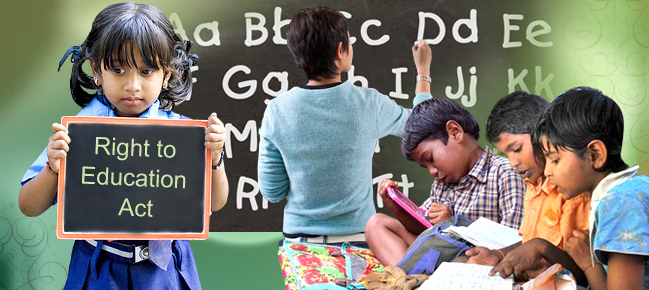
Education is one primary area that needs focus, as it is crucial to the development of a country. A higher percentage of educated individuals contribute more towards the economy of the country that in turn leads to blossoming of the nation. Since it is a subject that has multiple dimensions attached to it, some aspects relating to it fall under the Union List whereas the rest under the concurrent list of the Constitution of India. As a result, both the union and the states are empowered to make legislation with respect to it. Education was made a fundamental right by the 86th constitutional amendment which introduced Section 21-A in the Constitution of India. India joined the list of 135 countries that have legislation in place to implement it as a fundamental right, when the Right To Education Act finally came into force in 2010.

Salient features of the Act:

Education has now been made compulsory and free for children in the age bracket of 6 years to 14 years, which is further stretched to 18 years for children with disabilities. ‘Free education’ implies free education for those who have enrolled themselves in the appropriate institutions that are aided by the government, whereas the words ‘compulsory education’ cast an obligation on the appropriate government to ensure that a mechanism is there in place for the enforcement of the provisions. In order to enforce the fundamental right, all the private and government schools are required to reserve at least 25% of their seats for the disadvantaged groups and the weaker sections (section 12(c) of the RTE Act, 2009). The Act separates fraudulent schools, and donations and concessions are not allowed under the law. It also prohibits states from expelling, holding back or even necessitating a child to clear board exams till his or her elementary examinations are not over. Efforts to bring the drop outs, at par with the regular students have also been made by providing them with special training. Other provisions that make the Act attractive, are the steps that are planned to be taken in the direction of infrastructural development, student-teacher ratio and the up gradation of the faculty.

Terminologies:

Section 2(d) of the RTE Act, 2009 defines a child belonging to a disadvantaged group as follows:

“A child belonging to the Scheduled Caste, the Scheduled Tribe, the socially and educationally backward class or such other group having disadvantage owing to social, cultural, economical, geographical, linguistic, gender or such other fact, as may be specified by the appropriate Government, by notification.”

Section 2(e) of the RTE Act, 2009 defines a child belonging to a weaker section as:   “A child belonging to such parent or guardian whose annual income is lower than the minimum limit specified by the appropriate Government, by notification.”

Criticism:

The main point of contention was the reservation for the disadvantaged groups and the weaker sections. The Supreme Court put to rest all the speculations to rest when it passed its landmark judgment upholding the constitutional validity of the Act. The case was heard and decided by a three-judge bench of Chief Justice S H Kapadia and justices K S Radhakrishnan and Swantanter Kumar, who said that the act will apply uniformly to government and unaided private schools except unaided private minority schools. The case was decided by the majority with only K S Radhakrishnan presenting a dissenting view. Some people speculate that this might create a rift as the unaided private minority schools are allowed to function without any checks and balances.

In order to justify their stand the bench held that:

“By judicial decisions, right to education has been read into right to life in Article 21. A child who is denied right to access education is not only deprived of his right to live with dignity, he is also deprived of his right to freedom of speech and expression enshrined in Article 19(1) (a). The 2009 Act seeks to remove all those barriers including financial and psychological barriers which a child belonging to the weaker section and disadvantaged group has to face while seeking admission.”

“From the scheme of Article 21A and the 2009 Act, it is clear that the primary obligation is of the State to provide for free and compulsory education to children between the age of 6 and 14 years and, particularly, to children who are likely to be prevented from pursuing and completing the elementary education due to inability to afford fees or charges.”

The judgment did not bring joy to many who still doubt the validity of such reservations as many believe that the sole basis for admission should be merit. Some fanatics even go to the extent of saying audacious things like, ‘they might prove to be a bad influence on the children belonging to the elite class.’ These remarks seem completely baseless and are made by people who harbour a class prejudice.

The case further went in for an appeal before a five-judge constitutional bench, headed by chief justice R M Lodha because of the widespread resentment and disagreement with the ruling. The court again upheld the validity of the RTE Act, 2009 but this time both aided and unaided minority institutions were held to be out of the ambit, stating that minority institutions could not be compelled to admit students who do not belong to the minority section. The bench said, “In our view, if the Act is made applicable to minority schools, aided or unaided, the right of the minorities under Article 30(1) of the Constitution will be abrogated. Therefore, the (provision of the) 2009 Act, which made it applicable to minority schools is unconstitutional.” The private institutions are still under the ambit because the State provides for the reimbursement of the charges incurred by the private institutions on account of admitting and providing free education to the students of the reserved class.

Conclusion:

The Act provides a bulk of incentives to the underprivileged groups, that results in unequal treatment of the children but like the Centre had emphasized there is a need to delink merit and talent from social and economic differences among different sections of society and said that the Act calls for “moving towards composite classrooms with children from diverse backgrounds, rather than homogeneous and exclusivist schools.”

In order to uplift the society there should be a level playing field for all. The government should work towards building infrastructure so as to train the underprivileged to have the same expertise and skill so that they can also be a part of the healthy competition. Till the infrastructure is built some incentives will have to be given, but these schemes of carrot and sticks will not stand the test of time. A person belonging to an unreserved category has to put in quadruple effort to get what he aspires whereas the reserved class gets away with a little bit of hard work. The saddest part about reservations is that the people who need to be targeted are still out of the picture, and it is the ‘elite in the disadvantaged groups’ who are reaping the benefits generation after generation. The target group still survives silently in the bushes of the deserted areas, which are still out of bound. So the government will have to come up with some innovative measures to contain the resentment of the masses.


Download Now
logo
FREE & ONLINE 3-Day Bootcamp (LIVE only) on

How Can Experienced Professionals Become Independent Directors

calender
28th, 29th Mar, 2026, 2 - 5pm (IST) &
30th Mar, 2026, 7 - 10pm (IST).
Bootcamp starting in
Days
HRS
MIN
SEC
Abhyuday AgarwalCOO & CO-Founder, LawSikho

Register now

Abhyuday AgarwalCOO & CO-Founder, LawSikho