Download Now
Home Blog Page 1827

Presentation of electronic evidence in court in light of the Supreme Court judgment in Anvar P. K. vs. P.K Basheer & ors.

4

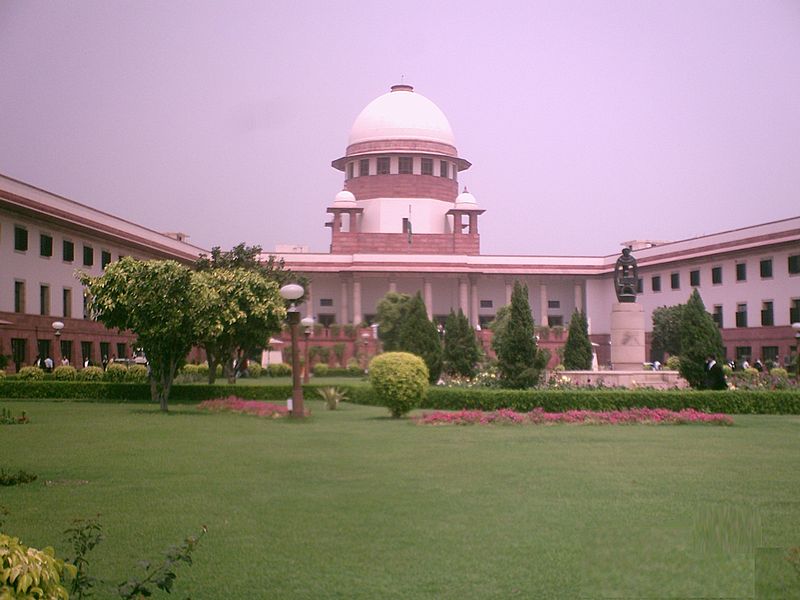
Supreme_Court_of_India_-_200705

This article is written by Poonam Bera.

Recently, in the case of Anvar P. K. vs. P.K Basheer & ors. (dated 18 September, 2014), Supreme Court overruled the statement of law on admissibility of secondary evidence pertaining to electronic record, as held by the court in case of State (NCT of Delhi) v Navjot Sandhu alias Afsal Guru (2005) 11 SCC 600 .

Supreme court in case of Anvar P.K vs. P.K Basheer & ors.,  further explained the position by saying that “an electronic record by way of secondary evidence shall not be admitted in evidence unless the requirement under section 65 B are satisfied. Thus in case of CD, VCD and chip etc., the same shall be accompanied by the certificate in term of section 65B obtained at the time of taking the document, without which the secondary evidence pertaining to that electronic record is inadmissible.”

Presentation of electronic evidence as secondary evidence under Evidence Act

Section 65 B of Indian Evidence Act 1872 provides notwithstanding anything in this act, any information contained in an electronic record which is printed on a paper, stored, copied in optical or magnetic media produced by the computer shall also be deemed to be a document, if the conditions mention in subsection (2) satisfied.

These conditions are: condition in respect of computer output shall be:

(a) electronic record containing the information should have been produced by computer during the period over which the same was used regularly to store or process the information for the purpose of any activity regularly carried on over that period by the person having lawful control over the use of computer.

(b) Information of the kind contained in the electronic record or of the kind from which the information so contained is derived was regularly fed into the computer in the ordinary course of the said activity.

(c ) During the material part of the said period, the computer was operating properly or; if not then in respect of any period in which it was not operating properly or was out of operation during that part of period, was not such as to affect the electronic record or the accuracy of its content.

(d) The information contained in the electronic record reproduced or is derived from such information fed into the computer in the ordinary course of the said period.

Section 65 B (4) provides the certificate, which identified the electronic record containing the statement and described the manner in which it was produced giving the particulars of the device involved in the production of records and deals with the conditions mentioned in section 65B (2) and is signed by the person occupying a responsible official position in relation to the operation of the relevant device shall be evidence of any matter stated in the certificate.

Judgments by Supreme Court

Supreme court in its previous judgment in the case of State (NCT of Delhi) v Navjot Sandhu alias Afzal Guru 2005 held that irrespective of the compliance with the requirement of the section 65B, which has a special provision dealing with the admissibility of the electronic records there is no bar in adducing secondary evidence under section 63 and 65, of an electronic record. Section 63 merely provides that secondary evidence means and includes “copies made from the original by mechanical process which in themselves ensure the accuracy of the process and copies compared with such copies.”

Following the principle of that generalia specialibus non derogant, which means special law will always prevail over general law, court in case of Anvar P.K vs. P.K. Basheer & ors has overruled the holding of Afzal Guru’s case and held inadmissibility of the CD’s as these electronic evidence produced without the compliance of the requirement of the section 65B. Here the special provision of the law is the section 65B of the Indian Evidence Act 1872.

The judgment in Anvar’s case signifies the concern of our judiciary on reliability of the electronic evidences. The new approach set up by the court is that the general law relating to secondary evidence is not applicable in electronic evidence. Electronic records being more susceptible to tampering and alteration so if the electronic records, which is not complying with the special provision of the Indian evidence act that is section 65B, may led to the travesty of justice.

After the Anvar case, for the presentation and admissibility of any electronic evidence like computer data, CD, VCD, chip any other digital record, there is mandatory necessity to comply with section 65B of the Act.

Download Now

Road Safety and Transport Bill, 2014: Will it make Indian roads safer?

2

800px-Multiple_Car_Accident_-_Rabindra_Sadan_Area_-_Kolkata_2012-06-13_01320

This article is written by Pragya Dhoundiyal.

In the wake of rise in the number of road accidents, the government has put its foot down in order to revamp the existing laws relating to carriage by road. Reportedly around 5 lakh accidents take place in India annually with a death toll of around 1.4 lakh. India has the highest proportion of deaths due to road traffic accidents in South East Asia. The situation is problematic in India because of lack of proper infrastructure facilities, poor road designs, poor implementation of traffic rules and regulations and a high load of a range of vehicles on the roads. In order to curb the menacethe Road Transport and Highways Ministry recently unveiled the draft Road Safety and Transport Bill 2014, which is out on their portal for the public and the stakeholders to give in their suggestions. The bill has been drafted to be in sync with the six advance nations – USA, Canada, Singapore, Japan, Germany and the UK. The bill would be presented in the winter session when the fate of the bill will be decided.

Missions and aims of the draft bill:

Their mission is to provide safe, efficient, cost effective and faster transport across the country. It aims to bring down the casualty caused by rash and negligent driving by coming down hard on the violators. This aims at bringing down the fatality rate by two lakh in the first five years of the implementation of the proposed changes. It is expected that the improved efficiency and safety of road transport would improve the GDP by 4% which would further enhance the investments in this sector and lead to creation of about 10 lakh jobs.

Proposed changes:

Establishment of motor accident fund: There is a marked emphasis on e-governance to bring in transparency in the functioning of the whole mechanism. Another commendable feature is the ‘golden hour’ policy which would ensure that all efforts are made to provide help to the road accident victims within an hour of the occurrence accident. Very evidently those are the crucial moments when a life can be saved, many instances of death occur because of untimely help that is provided as people tend to avoid helping the victim in order to escape the legal tangles. The aspect of monetary relief to the victim will also be taken care of with the establishment of a motor accident fund.

Enhanced fines and penalties: The pecuniary fines have also seen an increment which is expected to act as a deterrent. In case a person is caught using a vehicle in unsafe conditions, the person might be asked to pay a penalty of Rs.1 lakh or imprisonment for 6 months, which might be extended to one year.

Another offence that saw an enhancement of fine is the offence for drunk driving. In this case if a person is caught violating the law for the first time, s/he is expected to pay a Rs.25,000, or imprisonment for a term not exceeding 3 months, or with both, and a 6 months license suspension. On catching the same violator violating the same law would result in Rs.50,000 penalty or imprisonment for up to 1 year or both and a one year license suspension. But any subsequent violation would result in the cancellation of the license, and impounding of the vehicle which may extend for 30 days. Another rider to this clause is that if the person caught drunk driving is a school bus driver then the fine imposed would be Rs.50,000 with an imprisonment for 3 years with immediate cancellation of license in case the drivers involved in the incidence fall in the age bracket of 18 to 25 years. This provision is a welcome step as the drivers in this case have an added responsibility of so many lives that would play a crucial role in framing what tomorrow’s India would look like.

In case death of a child is caused, then in certain circumstances it will result in Rs.3 lakh fine, and imprisonment for a term not less than 7 years. In order to curb the growing impatience in the public which impels them to skip signals, the bill says that violating traffic signal three times would result in Rs.15,000 fine, license cancellation for a month and a compulsory refresher training.

Fines for faulty manufacturing designs: In case of faulty manufacturing design also the bill proposes to impose a hefty penalty of Rs.5 lakh per vehicle. The bill has very comprehensively attempted to cover most of the aspects which have been plaguing our safety provisions. The fines will be imposed by a graded point system.

It is intended that steps would be taken on the technological front as well. In order to promote innovation, vehicle types would be approved within a given span of time. There will be efforts in the direction of making spare parts cheaper by conforming to and adopting new technology like intelligent speed adaptation, driver alert control, eye drowsiness detectors, distance closure rate detection and green box monitoring. In the process safety will not be compromised and attempts to include safety equipments would be made, and to adopt new standards the industries would be provided with lead-time.

Motor Vehicle Regulation and Road Safety Authority of India: The bill proposes to build an independent agency for vehicle regulation and road safety – Motor Vehicle Regulation and Road Safety Authority of India. It would be a legally empowered institutional setup which would be accountable to the parliament. It will aim at coming up with innovative financing mechanism for funding safety programs which would give further impetus to the ‘make in India’ movement.

National Road Transport and Multinational Coordination Authority: In order to improvise the existing process, there would be a unified vehicle registration system, single National Road Transport and Multinational Coordination Authority (for improving quality of road transportation, developing integrated transport system by ensuring last mile connectivity by feeder bus services and multi modal hubs) and Goods Transport and National Freight Policy ( for increase in logistics to combat inflation by steps like  simplified and single portal clearance, addressing the bottlenecks of the trucking industry etc); a transparent single-window automated driving license system including biometric systems to avoid license duplication.

The application and issuance procedures for driving licensing system would be simplified and technology would be adopted for driver testing facilities.

As the emphasis of the whole growth process now lies on integrating private sector in key areas of development, this field is no exception, like they will now participate in establishing fitness certification centres. At the same time condition of the existing public passenger transport will be worked on and made eco friendly. There would be a two tier permit system, one at national level and the other would be intra state. The transfer of vehicles across the states would be made easier and integration of all stakeholders would take place.

Conclusion:

The well intentioned draft does project a promising image on paper but the implementation of the provisions will be the real acid test. Bribery which is ubiquitous in all levels of the government is the major apprehension of the common man, with the enhancement of the penalties there is a possibility that the amount demanded as bribes might also rise. So energies must be invested in making the police department corruption free if we really want to see the effect of the strict legislation. Only after a mechanism to check corruption is in place that charging such high fines would be justified, after all the people who cause accidents enjoying the comfort of their SUVs should also feel the pinch.

Stricter norms for passing the driving test can go a long way in curbing the grim situation that exists at present. It is not hidden from anybody that licenses in India can be obtained through a ‘dalal’ without undergoing the test.

Some infrastructural defects are also responsible for causing accidents like the sharp turns, or a tree suddenly erupting in the middle of the road. The shoddy conditions of the roads have claimed the lives of many innocents. Not only should the drivers of the vehicles be made liable but also the pedestrians who do not take the pain to walk a few steps more in order cross the road by using subways, foot over bridges or the zebra crossings, should also be brought to book.

We will have to wait to see what shape does the final act take and how well does it help in tackling the problems that the country is grappling with.

Photo credits: Biswarup Ganguly uploaded at Wikimedia Commons.

Download Now

Liability of employers for sexual harassment in workplace: How to comply with the law?

0

clueless-about-sexual-harassment

“Any organisation that does not have a sexual harassment committee will face serious legal action” – Maneka Gandhi, Union Minster of Woman and Child, 18 September, 2014

Sexual harassment in workplace is a sensitive issue, which has come into the forefront after a number of high profile sexual harassment cases involving top management of large corporate bodies like Tarun Tejpal of Tehelka and Phaneesh Murthy of iGate Corporation. India has recently enforced the new Sexual Harassment of Women at Workplace (Prevention, Prohibition and Redressal) Act, 2013 (hereinafter referred as the Sexual Harassment Prevention Act) from December, 2013 giving statutory rights to women employees to file complaints of sexual harassment at workplace.

The Oracle Corporation case – understanding employer’s failure to take reasonable steps to prevent sexual harassment

Recently, Oracle Corporation in Australia was ordered by the Full court of the Federal Court to pay $1,30,000 as compensation to the complainant in a sexual harassment case taking into account the “community expectation of higher value to compensation for pain and suffering and loss of enjoyment of life” of the complainant due to sexual harassment. In this case, the complainant (an employee of Oracle) was continuously harassed by another co-worker, who passed sexually suggestive remarks over a period of time. The court held Oracle vicariously liable for the act of its employee as it failed to take reasonable steps to prevent sexual harassment, mainly on two grounds:

i.     Failure of Oracle to provide adequate training to its employees. The training provided by the company was inadequate as it was found out that the company’s training module was a global training module which was not tailored to reflect the law in Australia. Moreover, the sexual harassment policy of Oracle at that point of time, was not in consonance with laws in Australia.

ii.     Improper and insensitive handling of the complaint and subsequent investigation by the HR of the company.

This judgment should be an eye opener for organisations who have not implemented the new sexual harassment law in their workplaces, as inappropriate sexual harassment awareness training might lead to potential lawsuits in the future.

Liability of employers under the 2013 Act

The Sexual Harassment Prevention Act creates certain statutory duties for the employers to following, including “providing a safe working environment at the workplace which shall include safety from the persons coming into contact at the workplace.” The new Sexual Harassment Prevention Act states that if the employer contravenes or abets contravention of any provision of the Act, which include providing a safe working environment or taking action against the harasser based on the report of the Internal Complaints Committee (ICC), it may be liable to pay a fine upto Rs 50,000. Interestingly, employer is defined as any person responsible for management, supervision and control of the workplace, so even in cases of violation of the statutory liability, the organisation itself will not be liable directly. However, repeated non-compliance can result in the punishment being doubled or even cancellation of the license by the government or local authority to carry on business, which might possess serious risk for businesses.Moreover, when complaints of sexual harassment are against the senior management of the company, it can lead to serious reputational risks for companies.

At the workplace, often demands for sexual favours (especially when it is by a senior management personnel) are coupled with promises of some kind of preferential treatment, or detrimental treatment in case the demand is not adhered to can constitute quid pro quo sexual harassment. Moreover, creation an intimidating, offensive or hostile work environment, or humiliating treatment which affects her health and safety are indicators that any unwelcome behavior, contact, advances or communication has caused sexual harassment to the woman. When the senior management of the company or the management has itself is involved in creation of a hostile work environment, the entire involved person will be individually liable under the law.

In cases, where the complaint is against the employer himself (which can include any person who is responsible for management, supervision and control of the company, or any board or committee responsible for formulation and administration of the policies of the organisation) the complainant can file a complaint with the Local Complaints Committee (LCC) established under the law. In such cases, the LCC may order the harasser employer (and not the business entity) to pay compensation to the complainant. The LCC while awarding the compensation may take into account the following things:

i.             the mental trauma, pain, suffering and emotional distress caused to the aggrieved woman;

ii.            the loss in the career opportunity due to the incident of sexual harassment;

iii.            medical expenses incurred by the victim for physical or psychiatric treatment;

iv.            the income and financial status of the respondent;

v.            feasibility of such payment in lump sum or in installments.

Takeaways

  • All organisations should ideally have a written sexual harassment policy.
  • Organisations should constantly check and update existing policies on sexual harassment based on the new Sexual Harassment Prevention Act, 2013. The policy should ideally be drafted or atleast vetted by a lawyer. The policy should ideally mention the following:

o   Sexual harassment in workplace is unlawful and prohibited under the law

o   Sexual harassment is prohibited in the organisation

o   A clear complaint filing mechanism

o   Consequences of engaging in sexual harassment

o   Clear reference to the applicable laws.

  • If the organisation is a MNC, a global training module might not be adequate, it is essential to have a training module which complies with the applicable laws in India.
  • All new employees should be made aware about the sexual harassment policy of the organisation during the induction program. Moreover, it is necessary to conduct periodical sexual harassment awareness workshops or training sessions.
  • All managers and supervisors should be instructed to keep a vigil in the workplace and report any untoward incident to the management at the earliest.
  • All complaints of sexual harassment should be treated carefully and with full seriousness by the management. It is essential to have people who are trained to handle such cases.

Are you compliant with the new sexual harassment law? If you have not complied with the law and looking for a solution? Visit http://sexualharassment.nujs.edu/ to find  out more about a course that helps in organizational compliance, ICC capacity-building and employee sensitization for 100 percent of the organization.

Download Now

Do we need separate restaurants for rape survivors?

1

This article was written by Vaibhav Raaj, a PhD Candidate at JNU.

gingerkolkata

Reserving the Right to Admission for Moral Convenience

A couple of days back the Park Street rape survivor with a lesser known name, Suzette Jordan, was denied entry in a Kolkata restaurant. She claims that she was explicitly identified as a rape victim in public view, humiliated and turned away. The management of the restaurant has unapologetically denied her version of the events and argued that they reserve the “right to admission” to the privately-owned eatery. This “right to admission reserved” clause has been the neon-lit signpost of the active hostility of the hospitality industry towards vast sections of socially marginalized people. It is common practice in Indian restaurants and hotels to restrict entry on grounds of attire, conduct, suspicion of prostitution or any other demeanour or appearance of a potential customer which can inconvenience the regular clientele. And here lies the catch. The convenience and well-being of its customers may be a genuine concern, the problem arises when a certain category of people by their very existence are presumed to be an affront to the moral or simply the aesthetic preferences of the rest of the society. The denial of service to Ms. Jordan was to avoid such “moral/aesthetic” inconvenience to the customers of Ginger Restaurant in Kalighat, Kolkata.

The “right to admission” clause in the hospitality industry is understood as a guard against situations where allowing a particular customer inside the premises would most likely irk the other patrons. For instance someone known to get into drunken brawls, indulge in obscene behavior or a known sexual harasser can be denied entry for the good of the other customers. If this vigilance is not maintained the restaurant in question can be sued for “deliberate negligence with criminal abetment” and for “deficiency in service” besides for “damages” to untold extents.

However it is common knowledge that the “right to admission reserved” clause is used by restaurants, hotels, pubs, bars and such private service providers for all kinds of purposes- maintaining a niche profile of their regular clientele based on their class, ethnicity, gender, culture, language, dressing style, mannerisms, sexual orientation and even religion. In Delhi for instance many restaurants and pubs would turn you away if you go in slippers. You cannot easily book a room in a hotel with a companion of opposite gender. In many places in Kolkata, women are not served more than two drinks if they do not have a male companion. Bars and restaurants in smaller towns simply refuse entry to women.

right of admission

Not a Consumer without Admission

If you are denied entry into the premises of the service provider, you automatically are precluded from the cover of the Consumer Protection Act. The Consumer Protection Act recognizes you as a consumer only after you have availed the services of a restaurant or any other business in question. Even if you are granted entry and service, the management can at any point eject you from the place without citing any specific reason. The Consumer Forum is highly unlikely to interject in such a scenario.

What happened to our civil rights?

The Protection of Civil Rights Act can be invoked if a restaurant or business denies you entry citing your Scheduled Caste identity. Such continuance of the abhorrent practice of unctouchability is explicitly forbidden under the Civil Rights Act. The SC/ST Prevention of Atrocities Act can also be invoked in such cases of blatant casteist practices. The Physically/Visually Handicapped (PH/VH) persons have also received some attention in the revised rules of licensing of hotels and restaurants. Establishments are required to be disabled-friendly and they cannot deny service to such persons on the grounds of their disability. Both these categories, dalits and PH/VH have won these legal rights through sustained political and social struggles.

ROAR

However similar protection is not available to the other categories of women, LGBT, foreign nationals particularly of African origin, Muslims and other religious minorities, elderly persons, etc. A restaurant can simply choose to not admit or place heavy restrictions on the admission of these categories legally. There is no recourse available to these categories under the Indian law. The atrocity on Ms. Jordan reminds us that these unfortunate categories of legally discriminated persons also include rape survivors.

Rape Survivors as a discriminated category

Every year India witnesses more than 50000 rapes that are brought to the notice of the law enforcement. As most rape cases go unreported due to the fear of social stigma, the actual number is definitely manifold of the number of reported incidents. This means that our society is home to millions of rape survivors who are doing everything in their power to overcome the trauma and lead a normal life. However it is people like the manager of Ginger restaurant who make their rehabilitation impossible. Such instances of social ostracization are unfortunately very common and have led to countless suicides by innocent persons who managed to survive rape but not our society. People fail to see rape as an act of violence by a dominant gender over the female (or other) body. In the wake of the Nirbhaya tragedy, the Centre issued directives to schools and colleges to not discriminate against rape survivors. Probably a similar directive could now be issued to restaurants, hotels, etc. in the wake of the Ginger incident. However such piecemeal measures can only bring temporary relief.

“Indians and dogs not allowed”

Most of the licensing rules for ‘places of public entertainment’ still follow the outdated laws of the colonial era. The motivation of such laws was to restrict the access of Indians, particularly those from deprived social backgrounds, to public spaces. It is tragic that most of the present statues regulating issues of creation of and access to public spaces are mere derivatives of the colonial laws and practices. Therefore it is not a surprise that most of them fall short in addressing the grievances of a majority of the society.

Jordan is not alone

The recent popular movement against sexual violence has shown how public pressure can lead to progressive revisions in colonial statutes. We are no more limited by temporal and spatial boundaries in the age of the internet. Ginger Restaurant’s page on zomato.com is witness to a nationwide outrage against the management of the restaurant for having denied entry to a rape survivor. More than 400 people have voiced their anger in the review section since Monday morning. In a single day, the rating of the restaurant dipped from a respectable 3+ to a pathetic under 2. If the owners of Ginger are in their right minds, they must have learnt the lesson. If the law failed to offer a precedent for the rights of Ms Jordan, we know now that her tragedy has been registered as one in the public mind.

In bringing to light the deficiencies of the law in dealing with incidents like yesterday’s we are hoping to start a conversation. The Consumer Protection Act and the licensing regulations are in dire need for revision to include provisions against the various discriminatory practices of the hospitality industry. Also perhaps it is time that the Protection of Civil Rights Act expanded its scope to cover the grievances of more categories. We know that Ms. Jordan is not the only one who was turned away from a public place feeling humiliated and helpless. Do share your own experiences in the comments section below. As these experiences shape our collective conscience we will hopefully push the state to become a more reliable guarantor of our civil rights! And we hope that the hospitality industry would become more sensitive to the plight of the vulnerable sections of our society.

Download Now

Quid pro quo and Hostile environment sexual harassment

0

Certificate

This article is written by Pragya Dhoundiyal.

The Supreme Court in Vishakha and others v State of Rajasthan in 1997 laid down the guidelines on sexual harassment popularly known as Viskhakha guidelines. This has been superseded by the Sexual Harassment of Women at Workplace (Prevention, Prohibition and Redressal) Act, 2013. The new definition of sexual harassment under the 2013 Act, has covered quid pro quo and “hostile environment” as well, however the terms are not explained or clarified under the Act.

As the law has been enacted very recently, we can take help of the interpretation given to similar laws in the foreign countries to understand the meaning of such terms. Sexual harassment as defined under the US laws gives a very wide and liberal interpretation to it. It protects not only females but males as well from sexual harassment. You can know more about the law and various compliances related to it by taking up this course which is created by National University of Juridical Sciences. You can also learn about implementation of sexual harassment laws by taking up this course.

Quid pro quo sexual harassment

Quid pro quo is a Latin term which means ‘something for something’. It corresponds to the English usage ‘I give so that you give me’.

Quid pro quo harassment is the most commonly recognized form of sexual harassment at workplace. It is said to occur when job benefits or academic decisions, including employment, promotion, salary increases, shift or work assignments, performance, hiring, performance standards grades, access to recommendations, assistance with school work, etc. depends on acceptance or rejection of sexual advances, requests for sexual favours or any other behaviour of sexual nature, by a person in authority. The employer is held strictly liable in this case even if it is the supervisor, the manager or the agents who perpetrate this crime, as they are believed to be acting on behalf of the employer and it is his duty to prevent perpetration of such crimes at workplace. This type of harassment is generally labelled as ‘abuse of power’.

The “California Judicial Council Jury Instruction”, has laid down the following test that the victim must prove, to establish a successful claim of quid pro quo sexual harassment:

1. That the plaintiff was an employee of the defendant, applied to the defendant for a job, or was a person providing services pursuant to a contract with the defendant;

2. That the alleged harasser made unwanted sexual advances to the plaintiff or engaged in other unwanted verbal or physical conduct of a sexual nature;

3. That job benefits were conditioned, by words or conduct, on the plaintiff’s acceptance of the alleged harasser’s sexual advances or conduct; or that employment decisions affecting the plaintiff were made based on the plaintiff’s acceptance or rejection of the harasser’s sexual advances or conduct;

4. That at the time of the alleged harasser’s conduct, the alleged harasser was a supervisor or agent for the defendant;

5. That the plaintiff was harmed; and

6. That the alleged harasser’s conduct was a substantial factor in causing plaintiff’s harm.

Hostile environment sexual harassment

In case the sexual conduct interferes to the extent that it interferes with the individual’s job performance, or creates an intimidating, hostile or offensive work environment it is known as hostile environment sexual harassment. The conditions should be very pervasive and sufficiently severe to bring a case in this ambit; general jovial gestures would not constitute a crime under the head. In this case the harasser may or may not be a supervisor, manager or agent directly employed by the employer, and nothing is done to stop or discourage it.

The first case which laid down the principles related to hostile environment sexual harassment was Meritor Savings Bank v. Vinson. In this case the Supreme Court laid down the following rules for a cause of action to arise in case of hostile environment sexual harassment:

The Trier of fact must find that:

1. The employee is a member of a protected group;

2. The employee was subject to unwelcome sexual harassment;

3. The harassment complained of was based upon sex;

4. The harassment complained of affected a “term, condition, or privilege of employment”; and

5. The employer, under the doctrine of respondent superior, knew or should have known of the harassment in question and failed to take prompt remedial action.


In this landmark judgment it was said that distinction between the closely related terms unwelcome, invited, uninvited-but-welcome, offensive-but-tolerated and flatly rejected sexual advances should be carefully discerned.


The Equal Employment Opportunity Commission (EEOC) cites six factors to consider in reaching a “hostile environment” determination:

1. whether the conduct was verbal or physical, or both;

2. how frequently it was repeated;

3. whether the conduct was hostile and patently offensive;

4. whether the alleged harasser was a co-worker or a supervisor,

5. whether others joined in perpetrating the harassment; and

6. whether the harassment was directed at more than one individual.

In Bundy v. Jackson, the court held that a woman has a cause of action under Title VII, which talks of the right of an employee to work in an environment free from discriminatory intimidation, ridicule and insult, regardless of the fact whether she has suffered economic losses or not if she is able to prove that she had undergone psychological and emotional injuries.

The court laid down the definition of a reasonable woman in the case of Ellison v. Brady, in which the allegations are evaluated from a woman’s perspective as from the ancient times women are more vulnerable to sex related violence. While judging such cases, there are two perspectives that are taken into consideration. One perspective is that of the victim and the other one is that of a reasonable woman. This is done so as to not penalize men who indulged well intentioned acts not realizing it culminated into an illegal and offensive act. It is a genuine fact that men and women have a different way of looking at things, so we cannot under any circumstances apply the test of a reasonable person, especially in such cases.

The burden of proof lies on the victim, who has to discharge it with proving that she was sexually harassed continuously as a few isolated incidents would not result in sexual harassment.

In the case of Williams v. Saxbe, the court held that if one is fired for refusing sexual advances in the workplace, one may be entitled to compensation for lost wages, emotional distress, punitive damages and attorneys’ fees.

Conclusion

Taking cue from such precedence, India should also ensure that the statutes do not lay idle and the norms should be strict enough to act as a deterrent. In the changing time and environment where men and women both play an active role in the economic development of the country, it should be the state’s responsibility to provide a harassment free environment. The judgments passed by the court will be a bulwark, so that the harassers are not scot free, at the same time the courts should ensure that the legislations are not misused to defame of a person and ruin the credibility of the person forever.


Download Now

What every Mumbaikar should know about Maharashtra Ownership of Flat Act,1963

0
Maharashtra Ownership of Flat Act

This article is written by Rajat Lohia, a student of  School of Law DAVV, Indore, on Maharashtra Ownership of Flat Act, 1963

Introduction

During the times preceding 1961, there were found to exist in several areas in the State, sundry abuses, malpractices and difficulties relating to the promotion of the construction and the sale and management and transfer of flats taken on ownership basis and that such abuses, malpractices and difficulties were increasing. In 1963 the above Act was therefore passed for the regulation of basis in the State of Maharashtra. By virtue of the provisions of the Act and the Notifications issued this Act is made applicable to the Areas within State of Maharashtra.

The Maharashtra Ownership of Flats (Regulation of the Promotion, Construction, Sale, Management and Transfer) Act, 1963 (“the MOFA”) has been enacted to regulate the promotion, construction, sale, management and transfer of flats sold on an ownership basis within the State of Maharashtra. The MOFA(Maharashtra Ownership of Flat Act) is an important piece of legislation as it lays down the responsibilities of real estate developers / builders in respect to flats sold by them and conversely the rights of flat purchasers within the State.It was introduced in the Legislative Assembly, which aims at protecting the interest of flat purchasers and show in transparency and discipline in transaction of flats by putting a check on malpractices.


What is a “Flat”?

The MOFA (Maharashtra Ownership of Flat Act) defines the term to mean:

“A separate and self-contained premises, which is used or is intended to be used as a Residence, Office, Show-room, Shop, Godown, carrying on of any industry or business including a Garage and the premises forms part of a building.” The term flat also includes an apartment. The Explanation to the definition provides that even if a separate bathing, washing, sanitary, etc. arrangement is made between two or more premises, they shall be deemed to be separate and self-contained.

Thus, in order to be construed to be a flat, all the above ingredients must be fulfilled. This is an important definition because if any premise is not regarded as a flat the provisions of the MOFA (Maharashtra Ownership of Flat Act) do not apply.


Who is a Promoter?

The second most important definition is that of the term “promoter”. It is defined to mean a person:

Who constructs or causes to be constructed a block or building of flats or apartments for selling all or any of them to a Company, Co-operative Society and Associations of Persons. The term promoter includes his assigns and thus, if a person assigns his interests in the land to another person then the assignee would become a promoter. In the event that the builder and the person selling the flats are different, then both of them will be considered as promoters.


Responsibilities / Liabilities of the Promoter

Section 3 of the MOFA (Maharashtra Ownership of Flat Act) casts onerous responsibilities upon a promoter who constructs a building of flats which are to be “taken on ownership basis”. It is strange that though the term “ownership basis” has been used in the MOFA it has not been defined anywhere. The responsibilities of the Promoter under section 3 are as follows:

(a) Make a full and true disclosure of his title to the land along with a title certificate including all encumbrances on the land, all outgoings for the property rates, municipal taxes etc.

(b) Specify in writing the date by which possession of the flat would be handed over the precise nature of organization of flat purchasers to be formed to which the title would be conveyed, e.g., company, co-operative society

(c) Cannot give possession until a Completion Certificate is received from the Municipal Corporation.

(d) Give inspection on 7 days notice of the approved plans and specifications

(e) Maintain a list of flats taken or agreed to be taken with prescribed details.

The Promoter is responsible for paying all outgoings including taxes in respect of the flats until he transfers the property to the flat owners/ society / company, etc.

Once the approved plans and specifications are disclosed to the flat purchasers, the promoter cannot without the purchasers’ previous consent make any alterations or additions in the structures of the flats. In case the flat purchaser notifies any defect in the building/materials used/ any unauthorized changes, etc. within 3 years of taking possession, then the promoter shall, if possible, rectify the same free of cost.

https://lawsikho.com/course/diploma-entrepreneurship-administration-business-laws
Click Above

Remedies if Promoter fails to give possession on due date

If the promoter fails to give possession of the flat as per the date specified in the agreement or any further agreed date or in case of any reasons beyond control within a further extended time of 6 months, then the promoter shall be liable on demand to refund the amounts received by him along with 9% interest per annum till the date of refund.

After execution of the agreement for sale, the promoter cannot create any mortgage/charge on the flat without the consent of the flat purchaser.


Registration of Agreements

Section 4 of the MOFA (Maharashtra Ownership of Flat Act), before accepting any payment as advance payment or deposit from a flat purchaser, the Promoter has a liability to execute a written agreement in the prescribed format with every flat purchaser and to get this agreement registered under the Registration Act. Further, the amount of deposit or advance cannot exceed 20% of the sale price. Section 5 the Promoter is required to maintain separate bank accounts of sums taken as advance or deposit and he shall hold them for the purpose for which they were taken.  The Bombay High Court’s decision in the case of Ramniklal Kotak v. Varsha Builders, AIR 1992 Bom 62 stated that  “To prevent bogus sales being effected by a Promoter and to put a check to malpractices indulged in by the Promoters in regard to sales and transfer of flats, the Legislature has put the restrictions. The provisions of section 4 are mandatory and not directory in nature.

Section 4A of the Act states that even if any agreement is not registered under section 4 of the MOFA (Maharashtra Ownership of Flat Act), it will be admissible as evidence in a suit for specific performance or as evidence for part performance under section 53A of the Transfer of Property Act. This section was inserted to overrule the Bombay High Court’s decision in the case of Association of Commerce House Block Owners v. Vishnidas Samaldas that non-registered agreements are wholly invalid and void ab initio and create no rights between the parties.


Conveyance of title

Under section 10 of the MOFA, as soon as the minimum number of persons required for forming a co-operative society or a company have taken flats, the promoter must within 4 months submit the application for formation of a co-operative society or a company. This section recognizes a company as a valid form of organization as opposed to a society. The promoter must then under section 11 convey his title to such an organization of the flat takers within 4 months of the date of formation of the society or the company (provided no date has been agreed upon).


Offences

Any promoter guilty of contravention of section 3 (general liabilities), section 4 (registration of agreement), section 5(maintenance of separate accounts for deposits), section 10 (formation of society or company) or section 11 (conveyance of title) shall, on conviction, be punished with a term up to 3 years and/or a fine.

Any promoter who commits a criminal breach of trust in respect of any advance or deposit given to him for specified purposes shall, on conviction, be punished with a term up to 5 years and/or a fine. The penalty for contravening any other provision of the Act, on conviction, is a term of up to 1 year and/or a fine of up to Rs. 10,000.           


Liability as a Flat-Taker

Section 12 of MOFA (Maharashtra Ownership of Flat Act) states that (1) Every person who has executed an agreement to take a flat shall pay at the proper time and place the price, his proportionate share of the Municipal taxes, water and electricity charges, ground rent (if any) and other public charges in accordance with his agreement with the promoter and where the co operative society or company of persons taking the flats is to be constituted, co-operative in the formation of such society or company, as the case may be.

(2) Any person who has executed an agreement to take a flat and who, without reasonable excuse, fails to comply with or contravenes sub section (1) shall, on conviction, be punished with fine which may extend to two thousand rupees.

Photo credits: “Mumbai Skyline at Night” by Cididity Hat – Own work. Licensed under Creative Commons Attribution-Share Alike 3.0 via Wikimedia Commons


LawSikho has created a telegram group for exchanging legal knowledge, referrals and various opportunities. You can click on this link and join:  

https://t.me/joinchat/J_0YrBa4IBSHdpuTfQO_sA

Follow us on Instagram and subscribe to our YouTube channel for more amazing legal content.

 
Download Now

Outsourcing in India: Things you should know before signing the outsourcing agreement

0

outsource-web-development

This article is jointly written by Abhyudaya Agarwal and Amartya Bag.

Functions which do not relate to the core competence of a business, are not cost-efficient if performed by the organization itself, or are labour intensive are typically outsourced to cheaper destinations or companies which perform them more cost-effectively. Outsourcing is especially common in the information technology sector and finance sector. For example, customer service, facility management and back-end processes are often entrusted to an outside vendor.

The advantages of specialization motivate the decision to outsource non-core areas of work, and technology has facilitated outsourcing even further. Note that outsourcing of non-core functions does not imply that the outsourced processes are not critical to the success of the business – it just implies that the business does not possess the core competence or that it will be too expensive (or impracticable) for the business to handle the functions on its own.

How are outsourcing arrangements undertaken? How are the relationships managed? What should a businessman who contemplates entering into an outsourcing transaction or a consultant or advisor who wants to help a client know about outsourcing relationships and contract?

In this article we will focus on how technology-related outsourcing arrangements work. Materials and insights on outsourcing agreements, and different strategic and legal issues faced while entering into such an arrangement is very scarce, and a businessman or his advisor will be able to develop extremely unique skillsets by understanding these issues.

Before getting into details, we will examine common business and contractual models of outsourcing:

1.             Outsourcing Agreements for BPOs and KPOs

Outsourcing contracts, especially for Business Process Outsourcing (BPOs) and Knowledge Process Outsourcing (KPOs) can be extremely complex. There are a variety of contractual models that are used for outsourcing, depending on the objective of the clients, some of which are discussed below:

·         Services Agreement

A vanilla services agreement will merely require a third party to perform a particular function for the customer – the agreement will specify service levels that are acceptable for the outsourced services (see the discussion on Service Level Agreements and Master Service Agreements in another part of this course for this purpose). The business may transfer certain IT assets (such as data centres, etc.) and employees through a secondment or similar arrangement to the outsourcing vendor for the duration of the agreement, but this is more common in a joint venture or a captive outsourcing model.

High value BPO or KPO outsourcing transactions could involve a joint venture or captive outsourcing structures.

  • Joint venture

In another model, the customer and the service provider incorporate a separate legal entity (in the form of a joint venture), for providing necessary services.  This entity is jointly owned by the customer and the service provider. Often, these feature a transfer of employees and IT assets of the customer. The outsourcing services provider is able to complement the transferred resources of the company with its own technical resources and employees.

A joint venture model could have several variations – for example, one customer could enter into a joint venture with multiple suppliers. This structure is adopted when one supplier is not adequately equipped to handle all the outsourcing needs of the customer alone. Hence, the customer may require multiple entities to come together and perform the desired services in a coordinated manner (in the form of a single joint venture) to meet its needs.

Alternately, multiple customers could incorporate a joint venture together to form an entity providing outsourced services to all of them. This enables pooling of resources and reduces costs for the customers. Sometimesthe seller may also provide services to other customers

  • Captive outsourcing entity

In a captive outsourcing model, the customer (i.e. the entity which desires to outsource services) owns the entire capital of the service provider. The unit provides services to the customer on an exclusive basis. While some local professionals and employees may be hired, the service provider is entirely controlled by the customer.

2. Common heads in outsourcing agreements

An outsourcing contract is usually a long-term contract – hence, it must not only define the rights and liabilities of the parties, but will also take into account high-level issues like IPR, data protection, exit clauses, dispute resolution, transfer of assets and at the same time leave enough flexibility for parties to manage day-to-day issues.

This module discusses about certain key clauses that should be kept in mind while drafting or entering into an outsourcing agreement, especially in case of information technology related outsourcing.

Typically, outsourcing agreements include provisions on a variety of issues such as transfer of assets, staff, pricing and payment (see the discussion on remuneration-related provisions), intellectual property matters, and information security, monitoring provisions, service levels and credits for failure to meet service levels, termination, etc.

We will discuss these clauses in detail below:

Scope

This is the fundamental clause on which the success of the whole contract depends. Any kind of ambiguity or uncertainty in the clauses might lead to conflicts and confusion in the future. The clause should be drafted with utmost precision, having clarity and delineate the scope of services. In terms of content, the clause should define what services are expressly covered under the agreement, what service are expressly excluded, what service are dependent or responsibility of the third party. If it is not possible to describe the services to be offered by the vendor in the main agreement, they might be described in detail in a schedule which is annexed to the agreement. The clause should also expressly mention whether this agreement is an exclusive agreement with the service provider. Having clarity regarding the scope will also help in formulating the pricing, rights and liabilities of the parties in a better way to suit the nature of the contract.

Transfer of assets

In certain cases, the assets of the customer are transferred to the service provider – these could be hardware, telecom equipment, software licenses, equipment leases and equipment maintenance contracts. In such cases a separate ‘transfer agreement’ which captures transfer or assignment of these assets is executed between the parties.

Transfer of personnel

Where employees are transferred to the service provider, it must be ensured that the transfer is legally smooth and does not trigger any retrenchment-related or other law provisions which have a financial impact on the parties. To comply with this, the new employer must employ them on the same terms as they were originally working.

Ownership of IPR

Intellectual property involved in an outsourcing contract includes, patents in case of R&D based industry, software development or related to product design, trademark is case the agreement involves sale or marketing of customer’s products, or copyright if the agreement is related to graphics, creative works, software applications. The first priority would be to identify the existing IP to be used, and what type of IP might be produced during the existence of the contract by the vendor. In an outsourcing contract, there is possibility that a new IP is created, or it is improved or the existing IP is used by the parties. In such cases, it is essential that the ownership or the terms of use of that IP is specifically mentioned in the contract itself. In case of a pre-existing IP, generally the IP lies with party who created it, and a license to use pre-existing IP should contain appropriate field of use limitations and may be exclusive or non-exclusive, etc. In case of a newly created IP, it is essential to identify who will have ownership of the IP, and whether the vendor will have certain rights regarding its usage or will it be joint-ownership. In case of joint-ownership one should review the applicable laws of the country and its possible consequences.

Information security

With increasing level of information being shared in an outsourcing contract, which might include sensitive business information, personal information of the customer and might also involve data related to third parties. In case of a breach, both the customer and the vendor might face financial harm as well might result in harm to the goodwill of the company.

It is essential that the contract should specify the standard of care to be taken by the vendor in handling of the data, which might include provisions for physical security, signing of non-disclosure agreements with the employees and consultants of the vendor, internal security protocols and procedures compliance with industry-standards such as the ISO Standards on Data Security to minimise the risk of information security breach. Businesses operating  in certain sectors are required to maintain higher levels of security and comply with additional regulations due to the kind of information they collect. In case the client is operating in such a sector, the client (or any agency to which it outsources the functions) may be required to comply with protocols under sectoral regulations.

Examples of such laws could be the Gramm-Leach-Bliley Act (GLBA), the Health Insurance Portability and Accountability Act (HIPAA), the Health Information Technology for Economic and Clinical Health Act (HITECH), the Fair Credit Reporting Act (FCRA) and the Children’s Online Privacy Protection Act (COPPA) in US or following of the Data Protection Directive of the European Economic Area (EEA), or the RBI’s Know Your Customer norms or SEBI regulations in India. See the study materials on data protection for more information around this clause. 

The agreement should specifically define, personal information, confidential information, what constitutes material breach, which employees will have access to data.

The contract should also specify the obligations and remedies of both the parties in case such a breach happens. The contract should also specifically have provisions, to notify the customer in case of a breach and lay down procedures to mitigate the effects. Provisions related to indemnity in case of a breach can incorporated in the case clause or in a separate indemnity clause. It should also lay down who controls the defence and settle the claims in case of a breach or there should be an expressed permission needed from the customer for settlement of such claims. The customer should look for clauses which limit such claims in form of caps or consequential damages, or not covering third party liabilities. The customer may ask the vendor to take compulsory insurance to cover such risks.  The vendor can negotiate clauses to contain caps or would not cover consequential damages. There should be a provision, which allows the customer to periodically audit the security protocols of the vendor.

Warranties and liabilities

An agreement always has the chance of facing some risks associated with transactions. The most obvious risks should be foreseen and their effect be addressed in the contract. No contract can be free of risks; however it is essential that risk is either shared, limited or pre-emptive steps taken. An IT outsourcing contract should contain provision related to warranties made, which includes maintaining performance, work standards, service levels, viruses or disabling devices compatibility clauses, providing correct financial condition, intellectual property infringement, maintaining security and data protection. An expressed condition can be incorporated making it mandatory for the vendor to pay in case of breach of service, for which the customer has suffered losses.

However, there can be provisions related to limitation of liabilities in form of a cap, or non-covering of consequential damages (like loss of profits), personal injury, property damage, third party contracts, acts & omissions by employees and by subcontractors, negligence, misconduct, employment and termination related issues, acts of nature, non-functioning of third party software. The customer may insist for a mandatory insurance policy to be taken by the vendor to protect against such loss. This will not only ensure that the customer gets paid for the damage, but the vendor is also protected against financial losses.

Term, termination and exit clauses

The term clause should specifically mention the term of the contract, conditions for extension of the contract and might provide for provision for mutual termination of the contract.

The termination clause should expressly lay down the events which might lead to termination of the service, by either party or one of the parties.

Generally an outsourcing contract is a long term contract, so arising of dispute is not uncommon. In case a dispute resolution fails, the contract may need to be terminated or even in case of completion of term of the contract, it is essential that the contract have properly drafted clauses which handle the exit in an efficient manner without much disruption to the service of the customer.

Generally, a termination or exit should be made in a staged manner, wherein part of the service is taken over by the customer itself, or handed over to another vendor in a phased manned over a period of time. This can be incorporated even in cases, where immediate notice of termination is given. It would not only benefit the customer but also the vendor, who can reallocate/restructure its resources in a better manner. Another concern that can be taken care through proper drafting, where the vendor has terminated the contract in case of a dispute related to payment, the clause may provide that the disputed amount be credited to a trust account for continuation of the services. The exit clause should also mention the minimum period of such transition service, quantum and nature of service to be provided during the exit period and the whether any payment to be made during this period. However, these would depend on the reason behind the termination.

The clause may have provisions related to buy back of IT assets and infrastructure, transfer of know-how and materials, transfer of third party contracts made by the vendor for running the service provided to the customer. The clause should specifically mention who would be responsible for remobilisation or relocation cost, termination fee.

Jurisdiction and dispute resolution clauses

In most cases, the clauses related to jurisdiction and dispute resolution are overlooked. If an outsourcing agreement involves parties in different jurisdictions it is essential to be clear about which courts have the decision to decide disputes and which law is applicable to the dispute. A tight alternative dispute resolution (ADR) clause can help in reducing litigation or settling the dispute without involving huge costs and within a short span of time – here, ADR does not necessarily refer to arbitration but could refer to mediation, expert determination and other mechanisms as well.

Under a jurisdiction clause, the parties may select the venue and the Court where the dispute can be resolved. While selecting such venues, it is better to be specific about the particular court, and not just the country (especially in case of a large country such as India). Jurisdiction clauses can be exclusive, i.e., the disputes can only be brought to the court agreed by the parties, or non-exclusive, where the parties specify are court but are free to select any other appropriate forum.

A governing law clause will not only decide on which country’s law is applicable, but also determines how the provisions of the agreement are to be interpreted, and the validity of exclusions or liability clauses.

Why is it important to include these rules? Very simple – the ability to enter into customized relationships gives the parties significant freedom to choose how to regulate their commercial conduct. In case there is no provision in the contract for dispute resolutions, conflict of law rules of the jurisdiction in which the action was brought (lex fori) will determine the governing law. As a general rule, the law where the service provider is based is applied – however, these rules are complex and vary depending on the jurisdiction and no party wants to indulge in a legal proceeding over which rules apply later on.

Generally such agreements also expressly exclude the UN Convention on Contracts for the International Sale of Goods 1980 (Vienna Sales Convention), which provides certain rules that are favourable to the customer on representations and warranties, anticipatory breach of contract, and other matters.

How does the service provider benefit? Remuneration-related provisions

Different types of remuneration mechanisms may be built into an outsourcing contract – the remuneration may be assessed on per transaction basis, or on the amount of resources that are dedicated to the outsourcing process by the service provider. Alternately, sometimes a profit-sharing method is used, if the performance of the outsourced process is extremely critical for the overall business of the customer. In a lot of cases the model which is ultimately implemented may depend on the needs of the business and the type of service provided by the service provider. A consultant or an advisor should know these models so that he may assist a client in negotiation or for ultimately helping the client complete the deal and enter into a relationship. A businessman can similarly use these insights similarly for his or her own business.

Pricing models are explained in more detail below:

i)                    fixed price – in this model a fixed amount may be paid to the service provider per year. For example, INR 20,00,000 per year for an outsourced technology platform, with a maximum cap of 10,000 users using it continuously at any given point of time. Many video-hosting services such as Vimeo work on this model.

ii)                  resource-based payments (based on resources, identified as the FTEs or Full Time Equivalents) – in this model, the compensation will in some way be linked to the headcount and amount of resources employed by the service provider to deliver the output service. Note that this model does not by itself take into account how efficiently or cost effectively resources are deployed.

For example, an organization may state that it needs to devote 3 persons and 3 fully loaded cabins (with office space and related infrastructure) to handle 10,000 customer support calls every month, for which it will charge INR 8,00,000. If expected calls are 100,000, the amount of resources, and cost incurred simply multiples by 10.

iii)                transaction or volume-based model (e.g., price per transaction) – in this model, pricing will be on a per unit basis. For example, if there is

iv)                cost-plus arrangements – in this model, the service provider may charge the cost incurred by it plus a certain markup over the resources deployed.

For example, if 10 persons are to be employed at INR 20,000 salary per month to perform the service, the service provider may charge INR 2,00,000 plus a markup of, say 15 percent, i.e. a total of INR 2,30,000 per month.

v)                  gain-sharing/ risk-sharing – this model actually involves sharing risks, and the possibility of profits if the business is doing successfully. Although this model is frequently discussed during negotiations, it is rarely finalized and implemented, as per industry experts. It is likely to be more often used when the process being outsourced is relates very closely to the overall success and performance of the organization.

For example, assume that an Indian supplier agrees to provide all necessary services (including a customized relationship management software and necessary call-centres with staff members) for handling customer support at a 10 percent revenue sharing model. The amount of revenues earned by the service provider will be directly related to the success of the business, thus ensuring maximum incentive for the service provider.

vi)                combinations of the above.


For example, a fixed price model could be adopted with a monthly performance bonus in case there has been no lapse in the service levels agreed to.

Note that apart from determining compensation mechanisms, the method for measuring compensation should also be defined clearly. Outsourcing relationships tend to be long term and payments are made over a period of time, as opposed to, say, a share acquisition transaction where the consideration is most often paid at once. In this setup, cost structures are likely to change over time. Some costs may scale while others may not – for example, price of providing a particular technology is likely to decrease with time, while personnel costs may increase. Clients will want that the pricing mechanism stays competitive – therefore, parties tend to adopt a ‘benchmarking’ mechanism. The benchmarking mechanism is used to revisit prices periodically, and compute the remuneration mechanism on the basis of prices of other representative transactions in the market which are used as samples for comparison.

The clause should also mention the schedule for such payment, late payments (and any interest applicable on late payments), currency to be used, and responsibility of payment of taxes. However, it is essential that the customer decide on whether to go for a fixed price or a fluctuating one, which should be made based on taking into consideration the nature of service provided.

The provision can have an audit clause, wherein the customer can audit the bills and invoices on a periodical basis for effective transparency.

Performance-related incentives and penalties

In case of inadequate performance or failure to meet service levels, parties agree to a ‘credit’ system. Typically, parties identify critical service levels. The impact of failure to meet any individual service level metric or to meet all of them together are quantified – usually the financial impact is less than the price paid to the supplier.

For example, if the supplier is to be paid USD 100 per month to meet performance standards on 14 service levels (of which 10 are critical), failure to meet all ten may result in credits which have a monetary significance of, say, up to USD 30 – 40.

For superior performance (that consistently meets the service levels or meets milestones, parties could agree to:

a)      Cash payments – these could be agreed in there is exceptional performance. For example, if all service levels have been exceeded for a year.

b)      Credits – these can be ‘earned-back’ and hence offset the credits for shortfall in performance, or they can accumulate and be set-off against future failure.

c)      Isolated failures could be forgiven.

Updated technology

While price and service levels are being measured and controlled, it is also important to ensure (at least where the outsourced service is technology-dependent, which is the case with the entire IT sector) that the technology that is used is periodically updated. For this purpose, a ‘technology refresh’ clause is typically implemented, which helps in keeping the customer’s service up to date. While it might be difficult to define what precisely amounts to the ‘latest technology’, such considerations can be negotiated at a later stage, keeping a window open for defining the term. It also ensures that the service provider will know that he is expected to provide updated technology and will accordingly be prepared for it.

At this stage, one must incorporate the provisions related to who will bear the expense of such upgradations.

Implementation and monitoring in outsourcing arrangements

Since an outsourcing agreement typically envisages a long-term relationship, managerial staff of the business availing the IT service will have several administrative responsibilities to ensure the implementation and working of the agreement. Businesses usually appoint ‘contract managers’ and entrust them the overall responsibility of ensuring that the vendor’s services are of acceptable quality – they may be required to measure the vendor’s service levels at periodic intervals, handle change requests and payments, communicate with senior representatives of the vendor to address any problems, etc. If the agreement has been drafted well, administration can be easier.

We will discuss some of the managerial and operational issues below:

a) Transition management

The handover process leads to the transfer of the outsourced function from the customer to the service provider. This is a critical and delicate phase of the outsourcing relationship – if something fails here, the relationship is likely to fail soon. Hence, outsourcing agreements require a transition management plan and strategy. If they are elaborate, transition procedures could be captured in a schedule or in a separate agreement.

b) Governance

A company may outsource tasks to multiple entities – its eventual output will depend on how well the tasks are individually performed and how they integrate with the company’s eventual task. In this regard, there is significant managerial and operational work around management of relationships with all collaborators, managing the entire project, keeping track of all changes that are introduced to the process and identifying any risks that emerge.

c) Performance and quality management

In an outsourcing agreement it is essential to have a quality management clause incorporated in the agreement. The levels of service expected should be quantified. Once the project is commenced, systems need to be created for reporting appropriate performance metrics. Assigning of quality management parameters or key performance indicators (KPI) can be decided on the basis of nature of service involved in the contract and the stage of the contract. Such parameters can be based on certain industry laid down standards or own formulations.

d) Personnel management issues unique to outsourcing industry

Personnel management issues are a critical part of any outsourcing relationship. We are briefly summarizing the issues faced below:

  • In government undertakings and PSUs have faced unique personnel management issues – workers who are employed on contract basis have approached courts for regularisation, claiming that the contractual arrangement is a sham arrangement. Courts have accepted this argument in cases where employees have been working for several years and the arrangement appears to exist to merely deprive employees of social benefits (such as provident funds, employees’ state insurance, etc.).
  • What about arrangements not to poach or solicit employees? On various occasions parties in different kinds of outsourcing relationships agree to a non-solicitation clause, stating that a party will not employ the other party’s employees. Courts in India do not typically uphold these clauses.
  • The Shops and Establishment Act of the concerned state governs matters such as leave, employment, etc. In most states employment of women in an organization was prohibited at night, but state governments have amended the Shops and Establishment Act through respective state notifications – the IT and software industry is permitted to employ women subject to fulfilling certain conditions in the notification which relate to safety of women, such as providing requisite number of security guards, measures to protect women from sexual harassment, night transport, etc.
  • The Industrial Employment (Standing Orders) Act contains several standardized provisions which are by law applicable to any employee in an industrial establishment. Although these provisions may have more justification for the manufacturing industry, they are often onerous for employers in the service sector and IT industry. The IT industry in Bangalore operated because Karnataka had exempted the Standing Orders Act from applying to the sector.
  • IT businesses may be required to scale up or scale down at a relatively quick level, depending on immediate demand – often, they hire workers on contract basis. Note that the Industrial Disputes Act applies to entities in the IT industry irrespective of the number of employees. The act lays down certain conditions that must be followed at the time of dismissal of employees – it specifies the order of dismissal for employees, the notice period and manner of compensation. These are discussed in detail in the Annexure.

Offshoring in the financial sector

India has been a destination for outsourcing by foreign companies and multinationals for over a decade. Now, Indian companies have started outsourcing non-core operations of their business to other local (or even offshore) entities. How is outsourcing of functions by Indian companies to foreign offshore service providers governed?

Typically, such functions are administrative in nature, such as ensuring compliance with labour laws, data entry functions, telemarketing, HR services, pay-roll management, etc. In this regard, financial sector regulators have issued guidelines and regulations which permit banks and insurance companies to outsource various services to third parties, as long as they do not outsource their ‘core’ functions.[1] For example, banks cannot outsource functions such as internal audit, decision-making functions like according sanction for loans and management of investment portfolio, etc. Certain restrictions are also placed in outsourcing to offshore jurisdictions. The manner of outsourcing must be in accordance with directions issued by the regulators – for example, RBI requires banks to frame a policy which is approved by the Board of Directors of the Bank for outsourcing, and prescribes certain terms which must be included in any outsourcing arrangement entered by the bank.

This is an excerpt from the Advanced Certification in Information Technology and Social Media Laws  offered by iPleaders and LawyersClubIndia. To know more about  information technology law issues, including cloud computing agreements, EULAs,  payment gateways, etc, online reputation management, IT and IP audits, and more.  You may drop an email to [email protected] .

[1] RBI – Guidelines on Managing Risks and Code of Conduct in Outsourcing of Financial Services by banks, available at http://rbidocs.rbi.org.in/rdocs/Notification/PDFs/73713.pdf (See amendment for off-shore outsourcing here http://rbidocs.rbi.org.in/rdocs/notification/PDFs/88930.pdf); Insurance Regulatory and Development Authority (IRDA) Guidelines on Outsourcing of Activities by insurance companies, available at

http://irda.gov.in/ADMINCMS/cms/frmGeneral_Layout.aspx?page=PageNo1051&flag=1&mid=Insurers%20%3E%3E%20Reinsurance%20%3E%3E%20Guidelines


Download Now

Who owns the intellectual property of your business? Know how to protect the IP created by employees

0

image001

During the course of employment, employees learn various skills specific to an organization and its products or services. They may learn about software codes, internally used algorithms, company processes, etc. These constitute the intellectual property rights (IPR) of a business and are the lifeblood for a technology company. Also, employees routinely create intellectual property for the employer. Did you write some new code? Did you improve existing systems in your company? Documented some customer behaviour? Created a product description video? All these are intellectual properties – and all the intellectual property of a company is either generated by employees, or bought from an outsider.

In the past some businesses operated as if intellectual property doesn’t matter. For instance the local grocery may not be relying on any intellectual property. However, as businesses scale, intellectual property becomes important – provides competitive advantage, and often constitutes a significant part of a business value. Think of Wal-Mart vis-a-vis the local grocery store. Wal-Mart will have multitudes of trademark, confidential process documents, internal reports, manuals, research, supplier list, creative marketing campaigns, visuals, videos etc. Most technology businesses depend heavily on intellectual property. In a technology business, it is relatively easier for a competitor to replicate the business model, if its intellectual property is compromised.

Since founders are the first line of defence to protect a startup’s intellectual property, it helps immensely if a startup entrepreneur understands the law and contractual mechanisms which enable him to safeguard his venture’s innovation.

Broadly speaking your objectives while hiring employees from an IPR perspective are as follows:

i)  to prevent an employee from stealing your code, algorithms, business plans, manuals, etc. and all proprietary materials,

ii) to prevent leakage of such materials to third parties through employees,

iii)  to have ownership rights over anything created by the employee in course of employment

iv)  to avoid situations where you have ended up infringing someone elses IPR (which could have been incorporated by your employee in your product or service without your knowledge)

This module discusses key measures you should take to protect the intellectual property of your company from employees.

  1. Mechanisms for protection from litigation by a former employer/ third parties

An employer does not subsequently want to realize that an employee may have violated intellectual property rights of a third party or even a former employer in course of his employment. Litigation from third parties or former employers of this nature can be expensive. Therefore, it is advisable to include a contractual term which prohibits an employee from using any IP developed while working for a former employer, or a third party, during his employment. Employers often obtain warranties for breach of such terms as well.

  1. Intellectual property assignment

Intellectual property may be created by the employee while working for the organization. For example, an employee may be writing software codes from time as per the requirements of the business or its customers. In certain companies (Google was one of them), employees have the right to pursue something that is company-related but interests them personally, and use the company’s resources for one day every week. Unless it is completely unrelated to the organization’s business, a startup would usually be interested in retaining intellectual property rights over all work created by the employee for the duration of his employment (including any work created using the employer’s resources).

As a general principle, copyright in all works created during the course of employment vests in the employer. This is known as the ‘work for hire’ doctrine. However, note that this principle may not be broad enough to protect an employer’s commercial interest. Sometimes, ‘employees’ are actually engaged in their capacity as consultants by a startup, in which case the default legal principle that copyright is with the entity that avails of the services of the applicant is not applicable. It is always preferable to include a term in the employment contract specifying how the intellectual property developed by the employee in course of employment will be dealt with.

Therefore, companies usually incorporate an ‘intellectual property assignment clause’, which states that intellectual property in all work or inventions created by the employee would vest in the employer. This clause is contractually applicable to all kinds of intellectual property – patents, trademarks, copyrights, integrated circuits, etc.

Note: These clauses should be applicable to all who advise the business as consultants, freelancers, etc. They could be incorporated in the consultancy agreement or a fresh intellectual property assignment agreement could be executed with them. In case there are employees with whom the organization does not have employment agreements, a separate intellectual property assignment agreement can be executed.

  1. Confidentiality obligations

An employee gets access to a host of confidential information, such as:

  • Pre-existing codes of the company
  • Specifications
  • Internal guidance notes
  • Manuals
  • Client lists and information
  • The business model and future plans of the company

Disclosure of any such information in the market can be commercially detrimental to the company. Some of the above categories of information are covered within the meaning of ‘trade secrets’. However, India has no special law for protection of trade secrets. Any business secrets are typically protected by incorporating a confidentiality clause in the contract governing the commercial relationship between the entities concerned.

Thus, the employment agreement includes a confidentiality clause which prevents the employee from disclosure or utilizing any information that is marked as confidential or is otherwise proprietary information of the company.

Where possible, information that is confidential should be specifically identified, so that the possibility of dispute over whether certain information was intended to be confidential or not does not arise subsequently.

  1. Return of materials

Retention of any codes, manuals, specifications, confidential or proprietary information by the employee after the end of his employment can be against the commercial interest of the organization – the materials could be used by the employee in his own venture or in a subsequent employment, he could sell them to a competitor, etc. Detection of such actions could be impractical and time consuming. Therefore, companies usually include a clause requiring return of all confidential information, manuals and other property such as credit cards, etc.

It may be advisable for the organization to maintain a list of the key documents and property that has been provided to the employee, and wherever possible, obtain the employee’s signature on the list so that there are no disagreements in future.

  1. How you can prove that an employee has used IPR owned by your business – Prepare a list excluded inventions/ works

Under law, if a former employer seeks enforcement of its intellectual property rights (IPRs) against an ex-employee, the burden of proving that the employee has used the IPR of the former employer illegally will be on the employer. This is because of the general principle that whoever is claiming a relief from a court must establish that he has a right, and that the right has been violated by the defendant (in this case, the employee).

This can be quite difficult practically sometimes, as it is not always easy or cost-effective/ efficient to demonstrate that the employee has used the codes or other IPR of the business.

For this purpose, a list can be prepared of inventions/ creations that the employee claims IPR on prior to accepting employment. This list should be annexed to the employment agreement. All IPR that is not in the excluded list would automatically be owned by the employer. This can prevent the employee from claiming that certain IPR being used by the company was originally owned by him prior to joining the company.

Apart from this, the many technology companies sometimes exclude work of the employee that meets all of the following criteria:

i) it is made by the employee during his own time, and not during working hours

ii) no resources of the company have been used

iii) the employee’s work does not relate to the current or anticipated business of the startup

iv) it does not result from the work performed for the business

Usually, creation during an “80-20 rule” such as Google’s (some of Google’s employees are entitled to work on their own project for 20% of their work time using Google’s resources) would be made using the resources of the startup – so the above exclusion would not apply to such situations, and the startup will be able to claim ownership over the IPR in the work.

Is it unfair to claim IPR over the work of employees?

As a general legal position, it is not unfair for the employer to claim ownership over the employee’s creation – because the employee has used the resources, infrastructure and skill-sets learnt in the organization. Further, it is always possible to remunerate employees who contribute in the development of the intellectual property of the business by way of bonuses or even sweat equity in the company.

  1. The relevance of employment-related policies

Some of the terms of employment are purely administrative in character and are subject to variation. For example, an organization may maintain a list of internal materials which are ‘highly confidential’ and whose contents must not be disclosed by one set of employees to any other entity (disclosure to other employees may also be prohibited). The contents of this list may vary from time to time, as the list expands or shrinks.

In such cases, periodic amendment of the employment agreement and obtaining consent of individual employees would be extremely inconvenient. Hence, employment contracts refer to a set of policies of the company, which are subject to change from time to time. Such policies could include a dress code, over time policy, software usage and IT policy, code of conduct, disciplinary proceedings policy, social media or blogging policy and many other policies as relevant to a business.

Let’s take the example of confidential documents again. While the obligation to observe confidentiality is imperative, specifying the exact list of documents which are confidential in the employment contract is impractical. Hence, this can be addressed by internally maintaining a set of policies, which are mentioned in the employment contract, which can identify confidential documents, circumstances and principles on which disclosure can be made by employees. These could differ for different categories of employees. These policies can change from time to time, but at all times the policies remain binding on the employees by virtue of the employment contract.

In order to make these policies contractually binding, the employment contract must state that all employees must comply with the internal policies of the organization from time to time. It must clarify that internal policies form a part of the terms of employment and that disciplinary action (including remedies available to the business under the employment contract for breach of employment) may be taken if the employee does not comply with the policies.

Maintaining documentation as to the precise processes and software and notifying the same to employees periodically can be a useful practise to prove a violation by an employee in a court or arbitration proceeding. When in doubt about whether certain information is confidential, the employee should be required to consult a specifically designated person in the organization before any disclosure of the same is made.

  1. Consequences of breach of confidentiality

The obligation to maintain confidentiality may be included either in the employment contract or in a separate non-disclosure agreement (NDA) entered with the employee. When he signs an employment contract containing a confidentiality clause (or if he signs an independent non-disclosure agreement), the employee agrees that disclosure of confidential information is prohibited, and that breach of the obligation to protect confidentiality may result in irreparable injury and damage to employer. The contract provides certain remedies to the employer against wrongful disclosure by employees –

i)                    Injunction – Injury caused by wrongful disclosure may not be adequately compensated by monetary compensation. If the employer apprehends that an employee who possesses confidential information is likely to disclose it, he can approach a court for seeking an injunction against the employee, restraining him from making such disclosure. In a recent case decided by the Bombay High Court in 2010 Bombay Dyeing claimed an injunction against a former executive director (who was an IIT and IIM alumnus), restraining him from further divulging confidential information, in breach of the employment contract. The director was on the payroll of the company as an employee, and had forwarded by email a manual for customized software and a process document for submitting tenders, which were both confidential. The Bombay High Court issued an injunction restraining the former employee from making any disclosure of the confidential information.

ii)                  Claim for losses or damages: An employer can claim any losses or damages incurred out of wrongful disclosure by the employee. In this context, proving that harm has been caused by an employee due to wrongful disclosure has been difficult for employers – even though Indian courts may grant an injunction against further disclosure, they are reluctant to accept that loss has been caused by disclosure on the presumption that significant amount of details of the employer’s business will already be known by its competitors.[1]

iii)                Re-imbursement of legal fees and other costs: The agreement may also specify that the employer may be able to claim ‘reasonable’ legal fees and costs in case his claim against the employee succeeds. Courts are likely to not award high amounts by way of costs.

Note that the obligation to keep codes and organization specific skills secret extends beyond the duration of employment, so that employees cannot use these to benefit another employer even after they cease employment.

  1. Use of managerial processes to protect intellectual property

Businesses can also devise customised internal managerial processes in to minimise the possibility of leakage of secrets. The workflow or manufacturing process can be divided such that information is restricted and confined to people on a need to know basis only. For example, companies such as Coke, Mc Donalds or Kentucky Fried Chicken do not disclose the full recipe of their products to their employees and managers, in order to protect the unique taste of their products. Their manufacturing operations are segregated such that managers or employees are only aware of the ingredients for a portion of the recipe (and not the entire recipe). This prevents leakage, replication or use of the recipe of the products. While this may not be appropriate for every industry, it is a mechanism that an entrepreneur can consider while devising his IP strategy.

  1. Use a combination of methods to protect IPR

Sometimes, organizations use multiple methods to protect their IPR – for example, Google protects its algorithms through a combination of patent and trade secrets. PageRank, the algorithm for Google is patented. Its patent claim is only eleven pages long and is available in the public domain.[2] Although the patent a monopoly on Google to use the algorithm, there is a commercial risk that if the manner in which its servers handle the algorithm to present search results is known, a competitor could reverse engineer an alternative algorithm. Therefore, the patent document states that Google’s algorithm uses more than 200 signals, 500 million variables, and 2 billion terms. Details of these functionalities are not disclosed and kept confidential by Google as trade secrets and the search engine optimization (SEO) industry has not managed to completely figure out the exact mechanism through which Google provides search results till date.

NOTE – Protection of IPRs from Lenders, Suppliers, Investors

A non-disclosure agreement must be signed by all your suppliers or third parties whom you contract with, and who are likely to know about confidential information about your business. It should identify the code and functionality of the software, business plans, client lists, manuals, etc. as part of the confidential information of your business, so that suppliers/ third parties cannot disclose it further. In the event they do so, they would have to pay specified amount of damages in it. An injunction preventing the defaulting party from further disclosure may also be claimed from a court, in case of a breach. This prevents internal processes and codes from being disclosed without your authorization by any third parties that your organization deals with in the course of its business.

This is an excerpt from the diploma course in Entrepreneurship Administration and Business Laws offered by NUJS, one of the top national law schools in India. To know more about intellectual protection in India and IP commercialising strategies, which is taught as part of the diploma course. The course also teaches how to structure businesses, how to protect your commercial intent in key business transactions and relationships, raise investment, protect intellectual property, hire employees and consultants, information technology law issues (cloud computing agreements, EULAs,  payment gateways, etc.), rules for government contracts and more.

To see what all we are teaching in the NUJS diploma course, you may check out the demo version for free here. You may also wish to someone who has already taken the course, for that you may drop an email to [email protected] or call on 09582630056. 


[1]See for example Bombay Dyeing vs. Mehar Karan Singh Bombay High Court (2010).

[2] See http://www.personal.psu.edu/dgl5047/blogs/ist_432_goog-d_blog/2012/03/googles-pagerank-trade-secrets.html. Patent over a product or process is only possible once a detailed description of how the product or process is created is disclosed to the patent authority in the concerned jurisdiction.

Download Now

Negotiating EPC Contracts : Issues and concerns

1

640px-'Bandra-Worli_sealink'_construction(28-11-07)

Engineering, Procurement and Construction contract, also known as EPC contract is a contract which is popular in the construction industry, more particularly in big projects like bridges, stadiums, airport, etc. The contract is in the nature of a turn-key project where the contractor designs the project, procures the logistics, and constructs the assigned work. The typical scope of an EPC contract would include the following things; engineering – preparation of engineering designs, plans and technical specifications of equipment, preparation of performance standard maintenance and training manuals, procurement – provision of equipments, procurement from third parties, delivery to the site, provision of spare parts; construction – construction, erection and completion of the work, rectification of defects.

The contractor may either execute the whole project himself, or through sub-contractors. EPC contract gives much leverage to the project owner in terms of single point contract and responsibility, payment of a fixed lump sum amount, minimum legal risks and obligation and a known time-period for construction which in turn increases the bankability of the project.

Infrastructural development in India is growing at a rapid pace, with the Government increasing its investment on infrastructure sector from ` 20.5 trillion during the Eleventh Five Year Plan to Rs 40.9 trillion during the Twelfth Five Year Plan. EPC contracts highly depend upon the infrastructural investments. Increase in investment in the infrastructural sector by the Government would correspondingly increase the number of EPC contracts in forthcoming days.

However, these contracts are not free from risks which the project owner might overlook while negotiating a contract. The risks might be in nature of default of the contractors, political unrest, weather condition, community and local unrest, disruption due to unfavourable weather. This module would guide both the contractors and the project owners how to incorporate certain clauses to minimise the risks.

I. Scope

This is the fundamental clause on which the success of the whole contract depends. Any kind of ambiguity or uncertainty in the clauses might lead to conflicts and confusion in the future. The clause should be drafted with utmost precision, having clarity and delineate the scope of the work. In terms of content, the clause should define what works are expressly covered under the agreement, what works are expressly excluded, what works are dependent or responsibility of the third party. If, it is not possible to describe the work to be executed in details, such work might be described in details in the schedule annexed to the agreement. Having clarity regarding the scope will also help in formulating the pricing, rights and liabilities of the parties in a better way to suit the nature of the contract.

II. Consideration and Payment

The second most concerned area in an outsourcing agreement is related to the consideration to be paid to the contractor for executing the work. While drafting such a contract, it is essential to identify the mechanism in which the payment should be made. It is also essential that the total lump-sum consideration that would be paid must be negotiated taken into consideration foreseeable probable escalation, project delays, increase the currency exchange rates. If it involves offshore parties, it is essential to mention the currency in which the payment would be made. While drafting the contract, the clauses should expressly provide the payment milestones in a separate schedule or annexure to remove ambiguities regarding the timeframe in which the payments would be released. This will not only motivate the contractor to work on a scheduled timeframe to get his payment released, but will also help the owner and financer to arrange for the payments in a systematic manner. The provision should also explicitly mention who is responsibility for payment of the project taxes, including any current and future tax imposed by the concerned government upon the sale, purchase or use by contractor of materials, supplies, equipment or services or labour.

As often large infrastructural projects gets delayed and project cost increases due to increase in prices of raw materials, labour costs, etc, it is essential to incorporate a “Price escalation clause” to identify the party who will be responsible for the increased costs. The clause may include provision to modify the price of the contract due to an unforeseeable event or increase in prices of raw material to reduce the burden on the contractor. The clause should identify certain essential raw materials like cement, steel which might be subjected to price fluctuation, and the payment for such materials may be made based on the changed price. Provision should also contain that the rate for such materials may be changed on a fixed periodical manner to reduce the risk on one of the parties.

III. Exclusion and Limitation of Liability

An agreement always has the chance of facing some risks associated with transactions. No contract can be free of risks; however it is essential that risk is either excluded, shared, limited or pre-emptive steps taken.

However, there can be provisions related to exclusion of liabilities in form of non-covering of consequential damages (like loss of profits), personal injury, property damage, third party contracts, acts & omissions by employees and by subcontractors, negligence, misconduct, employment and termination related issues, etc, acts of nature.

In certain cases, total exclusion of all the liabilities of a party may to not be an ideal solution. In such cases, a limitation clause may be incorporated, wherein a cap on the risk may be fixed. Apart from increase in cost of raw materials, one must take into account the following events which can increase cost of the project which might include, changes in local laws, increase in security arrangements, changes in sub-contractors/suppliers, interferences from other contractors, delay in getting review comments from the owner, interferences from local communities and labour costs. While negotiating for a contract, provisions may be incorporated to explicitly share the increased cost between the parties in a particular ratio or put a cap on the risk. The contract should also ideally contain a time-limitation clause, wherein the contractor will be liable for any defects arising out of the project within a particular time period. One might fix different time-limitation for different aspect of the project.

In case, there is no limitation clause, the burden on the contractor might be huge. The owner may insist for a mandatory insurance policy to be taken by the contractor to protect against such loss. This will not only ensure that the owner gets paid for the damage, but the Contractor is also protected against financial losses. However, incorporation of a limitation clause will reduce the insurance premium amount and will reduce the project price.

Wrap up clause – Alternatively, the owner can take a wrap up insurance or owner controlled insurance policy in which all the contractors and sub-contractors are bundled into one insurance policy. This policy generally covers workers’ compensation, employer’s liability, commercial general liability and excess liability and additional coverage like professional or environmental insurance liability. This policy gives better control to the owner, in terms of the increased coverage amount, reduced cost due to bundling and removes the bidding amount that the contractor quote inclusive of the insurance amount.

IV. Warranties of Work

Warranties of Work clause in an EPC contract makes the contractor liable for any kind of defect arising due to design, engineering, workmanship materials and operations not made according to the specification in the contract. Moreover, the contractor may be liable if the equipments are not installed according to the specified quality, make, etc.


The contractor may however limit its liability to the defects or deficiencies to the extent resulting from repairs or alternation and operation by owner’s personnel in a manner inconsistent with or contrary to instructions contained in the operation and maintenance manuals or in case of  normal wear and tear. The warranty clause should specifically mention the time period during which such warranty will be in force. The provision should also mention the period for which the sub-contractors are liable to provide the warranty. The clause also generally specifies whether the contractor is liable for fixing the defect detected during the warranty period and the manner in which the defect would be rectified and who would bear the cost of such rectifications.

Another major concern can come from the latent defects.  Latent defects are defects which are not visible upon ordinary inspection, but become visible after a certain point of time after execution of the project. The warranty clause should mention the time-period of warranty for latent defects by the contractor.

Performance guarantee

This clause can be incorporated in an EPC contract, in which a financial institution like bank or insurance company guarantees that in case the project is not completed by the contractor, that financial institution will make good the owner of the loss arising from the non-completion.

V. Termination

The term clause should specifically mention the term of the contract, conditions for extension of the contract and might provide for provision for mutual termination of the contract.

Termination can be made in two ways – “termination at will or for convenience” or “termination for cause”. Termination for convenience clause is generally included giving the owner the right to terminate the contract for a reason other than default of the contractor. Such reason may include situations where continuation with the project is not financially viable for the owner due to changed situation, or failed to secure financing for the whole project. In case such a provision is not included, the owner may be liable to pay the contractor for the loss of profits for the project. However, the reason for using the clause must be reasonable, and generally does not cover termination on the ground of bad bargain on the price.

The termination for cause provision should expressly lay down the events which might lead to termination of the service, by either party or one of the parties. Termination rights of the contractor may include – Non payment of contract price, material breach by the owner, request for suspension of the work by the owner for a time exceeding a predetermined time. Termination rights of the owner may include – unreasonable delay in execution of the project, underperformance in terms of quality or quantity of work. Other general termination grounds can be insolvency and force majeure.

To make a smooth transition, the termination clause should include remedies clause which includes, return of all the project related documents, return of equipments of the owner, removal of contractor’s equipment from the site at his cost, step-in rights with respect to subcontractor, specific right to continue with the construction, release of liability of sub-contractors, and obligation to co-ordinate and co-operate with the new contractor for a particular time-period.

VI. Liquidated Damages

Liquidated damages are basically pre-quantified amount of damages that need to be paid by the defaulting party to the other party for a particular breach. Incorporation of a liquidated damage clause helps in calculation of the loss where it is difficult to identify the damage, for example in case of underperformance or delay. The non-defaulting party need not prove the actual damage, it is sufficient if the non-defaulting party proves that he has suffered some loss. However, the liquidated damages clauses should have a cap on the maximum liability to minimise the risk on one of the party. It should be kept in mind that the liquidated damage clause should not be in form a penalty or should not be unreasonable.

Liquidated damages can be in form of Delay Liquidated damages or Performance liquidated damages.  Delay liquidated damages are paid where the contractor has not adhered to the agreed timeline for completion, it is generally on the basis of rate per day calculated on the basis of foregone revenue and/or estimated extra cost actually incurred for the delay. Whereas, performance liquidated damages are paid where the contractor has failed to adhere to the agreed quality or quantity which may in turn affect the output of the whole project, for example reduced power generation from a power plant due to under quality work.

However, to minimise the risk of the Contractor, the contract should exclude a delay caused by the failure of the owner, or a liability sharing clause where the delay occurred due to concurrent delays by the owner and the contractor. The owner should be cautious whether the contract has an Exclusive remedy clause. An exclusive remedy clause will limit the liability of the Contractor to the Liquidated damages for the specific event, and not for any other damages.

VII. Jurisdiction and Dispute Resolution

In most cases, the clauses related to jurisdiction and dispute resolution are overlooked. An EPC Agreement, especially if it involves parties living in different jurisdictions, it is essential to be clear about the jurisdiction where in case of any dispute related to the agreement can be conducted and the governing law to be applicable. Having an Alternative dispute resolution clause which is clear and define predictive rules can help in reducing litigation or might be helpful in settling the dispute in the best interest of the parties without involving huge costs and within a short span of time.

Under a jurisdiction clause, the parties may select the venue and the Court where the dispute can be resolved. While selecting such venues, it is better to be specific about the particular Court, and not just the Country. Jurisdiction clauses can be exclusive, i.e., the disputes can only be brought in the Court agreed by the parties, or non exclusive, where the parties are free to select the Court, subjected to applicable jurisdictional laws on the Contract. In case, the agreement has provisions for separate agreements or annexure regulating specific areas, the clause should be drafted in a manner so that any dispute arising out of or related to the contract are to be referred to the same Courts and follow the same dispute resolution mechanism.

A Governing law clause will not only decide on which country’s law is applicable, but also determines how the provisions of the Agreement are to be interpreted, and the validity of exclusions or liability clauses. In case, there is no provision or the clause is silent, the conflict of law rules of the jurisdiction in which the action was brought (lex fori) will determine the governing law.

However, having an alternative mechanism in case of a conflict, like mediation through experts or involvement of the top-tier management of both the parties to negotiate can be considered before considering for legal avenues.

VIII. Force majeure

A force majeure clause is incorporated in the contract to avoid any liability by the parties in case of an event which cannot be anticipated or reasonably foreseeable. For the contractor it is essential that the clause is drafted in such a way that most of the probable events are expressly stated in the clause. However, the owner may insist to expressly state such events which may be excluded. However, one should keep in mind that not all unforeseeable events are covered, unless it is specifically mentioned in the contract. Some of such examples include; events which escalates the cost of the project, bad weather condition which are usual in the particular area, changes in law which makes the execution difficult but not impossible, delay by a supplier who is struck by a force majeure unless it is proved there is no other way the material may be  sourced.

The clause should generally state that the obligation of the parties is suspended during the period of the force majeure andthe contractor may resume his obligations once such event ceases. In case of a prolonged event, the contract may be terminated after expiry of a predetermined period of suspension. The contractor may insist for including a price escalation clause to cover force majeure clause to reduce liability. The owner should include a clause making the contractor liable to take measures to mitigate or minimise the risk. The contractor must check for such provision, and insist on limiting the liability to commercially viable measures”.


Photo credits: Rudolph.A.furtado (on Wikimedia Commons)

Download Now

Copyright violations in Cyberspace: Offences and protection mechanisms

2

61-copyrightsymbol

Software

A. Copying of code

The modern Copyright Act not only recognises the creative, literary or musical works for the individual authors, but also provides an effective legal framework for protecting the rights of the owners of Computer software.  Section 2 (o) of the Copyright Act states that literary work includes “computer programmes, tables and compilations including computer databases”. Computer programme has been defined under Section 2 (ffc) of the Copyright Act, 1957 as “a set of instructions expressed in words, codes, schemes or in any form, including a machine readable medium, capable of causing a computer to perform a particular task or achieve a particular result.”

In India, the copyright for software lasts for the life of the author, plus sixty years, after the expiry of such period the work comes into public domain. In case of pseudonymous or anonymous work and work by public undertakings, the copyright lasts for sixty years from the date of publication.

Any “work” including “literary work” must be presented in some tangible form, either in print or writing. Ideas which cannot be presented in some tangible medium cannot be protected under the Copyright Act. Computer software may be reproduced or presented in programme manuals, punched cards, magnetic tapes, discs, papers, etc and thus provides an effective tangible medium to get copyright protection. But the moment copies of the software are made and marketed, it becomes goods, which are susceptible to sales tax. Further, both the source code and the object code of computer software can be copyrighted.

The general rules of copyright states that ideas cannot have copyright protection, but what is protected is the expression of the idea. However, the expression of the idea, which is nothing but a literal imitation of a prior work with minor changes here and there, will constitute violation of copyright law. Copyright law protects not only literal copying of the source code but copying the non-literal elements in a software like the “structure, sequence and organisation”. In determining whether two software are substantial in nature, Courts in US, have applied the “abstraction-filtration-comparison test”. In this test, the Courts in the first stage the Court will break down the program into smaller parts and identify similarities in it, starting from the source code and moving towards program’s ultimate function. In the second stage, the Court will filter out the parts which are already in public domain, or which are industry standards, or which dictated by efficiency (best way of doing the task) or external factors like API, programming standards. In the third part, the Court determines the level of similarities between the two programs, if any and importance of the copied part in comparison with the entire program. However, if the code relates of “method of operation”, a text which helps people to describe how to operate the program, for example similar command menus in a program; it cannot be protected under copyright law.

The rights conferred under S. 14 of the Copyright Act, are basically economic rights of the owner to exploit his creation himself or may assign licenses to other for such economic benefits. The Copyright Act grants a copyright holder exclusive right in respect of a work or a substantial part of it to reproduce, issue copies, perform or communicate, translate, adaptation, sell or give or rental any computer programme.

B. Selling and distribution of pirated software

Copyright infringement of computer programmes, popularly known as software piracy is highly prevalent in India. If any person without the permission of the copyright owner or exceeding the terms of the license granted publish, sell, distribute a software, the owner can file for suit for infringement. Both civil and criminal remedies are available under the Copyright Act (as discussed in earlier chapter). A person can claim damages, injunctions, accounts of profits and other remedies conferred under the law for copyright infringement. A person who knowingly infringes or abets the infringement of copyright in a work shall be punishable with minimum imprisonment of six months and may extend to three years and with fine of minimum of fifty thousand rupees and may extend to two lakh rupees. The Act also provides for enhanced punishment in case of second or subsequent offence of copyright infringement.

The Indian judiciary is recently being very proactive and strict about cyber piracy. Recently, the Delhi High Court has granted John Doe orders, or injunction order against prospective unknown offenders to prevent copyright violations of movies like Speedy Singhs, Singham, Don 2 and Bodyguard before its release. The John Doe order resulted in blocking of various file sharing websites like Megaupload, Filesonic by the Internet Access Providers (IAPs). The Calcutta High Court granted an order to the Internet Service Providers to block various websites offering pirated music. Software owners may seek for John Doe orders to prevent software piracy through internet in a similar fashion.

Database

Databases in an elementary sense are nothing but an arrangement of arrays of information in a tabular manner. A computer database can be of two types – containing only raw data and a database which is a complex software which stores raw data, process the data and disseminate the information in a desirable format. Databases are generally protected as literary work, and Indian copyright law specifically recognises computer databases. Database includes mailing lists, telephone directories, etc in which can be produced in either electronic or in traditional paper format. Database protections are generally granted not because they are creative or innovative, but to recognise the labour invested in creation of the database. Creation and development of a successful commercial database involves investment of huge sum of money and time.

However, not all databases are protected under the law, only those databases which feature some degree of originality in compilation of the facts are protected. The data which is stored inside the database, may or may not have separate copyright protection. Moreover, copyright protection granted to a database, does not automatically grants copyright to the data inside it. For example, an array of phone numbers may not have copyright protection, however a compilation of skilfully arranged number may be copyright protected, but not the numbers itself. The US Supreme Court, in Rural Telephone v Feist laid down a three prong test to decide whether the compilation is original or not, firstly, there must be a collection of “pre-existing materials or data”, secondly the data must be “selected, coordinated, or arranged” in a particular way and thirdly the resultant work as a whole “constitutes an original work of authorship”.

In India, most of the Courts have trended to follow the principle of “sweat of the brow”. In Burlington Home Shopping Pvt Ltd v Rajnish Chibber, Delhi High Courtheld that as the compilation of mailing addresses of customer requires lot of money, time, labour and skills, and even though such information is available in the public domain and no uniqueness in arrangement of the data, such compilation would meet the requirement of “literary work” under Copyright Act. However, in another case Eastern Book Company v Desai, the Delhi High Court have stated, referring to the Feist case, that there must some “modicum of creativity” in arrangement and compilation of the information to meet the criteria of originality and to avail copyright protection. In this case, the Court held that mere correction of typographical errors, addition of quotations does not meet the threshold of originality to be protected under laws of copyright. In Himalaya Drug Company v. Sumit, the Delhi High Court, granted permanent injunction and punitive damages against the respondent who copied an online database of the plaintiff consisting of information on herbs and its cure.

Websites

The design, images, content, source code and illustration used in a website are individually protected under copyright laws. However, certain elements of the website which are functional in nature and the overall layout may be difficult to be protected under either copyright or trademark law. The remedy for protection of website layout can be availed under trade dress protection. Trade dress law protects the “look and feel” of the website including interactive elements and overall representation of the website, if the representations are highly intuitive for the users.

For protecting your website, you might consider following these steps:

1. Though there is no specific need to apply for copyright of the website or to give a public notice of copyright, it is advisable to give a copyright notice at the bottom of the website.

2.  Have a detailed “Terms of use” in the website, which states under what circumstances the material from the website can be used

3. Watermarking and using low-resolution website images

4. Add codes which automatically add attribution link when image or text is copied

5. Limiting access to particular areas of the website

6. Limiting indexing of sub-pages by search engine bots, if it contains an image gallery

7. If you are getting your website designed by a freelancer or any other agency, it is advised that the agreement must contain a copyright assignment clause granting you the copyright of the website created.

Thumbnails

Though using thumbnails of images owned by other may constitute violation of copyright, except in case the image has been used under fair-use criteria, ie, for news, research, criticism or review of the work., etc. The Courts in US (Perfect10 v Amazon, Kelly v Arriba Soft Corp) have held that automatic indexing of the webpages containing the images by a search engine and provide thumbnail versions of images in response to user inquiries is fair use.


Download Now
logo
FREE & ONLINE 3-Day Bootcamp (LIVE only) on

How Can Experienced Professionals Become Independent Directors

calender
28th, 29th Mar, 2026, 2 - 5pm (IST) &
30th Mar, 2026, 7 - 10pm (IST).
Bootcamp starting in
Days
HRS
MIN
SEC
Abhyuday AgarwalCOO & CO-Founder, LawSikho

Register now

Abhyuday AgarwalCOO & CO-Founder, LawSikho