Download Now
Home Blog Page 1834

Open source licensing and monetisation

0

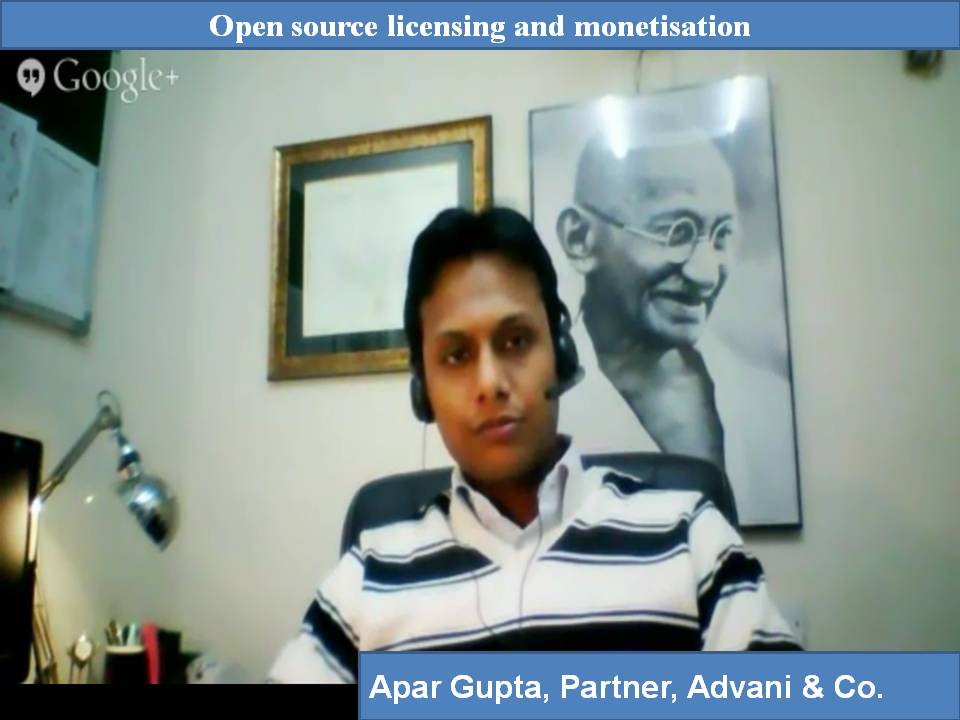
Open source licensing and monetisation - Apar Gupta, Partner, Advani & Co.

An entire industry has emerged around open source software with businesses continuously trying to find different ways to make money from open source. Open Source Software is typically governed by individual licences stating the conditions for redistribution and modification of the codes. Can you monetize software based on open source codes? Learn about how open source licensing works from Apar Gupta, Partner, Advani & Co (featured as “Thirty under 30” for the year 2014 in Forbes magazine).

Download Now

What are the grounds for dissolution of a marriage?

2

The concept of dissolution of marriage evolved to avoid the process of accusations and counter accusations in a divorce proceeding and to avoid unnecessary expenses involved in the process. In a divorce proceeding one party to the marriage must accuse the other of being at fault under one of the statutory grounds. Divorces based on no fault grounds are referred to as dissolution of marriage.


Dissolution of marriage by mutual consent

The only type of no fault divorce explicitly recognized under Indian Laws is the divorce by mutual consent. Here the spouses petition that they have not been able to live together for a period of one year or more and were living separately immediately preceding the presentation of the petition; consequently they have mutually agreed to dissolve the marriage. Before filing the petition, spouses agree on various important issues such ascustody of child, alimony to wife, return of dowry items or “Streedhan”, litigation expenses etc. Further, the terms of agreement are to be mentioned in the petition for divorce by mutual consent.

Spouses can file for dissolution of marriage by mutual consent under any of the following provisions: Section 13-B of The Hindu Marriage Act, 1955, Section 28 of the Special Marriage Act, 1954, Section 10-A of The Indian Divorce Act1869.


Grounds for dissolution of marriage by mutual consent

In the case of Sureshta Devi[1], the Supreme Court explains the grounds for the dissolution of marriage as follows:

`living separately’ for a period of one year should be immediately preceding the presentation of the petition. It is necessary that immediately preceding the presentation of petition, the parties must have been living separately. The expression `living separately’, connotes to our mind not living like husband and wife. It has no reference to the place of living. The parties may live under the same roof by force of circumstances, and yet they may not be living as husband and wife. The parties may be living in different houses and yet they could live as husband and wife. What seems to be necessary is that they have no desire to perform marital obligations and with that mental attitude they have been living separately for a period of one year immediately preceding the presentation of the petition.

The second requirement that they `have not been able to live together’ seems to indicate the concept of broken down marriage and it would not be possible to reconcile themselves.

The third requirement is that they have mutually agreed that the marriage should be dissolved.”


https://lawsikho.com/course/certificate-course-in-advanced-civil-litigation-practice-procedure-and-drafting
click above

Procedure for dissolution of marriage by mutual consent

The process of dissolution is started by filling a petition for divorce by mutual consent. The petition is supported by affidavits from both parties which signify their consent. This is the first motion petition which is presented in the court of Civil Judge senior Division. The petition contains a joint statement by both the parties that they have not been able to live together thus should be granted divorce by the court. The parties are supposed to file a second motion petition after 6 months of filing the first petition where the presence of both parties is must. This is followed by the hearing of both the parties by the judge and on the satisfaction of the court the marriage is dissolved. The parties are supposed to present the 2nd motion petition after 6 months and before 18 months of filing the 1st motion petition giving them sufficient time to reconcile their differences. If the parties do not present the 2nd motion petition within 18 months then the marriage cannot be dissolved by the court.

Further if at the time of inquiry by the court one of the parties withdraws its consent to the divorce petition then the court has no jurisdiction to dissolve the marriage[2]; as it is only in the case of continued mutual consent of the parties that a decree dissolving the marriage can be passed by the court.


Irretrievable breakdown of Marriage as ground for dissolution of marriage

Apart from dissolution of marriage by mutual consent the other way to dissolve the marriage on “no-fault” ground is the concept of irretrievable breakdown of marriage.New Zealand was the first country to accept the concept of “irretrievable breakdown of marriage” in The Divorce and Matrimonial Causes Amendment Act,1920. Since then several countries have accepted it as a ground to seek divorce. In fact, in the United Kingdom, it is the only ground on which one can seek divorce.

Irretrievable breakdown of marriage is the situation where either or both the parties to the marriage are unwilling to live with each other such that they are unable to perform their spousal duties and their differences are beyond reconciliation.

The Supreme Court has flip-flopped on setting irretrievable breakdown of marriage as a ground of divorce. In a recent case of Vishnu Dutt Sharma v. Manju Sharma[3] the Supreme Court dismissed this concept saying that in a situation where a party files a petition for divorce on grounds of irretrievable breakdown and the other party who has suffered from the faults of the petitioner is opposing the same, in that case such a concept would not do justice. But the Marriage Laws Amendment Bill (2013) as passed by Rajya Sabha seeks to add section 13C to the Hindu Marriage Act which will dissolve marriage on the ground of irretrievable breakdown. It requires that the parties must have lived separately atleast for 3 years immediately preceding the presentation of the petition. Here living separately means not living in the same house.

In this case as opposed to the divorce by mutual consent the petition for dissolution of the marriage may be presented by either party to the marriage and the court may dissolve the marriage even if the other party objects it. However, the wife may object to the petition on the grounds of financial hardship.


How is dissolution of marriage different from a divorce?

Divorce and Dissolution of marriage are used to refer to two nearly identical concepts. These are the processes by which a husband and wife end their marriage. Procedures to end a marriage differ from state to state though most states do not differentiate between the two concepts. Divorce could be granted only on the accusation of faults by one spouse on the other. Thus dissolution of marriage came to be used to refer to “no fault” divorces. But the end result of the two processes remains the same i.e. the end of marriage.


Grounds for seeking Divorce

Indian laws in general and The Hindu Marriage Act, 1955 in particular under Section 13 of the Act recognizes the following fault grounds for divorce: Adultery, Cruelty, Desertion, Conversion, Unsoundness of mind, Schizophrenia, Virulent and incurable leprosy, Venereal disease in communicable form, entering new religious order, presumption of death on not being heard of as alive for a period of seven years or more, non-compliance with a decree of judicial separation, non-compliance with a decree of restitution of conjugal rights(fulfillment of one’s obligations as a husband or a wife). The aggrieved party has to take one of the above fault grounds and prove it in the court of appropriate jurisdiction against the other spouse, the divorce is granted on successfully proving the allegation.


Dissolution of marriage

On the other hand, the basis of the claim of dissolution of marriage on “no fault” ground is that at least one of the two parties claims that the marriage is no more viable and the differences are irreconcilable. Here the parties decide to dissolve their marriage by mutual consent rather than choosing the path of accusing each other of various faults. In case a party bases its petition on any fault ground then the dissolution of marriage cannot be claimed but only divorce by prolonged litigation.

For claiming dissolution of marriage the parties to the marriage have to agree on various issues such as custody of child, alimony to wife, property issues etc. whereas in case of divorce such issues are settled by the court itself.

The end result of the two processes (divorce and dissolution of marriage) being the same, the concept of dissolution of marriage evolved with time to save time and expense of the parties if both of them want the marriage to be dissolved or if the marriage has broken down beyond reconciliation.

 
LawSikho has created a telegram group for exchanging legal knowledge, referrals and various opportunities. You can click on this link and join:  
 
https://t.me/joinchat/J_0YrBa4IBSHdpuTfQO_sA

 
Follow us on Instagram and subscribe to our YouTube channel for more amazing legal content


[1] Smt. Sureshta Devi v. Om Prakash, (1991) 2 SCC 25

[2] Smt. Sureshta Devi v. Om Prakash, (1991) 2 SCC 25

[3] 2009 (3) SCALE 425

Download Now

Laws on smoking ban in India and how to register a complaint

56
smoking ban

The world recently celebrated No Tobacco Day on 31 May. In this article we bring to you the details of public smoking ban in India and also how to register a complaint in case the smoke is getting to you.

Smoking in India

India has a long history of smoking. Atharveda first mentioned that cannabis was smoked in India around 2000 BC. Fumigation and fire offerings for medicinal purposes as prescribed by Ayurveda, has been in practice for around 3000 years. While dhumpana (drinking smoke), has been in practice for quite some time, tobacco was introduced to India only around 1600. Before modern times pipes with stems of different length and chillums were used as a tool to inhale smoke. Nowadays, cigarette smoking has replaced dhumpana. Beedi, a hand rolled herbal cigarette containing betel nut, cloves and a low proportion of tobacco is the only reminiscent of historical dhumpana.

Tobacco Legislations in India

Cigarettes (Regulation of Production, Supply and Distribution) Act, 1975 mandating specific statutory health warnings on cigarette packs was the first Indian legislation regarding tobacco. A comprehensive tobacco control bill The Cigarettes and Other Tobacco Products (Prohibition of Advertisement and Regulation of Trade and Commerce, Production, Supply and Distribution) Act, 2003 (COTPA) came into force on 1 May 2004. This brought all forms of tobacco products (both smoking and smokeless) under legislative control. Prohibition of sale to and by minors and in an area of 100 yards of any educational institute was brought into force. Rules for implementation of its provisions are notified by the Ministry of Health and Family Welfare from time to time. Chandigarh in 2007 became the first smoke free city in India.

https://lawsikho.com/course/certificate-criminal-litigation-trial-advocacy

Ban on public smoking

In 2008 the Ministry of Health and Family Welfare notified the Prohibition of Smoking in Public Places Rules, 2008 by which smoking in public places was prohibited form 2 October 2008, the day of Gandhi Jayanti. As per Section 3(l) of the COTPA, ‘public place’ means any place to which the public have access, but does not include any open space. Smoking is prohibited in open spaces visited by the public — like open auditoriums, stadiums, railway stations and bus stops. However, public places do not include parking spaces, roads, open market places, parks and private homes. A person caught smoking in public must pay a fine of Rs 200.

How to register a complaint?

The rules oblige the owner, proprietor, manager, supervisor or in-charge of the affairs of a public place to notify and display the names of the persons to whom a complaint of violation may be made. If the owner, proprietor, manager, supervisor or the authorized officer of a public place fails to act on report of such violation, the same then shall be liable to pay fine equivalent to the number of individual offences. In 2009, the Ministry of Health and Family Welfare started a helpline for reporting smoking law violations. People can dial the National Toll Free Help line No. 1800-110-456 and register their complaints. Police constables are authorized to collect penalty only if they are accompanied by officers above the rank of inspector of police. State food and drug administration officers, district health society, representatives of panchayat raj institutions, chief medical officers at district- level and civil surgeons are among those who have additionally been authorized to take action within a defined jurisdiction. People should insist for a challan if they are fined for the violation.

Smoking Zones

COTPA allows smoking in hotels with 30 rooms or more, restaurants or pubs with seating capacity for 30 or more persons, and at airports. For this a smoking zone has to be set up which

  1. should be physically separated and surrounded by full-height walls;
  2. should have a system that lets the smoke go directly outside;
  3. should have an entrance with automatically closing doors;
  4. should not be used for other purposes like serving food, beverage or other services.


LawSikho has created a telegram group for exchanging legal knowledge, referrals and various opportunities. You can click on this link and join:  

https://t.me/joinchat/J_0YrBa4IBSHdpuTfQO_sA

Follow us on Instagram and subscribe to our YouTube channel for more amazing legal content 

 
Download Now

Alliance of the E-commerce Titans: Flipkart and Myntra

0

flipkart-myntra-acquisition-768x349

The article is written by Nilesh Kumar, a student of UPES, Dehradun

The prodigious Indian e-commerce wedding we’ve all been hearing about for long is done.  Two of India’s biggest e-commerce companies Flipkart and Myntra have merged creating an entity with annualized sale of $ 1.5 billion.

This is the biggest M&A deal in India’s e-commerce story to date, surpassing the $100 million that the Ibibo Group spent to buy RedBus,  a story which first broke on this news in June last year. The transaction is supposedly initiated by the common investors Tiger Global Management and Accel Partners.


  FLIPKART MYNTRA

FLIPKART+MYNTRA

Net Sales $ 1.2 billion $ 300 million $ 1.5 billion
Registered Users 18 million 8 million 26 million
Daily Visits 3.5 million 1.7 million 5.2 million
Sellers on Platform 3,000 100 3,100 sellers
Team Strength 10,000 2,000 12,000 members

Source: Times of India


The details of the deal between Flipkart and Myntra have not been disclosed but analysts estimates that Myntra has been valued at around Rs. 2,000 crores ($ 330 million) conducting.

The Legal Direction

Nishith Desai and Associates, one if the leading corporate law firms in India heads the advisory body for Flipkart for the merger with Myntra the same for Myntra is Indus Law.

NDA’s M&A and TMT partner Vaibhav Parikh and lawyers Arun Scaria and Sangeeta Rana acted for Flipkart on India’s largest e-commerce deal ever.


The notions behind the merger between are

  • Flipkart has planned to extend its offering in apparel because fashion is the only category which successfully conveys an operating margin of over 30%, and hence is one of the most lucrative.
  • Myntra has developed its expertise and leadership in the category since its inception whereas Flipkart entered the category only in 2012, consequently, the merger will aid Flipkart ripen its fashion portal.
  • The move comes from Flipkart as it faces tough competition from rivals like eBay, Snapdeal and especially Amazon
  • Myntra aims to become approximately a US $ 2,800 million in the domain of fashion by the year 2020. To reach its target, the company needs further funding of around US $100-150 million. Flipkart has agreed to pump in this extra amount once the merger is finalized.
  • Flipkart and Myntra together will be able to form the biggest online retail company in India, thus helping to build a strong front against international leaders such as Amazon and eBay.

Hence, the merger is more symbiotic in nature than just one company helping another. Both companies are positioned to benefit hugely from this partnership.

Even after the merger, both the entities will exert as independent units with no change in the structure, employees and functioning of the companies. Flipkart will invest US $ 100 million in its fashion business prior to the merger.

“We hope to take this figure to about 60-70 per cent in the long-term,” said Flipchart’s CEO Mr. Sachin Bansal. He added that Flipkart would invest $100 million in its own fashion vertical in the near-term. While the electronics vertical is the largest revenue generator at Flipkart (and will continue to be even after the acquisition), Mr. Bansal hoped that in the near-term fashion would be the “largest sales category for Flipkart”. Flipkart started fashion as a shopping category on its site two years ago.

Jabong, rival to Myntra has ruled out all speculations about its schemes on merger and professed that their favored way of mounting would be through public listings.

How will the smaller players be wedged?

If an organization has a sustainable business model and a passionate team they can survive. It all depends on how smaller organizations now manage their teams and business. However competitors like Jabong, Yebhi, Yepme and Homeshop18 will have to come up with different strategies to make their business viable.

With the new government probable to allow foreign direct investment in e-commerce, competition is only expected to grow and this could prompt further consolidation. In such a scenario, will Amazon look at any acquisition in India is a major question. Without denying that, Agarwal said, “We are excited by the current focus. Anything outside of that, we don’t want to speculate on.” The two Bansals of Flipkart and Myntra have maintained they are open to strategic partnerships and acquisitions whenever there’s opportunity.


Download Now

Intellectual property rights issues in software development contracts

0

Intellectual property rights issues in software development contracts

Imagine that you are professionally working on developing software for an organisation. Or, consider you have asked a coder to develop software for you. Who owns the software? Is it the developer who built or the client who assigned the task? How are ownership rights allocated as a default rule? Software development contracts and Master Services Agreements typically address such issues.
It is important to understand the exact rights that are transferred to be able to exploit the intellectual property in a risk-free manner. Learn from Apar Ratan, Partner, ARP Advocates, Pune about the intellectual property issues in software outsourcing and engagement of external vendors for software development and how to minimise the risks.

Download Now

Types of due diligence and scope of a due diligence exercise

0

Types of due diligence and scope of a due diligence exercise

Due diligence can be of two types – limited or an exhaustive, depending on the client’s mandate and the nature of the transaction. What are the considerations that should be kept in mind while determining the extent of a due diligence? Ketan Mukhija, Senior Vice-President (Legal, Corporate Strategy and Planning), SREI Infrastructrure Finance Limited throws light on this.

Download Now

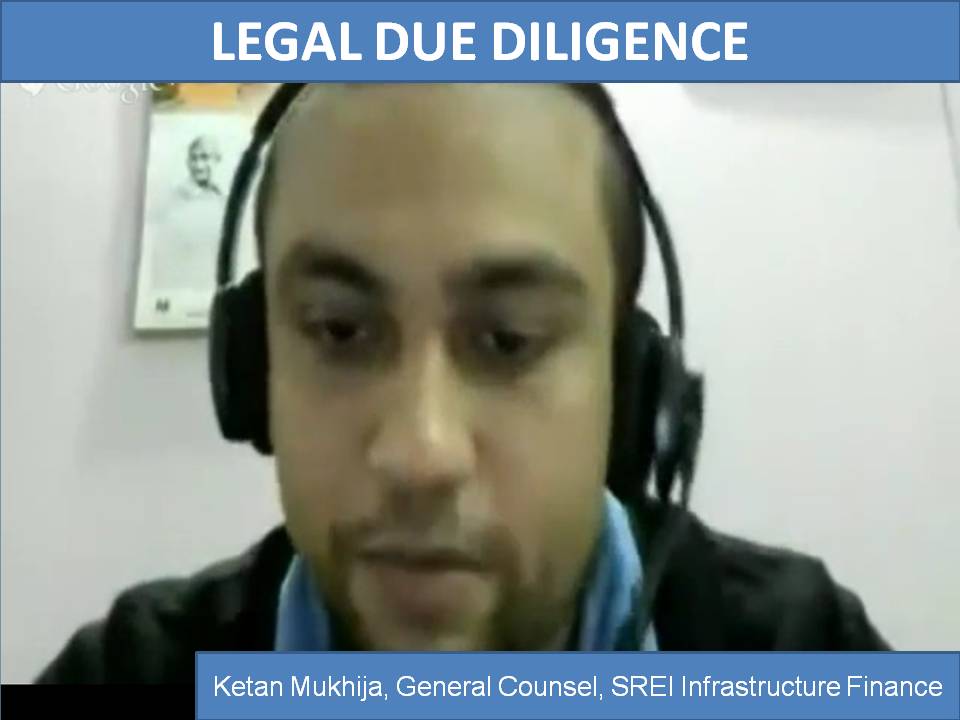
Elements of due diligence in an investment deal – essentials for corporate lawyers and business advisors (Ketan Mukhija, General Counsel, SREI Group)

0

Ketan Mukhija on Legal Due Diligence

Imagine working as a lawyer for a VC or private equity investor which is acquiring another company. Before entering into the transaction, the investor will require a ‘due diligence’ to be conducted, which includes a legal and a financial due diligence. The purpose of the legal due diligence is to identify legal risks in the business model – law firms typically charge huge sums for this exercise. It can impact the terms of the investment, lead to incorporation of additional clauses in documentation and even affect the valuation of the business in some cases (if significant risks are identified). Learn about the components of legal due diligence from Ketan Mukhija, General Counsel of SREI Infrastructure Finance Limited, who has earlier worked in the international law firm Herbert Smith (he worked on Tata’s acquisition of Jaguar Land Rover) and with Luthra and as a partner at Vaish Associates.

Download Now

Surrogate advertising  and the law for tobacco products:  Thank you for smoking….!

1

The article is written by Laboni Bhakta, a student of GNLU.

SURROGATE ADVERTISING
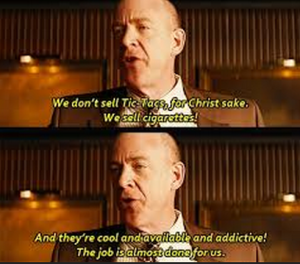
 

image001

Surrogate advertising in the literal sense means –duplicating of brand image of one product extensively in order to promote the same brand. It’s a kind of a disguise which duplicate brand tries is to brand recall and not necessarily an exercise in increasing sales such that the surrogate ad tries to either resemble the original product or different product all together established under the original brand product. In India, the trend has been- the various sports/culture/leisure events and activities use liquor brand name or tobacco falls under the ambit of surrogate advertising. One popular case related to this was –

‘A petition filed in 1999 before the High Court of Delhi by the Voluntary Health Association of India, where a ban was sought on the sponsorship of the Indian cricket team by the Wills brand of cigarettes manufactured by ITC. The appearance of the ‘Wills’ logo on the sports apparel worn by the cricketers facilitated the repeated telecasting of that logo to millions of viewers. During the pendency of this petition, ITC voluntarily withdrew its sponsorship of the Indian cricket team in 2001 citing the reason that it did not want to derail the genuine efforts of the government and that it did not want to take undue advantage of its position in the Indian Economy.’– ‘ITC plays Good sport, exits sponsorship’, Hindu Business Line, February 9, 2001.’

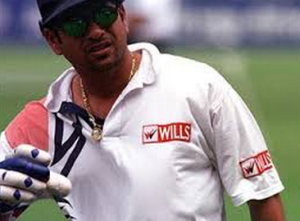
 image005image003

Things that are involved in surrogate advertisement:

The concept of Integrated Marketing strategy is adopted by the companies as an approach advertising products on hoardings, banners, TVs, movies and any other medium by which these ad companies can establish a public relation ensuring that through movie or ad they are able to reach the customers.

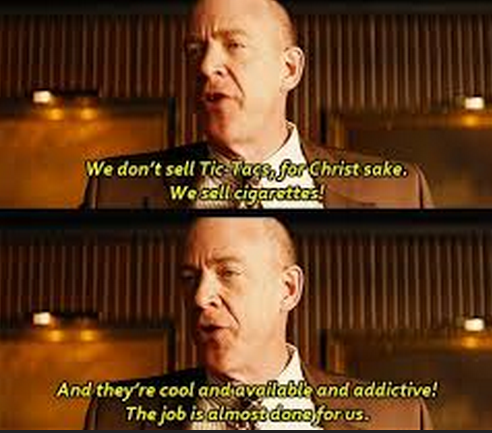
These are some of the strategies that marketing companies adopt to reach out to the public and attracting potent customers. So basically for example if a company cannot sell cigarettes of a particular brand so they go for brand extension and promote extended products either by hosting t-shirts, caps, key chains or hosting glamorous events. But when you want to buy those extended products in the market, one might not necessarily find it available. And perhaps this is one most adopted “marketing strategy’ to allow one medium’s weakness to be offset by another medium’s strength, with elements synergized to support each other creating a great impact.


National And International Regulations :

  1. Cigarettes and Other Tobacco Products (Prohibition of Advertisement and Regulation of Trade and Commerce, Production, Supply and Distribution) Act ,2003


The Section 5 of the act prohibits the advertisement of “Tobacco Products” direct and indirect means and to look from a general point of view the tobacco products are not promoted instead the name of the brand of the tobacco product is used to promote other products. So in order to bring it out of the purview of violations of this legislation and its rules, the brand name is withdrawn from the tobacco packets and must be exclusively used in unrelated products.

2.The Cable Television Networks (Regulation) Act, 1995 (“CTNA”)

This was enacted to regulate the operation of cable television networks in india and Rule 7(1) of CTN Rules , enacted under the provisions of Section 22 which provides that “Advertising carried in the cable service shall be so designed as to conform to the laws of the country and should not offend morality, decency and religious susceptibilities of the subscribers”. Rule 7(2)(viii)(a) provides that, “No advertisement shall be permitted which promotes directly or indirectly production, sale or consumption of cigarettes, tobacco products, wine, alcohol, liquor or other intoxicants”

3. The Advertising Standards Council of India (“ASCI”): The ASCI is a voluntary self-regulation council, which has drawn up a Code of Conduct to control the content of advertisements with a view to achieve fair advertising practices. The Code applies to all forms of advertisement, that is, to newspapers, magazines, television, radio, cinema and posters, amongst others. Clause 6 of the Code provides that advertisement of products for which advertising has been restricted should not circumvent the restriction by purporting to be advertisements for other products, the advertising for which is not prohibited. This clause also lays down the criteria for deciding whether an advertisement is indirect advertisement.

4. Framework Convention on Tobacco Control (FCTC): India ratified the Convention on 5th Feb. 2004 and the Convention came into force on 27th Feb. 2005. The convention seeks to protect present and future generations from devastating health, social, environmental and economic consequences of tobacco consumption and exposure to tobacco smoke by providing a framework for tobacco control measures.

Article 1. Definitions :

“Tobacco Advertising and Promotion” means any form of commercial communication, recommendation or action with the aim, effect or likely effect of promoting a tobacco product or tobacco use either directly or indirectly;

“Tobacco Sponsorship” means any form of contribution to any event, activity or individual with the aim, effect or likely effect of promoting a tobacco product or tobacco use either directly or indirectly;

Article 13 of the convention is titled as Tobacco advertising, promotion and sponsorship. This article recognizes the fact that a comprehensive ban is necessary and imperative. The framework gives the parties the freedom to introduce a comprehensive legislation banning all tobacco advertising, promotion and sponsorship in accordance with the constitutional principles of the parties. The time limit granted to the members is 5 years from the date of the convention coming into force. For India the convention came into force on 5th Feb.2004. The parties are also encouraged to go beyond the convention obligations and implement appropriate measures for achieving the objective.

Plain packaging of cigarette packets

image007

Films and Ads have a huge impact on the lives of the youth, Labour Attorney-General, Nicola Roxon had argued “Plain packaging means that the glamour is gone from smoking and cigarettes are now exposed for what they are: killer products that destroy thousands of Australian families.” –this was the famous case which created a lot of hue and cry when the Australian  Parliament passed the Tobacco Plain Packaging Act 2011 in the month of November and it was supported by all major political parties.

On December 1, 2012 Australia was the first country in the world to pass this Act to regulate the retail packaging and appearance of tobacco products, with the emblem of plain, olive-coloured packaging and appearance of tobacco products emblazoned with public health warnings and graphic images of smoking related diseases with the aim to improve public health by discouraging people from smoking or using tobacco products.

Portrayal in Movies

Movies however have shown disclaimer in English and in regional language but however, the disclaimers at the start of a film are not likely to compete with the kind of glamorization of smoking that can occur during the film itself.

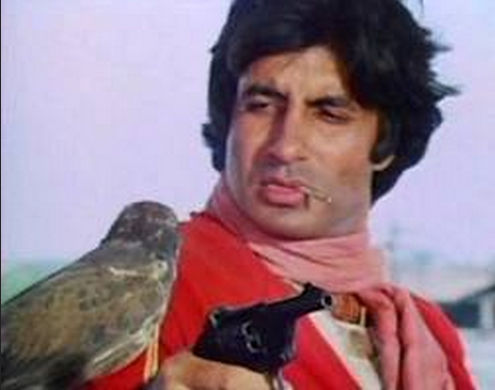
There are Asian movies which typically has negative influence having a typical direct appeal to a young adult audience like “Love in a Puff” about a young smoking couple falling in love where main characters meet while smoking, which in a way have direct appeal on young adult audience.  In Bollywood , smoking has been a style accessory with the arrival of Amitabh Bachan in movies more or less depicted him as rebellion but a man of mission justice in Coolie and Sholay and ‘bidi’ with time became a part of Bachan persona.
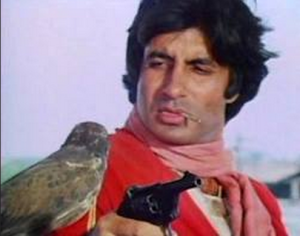

image008

image010

“…….can’t get into rock music without smokes and dope”

Youngsters feel that cigarette brands are not displayed in movies. They point out that rather than the characters, it’s the brand that the actor smokes off-screen that is likely to have a greater impact.

“it does impress people … I am smoking SRK’s (Shahrukh Khan’s) cigarette brand”

Policy initiatives to limit the use of cigarette smoking or tobacco consumption

In view of the findings, the following policies need to be adopted by the Indian film industry to reduce the influence of tobacco portrayal in movies:

1. Modify the Indian rating guidelines eliminating the most tobacco use from youth oriented U (Universal) and U/A (Universal adult) movies through working with  and encouraging the entertainment industry to adopt strict measures for  tobacco portrayal.

2. Certify No Pay-Offs: Every film should post a certificate in the credits at the end of the movie declaring that nobody on the production accepted anything of value from any tobacco company, its agents or fronts.

3. Ban Sponsorship of Film Events: Media and film companies should stop supporting events that are sponsored by tobacco companies.

4. Run Strong Anti-Smoking Ads: Producers and exhibitors should run strong anti-smoking ads, that are not produced or sponsored by tobacco companies, before and during the interval of a film with any tobacco presence in it. Preferably, the actors who are shown smoking in the film should be used to persuade viewers against smoking.

5. Stop Identifying Tobacco Brands: Tobacco brands should not be shown in scenes – they are unnecessary.

6. Rate any Smoking Movie “A”: The Censor Board should be encouraged to give an adult rating to movies that depict smoking. This would put pressure on producers to stop unnecessary depiction of smoking.

7. Television warning: Encourage broadcasters to run a health warning message if the movie contains tobacco consumption.

Analysis

The problem is not with the law or lacunae as to –why a certain regulations or law had been able to be abided by everyone?

THE TRUE COST OF SMOKING

It seems according to WHO that,  tobacco use causes about five million global deaths each year and if the current smoking patterns continue, it will cause some 10 million deaths each year by 2020 and half of the current smokers (about 650 million people) will eventually be killed by tobacco ( in survey report made by WHO).

The greater the rate of consumption , the opportunity cost of a pack of cigarettes would be greater for individuals in the age group 18-24 because they are sacrificing longer life expectancy and hence, potential earnings in the future (opportunity cost includes : education, jobs, health ) .

The problem with the youth is that always associate smoking either as ‘Stress buster’ or a method to enter into ‘social talks’. Of course there are parameters like increase in taxation which would preferably decrease the percentage of people smoking. Despite the legal implementation however did not prove to have decreased the smoking rate.

In a judgement given by SC court passing an order to control brand recalling direct or indirect way like reducing the size of the hoarding, display of statutory warnings but despite of all these rules, the business companies selling cigarettes are trying hard to promote the brand by indirect advertising to make up the losses caused due to the less sell of tobacco. This is the area where the judicial system has failed to work upon . Thus the business companies are adopting more subtle ways to go for Brand Recalling (only to make up the losses).

http://www.youtube.com/watch?v=B-sE5RodJaU (A survey made by a U.K foundation on tobacco control how people are responding to looks and not judging the consequences of smoking)

this interview were people were given choices to choose between a branded cigarettes and a ‘Logo-free, drab brown plain cigarette’ packets which has been made mandatory in Australia since 2012. Surprisingly, the people are choosing to go for the latter because of its outlook and it’s sophisticated look with no brand name. So in a way, the marketing strategy of these business tobacco companies are taking subtle ways abiding by laws but still keep on winning the ‘lungs’ of young generation.

After the Australian case, the plain packaging has been made a mandate in countries including India but this does not mean that battle is won but the war is still not over. The problem lies that there are deceptive ways to adulterate the brand naming and trademarks

(like signs, symbols, fonts, colours which also attracts the mind of young people especially)  which also needs to be brought into the picture to regulate the tobacco control sell.

The probable problem which likely to arise due to plain packaging are and the TRIPS agreements to deal with same. –

–          Some of the fake companies may adopt deceptive means to copy the packing thus and go on to compromise with the quality of the product (cigarette) sold.

–          The countries who are selling the ‘Plain Packaged Cigarette’ must comply with patent laws by signing the TRIPS Agreement. Where the member country has to comply with fair use of descriptive terms provided that such exceptions take account of the legitimate interests of the owner of the trademark and of third parties.

–          There should not be any obstacle to apply for registration of the trademark

–          The owner of a registered trademark shall be given the exclusive right to prevent all third parties not having the owner’s consent from using in the course of trade identical or similar signs for goods and services which are identical or similar to those in respect of which the trademark is registered where such use would result in a likelihood of confusion.

–          The use of a trademarks in the course of trade shall not be unjustifiably encumbered by special requirements, such as….use in a special form or use in a manner detrimental to it’s capability to distinguish te goods or services of one undertaking from those of other undertakings .


TRIPS agreement Issues


When it comes to plain packaging and looking from an international intellectual property angle , the issue is whether plain packaging laws and regulations( which vary) violate the TRIPS agreement is violated .


It is being argued vehemently that plain packaging may increase illicit trade in tobacco , in part because it makes cheaper to produce packs (for any brand).


The countries are using variety of regulatory tools to reduce the levels of tobacco consumption. Some of these countries like Uruguay have put in place a series of measures aimed at reducing its overall smoking rate, which includes the provision requiring health warnings to cover 80 percent of the packaging which was subsequently challenged by the Phillips Morris Company under a BIT between Uruguay and Switzerland. In the dispute, it was argued by the Phillips Morris trademarks to the extent that they are allegedly expropriated under the BIT and thus Uruguayan measures donot , from a packing measures, which involve the lamination of figurative or logo marks from the packaging of the cigarettes.


Thus, overall the core intention will be to “regulate the retail packaging and appearance of tobacco products.”


Problem with India


With the above objective, Rule 2 of the COPTA sets out the use of a name or brand of Tobacco Products for marketing, promoting or advertising other products would constitute a form “indirect advertisement”.


The problem lies at such a juncture that a product once sold, whether advertisement ban has any sizeable effect and on the other hand there is this argument coming up that of the government is so keen in ‘refining’ the society by curtailing sale by making laws but failing in the attempt of implementing it. The problem is the more the regulations are framed the more subtle ways of marketing strategies are adoptive in such a way which are both manipulating and subtle. Thus, the more restrictions are imposed on these surrogate advertising agencies the things will take a reverse turn that the demand pattern for these products may cease to quality driven. In such a scenario, the low price will no more reflect quality.


The advertising of tobacco has been successful in creating a brand image creating an excessive demand of these products. So far there has not been an econometric study carried out which quantitatively confirms whether surrogate advertisements indeed increase the sale of liquor and tobacco. The government as well as the public policy think tanks must come together to take a policy decision based on public opinion to either increase the cost of the price of the product such that it’s beyond the reach of teenage students and even though if the results do not reflect to be impressive then ban it completely!

The problem is no matter how many great laws and regulations are there but half of our population in India is illiterate or they do not have any idea that such laws existence neither they are aware of it. To make the awareness at the grass root problem, certain workshops or programmes must be arranged and campaigns (persistently) as frequently as possible especially in schools where Kids must be given as a part of education (like US does providing sex education or on substance abuse) . So, all these things or programmes must be made a part of the curriculum. Matters which have legal dispute can be brought to the purview of the court but when it comes to implementing it on the society I think only Law itself cannot achieve the public goal, it must also take the help of the , policymakers, NGOs, Human Resource Centres to promote and propagate that how things in TV is a stark contrast to reality.

However off late the cigarette ads have been reduced in India and the Censor Board of India has also instituted stringent regulations on the advertisement companies to show any kind of brand stretching in movies as well, however the saddest and the unfortunate part is liquor related surrogate ads is still now on the run and it seems government has not tightened the ‘reins’ to control the surrogate ads which indirectly promote liquors (which will be discussed about in another article).


 

_13053051a6f26ad6b56tobacco-ad-ban-who-edited

Download Now

The Third Gender and the Indian Law – a brief history

1
Transgenders live on the fringes of the Indian society

This article is written by Shruti Iyer, a graduate from Kamala Nehru College, Delhi University.

Transgenders live on the fringes of the Indian society

Transgenders, in our society, encompass all races, ethnicity, religious and social classes, yet, they’ve never enjoyed a respectable life, because of “what they are” and “how they are”. They are subjected to confusions and anguish, resulting from the rigid, forced conformity to sexual dimorphism throughout the recorded history. They are facing disparities linked to societal stigma, discrimination, and denial of their civil and human rights. Discrimination against them have been associated with high rates of substance abuse and suicides, and they are facing rampant discrimination in the areas of family life, social life, housing, education, health etc.

They’ve been continuously subjected to hear and assimilate abuses from people about them. Their lives have always been subjected to abstaining from the colors of the world, just because of the denial of social acceptance. The society views them as eccentric characters, which wouldn’t fit into the prescribed sanctimonious bounds.

Transgender is generally described as an umbrella term for persons whose gender identity, gender expression or behavior does not conform to their biological sex. TG may also takes in persons who do not identify with their sex assigned at birth, which include Hijras/Eunuchs who, in this writ petition, describe themselves as “third gender” and they do not identify as either male or female. Hijras are not men by virtue of anatomy appearance and psychologically, they are also not women, though they are like women with no female reproduction organ and no menstruation.

Since Hijras do not have reproduction capacities as either men or women, they are neither men nor women and claim to be an institutional “third gender”.

According to one estimate, India has about two million transgender people. In India, a common term used to describe transgender people, transsexuals, cross-dressers, eunuchs and transvestites is hijra. Campaigners say they live on the fringes of society, often in poverty, ostracised because of their gender identity. Most make a living by singing and dancing or by begging and prostitution.

The abominable state of the third gender can be traced back from the colonial era, when the legislation was enacted to supervise the deeds of ijras/TG community, called the Criminal Tribes Act, 1871, which deemed the entire community of Hijras persons as innately ‘criminal’ and ‘addicted to the systematic commission of non-bailable offences’. The Act provided for the registration, surveillance and control of certain criminal tribes and eunuchs and had penalized eunuchs, who were registered, and appeared to be dressed or ornamented like a woman, in a public street or place. Such persons also could be arrested without warrant and sentenced to imprisonment up to two years or fine or both.

Section 377 of the IPC found a place in the Indian Penal Code, 1860, prior to the enactment of Criminal Tribles Act that criminalized all penile-non-vaginal sexual acts between persons, including anal sex and oral sex, at a time when transgender persons were also typically associated with the prescribed sexual practices. Reference may be made to the judgment of the Allahabad High Court in Queen Empress v. Khairati (1884) ILR 6 All 204, wherein a transgender person was arrested and prosecuted under Section 377 on the suspicion that he was a ‘habitual sodomite’ and was later acquitted on appeal. This judicial legislation plays in contrast to the historical times in India where TG Community had got a strong historical presence in our country in the Hindu mythology and other religious texts. Lord Rama, in epic Ramayana, impressed with their devotion, sanctions them the power to confer blessings on 11people on auspicious occasions like childbirth and marriage, and also at inaugural functions. Jain Texts also make a detailed reference to TG which mentions the concept of ‘psychological sex’. Hijras also played a prominent role in the royal courts of the Islamic world, especially in the Ottaman empires and the Mughal rule in the Medieval India.

However, the abject conditions of the Transgender communities have been redressed through a step taken by The National Legal Services Authority, constituted under the Legal Services Authority Act, 1997, to provide free legal services to the weaker and other marginalized sections of the society, has come forward to advocate their cause.

Laxmi Narayan Tripathy, claimed to be a Hijra, has also got impeded so as to effectively put across the cause of the members of the transgender community and Tripathy’s life experiences also for recognition of their identity as a third gender, over and above male and female.

As a result, In 2009, India’s Election Commission took a first step by allowing transgenders to choose their gender as “other” on ballot forms.

The aforementioned judgment is buttressed by the recent landmark judgment (April,2014)  by Justice KS Radhakrishnan, who headed the two-judge Supreme Court bench,  which recognition to transgenders as the third gender. The landmark ruling asks the Centre and state governments to treat them as socially and ‘economically backward classes’, to enable them to get reservations in jobs and education. This goes along with the court’s decision to grant them all facilities including a voters ID, passport and driving license. Further, The Centre and States were also directed to take steps for bringing the community into the mainstream by providing adequate healthcare, education and employment.

Ironically, Section 377 of the Indian Penal Code , according to which  same-sex relationship is an “unnatural offence”  is existing in conjunction with the court’s recent decision of giving ‘recognition’ to the third gender. Legal experts say that the aforementioned judgment puts transgender people in a strange situation: on the one hand, they are now legally recognised and protected under the Constitution, but on the other hand they may be breaking the law if they have consensual gay sex.


SOURCES:

www.bbc.com

indiatoday.in

supremecourtofindia.nic.in

rainbowsarereal.blogspot.in

Download Now

Whistleblower Act of 2014 – an evaluation

1


This post is written by Utkarsh Agrawal, currently studying in NUJS, Kolkata.
It is in the best interest of any country to reduce fraud, misconduct or illegal activity, which exists inside the country. Citizens can play a significant role in facilitating In the detection of such activities, by whistle-blowing. However, establishment of an effective whistleblower system may require appropriate incentivisation and protection for the whistleblower. An ideal whistleblower policy should:

a. Establish a simple procedure for disclosure
b. Incentivize the whistleblower
c. Protect the whistleblower against retaliation
d. Address both concerns raised internally and externally
e. List a fair method of investigation
f. Create a special body to enforce the policy

Problems with the Whistleblower Act

The Indian Parliament was passed the Whistle Blowers Protection Bill (“Whistleblower Act”), 2011 received President’s nod on May 9 and was notified on May 12, 2014 as a step against corruption. It is supposed to complement the RTI Act and empower people to address corruption and malpractice. However, most of the standard provisions have been left out. For example the Act does not include maladministration as recommended by the Law Commission (also present in similar acts in UK, US and other countries). Therefore the bill has been plagued with serious deficiencies and is expected to fail to cause an impact.

Limited to cover only public servants and not ministers:

Instead of empowering the CVC to root out corruption and maladministration from all levels of the Government, the Act has limited the power to public servants. Therefore, politicians (ministers) continue to remain out of grasp of the “any other person). Since the ministers are at the top of the hierarchy and control the working of entire departments, this is a serious lapse.

Inadequate/No incentive for whistleblower:

If it is in a country’s best interest to support whistleblower, she should first incentivize it. This will encourage people to turn whistleblowers in the future. Further, whistleblowers will be at a risk of victimization cause of their disclosures and must be compensated for the same.

No time limit for inquiry:

In a country notorious for inordinate delay in proceedings, the Act fails to limit the time available for the CVC to complete the inquiry. This allows the CVC to drag on the inquiry for years, which may find the whistleblower being victimized. Further, continuous delays in inquiry will dilute the impact of the bill to deter mal-administration.

Limited the protection against retaliation:

The Act does not define Victimization and does not specify the punishment for it either. This is a serious deficiency as there is little or no safeguard for the whistleblower. Further there is no provision to protect the whistleblower or witness during the investigation or trial.

Therefore the only protection available to the whistleblower is that his identity is hidden. However, the Act allows the CVC to reveal the identity if it feels that it is necessary to do so. Also, false complaint has a strict penalty of imprisonment extending upto 2 years and fine upto Rs. 30,000.

No provision for anonymous complaint

There is no provision for anonymous complaints. While the same may prevent frivolous complaints, it will be at the very high cost to the Government, as it will prevent a lot of genuine complaints. Further, the power of the Act to deter such corruption will also be highly magnified for there will be no scope of victimization. The alleged public servant shall have to fight against the mechanism of the State as opposed to a meek individual (whistleblower). The State should find another way to deal with frivolous complaints, maybe by developing an efficient method to screen complaints. Taking away the provision for anonymous complaint complicates the process of whistleblowing and discourages people from coming forward with their complaints.

No power to punish the public servant

The power of the CVC is limited to recommending action against public servants to their concerned department and cannot directly purse action against them.

It is essential to take a relaxed and protective approach in drafting the whistleblower policy for it lies in the best interest of the Country. The process of investigation and of judgment may be created in such a manner as to prevent injustice even though it may be complicated. However, it is of utmost importance to take a liberal view and establishing simple procedure for reporting of concerns by whistleblowers.

The Whistleblower Act is thus merely a statutory confirmation of the 2004 Government Resolution, which empowered Central Vigilance Commission (CVC) to take steps to protect whistleblowers. The resolution has been proven inadequate and attracts less than five hundred complaints in a year. Therefore, this Act is expected to make no significant difference.

Download Now
logo
FREE & ONLINE 3-Day Bootcamp (LIVE only) on

How Can Experienced Professionals Become Independent Directors

calender
28th, 29th Mar, 2026, 2 - 5pm (IST) &
30th Mar, 2026, 7 - 10pm (IST).
Bootcamp starting in
Days
HRS
MIN
SEC
Abhyuday AgarwalCOO & CO-Founder, LawSikho

Register now

Abhyuday AgarwalCOO & CO-Founder, LawSikho