The article was written by Laboni Bhakta, a student of GNLU, Gandhinagar.
“Man, I see in Fight Club the strongest and smartest men who’ve ever lived. I see all this potential , and I see it squandered. God damn it, an entire generation pumping gas, waiting tables – slaves with white collars. Advertising has us chasing cars and clothes, working jobs we hate so we can buy shit we don’t need. We’re the middle children of history, man. No purpose or place. We have no Great War. No Great Depression. Our great war is a spiritual war. Our great depression is our lives. We’ve all been raised on television to believe that one day we’d all be millionaires, and movie gods, and rock stars, but we won’t. And we’re slowly learning that fact. And we’re very, very pissed off.”—–The Fight-Club (Movie)”
“Doing business without advertisement is like winking at a girl in the dark. You know what you are doing, but nobody else does”
Liquor has become the prominent player in the game of advertisement industry and has also come up with catchy ads especially when it comes to surrogate advertisements. Bagpiper soda and cassettes and CDs, Blender’s Pride, Imperial Blue cassettes & CDs, Haywards soda, Royal Challenge golf accessories and mineral water etc.
The liquor industry always has its own standpoint in defence and is mostly claimed by the liquor lobbies that they follow every laws and regulations and it is also argued most often that “if a brand has equity, why shouldn’t it be allowed to advertise? Also, brand extension is an industry practice adopted by different product categories”.
And these claims can stand very justified if looked from layman’s point of view but what they fail to understand is that the liquor industry is simply taking advantage of the loopholes. What this liquor industry tries to do is ‘play with minds’ and there are certain illusions being played in such a way that the viewers are made to believe that it’s liquor and ‘the teenage or the youths’ are the ‘star attractions’.
Even though there has been legislation passed as per the Cable Act under the Ministry of Information and Broadcasting, that no broadcaster is permitted to show an advertisement which indirectly or indirectly ‘seducing’ the viewers so as to promote alcohol , tobacco etc. Although the tobacco ad has been stopped but liquor ads seldom show their ads in a disguised way. This is because of the marketing strategy that they keep on changing and coming with new innovative ideas which is like sidelining the legislation which even though look perfectly alright but the impact left in the viewer’s mind is something else. It seems that they are secretly trading their brand and the real intentions remain to be subtle.
“Be what you wanna be” – this what Bacardi ad ends with and it keeps on running in your head , although the ad portrays that Bacardi is showing music CDs and music promotion but the people holding a glass of liquor and grooving to the music. And the ad ends like “Bacardi-CDs and Audio Cassettes”.
Surrogate ads are very much prevalent in around us like IPL cricket team merchandise shirts has logo of ‘R&C’ and it’s awkward but looking from a layman’s perspective it’s quite obvious portrayal of liquor and the liquor ad marketing strategy is always innovative and full of improvisation that hardly any loopholes can be detected.
(Seagram’s Imperial Blue Rose) a promotional ad of Seagram liquor brand disguised as music CD.
The Seagram has been roping Saif Ali khan along with famous cricketers like MS Dhoni, Yuvraj Singh, Harbajan as its brand ambassadors and staging some music performance promoting music and CDs followed by their tagline “It’s your life. Make it large.” Or with a typical clichéd taglines (gender oriented) like “Men will be Men”.
Social medias have also become latest avenues for alcohol brands that established their brand expression, like Kingfisher has a Facebook Page, Twitters and Foresquare to promote their brands and as far as regulations are concerned, these areas are yet to be covered.
So another aspect which plays a very innovative role is the social media marketing which is one of the out of the box marketing strategy and reach out the target customers directly.
Kingfisher’s innovative technique to promote it’s brand
The Ex-union Minister Mr. Anbumani Ramadoss had challenged the name of the Bangalore Indian Premier League (IPL) cricket team “Royal Challenger” (an obvious and blatant form of surrogate advertising for liquor brand “Royal Challengers” and when the matter went to the Supreme Court , the Court held of the observation in a lighter vein , alluding the fact that the team was not named ‘Royal Challenge’, the liquor brand, but “Royal Challengers” and that “Only those who drink can be attracted to these things” . Thus the IBF (Indian Broadcasting Foundation) has started to take on the surrogate liquor advertisements and it was ruled that if liquor companies promote any juice, mineral water or soda, which should be shown in a proper manner and not as trimmings to liquor. But the stark reality is that the liquor companies hardly do so. They might promote apple juice but the acts reflect as if it’s a liquor act and it creates a different impression in the minds of the viewers.
In close context to surrogate advertisement, India is one among all where there is heavy advertising of liquor and tobacco ads. The advertisements can only be said to be ‘surrogate advertisement” only when it can be proved that such advertisement has some ulterior motives. For example: ‘Kingfisher Airlines’ where ‘Kingfisher’ is a popular brand of beer of liquor of major United Breweries.
The banning of the surrogate advertisements have become the most complex and controversial issues and has been regarded as one of the “Proxy Wars”.
The producer companies feel that while the government allows them to do business on the one hand and taxes a huge chunk of their profits and takes it as its revenue, it does not allow them to conduct their business in a profitable manner on the other hand by banning one of their most important weapons of increasing sales ‘advertisement’. However, some analysts are of the opinion that the ban has in fact turned out to be advantageous for domestic players. According to a WTO agreement signed in March 2001, MNC’s had unrestricted license to sell their products. After the ban, these MNC’s would not have access to the quickest and most effective form of advertising – the TV, so the new brands that are there even in the market would not be widely popular and hence the already existing domestic brands will be under less of a threat of losing their market share. The ban on surrogate advertising has affected even media companies, as they have lost a substantial revenue generating client base as a result of the ban. According to broadcasters, the government should put in place a ‘reasonable’ policy, which somehow strikes a balance between the social and monetary aspects of the business which are engaged in the tobacco and liquor industry.
Since the liquor cannot be advertised , the companies are up to circumvent the rules by launching eponymous lines of unrelated products, such playing cards, soda or aftershave which are heavily advertised.
The question keeps on popping on our heads is that –should surrogate advertisements be banned?
It is argued by many that banning of the advertisements will be a financial loss on the part of the business companies. Like in one of the articles in the Economics Times it has argued by the author that-
“Some of the most ongoing arguments against alcohol / tobacco and surrogate advertisements on television are that they glamorise which of course they often do — the advertisements for cars, sprays, bikes, instant coffees. However we do fail to understand the fact that the ban will also put the domestic industry players at a disadvantage to their international counter parts , enjoying free access to communicate on television channels uplinked from outside India and seen in the country by a very wide cross section of the population.
The existence of a surrogate assumes the presence of an original. Awareness that an advertised brand represents surrogate communication acknowledges that the consumer is aware of the original brand and the product it represents.”
Only then, can we judge the alternative product communication as being surrogate. If awareness for the original already exists, why there is unnecessary debate about surrogate advertising?
Clearly, therefore, the appropriate response to managing the ethical issues involved in surrogate advertising can only emerge from self-regulation by the industry that deals with products and services, which may appear to impact social behaviour in unacceptable ways.
Lastly, it may be worth recognising that there could be a major loss in revenue — both to Industry and government, if communication supporting advertising of liquor and alcohol products were to be banned.
A recent article in the national economic press had the following comment: “The ban on liquor advertising has already rendered a heavy blow to the advertising agencies. Ad agencies in the country are expecting a hit of around Rs. 400-500 (approx) crore following the government move to ban liquor advertisements.
Recently, industry’s representatives and the government have worked out a voluntary Code of Conduct for Advertising of alcohol and tobacco products. This is a positive step in the direction of self-regulation, and can provide an enduring resolution to the several issues that the surveyors of “socially relevant” communication present.”
There is no alternative to a healthy competition and hence all kinds of regulations are imperative and in a dynamic market and increasing competition many companies and agencies are tempted to hit the competition from the wrong side but it seems that there is no alternative to healthy competitions. Media it itself is a reflection of the society and culture having a strong and everlasting impact on the viewers specially those with tender minds.
It seems that this will remain to be a never ending debate when it comes to surrogate advertisement and its control. On one hand where there is inducement of having liquor, on the other hand it’s all about the certain upcoming international brands which can’t be stopped at all. What we need is proper regulation and not just mere regulations but also the ‘fine system’ must be introduced and proper licensing must be brought into the phase to regulate the ad agencies and in case if there is any portrayal of “surrogate products” one can always go to consumer forum and later the matter can be taken up by any Board and decide it accordingly.
A Hindu joint family comprises all persons lineally descended through males from a common ancestor including their wives and unmarried daughters. Whereas a Hindu Mitakshara Coparcenary is a body narrower than a Hindu joint family and consists only of males of upto 4 generations who acquire an interest in the Coparcenary property or the joint family property by birth with a unity of possession. The person having interest in the coparcenary property is known as a coparcener.
Coparcenary property consists of the ancestral property and not the separate property of a coparcener. Ancestral property is the property inherited by a Hindu from his father, father’s father or father’s, father’s father whereas the property inherited from any other relation or the self-acquired property of the person is his separate property.
Classical Law
The two main schools of Hindu law are Mitakshara school and Dayabhag school. The Mitakshara law is applied in whole of India except the states of Bengal and Assam where the Dayabhag system is followed.
The Mitakshara Coparcenary recognizes 2 modes of devolution of property which are survivorship and succession. The principle of survivorship applies to joint family coparcenary property whereas succession applies only to separate property. Females are absolutely excluded from the Mitakshara coparcenary.
On the other hand, Dayabhag recognizes only succession as the mode of devolution. Here no member of the family has a right by birth and every member holds his property as a tenant in common and on his death the property passes on to his heirs.
click above
Now while bringing in the Hindu Succession Act, 1956 the legislature had the option to assimilate Dayabhag and Mitakshara law in the sense that in Mitakshara also no member has a right by birth and on the death of the member the property passes to his heirs. This method would have given equable treatment to the nearest female heirs of a coparcener. But the legislature chose to retain the Mitakshara Coparcenary and to confer on the daughters and the other female members mentioned in class I of the schedule (widow, mother, daughter of a pre-deceased son, daughter of a pre-deceased daughter, widow of a pre-deceased son, daughter of a pre-deceased son of a pre-deceased son, widow of a pre-deceased son of a pre-deceased son), the right to share the undivided interest of the deceased coparcener through intestate succession. This disentitled the female members from the right of joint ownership of the ancestral property thus keeping them out of the Coparcenary which led to inequality against them.
Important Amendments
To remove this inequality many states came up with amendments. States of Andhra Pradesh, Tamil Nadu, Maharashtra and Karnataka inserted provisions wherein the daughter was made a coparcener by birth in the joint family property in her own right in the same manner as the son. This scheme was followed by the central legislature which passed the Hindu Succession Amendment Act, (2005). This act made the daughter a coparcener by birth. It also omitted Section 23 of Act which dis entitled a female heir to ask for partition in respect of a dwelling house, wholly occupied by a joint family, until the male heirs choose to divide their respective shares therein. Thus this amendment removed the discrimination against females.
Hindu Succession Amendment Act, (2005) and females as coparceners
The most significant amendment made by the Hindu Succession Amendment Act, (2005) was to make the daughter a coparcener by birth in her own right. The term Mitakshara Coparcener now includes daughters in it. A daughter now has the same rights in the Coparcenary property as that of a son and is subject to the same liabilities as that of a son in respect of the said Coparcenary property. For example if the coparcenary property is subject to some debts then on partition the female as a coparcener would also be liable to pay the debts over her share of the property and thus is subject to the same sets of liabilities as that of a son in respect of the said property. Also any property which a daughter obtains under the amended section will be held by her with the incidents of Coparcenary property and she can dispose it off by the testamentary disposition. This act also abolishes survivorship and the only modes of devolution now followed are testamentary or intestate succession. Further in case of notional partition the daughter is allotted the same share as is allotted to a son. This act also removes the obligation of a son, grandson or great grandson to pay the debts of his father, grandfather or great grandfather solely on the ground of his pious obligation thus bringing equality amongst sons and daughters.
The Hindu Succession Act, 2005 applies to all daughters including those who are married, but this act does not apply to daughters married before the commencement of the Hindu Succession Amendment Act, 2005. Moreover, the provisions of the amendment act do not apply in case where the partition of the joint Hindu family has already been effected before 20th December 2004.
LawSikho has created a telegram group for exchanging legal knowledge, referrals and various opportunities. You can click on this link and join:
This article was written by Tanay Khanna, a student of NLUO, Cuttack.
With the advent growth in trans-border commerce and an increased competitive atmosphere in India, non-compete, confidentiality and non-solicitation agreements are the latest trends, especially in the technology and the IT sectors. A growing number of outsourcing and IT companies are including confidentiality, non-compete, and non-solicitation clauses in agreements with their employees, with the years of restriction ranging from a few months to several years after the employment relationship are ceased. Now to understand this scenario let us take an example:
After working for 4 long years in an IT company, an employee who has mastered the art of developing a particular kind of software, which he acquired during the course of his employment, is willing to start his own entrepreneurial venture; but he is forbidden to do so by a specific clause in his employment agreement which is generally called as non-compete clause or covenant not to compete.
To comprehend the above illustration and analyse the validity of such a clause, firstly we need to understand non-compete clause. A non-compete clause is incorporated in an agreement which refrains the employee to compete or pursue similar line of profession, trade or business against its employer for a given period of time and within the prescribed geographical limits. Now the question arises that why would an employer offer an agreement with such a clause and why would an employee enter into this kind of agreement.
The answer to the second question is the better position of the employer over the employee to negotiate the terms of the agreement. Actually, now-a-days in this cut-throat competition it has become effortless for the employer to make their employee sign these agreements. These contracts are generally signed when the employee is hired or at the time of pay raise; now at these instances leaving the job and its further consequences is rather seem too much far-sighted by the employee. Moreover, this new trend of non-compete clause can cause an inadvertent damping effect on entrepreneurship, by refraining people from leaving their jobs to launch their own businesses, or hire workforce when they do.
However, if we take employers’ stance who are requiring their new workers to sign “non-compete” agreements, which in their point of view help them to prevent employees from taking trade secrets, commercial relationships or customer data to the rival firms when employees cease their service.
Contrast between Indian law and English Law
Interestingly, the validity of non-compete clauses may differ from country to country. In this area of contract law the Indian law has taken a departure from the English law from where we take most of our ‘inspiration’. Indian law is rigid and stringent in this matter as it is governed by Section 27 of the Indian Contract Act, 1872 whereas English law is flexible and is governed by the judicial pronouncements or precedents. Centuries ago English lawwas as stringent as the current Indian law, but it has steadily evolved to adjust itself to the myriad trends of the current economy. The restraint of trade in England is divided into two types: general restraint and partial restraint. Now according to the English law, general restraint is completely void and partial restrain is permissible as long as it is reasonable. And, this ‘reasonableness’ is on the discretion of the English judges and differs from case to case.
click above
Section 27: an inflexible law
In India the law of restraint of trade has passed through a number of judicial pronouncements. The concerned section which governs the law in India reads as follows: ‘Every agreement by which any one is restrained from exercising a lawful profession, trade or business of any kind, is to that extent void.’ If we go with the literal interpretation of the section then it is clear that in India restraint, whatsoever partial or total, in trade is void to that extent. Moreover, the phrase ‘to that extent void’ implies that only the non-compete clause in the agreement will be rendered void not the whole agreement. The only exception, from the world of countless transactions, mentioned in the statute is in respect to the sale and purchase of the goodwill of the business and it is very natural that in an employment agreement there is no place of such exception.
In Superintendence Company of India v. Krishan Murghai, the apex court in India held that any such covenant which restrains the employee to work in the future after the termination of his service is completely void. In this case the court referred to Madhub Chunder v. Rajcoomar Doss where it had been held that whether the restraint was partial or general, qualified or unqualified, if it was in order to impose a restraint of trade, it was void. The Supreme Court also held that the employee cannot be restrained from using the skills and knowledge acquired during the course of his previous employment and the equity principle in English law cannot be applied in India because of the presence of Section 27. The Gujrat High Court reiterated the same principle in Sandhya Organic Chemicals Pvt. Limited v. United Phosphorus. In this case the Court held that a contract with an object to impose restraint of trade is primae facie void.
In an another leading case, Percept D’ Mark (India) Pvt Ltd v. Zaheer Khan the Supreme Court reiterated the same aforementioned principles and held the clause 31(b) of the agreement void under Section 27. The apex court in this case went a step forward and held that Section 27 or the doctrine of ‘restrict of trade’ is not only attracted by contracts of employment only but can also be applied to all other contracts in reference to the after contractual relationship is ended.
In a 2009 case, Dessicant Rotors International Pvt. Ltd. v. Bappaditya Sarkar, the manager entered into the agreement which clearly mentioned that the he is dealing with the confidential information of the company and thus he is incompetent to work against the company for two years after the termination of his service. When this agreement was challenged in the Delhi High Court, the court struck down all the arguments of the appellants that the negative covenant was in the interest of the company and to protect its trade secrets from its competitors it was ruled that between the employer’s right to protect its confidential information from its competitors and a person’s right to earn his livelihood, the latter will any time prevail over the former.
Departure from the general rule
But in a particular case, Nilanjan Golokari v. The Century Spinning And Mfg, the intransigent Indian Courts have responded affirmatively towards these types of negative covenants and has departed from the general law on the restraint of trade. In this case the Hon’ble Court ruled that these non-compete clauses cannot be considered as restraint of trade against the employee, if they are operating during the course of employment. As a matter of fact it is logical that the employer has an exclusive right of the services of his employees during the course of employment. At the same time the choice would seem radical to the aggregate awareness of the representatives as the restrictions on the worker was implemented by the Supreme Court considerably after the employee had ended his agreement with the business on the premise that since termination had happened within the concurred 5 year term of employment, the restriction on the employee would keep on operating till the end of 5 years..
The foundation of the Court’s verdict was that the restriction imposed on the employee that he cannot compete with his former employee or cannot work for his competitors cannot be regarded as a restraint of trade due to the trepidation of the employer that his trade secrets and confidential information conferred to and procured by the employee throughout the time of employment can be disclosed. While basing its judgment, it is securely assumed that the Court had given satisfactory attention to the way that the employee can harm the employer’s business and had mala fide propositions of disclosing the information picked up from his work, to the competitors of the employer.
However, the reasoning of the Court in this case has to be read in the light of the facts and not in isolation. Thus, this case doesn’t create a general rule rather it is an exception to it.
Conclusion
The current law on this issue in India is clear and the courts by the means of various judicial pronouncements have upheld that ‘non-compete’ clauses which operate after the termination of the service of the employee are not enforceable in India. It is stated unambiguously in Section 27 of the Indian Contract Act, 1872 that agreements in restraint of trade are void to that extent. In order to maintain the confidentiality of their trade secrets, an employer cannot be permitted to disseminate forced employment, as it is prohibited by Section 27. Even if these types of clauses are valid in other countries but this cannot affect the Indian law as long as the law in India is unambiguous.
Another approach towards this issue can be that Article 21 of the Constitution of India ensures the right to livelihood; therefore an employer cannot restrict his employee not to earn his living. But contrary to this Article 21 also guarantees Right to privacy and to secure confidential information. So in this case the rights of both employer and employee are clashing. But as if now the Indian law is concerned it upholds that the right of the latter will prevail that of the former.
In the end I would like to conclude that despite of fact and all the advancements in law and verdicts given by judiciaries worldwide, Section 27 of the Indian Contract Act still continues to be the same text as it was in 1872 when the economic conditions and transactions were way apart from today’s scenario. Even the recommendations of the Law Commission that restraints, whether partial or total, must not be considered as void per se but should be adjudged on the basis of the test of “reasonableness”, have not made a fissure in the shell of Section 27 and the law remained to be rigid and stringent.
Get all the templates, formats, step by step guides, checklists and information you need related to employment laws in one place, free of cost. we have simplified compliances, record-keeping, contracts, policies, disputes and litigation for you. Never struggle with employment and labour law again in your life. Click here to download the Legal handbook for HR managers.
LawSikho has created a telegram group for exchanging legal knowledge, referrals and various opportunities. You can click on this link and join:
Will of Alfred Nobel - wills are usually handwritten and made on normal paper
Will of Alfred Nobel – wills are usually handwritten and made on normal paper
This article was written by Arpita Sengupta from NUJS Kolkata.
Wills have always been regarded as either an instrument of satisfaction (for those loved ones who inherit the deceased’s property) or of disappointment (and those people who are left out from inheriting a share in the deceased’s property). However, getting a will drafted is forever a matter of great concern for the testator. During my internships under lawyers and in law firms, I have come across people in dire need for legal advice with regard to making of a will. Well, making a “WILL” will no longer be a headache. Here is a simple guide for making a will.
A STEP BY STEP GUIDE FOR MAKING A WILL:
Making a will can become a very simple process. Just follow these steps and your ‘will’ will be complete.
1) Title of the Document: It should be clearly states that the document is the LAST TESTAMENT.
2) The name of the testator should be mentioned accurately as is there in his birth certificate or any valid photo identity. The testator should specify his age and address.
3) The testator should make a declaration that the he is making the will in his full senses and not under duress or undue influence.
4) The testator should name an executor of the will. An executor is one who carries out the points that are set out in the will.
5) Parents can appoint a guardian for their minor children by way of a will.
6) The will should have the details of the assets that the testator possesses. It should clearly specify the beneficiary of each asset.
7) A will should be as unambiguous as possible. For instance, a person has a house at 12, Harry Potter Road, Bangalore. In his will, he mentions that his property at 12, Harry Potter Road, Bangalore will go to Aileen. Unfortunately, both his wife and his niece’s name is Aileen. Due to lack of clarity as to which Aileen does the will refer to, there may arise huge confusion and quarrels with respect to the property.
8) The will should end with the signature of the accused and the date in which the testament is made.
9) The signature of the testator should be attested by at least two witnesses. Such attestation by a witness is of immense importance. It is a proof of authenticity of the will.
10) Registration of a will is not a compulsion. One may get his will registered. It simply adds to the genuineness of the will. It also has another advantage. A registered will is kept with the Registrar. So it is kept at a relatively safer place and any chances of tampering with the will is minimized.
THINGS TO KEEP IN MIND WHILE MAKING A WILL:
Now that you know the steps to make a will, it is really important to know certain facts about making a will.
1) It is always good to consult a lawyer to check your will. A legal person like a lawyer will be aware of the necessities of a will and he will be able to point out the infirmities in the will.
2) Many a times, the issue of making a will during an unsound phase is brought up when an altercations arises due to the will. Such altercations may be avoided if one makes a will keeping a doctor as a witness.
3) A will should be stored in a safe place so that there are no chances of it getting stolen, tampered or destroyed.
4) A will should be written on a good quality paper and in a neat handwriting. Any ambiguity due to illegible handwriting should be avoided. If possible, a person should type out his will and then sign it.
5) A will is not an unchangeable document. So do not be scared that you cannot change your will once it is made. A will can be altered any time during the testator’s lifetime.
6) One should never forget to put a date on their will. The date signifies whether it is the last will or not in cases where a person has made multiple wills.
7) Many a times, a testator decided to sell off a part of his property during his lifetime. In case the assets of the testator change, he should ensure that he changes his will as well.
Every person should make a will. A will is of extreme importance. Do not think of it as an evil document. It is you and your family’s safeguard.
What are Master Service Agreements and what is their relevance? Imagine you are a startup entrepreneur or business owner who wants to engage an external vendor for web development. Software development relationships with external vendors are typically ongoing relationships and specific deliverables cannot be completely frozen beforehand – new requirements or variations may be introduced from time, and the contract needs to be able to accommodate this. Learn when Master Service Agreements are used and how they work from Arpit Ratan, Partner, ARP Advocates, Pune.
This article was written by Nilesh Kumar, a student of College of Legal Studies, UPES, Dehradun during his internship with iPleaders.
Street vendors have delivered color, vibrancy and a market channel in India, for generations. At present, modern street vending plays a dynamic role in the built-up economy such as revenue, source of jobs and ‘value addition’ to the economy. The Ministry of Housing and Urban Poverty Alleviation has projected that there are 10 million street vendors in India out of which 1 million accounts in Mumbai, Delhi and Kolkata alone.
However, as the 21st century progresses, The vibrant growth of urban population, the balance of physical development, and globalizing economies craft new contests for street vendors, who surface changing political, economic and social contexts and increasing competition for space.
The Street Vendors (Protection of Livelihood and Regulation of Street Vending) Act, 2014 is an attempt to protect the rights of urban street vendors and to regulate street vending activities. The historic Street Vendors Act 2014 mandates municipalities to set up restriction free vending zones where hawkers can sell their wares without being harassed by the authorities. TheAct mandates the Town Vending Committee to conduct a survey within its jurisdiction, at least once in every five years and ensure that all existing vendors are accommodated in the vending zones. They shall ensure that no street vendor is evicted or relocated till the survey has been conducted.
Right and obligations of street vendors
Duty to remove goods and wares every day at the end of the time-sharing period allowed to him.
Duty to maintain cleanliness and public hygiene.
Duty to pay periodic maintenance charges for the civic amenities and facilities provided in the vending zone.
Relocation and eviction of street vendors
The Local authority is empowered to declare a zone as a non-vending zone and, to evict and relocate such vendors who either do not have a certificate of vending or if such has been cancelled, according to a scheme to be prepared by them. A notice 30 days prior to such eviction has to be served to the vendors before such eviction.
On failure to vacate the place specified in the certificate after the period specified in the notice, the local authorities may seize the vendor’s goods or impose fine as specified in the scheme.
Constitution of judicial committee:
Chairperson (a civil judge or a judicial magistrate)
Two other professionals having experience in the field of socio-economic matters.
Every aggrieved street vendor may apply to such committee and the committee shall take steps for redressal of such grievance. Any person aggrieved by the decision of the committee may appeal to the local authorities.
Plan for Street Vending and the Town Vending Committee.
Every local authority in consultation with the Town Vending Committee, prepare a plan to promote the vocation of street vendors, once in every five years.
Prevention of harassment of street vendors and penal provisions
No street vendors shall be prevented from exercising his rights by any person or police or any other authority.
If any street vendor:
Indulges in vending activities without a certificate of vending
Contravenes the terms of certificate of vending
Contravenes any other terms and conditions specified under this act
Such person shall be liable to a penalty for each such offence which may extend up to rupees two thousand as may be determined by the local authority.
Conclusion
The Act serves as a medium for the much needed change in the position of Street Vendors in India, which provides security and stability to the livelihood of such street vendors, which constitute a part of Right to Life under Article 21 of The Constitution of India.
The Act, as tinted by National Association of Street Vendors of India (NASVI) among the major oppositions is the “concentration” of power in the hands of the local municipal bodies which do not have any representation of street vendors.
This was not the case in the draft bill which empowered the proposed Town Vending Committees (TVC), which were mandated to have at least 40 per cent representation of street vendors.
The main provisions of the Bill defeat the very purpose of the need for any law as lots of powers have been given to municipal bodies like the final authority on issues like identification, registration and licensing of street vendors, identification of natural markets and allocation of space based on the idea of natural markets.
Another issue pointed out is that the proposed law leaves it to the discretion of the local authorities to create schemes for street vendors who have in the past not even considered the street vending committee dignified and worthy enough to engage with.
‘Bail’ connotes the process of procuring the release of an accused charged with certain offence by ensuring his future attendance in the court for trial and compelling him to remain within the jurisdiction of the court.[1]
There are various forms of bail. In light of the current debate regarding Arvind Kejriwal’s release on bail it becomes important to understand the minute differences between personal bond and personal bond with surety.
In the order copy putting Arvind Kejriwal into judicial custody, the Metropolitan Magistrate Gomati Manocha says that the Code of Criminal Procedure envisages only two kinds of personal bonds, first being when a person furnishes his own bond with one or more sureties and the second being the execution of own bond without sureties.
The personal bond with one or more sureties would mean that a third person (surety) is made responsible for the obligations of the accused and he would be made to pay the bail amount on the breach of the bail conditions by the accused. In such a situation the court in its discretion asks the person acting as surety to keep collaterals worth the amount of the bail bond as a security with the court.
To know more about concept of bail bond and role of bail bond agents in brief, please refer to the video below:
On the other hand the personal bond without sureties would mean that the person is released on his personal undertaking that he would regularly attend the court and in case of default would forfeit to the government a sum of money. Such a personal bond without sureties is granted by the courts on taking liberal interpretation of the law when the accused is indigent or is unable to furnish the bail bond. The similar concept in USA is that of unsecured bail.
Arvind Kejriwal rejected to take the bail saying that he be granted bail on oral undertaking. But as per the judge there is no such concept of releasing the accused in India. The concept similar to this is the release on personal recognition in USA. Here the accused is released on recognizance when he promises to attend all the judicial proceedings and not to engage in any prohibited activity. Such a bond is an unsecured appearance bond. But no such concept is followed in India.
Arvind Kejriwal claims to have been released without need of any bail in earlier cases filed against him such as the case filed by Shila Dixit’s associate against him and the case by Kapil Sibal’s son against him. He claims to have given only a written assurance of his presence in those cases. But such a written assurance amounted to giving personal bond which the metropolitan magistrate was ready to accept to grant him bail.
Thus Arvind Kejriwal’s demand of release on oral undertaking is not well founded under law. It is a different thing if he is protesting the law itself, as to why should one have to pay for bail in a case like defamation – that is a different case altogether. Thousands of people in Indian jails are languishing despite being charged under bailable offences just because they have been unable to furnish bail money. This is an inhuman and colonial procedure of law which must be amended keeping the changing standards of time in mind.
LawSikho has created a telegram group for exchanging legal knowledge, referrals and various opportunities. You can click on this link and join:
The article is written by Ramanuj Mukherjee, CEO, Lawsikho and updated byPooja Kapur, a 5th year law student from Amity Law School, Noida and Yash Jain, a third-year student of Institute of Law, Nirma University. The article discusses the concept of cyber crime complaint and how to file a cyber crime complaint both offline and online.
What is Cyber Crime?
Any activity being unlawful in nature which involves the use of any network or networked device or computer as a means to commit such activity is known as cyber crime. It can be inferred from the definition that “computer” is the main element which is either used as a tool for directly committing a cyber crime or can be used to target other computers or devices. The former category which requires computer as a direct weapon involves the committing of crimes like cyber terrorism, pornography, Intellectual Property Rights Violations etc. Whereas in the latter category crimes like hacking, virus attacks etc are committed. Following is the process of filing cyber crime complaint.
Cybercrime is a criminal activity which is carried on by the use of computers and the Internet. Some of the common cyber crimes are hacking, cyber stalking, denial of service attack(DoS), virus dissemination, software piracy, credit card fraud & phishing.
To tackle the issue of cyber crimes, CIDs (Criminal Investigation Departments) of various cities opened up Cyber Crime Cells in different cities. The Information Technology Act of India states clearly that when a cyber crime has been committed, it has a global jurisdiction. and hence a complaint can be filed at any cyber cell.
Click Here to get help from a cyber lawyer
Step by Step Procedures to File a Cyber Crime Complaint
Step 1-The foremost step is to lodge a complaint against cyber crime and the person who committed it with the cyber police or with the cyber cell India. Various departments for investigating crimes in various cities have been established by the cyber crime cells. These departments not only investigate the crime but they also take the charge of getting the crime reported in time. The victim can at anytime make a complaint to the cyber police or with the crime investigating department of the cyber cell both through online or offline method. One can also give a call at cyber crime helpline number.
Step 2 -One may need to provide name, mailing address & telephone number along with an application letter addressing the head of a cyber crime investigation cell when filing a complaint.
Step 3-One must provide certain documents in order to register a complaint. List of documents varies with the type of cyber crime. One requisite while registering the complaint is to attach or annex the documents which support the facts of the case fully. The type of documents required to be attached at the time of registering the cyber crime complaint depends on the nature of cyber crime committed.
If you want to learn more about cyber law, you can take up this course. This course will train you on different kinds of actual work that is required to be performed by lawyers and other professionals. After finishing the course, you will have acquired as much practical knowledge as a lawyer working at a big law firm in TMT team will know after a year or two. It is not a mere theoretical study, but hands-on practical lessons where you will have to draft a lot of documents and develop strategies.
Register your cyber crime complain with Cyber Intelligence Alliance. This is not a proxy for Police Complaint. CIA collects all the data submitted voluntarily and then pass on to state police, cyber cells and any other investigating agencies. CIA follows up with them and update you if there is any progress. CIA makes no promise as to what results will be achieved except that they make it more difficult for cyber criminals who see to operate with impunity at present.
Click on the below-mentioned links to know more on the related topic:
Documents required to be annexed while reporting a complaint about hacking
Server logs
if the website of the victim has been defaced, then both soft copy and hard copy of defaced web page.
a soft copy of original data and the compromised data, if the data has been hacked on either victim’s computer, server or any other equipment.
Details like, name of the accused/person who accessed the victim’s computer system or his email for accessing the victim’s computer or email.
There can be chances that a victim might find some person suspicious, then the list of people who he found to be suspect.
Other relevant information to answer the following questions –
Which data was compromised and who might be responsible for doing that?
At what time did the system compromise and what was the reason for system compromise?
Where is the impact of the attack-identifying the target system from the network?
How many systems did get compromised by the attack?
Documents required for filing complaint against vulgar emails
Headers of email which is offending.
Both soft and hard copy of offending email/emails.
Copy of offending email from your inbox and one from the hard drive.
Documents required for filing a complaint against social media based complaints
A copy clearly showing the alleged profile.
Copy showing the URL of the alleged content or profile.
Both hard and soft copy of the alleged content.
Soft copy to be provided in a CD-R.
Documents required for filing a complaint against Net banking/ATM Complaints
Copy of Bank statement from the concerned bank of last six months.
Copy of SMSs received related to the alleged transactions.
Both copy of your ID proof and address proof as shown in the bank records.
Documents required for filing a complaint against business emails
A brief clarifying the offense in written,
name and location of origin,
bank name and account number of origin,
name of the recipient as er his/her bank records.
bank account number of the recipient.
bank location of the recipient, this is optional.
Date of transaction.
Amount of transaction.
SWIFT number.
Documents required for filing data theft complaints
It is required that copy of the data which stolen has to be filed.
The certificate showing a copyright over the allegedly stolen data, i.e, copyright certificate of the stolen data.
Details of the employee/ employees who are suspected.
Letter of Appointment of the suspected employee
Non-disclosure Agreement of the above said employee.
Assigned list of duty.
List of clients handled by the suspects.
The proof that the copyrighted data has been breached.
Devices used by the accused during his/her term of service.
Cyber Crime Complaint Online
In the past decades the advancement in technology and the number of internet users have grown at a great pace and upto a great extent. With the increase in use of internet it is obvious that there will be cons for the excessive use as well. In lieu of the excessive use certain crimes online are also committed and thus, for the protection of the victim it is necessary to have provisions for registering the complaint and intimating the officials about the commission of the crime for punishing the accused.
Step 1
One can submit the complaint for cyber crime both offline and online. Cyber Cell India is the department which deals with the online and offline cyber complaint and thus, the first step is to report the complaint to this department. One can also give a call on cyber crime helpline number. You can visit here to file an online cyber crime complaint.
Step 2
A written complaint has to be filed with the cyber crime cell by the victim in the city he or she is in. But since, cyber crime comes under the purview of the global jurisdiction thus, it is implied from this that one can file a cyber complaint in the cyber crime cell of any city irrespective of the fact that the person originates from some other cities in India.
Step 3
Following information is required to be given by the victim at the time of filing the complaint with the cyber cell-
Name of the victim/person filing the complaint,
His contact details,
Address for mailing.
The written complaint shall be addressed to the head to the department.
Step 4
In case of no access to the cyber cell India, one can report the matter to the local police station by filing a First Information Report. If the complaint due to any reason does not get accepted in the police station then in that case one can approach the judicial magistrate or the commissioner.
Step 5
One can also file a First Information Report under the provision of the Indian Penal Code if the offence falls under this Code. it is an obligation of every police officer to lodge the complaint as it has been made mandatory under section 154 of Code of Criminal Procedure.
Since most of the cyber crimes under the Indian Penal Code are classified under the category of cognizable offences, thus, there is no requirement of any warrant for arresting the accused because cognizable offences are those offences in which for the purpose of carrying out the investigation or for making an arrest there is no requirement of any warrant.
The Ministry of Home Affairs is in lieu of establishing and launching a centralised online cyber crime registration portal. The purpose is to remove the requirement of moving to the police station for lodging any cyber crime complaint.
An online portal for registration of Cyber crime online has been launched by the Cyber crime cell of the Delhi police.
I, [. ], am the Complainant as aforesaid. I am working at a private company [name] and reside at [address]. [Comment: Usually, you will have to furnish the residential address].
On the day of June 30th, 2019, the complainant was shocked when he received and read his monthly bank statement from his bank.
As someone has used complainant identity to engage in the following types of fraudulent manner:
Credit Cards
The following is a description of the identity theft incident: Two charges were made to complainant Axis Bank credit card within the last month that the complainant never authorized. One charge was for clothes purchased at H&M in Select CityWalk on June 23rd 2019 and the other charge was for two movie tickets purchased at DLF Place Saket Mall Theatre on June 27th 2019. The thief charged, in total, INR 6,000 to complainant credit card account.
The complainant has also experienced the following problems as a result of the identity theft:
He has lost 5 hours of daily time due to the identity theft and faced mental trauma. The complainant don’t know if the identity thief used the internet to open accounts or purchased goods or services.
The Complainant therefore submitted information in writing to the Police on 03.07.2019 seeking that an FIR be lodged against the caller under section 66C of the Information Technology Act, 2000 as well as other offences which may be made out. However, the information was accepted by the police but they stated that they would not be able to take action in such a case. Annexed herewith as Annexure A is a copy of the Information in writing along with the receiving of the Saket Police Station dated 03.07.2019.
That thereafter the Complainant has not been intimated of the steps taken in the investigation, nor has he been contacted by the Police in this regard.
[Comment: Section 156(3) has been invoked in this case, as the Complainant seeks the magistrate to direct investigation into the case. In other private complaints which come originally before the Magistrate, only section 200 requires to be invoked]
PRAYER
a) Direct the police to register the complaint and carry out investigation in the present case.
b) Provide remedy to the Complainant.
c) Pass any other order that this Hon’ble Court may deem fit in the facts and circumstances of the case.
Cyber Crime Complaint Letter Format
There is no separate format for filing the complaint for a cyber crime. One has to write a normal letter specifying all the details about the crime and file it with the nearest police station. Documents necessarily required to prove the crime have to be annexed with the letter. List of documents required to be annexed depends from the type of cyber crime committed. It can be social media crime, or a mobile application crime, cyber bullying etc. thus, the list of these according to the type of crime committed have been mentioned in this article itself. Below the general format of cyber crime complaint has also been provided.
General format of cyber crime complaint
To,
The DCP/SP
Place: Room No. – 107, Ist Floor,
PS Saket, New Delhi – 110017
Date:
Sub: Complaint under Section 66C of the Information Technology Act, 2000
Sir,
(Facts and circumstances of the case)
Regards
Mr. X
Mobile No. 84********
How to file a complaint for cyber stalking
Register a written complaint to an immediate cyber-cell in the city.
Where cyber-cells in the city are not available then one can file a First Information Report in the local police station.
Refer the complaint to the commissioner or judicial magistrate of the city, in the case where the complaint has not been accepted by the police station.
If a woman is entitled to have a legal counsel to help her in filing a case wherein she approaches to the police station with an allegation of cyber-stalking. This is the form of Legal Assistance given to her.
The victim’s statement of the victim to be taken down in private, that is, maintaining his/her privacy.
How to file a complaint for cyber bullying
The Ministry of Women and Child Development on Thursday launched a separate helpline to file a complaint against abusive behaviour, harassment and hateful content on social media. Information Technology Act, 200 and some provisions of Indian Penal code as well deals with the prevention of cyberbullying. The complaint can either be filed online or in the nearest police station through submitting a written complaint.
How to file a complaint for cyber stalking
The procedure to file the complaint for this type of cyber crime is the same as that of other cyber crimes. Only difference is in the description of the crime committed in the letter and the documents annexed according to this crime.
How to file a complaint for cyber defaming?
The procedure to file the complaint for this type of cyber crime is the same as that of other cyber crimes. Only difference is in the description of the crime committed in the letter and the documents annexed according to this crime.
Cyber Crime Complaint for facebook
Any crime committed on facebook, which is a social networking site can made online on cyber cell India. It can also be filed through an offline mode in the nearest police station by writing a letter and annex all the documents required to be given when a social media crime is committed. A link is attached where a cyber crime can be reported online and it is as follows-
Any crime committed on whatsapp, which is a social networking site can made online on cyber cell India. It can also be filed through an offline mode in the nearest police station by writing a letter and annex all the documents required to be given when a social media crime is committed. A link is attached where a cyber crime can be reported online and it is as follows-
I, introduce myself as Mr. X son of Mr. Y, resident of ABC colony Saket aged 21 currently studying at Lingya Academy School Saket. I am obliged to report you the criminal act of abusive comment on social media by the accused person named Mr. A son of Mr. B, resident of N Block Okhla Vihar Abul Fazal who has posted hostile remark on social media against me which is horribly hostile and has threatning character. The said individual very surely understands that such information is false and has posted the same to cause irritation, bother, peril, obstruction, affront, damage, criminal terrorizing, ill will, scorn and hostility. He is perseveringly doing such acts by utilizing computer resource and other gadgets (Mobile) for sending such message.
The said individual has flowed the said hostile and false material on the web which is visible at ( provide the details of the web portal or platform where the message has been posted). The hostile material is not only false but silly, defamatory, abusive and insinuative and has been done with the intention to affront and criticize me and cause an embarrassment by defaming and slurring my character. This adds up to causing defamatory comment on social media and several persons have already asked me about the same believing the same to be true. This has been done with the intention to stigmatize and harm my character and reputation and cause damage to my character. The aforesaid person is liable for prosecution for offensive comment on social media and other offenses.
I would request you to promptly investigate into the aforesaid offences, against the person and take strict action against him in law.
Copy of a snapshot along with the printout of the said offensive message and material is being enclosed herewith for your perusal and action.
Thanking you in advance for your efforts.
Regards,
Mr. X
Mobile No. +91 84********.
Cyber Crime Complaint for Identity Theft
The procedure to file the complaint for this type of cyber crime is the same as that of other cyber crimes. Only difference is in the description of the crime committed in the letter and the documents annexed according to this crime.
Identity Theft Complaint Format
To,
The DCP/SP
Place: Room No. – 107, Ist Floor,
PS Saket, New Delhi – 110017
Date: 3 July 2019
Sub: Complaint under Section 66C of the Information Technology Act, 2000
Sir,
I, introduce myself as Mr. X son of Mr. Y, resident of ABC colony Saket aged 24 currently employed at iPleader near Lingya Academy School.
Sir, someone has used my identity to engage in the following types of fraudulent manner:
Credit Cards
The following is a description of the identity theft incident: Two charges were made to my Axis Bank credit card within the last two weeks that i never authorized. One charge was for clothes purchased at H&M in Select CityWalk on June 23rd 2019 and the other charge was for two movie tickets purchased at DLF Place Saket Mall Theatre on June 27th 2019. The thief charged, in total, INR 6,000 to my credit card account.
I become aware of this theft when i received and read my monthly statement on June 30th, 2019.
I have also experienced the following problems as a result of the identity theft:
I have lost 5 hours of my time due to the identity theft and faced mental trauma. I don’t know if the identity thief used the internet to open accounts or purchased goods or services.
I would request you to promptly investigate into the aforesaid offences, against the thief and take strict action against him in law.
Copies of required documents has been attached with the complaint for your perusal and action.
Thanking you in advance for your efforts.
Regards,
Mr. X
Mobile No. +91 84********
What to do if cyber cell refuses to accept your complaint?
If cyber cell refuses to file or accept your cyber complaint one can directly approach the nearest judicial magistrate stating the fact that the complaint has not been accepted under any circumstances.
Jurisdiction
Information technology Act, 2000 has been dealing with the computer and internet related crimes and according to this act cyber crimes are committed all over the country. Cyber Crime Investigation Cell has the jurisdiction all over the country as per section 1 and section 75 of the Information Technology Act, 2000 which deals in guiding principles concerning cyber jurisdiction and has the power to investigate all such crimes with the jurisdiction Police officer not below the rank of deputy superintendent of police can investigate any offense under this Act.
The central government shall appoint an officer, not below the rank of a Director to the Government of India or an equivalent officer of a state government to adjudicate and inquire the matter.
Those who do not have cyber cell in their districts can file an online complaint on the cyber cell of India.
Cyber policing in India
Crime and Criminal Tracking Network and Systems (CCTNS)
CCTNS is a project under the National e-Governance plan. It direct at creating a nationwide networking infrastructure for an IT-enabled criminal tracking and crime detection system. The project is approved by the cabinet committee on economic affairs in 2009, with an allocation of INR 2 billion.
Online complaints
In order to tackle cybercrime the central government recently announced that they would be setting up a ‘Centre Citizen Portal’. The advantage of this portal is that it will allow citizens to file complaints online with respect to cybercrimes including online financial fraud, cyber stalking and many more. Another feature of this portal is that any complaint on the portal will trigger an alert at the relevant police station and allow the police department to track and update its status. It also allows the complainant to view updates and escalate the complaint to higher officials.
Cyber police stations generally include appropriate equipment to analyze and track digital crimes as well trained personnel. If any person becomes a victim of cyber crime then he/she can file a complaint in a cyber police station and where there is no cyber police station available in the city then in such case complainant can file a complaint in the local police station.
Predictive Policing
It refers to the usage of the mathematical, predictive analysis, data mining and other analytical techniques in law enforcement to identify potential criminal activity. In India, Jharkhand police, Delhi police and Hyderabad city police working on the predictive policing in order to scan online records to study crime trends and in order to prevent crime.
Types of Cyber Crimes
Image source- http://bit.ly/2Ixc5KC
Hacking
Access is basically a means or an opportunity to approach or enter a place or a way etc. it further involves instructing or communicating with the resources of a computer device like logical resources, arithmetical resources, memory function resources etc. A person makes unauthorised use of or access to the computing device of the other person when he does that without taking the permission of the actual owner of the device.
Hacking, on the other hand, is an act of breaking into the network or computer of the other person. It also involves stealing the credit or debit card information or other bank details for making personal monetary gains.
Vladimir Levin a Russian programmer with a computer software firm in St. Petterburg managed to get access and stole millions of dollars in 1995 from citibank network.
Trojan attack
Trojan or a trojan horse is normally disguised as a legitimate software which is employed by the person committing cyber theft or by hackers as well to gain access to and extract information of the systems of other users. It enables the cyber criminal to have access to the sensitive information of the legitimate user, spy on them and have a backdoor access on their systems. It also includes deleting, modifying, blocking and copying data along with disrupting the performance of various computer systems. Trojans can attack a legitimate owner in various ways based on the action performs, thus, it is classified as follows-
Backdoor – it acts like a remote control and authorises the hacker to have a control in the infected network or computer. It can involve sending or deleting files and also rebooting the computer.
Trojan- banker- it is used for stealing the legitimate owner’s bank or account details, which includes the details of credit and debit cards as well.
Trojan downloader- it helps in installing and downloading a new version of malicious software in a particular computer.
Trojan spy- it helps in tracking data or getting a list of applications etc.
Example of Trojan
A trojan named as Zbot has infected more than 37,000 computers in the United Kingdom through a drive by download. Users visiting a compromised site would unknowingly receive the virus as a cookie and then it steals all the data of the users.
Virus and worm attack
Virus is the programme which has the capability of infecting the other programmes. It also has the capability to make copies of itself and spread it into other programmes. Worms are programmes which help in multiplying like viruses and spread it from device to device.
Example of Virus and worm attack
A virus named Melissa is considered to be the most damaging virus ever released. It was the fastest spreading email-based worm ever. Melissa lured people by claiming in an email that it contains the list of passwords for pornographic sites and when the message opened it created havoc on the computer systems.
Identity theft
Identity theft is one of the most common and prominent forms of cyber crime in which a person committing the crime steals the information of the other person by the use of the internet. There is a broad scope of criminal activities under the purview of cyber crime.
Internet acts as a great source of making things accessible easily without moving from one place. Though the internet at one point is proving to be a boon in today’s scientifically updated community but on the other hand, it is unfortunate that some people are indulging in unlawful activities by committing cyber crimes and making misuse of the technology.
Example of Identity Theft
Abraham Abdallah duped several credit score companies into providing them with information, and then steal millions of dollars from America’s richest people including Warren Buffet and Steven by using their identity.
Image Source – https://www.financialexpress.com
Email related crimes
Email spoofing
This is a fraud act which makes an email to appear originating from a particular person and from a particular place which in reality is not the original source. Thus, as the message appears to be from one source which is actually not an original source. With the help of a working Simple Mail Transfer Protocol, an email spoofing can easily be achieved. The recipient can inspect the email source code to check whether the email is spoofed or not. Also, the recipient can track the IP address of the email and trace it back to the original sender.
Email spamming
Spamming is a deliberate act of sending email to a large number of people in the similar to a chain letter and to use network resources. It can be combined with email spoofing.
Email booming
In this identical email messages are sent to a particular IP address by the abusers on repeatedly.
Phishing
It is a type of cyber crime in which the hacker sends the URLs and email attachments which are malicious in nature to the users. The purpose of the hacker in phishing is to gain access to systems of legitimate users. The users get trapped into the trick played by the hackers who send the emails claiming the user the need to change their password or update their account information which easily gives access to the criminals of their system.
The purpose is to extract personal information like passwords, credit and debit card numbers etc. Criminals have an objective of gaining access to the login credentials of the real owner of the system, network or device etc. through this kind of attack. By being cautious of these kinds of suspected email attachments the user can protect itself from the phishing attack and at the same time protect its personal information.
The scammers may try to trap a person in this scam by claiming fake information that unauthorised or suspicious activity is happening on a particular person’s account.
HDFC Bank guidelines on Cyber Crime
How to avoid phishing scams?
The guidelines to avoid phishing scams by HDFC Bank are followed as-
Identify signs of fraud
To know about phishing websites and email, you need to look carefully on the subject matter which is delivered by the websites or email as in phishing websites and email will often be riddled with grammatical errors and fake branding.
Inspect a website before interacting with it as look at the URL or website address closely. As you will never see a misspelling in the bank name and a genuine bank website address will always be prefixed with ‘https’. That is an indication that all communication between your browser and the bank’s website is encrypted.
Click cautiously
Another way to identify phishing websites or email is most phishing sites spread their reach on the internet by posting flashy and lucrative links on websites with high user traffic. It is advisable to inspect links before interacting with them because clicking on them can seriously compromise your security. If you find anything suspicious then do a quick web search to identify the bank’s official website address or URL.
Exercise caution
The best way to avoid phishing is to become more and more cautious by using only trusted and genuine software and services when banking online. Access websites only through official links and sources, and follow proper security procedures.
Also, check if the website is secure by inspecting its URL for the SSL certificate and also it is advisable to have two devices – one for work and one for personal use- so that the security of the work device is never compromised.
How to recover from a phishing attack?
The guidelines to recover from a phishing attack by HDFC Bank are followed as-
Change all your passwords
The first step you should take to keep the damage minimum from phishing is to change your login credentials and passwords. Since the scammer could have access to all your accounts so it is advisable to change your credentials and passwords as soon as possible and to keep them out of the system and prevent further damage.
Contact the officials
The next important step would be to call your bank and explain the situation to them. As by informing them they will then freeze your account so that no further transaction can be conducted. After informing your bank officials it is also advisable to inform the cybercrime division as most states have a cybercrime division.
Scan your system
The third important step to recover from a phishing attack is to scan your system to ensure the attacker did not install any malware or backdoor software on the device for future attacks.
Delete emails from unknown sources
It is also advisable to the customers to go through your inbox once a week and delete marketing mailers and emails from unknown sources.
If you ever find yourself at the receiving end of a phishing scam, don’t panic because even the most complicated attack can be resolved with the help of your bank and the police authorities. Above all, remember to exercise caution in all your online transactions.
The word itself indicates that it is an act of defaming the other person online in front of the whole world. The purpose of this is to tarnish the reputation or lower down the image of the innocent person. It disrupts the online communication.
Cyberbullying
when an unknown attacker uses the electronic form of media or internet to post photos, videos, texts, messages of such type which can be embarrassing in nature. It is a form of harassment which involves the use of some harsh terms to affect the victim fully.
The intention is to insult the victim publicly. Posting humiliating rumours, nasty comments, posting hate comments to trigger the political, religious and ethical beliefs or point of views of the people are some of the types of cyberbullying.
Steps to prevent Cyberbullying
Today’s generation has grown up using technology and is well versed with it. So it is essential to keep a check on them and it is the duty of the parents to keep a check on the activities of their children. Because the teenagers have less maturity and understanding to make a difference between what is right and what is wrong that is the reason why they are more vulnerable to cyberbullying and that is why it is crucial for parents to have a constant check on the activities of their children while they use the internet.
There are various warning signs to be looked upon to check whether the person at your place is bullied or might be bullying someone. These signs are as follows-
Time fluctuation in the use of phone or laptop by an adult or child,
The tendency to avoid healthy discussions online,
Hiding of profile from others,
Indifferent behaviour towards social activities.
Signs of becoming stressed or depressed etc.
After observing all the warning signals if there is a situation of the person facing cyber bullying then it is essential to report the case to the cyber crime cell as soon as possible.
The steps to prevent cyberbullying are followed by as-.
Step 1: Educate yourself
If you want to prevent cyber bullying then it is very important for you and for your children to understand what exactly it is.
Step 2: Protect your password
To prevent cyber bullying it is also very important for the netizen that you must safeguard your password and all private information from curious peers. Never ever give bullies the opportunity to post anything embarrassing about yourself.
Step 3: Raise awareness
It is the responsibility of all parents and individuals to bring awareness to cyber bullying whether it be through a movement, a club an event or campaign.
Step 4: Setup privacy controls
Change your privacy controls and restrict who can see your profiles to only trusted friends.
Step 5: Never open messages from people you don’t know
There is an old saying that ‘precaution is better than cure’ never open messages from people you don’t know, delete them without reading them as they could contain viruses and infect your computer. It is best to not engage and ignore them.
Step 6: Always log out of your accounts on public computers
Staying logged in public computers you run the risk of the bully changing your password and locking you out for a period of time. So, don’t give anyone the slightest chance to pose as you or to share false information.
Step 7: Don’t be a cyber bully
We cannot see the change in society until and unless we promised to change ourselves. It is your responsibility to treat others as you want to be treated. If you find someone getting cyber bullied then help him and don’t become a cyber bully.
Ransomware
It is a form of malware or malicious software which after taking control of the computer restricts the person to access his own system. To prevent the system from ransomware infection it is essential to defend one’s own system by keeping it updated and by installing the software only after knowing every detail about it. Such defensive steps shall be necessarily taken into consideration.
Installing anti-virus software is another defensive step which helps in detecting such malicious software. Keeping a back-up of documents and files is really important and automatic back up shall also be done.
Cyberstalking
The term stalking refers to keeping a check or surveillance on some particular person by an individual or a group of individuals. When it is done through the means of the internet or by following the other person constantly on his/her social media account then it is known as cyberstalking. It often takes a form of harassment and is overlapping with cyberbullying.
There were no specific laws dealing with cyberstalking prior to February 2013 amendment. But the scenario has changed after this year. Section 354D of Indian Penal Codedeals with providing punishment for cyberstalking. According to this provision any man who repeatedly follows or contacts a woman or tries to do so for the purpose of fostering personal interaction despite clear indication by a woman showing her disinterest or who monitors the internet, email or other forms of electronic communication used by a woman, then it amounts to the offence of stalking.
There is an exception to this section that stalking done for following purposes will not be liable to punished under section 354D –
If a man pursued it for the purpose of preventing or detecting crime and the man accused has been entrusted with the responsibility of preventing and detecting the crime by the State; or
It was pursued under any law or to comply with any condition or requirement imposed by any person under any law; or
In particular circumstances such conduct was reasonable and justified.
Steps to protect yourself against cybercrime
The steps to prevent yourself against cybercrime are followed as-
Step 1: Use a good internet security suite
There are many good internet security suite available in the market. Just buy the premium version of any security suite which helps you to protect your financial information whenever you go online.
Step 2: Use strong passwords
It is advisable to change your passwords regularly and don’t repeat your passwords on different sites, always try to make them complex like using a combination of at least 12 letters, symbols and numbers.
Step 3: Keep your software updated
Whenever your system ask you to update your software always update it. As cyber criminals frequently use known exploits, or flaws, in your software to gain access to your system. When your system software is updated then there are less chances that you’ll become a cyber target.
Step 4: Manage your social media settings
It is advisable to keep your personal and private information locked down because cybercriminals can often get access to your personal information with just a few data points, so the less you share publicly, it better would for you.
Step 5: Strengthen your home network
It is advisable to use a strong encryption password as well as virtual private network. Use a VPN whenever you use a public wifi network, whether it is a cafe, hotel, airport or library.
Step 6: Know what to do if you become a victim
The first thing you can do is to identify what kind of cybercrime has been committed then, the next thing is you need to alert the cyber cell of your city in case, if you don’t have any cyber cell in your city then you need to alert the local police. It is important even if the crime seems minor because it may prevent such criminals from taking advantage of other people in the future.
Students of Lawsikho courses regularly produce writing assignments and work on practical exercises as a part of their coursework and develop themselves in real-life practical skills.
LawSikho has created a telegram group for exchanging legal knowledge, referrals, and various opportunities. You can click on this link and join:
There is a lot of interest about defamation law in India right now as Supreme Court asked Times Now to pay INR 100 crore damages for defamation and Arvind Kejriwal is in judicial custody following refusal to seek bail. Utkarsh Agarwal from NUJS explains what is defamation and various legal aspects related to defamation law. Over to Utkarsh.
Defamation refers to the act of publication of defamatory content that lowers the reputation of an individual or an entity when observed through the perspective of an ordinary man. If defamation occurs in spoken words or gestures (or other such transitory form) then it is termed as slander and the same if in written or printed form is libel. Defamation in India is both a civil and a criminal offence. In Civil Law, defamation falls under the Law of Torts, which imposes punishment in the form of damages awarded to the claimant (person filing the claim). Under Criminal Law, Defamation is bailable, non-congnizable and compoundable offence. Therefore, the police cannot start investigation of defamation without a warrant from a magistrate (an FIR cannot be filed). The accused also has a right to seek bail. Further, the charges can be dropped if the victim and the accused enter into a compromise to that effect (even without the permission of the court). Defamation as a criminal offence is listed under section 499 of the Indian Penal Code. The punishment, mentioned under section 500, can extend upto simple imprisonment for a term of two years, or with fine, or both.
Click Above
Defamation as an Offence
There are certain basic requirements for a successful defamation suit: First, the presence of defamatory content is required. Defamatory content is defined as one calculated to injure the reputation of another by exposing him to hatred, contempt or ridicule. However, the test for such content is the ordinary man test where meaning of the content is considered to be what a common, ordinary man will comprehend it to be. Second, the claimant should be identified in the defamatory statement. The content must be clearly addressing a particular person or a very small group for it to be defamation. General statements like “All lawyers are thieves or all politicians are corrupt” are too broad a classification and hence no particular lawyer or politician can consider it to be personally attributed to them. Therefore, such statements are not defamation. Third, there must be a publication of the defamatory statement in either oral or written form. Unless the content is published – made available to someone other than the claimant, there can no defamation. Under a civil suit, once all these conditions are satisfied, a defamation suit subsists, and the defendant has to plead a privilege or take up a defense. If the defendant fails to do so satisfactorily, the defamation suit is successful. Under a criminal suit, intention to defame is an important element. In the absence of intention, the knowledge that the publication was likely to defame or is defamatory becomes essential. All this is further subject to the normal standard of proof in criminal cases: beyond reasonable doubt.
is this defamation?
Some Common Defenses to Defamation
Truth
As a general rule, it is not defamation to impute anything, which is true, concerning any person. In India, truth is an absolute defense in Civil Cases however; in Criminal cases, the true statement must also be an imputation for public good. Therefore, irrespective of the intentional of an individual, no defamation suit can be brought against someone if he imputes something true (and for public good under section 499, IPC).
Privilege
Individual may be protected from claims of defamation under tort or even criminal defamation by a privilege conferred on them by law. Absolute privilege irrespective of intention to defame is conferred upon Government officials, Judges and other such public officials in discharge of their public functions by the law. Journalists are however given Qualified privilege, valid only if made without the intention to defame. Exception 10 under section 499 IPC further expands on this and allows exception for good faith imputation to caution other or the public.
Fair Comment
In case of defamatory opinions, the exception of fair comment is allowed. The publication has to be clearly expressed as an opinion and should not mixed up with facts. Also, the opinion should be one that a fair-minded person is capable of holding such opinion even if the reasoning is illogical. These are the broad categories of defence under Defamation. There is a lot of other categories which are generally offshoots of these broader ones.
LawSikho has created a telegram group for exchanging legal knowledge, referrals and various opportunities. You can click on this link and join:
Will the new land acquisition law solve people's problems?
This article was written by Rahul Bajaj of Nagpur University.
Will the new land acquisition law solve people’s problems?
The Right to Fair Compensation and Transparency in Land Acquisition, Rehabilitation and Resettlement Act, 2013, also known as the Land Acquisition Act, which came into force on 1st January, 2014 is both a quantum leap and a paradigm shift in land laws in India. It is a quantum leap because it seeks to right the wrongs of the 120-year-old archaic Land Acquisition Act of 1894 and a paradigm shift because it is the first land law in India that unequivocally recognizes that a truly fair process of land acquisition must, of necessity, contain provisions for the rehabilitation and resettlement of those whose land is acquired.
The Act not only seeks to develop a humane, participative, informed and transparent process for land acquisition, but also firmly puts the onus on central and state governments to ensure that compulsory acquisition of land does not end up having any deleterious effects on those whose land is acquired for public purposes.
It was widely believed that the Land Acquisition Act of 1894, despite several amendments, was unable to assuage the unease of land owners primarily because it did not encompass a cohesive policy for providing fair compensation to land owners or for the rehabilitation of those whose livelihood depends on the land that is acquired for public purposes.
The Act recognizes the need to develop a transparent and efficacious mechanism for land acquisition as a part of India’s massive industrialization drive and to bring India’s land laws in line with global standards.
Here are the top 5 features of this landmark legislation that every citizen must know about, read on.
Consent of those whose land is sought to be acquired:
The Act empowers the government to acquire land for its own use and control, for public-private-partnership projects or for private companies who intend to use the land for a stated public purpose.
If the government intends to control the land directly for a public purpose, which is often the case, consent of the land owner shall not be required.
However, when the government acquires the land for private companies, the consent of at least 80% of the families whose land is sought to be acquired must be obtained through a prior informed process.
Similarly, if the land is acquired for a public-private project, the consent of at least 70% of the concerned land owners must be obtained.
This provision will go a long way in preventing forcible acquisition of land which is something that the previous land acquisition law completely failed to do. Furthermore, it will also help to give a voice to those impoverished land owners who have hitherto been unable to assert their rights.
The Act also imposes a duty on collectors to ensure that no unutilized land is available before they decide to acquire the land that is owned by poor farmers.
The Act makes it abundantly clear that the urgency clause, which provides for an expedited land acquisition process, should only be invoked for purposes of national defense, for providing land for the rehabilitation of victims of natural disasters and in other grave emergencies.
Fair compensation:
The compensation amount to be given to land owners in the 1894 Act was based on prevailing circle rates which is why land owners were never fairly compensated for the acquisition of their land.
In order to rectify this shortcoming, the new Land Acquisition Act seeks to provide compensation up to 4 times the market value in rural
areas and 2 times the market value in urban areas. In addition, the amount involved in such transactions will be free from income tax or stamp duty. The final award must also compensate for the damage to any standing crops which might have been harmed on account of the acquisition process.
Moreover, the Act also contains a plethora of substantive provisions for the rehabilitation of land owners.
First, it seeks to provide a subsistence allowance of 3,000 per family per month for the first year.
Second, they can opt for any one of the following 3 benefits: an annuity of 2,000 per family per month for 20 years, a payment of Rs. 5,00,000/- up front or a job for a family member of the affected family.
Apart from this, a transport allowance of Rs. 50,000 and resettlement allowance of the same amount to the affected families would also be given. Enhanced benefits would be given to members belonging to SC/ST categories.
Interestingly, if the land is acquired primarily for the purpose of urbanization, 20% of the developed land will be offered to the land owners at a price amounting to the cost of acquisition + the cost of development.
In case of irrigation or hydel projects, affected families may be granted fishing rights in reservoirs in the prescribed manner.
Special restrictions of multi-crop land:
As the agricultural sector plays a pivotal role in the Indian economy, the Act empowers all state governments to impose strict restrictions on the acquisition of agricultural land in general and multi-crop land in particular. The Act further states, in no unclear terms, that such land should only be acquired as a last resort. It is pertinent to note that no land can be acquired in Scheduled Areas without the permission of the Gram Sabhas. The acquisition of land has to be in conformity with existing laws including, inter alia, the Forest Rights Act and the Panchayat (Extension to Scheduled Areas) Act 1996.
Duty to fulfill all conditions:
Another striking feature of the Act is that it makes it explicitly clear that no land can be taken away until alternate accommodation arrangements are made for the family owning the land. The third schedule of the Act clearly delineates the infrastructural amenities that have to be provided to land owners in the rehabilitation and resettlement sites.
It is the prerogative of the collector to ensure that the entire compensation amount is paid to the land owner within a period of 3 months and the rehabilitation and resettlement entitlements within a period of 6 months from the date of the award.
Retrospective application:
Not only does the new Land Acquisition Act seek to usher in an era of greater accountability in land acquisition arrangements, it also seeks to take corrective steps to rectify the loopholes in the acquisitions that have taken place in the last decade. As a result, all acquisition arrangements in which no award has yet been made would fall within the purview of this Act. Similarly, if the land was acquired 5 years ago but no compensation has yet been paid or if the possession of the land has not yet changed hands, this Act stipulates that the process would start afresh in conformity with the procedure laid down in this Act.
The new Land Acquisition Act has widely been praised because it seeks to plug the gaps in the existing system which is plagued with myriad deficiencies. How successful it will be still remains to be seen, but, if it is implemented properly, it will certainly help to foster better relations between land owners and the government and will pave the way for a more robust and accountable system.










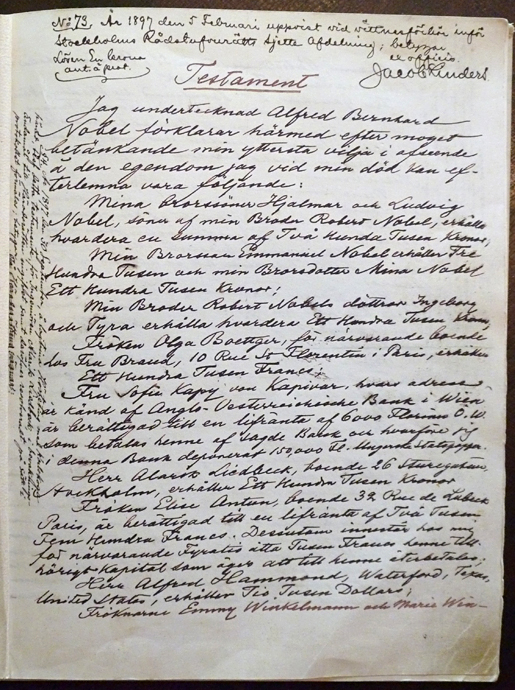




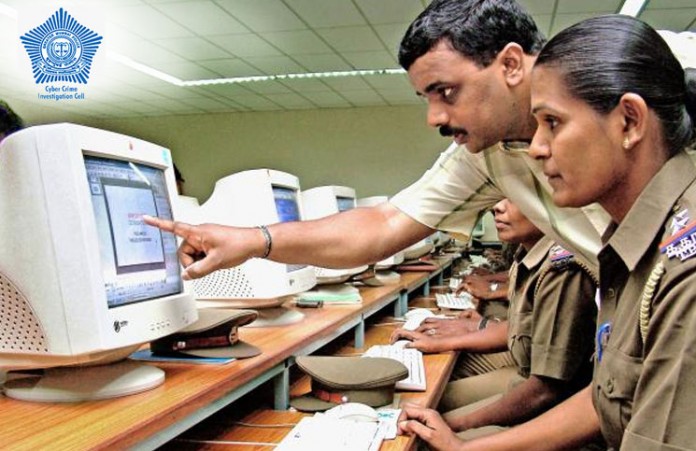






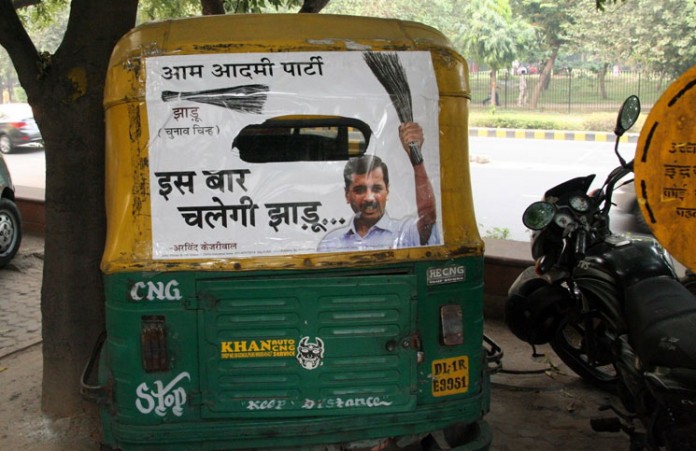








 Allow notifications





