Download Now
Home Blog Page 1849

What is Stamp duty and What are the types of Stamp duty?

7
stamp duty

What is Stamp duty and what are the types of stamp duty. Read further to know more about it as Suchismita Bose in II Yr of Ram Manohar Lohiya National Law University elaborates.

What is Stamp Duty?

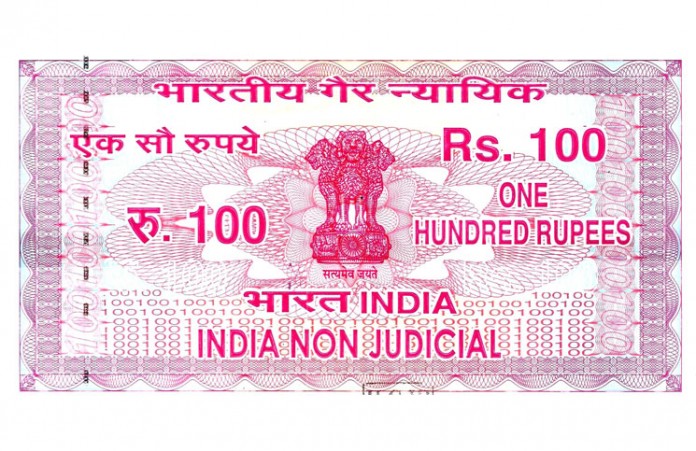
‘Stamp duty’ means a tax payable on certain legal documents specified by statute; the duty may be fixed or ad valorem meaning that the tax paid as a stamp duty may be a fixed amount or an amount which varies based on the value of the products, services or property on which it is levied. It is basically a kind of tax paid on any transaction based on exchange of documents or execution of instruments.

Stamp Duty & Registry


What is the difference between a document and an instrument?

A document is the record of the conditions agreed upon by the parties involved in a transaction in a proper format. A document whose stamp duty has been paid or more simply, a stamped document is considered an authentic and legal document. It gets evidentiary value and can be admitted as evidence in Courts under the provisions of the Indian Stamp Act, 1899. The Indian Stamp Act, 1899 is a fiscal statute dealing with tax on transaction.

Instrument is a document by which a right or liability is created, transferred, extended, limited, extinguished or recorded.

Coming to the subject of stamps used on these documents, in India, two types of stamps are used:

Impressed stamp
Adhesive stamp

Impressed stamps can be:

    1. 1. Labels affixed and impressed by proper officer,


    1. 2. Stamps embossed or engraved on stamp paper, and


    3. Impressions by franking machines generally done by the bank by depositing the necessary amount of stamp duty with the banks.

Adhesive stamps can be:
Adhesive stamps are labels which can be conveniently stuck on the instruments. Adhesive stamps can be further categorised into two categories: postal and non-postal stamps. Postal stamps are used only for transaction with the post office and related function whereas a non-postal stamp can be a court fee stamp, revenue stamp, notarial stamp, special adhesive stamp, foreign bill stamp, brokers’ note, insurance policy stamp or a share transfer stamp.

The most important aspect of the stamp duty is the calculation of the stamp duty. But before the procedure of calculation itself, some basics need to be cleared.

On what kind of documents is a stamp duty levied on?

Stamp Duty, in India, is generally levied on transfer of property, shares, debentures, bill of exchange, conveyance deed, hire purchase, promissory note and movable and immovable assets. It is also used for partnership deed, gift deed, lease agreement, rent agreement, increase in authorized capital, agreement of sale, buying a house, bank guarantee, commercial property, home loan, loan agreement, mortgage, and service apartment. In real estate transaction that involves buying, selling, renting, and leasing of a residential or commercial property, stamp duty of required value are paid before signing it as the documents are not producible in a Court unless properly stamped.


Stamp Duty Calculator:

Usually it is easy enough to calculate the stamp duty payable as per the rates provided in the Indian Stamp Act or the State Stamp Act and pay accordingly. But in complex cases, the person paying the duty may not be able to ascertain the correct stamp duty and may for help apply for the opinion of the Collector of Stamps.

First step to calculate the Stamp duty is to identify which category the document or instrument falls under. There are three categories of transaction for the purpose of stamp duty calculation:

Under the first category, the stamp duty remains fixed no matter what value is mentioned in the document or instrument. Examples of such instruments are Administration Bond, Affidavit, Adoption Deed, Appointment in Execution of Power, Divorce, Apprenticeship Deed, Award, Article of Clerkship, Cancellation Deed, Duplicate, Charter Party, Copy of Extracts, Indemnity Bond, Power of Attorney, etc.

Under the second category, Stamp duty charges are dependent upon the value mentioned in the document. Such documents are Mortgage Deed, Lease Agreement, Title Deeds, Security Bond, Hypothecation Deed, Article of Association, etc.

Under the third category, the Stamp duty depend either on the value mentioned in the document or on the true market value, whichever is higher. Instruments like Conveyance, Agreement for sale, Gift exchange, Partnership Deed, Development Agreement, Transfer of Immovable Property, Trust Deed, Partition, and so on.

Stamp duty for property transactions:

Calculation of Stamp Duty Rates for property transactions:

The stamp duty rate varies from one kind of transaction and on the location of the transaction. Every state in India follows a separate stamp duty rate structure. Usually the duty levied is based on the current market value of the concerned property. The rates are determined at the beginning of every year and made public through the stamp duty ready reckon. The concept of e-stamping has now been introduced by the government which is able to come up with a more accurate value of duty for immovable property. Various popular parameters are taken into account by the e-stamping procedure to calculate the rates of stamp duty in a particular region such as debt and mortgage, distance from conveniences, approach roads, etc.

Revenue Stamp:

It is a tax of Re. 1 in the form of revenue stamp, which should be affixed on receipt for any money or other property, the amount or value of which exceeds Rs. 5000.

Rate of stamp duty:

Stamp duty on non-residential properties whether in a co-operative society or not is at a rate of 5% of the market value. Stamp duty on residential flats in a housing society and building covered under Article 25(d) of Schedule of the Bombay Stamp Act, 1958 attracts concessional rates depending upon its market value as follows:

    i. for up to Rs. 1,00,000 stamp duty is nil,

ii. between Rs. 1,00,001 to Rs, 2,50,000 it is 0.5% of the value,

iii. between Rs. 2,50,001 to Rs. 5,00,000 Stamp duty is Rs. 1,250 +3% of the value above Rs. 2,50,000

iv. Above Rs. 5,00,000 it is Rs. 8,750 + 5% of the value above Rs. 5,00,000.


LawSikho has created a telegram group for exchanging legal knowledge, referrals and various opportunities. You can click on this link and join:  

https://t.me/joinchat/J_0YrBa4IBSHdpuTfQO_sA

Follow us on Instagram and subscribe to our YouTube channel for more amazing legal content 


Download Now

Laws of Intestacy: How is Property Distributed

4
law of intestacy

Written by Soubhik Chakrabarty, 1st Yr, Rajiv Gandhi National University of Law, Patiala, on the law of intestacy.

Download Now

Stamp Duty Tax: How to Calculate It

0
Tax structure in India

Stamp Duty Tax: How to Calculate It

Almost everybody who is involved in any commercial transaction has to deal with creating, authorizing or validating a number of official documents. Hence it would serve him well to know about stamp duty, which is nothing but a tax levied on documents to make them legally effective. Calculation of the stamp duty is thus critical if you want to have valid legal documentation.

The Indian Stamp Act, 1899 and the Bombay Stamp Act, 1958 are the prevalent laws on Stamp Duty across India with sometimes minor changes and amendments in most states of India. So the provisions discussed below are mainly based on these two laws.

Usually it is easy enough to calculate the stamp duty payable as per the rates provided in the Indian Stamp Act or the Stamp Act of the state, where one is drawing up the document concerned, and pay accordingly. But in complex cases, the person paying the duty may not be able to ascertain the correct stamp duty and may have to apply for help or for the opinion of the Collector of Stamps. The very purpose of this post is to make a person lacking formal legal training aware of the very basic features and modes of stamp duty calculation, so that in most of the usual transactions, he can cease to be dependent on lawyers for matters such as calculation of stamp duty and therefore save a lot of cost incurred in the process.

Tax structure in India

Steps to calculate Stamp Duty:

  • 1) First step to calculate the stamp duty is to identify which category the document or instrument falls under. There are three categories of transactions for the purpose of stamp duty calculation:
  • a) Under the first category, the stamp duty remains fixed no matter what value of transaction or goods/property is mentioned in the document or instrument. Examples of such instruments are Administration Bond, Affidavit, Adoption Deed, Appointment in Execution of Power, Divorce, Apprenticeship Deed, Award, Article of Clerkship, Cancellation Deed, Duplicate, Charter Party, Copy of Extracts, Indemnity Bond, Power of Attorney, etc.
  • b) Under the second category, stamp duty charges are entirely dependent upon the value of the transaction or goods/property mentioned in the document. Such documents are Mortgage Deed, Lease Agreement, Title Deeds, Security Bond, Hypothecation Deed, Article of Association, etc.
  • c) Under the third category, the stamp duty charges depend either on the value of the transaction or goods/property as mentioned in the document or on the true market value thereof, whichever is higher. Instruments like Conveyance, Agreement for sale, Gift exchange, Partnership Deed, Development Agreement, Transfer of Immovable Property, Trust Deed, Partition, and so on.


https://lawsikho.com/course/diploma-entrepreneurship-administration-business-laws
Click Above
  • 2) Second Step after the identification of the category of the document, all it requires is to look up the rates provided in the Indian Stamp Act or the State Stamp Act and pay accordingly. As a way of example, the rates of various transactions as per the Bombay Stamp Act, 1958 is given below.
    The rates may differ slightly from state to state under their respective laws but more or less the structure and the rate slabs remain the same. Under the Bombay Stamp Duty Act, 1958:

    • a) The Stamp Duty for the acknowledgement of debt:
      If a person is in debt to another, then the person in debt i.e., the debtor to keep an evidence of his debt needs to have the document of his debt stamped to give it evidentiary value. In other words, if the document has not been stamped and requisite stamp duty has not been paid, the debtor cannot in a court of law produce that document as an evidence of the exact amount of money that he owed to the creditor. The Stamp Duty on such documents increases with the increase in the debt amount. When the debt amount:

      • i) Exceeds Rs. 100 but does not exceed Rs. 1,000 the stamp duty is 20 paise
      • ii) Exceeds Rs. 1,000 but does not exceed Rs. 5,000 the stamp duty is 50 paise

      • iii) Exceeds Rs. 5,000 but does not exceed Rs. 10,000 the stamp duty is Re. 1

      • iv) For every Rs. 10,000 or part thereof in excess of Rs. 10,000 the stamp duty is Re. 1 to a maximum of Rs. 50.

    • b) The Stamp Duty for Adoption Deed is Rs. 200.

    • c) The Stamp Duty for Affidavit is Rs. 20.

    • d) The Stamp Duty for Agreement or the record of agreement or memorandum of agreement between two or more parties:

      • i) If relating to the sale of bill of exchange, Re. 1 for every Rs. 10,000 or part thereof Cheques, drafts, pay orders are examples of bills of exchange.

      • ii) If relating to the purchase of sale of a Government security, Re. 1 for every Rs. 10,000 or part thereof of the value of the security at the time of its purchase or sale, as the case may be.

      • iii) If relating to the purchase or sale of shares, scripts, bonds, debentures, debenture stocks or any other marketable security of a like nature, Re. 1 for every Rs. 10,000 or part thereof of the value of the security at the time of its purchase or sale, as the case may be.

    • e) Stamp Duty on agreement relating to Deposit of Title Deeds:

      • i) When such deposit has been made by way of security for the requirement of many advanced or to be advanced by way of loan or an existing or future debt, the stamp duty is Re. 1 for every Rs. 10,000 or part thereof for the amount secured by such deed subject to minimum of Rs. 100 and maximum of Rs. 5,00,000.

    • f) Stamp Duty for the appointment execution of power for documents except a will:

      • i) Rs. 100 for the appointment of trustees

      • ii) Rs. 250 for the appointment of property movable or immovable.

    • g) Stamp Duty for agreement relating to Pledge and Hypothecation:

      • i) Where the pledge or hypothecation of movable property is to secure the repayment of money advanced or to be advanced by way of loan or an existing or future debt, the stamp duty is Re. 1 for every Rs. 1,000 or part thereof for the amount secured subject to minimum of Rs. 100 and maximum Rs. 5,00,000.

    • h) Stamp duty for Bond:

      • i) For every Rs. 500, or part thereof, the stamp duty is Rs. 5 i.e. 1% of value, subject to minimum Rs. 100.

    • i) Stamp Duty for Conveyance:

      • i) For every Rs. 500 or part thereof, the Stamp duty is Rs 25. If the instrument transferring the property is residential, and the value of the property is,

      • ii) Up to Rs.2,50,000 then the stamp duty is Rs. 100.

      • iii) Up to Rs. 5,00,000 then the stamp duty is Rs. 100 + 3% of the value above Rs. 2,50,000

      • iv) Above Rs. 5,00,000 then the stamp duty is Rs. 7600 + 5% of the value above Rs. 5,00,000.

    • j) Stamp Duty for Further Mortgage Charge:

      • i) Instrument imposing a further charge on mortgaged property, when first mortgage is without possession and further charge is also without possession, the stamp duty is Rs. 5 for every Rs. 1,000 or part thereof for the amount secured by further charge, subject to minimum of Rs. 100 and maximum of Rs. 10,00,000.

    • k) Stamp Duty for Mortgage Deed:

      • i) For every Rs. 500, or part thereof, Rs. 5 (i.e. 5% of the amount secured) subject to minimum of Rs. 100 and maximum of Rs. 1,00,000.

      • ii) While these measures of calculation are not exhaustive in respect of all the provisions of the Bombay Stamp Act, they reflect at a glance the stamp duty levied on the most commonplace and frequent transactional documents that a businessman or even an ordinary person in his daily professional activities usually comes across. In course of time, we intend to bring a similar structural and slab division for the Indian Stamp Act too.

Researched and drafted by Suchismita Bose, II Yr, Ram Manohar Lohiya National Law University


LawSikho has created a telegram group for exchanging legal knowledge, referrals and various opportunities. You can click on this link and join:  

https://t.me/joinchat/J_0YrBa4IBSHdpuTfQO_sA

Follow us on Instagram and subscribe to our YouTube channel for more amazing legal content 
Download Now

Foreign Investment and Tax Havens

0
Tax Havens Tsunami
Tax Havens Tsunami

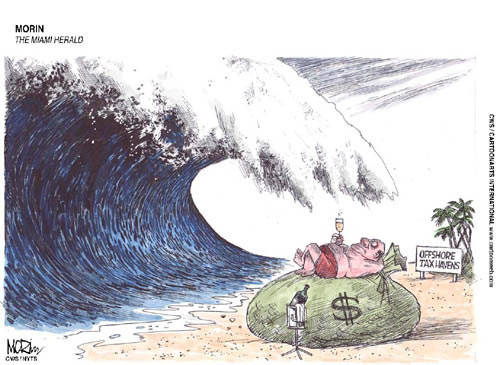
This should not come as something very surprising that Mauritius, a minuscule island, attracts most of the investments from India and that not only Mauritius, even places like British Virgin Island and Cyprus are also not far behind. To the world of investment, these places are like what Switzerland is to banking. More than one-third of a total of around USD 31,000 million, which is invested abroad from India, is destined to end up in many of the well-known tax havens like Channel island [5400Million USD], Mauritius[2600Million USD], Virgin Islands [1008 million USD], Cyprus [1361 million USD] and Cayman islands [104 Million USD] .

Download Now

Can Data Processing Charge be taxed as Royalty?

0
Data Processing Charge

Nothing comes free when you carry out a transaction, there is always one or the other kind of tax that you have to pay. In today’s world where boundaries are continuously getting blurred owing to the technological marvels, transactions hitherto impossible are being carried out quite easily and with great flair. While the impossibles are being made possible on a daily basis, one must consider that such possibilities also have their own price tags attached. The matter of taxation vis-a-vis technology is of utmost importance, especially owing to the complex nature of technological activities. One such issue in the field of taxation is that whether ‘data processing charges’ are taxable as ‘royalty’ under the Income Tax Act. Especially given the large number of commercial transactions involving data processing that take place between organizations based in India and abroad by way of outsourcing, the matter of taxing data processing charges as ‘royalty’ becomes especially important. In case the tax laws of the foreign countries also provide for such taxation, will the Indian laws impose a further burden?

Download Now

Equal Remuneration Act – How labour law can land a million Indian businessmen in jail

2
United we stand

Are you running a business? Well be very afraid, because you could probably be punished with an imprisonment of 1 month for not maintaining a certain register under the Equal Remuneration Act. The crux of the law is that any person who, or entity which has ultimate control over an establishment, factory, mine, oilfield, plantation, port or shop, must ensure payment of equal remuneration to men and women employees/workers. However, paying everyone equally is not sufficient, you must maintain a register for the purpose of this Act, which shows that you are doing so.
United we stand
Call it a draconian law or whatever, if you don’t maintain this register – and if the labour inspectors visits you, or you get a notice from the labour department, you are probably going to jail.

Here’s the section for your reference:
Section 8. Duty of employers to maintain registers. — On and from the commencement of this Act, every employer shall maintain such registers and other documents in relation to the workers employed by him as may be prescribed.

Section 10. Penalties. — (1) If after the commencement of this Act, any employer, being required by or under this act, so to do—
(a) omits or fails to maintain any register or other document in relation to workers employed by him, or (b) omits or fails to produce any register, muster-roll or other document relating to the employment of workers, or (c) omits or refuses to gives any evidence or prevents his agent, servant, or any other person in charge of the establishment, or any worker, from giving evidence, or (d) omits or refuses to give any information, he shall be punishable with simple imprisonment for a term which may extend to one month or with fine which may extend to ten thousand rupees or with both.

Equal Remuneration Rules

Section 6. Registers to be maintained by the employer. — Every employer shall maintain a register in relation to the workers employed by him in Form ‘D’.

Labour Law Compliances – some bad news

Anyway, this is just an example of a bunch of labour laws that you probably do not know about, but which could land you in a soup. It could lead to legal problems you are not prepared to handle and don’t want coming up. Either hire an HR person if you can afford or figure out a way to do labour law compliances yourself. On our part, we shall keep uploading some of them here from time to time.


Equal Remuneration Act

FORM D

See Rule 6

Register to maintained by the employer under Rule 6 of the Equal Remuneration Rules, 1976

Name of the Establishment with full address.________________________
______________________________________________________________
Total number of workers employed.________________________________
Total number of men workers employed.____________________________
Total number of women workers employed.__________________________

Category of workers Brief description of work No. of men employed No. of women employed Rate of remuneration paid Basic wage or salary Components of remuneration
Dearness allowance House Rent allowance Other allowances Cash value of concessional supply of essential commodities
1 2 3 4 5 6 7 8 9 10
.
.

Download Now

VC & Angel Investor Alert: Board rights could have criminal liability risk

0

VC and Angel Investor Liability

Nominee directors have the same duties and obligations as ordinary directors, as per the Ministry of Corporate Affairs (MCA). The Registrar of Companies (ROC) has started initiating criminal prosecution of directors for violations of the Companies Act quite liberally. For the ROC, prosecuting in this manner reduces the cost of investigation and verification of detailed company filings. However, this may spell some serious risk for Angel Investors and VCs.

    For angel investors and VCs, such prosecution raises the following issues:

    1. Can directors nominated by angel investors or VCs be prosecuted for defaults in statutory compliance by a company?

    2. Should angel investors, venture capitalist be careful not to assume certain responsibilities for directors nominated by them?

    3. If investors do not take up compliance responsibilities, can they still have the desired level of control over the company?

Other than elaborate financial calculations of return and valuation of a potential company, these questions directly affect investors, and can seriously affect their ability to realize the targeted level of gain from an investee company.

Before we get into the liability of investor’s directors, a brief background to the rights investors prefer when they decide to invest in startups is necessary.

Angel Investors and Venture Capital Investors (VCs) usually have rights at shareholder meetings (general meetings) as well as board meetings of a company. Such rights are generally called corporate governance rights, and are mentioned in detail in the agreement they sign with the company and its promoters, known as the Shareholders Agreement or Investment Agreement.

    Investors usually have the following rights over the board of directors:

    1. They have the right to appoint a certain number of directors (such directors are usually called ‘nominee directors’ or ‘investor directors’)

    2. Investors require that the presence of at least one (or more) nominee directors must be mandatory at a Board meeting, that is, an investor director is required for a valid quorum for a Board meeting.

    3. The consent of an investor director is mandatory for certain matters, typically known as ‘Reserved matters’.
    This essentially means that if the nominee doesn’t say a ‘Yes’, a resolution on that matter cannot be passed by the Board. These are known as affirmative voting rights.

    4. Investors may nominate various observers at Board meetings. Observers do not have the powers of directors.

While investors are in control over the business decisions and policy of a company, they may not typically be interested in handling day to day compliance issues, and do not supervise everyday activities of the company. Therefore, they must ensure that their directors are not held liable for any statutory defaults of the company.

How investor directors can be liable under Companies Act

The Ministry of Corporate Affairs (MCA) has released a Master Circular on 29 July on prosecution of directors and has stated that nominee directors have the same duties and obligations as ordinary directors. Further, the penal provisions of the Companies Act state that an ‘officer in default’ is liable for non-compliance. A director is included in the meaning of an officer in default under the Companies Act. Nominee directors have not been excluded from this definition. Therefore, this provision is being used by the ROC to initiate prosecutions. The ROC is of the opinion that this is a perfectly valid practice to adopt because if a director is innocent, he will eventually be able to prove it before a court of law and be declared innocent. For the ROC, this reduces administrative costs of meticulously checking compliance by every company before prosecution of its directors.

Points of action for VCs / Angel Investors while structuring agreements

The MCA Master Circular states that prosecutions should be filed primarily against the managing director(s)/ whole time director(s)/manager(s) and the company secretary. Only in those cases where the above managerial personnel are not available, prosecution should be against ordinary directors. Non-executive directors who are not associated with annual filings should not be held prosecuted.

    From this, there are 4 (four) points that VCs and angel investors should check at the time of investment:

    1. VCs / Angel Investors should ensure that they appoint directors in non-executive capacity, that is, directors who are not in charge of day to day operations of the company and who do not get a salary for working for the company. They may, however, get sitting fees, which is usually nominal remuneration for assuming the office of a director.

    2. Further, they must ensure that their investee companies have a Managing Director and a company secretary. The company must impose on some official, say for example, the Chief Financial Officer, the responsibility of maintaining compliance under the Companies Act, so that in no circumstance can such responsibility be imputed to angel or VC investors or their directors.

    3. The role of nominee directors must be clearly spelled out in the articles of association of the company, as not including supervision of day to day activities or assumption of compliance-related functions. The articles must be amended after the Investment / Shareholders Agreement.

    4. Merely writing in the shareholders or investment agreement that the nominee directors are not involved in the day-to-day management of the company will not suffice, if the nominees are later found by a court to have taken active interest in the company’s activities on a frequent basis. If nominees have voluntarily assumed such responsibilities, they will be required to undertake some level of diligence to ensure compliance, and it become difficult for them to show that they did not know about a particular violation by the company. Hence, nominee directors must take care not to get involved in day to day issues of the company.

Ministry of Corporate Affairs provides some relief

Luckily for investors, the Master Circular provides some relief. Before taking penal action, the ROC has now been advised to examine Board minutes and form filings (Annual Returns, Forms 32, Form 1AB, etc.). If the ROC conforms to this guidance, investors may breathe a sigh of relief and as chances of prosecution of nominees who have not been in charge of company functions in respect of a company which has defaulted are lower.

In the event of a prosecution…

Nevertheless, if the matter does lead to a prosecution in Court, the director need not lose hope. Most penal / criminal provisions of the Companies Act state that a director will not be liable for any breach or violation which occurred without his knowledge, without his consent or connivance, or where he has acted diligently in the Board process, such as meetings of the Board or committee meetings.

    In the event of a prosecution, the director should:

    1. Possess all documents and evidence showing that he was not in charge of day to day activities;

    2. He should be able to demonstrate due care in performing functions assigned to him. This requirement can be shown by the director having been in constant touch with his nominating group, observing board and committee procedures and by his taking business decisions motivated by commercial (rather than personal) considerations; and

    3. The director should be able to show that the violation in consideration occurred without his knowledge.

If a director is able to demonstrate the above 3 points to the satisfaction of a court, his chances of being declared innocent are very high.


Download Now

The Lokpal Bill, Anna Hazare’s Jan Lokpal Bill and the Prevention of Corruption Act

1
Don't Worry Sir!

‘Anna’esthetic for the democratically ‘Anna’emic?

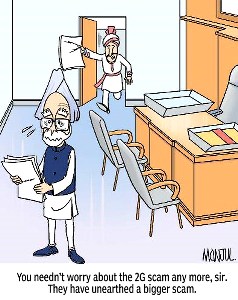
Corruption among government officials is undoubtedly one of the most grave and pervasive threats that can be posed to the fabric of any nation. It is thus scarcely any surprise that almost every form of media in India is at present covering the popular debate and controversy regarding the ubiquitous Lokpal Bill (Government of India’s version) and the Jan Lokpal Bill (as proposed by Anna Hazare), both of which seeks to address the problem of corruption within the governing machinery in the country.

None of these bills, however, is the Indian legislature’s first attempt to combat corruption in public sphere. That honor goes to the Prevention of Corruption Act (POCA), the latest version of which had come into force in India as far back as 1988. Perhaps setting aside for a while the debate about whether the popular agitation and demonstrations are undermining the democratic machinery, the time has come to have a look at these laws and possible future laws and see how they differ from each other in terms of substantive and procedural merits.
Don't Worry Sir!
The POCA, among other things, identify a series of offences punishable under itself, including a public servant taking gratification other than legal remuneration in respect of an official act, taking gratification to influence public servant or for exercise of personal influence with public servant, criminal misconduct or attempts thereto by public servants etc. In order to try such offences, the Act envisaged appointment of special judges (a qualified Sessions Judge or Additional Sessions Judge or Assistant Sessions Judge) by the Central or State governments. Such special judges had a wide range of powers, starting from taking cognizance of a case (taking notice that a problem/dispute exists and allowing proceedings to begin) without the accused being brought forth for trial, to issuing pardons in exchange of information, to conducting summary trials (a shorter and less time-consuming version of actual trials) under certain circumstances.

However, the POCA suffered from a list of shortcomings, which probably explains an abysmally low rate of convictions under this Act since it has come into being. After all, it is not as if that the Indian public sector has been magically shorn of all corrupt practices following POCA’s arrival! Apart from high-ranking police officers (like Assistant Commissioner or Deputy Superintendent), few other policemen are allowed to investigate an offence under this Act without the order of a Metropolitan Magistrate or a Magistrate of the first class. Moreover, under this Act, prior governmental sanction is required before the court can take cognizance of an offence allegedly committed by an office-holder within the Union or the State governmental machineries, which, pragmatically speaking, is seldom forthcoming.

These problems with the POCA had made it necessary to adopt a new stance in the combat against corruption, which was the reason the Lokpal Bill had been conceived of in the first place. Instead of simply relying on the ordinary law enforcement authority and judiciary to effectively investigate and adjudicate allegations of corruption against government officials by wading through a mountain of ‘red-tapism’ and procedural barriers like the ones mentioned above, an independent institutional framework was conceived of as a specialist in anti-corruption measures.

This would happen by way of having Lokpal in the central level and a Lokayukta in the state level, who will have the power and independence to investigate and prosecute cases of corruption. Creating a one-stop window for addressing corruption problems, allowing individual citizens to directly approach the Lokpal’s office with his grievances, expedited investigation and adjudication of offences of corruption allegedly committed by the government officials as well as the judiciary without need for approval from any higher authority and providing protection to whistleblowers are a few novel features of the Lokpal system.

Having said that, the Government’s version of the Lokpal Bill (LB) and the Jan Lokpal Bill (JLB), as proposed by Anna Hazare and his team do sport a few considerable differences in terms of their provisions, which have been indicated as follows:

JLB includes sitting Prime Ministers, judges, Parliament members’ actions on voting/speech (that couldn’t be questioned before because of Article 105 of Constitution of India) and all government officials within its investigating ambit, unlike LB, but does not include personnel of NGO-s receiving public funds, which LB does.

LB prescribes 8 members other than the Chairperson of whom 4 have to be members of judiciary. JLB prescribes 10 members of whom 4 need to have legal background and a Chairperson to have extensive legal knowledge.

The composition of the selection committee appointing the LokPal also differs between the 2 bills. LB includes the Speaker, a Union Cabinet Minister nominated by the PM, Leader of Opposition in the Rajya Sabha, an eminent jurist and a person having experience in anti-corruption and administrative measures, whom JLB doesn’t include. On the other hand, JLB keeps in the Chief Election Commissioner, the Comptroller & Auditor General, and all previous chairpersons of the Lokpal, whom LB doesn’t refer to.

Regarding qualification of the Lokpal members, LB requires the Chairperson to be the present or an erstwhile Chief Justice of India or Supreme Court judge and the other judicial members to be present or erstwhile Supreme Court judges or Chief Justices of High Courts. Non-judicial members have to have impeccable integrity with minimum 25 years of experience in anti-corruption policy, public administration, vigilance and finance. No member can subsequently become an MP, MLA or be connected with a political party, business or practice a profession. JLB, on the other hand, requires a judicial member to have held office for 10 years or been an advocate of the High Court or Supreme Court for minimum 15 years. All members are required to have impeccable integrity with record of public service, especially regarding anti-corruption. Membership can’t be granted if a person not an Indian citizen, or has a case involving moral turpitude framed against him by a court, or is below 45 years, or was a government servant within the last 2 years.

Regarding the removal process, LB allows President to initiate action followed by a Supreme Court inquiry and remove a member on grounds of biasness, among others. JLB requires Supreme Court’s recommendation, no initiation by the President and an independent complaints authority for investigation.
Among other differences, JLB’s recommendation to bring the CBI under Lokpal’s aegis and for Lokpal to have the power to receive complaints from whistleblowers, recommend cancellation/modification of a lease or licence or blacklist a company and to approve interception and monitoring of communication seem to be noteworthy.

Thus, it is quite clear that POCA’s shortcomings indeed required something more in what promises to be a never-ending battle against corruption in public sphere (although some say simply removing POCA’s requirement of prior government approval for investigating allegations of corruption can be a viable solution). As to the question whether the government’s Lokpal Bill succeeds to be that plausible alternative, or whether the popular mass movement and agitations of Anna Hazare and his followers in and outside Civil Society allow the Jan Lokpal Bill to triumph over the government’s version, one can at best wait and watch events to unfold and which form of democracy and constitutionalism emerges victorious in this struggle fast assuming epic proportions.

Download Now

FCRA: Difference between deemed prior permission and prior permission

1

Foreign Contribution (Regulation) Act, 1976 was enacted in order to regulate the acceptance and regulation of foreign contribution or foreign hospitality. However the 1976 Act stood repealed by Foreign Contribution (Regulation) Act, 2010, which came into effect from May 1st, 2011 along with Foreign Contribution (Regulation) Rules, 2011.
The FCRA, 2010 provides the provision of obtaining prior permission of Central Government to receive fund under Foreign Contribution Regulation Act, 2010. FCRA, 1976 also provided the option of obtaining prior permission to receive fund under the Act, however, the 1976 Act also provided the option of obtaining deemed prior permission from Central Government to receive funds.
Is the deemed prior permission granted under FCRA, 1976 valid after coming in force of the new Act. Read further to know more about prior permission, deemed prior permission and validity of deemed prior permission after coming in force of Foreign Contribution Regulation Act, 2010

Prior Permission under the Foreign Contribution (Regulation) Act, 2010

To obtain fund under FCRA, 2010 an organization needs to get a certificate of registration from Central Government. However, an organization which has a definite cultural,economic, educational, religious or social programme but has not obtained the certificate of registration needs to get prior permission of Central Government before accepting foreign contribution as discussed here.

Deemed Permission under the Foreign Contribution (Regulation) Act, 1976

The concept of ‘prior permission’ under the FCRA, 1976 was same as that of the 2010 FCRA Act, however in the Foreign Contribution Regulation Act, 1976 there was a provision of deemed ‘prior permission’. Section 11(2) of the 1976 provided that if an application of ‘prior permission’ is not disposed of within 90 days from the date receipt of such application, then the permission prayed in that application would be deemed to be granted.

Is the deemed prior permission granted under FCRA, 1976 valid under FCRA, 2010?

Section 11 of the Foreign Contribution Regulation Act 2010 clearly states that prior permission granted under the FCRA, 1976 will remain valid even after enforcement of Foreign Contribution Regulation Act, 2010.
Hence, an organization that had been granted deemed prior permission under FCRA, 1976 need not take a new prior permission under Foreign Contribution Regulation Act, 2010.
The deemed prior permission granted under FCRA, 1978 will remain valid for a period of 5 years from the date of commencement of the Foreign Contribution Regulation Act, 2010 after which it will have to be renewed.

Another provision that can be said to be providing validity to the deemed prior permissions taken under the FCRA, 1976 is Section 54(2) of Foreign Contribution Regulation Act, 2010. Technically this section does not as provide for validity of prior permission as does section 11. Section 54 of FCRA, 2010 is a saving Section which provides that anything that has been done under the Foreign Contribution Regulation Act,1976 shall be valid under the Foreign Contribution Regulation Act, 2010 if it is not inconsistent with the Act.
Hope this post was useful for you. You can mail at [email protected] or [email protected] in case of any query or doubt.

*Research work and drafting done by Suyash Manjul, Vth Yr, Ram Manohar Lohiya National Law University

Download Now

Privileged Communications and A Lawyers Duty to Keep Client Information Confidential

0
lawyers privileged communication
What happens if the lawyer speaks?
lawyers privileged communication
What happens if the lawyer speaks?

In most common law countries the duty of confidentiality requires that a lawyer must respect the confidentiality of his client’s matters. Any information that a lawyer receives from his client may be confidential, and must not be used or disclosed in ways not authorised by the client. This, in essence, is Duty of Confidentiality of lawyers.
Confidentiality is not synonymous with privilege. All privileged communications are, by definition, confidential. But not all confidential information is privileged. The privileged communication protection only works when a client has made a specific disclosure to the lawyer. However, duty of confidence includes other information the lawyer may find out otherwise about the client as well while conducting the client’s matters. For instance, if a third party discloses some information about a client to a lawyer, he has a duty to keep such information confidential though it is not a privileged communication.

Justification of Confidentiality

Confidentiality is largely designed to enable a client to communicate the truth to his lawyer so that effective representation is possible without the client having to be afraid of the lawyer. The duty of confidentiality is also intertwined with the lawyer’s duty of loyalty to the client. A failure to respect confidentiality undermines the client’s confidence that the lawyer is acting solely in that client’s best interests.

If there was no duty of confidentiality, most clients will be in a terrible dilemma to decide which information they need to disclose to the lawyer and what they should keep with themselves. This would have seriously jeopardized the quality of representation.

In the US case of People v. Belge, a lawyer who discovered a deadbody based on privileged information received from his client and did not report the same to legal authorities was being prosecuted for failure to comply with certain laws by making the disclosure claimed Duty of Confidentiality as a ground for a lawyer not being required to make such declaration. The argument of the accused lawyer was accepted by the court as it found immense importance in preserving the sanctity of privileged communication especially when it is intended to protect the right against self incrimination. This illustration emphasizes how important the duty of confidentiality can be in the scope of a constitutional democracy.

Important features of Confidentiality

  • 1. The duty survives the professional relationship, perpetually continuing after the lawyer no longer acts for the client.
  • 2. The duty applies even when the client consulted a lawyer but did not retains his services eventually.
  • 3.The duty should be interpreted to extend not only to the overt disclosure of confidential information, but its use. The lawyer is obligated to actively protect information from disclosure by mistake. He must take reasonable care to keep information confidential.
  • 4. Generally, there is an implied or express authority for a lawyer to disclose information if necessary to do so in interest of the client.
  • 5. It is also the lawyers duty to make the client aware of Duty of Confidentiality and potentially applicable exceptions to it.
  • Exceptions to Duty of Confidentiality
    • the client authorises disclosure
    • here you are permitted or compelled by law to disclose the information
    • to avoid the commission of a serious offence
    • the information has lost its confidentiality
    • to prevent serious physical harm to someone – (this kind of a situation justifies breach in case of doctor-patient privileges, which is analogous for this specific purpose – for instance in Doctor X v. Hospital Y)

    Confidentiality Fetish – Abuse of the Duty of Confidentiality

    Noisy Withdrawals:
    In the USA, the Securities and Exchange board has proposed many times that Companies should be required to make a mandatory disclosure every time a lawyer withdraws from a company because legal measures suggested by him have been ignored – leading to illegality. However, lawyers shot down the proposal by citing lawyer-client communication privilege which would be compromised by such noisy withdrawals. A noisy withdrawal in such circumstances is a requirement in the profession of accountants. However, lawyers manage to avoid application of this rule citing duty of confidentiality even in India.

    Corporate investigations: While this is not prevalent in India, it may be a used under Indian law as well. When a corporate finds itself in a situation where there is a serious allegation which should be investigated, it simply hires lawyers to conduct that investigation. In normal course, the evidence and information collected by such an investigator can be accessed by courts and law enforcement authorities if they wish – but in case of an advocate being a corporate investigator – he is spared from such jurisdictions because of Duty of Confidentiality. This position is misused by many corporations to keep information away from public knowledge.

    Conclusion

    It is important to keep a balance between Duty of Confidentiality and public interest in certain information. While in the USA abuse of this confidentiality points out the follies of taking this duty to an extreme, we can observe the opposite extreme in India as there is little awareness amongst the clients about their right to privileged communications and the duty of their lawyers towards them to keep client information confidential.
    For a lawyer, it is a very important duty and also a tool if used in mutual benefit of lawyer and the client.

    Download Now
    logo
    FREE & ONLINE 3-Day Bootcamp (LIVE only) on

    How Can Experienced Professionals Become Independent Directors

    calender
    28th, 29th Mar, 2026, 2 - 5pm (IST) &
    30th Mar, 2026, 7 - 10pm (IST).
    Bootcamp starting in
    Days
    HRS
    MIN
    SEC
    Abhyuday AgarwalCOO & CO-Founder, LawSikho

    Register now

    Abhyuday AgarwalCOO & CO-Founder, LawSikho