This article has been written by Diksha Paliwal, a practising advocate in the High Court of Indore and a student of LLM (Constitutional Law). This article provides in-depth knowledge regarding the role of police in investigating a crime along with the procedure and guidelines to be followed by the police when an investigation is being done. Before talking about the police’s role, the article briefly discusses what an investigation means.
It has been published by Rachit Garg.
Table of Contents
Introduction
The term ‘Police’ in a general sense is associated with the maintenance of public order and the protection of citizens from crimes and other dangerous incidents that are unlawful. Police constitute the third most important pillar of the criminal justice system, while the judiciary and prosecution are the other two pillars. Police play a crucial role in the investigation of a crime, and customarily it is the police that first come in contact with the witnesses, victims and accused. To be more specific, police is the one that mainly identifies the accused and helps the prosecution prove the guilt of the accused in the criminal trials, and this is why mainly an investigation is done.
The police have been assigned multifold duties that it has to perform throughout the criminal case. The police are required to hunt for the truth and act in an impartial way to do the same. This article tries to explain the role of police in crime investigation and before that, the article sheds light on what is meant by the term investigation, and thereafter the procedure of the investigation.
Etymologically the term ‘investigation’ connotes the careful examination of something or the search for information to discover facts about a particular situation or circumstance. It is the examination of relevant facts that establishes whether something unlawful has happened, and, the person responsible for such misconduct.
The prime objective behind conducting the investigation is to examine the allegations and shreds of evidence regarding a certain act of misconduct. The investigation further examines whether something beyond the knowledge about the alleged happening of misconduct has happened. The Allahabad High Court in State of U.P v. Sant Prakash (1976)held that investigation is mainly conducted for the collection of evidence, and it must necessarily be conducted by the police officer or any other person authorised by the Magistrate.
“Investigation” is defined under Section 2(h) of the Code of Criminal Procedure (hereinafter referred to as CrPC), 1973. However, Section 2(h) does not provide an exhaustive definition. It states that the word is to include all the proceedings under the CrPC about the collection of evidence. The police officer or any other person authorised by the Magistrate conducts these proceedings referred to in Section 2(h). Provided, the Magistrate shall not himself conduct these proceedings. In a circumstance where any authority is given the power to deal with an offence (within the authority’s jurisdiction), in the exercise of such power, the authority is also empowered to investigate the offence, because the term “dealing with an offence” is to include the power of investigation also. The four elements of the investigation are; case diaries, spot visits, collection of evidence, and, searches and seizures.
Arrest and detention of persons, examination of witnesses, medical examination of the arrested persons, searches conducted for the collection of evidence, and arrangements of raids, all these form part of the investigation. It is important to note that the process of the investigation comes exclusively under the police’s domain. The Magistrate does not have control over it but may ask for a case diary at a later stage if deemed necessary. The investigation is the first stage of a criminal case. While conducting the investigation if the police find out that no offence has been committed, they report it to the Magistrate and the case proceedings come to an end. However, if the police find something, then the second stage of a criminal case begins, i.e., the inquiry, followed by the third stage, the trial.
When does the investigation start
The starting of an investigation clarifies the activities or further steps to be taken to conclude the alleged happening of misconduct. Gathering of evidence, analysis of the information available, arrest and charging of a suspect, are all a part of the investigation process.
The process of investigation in a cognizable offence begins as soon as police find a reason to suspect the alleged commission of an offence, either based on an FIR or any other suspectable information received by police. The CrPC contains provisions that direct the police to investigate and also lays down the complete procedure for an investigation.
Information to a police officer
The investigation starts as soon as the police officer receives information. Section 154 of CrPC talks about providing information to a police officer in cases of cognizable offences. This Section provides that every piece of information received by the officer in charge whether in writing or orally shall be noted down by the police officer. The written information should also be provided to the one who has been informed about the commission of the offence. The information that has been provided shall then be attached to the book of records. If any person feels aggrieved that the officer in charge is not accepting such information then he can send it directly to the Superintendent of Police. The investigation starts by making entries in the book of records as prescribed by the government.
The objective of this Section is to inform the Magistrate who has jurisdiction over that particular area and the District Superintendent of Police about the commission of the offence as they are the ones responsible for the maintenance of safety and peace. Another objective is to acquaint the judicial officers with the facts and evidence available, in front of whom the case will be tried ultimately. This Section also safeguards the accused against further variations and additions, as sometimes done by the prosecution. As held in the case of Ashok Kumar Todi v. Kishwar Jahan (2011), registration of the FIR should be treated as a condition precedent to the starting of the investigation.
The information regarding the commission of a cognizable offence given to the police or officer in charge of the police station is called a First Information Report (FIR). It is the information given to the police about the commission of the cognizable offence. This is the base from which the investigation of a case starts. This information received by the police officer when reduced in writing becomes First Information Report. Although FIR is nowhere defined in the code, the same is recorded under Section 154 of CrPC. FIR stands as the commencement of the investigation in cases of cognizable offence. The police in charge is obligated to record the information provided to him if such information relates to the commission of the cognizable offence. As held in the case of State of U.P. v. Mukesh (2013)FIR is an intimation regarding the happening of an event. It is to be noted that only the main information received needs to be mentioned in the regular diary. Also, this information shall not be considered the source of every fact.
Generally, the FIR is lodged at the police station that has jurisdiction over the area where the incident happened. However, this is not a mandatory provision, and if the circumstances demand it, it can also be lodged elsewhere. To put it simply, it can be stated that even if the police do not have territorial jurisdiction over the place of crime, the FIR can still be lodged at that police station. If the police deny lodging an FIR, then this pertains to wrongful conduct by the police and is regarded as dereliction of duty. The FIR that is lodged irrespective of where the incident happened is termed a “Zero FIR.” The idea of a “zero” FIR was inserted into the criminal law after the unfortunate incident of the Nirbhaya gang rape case, on the recommendation of Justice Verma’s Committee. In a zero FIR, the police lodge the complaint and later on transfer it to the police station, which has territorial jurisdiction over the place of incidence.
The objective behind the concept of zero FIR is the prompt lodging of FIR, thereby avoiding any unnecessary delay. In such circumstances, the police are duty-bound to register the FIR, irrespective of the fact of the place of the incident.
The purpose of providing the provision of lodging FIR promptly is that it helps in gaining information on circumstances in which a crime has been committed on an early basis. The lack of timely lodging of FIR hinders the spontaneity of the investigation. Also, this may result in hampering the true evidence and facts. In cases where FIR is reduced to writing after the preparation of an inquest report then it hampers the authenticity of FIR. In a situation where the police start the investigation based on the oral information received by the informant and after that reduce the oral information in writing then the same must be considered as a statement under Section 161 of the CrPC and not an FIR. Under no circumstance can the second piece of information received be treated as FIR.
It is to be noted that FIR does not mandate that it must contain minute-to-minute information about the commission of the cognizable offence. Even a simple message that the police received on phone can be mentioned in the station diary and can be treated as an FIR. In the case of Tapinder Singh v. State of Punjab (1970), it was held that where the information is anonymously given via telephonic message and it does not clarify a cognizable offence, then it cannot be treated as an FIR. Just because the information received in the station is first in point of time will not solely give it the meaning of FIR. The information reduced in writing must mention at least the penal provisions to facilitate a lawful investigation.
Information in case of non-cognizable offences
Information to the police officer in the event of the commission of a non-cognizable offence is dealt with under Section 155 of CrPC. In a situation where the informant has provided information regarding the commission of a non-cognizable offence, the police shall enter such information in the diary maintained by the station as prescribed by the government. The police shall then refer the informant to Magistrate. It is pertinent to mention that investigation in cases of non-cognizable offence starts only after permission is granted by Magistrate, who has jurisdiction over the trial. The Section mainly forbids police from investigating a non-cognizable offence until and unless permission has been granted by the Magistrate. The powers granted to police under this Section are similar to that given to police in the cognizable offence. Provided that these powers are to be exercised after the permission granted by Magistrate and under no circumstances herein shall police arrest without warrant.
It is important to note that where information has been received which contains more than one offence, in such a case even if one offence is cognizable then the whole case will be treated as cognizable and police may start a further investigation for the same.
Role of police in the investigation of a crime
The police play the most important role in the investigation of a criminal case. Police have to investigate the cognizable case and find the truth as per the provisions of Indian laws. As mentioned earlier police have the power to investigate only cognizable cases, in non-cognizable cases prior permission has to be taken from the Magistrate. Police perform myriad duties while performing investigations in a criminal case, like, making arrests, dispersing an unlawful assembly, taking preventive action and many more. The investigation by police in cognizable offences is a normal preliminary to the trial.
The police have been empowered to investigate cognizable cases under Section 156 of CrPC. The Section states that any officer who is in charge of a police station can start investigating cases consisting of cognizable offences without the permission of the Magistrate. The police officer shall not be brought into question at any stage of ongoing trial on the ground that he was not empowered to investigate under this Section.
The investigation once commenced will only end after the police file a report as stated under Section 173 of CrPC. Under Section 156 the police have the power to investigate a cognizable offence even without the order of a Magistrate. Also, in a situation where the police do not start the investigation by themselves then the Magistrate can order the initiation of investigation as stated under Section 190 of CrPC. The police under this Section can also initiate the investigation process in absence of FIR, provided that the offence must be cognizable.
It is to be noted that if the police are investigating the Magistrate cannot interrupt or control the investigation process. The right provided to the police is statutory and cannot be controlled by the Court, but is at the discretion of the Court whether it takes action or not after filling out the charge sheet. However, the Court’s function does not begins until the charge sheet is filed. The police also have the power to investigate cognizable offences beyond their territorial jurisdiction as stated under Section 156(2) of CrPC.
In the case of Prabal Dogra v. Superintendent of Police, Gwalior and State of M.P (2018), it was held that the High Court in the exercise of powers u/s 482 of CrPC cannot order or direct the police to search for a particular point of view or in a particular direction. The Court also cannot supervise the investigation by issuing directions as it pleases to do so. It further stated that investigation exclusively comes under the domain of police and the sanctity of same should be maintained. However, in the case of T.T. Antony v. State of Kerala (2001), the Court stated that the police should not overreach and transgress the power given to them. If done so, the High Court may in the interest of justice under Section 482 of CrPC or under Article 226/ 227 of the Indian Constitution prohibit the police from conducting further investigation to prevent the abuse of power.
The police by conducting such investigation ensure justice, as it is a well-settled principle that even the accused has a right to a fair investigation. Commencement of investigation is a crucial step to test the truthfulness and accuracy of the commission of an offence. The process of law must not be hindered in any way as it will be tantamount to the miscarriage of justice. In general, police are also empowered to start the investigation before the lodging of FIR, however, in cases of unnatural death registration of FIR is a mandate.
The provisions of the code extend to the limit that they are not inconsistent with the provisions of the Narcotic Drugs and Psychotropic Substances Act, 1985. The reason behind this is that it is a special Act and hence it has a separate procedure to deal with the offences mentioned in this Act.
Arrest of Persons
Among the several tasks that the police perform during an investigation, making arrests of persons who have committed crimes or of someone suspected of committing a cognizable offence is one such crucial function. Provisions relating to the arrest of persons are enumerated in Chapter V of CrPC. A police officer may arrest a person without an arrest warrant or prior permission of the Magistrate. The offences in which a police officer can arrest without a warrant are specified in Schedule I of CrPC. Let’s have an overview of some important powers of arrest that police have while investigating a crime.
Arrest without warrant
A Police officer is empowered under Sections 41, 42 and 151 of CrPC to arrest a person without a warrant.
A police officer under Section 41(1) of CrPC can arrest a person without taking prior permission from the Magistrate and in without any arrest warrant, under the below-mentioned circumstances:
if the person has committed any cognizable offence in the sight of a police officer, or
if a complaint has been made against such a person, or if there is any suspicion against that person that he might have committed a cognizable offence wherein the term of imprisonment is less than seven years or which may extend up to seven years, or
if such a person has any stolen property if the state has declared him as a proclaimed offender, or if he has obstructed the police officials while they were discharging their duty, or if the person tries to flee from lawful custody, or if there is a reasonable suspicion against him of being a deserter from any of the Indian Army forces.
The powers of arrest granted to the police under Section 41 of CrPC are subject to certain exceptions as provided under this code and other such Acts on which this code is applicable. For instance, a police officer is not empowered to arrest a person in the commission of a non-cognizable offence without taking prior permission from the Magistrate as stated under Section 155(2) of the code. Thus, in such a case police cannot arrest under section 41(1)(d) of the code. This section is a depository of all the powers provided to the police regarding the arrest.
The word ‘credible information’ and ‘reasonable suspicion’ used under the Section 41 connotes that wherein the arrest is made by the police based on such cases it must be based on definite facts. There must not be ambiguity in the facts of the case. Thus under Section 41(1)(b) the police can only make arrests when they have a definite knowledge of facts or definite information.
Section 42 of CrPC talks about arrest by police wherein any person refuses to give the desired information. In such circumstances, a police officer is empowered to arrest the commission of a non-cognizable offence if the accused person denies providing his name and residence. The police can also make an arrest wherein the police suspect that the accused has provided false information regarding his name and residence. In a situation where true information of the arrested person has been ascertained, he shall be released after executing a bond with or without surety for appearing before a Magistrate. In a situation where the information has not been found in 24 hrs or such person has not executed a bond within 24 hrs then such person shall forthwith be presented before the Magistrate having jurisdiction.
A police officer under Section 151 of CrPC can arrest without any arrest warrant to prevent the commission of a cognizable offence. However, a police officer under this Section cannot make an arrest merely on the apprehension that there has been a breach of peace.
In the case of Arnesh Kumar v. State of Bihar (2014), it was held that in cases where the offence is punishable with less than 7 years, be it with a fine or without a fine, the police shall not unnecessarily arrest the accused. The Court further stated that the Magistrate must not authorise and order arrest or detention casually or mechanically. The same opinion was reiterated by the Gujrat High Court in the case of Kamuben Somaji Bhavaji Thakore v. State of Gujrat (2022).
Arrest by warrant
In cases of commission of a non-cognizable offence, police cannot arrest without a warrant or without taking prior information from the Magistrate. A warrant is issued by the Magistrate against a person who has committed any non-cognizable offence to arrest him. Section 70 of the code states that every such warrant issue shall be made in writing and shall remain in course until it is expressly cancelled by the Court. Section 70 to 81 of the code deals with the procedure for the arrest with a warrant. When a warrant in writing is issued by the Magistrate, any police officer whose name is mentioned on the warrant can make an arrest. The reasons for the arrest shall be informed to the accused and he shall be presented before the Magistrate without an unnecessary delay.
Guidelines for the conduct of police during the investigation
Police investigation plays a crucial role in determining the fate of a criminal trial. Although the report presented by the police is not the only source of reliance by the Court, it plays an important role in the conviction of a wrongdoer. Improper or inaccurate investigation done by police may lead to the wrongful conviction of an innocent or acquittal of the accused. Inaccuracy in the investigation will always give benefit the accused as it is the prosecution who has the burden of proof upon themselves. They are the ones who have to prove the occurrence of the crime and that the accused has done it. The defects in the investigation may result in grave injustice. Hence, proper guidelines and conduct must be followed by the police while they carry out the investigation.
The general conduct to be followed by police is that they must maintain impartiality while conducting the investigation and should not follow unlawful means during the investigation. The officers should try to not disturb public order and peace during the investigation. Also, the police shall not make any unnecessary delay in lodging FIR or in reducing it in writing.
The procedure to be followed while doing an investigation is prescribed under Section 157 of CrPC. The Section provides the manner and guidelines in which the investigation is to be conducted by police. The Section further directs the police not to investigate cases which are not serious (non-cognizable cases), at least not before taking permission from the Magistrate. The main aim of the enumeration of this provision is to systematically regulate the procedure of investigation that is to be followed by police.
The police are required to give the information that has been recorded by them on a first-hand basis to the Magistrate having jurisdiction. The delay made by the police officer in charge might point in the direction that the FIR was not reduced to writing on time This will also give sufficient time to the accused to make his case strong thereby introducing variations and embellishments.
The failure in sending FIR by the police will affect the prosecution’s case and thus police need to make sure that this point is taken care of. Although if there is a rationale behind the delay caused or the delay is not extraordinary then it may up to some extent be taken into consideration. The same fact was established in the case of State of UP v. Gokaram and ors(1984), wherein the Court held that it cannot be said that every time a delay is caused in recording the FIR, it would necessarily point out that interference may have been done in facts and circumstances. Neither can it be stated that the investigation in such a case is not fair and forthright.
In cases where a delay has been found in sending the information to the Magistrate, the police are required to explain sufficient grounds and the reason behind the delay caused. If the Magistrate finds them convincing the delay will not affect the authenticity of the FIR. The police are required to give a reasonable and cogent reason behind the delay caused.
Ordinarily, the police are required to start the investigation after receiving information from the informant however this is not a necessary condition before the starting of the investigation. The police can initiate an investigation into every source of information available to them. It is not a mandatory condition that only the facts and circumstances that are recorded under Section 154 of CrPC will be the basis of the investigation. The police can commence the investigation even if they suspect the happening of an offence on basis of information gained from some informal intelligence or any other source.
A police officer in charge in the normal course of discharge of his duties shall abide by the law and start an investigation receiving information from a direct informant or any other source. However, a police officer in charge is not bound to start the investigation upon receiving information if there is no prima facie case made out by the information received by them.
Several judgements by the Apex Court and the High Courts have mentioned that noncompliance with Sections 154 and 157 might direly affect the case of the prosecution and hence they need to strictly comply with these provisions. However, it does not mean that this will destroy the investigation done by them. The interest of justice shall prevail and the case will be dealt with keeping in mind that no miscarriage of justice is done.
As mentioned in Section 41A of the code, in situations wherein an arrest is not required under Section 41(1) of the code, the police can issue a notice to such person against whom a reasonable complaint has been made, or a reasonable suspicion is found against that person or a credible information has been found against that person for appearing before them in the place as prescribed under the notice. The person against whom such notice is issued is bound to comply with such notice. In cases where any such person does not comply with the notice issued, the police can arrest taking directions from the competent Court. In the case of Arnesh Kumar, it was held that notices under Section 41A must be issued within two weeks before the institution of the case.
According to Section 41B of the code, every police officer while making an arrest shall positively make a memorandum of arrest along with attesting it with at least one witness. Provided such a person shall be a member belonging to the family of the arrested person. The memorandum shall also be countersigned by the arrested person. The police officer making such an arrest shall have a clear and visible identification of his name.
A police officer as stated under Section 57 of the code, is obligated to present the arrested person before the Magistrate without any unnecessary delays. A person arrested without a warrant according to this section should not be kept in custody for more than 24 hrs. This guideline of 24 hrs cannot be extended by the police until and unless such an order is given by the Magistrate. An order for extension of the custody is given by the Magistrate in special circumstances under Section 167 of CrPC.
Section 167 contains the procedure to be followed where the investigation has not been completed in the time of 24 hrs. According to this Section if the police officer thinks that the accusation is very well informed and the investigation has not been completed in 24 hrs in such a case the police shall transfer the case diary to the Magistrate and forward the accused before the Magistrate. In a situation where the case falls under Magistrate’s jurisdiction, he can order further detention which shall not exceed 15 days.
A further extension can be given by the Magistrate having jurisdiction, wherein he finds that there are reasonable grounds behind this extension. The provisions for the extension of the detention period are given under Section 167(2)(a) of CrPC. An extension not exceeding 90 days can be given by the Magistrate in cases which relate to offences of heinous nature where the punishment prescribed is more than 10 years of imprisonment or the death penalty or life imprisonment. An extension of 60 days can be given by the Magistrate about other offences. The accused shall be released on bail after the completion of 60 days or 90 days as the case may be after he has furnished the surety.
Case laws related to the role of police in criminal investigation
Manubhai Ratilal Patel Tr. Ushaben v. State of Gujarat (2013)
In the case of Manubhai, it was held that investigation exclusively comes under the domain of the police. Thus, it is the police that has been empowered to perform the task of investigation before the commencing of a criminal trial, thereby digging out the facts and circumstances of a criminal case.
Lalita Kumari v. State of Uttar Pradesh and Ors. (2013)
Facts of the case
A writ petition under Article 32 of the Constitution of India was filed by the victim’s father since she was a minor at that time. The petition was filed for the issuance of a writ for the protection of his minor daughter who was kidnapped. The petitioner contended that the police did not take any action on the complaint made by him on 11.05.2008. Following this, an FIR was lodged before the Superintendent of Police who also did not take any action for finding the girl or apprehending the accused.
Issues of the case
The Supreme Court in the case of Lalita Kumari, dealt with the issue regarding the fact that whether a police officer in charge is obligated to register an FIR upon receiving information about the commission of a cognizable offence or the lodging of an FIR can be done after the police conduct a preliminary inquiry to test the authenticity of such information received?
Judgement
The Court held that the word ‘shall’ used in Section 154(1) of the code, is mandatory. The word shall clearly show the intention of the legislation and states that the police are bound to register an FIR if the information is regarding the commission of a cognizable offence. The Court also stated that the only sine qua non for registration of an FIR is that offence must be cognizable. A list of cases was also stated wherein a preliminary inquiry may be done by the police officer before registration of an FIR, which are as follows; Matrimonial disputes/Family disputes; commercial offences; Medical Negligence cases; Corruption cases; Cases of extraordinary delay in initiating criminal prosecution. However, the Court stated that the provided list is illustrative and not exhaustive.
Hema v. State (2013)
The Apex Court in the case held that just because there have been some glitches in the period of investigation doesn’t mean that the accused will get an acquittal. There may be certain instances where the investigation conducted is highly defective. Thus although the first stage of a criminal trial is the investigation and it is after the filing of the charge sheet that further action is taken by the court, this does not mean that the court blindly relies on the investigation and charge sheet.
Arnesh Kumar v. State of Bihar (2014)
Facts of the case
The facts of the case were that the wife stated that his husband supported her mother-in-law’s demand for dowry and threatened her by saying that he will marry another woman. She said that she was moved out of her matrimonial house as she did not fulfil the demand for a dowry. However, the husband denied all the allegations and moved an application before the Sessions Court and thereafter to the High Court. His application was rejected by the High Court also. He then moved to the Supreme Court by presenting a Special Leave Petition.
Issues of the case
In the case of Arnesh Kumar, the Court dealt with the issue of the rights of arrested persons before and after arrest along with mentioning the remedies available to a person in cases of false allegations under Section 498-A of IPC. The court further dealt with the guidelines to be followed while arresting an accused.
Judgement and observations
The Court allowed the application thereby granting bail to the accused on certain conditions and mentioned some guidelines of arrest to be followed by the police. Following were the guidelines furnished by the Court:
It stated that the arrest of a person brings humiliation and permanent scars in the life of the accused and his family. The State Government shall instruct the police that the arrest of a person should not be done casually.
The police should not arrest a person directly when a case of offence u/s 498-A is registered, the requirement for the arrest only arises when the case falls under the category of Section 41 of CrPC. The Court further stated that the police need to exercise this power of arrest very carefully.
It was also held that all the police officers shall be provided with a checklist as specified under Section 41 (1) (b) (ii), thereafter when a police arrests an accused he needs to mention the reasons for the same and forward it to the Magistrate.
It was held that the Magistrate shall order further detention of the accused only after considering the report submitted by the police officer and shall duly record all the reasons mentioned by the police.
The police shall mention the reasons for not arresting the accused and forward it to the Magistrate within two weeks of the institution of the case.
The notice u/s 41-A shall be severed within two weeks of the institution of a case.
The Court further held that wherein the police do not follow these guidelines it will amount to contempt of the Court.
Naresh Kavarchand Khatri v. State of Gujarat (2008)
In the case of Naresh Kavarchand Khatri,it was held that the court’s power to interfere in the investigation is very limited. The police have also been conferred with the power to transfer cases wherein it has been found by them that the place of crime is not under their territorial jurisdiction. The case is transferred to the police station which has jurisdiction over it.
Anjan Dasgupta v. State of West Bengal (2017)
In the case of Anjan Dasgupta, the court dealt with the matter of a reasonable delay that might be caused in registering an FIR. The registration was done before the start of the inquest report of a dead body. The police received the information regarding the death and they arrived at the spot as soon as they received the information, that was before 17:15 hrs. The officer in charge reached the spot at 17:45 hrs and the FIR was registered at 17:30 hrs. The court held that there might have been some unintentional situations or even if there may have been other issues, in any case, the FIR doesn’t lose its authenticity.
Shivlal and Ors. v. State of Chattisgarh (2012)
In the above case it was held that since the prosecution had not explained the delay caused in providing the copy of the FIR to the Magistrate, the prosecution’s case will suffer a backlash. Not only this, the Court further found a contradiction in the facts and statements given by available witnesses and the evidence presented by the police. Thus, due to these glitches and mistakes found on behalf of the prosecution their case became doubtful.
Conclusion
The investigation in a criminal case is done to examine the facts and evidence about a certain act of misconduct. The power of investigation is only conferred with the police. Chapter XII of the CrPC talks about the provisions of the police investigation. The process of investigation can be started by the police as soon as they receive any information from the informant or they have a reason to suspect the happening of a cognizable offence. The investigation commences under Section 154 and the procedure for the same has been mentioned in Section 157 of CrPC.
Frequently Asked Questions (FAQs)
Is it a mandatory condition that FIR must be lodged before starting an investigation?
Lodging of an FIR is not a mandatory condition precedent to an investigation. If the police have reasonable suspicion about the commission of a cognizable offence, they can also initiate the investigation.
What are the consequences of delay in lodging FIR?
In cases where the delay in filing the FIR is reasonable and can be explained, it will not affect the case of the prosecution. However, if the delay is unreasonable, the prosecution’s case might be affected due to the same.
When shall the Magistrate be given the report?
The report shall be served to the Magistrate forthwith. He must be simultaneously informed about the progress of the investigation. This will also allow the Magistrate to have a look at the investigation and suggest possible directions under Section 159 of CrPC.
Does the police have the power to conduct a further investigation?
What happens in case of error or irregularity in the investigation?
Even if there has been an error or irregularity in conducting the investigation, the cognizance taken by the Magistrate in such a case also cannot be set aside. This was opined by the Apex Court in the case of Union of India v. Prakash P. Hinduja (2003).
Students of Lawsikho courses regularly produce writing assignments and work on practical exercises as a part of their coursework and develop themselves in real-life practical skills.
LawSikho has created a telegram group for exchanging legal knowledge, referrals, and various opportunities. You can click on this link and join:
This article is written by Samiksha Madan, a law student at Symbiosis Law School, Hyderabad. This article examines the concept of estoppel and substantiates the various provisions relating to the liability of a partner by estoppel.
According to Sir Edward Coke, estoppel is, “where a man’s own act or acceptance stoppeth or closeth up his mouth to allege or plead the truth.” The case of Pickard v. Sears (1837) established the principle of estoppel, which is based on the values of good conscience and equity. Moreover, it seeks to prevent fraud and uphold justice by encouraging honesty and good faith. This case determined that when an individual has, by words, or his conduct, wilfully caused another to believe the existence of certain facts, and induced him to act accordingly on that belief so as to alter his own previous position, then such a person would be restricted from giving a different state of things as opposed to those existing. A partner by estoppel is a partner who has misrepresented himself as being a partner of a firm in an express or implied form and is subsequently barred from stating otherwise later. Therefore, the rationale behind holding a partner by estoppel liable for any acts done by a third person based on the representations made by the former at one point in time is to estop or preclude him from contradicting his previous position which was believed to be true.
This article primarily attempts to explain who a partner by estoppel is and what are the various provisions and liabilities which the law provides to regulate the same.
What is estoppel
Estoppel is a rule that prevents an individual from asserting a claim, a right, or a fact that is contradictory to the stance previously adopted by that individual, either expressly or impliedly, particularly when a representation has been relied on and subsequently acted upon by others. This legal principle can be found in many common law systems (for example, the USA, the UK, Canada, and so on), but the forms of the doctrine governing it vary from country to country. The rule of estoppel can be found to be essential to a substantial portion of Indian provisions. The good old Doctrine of Promissory Estoppel forms a vital part of the Indian Contracts Act, 1872, which prevents the promisor from contradicting their promise, provided the promisee must have relied on such a promise and suffered a loss as a result of its non-performance.
Illustration – A, the promisor promised delivery of 5kg of rice on 26th November to B, the promisee in consideration for a sum of Rs. 500. B, relying on such a promise paid half of the amount in advance. However, A, on the date of delivery, defaulted without a reasonable explanation. Therefore, in this instance, since B has suffered an economic loss as a result of the promise that was made, the requirements of a Promissory Estoppel shall be said to have been met.
In addition, Section 115 of the Indian Evidence Act, 1872, incorporates the meaning of estoppel stating, “When one person has, by his declaration, act or omission, intentionally caused or permitted another person to believe a thing to be true and to act upon such belief, neither he nor his representative shall be allowed, in any suit or proceeding between himself and such person or his representative, to deny the truth of that thing.” The aforementioned provision extends to explaining what exactly an estoppel would entail by substantiating an illustration that states, ‘A’ intentionally and falsely leads ‘B’ to believe that certain land belongs to A, and thereby induces B to buy and pay for it. The land afterwards becomes the property of A, and A seeks to set aside the sale on the ground that, at the time of the sale, he had no title. He must not be allowed to prove his want of a title.
Who is a partner by estoppel
There are various types of partners in a partnership firm, ranging from active or secret partners to nominal or minor partners. When talking about a nominal partner, it is important to note that they can also be referred to as ostensible or quasi-partners. A key characteristic of this type of partner is that he does not invest money or contribute capital, participate in business or management decisions, or share in the company’s profits or losses. He merely lends the company his goodwill, which includes his name and reputation. An individual would have either represented himself (partner by estoppel) or knowingly permitted another person (partner by holding out) to represent him as a partner. By doing this, he makes himself responsible to everyone for the firm’s debts.
When a person, through his actions or behaviour, leaves an impression on third parties that he/she is a partner to a firm such that the latter relying upon the same does an act, then he/she would be regarded as a ‘partner by estoppel’. This basically means that even though the individual concerned is not a partner, he or she has represented themselves as one, and as a result, is now a partner by estoppel.
Tabular representation of the difference between a partner by estoppel and a partner by holding out
Partner by estoppel
Partner by holding out
A partner by estoppel is when an individual represents himself as a partner, either by words written or spoken or by conduct. He is said to be liable to all those who, relying on such a representation, advance money to the firm.
A partner by holding out is when an individual is represented and declared as a partner, and the same remains undeniable by such an individual even after being made aware of the same. He is said to be liable to third parties who lent money to the firm on credit, relying on such representations and declarations.
Example: For instance, Raghu, a rich man, tells Ganesh that he is a partner of a firm named Elite Enterprises, though, in reality, he is not. Ganesh, relying on such a statement made by Raghu, sells goods worth Rs. 50,000/- to the named firm. Here, if the firm is unable to pay the said amount, Ganesh can recover it from Raghu, as he is a partner by estoppel.
Example: For instance, Hari tells Ganesh, in the presence of Raghu, that Raghu is a partner in the firm of Elite Enterprises. Raghu does not deny the declaration, and an impression is made. Ganesh, relying on such statements, grants a loan to the tune of Rs. 50,000/- to the firm. Here, if the firm fails to repay the loan to Ganesh, Raghu could be held liable to pay Rs. 50,000/- to Ganesh. Therefore, Raghu is a partner by holding out.
Provisions for partnership by estoppel under the Indian Partnership Act, 1932
The concept of ‘holding out’ is nothing but an application of the principle of estoppel, which in simple terms is a ‘rule of evidence’ wherein an individual is abstained or estopped from denying a statement made by him or the existence of such facts as may make another believe the same. An important case in this regard isMollwo, March & Co. v. Court of Wards (1872), wherein it was emphasised that the “doctrine of holding out” is an application of ‘estoppel’. In this case, Lord Esher MR explained that “If a man holds himself out to be a partner and makes a man act upon that supposition, he cannot afterwards say that he is not a partner.”
The following essential ingredients can be ascertained by going through a brief reading of Section 28 of the Indian Partnership Act, 1932, and Section 29 of the Limited Liability Partnership Act, 2008.
Representation
The principle of estoppel or holding out would be applicable in situations where an individual has voluntarily represented himself to be a partner of a firm or where an individual has not repudiated being a partner at the relevant time. It is not necessary that the representation be in express form. An implied representation would also be considered valid and, therefore, cannot be denied.
Illustration
(i) Mr. R loaned money to G for establishing a dairy farm. He started taking a keen interest in the business and utilised his personal influence in order to acquire a lease on premises and was subsequently present there to receive parties and their demands. Mr. D supplied a certain amount of material to the firm under the impression that Mr. R was a partner. Here, Mr. R would be held liable as a partner by estoppel through conduct.
(ii) T introduced K to C as his partner at Stark Enterprises, when he, in reality, was not. K did not deny such a representation was made; hence, he would be held liable as a partner for holding out.
Knowledge of representation
Another essential requirement would be knowledge of the representation made. The person being represented as a partner to a firm must be aware of and have knowledge of any such representations being made. As a result, either the person should have made the false representation themselves or, in the case of a third party, should have been aware of it and not refuted it. Moreover, the plaintiff holding the defendant liable must have knowledge of such representations.
Illustration
(i) Where A represented himself as a part of XYZ firm, he would be held liable as a partner by estoppel if B acted on this belief.
An act done as a result of the representation made
Lastly, the plaintiff must have acted on the faith of such representations made in order to hold the defendant liable as a partner.
Illustration
(i) Where Gautam has represented himself to be a partner of Reul Enterprises, and Joel has given credit to the firm relying on this belief, Gautam would be held accountable if the firm defaults on the payment to be made. Gautam, here, is liable as a partner by estoppel and cannot escape liability or deny such representations made later on.
Liabilities of a partner by estoppel
A partner by estoppel or holding out would be liable to the third party who gave credit, relying on the representations made. It is the responsibility of such a partner to make good on the losses incurred by the third party. It must, however, be noted that he does not acquire a claim over the company, nor does he become a “real partner,” but rather merely becomes liable for compensating the third party or the losses and injury suffered due to representations made. It must also be noted that the liability of a partner who has died or become insolvent, or dormant (provided the debt was taken by an acting partner after the dissolution of the firm) forms an exception to the doctrine. In countries like America, such liability is governed by the Revised Uniform Partnership Act (RUPA) of 1997, which states that a person who allows another individual or party to solicit business as if they were partners should be considered one by third parties. This is consistent with the feature of partners being held “jointly and severally” liable for acts committed and occurring as part of the business. The types of liabilities can be broadly categorised into three types:
Pro-rata liability
If there is no pre-existing relationship and all persons represented as partners accept the representation, the liability is shared or pro-rata between the one who portrays themselves as a partner and all others who established and agreed to the representation.
Partnership liability
When the real partners consented to the representation, the one who claimed to be a partner or agreed to it and the real partner is considered a ‘partnership liability.’
Separate liability
The liability is separate if there is no prior relationship and merely a few or none of the others are represented as partners, or if none of the stakeholders in an existing partnership agreed to the representation.
Therefore, the party misrepresenting themselves would be held accountable as a general partner if the court finds that there was a representation made, regardless of whether they intended to create a partnership or whether they participated in the actions that resulted in the losses and damages.
Judicial pronouncements on partners by estoppel
Scarf v. Jardine (1882)
Scarf retired from a firm where he and Rogers were partners. Scarf was replaced by Beach, however, there was no public announcement of the retirement of Scarf or the recognition of Beach as the new partner. When dues for the goods supplied by one Jardin, an old supplier to the company, were not paid by the company, he sued the company and the earlier partner Scarf as well.
Judgement:
The Court, in this case, assessed the facts and reached the conclusion that the notice of retirement of an outgoing partner and the appointment of a new partner must be given, failing which he would be considered a partner by holding out. It was held that since Jardine sued the new firm (Rogers and Beach without Scarf) in the first instance and later on Scarf, he, through an implied agreement, acknowledged the new firm. Lastly, Jardin could no longer sue the older firm for the same cause of action because it violated both natural justice principles and the Partnership Act. The case highlighted certain exceptions to the rule, which include:
The death of a partner would be considered sufficient notice by itself.
The Insolvency of a partner would also constitute sufficient notice by itself and additionally would attract Section 42 of the Indian Partnership Act.
Notice need not be given if one has been dormant since the beginning because neither the clients nor the customers are aware of his involvement or participation in the company.
Porter v. Incell (1905)
A large amount of money was loaned by the defendant to the other defendants for the establishment of a farm. Not only did he demonstrate a keen interest in the company, but he also used his personal connections to lower the interest rate. Furthermore, he was mostly on land, receiving parties and looking closely at the business. The plaintiff supplied building material to the defendants, relying on the impression that the defendant too was a partner, and sued them.
Judgement:
The Court held that the defendant, in this case, was a partner by estoppel and could be held liable as, by his conduct, he represented himself to be a partner.
Bevan v. National Bank Ltd. (1960)
In the present case, one Mr. B carried on a business under the name of MW and Co. The manager of the stated company was Mr. MW. When the plaintiff charged both Mr. MW and Mr. B for the recovery of money for the goods he had supplied, Mr. MW contended that since he was not a partner, he should not be held liable.
Judgement:
The Court held both defendants liable, stating that since the company has the name of the manager and he plays an active role in the business, his being a partner to the company could be implied, and therefore, in the present case, he shall be held liable for the credit given by the plaintiff under the presumption that Mr. MW is a partner. Here, Mr. MW publicly represented himself (though unintentionally) as a partner. Furthermore, while holding Mr. B liable, the Court determined that carrying on a business under a person’s name with the addition of “and Co.” and employing that person as the company manager to whom the entire management of the company is delegated does not constitute representing that person as the company’s sole owner, but it may constitute representing him as a partner in the company.
Conclusion
Therefore, in conclusion, a partner by estoppel refers to a person who has falsely represented himself to be a partner of a firm, and the party before whom such a representation is made acts on this faith, believing it to be true. It can be stated that the concept of holding a partner liable either by estoppel or by holding out is an effective provision that aims to protect the interests of third parties who give credit based on false representations made to them. The concept, however, is not restrictive to representations made with a fraudulent intention.
Frequently Asked Questions (FAQs)
Is any amount of capital contributed by a partner by estoppel to the firm?
Since a partnership by estoppel is nothing less than a presumption partnership, such a partner does not contribute capital or participate in the business of the firm; his liability, however, is unlimited.
Would there be any liability arising for the debts of the firm in case of a partnership by estoppel?
A partner by estoppel in general may be either formed as a result of his active participation in the management of the company or as a result of the company being permitted to use his name in the business. As a result, a partner by estoppel would be held liable for the firm’s debts incurred by using their names.
Students of Lawsikho courses regularly produce writing assignments and work on practical exercises as a part of their coursework and develop themselves in real-life practical skills.
LawSikho has created a telegram group for exchanging legal knowledge, referrals, and various opportunities. You can click on this link and join:
This article is written by Jaya Jha of the Vivekananda Institute of Professional Studies, Delhi. This article deals with a comparative analysis of the difference between fraud and misrepresentation and their various components.
It has been published by Rachit Garg.
Table of Contents
Introduction
In today’s time where a contract has become a vital part of any business, misrepresentation and fraud is significant in corporate transactions where significant communication happens frequently. Fraud and misrepresentations of the value and/or risk associated with an agreement can result in significant financial losses for both individuals and corporations while raising the risk of joint ventures. As a result, misrepresentation and fraud in contract law are essential for maintaining equity and lowering the risk associated with contracts between people and enterprises. The distinction between fraud and misrepresentation is a vital question that comes to one’s mind while understanding this concept; the former refers to the intentional concealment of a material fact, while the latter refers to a genuine representation that is false. In contrast to the former, which is a factual statement made by one party with the intent that it be believed to be real, the latter is an incorrect statement made by one party that induces the other party to enter into the contract. In the case of Dularia Devi v. Janardhan Singh (1990), while making a distinction between the two, the Court held that there is a clear distinction between an agreement obtained by fraud and misrepresentation as to the character of the document. While the former is a void transaction, the latter is only voidable.
What is fraud
Section 17 of the Indian Contract Act, of 1872, defines fraud. Fraud means dishonestly making a false (untrue or misleading) representation to gain or to cause loss. The term ‘fraud’ includes all activity done by a person to deceive another person. In the case of Bhaurao Dagdu Paralkar v. State of Maharashtra (2005), the Supreme Court, while observing the detailed ingredients relating to fraud, held that fraud is defined as having the aim to deceive; it is irrelevant whether this intention originates from an expectation of personal gain for one party or from ill feelings toward another. Fraud has two components: deceit and harm to the person who was deceived.
According to Section 17, fraud is when one party convinces another party to agree on the following points:
1. Pretending that a false fact is true. (Suggestio falsi)
2. Actively hiding information even though you are fully aware of it. (Suppresio veri)
3. Making a promise without any intention of performing it.
4. Engaging in any other similar activity with the purpose of defrauding.
5. Any such act or omission that the law declares to be fraudulent.
Pretending that a false fact is true (Suggestio falsi)
Section 17(1) says that fraud requires the statement to be made with knowledge of its dishonesty or without belief in its veracity by the individual concerned. However, when a material assertion turns out to be untrue, even a representor’s willful ignorance of its truth or falsity is considered equivalent to knowing it to be false. This rule also applies in cases where the representor had reason to believe his statement might be inaccurate but chose not to confirm it.
In the case of The Division Controller v Kashinath Jairam Rahate (1997), an employee of Maharashtra State Road Transport Corporation while joining the service declares that his date of birth is 22-5-1929 and he did not give any proof to prove this fact.The Corporation on its own found from his school leaving certificate that his date of birth is 15-2-1923 and after that Corporation superannuated him from service.The employee claimed before the Labour Court that he was entitled to gratuity in the superannuated period.The Court held that he was not entitled to claim gratuity for the said period on account of his dishonest act ofsuggestio falsi.
Active concealment
Section 17(2) talks about active concealment. When one party actively conceals vital contract-related information despite having a duty to disclose it, this is known as active concealment. For example, ‘A’ is entitled to succeed to B’s property after B’s death. ‘C’ got this information before ‘A’ and thus made an effort so that information should not reach ‘A’ and thus induced ‘A’ to sell him his interest in the estate. This is an active concealment of the facts, and this sale is voidable at option ‘A’. Unless it is additionally determined that the consent was obtained through the use of some fraud, the simple omission of some immaterial facts would not by itself give rise to a right to revocation. In contrast to simple “passive concealing,” “active concealment” is different. Passive concealment is simply remaining silent about relevant facts. Fraud is the active hiding of a material truth; mere silence, except in a few instances, does not constitute fraud. Section 17(2) of the Act makes it very evident that, even though silence by itself does not constitute fraud, it may do so in circumstances where one person has a duty to speak up or where such silence is equal to speech.
In the case of P.L. Raju v. Dr. Nandan Singh (2005), a person whose land was already acquired under the Land Acquisition Act of 1894 sold his land to the other party without disclosing the fact. The Court held that since the buyer was unaware of the pending litigation over that property, the buyer is entitled to get the principal amount with 6% interest from the seller.
When silence amounts to fraud
Mere silence is not fraud unless there is a requirement to speak or if it is equivalent to expression. This law has two rules. First, even though the rest of the statement is correct, leaving out some of the known facts could be confusing. Second, a requirement to reveal particular faults in marketed products or the like may be imposed by commercial use. Unless the defendant is required to talk and conceal the details of a certain transaction or trade, mere silence or a failure to disclose facts would not amount to fraud. Therefore, where the circumstances of the case are such that the individual has a duty to speak and notify the other party of the facts, but they do not, or the party’s quiet is comparable to expression, that individual’s silence alone constitutes fraud. The contract’s other party is deceived, and as a result, it suffers losses.
In the case of Shri Krishan v. Kurushetra University (1975), ‘S’, a candidate for the LLB Part I Examination who lacked the required number of attendances, failed to disclose that information on the form. The head of the law department and university officials failed to conduct an adequate investigation to ascertain the facts. The Supreme Court in this case held that the candidate did not commit any fraud; rather, he only remained silent about his presence, which the authorities might have learned if due diligence had been taken. The candidate’s candidacy could not have been withdrawn by the institution for that reason.
Silence will amount to fraud in the following cases:
Duty to Speak (contacts uberrima fides)
When one contracting party responds to and believes in the other, a duty to speak arises. Being silent about facts isn’t necessarily deception. Facts that are or could be equally within the means of knowledge of both parties are not generally required to be disclosed.
For example- A is suffering from severe back pain, and he went to the doctor, who detected that ‘A’ is suffering from a kidney stone but chose not to disclose it. After a few months, when it became severe, he went to another doctor, and the doctor diagnosed him with kidney stones. So, in this case, the previous doctor would be held liable for fraud as he had a duty to disclose the ailment to ‘A’.
In the case ofRajesh Kumar Chaudhary v United India Insurance (2005), the Court held that the party omitted the fact that they had submitted a similar application for insurance for their property and that the same insurance company had turned it down. This failure to disclose was viewed as the suppression of an important fact.
In the case of P.C. Chako v. Chairman LIC of India (2007), the insured in this case had a thyroid operation. He underwent a major operation four years before he took out the insurance policy. When he applied for the insurance policy, he omitted to provide this information. He purchased the policy on July 6th, 1987, and passed away on February 21st, 1987, six months later. According to the Court, the insured did not reveal all important details of the contract, which amounted to fraud.
Where silence is misleading
Sometimes, being silent is equivalent to speaking. A person is nonetheless guilty of fraud if they remain silent despite knowing their silence would be misinterpreted. For example, if ‘X’ sells his property to ‘Z’ and quotes the value of that property, which is very low for that property, the buyer (Z) knows that the value of the property is higher than quoted but chooses to remain silent to cheat him. The buyer can be liable for fraud.
Change of circumstances
Sometimes a representation is accurate when it is made. Still, it may, due to a change in circumstances, turn out to be false when it is relied upon by the opposing party. In these situations, the person who provided the contract has a duty to discuss the difference in circumstances. In T.S. Rajagopala Iyer v. The South Indian Rubber Works (1942), a prospectus of the company listing its directors was released for the allocation. However, some directors had already retired, and the directorate had changed before the allocation, but no ratification was done in the prospectus. The Madras High Court ruled that a recipient of an allocation could avoid it if the change in directorate was not communicated.
Truth is not revealed fully
If someone freely exposes information even when they are under no obligation to do so, they may still be guilty of fraud by using methods of non-disclosure where they are disclosing something but then stopping halfway. Nevertheless, if he speaks, he is obligated to tell the complete truth. For example, ‘X’ has diabetes and is also taking high-dose medicines without informing his doctor. So, in this case, X is not telling the truth entirely, and it will amount to fraud.
In R.C. Thakkar v. The Bombay Housing Board (1972), incorrect costs were provided in the tender. The contractor reduced the expenses since he thought the estimate made in the tender was accurate.The Court observed that the costs provided in the tender are misleading.
The promise made without the intention of performing it
Section 17(3) mentions fraud as occurring when a promise is made with no intention of keeping it. Any future conduct or representation is not considered for this purpose; instead, it must be demonstrated that the promisor had no intention of keeping the promise when it was taken into account for this purpose. For instance, ‘A’ purchases clothes from ‘B’ without the intention of paying the amount. In the case of M. Sivaram v. State of Andhra Pradesh(2006) Court held that the intention to deceive should be present at the time when the inducement is done.
In the case ofDDA v. Skipper Construction Co. (2005), thebuilder entered into a large number of bookings, nearly three times the number of available units of accommodation, to sell and collect money from the buyers. The Supreme Court held it as a fraud because the builder should have known that he would not be able to perform the contract with all of the buyers, and thus he made the promise without the intention of performing it.
Any other acts fitted to deceive
Section 17(4) of the Act talks about it. Since there are numerous varieties of fraud, it is nearly impossible to attempt to give a precise and exhaustive definition of fraud to cater to all the contingencies because it is highly likely that many loopholes may become available to escape liability. This clause was written as a tool to help the judiciary administer effective and true justice because human innovation and creativity know no limitations. This provision may cover all behaviours that could be utilised to deceive or defraud someone unjustly, resulting in a wrongful loss for the victim or wrongful gain for the cheater.The intent of the person cheating must be to deceive the other person.
In the case of Ramesh Kumar v. Furu Ram (2011), the Supreme Court held thatfraud can be of different forms and hues. It is difficult to define it with precision, as the shape of each fraud depends upon the fertile imagination and cleverness of those who conceive and perpetrates the fraud. Its ingredients are an intention to deceive, use of unfair means, deliberate concealment of material facts, or abuse of a position of confidence.
Further, in the case of Santosh v. Jagat Ram (2010), the Supreme Court observed thatwhether any particular act or omission constitutes fraud or not will depend on the facts of each case and that there cannot be any straight jacket formula for the same.
Any such act or omission that which law declares to be fraudulent
Section 17(5) includes the category of cases where the law itself specifically declares an act or omission to be fraudulent. For instance, The Insolvency and Bankruptcy Code, of 2016 declares certain kinds of transfers to be fraudulent, and under Section 55 of the Transfer of Property Act,1882, a seller is bound to disclose to the buyer all the material latent defects in the immovable property, not doing so will amount to fraud.
What is misrepresentation
Section 18 of the Act defines misrepresentation as neglecting to disclose a material fact without the other party’s knowledge or making an innocently false statement. In the case of Buddhist Mission Dental College and Hospital v. Bhupesh Khurana (2009), a dental college that was neither affiliated with the university concerned nor with the Dental Council of India (DCI) stated in its advertisement that it was affiliated with the university or DCI. The Supreme Court in this case held that it was a total misrepresentation on the part of the college concerned and that it was tantamount to an unfair trade practice under the Competition Act, 2002, and the Monopolies and Restrictive Trade Practises Act, 1969 (no longer in force). According to Section 18 of the Indian Contract Act of 1872, misrepresentation includes the following elements:
Unwarranted statement
When a person unmistakably claims that reality is true, but his facts don’t support it at this time. Despite the fact that he believes it to be true, he does not guarantee it; this is a misrepresentation. By using the information, it is claimed that a declaration is necessary. When a representation is recognised as a settlement provision, if it turns out to be false, the adverse party might not be the one to avoid. However, they can add, and claim damages for breach of the agreement. For example, ‘A’ purchased land for the construction of a duplex and represented that he saw no difficulty in taking permission to construct the duplex or use the land, but permission was refused unless sewage costing some 30000 rupees was provided. Here, buyers are allowed the sale as it was a misrepresentation on the part of ‘A’.
Breach of duty
A misrepresentation is any act of negligence that benefits the person who commits it by persuading the other party to act contrary to his prejudice. When someone doesn’t follow through on their responsibility to act prudently in whatever way, that person has violated their duty of care. Any breach of duty which brings an advantage to the person committing it by misleading the other to his prejudice is a misrepresentation.
In the case of Khandu Charan Polley v. Chanchala Bhuniya (2003), the plaintiff did not read the contents of a deed and signed it as he was given the impression by the defendant that it contained formal matters already settled between the two, but the deed contained a release in favour of the defendants. The Court held that the defendant was under no obligation, neither morally nor legally, to communicate the contents of the deed. But the plaintiff placed confidence in the defendant, and it then became his duty to state full facts without concealment, which is essential to the knowledge of the contents of the contract.
Inducing mistakes about subject matter
Section 18(3) says that misrepresentation also occurs when a party to a settlement unintentionally prompts another party to make a mistake regarding the substance of the element that is the focus of the settlement. Making a factual error entails inducing a mistake about the subject. This occurs when both parties misunderstand one another and are left at a crossroads. Such wrongdoing or error may have been caused by a misunderstanding, ignorance, omission, etc. These mistakes can be bilateral or unilateral.
Bilateral Mistake
Section 20 talks about the bilateral mistake. Bilateral mistakes occur when both parties to a contract are in violation of a factual requirement outlined in the contract. According to the notion of consent, neither party has given their permission or consent in this situation. The agreement is null and void because there is no consent at all. However, for an error of fact to render a contract void, it must pertain to a material truth that is significant to the contract. Therefore, a contract would be void if there was a misunderstanding regarding the subject matter’s existence or its title, quality, price, etc. However, if the error is of a minor nature, the contract will still be in effect and not null and void.
For eg A consents to sell his goat to B. However, the goat had already passed away when the deal was reached. Both X and B were unaware of this. As a result, there is no contract at all, and the agreement is not enforceable because of a factual error.
Unilateral Mistake
According to Section 22 of the Act, the contract is not voidable or voidable only because one party was in error. Therefore, even if just one party made a factual error, the agreement is still enforceable.
For example, ‘X’ and ‘Z’ entered into a contract in which only ‘Z’ was in the misbelief that ‘X’ would sell a certain product, which is in the transaction. Then, the contract is not voidable for X, and the contract will be a valid contract.
Types of misrepresentation
Misrepresentation can be of the following types:
Fraudulent misrepresentation
When a false representation is made and the person making it, let’s say A, knew it was untrue or was reckless as to whether it was true or not true, it will be considered a fraudulent misrepresentation because there was no accurate confidence in its honesty. A statement cannot be a fraudulent misrepresentation if A genuinely believes it to be true; ignorance in making a false statement will not constitute fraud.
In the case of Bimla Bai v. Shankarlal (1958), a person represents another person as his son, then holds him as his legitimate natural or adopted son and makes him marry a girl. The Court held that this representation is a fraudulent misrepresentation and marriage is void.
Negligent misrepresentation
A statement made by one contracting party to another negligently or with limited reasons for believing it to be true is known as negligent misrepresentation. A party that is trying to induce another party to enter into a contract has a duty to ensure that reasonable care is taken as regards the accuracy of any representations of fact that may lead to the other party entering the contract. Negligent misrepresentation can also occur in some cases when a party makes a careless statement of fact or does not have sufficient reason for believing in that statement should it may be in the form of unwarranted positive reservation which in reality is not true but the party making it believes it to be true.
Innocent misrepresentation
A misrepresentation made completely without fault can be described as an innocent misrepresentation. In innocent misrepresentation, a misrepresentation that has induced a party into a contract is good, but the person making the misrepresentation had reasonable grounds for believing it was true at the time the representation was made.
In the case of Ram Chandra Singh v. Savitri Devi (2003), the Supreme Court observed that it is also well-established that misrepresentation itself amounts to fraud. Indeed, innocent misrepresentation may also give reason to claim relief from fraud.
Key differences between fraud and misrepresentation
Illustrations
Fraud
‘A’ sells his horse to ‘B’ by auction, which ‘A’ knows to be unsound, ‘A’ tells ‘B’ nothing about the horse’s unsoundness. This is a fraud on the part of ‘A’.
A purchased goods of Rs. 5000 from shopkeeper B, with the intent of not paying the money to B, this type of action amounts to fraud.
Misrepresentation
X asks Z to purchase his car which is in a good condition, B purchased the car believing in good faith that the car is in a good condition but after a few days, the car did not function properly and B had to suffer a loss to repair the car. So the act amounts to misrepresentation as A believes that the car works properly but this is not so.
Essentials
Fraud
Essentials of fraud are-
A false representation of the facts must exist.
In the case of Derry v Peek (1889), it is observed that fraud is proven when it is shown that a false representation has been made;
Knowingly
Without belief in its truth
Careless whether it is true or false.
A person is not guilty of fraud if they think what they are saying is truthful. In the case of Sukh Sagar Medical College & Hospital v State of Madhya Pradesh (2020), it was held that actual fraud is concealment or false representation through an intentional or reckless statement or conduct that injures another who relies on it in acting.
The false statement must have been made by the contracting party, with his knowledge, or through his agent. The contract is unaffected if a stranger makes a statement. Only when a party to a contract or his agent commits fraud is a contract voidable.
It must have been the intention of the representation to trick the other party. In the case of the State of A.P v T.Suryachand Rao (2005), the Court observed that the element of deceit and injury or false representation and suppression of material fact or document amounts to fraud.
The other party must have been persuaded to act on the representation. Fraud is not an attempt to deceive that is unsuccessful.
The other party’s desire to engage in a contract must have been seriously impacted by the fraud.
The misinformed party must have experienced some sort of loss. The general rule of law is that there cannot be fraud without harm. As a result, the party that was duped must lose. The harm could consist of a monetary loss or loss in value. Fraud does not give rise to a deception action in the absence of any loss.
Misrepresentation
Essentials of misrepresentation are:
The misrepresentation must be of material facts. The requirement that the false statement is based on actual, material facts is a crucial and necessary component of misrepresentation. A simple opinion remark is not a statement of fact.
The misrepresentation must be untrue, but the person making it must honestly believe that it is true. The factual statement that amounts to the misrepresentation must also be false. However, the statement should be made from a perspective of truth.
The false statements must persuade the other party to enter into a contract. The belief that the representation is accurate should be there.
One party had to make the false statement in order for the person being deceived into receiving it. The party that is being misled by the false statement or misrepresentation must have been made by the person making it. It is not a misrepresentation and the contract cannot be voided at the misled party’s discretion if it is not addressed to that party.
A change in circumstances could constitute misrepresentation. Sometimes a factual statement is made, and before the contract is finished, the situation changes. In these situations, the opposite party must be informed of any changes in circumstances that have an impact on the facts that have already been stated. The contract can be void on the grounds of misrepresentation if the change is not disclosed to the other party.
Representation
Fraud
A representation is a past or present declaration of the fact that is different from an opinion statement, yet in some cases, an opinion statement may be regarded as a statement of fact. In order for the representative to be able to prevent the agreement, the fraudulent misrepresentation must be substantial, meaning that it must have had a significant impact on a reasonable person’s decision about whether to enter into the agreement or not. In the case of Central National Bank Ltd. v United Industrial Bank (1953), the Supreme Court observed that consent induced by false representation may not be free, but it can nevertheless be real and ordinarily the effect of fraud is to render a transaction voidable only and not void.
In the case of A.C. Ananthaswamy v. Boraiah (2004), the Supreme Court held that it must be proved that the representation was made to the knowledge of the party making such representation or that the party could have no reasonable belief that it was true. The level of proof required in such a case is extremely high. An ambiguous statement cannot per se make the representative guilty of fraud.
Misrepresentation
A contract is initiated and induced by representation. It is the material on which a contracting party bases its decision to carry out the contract. A “representation” is a statement made to the other party to the contract, either explicitly or implicitly, before or during the contracting process. It is entered in light of an earlier or current fact. A seller of certain goods, for instance, can claim that no notice of patent infringement has been received.
A representation cannot be a term of a contract at the outset, and a claim for damages resulting from misrepresentation is typically barred. Instead, a claim that a false statement induced a contract could be made in a fraud case, either to void the agreement or to recover damages.
In the case of Meera Sahni v. Lt.Governor of Delhi (2008), the Supreme Court held that the transfer of land for which acquisition proceedings have been initiated and a false representation had been made will be invalid because the transfer is based on the false representation of material facts and, in fact, is a misrepresentation.
Remedies
Fraud
In case of fraud, the person has the following remedies:
He can cancel or revoke the agreement and file a claim for damages against the defendant and get compensation.
In the case of Dambarudhar Behera vs State Of Orissa(1980)due to the opposing party’s misrepresentation of the facts, the plaintiff revoked the contract. The plaintiff sought damages for the costs incurred in the contract’s drafting as well as for lost wages up until the point at which the plaintiff discovered the misrepresentation. The Court granted him damages and ruled that the damages given for the fraudulent misrepresentation should not surpass the losses which would have occurred had the facts not been misrepresented.
He can sue the defendant and bring an action against the defendant for fraud for the damages (where the value of the asset has decreased). The punishment for fraud is a non-compoundable offence as it includes both fines and imprisonment. Section 447 of the Companies Act, 2013 also provides the punishment for fraud.
Section 19 of the Indian Contract Act mentions that consent obtained by the fraud is voidable at the option of the deceived person. Further exception of the Section says that if the consent of the party involved in the contract is obtained by fraud or misrepresentation, then such contract is not voidable if the party whose consent is obtained can find out about the truth with ordinary diligence.
Misrepresentation
Rescind: To rescind is to revoke. The party who feels wronged has the right to claim contract termination and/or monetary damages at any time. Rescission is the legal term for the dissolution of a contract between two parties. The process of rescinding a transaction. This is intended to put the parties back in the same situation they were in before entering into a contract (the status quo ante).
In the case of Ganga Retreats and Towers v. State of Rajasthan (2003), the Supreme Court held that in the case of misrepresentation, the party can rescind the contract, seek restitution, or affirm the contract without prejudice to their right to seek damages by way of restitution.
Demand the performance: The party who has been wronged may claim against the first party to obtain the object in a way that was not expressly provided for in the contract. Section 19 of the Act makes the contract voidable at the option of the party whose consent was not free.
Key judicial pronouncements
Fraud
S.P Chengalvaraya Naidu v. Jagannath (1993)
In the case of S.P. Chengalvaraya Naidu v. Jagannath (1993)the Apex Court held that fraud is an act of deliberate deception with the design of securing something by taking unfair advantage of another. It is a deception to gain from others’ losses.
Gopal Bagda Brahmin v. M/S Omega Infrastructure Limited (2018)
In the case of Gopal Bagda Brahmin v M/S Omega Infrastructure Limited (2018), a cheque in exchange for the price being paid was issued to the plaintiff got dishonoured, and the defendant had reason to believe that the account did not have sufficient funds, which would eventually make the cheque dishonoured, still, they did not disclose this fact to the plaintiff. The Court held that the defendant issued the cheque with the intention of not performing it and deceived the other party.
Vidya Drolia v. Durga Trading Corporation (2021)
In the case of Vidya Drolia v. Durga Trading Corporation (2021), theSupreme Court held that Section 17 of the Contract Act would apply if the contract itself was obtained by fraud or cheating. Thereby, a distinction is made between a contract obtained by fraud and post-contract fraud and cheating. The leather would fall outside Section 17 of the Contract Act, and therefore the remedy for damages would be available, not the remedy for treating the contract itself as void.
Misrepresentation
Vaughn v. Menlove (1837)
In the case of Vaughn v. Menlove (1837), the defendant was informed that there was a significant chance that his haystacks could catch fire and damage the plaintiff’s dwelling. He ignored them and continued to position the hay. Plaintiff filed a lawsuit accusing the defendant of being negligent after the hay caught fire and damaged his cottages.
The concept that a defendant’s exacting sensibility or shortcomings should be taken into consideration when assessing negligence claims are rejected in this case. Instead, one should simply consider if they have performed as a prudently cautious person would in a similar circumstance.
Raj Kumar Soni v. State of U.P (2007)
In the case of Raj Kumar Soni v. State of U.P. (2007) suppression of important facts was ruled to be an assault on due process, and it was decided that the party responsible for failing to present the truth should not receive any benefits because they would not be required to approach the court with clean hands.
Sh. Ranbir Singh v Sh.Narain Sharma (2014)
In the case of Sh. Ranbir Singh v. Sh. Narain Sharma (2014), the Court held that while entering into the contract, free consent must be there, and if consent is obtained under misinterpretation, the contract will be voidable at the option of the party whose consent was taken under the misrepresentation.
National Insurance Co. Ltd. Thr Asstt Manager v. Guddi Bai (2022)
In the case of National Insurance Co. Ltd., Thr Asstt Manager v. Guddi Bai (2022), the Court observed that the party to a contract whose consent is obtained by misrepresentation can demand that the contract be carried out and that he or she be placed in the same situation as if the representations made had been accurate.
Tabular representation of differences between fraud and misrepresentation
Criteria for comparison
Fraud
Misrepresentation
Meaning
Fraud is defined as fraudulent conduct done knowingly by one party to persuade the other party to enter into the contract.
Misrepresentation is the act of making an innocently false statement in an effort to get another party to sign a contract.
The consent of the party is obtained by deceiving the other parties
The consent is obtained through the misrepresentation of the party by other parties.
Intention to deceive the party
Yes
No
Veracity of Truth
When a representation is made fraudulently, the party making it is aware that it is untrue.
In misrepresentation, the party making the representation really believes the assertion he is making, even though it later proves to be wrong.
Legal Action
Fraud is punishable under the Indian Penal Code(IPC) (sections 420–424)
It is not bound to be punishable by law.
Claim
Party has the right to claim for the damages
Party does not have the right to sue the other party
Voidable
It is voidable even if the truth is found with normal diligence.
If the truth can be learned by exercising reasonable diligence, the contract is not voidable.
Consequences
The party that was deceived can cancel the contract.
A party who is mistreated can cancel the contract.
Conclusion
The concept of “fraud” as defined in Section 17 of the Contract Act, is very broad. It includes any suggestion, as a fact, of that which is not true, by a person who does or does not believe it to be true. It may be contrasted with Section 18(1) of the Contract Act, which, inter alia, defines “misrepresentation.” Section 18 provides that it is misrepresentation if a person makes a positive assertion that is not true in a manner that is not warranted by the information that he has. This is despite the fact that he may believe it to be true. In other words, in fraud, the person who makes an untrue suggestion does not believe it to be true. He knows it to be false, yet he makes a suggestion of the fact as if it were true. In a misrepresentation, on the other hand, the person making the misrepresentation believes it to be true. But the law declares it to be misrepresentation on the basis of the information he had and what he believed to be true, which was not true. Therefore, the representation made by him becomes a misrepresentation as it is a statement that is found to be untrue. Fraud is committed if a person actively conceals a fact, whether they know about the fact or believe in its existence. The concealment must be active. It is here that mere silence has been explained in the Exception, which would affect the decision of a person who enters into a contract as not being fraud unless the circumstances are such that it becomes his duty to speak. His silence itself may amount to speech. A person may make a promise without having any intention to keep it. It is fraud. The law further declares that any other act fit to deceive is fraud. So also, any act or omission that the law declares to be fraudulent, amounts to fraud. However, running as a golden trend and as a requirement of law through the various limbs of Section 17 of the Contract Act is the element of deceit. A person who stands accused of fraud, be it in a civil or criminal action, must entertain an intention to commit deception. Deception can take various forms, and it is a matter to be judged on the facts of each case.
Students of Lawsikho courses regularly produce writing assignments and work on practical exercises as a part of their coursework and develop themselves in real-life practical skills.
LawSikho has created a telegram group for exchanging legal knowledge, referrals, and various opportunities. You can click on this link and join:
This article has been authored by Anindita Deb, a BBA.LLB. student from Symbiosis Law School, NOIDA. In this article, the author discusses the differences between debentures and bonds along with the legal provisions governing both these financial instruments.
If you are an entrepreneurial enthusiast or have a keen interest in company law, you must know that debentures and bonds are indispensable financial instruments for any company. If an organisation requires funds for basic necessities, such as starting or expanding a business, borrowing is the most common method of obtaining the funds needed. Companies can borrow in a variety of ways, the most common of which are bonds and debentures. Debentures and bonds are both debt instruments that can be used interchangeably in many countries. They are, however, two distinct investment tools. Let us examine the distinction between bonds and debentures in this article.
Meaning
Bonds
Bonds are secured investments because they are backed by collateral. In bonds, an asset is pledged as collateral for lending so that if the issuer fails to pay the sum, bondholders can sell the asset to pay off their debts.
Bonds are issued for a specific period of time. A bond’s interest is paid at regular intervals known as coupons. A bond can occasionally be used as a regular source of income for retirees. The maturity date is the date in the future when your bond period will end.
Debentures
A debenture is another type of debt security that is ordinarily unsecured. Bonds and debentures are both types of fundraisers, but debentures are more specific. Debentures are not backed by any of the issuer’s assets and thus rely solely on the investor’s faith in the issuer. The issuer issues debentures to meet a specific need, such as upcoming expenses or to fund expansions. Because the capital raised in the case of debentures is borrowed capital, the debenture holders are considered creditors of the company.
Mode of repayment
Bonds
By choosing to buy a bond, you are making a loan to the issuer, who agrees to repay the face value of the loan on a specific date and to pay you periodic interest payments along the way, usually twice a year. Unlike stocks, corporate bonds give you no ownership rights.
Debentures
On the due date, the company has two general options for principal repayment. They can pay in one lump sum or in installments. The installment plan is known as a “debenture redemption reserve,” and the company will pay the investor a fixed amount every year until maturity. The underlying documentation will include the debenture terms.
Types
Bonds
Government securities bonds
A debt instrument issued by the Central or State Governments of India is a government securities bond. Government securities (G-Sec), which primarily offer long-term investments between 5 and 40 years, include government bonds in India. State Development Loans are bonds issued by the state government.
These government securities were created by the Indian government to allow small investors to invest modest sums and earn interest while taking fewer risks. These bonds have semi-annual interest payments that can be either fixed or floating. However, the majority of government bonds are offered at a predetermined interest rate.
Corporate bonds
Companies issue corporate bonds to borrow money from investors for a specific period of time while charging them a predetermined interest rate throughout that duration.
Companies typically sell bonds to investors to fund new projects, expand their operations, or to grow in the future. Instead of getting a loan from the banks, the company seeks investors to invest their money in exchange for a particular rate of return over a defined period of time.
Investors receive the face value and interest rate after the term is over. Investors who wish to earn a guaranteed interest rate for the term of their investment prefer this type of bond.
Convertible bonds
These types of bonds provide both the benefits of debt and equity, but not simultaneously. The bondholders can convert this into a specified number of stocks, becoming shareholders of the company and receiving all the rewards provided to shareholders. After buying convertible bonds, investors can benefit from both debt and equity instruments.
Zero-coupon bonds
This financial instrument does not pay interest, as the title indicates. It is also known as a “pure discount bond” since, until the bond matures, the investments do not yield a regular interest rate.
The face value of the bond, which is returned to the investor when it matures, is added with the annual returns on the principal amount.
Inflation-linked bonds
This kind of bond is intended to mitigate the inflation risk of an investment that is mainly issued by the government and protects against inflation. Bonds that are linked to inflation find that their principal and interest rates change in relation to inflation.
RBI bonds
The Floating Rate Savings Bonds 2020 (FRSB) that the RBI issues are also known as RBI bonds. These are 7-year taxable bonds with an interest rate that varies throughout the length of the bond’s term. As a result, rather than being paid at maturity, the interest rate is reset every six months, with the first reset being on January 1, 2021. When interest rates in the economy increase, the floating interest rate may increase as well.
Sovereign gold bonds
The central government issues these bonds to investors who wish to invest in gold but do not want to carry physical gold around with them. This bond’s interest that the investor receives is not subject to taxation. Given that it is offered by the government, it is also regarded as a highly secured bond.
After the first five years, investors who choose to redeem their investment may do so; however, doing so will merely change the date on which future interest payments are made.
Debentures
Registered and bearer debentures
Debts may be registered to the issuer when they are issued as debentures. In this case, the transfer or sale of these securities needs to be coordinated through a clearing facility that notifies the issuer of ownership changes so they may pay interest to the appropriate bondholder. In contrast, a bearer debenture is not filed with the issuer. The owner (bearer) of the debenture is entitled to interest by simply holding the bond.
Redeemable and irredeemable debentures
The exact conditions and date by which the bond’s issuer must make a complete repayment of their loan is mentioned in redeemable debentures. On the other hand, irredeemable (non-redeemable) debentures do not oblige the issuer to repay in full by some deadline. These debentures can only be redeemed at the time of the dissolution of the issuing company. This is the reason irredeemable debentures are also referred to as perpetual debentures.
Convertible and non-convertible debentures
Debentures that are convertible have a fixed conversion period after which they can be converted into equity shares of the issuing company. These financial hybrid instruments combine the advantages of debt and equity. The debenture holders have the choice of either keeping the loan until it matures and collecting interest payments or turning it into equity shares. Investors who desire to convert their debt credited into equity are drawn to convertible debentures if they anticipate long-term gains in the value of the company’s stock. Convertible debentures pay a lower interest rate than other fixed-rate investments, so having the option to convert to equity has a cost.
Traditional debentures that cannot be changed into stock of the issuing company are known as nonconvertible debentures. Investors are rewarded with a higher interest rate compared to convertible debentures to compensate for the absence of convertibility.
Who should make the investment
In bonds
Bond investments are ideal for investors with low degrees of risk tolerance. Compared to debentures, bonds are a safer investment. They are less risky since, after a specified period of time, principal and fixed interest payments are guaranteed. Additionally, because these securities are not backed by any collateral, investors are assured to receive payment when they mature. Bonds can therefore serve as a long-term investment choice for people who lack stock market experience.
Bonds often involve less risk. Investors should, however, take into account the danger of inflation, which could result in the investments losing value over time. Bond investments can also give investors a reliable source of income. By investing in these bonds, they are also able to diversify their portfolio.
In debentures
Investors with high degrees of risk tolerance might consider investing in debentures. While the return on debentures is predictable, there is no assurance that it will be the same. Debentures lack any backing from collateral, making them riskier than bonds. Investors must therefore choose a company based on its creditworthiness and reputation for making sound investments. Debentures are also susceptible to changes in interest rates.
Debentures have a benefit when they are convertible. Here, investors can exchange them for company stock shares. Debentures also provide investors with greater returns than bonds do. They do come with some risk, though. In order to help investors diversify their investment portfolios, debentures might serve as a short-term investment choice.
Summary of differences
The following table helps summarise all the differences we have discussed above:
Basis of difference
Bonds
Debentures
Tenure period
Long-term investments
Short-term investments
Risk level
Less risky than debentures
Riskier than bonds
Collateral requirement
Need to be backed up by collateral
Most debentures come collateral-free
Interest offered
Low-interest rate with high stability for repayment
High-interest rate since not backed up by collateral
Payments
Payments made on a monthly or yearly basis with no relation to the market performance of the company
Payments made highly depend on the market performance of the company
Issued by
Mostly offered by government and financial institutions
Mostly offered by private companies
Conclusion
Debentures and bonds are both debt instruments available for you to invest in. But it’s on you to decide if you want to be a risk-taker or play it safe. If you are the former type, bonds are your go-to option. But if you want to play with the stake, investing in debentures of reputed companies will fetch you attractive interest repayments and equity in the company. If you are new to the game, it is recommended that you start by investing in bonds and gradually explore investments in debentures. Either way, both debt instruments can be invested in after considering your options and the various factors such as interest rates, duration of repayment, etc.
Students of Lawsikho courses regularly produce writing assignments and work on practical exercises as a part of their coursework and develop themselves in real-life practical skills.
LawSikho has created a telegram group for exchanging legal knowledge, referrals, and various opportunities. You can click on this link and join:
This article is written by Arryan Mohanty, a student of Symbiosis Law School, Nagpur. This article discusses about the case of Shah Faesal v. Union of India, where the constitutional validity of revoking Articles 370 and 35A was challenged at the Supreme Court of India.
It has been published by Rachit Garg.
Table of Contents
Introduction
The State of Jammu and Kashmir has been a point of contention for generations. It is located in the Himalayan range, which is renowned for its natural beauty across the world. whether it is a result of a political, social, terrorist, or danger from a foreign force. Although the three regions of J&K—Jammu, Kashmir, and Ladakh—are demographically distinct from one another, a disruption in one of them has affected the entire state.
The conflict between India and Pakistan for this region of Kashmir has been going on for a longest and is the most serious. Numerous bilateral and international attempts to settle the problem have fallen short. Both nations have gone through several hot and cold wars that have affected their bilateral relations. India has often tried to use force to bolster its control of Kashmir, but Pakistan has continuously opposed this.
Pakistan supports Kashmiris’ right to self-determination under the UN Resolution of 1948–49. Articles 370 and 35A, which grant Jammu and Kashmir special status, were cancelled by the Central Government on August 5, 2019, and the state was divided into two union territories, namely Jammu and Kashmir and Ladakh.
Due to its long history of political and social unrest, Kashmir has received a special status under Articles 35A, which was implemented by Presidential order in 1956, and 370, which was the result of a deal with the State’s first Prime Minister, Mr. Sheikh Abdullah. However, the provisions were revoked by the Central Government on August 5, 2019, and the state was divided into two union territories, namely Jammu and Kashmir and Ladakh.
However, this decision of the Central Government was challenged in the Supreme Court in the case of Shah Faesal v. Union of India (2020).
Historical background
Jammu and Kashmir was a princely state that included, as mentioned above, the former state of Jammu and Kashmir (now known as the Union Territories of Jammu & Kashmir and Ladakh), Pakistan-occupied Kashmir (Azad Kashmir and Gilgit-Baltistan), and Akshai Chin (which China captured in the 1962 war). During the Treaty of Amritsar in 1846, the British government handed Maharaj Gulab Singh Jammu and Kashmir and treated it as a princely state. Jammu and Kashmir had legal protection from 1912 to 1932. British India was divided into India and Pakistan as the British prepared to leave.
When both countries became independent, neither of the two countries no longer had any influence over Jammu and Kashmir. When India refused to sign the standstill agreement, Maharaja Hari Singh, the erstwhile ruler of the princely state, signed it with Pakistan. However, Muhammad Ali Jinnah dispatched Muslim tribes from Pakistan to fight Maharaja Hari Singh and the inhabitants of J&K in October 1947. Maharaja Hari Singh decided to join J&K in India to safeguard his state, which is how Article 370 came into being. J&K was divided, with two-thirds going to India and one-third to Pakistan. Article 370, which gives J&K a special status, is only temporary. J&K is exempt from all of the Constitution’s provisions that apply to other Indian states.
It’s interesting to note that Dr. BR Ambedkar, the chairman of the Constitution Drafting Commission, declined to write Article 370. However, Sheikh Abdullah of Kashmir was invited to prepare it in 1949 by then-Prime Minister Jawaharlal Nehru. But in the end, Gopalaswami Ayyangar drafted Article 370. The Indian Constitution’s Part XXI, or “Temporary, Transitional & Special Provisions,” is where this article is contained.
Article 370
The State of Jammu & Kashmir is given special status under the “temporary arrangement” of Article 370 of the Indian Constitution. The Article is a temporary provision that is included in Part XXI of the Indian Constitution, which is titled “Temporary, Transitional and Special Provisions.” The State of Jammu and Kashmir has been granted a special status as a result of Article 370. Through this Article, various Legislative Acts of the Union and the clauses in the Indian Constitution that are applicable in other States do not apply to the State of Jammu and Kashmir. The State of Jammu and Kashmir has complete jurisdiction over 94 of the 97 items on the Union list through this article; the remaining three are defence, foreign policy, and communication.
While the Parliament requires state assent before any additional laws about the remaining 94 items on the Union list can be applied. As a result, the laws governing citizenship, property ownership, and fundamental rights are all different for State residents than they are for Union citizens. Indian citizens who are not the State’s Permanent Residents are prohibited from buying land or other property in Jammu and Kashmir as a result of this Article.
According to the Article, the President of India cannot use Article 352 to declare an emergency in the State of Jammu and Kashmir without first consulting the Governor of that state. The provision in Article 360 that empowers the President to declare a financial emergency and reduce salaries and allowances does not apply in the State either. Only in cases of war and external aggression may the President of India declare an emergency under Article 352. Additionally, Article 356 does not mention the Governor’s rule but does discuss the implementation of the President’s rule. Therefore, the Union Government lacks the authority to suspend the Constitution of Jammu and Kashmir if the necessary instructions are not followed.
Sheikh Mohammed Abdullah drafted the provisions of this Article in late 1947. Although the Centre disregarded it, he had also urged that the Article shouldn’t be included in the Indian Constitution as a temporary measure but should instead have a permanent nature.
In contrast to other princely States, the State of Jammu and Kashmir was unwilling to embrace the Indian Constitution and was unyielding in its determination to act only under the stipulations of Clause 7 of the Instrument of Accession. In the Indian Constituent Assembly, Gopalaswami Ayyangar, a Minister without Portfolio in the Nehru administration, moved the bill to add Article 370 to the Indian Constitution.
Other factors that contributed to the creation of the Article included the state’s political unrest, a United Nations resolution calling for a vote on the state of Jammu and Kashmir’s accession to India, the establishment of control over the state’s territories by both the Indian and Pakistani governments, and the fact that Jammu and Kashmir are governed by a separate constitution.
Political reasons have led to the public discussion of the Article 370 issue. After a few months or a few years, it begins to come into focus. The nation’s right-wing political parties have been calling for its repeal since the State did not benefit from it, but on the other hand, it stoked anti-national feelings in the Kashmir valley. The sooner it is done away with, the better for the State and its citizens. Instead, Jammu and Kashmir National Conference and National Conference, two regional political parties in the State, have been supporting its continuation because it serves as a link between this State and the Union of India.
Article 35A
The Jammu and Kashmir Legislature is given complete discretion to determine who constitutes a “permanent resident” of the State and to grant them special privileges concerning employment with the government, the purchase of real estate within the State, subsidies, and other public welfare policies. This discretion is granted under Article 35A of the Constitution. No Act of the legislature falling under its purview may be subject to a test to determine if it violates the Constitution or any other law of the land, according to the provision. According to Article 35A of the Indian Constitution, Jammu and Kashmir are permitted to differentiate between permanent and temporary residents when it comes to the acquisition of real estate, settling in the State, employment prospects, and several other factors. The historical basis for the distinction between permanent and non-permanent residents can be found in Kashmiri Pandits’ complaints about the incorporation of Punjabis into State administration. This complaint ultimately resulted in Maharaja Hari Singh’s 1927 law, which sought to give enduring residents certain rights, particularly in the acquisition of land. Representatives of Jammu and Kashmir felt that the legislation on permanent residents needed to continue to safeguard their unique privileges regarding the rest of the Union of India due to the extraordinary circumstances surrounding the accession to India and the assurance of special status.
One result of the Delhi Agreement was Article 35A. The State legislature was able to define “permanent residents” and grant them exceptional rights as a result. Additionally, it shields such laws from being declared invalid because they violate any provision of Part III of the Constitution, and restrict, or abridge any rights granted to other Indian citizens.
The appendix to the main article, Article 35A, was implemented through a Presidential decree that had to be presented to the Parliament within six months of implementation. On the recommendation of the Nehru Cabinet, Article 35A was inserted into the Constitution by Presidential Order in 1954, signed by the then-President of India, Dr.Rajendra Prasad. The contentious Constitution (Application to Jammu and Kashmir) Order of 1954 was the result of the 1952 Delhi Agreement between Nehru and Sheikh Abdullah, the first prime minister of J&K, which gave Indian citizenship to J&K’s “State subjects.” Under Article 370 (1) (d) of the Indian Constitution, the Order was issued. This provision gave the Head of State the authority to make certain “exceptions and changes” to the Indian Constitution to benefit Jammu and Kashmir’s “State subjects.” To demonstrate the preferential treatment the Indian government gave to the “permanent residents” of J&K, Article 35A was introduced to the Constitution.
The Indian populace is very divided regarding Article 35A; many see it as a danger to the sovereignty and integrity of India. Article 35A was challenged in 2014 by the NGO “We the Citizens” before the Supreme Court because it had not been added to the Indian Constitution by an amendment made under Article 368, which outlines the process for making a constitutional modification. A Presidential Order was also never presented to the Parliament as required by law within six months of its enforcement. It further claims that Jammu and Kashmir were never given any special status in the Constitution and that four delegates from the State participated in the Constitution-writing process as members of the Constituent Assembly. As stated in the Chapter’s title, Article 370 was only intended to be a “temporary provision” to bring order to J&K and support the state’s democratic system. As it causes separation and “class within a class of Indian nationals,” Article 35A is detrimental to India’s integrity and “very spirit of oneness.” According to Articles 14, 19, and 21 of the Constitution, it is unconstitutional to prevent residents of other Indian States from obtaining employment or purchasing real estate in J&K.
In a different instance, the Supreme Court ruled that Article 35A restricts a native women’s basic property rights if she marries a man who does not possess a permanent residence status. Those woman’s offspring are also refused a certificate of permanent residency, making them appear to be illegitimate. According to the Supreme Court, a Constitution Bench may consider whether or not Articles 35A and 370 are constitutional. In contrast, if a native man marries a woman who owns a permanent resident certificate, she will likewise get that status. This type of provision demonstrates how biased against women the legislation is. One could argue that such a sex-based discriminatory interpretation of the law violates the fundamental equality guaranteed by Articles 14 and 15 of the Indian Constitution.
Judicial pronouncements on the special status
The addition of Article 370 to the Indian Constitution and the ensuing presidential orders accommodated Jammu and Kashmir’s distinctive place in Indian politics. These Presidential Orders, issued under clause 1(d) of Article 370, changed the Constitution of India’s applicability to the State of Jammu & Kashmir to accommodate its unique requirements and circumstances. The Supreme Court has frequently been asked to interpret the essence and scope of Article 370 since the Constitution (Application to Jammu and Kashmir) Order, 1954, to determine its nature, character, and applicability.
The Hon’ble Supreme Court of India first heard the cases in Puranlal Lakhanpal Vs. President of India & Ors (1961), which was decided in 1955. In that case, the court’s writ jurisdiction was used to define the word modification in Article 370(1)(d). The Supreme Court stated that the phrase “modification” would also include the President’s authority to change a constitutional provision in its application to Jammu and Kashmir. According to the Supreme Court’s ruling, the President of India has the authority to declare that a specific article of the Constitution does not apply to the State. We believe that when the word “modification” was used in Article 370 (1) of the Constitution, the aim was for the President of India to have the authority to change the Constitution’s provisions to make them more appropriate for the State of Jammu & Kashmir. The Court further stated that modification would entail the ability to make significant changes. The phrase “modification” is used in Art. 370 (1) must be given the broadest interpretation possible in the context of the Constitution, and in that sense, an amendment is included. It stated that there is no justification for limiting the term “modifications” as used in Article 370 (1) to only such modifications that do not include any significant alteration.
The Jammu & Kashmir Preventive Detention Act, 1964, was challenged in several petitions brought before the Supreme Court, the first of which, the Puranlal judgement, marked the commencement of. Clause (c) was added to Article 35 when it became applicable to the State, making it clear that the rules governing preventive detention in J&K cannot be challenged for violating the fundamental rights protected by the Indian Constitution.
Habeas Corpus Petitions were submitted to the Supreme Court in the cases of Puranlal Lakhanpal & Abdul Ghani v. State of J&K (1970), both of which alleged that the detentions made under the aforementioned Act violated Part III of the Indian Constitution. In all instances, the President’s authority under Article 370 (1)(d) of the Indian Constitution was used as a rationale for upholding the Act’s legality. Even though the Act appeared to violate the petitioners’ rights under Article 21 of the Indian Constitution, they were left without a remedy. Five years was initially allotted under the contentious Act of 1964. However, the Constitution (Application to Jammu and Kashmir) Amendment Order, 1959 and the Constitution (Application to Jammu and Kashmir) Second Amendment Order, 1964 periodically extended its enforcement and validity for 10 and then 15 years respectively.
When this was contested in Sampat Prakash v. State of J&K (1969), the Apex Court rejected the petitioner’s request for relief and stated that: “Due to the applicability of the rule of interpretation outlined in Section 21 of the General Clauses Act, the power to modify described in clause 1(d) of Article 370 also includes the power to subsequently vary, alter, add to, or revoke such an order. It is difficult to understand how the extension of the period of immunity made by subsequent amendments can be said to be invalid as constituting an infringement or abridgment of the provisions or part of the Order of 1954 if the Order of 1954 is not invalid on the grounds of infringement or abridgement of fundamental rights under Part III.” The Court in Sampat Prakash also made a critical point about Article 370’s very existence. It stated that the State’s Constituent Assembly may only recommend that the Article be removed. Since the said Assembly did not make such a suggestion before it ceased to exist after 1957, it can be inferred that it did not intend to request that the said Article be revoked. According to Article 370 (3), the provision will remain in effect until and until the President issues a directive to the contrary, acting on the suggestion of the State’s Constituent Assembly. In actuality, neither the President nor the State’s Constituent Assembly issued an order proclaiming that the article would no longer be in effect. Contrarily, it appears that the State’s Constituent Assembly recommended that the article be implemented with a change to be included in the Explanation to clause (1) of the Article. This makes it abundantly clear that the State’s Constituent Assembly did not want this article to stop being in effect and, in fact, expressed its support for its continued application by recommending that it only be applied with this modification, as the Hon’ble Supreme Court noted in Sampath Prakash case.
Despite the criticisms expressed in Sampat Prakash, the Supreme Court went on to interpret the clause in Mohd Maqbool Damnoo Vs. State of J&K (1972) and SBI v. Santosh Gupta (2017) in a way that opened the door for potential attempts to change the State’s constitutional status. In Mohd Maqbool, the Hon’ble Supreme Court upheld the legality of a 1965 Presidential Order that added language to Article 367 (4) stating that references to Sadar-I-Riyasat should be interpreted as Governor. The court also stated that the Governor is qualified to give his or her consent on behalf of the state government, as specified in Article 370, as well as for other tasks outlined in the Jammu and Kashmir Constitution. The petitioner’s claim that it was a backdoor alteration to Article 370 was rejected by the Constitution Bench. Sadar-i-Riyasat for the State no longer existed, according to the Hon’ble Supreme Court, who further stated that the alteration reflected the preexisting constitutional status. The Hon’ble Supreme Court concluded that there was no need to express an opinion on whether Article 370 may be changed using Article 370(3). The bench stated, “We do not offer a view on the issue of whether Art. 370 (3) can now be used to change the terms of Art. 370(1) and (2) because it does not concern us. A change to Article 370(1) is no longer a worry. It had stopped operating since Jammu and Kashmir’s Sadar-i-Riyasat was no longer present.”
Furthermore, the Supreme Court in the Santosh Gupta case emphasised that the SARFAESI Act applied to J&K while highlighting the lack of any remaining state sovereignty outside of the Indian Constitution and the State’s Constitution, which is subordinate to the Indian Constitution. The Jammu & Kashmir State is and will continue to be an integral part of the Union of India, as stated in Section 3 of the Jammu & Kashmir Constitution and Article 1 of the Indian Constitution, the Supreme Court noted. The Court further stated that citizens of India are first and foremost Jammu & Kashmir residents. “Under the Constitution (Application to Jammu and Kashmir) Order, 1954 and the subsequent Orders, the Parliament did not require the State Government’s consent to legislate concerning matters included in the Union and Concurrent list in Schedule Seven of the Indian Constitution”, the bench made up of Hon’ble Justice Kurian Joseph and Hon’ble Justice R. F. Nariman stated. “All items included in List I of the Seventh Schedule to the Constitution of India that were stated by the Constitution (Application to Jammu and Kashmir) Order, 1954 would grant Parliament sole legislative authority over the issues covered by those entries.”
The bench also said, “it has been suggested that parliamentary legislation should apply to the State of Jammu & Kashmir under Art. 370, the State Government would also need to approve it. This is a gross misinterpretation of Art. 370, which makes plain that no further cooperation is required after a topic in either the Union List or the Concurrent List is designated by a Presidential Order.”
Revocation of the special status
The Constitution (Application to Jammu and Kashmir) Order, 2019, was promulgated by the President of India on August 5, 2019. This order cancels the special status granted to Jammu and Kashmir under Article 370, which stated that the state was exempt from certain Constitutional requirements that applied to other states. The Constitution (Application to Jammu and Kashmir) Order, 1954 is superseded by this order. Also, the proclamation stated that: to the extent that it relates to the State of Jammu and Kashmir, the articles of the Constitution, as altered from time to time, shall apply with the following exceptions and modifications: The following sentence will be added to Article 367:
“(4) For this Constitution as it applies to the State of Jammu and Kashmir —
(a) references to this Constitution or its provisions are to be understood as references to the Constitution or its provisions as they apply to the aforementioned State;
(b) references to the person currently designated by the President as the Sadar-i-Riyasat of Jammu and Kashmir, acting on the suggestion of the Legislative Assembly of the State for the time being in power, must be interpreted as references to the Governor of Jammu and Kashmir; (c) references to the Governor of Jammu and Kashmir acting on the advice of his Council of Ministers must be read as references to the Government of the said State; and
(d) The phrase “Constituent Assembly of the State referred to in clause (2)” in proviso to clause (3) of Article 370 of this Constitution must read “Legislative Assembly of the State.”
The relationship between Jammu & Kashmir and the rest of India is transformed by completely repealing Articles 370 and 35A. Additionally, it opens the way for Article 35A to be repealed, which would permit Indian citizens to buy land and establish themselves permanently in J&K. The politics of J&K will undoubtedly be significantly impacted by this abrogation. The administration is of the firm conviction and belief that eliminating these articles from the Constitution will have a good influence on people in J&K and Ladakh, who will then enjoy the same rights and advantages as other citizens of the nation. The fundamental rights outlined in parts III and IV will now be relevant to the state of J&K. On the economic level, the revocation provides state residents access to more work options that can aid in reducing poverty. Now, new infrastructure and industries might be built. Property values in the real estate market as a whole will rise. A new life awaits the almost 21,000 West Pakistani refugees. All government programmes would be applicable in J&K, and plans are in the works to improve students’ access to scholarships and higher education, especially for the state’s underprivileged youth.
A separate bill, the Jammu and Kashmir Reorganisation Bill, 2019, was introduced in addition to the order removing Jammu and Kashmir’s special status, to split the state into the Union Territories of Jammu and Kashmir (with a legislature) and Ladakh (without a legislature), with effect from October 31, 2019. The bill bifurcates the State of Jammu and Kashmir into the Union Territory of Jammu and Kashmir, which has a legislature, and the Union Territory of Ladakh, which doesn’t, would result in the two distinct union territories.
The remaining portions of the current state of Jammu and Kashmir would be included in the Union Territory of Jammu and Kashmir, while the Kargil and Leh districts will be a part of the Union Territory of Ladakh. The bill calls for 107 Legislative Assembly seats in Jammu & Kashmir. 24 of the 107 seats will remain vacant since they are located in Pakistan-occupied Kashmir (POK).
The President will select an administrator to lead the Union Territory of Jammu and Kashmir. The administrator will be referred to as the Lieutenant Governor, just like the New Delhi Union Territory. On the other hand, the President will appoint a Lieutenant-Governor to lead the Union Territory of Ladakh. Any region of the Union Territory of Jammu and Kashmir may have legislation passed by the Legislative Assembly. All items in the State List of the Constitution, save “Police” and “Public Order,” and all items in the Concurrent List that pertain to Union Territories are covered by these laws. The Union Territory of Jammu and Kashmir’s Lieutenant Governor will get assistance and counsel from a Council of Ministers. The size of the Minister’s council shall not exceed ten percent of the entire membership of the Assembly.
The Chief Minister shall advise the Lieutenant Governor of all Council decisions, much like the Chief Ministers of Delhi and Puducherry do. The common high court for Ladakh and the Jammu and Kashmir Union Territories will be the Jammu and Kashmir High Court. In addition, the government of the Union Territory of J&K would get legal guidance from an Advocate General who would be nominated.
153 state legislation in Jammu & Kashmir has also been repealed as a result of Article 370. This includes removing limitations on leasing land to transient Jammu and Kashmir people. The Union Territories of Jammu & Kashmir and Ladakh will be subject to 106 legislation from the central list as of a date determined by the federal government. Among the new laws is the Aadhar Act of 2016, the Right to Education Act of 2009, the Right to Information Act of 2005, and the Indian Penal Code of 1860.
Facts of the case
Shehla Rashid, a graduate of JNU, and Shah Faesal, a retired IAS officer, have petitioned the Supreme Court to reverse the decision to scrap Jammu and Kashmir’s special status and split it into two Union Territories. In addition to the Jammu and Kashmir Reorganisation Act of 2017, which divided the state into the Union Territories of Ladakh, which comprises the Kargil and Leh regions, and Jammu and Kashmir, Faesal and others also challenged the presidential order that removed Jammu and Kashmir’s special status.
On August 5, 2019, the President of India issued the Constitution (Application to Jammu and Kashmir) Order, 2019 following the authority granted by Clause (1) of Article 370 of the Constitution. As a result, the Indian government changed Article 370. (not revoked it). Under Article 370, the Jammu & Kashmir Constituent Assembly was given the authority to recommend which clauses of the Indian Constitution should apply to the state. The J&K Constituent Assembly was terminated once the state constitution was written. According to Clause 3 of the Constitution, the President of India has the authority to alter the terms and application of Article 370. Article 35A, which derives from Article 370, was adopted in 1954 in response to a request by the J&K Constituent Assembly. It was done so by Presidential Order. According to Article 35A, Jammu and Kashmir’s legislature has the power to specify who is considered a permanent resident of the state and what rights and privileges they are entitled to. The Constitution’s Appendix I contains it.
The 2019 Constitution (Application to Jammu and Kashmir) Order has taken the place of the Presidential Order of 1954. The Jammu and Kashmir Reorganisation Bill, 2019 was then passed by Parliament, dividing Jammu and Kashmir into the new Union Territories (UTs) of Jammu & Kashmir and Ladakh. The transformation of a state into a UT is unique. The union territory would keep five of the six Lok Sabha seats that the state of Jammu & Kashmir currently holds, while Ladakh would receive one. Like Delhi and Puducherry, the UT of Jammu and Kashmir will have an Assembly.
The anthem, flag, and constitution of the state of Jammu & Kashmir will no longer exist. The inhabitants of Jammu and Kashmir would not be eligible for dual citizenship. Residents of the future union territory of Jammu and Kashmir will have access to the Fundamental Rights of the Indian Constitution because it will be governed by that document. Now also applicable is Article 360, which permits the declaration of a financial emergency. Jammu and Kashmir would be subject to all legislation enacted by Parliament, including the Right to Information Act and the Right to Education Act. The Indian Penal Code will take the place of the Jammu & Kashmir Ranbir Penal Code. Article 35A, which results from the demands of Article 370, is void and unenforceable. Article 35A’s discriminatory provisions would no longer be legitimate as Jammu and Kashmir are now covered by all of the Constitution’s provisions, including the chapter on fundamental rights, according to the Presidential Order. J&K was given autonomy by introducing Article 370 of the Indian Constitution. It did not, however, address the situation of Kashmiris, who have lived through two generations of war and bloodshed. The distance between Kashmir and the rest of the nation grew more comprehensive as a result. Three judges, led by then Chief Justice Ranjan Gogoi, heard the petitioner before referring the matter to a bigger bench. The matter was then assigned to a constitutional bench composed of Justices NV Ramana, SK Kaul, R. Subhash Reddy, BR Gavai, and Surya Kant.
Issue raised
Is the government’s decision to abolish Articles 370 and 35A constitutionally valid?
Rationale
The petition, which asserts that Jammu and Kashmir is a constituent state of India, argues that the Union of India’s unilateral action is not only unconstitutional but also a direct assault on the concepts of “federalism,” “democracy,” and “the rule of law,” all of which are safeguarded and guaranteed by the provisions of the Indian Constitution, including Part III and IV.
According to the petitioners, Jammu and Kashmir needed a suitable political settlement as a result of the militancy in the Kashmir Valley. Recent decisions made by the Union of India, in the petitioner’s opinion, contravene the revered ideals of “federalism,” “democracy,” and “the rule of law” and cannot and do not offer such a remedy. “The federal polity formed and carried out under the Indian Constitution is sui generis, since it takes into account the particular needs and histories of the many States.” As a result, particular policies were created for many states. Article 370 “represents one such special connection between India and the people of the State of Jammu and Kashmir,” according to the petitioners in their case before the Supreme Court.
According to the appellants, the Supreme Court has previously ruled that the system established by Article 370 is essentially permanent. The petitioners contend that the Presidential Orders of August 5 and 6, 2019 are invalid since the participation of the state government was gained unlawfully for the following reasons:
The government of Jammu and Kashmir “consented” to the President’s order, which was made according to Article 370(1) of the Constitution, even though the state does not have a popularly elected government as defined by the Constitution.
According to Article 356 of the Indian Constitution, as amended by the 1954 Order, the state of Jammu and Kashmir has been governed by the President of India since June 2018. All routine decisions of the state government are made by the Governor, who is a representative of the President under the presidential proclamation issued under Article 356(1)(a). Because the Governor is just operating in the place of a democratically elected government as an interim step according to Article 356 of the Constitution, his cooperation with the State administration does not reflect the wishes of the people.
In the Mohd Maqbool Damnoo case, the Hon’ble Court’s Constitution Bench held that the state of Jammu & Kashmir has the discretion to pick who will provide consent on its behalf. Because Jammu and Kashmir have established themselves as an elected republican government under the requirements of the Jammu and Kashmir Constitution, the only authority whose cooperation would be lawful under Article 370(1)(d) is the permission of an elected government.
Any constitutional functionary under the Indian Constitution is obligated to consult with a broad base of residents and to consider offering agreement for such a move after the state of Jammu and Kashmir has decided to be represented by an elected republican form of government under its Constitution. In addition to being a requirement of Article 14 of the Constitution, which mandates that the state takes into account all pertinent facts before such concurrence, the Indian Constitution also requires this in practice. Therefore, in this case, using authority to agree to a significant change to Article 370(3) would be a violation of the Constitution’s fundamental principles.
In addition to being a requirement of Article 14 of the Constitution, which mandates that the state takes into account all pertinent facts before such concurrence, the Indian Constitution also requires this in practice. Therefore, in this case, using authority to agree to a significant change to Article 370(3) would be a violation of the Constitution’s fundamental principles.
The Constitution’s democratic principles are violated when the state of Jammu and Kashmir is given the correspondence in the absence of a popularly elected government and when, under President’s Rule, the concurrence of the State is replaced by the concurrence of the Governor, oblivious to the requirement that important political decisions come from a popularly elected government. It is also a breach of Article 356 of the Constitution and a fraud on the Indian Constitution, similar to the abuse of the executive branch’s ability to make laws through the issuance of ordinances, which has also been ruled to be against the law.
Judgement
The petitions challenging the constitutional validity of the Center’s decision to abolish Article 370 were not referred to a bigger bench by the Court. In Prem Nath Kaul v. State of Jammu and Kashmir (1959), the Court determined that Article 370 was temporary. However, the subsequent judgement in the Sampat Prakash case reversed the aforementioned position, recognising Article 370 as a permanent provision giving the President perpetual veto power. As a result, the Court was hearing the confined issue of the recommendation to a larger bench. The court stated that there is no contradiction between the Prem Nath Kaul and Sampat Prakash instances and that decisions cannot be read in a vacuum, independent of their facts and context. One cannot pick and choose which observations are made during a judgement to give them a particular significance.
Following the dissolution of the State’s Constituent Assembly, “the Constitution Bench did not debate the continuation or termination of the operation of Article 370 of the Constitution,” it added. This was not a matter before the Court, except for the Sampat Prakash case, in which the claim was taken directly before the Court and dismissed by it. This Court does not see any justification for interpreting the Prem Nath Kaul case in a way that conflicts with its subsequent rulings, especially when a plain reading of the judgement does not support such an interpretation.
As per the bench, in the Prem Nath Kaul case, the Court had to determine Yuvaraj’s legislative competence for passing a particular law. The enactment was passed during the interregnum period, which was after the Indian Constitution came into force but before the State of Jammu and Kashmir’s Constitution. The Constitution Bench’s opinions in this matter regarding the importance given to the decision of the State of Jammu and Kashmir’s Constituent Assembly must be read in light of these considerations. Thus according to Article 370(2) of the Indian Constitution, “Any decision made by the State Government, which was not an elected body but the Maharaja of the State acting on the advice of the Council of Ministers, which was in office under the Maharaja’s proclamation dated March 5, 1948,” would have to be presented to the Constituent Assembly for its consideration.
Conclusion
The State Government, as defined under Article 370, may have already made some decisions before the convening of the Constituent Assembly, which the Constituent Assembly, in its wisdom, might not agree with. According to the Court, the task of the Constituent Assembly was to further clarify the scope and ambit of the constitutional relationship between the Union of India and the State of Jammu and Kashmir. Because there are no comments in the Sampat Prakash case that contradict those in the Prem Nath Kaul case, the court decided that the matter is not per incuriam.
Students of Lawsikho courses regularly produce writing assignments and work on practical exercises as a part of their coursework and develop themselves in real-life practical skills.
LawSikho has created a telegram group for exchanging legal knowledge, referrals, and various opportunities. You can click on this link and join:
This article has been written by Naveen Talawar, a law student at Karnataka State Law University’s law school. The article discusses about a caveat petition, the scope and objective of a caveat, the rights and duties of the caveator, the applicant, the court and the implications of non-implementation of a caveat, and the form of the caveat in detail.
Civil proceedings include numerous procedures and require a variety of legal documents. The caveat petition is one of the legal documents that a person files under the provisions of the Code of Civil Procedure, 1908. Before proceeding further, it is important to understand the meaning of the term ‘caveat.’
The caveat is a Latin term that means “let a person be aware” and dates back to the mid-16th century. A caveat petition follows the rule of Audi Alteram Partem and can be filed by anyone who believes that civil litigation has been filed or is about to be filed against him.
A caveat is a precautionary measure taken by a person who is worried that someone will file a case against that person in court. As a result, it is a notice that notifies a person when the court is about to take legal action against that person. It is filed only in civil matters.
Caveat petition
A caveat petition is commonly referred to as a ‘caveat’. The caveat petition gives a person the right to be heard before any decision is made against him. No court can make a decision or issue an order against a person without hearing his or her side.
Meaning and definition of caveat
The Code doesn’t define the word “Caveat.” However, the Court defined the word caveat in the case of Nirmal Chand v. Girindra Narayan, wherein it stated that “The term ‘caveat’ is very common in testamentary proceedings. A caveat is a caution or warning giving notice to the Court not to issue any grant or take any step without notice being given to the party lodging the caveat. It is a precautionary measure taken against the grant of probate or letters of administration, as the case may be, by the person lodging the caveat”.
Example: Assume A owns the land. He builds a house on his land. However, A’s neighbour, Z, claims that he owns a portion of that land. A now anticipated that Z might file an application. As a result, A files a caveat against Z, requesting that the court notify him if Z files any such application.
Legislative history
A person in India has the right to file a caveat petition under Section 148A of the Code of Civil Procedure, 1908. Originally, a provision for lodging a caveat was used in testamentary proceedings under the scope of the Indian Succession Act 1925, which was only made available for all civil suits in 1976. Prior to 1976, a caveat petition could be filed in the Supreme Court by anyone with knowledge of a suit about to be instituted or already instituted that he could contest. The petition was only valid for 90 days, and the court had no authority to extend it, as is now provided by the CPC. The caveator had to use the postal service to give notice of the caveat and on service of notice for this petition.
Following that, a copy of the application filed by the caveatee and all supplementary documents must be provided to him at his expense. Because of this practice, even if the individual was acting in his best interests, his presence was deemed premature, and he lacked locus standi. As a result, the 54th Law Commission Report recommended that this provision be added to the CPC, allowing a caveat petition to be filed in all lower courts, allowing the individual to contest and appear even at the initial stage of the suit or matter. As a result, Section 148 A was added as part of the 1976 amendment to the code.
Object and scope of section 148 A
The main objective of Section 148 A is to safeguard and protect the interests of the person filing the caveat because he is concerned about a potential case. This is done to avoid any ex parte decision being made against him. The caveator hopes that by filing a caveat, he will be given a fair chance to be heard. This is in accordance with one of the principles of natural justice, Audi Alteram Partem. This is also done to avoid the multiplicity of cases and to save the courts’ expenses and inconvenience.
In G.C Siddalingappa v. G.C Veeranna, the Karnataka High Court highlighted the objective of including this provision in the Code, which is to “give any person who will be affected by an interim order issued on an application that is expected to be made or has been made in a suit or proceeding instituted or about to be instituted in a court a chance to be heard. As a result, under sub-section (1) of Section 148-A of the Civil Procedure Code, any person who claims a right to be heard before passing an interim order in any suit or proceeding instituted or about to be instituted in a Court has the right to lodge a caveat in respect of such suit or proceeding”.
Who can lodge a caveat petition
Section 148 A specifies who is eligible to file a caveat petition. This is provided under clause 1 of Section 148 A, which states that a person who claims to have a right to appear in court may file a caveat petition in the following circumstances:
Where there is the apprehension of application.
Where an application has already been submitted.
In a suit that is expected to be filed against him.
Section 148-A specifies the rights and duties of the following:
Of caveator
A caveator is a person who files the caveat petition. He is required by law to perform certain duties, as specified in clause 2 of Section 148 A of the Code. The caveator must send a notice of the caveat petition to the opposite party (applicant). The opposite party is the person who has filed or may file an application for an interim order against the caveator.
It was observed in K. Rajasekaran v. K. Sakunthala that once a caveat is lodged, the caveator is required to serve a notice of the caveat on his adversary who is expected to file an application or who has already filed an application. This is a mandatory provision that must be followed by the caveator. Once it is established that the adversary was not served with a notice of the caveat, the adversary may petition the Court to revoke the order passed behind his back. A caveator who did not comply with the mandatory provision cannot legally seek to keep the ad interim injunction granted to him.
Of the court
This section imposes duties on the court as well, as stated in clause 3. It states that if an application is filed after a caveat has been lodged under clause 1, the court shall serve notice of the application on the caveator.
Of the applicant
Clause 4 of the provision specifies the applicant’s duties. It states that if the applicant receives a notice of any caveat, he is required to provide, at the expense of the caveator
A copy of his application.
Copies of any documents or papers he has filed in support of his application.
Copies of papers and documents that he may file in support of his application.
The time limit for the caveat
According to clause (5), a caveat shall be valid for not more than 90 days from the date of filing. After the 90-day period has passed, a fresh caveat may be filed.
Implication of non-serving of notice by the court
The consequence of a situation in which notice was not served by the court was explained in the case of C Seethaiah v. Government of A.P.it was decided that an order issued by the court without giving notice to the caveator is illegal, but not null and void. The legislature’s intent is clear in the provision requiring the caveator to be provided with copies of petitions and documents filed by the opposing party and to be heard before the court issues any order. The legislature imposes a duty on both the court and the applicant for this purpose in subsections (3) and (4). Unless the condition precedent (notifying the caveator) is met, the Court cannot issue the interim order, which may affect the caveator.
It was observed by the court that an order that was issued without giving the caveator adequate notice cannot be deemed invalid. It was argued that the legislator could have done so directly rather than indirectly if their intention had been to restrict the ordinary powers of a civil court. A remote implication cannot change, weaken, or even restrict the authority of a Civil Court. In this instance, it was decided that even if the caveator was not informed of the date of the matter’s hearing, the mere filing of a caveat petition would not limit the court’s authority. The caveat is merely the person’s right to be notified, but this cannot prevent the court from making an interim order on the merits of the case.
Where can a caveat petition be filed
When the caveator expects legal proceedings to be filed against him in the future, he can file a caveat petition in any Civil Court of original jurisdiction, Appellate Court, High Court, or Supreme Court. Civil Courts include Small Causes Courts, Tribunals, Forums, and Commissions.
How to file a caveat petition
A prescribed form has been created for the filing of a caveat petition, which consists of
The name of the court where the caveat petition has been filed.
If a suit, petition, or appeal has been filed, the number of that appeal or suit.
Name and address of the person filing the caveat petition.
The name and address of the opposing party.
A complete description of the matter on which the caveat petition is filed.
If a caveat petition is filed in the case of an appeal or writ petition, the person should also attach a copy of the decision against which he believes the opposing party can file an appeal or writ petition.
The caveat application also includes one copy of a Vakalatnama.
After filing the caveat petition in court, the caveator must serve the caveat notice to the opposing party through the registered post.
Although the court costs for filing a caveat differ from one court to another, they are generally less than INR 100.
The caveat is a petition filed before the court by a party stating that if the opposing party institutes a suit, appeal, or other proceedings against him/her, the court must notify the party filing the caveat. Section 148A of the Code of Civil Procedure grants a person the right to prevent the court from issuing ex parte orders or judgments in civil matters. If the court does not notify the caveator before passing the order or judgment, the order or judgment becomes void.
A person who is not a party to the proceeding cannot file a caveat. Section 148A of the Code provides the rights and duties of the caveator, applicant, and court in sub-sections (2), (3), and (4). If the rules outlined in these sections are not followed, the purpose of enacting Section 148A is defeated. Before issuing any interim order against the caveator, the court must hear his petition, which is mandatory. The caveat petition is valid for 90 days from the date it is filed. Following that, the caveator may renew the petition.
FAQs
What are the advantages of filing a caveat?
It protects the caveator’s basic right to be heard.
An ex parte order can be issued against the caveat or from the time he files a caveat petition.
It avoids the multiplicity of cases, as well as the inconvenience to the courts.
If the interim order is issued ex parte, it is unenforceable.
Can a Caveat be Filed Against a Criminal Case?
No, it was stated in Deepak Khosla v. Union of India & Orsthat Section 148A of the Code applies only to civil proceedings and that a caveat cannot be made against petitions filed under the Criminal Procedure Code or petitions filed under Article 226 of the Indian Constitution.
Students of Lawsikho courses regularly produce writing assignments and work on practical exercises as a part of their coursework and develop themselves in real-life practical skills.
LawSikho has created a telegram group for exchanging legal knowledge, referrals, and various opportunities. You can click on this link and join:
This article is written by Sanjana Santhosh, a law student at Christ (Deemed to be University), Bengaluru. The article explains the history towards the formation and the objective behind setting up institutions, such as the World Trade Organisation (WTO), UNCITRAL, and their respective roles in international trade law.
It has been published by Rachit Garg.
Table of Contents
History towards the formation of the World Trade Organization (WTO)
International Trade Organization (ITO)
An international organisation for the regulation of commerce that was never given the opportunity to come into being was going to be named the International Trade Organization (or simply ‘ITO’ for short). GATT members worked tirelessly to establish the ITO by having the Havana Charter ratified in 1947–1948, post-World War II. Unfortunately, the Havana Charter was never approved since the United States Congress failed to approve it, largely due to resistance within the United States at the end of 1950. Although the International Trade Organization (ITO) was never formally established, its predecessor, the General Agreement on Tariffs and Trade (GATT), had a considerable impact on the development of the World Trade Organization (WTO). The development of the idea that would become the ITO also marks a watershed moment in the evolution from moral internationalism to institutional internationalism, two distinct schools of thought on the subject of trade liberalism. The proposed standards for employment, commodity agreements, restrictive business practices, international investment, and services were all included in the original ITO Charter, demonstrating the ambitious nature of the document. At the United Nations Conference on Trade and Employment held in Havana, Cuba in 1947, the objective was to establish the ITO.
The Havana Charter of 1948 was the outcome of a follow-up meeting conducted in Havana, Cuba after the GATT was signed on 30 August 1947 and became effective on 1 January 1948 as part of the Geneva Conference. The purpose of this Charter is to create a legal entity that can carry out the terms of the General Agreement. Among the many guiding concepts outlined in the Charter were:
That all barriers to free trade must be dismantled and all subsidies must be done away with; and that there should be no special treatment for any country;
That all citizens should be subject to the same internal taxes and rules;
Export subsidies should be used only in extraordinary circumstances, and all subsidies should be subject to international consultation;
That international agreements meant to safeguard primary commodity producers in the event of surplus production should address anomalies rather than exacerbate them;
If export restrictions or price controls are unavoidable, they should be temporary;
That both producing and consuming nations should have an equal say in how agreements are made and enforced.
It was proposed that the Charter’s promises be carried out by a supranational body (the International Trade Organization, or ITO) independent of the United Nations. Countries involved in the negotiations did not approve of the Havana Charter. The 53 countries involved in the negotiations were divided on the Charter, with the less developed countries raising the following concerns:
That the proposed Charter took a pessimistic rather than an optimistic stance regarding its approach to the fundamental problems of international commerce;
That in certain instances, quotas and subsidies should be authorised in order to encourage industrialization;
The developing nations put up a fierce fight against participating in the international consultation on subsidies.
The political climate in the United States had shifted significantly in the years following World War II, and as a result, the country had no desire to ratify the Havana Charter. The US business community also believed that the Charter would not help in reducing trade barriers because of its many loopholes. The United States’ lack of interest in presenting the Charter to Congress for approval proved fatal. Consequently, the negotiating countries failed to ratify the ITO Charter, and there was a head-on confrontation between those who were devoted to the idea of a free, multilateral trade system on the one hand, and those who placed the whole emphasis on full employment programmes on a national basis. In 1955, the Organization for Trade Cooperation (OTC) was established as another attempt to create an institutional foundation for GATT. Yet another futile attempt. Although the Havana talks did not result in a new international trade organisation, the General Agreement was still in effect according to the Protocol of Provisional Application.
The fact that it only addresses a limited number of issues pertaining to tariffs was one of the primary contributors to the low level of opposition to the General Agreement. Other key aspects include:
That the commitments outlined in the Agreement were for a shorter period of time; that a contractual party may withdraw from the agreement by providing a notice of withdrawal of sixty days; and
That the Agreement does not require specific legislation to be passed by a majority of the contractual parties, as it is through executive authority that they continue to be contracting parties; this is because the executive authority allows them to continue to be contracting parties.
Therefore, the inability of the Havana Charter to enter into force was a very significant factor in the operation of, and the process leading up to the establishment of, the Agreement. Because of the practical necessities involved, the parties who entered into the Agreement were compelled to carry out, step by step, some of the responsibilities that the ITO would have been responsible for if the Havana Charter had been in effect. This aspect, in conjunction with the necessity to find ways and means to cope with the challenges arising out of the execution of the Agreement, contributed to the progressive evolution of the Agreement. As a result, it evolved from being a straightforward international trade and tariff agreement into an organisation that possesses a variety of its own internal organs.
General Agreement on Tariffs and Trade (GATT)
Following the end of World War II, political and business leaders throughout the world began negotiations for increased economic cooperation, which ultimately led to the signing of the General Agreement on Tariffs and Trade in 1947. (hereafter “GATT”). These negotiations resulted in the establishment of the International Monetary Fund and the International Bank for Reconstruction and Development; nonetheless, it was considered that the Bretton Woods institutions needed to be supplemented by an entity dealing with commerce. The United States and the United Kingdom, who led the negotiations for the Havana Charter that would incorporate an international trade organisation (hereinafter “ITO”), were of the opinion that trade liberalisation was necessary to avoid the protectionism of the inter-war years, which had been harmful to the majority of economies. They led the negotiations for the Havana Charter that would incorporate an international trade organisation (hereinafter “ITO”). The United States of America and the United Kingdom had the same goal in mind when it came to the future of British imperial preferences; the United States wanted British tariffs to be cut, while the United Kingdom wanted British imperial preferences to end.
However, it became apparent that negotiations for a comprehensive international trade organisation would take some time, so a group of states decided to negotiate a parallel separate arrangement of a more modest scale. The arrangement will focus on reducing state barriers to trade, particularly tariffs, in order to realise early gains for states resulting from trade liberalisation. This will allow states to realise early gains from trade liberalisation. Therefore, it is time to begin discussions on a potential trade treaty that may eventually become a part of the ITO and would involve participation from one of its chapters.
The GATT deliberations were wrapped up in a little under a year with both the American and British delegations serving as leaders. This was accomplished despite the fact that the American and British points of view were significantly different from one another. Both the United States and the United Kingdom were concerned about the need to remove trade discrimination; however, they had different opinions regarding the approach that would be most effective in doing so. The principal negotiators at GATT were economists, and the provisions of the final agreement they reached reflected the conventional thought of the day regarding the financial benefits of engaging in international trade. In October 1947, a member of the American delegation who was also an economist wrote the final language, and on January 1, 1948, GATT went into provisional effect.
Twenty-three countries signed GATT at its inception. There were 128 GATT members at the time it was merged into the World Trade Organization (hereafter “WTO”). Governments working on behalf of a separate customs territory possessing full autonomy in the conduct of its external economic dealings were also eligible to join GATT alongside fully sovereign states (Article XXXIII). This meant that Hong Kong could join the GATT as a member.
Core obligations
Non-discrimination
With the goal of the considerable reduction of tariffs and other barriers to trade and to the eradication of discriminatory treatment in international business, GATT’s preamble makes its intentions clear. The initial three articles of GATT form the backbone of these objectives. Article I establishes the non-discrimination principle in the form of “generic most favoured nation treatment” (MFN) as follows: “Any benefit, favour, privilege, or immunity granted by one contracting party to an item manufactured in or destined for another contracting party’s territory must be granted immediately and unconditionally to an identical item manufactured in or destined for all other contracting parties’ territories. This regulation is applicable whether the item was manufactured in or destined for the specified country.”
Article II makes clear that any benefit granted to a contracting party must be extended to all contracting parties. This is especially clear with regard to tariffs. This article of the Agreement states that the parties shall not impose duties on imports from the other parties in excess of the duties set forth in their respective Tariff Schedules attached to the Agreement. Tariff schedules like these emerged from talks about free trade agreements (GATT) at the time. Multilateralizing the MFN obligation, which had previously been present exclusively in bilateral treaties, was accomplished by applying the MFN concept to all contracting parties in this fashion.
The national treatment concept, the second pillar of non-discrimination, is embodied in Article III. Paragraph 1 outlines the fundamental principle of national treatment, which states that imported items must not be treated differently from native products, whether through taxes, rules, or regulations. Paragraph 2 makes it clear that taxes on imported goods cannot be higher than taxes on “similar domestic products.” Paragraph 4 further prohibits states from treating imported goods less favourably than native goods in the application of their “laws, rules, and standards.”
Quantitative Restrictions on Import and Export
The goal of the GATT was to reduce trade barriers by allowing tariffs that would be gradually reduced through negotiations. Other border controls, such as quotas, were likewise acknowledged to be unnecessary and hence called for elimination. Article XI states that while “duties, taxes, and charges” are permitted, “prohibitions or restrictions” on the import or export of products or their sale for export are not. Many situations, including agricultural trade and responses to emergency food shortages, are not covered by this general rule. However, increasingly stricter constraints on import and export controls under the WTO are grounded in Article XI.
Safeguards
When countries reduce tariffs, the domestic output may suffer from increasing import competition in ways that were not anticipated. As a result of increasing imports causing or threatening to cause substantial injury to local producers of like or directly competitive products, Article XIX allowed contracting parties to take “safeguard” action by suspending the obligation or concession that resulted in the higher imports. Article XIX details the requirements for using this authority, such as giving notification to the GATT contracting parties in advance.
The contribution of GATT
Despite being temporary and provisional, GATT operated for nearly 50 years before being merged into the World Trade Organization (WTO). The Uruguay Round of Multilateral Trade Negotiations, which established the World Trade Organization, had little effect on GATT. Instead, it formalised the GATT as a part of the GATT 1994 group of multinational accords governing trade in products. This included the General Agreement on Tariffs and Trade (GATT) of 1947, any legal agreements that came into effect during GATT’s operational period, any and all protocols and certifications of tariff concessions under GATT, any and all protocols of accession, any and all waivers granted under GATT, and any and all Understandings on the interpretation of specific provisions of GATT. In short, the GATT 1994 agreement brought everything that had happened under GATT into the World Trade Organization. The original GATT from 1947 is still in effect but is now incorporated into GATT 1994. All of these agreements came to be known as “the GATT acquis” within the World Trade Organization.
The impact of GATT 1947, however, was not limited to its inclusion in GATT 1994. The multilateral trade agreements negotiated by the World Trade Organization (WTO) during the Uruguay Round largely expanded upon existing terms of the General Agreement on Tariffs and Trade (GATT). The sanitary and phytosanitary, antidumping, subsidy, countervailing, and safeguard agreements were among these. These agreements stem from individual clauses in GATT 1947, but they do not nullify the original treaty. Defining how the WTO’s multilateral trade agreements relate to GATT’s existing provisions has been a thorny issue in their interpretation.
GATT 1947 also established the framework for a new system of international commerce through, first, tariff negotiations and, second, dispute settlement:
Tariff negotiations
Recognizing that lowering tariffs was crucial to fostering growth in international trade, Article XXVIII bis allowed GATT contracting parties to lead talks on such reductions. It stipulated that tariff discussions might be conducted on a product-by-product basis, with the participation of parties that conduct a significant amount of commerce with each other being crucial to the success of the negotiations. With this, the importance of MFN was formally acknowledged. As per Article I of the GATT, all parties to the agreement would be made privy to the terms reached between the respective parties.
One of GATT’s most fruitful contributions was the elimination of tariffs through negotiated trade. After eight “rounds” of negotiations during the GATT era, the Uruguay Round produced the World Trade Organization (WTO). Bilateral negotiations were held at first, with each country identifying others for whom it was willing to lower duties in exchange for reciprocal duty reductions that benefited the asking country. Tariff “bindings” were the negotiated reductions in tariffs that resulted from these talks. In subsequent “rounds,” negotiations tended to be multilateral, and “across-the-board” tariff cuts were agreed upon. The United States, Europe, and Japan, the world’s three largest economies, dominated these deliberations.
Tariffs on industrial items were reduced by over 40 percent as a result of GATT negotiations. During the later stages of negotiations, pledges to lower non-tariff barriers to trade were a regular topic of discussion. The issue of antidumping was discussed in the Kennedy Round (1964–1967), and agreements (“codes”) were reached on this topic, as well as on subsidies in government procurement and technical barriers to trade, in the Tokyo Round (1973–1979). A state’s GATT responsibilities did not necessarily include enforcing these codes. Each code required individual state agreement, and none were ever accepted by all GATT signatories. However, the more thorough treatment of the matters addressed by these rules can be found in the WTO agreements.
Dispute settlement
From a simple judgement by the chair on a dispute to the formation of a working team to investigate the issue and provide recommendations to the contracting parties, to a more formal structure with a three-person “panel,” GATT’s dispute resolution procedures changed over time. The panel was tasked with conducting an investigation into the matter, attempting to mediate a resolution between the contending parties, and ultimately advising the contracting parties on whether there had been nullification or impairment and making a recommendation for the resolution of the dispute. After receiving written submissions from the parties, GATT panels would hold two sessions with them, provide an interim report for the parties to review and comment on, and then provide a final report. This procedure, with some modifications, forms the basis of the dispute settlement mechanism adopted in the WTO’s Understanding on Dispute Settlement. When interpreting WTO accords, WTO panels sometimes look to GATT panel judgments as precedents.
To make matters worse, GATT 1947’s consensus-based approach to resolving disputes was rarely followed. It was necessary to reach an agreement among all parties in order to form a panel, and agreement was also needed in order to accept the panel’s final recommendation. This meant that in each situation the opposing party had to agree, and in the event of the panel report’s recommendation, the losing party had to agree. Under the new WTO dispute settlement system, the consensus rule was reversed, making a unanimous agreement both necessary for the establishment of a panel and necessary for the rejection of the panel’s recommendation. As a result, the GATT dispute settlement mechanism was adopted by the WTO and made into a mandatory and binding procedure.
There was never any meaningful use of concession withdrawal as a form of retaliation during GATT. In one instance, reprisal was approved but never carried out. Authorised removal of concessions, however, has taken on a considerably larger role under the World Trade Organization.
GATT rounds
Eight rounds of negotiations have taken place since the GATT’s creation, leading to a number of changes to the original agreement and, eventually, the formation of the World Trade Organization (WTO), which includes several new accords. Tariffs were the primary focus during the first five rounds of negotiations. The Kennedy Round was the sixth and first to focus on removing non-tariff obstacles. Non-tariff obstacles were the primary focus of the 1970s Tokyo Round, the first major negotiating round. In addition, as time went on in the first few decades of the GATT and tariffs were greatly decreased, non-tariff obstacles became increasingly crucial. Nine separate non-tariff measure special agreements were concluded at the Tokyo Round. There were even ‘codes’ for some of them. The Ministerial Meeting in Tokyo, Japan, in September 1973 marked the beginning of this Round. It was a comprehensive set of trade preferences for developing nations that included reductions in tariffs on anti-dumping goods, subsidies, non-tariff obstacles, technical standards, and framework agreements. The signing of the Four Plurilateral Agreements in the Tokyo Round was the most notable event. These agreements include topics such as civil aviation, government procurement, bovine meat, and dairy products. It was quickly decided that the Rounds needed to continue after the Tokyo Conference ended so that new information could be considered and policies could be updated properly. In light of this, in 1982, a Ministerial Conference was called to kick off a new round, but it was also unsuccessful. The United States, though, keeps trying to kick off fresh negotiations. The United States and other major industrialised countries pushed for the inclusion of services, intellectual property, some investment measures, and agriculture in the General Agreement. The Ministerial Conference in Punta del Este, Uruguay, in September 1986, laid the groundwork for a new trade negotiation, sometimes known as the Uruguay Round. Canada proposed in 1990 that a new organisation be formed and given the name “World Trade Organization,” which was not on the agenda of the Punta del Este Declaration.
World Trade Organization (WTO)
The World Trade Organization (WTO) is an intergovernmental organisation responsible for regulating commercial activity between countries. The World Trade Organization (WTO) is built around a system of multilateral agreements that regulate the commercial exchange of goods, services, and ideas across national borders. The objective is to facilitate unhindered, predictable, and free trade. The World Trade Organization (WTO) succeeded the General Agreement on Tariffs and Trade (GATT), which was established in 1947 in anticipation of its replacement by a United Nations (UN) specialised agency to be known as the International Trade Organization (ITO). The liberalisation of trade and the elimination of barriers and tariffs that followed the creation of WTO were huge successes for the global economy. Yet, progress has not been made without difficulties. While the World Trade Organization (WTO) has been instrumental in advancing globalisation and increasing trade, there is always room for improvement.
History
Following World War II, international financial institutions such as the World Bank and the International Monetary Fund (IMF) were established. As part of the original plan for international economic cooperation, a third institution was to be established to oversee the commerce component. The International Trade Organization (ITO) is a specialised agency of the United Nations that was negotiated by over fifty different countries. Employment regulations, commodities agreements, restrictive trade practices, foreign direct investment, and service provision were all under the purview of the proposed ITO Charter. The goal had been to establish the International Trade Organization (ITO) at the 1947 United Nations Conference on Trade and Employment in Havana, Cuba. The plan, however, was never implemented. In the meanwhile, 23 nations began discussing trade in 1947 at the Geneva Conference. This deal, dubbed the General Agreements on Trade and Tariffs (GATT), was scheduled to take effect on January 1, 1948.
As a result of the Uruguay Round of Trade Talks in 1994, the World Trade Organization was established. It succeeded GATT, which had been in effect since the post-war era of the 1940s. The agreement’s stated goals include the elimination of import limits and the reduction of tariffs. However, GATT was never meant to be a permanent arrangement. While the World Commerce Organization (WTO) eventually replaced it as the dominant multilateral pact governing international trade, the GATT remained in effect for almost 45 years. They weren’t a global trading bloc, either. Nevertheless, it was able to attract about 130 signature parties. Rounds of negotiations, extra codes and arrangements, interpretations, waivers, reports by dispute-settlement panels, and council decisions all contributed to GATT’s continuous existence. The GATT governments walked a long road to establish the World Trade Organization. This took place during the Uruguay Round of talks, which took place between 1986 to 1994.
On April 15th, 1994, 111 out of 125 member states signed the final document, marking the completion of the round. As of January 1, 1995, 81 states had ratified it, representing more than 90% of global commerce. Not only did the round result in the creation of the World Trade Organization, but it also resulted in a broadening of multilateral accords governing trade and a restructure of relevant institutions. It is also credited with bringing services and intellectual property under the system of multilateral accords by concluding the General Agreement on Trade in Services (GATS) and the Agreement on Trade-Related Aspects of Intellectual Property Rights (TRIPS). The GATT of 1948 was also superseded by the GATT of 1994. The World Trade Organization (WTO) is designed to replace GATT by fostering a more equal footing for all commodities and services. It understands the significance of redressing the economic structure’s inherent inequalities. The World Economic Organization was formed to eliminate discrimination in international trade relations and to ensure that tariffs and other trade obstacles are significantly reduced.
The primary goal of the WTO was to act as a global organisation that facilitates trade between countries and manufacturers of goods. Specifically, this was planned to be made possible by WTO accords, which are negotiated and signed by the vast majority of the world’s trading states. Contractual in nature, these agreements lay the groundwork for international trade and investment. As commerce and business around the world expanded rapidly in the 1980s, it became clear that GATT was not designed or structured to handle the myriad of new issues that had arisen in international trade.
Origin and structure of WTO
The initial members of the WTO are the state parties to GATT 1947 and the European Communities that accept the Agreement and the Multilateral Trade Agreements (MTA) attached to GATT 1994, and the Schedules of Specific Commitments annexed to GATS. Through the process of accession, additional states might join the organisation. The World Trade Organization (WTO) is the leading international organisation for commercial exchanges. As of June 2014, 160 countries were members. China and Russia, two traditionally conservative nations, are now full members of the World Trade Organization. Both China in 2001 and Russia in 2012 joined the World Trade Organization after being closely monitored for several years to determine if they would alter their trade and tariff policies to conform with WTO standards. A Director-General leads the WTO Secretariat. The Ministerial Conference, composed of delegates from WTO member states, acts as the organisation’s highest authority.
Every two years, ministers get together for a Ministerial Conference. This body makes the institution’s final decisions. To make a call under GATT 1947, all parties involved must agree. Ministerial Conference and General Council decisions under WTO are reached through unanimous agreement. However, if member states were unable to come to an agreement, a majority vote would be used to make a decision. In the organisation, the General Council plays a chief executive role. Aside from the General Council, there are additional subordinate councils. Other subsidiary entities exist in addition to the Council for Trade in Goods and the Council for Trade in Services and the Trade Related Intellectual Property Rights (TRIPS) Agreement. Committees on trade and development, balance of payments restrictions, and budget and finance are only a few examples. WTO, unlike GATT, has an international legal personality.
Role of WTO in promoting international trade law
The World Trade Organization is a global body in charge of coordinating commercial activity between nations. In contrast to other tripods, this one has a specific function. Firstly, it aims to promote progressive trade liberalisation and the removal of regulatory obstacles that states erect on the import and export of goods and services, which distort trade flows and reduce economic prosperity and development. Second, it is a venue where member nations meet to negotiate the terms of trade liberalisation treaties that are binding on all members. This forum is referred to as a “round.” Last but not least, the World Trade Organization aims to establish uniform standards of conduct to make international trade more open and predictable. The WTO’s policies and agreements are defined and determined by the organisation’s guiding principles. Of them, the MFN and the National Treatment Principle are the most well-known. The MFN provision is the cornerstone of WTO’s nondiscrimination among states, since it mandates that members treat all other members of the Agreement the same way they would treat any other country with respect to any tariff or concession on a particular commodity. Once commodities enter a member state, all members are obligated to treat them the same as if they were produced in that country. This is known as the “national treatment principle.”
To counteract the negative effects of tariff cuts and other forms of trade liberalisation, this provision prohibits states from using domestic regulations to discriminate against imported goods. To name only a few of the six main goals of the WTO:
establishing and enforcing norms for commerce between nations;
hosting a forum where additional trade liberalisation can be discussed and monitored;
settling commercial disputes;
increased openness to input in policy-making;
allowing for coordination with other important international economic organisations engaged in world-wide economic management; and
assisting emerging economies in realising the full potential of international trade.
WTO has been successful in finalising various trade agreements that liberalise trade between governments. A higher amount of international trade is a direct effect of this achievement. Over the previous eight years, this growth has been estimated at over 25%. More rounds of negotiations are ongoing in a variety of trade and service industries, raising the possibility of additional expansion. The members of these states have persisted in keeping the doors of commerce wide open. For instance, since China joined the WTO in 2001, her simple average tariff has reduced from almost 40% in 1985 to under 10% at present.
As major developing markets continue to open up, more options exist for countries to sell their goods. Clearly, this is a sign of progress. The World Trade Organization (WTO) regime has been credited with laying the groundwork for and fueling the growth of globalisation by facilitating the unrestricted exchange of commodities, services, technology, and capital among nations. Divergent trade regulations and a lack of reciprocity have previously hampered the expansion of international trade by creating obstacles including trade barriers, financial aid, piracy, and most notably, the violation of intellectual property rights. In order to ensure a seamless transition to more liberal trade regimes, WTO provides a worldwide forum for governments to meet and solve these concerns and devise mechanisms to guarantee generally acceptable answers. It has been argued that the industrialised countries that have the financial, industrial, and technological resources to compete in a global economy benefit disproportionately from the World Trade Organization’s triumphs in promoting free trade. It’s disheartening to see that the gains from the 25% boost in global commerce don’t trickle down equally to developing and developed nations.
However many people live in underdeveloped nations, and their share of global trade is a pitiful 0.05%. Instead of the “free” trade that the WTO promotes, developing nations would rather have “free and fair” trade between nations. Developed nations have rendered their market inaccessible to developing nations through the use of tariffs and non-tariff barriers, even though developing nations are supposed to eliminate trade obstacles and make their market accessible to developed nations. As an example, the US government has maintained its policy of providing substantial subsidies to the country’s agriculture sector. The conclusion is that non-supported agricultural exports from developing countries will have a hard time competing with their subsidised US counterparts.
Principles of International Trade Law
Most-favoured-nation (MFN) Principle
“Most-Favoured-Nation” (“MFN”) treatment — mandates that all members offer each other the same tariff and regulatory treatment that is accorded to the product of any one member at the time of import or export of “similar products,” regardless of which member initially provides such benefits. If nation A (a WTO member) agrees with country B (which need not be a WTO member) to lower the tariff on product X to five percent through talks, this “tariff rate” must also apply to all other WTO members under the MFN rule. To rephrase, if a member state favours one member nation on a given subject, it must treat all members equally on that same topic. The concept of MFN care has been around for quite some time. An MFN clause was commonly included in bilateral trade agreements prior to the GATT, and this helped considerably liberalise trade. However, restrictions were imposed in the 1930s that made it harder for the MFN principle to be put into practice. These actions allegedly contributed to the fragmentation of the global trading system into blocs. As a result of the lessons learnt from this blunder, an unconditional MFN clause was incorporated into the GATT after World War II. This was done on a multilateral basis, and it has helped maintain international trade stability. In this context, the MFN principle is especially important to uphold as a cornerstone of the multilateral trade system. The MFN principle must be protected by using exceptions to regional integration consistently.
Legal Framework
When it comes to tariffs, export and import rules, domestic taxes and fees, and other domestic regulations, GATT Article 1.1 requires WTO Members to offer MFN treatment to products of other WTO Members. What this means is that the most favourable treatment offered to the products of any state must be applied to the “like” products of all WTO Members. If an importing country openly applies different tariff rates to “similar items” from an exporting country, they are breaking GATT Article 1.1. When an importing country gives differing treatment to products that are considered to be “similar products,” this constitutes a violation of Article 1.1 even if there is no discrimination against the product of another Member. De facto discrimination is a common term to describe this. For instance, a government may impose a different tax on one type of unroasted coffee compared to another type, but this differential tariff may only affect imports from certain countries if the two types of coffee beans are not considered to be “similar products.” That might be breaking the MFN rule 1. In the SPF (“spruce, pine, and fir”) case involving Japan, the idea of comparable items was rigorously interpreted. The legality of tariff classifications would be proven to the degree that it did not discriminate against the same products from different WTO Member countries, the panel in that decision acknowledged, recognising that each WTO Member can exercise wide discretion as to tariff classifications.
Quantitative limits or tariff quotas on any product must be implemented in a non-discriminatory manner with respect to like products, as per GATT Article XIII. It also requires WTO members to assign shares in a manner as close as possible to what would be the case if import restrictions and tariff quotas did not exist. MFN treatment in the implementation of quantitative constraints is provided for in Article XIII, which also serves to supplement the rules established in Article I.
“States Trading Enterprises” means:
Government-owned businesses that are run by a WTO member.
WTO Members that buy or sell imports or exports from private companies that have been awarded exclusive or special advantages.
Using their monopoly power, these companies risk violating the rules of international trade by engaging in practices like imposing quotas or discriminating against the country of origin of their imports. Members of the World Trade Organization are obligated by Article XXVII of the GATT to adhere to the non-discrimination norms, which include the MFN rule.
Exceptions to the MFN principle
Regional Integration (GATT Article XXIV)
Trade within regions that have integrated through customs unions or free trade areas is liberalised, while trade barriers with nations outside of the region or regions are maintained. As a result, the MFN principle may be violated as a result of regional integration if it causes differences in treatment between countries within and outside the region. This goes against the liberalisation of trade and could have unintended consequences for countries beyond the region. Therefore, regional integration may be permitted as an exception to the MFN requirement only if the following conditions are met, as stated in GATT Article XXIV. The first step is to eliminate tariffs and other trade obstacles for almost all regional trade. Second, after regional integration, tariffs and other trade obstacles applied to non-regional countries must not be higher or more restrictive than they were before.
Generalised System of Preferences
Commodities from poor nations can take advantage of reduced tariff rates than would be the case under MFN status due to the Generalised System of Preferences (GSP). The Generalised System of Preferences (GSP) is a set of preferences given to developing countries in order to boost their export revenues and aid in their economic growth. The “Generalised System of Preferences” (GSP) is outlined in a June 1971 resolution made by the GATT. The “Differential and More Favourable Treatment, Reciprocity, and Fuller Participation of Developing Countries” or “Enabling Clause” decision from the GATT in 1979 provides the legal basis for the grant of GSP benefits. Among the many features of the GSP are: To begin, preferential tariffs are not limited to countries that have a common political or historical bond (like the countries of the British Commonwealth). Second, it only helps countries that are struggling economically. Finally, it’s a perk industrialised nations hand down to their poorer counterparts.
Member states not applying multilateral trade agreements (WTO Article XIII)
If either of the following two requirements is met, then “this Agreement and the Multilateral Trade Agreement in Annexes 1 and 2 shall not apply as between any Member and any other Member,” as stated in the Marrakesh Agreement Establishing the World Trade Organization (the WTO Agreement):
Earlier invocation of Article XXXV of GATT 1947, which was effective as between founding Members Members of the WTO that were Members to GATT 19475, or Article XXXV of GATT 1947 had been invoked and was effective as between original Members of the WTO.
The Ministerial Conference must approve the agreement on the terms of accession between a Member and another Member that has acceded under Article XII if the Member not consenting to the application has notified the Ministerial Conference of this fact prior to the approval of the agreement on the terms of accession.
A violation of the MFN principle occurs when a Member State fails to apply for benefits that are available to other Members. To address issues that may arise as a result of accession, the provisions of Article XIII were drafted. If the MFN norm were properly enforced, country B would have to grant MFN status to all the other Members upon joining the Agreement, and the other Members would have to grant the same to country B.
While country A is already a member of the WTO, it is possible that it might not choose to have new member B inherit its rights and responsibilities as a WTO member. Due to the fact that two-thirds of the current membership is enough to approve an applicant’s entrance to the WTO, it is possible that nation A will be coerced into granting MFN status to country B. Country A’s preferences can be honoured by WTO Article XIII, which prevents a WTO partnership between Country A and Country B. However, if more than a third of the membership, including country A, has reasons for not having a WTO relationship with country B (in which case they will object to the accession itself), then WTO Article XIII provides a method for the admission of country B by providing for non-application. U.S. officials informed the General Council in January 1995 that their country will not be applying the MTAs listed in Annexes 1 and 2 to Romania. However, the United States withdrew their invocation in February 1997. Additionally, the United States informed Mongolia, the Kyrgyz Republic, and Georgia that it would not apply the aforementioned accords to them. This notification was withdrawn for Mongolia in July 1999, for the Kyrgyz Republic in September 2000, and for Georgia in January 2001.
National Treatment Principle
As a corollary to the principle of most-favoured-nation treatment (MFN), national treatment (GATT Article III) is a cornerstone of the WTO Agreement. In accordance with the national treatment rule, members cannot provide unequal treatment to similar imported goods and similar domestic ones. Some clauses of the GATT and the TRIPS Agreement are very similar. This rule is meant to prevent countries from using tariffs or other forms of non-tariff barriers to try and counteract the impacts of other forms of protectionist trade policy. To illustrate the latter, suppose that Member A lowers its import tariff on product X from 10% to 5%, only to afterwards implement a 5% domestic consumption tax on imported product X, thus nullifying the effect of the 5% reduction in tariff. With the national treatment rule in place, WTO members are required to treat imported goods no less favourably than they treat items of national origin, effectively removing “hidden” domestic trade obstacles. To keep the scales of justice in the international trading system in equilibrium, it is crucial that all parties adhere to this concept.
Gatt Article III
WTO members are bound by Article III of the GATT to treat all other WTO members as if they were domestic customers. Members are prohibited from using tariffs, quotas, or other quantitative restrictions on imports or domestic production as a means of protecting domestic industry in accordance with Article III:1.
Article III:2 of the WTO Agreement states that WTO Members shall not discriminate between imported goods and “similar” local goods, or between imported goods and “a directly competitive or substitutable product,” with respect to internal taxes or other internal charges. Article III:4 states that when it comes to domestic rules and regulations, Members shall not treat imported items less favourably than they treat “similar products” of national origin.
GATT panel reports have used a variety of criteria, such as tariff classifications, the product’s end uses in a specific market, customer preferences, and the product’s features, nature, and quality, to determine the resemblance of “like products.” Reports by WTO panels and the Appellate Body both include the same basic notion.
Exceptions to Article III
While GATT’s national treatment principle is fundamental, the following are exceptions:
Government procurement
One of the exceptions to the national treatment rule is government procurement, which is allowed under GATT Article III:8(a). Members of the World Trade Organization allow for this exemption because they value public procurement’s contribution to national policy-making. There could be a need to create and buy items at home for security reasons, or government procurement could be used as a policy instrument to favourably influence the economy by favouring niche markets, domestic manufacturers, and cutting-edge technologies.
While the GATT created an exception for government procurement from the national treatment requirement, the Uruguay Round resulted in an Agreement on Government Procurement that requires signatories to provide national treatment for government procurement. While membership in the Agreement on Government Procurement is encouraged, it is not required of WTO members.
In fact, most of the countries that have signed on are the ones that have the most advanced economies. Therefore, the national treatment rule applies only to those who have signed the Agreement on Government Procurement, while the usual exception remains in effect for everyone else.
Domestic subsidies
To avoid violating other sections of Article III and the Agreement on Subsidies and Countervailing Measures, GATT Article III:8(b) permits the payment of subsidies only to domestic producers as an exception to the national treatment requirement. Subsidies are exempted from the rule since they are a valid instrument of policy and fall mostly within the purview of national policymakers.
Yet, the Agreement on Subsidies and Countervailing Measures set stringent limits on the use of subsidies due to the possibility of adverse effects on trade.
GATT Article XVIII:C
Promoting the construction of newborn businesses can help members in the early stages of growth increase their standard of life, although this may require government backing, and the goal may not be practically feasible with policies that conform to the GATT. In such a circumstance, a country may use GATT Article XVIII:C to notify WTO Members and begin discussions. The GATT’s Articles I, II, and XIII are the only ones with which these countries are not authorised to take actions that are inconsistent with, but only after discussions have been conducted and under particular constraints. In order to support native infant industries, the GATT Article XVIII:C procedure permits both border measures and violations of the national treatment commitments, in contrast to the trade restrictions for balance of payment reasons in GATT Article XVIII:B.
Malaysia used GATT Article XVIII:C as justification for enforcing import limits on polyethylene as part of its import permit system for petrochemical products.
Although Singapore initially complained to the WTO about this action by Malaysia, it later withdrew its concerns. As a result, neither a panel nor the Appellant Body had the chance to rule on the matter.
Other Exceptions to National Treatment
The exception on screen quotas of cinematographic films under Article III:10 and Article IV is an example of an exception that is specific to national treatment. The national treatment requirement is subject to the exceptions and waivers outlined in Articles XX and XXI of the GATT and Article IX of the WTO.
United Nations Commission on International Trade Law (UNCITRAL)
To facilitate international trade and investment in today’s globally integrated economy, a solid cross-border legal framework must be established and regularly updated. UNCITRAL’s mandate is to promote the progressive harmonisation and modernisation of the law of international commerce, and the organisation plays a pivotal role in building that framework. In order to accomplish this, UNCITRAL proposes and advocates for the adoption of legislative and non-legislative instruments in several crucial areas of commercial law. UNCITRAL texts are created through a collaborative worldwide effort. UNCITRAL’s procedures and working methods ensure that its texts are widely accepted as offering solutions appropriate to many countries at various stages of economic development because its membership is structured to be representative of different legal traditions and levels of economic development.
UNCITRAL works closely with other international and regional organisations that are involved in its work programme and the subject of international trade and commercial law in order to carry out its mandate and enable the exchange of ideas and information.
UNCITRAL is an organisation created in 1966 which shall have for its aim the promotion of the progressive harmonisation and unification of the law of international commerce. To make the activities of the Commission more widely known and publicly available, it gave the Secretary-General permission to publish the first Yearbook in 1969. Beginning with its founding in 1968 and continuing through 1970, UNCITRAL’s first Year Book was released in 1971.
UNCITRAL Arbitration Rules
The UNCITRAL Arbitration Guidelines are extensively utilised in both ad hoc and administered arbitrations because they offer a comprehensive set of procedural rules upon which parties may agree for the conduct of arbitral procedures arising out of their economic relationship. All parts of the arbitration process are addressed in the Rules, from the model arbitration clause to the rules for the nomination and conduct of arbitrators and the arbitration hearing to the rules for the form, effect, and interpretation of the arbitrator’s ruling. There are currently four versions of the Arbitration Rules:
The original version from 1976;
The revised version from 2010;
The version from 2013 that incorporates the UNCITRAL Rules on Transparency for Treaty-based Investor-State Arbitration; and
The version from 2021 incorporates the UNCITRAL Expedited Arbitration Rules.
Established in 1976, the UNCITRAL Arbitration Rules have been utilised in the resolution of a wide variety of disputes, including those between private commercial parties where no arbitral institution is involved, as well as those between States and investors, and between States and commercial parties. For the first time in thirty years, the Commission agreed in 2006 that the UNCITRAL Arbitration Rules needed updating to reflect modern arbitral practice. Aiming to improve the effectiveness of arbitration under the Rules, the amendment made no substantive changes to the text’s organisation, meaning, or drafting style.
As of 15 August 2010, the UNCITRAL Arbitration Rules (as updated in 2010) were in effect. Among the topics covered are procedures for objecting to experts chosen by the arbitral tribunal, liability, and multi-party arbitration or joinder. The Rules include several novel aspects designed to increase procedural efficiencies, such as improved processes for the replacement of an arbitrator, the necessity of reasonableness of fees, and a review system addressing the costs of arbitration. Interim measures are also addressed in further depth.
The text of the Arbitration Rules (as revised in 2010) was updated with a new Article 1, paragraph 4 to incorporate the UNCITRAL Rules on Transparency in Treaty-based Investor-State Arbitration (“Rules on Transparency”) for arbitrations initiated pursuant to investment treaties concluded on or after 1 April 2014. The new language makes it crystal clear how the Rules on Transparency are to be used in investor-State arbitrations brought forth pursuant to the UNCITRAL Arbitration Rules. UNCITRAL’s arbitration rules for 2013 are otherwise unaltered from the last major revision, which was completed in 2010.
Article 1, paragraph 5 of the UNCITRAL Arbitration Rules was revised in 2021 to reflect the approval of the UNCITRAL Expedited Arbitration Rules, which are now an integral part of the language of the Arbitration Rules. Where the parties agree, the Expedited Rules shall apply to the arbitration. This paragraph stresses the importance of the parties’ unambiguous consent.
UNCITRAL Model Law on International Commercial Arbitration (1985)
To better accommodate the unique characteristics and requirements of international commercial arbitration, the Model Law is meant to assist States in revising and updating their own laws on the arbitral procedure. It addresses the arbitration agreement, the arbitral tribunal’s membership and jurisdiction, the scope of judicial review, and the acceptance and execution of the judgement reached through arbitration. It reflects the fact that States from all areas and the various legal or economic systems around the world have embraced fundamental components of international arbitration procedures.
The United Nations Commission on International Trade Law (UNCITRAL) plays a vital role in the UN’s legal apparatus. The laws of each country are wildly different from one another. But because of its frequent global scope, arbitration has come to be associated with the international sphere. Therefore, there must be harmony among the states, and within the domestic laws of arbitration that have been incorporated among the various countries. If it doesn’t happen, trade barriers will form, hindering economic growth.
For this reason, it is a key factor in overcoming obstacles. With the needs of international commercial arbitration in mind, it has been drafted to aid states in establishing their domiciliary legislation and updating their arbitration laws. The purpose and goal of contemporary law were to largely do away with worries about national laws being inadequate and legal disparities across states. The United Nations Convention on International Trade Law (UNCITRAL) established its Expedited Arbitration Rules on July 21, 2021, and they went into effect on September 19, 2021. The parties’ preferences are expressed through these regulations.
The UNCITRAL Rules are an all-inclusive set of guidelines on how to run arbitration hearings between two parties that have agreed to use them. The document aims to ensure quality procedures by outlining what is needed in terms of cost-effectiveness and a system for evaluating their efficacy. Model laws, on the other hand, distribute a slew of templates that each country can adopt as part of its own domestic arbitration law. The parties are given the option to determine for themselves which set of rules will apply to any problems that may arise. The rules are generally agreeable and flexible.
The following are the binding principles:
Self-Government of Political Parties:
It establishes a neutral ground where all parties can participate without fear of bias and can exert significant influence over the method used to resolve legal conflicts. Both parties have the flexibility to make changes to the requirements and specifications.
Separability:
Even if the main contract is declared null and void, the arbitration provision remains in effect. An arbitration agreement can be a provision in a contract or a stand-alone agreement, both of which are permissible under the Arbitration and Conciliation Act of 1996.
Competence:
The ability of an arbitration panel to rule within its own jurisdiction is crucial. Several international arbitration conventions recognise this principle.
Territorial principle:
The term “jurisdiction” refers to the geographical area over which a court has authority to rule; thus, the court cannot rule on matters or people who occur outside of its borders.
Enforceability:
It ensures and mandates that the final decision resolving the issue is implemented across the country. In addition, the victors should be allowed to receive credit for the worldwide assets of the vanquished.
Students of Lawsikho courses regularly produce writing assignments and work on practical exercises as a part of their coursework and develop themselves in real-life practical skills.
LawSikho has created a telegram group for exchanging legal knowledge, referrals, and various opportunities. You can click on this link and join:
This article is written by Pragya Agrahari of Amity Law School, Lucknow. This article provides a detailed analysis of Section 80GG of the Income Tax Act, 1961, that is, tax deductions on rent paid. It covers all the major aspects of this Section consisting of conditions to claim such deductions, how to calculate deductions, steps to file a declaration form, etc.
The government provides us with a variety of public goods and services, and in order to balance its budgetary power, it is crucial to secure revenues, which largely come from the taxes the citizens pay to the government. Therefore, it is equally important to secure the willingness of the citizens to pay taxes and encourage investments in certain areas. In order to do so, it provides citizens with various incentives in the form of tax benefits like tax deductions, tax exemptions, etc. There are a total of 19 types of tax deductions the government provides on a variety of public goods and services. One of these is the tax deduction on house rent, which was provided under Section 80GG of the Income Tax Act, 1961, which will be discussed in detail in this article.
Section 80GG of the Income Tax Act
Section 80GG under Chapter VI-A of the Income Tax Act, 1961, provides tax benefits in the form of tax deductions on house rent paid by the individual. Under this Section, one can claim a deduction on the rent paid for the house by him. Here, ‘deduction’ means the reduction provided in the amount that will be subtracted from the total annual taxable income of an individual as an income tax. It usually applies to salaried individuals or self-employed individuals who are residing in rented accommodations and are not provided with the House Rent Allowance (HRA) from their employers. However, this tax exemption depends upon a variety of other factors like the amount of your salary, the city in which you are living, the house in which you are residing, the type of employee you are, the rent amount, etc.
The rationale behind the insertion of Section 80GG
This Section was inserted by the Finance Act, 1998 into the Income Tax Act, 1961. The main idea behind its insertion was to relieve the individuals who were not provided with any rent allowance and were living in rented houses. The deductions provided by the government on the rent paid for the rented houses reduce their total tax liability and make their lives much easier.
Conditions to claim tax deductions
Anyone meeting the following conditions can claim the deductions under this Section.
Claim by individual
Only an individual or an individual from a Hindu Undivided Family (HUF) can claim a deduction under this Section. It means a company or any other enterprise cannot claim any such right.
Individuals should be salaried employees or self-employed
Only individuals who get a salary from their employers or are self-employed are eligible to get these deductions under this section. It means if one has no source of income, he/she cannot avail of the benefit provided under this section.
Not be getting HRA or RFA
The most important condition to getting the benefits of this Section is that an individual should not be getting any special allowance to meet his/her expenditure for payment of rent for his/her accommodation. It means that if one is already provided with House Rent Allowance (HRA) or Rent Free Accommodation (RFA), he/she cannot claim the benefit of tax deductions on rent paid.
Not own any residential accommodation
The person who is seeking to avail themselves of this tax deduction should not own any residential accommodation at the place where he/she usually resides or carries out his/her business, profession, or duties of his/her office. Even his/her spouse, minor child, or, in the case of a Hindu Undivided Family (HUF), the members of his/her family should not own any such property at any such place. The individual should also not own any residential accommodation at any other place in his/her own occupation, provided that its value has been determined under clause (a) of sub-section 2 or clause (a) of sub-section 4 of Section 23 of the Act as self-occupied property.
Exceptions under Section 80GG of the Income Tax Act
There are some circumstances under which one cannot claim benefits under this Section. These are as follows:
One cannot claim deductions on rent paid if he/she owns a house in the same city or place as his/her residence or workplace,
One cannot claim deductions on house rent if he/she is already claiming benefits for an owned house as ‘self-occupied property’.
Deductions provided under Section 80GG of the Income Tax Act
The quantum of deductions on the rent paid available under this Section is as follows:
Deduction of excess of 10% of his total adjusted income towards the payment of rent.
Provided that such deduction will be granted to the extent that such expenditure does not exceed
5000 rupees per month or 60000 per year, or
25% of his total annual income, whichever is less.
Calculation of deductions (Examples)
Example 1
Suppose your friend Paritosh, who lives in Bangalore in a rented apartment, pays a rent of ₹10,000 per month. So, his total yearly rent will be ₹ 1,20,000. His total income is ₹ 5,00,000 per annum and he is not getting any HRA from his employer. How much deduction will he get on the rent paid?
On the basis of the above information:
Excess of 10% of his total income with respect to rent payment= (Yearly rent – 10% of total income)= ₹1,20,000- ₹50,000= ₹70,000
Extent of deduction as per the provision= ₹60,000 (₹5000 per month)
25% of total income= ₹1,25,000
Here, the lowest value of these three will be considered a deduction amount as per the Section. Hence, the deduction amount will be equal to ₹ 60,000.
Example 2
Suppose your friend Aisha, who lives in Chennai in a rented flat, pays a rent of ₹80,000 on a yearly basis. Her total income is ₹2,00,000 per annum and she is not getting any HRA from her employer. How much deduction will she get on the rent paid?
On the basis of the above information:
Excess of 10% of his total income with respect to rent payment= (Yearly rent – 10% of total income)= ₹80,000- ₹20,000= ₹60,000
Extent of deduction as per the provision= ₹60,000 (₹5000 per month)
25% of total income= ₹50,000
Here, the lowest value of these three will be considered a deduction amount as per the Section. Hence, the deduction amount will be equal to ₹50,000.
Example 3
Suppose your friend Shalu, who lives in Hyderabad in a rented house, pays a rent of ₹60,000 on yearly basis. Her total income is ₹1,80,000 per annum and she is not getting any HRA from her employer. How much deduction will she get on the rent paid?
On the basis of the above information:
Excess of 10% of his total income with respect to rent payment= (Yearly rent – 10% of total income)= ₹60,000- ₹18,000= ₹42,000
Extent of deduction as per the provision= ₹60,000 (₹5000 per month)
25% of total income= ₹45,000
Here, the lowest value of these three will be considered a deduction amount as per the Section. Hence, the deduction amount will be equal to ₹42,000.
Rule 11B of the Income Tax Rules, 1962
Rule 11B of the Income Tax Rules, 1962, prescribes the conditions to be fulfilled by the assessee before claiming a deduction under Section 80GG of the Act for the rent paid for furnished or unfurnished accommodation, that was used for his/her own residence. It makes it mandatory for an individual to file a declaration under Form 10BA to claim benefits under this section.
Form 10BA
In order to get benefits under Section 80GG, one has to fill out the declaration under Form 10BA with the necessary details related to rental property. It is a declaration containing all the details related to the rented premise in which the assessee resides and ensures that he/she does not own any other accommodation property, or, in the case of HUF, any members of his/her family.
The necessary information required to file the declaration is as follows:
Name of the assessee,
Permanent Account Number (PAN) or Aadhaar Number,
Year of occupying the rental accommodation,
Tenure of residency (in months),
Full address of the rental premise,
Rent amount with the mode of payment,
Name and address of the landlord and landlord’s PAN (in case of rent amount> ₹1 lakh),
The declaration that the assessee or his spouse or minor child or his/her family (in case of HUF) do not own any other residential accommodation.
Online filing of Form 10BA
One can also file the declaration under Form 10BA through an online procedure. Here are the steps you need to follow:
Go to ‘e-File’ and choose ‘Income Tax Forms’ from the drop-down list and again choose ‘File Income Tax Forms’,
Go to the ‘Others’ tab and select ‘Form 10BA’,
Choose ‘Assessment Year’ and click ‘Continue’ and then ‘Let’s get started,
Fill in the required ‘House property details’ and then fill in the ‘Declaration’ and click ‘Preview’,
Verify your details and then ‘Continue’.
Conclusion
The government provides many deductions to reduce their tax liabilities on taxable income, from Section 80A to Section 80U of the Income Tax Act, 1961. But people are not aware of most of these provisions. One such provision is Section 80GG. Section 80GG strives to give relief to many individuals who are working as employees in any institution or are self-employed and living in big metropolitan cities with high-rent accommodations. It helps them reduce their taxable income on the rent paid for such accommodations. The only condition to be fulfilled is that they should not be getting HRA from their employees. In order to claim such benefits, one is required to file a declaration under Form 10BA in any way, whether offline or online.
Frequently Asked Questions
Can property owners claim benefits provided under Section 80GG of the Income Tax Act?
Property owners can also claim tax benefits under Section 80GG, provided that the property owned should be in the same city or place as his/her residence or workplace and he/she must be paying rent for the accommodation in which they currently reside. In such a case, the other property will be deemed “let-out property.” But if they are living in a rented apartment and own a property in the same city as well, they will not be eligible to claim a deduction under Section 80GG.
What is ‘total income’ as per Section 80GG?
‘Total income’ as per this Section means income excluding both long-term and short-term capital gains under Section 111A, income under Section 115A or Section 115D, and deductions under Section 80C to Section 80U.
Can non-resident individuals claim benefits under Section 80GG?
Yes, this Section is equally applicable to both resident and non-resident individuals.
Can an individual who is living with his parents claim deductions under Section 80GG?
Yes, an individual who is living with his parents can claim deductions under Section 80GG. But he has to sign a formal rent agreement with his parents showing his expenditure on rent. The consequence will be that his parents now have to show this income while filing an income tax declaration. But this will not be applicable if he is the co-owner of the property along with his parents.
Students of Lawsikho courses regularly produce writing assignments and work on practical exercises as a part of their coursework and develop themselves in real-life practical skills.
LawSikho has created a telegram group for exchanging legal knowledge, referrals, and various opportunities. You can click on this link and join:
The article is written by Tushar Singh Samota, a law student from the University Five Year Law College, Rajasthan University. It gives a detailed description of international trade by covering its growth and contemporary trade law theories, along with the benefits and criticisms of the same.
It has been published by Rachit Garg.
Table of Contents
Introduction
“The biggest losers from international trade are always those whose skills have a cheaper competitor in a different market.” –Gita Gopinath
The numerous national economies in the modern world are interdependent on one another. Today, examples of closed economies are hard to come by. The world’s economies are now all open. But the level of openness differs from nation to nation. As a result, no nation in the modern world is self-sufficient. In this context, the term “self-sufficiency” refers to the ratio of domestically produced products and services to the overall production. But the level of independence differs from nation to nation. The functions of regional and international specialisation are equally significant.
Regional specialisation is the practice of distinct regions or locations within a nation specialising in the creation of particular goods. International specialisation is the production of various items by various nations around the world. The same or almost identical factors that cause international specialisation also determine regional specialisation. International trade is the method by which a country that produces goods in excess, that is, more than it needs, exports them to other nations in exchange for those nations’ surplus agricultural products. In this article, the author has tried to discuss the importance of international trade by discussing its growth along with various trade theories. The article will also touch upon the benefits and criticisms of international trade.
Growth of international trade
We are all aware that international trade has been popular for ages and that all civilizations have engaged in trade with various regions of the world. Trading is necessary owing to differences in resource availability and comparative advantages. No country can afford to stay isolated and self-sufficient in the current situation when technology and innovation in all disciplines have flung open borders to globalisation.
International trade has a long history, beginning with the barter system and progressing through mercantilism in the 16th and 17th centuries. The 18th century witnessed the rise of liberalism.
The founder of economics, Adam Smith, wrote the classical book “The Wealth of Nations” and during this period he outlined the value of specialisation in production and included international trade within its purview. The Comparative Advantage Principle was created by David Ricardo and is still valid today. Each nation’s foreign trade policy has been impacted by all of these economic ideas and precepts. Although nations have signed several agreements throughout the last few centuries to promote free trade, nations do not apply import charges or other tariffs and permit unrestricted trade of products and services.
The development of professionalism began in the early 19th century and slowed down toward its conclusion. The western nations began a significant movement toward economic liberty about 1913, at which time quantitative constraints were eliminated and customs charges were cut globally. All currencies were easily convertible into gold, which served as the worldwide monetary exchange currency. It was simple to start a business and find work anywhere, and trade between countries was relatively unrestricted throughout this period. The First World War altered the path of global trade as governments created barriers around themselves with wartime regulations. After the war, it took up to five years to dismantle the wartime restrictions and restore trade to normalcy. However, the economic recession of 1920 altered the balance of world trade once more, and many countries saw their fortunes change due to currency fluctuations and depreciation, putting economic pressure on various governments to adopt protective mechanisms such as raising customs duties and tariffs.
The World Economic Conference, held in May 1927 and sponsored by the League of Nations and attended by the major industrial nations, was prompted by the need to ease international trade between nations and lessen the pressures of the economy. This conference also resulted in the creation of the Multilateral Trade Agreement. The General Agreement on Tariffs and Trade, which was implemented in 1947, came after this. To maintain a favourable balance of payments, import quotas or quantity restrictions, including import prohibitions and licensing, were implemented, along with higher import duties. However, the global economy was once again disrupted by the 1930s depression, which led to another worldwide economic downturn.
All nations eventually agreed to be governed by international organisations and trade agreements in terms of international trade as they gradually came to understand that the old school of thought was no longer going to be practical and that they needed to continually review their international trade policies. Today, we have a far better grasp of international trade and the forces that influence global trade. The context of global markets has been guided by economists’ understanding and theories based on the natural resources available to various countries that give them a comparative advantage, economies of scale of large-scale production, technology in terms of e-commerce, product life cycle changes in tune with technological advancement, and financial market structures.
International Trade Law
Today’s global economy provides more products and services than ever before. We can import and export goods and services of all types to every part of the world thanks to current technology and innovative shipping procedures. The ramifications of international trade, of course, require the implementation of complex international trade agreements. This is especially true given the complicated, multi-party character of the majority of current international trade agreements. The North American Free Trade Agreement (NAFTA) and the South Asia Free Trade Agreement (SAFTA) are two notable examples of multilateral trade agreements. Nations in these regions sign these treaties to sell their domestic goods in global markets and to benefit from competitive pricing on imported goods and services.
In general, international trade law comprises the laws and traditions that must be followed while conducting business with foreign nations. It has its roots in two distinct mediaeval theories known as lex mercatoria (the law for merchants on land) and lex marine (the law for merchants on the sea). After World War II, there was an expansion in international trade as a result of the General Agreement on Tariffs and Trade, a treaty that established a framework for trade-in products. Today, international trade law is a corpus of international laws that consists mostly of international treaties and actions of international intergovernmental bodies. Many regulations regulating international trade agreements now are based on conventional systems of law and GATT. The international trading of intellectual property is a novel field of international trade law that has just recently emerged.
The World Trade Organization (WTO) was founded to assist in the negotiation and implementation of multilateral trade agreements. The WTO is made up of member countries that have agreed to a multilateral accord. The World Trade Organization’s mission is to reduce bottlenecks and hurdles to free trade, such as tariffs. Tariffs are taxes levied on imports to encourage customers to buy domestically produced goods. To counterbalance the effect of tariffs, the World Trade Organization requires member countries to promise that they would treat imports from other countries in the same manner that they would treat locally produced products and services.
The WTO also establishes trade rules and regulations and serves as an international platform for debating and resolving trade-related issues. Almost every country is now a member of the WTO. The WTO’s trade dispute settlement mechanism is one of its most visible components. Since its inception in 1995, the WTO dispute settlement system has processed over 350 disputes, with about one-quarter of them being resolved amicably. WTO law is the corpus of legislation enacted by the WTO.
International trade law has significant tax ramifications. A cross-border transaction is any procedure that takes place across various countries. Nations that engage in cross-border transactions and international commercial development must be well-versed in tax legislation. Each nation has various tax requirements for overseas company activity, and the penalties for not complying with domestic tax rules can be severe.
Contemporary international trade theories
International trade theories offer many explanations for international trade. Economists have proposed ideas to explain the mechanics of global trade across time. The most prevalent historical ideas are referred to as classical, and by the middle of the 20th century, modern trade theories started to change to explain trade from a firm’s perspective rather than a country’s. Both of these subcategories, classical and modern, include several global theories.
Classical trade theories
Mercantilism
Mercantilism is an economic technique in which governments exploit their economies to increase their power at the cost of other countries. Governments attempted to guarantee that exports outpaced imports and that wealth in the form of bullion was accumulated.
Absolute advantage
Absolute advantage is an economic term that refers to a party’s greater manufacturing capabilities. It relates specifically to the ability to create a certain item or service at a cheaper cost than another party.
Comparative advantage
The capacity of an economy to produce a certain item or service at a lower opportunity cost than its trade counterparts is referred to as comparative advantage. The notion of comparative advantage presents opportunity cost as a consideration for deciding between several production possibilities.
Factor proportions theory
This theory shows quantitatively how a country should function and trade when global resources are unequal. It identifies the desired balance between two countries, each with its own set of resources.
Leontief paradox
In economics, Leontief’s paradox states that a country with more capital per worker has a lower capital/labour ratio in exports than in imports. Wassily W. Leontief’s attempt to experimentally test the Heckscher-Ohlin theory resulted in this econometric conclusion.
Modern trade theories
Country similarity theory
Linder proposed in this country the similarity theory that businesses first create for domestic consumption. When organisations consider exporting, they frequently discover that markets with client preferences close to their native market provide the greatest opportunity for success.
Product life cycle theory
Five main stages make up the product life cycle, namely:
product creation,
market launch,
growth,
maturity, and
decline.
The length of time spent in each stage varies by product, and various firms use different techniques to move from one phase to the next.
Global strategic rivalry theory
Their idea centred on multinational corporations and their efforts to achieve a competitive advantage over other worldwide enterprises in their field. Firms in their industry will face global competition, and to thrive, they must build competitive advantages.
Porter’s national competitive advantage theory
According to the competitive advantage theory, states and corporations should seek policies that produce high-quality items that can be sold at high market prices. The priority of national strategy, according to Porter, should be that productivity increases.
Please note: For more information on the theories of international trade, readers can visit this page.
Importance of international trade
There is always a demand since various countries have varied talents and specialise in different areas. To make up for what they don’t produce, they must engage in commerce with other countries. For example, not all nations have oil resources, in such cases, the countries import oil from oil producers. On the other side, most oil producers buy completed commodities since they do not generate enough. As a result, no country in the modern world is self-sufficient. As a result, international trade is critical for all countries across the world.
Economics is the study of how to use limited resources effectively and fairly. Allocation of economic resources between nations is another problem of international trade. The best products are produced and sold in a competitive market, and as a result of efficient production, benefits like better quality and lower prices are available to all people in the world. Such allocation is carried out in the global markets utilising international trade under the concept of free trade. One essential idea of international trade is that one should acquire products and services from the country with the lowest price and sell them to the one with the highest price. This benefits both consumers and sellers, and it also allows industrialised countries to accelerate the speed of their economic development. They can adopt foreign technologies and import machinery.
To acquire new information and skills that are pertinent to the specific requirements of their emerging economies, they might send their academics and technocrats to more developed nations. In the end, no nation can achieve economic independence without experiencing a slowdown in its rate of economic growth. Even the wealthiest nations purchase raw materials from the poorest nations for their businesses. Production and consumption of products would be constrained if each nation just produced what it needed for its purposes. Such a condition undoubtedly impedes economic development. Additionally, there would be little potential for the global population’s quality of life to rise. People with money can purchase goods and services that are unavailable in their nations thanks to internal trade. Thus, consumer happiness may be increased to the fullest. International trade is the type of trade that fuels global economic growth.
Global events have an impact on this market’s supply, demand, and pricing. Countries and customers have the opportunity to experience services and items that aren’t offered in their nation because of global trade. There is an international market for many different things, including clothes, food, stocks, wines, and spare parts. The trading of services also takes place in industries like banking and travel. Imports are products and services that are purchased on the international market, whereas exports are products and services that are sold abroad. A country’s balance of payments keeps track of exports and imports. Developed nations can use their labour, capital, and technological resources more efficiently thanks to international trade. Many countries can manufacture a variety of goods more effectively because they are endowed with natural resources and various resources like labour, technology, land, and money and sell them for a lesser price in other nations.
If a nation cannot successfully produce a good or service inside its borders, it may import it. The expertise of global trade is this. Global trade encourages foreign direct investment by enabling participation in the global economy by many nations. These people make investments in overseas businesses and other assets. As a result, the nations may join in global competition. International trade has had a significant impact on a nation’s economic development. It has been noted that developing nations, particularly India and China, have expanded through time as a result of economic liberalisation and the opening up of trade barriers.
Benefits of international trade
Many international organisations, like the World Trade Organization, are attempting to streamline the process of international trade. The goal of bilateral and multilateral forums is to facilitate trade between countries, which will ultimately increase the number of products and services traded. It is significant to highlight that trading between countries is challenging because of the disparities in their economies, laws and regulations, customs, and several other aspects. However, as globalisation has advanced over the past few decades, international trade has grown rapidly. Therefore, we must comprehend the following key advantages of international trade:
Optimal utilisation of a nation’s natural resources
International trade between two or more countries enables all of them to utilise their natural resources to the fullest extent feasible. Using these resources, each nation may concentrate on producing goods and services that can then be sold to other countries to generate foreign exchange and strengthen their economies. It also helps to employ resources that might otherwise be wasted to raise the nation’s overall economic status.
Availability of various types of products and services
One of the key advantages of international trade is that it allows a country to receive goods and services that it would otherwise be unable to produce on its own due to a lack of resources or higher production costs. They may obtain these things at a reduced cost from outside the nation.
Specialisation in the production of certain products and services
Some countries have advantages such as natural resources, labour, technology, and capital. These resources enable them to produce specific types of goods and services at lower rates and sell them to other countries that require them. They can participate in large-scale manufacturing to meet the demands of local and international consumers as well as domestic and international marketplaces. They can also sell goods and services in huge numbers to other nations, therefore increasing their foreign exchange reserves.
Price stability
Price stability for goods and services is one of the key advantages of international commerce. It helps to smooth out the advantages and put a halt to the wild oscillations that might occur as a result of these items’ unavailability. Furthermore, international trade helps countries expand their markets and get access to commodities and services that would not otherwise be available locally.
Technical expertise exchange
International trade enables countries that lack knowledge in production, manufacturing, and technology to obtain it from other countries. Apart from enhancing their economic success, developing nations may help underdeveloped countries build and grow companies. Also, it plays a critical role in driving product development and worldwide market rivalry, as well as defining global value chains. It also creates new firms and influences the nature of international rivalry and commerce.
Increase efficiency in the production and distribution of products and services
Countries may use international trade to expand their production scale and make it more efficient to meet the demands of other countries. They can also concentrate on providing higher-quality products and services while lowering their total expenses. It entails commodity line growth, as a result of which a firm may improve its supply of product lines as well as the distribution of operational risks since, by increasing the supplier range, the company will be less reliant on a single supplier. In turn, customers gain from lower pricing, increased quantity, and variety of goods, resulting in a higher standard of living.
Transportation and communication development
International trade can only grow if transportation and communication systems are reliable and efficient. Otherwise, it will create bottlenecks that would jeopardise the transaction’s feasibility. International trade frequently serves as a motivator for nations to strengthen their transportation and communication with other countries to promote the ongoing interchange of goods and services.
Better ties
International trade between nations leads to more contact between the two countries. It also allows for the exchange of knowledge and ideas. This can create better collaboration and understanding, laying the groundwork for the two countries to build more amicable ties.
Exclusion of trade barriers in agricultural products
The exclusion of all types of trade barriers from the agricultural products of the developed countries will lead to a decline and rise in production and world prices, respectively. The developing countries profit by selling or exporting these products at escalating world prices.
Criticism of international trade
Every action has an unmistakable negative influence. Although international trade delivers numerous benefits to the countries involved, it may also have a detrimental influence. Some of these are:
The drawbacks of global commerce range from detrimental societal consequences to bad environmental implications. Sometimes, the pursuit of profit causes the well-being of individuals to be neglected or compromised. Other issues with international trade in products and services include potential dangerous reliance on other countries and home employment losses.
International trade has adverse societal effects. While being exposed to many cultures can be advantageous, it can also be detrimental. The sorts of goods and services that are sent to developing countries can have quick and significant adverse effects on those countries’ cultures. For instance, in certain other countries where culture or religion are stressed, some music or films from countries like the United States cannot be marketed in their original form, and sometimes not at all, due to the potential changes in attitude and conduct they may induce.
The fact that the well-being of the populace in countries that produce commodities and services is occasionally disregarded in favour of profits is another drawback of international commerce. Only a small portion of those gains often go to the nation they are exploiting, and in certain cases, that little portion may not even be citizens. People are frequently forced to labour under unjust conditions in third-world nations, such as receiving poor pay or being subjected to unsafe workplace conditions.
Even if bad treatment is not a problem, it is frequently discovered that goods and services may be produced more affordably in emerging nations. When these nations are given access to sizable markets, it may trigger job losses and the demise of whole industries in the developed nations since those industries are no longer able to compete.
Some nations are so profit-driven or in need of money that they will let their natural resources be over-exploited, which can lead to significant issues in the future. International commerce can also lead to the destruction and exhaustion of natural resources. This is sometimes made worse by the fact that the organisations tasked with extracting those resources or making commodities from them could do so in a manner that causes serious environmental harm. Sometimes, there are insufficient or no resources available to deal with these problems afterwards.
Small-economy countries frequently rely largely on their trading partners in richer countries. It is normal to discover that those sophisticated nations will try to take advantage of these connections. They accomplish this by exerting economic pressure on political outcomes unrelated to their trade-related operations. Furthermore, the dependence that nations have on one another contributes to the drawbacks of international commerce. One country may implement embargoes or other onerous trade restrictions if disagreements occur or just for financial advantage when it is known that it is the source of all or a large share of the commodities or services used by another country.
Conclusion
International trade is an extension of the three essential aspects of life i.e production, exchange, and consumption. Producers and consumers in international trade come from many nations. It offers numerous essential benefits for both governments and businesses, and it is a key pillar in ensuring and improving our global wealth levels, as it can drive the necessary macroeconomic goals and long-term growth of emerging economies. Developing nations should use a flexible exchange rate that promotes international trade to achieve the necessary shift and macroeconomic transformation. Expansionary monetary and fiscal policies should be undertaken by emerging countries as well, as this would support small and medium-sized businesses in their region. These nations must accept and make accessible single-digit interest, collateral-free loans to SMEs, particularly those in important industries such as agriculture, as one of the primary drivers of economic development.
Furthermore, grants, aid, and technical training should be easily accessible to these economic agents, as this has a positive influence on international trading activities, which would significantly contribute to reducing the high unemployment rate, the vicious poverty cycle, increasing living standards, increasing per capita income, and so on in these nations. Furthermore, nations should work together on a global scale to create a framework that allows everyone to profit from global commerce.
Frequently Asked Questions (FAQs)
What are the advantages of international trade for a company?
For a firm, the benefits of international trade include a wider potential client base, which means higher earnings and revenues, maybe less rivalry in a foreign market that has not yet been tapped, diversification, and potential benefits from foreign currency rates.
What makes international trade necessary?
International trade is affected by disparities in some areas of each country. Differences in technology, education, demand, government regulations, labour laws, natural resources, wages, and financing options typically stimulate international trade.
What are the most common international trade barriers?
International trade barriers are measures put in place by countries to hinder international trade and safeguard home markets. Subsidies, taxes, quotas, import and export permits, and standardisation are examples.
Students of Lawsikho courses regularly produce writing assignments and work on practical exercises as a part of their coursework and develop themselves in real-life practical skills.
LawSikho has created a telegram group for exchanging legal knowledge, referrals, and various opportunities. You can click on this link and join:
This article is written by Shraileen Kaur, a student at ICFAI University, Dehradun. In this exhaustive article, the author discusses in detail the concept of direct taxes, its origin and historical evolution, developments in the direct taxation system, types of direct taxes, and its reforms.
Recently, India emerged as the fastest-growing economy, with a current growth rate of 8.7 percent. Not just this, the country full of cultures, traditions, and tourist attractions has also surpassed the United Kingdom to become the fifth largest economy in the world. India even received the title of ‘Emerging Economy of the World’.
In order to sustain these growth rates and continue growing in every single business cycle, it is crucial to make optimum use of the available resources. Plan and policy execution requires resources in order to be successful. Resources can take the form of people, places, politics, economies, cultures, money, materials, territory, technology, and other natural and human aspects. In the current situation, the Government of India has taken on a number of duties, including resource exploitation, industrialization, modernisation, security, and the transformation of the economy and society to meet future demands. They must carry out a variety of tasks in order to fulfil their responsibilities. Large-scale public spending is necessary for these functions. Massive public funding is needed to cover these expenses. The primary source of public funding is taxes. It is a cutting-edge tool that encourages social economic development and national cohesiveness.
India is a sovereign democratic nation with 28 states and 8 union territories supported by a three-tier federal tax structure. India has a well-established tax structure with clearly defined jurisdiction boundaries between the governments at the central, state, and local levels. The central government imposes numerous direct as well as indirect taxes on people and goods, respectively. Stamp duty, Securities Transaction Tax (STT), Entertainment Tax, and Value Added Tax are examples of indirect taxes. Direct taxes include personal income tax, inheritance tax, corporation tax, and gift tax. As per the current scenario, the government at the central level is highly dependent on corporation tax which constitutes a total of 20 percent of the overall tax collection.
The last ten years have seen significant reforms in the Indian taxation structure. In order to improve adherence, tax payment simplicity and regulation, tax rates and tax rules have been thoroughly reviewed. Even after 75 years of independence, India witnesses an ongoing effort to rationalise the tax system.
The scope of direct taxes is not limited to Indian territory. Countries all over the globe have been using direct taxes as a basic source of public funding for development since time immemorial. For instance, in the United States of America, the word ‘Direct Taxes’ holds great significance backed by the Constitution of the United States. As per its Constitution, any direct taxes levied by the federal government shall be distributed among the states in proportion to their respective populations. In the European Union, member states continue to be solely in charge of direct taxation in their respective countries.
The federal principle of taxation
Before understanding the meaning of direct taxes, it is essential to understand their basis and origin. This is where the federal principle of taxation comes into the picture.
As per the federal principle of taxation, the power to impose and regulate taxes is distributed among the Union, state, and local governments so that each has its own domain. However, it is assumed that governments at all 3 levels will coordinate with each other by maintaining individual autonomy. The provisions of the Indian Constitution govern the division of taxation authority between the Union Government and the State Government. On the other hand, the State grants local bodies their powers and responsibilities in regard to the imposition, regulation, and collection of taxes at the local level. In the case of the Union Territories, the taxation authority is delegated by the Central Government. No tax may be imposed or collected in India without the authority of the law, according to Article 265 of the Constitution. As a result, each tax imposed or collected must be supported by a corresponding law, approved by the State Legislature or the Parliament.
The Central Government, through the Parliament of India, and State Governments, through the State Legislature, are each given a certain amount of legislative authority under Article 246 of the Indian Constitution. Three lists are used in Schedule VII of the Constitution to specify how functions and resources are allocated. These lists are stated as below –
List
Name
Function(s)
List – I
Union List
According to Article 246(1) of the Indian Constitution, the President, the Lok Sabha, and the Rajya Sabha have the sole authority to enact legislation pertaining to any of the subjects listed in List I of the Seventh Schedule of the Constitution of India. The Union list also includes all the other subjects which do not form a part of the State List or Concurrent List.
List – II
State List
According to Article 246 of the Indian Constitution, the State Government [the Governor, Legislative Assembly, and Legislative Council (if it exists)] has the only authority to enact legislation for the State with regard to any topic listed in List II of the Seventh Schedule to the Constitution.
List – III
Concurrent List
According to Article 246(2) of the Constitution, any State’s legislature, as well as Parliament, has the authority to pass laws pertaining to any of the issues included in List III of the Seventh Schedule.
The Central Government has the authority to impose taxes on income, business profits, inheritance, customs duties, central excise, gifts, etc. In contrast, the state government collects taxes such as state excise, tax on agricultural income, stamp duty, commercial sales tax, land revenue, and professional tax, among others. The taxes levied by the local bodies include octroi tax, sewage and drainage tax, water tax, real estate taxes, etc. The authority for all issues pertaining to direct taxes in India has been delegated to the Central Board of Direct Taxes (CBDT) at the national level. The Central Board of Revenue Act of 1963 grants the Central Board of Direct Taxes its jurisdiction.
What does ‘direct taxes’ mean in general
A direct tax, as opposed to a tax placed upon a transaction, is generally one that is levied against a single individual (whether juristic or natural) or piece of property (such as real and personal assets, animals, harvest, income, etc.). In this view, a taxable transaction only results in the imposition of an indirect tax, such as a sales tax or Value Added Tax (VAT).
People have the choice to participate or not in such exchanges. In contrast, a direct tax in the general sense is imposed on a person, usually unconditionally. An example of this would be a poll tax or head tax, which is levied based on the person’s life or presence, or a real estate tax, which is levied on the owner’s rights of ownership rather than commercial usage.
The individual who bears and pays direct tax is expected to be the same. Direct taxpayers do not obtain full or partial refunds of their taxes from other sources.
Direct taxation and indirect taxation are conflicting in this regard. To evaluate whether a tax is direct or indirect, it is possible to examine who bears the burden of the payment of taxes by using the concept of fiscal incidence. In general, direct taxation is declarative, which means it is established either by the person concerned or by a third party.
In the 18th century, individuals were primarily concerned with escaping authoritarian systems of government and preserving individual liberty, which is why they were so concerned with the unconditional, inexorable nature of the direct tax.
Adam Smith, in his famous book – “An inquiry into the nature and the causes of the wealth of nations,” discussed direct taxes in detail. He even extensively made a distinction between direct and indirect taxation for the first time. Adam Smith stated that –
“It is thus that a tax upon the necessaries of life operates exactly in the same manner as a direct tax upon the wages of labour… if he is a manufacturer, he will charge upon the price of his goods this rise of wages, together with a profit; so that the final payment of the tax, together with this overcharge, will fall upon the consumer.”
This type of taxation was deemed objectionable by the Pennsylvania Minority, a group of delegates to the U.S. Constitutional Convention in 1787, who abstained from the document given to the countries for approval. They explained the same in the following passage –
“The power of direct taxation applies to every individual. It cannot be evaded like the objects of imposts or excise and will be paid because all that a man hath will he give for his head. This tax is so congenial to the nature of despotism, that it has ever been a favourite under such governments. The power of direct taxation will further apply to every individual … however oppressive, the people will have but this alternative, either to pay the tax or let their property be taken for all resistance will be in vain.”
Direct taxes
A direct tax is one that is paid by an individual or group of people to the institution that levies it. Examples of direct taxes include taxes on assets, real estate, personal property, gifts, inheritance, and income. All these taxes are payable by the competent taxpayer to the concerned government directly.
A tax is known as a direct tax when the onus of payment of such a tax cannot be transferred from one person or business to another individual or corporate entity. Income tax and corporate tax are two of the most prominent types of direct taxes.
Direct taxes in India
According to the Income Tax Act of 1961, a person who falls into one of the seven below-mentioned groups is subjected to a direct tax on their whole income earned.
An Individual;
A Hindu Undivided Family (HUF);
A Company;
A Firm;
An Association of Persons (AOP) or A Body of Individuals (BOI);
A Local Authority, and
Every Artificial Judicial Person (AJP) who does not fall into any of the above-mentioned groups.
The government collects direct tax during the whole financial year, starting from April of the relevant year till March of the next year. For instance, the financial year 2022 began in April 2022 and will end in March 2023. Multiple due dates have been set for the taxes to be collected from various taxpayer groups. In some circumstances, the government collects direct taxes throughout the entire financial year with plenty of advance notices to increase and encourage payment of taxes. In India, the three methods of collecting taxes that are most frequently used are-
Advance and Self-Assessment Tax;
Tax Deducted at Source (TDS); and
Tax Collected at Source (TCS).
Corporate tax, income tax, and capital gain tax are the three dominant direct taxes levied in India.
Corporate taxes, such as the –
Minimum Alternative Tax (MAT),
Fringe Benefits Tax (FBT),
Dividend Distribution Tax (DDT), and
Securities Transaction Tax (STT), is levied against corporate companies.
While Minimum Alternative Tax is frequently levied against businesses that report little to no or no tax liability during a given fiscal year. Fringe benefits that a corporation offers its employees are subject to the Fringe Benefits Tax. The Dividend Distribution Tax is levied on the number of dividends announced, disbursed, or payable to shareholders by domestic corporations, while the Securities Transaction Tax is levied on the taxpayers at the time they make the purchase or sale of stocks and other tradable securities of corporations listed on the Indian stock exchanges like the Bombay Stock Exchange (BSE) or National Stock Exchange (NSE).
In contrast to income tax, which is levied on both the person and other assessees based on their yearly personal income, capital gain tax is levied on all assessees who receive money from the sale or gain of their holdings and other assets.
Direct taxes in the United States of America
In the United States of America, direct taxes are based on the main guiding principle of “ability to pay”. According to this economic concept, individuals with more means or higher earnings should pay more in taxes. According to some critics, this deters people from working hard and increasing their income because they must pay additional taxes on every single penny that they earn. Similar to India, direct taxes in the United States of America cannot be transferred to another person or organisation. The person or entity upon whom the tax is imposed is liable to pay it.
Indirect taxes are placed on one institution, say a merchant, and paid by another, such as sales tax paid by the customer in a retail context. In contrast, direct taxes are assessed on only one entity, such as a merchant, and are paid by the same entity.
Corporate Tax
In the United States, corporate tax is one of the most prominent taxes levied on corporations.
For instance, if a production facility reports a total revenue of $10 million with the following details-
Particulars
Amount or Percentage
Cost of Goods Sold (COGS)
$600,000
Operating Costs
$200,000
Earnings Before Interest, Taxes, Depreciation, and Amortisation (EBITDA)
$500,000
Debt
NA
Amortisation
NA
Depreciation
NA
Corporate tax rate
23 Percent
Considering the above-mentioned particulars, the direct tax levied on the production unit shall be –
= $500,000*23/100
= $500,000*0.23
= $115,000
Federal Income Tax and other direct taxes
Another illustration of a direct tax is the federal income tax paid by an individual. For instance, if an individual earns $700,000 per year and pays the government $80,000 in taxes, the $80,000 would be considered a direct tax.
Other direct taxes, such as the real estate taxes that owners are compelled to pay, are widespread in the United States. These are typically based on the estimated worth of the property and are compiled by local authorities.
Other direct taxes in the United States and elsewhere include usage taxes (such as automobile licence and registration fees), inheritance taxes, gift taxes, and so-called sin taxes on things like alcohol and cigarettes.
Origin and historical evolution of direct taxes
Origin of direct taxes in the United States of America
The adoption of the 16th Amendment to the U.S. Constitution in 1913 gave rise to the present distinction between direct taxes and indirect taxes. Prior to the enactment of the 16th Amendment, direct taxes in the United States were to be proportionally distributed among the residents of each state. For instance, a state would only be obligated to contribute direct taxes equal to 75% of the total tax burden of the larger state if its population was 75% of that of the other region.
Due to proportionality considerations, this out-of-date legislation led to a situation where the federal government was unable to enact numerous direct taxes, for instance, a personal tax on income. The 16th Amendment, however, altered the tax structure and made it possible to impose multiple indirect and direct taxes.
Origin of direct taxes in India
Kalidas, in his book ‘Raghuvansham’, stated that just like the Sun takes moisture from the Earth and returns it a thousand times over, the head of state simply collects taxes from his citizens for their benefit.
There is enough evidence to demonstrate that direct taxes were imposed even in prehistoric and ancient cultures. Contrary to popular opinion, taxes on income and wealth are not a modern invention. The word “tax” comes from the word “taxation,” which is another word for an estimate. These were occasionally collected in an arbitrary manner and charged on the sale and purchase of goods or livestock. Caesar Augustus was the first individual known in history to have issued a proclamation mandating taxation of all people, around two thousand years ago.
The historical evolution of direct taxes in India is divided into numerous periods. These periods are described below –
Ancient period
This period is known as the period of Indus Valley Civilisation, taking place around 3300 BC to 1500 BC. The Indus Valley civilization is considered one of the world’s earliest civilizations by anthropologists, and this assertion is further supported by archaeological data. According to the investigations conducted, the three primary towns namely Mohenjodaro, Harappa, and Dholavira were the initial units from where this civilization flourished. These primary towns were connected by the river valleys of the Indus, Ravi, and Sutlej and situated just below the Himalayan Range. The Indus Valley civilization is a subject about which we know relatively little. This is due to the fact that the Indus civilization’s writing system and signs have not yet been decoded and no other human civilization or culture has left any information about them. During the investigation, the archaeologists discovered a gate in Harappa that was large enough for oxcarts to move through easily, either entering or leaving the city. They speculate that a duty (tax) could be levied at this gate on commodities entering or leaving a city.
According to the evidence from the archaeological excavation, the Indus civilization had scales for trade and taxation as well as regulated weights of various sizes. Smaller and greater weight categories were available.
For measuring a certain kind of commodity, cubical weights (24 pounds) may be employed. Therefore, the existence of a consistent weight and measurement system demonstrates the occurrence of a well-developed and organised commerce system. Perhaps the king used these scales to levy taxes on the trading of commodities. All the cities in the Indus Valley had uniform weights, which indicates that the merchants and the rulers prioritised fair commerce and direct taxes were imposed on the traders.
Vedic period
The Vedic Period started in 1500 BC and lasted till 1000 BC. The Vedas, Varta, and Manusmriti were the primary sources of these religions, philosophies, or teachings. The Vedas include the Purana, Itihasa, and Upavedas, among other things. The Atharvaveda, Samaveda, Yajurveda, and Rigveda were the four Vedas. The word “Varta” connotes a thorough understanding of a certain field of work (or profession). Manu, a famous sage and source of law, wrote the Manusmriti. There was a portrayal of purusharthas in the Veda, which has been divided into Dharma (righteousness), Artha (wealth), Kama (pleasure), and Moksha (spiritual). Budgets for expenditure, taxes, and investment are all included in the Artha Purusharthas.
Flocks and agricultural production were the king’s primary sources of wealth during the Vedic era. According to the Atharvaveda, the monarch was required to obtain the farmer’s ‘Bhag’ in exchange for his approval of the peasant’s goods and cows. In the Vedic era, taxation was only done on a voluntary basis. At the king’s consecration, a prayer was made to God Indra on the monarch’s behalf in hopes of securing favourable weather conditions that would result in strong crop yields and allow the monarch to collect enough taxes from the masses or compel his subjects to do so.
According to Altekar, the citizens of that time were not obligated to pay the king’s taxes on a continuous basis. The word “balitta,” which refers to ordinary people, was used in the Rigveda, along with the phrase “Bali,” which denoted the tax placed on them. Generally, the term “Bali” refers to a sacrifice made voluntarily to a deity in order to win their favour. The same thing happened when the citizens offered the monarch a tax in exchange for his favour. The king has a duty to safeguard his subjects against dangers in exchange for the Bali (taxes) he receives from them. By reading the research studies on the Vedic taxation system, it is discovered that trade and business were well organised in the past.
Niska had four suvarnas, according to Vishnu and Manu. This is how Manu explains it in Manusmriti:
5 Krisnala
1 Masa
16 Masa
1 Suvarna
4 Suvarna
1 Pala (Niska)
10 Pala
1 Dharana
Manu claimed in Manusmriti that the ruler had the sole authority to impose and collect taxes in accordance with the sastras. Additionally, he suggested that it be reasonable and linked to revenue and expenses. While taxing his citizens, a just philosophy should be followed. It was said in Manusmriti and Shanti Parva that direct taxes should be charged for the protection and betterment of their subjects as well as for the common good. Additionally, it was stated that direct taxes have to be applied in accordance with people’s financial capacities.
Manu placed a strong focus on comfortability when imposing heavy taxes. He said it was important to avoid causing the taxpayer any unjustified hardship. Explaining the need for taxation, Manu stated in Manusmriti that “As the leech, the calf, and the bee take their nourishment little by bit, exactly so, the king must draw from his domain reasonable annual taxes”. Manu declared in Manusmriti that traders and artisans should pay 1/5th of their earnings in taxes, farmers should pay 1/6th, 1/8th, or 1/10th of their harvest depending on the situation, and classical musicians and other artisans should pay some ad-hoc contribution for personal services rendered.
Post-Vedic period
This period started in 1000 BC and lasted until 600 BC. Sutras and Smiritis from the Post Vedic Period describe direct taxes. In Smritis, the words “Sangrahita” (treasurer) and “Bhagduth” (tax official) may be found. There was a depiction of heritage, convention, ritual, regulations, taxation system and behavioural guidelines that were accepted by the society in the Dharmasutras.
The phrase “eater of his subjects” was used to characterise the monarch in the Dharmasutras. The term “Bali” was employed in the Dharmasutras and Smritis to denote the royal fellowship. To safeguard his subjects from danger, the king is entitled to tax or collect Rajkar on 1/6th of the agricultural output. According to Narada, a citizen was required to give the monarch a gift of one-sixth of the harvests or earnings for the benefit and defence of the kingdom. According to the Bodhayana Dharmasutras, the king received a tax, or 1/6th of his subjects’ revenue, which was referred to as a levy. The monarch’s obligation to defend his subjects is in place of this tax. An extensive list of the methods the monarch may use to collect taxes from labourers and artisans is mentioned in the Gautam Dharmasutra. 1/20th of the item sold, 1/5th of the livestock owner’s charge, 1/10th of the export, and 1/20th of the material imported. Brahmins received particular privileges, according to the Dharmasutra. The king was forbidden from charging his people high taxes because doing so could result in punishment. In Jatak, it was customary for the king to levy taxes in accordance with the dictates of the local religion. The general public was to impose taxes on the monarch if he disobeyed his raja dharma. While collecting taxes, the king behaved like the sun and bestowed gifts on the population like rain.
Epic period
It is also known as the Poetic Period, ranging between 600 BC and 400 BC. The Epics Ramayana and Mahabharata are collections of numerous poems that give us plenty of opportunities to learn about India’s historical culture and governmental taxation structure. The tax was a choice rather than a required payment throughout the Epic period. The association was founded on dharma, and the king had a responsibility to protect the people from whom he had received taxes. If the king disregarded this duty, the individuals were entitled to stop tax payments and even request a refund. The word “Bali,” which means “what the ruler accepts from the subjects,” was used in the Mahabharata. It represented a sixth of the output.
Mauryan and Post-Mauryan period
This period ranged from 320 BC to 319 AD. Politics became a significant field of study during the Maurya dynasty, and the taxation theory was created. The Arthasastra of Kautilya was regarded as a repository of this information. The most significant sources of income during the reign of the Mauryans were land revenues and direct taxes. Another significant tax was the Udakabhagam (water tax), which was levied on farmers who used 1/3 to 1/5 of the produce’s water for irrigation. In addition to these, taxes have also been levied on a variety of other areas, including customs duties, sales taxes, tolls, and entry taxes. The enormous book “Arthasastra,” which Kautilya wrote in 300 BC, is what made him renowned. This was the first reputable book on public finances, management, and financial legislation. It addresses the taxation system and gives the monarch instructions on how to administer the country effectively. Because the health of the government’s finances was a key factor in determining its ability to exercise power, Kautilya placed a high value on public investment and taxation. He said, “The authority of governance flows from the Treasury, and the Land, whose jewel is the Treasury, is obtained by the Public purse and Army.” When drafting the economic strategy, Kautilya placed a strong emphasis on the financial side.
When discussing the topic of public finances, Kautilya emphasises the following occurrence.
“Expenditure should not exceed income.”
“Expenses on tax management should be reduced at all costs.”
The soundness of the public exchequer and the reduction of the expense of tax management are stressed by Kautilya. It can be accomplished by creating a rationalised or optimised tax structure. Therefore, the state should make every effort to raise revenue and decrease spending. During the reign of the Mauryans, Kautilya exhausted every source of income that could be obtained for the monarch’s cash reserves. Nearly all the sources from which income can be made to strengthen the royal treasury are defined by Kautilya in the Artha sastra.
Thus, it is clear that taxation was well-planned and systematic throughout the reign of Maurya. For the sake of the general good, they levy taxes. Taxation laws have established concepts that are comparable to those in use today.
Ashoka was the final ruler during the Mauryan era. Small states were created as a result of the division of the Magadha regions following his death. The central government systems deteriorate as a result of this separation. On necessities and small products, taxes were levied. Taxes were taken from the people with compulsion.
As a result, there was irrational dysregulation among the people, which caused the sovereign empire to fall. We discovered traces of kar, visti, and praney in the Shank King of Ujjayani’s historical records. Different forms of taxes were denoted by these words. The people had to contribute their hard manual labour as a tax to the king if they were unable to pay taxes to him in the form of money or part of their output.
Gupta and Post-Gupta period
The period between 324 AD and 800 AD is said to be the period of the Gupta Empire, which also includes the Post-Gupta period. The Gupta era was known as the Golden Age of India due to its features, which included high standards of language arts, rule of law, artistic and intellectual accomplishments, and a taxation system. A solid financial administration system existed during the Gupta era. There were coins made of both sterling silver and gold. It was said in Kamandaka-Nitisara that for an excellent government, the sources of funding should be numerous while the goods used for disbursements should be few.
There should be plenty of jewels and precious metals in the state treasury. The king must collect these resources in a just and legal manner. The state treasury was viewed as the benchmark for effective governance. One-sixth part of the benefits attained by spiritualists is to be given to the king, according to Abhigyan Shakuntalam. As payment for his efforts, the king was entitled to receive 1/6 of the crop for the welfare of the people. By levying fines, the state also generates income. The sum that must be penalised for each crime committed by the criminals is specified in both Gupta-era inscriptions and Brahaspati and Narada literary works. Therefore, in addition to paying land revenue tax, the citizens of the Gupta dynasty also had to pay other forms of taxes. However, the tax load was minimal when compared to the Mauryan era.
Period of Delhi Sultanate
The period between 1206 AD and 1526 AD is considered the period of the Delhi Sultanate. Mohammad Ghori overcame Prithviraj Chauhan to establish the Delhi Sultanate, which ended when Babur defeated him. The king, or “sultan,” who governed all operations, including the military, was known as the Delhi Sultan. The five lineages of Slave, Khilji, Tughlaq, Sayyid, and Lodhi can be used to categorise the Delhi Sultanate period. New political organisations in India evolved with the formation of the Delhi Sultanate. New institutions and administrative structures were introduced for effective administration. Qutub-ud-din Aibak declared himself to be the ruler of India after Mohammad Ghori passed away in 1206, and he adopted the title of Sultan. He designated Delhi as the capital of India.The financial theory of the “Hanafi School” of Sunni jurists had an impact on the financial policies of the Delhi Sultanate. The governance of the Sultanate was based on the Holy Quran as well as Sharia. The organisation of revenues was done in a methodical, unified, and centralised manner. The Delhi Sultan levied a variety of charges to strengthen the sultanate’s resources. Out of them, land revenue was the Sultan’s primary source of income. In the Delhi Sultanate, there were three types of land.
Mughal period
The Mughal period started in 1526 AD and lasted till 1765 AD. Babur overthrew Ibrahim Lodi, the final Sultan of the Delhi Sultanate, and thus began the Mughal Empire in India in 1526. In terms of the organisational structure, the Mughals incorporated several elements from the Delhi Sultanate. In order to administer the empire efficiently, the Mughals created a new geographical unit called Suba. A Subedar, or Provincial Governor, chosen officially by the Emperor over each Suba, was in charge of that area. A Diwan who oversaw the department of revenue was present in each Suba. Chief Diwan kept watching over them. Financial and income management fell under the purview of the Diwan-i-Kul (Chief Diwan), who answered directly to the monarch. The Mughal era saw the prevalence of both coercive and organised tax methods. The Mughals had numerous ways to maintain the treasury. One of the main sources of income came from land sales. The entire tax structure was redesigned by the legendary Mughal Emperor Akbar. Along with decentralising the annual evaluation method, he also introduced a 10-year settlement plan, where the tax rate per unit of area was fixed using data from the previous 10 years. He made a number of improvements and amendments in this regard. 1/3 to 1/2 of the produce was charged at various rates. Akbar requested that the land tax evaluation and collections be revised and systematised in 1570–1571 by Muzaffer Khan and Raja Todar Mal, who also worked as a revenue officer under Sher Shah Suri. Over time, Raja Todar Mal conducted an extensive study of Gujarat’s territory.
Based on the outcomes of this study, Todar Mal’s Bandobast, a set of tax administrative reforms, was implemented. In order to improve the emperor’s finances, Todar Mal rebuilt the system of taxation. They recommended implementing the Mansabdar system. Taxes were gathered in cash by a conversation at the agreed-upon crop value. Mansabdar and the jagir system were introduced in this period. Both civil and military governance were built on it. Under the Mansabdar system, a person was given a post or place indicating their position in the formal structure and their pay. The nobility rank was streamlined by the creation of this framework.
Pre-independence Period
The time period between 1765 and 1947 is regarded as the period of pre-independence. The major and only reason for the collapse of the Mughal Dynasty was the East India Company. The company initially acted as a company who would trade and paid dividends to the royal family and later on took over the whole of India. The Mughal Emperor Shah Alam II was incapable of managing and exercising authority over his subjects in the provinces of Bengal, Bihar, and Orissa in 1765. Therefore, he gave the East India Company the Diwani rights (relative to the collecting and management of taxes) in these regions in exchange for Rs. 26 lakh per year to be remitted to the royal treasury in Delhi. In the beginning, the company proposed India as a location to conduct business, but later on, through its political objective, the company fully seized control of these regions. The business held both the position of trader and monarch until 1833.
By establishing a monopoly in trade with China and India, they generated enormous profits. Up to the 1857 military uprising, the corporation was required to pay a yearly dividend to Britain in the sum of nearly £600,000. Land acquisition and taxes were the main sources of income during that time. They were responsible for around half of the overall revenue. Other sources of income for the company included stamp duty, alcohol excise, transportation duty, customs, entry tax, salt, opium, cigarettes, agriculture tax, and other taxes. They created a tax scheme of this kind that was advantageous to both the firm and the British monarch. The business also distinguished between indirect and direct taxes and attempted to achieve the best possible equilibrium between the two. The corporation imposed additional taxes in an effort to boost revenue. These direct and indirect taxes are –
Taxes
Meaning
Sayar
A tax on agricultural producers, inaccurate receipts, transportation fees, and municipal responsibilities
Wheel Tax
A charge is imposed on chariots, carriages, and carts.
Moturpha
A tax levied on commerce, business, and occupation.
Pilgrim Tax
Individuals who came “in pursuit of the light of God” were forced to accept it.
Licence Fee
It was imposed on people who wanted to establish their shops and stalls.
The British Crown took power from the East India Company as a consequence of the First War of Independence in 1857 by enacting the Act for the efficient governance of India in 1858. At that time, the Viceroy and India Council were the means by which the British monarch governed and regulated India. The taxation system collapsed and became immobilised as a result of the military rebellion. There has been a lot of debate on how to make it better. Finding new sources of income and cutting back on government spending were the two main topics that came up throughout the conversation.
However, it should not be assumed that the history of direct taxation in India came to an end with this. There have been numerous developments in direct taxes post-India got independence in 1947.
Developments in direct taxes during the independence struggle in India
The Indian Income Tax Act of 1860
One of the major developments concerning direct taxation in India is the introduction of the Indian Income Tax Act of 1860.
Sir James Wilson, the finance secretary of Viceroy Lord Canning’s Council, introduced the income tax for the very first time in 1860 to compensate for the damages incurred as a result of India’s First War of Independence in 1857. This was a historic year for the Indian economic structure. It was founded on Manu’s belief that the nation should be taxed. The Governor General approved this legislation on July 24, 1860. The legislation was broken down into 21 parts and 259 sections. Sir J. Wilson developed the idea of triple evaluation, which consists of three components: a tax on all earnings, a system of permits for professions and the arts, and a tobacco tax. In addition, the import tax was raised from 5% to 10%.
The Income Tax Act of 1860, which was substantially parallel to the British Act of the same era, contained four schedules for enforcing the obligations, which were as follows:
Every type of financial gain and profits deriving from property and land in India;
Yearly basis revenue from any recruitment, export, and occupation in India;
Any consideration, return on capital, or endowment payable in India to any individual, whether domiciled in India or not; and
Any pension, remuneration, or superannuation is payable to any individual residing in India.
Since the Indian Income Tax Act of 1860 did not perform up to expectations a licence tax on businesses and professions were introduced. This tax was later substituted by the certificate tax in 1868. In 1874, the Indian Income Tax Act was abolished.
More than five million people are thought to have starved to death in the severe famine of 1877. Money was needed to deal with the famine. Then Finance Minister Sir J. Strachey suggested creating an insurance fund to provide assistance in such a circumstance. In addition, they implement local licensing tax laws in several regions. It was altered multiple times as a result of several technical and legal problems. This law was still in effect in 1886. A new piece of legislation was passed in 1886 to address the needs of the day. It offers a thorough basis for the income tax system. Income tax was levied under this statute at a fixed rate of 5% on earnings over Rs. 2000. For various income groups, there were eight distinct tax categories in 1917.
The super tax, which is an additional income tax, was also imposed. The statute was repeatedly modified because of the evolving circumstances, and it was in effect until 1917. The notion of divisions and the aggregate of income were introduced by a new income tax legislation that was enacted in 1918 and was in effect until 1921. Along with this, there were other additional ways to earn money, including customs duties, octroi, transportation duty, entertainment tax, home tax licence, stamp duties, excise taxes, property tax, processing fees, tax on salt and opium, and tax on a variety of other goods and services.
The Income Tax Act of 1922
The historical development of socio-economic thought in India is reflected in the fast development of recent years in direct tax management. Since the Income Tax Act of 1922 has undergone such rapid development from 1922 to the present, it is difficult to find any legacies of it in the Income Tax Act of 1961 as it has been changed to this point. In these conditions, it was only logical for the Income Tax department’s organisational structure to change structurally in addition to growing.
Beginning in the year 1922, the Income-tax Department had a documented administrative history. Various Income-tax authorities were given a defined designation for the first time by the Income Tax Act of 1922. This created the groundwork for a sound taxation structure. The Board was established by the Central Board of Revenue Act in 1924 as a statutory entity with operational duties for the implementation of the Income Tax Act. Each province had its own set of commissioners of income tax, who were in charge of assistant commissioners and income-tax officers.
The Income Tax Act was modified in 1939, and these amendments resulted in two significant structural variations:
The separation of appellate roles from administrative duties, which led to the creation of a new class of officials known as Appellate Assistant Commissioners; and
The establishment of a fundamental command in Bombay.
The first affiliated office of the Board, known as the Directorate of Inspection (Income Tax), was established in 1940 with the goal of exerting effective supervision over the development and regulation of the operations of the Income-tax Department across India. In 1941, the Appellate Tribunal was created as a result of the independence of the executive organ from the judicial organ of the government. Calcutta also saw the creation of a central charge that same year.
These are some of the noteworthy points regarding the development of direct taxes in India –
Businesses saw unusual earnings as a result of World War II. The Excess Profits Tax and Business Profits Tax were implemented between 1940 and 1947, with the Department taking over the management of both taxes. These were subsequently abolished in the years 1946 and 1949, respectively.
The first voluntary reporting program was implemented in 1951. This program is aimed at disclosing income tax by individuals on a voluntary basis. A few Group “A” officers were officially hired during this time period in 1946. The “Indian Revenue Service” was officially incorporated as the Group “A” Service later in 1953.
Developments in direct taxes after independence
The advancement of investigative tactics received a lot of attention at this time. The Taxation on Income (Inquiry) Commission was established in 1947 and was later deemed ultra vires by the Apex Court in 1956, but by that time it was clear that a thorough investigation was necessary. The Directorate of Inspection (Investigation) was established in 1952. A new group known as the Inspectors of Income Tax was established this year. The surge in “large income” situations required that administrative officers double-check their work. The Internal Audit Scheme was thus implemented by the Income-tax Department in 1954.
As was previously said, the department originally hired a few Group A officers in 1946. There was a need to train them. Potential recruits were transferred to Bombay and Calcutta, where they received training. The Nagpur campus of the Indian Revenue Service (Direct Taxes) Staff College opened its doors in 1957. Today, a Director-General supervises the functioning of this Board-attached position. The National Academy of Direct Taxes is its official name. By 1963, the Income Tax department had grown to such a size that it was deemed necessary to place it under a distinct Board due to the responsibility of administering numerous other Acts, such as the Wealth Tax Act, Gift Tax Act, Enforcement Directorate Act, etc. The Central Board of Revenue Act, 1963 as a result, was passed. Under this Act, the Central Board of Direct Taxes was established.
Black money and high tax rates were both brought about by the country’s economic boom. The Voluntary Disclosure Scheme was implemented in 1965, succeeded by the Disclosure Scheme in 1975. The Settlement Commission was finally established as a result of the requirement for a long-term settlement system.
During this time, there was a significant taxation reform. The settlement of tax arrears, which prior to 1970 was the responsibility of State officials, was transferred to administrative officers. With effect from January 1, 1972, a new cadre of posts known as Tax Recovery Commissioners was instituted, along with a whole new branch of officers known as Tax Recovery Officers. In order to raise the standard of the work, two new cadres—IAC (Assessment) and CIT (Appeals)—were established in 1977 and 1978, respectively. In 1981, five Chief Commissioners (Administration) positions were added following a further reorganisation of the Commissioners’ cadre.
Reforms in the field of direct tax in recent years
Tax reforms
Tax reforms included 2 major forms of reforms, namely policy reforms and administrative reforms.
The following are some significant policy and administrative reforms that have been implemented in recent years:
The policy changes comprise of –
A major reduction in rates of taxes;
The elimination or decrement of significant incentives;
The implementation of presumption-based taxation policies;
Streamlining of tax laws, notably those pertaining to capital gains; and
Expanding the tax base, etc.
Among the administrative reforms are –
Digitalization, which involves assigning taxpayers a special identification code that is increasingly used as a special corporate identity number; and
Re-aligning the organisation’s human resource pool with its evolving business requirements.
Digital reforms
With the establishment of the Directorate of Income Tax (Systems) in 1981, the Income-tax Department began to use computers. At first, computerization of challan operations was implemented.
In 1984–1985 in major cities, three computer centres were officially established for this purpose, utilising SN–73 systems. By 1989, 33 prominent cities had been added to this. Later, the allocation of TAN and PAN under the old sequence and payroll reporting were added to the list of computerised operations. Batch processing and dumb interfaces were employed in these data centres to enter data.
The government established a working group in 1993 to suggest the computerization of the department. A comprehensive strategy for computerization was adopted by the Indian government in October 1993, based on the Working Group’s report. As a result, Regional Computer Centers equipped with RS6000/59H Servers were established in Delhi, Mumbai, and Chennai from 1994–1995. Officials in these cities were initially given personal computers in stages. All LAN/WAN users were to be networked as part of the plan. As a result, networks with leased data lines were set up in Delhi, Mumbai, and Chennai in Phase I between 1995 and 1996. In 1996–1997, Delhi saw the establishment of a national computer centre.
A consolidated software application was created and implemented between 1997 and 1999. The additional 33 computer centres in a number of important cities were then equipped with mid-range servers of the RS6000 type in 1996–1997. Through wired connections, these were linked to the National Informatics Centre. Between 1997 and 1999, PCs were gradually distributed to officers at various levels, up to and including ITOs. In phase II, offices were added to the network and connected to RCCs and NCCs in 57 cities. All these helped to keep the data regarding payment and collection of direct taxes in an organised manner and error-free.
Structural Reforms
To ensure better administration of direct taxes, especially income tax, the Department of Income Tax underwent major structural reforms.
The Cabinet approved the structural reforms for the Income-tax Department at its meeting on August 31, 2000, in order to accomplish the following goals:
Increasing performance and efficiency;
A rise in government revenues;
Enhanced services for tax-paying citizens;
A decrease in spending through reducing the personnel;
Better career opportunities across the commission;
Implementing information technology; and
The uniformity of job standards
The department has worked to attain the aforementioned goals by employing a multifaceted approach that includes:
functionalizing existing business processes to rethink them;
expanding the total number of officials to streamline the scope of tax management for greater accountability, administration, and regulation of workload, as well as to enhance services to tax-paying citizens and
reorient, re-train, and redistribute the personnel with the proper incentives, such as career growth.
Timeline of major changes in the Income-tax department
Significant changes that had an impact on the administrative structure of the Income-tax department in India :
that had an impact on the administrative structure of the Income-tax department:
1939-1999
Year
Major changes
1939
Separating appellate functions from inspection operations. A new class of officers called AACs was created.A central charge was established in Bombay, and the Commissioners of Income Tax’s jurisdiction was expanded to include specific sorts of cases.
1940
The Income-tax Directorate of Inspection was established. The excess Profits Tax was first enacted on January 9, 1939.
1941
The Income Tax Appellate Tribunal was established. Calcutta was the site of the establishment of the central charge.
1943
Establishing Special Investigations Branches.
1946
Several Class-I officers were recruited directly. High-denomination notes were demonetized. Revocation of the Excess Profits Tax Act.
1947
Enactment of the Business Profits Tax (for the period April 1, 1946, to March 31, 1949).
1951
The Income-tax Investigation Commission, often known as the Vardhachari Commission, delivered its report. Launch of the Voluntary Disclosure Program.
1952
Establishment of the Inspection (Investigation) Directorate. The Inspector of Income-tax has been designated as an I.T. authority.
1953
The Estate Duty Act of 1953 went into effect on October 15, 1953. The recommendations of the commission established by the Taxation of Income (Investigation Commission) Act, 1947, were implemented by Act XXV of 1953.
1954
Income-tax Department introduces an internal audit programme. The John Mathai Commission, a tax investigation body, was established.
1957
The Wealth Tax Act of 1957 was put into effect on April 1, 1957. The I.R.S.(DT) Staff College began operations in Nagpur, and four Regional Training Institutes (RTIs) stationed in Bombay, Calcutta, Bangalore, and Lucknow opened much later.
1958
The Gift-tax Act of 1958 went into effect on April 1, 1958. The Law Commission’s report was received.
1959
The report of the Direct Taxes Administration Enquiry Committee was submitted.
1960
A directorate of inspection for periodicals, investigation, and statistics was established. Selection and regular classes of Inspectors were combined into one grade.
1961
The Direct Taxes Administrative Enquiry Committee was established, along with the Direct Taxes Advisory Committee. With effect from April 1, 1962, the Income-tax Act of 1961 was enacted. The Department has for the first time adopted Revenue Audit. Introduced is a new mechanism for evaluating the work done by income-tax officers.
1963-1964
Under the Central Board of Revenue Act of 1963, the Central Board of Revenue was divided into two boards, with the Central Board of Direct Taxes (CBDT) serving as the board specifically responsible for direct taxes. As of January 1, 1964, an officer from the department held the position of Chairman of the CBDT for the first time. In 1964, the Companies (Profits Sur-tax) Act was unveiled. Introducing the Annuity Deposit Scheme in 1964.
1965
The Voluntary Disclosure Scheme was launched.
1966
Introduction of a functional scheme.Creation of the Special Recovery Unit. The Directorate of Inspection was given control over the newly established Intelligence Wing (Investigation).
1968
In the Income Tax Department, a unit called the Valuation Cell was established. The Bhoothalingam Committee’s report on the restructuring and modernization of the tax system was received. Commission on Administrative Reforms established.
1969
Direct recruitment for Class II Income-tax Officers had taken place. The Income-tax Department had created the position of IAC (Audit).
1970
The position of Additional Commissioner of Income Tax was established and eliminated after a year. Tax Recovery Officers were now in charge of recovering duties that had previously been carried out by Income Tax Officers. Before that, representatives of the State Government performed the duties of a tax recovery officer.
1971
With effect from 1.1.1972, a new group of positions known as Tax Recovery Commissioners was established. The Direct Taxes Enquiry Committee’s report has been received. Introduction of the Summary Assessment Scheme on April 4, 1971.
1972
To manage the cases of large industrial homes, the Directorate of Inspection (Investigation) established a Special Cell. With the addition of a new Chapter XXA to the Income Tax Act of 1961 regarding the acquisition of movable properties in certain circumstances of transfer to prevent tax evasion, a new cadre of positions known as IAC(Acq.) was created, and IAC was appointed as the Competent Authority. The creation of the Directorate of Organization and Management Services (Income-tax). Internal Audit Officer (I.T.O.) position was created. The Income-tax Department introduced the Bradma Scheme. A permanent Account Number System was introduced. According to the Income-tax Act of 1961 and the Wealth-tax Act of 1957, valuation officers are given legal authority.
1974
The Compulsory Deposit Scheme (Income-Tax Payers) Act was first passed in 1974. Introducing the first version of the Income Tax Officers’ Action Plan. Introduction of the management buyout concept.
1975
Implementation of the Voluntary Disclosure Scheme for Income and WealthA special cell has been established to handle cases involving smugglers.
1976
A new Chapter XIXA Chapter XIXA of the Income Tax Act of the Income Tax Act was added with effect from April 1, 1976, thanks to the Settlement Commission and the Taxation Laws (Amendment) Act of 1975. Introduced with effect from 25 January 1976, the Smugglers and Foreign Exchange Manipulators (Forfeiture of Property) Act. There has been an introduction of a new departmentalization of accounts scheme. The interim report of the Choksi Committee was delivered.
1977
IAC (Assessment), a new cadre of positions, was created.
1978
A new group of Commissioners known as Commissioners were given appellate functions (Appeals).establishing the Directorate of Inspection (Recovery). By dividing the responsibilities of the Directorate of Inspection, a new directorate known as the Directorate of Inspection (Vigilance) was created (Investigation). The final report of the Choksi Committee was delivered.
1979
The Directorate of Inspection was replaced with a new directorate called the Directorate of Inspection (Publication & Public Relations) (RS&P).
1980
The Hotel Receipt Tax Act of 1980 went into effect on January 1, 1981.
1981
Creation of the Economic-Administrative Reforms Commission. Directorate of Inspection (Intelligence), Directorate of Inspection (Survey), and Directorate of Inspection (Systems) are the three new directorates that were established. A separate Director of Inspection (Audit) was appointed inside the Directorate of Inspection (Income Tax and Audit). Reorganisation of the Directorate of Inspection (RS&P) and redesignation of the Directorate of Inspection (P&PR) as the Directorate of Inspection (Printing & Publications). The National Academy of Direct Taxes has taken over as the name of the I.R.S. (DT) Staff College in Nagpur.Adoption of the Special Bearer Bonds (Immunities & Exemptions) Act. The Central Board of Direct Taxes has appointed a Director General (Special Investigation) and a Director General (Investigation) to oversee the operations of several Directorates. There are now five Chief Commissioner (Administration) positions. There were a couple of positions designated as Commissioner of Income-tax (Inv.) and Commissioner of Income-tax (Recovery).
1982
Special Cell, once a part of the Directorate of Inspection (Investigation), has been renamed the Directorate of Inspection (Special Investigation). The Directorate of Income-tax (Organisation and Management Services) designated DIT (Systems) to coordinate efforts to implement electronic data processing in the IT Deptt. The advent of the computer age was signalled by the installation of an EDP system and data entry system powered by microprocessors. Tax on Hotel Receipts is no longer levied. Under the direction of the National Academy of Direct Taxes, the Regional Training Institute in Nagpur began operations.
1983
The vigilance structure was reorganised, and the Dy. Director (Vigilance) and Asst. Director (Vigilance) staff numbers were increased. Challan and PAN processing systems have been designed and developed using computers.
1984
The Taxation Laws (Amendment) Act of 1984 was passed to simplify processes for better work management, protect taxpayers from discomfort, eliminate anomalies, and rationalise some laws.
1985
To effectively check for tax evasion, the position of Director General (Investigation) was created. Estate duty is no longer levied on deaths that occur on or after March 16, 1985, according to the E.D.(Amendment) Act of 1985. With effect from 1.4.1985, the Compulsory Deposit Scheme (Income Tax Payers) Act 1974 was repealed.The Interest Tax Act of 1974 was repealed on March 31, 1985. Since January 1, 1985, a new “Reward Scheme” has been in place to encourage officers.
1986
The Taxation Laws (Amendment and Miscellaneous Provisions) Act revised the I.T. Act and the W.T. Act and established the Settlement Commission. Introduced the notion of block assets for depreciation. In major cities, four offices of Appropriate Authority have been established for purchasing real estate where unreported funds have been invested.
1987
The installation of three new Settlement Commission benches has received government permission. The L.K. Jha Committee was established to simplify and rationalise tax laws. Calcutta is home to the Office of the Directorate General (Tax Exemption). The Direct Tax Law(Amendment) Act of 1987 made the following authorities uniform the previous year: Inspectoration DirectorCommissioner of Income Tax, InspectorAsst. Appellate CommissionerTax Officer, Grade ATax Officer, Grade BIncome Tax Directory. Income Tax CommissionerAssistant Commissioner of TaxesRevenue Officer5. The Expenditure Tax Act of 1987 became effective.
1988
1988 saw the introduction of the Benami Transactions Prohibition Act. In order to qualify for a 50% interest rebate under section 220(2), the government proposed a “Time Window Scheme” that required taxpayers to pay both the tax and the remaining interest. From 1 July 1988 until 30 September 1988, the scheme was in effect. Director General is in charge of and is responsible for CIT (Central) (Investigation). Government officials decided that the Chief Commissioner would have responsibility over the cadre for Group “C” and “D” posts, while the CBDT would have jurisdiction over Group “A” and “B” posts. A notification from the President of India dated 7 November 1988 extending the Direct Tax Law to the State of Sikkim.
1989
In order to oversee the Directorate of Income Tax (Research, Statistics, Publication & Public Relations) and the Directorate of Income Tax (Organisation and Management Services) starting in September 1989, the DGIT (Management Systems) created an attached office.
1990
Introduced a gift tax bill on May 31, 1999.Upgrade of 65 Asst. Commissioner of Income Tax posts to create 65 new Dy. Commissioner of Income Tax jobs.
1991
Reviving the 1974 Interest Tax Act Direct reporting to the Board was established by the Directorate of Income Tax (Systems).
1992
To broaden the tax base, the Rs. 1400 Presumptive Taxation programme was implemented. It was eliminated to hold the position of Director General of Income-Tax (Management Systems).
1993
40 extra Commissioner of Income-tax (Appeals) jobs have been created. Set up authority for advance rulings. A thorough staged cadre evaluation for Groups B, C, and D was started.
1994
2068 more Group B, C, and D postings have been authorised a new PAN is unveiled. In Chennai, Delhi, and Mumbai, Regional Computer Centers (RCCs) have been established.
1995
Introduced a new search assessment process. The National Academy of Direct Taxes introduced “Seminar Twenty-Five” and celebrated 50 years of instruction.
1996
Income tax rates were drastically lowered. In some places, legal measures to broaden the tax base on particular economic indicators have been enacted. The supposed tax scheme was abandoned. The Voluntary Disclosure Scheme was established in 1997.
1997
Introduced the Minimum Alternate Tax. In Delhi, the National Computer Centre (NCC) was established.
1998
Direct appeals to the High Court are now possible according to Section 260A.To increase the tax base, a scheme and a fine for not filing a return were implemented in 1/6. For presents given after 1.10.1998, there is no longer a gift tax. Kar Vivad Samadhan Scheme was launched in 1998. Regional Training Institutes celebrated their silver jubilee. Dy. Commissioner was added to the title of Assistant Commissioner (Senior Time Scale), and Joint Commissioner was added to the title of Dy. Commissioner (Junior Administrative Grade).
1999
For the purpose of receiving a refund, providing bank account and credit card information on the required form is required. Prima-facie modifications are to be eliminated, and acknowledgements are to act as hints. In 1999, the Samman Scheme was established to recognise deserving taxpayers.
2000 – till today
Year
Major Changes
2000
To improve efficiency and handle the increased workload, the Department’s restructuring process got underway. Total number of sanctioned employees decreased from 61,031 to 58,315. At structural levels, several rationalisation efforts have been implemented. The Interest Tax Act expired on April 4, 2000.
2001
As a result of the Department’s restructuring, there was less stagnation at all levels, and many employees received promotions in various grades. The pattern of jurisdiction was updated. At the DGIT/DIT level, new positions were created in the fields of research, international taxation, and infrastructure.
2002
Introduced computerised return processing across the nation. The Kelkar Committee Report made the following recommendations, among others: Outsourcing of the department’s non-core tasks; Reducing exemptions, deductions, reliefs, rebates, etc. The Income Tax Department’s national website (www.incometaxindia.gov.in) was established as a crucial interaction between the Department and taxpayers.
2003
Under the National e-Governance Awards, the Department’s national website took home the Silver Medal in the category of “Government Websites.”
2004
The idea of an AIR (Annual Information Return) was developed as a way to broaden the tax base. In order to broaden the tax base and strengthen Direct Tax Collection, the Fringe Benefits Tax (FBT) was implemented.STT, or Securities Transaction Tax, was implemented.
2005
The introduction of Tonnage Tax for Shipping companies with effect from January 6, 2005, the Banking Cash Transaction Tax (BCTT) was introduced.
2006
A project was started to make it possible for income tax returns to be filed electronically. For the purpose of assisting individuals and HUF taxpayers in filing their Return of Income, the Tax Return Preparer Scheme (TRPS) was established. To investigate complaints from the general public about taxes, the institution of the Income Tax Ombudsman was established in 12 cities around the nation.
2007
The Refund Banker Scheme was introduced in Patna and Delhi fees. To standardise service delivery to the taxpayers, Sevottam Scheme was launched. Aayakar Seva Kendra (ASK), the first single-window service centre that prioritises the needs of citizens, was established for the centralised receipt and registration of a number of different types of documents, including income tax returns. After raising its share from 34.76% in 1997-1998 to 52.75% in 2007-2008, the Income Tax Department became the Government’s top source of revenue mobilisation. Over 700 offices in over 500 cities are connected via the All India Tax Network (TAXNET). A single centralised database (PDC or Primary Data Centre) was created by combining 36 distinct regional databases (RCC). A 360-degree taxpayer profile-drawing system called the Integrated Taxpayer Data Management System (ITDMS) was introduced.
2008
Cyber Forensic Labs were established with the purpose of locating pertinent digital data during search and survey operations, recovering concealed, password-protected or deleted data and storing returned data in a way that would allow it to be used as evidence in legal processes. Under the National e-Governance Awards for the 2007–2008 fiscal year, the Electronic Filing of Income Tax Returns Project received a Silver Award for “Outstanding Performance in Citizen-Centric Service Delivery.”
2009
To process paper and electronic returns in bulk, a centralised processing centre was established in Bengaluru. The Centre functions in a jurisdiction freeway with no contact with taxpayers.
2010
The “Excellence in Governance and Administration” Prime Minister’s Award was given to the Integrated Taxpayer Data Management System (ITDMS). The National e-Governance Awards presented CPC Bengaluru with the Gold Award for “Excellence in Government Process Re-engineering” for the 2010–2011 fiscal year. The Direct Taxes Code Bill, 2010 was tabled in Parliament to streamline the Income-tax Act, of 1961, which has been in effect for 50 years.
2011
To more efficiently handle the rise in tax information interchange and transfer pricing difficulties, the CBDT’s Foreign Tax Division was reinforced. For effective tax administration, a variety of IT efforts were implemented. The adoption of the “Sevottam” idea by CBEC and CBDT, the ability for taxpayers to track the settlement of refunds and credits for prepaid taxes online, as well as the expansion of processing capacity, are among them.
2012
To make it easier for small taxpayers who are subject to presumed taxation to comply, a new streamlined form called “Sugam” was established.
Senior citizens were excluded from paying advance tax if they had no income from a business or profession. The goal of TRACES (TDS Reconciliation, Accounting and Correction Enabling System) was to provide stakeholders with an integrated one-stop platform for services connected to TDS operations. The Department’s Cadre Restructuring was approved by the Government in order to add 20,751 new positions and carry out different initiatives to improve the Department’s efficiency. The key components of the restructure that have been accepted are, in brief, as follows: A 1080 increase in the number of assessment units (AUs) from 3420 to 4500 was made to improve the tax administration. Each Range will receive an additional Assessing Officer; A rise in the number of Administrative CsITs working on assessment-related tasks, from 228 to 250;114 Special Ranges will be established, with sufficient people to maintain them;620 reserves have been created within the IRS cadre; The separation of the CIT postings into the HAG and SAG scales based on functional criteria; Upgrades to all 116 of the current CCsIT posts at the HAG+ and Apex scales, combined with a post increase; Adding three more RTIs to the training setup to strengthen it; Increasing the number of CIT Appeals and giving them supporting staff will strengthen the Appellate/Advocacy Structure. The ITAT needs to strengthen its advocacy structure.
2014
Launched with improved new features and information, the Income Tax Department’s new national website is located at www.incometaxindia.gov.in.The Tax Administrative Reforms Commission (TARC), which was established by the SIT to look into black money in Swiss bank accounts, was led by Dr. Parthasarathi Shome. In its report, the TARC reviewed the applicability of tax laws and policies in light of international best practices and made recommendations for changes that would improve the effectiveness and efficiency of tax administration.
Difference between direct and indirect taxes
Although the precise definitions vary depending on the jurisdiction, in general, a direct tax, say, income tax is a tax levied against a person or piece of real estate as opposed to a tax levied against a transaction, which is referred to as an indirect tax. Regardless of whether the person paying the tax is the real taxpayer or if a third entity, typically a customer, is supporting the taxes owed, there is a difference between direct and indirect taxes. Although the term itself has no potential consequences, it may be used in both economic and political studies.
According to Dalton, taxes affect expansion and prosperity by rearranging and altering the number of resources available. The operations of the government depend on it.
Direct and indirect taxes are two possible categories of taxes. To distinguish them, J. S. Mills introduced the phrase “incidence of taxation.” He said that direct tax, often known as the incidence of tax, falls on the same person who also bears its burden. On the other hand, indirect tax is applied when the tax burden is transferred to a different party.
Basis
Direct Taxes
Indirect Taxes
Meaning
Direct taxes are the taxes that are levied on income earned by individuals and also on the economic activities that are done by people.
Indirect taxes are the taxes that are levied on the goods and/or services that are offered to people at large.
The burden of payment
Under direct taxes, the burden of payment of taxes has to be borne by the person on whom the tax is imposed. Such a burden cannot be shifted
Under indirect taxes, the burden of payment of taxes is borne by the person buying the concerned goods and services rather than the person who is selling them. Hence, under indirect taxes, the burden of taxes can be shifted to other people.
Payment of taxes
Under direct taxes, payment of taxes is done directly by the concerned individual.
Under indirect taxes, taxes are paid by one individual, however, such taxes are collected by other people. Generally, it is the consumer from whom the taxes are collected and it is the seller who pays the taxes to the concerned authorities.
Collection of taxes
It is relatively difficult to collect taxes under direct taxes as the people barely disclose their actual income.
Comparatively, it is easier to collect indirect taxes as the tax liability can be determined by looking into the sales figure of the entity.
Time of payment
Payment of direct taxes is made after the income is actually earned by the individual.
Indirect taxes are paid either at the time of buying goods and services or before the goods or services reach the concerned taxpayer.
Examples
Examples of direct taxes are – Gift tax, income tax, wealth tax, etc.
Examples of indirect taxes – Goods and services tax, service tax, excise duty, etc.
Types of direct taxes
In India, there are different types of direct taxes imposed. Some of them are mentioned below –
Income Tax
Income tax refers to the tax levied on the amount earned by an individual. Such an amount can be in the form of wages, salaries, profits, etc. Income tax is payable based on a person’s earnings. The percentage of taxable income that must be collected is decided by a number of tax slabs that are set by the Indian government. Income Tax Returns (ITR) are required to be filed by the taxpayer each year. According to their ITR, people might get a rebate or may be required to pay taxes. Individuals who fail to file their ITR face severe fines along with imprisonment.
Wealth tax
Depending on who owns the properties and their market value, the tax has to be paid annually. Regardless of whether a person owns a property that produces income or not, wealth tax is still required to be paid in this situation.
Depending on their place of residence, businesses, Hindu Undivided Families (HUFs), and residents are all required to pay wealth tax. For securities like gold deposit bonds, equity investments, residential real estate, commercial real estate that has been rented for more than 300 days, and residential real estate that is held for industrial and technical use, payments of wealth tax are exempted.
Corporate tax
Except for shareholders, domestic enterprises are subject to corporate tax. Corporate tax must also be paid by foreign firms on income earned in India. Taxes must be paid on any income derived from the sale of property, technical service charges, dividend payments, royalty payments, or interest earned on any India-based asset, security or firm. Additionally, the following taxes are covered by corporate tax:
Securities Transaction Tax (STT)
Any income obtained through taxable trading activities is subject to payment of the tax.
Dividend Distribution Tax (DDT)
It is imposed on domestic corporations that publish, disburse, or receive payments from shareholders in the form of dividends. Foreign businesses, however, are not subject to the DDT tax.
Cost-of-Living Tax
It is also known as Fringe Benefits Tax. Businesses that give transportation, maids, and other employees benefits must pay the fringe benefits tax. Many businesses began offering their employees various advantages in an effort to lower the profit on booked entries and keep those benefits below their input costs. Consequently, the profit is decreased, which results in reduced government revenue.
As a result, employers are required to pay the government-imposed Fringe Benefits Tax (FBT), which is essentially a tax, rather than providing benefits to their employees. It was an effort to fully impose a tax on those perks, which avoided paying the tax.
Minimum Alternate Tax (MAT)
A charge known as the Minimum Alternate Tax (MAT) is applied to zero-tax firms whose accounts have been prepared in accordance with the Companies Act.
Estate Tax
Estate tax, which is also known as inheritance tax, is paid according to the size of the estate, or the amount of money that a person leaves behind after passing away. The idea of taxing inheritance does not, however, exist in India at the moment. Actually, with effect from 1985, the inheritance or estate tax was eliminated. When a person passes away, his or her lawful heirs will inherit any property that belongs to that person. Without a question, this occasion is a gift given without expecting anything in return.
Capital Gain Tax
Capital gain tax is a type of direct tax that is levied on revenue obtained from the sales of assets or investments.
Capital assets include stakes in farming, stocks, equities, companies, artistic work, and homes. Capital gain taxes can be divided into long-term and short-term categories based on how long they are held.
Short-term gains apply to any assets sold within 36 months of the date of acquisition. These assets, however, are different from securities. If any money is made from the selling of assets that have been owned for longer than 36 months, long-term assets are evaluated. In such event, long-term capital gain tax is levied.
Benefits of Direct Taxes
There are actually many benefits to paying taxes directly, despite the fact that it is rigidly enforced on everyone who is not eligible for an exemption. Some of the benefits of direct taxes are as follows –
Encourages equality and equity
Direct taxes strive for equality and equity between taxpayers and citizens of a country because they are determined on an individual’s capacity to pay. Depending on how much money each person makes, they are each charged at a different tax slab.
Facilitates certainty and reliability
Direct taxes have the advantage of being decided upon and rendered final before being paid. As long as the compensation does not vary, the annual tax rate for income tax remains constant from year to year.
Enhances resilience
Taxes are the government’s source of income, and as they vary, so do the government’s revenues. They can move up or down.
Saves both money and time
Taxes are already collected at the point of revenue generation, therefore the authorities do not require to spend money on the collection of taxes. Some businesses use time and money-saving automatic paycheck deduction technologies.
Drawbacks of Direct Taxes
Drawbacks associated with direct taxes are as follows –
Tax evasion
This component of the taxes may be their biggest drawback. The possibility of tax evasion through deceptive tactics is increased by the current legal restrictions. Many people lower their tax obligations by changing their financial information to hide income.
Social disharmony
Due to the fact that not every person is obligated to pay these taxes, there is a chance for social unrest. It might cause criminal activity, and inferiority concerns in poor people leading to social inequality.
Complexity in the procedure
Taxpayers are required to follow specific procedures and protocols in order to file and deposit direct taxes. For taxpayers, it complicates and inconveniently prolongs the entire process.
Increased Burden on the taxpayer
It is an ugly truth that the ultimate burden of taxes is borne by the public at large. With the advancement of time, the income of the people is not increasing much. However, the case is not the same for taxation and inflation. The government claims that the tax slabs have been increased as the income of the people has also increased. Unfortunately, they fail to notice that with an increase in income, inflation also increases leading to the same standard of living with higher cost. At this point, an increase in direct taxation will be a ‘well in front, a ditch behind’ situation, especially for middle-class people.
Canons of Taxation
In the modern world, it is believed that the idea of direct taxes is based on the canons of taxation. It is stated that among numerous canons of taxation, direct taxation is based on the ‘canon of equality’.
In order to accomplish its goals, a tax system should choose and uphold distinctive standards or principles. These principles are given the name of canons. Adam Smith presented the initial set of such standards. The four maxims with relation to taxes are recommended by Adam Smith in his well-known work “An inquiry into the nature and causes of the wealth of nations”.
The term “taxation canon” refers to these adages. His articulation of the rules governing taxation has barely gone unnoticed. Adam Smith outlined the following four principles or canons for taxation –
Canon of equality
The canon of equality states that –
“The subjects of every state ought to contribute towards the support of the government, as closely as practicable, in proportion to their respective talents, that is, in proportion to the revenue which they respectively receive under the protection of the state.” In this case, equality does not indicate that all people who pay taxes must pay the same amount, but rather that they must pay in accordance with their means.
They promoted the idea of proportional tax liability. It requires that the wealthy should pay to the expense of the public not just in accordance with their income, but also in some other way. This canon has elements of both economics and ethics.
Canon of certainty
The amount of tax that each person is required to pay should be definite and not discretionary, according to Smith’s statement regarding this canon.
“To the person paying tax and to everyone else, the time of payment, the method of payment, and the amount to be paid should all be obvious and clear. Insolence and corruption are caused by taxation uncertainty.”
Therefore, for the interest of the taxpayer, they should be aware in advance of how much and when they must pay tax. This canon is designed to shield taxpayers from pointless harassment by tax authorities.
Canon of Convenience
This is yet another crucial taxation principle that plays a prominent role in direct taxes. Every tax should be imposed at the time or in the manner that is most likely to make it pleasant for the individual contributing to pay it, according to Adam Smith’s definition of this canon. Taxes ought to be collected in a way that causes the taxpayer the least amount of inconvenience.
In accordance with this canon, the method and date of tax payment should, to the greatest extent feasible, be appropriate for the taxpayer. Excessive inconvenience for the taxpayer should be prevented.
Canon of Economy
In his subsequent canon, Adam Smith wrote that “any tax ought to be so constructed, both to take out and to retain out of the pockets of the individuals as little as possible, over and above what it brings into the public purse of the state.” It implies that the expense of tax collecting should be as low as possible. The majority of the revenue received that is not used for tax collection goes into the government’s public treasury. There have been multiple times when governments across the globe have used this canon to reduce the pressure on the government treasury by decreasing direct tax collection expenses. Even India is putting efforts to digitise the income tax collection system to decrease its expenses following the same canon.
Additional Taxation Canons
Other than the 4 major canons of taxation, there are numerous other canons of taxation. These canons have been mentioned below –
These tax canons have a solid philosophical foundation and show an understanding of the real-world applications of the tax system and its impacts. Numerous principles were, however, put out by others in light of changes in economic psychology and contemporary state difficulties.
Canon of Least Aggregate Scarifies
In accordance with this canon, the burden of tax placed on the taxpayer should be as low as possible. Because of this, no tax is assessed on a person whose income is at or below the threshold also known as the exemption limit needed to meet their basic needs. For instance, in India following this canon different tax slabs were introduced depending on the income of the individual.
Canon of Productivity
It is additionally referred to as the self-reliance or availability of fiscal resources. This canon deals with the first basic objective of the direct tax i.e., raising revenue. For the treasury to be able to cover its expenses, the taxation mechanism should be capable of generating adequate money. No necessity for deficit financing should ever arise for the government.
Canon of Elasticity
The productivity concept is closely related to this canon. The taxation system ought to be flexible. It implies that the system must be flexible enough to adjust in response to financial demands and changing environment. This canon states that direct taxes should be flexible enough to include everyone. As per this canon, direct tax rates should change depending on the situation.
Canon of Buoyancy
This canon is based on the famous rule in physics – the Rule of Buoyancy. Under this canon, even if the tax rates and coverage are left unchanged, the tax revenue should naturally tend to rise in parallel with an increasing trend in the national income. In India, the tax buoyancy is decreasing over the past few years. Following this, the 15th Finance Commission of India recommended several revenue-increasing strategies and action plans in order to make direct tax collection in India buoyant.
Canon of Flexibility
The Canon of Flexibility states that the concepts of elasticity and flexibility are two distinct concepts. Elasticity requires flexibility as a requirement.
In line with the flexibility canon, it should be feasible for the government to modify the tax structure both in terms of its scope and rates without unreasonable delay to accommodate shifting economic and financial needs. This canon is often used by the government in India to substantiate the frequent changes in the tax slabs.
Canon of Uniformity
According to this principle, there should be consistency in taxation rates, exemptions, and other regulations in order to simplify matters and ensure that everyone is treated fairly. In India, efforts are made by authorities to make the taxation system uniform. However, in a country like India where income inequality is at its peak ensuring uniformity, especially in direct taxes is quite challenging.
Canon of Simplicity
The tax system shouldn’t be overly complex because this makes it challenging to manage and comprehend, which leads to ambiguity and a rise in legal issues. The approach should be straightforward, logical, and easy. To make the tax process simple and uniform, the Government of India introduced the One Nation, One Tax and One Market Scheme.
Canon of Diversity
This canon holds that the treasury should not be subjected to a great deal of volatility by the country’s reliance on a small number of sources of tax collection. They ought to build a variety of public sources of revenue so that each fellow resident can make a contribution based on their financial capacity. However, it’s also best to avoid having too many different types of taxes, as this contradicts the economic canon and results in needless collection costs. Different countries follow this canon to introduce different taxes with fewer rates rather than a single tax with a very high tax rate.
Constitutional Provisions related to direct taxes in India
The term “Constitution” refers to a set of fundamental rules that govern any organisation or state. The Indian Constitution is the country’s highest law. It is the primary source of authority for all legislation in India. Here are certain provisions from where the direct taxes derives its power in India –
The Preamble of India talks about 3 types of justice namely – Social, Economic and Political. Taxation is justified on the grounds of economic justice in India. The taxation system in India is based on the same, especially income tax. The Preamble of India also states about equality in terms of status and opportunity. It seeks to promote equality among the public at large by imposing taxes on all as per their respective capacities.
The Preamble of India mentions fraternity for assuring the dignity of the individual and promoting the unity and integrity of the nation. Through the taxation system, the poor are exempted to pay taxes. For instance, income tax. Poor people can use this exemption to fulfil their basic needs. On the other hand, the taxes collected by the government can be used for the social and economic development of the nation leading to unity and integrity of the nation.
The Government of India has passed various laws, including one on taxation, to carry out the objectives of the preamble. If the constitution contains a clause that allows it, a law may be lawfully forced onto the population. The preamble and the aim of the law must coincide. The constitutional requirements relating to taxation laws must therefore be understood before one can analyse the contents of taxation legislation.
According to Article 265 of the Constitution of India, no tax may be imposed or collected unless authorised by law. It indicates that the government has the authority to impose taxes.
Schedule 7 of the Constitution of India
The Seventh Schedule to the Indian Constitution outlines and describes the division of duties and responsibilities between the Union and the States. It consists of 3 lists which are as follows –
List
Function(s)
List I – Union List
It mentions all the areas where the Central Government is empowered to make laws.
List II – State List
It mentions all the areas where the State Government is empowered to make laws.
List III – Concurrent List
It mentions all the areas where both the Central Government as well as the state governments are empowered to make laws.
List I – Union List
The Union List consists of certain entries related to taxes and duties. These entries are listed below –
Entries related to taxes and duties
Description of the entries
Entry 77
Fees taken in the Apex Court (Cannot be regarded as taxes, direct or indirect tax)
Entry 82
Taxes levied on the income of the individual along with exceptions provided to the income earned through agriculture.
Entry 83
Custom duties inclusive of duties paid on export
Entry 84
Excise duties apply to tobacco and other products made or produced in India, with the exception of alcoholic beverages intended for consumption by humans. Opium, Indian hemp, and other addictive substances and narcotics, but not lavatory or medical remedies containing alcohol or any of the substances listed in this entry’s sub-paragraph (b).
Entry 85
Corporation Tax
Entry 86
Taxes are based on the capital worth of a person’s or an organization’s assets, excluding agricultural land. taxes imposed on a company’s capital.
Entry 87
In relation to property other than agricultural land, estate duty is applicable.
Entry 88
Obligations with regard to the succession of property other than farmland.
Entry 89
Terminal taxes on commodities or persons transported by rail, sea, or air, as well as taxes on rail fares and freights, are covered by Entry 89.
Entry 90
Taxes on stock exchange and futures market transactions that are not stamp duties.
Entry 91
Stamp duty rates for bills of exchange, checks, debentures, bills of lading, letters of credit, promissory notes, bills of exchange, and receipts as well as transfers of shares and debentures
Entry 92
Taxes on the purchase or sale of newspapers, as well as on advertisements published in them.
Entry 92A
Taxes on the purchase or selling of items other than newspapers when those transactions are part of interstate trade or commerce
Entry 92B
Taxes on the transfer of products between states for trade or commerce
Entry 92C
Taxes on services
Entry 96
Fees related to any of the items in the list, except any court-related fees
List II – State List
List II of the Seventh Schedule contains certain entries related to taxes and duties. These entries are stated as below –
Entries related to taxes and duties
Description of the entries
Entry 45
Revenue from land
Entry 46
Taxes levied on income earned from agriculture
Entry 47
Duties relating to agricultural land succession
Entry 48
Agricultural land is subject to estate duty.
Entry 49
Property and building taxes
Entry 50
Mineral development-related taxes are subject to any restrictions put in place by Parliament.
Entry 51
The following items manufactured or produced in the State are subject to excise taxes, and comparable commodities manufactured or produced elsewhere in India are subject to countervailing taxes at the same rates or less severe ones: Drinking alcohol intended for human consumption Opium, Indian hemp, and other narcotic drugs and substances are included in sub-paragraph (b) of this article but do not include medical and toilet preparations that contain alcohol or any of the substances mentioned there.
Entry 52
Taxes imposed on the admission of commodities into an area for use, consumption, or sale.
Entry 53
Taxes imposed on the purchase or use of electricity
Entry 54
Taxes that are subject to the rules of List I’s Entry 92A on the sale or purchase of items other than newspapers
Entry 55
Taxes imposed on commercials that aren’t radio or television advertisements or newspaper adverts
Entry 56
Taxes on products and people transported by land, water, or air
Entry 57
Taxes on all types of vehicles, including tramcars, appropriate for use on highways, whether or not they have a mechanical propulsion system
Entry 58
Taxes on animals and boats
Entry 59
Tolls
Entry 60
Taxes on callings, occupations, and trades
Entry 61
Capitation taxes
Entry 62
Luxuries taxes, such as entertainment, amusement, betting, and gaming taxes
Entry 63
The government of India’s rates for stamp duty on papers other than those that are required to pay it
Entry 65
All courts collect fees, excluding the Supreme Court fees
Entry 66
Fees related to any of the items on the state list, but not court costs Join in on a few specific union taxes in addition to these.
List III – Concurrent List
The subjects on this list are pertinent to both the union government and state governments. The Central Government and State Governments have the authority to pass laws because of the relevance of the subjects covered in List III. The Central Government may use its authority to enact laws pertaining to each entry on Lists in the case of Union Territories. If a conflict arises between a law enacted by the central government and legislation made by a state government regarding entries on List III, the central government’s law will take precedence. There are entries for criminal law and process, trusts and trustees, civil proceedings, economic and social planning, trade unions, charitable institutions, price control factories, etc. in List III (Concurrent List).
Direct taxes and their tax rates
Income Tax
The individual will fall under a specific tax bracket depending on their age and income. The following lists the three different tax slabs:
Under 60-year-old residents who are also members of Hindu Undivided Families (HUFs)
Tax Slab depending on the income
Tax payable according to the slab
Income up to INR 2,50,000
No income tax under this tax slab
Income from INR 2,50,001 to 5,00,000
Tax on 5 percent on total income from INR 2,50,001 to 5,00,000 along with 4 percent cess
Income from INR 5,00,001 to 10,00,000
Tax on 20 percent on total income from INR 5,00,001 to 10,00,000 along with 4 percent cess and an additional tax of INR 12,500.
Income above INR 10,00,000
Tax on 30 percent on total income from INR 10,00,000 and above along with a 4 percent cess and an additional tax of INR 1,12,500.
For senior individuals who are over 60 but under 80 years of age –
Tax slab depending on the income
Tax payable according to the slab
Income INR 3,00,000
No income tax under this tax slab
Income from INR 3,00,001 to 5,00,000
Tax on 5 percent on total income from INR 3,00,001 to 5,00,000 along with 4 percent cess
Income from INR 5,00,001 to 10,00,000
Tax on 20 percent on total income from INR 5,00,001 to 10,00,000 along with 4 percent cess and an additional tax of INR 10,500.
Income above INR 10,00,000
Tax on 30 percent on total income from INR 10,00,000 and above along with a 4 percent cess and an additional tax of INR 1,10,500.
Indian citizens who are permanent residents and over 80 (super senior citizens) –
Tax slab depending in the income
Tax payable according to the slab
Income INR 5,00,000
No income tax under this tax slab
Income from INR 5,00,001 to 10,00,000
Tax on 20 percent on total income from INR 5,00,001 to 10,00,000 along with 4 percent cess.
Income above INR 10,00,000
Tax on 30 percent on total income from INR 10,00,000 and above along with 4 percent cess and an additional tax of INR 1,00,000.
Alternative tax slab for individuals
Finance Minister Nirmala Sitharaman has added a new tax system that have been in effect from February 1, 2020, in addition to the already mentioned current tax rates. It should be noted that the new income tax system is an alternative to the current one and is optional.
The following clearly summarises the income tax slabs for the FY 2020–21 under the new regime:
Tax slab depending in the income
Tax payable according to the slab
Income INR 2,50,000
No income tax under this tax slab
Income from INR 2,50,001 to 5,00,000
Tax on 5 percent on total income from INR 2,50,001 to 5,00,000 along with 4 percent cess
Income from INR 5,00,001 to 7,50,000
Tax on 10 percent on total income from INR 5,00,001 to 7,50,000 along with 4 percent cess
Income from INR 7,50,001 to 10,00,000
Tax on 15 percent on total income from INR 7,50,001 to 10,00,000 along with 4 percent cess
Income from INR 10,00,001 to 12,50,000
Tax on 20 percent on total income from INR 10,00,001 to 12,50,000 along with 4 percent cess
Income from INR 12,50,001 to 15,00,000
Tax on 25 percent on total income from INR 12,50,001 to 15,00,000 along with 4 percent cess
Income above 15,00,001
Tax on 30 percent on total income from INR 15,00,001 and above along with 4 percent cess
Corporate Tax
Corporate tax implies taxes on both India-based and foreign-based companies. The tax rates for both companies are listed below –
India-based companies
25% corporate tax is charged if the company’s annual revenue is less than Rs. 250 crore. However, if a company’s annual revenue exceeds Rs. 250 crores, a 30% corporate tax is imposed.
If the taxable income is between Rs. 1 crore and Rs. 10 crores, an additional 10% of the taxable income is charged.
A 12% surcharge will be applied if the company’s taxable income exceeds Rs. 10 crores. Cess is assessed at the rate of 4% of business tax.
Foreign-based companies
A corporate tax of 41.2% is charged to businesses with annual revenue under Rs. 1 crore. A 3% education cess and a base tax of 40% are included in the business tax.
A corporate tax of 42.024% is charged to businesses with annual revenue over Rs. 1 crore. The corporation tax is made up of a 2% surcharge, a 40% basic tax, and a 3% education cess.
A 5% surcharge is added on top of the base tax for businesses with annual revenue over Rs. 10 crores.
Capital gains tax
Short-term capital gains are assessed based on the standard tax slabs.
The tax rate on long-term capital gains is 20% if capital gains tax is calculated taking indexation advantage into account.
The tax rate for long-term capital gains is 10% if capital gains tax is calculated without taking indexation benefit into account.
Wealth tax
Wealth Taxes are applied based on net worth. The sum of all taxable assets less the total amount of debt outstanding is how net wealth is determined.
The equation for calculating net worth is Net Wealth = (Sum of All Assets) – (Sum of all debt).
In every year that immediately precedes the assessment year, on March 31st, the value of net wealth is taken into account.
However, starting on April 1, 2016, Wealth Tax will no longer apply to wealth that was held as of March 31, 2016.
Who pays direct taxes (Income Tax)
By completing the necessary paperwork, income tax can be filed by an individual. ITR-1 forms should be used to file taxes for salaried individuals who make less than Rs 50 lakh per year from sources such as salaries, residential property, other sources, and agriculture.
The ITR-2 form must be filled out by individuals and HUFs who do not get income from a profession or corporate earnings and profits.
When filing taxes, ITR-3 forms should be used by individuals and HUFs who receive income from business and professional gains.
The ITR-4 form should be used to file taxes for individuals, HUFs, and corporations (excluding LLP) with total earnings of less than Rs 50 lakh and income from a profession or business estimated in accordance with Sections 44AD, 44ADA, and 44AE.
Individuals and HUFs should file their taxes using Form ITR-5 for organizations and individuals other than corporations.
Companies needing to furnish their returns under Section 139(4A), 139(4B), or 139(4D) should report their taxes using Form ITR-6, while individuals and firms needing to file Form ITR-7 should claim any exemptions under Section 11 that they are not claiming.
For individuals and businesses required to submit returns under Sections 139(4A), 139(4B), 139(4C), or 139(4D), respectively.
Direct Tax Code
The government seeks to consolidate India’s direct tax regulations into a single piece of legislation by enacting the Direct Taxes Code (DTC). The DTC would replace existing direct tax laws like the Wealth Tax Act of 1957 and the Income Tax Act of 1961.
History of Direct Tax Code
Direct Tax Code (2009 to 2014)
A revised discussion paper (RDP) was published in 2010 after the initial version of the Direct Taxes Code Bill was announced on August 12th, 2009.
A Standing Committee on Finance (SCF) was established by the government to collaborate with different stakeholders after DTC 2010 was introduced in Parliament. In 2012, the SCF sent a report to the Parliament. A revised version of DTC was launched in 2014 after the government considered the SCF’s recommendations. Nevertheless, it expired when the NDA government took office in the year 2014.
Direct Tax Code (2017 to 2019)
An expert committee to create a new Direct Tax Code was established in 2017 by the government led by Prime Minister Narendra Modi. On August 19, 2019, Finance Minister Nirmala Sitharaman received the report of the working group on the Direct Tax Code. It has not yet been made public. The task force’s chairman is Akhilesh Ranjan, a CBDT member. Girish Ahuja, a financial consultant, Rajiv Memani, the chairman and regional managing partner of EY India, Mukesh Patel, a practising tax lawyer, Mansi Kedia, a consultant with ICRIER, and G.C. Srivastava (retired IRS and Advocate) are the other task force members.
Direct Tax Code 2.0
The highest income tax bracket should be raised significantly, the expert panel has advised, and the corporate tax rate should be cut to 25% for both domestic and foreign businesses. This recommendation was made, according to a Business Standard report. If the panel’s recommendation to change the tax rate and rebates is implemented, income taxpayers making up to Rs 55 lakh annually may receive a sizable tax reduction.
Notable points concerning DTC 2.0 are as follows –
Tax savings might be substantial for those making up to Rs 55 lakh.
Foreign companies may be required to pay branch profit tax.
The dividend distribution tax might be eliminated.
A plethora of rewards for new businesses
Assessment teams to take the place of assessment officers
A system for resolving disputes between taxpayers and CBDT
The proposed DTC has a much smaller number of sections than the Income Tax Act, which has around 700.
Suggestions
Some recommendations are made to enhance India’s direct taxation system in light of the findings of numerous committees. Here are some of them:
An enormous piece of legislation is the current Income Tax Act. It becomes extremely complicated and laborious due to numerous amendments and circulars, which causes a loss of revenue. Therefore, an effort should be made to create new legislation in plain and clear terms. Furthermore, it needs to be clear even to a layman.
The payment of tax by all individuals is required. In contrast, barely 3% of people pay taxes. It is suggested that people are attempting to avoid paying taxes. They don’t have a strong desire to pay taxes. People may not understand the purpose and advantages of taxation or they may believe that tax money is misused, which could be the cause of this. Therefore, the government should encourage the people to make the best use of tax income while also promoting the goals and advantages of taxation. The government must instil in the population a sense of duty to pay taxes.
The idea of responsible financial reporting should be adopted by the Income Tax department. Each aspect should have a set responsibility and accountability.
Regarding many provisions of the Income Tax Act, such as gratuity, commuted amount of pension, paid leave, rent-free housing, etc., there is a difference in the current tax system between the regulation of Government Employees and Non-Government Employees.
The discrepancy should be eliminated, and a middle ground should be sought. Regarding tax treatment, there shouldn’t be a distinction between the allowance and payment given to an MP, MLA, or MLC and an individual. The rules ought to apply to everyone.
Implementation of a new cess is also suggested:
0.25% – Women Security Cess
0.50% – Solidarity Cess
There is an environment protection tax of 0.5% on some industries with excessive pollution levels, and the turnover must exceed INR 1 crore.
On non-capital transactions with a significant volume, a 0.1% surcharge ought to be applied. If a transaction has a value of one crore or more, it is referred to as high volume.
Conclusion
The hardest thing in the world to comprehend, according to Albert Einstein, is the income tax. Lord Cairns, who was considered a specialist on the subject, had said that “tax and equity are strangers and an equitable construction cannot be laid upon the wording of taxation statutes,” which was likely reaffirmed by the greatest scientist of all time. The way of the taxpayer is undoubtedly difficult, and the legislature does little to ease that burden. The Income-tax Act is the single element of law with the greatest immediate impact on citizens and the one that changes noticeably almost every year.
Despite the creation of boards and panels and the periodically stated official claims of the government at the centre regarding their policies, it is questionable whether substantial reform in the conceptual approach to taxes on income has ever taken place in India.
But adjustments do occur, demonstrating the central government’s intention to widen the net, comply with some public demands for subsidies and exemptions, offer incentives for development, and close loopholes that allow for tax evasion. These amendments to an already burdensome Act must be dealt with by practitioners, taxpayers, and most importantly, subject learners. Hence, the need of the hour is to reform the direct taxes for a better tomorrow.
Frequently asked questions (FAQs)
Vivad se Vishwas Scheme, a crucial scheme in the field of direct taxes for dispute resolution includes which appeals?
The appeals that are still pending before the appellate forum [Commissioner (Appeals), Income Tax Appellate Tribunal (ITAT), High Court, or Supreme Court], as well as writ petitions that are still pending before the High Court, Supreme Court, or Special Leave Petitions (SLPs) pending before the Supreme Court as of the specified date, January 31, 2020, are covered under this scheme. There are also situations when the order has been made but the deadline for submitting an appeal under the Income Tax Act of 1961 against the decision has not passed. Such cases are also included in the scheme.
Similar situations, in which the Assessing Officer (AO) has given directives but the final decision has not yet been delivered by the Assessing Panel on or before the stated date, or in which the assessee has submitted objections to a draft order, are also covered. Additionally covered are situations when a modification application pursuant to Section 264 of the Income Tax Act is pending before the Senior Commissioner. Moreover, situations where a declarant has started a legal action or sent a notification to participate in arbitration, conciliation, or mediation as described in Section 4 of the Act are also covered.
What are the 3 most important direct taxes other than income tax, which are often used in the corporate industry?
The 3 crucial direct taxes in the corporate industry are as follows –
Alternate Minimum Tax (AMT)
Companies and limited liability partnerships (LLPs) are subject to the Minimum Alternate Tax (MAT) and Alternate Minimum Tax (AMT), respectively, under the current provisions of the Income Tax Act of 1961. This implies that – “What MAT is to businesses, AMT is to LLPs”. The other types of commercial organisations, including partnership businesses, sole proprietorships, associations of people, etc., are not subject to this tax. It is proposed to change laws relating to AMT included in the Income Tax Act to say that an individual other than a corporation, who has requested a deduction under any provision other than Section 80P, shall be liable to pay AMT. This will broaden the tax base in relation to profit-linked deductions.
According to the proposed changes, the adjusted total income will be deemed to be the person’s total income in cases where the regular income tax that must be paid for a prior year by a person (other than a corporation) is less than the alternative minimum tax that must be paid for such a prior year. He will then be responsible for paying income tax at the rate of 18.5 per cent on that total income.
Fringe Benefits Tax (FBT)
The term “benefits” refers to a broad range of perks, facilities, accommodations, or creature comforts directly or indirectly provided by an employer to former or present employees. These benefits can be as basic as compensation for phone calls, free or discounted tickets, or even pension contributions to a superannuation fund.
The Finance Bill of 2005 included the establishment of FBT, which was set at 30% of the cost of the benefits provided by the corporation. Whether or not the company had an income-tax responsibility, this tax had to be paid by the employer in addition to the income tax. However, the Indian Union Budget for 2009 eliminated the tax on fringe benefits.
Minimum Alternate Tax (MAT)
The Minimum Alternate Tax (MAT) concept was incorporated into the direct tax system to ensure that businesses that were making large profits and paying out sizable dividends to shareholders while avoiding paying corporate tax to the government by utilising the attractive schemes and exemptions made available by the Income-tax Act, 1961, paid a specific amount of book profit as the minimum alternate tax.
By the Income Tax Act of 1961, if a company’s taxable income falls below a particular threshold as a proportion of the booked profits, then by default that portion of the book profits will be regarded as taxable income, and tax must be paid on that. It is a direct tax that was put in place to discourage businesses from managing their accounts in a way that results in their paying little to no tax to the authorities. The present rate at which MAT is levied is 9 per cent along with surcharges and cess as applicable.
What do you mean by simplification and consolidation of the Direct tax laws?
Simplification and consolidation of direct tax laws include certain points which are stated below –
Simplification of direct tax laws
The language used in the direct tax laws would be unambiguous and simple enough that can be understood even by a layman.
There are numerous exceptions, exemptions and deductions, these should be reduced and a uniform system would be implemented.
Cross-references in the direct tax laws would be reduced to a bare minimum.
Direct tax laws would be written in such a way that the taxpayer is easily able to comprehend the text. It might also include adding content in regional languages.
Consolidation of direct tax laws
There will be a merging of the direct tax laws into a single code, like that of the labour code where all the labour laws were merged into one.
Contradictions among the acts like the Income Tax Act of 1961, Wealth Tax Act of 1957 and Gift Tax Act of 1958, would be removed to ensure unambiguity and uniform management.
Students of Lawsikho courses regularly produce writing assignments and work on practical exercises as a part of their coursework and develop themselves in real-life practical skills.
LawSikho has created a telegram group for exchanging legal knowledge, referrals, and various opportunities. You can click on this link and join:


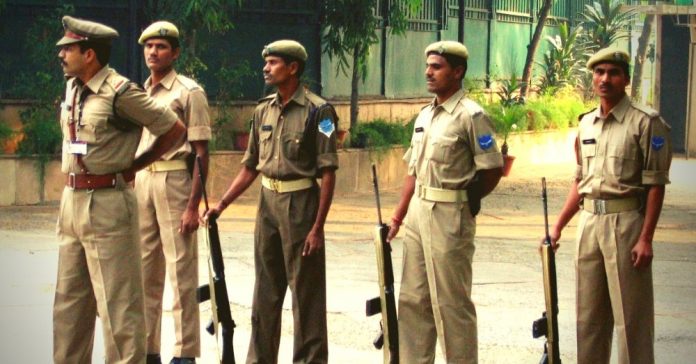

























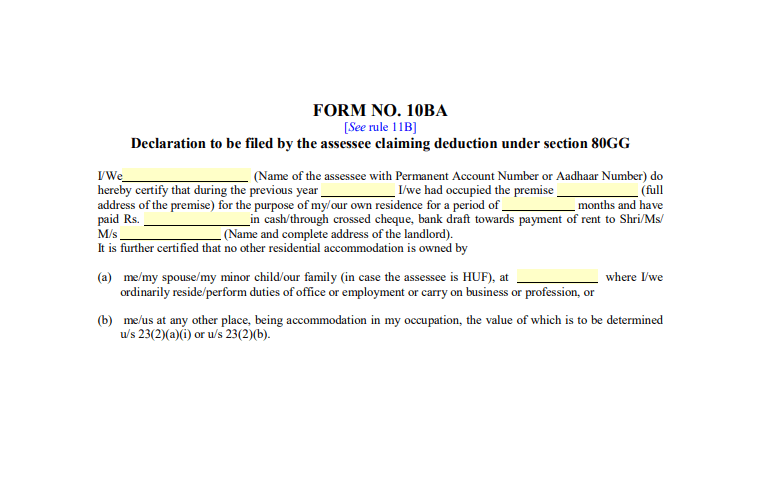










 Allow notifications





