The world of digital marketing is constantly evolving. A highly effective trend today might not work in the long run. Moreover, there is only so much that a human mind can track. It is why every internet marketing specialist should have a few tools at their disposal to keep their campaigns successful by adapting to new changes. Automation is one of the golden concepts that marketers should embrace!
Yet, the number of options can be overwhelming, especially for newbies who lack a technical background. Surprisingly, that is not a monumental challenge to overcome. Throughout this piece, you’ll get to know everything there is to equip yourself with for digital marketing.
Which marketing tools do you need?
In recent years, digital marketing has gone way ahead of simply researching keywords and publishing flashy campaigns online. You can use tools to fulfill various purposes, making your marketing strategies much more effective than ever before.
Planning and scheduling software
In the case of internet marketing, time is always of the essence. It is the paramount resource you have, so planning and scheduling software demand special attention. It should offer more than just accurate campaign scheduling. You should be able to share dashboards with non-members without creating additional accounts or providing them access to sensitive information.
Email marketing tools
Most people think social media and virtual reality are the upcoming big things. Email marketing tools help generate quality leads at a low cost. It would help if you preferred tools that offer a high degree of personalization for email marketing while complying with GDPR and CASL regulations.
Mailchimp is a popular application that organizes email campaigns for thousands of users. You can also glance at more AI-driven options like WebEngage and Sendinblue.
Marketing automation tools
Speaking of AI-driven tools, it is the next best thing after a human marketing assistant. Today’s neural networks have advanced way past beating the best chess players in history. Automation tools can lighten your load by adjusting your marketing campaigns on the fly with minimal or no input. Most of them are available with a free trial to let you pick the one that works best for you. There are also recommended techniques for building an AI-powered marketing strategies.
Omnisend and LeadsRabbit are a couple of excellent picks for marketing automation.
Digital asset management utilities
Often you might be conducting multiple campaigns over various platforms. To avoid confusion, you can utilize a few digital asset management solutions to keep track of your progress.
Software like BrandMaker can let you know which digital assets (photos, videos, games, etc.) are performing the best. It can also help you manage the leads from each campaign without sorting the approval stages.
Virtual Private Network services
There might be instances where you need to plan marketing campaigns for an entirely different region of the world. You can download VPN (Virtual Private Network) services to optimize your strategy’s effectiveness before you deploy it for real. It can help you with geolocation and secure your data if you decide to share sensitive information.
Thus, a VPN will help you discover your potential competitors in certain areas. You can check out what your marketing strategy will have to stand against.
Research and analysis assistants
Studying market trends and researching intent is a feat that can take you days to perform manually. It is what makes digital research and analysis tools so invaluable for internet marketing specialists.
You can also use software like Amplitude to centralize all your product and customer data into valuable reports. You can then figure out the wrinkles in your campaign and improve the quality of your leads.
Customer communication channels
Keeping a solid relationship with your customers is the key to a successful business venture. It can be hard to call each one or request feedback after every delivery. Yet, you can rely on tools like Salesforce to understand your customers’ behavior. You can also use tools like Referrizer to conduct referral and loyalty programs at a nominal expense.
What should your marketing tools include?
It might take you months to catalog all the marketing tools available out there. Nevertheless, there are some criteria that you can use as a filter to select the one that suits your purpose.
User Interface (UI)
Ensure that the tools you select have a user-friendly interface. It should grant you absolute control over the foreground and background of your marketing campaign.
Ease of use
Go for software that has a slight learning curve for beginners. It doesn’t matter whether you are a beginner or a veteran. The tools you use should not give you much trouble adapting to them.
Compatibility
Always keep the tools that are compatible with most operating systems. If you have an application that runs on Linux, it might be challenging to communicate specifications to someone with a Windows 10 PC.
Bottomline
To conclude, there is a tool for every single marketing need. If you know how to apply just the right combination, you can make the most of your skills and budget within a tight schedule. It also pays to use the information you have creatively rather than following popular trends.
Students of Lawsikho courses regularly produce writing assignments and work on practical exercises as a part of their coursework and develop themselves in real-life practical skills.
LawSikho has created a telegram group for exchanging legal knowledge, referrals, and various opportunities. You can click on this link and join:
This article is written by Millia Dasgupta, a second-year student studying at Jindal Global Law School. This article covers the amendment provision of the constitution and discusses various landmark cases relating to the topic.
It has been published by Rachit Garg.
Table of Contents
Introduction
The constitution of Indian is one of the most fascinating documents on this planet. No other country has a constitution as comprehensive as ours and is the largest constitution in the world. But despite being so comprehensive, the reason why this document is so interesting is due to the fact that it is extremely flexible. The fathers of our constitution made it so, they wished that the constitution would not only aid the country to grow but it would also grow alongside it. Thus, the government can amend the constitution depending on various issues brought up. These powers are given by Article 368.
But one must ask the question, Isn’t it the constitution that gives power to the government? If that is so, how can the Government have such a power over a document which gives its authority?
In this article, we will be exploring the extent to which the government can amend, the process of amendment, the essential judicial questions pertaining to it, and various landmark cases in hopes of answering these questions.
The necessity of Amending provisions in the Constitution
There is a reason why the fathers of our constitution made the constitution as flexible as it is today. This is to ensure that the document evolves and grows along with the nation. Thus, under Article 368, the powers of the Parliament to amend the constitution is unrestricted with regards to sections of the constitution they wish to amend.
But the Parliament having absolute power over amending the constitution is dangerous. Instead of being the backbone of our democracy, the constitution will be reduced to a tool to establish Parliament’s totalitarianism. The government will amend various provisions to make sure it’s powers are unfettered.
While this is a scary thought, it is not far away from the truth. The government in multiple amendments such as the 39th Amendment and in the second clause of the 25th Amendment has tried to establish a state where the legislative is supreme.
That is why the judiciary through various landmark cases has established The Basic Structure Doctrine of The Indian Constitution.
What is the Basic Structure?
The Basic Structure Doctrine states there are certain fundamental structures and founding principles of the constitution which make the backbone of the constitution. In simple terms, they are ideologies of the constitution which are essential for the survival of the constitution. Some examples are Free and Fair Election, the Federal nature of the Nation, Judicial review and Separation of Power. The government is restricted from touching these contours of the constitution through amendment.
The Supreme Court has not given us a list of these ideologies. It is up to the courts to decide what they are when certain judicial questions are presented before them. But if one wants to describe the nature of the structures, it can be said that if these ideologies are violated, then not only democracy but the entire working of this country will fall flat on its face. The country will either fall into total anarchy or totalitarianism. It is because of these mechanisms that India is still one of the largest democracies in the world.
Thus, while Parliament has unrestricted powers to amend various sections of the constitution, but they cannot touch amend, repeal or add sections into the constitution which would affect its basic structure in the process.
Below are a few more cases to understand this concept further.
The plaintiff, Swami Kesavananda Bharati was the leader of Edneer Matt, a Hindu monastic institution which is located in Kerala. He challenged the two-state Land Reform Act, imposed by the Kerala government which sought to restrict the way his property was managed. He stated that his fundamental rights under Articles 25(Freedom of conscience and free profession, practice, and propagation of religion), Article 26 (Freedom to manage religious affairs), Article 14 (Equality before law), Article 19(1)(f) (Right to property which has been omitted) andArticle 31(the right of private ownership without restrictions) had been violated.
The case was handled by a 13 Judge Bench. It came to be one of the most important cases in Indias and established the Basic Structure Doctrine of the constitution. In the case, they considered the constitutionality of the 24th, 25th, and 29th amendments.
Article 13 regulates government policy-making and checks that the laws made by parliament that infringe on the rights of the people.
The amendment made changes to Article 13. Clause (4) was inserted. It stated that any amendment done under Article 368 would not be subject to Article 13.
Changes made to Article 368
Changes were made to the power of Parliament to amend.
It stated that despite whatever is mentioned in the constitution, the Parliament would be able to add, repeal and amend any section of the constitution according to the procedures set down by Article 368, even provisions mentioned in the proviso of Article 368. After being passed by a majority, such a Bill or Act merely required the assent of the President.
This was with regard to laws that enforced the fundamentals of the Directive Principles. It stated that laws made to ensure Directive Principles were enforced would not be subject to the scrutiny of Articles 14, 19 and 31. They shall not be declared void if they abridged such rights.
This is only if the law has been passed by state legislation and has got the assent of the President.
They argued that restructuring Parliament’s powers amending are a part of the Basic Structure of the Constitution. He also stated his fundamental rights to property were being violated. He pleaded to the court to receive recourse.
Issue
The constitutional validity of the 24th, 25th, and 29th Amendment Act.
The extent of the powers of the Parliament to amend the constitution.
Held
The court upheld the 24th Amendment and stated that the 2nd part of the 25th Amendment was ultra vires.
The court in this judgment answers an extremely important question that was left unanswered in Golak Nath v. State of Punjab i.e. the extent of Parliament to amend. The court observed that such a power should be a balance between the Parliaments’ duty to follow the constitution and its duty to perform socio-economic duties.
To answer this question, they established the Doctrine of Basic Structure. While they admitted that the Parliaments’ power to amend the constitution was unrestricted with regards to the portion of the constitution they wished to amend, there were certain contours of the constitution that should be left untouched. Hedge.J and Mukherjee.J in their opinions stated that the Indian constitution was more of a social document based on social philosophy than a political document. Just like every philosophy, the constitution contains certain basic features that should not be touched.
The majority bench left it up to the courts to decide what the basic features of the constitution were because, in their opinion, they were not exhaustive.
The major findings of the court are as follows:
There is a difference between an amendment and ordinary laws.
Overruled Golak Nath v. State of Punjab by stating the power of Parliament to Amend is not unfettered. It can’t violate the Basic Structure of the Constitution.
They established the extent of amendment under Article 368 and stated that it was restrictive and they could not make fundamental changes.
It stated that parliament can amend any provision in the constitution, including fundamental rights. But this was again subject to the fact that they could not alter the basic structure
The court mentioned a few basic structures which they could locate such as “Free and Fair Elections” and the “Federal Structure of the Nations”. They also stated that the list was not exhaustive and it was up to the courts to decide whether it was a basic structure or not.
The court upheld the 24th Amendment and struck down the second part of the 25th Amendment. However, the 25th Amendment was to be subjected to two conditions-
The word ‘amount’ does not only relate to compensation and it should be related to the market value of the property at that time.
The part which barred judicial review was struck down as ‘no law can prevent scrutiny by the courts’.
By validating the first part of the 25th Amendment, the courts recognized the Parliaments’ duty to fulfill their socio-economic duties. They also saved the citizens from parliamentary totalitarianism by striking down the second part which barred legal remedy.
They stated that the judgment was an improvement from Golaknath as:
Golak Nath v. State of Punjab was only restricted to the protection of fundamental rights.
By preventing the Parliament from amending the fundamental Rights, it made the constitution rigid. The concept of Basic Structure is an improvement.
Procedure to Amendment
Article 368
Article 368 lays down the process by which the Parliament can amend the constitution. The process is as followed.
Step 1
The Bill is introduced in either house of the parliament.
Step 2
The Bill must be passed by a total majority (irrespective of vacancies or absentees) and by a majority, not less than 2/3rd of people present and voting by both the houses. There is no provision of joint sitting if there is a disagreement between both the houses.
Step 3
After acquiring the majority, the Bill is presented to the President who will then give his assent to the Bill.
In the case of amendment of provisions mentioned in Article 368, It needs to be ratified by not less than half of the states. Ratification should be done by a resolution passed by the state legislature. However, this must be passed before the amendment Bill is presented to the President for his assent.
Amendment of Fundamental Rights
The backbone of human rights in this country is the fundamental rights stated in Part III of the constitution. The judiciary of this country in numerous landmark cases have proved time and again that the fundamental right of an individual or private organization is not something that can be tampered with. These rights have been given preference in numerous cases with regards to the other sections of the constitution and it can be said that they make up an extremely important part of it.
But given that the parliament has the power to amend the constitution, could they also amend the fundamental rights of the constitution? And do they constitute the basic features of the constitution? By analyzing the case of Sajjan Singh v. State of Rajasthan and Golak Nath v. the State of Punjab, we shall answer the following questions.
Sajjan Singh v. State of Rajasthan, 1965
In this case, it was held that fundamental rights could be amended as long as they were indirect, incidental or insignificant on the power given under Article 226, the article under which the High Court received its powers.
The petitioners who were aggrieved by the legislatures stated that none of these legislatures could be allowed as the Constitution (Seventeenth Amendment) Act was unconstitutional. They contended:
The powers prescribed by Article 226 will be affected by the Seventeenth Amendment and thus the Act should follow the special provisions set down by Article 368.
The Seventeenth Amendment Act deals with land. Parliament has no right to make laws with respect to land and thus the Act is invalid.
The Act went against decisions of courts of competent jurisdiction and was thus unconstitutional.
Issues
Whether the Acts violated the powers prescribed by Article 266?
Should the decision of Sri Sankari Prasad Singh Deo v. Union of India and State of Bihar be considered?
Whether the Acts deal with the land?
Can Parliament validate laws that have been ruled as invalid by the courts?
Held
Laws did not affect Article 226
If the effect of the Act on the powers of Article 226 is indirect, incidental or insignificant, then it shall not be governed by the provisions under Article 336. In order to understand the effects of the Act, one must analyze the pith and substance of the Act.
The Act solely wishes to amend the fundamental rights with the goal of removing obstacles in the fulfillment of socio-economic policies. Thus its effects on the powers of 266 are incidental and insignificant and do not invoke the procedures under 336.
Sri Sankari Prasad shall not be reopened
In order to review the decisions of a previous case, the court must ask itself, “Is it absolutely necessary and essential that a question already decided should be reopened?”. One must analyze the harm done by the decision, its effect on the public good, the validity of the question and how compelling the question is.
It was held by the bench that according to the guidelines placed, the case should not be reopened. Besides, it shall gravely endanger the laws passed under the amendment Act.
Parliament made no laws on land
The court held that through these Acts, Parliament did not make any laws regarding land. They merely validated land-legislatures which were previously passed.
Parliament can validate laws that were ruled invalid
The power given under Article 368 can be done both prospectively and retrospectively. Thus, the parliament can validate laws that have been called invalid by the courts.
Importance
The dissenting opinion of Justice J.R. Mudholkar theorized the ‘basic features’ of the Indian constitution for the first time. It was his dissent that was used in the famous Kesavananda Bharati case.
He asked “it is also a matter for consideration whether making a change in a basic feature of the constitution can be regarded merely as an amendment or would it be, in effect, rewriting a part of the constitution; and if the latter, would it be within the purview of Article 368 ?”
He questioned whether one could harmonize a duty to the constitution and the power to amend it.
He further observed that it was strange that rights stated to be fundamental to one’s self can be so easily amended. He believed that while Article 368 stated the provision and process to amend the constitution, it did not necessarily give the power or the right to amend it.
He also stated that the preamble is the greatest indicator of the basic features of the constitution.
He went on to question, whether Article 368 provides the power to amend any of the basic features stated there.
This case went and reversed the judgment of Sajjan Singh v. the State of Rajasthan. It stated that the parliament does not have the power to amend fundamental rights.
Articles 245, Article 246 and Article 248 of the constitution deal with the power of parliament to amend. Article 368 merely talks about the procedure to amend.
Along with this, an amendment can only become a law if it abides by Article 13 of the constitution. Thus, if a certain amendment takes away or abridges any rights mentioned in Part III, it is considered void.
However, the difficulty that the court had to face was the Acts in question may have abridged fundamental rights, but they were considered valid by previous judgments. They used the doctrine of prospective overruling and stated for those laws, the amendment will still be considered. But they also explicitly stated that from the date of the judgment onwards, Parliament would not have the power to amend any provisions of Part III of the constitution.
Importance
While the ratio of this case was reversed in the case of Kasavananda Bharati, some of Golak Nath’s arguments were used in the case.
It was ruled that there were no limitations on amending under Article 368. But this was with the restriction that “Parliament cannot do indirectly what it cannot do directly.” That is amending is strictly a legislative power, not a constitutional one.
Is the Theory of Basic Structure a limitation on Amending Power?
The government has a duty to perform certain socio-economic goals. To achieve them, they must sometimes amend the constitution. But what happens when these amendments mess with the basic structure. Shall duty to perform socio-economic duties trump their duty to abide by the constitution. The following cases answer that question.
When this case was filed to the High Court, Indira Gandhi was at the height of power and her party was enjoying the majority in Parliament. But later on, Indira Gandhi was found guilty for electoral malpractices. She called emergency and passed certain amendment Acts, one of them being Article 329-A which barred judicial review. What needed to be asked was whether judicial review was a part of the Basic Structure of the Indian Constitution. The court held that the emergency was passed in mala fide and Article 329A passed under the amendment Act was unconstitutional.
Facts
In the 1971 Indian general election, Raj Narain contented against Indira Gandhi in a constituency of Uttar Pradesh. The results of the elections were that Indira Gandhi was re-elected and that the Indian National Congress won a sweeping majority in the Parliament.
Raj Narain filed a petition to appeal to the Allahabad High Court with the appeal to reverse the elections. He blamed Mrs. Gandhi for using unfair means such as bribery and misusing government machinery to win the elections.
The Allahabad High Court held that Mrs. Gandhi was guilty of election malpractices. The election in that constituency was declared null and void. It was also held that she could not stand in elections in that constituency for 6 years.
Aggrieved, Mrs. Gandhi tried to move to the Supreme Court but they shifted the judgment to a future date as the court was on vacation. This led to Indira Gandhi calling for an emergency. President Fakhrudeen Ali when declaring emergency stated it was because of internal emergencies. But in reality, the real reason was the judgment of the Allahabad High Court.
The Supreme Court tried to stop this order and shift deliberations against it to a future date, but Parliament added Article 329-A to the 39th Constitutional (Amendment) Act, 1975 which made such matters out of the jurisdiction of the court.
Thus, the 39th Constitutional (Amendment) Act, 1975 was challenged in the court.
This was with regard to the election of Prime Minister to the Parliament. It stated that the election of the Prime Minister or the Speaker of the House of the People would not be questioned by any authority other than the ones mentioned in the law made by the Parliament. It was also stated that the validity of such laws will not be questioned by the courts. Arguments of the Respondents
Relying on the judgment of Kesavananda Bharati, the respondents argued that the amendment in question violated the basic features of the constitution.
Parliament under Article 368 was only able to lay down general principles governing the organs of the state.
The question of whether the elections were valid or not depends on the judiciary under Article 329 and Article 136. Thus, such an amendment is violative of the democratic structure of India.
The amendment is violative of the principle of equality as it states no rational basis for the need to demarcate between people who hold high offices and others.
Cancellation of the Allahabad High Court judgment is a denial of political justice which is a basic feature in the constitution. The amendment is a slap on the face to not only judicial review but the Separation of Power.
Issue
Is the 39th Constitutional (Amendment) Act, 1975 constitutional valid?
Held
The court upheld the ratio of the Kesavananda Bharati case and stated that Clause 4 of Article 329 as unconstitutional.
The majority bench stated that the clause tore at the fabric of democracy. A free and fair election is a part of the Basic Structure of the Constitution. To take that away from the people of India is a huge infringement of their rights. The bench also found it violated other basic features of the constitution such as rule of law (restriction of arbitrary power by law) and principles of natural justice i.e. Audi Alteram Partem.
The opinion of Justice Chandrachud J.
Justice Chandrachud J. also added that the Act was violative of the policy of Separation of Power as it gave the parliament, powers of the Judiciary. He also believed that it was violative of Article 14, as it created an unequal advantage for some considering despite not being under the scrutiny of a free and fair elections, they could hold such a powerful office.
In case, the court examined the implication of the government being able to amend articles in the constitution which gave them the power to amend. They also examined the relationship between Directive Principles and fundamental rights. The bench ruled Clause 5 of 368 (expanded their powers of amendment), Clause 4 of 368 (removing judicial review) and Section 4 of the Amendment Act of 1976 (removing judicial review) to be unconstitutional.
Facts
In order to save mills that are being managed in a way detrimental to public interests, the government passed the Sick Textile Undertakings (Nationalisation) Act, 1974. By this Act, the government could take over the management of these mills.
Minerva Mills, a limited company dealing with textiles was accused of being a ‘sick industry’ by the government. A committee was set up to investigate the matter. The report claimed that the company was ‘sick’. Thus, under Section 18A in The Industries (Development and Regulation) Act, 1951 the company was put under the management of the government.
The mill questioned the constitutionality of such an Act that was made possible under the Constitution (Forty Second Amendment) Act, 1976. Due to this, the constitutionality of the amendment Act came into question.
The amendment included clause 5 of Article of 368 stated that the parliament had no limitation on what part of the constitution which they wished to amend. The bench ruled that the newly introduced amendment was unconstitutional. It expanded the government’s limited power to absolute power. Such expansion was against the social, political, and economic justice of the people. Thus, Parliament cannot expand its powers and ruin the Basic Structure of the Constitution.
Clause 4 of Article 368
The amendment also included clause 4 of 368 which stated that no amendment made under Article 368 could be reviewed by the court. The court also ruled this to be unconstitutional. There is an important balance between the three wings of the government- namely the legislative, the executive and the judiciary. If this clause is to be valid then the judiciary would not be able to markdown any amendment passed under this provision, even if it goes against the Basic Structure of the Constitution. It would the legislature that would decide the validity of the law. That power belongs to the judiciary.
Thus, this clause gives a power to the legislature which clearly belongs to the judiciary. By destroying this separation of power and depriving the common person of a source of redressal, they go against the fabric of democracy.
The section tries to isolate Article 14 (equality before law) and Article 19 (freedom of speech) from Article 31(C). After amendment, Article 31(C) stated that any law giving effect to certain Directive Principles shall not be said to be invalid if it violates Article 14 and 19. No court will be able to question such laws. The court ruled this amendment to be unconstitutional. These two rights that have been violated by these laws are not only an essential part of the Universal Declaration of Human Rights but also essential to the Basic Structure of the Constitution. It was also said that by the ratio of the Kesavanda Bharati case, they cannot be emasculated by these amendments.
Relationship between Part III and IV of the Constitution
The court also explains the relationship between Part III and Part IV of the constitution,i.e., the fundamental rights and the directive principles. They stated that both created the foundation of the constitution and if one was to be given preference over the other, it would shake the foundation of the constitution and make it weak. They must both be read in harmony.
Dissent
Bhagwati J. dissented with regard to the amendment to Article 31(C). He was of the opinion that one should not rule a law to be unconstitutional at first glance and should first analyze its pith and substance before ruling against it.
In this case, the ratio of Minerva Mills Ltd. v. Union of India was reversed. It also cleared major doubts in the Kesavananda Bharati case such as; Validity of Acts passed before the judgment.
This Article protects laws that violate Articles 14 (equality before law) and Article 19 (right to freedom) with regards to the acquisition of estate. The law states that laws dealing with:
Acquisition of state that led to the extinguishment or modification of any right,
Taking over management of property for public interest or for proper management,
The amalgamation of estates for public interest or for proper management,
The encroaching of rights of managing agents, secretaries and treasurers, managing directors, directors or managers of corporations, or of any voting rights of shareholders thereof,
The encroaching of rights for a license for the purpose of searching for, or winning, any mineral or mineral oil, or the premature termination or cancellation of any such agreement, lease or license.
shall not be deemed to be void if they are inconsistent with Article 14 and Article 19.
This was provided that the laws in question were not only formulated by the legislature of the state but had also got the assent from the President.
It also stated land that is under one’s own personal cultivation can not be taken by the State above the ceiling limit applicable to him. But if the State does take land above the ceiling limit, then the State must provide compensation which shall not be less than the market value.
Article 31(B)
This Act stated that no Act or regulation in the Ninth Schedule shall be deemed to be void on the grounds that it violates any fundamental right, regardless of an order or judgment from any court in this country.
It shall be the job of the legislature to repeal or amend such Acts.
Article 31(C)
This Act was established to protect laws that secured and furthered the goal of the Directive Principles. It stated that regardless of the guidelines put down by Article 13 ( ensured protection against draconian laws), if the laws secured the principles of the Directive Principles, then even if they violated Article 14 and Article 19, they would be considered to be valid.
This was provided that the laws in question were not only formulated by the legislature of the state but had also got the assent from the President.
Arguments of the parties
The appellants argued that the protective shield like nature of Articles 31-A, B and C, which prevented any law to be challenged, is unconstitutional.
Issue
Whether by facilitating their power to amend the constitution under Article 31(a), The government transgressed their power of constitutional amendment?
Whether Article 31(A) is a shield to laws that transgress Article 14, Article 19 and Article 31?
Whether Article 31(B) can be challenged on the grounds that it infringes on the fundamental rights of the citizens?
Whether Article 31C can be challenged on the grounds that it infringes on the fundamental rights of the citizens?
Whether the emergency was proclaimed in bad faith and whether the 40th amendment is valid or not?
Whether the doctrine of stare decisis ( the doctrine of looking at previous precedents to guide one’s judgment) can apply on the validity of constitutional Articles or on the laws that are protected by the Articles?
Held
Issue 1 and 2 Article 31(A)
Article 31(A) went with the dissenting opinion of Bhagwati J in Minerva Mills Ltd. v. Union of India and analyzed the pith and substance of the law. They looked at the 1st amendment Act of the Constitution and believed that the law was placed to aid the zamindari abolition laws and other difficulties that may arise. They also observed that in the process to abolish socio-economic disparities, it may make way for other small inequalities that might be impossible for the government to address.
Thus, the court held that Article 31(A) does not jeopardize the Basic Structure of the Constitution.
Issue 3- Article 31(B)
Several Acts by state legislatures were put into the Ninth Schedule and Article 31(B) protected these laws from the scrutiny of the court.
The bench used the ratio of the Kesavananda Bharati case. They said that Acts put into the Ninth Schedule prior to the Keshavananda Bharati case would receive protection from Article 31(B). But Acts and laws inserted in the Ninth Schedule after the case would be open to scrutiny by the courts. They shall only pass their scrutiny if they do not infringe the Basic Structure of the Constitution.
Issue 4- Article 31(C)
The court upheld the majority view in the Kesavananda Bharati case and ruled Article 31(C) was not unconstitutional. They stated this Article was closely linked to Article 39 (Guidelines in order to ensure the betterment of public interest).
The bench held that the emergency was constitutional. The evidence against the emergency was insufficient and reasonable safeguards were taken under Article 352 Clause (3) were applied when declaring it.
The court held there was a genuine threat to the security and sovereignty of the country and thus, there was an apt reason for the president to declare an emergency.
But, the court also ruled that the President could no longer declare an emergency unless the Union Cabinet communicated it to him in writing.
Issue 6- Doctrine of Stare Decisis
The court held it was the laws protected by the Article that would be examined by the doctrine of stare decisis and not the Article itself.
The three reasons it gave were:
Article 31(a) stands constitutionally valid on its own merits and rests on the foundation of the constitution.
There are numerous cases which uphold the validity of Article 31(a).
Stare Decisis is not only rigid, but it is limited as well. It would not be wise to apply it to the constitution as it would be deprived of its flexibility.
While it has been established that judicial review is a Basic Structure of the Constitution, what happens when judicial review needs to be sacrificed in order to secure goals essential to democracy, such as speedy justice? In this case, the court held that while tribunals were exempt from the jurisdiction of the High Court, it was necessary in order to secure speedy justice.
Facts
The petitioners appealed to the courts against Section 6 & 28 of the Administrative Tribunals Act, 1985. This Act facilitated the appointment of a tribunal court to handle matters relating to servicemen and the appointment of members on the board.
Clause (1) of this section allowed Parliament to legislate laws for adjudication or trials by administrative councils regarding disputes and complaints about recruitment and conditions of individuals appointed to public service.
Clause 2(d) stated that such matters will be out of the jurisdiction of all courts, except the Supreme Court under Article 136.
Enacted under the ambit of Article 323-A, the jurisdiction of the Supreme court for such matters has been codified under Article 32, with regards to original jurisdiction and Article 136, with regards to appeals.
This section deals with the qualifications needed to be on the tribunal court.
Subsection (1) of the Act lays down the qualification of the Chairman for such tribunals. The qualifications are:
Has been a Judge of a High Court;
Has held the office of Vice Chairman for at least 2 years;
Has held the office of Secretary of the Government for at least 2 years.
Subsection (2) of the Act states the Vice-Chairman should have at least been:
A judge of the high court.
Held office of Secretary of the Government for at least 2 years.
For a period of not less than three years been a Judicial Member of an Administrative Tribunal.:
Subsection (3) states that the Judicial member should at least be:
Qualified to be a Judge of a High Court;
For at least 3 years been a member of the Indian Legal services.
Subsection 3(A) states a person to be appointed as an Administrative Member should:
For at least two years have held the post of Additional Secretary to the Government of India.
Been the Joint Secretary to India for at least three years.
Contentions of the Parties
They contended that the exclusion of the High Court in service matters under Article 226 and Article 227 was unconstitutional. They also questioned the validity of the prescribed mode of appointment. They believed it was outside the powers of parliament under Article 323-A, as they were appointing non-jurist men.
The court held that such tribunals are necessary to ensure principles such as speedy justice, uniformity in the decision and predictability of the decisions. Even if it came at the cost of such tribunals remaining out of the jurisdiction of the High Court.
It was also important that along with jurists, esteemed members with specialized knowledge of the subject should also be appointed. They will be able to add points of view and inputs which the judiciary will not be able to provide. Thus, the indiscriminate appointment of such esteemed members will have little to no effect on the workings of the tribunals.
Before the administrative tribunal was even established, several writ petitions had been filed. The following case deals with the issues raised in the S.P. Sampath Kumar case.
The Act set up tribunals for other matters. The certain matters were:
Levy, assessment, collection and enforcement of any tax;
Foreign exchange, import, and export across customs frontiers;
Industrial and labor disputes;
Land reforms by way of acquisition by the state of any estate as defined in Article 31A or of any rights therein or the extinguishment or modification of any such rights or by way of the ceiling on agricultural land or in any other way;
The ceiling on the urban property;
Elections to either House of Parliament or the House or either House of the Legislature of a state, but excluding the matters referred to in Article 329 and Article 329A;
Production, procurement, supply and distribution of foodstuffs (including edible oilseeds and oils) and such other goods as the President may, by public notification, declare to be essential goods for the purpose of this Article and control of prices of such goods;
Offences against laws with respect to any of the matters specified in sub-clause (a) to (g) and fees in respect of any of those matters;
Any matter incidental to any of the matters specified in sub-clause (a) to (h)
Issues
The doubts, arguments, and contentions regarding the Administrative Tribunal were grouped under three large issues:
Whether the power upon the Parliament under Article 323-A and upon the State by Article 323-B to exclude the jurisdiction of all courts other than the Supreme Court opposes the power of judicial review of the High Court?
Can these tribunals competently test the constitutional validity of a statute or a rule?
Can the tribunals be said to be effective substitutes of the High Court for judicial review? What changes should be made to the tribunals in order to make them suitable substitutes?
Held
Issue 1- Article 323 (A) and 323 (B)
In the final hearing of the Sampath Kumar case, the jurisdiction of the Supreme Court was amended to be saved not under Article 136, (Special leave to appeal) but Article 32 (under this article, one can move to the Supreme Court when one’s rights have been unduly undermined).
In this case, the court did not address the issue of whether Article 323A (2) needed a similar amendment. But they did mention that the main intention of the Act was to provide for a body for speedy justice, and made clear that the tribunals performed a substitution role, not a supplementary one.
They took into view the suggestions of the learned counsel who stated that Article 323A (2) (d) and Article 323B (3) (d) should be declared unconstitutional as they shield themselves from the scrutiny of the learned court. Another counsel stated that the power of judicial review can not be entrusted to newly formed quasi-judicial courts that are vulnerable to executive influences.
They also came to the conclusion that judicial review is a basic feature of the constitution and that Article 25 (corresponding to Article 32) was the very soul of the Constitution.
Issue 2- Constitutional Competence of Tribunals
The court ruled that tribunals have the constitutional competence to rule a statute or rule as constitutional or unconstitutional.
With regard to the power of judicial review, the court took help from American precedents as they stated that judicial review in America and India are very similar. In America, all courts regardless of their rank had judicial review. No court, other than the US Supreme Court has the power to prevent granting of judicial review.
If the power given to the Supreme Court through Article 32 can be conferred to other courts, there is no reason that the same can not be done with the powers given to the High Court through Article 226. However, it is important to note that the original jurisdiction of the Supreme Court and the High Court remain and the tribunals Act as supplementary bodies.
They said that tribunals should have the power of judicial review for the following reasons:
It is important to clear the backlog cases.
Even though the tribunals have underperformed, it is wrong to blame their founding principles on their performance. The reasons why such tribunals were established are still at large and the existence of tribunals can help rectify those wrongs.
But such tribunals would be subject to review of the High Court under Article 266/ Article 277.
Issue 3- Tribunals as Complementaries to the High Court
The court stated that tribunals are not substitutes but complementaries to the High court. They suggested the following changes:
Decisions of the tribunals will be subject to review before division bench of the High Court.
The appointment of a mix of jurists and experts in the field is beneficial to the tribunals.
Tribunals shall be made subject to the supervisory jurisdiction of the High Court.
In order to keep tabs on the tribunals, the Ministry may be able to appoint supervisory bodies.
The petitioner’s aggrieved by The Constitution (Eighty-fifth Amendment) Act, 2001, pleaded to the court to quash the amendment Act with regards to Article 16(4A) (that provides for reservation in promotion with consequential seniority). They say that such an Act is violative of the basic structure and is unconstitutional.
They also contend that the Article reverses the decisions of various previous cases. By reversing the decisions of such judgments, the petitioners contended that they have acted like a judiciary body. The use of such powers is violative of the Basic Structure of the Constitution.
The amendment also sought to alter the fundamental right of equality. By attaching “consequential senior” to “accelerated promotion” under Article 16(1), it violates Article 14 (equality before law).
They argued that adding the clause “consequential senior” impairs efficiency.
The petitioners’ questioned The Constitution (Seventy-Seventh Amendment) Act, 1995. They contended that if accelerated seniority is given to roster point promotees, they would have an unprecedented advantage. For example- A roster-point promotee in the graduate stream would reach the 4th level by the time he attains the age of 45 years. On the other hand, the general merit promotee would reach the 3rd level out of 6 levels at the age of 56.
Issue
The issue was the constitutionality of the Constitution (Eighty-fifth Amendment) Act, 2001.
Held
The amendments to Article 16 were considered to be valid and did not alter the structure of Article 16.
To insert a provision in the ninth schedule that has been ruled to be unconstitutional is against a judicial review that is a basic feature of the constitution
To insert an Act which has been stated to violate the fundamental rights of an individual is against the Basic Structure of the Constitution.
Issues
Can the 9th Schedule be immune to judicial review of the Supreme Court?
Whether judicial review of Ninth Schedule laws would include the basic structure test on the touchstone of fundamental rights?
Held
Issue 1- Judicial Review
The 9th Schedule can not be immune to judicial review of the constitution and every Act inserted in the Ninth Schedule has to pass the test of fundamental rights. If review that such Acts do not comply with fundamental rights, then such an Act will be considered invalid.
In the Kesavananda Bharati case, it was observed that the Parliament did not have the power to make any law that transgressed the fundamental rights. If the Parliament did have such powers, that would go against the Basic Structure of the Constitution.
Ninth Schedule is a part of the Indian constitution and no additions can be made to it that is against the basic structure. Article 368 cannot be amended to allow that.
Issue 2- Judicial Review as a Basic Structure
It was held by the court that the Basic Structure of the Constitution would include judicial review of the Ninth Schedule, read with the fundamental rights.
Using the Kesavananda Bharati case, they stated that all sections of the constitution are open to amendment other than the contours of the basic structure, and judicial review is one of them. Including an Act in the Ninth Schedule does not exclude it from the scrutiny of the court.
If the Act passes the test of The basic structure then it shall be stated as valid, but if it does not pass the test, it shall be stated as void to avoid Parliamentary Totalitarianism.
Such a test would check the impact and effect of the law i.e the pith and substance, not the law itself.
They also stated the principles of fundamental rights should not be violated by such laws’ While Article 13 ensures this, Parliament still goes unchecked in establishing laws contrary to the fundamental rights. These rights have always enjoyed a special place in the constitution, thus it is necessary that laws in the Ninth Schedule abide by them.
Constitutional Amendments in 2019
Name of Amendment
Amendment
Objective
103rd
Added Clause (6) to Article 15Added Clause (6) to Article 16
Clause (6) states that individuals from economically weaker sections of society can seek reservation from educational institutions, including private institutions. This is notwithstanding minority institutionsClause (6) of Article 16 established reservation of individuals from economically weaker sections in government posts.
The abolishment of Legislative councils in mentioned States.
Dual Citizenship for Indian origin outside the country.
Quota to educationally backward classes
Quota for religious minorities in government service.
Conclusion
Through this article, we explored the amendment of the constitution. We found that there is something called the Basic Structure of the Constitution and it is against the basic principles of justice to breach it. The judiciary was at first of the opinion that the preamble was what constituted the basic structure of the constitution but later on, it was ruled that other aspects of the constitution such as judicial review could also be the aspects of the Basic Structure of the Constitution.
The government in many landmark cases tried to amend the constitution in order to make it easier to ensure the best for the public interest. The judiciary was absolutely against the whole idea, in later judgments we see the judges opening up to the idea of the executive being able to override certain aspects of the basic structure in order to ensure the best for the public interest. But in later on judgments, unless the judiciary was absolutely convinced that such Acts would be beneficial in ensuring greater public welfare, they were strict about amendments that violated the basic structure.
What we must realize is that the constitution is the backbone of this democracy. While it was revolutionary of the fathers of our constitution to provide provisions to amend the constitution, it is essential that such provisions are not misused. Misuse could result in excessive power of the legislative or the executive which could tear the fabric of our democracy.
Students of Lawsikho courses regularly produce writing assignments and work on practical exercises as a part of their coursework and develop themselves in real-life practical skills.
LawSikho has created a telegram group for exchanging legal knowledge, referrals, and various opportunities. You can click on this link and join:
https://t.me/lawyerscommunity
Follow us on Instagram and subscribe to our YouTube channel for more amazing legal content.
– Higher Senior Secondary (Class XII); affiliated to the Board.
Percentage: [●]%
● NAME OF SCHOOL, CITY[●]- [●]
– Senior Secondary (Class X); affiliated to the Board.
CGPA: [●] Percentage: [●]%
Internship Experience
● Name of Organization, City (Insert month and year of internship)
– Explain the tasks undertaken by you during this internship. Put it in 3-4 bullet points.
Co-Curriculars
● Mention any additional courses that you have done. [●] 2021 – [●]2022
● Mention about any competition that you have won during your law school. [●] 2022
For eg. Client Counseling competitions, Negotiation Competitions, Judgment Writing Competitions, etc.
Publications
● Paper tiled ‘[●]’ published in ‘[●]’. [●] 2022
– ISBN: [●]
Moot Court Competitions
● [●] Memorial Moot Court Competition [●] 2022
– Winner and Awarded Best Memoranda
Interests
● [●].
Note: All sub-sections (education, experience, publications, etc.) should be listed in reverse chronological order, i.e. start with the most recent one first.
Resume format for working professionals
[Name]
[Mobile No. and Email Address]
Presently employed as [Current Position]
EDUCATIONAL QUALIFICATIONS
● [Course Name, College Name and Aggregate Percentage/CGPA] (Mention year attended)
● [12th Standard – School Name, City, CGPA]
● [10th Standard – School Name, City, CGPA]
WORK EXPERIENCE + INTERNSHIP (IF ANY)
● Name of the organisation, City (Insert month and year of internship)
– Explain the tasks undertaken by you during this employment. Put it in 5-6 bullet points.
COURSES
– Put the name of course, explain your learning in 3-4 bullet points and certificate accreditations.
PAPER PUBLICATIONS
– Full name of Paper, Journal and in case of online publication, insert the URL.
MOOT COURT EXPERIENCE
– Name of Moot Court Competition, Location, Date and achievement, if any.
POSITION OF RESPONSIBILITIES HELD
– Designation, Name of Society and year.
EXTRA-CURRICULAR ACTIVITIES
– List out the details of achievements and activities in which you have participated and/or achieved any medals, recognition, etc.
Note: All sub-sections (education, experience, publications, etc.) should be listed in reverse chronological order, i.e. start with the most recent one first. Try to keep your CV limited to 2 pages only.
Students of Lawsikho courses regularly produce writing assignments and work on practical exercises as a part of their coursework and develop themselves in real-life practical skills.
LawSikho has created a telegram group for exchanging legal knowledge, referrals, and various opportunities. You can click on this link and join:
My name is [●] and I am a [●] year ([●] semester) student of B.A. LL.B. (Hons.) at [●]. I am writing to you to apply as [an/ a] [●] with the [●] team based out of the [●] office.
I have completed over [●] internships over the course of the last [●] years. Out of these, my most notable internships have been with the [competition law/ corporate law/ litigation, etc.] teams of [name of firm], [name of firm], [name of firm], etc. These internships have given me a chance to work with some of the best [competition/ corporate/ litigation etc.] lawyers in the country. These internships have also taught me how to handle stress and effectively prioritize my work according to deadlines.
Apart from my internships, I have also worked as a student researcher under Dr. [●] for his case against the [●] at the Delhi High Court seeking an [●]. Even in college, I have never shirked away from challenges and took up the task of restarting the dormant Internship Cell by revamping a defunct system which resulted in over sixty students securing internships all over India. I am also serving as the Deputy Editor-in-Chief of the [●].
[As law school comes to an end,] I am eager to dedicate myself to a firm of your stature and contribute to the best of my ability. My passion for work is unwavering and I aspire to be a loyal asset to your firm. I know that [name of the organization you are applying to] will prove to be the ideal platform where I can grow to the best of my potential.
My curriculum vitae is attached to this email for your kind perusal. Please do let me know in case any further documentation or clarification is needed from my end.
Sincere regards,
[●]
Sample Cover Letter for working professionals
Good [Morning/ Afternoon/ Evening],
[Greetings of ●].
My name is [●] and I am currently working as [an/ a] [●] with the [competition law/ corporate law/ litigation etc.] team of [●]. I am writing to you to apply as [an/ a] [●] with the [●] team based out of the [●] office.
Since I started working with [name of your current organization] in [●], I have had the opportunity to interact with clients and personally work on their matters across numerous industries such as switchgear, paints, pharmaceutical, telecommunication, tyre, and automobiles.
I have also drafted responses to [●] notices, prepared filings, engaged in business development activities, contributed extensively to publications of the team (available [insert hyperlink]) and handled the knowledge management of the team (including real-time updates from the [●] website, maintenance of case trackers, etc.).
My curriculum vitae is attached to this email for your kind perusal. Please do let me know in case any further documentation or clarification is needed from my end.
Sincere regards,
[●]
Students of Lawsikho courses regularly produce writing assignments and work on practical exercises as a part of their coursework and develop themselves in real-life practical skills.
LawSikho has created a telegram group for exchanging legal knowledge, referrals, and various opportunities. You can click on this link and join:
This article is written by Akshita Rohatgi, from Guru Gobind Singh Indraprastha University, New Delhi. It explains Section 420 of the Indian Penal Code, 1960 and sheds light on the nuances surrounding this section.
From classroom quips to Bollywood movies, ‘chaur sau bees’ or ‘420’ is used to refer to someone who is deceitful or a backstabber. This practice of calling people ‘420’ owes its origin to India’s colonial-era law on cheating.
The offence of cheating and its constituents have been defined under Section 415 of the Indian Penal Code 1860 (IPC). The punishment for cheating in itself is laid down under Section 417 of the Code. Despite this provision, there was a need for punishment for aggravated forms of cheating. This was dealt with by Section 420, which punishes a case of cheating whereby the offender dishonestly induces the delivery of a property or meddles with valuable security.
Cheating (Section 415 IPC)
Cheating is defined under Section 415 of the Indian Penal Code, 1860. It explains a case where an offender deceives someone to deliver any property or intentionally induces the person deceived to do or omit to do something that causes or is likely to cause damage or harm to that person in body, mind, reputation or property. It is essential to establish cheating to punish an act under Section 420.
Elements
The first part of Section 415 deals with a situation where there is-
Deceit by accused
Inducement of someone by the deception
The inducement so caused is fraudulent and/or dishonest
The person induced either delivers some property or consents for the retention of any property by any other person
The second way cheating can take place under this section is cases where
The accused deceived someone
The deceit caused the inducement of someone
The inducement so caused was intentional
The person induced, committed or omitted to do something that they wouldn’t have done otherwise
The act or omission either caused or was likely to cause damage or harm to the person induced in their body, mind, reputation or property.
In the case of Ram Jas v State of Uttar Pradesh (1970) the Apex Court laid the following elements as essential in constituting the offence of cheating-
Fraudulent or Dishonest inducement by the person deceiving, and
The person deceived should be
Induced to deliver the property to a person or consent that any person shall retain a property; or
The person deceived should be intentionally induced to do something or omit to do something that they would not have done in case they had not been deceived, and
In case of b), the act or omission of intentional inducement should be of a nature that is likely to cause or actually causes damage or harm to the person so induced. This damage may be to their body, mind, reputation or property.
Section 420 IPC
Cheating is defined in section 415 of the IPC. Section 420 lays down the punishment for aggravated forms of cheating where the offender dishonestly induces a person so deceived to deliver any property or interfere with any valuable security.
In other words, Section 420 specifically punishes aggravated cases of cheating. Any act of cheating, whether fraudulently or dishonestly, is punishable under Section 417. In contrast, Section 420 specifically punishes a case where cheating is done by dishonest inducement and its subject matter is property or valuable security.
Under this section, the person so deceived is
Either induced to deliver any property to some other person, or
Make, alter or destroy
The whole or any part of valuable security, or
Something that is signed, sealed and is capable of being converted into a valuable security
A guilty intention must exist at the time of inducement or of delivery of property
Here, it is essential to prove that the parting of the property is by virtue of dishonest inducement of the accused. Moreover, the delivered property has to be of some monetary value to the person who has been cheated.
Ingredients of cheating
Deception
Proving deception is integral to a successful prosecution under Section 420. In common parlance, deception is understood to mean intentionally leading someone to believe something that is not true or false. This deliberate leading may be direct or indirect and by words or conduct. It may be expressed or implied in the nature of a transaction. However, what actually constitutes deception is dependent on the facts and circumstances of each case.
For an offence under Section 420, the fraudulent or dishonest intention to conceal facts must be present at the time of making a promise or representation. The prosecution needs to prove that the offender had known or ought to have known that the representation made by them was false. Moreover, the representation has to be made specifically with the intent to deceive another person. According to the explanation under Section 415, dishonest concealment of facts is deception. This concealment itself need not be illegal and can even be practised when there is no legal obligation to speak.
A case where the accused makes a promise that they had no intention to keep would fall under cheating. This lack of intention must be proved at the time the representation was made or when the inducement was offered by an accused. If someone has the intention of keeping a promise but subsequently fails, the prosecution under Section 420 would fail. The case might create civil liability but not a criminal one.
Dishonestly (Section 24 IPC)
The word ‘dishonestly’ has been defined under Section 24 of the IPC. It covers any act that is done with an intent to cause wrongful gain or wrongful loss of property. Harm to reputation is not covered under Section 24.
To be within the ambit of this section, the act must cause gain or loss by unlawful means. The consequence of such an act should be the gain in property that one is not legally entitled to or loss of property from another who is legally entitled to it.
Fraudulently (Section 25 IPC)
‘Fraudulently’ is defined under Section 25 of the IPC. The only element needed to make an act fraudulent under the IPC is for it to be done with an intent to defraud and actual or possible injury.
In the case of Dr Vimla v. Delhi Administration (1962), the test of deceit was laid down. The offender intentionally represents something false or untrue as the truth. Moreover, they must derive some benefit from the act that would not have been possible had the truth been known.
Intentional inducement
For an act to fall under this element, there must be an intentional inducement for any person to do any activity that is detrimental to them. The act to the advantage of the inducer should not have been possible if the induced was not deceived. This inducement should actually damage or be likely to damage that person in body, mind, reputation or property.
Wilful representation
Mens rea is essential to the crime of cheating. Wilful misrepresentation with the intent to deceive amounts to cheating. Thus, the person constructing the misrepresentation must be aware that their representation is false at the time of making it.
Inducement
For the offence of cheating, a fraudulent or dishonest act must induce the person deceived to deliver property or interfere with valuable security.
In the case of Shri Bhagwan Samardha Sreepadha Vallabha Venkata Vishwanandha Maharaj v State of Andhra Pradesh, 1999, a godman’s claim that his touch could cure a little girl of her disability for money was held to be an inducement. The court explained that simply offering prayers would not amount to inducement. However, the representation that the man had divine powers was made and in consequence, he was given money. Thus, it would amount to an offence under Section 420.
Damage
For an offence under Section 420, it is essential to prove that some damage has accrued to the victim or is likely to have been caused.
Causal connection
The definition of cheating under Section 415 covers all direct, proximate natural and probable consequences of an inducement. However, a causal connection must exist between dishonest inducement and damage. The harm so caused must not be remote, vague, contingent or by chance.
No damage caused
A situation where no benefit accrues to the accused but the deceit causes loss to another is covered under the offence of cheating.
In Hari Sao v. State of Bihar, (1969), a railway station master made an endorsement on a receipt pursuant to a false representation. This act did not cause any damage to the railway or the master. The Supreme Court held that damage or likelihood to cause damage is essential under Section 420. No offence of cheating would be constituted without this. Thus, the accused were acquitted.
In State v. Ramados Naidu (1976), the Madras High Court was faced with a peculiar case. The accused obtained loans by virtue of fraudulent misrepresentation. However, the bank did not suffer any losses. It was not likely to either, since the loans were fully covered by the securities given by the accused. However, wrongful gain accrued to the accused. They were thus convicted for the offence of cheating.
Punishment for Section 420 IPC
Punishment for an offence under Section 420 is for up to seven years along with a mandatory fine. This imprisonment may be simple or rigorous, depending on the discretion of the court.
Evidence
For a case under Section 420, it is advisable to retain anything that can be used to prove that there was an intent to cheat right from when the accused made a representation. All acts and omissions of the accused after this would help prove the deception if there was no effort by the offender to perform their promise. Any document, records of conversations (including text messages), witness accounts, etc. may be used to achieve this.
Nature of the offence
Under Schedule 1 of the Code of Criminal Procedure, 1973 (‘CrPC’), an offence under Section 420 is cognizable and non-bailable. It is not triable by any court lower than a magistrate of the first class. Section 320 of the CrPC allows cheating to be compounded or settled by the person cheated with the permission of the court.
Comparison to other offences
Section 417 IPC
Section 417 of the IPC punishes a simple case of cheating. The person cheated is injured because of reasons other than being induced to part with property or interference with valuable security.
This section deals with the second part of Section 415 which is punished leniently as compared to the first part. It provides for a maximum of one-year imprisonment, a fine, or both. A fine is not mandatory in 417 as opposed to being mandatory in section 420.
According to Hari Singh Gaur, there is another significant distinction between the two. If the delivery of a property is due to fraudulent ways, 417 will be applicable. In case it is delivered because of dishonesty, 420 will apply. To illustrate, take the following example.
A falsely represents something to induce B into giving him money. A is aware B might risk loss but does not intend to cause wrongful loss. This is acting fraudulently and the act is punishable under 417. However, if they intended to cause wrongful loss too, this is dishonesty and is covered by Section 420.
Section 416 and 419 IPC
Section 416 and 419 of the IPC deal with cheating by personation. Section 416 explains cheating by personation as circumstances where one pretends to be another real or imaginary person; knowingly substitutes one for another, or represents that they or another person is someone else. Section 419 allows a case described under 416 to be punished by up to three years, a fine, or both.
Section 418 IPC
Section 418 defines and punishes the offence of cheating with the knowledge that the offender is likely to cause wrongful loss to someone whose interest they must protect. The cheating must be related to a transaction in which the offender is legally bound to protect the one they deceive. It covers fiduciary and financial relationships like that of a principal and agent, banker and customer and advocate and their client. Imprisonment under this is defined as three years, with a fine or both.
Misappropriation
In the case of Shankerlal Vishwakarma v State of Madhya Pradesh (1990), the petitioner deceived another to deliver money to him. This sum was misappropriated. The Madhya Pradesh High Court explained that cheating is different from criminal misappropriation because, in cheating, the offender has a dishonest intention right from the beginning. In case of misappropriation, a dishonest intention may be formed later.
Miscellaneous
Promise to marry
In the case of Venkatesh And the State of Karnataka (2022), the petitioner claimed that the respondent promised to marry her. He subsequently failed to make good on his promise and married someone else. The court held that breach of a promise to marry per se would not amount to cheating under 420. It needs to be proven that there was no intent to marry at the time of making the promise and there was a loss of property or interference with valuable security in consequence. In case of a failure to prove this, the prosecution would not be successful.
Twin charges under 138 and 420
In Sangeetaben Mahendrabhai Patel v. State Of Gujarat & Anr (2012), the respondent complained that the appellant had taken a hypothecation loan of Rs. 20 lakhs and had not repaid the same. In order to meet the said liability, the appellant issued a cheque which on presentation, was dishonoured. The dishonour of Cheques is covered under Section 138 of the Negotiable Instruments Act. The appellant contended that they can not be prosecuted under Section 138 as well as Section 420 for the same offence as it violated the doctrine of double jeopardy, which says that no one shall be prosecuted and punished for the same offence more than once. The Supreme Court held that the ingredients of offences under Section 420 and Section 138 are entirely different. Thus, a person can be prosecuted under both provisions.
Conclusion
Different reforms have been proposed to Section 420. Among the most significant is the Fifth Law Commission’s recommendation of the insertion of Sections 420A and 420B to the IPC. This was endorsed by the Fourteenth Law Commission.
The Indian Penal Code (Amendment) Bill, 1978, accepted both these reforms. However, the Bill never gained parliamentary assent and lapsed. Thus, it is not effective. The proposed changes are given below:
Insertion of Section 420A to deal with cheating by public authorities through dishonest contractors in supplying goods, executing works and dealing with commercial corruption; and
Section 420B to deal with the publication of false advertisements.
The Indian Penal Code (Amendment) Bill 1978 also encouraged the insertion of Section 420C, related to fraudulent acts concerning the property of a company.
Another noteworthy suggestion is the Fifth Law Commission’s suggestion to delete the word ‘that’ in Section 415, from ‘harm to that person’. It opined that harm may be caused to a person other than the one deceived. This section should be broadened to cover those claims as well.
While reforms and changes are needed, Section 420 has been commendable in deterring and punishing cases of deceit and cheating. From the inception of the IPC to the phrase ‘chaar sau bees’ gaining popularity to cyber frauds and novel methods of 21st-century cheating, Section 420 has proved itself to withstand the test of time.
Students of Lawsikho courses regularly produce writing assignments and work on practical exercises as a part of their coursework and develop themselves in real-life practical skills.
LawSikho has created a telegram group for exchanging legal knowledge, referrals, and various opportunities. You can click on this link and join:
“Threat is a mirror of security gaps. Cyber-threat is mainly a reflection of our weaknesses. An accurate vision of digital and behavioural gaps is crucial for a consistent cyber-resilience.”
― Stephane Nappo
The rate of cybercrime has increased alarmingly over the last few years. As the era of cyber security evolved, so did related threats and crime. . Damages from cybercrimes go up to an estimated 6 Trillion USD. And cyber experts estimate that the rate of damages incurred from these crimes will swell by 15% in the next 5 years. In 2020, IBM reported that the average cost of a data breach was 3.86 million dollars. CNBC in 2020 reported that a Twitter breach targeted 120 accounts and swindled 121,000 dollars in Bitcoins through 3000 transactions.
How are we to stop these attacks? Are there some measures taken related to such cyber issues? Almost all nations around the world are working towards solidifying their cyber frontier. Besides land, sea, air and space, some states have begun to consider ‘cyber’ to be another military domain. Further, with the onset of the Global pandemic in 2020, when the world came to a physical halt; development in ICTs proved to be the saviour for everyone across the globe. Keeping this in mind, the United Nations Group of Governmental Experts (GGE) published its final report on ‘Advancing responsible State behaviour in cyberspace in the context of international security on 28th May 2021. Following are the important features of the 6th GGE that make it important for us to know about:-
With the technological advancement and immense potential in the use of ICTs, it has become important to know the responsible behaviour of the use of ICTs
This report and the other GGE reports of 2010, 2013, and 2015 reaffirm the fact that a regulatory framework for the present and emerging global threats is a necessity. The group also reaffirmed the need and importance of norms, regulations, confidence-building measures, and International law.
Taking into consideration international peace and security, the group also decided to bring into light the recommendations made for the proper working of ICTs concerning all the previous GGE reports. The group also seeks to understand and implement it in different sectors such as; private, civil, academic and any other technology sectors. These recommendations for each of these sectors are to be taken up by the states and implemented.
The group also acknowledged the importance of regional specific rules which regulate the proper working of the ICTs.
The group also reasserted that for maintaining International peace and security, proper and regulated working of the ICTs is necessary.
The 6th UN GGE was held keeping in mind two basic objectives: the first one was to understand the importance of international law in cyberspace; and the second was to regulate the wake of global cyber threats which are a threat to international peace, and security and digital development. So what are the persisting and emerging cyber threats?
Persisting and emerging cyber-threats
Checkpoint Software published a report in July 2021, which revealed that there has been an increase in global cyber threats by a rate of 29%, which includes all the sectors from healthcare, academics, finance, Governmental sectors and others. And threats include Botnet, Banking fraud, Crypto mining, Info stealer, Mobile, and Ransomware. The year 2021 has also seen the emergence of a new form of ransomware that is called ‘Triple Extortion’. Along with these threats, other global threats like cyber-espionage has been a global issue looming over certain nations, which aren’t occurring in one’s nation but across borders. Some nations may use some type of malware to spy on the activities of another nation.
In the 6th UN GGE, the group discussed emerging and persisting cyber threats which are:-
With the development of ICTs for military purposes by nations; international conflicts may arise.
Malicious use of ICTs can become a threat to the well-being of individuals.
Malicious use of ICTs to covertly influence political happenings of another state may pose a threat to international peace and security.
Malicious ICT activities seek to exploit important technological infrastructure and steal confidential information from important sectors such as Finance and Health. This has become a serious issue after the COVID-19 pandemic.
Technologically developed infrastructures are also very likely to become the targets t of a terrorist attack.
Since we know about the threats, we should also have at our disposal certain means of mitigation. In the 6th United Nations GGE, the group has discussed some norms and principles, which might help different states to implement them in their respective sectors.
Norms and principles
The group discussed certain norms and principles that the states must follow to ensure the proper use of ICTs.
Share information about vulnerabilities and remedies in respective ICTs
States must not interfere in the working of the mitigating teams who help in the time of cyber threats such as CERTs/CIRTs
Respond to the call of assistance by other states who are facing an ICT threat
States must not, knowingly, allow any wrongful ICT activity to occur in their borders
When facing a cross border criminal or terrorist ICT attack, States involved must cooperate and share information regarding the same.
With the development in technology, states must ensure that they have appropriate security measures
International law in cyberspace
Cyberspace in itself is a single domain with dual characteristics of reality and virtuality and also dual attributes of sovereignty and global commons. On the one hand, as an interconnected and indivisible global channel of information, cyberspace is shared by all Internet users on the planet. Unlike outer space, the high seas, Antarctica or other global commons, cyberspace itself has no territory or border, is an artificial virtual space based on the interaction and intertwining of human cyber-activities supported by cyber-infrastructures. There are two parts to international law in cyberspace that is the authority of international bodies like the UN and another is state sovereignty and both of these should be equally respected for maintaining proper order in the use of ICTs.
The 2013 UN GGE report affirmed that International norms, principles and state sovereignty applies to relevant ICT activities conducted by the different states in their regions. The 2015 UN GGE report also affirmed the same. State sovereignty means a combination of rights and obligations which implies both the enjoyment of rights and implementation of obligations of recommendations.
In the 6th UN GGE, the group added an extra layer of understanding for the 2015 UN GGE. The group discussed how international law applies to the use of ICTs by states; as follows:-
According to Article-2(3) and Chapter- VI of the UN Charter, states, if involved in any international ICT dispute, should consider Article- 33 of the UN Charter for the different ways of dispute resolution.
By the means of ICTs; states shall not interfere in the internal affairs of another state.
States shall not threaten the integrity of another nation by the use of ICTs or in any other ways which are inconsistent with the UN.
International Humanitarian law only applies to situations related to armed conflict. The principles mentioned in the 2015 report are to be further studied for the clarification of which principle applies where.
If a wrongful ICT act is committed within the territory of a state, that alone is not enough to attribute the involvement of the state in that activity.
A compendium will be made where different states can contribute their views and assessment regarding the use of ICTs.
Tallinn Manual 2.0 has already explored ways in which international law operates in cyberspace. This was prepared by the International Committee of Red Cross and an Independent group of experts. The manual does not contain t any laws but it helps us in understanding how International law is applicable in the context of cyberspace. A third version of the manual is under process and will further elaborate on the context of international law in cyberspace.
To be precise, there are no definitive International laws that govern cyberspace as a whole. The rules, norms, principles, and recommendations that are followed in the name of International law for cyberspace are the birth of different International committees, societies and other international meetings held to discuss the proper usage of ICTs.
Conclusion
In the 6th UN GGE, the group has understood and discussed the importance of making a regulatory framework for the workings and a better understanding of the ICTs when they pose a global threat. We have already seen how cybercrime has increased, will continue to rise even further in the next coming years. Even though the group in the 6th UN GGE discussed International law in the context of cyberspace, there is yet to be any definitive law. The group has also failed to discuss the important statistics regarding the cyber-attacks all around the globe, which would give us a better understanding of the quantitative value of the threat we face.
More than half of the operations around the globe are carried out through the use of technology, and the global pandemic has further impressed upon us the important role technology plays in our lives. Along with the importance of responsible usage of technology, we also need a framework that regulates and mandates the same internationally.
First, there is a need to define all the sector-specific ICT activities which occur; then there is also a need to identify possible and persisting cyber threats which harm the peace and security of everyone internationally and give those threats proper names which would later help us identify what type of cybercrime has been committed. Then rights and duties of the states should also be laid down, if required area-specific regulations should also be included. All the important topics such as; military use of ICTs, cyber freedom, IP spectrum in cyberspace, Jurisdiction in cyberspace, cooperation of states in cyberspace, protection ICTs infrastructure and many other important topics may be of importance. Gradually a proper framework will be beneficial to all the nations around the world and it is essential for the harmony and security of cyberspace.
Students of Lawsikho courses regularly produce writing assignments and work on practical exercises as a part of their coursework and develop themselves in real-life practical skills.
LawSikho has created a telegram group for exchanging legal knowledge, referrals, and various opportunities. You can click on this link and join:
This article is written by Michael Shriney from the Sathyabama Institute of Science and Technology. The article describes spear phishing, including its types, signs, and effectiveness, as well as why spear phishing is harmful. It also discusses how to safeguard oneself against it with some tips, and the difference between spear phishing and phishing and whaling.
It has been published by Rachit Garg.
Table of Contents
Introduction
Phishing is a social manipulation threat that targets people by stealing their data or forcing them to log in with their credentials and enter credit/debit card details. When an attacker convinces a victim to open an email, instant chat, or text message by misrepresenting a trustworthy entity, they are engaging in criminal behaviour. Phishing is a type of cybercrime in which cybercriminals contact individuals or groups of people by email, phone, or text messaging, acting as genuine institutions and delivering them data or information such as personal information or financial information. The information is then utilised to gain access to private accounts, resulting in stealing and loss of money. Spear phishing is a sort of phishing effort that focuses on a single individual or group of people and includes content that is likely to be of interest to them, such as current events or financial information. It is a type of social network activity in which the target individual is tricked into clicking a link in a fake email, text message, or instant chat.
Spear phishing
Spear phishing is a type of email or electronic communication fraud that is directed at a specific person, organisation, or company. It is meant to steal data for harmful reasons, however, fraudsters may also want to hack the system on the computer of a targeted person. It is designed to take important data from a specific person for malicious purposes. After obtaining information from the victim such as their friends, relatives, employment, location, and what they have done or purchased through internet shopping, the fraudsters then execute a trustworthy approach to the victims using emails or even other social media messaging applications. This is a method of obtaining personal information over the internet, which is a successful cybercrime that occurs all over the world.
How does it work
The mail is sent to an unfamiliar individual by a scammer, allegedly from a reliable source, with a link to a fake link. These emails are clearly meant to grab the attention of the reader(s). Such cyberattacks are frequently carried out by government hackers and computer hackers. Cybercriminals perform the same thing with the goal of reselling secret information to the government or private businesses. To successfully customise messages and websites, these perpetrators use uniquely created tactics and social manipulation strategies. As a result of the impact, even high-ranking targets within businesses, such as senior executives, find themselves reading emails they believed were safe to receive. This mistake allows hackers to grab the data they need to attack their networks such as friends, email addresses, geographic location and any posts.
Signs of spear phishing
The following are warning indications of spear phishing:
A catchy email subject line
Spear phishing implies that the email subject lines are targeted to compel an immediate reaction. For example, the email subject may be “urgent action necessary” with the expectation that the recipients will read it and respond immediately or react to it. If the issue catches a person’s attention, such as through urgent, threatening, or interesting wording, he/she must think carefully before clicking on any link provided and check for additional signs of a scam.
Low-quality images
Most reputable or trustworthy businesses ensure that their email signatures contain high-quality logos and signs. Cybercriminals rarely pay close attention to such things. Their primary purpose will be to assault people by fooling them. If anyone gets an unwanted email with unclear graphics, it might be a hint of something more serious. Before you click on any links in the email, be sure it is genuine and legal.
Unfamiliar tone
Spear phishing cybercriminals will utilise a victim’s known contact by trying to fool them into downloading some malicious virus. Take notice of the message’s tone and overall appearance, and compare it to past email matches from the same individual. It will be beneficial to know your limits. If the wording appears weird, avoid or block such emails or contact the sender via another method before replying to this phishing email.
Variations in links, addresses, and domains
In order to identify a suspected spear phishing effort, search for inconsistencies that appear false in email addresses, links, and domain names. It is important to compare those senders’ email addresses to earlier communications to see whether they match. Click over any relevant links in the message to view their URLs. Don’t click on it if it takes you to a fraudulent website with a fake domain name. Please report it right away.
Unusual requests
When spear phishing, scammers or attackers pose like a boss or colleagues, they may urge targets to complete a job by reminding them to fill out a form or accept unexpected requests, such as urging them to download antivirus software or any other software program. Whatever the request is, it is the victim’s responsibility to examine if its structure is reasonable, practical, and consistent with the company’s internal processes. If it looks odd, the victim has to block those websites or links.
Provisions for spear phishing under Indian Laws
Spear phishing is a type of phishing that is criminal and punishable under the Information Technology Act of 2000 in India. This statute deals with the scope of dealing with phishing, however, it also applies to spear phishing.
The following are the Sections of the legislation that apply to spear phishing:
Section 43: Anyone who uses another person’s computer, computer system, or computer network without the owner’s permission, disturbs, downloads, or offers any help to other persons can be held guilty under this Section. Moreover, anybody who steals, hides, destroys or modifies, or encourages anyone else to steal or alter any computer source code utilised for a computer resource in order to cause damage to the person shall be obliged to pay for the damages as compensation.
Section 66: This Section deals with the punishment for committing phishing. Anyone who engages in phishing under Section 43 of the Act is subject to imprisonment for a term that may extend to three years or a fine of up to five lakh rupees, or both.
Section 66A: Any individual who sends any information to the victim with the intention of causing harm or damage, in which the information or data given by the culprit is false, will be punished under Section 66A of the Act.
Section 66C: This Section deals with the penalty for identity theft. Anyone who illegally or dishonestly uses another person’s electronic signature, password, or other unique identification is punished with imprisonment for a term of up to three years and a fine of up to one lakh rupees.
Section 66D: This Section deals with the penalty for cheating by personation using a computer resource. Whoever cheats by impersonating another person or using any communication device or computer resource gets up to three years in jail and a fine of up to one lakh rupees as a punishment.
The following Sections of the Indian Penal Code, 1860, are also applicable to spear phishing:
Section 415 (Cheating), Section 425 (Mischief), Section 464 (Forgery), Section 107 (Abetment): The Sections above can help oneself to defend against spear phishing cybercrime, which can be proven and punished under cheating, mischief, forgery, and abetment acts.
Section 415: This Section deals with cheating. Whoever cheats another person fraudulently or dishonestly urges that person to cause injury or damage to that person’s body, mind, or reputation. For example, if ‘A’ tries to defraud ‘B’ by hacking his laptop without his permission with the intention to harm him.
Section 425: This Section deals with mischief. Mischief is committed by anyone who has the intent to cause, or knows that he is likely to cause, wrongful loss or damage to the public or to any person by causing the damage to any property or any change in any property or affects injuriously. For example, ‘A’ may intentionally burn or erase important files saved on ‘B’s laptop with the intent of causing irreparable loss to ‘B.’ ‘A’ has committed mischief.
Section 464: This Section deals with forgery. Forgery occurs when a person makes a fake document or electronic record with the intention to commit fraud and dishonesty. For example, if ‘A’ takes funds from ‘B’ by hacking into his bank or credit card account.
Section 107: This Section deals with abetment. Abetment happens when a person assists or encourages another person to commit an illegal or wrongful act. For example, abetment occurs when ‘A’ helps ‘B’ in hacking ‘C’s’ laptop with the intent of harming ‘C’s reputation.
How to protect yourself from spear phishing
There are several ways for reducing the risk connected with spear phishing cyber threat:
Educate: Effective education contributes to the prevention of the harmful consequences of a phishing attempt. Educating employees and students about spear phishing and utilising free phishing simulation tools to assist them in identifying attacks on a constant basis. Increasing awareness of this cybercrime and educating the public will aid in gaining control of spear phishing.
Use proven security awareness program: Go above and beyond by using the verified security awareness program and phishing simulation tools to keep spear phishing and associated risks at the forefront of everyone’s mind in the workplace. Every victim of cybercrime must guarantee that their training is available to all users and may be consumed in a number of ways.
Monitor and measure results: Encourage and remind security executives and program ambassadors to use phishing simulation tools to check staff spear phishing awareness. Check that everyone’s programs are supporting long-term cyber security objectives and make adjustments as needed.
Spread the right word: The organisation needs to create an awareness programme that communicates about cyber security, spear phishing and social manipulation on a continuous basis. This campaign will feature strong password policies for workers as well as reminders about the threats that come in the form of files, emails and URLs.
Limit access to sensitive information: In today’s world, it’s vital to set network access restrictions that limit the use of personal devices and the sharing of information outside of the business network.
Keep software updated: Ensure that all programmes, internal software, network tools, and the operating system are safe and updated. Install anti-malware and anti-spam software to safeguard against spear phishing.
Create a security-centric culture: Policies and procedures, best practices, executive security knowledge, change management, and support should all be incorporated into a specific business culture.
Two-factor authentication: Two-factor authentication helps to safeguard login to important applications by forcing users to have two things that they must know, such as their password and username. When two-factor authentication is utilised, even if a password is acquired through a technique such as spear phishing, it is useless to attackers without the hardware device owned by the genuine user.
Password management policies: A good password management policy would prohibit employees from utilising business access credentials on fraudulent external websites. A genuine website will not allow a forged password, however, a phishing site would.
Tips to avoid a spear phishing attack
Before you post something on the internet, have a look and see whether it appears to be misused by someone or by a scammer. If so, don’t publish it or change the settings to private, which can only be viewed by a few people.
Use a distinct password for each account and do not use the same password for each account. Make an effort to choose clever passwords. Reusing passwords or varying passwords implies that if an attacker has access to one of the passwords, they can quickly get access to all accounts. Each password should be completely unique to each account. Passwords comprising random phrases, digits, symbols, and characters in upper and lower case are the most secure.
Check and update the software on a regular basis. If a software prompts you to install a new update, do it straight away. The bulk of software defends against typical threats, including security software upgrades. Enable automatic software updates as often as practicable.
Email links should not be clicked. If a company, such as a bank, gives you a link, instead of clicking on it, open your browser and go straight to the bank’s website. By moving the mouse over a link, one can see where it leads. It was a malicious email if the URL doesn’t match the link text or the email’s specified destination. Before clicking on a link that appears to be dangerous, be sure it is safe to do so.
Install data security software (McAfee, Norton AntiVirus) on your company’s devices. Data loss due to spear-phishing attacks may be prevented with a data protection programme that combines user education on data security best practices with the installation of a data security solution.
Differentiate between spear phishing and phishing
Spear phishing
Phishing
1.
Spear phishing is a type of phishing that is specifically targeted at a single person, group, or organisation.
Phishing emails are sent to large lists of unknowing contacts in bulk, not in a particular list or specific list.
2.
Spear phishing targets both a single person and a group of individuals.
Phishing is not done to a single person, but to a large group of people at the same time.
3.
The aim of spear phishing takes quite a lot of time to achieve.
Phishing takes a short period of time to send emails to various persons.
4.
When compared to phishing attackers on a wide scale, it is more difficult to recognize the culprits of spear phishing.
In comparison to spear phishing, phishing attackers may be easily identified on a wide scale.
5.
The risk of spear phishing is more dangerous than that of phishing.
The danger of phishing is not greater than that of phishing.
6.
Spear phishing is a personal message delivered to a specific individual or group of people that seem to be a trustworthy email and cannot be detected as a scam.
Phishing emails are not personal since they are sent in bulk, and they contain spelling errors that expose their bad intentions.
7.
The purpose of spear phishing is to collect personal information from a huge corporation.
The purpose of phishing is to collect personal information such as bank card data from a large number of people.
8.
Spear phishing is a manual assault.
Phishing is a computer-assisted assault.
9.
Spear phishing is used to destroy a company’s reputation.
Phishing is used to steal money.
10.
Business-oriented malicious code distributors are spear phishing attackers.
Cyber thieves and professional hackers are among those who engage in phishing.
Differentiate between spear phishing and whaling
Spear phishing
Whaling
1.
Spear phishing attackers go to a certain length, not like whaling, to obtain the personal information of a low-profile individual; instead of stalking or eavesdropping, they obtain personal information by sending emails or texts in a trustworthy manner.
Whaling attackers go to great lengths to gather information about high-ranking individuals by stalking them through emails, social media and even tricking them by using spear phishing to spy on their email conversations.
2.
Spear phishing attackers fool victims by delivering a fake link that instals a computer virus, allowing them to obtain all important data from the target computer or network.
Whaling attackers use high-level methods to obtain personal information from the CEO, COO, and CTO by sending emails or text messages that appear to be lawful but contain fake links.
3.
Spear phishing is aimed at those with a lower profile.
Whaling is aimed at high-ranking people in the organisation.
4.
The goal of spear phishing is to steal corporate financial information.
Whaling focuses on stealing administrative credentials or commercial secrets.
5.
Spear phishing is an assault directed at a specific individual instead of an indiscriminate attack like ordinary phishing.
Whaling is an assault directed at a wealthy, powerful, or influential individual within a big company.
6.
Spear phishing is comparable to ordinary phishing and is less costly than whaling.
Whaling is a form of spear phishing that is more costly than spear phishing.
7.
People are educated about spear phishing, which helps to prevent it.
Whaling is avoided by double-checking the URL before clicking on it.
Conclusion
Spear phishing assaults send emails that mimic a trustworthy person or domain, which is known as email spoofing. It’s also a social manipulation that uses a sense of urgency to take advantage of the victim’s desire to assist a friend or colleague. It can also be utilised through a different channel than the usual one. When there are poor grammar and spelling mistakes, or language that is different from the simulated sender’s normal language, such as a casual or formal tone, and incorrect vocabulary is considered as spear phishing. It sends emails to those who are specifically interested in the victim or the organisation. The attackers will pretend to be a reputable business, and the email will appear to be genuine.
Spear phishing attacks are so well-crafted, traditional protection cannot keep them safe. They are getting difficult to identify. Scammers can readily disclose commercially sensitive information or execute numerous acts of espionage when user data is stolen. Spear phishing attacks can deploy malware to access computers, forming massive networks known as botnets that can be used to launch denial-of-service attacks. Employees must be informed of the threats, such as the likelihood of receiving fraudulent emails, in order to fight spear phishing attacks. Technology focusing on email security, in addition to education, is required.
Students of Lawsikho courses regularly produce writing assignments and work on practical exercises as a part of their coursework and develop themselves in real-life practical skills.
LawSikho has created a telegram group for exchanging legal knowledge, referrals, and various opportunities. You can click on this link and join:
This article is written by Abanti Bose, studying at Amity University Kolkata, India. The article talks about benefits, challenges, and impact of contract farming among the rural population in India. It also states some famous cases of contract farming being successfully operated by top Indian companies which aid in the welfare of farmers and promote sustainability.
Contract farming is a type of agreement between farmers and buyers for agricultural production of their outputs. Contract farming also establishes conditions for producing and marketing a farm product or products. The agreement lays down necessary conditions such as producing the agricultural products in the specified time, quantity and quality. The farmer must meet the standards determined by the purchaser and the purchaser in return commits to purchase the said production and aid the farmer by supplying required farm input, land preparation and the provision of technical advice. Contract farming includes simple purchase agreements, loose buying arrangements, and supervised production with input provision comprising loans and risk coverage.
The concept of contract farming is not new to India, it has been practised since British rule, even after the independence contract farming was practised in the commercial production of seed and sugarcane, milk, tomatoes, and poplar. In 1988, despite opposition, India allowed PepsiCo to procure and process some horticulture crops in Punjab through a joint venture with a state-owned Punjab Agro Industries Corporation. This venture was later extended to the production of tomatoes under the contract farming system. These measures led to the expansion of contract farming in India.
Objectives of contract farming
The objectives of contract farming are as below :
To reduce the load in the central and state-level procurement system.
To increase private sector investment in the agricultural sector.
To generate a steady source of income for the farmers.
To develop gainful employment in rural communities.
To help in promoting a self-reliance system in the rural areas by gathering locally available resources and expertise.
To reduce migration from rural to urban areas.
Features of contract farming
The features of contract farming are:
It helps in creating new markets for agricultural products.
It maintains the adequate quality of the products.
It minimises the transaction costs between the parties.
It helps in facilitating the diffusion of modern techniques.
It shares the risks between the parties involved.
It helps in the proper distribution of information among the farmers.
Types of contract farming business models
The different types of contract farming business models are as follows:
Informal model
This is the most unreliable and transient model of all the contract farming models. It also poses a risk of facing default by both the farmer and the agent. However, it also depends on the kind of relationship shared by the parties, contractual parties or long-term partnerships which may reduce the risk of opportunistic behaviour. Some aspects of this contract farming model are:
The success and outcome of these agreements depend on the availability and quality of external services.
Small firms enter into these agreements by conducting simple and informal seasonal production contracts with smallholders.
In this model typical products are produced such as fresh fruits or vegetables for local markets, etc. requiring minimal packaging.
Intermediary model
In this model, the consumer employs an intermediary such as an agent, collector, aggregator or farmer organisation to hire the farmer formally or informally. Characteristics of this model are :
The intermediary provides embedded services (usually passing through services provided by buyers against service charges) and purchases the crop. This model can produce the desired outcome if well-designed and incentive structures are adequate.
However, this model can have some disadvantages such as providing incentives to the farmers, quality assurance, regulatory of supplies, farmers might not benefit from technological transfer, reduced pay for the farmers, etc.
Multipartite model
This contract farming model includes numerous entities such as governmental statutory bodies, private companies and occasionally financial institutions. The unique characteristics include:
Separate organisations such as cooperatives may provide embedded services like credits, extension, marketing, etc.
This model may feature community companies with domestic or foreign investors for processing.
It may also involve the equity share schemes for the producers.
Centralised model
It is the most common type of contract farming model. In this model, the buyer’s involvement may vary from minimal input provision to control of most production aspects. This model is characterised as:
The buyer sources products and provides services to large numbers of small, medium or large farmers.
The relationship between the buyer and the farmer is strictly vertically organised.
The quality, quantity, and delivery conditions are determined at the beginning of the season.
The production and harvesting processes are tightly controlled, and sometimes directly implemented by the buyer’s staff.
Nucleus estate model
In this model of contract farming, the buyer sources product from their own plantations or estates and from contracted farmers. The buyer in the nucleus estate model invests in land, machines, staff and management. The special features of this type of contract farming model include :
It guarantees supplies to assure cost-efficient utilisation of installed processing capacities and to satisfy firm sales obligations.
The nucleus estate model is often used for research, breeding, etc.
This model was often used in the past for state-owned farms that re-allocated land to former workers.
Advantages of contract farming
The practice of contract farming in the 21st century has proved to be beneficial for producers, farmers and agricultural processing firms.
It enables the farmers in the rural areas to be more accessible to technology, credit, marketing channels and required information at a much less transaction cost.
It decreases the risk of production and marketing costs, thus enabling the farmers to produce the products hassle-free.
Contract farming opens up new marketing opportunities for farmers, which otherwise would not be easily available to small scale farmers.
Contract farming ensures a higher production rate and better quality at a much lower cost.
It also provides technical assistance to the farmers.
Contract farming facilitates direct private investment in agricultural activities.
Farmers and producers enter into the contract by reading the terms and conditions of the agreement so that they are well aware of their rights and responsibilities.
Challenges of contract farming
The challenges of contract farming are mentioned below.
Contract farming is often criticised as it favours large farmers and firms over the bargaining power of small scale farmers.
Producers frequently face problems such as undue quality cuts on produce by firms, delayed deliveries at the factory, delayed payments, low prices and pest attacks on the contract crop which raised the cost of production.
In India, the lack of enforceability of contracts fails to protect the rights of the farmers.
Also, women get less access to contract farming than men.
Contract farming in India
In India, the agricultural sector supports the livelihood of millions of people. However, due to the decrease in income, the farmers are opting for alternate ways to earn money. Thus, in order to make more money, the farmers would give their land on a contractual basis. Contractual farming has proved to be disastrous for a lot of people associated with the agricultural sector.
Contractual farming would give entry to the corporates in the agriculture sector which would enable them to acquire the land rendering numerous farmers penniless.
Sustainable development is rarely on the corporate agenda as they intend to maximise their profits, therefore, they would hardly care about the preservation of the land and soil.
Contract farming could lead to the farming of foreign varieties being grown on Indian soil causing malnourishment among the Indian population as locally grown varieties of crops have provided nutrition and sustenance to the natives for centuries.
Contractual farming would also employ merchandised farming leading to a decrease in farm labourers.
Corporates tend to deploy machinery which leads to unemployment in the agricultural sector.
In the corporate sector in order to maximise the results would use chemical-based fertilisers that are detrimental to the health and causes tremendous damage to the soil.
Contractual farming is an extraordinary idea but it must be incorporated into the agricultural sector so that it not only benefits the producers but also looks into the welfare of the farmers and must aid in the preservation of land and soil.
Policies related to contract farming in India
In order to regulate and develop the practice of contract farming, the Government of India has been actively advocating to reform the agricultural marketing laws to provide a system of registration of contract farming sponsors, recording of their agreements and a proper dispute settlement mechanism for the orderly promotion of contract farming in the country.
So far, 21 states such as; Andhra Pradesh, Arunachal Pradesh, Assam, Chhattisgarh, Goa, Gujarat, Haryana, Himachal Pradesh, Jharkhand, Karnataka, Maharashtra, Madhya Pradesh, Mizoram, Nagaland, Odisha, Punjab (separate Act), Rajasthan, Sikkim, Telangana, Tripura and Uttarakhand have amended their Agricultural Produce Marketing Regulation (APMR) Acts to provide for contract farming and of them, only 13 states like; Andhra Pradesh, Chhattisgarh, Goa, Gujarat, Haryana, Himachal Pradesh, Jharkhand, Karnataka, Maharashtra, Madhya Pradesh, Odisha, Rajasthan and Telangana have notified the rules to implement the provision.
NABARD’s role in contract farming
National Bank For Agriculture And Rural Development (NABARD), developed a special refinance package for contract farming arrangements that aim to promote increased production of commercial crops and creation of marketing opportunities for the farmers. The steps taken are mentioned below:
Fixation of higher scale of finance for crops under contract farming.
Providing financial assistance to the farmers.
Special Refinance package for financing farmers for contract farming in AEZs.
Providing a term facility for repayments to the farmers.
Contract farming companies in India
However, despite the challenges, some famous instances of contract farming in India have been operating successfully. Some very famous instances of contract farming in India are listed below.
Dabur contract farming
Dabur contract farming is operated by Dabur India Ltd., and it is among the top ten contract farming companies in India. In the past, it has organised 12 training camps attended by over 800 farmers and distributed 5 lakh seeds for free.
It focuses on growing medicinal plants and herbs with the help of sustainable techniques. Local NGOs assist in training and educating the farmers about the latest trends and techniques of contract farming to boost production.
Tata coffee ltd.
As the name suggests it falls under the Tata group. It grows different varieties of coffee like green coffee beans and instant coffee. The company also focuses on sustainable farming. It is a global conglomerate with 100 companies operating across virtually all sectors and geographies.
Patanjali contract farming
The company explored contract farming with the aim of providing farmers with much-needed monetary security and development opportunities. It provides the farmers with agriculture-related information, equipment, and technical aid to keep farmers profitable. Patanjali contract farming mainly focuses on cultivating ayurvedic herbs for the numerous Patanjali products.
Himalaya herbal healthcare
The company relies on rural communities to develop and procure medicinal herbs. The Himalaya herbal healthcare pays upfront and the amount is higher than the market prices to support rural communities to stay profitable.
Incorporation of Contract Farming (Promotion and Facilitation) Authority
The Act establishes and incorporates Contract Farming (Promotion and Facilitation) Authority, for the purpose of exercising the powers conferred by the Act. The authority comprises a Chairperson as the head of the authority to be appointed by the government in the field of agricultural sciences, agricultural marketing, agri-business, agri-based trade and commerce, land revenue and management, etc. Two other persons are appointed by the government in the field of agricultural sciences, agricultural marketing, agri-business, agri-based trade and commerce, land revenue and management, etc having experience not less than twenty years and must be associated with the subject and are holding or have held the position, not below the rank of Principal Secretary in State and Joint Secretary in the Government. One member of the authority must belong to the farmer’s association, at least one member of the authority must be a woman and a Chief Executive Officer (CEO) will be appointed by the State Government, not below the rank of director of state.
The Act lays down the tenure of the office and conditions of service by the officers. Salary allowance and other terms and conditions of the Chairperson and other members are also stated under Section 6 of the Act.
Powers and functions of the authority under the Act
Under this Act, it is the duty of the Authority to oversee the proper functioning of the provisions of the Act and to make necessary suggestions to the Central and State governments for the improvements of contract farming in the country. The Authority has the power to carry out suo moto inquiry where it is required. And the inquiries carried out by the Authority will have the same power as any Civil Court established under the Code of Civil Procedure, 1908 in the following matters such as:
Summoning and enforcing the attendance of the person,
Requiring the discovery and inspection of the documents,
Receiving evidence on affidavit,
Issuing summons for examination of witnesses or documents.
Furthermore, it is the duty of the authority to prepare a report regarding the activities of the authority in the previous year, records of the work done, and the annual accounts, and such a report must be duly submitted to the government for publication.
Finance
The government after the due approval of the State Legislative bodies may grant such a sum of money to the Authority which will be utilised for the purposes under the Model Contract Farming Act, 2018. A fund shall be constituted as laid down in Section 16(2) of the aforesaid Act known as the State/UT Contract Farming (Promotion and Facilitation) Authority Fund, which shall be credited by the grants provided by the government, all the sums received by the authority, all the penalties collected, etc.
The fund will be utilised for paying the salaries, allowance of all the members, and all the necessary functions which must be carried out by the Authority as laid down in the Act.
The way forward
The following schemes can be implemented to improve contract farming in India.
The project
The project should aim to work in a certain way that:
Does not result in farmers’ over specialisation in certain crops which results in harming the local food security.
It must promote sustainable farming practices and not promote dependence on chemicals or spending too much on expensive seeds or other resources.
It should promote the land rights of farmers.
It should also lead to higher incomes for farmers.
Contractual terms
The contractual terms concerning the project.
The project should be negotiated transparently and reasonably among all the parties, and it should provide adequate information on the financial aspects of the project and the risks and likely impacts.
The project should consider alternative farming models.
The project should build in a clause for the renegotiation of the contract at agreed intervals.
The project should prevent unfair practices in buyer-farmer relations, and not prohibit or discourage farmers from associating with other farmers to compare contractual clauses.
The project should establish proper mechanisms for resolving disputes.
The role played by the government
The government plays an important role in administering the functions of the project, such as:
The government must have appropriate legislation to ensure that farmers’ rights can be enforced under the provisions of the project.
The government should establish bodies to resolve disputes between the parties.
Conclusion
Contract farming is a lucrative proposition. Therefore, it must be followed with the assistance of proper rules and guidelines and must be governed by the administrative authority for it to function in India. Contract farming can not only be beneficial for the producers in optimising maximum output but also looking after the welfare of the farmers and helping in their economic prosperity. Therefore, the Government of India is taking several measures and implementing new laws in order to enhance agricultural productivity, farmers’ profit and reduce poverty. These crucial steps taken by the government would facilitate the smooth implementation of contract farming schemes and boost the productivity of the agricultural sector.
Students of Lawsikho courses regularly produce writing assignments and work on practical exercises as a part of their coursework and develop themselves in real-life practical skills.
LawSikho has created a telegram group for exchanging legal knowledge, referrals, and various opportunities. You can click on this link and join:
Digital forensics is computer forensic and investigation forensic science. The word forensic science comes from the Latin term ‘forensis’ meaning off or before the forum, which means presenting the case before a group of public individuals in the forum. It is an application of anything science-related and used in the court of law, as if there is a dispute between two people, one who presents evidence and arguments against the other, wins the case.
Digital forensics is a part of forensic science that focuses on the recovery and investigations of material found in digital devices related to cybercrime. Digital forensic investigation is the forensic investigation of any devices that can store digital data. Digital forensics is a process of identifying, preserving, analyzing, and documenting digital evidence; it helps in presenting evidence in a court of law when required. It is to be systematic in a very specific way, that is:
Identification
It is a process to identify where the attacker has stored the data or evidence.
Preservation
The data and evidence are kept secured and preserved; so that they cannot tamper with.
Analysis
This is the process of recreating fragments of data and drawing conclusions based on the evidence found therein.
Documentation
It includes the creation of records of the data, for the recreation of the crime scene.
Presentation
The last step includes summaries and drawing a conclusion based on data collected.
Forensic investigator
A digital forensic investigator follows the evidence and deals with virtual crimes. An Investigator determines how the attacker attacked the network, how it was damaged, where they damaged the network, what the attacker did to the network, and whether or not there is still malware.
The digital forensic investigator recovers the deleted data, deleted files, photos, documents, emails, etc. to another system or drive. They crack the password and find the source of the breached data.
The digital investigator finds out using a digital footprint what device the attacker was using; he uses the data for solving the case. They use various software and tools to investigate encrypted data.
First, they seize the devices through which crimes were committed, they seize the device so that they can carefully extract the data, information, and evidence from them. They find out whether the collected data is authentic and accurate, and make a safe environment where data and evidence can be stored securely. Acquiring data is a process of retrieving electronically stored information (ESI), there is a need for getting insights into the incident, the wrong process can alter the data, evidence might get erased, they analyze the data, extracts essential information, and they convert it so that it can be made presentable before the court, then it goes to the expert witness, to affirm the findings of evidence.
When they complete data collection, they make it presentable before the court or transfer it to the police for their further investigation.
Sources of digital evidence
Mostly, the source of digital evidence comes from Video cameras, cell phones, computers, mobile devices, game consoles, file storage, the internet of things, wearable, automated license plate readers, in-car, body-worn cameras, unmanned aerial systems, interview room recording, closed-circuit television, TASERs, etc.
Mobile evidence
Mobile evidence includes:
Text messages: Messages through texting and photo sending via social media apps can convey information and plans for criminal activity.
Phone record: This includes the retrieval of a suspect’s data when a suspect has called and who he has called in the course of criminal activity.
Browser or search history: The history of a computer or cell phone removes so many doubts and gives accurate information during the investigation.
GPS location: During the investigation, GPS location helps a lot to track the location at the time of the crime, where the phone was by using nearby network towers.
Application data: Retrieval of application data sometimes becomes very difficult; some criminals use apps like snap chat where data is deleted after sending information to others, which is critical to track down for the investigator.
Wi-Fi or Bluetooth: It gives a lot of information and helps a lot during the investigation; it gives the exact location at every point in time.
Multimedia: Today although all cell phones have multimedia functionaries, which helps a lot in extracting evidence if the phone is not fully destroyed, sensitive information can be extracted by forensic specialists even if all files are deleted from it.
Mobile forensic
Today’s mobile phone contains a lot of gadgets on it and all these gadgets are connected to the phone and contain a lot of user information. The expansion of the Internet of Things, cloud computing is the result of the vast expansion of trends in mobile phones.
Process for forensic investigation of mobile data
Forensic work starts with the seizure of the materials because it is the first visual evidence in the court and after the confiscation of the material involved the investigation procedure becomes easy. After the confiscation of a mobile, breaking its lock without losing internal data is very hard, and it is a challenge to keep it away from connectivity by putting it into flight mode or cloning the sim card and keeping it on to avoid alteration of data so that data stays safe. The faraday box and external power are equipment for conducting the investigation. The use of the Faraday box is for keeping away mobile from connectivity and safe transportation.
The acquisition is the main goal after unlocking the device. As encryption of these things makes it very difficult to crack, however, data synchronization and cloud services such as Microsoft one driver, and Apple iCloud are in almost every multimedia device, from where data acquisition becomes easy for them. Besides all these, there are vast varieties of open-source operating systems which creates impediments.
For investigation purposes, it is necessary to identify the type of mobile device, type of network, carrier, and service provider.
All the findings and other relevant details are presented before the expert or to the police or court in a clear format.
Tools used in digital forensic analysis
Various tools are used for forensic investigation; most of them are freely available on an online platform. Whether it is used for interpersonal purposes or investigation into unauthorized access to a server, it provides in-depth information, these tools are:
Autopsy
An autopsy is a GUI-based open-source digital forensic program to analyze hard drives and smartphones internally. It is used to investigate what happened in the system.
Encrypted Disk Detector
It checks encrypted physical drivers. It supports TrueCrypt, PGP, Bit locker, and safe boot encrypted volumes.
Wire shark
It is a network capture and analyzer tool for the network and is used to find network-related issues.
Magnet RAM Capture
It is used to capture the physical memory and analyze it on a computer.
Network Miner
It is a network analyzer for Linux, Mac OS X, and Windows to detect OS, hostname, and open ports through packet sniffing. It provides artifacts in an intuitive user interface.
NMAP
Network Mapper is one of the network and security auditing tools, it is open-source and free software.
Hash my files
It is used to calculate SHA and md5 hashes, for window OS users.
Crowd response
It is an application for security engagement and incident response and collects system information, its results can be viewed on XML, CSV, TSV, or HTML through CR convert.
For investigation, there are some tools; such as
· Tortilla: For anonymous route IP/TCP and DNS traffic.
· Shellshock Scanner: It scans the network for vulnerability.
· Heart bleed scanner: It scans your network for OpenSSL.
Toolsley
It has many tools which are very useful in an investigation. These are:
· File signature verifier
· Hash and validate
· File Identifier
· Encode text
· Binary inspector
· URI data generation
Caine
It’s a Computer-Aided Investigative Environment. It is a Linux Distro and offers the forensic platform and tools to investigate reports.
Volatility
Volatility is a forensic framework, used for malware reporting and incident response. This information can be extracted from the processor, network connection, even from crash dump files and hibernated files.
Bulk extractor
The bulk extractor is used to scan files, disk images, and a directory of files to extract information and is used by law enforcement agencies and investigative bodies for investigative purposes.
Oxygen forensic suite
It is used by investigating agencies to extract evidence from a mobile phone.
Xplico
This is also an open-source network for forensic analysis tools. It helps in extracting data of an application from the Internet traffic.
Data storage in devices
All data is stored on storage media as a solid-state drive (SSD) hard disk drive (HDDs), USB, SD Card, or external hard drive, it can be converted to a string of bits (1byte = 8bits) or binary digits having a value of 0 or 1, and it can make photos, documents, audios, and videos.
Data recovery includes the process of recovery of lost, deleted or inaccessible data from the backup system.
Causes of loss of data
Data loss occurs mainly due to an error in the system or by a mechanical fault or due to some error while working on the system; it may occur due to a ransomware attack or due to a data breach. It may occur due to natural disaster, system failure or malfunctions, or due to formatting of the hard drive, damage of hard drive, logical error, etc.
Process of data recovery
The data recovery process includes different processes according to the loss of data. Users can recover lost data themselves, while sometimes it requires IT intervention, sometimes data remains in the hard disk even after deletion from the system.
The window files are stored in the hard disk as pages in the books; the operating system uses a file allocation table to find out the location of files in the drive.
Data recovery takes place through a backup server, where a duplicate file is created of every file in a pristine form, without the user’s intervention recovery process working in the background.
For avoiding data loss to take place, data loss prevention products help to avoid companies’ data leaks, and come in two versions (1) Stand Alone; (2) Integrated.
Standalone products come in software format and are sold as software, and Integrated products are used to detect sensitive data in rest or motion.
Hashing
Hashing is a technique to solve problems through a formula or by using an algorithm to map object data and store data in a collection after converting it into a small value of data.
The hash code (hash) can be used to convert small searches.
Guidelines for hash value
The guideline related to the hash value extracted from the Digital Evidence Investigation, Central board of direct taxes Department of Revenue, Ministry of Finance, and Government of India are:
Using a system without the use of write protects devices from making changes or fingerprinting of the disk; resulting in the inadmissibility of evidence.
One-way encryption is similar to mathematical hashing, where every digital evidence of the lowest value converts into a large number of values. The hash algorithm converts data into a fixed-length number known as the dark message digest, this is always fixed in length. Its number is generated randomly.
Chain of custody
It is a logical sequence used to transfer custody; dispose of evidence (both physical and digital) for legal cases. Following the procedure of evidential quality; the Chain should not be broken to make it admissible in court. It includes the collection, sequencing, transfer, and analysis of data. It includes in the documentation the person involved in evidence collection, date and time of collection to maintain the trust of the court and client that evidence does not tamper.
The chain of custody in digital forensics is known as chronological documentation of the evidence. Chain of custody helps in preserving the integrity of evidence so that it cannot be tampered with.
Cyber-crime
Cybercrime is any illegal act involving a computer, its system, or its application. It is an unlawful act where criminal activities occur on an online platform. It must be intentional and not accidental. For Example, theft of intellectual property, damage of company networks, denial of service attacks, etc.
Modes of Cyber-attacks
Cybercrimes fall into two categories:
Insider Attacks
External Attacks
A digital crime includes defamation, theft, forgery, fraud, and mischief as well.
Cybercrimes, which may occur on the computer include Hacking, virus attack, DOS attacks, etc., and the other is intellectual property rights violations, pornography, credit card fraud, etc. are dealt with in the sections of the Indian Penal Code, 1860 and IT Act, 2000. As:
Hacking and Data theft
Section 43 and Section 66 of the Information technology act 2000 penalize hacking on digital devices, spamming, data theft, damaging computer programs, access denial, and damaging information. The punishment for such crimes may extend to three years or a fine of five lacs or both.
For data theft and all other movable property including digital media platforms, section 378 of IPC comes into effect which prescribes a punishment of 3 years of imprisonment or fine or both.
Section 66A of IT act provides punishment for identity theft including signature, a password shall be punished with imprisonment of either description for a term which may extend to 3 years or fine up to one lac rupees or both.
Section 66D provides punishment for cheating by personation, by using digital platform shall be punished for a term which may extend to 3 years or fine up to 1 lacs rupees or both.
Section 67, 67A, 67B of the IT act provides punishment for uploading and transmitting obscene material containing sexually explicit acts and depicting children in such activity shall be punished with imprisonment for a term which may extend to 3 years or a fine up to 5 lacs rupees or both. And the punishment for Section 67A & 67B of the IT act includes imprisonment of 5 years which may extend to 7 years if convicted for a second time or a fine up to 10 lacs rupees or both.
Conclusion
Digital evidence processing involves digital forensic investigation of any devices that can store digital data. It involves very cumbersome procedures likewise the process of Physical forensic data collection. There are various ultra-technology-equipped modern tools used for the collection of digital evidence.
In India, we have enacted the Cyberlaw which is the Information Technology Act, 2000, and the Indian Penal code, 1860 which helps in the classification of different types of digital crimes.
Digital forensic and Forensic are very distinct from one another; some of the normal forensic processes are used in digital forensics as well. A Digital forensic investigation may be difficult; gathering strong evidence on the digital platform is not an easy task at every step new technology is evolving which requires a specific tool to investigate its operations. Both sides of the expert get evidence but the issue arises to prove how such evidence is relevant and how it is obtained.
Students of Lawsikho courses regularly produce writing assignments and work on practical exercises as a part of their coursework and develop themselves in real-life practical skills.
LawSikho has created a telegram group for exchanging legal knowledge, referrals, and various opportunities. You can click on this link and join:
This article is written by Ashutosh Singh, a student at Amity law school, Kolkata. The article explains the salient features of three negotiable instruments, promissory note, a bill of exchange and cheque, highlighting the differences between them.
It has been published by Rachit Garg.
Table of Contents
Introduction
Paper money, in the modern sense, originated in the late 18th century and the note was issued by private banks as well as semi-government banks. Other payment instruments in the Indian money market were introduced by the private banks and the Presidency Banks. Cheques were introduced for the first time in India by the Bank of Hindoostan, in 1770. In 1827, the British introduced “post bills” that were Inland “promissory notes” issued by the bank at a distant place. The holder of the post bill would be paid on acceptance after a specified number of days and was similar to muddati hundis already existing in India. To formalise the use and standardise the characteristics of instruments like the cheque, the bill of exchange and promissory note, the Negotiable Instruments Act (NI Act) was enacted in 1881.
Negotiable instruments
Negotiable instrument is a piece of paper that entitles a person to a certain sum of money, transferable from one person to another by mere delivery or by endorsement and delivery. The person on transfer of the negotiable instrument also becomes entitled to the money and the right to further transfer it. Negotiable instruments are documents that are exchangeable and have a monetary value which is two of their main characteristics. The negotiable instruments and all their aspects are governed by the Negotiable Instruments Act, 1881 in India. This Act defines these instruments and has provisions for each type of them individually. Negotiable instruments must contain important information such as the date, the signature of the payer, the principal amount and also the interest rate.
Promissory note
A promissory note is basically an informal loan or the document of an informal loan. It is an instrument given in writing with an unrestricted guarantee to pay a certain amount of money to a certain individual or to the bearer of the instrument and signed by the maker of it. It thereby creates a debt on the maker of the promissory note.
According to Section 4 of the Negotiable Instruments Act, 1881 a note is an instrument in writing but not being a bank or a currency note that contains an unconditional undertaking, signed by the maker to pay a certain amount of cash, or to the order of, to a particular person or the bearer of the instrument. The limitation period for a promissory note to file a suit is three years from the date of execution or from the date of acknowledgement.
Example: Sometimes we take or give loans to our friends, relatives and known people. But in the case of failed payment, there are chances of getting a dispute in the relations, so in such a situation a promissory note that is a proper legal financial instrument can be used to recover the amount from the defaulter. Ajay wants to purchase some goods from Ashok and has an immediate requirement for them, but he has no money to pay Ashok for the goods instantly. So, in such a situation, he can issue a promissory note to Ashok that makes a written promise that he will pay the specific money on a particular date or on the demand to Ashok.
Parties to a promissory note
There are mainly three parties in the promissory note, that are a drawee, a payee, and a drawer:
Drawer: An individual who makes the written promise to pay the amount on a certain date or on the demand by the drawee is called the drawer. The drawer is also known as, the maker, or promisor,
Drawee: The person to whom the promise has been made, or the person in whose favour the promissory note is drawn is called drawee or promise.
Payee: A payee is a third party to whom the payment is made. The payee and drawee are the same people to whom the amount is paid.
Features of a promissory note
Written or printed agreement: A promissory note should always be written and cannot be an oral promise to pay money.
Pay defined amount: It’s a promise to pay the money on a particular date or when demanded by the drawee. However, the amount mentioned can neither be subtracted nor added.
Detailed Information: A promissory note must haveall the specified information such as the name of the drawer, drawee and payee, date of maturity, terms of repayment, issue date, name, and signature of the drawer, the principal amount, and the rate of interest.
Unconditional promise: The promise to pay the drawee the amount of money mentioned in the promissory note must be unconditional because a conditional instrument will not be negotiable even after the fulfilment of the condition.
Duly signed and delivered by the maker: A promissory note is incomplete without the signature of the drawer and it is required to authenticate and give effect to the contract contained in the document. The promissory note can be signed in any part of the document. In case the maker cannot write their name, it may have their thumb impression also.
Stamp duty for promissory note: A promissory note must be stamped with revenue stamps available from the post office. In case of a promissory note made for a large sum of money, a non-judicial stamp paper should be used. It is important for all promissory notes to be stamped with the proper revenue stamp or non-judicial stamp paper as per Section 13 of the Indian Stamp Act, 1899, a promissory note that is not properly stamped or insufficiently stamped is considered an invalid document and not admissible in Court.
Format of a promissory note
Promissory NoteAmount: _______________ Date of making_________Place: _______________ I (name of drawer), hereby acknowledge and make a commitment to pay (name of drawee), the sum of (mention the amount in rupees). Repayment is to be made in the form of (mention the payment schedule) at the interest rate of (mention interest rate of the amount payable), making the total amount due as (mention the final amount which is to be repaid after the interest is applied) on (mention date of each month when payment is to made or one-time payment date) until the total amount of debt is paid. Notwithstanding any contrary statements contained in this promissory note, if the drawer defaults on payment of this promissory note or any other obligations set forth herein, and the default continues after the drawee notifies the drawer of the default and the period within which it must be corrected, as may be required by law, then this drawee may declare the unpaid principal balance, and any accrued interest, immediately due and payable IN WITNESS WHEREOF, I set my hand under seal this __________(the date and day) of (month and year) and I acknowledge receipt of a completed copy of the instrument. _______________ Signature of the drawer Stamp ______________________________ Name and Address of the drawer
Bill of Exchange
A ‘bill of exchange’ is one of the most common types of negotiable instruments and a type of written order/notice used for international trade that binds one party to pay another party a definite amount of money on demand or at a pre-decided date. It is mostly used in international trade to help importers and exporters fulfil their transactions. A bill of exchange however is different from a contract but can be used by the parties involved to specify the terms and conditions of a transaction. Although bills of exchange are similar to the promissory note, many differences exist between them. The definition of a bill of exchange is given in Section 5 of the Negotiable Instruments Act, 1881 as a negotiable instrument that is in writing and holds an unconditional order by the bill’s maker to pay a certain amount of money either to a specific person or its bearer. Bill of exchange is also defined in Section 2(2) of the Indian Stamps Act, 1899 and the bill of exchange payable on demand has been explained in Section 2(3) of the Indian Stamps Act, 1899.
Example: Ajay sold goods to Ashok on credit for Rs. 50,000 for six months. To ensure the return of his payment on the due date Ajay draws a bill of exchange upon Ashok for Rs. 50,000 payable after six months. Before it is accepted by Ashok the document will be called a draft. It will become a bill of exchange only after Ashok writes the word “accepted” and appends the draft with his signature to communicate his acceptance.
Parties to a bill of exchange
Drawer: This person is the maker of a bill of exchange, who is a seller/creditor and who is authorised to receive money from the debtor.
Drawee: In contrast to the drawer, the drawee is the person, who is a purchaser or debtor who has been directed to pay the sum of money mentioned in bill
Payee: Either the drawee or a person who will be receiving the money is called the payee. The drawer of the bill becomes the payee if he/she keeps the bill with him/her till the date of its payment.
Acceptor: This is the person who signs the bill of exchange as a mark of his acceptance and generally, the acceptor is the drawee but a stranger may accept it too.
Holder: Payee of the bill of exchange is generally the holder. It may also be another person to whom the payer endorses the bill. In the case of the bearer of the bill, the bearer himself is the holder.
Endorser: A bill holder becomes an endorser when he endorses the bill to another person.
Endorsee: This is the person to whom a bill of exchange has been endorsed by the endorser.
Features of a bill of exchange
Written or printed agreement: To be a valid bill of exchange it must be in writing. An oral direction to make the payment cannot be considered a bill. The language of the bill has no bar but the document so reduced to writing must adhere to all the conditions laid down in Section 5 of the Negotiable Instruments Act, 1881.
Unconditional order to pay: The order to pay must be without any condition whatsoever except under certain circumstances. However, the direction of the drawer to the drawee must be unconditional. The acceptor or the endorser may make his own liability conditional in a bill. When a negotiable instrument becomes bad as a bill it may still be used by the drawee as an authority to make payment to the payee. If properly stamped, even a bad bill can be used as evidence of an agreement between the parties. So, a bill of exchange needs to have an order to pay and the order should be express and unconditional.
Detailed information: All the entities, payee, drawer and drawee must be definite individuals. Although the drawer and the drawee cannot be the same person the drawer and payee, generally are the same person as the drawer usually draws the bill in his or her favour. Names of the drawer, the drawee and the payee must be definitely mentioned in the bill. The fixed date for the amount to be paid and the date of payment are some other essentials of the bill.
The drawer must be certain and sign the instrument: The bill is considered complete only after it is signed by the maker. Without his/her signature, it remains incomplete. The amount of money must be certain.
Format of a bill of exchange
Bill of Exchange Stamp Name and address of drawer Date on which the bill is drawn: Amount One month after the date pay to (name and address of payee) or order, the sum of (mention the amount) for value received. Accepted (Signed by the drawer) Signed by the drawee Name and address of drawer Name and address of drawee
Cheque
A cheque is a negotiable instrument under Section 6 of the Negotiable Instruments Act, 1881. By a cheque one individual/party orders the bank to transfer the money to the bank account of another individual/party in whose name the cheque has been issued. A cheque ensures safe, secure, and stress-free payment because it is a convenient option as there is no involvement of hard cash during the transfer process. In other words, a cheque is a bill of exchange drawn on a bank payable always on demand and the bank is always the drawee in the case of a cheque. It is generally written in a specially printed form. According to Section 6 of the Negotiable Instruments Act, 1881, a cheque is a bill of exchange drawn on a specified banker payable only on demand. In the case of cheques, the drawer and payee may be the same person.
Parties to a cheque
Drawer: It is the person who draws/writes the cheque, signs it and orders the bank to pay the amount to someone.
Drawee: It is the banker of the drawer or the bank on which the cheque is drawn or who is directed to pay/transfer the specified sum written on the cheque to somebody.
Payee: Payee is the beneficiary/person to whom the amount written in the cheque is issued or to whom the amount is to be paid. The payee could draw himself or any other person.
Endorser: When the payee transfers his/her right to take the payment to another person, he/she is called the endorser.
Endorsee: The person in whose favour, the right is transferred is called the endorsee.
Features of a cheque
Written order: A cheque, just like a bill of exchange and the promissory note has to be written and an oral order to pay does not institute a cheque.
Drawn on a banker: A cheque has to be drawn on a bank where the drawer has an account, be it a savings bank account or a current account.
Unconditional: A cheque is not a request but an order to pay and it must be unconditional. The order should be to pay a definite amount of money and if the cheque is drawn to do something other than pay money then it cannot be a cheque.
Signature and date: A cheque without the date and signature of the issuer is invalid.
Payable to the drawer: Cheques may be payable to the drawer and maybe drawn also payable to the bearer on demand unlike a bill or a promissory note.
Specific banker only: A cheque is drawn always by a specific banker and these days the name, address of the banker and the bank’s IFS (Indian Financial System) code are printed on the cheque leaf itself.
Stamp: Unlike a bill of exchange and promissory note, no revenue stamp is required to be affixed on cheques.
Difference between a cheque and bill of exchange
Aspect
Cheque
Bill of exchange
Meaning
By a cheque one individual/party orders the bank to transfer the money to the bank account of another individual/party in whose name the cheque has been issued.
A negotiable instrument is in writing and holds an unconditional order by the bill’s maker to pay a certain amount of money either to a specific person or its bearer.
Provision
A cheque is a negotiable instrument under Section 6 of the Negotiable Instruments Act, 1881.
The definition of a bill of exchange is given in Section 5 of the Negotiable Instruments Act, 1881. Bill of exchange is also defined in Section 2(2) of the Indian Stamps Act, 1899 and the bill of exchange payable on demand has been explained in Section 2(3) of the Indian Stamps Act, 1899.
Drawn on
A cheque is always drawn on a particular banker.
A bill of exchange can be drawn on anyone, including a banker. It is generally drawn by the creditor upon his debtor.
When can it be drawn
A cheque can only be drawn payable on demand.
A bill of exchange may be drawn payable on demand, or the expiry of a certain period after date or sight.
Notice of Dishonour
For a cheque, a notice of dishonour is not compulsory.
For a bill of exchange, a notice of dishonour is mandatory and it should be served to all the concerned parties involved in the transaction on dishonouring the bill of exchange.
Copies
The cheque allows no copies.
Bill of exchange can have copies.
Approval
A cheque does not need any approval from the parties before being presented for payment.
A bill of exchange needs approval from the drawee for the payment.
Grace period
A cheque does not have a grace period once it is presented for its payment.
A bill of exchange, however, has a three days grace period.
Liability
Parties remain liable to pay and in case notice of dishonour is not given.
As regards a bill of exchange, the parties who don’t get notice of dishonour are free from the liability of paying and the liability of the drawer is secondary and conditional.
Discharge
The drawer of a cheque is discharged only if he suffers any damage by delay in presentation for payment.
The drawer of a bill of exchange is discharged, if it is not presented for payment.
Acceptance
A cheque does not require acceptance and its object is for immediate payment
A bill of exchange must be accepted first before payment can be demanded on it.
Revocability
A cheque being a revocable mandate, the authority can be revoked by countermanding payment and is determined by notice of the customer’s death or insolvency.
This is not so in the case of a bill of exchange. A bill of exchange is not a revocable mandate.
Crossing
A cheque may be crossed and it is safer if it is crossed.
A bill of exchange may not be crossed.
Stamp
A cheque does not require any stamp except in certain cases.
A bill of exchange must be stamped.
Difference between a bill of exchange and a promissory note
Aspect
Bill of exchange
Promissory note
Meaning
A negotiable instrument that is in writing and holds an unconditional order by the bill’s maker to pay a certain amount of money either to a specific person or its bearer.
It is an instrument given in writing with an unrestricted guarantee to pay a certain amount of money to a certain individual or to the bearer of the instrument and signed by the maker of it.
Legal
The definition of a bill of exchange is given in Section 5 of the Negotiable Instruments Act, 1881. Bill of exchange is also defined in Section 2(2) of the Indian Stamps Act, 1899 and the bill of exchange payable on demand has been explained in Section 2(3) of the Indian Stamps Act, 1899.
The definition of the promissory note is given in Section 4 of the Negotiable Instruments Act, 1881.
Drawer of the instrument
Creditor
Debtor
Partied involved
Basically, three parties are a drawer, drawee and payee are involved
Two parties involved are the drawer/maker and the payee
Payability
The same person can be a drawer and payee.It is payable on-demand or on the expiry of a certain period.
The drawer and payee cannot be the same person.
Notice of Dishonour
For a bill of exchange, a notice of dishonour is mandatory and it should be served to all the concerned parties involved in the transaction on dishonouring the bill of exchange.
No notice is served to the drawer in case of dishonouring the promissory note.
Copies
Bill of exchange can have copies.
The promissory note allows no copies.
Liability
A regards a bill of exchange, the parties who don’t get notice of dishonour are free from the liability of paying and the liability of the drawer is secondary and conditional.
No notice is served to the drawer in case of dishonouring the promissory note.
Validity
A bill of exchange has no validity for the payment
A promissory note is valid only for 3 years starting from the date of its execution.
Acceptance
A bill of exchange must be accepted first before payment can be demanded on it.
No acceptance is required from the drawee.
Stamp
A bill of exchange must be stamped.
A promissory note has to besufficiently stamped
Difference between a cheque, bill of exchange and promissory note
Aspect
Cheque
Bill of Exchange
Promissory note
Meaning
By a cheque one individual/party orders the bank to transfer the money to the bank account of another individual/party in whose name the cheque has been issued.
A negotiable instrument is in writing and holds an unconditional order by the bill’s maker to pay a certain amount of money either to a specific person or its bearer.
It is an instrument given in writing with an unrestricted guarantee to pay a certain amount of money to a certain individual or to the bearer of the instrument and signed by the maker of it.
Legal
A cheque is a negotiable instrument under Section 6 of the Negotiable Instruments Act, 1881.
The definition of a bill of exchange is given in Section 5 of the Negotiable Instruments Act, 1881. Bill of exchange is also defined in Section 2(2) of the Indian Stamps Act, 1899 and the bill of exchange payable on demand has been explained in Section 2(3) of the Indian Stamps Act, 1899.
The definition of the promissory note is given in Section 4 of the Negotiable Instruments Act, 1881.
Drawer of the instrument
Creditor
Creditor
Debtor
Partied involved
Three parties are involved as a drawn payee.
The three parties are a drawer, drawee and payee.
Two parties involved are the drawer/maker and the payee.
Payability
It is payable on-demand only.
The same person can be the drawer and payee.It is payable on-demand or on the expiry of a certain period.
The drawer and payee cannot be the same person.
Notice of Dishonour
For a cheque, a notice of dishonour is not compulsory.
For a bill of exchange, a notice of dishonour is mandatory and it should be served to all the concerned parties involved in the transaction on dishonouring the bill of exchange.
No notice is served to the drawer in case of dishonouring the promissory note.
Copies
The cheque allows no copies.
Bill of exchange can have copies.
The promissory note allows no copies.
Grace period
A cheque does not have a grace period once it is presented for its payment.
A bill of exchange, however, has a three days grace period.
Third day after the day on which it is expressed to be payable.
Liability
The parties remain liable to pay even though no notice of dishonour is given.
As regards a bill of exchange, the parties who don’t get notice of dishonour are free from the liability of paying and the liability of the drawer is secondary and conditional.
The liability of the drawer is primary and absolute.
Validity
A cheque is generally valid for six months; some cheques issued by the central government may be valid only for 3 months from the date of issue.
There is no validity to a bill.
A promissory note is valid only for a period of 3 years from the date of its execution after which it becomes invalid.
Acceptance
A cheque does not require acceptance and its object is for immediate payment.
A bill of exchange must be accepted first before payment can be demanded on it.
No acceptance is required from the drawee.
Stamp
A cheque does not require any stamp except in certain cases.
A bill of exchange must be stamped.
A promissory note has to besufficiently stamped.
Security and dishonour
A cheque bounce notice is to be given to the defaulter. If it is due to faults of mismatched signature, overwriting etc., the payee can ask for the resubmission of the check to the drawer for clearance. However, if it is due to insufficient funds in the account then a cheque bounce notice is issued under Section 138 of the Negotiable Instruments Act within 30 days of an intimation sent by the bank. 15 days after the notice given, the payee can initiate legal action under Section 138 of the Act and the offence of cheque bounce is a criminal offence under it.
Notice of dishonour must be given immediately to the drawer otherwise to whom such notice for default is not given is discharged. Section 30 of the Negotiable Instruments Act provides that in case of dishonour by the drawee the drawer is authorised compensation if due notice of dishonour has been served to the drawee. Section 92 of the Negotiable Instruments Act says that a bill is dishonoured by non-payment when the acceptor of the bill makes a default in payment after being duly required to pay the amount.
Collateral notes are secured by a piece of property or another tangible asset that can be repossessed if the borrower defaults on the terms of the promissory note. One should also check the verification of the limitation period and file a civil case within a certain time limit as per the Limitation Act, 1963.
Documentary bill Demand billTrade BillExport billImport bill
Real estate noteCommercial notePerson promissory noteInvestment note
Conclusion
Negotiable instruments such as cheques, bills of exchange and promissory notes are considered written contracts whose benefit can be passed on from the original holder to a new holder because these negotiable instruments are documents which promise payment to the assignee or a specified person. The advantage that these have is that the final holder collects the funds and can use them as per his/her requirements and once the instrument is transferred, the holder of such instrument gains full legal title to such instrument. The last decade has seen an electronic revolution in the banking sphere in India, but negotiable instruments are still used widely. Their existence depends on people overcoming the problems faced due to digital banking but someday in the future, they may become obsolete.
Students of Lawsikho courses regularly produce writing assignments and work on practical exercises as a part of their coursework and develop themselves in real-life practical skills.
LawSikho has created a telegram group for exchanging legal knowledge, referrals, and various opportunities. You can click on this link and join:





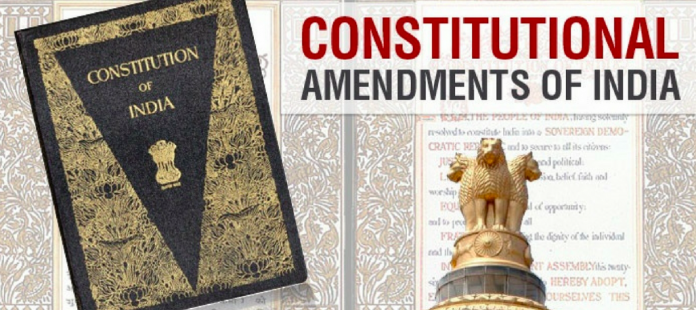















 Allow notifications





