
Download Now
Home Blog Page 304

First-principles analysis of the implications of IPR law on NFT

0

This article is written by  Gaurav Dhingra.  This article has been edited by Ruchika Mohapatra (Associate, Lawsikho). 

This article has been published by Sneha Mahawar.

Introduction

Non-Fungible Tokens, or NFT, is a one-of-a-kind way of representing an asset as an Ethereum-based asset. Each NFT is distinct and has its own digital signature, which can be created using only a few simple tech skills. It can’t be compared to another NFT, hence it’s non-fungible. Fiat currencies and cryptocurrency, on the other hand, are fungible, meaning that one dollar is always equivalent to another dollar. They are a form of a certificate of authenticity that is encoded as a token on the blockchain and enables the authentication of digital artwork, among other things.

Content creators now have more grip than ever before, thanks to digital contracts on the Ethereum blockchain. NFT projects are built on incorruptible decentralised blockchain-based technology. Digital assets that depict real-world objects include art, music, in-game goods, and films. They are often encoded using the same underlying software as many cryptos and are acquired and sold online, often with bitcoin. Anyone with a computer can make an NFT and post it on the internet, with Open Sea being the largest market.

How web3.0 is creating a new medium for artwork

Whether it’s music, images, GIFs, movies, jpegs, mp3s, or any other file format, it’s a new medium for artwork. Paintings were once drawn on cave walls, then on paper, on Pinterest, and finally on the blockchain. The medium varies while the art remains the same and we’re experiencing one of those changes now in the form of NFT. As we saw with the shift from web 2.0 to web 3.0, previous mediums are becoming obsolete and being replaced by new ones, thus, one must adapt to this “wild, wild, web” medium as soon as feasible.

Currently, NFT only authenticates a small percentage of digital art—digital images that live and circulate on the internet. However, there is a growing trend among artists and gallerists to use NFTs to sell stills or short clips from more complex, frequently generative, and interactive digital artworks, which can be acquired for less money than the shortened images sold as NFTs. Consumers are also using NFTs to track the authenticity of the brands. That’s why Brands like Louis Vuitton, Prada, Cartier, and Tiffany have just begun to use the AURA blockchain to allow customers to use NFTs to track the validity of their branded luxury items. This shift in the medium is a technological milestone with far-reaching cultural and legal ramifications.

Recent highlights

Nike sued online sneaker reseller StockX in the NY Federal Court on February 3, 2022 for illegally selling pictures of Nike shoes, making it the latest case involving non-fungible tokens. StockX’s NFTs, according to Nike, infringe on its trademarks and therefore are likely to mislead consumers. Its complaint sought specific monetary damages as well as a halt to its sales. Multinational corporations have been using various NFT creators around the world for infringement of their intellectual property rights, though such cases have not yet reached Indian courts.

What IP issues is it causing

New questions about the NFT’s use have arisen as it has been established in mainstream culture and ushering in a new era of technological innovation in the arts. Apart from society’s awareness of IP usage, there has been a great deal of ignorance. For instance, how can one prohibit others from generating comparable NFTs of their work, in whole or in part, or how merely purchasing the NFT does not grant the purchaser the right to utilise the art to develop and sell items other than the NFT? 

Furthermore, following a notice and takedown, the listing for an NFT will be removed from the marketplace, but the NFT will remain live on the blockchain, creating irreversible harm to the author’s moral rights, violating the Doctrine of Fair Deal.

As their applications expanded into the realms of art and creativity, the ambitions for NFTs outweighed concerns about legal ramifications. If intellectual property law is not properly considered, NFTs become a problem for both creators and customers.

Position of law on NFTs

The legal position on NFT in India is quite unclear, but one can try to ascertain the likely position of the courts based on precedents and current legislation.

Trademark law

A trademark is a sort of intellectual property that consists of a recognisable sign, design, or expression that identifies and distinguishes products or services from other sources which can be found on packaging, a label, a voucher, or on the product itself. 

The trademark law violation in web3.0 can be traced back to the legal position on web2.0, i.e. the similarity between the domain name and NFT. Cybersquatting, or when third parties register someone else’s trademark, business name, or trade name as a domain name, is the most common source of domain name disputes. 

In such cases, there is no need for previous approval from any authority regarding the proprietary rights to the trade name because domain names are registered on a first-come, first-served basis. That is, anyone can register a domain name without proving trademark or name ownership.

Cybersquatters exploited this rule in the domain name registration system to register trademarks, business names, and trade names without actually owning the trademarks or names. As the owners of said domain names, cybersquatters deal in the sale and use of said names or use them to divert internet traffic and earn money through pay-per-click sponsored advertisements.

In India, domain names are protected as trademarks under the Trademarks Act of 1999. Section 29 of the said Act punishes anyone who violates a domain name registered under a legitimate proclamation.

In Celador Productions Ltd. v. Gaurav Mehrotra, the defendant utilised a name on its website, crorepatrikaun.com, that was similar to the plaintiff’s game show name, KAUN BANEGA CROREPATI.  When everything was equivalent to someone else’s original offering, the court found that “a domain name is more than a web address; it gives information about the owner’s goods and services, and so the owner can seek domain protection.”

Similarly, creating NFT, which violates the trademark of another person, will invite a lawsuit under Section 29, Trade Marks Act, 1999. In a recent case involving French luxury brand Hermès, which sued an artist for producing NFT of knock-off handbags, the company became the first big brand to take legal action over the usage of trademarks in the metaverse. Hermès first sent the creator a cease and desist letter, accusing him of being a digital speculator out for becoming quick rich. After receiving no response from the creator, Hermès filed a lawsuit alleging trademark infringement with his MetaBirkins NFTs—virtual recreations of the iconic Hermès handbag. In addition to damages, the firm is asking for an injunction against the creator’s NFTs, the destruction of all previously minted samples, and the transfer of the project’s website name to Hermès.

Hence, If you are creating NFTs, you should avoid using any trademarks of another company that is embodied within your NFT as a best practice.

Patent law

A patent is a statutory right granted by the government to the patentee for a period of 20 years from the date of filing for an invention, governed by the Patents Act, 1970 and the Patents Rules, 2003, in exchange for full disclosure of his invention and the prohibition of others from making, using, selling, or importing the patented product or process for producing that product for those purposes without his consent.

Patents for NFTs are currently available, and more are undoubtedly on the way. For example, Nike has received a patent for “creating cryptographic digital assets for footwear,” which would allow a shoe customers to guarantee that their purchase is genuine while also having a digital collectible version of their shoe in their wallet. In general, the number of blockchain patents continues to rise.

A patentable innovation in India must be patentable, new or unique, useful, and not obvious. Furthermore, it must not fall into one of the non-patentable categories listed in sections 3 and 4 of the Act. 

Because NFT is both an art and a computer programme, it is difficult to understand the position of patent law on NFTs. Furthermore, the statute expressly states that a software or computer programme as such is not patentable in India. More specifically, Section 3 of the Patents Act of 1970 states that “a mathematical or business method or a computer programme per se or algorithms” are not inventions and thus not patentable. So, for the time being, one must await an official notification or legislation from the government in order to understand its legality.

Copyright law

A copyright is a type of intellectual property that grants its owner the exclusive right to duplicate and distribute a creative work in any format, including literary, artistic, educational, and musical. The author owns exclusive rights to the artwork as soon as it is made, and the Copyright starts existing as soon as it is created as per Section 17, Copyright Act, 1957.

Moral rights

Moral rights are personal rights that connect the creator of a work to their work. Moral rights are about being properly named or credited when your work is used, and the way your work is treated and shown.

Through his moral rights, the author has the right to preserve, protect, and nurture his creations. Section 57 of the Copyright Act of 1957 safeguards the author’s right of paternity as well as the author’s right of integrity. Distortion, mutilation, or modification that is proven to be detrimental to the author’s reputation or honour is actionable.

In the Amar Nath Sehgal Mural case, the Delhi High Court made the following observation: In the material world, laws are designed to protect the right to just compensation. But there is more to life than meets the eye. Many of us believe in the existence of the soul. The author’s moral rights are the soul of his works. Through his moral rights, the author has the right to preserve, protect, and nurture his creations. 

Larva Labs, the creator of CryptoPunks, adopted the NFT licence in 2019, which would grant non-commercial use, excluding merchandise revenue of $100,000, but would not allow NFT holders to alter the image. As a result, a digital artist can be sued for destroying the integrity of the author’s artwork in its NFT. Even after purchasing an NFT, distorting it to the point where the sanctity and originality of the work is lost may result in a lawsuit from the creator.

Author rights and first sale doctrine

The vast majority of purchasers believe they will be able to use NFT to create prints, t-shirts, and other goods. However, the author owns the exclusive rights to the artwork as soon as it is created, unless prohibited by an explicit contract waiving author’s rights. If there is no indication that rights have been sold, they remain with the artist and must be commercially exploited.

A commercial licence agreement must be obtained from the creator, as the holders only have the right to hold and sell the token, not the copyright to what it points to – unless otherwise agreed upon in advance.

A similar analogy can be drawn w.r.t to NFT-When an artist sells a physical painting to a buyer, the artist is, by default, the copyright holder and will retain the original copyright in the work, even after the artwork is sold to a buyer, unless there is some exception to the general rule. The buyer owns both the physical copy and the right to display it. The buyer, on the other hand, does not have the right to make new copies; that right belongs to the owner of the copyright. In contrast, the buyer is free to resell his physical copy to a third party without violating any copyright restrictions.

That’s why Yuga Labs, the company behind The Bored Ape Yacht Club, issued a statement stating that holders own “the underlying Bored Ape, the Art, totally.” So long as you can show that you possess the NFT, Yuga Labs provides you “an unlimited, worldwide licence to use, duplicate, and exhibit the acquired Art for the purpose of making derivative works based upon the Art,” such as T-shirts.

 As a result, minting an NFT constitutes an infringement of copyright unless it is done by the copyright owner (or someone with their agreement). Additional infringements would almost certainly be involved in the promotion and selling of that NFT.

In case of copyright infringement, one can send a Takedown notice under the Digital Millennium Copyright Act, 1988 to OpenSea regarding the breach. Recently, Larva Labs has filed an infringement claim against PolygonPunks, a copycat project on the Polygon “Layer 2” sidechain. However, more decentralised platforms may not have appropriate avenues to make formal IP complaints.

Conclusion

If NFTs are to realise their full potential as a new vehicle for constructing and exchanging the inherent value of creative works, the worlds of NFTs, Copyright, patent, and trademark law must begin to collaborate. Meanwhile, artists and businesses interested in participating in these markets should exercise caution and, as always, be aware of the risks associated with intellectual property rights. The repercussions of NFT copyright infringement, NFT trademark infringement, or NFT patent infringement in case of India are unknown.

Despite the platforms addressing IP issues, it appears that courts will need to step in at some point to settle many of the existing IP disputes in the space. However, issues ranging from proper jurisdiction to simply identifying the responsible party will pose challenges to the legal claims.

Furthermore, because the process of minting NFT is irreversible, there is a significant need for validating and verifying copyright ownership in order to gather evidence that serves as a proof that the person minting the NFT has the necessary permissions to do so, to the extent that you can identify an individual company or individual who is infringing your intellectual property. Pursuing random copycats who are plagiarising your intellectual property within the NFT, on the other hand, maybe extremely difficult, impossible, or simply not cost-effective.

When people’s acts are decentralised, pseudonymous, and international, there are possible constraints to suing them for actions committed and recorded on the blockchain. NFTs offer an exciting new way to communicate with and find new followers in a new market, while also potentially making money. As an artist or brand owner, you must be aware that you are putting your intellectual property at danger, with unforeseeable and unpredictable consequences.

Additionally, instead of establishing NFTs themselves, artists or brands may choose to licence their brands. The National Basketball Association, for example, licensed the NBA brand and content to Dapper Labs in order for NBA Top Shot to be created. Consider this: If you’re a die-hard cricket fan, and you get an NFT of MS Dhoni’s World Cup helicopter shot, you’ll have a verifiable hit on your hands, and you’ll be able to barely keep up with customer demand. It will be interesting to see how legislation evolves with respect to NFT.


Students of Lawsikho courses regularly produce writing assignments and work on practical exercises as a part of their coursework and develop themselves in real-life practical skills.

LawSikho has created a telegram group for exchanging legal knowledge, referrals, and various opportunities. You can click on this link and join:

https://t.me/lawyerscommunity

Follow us on Instagram and subscribe to our YouTube channel for more amazing legal content.

Download Now

All you need to know about Passive Euthanasia

0

This article has been written by Nikunj Arora of Amity Law School, Noida. This article provides a detailed overview of passive euthanasia along with the concept of euthanasia, in general. The article also includes the global perspective and the landmark judgement wherein passive euthanasia became legal in India.

It has been published by Rachit Garg.

Introduction

One of the ways in which euthanasia can be viewed is as either active or passive; however, the exact meaning of passive euthanasia is sometimes unclear. Regardless of whether all passive euthanasia involves withholding life-sustaining treatment, it seems there is some dispute over whether the whole of such denial of life support should be regarded as passive euthanasia.

Historically, active euthanasia and passive euthanasia have been differentiated. It has long been thought that there is such a fundamental difference between the two that, despite the latter occasionally being permissible, the former is always forbidden. There are several reasons for challenging this doctrine. As a matter of fact, active euthanasia is, in many cases, a more humane method than passive euthanasia. Furthermore, conventional doctrine can lead to decisions regarding life and death being made on an irrelevant basis. The third issue is that the doctrine is founded on a distinction between killing and letting die, which itself does not have much moral weight. In addition to this, some of the most common arguments in support of the doctrine are invalid.

In February 2001, a special task force established by the European Association of Palliative Care (EAPC) attacked passive euthanasia in a very clear and explicit manner. According to it, the term passive euthanasia was a contradiction and that, therefore, it could not be part of the concept of euthanasia. The arguments were discussed in three parts. In the first place, an argument was based on euthanasia being wrong and passive euthanasia being permissible. A second claim was that passive euthanasia was not euthanasia since it did not result in death. There was also a consequences-based argument which argued that passive euthanasia had bad consequences.

An overview of euthanasia

What is euthanasia?

The concept of euthanasia was earlier framed by Sir Francis Bacon during the 17th century. It originated from the Greek words ‘eu and thanatos’, meaning ‘good’ and ‘death’, respectively. However, the earlier meaning of it meant a ‘good’ or ‘easy’ death. 

The act of euthanasia involves the administration of a lethal substance to a patient in order to relieve the patient’s intolerable and incurable pain and suffering. Physicians generally seek to relieve patients’ suffering, and their motives are usually compassionate. Physicians perform euthanasia, which has been classified as either active or passive. 

Types of euthanasia

Euthanasia comes in a variety of forms. The following types are determined by several elements, including one’s viewpoint and level of awareness:

  1. PAS and euthanasia

The concept of PAS (Physician-assisted-suicide) has been mentioned above. PAS refers to when a doctor intentionally assists someone with ending their life. This person could be going through the pain for a longer period of time. They could potentially have been given a terminal illness diagnosis. In most cases, the doctor of such individuals will analyse and assess which procedure is the most effective and painless.

  1. Active and passive euthanasia

In the case of active euthanasia, a person (physician preferably) causes the patient’s death directly and purposefully. While, in the case of passive euthanasia, the patient’s life is not taken directly, instead, they are being let to die.. 

  1. Non-voluntary (involuntary) and voluntary euthanasia 

The individual who is about to die can request voluntary euthanasia. Voluntary euthanasia occurs when a person/patient makes a conscious decision to end his life by the hands of the doctor. Such person/patient must provide his/her full consent to such assistance to end his life and shall establish that they are fully aware of the situation.

On the other hand, under non-voluntary euthanasia, someone else decides to end someone’s life, and in most situations, such a decision is frequently made by a close family member. .

The controversy around passive euthanasia

Both PAS and euthanasia have many supporters and opponents. Arguments typically fall into one of the four categories:

  1. Morality and religion: Passive euthanasia, in most case, can morally unacceptable for some people. Furthermore, many people argue that being able to decide how to end your life weakens the sanctity of life. For similar reasons, several churches, religious groups, and faith organizations are opposed to euthanasia as well.
  2. The judgement of a physician: An individual must be mentally capable of making a decision before they can participate in PAS. Nevertheless, it can be difficult to determine someone’s cognitive capabilities. Studies show that doctors aren’t always able to recognise when someone has the mental capacity to make the decision.
  3. Ethical considerations:There are physicians who oppose PAS who are concerned about ethical complexities. The Hippocratic oath was taken by physicians more than 2,500 years ago. By taking this oath, doctors pledge to take good care of those under their care and never harm them.

PAS reduces suffering and causes no further harm, according to some, so the Hippocratic oath supports it. Some argue, however, that it causes harm to the individual and their loved ones, who must watch their loved one suffer.

  1. Personal choice: Under this argument, the phrase “Death with dignity” is considered a movement that advocates and allows people to choose how they want to die in their lifetime. Some people simply do not want to go through a long death process, frequently because they are worried about the strain it would have on their loved ones.

What is passive euthanasia : an overview 

The concept of passive euthanasia, as discussed above, is like all types of other euthanasia, and entails the desire to hasten death in the patient’s best interests. Passive euthanasia differs from active euthanasia on the ground that the former hastens death by failing to offer something that would have delayed death if provided, i.e., passive euthanasia includes removing or delaying life-prolonging medical therapy to the patient by the doctor. Instances of passive euthanasia can include not giving medication and not performing a surgery that would save the patient’s life.

As a result, there are three requirements that must be met for passive euthanasia to occur:

  • Life-prolonging treatments are being discontinued or withheld.
  • The primary goal of the discontinuation or withholding of the treatment shall be to speed up the death of the patient.
  • The justification for the speed up death is that the action was taken in the patient’s best interests to die, as sooner or later he would die. 

However, not every situation where life-prolonging treatment is withheld or removed automatically amounts to euthanasia. As we have seen, passive euthanasia involves protecting patients’ interests, where there is a risk that their quality of life will be so poor that they would rather die than keep living. But there are other reasons for withdrawing or withholding treatment as well.

Three reasons may exist for this. First, the treatment might be futile and therefore ineffective, second, it may not be cost-effective as well. It does not amount to passive euthanasia, no matter how justifiable it may be, since it does not meet the third condition, namely the hastening of death in the patient’s interests. 

Talking about the third condition. In a third instance, treatment may be withheld or withdrawn due to excessive burden or harm. This does not constitute passive euthanasia because it violates the above second condition.

In some situations, the patient can deny the treatment in question, which can mark a fourth possible cause for discontinuing or withholding treatment. As a basic rule, any adult patient has the right to refuse, and on account of such refusal, the physician’s compliance with that refusal does not constitute passive euthanasia, since the above second condition is not satisfied.

The healthcare provider does not share the patient’s desire to die earlier even if the patient refuses treatment. If a competent patient refuses treatment in spite of the physician’s best efforts, the doctor can simply respect the wishes and autonomy. Furthermore, there is no requirement to agree with the goals of patients related to death.

The legality of passive euthanasia : a global view

Most of the debate about the morality and legality of passive euthanasia has occurred during the latter half of the 20th century and the beginning of the 21st century. According to ancient Greek and Roman beliefs, life should not be preserved at all costs. Therefore, they allowed suicide in certain circumstances, such as when no relief could be offered to a dying person or when a person no longer cared for their lives.The legality of euthanasia in several nations throughout the world is summarised below: 

  1. Netherlands 

The Termination of Life on Request and Assisted Suicide (Review Procedures) Act of 2002  governs euthanasia in the Netherlands. It legalises and governs PAS along with euthanasia, in extremely particular conditions and circumstances.

There was a dramatic shift in the paradigm in the Netherlands during the 1970s and 1980s as a result of a series of court cases which resulted in an agreement between the medical and legal authorities ensuring no physician would be prosecuted for assisting a patient to die as long as certain guidelines were strictly followed. The guidelines were established to permit physicians to perform passive euthanasia when a competent patient requests to die voluntarily and in full knowledge of the consequences of their actions. In the Netherlands, law was passed in November 2000 legalising the practice of passive euthanasia. All parliamentary stages approved the legislation in early 2001.

  1. Australia 

With the passage of a bill in the parliament of Australia’s Northern Territory, the first legislative approval for passive euthanasia was gained. Immediately after the Act became law in 1996, it was challenged by those opposed to passive euthanasia. After more than a decade of challenges, the Australian National Parliament overturned the legislation by prohibiting Australian territories from passing legislation allowing passive euthanasia on constitutional grounds in 1997. West Australia became the second state to adopt legislation allowing voluntary medically assisted death. This law became effective in 2021. A further three states, Tasmania, South Australia, and Queensland, have passed legislation allowing voluntary medically assisted death that will take effect in 2022 or 2023 for the first two, respectively.

  1. Belgium and Luxembourg

In September 2002, euthanasia became legal in Belgium. The Belgian legislation establishes the conditions under which suicide can be carried out by an individual, without permitting doctors. The individuals who want to terminate their lives should be aware of their actions and reiterate their request for euthanasia under the law. Additionally, the law states that a person must be under continuous and intolerable physical or psychological agony of an incurable illness to make a request for euthanasia.

Similar legislation was passed in Luxembourg in 2009 as well. 

  1. Spain

In 2021, Spain became the next country to legalise passive euthanasia. 

  1. Quebec

During 2014, the province of Quebec passed legislation allowing medical assistance in dying. As a result of the 2016 legislation, physician-assisted suicide and passive euthanasia have become legal in the entire Canadian federation.

  1. Italy

In 2017, the Italian legislature passed legislation allowing adults to choose their end-of-life medical care, in cooperation with their doctors, including the situations where they can choose to reject their treatment from the doctor. As a result, Italians can refuse medical treatment, artificial nutrition and hydration. 

In Italy, active euthanasia is currently illegal. Specifically, Article 579 of the Criminal Code prohibits anyone from causing the death of any person, with their consent, whereas Article 580 prohibits assisted suicide. Currently, the punishment for the former is 6 to 15 years in jail and for the latter, five to twelve years. However, passive euthanasia (the deliberate withholding of life-saving treatments from the incurably sick) is legal in Italy. The Constitution of Italy stipulates that “no one may be compelled to receive a specific medical treatment unless it is required by law”. Despite Italy being a secular state, Catholic influences infiltrate all aspects of society and culture in the country, making them a major influence on the public, albeit one that is gradually eroding.

  1. Sweden

The swedish health authority authorised passive euthanasia in 2010, allowing patients to terminate their treatment knowing that this will result in their death. This ruling came after doctors requested clarification because Swedish law allows patients to refuse treatment, but assisted suicide, including shutting off respirators, is illegal. However, active euthanasia, involving the injection of drugs to cause the person’s death, remains illegal in Sweden.

  1. France 

The French government legalised passive euthanasia in 2005 by introducing the concept of ‘right to die’. 2 member of parliament, one from the ruling Socialist party, and the other from the opposition allowed doctors to combine passive euthanasia with ‘deep and continuous sedation’ for terminally ill patients who are conscious, receiving no treatment or wishing to stop taking medications. According to them, in certain cases, patients who were incapable of making decisions could also be put to sleep permanently. Euthanasia debates frequently lead to a battle between those who insist life must be protected at all costs and those who say terminally-ill patients who endure unbearable pain deserve to die. After a string of high-profile end-of-life stories, Francois Hollande (President) committed to looking deeper into this divisive issue during his 2012 election campaign

  1. United State

In the USA, active euthanasia has been outlawed in 50 states, and PAS has been permitted in Oregon, Washington, and Montana. However, the concept of passive euthanasia is legal in most states in the USA. Therefore, doctors must adhere to patients’ desires when conducting euthanasia of any kind, wherever permitted.

  1. Germany

In Germany, it is against the law to actively help someone in suicide. Passive euthanasia, on the other hand, is legal in the country, and on a request made by any patient (written request), doctors can halt life-prolonging measures. The law also provides painkillers to someone who is dying.

The legalisation of passive euthanasia in India

Is passive euthanasia legal in India?

In a major judgement in March 2018 [Common Cause (A Regd. Society) v. Union Of India Writ Petition (Civil) N0. 215 OF 2005], the Supreme Court proclaimed the right to die with dignity to be a fundamental right, allowing for passive euthanasia across the country.

This was not always the case because the concept of passive euthanasia was not legal in India before March 2018. Exception 5 of Section 300 of the Indian Penal Code, 1860 would apply to physicians who induced or participated in euthanasia, because they had the required intention of causing  death of the concerned patient, and the term ‘intention’ was all that matters.

The Supreme Court of India in the above judgement stated that the directions and guidelines issued along with its directive would stay in effect until an effective statute or legislation on this subject is introduced.

While the judges on the bench had four different points of view, the Chief Justice of India (CJI) ruled that the ‘living will’ should be allowed since a person cannot be allowed to suffer in a vegetative condition if he or she does not want to live.

The Supreme Court recognised passive euthanasia in the Aruna Shanbaug case in 2011. Through the case, the Apex Court allowed for the withdrawal of life-sustaining care from patients who were unable to make an informed decision for themselves.

The decision originates from a 2005 Public Interest Litigation (PIL) filed by the non-profit organisation ‘Common Cause,’. This case was argued by Prashant Bhushan as a lawyer. The NGO asked the Court to recognise a ‘living will,’ and strictly argued that when a medical expert says a person with terminal sickness has reached a point of no return, she should be allowed the right to refuse life support, to escape excruciating pain for an extended period.

The Bench in this landmark case had previously reserved its verdict on October 11, 2017. According to the bench, the right to die in peace could not be separated from the right to live under Article 21 of the Indian Constitution.

In Gian Kaur v. State of Punjab [1969 AIR 946, 1996 SCC (2) 648], several arguments were raised in favour of legalising euthanasia in India before the Supreme Court. One of the key arguments was that the Indian Constitution “right to life” encompasses the “right to die” as well. 

The Supreme Court, however, rejected this argument and stated that the right to life of Article 21 of the Indian Constitution does not at all encompass the right to die, and thus, cannot be expanded to signify the same thing. As a result, the Supreme Court does not rule that euthanasia is unconstitutional.

The following are the main takeaways from the above ruling:

  • The Supreme Court has given legal recognition to passive euthanasia. According to the ruling, a patient who is competent to make a decision, and a patient who is unable to make a decision, both shall/may be deemed passive euthanasia.
  • The decision ruled that a patient’s living will is a valid legal document in the context of medical decisions such as withdrawing futile medical treatment.
  • The ruling affirms the right to make an informed decision to refuse medical treatment, including withdrawal from life-saving devices.

Government’s endorsement of passive euthanasia after legalisation

In a press release issued on December 23, 2014, the Government of India has announced its endorsement and revalidation of the judgement-law relating to passive euthanasia, following a speech in the Rajya Sabha. The Government of India stated that the Supreme Court of India, while dismissing the petition for mercy killing in a particular case, took the initiative to lay out comprehensive guidelines for dealing with passive euthanasia cases. Accordingly, the matter of merciless killings was discussed with the Ministry of Law and Justice, and it had been decided that, since the Supreme Court had already laid down the guidelines, they must be followed. As it stands, no legislation had been passed on this subject, and that the Supreme Court’s ruling in the above case (Common Cause (A Regd. Society) v. Union Of India) is binding on all.

As a result of the Court’s decision, active euthanasia through lethal injection was rejected. Considering that there is no law regulating euthanasia in India, the Supreme Court stated that its decision becomes the law of the land until the Parliament of India enacts a suitable legislation on this issue. Active euthanasia is still illegal in India, as well as most other countries, which includes the use of lethal compounds as part of the process of ending life. As the Supreme Court’s guidelines are law as there is no Indian law concerning euthanasia until and unless Parliament passes legislation. The Supreme Court laid down the following guidelines:

  • Parents, spouses, or other close relatives are responsible for the decision to discontinue life support, but, in the absence of them, any person or group acting as a friend can make the decision. The patient’s doctor can take it as well. Although the decision should be taken in the patient’s best interests, it should not be arbitrary.
  • Although the decision to withdraw life support can be made by the relatives or doctors, the high court still has to approve it.
  • Upon receiving such an application, the Chief Justice of the high court should immediately convene a bench consisting of at least two judges who can decide whether or not to approve the application. It will be a panel of three reputed doctors that the bench will nominate, who will report on the patient’s condition. The state and close family members should be notified before the verdict is given. Upon hearing the parties, a decision can be rendered by the high court.
  • A person of sound and healthy mental health can only execute advance directives. It must be voluntary and non-coercive. There shall be a written statement as to when medical treatment may be withdrawn or no medical treatment may be given that would delay the process of death, otherwise causing pain and suffering.
  • Two attesting witnesses should be present when the executor signs the document, and the jurisdictional Judicial Magistrate of First Class (JMFC) should countersign it. It is the responsibility of the witnesses and of the JMFC to certify that the document was signed freely and without coercion. One copy of the document shall be kept by the JMFC in his office, and one copy shall be forwarded to the registrar of the jurisdictional district court for preservation. If the executor is not present at the time of execution, the JMFC shall notify the executor’s immediate family members. A copy of the notification shall be given to the local government.
  • The treating physician shall verify the authenticity of the execution from the jurisdictional JMFC if the executor becomes terminally ill with no hope for recovery. The physician must inform the executor or guardian/close relative about the nature of the illness, the available medical care and the consequences of alternative forms of treatment and remaining untreated if the instructions need to be followed.
  • Medical boards shall be formed by the hospital consisting of the head of the treating department and at least three experienced physicians who shall jointly meet with the patient’s relatives to decide whether to withdraw medical treatment.
  • The hospital must inform the collector about the proposal if the Medical Board certifies that the instructions should be followed. An additional Medical Board shall be formed by the collector in conjunction with the district’s chief medical officer and three expert doctors. If the patient is not able to communicate, the board shall examine the patient and may agree to withdraw the treatment. If the board decides to withdraw the treatment, they should notify JMFC of their decision. After examining all aspects, the JMFC visits the patient and may permit its implementation.

Acceptance of passive euthanasia in India : the way forward 

In India, religious views strongly oppose premature death, and hence, the right to life may outweigh the right to die with dignity, which has just been given legal recognition in the above-mentioned case in 2018.

Despite the Supreme Court’s acknowledgement of the right to die with dignity as a fundamental right, religious communities in India, which are strongly opposed to euthanasia, may pose substantial challenges.

Killing a terminally ill individual, whether by active euthanasia (PAS) or passive euthanasia, is considered an act of disobedience against God by both Sunnis and Shias. From a similar point of view, the concept of euthanasia is opposed by Indian Christians. Euthanasia is against the Catholic Church’s beliefs since it supports the sanctity of life.

According to medical professionals, passive euthanasia is already a common practice in the majority of hospitals across the country, since many poor terminally ill patients and their families prefer to end treatment due to the enormous costs of keeping them alive. On the other hand, for those who can afford it, maintaining life with advanced medical technologies and palliative care has become more routine. 

Conclusion

The above ruling of ‘Common Cause’ is a watershed decision with far-reaching implications. The ruling does assure that those who are unable to recuperate and are considered medically unfit along with those who wish to terminate their lives can get an immense amount of benefit from passive euthanasia. The Bench also asserted that families do not abuse this provision and get rid of individuals who are not ‘fit’ for the family, and therefore, certain measures have been put in place to ensure this.

It is a little surprising that the above landmark ruling has prompted conflicting reactions among India’s palliative care community. The Indian legal position on end-of-life issues has been described as confusing at best, and a review of the terms of the new law legalising passive euthanasia has shown multiple blatant discrepancies. 

Taking a different perspective, this decision of the Apex Court, however, adds some clarity to passive euthanasia. An article published by the University of Glasgow, judicial acceptance of withdrawal/withholding of futile treatment and advance directives could be considered a first step in the right direction with some confusing terminology. Furthermore, a greater clarity, as well as open and honest community dialogues about what offers and preserves dignity at the end of life, is essential.

References

  1. https://www.bbc.co.uk/ethics/euthanasia/overview/forms.shtml
  2. https://timesofindia.indiatimes.com/life-style/health-fitness/health-news/everything-you-need-to-know-about-euthanasia/articleshow/63229188.cms
  3. https://www.healthline.com/health/what-is-euthanasia
  4. https://www.sciencedirect.com/topics/social-sciences/euthanasia
  5. https://www.ncbi.nlm.nih.gov/pmc/articles/PMC3440914/#ref3
  6. https://legaldesire.com/column-overview-passive-euthanasia-living-will-landmark-judgment-sc/
  7. https://economictimes.indiatimes.com/news/politics-and-nation/landmark-ruling-supreme-court-says-passive-euthanasia-is-permissible-with-riders/articleshow/63228770.cms?from=mdr
  8. https://jme.bmj.com/content/31/2/64
  9. https://www.scconline.com/blog/post/2020/11/28/euthanasia-indian-view/
  10. http://endoflifestudies.academicblogs.co.uk/passive-euthanasia-is-legal-in-india-what-difference-does-it-make/
  11. https://www.livemint.com/Science/Whfhef9I34eZ8iAXWaHVqK/How-will-India-accept-passive-euthanasia.html
  12. https://ili.ac.in/pdf/sms.pdf
  13. https://thewire.in/health/passive-euthanasia-now-a-legal-reality-in-india
  14. https://www.freepressjournal.in/cmcm/euthanasia-aruna-shanbaug-and-4-other-prominent-cases-in-india-where-mercy-killing-was-sought
  15. https://zeenews.india.com/india/active-euthanasia-vs-passive-euthanasia-whats-the-difference-and-which-country-allows-what-2088000.html
  16. https://indiankanoon.org/doc/217501/ 
  17. https://plato.stanford.edu/entries/euthanasia-voluntary/ 
  18. https://timesofindia.indiatimes.com/india/here-are-the-sc-guidelines-on-passive-euthanasia/articleshow/63236173.cms 
  19. https://www.clearias.com/euthanasia/ 
  20. https://www.euronews.com/2021/09/30/is-italy-set-for-a-referendum-on-legalising-euthanasia

Students of Lawsikho courses regularly produce writing assignments and work on practical exercises as a part of their coursework and develop themselves in real-life practical skills.

LawSikho has created a telegram group for exchanging legal knowledge, referrals, and various opportunities. You can click on this link and join:

https://t.me/lawyerscommunity

Follow us on Instagram and subscribe to our YouTube channel for more amazing legal content.

Download Now

Are all religions equal in India

0
Freedom of religion

This article is written by Sujitha S, pursuing law at the School of Excellence in Law, Chennai. This article tries to explain the concept of equality of religion in the light of a Uniform Civil Code as envisioned in Article 44 of the Indian Constitution. It further discusses the debate on UCC and its relevance in the Indian judiciary.

It has been published by Rachit Garg.

Introduction

India is a large country with people from many different religions, castes, creeds, and socio-cultural backgrounds. With respect to religions, India is a secular country where every individual has the freedom to practice his or her religion. Despite the fact that secularism is the foundation of the Indian Constitution, its applicability in contemporary India is debatable since religion is increasingly used in the social construction of ethnic and communal identity, resulting in political mobilisation. In India, caste, religion, and regional divides are still widespread, and they play a vital role in forming individual and collective views. While secularism has been an important part of India’s democracy for over seventy years, its restrictions and implementation remain controversial.

The concepts of unity and equality have always been central to India’s identity. Personal laws, on the other hand, have been causing splits in the country since colonial times. This necessitates the adoption of a Uniform Civil Code (UCC), which has always been faced with opposition since many people believe it is a direct attack on their faith and religious customs. The argument over the UCC began with the drafting of the Constitution and has been maintained by both the courts and the political classes. With current concerns on the hijab, the subject has been thrust to the forefront of public discourse once again. This has also coincided with the Law Commission asking for public input on the UCC in October 2016. However, before delving into the complexity of the Uniform Civil Code in the context of India’s multi-cultural politics, we must first grasp its constitutional and judicial aspects.

The Indian Constitution and religion

The right to freedom of religion is one of the rights guaranteed by the Indian Constitution. Every citizen of India, being in a secular state, has the right to religious freedom, or the freedom to practice any faith. Given the diversity of religions prevalent in India, the Constitution ensures that every person has the freedom to practice the religion of their choice. Every citizen has the freedom to peacefully practise and propagate their faith under this basic right. And if there is any religious intolerance in India, it is the responsibility of the Indian Government to put a stop to it and take strong measures against it. Articles 25, 26, 27, and 28 of the Constitution clearly define the right to freedom of religion.

Article 25 of the Indian Constitution : religious freedom to all citizens

Article 25 of the Indian Constitution provides religious freedom to all citizens. It states that, subject to public order, morality, health, and other conditions, all individuals in India have the equal right to freedom of religion and the freedom to profess, practice, and spread religion.

It further states that this Article will not conflict with any existing law and will not preclude the state from enacting legislation related to :

  • Any commercial, financial, political, or secular action related to religious practice
  • Providing social welfare and reforming the system.
  • The establishment of public Hindu religious institutions for Hindus of all classes and sectors.

In Saifuddin Saheb v. State of Bombay (1962), the Bombay Prevention of Excommunication Act, 1949 was passed in this case by the State of Bombay. Section 3 of this Act makes it illegal to excommunicate members of any group. The petitioner (the religious leader of the Dawoodi-Bohra Community) challenged the Act on the grounds that it infringed their fundamental rights, which are protected under Articles 25 and 26 of the Constitution. The Court found that the head’s power of ex-communication was central to the community’s activities and that the Act obviously infringed the fundamental rights guaranteed by Article 25(1) of the Constitution. Thus, the Supreme Court ruled that the Act was unconstitutional because it violated Articles 25 and 26.

Article 26 of the Indian Constitution : rights of religious groups or denomination

Every religious group or section of a religious denomination has the right under Article 26  to :

  • Establishing and maintaining religious and philanthropic organisations;
  • Managing its religion-related affairs;
  • Purchasing and owning real estate (both mobile and immovable);
  • Following the law when it comes to property management.

In the case of the State of Rajasthan & Ors  v. Sajjanlal Panjawat & Ors (1973), the Supreme Court held that while the state has the power to administer or regulate a trust’s assets, it cannot take away the right to administer those assets by law and vest it in another authority that does not even belong to the denomination. This would undoubtedly be a violation of the Constitution’s Article 26(d).

Article 27 of the Indian Constitution

Article 27 of the Constitution prohibits anybody from being forced to pay any taxes that are intended to cover the costs of promoting or maintaining a religion or religious denomination.

In the case of Commissioner, Hindu Religious Endowments, Madras v. Sri Lakshmindra Thirtha Swamiar of Sri Shirur Mutt (1954), the Madras legislature adopted the Madras Hindu Religious and Charitable Endowment Act, 1951, and contributions were charged under the Act. The petitioner argued that the contributions charged are taxes, not fees, and that the State of Madras lacks the authority to establish such a regulation. The Supreme Court ruled that, while the donation was a tax, its purpose was to ensure the effective management of the religious organisation.

Article 28 of the Indian Constitution

Article 28 prohibits : 

  • Offering religious instruction in any educational institution supported entirely by state funds.
  • The foregoing shall not apply to educational institutions managed by states but supported by an endowment or trust that requires religious instruction to be imparted in such institutions.
  • Anyone attending a state-recognised or state-funded educational institution is not forced to participate in religious instruction or attend any workshop held on the institution’s or premises’ grounds.

In D.A.V. College Etc v. State of Punjab & Ors (1971), Section 4 of the Guru Nanak University (Amritsar) Act, 1969, stated that the State should establish accommodations for the study of Guru Nanak Devji’s life and teachings. This statement was challenged as being in violation of Article 28 of the Constitution. The issue was that the Guru Nanak University is entirely supported by state funds, and therefore, Section 4 violates Article 28. The Court disagreed, stating that Section 4 allows for the intellectual study of Guru Nanak’s life and teachings, which cannot be termed religious instruction.

Uniform Civil Code

Uniform Civil Code is an Indian proposal to create and implement secular personal laws that apply to all people equally, regardless of religion. Marriage, divorce, inheritance, adoption, and maintenance are all covered under personal law, which is distinct from public law.

Hindus, for example, are currently monitored by the Hindu Code, which comprises the Hindu Marriage Act (1955), Hindu Succession Act (1956), and Hindu Adoption and Maintenance Act (1956), all of which were established between 1955 and 1956. The Muslim community, on the other hand, adopts the Shariat Act (1937) as its own law. When it comes to marriage and other related concerns, the Christian Community adheres to the Christian Marriage Act (1872). The fact that each person is ruled by a separate set of rules demonstrates the disparity in treatment provided to different groups of people based on their unique religious laws. When it comes to the distribution of justice in social and civil matters, this results in different types of judgments being given to different persons.

Article 44 of the Constitution’s Directive Principles says that the state should attempt to create for its citizens a Uniform Civil Code (UCC) throughout the territory of India. Personal laws in India vary considerably in their roots and traditions, making it tough and difficult to bring people together to unite them in a country governed by laws of several religions. However, DPSPs (Directive Principles of State Policy) are not enforceable by any court, according to Article 37 of the Constitution. Its purpose is to replace the present system of fragmented personal rules that govern interpersonal relationships and associated concerns within religious groups. In addition, Goa is the only Indian State with a Uniform Civil Code, and the Special Marriage Act (1954) permits any citizen to marry beyond the scope of any special religious personal law.

Judicial perception on the implementation of the UCC

Shah Bano case (1985)

In Mohd. Ahmed Khan v. Shah Bano Begum and others (1985), after Shah Bano’s husband declared talaq against her, the Supreme Court addressed the question of maintenance under Section 125 of the Code of Criminal Procedure, 1973. Chief Justice YV Chandrachud said in his decision that Parliament should define the outlines of a Uniform Civil Code since it is a tool that promotes national peace and equality before the law. Despite this, the government ignored the problem and in 1986 passed the Muslim Women’s Protection of Rights on Divorce Act (1986).

Sarla Mudgal case (1995)

The Supreme Court in Sarla Mudgal, President,.. v. Union of India (1995) advised the government to incorporate a Uniform Civil Law based on the Hindu Code to protect the abused and achieve national unity. The argument this time was to prevent Hindu males from converting to Islam just for the purpose of marrying for the second time. While unified legislation is desired, Justice Sahai’s concurring opinion in the Sarla Mudgal case and the verdict in Pannalal Bansilal Pitti and Others v. State of Andhra Pradesh and Others (1996) both acknowledge that it cannot be enforced in one fell swoop, and that understanding must be formed on the issue.

Lily Thomas case (2000)

In Lily Thomas v. Union of India (2000), Lily had petitioned the Supreme Court on the validity of an earlier marriage in which a non-Muslim is converted to the ‘Muslim’ religion without any true change or belief and without divorcing the first wife. In this case, the Supreme Court emphasised the importance of UCC in terms of succession.

Abc v. The State (NCT of Delhi) (2015)

In Abc v. The State (NCT of Delhi) (2015), the Supreme Court ruled that a Christian single mother may petition for sole guardianship of her child without the natural father’s consent under the Guardian and Wards Act (1890), which did not recognize Christian single mothers’ rights. The Court noted the complexity imposed by the lack of Uniform Civil law in this context.

Satprakash Meena v. Alka Meena (2021)

In the case of Satprakash Meena v. Alka Meena (2021), a single judge bench led by Hon’ble Justice Prathiba M. Singh dealt with a question in which a petition was filed with an argument as to the applicability of the Hindu Marriage Act, 1955, in respect of the parties who belong to the Meena Community, given the exclusion under Section 2(2) of the HMA, 1955. Justice Singh emphasised the need for the Uniform Civil Code (UCC) to become a reality so that young people in modern India from diverse groups, tribes, castes, or religions who marry, should not be forced to deal with complications originating from conflicting personal laws. The Court stated that the state’s objective in Article 44 of the Constitution to establish a Uniform Civil Code need not remain a mere hope. She went on to say that the Supreme Court has often emphasised the necessity for a Uniform Civil Code, as envisioned under Article 44.

Historical perspective of UCC

  • Historically, analogous codes created in European countries during the 19th century and early 20th century impacted the concept of UCC, particularly the French code of 1804 that abolished all kinds of customary or statute law and replaced them with a Uniform Code.
  • On a wider scale, it was part of a huge colonial attempt to ‘civilise’ the country after the West. However, the British were warned by the First War of Indian Independence in 1857 not to change India’s social fabric and to preserve the personal norms governing marriage, divorce, maintenance, adoption, and succession.
  • Following independence, the UCC was accommodated as a guiding principle against the backdrop of partition, which resulted in communal conflict and resistance to the removal of personal laws, as noted above.
  • Despite the fact that the framers of the Constitution sought to introduce a Hindu Code Bill in Parliament that featured progressive features like women’s equal inheritance rights, it never saw the light of day.
  • The discriminatory sections affecting property rights in the Hindu Succession Act, 1956 were eliminated on September 5, 2005, when the Hindu Succession (Amendment) Act, 2005 got assent from the President of India. In this regard, the Supreme Court has emphasised the necessity of having a UCC in various instances that need to be examined, ranging from the Shah Bano Begum case to the present issue of hijab.

Impact of the 21st Law Commission’s consultation paper on ‘Reform of family law’

In June 2016, the Law Commission of India examined specific challenges connected to the Uniform Civil Code. In 2018, the 21st Law Commission published a consultation document on ‘Reform of Family Law’ on its website for discussion. According to the Law Commission’s consultation paper, a Uniform Civil Code is not essential, nor is it desirable at this point in the country. Instead, the Commission recommended that specific marriage and divorce procedures be universally acknowledged in all personal laws. The Delhi High Court had requested the Centre’s response to BJP leader and lawyer Ashwini Kumar Upadhyay’s petition in May 2019, which sought the establishment of a judicial commission to propose the Universal Civil Code in order to promote national integration, gender justice and equality, and women’s dignity. India urgently needs a Uniform Civil Code, according to four other petitions before the court. The petitions argue that the UCC would replace personal laws, which are based on the scriptures and practices of diverse religions, with a single set of rules regulating all citizens of the country.

Debate on UCC

The Law Commission of India points out that the debates in the Constituent Assembly show a lack of unanimity on what a future Uniform Civil Code would include. While some believed the UCC would survive with personal law systems, others believed it would completely replace them. Others were concerned that the UCC would restrict religious freedom. Owing to this ambiguity, it was incorporated in the Directive Principles of State Policy rather than the Constitution’s fundamental rights chapter.

Reasons for its imminent implementation

Progressive in nature

Though some legal experts think progressive legislation is desirable, an appropriate environment must be created in which all sections of society feel safe enough to get together and select the progressive decision in the light of their own personal laws. However, an example of Hindu law can be used to answer this question. There was a lot of outrage when the Hindu Code Bill was announced, which encompasses Buddhists, Sikhs, Jains, and various Hindu religious denominations. Dr. Ambedkar, the then-Minister of Law, had stated that a codified law was required for India’s unity. In a similar vein, the UCC may be introduced, which would cover all major and minor religions practised in India, and everyone visiting India would be bound by it.

Gender equality and justice

Gender justice and equality, as provided by Articles 14 and 15 of the Constitution, and the dignity of women, as guaranteed by Article 21, could not be achieved without Article 44 of the Constitution being implemented. Every person in India is equal in the eyes of the law and the courts, according to Article 14 of the Indian Constitution. In India, however, we have personal laws based on different religions. A Muslim, for example, might marry several times without being penalised. But in the case of a Hindu, Christian, or Sikh, the court will prosecute him, which is contrary to Article 14 of the Constitution. If we desire equality, the rules governing marriage, adoption, divorce, inheritance, family, and land should all be the same. 

Reduction in religious conflicts

There are numerous discrepancies in the legal provisions with respect to personal laws, in the light of gender equality and adjudication of justice. The probability of misusing personal laws is also witnessed in a number of cases. Though people are well educated about the values of every faith, there arise unnecessary issues on these grounds which can be avoided by the implementation of the Uniform Civil Code.

Protection of vulnerable groups

Many provisions of personal laws lack in protecting children and women from prejudices, behind them. Religious laws tend to be significantly gender-biased, which is one reason why personal laws based on religion are not accepted. Over time, most major faiths acquired a prejudice towards women, seeing them as inferior. Eve was allegedly presumed to be the source of all evil in Christianity. Sati was practised in some Hindu communities for centuries until it was outlawed by the British. Dowry and mistreatment of widows are still prevalent in many parts of the world. The Triple Talaq breaches Muslim women’s rights, demonstrating injustice to Muslim women. To enable equal rights for all vulnerable groups, UCC implementation is efficient.

Reduction of burden on courts

According to the official website of e-courts, there are 5.72 million cases outstanding in high courts and 40.99 million cases pending in district courts, resulting in a delay in rendering justice. There will be less ambiguity, and less pressure on the judiciary, and matters will be resolved promptly and without delay, if there is a law or regulation for everybody. Justice will be served equitably to all people, and personal law litigation will be reduced.

Arguments against the implementation of UCC

Preservation of secularism

Expecting people from different cultures and traditions to follow the same rules based on a consistent system in India, which is a country with many languages and traditions, is a bit unrealistic. The argument is based on India’s pride in its variety while maintaining its integrity. We must accept each minority community’s particular decisions and rules in order to preserve diversity.

The impracticality of this problem stems from the fact that 14.2 per cent of Indians are Muslims, and every attempt to impose the UCC has been met with fierce resistance and condemnation from them. As a result, imposing majority Hindu ideas on them is an injustice. The founding fathers promised a secular India when they drafted the Constitution, and that is exactly what the minority wants. The government must consider the feelings of the minority community while deciding whether or not to violate the personal law.

Violation of personal laws

The Muslim community is outspoken in its opposition to the government’s initiative, claiming that the UCC will breach their personal laws significantly, causing irrevocable harm to their faith and its rules. The entire concept of merging all personal laws into a universal code will impinge on the elements of personal laws of most minority religions, according to a major argument against the implementation of the Uniform Civil Code.

Minority rights

In order to formulate a common code in a country full of diversity, some minority rights will be compromised evidently. This explains why several minority groups tend to oppose the adoption of the UCC. It is vital for the present administration to design a code that is acceptable to all communities in order to completely implement a functioning Uniform Civil Code. But this is an impossible task that should be left to the imagination. No community is ready for any interference with their own laws, no matter how little, and the government intends to abolish it entirely.

Complexity in implementation

Even though decades have passed since it was initially proposed, the adoption of the UCC would attempt to bring about a long-overdue reform and put an end to a great deal of uncertainty. However, because of some of the disadvantages it presents, it is challenging to execute it.

Critical analysis of UCC

India is a republic that is sovereign, socialist, secular, and democratic. This indicates that the government does not have its own religion. As a result, opponents have construed the UCC to indicate a single state religion, which goes against the spirit of the Preamble and the above-mentioned religious freedom. The ideology of secularism, as practised in other countries like America and Europe, does not involve the intervention of the state in religious affairs. It is important to recognise that these countries have gone through a unique evolutionary process involving renaissance, reconstruction, and enlightenment.

India, on the other hand, has not gone through these stages, and thus it is the role of the state to intervene in religious affairs in order to eliminate obstructions to state administration. There is a concept known as ‘positive secularism’ in India. The state bears the responsibility for ensuring that religion does not obstruct the Nation’s overall growth. As a result, the UCC is neither anti-secular nor will breach Articles 25, 26. Article 44 is founded on the idea that in a civilised society, there is no need for a relationship between religious and personal laws. Marriage, succession and similar issues are secular in nature. Hence, the law can govern them. According to Romila Thapar, a renowned historian, “Religion impinges on every human rights in the civil law — whether its birth, death, marriage, divorce, — the religions have laws on all of these,” India still lacks a Uniform Civil Code because, if one is created, a single set of rules will apply to all residents, regardless of religion, in areas such as marriage, divorce, adoption, property, maintenance, and inheritance, among others.

Global scenario

  • The Personal Property Security  Act (PPSA) (2009) has been established in Canada. Except for Quebec, all provinces have embraced the PPSA, which is based on the UCC’s values.
  • France’s Civil Code is one of the most well-known in the world. In 1804, the Napoleon Civil Code superseded over 300 local civil law codes in France. It supplemented both customary and existing law, and it is applied to a wide range of topics including property, commodities, usufruct easements, succession, wills, gifts, contracts, and quasi-contracts. The French Code attempted to strike a balance between rights and equality, as well as customs and legal obligations.
  • There are numerous levels of legislation in the United States that apply independently to the country, the state, and to agencies and cities, where the issue of diversity is more in line with Indian situations. States are separate legal bodies with their own Supreme Courts that follow their own set of rules and regulations. Despite the fact that there are common principles that regulate these civil laws in the United States in a uniform manner across the country. The Federal Supreme Court only hears cases that are of a federal nature or that impact the entire country, such as security, taxes, and basic legal concerns.
  • Countries like Saudi Arabia, Turkey, Pakistan, Egypt, Malaysia, Nigeria and others have a blend of civil laws based on the traditional Sharia law.

The way forward

The unification of personal laws is a complicated process owing to religious diversities. The first step should be to identify all personal laws, classify them according to religion, and then identify areas of personal law that have yet to be codified. In addition, there is a need to identify the inconsistencies in current legislation and provide alternatives to eliminate those inconsistencies. 

Due to the sheer qualities it incorporates, the Supreme Court of India has referred to Goa’s UCC as a ‘shining example’. Compulsory marriage registration, prohibition of polygamy or bigamy, uniform age of marriage for men and women, consent of both men and women to execute a marriage, consent of both men and women to achieve legal separation, and other considerations are all part of the UCC in Goa. These characteristics can be used as a foundation for adopting UCC on a widespread scale.

No empire is built overnight, and no legal process can be developed overnight by simply adopting the pending UCC bill in India’s Parliament. The following are a few recommendations in this regard:

  • Both the government and the people must work together to achieve this. Both the Indian government and those who claim that UCC would encroach on their right to religion must work together to improve laws and society.
  • This can be accomplished through discussions, polls, camps, and other methods. 
  • Furthermore, the government must raise UCC’s benefits among the general public..
  • The government should have frequent talks with those who are opposed to the implementation of UCC and investigate the root of the problem.
  • The formation of a high-level committee might be an excellent way to address the challenge of UCC Bill implementation. The committee must run public awareness campaigns and investigate the problem’s root cause.

Conclusion

According to legal experts, the Supreme Court wasted a chance to rule on the matter when it prohibited Triple Talaq in 2017 without addressing the primary question : Whether personal law practices should take precedence over the fundamental right to life, dignity, and non-discrimination? The Constitution Bench’s ruling stemmed from a two-judge Bench of the Court’s Order in October 2015 to take suo moto notice of discriminatory practices against Muslim women. This Bench noted that it had been 30 years since the Court ordered the government to establish a common code to “assist in the cause of national integration” in the Shah Bano case.

The Constitution Bench’s decision came nearly a year after the Law Commission, in an unusual step, launched a ‘questionnaire’ in October 2016 to assess public opinion on the UCC. It wanted to assess if the country was prepared for it. The Court in the Shah Bano case mourned the fact that Article 44 was still a “dead letter.” It’s possible that this will continue to be the case. The Law Commission picked personal law codification above the UCC as a solution to eradicate religious discrimination in its consultation document released. Various traditions and conventions would become ‘law’ under Article 13 of the Constitution if they were codified. According to the Law Commission, any ‘law’ that falls within Article 13 must be consistent with fundamental rights. This would also safeguard religious diversity and might be the way ahead in the future. The Law Commission has said unequivocally that the UCC is “not essential nor desirable at this time in the country.” It stated that ‘uniformity’ is not required for a united nation.

As a result, it is critical that advocacy for a Uniform Civil Code emanates from all sections of society, particularly minority populations. Everyone should extensively discuss and debate the advantages and disadvantages of the Uniform Civil Code. People belonging to an enlightened and responsible state should take the lead in promoting the need for a Uniform Civil Code among the general public and motivating them to reach a shared goal of developing a Uniform Civil Code for the whole Republic of India.

References


Students of Lawsikho courses regularly produce writing assignments and work on practical exercises as a part of their coursework and develop themselves in real-life practical skills.

LawSikho has created a telegram group for exchanging legal knowledge, referrals, and various opportunities. You can click on this link and join:

https://t.me/lawyerscommunity

Follow us on Instagram and subscribe to our YouTube channel for more amazing legal content.

Download Now

Anti-dumping measures and the International Trade Law

0

It has been written by Shivangi Lal, pursuing a Diploma in Advanced Contract Drafting, Negotiation and Dispute Resolution from LawSikho. It has been edited by Zigishu (Associate, LawSikho).

It has been published by Rachit Garg.

Introduction

Antidumping (AD) has risen to the forefront of international trade’s most contentious procedures in recent decades. Although politicians are open about their commitment to antidumping, economists and trade reformers have almost no affection for it. Antidumping has not been a big problem inside the World Bank or even between banks and the lending Governments in trade policy loans or programs wherein trade policy decisions are a substantial component. Antidumping has been handled in the majority of instances in accordance with the circumstances. 

The literature on dumping in global trade has grown at an exponential rate during the last fifteen years. Politicians, economists, and lawyers have all thrown their weight into the current dumping argument with a fervour that is unusual even for a trade problem. As a consequence of the intensity of the debate, we are seeing an explosion of antidumping laws and the rise in antidumping actions in some of the advanced nations as well as some developing nations that are beginning to catch up to the latter.

During the 1980s, antidumping and CVD (countervailing duty) investigations skyrocketed. Between 1980 and 1989, the number of antidumping inquiries in the United States alone reached 451 and the number of (CVD) investigations reached 3015, while the bulk of inquiries focused on steel and lumber goods, even daily products were not spared”.

The table below summarizes that 1789 AD investigations were initiated in the United States, the European Union, Australia, and Canada between 1980 and 1989.   When investigations within multiple methods of safety measures were taken into consideration, the figure grew significantly.

Dumping: What it is and how it occurs?

Mostly in the literature on the topic, dumping is described in a variety of ways. The idea of price discrimination in distinct markets, however, is central to all of these classifications. Jacob Viner defined dumping in 1922 as the practice of setting prices at a difference between national markets.

In Trade dumping occurs when goods are supplied for export at lower prices than they are sold domestically.” According to other writers: Dumping happens when a company sells comparable items in an export market for less than what it charges in its home market. It might also happen if the product’s export price is less than overall average expenses or marginal costs. 

A product is considered to be dumped if its export value is below its actual levels, that really is, much less than sale of a similar product in the local market, as defined by Article VI of the GATT 1994. The premise looks to be straightforward. However, in state practice, determining export and domestic market prices, as well as comparing them, has proved to be anything other than straightforward.

A number of economists have questioned whether dumping occurs, and if so, under what conditions. Sporadic dumping, short-run or intermittent dumping, and long-term or continuous dumping are the three sorts of dumping circumstances identified by Jacob Viner. 

It is necessary to occasionally dump items in order to dispose of surplus shocks in the near future. Intermittent or short-run dumping does not last continuously and is driven by various motives including entry into new markets, maintaining market share, and suppressing competitors.

 In large-scale economies, long-term or continuous dumping is motivated by the need to attain or sustain full production. Only sporadic dumping is expected to cause harm to either the exporting or importing country. Short-term dumping does not necessarily harm either.

It is maintained that in order for dumping to occur,

 (i) segmenting the markets is required so that exporters’ home markets are completely protected against secondary markets;

 (ii) in order for an exporting firm to control the price in a particular market, it must acquire sufficient market power there,

 (iii) Export markets are more elastic than domestic markets, which means sales are driven by cheaper prices. 

The question then becomes whether such division is practicable on a global scale. “However, in reality, market segmentation will typically be the major essential condition for price dumping to occur,” it is said. The issue, therefore, becomes: Is international market segmentation? 

The answer is yes for numerous goods and businesses. Differentiation of products, differences in pricing Product differentiation, taste differences, trade policies and regulatory regimes, varied product standards, and other factors all contribute to market segmentation. As a result, the trade environment will frequently be favourable to price dumping, both deliberate and inadvertent.

The municipal antidumping laws

Antidumping legislation has now been implemented in more than 40 nations. Antidumping measures were first instituted in Canada in 1904.  Antidumping tax was created as an innovative solution to satisfy both manufacturers and farmers who sought higher customs duties and farmers who wanted reduced duties. New Zealand (1905), Australia (1906), and South Africa (1907) followed Canada (1914). 

The Revenue Act of 1916, the first antidumping law in the United States, was created primarily to safeguard American industry against German cartels. The history of antidumping has been one of increasing sophistication and fine-tuning since then. Almost all of the nations named, including England, have since implemented new anti-dumping legislation.

It was difficult to prove “intent to damage or hurt” a US business. As a result, the Antidumping Act of 1921 dropped this unsettling notion in favour of the following:

 “A special dumping duty would be imposed upon having found that a U.S. industry is being or is likely to be injured, or is being precluded from being established, as a result of the import and export of a class or kind of international goods that has been sold or is likely to be sold in the United States or elsewhere at less than its fair value.” 

To reflect the modifications made by the Tokyo Round Anti-Dumping Code, US law was amended. (URAA adopts the Tokyo Code in defining what constitutes dumping.) If the export value is below the “similar price, in the regular course of commerce, for the equivalent goods” in the exporter’s home market, the commodity is dumped.)

Antidumping on the international plane 

Even though the League of Nations performed research of dumping as early as 1922, antidumping was not controlled by international law till the creation of GATT in 1947. GATT Article VI “condemned” dumping yet did not make it illegal.

Antidumping was only challenged once by GATT in the 1950s. This was Italy’s response to Sweden’s antidumping decision over Italian nylon stockings. Various areas of antidumping, on the other hand, continued to pique GATT’s interest, with its expert groups studying them.  However, it wasn’t until the Kennedy Round (1963) that anti-dumping proceedings were given serious consideration. At the time, there was a lot of worry about the US antidumping statute and how it was being applied.

The international anti-dumping regulations are set out in (a) GATT Article VI and (b) the World Trade Organization’s Anti-Dumping Agreement. The Anti-dumping Code of the Tokyo Round was updated through the Uruguay Round, creating the new Anti-dumping Agreement. In order to assess the damage to production and calculate dumping margins, the processes used in the Tokyo Round Anti-dumping Code were extremely technical and complex, thus an amendment was needed. Because the Code does not reflect the complexities of current international trade, a new amendment is necessary. The lack of information in the Code resulted in a lack of effective disciplines and encouraged the inclination to misuse the Anti-dumping provisions, necessitating a modification. 

Antidumping is a private policy, not a state policy. Countervailing duty is a device that one contender can use against another — like marketing, product design, or price discounting. It is harnessing the power of the state to represent a personal interest: a method by which one contender can use the state’s power to gain a competitive edge over another competitor… The sole stipulation is that the beneficiary’s interest must be domestic, while the ostensible victims must be international.”

The Anti-dumping Committee (AD Committee) of the World Trade Organization (WTO) meets twice a year to discuss anti-dumping actions. The AD Committee’s responsibilities include reviewing countries’ anti-dumping implementation legislation for compliance with the Agreement, hearing reports on countries’ anti-dumping measures, and researching anti-dumping policies and practices. The AD Committee reports annually on the execution and administration of the AD Agreement to the Council for Trade in Goods, which is immediately subordinate to it.

Conclusion

Economists and trade advocates are concerned about the worrisome spike in the number of antidumping cases pursued by developed and developing nations. These issues have led to recommendations that antitrust principles be used in place of antidumping laws and regulations, or that safeguard mechanism under Article XIX of the GATT 1994 and the URSA be used instead. Neither proposition looks viable at this time in the evolution of international trade law. Furthermore, antidumping measures have become commonplace, and the global community regards them as the sole legal means of combating dumping as specified by and decided by law. Despite significant lobbying, neither local judicial systems nor treaty obligations have required a “economy-wide” cost-benefit analysis of the proposed anti-dumping measures.

Although the URAA(Uruguay round)  has improved the discipline and made a lot of reforms, it cannot guarantee to have closed all loopholes for antidumping abuse. Federal agencies must implement a less commerce restrictive rule or practice if the URAA is silent, unclear, or allows for flexibility in establishing a regulation. The practice of voting in the ITC in the United States provides an example. In AD and CVD studies, a 3-3 vote reflects a positive decision. 150 It will be better to demand a strong majority rather than treating a vote that is equally divided as adequate to establish an injury finding.


Students of Lawsikho courses regularly produce writing assignments and work on practical exercises as a part of their coursework and develop themselves in real-life practical skills.

LawSikho has created a telegram group for exchanging legal knowledge, referrals, and various opportunities. You can click on this link and join:

https://t.me/lawyerscommunity

Follow us on Instagram and subscribe to our YouTube channel for more amazing legal content.

Download Now

Inter-creditor Agreement : all you need to know

0

This article has been written by Nikunj Arora, a student of Amity Law School, Noida. This article provides a detailed overview of an Intercreditor Agreement, along with its need and importance and the challenges faced. This article also discusses some important clauses of the agreement by referring to a sample Intercreditor Agreement.

It has been published by Rachit Garg.

Introduction

One of the largest Indian housing finance companies, Dewan Housing Finance Corporation Ltd. (DHFL), encountered financial difficulties in 2018 shortly after the collapse of Infrastructure Leasing & Financial Services (IL&FS), a shadow banking giant. This then caused a severe liquidity shortage among both lenders. On September 17, 2019, as reported by Mint, one of the proposed solutions to save DHFL ran into a significant snag as only a small number of bondholders had agreed to participate in the proposed resolution. Furthermore, certain bondholders initiated the process to drag DHFL to the bankruptcy court, which then complicated the process even more. As part of an Intercreditor Agreement (ICA), the banks had then committed to restructuring Rs. 1 trillion (approximately $14 billion) of DHFL’s debt to come up with a restructuring plan. For the plan to be successful, there was also a need to secure the approval of bondholders, hence, they also tried to get bondholders on board.

Moreover, in an article by Business Standard, it was reported that in the wake of the Covid-19 pandemic, the Indian Banks’ Association Chief Executive Sunil Mehta said that banks are working together to remove hurdles and accelerate the execution of Intercreditor Agreements (ICAs) to ensure faster recovery of bad assets. Thus, ICA helps to ensure a faster recovery.

According to the Reserve Bank of India (RBI), ICA is a legally binding Intercreditor Agreement that would be a pact between the secured creditors, stating the extent of enforcement and penalties in case of non-compliance, wherein any certified secured creditor would agree to abide by various aspects of a CDR system. In addition, the RBI stated that the creditors shall also agree that if 75% of the secured creditors were in agreement with a debt restructuring package, the same would be binding upon the remaining secured creditors. This article, thus, throws light on the Intercreditor Agreement and the related concepts. 

Overview of Inter-creditor Agreements

What is an Intercreditor Agreement (ICA)

As defined by Practical Law, an ICA is an extension of debt to the borrower as a result of an agreement between/among the lender, classes of lenders, which specifies their respective rights and obligations regarding the borrower and its assets. There can be provisions in an ICA that specify the person who has the authority to declare defaults and overdraw the loan, foreclose on the collateral, grant waivers, or amend the loan agreement and security agreement. Furthermore, this agreement can also specify the payment distribution among the lenders based on the payments the borrower makes.

According to the Corporate Finance Institute (CFI), an ICA can also be called an intercreditor deed. Thus, as per CFI, an Intercreditor Agreement is a legal document between two or more creditors. It explains in advance how their competing interests will be resolved and how they will work together to serve their mutual borrower. It is common for two types of creditors to participate in a given agreement, i.e., an authoritative senior lender and a subordinate junior lender. It is, however, possible that there may be more senior lenders present in some situations. Should such a circumstance arise, another agreement would need to be drafted between them.

In simple words, an Intercreditor Agreement describes the terms and the allocation of collateral between common lenders in the event of a default by the borrower. Having such an understanding is positive in the sense that it protects the rights of the subordinate lenders. As the name suggests, an Intercreditor Agreement is designed to – among other things – establish a borrower’s rights and positions concerning collateral, payment, and payment priority, as well as the hierarchy between various creditors. Despite the relatively recent rise of Intercreditor Agreements in prominence, there remains little case law regarding the interpretation of these arrangements.

Taking an example from the above article of CFI, a company (X) could be involved in a contract with a government agency (Y) to undertake a housing development plan for soldiers of the armed forces. There are estimates that the overall cost of the project will be approximately $125 million, of which the company will only foot the bill for $25 million. This has led to the company seeking further advances from the government and other third parties (financiers). Various assets that are of high value are used by the company as a means to convince both the government agency as well as the third parties to fund the project.

If this were the case, Y would act as the junior lender, the third parties would act as the senior lender, and X would act as the borrower. Thus, in such a case, to protect their interests, third parties would likely desire to enter into an Intercreditor Agreement with the government agency.

Take another example of a situation where a company XYZ is planning to raise $100 million, and the bank has agreed to pay $20 million, leaving $80 million for the company to raise from external creditors. The first external creditor agreed to pay $50 million and another external creditor agreed to pay $30 million. The question here arises is in the event, a borrower defaults, whose property will have the first claim on it, and what amount will each lender be able to recover? The answer to this is that an agreement between the two lenders can clear up all this confusion, and such an agreement that shall be incorporated is known as an Intercreditor Agreement.

In Innoventive Industries Ltd. v. ICICI Bank and Ors, the Adjudicating Authority ruled that Section 238 of the Insolvency and Bankruptcy Code, 2016 conferred overriding effect on the provisions of the Code and the Intercreditor Agreement entered into between consortium members would not be a bar to the application being admitted under Section 7 of the Insolvency and Bankruptcy Code, 2016.

Further, it observed that the financial creditor had not waived his/her statutory rights by executing an Intercreditor Agreement, rather, it was simply formulating a mechanism/procedure to jointly enforce the loan as a consortium. Accordingly, the Court decided that there was a financial debt and the corporate debtor had breached the terms of the law relating to that debt.  

Need and importance of an Inter-creditor Agreement

The following points can highlight the need and significance of an Intercreditor Agreement:

  • In the case of default in payment by the borrower, an ICA helps to resolve discrepancies and confusion. For instance, providing a loan to a borrower from multiple sources is challenging because the collateral assets don’t have the same liquidity or value.
  • The correct allocation of assets and rights must be outlined in the agreement. Thus, this agreement facilitates the proper distribution of collateral in default situations.
  • It also prevents unnecessarily harassing collateral distribution recipients. 
  • In determining the right to lien, the Intercreditor Agreement is crucial. For both lenders to clarify their rights and priorities when a borrower’s financial capacity erodes and default occurs, it is imperative to lay a solid foundation regarding their rights and priorities. It is possible for each party to exercise its own decisions at the same time in the absence of this document. An unethical and uneconomic procedure could soon turn into a legal mess.
  • It is possible that an Intercreditor Agreement can prove to be a very valuable tool in terms of restricting or prohibiting unwary creditors from pursuing action and recovering debt.
  • Due to their assurance that superior lenders will not ignore their rights, junior lenders grow confident and can give borrowers loans.

Issues with an Inter-creditor Agreement

The following points can highlight the issues and challenges of an Intercreditor Agreement:

  • The senior lender is often the one who dictates the lien terms in many Intercreditor Agreements. Thus, junior lenders may be at a disadvantage when they fail to negotiate the deed strongly.
  • Junior lenders are sometimes faced with artificial delays from senior lenders who are seeking approval to finalize agreements or claims. Hence, taking such a step may lead to the junior lender giving up.
  • In a case of default, it is difficult to establish an order of priority regarding the claim that is made on individual assets. Thus, it is a difficult decision to decide which creditor will be placed first in the claim if the property is limited to cover the full liability.
  • Different assets have varying values and liquidity, so the decision of who will use an asset to meet their needs is not an easy one. As a result, drafting the agreement is tricky.

Inter-creditor Agreement v. Subordinate Agreement

Subordination agreements are legal agreements that order the claims of different parties. The agreement of a party to rank behind the interests of another party regardless of the interests of those parties can be recorded through a subordination agreement

For instance, if you are a director of a company, you could have lent them money unsecured, while a financier may have lent that same company money secured. The financier and the director may then agree that the financier will be repaid in full before the director accepts repayment of his director’s loan.

Here, a subordination agreement will be incorporated instead of an Intercreditor Agreement as the former can establish a priority ranking for proceeds of realization for one of the parties, due to the unsecured nature of one of the parties. One party agrees to stand subordinate (below) to another party through a subordination agreement. 

Negotiating an Inter-creditor Agreement

An anchoring provision exists in the documentation of first-lien/second-lien arrangements (for example, a first lien credit agreement and a second lien note purchase agreement) that specifies the terms of the Intercreditor Agreement apply to the credit facilities. Although provisions for the Intercreditor Agreement are contained in an independent (stand-alone), separately negotiated document, the measures governing it are found in the Intercreditor Agreement itself. Despite being a product of negotiations among creditors combined with borrower input, the Intercreditor Agreement is primarily a product of credit documentation for underlying credit facilities.  

The parties to a deed should generally be aware of critical elements in the agreement before the document is signed. Junior lenders, therefore, need to identify and clarify the following issues before a transaction begins:

  • Make sure payments to junior lenders are within their limits: Paying scheduled interest payments must be a priority for junior lenders. Moreover, the junior lender should ensure that there are no staggering blockages imposed by the senior lender in the case of a default from the borrower. For this reason, junior lenders must negotiate with their senior lenders to ensure that there are clear guidelines about when a blockage should begin, and a limit on the number of times blockages can be placed on defaults, along with protection for debt acceleration and corrective measures.
  • Examine the definition and the amendment of ‘senior debt’: Senior debt refers to provisions of a loan that give priority to the senior lender over junior lenders, including interest fees, costs, and indemnity payments. Senior lenders are also usually able to amend it without first obtaining consent from junior lenders. It is thus important that junior lenders negotiate the amount of senior debt that should be capped and also ensure that there is a clause preventing the senior lender from amending the terms of the senior loan.
  • Examine the amendment to the definition of “junior debt” and clarify its meaning: Junior lenders are usually willing to carry the debt owed by a senior lender. As a result, junior lenders may seek exemptions from short-term and limited purpose mortgages to protect themselves from lawsuits. Additionally, he should negotiate an understanding of how equity rights will be exercised by him, such as the right to vote in the event of a blockage.
  • Provide clarity on collateral subject to a subordination agreement: If a junior lender wishes to exclude certain types of collateral from his assets base, he should seek an exemption from the senior lender.

Primary Inter-creditor Agreements (ICA)

The following are the primary ICAs:

  1. First lien/second lien: Two separate credit facilities are involved in the first lien/second lien arrangements, with each secured by a separate lien on substantially identical collateral. A priority lien is secured by one of the credit facilities, and a second priority lien is secured by the other credit facility. The ICA defines the level of priority of the liens with regards to their relationship with one another as well as the extent of each group of lenders’ existing rights and obligations with respect to the other group of lenders. There are a great number of ICAs available today and many of them have become standard or market provisions over time and through practice.
  2. Split-collateral: A split collateral arrangement involves two separate credit facilities, each secured by liens against substantially the same collateral. The priority lien on one pool of assets is secured by one of the credit facilities, while the second priority lien is secured by another pool of assets. Asset-based credit facilities often require split collateral transactions.
  3. Senior/mezzanine: There are typically two types of senior/mezzanine arrangements, one secured by a lien on the borrower’s assets, with the other unsecured or secured only by a pledge of the borrower’s controlling interest. It’s not uncommon to have the mezzanine facility secured by an ‘invisible second lien’ on substantially all assets. An arrangement like this is similar to the second lien/first lien but comes with a subordination clause. Senior secured facilities have priority in terms of payment over mezzanine facilities.
  4. Unitranche: There is one credit facility secured by one lien on one pool of collateral in unitranche arrangements. Each outright debt tranche is segregated into a first and last outright tranche, which may be handled in a separate agreement among the lenders. Upon the occurrence of certain events, payments and proceeds generated from collateral are applied to the first tranche before the last tranche.  

Key factors to keep in mind while drafting an Inter-creditor Agreement

A successful transaction requires the involvement of the senior lenders, the junior lenders, the borrowers and their holders of interests, and their respective counsel during the due diligence phase. As a result of the following factors, one should be able to determine the right structure for the transaction:

  • Analyze credit market conditions and underlying borrower characteristics.
  • Whether the lender has a yield requirement or a leverage limitation.
  • A description of the identity of key players involved, as well as their frequency of working together with the borrower.
  • In order to qualify for an asset-based credit facility, the borrower must have a significant level of working capital assets and be willing to take on the additional reporting burden to increase flexibility in exchange.
  • A key area to investigate will be the location of subsidiaries and assets, as well as its potential state and local laws that could prevent lenders from taking security or from taking multiple security interests.
  • Amount of flexibility that the junior lenders would be willing to offer when it comes to deferring interest payments.  
  • Level of borrower willingness to contribute equity to the transaction.
  • The important differences between senior debt and junior debt and each group of lenders who wants to control their debts within the said bankruptcy plan.
  • The influence of private equity or the borrower. The tax issues that arise for both borrowers and private equity firms have a direct impact on their decision-making and their pricing decisions. 

Mistakes to avoid in an Inter-creditor Agreement

It can be difficult to balance the needs of other creditors with your own while safeguarding yourself at the same time when you are not the only lender to an organization or group. The following tips will help you avoid potential pitfalls in an Intercreditor Agreement:

  1. Make sure you use the right terminology and avoid confusion: It is important not to confuse between the following:
  • Priority deed: This is usually done when multiple lenders are taking security from a company, thus ranking the charges they grant. A lender may, for example, enter into a deed of priority with the borrower’s bank to ensure priority over that asset with the bank’s debenture if it holds a mortgage on the property. In addition, a deed of priority usually outlines the steps that each of the parties can take to assure the enforcement of their security interest.
  • Subordination deed: Different creditors have different rights to receive payments under this agreement.
  • Intercreditor deed: When multiple secured and unsecured creditors are involved, this often involves both priority and subordination arrangements. These arrangements can be more complex compared to the above-mentioned deeds.
  1. Establish the type of payments that will be allowed, and ensure that the agreed position cannot be circumvented:  Until the company has fully paid the senior creditor, the junior creditor will not be allowed to receive payments from the company. For example, if a bank lends to a company alongside a loan from a shareholder, this agreement could prevent the shareholder from repaying the debt and prevent dividends or other payouts to shareholders. 

Even if the junior creditor agrees not to repay the capital until the bank is paid off, they may be allowed to pay interest on their loan. The bank must also decide whether to charge fees or impose default interest if this is the case. You can ensure the agreement cannot be bypassed by restricting the possibility of altering the junior loan agreement, or at least its material payment requirements, without the authorization of the bank.

  1. Ensure that the payment may only be permitted if certain conditions are met: It is common for such agreements to stipulate that payments are only acceptable if there is no event of default under the senior finance documents/agreements. It may be necessary for certain transactions to conduct more complex criteria when determining whether payments are permitted, for example, to apply a look forward test that looks at whether covenants will be maintained within the next quarter or year.

Often, one overlooks what could happen if a transaction goes wrong at the beginning. To avoid headaches later, it is important to determine who can take what actions to enforce their security or collect their debts.

If you want to enforce your debt, then the bank should be able to do so without any restrictions, while other creditors should not be able to do so without your consent. As a result, the bank has a significant amount of control over how and when to enforce your debt. As part of the agreement, the appointment of an administrator may also be waived from certain statutory notification requirements.

Important clauses of an Inter-creditor Agreement

This is a sample of an Intercreditor Agreement between the banks, financial institutions, and several lenders, presented by Cyril Amarchand Mangaldas. This sample is used to highlight the important clauses of the agreement:

5. RESOLUTION PLAN

5.1. The resolution plan in respect of the Facilities availed by the Borrower may involve, amongst other, any action/plan/reorganization including without limitation the following:

(a) regularization of the Borrower’s account by payment of all overdue amounts to all Lenders by the Borrower;

(b) transfer of all or part of the assets of the Borrower to one or more persons;

(c) transfer/assignment/novation of all or part of the Facilities (together with underlying securities, guarantees etc.) to one or more persons at the value approved by the Majority Lenders;

(d) bifurcation of debt into sustainable and unsustainable portions, writing off of any debt and additional financing to the Borrower;

(e) release of any security created on the assets of the Borrower or any other person;

(f) sale of all or part of the assets whether subject to any security interest or not;

(g) the acquisition of shares of the Borrower, or the merger or consolidation of the Borrower with one or more persons;

(h) satisfaction or modification of any security interest;

(i) curing or waiving of any breach of the terms of any Facilities due from the Borrower;

(j) extension of a maturity date or a change in interest rate or other terms of the Facilities;

(k) amendment of the constitutional documents of the Borrower;

(l) issuance of securities of the Borrower, for cash, property, securities, or in exchange for claims or interests, or other appropriate purpose;

(m) conversion of debt into equity or equity like instruments;

(n) obtaining necessary approvals from the Central and State Governments and other authorities;

(o) transfer or assignment of appointment of any third party contractor/agency to operate the project being undertaken by the Borrower or to manage the operations of the Borrower;

(p) appointment of any third party contractor/agency to operate the project being undertaken by the Borrower or to manage the operations of the  Borrower; and

(q) any other scheme of arrangement in accordance with the Applicable Law including the Companies Act, 2013. (the debt restructuring/resolution scheme undertaken in accordance with the aforesaid broad contours is hereinafter referred to as the “Resolution Plan”).

5.2 Amongst other factors as applicable to each case, the Core Committee shall take into account the following considerations for preparing a Resolution Plan:

(a) the Resolution Plan shall be in compliance with the Regulatory Framework and all other Applicable Laws, as applicable and amended from time to time;

(b) any Exclusive Security provided by the Borrower to any Lender;

(c) any exclusive Third Party Security held by a Lender; and

(d) the existing security sharing arrangement amongst the Lenders.”

13. STAND STILL

13.1 The Lenders agree and undertake that on and from the Reference Date, they shall not:

(a) commence any civil action or proceedings under IBC or other Applicable Law against the Borrower or other persons that have provided Third Party Security for recovery of their dues in respect of the Facilities or enforcement of any security interest provided by the Borrower or other persons or accelerate any Facilities provided to the Borrower; and

Explanation: For the purpose of this clause, the term “civil action” shall mean such legal action or proceeding against the Borrower, or against individual(s) or entities that have provided any Third Party Security. For the avoidance of doubt, nothing in this clause shall restrict the right of Lenders to adjust or appropriate any margin monies, fixed deposits, cash collateral, bank guarantee/standby letter of credit provided by any bank or financial institution, towards its Facility. For the avoidance of doubt, it is clarified that in respect of ongoing legal proceedings/actions, the Lenders shall take necessary steps to not pursue such proceedings without adversely affecting its rights in respect of such proceedings.

(b) transfer or assign their Facility to any person, save and except to a Lender that agrees to enter into a Deed of Accession (if it is not already a party to this Agreement) and be bound by the Resolution Plan.

13.2. The aforesaid standstill provision will be operative for an initial period of 30 (thirty) days from the commencement of the Review Period. In the event that the Lenders decide on implementation of a Resolution Plan as the resolution strategy in accordance with the Regulatory Framework, then the standstill provision shall extend during the implementation of the Resolution Plan (which is currently 180 (one hundred and eighty) days from the end of the Review Period or such other period as may be prescribed for implementation of Resolution Plan under the Regulatory Framework) provided that the standstill shall immediately lapse on implementation of the Resolution Plan or if the resolution process is terminated by the Majority Lenders.

13.3. The aforesaid standstill provision shall not preclude the Lenders from initiating or continuing any action against the Borrower or its promoters / directors / officials or other persons for criminal offenses.

13.4. Notwithstanding the aforesaid, if (i) legal remedies in respect of any claim of a Lender are likely to become barred by law of limitation and the Borrower or the relevant persons fail, refuse or omit to provide confirmation of debt or acknowledgement of liability in respect of it to extend the period of limitation or

(ii) if the security created in favor of a Lender is in jeopardy, the Lenders shall have the freedom to take such action as may be considered necessary to preserve its claim/security against the Borrower and/or such other persons and keep the Lead Lender informed about such action.” 

19. NOTICE

19.1 Any notice or any other communication under this Agreement must be in writing and, unless otherwise stated, may be given in person, by post or by fax or by e-mail.

19.2 Except as provided below, any communication will be deemed to be given as follows:

(a) if delivered in person, at the time of delivery;

(b) if posted, five days after being deposited in the post, postage prepaid, in a correctly addressed envelope;

(c) if by fax or email, when sent.” 

20. GOVERNING LAW AND JURISDICTION

This Agreement shall be governed, construed and interpreted in accordance with the laws of India and shall be subject to the exclusive jurisdiction of the courts and tribunals in Mumbai.”

RBI’s prudential framework and the role of Inter-creditor Agreements (ICA)

In a circular dated February 12, 2018, the RBI had introduced a revised framework for the resolution of stressed assets by banks and other financial institutions in India. That framework was annulled by the Supreme Court of India in the case of Dharani Sugars and Chemicals Limited v. Union of India, on the ground that it violated Section 35AA of the Banking Regulation Act, 1949. Consequently, all actions taken under the framework, including proceedings by financial creditors against debtors under Section 7 of the Insolvency and Bankruptcy Code, 2016 became null and void.

As a result of the above, the RBI, via a press release dated April 4, 2019, announced that it will take necessary action, including the announcement of a revised circular, in order to facilitate an expeditious and effective resolution of stressed assets. Thus, the Reserve Bank of India (Prudential Framework for Resolution of Stressed Assets) Directions 2019 (prudential framework), which provided direct instructions to lenders on how to deal with stressed assets, was published on June 7, 2019, by the RBI.

In India, the Prudential Framework aims to promote strong and resilient financial systems and strengthen credit culture. It will prioritize incentive structures over compulsory insolvency proceedings against large borrowers in response to concerns raised by the Supreme Court in the Dharani Sugar judgment. To discourage lenders from instituting insolvency proceedings within a deadline, the Prudential Framework provides extra provisioning for delays in the implementation of resolution plans and the beginning of insolvency proceedings.

To resolve stressed assets, lenders must have policies approved by their boards of directors that outline timelines for resolution under the prudential framework. During the Review Period, all lenders, including entities specializing in asset reconstruction, who decide to implement a Plan are required to enter into an Intercreditor Agreement to establish ground rules for the finalisation and implementation of the Plan. It is crucial that the plan provides payment to the dissenting lenders at least equal to the liquidation value.

According to the prudential framework, under the Intercreditor Agreement, any agreement reached by lenders represents 75% of total outstanding credit facilities (fund-based as well as non-fund-based) and 60% of lenders by number will be binding on all lenders.  Moreover, the agreement may, among other things, specify the rights and duties of majority lenders, duties and protection of rights of dissident lenders, and how lenders with priorities in cash flows/differential security interests are treated. The framework also states that resolution plans must ensure that payments to the dissenting lenders do not fall below liquidation value. If the Asset Reconstruction Company (ARC) has exposure to the borrower concerned, such an ARC should also sign the ICA and abide by its provisions.

On June 12, 2019, Sunil Mehta, chairman of the Sashakt Committee, recommended revisions to existing Intercreditor Agreements for increasing the voting threshold and other changes for RBI decision making. There are several changes recommended, such as:

  • Modifications to the Sashakt ICA may be necessary to ensure it meets the requirements of the New Framework and that it can serve as a Master InterCreditor Agreement for the resolution of all stressed assets.
  • Lenders must now enter into an ICA with borrowers within 30 days of the first default to any lender under the new framework.
  • Additionally, the New Framework defines several parameters to be considered for the ICA, including a decision-making method for lenders with 75% (by the value of total outstanding facilities) and 60% by number, and protection of dissenting lenders.
  • In order to qualify for the New Framework, all lenders and asset reconstruction companies must execute the ICA.

The Sashakt Committee led by Sunil Mehta was set up by the government in 2018 and was incorporated with an Intercreditor Agreement for the resolution of stressed assets. It was executed by 35 banks and financial institutions. On June 23, 2019, with the guidance of the Prudential framework, the Indian Bank Association has drafted an ICA, including information relating to meetings of lenders, voting matters, repayment to dissenting lenders and additional funding.

Conclusion

The signing of the Intercreditor Agreement by banks in India is an important step by leading lenders in India to combat the rising menace of non-performing assets (NPAs) and bad loans, which has recently breached the Rs. 10 lakh crore mark. In 2018, the government rolled out the Sashakt resolution plan as a result of the growing problem of bad loans in the Indian banking system. According to the Sashakt plan, among other things, a bad loan management company or a reconstruction company should be established.

As per this report, 24 lenders led by the State Bank of India and Punjab National Bank, signed an Intercreditor Agreement on July 24, 2008, to speed up the resolution of stressed assets between Rs 500 million and Rs 5 billion under consortium lending. The ICA was going to be entered into by 22 public sector banks, which included India Post Payments Bank, 19 private sector banks, and 32 foreign banks, according to the report. Moreover, 12 other financial institutions would appear as signatories to the agreement including the Life Insurance Corporation (LIC), the Power Finance Corporation, and the Rural Electrification Corporation.

Taking the time to carefully examine an intercreditor deed before signing can be helpful for junior lenders. In order to achieve this objective one way is to negotiate over an equitable advantage and lay out a practical action plan. It is recommended, however, that, if the junior lender is unable to reach an agreement on such terms, they forego the arrangement or seek alternative alternatives. If the borrower defaults, the junior lender has the option of taking over the project if certain conditions are set out in the agreement. As a junior lender, you should be aware that in such a situation, you have two options, i.e., either invest capital into the project to remove any monetary defaults by the senior lender or pay off the senior lender. It is often impossible to do the latter when the senior lender has provided a very large amount of funding.

References 

  1. https://www.livemint.com/companies/news/dhfl-s-resolution-plan-hits-a-major-roadblock-1568739351661.html
  2. https://www.business-standard.com/article/finance/banks-working-to-speed-up-ica-process-for-resolution-of-stressed-loans-iba-120092301631_1.html
  3. https://corporatefinanceinstitute.com/resources/knowledge/finance/intercreditor-agreement/
  4. https://www.civilsdaily.com/news/project-sashakt/
  5. https://www.thehindubusinessline.com/money-and-banking/iba-finalises-revised-inter-creditor-agreement/article28119021.ece
  6. https://www.mondaq.com/india/insolvencybankruptcy/863070/resolution-of-stressed-assets–rbi39s-new-framework
  7. https://www.goodreturns.in/classroom/2018/07/what-is-inter-creditor-agreement-signed-banks-india-737130.html?story=4
  8. https://www.wallstreetmojo.com/intercreditor-agreement/
  9. https://www.business-standard.com/article/finance/resolution-of-bad-assets-rbi-set-to-recast-inter-creditor-agreement-119110701786_1.html
  10. https://www.livemint.com/industry/banking/arcs-say-signing-the-inter-creditor-agreement-will-be-a-challenge-1560228471096.html
  11. https://rbi.org.in/Scripts/NotificationUser.aspx?Id=440&Mode=0#
  12. https://www.gibsondunn.com/wp-content/uploads/2018/03/Galil-Wise-All-Assets-1st-Lien-2nd-Lien-Intercreditor-Agreements-Bloomberg-Law-3-7-2018.pdf
  13. https://idbitrustee.com/wp-content/uploads/2019/08/ICA.pdf
  14. https://webstorage.paulhastings.com/Documents/PDFs/comparing_intercreditor_agreements.pdf
  15. https://ibbi.gov.in/webadmin/pdf/order/2017/Sep/31%20Aug%202017%20in%20the%20matter%20of%20Innoventive%20Industries%20Ltd.%20Vs.%20ICICI%20Bank%20&%20Anr.%20Civil%20Appeal%20Nos.8337-8338%20of%202017_2017-09-01%2009:56:52.pdf
  16. https://gateleyplc.com/insight/guides/top-tips-intercreditor-arrangements/

Students of Lawsikho courses regularly produce writing assignments and work on practical exercises as a part of their coursework and develop themselves in real-life practical skills.

LawSikho has created a telegram group for exchanging legal knowledge, referrals, and various opportunities. You can click on this link and join:

https://t.me/lawyerscommunity

Follow us on Instagram and subscribe to our YouTube channel for more amazing legal content.

Download Now

FDI in retail : all you need to know

0

The article has been written by Devansh Singh.

It has been published by Rachit Garg.

Introduction

Foreign Direct Investment (FDI) is regarded as one of the most important and significant aspects when it comes to the economic development of the nation. Over the past few decades, it has become an inseparable part of the economic policy of the developed and developing nations due to the immense growth. Foreign Direct Investment (FDI) is generally said to be a cross border investment where a company invests its money in a foreign company for setting up of business organization to carry out day-to-day business activities. 

In other words, FDI is nothing but a kind of investment other than domestic investment, which is done by an investor in a foreign company for the establishment of the business enterprise to carry out business activities. In this contemporary era, this aspect of FDI is not only prevalent in India but is all over the world, and therefore, it is considered to be of the utmost importance for every developed and developing nation across the globe. 

The basic concept of FDI is that whenever the investors of a company invest more than 51% of their funds in a foreign company, they, by doing so, automatically acquire the control of that particular foreign company in the form of a majority stake, and thus, the ultimate control of the company lies within the foreign company. In India, the concept of FDI was first introduced by the Britishers during the time of colonial rule, and it was after the LPG Reforms in 1991 which actually had paved the way for FDIs in India. Recently, the government of India has also implemented several rules and regulations regarding FDIs in India, respectively. 

As far as Foreign Direct Investment (FDI) in the retail sector is concerned, we all know that, prior to some years back, this issue was much in the limelight before the government, and due to the various controversies involved in it, this issue was debated for a very long period of time. In 2006, the government of India took the first initiative towards permitting FDI in the retail sector. FDI in the retail sector basically means that the foreign companies in certain categories can sell their goods and services via their own retail shop in the country. Before 2006, FDI in the retail sector was not allowed because there was the fear of losing the job and entrepreneurial opportunities amongst the people. However, the government of India later permitted the FDI in the retail sector. 

At present, FDI in single-brand retailing is permitted up to 100%, whereas in multi-brand retailing, it is allowed up-till 51% only. Currently, the retail sector of India is considered to be one of the most important emerging sectors, and therefore, Foreign Direct Investment (FDI) in the retail sector plays a very crucial role in the economic growth and development of the country. Hence, we can say that the step taken by the Indian government with regard to allowing FDI in the retail sector is very much a crucial step for undertaking the growth and development of the Indian economy and for integrating with the global economy.

Retail sector in India

The word ‘Retail’ has originated from the French term ‘Retailer’, which refers to the selling of goods and services in small quantities to the ultimate consumers directly. Here, the consumer purchases products from the retail stores and uses that product for his/her personal use apart from business purposes. The retail sector in India includes all the stores and shops that sell goods or commodities to the ultimate consumers. 

Moreover, whenever a consumer buys any product from the retail shops, then he/she is not supposed to sell the same to the third party for considering him/her to be the final or ultimate consumer under the retail sector. In 2004, the Delhi High Court had primarily dealt with the issue of defining the word ‘Retail’, and subsequently, it adopted the same definition of the term as connoted to it in common parlance. Thus, retailing is regarded as an intermediary interface between the producer/wholesaler and the final consumer. 

If we specifically talk about the retail sector in India, we all know that, in the last few decades, it has achieved greater heights by becoming one of the fastest-growing sectors worldwide. The retailing sector of India has always proven to be an integral part of the service industry and has tremendously grown with faster economic growth, higher disposable incomes, and rapid urbanization.

This sector in India accounts for 14-15% of its GDP and acts as a pillar of the Indian economy. Over the past few years, the retail sector in India has experienced a drastic transformation in it from the traditional format to modern format. It has not only experienced exponential growth in the developed metropolitan cities, but in smaller cities and towns as well.  According to the Global Retail Development Index (GRDI), India has consistently performed well in maintaining the top position in the retail index. 

The retailing sector in India was started growing back from the time of the pre-liberalization era itself when the government at that time had introduced the Public Distribution System (PDS) in the country. Presently, this system is regarded as India’s largest single retail system, which provides essential commodities like rice, wheat, and sugar to the people at subsidized rates through a network of Fair Price Shops (FPS) known as ration shops. After 1991, i.e., post-liberalization era, the Indian government under the Prime Ministership of Late Shri Rajiv Gandhi, took the crucial step regarding the opening of the economy with the aim of increasing productivity and developing the infrastructure for transforming the organized and unorganized sectors to adopt the modern retailing in India.

Currently, the Indian retail sector constitutes of both organized retailing (modern retailing) and unorganized retailing (traditional retailing), and it predominantly has around 15 million retail outlets, including small independent and owner-managed shops all over the country.

There are basically two common types of retail sectors: – 

Organized retail sector 

The organized retail sector in India consists of business enterprises, which are incorporated under the government of India, and run by professional management, i.e., licensed retailers in a systematic and scientific manner. This sector includes shopping malls, supermarkets, hypermarkets, departmental stores, etc., where a large variety of the products are kept under a single roof for sale, which provides the consumers more variety, comfort, and convenience along with retailing. Over the recent years, the organized sector in India has shown immense growth in it, which has led to the increase of the competition amongst the business ventures across the country. Nowadays, there is cutthroat competition in almost each, and every part of the country in the organized sector as this sector is emerging and gaining huge importance day-by-day.

Unorganized retail sector

The unorganized retail sector in India is treated as a very prevalent form of trade amongst the traders. This sector is usually run as a small family business where people generally work in low-skilled businesses. The unorganized sector in India comprises of all incorporated private enterprises, which are owned, managed, and controlled by the individuals/households and are not incorporated under the government of India and any legal statutory body. It includes local Kirana stores, convenience stores, general stores, cobblers, fruit sellers, vegetable sellers, melas, mandis, etc. Furthermore, under unorganized sectors, people basically work in small workshops as construction workers, domestic workers, etc.

Kinds of retail sectors in India

There are three kinds of retail sectors in India viz.: – 

Single-brand retail

Single-brand retail simply means selling different products under one brand name. It includes all those products that are manufactured in the name of one brand. The most common examples of single-brand retailing in India are that of Adidas, Bata, Nike, Puma, etc. According to the latest policy issued by the Department of Industrial Policy and Promotion (DIPP), Foreign Direct Investment (FDI) in single-brand retailing is allowed up to 100% with subject to certain conditions. 

The basic condition is that the product must be sold under ‘one brand name’ only. However, when the FDI is above 51%, then in that case, 30% of the goods are sourced from India. Therefore, the main reason behind allowing FDI in single-brand retail is to attract investment in marketing and production.

Multi-brand retail

Multi-brand retailing means selling products of multiple brands under a single roof. Under multi-brand retailing, the consumers are provided with the most comprehensive range and variety of products in the markets from where they do the purchasing on a regular basis. The best examples of multi-brand retailing in India could of Big Bazaars, Reliance Fresh, Shopper’s Stop, etc. As far as Foreign Direct Investment (FDI) in the multi-retail sector is concerned, the central government of India in this regard has framed an enabling policy by specifying the maximum FDI, which is permitted and given the procedure of the same as well. At present, the central government has allowed only 51% FDI, that too with subject to certain conditions.

Cash and carry retail

Cash-and-carry retailing basically refers to ‘wholesale retailing’, which is primarily done by the people who are engaged in the business fields. This kind of retailing is broadly based upon bulk buying where goods and commodities are sold from a wholesale warehouse to the professional/registered customers for their shops or companies. The most common examples of this could be restaurants, medical stores, etc. Cash-and-carry retail normally includes larger factories and stores where goods and commodities are available at lower prices than from the normal ordinary shops. Here, the professional customers are targeted more in comparison to the ultimate consumers, and thus, these stores are a little different from the regular stores. Under cash and carry retailing, Foreign Direct Investment (FDI) is allowed up to 100%. 

FDI in retail sector

Foreign Direct Investment (FDI) in the retail sector has always been a matter of concern for the governments in the past few years. This issue appeared to be the most contentious and sensitive one in the country, which was debated for a very long period of time due to the several controversies involved in it. 

Currently, the retail sector in India is considered to be one of the most important emerging sectors, which contributes around 14-15% of its GDP and acts as a backbone of the Indian economy. This sector being an integral part of the service industry, has immensely grown with faster economic growth since the economic liberalization of the country in 1991 and is still growing very expeditiously day-by-day. The process of inclusion of FDI in the retail sector was actually commenced in the earlier 90s prior to the introduction of LPG Reforms in 1991. After the introduction of the LPG Reforms in the year 1991, i.e., post-liberalization era, foreign nations became more interested in making investments in India as in India, there was not much competition as that of the developed foreign nations.

Therefore, India being the second-most-populous/fastest-growing economy in the world, carried with it a huge potential for attracting FDI in the retail sector, which subsequently led to tremendous scope for retail expansion.

This issue of allowing FDI in India’s retail sector was a hot topic of discussion for years and years between the opposition parties and the government. After the long discussions/debates on the said subject matter, the government of India finally brought about the FDI in the retail sector in 2006. Initially, India was not in favor of allowing FDI in the retail sector because of the fear of losing the job and entrepreneurial opportunities amongst the people, and therefore, had imposed certain restrictions on foreign companies in limiting their share in the equity capital of their Indian subsidiaries, but subsequently, it had permitted FDI in the retail sector.

Thus, the main objective of the government behind allowing FDI in the retail sector was to ensure the flow of capital and to promote the weaker sections of society. Apart from all this, it also generates employment opportunities, increases quality standards, raises productivity, strengthens infrastructure, etc. In this contemporary era, Foreign Direct Investment (FDI) in the retail sector plays a very pivotal role in the economic growth and development of the country. Over the past few decades, it has experienced a drastic transformation in it from the traditional format to the modern format and has experienced exponential growth in the developed metropolitan cities.

As we all know, the retail sector in India is primarily divided into three categories, i.e., Single-Brand Retail, Multi-Brand Retail, and Cash & Carry Retail.As far as FDI in single-brand retail is concerned, according to the latest policy issued by the Department of Industrial Policy and Promotion (DIPP), FDI in single-brand retailing is allowed up to 100% with subject to certain conditions. The conditions are that the product must be sold under ‘one brand name’ only, the product should be sold internationally, etc.

However, when the FDI is above 51%, then in that case, 30% of the goods are sourced from India. On the other hand, under multi-brand retailing, the FDI is permitted to 51%. Here, the basic conditions are that 50% of the total FDI should be invested in “back-end infrastructure” within the time frame of three years. Back-end infrastructure consists of manufacturing, processing, distribution, warehousing, etc. Moreover, at least 30% of the goods must be purchased from Indian domestic markets, i.e., MSMEs. Furthermore, alike single-brand retail trading, multi-brand retail traders are also not permitted to do trade by means of e-commerce. Last but not the least, under cash-and-carry retailing, which is also known as ‘wholesale retailing’, 100% FDI is permitted under it.

So, after taking into account the present situation of FDI in the retail sector, we can proudly say that the step taken by the government of India regarding allowing FDI in the retail sector was very much a significant step, which in turn has helped in the growth of the nation’s economy, and thus, ultimately helped in the progress of the nation. Therefore, it not only proved to be beneficial for the Indian economy but also had helped the Indian economy to integrate with the global economy. Hence, in short, we can draw a clear-cut conclusion that it acted as a key instrument for the nation to become a ‘developed nation’.

Impact of FDI on retail sector

The impact of FDI in the retail sector has an amalgamation of both positive and negative impacts in the sense that there are both optimistic and pessimistic views of the general public towards the inclusion of FDI in the retail industry.As we all know that FDI in the retail sector has undoubtedly seen a very massive change and a phenomenal growth in it, which has now completely changed the whole structure of the retail sector. In a developing country like India, the idea of FDI in the retail sector has majorly proved to be fruitful for the ones who are primarily engaged in the organized sectors, whereas on the other hand, with the coming of big domestic corporations and Multinational Companies (MNCs) in the field of several retailing ventures, the unorganized sectors had faced a lot of difficulties, as for them, FDI in the retail was not that much profitable despite being a very prevalent form of trade due to increase in competition. 

Here, we look upon some relevant optimistic views of the people with regard to FDI in the retail sector, we see that most people agree to this fact that with the inclusion of FDI in retail sector, the consumers would get a wide range of better quality of products at the lesser prices, as the competition in the retail sector is increasing day-by-day. Moreover, they are of the view that including FDI in the retail industry will benefit the farmers the utmost as it eliminates the concept of middlemen. Furthermore, it provides effective supply-chain efficiency and ensures employment opportunities, especially in the marketing sector. 

Now, if we look upon some pessimistic views, we see that the people generally feels that it creates a fear of job loss amongst the shopkeepers, which leads to unemployment in the manufacturing sector, as the international retail market basically makes the purchases internationally and not from the domestic market. Last but not the least, it negatively impacts the Indian economy and the Indian domestic markets, i.e., Kirana shops, respectively.

Thus, the most common positive and the negative impacts of FDI in the retail sector in India are as follows: – 

Positive impacts

  • The first and foremost benefit of FDI in the retail sector is that it leads to growth in the economy of the nation, meaning thereby, it escalates the Indian economy as the big domestic corporations and Multinational Companies (MNCs) setup their business enterprises in India, which gives rise to the enhancement of the infrastructure. Moreover, with the coming of foreign companies, sectors like real estate and banking witness huge growth, which in turn leads to the overall growth and development of the Indian economy.
  • The most significant benefit of the FDI in the retail sector is that it plays a very instrumental role in generating new employment opportunities, especially amongst the youth generation of the country who are usually lacking in skill, knowledge and expertise. Apart from this, it also helps in increasing the standard of living and lifestyle by ensuring quality. Presently, it has been estimated by the government of India that in the upcoming years, the retail sector would create approximately 10 million jobs in the retail and real estate sectors, which would ultimately lead to a rise in income and purchasing capacity of the people, and thus, would lead to an economic boost in the country.
  • The major advantage of this scheme of FDI in the retail sector is taken by the consumers only across the country. It basically provides the consumers a wide range of choices of the products according to their tastes and preferences at much lesser prices. Moreover, it proves to be very beneficial for each and every consumer of any kind as it allocates them a variety of choices in the products of international brands at much lower prices in comparison to the market rates.
  •  The allowing of FDI in the retail sector by the government has actually helped the farmers a lot in general. By allowing FDI in the retail sector, the farmers have now become the prime beneficiaries/giant shopkeepers as they have got a direct interface with the retailers without middlemen who provides goods to the consumers at a very low price, which ultimately helps them in improving their productivity. Thus, it predominantly eliminates the involvement of middlemen.

Negative impacts

  • The basic disadvantage of FDI in the retail sector is that it may lead to job losses in the manufacturing sector, which means that the people who are engaged in the unorganized sectors, i.e., small retailers or owners of Kirana stores/general stores, might incur huge losses with the coming in of the Multinational Companies (MNCs) and thereby getting displaced by them. The main rationale behind this is that it might be the possibility that the unorganized sector may not be capable enough to tackle such a foreign company’s player and may lose its market share.
  • Another disadvantage of FDI in the retail sector is that there is fear of lowering product’s prices amongst the shopkeepers. With the advent of the foreign companies, the shopkeepers working in the domestic organized sectors fear about lowering of prices of their products in the market because when the foreign companies come in, it provides consumers with a wide range of products at lower prices, and therefore, it becomes very difficult for the shopkeepers to run the business in an effective and in efficient manner, and thus, they’re left with no option, but to lower the prices of the products without any cause.
  • FDI in the retail industry creates a negative impact on the Indian domestic market that whenever the multi-national corporation’s setup their enterprises in India, it has been observed that it is Indians who perform all the work, whereas, on the other hand, the foreign company only enjoys the profit share, and therefore do not contribute that much in dividing the work. Furthermore, there is instability in the foreign exchange rate when the foreign company takes back the profits earned to its home country and does not provide profits earned properly to India.
  • FDI in the retail sector sometimes also negatively impacts the Indian economy by releasing the monetary resources and Indian revenue to international corporations, thereby benefitting the foreign company.

FDI policy regarding retail sector

Foreign investment in India is broadly regulated by the FDI Policy of the government of India along with the provisions of the Foreign Exchange Management Act (FEMA), 1999. This policy predominantly controls the industries in opening foreign companies, thereby keeping a check upon the percentage held by these companies. Basically, all the foreign investors are allowed to invest in India, except for a few sectors where prior approval from the Foreign Investment Promotion Board (FIPB) is needed. The FDI Policy is revised by the Ministry of Commerce & Industry and notified via Press Notes by the Secretariat for Industrial Assistance (SIA), i.e., Department of Industrial Policy and Promotion (DIPP), on a regular basis so as to ensure the proper functioning of the companies. 

In India, the companies can receive FDI via two routes, viz. Automatic Route & Government Route. Under the automatic route, there is no requirement of the prior approval of the Central Government in establishing business enterprises, whereas on the other hand, under the government route, prior approval from the Central Government or the Ministry of Finance is a must requirement before setting up any business organizations in India. Thus, according to the general rule, any company receiving FDI under either automatic or government route is required to comply with the provisions of the FDI Policy of India.

As far as FDI Policy vis-à-vis retailing sector in India is concerned, it would be prudent to glance into Press Note 4 of 2006 issued by the Department of Industrial Policy and Promotion (DIPP) along with the consolidated FDI Policy issued in October 2010, which allocate the sector certain for FDI with respect to the conduct of trading activities. According to that previous policy, FDI in single-brand retailing was allowed up to 51% with prior government approval, whereas FDI was not allowed in multi-brand retailing. Under cash-and-carry retailing, FDI was permitted up to 100% under automatic route.

Current scenario regarding FDI in retail sector

FDI in the retail sector of India was first introduced by the central government a way back in 2006 with the goal of undertaking the growth of the Indian economy. Since the past few decades, the FDI in the retail industry has experienced a massive transformation and exponential growth in the developed metropolitan cities of the country. This sector being an integral part of the service industry has immensely grown with rapid urbanization in the past few years and is currently at its peak in terms of growth. 

As we all know that in India, the retail sector is categorized into three sub-heads, viz. single-brand retail followed by multi-brand retail and cash-and-carry retail. Single-brand retail includes all those products that are manufactured in the name of one brand, whereas multi-brand retail covers products of multiple brands. Thus, each of its category have a different set of percentages for the FDI, meaning thereby, the percentage of allocation of FDI depends upon the category of the retail. 

Now, here, if we look upon the present situation of the FDI with reference to the new FDI Policy of the central government of India, which was announced on 15th September 2012, we see that FDI in the single-brand retailing is allowed up to 100% with subject to certain conditions. The conditions are that the product must be sold under ‘one brand name’ only, and the product should be sold internationally, etc., whereas, under multi-brand retailing, it is permitted up to 51%. Here, the basic conditions are that 50% of the total FDI should be invested in “back-end infrastructure” within the time frame of three years. Back-end infrastructure consists of manufacturing, processing, distribution, warehousing, etc. 

Moreover, at least 30% of the goods must be purchased from Indian domestic markets, i.e., MSMEs. Hence, last but not the least, FDI in cash-and-carry retailing, which is also known as ‘wholesale retailing’ is allowed up to 100%.

Conclusion

Foreign Direct Investment (FDI) in the retail sector has indeed proved to be a very crucial step taken by the government of India in transforming the retail environment of the country along with undertaking the growth and development of the Indian economy, thereby integrating with the global economy. Today, it is very much evident that after the introduction of FDI in retail, there has been a drastic transformation in the retail sector from the traditional format to the modern format with exponential growth in the developed metropolitan cities, and thus, in a developing country like India, this idea of FDI in the retail sector has majorly proved to be fruitful for the ones engaged in the organized sectors. FDI in retail predominantly has created job opportunities for the unemployed youth in India and has helped a lot in reducing the cost of production, intermediate costs so that both producers/manufacturers and consumers can be benefitted.

Moreover, it has also contributed to the development of human resource development. Thus, in the past few decades, this sector being an integral part of the service industry, has tremendously grown with rapid urbanization and is currently at its peak in terms of growth. Since FDI in the retail sector has an amalgamation of both positive and negative effects, but here we must focus on its positive part only and try to remove the hurdles that are in between the path of successful implementation of FDI Policy.

Furthermore, it is quite is pertinent to note that after studying all the arguments with respect to FDI, whether in favor or against, it has been concluded that the government’s decision vis-à-vis allowing of FDI in retail is an outstanding decision as the FDI in the retail sector plays a very pivotal role in the economic growth and development of the country. It not only proves to be fruitful for the Indian economy only but also helps the Indian economy to integrate with the global economy. Hence, we can say that the retail sector in India carried a huge potential for attracting foreign direct investment.

Bibliography

Books

  • Arpita Mukherjee, Foreign Direct Investment in Retail Sector in India, 4th ed. 2014
  • Shiv Kumar Verma, Foreign Direct Investment in India, 2nd ed. 2010
  • Ankita Dwivedi, Retail Sector in India, 5th ed. 2013

Articles/journals

  • Dheerendra Kumar Baisla (LL.M Student, Galgotias University) – Article on “FDI in Indian Retail Sector: Current Position, Impact & Challenges”
  • Nidhi Bagariya & Swarup Santra (Assistant Professor, Department of Economics, Delhi University) – Article on “Foreign Direct Investment in Retail Market in India: Some issues and Challenges”
  • A. Muthu Kumaran (Assistant Professor, Nalanda University) – Journal on “Foreign Direct Investment in Indian Retail Sector”
  • Raghu Agrawal & Anuj Sharma (Assistant Professor, Symbiosis Law School) – Journal on “Study of Foreign Direct Investment with special reference to Retail Sector in India”

Web sources


Students of Lawsikho courses regularly produce writing assignments and work on practical exercises as a part of their coursework and develop themselves in real-life practical skills.

LawSikho has created a telegram group for exchanging legal knowledge, referrals, and various opportunities. You can click on this link and join:

https://t.me/lawyerscommunity

Follow us on Instagram and subscribe to our YouTube channel for more amazing legal content.

Download Now

Everything to know about the no-waiver clause

0

The article has been written by Muskaan Nagpal, pursuing a Diploma in Advanced Contract Drafting, Negotiation and Dispute Resolution course from LawSikho. It has been edited by Ruchika Mohapatra (Associate, LawSikho).

It has been published by Rachit Garg.

Introduction

The word ‘Waive’ means to give up a right. A waiver is an arrangement in which the parties agree to voluntarily relinquish or abandon legal rights, claim or privileges. It can be done orally, in writing or either in an express or implied manner. According to Black’s Law Dictionary the term ‘waive’ means the voluntary relinquishment or abandonment-express or implied-of a legal right or advantage. Before waiving a right, the party needs to have the knowledge of the right or the intention of waiving the right. Basically, it means the surrender of the legal right of the parties who are involved in an agreement. A No-Waiver Clause in an agreement is basically a stipulation to make sure that neither party has waived their right in an agreement to bring a suit if the other party fails to fulfil the obligation or breach the Agreement.

Essential elements of a waiver 

  1. A voluntary act.
  2. Relinquishment or abandonment of a right.
  3. Can be done either orally (via conduct) or in a written format.
  4. Either express or implied,
  5. Knowledge of existing rights.
  6. Intention to forgo such rights.

For example, in a Property Lease Agreement, two parties named A and B have entered into an Agreement in which Party A is the ‘Lessor’ and Party B is the ‘Lessee’. They both have decided that B will pay the rent on the 1st of every month and if the delay occurs, then A will charge a penalty of Rs 1000/-  on a daily basis. However, if B fails to pay the rent on the 1st in a particular month and instead pays it on the 2nd and A does not charge the penalty irrespective of the delay, that does not mean that he waived his right for all future delays. A can charge a penalty in the future as and when he deems fit. 

In the case of Ramdev Food Products Pvt. Ltd. v. State of Gujarat, the Supreme Court said that if a person alters its position with respect to fulfilling its obligations, such person, after alteration cannot revert to its previous legal relationship. In case of Jagad Bandhu Chatterjee vs Nilima Rani & Others, the Supreme Court said that waiver of right does not even require any consideration or an agreement. 

Waiver under Indian Contract Act, 1872

Waiver finds its genesis under Section 63 of the Indian Contract Act, 1872, in which the party is ready to surrender or relinquish their right to contractual performance. Section 63 of the Indian Contract Act reads as follows: “Every promisee may dispense with or remit, wholly or in part, the performance of the promise made to him or may accept instead of its any satisfaction which he thinks fit.”

Section 63 talks about three ways a waiver is available to a party:

  • Dispense with or remit the performance – Under this situation, the promisor shall not be required to perform the contractual promise.
  • To extend the time of performance – The promisor shall be required to perform the contractual promise within some extended time period as may be allowed by a promisee.
  • To accept any other satisfaction instead of performance – The promisor shall be required to perform some other promise instead of a contractual promise to the satisfaction of the promisee.

A party voluntarily and unilaterally grants a concession to the other party by not requiring any performance by such other party or allowing performance in some other manner not envisaged in a contract. However, a waiver neither involves, nor results in, any amendment to the existing contract, nor does the other party (promisor) is necessarily required to pay any specific consideration solely in pursuance to Waiver.

What is the purpose of having a no-waiver clause?

Since the no-waiver clause is a standard clause, it is present in most of the agreements. The need to have a waiver or no-waiver clause is to protect the interests of the parties, as it helps to prevent the parties from inadvertently waiving their contractual rights through their actions. Basically, the non-waiver clause makes sure that if parties fail to exercise their legal rights or delay in exerting their legal rights, that does not imply a waiver of those rights or loss of remedies.

Types of waiver clauses

Here are the several types of waiver clauses that can be seen in many agreements:

  • No General Clause- In this type of waiver clause, the party should inform the other party that they are waiving this particular right, but that does not mean that the other rights are also being waived.

Sample Clause- “A party’s failure to perform any clause or implement any rights under the agreement at any time shall not impair the party’s right to request performance, nor shall any party’s waiver of a violation be considered a waiver of any subsequent breach”.

  • The Course of Dealing Waiver Clause – Under this kind of waiver clause, if a party partially waives a right today that does not mean that the right is waived completely. The party can exercise that right in the future with the same party.

Sample clause: “No Secured Party shall by any act of delay, indulgence, omission, or otherwise be deemed to have waived any right or remedy hereunder or to have acquiesced in any default or event of default.” 

  • Written Waiver Clause- In this type of waiver clause, unless the party puts a waiver in writing and signs it, the party will not be able to enforce it.

Sample Clause- “A waiver or non-performance of an obligation under the agreement would only be valid if it is in writing and signed by the person authorising the waiver.”

  • The Complete No-Waiver Clause- this type of waiver clause is the combination of all the types of waiver clause, the affirmative waiver, the general waiver, the written waiver and the course of dealing waiver into a single clause.

Sample Clause- “A failure or delay in imposing a duty or exercising a right or remedy does not mean that the obligation, right, or remedy has been waived. A waiver of a violation of one provision in the agreement does not imply a waiver of any other term in the agreement.”

What is the statutory obligation of the no-waiver clause?

The statutory obligation of the waiver clauses is mostly not enforceable. Even if an Agreement has a complete non-waiver clause, as the court thinks that the party has waived its right to enforcement if the party has demonstrated extreme behaviour. In case of Hovnanian Land Investment Group, LLC v. Annapolis Towne Centre to Parole, LLC the Maryland Court concluded that, in certain circumstances, the terms of the contract may be waived by actions, statements etc. by the parties without a written waiver even when the contract in question contains a no-waiver clause. In the case of Gail (India) limited v. Newton Engineering & Chemicals, the Court said that if the party has breached the contract, then the No-Waiver clause will not protect the party from paying the damages.

Limitations of a no-waiver clause

The drawback that comes with that notice is that, if an innocent party fails or delays in enforcing its right, it will likely mean that the innocent party will be prevented from using or doing so in the future. Irrespective of the fact that the agreement contains a non-waiver clause.

As in the recent case of UK, the court found that a party has waived its right to terminate the agreement by failing to enforce its termination right until approximately a year after the breach occurred. Despite the fact that this agreement contained a non-waiver clause.

Is it worth it to have a no-waiver clause in the Agreement?

Despite having many limitations of a non-waiver clause these clauses make it more difficult for an innocent party to claim in an agreement that the party has waived the right in respect of breach of an agreement. Therefore, if the party finds out or is aware of the fact that the other party has breached the agreement then the other party should immediately take action in respect of that breach.

Conclusion

The waiver is basically a voluntary act to surrender your legal right to enforce. It can be either written or oral, either express or implied. However, where there is a single waiver, the parties to the contract shall be bound by the terms and conditions mentioned in the contract. As, once waiver is made, the promisee cannot resile from the same, and accordingly cannot require enforcement of right from the promisor.

References

  1. Contract and Specific Relief by Avtar singh.
  2. https://www.contractscounsel.com/t/us/waiver
  3. https://blog.ipleaders.in/draft-written-waiver-pursuant-no-waiver-clause/?amp=1
  4. https://www.lawinsider.com/clause/no-waiver

Students of Lawsikho courses regularly produce writing assignments and work on practical exercises as a part of their coursework and develop themselves in real-life practical skills.

LawSikho has created a telegram group for exchanging legal knowledge, referrals, and various opportunities. You can click on this link and join:

https://t.me/lawyerscommunity

Follow us on Instagram and subscribe to our YouTube channel for more amazing legal content.
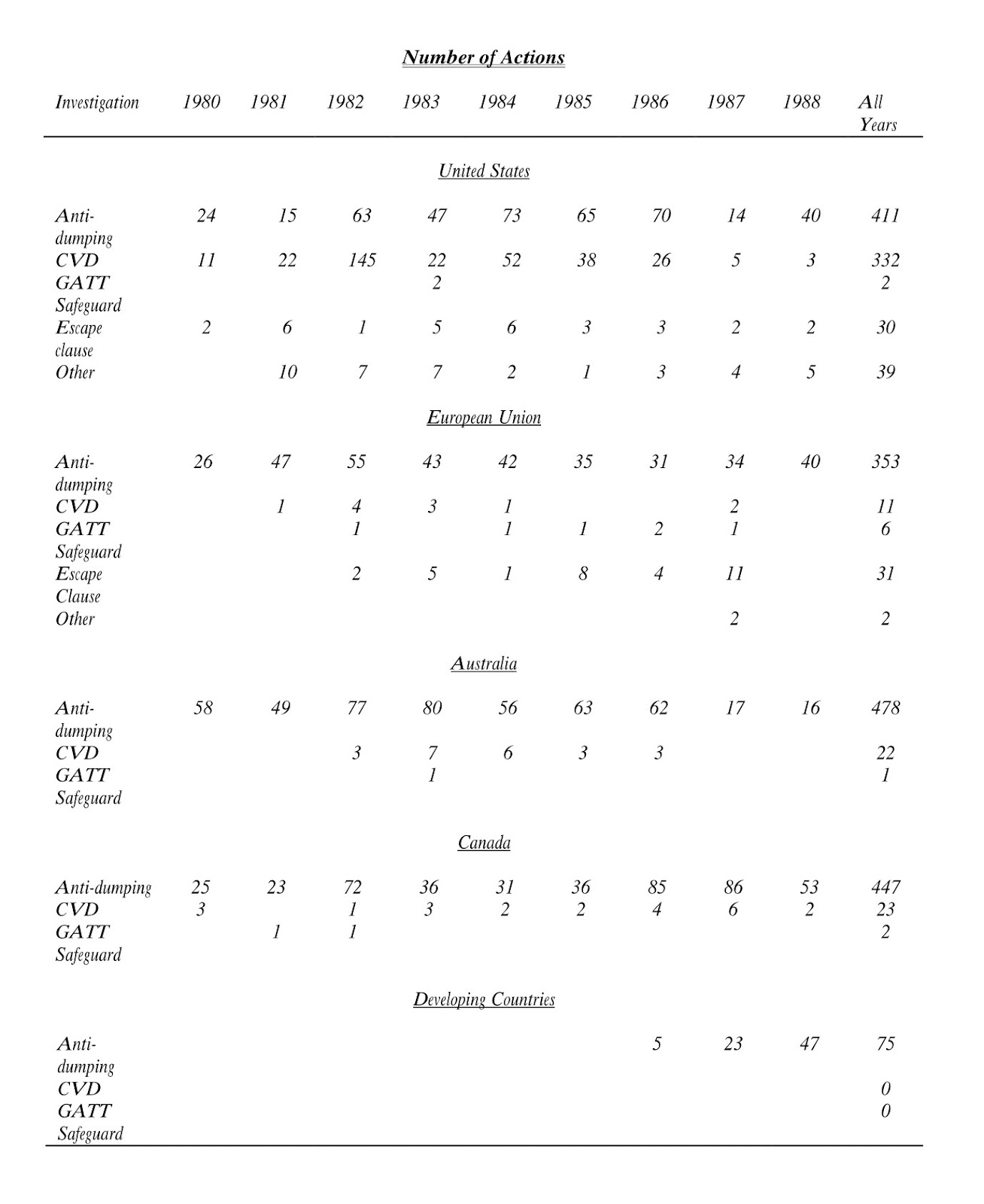
Download Now

Top 10 domestic violence cases

0

This article has been written by Ayush Tiwari, a student of Symbiosis Law School, NOIDA. This article explains what is domestic violence, what are the legal provisions regarding domestic violence in India and top domestic violence cases.

It has been published by Rachit Garg.

Table of Contents

What is domestic violence 

Domestic violence is defined as a violent control exercised by one individual over another. It is also referred to as building control and terror in a relationship via various sorts of abuse. Torture can be psychological, sexual, economic, or physical. This is not merely a social issue; it is also a major violation of human rights, exposing the victim to health and social consequences. The United Nations defines it as “intimate partner violence,” which occurs when one person in a relationship uses threat, mental abuse, manipulation, trying to hurt, injury, or financial abuse to take control of the other, and whose victim can be anyone, irrespective of age, gender, race, sexual orientation, class, or belief.

Domestic violence is not limited to those who are spouses or partners; it may also comprise multiple ties that an individual is bound by inside a family. In India, for instance, the legal component has given it a broader connotation, including sisters, widows, moms, single women, and any woman residing in the same family. As a result, domestic violence covers both intimate partners and family members. According to Section 3 of the Protection of Women from Domestic Violence Act of 2005 (DV Act), any act or omission by the Respondent that damages, injures, threatens, or abuses physically, sexually, verbally, or economically constitutes domestic violence.

According to the Union Health Ministry’s National Family Health Survey (NFHS-4), every third woman in India encounters some sort of domestic abuse from the age of fifteen. It also said that 31% of married women have experienced physical, sexual, or emotional torture at the hands of their partners. The main concern is that only around 10% of these women reported violence. Clearly, this is a big issue that must be addressed, and women must understand their rights as well as how to defend them. To address such incidents, the Protection of Women from Domestic Violence Act of 2005 was enacted.

Types of domestic violence

We have previously discussed the four categories of violence covered by the Act. However, in Bhartiben Bipinbhai Tamboli v. State of Gujarat 2018, these categories were further clarified. It was believed that:

Sexual violence

Sexual violence is a type of physical force that involves any act in which a woman is compelled to engage in any undesired, dangerous, or demeaning sexual behavior. It includes calling her  names, harming her by using objects and weapons during sex, and even forcing her to have sex by a spouse or intimate partner with whom she has consensual sex.

Physical violence

Physical violence is the use of physical force against a woman so that she sustains bodily harm or injury. Physical assault, criminal intimidation (threaten to cause harm), and criminal force (use force against a person to injure him/her) in the form of beating, stomping, punching, abandoning the aggrieved party in a dangerous place, using weapons to intimidate her, pressuring her to leave her matrimonial home, injuring her children, using physical force in sexual situations, and so on.

Emotional violence

Not all abusive relationships are violent and result in physical harm. Many women are subjected to emotional abuse, which is as damaging as physical violence. It involves loud names ­calling, accusing, isolating, scaring, displaying domineering behaviour, insulting or constantly criticising her.

Economic violence

Economic violence is defined as, a woman not being supplied with enough money by her spouse to support herself and her children by purchasing clothes, food, medications, and so on. It also involves prohibiting women from working. Apart from that, forcibly evicting her from her home by not  paying her rent, denying her of financial resources to which she is entitled  under any custom or law, and limiting her access to shared domestic resources also come under this category. It also involves selling or alienating her movable or immovable assets, jewellery, shares, stocks, and other items in which she has a stake.

Laws that deal with domestic violence cases

In India, there are various laws that specifically address the safety of married women from their partners and their partners’ families.

Protection of Women Against Domestic Violence Act, 2005 

This is a law passed by the Indian Parliament to safeguard women from domestic violence. It outlaws a wide spectrum of bodily, sexual, emotional, and financial abuse against women, all of which are explicitly defined by the Act. It protects women from men of the family. The Act’s scope includes not just the protection of women who are married to men, but also women who are in live-in relationships, as well as family members such as grandparents, mothers, and so on.

The Dowry Prohibition Act, 1961

This is a criminal code that punishes the gift and receiving of dowry. The Dowry Prohibition Act of 1961 outlaws the practice of dowry. If a person provides, accepts, or even asks for dowry, they can be imprisoned for a half year (i.e. for 6 months) or fined up to 5,000 rupees.

Section 498A IPC

This is a criminal law that applies to spouses or husband’s relatives who are cruel to women. Harassment for Dowry by relatives of the husband or by the husband is a crime under Section 498A of the Indian Penal Code 1860 (IPC). Harassment may take many forms, both physical and mental. Although Marital Rape is not a criminal offence in India, coerced sex with one’s wife might be deemed as ‘cruelty’ under this Section. Section 498A covers a wide range of topics. It also encompasses any and all purposeful behaviour against a woman that forces her to commit suicide or places her life, limb, or overall health in danger. In this context, health refers to both the physical and mental health of women.

How domestic violence laws are misused

Domestic violence laws are frequently used to harass the spouse or any other family member claiming under him, ensuring that he caves to the unlawful demands of the so-called victim rather than vice versa. Unfortunately, there have been a number of examples where Section 498A has been utilised primarily as a tool for blackmailing. It is often abused as a weapon for exacting retribution on whole families because under this clause, police can arrest anybody named as a tormentor in a married woman’s complaint, as ‘cruelty’ in marriages has been declared a non-bailable offence. Following that, bail under such circumstances is refused as a basic right.

As a result, many times, elderly parents and other relatives are wrongly accused of physically and emotionally tormenting the so-called victim, producing unnecessary tension that may result in bad health for the elderly parents and physical and mental pain for the accused’s family members.

Even if the charge is proven false, the accused is humiliated by the society. Poor and uneducated women may have endured the torment of their husband’s family, but many educated women now use this conduct for illegal motives.

The legislation was rewritten, significantly weighted in favour of women, on the assumption that only really offended women would come forward to file a complaint and that they would always speak the truth.

Landmark domestic violence cases in India

Lalita Toppo v. the State of Jharkhand, (2018)

Facts of the case

In the case of Lalita Toppo v. the State of Jharkhand and Anr. (2018), which was heard by the Supreme Court of India, the Complainant, who was not the Respondent’s legally wedded wife, approached the Court to obtain maintenance under the provisions of the Protection of Women from Domestic Violence Act, 2005, supposing that she will not be allowed to maintenance under Section 125 of the Code of Criminal Procedure, 1973.

In this instance, the Appellant was in a live-in relationship, with whom she had a kid. When the couple got separated, the Appellant sought support from her spouse, for which the Gumla Family Court allowed, giving her Rs 2000 per month and Rs 1000 to her child. The Appellant filed an appeal in the High Court, which found the family court’s ruling to be incorrect and ruled in favour of the partner. The Appellant then went to the Supreme Court.

Issue involved in the case

  • Whether a live-in partner can seek maintenance under the Domestic Violence Act, 2005?

Judgement given by the Court

In the Supreme Court a three-judge Bench composed of the then- CJI Ranjan Gogoi, Justices U.U. Lalit and K.M. Joseph observed that a live-in partner will be obligated to even more relief than that envisaged by Section 125 of the Code of Criminal Procedure, 1973. Making reference to the provisions of the Domestic Violence Act, the bench noted that the petitioner in the case would have a remedy to seek maintenance under the Act despite the fact that she is not the legally wedded wife and thus not obligated to be maintained under Section 125 of the Code of Criminal Procedure.

It was also observed by the Court that domestic violence, according to the provisions of the Domestic Violence Act, also includes economic abuse.

Inder Raj Malik v. Sunita Malik, (1986)

Facts of the case

In this case, Sunita Malik(Complainant) and her husband, Inder Raj Mailk(Respondent), were married. To extract more and more money and articles, the Complainant Sunita was treated cruelly, beaten, starved, and abused by her husband and in-laws after marriage, particularly during festivals.

One day, she was tortured physically and mentally to the point of fainting in her matrimonial home, but no doctor was called for her medical checkup.

Sunita Malik was threatened by her mother and brother-in-law with death and kidnapping unless she compelled her parents to sell their property in Hauz Qazi. As a result, it was discovered that the Complainant, Sunita Mailk, was treated cruelly and physically tortured by her husband and in-laws. Sunita Malik was harassed in order to force her or anyone associated with her to meet an illegal requirement for movable and immovable property.

Issues involved in the case

  • Are Section 498A of the Indian Penal Code, 1908, and Section 4 of the Dowry Prohibition Act, 1961, subject to the Double Jeopardy provision of Article 20(2) of the Indian Constitution?
  • Is Section 498A of the Indian Penal Code, 1908, ultra vires?

Judgement given by the Court

In this particular instance, the Delhi High Court had to decide whether a person could be convicted under both Section 4 of the Dowry Prohibition Act and Section 498A of the Indian Penal Code. The Court held that an individual can be convicted under both Section 4 of the Dowry Prohibition Act, 1956 and Section 498A of the IPC without facing double jeopardy. The Court held that Section 498A, IPC, and Section 4 of the Dowry Prohibition Act are distinct, since, under Section 4 of the Dowry Prohibition Act, mere demand of dowry is subject to punishment, whereas, in Section 498A, an act of cruelty committed against a newly wedded woman is punishable. As a result, it is possible to conclude that a person is subject to prosecution under both Section 4 of the Dowry Prohibition Act and Section 498A of the Indian Penal Code.

Hiralal P. Harsora and Ors v. Kusum Narottamdas Harsora and Ors, (2016)

Facts of the case

In this case, The plaintiffs were Pushpa Narottam Harsora and Kusum Narottam Harsora, a mother-daughter duo. They filed a complaint against Pradeep (son/brother), his wife, and her two sisters, alleging that the four of them subjected them to domestic abuse.   The Respondents urged the Metropolitan Magistrate to release Pradeep’s wife and two sisters/daughters since, according to Section 2(q), a complaint may only be filed against an “adult male.” The Respondents’ application was denied.

The Bombay High Court ruled that Section 2(q) of the aforementioned Act should be read in light of the definitions contained in Sections 2(a), 2(f), and 2(s) of the Protection of Women from Domestic Violence Act. Essentially, this assured that a complaint could be lodged against female family members as well as the “adult male member.” However, a complaint alleging domestic abuse cannot be brought primarily against the female members of the household. A co-Respondent must be an adult male. As a result, the Court did not read down the term “adult male person.” After this the mother and daughter duo filed a writ petition in the Supreme Court.

Issue involved in the case

  • Whether females can be liable under the Domestic Violence Act, 2005?

Judgement given by the Court

The Supreme Court struck down adult male from the concept of ‘Respondent,’ holding that it is not founded on any intelligible differentia having a rational nexus with the purpose sought to be attained. In the same instance, the Supreme Court clarified that women and non-adults are among the people who can seek redress under the DV Act. The word “Respondent” in Section 2(q) or those who can be considered perpetrators of violence against women/against whom remedies under the DV Act are enforceable cannot be limited to the phrase “adult male person” in Section 2(q). As a result, remedies under the DV Act are accessible even against female members and non-adults.

Sandhya Wankhede v. Manoj Bhimrao Wankhede, (2011)

Facts of the case

In the case of (Sandhya Wankhede v. Manoj Bhimrao Wankhede), after getting married in 2005, the Appellant Sandhya lived with R1, R2, and R3 for nearly a year, which caused problems in her marriage. She filed a police report against her husband under Section 498A of the Indian Penal Code for assaulting her. She also filed an application against all three Respondents, which the First Class Judicial Magistrate granted, directing R1 to pay the monthly maintenance. All Respondents were also barred from trying to evict the Complainant from her matrimonial home. Criminal appeals and applications filed by R1 before the Sessions Judge and the High Court were denied. R2 and R3 applied to the First Class Magistrate, but their request was denied. They filed an appeal, claiming that women cannot be considered Respondents in DV proceedings. The Court agreed and overturned the order, enabling Appellant to be evicted from her marriage home, which was solely owned by R2. As a result, it was not a “shared house.” However, the Court compelled R1 to offer separate lodging or make further payment for it as an alternative. The Appellant’s appeal in Sessions Court was replied based on the decision that “females” are not included within ‘Respondents.

The HC similarly took a similar stance, deleting R2 and R3’s names from the proceedings and ordering the Appellant to quit the matrimonial home. Hence this appeal was made.

Issue involved in the case

  • Whether a complaint can be filed under the Domestic Violence Act only against an adult male person and not against the husband’s female relatives, i.e. mother-in-law and sister-in-law?

Judgement given by the Court

However, in the aforementioned instance, the Supreme Court resolved the question by ruling that the provision to Section 2(q) that doesn’t exclude female relatives of the husband or male partner from the scope of a complaint that can be submitted under the Domestic Violence Act. As a result, complaints can be filed not only against the adult male person, but also against the adult male’s female relative.

V.D. Bhanot v. Savita Bhanot, (2012)

Facts of the case

  • The parties in this case got married on 23rd August 1980 and on 4th July 2005 the Respondent(wife) was driven out of her matrimonial home.
  • Thereafter Respondent filed a petition to the Magistrate under Section 12 of the DV Act.
  • The Magistrate granted interim relief of Rs 6000 to the wife  and subsequently passed a protection/residence order under Section 18 and 19 of the DV Act protecting the right of The Respondent wife to reside in her matrimonial home in Mathura.
  • Meanwhile, the husband, who served in the armed forces, retired and filed an application to remove his wife from the government housing.
  • Taking this into account, the Magistrate directed the petitioner to enable his wife to reside on the first floor of her marital house or, if that is not practicable, to find alternative lodging close to her matrimonial home or to pay Rs 10,000 in rental costs.
  • She preferred an appeal since she was dissatisfied with the Magistrate’s decision.
  • The appeal was denied, and the Additional Sessions court reasoned that “because the applicant left the married house on 4.7.2005 and the Act came into effect on 26.10.2006, the claim of a woman living in a domestic relationship or residing together prior to 26.10.2006 was not maintainable.”
  • The HC investigated this legal issue in response to an appeal. and it directed that the action be maintained even though it was taken prior to the Act’s coming into effect.

Issue involved in the case

  • Whether The Domestic Violence Act, 2005 also includes the victims of domestic violence prior to 2005?

Judgement given by the Court

The Supreme Court agreed with the reasoning given by the HC and held that:

“In our view, the Delhi High Court has also rightly held that even if a wife, who had shared a household in the past, but was no longer doing so when the Act came into force, would still be entitled to the protection of the Domestic Violence Act, 2005.”

Given the Respondent’s old age, the Court ordered the petitioner to furnish her with an appropriate portion of his house as well as 10,000 rupees per month for her maintenance. The Act’s goal was to safeguard women from domestic violence, hence it should be read in favour of women who are victims of domestic abuse. The Legislature’s intention was to cover women who’ve been victims of domestic abuse prior to the Act’s enactment. This was obvious from the Act’s definitions of the phrases “aggrieved individuals” and “domestic relationship.” The Domestic Violence Act,2005 is a civil remedy, and the criminal penalties given in the Act cannot be committed prior to the Act’s entry into effect, hence enforcing the Act retroactively does not violate Article 20(1) of the Indian Constitution.

Rajesh Kumar and others v. the State of U.P, 2017

Facts of the case

In this case, Rajesh Sharma (Appellant) and Sneha Sharma (Respondent) married on November 28th, 2012. Sneha’s father gave the dowry to the best of his ability, but the Appellants were not pleased. They began harassing or beating the Complainant and demanded Rs. 3,00,000/- in dowry and a vehicle. Since the Complainant’s pregnancy had been aborted, the Appellant had left her at her house. On that occasion, the Appellant was called under Sections 498A and 323 of the IPC. The wife filed a lawsuit against the Appellant and his family. She claimed that her husband demanded dowry when she was pregnant and that she was tormented by her spouse and his family members, resulting in the termination of her pregnancy.

The Appellants petitioned the High Court to have the summons cancelled, but the Court denied their request. As a result, the Appellants filed an appeal in the Supreme Court against the High Court’s decision.

The Appellants, on the other hand, had no intention of making dowry demands.

Issues involved in the case

  • Is there a necessity to curb the tendency to involve all members of the family in resolving a marriage dispute?
  •  Is Section 498A of the IPC being abused or not?

Judgement given by the Court

In this case, it was determined that in order to protect the innocent person, i.e., the husband as well as their relatives, the Court directed the formation of a “Family Welfare Committee” to deal with Section 498A of the IPC, and that no one would be arrested until the committee provided justice to the Complainant. “The committee’s primary goal is to separate genuine cases from fraudulent ones.” To provide assistance to victims of false complaints. The accused who wasn’t in the jurisdiction cannot be excused from making personal appearances in court and must attend through video conference.”

The Supreme Court has recognised that Section 498A of the IPC is being severely misapplied. In the current instance, the Supreme Court directed the prosecution of the dowry-related offences and ordered that the harassment or persecution of the husband and married man be halted. Furthermore, the goal of this committee is to provide for the restoration of innocent people’s human rights.

“The spouse and his family members may have different points of view in the conflict, and arrest and court remand are not the solution.” The ultimate goal of every judicial system is to punish the wicked while protecting the innocent.”

Arnesh Kumar v. the State of Bihar & Anr, 2014

Facts of the case

In this case, Arnesh Kumar (Appellant) and Sweta Kiran (Respondent) were married on July 1, 2007. Sweta Kiran claimed in Court that her mother-in-law and father-in-law sought Rs. 8 lakhs, a Maruti car, an air conditioner, a television set, and other items, and that when this was brought to Arnesh Kumar’s attention, he backed his mother and threatened to marry another woman. She further claimed that she was evicted from her matrimonial house since the dowry demand was not met. Arnesh Kumar refuted the charges and filed an anticipatory bail plea, which was initially dismissed by the learned Sessions Judge and then by the High Court. As a result, Arnesh Kumar has filed a Special Leave Petition with the Supreme Court.

Issues involved in the case

1. Is it required for a police officer to arrest someone in response to a complaint if that person is suspected of committing a cognizable offence?

2. What remedies are available to a person if a woman uses section 498A of the IPC to her advantage?

3. Should the Appellant be granted anticipatory bail?

Judgement given by the Court

The Supreme Court granted the Appellant interim release under specific restrictions. The Apex Court said that “Section 498A is a cognizable and non-bailable offence and has lent it a dubious place of pride amongst the provisions that are used as weapons rather than shield by disgruntled wives. The simplest way to harass is to get the husband and his relatives arrested under this provision.According to the “Crime in India 2012 Statistics,” 1,97,762 people were arrested in India in 2012 for violating Section 498A of the IPC. The charge-sheeting rate in instances under Section 498 A of the IPC is as high as 93.6%, but the conviction rate is barely 15%. This data clearly demonstrates how this part has been abused. The most straightforward approach to harassment is to have the spouse and his family imprisoned under this clause.” To discourage unwarranted arrests of accused, the Apex Court issued some required directives for Police to follow before detaining a person.

Bibi Parwana Khatoon v. State of Bihar, (2017)

Facts of the case

In this case, a woman was killed by setting her on fire by her husband and her family, according to the circumstances of this case. A case was filed against the husband and his family in which the district court and the High Court ruled against them. After which, the victim’s sister-in-law and brother-in-law appealed the conviction to the Supreme Court.

Issue involved in the case

Whether the Appellants had a common intention as the offender?

Judgement given by the Court

After hearing the case and reviewing the evidence, the bench concluded that both the lower courts erred in law in determining that the charge under Section 304B read with Section 34 of the Indian Penal Code, 1860 held against the current Appellants.

Based on the information presented, it cannot be proven beyond a reasonable doubt that the current Appellants, the deceased’s sister-in-law and brother-in-law, abused the victim in exchange for any such dowry demand.

Neither can it be proven, based on circumstantial evidence, that the Appellants had any common intention with the deceased’s spouse in the commission of the crime.

Furthermore, it is abundantly obvious from the documented evidence that they formerly resided in a separate village.

Kamlesh Devi v. Jaipal and Ors., (2019)

Facts of the case

In this case, the petitioner Kamlesh Devi stated that she and the Respondents are family members of the same family and they’ve been residing in the same premises for a long time. The petitioner’s husband is a former BSF officer, and she has three kids, Urmila, Anusaya, and Gaytri. Anusaya and Gaytri are the petitioner’s unmarried daughters who attend Krishna Nagar College for their education. Furthermore, Respondents have formed a gang and are quarrelsome individuals, and whenever the Petitioner’s daughters, Anusaya and Gaytri, went to their college, Respondents Jaipal, Krishan Kumar, and Sandeep followed them and taunted them, as well as engaged them in obscene behaviour.

Sube Singh, the petitioner’s husband, also filed a complaint with the Sarpanch of Village Gaud against the Respondents, after which the Respondents apologised in writing on 5.8.2008 in the presence of respected members of the village. They then returned to normalcy for a short period of time before resuming their obscene behaviour. As a result, having exhausted all other options for protection from domestic abuse, the complaint was filed.

After examining the provisions of the Act, the Trial Court determined that none of the witnesses on record demonstrated any fact to the effect that the Respondents and the petitioner were living in a shared home and that the Respondents had committed domestic violence against them.

The trial court also ruled that no violence of any sort was claimed within the joint household’s grounds. The case was dismissed by the Ld. Magistrate. An appeal filed with the High Court was likewise rejected.

Issue involved in the case

Whether the Respondents are liable for domestic violence?

Judgement given by the court

The Supreme court said that the High Court correctly concluded that the elements of domestic violence were completely missing in this case. The petitioner and Respondents are not residing in the same residence together. The responders are allegedly family members, according to a vague accusation. There isn’t even a murmur between the Respondents and the petitioner. They seem to be neighbours. Hence, the special leave petition was denied

Ajay Kumar v. Lata @ Sharuti, (2019)

Facts of the case

In this case, the Appellant Lata is the Respondent’s brother-in-law, i.e. his brother’s widow, and they used to live together in a Hindu Joint Family Property. According to the lawsuit filed in the Supreme Court, there seem to be no rules in the Act that requires the Appellant to pay maintenance to the Brother’s wife. Only if they were in a business partnership would he be obligated to pay the maintenance.

Section 12(1) of the DV Act states that a person may approach a magistrate for relief or financial relief to compensate for loss sustained by her or her child as a result of domestic violence, however, this does not include the order of maintenance under Section 125 of the Code of Criminal Procedure or any other law. The lady said that after her husband died, she was not permitted to dwell in her matrimonial house and was driven out with her kid, and she now has no means of support for herself and her child.

Issue involved in the case

  • Whether brother-in-law comes under the definition of “Respondent” under Section 2(q) of the DV Act?

Judgement given by the Court

In this case, the Supreme Court ruled that under the Domestic Violence Act, 2005, maintenance to a widow can also be provided by a brother-in-law. The Supreme Court rejected the Appellant’s allegation that Section 2(q) of the Protection Women from DV Act defines “Respondent” as any adult male individual who is or has been in a domestic relationship with a partner against whom the remedy is sought. The Supreme Court drafted a domestic connection between the woman and her brother-in-law, stating that the brother-in-law and the woman are a joint family.

Conclusion

The Domestic Violence Act, 2005 and the provisions of the Indian Penal Code, 1860 are a highly promising piece of legislation that combines civil and criminal punishments to give effective remedies to women who become victims of domestic violence. The statute includes provisions for protection officers, medical facilities, and free of charge orders, among other things, to assist aggrieved women in defending themselves and their loved ones. However, the Act does not come without flaws. Clearly, the Act’s implementation has to be strengthened. According to Human Rights Watch, police frequently do not submit a First Information Report (FIR), which is the first step in commencing a police investigation, especially if the aggrieved individual is from a low-income or socially disadvantaged part. It is also true that the DV Act has failed to address the issues that women and men confront when it comes to domestic violence, and the law is frequently misapplied when it is employed. Society needs more gender-neutral laws that treat men and women equally in situations of domestic violence, rather than instilling dread in the hearts of innocent people, as most men do and giving the other gender an extortion weapon. On the surface, the DV Act appears to be gender prejudiced. The DV Act should be changed with more gender-neutral clauses to prevent its misuse and to promote gender equality and fair justice.

References


Students of Lawsikho courses regularly produce writing assignments and work on practical exercises as a part of their coursework and develop themselves in real-life practical skills.

LawSikho has created a telegram group for exchanging legal knowledge, referrals, and various opportunities. You can click on this link and join:

https://t.me/lawyerscommunity

Follow us on Instagram and subscribe to our YouTube channel for more amazing legal content.

Download Now

Section 107 IPC : all you need to know

0

This article has been written by Oishika Banerji of Amity Law School, Kolkata. This article discusses Section 107 of IPC, 1860 which deals with the offence of abetment.

It has been published by Rachit Garg.

Introduction 

Two or more people commit a vast majority of crimes. In most of these crimes, there are sometimes people who do not participate in the crime themselves but assist others to commit the crime through various means, such as instigation, aid, or providing help or cooperation. These individuals might be said to aid in the commission of the crime, as it is correctly said, “just as a man with property and wealth has a sentinel to protect his assets, a thief or criminal requires others to assist him in committing an offence”. This article discusses the offence of abetment and its related components in detail. 

What do you mean by abetment

The term ‘abetment’ in criminal law indicates that there is a distinction between the person abetting the commission of an offence (or abettor) and the actual perpetrator of the offence or the principal offence or the principal offender.

The word ‘abet’ has been described as meaning to help, to assist or give assistance, to order, procure, or counsel, to countenance, to urge, induce, or assist in encouraging or setting another to commit according to the decision of the case of Kartar Singh v. State of Punjab (1994).

In the case of Emperor v. Parimal Chatterjee (1932), it was decided that an abettor is a person who aids in the commission of a crime or aids in the commission of an act that would be an offence if undertaken by a person capable of committing an offence with the same intent or knowledge as the abettor. The essentials are as follows:

  1. There must be an abettor,
  2. The abettor must abet, and
  3. The abetment must be an offence or an act that would be an offence, if committed by a person capable in law of committing the offence with the same intention or knowledge as that of the abettor.

Abetment under Section 107 IPC

In a comprehensive way under the Indian Penal Code, 1860, abetment can be defined as an act committed when a person becomes liable as an abettor if he/she instigates another to commit a crime or engages in a conspiracy with another to commit a crime and some act is done in furtherance of such conspiracy, or if he/she intentionally aids another in order to facilitate the commission of a crime. 

Section 107 of the Indian Penal Code, 1860 defines the abetment of a thing. In the case of Malan v. State of Maharashtra (1956), the ingredients of the offence of abetment were laid down as follows, which are essential for completing abetment as a crime: 

  1. The person persuades/instigates someone else to do a particular thing, or
  2. The person participates in any conspiracy to do such item with one or more other individuals, or
  3. The individual intentionally facilitates the doing of such activity through an illegal act or omission.

The Indian Penal Code, 1860, contains a broad definition of abetment. It does not constitute the aiding and abetting of an offence, but rather of a thing that may or may not be an offence. In some circumstances, this makes the abettor solely accountable, even if the individual aided is completely innocent. Section 108 of the Indian Penal Code, 1860, defines aiding and abetting as an offence. Thus, abetment entails a degree of involvement on the part of the abettor.

The scheme of provisions related to abetment under the Indian Penal Code, 1860

  1. Section 107 IPC: Defines abetment generally speaks of three kinds of abetment, namely, abetment by instigation, abetment by conspiracy, and abetment by aid.
  2. Section 108 IPC: Explains when an abetment of an offence takes place, and Section 108-A provides for the case of abetments-in India of an offence committed in a foreign country.
  3. Section 109 IPC: Prescribes the punishment for the offence of abetment when the offence abetted is committed, while Section 110 prescribes the punishment for abetment where the person abetted commits the act with a different intention or knowledge from that of the abettor.
  4. Section 111 IPC: Provides for cases of abetment resulting in a different offence but which is a probable consequence thereof.
  5. Section 112 IPC: Provides for cumulative punishment in cases covered by Section 111.
  6. Section 113 IPC: Supplementary to Section 111 and provides for punishment in cases where the act abetted causes a different effect from that intended by the abettor.
  7. Section 114 IPC: Provides for cases where the abettor is present at the time of the offence and makes him liable for the main offence and not merely as an abettor.
  8. Sections 115 IPC and 116 IPC: Prescribe the punishment in cases where the offence abetted is not committed.
  9. Section 117 IPC: Deals with abetment of offences by the public generally or a large group of persons.
  10. Section 118 IPC: Prescribes the penalty for concealing the existence of a design in another to commit a grave offence.
  11. Sections 119 IPC and 120 IPC: Provide for punishment in the case of public servants and others respectively for concealment of a design in another person to commit the offence not covered by Section 118.

Mens rea is the essence of abetment

Abetment is defined as a person’s active and intentional support of a criminal culprit. It relies on the intention of the person who abets as well as the conduct committed by the person who abets. The requirement of mens rea as a precondition for liability is thus critical to remember when analysing the law relating to abetment. Instigation, and engaging in a conspiracy to do something or purposefully helping another are all activities in which the person abetting knowingly promotes or supports another person in the commission of the offence, as can be deduced from a simple reading of Section 107. 

As a result, knowledge of the act and its consequences is implicit in the construction of the provision itself. As has been observed in Shrilal v. the State of Madhya Pradesh (1952), in order to convict a person of abetting the commission of a crime, it is not only essential to prove that he/she participated in the innocent parts of the transaction, but it is also necessary to connect them with the criminal steps of the transaction in some way. Similarly, it cannot be stated that a person who offers his support willfully aids or facilitates the commission of a crime and that he is an abettor if he does not know or has no cause to believe that the act he is assisting or supporting is in itself a criminal act.

In Barendra Kumar Ghosh v. King Emperor (1925), the Privy Council declared that a person’s presence at the scene of an incident constitutes abetment if it is meant to facilitate the commission of the crime. It is insufficient to show that the offence charged could not have been committed without the putative abettor’s help. 

When mens rea is not required in case of abetment? 

The situation is different, however, in cases when the statute expressly states that no mens rea is required to make a person responsible for the offence of abetment. Mens rea is not required to prove abetment in cases where the conduct itself is an offence, such as the sale of obscene books or other things under Section 292 of the Indian Penal Code, 1860, or where strict liability exists in public welfare or social law.

In the case of Kartar Singh v. the State of Punjab (1994), the Supreme Court of India had concurred with a Bombay High Court judgment in the case of State of Maharashtra v. Abdul Aziz (1962), stating that, ‘when no mens rea is essential in the substantive offences, the same is also not necessary in the abetment thereof’. The Apex Court was considering the validity of the Terrorist and Disruptive Activities (Prevention Act), 1987 in the present case. 

Abetment by instigation

A person is said to instigate another when he/she actively suggests or stimulates him/her to do an act by any means, or language, direct or indirect, whether it takes the form of express solicitation or hints, insinuation or encouragement, or willful misrepresentation or wilful concealment of a material fact. It is not required to use exact words to convey what the individual to whom the instructions are provided should perform. While reasonable confidence about the meaning of the words used is required in order to determine if there was incitement, it is not required in law. 

Only when advice is intended to actively suggest or stimulate the commission of an offence, it is considered to be instigation. Mere acquiescence does not amount to incitement. As a result, the word ‘instigation’ means exhortation or urging to do something drastic or unwise, as well as, to stimulate or urge. The presence of mens rea is therefore a required corollary of instigation. In the case of Swamy Prahaladdas v. the State of M.P. and another (1995), it was observed that comments spoken in a disagreement or on the spur of the moment do not have the mens rea necessary to constitute incitement because they are spoken in a fit of rage and emotional state.

The decision made by the Supreme Court of India in the 1967 case of Jamuna Singh v. the State of Bihar was that the offence of abetment is complete when the alleged abettor has influenced another or engaged in a plot to perpetrate the offence. The act assisted does not have to be performed to commit the offence of abetment. Only in the situation of a person abetting an offence by willfully assisting another to commit the same, would the accusation of abetment against him be expected to fail if the person accused of committing the offence is acquitted.

A person who stands by silently and does not actively participate in the committing of the crime is not an abettor. It’s a matter of fact if there was any instigation. There cannot be a one-size-fits-all criterion for determining whether or not there was incitement. In the absence of direct proof of instigation, a conclusion about whether or not there was instigation must be drawn from the circumstances of the case at hand. 

In the 2004 case of Ranganayaki v. State by Inspector of Police, the Supreme Court of India held that the prosecution does not have to prove that the actual operative cause in the mind of the person abetting was instigation and nothing else, as long as there was instigation and the offence was committed or would have been committed if the person committing the act had the same knowledge and intention as the abettor. The instigation must be made in relation to the act that was performed, not to the act that is likely to be performed by the person who is instigated. It is only if this condition is fulfilled that a person can be guilty of abetment by instigation.

Instigation in dowry death cases 

In situations involving the death of young brides or women within seven years of marriage as a result of dowry harassment, instigation as a kind of abetment has traditionally been one of the most important issues. 

  1. In Protima Dutta v. the State of West Bengal (1977), the deceased’s mother-in-law and her husband were charged with abetment of suicide by encouraging and inciting her to commit herself under Section 306 of the Indian Penal Code, 1860, read with Section 24 of the Code. Despite the fact that there was no explicit request, their callous treatment of the deceased over the months made her go through mental suffering. As a result, it was determined that a sequence of actions amounting to deliberately advising and encouraging the deceased to commit suicide amounted to incitement.
  2. The Supreme Court has ruled in Wazir Chand v. the State of Haryana (1989) that it must be proven that the death in question was a suicidal death before someone can be charged with abetment of suicide.
  3. Section 306, which allows for the abetment of suicide, is frequently invoked in the context of bride-burning and dowry-related deaths. Abetment is also defined as supporting, inciting, and thereby inducing suicides. There are numerous examples of this. It will be enough to quote the State of Punjab v. Iqbal Singh (1991), in which it was determined that the husband’s and his relatives’ actions in creating a horrible situation in which the deceased has no other option but to commit suicide amounted to abetment through inducement.

Abetment by conspiracy 

The abetment through engaging with one or more persons in a plot to do something is the second leg of the definition of abetment. Conspiracy abetment necessitates the verification of three essential factors, namely:

  1. The abettor is involved in a plot with one or more people.
  2. The conspiracy was aided in the doing of the thing.
  3. In furtherance of the plot and in order to carry out the act, an act or criminal omission has occurred.

If someone enters into an agreement with one or more individuals to carry out a legal act by illegal means, or to commit an illegal act, and some act is done in furtherance of that agreement, he/she is said to abet the commission of an offence by conspiracy. A conspiracy to do something involves a group of two or more people who have agreed to accomplish something together. It has been decided that where a criminal conspiracy amounts to abetment under Section 107, invoking the provisions of Sections 120-A and 120-B of the Indian Penal Code, 1860, is superfluous because the Code has created a specific provision for the punishment of such an offence.

To prove abetment through conspiracy, the prosecution must show that the abettor inspired the doing of a particular action, engaged in a conspiracy with one or more other individuals to accomplish that thing, or willfully helped the doing of that thing through an act or illegal omission. The amplitude of criminal conspiracy is slightly more than that of abetment by conspiracy. The Supreme Court of India’s decision in the 2001 case of Saju v. the State of Kerala has had a similar line of reasoning, to the one discussed above. 

Difference between abetment and conspiracy

  1. Abetment is the act of one or more individuals engaging or employing others to commit an offence. The former, that is the person who aids and abets, is referred to as the ‘abettor’, whereas the latter, that is, the person who executes the crime with his/her own hands, is referred to as the ‘primary offender’. Conspiracy, on the other hand, is a procedure in which two or more people agree to commit an illegal act or to do/commit a lawful/legal act using illegal methods. Conspirators are the parties to the arrangement.
  2. A simple combination of parties or agreement between them is not enough to constitute abetment. Some act or illegal omission must occur in furtherance of the conspiracy and in order to carry out the object conspired for.
  3. In the case of abetment, the sanction of relevant authorities is not required to pursue the abettors who only assisted in the commission of a crime. While in a conspiracy, responsible authorities’ approval is required to continue against conspirators who have only agreed to conduct a crime.
  4. One or more people can commit abetment, whereas two or more people can commit conspiracy. 
  5. While abetment is the genus, conspiracy is the species.
  6. Abetment per se is not a substantive offence whereas criminal conspiracy is substantive. 
  7. Abetment can be committed in a variety of ways, including instigation, conspiracy, purposeful aid, and so on, but conspiracy is a kind of abetment.
  8. Sections 107 to 120 of the law define the offence of abetment, whereas Sections 120-A and 120-B of the 1860 Code explain the offence of conspiracy.
  9. Section 109 of the code is concerned only with the punishment of abetment for which no express provision is made under the Penal Code. A charge under Section 109 should, therefore, be alone with some other substantive offence committed in consequence of abetment. The offence of criminal conspiracy, on the other hand, is a stand-alone offence. It is penalized under Section 120 B of the Code, which makes a charge under Section 109 of the Code redundant and ineffective.

Abetment by aid

If a person willfully assists or lends aid in the conduct of an offence by doing or failing to do something, he/she is said to abet the commission of the crime. It is insufficient to have the intention to offer assistance. Instead, the abettor must engage in some active behaviour and the act must be carried out as a result of that conduct. The phrase ‘intentional aid’ in Section 107 implies active participation in the commission of a crime. If an individual has no knowledge of the offence being committed or anticipated, merely providing assistance does not constitute abetment by aid. The essence of the abetment by aid offence is the intent to assist in the commission of the crime. As a result, a person who assists in the commission of an offence under duress or fear is not covered by this provision. This view was made by the Apex Court in 1969 while deciding on the case of Dalpal Singh v. the State of Rajasthan

A person abets the doing of a thing who actively assists the doing of that thing, according to Section 107 of the Indian Penal Code, 1860. Intentional assistance can include any of the following elements:

  1. Committing an act that directly aids in the commission of a crime.
  2. Illegally failing to accomplish anything that one is obligated to do.
  3. Acting in a way that makes it easier for someone else to commit the crime.

A careful examination of Section 107’s third clause, as well as explanation 2, indicates that an act that merely aids the commission of an offence does not constitute abetting an offence unless it was done with the aim to facilitate the conduct of the ‘thing.’ If a person invites someone casually or for a friendly purpose and that invitation aids the murder of the invitee, the former is not considered an abettor unless the invitation was issued with the objective to facilitate the murder. It is insufficient that the alleged abettor’s act facilitates the commission of the crime.

In the case of Faguna Kama Nath v. the State of Assam (1959) the Apex Court had observed that aid can be given through both voluntary and involuntary acts of commission and omission. For example, if a police officer knows that specific individuals are likely to be tortured in order to coerce confessions, he is liable for abetment to the offence of extortion by an act of omission. 

It is evident from Explanation 2 that in order to be subject to Section 107 (thirdly), the act must have been performed, as one cannot be held liable for assisting in the performance of a task that has not been completed. For example, if a servant keeps his master’s house’s gate open in order to assist the admission of thieves, he cannot be charged with likely theft which has been carried out by others. However, if the servant lets the thieves into the house after opening the door, he is guilty of abetment in the sense that his actions encouraged them to steal.

Abetment by illegal omission 

When a person is legally obligated to do something but chooses to do nothing, that person is liable for abetment by illegal omission. In the case of Raj Kumar v. the State of Punjab (1983), the accused, a husband, could not be found guilty of ‘illegal omission’ because he did not prevent his wife from committing suicide when she threatened to do so and instead committed suicide by lighting fire to her clothes. To convict someone of abetment by ‘illegal omission,’ it must be proven that the accused not only unintentionally helped the commission of the crime by his non-interference, but also that his omission resulted in a legal requirement being breached.

What’s important to remember is that the illegal omission must be an act that the individual is legally obligated to perform. When the law imposes an obligation to discharge, a person’s illegal failure to act makes him criminally accountable. It was found in the case of Subhash Chandra Bebarta v. the State of Orissa (1974), that a lorry driver who permitted a youngster to drive while knowing the child did not know how to drive, resulting in an accident, assisted the offence by illegal omission. However, careless conduct, even though it violates the law, does not constitute abetment by ‘illegal omission.’

Punishment for abetment

The idea of abetment being prosecuted as a separate crime and penalised may seem strange to the general public because most people believe that only the perpetrators will be punished. In its provision for abtement, the Penal Code carefully lays out the offence of abetment, outlining in detail the many types of sanctions that the abetment laws announce. Before dealing with the provisions designed for punishment for abetment, it is necessary for us to have an idea about the distinct conditions that may result from the act of abetment which may involve the application of the discussed provisions hereunder: 

  1. It is possible that no infraction will be committed due to abetment. In this case, the wrongdoer is liable under Sections 115 and 116 of the Indian Penal Code, 1860 for just assisting in the commission of a crime.
  2. The precise conduct that is being targeted for abetment may be committed and will be punishable under Sections 109 and 110 of the Code of 1860.
  3. Some remarkable acts, however, may occur as a result of the aided act, in which case the abettor shall be prosecuted under Sections 111, 112, and 113 of the Indian Penal Code, 1860.

Section 109 IPC, 1860

Section 109 of the Indian Penal Code, 1860 deals with punishment of abetment if the act abetted is committed in consequence and when no express provision is made for its punishment. The provision lays down that If the act assisted is committed as a result of the abetment, and this Code makes no express provision for the punishment of such abetment, the person who abets the offence should be punished as provided for the offence.  Instigating, urging, or promoting someone to commit a crime is referred to as abetment. It can also refer to assisting the perpetrator in the commission of a crime. When more than one person is involved in committing a crime, the level of involvement of each individual may differ.

For instance, as a reward for granting A some favour in the performance of B’s official tasks, A presents a bribe to B, a public worker. The bribe is accepted by B. A has aided and facilitated the violation of Section 161 of the Indian Penal Code, 1860. Another illustration that can be considered in this regard is if we suppose that A and B work together to poison Z. In order to carry out the plot, A obtains the poison and provides it to B, who will administer it to Z. In order to carry out the plot, B administers the poison to Z while A is away, resulting in Z’s death. In this case, B is the murderer. A is convicted of aiding and abetting the crime through conspiracy and faces death penalty therefore.

Regardless of whether the abettor is present at the time the offence is committed or not, Section 109 of the Penal Code applies because he/she has instigated the commission of the offence or has connected with at least one or more different people in a conspiracy to commit an offence, and in accordance with that conspiracy, some unlawful act or unlawful exclusion occurs, or has purposefully assisted the commission of an offence by an act or illicit oversight. This Section specifies that if the Penal Code has not separately accommodated abetment as a punishment, it is prosecuted with the same discipline as the initial offence. Instigation is not expected to be in a precise structure or to be expressed solely in words, according to the law. The instigation could come in the form of behaviour or conduct. Whether there was instigation or not is a question that must be answered based on the facts of each instance.

Section 110 IPC, 1860

Even if the individual assisting, commits the offence with a different motive than the principal perpetrator of the crime, the abettor will be prosecuted with the sentence imposed for the offence aided, according to Section 110 of the Indian Penal Code, 1860. This provision has no bearing on the aided individual’s responsibility.

Section 111 IPC, 1860

The development of abetment legislation around the phrase “each individual is presumed to intend the corollary results of his act” continues in Section 111 of the Indian Penal Code, 1860. If one man instigates another to commit specific wrongdoing, and the latter, in response to such instigation, commits not only that wrongdoing but also another wrongdoing in furtherance of it, the former is criminally liable as an abettor in regard to the latter, if it is one that a reasonable person with the intelligence of a reasonable man would have known to be committed at the time of inducement.

Section 112 IPC, 1860

The criteria outlined in the previous section are expanded in Section 112 of the Indian Penal Code, 1860. It holds the abettor responsible for both the abetted and the committed offence. A close examination of Sections 111, 112, and 133 reveals that if an individual aids and abets another in the commission of an offence, and the chief goes on to do something else that has a different outcome than the abettor intended, thereby aggravating the offence, the abettor is liable for the consequences of his principal’s actions. The essential question in such an investigation is whether the abettor, if he had been a reasonable man at the time he was being provoked or if he had been actively aiding the principal criminal, could have forecast the likely outcomes of his abetment.

Section 113 IPC, 1860

Sections 113 and 111 of the Indian Penal Code, 1860 should be read together. Section 111 deals with the doing of an actus reus that isn’t the same as the one abetted, while it also deals with the circumstance when the actus reus is comparable to the abetted guilty conduct but has a different impact.

Section 114 IPC, 1860

Section 114 of the Indian Penal Code, 1860 is likely to be activated only once conditions indicating abetment of a specific crime have been established, and then the presence of the accused at the commission of that wrongdoing has been established. Section 114 deals with the situation in which there has not only been wrongdoing in form of abetment, but also an actual commission of the wrongdoing abetted and the abettor is present. Clearly, the section is not punitive. 

Section 114 does not apply in every case when the abettor is present during the commission of the aided offence. While Section 109 refers to abetment, Section 114 refers to circumstances in which the abettor was not only present at the moment of the crime’s conduct but also abetment was carried out prior to his presence.  There is a very delicate line existing between Section 34 and Section 114 of the Indian Penal Code, 1860. According to Section 34, if a criminal act is committed by a group of people for the common good, each of them is liable as if it were committed by himself alone. Thus, if two or more people are present, helping and abetting in the commission of the murder, each will be tried as the main perpetrator of the crime, though it is unlikely that it will be clear which of them actually committed the crime.

Section 114 refers to a circumstance in which an individual, by abetment, renders himself liable as an abettor prior to the commission of the wrongful act, is there when the actus reus occurs, but does not actively participate in its execution. A combined act under Section 34, on the other hand, does not include a simple order from one person to another and the execution of that order by the other, which may only be the latter’s act.

Section 115 IPC, 1860

The abetment of particular offences that are either not committed at all, not committed in the course of abetment, or only partially committed is punishable under Section 115 of the Indian Penal Code, 1860.

The detention stated in this section is for a period of up to seven years, and you will also be required to pay a fine. Furthermore, if the abettor commits any act for which the abettor is liable as a result of the abetment and which causes harm to any person, the abettor is subject to imprisonment of either sort for a duration up to fourteen years, as well as a fine.

Section 116 IPC, 1860

The abetment of an offence punishable by detention is covered by Section 116 of the Indian Penal Code. It is necessary to note that there is no part of the Code that deals with the abetment of an offence punishable only by a fine. However, abetment is at the heart of Section 306 of the 1860 Code’s violation. To put it another way, if there is no abetment, an offence under Section 306 which is dealing with ‘abetment of suicide’ will undoubtedly become a vital factor. Having an abetment is not anticipated. As a result, there can’t be a violation of Section 116 when read with Section 306.

Common questions related to the offence of abetment

As we gradually progress to the end of this article, it is evident for the readers to ask certain general questions related to the offence of abetment. The same has been addressed by means of three common questions that if answered, clear every kind of confusion associated with abetment. The same has been provided hereunder. 

What happens to other offenders when the principal offender gets acquitted in a case involving a charge of abetment by aiding

When the principal offender is acquitted, all other convicts are discharged from their role of being a part of the offence of abetment.

The Supreme Court of India was reviewing the case of Trilok Chand Jain v. the State of Delhi (1977), in which a person was accused of assisting the major criminal, a Delhi Energy Supply Undertaking inspector, in receiving a bribe for supplying an electricity connection to the complainant. When the chief offender was cleared and exonerated of the offending act by the trial court, nothing remained of the case because there was no evidence that the appellant, a lower cadre employee, had sought the money. The prosecution’s case was unique in that the inspector was the one who demanded money. 

As a result, the prosecution’s claim that the money was demanded by the appellant labourer for himself (despite the fact that the major perpetrator had been acquitted) was found to be undiscovered, and the individual was therefore acquitted. When the main perpetrator was acquitted, it was decided that the individual accused of assisting and abetting could not be convicted.

What is the effect of acquittal of a person committing the offence on an abettor

In Jamuna Singh v. the State of Bihar (1967), the Supreme Court of India declared that it cannot be established in law that a person cannot be convicted of abetting a crime where the person alleged to have committed the crime as a result of the abetment has been acquitted. The nature of the act abetted and the method in which the abetment was made determine the abettors’ guilt. When the alleged abettor has inspired or engaged in a conspiracy to perpetrate the offence, the charge of abetment is complete. The act assisted does not have to be committed to committing the charge of abetment. Only in the situation of a person abetting a crime by willfully assisting another to commit that offence would the accusation of abetment against him be expected to fail if the person accused of committing the offence is acquitted.

Is giving advice a kind of instigation

Advice by itself does not always imply incitement. Advice-based instigation, on the other hand, is harder to substantiate. What must be demonstrated is that the advice was intended to actively propose or stimulate the commission of an offence. Otherwise, the general advice is just too ambiguous a term to be used to substantiate an allegation.

The explanation of the term ‘abettor’ as provided in Section 108 of the Indian Penal Code, 1860, states that an abettor is a person who aids in the commission of a crime, or the performance of an act that would be an offence if undertaken by a person capable of committing an offence with the same intent or knowledge as the abettor. Take for instance, B is provoked to murder D by A.  B stabs D in retaliation for the instigation. D heals from the injuries. Here, A is responsible for inciting B to kill D. It is not necessary for the person assisted to be legally capable of committing an offence, to have the same guilty intention or knowledge as the abettor, or to have any guilty intention or knowledge at all. 

Let us consider another example where A instigates B to set fire to a dwelling-house. B, as a result of his insanity, is unable to comprehend the nature of the act, or that he is doing something criminal or against the law, and as a result of A’s instigation, sets fire to the house. B has committed no crime, but A is guilty of aiding and abetting the crime of lighting fire to a dwelling-house and is subject to the penalty for that crime. Thus, giving advice will not be amounting to be a kind of instigation if not the intention of the abettor is guilty or malicious. 

What happens when the substantive offence is not established in abetment cases

When the substantive offence is not proven and the principal offender is acquitted, the abettor is usually not held responsible. In other words, if the substantive accusation is dismissed, the abetment charge is dismissed as well. The Supreme Court had stated in Madan Raj Bhandari v. the State of Rajasthan (1970), where the appellant was charged with abetment with another in causing a woman’s miscarriage, even though the woman was acquitted, that “an abetment charge ordinarily fails when the substantive offence is not established against the principal offender”.

Conclusion

To conclude, it can be said that a person is charged with abetment of a crime if he/she assists or supplies an item to another person who is committing a crime. The offence of abetment cannot be confined to the scope of Section 107 of the Indian Penal Code, 1860 only as the entire Chapter XVI is dedicated towards the same. For the purpose of this article, the importance of Section 107 has been reflected and how it contributes to creating the environment for the offence of abetment to spread, has been highlighted. Section 107 introduces the offence of abetment to its readers and lays down the path for the following provisions to take over the responsibility of discussing the offence. Keeping this in mind, it can be said that Section 107 holds immense relevance in the Indian Penal Code, 1860 as it facilitates interpretation of the complex offence of abutment. 

References 

  1. PSA Pillai, Criminal law (13th Edition), LexisNexis.
  2. http://www.legalpediajournal.com/wp-content/uploads/2018/10/journal-content-6.pdf.

Students of Lawsikho courses regularly produce writing assignments and work on practical exercises as a part of their coursework and develop themselves in real-life practical skills.

LawSikho has created a telegram group for exchanging legal knowledge, referrals, and various opportunities. You can click on this link and join:

https://t.me/lawyerscommunity

Follow us on Instagram and subscribe to our YouTube channel for more amazing legal content.

Download Now

NBFCs : the lending lords

0
NBFC merger

This article is written by Shivangi Lal pursuing a Diploma in International Business Law. This article has been edited by Zigishu (Associate, Lawsikho). 

This article has been published by Sneha Mahawar.

Introduction

In late 2018, a major non-banking financial company (NBFC) defaulted, causing a credit crunch in the Indian economy. The failure raises questions on the role of NBFCs in the Indian economy alongside banks and the extent of their power.

The nature and scope

As their name implies, NBFCs are non-banks that provide credit like banks. Though banks and NBFCs operate differently from one another, one crucial difference is their funding models. While all banks are allowed to accept public deposits-both demand and time deposits-all NBFCs are not allowed to accept public deposits. No NBFC is permitted to accept demand deposits and most of them are not permitted to accept time deposits.   

NBFCs have been unable to accept public time deposits since 1997, resulting in deposits made by the public constituting a small portion of their total liabilities and no new licenses have been granted since 1997. NBFCs typically raise capital by borrowing from commercial banks and by issuing debentures and bonds (often to banks and mutual funds), as well as by accumulating equity capital.

A critical difference among NBFCs is their nature of business (lending), their focus on geographical and customer areas, as well as their size.  The Reserve Bank of India (RBI), uses three parameters to classify NBFCs:

Nature of business activities

Ten different categories of NBFCs were classified based on the company’s business. Investment and credit firms, HFCs (Housing finance companies), and microfinance institutions are the three most important in terms of credit provision. Under joint liability group financing, microfinance institutions primarily provide microloans to borrowers (mostly women) from economically deprived segments. As a reason, they are unimportant for understanding commercial credit, while credit and investment firms (often referred to as NBFCs) and HFCs are crucial in the commercial credit arena. As of March 19, 2020, the total HFC loan book was around $20 trillion, accounting for a considerable portion of total commercial credit. 

Access to public deposits

On 30 September 2019, only 74 of 9,462 NBFCs registered with the RBI were NBFCs-D. NBFCs are divided into two categories: NBFCs accepting public deposits (NBFCs-D) and (ii) NBFCs not accepting/holding public deposits (NBFCs-ND).

Size

The size of NBFCs varies substantially. Unlike banks, which require a license to operate and a greater beginning capital (currently $5 billion for a universal bank), the minimum capital required to start an NBFC is comparatively low at $20 million. Many NBFCs are quite small, with total assets of less than a billion dollars. The RBI separated NBFCs into two groups depending on asset size in 2006, with those with assets exceeding $1 billion being categorized as systemically significant NBFCs-ND (NBFCs-ND-SI), In 2014, the barrier was raised to $5 billion. All the other NBFCs-ND were treated as a separate category. Because of their bigger scale, NBFCs-ND-SI were considered to pose greater risks to the financial stability system and were therefore subject to stricter prudential regulations compared to NBFCs-ND.

Journey of non-banking financial companies 

Since the early 2000s, India’s banking system has experienced a cycle of lending acceleration and deceleration. While the growth rate of bank lending to the commercial sector was astonishing from 2003 to 2008, this altered in wake of the global financial crisis of 2008. Balance sheet issues in both the banking and private company sectors became apparent after 2014.

As a reaction, the RBI introduced the asset quality review, which required banks to identify stressed assets on their records. Both financial institutions and PSBs were subject to the asset quality examination. Gross non-performing assets (NPAs) in the financial system more than doubled from March 2015 to March 2018.  From FY2015 to FY2019, banks were lending primarily to the consumer sector and NBFCs, with bank credit to these two segments growing at an average rate of about 17% while credit to industry grew at an average rate of less than 3%. The Indian financial sector experienced structural reforms starting in 2010. In the economic landscape, mutual funds had emerged as key participants. Mutual funds’ assets under management grew at a compound annual growth rate (CAGR) of 22.1 percent from FY2012 to FY2017. This secular growth trend was increased during the demonetization event in November 2016, when the government declared nearly 86 percent of the cash in circulation illegal overnight. 

Households and businesses hurried to deposit their cash, due to the increase in bank deposits in FY2017. Increased competition among NBFCs also resulted in some dilution of underwriting and collateral standards as the asset quality of NBFCs deteriorated steadily. Gross NPAs as a percentage of gross advances increased to 6.1% in FY2017 from 2.9% in FY2012 The explosive growth along with rising competition in the sector during FY2014–FY2018 masked the risks taken by NBFCs.

The non-banking financial company crisis of 2018

IL&FS, a prominent infrastructure-financing NBFC, foreclosed on its debt in September 2018. This sent shockwaves through the industry, resulting in a major credit crunch and having an impact on the real economy. IL&FS is a conglomerate specializing in infrastructure development and financing. The IL&FS Group’s main holding company is IL&FS, with most of its business operations housed in different businesses.

IL&FS Financial Services Limited, a big NBFC, was also part of the group, and it lent to many of the business’s special purpose vehicles.  In September 2018, the IL&FS businesses’ total debt, which included bonds and bank loans, was reported to exceed $910 billion. Long-term instruments and short-term commercial papers were used by IL&FS to borrow money from the debt capital market. Most rating agencies gave the company’s debt instruments the highest possible rating. These bonds were generally held by institutions including mutual funds, pension funds, company coffers, and charitable trusts because of the massive amounts involved and the excellent ratings.

The first hints of the crisis appeared in June 2018, when IL&FS defaulted on $4.5 billion in corporate deposits and commercial papers. At least 2 rating agencies downgraded IL&FS’s long-term ratings in July and August 2018. On September 4, 2018, IL&FS defaulted on a ten-billion-dollar short-term loan from the Small Industries Development Bank of India, whilst a unit defaulted on a five-billion-dollar credit from the same development bank. The failure of IL&FS sent shockwaves through the debt financing market. Following the failures, the credit risk premium across all bonds increased dramatically. All debt mutual funds have stopped rolling over commercial papers issued by various NBFCs because they are cautious of incurring credit risk.

Borrowers, consumers and measures they may seek

The vast majority of NBFC loans are unsecured. An unsecured loan is one that is granted entirely on the basis of the borrower’s creditworthiness, with no collateral offered as security in the case of failure or non-payment of debts. Unsecured loans, often known as personal loans, are typically given to customers with excellent credit ratings.

The Credit Information Bureau (India) Limited (CIBIL) is the most well-known of the Reserve Bank of India’s four credit information businesses. The RBI has also granted credit information company licenses to three other companies. Experian, Equifax, and Highmark are the three companies.

Minor defaults are defined as payments that are late or missed for fewer than 90 days. As a result, your CIBIL score suffers a temporary setback rather than a permanent drop. If you don’t make payments for more than 90 days, your account will be classified as an NPA (non-performing asset). They may contact your contacts because you gave them access to your contact list when you took out the loan. As a result, your personal information is at risk. The loan repayment period should be at least 30 days. The provision of a loan for less than 30 days is against RBI laws and regulations.

Always request a loan agreement and review the progress of NBFCs on the RBI website. They have the authority to deliver legal notice, but they do not have the right to harass you via phone, text, WhatsApp, or other means.  When you fail to repay the borrowed amount after a specified period of time, the lender will declare your loan account to the credit bureaus as a non-performing asset (NPA). This will have a negative impact on your credit history as well as your credit score. They will be unable to file a case under Section 420 of the Indian Penal Code. An aggrieved party might file a dispute with the RBI and file a complaint with the lender’s cyber cell.

Conclusion

Many consumer sectors in a nation like India are underserved or unserved by commercial banks.  Serving these groups may not be economically viable for banks, either because they lack the essential expertise or because they lack access to them. The creation of NBFCs is based on the need to serve customer niches that are underserved by commercial banks. In comparison to commercial banks, this demands them to provide some operational and balance sheet flexibility. As a result, they require distinct regulatory regulation than commercial banks.

Non-Banking financial institutions are an essential aspect of the financial sector of any economy due to their intrinsic features. Other developing nations can learn from India’s NBFC development and the 2018 crisis. To avoid a repetition of the 2018 crisis, capital (both debt and equity) must be disciplined, and capital sources (both markets and entities) must become more selective when funding NBFCs.

Over time, successful NBFCs have gained skills, experience, and credibility. It’s feasible that a few financially strong and effective NBFCs with deep expertise may survive the crisis and gain market share, while the majority of the weaker, undifferentiated ones would fade away as funding becomes increasingly limited and costly. To put it another way, the 2018 crisis may cause a systemic rebalancing, which might be exacerbated by the ongoing COVID-19 pandemic issue.


Students of Lawsikho courses regularly produce writing assignments and work on practical exercises as a part of their coursework and develop themselves in real-life practical skills.

LawSikho has created a telegram group for exchanging legal knowledge, referrals, and various opportunities. You can click on this link and join:

https://t.me/lawyerscommunity

Follow us on Instagram and subscribe to our YouTube channel for more amazing legal content.
Download Now
logo
FREE & ONLINE 3-Day Bootcamp (LIVE only) on

How Can Experienced Professionals Become Independent Directors

calender
28th, 29th Mar, 2026, 2 - 5pm (IST) &
30th Mar, 2026, 7 - 10pm (IST).
Bootcamp starting in
Days
HRS
MIN
SEC
Abhyuday AgarwalCOO & CO-Founder, LawSikho

Register now

Abhyuday AgarwalCOO & CO-Founder, LawSikho