The winds of change are blowing all over the world and the most impactful and pronounced effect of that is seen and felt in the field of technology. Nothing is sacrosanct anymore and there’s a need to continuously upgrade and upscale both at the enterprise and individual levels. In this article, let us delve into why it is necessary for the people at the helm of organisations to adapt and be one step ahead in this technological race so that they can lead their organisations to success against all odds and create shareholder wealth.
Digital transformation as it stands today
Digital transformation has made rapid strides in the last decade and more so after the pandemic started in 2020. Overnight, the normal brick-and-mortar model of businesses was disrupted and the only way to survive for the organisations was to be connected with all the stakeholders online. And then gradually rapid progress has been made in the areas of cloud computing, artificial intelligence, blockchain, etc. These have aided organisations in becoming more efficient and nimble, reducing time to launch products across geographies and with better targeting.
Evolution in the role of the board and independent directors in digital transformation
The Board and the Independent Directors have a very crucial role to play in the digital transformation of the organisations. According to a HBR report, 80% of the global directors felt that the boards should lead this instead of leaving it to the IT departments. Globally, the execution of this differs, with the boards being more active in Asia compared to those in the US. The different ways in which directors need to drive the adoption of digital transformation are:
Change in scope of work
Gone are the days when the boards used to only monitor CEO appointments, approve strategies, and oversee risk and compliance; now they are expected to look into the challenges posed by rapid digital transformation and provide stewardship to take the company ahead.
Blurring of lines between boards and management responsibilities
With rapid digitalisation leading to existential crises for the organisations, the boards are having to play a more active role in finding the right digital solution and tracking the adoption of the same by the organisation.
Digital tools for board operations
The board themselves needs to adopt digital tools in their own functioning while going about the board-specific processes like sharing internal documents, voting, and communicating confidential documents securely. Gone are the days of physical meetings and the boards have to adapt to the requirements of hybrid meetings.
The enablers for the board to provide digital transformation oversight
The question is, how do the board members, including independent directors, do justice to this new expectation from them to lead on the path of digital transformation? How can the board members ensure that they have all the tools available with them? Let’s look at this in detail now to get a better understanding:
Data availability
In today’s fast-moving business landscape, having the right set of data available in a fast manner is of paramount importance. The organisation needs to make available to the board real-time access to various business metrics with management commentary and key performance and risk indicators. If there are sudden disruptions anticipated or otherwise, the board needs to be made aware of that. All this will enable the board to take the right decisions swiftly, thereby providing the much-needed support at the right juncture.
Communication platform for better collaboration
The board, including the independent directors, is a body of people working towards a common goal and that calls for the availability of an efficient and secure communication medium so that they can work together seamlessly. As the board members may be geographically away from each other, the availability of such communication and collaboration tools will ensure that they are made aware of the situations fast enough and can then work together to respond appropriately.
Cybersecurity concerns
As the omnipresence of cyber threats looms larger and more tangible, the onus on boards to provide robust oversight intensifies. To effectively navigate this complex landscape, organisations must bolster their risk management frameworks. Incorporating advanced risk monitoring systems and reinforcing them with impregnable firewalls is a critical first step. However, to truly mitigate cybersecurity risks, a comprehensive approach that includes cybersecurity training programs is essential. These programs empower employees at all levels with the knowledge and skills to identify and respond to potential threats, thereby creating a culture of cybersecurity awareness throughout the organisation.
This multifaceted strategy empowers boards to effectively manage cybersecurity risks, enabling them to make informed decisions, allocate resources judiciously, and hold management accountable for maintaining a secure digital environment. With these measures in place, boards are better equipped to handle the challenges associated with digitalisation and digital disruption.
Digitalisation, driven by rapid technological advancements, has revolutionised the way businesses operate and interact with customers. While it offers immense opportunities for growth, efficiency, and innovation, it also introduces new vulnerabilities that cybercriminals can exploit. Digital disruption, characterised by the emergence of disruptive technologies and business models, further complicates the risk landscape. To thrive in this ever-evolving digital landscape, boards must have a deep understanding of the potential risks and vulnerabilities associated with digital transformation.
They must also ensure that the organisation has the necessary resources, capabilities, and processes to respond swiftly and effectively to cyber threats. This includes investing in cutting-edge cybersecurity technologies, implementing robust governance policies, and fostering a culture of collaboration between IT and business units.
By embracing a proactive and comprehensive approach to cybersecurity, boards can help their organisations navigate the complexities of digitalisation and digital disruption while safeguarding their assets, reputation, and customer trust. The real-time data-driven decisions taken by the board, aided by secure communication channels and proven risk management practices, are the way forward for boards. And this is a continuous process for boards to follow and practice as technology will keep evolving.
What more can the boards do to play a bigger role in the digital transformation
As the digital transformation race intensifies with rapid advancements in technology, organisations face a growing imperative to adapt and evolve to remain relevant and competitive in the market. This requires significant investment of resources, time, and effort. The board of directors plays a crucial role in steering the organisation through this transformation journey. Effective stewardship from the board is essential to ensure that the organisation successfully navigates the complex landscape of digital disruption.
Each individual director, including independent directors, has a responsibility to contribute to the organisation’s digital transformation efforts. It is no longer sufficient for board members to possess a general understanding of technology; they must develop a deep comprehension of the digital ecosystem in which the organisation operates. This includes familiarity with emerging technologies, market trends, competitive dynamics, and regulatory frameworks related to digital transformation.
Board members should actively engage in continuous learning and development opportunities to enhance their digital literacy. This may involve attending industry events, participating in workshops and seminars, reading relevant publications, and seeking mentorship from experts in the field. By investing in their own digital education, directors can better understand the implications of digital transformation for the organisation’s strategy, operations, and long-term success.
Furthermore, board members should actively participate in discussions and decision-making related to digital transformation. They should challenge assumptions, question the status quo, and provide constructive feedback to the management team. By fostering a culture of innovation and experimentation, the board can encourage the organisation to take calculated risks and explore new opportunities driven by digital technologies.
In addition to their oversight role, board members can also play an active role in supporting the organisation’s digital transformation initiatives. They can leverage their networks and relationships to connect the organisation with potential partners, investors, and thought leaders in the digital space. By building bridges between the organisation and the broader ecosystem, board members can facilitate access to valuable insights, resources, and expertise that can accelerate the organisation’s digital transformation journey. A consistent push from the entire board is needed to succeed in the digital transformation of the organisation. Let us look at the various steps and initiatives one by one:
Add more time to the digital transformation agenda in board meetings
The complexity of digital transformation is further exacerbated by the multiple dimensions that need to be addressed to find the correct solution that will work for the organisation. There’s a need for the right talent and resources, which again need to be aligned with a strong leader to take it forward. Also, with the newer technological additions come the added cyber threats, which need to be addressed properly. All these need more board agenda time to discuss them thoroughly as appropriate capital needs to be allocated.
Having the right set of directors on the board
The CEO of today who is grappling with the risk of digital disruption affecting his business, needs the right support from the board to ride through these challenges. The board should have directors with the knowledge and experience to provide the needed support to the CEO. A board refresh might be needed to bring in the right people who can do the job.
Diversity of the board is again important to get various perspectives to the digital transformation challenge and get some ‘out of the box’ views to bring in fresh ideas hitherto not on the table.
Director education is of paramount importance to improve the entire board’s digital literacy. Also, the governance committees should continuously evaluate the need to add independent directors with the right knowledge and experience of digital transformation to the board. This will go a long way in the overall digital transformation of the organisation.
Paving the way for artificial intelligence (AI)
With the high adoption of AI across various industries and business verticals, it is important that the board be completely supportive of the adoption of AI within the organisation. This will take the client experience to a new level and take the organisation ahead in technological adoption, aid business transformation, and achieve operational and risk excellence. Given the need for higher spending to aid AI adoption, the board needs to budget for such strategic initiatives.
The hurdles in the journey of digital transformation
The board must take cognizance of the difficulties in implementing digital transformation due to the various factors at play in the organisation. The board has to support the CEO in surmounting these challenges, as digital transformation is a non-negotiable initiative for the continuity of the organisation. Some of these challenges are as below:
Lack of unified decision-making structure
Different divisions run their own transformation agenda and there’s no common leadership across departments to push this as an overall strategic initiative.
Archaic systems
Many organisations cling on to old and outdated systems due to shortages of funds. Digital transformation in such cases is a herculean challenge as it needs making massive efforts to bring about the change.
Change-averse culture
Across the organisation, there’s a culture of avoiding and opposing change as employees prefer to remain in their safe zones and not embrace new technology and processes.
Budgetary challenges
New technologies need considerable investments, which the organisation may not be in a position to do or averse to doing as they perceive such expenditure as operational in nature and not consider the strategic importance of investing in new technologies to help the organisation keep pace with the competition.
Requisite skills shortage
Digital transformation requires employees to be armed with the right skills as they go about adopting blockchain, artificial intelligence, cloud computing, strengthening cybersecurity, etc. The adequate talent is in short supply and expensive, leading to a delay in the adoption of these new age technologies.
The board has to work closely with the CEO and the management team to get over these hurdles gradually to help the organisation adopt digital transformation.
Conclusion
Digital transformation is here to stay and will in fact grow in leaps and bounds in the times to come. To remain in business and be profitable, organisations will need to adopt it or perish. It will need a concerted effort by the board, the CEO, and the management team to face the headwinds both internal and external and steer the organisation to success.
The board, including the independent directors, will need to lead this from the front. For this, the board will need to first upskill itself with the right digital technology know-how and/or add the right people to the mix having the requisite knowledge and experience. All the enablers in the form of data availability, communication framework, and risk management need to be in place to help the board in this journey. It is expected of the board to spend adequate time on this and support it with strategic funding and collaboration. While there will be many hurdles along the way, they will need to be addressed in time and properly to smoothen the process of digital transformation. The board will need to go all out and engage stakeholders from the entire ecosystem to minimise the effect of digital disruptions and accelerate the momentum of digital transformation. This will lead to value creation for all the stakeholders and take the organisation to greater heights of success.
This article is written by Almana Singh. It deals with an in-depth analysis of Order 33 of the Code of Civil Procedure, 1908 which provides a procedure for indigent persons to file a lawsuit without paying court fees. The article also contains relevant illustrations and recent case laws for better interpretation and understanding of Order 33.
Table of Contents
Introduction
In a just and equitable society, access to legal remedies should not be restricted by one’s financial resources. The principle of equality is the soul of the Constitution of India. It affirms the principle that every person should have an equal opportunity to pursue justice, regardless of their economic conditions. In line with these principles, Order 33 of the Code of Civil Procedure, 1908 (hereinafter referred to as “CPC, 1908”) provides a mechanism for individuals who are unable to afford the costs of a lawsuit. It allows individuals to sue without bearing the court fees and ensures that financial hardships do not prevent anyone from seeking justice.
This article is written with an aim to simplify the meaning of indigent person for the readers and to interpret the provisions of Order 33 of CPC, 1908 for a better and a thorough understanding of the benefits granted to such indigent individuals.
Who is an “indigent person”
Before we explore the procedure of filing an application as an indigent person, it is essential to address the question of who qualifies as an indigent person.
The dictionary meaning of the word “indigent” is someone who is suffering from extreme poverty. The legal meaning of this term is given in Explanation 1 attached with Rule 1 of Order 33 and it defines “Indigent person” as follows:
Someone who does not have sufficient means or enough financial resources (excluding any property that is exempt from being seized in the execution of a decree and subject matter of a lawsuit) to pay the required court fees for filing a lawsuit will be considered an indigent person.
It also states that if there is no specific fee, a person is considered indigent when their total property excluding any assets protected from being seized and the property related to the lawsuit, is worth less than Rs. 1000.
Illustration
Suppose, A is a daily wage worker and wants to file a lawsuit against his employer for wrongful termination. The court requires a filing fee of Rs. 2000 for the lawsuit. However, A’s only possessions are his house which is exempted from attachment under the law and a few personal items worth less than Rs. 1000. Consider the following scenarios to understand the applicability of Explanation 1 to Rule 1.
Scenario 1: A has no other property or savings that can be used to pay the court fee of Rs. 2000. Since the value of the non-exempt property is insufficient to cover the filing fee, A will be considered as an indigent person under Order 33 of CPC.
Scenario 2: If the court did not require a specific filing fee for A’s lawsuit, but A’s total property, excluding exempt assets, is only worth Rs. 900, he would still be considered an indigent person. This is because the value of his property is less than Rs. 1000 and meets the threshold for indigency.
Under both cases, A can apply to sue as an indigent person under Order 33 of CPC, 1908, and he would not have to pay the court fees upfront.
Meaning of the term “sufficient means”
The definition of term “indigent person” under Explanation 1 of Rule 1 states that “if a person is not possessed of sufficient means to enable him to pay prescribed court fees”. The interpretation of the term “sufficient means” was discussed in detail by the Supreme Court of India.
Mathai M. Paikedy vs. C.K. Antony (2011)
The issue before the Supreme Court in the case of Mathai M. Paikedy vs. C.K. Antony (2011) was the interpretation of the term “sufficient means”. The facts and the observations of the Supreme Court in this case have been briefed below.
Facts
The appellant filed two suits for the recovery of money against the respondent who was a retired Deputy Conservator of Forest drawing a pension of Rs. 10,500. These suits were decreed in favour of the appellant. Aggrieved with the outcome, the respondent filed an appeal before the High Court of Kerala and sought to prosecute these appeals as an indigent person under Order 33 of Rule 1 of the CPC, 1908. Initially, the High Court of Kerala allowed the respondent to proceed as an indigent person without conducting the mandatory inquiry as required under Order 33 Rule 1A of CPC, 1908. This decision was challenged by the appellant and the Supreme Court of India remanded the case back to the High Court for a proper inquiry. After the inquiry was conducted, the High Court once again permitted the respondent to prosecute the appeals as an indigent person and this led the appellant to file an appeal in the Supreme Court.
Arguments
The appellant argued that the respondent received a pension of Rs. 10,500 and possibly additional financial support from his son who was employed abroad. The respondent had sufficient means to pay the court fees. The respondent’s failure to produce his bank passbooks was argued to be an attempt to hide the financial support received by the son. The appellant claimed that these circumstances showed that the respondent was not entitled to proceed as an indigent person.
The respondent asserted that his pension and any money received from the son were insufficient to cover the court fees. He also emphasised that his son did not regularly send him money, and the amount received was not substantial.
Judgement
The Court clarified that “sufficient means” refers to a person’s ability to raise money through lawful means to pay court fees. Factors such as employment status, total income (including pensions), ownership of assets, indebtedness, and financial assistance from family should be considered in determining if a person has “sufficient means”.
The Supreme Court found that the respondent’s pension and potential financial support from his son constituted sufficient means to pay the court fees. The respondent’s failure to disclose his bank details was viewed as suppression of facts. The High Court’s decision was set aside and the respondent was disallowed from proceeding the case as an indigent person and he was given 45 days to submit the court fees.
Juristic person as an indigent under Order 33
The question now arises whether a juristic person can be considered as an indigent person. This issue was discussed in the below-mentioned case.
Union Bank of India vs. Khader International Construction (2001)
In the case of Union Bank of India vs. Khader International Construction (2001),the issue of whether a juristic person can be considered an indigent person was examined. The facts, arguments advanced and the judgement pronounced by the Hon’ble Supreme Court are discussed below.
Facts
The first respondent, a public company filed a suit in the Sub-Court, Kochi, seeking permission to sue as an indigent person under Order 33 Rule 1 of the CPC, 1908. The appellant objected, arguing that the term “person” in Order 33 Rule 1 refers only to natural persons and not to juristic persons like companies. The Sub-Court allowed the respondent to sue as an indigent person. The appellant’s subsequent appeal to the High Court of Kerala was dismissed. Aggrieved by the High Court’s judgement, the appellant brought the appeal before the Supreme Court of India.
Arguments
The appellants argued that the provisions of Order 33, Rule 3 in particular, require the applicant to present the application in person and answer material questions, implying that only natural persons can be indigent persons. They also contended that the use of terms like “wearing apparel” in the pre-1976 version of the law indicated a focus on natural persons.
The respondents argued that Order 33 is a provision designated to assist those unable to pay court fees, regardless of whether they are natural or juristic persons. The respondent cited several judgements from various High Courts that supported the view that juristic persons could sue as indigent persons.
Judgement
The Supreme Court opined that the term “person” in Order 33 Rule 1 should be interpreted broadly to include juristic persons. The argument that procedural requirements under Rule 3 exclude juristic persons was rejected and it was noted that a representative or authorised agent could fulfil these obligations for the company. The court emphasised that Order 33 should be liberally interpreted to achieve its objective of facilitating access to justice for those unable to pay court fees. The appeal was dismissed while holding that a public limited company is entitled to sue as an indigent person under Order 33 Rule 1 of CPC, 1908. The word “person” in this context includes both natural and juristic persons.
After thoroughly understanding who can qualify as an indigent person under Order 33. Let’s understand the procedure of filing an application as an indigent person.
Order 33 of CPC, 1908
Order 33 of CPC, 1908 addresses “Suits by Indigent Persons”. Earlier, this Order was titled “Suits by Paupers” but it was substituted by Act 104 of 1976 which was made effective from 01 February 1977. Before the introduction of the term “indigent person”, the widely known term to denote an underprivileged section of society was “pauper”.
Order 33 of CPC, 1908 comprises 18 rules and each of them along with relevant illustrations have been discussed below in detail.
Suits may be instituted by Indigent person (Rule 1)
Rule 1 states that an indigent person has the right to initiate any legal suit keeping in mind the provisions given under this Order. Rule 1 of Order 33 also has 3 explanations attached to it. All of which have been explained below.
Explanation 1 to Rule 1
Explanation 1 deals with the definition of an indigent person which has already been dealt with in the earlier sections of this article.
Explanation 2 to Rule 1
Explanation 2 to Rule 1 of Order 33 states that any property that a person acquires after submitting an application to sue as an indigent person but before the court decides on that application will be considered in determining whether the applicant qualifies as indigent.
Illustration
Suppose, after ‘A’ filed his application to sue as an indigent person, ‘A’ receives an unexpected inheritance from a distant relative. This inheritance includes a small plot of land worth Rs. 50,000. The court has not yet made a decision on whether ‘A’ qualifies as an indigent person. In accordance with Explanation 2, since ‘A’ acquired the plot after the submission of his application but before the court made a decision, the value of this land must now be considered when determining his indigency status. Although ‘A’ was initially indigent, the new property may disqualify him from being recognised as such because it significantly increases his financial means.
Explanation 3 to Rule 1
Explanation 3 to Rule 1 of Order 33 states that if a plaintiff is suing in a representative capacity, the assessment of whether they are indigent will be based on the resources available to them in that representative role.
Illustration
Suppose, ‘A’ is representing a group of workers who were wrongfully terminated by the employer. ‘A’ files a lawsuit as representative of the whole group and not just himself. Here, the court must assess whether the group as a whole and not just ‘A’ qualifies as an indigent person in accordance with Explanations 1 and 2 attached to Rule 1. There is a possibility ‘A’, individually, has very little money and would qualify as indigent. However, if the group of workers he represents collectively owns property or has financial resources that are sufficient to cover the court fees, then ‘A’ in his representative role may not be considered an indigent person and would not be able to file an application under Order 33. The court will evaluate the financial means of the group he represents and not just his personal financial situation.
Whether a person is indigent or not (Rule 1-A)
Rule 1-A states that the initial investigation into the alleged indigency of a person is carried out by the chief administrative officer of the court. However, it is up to the discretion of the court and it might choose to handle the investigation differently. The court can either accept the officer’s findings as its own or decide to conduct the inquiries on its own.
Contents of application (Rule 2)
It states that every application for permission to sue as an indigent person should contain the following particulars:
The details required in regards to plaints and suits;
A list of any moveable or immoveable property owned by the applicant with the estimated value
Signature and verification in accordance with the provisions of Order 6 Rule 14 and 15.
Presentation of application (Rule 3)
Regardless of any other rules, the application must be submitted to the court by the applicant personally. If the applicant is exempt from appearing in court, an authorised representative may submit the application instead. This representative must be able to answer all significant questions about the applications and can be examined as if the applicant had attended in person.
There is a proviso attached to Rule 3 which states that if there are multiple plaintiffs, it is acceptable for just one plaintiff to present the application.
The commencement of the suit occurs at the exact moment an application to sue as an indigent person is presented. This was established in the case of Jugal Kishore vs. Dhano Devi (1973).
Jugal Kishore vs. Dhano Devi (1973)
The facts and the judgement pronounced by the Hon’ble Supreme Court of India in Jugal Kishore vs. Dhano Devi (1973) have been briefed below.
Facts
This case involved a legal dispute over the ownership of a house in Kanpur. The plaintiff, Dhanoo Devi, claimed to be the rightful heir to the property after her father, Budhu Lal and mother Jumma Devi passed away. Dhanno Devi attempted to file a suit to claim possession of the disputed property but lacked the financial resources to pay the required court fees. On 02 January 1948, she applied for permission to sue as a pauper under Order 33, Rules 2 and 3 of the CPC, 1908.
The defendants contested her claim and argued that Dhanno Devi was not the daughter of Budhu Lal and this suit was barred by limitation. The trial court ruled in favour of Dhanno Devi. Later, an appeal was filed in the High Court of Allahabad and the High Court upheld the Trial Court’s decision. Aggrieved by the judgement, the defendants then appealed in the Supreme Court of India.
Decision
The Supreme Court of India reaffirmed the principle that a suit is deemed to be instituted from the moment an application for permission to sue as an indigent person is presented to the court, provided it contains all the necessary particulars that are required for a plaint. The Court clarified that even if the application to sue as an indigent person is withdrawn or dismissed, the suit itself remains valid from the date of the original application. When such an application is presented, it is considered as institution of the suit.
Therefore, Dhanno Devi’s suit was deemed properly instituted on 02 January 1948, on the day when her application was filed. Initially, the Supreme Court dismissed Dhanno Devi’s application to sue as an indigent person when she failed to pay court fees by the set deadline but the proceedings were later restored after she made the necessary payments.
The Supreme Court held that the suit remained valid, as the court fees was eventually paid and the suit in question should be treated as filed on 02 January 1948. As for the defendant’s arguments relating to the limitation period, the court dismissed their claims and ruled that the suit was within the limitation period.
Examination of the applicant (Rule 4)
Rule 4 states that when an application is in a correct format and has been properly submitted, the court can apply its discretion to examine the applicant or if the applicant is permitted to appear through an agent, the court has the discretion to examine the agent too. This said examination can address both the merits of the claim and the applicant’s financial situation.
If the application is submitted by an agent, the court may choose to have the applicant examined via a commission. This is similar to how an absent witness would be examined.
Illustration
Suppose, Mr. A is unable to afford the court fees and he files an application to proceed with the suit as an indigent person. However, Mr. A is not able to attend the court personally due to his health issues. Therefore, an application was submitted on behalf of Mr. A through his legal agent.
The court will first review the application to ensure that it is properly filled out and meets all the necessary requirements. If everything appears to be in order, the court may decide to question Mr. A or his legal agent about the claims made in the plaint and the financial conditions of Mr. A. This is done to assess whether Mr. A lacks the financial means to pay the court fees and is eligible to file a case under Order 33.
Due to the health issues Mr. A was facing, he was unable to join the court personally. In this case, the court might order that his examination be conducted by a commission. This means that instead of appearing in person, Mr. A’s testimony could be recorded by a designated officer. This is similar to how testimony is taken from a witness who cannot attend court.
Rejection of application (Rule 5)
Rule 5 states the situations where an application for permission to sue as an indigent person is rejected. It has 7 situations, all of which have been briefed below.
Not framed or presented in accordance with Rules 2 and 3
Clause (a) of Rule 5 states that if an application for permission to sue as an indigent person does not follow the specific format and content requirements provided in Rules 2 and 3, the court has to reject it. These rules generally require a piece of detailed information about the applicant’s financial status along with the ownership of property and the specifics of the claim.
Suppose, ‘A’ filed an application seeking permission to sue as an indigent person. However, he fails to include critical details like his income, assets, and the nature of his claim in accordance with Rule 2 and 3. In this scenario, A’s application does not meet the requirement and the court can reject it.
Applicant is not an indigent person
Clause (b) of Rule 5 states that if it turns out that the applicant is not truly indigent that means they have sufficient financial means to pay court fees. The court in such a case will reject the application. This is done to ensure that only genuinely financially unable individuals receive the benefits enshrined in Order 33.
Suppose, A applies to sue as an indigent person and claims that she cannot afford court fees. On investigation, it was revealed that she owns a successful business and has substantial assets. Since A has the means to pay court fees, her application was rejected by the court.
Fraudulent disposal of property
Clause (c) states that if an applicant has sold or transferred property in a deceptive manner within two months before filing an application under Order 33 to be recognised as an indigent person, the court will reject the application. However, if the applicant’s financial situation still meets the criteria for indigency after keeping into account the disposed property, the application will not be dismissed.
Suppose, A applies to sue an indigent person. It was discovered that just before filing his application, A sold a piece of valuable land to a relative for a minimal amount. This sale was done to make himself appear financially incapable of being able to pay court fees. However, later when his assets were evaluated, it was determined that A still qualified as a financially incapable individual and was eligible to file an application under Order 33 of CPC, 1908. A’s application will not be rejected even though he had disposed of his property with fraudulent intentions.
Allegations do not show a cause of action
Clause (d) states that if the application does not provide sufficient grounds or allegations to establish a valid legal claim, it will be rejected. The applicant must show that their case has a legitimate basis to proceed.
Agreement leading to another person obtaining an interest in the subject matter
Clause (e) states that if the applicant has entered into an agreement where someone else gains interest in the subject matter of the proposed suit, the application will be rejected. This is done to prevent situations where the litigation is essentially being financed or controlled by another party.
Suppose, A filed an application under Order 33 and it was later discovered that A had entered into an agreement with a third party who had a stake in the outcome of the case. A’s application was rejected as it involved an external party.
Suit might be barred by law
Clause (f) states that if the application reveals that the proposed suit would be barred by the existing laws or legal limitations, it will be rejected. This is done to ensure that only cases with valid standing proceed in the court of law.
Suppose, A applies to sue as an indigent person. His application reveals that the claim is time-barred under the provisions of limitations. Because the suit cannot proceed legally due to this bar, his application will be rejected.
Agreement to finance the litigation
Clause (g) states that if the applicant has an agreement with someone else to finance the litigation, the application will be rejected. Suppose, A files an application under Order 33 and simultaneously has an agreement with a third party who will be financing her litigation. Applications of such nature are rejected.
Scheduling of hearing for evidence (Rule 6)
If the court finds no valid grounds to reject the application of an indigent person in accordance with Rule 5, it will set a specific date to hear evidence in regard to the applicant’s financial status. It may be noted that the opposing party and the Government pleader must be given a clear notice at least 10 days before this hearing. On this scheduled date, the court will consider the evidence presented by the indigent person to prove their indigency and as any evidence from the opposing counsel to refute it.
Illustration
Suppose, A files an application under Order 33 claiming that he does not have sufficient means to pay the court fees. The court first reviews his application in accordance with Rule 5 and finds that there exists no immediate reason to reject the application in question. Next, the court sets a hearing date and it is ensured that the opposing party or the government pleader are notified of the date at least 10 days in advance.
On the scheduled day, A presents evidence like bank statements or employment records to prove that he lacks sufficient financial means. The opposing counsel might present their evidence to refute A’s claims possibly arguing that A has hidden assets and undisclosed sources of income. All this evidence will be considered while deciding whether A qualifies as an indigent person.
Procedure of hearing (Rule 7)
On the day when the hearing is scheduled, the court will hear witnesses presented from either side and may also question the applicant or their representative, while ensuring that a complete record of their testimony is kept
It may be noted that the questioning of witnesses is limited to matters outlined in Clause (b), (c), and (e) of Rule 5, but the applicant can be questioned on any matter specified under the provisions of Rule 5.
The court will consider any arguments presented by the parties whether based on the application under Order 33 or the evidence gathered by the court under Rule 6 or 7, the applicant falls under any of the restrictions given under Rule 5.
Based on the evidence produced and arguments advanced, the court will make a decision whether to permit the applicant to proceed as an indigent person or not.
Procedure, if the application is admitted (Rule 8)
Rule 8 states the procedure when the application is admitted by the court, it says that the application will be assigned a case number and registered effectively becoming the plaint in the lawsuit. The case will then proceed as if it was filed in the usual way but with the exception that the plaintiff will not be required to pay any court fees or any fees for the service of process related to any petitions, pleader appointments or other proceedings which are associated with the case.
Procedure, if the application is withdrawn (Rule 9)
The court, upon a request from the defendant or the government pleader, keeping in mind that the plaintiff has been given 7 days written notice, has the authority to revoke the permission of the plaintiff to proceed as an indigent person under Order 33. There are 3 situations given under Rule 9,
The plaintiff engages in vexatious or improper behaviour during the case;
It is determined that the plaintiff’s financial situation no longer justifies indigent status;
The plaintiff has made an agreement in regard to the subject matter of the suit that grants another person an interest in it.
Assignment of a pleader to an unrepresented indigent person (Rule 9A)
Sub-rule (1) states that if a person allowed to sue as an indigent individual does not have a legal representative, the court may appoint a pleader for them if required.
Sub-rule (2) states that the high court with a prior approval from the state government, may establish rules in this regard;
The mode of assignment of pleaders under the Sub-rule (1)
The kind of facilities that will be provided to these pleaders by the court
Any other additional matters necessary to implement the provisions of Sub-rule (1)
If the indigent applicant succeeds in the lawsuit (Rule 10)
Rule 10 states that if the indigent plaintiff wins the lawsuit, the court will calculate the amount of court fees that would have been paid if they had not been exempted. This amount becomes recoverable by the state government from the plaintiff who is ordered by decree to pay it.
This amount becomes a first charge on the subject matter of the suit. This means that the state government has the first right to recover the court fees from any property or assets involved in the case. This is to ensure that court fees is paid before any other claims are settled.
Procedure, if the indigent person fails (Rule 11)
This rule addresses the steps the court takes, in case an applicant who has been granted permission to sue as an indigent person either loses the case, ends up getting their permission revoked or if the case is withdrawn or dismissed.
Plaintiff fails in the suit: If the plaintiff loses the lawsuit, they no longer benefit from their indigent status and have to now pay the court fees that were initially waived.
Withdrawal of permission: If the court revokes the plaintiff’s permission to sue as an indigent person under Order 33, the plaintiff is required to pay court fees that was previously exempted.
Suit withdrawn or dismissed: If the case is withdrawn or dismissed in situations when the summons (a document that notifies the defendant of the lawsuit) were not served to the defendant because the plaintiff failed to pay the required court or postal fees. This rule also covers the case where the plaintiff did not present necessary documents like copies of the plaint or a concise statement required for the case to proceed.
In such situations, the court will order the plaintiff to pay court fees and they would have paid if they had not been granted the status of an indigent person.
Procedure where an indigent person’s suit abates (Rule 11A)
This rule deals with what happens to the court fees if the lawsuit filed by an indigent person is halted due to their death or the death of a co-plaintiff. A suit “abates” when it is terminated or discontinued often due to the death of the party.
In cases where a lawsuit filed by an indigent person ends due to the death of the plaintiff or co-plaintiff, the court will make sure that the court fees which was initially waived due to the indigence, is recovered from the estate of the deceased. In simpler words, the estate of the deceased now bears the responsibility to pay the court fees. The state government can recover the fees from the assets or property which was left behind by the deceased. This is done to ensure that financial obligation is eventually met.
Suppose, A was too poor to pay court fees and he filed a lawsuit. The court allowed the suit without fees because A was indigent. However, A passed away while the case was ongoing. In this situation, the case stops (the suit abates). Since the plaintiff did not pay the court fees, the government can now claim the same from the deceased’s assets and property.
The state government can apply for payment (Rule 12)
Rule 12 states that the state government has the authority to request the court at any moment to issue an order for payment of court fees under the provisions of Rule 10, Rule 11 or Rule 11A.
This gives the state a right to recover any court fees that should have been paid, in accordance with the specified rules, even in the cases where a person was initially allowed to sue as an indigent person.
If the state government is involved in the dispute (Rule 13)
Rule 13 states that when issues or disputes arise involving the state government in the context of an indigent person’s suit, these issues are treated as part of the main suit for the purpose of resolving them. This means that any matter involving state government in the context of rules related to indigent suits like Rules 10, 11, 11A, or 12 will be considered as a matter between the parties involved in the suit itself, as defined under Section 47 of CPC, 1908.
Recovery of court fees (Rule 14)
Rule 14 states the procedure for recovering unpaid court fees when an indigent person loses their suit, their permission to sue is withdrawn, or if the suit abates due to their death.
When the court decides that the plaintiff (or their estate) must pay the court fees under Rules 10,11, or 11A, it sends a copy of its order or decree to the collector. The collector is then responsible for recovering the court fees from the person or property responsible.
This recovery process is similar to collecting unpaid land revenue. This means that the court fees is treated as debt owed to the government and can be pursued through official collection methods.
Restriction on subsequent applications for indigent status (Rule 15)
Rule 15 states that if a court denies a person’s request to sue as an indigent person, this denial prevents them from making another similar request for the same legal claim in the future. Once refused, the person cannot reapply for indigent status for that particular case. Even though the request for indigent status was denied, the person can still pursue their lawsuit through the usual process. They will have to adhere to all the court fees and standard legal procedures.
If the person chooses to proceed with the suit using the regular process, they are responsible for paying the costs associated with their initial request for indigent status. This includes any expenses that the state government and opposing parties incurred in opposing the request. If a person fails to pay these costs either at the time of filing the suit or within a period granted by the court, the case will be dismissed.
Extension for court fee payments (Rule 15A)
Even if a court rejects or refuses an application to sue as an indigent person under Rule 5 or Rule 7, it can still allow the applicant an extension to pay the required court fees. The court can set or extend the deadline as needed.
If the applicant pays the court fees and any related costs as given in Rule 14 within the granted time, the lawsuit will be considered as having started on the date when the original application for the indigent status was filed.
Cost of indigency application (Rule 16)
The expenses associated with applying for permission to sue as an indigent person and those incurred during the inquiry into the applicant’s financial status shall be treated as part of the overall costs of the lawsuit.
Defence by an indigent person (Rule 17)
A defendant in a lawsuit who wants to make a set-off or counterclaim can request to do so as an indigent person. The same rules that apply to plaintiffs who are permitted to sue as an indigent person also apply to defendants. These rules cover the procedures and conditions under which they can make their claims without paying the usual court fees. For this purpose, the defendant’s written statements (which outline their counterclaim) are treated as plaint.
Power of government to provide free legal services (Rule 18)
Both the central and state governments have the authority to establish any additional measures to offer free legal services to individuals permitted to sue as indigent persons. This means they can create supplementary systems which ensure that indigent individuals receive legal assistance without any charge.
The High Court, with prior approval of the state government, can formulate to implement the supplementary provisions set by the central or state governments. These rules can specify:
The types and scope of legal services being provided
The conditions under which these services are available
The matters for which services are provided and the agencies responsible for delivering them
Rule 18 allows for the involvement of governments and high courts to ensure that indigent people receive the necessary legal services.
Appeals by an indigent person
After understanding the meaning of indigent person and the process of filing an application as an indigent person. The issue now arises is what is the effect of appeals filed by an indigent person.
Appeals made by indigent people are covered under Order 44 of CPC, 1908. It states that if someone cannot afford the court fees for an appeal, they can request permission to proceed as an indigent person. Before deciding whether to grant or deny this request, the court will conduct the necessary inquiry as stated in the provisions of Order 33 of CPC, 1908. However, if the appellant was previously permitted to sue as an indigent person in the trial court, a new inquiry is not required to be made and they will have to submit an affidavit confirming their continued indigence.
Suppose, A was permitted to sue as an indigent person in his initial trial due to his financial constraints. Now, A wants to appeal the decision but cannot afford to pay the appeal fees. He can make the appeal as an indigent person. The court will review his application and perform an inquiry in accordance with the provisions of Order 33 to determine if he qualifies as an indigent person or not. However, since A was already permitted to sue as an indigent person. He is eligible to submit an affidavit affirming his financial situation has not improved and no further inquiry would be made into the same.
Impact of Res Judicata on Order 33 of CPC, 1908
The term “Res Judicata” is a Latin phrase and it translates to “a thing adjudged”. The principle of Res Judicata states that once a matter has been decided by a competent court, the same issue cannot be re-litigated between the same parties. No court can try a case that has been directly or substantially decided in a previous suit between the same parties, provided that the earlier decision was made by the court which had the correct authority and jurisdiction. It may be noted that Section 11 of CPC, 1908 lays down the principles of Res Judicata.
The question now arises what are the effects of Res Judicata on an application filed under Order 33 of CPC, 1908? The Hon’ble Supreme Court answered in negative and held that a suit filed as an indigent person can be barred by the principles of Res Judicata. This was held in the case of Solomon Selvaraj & Ors. vs. Indirani Bhagawan Singh & Ors. (2022).
The facts, issues raised and judgement pronounced in this case have been briefed below.
Facts
The appellants filed a suit before the Trial Court for a declaration of title and recovery of possession. Along with the suit, they submitted an application under Rule 1 of Order 33 of CPC, 1908 to sue as an indigent person. The defendants argued that the suit was barred by Res Judicata and lacked a cause of action. The Trial Court dismissed the application and ruled that the suit was an abuse of process which was barred by the principles of res judicata. The Trial Court’s decision was upheld by the Madras High Court and aggrieved by this, the plaintiff appealed to the Supreme Court.
Issue
Whether the Trial Court can reject an application to sue as an indigent person solely based on the suit being barred by the principles of res judicata?
Judgement
The Hon’ble Supreme Court upheld the rejection application and stated that under Rule 5 of Order 33 of CPC, 1908, an application to sue as an indigent person can be rejected if the suit is barred by law which includes res judicata. The Court granted the plaintiff 4 weeks to pay the required court fees to be able to proceed in the suit.
Relevant case laws
This section of the article deals with key judgments pronounced by the Indian courts which help in better interpretation and understanding of Order 33 of CPC, 1908.
A.A. Haja Muniuddian vs. Indian Railways (1992)
In the case of A.A. Haja Muniuddian vs. Indian Railways (1992), it was held that “access to justice cannot be denied to an individual merely because he does not have the means to pay the prescribed fees”. This case is one of the most important judgments in the interpretation of Order 33 of CPC, 1908.
Facts
The appellant dispatched marble slabs from Makrana Railway Station to Ramanathpuram. However, the slabs ended up being damaged in transit and when they arrived at the destination they were broken into pieces. The appellant claimed Rs. 1,05,000 as compensation from the Railway Claims Tribunal which was established under the Railway Claims Tribunal Act, 1987. According to the provisions of the Railway Tribunal Act, 1987, the appellant was required to pay a fee of Rs. 2,055 but due to financial constraints, he could pay only Rs. 150 and requested to continue further as an indigent person. However, this request was denied by the railway tribunal citing that Order 33 was inapplicable on the claims made under the Railway Claims Tribunal Act, 1987.
Issue
Whether an indigent person can claim the benefit of Order 33 of CPC, 1908 when invoking the provisions of Railway Claims Tribunal Act, 1987.
Judgement
The Hon’ble Supreme Court held that the tribunal was incorrect in opting for a narrow interpretation of the Railway Claims Tribunal Act, 1987. The court opined that the Railway Tribunal has the powers to regulate its own procedure and is not precluded from invoking Order 33 of CPC, 1908 if doing so serves the ends of justice. The court observed that refusing to allow an indigent person to proceed with their claims due to their inability to pay the prescribed fee would result in gross injustice and leave such an individual without a remedy. The Supreme Court allowed the appeal and set aside the Tribunal’s order and remitted the case for reconsideration.
Alifiya Husenbhai Keshariya vs. Siddiq Ismail Sindhi & Ors. (2024)
The case of Alifiya Husenbhai Keshariya vs. Siddiq Ismail Sindhi & Ors. (2024) deals with the question of whether a person who has been awarded monetary compensation but has not received it, can sue as an indigent person. The facts, issues and judgement of the case have been briefed below.
Facts
The appellant was injured in a motor accident on 04th July 2010 while riding as a pillion passenger on a bike that was hit by a truck. She was hospitalised for 14 days, underwent plastic surgery, and claimed permanent disablement which rendered her unable to be able to work. Prior to the accident, she used to earn Rs. 3000 per month. She filed a claim of Rs. 10 lakhs with 18% interest and costs. On 17th October 2016, the tribunal awarded her Rs. 2,41,745 with 9% interest from the date of the claim. Dissatisfied with the decision, she filed an appeal in Gujarat High Court along with an application to proceed as an indigent person. Her application was dismissed by the High Court citing the reason that she was already awarded compensation even though she had not received it yet and the court granted her 8 weeks to deposit court fees. Aggrieved by this judgement, she filed an appeal in the Supreme Court.
Issue
Whether a person who has been awarded compensation but who has not received it can still file an appeal as an indigent person.
Judgement
The court observed that since the appellant had not received the compensation, his indigency will remain unaffected and his inability to pay court fees will be valid. The Hon’ble Supreme Court held that the Gujarat High Court was incorrect in rejecting her application since she had not received the money and allowed the appellant to appeal as an indigent person.
Sushil Thomas Abraham vs. M/s Skyline Build. Thr. Its Partner & Ors. (2019)
The case ofSushil Thomas Abraham vs. M/s Skyline Build. Thr. Its Partner & Ors. (2019) deals with the question of whether an indigent person can file an appeal under Order 44 if prior to that his application for indigency under Order 33 was rejected. The facts, issue and judgement have been briefed below.
Facts
Sushil Thomas Abraham filed a suit as an indigent person due to his inability to pay the court fees of Rs. 3,96,610. The respondent argued that the appellant had sufficient means to pay the court fees and was entitled to the indigent person status. The Trial Court dismissed the application citing that the appellant had failed to establish himself as an indigent person. The appellant then filed an application under Rule 1 of Order 44 of CPC, 1908, but this application was also dismissed by the High Court stating that he could not file an appeal under Order 44 without paying any court fees.
Issue
Whether the appellant was entitled to file an appeal as an indigent person under Rule 1 of Order 44 after his earlier application to file the suit as an indigent person had been rejected.
Judgement
The Hon’ble Supreme Court held that the rejection of the appellant’s application to file the suit as an indigent person under Rule 1 of Order 33 did not bar him from filing an appeal under Rule 1 of Order 44 as an indigent person. The Supreme Court observed that Order 33 mandates that an inquiry be conducted whether the appellant had become an indigent person on the date of decree. However, the High Court failed to conduct such an inquiry. The case was remanded to the Appellate Court for holding an inquiry as per Rule 3(2) of Order 44 of CPC, 1908.
Smt. Lakshmi vs. Vijaya Bank (2010)
The question of whether the legal representatives of the deceased person can continue to take benefit of the indigency status of the deceased arose in the case of Lakshmi vs. Vijaya Bank (2010). The relevant facts, issue raised and judgement pronounced by the Karnataka High Court has been briefed below.
Facts
R.V. Revanna filed a petition in the City Civil Court, Banglore in 2004 under Order 33 of CPC, 1908 to sue as an indigent person. The petition sought to declare a sale deed dated 02 January 2003 as void and for other consequential reliefs. R.V. Revanna passed away on 25 November 2008 before his cross-examination could be completed. The petitioners which included Revanna’s wife and children filed an application under Order 22 Rule 4 of CPC, 1908 to be recorded as legal representatives of the deceased petitioner. This application under Order 22 was dismissed by the trial court citing the reason that the financial status of the deceased petitioner was personal and the legal heirs cannot seek substitution.
Issue
Whether the legal representative of the deceased person who filed to sue as an indigent person can continue the petition under the same status of indigency.
Decision
The High Court of Karnataka held that while the right to claim the benefit of indigency under Order 33 is personal to the applicant but, the right to claim relief specified in the application devolves upon the legal representatives of the deceased applicant. The court ruled that the legal representatives should be allowed to come on record as representatives of the deceased petitioner.
Conclusion
The purpose behind the provisions of Order 33 of CPC, 1908 is to guarantee that financial limitations do not obstruct an individual’s right to seek justice. Denying someone access to justice simply due to the reasons of financial constraints is inherently, an act of gross injustice itself. By allowing underprivileged sections of society to approach the court and fight for their rights, Order 33 supports the larger objective of right to equality before the law and makes justice accessible to each and every citizen, regardless of their financial status.
However, the true impact of such provisions is hindered due to a lack of awareness among people. There is a pressing need to sensitise the underprivileged sections of the society about their rights and benefits given by the law through provisions like Order 33. The aim is to make justice accessible to all and not just available.
Frequently Asked Questions (FAQs)
What does the term “pauper” mean?
The term “pauper” was used to represent an underprivileged section of society who was unable to afford court fees due to their financial conditions. Later, the word “pauper” was replaced by “indigent person”.
Are there any provisions of recovery of court fees, if the indigent applicant wins?
Yes, in accordance with the provisions of Rule 10 of Order 33 of CPC, 1908, if a plaintiff gets a favourable order, the court will calculate the court fees which were initially exempted. The court will then direct the plaintiff to pay the exempted amount.
Can an application to sue as an indigent person be barred by Res Judicata?
Yes. The Supreme Court held that a suit filed as an indigent person can be barred by the principles of Res Judicata. This was held in the case of Solomon Selvaraj & Ors. vs. Indirani Bhagawan Singh & Ors. (2022).
Code of Civil Procedure by C.K. Takwani (7th edition, 2013)
Students of Lawsikho courses regularly produce writing assignments and work on practical exercises as a part of their coursework and develop themselves in real-life practical skills.
LawSikho has created a telegram group for exchanging legal knowledge, referrals, and various opportunities. You can click on this link and join:
This article is written by Ambar Chaurasia. In this article, the author provides a detailed study of Section 87A of the Income tax Act, 1961, including all of its requirements, calculations, and guidelines. The article also provides an in-depth analysis with respect to the 2024-25 budget. Continue reading to find out more about the concession, its cap, and how it might be able to reduce your tax obligations.
Table of Contents
Introduction
The rebate under Income Tax Act, 1961 ( hereinafter referred to as IT Act) was introduced by the Government of India through Section 87A so as to provide relief on taxable income which any individual assessee has suffered. People can also avail the rebate during income tax based on their total annual pay if it is below the basic exemption limit. The rebate will be only for residents subject to a cap and the limit of the rebates shall also depend on net taxable income after all deductions under Chapter-VI-A is determined. The primary focus of this Section is to cut taxes in order to free up disposable income especially so amongst low-income earners.
Rebates have gone through various changes over the years which we are going to discuss in this article and it’s often confused with relief U/S 89 of IT Act which is differentiated further. Let’s understand rebate in simple words, a rebate is a partial refund or deduction of the cost of an item or service and in this case it is given on tax payable.
Meaning of rebate under Income Tax Act, 1961
A rebate refers to a reduction in the total tax liability that a taxpayer can claim. It’s a way to decrease the amount of tax you owe based on specific criteria set by the tax authorities. In the IT Act the terms used as a way of reducing the amount of tax to be paid are known as exemptions. Thus, to cut taxes, the instruments of subsidies were given to deserving people by the government.
Key features of a tax rebate
Rebate is accounted for when tax is computed on a taxable income. This rebate will actually reduce the overall amount of tax that is supposed to be paid by an individual.
For example, where the calculated tax is 15,000 and the rebate is given is 12,500 then the actual amount paid to the government is 2,500 only.
It is liable to only those taxpayers who meet some requirements such as income limits, residency status, age, or investment that they intend to make that they will be eligible for rebates; these rebates usually accompany several conditions.
Restricted to tax liability: A rebate shall not be used in the manner to claim a refund since the amount to be refunded cannot in any way be further reduced beyond the amount of tax that may be required to be paid out.
Example of a tax rebate
This was stated earlier that an additional rebate of up to Rs. 25,000 is allowed to recipients of total income up to Rs. 7,00,000 under Section 87A if they choose a new tax regime. This means in case the computed tax is within this range then the eligible taxpayers are allowed to deduct their tax payable by a maximum of Rs. 25000.
Importance of tax rebates
Tax relief: Another major role of rebates is that they ensure that the lower to middle income group of taxpayers should also get to spend some extra bucks, which should otherwise have been paid as taxes.
Encouraging certain behaviour: It can also be of assistance to the taxpayers in influencing particular behaviours like the advancement of the state of the overall economy, for example, in investing in certain savings.
Encourages equity: A rebate plays a very important role in determining that the tax system will be fair since this will ease the burden on a certain individual or group of individuals compared to others.
What is Section 87A of Income tax Act
Section 87A of the IT Act, 1961, provides a rebate to individual taxpayers, reducing their overall tax liability. It is aimed at providing relief to low-income earners.
Eligibility criteria
Section 87A allows a rebate on payment of taxes to individual residents. As per the above clause, no refund claim can be made by a non-resident individual or any firm or business.
Senior citizens who fall in age group 60-80 years can avail refund under Section 87A.
Premium rebates cannot be claimed by super senior citizens aged 80 and above.
The rebate will be applicable on total income tax before adding cess @ 4 percent health and education cess.
The total taxable income after deduction under Chapter VI-A should not exceed Rs. 5 lakh for the rebate to be applicable.
Under the new regime, the total income after deduction shall not exceed the threshold limit of Rs. 7 Lakhs for FY – 2023-2024(AY- 2024-2025) and Rs. 5 Lakhs under the old regime.
The rebate serves as an incentive to ensure that anyone subject to the laws pertaining to taxes is compliant. Financial relief is ensured for those eligible through a reduction or elimination of tax liability.
The role played by Section 87A is advantageous to people who fall in the middle class category in terms of incomes in the sense that it maximises their incomes by reducing a certain part of their taxes, hence saving money to be used perhaps in investing. For taxpayers in order to avail this opportunity, proper preparation of taxes, awareness of the refund advantages, and the eligibility criteria therein will help them get what they deserve.
Aspect
Details
Income limitations
The total income which is liable to tax in the case of the assessee does not exceed Rs. 5 lakh or 7 lakh (as the case maybe) after all the amount of deductions, if any, permitted under chapter VI-A is claimed. Aggregate taxable income is calculated as total income reduced by allowance expenses mentioned under the gross total income for instance under Section 80C, 80D, 80G and many more.
Age and gender
It does not matter how old the claimant is or, he or she is a male or female on this rebate(except super senior citizens above the age of 80). For instance senior citizens and the other citizens if they fall under the income requirement are allowed to apply.
Tax regime
The rebate has been announced under the old and new tax systems of the country. The taxpayers can select any of the regimes while submitting their return, and if they fall under the specified category they are free to claim the rebate.
Eligibility
A resident individual who has the net taxable income of Rs 5 lakh or 7 lakh (as the case maybe).
Calculation
Where the said amount computed on such income is five thousand rupees or less, he or she will be allowed rebate under Section 87A and will enable him or her to pay nil tax.
Changes over the years
In the Finance Act, 2016 the limit of taxable income for claiming the rebate under Section 87A was increased to ₹5 lakh. The rebate amount remained the same at ₹2,000.
In the Finance Act, 2019 introduced changes in tax slabs and rates under the new tax regime. However, Section 87A continued to offer relief to taxpayers whose income did not exceed ₹5 lakh.
In the Finance Act, 2020 the rebate limit was increased significantly to ₹12,500. This was part of a broader reform to provide more substantial relief to lower-income individuals. As a result, taxpayers with income up to ₹12.5 lakh could claim a full rebate, making their tax liability effectively zero.
In the Finance Act, 2023 the rebate limit was adjusted to ₹25,000 for individuals with income up to ₹7 lakh, providing a more considerable tax relief. This change aimed to further support individuals in the lower-middle-income bracket.
As of the latest updates, Section 87A allows a rebate of up to ₹25,000 for individuals whose taxable income is up to ₹7 lakh. This rebate directly reduces the income tax liability of the eligible taxpayers.
Section 87A was introduced to provide tax relief and encourage compliance among individual taxpayers with modest incomes. By adjusting the rebate limits and income thresholds over the years, the government has aimed to address inflation and changes in income levels while ensuring that tax relief is progressive and reaches those most in need.
In the New tax regime, an assessee will get a maximum of Rs 7 Lakh as Refund for FY 2023-24 (AY- 2024-2025). In order to increase revenue under the new tax structure, several changes were made in the Budget of 2023. It essentially means that a resident individual is liable to pay tax on his taxable income beyond Rs 7,00,000 and can get the maximum benefit of up to Rs. 25,000 or amount of tax payable whichever is lower. But the quantum of threshold amount Rs. 12,500 shall remain same as in earlier tax regime for income up to Rs.5,00,000.
Any long-term capital gain from sale of listed equity shares or mutual funds cannot be allowed as rebate under that head, although refund u/s 87A on such income is possible. Simply put, Section 87A is not refundable in the case of income from gaming, gambling, VDA or a special rate as along with other receipts but is applicable for short term capital gains on equity shares.
Marginal relief for new tax regime under Section 87A of the Income tax Act, 1961
Previously as per old tax regime and individual taxpayers paying taxes under the previous system can now avail a rebate of Rs. 12,500 if their total income for the previous financial year did not exceed Rs. 5,00,000. Rebate shall not exceed Rs.12,500. In other cases no refund will be made if the total income exceeds Rs.5,00,000/-.
In other words, as soon as income goes over a certain limit, a person cannot claim any rebates whatsoever. This is harsh as even with an extra Rs. 100 increase in the income from Rs. 7,00,000 to Rs. 7,00,100 the income tax rises from nil to Rs. 25010. Thankfully, the government has given relief up to Rs. 7,27,770. This means that the incremental tax cannot exceed the incremental income, to this level of income. Any value beyond Rs. 7, 27,770, there is no respite and full taxes are payable. To recap, please remember that this marginal relief is allowed only by this new regime.
Let’s take an example to understand the marginal relief under rebate 87A of the IT Act.
Tax
Net taxable income
7,16,000
Tax per slab
New regime(%)
Up to Rs 3,00,000
NA
–
Rs 3,00,000 to Rs 6,00,000
5%
15,000
Rs 6,00,000 to Rs 900,000
10%
11,600
Rs 9,00,000 to Rs 12,00,000
NA
–
Rs 12,00,000 to Rs 1500,000
NA
–
Above Rs 15,00,000
NA
–
Total Tax before Rebate
26,600
Less: Rebate U/s 87A of the Act up to 7 Lakhs
Step 1 Marginal relief: (7,16,00-7,00,000)
16,000
Step: 2 (Tax payable -marginal relief)
26,600-16,000
10,600
Net tax after rebate (Step:3-Tax payable – step2)
16,000
Add: Health & education cess
640
Tax on total income
16,640
Difference between rebate u/s 87A and relief u/s 89
There are several distinctions between Section 89 and 87A, aside from the fact that one is a relief and the other one is a rebate.
Aspect
Rebate under Section 87A
Relief under Section 89
Purpose
To provide tax relief to individual taxpayers with low income.
To provide relief for tax payable due to arrears of salary or advance salary received.
Eligibility
Resident individuals with taxable income up to a specified limit.
Taxpayers who receive arrears of salary or advance salary and face a higher tax liability due to it.
Nature of Benefit
Direct reduction in income tax liability.
Relief calculated as a difference in tax payable due to arrears/advance salary versus normal salary.
Maximum Amount
Fixed amount as specified (e.g., ₹25,000 as per the latest provisions).
No fixed amount; relief depends on the tax impact of arrears/advance salary.
Application
Automatically applies while computing income tax if eligibility criteria are met.
Requires a specific claim to be made using Form 10E with tax returns.
Income Limit
Varies based on amendments (e.g., ₹7 lakh as per latest provisions).
Not dependent on a specific income limit but on the additional tax burden due to arrears.
Calculation
A flat rebate amount is deducted from the total tax liability.
Relief is calculated by comparing the tax payable on the total income (including arrears) versus the tax that would have been payable without arrears.
Forms/Documentation
No special form required; automatically considered during tax computation.
Requires filing of Form 10E along with the income tax return.
Applicability
Generally applicable to regular taxpayers based on income thresholds.
Specifically applicable to individuals who receive arrears or advance salary affecting their tax liability.
Important considerations
Income limit
The only condition which this entity needs to satisfy is that its taxable income should not be more than Rs. 5,00,000 or Rs. 7,00,000. If it is more than that one cannot claim this rebate and has to pay the total tax as per the tax bars provided.
Documentation
While preparing one’s income tax return, common practice is to ensure that the books and other relevant documents attesting to the claim relating to rebate and total income are filed.
Purpose of rebate
The intention behind providing rebate under Section 87A is mainly to retain more on the lower and middle income class and compliance will be promoted through incentive on tax. If an eligible taxpayer has understood this and applied it, he would be in a position to cut down his tax liability dramatically.
Limit of deduction under Section 87A
Section 87A of the IT Act gives a rebate to those whose total income is below a specific limit. Following are the salient features related to the rebate under Section 87A for the financial year 2023-2024 (Assessment Year 2024-2025)
The maximum rebate available under Section 87A is Rs.12,500 and Rs. 25,000.
Effect
One can claim rebate of the entire amount only If his/her total tax liability is less than or equal to Rs. 12,500 or Rs. 25,000 as the case may be, effectively bringing your tax liability to zero.
On the other hand, if the total tax liability exceeds the specified threshold of Rs. 12,500 or Rs. 25,000, one can claim the rebate up to a certain amount that shall reduce the tax liability but not altogether eliminate it.
Example calculation:
1. Calculated tax liability before rebate:
Mr. Ramesh has a taxable income of Rs 7,00,000
Assume a basic tax rate of 10% for the sake of simplicity.
Tax on income above Rs. 5,00,000 (basic exemption limit): Rs. 70,000.
2. Rebate application:
Since Mr. Ramesh’s total tax liability (Rs. 70,000) exceeds both Rs. 12,500 and Rs. 25,000, he can only claim a rebate up to Rs. 25,000.
3. Rebate adjustment:
Mr. Ramesh can claim a rebate of Rs. 25,000.
New tax liability after rebate = Rs. 50,000 – Rs. 25,000 = Rs. 25,000.
In this example, Mr. Ramesh’s initial tax liability was Rs. 50,000. Since this amount exceeded the Rs. 25,000 rebate threshold, he could claim a maximum rebate of Rs. 25,000. This reduces his tax liability to Rs. 25,000, but he still needs to pay this remaining amount.
Applicability
The rebate under Section 87A is available under both old and new tax regimes. This rebate significantly reduces or eliminates tax liability for persons with relatively lower incomes, provided their total income is below the limit specified for the elimination of tax.
What are the steps to claim rebate under Section 87A
The rebate under Section 87A of the IT Act can be claimed by following the given steps:
Ensure that for the given assessment year, you meet the requirement of a resident individual as well.
Gather adequate proof that your total taxable income does not go higher than or Rs. 5 lakh or Rs. 7 lakh.
Where the assesses’ net taxable income is Rs. 5 lakh or Rs. 7 lakh, as the case may be, can apply rebate under Section 87A. The quantum of rebate shall be of Rs. 12,500 or Rs. 25,000 as the case may be or the total amount of tax for the relevant assessment year whichever is lesser. The rebate on the other hand shall be reduced from the total tax payable to arrive at the final tax payables.
You will need to file your ITR and claim the rebate therein and it’s important to provide right information to avoid any problem with the Income Tax Department.
Check ITR after OTP is entered. After entering the OTP, there are available methods of verifying the ITR, which include Aadhaar OTP, net banking, or sending the signed physical copy to the Centralised Processing Center.
Example
Let is say your gross income is Rs. 7,00,000 and out of that you are investing Rs. 2. 2 lakh as Chapter VI-A deductions.
Description
Amount (Rs)
Gross total income
7,00,000/-
Less: deduction under chapter VI-A
2,20,000/-
Net taxable income
4,80,000/-
Computation of tax under old regime
Income up to 2.5 Lakh
NIL
Income up to 2.5 lakh to 5 lakh
5% of Rs 2,30,000 = 11,500/-
Rebate under Section 87A : Rs.11,500 (entire tax liability)
Final tax payable : Rs.0
You can minimise the tax liability and smoothly claim the rebate under Section 87A by following these steps. Maintain all those records and documents that may prove helpful in substantiating the calculation and assertion.
Comparison between the old tax regime and new tax regime
Different benefits and tax rates are provided by India’s old and new tax regimes to cater the taxpayers in different financial situations. The two regimes for the fiscal year 2023–2024 (AY 2024–2025) are mentioned here:
Tax slab for old tax regime
Income range
Tax rate
Up to Rs. 2.5 lakh
No tax
Rs. 2,50,001 to Rs. 5 lakh
5% of income exceeding Rs. 2.5 lakh
Rs. 5,00,001 to Rs. 10 lakh
20% of income exceeding Rs. 5 lakh (plus 5% on income between Rs. 2.5 lakh and Rs. 5 lakh)
Above Rs. 10 lakh
30% of income exceeding Rs. 10 lakh (plus 20% on income between Rs. 5 lakh and Rs. 10 lakh)
Tax slab for new tax regime
Income range
Tax rate
Up to Rs. 3 lakh
No tax
Rs. 3,00,001 to Rs. 6 lakh
5% of income exceeding Rs. 3 lakh
Rs. 6,00,001 to Rs. 9 lakh
10% of income exceeding Rs. 6 lakh (plus 5% on income between Rs. 3 lakh and Rs. 6 lakh)
Rs. 9,00,001 to Rs. 12 lakh
15% of income exceeding Rs. 9 lakh (plus 10% on income between Rs. 6 lakh and Rs. 9 lakh)
Rs. 12,00,001 to Rs. 15 lakh
20% of income exceeding Rs. 12 lakh (plus 15% on income between Rs. 9 lakh and Rs. 12 lakh)
Above Rs. 15 lakh
30% of income exceeding Rs. 15 lakh (plus 20% on income between Rs. 12 lakh and Rs. 15 lakh)
Old vs new regime example
Suppose an individual has an income of Rs. 7,75,000. The following table shows the tax calculation under the new and old regimes:
Particulars
Old tax regime
New tax regime
Gross salary
7,75,000
7,75,000
Interest deduction on housing loan (self-occupied) deduction/HRA exemption
–
–
Standard deduction
-50,000
-75,000
Gross total income
7,25,000
7,00,000
Deduction under Section 80C
-50,000
–
Deduction under Section 80D
–
–
Deduction under Section 80CCD(1B)
–
–
Total taxable income
6,75,000
7,00,000
Tax
47,500
20,000
Rebate
–
-20,000
Surcharge
–
–
Cess
1900
–
Total tax
49,400
–
Total deductions/exemptions
1,00,000
75,000
What deductions and exemptions are allowed under the new tax regime and what are not as compared to the old regime
To understand it better let us first know that the new tax regime was introduced in the year 2020 and the taxpayers since then have been given a choice to either pay their taxes as per the old regime and new regime, hence the comparison table has 4 different sections one for old regime and the other three for new tax regime as per the financial years.
Here is a comparison between the deductions and exemptions available under the new and the old tax regime:
Particulars
Old tax regime
New tax regime(until 31st March 2023)
New tax regime (FY 2023-24)
New tax regime (FY 2024-25)
Income level for rebate eligibility
₹ 5 lakhs
₹ 5 lakhs
₹ 7 lakhs
₹ 7 lakhs
Standard deduction
₹ 50,000
–
₹ 50,000
₹ 75,000
Effective tax-free salary income
₹ 5.5 lakhs
₹ 5 lakhs
₹ 7.5 lakhs
₹ 7.75 lakhs
Rebate u/s 87A
₹12,500
₹12,500
₹25,000
₹25,000
HRA exemption
✓
X
X
X
Leave travel allowance (LTA)
✓
X
X
X
Other allowances including food allowance of Rs 50/meal subject to 2 meals a day
✓
X
X
X
Standard deduction
✓
X
✓
✓
Entertainment allowance and professional tax
✓
X
X
X
Perquisites for official purposes
✓
✓
✓
✓
Interest on home loan u/s 24b on: self-occupied or vacant property
✓
X
X
X
Interest on home loan u/s 24b on: let-out property
Do you get a tax rebate under Section 87A for short term gains from sale of shares/mutual fund ?
The taxes on stocks and mutual funds depend on the length of holding period and are in the special rate of 10% for the long-term gains exceeding Rs 1 lakh and for the short term gains there is a tax at a special rate of 15%.
According to Section 112A (6) it has been provided that long term gains shall not be entitled to refund under Section 87A but nothing has been said about short term gains.
You are not permitted to get a refund under Section 87A in case you have Long Term Capital Gains (LTCG) from short term capital assets like listed equity shares, or equity oriented mutual funds. Regarding LTCG, it is equally important for you to be aware that you can actually claim for 87A refund on other forms of assets. Any winnings from virtual digital assets, any games, bet, game show, and online gambling is non refundable.
However, regarding Short Term Capital Gains (SCTG), the issue becomes a concern since the laws and regulations implemented in the software within the income tax department denies refunds even for SCTG. This is due to the fact that there are a lot of legal meanings and interpretations.
As per CA Hardik kakadiya, (President,Chartered Accountants Association, Surat) there is an ill-interpretation of words ‘Notwithstanding anything contained in this Act but subject to the provisions of this Chapter’ as provided in Section 115 BAC 1A which came into force from financial year 2020-2021 via Finance Act 2020, where Section was inserted with effect from 1st April 2024 but the law has to give valid interpretation in favour of the taxpayer. The Ministry should act fast since this is almost the end of the filing season for a non audit taxpayer. “
Rebate limit under Section 87A for all the financial years
The following table shows the rebate limit from financial year 2013-14 till 2023-24. Till now the rebate limit has been changed twice, while the taxable income limit was up to Rs. 5 lakh till the year 2022-23 which has now increased to Rs. 7 lakhs.
Financial year
Rebate limit
Taxable income limit
2013-14
₹2,000
Up to ₹5 lakh
2014-15
₹2,000
Up to ₹5 lakh
2015-16
₹2,000
Up to ₹5 lakh
2016-17
₹2,000
Up to ₹5 lakh
2017-18
₹2,000
Up to ₹5 lakh
2018-19
₹2,000
Up to ₹5 lakh
2019-20
₹2,000
Up to ₹5 lakh
2020-21
₹12,500
Up to ₹5 lakh
2021-22
₹12,500
Up to ₹5 lakh
2022-23
₹12,500
Up to ₹5 lakh
2023-2024
₹12,500
Up to ₹5 lakh
2024-2025
₹25,000(under the new tax regime)
Up to ₹7 lakh
Conclusion
It will be recalled that Section 87A of the Income Tax Act offers considerable relief to individual taxpayers especially those in the lower to middle income earners. Financially, it allows a rebate of up to Rs 12,500 under the old tax regime & up to Rs 25,000 under the new tax regime on the resident individuals whose total income after deductions, does not exceed Rs 5 lakh in case of old regime and Rs 7 lakh of the new regime. This rebate can minimise or totally wipe out taxation liabilities, support stability in handling of funds, as well as increase compliance to tax laws.
However, these rebates do not cover income derived from activities such as sales of other forms of capital goods for example through sales of property that has been held for the long-term. Now the Taxpayers have no option other than switch over to the new tax regime or stick to the old one depending upon the taxpayers financial capacity and within allowable deductions and with an eye on maximum benefits to be obtained. Section 87A also benefits lower income earners as it also adds and expands the tax base since some people are enticed to file for tax returns.
For the purpose of accessing this provision fully, a taxpayer should be aware of the provisions of rebate, know the requirements for the rebate, compute his or her taxable income correctly, file returns as and when required and in the correct manner. Therefore, Section 87A reveals the government’s desire for a just taxation system and pays for personal economic initiatives, as well as general economic welfare.
In conclusion it can be said that Section 87A demonstrated how much the government both then and now is ready for the creation of a more nondiscriminatory and fair tax system. It also tends to advance the interests of the individual economic self-interest, besides helping in the stabilisation of the national economy as well. To accomplish this, and in order to secure as many gains for the taxpayers as possible and to prepare their taxes as effectively as possible, they have to be informed on such laws.
Frequently Asked Questions (FAQs)
Can senior citizens claim the rebate under Section 87A?
Yes, if their total taxable income does not exceed Rs. 500,000 then the senior citizens who are residing individually are allowed to claim the rebate under Section 87A. People of all ages are free to engage in this rebate and there are no restrictions to that effect.
Is the rebate under Section 87A available under the new tax regime?
It is noteworthy that under both the old and new tax regime, there is rebate under Section 87A. The taxpayers can choose to go for either of the two regimes while filing their returns so that they qualify for the rebate provided their taxable income is within the threshold limits.
How does the rebate under Section 87A apply in the tax calculation?
After calculating the total tax liability based on the applicable tax slabs, the rebate under Section 87A is subtracted from the tax payable. If the tax liability is Rs. 12,500/ Rs.25,000 or less, the rebate will reduce the tax payable to zero.
What happens if my taxable income exceeds 5 or 7 lakh?
You cannot claim the Section 87A rebate if your taxable income is more than Rs. 5 lakh or Rs. 7 lakh. You will be required to pay the tax due without receiving a rebate, as determined by the relevant tax slabs.
Is there any rebate available under Section 87A for non–resident Indians (NRIs)?
No, the Section 87A rebate is only given to those individuals that are registered as residents. It is an adaptable scheme which allows only the residents with the taxable income of up to Rs. 5 lakh.
Is there any formality which I have to fulfil to get the rebate as per section 87A of Income Tax Act?
In order to claim the rebate under Section 87A of the IT Act there is no special documentation needed. However, in the ITR you must fill in your details of income and deductions and it is better that you have some proof in case the Income Tax Department asks for them.
Students of Lawsikho courses regularly produce writing assignments and work on practical exercises as a part of their coursework and develop themselves in real-life practical skills.
LawSikho has created a telegram group for exchanging legal knowledge, referrals, and various opportunities. You can click on this link and join:
This article is written by Akash Krishnan, and further updated by Shreya Patel. This article discusses the origin, meaning, scope and advantages of the doctrine of prospective overruling. The key principles of application of the doctrine was also discussed to get a better understanding. The article also explores the cases where the doctrine was used in India. The article also delves into the doctrine’s development in national and international legal regimes, along with criticisms faced by it.
Table of Contents
Introduction
Did you know the rulings made by the court don’t just apply to that particular case, they also apply to all future cases that are similar to the present case. When judges make any decision in the cases they are not solving the issue for that particular case only, they are paving the way and shaping how future similar cases can be judged.
A judicial pronouncement applies to the particular case wherein it was pronounced, as well as to other cases that occur in future. This is the central aspect of the notion of precedents. When the law is pronounced by the court, it is both descriptive and prescriptive. Being prescriptive means that the law will also be used in future cases by the judges. Precedents are one of the major sources of laws and are set at a higher pedestal as well. They are both constitutive and declaratory of law. Conventionally, the accepted standard is that the rule is retrospective. When a decision is made by a court, it is usually believed that such decisions will affect past cases too.
This is how the concept of legal precedents works. Legal precedents act as the guide for forthcoming cases and are already considered as laws. It automatically applies to the cases that took place before the decision was passed. The principle of Blackstonian states that the judges are not the ones who make the law, they only declare the law. The declaratory theory advocates the retroactive effect of the precedent. Hence, when a law is considered invalid, it is usually considered invalid from the date on which the law came into existence or was enacted.
Origin of the doctrine of prospective overruling
The doctrine of prospective overruling was first recognised in America, in the early 1900s, when the legal jurisprudence in the country shifted from the age-old Blackstonian theory. The doctrine slowly developed in America and was soon accepted by English jurists and English courts. It is widely believed in English law, that the judiciary is responsible for creating judicial precedents that will impact both retroactive and prospective cases, while the legislature makes laws that only shape and affect the forthcoming cases. The notion of prospective overruling is developed by some courts as an exception to the same idea, to ensure a fair judgement in terms of cases where following the established norms would lead to unfair resolution.
Origin of the doctrine of prospective overruling in India
This doctrine was recognised and adopted in India for the first time, by the Supreme Court, in the case of I.C. Golaknath & Ors vs. the State of Punjab & Anrs (With Connected Petitions) (1967). The Supreme Court in this case, laid down multiple guidelines for using this doctrine. These guidelines were followed as a precedent and the doctrine has been applied by the Supreme Court multiple times over the years.
Let us now look into the meaning of this doctrine and how it is beneficial to us.
What is the doctrine of prospective overruling
The word ‘prospective’ refers to something that will happen in the future and the word ‘overrule’ means to overturn. The doctrine of prospective overruling basically allows the court to overturn a precedent and introduce a new law, but this new law would only be applied to future cases and not to any past cases. This action will not have a retrospective effect on any of the decisions which were taken in the past. The main aim behind the utilisation of this doctrine is to attain justice. The retrospective operation sometimes leads to deprivation of the right to a fair trial.
According to Justice Benjamin N. Cardozo, if this doctrine is not applied, it would lead to injustice. The laws keep changing as time evolves, and with the doctrine of prospective overruling, adapting to these new changes becomes easy and it also ensures justice in the society.
One of the strongest supporters of this doctrine was Justice K. Subba Rao, who stated that accepting this doctrine would help in laying the groundwork for upcoming cases. The application will help in recognising better and new norms. The doctrine will help the courts to attain justice and ensure that the trial is fair.
For example, if one principle X is introduced in the case of abc vs. xyz. After some time the courts disagreed with the same principle and introduced a new one in its place. This doctrine will help and ensure that the decision made in the case abc vs. xyz is not affected by the same and the new principle that is introduced will only be applied to future cases.
Now let’s discuss some of the key principles for the application of this doctrine.
Key principles for application of the doctrine of prospective overruling
The doctrine of prospective overruling can only be invoked in constitutional matters.
One of the other principles for applying this doctrine is to validate the past decisions taken by the court which are now overruled.
The doctrine of prospective overruling can only be applied by the Supreme Court. The reason for the same is that only the Supreme Court has the constitutional authority to declare law which is binding to all courts in India.
The doctrine of prospective overruling also helps in providing time to the entities and institutions which are affected by the overruling of a law. During this time they can make appropriate changes to adapt to the new legal position.
The doctrine of prospective overruling is also very helpful as it avoids the need to reopen all the cases which were already decided in the past and prevents multiple proceedings.
The court has the power to decide retroactive cooperation. The courts can decide how the same is to be applied, ensuring that it is fair and just for all the parties involved.
Adoption of the doctrine of prospective overruling in India and the tests relating to its applicability
The doctrine of prospective overruling is applied in cases wherein the court believes that if a retrospective ruling is made, it would cause confusion and disturb the matters which have already been decided. The court has the authority to decide to what extent the new laws and rules will apply, so that justice is maintained. It was perceived that the doctrine of prospective overruling is not in line with the legal system in India, as well as the idea of laws being void ab initio. Laws that are announced as unconstitutional, are treated as if they were invalid from the start.
Hence, all actions taken under these laws would be counted as invalid, which might cause disruptions, since the society has been following these same laws for a long time. The doctrine allows the court to declare certain laws as unconstitutional from the day such a ruling was made and prohibits any retrospective effect of the same. Hence, the doctrine of prospective overruling is applied in the cases where changes are absolutely required.
The doctrine is often only applied in matters that would affect the rights of the public. In India, this doctrine can only be applied by the Supreme Court. The doctrine is applied in constitutional matters where the overruling case might have an effect on past cases and the society.
The Supreme Court of India recognised and adopted the doctrine of prospective overruling for the first time, in this case.
I.C Golaknath & Ors. vs. the State of Punjab & Anrs (With Connected Petitions) (1967)
Similarly we had one more case similar to the Sankari Prasad case which was Sajjan Singh vs State Of Rajasthan (With Connected Petitions) (1964). Here also the Constitution (Seventeenth Amendment) Act, 1964 was challenged. In this case Justice Hidayatullah J expressed the view that there can be no amendments made to the fundamental rights which became the precedent. The case of I.C Golaknath & Ors vs. State of Punjab & Anrs.(1967) was based on the same view.
Facts
Both the petitioners and their families were the owners of over 500 acres of land situated in Jalandhar, Punjab. However, after the enactment of the Punjab Security of Land Tenures Act 1953, the government issued a notice to them, stating that they could only keep possession of 30 acres of land each and had to give up the rest of the land. The land that was to be given up would be deemed as surplus land. Due to this, the constitutional validity of the enactment was challenged on the grounds of violations of the following fundamental rights:
Right to equality and equal protection before the law, under Article 14 of the Constitution.
Right to practise any profession, under Article 19(1)(g) of the Constitution.
Issue
Whether the Parliament had the power to legislate upon and amend the fundamental rights guaranteed to the citizens of India under the Constitution?
Objections raised against the doctrine of prospective overruling
For a better understanding, the following objections raised against the doctrine of prospective overruling must be looked into, before delving into the judgement passed by the court:
There is no evidence regarding the application of the doctrine of prospective overruling to amendments of ordinary laws. Only decisions regarding constitutional law amendments can be subject to this doctrine.
Indian jurisprudence follows a precedent-based system. It would not be advisable to shift from this approach and adopt an international doctrine.
According to Article 13 of the Constitution, if any law violates the fundamental rights, it would be deemed to be void to the extent of the violation. In Deep Chand vs. State of Uttar Pradesh (1959), the Supreme Court held that any law which violates the fundamental rights guaranteed by the Constitution is a still-born law. Thus, any law that has been declared unconstitutional should be deemed void from the moment of its enactment and therefore, the doctrine of prospective overruling would be against the guideline set under Article 13 of the Constitution.
Judgement
The Supreme Court propounded three essential conditions that were necessary for invoking the doctrine of prospective overruling. The conditions have been enumerated below:
The doctrine of prospective overruling can be invoked only in cases regarding the interpretation of the Constitution.
The doctrine of prospective overruling can be applied only by the Supreme Court.
The court may modify the aspects of prospective application of its ruling in accordance with the cause or matter before it.
By applying the aforesaid conditions, the court came to the conclusion that if it follows the principle of retrospective overruling, it would create chaos and would affect several transactions that were carried out under the old regime. Thus, the doctrine of prospective overruling would be applicable in the present case.
The present case overruled the decision made in Sajjan Singh vs. State Of Rajasthan (With Connected Petitions) (1964) and Sri Sankari Prasad Singh Deo vs. Union of India and State Of Bihar (And Other Cases) (1951). It was also stated that there is no violation in Article 13 and the Constitutional Amendment was law as per Article 12.The constitutional amendments already in place would not be affected by the decision of the court. Only future amendments would have to follow the ratio laid down by the court in this case.
This case also had dissenting views from many judges. It was held by Justice Bachawat that Article 368 gives power as well as procedure for Constitution amendments which also include the fundamental rights as well. The power is given to the Parliament to amend the Constitution. There are certain parts like freedom principle, secularism principle, the core and main structure of the Constitution which cannot be amended in any circumstances and the power to do the same should also not be given to the Parliament
It was ruled in the case of Kesavananda Bharati Sripadagalvaru and Ors vs.State of Kerala and Anr (1973) that despite giving the power to amend the Constitution to the Parliament, this power is not in any means unlimited. Justice Wanchoo also stated that the nature of the amendments that are made under the Article 368 is different from that in the other ordinary laws. According to Justice Wanchoo, there is a special power in the hands of the Parliament, which is referred to as ‘constituent power’. This power allows making changes in the Constitution which also includes the fundamental rights.
Aftermath of the case
After the judgement was passed, the 24th Constitution Amendment in 1971 was enacted, and the judgement was overturned. Amendments were made in Article 368, where the word power and Article 13(4) was added. The Golaknath case stated that the Parliament cannot amend the Constitution because only the process for the same is mentioned in the Article 368 and the power is not given. With the introduction of the 24th Constitution Amendment, the Parliament could abridge or take away the fundamental rights using the amendments made in the Constitution.
Let’s discuss a recent judgement where the doctrine was applied as it affected the rights of many parties involved and overruling the same might have an effect on the past cases which were already decided by the courts.
Mineral Area Development Authority Etc vs. M/S Steel Authority Of India (2024)
This case was one of the oldest cases pending since 9044 days. The Union government in 1957 enacted the Mines and Minerals (Development and Regulation) Act, 1957 (‘the Mines Act’). A royalty had to be paid by the mining lease holders as per Section 9 of the Mines Act whenever any mineral was either consumed or removed from the area which was under the lease.
The Government of Tamil Nadu in 1963 granted a lease for mining to India Cement Ltd. A royalty was fixed on the same on which a local cess was also to be paid under the Madras Panchayat Act, 1958. The public limited company challenged that the state did not have power to levy a cess on the royalty. The single judge bench held that the government can levy such a charge as it was a tax on the land. Not satisfied with the decision made by the single judge bench, India Cement Ltd appealed in the Supreme Court. The seven judge bench in the case ofIndia Cement Ltd vs. State of Tamil Nadu Etc (1989) held that the royalty which is being paid is indirectly related to minerals.
The Mineral Area Development Authority was also facing the same issue related to royalty on mining in Bihar. Now this issue had escalated into a series of legal disputes where over eighty matters were linked to this case. The three judge bench stated that the conflict was prima facie in nature in the decision of India Cement Ltd and the same was referred to a bench of nine judges.
In the present case the doctrine is applied as the then Chief Justice of India K. Subba Rao had noted that it would create chaos if the decision’s retrospective application is allowed and the stability of the court will be disturbed. He suggested that making the ruling only apply to future cases was a wise way by which tricky situations can be handled.
Now, the 9 judge bench headed by DY Chandrachud, the Chief Justice of India in the present judgement has observed the below seven key principles, which help in the application of the doctrine.
The main aim of the doctrine is to protect the actions taken in the past in public interest, but this does not entail that legal principles which were invalid will be considered valid. Only a future date is set for the principle to take effect.
The ability of the Supreme Court to shape relief in the cases derived from Article 142 of the Constitution.
The application of the doctrine is to be done only when past precedents are overturned and there is any ruling on the new issues.
The institutions and parties are given time to adjust to the new legal principles with the application of this doctrine, which further helps in avoiding economic and social disruption.
With the application of this doctrine the reopening of the issues which are settled in the past is prevented. It also restricts the necessity for refunds for the laws that are invalid and helps in avoiding multiplicity of litigation.
The doctrine also helps in a smooth transition when the laws are changed and ensures that people are not affected unfairly by following the old rules.
The cases which are resolved fully, will not be reopened to prevent complexity and hardships.
Judicial application of the doctrine of prospective overruling
In the case of Waman Rao And Ors vs. Union of India (Uoi) And Ors. (1981), the Maharashtra Agricultural Lands (Ceiling on Holdings) Act, 1961 imposed certain ceilings on agricultural holdings of the people in the State of Maharashtra. The Act was a part of the Ninth Schedule of the Constitution. Over 2000 petitions were filed, challenging the validity of the Act in the Bombay High Court. The High Court held that the provisions of the Act cannot be challenged on the ground that the Act was included in the Ninth Schedule of the Constitution.
The court stated that the laws were added under the Ninth Schedule before the judgement of the Kesavananda Bharati Sripadagalvaru and Ors vs.State of Kerala and Anr (1973) case. The court drew a line between the judgements made post and prior to the judgement. It was stated by the Supreme Court that all the cases decided before the judgement cannot be challenged stating that they violate the fundamental rights. Only the cases decided post the judgement can be raised in court.
The previous laws were enacted with the goal of reducing social inequality along with promoting the development of the nation. Hence, only the prior cases will not be legally challenged. Although the rules before the Act were declared unconstitutional, the previous transactions under the Act would remain valid due to the application of the doctrine of prospective overruling.
In the case of Union of India And Ors vs. Mohd. Ramzan Khan (1990), Article 311 of the Constitution was amended by the 42nd Constitutional Amendment Act. Under this new amendment, a delinquent had lost his right to obtain a copy of the enquiry report of his disciplinary proceedings. A delinquent could now be dismissed without showing the cause for dismissal. The amendment was challenged on the grounds of violation of Article 14 and the principles of natural justice.
The court, while applying the doctrine of prospective overruling, held that from the date of this judgement, no order could be issued by any body, without providing reasons for the punishment that had been provided under the order. The court provided the employees with the relief. The three judge bench held that every person holds the right to know the reason due to which the person has been suspended/fired from an assigned post. Passing an order without stating the reason, is a violation of the principles of natural justice.
The validity of the principle which was formed in this case was examined by the court in the case of Managing Director, ECIL, Hyderabad vs. B. Karunakar And Ors (1993). A government employee was dismissed from his service without being given appropriate reasons for such dismissal and the enquiry report was also not provided to him. This dismissal was challenged on the grounds of violation of Article 14 and the violations of principles of natural justice.
When the doctrine of prospective overruling was applied in this case, the most important factor which was considered is that there should be no injury/disparity caused to the previous transactions that occurred under the old regime. The doctrine of prospective overruling clearly means that the decision of the court would only have a prospective operation.
Since the government employee in the present case was dismissed before the ruling of the court in the case of Union of India vs. Mohamad Ramzan Khan (1990), the dismissal was not affected by the ruling of that case due to its prospective operation. However, the employee could challenge the order on the grounds of violation of principles of natural justice and demand fresh proceedings in the matter. Hence the doctrine of prospective overruling was not applied as the dismissal happened before the decision took place in the case of Union of India vs. Mohamad Ramzan Khan (1990) and any proceeding that took place before the decision will not be considered as there was no such rule, law or principle at that time.
It was observed that inIndia Cement Ltd. vs. The State of Tamil Nadu (1989), the Supreme Court had held that if an Act is declared as unconstitutional and certain amounts were collected under the provisions of the said Act prior to it being declared unconstitutional, the state is not liable to refund the same.
The doctrine of prospective overruling expressly indicates that the ruling of the court should be given a prospective effect and not a retrospective effect. Since the enactment had been declared unconstitutional, only the cess/royalties that would be levied from the date of this order would be subject to refund. The cess/royalties levied by the state prior to the Act being declared unconstitutional were not subject to refund.
The Indra Sawhney Etc. vs. Union Of India And Others (1992) case, famously known as the Mandal Commission case, revolves around the reservation issues. The Mandal Commission recommended a 27% reservation for other backward classes (OBC) and a 10% additional reservation for socially and educationally/economically backward classes (SEBC). People argued that giving reservation solely on the basis of caste was a violation of the principle of equality and non-discrimination. It was argued by Indra Sawhney and her supporters, that the reservation should be on the basis of economic criteria only and not the person’s caste.
The ruling of Rangachari was overturned in this case. The Supreme Court believed that instead of considering the ruling fully invalid, there can be some minor changes made and use of the judicial creativity was done to bring in an frictionless change as many people and their rights were involved in the case. As a result the doctrine of prospective overruling was used so that it would not affect the prior transactions.
The final bench deciding on this matter, consisted of nine judges, who reached a decision with a 6:3 vote. They laid down a set of landmark guidelines regarding reservation. It was held that the effect of this decision would take place only after 5 years from the day on which the ruling was made. The doctrine of prospective overruling was implemented and it was ensured that this judgement would not impact past matters.
By applying the doctrine of prospective overruling, the court attempted to avoid reopening of settled issues and to prevent multiplicity of proceedings. It also helps to avoid uncertainty and avoidable litigation. However, it is pertinent to note that all actions/transactions that take place prior to the declaration of law as unconstitutional, are validated under this doctrine in the larger public interest.
Subordinate courts are duty-bound to apply the prospective operation of law, as established by superior courts, in any matter that is at their disposal in the future. Prospective overruling is not only a part of constitutional policy, but also an extended facet of stare decisis (to stand by things decided) and not judicial legislation.
American jurisprudence on the doctrine of prospective overruling
The doctrine of prospective overruling finds its roots in American jurisprudence. Before this doctrine was applied and followed, the American judicial system followed the Blackstonian theory. According to this theory, courts did not have the power to create new laws. It stated that the duty of the courts was to merely interpret and provide clarifications regarding the laws that were already in existence. However, several American jurists were against this theory and this opposition paved the way for the adoption of the doctrine of prospective overruling. American jurist George F. Canfield had stated that it is the duty of the court to recognise and propose a new rule if the court deems that the old rule has become unsound or has lost its effectiveness in the modern-day legal regime.
The main person behind the origin of the doctrine of prospective overruling, was Justice Cardozo. He was the one who introduced the doctrine, in the case of Great Northern Railway vs. Sunburst Oil and Refining Co. (1932). The Supreme Court of the United States of America in this case, adopted the doctrine of prospective overruling for the first time. The court observed that while overruling a previous law/decision, the court is empowered to give its ruling a prospective effect. The reasoning given by the court for adopting this doctrine, was that no party should suffer because of a change in law or stance of the court, that is, if a ruling is being given retrospective effect, all the transactions that occurred under the old law would be deemed to be void. Therefore, to avoid such an effect on the earlier transactions, it is necessary that the rulings of a court should only be given a prospective effect.
In this case he declined to apply the ruling retroactively. The objective of the doctrine of prospective overruling is to revoke the precedent without perturbing the judgments made in the past. If the doctrine of prospective overruling is not implemented then the evolving nature of law will be diminished and it will be against judicial activism.
It was also believed by Justice Benjamin N. Cardozo, that the laws should be evolving so they can be adapted to all the changes that take place in the society with changing times and if they remain static it would not be of any use. If the laws in the country are outdated while the society has changed and developed then it will lead to injustice. The laws should be changed as per the current needs of the people in the society; if the same does not happen then people will face injustice. Hence the doctrine of prospective overruling acts as a tool which helps in providing the citizens with timely and fair solutions.
In Chicot County Drainage District vs. Baxter State Bank (1940), the court at Hughes held that past actions/transactions that had taken place under a legislation which had now been declared unconstitutional, should not be affected by such unconstitutionality. The transactions in the past cannot be affected or erased by pronouncing a new judicial ruling in that regard.
In Griffin vs. Illinois (1956), the Supreme Court of America held that the court is not bound to follow the “either/or” approach while determining the constitutional validity of a case. They can choose to approach the case in a manner they deem fit and pronounce a ruling with a prospective effect.
English jurisprudence on the doctrine of prospective overruling
The Blackstonian theory that was followed in America, was criticised by English jurists like Jeremy Bentham and John Austin. Austin stated that the mere ideology that a law is not made by a court and just miraculously exists, is nothing but fictional. Law has been and will be in the future, made by the judges in courts of law, from time to time.
The House of Lords in Practice Statement (Judicial Precedent) (1966), observed that the Blackstonian theory does not pass the test of time and the courts are empowered to modify and depart from existing laws and decisions if it deems fit to do so. In Milangas vs. George Textiles Limited (1976) AC 433, the House of Lords, while dealing with a claim for liquidated damages, held that the application of the doctrine of prospective overruling would not affect any past transactions, but would only affect any future transactions from the date of the judgement.
Advantages of the doctrine of prospective overruling
The doctrine of prospective overruling offers many advantages, which is one of the reasons why this doctrine has been in use for many years, not only in India, but around the world as well.
One of the significant advantages of the doctrine of prospective overruling, is that it helps in preventing injustice. For instance, if the courts act retrospectively, then when a new law comes into existence, the judgements made prior to this law would be considered invalid, which is not right and is detrimental to the rights of the parties involved. It would be unfair to the parties who had adhered to the laws that were valid at that point of time. Hence, with the doctrine of prospective overruling, a smooth transition can be ascertained.
The next advantage of the doctrine of prospective overruling, is that it encourages judicial innovation. With such a doctrine in practice, the laws and other rules can be very easily amended in accordance with the need of the hour. The doctrine of prospective overruling helps prevent the instability and chaos which comes with a landmark judgement that changes the current legal principles by overruling the precedents.
The doctrine of prospective overruling also gives ample time to the parties involved, to adapt to the newly introduced laws without causing any disruption. The hardship of reopening all the old cases is also prevented. The doctrine ensures that all the rights of the parties are protected and are not unduly affected by the newly introduced rules or laws.
Criticism of the doctrine of prospective overruling
The doctrine of prospective overruling is often criticised, despite its use around the world. The primary point of concern is that according to the doctrine, a law which is declared unconstitutional, will not apply to any future cases, but will still apply to the ongoing cases. The parties involved in such cases might definitely find this to be unfair. It also creates instability and inconsistency. Additionally, since such laws only apply to the future cases, the process of its adaptation could be very slow and further create confusion and hinder justice.
Conclusion
The doctrine of prospective overruling simply means that the decision of a court will have a prospective operation and will not affect any transactions that occurred before the judgement was passed by the court. The essential conditions that have to be followed while applying this doctrine, are-
It should be invoked only in cases regarding the interpretation of the Constitution
It should be applied only by the Supreme Court
The court may modify the aspects of prospective application of its ruling, in accordance with the justice of the cause or matter before it.
This doctrine is an important part of the jurisprudence in India and it ensures that the public interest is not affected by invalidating past transactions under laws that have been declared unconstitutional. The landmark cases like I.C Golaknath & Ors vs. the State of Punjab & Anrs (With Connected Petitions) (1967) lay down the clarity on how the doctrine is applied and to what extent in India.
We can also see that the doctrine helps in shaping the Indian Constitution. With the application of this doctrine, the balance between evolution taking place in the country and fairness. This doctrine has played an important part in constitutional jurisprudence and has helped in avoiding discrepancies when any new law is introduced.
Frequently Asked Questions (FAQs)
How is the doctrine applied?
The doctrine of prospective overruling is applied when the constitutional courts overrule a precedent and introduce a novel law, which will be applied in all the future cases. The new law that is applied will be used for all the future cases, while the establishment of the new laws will not affect the past cases where the judgments have been already given.
Which country first introduced the doctrine of prospective overruling?
The United States of America was the first country to introduce the doctrine of prospective overruling, in the case of Great Northern Railway vs. Sunburst Oil and Refining Co. (1932).
When can the doctrine of prospective overruling be applied?
The doctrine of prospective overruling can be applied only in constitutional matters.
How is the doctrine of prospective overruling beneficial?
The doctrine of prospective overruling helps in avoiding the multiple case proceeding after a new law has been introduced. The doctrine is also beneficial as it avoids reopening of the cases which are already settled in the past.
What are the key rules of the doctrine of prospective overruling?
The key rules for the doctrine of prospective overruling are that they can only be used in constitutional matters and only by the Apex Court of the country. The courts can also use this doctrine to decide till what time in the past the new rules and regulations should be applied.
Students of Lawsikho courses regularly produce writing assignments and work on practical exercises as a part of their coursework and develop themselves in real-life practical skills.
LawSikho has created a telegram group for exchanging legal knowledge, referrals, and various opportunities. You can click on this link and join:
This article is written by Shambhavi Upadhyayand has been subsequently updated by Jaanvi Jolly. This article attempts to explain the process of administration of the estate of the propositus under Islamic law and the subsequent process of succession to the property. It explains the concept of executor, administrator, and legal representative, along with the relevant provisions of the Indian Succession Act, 1925. It also attempts to exhaustively deal with the aspect of a ‘will’ under Islamic law. It discusses the changes in Muslim succession by the UCC in Uttarakhand, along with the major points of difference between the Hindu and Muslim laws of succession.
Table of Contents
Introduction
India is home to numerous religions that have very distinct laws and customs. One could view India like a garden with a great variety of trees. This multiplicity is a result of the inflow of people due to conquests and the rich trading history.
In India, by virtue of Articles 25 and 26 of the Constitution of India, every person has the right to practice and propagate the religion of their choice. Various religions are governed by their own specific personal laws. In some religions, these laws have been expressly laid down by various statutes, for example, the Hindu Succession Act, 1956, the Hindu Marriage Act, 1955, etc. For other religions like Islam, the laws and rules are still governed by ancient religious texts.
The peculiar aspects of Muslim law have always been the topic of inquisitiveness amongst the masses. There are some very unique aspects found in Islamic law, such as the custom allowing up to four marriages for a man, with the male heir receiving double the share of a female heir in case they fall within the same class as residuaries. Unlike any other law, the Islamic law postulates the specific share of each heir in succession under various contingencies. It has also enlisted the various compulsory payments that have to be made after the death of the propositus (the person who has died), after which his estate would be available for succession to the heirs. The administration of the property of a deceased Muslim as per the principles of Shariat law is a process guided by religious teachings and legal frameworks. This branch of law has four major components, each of which fulfils the religious and legal obligations as laid down under Muslim personal law.
Executorship – An executor is called a wakil under Islamic law and is appointed for the management and administration of the deceased’s estate as per the terms of the will.
Inheritance distribution – Under Islamic law, the Faraid or the specific rules of inheritance specify the fixed shares of heirs on the basis of proximity of relationship. It involves the identification of heirs, the calculation of shares and the distribution of assets.
Debt settlement – Prior to the distribution of assets to the heirs, the debts of the deceased have to be settled. Under Islamic law, the settlement of debt is considered as important as religious obligations. It seeks to ensure that creditors must receive their dues before the devolution of the estate.
Asset management – The executor is responsible for safeguarding the assets of the deceased until actual devolution takes place. He is also responsible for investment decisions, property management, and financial planning to ensure long-term sustainability of the estate.
The following are the guiding principles under Islamic law for estate administration:
Justice and Fairness– The Shariat emphasises the principles of justice and fairness in matters involving inheritance distribution. It ensures the rightful share goes to the heirs, as per Faraid.
Transparency and Accountability– These principles are paramount and the executors are bound to maintain records of all transactions undertaken.
Compassion and Sensitivity– These principles are emphasised to be shown by the executor towards the heirs, especially during the period of grief. He must deal with the administration with empathy and understanding.
Stewardship and Trustworthiness– The executor must act as a faithful steward while accomplishing his task, ensuring distribution as per Islamic principles.
The following are the primary sources of Islamic law dealing with inheritance and succession:
The Holy Quran – This is the knowledge revealed by God to the holy Prophet Muhammad through the agency of the Angel Gabriel. These are the revelations in the form of messages delivered over a period of 23 years. It is not a book of law; rather, it is concerned with the conduct of life. It consists of 6,000 verses, out of which 200 deal with the legal principles related to marriage, matrimonial remedies, property, maintenance, etc.
The Sunnah – These are the practices or traditions of the holy Prophet Muhammad. It is the model behavior envisaged by the holy Prophet Muhammad.
The Ijma – These denote the consensus of the learned men of the community on a particular issue. It supplements the Quranic sunnah.
The Qiyas – These are the analogies drawn by the exercise of reasons and deduction of what is right and just concerning the good principles laid down by God. Wherein a particular situation is not covered by the primary sources, it is nevertheless covered by applying the principles of reason. This source is not recognised by the Shias.
The following are the secondary sources of Islamic law:
Principles of justice, equity, and good conscience.
Concept of succession and inheritance under Muslim Law
In the words of the scholar Fyzee,” It is as though the estate were a round cake, which from a distance seems entire; but as each heir approaches the table, the cake is found to be carefully cut up and divided proportionately; and all that remains to be done is to hand over to him his particular piece.”
The Muslim Personal Law (Shariat) Application Act, 1937, Section 2, deals with the applicability of the personal laws of Muslims. It provides the Muslim personal law, which is Shariat, an overriding effect over the customary laws in matters relating to intestate succession, special property of females (that includes personal property inherited or obtained under a gift, contract, or other provision of personal law), marriage, dissolution of marriages (which includes all the forms – illa, talaq, zihar, lian, khula, and mubarat), maintenance, dower, guardianship, gifts, trusts, and religious endowments.
General rules governing the administration of the estate of a deceased Muslim
Administration of an estate is basically the process of how the state of the deceased is to be applied successively to the payment of funeral expenses, expenses of proceedings for obtaining probate or letters of administration, payment for services rendered to the deceased within three months of his death, payment of the debts, whether secured or unsecured, of the deceased, and the legacies. After all of these are paid, the remaining estate is to be distributed among the heirs of the deceased.
In India, the substantive law that is applicable to the devolution of the estate of a deceased Muslim is still Muslim law, as stated by the 1937 Act. However, the administration of the estate of such deceased Muslims as well as the members of other communities is governed by a uniform law, which is the Indian Succession Act, 1925. But in case a Muslim marries under the Special Marriage Act, 1954, then the succession to his estate, including the substantive law applicable, would be the provisions of the Indian Succession Act, 1925, and not the Muslim personal law.
The rules that are uniformly applicable to all the schools in matters of inheritance under Muslim law are as follows :
The estate of the deceased person includes both movable and immovable property and there is no distinction between the two.
All the property held by a Muslim person is his separate property, therefore, whatever property is received by the heir on the death of the deceased will be his absolute property. The concept of ancestral or joint family property is absent under Muslim law.
The question of succession and inheritance arises upon the death of the propositus.
The moment a person dies, his heritable property gets vested immediately in his legal heirs, even though the actual calculation of shares will take place in the future. This is because the property can never be kept in abeyance. Thus, it vests immediately upon the death of the deceased.
The right of inheritance arises only after the death of the propositus. There is no birthright of any person in another person’s property, unlike in Hindu law, by way of a coparcenary.
The nearer legal heir will be given preference over the farther relative.
When a Muslim person dies, it is considered important that the following four duties are performed in the given order:
Payment funeral and burial expenses;
Payment of debts of the deceased;
Check if any testamentary disposition was made via a will.
Distribute the remaining estate to the relatives of the deceased according to Shariat law.
It is deemed important under Muslim law that a person leave behind wealth and property for his family. As per Islamic law, a deceased person can only bequest his property up to the limit of 1/3rd of the property remaining after making the compulsory payments. Which leaves 2/3rd of his property that can be distributed amongst the family members. This bequest can be either in favour of a legal heir or a non-legal heir.
Doctrine of ‘Aul’
This doctrine addresses the scenario where the distribution of assets deviates from equity. Upon the distribution of shares to the sharers, the total share distributed is found to be greater than the total fraction of property that is available. In other words, when the total sum of allotted shares exceeds unity, it necessitates a redistribution to ensure proportional division among heirs. Herein, the total fraction of property is increased, this can be done by reducing the individual size of each share. This is known as the doctrine of aul or the doctrine of increase.
In the Shia law, only the share of the daughter or the full or consanguine sister is decreased, however, no such distinction has been made under the Sunni law.
Doctrine of ‘Radd’
This doctrine addresses the scenario where the distribution of assets deviates from equity. The doctrine of radd, or the doctrine of return, comes into effect when the propositus dies and the shares are allotted to the sharers and the residuaries. According to the rule set out in the holy Quran, the share given to the sharers and the total share available are less than the heritable property then the extra share is distributed proportionally among all the heirs as per their respective shares. When there is an increase in the share, the husband or wife of the deceased will not participate in the case of Sunni law. However, according to Shia law, the husband or wife of the propositus, along with the mother, will not participate.
Concept of will under Muslim Law
In Islamic law, after a person is deceased, his property is devolved as per fixed portions and shares. Herein, the testamentary freedom is restricted to one-third of a person’s net estate after deducting all the debts and funeral expenses. Under Muslim law, a will is called as a wasiyat. The testator is the person who is making the will and the beneficiary is the one in whose favour the will is made. This is a mode of testamentary succession. Under Muslim law, only 1/3th of the property can be bequeathed by a will and the rest, 2/3rd devolves to the rules of Shariat law. The particular inheritance rules for this heritable share are governed by the specific school that a person belongs to and the kind and number of surviving heirs. If it is made for more than 1/3rd, then it would only be valid with the consent of other legal heirs. If they do not consent, then such will would be invalid. This 1/3rd share has to be calculated after deducting all the compulsory payments like funeral expenses, secured and unsecured debts, etc.
For instance-
Total property – Rs. 10,00,000/-
Funeral expenses – Rs. 1,00,000/-
Unpaid salary of a servant- Rs. 1,00,000/-
Secured debt- Rs. 2,00,000/-
Unsecured Debt- Rs. 1,00,000/-
Property left after compulsory payments= Rs. 5,00,000/-
Property that can be bequeathed by will – 1/3rd of Rs. 5,00,000 = Rs. 1,65,000/-
Heritable property left for succession by legal heirs – Rs. 3,35,000/-
Requisites for a Testator
The testator must be a Muslim to be governed by Muslim personal law
The testator should be of sound mind
As a general rule, the testator should be a major, but in case, a will is made by a minor, it will only be valid after he attains majority.
So, it can be concluded that the testator must be an adult Muslim of sound mind. A minor or a lunatic is not competent to execute a will. A minor is generally incompetent to make a will, but when he makes such a will, it may subsequently be validated by ratification on his attaining majority.
Consequences of a Muslim person solemnising his/her marriage under the Special Marriage Act, 1954
In case a Muslim person gets married under the provisions of the Special Marriage Act, 1954, then the rules of the Muslim personal law will no longer be applicable to him. In this case, the provisions of the Indian Succession Act, 1925, shall be applicable, irrespective of whether the will was made before or after the marriage. However, it must be noted that, as a general rule, the provisions of the Indian succession Act, 1925, are not applicable to Muslims.
Further, Section 21 of the Special Marriage Act, 1954, clearly postulates that once a person has solemnised his marriage under the Act, the succession to his property and to the property of the issue of such marriage shall be governed by the provisions of the Indian Succession Act, 1925. Therefore, if a Muslim man marries under the Act, the inheritance to his estate would be governed by the Indian Succession Act and not by Muslim personal law.
Will not required to be in writing
Under Muslim law, the will can be oral or in writing, and it is not necessary that it always be in writing. No particular form of word is required, rather, the intention of the tester should be clear.
Status of the will made by a person committing suicide
Under Sunni law, such a will is considered valid. However, in Shia law, if the will is made before the act of suicide, then it is valid. If the will is made after the commission of the act but before the death, such a will is considered invalid. In the case of Mazhar Husen vs. Bodha Bibi (1899), 21 ILRPC 91, the deceased first made his will and then took poison. The will was considered valid. A will made after he has taken poison or done any other act towards the commission of suicide would be invalid under the Shia law.
Status of the will made by a Muslim person who later renounces his religion
Under Shia law, the position is not very clear. Under the Sunni law, in the Hanafi school, such a request is valid if it is lawful according to the religion to which he has converted. As per the Maliki School of Law, the day the person converts, the will would be deemed to have been annulled.
Status of the will, In case the testator has made a will in favour of X and later X murders the testator
Under the Shia law, such a will would be considered invalid if the murder was intentional. Under the Sunni law, in the Hanafi school, a will in respect of a person who has caused the death of the testator can be validated if the heirs of the deceased give their consent. In other schools of Sunni law, such a will is invalid, irrespective of whether the death was caused intentionally or unintentionally.
Validity of bequest to an unborn person
If the child has not even been conceived, then such a will would be void. However, if the child is in the womb and is born within six months of making the will, then under the Sunni law, it would be a valid will. Under the Shia law, the period of six months has been increased to ten months, therefore, if the child is born within 10 months of making the will, it would be a valid will.
Validity of a will made for religious or charitable purposes
Under Islamic law, a will can be made for religious or charitable purposes. The purpose of making a will may be to benefit individuals or to propagate one’s religion. A will made in furtherance of religious, charitable, or pious purposes is valid, but should not be against the tenets of Islam.
The following are considered pious purposes for the purpose of a will-
Bequest for Faraiz – These are for the purposes or deeds provided in the holy Quran, for example, Hajj.
Bequest for Wajibat – These consist of charity given on the day of breaking the fast.
Bequest for NawafilIt – It is purely voluntary in nature, for example, to build a mosque, a school, or a rest house.
Requirement of probate of a will made by a Muslim person
The Indian succession Act, 1925, is not directly applicable to such a will, and therefore no procedure is required as per the traditional Muslim law. A probate is a copy of a will that is certified under the seal of the court of competent jurisdiction. Probate can be granted to the executor appointed under the will. However, a will made under Muslim law does not require probate and can be admitted as evidence if it is duly proved.
The maximum property allowed to be bequeathed is 1/3rd; if more than that is bequeathed, then the consent of the legal heirs is required. In the case of Shias, if the property up to 1/3rd is given either to one of the legal heirs or to a non-legal heir, the consent of other legal heirs is not required. However, if more than 1/3rd of property is given either to a legal or a non-legal heir, the consent of other legal heirs is required. In the case of Sunnis, if the property up to 1/3rd is given to a legal heir, the consent of other legal heirs is required, but if the same property is given to a non-legal heir, no consent is required. However, if more than 1/3rd of property is given either to a legal or a non-legal heir, the consent of other legal heirs is required.
The consent under the Shia law must be given before the death of the testator. However, as per Mulla’s principles of Mahomedan law (19th ed.), consent can be given either before or after death. In case of Sunni law, the consent is given after the death of the testator
The consent can be given either by one or all the heirs. In the case that more than 1/3rd share is bequeathed via a will, if one or a few legal heirs consent, only their share will be given to the beneficiary.
Once consent has been given, it cannot be rescinded.
Rule of preferential treatment under the Shia Law
In Shia’s, the rule of preferential treatment is applied, which means that the property has to be given out of the total 1/3rd to the first legatee, whose name appears first, and therefore he would be given preference over the others in sequence. The moment the 1/3rd is exhausted, it would be deemed that the full effect has been given to the will. Any other legatee whose name follows after 1/3rd assets have been distributed, will not be given anything.
For instance-
A Shia man named X left behind property worth Rs.90,000/-. He made a will as follows-
To A- Rs. 20,000/-
To B- Rs. 10,000/-
To C- Rs. 20,000/-
To D- Rs. 20,000/-
The maximum that he was allowed to bequeath via a will was Rs. 30,000/- as per the rules of Muslim law. Following the rule of preferential treatment, as A was mentioned first in the list, he was given preference and allotted the assets worth Rs. 20,000/-. Next, B has been mentioned and given Rs. 10,000/- which still falls under within the property and can be validly bequeathed; he will also be given his share. However, the property given to C and D, falls beyond the permissible limit, and no consent has been obtained from the legal heirs, therefore, they will get nothing.
Only in one exceptional circumstance is this rule of chronological priority is not applicable. Under one will, two or more people have been given exactly 1/3rd of the total assets.
For instance- the total property of X is worth Rs. 1,50,000/- and he bequeathed it as follows-
A – Rs. 50,000
B – Rs. 50,000
C – Rs. 50,000
In this situation, the person whose name appears last gets the 1/3rd share and the person who appears prior to him will not get anything.
Rule of rateable proportions under the Sunni law
In the Sunni law, the rule of rateable proportions is followed, all the persons who have been given a share by the will would be given some share of the property which is permissible to be bequeathed, in proportion to their original shares.
For instance-
X had total property of Rs. 90,000/-
He bequeathed this property in the favour of –
A for Rs. 15,000/-
B for Rs. 30,000/-
C for Rs. 45,000/-
= Rs. 90,000/-
But as per Muslim law, only 1/3rd property can be bequeathed via a will.
So now only Rs. 30000 could be bequeathed; therefore, using the principle of rateable distribution, we will calculate the ratio of each person’s share in the property bequeathed by will, which will come out to be 1:2:3 for A:B:C. The sum total of these ratios would be divided by the amount of estate which could be bequeathed.
Rs. 30,000 divided by 6 = Rs. 5000
Now, A had 1 share = Rs. 5000
B had 2 shares = Rs. 10,000
C had 3 shares = Rs. 15,000
This is how the distribution would be done rateably.
Legal representatives under the Muslim Law
Under Muslim law, the executor or administrator of a deceased Muslim person is usually regarded as his legal representative. The estate, including all the assets of the deceased Muslim person, is vested in him. The duties of such a legal representative or administrator include collection and calculation of the assets, discharging the debts, payment of legacies, and distribution of the balance of the heritable assets among the legal heirs.
In cases where a testamentary disposition is made by a Muslim person, it is not important for the executor or the administrator to obtain the probate of the will. However, if the debts which are due to the deceased are to be recovered, the representation by such an administrator is necessary to represent the estate of the deceased as per the Indian succession Act, 1925. Thus, in case the deceased has made a will, the probate can be obtained, and in case he dies intestate, the letters of administration can be obtained from the court. Once the probate or letter of administration is granted, it conclusively establishes the status of the executive or administrator in order to represent the deceased person’s estate. The executor is usually appointed under the will and he is the one who seeks probate of the will. A letter of administration can be granted to a person who is the legal heir of the deceased.
Once the compulsory payment of funeral expenses, etc., is made, the executor will act as an active trustee in respect of the bequeathable estate, which is a maximum of up to 1/3rd and as a trustee for the heirs in respect of the remaining 2/3rd heritable property.
As per traditional Muslim law, a non-Muslim was not allowed to be an executor, but in modern times, even a non-Muslim can be validly appointed as an executor.
Vesting of estate in executor and administrator
In the case of a will, the estate of the deceased vests in the executor, even if a probate is not obtained by him. It is not necessary for the executor to obtain a probate of the will; however, in case he wishes to sue to recover any debts that were due to the deceased, the court would not pass a decree against such a debtor or allow execution proceedings unless the probate is obtained. Such an executor may also obtain a certificate under the Administrators Generals Act, 1963 or a succession certificate under the Indian succession Act, 1925, in place of such probate.
In the case of letters of administration, the estate vests in the administrator who has obtained such letters. If there is neither an executor nor an administrator, then the property would vest in the legal heirs.
Under the Indian Succession Act, 1925 various terms are defined as follows:
Under Section 2(a), an administrator has been defined as a person who is appointed by the court or a competent authority to administer and manage the property of the testator after his death. An administrator is to be appointed where either the person has died intestate or an executor has not been named under the testamentary disposition. In the case of an administrator who is appointed by the order of the court, the estate vests in him from the date of his appointment. Until then, the judge of the probate division holds such estate.
Under Section 2(c), an executor has been defined as a person who has been appointed by the testator to execute his will after his death. This appointment is also made under the will. The moment the testator dies, his assets vest in such an executor.
An executor is required to do the following duties-
An executor is responsible to calculate all the assets of the deceased and recover any debts due to the deceased person.
An executor is responsible to pay all the charges existing against the estate, including the funeral expenses of the deceased
An executor is responsible to pay any debts due of the deceased
An executor is responsible to pay for the legacies
An executor is responsible to distribute the remaining property among the legal heirs
Where a Muslim has died intestate and the letters of administration have been obtained by any of the heirs or any other person. Then, consequently, the assets of the deceased would vest in such an administrator, as he acts as the legal representative of the deceased.
The following are the duties of an administrator-
He is responsible to calculate all the assets of the deceased and recover any debts due to the deceased person.
He is responsible to pay all the charges existing against the estate, including the funeral expenses of the deceased
He is responsible to pay any debts due of the deceased
He is responsible to distribute the remaining property among the legal heirs
In case neither an executor is appointed by the deceased Muslim nor the letters of administration have been obtained in case he dies intestate, then the property would be in the hands of the legal heirs of the deceased. These legal heirs would also be considered the legal representatives of the deceased person.
This estate vests in the legal heirs not jointly but severally in proportion to their share in the estate, right from the time of the death. The heirs hold such property subject to the payment of all the charges and debts, along with the payment of legacies up to the 1/3rd portion, in proportion to their shares.
In case the legal representatives wish to sue to recover the debts due to the deceased person or to initiate execution proceedings against the judgement debtors of the deceased, they either need a certificate under the Administrator Generals Act, 1963 or a succession certificate as per the Indian Succession Act, 1925.
Devolution of inheritance
After the death of a person, his property may be devolved in two ways – by way of his will (testamentary) and by the laws of succession when there is no will (intestate). After the requisites of inheritance are fulfilled, that is, the burial expenses, debts, and bequests are taken care of, the inheritance is then effected. According to Muslim law, the heirs are the successors of the deceased who are legally recognised by the Shariat to inherit his estate, given that they are not impeded from inheritance. The heirs succeed to the estate as tenants-in-common in specified shares. There is no joint tenancy in Muslim law, and the heirs are only tenants-in-common.
The heirs are further broadly categorised into two important categories, sharers and residuaries.
Sharers include the husband, wife, father, mother, daughter, the uterine brother, the uterine sister, the full sister, and the consanguine sister. Among these sharers, there are four who inherit, sometimes as sharers and sometimes as residuaries. These are the father, the daughter, the full sister, and the consanguine sister.
Residuaries are the ones who inherit in the absence of the immediate sharer, and if the estate remains after being devolved between them.
The third category of distant kin exists, who are neither sharers nor residuaries but are connected by blood relations. step-children and step-parents however, do not inherit the property from each other. On the failure of all natural heirs, the estate of the deceased escheats to the government. The state is the ultimate heir of all property if no heir exists.
Extent of liability of heirs for debts
Alienation
The Quranic principle, “There is no inheritance until after the payment of the debt” is an integral part of the Muslim law of inheritance.
Under Muslim law, the property is not jointly held by heirs. Similarly, the debt that they inherit from the deceased person is also divided amongst all the heirs according to the proportion of the estate that they inherit. They are separately responsible for paying that and no one heir is said to be paying on behalf of the other co-heir.
In Muhammad Muin-Ud-Din And Anr. vs. Musammat Jamal Fatima (1921), it was held by the Court that upon the death of a Muslim owner, the heir but not the estate becomes answerable for the debts. Hobhouse, J. observed that “..it is the heirs themselves who are answerable and that to the extent of any asset which they may have received.” This means that along with the estate, the heirs also inherit the debt. They may also be told by the court to pay the amount to protect the rights of the creditor.
According to Muslim law, and judicial precedents, an heir may not be able to alienate the property as long as he does not pay the debts that he has inherited from the deceased. He is duty-bound to pay the same from his share of the estate. In the case of Syed Shah Muhammad Kazim vs. Syed Abi Saghir And Ors (1931), the Patna High Court said that “it is the duty of the heir to pay all debts before appropriating any portion of the assets to his use.” If the heir succeeds in selling the property to a third-party, even then the creditor to whom he owes the debt shall hold better ground upon such estate than the person who might have, in good faith, purchased it.
Division and distribution of estate
The assets of the deceased under Muslim law are distributed in two different ways.
Per capita distribution
Per stirpes distribution
Under the Sunni law, the method of per capita distribution is followed. As per this method, all the heirs are given the property equally. Therefore, the quantum of each person’s share depends upon the number of heirs that are present. Among all these heirs, the estate is divided equally, each gets an equal share. Further, under the Sunni law, the principle of representation is neither recognised in the matter of determining the claim of an heir nor in determining the quantum of the share of each heir.
Under the Shia law, the method of per stirpes distribution is followed. Which means that the heir succeeds to the property as per the stirpes or the class that they form a part of. The share is first given to each branch, and then subsequently, that share is divided among the heirs within the branch. In this type of division, the quantum of each heir’s share is dependent on the property that is available to his branch rather than the number of total heirs. Under Sunni law, the principle of representation is recognised for the limited purpose of calculating the share of each heir.
Examples for distribution of estate under Muslim law
In per capita – Sunni law
For instance- A is a Sunni male, he has 2 sons, B and C. B has 3 sons and C has 1 son. If B and C predeceased A, the total no. of heirs for A would be 4, that are the sons of B and C.
Applying the rule of per capita distribution, the heritable property would be equally divided among all four of them, irrespective of the branch to which they belong. Which means that all of them would get 1/4th of the property of A.
In per stirpes – Shia law
For instance- A is a Shia male, he has two sons, B and C. B has three sons X, Y and Z, and C has one son, S. If B and C predeceased A, the total number of heirs for A would be four, X, Y, Z and S, who are the son of B and C.
Applying the rule of per stirpes distribution, the property would be divided in half as the quantum of property available to each of the branches would be equal. The first half will be succeeded upon by the branch of B, which includes the three sons of B, which are X, Y, and Z. The second half would be succeeded upon by the branch of C, which includes single son of C, that is S.
The final share of the grandsons of a would be as follows-
X – 1/6th
Y – 1/6th
Z – 1/6th
S – 1/2
Sunni law of inheritance
The Sunni law of inheritance only focuses on relatives who have descended from a male member who may be in relation to the deceased person. Each heir holds the property separately, holding a definite share in the estate.
The Sunni law classifies the heirs of the inheritance into two groups:
Quranic heirs – They take an assigned share in the property of the intestate and are first in line for inheritance. This includes the daughters, parents, grandparents, spouses, brothers and sisters, etc.
Residuaries – Inherit property after the shares have been distributed to Quranic heirs. These include both male and female members of the family, which may be in the second line of the bloodline.
The law also fixes shares for the portion of the estate that the heir is entitled to:
The widow is entitled to one-fourth share if the couple has no child of their own or a child of a son. If such child exists, she takes one-eighth share. In cases where there are multiple widows, they share equally from the one-fourth or one-eighth property.
The father, in absence of a child or a child of a son, is treated as a residuary and is entitled to get the residue after allotment of shares to other Quranic heirs. The father, together with a child or a child of a son, gets 1/6th.
The share of the mother is 1/3rd in the absence of a child or child of a son or two full sisters or two full brothers or one brother plus one sister, full consanguine or uterine. However, together with the mother, there are other above mentioned relations. Her share is 1/6th.
The son‘s daughter inherits only in the absence of two or more daughters, a son or higher son, son or two or more higher sons daughters. If any of these are present, she is entirely excluded from inheritance. In absence of the above mentioned relations, her share is half in case of single daughter or 2/3rd where there are multiple daughters
The husband takes half the share when there exists no child or child of a son and takes one-fourth if they do.
The sole daughter is entitled to half the property. In the case of more than one daughter, all the daughters jointly get two-thirds of the estate.
If both, daughter and son exist, then the daughter ceases to be a sharer and becomes a residuary sharer instead. Here, a son is entitled to double of what a daughter inherits.
Under the Sunni law, an illegitimate child is considered matris filius, which means he only inherits from the mother.
Illustrative examples of devolution of interest under Sunni law
The deceased is survived by his father, his mother, his paternal grandfather, his maternal grandmother, two daughters, and a son’s daughter.
Here, we will first, calculate the share of the father, he will get 1/6th as there is a child alive.
Here, the paternal grandfather and the maternal grandmother are excluded by the father and the mother, respectively, as the nearer relatives exclude the farther ones.
The mother will get 1/6th as there are children present, i.e., two daughters.
Here both father and mother have 1/6th share, as it is only in the case of the residuary where the male takes the double as the female falls in the same class.
Where there are two daughters, they take 2/3rd together.
The son’s daughter would also be excluded, as she only inherits in the absence of two or more daughters.
Therefore, the final shares would be-
Father – 1/6
Mother – 1/6
Two daughters – 4/6
Shia Law of inheritance
The Shia Law divides heirs into two groups – by blood relations (consanguinity) and by marriage (affinity). The heirs by consanguinity are also termed as heirs by Nasab, while the heirs by affinity are heirs by Sabab.
Based on blood relations, a further classification is drawn into three classes. Here, the first shall exclude the second from inheritance and the second shall exclude the third. This represents the principle that nearer legal heir will be given preference over the farther relatives.
Class 1
Class 2
Class 3
ParentsChildren and other lineal descendants
Grandparents Brothers and sisters and their descendants
Paternal, andmaternal, uncles and aunts, and their children
In these three classes, there is no difference between the male and female heirs except that a male heir will have double the share of the female.
In respect to the third class of legal heirs in Shia law, there is no preference on the basis that someone is linked to a deceased person from the paternal or maternal side. As long as they are in the same degree of relationship, they will share in the inheritance, irrespective of their gender and the origin of their relationship with the deceased.
The partner is never excluded from the succession, he/she inherits together with the nearest blood relation as may be applicable by the chart mentioned above. A husband is entitled to one-fourth of the property in the presence of a lineal descendant, and half of the property in his absence. A wife, on the other hand, is entitled to one-eighth of the property in the presence of a descendant and one-fourth in absence.
The ‘Doctrine of Primogeniture’ is followed under Shia law. The eldest son, of sound mind, is entitled to wearing apparel of the father, his Quran, ring, and sword, provided the deceased has left property besides those articles. In the case of Syed Mohammad vs. State of West Bengal (2014), it was observed that this doctrine relates to preference for eldest son and not the daughter.
An illegitimate child under Shia law is considered Nullius Fillius, which means that he neither inherits from the father nor his mother.
The rules of distribution are as follows :
The husband, without children or lineal descendants, takes one- half. In case of children or lineal descendants, his share is one fourth.
The widow without children or linear descendants takes one fourth. In case of children or lineal descendants, her share is one eighth. a childless widow gets her one fourth share only out of the movable properties of the deceased husband.
The father without children or lineal descendants is entitled to inherit as a residuary. In case of children, his share is one sixth.
The mother, in absence of a child or linear descendants or two or more consanguine brothers or one such brother and two such sisters or four such sisters with father, her share is one third. However, in the presence of the above mentioned relations, her share is one sixth.
The daughter gets half if she is the sole child. The share of two or more daughters is two-thirds together. However, in the presence of the son, the daughter becomes residuary.
Illustrative examples of devolution of interest under Shia law
A Muslim dies, leaving her husband, mother, and father.
Here in, the husband and the mother would be the sharers, but the father would become the residuary in the absence of children or other lineal descendants.
The husband will get half
The mother, in the absence of children, would get 1/3rd.
The father is a residuary and gets the residue remaining after allotment of the shares to the husband and the mother, which comes out to be 1/6th.
If the Muslim person mentioned above belongs to the Sunni sect, the mother would not inherit one third out of the entire estate. Rather, she would get one third of the estate, which remains after giving the share to the husband. There in the final shares would have been-
The husband will get half
The mother will get 1/3rd of half = 1/6th
The father would get the residue, which is finally 1/3rd
Principle of Escheat
In case, a Muslim does not have an heir to succeed to his property, it has been pointed out that in a country which is governed by the law of Islam, that is ‘Dar-ul-Islam’ this property would vest in ‘Bait-ul-Mal’. However, in India, as we are not a country governed by the law of Islam. Therefore, the law of escheat would come into play and such property would vest in the government.
Relevant provisions of the Indian Succession Act, 1925
The concept of administration of estates was first introduced in India by the British via the Probate and Administration Act, 1881. This Act was later replaced by the India Succession Act, 1925. As a general rule, the provisions of this Act are not applicable to Muslims. However, in case a Muslim solemnises his marriage under the Special Marriage Act, 1954, these provisions become applicable.
Intestate Succession
Part five of the Act deals with interstate succession. Chapter 2 provides for rules applicable in cases of intestate other than the Parsis. Sections 31 to 49 provide for the rules. Sections 31 to 35 provide the general rules. Sections 36 to 40 provide for rules of distribution where there are lineal descendants of the deceased. Sections 41 to 49 provide for rules of distribution where there are no lineal descendants.
The scheme of succession under the Indian succession act is as follows-
Section 24 defines kindred or consanguinity as the connection between the persons descended from the common ancestor.
Section 25 describes lineal consanguinity as a relation that subsists between two persons, one of whom is descended in a direct line from the other. For example, a father, a grandfather and a great grandfather.
Section 26 defines collateral consignment as the relation subsisting between two people who are descended from the same ancestor but neither of whom is a direct descendant of the other. For example, a father’s brother’s son.
Section 32 provides for the rules of devolution of the property. The property of the deceased would first devolve upon the wife or the husband, or upon the kindred of the deceased.
Section 33, in case the deceased has left behind him, a widow and –
If he has also left behind any lineal descendants, 1/3rd property would go to the window, and the remaining would go to the descendants
In case there are no linear descendants, but there are persons who are of kindred to him, the widow shall take half of the property, and the other half could go to his kindred
Where there were no kindred the entire property would devolve upon the widow.
Section 34 deals with the situation where the deceased has no widow, then his property would go to his lineal, descendants, or kindred, and in the absence of the above mentioned classes, it would go to the government. This is the doctrine of escheat, as mentioned above.
The rules under Sections 33 and 34 would also apply in the case of a widower.
Distribution to lineal descendants
Section 36 states that after the deduction of the widow’s share, the following rules shall be followed for devolution.
Section 37 deals with the situation where the deceased has left behind him, surviving a child or children, but no more remote lineal descendant via a deceased child, in the case of a single child, he would take the entire property and in the case of multiple children, it shall be equally divided among them.
Section 38 deals with the situation where the deceased has no surviving child, but has a grandchild and no more more descendants through a deceased grandchild. Then the property shall belong to the surviving grandchild or grandchildren, divided equally among them.
For Instance: X has three children, A, B and C. They all die before the father, A dies, leaving two children, B three, and C four. Afterwards, X dies intestate, leaving those nine grandchildren and no descendant of any decreased grandchild. Each of his grandchildren will have a one-ninth share.
Distribution where there are no lineal descendants
Section 41 provides the rule in case the deceased has no legal descendants, and after deducting the widow share, the following rules shall be applied.
Section 42 states that the father of the intestate is living. He shall inherit the property.
Section 43 states that the father of the intestate is dead, but his mother and brothers or sisters are living, and he has no child living of any deceased, brother or sister. Then the mother and each living brother or sister shall succeed in equal shares.
Section 44 states that where the father of the intestates is dead, however, the mother is living and the brother or sister and the children of any preceding brother or sister are also living, then the mother and each living, brother, sister, and the living child of the deceased, brother or sister shall be entitled to the property in equal shares. However, the children of the disease, brother or sister, would only take the share, that their respective parents would have taken if they were living at the time of succession.
For Instance: X, the intestate, leaves his mother, his brothers B and C, and also one child of a deceased sister, D, and two children of E, a deceased brother of the half blood who was the son of his father but not of his mother. The mother takes one-fifth, B and C each take one-fifth, the child of D takes one-fifth, and the two children of E divide the remaining one-fifth equally between them.
Section 46 states that in the situation where the father of the intestate is dead, however, the mother is living and there are no brothers or sisters, or children of any such brothers or sisters living, then the property shall belong to the mother.
Section 47 states that in cases where there is neither a lineal descendant nor father nor mother, the property shall be divided between his brothers and sisters, and the children of such of them as have predeceased him.
Section 48 states that where the interstate has neither a linear descendant nor parent, nor brother, nor sister, then his property will be equally demanded among the relatives of the nearest degree of kindred to him.
For Instance : X, the intestate, has left a grandfather, a grandmother and no other relative standing in the same or a nearer degree of kindred to him. They, being in the second degree, will be entitled to the property in equal shares, exclusive of any uncle or aunt of the intestate, uncles and aunts being only in the third degree.
The First schedule in the Act provides a table of consanguinity. Herein, the father, falls in the first generation along with the son and the grandson The grandfather falls into the second generation with the great grandson. The great grandfather falls in the fourth generation and the great great uncle falls in the fifth generation.
Legal action against and on behalf of the estate of the deceased
Part seven of the Act deals with the protection of the property of the deceased; Section 192 to 210 fall within this part.
Section 192 provides the right to a person who claims the property of the disease by succession to approach the court for relief against any wrongful possession by another person. An application can be made to the district judge where the property is situated, either after the actual position has been taken or when there is an apprehension of the force being used to seize the possession.
Part eight of the Act deals with the representative title to the property of the deceased on succession. Sections 211 to 216 fall within this part.
Section 211 declares the character of the executor or administrator, such person is considered the legal representative of the deceased and all the property of the deceased person is deemed to vest in him. However, as per subsection (2), if the property was to survive upon any other person as per the personal law applicable in the case of Muslims, then such property would not vest in the executor or the administrator.
Section 212 postulates that no right in respect of any part of the property of the deceased can be established in court until the letters of administration have been granted by the court.
Section 213 states that a person cannot establish any right as an executor or a legatee in any court unless a court of competent jurisdiction has granted the probate of such a will or has granted the letters of administration with the will.
Section 214 provides that the proving of a representative title shall be a condition precedent for recovery of any debts, either due from the deceased or due to the deceased.
It clearly stipulates that no court shall,
Pass a decree against the debtor of the deceased for payment of such debt to a person claiming it on succession
To proceed upon the application of the person claiming to be entitled upon succession to execute against such a debtor decree for the payment of his debt due to the deceased
Unless the person claiming produces-
A probate or letter of administration granted by a competent court
Certificate under Section 31 or Section 32 of the Administrator Generals Act 1963
A succession certificate granted under Part X of the Indian succession Act, 1925
Section 216 clearly states that once the probate or letter of administration has been granted to a person, no one else shall have the power to sue or prosecute any suit or act as a representative of the deceased until the probate or letter of administration has been recalled or revoked.
Part Nine of the Act deals with probate letters of administration and the administration of the assets of the deceased. Chapter 1 of the part deals with the grant of probable letters of administration. Section 218 to Section 236A fall within this part.
Section 218 states the persons who may be granted the letters of administration. in case the deceased person has died in the state and was a Hindu, Muslim, Buddhist, Sikh, or Jain. The letters of administration of the estate can be granted to any person who would be entitled to part of his estate as per the rules of distribution applicable in the case of the deceased.
Section 220 explains the effect of the grant of such letters of administration. These entitled the administrator to be entitled to all the rights that belonged to the interstate before his death.
Section 222 states that the probate can only be granted to an executor who is appointed by the will, this appointment can be either expressed or by necessary implication.
Consequences in the case of apostasy by a Muslim person
The moment a Muslim person commits apostasy, he gets excluded from the Islamic Commonwealth, and all his rights, interests, status, and relations get automatically extinguished. An apostate from Islam and an original non-Muslim are equally viewed in Islamic law. If a deceased Muslim leaves behind him three heirs, the first one being a non-Muslim, the second being an apostate, and the third being a Muslim, then, as per Muslim law, the first two would be excluded from succession and inheritance would go to the third year, even if he is the remotest in terms of proximity. This clearly shows that an apostate is excluded from the inheritance of properties from his Muslim ancestors. Further, if we consider the case where the deceased person has converted to another religion from Islam, the jurist Ameer Ali, quoted from ‘Fatwa-e-Alamgiri’, that under Sunni law, a Muslim does not inherit from a non-Muslim nor does a non-Muslim inherit from a Muslim. Similarly, as per Dr. Abid Hasan, in his Islamic laws of inheritance, a Muslim cannot be the heir of a disbeliever, nor can a disbeliever be the heir of a Muslim. However, in India, this rule cannot be applicable after the Caste Disabilities Removal Act 1850.
Relevant case laws
Krishna Das Chaudhary vs. Prabin Rahman Hazarika (2015)
In this case, the question arose, whether the offspring born out of a ‘Nikah’ would inherit the property of their father on his death if the father became a Hindu before his death. The Guwahati High Court stated the position settled in Islamic law that a Muslim cannot be the heir of a disbeliever nor can a disbeliever be the heir of a Muslim. Therefore, when an apostate dies after embracing Hinduism, he will be governed by Hindu law at the time of his death. Therefore, the succession to his estate would be governed by the Hindu Succession Act of 1956. Therefore, it was held that inheritance does not take place beyond the periphery of religion.
Rukmanibai vs. Bismillabai (1992)
In this case, the deceased had left behind a certain amount of money in his provident fund and EDLI benefits. He had converted to Islam from Hinduism before his death. The respondent’s daughter applied for a grant of a succession certificate under Section 372 of the Indian Succession Act, 1925. The appellant, the niece of the deceased, filed a suit against the court’s decision granting the certificate to the respondent under Section 384 of the Indian Succession Act. The appellant challenged the respondent and claimed the grant for herself. The Court observed that the deceased had indeed converted to Islam, and the respondent, being his daughter, was eligible to obtain the succession certificate. The Court noted that, as per the Principles of Mohammedan Law, in the absence of a contrary custom, the succession of a convert to Islam is governed by Islamic laws. Further, it cited the precedent set in the case of Mitar Sen Singh vs. Maqbul Rasan Khan (1930), where the privy council held that when a person changes his religion, his personal laws change, and the new law governs him and his children alike. The court observed that there was no residuary, and thus the daughter was entitled to her share and the share of the residuary under Section 66 of the Mahomedan law. Therefore, the court held that the respondent was legally entitled to obtain the succession certificate, and due to the lack of merit on the side of the appellant, the appeal was dismissed.
Rijia Bibi and Ors. vs. Abdul Kachem and Anr (2013)
In this case, the question arose in regards to the will executed by Abdul Khalaque. The plaintiffs are the first wife and the sons born through her and the defendants are the second wife and her daughter and sons. The deceased left behind 3.25 acres of land. The plaintiffs claimed partition of the land, which the defendants denied, contesting that the property was bequeathed to them in the will. The Court stated that the will was void and inoperative by referring to the principles of Mohammedan law. It explained that a bequest by a Muslim will should be within a prescribed limit, have a competent legatee and have the consent of the heirs given after the testator’s death.
A Muslim can bequeath his property in favour of his heir, provided that the consent of the other legal heirs is sought after the death of the testator. When heirs do not question such a bequeathal for a long time, it amounts to consent. Further, Mohammedan law limits the testator’s power to bequeath estates exceeding the 1/3 rd of the surplus after the payment of funeral expenses and debt. Here, the will exceeds the permissible limit, rendering the will invalid and depriving the plaintiffs of their rightful share.
Validity of gender discriminatory provisions under Muslim law in light of Article 13 and Article 14 of the Constitution of India
The Constitution of India guarantees the right to equality under Article 14 and Article 15, which prohibit discrimination on the ground of gender, religion, race, caste, sex, place of birth, etc. Article 13(3)(a) defines “Law”, According to this article, law includes any ordinance, order, bye-law, rule, regulation, notification, custom or usage. This definition of law is given a wide meaning so that it can be made applicable to a wide variety of state instrumentalities. The question arises as to the scope of ‘law’ under this provision.
While the Constitution of India came into force only in 1950, the personal laws of various religions have been in existence since a very long time. These personal laws govern subjects of private nature, such as marriage, divorce, succession, etc. Article 13 (1) provides for the doctrine of eclipse, according to which “All laws in force in the territory of India immediately before the commencement of this Constitution, in so far as they are inconsistent with the provisions of this Part, shall, to the extent of such inconsistency, be void.”
Since the commencement of the Constitution of India, the Supreme Court of India has faced the dilemma of constructing a satisfactory compromise between the two extremes. On one hand, the personal laws and the religious practises and on the other hand, Part 3 of the Indian Constitution deals with the fundamental rights.
This question has been discussed in a catena of judgements by the Supreme Court, a few of them have been discussed herein to foster a better understanding of the position. The first case dealing with the issue was State of Bombay vs. Narasu Appa Mali (1951), where the validity of the Bombay Prevention of Hindu Bigamous Marriage Act 1946 was in question. The constitutional validity of the act was contended to be in conflict with Articles 14, 15 and 25 of the Constitution of India. The question that arose before the Bombay High Court was whether the personal laws of Hindus, Muslims and other communities would be considered as ‘law’ within the meaning of Article 13 (3) and Article 372 (3) of the Constitution. It was held by the High Court that personal laws are not included within the term ‘law’ under Article 13, nor are they ‘laws in force’ saved by Article 372.
Further, it was held that the personal laws would not be laws in force under Article 13 as they are supported by religious and customary practises, and the principles enshrined within Part 3 of the Constitution of India cannot be applied to the personal laws. However, at the same time, the court said that a distinction must be drawn between religious faith, beliefs and religious practises. What the state protects is religious faith and belief, and if a particular religious practice runs counter to public order, morality, or health welfare, then such practice would come out of the purview of the protection. In the case of Ahmedabad, Women Action Group vs. Union of India (1977), the Supreme Court reiterated that the personal laws of Hindus, Muslims, Christians, etc. are not part of the definition of ‘law’ under Article 13 of the Constitution of India.
Presently, the Narasu Appa Mali judgement remains a good law on the question of the applicability of Article 13 on personal laws. However, over the years, we have seen diverging opinions from various courts on the question. On one hand, the principle of ‘non-interference’ has been adopted in cases like Krishna Singh vs. Mathura Ahir (1979), wherein it has been held that Part 3 of the Constitution of India would not have an effect on the personal laws and therefore have refused to test the personal laws against the fundamental rights guaranteed to the citizens. On the other hand, in cases like Daniel Latifi vs. Union of India (1986), the courts have adopted the ‘scrutinising approach’ and have tested the personal rights on the touchstone of the fundamental rights guaranteed by the Constitution of India.
Impact of Uniform Civil Code (UCC)
The need to bring in a Uniform Civil Code has been expressed by the Apex Court in various decisions, including Lily Thomas vs. Union of India (2000) and Mohammed Ahmed Khan vs. Shah Bano Begum (1985). Wherein the Supreme Court directed that the parliament should take steps to establish a Uniform Civil Code. There are several matters where personal laws come into conflict with the fundamental principles enshrined in the Constitution of India. To remedy this position and bring about uniformity in the applicability of laws, the need for a Uniform Civil Code has been constantly reiterated.
Changes introduced in the Muslim law of succession under the Uniform Civil Code enacted in the state of Uttarakhand
Uttarakhand is the first State in India to introduce the Uniform Civil Code of Uttarakhand 2024 (hereinafter referred to as the UCC). Prior to the UCC, the inheritance laws in Uttarakhand varied according to the religion of the parties concerned, as was prevalent in other parts of India. However, now it would extend to all the Indian citizens who have been permanent residents of Uttarakhand for the last 15 years. It has introduced a new mechanism for interstate succession. However, if there is a will, then the UCC laws on inheritance would not apply.
Removal of Fixed Shares– Under the traditional Muslim law, a fixed proportion of shares were listed, which resulted in an unequal distribution that favoured males. Now, under the UCC, no fixed shares are provided. It now permits the individuals to distribute property freely without adhering to fixed proportions; for instance, the limit of 1/3rd of the property bequeathed by will is now abrogated.
New regime of Succession– Under the UCC has established the general rule of succession regarding Muslims dying intestate. It now provides for two classes of heirs, class 1 and class 2 along with two residual categories of other relatives. This marks a departure from the Muslim law rule of fixed shares.
Equality between sexes– Under Muslim law the females falling into the same class as males were entitled to half of the share of the male. Now the UCC gives Muslim women equal rights to property as Muslim men.
Conclusion
The succession act for Muslims in India is not singular but a composition of many individual laws. They apply differently to people according to the sect that they belong to. There are many differences between Sunni and Shia laws of inheritance, which have been touched upon in this article. Moreover, it is significant that the general principles of Muslim law apply equally to the whole community. The laws are not completely codified, but they are a result of customs and practices that have been followed over centuries in the Islamic community all around the world. The testate and intestate successions are both distinct and follow separate processes for the devolution of inheritance. The concept of will under Muslim law is also very unique due to the limitations imposed on it. To conclude, it can be said that the law of succession under Muslim law is a meticulously designed and intricately thought of framework that specifies the shares of all the members under various contingencies. This process, unlike the Hindu law, has not undergone much change since independence.
Frequently Asked Questions (FAQs)
What are the major differences in the law of succession between Muslim and Hindu law?
In the case of Mukhtar Ahmad vs. Mahmudi Khatoon (2010),the Jharkhand High Court discussed the question relating to the concept of jointness under Muslim law. The Court referred to the concept of the law of inheritance as discussed by Tahir Mahmood in Chapter 12, under the heading Muslim law, concepts known and unknown.
It stated that the Muslim law of succession is different from the parallel indigenous system of India. The doctrine of right by birth, which is the foundation of the law of succession under Hindu law, is unknown to Muslim law. The inheritance procedure under Islam is close to the classical Dayabhaga law but still has fundamental differences.
Further, it was stated that the division of property into obstructed and unobstructed heritage and self-acquired and ancestral property is foreign to Muslim law. Whatever property one inherits from his ancestors or other people under Muslim law is his absolute property, irrespective of the gender of the person. As per Muslim law, as long as the person is alive, he is the absolute owner of his property and no other person, including his son, has any right to it. It is only upon his death that the question of the legal rights of the heirs arises.
Further, the joint Hindu family concepts of undivided family, coparcenary, kartaship, survivorship, and partition have no place in the Muslim law, where a father and a son living together do not constitute a joint family.
Further, under Muslim law, the sex of a person is no bar to inheriting property, unlike it was in traditional Hindu law. No exclusion from inheritance can be practised in the case of a woman only on the basis of her gender and they are given equal right to inherit independently as males. They are not merely given a restricted right to receive maintenance or the right to hold property in lieu of maintenance, as was present under traditional Hindu law. There is neither a concept of Stridhan nor a concept of a woman’s limited state reverting to others upon her death in Muslim law.
Are Adopted children considered legal heirs under Muslim law?
Adoption is not permitted as per the personal laws of Muslims. They can go for guardianship of a child through the Guardians and Wards Act, 1890. In the case of Mohammed Allahabad Khan vs. Mohammad Ismail (1886), it was held that there is nothing in the Mohammedan Law similar to adoption as recognized in the Hindu System. ‘Acknowledgement of Paternity’ under Muslim law is the nearest process to adoption. Where a Muslim acknowledges a child to be his legitimate child, the paternity of that child is established upon him, however, it cannot be used to legitimise a child known to be illegitimate.
The term Hiba is of Arabic origin and literally means gift. Under Muslim law, where a living person voluntarily transfers ownership of property to another living person, it is called Hiba. It is a transfer of absolute interest and any restraining conditions or partial transfer of rights in the gifted property are opposed to the concept of Hiba under Muslim law. The property transferred as Hiba should be in existence at the time of transfer and any transfer of property that will exist in the future is void. It is a transfer inter vivos and is done by the acts of parties and not by the operation of law.
Students of Lawsikho courses regularly produce writing assignments and work on practical exercises as a part of their coursework and develop themselves in real-life practical skills.
LawSikho has created a telegram group for exchanging legal knowledge, referrals, and various opportunities. You can click on this link and join:
This article is written by K C Maseefa. This article provides a comprehensive overview of the trademark registration process in India. It further addresses the procedure for trademark opposition with particular reference to Rule 46 of Trade Marks Rules, 2017.
Table of Contents
Introduction
A trademark is a word, name, symbol, or device that identifies and differentiates goods or services to designate the origin of it. Trademarks are often used to create and build credibility for the owner of the mark and, in addition to this, to differentiate the products’ origin and quality. Trademarks are important for any business since trademarks are considered assets. Although it is not legally mandatory to register them, it would be beneficial since unregistered trademarks offer limited protection against infringement. It will be a proper legal procedure to prevent the use of the same or similar mark by another business upon registration. Trademarking protects the image of the proprietor and his goods and services from being tarnished by counterfeit goods; it distinguishes all the proprietor’s goods and services from all other businesses.
The legal framework for the protection of trademarks that characterise products and services in the market is provided by the Indian trademark law that is primarily governed by the Trade Marks Act, 1999(hereinafter referred to as “the Act”) and the Trade Marks Rules, 2017(hereinafter referred to as “the Rules”). The aim of this legislative framework is to safeguard both businesses and customers’ best interests by halting fraudulent activities. India notably requires the Rules to bring trademark registration essential for modernisation and simplification. These regulations superseded the Trade Marks Rules, 2002 and introduced several amendments designed to facilitate and declutter, among other things. A structured fee schedule depending on the applicant’s category and kind of application, electronic filing and communication, and a decline in the number of forms needed for different trademark-related processes are among the key features. These amendments not only result in helping to increase the speed and efficient processing of the trademark applications but they also align Indian trademark procedures with the international standards that are needed to enhance investor credibility and strengthen intellectual property rights protection.
Application for registration of trademark
In India, the application for registration of the trademark can be made by the owners of the trademark themselves. A trademark is actually a property belonging to the trademark owner, who in this case is the owner of the created symbol or phrase used to label his or her commodities or services. If a firm or other entity uses a trademark to represent its products or services, that company will be the trademark owner. Thus, a firm or a person can apply for registration of a trademark.
Procedure of application for registration
The trademark registration involves the following procedure:
Determine trademark validity
Any individual intending to apply for a trademark registration must ensure that the trademark being sought does not violate the Act. Trademarks may violate the Act, if they lack uniqueness, are descriptive, or are frequently used in trade, rendering them unsuitable for distinguishing one person’s products or services from another’s under Section 9. Trademarks that are confusingly similar or identical to an existing mark cannot be registered under Section 11, especially if the resemblance might cause confusion or association with an existing mark among the public. These provisions restrict the usage of non-distinctive or possibly misleading trademarks. Applicants must also verify the distinctive character and the novelty of the trademark or a risk of trademark infringement. To guarantee eligibility and prevent disputes, one must do a comprehensive search on the official website of Intellectual Property India.
Trademark application
The next step for obtaining a trademark is to file a trademark application if all the criteria have been met. According to Section 18 of the Act, a single application may be filed for registration of a trade mark for various classes of goods and services and the fee payable shall be in respect of each such class of goods or services. The applicant has to fill out Form TM-A and this can be submitted either online or offline (to the Trademark Registry). The application can be filed to the relevant intellectual property office, requesting that the mark be examined and approved. It must contain all the details of the applicant, as well as the graphic or textual description of the mark, along with the class of goods or services as per the NICE classification.
Examination by the Registrar
When the application is received, whether online or offline, the Registrar will examine it to determine whether the trademark adheres with the Act and its regulations. The applicant will be notified by the Registrar of any objections to the application. The application must be amended or updated and submitted to the Registrar. The procedure for the examination of the trademark application involves the determination by the Registrar of either procedural shortcomings or any potential issues with existing trademarks.
Publication of trademarks
In accordance with Section 20 of the Act, the Registrar will, as soon as is practical, set up for the acceptance of the application and any applicable restrictions or conditions to be published upon acceptance of an application for trademark registration, whether unconditionally or with restrictions. The authorised trademark application advances to the next step for publication after the objections have been solved. The trademark is then published in the trademark journal–an openly available publication that invites objections from possible third parties. The public has the right to object to a proposed trademark if it seems to be limitating an already-existing one.
Trademark opposition
Trademark opposition is a legal procedure that enables one to challenge a certain pending trademark application. This usually occurs when the trademark Registrar has reviewed and published the trademark application. In case an entity comes across an identical or similar trademark in the trademark journal, then it can file an opposition against the registration. This is governed under the Act and Rules, which include grounds for opposition such as similarities to a registered trademark, descriptiveness, being non-distinctive or the potential to be confused with another trademark. Trademark opposition in India is an opposition procedure of an administrative nature in which one person attempts to prevent another person from registering a trademark. The country’s trademark law is designed to ensure the uniqueness of registered marks and protect creators’ rights.
Any person may, within a period of three months from the date of publication (which can extend to four months), file an opposition against the trademark. Section 21 of the Act indicates that “any person” may oppose a trademark, however, the targeted party is the proprietor of the trademark. In accordance with the standards set forth in Prem N. Mayor And Ors. vs. Registrar Of Trade Marks And Ors. (1969), “any person” need not necessarily have to be the previous owner of the trademark; customers, buyers or members of the public who are likely to come across the goods or services may oppose the registration of a trademark on grounds of confusion or deceit. Therefore, anyone can oppose a trademark application; the Registrar does not consider the opponent’s intention but the grounds presented.
The trademark application, once opposed, is changed to “Opposed” and the Registrar scrutinises the files and hears the arguments from both sides. Ultimately, a trademark becomes registered if it is not opposed within four months of publication in the journal. Only rectification proceedings may be applied to post-registration challenges in order to amend or revoke the registration.
The procedure for opposing a trademark registration is clearly provided under the Rules. As provided in Rule 42, the notice of opposition should be done within four months from the date the trademark application’s publication in the trademark journal using Form TM-O. If various classes are opposed, separate fees must be paid for each class. Form TM-M must be filed to request separation of this application for any of the classes that are not opposed.
A notice of opposition, according to Rule 43, must include information relating to the trademark application being opposed, including the applicant’s name and application number and a list of the goods and/or services that the application has specified. This ensures that it is apparent which application is opposed, or at the least that the move against an application is well anchored legally. The notice must set out every aspect and it must contain every detail of the prior trademark, such as application or registration number, filing date, priority date and status as the case may be. The notice needs to be verified, and this includes information regarding what is known directly and what is based on information deemed reliable. The verification has to be dated, signed by the person who made the verification, and have the place of this signature. Following that, the applicant has two months from the date of the notice of opposition to file the counterstatement using Form TM-O as per Rule 44.
According to Rule 45, the opponent has 2 months’ time from the receipt of counterstatement to file an affidavit in support of the opposition or give a written notice to the Registrar and the applicant stating that they will rely on the notice of opposition and the facts stated therein without submitting further evidence. Any piece of evidence produced has to be delivered to the applicant and the Registrar must be informed in writing that the said evidence has been delivered. If no action is taken by the opponent within the mentioned time, it will be determined that the opposition has been abandoned.
Evidence in support of trademark application
Rule 46 states that the applicant has two months to respond after receiving copies of the opposition’s affidavits or notice that the opponent intends to not submit any further evidence. There are two possible responses available for the applicant:
Evidence submission by affidavit
The applicant may use written evidence, such as an affidavit, to support his/her application. Copies of this evidence shall have to be delivered to the opponent and filed with the Registrar. The applicant needs to assess their case carefully after obtaining the opponent’s evidence. In the event that they decide to provide additional evidence, an affidavit is required. By addressing the issues brought forth in the opposition, this affidavit should firmly support the application. To support the case initiated by the applicant, the applicant should ensure that all records, exhibits and such other documents are provided. When responding to the basis of opposition in a trademark application, the applicant may submit a written response to remediate the claims of the opponent. This response should be delivered along with supporting documents, such as evidence of prior use of the trademark, including invoices, advertising materials, product packaging and proof of the distinctiveness of the trademark. Furthermore, they shall provide an affidavit signed by the applicant or an authorised representative, attesting to the facts that support the application. Taken in combination, these documents of evidence establish the validity of the trademark and therewith effectively respond to the opposition.
Notice of reliance on pre-existing evidence
In the event that new and fresh evidence is not required, the applicant may desire to give a notice to the opponent and the Registrar. Alternatively, they might rely on the evidence that was filed in the counterstatement or any other earlier evidence that may have been filed in relation to the application. Failure to produce additional evidence may be a strategic move. The applicant might decide not to present any further evidence if they feel that the counterstatement and the already-present evidence are sufficiently compelling. Thus, this strategy requires belief in the sufficiency of the initial submissions.
When submitting the evidence, it’s not sufficient that the documents are just filed with the Registrar. The applicant must also ensure that copies of the evidence, which includes any exhibits, are delivered to the opponent. It improves transparency and allows the opponent to be entirely informed of all the documents supporting the applicant. In addition, it is necessary for the applicant to notify the Registrar, in writing, about the delivery of evidence to the opponent. This rule ensures that the Registrar is completely aware with respect to the exchange of documents between the parties so as to make the proceeding more effective and transparent.
Time limit for filing evidence
Rule 46 establishes strict timeframes, emphasising the significance of meeting deadlines in legal procedures. The two months’ time for providing evidence or making the required intimation starts from the time the applicant receives the affidavits of the opponent or notices that no further evidence will be filed. The failure to respond to this time frame has a lot of implications. If the applicant fails to respond the same with evidence or he/she has failed to give the required notice within two months, the application is considered as having been abandoned. This emphasises how crucial it is that the applicant responds promptly and diligently.
The issue of time extensions in trademark opposition proceedings was discussed by the Delhi High Court in the case Sun Pharma Laboratories Ltd vs. Dabur India Ltd & Anr (2024) . It focused on whether a one-day delay in serving evidence may result in the abandonment of an opposition. The matter arose when Sun Pharma’s evidence was filed with the registry on time but served to Dabur a day late. The court reviewed the history of trademark rules from 1959 to 2017, noting that recent amendments removed the possibilities for time extensions formerly available to Registrars. The court found that trademark Registrars no longer have the discretionary authority to extend the time frame for filing evidence beyond the statutorily allowed two months, citing prior rulings and considering the legislative intent behind these amendments.
In order to avoid delays in the registration process, this decision places a strong emphasis on the necessity of adhering to rigorous schedules in trademark opposition processes. The Court further concluded that there was only a delay in delivering the copy of evidence to the Applicant (Dabur), and so an opposition cannot be abandoned merely because of a delay in serving of evidence that was otherwise filed at the registry on time. This decision has a considerable influence on the procedural features of trademark oppositions in India, emphasising the necessity of meeting filing deadlines and perhaps expediting the opposition process.
Relevance of Rule 46
A thorough set of rules is in place to assure speed, fairness, and transparency in the trademark registration procedure in India. One critical aspect of this process is dealing with opposition to a trademark application. In this regard, Rule 46 of the Trade Marks Rules, 2017 is important as it outlines the process for providing evidence of the trademark application in the situation where it has been opposed. Rule 46 highlights the significance of appropriate documentation, which not only speeds up the registration procedure but also reduces the possibility of opposition resulting from inaccurate or incomplete documents.
Hearing and decision
The hearing process is stated under Rule 50, according to which the Registrar is required to notify the parties and the date of the hearing shall be mentioned, which should be at least one month after the notice. Parties may request a hearing adjournment for legitimate reasons, but no more than two adjournments of up to 30 days each are permitted. Failure to attend the hearing could lead to the applicant’s application being abandoned, whereas failure by the opponent could lead to the opposition being withdrawn. Written arguments may be considered, and the Registrar’s decision will be notified in writing.
Conclusion
A systematic procedure for registering a trademark in India is governed by the Trade Marks Act, 1999, and Trade Marks Rules, 2017. Trademarks are essential in product/service differentiation, to create brand recognition, and to protect intellectual property. Registration is not legally mandatory, but having a trademark registered confers certain benefits, such as better protection from infringement and a more transparent legal framework for settling disputes.
Rule 46 is an extremely important component of the trademark registration process in India. The rule empathises with steps and timeframes that applicants have to provide evidence in response to opposition. It ensures adjudication of disputes with speed, justice, and transparency between the parties concerned with the trademark. Notwithstanding the stringent time limits and verification standards under the provisions of the rule, such steps are mandatorily enforced to ensure an effective and expeditious procedure for opposition. Rule 46 emphasises on applicants the significance of being proactive and well-prepared while obtaining evidence and handling oppositions. It guarantees that opponents are kept up to date on all of the applicant’s supporting evidence. Finally, Rule 46 is essential in ensuring the effectiveness and integrity of the trademark registration process in India and protecting the rights and interests of all concerned parties.
Frequently Asked Questions (FAQs)
What laws regulate trademark registration in India?
The Trade Marks Act, 1999 and Trade Marks Rules, 2017 govern the legislation on the protection of trademarks and a structured procedure on how the registration process is to be carried out.
Is it mandatory to register a trademark in India?
The trademark is not legally required to be registered. However, registration of the trademark bestows a number of benefits, including protection against infringement and dispute resolution with clearer legal procedures.
Who can apply for an opposition?
According to Section 21 of the Trade Marks Act, 1999, “any person” may oppose a trademark. The customers, buyers, or users that will use the goods or services can oppose the registration of a trademark on the basis of confusion and deception; “any person” need not necessarily be the prior owner of a registered trademark.
Students of Lawsikho courses regularly produce writing assignments and work on practical exercises as a part of their coursework and develop themselves in real-life practical skills.
LawSikho has created a telegram group for exchanging legal knowledge, referrals, and various opportunities. You can click on this link and join:
This article is written by Prashant Prasad. The present article thoroughly examines Section 18 of the Trade Marks Act, 1999 along with the landmark cases associated with it. Furthermore, this article explores the eligibility to register such a trademark and the different kinds of trademarks that can be registered. Additionally, the article underscores the step-by-step process through which the trademark can be registered and when registration of the trademark can be refused.
Table of Contents
Introduction
The term “trademark” is made up of two words i.e. ‘trade’ and ‘mark’. Therefore, it can be said that a trademark is a mark that represents trade. When a person sees any trademark then, on the basis of that trademark one can easily infer about the object of the business. The term “trademark” has been defined under Section 2(zb) of the Trade Marks Act, 1999 (hereinafter referred to as ‘the Act’). It states that the term trademark means a mark that is capable of graphically representing “the identity of the brand” and one that has the potential to distinguish the goods or services of one person from that of another person. It has been further described under the definition that the trademark may include the shape of goods, their packaging, and a combination of colours.
The main purpose of inculcating the trademark with any kind of work is to provide the customer with an opportunity to recognize a particular business and distinguish it from other competitors that are present. Such a trademark prevents unauthorised use of an individual’s product or service without their prior permission. However, it is pertinent to note that to avail of the benefits of the trademark in any product, service, business, work, etc. one needs to register their trademark under the Act.
Chapter III of the Act discusses the procedure and duration of registration. In order to apply for the registration of a trademark a person needs to adhere to the provisions that are mentioned under Section 18 of the Act. Such a registration of a trademark gives an exclusive right to the owner and it performs as a shield by preventing anyone from using a similar trademark. This article tries to bring out an exhaustive analysis of Section 18 of the Act, that discusses the application for registration.
Meaning of trademark and its registration
The trademarks are the unique identifiers that are used to represent some kind of good or service, which is being provided by an individual, organisation, or company. These trademarks are of paramount importance as they help the customer to distinguish and recognise a particular brand from the others that are available in the marketplace.
Trademarks are considered as an intellectual property and are protected from infringement. The trademark and the rights related to it can be protected by registering that trademark under the Act. Registering a trademark is of crucial importance as it prevents others from copying an already registered mark by way of any misrepresentation. The trademark once registered remains valid for the period of 10 years, and after the expiry of the said period the trademark can be renewed again for another 10 years. The process of renewing a trademark can be done indefinitely as long as a person/organisation/company keeps renewing the trademark and will remain protected under the Act.
The main characteristics of a trademark are as follows –
The main purpose of a trademark is that it serves as a source of identification regarding any goods or services. When a customer observes any trademark they tend to associate it with a particular company or organisation that either provides some service or goods. As a result, brand recognition and reputation are established.
For e.g. when people see the logo of McDonald’s, it quickly brings into their mind the famous burgers, and fries that McDonald’s serves. As a result, it could be said that with due time McDonald’s has built a strong recognition and reputation with customers across the globe.
The registration of a trademark provides legal protection to the owner. It gives a right to the owner to take legal action if someone attempts to use a similar mark in the market which might create confusion.
A registered trademark deters the unauthorised use of a trademark by way of fraud or misrepresentation. Registered trademark protects the integrity of a brand, by ensuring that the customer should receive the genuine product or services.
Clause-wise explanation of Section 18 of Trade Marks Act, 1999
Section 18 of the Act provides the process on the basis of which a trademark can be registered. Therefore, in order to apply for the registration of a trademark, the applicant must meet the requirements that are outlined in this Section.
Section 18(1) specifies that any person who claims to be the owner of a trademark, whether it is currently in use or is proposed to be used by them. Then, that person may apply in writing to the registrar in a specified format for the registration of a trademark.
It has been described under Section 18(2) of the Act, that a single application may be given for the registration of trademarks regarding the different classes of goods and services. The classes of goods and services refer to the specific categories under which the goods and services are divided for the purpose of trademark registration, there are a total of 45 trademark classes and each class consists of goods and services of a particular nature. However, the fee that is payable for such registration, shall be in respect of each such class of goods or services.
Section 18(3) described that the application for the registration of a trademark should be submitted in the office of the Trade Mark Registry within whose territorial limit the office of business of an applicant is located. If there are joint applicants applying for the registration of a trademark, then an application should be filed in the office that covers the area where the main office of the first person named in the application is located. However, if any of the joint applicants do not have a place of business in India then, the application should be submitted at the Trade Mark Registry office that covers the area where the address of service in India is located.
Illustration – If there are two companies named “Company A” and “Company B” located in Delhi and Mumbai respectively, and they jointly want to apply for the registration of a trademark. Then the application for the registration of a trademark will be filed at the main office of the first person i.e. in Delhi.
However, if there is any other company named “Company C” that didn’t have a place of business in India but had an address for service in Chennai, then the application should be filed in Chennai.
Section 18(4) of the Act states that the discretion is of the registrar, and he may refuse or accept the application absolutely. Moreover, the registrar may subject the application to amendments, modifications, conditions, or limitations, if any, as he may think fit.
Section 18(5) of the Act mentions that if the application for the registration of a trademark has been refused or conditionally accepted by the registrar, then under that condition, the registrar shall record in writing the grounds for refusal or conditional acceptance, and the material which is used by him for arriving at his decision.
Different types of trademarks that can be registered
There are different types of trademarks that can be registered such as product marks, service marks, collective marks, certification marks, shape marks, pattern marks, sound marks, etc. Although there are various types of trademarks, they render similar objects i.e. to enable the consumers to identify the goods or services that are being originated from a particular manufacturer or service provider. The registration of such trademarks is regulated by the Trade Marks Act, 1999 which gives plenty of protection and legal rights to the holder of the trademark. Therefore, the various types of trademarks that can be registered in India are as follows –
Product mark
The mark that is linked to the product or goods is termed a product mark, but such a mark does not include services. The product mark can be used to identify the source of the product and differentiate a particular product manufactured and sold by a company/person from other products. For the registration of product mark, an application can be filed under the trademark class of 1-34 as it represents goods. Once a product or goods is registered as a product mark then a certificate is issued to the trademark holder and it remains valid for a period of 10 years which can further be renewed after the expiry of the said period.
Illustration- the logo of ‘Apple’ on the different electronic items such as iPhone, MacBook etc. distinguishes the product of Apple from the other manufacturers that are registered under the trademark class of goods.
Service mark
The mark that is linked to a particular service and not to a product or good is considered to be a service mark. The main purpose of a service mark is to recognize the source of assistance and to differentiate the services offered by an individual/company/organisation from the services that are offered by the other person/company/organisation. For the registration of a service mark, an application can be filed under class 35-45 as it represents services.
For e.g. – the “FedEx” logo registered under the trademark class of services is used for courier service.
Collective mark
A mark that is used by a group of individuals for collectively protecting goods or services is considered to be a collective mark. The collective mark is used to inform the public at large about the distinctive idea of the product or service. The trademark holder can be an association, a public institution, or a company. In collective marks, a standard of products or services is fixed by the regulatory who owns the mark, and the others who are associated with the regulatory need to adhere to a certain standard while using that mark in the course of business.
For e.g. – the logo of ‘CA’ that represents the Institute of Chartered Accountants of India which is the apex body of Chartered Accountants in India, and the Confederation of Indian Industries.
Certification mark
A sign that depicts the origin, quality, material, and other specific details of the product which is issued by the proprietor is known as a certification mark. The primary purpose of certification marks is to bring out the standard of products and guarantee that product to the customers. A certification mark can also be used to uplift the standard of a product by showing to the customers that the product has undergone the standard of test in order to ensure the quality of the product. The certification mark on any product gives an assurance to the customer that the product has gone through a particular process to safeguard the anticipated quality of the product. The certification mark can be seen on electrical goods, food products, toys, cosmetics, etc.
For e.g. – the ‘AGMARK’ on agricultural products.
Shape mark
A mark that is used to depict the shape of the goods, their packaging, etc. is termed to be the shape mark. Shape marks are exclusively used to protect the shape of the product so that the customer finds that product relatable and can prefer that product over others. The shape of a particular product can be registered when it is unique and is different from the others.
For e.g. – the shape of a Coca-Cola bottle is distinctive and unique from the bottle of other soft drinks and hence it can be registered.
Pattern mark
A pattern mark can be obtained on those products that have a specifically designed pattern on them and that serve as distinguishing factors from the other products. The pattern that fails to stand out as a unique or remarkable pattern is rejected from the registration since it does not serve any purpose. Therefore, for the registration of pattern marks on any product there must be evidence of uniqueness.
For e.g. – the iconic Louis Vuitton checkerboard pattern.
Sound mark
A sound mark is a mark that is used to uniquely identify the source or service through a specific sound. To register the sound mark, the sound should be as such, so that the people can easily identify the service or product that the sound represents.
For e.g. – the tune of IPL, Looney Tunes theme by Time Warner Entertainment.
Eligibility for trademark registration
The entire process of trademark registration is a bit complex and it requires the understanding of various regulations and requirements for a successful trademark registration process. There are certain eligibility requirements for the registration of a trademark and the person falling into those categories can register the trademark.
Entities that are eligible for trademark registration in India
An individual
An individual person may submit an application for the registration of a trademark either for any symbol or word that they intend to use without engaging in any commercial activities.
Joint owners
Two or more persons who are joint owners of the company may jointly apply for the registration of a trademark. When the application is filed for the registration of a trademark by the joint owner, then the application must contain the names of both owners.
Proprietorship firm
An application for the registration of a trademark may be submitted by the proprietorship firm however, it is pertinent to note that the application may be submitted in the name of the owner but not in the name of the business or proprietorship. The name of the business and proprietorship name given in the application will be considered independently.
Partnership firm
An application for the registration of a trademark may be submitted by the partnership firm, however, a partnership business constituting a maximum of 10 must mention all the partner’s names in the application when filing an application for the registration of a trademark. If among the partners there is any minor member then on behalf of that member the guardian must be present.
Limited liability partnership
In case the application for the registration of a trademark is being filed by the limited liability partnership, then the application should be filed in the name of the limited partnership. Every partner in the LLP has their own unique identity and therefore the partners cannot be the applicants during the registration of a trademark.
Indian company
Any Indian company can apply for the registration of a trademark and it is immaterial whether the company is private limited, limited, or in any other form. The Indian company applying for the registration of a trademark must submit the application in the name of the business. Every company’s business has a unique and distinctive identity and therefore, the director of the company cannot be the applicant for the registration of a trademark.
Foreign company
Foreign companies are eligible for the registration of their trademark, however whenever a foreign incorporated company files an application for the registration of a trademark, it must be done under the name registered abroad. Moreover, while registering, it is crucial to mention the kind of registration, the nation it came from, and the law that governs such registration.
Trust or Society
The application for the registration of a trademark can be filed either by the trust or society. The controlling trustee, chairperson, or secretary of a trust or a society must be identified and an application for a trademark is submitted on their behalf.
Documents required by the entities for trademark registration
Certain documents are essential for the registration of a trademark, however, different entities are required to submit different documents for the registration of a trademark. In addition to the documents, the entity needs to submit the registration fee which varies from Rs. 4,500 to Rs. 9,500.
The cheapest trademark registration fee is Rs. 4,500 which is available to small businesses, startups, proprietors, and individuals. The applicant in order to be categorised as a small business must present a Udyog Aadhar registration. The various documents that need to be submitted by the different entities for the registration of the trademark are as follows –
Individual and sole proprietorship
An individual whether of an Indian or foreign nation can register a trademark in India. For the registration of a trademark there is no requirement for the formation of any legal or business entity and an individual or a sole owner does have the right to apply for the registration of a trademark. The documents that are required for the registration of a trademark by an individual are the same as those of a sole proprietorship, which are as follows –
PAN Card of an individual or sole proprietor.
Copy of the logo (preferably in black & white), however in case there is no logo then an application can be filed for the registration of word.
Description of trademark i.e. about goods or services.
Signed Form-48 (form-48 is an authorisation from the applicant to the trademark attorney for filing the trademark on behalf of the applicant).
Other important details of the applicant such as a mobile no., email ID, GST (if any), MSME (if any), etc.
The documents that are required to be submitted for the registration of a trademark on behalf of the partnership firm are –
Identity proof such as PAN Card, Aadhar card, etc.
If the partnership firm has obtained any GST in its name then the details of it must be submitted.
Copy of logo (if any)
Signed Form-48
A partnership deed or incorporation certificate.
Other important details of the applicant such as a mobile no., email ID, GST (if any), MSME (if any), etc.
Other Applicants
All the other applicants including companies that do not have the Udyog Aadhar registration, and are applying for trademark registration, need to submit the following documents –
Copy of logo, however in case there is no logo then an application can be filed for the registration of word.
Signed Form-48.
Incorporation certificate or partnership deed.
Identity proof of signatory
Identity proof of signatory.
Other eligibilities for trademark registration
Apart from the above-mentioned entities that are eligible for the application for the registration of a trademark along with the document that they are required to submit, there are certain key requirements for trademark registration which are as follows –
Distinctiveness – The most important and crucial factor before applying for the registration of a trademark is the distinctiveness of the trademark. The trademark must be capable of distinguishing a particular goods or services from the others that are present in the marketplace. The mark should be as such which is not used commonly and it must not be descriptive in nature.
Non-offensive – The trademark should not be offensive, vulgar, contrary to law, or against public order or morality. If a mark is considered to be offensive in nature that is likely to cause offence or is socially unacceptable in accordance with the standard laid down by society then, in that case, the mark is unlikely to be registered.
In the case of Lal Babu Priyadarshi vs. Amrit Pal (2015), it was held by the Hon’ble Supreme Court of India that names of gods and holy books cannot be trademarked, as it might offend the people’s sensibility.
Non-fraudulency – The trademark that is applied for the registration must not create any kind of confusion in the minds of the consumers regarding the nature, quality, or origin of the goods or services. The mark that misleads the consumers by making them believe that the mark has certain characteristics, but originally such mark does not possess any such character is not eligible for registration.
Non-descriptiveness – The trademark should not consist of a word or phrase that describes the characteristics, features, or quality of the goods or services. Therefore, the descriptive term that is used to identify the product or service in question cannot be registered as a trademark unless such word or phrase has acquired a distinctiveness through previous use.
Not prohibited by the Trademarks Act, 1999 – There are several restrictions imposed by the Trademarks Act, 1999 that prohibit the registration of certain marks such as identical, similar to existing well-known marks, obscene, or any mark that creates confusion in the minds of consumers. Therefore, the marks prohibited under the Act cannot be registered, apart from that the mark that adheres to the above-mentioned eligibility can be registered.
Process of trademark registration
The registration of a trademark is a long process and it involves multiple steps. For the registration of a trademark, an individual or company needs to file a trademark registration application, thereafter the examination of such trademark is done and there is a publication or advertisement of the trademark. Upon the publication or advertisement of a trademark, it is open for the opposition to raise any objection, once the objection is resolved then the further process of registration initiates. The step-by-step process to register a trademark is as follows –
Step 1 Search for the trademark
The applicant must be careful while selecting the trademark as there are already many trademarks in existence. Therefore, it is necessary that once the trademark is selected then it must be publically searched on the database which is available with the Trade Mark Registry, in order to make sure that there is no other trademark that is similar to the trademark which is chosen by the applicant.
The trademark search enables the applicant to get an idea regarding all the available trademarks in the market that are already registered or unregistered. Moreover, the search for a trademark helps the applicant to know whether the chosen trademark has competition or not. Therefore, the first step for the registration of a trademark is the search for a trademark that is of vital importance.
Step 2 File the trademark application
The application for the registration of the trademark can be filed online through the IP India website (https://www.ipindia.gov.in/) or it can be filed physically at the Trade Mark Office depending on the jurisdiction of the trademark. The application of a trademark must be supported with multiple documents along with the complete details of the trademark for which the registration is sought. In case the applicant is claiming the prior use of the trademark, then a user affidavit needs to be filed supporting the usage along with the evidence of prior use of such trademark.
Step 3 Examination of trademark application by the govt. Authority
After the filing of an application for the registration of a trademark, a mandatory examination report is issued by the examiner. The report is prepared after an extensive examination of the application for the registration of a trademark in consonance with the guidelines laid down by the Act. It is not necessary that the examination report will disclose some of the objections that are raised which can be either absolute, relative, or procedural.
The examination report of the application by the trademark authority needs to be issued within the period of 30 days after the application for the registration of a trademark is filed. After receiving a report of the examination of trademark a reply must be filed within the period of 30 days from the date of receipt of such application by asserting the arguments and evidence against any objection that is raised.
Step 4 Post examination
Once the reply is filed by the applicant to the examination report, the examiner i.e. trademark authority may appoint a hearing if the examiner is not satisfied with the reply filed by the applicant or if the objections are not met. After the hearing and the clarification regarding the persistent objection the trademark authority may accept the mark and subsequently forward that application for the publication of the mark and other details in the journal or the trademark authority does have the power to reject the mark if the objection still subsists.
Step 5 Advertisement of trademark
Once the application for the registration of a trademark is accepted, the said mark is advertised and published in the Trade Marks Journal for a period of 4 months. The main purpose behind the publication of trademarks in the journal is to invite the general public to raise any objection against such registration. One can access the Trade Mark Journal on the official registry website which gets updated every Monday of the week.
Step 6 Resistance from the general public
After the advertisement and publication of a trademark in the trademark journal, any aggrieved person can file a notice to oppose such advertisement or publication in the journal. The notice to oppose the trademark has to be filed vide Form TM-O within 4 months of the publication of mark in the trademark journal. In case any objection is raised or is opposed then the due process of law needs to be followed which includes filing of counter-statement application, evidence, as well as hearing in order to get the trademark registered without any objection.
Step 7 Registration of trademark
After the resolution of the objections and the other ambiguities in the application, the final process of the entire process is the registration where the application proceeds to registration. In case there is no objection raised against the trademark during the advertisement or publication of the trademark in the trademark journal for the period of 4 months, then the trademark gets issued within one week after the lapse of the said period. Once the entire process of registration is completed the trademark remains valid for a period of 10 years, after which the trademark needs to be renewed within a prescribed time period.
Refusal of registration of a trademark
The registration of a trademark provides an exclusive right to use the trademark in certain businesses. The registration of a trademark involves filing an application to the Trade Mark Registry, the application is being examined by the registry and the report of examination is sent within 30 days to the applicant. The registry may either refuse it or conditionally accept it.
There are two major grounds on which the registry may refuse the registration of a trademark. Those grounds of refusal are mentioned under Section 9 and Section 11 of the Act.
Absolute grounds for refusal of registration
Section 9 of the Act encompasses various grounds on the basis of which it becomes difficult for a trademark to be registered if such a mark is found to fulfil the conditions laid down under Section 9. Therefore, the various grounds enshrined under Section 9 based on which the trademark can be refused for registration are as follows –
Trademarks that lack uniqueness or distinctiveness.
Trademarks that indicate something or the mark that is used in commerce to define quality, quantity, value, type, purpose, or geographical origin of that goods or services.
Mark or sign that is commonly used in everyday language or trade practices cannot be registered.
Marks that mislead the general public and create confusion should not be registered.
Mark that contains scandalous or obscene content cannot be registered.
Mark comprises any matter that is likely to hurt the religious sentiment of any class or any section of citizens of India.
Any mark that adds significant value to the goods.
Any mark whose shape adds significant value to the goods.
These are the absolute grounds for refusal of registration of a trademark. These grounds of refusal are related to the benefit of public policy with the intent of the legislature to protect the legitimate interest of the traders as well as the public who are genuine and bona fide users of various marks in respect to the use of goods or services. However, it is pertinent to note that if a mark has acquired a distinctive character over a period of time and has become a well-known mark then in that situation the trademark can’t be refused to be registered, although the applicant needs to prove such a fact.
Relative grounds for refusal of registration
Section 11 of the Act mentions some of the grounds on the basis of which the trademark registration can be refused. This Section mentions that if the mark is found to confuse the general public on account of the fact that the identity of the mark resonates with the already existing mark then the registration won’t be allowed. Therefore, various relative grounds on the basis of which the registration can be denied are as follows –
A trademark that confuses the general public as it is similar to the already existing mark.
A trademark that takes unfair advantages over already existing or similar well-known marks.
Trademarks that could harm the unique identity or reputation of already existing well-known trademarks in India.
If there is a use of a trademark that is not registered but is known in business, the law can stop the usage of such a trademark.
If the usage of a trademark is prevented by the law of copyright.
These are the relative grounds on the basis of which the trademark can be refused to be registered. However, the onus is on the applicant to prove that his trademark does not fall under any of the grounds of refusal, in order to get that trademark registered.
Whether Section 18 is applicable to the ‘well-known mark’
The term “well-known mark” is used in relation to particular goods or services that have become well-known to a substantial section of people. Before the year 2017, the court used to recognise a well-known trademark by a trademark registrar, a list of such well-known trademarks was published on the trademark registry website. However, there was no such procedure based on which the well-known trademark used to get registered. Therefore, it can be said that Section 18 of the Act was not applicable to the well-known mark for the process of registration.
However, the Trademark Rule, 2017 provides a detailed process based on which a well-known mark can be registered. It has been described under the Trademark Rule, 2017 that, for the registration of a well-known trademark an online application must be filed supporting the essential documents and necessary evidence describing the applicant’s right over the well-known mark, for its registration. After the submission of the application, the registrar of trademark determines whether a trademark qualifies as a well-known trademark or not. Finally, on successful examination and satisfaction of the registrar, the trademark gets published in the Trademark Journal and it is open for the general public to raise objections. In case there is no objection, or on the successful resolution of the objection the trademark gets included in the list of well-known trademarks.
Advantages and disadvantages of trademark registration
The registration of a trademark plays a crucial role in safeguarding the identity and reputation of any business or work in India. Apart from the present fundamental purpose of safeguarding the intellectual property rights of trademark owners, the registration of a trademark offers a wide range of advantages that can definitely have a positive impact on the growth and success of Indian business. However, the registration of a trademark comes with certain limitations and disadvantages. It is necessary for a person/ organisation/ company to understand these drawbacks in order to make informed decisions when they are seeking trademark protection for their valuable assets.
Advantages of trademark registration
The various advantages of trademark registration are as follows –
Safeguard Intellectual asset
The registration of a trademark allows an individual/organisation/company to establish their ownership on a particular and distinctive mark that they intend to use for their business. Once a trademark has been registered, an intellectual property right is obtained that grants legal protection and exclusivity in the use of that mark.
Exclusive authority over the use of trademark
Section 28 of the Act discusses that on successful completion of the process of registration, an exclusive right is created to use the trademark with respect to the goods and services for which the trademark is registered. If any third party uses a similar mark without authorised permission for their product, then, in that case, legal action can be taken by the owner of that trademark.
Build goodwill
The registration of a trademark helps to build goodwill and trust in the brand. The goodwill of a brand increases, when it becomes popular among the customers. Such goodwill helps to generate a regular loyal customer, who recognises products or goods from the name of the brand and opts for a similar one.
Differentiates products from services
The trademark aims to differentiate the goods and services from its competitors and creates an identity of a brand. The identity of the brand communicates the services and company’s quality, vision, and several other features of the product, thereby establishing the uniqueness that can easily be identified by the customer for seeking service.
Legal protection against infringement
Section 29 of the Act, provides legal protection against the infringement of a registered trademark. The owner of a registered trademark does have the authority to take legal action in case of any unauthorised use or an attempt to pass off a similar mark. The owner of the trademark under such a situation can initiate a legal proceeding and seek a suitable remedy such as an injunction or claiming damages from the party to have infringed the trademark. The court under such a situation can issue an injunction order and can also direct the third party to give back the profit made by him by using such a trademark.
In the case of Parle Products (P) Ltd vs J. P. & Co. Mysore (1972), Parley a biscuit maker, has a particular unique trademark for their “Parle’s Glucose Biscuit” wrapper. It was noticed by them that a similar wrapper was used by JP & Co. in the year 1961. As a result, the Parley took legal action. It was noted by the Hon’ble Supreme Court of India that although the difference was minor, it was enough to cause confusion. The court highlighted the importance of avoiding confusion in the trademark cases and it was held by the court that the defendant had infringed the registered trademark of the plaintiff. The court issued an injunction order, restraining the defendants from using the wrapper that is similar in appearance to the registered trademark of the plaintiffs on their packets.
In the case of Starbucks Corporation vs. Sardarbuksh Coffee & Co. (CS (COMM) 1007/2018), Starbucks objected to the logo and name used by the Sardarbuksh Coffee & Co. despite receiving the cease and desist letter, Sardarbuksh continued to use the name and logo which was objected by Starbucks. As a result, an infringement suit was filed by Starbucks, the court ruled in favour of the plaintiff and it was directed that the defendant should change the name of the business from “Sardarbuksh Coffee & Co.” to “Sardarji-Bakhsh Coffee & Co.”
In the case of Adidas AG vs. Keshav H Tulsiani (2024), the Delhi High Court granted Adidas AG a permanent injunction, prohibiting the defendants from using the ‘ADIDAS’ mark or any similar mark in the textile business. The court stated that the defendants had failed to prove that their adoption of a similar mark was honest and in good faith. Furthermore, the court observed that the use of a similar mark by the defendant was likely to cause confusion and thereby restrained the defendants from using a similar mark in the future.
Legal recognition of trademark
The registration of a trademark establishes a legal record of proprietorship which has a significant value in any legal proceeding. Section 31 of the Act, establishes that in any legal dispute that involves a registered mark and if a person has a registered mark then it serves as a prima facie evidence of the validity of the trademark. The recognition under such cases simplifies the process of the enforcement of trademark rights, and it becomes easier for the proprietor to defend their mark against any infringement or possibility of infringement.
Apply for multiple categories of trademark
The Act applies to various categories of trademarks and accommodates various trademarks that can be registered such as collective marks, certification trademarks, product marks, service marks, etc. This allows an individual or organisation to register not merely a standard trademark but along with that, various other categories of a trademark can be registered with much ease.
Protection for the period of ten years
Once a trademark is registered it remains valid for a period of 10 years. The registered trademark cannot be used in an unauthorised way by any third party. Therefore, the registration of a trademark helps to protect the brand value for at least 10 years in an effective and cost-efficient manner. After the period of 10 years, the proprietor of the trademark should apply for renewal of the trademark for 10 more years.
Aid in global trademark registration
A trademark registered in India does not grant global recognition, however, the trademark registered in India can be used as a base for international trademark registration. Once a trademark registration is obtained in a foreign country then a third party cannot use the trademark in that foreign country. Therefore, it can be said that the registration of a trademark can help in establishing a uniqueness and distinctiveness in the global market.
Retention of trademark right during business extension
The registration of trademarks provides a foundation for the businesses that are planning to expand and operate in the new areas within India. The registration of a trademark can help them to operate in new areas with the same trademark without any fear of infringing. Additionally, the registration establishes a clear path for future growth, licensing, and franchising opportunities.
Disadvantages of trademark registration
A few disadvantages of trademark registration are as follows –
No alteration in class once registered
One of the disadvantages of trademark registration is that once it gets registered in a particular class it cannot be altered and therefore, cannot be applied for the goods belonging to another class of the same company. Moreover, only one trademark class can be chosen while filing an application for the registration of a trademark. If a company applies for the registration of a particular class and after registration, the company starts selling the goods under another trademark category then, the company needs to apply again for the registration of a trademark. Therefore, it is necessary for a company to choose the class of trademark wisely before applying for registration.
Third-party opposition
Once the trademark application is filed, it is published in the Trademark Journal and it is open for anyone to raise objections against such registration. When any objection is raised by the opposition against such registration, the registrar will go through the objection raised by the opposition, counterstatement, and statement and will conduct a hearing. After such a hearing, the trademark can only be registered when the registrar decides in favour of the application which is given for the registration of a trademark. This entire process of trademark opposition is time-consuming and the proprietor may have to pay the fees to legal counsel for defending the registration of the trademark.
Trademark registration requires renewable
The trademark registration is valid merely for a period of 10 years and after that, the trademark needs to be renewed. Moreover, during the time of renewal, the renewable fee needs to be paid, and non-payment of the renewable fee results in the removal of the trademark from the trademark register.
Trademark protection is limited to specific goods
The registration of a trademark merely protects the classes of goods or services for which it is registered. If some other person starts using the same mark for some other service that is not covered by the registration, then the rights of the owner might not extend to those areas. Therefore, trademark registration provides limited protection when compared with the protection of other property rights.
All trademarks can’t be registered
There are certain trademarks that can’t be registered due to legal restrictions such as a descriptive trademark, generic trademarks, deceptive trademarks etc. Moreover, a trademark that causes confusion with existing registered trademarks or those trademarks that are considered offensive or against public morality cannot be registered.
However, it is pertinent to note that the benefits of registration of a trademark outweigh their disadvantages and therefore it is necessary that an individual/organisation/company should register their trademark in order to prevent the unauthorised use of the trademark by any third party.
Relevant case laws
L.D. Malhotra Industries vs Ropi Industries (1975)
Facts
In the present case, there were two industries that were engaged in the manufacturing of the dress hooks, the hooks were of such kind that are generally used in the garments. The Ropi industry was set up in the year 1963 and they were manufacturing the hooks at a place called Navsari in Gujarat. In the beginning, they started with decent sales, and their sales at that time were around a few thousand. However, in due course of time ranging about a year, their sales increased and they started selling their goods at various places in India including Delhi. The other company was named L. D. Malhotra Industries was also manufacturing the dress hooks and the industry was situated in Delhi. They claimed that they got the mark ‘Kismat’ registered with the registrar of trademark on December 26, 1967. On that particular date, they were not using the word as a trademark. In the application filed under Section 18(1) of the Act, they said to the registrar that they proposed to use that word as a trademark. The registrar registered that word ‘per se’ and L. D. Malhotra Industries started using this mark on the hook that is manufactured by them.
On December 31, 1969, the Ropi industry made an application for the registration of the trademark, and on November 1, 1970, their application was advertised in the trademark journal. The Ropi industry sought the registration of marks of the word ‘Kismat’. Subsequently, on February 1, 1971, an opposition was filed by the L. D. Malhotra Industries under the various Sections of the Act. In the application presented by the Ropi Industry, it was stated that they had been using the label mark ‘Kismat’ since May 4, 1963, along with that they submitted evidence of using the said made from the specified date to the Assistant Registrar. The Ropi industry submitted the sales figure from April 1, 1963, to the date of filing an application, additionally, they also filed a number of affidavits of their dealers and other traders.
It was held by the Assistant Registrar that the Ropi industry is the ‘prior user’ of the trademark ‘Kismat’ and therefore the claim was upheld. The registrar found that there is ample evidence present to support the claims made by the Ropi industry and it was concluded by the Assistant Registrar that the Ropi industry has established the prior use of the trademark. All these proceedings took place in Bombay and none of the parties preferred to appeal against such an order.
However, on April 2, 1971, an application was filed in Delhi by the Ropi industry for the rectification of the registration under Section 56(2) of the Act. In the application, the grievances on the part of the Ropi industry was that L. D. Malhotra Industries’ mark ‘Kismat’ is violative of Sections 9 and 11 of the Act. In order to support the application many affidavits and documentary evidence were filed by the Ropi industry and in turn no evidence was filed by L. D. Malhotra Industries. As a result, the Assistance Registrar has applied his power and removed the mark of L. D. Malhotra Industries under Section 56(2) and ordered that their mark be expunged from the trademark register. Aggrieved by the decision of the Assistant Registrar an appeal was filed by the L. D. Malhotra Industries.
Issues
Whether the L. D. Malhotra Industries have a right to claim that their mark should not be expunged from the trademark register?
Whether the priority in the adoption of a trademark is superior to the priority in registration?
Judgment
The Delhi High Court considered that in the present case, the dates are crucial and the Ropi industry has established that they have been using the trademark ‘Kismat’ since April 1, 1963. However, they made an application for the registration of a trademark in the year 1969. The L. D. Malhotra Industries registered their trademark in the year 1967 and they do not claim any prior use of this work. The court considered that Ropi Industries was the first to use the trademark and the L. D. Malhotra Industries was the first to get the trademark registered. The court considered that the Ropi industry is first in the field because priority in the adoption of a trademark is superior to priority in registration.
The court after considering the facts and issues associated with the case allowed the appeal. The court issued an injunction order restraining L. D. Malhotra Industries from manufacturing and selling the hooks under the trademark ‘Kismat’ or any similar mark that can cause confusion and deception in trade and in the minds of the general public.
M/S. Nandhini Deluxe vs. M/S. Karnataka Cooperative Milk (2018)
Facts
In the present case, appellants i.e. Nandhini Deluxe have been engaged in the commerce of eateries and restaurants under the mark ‘Nandhini’ since the year 1989 and the restaurant applied for the registration of said mark after 12-13 years. On the other hand, the respondents i.e. Karnataka Cooperative Milk Producer Federation Ltd. have been operating the milk business under the same mark since the year 1985 and the said mark was registered by them under classes 29 and 30.
When the appellants applied for the registration of the mark, it was opposed by the respondents on the ground that the mark proposed to be registered by the appellants is deceptively similar to that of the respondents. The respondents contended that the mark ‘Nandhini’ has acquired a distinctive character and has become a well-known mark among the public. Therefore, the respondents have the exclusive right to use the said mark and if appellants use this mark it may mislead the general public to believe that the foodstuff sold by the appellants are of respondents. However, the objection raised by the respondents was dismissed by the Deputy Registrar and an order was passed on August 13, 2007, allowing the registration of the said mark in favour of the appellants. Aggrieved by the decision of the deputy registrar the respondents filed an appeal to the Intellectual Property Appellate Board, with the prayer that the registration granted by the deputy registrar in favour of the appellant should be cancelled. The appeal made by the respondent was allowed by the Intellectual Property Appellate Board via an order dated October 4th, 2011. As a result, the appellants filed a writ petition before the High Court of Karnataka which was dismissed by vide impugned order dated December 2nd, 2014. Therefore, the case finally came up before the Hon’ble Supreme Court of India by way of appeal for a final decision.
Issues
The major issue before the Hon’ble Supreme Court of India was to decide whether different companies could use similar marks for different and unrelated products.
Judgement
The Hon’ble Supreme Court of India after analysing the facts, issues, and arguments put forward by the parties was of the opinion that in such situations the burden of proof lies on the party who is seeking registration. The party seeking registration of a trademark needs to prove the fact that his mark is not identical to the already existing mark. Hence the proposed mark does not cause any kind of confusion or deception in the mind of the general public.
The Hon’ble Supreme Court of India dismissed the order given by the Karnataka High Court and the order given by the Intellectual Property Appellate Board. It was observed by the court that the products of both the parties are different and along with that the nature of trade among the parties is also different and it may not cause any kind of confusion among the general public. Therefore, it was concluded by the Supreme Court that both the marks shall not cause any kind of deceptiveness in the mind of the general public.
The Hon’ble Supreme Court of India ruled that the appellant has applied for the registration of products of sugar, tea, coffee, etc. that do not belong to Class 29 and Class 30 of the Act, therefore, it is hard to decide confusion or deceptiveness. As a result, the Supreme Court of India allowed the registration of a trademark in favour of the appellants on the condition that the appellant shall not indulge in the activities of milk or milk products.
S. Syed Mohideen vs. P. Sulochana Bai (2015)
Facts
In the present case, Mr. R. Krishna Singh started a business of halwa in the year 1900, after Mr. R. Krishna Singh passed away, his son, the late K. Bijili Singh took over the business till the year 2000. After the death of K. Bijili Singh, his wife (i.e. respondent/plaintiff) took over and continued the business of halwa. As time went by, the halwa sold at their shop became famous with the name “Iruttukadi Halwa”. The ‘Iruttukadi Halwa” was famous in the state of Tamil Nadu and was also renowned all over India and in foreign countries as well. The Iruttukadi Halwa Shop used to run only for a few hours in the evening i.e. from 5:00/5:30 p.m. to 10:30/11:00 p.m. since the year 1900. Each day only one item was being sold in the shop i.e. halwa, as for the shop the quality of halwa was of paramount importance. Initially, when the shop was established there used to exist a single oil lamp however, with the passage of time the shop was illuminated with the 40W bulb. Unlike other shops, no other decorative items were used in the shop for the purpose of decoration.
On the other hand, the appellant i.e. the father of the respondent, zealous of the goodwill enjoyed by the respondent, started a shop named ‘Raja Sweets’ opposite to Tirunelveli Railway Station, and the shop sold halwa and other savors. Moreover, the appellant also opened another shop named “Nellai Raja Sweets” at a distance of 5 kilometers from the shop of the respondent and sold various kinds of other eatables by decorating the shop with fancy lights. Further, the appellant again opened a new shop at Tirunelveli Railway Station on Madurai road with the name “Tirunelveli Iruttukadai Halwa” in order to deceive the general public that the respondent had opened another shop moreover, an advertisement was provided in the Tamil Murasu newspaper dated 26/06/2007, in order to create the publicity of the said shop.
After viewing the advertisement in the newspaper some people started asking respondents about another branch of “Tirunelveli Iruttukadai Halwa”. Since the respondent didn’t have any other shop with the same name, therefore, a notice was issued to the appellant not to use the trademark of the respondent for selling their sweet and other products, as the respondent’s mark i.e. “Iruttukadai Halwa” has already been registered under the Trade Mark Act, 1999. The appellant sent a reply to the notice, refusing to agree to the demand made by the respondent.
As a result, the respondent filed a suit for a permanent injunction of the appellant from using the said mark. It was contended by the appellant they have also been registered under Section 25(2) of the Trademarks Act, 1999 with the name “Tirunelveli Iruttukadai Halwa”, and when the registrar accepted the name of the trademark then the respondent has no right to seek an injunction. However, the reliefs sought by the appellants were denied by the Trial Court and an appeal was filed before the Hon’ble Supreme Court of India for final decision.
Issues
The main question that was raised in the case was “What are the rights of registered trademark holders against another person who also holds a valid registration of his trademark”?
Judgement
The Hon’ble Supreme Court of India looked into what would happen when two parties have registered for similar trademarks. The court was of the opinion that if two parties have registered a similar or identical trademark, then under such conditions both parties can use that trademark concurrently and neither of the parties has an exclusive right to use the trademark against the other party. The court clarified that even if the trademark is registered then also one party might not be able to sue for the infringement of the trademark, instead they can sue for “passing off” if such trademark misleads the general public or harms the reputation of the business.
After analysing the entire facts and the issues associated with the case, the court found that the respondent has had the logo “Iruttukadi Halwa” since 1900 and it is a well-established logo not only in the country but also abroad. The court further stated that the trademark was so famous that it was used in one of the famous Tamil songs, shedding light on the fact that only respondents can use that trademark. Therefore, the court decided that the claim made on the part of the respondent was strong, and therefore, the appeal was rejected and the decision given by the Trial Court was upheld.
Abu Dhabi Global Market vs. The Registrar of Trade Mark (2023)
Facts
In the present case, an appeal was filed against the order that was made by the Assistant Registrar of Trademark Registry, in which the application filed by the appellant for the registration of trademark “ABU DHABI GLOBAL MARKET” was rejected. Aggrieved by the decision of trademark registry an appeal was filed by the appellant before the Delhi High Court. The counsel appearing on behalf of the appellant contended that the finding of the trademark registry that the trademark “ABU DHABI GLOBAL MARKET” is not distinctive is completely unsupported by any reason.
Further, it was submitted that the mark is already registered (merely the logo), which means that the trademark office has recognised that the mark does not attract any inhibiting factors as enshrined under Section 9 of the Act. Furthermore, it was submitted that, if the mark is distinctive then the entire mark cannot lose its distinctiveness merely by the addition of the words “ABU DHABI GLOBAL MARKET”. The counsel also submitted that the trading name “ABU DHABI GLOBAL MARKET” has been adopted by the appellants under the Federation Law of UAE. On the contrary, the counsel appearing on behalf of the respondent submitted that the said trademark involves the name of a place i.e. Abu Dhabi and therefore the assistant registrar correctly refused the registration in view of the restriction that is inculcated under Section 9(1)(a) of the Act. The counsel also submitted that the mark was also lacking distinctiveness and therefore, it was rejected from being registered.
Issue
Is it valid to say that the appellant didn’t prove the distinctiveness of the mark by filing an affidavit of evidence of use of the mark?
Is it valid to say that “Abu Dhabi” can’t be registered as a trademark as it is the place i.e. capital of UAE?
Judgment
The Delhi High Court after analysing the facts and the other vital elements of the case, concluded that the Assistant Registrar’s refusal to register the trademark was unjustified. Therefore, the court decided that the mark i.e. “ABU DHABI GLOBAL MARKET” is distinctive and it must be registered. The court criticised the registrar for not properly considering the distinctiveness of the mark, and it was further clarified by the court that the mark needs to be distinctive and not necessarily inventive to get registered.
Conclusion
The registration of trademarks under the Trade Marks Act, 1999 is one of the vital and crucial steps towards protecting the intellectual property right in businesses. The registration of a trademark does not only serve as a legal protection towards the trademark, but along with that registration helps in building a brand identity among the general public. By following the structured process that is outlined under Section 18 of the Act one can ensure the exclusive right over the mark, thereby protecting that mark from unauthorised use. The registered trademark serves as a powerful tool as the customer can differentiate the different products and services that are available in the marketplace.
The entire process of trademark registration is a bit complex process which is time-consuming and does contain some inhibition while the process of registration such as opposition by third parties or need for periodic renewal. However, the benefit of registration outweighs these subsisting challenges and hence it is highly advised to register the trademark as it builds a solid foundation for business and further enhancement of such business in the market both at national and international level. Therefore, it can be concluded by stating that it is vitally important for businesses to understand and apply the registration process as enshrined under the Act, in order to secure their trademark’s identity in this competitive environment.
Frequently Asked Questions (FAQs)
What is Trademark Class?
The trademarks are categorised into different classes on the basis of the types of goods or services that they represent. The World Intellectual Property Organization (WIPO) has established a system of classification that comprises 45 trademark classes. Each class of trademark represents a particular category of goods or services, while registration it is crucial that the trademark must be assigned and registered under a correct class in order to receive effective protection of such registration. It is important that a right trademark class must be chosen while registering otherwise the Trademark Registration Department has the authority to reject the registration if one selects the incorrect trademark class.
Can a trademark be altered after it is registered?
A registered trademark is capable of being amended at a later period in accordance with Section 22 of the Act. However, it is pertinent to note that the change can’t be a substantial change in the character, although some kind of superficial or insignificant change can be allowed.
Where trademark applications can be filed?
In India, the application for the registration of a trademark can be filed at the Trademark registry that operates in five locations i.e. Delhi, Mumbai, Ahmedabad, Kolkata, and Chennai. The jurisdiction of the applicant is decided on the basis of the principal place of the applicant. In case the applicant is a foreigner then the jurisdiction is decided on the basis of the fact where the applicant’s agent or attorney is situated.
What are the legal implications of using a trademark prior to its registration and after it is registered?
The use of any trademark before its registration gives limited or least protection. The right to use the trademark before its registration is generally weak and less comprehensive. On the contrary, once a trademark is registered under the Act, it provides a stranger legal protection and grants exclusive rights to the person using such registered trademark.
Students of Lawsikho courses regularly produce writing assignments and work on practical exercises as a part of their coursework and develop themselves in real-life practical skills.
LawSikho has created a telegram group for exchanging legal knowledge, referrals, and various opportunities. You can click on this link and join:
This article was written by Pruthvi Ramakanta Hegde. This article covers in depth view of Section 123 of the Trade Marks Act, 1999. The article further covers an overview of Trade Marks Act, meaning and the scope of public servant as per Section 2(28) of the Bharatiya Nyay Sanhita. The various kinds of public servants under the Trade Marks Act and with their roles and duties are covered under this article.
Table of Contents
Introduction
In India, public servants have the responsibility to act in the public’s best interest. Within the framework of various laws in India, certain individuals are designated as public servants. The Trade Marks Act, of 1999, (hereinafter called as “Act”) is a law that provides protection towards trademarks. Section 123 of this Act says that anyone appointed under this law is considered a public servant under the meaning given in Section 21 of the Indian Penal Code, 1860 (hereinafter referred to as IPC). With the Bharatiya Nyay Sanhita (BNS), 2023 now in effect, Section 2(28) of the BNS defines public servants in alignment with this provision.
The definition of public servant in BNS is the same as it was in IPC. Apart from the change in provision number, no change is brought by BNS in the definition of public servant. This change in law is affirmed by Section 8 of the General Clauses Act, 1897. This Section states that any amendments or changes in a law will automatically apply to other provisions that reference the original law, even if those provisions have not been explicitly amended to reflect the change. Thus, reference to Section 21 of IPC in Section 123 of Trade Marks Act will be construed as Section 2(28) of BNS. Within the provision of Section 123 anyone appointed means any officers and employees who help to enforce trademark laws have the same duties and are held to the same standards as other public servants in India.
Overview of Trademark and Trade Marks Act, 1999
Trademarks always help to protect business brands from misuse by someone. Customers can identify different products and services without any confusion with the help of proper trademark because it represents a company’s products and services. It can be in any form like a unique symbol, name, logo, or any signatures. Trademarks can be considered as a brand’s identity that will help customers to differentiate one company’s goods from another company. According to the Trade Marks Act, 1999, a trademark must be a “mark.” The term “mark” is defined in Section 2(1)(m) of the Act.
This section provides that a “mark” includes a device, brand, heading, label, ticket, name, signature, word, letter, numeral, shape of goods, packaging, or combination of colours, or any combination. In India, there was not a specific law for trademarks till 1940. In 1940 the first Trade Marks Act came into existence in India which was called Trade Mark Act, 1940. This Act was later replaced by the Trade Marks Act of 1958. The current law, the Trade Marks Act of 1999, came into effect in 2003. The Act is in alignment with the TRIPS agreement and Paris Convention.
Duties and liabilities of public servants as per BNS
Public servants are required to perform assigned duties, otherwise, they will face punishment as per these Sections:
Public servant disobeying the law with intent to cause harm
As per Section 196 of the BNS (in past it was Section 166 of IPC) if a public servant knowingly ignores any legal direction regarding how they should conduct themselves in their role, and intending to cause harm or knowing it is likely that their disobedience will cause harm to someone, they can be punished. The punishment could be simple imprisonment for up to one year, a fine, or both.
For instance, if an officer, who is legally required to seize property to satisfy a court order in favour of someone, deliberately disobeys this order, knowing that it might harm the person who is supposed to be benefited, the officer commits an offence under this Section.
Public servant disobeying specific legal directions
As per Section 197 of the BNS (Section 166A of IPC) a public servant who:
Knowingly disobeys a law that prevents them from requiring someone to attend a place for investigation,
Knowingly disobeys any other legal direction about how they should conduct an investigation, harming someone in the process, or
Fails to record information about serious crimes such as assault, rape, or trafficking as required by law,
Then such a public servant shall face rigorous imprisonment for at least six months, which can extend to two years, along with a fine.
These duties and liabilities apply to the public servant under the Act, since it states that the public servant can be understood as per the meaning dealt in the BNS.
Section 123 of Trade Marks Act, 1999
Section 123 of the Trade Marks Act, 1999 prescribes the provisions for the public servants. Accordingly, the Section states that “Every person appointed under this Act shall be deemed to be a public servant within the meaning of Section 21 of the Indian Penal Code (45 of 1860).”
As per the above Section of the Act, 1999, anyone who is appointed under this Act is considered to be a public servant. Previously, the provision applied to both individuals appointed under the Act and members of the Appellate Board. The Appellate Board was constituted under Section 83 of the Trade Marks Act, 1999. However, with the enactment of the Tribunals Reforms (Rationalisation and Conditions of Service) Ordinance, 2021, the Appellate Board was abolished. As a result, the reference to the Appellate Board has been omitted. The functions of the Appellate Board have now been transferred to the Commercial Courts and High Courts, which will handle matters that were previously under the jurisdiction of the Appellate Board.
At present Section 2(28) of the BNS defines who qualifies as a public servant, by covering various categories of people in government positions.
Meaning and scope of the public servant as per Indian Penal Code, 1860
Public servants under the Trade Marks Act need to be understood as per the definition provided in Section 2(28) of the BNS. Following are several categories of people who fall under this definition.
Commissioned officers: Officers in the Indian military, Naval, or Air Forces are considered public servants.
Judges: Every judge, which includes anyone who has the legal authority to carry out decisions or judgments, is considered to be a public servant.
Court officers: Every officer working in a court, such as a liquidator, receiver, or commissioner, who has duties like investigating, reporting, handling documents, managing property, or maintaining order in court, is considered as a public servant. This also includes anyone specially authorised by the court to perform these duties.
Jury members and panchayat assistants: Every jury member, assessor, or member of a panchayat who assists the court or public servant is considered as a public servant.
Arbitrators and referees: Every person who has provided a matter to decide or decided matters reported by any court of justice or another public authority is considered a public servant.
Officers with confinement powers: Anyone who holds a position that gives them the authority to place or keep someone in confinement is a public servant.
Government officers: Every government officer whose job is to prevent crimes, report offences, bring criminals to justice, or protect public health, safety, or convenience is a public servant.
Officers handling government property: Every officer responsible for taking care of, managing, or spending government property, or dealing with matters related to government finances, is considered as a public servant.
Officers handling local property: Every officer who manages property, levies taxes, or deals with documents that determine the rights of people in a village, town, or district is a public servant.
Election officers: Every person who is responsible for preparing, publishing, or revising an electoral roll, or conducting an election, is considered as a public servant.
Government or public service employees: Anyone who is working for the government or getting paid by the government to perform public duties is a public servant.
Therefore, any people who fit into any of these categories are considered as public servants.
From the definition provided in Section 2(28) of the BNS, public servants under the Act fall into the “government or public service employees list”. The officers and members under the Act, like those who handle trademark registrations, disputes, and enforcement, are performing public duties. Since they are either appointed by the government or paid by the government to carry out these functions, they fall under the category of “government or public service employees.”
According to the Section 2(28) of the BNS, anyone performing public duties or serving the government, whether directly employed or working for a government body, is termed as a public servant.
Public servants under the Trade Marks Act
The officers and officials, appointed under the Act, are considered public servants as per the meaning of Section 123 of the Trade Marks Act. They are as follows:
Appointment and roles of the registrar and other officers
Under Section 3(1) of the Act, the Central Government can appoint a person as the Controller-General of Patents, Designs, and Trademarks. This person acts as the Registrar for this Act and also acts as the Controller for the Indian Patents and Designs Act, 1911. Central government appoints the registrar by notification in the Official Gazette.
Under Section 3(2) of the Act, the Central Government has the authority to appoint other officers with various titles to assist the Registrar. These officers perform functions authorised by the Registrar and work under his supervision and direction.
Officers at the trademarks registry
Sections 5 and Section 6 of the Act contain the provisions for the Trade Marks Registry. The officers at the head office and branch offices work to facilitate the registration of trademarks. The Central Government specifies the locations and territorial limits for these offices, and the officers determine the Registry’s functions.
Duties of the registrar
As per Section 6, the Registrar is responsible for maintaining the register of Trade Marks. This register contains all registered trademarks details that covers names, addresses of the proprietors, notifications of assignments, conditions, and other relevant information. The Registrar needs to manage this register under the control and direction of the Central Government.
Powers of the registrar
The Act prescribes several powers to the registrar, that includes:
As per Section 4 of the Act, the Registrar has the authority to withdraw any matter pending before an officer appointed under Section 3(2). The Registrar can do this by issuing a written order with reasons recorded in it. Once the matter is withdrawn, the Registrar can choose to handle it personally, either starting over or continuing from the stage it was withdrawn.
Alternatively, the Registrar can transfer the matter to another officer appointed under Section 3(2). The officer receiving the transferred matter may continue with it either from the beginning or from the stage it was transferred, depending on any specific directions given in the transfer order.
As per Section 50 of the Act, the Registrar has the power to vary or cancel the registration of a registered user.
As per Section 51 of the Act, Registrar has the authority to ask the registered owner of a trademark to provide confirmation, in writing, that the agreement between the owner and the registered user is still valid and active. If the registered proprietor fails to provide this confirmation within the specified time, the registered user’s rights to use the trademark will automatically cease, and the Registrar will officially note this change.
Section 127 of the Act, prescribes several rights of the registrar. It includes:
As per Section 127(a) the Registrar has the same powers as a civil court has for the proceedings under the Trade Marks Act. These powers include:
Receiving evidence.
Administering oaths.
Enforcing the attendance of witnesses.
Compelling the discovery and production of documents.
Issuing commissions for the examination of witnesses.
As per Section 127(b) the Registrar can make orders regarding costs, as he considers reasonable, in line with any rules made under Section 157. These orders are enforceable as if they were decrees of a civil court.
However, the Registrar cannot award costs to or against any party in an appeal related to the refusal by the proprietor of a certification trademark to certify goods or services or to authorise the use of the mark.
As per Section 127(c) the Registrar has the authority to review his own decisions upon receiving an application made in the prescribed manner.
As per Section 128, the Registrar provided with the discretionary powers under the Act. However, if any person is affected by the decision of the Registrar then the Registrar must give them a chance to present their case before making a decision that could negatively affect them.
As per Section 129, in any proceeding before the Registrar, evidence is usually given through affidavits. The Registrar may also decide to take oral evidence instead of an affidavit.
As per Section 130, if someone involved in any case under this Act dies while the case is still ongoing, in such circumstances the Registrar can allow the deceased person’s successor such as a legal heir to continue the case. However, this can only happen if the successor makes a request and provides enough evidence to show that they have taken over the deceased person’s interest or rights in the matter.
As per Section 131, the Registrar has the authority to extend the time limit for completing certain actions required by the Act. Registrar authority is not confined if time limits are explicitly fixed by the Act itself. However, to get this extension, the person must apply in the proper way, pay the required fee, and provide a valid reason for needing more time.
Conclusion
Section 123 of the Act classifies the officers working under this Act as a public servant. The meaning of public servant under Section 123 is linked with Section 2(28) of the BNS. As a public servant, the officers have to carry the responsibility towards the public. Moreover, the officers always need to serve the public’s best interest. As a public servant under this Act, they have their own duties and responsibilities. However, if officers fail to perform those duties, it creates liabilities for them.
Frequently Asked Questions (FAQs)
Who are considered public servants under Section 123?
Officers working under the Act, including the registrar and other appointed officers, are considered public servants according to Section 123 of the Act.
How does Section 2(28) of the BNS relate to Section 123 of the Trade Marks Act?
Section 2(28) of the BNS (Section 21 of IPC), aligns with the Section 123 of the Trade Marks Act, in a way that it defines who is considered as a public servant. Similarly, for the duties, responsibilities and liabilities of the public servant, Section 2(28) of the BNS is applicable.
What is the corresponding Section in the BNS for Section 21 of the IPC?
The corresponding Section in the BNS for Section 21 of the IPC, which defines “Public Servant,” is Section 2(28) of BNS. No change is brought by BNS to the definition of public servant apart from changing the serial number of the provision.
Students of Lawsikho courses regularly produce writing assignments and work on practical exercises as a part of their coursework and develop themselves in real-life practical skills.
LawSikho has created a telegram group for exchanging legal knowledge, referrals, and various opportunities. You can click on this link and join:
This article is written by Sowbhagyalaxmi S. Hegde. It emphasises on the detailed analysis of the trademark opposition proceedings. In this article, we will go through the procedure of the trademark opposition, from filing to hearing and also discuss the grounds for the opposition under the Trade Marks Act, 1999. By following structured guidelines, we can understand each stage of the opposition process, including the role of both parties, their evidentiary responsibilities, and the potential outcomes.
Table of Contents
Introduction
A trade mark is a sign, logo or any expression that is capable of distinguishing goods or services. A trade mark is a pivotal tool that provides security to the brand and also an assurance to consumers, which provides trust in the product or service. In this competitive world of business, trade marks play an important role in establishing the brand; they also protect the intellectual rights of a business. For example, TATA Steel, Chrome, etc. are brand names that establish trust and loyalty towards the brand.
To protect the trade mark, there is a legal procedure known as ‘trademark opposition’. Trademark opposition occurs during the trademark application stage. It takes place when the mark has been published for any opposition in the official trade mark journal. The opposition of trade marks is important to prevent the registration of trade marks that could infringe upon the existing trade mark rights, which may cause confusion to consumers or it may create a contravention to public policy. Here, the third parties are allowed to file the objections, so the trade mark opposition process serves as a security to the specific brand in maintaining the integrity and distinctiveness of the trade mark, and it ensures that only valid and lawful trade marks get protection.
Who can oppose a trademark
The Trade Marks Act, 1999, provides procedures for the registration of trademarks in India. The Trade Marks Rules, 2017 provide the provisions relating to the application for the trade mark registration. There is a particular form, known as Form TM-A, where the owner of the brand can apply for the registration of the trademark. After receiving the application for registration, there is a publication in the Trade Mark Journal. Under Section 21 of the Trade Marks Act, 1999, any person who already has a similar brand name (irrespective of whether it is registered as a trademark or not), companies, trusts, and partnership firms have an opportunity to oppose the application by filing a notice of opposition with the Trade Mark Registrar within four months of the trademark’s publication in the Trademark Journal. The trademark opposition is filed in the notice of opposition form, known as FORM TM-O.
Grounds on which trademark registration can be opposed
Where the mark lacks any distinctive character, it means that the goods or services cannot be distinguished from one person to another;
Where the mark consists of any particular sign or indication that describes the type, quality, quantity, value, or geographical origin. Production time or any other characteristics of goods or services;
Where the mark shows any exclusive signs or indications that become customary;
Where mark is able to confuse the public or cause confusion;
Where the marks contain or comprise matter that could hurt the religious faith of any class or section of Indian citizens;
Where the marks comprise or contain scandalous or obscene matter;
Where the mark is similar or identical with an earlier trademark and there is a likelihood of confusion or association with the earlier trademark due to the similarity of the goods or services;
Where the mark is similar to an earlier trade mark and the identity or similarity of the goods or services it covers creates a likelihood of confusion or association with the earlier trademark;
Where the mark is identical or similar to an earlier well-known trade mark in India, and the use of the new mark without due cause would take unfair advantage of or harm the distinctive character or reputation of the earlier trade mark;
Where the mark is intended for goods or services that are not similar to those of the earlier well-known trade mark, but the use of the new mark without due cause would still take unfair advantage of or harm the distinctive character or reputation of the earlier trade mark;
Registration is allowed only when the previous mark owner gives consent.
Opposition proceedings
In India, trade mark registration allows a third party to challenge the application of a trademark. When a party believes that there is any infringement of trade mark rights or that it causes confusion among consumers, a trademark opposition can be filed.
To file a trademark opposition as provided under Section 21 of the Trade Marks Acts, 1999, the following steps need to be followed:
Within four months of the publication of the applied mark in the trademark journal, a notice is submitted by filling out Form TM-O to the Registrar;
While submitting the opposition form, the required fee (which can range from Rs. 2,000 to Rs. 9,000 depending upon the number of grounds cited) is to be paid;
Information about the application, the opposing party and the reasons for the opposition are included in the said Form.
Counter statement
Under Sections 21(2) and (3), after the Form is submitted, the Registrar sends a copy of the notice to the applicant within three months. The applicant must respond by filling out the counter statement in the Form TM-O within two months to the Registrar with a counter statement of the grounds on which he relies for his application, and if he does not do so, he shall be deemed to have abandoned his application. Once the Registrar receives a counter, he sends a copy to the person who filed the opposition.
Evidence
Under Section 21(4), once the counter statement is received by the Registrar he will review it and send a copy to the opponent within two months only if all the conditions are complied with. When the opponent receives the copy, they can provide evidence to support their opposition by giving an affidavit. Even the applicant then presents the evidence by denying the opponent.
Hearing
Under Section 21(5), when all the evidence has been presented to the Registrar, the case will be scheduled for a hearing before the hearing officer, and the hearing officer gives the final decision.
Security for Costs
Under Section 21(6), a person who is giving a notice of opposition or any counter statement by the applicant who resides outside India or whose business is not within the country, in this case the registrar may require them to provide security for costs of the proceedings. If such security is not provided, then the notice of opposition or the application may be treated as abandoned.
Correction of errors
Under Section 21(7), the registrar has the discretionary power to permit the correction of any error in or amendment of a notice of opposition or counterstatement; this is done only upon the request of the parties.
Filing of a notice of opposition
A notice of trade mark opposition is an official document that states that there is a disagreement or objection towards trademark registration by a third party. The main purpose of this opposition process is to safeguard the trade mark from causing confusion or deceiving others with similar trade marks.
The notice of opposition must contain the following components:
An application number against which opposition has to be pursued and mentioned;
The name of the trade mark applicant must be present;
A list of goods and services in a trade mark application against which opposition is present must be indicated;
If the earlier trade mark owner files an opposition, then his name, address and details of his trademark must be present;
If the opposing party has no place of business in India, then the name of the opponent along with their address for services in India must be mentioned;
If the earlier trademark is the basis of the opposition, then a statement to that effect, a status of indication, application number, filing date and the priority of the earlier trademark must be mentioned;
If the earlier trade mark is well known, then the description of it along with the country details in which the earlier trade mark is registered must be there;
The grounds of opposition must be clearly mentioned.
Upon the submission of the opposition to the Registrar, the Registrar reviews and observes the required documents, then serves a copy of the notice of opposition to the applicant of the trade mark within three months from the date of receipt, after which the applicant proceeds by filing the counter statement.
Upon receiving such notice of opposition, the applicant must submit a counter statement within two months from the date of receipt of the notice of opposition. Non-filing of the counter statement within the statutory period will lead to the applicant being abandoned by the Registrar.
Filing of counter statement
A counter statement is filed by the trade mark applicant in response to the notice of opposition filed by the opponent. The applicant files the counter statement as a formal document that responds to the allegations made by the opponents in the notice of opposition.
The applicant must file their counter statement to the notice of opposition to the registrar as provided under Rule 44 of the Trade Marks Rules, 2017 in the FORM TM-O within two months of receiving a copy of the notice by the applicant. The registrar will then forward counter statement received by the applicant to the opposite party within two months of receiving the counter statement.
In the counter statement the applicant may admit or deny the allegation made by the opponent in their notice of opposition. The applicant may also provide evidence and a detailed argument to support their trade mark application, as well as the denied grounds of opposition raised by the opponent.
The counter statement is an important step in the opposition process, as it allows the applicant to defend their application and present it to the trade mark officer. It is an important step because if the counter is not filed within the specified time, the application gets abandoned.
Evidence affidavit under Rule 45 of Trademark Rules, 2017
Under Rule 45 of the Trade Mark Rules, 2017, an affidavit is submitted in support of evidence by the opponent within two months of receiving their counter statement from the applicant. The affidavits, along with any exhibits, must be submitted to the Registrar, and copies should also be provided to the applicant.
The affidavit submitted as evidence must be in detail and it should adhere to the specific requirements. It should include information such as facts that support the opposition’s claims. It should also clearly state the deponent’s address and the particulars of the party filing the evidence.
If the opponent chooses not to file the affidavit and wishes to rely only on the facts stated in the notice of opposition, it should be informed to the Registrar and the applicant in writing within the prescribed time. There is an option to abandon the notice of opposition if the opponent fails to provide the evidence. Therefore, it is important for the opponent to follow Rule 45, so that it shows that there is a continuous opposition to the applicant’s mark. If the opponent needs additional time to file the evidence, the opponent may request a time extension prior to the deadline.
Evidence affidavit under Rule 46 of Trademark Rules, 2017
Rule 46 of the Trade Marks Rules, 2017 permits an applicant to file an affidavit with evidence to support their trade mark application within two months of the opponent filing their evidence. The applicant can also choose to rely on the counter statement or evidence already submitted.
Filing and serving evidence
Timeframe: Within two months the applicant has to file evidence, and also the applicant can request the registrar if he needs any time extension of one month.
Format of evidence: It typically provides a specimen for trade mark evidence. It shows how the trade mark is similar or confusing for the public.
Waiver option: Applicants have the option to waive the filing of evidence and they can only rely on their counter statement or previously submitted evidence by informing the opponent and registrar in writing.
Serving evidence: Here, the applicant serves a copy of their evidence affidavit to the opponent.
Failure: Failure to file an evidence or waiver letter within the time frame can lead to the application being abandoned.
Evidence in support of opposition under Rule 47
The opponent, under Rule 47 of Trade Marks Rules 2017, may file reply evidence to the counter evidence filed by the applicant under Rule 46. The opponent has one month from receiving the Rule 46 evidence to submit their reply evidence. However, submitting the reply evidence is optional, and the opposition will proceed to a hearing if the opponent doesn’t wish to submit anything.
If the opponent doesn’t wish to file a reply under Rule 47, under Trade Marks Rules, 2017, the Registrar of Trademarks may consider the applicant’s statement and documents as admitted. This means that the opponent can’t challenge, comment or deny them during their hearing.
The opponent can also waive their rights to file reply evidence under Rule 47 and they have the option to rely solely on the opposition notice and evidence filed under Rule 45.
The Registrar has a discretionary power to allow or disallow evidence based on affidavits or oral testimony. Registrar also has the power to allow either the applicant or the opponent to submit additional evidence during the proceedings.
Conduct of the hearing
After the evidence stage is completed by both parties, the Registrar shall appoint a hearing date, and the parties are notified of the same. A request for adjournment of a hearing can be made by both parties. The requesting party has to provide a reason under Form TM-M with the prescribed fee of Rs. 900, and the requesting party has to provide it at least 3 days prior to the hearing date. Further, no party shall be provided more than two adjournments and this adjournment shall not be for more than 30 days.
However, it depends on the Registrar to accept such a request for adjournment. If the adjournment is accepted by the registrar, then it shall be intimated to the parties accordingly. If either party does not appear for the hearing at the specified time, the Registrar shall accordingly pass the order in favour of the other party. Such a decision of the Registrar shall be further communicated to the other parties in writing at the address of service as provided. However, if both parties attend the hearing at the specified time and date, the Registrar shall provide both parties with an opportunity to hear and review the evidence submitted; it is then determined whether the trade mark shall be registered or not, thereby bringing the proceedings to a final decision.
Benefits of trademark opposition
The benefits of trademark oppositions are essential in safeguarding the integrity of the business and ensuring the fair marketplace. Some of the additional highlights that benefit the trademark opposition.
Protection of brand: Trademark opposition, which allows the business to protect their brand equity by preventing others from registering the similar marks. So, by this, it ensures that there is a unique identity in the marketplace.
Prevention of consumer confusion: Opposing the potential confusion in trademarks, as it is crucial in maintaining the trust and loyalty of consumers who associate certain qualities and values with a particular trade brand.
Hindrance against infringement: The oppositional process is an obstacle to potential infringers.
Legal gain and clarity: Successful oppositions that set a legal gain and clarify the boundaries of trademark protections.
Cost-effective: Engaging a trademark opposition can be more cost-effective than costly litigation to protect a brand.
Reputation management: Opposing a trademark that could harm a brand’s reputation ensures that its reputation is not tarnished.
Fair competition: Trademark opposition favours the fair competition by ensuring that businesses cannot fairly benefit from the goodwill and reputation of the established brands.
Judicial precedents and guidelines on trademark opposition
M/S Nandhini Deluxe v. M/S Karnataka Co-Operative Milk Producers Federation Ltd.
Facts of the case
In this case, the dispute arose over the trade mark “Nandhini.” The appellant is Nandhini Deluxe, a restaurant chain that wishes to register the trademark “Nandhini” for their food products. Here, the respondent opposed their registration on the ground of deceptive similarity to their registered trade mark, “Nandhini,” where the respondent sold milk and milk products.
Issues raised
Whether the trade mark “Nandhini” is deceptive, similar to the respondent mark?
Whether the trade mark “Nandhini” is able to cause confusion among average consumers?
Judgment
The Hon’ble Supreme Court of India said that the respondent was well known by the mark “Nandhini.” If the appellant used this mark, then it would cause confusion to the average intelligent consumer, as it is also similar to the respondent mark “Nandhini.” Therefore, the court held that the respondent has a full right over the mark and ruled against the registration of the appellant’s trade mark, “Nandhini.”
M/S. ITC Limited v. Nestle India Limited (2020)
Facts of the case
In this case, the appellant sued the respondent for using “Magical Masala” for the Maggi Noodles, which infringed the appellant trade mark “Magic Masala” used in the respondent product, i.e., Sunfeast Yippee Noodles. The appellant argued “Magic Masala” as a deceptive similarity with the trade mark association with its product, and the respondent argued that the term was common and that it just denoted the flavour and not a trade mark.
Issues raised
Whether respondent’s use of “Magic Masala” is a passing off to the appellant trademark and misrepresenting their product?
Whether the term “Magical Masala” has acquired distinctiveness?
Whether “Magic Masala” is eligible for trade mark protection or is it simply descriptive?
Judgment
The Hon’ble Madras High Court favoured the respondent, saying that “Magic Masala” was simply descriptive and not eligible for trade mark protection. It was also said that there is no confusion between the two products as there is a clear branding difference.
Trademarks Opposition Board
The Trademark Opposition Board (TOB) is a regulatory body or authority that is responsible for overseeing and adjudicating trademark opposition proceedings. The purpose of the boards is to provide a platform for third parties to challenge the registration of trademark applications that they believe infringe upon their rights or cause confusion among consumers.
Overview of Trademark Opposition Boards in various countries
India
In India, the trademark opposition process is governed by the Trademarks Act, 1999 and the Trademarks Rules, 2017. Here, the opposition is filed before the Trade Marks Registry, which acts as the Trademark Opposition Board in India.
Structure and it’s role: The Registrar of Trade Marks looks over the opposition process. Upon receiving the notice of opposition, the registrar examines the case by allowing both parties to submit their evidence and arguments and eventually conducts a hearing to decide the matter. The Registrar gives a final decision.
Jurisdiction: The Registrar’s decision can be appealed before the Intellectual Property Appellate Board (IPAB).
Structure and role: The TTAB handles not only opposition proceedings but also cancellation proceedings and appeals related to trademark registration. Here, the opposition is filed by giving a notice of opposition, which is followed by a series of steps that include discovery, evidence submission and a hearing.
Jurisdiction: TTAB decisions can be appealed in the United States Courts of Appeals for the Federal Circuit or challenged in a federal district court.
United Kingdom
In the United Kingdom, the Intellectual Property Office (IPO) functions as a Trademark Opposition Board. The IPO is the official government agency that manages intellectual property (IP) rights in the UK, including trademarks, patents, and designs.
Structure and role: The UK IPO handles the opposition proceedings where third parties can challenge the registration of a trademark after it has been published in the Trademarks Official Journal. The process, which includes filing a notice of opposition, proceeds with the submission of the evidence and written arguments and if necessary, there can also be a hearing.
Jurisdiction: decision by UK, IPO, which can be appealed to the appointed person or the High Court.
Structure and role: The Board receives an opposition notice against the trademark applications. The opposition process includes submitting a statement of opposition, counter statements, evidence and an oral hearing if required.
Jurisdiction: the Board’s decision can also be appealed to the Federal Court of Canada.
Difference between trademark objection and trademark opposition
S.No.
Particulars
Trademark objection
Trademark opposition
1.
Initiation stage
Trademark objection, which is initiated immediately after the submission of the application to the trademark registration. It is objected at the initial stage of registration.
Trademark opposition is a stage after the trademark objection.
2.
A person who initiates
A trademark objection is raised by the trademark examiner in the trademark application.
Any third parties can file a trademark opposition against the registration of the trademark.
3.
Form of initiation
Examiner files a trademark objection in the form of a trademark examination report.
Any third party can file a form of notice of opposition.
4.
Form of submission
The examiner submits a trademark objection in the report of the examination, which is proposed for trademark. The report and its status are viewed online.
Any parties who filed an opposition need to submit a notice of trademark opposition along with the evidence and reasons for the opposition of the proposed trademark.
5.
Reply for an initiation
An applicant has to send a reply to an trademark registrar within a month of the receipt of the trademark objection to an examination report.
An applicant has to send a reply to a notice of opposition within two months of the receipt of the notice of opposition.
6.
Appeal
Applicant can file an appeal if the application for a trademark is rejected even after sending the reply to the trademark objection.
Appeal lies against the judgment of the registrar in case of trademark opposition against the application of the trademark.
7.
Fees
Applicant need not pay any fee for a reply to the trademark objection.
The applicant is required to pay the appropriate fee for submitting a reply to the notice of opposition.
8.
Finality of the process
Once the trademark application is accepted after the finality of the trademark objection process, the trademark is published in the trademark journal.
When the trademark is accepted after the finality of the trademark opposition process, the judgment is communicated to the applicant and third party who applied for notice of opposition.
Conclusion
Opposition ensures that the market’s path is clear, which will be free from the fog of confusion. Trademark opposition is one of the major stages in the trade mark registration process. As a trade mark is important for the business, to protect the mark is also an important step, and protection is provided in the form of trademark opposition. Trademark opposition is a procedure to protect distinctive trade marks and prevent the consumer from being confused. The trademark opposition proceeding depends on the procedural rules, including timing for filing the notice, counterstatement, and evidence submissions. Opponents or appellants must provide evidence to support their trademark, and it should also show that it doesn’t cause confusion, similarity or be made in bad faith. Procedural fairness ensures that there is a fair opportunity for the parties to present their case. Ultimately, the whole process seeks to uphold clarity and fairness in the marketplace by safeguarding the business from unfair competition and confusion.
Frequently Asked Questions (FAQs)
Can the decision of the Registrar be appealed?
Yes, the Registrar’s decision can be appealed to the Intellectual Property Appellate Board (IPAB) if either party disagrees with the judgement delivered.
What if opposition is not filed within the specified time?
If the opposition is not filed within four months, the trade mark application proceeds for registration.
Is there any fee for filing a mark opposition?
Yes, there is a fee for filing an opposition. But it varies according to the number of grounds cited and ranges from Rs 2,000 to Rs. 9,000.
What does a Registrar do in the trade marks opposition process?
The Registrar of trade marks goes through the opposition process, reviews the evidence submitted by the parties, conducts the hearing, and later makes a decision as to whether the mark should be registered or not.
Students of Lawsikho courses regularly produce writing assignments and work on practical exercises as a part of their coursework and develop themselves in real-life practical skills.
LawSikho has created a telegram group for exchanging legal knowledge, referrals, and various opportunities. You can click on this link and join:
This article is authored by Neha Gururani and further written by Titas Biswas. This article is exhaustive of all the aspects of Wasiyat (will) under Muslim law, where the authors have delved deep into the concept of Wasiyat (will), validity of a will, formalities of a will, limitations of a will, who are eligible to take properties, the procedure of revocation of a will, consequences in cases where the share of a will is specified and otherwise, a contrasting distinction of this concept under Sunni law and Shia law and, other such aspects.
Table of Contents
Introduction
Methods of disposition of property are diversified under both Hindu law and Muslim law. Both of them, being derived from the customary laws, have varied rules and laws. Under Islamic law, a Muslim can dispose of his property by gift, by creating a wakf or by using his testamentary powers i.e. by making a will.
The concept of a will under Islamic law is a sort of bargain between two different propensities. One, the view of the prophet is clear that after the death of a person, his property has to be distributed to his heirs, and this rule is considered as divine law, and any interference to it is unacceptable. On the other hand, it is a moral duty of every Muslim to make appropriate arrangements for his property after his death. A will is said to be a moral compass of every Muslim person that guides him to maintain a balance between charity and responsibility towards his family without deviating from the right path.
A great Muslim Commander Sa’d Ibn Abi Waqqas, once recited a story of his divine encounter with the Messenger of God during his Farewell Pilgrimage. He shared his agony with the Prophet about him leaving behind his huge property after his death and that he only had his daughter to inherit. While sharing his concern, Abi Waqqas expressed his intention to bequeath two-third of his property in the form of a gift. The Prophet instructed him to donate one-third of his property and reserve a greater amount for his daughter and emphasised that leaving his daughter with stable financial support is better than leaving her dependent on others.
Meaning and nature of wasiyat (will) under Muslim Law
Conventionally, a will, also called ‘testament’ is a method which enables a person to dispose of his own property by giving it to someone whom he wants to give after his death. A will comes into effect only after the death of the person who created the will. A will is a legal declaration of a property that is transferred after the death of the owner of such property. A will is basically a legal document that declares the intention of the testator (maker of the will) in accordance with the distribution of his property, where such disposition comes into effect after the death of the testator.
Although the definition of ‘wasiyat’ has not been derived from a codified source, in Islamic law, a will executed by a Muslim is known as ‘wasiyat’. According to Tyabji, the meaning of ‘wasiyat’ is ‘precept’, which generally means commandment or directive intended. A very famous Muslim scholar ‘Ameer Ali’ defined a will from the point of view of Mussalman as a divine institution because its exercise is regulated by the Holy Quran. Al-Bukhari (A pre-dominant Hadith Scholar), in his book Sahih Al-Bukhari, mentioned Abdullah bin Umar, who was one of the sons of the second Caliph Umar and a companion of Prophet Muhammad, who narrated one of the Prophet’s teachings that “A Muslim who has something has no right even to pass two nights without making a will unless he has already written one”.
A will must be bequeathed, maintaining certain restrictions and limitations. The application of such limitations is not uniform under both Sunni law and Shia law. Under Shia law, a will made beyond one-third of the total estate of the testator is valid only if the heirs have consented to it.
It can, therefore, be held that a will is a voluntary transfer of ownership done through a testamentary declaration, which comes into effect after the death of the testator. The legal concept of will can be hence presumed as a testamentary gift.
Parties to a wasiyat (will)
Testator
The maker of a will is the testator of that will. A testator must be a Muslim, sane, have attained the age of eighteen, and have consented to the making of such will free from any undue influence or coercion.
Legatee
The person in whose favour a will is made is the legatee of that will. The prerequisites of a legatee include being a human in existence, which also encompasses an unborn person in its mother’s womb. A legatee can either accept or renounce the property in a will.
Legacy
A legacy in a will denotes the property bequeathed in the will. It is often used interchangeably with the property in the will, which is set to be disposed of at the execution of such will.
Executor
An executor is a person appointed by the testator of a will to execute the will in accordance with the contents and directions of the will. The court may assign an executor (also called as an ‘administrator’) in the absence of an appointment by the testator.
Essentials of a valid wasiyat (will) under Muslim Law
A will to be valid has to be complied with certain prerequisites. These conditions shall deem a will to be valid and executable. The following are the essential conditions-
The testator must fulfil all the conditions to be competent to make a will.
The capacity and consent of the legatee must be present.
The legacy bequeathed must be a bequeathable property and be in existence at the time of making the will.
Free consent of the legator must exist at the time of the making of the will.
The legator must hold the ownership and testamentary rights of the property bequeathed.
Who can make a wasiyat (will)
A valid will has a few conditions, among which the most significant and inevitable condition is the competence of the legator or testator. Without the testator’s legal capacity and competence, the validity of a will does not stand, rendering it null and void. A person fulfilling all these conditions is competent to make a will.
A Muslim
A wasiyat (will) under Muslim law shall be valid only if such will is made by a Muslim person. The laws related to will under Muslim law declare that only a Muslim person is eligible to make wasiyat. However, the legatee, that is, the one in whose favour the property is bequeathed, may be a non-Muslim person.
If a Muslim person has married under The Special Marriage Act, 1954, the provisions of will shall be governed according to The Indian Succession Act, 1925. The prime difference between a will under Muslim law and the Indian Succession Act is that, under Muslim Law, the testator has limited testamentary powers, meaning he cannot make a will of more than one-third of his property. Whereas, there are no such restrictions under the Indian Succession Act and a testator can bequeath all of his properties.
If a Muslim person converts his religion from Islam after making a will and dies as a non-Muslim, the will shall not be invalidated. The logic behind this principle is that, at the time of making the will, the testator was a Muslim. However, it must be noted that a will has to be governed according to the laws of the specific school of Muslim thought to which the legator belongs.
Sound mind
The principles of Mohammedan law state that the testator, while making a will, must be of sound mind and know the nature and consequences of his acts. The testator must have the knowledge and intention of bequeathing such property. The Patna High Court, in the case of Abdul Manan Khan vs. Mirtuza Khan And Ors. (1991), observed that any Muslim person who is of sound mind and is not a minor may make a will to dispose of his property.
Tyabji, in his book, ‘Principles of Muhammadan Law (1913)’ quoted, “A will made by a person when his mind is unsound does not become valid by his subsequent becoming of sound mind. A will made by a person while of sound mind becomes invalid if the testator subsequently becomes permanently unsound of mind.” Section 578 of this book provides the provisions for the ‘Competence of Testator to make a will’. Another prescription regarding the soundness of mind of a testator under Muslim law can be traced in Ameer Ali’s Book of ‘Mohammedan law’ where he referred to a view expressed by a legal Scholar that if a testator bequests his property and subsequently becomes a lunatic, such bequest may become void. It is further expressed that, in a case where the period of unsoundness remains for six months only, the bequest shall remain valid.
A major
A testator must have attained the age of majority while making a will. Generally, the age of majority under Muslim law is considered to be 15 years. However, this is not applicable in the case of wills in India. The age of majority of a Muslim person, with the exception regarding the matters of marriage, divorce, dower and adoption, is governed by The Indian Majority Act, 1875, which is 18 years. However, in circumstances where the court has appointed a guardian for a minor or the property of the minor has been assumed under the superintendence of a Court of Wards, the age of majority of the minor shall be regulated according to The Court of Wards Act, 1977, which is 21 years.
According to Shia law, the majority of a legator is immaterial with regards to assessing the validity of a will, and a Muslim person who is 10 years old may also make a will. However, this stance was not supported by the Patna High Court in the case of Abdul Manan Khan vs. Mirtuza Khan And Ors. (1991), and established that a will declared by a minor is void.
Legator’s death by suicide
Under Shia law, a will made by a legator after his death by suicide is void. The logic behind this principle is the instability of the mind and the incapability of rational thinking. However, the court, in the case of Mazhar Hussain vs. Bodha Bibi (1898) 21 ALL 91 P.C, held that a will made by a person before the consumption of poison or doing any act towards the commission of suicide shall be valid. It is to be noted that the onus of proving the invalidity of a will under this rule is upon the person alleging it.
There has been no such exception under Sunni law, and hence, the invalidity of will under this rule is not applicable under Sunni law.
Free consent of Legator
A will is a testamentary disposition, which is basically a contractual document. Therefore, for a will to be valid, all the essential elements of a valid contract must be incorporated, and the free consent of the maker of a will is one of them. A free consent is that which is not influenced by undue influence, coercion, fraud or willful misrepresentation. Therefore, while making a will, a legator must have free consent to make it and should not be forced or threatened for the same.
Generally, free consent is presumed by law and in a situation of discrepancies, the burden of proof to prove valid and free consent of the legator lies on the person asserting the validity of the will. This was also solidified by a Delhi District Court in the case of Rahisuddin vs. Fatima (2020).
Who can take property under a will
As discussed earlier, a testamentary disposition is in the form of a contractual agreement and hence, the consent of a legator must be mandatorily free. Similarly, for a will to be valid, the competence of a legatee must also be present. Following are the points that determine a proper legatee. –
Person in existence
A legatee has to be in existence to accept a will in his favour. A will is made by a legator in favour of a legatee, for it to be executed after his death but during the lifetime of such legatee. If a legator survives a legatee, under Shia law, such a legacy will lapse in the absence of legal heirs of the legatee. Meanwhile, under Sunni law, the bequeathed property shall be reverted to the legator.
Although, a will may be declared in the favour of an insane person, a minor or a non-Muslim person. However, the person in whose favour the property is bequeathed must not be hostile towards Islam. It is important that a legatee is competent and in existence to hold the property. The age, sex, caste, religion, gender and state of mind are immaterial for a legatee to be competent. A will in favour of a charitable or educational institution is also valid and such institutions hold the competence to be a valid legatee. However, a religious institution that propagates another religion and degrades Islam shall not be a competent legatee as held by the Lahore High Court under Badrul Islam Ali Khan v Ali Begum, AIR 1935 Lah 251. However, a Muslim person cannot, through his Wasiyat, build a Church or any other religious institution other than Masjid. Such a religious institution will not be a valid legatee. This has been discussed in detail under the heading ‘Wasiyat for pious purposes’ later in this article.
Unborn child
A will to a child who is in the mother’s womb is valid, provided that the child must be in existence in the mother’s womb at the time of declaration of the will. The non-existence of the legatee at the time of declaration of will by the testator invalidates the will and makes it void ab-initio. This stance was held by the court in the case of Abdul Cadur Haji Mahomed vs. C.A. Turner Official Assignee And Ors. (1884). The Bombay High Court, in this case, referred to Baille’s book of ‘A digest of Moohummudan law’, where he solidified the second condition of bequeathing property through a will in the case of an unborn child. He affirmed the validity of a will declared in favour of the unborn child if that child is born within six months from the date of bequeathing under Sunni law and ten months duration under Shia law.
Legator’s murderer
A will is a testamentary disposition and such a document is executed only after the death of the testator. Therefore, a situation may arise where someone attempts to take undue advantage of this arrangement, hence committing murder of the testator. A will in favour of such a person is void. Tyabji, in his Book ‘Principles of Muhammaden law’ wrote about the origin of this principle. He states that the original cause of inheritance in the pre-Islamic period arose from envious relationships that ended in bloodshed. He also quoted the lines uttered by Justice Sir S. Evans while examining a case, “It is clear that the law is that no person can obtain, or enforce any rights resulting to him from his own crime, neither can his representative, claiming under him, obtain or enforce any such rights.”
An unintentional death caused by a legatee of a legator would also invalidate the will. However, under Shia law, such causing of death does not hold the will to be invalid, provided that the legal heirs must have the consent to it. However, if such legatee is the sole owner, no consent would be required, and he shall be a valid legatee.
Consent of Legatee
In the concept of will, the consent of both parties to it has to be mandatorily free. Therefore, the transferring of the ownership of the legacy to the legatee needs to be in alignment with the legatee’s consent. A legatee has a complete right to disclaim the will, and on such a disclaim, the bequeathed property shall not be transferred to the legatee. However, under Shia law, a legatee may accept a part of the bequest and may disclaim the remainder.
In a situation where the legatee survives the testator without assenting or disclaiming the bequest, according to Sunni law, he shall be presumed to have impliedly assented to it. Whereas, according to Shia law, the right to accept or disclaim the bequest rests with the heirs.
Joint Legatee
A will may be declared in favour of more than one legatee, such legatee are known as Joint legatee. There may arise two circumstances under the notion of joint legatee. Firstly, where the share is specified and secondly, where the share is unspecified.
Where the share is specified
In a will where the shares are specified expressly by the legator, the property to be bequeathed must be distributed in accordance with the share specified.
For example, if a testator creates a will in favour of his three sons, specifying that the distribution ratio among them should be 3:2:1 for S1, S2, and S3, respectively, the property will be divided among the three sons according to the ratio set by the testator.
Where the share is not specified
If, in a will, no share is specified by the testator, the property bequeathed must be distributed equally among the legatees. When a will is declared in favour of a class of persons, such class shall be treated as a single legatee only as against another class of people.
For example, if a legator makes a will of one-third of his property for his Son ‘X’ and for the faqirs, ‘X’ and the faqirs will receive one-sixth of his estate each. Here, the faqirs are assumed to be a single legatee as it represent a class of persons.
Another example might be, where a legator makes a will of one-third of his property to his three cousins, the faqirs and to a class of extremely poor people. Here, one-fifteenth of the property shall be distributed among these three classes of people.
Formalities of a wasiyat (will) under Muslim Law
Muslim law does not explicitly specify any formalities for the execution of a will. A will is mostly determined by the intention of the maker of that will. However, in the case of Suleman Kadr vs. Darah Ali Khan (1881), the Calcutta High Court held that the intention of a will must be explicit, clear and unequivocal in nature. Several precedential laws have also observed that a will must not contain strenuous vocabulary or jargon words. A will must be framed in simple sentences and avoid complicated sentences, as was held by the Allahabad High Court in the case of Mazhar Huaen vs. Bodha Bibi (1898) 21 All 91. In the case of Kuvarbai vs. Mir Alam Khan (1883), the court expressed that the intention of the legator must be equivalent to the declaration made by him in the will.
Oral will
A will may be declared orally by simply uttering words like “I, now bequeath this property in the name of ‘X’ after my death”. A mere announcement of making a will validates the will. Although, the burden of proof of the valid existence of such a will may be hefty. Ultimately, an oral will has to be proved with extreme fidelity with precision in date, time and place.
In a situation where, despite having an ample amount of time, a will is made orally, it might throw a light of doubt but shall not vitiate the validity of such will. This stance was held by the court in the case of Tameez Begum vs. Furhut Hoseein (1870) 2 N. W. 55.
Written will
A written will does not require to follow any specifically prescribed form. An unambiguous and clearly intended will shall be enough to validate such will. A will stands valid even if it is not signed by the legator or attested by the witnesses. In the case of Aulia Begum vs. Ala uddin (1906), the Allahabad High Court upheld the validity of the will, where it was not signed by the testatrix or attested by any witnesses. It expressed that a clear intention and prior direction of making such will shall constitute it to be valid. The court, in this case, referred to the case of Parker vs. Filgate (1883) L. R, 8. P. D, 171, in which it was observed that a will shall be valid if it is made in accordance with the instructions provided by the testatrix (a woman testator), even though at the time of execution, the testatrix does not recollect the instructions in detail but believes that the will was made in the furtherance of her direction. The court, while examining the case of Aulia Begum referred to certain other cases of England, which were related to will. It came to its conclusion by holding that under the law of will, in Mohammedan law, no formality is required as such, including the signature of the testatrix or attestation of any witness. It is also mentioned in the divine guidance of the Quran. Fulfilment of all the essential conditions of a will justifies the will to be valid.
Will made by gestures
Under Islamic law, a will may be made by gestures. According to Bailee and Tyabji, if a sick person, while making an endowment, expresses his intention for the same by nodding his head, shall be said to be making a valid will.
Will made on death-bed
A will made by the testator on his death-bed, formally called as ‘Marz-ul-Maut’, is a valid will. The limited testamentary powers of the testator apply here as well, which restricts him to bequest more than one-third of his property. The bequest made under this case must be devoid of any condition and followed by the death of the testator, or else such bequest will be invalid. This was held in the case of Ibrahim Goolam Ariff vs. Saiboo (1907), where the property in question was held to be a valid gift rather than a will because the bequest was not followed by the death of the testator.
Subject-matter of a will
The subject matter of a will can be of any nature, whether corporeal or incorporeal, movable or immovable. However, a testator has the power to bequeath his property by a will only after fulfilling the following conditions.
If the legator owns the property at the time of his death.
The property bequeathed must be transferable.
A bequest also includes the right to possess a house in the future or to enjoy usufructs of immovable property or otherwise for a limited period of time or till the death of the legatee.
A property bequeathed in a will may not mandatorily be in existence at the time of making such will. However, a legator must hold the ownership of the legacy at the time of his death. The logic behind this rule is that a will has to come into operation after the death of the testator and not at the time of declaration of the will.
For example, ‘A’ declares a will bequeathing all his property to ‘B’. Suppose ‘A’ owns a house at the time of execution of the will, but at the time of his death, he owns a car as well. Thus, ‘B’ shall be entitled to have the house as well as the car under the will.
In a situation where the description of an article in the will forms a subject but does not specify an appropriate article, such an article has to be purchased from the estate of the testator and given to the legatee to validate the bequest.
Bequest of wasiyat (will) for pious purposes
A Muslim can bequest his estate for pious purposes, which includes religious, institutional, educational and other charitable purposes. The testamentary limits on the testator for this purpose remain the same. A testator can only bequeath one-third of his estate and no consent of his heirs is required.
Mulla, in his book ‘Principles of Mahomedan Law’ – 20th Ed., mentioned provisions regarding abatement of Legacies under Section 119, where the bequests for pious purposes are categorised as follows according to their purposes –
Bequests for Fairaz
Fairaz, in Islam, means obligation or duty. A Muslim person may bequest property out of his estate for purposes explicitly inscribed in the Quran.
He may bequest for the purpose of visiting ‘Hajj’ (a pilgrimage) or may donate to a pilgrim. He may bequest his property for the purpose of ‘Zakat’, which is considered to be one of the five Pillars of Islam. Zakat is said to be a religious duty where a Muslim person donates 2.5% or 1/40 of his total savings. However, this amount may differ in different Schools of Muslim law. A Muslim person may also bequeath his property for the purpose of compensating for the missed obligatory prayers, that is, to expiate his act of not offering prayer.
Bequests for Wajibat
A Muslim person may bequest for the purpose of Wajibat, meaning ‘essential or necessary parts’. These are the purposes which are not explicitly instructed but are considered to be proper and necessary.
Wajibat includes ‘Sadaqa Al-Fitr’ (Charity to the poor for breaking the fast after Ramadan), ‘Zakat AL-Fitrah’ (Alms of Human Nature), and other sacrifices. A Muslim person may bequest funds from his estate for the purpose of serving food to the poor on the occasion of breaking fast in Ramadan or donate out of his property.
Bequests for Nawafil
Nawafil, under Islam, means ‘voluntary acts’. A Muslim person may bequest his property for charitable purposes such as building a Holy Shrine, a Mosque, an Educational Institution, a place for the travellers to rest and stay, bridges or donating to the poor. He may bequest property out of his estate for such voluntary charitable purposes.
Mulla also prioritised the type of bequests for pious purposes. He stated that a Muslim person should bequest, prioritising the first form of bequest (Fairaz), followed by the second (Wajibat) and the third (Nawafil).
However, apart from the above-mentioned categories, the pious purpose may be subjective under Muslim law. For example, according to Aboo Yoosuf, bequeathing property for digging the grave of a Muslim person is void, provided that the Muslim person is not poor and is physically able. Aboo Yoosuf, who was a believer of the Hanafi School, also believed that it is lawful for a Muslim person to bequeath his property to a poor Christian but it shall be void if he builds a Church for them. According to Prophet Muhammad, charitable purposes included bequeathing for a Hajj or pilgrimage to Mecca, which was opposed by Aboo Yusoof. He opined that charitable purposes should not be restricted to bequeathing for the purposes of Hajj or Pilgrimage and must be expended for the purpose of building bridges, educational institutions or a Masjid.
Limitations on testamentary powers
Every general rule has exceptions and will under Muslim law prescribes limitations on the testamentary powers of a Muslim person. Following is the elaboration of the restrictions:
Limitation as regards to the extent of property to be bequeathed
A Muslim person is permitted to execute a will only to the extent of one-third of his estate after deducting from it all the debts and funeral expenses. If a testator intends to bequeath beyond one-third of his estate to a legatee (whether heir or a non-heir), he has to obtain prior consent from his heirs. This stance was also upheld by the Madras High Court in the case ofAsma Beevi vs. M.Ameer Ali (2008). It was held in the case of Jeeva vs. H. H Yakoob Ally (1928) that on account of non-consenting heirs, the bequest shall be valid only up to the extent of one-third of the property of the legator, and the remaining shall be distributed through inheritance.
A Muslim cannot bequeath his property to benefit any of his heirs. The consent of the heirs need not be expressed but can also be drawn by their unambiguous and clear conduct. In the case of Daulatram vs. Abdul Kayam (1902), the testator bequeaths his whole property to a stranger, and such will is attested by the legator’s two sons. After the death of the testator, the legatee started to take possession of the bequeathed property and also received rents. While all this happened in the knowledge of the testator’s sons, it is said that they consented implicitly, as they did not raise any objection.
Tyabji, in his Book of ‘Principles of Muhammadan Law (1913)’ wrote that any bequest by a Muslim person shall be invalid if done for a purpose that opposes Islam. Although, such a bequest shall be valid if it affects the rights and interests of his heirs.
Limitations concerning the legatee
The second restriction arises when the legatee is one of the heirs of the legator. Under this limitation, it is immaterial whether the property bequeathed is one-third or less, and the consent of the other legal heirs becomes a dominant factor in establishing a valid will. In the case of several heirs, consent by one heir shall not be deemed to be consent by the rest of the heirs. This was held by the Kerala High Court in the case of Mohammed Haneefa vs. Salim (2011). The rationale behind this rule is to prevent a testator from preferring one legal heir over others, which could lead to resentment and hostility among the remaining heirs.
On the other hand, Shia (Ithna-Ashari) law doesn’t discriminate between an heir or a non-heir. A will bequeathed in favour of any person or purpose till the extent of one-third of the legator’s estate is treated to be valid. A Muslim person may bequest one-third of his property to one of his heirs without the prior consent of the other heirs. However, a legator must obtain the consent of his heirs if the bequest is made beyond one-third of his property. Under Shia law, the consent given by the heirs is valid if only given in the lifetime of the testator. However, under both Sunni law and Shia law, consent given by the heirs cannot be rescinded.
However, in any case, the consenting persons must be sane, major and Muslim. The testamentary limits of bequeathing property under Wasiyat have to be kept in mind, and any bequest to an heir without the consent of other heirs shall be invalid. This has also been upheld by the Bombay High Court in the case of Ghulam Mohammad vs. Ghulam Hussain (1931).
Construction of a wasiyat (will) under Muslim Law
According to the general rules, a will has to be made in accordance with the customary rules followed under Muslim law and the usage of non-technical and unambiguous language. A will is a testamentary document which comes into operation after the death of the testator of the will. Therefore, a will made by the testator must be interpreted according to his intentions expressed in the instruction of the will. According to Tyabji, on account of an ambiguous and vague will, the interpretation may be left at the discretion of the legal heirs. A will may be oral or written. However, The onus of proving an oral will shall lie upon the person producing such will if contested in the court by other heirs. A written will, however, must specify all the instructions in an unambiguous manner. As stated earlier in this article, a will need not be attested by a witness. However, the circumstances and facts of a case may vary in various cases. A Muslim person is not confined to oblige by any formality to declare a will, provided that such will must reflect clearness, and the intention of the testator.
For example, a legator in his will bequeath a house and a shop to two of his sons without specifying the individual ownership of the properties. Here, the content of the will is mystified, leaving the legatees in dilemma. Thus leaving the heirs to mutually agree upon the division of the property bequeathed in the will.
Revocation of a wasiyat (will) under Muslim Law
A Muslim person has the entitlement to revoke a will made by him. He may revoke a will either by expressing it in words or, impliedly, through his actions. Following is an elaboration of both the forms –
Express revocation
A testator may revoke a will made by him, either in written or oral form. For example, if a person bequeaths his property to someone without any clear indication and instructions and then bequeaths the same property to someone else, the will declared to the former legatee shall stand void.
If a will is burned or torn by the maker of it, the intention of such action must be interpreted as a revocation of such will. However, mere denial of a will shall not revoke the will; it must be followed by an action that would constitute a revocation.
A will executed by the testator by declaring it both in words and through a deed shall be revoked at the declaration of revocation of such will. However, it has been observed that an addition or alteration to the subject matter bequeathed might revoke the bequest if such alteration absolutely changes the nature of the property. It is to be noted that such alteration, if comes with an expressed declaration that it would not vitiate the bequest, would not amount to revocation of the will.
Implied Revocation
An act which leads to the annihilation of the subject-matter of the bequest is considered as an implied revocation of the will. Actions taken by the legator, like transferring property to someone else other than the existing legatee would amount to an implied revocation, as well as destroying or altering the property. However, when the same piece of property has been successively bequeathed to two persons, the former bequest is not necessarily revoked unless expressed by the will. In such a situation, if the legatee to whom the bequest was made later dies, the bequest made to him will stand void, and the bequest made in favour of the former legatee shall be deemed not revoked. Mere denial of a declaration by the testator would not revoke such will.
For example, if ‘A’ bequeathed agricultural land to ‘B’. ‘A’ later built a vineyard on that land. The bequest of such land stands revoked, as the nature of the bequeathed property was altered in a way that it had no existence.
A bequest of property that was sold by the testator, if re-purchased and treated as a gift to the legatee, shall be considered a revocation. The reason behind this rule is the waiver of ownership of the testator from the property. The Calcutta High Court, in the case of Abdul Karim vs. Shofiannissa (1906), held that a bequeathed property shall stand revoked if it is disposed of by the testator by way of alienation.
Exception to the rule of wasiyat
There are certain exceptions to the general rules of wasiyat. Those are the limited testamentary powers of a testator and the mandatory consent of legal heirs. Both under Sunni law and Shia law, the testamentary powers of a Muslim person are restricted to one-third of his property after deducting the debt amount and funeral expenses. Following are some of the exceptions to the general rules of Wasiyat. –
Consent under Shia law
The general rule of consent of other heirs while bequeathing property in the favour of an heir is inapplicable under Shia law. A Muslim person, under Shia law, may bequest not more than one-third of his property to an heir without the consent of the rest of the heirs. This is mostly prevalent in a minor sub-community of this sect of law, called the Shia Ithna-Ashari sect. However, if the property bequeathed exceeds one-third of the estate, consent of other legal heirs is mandatory. Such consent may be given either before or after the death of the testator, as held by the Allahabad High Court in the case of Huseni Begam vs. Syed Mohammad Mehdi (1927). A Shia-Muslim person may bequeath his whole property to an heir, with prior consent from the other heirs. Allahabad High Court upheld this decision in Jafri Khanum vs. Fahmida Khanum (1908) and also reiterated further in the case of Mustafa Husain vs. Amrit Bibi (1923) that, in a case where the bequeathed property exceeds one third of the estate consent of the heirs must be obtained before the death of the testator, else such bequest is void. Such consent may be given with utmost care and, once repudiated, cannot be given again. This stance was held by the Bombay High Court in the case of Mahabir Prasad vs. Syed Mustafa Husain (1937). Similarly, this exception to the general rule cannot benefit an heir, violating the rule against perpetuity.
This exception is also applicable under Hanafi law.
The authoritative text of ‘Shayara-ul-Islam’ despises excluding some children from the bequest. It is suggested that a will bequeathing the whole of the property in favour of one heir by excluding others must be ineffective.
Bequest subject to Conditions
A bequest of property subject to conditions is effective except for the part where the condition has to be applied, provided that such conditions are repugnant to Mohhamedan law. It was held in the case of Abdul Karim vs. Abdul Qayum (1906) 28 All. 324, that where the bequeathed property in favour of an heir was attached with condition to prohibit alienation of the property and other heirs consented to it, the bequest will be valid in the favour of the legatee as if it was made in the favour of a non-heir.
A similar decision was held in another case of Nazir Ali Shah vs. Sughra Bibi (1920) 1 AIR (Lah) 302, that if a bequest is made to an heir with a condition that upon their death, the property shall be transferred to another person, and other heirs consent to the bequest, the legatee will receive the property and the condition shall be deemed to be void.
Hence, under circumstances where a bequest of the entire property is made with incompatible and repugnant condition, such bequest is valid but the condition is void.
An heirless testator
The general rule of bequeathable one-third shall not apply to a case where the testator is heirless. An heirless testator may bequeath his property for charitable purposes or to a stranger. No authority, including the government, may restrict the testamentary right of such a person. Therefore, it can be said that the government is not an heir to an heirless person.
Single heir
A testator may bequest his entire property to his single heir in the absence of any other heir. However, if a testator bequests exceeding one-third of his property to a stranger, consent of the only heir is mandatory.
Custom
A custom prevailing in a community shall be valid if its conditions and limitations vary from the formal rules of Wasiyat under Muslim law, provided it is not against public policy or in conflict with Mohammedan law. In the famous case of Illyas vs. Badshah (1990), the Madhya Pradesh High Court observed that a Muslim person is allowed to bequeath his property to any person, irrespective of religion or race. It was further held that, a custom within the Eunuch Community known as the Guru-chela system, where the chela is considered to be the only heir of his guru, bequeathing of Guru’s property to an outsider with prior consent of his chela is a valid bequest. Under this custom, a Guru cannot bequeath his property to an outsider without the consent of his chela. The court held that this custom is not in violation of the law since it merely limits the choice of the legatee and does not restrict the right to make a will.
Abatement of legacies
If, after settling all the debts to the creditors, indispensable expenses, a legator bequeaths more than one-third of his property, the ratio of the legatees is reduced in order to maintain the rule of bequeathable one-third. This reduction in the legacies of the beneficiaries is referred to as abatement of legacies. According to Sunni law, abatement of legacies occurs in a proportionate method, while under Shia law, such abatement is done preferentially.
Rateable distribution
This rule of abatement is followed under Sunni law. Rateable abatement is also considered as ‘Proportionate reduction’. This reduction is followed when a bequest of more than one-third of the property is made, and the heirs do not consent to it. The shares are calculated and reduced proportionately to one-third of the property afterwards. Such calculation is done upon the total estate, deducting funeral expenses and debts, if any. Apart from Sunni law, rateable abatement is also practised under Hanafi law.
For instance, a will is made by ‘T’ in favour of ‘A’, ‘B’ and ‘C’. Under the will, ‘T’ declares to give Rs. 4,500/- to ‘A’, Rs. 3,000/- to ‘B’, and Rs. 1,500/- to ‘C’, where his total property amounts to Rs. 9,000/-. Now, according to the testamentary restrictions, only one-third of the total property is bequeathable, which equals Rs. 3000/-, which amounts to the permitted bequeathable property. The legator divided the property among A, B and C following the ratio of 3:2:1, respectively. Hence, by applying the rateable abatement rule, the shares of A, B and C shall be reduced following the same ratio i.e. 3:2:1. Thus, after the application of rateable distribution, the share of A will become Rs. 1,500/-, the share of B becomes Rs. 1,000/- and the share of C turns to be Rs. 500/-.
Preferential distribution
Under Shia law, a different rule for abatement applies. According to this rule, if the bequeathable property exceeds one-third of the estate of the legator and heirs refuse to give their consent, the rule of preferential distribution is applied. Under this method of abatement, there is no reduction of shares as such, but the shares are distributed on preference.
The preference under this rule is generally evaluated by the order in which the names of the legatees are mentioned under the will. The legatee, mentioned in the foremost of the testamentary document, shall have the highest preference, followed by the legatee positioned in the second. It may be so that there will be no changes in the shares of the first-mentioned legatee. As soon as one-third of the property is finished, the distribution of shares ceases. Therefore, it may be concluded that a legatee may get his whole share, or a part of it or nothing at all.
For example, a will was executed by ‘T’, who is a Shia Muslim. He bequeathed Rs. 2,000/- to ‘A’, Rs. 1,000/- to ‘B’ and Rs. 1,000/- to ‘C’. The total property is Rs. 9,000/- of whose one-third is Rs. 3,000/-, which is the permitted bequeathable amount. According to the preferential rule, ‘A’ will be bequeathed his full share i.e. Rs. 2,000/-, ‘B’ will be getting the remaining Rs. 1,000/-, which also constitutes his full share, and C will be devoid of any share, as the one-third of the bequeathed amount was exhausted while distributing between ‘A’ and ‘B’ in accordance with preferential distribution.
Executor of a will (Al-Wasi Al-Mukhtar)
A testator may appoint an executor, who shall act as the manager of the testator’s estate and execute such will in accordance with the wishes and instructions given by the testator. According to Section 211(1) of the Indian Succession Act, 1925, an executor is the legal representative of the testator for all the purposes and properties of the deceased legator are vested upon him.
A testator may be a non-Muslim under Hanafi law. This was further upheld by the Madras High Court in the case of Henry Imlach vs. Zuhooroonisa (1828) 4 S.D.A [Beng] 301, 303, that an executor of a will can be more than one person. According to Section 311 of the Indian Succession Act, 1925, where there are several executors, and the direction as to their individual duties is absent, they may act upon the will if they obtain the probate of the will. It is the legal duty of an executor to implement the directions given by the testator in a will.
The powers, duties and other functions of an executor of a Mohammedan will are governed by Chapter VI of the India Succession Act, 1925, which includes the duty to meet all the funeral expenses, settle assets, maintain accounts, apply for probate, etc. An executor has the power to sue for all the causes that survive the deceased and to recover debts on behalf of the deceased. He has the power to dispose of the testator’s property as directed by him.
Marz-ul-Maut
Marz-ul-Maut is a doctrine based on wills made on death-bed. This doctrine refers to gifts made by the testator on his death-bed, and is recognised under both Shia and Sunni laws. The transaction under this principle has the essence of both hiba (gift) and wasiyat (will). However, its nature is considered to be that of a will, as the transfer of the gifted property is executed after the death of the maker of the transfer. This is a testamentary disposition made at the apprehension of the death of the testator and, therefore, is only valid if the testator subsequently dies after making such a will.
The testamentary limitations and restrictions regarding the legatees shall be the same even under this doctrine. However, two specific restrictions have been listed, and they are as follows-
As a legatee, a successor or heir cannot be precluded. Although, under Hanafi law, a will under Marz-ul-Maut in favour of an heir is valid only if the consent of other heirs is obtained.
The bequeathing amount must not exceed one-third of the total share of the legator’s estate. This stance was also upheld by the Allahabad High Court in the case of Fazal Husain Khan vs. Ali Husain And Ors. (1914).
On the apprehension of death, a testator on his death-bed cannot circumvent, including his heirs and successors. He may not rationalise such acts and follow up with mandated restrictions implied in the doctrine of wasiyat. The Shariat law also implements certain conditions on Mars-ul-Maut, which are detailed below-
Death of the testator
The maker of the will, under this doctrine, must be suffering from an affliction or disease which is very likely to result in the death of that person. In the consequence of such ailment, the testator survives, the will shall stand invalid and void.
Apprehension of death
As suggested by the title, the will must be made on the apprehension of death of the testator. The apprehension must be comprehended by the testator himself and not by his heirs or his physician. The presence of such apprehension in the mind of the testator is an essential element for it to suffice as a valid will on death-bed.
However, in a case where the disease persists for more than a year without any embellishment, such illness shall not suffice for an apprehension of death. In another situation, where the ailment is enduring in various intervals, which ultimately compels the testator to be confined to bed, may create a grave fear and an apprehension of death. In such cases, a gift may be considered to be made under Marz-ul-Maut.
In Shaik Nurbi vs. Pathan Mastanbi And Ors. (2004), the Andhra Pradesh High Court outlined three parameters that must be complied with for a transfer to be considered under Marz-ul-Maut, briefed as follows.-
There must be a forthcoming threat of death, inducing a strong sense of apprehension of death.
There must be a subjective indication of death in the mind of the maker of the document.
There must be certain external indications that reflect the bad and sufferable health of such a person.
Hence, the person must be suffering from an ailment, which is likely to culminate into death, whose apprehension was in existence in the mind of that person, and such apprehension must also accompany external indications. The external indication may be his absence in important events due to ill-health, long absence from work or medically diagnosed reports. However, it is always ideal to examine the circumstances of a particular case to conclude if the gift falls under Marz-ul-Maut. This situation was observed in the case of Sarabai vs. Rabiabai (1905), where the Bombay High Court observed that attending regular vocations or fulfilling the duties of his everyday life does not constitute an absolute absence of apprehension of death. It may be so that the illness is asymptomatic or silent but at the same time, grave in nature.
Comparison of Sunni and Shia laws pertaining to will
In India, two major schools under Muslim law are prevalent, which are Shia and Sunni law. There are rules that are governed differently in both the schools, which must be followed dutifully and considered by the courts in case of discrepancies.
Grounds for Comparison
Sunni law
Shia law
A bequest to an heir
A legator bequeathing one-third of his property in his will, to one of his heirs without the consent of other heirs, is invalid.
A bequest under Shia law is valid, upto one-third of the property of the legator without taking the consent of the other heirs, but not beyond one-third of the property.
Time of Consent of the heirs
Consent of heirs is valid if given after the death of the legator.
Consent may either be given before or after the death of the legator.
Legatee being the Murderer of Legator
If a legatee causes the death of the legator, a bequest in his favour shall be void.
An unintentional causing of death by a legatee of the legator shall not affect the validity of the will and the bequest shall be proper.
Commission of Suicide by Legator
A will shall be deemed to be valid if a legator commits suicide either before or after the declaration of the will.
A will shall be deemed to be valid only if the legator commits suicide or does any act which contemplates to suicide, after the declaration of the will.
Unborn Child
A bequest for an unborn child is valid if the child is in the womb of its mother while the declaration of the will takes place in its favour. However, the child must be born within 6 months of making the will.
Under this, the existence of the child in its mother’s womb is mandatory but, the prescribed limit of taking birth from the time of declaration is 10 months.
Abatement of Legacies
In case of a bequest of more than one-third of the legator’s property without the consent of the heirs, the rule of rateable distribution is followed to proportionate the share and reduce it to the extent of one-third.
Under this, the rule of preferential distribution is applied to reduce the bequest amount to one-third.
Death of Legatee before Legator
If a legator survives the legatee of a will, the legacy shall revert to the legator.
If a legator survives the legatee of a will, the legacy shall lapse only on account of the legatee being heirless or the legator revokes the will himself.
Conclusion
A will is a testamentary instrument that empowers a person to create a declaration with directions as to bequeathing his property after his death. It can be said as an improved revision of the succession law, which generally excludes heirs who may be preferred to inherit otherwise. Wasiyat allows a person to devolve his property upon a person whom he may choose. But simultaneously, it also maintains a rational balance between the law of succession and devolution of property under a will. A will is not restricted to being a device to protect one’s heir’s interest but also an instrument to promote charitable and pious works. The concept of will is concerned with the sense of gratuity and charity and originated from a divine incident recited by Sa’d Ibn Abi Waqqas, where he was instructed by the Prophet to donate one-third of his estate and save the remainder for his heirs.
A will, therefore, must be constructed with precision and keeping the intentions and directions of the maker, aligned, being a divine disposition. The objective of will is bifold; firstly, it protects the claims of the lawful heirs. Secondly, a testator may settle one-third of his property in a justified manner in favour of a stranger or non-heir. The governance of a wasiyat may differ from one school under Muslim law to another. Under any discrepancies, the courts must examine all such rules and inspect the sanctity of the will properly.
Frequently Asked Questions (FAQs)
Is will (wasiyat) under Muslim law governed by the Indian Succession Act, 1925?
If a Muslim person is married under The Special Marriage Act, 1954 either to a Muslim or non-Muslim, his will shall be governed by the Indian Succession Act, 1925. A Muslim person married according to Muslim customs and regulations shall be governed by Muslim personal law in the matter of wills. However, the duties, powers and functions of an executor of a will are governed by the Indian Succession Act, 1925 as, an executor is appointed irrespective of his religion and can be a non-Muslim.
Is it mandatory for a will to be registered?
It is not mandatory to register a will. However, it would be easier for the courts to examine the authenticity of such a will, in case of any discrepancies. Registration of a will (wasiyat) may be regulated under Section 40 and Section 41 of The Registration Act, 1908. A non-registered will, hence, is not invalid and very much executable.
Is the subject matter of transfer considered as a gift under Marz-ul-Maut?
It was held by the Supreme Court in the case of Commissioner Of Gift Tax vs. Abdul Karim Mohd. (1991) that a transfer under Marz-ul-Maut does not fall under the scope of gift, and there is no levying of gift-tax under such a transaction. It is a testamentary disposition of property and must be considered as a will.
What is Codicil?
A codicil is an additional document as regards to a will, which is drafted to alter, modify or, add to the provisions of the will. It can be said as an appendix or an extension to a will. A codicil may be altered to the extent of already existing provisions and not beyond what is necessary to fulfil the testator’s intentions.
Students of Lawsikho courses regularly produce writing assignments and work on practical exercises as a part of their coursework and develop themselves in real-life practical skills.
LawSikho has created a telegram group for exchanging legal knowledge, referrals, and various opportunities. You can click on this link and join:

























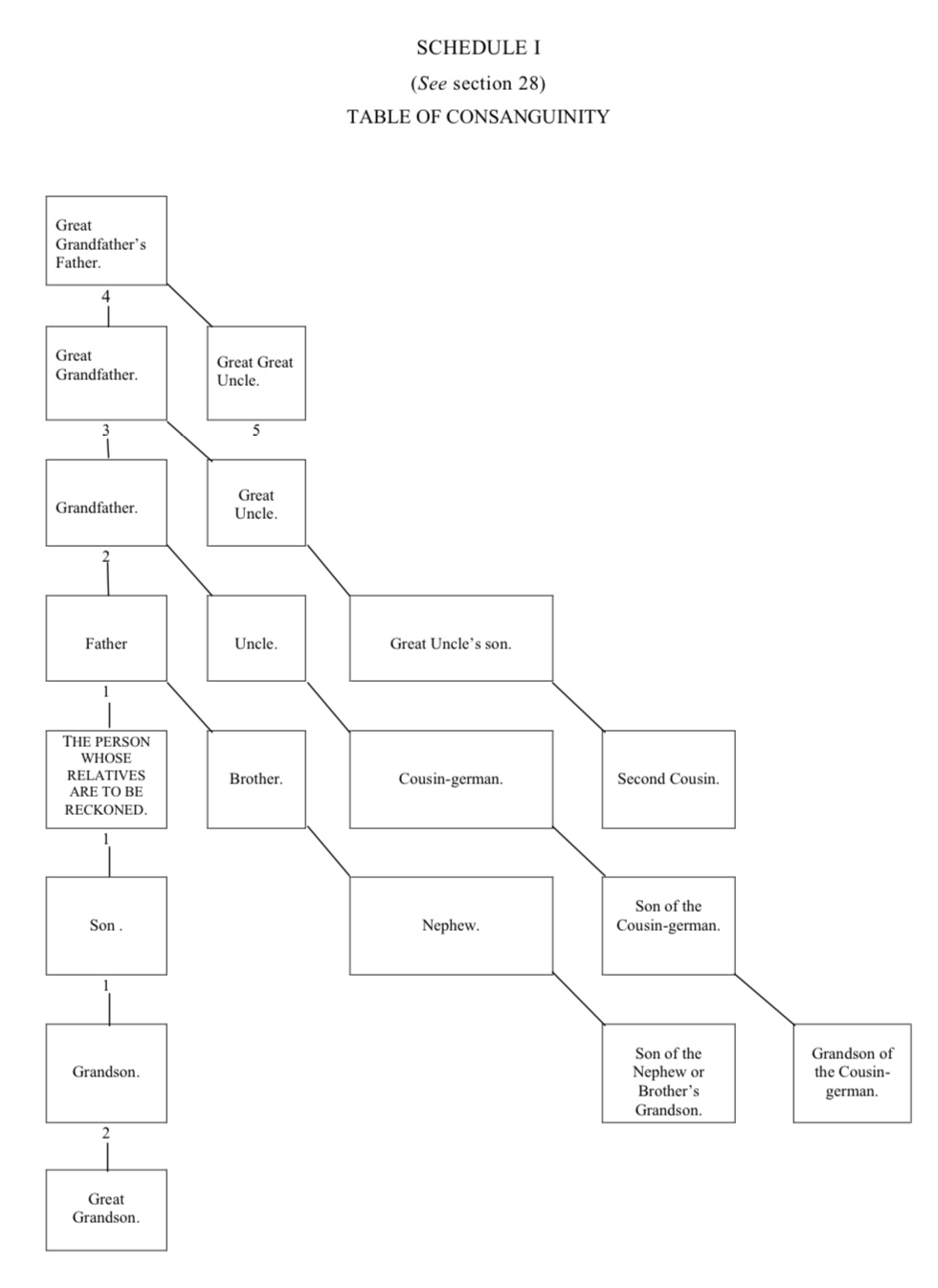































 Allow notifications





