Download Now
Home Blog Page 417

National security legislation and their effect on privacy

0
UAPA
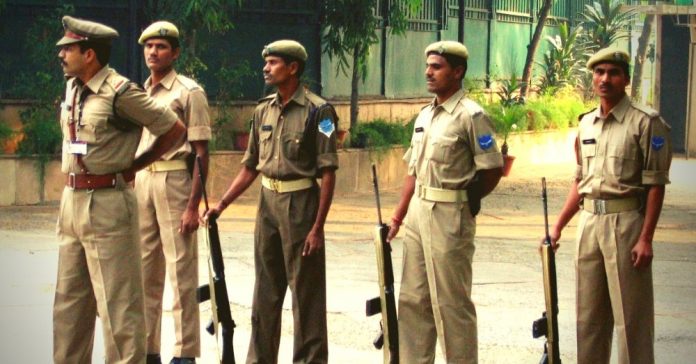
Image Source - https://rb.gy/kfjzz6

This article has been written by Smriti Katiyar, an Associate, Editor at LawSikho. This article has been edited by Zigishu Singh (Associate, Lawsikho) and Smriti Katiyar (Associate, Lawsikho). 

“Sometimes, the scandal is not what law was broken, but what the law allows.”

                                                                                              -Edward Snowden

Introduction 

The safety and security of a country have always been of paramount importance to every state presently in existence. Security isn’t something that has become something of grave consideration as of this day; it has always been a thing of remarkable importance since the very inception of human civilization. All the mythical stories we have heard, all the legends that we have read, all the stories that have been shared with us, all the kings and empires that history can trace back to, there is only one thing which connects every one of them, soldiers and wars. Be it, Jesus Christ, be it the Roman Empire, be it the Spanish inquisition, and be it Zeus and his war with the Titans, soldiers, and wars were a part of all of them. This shows that humanity itself is naturally inclined towards having a sense of security no matter whether it is in their person, their house, their city, or their whole empire. Even Abraham Maslow, in his renowned Maslow’s Need Hierarchy Theory, puts security needs just above the basic physiological needs of a person in his pyramid of needs, thereby showing how important it always has been to mankind.

What’s even more profound is the fact that entire empires have been started from dust, and existing empires have fallen to dust just over the issue of security. Even the Japanese started invading China and parts of Korea because they were afraid that they would themselves be attacked if they did not do so. While the ways have always differed as to what a country perceived as a viable way to secure itself, most of the methods which have been used since time immemorial cannot be used in the present day scenario. As civilized human beings, we always have to learn from our past and the mistakes we’ve made and strive to evolve from them. We have several accords that prevent us from doing terrible acts against an individual and crimes against humanity. Conventions such as the United Nations Convention against Torture (UNCAT), Geneva Conventions, Nuremberg Principles, etc. have put all the necessary checks and balances to ensure that States don’t cross boundaries when it comes to the treatment of prisoners who have harmed or pose a threat to the security of the state.

While these treaties and conventions give a sense of pride and safety to individuals, their real-life implementation shows a completely different ground reality altogether. After the passing of the Geneva Convention back in 1949, states vowed not to do any act which violated the Geneva Convention in any way, shape, or form. The United States of America, which is a signatory and has ratified the Geneva Convention, has been a forerunner when it comes to the gross violations of the said conventions. The most horrifying example of the same would be when the United States Senate Select Committee on Intelligence investigated the Acts of the central intelligence agency, while it investigated all known suspects who had any connection to the September 11 attacks on the World Trade Centre. The horrifying acts which were committed by the CIA were revealed in the Committee Study of the Central Intelligence Agency’s detention and interrogation program. showed that the CIA has used methods such as anal rehydration, waterboarding, mock deaths, sleep deprivation amongst other cruel and inhumane acts to question the known suspects of the 9/11 attacks.

Other countries such as the Russian Federation, the People’s Republic of China, North Korea, etc. have also been, on numerous occasions, criticized by other countries and international organisations for their blatant disregard for the human rights of their citizens. As Nelson Mandela has very rightly put forward, “To deny people their human rights is to challenge their very humanity.” Countries cannot, and should not commit any act which even remotely poses any such threat to individuals.

While its counterparts around the globe have always been subject to speculation over the disregard for human rights, India has always managed to be away from such kind of defamatory criticism. The Indian Government, since its independence, has lived by the words of M.K. Gandhi who said that “The greatness of humanity is not in being human, but in being humane.” India has always stood up for what’s right, and even in the darkest of times when individual liberties were threatened, the Supreme Court of India has always stood firm in protecting the rights of those who are threatened.

That being said, it never was the case that India’s past has been as white as a dove when it came to the liberties of an individual. To protect the sovereignty and integrity of the nation, India has also at times gone to lengths, while having little to no disregard for individual liberties and freedom. The first stain of blotted ink on India’s clean past happened back in the year 1967, when the Government of India decided to pass the Unlawful Activities (Prevention) Act, 1967, which we more prominently have known as the UAPA. While the 1967 act looks like a piece of cake in front of the act which stands today, it still had some horrifying provisions inside of it, which gave the Government unfettered powers to act on their will if a certain crime had been committed and was punishable under the said Act.

The UAPA : a legislative insight 

The UAPA was legislated solely for the reason that there was a growing sense of discontentment amongst the population of India, which wanted to secede from the territory of India. The country as we see today still didn’t look like it back in 1967, a handful of states were yet to join, and those who joined had been voicing their concerns throughout. The State of Tamil Nadu back then already was extremely disappointed with the Government of India holding back on its promises, and taking advantage of this disappointment, the DMK party went on to contest the elections. The party stated in its manifesto that if elected to power, the DMK would work to secede the state of Tamil Nadu from India, and create an independent country for the Tamil. This scared the Government even more since it had already lost a part of its territory in Aksai Chin after the 1962 Sino-Indian War. Therefore, the act which was legislated simply put forward that any person who commits an “Unlawful Activity” shall be punishable under the said act. Also, any person who is a member of an “Unlawful Organization”, shall be punishable under the said Act.

The issue with the legislation was the fact that nowhere in the Act was it clearly defined what constituted an “Unlawful Activity”. What was stated was the fact that any Act, which threatened the sovereignty and integrity of the nation would be considered as an unlawful Act, thereby leaving it entirely in the hands of the Government to decide which act was unlawful and which wasn’t. Furthermore, what was even scarier was the fact that the said Act allowed arrests without warrants and preventive detention for up to 180 days to those who have been charged with this Act. This marked the beginning of gross human rights violations under the said act, which would further go on to become one of the most draconian laws in India. Hence, this led to the Government of India having a scary arbitrary power in its hands. As George Washington has rightly said, “Arbitrary power is most easily established on the ruins of liberty abused to licentiousness.”

Abuse of power under UAPA and the enactment of TADA 

What started with just the UAPA went on and spread like poison in the hands of the Indian Legislature. Years after legislating the UAPA, the country faced a similar issue of internal security. This was after Operation Blue Star was conducted by the government in the State of Punjab. The Government passed the notorious Terrorist and Disruptive Activities Act, 1987, which more prominently came to be known as the TADA. However, the act was so grossly misused by the authorities that it had to be repealed merely 6 years after it was legislated.

The Act provided that a person can be detained for up to 1 year without any formal charges being pressed on him. The Act further provides that a detainee can be in the custody of the police for up to 60 days, and post then even, he need not be presented before a magistrate, but an Executive Magistrate. Furthermore, the Act reverses the presumption of innocence, stating that a person caught under this Act is presumed guilty until his innocence is proven otherwise. Lastly, any person who is tried under this Act cannot appeal anywhere, except to the Supreme Court of India. For reasons such as this which are so immoral, the act was allowed to lapse in 1995 when it was due for renewal. During the 7 years TADA remained in force, 76000 people were arrested in India under the act.

After TADA lapsed, and the Indian Parliament was bombed in the year 2001, the need arose for a new law to prosecute those who have been found guilty of the said offense. This led to the Indian Legislature passing the Prevention of Terrorism Act, 2001, which more prominently came to be known as POTA. Just like TADA, POTA also had numerous provisions that allowed for blatant misuse of powers. POTA also had the provision for holding a person in custody for up to 180 days without any filing of the charge sheet. Further, the laws in India do not accept any confession made to a police officer as evidence and allow it to be rebutted in a trial. “This was however not the case in POTA, and every confession made to a police officer is admissible and can be used against a person in trial. POTA was misused heavily by the government, and the police itself misused the act to torture and humiliate prisoners.” As Norman Finkelstein has rightly put, “No conditions justify torture” and therefore when the government at the center changed, POTA was accordingly repealed.

Analysing the right to arrest without warranty in purview of the right to privacy 

The issue in hand, however, has also been the fact that while states have blatantly used their arbitrary powers to interfere with the rights of a human being, one right which has always gotten stepped upon during all of this is the right to privacy of an individual. The privacy of a person is always something that is valued the most. As Edward Snowden has said, “Privacy isn’t about something to hide, it’s about something to protect.” All the legislation which has been laid forward above has always had one thing in common, which is a blatant disregard for the privacy of an individual. The forerunner in this section, however, remains the UAPA.

An instance of the UAPA being misused for such a horrendous act would be when the Delhi Police barged directly into the home of the AISA President Kanwalpreet Kaur and seized her mobile phone stating that it was required as a part of the investigation under the Delhi Riots. When she was handed the seizure memo, along with a bunch of charges, a few changes were also placed under the UAPA for seizing her mobile phone.

The UAPA has also been criticized by the United Nations Special Rapporteurs for violating the privacy of said individual. The amended Act allows for searches, seizures, and arrests based on the “personal knowledge” of police officers without a written validation from a superior judicial authority. The police are empowered by the amendments to enter the premises of a person on the mere suspicion of her being part of an “unlawful association”. The police have the power to examine the books, and other properties of the accused and also make inquiries against her. This, the statement declares, is a clear violation of the right to privacy as per India’s international law obligations.

The Act also interferes with the privacy and liberty of individuals contravening the provisions which protect against arbitrary or unlawful interference with a person’s privacy and home.  As, the Act allows for searches, seizures, and arrests based on the ‘personal knowledge’ of the police officers without a written validation from a superior judicial authority this interferes with the privacy and liberty of individuals which is not only in violation of fundamental rights but also contravenes the provisions of the International Convention on Civil and Political Rights (ICCPR)”, which protects against arbitrary or unlawful interference with a person’s privacy and home.

The right to privacy of an individual has to be protected, and so has been time and again said by the courts. There have been numerous judgments wherein the courts have asked the government to make laws in accordance with protecting the privacy of an individual, but the government has somehow or the other managed to get away without actually doing something to protect the rights of an individual. The Supreme Court has stressed upon the fact that “it is entirely for the Central Government to make rules on the subject of interception but till the time it is done the right to privacy of an individual has to be safeguarded.”

“If the right to privacy has to mean anything, it is the right of an individual, single or married, to be free from unwarranted government intrusion.” These were the words of William Brennan Jr. when asked about the views on privacy. Well, these words make more sense now than ever, when asked about the state of privacy in India. If we have to be on the morally correct side of history, we cannot let any act, not even national security supersede the privacy of an individual.        

The Unlawful Activities (Prevention) Act, 1967

A brief history of the UAPA

Dissent and opposition are some of the core values of every existing democracy in the world. They are one of the very basic principles on which democracy is based. But, there is a very thin line of difference between dissent and violence, and when one crosses the said line, terrible things are bound to happen, take Pakistan and Bangladesh for example. The need for the Unlawful Activities Prevention Act arose when the National Integration Council appointed the committee on national integration and regionalism. The sole purpose of constituting the committee was to look into the issues concerning the sovereignty and integrity of India. This further led to the passing of the 16th Amendment to the Constitution of India, which then put reasonable restrictions upon the fundamental rights which were guaranteed by Article 19 of the Constitution of India. The said Act was passed in the wake of the defeat which India suffered at the hands of the India-China war of 1962, and for the purposes of maintaining the sovereignty and integrity of India, because at that time, the DMK Party was contesting elections from the Tamil Nadu state, and it posed a great threat to the sovereignty of India because secession from India was a part of their election manifesto.

The Unlawful Activities (Prevention) Act, 1967 was the Government of India’s first legislation which was targeted at countering terrorism and anti-national activities within the territory of India. With the passage of time, the act was amended several times.

Although legislated for the benefit of the nation, the UAPA started gaining active criticism from 2004 when the said amendment was passed, which contained a majority of the provisions from the repealed Prevention of Terrorism Act (POTA). This criticism only went upwards from that point, calling the act out as fascist, and outright unconstitutional. The reasons for the same are not wrong as well, because the government has time and again made arbitrary arrests within the scope of the said Act. Furthermore, the Act has been criticized for using vague and open-ended terms to define simple things, just so that arrests can be made under this act for a wide range of acts without them actually being something considerate or not.

Reasons for legislating the Unlawful Activities (Prevention) Act, 1967

As very well stated earlier, there were many reasons which were considered before the passing of the UAPA. These reasons were:-

  • Defeat in the Sino-Indian War: The Indian Army was heavily unequipped during the Sino-Indian war, and the Chinese were far advanced in their military technologies as well as their equipment. This led to heavy losses on the Indian side. The aftermath of the battle resulted in India losing a significant portion of the Kashmir Valley, known as Aksai Chin, to the Chinese. This was a big blow to the sovereignty of India, and a grave concern to the government back then.
  • Rising insurgency in India: Communists and Chinese sympathizers were already starting to assimilate in 1955-56 within West Bengal. India was already in the process of inculcating the princely states with the territory of India, and there was already a growing sense of discontentment within the princely states which were already a part of India, because the Government wasn’t living up to the promises which were made to them while ceding their territory to India. There were even more radical insurgencies rising in the State of Nagaland, claiming direct secession from India.
  • DMK contesting elections in Tamil Nadu: The DMK Party at that time planned on contesting the elections for the state legislature of Tamil Nadu. Tamil Nadu was already a part of India at time, and there was a growing sense of discontentment amongst the people of Tamil Nadu because the Government of India had not agreed to separate the states on the basis of language as promised. This became the topmost agenda of the DMK Party, and officially in their election manifesto DMK declared that if they win the elections, they will be moving for a secession from the Indian territory.

These reasons started worrying the Indian Government because that was a time when India was not even geographically as we see it today. The territories of Goa, Pondicherry, and even Sikkim weren’t a part of India, while the states like Mysore and Cochin kept demanding further division on the basis of language. This combined with a loss of territory in Aksai Chin had the Government worried about any further losses to the sovereignty and integrity of India. Hence the Government, after amending the Constitution through the 16th Amendment Act, and putting reasonable restrictions on the rights provided under Article 19 of the Constitution of India, moved forward with introducing the Unlawful Activities (Prevention) Act, 1967.

Why was the UAPA unique?

Several provisions of the Unlawful Activities (Prevention) Act, 1967, were authoritative, as well as overly broad in their definition, thereby allowing the government to do a large number of things over a simple authority, just because it wasn’t specific enough to point out as to what it was actually referring to. Further, certain things which made the UAPA stand out from other legislations at that time are:-

  • Declare all-India bans on organisations and associations: By far the most distinct and the most used feature of the UAPA is the power which the Act gives to the government to impose an all-India ban on organizations. The Government, by virtue of Section 3 of the Act could simply announce that an association is unlawful, by publishing a notice in the Official Gazette, if it is of the opinion. The section further goes on to provide that the government has to provide the reasons as to which it opined that the association is unlawful. However, the proviso to the same subsection provides that nothing in the said clause could mandate the Government to give reasons for banning an association if the Government is of the opinion that declaring such reasons to the public shall not be in the public interest to disclose. This essentially gave the Government the power to declare any organization as unlawful and not give any justification whatsoever as to why it chose to declare it as such.
  • Vague and open ended interpretation to clauses: Section 2(f)[6] of the Unlawful Activities (Prevention) Act, defines the term Unlawful Activity, as any act which intends to bring about secession or succession to any part or territory of India, or which incites an individual or association to do so, or it does anything to harm the sovereignty and integrity of India. Now this definition in itself opens up hundreds of interpretations, because nowhere in the said legislation has any Act been defined which could be seen as an act harming the sovereignty or integrity of India. Further, Section 2(g)[7] defines an unlawful organisation as any organisation which does unlawful activity, or whose members do such activity, or which aids in committing such activity.
  • Harsh and unreasonable punishments: Section 10 of the Unlawful Activities (Prevention) Act, provides that any person who is merely a member of an unlawful association can be punished with imprisonment up to 2 years. Section 13, on the other hand, punishes who takes part, abets, advises, or incites the commission of any unlawful activity with an imprisonment of up to 5 years. 
  • Arrests without warrants: Section 14 of the Unlawful Activities (Prevention) Act, 1967, clearly states that any offence which is listed under this Act shall be cognizable only. This therefore allows the police to arrest a person whom they suspect of being linked to an unlawful association, without a warrant. Not only an arrest, but the police can actually go further and start an investigation without even the permission of the court. This actually in turn grossly overpowers the police in matters related to Unlawful Activities, and the police can misuse the powers for harassing people and activists without any valid reasons or authority to do the same.
  • Protection from civil liability: To put the final nail in the coffin, the Government actually went forward and included Section 18[9] of the Unlawful Activities (Prevention) Act, 1967, which stated that no legal proceeding shall lie against the government for any loss or damage caused because of any action taken by the Government while acting under the powers of the said Act. This actually gave the government full immunity from any kind of responsibility which may arise from the continuous use of the said Act.
  • The Act did provide some relief, with provisions for establishment of a Tribunal in the case of unjustly ruling an organization a terrorist organization, but little to no relief has been provided through such tribunals, and an organisation which had made its way to be banned under this act has in the end remained banned. The SIMI (Students’ Islamic Movement of India) is a living example of such an Act.

Similar legislations as the UAPA

Although the Unlawful Activities (Prevention) Act as of today deals not only with Unlawful, terrorist activities as well, the same wasn’t always the case when it came to dealing with terrorism and related activities. Prior to inclusion in the UAPA, terrorist activities within the Territory of India were dealt with the Terrorism and Disruptive Activities (Prevention) Act, 1987. This act was brought in by the Parliament after increasing insurgency in the Punjab region due to Bhindrawale. TADA was the first act in India that actually went on and defined terrorism and what it was. TADA defined terrorism as:-

  • “Whoever with intent to overawe the Government as by law established or to strike terror in the people or any section of the people or to alienate any section of the people or to adversely affect the harmony amongst different sections of the people does any act or thing by using bombs, dynamite or other explosive substances or inflammable substances or lethal weapons or poisons or noxious gases or other chemicals or by any other substances (whether biological or otherwise) of a hazardous nature in such a manner as to cause, or as is likely to cause, death of, or injuries to, any person or persons or loss of, or damage to, or destruction of, property or disruption of any supplies or services essential to the life of the community, or detains any person and threatens to kill or injure such person in order to compel the Government or any other person to do or abstain from doing any act, commits a terrorist act.”

Post the coming in force of TADA, this Act was heavily misused, and its unpopularity started rapidly increasing, because it led to a number of arbitrary arrests, and misuse by the police force. Apart from this, the TADA had a number of other faulty features which were grossly unconstitutional and outright immoral. For example, the Act provided that a person can be detained for up to 1 year without any formal charges being pressed on him. The Act further provides that a detainee can be in the custody of the police for upto 60 days, and post than even, he needs not to be presented before a magistrate, but an Executive Magistrate. Furthermore, the Act reverses the presumption of innocence, stating that a person caught under this act is presumed guilty until his innocence is proven otherwise. Lastly, any person who is tried under this Act cannot appeal anywhere, except to the Supreme Court of India. For reasons such as this which are so immoral, the Act was allowed to lapse in 1995 when it was due for renewal. During the 7 years TADA remained in force, 76000 people were arrested in India under the Act. Of the people arrested, 25 percent of the cases were dropped by the police without even any formal charges being pressed, while only 35 percent of the cases were brought to trial, resulting in 95 percent conviction. In essence, less than 2 percent of the people who were arrested were actually convicted. This shows how the police abused their power when armed with the TADA. This act lapsed in 1995, and was further repealed by the Prevention of Terrorism Act, 2002.

  • In Kartar Singh v. State of Punjab, the validity of TADA was challenged on the ground that it dealt with the issue of ‘public order’, which was within the legislative domain of states. Nevertheless, the Court upheld the validity of TADA. The Court held that ‘public order’ covered issues of lesser gravity and more serious threats covered in TADA fell within the Union’s domain relating to national defence.
  • A similar challenge was mounted against POTA in PUCL v Union of India, which too was repelled by the Court on similar grounds.
  • The Prevention of Terrorism Act, 2002, was passed by the parliament after a lot of controversy because of the already misused Prevention of Terrorism Ordinance, 2001. The Ordinance was passed in the wake of the 2000 Red Fort attack and the 2001 Parliament Bombings. The Ordinance already came under a lot of criticism when the police started overreaching their powers and misusing the provisions of the Act. The Bill to make this Ordinance into an act failed at the Rajya Sabha, but was later passed by a joint session of the Parliament.

Just like the TADA, POTA also had the provision for holding a person in custody for up to 180 days without any filing of the charge sheet. Further, the laws in India do not accept any confession made to a police officer as evidence and allow it to be rebutted in the trial. This was however not the case in POTA, and every confession made to a police officer is admissible and can be used against a person in trial. POTA was misused heavily by the government, and the police itself misused the act to torture and humiliate prisoners. POTA was later repealed in 2004 when the Government at the center changed.

Further amendments to the UAPA, making it as draconian as it stands

The first substantial amendment to the UAPA was introduced in the year 2004, when the Congress Government, as promised, repealed the POTA. However, the repealing of the POTA had little to no difference in the status quo, because almost a majority of the provisions of POTA including those relating to ‘Terrorism’, ‘Terrorist Organization’, ‘Terrorist Act’ etc. were all inculcated in the UAPA. The Schedule of POTA which listed all the Terrorist Organizations was also added to the UAPA. POTA’s definition of terror afflicts UAPA too. It is defined primarily through intent (“intent to strike terror”), other things being the same. It duplicates a range of criminal law offences, such as causing death, injuries, damage to public property, disrupting essential services, use of firearms, explosives, etc—all of which are otherwise also covered under a range of laws. This provides latitude to the executive—both police and government—to subjectively choose what to designate as terror, and what to dismiss indulgently as ordinary violence. It is in their power then to decide when to invoke the draconian provisions of UAPA, and when to apply (and in some cases, never to apply) ordinary criminal law.

What the UAPA hollows out is the constitutional guarantees of fair trial and the right to life and liberty. It thus perverts the very notion of rule of law beyond recognition. Section 43D(5) of the UAPA, deals with bail provisions. A replica of Section 49(7) of POTA, it makes it practically impossible for an accused to secure bail. Under this section, bail cannot be granted till the public prosecutor has been heard, and it can be declined if the magistrate concludes, upon reading the charge sheet, that the charges are true. So, in effect, an accused has to demonstrate her innocence, that too at the start of the trial, in order to be even granted bail. UAPA thus explicitly—and legally—denies the presumption of innocence. Which, of course, is the very bedrock of modern law.

After the 2008 terrorist attack in Mumbai, some provisions of the repealed POTA and TADA were once again added to the UAPA. These provisions were the ones referring to the time a person can be detained in police custody. The 2012 amendment to the UAPA further went on to expand the definition of terrorism to include offences that harmed the economic security of the nation too.

The final immoral Amendment in 2019

“The most recent amendment that came was the Unlawful Activities (Prevention) Amendment Act, 2019 which dealt with expanding the definition of terrorist to include individuals under Section 35 and 36 of Chapter VI of the Act. It allows the DG of NIA seizure of property from proceeds of terrorism under Section 25 and the powers of officers with the rank of inspectors and above to investigate cases under UAPA Section 43. A Review Committee to denotify the individual notified as a terrorist is also constituted by the Central Government thus removing all chances of any institutional mechanism for judicial review.”

“The primary objections to the Amendment are under Section 35, in addition to the categorization of organizations as terrorist organizations, extending the power to include within its scope the categorization of individuals as terrorists as well. Secondly, the new Amendment is contrary to the principle of ‘innocent until proven guilty’ and also violates the International Covenant on Civil and Political Rights, 1967 which recognizes the mentioned principle as a universal human right. Thirdly, it is being used to repress rather than combat terrorism since the amendment provides that designation of an individual as a terrorist would not lead to any conviction or penalties.” Fourthly, no objective criterion has been laid for categorization, and the government has been provided with “unfettered powers” to declare an individual as a terrorist.

Abuse of powers granted by UAPA and legal challenges

The most prominent abuse of the Unlawful Activities (Prevention) Act can be seen when the Delhi Police arrested Umar Khalid, a student leader at the Jawaharlal Nehru University in connection with hatching a conspiracy to create communal violence over the Citizenship Amendment Act. The Delhi Police further went on to arrest Meeran Haider and Safoora Zargar under the same draconian provisions. The police said that they were all key in premeditating a conspiracy to start riots in the national capital.

The Jammu and Kashmir Police arrested the Journalist Masrat Zahra under Section 13 of the Unlawful Activities (Prevention) Act, 2020 by stating that she uploaded anti-national videos on Facebook to incite the youth in glorifying anti-national activities. They also put this same draconian provision on Peerzada Ashiq when she posted about the diversion of COVID testing kits, stating that it is against the authorities. The Amnesty International Executive Director called such acts by the Indian Government an attempt to curb the right to freedom of expression of its citizens.

“The Jammu and Kashmir police had also invoked Section 13 of UAPA against people who were accessing social media through VPN’s to dodge the longest ever internet ban imposed by the government when it scrapped Article 370 of the constitution to divide the state into two centrally administered UT’s.”[26] The government said that it was done “to curb the misuse of the sites by miscreants for propagating false information/rumors.”

The Supreme Court has scrutinized specific provisions of the above legislation on various occasions. For instance, the Court in Sri Indra Das v. State of Assam, read down Section 10 of UAPA and Section 3(5) of TADA, both of which made mere membership of a banned organization criminal. The Court held that “A literal interpretation of these provisions would make them violative of Articles 19 and 21 of the Constitution. This was in line with the previous decision in Arup Bhuyan’s” case where the Court had held that ‘mere membership of a banned organisation will not make a person a criminal unless he resorts to violence or incites people to violence or creates public disorder by violence or incitement to violence’.

“Manifest arbitrariness, therefore, must be something done by the legislature capriciously, irrationally, and/or without adequate determining principle. Also, when something is done which is excessive and disproportionate, such legislation would be manifestly arbitrary. We are, therefore, of the view that arbitrariness in the sense of manifest arbitrariness as pointed out by us above would apply to negate legislation as well Under Article 14.” Public interest litigation has been filed by one Sajal Awasthi asking the Supreme Court to declare the UAPA as unconstitutional because it is violative of the fundamental rights of the citizens. He goes on to explain that the right to dissent is one of the very basic rights of an individual and that curtailing the same would be grossly against Articles 14,19, and 21 of the Constitution of India. He also states that the Act does not provide any opportunity to the person arrested to prove that he is not a terrorist, which is very arbitrary to the core. He further went on to say that:-

“Right to Reputation is an intrinsic part of [a] fundamental right to life with dignity under Article 21 of the Constitution of India and terming/tagging an individual as ‘terrorist’ even before the commencement of trial or any application of judicial mind over it, does not adhere to procedure established by law.”

The Association for Protection of Civil Rights (APCR) filed another petition in the Supreme Court challenging Section 35 of the UAPA, because after the 2019 amendment it allows the Government to label an individual as a terrorist, whilst before the same could only be done to organizations and associations.

Privacy concerns over the said Acts

Questionable legislations such as the UAPA, TADA, POTA, etc. have always been surrounded by a question of overreach. The said overreach in this scenario is to what extent these said acts would go in order to breach the privacy of the individual. The UAPA till today itself post the 2019 amendment has been criticized on numerous occasions for having little to no regard for the privacy of a person whom they just ‘suspect’ of some act. In simpler words, the UAPA empowers the investigating agencies to do any act and breach the privacy of an individual if they deem so reasonable after suspecting the said individual.

An instance of the UAPA being misused of such a horrendous act would be when the Delhi Police barged directly into the home of the AISA President Kanwalpreet Kaur and seized her mobile phone stating that it was required as a part of the investigation under the Delhi Riots. When she was handed the seizure memo, along with a bunch of charges, a few charges were also placed under the UAPA for seizing her mobile phone.

The UAPA has also been criticised by the United Nations Special Rapporteurs for violating the privacy of said individual. The amended Act allows for searches, seizures, and arrests based on the “personal knowledge” of police officers without a written validation from a superior judicial authority. The police are empowered by the amendments to enter the premises of a person on the mere suspicion of her being part of an “unlawful association”. The police have the power to examine the books, and other properties of the accused and also make inquiries against her. This, the statement declares, is a clear violation of the right to privacy as per India’s international law obligations.

The Act also interferes with the privacy and liberty of individuals contravening the provisions which protect against arbitrary or unlawful interference with a person’s privacy and home. The Act allows for searches, seizures, and arrests based on the ‘personal knowledge’ of the police officers without a written validation from a superior judicial authority. This interferes with the privacy and liberty of individuals which is not only by a fundamental right but also contravenes the provisions of the International Convention on Civil and Political Rights (ICCPR)”, which protects against arbitrary or unlawful interference with a person’s privacy and home.

If such Acts aren’t horrendous enough, the UAPA has also been used on little things such as the use of a VPN. The Jammu and Kashmir Police actually arrested people under the UAPA from Jammu and Kashmir for allegedly using the internet through a VPN. If that is not enough too, the people who were arrested were actually slapped with not only the UAPA but also the repealed provision Section 66A of the IT Act. For a common man with little to no legal knowledge, committing such acts is horrendous abuse of power, and harassment of individuals while imposing a totally authoritarian regime for them to live in.

Such concerns have not solely been with the UAPA itself, other acts previously existing in the Republic of India also had such serious flaws in them which literally allowed them to step over the right to privacy of an individual. Under Section 7 of the POTA, a police officer investigating an offence under POTA can seize or attack any property if he has reason to believe that such property constitutes the proceeds of terrorism. The fear that’s permitting a police officer to act on the basis of his belief is “draconian and unguided”.

Section 14 requires an officer or authority of the Central or a State government, other organisations and institutions, and even individuals to furnish to am investigating officer, information relating to such an offence, and makes the failure to do so an offence. This provision is against Article 20 of the Constitution, besides being an onslaught on individual freedom and the right to privacy.

Chapter V of POTA deals with the interception of electronic communications, which also creates an audit mechanism that includes some provision for judicial review and parliamentary oversight; however, it remains to be seen how effective such mechanisms will be in practice. In certain high-risk states such as Jammu and Kashmir, search warrants are not required and the government from time to time bans the use of cellular telephones, long-distance phones, and cyber-cafes.

Just because POTA gave police broad, if not indiscriminate, powers of arrest and detention for a variety of ill-defined and constitutionally untested offenses, Indian citizens had far more to fear than infringements upon their privacy. The extent of POTA’s abuse proved that fear of prolonged, arbitrary detention was not unfounded or conjectural.

The right to privacy of an individual has to be protected, and so has been time and again said by the courts. There have been numerous judgments wherein the courts have asked the government to make laws in accordance with protecting the privacy of an individual, but the government has somehow or the other managed to get away without actually doing something to protect the rights of an individual. The Supreme Court has stressed upon the fact that “it is entirely for the Central Government to make rules on the subject of interception but till the time it is done the right to privacy of an individual has to be safeguarded.”

The Maharashtra Control of Organized Crime Act, 1999 has provisions for interception and safeguards for the same. These provisions and their safeguards are similar to the directives laid down by the Supreme Court in PUCL’s case. The court observed that though the interception of communications is an invasion of an individual’s right to privacy, the right to privacy is not absolute, thus the court is required to see that the procedure itself is fair, just, and reasonable. Pursuant to the procedural safeguards formulated by the Supreme Court in the P.U.C.L case, the Central Government brought out an amendment to the Indian Telegraph Rules, 1951 but failed to remove unguided interception. To fill the procedural gap the interception powers laid out in the Information Technology Act were amended in 2008, and in 2009 the IT Procedure and Safeguards for Interception, Monitoring, and Decryption of Information Rules, 2009 (“IT Interception Rules”) were notified. The above two developments have supplemented the procedural lacuna of Unlawful Activities (Prevention) Act, 1967, 2004, 2008 and 2012 as far as the procedure for interception is concerned. Even the National Investigation Agency may use the power of interception but only with the procedural safeguard which is now included under the IT Amendment 2008 and IT Interception Rules 2009.

Peroration

There has always been a need for a strong hand to counter-terrorism and all such related activities, but if the protection for the citizen came at a cost of a gross miscarriage of justice and violating the basic human, if not fundamental rights of an individual, then what good does such protection do? The right to dissent is one of the core founding principles on which democracies are built, and the UAPA simply tries to take away that right from the people. It is an assault of citizens’ right to an expression which is also a collective right of groups and unions to disseminate their views and UAPA majorly targets this right. Secondly, it can simply be used to bypass fundamental rights and procedures. For instance, those arrested under UAPA can be incarcerated up to 180 days without a charge sheet being filed. It thus directly violates Article 21 of the Constitution. Thirdly, it confers upon the government broad discretionary powers and also authorises the creation of “special courts with the ability to use secret witnesses and to hold closed-door hearings.”

Like the TADA and POTA, UAPA also criminalises ideology and association. By virtue of declaring an organisation ‘unlawful’ or ‘terrorist’ and banning it, these Acts have de facto criminalised their ideologies. Hence mere possession of any literature of such an organisation or even upholding an ideology common to that organisation in the absence of any violent act is construed as an offence. On the other hand, mere membership or association with such an organisation too becomes an offence. It is by this logic, that very often, organisations advocating the rights of a certain minority community or that of oppressed sections are easily labelled as fronts of a proscribed organisation under the schedule of the Act. Their activists or members get arrested and remain in prison for years, and are denied bail.

Desperate times indeed call for desperate measures, and history is a brave example that no matter how desperate one gets, nothing is above the human rights of an individual. The way the UAPA has been drafted clearly puts it in par with the USA PATRIOT Act, which was criticized way too much for being violative of fundamental rights. In essence, from a neutral standpoint, there is no way an act like the UAPA should exist in a democracy like India, unless we are already an Orwellian State like the US. 

UAPA as a law being misused

The UAPA as a law has been used on several instances to harass, arbitrarily arrest, or even influence people to do certain acts against their will. While we live in a country where the rule of law is valued and upheld the most, certain acts which have been committed by the government and the investigating agencies make us lower our heads in shame.

  • In the year 2006, a man called Abdul Wahid Sheikh was arrested by the Mumbai ATS for his alleged involvement in the 2006 Mumbai Train Blasts. What transpired after the said arrest is a horror story for most of us. He was constantly tortured, abused, harassed, and denied medical care while the investigation was going on and no formal charges were pressed. Internationally banned techniques such as waterboarding were used in order to force confessions out of him. In the year 2015, he was finally acquitted after spending 9 years in jail on false charges. This shows the heights to which the UAPA can be manipulated.
  • In the year 2011, the ATS arrested members of the artistic group Kabir Kala Manch (KKM) for their alleged involvement with the Maoists. Several of their members have since been arrested, solely for the reason of writing songs on social issues. The Bombay High Court has refused to grant bail to any of the accused, solely because a person charged under the UAPA has to prove his innocence, and the onus of proof is upon him rather than the state.
  • On 9th May 2014, a Professor of the University of Delhi, Dr. G.N. Saibaba was arrested under the UAPA. What’s shocking is the fact that the arrest wasn’t made through proper legal channels, rather, he was abducted while he was on his way home. His family wasn’t informed of the arrest either. He has since been kept in solitary confinement, and for a man who is 90% disabled, this is way too excessive. The only reason for his arrest is his alleged link with the maoists.
  • After the 2020 Delhi Riots, the Delhi Police seized the mobile phone of the AISA President Kawalpreet Kaur for investigation. In the seizure memo she provided, a bunch of sections were charged, along with a few under the UAPA. Basically, the Delhi Police used the UAPA to now violate the privacy of individuals, seize their phones and basically do whatever they want under the pretext of an investigation.
  • In early 2020, a Kashmiri photojournalist who goes by the name Masrat Zahra, was arrested after she posted some photos online which the police referred to as, “disturbing to communal harmony”. While she was charged under Section 505 of the IPC, another bunch of sections were also added under the UAPA. A number of organizations have challenged this arrest, including press clubs, who say that this arrest is a blatant move of the police against the freedom of press.
  • In August of 2019, internet services and social media were brought to a complete halt in the Kashmir Valley, after the Central Government abrogated Article 370 of the Constitution of India, which provided special status to the state of Jammu and Kashmir. Post that, as of this day, only 2G services have been restored in Kashmir, and social media still remains banned. When some people in Kashmir actually tried accessing social media through a virtual private network (VPN), the police arrested them under the UAPA, and the already repealed Section 66A of the IT Act.

Given the monumental instances of blatant abuse of powers, arbitrary arrests, and disregard for human rights, it is only natural for one to be afraid of the UAPA, for it is not a law that should exist in a democratic society, but a weapon of oppression in the hands of an arbitrary government.

References 

  1. Maj Gen Sheru Thapliyal, 1962 War: A Critical Analysis, Mar. 30, 2018, http://www.indiandefencereview.com/spotlights/1962-war-a-critical-analysis/ (Last Visited: 01st August, 2020)
  2. Namrata Goswami, Indian National Security and Counter-Insurgency: The Use of Force Vs Non-violent Response, ROUTLEDGE,43. ISBN 978-1-134-51431-1
  3. Robert L. Hardgrave, Jr., The DMK and the Politics of Tamil Nationalism, Pacific Affairs, Vol. 37, No. 4 (Winter, 1964-1965), 396-411
  4. Vishwa Mohan & Anam Ajmal, “Cops use UAPA to block site, call it ‘goof-up’ later”, The Times of India, Jul 24, 2020
  5. http://timesofindia.indiatimes.com/articleshow/77137573.cms?utm_source=contentofinterest&utm_medium=text&utm_campaign=cppst
  6. Union of India v. Students Islamic Movement of India, 2002 SCC OnLine Del 340
  7. 21 K.P.S. Gill, Endgame in Pubjab: 1988-1993, (Ajai Sahni) https://www.satp.org/satporgtp/publication/faultlines/volume1/Fault1-kpstext.htm
  8. ZAIDI, S. HUSSAIN , BLACK FRIDAY – THE TRUE STORY OF THE BOMBAY BOMB BLASTS.  (Penguin Books. ISBN 978-0-14-302821-5)
  9. Editorial, “It’s not POTA, yet,” Outlook, Mar 21, 2002
  10. https://www.outlookindia.com/website/story/its-not-pota-yet/214958 (Last Visited 01st August, 2020)
  11. Nitya Ramakrishnan, Excerpt | Tortured, Humiliated, But Unbroken: An Interview With S.A.R. Geelani, https://thewire.in/rights/sar-geelani-custodial-torture-nitya-ramakrishnan (Last Visited: 01st August, 2020)
  12. International Covenant on Civil and Political Rights, 1976. Art. 14, cl. 2. https://www.ohchr.org/en/professionalinterest/pages/ccpr.aspx (Last Visited: 01st August, 2020)
  13. “J&K Police Using Repressive Counter Terrorism Law To Muzzle Access To Social Media”, Amnesty International India, Feb 18, 2020.
  14. https://amnesty.org.in/news-update/jk-police-using-repressive-counter-terrorism-law-to-muzzle-access-to-social-media/ (Last Visited: 01st August, 2020)
  15. Deepali Bhandari & Deeksha Pokhriyal, The Continuing Threat of India’s Unlawful Activities Prevention Act to Free Speech, JURIST, Jun 2, 2020.
  16. Editorial, “Panic in Kashmir as case filed against social media users”, Al-Jazeera, Feb 18,2020. https://www.aljazeera.com/news/2020/02/panic-kashmir-cases-filed-social-media-users-200218114417864.html
  17. Arup Bhuyan v. State of Assam, (2015) 12 SCC 702.
  18. Ujjaini Chatterji, “UN Special Rapporteurs express concerns over UAPA,” THE LEAFLET, May 18, 2020.https://theleaflet.in/un-special-rapporteurs-express-concerns-over-uapa/
  19. Aakar Patel, “UAPA (Amendment) Bill 2019 violates the very international laws it quotes, defies principles of natural justice,” FIRSTPOST, Aug 03, 2019. https://www.firstpost.com/india/uapa-amendment-bill-2019-violates-the-very-international-laws-it-quotes-defies-principles-of-natural-justice-7104391.html
  20. https://www.reuters.com/article/us-usa-intelligence/opposing-trump-conservative-bloc-demands-reforms-to-internet-spy-law-idUSKBN1962SR (Last Visited: 01st August, 2020)
  21. https://thewire.in/law/abdul-wahid-shaikh-acquitted-interview
  22. When Poetry is held Unlawful: A Case of Kabir Kala Manch, INDIA RESISTS, Apr. 23, 2015 April 23, 2015   https://indiaresists.com/when-poetry-is-held-unlawful-a-case-of-kabir-kala-manch/
  23. Devika Kohli, “Why Is The Government So Threatened By A Man Who Is 90% Disabled?”, YKA, May 19, 2015. https://www.youthkiawaaz.com/2015/05/gn-saibaba-arrest/
  24. AISA’s Delhi head booked under UAPA by Crime Branch, mobile seized, INDIAN EXPRESS, Apr. 29, 2020. ,https://www.newindianexpress.com/cities/delhi/2020/apr/29/aisas-delhi-head-booked-under-uapa-by-crime-branch-mobile-seized-2136830.html
  25. First Post Staff, Masrat Zahra booked under UAPA: Kashmiri photojournalist’s work focussed mostly on women, conflict reporting in Valley, FIRSTPOST, Apr. 20, 2020. https://www.firstpost.com/india/masrat-zahra-booked-under-uapa-kashmiri-photojournalists-work-focussed-mostly-on-women-conflict-reporting-in-valley-8278721.html
  26. Vishnu gopinath, Why Have People Using VPNs in J&K Been Booked Under UAPA?, THE QUINT, Feb 18, 2020. https://www.thequint.com/podcast/uapa-jammu-and-kashmir-vpn-social-media-illegal-unlawful-terror-geelani-video

Students of Lawsikho courses regularly produce writing assignments and work on practical exercises as a part of their coursework and develop themselves in real-life practical skills.

LawSikho has created a telegram group for exchanging legal knowledge, referrals, and various opportunities. You can click on this link and join:

https://t.me/joinchat/J_0YrBa4IBSHdpuTfQO_sA

Follow us on Instagram and subscribe to our YouTube channel for more amazing legal content.

Download Now

A peek into provisions for online piracy in Canada

0
Privacy
Image Source - https://rb.gy/l2bxxk

This article has been written by Divya Jain pursuing the Diploma in Intellectual Property, Media and Entertainment Laws from LawSikho. This article has been edited by Aatima Bhatia (Associate, Lawsikho) and  Smriti Katiyar (Associate, Lawsikho). 

Introduction

Stricter knowledge of privacy laws and social control is no longer a brand-new trend. Living in a world of skyrocketing knowledge that usually contains non-public information, lawmakers in many countries have realised the importance of bolstering measures to shield individual privacy rights and address long issues from customers. Starting from new laws to security recommendations, the goal is to confirm organisations UN agency square measure grouping or process knowledge containing non-public information to keep it safe and inform customers on how the organization will use their knowledge for business functions. Associate rising privacy theme is to permit customers to possess larger management over however organizations use their personal information.

Post the General Data Protection Regulation (GDPR) 2018 of the European Union, alternative restrictive bodies, as well as Golden State, Brazil, and Australia, quickly followed suit. Canada has currently been value-added to the list. The Canadian government declared its intention to adopt a brand-new privacy law that will apply to the non-public sector on 17 th November 2020. The Consumer Privacy Protection of Canada, which might be enacted as a part of the larger Digital Charter Implementation Act of Canada, would supply customers with additional management over their information and promote larger transparency in how businesses utilize information as well as personal identifiers.

In Canada there are 28 federal, provincial and territorial privacy statutes (excluding statutory torts and requisites under varied legislation, etc) that govern the protection of private data within the private, public and health sectors. Though every statute varies in scope, substantive needs, remedies and social control provisions, all of them commenced a comprehensive regime for the gathering and usage of private data. The CPPA would replace the private data Protection and Electronic Documents Act, which currently governs however businesses handle client data. The CPPA would presumably be aboard different privacy laws in Canada, like the federal law that applies solely to the general public sector and state-level laws that address additional explicit areas like health data. If adopted, Canada’s CPPA is going to be one among the world’s strongest privacy laws equivalent to the GDPR and California’s privacy policy.

Administering textbooks 

1. Critical demonstrations, guidelines, orders, bills are as follows-

  • Federal Personal Information Protection and Electronic Documents Act 2000 (‘PIPEDA’); 
  • British Columbia Personal Information Protection Act, SBC 2003 c 63 (‘BC PIPA’); 
  • Alberta Personal Information Protection Act, SA 2003 c P-6.5 (‘AB PIPA’); and 
  • Quebec Act regarding the Protection of Personal Information in the Private Sector, CQLR c P-39.1 (‘Quebec Private Sector Act’). 

What’s more, Canada’s Anti-Spam Legislation, SC 2010 c 23 (‘CASL’), continually becomes possibly the most important factor corresponding to electronic advertising moulding and there are incalculable different bills identifying with specific wellbeing data, shopper insurance, and the public area.

On 17 November 2020, Bill C-11 for the Digital Charter Implementation Act, 2020 (‘DCIA’) was acquainted with the House of Commons, and would change Canada’s polite private area sequestration laws by making the Consumer Sequestration Protection Act and the Personal Information and Data Protection Tribunal Act. The DCIA should now go through the two Houses of Parliament for thought. 

2. Rules

Coming up next are the essential specialists that issue information security direction compliant with the private area sequestration bills recorded previously 

• Office of the Sequestration Commissioner of Canada (‘OPC’); 

• Office of the Information and Sequestration Commissioner for British Columbia; 

• Office of the Information and Sequestration Commissioner of Alberta (‘AB OIPC’); and 

• Quebec Commission on Access to Information. 

The following is an example of accessible direction distributed by the OPC- 

• Sequestration and the COVID-19 Outbreak; 

• Precluding and Responding to a Sequestration Breach; 

• Guidelines for Carrying Meaningful Consent; 

• Guidance on Inappropriate Data Practices Interpretation and Application of Subsection 5 (3); 

• Recording of Client Telephone Calls; 

• Guidelines for Identification and Authentication; and 

• Guidelines on Sequestration and Online Behavioural Advertising. 

The OPC and the Canadian Radio-TV and Telecommunications Commission (‘CRTC’) issue records corresponding to CASL.

3. Scope

a. Specific compass 

PIPEDA applies to the assortment, use, and openness of specific data over the span of attractive moulding in Canada. The organizations of Alberta, British Columbia, and Quebec have administered private area sequestration laws of general activity which are appropriate to the assortment, use, and openness of specific data inside those organizations AB PIPA, BC PIPA, and the Quebec Private Sector Act. In contrast to PIPEDA, these bills apply independent of whether an effort is attractive in nature, just as applying to hand specific data. Questions continually emerge in regard to whether a parochial authorization, or PIPEDA, or both, may apply to a given effort. 

CASL manages, among different impacts, the moving of attractive electronic dispatches comparative as special and showcasing dispatches, to and from Canada, regardless of whether the humanitarian is an individual or an association. 

b. Regional compass 

PIPEDA doesn’t have any significant bearing to the assortment, use, or openness of specific data inside the organizations of Alberta, British Columbia, or Quebec, except if 

 • the association is a common work, undertaking, or business as characterized in PIPEDA, e.g. banks, media communications companies, etc.; or 

• The specific data is exposed outside of a fiefdom over the span of an attractive effort. 

PIPEDA likewise doesn’t matter inside certain organizations in regard to specific wellbeing data gathered, utilized, or exposed by wellbeing data caretakers and different real factors administered by specific parochial wellbeing laws. 

PIPEDA is quiet regarding its extraterritorial activity. All things considered, the Federal Court of Canada (‘the Federal Court’) has proposed that PIPEDA will apply to organizations set up by different specialists in case there’s a’ genuine and significant connection ‘between the association’s moulding and Canada A.T. v. Globe24h.com, 2017 FC 114. For representation, concerning sites, appropriate interfacing factors incorporate where limited time sweats are being designated, the situation of end-junkies, the wellspring of the substance on the site, the situation of the site driver, and the situation of the host garçon. 

The break declaration and revealing conditions in AB PIPA have been applied where the specific data influenced in a break was about an individual situated in Alberta.

4. Information Protection Authority ( Regulatory Authority )

a. Fundamental regulator for information security 

PIPEDA is regulated by the OPC. Commonplace sequestration officials direct parochial sequestration laws. While these parochial and regional officials have their own novel approvals and forces under parochial laws, including request making power, they habitually work cooperatively with the OPC and each other on assessments and strategy matters. CASL is regulated by the CRTC, the Competition Bureau Canada, and the OPC. Each nonsupervisory authority has administration over specific parts of CASL conditions and authorization. 

b. Fundamental forces, obligations and liabilities 

One of the fundamental spots of the OPC is to test and paper to determine grumblings, make discoveries, and issue non-restricting proposals. The OPC is an ombudsperson and, as comparable, doesn’t have the ability to give restricting requests or relinquishments, albeit comparative forces are being thought of and were of late proposed by the common government (in November 2020). It’s prominent that, in contrast to the OPC, the parochial officials do have specific request making powers. Following the fulfilment of an OPC disquisition, distinctions and the OPC might look for restricting requirement and subsidiary help in the Federal Court. The OPC likewise starts assessments, tests, and related implementation efforts for sure without any outsider objection. 

What’s more, the OPC’s accreditation incorporates a significant government-funded instruction and direction part. The OPC has distributed various direction records, rundowns of discoveries, and different coffers for independences and associations.

5. Lawful bases 

a. Simultaneousness 

But where an exemption is appropriate as portrayed beneath, simultaneousness is required before the assortment, use, and openness of specific data. Simultaneousness might be expressed or deduced, contingent upon the conditions, the expected assortments, utilizes, and openings, and the situation of perceptivity of the data. Unexpressed simultaneousness is by and large not appropriate for delicate specific data, comparative as wellbeing data and financial data. 

Additionally, simultaneousness under PIPEDA is simply legitimate in case it’s sensible to expect that a person to whom the association’s mouldings are coordinated would comprehend the nature, reason, and outcomes of the assortment, use, or openness of the specific data to which they’re buying in. To fulfil the need for substantial simultaneousness, associations should offer thought to, among different impacts, the openings which they make to independences at the purpose in conveying simultaneousness, which has been underlined in OPC direction in regards to conveying significant simultaneousness. These contemplations are especially significant in regard to conceivably helpless gatherings comparable as minors and seniors. 

b. Agreement with the information subject 

If it’s not too much trouble, Section 5.1, above in regards to communication and unexpressed simultaneousness. Agreements might incorporate or consolidate express simultaneousness, or lead to a base for induced simultaneousness, contingent upon the conditions. 

c. Lawful scores 

PIPEDA licenses associations to gather, use, and uncover specific data without simultaneousness where required by law and to uncover data, for outline test a break of an arrangement or a law that has been, or alternately is going to be, submitted; or descry or stifle extortion, or to help misrepresentation that is probably going to be submitted. 

d. Interests of the information subject 

Under PIPEDA, assent isn’t needed if the assortment and utilization of data is obviously in light of a legitimate concern for the individual and assent can’t be acquired in a convenient manner. This exclusion, nonetheless, has restricted application practically speaking as there is a lack of direction in regards to the significance of what is in light of a legitimate concern for the person (besides in circumstances including dangers to wellbeing or security). 

e. Public interest 

Under PIPEDA, assent isn’t needed where it is sensible to expect that the assortment with the assent of the individual would in normal circumstances be there, well thought about regarding the accessibility of the data, and the assortment is sensible for purposes identified with exploring a break of an arrangement or a negation of the Canada’s government or commonplace laws. 

Further, assent isn’t needed if the assortment of the data is to reveal the data as legally necessary or made to an administration/government foundation that has recognized its legal position and has demonstrated that it presumes the data identifies with public safety, the safeguard of Canada, or the direct of foreign relations. 

f. Real interests of the information regulator 

Under PIPEDA, assent isn’t needed in conditions as recorded in Section 7 of the law, various which are referenced previously. 

g. Legitimate bases in different examples 

  • Openly Available Information – Guidelines under PIPEDA give that assent isn’t needed for the assortment, use, and divulgence of specific freely accessible data, for example distributed data, court choices, albeit a few limitations apply. In everyday terms, for the exclusion to apply, the assortment, use, or exposure should be identified with the reason for which the data is freely accessible. 
  • Working – Canadian security resolutions overseeing the private area for the most part consider the assortment, use, and exposure of worker individual data without assent if exclusively for the reasons sensibly needed to set up, oversee, or fire a business connection between the association and that person.

While the statutes allow for the collection of personal information without consent within the bounds of reasonableness, they nonetheless require the employer to be transparent. Accordingly, organisations must generally notify employees that such data collection is occurring and explain the purpose(s) for the collection (such as employee safety).

In addition to the data protection statutes that can apply to employee personal information, workplace privacy issues have long been addressed in the labour and employment context by arbitrators and the courts. A significant body of law has been built up in that context in respect of privacy-based limitations on management rights, e.g., drug and alcohol testing, workplace surveillance, investigations etc.

5. Standards

PIPEDA expects associations to conform to a bunch of legitimate commitments that depend on the accompanying ten standards: 

• accountability; 

• identifying purposes; 

• consent; 

• limiting assortment; 

• limiting use, revelation, and maintenance; 

• accuracy; 

• safeguards; 

• openness; 

• individual access; and 

• challenging consistency. 

The commonplace resolutions contain comparable prerequisites. 

Data subject rights

Right to be educated 

Canadian private area sequestration laws by and large bear the information and simultaneousness of the existent, besides in specific conditions where simultaneousness isn’t required, associations should be open and straightforward with regards to their practices, and advise distinctions about the data gathered, utilized, and exposed, just as the reasons for comparable moulding, among different conditions. 

Right to penetrate 

Under Canadian information assurance laws, distinctions have an overall right to access their specific data held by associations. Access demands should be reused in concurrence with the appropriate authorization, within determined time spans. Associations are allowed to deny access just in specified conditions, and for the most part should ramify unadulterated data from non-absolved data where conceivable. For delineation, under PIPEDA, associations might reject admittance to specific data where, among different exemptions, the data is safeguarded by specialist client honour or would uncover non-public attractive data. 

Solicitations for admittance to specific data under information assurance bills are genuinely incidental in Canada yet are on the ascent. They often endeavour to utilize comparable solicitations as a type of early activity disclosure by individual applicants and planned solicitors, including previous specialists. Associations for the most part should reuse comparable solicitations, regardless whether resemblant activity procedures are in fact. 

Right to correction 

Under PIPEDA, when an individual effectively exhibits the outing or space of specific data, an association should revise the data depending on the situation. Contingent on the idea of the data tested, amendment includes the remedy, oversight, or expansion of data. Where relevant, the altered data will be communicated to outsiders approaching the data being referred to.

Right to eradication 

The OPC has taken the situation, in the Draft OPC Position on Online Character, that under PIPEDA, independences ought to have the ability to eliminate data that they’ve posted on the web and has proposed that PIPEDA as of now, considers this appropriate for connection to one side to pull out simultaneousness. It’s unclear whether this right by and by exists in Canada, or how much it exists. The OPC has asked the Federal Court for a situation reference to explain the law on this point. 

Right to dissuade/finish up out 

Independents reserve the privilege to submit objections to associations, to pull out simultaneousness (dependent upon certain impediments), and to document protests with the OPC. Grounded on direction from the OPC, finish up warrants are permissible under PIPEDA in restricted conditions involving on-delicate data given that a bunch of conditions are met. 

Right to information convenience 

There’s no particular right to information convenience under the private area sequestration bills. 

Right not to be likely to mechanized dynamic 

There’s no particular right not to be liable to robotized dynamics under the private area sequestration bills. 

Different freedoms 

Independences have a scope of freedoms compliant with private area sequestration laws in Canada, various of which are connected to the privileges of access, amendment, and pull out of simultaneousness, and others which stream from the option to look for requital for infringement of different conditions in the laws.

Punishments 

The OPC and the commonplace security officials have given numerous discoveries, addressing essentially every part of information insurance law, including those depicted previously. The OPC has additionally suggested that sometimes an association embraces an autonomous outsider view to show that the association is in consistency with PIPEDA. The OPC currently can get into consistent concurrences with associations in the wake of examinations and grumblings. In any case, the OPC doesn’t at present have the ability to issue fines or punishments. 

While generally security matters have less as often as possible been sought after in the courts, as of late the scene has changed drastically in Canada. Courts have granted harms for infringement of protection laws and security privileges in various cases, and there has been a sharp expansion in misdeed guarantees and related common suit and class activity procedures. Petitioners often swear off objections to protection officials and continue to court to look for harm and other alleviations in regard to security matters or seek after the two roads of help all the while. In various cases, inquirers have acquired harms for security breaks, and confirmation of class activities, even without a trace of financial misfortune moving from a break. The current volume of security-related cases, and certificates of class procedures, is uncommon in Canada.


Students of Lawsikho courses regularly produce writing assignments and work on practical exercises as a part of their coursework and develop themselves in real-life practical skills.

LawSikho has created a telegram group for exchanging legal knowledge, referrals, and various opportunities. You can click on this link and join:https://t.me/joinchat/J_0YrBa4IBSHdpuTfQO_sA

Follow us on Instagram and subscribe to our YouTube channel for more amazing legal content.

Download Now

Bestiality & Section 377 of the Indian Penal Code, 1860

0
Image source: https://www.oneindia.com/india/two-verdicts-on-section-377-sc-to-pronounce-order-at-10-30-am-today-2770337.html

This article has been written by Megha Dalakoti. This article has been edited by Ruchika Mohapatra (Associate, Lawsikho).

Introduction

In the judgment rendered by a Five Judges Constitution Bench of the Hon’ble Supreme Court in the case of Navtej Singh Johar v. Union of India wherein while overturning an earlier judgment by a Division Bench in the case of Suresh Kumar Koushal v Naz Foundation, the Hon’ble Apex Court decriminalized Homosexuality by stating that criminalizing consensual sex between all adults including Homosexual practices violates the Fundamental Rights enshrined in Part III of the Constitution of India.

This again brought into question the relevancy and legality of Section 377 of the Indian Penal Code (hereinafter referred to as “IPC” for the sake of brevity) under the scrutiny of eminent jurists, citizens, scholars, students and journalists alike. It is necessary to reproduce Section 377 of IPC to contemplate its necessity and validity, as under: – 

“Whoever voluntarily has carnal inter­course against the order of nature with any man, woman or animal, shall be punished with 1[imprisonment for life], or with imprisonment of either description for a term which may extend to ten years, and shall also be liable to fine.”

Explanation— Penetration is sufficient to constitute the carnal intercourse necessary to the offence described in this section.

With the aforesaid provision in mind, we proceed to examine, why is a provision which prohibits and penalizes sexual intercourse between a human and an animal, more commonly known as bestiality, necessary and valid? Further, what is the rationale behind such prohibition and penalties? Is it the non-existence of the element of consent on the part of the animal or the fact that such sexual activities are deemed to be against the order of nature or whether the element of public morality also bears relevance? 

Interpretation of “against the order of nature” under Section 377 of IPC

It is a settled principle of interpretation that penal statutes are to be construed strictly and further, when there is no ambiguity in the language employed in a provision, there is no necessity of seeking the assistance of the object sought to be achieved. A plain reading of the Section 377 reflects that the criteria laid out for attraction of this section is when a person voluntarily has carnal intercourse against the order of nature with any man, woman or animal, such act becomes punishable under Section 377. The term voluntarily is self-explanatory and hardly requires any lengthy dissection to be understood in common parlance but the remaining portion naturally raises the question as to how precisely can something be determined as against the order of nature

This question was dealt by the then Lahore High Court in 1924 in the case of Khanu v. Emperor where the Hon’ble Court had to decide whether the act of contacting male genitals with the mouth was an act against the order of nature or amounted to unnatural sex. The Court took the view in affirmative, basing such view on the reasoning that the natural object of sexual intercourse is reproduction or conception and hence, any such act which cannot result in conception of a child amounts to intercourse against the order of nature. Similar reasoning provided the canons of attack on the pleas seeking decriminalization of homosexual intercourse where it was vehemently contended that since homosexual carnal intercourse cannot result in the conception of a child, such act is against the order of nature and rightly penalized under Section 377 of IPC. 

However, the Hon’ble Constitution Bench of the Hon’ble Supreme Court took a different view in the landmark judgment of Navtej Singh Johar v Union of India after considering the view taken by the Lahore High Court in the case of Khanu. The court observed that in Khanu v. Emperor, where the question before the Court was whether coitus per os (mouth contact with the male genitals) amounts to carnal intercourse against the order of nature, the Court ruled in the affirmative observing that the natural object of intercourse is that there should be the possibility of conception of human beings which in the case of coitus per os is impossible. With the passage of time and evolution of the society, procreation is not the only reason for which people choose to come together, have live-in relationships, perform coitus or even marry. They do so for a whole lot of reasons including emotional companionship.

A plain reading of the ratio decidendi of the aforesaid judgment makes it luminously clear that the explanation assigned to the words “against the order of nature” as something that has no possibility of conception is no longer a justiciable explanation. Hence, to consider the act of carnal intercourse between a human and an animal as “against the order of nature”, on the count that the same cannot result in conception of a child or reproduction, cannot be termed to be appropriate bearing the mind the ratio of the judgement rendered in the case of Navtej Singh Johar.

However, this brings us to the question of consent. Even though the word consent is not mentioned in the text of Section 377, since, the test of consent has been used to water down the section in the case of homosexuality; the same deserves a consideration while examining the case of Bestiality as well. It is undisputed that animals have no means of communicating their consent or willingness to experience a sexual encounter with human beings. Though one might also say that the animals do not have any means to communicate their unwillingness or to deny consent as well. Further, those advocating the rights of humans to adopt sexual practices as they like without encroaching on the rights of another human, also tend to say that if natural order and consent of animals is to be valued at such a high degree, all kinds of medical research would have to be stopped and next in line would be the meat and fisheries industry. Essentially, an acceptance of this logic would mean renouncing all scientific technology whether it be digital or medicinal as none of this existed in the “order of nature” and never once in the history of human race has consent of lab rats been obtained. Further, there are countries like Singapore which solely depend on sea-food and if they are denied access to sea food on the count of animal rights, the entire country would cease to exist. In a nutshell, their case being, if as humans, one does not shy away from slaving, torturing by pain and electrocution, slaughtering and even eating animals for their own needs, why be a hypocrite when it comes to using them for one’s sexual needs? 

The third reasoning assigned by those advocating the “rights” of humans to engage with animals sexually to satisfy their urges revolves around public morality. In an ideal world, morality should not have any influence on legality and even at present in any country which is or strives to be a democracy in its true sense, the legal constitution takes superintendence over moral constitution. It is vehemently argued that public morality is for the acts of public and not for acts done in one’s bedroom in complete seclusion. 

The champions of a liberalized approach towards curtailing any kind of sexual behavior scarcely miss the chance to point out the tragic mistreatment that was meted out to one Mr. Alan Turing who was an English Mathematician, crypto-analyst and Computer Scientist often regarded as father of theoretical computer science and artificial intelligence who is also credited with inventing the first general-purpose computer theoretically. The greatest contribution of Alan Turing came in World War II where he led a team of code-breakers who were tasked with breaking the German Communication Machine (i.e. Enigma) which was used to communicate all German and Axis Nation battle plans. According to a study conducted by one Professor Jack Copeland, World War II was shortened by two years and cost 14 million fewer lives solely because the team led by Mr. Alan Turing had managed to crack the Enigma machine. However, this international human hero was subjected to a chemical castration after being found guilty of Homosexuality which amounted to gross indecency as per the relevant laws in force in the United Kingdom at that point in time. This is just one of the millions of examples of people who have been mistreated, punished, penalized and driven to the point of seclusion and mental imbalance by the supposedly “moral” section of the society. Similar was the case of Mr. Alan Turing who ultimately committed suicide merely 7 years after saving 14 million men and women from the fate of an untimely death. Examples like these strongly demonstrate as to why law cannot be based upon morality but has to be in strict consonance with verifiable and quantifiable sciences and rationale. 

Other contentions raised by those wanting to completely do away with Section 377 in respect of Bestiality point towards various researches that have confirmed inter-specie sex amongst animals. Incidences of Monkeys having carnal intercourse with deer have popped up in research conducted in various parts of the world. In certain parts of Columbia, in an uncanny tradition, Men begin their sexual journey by having intercourse with a donkey. Often, references are also made to sculptures in the temples of Khajuraho and Belladevi depicting Men and Women engaging in sexual activities with animals to indicate a presence of bestiality as an accepted practice in ancient India. Inevitably, the names of cross-breed mythological figures such as Rishyasringa and Narasimha also crop up in a bid to demonstrate that the curtailment on sexual practices with participation of animals is met with more restraining force now than it was thousands of years ago.

Reasoning behind prohibition on bestiality

The necessity and relevance of prohibiting and penalizing any act of bestiality i.e., carnal intercourse between humans and animals has to first addressed on the three cornerstones of being against the order of nature, consent and morality in sequential order.

Against the order of nature

While it is true that the earlier view regarding an act of carnal intercourse being against the order of nature if the same has no possibility of conception or reproduction has been negated by the Hon’ble Supreme Court in the case of Navtej Singh Johar. The same does not portray the entire picture and further examination of the judgment is required to understand the reasoning assigned while overturning the previous view taken by the Lahore HC. The Apex court observed, “Medical and scientific authority has now established that consensual same sex conduct is not against the order of nature and that homosexuality is natural and a normal variant of sexuality.”

A bare perusal of the aforesaid observations clarifies that the Hon’ble Supreme Court has relied on Medical and Scientific authority along with National and International Medical Standards to hold that attraction towards same sex is not unnatural and thus participation in the same with consent of parties involved cannot be termed to be against the order of nature. The key relevant findings arrived at by the Hon’ble Apex Court after examining various provisions of countries with diverse laws on the subject are enumerated in the said judgement.

The Hon’ble Supreme Court has declared Intimacy between consenting adults to be outside the legitimate interests of State as a measure to recognize the rights of sexual intimacy and preference of its subjects. However, when the observation regarding natural order meaning the possibility of conception is applied in the case of Bestiality, it becomes a flawed logic as the essential element of consenting adults is not present when one partner is an animal. In the case of homosexuality, the Hon’ble Apex Court took into account conclusive medical and scientific evidence from across the world to safely arrive at a finding that attraction towards similar sex is a natural behavior whereas in the case of carnal intercourse between Humans and Animals, the existence of conclusive medical and scientific evidence regarding attraction towards animals and more importantly, attraction in animals towards humans is not sufficient. Hence, the ratio decidendi of the judgment in the case of Navtej Singh Johar so far as it deals with the words “against the order of nature” cannot be made applicable while examining the validity of Section 377 of IPC in respect of Bestiality for the simple reason that the judgment nowhere considered the applicability of this section in cases where the element of consent is absent. 

Consent

A valid consent has two elements i.e., unambiguous communication of consent and competence of consent. In the case of Bestiality, none of the two elements can be present. Neither the animals are competent to consent, nor can they unambiguously communicate their consent. The aspect regarding competence of content is in some manners similar to that in the cases of persons of unsound mind or minors who are incapable of making informed choices. 

It is also necessary to touch the aspect of why consent is stressed about in the case of Bestiality but not in cases of torturing and slaughtering animals for medical research and consumption respectively. In this regard, it is profitable to quote from the decision rendered by the Hon’ble Supreme Court of India in the case of Animal Welfare Board of India v. A Nagaraja and others wherein the Hon’ble Supreme Court was concerned with the issues regarding the rights of animals under our Constitution, laws, culture, tradition, religion and ethology in connection with sports like Jallikattu, Bullock Cart Races etc. 

Right to life

To understand the scope of Right to Life under Article 21 of the Constitution of India, the observations made by the Hon’ble Apex Court in the said judgment are of paramount importance, which is as under: – 

When we look at the rights of animals from the national and international perspective, what emerges is that every species has an inherent right to live and shall be protected by law, subject to the exception provided out of necessity. Animals also have honor and dignity which cannot be arbitrarily deprived of and its rights and privacy have to be respected and protected from unlawful attacks.”

Every species has a right to life and security, subject to the law of the land, which includes depriving its life, out of human necessity………….. So far as animals are concerned, in our view, “life” means something more than mere survival or existence or instrumental value for human beings, but to lead a life with some intrinsic worth, honor and dignity.

A conjoint reading of the aforesaid paragraphs reflects that while stressing the importance of assigning a wider meaning to the term “life” in respect of animal rights, the Hon’ble Court also realizes that certain exceptions arise out of human necessity. Though a number of such exceptions can be thought of by any person of ordinary sense and prudence, we shall limit ourselves to the exceptions provided statutorily. The Prevention of Cruelty to Animals Act, 1960 (“PCA Act”) provides an exception to the acts of cruelty enumerated in Section 11. 

These exceptions arise out of “Doctrine of necessity” such as the exception in subsection (e) which permits destruction of any animal as food for mankind so long as it is not coupled with unnecessary pain or suffering. Further, sub-section (d) exempts the operation of the penal provisions of this Act to any matter dealt with in Chapter IV which essentially regulates the Experimentation on Animals for furtherance of Scientific purposes. It is further submitted that these necessities are necessities of today and in all possibility shall not remain for eternity. As the example of the sea-food dependency of Singapore was cited in the averments justifying lack of consent, it is pertinent to mention that in December 2020, Singapore gave regulatory approval to sale of fully laboratory-grown meat. It is expected that such lab-grown meat will completely replace the use of meat obtained from Animal Slaughtering in coming decades. The point here being, such use of cruelty without the consent of animals which ultimately results in betterment of not only humans but the whole ecological system has been protected by law but such protection cannot form the plinth to fulfill perverse fantasies at the cost of mute and helpless animals. Thus, “Doctrine of Necessity” cannot be used as a smokescreen to perpetuate an imaginary “Doctrine of Perversity”. 

It is also pertinent to refer to internationally recognized legal rights of animals that find their place in the Guidelines issued by the World Health Organization for Animal Health (OIE) which is recognized by World Trade Organization as reference organization dealing in Animal Health and Welfare.  India is also a member of both the World Trade Organization as well as OIE. Under the Guidelines of OIE, five kinds of freedoms have been identified for animals i.e., Freedom from hunger, thirst and malnutrition; fear and distress; physical and thermal discomfort; pain, injury and disease; and to express normal patterns of behavior.

So far as carnal intercourse between humans and animals or bestiality is concerned, it can expose animals to fear, distress, physical discomfort, pain, injury, diseases and also is outside their normal patterns of behavior. The Hon’ble Supreme Court, in the case of Animal Welfare Board v A Nagaraja equated these five freedoms for animals to the Fundamental Rights enshrined in Part III of the Constitution of India for citizens. 

Public morality

As discussed earlier, the law cannot be based upon morality but has to be in strict consonance with verifiable and quantifiable sciences and rationale, hence, public morality bears no relevance in prohibiting Bestiality and penalizing the offenders of Bestiality.

Recognition of animals as legal entity

Animals have traditionally been identified as property in the context of Indian Law and various statutes. However, a landmark shift in this trend was effectuated by a judgment rendered by the Hon’ble High Court of Punjab and Haryana in the case of Karnail Singh and others v. State of Haryana wherein it was held that all avian and aquatic animals are required to be conferred with the status of legal entity/legal persons. It is a late but welcome shift in the way Indian laws have deemed animals to be a property for so long whereas the status of legal person has been conferred on Companies, Corporations, Societies, Trade Unions, even Deities and Idols long before animals got their due. The status of a legal person essentially means such entities that can be said to have certain rights and duties and once conferred, enables such entities to sue or be sued. In the case of animals, the Learned Single Judge assigned elaborate reasoning as how despite there being no feasible form of communication between animals and humans, the same will not act as an impediment in granting the status of legal entity/legal person to them and the Courts will be assisted in such cases in an identical manner as it is done in cases of persons with unsound mind or minors i.e., through a guardian. 

Conclusion

The legal position pertaining to Order of nature, Consent, Animal Rights and Freedoms, Prevention of Cruelty to Animals Act, Doctrine of Necessity etc. has already been dealt with insufficient details to arrive at a conclusion that Section 377 of the Indian Penal Code is both necessary and valid so far as it relates to prohibiting and penalizing the acts of Sexual Intercourse between humans and animals, it is still for the legislature, judiciary and society as a whole to introduce further stringent measures to even prohibit all kinds of sexual advances made on animals and not just carnal intercourse which means penetration in terms of the explanation attached with Section 377. In the hope that the future holds more security and protection for animals, I end this discussion the way it began, by stating the definition of law as “Law is logic in motion”. From viewing the animals as property to the conferment of the status of legal entities, law in India in respect of animals has moved leaps and bounds, and hopefully goes further ahead in recognizing further rights.


Students of Lawsikho courses regularly produce writing assignments and work on practical exercises as a part of their coursework and develop themselves in real-life practical skills.

LawSikho has created a telegram group for exchanging legal knowledge, referrals, and various opportunities. You can click on this link and join:https://t.me/joinchat/J_0YrBa4IBSHdpuTfQO_sA

Follow us on Instagram and subscribe to our YouTube channel for more amazing legal content.

Download Now

Laws applicable to arbitration with a special emphasis on the seat of arbitration

0

This article is authored by Akash Krishnan, a law student from ICFAI Law School, Hyderabad. It discusses in detail the laws applicable to arbitration, the importance and evolution of the seat in arbitration, and the test of closest connection in arbitral proceedings.

Introduction

The origin of arbitration lies in a contract. It accords greater flexibility and freedom to the parties to not only choose the law governing the contract, the arbitration agreement, the seat of arbitration but also allows them to follow a set of procedures of their own choice which is most suited to the dispute at hand.

The entire arbitral process is dependent on the arbitration agreement which should be valid to put the arbitral machinery into operation. This is the requirement that is mentioned in the New York Convention, 1959 and in the UNCITRAL Model Law, 1985. Parties to a dispute can enter into the agreement to submit existing as well as future disputes to be settled through arbitration. So, for this, some written record or evidence is required that the parties want to settle issues through arbitration, rather than through the courts, which are the institutions established by the countries for providing relief.

Laws applicable to the arbitration

In international commercial arbitration, since the parties or the corporations involved are from different countries, different laws are applicable for conducting the arbitration in an effective manner. Arbitration agreement will contain the name of the place where the arbitration will be conducted so as to make the law of that place relevant to the arbitration. In Naviera Amazonica Peruana SA vs. Compania Internacional de Seguros del Peru (1988), the Court of Appeal in England summarised the relevant laws applicable to an arbitration agreement. The laws are as follows:

  1. Law governing the agreement to arbitrate, i.e., juridical seat or lex arbitri.
  2. Law governing the substantive contract, i.e., an applicable/governing law.
  3. Law governing the procedure of the arbitration, i.e., curial law.

Law of the place of arbitration 

Parties who wish to settle their dispute through arbitration have to mention the place of arbitration either at the time of entering into the contract or in the submission agreement that they form when the dispute has arisen, if not mentioned earlier. One of the fundamental characteristics of the arbitration is that the parties will often choose a neutral venue as the place of the arbitration. They will choose a country, which is not their place of residence or neither is it the one in which they have some commercial business running. This means that, in practice, the law of the place of arbitration, the lex arbitri, will often be different from the law that governs the substantive matters in dispute or in other words actual issues in the dispute. If the arbitration agreement provides that the seat of the arbitration is London and the substantive law is the Indian law, it means that the arbitral proceedings will be conducted according to English law, however, the main issues between the parties will be decided according to the Indian law. This difference between the lex arbitri and the law governing the substance of the dispute is well established in international commercial arbitration.

It is important that the parties mention the place of arbitration. If the parties have not mentioned the place of arbitration, the choice will have to be made for them, either by the arbitral tribunal itself or by a designated arbitral institution, if they have mentioned the name of the institution to conduct their arbitral proceedings.

It is firmly established that arbitration is governed by the law and the place of the arbitration which is the ‘seat’ or lex arbitri of arbitration is not merely a matter of geography. It is the territorial link between the arbitration itself and the law of the place in which that arbitration is taking place or in other words, provisions of the law of the place of the arbitration will be applied while conducting the arbitration.

By choosing a particular country as the seat or the place of arbitration the parties have not restricted the movement of the tribunal. The tribunal can conduct the proceedings out of that country, but it cannot change the procedural law. Since in international commercial arbitration, parties are in different countries, and in these circumstances, it is common for an arbitral tribunal to hold meetings or hearings in places other than the designated place of arbitration. It may be for the convenience of the parties, witnesses and also for the purpose of taking evidence. However, each move on the part of the arbitral tribunal does not in itself mean that the seat of the arbitration changes. The seat of the arbitration remains the place initially agreed by or on behalf of the parties.

Law applicable to the substance of the dispute

Procedure as to how arbitration has to proceed is regulated by the law of the place of the arbitration but the law that will deal with the core issues in the dispute will also have a very important impact on the arbitral process. Therefore, it is imperative to know what choice has been made by the parties. In case the dispute relates to the parties living in the same country, the domestic law of that country will be the applicable law. In the case of the international commercial contracts, parties from different countries are involved, moreover, since the choice has to be made by the respective parties they can choose the national law of the particular country or they can blend the laws of two countries to regulate their agreement. There may be two or more different national systems of law that may be applicable and it is also possible that these different national systems may contain contradictory rules of law on the particular point or points in issue.

Law dealing with the capacity of the parties to enter into an agreement

Law that will deal with the capacity of the parties will be the law of the country of their domicile or residence. In international commercial arbitration, the capacity of the parties to enter into an arbitration agreement should also be checked under the law that will deal with the substantive issues in the dispute. In the case of the corporation, capacity will be seen according to the place where the corporation or the company has been constituted. In case one of the parties to the arbitration agreement is the state or the state agency, then it should be checked that the state is allowed to resolve its disputes through arbitration or there is a need for the authorisation before the state can resolve its issues through arbitration.

Law governing the arbitration agreement

An agreement to arbitrate is incorporated in the submission agreement or in the arbitral clause. Where an arbitration clause is written into a contract, it is not usually laid down as to the law which will govern that clause. For instance, the standard ICC Arbitration Clause, which is set out in twelve languages, including Arabic, Chinese, Japanese and Russian, does not refer to any specific law governing the arbitration clause itself. So, if it is not expressly laid down as to what law will deal with the arbitration agreement, the presumption is that it will be the same law that will deal with the core issues in the dispute. This presumption is based on the assumption the arbitration clause is part of the main contract so it should be regulated by the same law as that is dealing with the core issues.

The evolution of laws governing the seat of arbitration in India

Bhatia Trading v. Bulk Trading SA (2002)

This case was one of the landmark cases in the pre-Balco regime wherein the importance of seat and place of arbitration and the applicability of the Arbitration and Conciliation Act, 1996 (Arbitration Act) was discussed. The case has been discussed in detail below:

Brief Facts

In a contract between the Appellant and the Respondent, the dispute resolution clause provided an arbitration in accordance with the Rules of the International Chamber of Commerce (ICC). In furtherance of the same, the parties agreed to the arbitration being held in Paris, France and a sole arbitrator was appointed by the ICC. An application was filed by the Respondent in the District Court of Indore, Madhya Pradesh, seeking an order for an injunction against any form of alienation of the property by the Appellant. After the order was passed in favour of the Respondent and the same was confirmed by the High Court, the order of the High Court was challenged by the Appellant on the ground that Part-1 of the Arbitration Act does not apply to arbitrations occurring outside India.

Issue

Whether Part-1 of the Arbitration Act is applicable in cases of arbitrations where the place of arbitration is outside India?

Held

  1. If the arbitration is happening in India, then Part-1 of the Arbitration Act will be applicable.
  2. In the case of an international commercial arbitration wherein, the place of arbitration is outside India, provisions of Part-1 will be applicable unless they are excluded by an express or implied agreement between the parties.

Drawbacks

The Supreme Court failed to consider the difference between the ‘seat’ and ‘venue’ of arbitration while deciding this dispute. The Indian arbitration laws could have been deemed to be applicable only if the seat of arbitration is in India irrespective of the place of arbitration.

Bharat Aluminium Company v. Kaiser Aluminium Technical Services Inc. (2012)

This case has set the benchmark when it comes to interpretation of the terms seat and place of arbitration and has been followed as a precedent ever since. This judgment also led to the 2015 Amendment of the Arbitration Act. The case has been discussed in detail below:

Brief Facts

In a contract between the Appellant and the Respondent, the dispute resolution clause provided an arbitration. In furtherance of the same an Arbitral Tribunal was constituted and the arbitration proceedings were carried out in England. Two awards were passed by the Tribunal. The Appellant filed a petition under Section 34 of the Arbitration Act for setting aside the two awards in the District Court of Bilaspur. The District Court dismissed the petition on the ground that it was not maintainable. On an appeal filed to the Chhattisgarh High Court, the High Court upheld the order passed by the District Court. Thus, the Appellants approached the Supreme Court through this appeal.

Issue

Whether Part 1 of the Arbitration Act is applicable in cases of arbitrations where the place of arbitration is outside India?

Held

  1. The Arbitration Act follows the territoriality principle as provided under the UNCITRAL Model Law. Thus, Part-1 of the Arbitration Act will only be applicable when arbitration is taking place within India (venue) or is following the Indian laws of arbitration (seat).
  2. Part-1 of the Arbitration Act will not be applicable to international commercial arbitrations if the place of arbitration and the seat of arbitration is outside India.
  3. The term ‘place’ that has been utilised in Section 20(1), and Section 2(2) should be read as the seat of arbitration.
  4. The term ‘place’ that has been utilised in Section 20(3) should be read as the venue of arbitration.

The 246th Law Commission Report

The Law Commission of India suggested some amendments to the Arbitration and Conciliation Act 1996 through its report in the year 2014. The relevant amendments have been reproduced below:

Amendment of Section 2(2)

The word ‘place of arbitration’ should be replaced by the term ‘seat of arbitration.’

Insertion of Section 2(3)

Sections 9, 27 and 37 of the Arbitration Act will be applicable to foreign seated arbitrations unless the parties have excluded these provisions by an express or implied contract.

Amendment of Section 20 (1)

The phrase ‘place of arbitration’ should be replaced by the term seat and venue of arbitration.

Amendment of Section 20 (3)

The phrase ‘place of arbitration’ should be replaced by the term venue of arbitration.

The Arbitration and Conciliation (Amendment) Act, 2015

The Amendment Act of 2015 incorporated all the amendments suggested by the Law Commission Report regarding the seat and venue of arbitration.

The closest-connection test

A question may arise as to what happens if the parties mention the venue to arbitration in the agreement but fail to mention the seat of arbitration. In such cases, can the venue of arbitration be deemed to be the seat of arbitration as well?

In Dozco India Pvt Ltd. v. Doosan Infracore Co. Ltd (2011), the Supreme Court held that if the parties fail to mention the seat of arbitration in the agreement, the presumption is that the parties have intended the laws of the venue of the arbitration to be the laws governing the arbitration as well unless an intention to the contrary has been shown. This is called the closest-connection test as the country/place that is most closely connected with the arbitral proceedings is used to determine the seat of arbitration.

In BGS SGS Soma JV v. NHPC Ltd (2020), the Supreme Court held that in the absence of an express mention of the seat of arbitration, the venue of the arbitration would be deemed to be the juridical seat since the venue of arbitration is most closely connected with the arbitral proceedings.

In Inox Renewables Ltd. v. Jayesh Electricals Ltd (2021), the parties to the arbitration had mutually agreed to shift the venue of arbitration from Jaipur to Ahmedabad. It was contended by the Respondent that in the absence of a written agreement, the shift in the venue of arbitration does not result in the shift in the seat of the arbitration. It was also contended that the courts in Rajasthan will have exclusive jurisdiction to hear the disputes arising out of the arbitration. The Supreme Court held that the parties to an arbitration can shift the venue of the arbitration without a written agreement. By changing the venue of the arbitration, the seat of the arbitration also changes, and thus the courts in Gujarat will have exclusive jurisdiction to deal with the issues arising out of the arbitration.

Conclusion

In the course of the arbitral proceedings, the arbitrators are required to deal with a number of preliminary and substantive issues such as whether they have the jurisdiction, laws that will be applicable or not and limitations of the action, etc. The determination of the juridical seat of arbitration is one of the most essential aspects of arbitration because only if the seat of arbitration is known, the arbitrators can apply the correct law for governing the arbitration process and pass an award that can be enforced in a court of law. In case the seat of arbitration has not been expressly mentioned by the parties, the test of closest-connection will be applicable and the venue of arbitration would be considered as the seat of arbitration as well.

References


Students of Lawsikho courses regularly produce writing assignments and work on practical exercises as a part of their coursework and develop themselves in real-life practical skills.

LawSikho has created a telegram group for exchanging legal knowledge, referrals, and various opportunities. You can click on this link and join:

https://t.me/joinchat/J_0YrBa4IBSHdpuTfQO_sA

Follow us on Instagram and subscribe to our YouTube channel for more amazing legal content.
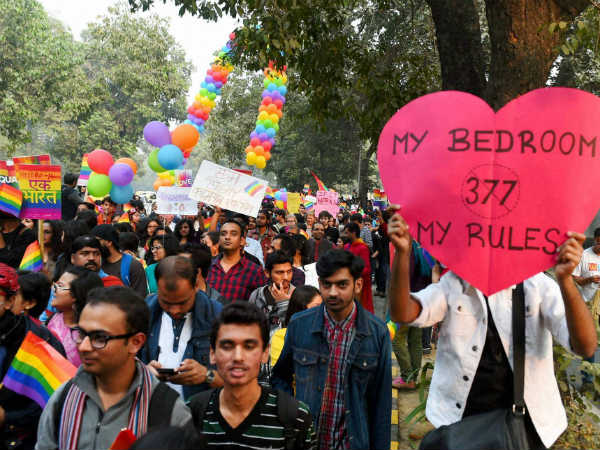
Download Now

Can a non-lawyer appear for a litigant in the court

0

This‌ ‌article‌ ‌is‌ ‌written‌ ‌by‌ ‌‌Yash‌ ‌Kapadia‌.‌ ‌This‌ ‌article‌ answers the question if someone else other than a lawyer can appear in court through various legislations and judicial precedents.  

Introduction

Imagine being asked if a non-doctor can operate on a patient. If we agree and then it is followed with some negligence or mishap, we all know the possible consequences. As doctors have studied to become experts in medical emergencies, lawyers too are trained professionals that help people in legal troubles and emergencies. 

However, through this article, we shall find the answer to the above-mentioned question if a non-lawyer can appear for someone else or if someone can hire a non-lawyer to represent them in the court of law. 

There is often a misnomer where the general public confuse themselves while interpreting who a lawyer and non-lawyer are and how are they different from an advocate. A lawyer is someone who knows the law whereas an advocate may be a lawyer registered with any state bar council as per the Advocates Act, 1961. It is known that a person can represent themself in any court of India but it is subjected to the court’s satisfaction. If an individual does not possess sufficient means or is confined or imprisoned then a lawyer is provided by the state who shall represent the party in any court proceeding. It is to be known that even a law graduate cannot represent anyone in any court of law unless they are registered as an advocate with the Bar Council of India.

Relevant provisions

Civil Procedure Code, 1908

Order III Rule 1 of the CPC states that 

any appearance, application or act in or to any Court, required or authorized by law to be made or done by a party in such Court, may, except where otherwise expressly provided by any law for the time being in force, be made or done by the party in person, or by his recognized agent, or by a pleader appearing, applying or acting, as the case may be, on his behalf

Provided that any such appearance shall, if the Court so directs, be made by the party in person.”

Therefore, it is crystal clear that an appearance in the court can be made by a recognized agent; however, the same is at the discretion of the particular court. 

Advocates Act, 1961 

Section 32 of the Advocates Act, 1961 states under the heading “Power of Court to permit appearances in particular cases — Notwithstanding anything contained in this Chapter, any court, authority, or person may permit any person, not enrolled as an advocate under this Act, to appear before it or him in any particular case.

Therefore, it is made clear that the Advocate’s Act allows any person who is not enrolled as an Advocate under this Act to appear before a court. However, the same is again at the sole discretion of that court. 

Supreme Court Rules, 2013

The Supreme Court Rules, 2013 under Order IV 1(a) states that 

Subject to the provisions of these rules an advocate whose name is entered on the roll of any State Bar Council maintained under the Advocates Act, 1961 (25 of 1961) as amended shall be entitled to appear before the Court:

Provided that an advocate whose name is entered on the roll of any State Bar Council maintained under the Advocates Act 1961 (25 of 1961) for less than one year shall be entitled to mention matters in Court for the limited purpose of asking for time, date, adjournment and similar such orders, but shall not be entitled to address the Court for the purpose of any effective hearing:

Provided further that the Court may, if it thinks desirable to do so for any reason, permit any person to appear and address the Court in a particular case.”

Likewise, it is again clear to us that though advocates enrolled under the State Bar Council and Advocates Act, 1961 are allowed to appear after more than one year of experience and limited allowance for below one year of experience, even non-lawyers can address and appear in a particular case only if the Hon’ble Supreme Court of India feels it is desirable to do for any reason whatsoever. 

It is therefore substantiated through the aforementioned legislation that non-lawyers can appear for someone at the sole discretion of the Hon’ble Courts of India. The same can be termed as conclusive through judicial precedents i.e. the decisions of courts when they allowed a non-lawyer to appear for a litigant or when the courts put forth their views and held that a non-lawyer can appear for a litigant in certain scenarios. 

Judicial Dictums to be relied upon

There are certain landmark judgments from our Hon’ble Courts supporting the statement that non-lawyers can appear on behalf of a litigant. The following are the most recent and comprehensive judicial dictums backing this statement: 

  1. Harishankar Rastogi v. Girdhari Sharma and Anr (1978)
  • In this case, the petitioner appeared in person and sought permission of the Hon’ble Supreme Court if he could be represented by an individual who was not an advocate as per the definition mentioned in Section 2(a) of the Advocates Act 1961. This request was made so that another person could represent the litigant in the place of the amicus curiae already appointed by the Apex Court. \
  • The Court allowed the said petition. It was held by the Hon’ble Supreme Court that no private person who was not an advocate had a right to barge himself in a court and claim to argue on behalf of a party to a proceeding. 
  • It was stated that the party must first successfully get the permission of the court itself and the motion for it must come from the party himself. It was reiterated that it is at the sole discretion of the court to allow such permission to be represented by a non-advocate. 
  • It was further stated that the court had the right to even revoke permission after giving it if the court feels that the representative is reprehensible in his arguments. 
  • However, the Apex Court stated that the relationship with the party and non-advocate, their antecedents and reason for availing the services of that non-advocate must be first gathered, then studied and only then the requisite permission must be granted or denied by the court. 

Judgement

  • It was opined by the Apex Court that advocates are entitled as of right to practice in court under Section 30(1) of the Advocates Act, 1961 subject to reasonable restrictions provided under Section 29, i.e., the only class of persons who are entitled to practice the profession of law are advocates. However, if any party is unable for some reason or the other to present their case adequately then they can seek the help of another person on their behalf. 
  • The Court held that if such a plea would be negated, it would lead to justice being denied to a person in certain scenarios, especially in the land of illiteracy and indigence and judicial processes of sophisticated nature. The Court furthermore stated that Sections 302, 303 and 304 of the Criminal Procedure Code, 1973 indicate the policy of the legislature to provide justice in such contingencies. 
  • It was further held that a court should not totally shut out representation made by any individual other than the party to the proceeding in instances wherein there is no licensed advocate who is appearing on behalf of or representing the litigant/ party in the suit. 
  • It is an obligation of the state to hold a comprehensive program of free legal services if the rule of law was to receive vitality in its observance. Parties must appear through advocates and only when they are not represented by one such, through some chosen friend. It is to be noted that such other persons cannot habitually keep representing parties in court. If there are instances where a non-advocate specialises in practicing in court, then that person is violating the legislations laid down in the Advocates Act, 1961 which the Court opined that it cannot allow any person to do so.  

However, it was finally held that a person who is a party to a proceeding is open to ask the court if he can be represented by a non-advocate in a particular scenario or case. Then it is at the court’s discretion whether to allow such a request or not. Practicing a profession means something very different from representing some friend or relation on one occasion or in one case or on a few occasions or in a few cases. 

Goa Antibiotics & Pharmaceuticals Limited v. R.K. Chawla and Anr. (2016)

  • In this case, the Hon’ble Supreme Court held that any natural person who is not an advocate can appear in person and argue his own case personally. However, he is prohibited to issue a power of attorney to another person other than the one who is enrolled as a licensed advocate to appear on his behalf for that particular proceeding. To hold this otherwise would mean defeat and not abide by the penned-down provisions of the Advocates Act, 1961. 
  • Section 32 of the Act states that it is at the court’s discretion to allow a person who is not enrolled as a licensed advocate to appear before the court and argue a particular case. In fact, Section 32 of the Act does give the right to a person other than an advocate to appear and argue on behalf of a litigant but it is the discretion conferred by the Act on the court to permit anyone to appear in a particular case even though he is not enrolled as an advocate. 
  • Factually, in this case, an application for such permission to be represented by a non-lawyer had been filed by Mr. Vishnu Kerikar. However, it is the discretion of the court under Section 32 of the Act to permit such a person to appear on behalf of that entity. There is a distinction between the right to appear on behalf of someone that is given only to advocates and the discretion in the Court to permit any non-lawyer to appear before it. 
  • The Hon’ble Court stated that only those persons who have a right to appear and argue before the court are enrolled as advocates whereas, under Section 32 of the Act, the power is vested in the court to permit, in any given case, a person other than an advocate, the liberty to appear before it and argue the case. 
  • The Apex Court further stated that a power of attorney holder cannot appear before a court on behalf of anyone whatsoever unless they are permitted by the court under Section 32 of the Act. The Court however made it clear that a power of attorney holder could sign sale deeds, agreements etc. and do other acts on behalf of someone else unless prohibited by the law itself. 

In view of the above, it is crystal clear that if one is not an advocate even then they can have the liberty to appear on behalf of a litigant in a suit before the court of law but only with the permission of the concerned court. The Hon’ble Court has to judiciously exercise its discretion and its right which is inherent, to ask the party to explain the reasons as to why a non-advocate should be permitted by the court to appear on the behalf of another party in a particular proceeding. If the Hon’ble Court is satisfied with the reasoning given for the representation by a non-lawyer then they can appear on behalf of the litigant. Furthermore, this judgment provides additional clarity that the power to represent cannot be delegated in any manner by way of the power of attorney as it is not an inherent right of a person to appear as a non-lawyer but a mere discretion of the court considering the circumstances of every case and litigant.

Conclusion

To conclude, a non-lawyer can appear before the court on behalf of a litigant if and only when the concerned court grants such permission. As held in Harishankar Rastogi, the antecedents, the relationship, the reasons for requisitioning the services of the private person, and a variety of other circumstances must be gathered before the grant or refusal of permission.

Therefore, it is good to learn and have knowledge that a non-lawyer can represent someone in court and a person can hire a non-lawyer to represent in court. However, whether they can go ahead with the proceedings is entirely dependent and at the discretion of the Hon’ble Court where the party’s case has been filed. 


Students of Lawsikho courses regularly produce writing assignments and work on practical exercises as a part of their coursework and develop themselves in real-life practical skills.

LawSikho has created a telegram group for exchanging legal knowledge, referrals, and various opportunities. You can click on this link and join:

https://t.me/joinchat/J_0YrBa4IBSHdpuTfQO_sA

Follow us on Instagram and subscribe to our YouTube channel for more amazing legal content.

Download Now

The problems of enforcing International Law in India

0
Image source: https://bit.ly/3mrcVu7

This article is written by Vanya Verma, from Alliance University, Bengaluru. This article examines the general stance of international law and domestic legal regimes on the legal impacts of international law in the Indian legal system, as well as the process of implementing international law in India along with the problems that arise while enforcing international law in India and suggests a new legal framework for better implementation of international law.

Introduction 

The process of incorporating international law into domestic law is not governed by international principles in general. There is no international authority in charge of enforcing the law. States follow different processes of incorporating international law into their domestic legal system under domestic law, such as constitutional provisions and customs. Also, the constitutional provisions of States for the implementation of international law are different. Domestic courts may choose or be obliged to ignore international law until it is incorporated into domestic law. As a result, the implementation of international law in a country is determined by the domestic legal system’s policy objectives and principles. However, before international tribunals, the state cannot ignore its commitments under international law.

Even if international law disagrees with the parties’ domestic laws, international tribunals give effect to international law. In case if domestic law clashes with the parties’ treaty obligations, their constitutions are not considered.

Indian courts are hopeful about the application of international law in domestic courts, and their strategy is changing all the time. India has made a case for its commitment to international law development and implementation. India, on the other hand, plays no role in the formulation of some of the basic fundamental concepts of international law. India has made major contributions to international law, particularly in the fields of human rights, environmental law, arbitration, and trade law. On the other hand, India is hesitant to draft treaties that limit its sovereignty and explicitly seek to accord domestic courts a judicial enforcement role.

The United Nations states that “International law establishes the legal obligations of states in their interactions with one another and their treatment of individuals inside their borders. Its jurisdiction spans a wide variety of international concerns, including human rights, disarmament, international crime, refugees, migration, nationality difficulties, prisoner treatment, the use of force, and war conduct, among others. It also oversees global commons such as the environment and sustainable development, international waterways, outer space, global communications, and international trade”.

Domestic law, as opposed to international law, is the law that applies within a state or its internal law. The words domestic law and municipal law are used interchangeably. Domestic law is a sovereign state’s national, local, or internal law, as opposed to international law. Law at the national level, as well as state, provincial, territorial, regional, and local levels, is referred to as domestic law. While they may be distinct types of law in state law, international law is unconcerned with this distinction and treats them all as one. Similarly, international law does not distinguish between a state’s ordinary law and its constitution. Article 27 of the Vienna Convention on the Law of Treaties states that even if a treaty contradicts a state’s municipal law, the state must still comply with the treaty’s obligations. Article 46 of the Vienna Convention provides the single exception to this norm, which applies where a state’s expression of consent to be bound by a treaty was a manifest violation of a “rule of its internal law of fundamental importance.”

Role of Indian judiciary in implementing International Law

The attitudes of Indian courts on international law have been evolving. In several cases, the Indian Supreme Court has emphasised that, when considering the constitutional requirement, courts should keep in mind the core principle embodied in international conventions and instruments and, to the extent possible, give effect to the principle contained in those international instruments, particularly when there is no inconsistency between them and are void in the domestic law. Indian courts can use International Conventions as external aid in forming domestic legislation if necessary. For instance, in Vishaka v. State of Rajasthan (1997), the Supreme Court relied on the International Convention to create domestic law.

Indian courts face difficulties in applying, accurately sourcing, and identifying international legal norms. For historical reasons, most developing countries approach international law with caution as a different legal tool, most likely to widen the interpretation or to maintain a comparable local legal norm. The Indian judiciary does not have the authority to enact legislation; nonetheless, it is free to interpret India’s international law commitments into domestic laws when rendering decisions in international law disputes. In this regard, the Indian judiciary has taken a proactive role in enforcing international law, particularly human rights and environmental law, under treaty law.

The Court stated in the National Legal Services v. Union of India case in 2014: “If the Indian parliament passes legislation that conflicts with international law, Indian courts are obligated to use Indian law rather than international law. In the absence of legislation to the contrary, municipal courts in India would uphold international law.” In the case of Krishna Sharma v. State of West Bengal, the Calcutta High Court stated in 1954 that when there is a conflict between international and domestic law, the courts should attempt to reconcile the two laws. In addition, courts must examine the content and interpretations of international instruments including treaties, conventions, and declarations. The Indian judiciary, at all levels, has seen significant growth in the number of cases involving international law. As a result, it can be argued that examining current trends at the intersection of international and domestic law, as well as evident changes in treaty-making processes, is necessary for determining the true emergence and development of new jurisprudence.

Major problems that arise while enforcing International Law in India

Not only in terms of culture and traditions but also in terms of timelines, India is a diverse country. Distinct timelines indicate that individuals in India live in multiple eras at the same time. India is undergoing both progress and degeneration at the same time. Even after more than seventy years of independence, India continues to battle with colonialism’s legacy and is subjected to cultural insults. Some portions of the country have developed, while others are still influenced by orthodox beliefs. On the one hand, we can see high-tech structures, but on the other hand, there are still many villages and rural places where power is a luxury that cannot be afforded. The impact of globalisation on such a diversified country is debatable. In India, social inequity has been entrenched in the caste system for a long time. Poverty, ignorance, and religious prejudice have been prevalent in India for generations, and even with the corporatization and globalisation of agriculture, water supply, power, and other key utilities, it has been impossible to eradicate them. 

Because such issues make it difficult for people to cooperate even at a local level, asking for global cooperation will be too much to ask. People who live in this day but have ideologies and ways of thinking that are as ancient as the hills do not contribute to the nation’s collaboration at a worldwide stance. 

India’s failure to cope up with the dynamic International Law  

In several decisions over the last few decades, the Indian Apex Court has had to deal with rapidly changing and expanding international legal principles. Furthermore, international law currently deals with subject matters that are wide-ranging and diverse due to its global status. 

One of the most important roles of international law in the domestic legal regime is to reflect international changes and the wide civilization. Unfortunately, Indian courts are currently conservative and cautious, and as a result, they frequently fail to cooperate with ever-changing international norms and the continually expanding scope of international law, making thorough enforcement of international law difficult. 

Poor law enforcement in India

It is often argued that a law is only as good as its enforcement mechanisms, and poor countries like India cannot properly implement international law. The police and internal security systems in India are largely decentralised and frequently lack synchronisation.

International lawbreakers cannot be compared to law enforcement agencies, which are simply government employees that are undertrained, overworked, and underpaid, and who perform their duties without necessary security and protection. Furthermore, India’s border patrol officials, federal agents, and local police officers do not have a thorough understanding of international law. 

In India, the massive resources required to ensure that officials can properly enforce international rules at the national or local level are restricted or unavailable. Even if individual incidents are investigated and prosecuted, the enforcement of international law in India is hampered by lax enforcement, a shortage of qualified police officers, and an overworked and under-resourced court system.

Infrequent use of International Law only as an exotic device  

Without a doubt, India recognises international law; nevertheless, Indian courts do not justify the entire scope of international law because it is only an exotic device utilised by the courts of law. The Indian courts have not yet completely adapted international law. It is still employed as an alien law to this day. First and foremost, to effectively execute international law throughout the state, it is necessary to become acquainted with it and embrace it from top to bottom. There should be no restrictions on its use, and any potential for irresponsibility while using it should be eradicated. 

Lack of experts and professionals 

India, being a third-world country, has a shortage of skilled and experienced specialists in the domains of law, particularly global law such as international law. After establishing an international law division, it is necessary to staff it with appropriate legal consultants, which is a far more difficult undertaking. There are still empty positions in the legal section even after more than seventy years of independence.

There is a failure to find qualified individuals for all of the positions that India has managed to generate despite numerous setbacks. About 30 people were interviewed in July 2019 for five positions, however, only two were recommended.

One explanation for this failure is because Indian institutions do not devote enough attention to public international law, and students choose subjects that they believe will be more beneficial for their private practice as attorneys. The majority of young Indian lawyers who select international law opt for arbitration (international business arbitration), which is potentially more profitable. Although the evolution of modern communication technologies and the broadening scope of education has increased by professionals, the numbers do not yet reach the requisite level, particularly in the field of international law, where such rapid expansion is impossible.

Lack of recognition of International Law  

Even though India recognises international law, there is a lack of recognition of international law in India, which has always operated as a roadblock to the efficient execution of international law in India. It has been demonstrated that international law is not applied in the same way in domestic courts. The approach of the courts is influenced by the transformation doctrine, which states that they should look for implementing legislation to give effect to international law. 

Stiff competition and burden to impress big powers  

In theory, the recognised principles of independence, sovereignty, and territorial bounds preserve state equality, but in practice, George Orwell’s oxymoronic remark that “all animals are equal, but some are more equal than others” is appropriate to illustrate the strength of states in their interactions with one another. International law is frequently shaped and written in a way that benefits specific groups or governments.

Apart from the fact that international law is most influential when it favours the powerful, the powerful are frequently the source of law. There is nothing incorrect with asserting that international law is based on the principle of “might makes right.” Many have suggested that international laws and standards are nothing more than power mirrors. International law arose from a specific social-political context in which power and resources were unequally distributed. Furthermore, the five permanent members of the United Nations Security Council (UNSC), namely the United States (US), the United Kingdom (UK), France, China, and the Russian Federation, have veto rights, implying that these five permanent members are above international law and hence immune.

The majority of international law’s norms and regulations are likely to be aligned with the interests of those in positions of power. And, as someone correctly stated, the law is only as effective as the tools of enforcement, and poor countries like India cannot respond decisively.

India, despite being a premium developing country, lags behind certain developing countries in terms of poverty, per capita income, education, malnutrition, hunger, farm employment, and B2C e-commerce penetration. As a result, India is struggling to keep up with the fierce competition. In addition, India is under constant pressure to court the world’s most powerful nations to remain competitive. All these reasons function as a burden for India in applying international law appropriately.

Denial of the existing conflict situation  

During times of conflict or the advent of any form of difficulty, laws serve as a saviour. However, to put the solution into action, one must first acknowledge that there is a problem. One of the reasons why international law fails to be enforced in states is that many times, rather than recognising that a dispute exists in a particular area, state leaders choose to simply deny the existence of the conflict. This is also true in India. Since 1989, India has been at war. Whether for independence, union with Pakistan, or self-government in Jammu and Kashmir, a large number of people have been taking up arms.

Similarly, separatist groups in India’s north-eastern states, such as Assam, Manipur, Mizoram, and Nagaland, have staged revolts in which 40000 or more people have been killed. In addition, during a Maoist insurgency, around 6000 people were slain. Even when such enormities occurred within the country, India denied the existence of a conflict zone. What’s worse, the people living in those regions were not provided with the appropriate protection that should be provided during any such situation according to the Geneva Conventions, because the government did not declare them as conflict zones.

Separation from international relations as a field study  

This severance has taken place in a tapestry, and it has always been gradual but noticeable. International law must be judged in the same way that its political and economic concerns are. While schools such as the “New Haven School”, founded by Myres McDougal and Harold Lasswell recognise the link between international law and politics of those who created, protested to, or explained it. Yale’s holistic approach to international law has also been extended to several other colleges and schools that excel in other subjects, such as the University of Chicago (Economics), The Fletcher School (International Relations), and Harvard University (Political Theory).

On the other hand, India has shown no signs of such a fusion. Furthermore, Indian institutions do not devote enough attention to public international law, and students choose subjects that they believe would be more advantageous for their private practice as attorneys. The majority of young Indian lawyers who select international law opt for arbitration (international business arbitration), which is potentially more profitable.

It is past time for Indian institutes to focus on increasing scholastic interest and scholarship, as only then can the country’s rapidly dwindling international legal practice be restored and reinstated.

Terrorism and disturbance from neighbouring nations 

Terrorism is a term that India is familiar with. In fact, in today’s world, no country is immune to terrorism. India has suffered as a result of being colonised by Britain due to careless boundary demarcation. These mindless demarcations, whether the Radcliffe Line between India and Pakistan or the McMahon Line between India and China, have resulted in horrific human rights violations (by separation of Pakistan from India) and war (between India and Pakistan over Kashmir and between India and China over Tibet). India has had territorial disputes with many of its neighbours on various occasions.

Many of the terrorist attacks are thought to have international connections. Even though India has faced major threats from terrorism and other forms of politicised violence for decades, India’s unique antiterrorism legislation has proven to be less effective in preventing terrorist attacks. The national criminal justice systems play a critical role in combating the terrorism threat.

Conflicts with India’s neighbours plague the country regularly. For example, India has been attempting to find political as well as legal solutions to its border conflict with China for many years. Formal techniques have traditionally dominated India’s international behaviour, such as filing petitions, submitting dossiers, and complying with treaty provisions, which has not served India well in the situation of the Indo-China boundary issue. All of these issues combine to render India incapable of properly executing international law.

International Law not mentioned clearly by the Constitution drafters  

India did not have much awareness of international law at the time the Indian constitution was being formed, and it cannot be blamed for this since it had been a British colony for numerous years, which prevented it from completely and freely participating in international affairs. As a result, India’s constitution contains extremely few references to international law.

The drafters of the Indian constitution took a risky approach to international law by failing to mention it as clearly as other subject issues. There are no specific provisions in the Constitution regarding the absorption of foreign law into Indian law or the status of international treaties.

As a result, there is a sense of misunderstanding among the Indian people, leading to disagreements in people’s attitudes toward international law. India’s inability to apply international law to its subject matters is hampered by a lack of cooperation and uniformity.

Low level of public awareness  

In 2016, former Chief Justice of India TS Thakur said, “We must be aware of international law” while speaking at a seminar on “Principles of The Engagement of Domestic Courts with International Law.” He said, “We must be aware of what is happening in the world, prepare for it, and have the ability to deal with them,” as he highlighted coping with arising circumstances and the smaller world. 

International law has always had a problem with public awareness since it has such a broad horizon that must be comprehended to have a comprehensive understanding of it. Legal knowledge, technology and access, and “impact and accountability” are all important factors in providing high-quality legal services. Many people in India live in distant locations, cut off from the rest of the world. International law is not a commonly discussed topic among the general public, and most people know very little about it. In India, the lack of citizen awareness of international law leads to the ineffective application of the law.

Deep-rooted corruption

‘Corruption’ is a very real phrase in India, and it can be found in practically every section of the country. Because corruption has been absorbed in all levels of the Indian system, it is chronic and destructive, not to mention difficult to eradicate. It applies to all professions, including law. When a case involving the abuse of power in India has to be dealt with under international law, it becomes difficult to prosecute police officials, since there is typically no direct proof, and with local control, police officers tend to cover up for one another.

Corruption is an issue when it comes to enforcing local laws, and it becomes even more of a problem when it comes to enforcing international law because there is no proper organisation to monitor the process. At all levels of government, there is a lack of accountability for official misbehaviour, which adds to pervasive impunity.

The epidemics of corruption have spread widely not just on a national level, but also on a worldwide level. It would not be incorrect to conclude that the League of Nations failed because it was unable to punish or dissuade any states from breaking international law. For example, while being the most vocal proponents of international norms and institutions, the United States and China have taken a unilateral approach to international law. As a result, emerging countries like India have been unable to equally enforce international law.  

The interests of powerful states are frequently reflected in international law. Even international law judgements can appear to be biased at times. To put it another way, judges are also people, and their personal feelings have an impact on their decisions. Their convictions are frequently influenced by worldwide public opinion in some way. As a result, it is impossible to guarantee that judges are free of prejudice before rendering a decision in a case. This fact, however, is controversial, as it raises questions about the impartiality of international law in deciding disputes.

Economic and human resource development gap in India and international  standards

In 2005, approximately 24.3 per cent of India’s population earned less than US$1 (PPP, roughly US$0.25 in nominal terms) per day, down from 42.1 per cent in 1981. In India, 41.6 percent of the population (about 540 million people) lives below the new international poverty level of $1.25 (PPP) per day, down from 59.8 per cent in 1981. As of 2019, roughly 22 per cent of India’s population still lives below poverty. During pre-Covid. Around 35% rural population fell under the poor category, the number is expected to rise roughly to 381-418 million with the headcount ratio reaching a total of 50.9 – 55.87% in 2021-2021. In the backdrop of India’s departure from the International Covenant on Civil and Political Rights, in terms of compensation, India falls short of international standards. Fingers are being pointed at the nation’s democracy, in the absence of a basic right to compensation. Such violations of fundamental rights should not be tolerated in a democratic state and should be addressed.

India is a developing country. There is a significant disparity between India’s economy and world standards. Because India is lagging behind in the economic race, it impacts its approach to HRD. Increased population and poverty have resulted in a reduction in the value placed on human resources. There isn’t much being done to develop the country’s human resources. People are treated as if they were objects. 

Lack of infrastructure  

India lacks or even misses out on infrastructure, which is frequently disregarded. Deplorable infrastructure is not a new problem that the Indian judiciary is coping with. Infrastructure deficiencies are a factor that contributes to judicial delays and difficulty in obtaining justice. The user’s ability to navigate optimally is hampered by a lack of required support structures. As a result, court infrastructure is a critical factor in determining how well the law is implemented and how well litigants can accustom to and use the infrastructure offered.

Solutions for the better implementation of International Law in India

Despite its attempts to circumvent international law by refusing to ratify some treaties and conventions, India should work to better define the applicability of international law because it is continually evolving. A new legal framework is required for the improved execution of international law. The following are four possible solutions:

Applying existing laws as written in the Constitution Law and treaty law 

The Constitution is the highest legal authority in the country. The Indian Constitution mandates that international law and international morality be given high priority in all aspects of Indian governance. The legislation for giving effect to the international agreements has been given under the Article 253 of the Constitution. The principle of pacta sunt servanda, which is codified in Article 26 of the Vienna Convention on the Law of Treaties and stipulates that “any treaty in force is binding upon the parties to it and must be performed by them in good faith”, is the cornerstone of treaty law. Treaty laws, however, are no longer binding as of August 2019, according to the Constitution. It is entirely up to Indian courts to decide whether or not to refer to international law. Given the rapid evolution of international law, relying solely on constitutional and treaty law would be inadequate.

Wherever the Indian Constitution conflicts with international law, it needs to be modified. When international law and domestic law clash, constitutional law becomes ineffectual and weak in executing international law. Domestic laws take precedence over international laws under the Constitution. Any international agreement that is consistent with the fundamental rights and in accordance with its spirit must be read into those provisions to expand their meaning and content and to advance the constitutional guarantee’s goal. Ignoring international law is not the answer; rather, revising the Constitution to make international law more accessible is the answer. However, altering the Constitution is a lengthy, difficult, and political process. It allows more options for implementing international law in the domestic system to be explored.

Citing treaties routinely

India has made a substantial contribution to international law. Because India is the world’s most populous democracy, it should take the lead in enforcing international law in domestic systems by citing treaties more frequently. International law establishes the legal obligations of governments in their interactions with one another and their treatment of individuals inside their borders and regulating the global commons. Countries join forces to create legally binding policies that benefit their citizens. India’s domestic system will be strengthened if it follows international law. When international law is consistent with domestic legislation, India has attempted to incorporate and apply it in several judgments and rulings.

International treaty law and international customary law have bolstered the applicability of various articles to strengthen India’s legal framework and position in the international community. The notion of systemic integration can be used by Indian judges to carry out integrationist interpretations of international law. As a result, Indian judges can become builders of the worldwide legal system’s consistency. The degree of systemic integration that is beneficial to the further development of international law might vary. As a result, it is recommended that Indian courts cite treaties more frequently, as this will strengthen Indian domestic laws.

Signing more treaties 

International law, particularly international conventions, is founded on sovereign states’ will and assent. As a result, the proposed treaty must be adopted, applied, and implemented in national jurisdictions. If the treaty is to be truly effective, everyone stakeholder in the process must play a critical role. India’s ability to execute international law would improve as more accords are signed. It has been rather uncontroversial for local judges to apply foreign rules outlined in treaties. In general, ratification of a treaty is a legally significant act, and domestic courts should seek to hold national governments accountable for the legal obligations embodied in such ratification.

At the very least, once a treaty is signed, India will be committed to safeguarding the treaty’s interests, and local legislation can be enacted to support the pact. Treaties are also reliable indicators of international law content. The only exception is when a treaty is deemed to conflict with a peremptory international law norm, such as jus cogens. As a result, the pact is declared null and void. There are, however, a few absolute principles, such as the prohibition of genocide, slavery, piracy, and torture. As a result, it is uncommon for a treaty to be nullified, reinforcing the idea that consulting treaties for determining the content of international law is safe. The claim that a state may not accept even certain framework treaties, such as the Vienna Convention on the Law of Treaties, or framework and substantive obligation conventions, such as the Refugee Convention 1951 or the International Criminal Court established by the Treaty of Rome, is somewhat disturbing.

Signing as many treaties as possible is the most effective and efficient strategy to bridge the gap between international and domestic law. India should sign conventions and treaties, but it is hesitant to draft accords that limit this freedom and explicitly grant domestic courts judicial enforcement authority. It may be claimed that a vast number of states found joining or adhering to international treaties to be in their best interests, while only a few did not. It can also be demonstrated how India’s refusal to join such conventions has not prevented it from accepting certain “practical” commitments that are similar to, if not identical to, these instruments.

New legal document 

Another option for improving international law implementation in India is to create a new legal instrument that defines a new legal framework expressly for international law implementation in India. The question of how and when international law should be used as persuasive authority in the context of Indian constitutional reasoning is both important and complicated. As the world has become increasingly globalised, the comparative usage of diverse bodies of law has expanded dramatically in recent years, and this trend shows no indications of slowing down. A group of academics could meet to discuss the issues raised by the inconsistency and ineffectiveness of international law in India, provide remedies, and formulate recommended legislation and guidelines to protect and develop international law. Retired judges, attorneys, and academics could form a group of scholars. They can work on issues like dodging international law when it conflicts with domestic law, as well as international law implementation.

Conclusion

International law and state practice are both continually changing. The much-vaunted values and norms of international law are then negotiated by state practice depending on perceived national interests. The link between international and domestic law in India is complex and ambiguous, as evidenced by Indian practice. India takes varying attitudes on international law adoption; at times it is willing to do so, at other times it is not. The Indian Constitution provides the foundation for the country’s domestic legal system to implement international treaty obligations. Furthermore, the Indian Government has sole authority to establish and enforce international treaties or accords.” The President of India has sole authority over the Indian government and is authorised to sign and approve international treaties. When there is no disagreement between them and there is a gap in domestic law, Indian courts will invoke international law. Better implementation, on the other hand, is possible. This article made four recommendations for improving the application of international law in the Indian legal system.

References


Students of Lawsikho courses regularly produce writing assignments and work on practical exercises as a part of their coursework and develop themselves in real-life practical skills.

LawSikho has created a telegram group for exchanging legal knowledge, referrals, and various opportunities. You can click on this link and join:

https://t.me/joinchat/J_0YrBa4IBSHdpuTfQO_sA

Follow us on Instagram and subscribe to our YouTube channel for more amazing legal content.

Download Now

The importance of LPG Reforms of 1991and its underlying controversy

0
Image source: https://bankingschool.co.in/foreign-exchange/what-are-depository-receipts-adr-gdr-and-idr/

This article has been written by Adithya Prasad pursuing the Diploma in International Business Law from LawSikho. This article has been edited by Ruchika Mohapatra (Associate, Lawsikho) and Zigishu Singh (Associate, Lawsikho). 

Introduction

“Decisions shape the tree, which is history. With each root having had the possibility to go a certain way that would never benefit its own future. Therefore, every decision taken must be examined a thousand times over but never regretted once it has been taken.” A perfect example of the above quote is India’s LPG policy which shifted India from a near-isolated state to a global economic powerhouse. LPG – liberalization, privatization and globalization was the much-needed approach by the  Indian government to counter a failure, which was the public sector. So, what made the LPG so important? Does the decision still live up to what was promised or is it time for a newer policy for our future?

This article will seek to discuss and answer the following:

  • The status quo  before LPG, why was the public sector incapable of promoting nation development?
  • The philosophy behind LPG and why was it necessary?
  • What moral shift did the country see when LPG took place? Does our society have wounds that it does not wish to recognize?
  • Is there a need for a new policy or does the LPG policy seat itself in our country as a long-term understanding? 

The great fall

India, over the last century, has evolved beyond  comparison. With 75 years of independence, India went from a country that had absolutely nothing to becoming one of the biggest powerhouses in the world. However, as much as this potential is captured in our history textbooks, there is a lot that is never taught.

As the years went by, the focus on the public sector grew rapidly past the initial few 5 years plans. The idea was, if India could create an environment where the public sector could do everything and have them all under a certain objective, national growth would be ensured. Despite the initial success, the plan soon began to crumble. Workers in the Indian public sector enjoyed many benefits with a near concrete security against any form of layoff or ability to be fired. The literal idea for society was to create a perfect government employee who had a stable income, could enjoy the benefits of the public sector, and live a secure life. This outlook failed to encourage industries to improve. While some did still operate but with a passion to expand and increase their profit margins, the lack of a competitive environment halted the progress of the Indian economy. 

The Government at the time needed to consider that the lack of productivity was impacting India’s global standing on technological development and trade possibilities. This showed through the numbers, the fiscal deficit in the year of 1990 and 1991 was 8.4% of the GDP. The rapid inflation bounced by 10 percent from 6.7% to 16.7% due to the increased money supply. The Iraq war which led to increased gasoline prices and the rise in total government expenditure to 36.4% cemented what could have been the worst case in India’s economic history. India knew it was in trouble, deep trouble!

LPG: a changed perspective was our saviour?

LPG which stands for Liberalization, Privatization and Globalization is a form of an economic liberalization policy, adopted by then Finance Minister of India, Manmohan Singh and other members of the government, which gave the Indian economy the upgrade that it needed desperately. The concept solely focused on the opening of the Indian economy to the outside world. The Indian economy up until then was solely focused on a more isolationist approach and operation of its economy. The possibility of investing within the Indian subcontinent was near impossible considering the required permits and costs required to establish any foreign influence. Some companies, like Reliance and Tata did take advantage of this isolation to create for themselves a solid foundation that still stands stronger than ever. However, the current standing and influence of both the companies came after the LPG reforms of 1991. So, in summary, the LPG policy covered:

  1. Abolition of Industrial licensing/ Permit Raj.
  2. Public sector roles opened.
  3.  Beginning of privatisation.
  4. Free entry to foreign investment and technology.
  5.  Industrial location policy liberalized.
  6.  Abolition of phased manufacturing programmes for new projects.
  7. Removal of mandatory convertibility cause.
  8. Reduction in import tariffs.
  9. Deregulation of the market.
  10.  Reduction of taxes.

 The robust list of changes was  at first predicted to impact the security of the government workers and employees. This however quickly died down as the benefits of globalization revealed itself through the Indian subcontinent. From 1991 where the Indian growth rate or the GDP was at 1.1%, a far dismal number than what it was in 2015 – 2016, 7.5%. It appears small on paper but considering the population rise and the growth of industry, the ground reality resulted in the development of most of the things that we hold dear to our daily life.

Apart from the increase in GDP, employment, standard of living, education and other aspects of welfare also saw a significant boost. Exports continued to increase up until the recent 2019 readings which indicated near 26-billion-dollar exports from India in  that year. In the year of 1992, the equity markets after being made accessible for overseas corporate investors saw Foreign Direct Investment numbers rise to nearly 5 billion dollars by the year of 1995 from was 132 million dollars just 4 years prior. 

What the LPG policy showed is the enormous potential and interest that the world had towards the Indian economy. These interests began paying for itself eventually, with all the benefits that most developed nations enjoyed at the time. This included better health care, better technology, and a more focused nation towards development through private companies which delivered the results that the public sectors could not. This development was on a pan-India scale; however, this upgrade was not without its shortcomings.

The great shift 

There was a great shift in mentality across the Indian societal structure, where people now viewed welfare through a unique perspective. This new model focused more on career migration, educational focus for the youth and so on. These changes seemed small at first but over the course of nearly 30 years has seen major shifts and a complete overhaul of what India was and what India is right now.

  1. The Job-cultural impact: India for most of her history has had limited understanding of  the concept of working and a career. The idea was simple: study hard and get into any area of the public sector which covered anything from railways to atomic energy. This diversity saw people opting for mostly public sector career paths available at the time. The incursion of the FDI and privatization changed that, the mental understanding of the society now changed to achieving  a corporate job at any Multinational Corporation (MNC).

With this, the education system focused more towards serving international needs and declined in all other aspects. Students were less aware of home-sciences, paid less attention to the humanities subjects and the focus was all towards crafting the perfect employee for every MNC. One can say that this was out of pure desperation, that the economy had been through such a rough patch, such methods of recuperation was the only way that remained to regain what was lost.

Agriculture now contributes only about 15% to GDP. The international norms imposed by WTO and other multilateral organizations have reduced government support to agriculture. Greater integration of global commodities markets leads to constant fluctuation in prices. To put into perspective, this sector at a point held nearly half  the Indian economy on its shoulders employing nearly 70% of the Indian population.

  1. The educational impact: The opportunity of working for an MNC has triggered an education perspective shift. Educational Institutions now, whether run by MNCs or other high profile personnel, often pride  themselves on crafting the perfect student for the perfect employer. This as an issue has been highlighted through the years by many as a  great deficiency in the India education system. This includes important exposure to life skills, independence over oneself and a need to ace a test over learning the subject itself. This is but a general statement, one that holds merit on a case-to-case basis, but numbers turn to support this statement. Nearly 70 to 80% of students do not possess key life skills or claim that they do not get enough exposure in their schools to prepare them for the world outside .

When they speak about CRT or a cathode ray tube, a very outdated design that does not require an in-depth study is still looked at as a theoretical concept. This cannot be  the fault of FDI incursion but what was an unwanted by-product of the same due to opening of high-profile jobs which created a fixed study pattern to attain that job and not learn the concept itself.

  1. The sociological impact: Often cited by many as the degradation of Indian culture, the LPG has had a major impact on the Indian sociological environment. What was a conservative, authoritarian and preconceived society where a decision was made to satisfy desperate needs to a metamorphic state and now where people are working towards a more liberal understanding and approach to career and life itself?

Another major impact that is often cited, is the ability to question. This has been seen as a boon in recent decades, where younger generations due to the LPG policy, have been introduced to the world much earlier than what was before the policy change itself. This has brought younger generations to the table on conversations often reserved for the old, aged cabinet and government. This coupled with the ability and opportunities for most to work, the notion of following a family or joint family decision was out of the question. A frowned look by many of the time, claiming that this policy change in all its tiny repercussions has shifted India from what it was, a fragile state held together under the promise of prosperity to what is, a thriving diverse country where people can speak and work the way they want. 

Conclusion

It is safe to say that LPG came in at the right time as a redeeming feature for the Indian economy. It gave most citizens a second chance and many young citizens the right boost to their careers. Despite the small prices paid, not directly caused by the policy itself but from our interpretation of LPG in India, does not entirely justify an evil that was caused . The repercussions are purely what we have crafted and are for us to solve. Outside this, LPG was the right tactic that catapulted the Indian economy into what is now, more than a trillion-dollar economy. 

References

  1. https://www.magadhuniversity.ac.in/download/econtent/pdf/LPG%20Policy%20of%20India%20and%20its%20Effects.pdf
  2. https://www.drishtiias.com/daily-updates/daily-news-analysis/30-years-of-economic-liberalisation
  3. https://www.thehindu.com/opinion/op-ed/indias-1991-liberalisation-leap-and-lessons-for-today-montek-singh-ahluwalia/article35066035.ece.

Students of Lawsikho courses regularly produce writing assignments and work on practical exercises as a part of their coursework and develop themselves in real-life practical skills.

LawSikho has created a telegram group for exchanging legal knowledge, referrals, and various opportunities. You can click on this link and join:https://t.me/joinchat/J_0YrBa4IBSHdpuTfQO_sA

Follow us on Instagram and subscribe to our YouTube channel for more amazing legal content.

Download Now

Miserable conditions of Indian police stations and the need for police reforms

0

This article is written by Himanshu Mahamuni, a student of Government Law College, Mumbai. This article studies the conditions of police stations, its impact on police and law and order and the required reforms in the sector.

Introduction

Police are the backbone of the society for maintaining peace and solving the problems of people at ground level. Duties of police consist of prevention of crime, and investigation of the crime if it has already taken place. They are also responsible for riot control, public security and other public services relating to security and investigation. Even though they have a huge responsibility on their shoulders, their workplace, that is the police station, is not in good working conditions compared to the load they are given. The miserable condition consists of lack of proper furniture such as tables, chairs etc, poor infrastructure which includes the absence of lock-up facility, no proper living conditions in the quarters provided if any, etc. Considering the crimes which are emerging today, such as cybercrime, which are hard to investigate by police because of technological backwardness and no proper training. Above all, some are not even paid according to the work they do. 

These conditions are one of the reasons for corruption, communal violence and lack of execution. Such conditions also widely contribute to the morale of the police and their dedication to work as public servants. There are various necessary reforms which are the need of the hour for better administration and encouragement to do their job. In this article, we will discuss the current system of police, its consequences on the people and on police themselves, and the necessary reforms which are needed. 

Present police system in India

The Constitution of India distributes the legislative power in three heads viz. Union list, State list and concurrent list under Article 246 as given under Seventh Schedule. Police are under the State list among these, which means that they can be governed by orders directed by the respective states. The superintendence over the police in a state is governed by the state. The hierarchy of police administration runs as follows: 

State 

Zone 

↓ 

Range 

 ↓ 

District 

↓ 

Sub-division 

 ↓ 

Circle

 ↓

Police Station

  • An officer known as the Director General of Police (DGP) is appointed by the state to administer the state police force.
  • The police force in a zone, which is a group of the range that comprises a group of districts, is administered by an officer of the rank of  Inspector General of Police.
  • The police force of a range which is a group of districts is administered by an officer of the rank of  Deputy Inspector General of Police.
  • The district police force is administered by an officer of the rank of Superintendent of Police (SP).
  • The police force in the sub-division which is a further division of districts is administered by an officer of the rank of Assistant Superintendent of Police or Deputy Superintendent of Police (ASP/Dy.S.P).
  • The police force in each circle which is between the police station and sub-division administered by an officer of the rank of Inspector of Police.

The duties were first laid down in detail in the Police Act of 1861 for the police officers. These duties were further extended extensively by the Police Bill introduced in the National Police Commission’s Eighth Report. The United Nations (UN) has also released the Code of Conduct applicable to law enforcement officials which suggests the methods in which police shall conduct. 

Weak infrastructure and its effect on police working

Any person requires a conducive environment to work effectively at his full potential. These can be termed as basic requirements for a healthy working space. The police stations lack these basic requirements in different states of India. These requirements consist of access to clean drinking water, basic infrastructure and other things. This time demands modernisation and digitalisation of working space for productive working. Where police stations lack basic requirements, digitalisation is far from reality. The Centre for the Study Developing Societies (CSDS) in its report on ‘Status of Policing in India’ have ascertained the following findings with regards to working conditions of police:

  1. 12% of personnel reported that there is no provision for drinking water and 14% that there is no provision for the seating area.
  2. In 46% of the time, there was no government vehicle for transport and in 41% they didn’t reach on time due to lack of staff.
  3. 8% of personnel reported that there were never functional computers available, 17% complained about the absence of a CCTNS facility and there was no forensic technology in 42% of the stations.
  4. Out of every 3 civil police personnel, one police officer never received any training on forensic research.

Police are overburdened with the duty because of a lesser police force than the required number. The actual strength of police as of 2016 was 137 personnel per lakh persons which was sanctioned to be at least 181 personnel. The United Nations has recommended that there must be 222 police personnel per lakh persons, which is far more than actual figures. There was reportedly a 75% shortage of availability of weapons in an audit by the Comptroller and Auditor General (CAG) of the Rajasthan police force where a large proportion of 59% was out of use because they were not distributed. Similar trends were seen in the police forces of West Bengal and Gujrat. It was also found in the audit that there were vacancies for the job of operating equipment by trained personnel, such as radio operators and technicians. 

The police station lacks basic facilities such as clean drinking water and the availability of toilets. The police are not equipped with adequate staff which results in stunted performance where the police failed to reach the crime scene on time and were unable to escort the accused to court on time due to such lack of resources. 

These shocking findings are one of the major reasons for the poor performance and lack of efficiency among police. These reports suggest that police lack basic infrastructure to function which adversely affects the working of the police. 

Woman constables’ conditions

Women are an important element to be compulsorily present in any police station. The presence of women police reduces the use of excessive force against the accused because compared to males, they are considered less violent which will result in lesser use of force from other officers. These findings were reported in the Women & Criminal Justice Journal, which further found that this will impact positively and improve the overall police-community relationship and improve the performance of the police station.

But the representation of women is as low as 7.28% in 2016. This has led to an increase in gender stereotypes and biases of women in the police station as well as outside police stations who hesitate to register a complaint. In the survey carried out by CSDS, as discussed above, it was revealed that the task carried out by a woman was different from that of a man in a police station. Where a male constable carried out duties like patrolling, investigating, providing security, maintaining law and order, etc, on the other hand, a female constable is usually handed in house tasks such as maintaining the register, dealing with the public and filing FIRs.

Women employed in a police station are to carry double the burden of the police station and household work both for comparatively lesser pay. While the woman constable is deprived of the week off, they are called for staying back of post duty hours for more work. When the basic facilities such as toilets are already missing, a separate toilet for women is fetched. The rigid gender role in police stations continues to be an obstacle with increased gender parity. 

The woman constable does not form a part of society due to off-screen workload and people do not look at women as a reliable option. This parity has created a lot of obstacles for public perception to look at police as gender-neutral and created a bias of women constables as inferior officers.

Effect on law and order of the state 

The law and order of the state can be maintained only if people have trust and confidence in the police and see them as a community that can solve their problems. However, people look at the police as corrupt, inefficient, politically partisan and unresponsive. Status of Policing in India Report (SPIR) 2018 report found that people were reluctant to file an FIR and the reason for underreporting of crimes by women was recorded as social stigma, harassment and use of abusive language by police. It has been observed that police refuse to file an FIR because lodging FIRs would show higher crime rates which will indicate the poor performance of the authorities. It was further found in the report that about 14% of the citizens are highly fearful of the police officials and about 30% of people were found to be somewhat fearful of the police. These people who are fearful of the police are found to be unwilling to visit the police station to file a report even if there was a need for them to do so which results in high under-reporting of the cases happening.

Police are seen as a tool for quick justice by people for the punishments of the criminals which is not viewed as possible by the judiciary. This boasting and misuse of power lead to suppressing freedom of speech and expression of the common people. Police are seen using excessive force than required while controlling an angry mob or protestors. The disruption of fundamental rights of people affects in turn lowering their trust in the police. Usually, police even lack basic tools required such as protective jackets in such situations and attack the mob to keep themselves safe.

What reforms are needed by the Indian police

Model Police Act, 2006 which is the successor to the Act of 1861 framed by the British, lays down certain reforms to have functional autonomy and accountability for the conduct of the police. These reforms were introduced by the direction of the Supreme Court to constitute a committee to set up a State Security Commission in the landmark judgement of Prakash Singh vs Union of India (2006). Some of the key reforms introduced hereunder are.:

  1. Improving organisation and recruitment which is to be headed by the DGP. 
  2. Responsibilities such as enforcing the law, preventing and protecting public order, collecting intelligence, etc.
  3. Accountability by framing guidelines to ensure quality policing in a more professional manner. 
  4. Restricting time of work to 8 hours and setting up a Police Welfare Board for framing welfare measures and necessary assistance for police.

The past attempts to reform the police situation in India does not address the need for reform in the working conditions such as infrastructure and training of the police. A report released by NITI Aayog, ‘Strengthening Police Force’ instructs the three necessary reforms which are essential for better and effective functioning of the police. These suggestions are- 

Infrastructure reform

The quality of life of the police needs to be updated as police are ‘always on duty’ and they should be provided with humane living conditions. A forensic laboratory must be set up in each district or range levels. 

Legislative reforms

The growing threat to internal security is to be dealt with by the police. They are to be given support by the military and paramilitary forces depending on the amount of threat they are facing. There is a need for an amendment in the concurrent list to bring certain crimes and threats under public order. A framework is needed to be set up for the organised crime act and declaration of federal crimes which can be done by moving police to a concurrent list.

Administrative reforms

The investigation of crime must be separated from law and order. As per the demand of the time, a specialized cell of social and cybercrimes must be set up for faster and effective redressal. Functions of police are to be limited exclusively to its core function and not allow any other work. The state mechanism shall be strengthened and police must be kept accountable for the prosecution done by them.

Technological Scaling 

The need for modernisation and digitalisation of police was addressed by the formation of Crime and Criminal Tracking Network and System (CCTNS), 2009. This will connect the police station and officers for better coordination. A proposal of NATGRID or National Intelligence Grid is also put forward to access data from central offices like IB, RAW, CBI, etc.

Conclusion

The conditions of police are clearly visible to be in miserable condition and there is a huge uproar for reform in this sector. Such conditions are the eventual reasons for various violations of human rights and distrust of people. Poor working conditions lead to the threat of violation of fundamental and basic human rights. Some of the reforms suggested above are not only to be drawn on paper but should also be implemented and observed by the public. The Model Police Bill, 2015 can be a reform that is long demanded and brings essential changes in the current situations. The Model Police Bill, 2015 shall incorporate provisions discussed above and adapt to the demands of people in every state police to ensure proper law and order. 

References


LawSikho has created a telegram group for exchanging legal knowledge, referrals, and various opportunities. You can click on this link and join:

https://t.me/joinchat/J_0YrBa4IBSHdpuTfQO_sA

Follow us on Instagram and subscribe to our YouTube channel for more amazing legal content.

Download Now

Analysis of the data protection laws enforced in Canada

0
Image source: https://rb.gy/usfctq

This article is written by Aristotle Gottumukkala, pursuing Diploma in International Data Protection and Privacy Laws from Lawsikho. The article has been edited by Prashant Baviskar (Associate, LawSikho) and Ruchika Mohapatra (Associate, LawSikho).

Introduction

Data Protection Laws in Canada are unlike any other data laws in the world, as they are composed of a complex structure of 28 federal & provincial data privacy statutes. Canada has also enacted statutory torts, federal anti-spam legislation, criminal code and privacy requirements under various other legislations that specifically initiates protection to the sensitive/personal information of users in public, private and even in health sectors. Each statute differs from the other as the scope, objective, remedies and requirements vary, but the common point in all these statutes is to set out rules and mandates over the collection of data, usage of data, processing of data and disclosure of personal information. Canada is also known as the forefront runner in the field of data protection laws with the “Personal Information Protection and Electronic Documents Act (PIPEDA)” way back in the year 2000. The legislation was staged on the core principles of accountability, consent and limiting of collecting data from data subjects. Fast forward from 2000 to 2021, many countries, even the EU GDPR have adapted these core principles to enact some world-class data privacy laws. 

List of data protection laws in Canada

The data protection laws are varied based on federal laws and provincial laws, they are;

Federal laws 

Provincial laws

Though the statutes differ, the basic principles of these data protection laws are purely based on accountability, consent, limiting collection, use, retention, disclosure and purpose of use, accuracy, openness, safeguards and compliance. Due to this, the Canadian data protection laws are called complex robust privacy compliance watchdogs. 

Data protection authorities in Canada

  • Office of the Privacy CommissionerReceive reports of privacy breaches, monitoring and enforcing compliance with the data privacy laws. 
  • Competition Bureau of CanadaIndependent law enforcement agency which ensures that businesses and their consumers prosper in a competitive marketplace. 
  • Data Protection Tribunal– Hear Appeals or orders issued by the Privacy Commissioner 

Rights rendered to data subjects under Canadian Data Privacy Laws

  • Right To Be Informed – All the laws in the Canadian private sector usually mandate the need for consent and transparency when collecting the data, except in rare circumstances where the consent is not required and in this case the organizations must be transparent and vocal about their practices and have the legal obligation upon them to communicate the same to its customers. 
  • Right To Access – Data subjects under applicable data privacy laws have the right to access their data. In order to access their data, they must apply for an access request according to that applicable statute subject to the prescribed time limit. Only if there are any enumerating circumstances, organizations can refuse this access request. 
  • Right To Rectification – This right has been exclusively prescribed under “PIPEDA”, where a data subject has managed to demonstrate any incompleteness of his/her personal information then the organization must amend the information as required. The amendment basically revolves around the nature of the information that has been challenged and that involves correction, addition and deletion of the personal information and also if appropriate, the information that has been amended may be transmitted to third parties who are having access to the personal information. 
  • Right To Erasure – At the moment, there is a lot of controversy regarding this right as it is unsettled whether this right exists or not and even the Office of the Privacy Commissioner asked the Federal Court in a case to clarify the same in this context. 
  • Right To Object/Opt-Out – The data subjects will be given the right to complain to organizations, to withdraw their consent for the reasons prescribed and also to file complaints before the Office of the Privacy Commissioner. Only under limited circumstances, the opt-out consents are permissible where non-sensitive information is involved.  
  • Right To Data Portability – Under the private sector privacy laws in Canada, there are no accurate rights rendered for data portability.
  • Right Not To Be Subject To Automated Decision Making – Under the private sector privacy laws in Canada, there are no accurate rights rendered for automated decision making.

Scope of application

Personal scope

PIPEDA applies to the collection, use, and disclosure of personal information in the course of commercial activities in Canada. The provinces of Alberta, British Columbia, and Quebec have enacted private sector privacy laws of general application which are applicable to the collection, use, and disclosure of personal information within those provinces: AB PIPA, BC PIPA, and the Quebec Private Sector Act. Unlike PIPEDA, these statutes apply irrespective of whether an activity is commercial in nature, as well as applying to employee personal information. Questions frequently arise in respect of whether a provincial statute, or PIPEDA, or both, may apply to a given activity.

CASL regulates, among other things, the sending of commercial electronic messages such as promotional and marketing messages, to and from Canada, irrespective of whether the recipient is an individual or an organisation.

Territorial scope

PIPEDA does not apply to the collection, use, or disclosure of personal information within the provinces of Alberta, British Columbia, or Quebec, unless:

  • The organisation is a federal work, undertaking, or business as defined in PIPEDA, e.g. banks, telecommunications companies, etc.; or
  • The personal information is disclosed outside of a province in the course of commercial activity.

PIPEDA also does not apply within certain provinces in respect of personal health information collected, used, or disclosed by health information custodians and other entities governed by certain provincial health laws.

PIPEDA is silent with respect to its extraterritorial application. However, the Federal Court of Canada (‘the Federal Court’) has found that PIPEDA will apply to businesses established in other jurisdictions if there is a ‘real and substantial connection’ between the organisation’s activities and Canada (see A.T. v. Globe24h.com, 2017 FC 114). For example, with respect to websites, relevant connecting factors include where promotional efforts are being targeted, the location of end-users, the source of the content on the website, the location of the website operator, and the location of the host server.

The breach notification and reporting requirements in AB PIPA have been applied where the personal information affected in a breach was about an individual located in Alberta.

Material scope

PIPEDA applies to every organisation that collects, uses, or discloses personal information in the course of commercial activities. Commercial activity is defined as any particular transaction, act, or conduct, or any regular course of conduct that is of a commercial character, including the selling, bartering, or leasing of donor, membership, or other fundraising lists.

Many organisations may be subject to PIPEDA in respect of certain aspects of their operations, and the provincial laws in respect of other aspects. Although the requirements of PIPEDA and the provincial laws are substantially similar, there are a number of important differences which can arise in certain circumstances.

PIPEDA does not apply to:

  • Personal information handled by federal government organisations listed under the Privacy Act, RSC 1985 c P-21 (‘the Privacy Act’);
  • The collection, use, or disclosure of employee personal information, unless the organisation is a federal work, undertaking or business;
  • An individual’s collection, use, or disclosure of personal information strictly for personal purposes; or
  • An organization’s collection, use, or disclosure of personal information solely for journalistic purposes.

Certain provisions in Canadian data protection laws, such as safeguards and the appropriate form of consent, depending on whether the personal information in issue is considered sensitive (which generally will include matters such as health and financial information, among others). However, the data protection laws do not prescribe what information types are considered sensitive. 

Different privacy rules apply in respect of personal health information in some cases, and for public sector entities in Canada. However, private sector service providers to the health sector and public sector need to be aware of such requirements as they often inform requirements imposed on such parties through contract.

CASL is an opt-in regime in respect of commercial electronic messages. It prohibits the sending of commercial electronic messages, unless express or implied consent, or an applicable exception, is applicable and prescribed requirements are met. Substantial monetary penalties and other consequences can flow from violations of CASL, including extended liability for directors and officers.

Penalties

If an organization fails to comply with the privacy laws then monetary penalties and fines shall be imposed with up to 5% of the global revenue or 25 Million Dollars, whichever is higher, subject to most serious privacy offences. At the moment only the Personal Information Protection and Electronic Documents Act (PIPEDA), is authorized enough to impose fines and penalties for any breach of the Digital Privacy Act. The maximum fine for the breach is $100,000 per breach and in case of multiple breaches all the fines might add up.

Conclusion 

With the inclusion of the 10 core principles such as accountability, consent, accuracy, safeguards, identifying purposes, limiting collection, limiting use, disclosure and retention, openness, individual access and challenging compliance, the privacy laws in Canada were enacted with a sole objective to protect the rights and interests of its citizens. Canada is continuing its journey in introducing, improving and amending privacy laws which are stated to be world-class standards and it is way ahead of the curve in the privacy laws. 

References


Students of Lawsikho courses regularly produce writing assignments and work on practical exercises as a part of their coursework and develop themselves in real-life practical skills.

LawSikho has created a telegram group for exchanging legal knowledge, referrals, and various opportunities. You can click on this link and join:

https://t.me/joinchat/J_0YrBa4IBSHdpuTfQO_sA

Follow us on Instagram and subscribe to our YouTube channel for more amazing legal content.

Download Now

Elements of a corporate sentence and punishment

0

This article is written by Himanshu Mahamuni, a student of Government Law College, Mumbai. This article analyzes the grievous business crimes of non-compoundable nature in India and provisions for their penalties.

Introduction

A corporate sentence or white-collar crimes become more prevalent in any jurisdiction when the laws are incompetent or have lots of loopholes to evade. These crimes are committed by the elite or educated class of people who have money, power and good knowledge of the law. E.H. Sutherland defines these crimes as committed by people of socio-economic groups because committing such crime directly or indirectly has an effect on society at large. These are targeted mainly because of greed but it does not affect only those people, but thousands of people or the society as a whole. Some of the infamous corporate crimes committed in India were the Harshad Mehta scam, Satyam scam, Fodder scam, etc. which have shrunken the country’s economy to shambles and directly affected the pockets of common people, who are the taxpayers of the country.

Governments being hit by these crimes have framed various legislations for the purpose of enumerating the sentence for such crimes. Some of these are the Companies Act, 2013, Income Tax Act, 1961, etc. As the crimes here affect the innocent people at large, punishments for the same are made rigorous for the compensation to the people, which include civil and criminal punishments both. In this article, we will discuss those crimes, the crimes given under the Companies Act as the corporate sector is governed by the same, conviction of the culprit and punishment provisions.

Business crimes in India

A corporate entity has a status of separate legal entity from that of its promoters or directors. A person can’t claim the assets, profits or any money of the business as its own because the entity has its rights to own it. However, people misuse this concept to commit business crimes by hiding behind the veil. In such instances, the government deems it necessary to lift the corporate veil to catch the real perpetrators. Some of the business crimes that emerged in recent times are:

Fraud 

Frauds are aimed to mislead and gain an inappropriate advantage. These usually include financial frauds against the banks. These crimes affect both the public who keep their money in the bank and the government. Frauds emerge because of misuse of technological resources and misuse of money for unauthorized purposes. Frauds also discourage foreign investors from investing in the domestic market. The prominent frauds in the corporate sentences are the following

  1. Securities Fraud

Fraud in securities may include contravention of any provisions of Securities and Exchange Board of India Act(SEBI), 1992 in issue, purchase or sale of securities. The SEBI Act contains provisions that prohibit fraudulent or unfair trade practices in the securities market and punishment for offences like failure to furnish information, redress investor’s grievance, etc which is usually a hefty penalty.

  1. Accounting Fraud

The Companies Act, 2013 deals with any accounting fraud committed by companies such as disclosing material facts in financial statements, professional misconduct, etc. The Central Government is empowered to direct necessary investigation against such companies where they can inspect books of account, direct special audit and any other necessary procedure which is punished by the provisions of forgery under IPC. 

Money Laundering 

Money Laundering Act, 2002 administers the crime committed under the same. This method is used to convert black money into white by showing illegal money as legal through legitimate means. This makes it difficult for the investigation agencies to trace the source of money when invested in the market which is eventually used to spend and bring into the financial system.

Tax Evasion

Tax evasion is done with the intention to not reveal one’s real taxable income and honest taxpayers. The tax crimes may consist of various tax-related crimes such as tax evasion, smuggling, customs duty evasion, value-added tax evasion, and tax fraud. The Chapter XXII of the Tax Act, 1961,  deals with the offences related to tax evasion which may result from fine to imprisonment. 

Insider Trading 

Insider Trading is the trading done by a person in securities of a listed company based on Unpublished Price-Sensitive Information(UPSI) which will give an unfair advantage compared to ordinary investors of the company. The SEBI Act prohibits insider trading and passed a regulation SEBI (Prohibition of Insider trading Regulations), 2015 to introduce strict norms and prosecute the offenders of laws regarding insider trading. 

Bribery

Bribery can be termed as money paid to the authority in exchange for a favour to do or not to do something which would not have been possible through legitimate means. It can be termed as the most common type of white-collar crime amongst the high ranking officials in business. This type of income goes unreported and does not form part of a financial statement. The Prevention of Corruption Act (PMLA), 2002 deals with the offences related to bribery against any person contrary to the provisions of the Act and attracts heavy penalties. Such other acts dealing with the prosecution of offenders in bribery are IPC, Benami Transaction (Prohibition) Act, 1988 to punish the offenders. 

Cybercrime 

In the digital age of computers, cybercrimes have emerged as the leading type of crime in the country. These crimes are committed by the people who are well versed with the technology and fraud the innocent individual and are a threat to the security of the nation. Damages due to this may range from damage to reputation to huge financial losses. Businesses commit cybercrimes to usually cause harm to rivals and stop them from progressing. Such offences are dealt with under the Information technology (IT) Act, 2000 which prescribes punishment for crimes in the field of e-commerce, e-governance and cybercrimes. This act extends outside India too where offence committed involves a computer, computer system or any computer network located in India.

Law enforcement authorities for corporate sentences

Ordinarily, the law enforcement at the state level is investigated by the Police force where the crime has been committed. The law enforcement authority for the investigation of crimes at the central level is the Central Investigation Bureau (CBI). The unified legislation for the whole country for criminal offences is Criminal Procedure Code (CrPC),1973 and for civil offences is ruled by the Code of Civil Procedure (CPC), 1908. For specialised offences for determining corporate sentences, specialised authorities are delegated with required power and CBI can assist such specialised authorities in particular serious offences. The CBI shall investigate the crimes of a particular state either by prior consent of the state or without consent through direction of the High Court or the Supreme Court. Such authorities are formed under the Ministry of Corporate Affairs (MCA) who specialise in the field of tax, company law, securities law, information technology and any such other required qualifications as prescribed by the ministry for detection of white-collar offenders. 

Some of the important specialized authorities set up by the government under various departments of ministry are:

  1. The Central Economic Intelligence Bureau (CEIB);

CEIB works for the investigation of various economic offences, and the implementation of the Conservation of Foreign Exchange and Prevention of Smuggling Activities Act (FEMA), 1974;

  1. The Directorate of Enforcement (DOE);

The DOE department works against foreign exchange and money laundering offences, and implementation of the Federal Emergency Management Agency and Prevention of Money Laundering Act, 2002 (PMLA);

  1. The Securities and Exchange Board of India (SEBI);

SEBI works towards protecting the interests of investors in securities and promoting their development, and regulating the securities market and matters connected therewith;

  1. The Directorate General of Income Tax;

This Department works to Investigate offences relating to tax;

  1. The Financial Intelligence Unit, India (FIU-IND);

FIU-IND works for the collection of financial intelligence to combat money laundering and related crimes;

  1. The Competition Commission of India (CCI);

CCI works to curb unfair trade practices and anti-competitive trade practices.

Judicial authorities for the disposal of corporate cases

The structure of courts in India dealing with criminal offences is of federal structure which gives authority to resolve cases in their jurisdiction as allowed by law. Districts within the states have Session courts to adjudicate cases in the districts which further have courts of Judicial Magistrate first class and Judicial Magistrate second class which deals with the cases within the prescribed jurisdiction. The cases in session court can be appealed in the High Court of the state and further in the Supreme Court.

Like the specialized law enforcement authorities, the government has formed special courts or tribunals to adjudicate white-collar crimes with the delegation of power. For instance, National Company Law Tribunal (NCLT) deals with the offences related to any provision of Company law which are further appealable in the National Company Law Appellate Tribunal (NCLAT). 

Non-compoundable offences under the Companies Act

Crimes done by business entities are punished by the provisions given under the Companies Act, 2013. Companies Act gives a chance to compound the offence under Section 441 to avoid long legal proceedings in the form of payment of a fine. The Act lays down various offences and their punishments. Non-compoundable offences are offences that can’t be settled by paying money and shall be punished with imprisonment or imprisonment and fine. These offences are serious and threaten the interest of the public. Some of these offences are:

Refusal to register the transfer of securities (Section 58)

  1. If a private company limited by shares refuses to register the transfer of securities or interest of a member of the company, then the company needs to send a notice with reasons of such refusal to the transferee and transferor or give intimation of such transmission within 30 days from which the instrument of transfer or intimation of transmission was delivered to the company:

Remedy

The transferee may appeal to tribunal within 30 days from the notice or 60 days in case no notice was sent regarding refusal to transfer with reasons from the instrument of transfer or intimation of transmission.

  1. If a public company refuses to register the transfer of securities, the company must send a notice within a period of 30 days with sufficient cause for such refusal from the date of the instrument of transfer or intimation of transmission.

Remedy

The transferee may appeal to the tribunal within 60 days from the notice or 90 days from the delivery of an instrument of transfer or intimation of transmission of the securities where no notice with reasons was received. 

Punishment

The tribunal may dismiss the appeal after hearing both sides or order to direct to:

  1. Transfer or transmission to be registered by the company within 10 days; or
  2. Rectify the register and pay any damages suffered, if any, to the company.

If a person contravenes with the orders of the tribunal, he shall be punishable with imprisonment of not less than 1 year which may extend to 3 years and with a fine, not less than Rs. 1 lakh which may extend to Rs. 5 lakh.

Tampering with the minutes (Section 118)

The minutes are a written record of the meeting of the company concerning any business transaction. It shall be prepared, signed and kept at every general meeting of the company as these are the evidence of the proceedings recorded in a meeting to give a fair and correct summary of the proceedings. The chairman of the meeting has discretion over inclusion or non-inclusion of the matters which may be of the nature as defamatory of any person, irrelevant or detrimental to the interest of the company in the minutes. Tampering with the minutes to not show a fair and correct summary is strictly punishable.

Punishment

If any person is found guilty of tampering with the minutes of the proceedings of any meeting, he shall be punishable with imprisonment which may extend to 2 years and a fine which shall not be less than Rs. 25 thousand and may extend to Rs. 1 lakh.

Failure to distribute dividends (Section 127)

Once a dividend is declared by a company it becomes debt and compulsorily to be paid. The declared dividend is to be paid or warrants in respect thereof within 30 days of the declaration to any shareholder entitled to it. 

Punishment

If a company fails to distribute the dividends then every director, who is knowingly a part of the default, shall be punishable with imprisonment which may extend to 2 years and with a fine which shall not be less than Rs. 1 thousand for each day during which the default continues and the company shall be liable to pay simple interest at the rate of 18% p.a. during which such default continues.

Prohibition and restriction on political contribution (Section 182)

A company that is a government company and a company that has been in existence for less than 3 financial years shall not contribute any money directly or indirectly to any political party.

If a company other than above makes a contribution of any percentage to a political party, it shall be by an account payee cheque or an account payee bank draft or electronic system through a bank account. Such companies are required to disclose the contribution through their profit and loss account during the financial year. 

Punishment

If a company contributes anything contravening the provisions of Section 182, the company shall be punishable with a fine which may extend to 5 times to the amount of contribution made and every officer who is in default shall be punishable with imprisonment for a term which may extend to 6 months and fine which may extend to 5 times to the amount of contribution made.

Loans and investment of companies (Section 186)

A company is allowed to invest in only up to two layers of investment companies. The companies are required to follow the procedure involved in taking loans by giving guarantees and providing security. No company shall directly or indirectly give a loan to any person or body corporate, give guarantee or security and acquire by way of subscription exceeding 60% of its paid-up share capital and free reserves and securities premium account.

Punishment

If a company contravenes with the provisions of this Section 186, the company shall be punishable with fines which shall be not less than Rs. 25 thousand and may extend to Rs. 5 lakh and every officer who is in default shall be punishable with imprisonment which may extend to 2 years and with fine which shall not be less than 25 thousand and may extend to Rs. 1 lakh. The above mentioned are some of the non-compoundable offences which are serious in the eyes of the law. However, fraud is one of the most serious and prevalent offences committed by a business. 

False statements (Section 448)

If the company in its report, return, certificate, financial statement, prospectus, statement or other documents which are required has made any statement that is:

  • False in any material particular, knowing that it is false; or
  • Omits any material fact; knowing that it is false

The person shall be liable for fraud under Section 448 under provisions of fraud.

Limitation for the provisions of corporate sentences

There are certain limitation periods for the provisions to convict an accused for the offences in certain situations. These provisions are given in Section 468 of CrPC where no court can take cognisance of the offence after the expiry of,

  1. Six months where accused is punishable with fine,
  2. One year where accused is punishable with imprisonment of one year,
  3. Three years where the accused is punishable with imprisonment of one to three years.

The Economic Offences (Inapplicability of Limitation) Act, 1974 provides for certain offences committed under all the Tax related Acts, where the provisions of CrPC of limitations shall not apply.

An offence committing in continued nature shall be given a fresh period of limitation at every moment the offence continues to be committed.  

Investigation procedure in cases of corporate crimes

  • The first step to investigation is the First Information Report(FIR) filed with the police. The police initiate investigation based on the procedure described in the CrPC.
  • The authorities have the power to furnish any records and documents from banks related to the transaction related to the criminal offence involved of the accused. Further, an order under PMLA can be passed to freeze any property in possession of the accused.
  • Any kind of electronic document or evidence required in the proceeding can be requested under the IT Act from any computer situated outside or inside India for the investigation of the case. The government also has the power to intercept any information transmitted through computers in the interest of the sovereignty of the state, public order, etc.
  • The Enforcement Directorate is enforced to conduct raids if any person is under suspicion to be involved in any kind of prohibited transaction. 
  • Certain information which falls under privileged communication cannot be requested to be presented as evidence, such as communication between husband and wife, lawyer and client. However, such confidential information can be demanded by the court after scrutiny of relevance or admissibility of the document ordered to be produced.
  • The authorities are empowered to investigate any individual authority based on the circumstances and relevancy of such individuals to the case under the CrPC. Such admissions usually take place at the office of the authorities under oath.
  • Any confession given to police is inadmissible as evidence and any coerced admission is not allowed in the course of an investigation. The individual during questioning is entitled to an advocate and not to be present the whole time.
  • The person can choose to be silent except during interrogation. Any person accused is innocent until proven guilty.

National Company Law Tribunal (NCLT)

NCLT is a quasi-judicial authority set up by recommendation of the Eradi Committee which hears the civil proceedings of companies. This body was introduced after an extensive debate of 10 years in the Companies Act, 2013. NCLT is empowered to order an investigation of the affairs of the company on an application of 100 members. NCLT can freeze the assets of the company on an order of investigation or scrutiny by members. Conversion of a company from a public limited company into a private limited company has to be undergone through the confirmation of NCLT. It can cancel the registration or deregister any company which contravenes the provisions of the  Companies Act. People aggrieved by the conduct of business or misconduct can complain against the company in the NCLT. NCLT has jurisdiction over insolvency proceedings and complaints of LLP. People not satisfied with the order of NCLT can appeal in National Company Law Appellate Tribunal (NCLAT) and further in the Supreme Court to seek justice.

Conclusion

The elements of sentences in the corporate sector to punish white-collar crime are rigorous. There are combinations of fine and imprisonment provisions depending on the severity of the crime. However, these strict laws disrupt the ease of doing business and discourage people from entering because of compliances. In a move to give relief to businesses, the Ministry of Corporate Affairs has released a report to decriminalise and re-categorisation of certain offences. The MCA has re-categorized 16 out of 81 compoundable offences to an in-house adjudication framework wherein defaults would be subject to a penalty levied by adjudicating officers. Whereas no non-compoundable offences were re-categorized. This move to decriminalise the technical and procedural compoundable offences is beneficial to the company for a smooth and worry-free business.

Whereas non-decriminalisation of non-compoundable offences which affect the public is a necessary omission because it strengthens the governance framework and assures security to the investors and members of the company. Tribunals such as NCLT have given all the necessary powers to deal with the matters related to companies and it further should expand more to relieve the overburdened judiciary.

References


LawSikho has created a telegram group for exchanging legal knowledge, referrals, and various opportunities. You can click on this link and join:

https://t.me/joinchat/J_0YrBa4IBSHdpuTfQO_sA

Follow us on Instagram and subscribe to our YouTube channel for more amazing legal content.

Download Now
logo
FREE & ONLINE 3-Day Bootcamp (LIVE only) on

How Can Experienced Professionals Become Independent Directors

calender
28th, 29th Mar, 2026, 2 - 5pm (IST) &
30th Mar, 2026, 7 - 10pm (IST).
Bootcamp starting in
Days
HRS
MIN
SEC
Abhyuday AgarwalCOO & CO-Founder, LawSikho

Register now

Abhyuday AgarwalCOO & CO-Founder, LawSikho