
Download Now
Home Blog Page 418

Why is data map flow important as an organisation

0

This article is written by Aristotle Gottumukkala, pursuing Diploma in International Data Protection and Privacy Laws from Lawsikho. The article has been edited by Prashant Baviskar (Associate, LawSikho) and Ruchika Mohapatra (Associate, LawSikho).

Introduction

The term data mapping may sound like it is a tech-related term but it is just a process of identifying and classifying data that has been collected by any organization or a company. Data mapping is usually the first step that a company or organization must take before they start processing the collected data. Many data privacy professionals laud data mapping as an important component of GDPR compliance strategy, to avoid any kind of errors or disturb the data processing flow. This is due to its complex questionnaires that record; why data is being collected, why the data is being processed, what is the motive behind its collection, what type/kind of data is being collected, what is the legal basis of processing, what kind of processing tools are used, what kind of data is being retained, till when the data is been processed and how will the data be deleted. These are a few questions that will be clearly addressed in the data mapping, which in return will help the companies to improve their data processing operations efficiency.

Advantages of data mapping

  • Bird’s eye view of processing activities,
  • Maximize its analytics strategy,
  • Locate privacy risks accurately,
  • Harness big data volumes more efficiently,
  • Identifies cross-border transfers,
  • Prioritizes security safeguards over-processing,
  • Plays a key role for companies to comply with the principles of G.D.P.R,
  • It will be helpful while Data Privacy Impact Assessment.

Why is data map flow important for companies under GDPR? 

Every company which deals with data or data processing within the E.U or collecting and processing the data of EU citizens must comply with the G.D.P.R, as it is the gold standard of all privacy laws and regulations. There are a few articles in the G.D.P.R which makes it obvious as to why a data flow map is important for a company under G.D.P.R.

  • Article 6 of the G.D.P.R – As every processing activity needs to have a lawful basis under G.D.P.R, a data flow map will help the companies to create a list of all the processing activities and once the list is been created it will be even easier for the companies to scrutiny and backup their processing activities in consonance with a lawful basis. 
  • Article 25 of G.D.P.R – With a data flow map, the principle of privacy by design and default can be seriously implemented. A company or an organization with a data flow map is always ahead of its competition in sensing the privacy risks and if possible, initiating privacy security protocol if necessary. 
  • Article 30 of the G.D.P.R – It is mandatory to have a written record of every data processing activity that a company or an organization conducts and with the data flow map it is possible to create a written record of all the processing activities even through graphical format. 

Key elements of data flow map under GDPR

The key elements that a data flow map requires under GDPR are:

  • What type of data is collected?
  • How and where is the data collected?
  • Where is the collected data being stored?
  • Format of the stored data?
  • How, Why and where does the data flow?
  • How long is the data retained?

If the data flow map is designed by keeping these elements then it can easily comply with GDPR.

How to create a perfect data flow map with GDPR compliance?

To comply with the G.D.P.R, a data flow map must procure a clear overall visualization of the entire data that has been collected and stored. It must pinpoint all data and store information which must also include the data stored inside and outside of the data controller’s company. A perfect data flow map must act as a watchdog on all the processing activities and keep up to date information about the data collected and stored. A perfect data flow map must also identify types/kinds of data, classification of data, data formats, cross border transfers, accurate location of the data, legal basis for processing and also the retention period of data. The most important thing to remember is that the data flow map will be most helpful to a company or an organisation irrespective of the data size and it will be even useful when a DPIAs are initiated in accordance with G.D.P.R. Last but not least, a company must initiate a three-step policy that a data controller must take while conducting a data mapping exercise and they are;

  • Devise a Questionnaire,
  • Meet directly with key business functions,
  • Locate & review policies, contracts and data agreements.

Sample data flow map

Steps to take for a successful data flow map

  • Management buy-ins must cover the definition of GDPR, cost of non-compliance, benefits, resources, timelines, budget.
  • Kick-off meetings.
  • Workshops.
  • Improving IT knowledge.

Best practices for a data flow map

Accurately defining data processing activities, if the processing is carried out on a daily basis, or monthly basis or yearly basis and clarifying whose data has been collected, what mechanism is being used in the processing and what region the data subjects belong to, the purpose, the legal basis, consent is of complying with GDPR, rights, data retention, deletion, finding gaps, mapping internal assets, third parties and vendors for each and every processing activity, data transfer, cross-border transfer, proper technical and organizational measures, DPIAs and data flow diagrams. These are some of the best practices for data flow maps in compliance with GDPR.  

Challenges of a data flow map 

Creating a data flow map may involve some key challenges, they are;

  • Identifying Personal Data: The identification of the data stored will be much harder than anticipated, even if the organization is purely focusing to comply with G.D.P.R, as per the definition of personal data within the preview of G.D.P.R, data with regards to a person can include any information that can help identify a person The challenge here is that the collected personal data will not be in a certain format, as it can be in any form, so identifying the data collected and converting it into data that the organization intends to work on takes a lot of time. 
  • Identifying Technical & Organizational Safety Measures: Safety measures can be initiated if we can pinpoint the potential risk, moreover, there are N number of ways to protect the collected data, but the challenge lies in identifying who has access to personal data. The risk lies with anyone and everyone who has access to the personal data and it is up to the discretion of the organization to determine if the access to the personal data causes a potential risk that would be significant to be addressed to the public. 
  • Understanding the Legal Requirements: Understanding G.D.P.R and other privacy laws is very important for a company. Though the privacy laws vary from country to country the core objective is the same, a thorough understanding of the regulations and penalties is a must, as there might be a chance of higher and more severe penalties in different areas in case of non-compliance. All the companies that are collecting personal data should train their employees and third-party associates or anyone that has access to the collected personal data must undergo G.D.P.R training, for a better understanding of the G.D.P.R and its regulations and on how to handle personal data.  

Data protection laws in different countries

Conclusion 

One of the main advantages of a data flow map is that it facilitates transparency within the company and discloses to its consumers, which is one of the most important core principles of GDPR. Every company or an organization must follow GDPR if they are handling or collecting or processing data and there can be no excuse in not following the G.D.P.R. A company or an organisation cannot go on record and claim that they are not aware of data collection, processing and sharing, as it will be difficult to disclose that to consumers and other data subjects through its privacy policy and other notices. Data maps not only helps to maintain transparent and risk-free processing but can also be used for a variety of other purposes, such as to enhance the business, IT sector in the company, IT controls,  swiftly identifying the areas for risk mitigation, providing ideas for annual budget planning and also for staff training opportunities. Overall the very inception of a data flow map is to provide a tool to the companies and organizations to be transparent and risk-free processing and it is arguably the best compliance tool that’s been prescribed under the GDPR. 

References


Students of Lawsikho courses regularly produce writing assignments and work on practical exercises as a part of their coursework and develop themselves in real-life practical skills.

LawSikho has created a telegram group for exchanging legal knowledge, referrals, and various opportunities. You can click on this link and join:

https://t.me/joinchat/J_0YrBa4IBSHdpuTfQO_sA

Follow us on Instagram and subscribe to our YouTube channel for more amazing legal content.

Download Now

Can food recipes be protected under the Indian Law

0
Image Source: https://rb.gy/v7sisg

This article is written by Aarti Gosavi, pursuing Diploma in Intellectual Property, Media and Entertainment Laws from LawSikho. The article has been edited by Prashant Baviskar (Associate, LawSikho) and Ruchika Mohapatra (Associate, LawSikho).

Introduction

If you run a restaurant or a food blog, you might have questions about recipe ownership, protecting the novelty of your dishes and culinary copyrights. Questions of recipe protection plague many famous restaurants that create signature dishes. For instance, would the chefs who leave restaurants steal signature recipe blends and thus become rivals?

Can food recipes and compositions be patented in India? A recipe is a set of instructions for preparing a particular dish, in essence it is a mixture of a number of ingredients and a process for preparing them. Section 3 (e) of the Patent Act states that ‘mere admixture resulting only in the aggregation of the properties of the components thereof or a process for producing such substance’ cannot be protected as an invention.

Patent protection for recipes

In India, there is no separate legislation that gives intellectual property protection to food recipes. Food recipes can be protected under the Patents Act, 1970 if and only if they satisfy the following conditions for it to be granted Patent protection. They are as follows:-

1) Novelty –The invention must be new and novel.

2) Non-obviousness –The invention must be inventive.

3) Industrial application –The invention must be industrially applicable i.e. it must prove useful to mankind.

Patent Amendment  Act,2005 of the Indian Patent Act 1970 has introduced product patent protection for food, pharma, and chemical inventions. Various types of food compositions have been granted patents and one can also find several patent applications in the Indian Patent Database. Irrespective of how amazing the recipe is, to increase its chances of getting patented, it has to fulfil the basic conditions of patentability- that is, that the recipe must be useful, novel, and non-obvious. Irrespective of whether the recipe caters to humans or animals, as long as it makes something nutritious, it can be deemed to have passed the utility criteria. Depending on the novelty and non-obviousness of the composition, one can estimate the chances of the recipe getting a patent. The recipe should not be a “mere admixture of substances resulting in aggregation of properties of the components” according to Section 3(e) of the Indian Patent Law. Mixing random ingredients without adding any special process will not meet the requirements of “test of inventive step”. If the recipe being patented is obvious to someone skilled in the art of cooking, it will not be considered non-obvious. 

Generally, process claims on a recipe have a higher success rate from the point of view of obtaining patents than the composition claims in India. If the process of making a certain recipe involves heating, frying, grilling, fermentation etc as its processes, the novelty in any of these along with an inventive step of essence to the recipe can lead the recipe to be patented. eg: A patent has been granted in India to a process for preparing tender coconut wine by using fermentation of coconuts ripened over 7 months.

The concept of ‘Recipe Plagiarism’ is new age

With the rise in the number of celebrity chefs, the pressure to create new and original recipes has increased. This has led to two different and distinct views:

  • One concept is that recipes can never really be protected and that no one can lay claim to it.
  • The other ideology is that recipes should be seen as an intellectual property, with necessary safeguards against infringement.

So, to answer the primary question, there is no specific provision that protects food recipes. However, there can be certain safeguards that can be found in intellectual property laws.

Recipes aren’t a new invention or process, nor are they an identifier of a brand, so recipes can neither be patented or trademarked.

Procedure to obtain intellectual property protection through patent

The procedure to obtain patent protection in India is as follows:

Conducting a prior art search

The first and foremost step while registering for a Patent is to conduct a prior art search. In this step, we have to search in the Patent databases as well as in non- Patent literature whether any Patent in this field has been previously filed or not. This is done so that there is no infringement on the previous Patents that have been filed in this field before.

Drafting the patent application

The second step is to draft the Patent application according to the rules mentioned in the Patents Act, 1970. The application form is known as Form 1. The Patent application has to be submitted with the Patent specification. The Patent specification is known as Form 2. There are two types of specification which are 

a) Provisional specification –It is filed when the invention is not completely over.

b) Complete specification – It is filed when the invention is completely over. 

Publication of patent

Once the complete specification after the application has been filed then it is published in the official Patent journal. It is published after 18 months of applying. If one wants to publish the application before 18 months, then the applicant can make such a request in Form 9 for publishing it earlier. If the Patent application falls under Section 3 and Section 5 then it will not be published.

Examination of patent application

After the Patent is published in the official patent journal, it is examined by the Patent Office to check whether the claims made in the specification are eligible and as per the Patents Act, 1970. The request for examination has to be made by the applicant only after which the Patent Office will examine the application thoroughly. This request is made by filing Form 18 and if the Applicant wants the application to be examined earlier then such a request can be made by filing Form 18(A). A first examination report is sent to the applicant after reviewing the application in which objections as to why the Patent application is not suitable to be granted as a Patent are mentioned. The applicant then files a counter reply to the objections of the examiner of the Patent office.

Grant of patent

Once the examiner is satisfied with the counter reply to the objections stated by the applicant, then the final Patent is granted and an official Patent certificate is given for that invention.

Novartis AG vs. Union of India

Facts of the case

Novartis AG a Swedish multinational pharmaceutical company filed a Patent application for anti-cancer medicine ‘Gleevec’ before the Chennai Patent Office for the treatment of Chronic Myeloid Leukemia and Gastrointestinal Stromal Tumours which has been derived from beta Crystalline form “Imatinib Mesylate”. It is widely used for anti-cancer treatment and has been patented in more than 35 countries. Novartis had filed the Patent application before the 2005 amendment due to which only the process or method was given Patent protection but not the final product under Section 5. The Amendment in Patents Act, in the year 2005 repealed Section 5 and started giving protection to the final product as well.

Rules

Section 3 (d) of the Patents Act applies to this case. The Patent protection was rejected on the ground that this invention had already been published earlier and the same had been revealed to the public and thus failed to satisfy the condition of novelty and non-obviousness under Section 3(d).

Analysis 

Thereafter Novartis filed a writ petition in Madras High Court under Article 226 in 2006. Madras High Court transferred the case to IPAB (Intellectual Property Appellate Board). IPAB dismissed the appeal stating that the invention did not fall under Section 3(d) of the Patents Act, 1970. Novartis then filed a Special Leave Petition in the Supreme Court under Article 136 in 2009. The Hon’ble Supreme Court then rejected the Special Leave Petition mentioning that efficacy in new substance and the previous known substance is almost the same and hence the invention cannot be granted Patent protection under Section 3(d) of the Patents Act, 1970. This prevents any pharmaceutical company from evergreening already Patented products and which then provides easy access to life-saving drugs by giving rise to generic versions of the medicine produced by other pharmaceutical companies.

Thus, any new substance which does not result in any improved efficacy or does not give rise to any new product is not patentable under Section 3 and Section 5 of the Indian Patents Act, 1970 as was rightly decided by the Hon’ble Supreme Court.

Conclusion

Thus, if a recipe is prepared by mixing up ingredients that give a synergistic or an improved effect which in our case is a new taste and a new product altogether then the food recipe qualifies for Patent protection in India. Unfortunately, Patent protection in India is only for twenty years and cannot be renewed. The recipe can be protected as a trade secret but in India, we do not have any codified law on trade secrets. Coca Cola recipe has been protected in the form of patent from the time of its inception is now protected as a trade secret that is stored in a locker safely that gives it the required intellectual property protection. Thus, in India, this recipe can be protected by not revealing the recipe to anybody which then acts as a trade secret.

References


Students of Lawsikho courses regularly produce writing assignments and work on practical exercises as a part of their coursework and develop themselves in real-life practical skills.

LawSikho has created a telegram group for exchanging legal knowledge, referrals, and various opportunities. You can click on this link and join:

https://t.me/joinchat/J_0YrBa4IBSHdpuTfQO_sA

Follow us on Instagram and subscribe to our YouTube channel for more amazing legal content.

Download Now

Not part of problem, but a solution – Competition Law & climate change

0

this article has been written by Pushkaraj Ghorpade, pursuing a Certificate Course in Competition Law, Practice And Enforcement from LawSikho. It has been edited by Zigishu Singh (Associate, LawSikho) Ruchika Mohapatra (Associate, LawSikho).

Introduction

The title of this article may be a little confusing to few, like it was for many when they first encountered these two disciplines of law in one sentence. In many lectures of learned professors, when explaining the characteristics of competition law, they usually touch upon a different tangent which leads to a brief discussion about the need for carbon control in newly established industries. It is easy to get confused because when one talks about competition law, one thinks of free market, capitalism, free trade and antitrust laws which is in stark contradiction to the law of environment which includes concepts of polluter’s pay, Agenda 21 and preservation of the environment, and protection of “common good”. In other words, how can a discipline, which is purely economic, affect a discipline which has nothing really to do with economics.

In this article, an attempt has been made to make a bridge, a link of sorts to establish an understanding between the two domains and also strive to highlight how competition law can be a solution to the current deteriorating climatic setup of the world and also how environmental law can be a part and parcel of competition law for the benefit of all.

Two Spheres in a circle

The word “competition” itself makes us imagine an environment which is cut throat and not often an environment which is fair and just. In market space, competition means an environment where the buyers as well as the sellers have an equal playing field, where any one dominant party does not have the scope to abuse its dominant position andwhere the pricing is on the basis of reasonable and fair play by all players.

It is not easy, no matter how much our society is  developed, to have a self- regulating or self-governing competitive  environment. Deterrence, by the way of a law, is required to keep individuals and enterprises in check. Thus, there is a constant need for competition law.

Competition law is a branch of law which encircles around promotion and sustenance of fair competition by checking anti-competitive practices and by barring abuse of dominance by major players in the market. In India, the law is governed by the Competition Act, 2002 which replaced the previous Monopolistic and Restrictive Trade Practices (MRTP) Act, 1969 owing to the policy of Liberalisation, Globalisation and Privatisation adopted by India in the year 1999.

Very different from this law is the Environmental law which deals with aspects of climate change and sustainable development and aims to curb or rather end all such acts which harm the environment such as global warming, deforestation, problems of waste management and carbon emission.  Numerous international instruments to curb climate change have been signed and almost all nations have adopted a domestic legislation in their local territories to contribute in their resolve to stop environmental degradation.

So  far, the individual and separate functioning and sphere of both the branches of law is clear. Then why do we need to link the two? What is so urgent is that laws of competition  and antitrust have to be read with laws of the environment to aid in controlling climate change. 

The problem

As mentioned above, countries are adopting domestic legislations and ratifying various international treaties in their attempt to curb environmental degradation in their respective territories. Still, the rate at which our Earth is losing its natural properties and the resources are becoming scarcer and unusable with each passing day is high. However,  despite the countries coming together and also endeavoring individually to handle climate change, what is still going wrong?

As per the report of the UN Secretary Generals on  Climate Action Summit, 2019[1], global warming is still increasing and for having a better impact on rejuvenation of Earth’s sanctity, there is still a requirement for sharp and considerable decline in emission of greenhouse gases. It was also reported that if this was not achieved, “global warming will increase earth’s average temperature by 1.5ºC, meaning irreversible ecosystem loss and human catastrophe.” 

The words “irreversible ecosystem loss” and “human catastrophe” are not only scary but also a reality for not one, but for each and every entity on this planet . But still, many don’t wish to contribute to  the above dialogue because “it may not concern them” and  that  is where the problem lies.

The solution

There are some problems which often get resolved on their own but there are some other problems which require collective effort. Climate change is one such problem which cannot be solved by one country or by action of any one industry. It requires inputs, co-operation and indulgence of all. In  this regard, the words of the UN Secretary-General on climate change have to be noted wherein he stated that since climate change is “ the defining challenge of our time” a sector-specific response shall not  be beneficial t and therefore any and all actions must involve “all sectors of the society and the economy, including industry”. [2] In this respect, Competition law may not be the problem, however it can be part of the solution.

How can competition law be part of the solution ?

Competition law regulates competition and the conduct of market players. It regulates fair play and mutual benefit. Now, when we all agree that environmental changes affect everyone and it is only fair that everyone contributes to its preservation , why can’t regulators of competition bring in “environmental efficiency” of market players as another ground for regulating “fair competition”. In other words, when a number of factors, grounds and qualifiers are allotted for regulating the fair market, why can’t “environmental” factors also be considered as such a qualifier?That is the role of environmental considerations within economic policies, including competition policy, which can be an innovative contribution to this vital debate.[3] This can be understood better with the help of an example.

The European Union is the foremost region to somewhat adopt an inter-linked law of Competition and the Environment. Article 11 of the Treaty on the Functioning of the European Union clearly states that “environmental protection requirements must be integrated into the definition of the union policies and activities, in particular with a view to promoting sustainable development”. It is to be noted that in Article 11 no reference is given to competition law and it more or less gives a holistic approach, but still, it is a start.[4]

At ground level, there are different ways of achieving this. For instance, It can be made mandatory that companies, manufactures, retailers and wholesalers have to adhere to certain actions or have to refrain from indulging in any action which may not have  a beneficial environmental outcome or act in an environmentally efficient manner; whichever way it may be possible. Some examples can include making recycling mandatory, especially in shops and supermarkets; having minimum plastic usage allowance or by reducing the plastic allowance rate in packaging or by making fishing more sustainable.[5]

 Competition law can come into picture  if it is found that any of the market players are not following the guidelines set for beneficial environmental outcomes or an outcome with no regards to “environmental efficiency”. In such cases, the appropriate authority can step in and take actions against such market players for not following laws of “fair” competition.

In this sense, if one looks at it, it will promote fairness in the market, because if one player can benefit from  all environmental beneficial outcomes and can still run as a successful player in the market, why can’t the other players do the same? If one player is fair in terms of his seriousness to “environmental efficiency” then why can’t the other player? In such a situation of unfairness, the authority shall have the jurisdiction to intervene and help preserve competition as well as the environment.

Conclusion

It is wrong to say that environmental law and competition law cannot be linked with each other. Competition law can immensely help in monitoring the conduct of market players and can keep vigilance on their environmental efficiency in conducting themselves when national legislations update their laws and provide the competition authorities jurisdiction as well as legal backing to include environmental sensitive norms in conducting fair competition.

References

[1] Report to the UN Secretary-General’s Climate Action Summit: WMO, United in Science (WMO 2019); https://www.un.org/sites/un2.un.org/files/cas_report_11_dec_0.pdf

[2] European Parliament, Resolution declaring a climate and environmental emergency 2019/2930 (RSP) (28 November 2019; https://www.europarl.europa.eu/doceo/document/TA-9-2019-0078_EN.html

[3] Suzanne Kingston; Forthcoming in Competition Law, Climate Change & Environmental Sustainability (eds. Holmes, Snoep & Middelschulte, Concurrences, 2021; University College Dublin UCD Working Papers in Law, Criminology & Socio-Legal Studies Research Paper No. 3 / 2021; https://www.ssrn.com/index.cfm/en/uc-dublin-leg/

[4] Climate Change and Competition Law; Simon Holmes; Directorate For Financial And Enterprise Affairs Competition Committee; 2020; https://one.oecd.org/document/DAF/COMP/WD(2020)94/en/pdf

[5] Climate change, sustainability, and competition law; Simon Holmes; Journal of Antitrust Enforcement, Volume 8, Issue no. 2, July 2020, Pages 354–405; 2020; https://one.oecd.org/document/DAF/COMP/WD(2020)94/en/pdf


LawSikho has created a telegram group for exchanging legal knowledge, referrals and various opportunities. You can click on this link and join:

https://t.me/joinchat/J_0YrBa4IBSHdpuTfQO_sA

Follow us on Instagram and subscribe to our YouTube channel for more amazing legal content.

Download Now

History of Delhi Legislative Assembly and its powers in view of the National Capital Territory of Delhi Amendment Act, 2021

0
Image source - https://bit.ly/3vLbIBo

This Article is written by Aayushman Jauhari and the article has been edited by Khushi Sharma (Trainee Associate, Blog iPleaders).

Introduction

The much-needed legislation to resolve the tussle of power between the Government of NCT Delhi and its Lieutenant Governor was passed by the parliament on 28th March 2021 under the name “Government of National Capital Territory of Delhi Amendment Act 2021” (hereinafter referred to as “GNCTD Amendment Act”) which came into force on 27th April 2021. 

This Act amends sections 21, 24, 33 & 44 of GNCTD Act 1991, from which the elected government of NCT of Delhi (hereinafter referred to as “elected government”) and the Lieutenant Governor (hereinafter referred to as “LG”) derive their power to govern NCT of Delhi. This amendment Act 2021 is passed: – 

  1.  To clarify the ambiguity in GNCTD Act 1991 regarding the powers and the responsibilities of the elected government and the LG towards the people of Delhi.
  2. To implement the verdict announced by the Hon’ble Supreme Court in the case of Govt. of NCT Delhi vs. UOI, 2018.

Why is Delhi a Union Territory?

Delhi is a Union Territory because it is the capital of the sovereign nation, India. If you look at the capital of various countries around the world, then you will observe in the majority of cases that capitals are usually governed by the Central Governments. Thinking logically also it sounds correct because capital belongs to the entire nation, thus it should be governed by the central government of the country. For example, Canberra, the capital of the federal country Australia is governed by its central government. Similarly, Washington DC, the capital of the United States of America is also governed by its central government.

How did the Union Territory of Delhi get this special status? 

In the initial years of Republic India, the union territory of Delhi had a special status among other Union Territories of India because it had its own Legislative Assembly from 1952 to 1956, which was constituted under section 3 of “Government of Part C States Act 1951”. However, theState Reorganisation Act 1956, abolished the Legislative Assembly and made Delhi a normal Union Territory that would be directly administered by the President of India. But there was a popular demand by the residents of Delhi as well as by various political parties in India that they should give statehood to Delhi. However, some part of the society disagrees with this proposition because it will create a situation where the power to govern Delhi will be concentrated at two levels, one at the centre and one at Union Territory. Hence, there will be a clash of power between the government in the centre and the government in Delhi in making public welfare decisions and thus ultimately residents of Delhi will suffer. 

Formation of the S Balakrishna Committee

To resolve the above-mentioned issue of clash of power between the governments S Balakrishnan Committee was constituted in 1987 to look into the issue of the Reorganisation of Delhi. The report of the committee said that Delhi belongs to the nation as a whole, but it is also inhabited by its own people. The report rejected the popular demand of giving statehood to Delhi because doing so will give Delhi a disproportionate presence in comparison to other states of India. The reason behind disproportionate presence was that providing statehood to Delhi would make Delhi a unique state which would not only govern Delhi but also govern important institutions of the country like the Union Parliament, Supreme Court, foreign embassies etc. However, the committee said that if it denies statehood to Delhi then it would be denying the people of Delhi a stake in their own future.

Thus, the committee suggested a mid-way solution that Delhi should be given a special status which makes it somewhere above the other Union Territories and somewhere below to the States.

69th Constitutional Amendment Act, 1991

To implement the suggestion of the S. Balakrishnan Committee, the 69th Constitutional Amendment Act, 1991 was passed which inserted Article 239AA in the constitution to confer special status to Delhi. This Act provided that Delhi would have its own Legislative Assembly which is empowered to make laws on any subject mentioned in List-II (State List) and List- III (Concurrent List) of Schedule-VII of the Indian Constitution except making laws on Police, Public Order and Land. The parliament was empowered to make laws on those subjects.

Need for Amendment

The healthy relationship that existed between the central government and the government of NCT of Delhi since 1993 underwent a major change in the year 2013 when the Aam Aadmi Party (AAP) entered the politics of Delhi. The political rivalry and difference in ideologies of Bharatiya Janata Party (BJP) led central government and AAP led government of NCT Delhi, created a tussle or conflict of power between the elected government and LG (who is the administrative head, representing the central government). This conflict of power deteriorates the healthy relationship and hampers the development in Delhi.

Incidents that deteriorate the healthy relationship between governments

Following are the few incidents which manifest how the central government through LG interferes and obstructs the day-to-day administration of NCT of Delhi and how the Delhi government obstructs the implementation of central policies in NCT of Delhi: –

  1. After the victory of the 2015 legislative assembly elections, the AAP led Delhi government passed 14 bills in the legislative assembly but none of these bills was either signed or sent back to the legislative assembly for reconsideration. Thus, LG indirectly stops the implementation of those bills by holding them with him for infinite time.
  2. CM Delhi along with Deputy CM and cabinet ministers had to protest for more than 24 hours in LG’s residence just to meet LG and request him to end the unlawful strike of IAS officers in Delhi which was continuing for the last 3 months.
  3. Anti-Corruption Bureau (ACB) of Delhi arrested the head constable of Delhi Police for taking Rs. 20,000/- as a bribe. Since the police don’t come under the powers of the Delhi government, ACB referred the case to Delhi Police to take appropriate actions against the alleged head constable. However, Delhi Police officials defended him and filed FIR against the officials of ACB for abducting the head constable.
  4. Parliament passes the bill for the implementation of the National Population Register (NPR) and National Register of Citizen (NRC) in the whole country. However, the Delhi Legislative Assembly passed a resolution to prevent the enforcement of NPR and NRC in Delhi.

Supreme Court interpretation of Article 239AA

In case of Govt. of NCT Delhi v. Union of India, 2018 Supreme Court (see here)

The five-judge Constitutional bench of Hon’ble Supreme Court presided over by then CJI Deepak Mishra interpreted Article 239AA of the constitution which relates to the structure of governance in NCT of Delhi and held that “LG is an administrative head in the limited sense, and is not a Governor. He is bound by the aid and advice of the NCT Government in areas other than those exempted.” The bench added that the executive powers of the Union in respect of NCT of Delhi is confined only to three subjects namely Police, Public Order and Land. Apart from these subjects, LG doesn’t have any power to interfere in the day-to-day administration and decisions taken by the council of ministers.

Observation

The Constitutional bench observed that “Pragmatic and collaborative federalism will fall to the ground if the Union has overriding executive powers even in matters for which Delhi Legislative Assembly has power.

The bench further added that proviso to Article 239AA (4) must be operated and applied in a manner that facilitates and does not obstruct the governance of the NCT of Delhi. It stated that “If the expression any matter was to be construed as every matter or every trifling matter then it would bring the administration of the affairs of NCT to a standstill and elected representatives would be reduced to cypher”.

Court held

The top court held that if any bill passed by the Delhi Legislative Assembly is referred to LG and he used his power of pocket veto i.e. holding the bill with himself and neither giving his consent nor returning the bill back to the legislative assembly for reconsideration nor referring the bill to President, then, in that case, LG consent is not required and the government is free to implement its decisions. However, it should not mean that the council of ministers is not required to communicate its decision to the LG.

Elected Government’s reaction to the Supreme Court’s verdict

The elected government of Delhi, encouraged by the verdict of the Supreme Court in Government of NCT Delhi vs. Union of India, 2018 had stopped communicating with the LG about the decisions of the cabinet. Such decisions were communicated to the LG only when they were implemented on the ground. Such interpretation of the Supreme Court verdict is not only wrong but also unconstitutional because it prevents LG from exercise its constitutional power specified in Article 239AA (4) to refer the decisions of the Council of Ministers to the President in case of disagreement between the LG and the Council of Ministers. Thus, it was also one of the reasons behind bringing the GNCTD Amendment Act 2021.

Amendments made in Government of National Capital Territory of Delhi Act, 1991

The GNCTD Amendment Act, 2021 makes the following amendments in the Government of National Capital Territory of Delhi Act, 1991: –

  1. Inserted sub-section (3) in section 21 which states that the term “Government” used in any law, which will be made by the Legislative Assembly, shall mean the government of LG.
  2. Amendment to section 24 states that LG could also reserve the bill passed by the legislative assembly if such bill accidentally covers any of the matter which is beyond the powers of the Legislative Assembly.
  3. Section 33 sub-clause (1) after amendment states that the Legislative assembly can make rules governing its procedure and its conduct of business but such rules and procedures should not be in contradiction to the rules and procedures of the House of People. Further, it prevents the Legislative Assembly and its Committees not only to take up matters relating to day-to-day administration but also to probe administrative decisions. At last, it states that any rule which violates the above-mentioned provisions shall be void and it will have retrospective effect.
  4. Inserted a proviso to sub-section (2) of section 44 which states that before implementing any executive decision taken by the Council of Ministers, the opinion of the LG is mandatory to be obtained on all those matters which may be specified by the LG.   

Critical Analysis

Passing GNCTD Amendment Act 2021 is a great step by the central government to resolve the tussle of power between the elected government of Delhi and the LG. This amendment not only crystalizes that the ultimate power to govern Delhi rests with LG but also clarifies the ambiguities by specifying the powers and responsibilities of the LG and the elected government towards the people of Delhi.

Observation of the Amendment Act

 On digging deep into the amendments made by the GNCTD Amendment Act 2021, it is observed: –

  1. Amendment to Section 21 – Referring to LG as the “Government of Delhi” and giving sweeping powers to the LG over the elected government of Delhi is not only against the basic structure of our constitution but also against the verdict given by the constitutional bench of the Supreme Court in case of “Government of NCT Delhi vs Union of India 2018”.

It is also against the democratic spirit of the constitution because elected representatives (Member of Legislative Assembly) which represent millions of voters of Delhi will lose their power to raise their voices or to resolve their problems as the real power to govern Delhi will now vest in LG, who is not an elected representative but is an administrative head representing the central government.

AAP’s Member of Parliament, Sanjay Singh strongly opposed the Bill in the Parliament by pointing out that the bill is violative of Article 239AA (6) of the constitution which states that “Council of Ministers shall be collectively responsible to the legislative assembly.” However, this bill is going to make the Council of Ministers responsible to the LG because it mandates the Council of Ministers to take prior consent of the LG before implementing any decision.

  1. Amendment to Section 24 – It states that LG has to reserve the bill passed by the Legislative Assembly for the consideration of the President which “incidentally covers any of the matters which falls outside the purview of the powers conferred on the Legislative Assembly.” 

It simply means that any bill passed by the Delhi Legislative Assembly which incidentally covers the subject matter of Land or Police or Public order will be reserved by the LG for the consideration of the President. For example, the Delhi Legislative Assembly passed a bill to set up a solid waste treatment plant in Delhi. Such a plant needs a piece of land over which it can be set up but the legislative assembly neither has the power to allot land nor the authority to make laws regarding the land as it is beyond the powers of the Legislative Assembly. The point to be noted is that though the Legislative Assembly has the power to set up a solid waste treatment plant and make laws regarding it, still this bill will be reserved by the LG for the consideration of the President since this bill incidentally covers Land.

Thus, the conclusion drawn is that the term “incidentally” is very broad and it can lead to a situation where LG can reserve each and every bill passed by the Legislative Assembly for the consideration of the President.

  1. Amendment to Section 33– It is no wrong to say that the amendment to this section is an assault on the administrative powers of the Delhi Legislative Assembly. It is because this Amendment Act not only prevented the assembly from making rules on matters of day-to-day administration but also prevented it from setting up a committee to inquire about administrative decisions.

Further, it is to be noted that the Amendment Act is retrospective in nature which means that all the rules made by the legislature on matters of day-to-day administration before the enactment of this Amendment Act, will also become void after the enactment of the Act.

After, analyzing this amendment few questions that arise in our minds are that: –

  1. Why this Amendment Act is retrospective in nature?
  2. If the legislature is prevented to make rules on administrative matters, then who will be empowered to make such rules for the NCT of Delhi?
  3. Why such administrative powers are taken from the Legislative Assembly? 

Unfortunately, the Act is silent on these questions.

However, some critics tried to find the answer to these questions.

They say that before the 2020 Delhi Legislative Assembly elections, unfortunate riots took place in Delhi. A committee named “Peach and Harmony Committee” was constituted by the legislative assembly to investigate the Delhi Riots. During its investigation, it found that certain Facebook posts were instigating people to commit violence in Delhi. Thereafter, the committee issued summons to the top executives of Facebook to ask them why they didn’t put down the posts or at least initiated any actions against those hateful, abusive posts? Instead of appearing before the committee, Facebook approached the court saying that the committee didn’t have the power to summon Facebook. 

At present, the decision of the court is awaited but critics believe that the central government may have foreseen that the decision of the court will go in favour of the Delhi Legislative Assembly. Hence to stop this committee to investigate Facebook, this provision is added.

  1. Amendment to Section 44 – It stated that before implementing any executive decision, the Council of Ministers has to take prior consent of the LG. Its effect is that it will cause delay which ultimately leads to the inefficiency of the elected government in resolving the problems of the people of Delhi.
  2. Limitation period – This Act lacks in providing a limitation period for the LG within which he has to either give his assent or refuse it or pass it to the President for consideration.

Reaction upon the implementation of GNCTD Amendment Act, 2021

Institution of a case in Delhi High Court

Since the implementation of this Act on 27th April 2021 three writ petitions have been filed in Delhi High Court challenging the constitutional validity of this Act. Out of these three petitions, the latest petition was filed by AAP member Neeraj Sharma under the title “Neeraj Sharma vs UOI & Anr.” (See here) challenging the vires of GNCTD Amendment Act for being prima facie violative of basic structure doctrine of the constitution and also violative of Article 14,21 and 239AA of the constitution.

Prayer

This petition seeks the following reliefs from the Hon’ble Court: –

  1. To stay the operations of the GNCTD Amendment Act 2021 till this petition is decided by the court.
  2. Issue an appropriate writ/direction declaring that the impugned Act is unconstitutional and violative of the principles of democracy, federalism, Article 14 & 21.
  3. To recognise and declare the “Right to good governance” as part of Article 21 of the constitution.

Notice issued

Taking cognizance of the matter, the division bench comprising Chief Justice D.N Patel and Justice Jyoti Singh issued notice to the central government for considering the merits of the impugned Act.

Conclusion

Though this amendment Act resolves the conflict of power between the LG and Government of NCT of Delhi and also clarifies the duties and responsibilities of both towards the people of Delhi but doing such things at the cost of violating constitutional provisions and overturning the judgement of the constitutional bench of Supreme Court is not only inappropriate but also not at all welcomed in the democratic country, India. 

Thus, in my opinion, transferring the powers of the elected head (Chief Minister) to an appointed head (Lieutenant Governor) is against federalism which is the rudimentary edifice of our constitution. Such transfer of power would not only vanish the role played by the elected state government in governance but would also shatter the federal structure of our constitution. Hence, such amendments which cause more harm than good should be avoided. 

References

  1. https://en.wikipedia.org/wiki/Delhi_Legislative_Assembly
  2. https://prsindia.org/billtrack/the-government-of-national-capital-territory-of-delhi-amendment-bill-2021
  3. https://youtu.be/qMFq15Q3xVU
  4. https://indiankanoon.org/doc/144413017/
  5. https://www.livelaw.in/top-stories/centre-notifies-gnctd-amendment-act-which-enhances-powers-of-delhi-lg-with-effect-from-april-27-173237
  6. https://www.barandbench.com/news/litigation/delhi-high-court-seeks-response-aap-member-challenge-gnctd-amendment-act

LawSikho has created a telegram group for exchanging legal knowledge, referrals and various opportunities. You can click on this link and join:

https://t.me/joinchat/J_0YrBa4IBSHdpuTfQO_sA

Follow us on Instagram and subscribe to our YouTube channel for more amazing legal content.

Download Now

Handling trademark objections and oppositions

0
Image Source: https://bit.ly/2Nu3QAH

This article has been written by Nihal Raj and the article has been edited by Khushi Sharma (Trainee Associate, Blog iPleaders). 

Introduction

Trademarks refer to a recognizable phrase, word, or symbol that denotes a specific product and legally differentiates it from all other products of its kind. A trademark is a significant intellectual property that is used by companies to distinguish its brand from the competitor’s in the market. Trademarks are used to identify and protect words and design elements of a product or service. It can be a logo, slogan or even the name of the product. Trademarks in India are governed by the Trade Marks Act 1999, which lays down various provisions that explain the procedure and the steps involved in getting a trademark registered. The grant or rejection of trademarks is done by the Registrar of trademarks. In the journey of getting trademarks registered an applicant can come across two hurdles i.e.; a) Objections b) Oppositions.

Trademark objections

Trademark objections are the ones that an applicant faces at the very initial stages of the registration process. Objections are raised by the registrar at the time of examining the application. The Registrar examines the application and identifies grounds of refusal under Section 9 and Section 11 of the Trademarks Act. Now let’s discuss how to handle or evade objections raised under Section 9 and Section 11 of the Act.

Section 9 Objections: Section 9 are considered to be absolute grounds of refusal, meaning a mark cannot be granted if an objection arises under this section. 

  1. Devoid of Distinctive character: According to this objection an applicant’s mark is incapable of being distinguished from another person’s mark. In such cases, it is advisable to come up with abstract and unconventional names or designs that make your mark stand out. An applicant can go through the journals of Trademarks to study various trademarks that have been accepted and understand what makes those trademarks different from the others.  
  2. Indications of Trade, Kind, Quality, Quantity of Goods or Services and so on: This objection clearly states that an applicant’s mark should not reflect the characteristics of goods or services produced or rendered respectively. It should not reflect any detail pertaining to the goods or services. Example: An applicant wanted to register his mark ‘GLOSTRAWZ’ engaged in manufacturing drinking straws that glow in the dark. This application would receive an objection under Section 9 as the mark indicates the nature and type of goods manufactured. At the time of applying for a mark, one must keep in mind that the mark should not reflect any attributes or traits pertaining to the product or service, by doing so one can evade this objection. 
  3. Customary Indications: An applicant’s mark should not be or contain anything which is considered to be customary in nature or something used in the current language. In this sense, an applicant should avoid words or sentences used in daily communication or for that matter in trade. 
  4. Causing Confusion: An applicant’s mark should clearly reflect his product or service and should not confuse the customers with the products and services that are being offered in the market.
  5. Religious Susceptibilities: An applicant’s mark should not offend any religion. An applicant should try to avoid symbols or pictures that associate with any of the religions practised by society. 
  6. Scandalous and Obscene matter: An applicant’s mark should not have any obscene content that might be against morality and law which might cause public outrage in the society. 
  7. Emblems and Names Act 1950:  An applicant’s mark should not violate any provisions under the Emblems and Names Act 1950. Ex: An applicant cannot sell his goods or render services under the national emblem of India.

Section 11 Objections: Section 11 Objections are considered as relative grounds of refusal, under which the main ground for refusal is that the applicant’s mark is very much similar to a registered mark dealing with similar goods and services. Section 11 Objections are not absolute in nature. In case the registrar points out that the mark is similar to the one that has already attained the status of registered, then the onus is on the applicant to show that their marks vary in nature, appearance and the goods or services dealt in. Once the registrar is satisfied that the mark is different from the ones that already exist, the mark is accepted and advertised. 

There are a few ways where one can establish that his mark is different from the ones that already exist in the market.

  1. Establish a certain amount of goodwill.
  2. Try and prove there is a secondary meaning to Trademark.
  3. Establish any colour difference.
  4. Read your mark in its entirety. 
  5. Claim usage over a period of time.
  6. Prove distinctiveness of the mark, by difference in shape or device. 

It must be noted that a reply to the Objections raised by the Registrar must be made within 30 days from the receipt Examination Report. Failure to do so will result in the abandonment of the trademark.

What are oppositions?

Once the trademark has been accepted and advertised, the Trademark Office will provide an opportunity to the third party to oppose the trademark. Section 21 of the Act states that any person can file an opposition against a trademark that has been accepted and advertised. It can be filed within 4 months from the date of acceptance of the trademark. The person filing for an opposition is called an Opponent, he will try to establish that the mark in dispute is very much similar to his registered mark and shall request for the removal of such mark. 

Filing a Notice of Opposition

When it comes to filing a Notice of Opposition through a TM-O application at the time when an individual feels that an applicant has filed for a trademark similar to his, there are certain things that he should incorporate to establish his Opposition.

  1. After filling in the basic details with respect to the Opponent’s mark and the details of his agent who shall represent the Opponent along with the details of the applicant against whom this Opposition is filed, he can begin talking about the history of the mark. It is always advisable to blow your trumpet at the beginning of the Notice. The Opponent can mention the goodwill of the company and the reputation built over the years in the market. 

The Opponent can talk about the history and nature of the company and mention the products it deals in. He can provide numbers with respect to the units sold or provide information about his customer base in the society by providing testimonials. He can provide information about the promotional activities performed to advertise and market the product. The Opponent can show any website created for his company if there is any and also show the number of views and hits his website gets. 

The Opponent can provide information about prior adoption of the mark, by giving details about the mark such as the application number, date of application and class. He can also provide details with respect to the mark being registered in more than one class and specify the list of classes the mark is registered in. 

The Opponent can also provide information about any previous cases pertaining to the mark where the court had ruled in its favour, thereby proving that the mark was first adopted by the Opponent. 

  1. Once the Opponent has established the history and goodwill of the company as much as he can. The Opponent can begin explaining the reasons behind filing this notice of opposition. The Opponent can explain how the mark of the applicant can cause confusion among the public and highlight the ulterior motive of the applicant to ride on the reputation of the Opponent built over the years. He can go on to explain the similarities between the two marks and also emphasise the damage that is caused because the mark is deceptively similar to that of the Opponent’s.

Then the Opponent can move on to the law and elaborate on the violations of the provisions of Trade Marks Act 1999 and any other law in force, if needed he can substantiate this point by citing a few case laws. 

It must be noted it is quintessential to submit a Rule 45 affidavit that includes all the evidence to support the reasons and grounds stated in the Notice of Opposition, this will help the Opponent to establish a strong case against the applicant. 

On receiving a Notice of Opposition (TM-O Application), the applicant shall file for a Counterstatement through a TM-O application. A Counterstatement is very much similar to an Opposition with few minor changes. A Counterstatement has to be filed within 2 months of receipt of notice of Opposition. An applicant while filing for a Counterstatement can bring up the following points:

i) Reasons for refusing Opposition Statements.

ii) Claim harassment by the Opponent.

iii) Claim that the Opponent is misusing the law to impede the trademark process of the applicant.

iv) Applicant can show that he had no such intention to register a mark similar to that of the Opponent’s and leverage over the reputation built by the Opponent. 

v) Highlight the differences between the marks in detail. 

vi) An applicant can attach an investigation report created after investigating the Opponent and the goods and services rendered by him. 

vii) Substantiate with reasons for no violation of Section 9 and Section 11 of the Act and support with case laws. 

viii) Follow it up with a verification page and annexures that are notarised and attested. 

The Applicant supporting his Counterstatement should also submit a Rule 46 affidavit. Rule 46 affidavit basically contains all the evidence and proofs which shall go on to corroborate the reasons stated in the Counterstatement application. It must be noted that it is quintessential to attach Rule 46 affidavit with the application in order to defend the trademark from being successfully opposed by the Opponent. 

When it comes to dealing with Oppositions, there are 4 kinds, one must be clear about the nature of Opposition and act accordingly.

  1. Legitimate Opposition: This is just an ordinary opposition where the Opponent has clearly justified his stance against the applicant’s mark and has substantiated his reasons with evidence.
  2. Mischievous Opposition: Mischievous opposition reflects the ill intention of the Opponent, where he has no case against the applicant but he raised an Opposition just to hinder the registration process of the applicant. In such cases it is advisable not to wait for the last day to file a counterstatement and also in cases like these if the Opponent has failed to attach a Rule 45 affidavit with the Notice of Opposition, the applicant can request the registry to dismiss the opposition immediately. 
  3. Clarification based Opposition: Some oppositions are not offensive in nature but they are filed only to seek clarification from the applicant. In such cases, it is advisable not to rush in and file a counterstatement. It is better to have a dialogue exchange with the Opponent and settle the matter. These matters can also be arbitrated, negotiated or mediated. 
  4. No head or tail: These kinds of opposition have no proper format, but have a legitimate case against the applicant. It is important to read it carefully, understand the grounds of Opposition and then act accordingly.

Conclusion

Trademarks as a concept to an extent also deal with psychology, because logos, shapes and pictures are easily registered in our minds. Mcdonalds a worldwide food chain, can easily be recognised by a big letter ‘M’, which is the principle followed at the Trademark Office for granting or refusing trademarks. The Registrar examines an application keeping a layman in mind, whether a layman would be in a position to differentiate between the two similar marks. 

In case an applicant’s trademark is similar to the one that already exists in the market, he should be able to establish that a layman would be in a position to tell the difference between his mark from the others. Be it at the time of Objection or Opposition or replying to an Opposition, an applicant should be able to distinguish his mark from that of the other person’s mark and corroborate his reasoning with enough evidence to claim ownership over the mark. 


LawSikho has created a telegram group for exchanging legal knowledge, referrals and various opportunities. You can click on this link and join:

https://t.me/joinchat/J_0YrBa4IBSHdpuTfQO_sA

Follow us on Instagram and subscribe to our YouTube channel for more amazing legal content.

Download Now

Role of due diligence in the acquisition of land

0
Image Source: https://rb.gy/mhbjkl

This Article is written by Harmanjot Kaur and the article has been edited by Khushi Sharma (Trainee Associate, Blog iPleaders).

Introduction

According to the worldwide report, a total of 2.8 trillion USD has taken place in the US alone from the period from 1985-2020. According to the land use pattern in India, it is evident that due diligence in land acquisition and use is a topic of great concern.

Due diligence refers to a screening test about the viability and the credibility of our future transactions in a systematic order. This can be observed in a wide range and forms. This can be related to a property transaction, checking the previous debts, criminal reports and financial competence of a company before investing in it by a new company.

Personal or commercial?

This can have varied forms and scope according to the needs. This can be personal as well as the public in its utility. We see it even in the Hindu Marriage Act, where there is a check about the adoption laws, guardianship act etc. The age gap of 21 years between parents and the adopted child is one such example. 

We also see the conundrum of personal laws and the constitutional rights of a person. In that case, we see a priority given to constitutional rights over personal laws. This can be observed in the case of Mr X vs Hospital Z, where there was a termination of marriage, due to the HIV +ve status of one of the parties.

Why is due diligence vital in land acquisition?

The concept of due diligence is not having any fixed statute or governing principles. The terms about which areas to focus on is related to the type of transactions and the area of the deal. It is an unwritten law that is dependent on the needs and the specific circumstances of the parties. 

However, we see that it is based on the maxim of equity and natural justice. The idea of unjust enrichment as highlighted in the Indian Contract Act can be observed here. This means that no party should have profited at the loss of the other party. In case there is a profit by one party at the loss of the other party, it should be duly compensated as explained in the clause of quasi-contracts in the Indian Contracts Act.

Checking of the special zones as related to J&K, Himachal Pradesh

In the case of due diligence, one should get accustomed to the state laws very carefully. It has been found that there are certain states where the purchase of land is not allowed to an immigrant or non-domicile holder of that state. Such states include Jammu and Kashmir, Himachal Pradesh etc. We can see the instances such as M.C. Mehta vs Kamal Nath & Ors, 1996 where the deviation of the Beas river was forbidden as it was disturbing the natural ecology of the surrounding areas. Similarly, M.C. Mehta vs Union Of India And Ors., 2013 also known as the Taj Trapezium case, where the pollution causing vehicles and factories were displaced. Here, special provisions regarding chimneys were presented so that a balance between the commercial interests and the environmental laws can be maintained.  

What does the contract law say about it?

According to Section 24 and Section 25 of the Indian Contract Act, 1872 it is mandatory to have a lawful object of the task, which one is performing. These sections talk about the lawful object and purpose of the contract. These even include the acquisition of land. For example, although the law gives us the right to acquire land, at the same this right should not compromise public policy and morality. One cannot own land to start a brothel or the farming of any illegal drugs such as marijuana etc. One cannot start a wine shop just by acquiring land. One has to ask for the licencing for it. Also, the regulatory procedure such as no wine shop near school areas etc. should be complied with.

What does the law of torts say about it?

According to the case of Webb v. Bird, there was a dispute between the plaintiff and the defendant over the construction of a windmill. The defendant built a new windmill which blocked the passage of air to the plaintiff’s windmill. However, it was held that there was no perspective right acquired by the plaintiff. Hence, there would be no ‘nuisance’ in this case.  

However, on the flip side, in the case of Bass vs. Gregory, the defendant made a shaft because of which the ventilation of the plaintiff’s home was disturbed for forty years. Here, it was held that this would amount to a nuisance. 

Due diligence in the light of the Transfer of Property Act

During the Transfer of a Property Act, we see a variety of areas that are covered under it. Section 4 of the transfer of property act talks about the provisions in a detailed manner. However, before actually proceeding we have to make due diligence on the various terms that are therein. Here is the list of the things one must check at the time of due diligence. 

Due diligence in the light of the Merger and Acquisition Act

At the time of merger and acquisition, one has to carefully take a look at the past transactions of the company. Who were the partners of the law firm previous to the agreement of merger and acquisition? What can be the potential competitors of the law firm? Were there any instances of any criminal charges related to the company’s default?

All these questions should be answered after doing meticulous due diligence.

Due diligence in the light of the Sales of Goods Act?

We observe the application of due diligence even in the case of the Sales of Goods Act. In this, we see the areas such as conditions and warranties, estoppel, rightful ownership of the title of goods. All these areas are related to the scrutiny of the data and then coming up with an idea of whether the agreement should be entered into. 

The maxim of nemo dat quad non-habet, which talks about the transfer of ownership under Section 27 comes into play here. Hence, we see that there are instances of due diligence here.

Due diligence in the light of Environmental Law

In the environment law also, we see instances of the application of due diligence. It is crucial to see the local laws and the related provisions such as ‘special zone’, which is declared by the government keeping an eye on the flora and fauna, habitat of that place. Faulty due diligence before establishing factory results in litigation. Some of the landmark judgements are as follows:

MC Mehta vs Union of India 1996: This case is also known as the ‘Taj Trapezium case’. Here, NEERI prepared an overview report of the air pollution in the area. It was found that since the area has pollution of 10 times than the permissible limit, some of the factories and industries need to be scrapped or displaced from that area. Thus, a balance between the right to life under Article 21 and Article 51A(g) has been established under this case. 

Orisha State vs M/s Orient Paper Mills & Anrs. 2003: In this case, it was held that the state government has the power to declare any area as the Air Pollution Control Area. However, it was held that Section 19 uses the term ‘may’ and not ‘shall’, therefore it was not mandatory. However, the precautionary steps taken to conserve the environment cannot be challenged by any other party. 

VS Damodaran Nair vs State of Kerala, 1995: In this case, there was a small scale management factory at Cochin city. However, this factory was causing poisonous fog formation in that area. The court held that the company was to shift to any other place or scrap itself so that there is a balance between the right to life under Article 21 and Article 51A(g) as established by the constitution of India. 

Animal Feeds Diaries & Anrs. vs Orisha State (Prevention and Control of Pollution Act) 1994

In this case, it was held that keeping an eye on the important international conventions signed by India such as Stockholm Convention, the Indian government and courts have the right to amend the local laws according to the needs of the society.

Relevance of these cases in the land acquisition?

Since the local laws change with time keeping an eye on the balance between the commercial interest and the right to a safe environment, the prospective company has to be very careful regarding the land acquisition in that place. One has to run due diligence before planning to buy land in the prospective area of interest.

Legal due diligence and Criminal Procedure Code

Before finalising any deal due diligence should be there regarding the status of the prospective partners. We should check whether they have been involved in some criminal matters. Similarly, we should see if there is some attachment of property as the security to bail application etc.

Legal due diligence and Code of Civil Procedure

Before finalising any deal, due diligence should be there regarding the status of the prospective partners. We should check whether they have been involved in some civil matters. Similarly, we should see if there is some attachment of property as the security related to some summons. Section 60 of the Code of civil procedure talks about the attachment of property for the execution of the sale decree, Section 61 as the partial exemption of the agriculture produce. Or some serious areas such as Section 62 regarding the seizure of the property in dwelling house etc. We should also see if the property has been attached to the decree of the court as explained under Section 63.  

Similarly, a critical analysis of Section 65 related to the Purchaser’s Title related to the sale of a property should be examined properly.

What are the consequences of faulty due diligence?

The due diligence process should not be motivated by greed or personal profits. It should be done neutrally, looking at the demands put forward by the client. Hence, strong ethical integrity is a must to work efficiently in the due diligence process. 

Would the due diligence attorney be personally liable for the faulty due diligence?

No, one cannot be held liable personally in case of new findings after the due diligence. Furthermore, to ensure the limited liability of the person who is performing due diligence, the attorney writes a clause in the submission report about it. 

It says, that all the due diligence has been done with due care. The data and the material presented by the other party was assumed to be correct. Furthermore, it is also stated that since there was a paucity of time and the specific commercial intent of the client was taken care of, efforts have been made so that there is enough due diligence in the respective fields only which were demanded by the client at the time of contract.

What are the key terms to be noted in the case of legal due diligence?

What are the documents which must be checked?

The person should make due diligence with special care to be taken about the commercial transactions, dues and debts (if any), who were the partners of the company in the past? What were the prospective areas where the competitors can have an undue advantage? 

All other similar areas of interest are highlighted so that the company can save itself from falling into any trap by becoming partners and later getting liable for some wrong which they have not even committed.

Apart from this, we see that there is a check on the previous litigations through which the company has been. Also, there is a check on the branches of the company, their reach and the places where they have their head office.

What are the important terms related to legal due diligence?

Deal Makers:

These are the areas that act as the good points which could help in the successful completion of a deal. However, in every due diligence, these are always minimal. This is not because due diligence is meant to break the deal of the prospective customers, but it is presented as a critical analysis of all the areas of the prospective company to the client. This later helps them to negotiate the terms effectively.

Deal Breakers:  

These are any instances of financial or commercial transactions which can act as a roadblock in the successful completion of a deal.

Deal Cautioners: 

These are some of the areas which are present there as the red flags for the successful completion of a deal. However, since these are temporary and can be ratified, these are not a big area to worry about. However, these are some of the weak areas that can be used so that there can be a manipulation related to the negotiation of the contract which the parties are about to enter into.

What are the limits of due diligence related to the Property Law?

One has the access to an online government database, the data provided by the other party and the questions asked by the attorney to the executives of the prospective company. One assumes the data to be correct which has been presented to him. 

Since the amount of data is large and the time is less, the attorney asks the client about the specific areas where he wants to focus on. Later, he focuses only on those specific areas.

What should the attorney appointed keep in mind related to ‘Ethics’ during the task?

Mostly, we observe that the attorney comes up with lots of critical areas in due diligence. Most of them are called deal breakers. These may range from previous criminal litigations, financial incompetence etc. These may be similar to a bitter pill to swallow. However, looking at the importance of ethics and an honest solution to the client is more important than sugarcoating some fake things only done to make the client happy for a short period. Even if the attorney has come up with some critical areas, this can act as a deal maker as the parties could easily negotiate with each other as they are aware of the weak areas of the other party. 

However, this does not mean getting crooked and present a faulty report. One should pay heed to the ethics as discussed by the Nolan Committee related to public life. These are as follows:

  1. Integrity: The attorney should keep in mind the necessity to work impartially and conduct due diligence without getting affected by the outcomes of the due diligence. We observe that integrity is the key. One should not be afraid about whether the deal can be broken only because of his due diligence. The new facts which can be the potential deal breakers should not be overlooked.
  1. Selflessness: One has to be impartial at the time of conducting the due diligence. We cannot expect every finding to be the deal makers. However, we should honestly tell our client about the potential pitfalls and grey areas that can be the potential threat in the future. 
  1. Objectivity: One has to objectively look at the matter with a keen eye on attention to detail. One should not get subjective when the other party tries to make up the findings and conceal some of the potential threats. One should not be afraid to present the correct report without getting affected by personal relations of past enmity. 
  1. Accountability: One should be accountable at the time of due diligence. Since the material related to due diligence constitutes very sensitive details opened to the attorney for a limited period, one should be extra careful so that one does not miss any detail. 
  1. Honesty: One should honestly explain the criminal findings, commercial defaults, amount of shareholders, debentures, stocks and other related issues without getting partial to any of the parties. One should objectively explain the areas.
  1. Leadership: Since the work of a due diligence attorney is full of huge piles of statistics, data and reports; he should be able to make deliberate efforts to delegate the work efficiently among his subordinates. He should be able to have EQ so that he could relate to them, their experience and whether they can understand and implement the work carefully. 
  1. Openness: One should be able to work in a team. Since there is a need to share the data and cooperation, one should be very diligent and capable of operating as a team player. Each member can thereafter be assigned special tasks related to their subject and area of research.

Thus, one should act fairly and objectively irrespective of the personal profit related to the act. One should not fear the conviction as one has given an honest picture of the whole scenario without compromising with the ethics. 

What is the way forward?

From the above discussion, we have found that due diligence is a job that demands attention to detail. There should be minuscule and painstaking details which one should go through before making a deal final. Therefore, it is necessary to be very careful in due diligence. However, we should pay attention to details and try to understand the commercial intent of the client before starting due diligence. Since there is a paucity of time, it is a better option if one would try to incorporate the use of Artificial Intelligence so that the accuracy and the speed can be increased.

Conclusion

In the light of the above discussion, we see that there are many areas where the process of due diligence can be a tedious task. One has to go through piles of datasheets and statistics before concluding the data presented. However, because the due diligence conductor has to rely on the data presented to him, the word of mouth of the other party’s claims; one cannot be personally liable for the defects in due diligence. 

During the submission of the report on due diligence, one can mention in a clause stating that he has relied on the data presented to him by the firm. Therefore, in no circumstances, he can be held liable in case there are new facts revealed later, which were not presented to the attorney at the time of his due diligence. 


LawSikho has created a telegram group for exchanging legal knowledge, referrals and various opportunities. You can click on this link and join:

https://t.me/joinchat/J_0YrBa4IBSHdpuTfQO_sA

Follow us on Instagram and subscribe to our YouTube channel for more amazing legal content.
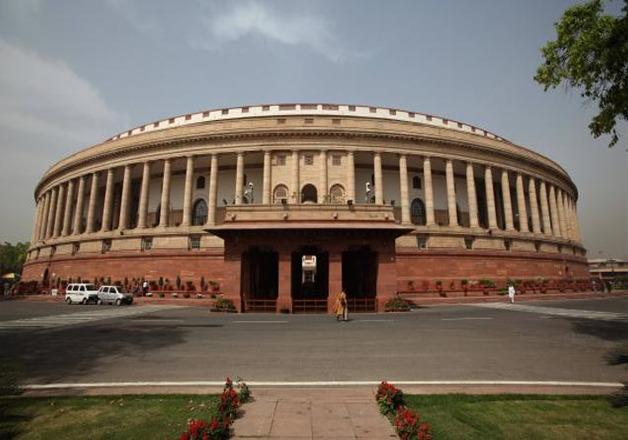
Download Now

The Cyber Appellate Tribunal

0
Image source - https://bit.ly/3BCo4Pu

This article is written by Shreya Patel, pursuing B.A.LL.B (Hons) from Maharaja Sayajirao University, Vadodara. The article has been edited by Khushi Sharma (Trainee Associate, Blog iPleaders).

Introduction

Computers, the Internet, and ICT, or e-revolution, have transformed people’s lives in the twenty-first century. E-communication has mostly replaced paper-based communication in recent years. As a result, new terms like the cyber world, e-transaction, e-banking, e-return, and e-contracts have emerged. Aside from the good aspects of the e-revolution, there is also a bad aspect of computers, namely, the internet and ICT in the hands of criminals, which has turned into a weapon of crime. As a result, a new panel of members, known as Cyber Law, Cyber Space Law, Information Technology Law, or Internet Law, was formed to address the issues of cybercrime in cyberspace.

Cyber legislation and the Information Technology Act of 2000, as amended in 2008, are being developed in India to combat computer crimes. The Information Technology Act of 2000 is a law that establishes legal recognition for transactions carried out via Electronic Data Interchange (EDI) and other forms of electronic communication. It is India’s principal legislation governing cybercrime and electronic trade (e-Commerce). Electronic data interchange or electronic filing of the information is referred to as e-Commerce.

The Information Technology Act of 2000, which took effect on October 17, 2000, was enacted to provide legal recognition for transactions carried out through electronic data interchange and other forms of electronic communication, also known as “electronic commerce,” involve the use of alternatives to paper-based methods of communication and information storage, to make electronic filing of documents with government agencies easier, and to amend the Information Technology Act of 2000. 

The Internet network has vastly grown over vast geographic distances, allowing for fast communication between even the most remote parts of the globe. Various global institutions see the need for rules to regulate this new hemisphere as human activities in this limitless new universe continues to expand. The Information Technology (IT) Act 2000 was established in India to keep up with the continuous flux. The IT Act was conceived and formed according to the Model Law of the United Nations Commission on International Trade Law (UNCITRAL).

The Cyber Appellant Tribunal was created under the Information Act of 2000. The tribunal solely has appellant jurisdiction, as its name implies. As a result, it has the ability to exercise its appellant jurisdiction over a judgment or order made by the Controller of Certifying Authorities or the adjudicating official, both on the facts and in law. In other words, it has the legal authority to investigate the decision or order’s accuracy, legality, and propriety. The Central Government has created the country’s first and only Cyber Appellate Tribunal in line with the terms of Section 48(1) of the Information Technology Act, 2000.

Establishment of the Tribunal (Section 48)

This Section explains how the Cyber Appellant Tribunal will be established. The central government will issue a notification establishing one or more appellant tribunals. The Central Government also lists all of the subjects and locations that come under the Tribunal’s jurisdiction in the announcement.

Composition (Section 49)

This Section explains that the Presiding Officer of the Cyber Appellate Tribunal, who will be nominated by the Central Government, will be the sole member of the Cyber Appellate Tribunal. The appellant tribunal has been transformed into a multi-member body. The Tribunal will henceforth be composed of a Chairperson and as many additional members as the Central Government may designate by publication in the Official Gazette. The Central Government, in collaboration with the Chief Justice of India, selects the Chairperson and Members of the Tribunal. The Tribunal’s Presiding Officer is now known as the Chairperson.

Qualifications for appointment (Section 50)

Section – A person cannot be appointed as the Presiding Officer of a Cyber Appellate Tribunal unless he or she has the following qualifications:

(a) Is, or has been, or is qualified to be, a Judge of a High Court; or

(b) Is or was a member of the Indian Legal Service, and now holds or has held a Grade I position in that service for at least three years.

The Term of Office (Section 51)

Section – The Presiding Officer of a Cyber Appellate Tribunal serves for five years from the date of appointment or until he reaches the age of 65, whichever comes first.

Resignation and removal (Section 54)

Section – The chairperson or a member of the cyber appellant tribunal might resign by writing to the federal government and informing them of their decision. Provided, however, that the Presiding Officer shall continue to hold office until the expiration of three months from the date of receipt of such notice, or until a person duly appointed as his successor enters upon his office, or until the expiration of his term of office, whichever comes first unless he is permitted by the Central Government to relinquish his office sooner.

The Central Government has the authority to dismiss the Presiding Officer of the Cyber Appellate Tribunal if there is evidence of misbehaviour or inability. However, only after a Supreme Court Judge has conducted an investigation and the Presiding Officer has been informed of the accusations against him and has had a sufficient opportunity to defend himself. The method for investigating misbehaviour or incompetence of the Presiding Officer might be regulated by the Central Government.

Finality of Orders (Section 55)

Section 55 of the Information Technology Act of 2000 prohibits judicial review of two matters: an order of the Central Government designating any individual as the Chairperson of the CAT, and any procedure before a CAT based solely on a flaw in the CAT’s constitution. This provision assures the smooth and uninterrupted operation of the Tribunal by making the decision creating the CAT definitive and prohibiting judicial review of any Tribunal proceedings based on a flaw in the Tribunal’s constitution.

Saff of the Cyber Appellant Tribunal (Section 56)

Section – All the staff, employees and other officers are provided by the central government, as it will think fit. All the officers and employees will work under the superintendence of the chairperson. The central government will prescribe the salaries, allowances and all other conditions of services of the employees and officers.

Appeal to Cyber Appellant Tribunal (Section 57)

Section – If a person is dissatisfied with the Controller’s or Adjudicating Officer’s decision, he or she may file a complaint with the Cyber Appellate Tribunal, which has jurisdiction over the case. An order rendered by an adjudicating official with the permission of the parties, however, is not subject to appeal to the Cyber Appellate Tribunal. The individual must file, along with the specified fees, within 25 days after receiving the order from the Controller or Adjudicating Officer. If the Tribunal is satisfied with the grounds for the delay in submitting the appeal, it may hear it even after the 25-day period has passed.

The Cyber Appellant Tribunal shall transmit a copy of every order to all parties to the appeal as well as the appropriate Controller or adjudicating official. The tribunal will also make every effort to resolve the appeal within six months of receiving it.

In Chappan v/s Moidin Kutti, It was claimed that the presence of a superior and interior court relationship, as well as the capacity of the former to review two judgments of the latter, are two requirements for appellant jurisdiction. 

Power and procedure of the Cyber Appellant Tribunal (Section 58)

The Cyber Appellate Tribunal’s method and powers are laid forth in Section 58 of the Information Technology Act, 2000

Sub-clause (1) Section 58 states that the Cyber Appellate Tribunal is not bound by the Code of Civil Procedure, 1908, but rather by the principles of natural justice and that the Cyber Appellate Tribunal, subject to the other provisions of this Act and any rules, has the authority to regulate its own procedure, including the location of its hearings.

Clause (2) Section 58 stipulates that, for the purposes of executing its responsibilities under this Act, the Cyber Appellate Tribunal shall have the same powers as a civil court under the Code of Civil Procedure, 1908, while trying an action, in respect of the following matters:

 (a) Summoning and enforcing the attendance of any person and examining him on oath;

(b) Requiring the discovery and production of documents or other electronic records;

(c) Receiving evidence on affidavits;

(d) Issuing commissions for the examination of witnesses or documents;

(e) Reviewing its decisions;

(f) Dismissing an application for default or deciding it ex parte;

(g) Any other matter which may be prescribed.

Clause (3) Section 58 states that any proceeding before the Cyber Appellate Tribunal is deemed to be a judicial proceeding for the purposes of Sections 193 and 228 of the Indian Penal Code, and the Cyber Appellate Tribunal is deemed to be a civil court for the purposes of Section 195 and Chapter XXVI of the Code of Criminal Procedure, 1973.

In Union of India v. T. R. Verma, It is claimed that it is established law that courts must observe the law of natural justice, which states that a party must be given the chance to present any relevant evidence on which he relies. Evidence should be taken in the presence of the parties, and cross-questioning should be allowed.

Right to Legal Representation (Section 59)

Section – The appellant has the option of appearing in person or appointing one or more legal representatives to represent him before the tribunal. 

Limitation (Section 60)

The limitations restrictions of the Limitation Act of 1963 apply to Tribunal appeals.

Civil Court not to have jurisdiction (Section 61)

Section – No civil court can consider a suit or action in that area if the IT Act of 2000 authorizes the adjudicating officer or the Cyber Appellate Tribunal to deal with particular concerns. Furthermore, no court can issue an injunction against any conduct taken by a person in the exercise of any authority conferred by the Act.

Appeal to the High Court (Section 62)

Section – A person aggrieved by the CAT’s decision or order may submit an appeal to the HC within sixty days of the date of notification of the Tribunal’s decision or order to him on any point of fact or law arising out of such order, according to Section 62 of the IT Act. The HC may if satisfied that the appellant was prevented from submitting the appeal within the specified term by sufficient cause, allow it to be submitted within an additional period of not more than sixty days.

Recovery of Penalty (Section 64)

If a penalty issued under this Act is not paid, it is collected as land revenue arrears. Furthermore, until the penalty is paid, the license or digital signature certificate is suspended.

Conclusion 

The purpose of enacting the I.T. Act was straightforward. The government wanted to offer and support electronic, digital transactions while also safeguarding against all types of cybercrime. Because of the quantity of traffic on the internet and the amount of money individuals transact through online means, it was critical to strengthen the cyber world. Although the cyber world is vastly different from the actual world, it has the capability to participate in crimes that occur in the real world. The Cyber Appellant Tribunal was created to combat cybercrime and punish individuals involved. The effectiveness of the Cyber Appellant Tribunal may be improved by increasing public and government knowledge, as well as attempts to deploy enough staff. It is critical to improving technical capability in order to deal with any circumstance that may arise. Integrity, secrecy, and authenticity of communication routes and procedures are required.

Certain sorts of offenses necessitate the use of tribunals that can make decisions more quickly. The judgment is likely to be made quickly if it follows the natural justice system rather than the C.P.C. In M/s. Gujarat Petrosynthese Ltd. and Mr. Rajendra Prasad Yadav v. Union of India it sought for a direction to the Respondent to designate a Chairperson to the Cyber Appellate Tribunal (CAT) in order to guarantee that the tribunal’s hearings were convened on a regular basis. In court, it was said that the department would take all necessary steps to fill the position of chairman within the time limit of six months, and that attempts would be made to appoint the chairperson even before the time limit expired, in the public interest. On these grounds, the petition was dismissed. Despite the above judgment, no appointment to the cyber appellate tribunal has been made as of yet, and it has been inactive since 2011.

References 

The Information Technology Act, 2000 – Bare Act

Information Technology Law and Practice by Vakul Sharma


LawSikho has created a telegram group for exchanging legal knowledge, referrals and various opportunities. You can click on this link and join:

https://t.me/joinchat/J_0YrBa4IBSHdpuTfQO_sA

Follow us on Instagram and subscribe to our YouTube channel for more amazing legal content.

Download Now

All you need to know about the laws governing mergers and acquisitions

0

this article has been written by Aishwarya Shankar from Amity Law School. It has been edited by Khushi Sharma (Trainee Associate, Blog iPleaders).

Introduction

Growth of a company 

At what stage does a company decide to merge with another company or acquire another company?

The chart depicts the trajectory of growth of the company and the funding around it as it grows.

Let’s take an example of Byjus must have initially started of with the savings of the owner that is Ravindra Byjus or from funding from his friends or family. With the increase in growth of e-learning byjus would have next approached the angel investors (high-net-worth individual who provides financial backing for small start-ups or entrepreneurs, typically in exchange for ownership equity in the company).This happens the pre revenue stage of the company where company is not making much money.

As time passes revenue starts growing with more of capital expenditure e.g. Advertisements, brand promotions, hiring costs etc.

Next company would approach the venture capitalists (a private equity investor that provides capital to companies exhibiting high growth potential in exchange for an equity stake.) E.g. Byjus raised lots of money from the American venture capital firm called Sequoia capital.

To grow further and expand its operation around the country company comes to a stage where it will start looking different strategies apart from the usual funding routes to thrive further

These options are:

  1. Build (organic)- increasing hiring , geographical expansion, product launches etc.
  2. Borrow– Franchising, joint ventures.
  3. Buy( inorganic)- Merger or Acquisition with other company.

This depends on the growth objectives of a company and by doing a cost benefit analysis.

This is where M&A comes into picture.

What are Merger and Acquisitions

MERGER‘Merger’ has not been defined under the Companies Act, 2013 or Income Tax Act, 1961, but as a concept ‘merger’ is a combination of two or more entities into one; with the accumulation of their assets and liabilities, and coming together of the entities into one business.

Mergers usually take place between companies that are equal in repute and scale of operations.

Merger is also called ‘Amalgamation’. Under The Income Tax Act, 1961 (ITA) ‘amalgamation’ is defined as the merger of one or more entities with another company, or the merger of two or more entities forming one company.  It also mentions other conditions to be satisfied for an ‘Amalgamation’ to benefit from the beneficial tax treatment.

In India it is a complex court driven process wherein the NCLT has to mandatorily approve of the merger and if the two merging companies have a registrar office in different states then the approval of state NCLT is also essential.

A and B merge to form a new company C and they cease to exist as independent companies.

At times the new company can retain the name of either company A or B if they feel they can reap benefits of the goodwill and reputation of the merging company A or B.

In a merger NCLT supervision is important for protecting the interest of the creditors and shareholders as the company goes through a complete reorganisation of its capital structure and gets a new management. It usually takes 8-12 months to achieve a successful merger.

Consideration of a merger can flow to the shareholders of merging company either in cash or shares. They have a preference of cash if they do not want to be a part of the new merging entity, but if they choose to continue then they are allotted shares of the merged company.

ACQUISITION– It is the process of procurement of one company by the other. The two companies involved are the acquirer or buyer which is the bigger fish in the sea and the acquired company or seller also called the target company.

The Buyer Company can do this by buying a significant amount of shares or assets of the target company depending on the way the deal is structured.

The basic difference between a merger and acquisition is that in an acquisition a company that has been acquired retains its separate legal identity or existence ( only in case of stock deal not in an asset deal) 

The objectives of mergers & Acquisitions are manifold – economies of scale, acquisition of technologies, access to varied sectors / markets etc

Types of merger

  1. Horizontal Merger- When the merging and the merged company operate in the same industry, same line of business and same level of supply chain. They are usually competitors. The Merge for expansion of customer base, increase market share and market power, creation of synergy etc. E.g. Lipton India & Brooke Bond, Vodafone & Idea.
  1. Vertical Merger— When the merging and the merged company operate in same line of production but at different stages of supply chain. This is mostly done to achieve economies of scale. E.g. Amazon & whole foods, Reliance and Flag Telecom Group.
  1. Reverse Merger- A Merger where a parent company merges with its subsidiary or a profit making firm merges with a loss making firm. It also called a triangular merger. Eg. Godrej soap merger with Gujarat Godrej Innovative Chemicals Ltd.
  1. Conglomerate Merger- Merger of companies operating in different lines of business. This kind of merger takes place to diversify and spread risk in case the current business does not yield much profit. Eg. L&T and Voltas Ltd.
  1. Congeneric Mergers- It is a type of merger where two companies are in the same or connected industries or markets but do not offer the same products. These companies in this merger merge for synergies, to increase their market shares or expand their product lines as they share similar distribution channels, overlapping technology or production systems etc. 

Types of Acquisitions

  1. Friendly – A friendly takeover occurs when one company acquires another with both boards of directors approving the transaction. It works towards shared advantage of both companies. In a friendly takeover, both shareholders and management are in concurrence on both sides of the deal. E.g. Flipkart- Walmart, takeover of Whatsapp by Facebook 
  1. Hostile Takeover – This kind of acquisition, occurs when the target company does not consent to the acquisition, the acquiring company must gather a majority stake to force the acquisition. A hostile takeover is typically consummated by a tender offer. In a tender offer, the corporation tries to purchase shares from outstanding shareholders of the target company at a premium to the current market price for this the shareholders have limited time to accept. E.g. takeover of Ashok Leyland by Hindujas.

Key corporate and securities law

Companies Act, 2013- Section 230-240- Compromise, Arrangement and Amalgamation ( including takeover)

Section 230- Compromise & Arrangement 

  • Under this Section an applicant (member, creditor, company or liquidator of company depending on the situation of the company.) to enter into a compromise, arrangement or amalgamation (including takeover) has to give an application under 230(1) to National Company Law Tribunal (NCLT).
  • This application has to be given along with – Material facts, reduction of share capital( if any), consent of creditors (75%), and other disclosures
  •  As soon as NCLT receives the application it will immediately order a meeting. 
  • The notice of the meeting will go to – all the members, creditors and debenture holders.
  • Additionally the notice has to be published on the website of the company and an advertisement in the newspaper (1 English newspaper and 1 vernacular newspaper) has to be given.
  • If the company is a listed company the notice has to be given to Securities Exchange Board of India (SEBI) so that SEBI notify the same under its website.
  • Notice has to be given to some authorities like – The central Government, Income Tax Authority, Reserve Bank of India RBI, Competition Commission of India (CCI) for their representations or objections within 30 days.
  • If the Authorities do not give in their replies within 30 days, the company will assume that there is no objection.
  • After the order, the meeting shall be conducted and there shall be proper voting at the meeting which must conclude within the period of 1 month. Voting at the meeting can be done via- voters themselves, Proxy, postal ballet and E- Voting.
  • The Resolution at the meeting shall be approved and passed by 75% majority.
  • Any person can object to the scheme provided if a shareholder has minimum 10% of share capital or a creditor has 5% outstanding debt.
  •  Once the resolution is approved the scheme goes back to the NCLT for passing a Final order along with ancillary orders. This final order has to be filled with ROC within 30 days.

Section 231- Power of Tribunal to enforce compromise or arrangement under section 230

  • The tribunal has the power to oversee the implementation of the compromise or arrangement.
  • It has power to give further directions.
  •  If the tribunal feels that the amalgamation is not taking place according to the terms and conditions ordered by the tribunal or are impossible or impractical to follow the order to do so then it can even order winding up of the company.

Section 232 – Merger and amalgamation of companies

  • Section 230 talks about compromise or arrangement( Internal reconstruction) , but if there is a compromise or arrangement that also involves a merger or an amalgamation ( External Reconstruction) then both Section 230 and 232 will apply to such companies.
  • This section is a continuation of section 230 for merging or amalgamating companies where in there are some additional requirements to be followed.
  • Along with the notice of the meeting in section 230, the following must also be given- Draft scheme of merger and amalgamation (M/A) ,report of effect or impact of such M/A on each class of shareholders, report of valuation and other disclosures.
  • While passing the final order, tribunal can make provisions for other required matters.

Section 233- Merger or Amalgamation of certain  companies

  • ‘Certain companies’  under this section are – 2 or more small companies merging(private companies having paid-up capital of less than INR 100 million and turnover of less than INR 1 billion per last audited financial statements), holding and its wholly owned subsidiary merging or any other such class of companies as may be prescribed.
  • These companies will merge according to section 233 not 232 which is also called Fast Track Mergers. Such companies get an easier route to merge.
  • Steps involve in this type of merger are- Step 1- Invite objections and suggestions from Registrar of company (ROC), Liquidator, any other person affected by the scheme.
  • Step 2- Scheme shall be approved by 90% majority shareholders.
  • Step 3- File declaration of solvency (capability of paying off debts) with ROC.
  • Step 4- Scheme shall be approved by 90% majority Creditors
  • Step 5- Send the scheme to Central Government and Roc for approval.
  • Step 6- If Roc has any objection it has to give to the Central Government within 30 days.
  • Step 7- If the central Government feels the scheme is in the interest of public and creditors then it will approve the scheme and will communicate the scheme to Roc but at the same time if ROC had any objections and the central Government feels the scheme is not in the interest of public and creditors then it will refer the companies to NCLT ( section 232- No easy route available)

Section 234- Merger or Amalgamation of a company with a foreign company

  • If an Indian company wants to merge with a foreign company then it has to follow the procedure given under Section 232 and additionally approval of the RBI must be obtained and the scheme must provide for the manner of payment of considerations.

Section 235- Power to acquire shares of shareholders dissenting from the scheme approved by majority

  • Step 1– The Transferee Company offers to acquire shares from shareholders of Transferor Company. Out of all the shareholders 90% or more accept the offer and the rest 10% or less dissent and are not willing to sell their share holding.
  • Step 2 – Now the transferee Company will send a notice to dissenting shareholders saying that since 90% shareholders have agreed to sell their shares the company will acquire the rest as well.
  • Step 3- Dissenting shareholders will give an application to NCLT against acquisition of their shares.
  • Step 4- Transferee Company will give an application to NCLT to acquire the shares.
  • Step 5- Since more than 90% shareholders have accepted to the offer thus NCLT passes a final order to Transferor Company to register the transfer and order the transferee company to pay the consideration. NCLT does not reject the application of the transferee company at this stage as it does not favour in affecting the decisions of the transferee company due to only a mere 5-10% of  shareholders dissenting. 

Section 236- Purchase of minority shares 

  • In this section, if the acquirer along with persons acting in concert (PAC –persons who have a common objective or purpose to acquisition shares or voting rights or control over a company) already holds 90% or more shares of the target company then the acquirer will give the remaining shareholders an offer to sell their shares as well.
  • For this the acquirer company with keep the consideration money in a separate bank account and will pay off the remaining shareholders within 60 days.

Section 237- Power of the Central Government to provide for Amalgamation in public interest

  • If it is essential in public interest, the Central Government by notification in the official gazette can order amalgamation of the companies.
  • Central Government usually passes such amalgamation order between a healthy company with a sick company to revive the sick company and its employees.
  • Central Government will have to give orders for pending legal proceedings by or against Transferor Company.
  • Central Government will also have to give orders for all members, creditors to have nearly same interest in the transferee company and if there is any difference then they have to be compensated. 
  • If any person is aggrieved by the compensation can appeal to the NCLT.
  • If the transferor and transferee company have any objections with the order for amalgamation then they can put forward their objections to the NCLT. NCLT will hear their objection and pass a final order.

Section 238 Registration of offer of schemes involving transfer of shares

  • Whenever a transferee company wants to give a circular (offer and details of share transfer) to the shareholders, it has to first get the circular registered with the ROC only then it can give the same to the shareholders.

Section 239- Preservation of books and papers of the Amalgamated company

  • Books and papers of the Amalgamated Company (the company that ceases to exist after the merger) shall not be disposed off, without the permission of the Central Government.
  • Before giving the permission the Central Government has to appoint a person to examine books and papers.

Section 240- Liability of officers in respect of offenses committed prior to the merger or amalgamation

  • The liability of officers who had committed an offense prior to merger or amalgamation will continue even after merger or amalgamation.

Securities and Exchange Board of India (takeover code ), 2011

  • The Securities and Exchange Board of India (SEBI) is the nodal authority regulating entities that are listed or to be listed on stock exchanges in India. The SEBI (Substantial Acquisition of Shares and Takeovers) Regulations, 2011 (Takeover Code) limits and inspects the acquisition of shares, voting rights and control in listed companies.
  • If an acquirer (company or individual) intends to acquire such number of shares of a listed target company that the aggregate shareholding touches 25%, then it would first have to make a mandatory open offer to shareholders to acquire 26% shares of total share capital. They cannot register the additional shares in their name unless they make this open offer. This is mandated by SEBI to ensure that the interest of the shareholders is protected and that they are given an easy way to exit if they do not want to be part of the new scheme.
  • If the acquirer is already holding 25% or more shares in target and has previously made an open offer for the same and now intends to acquires more than 5% shares in target company in one financial year, then the acquire has to again first give an open offer to at least 26% of the total share capital.
  • If any who holds 25% more shares in target company if acquires 5% shares in a financial year is not required to give an open offer to public shareholders, this concept is called creeping acquisition. This way an acquirer can increase his share holding in the target by acquiring 5% shares in each financial year without having to make an open offer.

Securities and Exchange Board of India (Listing Obligations and Disclosure Requirements) Regulations, 2015

  • This Regulation provides broad framework for governing various types of listed securities. 
  • SEBI has laid down conditions to be followed by a listed company while making an application to the NCLT, for approval of schemes of merger/amalgamation/reconstruction. 
  • These conditions are– 1. Filing of scheme with stock exchanges: Any listed company going for a scheme of arrangement, must first file the draft scheme with the stock exchange, before filing them with the NCLT, so as to receive a no-objection letter from the stock exchange.
  • 2. Compliance with securities law: The listed companies shall ensure that the scheme does not violate or override any provisions of the applicable securities law or requests of the stock exchanges.
  • 3. Change in shareholding pattern: It is a mandate for the listed companies to file the pre and post arrangement shareholding pattern and the capital structure with the stock exchanges as per their requirements.
  • 4. Corporate actions pursuant to merger: The listed company shall to reveal to the stock exchange all information affecting the operations of the listed entity and the price sensitive information.

Securities and Exchange Board of India (Issue of Capital and Disclosure Requirements) Regulations, 2018 (“ICDR Regulations”)

  • Preferential Allotment is the bulk allotment of fresh issue of shares by a company to any person like Individuals, Venture Capitalists and others at a pre- determined price.
  • A company makes Preferential Allotment to people who want to acquire a calculated stake in the company; these include shareholders like Promoters, Venture Capitalists, and Financial Institutions.
  • The provisions of these regulations shall apply, if the acquisition of an Indian listed company entails the issue of new equity shares or securities convertible into equity shares by the target (issuer) to the acquirer.
  • The major provisions under this regulation are: 1. pricing of the Issue- A floor price for issuance is set under this regulation. This floor price depends on the average of the weekly high and low closing price of the stock of company over a period of 26 weeks preceding the relevant date.
  • 2. Lock-in- The Securities issued to the acquirer ( except the promoter ) are locked-in for a time period of 1 year from the date of trading approval

Securities and Exchange Board of India (Prohibition of Insider Trading) Regulations, 2015 (“PIT Regulations”)

  • Under the SEBI Act, 1992 the penalty for insider trading is at least INR 10, 00,000 and may extend to INR 25, 00, 00,000 or three times the sum of profits from insider trading, whichever is more. This act was replaced by SEBI India (Prohibition of Insider Trading) Regulations, 2015.
  • For a listed company or a company about to be listed the , PIT prohibits the following: an insider from communicating unpublished price sensitive information ( UPSI), any person from obtaining UPSI from an insider and an insider from trading in securities when in ownership of UPSI. Therefore, the PIT prohibits the distribution as well as the acknowledgment of UPSI.
  • Under PIT an ‘Insider’ is a person who is either a connected person or in ownership of or has right to use or access of UPSI.
  • A connected person is someone who is directly or indirectly related to the company through regular communication with its officers or by being in a fiduciary, contractual or service relationship or by having any position including a professional or business relationship with the company whether temporary or permanent that allows that person, access to UPSI either directly or indirectly.
  • Even persons who do not hold any position in the company but are in frequent communication will also be included under connected persons. 
  • Immediate relatives, holding or subsidiary company are deemed connected persons.
  • UPSI is any information about a company or their security that is not normally available to the general public, which when becomes available is likely to substantially affect the price of the securities. Example- Information regarding financial results; dividends; change in capital structure; mergers, demergers, acquisitions, de-listing, disposals and expansion of business and changes in key managerial personnel.
  • The communication of UPSI by an insider and the receipt of UPSI by a person from an insider are permitted if such communication or receipt is for legitimate purposes, execution of duties or discharge of legal obligations.

The Competition Act, 2002

  • This Act was subsumed by an earlier law called the Monopolies and Restrictive Trade Practices Act, 1969(MRTP). Competition and combinations in India are regulated by the Competition commission of India (CCI). It is also called the antitrust watchdog. CCI is empowered to issue directions, orders and impose penalties to ensure fair competition in the market.
  • When certain practices restrict healthy competition in the marker it is called the Appreciable Adverse Effect on Competition. (AAEC). This can happen in three ways- (i) anti-competitive agreements, (ii) abuse of dominance, and (iii) combinations).
  • (i) Anti-competitive agreements (Section 3)- The competition act inspects and examines 2 major types of anti competitive agreements – Horizontal agreement i.e. These are agreements between companies which engaged in same level or stage of production (seller-seller, producer-producer etc) , while Vertical agreements are agreement that take place between persons at different stages of production, supply, distribution, storage etc. (manufacturer, distributor, supplier etc) .
  • Horizontal Agreements consequential in AAEC-Ascertains purchase or sale prices; checks and limits production, supply, markets, technical development, funding or supply of services; Shares the market or source of production or supply of services by way of allotment of geographical area of market, or kind of goods or services, or number of consumers in the market or any other parallel way; Results in bid rigging or collusive bidding.
  • Vertical Agreements resulting in AAEC- Tie-in arrangements: agreement imposing on purchaser of goods, due to such purchase, to buy a few other goods. (e.g. Microsoft made it obligatory for purchasers to buy all MS Office products with Windows; this was held anti-competitive U.S. courts).
  • (ii) Abuse of dominance (Section 4)- When an entity grows to such an degree that affects healthy competition in the market and gains total control over the market and customers then it is said to have obtained dominance. When it uses this dominance, in the relevant market to:
  1. function autonomously of competitive forces existing in the relevant market,
  2. Affect its competitors or consumers or the relevant market in its favour, it is said to have abused its dominant position
  • Abuse of dominance includes- Imposes unfair or discriminatory price or condition in purchase or sale, limits production or scientific development, denies market access in any manner, predatory pricing, uses power in one relevant market to enter into other relevant market
  • Predatory Pricing is to sell goods or offer services, at a price which is below the cost, or reduce the price to loss making level for a short term so as to eliminate the competitors”. 
  • (iii) Combinations (Section 5, 6, 20, 29, 30 and 31)- Combination includes merger, amalgamation, and acquisition of shares, and acquiring of control. Entities intending to enter into combinations are mandated to notify the CCI. CCI takes 90 working days either to permit or deny such combination else combination is deemed to have been approved.
  • CCI checks for combination on the basis of following factors- Market share,  Effective competition before and after combination,  probability of increase in prices or profit margins,  Contribution to economic development
  • Under Section 32 of the Competition Act, the CCI has extra-territorial jurisdictional powers. If any acquisition where assets/turnover are in India, and surpass particular set restrictions, would come under the radar of the CCI, even if the acquirer and target are located outside India.
  • The financial thresholds are:
Assets


OR
Turnover


Enterprise Level
India> INR 2000 crore> INR 6000 crore

Worldwide (with India component)

>USD 1 bn with at least INR 1000 crore in India

>USD 3 bn with at least INR 3000 crore in India
                                                      OR
 Group LevelIndia> INR 8000 croreOR> INR 24000 crore
Worldwide (with India component)> USD 4 bn with at least INR 1000 crore in India> USD 12 bn with at least INR 3000 crore in India

Exchange control

  • Foreign Exchange Management (Transfer or Issue of Security by a Person Resident outside India) Regulations, 2017 (the “FI Regulations”) and Industrial policy and procedure issued by the Secretariat for Industrial Assistance (SIA) governs the Investments and acquisitions (complete and partial) of, Indian companies by foreign entities and individuals.
  • FEMA rules say that any exchange attempted comparable to a cross-outskirt merger as per the FEMA Guidelines will be considered to be endorsed by the RBI as mandatory as far as Rule 25A of the Organizations Merger Rules along with Section 234 of the Companies Act.
  • The Foreign Direct Investment (“FDI”) system in India has progressively liberalized and the importance of FDI in economic development of a country has been finally recognized. Foreign corporations are allowed to invest directly in India, either as wholly owned subsidiaries or as a joint venture. In an international joint venture, any anticipated funding by a foreign company in an existing company can be done either through equity expansion or by acquiring the existing equity.
  • Where a person resident in India transfers shares by sale under a private agreement to a person resident outside India then the price of shares will not be less than the market price listed on the stock exchange or the value of the shares calculated as per the guidelines of Controller of Capital Issues and certified by a Chartered Accountant. The remittances in these cases must come into India via normal banking channels.
  • Following must be duly filed to affect the transfer: – i) a declaration in the form FC TRS should be filed with an authorized dealer along with the consent letter representing the details of transfer.
  • ii) Shareholding pattern of the investee company after the acquisition of shares by an individual residing outside India proving equity contribution of residents and non residents.
  • iii) Certificate indicating fair value of shares from a chartered accountant or in case of a public listed company copy of the broker’s note.
  • iv) An Undertaking from the buyer to the effect that he is eligible to acquire shares in accordance with the FDI policy.

Tax implications in M&As under the Income Tax Act, 1961

  • Under ITA ‘Amalgamation’ is defined as the merger of one or more companies with one more company or merger of 2 or more companies to form one company.
  • The ITA validates the following types of mergers and acquisitions: Amalgamation; Demerger or spin-off; Slump sale/asset sale; and Transfer of shares.
  • Under ITA following conditions must be met to qualify as Amalgamation: a) all the property of the amalgamating company becomes the property of the amalgamated company; b) all the liabilities of the amalgamating company become the liabilities of the amalgamated company and c) shareholders owning at least 75% of shares of the amalgamating company happen to be shareholders of the amalgamated company. Amalgamation possibly is considered tax neutral and exempt from capital gains. At times amalgamated company may also be permitted to carry forward and set off the losses of the amalgamating company against its own profits.
  • The following provisions would be applicable to a merger once the conditions above are satisfied: a) the transfer of shares by shareholders of the transferor company in lieu of shares of Transferee Company on merger is not regarded as transfer and hence gains arising from such transfer is not taxable in the hands of shareholders of the transferee company.’ b) Under a merger cost of acquisition of shares of the transferee company which were acquired in accordance to merger will be the cost sustained for acquiring the shares of transferor company.
  • The following taxes are applicable on the various types of M&As:
  • I) Capital Gains Tax –Gains earned from transfer of capital assets including shares are taxable. In case the resulting company in the scheme of amalgamation or demerger is an Indian Company, then the company is absolved from paying capital gains tax on the transfer of Capital Assets.
  • II) Tax on transfer of Share – Securities Transaction Tax and Stamp Duty may apply on transfer of shares. Dematerialized form of shares does not attract stamp duty.
  • III) Tax on transfer of Assets/Business  Transfer of property also attracts tax which is usually imposed by the states. 
    • Immovable Property – Stamp Duty and Registration fee on the instrument of transfer will apply on Transfer of Immovable property.
  • Movable Property – On the transfer of Movable Property Stamp Duty would apply on the Instrument of transfer. Stamp duty can be a significant transaction cost, especially where the duty is calculated on an ad valorem basis.
  • IV) Transfer of tax Liabilities – Income Tax – The predecessor is responsible for all Income Tax payable till the successful date of restructuring. After the date of restructuring, successor becomes liable.
  • Indirect Taxes– when a registered person transfers his business to another person, the successor should apply for a new registration and the predecessor should apply for deregistration. 

NCLT permissions

  • All mergers have to be approved by NCLT. The Companies Act, 2013 lays that the concerned NCLT bench of the area where the transferor and the transferee companies have their individual offices those NCLT shall have the jurisdiction to order any winding up or regulate merger of companies.

Intellectual property in M&As

  • The developing profile, frequency, and value of intellectual property related transactions have increased the need for all legal and financial professionals and IP proprietors to have meticulous expertise of the estimation and the evaluation of these assets, and their obligation in business transactions.
  • Intellectual Property due diligence usually gives out crucial information particular to future benefits, financial life and ownership or possession rights and the restrictions of the assets all of which affects ultimate value. Therefore due diligence is precondition to the evaluation process, despite the method used.
  • IP Due diligence is the procedure of scrutinizing a party’s ownership, right to use, and right to impede others from using the IP rights involved in sale or merger —the essence of transaction and the rights being obtained will decide the degree and focus of the due diligence evaluation.
  • Due-diligence should disclose– Who owns the rights? Are the rights legitimate and transferable and enforceable? Are there any agreements or restrictions that prevent the party for granting rights to other? Is the assets registered in the correct office? , Any inadequacy or non-payment? • Any past or probable litigation? Any encumbrances? Has the property being employed in the past rendering right unenforceable?
  • Every merger and acquisition poses a Question: whether merging companies intellectual property license rights would remain intact pursuant to merger. General principles of contract law provide that rights under agreements are presumed to be assignable unless the statute, the contract, or public policy provides otherwise or there exists material adverse consequences to the other party. 
  • Case example: General radio and appliances Co ltd v MA Khader 1986 air 1218, 1986 SCR (2) 607 (https://indiankanoon.org/doc/167519/) FACTS-transferor company in amalgamation was tenant; rent agreement specifically prohibited subletting without written consent of landlord. Landlord instituted eviction proceedings against the transferee. Court held transfer of tenancy rights under scheme of amalgamation was bad in law being made without consent of the landlord. There is analogous stand in law with trademark and copyright licenses as well.
  • Share purchases will convey the full rights in the intellectual property by procedure of law.
  • If the purchase is arranged as a stock purchase, documents conveying the assets usually are not obligatory, instead, documents which transport the stock will permit the buyer to indirectly become the owner of the assets. For intellectual property assets, mostly they will be individually transferred to a holding company or licensed back to the operating company or become the matter of a consequent sale to the final purchaser.
  • If the transaction is arranged as an asset purchase, the intellectual property assets will be either exclusively disclosed in the acquisition agreement or become the question of a distinct bill of sale. Conversely most often than not intellectual property assets are the matter of a separate agreement in terms of that they require record of the new owner in the particular jurisdictions in which they are legitimately owned and used. Moreover, the other various necessities for valid transfers vary from country to country and become a matter of public record.
  • In case of M&A of companies, all the assets of the transferor company including intellectual property assets like patents, copyrights, trademarks and designs lays with the transferee. Where the transferor company owns these assets, then they are transferred to the transferee concern under the scheme of arrangement.
  • Unregistered trademark/copyright is transferable like any other right in a property under the scheme of arrangement whereas in case of registered trademarks/copyrights or patents, the transferee corporation is obligated to apply to the particular Registry for registering its title in accordance to the order of the High Court warranting the scheme.
  • The transfer of the trademark/copyright rights in the license may be allowed in cases where the licensor himself permits such transfer of a license consequent to a merger.
  • EXAMPLES– In 1988, UK company GrandMet acquired the Pillsbury company .It was predicted that 88% of the price it paid consisted of “goodwill” i.e., GrandMet paid roughly $990 million (L608m) to acquire the Pillsbury brand name and its other well-known properties (Green Giant, Old El-Paso, Häagen-Dazs, etc.).
  • Volkswagen, purchased the assets of the Rolls-Royce automobile company for $780m for a net tangible asset value of US$250 million But it somehow did not include the brand in the deal The rights to use the Rolls-Royce trademark were subsequently purchased by rival BMW for $65m and many analysts believe that BMW got the better deal.

References


LawSikho has created a telegram group for exchanging legal knowledge, referrals and various opportunities. You can click on this link and join:

https://t.me/joinchat/J_0YrBa4IBSHdpuTfQO_sA

Follow us on Instagram and subscribe to our YouTube channel for more amazing legal content.

Download Now

Rights one should know before getting employed

0
Image source - https://bit.ly/3nMqLsC

This article is written by Harmanjot Kaur and the article has been edited by Khushi Sharma (Trainee Associate, Blog iPleaders).

History repeats itself, first as tragedy, second as farce – Karl Marx

There have been 1,007 reports related to local trafficking in 2016, and 994 in 2017. Since then, we observe the trend is constantly increasing at an exponential rate. Similarly, the areas related to the regulated working hours, human dignity and good working conditions with requisite safety equipment are often ignored.

Those who cannot remember the past are condemned to repeat it. With these lines of Hegel today we see today’s Farm Laws again turning into a thunderbolt. Here are some of the rights and landmark judgements for the protection of labourer classes.

What are the landmark judgements of Labour Law

To protect the rights of workers from their exploitation here are some of the landmark judgements related to labour laws. In the case of TK Rangarajan vs Govt. of Tamil Nadu, it was held that there is no fundamental right for the government officials to go on a strike. Similarly, in the case of BR Singh vs Union of India, it has held that the constitution does not guarantee the ‘right to strike’ as a fundamental right. Similarly, in the case of Mangalore Ganesh Beedi Workers vs Union of India, it was held that even the beedi workers can have the right to freedom of trade and business. They have the right to form an association as explained under article 19(1)(g) of the Indian Constitution.

In the case of Rangaswami vs the Registrar of Trade Unions, it was held that the withholding of registration of a Trade Union even when the documents were complete was discriminatory. However, in the case of Tamil Nadu Non-Gazetted Government officers Union vs The Registrar of Trade Union, it was held that the government servants engaged in sovereign activities cannot be permitted to form trade unions. The government servants who form the force controlling the disciplinary actions or the governance and law would be disqualified to go to strike. This means that not all officials forming as part of the government officials would be disqualified. This was clarified in the case of Registrar of Trade Union vs Government Press Employees Union. Here, it was held that the officials working in the printing of official gazettes were permitted to form trade unions. Hence, they could avail themselves of the benefit of forming a trade union. Similar it does not matter how menial the work would be, but the people have the right to form the trade union. This was held in the case of Trimala Tirupati Devasthanam vs Commissioner of Labour. Here, it was held that even the people working in the power and water wings of the organisation would be allowed to form trade unions.

What are the landmark judgments regarding trade unions?

In re Inland Steam Navigation Workers’ Union, it was held that the registrar must register the trade union in case all the requirements are fulfilled. No one can deny the right to get registered unless reasonable grounds are presented for the same. However, the fact cannot be denied that merely not getting registered would make a union an unrecognised entity. This was held in the case of Chairman, State Bank of India vs All Orrisa State Bank Officers Association.

Can a trade union be liable for criminal conspiracy?

In the case of RS Ruilkar vs Emperor, it was held that a trade union cannot be held liable for the conspiracy to do certain acts in furtherance of the trade union. Similarly, in the case of Rohtas Industries Limited and another vs Rohtas Industries Staff Union and Others, it was held that the workers cannot be asked to make good of the loss suffered by the employer because of the illegal strike. 

Can the workers protest within the premises of their employers?

In the case of Standard Chartered Bank vs Chartered Bank Employees Union, it was held that the workers cannot have demonstrations in the premises of the employers. One cannot tie banners in the place of the employer. In other words, it can be said that the lobbying or picketing shall be done outside the premises of the employer.

Is there any restriction on the strike of the people working in the services of public utility?

Yes, in the case of Common Cause vs Union of India & Others, it was held that under the Consumer Protection Act, 1986 it was found that the strike was launched by the Indian Flight Engineer’s Association which was illegal. It was held that since flight officials form a part of the public utility services. Therefore, their strike without prior notice was held to be illegal in nature.

What is the scope of industry under the ‘Factories Act’?

In the case of Banglore Water Supply and Sewage Board vs Rajappa, 1978 it was held that the scope of ‘industry’ is not limited to the industry’s premises. It includes gymkhanas, dhanrajgiri hospitals, cricket clubs as well. This case also discusses the ‘dominant nature tests’, which is defining the terms such as workers and industry. Similarly, the running of a tube-well owned by the government was defined as an ‘industry’ in the case of Gurmail Singh vs the State of Punjab. Similarly, in the case of All India Radio vs Santosh Kumar, it was held that the ‘All India Radio’ was defined as an industry under Section 2(j) of the Act.

Likewise, in General Manager, Telecom vs A. Srinivasa Rao and In Sub Divisional Inspector of Postvaikan vs Theyyam Joseph, the telecom department of the union of India was held to be an industry.

Can a research laboratory be held as ‘Industry’?

In Physical Research Laboratory vs KG Sharma, it was held that research laboratory is not an ‘industry’. It was held that a research organisation is discharging purely the governmental functions. It can be defined as a domestic enterprise than a commercial enterprise. However, it also requires the corporation of the employees to achieve its purpose. 

Can an enterprise for the promotion of art and culture be held as an industry?

In the case of Bharat Bhawan Trust vs Bharat Bhawan Artist’s Association, it was held that a trust promoting art and culture is not defined as ‘industry’. The basic definition includes some inclusion of production of a commercially viable entity, manufacturing or processing of goods. However, this is not true in the case of an enterprise just promoting art and culture. However, on the contrary, in the case of State of UP vs Jai Bir Singh it was held that for welfare schemes, the water and sanitation departments would constitute as industries.

Whether a dispute with a person who is not a workman falls within the scope of an industrial dispute?

In the case of Workmen of Dimakuchi Tea Estate vs Management of Dimakuchi Tea Estate, it was held that in the definition clause of Section 2(k) of the Act, the term ‘any person would include a person who is either an employee or a non-employee. Hence, even a non-employee would fall in this category.

What are the provisions for the women employee regarding employment?

In the case of Municipal Corporation of Delhi vs Female Workers (Muster Roll), it was held that those who were employed on the muster roll for carrying on the activities were termed as employees. Even the workers included in the repairing of roads and digging of trenches would be included in the definition of employees. Regarding the women employees, it was held that the women workers should be given the maternity benefit. The period is also defined here. It is said to be a period of mature pregnancy or soon after the delivery of the child.

Can an employee fight his case regarding undue stoppage of promotion?

Yes, in the case of J H Jadhav vs Forbes Golak Ltd, it was held that in case of undue stoppage from the promotion claim of a clerk. This can be sought under Section 2(k) of the Industrial Dispute Act, 1947. 

Can teachers be regarded as workers as per the Labour Laws?

In the landmark judgement of Miss A. Sundarambai vs Government of Goa, Daman & Diu, it was held that an educational institute is an industry. But the teachers cannot be treated as workers. It was added by the Hon’ble Court that the term workmen include semi-skilled or unskilled people not having expertise as teachers. It was held that teaching is a noble profession. It is not attributed to manual work, supervisory work or some clerical work for that purpose. 

How can a workman be defined in the Industrial Dispute Act?

In the case of HR Adhyanthaya vs Sandoz India Ltd., the parameters were set to qualify whether a person is termed as a worker or not. In this case, it was held that a worker is defined as someone doing unskilled, manual work, clerical work for hire or reward, manual, supervisory, technical or operational work for reward or hire. If these parameters are fulfilled then a person is defined as a worker. 

In a similar way, in the case of May & Baker (India) Ltd. vs Workmen, AIR 1967 it was held that medical practitioners are not termed as workers since it is a noble profession. Likewise in the case of Western India Match Co. Ltd. vs Workmen Popularly known as the Vimco case, it was held that a person in the sales department would not qualify as a ‘worker’ under this Act. Clarifying the previous judgement, in the case of Buniah Shell Oil Storage & Distribution Co. of India Ltd. vs Burntah Shell Management Staff Association, 1971 it was held that the person promoting sales would not qualify as a worker. This is because, there is no technical, clerical or supervisory work in promoting sales. Thus, it would not amount to qualify as a workman under the Industrial Dispute Act, 1947.

Can the status of managerial or supervisory work help to establish jurisprudence?

In the case of S K Sharma vs Manesh Chandra, 1983 it was held in this case that in case a worker is not engaged in any administrative or managerial work, he would be qualified as a worker under this Act. Similarly, in the case of Ved Prakash Gupta vs Delton Cable India Ltd. it was held that since a security inspector at the security gate is not doing a managerial or supervisory action, he would not be qualified as a worker, in this case. In the same way, in the case of GB Pant University of Agriculture & Technology vs the State of UP, it was held that the worker of a cafeteria was held to be an employee of the university.

Can we readily revert to strike, in case the demands are not met?

The Hon’ble Court replied negative stating that one should first try to mediate the matter peacefully. The idea of doing a ‘strike’ should be the last resort in such a case. In the case of the Management of Chandramalai Estate Ernakulam vs its workmen, it was held that it is not the right of the workers to commence a strike without trying to mediate the dispute peacefully beforehand. It is only after exhausting the peaceful methods of achieving the reasonable avenues that one should go for a strike. 

What are the areas that an employer can take to resort things to normal?

In Kairbetta Estate Katagiri vs Rajamanikam, it was held that just as labourers and workers resort to strike for the fulfilment of their demands; similarly, the employers can use lockout as one of the means to fulfil their demands. 

Besides this, it has been pointed out that strikes cannot be illegal and justifiable at the same time. In re India General Navigation case, it was held that it would be justified if the employer deducts some salary for the period of the strike as a disciplinary action. 

What is retrenchment? What are the established case laws regarding the same?

During an economic slowdown or due to an increased number of employees, the employer tries to scrap some of the employees. This is known as retrenchment. In the case of Punjab Land Development & Reclamation Corporation Ltd. vs Presiding Officer, Labour Court the learned counsel for the employers contended the definition of the term ‘retrenchment’. Section 2(oo) of the Act says that ‘retrenchment’ is the means for the termination of service of workman only by the way of surplus-labour, or by any other reason whatsoever.

In the case of Uptron India Ltd vs Shammi Bhan, it was held that a mere punishment as a consequence of disciplinary action would not amount to retrenchment. 

What is Undertaking? What is its relation with Labour Law?

An undertaking is a concept narrower than an industry. It is more of something related to the government projects of building roads, bridges, railways etc. However, in the case of SM Nilajkar vs Telecom District Manager, Karnataka, there was a landmark judgement in the same area. The closure of government projects or schemes would attract the provisions of S. 25 fff(i). 

The question which was contended was whether the termination of an undertaking contract attract compensation?

It was answered by the court that the expression of the term ‘retrenchment’ here means that the termination by the employer of the service of a workman or any other reason whatsoever, is used in the term ‘retrenchment’. However, the Hon’ble Court contended that the termination would not amount to retrenchment within the meaning of the sub-clause (bb) if the following conditions are fulfilled:

1] The scheme was employed in the project or a scheme which is of a temporary duration.

2] It was a daily wages solicitor, inter alia that the employment would end at the time of the expiry of the scheme.

3] The employment came to an end at the time of termination of scheme or project and consistently within the terms of the contract.

What is its relationship with Criminal Law?

Human Trafficking 

Research has shown that the maximum amount of modern slavery is prevalent in India. Similarly, it has been found that instances of slavery have tripled in the past few years. Merely, making the laws under the Indian Penal Code or Labour Law is not sufficient. There should be active steps taken for curbing the menace of slavery. This is not only a violation of the right to life with human dignity, but also it curtails various rights pertaining to the Universal Declaration of Human Rights.

Force and Criminal Force

There are various instances where the workers are not treated fairly. According to statistics by International Labour Organization 24.9 million people were in forced labour. Similarly, according to a survey conducted by ILO, it has been found that an estimated 15.4 million people were living in a forced marriage.

Sexual Harassment of women at workplace

The landmark judgement of Vishakha vs the State of Rajasthan presents this evidence that today, the instances of sexual harassment of women at the workplace are increasing exponentially. A recent survey has found that 63% of women did not file a complaint. Similarly, 79% kept the issue to themselves. This shows that there is a need to have gender-neutral laws all over the world. This includes, the jokes having sexually coloured remarks, inappropriate innuendo, sexual assault and even inappropriate touching. Similarly, asking for leave during periods is a devastating task keeping an eye on the circumstances. Also, it has been found that 7 out of 10 companies do not take sexual harassment cases seriously. 

Kidnapping 

According to a study, it has been found that more than 460,000 children go missing every year. Out of this, 43% of global kidnappings that occur for ransom occurred in Asia only. Mostly, the severely affected people are those coming from downtrodden societies. They are at the mercy of help from the PIL filers and the activists due to a lack of resources and unawareness about the areas related to law and justice.

Additionally, it has been found that due to corruption the underprivileged people are not able to get the benefit they actually should have. 

In the light of the above discussion, it has been found that the provisions regarding labour law are not known to most people. Similarly, there are areas related to the upliftment of the downtrodden classes that are implemented at the mercy of various officials. One idea can be of including Universal Basic Income. However, it could be accompanied by the notion of indolence, laziness and lack of motivation. Therefore, it is the need of the hour to critically think about the issue at hand. Otherwise, it won’t be late for the next Marxist movement to start mushrooming in the light of the latest Farming Laws!


LawSikho has created a telegram group for exchanging legal knowledge, referrals and various opportunities. You can click on this link and join:

https://t.me/joinchat/J_0YrBa4IBSHdpuTfQO_sA

Follow us on Instagram and subscribe to our YouTube channel for more amazing legal content.

Download Now
logo
FREE & ONLINE 3-Day Bootcamp (LIVE only) on

How Can Experienced Professionals Become Independent Directors

calender
28th, 29th Mar, 2026, 2 - 5pm (IST) &
30th Mar, 2026, 7 - 10pm (IST).
Bootcamp starting in
Days
HRS
MIN
SEC
Abhyuday AgarwalCOO & CO-Founder, LawSikho

Register now

Abhyuday AgarwalCOO & CO-Founder, LawSikho