
Download Now
Home Blog Page 500

Feminism in modern jurisprudence

0
Feminism

This article is written by Rishika Rathore, from the School of Law, Jagran Lakecity University. It addresses the subject of modern feminist jurisprudence, along with the feminist philosophy of law and modern schools of jurisprudence. Additionally, it talks about fundamental themes and approaches to the feminist philosophy of law. 

Introduction

The word feminism has been derived from the Latin word “Femina”’, meaning a woman. But, what does feminism imply? There are different answers to this question due to discrete perceptions of the people. The true meaning of feminism is a set of movements with the object of determining, defending, and establishing equal rights for women in the field of economy, education, politics, etc., and social rights for women with equal opportunities. Feminism is an ideology of gender equality, thus a feminist can be a man, woman, or transgender as well. But, here comes another question, i.e. what feminism jurisprudence is?

Throughout world history, women have been deprived of equal rights, status and opportunities by getting labelled as a fragile section. They have been associated with the kinds of work that are within the boundaries of their house. Feminism jurisprudence or feminist legal theory claims that law should be equal for all, without any social prejudice or male domination. It carries the study of standards and application of different issues that have developed and emerged within feminists’ thoughts and eventually became a theory. This paper highlights the sketch of modern jurisprudence, the feminist philosophy of law, and various approaches to it, before concluding insights of modern feminism jurisprudence.

An overview of modern jurisprudence 

The word jurisprudence has been acquired from the Latin word “jurisprudentia”, which means skill or knowledge of the law. It is a subject, whose knowledge creates a base for pillars of whole legal studies and cultivates one’s ideas about a particular theory. Bentham was the first philosopher who analyzed the nature of law, therefore he is known as the Father of jurisprudence.

Jurisprudence is the apex source of democracy and judiciary, on which modern civilization is based. The structure of the judiciary and democratic system carries genes of jurisprudence, therefore it is the DNA of every democracy as well as the judicial system. After the 15th century, the period between then and now is known as modern jurisprudence. It was concerned with the principles of civil law, natural law, and the law of nations. 

Schools under modern jurisprudence

There are six schools of jurisprudence, namely natural, analytical, historical, sociological, realistic, and contemporary. All the schools, except natural, are considered as a part of modern jurisprudence: 

  1. Analytical school of jurisprudence: It was co-introduced by Bentham and Austin. It insists on what is the nature of law and what could be the possible nature of law. Austin is the father of analytical jurisprudence, therefore this school is also known as the Austinian school. 
  2. Historical school of jurisprudence: It was introduced by Savigny. Through this school, he underlined that law is the source of ritual, customs, etc., therefore Savigny is known as the father of historical jurisprudence
  3. Sociological school of jurisprudence: This school was the first of its kind that highlighted the significance of public interaction with judicial systems and governments while focusing on basic rights. Rudolph Von Ihering is known as the father of sociological jurisprudence.
  4. Realistic school of jurisprudence: This school was introduced by John Grey. It was focused on the role of courts, judges, court proceedings, and judgments. He made a forecast that “judgments are the source of law”. Therefore, John Grey along with Oliver Wendell Holmes became the father of realistic jurisprudence.
  5. Contemporary school of jurisprudence: Recently, Indian jurist Mr. Deepak Sharma introduced India’s indigenous jurisprudence, the contemporary jurisprudence. It emphasizes democracy and justice and has been outlined to know the ways to emancipate the democratic structure and to increase the efficiency of judicial systems. Mr. Deepak Sharma is the father of contemporary jurisprudence

Feminist philosophy of law – feminism in modern jurisprudence 

Feminist philosophy of law has been a debatable issue among liberal feminists and radical feminists. The former wants non-discrimination, impartial society, and equal opportunities for women, while the latter criticizes the existing structure of law, claiming that it has an essence of patriarchal society. Feminists believe that laws have been made from men’s perspective and no one has ever considered women’s point of view and their contributions in the past. There are three major ideological schools of feminist jurisprudence: 

  1. Liberal Feminism – This idea encourages independence, freedom from old-aged stereotypes made by a male-dominated society, and gender discrimination.  
  2. Radical Feminism – This idea is against inequality encountered by women and male perception of considering all men as superiors. It also condemns patriarchal traditional beliefs, for instance, “ghunghat pratha” imposed on women. 
  3. Cultural Feminism – This ideology is similar to that of radical feminism, as it is concerned with giving wings to the moral and ethical values of men as well as women while appreciating the distinctiveness of men and women. 

The extensive influence of patriarchal thoughts on the legal structure gets reflected in the condition of women in their homes as well as in society. On that account, the feminist philosophy of law acts on the following terms: 

  • Turn over a new leaf to restrict gender injustice, women’s exploitation and promote freedom and equality for women. 
  • Mirrors a profound shift in fundamental assumptions about the nature of women and their significant role in society. 
  • Re-examines the basic understanding of sex, gender, and gender roles.
  • Applies insights by considering problems at the junction of sexuality and law. 

Fundamental themes of concern in feminist philosophy of law

The different representations and approaches to feminism have provided various considerable contributions to feminist legal philosophy. In addition to this, feminist legal theory has been evolved, with concerns such as equality, liberty, injustice, and diversity prevailing at different loci. Notwithstanding these different approaches, focuses, and insists, certain themes remain common such as the rule of law, equality, fairness in the law, human rights, etc. 

The rule of law

The rule of law contains a set of principles that provide directions to govern a community in a formal and procedural nature. The formal nature involves norms like stability, publicity, universality, and lucidity that govern a society. The procedural nature talks about the practices by which these norms are directed in institutions like courts, along with the independence of the judiciary. Moreover, rule of law also comprises substantive presumptions like liberty.  

The legal systems are consistent and long-lived conceptual systems that can always be challenged, but the aim of law remains constant. Feminist critics argue that the consistent forming of ideas for the rule of law tends to strengthen and legalize the male-dominated or male-perceived status quo. 

The status quo is an unavoidable bitter truth of law because violations, wrongs, injustices, etc. are defined by variations of law, typically from the old-aged status quo. Thus, feminist philosophers of law have observed and concluded that there is an invisible routine bias, which is so blended that it get accepted not only by lawyers but also by its victim as well as its receivers. Therefore, the primary task of feminist philosophers is to identify such biases through different approaches. Moreover, they condemn the patriarchal state of affairs and nearly universal presumptions about gender imbalance. 

new legal draft

Equality and difference 

Men and women have always been viewed as remarkably different and due to this reason, it has been found acceptable to treat them differently in the law. One of the main reasons is sexuality and gender tasks. Only women get pregnant and only men have a muscular physique. Feminists think that these differences are exaggerated and should be normalized. For instance, pregnancy leave should be given to both women and men, because pregnancy should be considered into biology rather than a social construction, and therefore special treatments like permitting maternity leave to women, will be unequal treatment to men. 

The foremost task of feminist philosophers is to communicate what kind of equality is required against the patriarchal system. On one hand, the liberal feminist focuses on Aristotle’s principle of procedural equality which says – “similar cases should be treated similarly, while different cases should be treated differently, following their proportionality”, and on the other hand, other feminists raise skeptical questions whether there are any differences or not that law may legitimately take into account. Thus, the biggest responsibility of the feminist philosophy of law is to identify and acknowledge certain differences without promoting sexism, establishing stereotypes, and injustice. 

Fairness in law

Another domain, where the feminist philosophers attempt to reveal patriarchal norms, is the legal standard of fairness that plays a significant role in law. In terms of traditions, such standards were considered in an average reasonable man. This formation highlights the excessive bias and gendered nature of law. Presently, this standard has been altered from reasonable men to the reasonable person, but feminist argues that such standard still has an essence of male norms. Like in the old days, today also, women’s rationality is decided and judged by patriarchal thoughts. If a woman makes any social blunder, she gets criticized and called irrational or unreasonable. Thus, a persistent theme of masculinist ideology is still reflected in the fairness of the law

Public and private distinction 

One of the central themes in the feminist philosophy of law is the sensible distinction between men and women. Liberal and radical feminists have independent thoughts regarding this theme as well. Liberal feminists put forward the idea of keeping the private life reserved for personal choice, but radical feminists step up concerns that there are no specific lines that separate private inequality and exploitation of women from that of the public. Moreover, they argue that patriarchal and sexual dominance infiltrates private relationships. Thus according to feminist philosophers, all the legal systems that permit or strengthen dominance in personal relations should be restricted or reconstructed. For example, in Islamic law men are allowed for polygamy but women are not. Thus, feminists cry out for scopes of distinction between private and public life to avoid discrimination that starts within four walls.

Human rights 

Another concern under the feminist philosophy of law is human rights theories. Progressively, a large number of societies have rejected sexual inequality in law for the sake of basic human rights. But some feminists praise this development but on the contrary, they also argue that societal commitments to human rights are all shallow and hypocritical. They are concerned that many existing laws are nourishing with the reflection of patriarchal thoughts. For example, in India, many civil services or government exams have reservations for women and girl children. It reveals two male-dominated thoughts, first is, a man considers a woman less capable, that she needs special stairs for basic educational rights. Second is, even now some girls and women are not allowed to educate or work. 

Diverse methodologies 

In terms of methodology, feminist philosophers have contributed and broken the ice in other areas of philosophy, that feminist philosophy of law has recognized as well. Although, there were genuine confusions and misunderstandings among feminists regarding the term methodology. Feminist philosophers found it quite difficult to find alternative thoughts within the male-dominated academy. They were concerned or precisely angered since all the popular and academic knowledge was based on men’s lives, men’s perceptions, and associated with the problems faced by men. Therefore, coping with such struggles feminists made great attempts not only to apply but also contribute their original thoughts to feminist knowledge production. 

Approaches to feminist philosophy of law

The liberal equality theory

Liberal feminism is a specific approach that deals with the achievement of equality between men and women and mainly focuses on the power of an individual to call off discriminatory practices against women. Liberal feminists’ goal is to encourage an individual to her instincts and abilities to help men and women to become twins in the eyes of law as well as society. The key difference between contemporary liberals and bygone liberal feminists is their beliefs about freedom. A contemporary liberal feminist holds on that the personal liberty and political autonomy of women must be supported to achieve equality in democratic liberal societies. A bygone liberal feminist, on the contrary, claims that feminism’s political mission is restricted to repelling laws that treat men and women differently, and such a task has already been accomplished by them. Regardless of this catfight, their ultimate aim is to organize women into groups that can pronounce and raise awareness at huge levels. 

The sexual difference theory

The theory of sexual difference carries arguments of gender feminism. It argues that the root of women’s maltreatment lies somewhere in the intersection of biology, psychology, and culture. According to it, the cultural characteristics linked with femininity are more superior and powerful than that of masculinity in many aspects, and therefore, men and women should spin their respective rational web. 

The dominance theory 

Dominance feminism is a theory of feminists that discards the approaches of equality and difference feminism. The feminists crying out for equality seek to have systematically equal access to all legal, traditional, and social male privileges for women. On the other side, feminists argue for gender differences and seek different legal and social treatment for women to compensate for past inequalities. Dominance theory, in some ways, supports feminists who fight for gender discrimination because as per this theory male social dominance is the result of well-established inequality between men and women. Dominance feminism gives credit to male concentrated efforts for women’s inferior societal position. It claims that males controlled women through social, sexual, and physical domination. Socially, they mastered women by objectifying and exerting patriarchal control over them, while making them legally powerless. Sexually, they imposed threats of forced sex, using cat-calls, making sexual advantage in the workplace, and moulding them as mere sex objects. As a Hindu shlok says, “naari taran ki Adhikari” – a woman is worthy to get beaten, implies men’s physical torture over women. Dominance feminism is also known as  Catharine A. MacKinnon’s feminism.  

The anti-essentialist theory 

Essentialism can be termed as a collection of fundamental traits which are sufficient and necessary conditions to make things similar. It carries two steps, the first is differentiating between objects by considering the specific parts, and the second is to characterize the things within a sole concept, to provide a better understanding of essentialism. Feminist essentialism can be imprecisely defined as an assumption of universal women’s essence, originated from psychological and biological traits like beauty, sympathy, nurturance, supportiveness, etc. Essentialism fancies that all women share the same innate characteristics. Anti-essentialism simply opposes this assumption. Anti-essentialists defy the use of limited traits such as biology and psychology in the definition of women because it restricts the possibility of alterations in women, thus hindering social recognition of women.        

The postmodern theory

Postmodern feminism is different from other feminist ideologies. It begins with the thought that modern feminists are overly focused on gender differences between men and women, and failed to recognize differences within each gender. Moreover, it claims that gender has been developed by perception-based discussions, that we adopted with the passing time. Apart from these, postmodern feminists claim their key element is that variants of patriarchy are due to women’s social characteristics. These views were framed within the theory of intersectionality which attempts to examine how social, biological, and cultural classes simultaneously interact with each other.    

Conclusion 

Throughout history, men and women have been regarded not only as distinct but also unequal in social status and power. Women have been deliberately cast as opposites to men through some outwitted contrasts such as behavioural traits, for instance, men are assumed competitive, rational, aggressive, intelligent, political, and dominant leaders, while women are supposed as fragile, emotional, domestic, care-giver, and underlings. These variants of assumptions have been omnipresently followed in every political and economic arrangement, from educational to religious institutions, to beauty standards and relationships. Unfortunately, the law is no exception. Therefore, the need for feminist jurisprudence felt among the societies so that law cannot be patriarchal any further, and to achieve such aim, feminists stood up, questioned the male-insight laws or practices, represented examples of illegitimate patriarchy, and guided the methods to establish “equality” for women worldwide. 

References

  1. https://plato.stanford.edu/entries/feminism-law/
  2. https://blog.ipleaders.in/growth-feminist-jurisprudence-india/
  3. https://plato.stanford.edu/entries/feminism-liberal/
  4. https://plato.stanford.edu/entries/feminism-psychoanalysis/#Lac
  5. https://scholarship.law.wm.edu/cgi/viewcontent.cgi?article=1243&context=wmjowl
  6. https://iep.utm.edu/jurisfem/
  7. https://blog.ipleaders.in/introduction-jurisprudence/

LawSikho has created a telegram group for exchanging legal knowledge, referrals, and various opportunities. You can click on this link and join:

https://t.me/joinchat/J_0YrBa4IBSHdpuTfQO_sA

Follow us on Instagram and subscribe to our YouTube channel for more amazing legal content.

Download Now

Essentials of a consultancy agreement

0
Image Source: https://rb.gy/wrgiq2

This article has been written by Sajinash kp, pursuing the Diploma in Advanced Contract Drafting, Negotiation, and Dispute Resolution from LawSikho. This article has been edited by Ruchika Mohapatra (Associate, LawSikho) and Dipshi Swara (Senior Associate, LawSikho).

Introduction

Imagine you are going about your day, enjoying a nice morning walk on the side of a river, and then suddenly you have a eureka moment and get a wonderful business idea. The trouble is that you have no background in business management, finances, and marketing, etc. What do you do? You go to an expert in the field, of course. Such a person is called a consultant because he or she advises us on a particular subject. A consultant sees the world from our point of view, understands our problems, and then provides us with adequate solutions. The person who consults them is called a client.

Once you finally get a client and are ready to get started on a project, it’s tempting to take it further on just a handshake but it’s worthwhile to take out time for putting it down on paper in the form of a written contract. The written contract is not only binding on the parties but it potentially helps to eliminate misunderstandings or confusion. Without a consulting contract or agreement, both parties expose themselves to the risk of financial losses, feelings of resentment, damaged relationships, and sometimes lawsuits. Through this article, the author intends to shed light on consultancy agreements. 

What is a consultancy agreement?

A consultancy agreement refers to a contract that defines the terms of service between a consultant and the client. It is drawn up when a consultant is called to provide services to an individual or a business organisation. By clarifying all the agreed-upon demands of both parties to the transaction, it helps in protecting their interests and ensuring that the agreement is complied with.

What are the essential clauses of a consultancy agreement?

The consultancy agency being diverse in nature attracts different clients with different needs and therefore, it is wise to say that every consultancy agreement is designed as per the need of the client, and hence there is no fixed template for such agreement. However, the following clauses can make your consultancy agreement more useful and comprehensive.

Name of the parties

First and foremost, the agreement should clearly specify the parties between whom it is being drawn, i.e. the consultant and the client. This clause would also specify the exact business the two parties are engaged in. 

Scope of work 

As one of the most important clauses, this part of the agreement defines the nature and scope of the work which is required to be performed under the agreement. It describes the services and the manner in which they have to be provided by the consultant. For eg. Will the consultant help you solve a productivity issue that you’re having, or will he advise you on how to raise money for the business and facilitate fund mobilisation? Thus, the agreement gives a detailed description of the services. This clause helps to ensure that there is no confusion regarding the work before or during its performance. Thus, it brings clarity to the transaction.

Term

This clause specifies the exact duration for which the services will continue. That includes the start date as well as the finish date. It is also desirable to include relevant timelines. Timelines can help you plan and measure progress regularly.

Termination 

Usually, an agreement is terminated when there is a breach by either party, but some agreements may also allow it to be terminated in other circumstances. This clause specifies certain situations, if any, where either party has the right to terminate the contract. It also explains the procedure to be followed in such a case as well as the notice period, if required. 

Compensation 

One of the most important clauses is, of course, the compensation clause, which decides the exact amount of money that the client shall pay to the consultant in advance for his or her services. It also specifies the method of payment as well as the date on which it is to be made.

Relationship of the parties 

This clause specifies the business relationship between the consultant and the client. A consultant is typically not an employee of the client organisation, but rather an independent individual or organisation who works on their own discretion. This means that though they have certain powers, they are not entitled to employee benefits of the client company. They also have to pay their own taxes. To determine such factors, it is necessary to determine the relationship between the parties.

Confidentiality 

Every business has information about its client lists, operation strategies, future plans, etc. that needs to be kept confidential. When two separate organisations work together under a contract, like a consultant and a client, they get access to some sensitive information about the other party. Thus, every agreement has a confidentiality clause, which obligates each party to the agreement towards non-disclosure of the other party’s information without their consent, to protect it from competitors, the general public, etc.

Intellectual property rights

This clause includes all sorts of provisions for the protection of the intellectual property of the parties. It describes which party will have the rights to the work produced through consultation. Usually, such work is considered “work for hire” and its rights belong to the client. Apart from that, the clause also prevents the consultant from improperly using the trademarks of the client organisation.

Indemnity

The indemnification clause defines the responsibilities of each party towards the other in the face of unexpected problems and determines what protection each party will have from the other’s negligence. This means that if any loss, harm, or liability is caused to one party by the other, the former will compensate the latter for it in the manner prescribed. This protects the parties from potential financial burdens.

Liability

When a client and a consultant work together, it may create a situation where the results might not come out as expected. For eg., you hire a consultant to help you increase the productivity of your company, but the final productivity has not increased as much as targeted. In this case, you might want to sue the consultant. Similarly, the consultant may want to sue you in certain situations. Each party, though, would want their liability to be as little as possible. Therefore, the best solution is to have a clear and detailed clause which determines the liability of each party towards the other.

Dispute resolution

Disputes between parties to an agreement are almost inevitable. How should such a dispute be resolved? This is determined by the dispute resolution clause. It explains the mediation process that should be opted by the parties, which is more cost and time-effective than court proceedings – especially in small disputes. 

Conflict of interest

This clause prevents conflict of interest for the consultant by restricting them from providing their services to a competitor of the client while they are still working with the client.

Expenses 

As the consultant is working to provide services to the client, any expenses are undertaken by him during the service period which is necessary for the performance of the work that should be paid for by the client. Thus, this clause establishes this principle and describes the procedure by which the consultant will receive reimbursement for the expenses.

Non-modification 

This clause states that no modifications can be made to the existing terms of the service unless they have been made officially and in writing. This helps to ensure that no party can take up unscrupulous or unfair means and try to dupe the other party for their own benefit.

Signature of both parties 

In the end, both parties must sign the document and write the date on which it was signed. This completes the document and gives it legal value. The signature indicates that the parties have read and understood the terms of service and agree to them. Therefore, once signed, the parties cannot later refuse to abide by any rules given in the agreement.

Points to be considered while signing a consultancy agreement

  • Before completing or signing a consultancy agreement, decide what your goals are. This would have a direct bearing on what the agreement includes. Any agreement should at least describe the consultant’s goals or tasks, payment terms and the amount to be paid, deadlines, etc. as well as the client’s rights and expectations.
  • Read the entire agreement carefully and understand the meaning of each and every term, as well as the implication of each and every clause. 
  • Make sure that the contract is correct on all key terms so that both the consultant and the client share the same expectations concerning their commitments and obligations. There should be no room for misunderstandings.
  • Revise the document or renegotiate the terms if either party feels it is not in their best interests or that it is too restrictive. It is important to do this beforehand so that there are no disputes or bad blood down the road.
  • Sign two copies of the document, one for each party. Preserve the agreement in your business records so that it can be revisited easily whenever required.
  • Never sign an agreement before reviewing it in detail, just by relying on the trust you might have in the other party.
  • Never assume certain terms are agreed to unless they are explicitly stated in the agreement. No aspect of the service process should be assumed to exist, and therefore each term should be specified in the agreement.

Conclusion

It’s clear that from the perspective of the parties involved, as well as on a project level, those contracts are a smart move. Consultancy agreement gives everyone a clear picture of what’s happening, when, how, and why it is happening, and what to do if a deliverable is not met, or one of the parties breaches a promise. It is advisable when recruiting consultants, to draw up a proper legal contract as it is not merely another waste of paper and tie, and can have a huge impact on the success or failure of the project at hand.

References

  • https://www.upcounsel.com/consulting-services-agreement
  • https://www.consulting.com/consulting-agreement-template

Students of LawSikho courses regularly produce writing assignments and work on practical exercises as a part of their coursework and develop themselves in real-life practical skills.

LawSikho has created a telegram group for exchanging legal knowledge, referrals, and various opportunities. You can click on this link and join:

https://t.me/joinchat/J_0YrBa4IBSHdpuTfQO_sA

Follow us on Instagram and subscribe to our YouTube channel for more amazing legal content.

Download Now

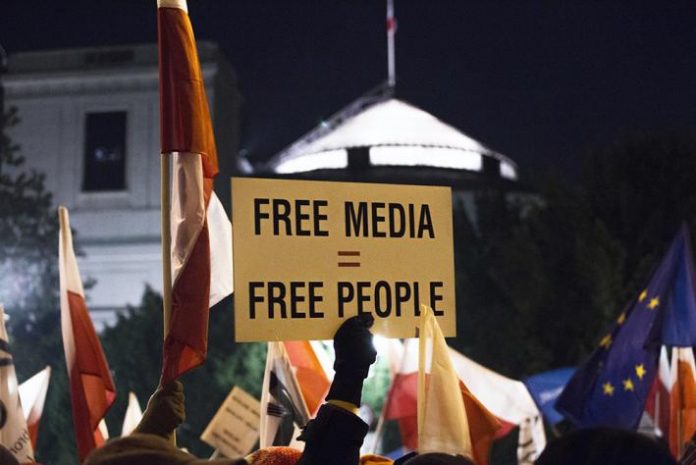
Freedom of press in Iran : the International Law perspective

0

This article is written by Ishan Arun Mudbidri from Marathwada Mitra Mandal’s Shankarrao Chavan Law College, Pune. This article talks about the history of the media in Iran.

Introduction

A recently published report by the Reporters Without Borders mentioned Iran as “one of the world’s most repressive countries”. This means that somewhere Iran is falling behind when it comes to the freedom of expression and freedom of the press. This article gives an overview of the long-standing issue of censorship in Iran.

A brief history of the media in Iran

The Islamic Revolution ended in 1979 and Ayatollah Khomeini became Iran’s Supreme Leader. Before the revolution, Iran was constantly a target to external forces due to its geopolitical location in the Persian Gulf. But, Iran has always shown resistance against foreign interference and emerged as a strong force. During an external invasion, the best way to gain an upper hand and control the enemy is by stopping the flow of information and restricting media coverage, which the Iranian armed forces did. However, even after the revolution, the flow of information remains curtailed. This resistance and constant external pressure somewhere has led to the situation that the press in Iran is facing today. The law of the media in Iran is a combination of stringent Sharia law and Islamic cultural values. 

After the revolution, the press underwent rapid development. However, this was for a short time as restrictions were soon imposed on the press in the 1980s. The Ministry of Culture and Islamic Guidance in Iran, imposed a rule to license the publishing agencies. According to this, anyone who wanted to publish had to get a permit. This is where the censorship in Iran started gaining pace. The licenses to the journalists and publishers were given on the condition of not speaking or publishing anything which hurts the sentiments and national interests of the country. This means not criticizing the government. Despite all this, today the media in Iran has grown into a huge community.

Laws and regulations on media in Iran

Constitutional provisions

In 1979, The Constitution of Iran was established, It is based on the Islamic principles and values which are key for the foundation of Iranian society. In this Constitution, freedom of the press and expression is restricted. The Constitution is very strict and has imposed stringent provisions in the context of censorship in Iran. The main draft of the Constitution is said to be written by the Supreme Leader Ayatollah Khomeini, and the provisions mentioned in this Constitution are said to be subordinate to the Ministry of Culture and the Supreme Leader. Article 24 of the Constitution states that the press and publishing agencies have the freedom of expression with certain exceptions to the fundamental principles of Islam or the rights of the public. However, the details of these exceptions are not provided. Further, Article 168 states the conditions for the offences related to the press. It states that the offences related to the press will be tried in front of a jury and the courts of justice, and it will be tried openly. 

The Iranian press law

In 1985, the Parliament in Iran approved and passed the Iranian Press law. This law consisted of all the legal procedures, offences of the press, and how the press should function in the Iranian Republican system. Article 1 of the Press law gives the meaning of Press. It states that press consists of publications that are published in a fixed and timely manner, with a fixed name, serial numbers, that consist of information on various fields like news, criticisms, politics, agriculture, military, art, craft, science, and technology, etc. Article 2 of the law, is one of the most important articles in the context of how the Iranian press should function in the country. It states the responsibilities of the press which are:

  • Raising the awareness and knowledge of the Iranian public and enlightening them about one or more fields that were mentioned in Article 1.
  • Following the aims and objectives mentioned in the Islamic Republic’s Constitution.
  • Strive to eliminate false boundaries and not discriminate based on race, language, custom, etc.
  • Strengthening the policy of “Neither East nor West”.

Article 6 of the law is also very important and states the limitations on the Iranian press, which are:

  • The press is free, except for those publications or articles which weaken Islam’s values and commandments, and the rights of the public.
  • Publishing forbidden articles, photographs, and other material that violate public chastity.
  • Igniting conflicts between other social layers and creating racial, ethnic issues.
  • Exposing confidential information and documents of the Iranian armed forces, and the Islamic Consultative Assembly’s private decisions.
  • False charges against Iran’s prominent figures and the legal officers who are respected under the Sharia law.
  • Insulting the religion of Islam.

In furtherance to this, the law also states that in certain circumstances, the Supervisory Press Board in Iran has the power to stop the publishing of newspapers and articles and close them down if they are insulting the Supreme Leader and damaging the public morals and values. Hence, the press law forbids the freedom of the press and also imposes harsh punishments on the offenders. In 1999, there was a discussion in the Iranian Parliament to amend the press law and impose further restrictions on the freedom of the press; however, the Parliament has not yet agreed on the proposed amendments. This will make things harder for the Iranian Press.

Freedom of press in the International Law

Now, as we are aware of what the situation has been since the revolution in Iran regarding the freedom of the press. So it is important to know the provisions of international law in the context of censorship and press freedom. The United Nations has always been a strong believer in freedom of speech and expression and considers it a basic human right. One of the UN’s main arms, the UNESCO, promotes freedom of expression which is mentioned in the Universal Declaration of Human Rights

The UN Declaration of Human Rights, states that freedom of expression is a right that is given to every human being and includes, the freedom to an opinion without any interference, receiving and promoting knowledge and ideas through all forms of the media. UNESCO was established in 1945 and since then it has been the main promoter for freedom of expression and free-flowing ideas. UNESCO does not just promote freedom of expression and information but also helps in giving professional training and guidance to young and aspiring journalists. UNESCO has also provided help in times of conflict in countries like Afghanistan, Libya, Yemen, Nepal, the Middle East, etc. due to such a large-scale response to the importance of press freedom, the UN General Assembly announced 3rd of May, as World Press Freedom Day in 1993.

The International Covenant on Civil and Political Rights, 1976

This Covenant was adopted on 19 December 1966 and came into force on 23rd March 1976. This Covenant binds its parties to respect civil and political rights as well as, the freedom of speech, expression, right to vote, and the right to a free and fair trial.

Article 19 of the Covenant

Article 19 of the international covenant talks about the freedom of expression and information. It states that:

  • Every person shall have the right to express his/her opinion without any disturbance or interference.
  • Every person shall have the right to freedom of expression which will include, the right to receive information and knowledge and also impart knowledge and ideas of all kinds, irrespective of which country or state he/she belongs to. The flow of information can be in any form: oral, writing, print media, etc.

Other provisions mentioned in the Covenant in the context of freedom of expression

Article 14

Article 14(1) states that every person shall be equal before the law and will have a right to a free and fair trial. Article 14(2) states that every person shall have a right to be innocent before he/she is proved guilty.

Article 2

Clause 3 of Article 2 of the international Covenant states that any person whose rights and freedoms have been violated shall have access to an effective remedy, even though the violation is done by a person who is acting in his/her official capacity.

Current scenario for journalism in Iran

Since the Iranian Revolution, the media in Iran has burst onto the scene. A wide range of print and press is available in Iran, most of them in the capital Tehran. Various TV and radio channels have also increased. Around 95% of the Iranian population watches television and prefers it to read newspapers. There are around 20 to 30 news TV channels and 10 of them are private, covering various political, economic, and international news. The internet and social media also seem to be growing rapidly in Iran and are predicted to be mass media. Despite so much improvement, censorship on the media still exists and is directly watched and controlled by the Supreme Leader.

Instances where freedom of press has been violated in Iran

There have been numerous instances and incidents where the media has been silenced in Iran. Some of them are:

  • One of the first instances of censorship in Iran was in 1981 when the revolution was just over and the Supreme Leader Ayatollah Khomeini had taken control. A Persian poet Saeed Sultanpur was arrested and abducted from a wedding ceremony and executed weeks later. The reason was his political and provocative poetry.
  • In 2014, an artist by the name of Atena Farghadani had posted a cartoon that showed the Iranian government officials as monkeys and goats. This was in response to a stringent bill regarding birth control in Iran. She was arrested. She later posted a video talking about police brutality on her. She was again arrested and this time, sentenced by the Iranian Court.
  • In recent times also, there have been press freedom violations in Iran. A couple of months back, a Bill was proposed in the Iranian Parliament. According to this Bill, the US and British journalists are banned from entering Iran. This Bill was in response to the recent US and British sanctions on Iran.
  • In another recent incident, three journalists who were imprisoned were infected with the COVID-19 virus. They were denied appropriate treatment and medical aid.

Iran in the World Press Freedom Index

The not-so-good state of affairs for Iranian journalists was justified by the recent World Press Freedom Index Report.,2020, Iran ranked 173rd out of the total 180 countries in the index. It was also tagged as a repressive country. The report talks about the control over the media, imposing unfair trials, and harassing the journalists. Norway topped the rankings for the fourth consecutive time. Iran has also imposed censorship on the internet, making it a difficult place for journalists and the media fraternity to prosper.

Conclusion

Iran is going through a tough phase in recent times. The US-Iran tensions have led to the US imposing various sanctions on the Islamic Republic. The COVID-19 pandemic has also made an impact in the country. In these times, the already silenced media is going through its most difficult period. The media, although trying to publish its perspectives and opinions on the current scenario, has been tightly controlled. Amidst all this, international support and international pressure seem to be the last hope.

References

LawSikho has created a telegram group for exchanging legal knowledge, referrals, and various opportunities. You can click on this link and join:

https://t.me/joinchat/J_0YrBa4IBSHdpuTfQO_sA

Follow us on Instagram and subscribe to our YouTube channel for more amazing legal content.

Download Now

Change in tax policy : a calculated move or a necessity

0
save taxes

This article is written by Raghav Mittal, pursuing Diploma in Law Firm Practice: Research, Drafting, Briefing and Client Management from LawSikho. The article has been edited by Priyanka Mangara (Associate, LawSikho) and Dipshi Swara (Senior Associate, LawSikho).

Introduction

Dating back to 2012, the then ruling government has just received a setback from a Supreme Court decision made in favor of Vodafone stating that no tax liability can be attracted as the transfer of assets between the 2 entities is held outside India, therefore no tax liability can be made out of the transaction value of $11 billion back to 2006-07 when Vodafone had acquired 67% stakes in a telecom company Hutchison Campoa in India. Here, the Indian tax authorities demanded Vodafone to pay around Rs 11,218crore in form of taxes and Rs. 9500 crore in form of penalties. 

Just after receiving this setback from the Supreme Court, the central government introduced an amendment through the Income Tax and Finance Act, 2012 stating that all the transactions involving the indirect transfer of Indian assets made after 1962, shall be liable to taxes as capital gains arising in India. As a result, the transaction that was done by Vodafone in 2007 was now brought under the tax net and was thus made liable to pay taxes to the Indian tax authorities. Later in 2016, this tax demand was increased to around Rs.22,000crore. Vodafone refused to pay such taxes and initiated an arbitration process.

To date, the government was able to collect Rs. 45crore only as taxes from Vodafone.

It was observed that the 2012 amendment was made especially to bring the Vodafone transaction under the tax bracket but resulted in a different scenario.

Brief discussion of the case

A total of 17 cases were registered which came into existence just after the retrospective effect was introduced in the income tax act. 

One of the high profile cases that arose was of UK based company Cairn energy PLC, where a British giant had made transactions in 2006 on which the government made Cairn energy liable in 2014 for non-payment of taxes and a tax liability was imposed of Rs 10,247 crore arising from the retrospective application of transfer of  Indian assets.

In 2006, Cairn energy initiated an internal re-organization in its business in India, the idea behind this was to bring all of its assets under a single holding company “Cairn India ltd” and due to which Crain UK had transferred some shares of Cairn India holdings to “Cairn India ltd”. These transfer dealings were taken by the Indian tax authorities as “indirect transfer” of Indian assets and assessed tax liability of Rs. 10,247crore and later in 2015 the government decided that Cairn energy had also made some capital gains in the transfer of assets process and re-assessed the tax liability to Rs. 31,881crore along with the penalties and interest. Vedanta group acquired majority stakes in Cairn India in 2011 and when Cairn energy was to transfer its 10% stake to Vedanta in 2014 it was made subject to payment of retrospective taxes. Cairn energy refused the payment of such taxes and initiated an arbitration process.

Indian authorities then started other means to set off the tax liability against Cairn energy Plc by seizing its dividends of the value Rs. 1,140 crore, selling its 5% holdings in Vedanta group, withheld tax refund to set off its tax demands to the tune of Rs. 1,590 crore. To date, Indian authorities have managed to collect Rs. 7,800 crore in form of taxes from Cairn energy itself and has been seen actively taking up cases in court against Cairn for the payment of the taxes due to the government.

Since the government has given the retrospective effect to the implication of tax, it has managed to recover around Rs. 8,100 crore in the form of taxes from all the 17 cases combined and most of the recovery being from Cairn Energy Plc of Rs. 7,800 crore. Some of the cases that have been initiated because of retrospective application of taxes being – ITC, Sanofi-shantha Biotech, Aditya Birla Nuvo.

International arbitration awards

Now, coming back to the present times, up till last year all the 17 entities were facing notices of either tax authorities demanding payment of taxes or either court notices, but with time out of all, 2 of the cases were stayed by the high courts, 4 of them invoked arbitration clause under Bilateral Investment Protection Treaty.

In 2 of the high-profile cases of Vodafone and Cairn Energy, The Permanent Court of Arbitration at the Hague, Netherlands gave the awards in favor of the companies and against the Indian government. First, on 25th September 2020, the award was made in favor of Vodafone, and the Indian government was ordered to pay £4.3million as the legal cost incurred to Vodafone. Second, on 21st December 2020, India was ordered to pay $1.4billion to Cairn energy.

These two international arbitral awards came as a huge setback to the Indian government as the liability to pay the awards was huge amid the pandemic, loss of revenue, huge deficit, and high costs. Still, Indian authorities maintained a firm stand on the awards made and said that they will utilize all the legal remedies available to them and the current finance minister Nirmala Sitharam also indicated the intention of the government to appeal against these awards on the grounds that these awards are questioning the sovereign power of India to levy tax. The Indian government is of the view that the taxation is not a subject of a bilateral investment treaty, like the UK-India Bilateral Investment Protection Treaty, through which Cairn has sought the relief and has been awarded by the Court and therefore award should be appealed.

As the arbitral awards do not contain the provision for appeal and can only be set aside by the arbitral tribunal itself on specified grounds only, the Indian government’s hopes to get the awards reversed were low.

In both the cases of Vodafone and Cairn Energy’s case, the Permanent Court of Arbitration states the same thing that the retrospective tax breached the “Guarantee of fair and equitable treatment” and “India failed to accord Cairn Energy’s investment fair and equitable treatment”, under Bilateral Investment Protection Treaty.

Cairn’s action against India

Even after getting relief from the international arbitration court, Indian authorities were not executing the award in favor of the company. So, taking a step further Cairn Energy initiated court proceedings against the Indian authorities in various countries all across the globe for freezing its assets or maybe the sale of these assets to settle off the award.

Cairn Energy got an order from the French court to freeze 20 of the Indian assets worth around Rs. 195.5crore, partly enforcing a $1.4billion award in favor of Cairn Energy by an international tribunal.

Cairn Energy also moved to US court to freeze the Air India properties, as this airline is a public entity, on the pretext that since the management of the said airline is under the control of the Indian government, so, this entity can be taken as property belonging to the Indian government and hence the alter ego of the Indian government.

Role of the Indian Government

In 2014, there was a formation of a new government. One of the initial statements that were given with concern to the retrospective applicability of laws was that this government does not promote the ex-post-facto laws and the government will never make any laws that are against the fundamental principles of natural justice. Then finance minister Arun Jaitley even said that this government will not retrospectively create any fresh tax liability and that all fresh cases arising out of 2012 retrospective amendments will be scrutinized by a high–level committee before any action is initiated and that all the cases that have been taken up in various legal fora are at different stages of pendency and will naturally reach to its logical end. Still, the government at that time desisted from withdrawing the tax.  

It almost looked like that the authorities were waiting for the right time to make their next move as there were 2 big fishes caught in the legal fish net that can generate India a lot of revenue once the decision is announced in India’s favor. The government was of the view that there is nothing that they can do with respect to retrospective tax policy as the cases are sub-judice at various levels and thus have to wait for their logical conclusions. They were aware of the fact that this law has been seen with a sore eye by the investors and this has reflected the image of India as that of unstable nature. Even in 2012, when this government was in opposition termed this retrospective amendment as a “Tax Terror” and was against its applicability, and this stance was also maintained to an extent by this government as there were no ex-post-facto laws made by the current government.

There are now various verdicts like that of Cairn, Vodafone, devas multimedia etc. that got decided against the government internationally and therefore a liability has occurred to either refund the monies collected or compensate for the legal costs that occurred to the other party and the same amounts to billions of dollars. To maintain a firm stand in the eyes of the public, the government authorities gave various statements regarding taking up and exhausting all the legal remedies that are available against the arbitral awards. Also, the government was of the view that no international court can question the sovereign right of India to impose taxes and that the Indian government does not promote such action.

Cairn’s successful attempt to move to the French court and obtaining a decision in his favor was seen as a raised eyebrow by the Indian government. India has the option to appeal against such an order of the French court in the higher court.

Income Tax (Amendment) Bill, 2021

On 6th August, the central government passed an amendment in the Taxation Act in the Lok sabha and then later in Rajya Sabha on 9th august without any difficulty and is now once the bill will get the assent of the president it will become law.  This bill has tried to create an image in the eyes of international investors or maybe at the international forum that the Indian government has never been in favor of applicability of the tax structure from the backdate i.e retrospective effect and now that it will set things straight that has been set otherwise by the opposing parties, when in power. 

This amendment aims to nullify the retrospective effect of the Income Tax Act and Finance Act 2012, which though introduced in 2012 was applicable on every transaction held involving the indirect transfer of Indian assets but post amendment, only the indirect transfers that were done after 28th may 2012 will only attract the tax liability under the head of capital gains. This amendment bill also states that any demand raised for indirect transfer of Indian assets made before 28th May 2012 shall be nullified on fulfilment of conditions such as withdrawing or furnishing of an undertaking for withdrawal for pending litigation, and furnishing of an undertaking to the effect that no claims such as cost, damages, interest shall be filed. It also goes on to propose to refund any amount that was being paid to the government authorities but without any interest thereon.

Impact on investors and stakeholders

Even though this restructure in the tax policy is delayed, it has sent out a clear message to all the investors that have already invested and especially to those who will now invest in India’s economy that India will correct its course and is even ready to bite the bullet even if the circumstances around it are not exactly propitious. This step has cleared the stand of the government on the principles of tax policies. 

Even though this restructure in the tax policy is delayed, it has sent out a clear message to all the investors that have already invested and especially to those who will now invest in India’s economy that India will probably go to any length and will not step back away from its responsibilities and do what needs to be done and despite being criticized, this step has cleared the stand of the government on the principles of tax policies. 

This move by the government is grabbing the eyes of international investors as it has been seen as one of the “boldest” “brave” moves taken by the government. This step is welcomed by many industrialists and many international investors’ faith in the laws of India now seem to be restored. Some of the opposition leaders have also welcomed the move. 

Now, all the cases that were taken up after the retrospective tax are given a winning deal. There is no such demand the government will make and even if any amount is collected will be refunded back to them. So, now the entities should naturally drop their cases against the government as there is no point in taking up cases against the government as they have waived their claim.

There is also a view given by experts while welcoming the removal of retrospective tax that with this step, there is now more clarity for the deals between the countries, where these are not covered under any of the tax treaty benefits and thus it has improved the stance of India in the way of ease of doing business in India. Now, the stakeholders will have the confidence in the Indian laws that they will get all that is needed to work in the ideal environment. It has now made India a transparent, unambiguous, clear, and fair taxation land.

This is a much better way out available to the parties that they can settle the dispute outside the court and it is much better if it is settled amicably, without any third person’s involvement. It is more of a general rule and unsaid rule of the arbitration process that if a party is willing to make a reasonable settlement that is equally acceptable to the other party, then the other party must try to settle instead of going on with the arbitration and carrying on with the dispute

This change in law does not amend the current laws, the law governing the indirect transfer of Indian assets is still intact and the tax authorities will be imposing tax liabilities on the entities involving in such transactions and all that is done is that an easy way out has been given to the parties who were trapped because of the retrospective application of the law and now if we see it through this angle then only those 17 companies against whom such cases were taken up by the tax authorities are being given relief and no such change in the law is proposed in the law. The government is hoping that this rectification will attract more and more foreign investment and present India as an investor-friendly nation.

Conclusion

A retrospective tax is treated as a statute that takes away, impairs any vested right acquired under existing law or creates a new obligation, or imposes a new duty or attaches a new disability in respect of completed transactions or considerations. Especially the penal laws are never made given retrospective effect and the logic being that any action performed which was not an offense at the time of performance then, the performer of such act cannot be penalized in the future on that performance, upon being made as an offense at a later date.

The same logic also stands true to an extent to taxation laws, therefore it is said that no tax should be applied retrospectively as it creates a negative impact on the minds of the taxpayers. Also, these kinds of laws are not welcomed at the international level as it creates a negative impact on the nation globally because the investors will not be able to trust such laws as they will always have a fear of receiving a demand notice from the tax authorities asking for payment of tax dues arose by some legislation affecting any past transaction. It has an effect on the tax planning in the totality of the affected party.

Statements from the Indian government were given explaining the need and the importance of such a move and in one of the statements it was mentioned that India has kept the sovereign right to tax intact and they don’t support the notion of adjudication of Indian tax law in foreign tribunals and that this is a solution out of the sovereign means of Indian laws but such a strong stand was not taken when there was a discussion regarding Global Minimum Corporate Tax among the nations. Does this stand differ from case to case? The stand regarding Sovereignty is not something that should be shifted as per the requirement, because if this stand gets compromised then the day will not be far away when India will recreate the pre-independence era as it will not have a say in deciding upon such internal matters of the country.

References


Students of Lawsikho courses regularly produce writing assignments and work on practical exercises as a part of their coursework and develop themselves in real-life practical skills.

LawSikho has created a telegram group for exchanging legal knowledge, referrals, and various opportunities. You can click on this link and join:

https://t.me/joinchat/J_0YrBa4IBSHdpuTfQO_sA

Follow us on Instagram and subscribe to our YouTube channel for more amazing legal content.

Download Now

Analysing the concept of morality in law from the perspective of Critical Legal Studies

0

This article is written by Amay, pursuing Diploma in Advanced Contract Drafting, Negotiation, and Dispute Resolution from LawSikho. The article has been edited by Ruchika Mohapatra (Associate, LawSikho) and Dipshi Swara (Senior Associate, LawSikho).

Introduction

The Indian Supreme Court in 2016 ordered in the case of Shyam Narayan Chouksey v. UOI that cinema halls have to play the national anthem before screening of films, and all viewers are obliged to stand for the same. This was seen as imposing nationalist and patriotic sentiments on the general population. The CLS (Critical Legal Studies) School of jurisprudence would see the judgement of the court to be an extension of the political atmosphere created by the government. Thus, the judgement would be an extension of the nationalist sentiments of judges. CLS thinkers argue that law is an instrument used by the majority to maintain the status quo in the society which is beneficial for the majority. They argue that law is not value-free and not free from political interference and political objectives. They also argue that judges are not impartial; they understand that the independence of the judiciary is impossible as there is no political neutrality amongst the judges. The decisions of the judges are influenced by social context, thus it cannot be said to be neutral. CLS argues that law should be free from political influences and other values

Whether laws should be value-free or should follow some values? 

Though it seems that law should be free from any influence and that for it to apply equally for all individuals, the law should not be influenced by any values. However, this argument fails to accommodate the idea that equal treatment by law to all is a value in itself. 

Though the law may not have any value being portrayed at the face of it, still it exists and is used as a tool to attain a goal. Law is a tool and is also based on the value that is being furthered or on which each law is to be made. Thus it would be illogical to argue that laws are free of any values. There are inherent values on which the system is based, which mould the content of the law. 

The fact that we believe that the government should protect the rights of an individual is a value in itself that will guide the formation of policies and laws. This idea of the government reflects the belief that each person is free and this idea informing our decision no longer leaves law value free. Further, though CLS criticises the idea of law being politically driven, they accept that the law comes up from society and changes according to society. Thus there is some value behind each law. 

Though there are some inherent values in a system, can the morals of individuals have any place in law and decisions of the court?

Whether laws and morals should be separate?

The debate regarding the severability of laws and morals from each other has been debated by Hart and Fuller. Hart is a positivist, while Fuller supported the Natural Law School Of Jurisprudence. Hart was of the position that law and morals are separate, while Fuller argued that law is dependent on the morals of society. Society shapes the way law exists and the content of the law. In addition to these two thinkers, Dworkin’s criticism of Hart’s theory also is important because in light of the criticisms Hart changed his stance from a hard positivist to a soft positivist. 

It is argued that law restricts individual freedoms, thus it needs a moral justification that would justify the imposition of the restriction. For a legal rule to govern the population, it has to have some efficacy on the population. If the people who are to be governed by this law itself do not accept the content of the law, then people will revolt. Thus the justification of the law becomes necessary. 

Hart and Fuller Debate

H. L. A. HART

Hart argues that law does not have to point beyond itself in order to justify its independence and autonomous existence. Natural law theorists say that law is based on morality. Hart supports the separation of law and morals. There are 3 critiques to positivism which Hart addressed:  law as a command, the problem of penumbra and morally bad laws. The first critique is not relevant for this debate, however, the second and third are. The problem of penumbra refers to the attempt to determine meaning, where the law is ambiguous. What has been argued by Fuller here is that in such situations, judges decide what is from what ought to be. Thus the argument of Hart that the content of law i.e. what law ought to be is separate from what law is becomes contradictory. 

To this Hart replied that the understanding that ‘what ought to be’ is not understood from a moral sense but from a legal framework. The situations of ambiguity are resolved not by referring outside the legal system but from what exists in the system itself. Positivists say the legal system is self-standing. When we decide what ought to be, we decide it from within the Legal System. There is no appeal beyond the Legal System. The doctrine of fidelity to the law that one wants to make the law consistent; is something that comes out of the Legal System. Thus the very notion of fidelity is beyond the law. It is this that makes positivists say that the Legal System has fidelity. This itself is the content of morality in positivism. Thus interpretation itself comes from within the law.

Coming to the third criticism, relating to morally bad. Fuller argues that you need legal reasoning behind a law to condemn laws that lead to violations and genocides. To overcome this argument, Hart says that he follows a minimum content theory of natural law. This means that he will allow a certain influence of morality in law. But this influence is only limited to the extent of what is required to maintain consistency within the law. 

Fuller argues that Hart is aware of internal morality. He refers to it as justice in the administration of laws. They have certain mandatory concerns about justice, like the principles of natural justice. Positivists accept principles of natural justice. Natural Law theorists say that this is a backdoor entry of morality in positivism. 

With regards to understanding the debate on morally bad law, we refer to Nazi Germany laws. Here the question was whether the laws made at that time were valid and whether people obeying them should be punished. Positivists would say that though the law was violative of certain rights, it was still the law. Thus individuals should not be punished for following laws. Natural law theorists would say that such law violated some higher principles thus itself cannot be said to be law. Thus people following it should be punished. 

John Rawl

Another thinker who explains the making of laws was John Rawl. For him, justice is basic to any political society. This basic structure has to be constructed and the way construction happens is attest of just principles. Rawl says that justice turns away from utilitarianism. He concentrates on individual rights and freedoms. Rawls conceives justice as fairness rather than maximising happiness. The political system is based on justice. Where do principles of justice come from? He uses the device ‘original position’ to generate these principles. For explaining this he creates a veil of ignorance. He says if one was under a veil of ignorance, what one would want to put in a political society would be neutral. In a situation where a person was not under the veil of ignorance, they would put principles that would favour them. But here there is a veil of ignorance thus one does not know whether the principles that are formulated would help them or not. Thus one would create principles that are fair and would not disfavour them in any situation. Thus there would be justness. He says that 2 principles would come out are liberty principle and equality principle. 

The second principle has a different principle. This principle states that any change in liberty principle can be done if it provides an advantage to the most disadvantaged society. So we see here is lexical order where liberty is one and after that equality. Later he changed his theory due to pluralism in America. This new concept starts from the fact of pluralism, rather than the veil of ignorance. He now argues for a political conception of justice, even political liberalism. How pluralist society is can be stable and rational through this thin conception of justice. This new theory is based on a purely political concept of good. Now in a diverse society, there are different conceptions of good. He uses overlapping consensus where you have a divergent concept of what is good is and then create a list of things that overlap. This would allow divergent communities to come up with a solution. This is how basic principles should be. But how does this overlap happen in the sense that there is consensus on what to follow? For this Rawls uses a second mechanism called public use of reason. In this public use of reason, one has to present a reason for why a particular thing should be just, but the reasoning should be understandable by the public. For example; where A says that B should be followed because his religion says so, then this will not be a public reason as C might not follow that religion. 

Values in adjudication

In the case of Shyam Chouksey, it was made mandatory to play the national anthem in the cinema halls and stand for the same. Thus we discussed how morals guide the process of case adjudication at times. Dworkin disagrees with Hart’s theory in resolving the problem of the penumbra. Dworkin says that Hart’s theory is restricted as it does not accommodate principles

Dworkin’s understanding of adjudication of cases by judges involves the judges referring to principles, outside the definition of Hart’s rule of recognition, to decide cases.  He said that judges in interpreting the meaning of the law, refer to social factors other than the rules in the society. Thus we see the inclusion of societal views. In contrast to this, Hart says that the judges refer to the legal structure in place and do not factor in other principles for interpretation. Hart followed the understanding of absolute discretion of the judge when the law or rules laid down were ambiguous. Dworkin argued that this discretion is also based on something, and this something which is not in the legal system is principles and the society. In critique of Dworkin, Hart later changed his stance to a soft positivist. 

Conclusion

Certainly, there are values attached to the law, however, there should be minimalistic involvement of morality in law. Law needs to be justifiable to ensure that people follow it. In the end, if people do not follow the law, then the system breaks. This justification has its setting in morality. As explained by Hart, there has to be minimum inclusion of morality to ensure consistency within the system. This morality of laws has to follow the constitution and has to be harmonious with other laws. However, when it comes to interpretation, the stance of Hart relating to judges operating within the legal system and using other laws to interpret what interpretation could be intended is convincing as this would prevent the judges from legislating.

References


Students of Lawsikho courses regularly produce writing assignments and work on practical exercises as a part of their coursework and develop themselves in real-life practical skills.

LawSikho has created a telegram group for exchanging legal knowledge, referrals, and various opportunities. You can click on this link and join:

https://t.me/joinchat/J_0YrBa4IBSHdpuTfQO_sA

Follow us on Instagram and subscribe to our YouTube channel for more amazing legal content.
Download Now

Kinds of E-Commerce contracts : Click Wrap, Shrink Wrap, and Browse Wrap

0

This article has been written by Chaitali Bagai pursuing the Diploma in Advanced Contract Drafting, Negotiation and Dispute Resolution from LawSikho. This article has been edited by Anahita Arya (Senior Associate, Lawsikho) and Dipshi Swara (Senior Associate, Lawsikho).

Introduction

  1. Did you know that even without you realising you might have signed a contract with a big company like Amazon while sitting on your recliner? 
  2. Have you ever accepted the terms and conditions before using an app? 
  3. Have you clicked on “I agree” without knowing what the contract is all about?
  4. Pandemic has led to many innovations in the tech world and new business models have also been developed during this period. Everything is now just a click away, you want to order food- Zomato, order electronics- Amazon, order groceries- Grofers. Have you ever wondered how they sign contracts with you? Signing contracts is also a click away these days. 

Let us read further to understand what these various kinds of contracts are and the differences between them.

E-contracts

E-contracts are the cousins of traditional contracts who went abroad and came back with the new electronics and a fancy name. Electronic contracts are contracts in the digital version and are in demand these days. E-contracts are very similar to regular contracts, the only difference is that they take place through a digital mode of communication that is online. E-contracts have eaten the job of the middlemen, now sellers reach out to the customers directly. The middlemen now are the computer programs that connect the seller with an electronic agent i.e. the app and the buyer also with an electronic agent. Basically, it creates a platform for the buyer and seller to meet.

Are E-contracts binding and valid?

In India, The Indian Contract Act, 1872, Section 10 states that “All agreements are contracts if they are made with free consent of parties competent to contract, for a lawful consideration and with a lawful object, and are not hereby expressly declared to be void.” 

Also, Section 10(A) of The Information Technology Act 2000 states that “Where in a contract formation, the communication of proposals, the acceptance of proposals, the revocation of proposals and acceptances, as the case may be, are expressed in electronic form or by means of an electronic record, that such contract shall not be deemed to be unenforceable solely on the ground that such electronic form or means was used for that purpose.”

According to the Indian Evidence Act, 1882, Electronic signatures are also treated as proof of signature and Digital Signature Certificates are generated when a document is electronically signed and this certificate is also legally valid and binding according to the IT Act, 2000. 

In India, contracts are governed by The Indian Contract Act, 1872, and electronic contracts must be valid within the interpretation of the law. The essentials of the Electronic Contracts are- 

  1. Offer 
  2. Acceptance 
  3. Lawful consideration 
  4. Lawful object 
  5. Competent parties to contract 
  6. Free consent 
  7. Certainty of terms 

E-contracts are a substitute for expensive and inefficient on paper documentation and are preferred to avoid a lengthy process. On the other hand, electronic contracts are efficient to use and the turnaround time is much higher than lengthy paperwork. In fact, E-signatures also save a lot of time and effort. So, E-contracts are enforceable by law and legally valid even if they are digitally signed and executed. However, it is different in the case of Click-wrap contracts. 

Types of E-contracts

There are different types of Electronic Contracts to name a few Shrink-wrap contracts, Click-wrap contracts, Browse-wrap contracts, Source-code Escrow contracts, Software development and licensing agreements, and many more. Here are three different types of contracts-

1. Shrink Wrap Contracts-

The name of this contract came from the shrink wrap packaging of the CD-ROMs in which software used to be distributed. Shrink-wrap contracts are the licensing agreements for different software. These contacts are the license agreements or boilerplate or terms and conditions which are wrapped with the product itself. When a customer uses the product, it means that he has accepted the contract. Shrinkwrap is basically the plastic wrapping done on the cover of the product. Shrink wrap is mostly used by IT companies. The most interesting feature of this contract is that acceptance of this contract can be reversed by returning the product. Also, these days licensing agreements are not delivered with the product instead it shows up before installing the software. 

2. Click Wrap Contracts- 

Have you seen the long texts, detailed terms and conditions for using an app or software that nobody reads? Yes, those are the Click Wrap Contracts. As the name suggests, the party is just a click away from signing this contract. They just need to click a button or check a box to accept the contract. Basically, the user is forced to sign up the contract otherwise he would not be able to proceed and therefore they are not negotiable at all. There are some legal issues related that will be covered later. 

3. Browse Wrap Contract- 

Have you seen these lines which go like “By continuing your use of these services, you agree to the terms and conditions” or “By signing up I agree to the terms of use”? 

Browse Wrap contracts are seen at the bottom of the webpage and the acceptance is assumed if the customer is using the application.  These contracts are commonly seen in websites and even in some mobile apps or software applications. They can also be seen through a hyperlink. 

Critical analysis 

Now let’s talk about the enforceability of these contracts with the help of a few US case laws. In general, the validity of Click Wrap contracts is more than the validity of the Browse Wrap Agreements in the courts. 

In the case of Long V. Pride Commerce Inc, the court held that the Browse Wrap contract will only be enforceable if the consumer has read and is aware of all the terms mentioned in the contracts. The conclusion of this case was that these contracts are only enforceable if a reasonably prudent man would know the terms of the contract which will depend on the placement and the design of the links. 

In another case of Nguyen V. Barnes and Noble Inc., the court ruled that the contract would be enforceable on the basis of proximity and conspicuousness of the link. In the case of Re Zappos.com Inc., the court held that these contracts cannot be enforced because the font, color and design of the links of these contracts is similar to the other links. Therefore, consumers were not able to distinguish. 

There are some guidelines to design Browse Wrap Contract links established by the court;

  1. The visibility of the links should be on the first page not on the sub-pages and should be placed at such a place where it is immediately visible. 
  2. Link should have a larger font with different font style and color. This should be done to differentiate it from other links. 
  3. An additional notice should pop-up as the link is not enough

Understanding the difference between the three

Click Wrap contracts and Shrink Wrap contracts are unilateral and are presented as a fixed contract whereas Browse Wrap contracts are quite different because they do not force the consumer to accept the contract rather the acceptance is assumed while using the website. Contracts like Click Wrap and Browse Wrap are usually used by websites that want to make it mandatory for your consumers to agree with their terms and conditions. The only difference between the two is the manner in which they mandate it. Browse Wrap does not require consent but Click Wrap does make consumers click on the “I agree” button. Browse Wrap, Click Wrap and Shrink Wrap Contracts are the ways to get into contracts with the consumers online. Browse Wrap is the oldest form and standard form for agreement as it was simple and covered all the relevant information. Shrink Wrap was found in the software industry only but in a different form. The Shrink Wrap contract has the agreement inside the packaging and opening of the package indicates the consumer’s acceptance towards the same. Browse Wrap contracts have the terms and conditions and privacy policy written on the website highlighted with the link. The consumer has agreed to this contract by default. And usually, the line says “Your use of our site constitutes your acceptance of these Terms of Use and your agreement to be bound by them”. So, if you don’t agree with the terms and conditions, just don’t use the website. On the other hand, the requirements of a Click Wrap contract are more than of a Shrink Wrap and Browse Wrap. The two main components that make a huge difference are that Firstly, Click Wrap contracts provide a link but they also provide a notice which is a summary of all the legal terms and conditions. Secondly, they ask for actionable consent through a pop-up window like a “I agree” button or a check box. If a website or an app uses this contract, it means that they require an express consent from the consumer before proceeding further. The consumer also has an option to decline the terms and conditions by clicking on the “Cancel” button. 

Conclusion 

The Indian Contract Act, 1872 governs all the contracts in India but all the Electronic contracts are governed by the Information Technology Act, 2000. Mostly all the electronic contracts are presented to the consumers in the form of Click Wrap and Browse Wrap. The word-wrap for both the contracts is derived from the Shrink Wrap contracts as the terms and conditions were shrunk and wrapped in the packaging of the product. But Click Wrap and Browse Wrap are both used in the digital form only. Shrink Wrap can be used in both digital and physical. In the past, the owner of the website had a choice between Click Wrap and Browse Wrap both were treated equally legally like the Privacy policy and Terms and conditions but now the times have changed. At the end, I would like to highlight that for terms and conditions one can use the Browse Wrap contract but the legal documents like Privacy policy has to be with a Click Wrap contract so that there is an expressed consent. 


Students of Lawsikho courses regularly produce writing assignments and work on practical exercises as a part of their coursework and develop themselves in real-life practical skills.

LawSikho has created a telegram group for exchanging legal knowledge, referrals, and various opportunities. You can click on this link and join:

https://t.me/joinchat/J_0YrBa4IBSHdpuTfQO_sA

Follow us on Instagram and subscribe to our YouTube channel for more amazing legal content.

Download Now

Law of war : an overview

0
Image source: https://bit.ly/2XGIwPf

This article is written by Anurag Singh from ILS Law College, Pune. This is a comprehensive article that critically analyses the law of war.  

Introduction

Only the dead have seen the end of the war.”

– George Santayana 

Since the beginning of mankind, humans have resorted to violence to settle disagreements. Therefore, the suffering surrounding the violence has been immense ever since. Moreover, just like the advancements in all aspects of life, violence has also been right up there. Earlier, people used to fight with swords to acquire the lands of other kings. Then, the discovery of gunpowder and guns was witnessed, and later with increasing wars all around the globe, there was a need for better resources that’s when nuclear weapons were established. However, with so much violence around through the ages, the ones that suffered and continue to suffer the most are civilians and those who are incapable to fight. Therefore, some people have restored to limit the brutality of the war. This humanitarian spirit led to the formation of the ‘Law of war’ or as we commonly know them as International Humanitarian Law (IHL).   

Objective of International Humanitarian Law

Wars are fought between countries to achieve a purpose or to resolve disputes. Therefore, the major object of the humanitarian laws is to achieve the purpose and not cause unnecessary destruction to human life. Moreover, this initiative of less destruction to human life is achieved by limiting the war amongst the soldiers and not attacking civilians or non-competent in the war. Furthermore, treating every person in the war with humanity regardless of which side they are on. For example, humane treatment for prisoners of war and wounded or sick soldiers.  

Difference between International Humanitarian Law and Human Rights Law   

IHL and international human rights law are complementary bodies of international law that share some common aims. Both IHL and human rights law strive to protect individuals’ lives, health, and dignity. However,  people often confuse the two with each other but they both have a different meaning and apply to different sets of people. Let’s understand this. 

IHL applies to situations where armed conflict is involved, whereas when we talk about the international human rights law it applies to peacetime activity as well as armed conflict. Therefore, it will be safe to say that, IHL talks about treating the non-combatants with humanity during a situation of war. However, the international human rights law deals with treating everyone with basic human dignity at all times. 

Another major difference between the two is their geographical application. It is evident that the IHL applies to situations of war, therefore, the countries party to the war will be under the ambit of these laws. However, human rights laws apply to all persons within the jurisdiction of a state. Therefore, the IHL has an extraterritorial jurisdiction limited to the countries of war whereas the human rights law has unlimited extraterritorial jurisdiction.  

Difference between jus in bello and jus ad bellum

Jus in bello and jus ad bellum are two major ingredients for countries that are going to indulge in armed conflict. The latter talks about whether the countries may resort to war or not. The right to war is discussed under jus ad bellum. Moreover, it not only talks about the prohibition but the exceptional conditional under which the countries can go to war.  

However, the former talks about the condition after the war has been declared. Therefore it is crystalline that it governs the laws on how the state conducts the war. It seeks to minimize suffering in armed conflicts, notably by protecting and assisting all victims of armed conflict to the greatest extent possible. It is essential to note here that IHL is a part of jus in bello and it aims to protect both parties irrespective of any circumstances.

Roots of international law of war

Hostilities between two dynasties, nations, or people from the inception of time have been dealt with violence. People never thought of it as a social ill until the late 1800s. They always thought that war is a necessity to survive, and lived by the philosophy of the survival of the fittest. Therefore, the inhumane treatment of the people during the war was the least of their worries. Subsequently witnessing all these sufferings various treaties and customary international laws were formed and accepted as a medium to regulate war over the years.  

Law by treaty

The law of war was first founded by Henry Dunant, in his book  ‘A memory of solferino’ he wrote about his experiences during the battle of solferino. After seeing so much suffering around the war, he was shaken. That is when he wrote his book and took the initiative to devise a law that differentiates between combatants and non-combatants. He was of the view that wars are bound to happen but there should be certain rules binding to the countries at war, in order to minimize the suffering for the non-soldiers. His initiative and views were later converted to, what is today known as the Geneva Convention, which is one of the major conventions of international humanitarian law.  

Geneva Convention

When people talk about the Geneva convention, they associate it with the last and final draft of the convention, that is, Geneva Convention 1949. However, it was first formulated in 1864 and was revised three times, in 1906, 1929, and lastly in 1949. The last and final amendment deals with 4 volumes, and each one talks about different issues related to war. Let’s see what these issues are:

  • Protects wounded sick soldiers on land (GCI). 
  • Protect wounded, sick, and shipwrecked soldiers at sea (GCII).
  • Treatment of prisoners of war (GCIII).
  • Protection of civilian persons (GCIV).

Additional protocols in the Geneva convention widen its scope. There were three protocols: API, APII, and APIII. The first protocol deals with international armed conflict (conflict between two or more countries) and the second protocol deals with non-international armed conflict (conflict within one country). Both these protocols were added to the Convention in the year 1977. However, the latest addition to these protocols was made in the year 2005, which deals with the additional distinction emblem. Under this red crystal emblem (emblem used by medical professionals, non-competent, etc.)  was introduced.  

Another important founder is Francis Lieber, he is the founder of the Lieber Code. However, this Code was not accepted internationally, it was accepted in the national law. Moreover, all the countries found it hectic to formulate their laws of war, therefore, it was copied by many countries. Interestingly, it became the basis for the formation of the Hague law, which is the most important law in international humanitarian law and one of the first laws that were accepted by the countries at war. 

Initially, the Hague conventions talked about two different issues. The Geneva conventions talked about the protection of people that are no longer part of the war or have not been a part since the very beginning. However, the Hague convention talked about the means and methods of warfare. Let’s understand the Hague convention.

Hague Convention 

Hague conventions were introduced twice, initially in 1899 and then in 1907. At the time no exhaustive laws were surrounding the issue of humanitarian law. Therefore, Martens Clause in the Convention was added for the countries that did not give their assent for the peace convention, which stated that in case of any law in force, the principle of humanity and the order of public conscience shall be obeyed. Four major issues were talked about in the initial convention, they are:

  • Prohibiting the discharge of projectiles or explosives from balloons. 
  • Prohibiting the use of asphyxiating gases.
  • Prohibiting the use of expanding bullets. 
  • Limitation of weapons proposal.   

All the countries agreed on the first three issues because they were causing excessive suffering to the people. However, none of the countries agreed on the last issue of restricting their weapons in the war. Subsequently, in 1907 only the first issue was raised and was agreed upon. 

However, it is essential to take note here that, these are a few of the most important conventions, there are a lot more conventions that talk about international humanitarian law. These were just the very first ones that started the revolution of giving humane treatment to people during external aggression or armed conflict.    

Law by custom

According to Salmond, “custom is the embodiment of those principles which have commended themselves to the national conscience as principles of justice and public utility”. Therefore, it will not be out of place to state here that law by custom is an established pattern of behavior that can be objectively verified within a particular social setting. Two essential features have to be looked into when talking about the customary law during the war: 

  • A certain legal practice is observed and.
  • The relevant actors consider it to be a law (opinio juris).

Judicial decisions play a major role in customary law. An international military tribunal was set in Nürnberg and Tokyo, post World War II, to charge people for the crime of war. Moreover, they also delivered guidelines for the other international court to follow, as the number of cases after the war seemingly were very high. 

For example, In Shimoda v. Japan (1983), a Japanese Court held that the use of atomic weapons against Nagasaki and Hiroshima was contrary to international law, not merely because of the type of weapon used but because bombardment, by any means, of the civilian population of those two cities, was contrary to the Article 23 of the Hague Conventions of 1907. This set a precedent for all the wars in the future, to abandon the use of such deadly weapons. 

Another acceptable form of customary law is opinio juris, an example of this is the Martens clause of the Hague Convention. Which clearly stated that regardless of the state’s party to the treaty in force they have to follow the humanitarian law.  

Commencing hostilities 

‘War’ defined by Webster’s Dictionary is a state of open and declared hostile armed conflict between states or nations, or a period of such conflict. However, it will be safe to say that not all armed conflicts are an act of war. For example, in the fighting over Manchuria between Japan and China from 1937 to 1945, the Japanese refused to call the conflict a war. 

The important question here is that can any country declare war against any other just because they wished to. The answer is no, the UN Charter clearly states that no country can go into war. However, they do have a right to defend themselves against any hostilities from another counter under Article 51 of the UN Charter. For example, if one of the countries breach the peace with an act of aggression or at the border start deploying heavy weapons, then, in that case, the neighbouring country has the right to defend themselves and deploy some weapons of their own and if need be use them to protect their country. 

Conclusion 

People all around the globe, since the very inception of mankind, have realized one thing that between countries there are bound to be disagreements that may lead to violence. Therefore, the focus should be shifted towards minimizing the suffering from these armed conflicts among the countries, keeping the non-combatant and non-competent out of the war. Keeping that in mind all the international humanitarian laws have been formulated to this date. Nowadays the countries are resorting to peace instead of violence to resolve their disputes, which is a great sign of humankind everywhere because there is saying nothing good has ever come out of war, which is painfully true and this is what every country has understood. Therefore, the future is bright until we don’t need to use these international humanitarian laws very often.    

References 


Students of Lawsikho courses regularly produce writing assignments and work on practical exercises as a part of their coursework and develop themselves in real-life practical skills.

LawSikho has created a telegram group for exchanging legal knowledge, referrals, and various opportunities. You can click on this link and join:

https://t.me/joinchat/J_0YrBa4IBSHdpuTfQO_sA

Follow us on Instagram and subscribe to our YouTube channel for more amazing legal content.

Download Now

Inter-country adoption : foreign nationals adopting from India

0
Adoption
Image source - https://bit.ly/2VoewVY

This article is written by Shivani Agarwal from the Institute of Law, Nirma University. This is a comprehensive article that discusses the concept of inter-country adoption in detail. 

Introduction

Adoption is the legal placement of a child with a parent or parents who are not their biological parents. It’s the legal procedure of terminating a child’s legal rights and obligations to his or her natural parents and replacing identical rights and obligations to adoptive parents by establishing a parent-child connection between people who aren’t related by blood. The adoption of a child by a person from another nation is known as inter-country adoption. For many families, especially those who wish to adopt a healthy newborn, international adoption may be a better option than domestic adoption.

Adoption rules in India have been shaped over many years by social reform campaigners and child welfare groups. The laws and policies enacted by the Indian government demonstrate this. There is a scarcity of inter-country adoption laws in India. Judicial pronouncements and Central Adoption Resource Authority (CARA) Guidelines provide authority and legitimacy to the major legislation governing inter-country adoption. The Government of India has developed a National Policy for the Welfare of Children in accordance with its constitutional mission. The National Policy for the Welfare of Children also emphasises the importance of volunteer organisations in the fields of education, health, recreation, and social welfare services for children, and says that the state would work to foster and strengthen such organisations.

Since adoption is such a significant practice, the country has enacted a number of limitations and standards. In addition, there are a number of concerns that occur in international adoption. On a variety of issues, such as who can adopt or be adopted, and the impact of adoption on succession rights, for example, there are significant discrepancies in the laws of different nations. In general, prospective adoptive parents must fulfill the legal adoption criteria of both their home country and the country of the child’s nationality.  

Journey of adoption in India

Adoption has been practised in India for thousands of years. Because Hinduism is India’s most widely practised religion, epics, and history contain chronicles of saints and royals who were and were not adopted. The Hindu epics Ramayana and Mahabharata both include references to adoption. Sons have been considered quite important in the Hindu religion. It was believed that a deceased parent’s spirit can only reach heaven if that person has a son to burn the funeral pyre, and salvation can be attained through sons who perform ancestor worship.

Children who become orphans as a result of abandonment, poverty, or conflicts provided a basis for authorities to inquire about their well-being. Initially, the next of kin on either side of the family immediately adopted such youngsters into their homes. In this context, conventional adoption, which began as a personal and family concern, evolved into a movement for child welfare reform. During the 1920s, this shift in children’s welfare paved the way for Indians to adopt children who were not related to them. The number of unrelated children adopted during this period is unknown due to a lack of knowledge concerning paperwork.

The fact that India was controlled by the British at the time may have influenced adoption policies and social reformation. In the Madras and Bombay Presidency, the first Children’s Act was passed in 1920, entrusting the state with the obligation of caring for impoverished and neglected children. The primary goal of this Act was to provide for the care and safety of children. Social regulations and practices have changed as a result of the subsequent reforms that have accompanied independent India after 1947. These modifications also had a favourable influence on family policy relating to the well-being of children. 

The case of Laxmi Kant Pandey v. Union of India (1984) was the case in which the Supreme Court first talked about adoption. The Apex Court states that every child has the right to love and be loved. Only by being raised in a family can a child grow up in a loving environment and gain moral and material stability. However, if the biological parents or anyone else is unable to look after the kid, or if the kid has been abandoned by his or her family, adoption is the greatest option for the kid’s safety.  

In 1986, the Central Adoption Resource Agency (CARA) was established in India to improve the inter-country adoption procedure. CARA’s major responsibility is to oversee and regulate the whole adoption process. CARA’s inter-country adoption rules have resulted in more openness. Every area was assigned a vetting committee to help the court in evaluating whether each kid was given an “adequate chance” to find a home in India. As a result, the Adoption Coordinating Agency, a group of placement agencies in each region, was formed (ACA). In recent years, there has been a large increase in domestic adoption and a drop in international adoption.

Concept of inter-country adoption

Adoption from other countries is mostly a phenomenon of the second part of the twentieth century. The numbers and patterns of international adoption have changed over time as a result of shifting political attitudes in both sending and receiving countries, as well as the international community as a whole, rather than because of objective needs for children or the desire for prospective parents for the children. 

Inter-country adoption, also known as transnational adoption, is a type of adoption in which a person or couple becomes the legal parents of a child from another country. Couples who want to adopt a child from another country must meet the legal requirements of both nations, namely the country in which the potential adopters live and the country in which the child is born. Some countries have a framework in place to facilitate inter-country adoption, while others outright prohibit it. Inter-country adoption, which involves the transfer of children for the purpose of parenting from one country to another, is an extreme version of what is commonly referred to as “stranger” adoption, as opposed to “relative” adoption. Relative adoption occurs when a stepparent adopts his or her spouse’s kid, or when a member of a child’s extended biological family adopts a kid whose parents have died or have become unable or unwilling to parent.

Adoptive parents and children meet in inter-country adoption across a range of differences, including socioeconomic status, race, ethnic and cultural heritage, and nationality. Typically, the adoptive parents are relatively fortunate white people from one of the world’s wealthier countries, and they will be adopting a child born to a terribly impoverished birth mother from one of the world’s poorer, racial, and ethnic groups in one of the world’s poorer countries. 

International provisions governing inter-country adoption

Inter-country adoption is covered under the Convention on the Rights of the Child (CRC) on the international level. The Hague Convention on the Protection of Children and Cooperation in Respect of Inter-Country Adoption 1993, which has been ratified by around 90 countries, also regulates it. Adopting parents are required by Article 21 of the CRC to guarantee that the child who is being adopted has the same degree of standards and projection as those who are already alive in the event of national adoption. The CRC recognises the significance of genuine parents and family in a child’s life and highlights the significance of the state assisting them in upholding the child’s rights if they are experiencing problems. Only when the child is suffering, despite these attempts does the thought of alternative child care enters the picture. 

Article 21 further specifies that State parties that recognise and/or approve the adoption system must guarantee that the child’s best interests are paramount and that the adoption of a child is only permitted by competent authorities. The authorities must provide their informed approval to the adoption after receiving any appropriate counselling. Recognize that ICA may be considered as an alternative means of child care if the child cannot be placed in a foster or adoptive family or cannot be cared for in any other way in the child’s home country; ensure that the child involved in inter-country adoption has the same safeguards and standards as children adopted domestically.  

The Hague Convention

The Convention’s cooperative structure is built on an agreed-upon separation of tasks. These obligations are not all-inclusive, and they are not mutually exclusive. They are not exhaustive since more substantive criteria can be found elsewhere in the Convention, particularly in Chapter VI, and since the Convention only establishes minimum standards for intercountry adoption and does not preclude a State from establishing greater ones. Furthermore, the tasks are not mutually incompatible in the sense that they simply require each of the two parties to do what it is best suited to perform.

As per the Hague Convention, the system of cooperation is to be managed by the Central Authority, which deals with adoption and acts as the primary agency for inter-country adoption matters. The Hague Convention also follows the subsidiary principle, which provides that transnational adoption can only be considered when the child’s safety in the country of origin cannot be guaranteed and that first and foremost, the child’s placement in the country of origin must be prioritised. The Convention also requires the Central Authority to ensure that the child is mature and of a proper age to be adopted, that the child has been informed about the adoption and its consequences, that the child’s consent has been obtained (with proper weight given to the child’s opinion and wishes), and that the consent has not been obtained through bribery or payment of any kind. The child’s origins, medical history, and information about the child’s true parents should all be retained, but access to this information should be limited.

Both the CRC and the Hague Convention are recognized by India. The Hindu Adoption and Maintenance Act, 1956 is the basic statute that governs the subject of adoption in the Hindu system (HAMA). The Juvenile Justice (Care and Protection of Children) Act of 2000, as well as any subsequent Amending Acts (2006, 2010, and 2015), ensure an adopted child’s rights under the Hague Convention. Adoption was not defined in the 2000 Act, thus, it was introduced in the 2006 Amendment. This was a significant step because adoption by a non-Hindu was previously governed under the Guardians and Wards Act of 1890.

There are various countries that do not ratify the Hague convention. The method is less stringent in such nations that are not parties to the convention. Because of this, non-signatories attract more persons interested in inter-country adoption. For example, Ethiopian ICAs have expanded significantly in recent years, permitting about 4500 adoptions to the United States in 2009-10.  

Conclusion

The impressions of ICA’s success held by politicians and the general public in the children’s countries of origin will influence its destiny. The Hague Convention on ICA, a multilateral convention of cooperation and regulation presently being examined for ratification by nations throughout the globe (including the United States), will assist and ensure all parties that the rights of children and birth parents are maintained in an ICA. The Convention should lay to rest some of the suspicions (e.g., that the children are being exploited as organ donors) that make the adoption process unstable and deny children who may benefit from adoption the love of a permanent family.

For orphan children who want to start a new life in a foreign country, inter-country or transnational adoption may be the best alternative. However, if the nation of origin for these children has enough legislation to show them their fate, violations of their rights are very certain to occur. Better regulations and guidelines for inter-country adoption are sorely needed in the country. The authorities must conduct rigorous inspections on every adoption agency to guarantee that they are upholding the constitutional and other legislation that safeguards the child’s rights.  It is a typical occurrence in India for judges handling adoption cases, particularly in small towns and cities, to be unfamiliar with the interpretation of the intercountry adoption standards. As a result, a standard yet severe system must be devised in this respect, one that can be readily followed and enforced while keeping the human spirit in mind. 

It can be concluded that courts are slowly but methodically examining every aspect of this subject and establishing rules to prevent any legal or emotional turmoil for the kid or his birth and adoptive parents. As a result, each organization/person involved in the adoption process has a specific duty, and they all need to, and must, work together to optimise the impact of their efforts.

References


Students of Lawsikho courses regularly produce writing assignments and work on practical exercises as a part of their coursework and develop themselves in real-life practical skills.

LawSikho has created a telegram group for exchanging legal knowledge, referrals, and various opportunities. You can click on this link and join:

https://t.me/joinchat/J_0YrBa4IBSHdpuTfQO_sA

Follow us on Instagram and subscribe to our YouTube channel for more amazing legal content.

Download Now

Information Technology (IT) Rules, 2021: new guidelines for digital platforms

0
Information technology

This article is written by Shikha Pokhriyal pursuing law from Delhi Metropolitan Education, GGSIPU. This article talks about the new Information Technology rule introduced in the year 2021.

Introduction

The Central Government in February 2021, formulated new guidelines regarding information technology. The Government enacted new rules to tackle the issues of lack of transparency, misuse of social media in promoting nudity, and threatening the dignity of women. Many other serious concerns were also raised due to the massive increase in the use of social media by every age group. In this modern world, every individual’s life depends upon social media. Though social media enables the spread of the word faster by making people aware of what is going on worldwide, it also raises the risk of abuse and cyber threat. To curb all these social problems, the Central Government enacted these policies.

These new information technology policies are introduced under the Information and Technology Act, 2000.

In this article, we cover all the details about the new Information Technology 2021 rules, the need for these new policies, and how establishments of these new rules violate the rights of the social media and OTT platforms.

Background – the requirement of a new policy

The Central Government formulated the new policy regarding the Information Technology (Intermediary Guidelines and Digital Media Ethics Code) Rules, 2021. The Government enacted these guidelines to curb all the social risks. The Government stated that social media platforms are most welcome in India but all these digital platforms have to follow the Indian Constitution and the other legal provisions of India. The increased use of the digital world has created a lot of opportunities for people. The advanced and upgraded technology of social media platforms provides opportunities to earn a livelihood and make life a little easier as now most of the work is done just by sitting at home.

These digital platforms helped people to present their creative side and get acknowledged for their skills. The digital platform is the platform that helps in empowerment. The craze on social media is only increasing due to the massive spread of mobile phones and the internet. The telecom companies introduced various plans with free internet in less money for the mobile phones to meet the demands for the internet

Social media platforms like Facebook, Whatsapp Messenger, Instagram, Twitter, and Youtube are considered the most famous platforms to be in. The majority of common people use these platforms for various purposes like news, entertainment, music, videos, and most importantly to earn some money. All these social media platforms are helping people to present their opinions on various important matters, to spread some news on matters that are not talked about otherwise, it can even be the policies and the decisions of the Government. Every citizen has the right to express their mind and their thoughts. 

The Government appreciates the fact that now citizens are more aware of their rights and they are capable enough to raise their voices if something wrong happens to them by using these digital platforms. But what people do not realize while using these social media platforms is the rules and laws of the country. The content on these social media platforms sometimes gives rise to misinformation, hatred against any religion or community, or any related news, the actions of the government are sometimes falsely presented on these social media platforms in the form of memes and jokes. All these activities hurt the sentiments of the action of the society and also break the legal provisions of the country.

The Supreme Court in the year 2018 urged the Central Government to frame important guidelines and policies to reduce child pornography, rape, and gang rape incidents by eliminating content from the digital platforms related to or giving rise to these incidents. 

The Supreme Court acknowledged the need for new guidelines in the case of  Prajjawala in the year 2018.

Prajwala letter case

In the case of Prajwala v. Union of India & Others Non-Governmental Organization (2018), a person named ‘Prajwala’ wrote a letter to the Supreme Court raising concerns regarding the unfortunate state of affairs of the care and protection of children. In this Public Interest Litigation(PIL), the letter stated that there are some pictures and videos of children on the social media platforms that are of serious concern and raise questions on the protection of children.

Prajwala while filling the petition invoked Article 32, stating in the application that the children and women who have been rescued from the illegal business of human trafficking include crimes like prostitution and pornography. To reduce crimes like rape, gang rape, and exploitation against women and children, the Supreme Court asked the Central Government to frame new guidelines to eliminate the videos and scenes promoting child pornography or any videos or images threatening the dignity of the women. 

Tehseen S. Poonawalla case

In the case of Tehseen Poonawalla v. Union of India (2018), the Supreme Court held that the Government must formulate proper and strict policies to curb irresponsible and fake messages, pictures, and videos on the various platforms of social media. The court stated that when these fake messages regulate in the social media platforms having crores of followers, then this can give rise to riots and mob lynching.  

Information Technology (IT) Rules, 2021

The Central Government on the orders of the Supreme Court formulated the Information Technology (Intermediary Guidelines and Digital Media Ethics Code) Rules 2021. These new guidelines were enacted to keep in control various kinds of social media and OTT platforms. These new IT policies were enacted on 25th February 2021. These new information technology rules will replace the Information Technology (Intermediaries Guidelines) Rules, 2011.

According to the Central Government, these new rules and regulations shall help in the elimination of cybercrimes and threats. With the help of this new policy, social media platforms will become more empowered and accountable. These guidelines will not violate any fundamental rights like freedom of speech and expression. As the social media platforms have expanded, these platforms empower one section of society while increasing severe consequences for some other sections.

These new rules will allow the users to file their grievances and complaints and get redressal within a reasonable time. 

Salient features of the new policies

The Central Government formulated new rules for the social media platforms and the digital media and OTT platforms.

Guidelines for Social Media Intermediaries by the Ministry of Electronics and Information Technology 

  • Due diligence: The intermediaries also include social media intermediaries, under this new rule they are expected to follow due diligence. In the case where the intermediaries do not follow due diligence, the legal provision of Safe Harbour Provisions mentioned under Section 79 of the Information Technology Act 2000 that protects the social media intermediaries will not apply to them for claiming immunity.
  • Grievance Redressal Mechanism: The intermediaries are under an obligation of these new rules, to establish a proper grievance redressal system for the users and the victims. Intermediaries including the social media intermediaries are supposed to appoint a grievance officer who will deal with the complaints of the users or victims. The grievance officer shall respond to the complaint within twenty-four hours and resolve the complaint within fifteen days from its receipt.
  • Ensuring online safety and dignity, especially of women: Any content that exposes the private areas of individuals, show an individual half or partially nude or engaging in a sexual act, or includes morphed pictures, the social intermediaries are under obligation to remove or disable the content within twenty-four of receipt of the complaint.
  • Types of Social Media Intermediaries to be appointed: The new Information Technology rules specify the distinction between the social media intermediaries and the significant social media intermediaries. This kind of differentiation is created to encourage innovation and to provide opportunities to the new social media intermediaries. The number of users on the platform decides the distinction. Under these new rules, social media intermediaries are under due diligence to follow some additional rules like make sure the appointment of: 
  1. A chief compliance officer, who shall be under obligation to follow the rules of the Act and should be an Indian resident
  2. A nodal contact person, who shall be in contact with law agencies twenty-four seven. Such a person should also be an Indian resident.
  3. Resident grievance officer, this person will be under obligation to perform the functions mentioned under grievance redressal mechanism, such person should be an Indian resident.
  4. All these officers are under the duty to publish a report monthly specifying the details of the complaints and what actions are taken on them and also what content is removed by the social media intermediaries.
  5. Services provided by the significant social intermediaries primarily like messaging will enable the identification of the first originator of the information. This function is required in the process of “prevention, detection, investigation or prosecution or punishment of an offence regarding the sovereignty and integrity of India, security of the state, friendly relations with foreign state or public order incitement to an offence relating to the above or in relation with rape, sexually explicit material or child sexual abuse material punishable with imprisonment for a term of not less than five years”.
  • Removal of unlawful content: If the social media intermediaries receive an order from the court or the appropriate Government or its recognized agencies by the authorized officer which states it should not host or publish any content that is prohibited under the legal provisions of the country as it might hurt the sovereignty and integrity of India, public order, friendly relations with the foreign countries, etc. 

Guidelines for digital media and OTT platforms

For OTT

  • Self-classification of the content: The OTT platforms are known as publishers of online curated content, so they are under an obligation to classify the content into the five categories U (Universal), U/A 7+, U/A 13+, U/A 16+, and A (Adult).
  • Parental lock: Parental lock should be implemented on the content classified as U/A 13+ or higher, and reliable age verification mechanisms for content classified as “A”.
  • Display rating: The OTT platforms will display the classification rating for each program and content. These ratings should be displayed with a content descriptor explaining to the user the nature of the content and advising on a viewer descriptor. 
  1. Level-I: Self-regulation by the publishers;
  2. Level-II: Self-regulation by the self-regulating bodies of the publishers;
  3. Level-III: Oversight mechanism
  • Self-regulation by the Publisher: Publishers are under an obligation to appoint a grievance redressal officer who will be solving the problems and complaints received. The officer shall respond to the complaint within 15 days.
  • Self-regulatory body: Publishers can have more than one regulatory body. This regulatory body shall be headed by the Supreme Court and a High Court independent eminent person and have not more than six members. Any regulatory body will have to register itself under the Ministry of Information and Broadcasting.
  • Oversight Mechanism: An oversight mechanism shall be formulated by the Ministry of Information and Broadcasting. “It shall publish a charter for self-regulating bodies, including Codes of Practices. It shall establish an inter-departmental committee for hearing grievances.”

Conclusion

The increase in the use of the internet has given rise to the use of social media and digital platforms. With this increase, the number of crimes also increased. The content that promoted nudity and child pornography created a lot of problems. Also, some content threatens the dignity of women to curb all these crimes. These Information Technology rules were formulated in the year 2021. These new IT rules will help the viewers to register their complaints if they have any and also will give justice to the victims. The use of social media platforms and digital media platforms should be done carefully. These platforms help a person to present their creative minds and share their thoughts with the whole world, now this is a good thing but if these contents and thoughts are interpreted in a different manner which is wrong, it can lead to some serious issues. 

References


Students of Lawsikho courses regularly produce writing assignments and work on practical exercises as a part of their coursework and develop themselves in real-life practical skills.

LawSikho has created a telegram group for exchanging legal knowledge, referrals, and various opportunities. You can click on this link and join:

https://t.me/joinchat/J_0YrBa4IBSHdpuTfQO_sA

Follow us on Instagram and subscribe to our YouTube channel for more amazing legal content.

Download Now

Analysis of the copyright infringement case between A Fistful of Dollars vs Rango

0

This article is written by Yaiphabi Rajkumari. This article has been edited by Dipshi Swara (Senior Associate, Lawsikho).

Introduction

The movies involved; ‘ A fistful of dollars’ and ‘Rango’ (animated movie),  are from a different period and different genre but due to a scene which lasted about one and half minutes the producers of A Fistful of Dollars filed a copyright infringement case against Rango. This case focuses on the copyright infringement of a fictional character,  A Fistful of dollars famous character called ‘The man with no name’. It was alleged by the producers of the film that Rango brought a character called ‘Spirit of the West’ which had a high resemblance with ‘The man with no name’. The resemblance between the characters was very close in terms of how they dressed( smoking a cigar, wearing the same poncho and same cowboy hat) but the role was different and the duration of the character in Rango was too brief. Also, the character from Rango was an elderly version compared to the character the “Man with no Name” who was shown as young and youthful. The character “Man with no Name” in the Dollar trilogy was the main protagonist whereas the character from Rango “Spirit of the West” was temporary and had less than two minutes of screen time. Rango claimed that the character was taken in reference to the actor Clint Eastwood and not ‘The man with no name’ character and that the character “Spirit of the West” was to pay tribute to the actor. Considering all the arguments and facts of the case the court gave decision in favor of Ragon, the judgment will be discussed in this article 

A fistful of dollar

A Fistful of Dollars is a cult Italian film series directed by Sergio Leone, it is the first chapter under the Dollar Trilogy which was released in 1964, the trilogy includes “For a Few Dollars More” which was released in 1965 as the 2nd chapter and last “The Good, the Bad, and the Ugly” which was released on 1966. This trilogy was considered as the masterpiece of the “Spaghetti Western” genre. This trilogy focused on the anti-hero character of ‘The man with no name’ played by young Clint Eastwood, smoking a cigar and wearing the same poncho and cowboy hat for all the films in the trilogy. He is a nameless gunman who breaks into a small border town, upsetting the balance of the warring factions within the community, inspired by a high ideal of justice.

Rango

Rango was released in 2011. It was an animated western comedy film and was directed by Gore Verbinski. The storyline of the film was based on a chameleon who dreamt of being an actor but accidentally winds up in the town of Dirt, a lawless outpost in the Wild West populated by the desert’s most wily and whimsical creatures, and Rango ends up being a local sheriff and becomes a real hero. This film won the Best Animated Feature at the 84th Academy Awards.

Link between A Fistful and Rango

Rango contained a number of references from Western and other films. In a particular scene of the film in Rango, Rango meets the Spirit of the West who is a meta cinema character that gave direction and encouragement to Rango, the character in the movie appearing resembles an elderly  Clint Eastwood, wearing the same poncho and the cowboy hat and smoking a cigar just like in the ‘The man with no name’ from the Dollar trilogy. The producers of the film ‘A Fistful of Dollar’ filed a case against the Italian distributor of Rango in the Court of Rome, claiming that the character of the ‘Spirit of the West’ infringed copyright in the character from ‘The man with no name’. Other than the scene and the wild west setting there is almost no relation between the two films.

Decision of the court

The Court of Rome gave the decision that shows the genuine passion of the Seventh Art, and dismissed the claim, on the basis of the following arguments:

( You can read the judgment here)

  • The context

The context of the film is totally different, A Fistful of dollars is a dramatic movie based on a growing narrative tension whereas Rango is a “satirical and semi-serious […] seemingly intended mainly for children”;

  • The reference

According to the Court, the reference of the character in the Spirit of the West was the actor Clint Eastwood, not ‘Man with no Name’. This would be confirmed by the strong resemblance of the actor, who is depicted as much older with white hair than the character of ‘The man with no name’. The character is depicted as an elderly gentleman who drives a golf caddy, with a golf bag full of Academy Award not a young gunslinger as the character from the Dollar trilogy

  • Role of the character 

The character in this dollar trilogy is the main protagonist of the Spaghetti Western, whereas, in the film Rango, the Character Spirit of the West plays a temporary limited role not even lasting two minutes and has a clear purpose “of paying a clear tribute to the main actor of the spaghetti western saga and to his director Sergio Leone”. Because of this intention, the decision refers expressly to the fair use doctrine, “which assesses whether the copyright was infringed or not and also the extent of the use of the allegedly plagiarized work since it is not possible to assume the existence of a “commercially harmless” plagiarism”; Semantic gap (“ Scarto Semantico”)

In order to be protected by copyright as a creative work under the Italian case law a character “must be original and immediately recognizable even if the same character is or is placed in a different context” therefore, it must show a “semantic gap” compared to the “previous archetypes”. 

These characters have been recognized by the Italian courts, such as the following:

  • Gabibbo (Italian Supreme Court, judgements No. 14635/2018 and No. 503/2017);
  • Bing Bunny (Court of Rome, 10 July 2020);
  • Zorro (Italian Supreme Court, judgment No. 1599, 7 October 2016);
  • Polly il Pollo (Court of Milan, 20 March 2013);
  • Mirmo (Court of Milan, 17 March 2006);
  • Louie Mouse alias Topo Gigio (Court of Verona, 17 August 1993);
  • Betty Boop, now in the public domain (Court of Milan, 28 September 1992);
  • Mickey Mouse (Court of Milan, 28 June 1992);
  • Pink Panther alias Pantera Rosa (Court of Turin, 27 March 1990).

However, according to the Court, the  Man with no Name does not show such a semantic gap as it represents “the stereotype of the negative, ambiguous, foreign, double-dealing, outlaw hero” that “dates back to the beginnings of occidental literature with the Odyssey“ and the court refer to the fact that “A Fistful of Dollars” is a reinterpretation in a Western way of Akira Kurosawa’s Rōnin (1960) and Yōjinbō (1961). The court recalled that the producers of Kurosawa did bring an action against the current plaintiff, but the lawsuit was settled out-of-court.

  • Parody

The court held that the case could not fall under the exception of parody and rejected the argument by the defendant on the alleged parody of the Dollars trilogy. The decision further stresses the lawfulness of the “de minimis” use carried out by “Rango”, considering that Rango is not a desecrating or in any case ‘reworking’ function with purposes different from those of the original work.

Conclusion  & analysis

Under the Italian copyright act, fictional characters are protected but for this case, the character Man with no Name does not fulfill the criteria or the requirements for copyright protection, since it represents an archetype already known both in literature and movies. The court’s decision regarding this case was expressly referred to in the doctrine of US fair use in deciding under Italian law. It is unusual for an Italian court to refer to a foreign law but it is not certainly the first time that an Italian court refers expressly to the doctrine of US fair use in deciding a dispute under Italian law. It can be concluded that in this case, the character Spirit of the West does not infringe copyright as it has a different role and it does not show a semantic gap, and also the character was only highlighted for One and a half minutes. The character “Spirit of the West ” resembles the elderly version of the character the “Man with no Name”. The reference was not made from the “Man with no Name” character but rather the actor, the intention was to pay tribute to the actor Clint Eastwood and as there was no existence of a semantic gap, the court decided to give the decision in favor of Rango.

References

  1. https://ipkitten.blogspot.com/2021/06/guest-post-copyright-gunfight-at-ok.html
  2. https://topipfirm.com/copyright-standoff-a-fistful-of-dollars-vs-rango/
  3. https://private-law-theory.org/?p=32956

Students of Lawsikho courses regularly produce writing assignments and work on practical exercises as a part of their coursework and develop themselves in real-life practical skills.

LawSikho has created a telegram group for exchanging legal knowledge, referrals, and various opportunities. You can click on this link and join:

https://t.me/joinchat/J_0YrBa4IBSHdpuTfQO_sA

Follow us on Instagram and subscribe to our YouTube channel for more amazing legal content.

Download Now
logo
FREE & ONLINE 3-Day Bootcamp (LIVE only) on

How Can Experienced Professionals Become Independent Directors

calender
28th, 29th Mar, 2026, 2 - 5pm (IST) &
30th Mar, 2026, 7 - 10pm (IST).
Bootcamp starting in
Days
HRS
MIN
SEC
Abhyuday AgarwalCOO & CO-Founder, LawSikho

Register now

Abhyuday AgarwalCOO & CO-Founder, LawSikho