Download Now
Home Blog Page 5

US CPA Exam

0

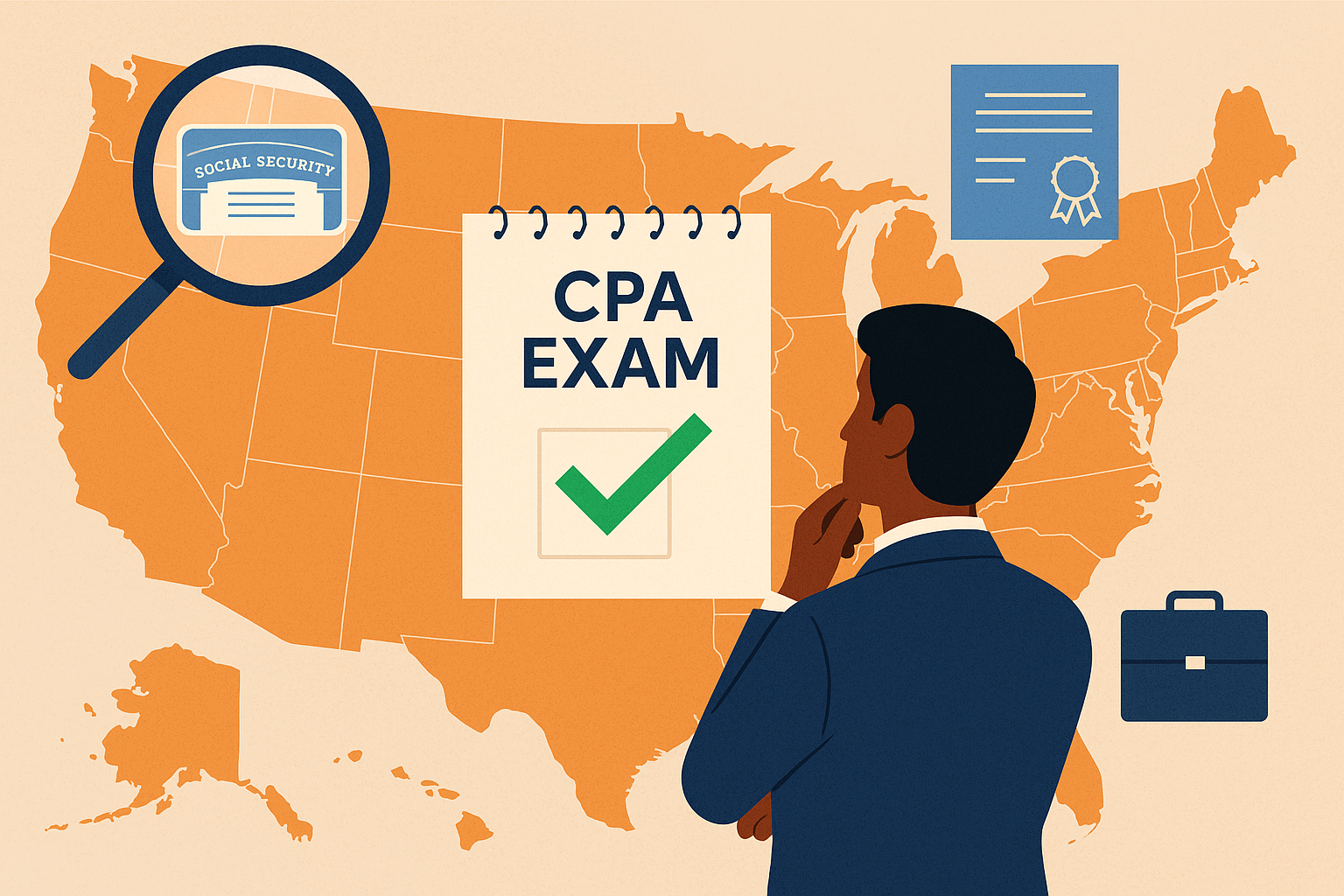
US CPA Exam guide for Indian professionals with updated costs in INR, eligibility requirements, pass rates, and step-by-step application process. Data-driven guidance for your CPA journey. This article is written by Medha Vinod, Senior Associate at LawSikho.

If you’re an Indian accounting professional considering the US CPA credential, you’re probably wondering whether you qualify, what it will cost, and whether the investment is worth it. The good news is that the CPA Exam is now available at eight Prometric test centers across India, and with just four exam sections to pass, it’s a faster route to a globally recognized credential than the Indian CA. According to NASBA’s international testing data, thousands of Indian candidates now take the CPA Exam domestically each year, eliminating the need for expensive US travel. This guide gives you the essential information, backed by current data from official sources, to make an informed decision and take your first steps toward becoming a CPA.

CPA Exam Eligibility for Indian Professionals

The first question every Indian candidate asks is whether they qualify for the CPA Exam. The answer depends on your educational background and how it translates into the US credit hour system that determines CPA eligibility. Understanding this conversion upfront saves you from surprises later in the process.

Credit Hour Requirements and How Indian Qualifications Map

US state boards evaluate your education based on credit hours, with most states requiring 120 credits to sit for the exam and 150 credits for full licensure. According to evaluation guidelines from NASBA International Evaluation Services (NIES), the conversion works based on duration and coursework intensity. Each year of Indian university education typically equals about 30 semester credits when evaluated against US standards.

A standard three-year Indian B.Com degree translates to approximately 90 semester credits, which falls short of even the 120-credit exam eligibility threshold. If you’ve completed a two-year M.Com on top of your B.Com, that adds another 60 credits, bringing your total to around 150 credits and meeting the licensure requirement for most states. Similarly, a B.Com plus MBA combination typically yields approximately 150 credits. B.Com Honours degrees may receive slightly more favorable evaluations, often landing between 95 and 100 credits depending on the university’s accreditation and your coursework.

Beyond total credits, most states require specific minimums in accounting and business subjects. According to AICPA’s eligibility requirements, states typically require 24 to 30 accounting credits and 24 to 30 business credits within your total. Your credential evaluation will break down your credits by category, so verifying that your accounting-specific credits meet your chosen state’s requirements is essential before applying.

Your choice of US state matters significantly for eligibility. Some states allow you to start the exam with 120 credits and complete the remaining 30 before licensure, while others require the full 150 upfront. States like Montana, Colorado, and Washington have become popular among Indian candidates because they offer flexibility on credit requirements, don’t require a US Social Security Number, accept international supervisors for experience verification, and have no residency requirements. Montana requires 24 accounting credits, Colorado requires 27, and Washington requires 24, so verify your accounting credit count against your target state’s specific threshold.

Eligibility Pathways for B.Com, CA, and Other Backgrounds

Your specific qualification determines the most practical path forward. M.Com and MBA graduates typically meet the 150-credit requirement without additional coursework, making their journey relatively straightforward. The critical factor is ensuring your accounting-specific credits meet state requirements, which usually means having at least 24 credits in accounting subjects.

Indian Chartered Accountants have a distinct advantage when pursuing the CPA. According to evaluation patterns documented by NIES, the CA qualification combined with your bachelor’s degree typically provides 150 to 160 credit hours, comfortably exceeding the requirements for most states. Your extensive accounting coursework through CA Foundation, Intermediate, and Final levels easily satisfies the accounting credit requirements that challenge many other candidates. You won’t receive any exemptions from exam sections since the AICPA doesn’t offer exemptions to any international candidates regardless of qualifications, but your strong conceptual foundation typically accelerates preparation significantly.

B.Com graduates face the most common challenge: a credit gap. With only 90 credits from a three-year degree, you’ll need to add 30 to 60 credits through either further education or a bridge course. Several Indian coaching institutes offer bridge programs specifically designed to fill this gap. Simandhar Education provides similar programs at comparable price points through their US university partnerships. When selecting a bridge course, verify that the credits will be accepted by your chosen state board before enrolling, as acceptance policies vary.

Company Secretaries and Cost Management Accountants can also pursue the CPA, though eligibility depends on combining your professional qualification with your academic credentials. Your professional qualification alone may not provide sufficient accounting credits according to US evaluation standards, so you’ll likely need your bachelor’s degree plus potentially additional coursework to reach the required thresholds. Getting a preliminary evaluation done before committing to the CPA journey is especially important for these backgrounds.

Understanding the CPA Exam Structure After 2024 Changes

The CPA Exam underwent a major transformation in January 2024 with the implementation of CPA Evolution. This change replaced the old four-section format with a new Core plus Discipline model that gives you more control over your exam pathway and allows specialization based on career goals.

The Three Core Sections and One Discipline Choice

Under the current format, you must pass three Core sections that every CPA candidate takes, plus one Discipline section that you choose based on your career interests. The Core sections are –

  1. Auditing and Attestation (AUD), 
  2. Financial Accounting and Reporting (FAR), and 
  3. Taxation and Regulation (REG). 

For your Discipline, you select from: 

  1. Business Analysis and Reporting (BAR), 
  2. Information Systems and Controls (ISC), or 
  3. Tax Compliance and Planning (TCP).

According to the AICPA CPA Exam Blueprints, each Core section has a specific structure. AUD includes 72 multiple-choice questions and 8 task-based simulations testing audit process knowledge, ethics, and professional responsibilities. FAR includes 50 MCQs and 7 TBSs covering US GAAP, governmental accounting, and not-for-profit reporting, making it the most content-heavy section. REG includes 72 MCQs and 8 TBSs covering federal taxation for individuals and entities plus business law.

The Discipline sections differ in structure and focus. BAR includes 50 MCQs and 7 TBSs focusing on advanced financial reporting and data analytics, ideal for corporate finance or FP&A career paths. ISC has a unique structure with 82 MCQs and only 6 TBSs, with 60% MCQ weightage compared to the standard 50%, covering IT governance, cybersecurity, and SOC engagements. TCP includes 68 MCQs and 7 TBSs focusing on advanced tax planning strategies, building directly on REG content.

Most Indian candidates find FAR the most challenging due to its extensive coverage of US GAAP standards and sheer content volume. REG requires learning US tax law from scratch since Indian taxation knowledge doesn’t transfer directly. AUD feels more familiar to those with auditing backgrounds, though you’ll need to master US auditing standards and PCAOB requirements specifically.

For Discipline selection, understanding pass rate patterns helps inform your choice. According to AICPA’s Q3 2025 pass rate data, TCP has the highest pass rates at approximately 78%, followed by ISC at around 68%, while BAR has the lowest at approximately 43%. However, TCP’s high rates reflect candidate selection patterns rather than easier content; candidates choosing TCP have typically already demonstrated strong tax knowledge by passing REG. Choose your Discipline based on career goals rather than pass rate alone. If you’re targeting audit roles or Big 4 assurance positions, ISC provides relevant technology controls knowledge. For corporate finance or financial reporting roles, BAR deepens technical expertise. For tax consulting careers, TCP is the clear choice.

Exam Format, Scoring, and the Credit Validity Timeline

Each section is four hours long and includes multiple-choice questions and task-based simulations. According to Prometric’s CPA exam information, both question types contribute to your score, with most sections using 50% MCQ and 50% TBS weightage. The MCQs use adaptive testing, meaning your second testlet’s difficulty adjusts based on your first testlet performance. Simulations test higher-order skills and often require working with multiple documents, spreadsheets, and research tools to solve complex problems.

You need a score of 75 out of 99 to pass each section. This isn’t a percentage of questions answered correctly; it’s a scaled score that accounts for question difficulty. According to AICPA’s scoring methodology, your final score combines weighted scaled scores from both MCQs and TBSs.

Once you pass your first section, you have 30 to 36 months depending on your state to pass the remaining three sections. According to NASBA’s credit expiration rules, if you don’t complete all sections within the validity period, your earliest passed section expires and you’ll need to retake it. This timeline creates real pressure, so most working professionals target 12 to 18 months to complete all sections, studying 15 to 20 hours per week. Starting in 2025, Core sections offer continuous testing throughout the year, while Discipline sections are available during specific quarterly windows. Plan your exam sequence around these schedules.

CPA Exam Costs for Indian Candidates in 2025

Understanding the complete cost picture helps you budget appropriately and avoid surprises. The CPA is a significant investment, but the career returns typically justify it when you pass efficiently.

Complete Fee Breakdown in Indian Rupees

Your costs begin with credential evaluation. According to NIES, standard evaluation costs approximately $225, which translates to around ₹19,125 at current exchange rates of approximately ₹85 per dollar. World Education Services (WES)charges similar amounts at approximately $205 or ₹17,425. Rush processing adds $75 to $100 to these fees. You’ll also spend ₹5,000 to ₹10,000 on document courier costs and university attestation fees for sealed transcripts. Budget approximately ₹25,000 to ₹35,000 total for the complete evaluation process.

State board application fees vary significantly by state. According to the NASBA State Board Directory, Montana charges $141 total including registration, making it one of the more affordable options at approximately ₹12,000. Colorado charges $180 for application plus $93 per section for registration, totaling approximately ₹47,000 for all four sections. Washington charges $100 for application plus $93 per section registration, totaling approximately ₹40,000. Research your chosen state’s complete fee structure before applying.

The biggest expense for Indian candidates is exam fees. According to NASBA’s 2025 fee schedule, the base examination fee is $390.76 per section, payable by all candidates worldwide. Indian candidates testing at Prometric centers in India pay an additional international administration fee per section bringing the section fee to $510. For all four sections, budget approximately ₹2,65,000 to ₹2,70,000 in exam fees alone. According to fee analysis from EduMont, international administration fees increased by $120 per section in 2025, adding approximately ₹40,800 to the total cost compared to previous years.

After passing all sections, you’ll face ethics exam costs of approximately $150 to $200, translating to ₹12,750 to ₹17,000, plus license application fees ranging from $100 to $400 depending on your state, adding another ₹8,500 to ₹34,000.

Review Course Options and Total Investment

Most candidates invest in a review course, which is where costs vary most significantly based on your choices. According to pricing from official provider websites, Becker offers their premium course at $3,499, approximately ₹2,97,000, with 24-month access, Adapt2U adaptive learning technology, and over 9,000 practice questions. UWorld Roger CPA Reviewprovides their course at $2,999, approximately ₹2,55,000, with unlimited access and SmartPath adaptive technology. Surgent offers their course at $2,199, approximately ₹1,87,000, with unlimited access and their proprietary A.S.A.P. adaptive technology that claims to reduce study time. Gleim provides their course at $1,999, approximately ₹1,70,000, featuring the largest test bank with over 10,000 practice questions.

Indian coaching institutes add value through local support, live classes, and application assistance. Miles Education bundles Becker materials with their own live classes, mentoring, and bridge course support for ₹1,50,000 to ₹2,50,000. Simandhar Education, as Becker’s exclusive India partner, offers packages ranging from ₹1,40,000 to ₹2,20,000 including Becker LMS access, local mentoring, and licensing support.

Adding everything together, Indian candidates should budget ₹4,30,000 to ₹6,50,000 for the complete journey, assuming you pass each section on the first attempt. This breaks down to approximately ₹25,000 to ₹35,000 for evaluation and documents, ₹12,000 to ₹47,000 for state board fees, ₹2,65,000 to ₹2,70,000 for exam fees, ₹1,10,000 to ₹3,00,000 for review courses, and ₹21,000 to ₹50,000 for ethics and licensing. Failed sections require repaying the full exam fees, which at approximately ₹66,000 per section adds up quickly. Investing in quality preparation that maximizes your first-attempt pass probability often costs less than budget preparation plus retakes.

The CPA Exam Application and Testing Process

The application process involves multiple steps across different organizations. Understanding the sequence and realistic timelines helps you plan effectively and avoid costly delays.

From Credential Evaluation to Prometric Scheduling

Your journey starts with credential evaluation, which typically takes 6 to 8 weeks for standard processing or 2 to 3 weeks for rush processing according to NIES. Choose an agency accepted by your target state, submit your sealed transcripts and degree certificates, and wait for the evaluation report. NIES evaluations feed directly into NASBA’s system, streamlining subsequent steps. Start gathering documents early since Indian universities can be slow with transcript requests, often taking 2 to 4 weeks to process document requests.

With your evaluation complete, apply to your chosen state board through the NASBA CPA Central portal. You’ll provide your evaluation results, identification documents including passport, and application fees. According to NASBA processing data, state board application processing takes 2 to 8 weeks depending on the state and time of year. Montana and Washington typically process applications in 2 to 4 weeks, while Colorado may take 3 to 5 weeks during busy periods.

Once approved, you’ll receive your Notice to Schedule (NTS), which authorizes you to schedule and take exam sections. According to NASBA’s NTS information, your NTS is valid for 6 to 9 months depending on your state. Only request sections you’re confident you’ll complete within that window. Many candidates make the mistake of requesting all four sections at once, then struggling to prepare and schedule them all before expiration. Starting with one or two sections is often smarter, even if it means paying registration fees multiple times.

With NTS in hand, log into Prometric’s scheduling system to book your exam appointment. Popular time slots at major Indian centers fill up quickly, especially at Bangalore and Mumbai locations during peak testing periods. Book as soon as you’re confident about your preparation level to secure your preferred date and time.

CPA Exam Centers in India and What to Expect

According to NASBA’s international testing page, the CPA Exam is available at Prometric centers in eight Indian cities: Ahmedabad, Bangalore, Kolkata, Chennai, Hyderabad, Mumbai, New Delhi, and Trivandrum. The Bangalore center located on Outer Ring Road and the Mumbai center in Andheri East are particularly popular with South and West India candidates respectively, so book early at these locations. Delhi NCR candidates typically use the Gurgaon center in DLF Cyber City.

On exam day, arrive at least 30 minutes early with your NTS and two forms of identification including your passport. You’ll store personal belongings in a locker and follow strict security procedures entering the testing room. The center provides scratch paper, pencils, and an on-screen calculator; you cannot bring your own materials. The four-hour exam tests your stamina as much as your knowledge, so practice under timed conditions beforehand.

Is the CPA Worth It for Indian Professionals?

The investment is substantial, so asking whether the returns justify the cost and effort is fair. For most Indian accounting and finance professionals targeting international careers, the answer is yes, but understanding the specific value proposition helps you make an informed decision.

Career Opportunities and Salary Expectations

The CPA credential opens doors that remain closed to non-credentialed professionals. Big 4 firms actively recruit CPAs for their India offices, particularly for roles serving US clients, handling US GAAP reporting, and working in SOC engagements. According to salary data from recruitment surveys and job portals, entry-level CPAs in India with 0 to 3 years of experience typically earn ₹6 to ₹10 lakh annually.

Mid-career CPAs with 5 to 10 years of experience often reach ₹15 to ₹25 lakh annually, while those with 10+ years command ₹25 to ₹30 lakh. Senior leadership positions like Finance Director, VP Finance, or Controller can command ₹50 lakh to ₹1 crore or more, particularly in MNCs and companies with significant US operations. The salary premium is most visible at senior levels where the credential becomes a differentiator for leadership roles.

Multinational corporations with US parent companies also value the CPA highly. Companies like Amazon, Google, Microsoft, Accenture, and major banks have significant finance operations in India that employ CPAs. Roles in shared services centers, global finance teams, and internal audit frequently prefer or require CPA qualification because these positions need people who understand US financial reporting requirements.

The credential also provides international mobility that few other qualifications offer. Many Indian CPAs eventually relocate to the US. Certified Public Accountants earn well in USA. The salaries in the USA range from $60,000 to $120,000 per year on average. 

Making the Decision: Key Factors to Consider

Consider your career goals first. If you’re planning to work primarily with Indian companies following Indian accounting standards, the CA credential may serve you better since it grants practicing rights in India that the CPA doesn’t provide. But if you’re targeting multinational corporations, Big 4 international practices, or eventual US opportunities, the CPA provides clearer career advantages.

Timing matters significantly. The CPA is most valuable early in your career when the credential can accelerate your trajectory and compound over decades. Pursuing it at 25 versus 35 makes a meaningful difference in lifetime earnings impact. If you’re considering the CPA, starting sooner generally beats waiting.

Finally, assess your preparation capacity honestly. The CPA requires sustained effort over 12 to 18 months, with most successful candidates studying 300 to 400 total hours across all four sections. If your current work and personal commitments won’t allow 15 to 20 hours of weekly study, you might need to adjust something before beginning. A half-hearted attempt that results in failed sections and expired credits costs more financially and emotionally than a well-planned journey started when you’re truly ready.

For most Indian professionals serious about building international finance careers, the CPA investment pays substantial dividends. The credential signals competence in global accounting standards, opens high-paying career opportunities, and provides international mobility options. The question isn’t whether the CPA is worth it, but whether now is the right time for you to begin.

Conclusion

The US CPA credential offers Indian professionals a faster, more focused path to a globally recognized accounting qualification than many alternatives. With just four exam sections, testing available across eight Indian cities, and clear career benefits in the form of salary premiums ranging from 30% to 50% over non-credentialed peers, the CPA deserves serious consideration from anyone building an international finance career.

Your next steps are straightforward. First, get your credentials evaluated through NIES or WES to confirm your eligibility and identify any credit gaps you’ll need to address. Second, research state requirements using the NASBA State Board Directory to find the best fit for your situation, prioritizing states without SSN requirements and with flexible credit provisions. Third, budget realistically for the ₹4.3 to ₹6.5 lakh investment, understanding that quality preparation that enables first-attempt passes is more economical than budget preparation plus retakes. Fourth, choose preparation materials from providers like Becker, Surgent, or Gleim that match your learning style and provide adequate support.

For more detailed coverage on this topic, visit here.

Download Now

CPA Pass Rates

0
CPA Pass Rates

CPA exam pass rates: Understand section-wise difficulty, choose the right discipline, and learn proven strategies to pass. This article is written by Rohit Arora, Senior Associate at LawSikho.

If you are an Indian professional considering the US CPA certification, understanding pass rates is one of the smartest moves you can make before diving into preparation. These numbers are not just statistics. 

They reveal which sections challenge candidates the most, how the exam has evolved under CPA Evolution, and what realistic expectations you should set for your journey.

Whether you are a Chartered Accountant looking to add an international credential, a B.Com graduate exploring global opportunities, or a working professional in a Big 4 firm, this guide breaks down exactly what 2025 pass rates mean for you and how to use this data to plan a winning strategy.

CPA Exam Pass Rates at a Glance: What Candidates Need to Know

Before you start preparing for any section of the CPA exam, you need to understand where candidates typically succeed and where they struggle. The American Institute of Certified Public Accountants releases pass rate data quarterly, and the 2024 and 2025 numbers tell a compelling story about the exam’s difficulty under the new CPA Evolution format.

The CPA exam now consists of three core sections that everyone must pass, plus one discipline section of your choice. 

The core sections are 

  • Auditing and Attestation (AUD), 
  • Financial Accounting and Reporting (FAR), and 
  • Regulation (REG). 

For your discipline, you choose one from Business Analysis and Reporting (BAR), Information Systems and Controls (ISC), or Tax Compliance and Planning (TCP). Each section requires a minimum score of 75 on a 0 to 99 scale, and you must pass all four within an 18 to 30-month window, depending on your jurisdiction.

Pass Rate Trends for Core CPA Sections: AUD, FAR, and REG

The three core sections show distinctly different performance patterns, and understanding these differences can shape how you approach your preparation.

FAR consistently records the lowest pass rates among core sections. 

In 2025, the cumulative pass rate stands at approximately 42.80%, with quarterly figures hovering between 41% and 43%. 

This section covers extensive financial accounting and reporting standards under US GAAP, including complex topics like consolidations, government accounting, and not for profit entities. 

For Indian candidates trained primarily in Ind AS or IFRS, the adjustment to US GAAP principles adds another layer of challenge. If you find yourself wondering why so many candidates struggle with FAR, the answer lies in its sheer volume and the depth of technical knowledge required.

AUD falls in the middle of the difficulty spectrum with a 2025 cumulative pass rate of around 48%. The section tests your understanding of audit procedures, professional responsibilities, and attestation engagements. While the concepts may feel familiar if you have audit experience, the exam requires you to apply judgment in scenario-based questions. Many candidates find AUD tricky because correct answers often depend on subtle distinctions between acceptable and best practices.

REG stands out as the strongest performer among core sections, with pass rates consistently above 60%. 

The 2025 cumulative rate sits at approximately 64%, making it the most passable core section. REG covers federal taxation for individuals, entities, and property transactions, along with business law and ethics. Indian candidates often find REG challenging initially because US tax law differs significantly from Indian taxation. However, the structured nature of tax rules means that a dedicated study typically yields good results.

Discipline Section Pass Rates: How BAR, ISC, and TCP Perform in Recent Years

The discipline sections introduced under CPA Evolution in 2024 have shown dramatically different pass rates, and these numbers should definitely influence your selection strategy.

TCP leads all sections with the highest pass rates by a significant margin. The cumulative 2025 pass rate exceeds 78%, with some quarters reaching above 80%. According to AICPA’s official pass rate data, TCP’s strong performance can be attributed to its close alignment with REG content. 

Candidates who perform well in REG often carry that momentum into TCP, especially if they work in tax or have a genuine interest in taxation. For Indian CAs with taxation experience, TCP often feels like a natural extension of what they already know.

ISC has shown remarkable improvement since its introduction. Pass rates climbed from around 51% in early 2024 to approximately 68% cumulatively in 2025. This upward trend suggests that candidates and review course providers have adapted well to the section’s content, which covers information systems, data management, and cybersecurity concepts. If you have a background in IT audit, systems implementation, or data analytics, ISC might be your strongest option.

BAR presents the greatest challenge among discipline sections. 

The cumulative 2025 pass rate hovers around 42%, with Q4 2024 dropping as low as 33%. BAR absorbed much of the advanced financial reporting content that previously lived in FAR, including topics like business combinations, derivatives, and foreign currency transactions. Candidates without strong advanced accounting backgrounds often find BAR overwhelming. If you choose BAR, expect to invest significantly more study time compared to TCP or ISC.

What These Pass Rates Mean for Indian Candidates

Understanding pass rates is valuable, but the real question is how these numbers apply specifically to your situation as an Indian professional. The CPA exam is identical worldwide, meaning you face the same questions and scoring standards as candidates in the United States. However, your path to success involves navigating challenges that American candidates simply do not encounter.

Challenges Unique to Indian Professionals

Indian candidates typically perform at par with global averages, achieving pass rates between 45% and 55% across sections. However, several factors make your journey distinct from U.S.-based candidates.

The transition from Indian accounting standards to US GAAP creates a learning curve that American accounting graduates do not face. While Ind AS has converged significantly with IFRS, US GAAP remains a separate framework with its own rules for revenue recognition, leases, and financial instruments. You will need to unlearn certain approaches and relearn them the American way, which requires additional study time.

Working while preparing for the CPA exam is the reality for most Indian candidates. 

Unlike many American candidates who take the exam shortly after graduation, Indian professionals often pursue a CPA while managing full-time jobs, sometimes with demanding schedules in Big 4 firms or MNCs. Balancing a 50 to 60-hour work week with CPA preparation requires exceptional time management.

Time zone differences affect your access to live classes, doubt-clearing sessions, and even exam scheduling. If you are working with a US-based review course, live sessions might fall at inconvenient hours. Planning your study schedule around these constraints becomes essential.

The psychological aspect matters too. Pass rates below 50% can feel intimidating, especially when you are investing significant money in exam fees, review courses, and credential evaluation. 

Understanding that roughly half of all candidates pass each section should motivate you to join the successful half through thorough preparation rather than discourage you from attempting the exam.

How to Use Pass Rate Data in Your Exam Planning

Pass rates become genuinely useful when you translate them into actionable planning decisions rather than viewing them as abstract statistics.

Start by identifying which sections play to your strengths. 

If you have a taxation background, the combination of REG and TCP gives you two sections with historically high pass rates. If your experience lies in audit, pairing AUD with ISC might leverage your existing knowledge. Matching your background to favorable sections improves your odds significantly.

Consider exam sequencing based on difficulty patterns. 

Many successful candidates recommend taking the FAR first while your motivation is highest and your study habits are fresh. Getting the hardest section out of the way early prevents it from becoming a psychological barrier later. Alternatively, some candidates prefer building confidence by passing an easier section first. There is no universally correct answer, but your decision should be informed by the data.

Pay attention to quarterly variations when scheduling your exams. Pass rates typically dip in Q1 and Q4, coinciding with the busy season for accountants and holiday distractions. Q2 and Q3 tend to show stronger performance as recent graduates enter the candidate pool with fresh academic knowledge. If your schedule allows flexibility, targeting these quarters might work in your favor.

How to Choose the Right CPA Discipline Section Based on Your Background

Selecting your discipline section is one of the most consequential decisions in your CPA journey. While pass rates provide useful guidance, your choice should ultimately align with your educational background, professional experience, and career aspirations.

Matching Your Academic and Professional Background to the Best CPA Discipline

Your existing knowledge base significantly influences how difficult each discipline section will feel during preparation.

Chartered Accountants typically find TCP most accessible. Your CA curriculum covered extensive taxation concepts, and while US tax law differs from Indian law, the analytical approach transfers well. The structured nature of tax rules means you can systematically learn the differences. Many Indian CAs report that TCP felt manageable after completing REG, as the sections share conceptual foundations.

B.Com and M.Com graduates without CA should evaluate their coursework and interests carefully. If your degree included strong exposure to advanced accounting topics like consolidations and derivatives, BAR might not feel as daunting. However, if your accounting education focused more on the basics, TCP or ISC could offer smoother paths. Consider which subjects you enjoyed and performed well in during your degree.

MBA Finance professionals and Company Secretaries often gravitate toward ISC, especially if their roles involve governance, internal controls, or information systems. 

The section covers SOC reports, IT general controls, and data analytics, topics that align well with corporate governance and risk management backgrounds. If you have worked on systems implementations or IT audit engagements, ISC leverages that experience directly.

Candidates currently working in tax roles, whether in Big 4 or industry, almost always benefit from choosing TCP. Your daily work reinforces the concepts tested, and you can apply practical knowledge to exam scenarios. 

The inverse applies too. If you have never touched a tax return and find taxation concepts unintuitive, forcing yourself through TCP because of its high pass rate might backfire.

Why CPA Pass Rates Should Guide, Not Decide, Your Discipline Selection

While TCP’s 78% pass rate looks attractive compared to BAR’s 42%, choosing solely based on these numbers can lead you astray.

The AICPA has explicitly stated that higher pass rates do not mean a section is easier for every candidate. TCP’s strong numbers partly reflect self-selection. 

Candidates who choose TCP often have tax backgrounds or have just completed REG, meaning they enter the section with relevant preparation. Similarly, BAR attracts candidates pursuing careers in financial reporting, many of whom accept the challenge despite knowing it is difficult.

Your career goals should weigh heavily in this decision. If you plan to specialize in financial reporting, work in controllership, or pursue CFO track roles, BAR provides directly relevant knowledge despite its lower pass rate. The concepts you learn will serve you throughout your career. Choosing TCP solely for an easier path, while planning a career in financial reporting, means you miss valuable learning opportunities.

Consider the study time trade-off realistically. BAR might require 150 hours of preparation, whereas TCP requires 100 hours. If that extra 50 hours prevents burnout and keeps you engaged with material you find interesting, the investment pays dividends. If those extra hours feel like a grind through content you will never use professionally, TCP becomes the smarter choice.

How to Pass the CPA Exam: Five Strategies

Knowing pass rates and understanding section difficulty only helps if you translate that knowledge into effective preparation habits. Here are five strategies that consistently separate candidates who pass from those who struggle.

The Best Timing and Sequencing Strategy for CPA Exam Attempts

Strategic timing can meaningfully improve your chances of joining the successful candidate pool.

Many successful candidates recommend the FAR first approach. Since FAR has the lowest pass rate and the most extensive content, tackling it early ensures you engage with the hardest material when your energy and commitment are highest. Passing the FAR first also builds tremendous confidence. You have conquered the most feared section, and everything else feels achievable by comparison.

Alternatively, some candidates prefer the confidence builder approach, starting with REG or their chosen discipline section if they have relevant background knowledge. Passing your first section validates your preparation methods and proves you can succeed. This psychological boost carries forward into subsequent sections.

Regardless of which section you start with, avoid scheduling your toughest sections in Q4. The data consistently shows lower pass rates during October through December. Holiday commitments, year-end work pressures, and general fatigue take their toll. If possible, schedule challenging sections for Q2 or Q3 when candidate performance historically peaks.

Use the 18-month window strategically. While some candidates rush to complete all sections quickly, others space them out to allow for adequate preparation. Your ideal pace depends on your work schedule, personal commitments, and study capacity. A candidate who takes 18 months and passes all sections on the first attempt spends less money and experiences less stress than someone who rushes, fails multiple sections, and extends their timeline through retakes.

Effective Study Approaches for Working Indian Professionals

Preparing for the CPA exam while working full-time in India requires a disciplined approach tailored to your constraints.

Invest in a quality review course from providers like Becker, Wiley, Gleim, or Surgent. These courses structure the vast CPA content into manageable modules, provide practice questions aligned with exam format, and offer simulated exams that build familiarity with the testing interface. The cost feels significant, but candidates who use structured review courses consistently outperform those who attempt self-study.

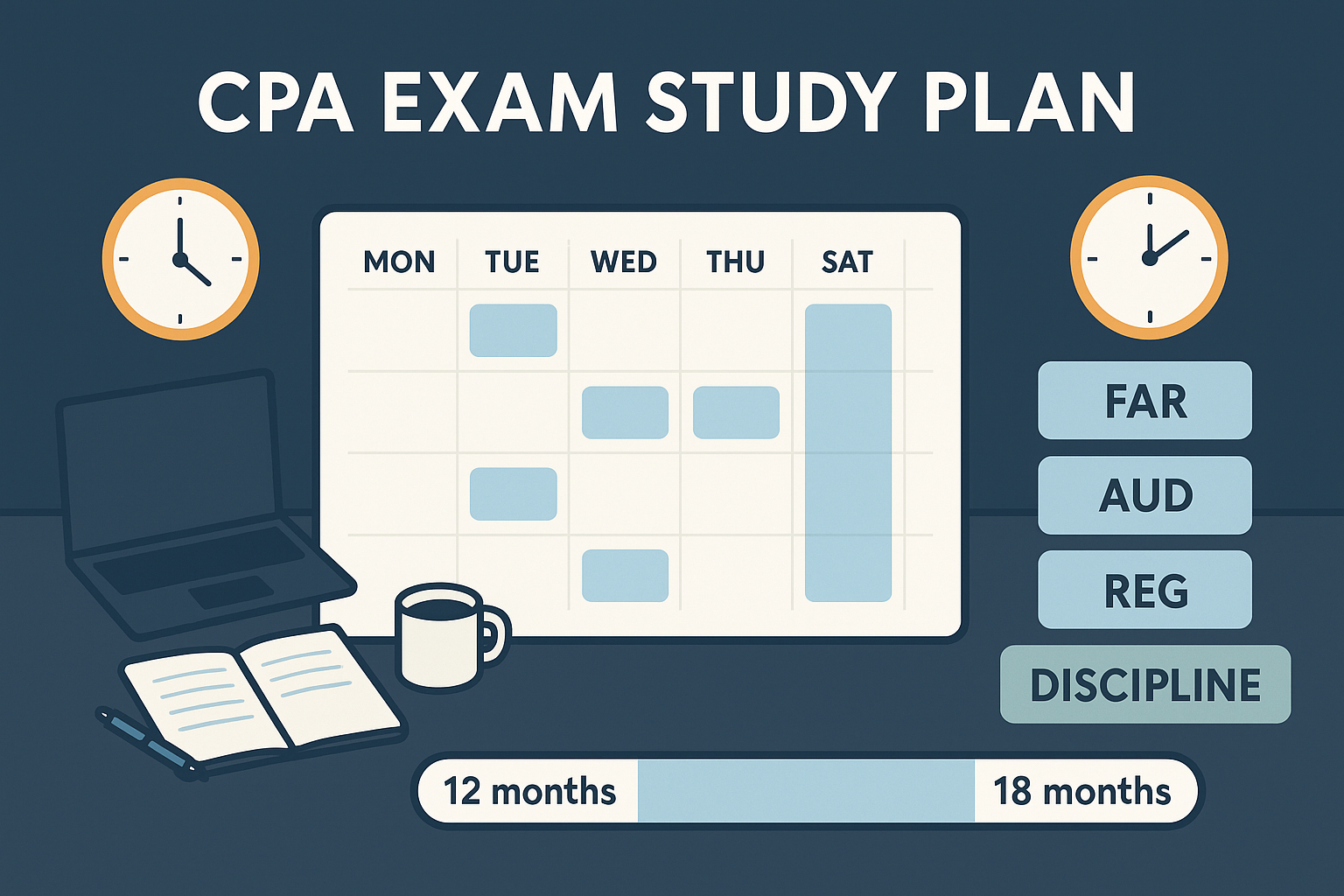
Create a realistic study schedule that accounts for your actual availability. Most candidates need 300 to 400 hours of total study time across all four sections, translating to roughly 80 to 100 hours per section. If you can dedicate 15 hours weekly to studying, one section takes approximately 6 to 7 weeks. Build in buffer time for unexpected work demands, illness, or simply needing a mental break.

Prioritize practice questions over passive reading. The CPA exam tests application, not memorization. Working through hundreds of multiple-choice questions and task-based simulations builds the pattern recognition and analytical skills the exam rewards. Many successful candidates follow the 80/20 rule, spending 80% of their study time on active practice and only 20% on reviewing content.

Join study groups or online communities with other Indian CPA candidates. Platforms like Reddit, LinkedIn groups, and coaching institute forums connect you with peers facing identical challenges. Discussing difficult concepts, sharing study strategies, and simply knowing others understand your struggle provides both practical help and emotional support.

Conclusion

CPA exam pass rates tell a clear story for Indian candidates. FAR and BAR demand the most preparation, REG and TCP reward structured study with higher success rates, and AUD and ISC fall somewhere in between. 

Your background, career goals, and personal circumstances should guide your discipline selection rather than pass rates alone. Strategic exam timing, quality review materials, and consistent practice separate successful candidates from those who struggle. The roughly 50% overall pass rate means that half of all candidates prove it is possible. With the right preparation, you can absolutely join them.

For an in-depth article on the CPA Exam Pass Rate, read my article here.

Download Now

Study Plan for CPA Exam

0
CPA exam

Practical CPA exam study plan for Indian working professionals. Covers realistic study hours, weekly schedules, review course pricing in INR, and motivation strategies. This article is written by Medha Vinod, Senior Associate at LawSikho.

If you’re reading this while mentally calculating how to squeeze CPA preparation into your already packed schedule, you’re not alone. Indian professionals working 50 to 60-hour workweeks don’t have the luxury of quitting their jobs to study full-time, yet the CPA credential remains one of the most valuable additions to an accounting career. This guide cuts through generic advice to give you a practical framework built around Indian work realities: specific study hours you’ll actually need, weekly schedules that fit around demanding jobs, review course options with real pricing in rupees, and motivation strategies that sustain you across months of preparation.

CPA Study Time Requirements for Working Professionals

The first question every working professional asks is straightforward: how much time will this actually take? Getting this estimate right prevents both the overconfidence that leads to failed attempts and the intimidation that stops candidates from starting at all.

Section-by-Section Study Hours and Total Timeline

The CPA exam consists of three Core sections everyone must pass, plus one Discipline section you choose based on your career interests. Each section demands a different preparation time based on content volume and your existing background.

FAR, the Financial Accounting and Reporting section, requires the heaviest investment at 80 to 100 hours. This section covers everything from basic financial statements to governmental accounting and not-for-profit reporting. The breadth of material makes FAR the section where most candidates spend the longest preparing, and the 40 to 43 percent pass rates reflect its difficulty.

AUD and REG each require approximately 80 to 100 hours of study. Auditing and Attestation test your understanding of audit procedures and professional responsibilities, while Regulation covers US federal taxation and business law.

Your Discipline choice between BAR, ISC, and TCP affects both study time and pass probability. Business Analysis and Reporting extends FAR concepts and needs 100 to 120 hours, with pass rates around 34 to 41 percent. Information Systems and Controls focuses on IT audit topics, requiring 80 to 100 hours with 60 to 68 percent pass rates. Tax Compliance and Planning builds on REG, needs 80 to 100 hours, and shows the highest pass rates at 72 to 80 percent.

Adding these together, you’re looking at 320 to 450 total study hours across all four sections. For working professionals dedicating 15 to 20 hours weekly, this translates to 12 to 18 months of consistent preparation. Some candidates with strong backgrounds finish faster, while others with heavier work commitments take the full 18 months.

Your existing qualifications meaningfully reduce certain sections’ study times. Indian CAs typically find FAR and AUD more manageable because the CA curriculum overlaps significantly with financial reporting and audit concepts. The US GAAP specifics still require attention, but the foundational understanding accelerates learning. M.Com graduates with accounting specializations similarly benefit, though perhaps to a lesser degree than CAs. B.Com holders without additional certifications should plan for the full recommended study hours on each section.

Calculating Your Personal Study Timeline Based on Available Hours

Your individual timeline depends entirely on how many quality study hours you can realistically commit each week. Be honest with yourself here because overestimating leads to impossible schedules that collapse within weeks.

If you can commit 15 hours weekly, which breaks down to roughly 1.5 hours on weekdays plus 7 to 8 weekend hours, expect each section to take 6 to 10 weeks, depending on content volume. FAR alone might consume 8 to 10 weeks, while shorter sections like TCP could take 4 to 6 weeks. At this pace, completing all four sections takes approximately 16 to 18 months.

Candidates managing 20 hours weekly can compress this timeline meaningfully. With 2 hours on weekdays and 10 weekend hours, each section takes 4 to 8 weeks. The full exam becomes achievable in 12 to 14 months for disciplined candidates who maintain consistency.

The NASBA 30-month rolling window provides important flexibility. Once you pass your first section, you have 30 months to pass the remaining three before that initial credit expires. This window accommodates the reality that work demands fluctuate, personal circumstances change, and some sections may require retakes. Don’t feel pressured to complete everything in 12 months if 18 months better fits your life situation.

Creating a Weekly Study Schedule That Works with Your Job

A study schedule that exists only on paper accomplishes nothing. Your weekly plan must account for actual energy levels after long workdays, family dinner times, and the reality that willpower depletes as the day progresses.

Morning vs. Evening Study Sessions: Finding Your Productive Hours

The morning versus evening debate has passionate advocates on both sides, but the right answer depends entirely on your personal energy patterns and household situation.

Early morning sessions between 5 AM and 7 AM offer distinct advantages for many Indian professionals. Your mind is fresh before work stress accumulates, interruptions from colleagues or family are minimal, and completing your study before leaving home means work emergencies can’t derail your plan. The tradeoff involves earlier bedtimes that may conflict with family time or social expectations. If your household includes young children who wake early or elderly parents requiring morning attention, this window may not be practical.

Evening sessions from 8:30 PM to 10:30 PM work better for candidates who aren’t morning people or whose family dynamics favor later study. The key is allowing genuine decompression time after work. Attempting to study immediately after reaching home, while still mentally processing office issues, rarely produces quality learning. A buffer of 60 to 90 minutes for dinner, brief relaxation, and mental transition makes evening sessions far more effective.

Indian work culture often involves later office departures than Western norms, pushing dinner times to 8 PM or beyond. If this describes your situation, evening study sessions may need to start at 9:30 PM or later, making mornings more practical despite requiring earlier wake times.

The consistency factor matters more than the specific time slot. A candidate who studies every morning at 5:30 AM will outperform someone who alternates unpredictably between mornings, evenings, and skipped days. Pick one approach that genuinely fits your life and protect it fiercely.

Sample Weekly Schedule for Indian Working Professionals

Let me give you a concrete framework rather than vague advice about “finding time.” This schedule assumes standard Indian corporate hours with reasonable commute times.

Weekday mornings from 5:30 AM to 7:00 AM provide 1.5 hours of focused study before your day begins. Alternatively, weekday evenings from 9:00 PM to 10:30 PM offer the same 1.5 hours after family dinner and brief relaxation. Choose one approach, not both, as attempting two sessions daily leads to rapid burnout.

Saturday mornings from 8:00 AM to 12:00 PM create a 4-hour power block for intensive study, including practice exams or tackling complex topics that require extended concentration. Sunday mornings from 9:00 AM to 12:00 PM add another 3 hours. This weekend structure totals 7 hours, which, combined with 7.5 weekday hours, gives you 14.5 to 15 hours weekly.

For remote or hybrid workers, the eliminated commute time is pure gold. Consider adding a lunch hour session from 12:30 PM to 1:15 PM for light review or MCQ practice. This 45-minute addition, three to four times weekly, meaningfully accelerates progress without extending your total daily study commitment.

During busy work periods, reduce rather than eliminate study. Even 30 minutes of flashcard review maintains your connection to the material and prevents the regression that comes from complete breaks. Protecting abbreviated study sessions during crunch times keeps momentum alive until normal schedules resume.

Maximizing Weekends, Leave Days, and Festival Holidays

Weekends carry disproportionate importance for working professionals because they offer the only opportunity for extended, uninterrupted study blocks. Protect your weekend study time as zealously as you protect important work meetings.

Use weekend sessions for activities that benefit from longer focus periods: full-length practice exam sections, complex TBS simulations, and deep dives into challenging topics. Weekday sessions work better for video lectures, MCQ practice, and review of previously covered material.

Strategic leave usage accelerates preparation dramatically, particularly in the final stretch before each exam. Taking 2 to 3 consecutive days off before your exam date creates a focused final review period that many successful candidates credit for their passing scores. Use this time for practice exams under realistic conditions, targeted review of weak areas identified in practice, and mental preparation.

Indian calendar holidays create natural extended weekend opportunities without using leave days. Diwali breaks, Independence Day weekends, Holi, and regional festivals provide 3 to 4 day windows for intensive preparation. Planning your section exam dates around these holidays lets you leverage built-in time off. For example, scheduling a section exam for the week after Diwali allows you to use the holiday break for final intensive review.

Choosing Study Resources and Review Courses for Indian Candidates

Your review course choice affects both preparation quality and budget significantly. Understanding what each option offers at Indian price points helps you make an informed investment.

Review Course Options with Pricing in Indian Rupees

The international CPA review course market offers several established options, each with distinct strengths and price points that Indian candidates should understand before committing.

Becker CPA Review commands the highest price at approximately ₹2.6 to ₹3.2 lakhs for comprehensive packages. Becker’s reputation comes from Big 4 firm adoption globally, extensive video content, and proven methodology. If your employer offers Becker reimbursement or you’re specifically targeting Big 4 employment where Becker is standard, the premium may be justified. Self-funding candidates should carefully evaluate whether the price difference delivers proportional value over alternatives.

Gleim CPA Review offers the largest practice question bank in the industry at approximately ₹2.5 to ₹3 lakhs. With over 10,000 MCQs and 1,300 TBS, Gleim suits candidates who learn best through extensive problem practice rather than video lectures. The “access until you pass” guarantee provides valuable security for working professionals whose timelines may extend beyond initial estimates.

Surgent’s adaptive learning technology claims to reduce study time by focusing on your weak areas, priced at approximately ₹2.1 to ₹3.2 lakhs depending on package selection. For severely time-constrained professionals, the efficiency focus holds appeal, though the technology works best for candidates who trust algorithmic guidance rather than wanting to control their own study sequence.

Indian coaching institutes offer a different value proposition entirely. Miles Education’s complete pathway costs approximately ₹4.43 lakhs but includes Becker access, live instruction, application support, and placement assistance. Simandhar Education, as Becker’s official Indian partner, offers packages from ₹1.5 to ₹2.5 lakhs. Zell Education provides options from approximately ₹80,000 to ₹1.5 lakhs for coaching support.

The self-study versus guided coaching decision depends on your learning style and support needs. Candidates with strong self-discipline who can navigate application processes independently often succeed with international review courses alone. Those who benefit from structured schedules, live doubt-clearing, and hand-holding through administrative processes find coaching institute packages worthwhile despite higher costs.

Essential Tools for Mobile and Micro-Learning During Work Hours

Your smartphone represents an underutilized study resource that can convert dead time into productive learning. Most working professionals spend 2 to 3 hours daily on their phones, much of it on social media or entertainment apps that could become study time.

All major review courses offer mobile apps that sync with your main course progress. Use commute time for audio lectures, which work well even when you can’t look at a screen. Train journeys, auto rides, and even walking between meetings become opportunities for passive learning.

Lunch breaks offer 20 to 30 minutes for active study. Use this time for MCQ practice through your review course app or flashcard review using dedicated apps. The short duration suits focused bursts on specific topics rather than lengthy conceptual learning.

Flashcard apps like Anki or Quizlet allow you to create custom cards for formulas, definitions, and concepts you’re struggling to memorize. The spaced repetition algorithms these apps use optimize review timing for long-term retention. Even 5-minute sessions while waiting for meetings or standing in queues accumulate meaningfully over months.

The psychological shift from “I don’t have time to study” to “I can study in small increments throughout the day” transforms your preparation capacity. Working professionals who master micro-learning often accumulate 5 to 7 additional study hours weekly without extending their formal study sessions.

Staying Motivated Through 12-18 Months of CPA Preparation

The CPA journey’s length presents its own challenge. Maintaining motivation across 12 to 18 months requires deliberate strategies because initial enthusiasm inevitably fades.

Building Sustainable Habits and Preventing Burnout

Sustainable habits beat intense effort every time in long-duration challenges like CPA preparation. The candidate who studies 15 hours weekly for 18 months will outperform someone who studies 30 hours weekly for 3 months before burning out and quitting.

Break the overall goal into weekly milestones that feel achievable. Instead of focusing on “pass all four CPA sections,” concentrate on this week’s target: complete Chapter 4, achieve 70 percent on the practice quiz, or finish 100 MCQs. Celebrating small wins maintains momentum and provides regular confidence boosts.

Track your progress visually using a spreadsheet, app, or even a paper chart. Seeing accumulated study hours and completed topics provides tangible evidence of advancement that motivates continued effort. Progress tracking also reveals patterns, like whether your scores improve after certain types of study sessions.

Burnout warning signs include dreading study sessions you previously enjoyed, declining practice scores despite continued effort, physical symptoms like headaches or sleep disruption, and irritability that affects work and relationships. When these signs appear, take a strategic break rather than pushing through. A planned rest week prevents the unplanned months-long breaks that derail many candidates.

Physical health directly impacts study effectiveness. Sleep deprivation from late-night study sessions creates a false economy because retention drops dramatically when you’re exhausted. Exercise, even brief walks, improves cognitive function and stress management. Sacrificing health for study hours ultimately slows your progress.

Managing Work, Family, and Study Responsibilities

CPA preparation doesn’t happen in isolation. Your success depends partly on how well you manage expectations and maintain relationships with the people in your life.

Communicate your CPA goals clearly to your employer, especially your direct manager. Many Indian companies support professional development and may offer flexibility during exam periods. Even without formal support, managers who understand your commitment often accommodate reasonable requests for predictable schedules or strategic leave.

Family communication matters even more. Your spouse, parents, or roommates need to understand that your reduced availability is temporary and purposeful. Set realistic expectations: you’ll miss some social events, spend most weekend mornings studying, and may be less available for household responsibilities during intensive preparation periods. Getting buy-in upfront prevents resentment that builds when family members feel unexpectedly neglected.

Finding accountability partners among fellow CPA candidates provides motivation that self-discipline alone cannot match. Online communities, LinkedIn groups, and coaching institute cohorts connect you with peers facing identical challenges. Regular check-ins with accountability partners, whether weekly calls or daily message exchanges, create external commitment that supplements internal motivation.

The isolation of solo study wears on candidates over time. Knowing others are struggling with the same material, celebrating section passes together, and commiserating over difficult topics provides emotional support that sustains motivation through the journey’s lowest points.

Conclusion

The path from working professional to CPA holder is well-traveled by Indian candidates who came before you. They didn’t succeed because they had more time, fewer responsibilities, or superhuman discipline. They succeeded because they built realistic study plans, protected their study hours, and maintained consistency over 12 to 18 months.

Your starting point is understanding the time investment: 320 to 450 hours spread across 15 to 20 weekly hours. Your foundation is a weekly schedule that fits your actual life, whether that means early morning sessions before the household wakes or evening study after dinner settles. Your tools are review courses and apps that match your budget and learning style. Your sustaining force is a support network of family, employers, and fellow candidates who understand your journey.

Start this week by deciding which section to tackle first, typically FAR for building foundational knowledge or a section aligned with your work experience for early confidence. Create your weekly schedule template with specific time blocks you’ll protect as non-negotiable appointments. Choose a review course that fits your budget and learning preferences. Then commit to your first week of consistent study, knowing that each hour brings you closer to a credential that transforms careers.

The CPA credential opens doors across borders, commands salary premiums, and signals expertise that employers worldwide recognize. The investment you make over the coming months will pay returns throughout your career. Thousands of Indian professionals have made this journey while working full-time, and you can join them.

For more information about this, please click here

Download Now

CPA Exam: BAR, ISC, TCP

0
CPA exam

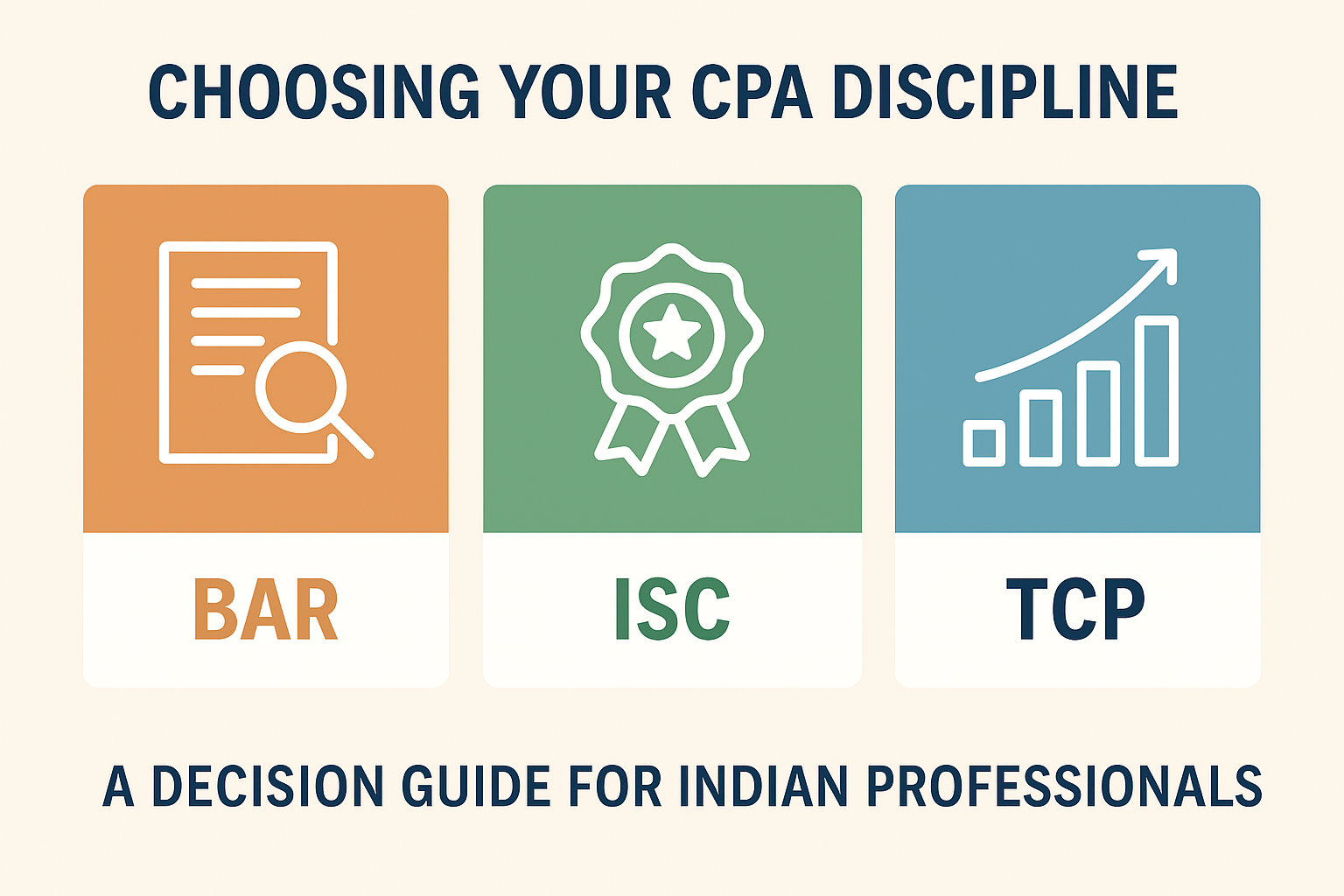
Practical guide for Indian professionals choosing between CPA disciplines BAR, ISC, and TCP. Learn how to match your strengths to the right discipline and make a confident decision. This article is written by Media Vinod, Senior Associate at LawSikho.

The CPA Evolution transformed the exam structure in January 2024, replacing the traditional four-section format with a Core + Discipline model. Now, every CPA candidate must pass three Core sections and select one Discipline from BAR, ISC, or TCP. For Indian professionals balancing demanding work schedules with CPA preparation, this additional decision can feel like one more complication in an already challenging journey. The good news is that choosing your discipline does not need to be stressful. With a clear understanding of what each discipline offers and an honest assessment of your strengths, you can make a confident choice that sets you up for exam success. This guide cuts through the confusion and gives you a practical framework for selecting the discipline that fits your background, abilities, and career aspirations.

Understand the Three CPA Discipline Options

Quick Comparison of BAR, ISC, and TCP

Each CPA discipline builds on one of the three Core sections and allows you to demonstrate deeper expertise in a specific area. Understanding what each discipline tests and who it serves best is your starting point for making an informed choice.

  1. Business Analysis and Reporting, commonly called BAR, extends the Financial Accounting and Reporting Core section into advanced territory. This discipline covers sophisticated financial statement analysis, complex accounting treatments like derivatives and consolidations, data analytics for business decisions, and state and local government accounting. BAR suits candidates who excel at financial reporting concepts and want careers in corporate accounting, financial advisory, or controller-track positions. If you found FAR intuitive and enjoyed working through technical accounting problems, BAR is your natural extension.
  2. Information Systems and Controls, known as ISC, builds on the Auditing and Attestation Core section with a technology focus. This discipline tests IT governance, data management, cybersecurity controls, and SOC engagement procedures. ISC is designed for candidates interested in IT audit, risk advisory, systems consulting, or technology governance roles. If you have an IT background, enjoy working with systems and controls, or see yourself in technology-focused accounting roles, ISC aligns with that trajectory.
  3. Tax Compliance and Planning, abbreviated as TCP, deepens the Regulation Core section into advanced taxation. This discipline covers sophisticated individual tax scenarios, entity tax compliance for corporations and partnerships, tax planning strategies, and property transactions. TCP fits candidates with tax backgrounds or those targeting careers in tax compliance, planning, or advisory services. If REG was your strongest Core section and tax rules feel logical to you, TCP leverages that foundation effectively.

Key Differences in Exam Structure

Beyond content differences, the three disciplines have distinct exam formats that may influence your choice. All three sections give you 4 hours to complete the exam, but the question distribution varies significantly.

BAR includes 50 multiple-choice questions and 7 task-based simulations, with an equal 50/50 scoring weight between MCQs and TBSs. This balanced format means your performance on both question types matters equally. TCP follows a similar structure with 68 MCQs and 7 TBSs, also weighted 50/50. The additional MCQs in TCP compared to BAR mean you will face more individual tax and entity compliance questions.

ISC stands apart with 82 multiple-choice questions and only 6 task-based simulations. More importantly, ISC uses different scoring weights, with MCQs contributing 60 percent and TBSs contributing 40 percent of your final score. If you perform better on multiple-choice questions than on simulations, ISC’s format may work in your favor. Conversely, if you excel at simulations, BAR or TCP’s balanced weighting might suit you better.

What Current Pass Rates Mean for Indian Candidates

Pass rates are often the first thing candidates look at when choosing a discipline, but interpreting these numbers correctly matters more than simply picking the highest rate. According to AICPA data, the 2025 cumulative pass rates through Q3 show TCP leading at 78 percent, followed by ISC at 68 percent, and BAR at 42 percent. These differences are dramatic, but they do not tell the complete story.

TCP’s exceptionally high pass rate reflects two important factors that may not apply to you. First, TCP content aligns very closely with REG, more so than the other Core-Discipline pairings. Candidates who take TCP immediately after passing REG benefit from significant content overlap and fresh tax knowledge. Second, early TCP candidates were disproportionately experienced tax professionals who self-selected into this discipline because it matched their existing expertise. The AICPA has noted that TCP candidates in initial quarters were unusually well-prepared compared to typical exam populations.

BAR’s lower pass rate does not mean the exam is inherently unfair or impossible. BAR absorbed challenging content from the eliminated BEC section, including cost accounting and managerial accounting topics. The discipline also includes governmental accounting, which is unfamiliar territory for most candidates, especially those from India. However, candidates with strong FAR performance and a genuine interest in financial analysis often pass BAR without unusual difficulty.

The critical insight for Indian candidates is this: aggregate pass rates reflect the entire candidate population, not your individual situation. A candidate who struggled through REG may find TCP harder than BAR despite the pass rate difference. Your personal strengths determine your personal likelihood of success. Choose the discipline where your background gives you the strongest foundation, and prepare thoroughly. Do not select TCP simply because 78 percent sounds better than 42 percent.

Choosing Your CPA Discipline: A Practical Framework

Match Your Discipline to Your Strongest Core Section

The most reliable predictor of discipline success is your performance on the related Core section. This connection exists because each discipline builds directly on Core content, creating natural preparation advantages when you stay within your strength area.

If FAR was your highest-scoring or most comfortable Core section, BAR is your strategic choice. The advanced financial reporting concepts, technical accounting treatments, and analytical skills tested in BAR extend what you already demonstrated in FAR. Taking BAR immediately after passing FAR allows you to leverage fresh knowledge rather than relearning concepts months later.

If AUD resonated with you and you found audit concepts logical, ISC builds on that foundation. The control environments, risk assessment frameworks, and assurance principles from AUD connect to ISC’s IT governance and SOC engagement content. Candidates who enjoyed the conceptual nature of auditing often appreciate ISC’s focus on systems and controls.

If REG was where you performed best and tax calculations felt natural, TCP is your obvious path. The individual and entity taxation topics in TCP directly extend REG content into more sophisticated scenarios. Many candidates report that TCP felt like a continuation of REG rather than an entirely new subject area. Taking TCP right after REG while tax rules remain fresh in memory is the recommended sequencing strategy.

Factor in Your Indian Qualifications and Experience

Your Indian educational background and work experience should heavily influence your discipline decision. Different qualifications create different starting points for each discipline.

Chartered Accountants typically have strong foundations for both BAR and TCP. Your CA training in advanced accounting standards supports BAR content, while your taxation studies prepare you for TCP. The choice between these two often comes down to which area you found more engaging during your CA journey. If you gravitated toward financial reporting and enjoyed audit work, BAR aligns with that preference. If taxation was your stronger suit and you see yourself in tax roles, TCP makes strategic sense. ISC may require more new learning for CAs unless your work experience includes significant IT audit or systems control exposure.

B.Com and M.Com graduates should consider their specialization and subsequent work experience. If your commerce degree emphasized accounting and you have worked in financial reporting roles, BAR builds on that background. If your studies or career leaned toward taxation, TCP leverages your existing knowledge. Those working in audit firms with IT audit exposure might find ISC approachable despite it being less directly connected to the typical commerce curriculum.

CMA holders often find BAR appealing because the discipline includes cost accounting and managerial accounting content that transferred from the old BEC section. Your CMA training in performance management and financial analysis provides a head start on BAR’s business analysis content areas.

Consider your current job role as well. If you work on audit teams and want to continue that trajectory, BAR or ISC both connect to audit-related career paths. If you work in tax compliance or advisory, TCP demonstrates a commitment to your specialization. Aligning your discipline with your current work creates study efficiency because you encounter familiar concepts rather than entirely new material.

Career Implications of Your Discipline Choice

One of the biggest concerns Indian candidates express about discipline selection is whether it limits future career options. The straightforward answer is no. Your discipline does not restrict your practice rights in any way. Every CPA receives the same license regardless of whether they passed BAR, ISC, or TCP. You can work in tax even if you passed BAR, and you can work in audit even if you passed TCP. Employers hire CPAs based on overall competence and relevant experience, not based on which discipline appears on your score report.

That said, the specialized knowledge you gain while preparing for your discipline can provide career advantages in certain contexts. Understanding how each discipline connects to the Indian job market opportunities helps you make a strategically informed choice.

TCP is particularly valuable for Indian professionals targeting US tax compliance roles. Major accounting firms and captive centers in India have substantial practices serving US clients with tax return preparation, tax research, and compliance support. CPAs with TCP expertise demonstrate relevant knowledge for these roles. If you see yourself in the US tax practice at a Big 4 firm or in a KPO serving American clients, TCP aligns with that career direction.

ISC connects to the growing demand for IT audit, risk advisory, and technology governance services in India. As organizations face increasing cybersecurity threats and regulatory scrutiny around data protection, professionals who understand IT controls and SOC engagements become more valuable. If you are interested in risk advisory services or see technology-focused accounting as an emerging opportunity, ISC positions you well.

BAR supports traditional accounting career paths, including financial reporting, corporate accounting, and the controller-to-CFO trajectory. MNCs operating in India need professionals who understand advanced financial reporting requirements, and BAR expertise signals that capability. If your ambition is to lead finance functions at corporations or to work in financial advisory services, BAR knowledge serves that direction.

For Indian candidates planning eventual relocation to the US, all three disciplines have strong market demand. American employers value your CPA credential and your ability to demonstrate competence in interviews and on the job. The specific discipline matters far less than your overall professional capability and how well you present yourself as a candidate.

Conclusion

Choosing your CPA discipline comes down to a simple framework: assess your Core section performance to identify where you are strongest, consider how your Indian qualifications and work experience align with each discipline, and think about your career direction. The discipline that matches your strengths is the discipline where you have the best chance of passing efficiently. Do not overcomplicate this decision by worrying about pass rate statistics that may not reflect your individual situation, or by trying to predict what employers might prefer years from now.

Your discipline choice matters for your exam preparation journey because content alignment makes studying more efficient and passing more likely. However, this choice does not define your entire CPA career. Once you earn your license, you have the same credentials and practice rights as every other CPA. Focus on selecting a discipline you can prepare for confidently, study thoroughly, and pass on your first attempt. Make your decision, commit to your preparation, and move forward knowing that your CPA credential, not your discipline choice, is what will open doors throughout your career.

If you want to know more about CPA Discipline sections, click here

Download Now

CPA Exam: FAR Syllabus

0
CPA Exam

Learn how to prepare for the CPA FAR exam as an Indian candidate. Covers FAR syllabus, pass rates, difficult topics, study strategies, costs in INR, and exam scheduling tips. This article is written by Rohit Arora, Senior Associate at LawSikho.

The Financial Accounting and Reporting (FAR) section of the CPA exam has earned its reputation as the most demanding Core section, with pass rates hovering around 42 to 43 percent in recent years. 

For Indian candidates juggling exam preparation with demanding jobs, FAR presents a unique challenge because it tests US GAAP standards and governmental accounting concepts that are completely absent from Indian commerce education. However, your B.Com, M.Com, or CA background gives you a genuine advantage in financial statement preparation and complex calculations. 

This guide breaks down exactly what FAR covers, why it trips up so many candidates, and how you can prepare efficiently to pass on your first attempt.

What is the FAR CPA Exam and What Does It Test?

Understanding FAR’s Role in the CPA Exam Structure

Under the CPA Evolution model launched in January 2024, every CPA candidate must pass three Core sections before earning their license. 

These Core sections are 

  • Financial Accounting and Reporting (FAR), 
  • Auditing and Attestation (AUD), and 
  • Taxation and Regulation (REG). 

After clearing all three Core sections, you select and pass one Discipline section from Business Analysis and Reporting (BAR), Information Systems and Controls (ISC), or Tax Compliance and Planning (TCP). 

FAR serves as the accounting foundation because the financial reporting knowledge it tests underpins everything else you will do as a CPA.

The FAR exam is a four-hour computer-based test consisting of five testlets. 

The first two testlets contain 25 multiple-choice questions (MCQs) each, giving you 50 MCQs total. The remaining three testlets contain seven task-based simulations (TBSs) distributed as 2, 3, and 2 simulations, respectively. 

Your score combines MCQ and TBS performance equally, with each component contributing 50 percent to your final score. To pass, you need a scaled score of 75 or higher on the 0 to 99 scale, which is not a percentage but a competency measure set by the AICPA.

If you choose BAR as your Discipline section, your FAR knowledge becomes even more critical because BAR builds directly on FAR content with more advanced technical accounting topics. This connection makes mastering FAR doubly important for candidates interested in financial reporting career paths.

Complete FAR Syllabus Overview

The FAR syllabus is divided into three content areas, each with specific weightings that determine how many questions you will face from each topic. Area I covers Financial Reporting and comprises 30 to 40 percent of the exam. 

This area tests your knowledge of preparing and analyzing financial statements for for-profit businesses, not-for-profit organizations, and state and local governments. You need to understand the conceptual framework under FASB standards, public company disclosure requirements under SEC rules, and governmental accounting under GASB standards.

Area II focuses on Select Balance Sheet Accounts and also comprises 30 to 40 percent of the exam. Topics include cash and cash equivalents, trade receivables and the allowance method, inventory costing (including FIFO, LIFO, and weighted average), property, plant and equipment, intangible assets, investments, payables and accrued liabilities, long-term debt including bonds, and equity transactions. Most of these topics will feel familiar from your Indian accounting education, though US GAAP treatment has specific differences you must learn.

Area III covers Select Transactions and comprises 25 to 35 percent of the exam. This area includes revenue recognition under ASC 606, lease accounting under ASC 842, accounting for income taxes under ASC 740, fair value measurements, contingencies and commitments, accounting changes and error corrections, and subsequent events. Revenue recognition and lease accounting are heavily tested and require mastery of multi-step calculations. The income tax section involves deferred tax assets and liabilities, which many candidates find conceptually challenging.

FAR Pass Rates and Difficulty Analysis

Current FAR Pass Rate Statistics (2024-2025)

FAR consistently records the lowest pass rate among the three Core sections, making it statistically the hardest section to clear. 

In 2024, the cumulative FAR pass rate was approximately 40.59 percent, with quarterly rates ranging from 36.80 percent in Q4 to 41.92 percent in Q1. The fourth quarter dip is common across CPA exam sections and likely reflects candidate fatigue during the holiday season. For comparison, REG regularly achieves pass rates above 60 percent, highlighting how much tougher FAR is relative to other sections.

The 2025 data shows modest improvement. Q1 2025 recorded a 41.67 percent pass rate, while Q2 2025 improved slightly to 43.52 percent, bringing the cumulative 2025 rate to approximately 42.66 percent through mid-year. 

This improvement suggests candidates are adapting to the CPA Evolution format, but FAR remains significantly more difficult than other sections. These numbers mean that more than half of the candidates who sit for the FAR do not pass on their first attempt, so rigorous preparation is essential.

What do these statistics mean for your preparation? 

  • First, respect the exam and allocate sufficient study time. 
  • Second, do not assume your Indian qualifications guarantee success because the FAR tests US-specific content you have never encountered. 
  • Third, take comfort in knowing that with proper preparation, you can absolutely be among the candidates who pass. 

The pass rate reflects overall candidate performance, including those who underprepare, not the inherent impossibility of the exam.

Most Challenging FAR Topics for Indian Candidates

Governmental accounting under GASB standards is unanimously identified as the most difficult FAR topic, and this challenge is amplified for Indian candidates who have zero prior exposure. 

Government accounting uses fund accounting, where activities are segregated into separate self-balancing sets of accounts based on purpose and restrictions. You need to understand governmental funds, proprietary funds, and fiduciary funds, plus the difference between government-wide statements (accrual basis) and fund statements (modified accrual basis). The reconciliation between these two statement types is frequently tested and requires careful study.

Not-for-profit accounting presents similar challenges because Indian education does not cover NFP reporting requirements. You must learn net asset classifications (with and without donor restrictions), contribution accounting, and how to prepare statements of activities and functional expenses. While NFP accounting is less extensive than governmental accounting, candidates who neglect it often lose easy points on what could be straightforward questions with proper preparation.

Beyond unfamiliar content areas, Indian candidates must navigate differences between Ind AS and US GAAP. 

LIFO inventory valuation is permitted under US GAAP but prohibited under Ind AS, so you need to learn this method from scratch. Impairment testing follows different procedures, and bond accounting terminology has US-specific conventions. Pension accounting, consolidations, and business combinations round out the list of challenging topics. The common thread is that these areas require deep understanding and multi-step calculations where errors compound quickly.

FAR Preparation Strategy for Indian Working Professionals

Study Hours, Timeline, and Review Course Selection

Most successful FAR candidates invest between 100 to 150 hours of focused study time. 

Indian CA holders with strong financial accounting backgrounds may manage with 100 hours, while B.Com graduates without extensive work experience might need 150 hours or more. If you are working full-time, plan for a 10 to 12 week preparation period, dedicating 12 to 15 hours weekly through a combination of weekday evenings and weekend study sessions. Cramming FAR into four or five weeks rarely works because the content volume requires time for concepts to sink in.

Choosing the right CPA review course significantly impacts your preparation quality. Major providers include Becker, Wiley, Surgent, and Gleim, with prices ranging from approximately ₹80,000 to ₹2,00,000 for full four-section access. 

Becker offers comprehensive content with strong pass rates but premium pricing. Wiley provides unlimited access until you pass, which suits candidates who might need extra time. 

Surgent uses adaptive technology to customize your study plan based on performance, while Gleim offers extensive practice questions at more affordable rates. 

In addition to these, candidates can also consider the SkillArbitrage CPA Prep & Global Finance Career Acceleration Program,” a structured 6-month, instructor-led online course (≈ 8–10 hrs/week) covering all four exam sections — FAR, REG, AUD, and BEC — along with US-GAAP accounting, auditing, U.S. tax, costing/IT, exam strategy, and post-CPA career guidance. Priced around ₹120,000, the program includes live classes, assignments, mobile and desktop LMS access, regular mock exams, mentor feedback, and a certificate co-branded with the National Skill Development Corporation (NSDC).

When selecting a course, prioritize strong governmental accounting coverage because this is where most Indian candidates struggle. 

Check that the course includes sufficient practice TBSs, not just MCQs, since simulations comprise half your score. Consider access duration carefully because some courses expire after 12 to 18 months, and you want flexibility if you need to retake the exam.

Effective Study Techniques for FAR Success

Start your preparation with the topics you find most challenging, particularly governmental and not-for-profit accounting. 

Many candidates make the mistake of beginning with familiar topics like financial statements and running out of time for unfamiliar content. By tackling governmental accounting early, you give yourself time to revisit these concepts multiple times before exam day. Treat governmental accounting as a completely separate subject requiring dedicated study sessions rather than something to squeeze in at the end.

Active practice is essential for FAR success.

Aim to complete at least 1,500 MCQs and 50 TBSs during your preparation, reviewing explanations for both correct and incorrect answers. The exam tests application and analysis skills, so you need practice applying concepts to scenarios rather than just memorizing rules. For calculation-heavy topics like bonds, leases, and pensions, work through problems repeatedly until the steps become automatic. Create summary notes for complex topics that you can review in the final week before your exam.

Time management during the exam matters more for FAR than other sections because of the calculation load. 

Allocate approximately 50 to 55 minutes for each MCQ testlet (about 2 minutes per question) and distribute remaining time across TBSs. Take the full 15-minute break after testlet three to reset mentally before tackling simulations. Practice with timed exams during your preparation to develop a comfortable pace, and use the flag feature to mark uncertain questions for review rather than getting stuck on any single problem.

FAR Exam Costs and Scheduling for Indian Candidates

Total Investment Breakdown in Indian Rupees

Understanding the complete cost picture helps you budget appropriately and avoid surprises. 

Credential evaluation through agencies like WES or NIES costs between ₹12,750 and ₹30,000 depending on the service level and processing speed you select. 

The exam application fee varies by state but typically ranges from ₹8,500 to ₹17,000. The FAR section fee itself costs approximately ₹17,000 to ₹21,000, and you will pay this amount again if you need to retake the exam.

Your CPA review course represents the largest expense. 

If you purchase section-specific access for FAR only, expect to pay ₹25,000 to ₹50,000 depending on the provider. Full four-section access costs ₹80,000 to ₹2,00,000 but offers better value if you plan to complete the entire CPA exam. 

Additional study materials like supplementary question banks or flashcards might add ₹5,000 to ₹15,000. Combining all costs, your total FAR preparation investment ranges from approximately ₹85,000 to ₹1,50,000, with potential for additional retake fees if needed.

Scheduling FAR at Prometric India and Exam Sequencing

Most CPA exam experts recommend taking FAR as your first section, and this advice holds especially true for Indian candidates. The primary advantage is timing: by tackling FAR first, you can study as long as you need without worrying about the 30-month clock that starts once you pass your first section. 

If FAR is your first pass, you have a full 30 months to complete the remaining three sections. Additionally, clearing the hardest section first builds confidence and establishes strong study habits for subsequent exams.

After receiving your Notice to Schedule (NTS) from NASBA, book your FAR exam through the Prometric website. India has testing centers in major cities including Mumbai, Delhi, Bangalore, Hyderabad, Chennai, and Kolkata. Schedule your exam at least four to six weeks in advance to secure your preferred date and time slot, especially during peak testing periods. 

Morning appointments are popular among candidates who want to test while mentally fresh. Arrive at the testing center at least 30 minutes early to complete check-in procedures without stress.

Conclusion

FAR demands respect, but it is absolutely conquerable with the right approach. Your Indian commerce or CA background provides genuine advantages in financial statement preparation, calculations, and working through complex multi-step problems. 

The challenge lies in US-specific content, particularly governmental accounting and US GAAP nuances, which require dedicated study time regardless of your prior qualifications.

Focus your preparation on unfamiliar topics early, invest in a quality review course with strong governmental accounting coverage, and practice extensively with both MCQs and TBSs. Budget 100 to 150 hours over 10 to 12 weeks, and take FAR as your first section to maximize flexibility. 

With disciplined preparation and strategic time management on exam day, you can join the thousands of Indian professionals who have successfully cleared FAR and moved forward in their CPA journey.

If you are looking for an in-depth guide on preparation strategy and syllabus for FAR, then I highly recommend you read my article on CPA Exam FAR Section: Syllabus, Difficulty, and Preparation Strategy for Indian Candidates

Download Now

Data Interpretation Questions for UGC NET

0
data interpretation questions for ugc net​

​Master UGC NET Data Interpretation with essential formulas, time-saving shortcuts, and a practical 15-day preparation plan. Includes real exam questions with solutions. This article is written by Neeli Neelay Shah, Senior Legal Content Writer at LawSikho.

Data Interpretation carries 10 marks in UGC NET Paper 1, and with no negative marking, it’s one of the easiest units to score full marks if you know the right approach. Most aspirants from humanities, law, and arts backgrounds avoid this section, assuming it requires advanced mathematics. The reality is different: questions test basic arithmetic you learned in school. This guide gives you the essential formulas, proven shortcuts, and a focused preparation plan to master DI quickly.

Syllabus and Exam Pattern of UGC NET Data Interpretation

Before you start solving practice questions, understanding what NTA actually tests saves hours of wasted preparation. The official syllabus looks broad, but exam analysis reveals specific patterns you can exploit.

What Unit 7 Covers

The UGC NET official syllabus describes Unit 7 as covering data sources, acquisition, classification of data, graphical representation (bar charts, pie charts, tables, line graphs, histograms), data mapping, interpretation techniques, and data governance. This sounds intimidating until you analyze actual exam papers.

In practice, NTA focuses on four graph types: tables, pie charts, bar charts, and line graphs. You won’t face theoretical questions about data governance or acquisition methods. Every question requires you to read a graph, extract numbers, and perform calculations. Your preparation should target these practical skills exclusively.

Tables dominate the exam, contributing approximately 40-50% of all DI questions based on papers from 2019 to 2024. These present numerical data in rows and columns, typically showing company performance, population statistics, or reader distributions across categories. Pie charts appear second most frequently (25-30%), followed by bar charts and line graphs (together about 25-30%).

How Questions Are Structured in the Exam

The question structure has evolved over the years. Papers from 2015-2018 typically presented one data set followed by 5-6 questions. Since 2019, NTA has shifted to presenting two separate data sets, each followed by 2-3 questions. This newer pattern appeared in the June 2024 UGC NET exam, where questions 1-5 covered percentage distribution of IT magazine readers across cities.

Each Data Interpretation question carries 2 marks, totaling 10 marks for the section. The difficulty ranges from straightforward data extraction to multi-step percentage calculations. With no negative marking, every DI question deserves an attempt. Even educated guessing gives you a 25% chance per question. With proper preparation, securing 8-10 marks becomes achievable for any aspirant regardless of their mathematical background.

Must-Know Formulas for UGC NET Data Interpretation

You need approximately 10-12 core formulas to solve virtually any UGC NET DI question. Memorizing these isn’t enough; you must understand when and how to apply each one. This section organizes formulas by category with practical application guidance.

Percentage and Ratio Formulas

Percentage calculations appear in nearly 70% of DI questions. Whether finding what percentage one value represents of another, calculating percentage increase between years, or determining how much more one category is than another, these formulas form your essential toolkit.

Basic percentage of a value: To find x% of any number, multiply by x/100. For 18% of 5,00,000, calculate: 5,00,000 × 18/100 = 90,000. This appears whenever pie charts give percentages and questions ask for actual values.

Finding percentage contribution: To find what percentage A is of B, use: (A/B) × 100. If City C has 1,59,600 readers out of 5,70,000 total, its percentage is (1,59,600/5,70,000) × 100 = 28%.

Percentage change: This is the most frequently tested formula. Use: [(New – Old) / Old] × 100. If readers increased from 60,200 to 91,200, the percentage increase is [(91,200 – 60,200) / 60,200] × 100 = 51.5%. Always divide by the original (old) value, not the new value.

Successive percentage change: When a value changes by a% then b%, the net effect is: a + b + (ab/100). If production increases by 10% then 20%, the combined change is 10 + 20 + (10×20/100) = 32%, not 30%.

Ratio to percentage conversion: To convert ratio a:b into percentages, calculate total parts (a+b), then express each as a percentage of total. For ratio 3:7, A represents 3/10 = 30% and B represents 7/10 = 70%.

Average and Growth Rate Formulas

Average calculations appear whenever questions ask about “mean,” “average over years,” or “average across categories.”

Simple average: Sum of all values divided by count. If quarterly sales were ₹40L, ₹55L, ₹48L, and ₹57L, average = (40+55+48+57)/4 = ₹50 lakhs.

Weighted average: When values have different weights or frequencies: (Value₁ × Weight₁ + Value₂ × Weight₂) / Total Weights. If 30 students scored 60 marks and 20 students scored 80 marks, weighted average = (30×60 + 20×80) / 50 = 68 marks.

Finding original value from percentage: If a value after x% increase equals Y, the original value is Y / (1 + x/100). If 114,000 represents a 10% share, total = 114,000 / 0.10 = 11,40,000. This reverse calculation appears frequently in table-based questions.

Quick Formula Reference

Take a look at this reference table below: 

CalculationFormulaApplication
x% of ValueValue × (x/100)Finding actual numbers from percentages
Percentage of(Part/Whole) × 100Finding contribution percentage
Percentage Change[(New-Old)/Old] × 100Comparing values across periods
Successive Changea + b + (ab/100)Two consecutive percentage changes
Ratio to Percentage(Part/Total Parts) × 100Converting ratios to percentages
Simple AverageSum/CountAverage over multiple periods
Reverse PercentageValue / (Percentage/100)Finding total from percentage share

Common Mistakes in Formula Application

Dividing by the wrong base: The most frequent error occurs in percentage change calculations. Students divide by the new value instead of the original. If sales grew from 400 to 500, the change is (500-400)/400 = 25%, not (500-400)/500 = 20%. This single mistake can cost you multiple marks.

Confusing percentage points with percentage change: If market share rises from 20% to 25%, that’s a 5 percentage point increase but a 25% relative increase [(25-20)/20 × 100]. UGC NET questions specifically distinguish between these. Read whether the question asks “how many percentage points” versus “what percent more.”

Ignoring units in tables: A table showing “Values in Lakhs” means 45 represents 4,500,000. Missing this converts your correct calculation into a wrong answer. Always check units before calculating.

Adding percentages incorrectly: If City B has 14% share in 2019 and 16% share in 2023, its total share over both years is NOT 14+16 = 30%. You must calculate actual values for each year separately, then combine. This error appears commonly in comparison questions.

Time-Saving Shortcuts for UGC NET Data Interpretation Questions

Speed separates candidates who finish comfortably from those who panic in the last ten minutes. With 50 questions in 60 minutes, you have roughly 72 seconds per question. DI questions with calculations can consume 4-5 minutes if approached inefficiently. These shortcuts maintain accuracy while cutting solving time significantly.

Approximation Techniques

Approximation is your most powerful tool in a multiple-choice exam. When options are spread apart, exact calculations waste time.

The 10% rule: If options differ by more than 10 percentage points, approximate aggressively. For options 23%, 38%, 52%, and 67%, a rough estimate around 35% clearly points to option B. Don’t verify with exact calculation unless options are clustered (within 5% of each other).

Rounding for easy division: To calculate 77,400 / 9, recognize that 72,000 / 9 = 8,000 and 81,000 / 9 = 9,000. Since 77,400 is between these, the answer is between 8,000 and 9,000 (actual: 8,600). Round to convenient numbers: 77,400 ≈ 77,000, and 77,000/9 ≈ 8,555.

Using benchmarks: For division, identify nearby benchmarks. To estimate 1,59,600 / 5,70,000, recognize that 1,14,000 / 5,70,000 = exactly 20% (since 114 is 20% of 570). Since 1,59,600 is larger, the answer exceeds 20%. Actually 1,59,600 / 5,70,000 = 28%.

Fraction to Percentage Conversion Tricks

Memorizing common conversions eliminates calculation entirely. When you see 73,100/ 4,30,000, recognizing it as approximately 17/100 = 17% is faster than division.

FractionPercentageFractionPercentage
1/250%1/616.67%
1/333.33%1/714.29%
2/366.67%1/812.5%
1/425%1/911.11%
3/475%1/1010%
1/520%1/205%

Decomposition technique: For 15% of 4,30,000: calculate 10% (43,000) and 5% (21,500), then add to get 64,500. Any percentage can be built from 10%, 5%, and 1% components.

Quick percentage to decimal: Move the decimal two places left. 17% = 0.17, 28% = 0.28. Multiplying by 0.17 is often faster than dividing by 100 then multiplying by 17.

Using Answer Options to Your Advantage

The multiple-choice format provides information you should exploit before calculating.

Scan options first: If options are 24,800; 27,200; 28,400; and 33,600, they’re clustered. Precision matters. But if options were 15,000; 27,000; 45,000; and 68,000, rough approximation suffices.

Work backwards for verification: If your calculation gives 27,150 and options include 27,200, you’re likely correct. Small differences often arise from rounding during the question-setting process.

Eliminate impossible options: Before calculating, check if any option is logically impossible. If a table shows a maximum value of 50,000 for any city, an option of 75,000 for that city is immediately wrong. Elimination narrows your choices even before calculation.

Use the “slightly more than” technique: If you need to find how much X exceeds Y, and you calculate X as 91,200 and Y as 60,200, the difference is “slightly more than 30,000” (actual: 31,000). This quick estimate identifies the correct option without exact subtraction.

Guide to Solving Different Graphs in UGC NET Data Interpretation

Each graph type requires a specific reading approach. While formulas remain consistent, data extraction techniques vary. This section provides systematic methods for each format.

Step by Step Approach (Common to All Graph Types)

Before attempting any question, invest 20-30 seconds in understanding the data structure. This prevents errors that waste time and cost marks.

Step 1: Identify the data type. Is it a table, pie chart, bar graph, or line graph? Each has different reading conventions.

Step 2: Understand labels and units. What do rows and columns represent in tables? What does each sector or bar show? Check for units: “in lakhs,” “in thousands,” “percentage distribution.” Missing units is the single most common source of wrong answers.

Step 3: Note the time period. Many questions involve comparison across years. Identify which columns or sections correspond to which years.

Step 4: Read the question twice. Underline key terms: “percentage increase,” “ratio,” “difference,” “total.” Identify whether you need data from one period or multiple periods, one category or several.

Step 5: Extract only required data. Don’t process the entire table. Identify the specific cells you need, extract those values, then calculate.

Table-Based Questions

Tables present data in rows and columns. They’re the most common format, appearing in nearly half of all DI questions. June 2024’s UGC NET Paper 1 featured a table showing percentage distribution of IT magazine readers across six cities for years 2019 and 2023.

Reading technique: First identify what rows represent (usually categories like cities, departments, or products) and what columns represent (usually attributes like years, values, or percentages). Note whether values are absolute numbers or percentages. If percentages, look for the total value given separately in the question.

Common question patterns from tables:

  • Finding actual values when percentages and totals are given
  • Calculating percentage change between periods
  • Comparing ratios across categories
  • Finding averages over multiple periods
  • Determining differences between categories

Calculation approach: For percentage distribution tables, remember that the percentages represent shares of the total. If City D has 9% share and you know City D has 77,400 readers, total readers = 77,400 / 0.09 = 8,60,000. This reverse calculation appears frequently.

Pie Chart Questions

Pie charts represent parts of a whole, either as percentages (totaling 100%) or degrees (totaling 360°). Your first task is identifying which representation is used.

Degree to percentage conversion: Divide degrees by 3.6. A 72° sector equals 20% because 72/3.6 = 20. Memorize key conversions: 36° = 10%, 72° = 20%, 90° = 25%, 180° = 50%.

Finding actual values: If a pie chart shows “Marketing: 22%” and states total employees = 4,500, Marketing department has 22% × 4,500 = 990 employees.

Comparison questions: These ask which sector is larger, by how much, or what ratio exists between sectors. For sectors showing 28% and 16%, the first is 28/16 = 1.75 times the second, or 75% more than the second.

Bar Chart and Line Graph Questions

Bar charts use rectangular bars to represent values. Line graphs show data points connected by lines. Both appear less frequently than tables and pie charts but still require preparation.

Bar chart reading: Identify the scale on the y-axis. Estimate values when bars fall between gridlines. For grouped bar charts (multiple bars per category), use the legend to identify what each bar represents.

Line graph reading: Observe the overall trend first: rising, falling, or fluctuating. Identify peaks (highest points) and troughs (lowest points). For multiple lines, identify what each represents.

Common question types: Maximum/minimum value identification, percentage growth between periods, comparing trends, calculating averages over time periods.

UGC NET Exam Question: Solved Example from June 2024 Cycle

Theory becomes meaningful only when applied to actual exam questions. Below is an authentic Data Interpretation question from the UGC NET June 2024 Paper 1, demonstrating exactly how formulas and shortcuts combine in practice.

Data Set: The following table shows the percentage (%) distribution of the number of readers of an IT magazine in the years 2019 and 2023, among six different cities A-F.

CityPercentage of Readers in 2019Percentage of Readers in 2023
A10%15%
B14%16%
C17%28%
D9%10%
E24%9%
F26%22%

Question: If the number of readers from City-D in the year 2019 and 2023 were 77,400 and 1,14,000 respectively, then what is the difference between the number of readers from City-F in the year 2019 and that in 2023?

Options: (1) 24,800 (2) 27,200 (3) 28,400 (4) 33,600

Step-by-Step Solution:

Step 1: Understand what’s given and what’s asked. We know City D’s actual readers for both years. We need to find the difference in City F’s readers between 2023 and 2019.

Step 2: Find total readers for each year using City D’s data. City D had 9% of total readers in 2019, with an actual count of 77,400. Total readers in 2019 = 77,400 / (9/100) = 77,400 / 0.09 = 8,60,000

City D had 10% of total readers in 2023, with an actual count of 1,14,000. Total readers in 2023 = 1,14,000 / (10/100) = 1,14,000 / 0.10 = 11,40,000

Step 3: Calculate City F’s readers for each year. City F had 26% share in 2019. City F readers in 2019 = 26% × 8,60,000 = 0.26 × 8,60,000 = 2,23,600

City F had 22% share in 2023. City F readers in 2023 = 22% × 11,40,000 = 0.22 × 11,40,000 = 2,50,800

Step 4: Find the difference. Difference = 2,50,800 – 2,23,600 = 27,200

Answer: (2) 27,200

Time-saving insight: Notice how we used the reverse percentage formula (actual value / percentage = total) to find totals. Without this approach, the question becomes unsolvable. This pattern, where one category’s actual values help determine totals, appears frequently in UGC NET.

Key formulas used:

  • Reverse percentage: Total = Actual Value / (Percentage/100)
  • Basic percentage: Actual Value = Percentage × Total
  • Simple subtraction for difference

This single question demonstrates why understanding formula applications matters more than memorizing them. The calculation itself uses only basic arithmetic, but knowing which formula to apply at each step determines success.

15-Day Preparation Plan For UGC NET Paper 1 Data Interpretation

Fifteen days with consistent 2-hour daily practice is sufficient to take you from beginner to exam-ready in Data Interpretation. This plan works whether you’re starting fresh or revising. Follow it strictly; the sequence is designed for progressive skill building.

Week 1: Formulas and Basics

The first seven days focus on building your formula toolkit and developing comfort with each graph type.

Days 1-3

Day 1: Percentage. Revise basic percentage calculation, percentage change, and successive percentage change formulas. Solve 25 percentage problems from any arithmetic book (RS Aggarwal’s Quantitative Aptitude works well). Focus on understanding when to divide by original versus new value. By the end of the day, you should calculate percentage changes without hesitation.

Day 2: Ratios and averages. Cover ratio-to-percentage conversion, comparing ratios, and simple/weighted averages. Solve 20 ratio problems and 15 average problems. Practice converting ratios like 3:7 into percentages instantly. Test yourself: what percentage is 3 parts out of 3+7=10 parts?

Day 3: Integration practice. Combine all formulas in mixed problem sets. Download one previous year UGC NET paper from INFLIBNET and solve only the DI section without time pressure. Analyze which formulas you applied and verify each step.

Days 4-7

Day 4: Table questions. Focus exclusively on table-based DI. Solve 3 complete table-based question sets from previous years. Practice the reverse percentage technique: given actual value and percentage, find total. This skill appears in nearly every table question.

Day 5: Pie chart questions. Practice degree-to-percentage conversion until automatic. Solve 3 complete pie chart question sets. Focus on comparison questions asking how much more one sector is than another.

Day 6: Bar and line graphs. These appear less frequently, so one day of focused practice suffices. Solve 2 bar chart sets and 2 line graph sets. Practice reading scales accurately and calculating growth rates.

Day 7: Review and consolidation. Revisit all formulas. Create a one-page formula sheet for quick revision. Solve a mixed practice set covering all graph types. Identify which graph type feels weakest and note areas for Week 2 focus.

Week 2: Practice and Speed Building

Week 2 shifts focus from learning to performance optimization under exam conditions.

Days 8-11

Day 8: Previous year questions (2019-2021). Solve complete DI sections from 3-4 papers. Time yourself: aim for 10-12 minutes per 5-question set. If you exceed this, analyze why. Was it calculation speed, formula confusion, or misreading data?

Day 9: Previous year questions (2022-2023). Continue with newer papers. These reflect current NTA patterns more accurately. Notice the two-data-set format that replaced older single-data-set questions.

Day 10: Previous year questions (2024). Focus on the most recent papers available. These are your closest preview of what you’ll face. Download papers from the NTA official portal or INFLIBNET.

Day 11: Error analysis day. Review all mistakes from Days 8-10. Categorize them: calculation errors, formula selection errors, misreading errors, or time management issues. Create a personal “mistakes to avoid” list. This targeted analysis prevents repeating errors in the exam.

Days 12-15

Day 12: Speed practice. Solve mixed DI sets with strict 8-minute limits per 5-question set. Use approximation aggressively. If you can’t solve it within time, mark your best guess and move on. Track accuracy: aim for 80%+ (4 out of 5 correct).

Day 13: Timed full practice. Attempt a complete Paper 1 mock test under exam conditions (50 questions, 60 minutes). Evaluate how DI performance affects overall score. Adjust strategy if DI is consuming disproportionate time.

Day 14: Targeted revision. Based on mock test analysis, focus on weak areas. If pie charts still cause trouble, solve 10 additional pie chart questions. If speed is the issue, practice more approximation techniques.

Day 15: Light revision and confidence building. Review your formula sheet and mistakes list. Solve just 2 easy-moderate DI sets to maintain confidence. Don’t attempt difficult questions that might shake confidence before the exam. Rest adequately.

Conclusion

Data Interpretation in UGC NET Paper 1 rewards preparation strategy over mathematical talent. The 10 marks from this section require only basic arithmetic applied systematically. Tables and pie charts dominate questions, so prioritize these in practice. The formulas are few, and shortcuts reduce calculation time significantly.

Your 15-day plan provides a realistic path from beginner to exam-ready. Even starting from scratch, consistent daily practice builds the pattern recognition that makes exam-day performance feel natural. The no negative marking policy means every question deserves an attempt. With preparation, 8-10 marks in Data Interpretation is achievable for any aspirant.

The key insight from analyzing previous years is this: NTA tests your ability to read data correctly and apply basic formulas accurately under time pressure. They’re not testing advanced mathematics. If you can calculate percentages and compare ratios, you have all the mathematical foundation needed. What separates successful candidates is their systematic approach and practiced speed. Follow the plan, master the formulas, and approach this section with confidence.

This topic has been covered in more details here.

Related Reading: Research Aptitude for UGC NET: https://lawsikho.com/blog/ugc-net-research-methodology/, Teaching Aptitude for UGC NET : https://lawsikho.com/blog/teaching-aptitude-ugc-net-paper-1/

Download Now

UGC NET Paper 1 Previous Year Question

0
UGC NET Previous Year Question Paper 1

​UGC NET Paper 1 PYQ analysis: topic-wise patterns, high-frequency areas, unit distribution, and preparation strategy based on previous year question trends. This article is written by Neeli Neelay Shah, Senior Legal Content Writer at LawSikho.

If you have been solving UGC NET Paper 1 previous year questions without understanding which topics dominate the exam, you are preparing blind. Randomly solving papers might give you practice, but it won’t give you strategy. This analysis breaks down UGC NET Paper  1 PYQs from 2019 to 2025 to show you exactly what NTA asks from each unit, which topics repeat most frequently, and where you should focus your preparation time. The goal here is simple: help you study smarter by knowing what actually matters in UGC NET Paper 1.

UGC NET Paper 1 Previous Year Questions: Understanding the Distribution Pattern

Official vs Actual Question Distribution in UGC NET Paper 1

On paper, UGC NET Paper 1 looks balanced. There are 10 units, 50 questions, and theoretically 5 questions per unit. Each question carries 2 marks, bringing the total to 100 marks. The official NTA syllabus maintains this structure, suggesting equal weightage across all units.

In practice, the distribution is rarely this neat. Analysis of previous year papers reveals that certain units consistently get 5 to 6 questions while others sometimes receive only 4. Teaching Aptitude, Research Aptitude, and Logical Reasoning are the units that tend to dominate, often contributing more questions than their theoretical allocation. However, in the June 2025 attempt, ICT got more weightage than teaching aptitude. Meanwhile, units like Environment and Higher Education occasionally get slightly fewer questions, though they remain important for scoring.

Understanding this practical reality helps you allocate your preparation time more effectively. You cannot afford to spend equal hours on every unit when some units reliably contribute more marks than others.

UGC NET Paper 1 Previous Year Questions: 5-Year Distribution Data (2019-2025)

Looking at exam data across multiple sessions from 2019 to 2025, a clear pattern emerges. Teaching Aptitude and Research Aptitude together typically account for 10 to 12 questions, representing roughly 20 to 24 marks. These two units alone can determine whether you clear the Paper 1 cutoff or fall short.

Logical Reasoning and Data Interpretation together contribute another 10 to 12 questions. These are skill-based sections where consistent practice directly translates to marks. Unlike theory-heavy units, you cannot cram for these at the last minute.

The remaining six units, which include Reading Comprehension, Communication, Mathematical Reasoning, ICT, Environment, and Higher Education, share approximately 26 to 30 questions. Within this group, ICT and Higher Education have seen increased question frequency in recent years, particularly questions related to NEP 2020 and digital education initiatives.

UGC NET Paper 1 Previous Year Questions

Unit 1: Teaching Aptitude in UGC NET Paper 1 Previous Year Questions

Teaching Aptitude remains one of the most predictable units in Paper 1. The most frequently tested topics include teaching methods (distinguishing between teacher-centered and learner-centered approaches), evaluation types (formative versus summative assessment), learner characteristics across different age groups, and classroom management strategies.

Question frequency data shows 5 to 6 questions per exam consistently from this unit. Recent papers have shown a shift toward scenario-based questions that test practical application rather than pure definitions. For instance, instead of asking you to define formative assessment, NTA now presents a classroom situation and asks which assessment type the teacher is using.

The topics that repeat most frequently include Bloom’s Taxonomy of learning objectives, the characteristics of effective teaching, and the role of motivation in learning. Questions about the Kothari Commission, NCF 2005, and inclusive education have appeared regularly. If you are short on time, focus on teaching methods, evaluation systems, and learner characteristics; these three sub-topics account for approximately 60 percent of Teaching Aptitude questions.

Unit 2: Research Aptitude in UGC NET Paper 1 Previous Year Questions

Research Aptitude matches Teaching Aptitude in importance, contributing 5 to 6 questions per exam. The most tested topics include types of research (qualitative, quantitative, and mixed methods), sampling techniques, hypothesis formulation, and research ethics.

A notable trend in recent years is the increased emphasis on research ethics and plagiarism. Questions about data integrity, ethical guidelines for research, and proper citation practices have become more common. This reflects the broader academic focus on research integrity following various plagiarism controversies in Indian academia.

Sampling methods appear in almost every exam. You should be thoroughly familiar with probability sampling (simple random, stratified, cluster) and non-probability sampling (convenience, purposive, snowball). Questions typically ask you to identify which sampling method suits a given research scenario.

Thesis writing questions have also increased in frequency. NTA asks about the structure of a research proposal, the difference between a thesis and a dissertation, and the components of a research report. These are straightforward if you understand basic research methodology, but can be confusing if you have never engaged with academic writing conventions.

Units 3-5: Comprehension, Communication, and Mathematical Reasoning: PYQ Patterns

Reading Comprehension contributes exactly 5 questions in every exam, attached to a single passage. The passages vary in topic, covering anything from social sciences and humanities to scientific concepts and current affairs. The key strategy here is reading the questions first, then scanning the passage for relevant information. Time management is critical because spending too long on comprehension leaves less time for other sections.

Communication questions focus on barriers to effective communication, types of communication (verbal, non-verbal, formal, informal), and classroom communication models. Questions about effective presentation skills and communication in digital environments have appeared more frequently since 2020. The Shannon-Weaver model and Berlo’s SMCR model are frequently referenced.

Mathematical Reasoning includes number series, percentages, ratio and proportion, and basic arithmetic. These questions test computational speed rather than advanced mathematical knowledge. The challenge is accuracy under time pressure. Most candidates find these questions straightforward but make careless errors when rushing.

Units 6-7: Logical Reasoning and Data Interpretation: Previous Year Question Analysis

Logical Reasoning is where many candidates either excel or struggle significantly. The unit covers syllogisms, Fallacies, Venn diagrams, Indian Logic (Pramanas and Anumana), and argument analysis. Syllogisms appear in every exam without exception. You must be able to identify valid and invalid syllogistic forms quickly.

Indian logic has gained prominence in recent years. Many candidates from science or commerce backgrounds find this topic unfamiliar, creating a scoring opportunity if you invest time in understanding these concepts.

Data Interpretation questions present information through bar charts, pie charts, tables, and line graphs. You need to extract data, perform calculations, and draw inferences. The difficulty lies not in the mathematical operations but in interpreting what the question asks. Recent exams have included inference-based questions where you must determine which conclusion the data supports.

Units 8-10: ICT, Environment, and Higher Education: Recent PYQ Trends

Information and Communication Technology questions have evolved significantly. Earlier papers focused on basic terminology and computer fundamentals. Current papers emphasize digital initiatives in education, including SWAYAM, NPTEL, e-PG Pathshala, and the National Digital Library. Questions about internet security, cloud computing basics, and social media in education have also appeared.

Environment questions cover pollution types, environmental agreements (Paris Agreement, Kyoto Protocol, Montreal Protocol), sustainable development, and climate change. The Sustainable Development Goals (SDGs) have become a recurring topic, with questions asking about specific goals or India’s progress toward achieving them. Renewable energy sources and environmental policies frequently appear.

Higher Education is perhaps the most dynamic unit because it requires current awareness. Questions about NEP 2020 provisions, UGC regulations, NAAC accreditation, and the historical evolution of Indian higher education (from Nalanda and Taxila to modern universities) appear regularly. Recent papers have included questions about autonomous colleges, deemed universities, and the structure of regulatory bodies in higher education.

High-Frequency Topics in UGC NET Paper 1 Previous Year Questions

Topics That Appear in UGC NET Paper-1 Exam

Certain topics transcend individual units and appear with remarkable consistency. Teaching methods and their classification appear in nearly every UGC NET Paper 1 examination. Understanding the distinction between lecture method, discussion method, demonstration method, and project method is non-negotiable.

Research types and sampling methods from Research Aptitude appear with equal regularity. You can expect at least one question on identifying research types and another on selecting appropriate sampling techniques.

Syllogisms from Logical Reasoning appear without fail. If you cannot solve basic syllogistic problems, you are essentially surrendering 4 to 6 marks in every exam. The same applies to Fallacies and Venn diagram questions, which test set theory concepts through visual representation.

Environmental agreements and their provisions constitute another high-frequency area. Know the key features of major international environmental agreements, the years they were signed, and India’s commitments under each.

NEP 2020 has become increasingly prominent since its release. Questions about its key provisions, the 5+3+3+4 structure, and its implications for higher education appear in most recent papers.

Emerging Topics in Recent UGC NET Paper 1 Previous Year Questions

Some topics have shown marked increases in question frequency, signaling shifts in NTA’s focus. Research ethics and plagiarism have moved from occasional appearances to regular features. This includes questions about self-plagiarism, citation ethics, and institutional policies for maintaining research integrity.

Indian Logic, particularly concepts from Nyaya philosophy, has seen substantially increased coverage. Questions about Pramanas (sources of valid knowledge), Anumana (inference), and Hetvabhasa (fallacies of inference) now appear in most exams.

Digital initiatives in higher education have become prominent, reflecting India’s push toward online education. Questions about MOOCs, SWAYAM-NPTEL integration, and digital literacy initiatives appear regularly.

Climate change and sustainable development questions have increased, aligning with global environmental concerns. Expect questions about India’s Nationally Determined Contributions, carbon neutrality targets, and environmental protection laws.

Preparation Strategy Using UGC NET Paper 1 Previous Year Questions

Prioritizing Topics Based on Frequency 

High-frequency topics deserve your most thorough preparation. These include teaching methods, research methodology, syllogisms, environmental agreements, and NEP 2020. You should aim for complete mastery of these areas because questions will definitely appear.

Medium-frequency topics need solid coverage but not exhaustive depth. These include communication models, ICT terminology, data interpretation techniques, and mathematical reasoning concepts. You should be comfortable with these topics but need not memorize every possible variation.

Low-frequency topics can be covered for basic familiarity if time permits. These include obscure historical facts about Indian education, advanced mathematical concepts beyond basic arithmetic, and highly specialized environmental topics. If you are running short on time, these can be deprioritized without significant risk to your score.

Practicing UGC NET Paper 1 Previous Year Questions Effectively

Your study plan should reflect question distribution patterns. Allocate approximately 40 percent of your Paper 1 preparation time to Teaching Aptitude, Research Aptitude, and Logical Reasoning combined. These units contribute the most questions and offer the most reliable scoring opportunities.

Practice topic-wise previous year questions before attempting full papers. This helps you understand question styles specific to each unit. Many coaching platforms and the NTA official website provide access to previous papers for practice.

In your final weeks before the exam, focus revision on high-frequency topics. Create summary notes for each unit covering only the topics that appear most frequently. This targeted revision is more effective than re-reading entire textbooks.

Use mock tests to simulate exam conditions, but analyse your performance by unit. Identify which units consistently cause problems and address those weaknesses specifically. A score breakdown by unit is more useful than an aggregate score for improving your preparation.

Conclusion

Understanding previous year question patterns transforms UGC NET Paper 1 preparation from guesswork into strategy. The data clearly shows that certain units and topics dominate the exam consistently. Teaching Aptitude and Research Aptitude together contribute nearly 40 percent of marks. Logical Reasoning, Mathematical Reasoning and Data Interpretation reward consistent practice. Current affairs topics like NEP 2020 and environmental agreements require ongoing awareness.

Your preparation should reflect these patterns. Prioritize high-frequency topics, practice unit-wise questions to identify weaknesses, and use mock tests to build exam stamina. Paper 1 is not about knowing everything; it is about knowing what matters most and executing consistently. Focus your energy where the marks are, and you will clear the cutoff with room to spare. Click here for a detailed understanding on this topic.

Download Now

UGC NET Paper 1 Books

0
ugc net paper 1 books​

​Top UGC NET Paper 1 books with quick recommendations. Compare KVS Madaan, Trueman’s, Arihant. Budget options and smart study strategies included. This article is written by Neeli Neelay Shah, Senior Legal Content Writer at LawSikho.

You have probably spent hours scrolling through Amazon reviews and online forums trying to figure out which UGC NET Paper 1 book deserves your money and time. The conflicting recommendations, the endless “best book” lists that all say different things, and the fear of choosing wrong can paralyze even the most motivated aspirant. Here is the good news: this guide cuts through the noise. We will give you clear, actionable book recommendations based on your specific situation, whether you are a beginner, a working professional with limited time, or someone watching their budget. No lengthy analysis, no academic jargon, just the practical guidance you need to make a smart choice and start preparing today.

Top 5 UGC NET Paper 1 Books 

Best All-in-One UGC NET Paper 1 Books

When it comes to Paper 1 preparation, three books have consistently helped aspirants clear the exam year after year. Each has its strengths, and your choice should depend on how you learn best rather than which one is “objectively” the best.

Trueman’s UGC NET Paper 1 by M. Gagan and Sajit Kumar

Trueman’s has been the reliable workhorse of UGC NET preparation for over a decade. What makes it stand out is its practice-first approach. Every chapter ends with multiple practice sets that gradually increase in difficulty, letting you test yourself as you learn. The language is straightforward without being overly simplified, making it accessible whether you are from a humanities or science background.

The book does assume you have some baseline familiarity with UGC NET Paper 1 concepts, so absolute beginners might find certain sections moving too quickly. The Higher Education System chapter needs supplementation with current updates since the printed content can lag behind recent policy changes. At approximately ₹550 to ₹650, Trueman’s offers solid value. Choose this book if you learn better through practice than through reading theory, or if you have attempted UGC NET before and need to refine your preparation rather than build from scratch.

KVS Madaan’s NTA UGC NET Paper 1 (Pearson)

If Trueman is the practice champion, KVS Madaan is the theory champion. This book excels at explaining concepts from first principles, making it ideal for aspirants who want to understand the “why” behind everything. The Teaching Aptitude and Research Aptitude sections are particularly well-written, breaking down complex educational theories into digestible explanations.

The trade-off is that the book can feel dense if you prefer quick, scannable content. Some readers find it requires slower, more deliberate reading than they would like. The ICT section covers fundamentals well but may miss some cutting-edge topics that have appeared in recent exams. Priced around ₹400 to ₹500, it is a worthwhile investment for serious aspirants. Choose KVS Madaan if this is your first attempt and you need comprehensive concept-building, or if you have 3 to 4 months of dedicated preparation time ahead.

Arihant’s UGC NET Paper 1 Guide

Arihant takes a different route entirely. This book prioritizes previous year questions and exam-focused content over elaborate theoretical explanations. You will find actual NTA questions integrated throughout chapters, helping you see exactly how concepts translate into exam questions. The theory sections are concise, sometimes too concise, but they cover essential points efficiently.

The downside is that beginners might struggle without the detailed explanations other books provide. Think of Arihant as an excellent second book or revision resource rather than your primary learning material. At ₹300 to ₹400, it is the most affordable among the top three. Choose Arihant if you already understand Paper 1 concepts and need intensive practice, or if you want a supplementary book alongside a theory-heavy primary resource.

Supplementary Books for Specific Units

Your main UGC NET book will cover reasoning and data interpretation basics, but dedicated practice often makes the difference between a good score and a great one. RS Aggarwal’s “A Modern Approach to Verbal and Non-Verbal Reasoning” remains the gold standard for logical reasoning practice. Focus on syllogisms, coding-decoding, and blood relations chapters. At around ₹350, this investment pays off across multiple competitive exams, not just UGC NET.

For ICT, no single book stays current with the rapidly evolving technology questions NTA has started asking. Your main book covers fundamentals, but supplement it with NCERT Computer Science textbooks (Classes 11-12) available free online. Previous year question paper compilations from Arihant or Kiran Prakashan are non-negotiable additions. They cost ₹150 to ₹200 and provide pattern familiarity that no theory book can match. Download free previous year papers to supplement these compilations.

UGC NET Paper 1 Books Comparison

Rather than reading through lengthy reviews, use this quick comparison to match your profile with the right book:

For First-Time Aspirants with 3+ Months: Start with KVS Madaan for comprehensive concept building. The detailed explanations will save you from confusion later. Add a previous year question compilation once you complete the first reading.

For Working Professionals with Limited Time: Trueman balances theory and practice efficiently. You can complete chapters in single study sessions without losing context. Skip to practice sets if you already know a topic from your postgraduate studies.

For Budget-Conscious Aspirants: Arihant delivers maximum exam-relevant content at the lowest price point. Combine it with free resources from official websites for theory gaps.

For Repeaters and Second-Attempt Aspirants: Skip comprehensive theory books you have already read. Invest in Arihant’s practice-focused approach plus RS Aggarwal for reasoning. Your preparation should emphasize application over re-learning concepts.

For Hindi Medium Aspirants: Arihant’s Hindi edition is the most reliable choice, followed by Upkar Prakashan. Both publishers have updated their Hindi versions for the current syllabus.

The honest truth is that all three top books, KVS Madaan, Trueman’s, and Arihant, have produced successful candidates. Your commitment to completing whichever book you choose matters more than the specific title. Pick one that matches your learning style, buy it today, and start tomorrow.

Best Budget UGC NET Paper 1 Books Under Rs. 500

Building Your Study Kit Under Rs. 500

Budget constraints should not derail your UGC NET preparation. With smart choices, you can build an effective study kit without spending beyond ₹500. Here is how to do it.

Arihant’s UGC NET Paper 1 Guide at ₹400 to ₹500 becomes your primary resource. It covers all ten units, includes previous year questions throughout, and provides sufficient theory for exam preparation. Yes, the explanations are briefer than premium alternatives, but they cover what you need to know for scoring marks.

Supplement Arihant with completely free resources. The NTA UGC NET portal provides the official syllabus and previous year question papers with answer keys. Download these immediately. The NEP 2020 document from the Ministry of Education website is essential reading for Higher Education System questions and costs nothing. NCERT textbooks covering Computer Science basics, Environmental Studies, and Education are available free on the NCERT website.

If you can stretch to ₹650 to ₹700, the optimal budget combination becomes Arihant (₹450) plus a previous year solved papers book from Kiran Prakashan (₹150 to ₹200). This combination covers theory, practice, and pattern analysis without redundancy.

Another budget strategy: purchase second-hand books from seniors, local university bookstores, or platforms like OLX. A previous edition of KVS Madaan or Trueman’s, even if a year or two old, provides 85-90% of the content you need at 40-50% of the new price. Just supplement Higher Education System content with current information from official UGC sources.

Free Resources Worth Using

Free resources can legitimately supplement or partially replace paid books if you use them strategically. Here is what actually works:

Official sources come first. Previous year question papers are non-negotiable free resources. The NEP 2020 document and UGC regulations from official websites cover Higher Education System content better than most books. SWAYAM offers free courses on Research Methodology and related topics that align with Paper 1 requirements.

YouTube has become a legitimate preparation platform for UGC NET. Channels dedicated to Paper 1 preparation offer unit-wise explanations, previous year paper discussions, and concept summaries. These work best for visual learners or as revision aids alongside book study. Do not rely on YouTube alone, but use it to clarify concepts your book explains poorly.

Telegram groups focused on UGC NET share summary notes, daily MCQs, and quick revision PDFs. Quality varies dramatically, so verify information against official sources before trusting it. These groups work best for staying motivated through community support rather than as primary content sources.

The important caveat: free resources lack the structured progression of a well-designed book. They work as supplements, not complete replacements. An aspirant using one affordable book with strategic free resources will typically outperform someone using only scattered free content without a unifying structure.

How to Study from UGC NET Paper 1 Books Effectively

Having the right book means nothing if you use it ineffectively. Here are practical strategies that separate successful candidates from those who struggle despite having good resources.

Commit to One Primary Book: The biggest mistake aspirants make is buying multiple books covering the same content and completing none of them thoroughly. Choose one main book based on your profile, commit to finishing it, and add supplements only for specific gaps. Three books read partially will never beat one book mastered completely.

Active Reading Over Passive Skimming: Reading a chapter without engagement is wasted time. After each section, close the book and summarize the main points either aloud or in writing. If you cannot explain a concept without looking, you have not actually learned it. Create summary notes as you progress, not after finishing the book. This approach doubles your study time but triples your retention.

Connect Theory to Practice Immediately: Complete practice questions at the end of each chapter before moving to the next chapter. Waiting until you finish the entire book to start practicing creates a dangerous gap between learning and application. When you get questions wrong, return to the relevant section and understand why your thinking was incorrect.

Use a Realistic Timeline: For a comprehensive book like Trueman’s or KVS Madaan, plan 6 to 8 weeks for first reading with notes if studying 2 to 3 hours daily. Add 2 weeks for revision and 2 weeks for intensive practice with previous year papers. Attempting to rush through in 3 to 4 weeks typically results in surface-level familiarity that does not translate into exam performance.

Prioritize High-Weightage Units: If time is limited, focus on Teaching Aptitude, Research Aptitude, and Mathematical Reasoning first. These units together contribute towards a major chunk of UGC NET Paper 1 questions. ICT and Higher Education System require current awareness but less reading time. Logical Reasoning and Data Interpretation need practice more than theory reading.

Avoid the Perfectionism Trap: You do not need to master every subtopic before moving forward. Aim for 80% clarity, flag confusing areas for later review, and maintain momentum through the book. Spending three days on one difficult concept while the rest of the syllabus remains untouched is poor time management.

Conclusion

You now have everything you need to make a smart book choice for UGC NET Paper 1. KVS Madaan for comprehensive concept building, Trueman’s for balanced theory-practice preparation, Arihant for exam-focused practice, budget alternatives that work, and strategies to actually use these books effectively.

Here is your action step: decide on one primary book today based on your profile. Not tomorrow, not after more research, today. Order it online or visit your local bookstore this week. Begin with Chapter 1 before the weekend ends. The aspirants who clear UGC NET are not those who found the “perfect” book. They are the ones who chose a good book and studied it thoroughly.

Every book recommended here has produced successful candidates. The variable in your success equation is not the book but your consistency and effort. Stop researching and start preparing. Your future as an Assistant Professor or JRF scholar begins with that first chapter.

If you want to get detailed information on this topic, click here

Download Now

CPA Exam: Best US State to choose from 

0
CPA Exam

 Quick guide for Indian professionals choosing the best US state for CPA exam. Compare Washington, Alaska, Guam, Illinois based on SSN, credits, and experience requirements. This article is written by Rohit Arora, Senior Associate at LawSikho.

Choosing the right US state to register for your CPA exam is one of the most important decisions Indian candidates make, yet most get overwhelmed by 55 different jurisdictions with varying rules. 

Each state has its own policies on education requirements, Social Security Number mandates, and experience verification, and picking the wrong one can mean rejected applications or passing all four exams only to discover you cannot get licensed. This guide cuts through the confusion and gives you a clear framework to pick the best state based on your specific qualifications, whether you have access to a Social Security Number, and your work experience situation.

What Are the Most Important Factors to Consider Before Selecting a CPA State Board?

Before comparing individual states, you need to understand the five factors that determine whether a state will actually work for your situation. Getting this wrong upfront leads to wasted fees and frustrating delays, so take time to assess each factor against your circumstances.

SSN Requirements

The Social Security Number requirement eliminates more states from consideration than any other single factor for Indian candidates. Some states require SSN just to apply for the exam, others need it only at the licensing stage, and a handful offer complete exemptions or waiver processes. If you do not have an SSN through a US work visa or other means, your realistic options narrow to approximately five or six states.

Washington, Alaska, Montana, Guam, and Illinois all allow Indian candidates to complete the entire CPA process without ever providing an SSN. States like Virginia and California occupy a middle ground, letting you sit for exams without SSN but requiring it before they issue your license. If your immigration status might change and you expect to obtain SSN eventually, these middle-ground states become viable. Otherwise, focus exclusively on states with full SSN exemptions.

How flexible are state boards with Indian degrees and credit hours?

US states measure education in semester credit hours, typically requiring 120 credits for exam eligibility and 150 credits for full licensure. Your Indian degree operates on a completely different system, so evaluation agencies like NASBA International Evaluation Services (NIES) convert your transcripts into US equivalents. A 3-year B.Com usually yields 90 to 110 credits, while adding an M.Com brings most candidates to 120 to 150 credits total.

The key question is whether your target state allows exam eligibility at 120 credits or requires the full 150 upfront. Most international-friendly states let you begin the exam with 120 credits and complete additional coursework before licensing. However, Kansas, Louisiana, Rhode Island, and a few others require 150 credits before you can schedule your first exam section. Alaska stands out by allowing candidates who are within 18 credits of completing their degree to start the exam process immediately.

What do states require for work-experience verification?

Even after passing all four CPA exam sections, you need verified work experience to receive your license. Most states require one to two years of accounting experience supervised and verified by an active US CPA. For Indian candidates working in India, finding a US CPA willing to verify your experience becomes a significant challenge that many candidates underestimate.

Illinois offers the most flexibility here by accepting experience verification from any supervisor, regardless of whether they hold CPA credentials. Washington requires verification by a US CPA but allows it to be someone other than your direct supervisor, as long as they have held an active license for at least five years. Guam sidesteps this problem entirely by offering an “inactive” license to candidates who pass the exam but cannot fulfill experience requirements.

Do states require US residency or citizenship?

Residency and citizenship requirements vary significantly across states. The good news is that most international-friendly states have eliminated these barriers. Washington, Alaska, Montana, Guam, and Illinois do not require you to be a US citizen, US resident, or even to have ever visited the United States. You can complete your entire CPA journey from India.

However, some states that otherwise seem attractive have hidden residency clauses. Delaware requires state residency or employment, effectively excluding Indian candidates. A few states require you to maintain a US address for correspondence purposes, which can be managed through a registered agent service if needed. Always verify residency requirements before committing to a state.

What are the key cost components across different state boards?

Total CPA costs typically range from ₹2,00,000 to ₹2,60,000 if you take your exams in the US. For candidates testing in India, the total cost increases to approximately ₹3,30,000 to ₹3,80,000 due to the international testing surcharge. 

The major components include 

  • credential evaluation fees $250 (₹21,000–₹25,000), 
  • state application fees (₹7,500–₹20,000), 
  • exam fees for four sections (₹1,30,000–₹1,70,000 for US testing), and 
  • licensing fees (₹8,000–₹25,000). 

Candidates taking the exam in India pay an additional $390 per section (about ₹1,30,000 total), which significantly increases the cost. Alaska’s licensing fees are at the higher end compared to states like Washington or Illinois.

Top 5 States for Indian CPA Candidates

Based on the factors above, five states consistently emerge as the best options for Indian professionals. Each has distinct advantages depending on your specific situation.

Why Is Washington State the Most Popular Option for Indian CPA Aspirants?

Washington has become the default recommendation for Indian CPA candidates, and for good reason. The Washington State Board of Accountancy (WSBA) does not require SSN (though you should confirm this by writing directly to WSBA, accepts NIES credential evaluations, and allows experience verification by any US CPA with five or more years of active licensure. This means your verifier does not need to be your direct supervisor or even someone you have worked with directly.

The trade-off is that Washington requires 120 credit hours to sit for the exam, which is higher than some alternatives. If your B.Com plus M.Com combination evaluates to 150 credits, Washington offers the smoothest pathway. If you fall short, you will need to complete bridge courses before applying. Application processing in Washington has improved significantly in recent years, and the state’s established systems handle international candidates efficiently.

For a B.Com plus M.Com holder working in an Indian company who can connect with a US CPA through professional networks or coaching institute alumni, Washington represents the most balanced choice across all factors.

Why Is Alaska a Strong Choice for B.Com Graduates from India?

Alaska shines for candidates whose credentials fall short of the standard 120-credit exam threshold. The Alaska Board of Public Accountancy allows candidates to begin the exam process when they are within 18 semester hours of completing their bachelor’s degree requirements. This policy means a B.Com graduate whose evaluation yields only 105 credits can potentially start taking exam sections while completing additional coursework.

Alaska also does not require SSN, citizenship, or state residency. The experience requirement is two years of relevant accounting work, interpreted broadly to include various accounting-adjacent roles. Starting January 2026, Alaska will implement an alternative pathway allowing candidates to substitute additional experience for the 150-credit requirement, making it even more accessible.

The downside is cost. Alaska’s licensing fees are higher than most states, with a $200 application fee plus a $300 certificate fee. For candidates prioritizing an early start over minimizing expenses, Alaska’s credit flexibility outweighs its higher fees.

How Does Guam Help Candidates Without Work Experience or SSN?

Guam solves a problem that frustrates many Indian candidates: what happens if you pass all four exam sections but cannot find a US CPA to verify your work experience? The Guam Board of Accountancy offers an “inactive” CPA certificate to candidates who pass the exam and meet education requirements without completing the experience component.

This inactive certificate is not a full practice license, but it officially recognizes your exam achievement and education qualifications. You can list it on your resume, and it demonstrates to employers that you have passed one of the most challenging professional exams in accounting. Later, when you fulfill experience requirements or relocate to a jurisdiction where verification is easier, you can convert to active status or transfer your credentials.

Guam requires 120 credit hours to sit for the exam, does not require SSN, and has no residency requirements. For candidates concerned about the experience verification bottleneck, Guam provides a guaranteed endpoint to the exam journey even if full licensure takes longer.

Why Do Many Indian Candidates Prefer Illinois for Its Flexibility?

Illinois deserves serious consideration despite requiring 150 credit hours because it offers something almost no other state does: experience verification without requiring your supervisor to be a CPA. The Illinois Board of Examiners accepts verification from any supervisor familiar with your accounting work, regardless of their credentials.

For Indian professionals working in Bangalore, Mumbai, or Delhi under managers who are not US CPAs, this policy is transformative. Your Indian employer can verify your experience directly, eliminating the need to find an external US CPA verifier. Illinois also does not require SSN and has well-established processes for international candidates.

The catch is an additional requirement: 3 credit hours specifically in research and analysis coursework. Many candidates need to take one extra course beyond their standard evaluation to meet this mandate. Application processing in Illinois tends to be slower than Washington, so factor additional time into your planning.

How Does Montana Serve as a Balanced and Reliable Alternative?

Montana provides a straightforward option for candidates who meet the 150-credit threshold. The Montana Board of Public Accountants does not require SSN and follows standard one-tier licensing, meaning you receive both your certificate and license upon meeting all requirements. Experience requirements are one year verified by a licensed CPA, and the state’s processes are efficient without excessive bureaucracy.

Montana changed its rules in 2015, eliminating a previous certificate-only option that had made it popular for credentials-only purposes. Under current rules, Montana functions similarly to Washington but with slightly less name recognition. For candidates whose credentials comfortably meet 150 credits and who have access to a US CPA verifier, Montana offers a clean, predictable pathway.

The state’s higher application fee ($245 versus Washington’s $90) makes it slightly more expensive at the application stage, though total journey costs remain comparable across these top states.

Quick Decision Matrix: Which State Fits Your Profile?

Rather than analyzing every state’s requirements in isolation, match your specific profile to the state that addresses your biggest constraints.

If You Are a Chartered Accountant

Your CA qualification from ICAI adds value to your credential evaluation but does not provide automatic recognition in any US state since Colorado and Michigan changed their policies. Have your B.Com plus CA combination evaluated through NIES to determine your total credit count. Most CA holders with a 3-year B.Com reach 130 to 145 credits after evaluation, placing you in a strong position for multiple states.

If your evaluation reaches 150 credits with robust accounting course coverage, Washington offers the best combination of efficient processing and flexible experience verification. If you fall slightly short of 150 credits, Illinois lets you begin after completing one or two bridge courses while offering the advantage of non-CPA supervisor verification for your Indian work experience.

Your CA background demonstrates accounting competency that strengthens your profile regardless of which state you choose. Focus your decision on the practical factors of credit hours and experience verification rather than seeking CA-specific recognition that no longer exists.

If You Have B.Com and M.Com

The B.Com plus M.Com combination represents the clearest pathway for Indian candidates. Your combined credentials typically evaluate to 120 to 150 semester credits depending on your specific programs, course content, and the evaluation agency’s interpretation. Request your NIES evaluation early so you know exactly where you stand before committing to a state.

If your evaluation reaches 150 credits, Washington should be your default choice. It offers the most established processes, competitive fees, and flexible experience verification through any US CPA connection. If your evaluation falls between 120 and 149 credits, you can still apply to Washington while completing additional online courses to reach 150 before your exam eligibility is processed.

If your evaluation yields between 100 and 119 credits, Alaska’s policy of accepting candidates within 18 credits of completion gives you the earliest possible start on your exam journey. Begin bridge coursework immediately and apply to Alaska once you are within that 18-credit window.

If You Only Have B.Com (3-Year Degree)

A 3-year B.Com alone typically evaluates to 90 to 110 credits, which falls short of even the minimum 120-credit exam threshold in most states. You have two strategic options: pursue additional education first or leverage Alaska’s flexibility.

The additional education route involves completing an M.Com, relevant professional certification, or bridge courses through accredited online programs until your total credits reach exam eligibility thresholds. Many candidates complete 30 to 40 additional credits through part-time study while working, then apply to Washington or Illinois.

The Alaska route lets you start sooner. If your B.Com evaluation yields 105 credits, you are technically within 18 credits of the typical 120-hour threshold and might qualify to begin exams in Alaska while completing additional coursework. This approach works best if you are disciplined about simultaneously studying for exams and completing credit courses.

Regardless of your path, accept that additional coursework is necessary. No state offers full CPA licensure to candidates with only 90 to 110 credits, so budget both time and money for educational supplements.

What Steps Should You Follow After Finalising Your CPA State Choice?

Once you have identified your target state, execution becomes straightforward if you follow the proper sequence.

How Should You Get Your Academic Credentials Evaluated?

Start your credential evaluation through NIES immediately, even before finalizing every detail of your state choice. The evaluation takes approximately six weeks after NIES receives all documents, but getting those documents from Indian universities often adds another four to eight weeks. Beginning this process early prevents delays later.

Contact your university’s examination department to request sealed transcripts sent directly to NIES. Many Indian universities require specific request forms, payment of fees, and sometimes in-person visits to initiate this process. Follow up persistently because administrative delays at the university level are the most common source of timeline slippage.

Once your evaluation is complete, you will receive a detailed report showing your US credit equivalents, distribution across accounting and business subjects, and any coursework gaps. This report determines which states you qualify for and whether additional courses are needed.

How Do You Submit a Complete Application to the State Board?

With your evaluation report in hand, apply to your chosen state through their designated portal. Most internationally friendly states use NASBA’s CPA Central system for application processing. Create your account, upload your evaluation report, complete the application forms, and pay the required fees.

Double-check that you are applying for education evaluation and exam eligibility as separate steps if your state requires this. Washington and Alaska, for example, require an initial education evaluation application before you can apply for specific exam sections. Missing this step creates confusion and delays.

Ensure all names across your documents match exactly. Your passport name, evaluation report name, and application name must be identical, including middle names, suffixes, and spelling variations. Discrepancies trigger verification holds that add weeks to your processing time.

What Happens After Your Application Is Approved (NTS, Scheduling, Timelines)?

Upon approval, you receive an Authorization to Test (ATT) confirming your exam eligibility. Shortly after, NASBA issues your Notice to Schedule (NTS), which authorizes you to book specific exam sections at Prometric testing centers. Your NTS is typically valid for six months, meaning you must schedule and take the listed exam sections within that window or lose your fees.

Schedule your exam through Prometric’s website, selecting either US-based testing centers or international locations in India, the Middle East, or other participating countries. Popular testing windows fill quickly, so book as soon as you receive your NTS rather than waiting until your preferred date approaches.

After taking each exam section, scores are released according to AICPA’s published schedule, typically within four to six weeks of your testing window close. You need a score of 75 or higher on each section to pass. Once all four sections are passed within the 30-month rolling window (previously 18 months), you can apply for your license by submitting experience verification and completing any remaining requirements like the ethics exam.

Conclusion

Selecting the right state for your CPA exam registration requires matching your specific situation, including your credit hours, SSN status, and experience verification options, to states that genuinely accommodate those circumstances. Washington works best for B.Com plus 

M.Com holders with 150 credits who can connect with a US CPA verifier. Alaska suits candidates with fewer credits who want to start exams sooner. Guam provides a safety net for those worried about experience verification. Illinois helps candidates whose supervisors are not US CPAs. Montana offers a reliable alternative for those meeting standard thresholds.

Your next step is clear: request your credential evaluation through NIES today. The evaluation report will confirm exactly where you stand on credit hours and accounting coursework, transforming abstract state comparisons into concrete eligibility determinations. From there, select your state based on the framework in this guide, submit your application, and begin your CPA exam preparation with confidence that your path to licensure is viable. The CPA credential opens career doors that justify this investment, and choosing your state strategically ensures you reach that destination without unnecessary detours.If you want to learn in details about which US state works best for you? Then, read my article here.

Download Now

Research Aptitude for UGC NET Paper 1 (Unit 2)

0
UGC NET research aptitude

Quick guide to UGC NET Research Aptitude (Unit 2). Learn research types, positivism vs post-positivism, research methods, thesis writing, and ethics. Score 10-14 marks with simplified concepts. This article is written by Urvi Shah, Senior Associate at LawSikho.

Let’s be honest, “Research Aptitude” sounds intimidating. But here’s the secret: it’s one of the easiest scoring sections in UGC NET Paper I.

You’re looking at 5 questions worth 10 marks, and most concepts are just common sense wrapped in academic language. Think of research as organized curiosity; you already do it when comparing products online or asking friends for recommendations. Academic research follows the same logic, just more structured.

The best part? Zero negative marking means every attempt counts. This guide strips away the jargon and gives you exactly what you need to score, no fluff, no confusion.

Ready to turn Research Aptitude into easy marks? Let’s dive in.

UGC NET Research Aptitude: Overview

Understanding the Significance of Unit II in Paper I

Research Aptitude sits at the heart of what UGC NET aims to test: your readiness for academic life. Whether you plan to teach undergraduates or pursue doctoral research with JRF support, knowing how systematic inquiry works is non negotiable. The NTA designed this unit to ensure every qualified candidate understands the building blocks of knowledge creation.

How Many Questions Come from Research Aptitude?

Expect anywhere from 5 questions from this unit in your Paper I examination. That translates to 10 marks, making Research Aptitude one of the meatier sections alongside Logical Reasoning and Data Interpretation. With zero negative marking, even educated guesses here can add to your score.

Topic Wise Weightage Distribution

Questions spread across sub topics fairly evenly: research types and characteristics usually bring 1 to 2 questions, positivism concepts fetch around 0-1 question, research methods contribute 1 to 2 questions, and thesis writing with referencing styles adds another 0 to 1 questions. ICT applications and research ethics round out the unit with 0 to 1 questions each on average.

Research Meaning, Types, and Characteristics

What is Research? Definition and Primary Objectives

Think of research as detective work for knowledge. Instead of solving crimes, you’re solving knowledge gaps by asking questions, gathering evidence, and drawing conclusions that others can verify. 

The word “research” literally means “to search again,” suggesting a careful re-examination of existing knowledge to uncover deeper truths or new insights.

The primary objectives include discovering new facts, testing whether existing theories hold up, finding solutions to real world problems, and building the knowledge base of your discipline.

Types of Research: UGC NET

Basic vs Applied 

Research has different types depending on what you’re trying to achieve and how you collect information. Basic research (also called pure research) explores theories without worrying about immediate practical use, like a physicist studying particle behavior out of curiosity. 

Applied research takes existing knowledge and puts it to work solving specific problems, like engineers using physics principles to build better bridges.

Qualitative vs Quantitative

The qualitative versus quantitative distinction is about your data type. Qualitative research works with words, images, and observations to understand why people behave certain ways or what experiences mean to them. 

Quantitative research works with numbers, measurements, and statistics to identify patterns and test whether relationships between variables are significant.

Fundamental vs Action Research

Fundamental research is conducted to develop theories and contribute to academic knowledge without immediate practical concerns. 

Action research, popular in education and social work, is conducted by practitioners to solve immediate problems in their own settings. 

Descriptive, Analytical, and Experimental Research

Descriptive research describes characteristics of a phenomenon without manipulating variables, such as surveys about student satisfaction. 

Analytical research analyzes existing data to establish relationships between variables, like examining correlations between study hours and exam scores. 

Experimental research involves manipulating independent variables to observe effects on dependent variables under controlled conditions. Each type serves different research purposes.

Key Characteristics of Good Research

Solid research shares certain qualities regardless of the field or method. 

It follows a systematic approach where each step builds logically on the previous one. It relies on empirical evidence rather than assumptions or opinions. 

It maintains objectivity by minimizing researcher bias. 

Its findings are reliable (consistent across repeated attempts) and valid (actually measuring what they claim to measure). 

Finally, good research can be replicated by others following the same procedures.

What are Positivism and Post-Positivism in Research?

What is Positivism in Research?

Positivism is essentially the belief that real knowledge comes only from what we can observe, measure, and verify scientifically. Auguste Comte developed this philosophy in the 19th century, arguing that human society could be studied with the same objective methods used in physics or chemistry. 

Positivist researchers aim to stay completely neutral, using quantitative tools to discover universal laws that work the same way everywhere.

What is Post-Positivism and How Does It Differ?

Post-positivism emerged when researchers realized that perfect objectivity is a myth, especially when studying human beings. While post-positivists still value scientific methods, they accept that every researcher brings some bias and that our understanding of reality is always somewhat imperfect. 

They’re comfortable using both quantitative and qualitative methods, and they focus on disproving theories rather than proving them absolutely true. 

Karl Popper’s falsification principle is central here: a theory gains credibility not by piling up supporting evidence but by surviving serious attempts to prove it wrong.

Comparison Table for Quick Revision

AspectPositivismPost-Positivism
RealitySingle, objective truth existsReality exists but we can’t fully know it
Researcher RoleDetached, completely objectiveAcknowledges inherent biases
Methods PreferredQuantitative onlyMixed methods acceptable
Knowledge ClaimsAbsolute certainty possibleProbabilistic, always revisable
Key ThinkerAuguste ComteKarl Popper
FocusVerification of theoriesFalsification of theories

When choosing between these approaches, consider your research question. Positivism works well for measuring clear relationships between variables in controlled settings. Post-positivism suits complex social phenomena where context matters and multiple interpretations might be valid.

What are the Different Research Methods and Steps?

Five Major Research Methods Explained

Experimental, Descriptive, Historical, Qualitative, and Quantitative Methods

Experimental research is your go to when you want to prove that X actually causes Y. You manipulate one variable (the independent variable), control everything else, and measure what happens to your outcome (the dependent variable). 

Medical trials testing new drugs are classic examples: one group gets the treatment, another gets a placebo, and researchers compare results.

Descriptive research paints a picture of what currently exists without trying to change anything. Surveys asking about voting preferences, studies documenting wildlife populations, or reports on student satisfaction levels all fall here. You’re describing reality, not manipulating it.

Historical research looks backward, using documents, artifacts, and records to understand past events and their significance. Historians don’t just accept every old document at face value; they apply external criticism (is this document authentic?) and internal criticism (is the content accurate?) before drawing conclusions.

Qualitative methods dig deep into meanings, experiences, and contexts through interviews, focus groups, ethnographic observation, and content analysis. When you want to understand why customers feel frustrated with a service rather than just counting how many are frustrated, qualitative approaches deliver richer insights.

Quantitative methods measure, count, and statistically analyze. From calculating average income levels to running regression analyses predicting exam scores, quantitative research produces numerical findings that can be generalized to larger populations when sampling is done properly.

7 Step Research Process in Brief

Every research project, regardless of method, follows a logical sequence. 

First, you identify and define your research problem, narrowing a broad interest into a specific, answerable question. 

Second, you review existing literature to understand what’s already known and where gaps exist. 

Third, you formulate hypothesis, which are testable prediction about relationships between variables.

Fourth, you design your methodology, deciding on research type, sampling approach, and data collection tools. 

Fifth, you collect data using your chosen instruments. 

Sixth, you analyze and interpret that data using appropriate statistical or qualitative techniques. 

Seventh, you write your report, presenting findings, acknowledging limitations, and suggesting future research directions.

The sequence matters because each step depends on the previous one. Skipping literature review might mean duplicating existing research. Poor problem definition leads to unfocused methodology. Weak data collection undermines even the best analysis plans.

Thesis Writing, ICT Tools, and Research Ethics Essentials

Standard Thesis Format  at a Glance

A thesis follows a standard structure that most universities expect: title page, abstract, table of contents, introduction, literature review, methodology, findings, discussion, conclusion, references, and appendices. 

The abstract summarizes everything in about 250 to 300 words, while the methodology chapter explains exactly how you conducted research so others could replicate it.

Shodhganga, maintained by INFLIBNET under UGC, is India’s digital repository where all PhD theses must be submitted electronically. This requirement, mandated by UGC Regulations 2016, ensures Indian research is accessible globally and helps prevent duplication.

Referencing Styles at a Glance

APA, MLA, and Chicago: Quick Comparison

APA (American Psychological Association) dominates social sciences and education. Citations look like (Sharma, 2024) in text, and references list author, year, title, and publisher in that order.

MLA (Modern Language Association) rules humanities subjects, using author and page number in citations: (Sharma 45). Works cited entries put author name first, then title, publisher, and year.

Chicago style offers two systems: notes bibliography (using footnotes) popular in history, and author date similar to APA. 

Know which style your discipline uses because incorrect formatting signals carelessness to evaluators. 

For quick exam recall, remember: APA emphasizes year (social sciences care about recency), MLA emphasizes page numbers (humanities care about exact textual locations).

StyleDisciplineIn Text FormatKey Feature
APASocial Sciences, Education(Author, Year)Emphasizes publication recency
MLALiterature, Humanities(Author Page)Emphasizes exact text location
ChicagoHistory, some HumanitiesFootnotes or Author DateFlexible, allows footnotes

ICT Tools Every UGC NET Aspirant Should Know

Information and Communication Technology has transformed every research stage. For literature search, Google Scholar and Shodhganga help locate relevant studies instantly. For data collection, online survey tools like Google Forms gather responses efficiently. 

For analysis, SPSS handles complex statistics while Excel manages simpler calculations. Reference managers like Zotero and Mendeley organize citations and generate bibliographies automatically. 

Plagiarism checkers like Turnitin compare your text against published databases to catch unintentional copying before submission.

Research Ethics: Plagiarism and UGC Guidelines

Research ethics boil down to honesty, respect, and responsibility. Report your findings truthfully without fabricating data or hiding inconvenient results. Respect participants by obtaining informed consent and protecting their confidentiality. Take responsibility for your work’s impact on society and the academic community.

Plagiarism, presenting others’ work as your own, is the most common ethical violation. UGC’s 2018 regulations classify plagiarism by similarity percentage: Level 0 (up to 10%) carries no penalty, Level 1 (10-40%) requires revision and resubmission, Level 2 (40-60%) bars submission for one year, and Level 3 (above 60%) cancels registration entirely. Universities must use plagiarism detection software on all theses before acceptance.

Consequences of Ethical Violations

Consequences range from paper rejection and degree cancellation to termination from academic positions.UGC regulations specify penalties including revision requirements, submission debarment periods, and registration cancellation for serious plagiarism.

Beyond formal penalties, ethical violations damage professional reputation permanently, as academia values integrity highly and information spreads quickly.

Maintain ethics by understanding what constitutes violations, keeping meticulous records of sources, using plagiarism detection software before submission, obtaining proper approvals for human subjects research, and reporting findings honestly even when results are unexpected. When uncertain about ethical issues, consult guidelines, supervisors, or ethics committees. Prevention is far easier than addressing violations.

Conclusion

Research Aptitude rewards candidates who understand concepts rather than those who memorize definitions. Once you grasp that research is systematic inquiry, that positivism and post-positivism represent different philosophical stances on objectivity, and that different methods suit different questions, the pieces fall into place logically.

Focus your revision on comparison tables, the seven research steps in sequence, and UGC‘s plagiarism penalty levels. These areas generate straightforward questions where knowing the content guarantees marks. With 10 to 14 marks available from this unit and no negative marking, Research Aptitude offers reliable scoring potential for prepared candidates.For a more detailed guide on UGC NET Research Methodology for Beginners (Unit II), you can read my article here.

Download Now
logo
FREE & ONLINE 3-Day Bootcamp (LIVE only) on

How Can Experienced Professionals Become Independent Directors

calender
28th, 29th Mar, 2026, 2 - 5pm (IST) &
30th Mar, 2026, 7 - 10pm (IST).
Bootcamp starting in
Days
HRS
MIN
SEC
Abhyuday AgarwalCOO & CO-Founder, LawSikho

Register now

Abhyuday AgarwalCOO & CO-Founder, LawSikho