Download Now
Home Blog Page 505

Confusion over COVID-19 vaccination doses and the role of courts in the same

0

This article is written by Jannat, from Chandigarh University, Mohali. The article talks about the confusion over COVID vaccination doses and the role of the courts in the same.

Introduction

Every year, vaccines save millions of lives. Vaccines work by training and preparing the body’s natural defences, the immune system, to identify and combat the viruses and bacteria they are specially designed to combat. If the body is later exposed to such disease-causing germs after vaccination, the body can kill them right away, avoiding illness. Although continuous efforts are being made by scientists all over the world, an instant cure for COVID seems unlikely to arrive anytime soon. Under such circumstances, vaccines are the only secure way of preventing this dangerous virus. Yet people have turned into sceptics doubting the credibility of these vaccines. When India has recently witnessed a record-breaking surge in the number of cases and deaths, the hesitation for getting vaccinated is appalling. 

Unfortunately, a lot of misinformation has circulated about vaccines and their effects. It’s important to distinguish between misconceptions and reality when determining whether or not to get the vaccine.

Myth versus facts

Myth

Since the COVID-19 vaccine was produced so rapidly, it is dangerous.

Fact

Vaccines that have been approved are safe and reliable. They went through the same comprehensive Food and Drug Administration process as other vaccines, meeting all safety requirements, despite being produced in record time. There were no steps that were missed. Instead, we should thank unparalleled global cooperation and investment for the vaccines’ production being completed in less time. Clinical trials and safety evaluations took around the same amount of time as they did with other vaccines.

Myth

The COVID-19 vaccine would cause my DNA to be altered.

Fact

The first vaccines approved for emergency use include messenger RNA (mRNA), which tells cells to make the new coronavirus’s “spike protein.” When the immune system recognizes this protein, it produces antibodies, which teach the body how to defend itself from infection in the future. The mRNA never makes it into the nucleus of the cell, where our DNA (genetic material) is stored. The body disposes of the mRNA as soon as the instructions have been completed.

Myth

The COVID-19 vaccine causes serious side effects, including allergic reactions.

Fact

Some vaccine trial participants reported side effects similar to those seen in other vaccinations, such as muscle pain, chills, and headache. People may also have serious allergic reactions to vaccine products, but this is extremely rare. That’s why doctors advise against getting the vaccine if you’ve had a history of serious allergic reactions to the vaccine’s ingredients, such as anaphylaxis.

Myth

The COVID-19 vaccine makes women infertile.

Fact

According to misinformation on social media, the vaccine causes the body to target syncytin-1, a protein found in the placenta, which can cause infertility in women. The fact is that the spike protein and a placental protein share an amino acid sequence; however, experts believe it’s too short to trigger an immune response and therefore has little effect on fertility.

Myth

Since I’ve already been diagnosed with COVID-19, I don’t need the vaccine.

Fact

Even though you’ve already had COVID-19, there’s proof that the vaccine will still help you. Experts are unsure how long someone will be safe from becoming ill again after recovering from COVID-19. Natural immunity, or immunity gained as a result of an infection, differs from person to person. Early evidence indicates that natural immunity could be short-lived.

Myth

I won’t need to wear a mask after getting the COVID-19 vaccine.

Fact

Until a sufficient number of people are immune, masking, handwashing, and physical separation is needed in public. People who have been completely vaccinated do not need to wear masks when they meet with other fully vaccinated people.

Myth

COVID-19 may be acquired from the vaccine, according to legend.

Fact

The vaccine does not contain the live virus, so you cannot contract COVID-19 from it.

Myth

I will test positive for COVID-19 after receiving the vaccine.

Fact

COVID-19 is diagnosed using viral tests that look for the virus that causes COVID-19 in samples taken from the respiratory system. The vaccines do not affect your test results because they contain no live virus. Before the vaccine has had time to completely protect your body, you may become infected with the virus.

Myth

I’m not at risk for serious COVID-19 complications, so I don’t need the vaccine.

Fact

You can contract the infection and spread it to others regardless of your risk, so it’s important to get vaccinated. It is recommended that as many qualified individuals as possible receive the vaccine until it is widely available. It’s not only for your safety but also for the safety of your family and friends.

Myth

If I get the COVID-19 vaccine, I’ll be more likely to get sick with another disease.

Fact

No proof having the vaccine increases the chances of contracting another infection like the flu.

Myth

Since some blood types have milder COVID-19 infections, a vaccine isn’t needed.

Fact

According to research, there is no reason to assume that having a specific blood type increases the incidence of COVID-19. You are protecting not only yourself and your family, but also your social surroundings, by getting vaccinated.

Wastage of vaccine

Health officials in India said on Wednesday that about 6.5 percent of coronavirus vaccine doses are wasted, urging states to better control their immunization drives to maximize the use of what one called “this elixir-like precious commodity.” Although several urban vaccination centres have been overcrowded, several rural sites have had to nudge people to get vaccines due to a lack of public knowledge, which can result in vaccine wastage. Once a vaccine vial is opened, doses must be administered within four hours, necessitating the coordination of the flow of recipients by health workers.

The central government’s health ministry has provided 75.4 million vaccine doses to India’s states, with 36 million doses being used so far. India is using an AstraZeneca shot as well as one produced by Bharat Biotech at home. The government did not state how many doses were thrown away, but the percentage indicates it may be more than 2 million, which is a large number considering that many countries have yet to begin immunizing their people and India is still immunizing priority groups. “Wasting this elixir-like precious commodity, which is now the most important thing for a person or a country as a whole, is completely wrong,” top health official Vinod Kumar Paul said at a press conference.

new legal draft

Role of courts

Delhi High Court

The Delhi High Court has advised the Central and Delhi governments to resolve the scarcity of the COVID-19 vaccine, Covaxin, to administer the vaccine’s second dose.

Justice Rekha Palli’s bench said, “You’re now attempting to minimize the harm by instructing private hospitals to only prescribe the second dose of Covaxin. It is impossible to vaccinate everybody.”

Allahabad High Court 

The Allahabad High Court, hearing a PIL on Uttar Pradesh’s handling of the Covid pandemic, issued a slew of directives to the state government on Tuesday, ranging from giving the state government 48 hours to form a three-member grievance committee in each district to requesting a roadmap from the state and federal governments on how they intend to vaccinate “illiterate labours and other villagers” in the 18+ category “if they are not able to register online for vaccination”.

The Court has also ordered the government to reconsider the amount of compensation to be paid to the families of polling officers who died of Covid while on duty during the recent panchayat elections, stating that it “must be at least Rs 1 crore.”

Bombay High Court 

The Bombay High Court (Nagpur Bench) will rule on a petition requesting an online examination or vaccination for nearly 45,000 undergraduate medical students who are scheduled to take the theory exam physically on June 10, 2021. The PIL was heard by a single bench of Justice Avinash Gharote, who reserved it for orders, citing a shortage of vaccines and questioning the fate of people if would-be doctors are afraid of disease.

“Life is uncertain…”

“You aspire to work in a noble career. And you’re worried about catching the disease? What will happen to the citizens if a would-be doctor loses his courage?”

In December, doctors could opt to appear for two semesters at the same time, he said.

Madras High Court

“We should not be caught napping when the next Covid-19 wave reaches us,” the Madras High Court warned the central government, referring to issues ranging from oxygen to vaccines and Remdesivir availability.

The first bench of Chief Justice Sanjib Banerjee and Senthilkumar Ramamoorthy ordered the Centre to develop a comprehensive strategy to combat future pandemic waves. It also ordered civic bodies in Tamil Nadu to crack down on exorbitant fees demanded in crematoriums and burial grounds to dispose of the bodies of the covid-19 victims. “Though the state has begun vaccination drives for the 18-plus age group, it appears that there may not be sufficient doses of vaccine available,” the bench said. “Suggestions have been made to look into the Sputnik vaccine, which has been successfully tested, as well as the single-dose variant thereof,” the judges continued.

Gujarat High Court 

During the destructive second wave of the coronavirus pandemic, the Gujarat High Court chastised the state government for slowing down the vaccination campaign in the state. The court also asked the state government to consider setting aside some vaccines for beneficiaries who register on the spot, especially in rural areas where people do not have access to online registration.

Although the Centre recently approved on-site registration and appointment for people aged 18 to 45, the Gujarat government has stated that it will continue to administer vaccinations using the current method, which requires prior registration and appointment. “For example, if you have 100 [doses] allocated for today, you can register online for 80 of them, leaving the remaining 20 for spot registration,” Justice Karia explained.

Conclusion

Being vaccinated does not exempt us from exercising caution and putting ourselves and others at risk. The research into the extent to which vaccines protect not only against disease but also against infection and transmission is still ongoing. Whenever a situation as dangerous and fatal as the pandemic arises, public fear and panic are reasonable. Hence, it is the responsibility of the government to instil faith amongst the citizens in order to seek their cooperation. Also, the government should support public funding to the biopharma companies in order to cope better with such situations. 

References


LawSikho has created a telegram group for exchanging legal knowledge, referrals, and various opportunities. You can click on this link and join:

Follow us on Instagram and subscribe to our YouTube channel for more amazing legal content.

Download Now

Protection of women and children during armed conflicts under International Humanitarian Law

0
Image source: https://bit.ly/3wb4FDa

This article is written by Srishti Sinha, from the Institute of Law, Nirma University, Ahmedabad. This article deals with International Humanitarian Law and its role in the protection of women and children during armed conflicts.

Introduction 

The law that governs the conduct of war is known as International Humanitarian Law (IHL), often known as the rules of armed conflict. It is a branch of international law that aims to reduce the impact of armed conflict by safeguarding civilians and restricting and regulating the weapons and tactics of warfare accessible to combatants. International Human Law comprises a set of rules, established by treaty or custom, that seeks to protect persons and property/objects that are, or maybe, affected by armed conflict and limits the rights of parties to a conflict to use methods and means of warfare of their choice. International Humanitarian Law (IHL) aims to protect the injured, ill, prisoners of war, and civilians who are in enemy hands. War isn’t only a man’s domain. The effects of war on women and children may be severe in today’s wars. Regardless of whether they are civilians or soldiers, women endure systemic disadvantages as a result of gender inequality, which tends to worsen during armed conflicts. IHL requires parties to a conflict to preserve the civilian population’s health, economic security, and physical safety. When they fail, women and children are generally the ones who suffer the repercussions.

Armed conflicts – human rights going down the tubes

An armed conflict is defined as “a political war in which the armed forces of at least one state (or one or more armed groups aiming to acquire control of all or part of the state) engage in armed combat and at least 1,000 people are killed as a result of the fighting”. 

Human rights are frequently violated during military conflicts. As a result, specialists have spent a lot of time over the years developing tools targeted at reducing human suffering during war and conflict. Human rights law, refugee law, and humanitarian law are three aspects of modern international law that try to give protection to war victims. In the armed conflict, the humanitarian law applies, limiting the acts of warring parties and ensuring the protection and decent treatment of those who are not taking part or cannot take part in the hostilities. 

Human rights, war, and conflict may all be traced back to conflict analysis, since human rights breaches may be both the cause and the result of the conflict. Gripes over the denial or apparent denial of rights can lead to social strife in the broadest sense. This might be the situation when people are treated unfairly because of their race, ethnicity, caste, religion, language, gender, or other qualities. Human rights violations can also occur as a result of violent conflict. Human rights have the power to change conflicts and make their settlement more difficult. As a result, wars that begin when disputes over resources, religion, ethnic or territorial claims may evolve into new grievances as one or more parties to the conflict violate human rights in actual or perceived ways.

Role of International Humanitarian Law in protecting women and children 

Wars are no longer waged on isolated battlegrounds; instead, they are waged in the middle of civilian populations. Civilians, not fighters, account for the majority of casualties, and women and children are particularly vulnerable and abused among civilians. Food supply, production, health services, transportation, water, and fuel are all disrupted by war. 

Role of International Humanitarian Law in the protection of women

Without discrimination based on gender, international humanitarian law tries to prevent and alleviate human suffering in times of conflict. It does, however, acknowledge that women suffer unique challenges in an armed conflict, such as sexual assaults and health dangers. War is not between two parties rather its impact can affect the whole civilian community. Fighting has a significant influence on women in today’s wars. Humanitarian law recognizes this in the broad protection it provides to both men and women, as well as in certain particular provisions that provide women with particular protection.

IHL demands that the injured and ill, as well as captives and civilians, caught up in a battle, be treated humanely, with no “adverse distinction” based on sex, ethnicity, nationality, religion, political beliefs, or other factors. The four Geneva Conventions (1949) and their Additional Protocols (1977), as well as customary humanitarian law, give this broad protection. There are also special safeguards in place for female prisoners of war, such as the establishment of separate holding rooms for female captives. Rape and other types of sexual assault against women are expressly prohibited under international humanitarian law, and all of them may be considered war crimes. Furthermore, the requirements of expecting mothers and mothers with small children, particularly nursing moms, who require specific attention, must be met. Also, women whose lives have been impacted by armed conflict must be examined well.

During and after an armed conflict, women are more vulnerable to family separation and the pain caused by the unknown fate of a lost relative. Families have the right to know what happened to their lost relatives under humanitarian law, and parties to armed conflicts are obligated to take all reasonable steps to locate anybody reported missing. 

Role of International Humanitarian Law in the protection of children

In armed conflicts, children are particularly vulnerable. Even though they are protected by the law, armed forces and armed organizations continue to recruit them. They are frequently separated from their families, forcibly removed from their homes, murdered, wounded, sexually assaulted, or exploited in various ways. As civilians or combatants, children in conflict enjoy the universal protection of international humanitarian law. However, some measures acknowledge their unique vulnerability and requirements during armed situations. There are various situations in which children take part in wars and conflicts but they are also in support duties, such as transporting supplies or supplying military information, putting them in grave danger but the additional protocols of the Geneva Convention were the first treaty to provide some rules to tackle such situations. The rules make it illegal for children under the age of 15 to be recruited or participate in hostilities. The first Additional Protocol also mandates military recruitment of 15 to 18-year-olds to be prioritized in international armed conflicts. The 15-year-old age restriction was incorporated in the 1989 Convention on the Rights of the Child, which has near-universal approval. In May 2000, an optional protocol to this Convention raised the required recruitment age to 18 and urged States to raise the minimum age for voluntary recruitment to at least 15. Armed organizations should not utilize minors under the age of 18 under any circumstances, it said, and states should make such acts illegal. 

Children who are not participating in an armed conflict confront a variety of threats against which IHL and associated children’s rights provisions offer specific protection. They are given non-combatant protection in general, but the Geneva Conventions and 1977 Protocols acknowledge their unique needs for medical assistance, food, housing, and clothing. Orphaned or separated children must be found, safeguarded, and given particular facilities to assure their physical protection. Their educational requirements must also be met. Simultaneously, all necessary actions must be done to enable the reunification of families who have been separated for a while. 

The International Humanitarian Law (IHL) strives to reduce the effects of conflict on children. Regrettably, the nature of today’s wars necessitates even more on-the-ground efforts to protect children from the horrors of war and to assist them in rebuilding their lives after the battle is over.

The mental trauma that affects people for years to come 

The impact of war on the mental health of civilians is one of the most severe effects of conflict. Mental problems are becoming more prevalent among the general population, according to studies. Women are impacted more than males. Children, the elderly, and the crippled are among the other vulnerable categories. The degree of trauma and the availability of physical and emotional assistance is linked to prevalence rates. War damages communities and families, and it frequently interrupts the social and economic growth of nations. Long-term physical and psychological injury to children and adults, as well as a decline in material and human capital, are all consequences of conflict. In the conflicts, death is just the tip of an iceberg but the real iceberg includes poverty, malnutrition, disability, economic/ social decline, and psychosocial illness. 

Women are the primary child caregivers, when they are affected by war, so are children. Whether directly or indirectly, children are always the first ones to be affected by armed conflicts. Traumatic experiences and violent battles can cause a variety of mental problems or symptoms in children, including Posttraumatic Stress Disorder (PTSD). Children who are exposed to the negative repercussions of circumstances like war and warfare are known to experience sentiments of fear and desperation. Regressing to previous stages of development in younger children is also common. Trauma-related issues in children might result in impairment or loss of function. Children who are exposed to battle, whether directly or indirectly, are exposed to a variety of stressors and demonstrate both short-term and long-term posttraumatic stress responses. Sadness, fear, numbness, nervousness or timidness, moodiness or nervousness, changes in appetite, difficulties sleeping, nightmares, avoidance of circumstances that remind them of trauma, concentration issues, and guilt are all frequent symptoms and reactions following a traumatic experience. 

Conclusion 

Armed conflict is a situation where a person’s life is completely changed. Their legal, as well as human rights, are violated to a great extent. Women and children are badly affected by this conflict because men of their families are out for war and they have to manage everything. This situation is not easy, it creates a mental trauma that affects them for years. International Humanitarian Law is such a rule which protects those people (especially women and children) who are not directly involved in the war but are affected by it. There are various conventions and protocols which are added in IHL for the protection of these vulnerable categories but sadly the nature of war in today’s world has changed and so it is required to make more efforts to protect the vulnerable categories. 

References 

  1. https://www.redcross.ca/blog/2019/11/how-does-international-humanitarian-law-protect-women-during-war 
  2. https://www.icrc.org/en/doc/war-and-law/protected-persons/children/overview-protected-children.htm 
  3. https://www.ncbi.nlm.nih.gov/pmc/articles/PMC1472271/ 
  4. https://www.indianjpsychiatry.org/article.asp?issn=0019-5545;year=2019;volume=61;issue=5;spage=496;epage=502;aulast=Eyuboglu 

LawSikho has created a telegram group for exchanging legal knowledge, referrals, and various opportunities. You can click on this link and join:

Follow us on Instagram and subscribe to our YouTube channel for more amazing legal content.

Download Now

What are the different issues regarding IPR in biotechnology

0

This article is written by Swapna Gokhale, pursuing a Diploma in Intellectual Property, Media, and Entertainment Laws from LawSikho.

Introduction

Many of us start our day with orange juice, bread, yogurt, etc. Things like Vit.C or fermented or Protein filled food items can be credited to biotechnology. Insulin, blood transfusions, anti-cancer drugs, autoimmune drugs, and pasteurization are few examples of patented biotechnology.

India is ranked 12th in terms of biotechnology. A vast amount of intellectual investment in the form of research and development is required for the biotechnology industry. Thus, it is very vital to know the IPR rights involved in it. Modern Biotechnology plays a key role in the latest sectors like, stem cell-related research, embryology, and cell biology, bioremediation (an engineered technique applied by humans to clean the environment), and biodegradation (a natural process that occurs in the environment), etc. 

Biotechnology is the technique wherein biology, especially the genetic manipulation of microorganisms are used for the production of antibiotics, hormones, etc., to solve problems and make useful products. Microorganisms are neither animals nor plants. They are tiny living things that cannot be seen by the naked eye and which are used as a medium in biotechnology. e.g. bacteria, fungi, archaea, protists. Now, the question is, can anything developed or invented using microorganisms be termed as an invention? Can it be protected under relevant IPR law? Or is any invention using living things patentable? How IPR law treats biotechnological inventions?  Let’s discuss it here.

Forms of biotechnology 

Bio (living cells) + technology (application of scientific knowledge) is biotechnology. Mankind has used a variety of forms of biotechnology since the beginning of civilization.  For example; aging methods (wine, bread, yogurt), fermentation (fermented food), preservation i.e. technique of extending the shelf life of food by using natural or controlled microbiota E.g. salting, drying, freezing, etc.,  specific plant breeding i.e. some specific plants display different characteristics having attractive qualities. It is the deliberate fusion of closely or distantly related breeds to produce new crop varieties. 

There are three broad sectors of biotechnology-

  • Healthcare biotechnology – which involves biotechnology for the production of drugs. e.g. vaccine
  • Agricultural biotechnology – This involves biotechnology for the improvement of plants to make them more adaptable to changing environments. 
  • Industrial/product biotechnology –  This involves the usage of biotechnology in the processes for the preparation of products, which are more eco-friendly, e.g. bioplastic, bio-fuel, etc. 

Role of IPR in biotechnology

Everything which is invented, created or developed, by using the human brain naturally possesses an element of ownership rights under relevant intellectual property law. Likewise, biotechnological inventions by humans also have the same claim of ownership rights. Intellectual property rights protect one’s inventions. But the success of any technological invention is based on ownership rights and commercial exploitation of it. 

IPR involved  in biotechnology

Trademark, copyright, patent, GI, industrial designs are some of the forms of IPR. But the most popular form of IPR corresponding to biotechnology is patent. Section 3 of Patent Act 1999 gives a list of the things that are not inventions. In this section, subsection (d) of Section 3 says that mere discovery of a scientific principle or the formulation of or discovery of any living thing or non-living substance occurring in nature cannot be termed as inventions and therefore are not liable to get patented. 

And subsection (j) of Section 3 says that plants and animals in whole or any part thereof other than micro-organisms but including seeds, varieties, and species and essentially biological processes for production or propagation of plants and animals are not patentable inventions. Thus, the Patent Act 1999 protects the usage of microorganisms in inventions. But those need to be an invention rather than mere discovery. Thus, the use of microorganisms to process subject matter to prepare utilized products with the help of the human brain and technological support is protected under the biotechnological patent, under the Patent Act 1999. Biotechnology includes scientific and industrial strictness to utilize living and biologically active material in the final product. But what is the criteria to get the said inventions patented?

Criteria for patent 

The inventions relating to traditional knowledge are excluded from the criteria of “inventions” by the Patents (Amendment) Act, 2002, as is defined under Section 2(1)(l) of the Patents Act, 2005.  According to this definition of a new invention, the act talks of absolute novelty, i.e. the invention should have neither been used anywhere in the world nor published in any part of the world. Also, in addition to the novelty, the said inventions should be non-obvious, it should involve technical advancement as compared to the existing knowledge and should have economic significance, in order to get patent protection. Thus, there are four criteria under the Patent Act 1999 for patent protection.
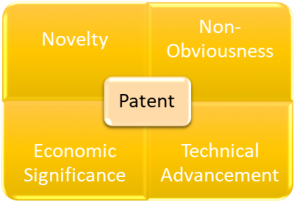
Issues relating to IPR in biotechnology

Although biotechnology plays an important role in saving, improving, and extending human life, the process behind the work of patenting these scientific advancements is an extremely complicated one.

Under Section 3 (e) of Indian Patent Act, a substance obtained by a mere admixture develops only in the aggregation of the properties of the components thereof or a process for producing such substance.” e.g. apple juice is a mixture of apple plus sugar which the only aggregation of the original taste of apple and sugar. Thus, this cannot be an invention.  

The vast investment involved in the form of R & D personnel, infrastructure, financial investment, to create the results exploiting biotechnology. To promote such results and to give monetary stability and reimbursement for their intellectual efforts to the growing research sector, patenting the inventions in the said field is important. Unless your invention fits in the above-mentioned four corners of patentability, you may not be able to apply for a patent. Traditional methods usually utilise the living organism but modern forms of biotechnology will generally involve advanced modification of biological systems.

Inventions and compliance with TRIPS

As we know mere discovery of already existing things is not patentable under the law. It should contain technical inventions to create non-obvious results. But the main question is to prove the invention. There is no straight-jacket formula given under the law explaining the discovery and inventions. It depends upon the facts of the cases. When we say Turmeric Patent, or Neem patent, the same is not simple Turmeric or Neem tree but the new variant of the same which has been protected under patent law. Thus, when it involves technical advancement only then it can be called an invention that can come under the umbrella of a patent. But still, there is no direct and clear provision defining what exactly can be considered as a technically advanced version of an already existing substance.

Because of technical and ethical issues involved, legal protection remains very sensitive and complex in the case of biotechnology. The Indian biotech industry at present is facing great challenges of Trade-Related Aspects of Intellectual Property Rights (TRIPS) compliant patent system in India. Article 27.3 (b) of TRIPS excludes biological processes for the making of plants or animals as patentable material, but patents can be granted to the microorganisms, and microbiological processes utilised in the production of plants and animals.  

With advancements in biotechnological research and the pharmaceutical industry, policymakers have started allowing the patent of some basic life forms to encourage research and development spirit, because of which the unrecognized commercial utility of such life forms came to light. e.g. genetically modified plants and animal species, genes, cell lines, etc. Using refined and modern techniques of genetic engineering by biotechnologists, the microorganisms like bacteria, fungi, and viruses which are used as raw material, are converted into desirable forms.

However, the definition of a microorganism is nowhere given under the law. There is still debate on the same. Due to the lack of a precise scientific definition of microorganisms, there is still an anomaly in patenting these life forms. There is no clarity whether or not the term would come with solely genetically changed organisms or naturally occurring substances also. 

According to the TRIPS Agreement, the following are some of the patentable micro-biological inventions: 

(i) process of producing a new microorganism,

(ii) new microorganism itself, 

(iii) process of growing or otherwise using a known or new microorganism to,

(a) a formation of multiplied microorganisms itself, for example, vaccines,

(b) a by-product of microbial growth, for instance, an antibiotic or an otherwise useful industrial product.

The TRIPS Agreement allows patents for microorganism and micro-biological processes but it neither defines the microorganism nor specifies the parameters for the scope of its protection.

Novelty and disclosure requirement 

Biotechnology patents fall into the scope of utility patents. A utility patent is available for the invention of a new and the useful machine, manufacturing process, etc., and especially for improvements to an existing process to be considered as new and useful.

Since patent protection is granted only for invention and not for discoveries, in the case of biotechnology innovations, it is difficult to say whether the new life form is a scientific discovery or a technological invention. Rejection of biotechnological patent application may be on the ground that the same is only a creation of nature or when it comes to genetically modified organisms, tissues, and cells he can simply say that it is an apparent variant of what organically occurs in nature, and therefore that is ineligible for a patent. 

Discovery is simply making available what is already found in nature which is non-patentable. However, if the process is developed or invented for obtaining the substance by isolating it from its surroundings, which already existed in nature, then that process is considered an invention and hence patentable. But using this criterion, the minerals, ores found in the deep ground of earth or sea can be called inventions. Thus, though the Indian patent law regime considers the microorganism as patentable, there is so much controversy in the patentability of microorganisms claiming to be lacking a novelty element in it. 

Further, in the case of inventions, a description of the subject matter insufficiently clear and complete manner is required. For example, to get a patent for a new pharmaceutical product it must include enough applied information so that anyone conversant with the relevant technical field is able to follow the indicated steps and reproduce it. But in the case of biotechnological inventions wherein microorganism is the raw material, the requirement of a literal description of the same will not practically be possible. Therefore, for inventions involving microorganisms, a specific requirement of deposit of biological material must be made in a recognized institution. i.e. International Depositary Authority as recognised in Budapest Treaty which is an international treaty signed in Budapest, Hungary, on 28 April 1977 and administered by WTO. According to this treaty, the applicant needs to only deposit the biological material at one recognized institution and this deposit will be recognised in all countries that were party to the Budapest Treaty. Thus, the patenting process of biotechnological inventions becomes multistep and complex. 

Commercial application and monetisation

The consideration of the commercial application is yet one more hurdle for getting patents for inventions in biotechnology. However, in India, there are several moral issues related to patenting of life forms. The most important is whether private ownership can be extended to life forms. Due to the lack of established practice to protect the life forms under relevant IPR law, there is a large amount of unreliability and controversies related to the IPR protection of life forms. It’s not so with regard to ownership of property that features a tangible market price. Fixing monetary value to anything that is not tangible or physical having market value is a crucial question. Hence, there is a need for an hour for developing countries like India to define clear policies for IPR just in case of scientific and technological innovations.

Even in this modern era, naturally occurring organisms are considered as god’s gift, which cannot be owned by any person or organisations, or entities by just modifying it or tinkering with it. Therefore in the case of biotechnology, a lot of controversies is there for its entitlement of IPR protection.   

Corporate domination 

Plant biotechnology is another milestone that could be achieved by human beings by R&D processes that could fetch attractive returns. However along with boosting research in the area of plant biotechnology, it could also result in higher prices for seeds, thus naturally excluding the small and local farmers from accessing such new technologies.

Further, there is a serious problem of exploitation of traditional knowledge of farmers about plants or animals, by private entities and claiming the exclusive right to produce and sell many ‘modified’ plants and animals. This is a significant matter of concern today that knowledge, innovation, and efforts of these people are not acknowledged due to the grant of patents on genetic and biological materials and on living organisms to private companies by the existing legal ‘intellectual property rights systems. While the corporations are making huge revenues from this process, the local communities are unrewarded. Also, the threat of having to buy the products of these companies at high prices in the future cannot be ruled out. Hence, such a system of IPR only benefits the big industries or multinational companies in developed countries at the expense of the developing countries. 

Possible ways to overcome these obstacles  

Patents on biotechnology are often the most important asset of the nation. Modern India has a strong focus on science and technology, realizing that it is a key element for economic growth. Thus, despite these obstacles, biotechnology companies continue to jump through the hurdles to patent their inventions.  In fact, the business of most biotechnology companies obviously relies on intellectual property rights.  Strong IPR protection reduces the risk for the investors. 

  • In order to overcome all the issues pertaining to IPR and biotechnology, the need to develop clear and strict national IPR policies is undisputed. 
  • Further, there should be clarity in the patentability of the subject matter with regard to biotechnology and new life forms.
  • The most effective way out to achieve this is, spreading awareness among farmers about the legal framework in the form of living cells and farmer’s rights in the country to safeguard their interests and provisions about infringing incidences. 
  • Additionally, the farmers need to get their share of profit by means of appropriate benefit-sharing arrangements considering their primary and direct role in generating new plant variety or conservation of biodiversity.
  • In short, an effective IPR system will be the most helpful tool to promote investment in biotechnology.

Legal provisions and government policies 

  • Biotechnology Patent Facilitation Cell (BPFC) : TRIPs provided options to member states protecting new plant variety by means of a patent or sui generis system or both. Accordingly, India opted for a sui generis protection system and therefore prepared a new act i.e. “Plant Varieties Protection and Farmers Right Act-2000”, to enable the farmer to save the seeds of a protected variety, besides offering protection on farmers’ derived variety, India. To connect the research outcome with its usage for the advantage of the creators, the Department of Biotechnology established a “Biotechnology Patent Facilitation Cell (BPFC)” in July 1999.

The Department of Biotechnology works under the Ministry of Science & Technology and provides services in the areas of research, infrastructure, generation of human resources, popularization of biotechnology, promotion of biotech industries, and establishing centers of excellence. The BPFC was formed with the aim to provide an awareness cum facilitation mechanism to create awareness about IPRs among scientists and researchers and further to provide patent facilities to biologists and biotechnologists in the country for filing Indian and foreign patents on a sustained basis.

  • National Research Development Council(NRDC) : It was established by the Government of India with the primary objective to promote, develop and commercialize the technologies, inventions, patents, processes emanating from various R&D institutions or universities and is presently working under the Department of Scientific & Industrial Research

Case studies  

Indian Patent Act 1970 defines a patentable invention as, a new product or process involving an inventive step and capable of industrial application. Earlier the living organisms were non-patentable. However, this status has been changed with the landmark decision of the Supreme Court, USA, in Diamond v. Chakraborty in 1980, when the genetically modified bacterium was granted a patent.

  • Dimminaco A G v. Controller of Patents & Designs 

In India, the very first benchmark decision with regard to the patentability of biotechnological processes with living organisms was given by the Calcutta High Court in the case of Dimminaco A G v. The Controller of Patents & Designs, decided on 15th January 2002. This decision paved the way for the patenting of the inventions where the final product of the claimed process is living microorganisms. 

The facts of this case are that Dimminaco A.G., a Swiss Company applied for patenting the process for the preparation of a Bursitis Vaccine for infectious poultry disease. The Assistant Controller of Patents & Designs refused the process for the preparation of infectious Bursitis Vaccine on the ground that the living virus was used to prepare the vaccine claim did not meet the requirements of an “invention” under Section 2 (j)(i) of the Act and therefore it can not be said to have ‘manufactured’ and therefore not patentable. 

While reversing the decision of the assistant controller and allowing the appeal, Hon’ble Calcutta High Court held that the process of preparing a vendible commodity (vendible means it can be sold or purchased commercially) containing a living substance is not out of the purview of the word, ‘manufacture.’ Thus patent protection can not be denied due to usage of the live virus in vaccines. Furthermore, the end product was novel, capable of industrial application, and was useful for protecting poultry against contagious Bursitis infection, thus making the process an invention. The court allowed the appeal and directed the petitioner’s patent application to be reconsidered within two months of the publication/delivery of the judgment.

  • Monsanto Technology Pvt. Ltd. v. Nuziveedu Seeds

Mahyco Monsanto Biotech Pvt Ltd (India), is the Indian joint venture of Monsanto. This company has been licensing its biotechnological products to various seed companies in India. Monsanto licensed its patent IN214436 to Nuziveedu Seeds and its subsidiaries Prabhat Agri Biotech and Pravardhan Seeds on 21/2/2004 which was relating to BT cotton in which there was recombination of DNA due to which the plants became resistant to bollworms.  Due to the refusal by Monsanto to reduce the special compensation which was payable by the Indian companies under the license, the Indian Companies stopped paying royalties. Thus, Monsanto filed the petition for violation of registered patent before the High Court of Delhi.

The plaintiff claimed that their patent is the man-made  NAS(Nucleotide Acid Sequence, Bt gene), which is useful for killing bollworms when it is inserted in cottonseed. And the respondent Nuziveedu’s claim was that NAS was just a chemical composition that is not capable of reproduction and not a man-made inventive microorganism, which can be useful for industrial application.  The Division Bench of the Delhi High Court rejected the application on the ground that the said invention was not patentable subject matter under Section 3(j) of the Patents Act, 1970 (the Act). 

The primary issue, therefore, was whether NAS is a part of the plant or seed, after its insertion? The Supreme Court in this case set aside the order of the division bench and held that the validity of the patent cannot be on the basis of prima facie examination. The Hon’ble Apex court then reverted back the matter back to the single bench of the Delhi High Court to be decided on the basis of expert advice and evidence. Though the decision of the Delhi HC may not have any significance for the immediate parties, since the patent period already expired in 2019, it would definitely establish the law for future applications for similar inventions.

Conclusion 

Dr. Raghunath Mashelkar, who was director-general of Council of Scientific and Industrial Research (CSIR’s) once said in his interview;  

“What is needed is a combination of scientific mumbo-jumbo and legal savvy to win the patent game as we did in the case of turmeric. The neem leaves that we used to keep away insects from our kitchen garden. Yet, a few years ago, a US company applied for a patent for neem as a pesticide and was granted it and we could do nothing about it. Although our scientists had been tinkering around with research on neem for years, they had not applied for this specific process and the battle was lost.”

Indian patent law gives excluded lists for patents and not included lists. Thus, these exceptions can be vague, leading sometimes to uncertainty and this is especially true for biotechnology inventions, due to the complex nature of the technology. Thus, there is a need for clear guidelines and policies for the implementation of Intellectual Property Rights (IPR) in India so that the people like farmers or scientists both get recognition for their efforts and contributions to prevent bio-piracy.  

Considering the investment of time and finance that is required for R&D activities, granting Intellectual Property Rights (IPR) is an effective tool to protect biotechnology inventions. The Biotechnology Sector is identified as one of the sectors by the Government amongst 25 sectors that will be covered under the Make in India plan as announced by our prime minister recently. There are, however, no internationally accepted guidelines for the management of IPR. Therefore, it requires the urgent formation of user-friendly smooth business processes and precise legal structure for intellectual property rights to achieve the overall growth of the nation. 

Knowing the complications and limitations of biotechnology, patents are an essential tool to make sure that these lifesaving technologies are properly protected to improve the world. Otherwise, the days are not far away when we would have to buy the patented product or process from outside India although having the same with us for ages. 

References


Students of LawSikho courses regularly produce writing assignments and work on practical exercises as a part of their coursework and develop themselves in real-life practical skills.

LawSikho has created a telegram group for exchanging legal knowledge, referrals, and various opportunities. You can click on this link and join:

Follow us on Instagram and subscribe to our YouTube channel for more amazing legal content.

Download Now

How to protect my computer software

0
Image source - https://bit.ly/3AmWWnO

This article is written by Vasundhara Thakur graduated from IME Law College. This article emphasises the legal aspect of software protection under Copyright and Patent laws, comparative overview, analysis and conclusion thereof. 

Introduction

Softwares are programmes that direct the computers perform the task assigned to the computer. It comprises data, programmes, a procedure that helps in the smooth functioning of a computer system. Here the question arises as to why software needs legal protection? Well, the software is a set of rules that commands the computer what to do and how to do a particular task. The software is developed by using different codes which require human intellect, time, labour and special skill sets in the form of the invention and original work, although intangible in nature, however, valuable for the developer and the end-user which comes under the ambit of Intellectual Property laws such as copyright and patents. In this era of digitalisation where people are dependent on technology and various software, it is pertinent to protect the software from infringers with proper legal remedies. The software can be protected under both copyright and patent. 

Software copyright protection

Copyright provides to its owners or creators the exclusive right to exploit their work for and to make copies of such creative works while sharing their creativity or creative work with the world. Certain rights of the original creators of the computer programme are protected under Section 14(b) of the Copyright Act, 1957 (hereinafter, referred to as the Act). 

Copyright in software comes under the definition of literary work as specified under Section 2(o) of the Indian Copyright Law. The literary work is the product of the labour, skill and capital expended by the author on their work and is protected under Section 2(ffc) of the Act. Computer software includes many items like the programmed manuals and papers, punch cards and magnetic tapes or discs required for the operation of computers. Program manuals, paper and computer printouts may be considered literary work. However, the concept or idea of algorithms used in computer programming is not capable of copyright protection. Punch cards that contain information in a particular notation, programmes devised for the working of computers, magnetic tapes and discs, including floppy discs which contain information recorded through electronic impulses may be considered as databases and accordingly comes under the definition of literary work. 

Certain acts constitute copyright infringement of computer programmes as mentioned under Section 51. It is pertinent to note here that when a computer programme is sold i.e. the transfer of program copy is transferred then a purchaser of the said programme can use it to make copies of the work specified, but not for any commercial gain by replicating the software for commercial gains. These exceptions are specified under Section 52 as certain acts which will not be called an infringement of computer programmes. However, in the case of a licencing agreement, a licensee can use the software and/or possess rights over the computer programme/ software as specified and agreed upon in the Licensed Agreement. 

In Copyright law, a licence is permission to do an act and contravention of such act would be unlawful. In the context of Software Licencing, the owner or author retains substantial rights and control over their software. The license provides for the way to use the programme, the copies to be made, distribution of the software or any other terms specified by the Licensor. For example, when a person purchases Microsoft word which comes with a protected key (a series of words and numbers), it does not give that person the ownership of the software, instead, it gives the ability to use the software for a specified time period and the specific purpose.

As we know copyright on work comes into force from the time a copyrightable work is developed or produced. However, for better protection on computer programmes the Copyright Rules, 2013 under Rule 70(5) requires a person to file an application along with the source code and the object code. Also, three complete copies of the works, including the published and unpublished work. 

Software patent protection

A patent is an exclusive right granted to a person who has invented a new and useful article or an improvement of an existing article or a new process of making an article. It consists of an exclusive right to manufacture the new article or manufacture an existing article according to the invented process for a limited time, after the expiry of the duration of the patent, anyone can make use of the invention. In India, the term of a patent is 20 years from the date of filing of an application which is subject to renewal.

Generally, an invention is considered as patentable if it satisfies the conditions mentioned under Section 2(1)(ac) (industrial application), Section 2(1)(j) (invention) and Section 2(1)(ja) (inventive step) of the Patents Act, 1970

As per the Indian Patent Law, the software is not patentable per se as specified under Section 3k of the Patents Act, 1970. In India, the software is not directly protected under the Patents Act, however, it could be patented if it is attached to novel hardware and must be an invention that is unique and capable of industrial use. Also, in India software is considered as a process that is executed when a computer functions a programme and not merely an algorithm. 

Similar to copyright, patent laws also allow the patent owner to give license or assign their patented work to any individual or third party giving them certain rights over patented work. Such license is to be granted by a written agreement wherein all the terms and conditions are precisely mentioned.

Why is software patent or copyright important

Software protection, with regards to computer programming, is mandatory as it prevents the piracy of a software programme, also the source codes and any other portion of the software which is regarded as “literal infringements of copyright”. However, the protection under copyright laws is limited as copyright protects the execution of ideas and not the idea itself. 

Whereas, software patents provide a broader ambit of protection as it protects the creation of inventive concepts behind the work. Therefore, a patent is a better way of protecting an original computer programme, although it is a bit difficult to obtain patents on software especially in India. But with new guidelines and precedents set by the European and the UK Patent offices, the process has become more achievable when it comes to patenting software. The major criteria to grant patents are novelty, inventiveness (non-obvious) and must be industrially applicable. 

Copyright versus patent – overview

Both copyright law and patent law provide different kinds of protection to the software. Where copyright provides limited protection, patent laws provide broader protection to the software. Here are some differences to identify such protections under both the laws:

  1. Where copyright protects the execution or expression of ideas or methods of operations and the source codes. The Patent is an exclusive right granted to inventions, which could be a product or a process that provides a new way of doing something or a new technical solution to a technical problem.
  2. Copyright doesn’t protect process, procedure or discovery. Whereas, patents are granted to inventions that have novelty, non-obviousness and industrial usage. However, computer software and algorithms fall into a different categories. Patent laws create an exception with scientific discoveries, mathematical formulae, and algorithms. Computer programs are considered a form of applied mathematics. In India, the software is not directly patented, however, a patent is granted when software is attached with novel hardware, an invention that is unique and capable of industrial use.
  3. Copyright protection comes into force the moment an original copyrightable work comes into existence. Copyright protection to software has been established in most countries with uniform international treaties. Whereas, a patent is granted after completing the examination procedure by the authorised authorities. The law related to granting patents in software is not harmonized. 
  4. Duration of Copyright on literary work subsites during the lifetime of the owner/author plus sixty years. Whereas, the term of a patent is 20 years before it goes to the public domain. 

Computer related inventions

As per the Indian Patents Act,1970 the Computer-Related Invention or CR Rights are the guidelines issued by the Office of Controller General of Patents, Designs and Trademarks for the examination of CRI. 

In the Patent Office 2016 guidelines, the examiners rely on these three-stage steps to examine the CRI applications:

  1. Construe the claim and identify the actual contribution server that verifies the IMEI number when the mobile code is sent to verify the person associated/owns/user of the said mobile device. 
  2. If the contribution is based solely on a business method, mathematical formula or algorithm then deny the claim.
  3. If the contribution levels in the field of a computer programme, suppose it is related to programming and not just to the algorithm then check whether it is claimed in conjunction with novel hardware that has a technical functionality. 

However, in the case of Ferid Allani v. Union of India and Ors, the petitioner filed a patent application seeking a grant of the patent for “a method and device for accessing information sources and services on the web”. It was held by the High Court of Delhi that the claims by the petitioner consist of both method claims and device claims, noting the bar on patenting a computer program is “per se” and not on all computer-based inventions. Thus, the effect that such programs produced including digital and electronic products are crucial in determining the test of patentability. Therefore, a patent application in the sphere of computer programs must be examined in such a way that it shows the “technical contribution” and if the invention shows the “technical effect” or a “technical contribution” it is patentable even though it is based on a computer program. It was also held that the effect which a computer program produces is crucial in determining patentability, further clarifying that the word ‘per se’ under Section 3(k) was incorporated to ensure that genuine inventions in the field of computer programs shall not be refused. 

Cases Laws 

Alice Corp. v. CLS Bank International

In this case, the USA court states the two-step analysis to claim the patent. The first is to ensure the patent claim must contain an abstract method of computation and principles thereof and the second is a new & unique idea. 

In this case, the court held that patents can not be granted to abstract ideas. The software, in this case, used a generic computer that is not unique to separate software from “abstract”

DDR Holdings v. Hotels.com

In this case, the United States Court of Appeals for the federal circuit upheld the validity of computer-implemented patents claims and held that software could be eligible to grant patents. 

Biswanath Prasad Radhey Shyam vs Hindustan Metal Industries (1978) 

In this case, it was held that for testing the patent “the obviousness must be strictly judged while determining inventive steps”. 

Microsoft Corporation vs Ms K. Mayuri and Ors. (2007)

In this case, it was held by the High Court of Delhi that when the consumers buy a computer, they might not be aware of the pirate copy of software loaded on their computer which amounts to infringement, and when it came to the notice of the plaintiff that the defendants were making business by unauthorised hard disk loading on computers, they filed the infringement suit and the court granted them a sum of rupees 10,00,000 as damages along with the cost. 

Meters Limited v. Metropolitan Gas Meters Limited

It was held that the patentee has an exclusive right to use his invention and if someone wants to use it then it is the duty of the person concerned to acquire necessary permission. 

Analysis 

The software has been given protection under copyright as well as the patent law to eliminate the chances of theft and to protect in such a manner that each part of the software gets equally protected. While patents protect the idea, copyright protects the source & written codes. Although both have cons and pros, it is fairly agreeable to take shelter under both laws.

It might seem like an arduous task to get software patented, however, under copyright law, it would not get the protection as the owner wishes to acquire. Also, it is pertinent to note here that an invention is a process of genuine human contribution and if a contribution lies in both the combination of hardware and software to the computer programme then only software is patentable. Mere contributions only to software deny its patentability. The TRIPS Agreement under Article 10 provides that computer programs shall be protected as literary works. While establishing patentability, the focus should be on the underlying substance of the invention and not on the particular form in which it is claimed. The patents upon software can be granted when it matches the technical effect on the hardware i.e. the technical nature of the hardware that involves technical advancements compared to already existing knowledge and/or economic significance. And the claim must be taken as a whole and not separately. 

Conclusion 

Although there are several contentions when it comes to protecting software. Many argue that it must be protected under copyright law, whereas, for some, granting patent protection will enhance and broaden the scope of protection. While copyright protects the written source code, patents protect the invention. Software per se would come under literary or computer programmes if it is a software code that is protected under copyright law. However, it could be patentable because the contribution is along with the software and hardware of a system to execute a function. Software protection not only provides economic value to the software developer but also promotes creativity and invention. 

References


LawSikho has created a telegram group for exchanging legal knowledge, referrals, and various opportunities. You can click on this link and join:

https://t.me/joinchat/J_0YrBa4IBSHdpuTfQO_sA

Follow us on Instagram and subscribe to our YouTube channel for more amazing legal content.

Download Now

Different types of E-Contracts

0

This article has been written by Rashi Chandok pursuing the Diploma in Advanced Contract Drafting, Negotiation, and Dispute Resolution from LawSikho.

Introduction

We live in a cyber era, significant progress has been made in bringing the legal framework up to speed with new technology and the resulting transactions via E-Contracts. Conceptually speaking the E-Contracts are similar to paper-based contracts. It can be argued that the legal framework related to E-Contracts in India is still in its infancy when compared to other nations. This article will help you understand the following topics:

  • Meaning of E-contracts;
  • E-contracts under Indian laws;
  • Different types of E-contracts.

What is a contract?

The term “Contract” is defined under Section 2 (h) of the India Contract Act, 1872 (hereinafter referred to as “the Act”). According to Section 2(h) of the Act, an agreement enforceable by law is a contract. Also, as per Section 2 (j) of the Act a contract which ceases to be enforceable by law becomes void when it ceases to be enforceable. A contract could be written formally or informally or could be entirely verbal or in writing. Important sections (Section 10 of the Act) to considered in order to constitute a valid contract are as follows:

  • Offer and acceptance is described under Section 2(a) and (b) respectively,
  • Lawful consideration is explained under Section 23 and Section 25,
  • Condition to be competent for parties is stated under Section 11, and
  • Section 14 of the Act deals with free consent and factors that would deem a contract invalid.

What is an E-Contract?

Considering the situation of society due to the pandemic, an e-contract is one of the easiest options to enter into a contract. With recent advancements in computer technology, telecommunications technology, software, and information technology, people’s standard of living has been transformed in unfathomable ways. Communication is no longer limited due to geographical and temporal restrictions. More information is transmitted and received than ever before. This is where electronic commerce provides flexibility to the business environment in terms of location, time, space, distance, and money. 

All essential elements of contract law apply equally to contracts established electronically or orally. People often question how old and conventional contract law concepts apply to new and innovative types of technology, which creates a dilemma. However, the basics and features of e-contracts remain the same as those of paper-based contracts as of nowadays. While the fundamentals of a paper-based contract apply to e-contracts, the techniques for concluding the e-contract are derived from Indian Contract Law and are nearly identical to paper-based contracts. E-commerce refers to the purchasing and selling of information, products, and services through computer networks. It is a method of conducting business online, typically over the Internet. It is the instrument that leads to ‘enterprise integration.’ Therefore, with the expansion of e-commerce comes to a significant increase in the usage of e-contracts.

E-contracting is a subset of e-business. It is comparable to traditional business in that products and services are exchanged for a certain amount of money. The only difference is that the contract is executed using a digital method of communication such as the internet.

E-Contracts under Information and Technology Act, 2000

Section 10A of the Information Technology Act, 2000 (hereinafter referred to as “IT Act”) deals with the validity of contracts formed through electronic means and states that the contract is legal if the contract creation, communication, and revocation of proposal/acceptance are all represented in electronic form or through electronic records. An e-contract will not be deemed unenforceable merely because it was created in an electronic format or through the use of electronic means. Signatures of contract parties are necessary to demonstrate acceptance of the terms and conditions for any contract to be legitimate. An electronic signature is used in the case of an e-contract. 

Adding further, Section 4 of the IT Act grants legal recognition to electronic records, stating that if any legislation requires information or matter to be in a written or printed form, such need is deemed met if the information or matter is available and accessible in an electronic form. 

As per the second schedule of the IT Act, the documents that cannot be executed in electronic or digital form and must be executed in physical form in order to be legal and enforceable in a court of law are as follows:

  • Negotiable instruments except for cheques;
  • Trusts;
  • Power of Attorney;
  • Will or Testament;
  • A sale or conveyance deed of immovable property or any interest in such a party.

E-Contracts under the Evidence Act, 1872

An e-contract has the same legal impact as a paper-based agreement under the Evidence Act of 1872 (hereinafter referred to as “the Evidence Act”). It should be emphasized that the term “evidence” has an encompassing definition under Section 3 of the Evidence Act, which includes any papers, including electronic data, presented for the Court’s examination as documentary evidence. Section 67A of the Evidence Act applies to loan and financing papers when, in addition to a secure electronic signature, proof of the subscriber’s electronic signature must be proven, which can be done by the subscriber’s own testimony.

Types of E-Contracts

E-contracts and their types are discussed in detail as under:

  1.   Shrink-wrap agreements

Typically, shrink wrap contracts are a licencing agreement for software purchases. In the event of shrink-wrap agreements, the terms and conditions for access to such software goods should be enforced by the person purchasing it, with the start of the software product’s packaging. Tightening-up agreements are just the agreements that consumers accept, such as Nokia pc-suite, at time of installing the software on a CD-ROM. Additional terms may only be viewed after installing the programme into your computer, and if the customer disagrees, he has the option to return the software package. The Shrink-wrap Agreement protects the product maker by absolving the manufacturer of any infringement of copyright or intellectual property rights as soon as the customer rips the product or the covering for the goods. However, there is no firm decision or precedent in India regarding the legality of shrink-wrap agreements. 

  1.   Click or web-wrap agreements

A Click-wrap contract refers to a web-based contract that needs approval or assent of the user via the “I Accept,” or “OK” button. With the clickwrap agreements, the user must accept the conditions before using a specific software. Users who do not agree with the terms and conditions will be unable to use or purchase the product following cancellation or rejection. Someone nearly always abides by web-wrap agreements. Before users agree to the terms of service, they must be written down. For example, online shopping, software download or installation, to purchase airline tickets or music online, using websites, registering an account on a social media website, etc. 

  1.   Browse-wrap agreements

A browsing wrap agreement is a contract that is binding on two or more parties through the usage of a website. In the event of a browsing agreement, an ordinary user of a particular website is required to accept the terms and conditions of use as well as other website rules for continued usage. Such internet contracts are very common in our daily lives. Other nations have dealt with such online agreements and determined that both Shrink-wrap Agreements and Click-Wrap Agreements are enforceable as long as the contract’s general principles are not breached. 

  1. E-signatures

After the parties have formed the contract to suit their interests, the stage of execution by affixing an e-signature is the following step. The IT Act recognises two types of signatures: digital signatures generated by an asymmetric crypto-system and hash function, and electronic signatures defined in its second schedule, wherein the user of an Aadhar card is assigned a unique identification number via which they can electronically sign documents via third-party forums (often through generation of a one-time-password). Section 5 of the IT Act defines e-signatures as a broad range of ways for signing a document, whereas a digital signature is a type of e-signature that employs cryptography. 

While a lack of jurisprudence on the legal tenability and feasibility of e-signatures indicates that acceptance of the same remains uncertain, efforts have been made to overcome these issues through changes to the IT Act. The Information Technology (Amendment) Act of 2008 replaced the phrase ‘digital signature’ for ‘electronic signature’ with the goal of broadening the scope of e-signatures. 

E-signatures are valid if they are uniquely linked to the signatory, who must have complete control over all data used to create the e-signature, if alterations to the e-signature or the document to which it is affixed can be detected after the act of signing, and if a digital signature certificate is issued after the process is completed. With the exception of Schedule I papers, a combined interpretation of the IT Act and the Evidence Act will give legal legitimacy and enforceability to electronic documents completed using e-signatures.

Contracts for employment, contractors, consultants, sales and resale agreements, distributors, non-disclosure agreements, software developer and licence agreements, and contracts for source-code escrow are all examples of online agreements.

Conclusion

E-contracts are ideal to promote the re-building of business forms occurring at many companies, which includes a collection of advancements, procedures, and business systems that guide the instant exchange of data. E-contracts offer both advantages and disadvantages. From one point of view, they decrease expenses, save time, enhance customer response, and improve administration quality by reducing desk time, in this way expanding automation.

This is expected to increase the profitability and intensity of taking interest in businesses by offering extraordinary access to an online global commercial centre with a large number of customers and a broad range of products and administrations. However, with the electronic agreement, the thesis focuses not on individuals who make decisions on explicit transactions, but on how risk should be structured in a mechanized realm. In this way, the article is to provide default standards for assigning a message to a gathering in order to keep a strategic distance from any extortion and discrepancy in the agreement.

COVID-19 will also be used to drive India Inc. toward paperless and faster forms of document execution. Nonetheless, because the IT Act expressly states that only digital signatures and e-signs from Aadhaar are acceptable, foreign signatories who do not have digital signatures or e-signs from Aadhaar will be unable to e-sign. Throughout this circumstance, the worldwide signatories can rely on the signature technique at their disposal to establish their validity through evidence such as email communication or the parties’ activities to identify the intent.


Students of Lawsikho courses regularly produce writing assignments and work on practical exercises as a part of their coursework and develop themselves in real-life practical skills.

LawSikho has created a telegram group for exchanging legal knowledge, referrals, and various opportunities. You can click on this link and join:

Follow us on Instagram and subscribe to our YouTube channel for more amazing legal content.

Download Now

Online privacy and e-contracts

0
Image source: https://rb.gy/uzudcq

This article is written by Gopavaram Ramya Teja, pursuing a Diploma in Advanced Contract Drafting, Negotiation, and Dispute Resolution from LawSikho.

Introduction

In recent times, with the advancement of technology the internet has revolutionised the way humans communicate and exchange information around the world. The information is transferred more widely and instantly irrespective of geographical location and time, this is where e-commerce and e-contracts have come into existence.

In India, e-contracts are now booming due to growing economic commercial business. In this regard, the rise in technology and the internet has led to the acceptance of these contracts. In present times each and every transition over the internet is governed in the form of e-contracts. Privacy is the basic fundamental right of every human but it is being violated in numerous ways. One such way is through online contracts. Online privacy is linked with e-contracts. This article aims to understand e-contracts and analyse the online privacy issues related to e-contracts.

Definition of e-contracts

E-Contracts are the contracts that are formed between two parties through negotiations via electronic means. They are the legal documents that are created and signed digitally in a paperless approach that do not require any paper, ink, printer for creating copies of the agreement, which are also known as online contracts or digital contracts. E-Contracts save time and money by eliminating physical meetings to sign an agreement. It also provides an opportunity for the seller to reach millions of consumers irrespective of time and also without the involvement of any brokers or middlemen. For instance, the bipartite contract entered by the customer and the sellers in Amazon.in, Flipkart.com, or Myntra.com for the sale of products on the website.

Essentials of e-contracts

The essentials of e-contracts remain the same as those of paper-based contracts. For a contract to be valid, it must contain all the following elements:

  1. An offer requirement should be made.
  2. The offer has been acknowledged.
  3. There has to be a lawful consideration.
  4. There has to be an intention to create legal relations.
  5. The parties to the contract must be lawfully competent to enter into it.
  6. Free consent, the contract must be free and void of coercion, misrepresentation, undue influence, or fraud.
  7. The object of the contract must be lawful in order to be valid.
  8. There must be certainty and the possibility of legal performance.

Formation of e-contracts

Processes available for forming e-contracts include:

1. E-mail  

Where an offer and acceptance can be exchanged either by e-mail or it can be collected with fax, paper documents, and telephonic discussions. The e-mail contracts are considered to be valid and are enforceable when the terms and conditions of the contract are agreed upon by both the parties on the acceptance of an issued offer, where there is an intention to create a legally binding contract and a vital element of consideration as agreed by the parties. For example, in the case of Trimex International FZE Limited, Dubai v. Vedanta Aluminium Ltd., the parties have completely agreed to the terms of the contract via email, where the supreme court upheld the validity of this contract on its observations and stated, “once the contract is concluded orally or in writing, the mere fact that a formal contract has to be prepared and initiated by the parties would not affect either the acceptance of the contract entered into or implementation thereof, even if the formal contract has never been initiated.”

2. Website forms  

Where the sellers can offer goods or services through their websites and the goods or services can be directly delivered; such as software, and e-tickets or delivered later such as clothes and accessories. These types of agreements are entered into when the customers order certain goods or services by filling in and submitting an on-screen order form and the seller accepts such orders. For example, orders made by customers on Amazon or Flipkart for purchase of clothes and accessories, or booking of e-tickets on airindia.in or irctc.co.in.

3. Online agreements  

Where the users may require to make an online agreement to be eligible to avail services. There are three types of online agreements;

a. Click-wrap contracts: these contracts are enforced by clicking on ‘I Accept/ I Agree’ while installing software or signing up for an email account. 

In the case of Hotmail Corporation v. Van $ Money Pie Inc, et al, the validity of the click-wrap agreements was first considered, when the court held that “the defendant is bound by terms of the license as he clicked on the box containing ‘I Agree’ thereby indicating his assent to be bound.”

b. Browse-wrap contracts: these contracts are enforced wherein the terms and conditions are provided through a hyperlink and are predetermined.

When we click the download button to install any app on the Playstore, knowingly or unknowingly we give consent that we are bound by the terms and conditions of the application.

In the case of Specht v. Netscape, the court held that “A consumer’s click on the download button doesn’t communicate assent to contractual terms if the offer didn’t make clear to the consumer that by clicking on the download button would signify assent to those terms.”

c. Shrink-wrap contracts: these contracts refer to licensee agreements that are wrapped with the software where a customer or consumer cannot read the terms of the agreement until the package is accepted and paid. An example of such an agreement is the End User License Agreement (EULA).

In a US case, ProCD. Inc. v. Zeidenburg, the court held that “the purchaser after reading the terms of the license featured outside the wrap license opens the cover that is coupled with the fact that he accepts the whole terms of the license that appears on the screen by a Keystroke, constitutes the acceptance of the terms by conduct.” Therefore it is confirmed that the shrink-wrap agreements are valid contracts and enforceable against the software purchaser.

Online privacy issues related to e-contracts

Contracts have become a common part of our day-to-day lives that most of us don’t even realize that we have entered into one such contract. When we use online platforms such as Facebook, Instagram, Netflix, or other platforms, knowingly or unknowingly we enter into online agreements by providing our personal information, signing up on these platforms by creating an account, and clicking on ‘I agree’ to certain provided terms and conditions.

1. Privacy concerns with Facebook

For years, Facebook had faced numerous privacy concerns. There are instances that arose from the company’s revenue model that involved selling information about users which led to violation of privacy.

In 2018, Cambridge Analytica, a British political consulting firm was exposed by a sting operation where it collected private data of around fifty million users of Facebook from friend lists of Facebook users to create psychometric profiles to be used by personalized political apps, campaigns, ads. It also used fake news to swing elections around the world. With regard to this Facebook had received many warnings about its data security policies but Facebook didn’t take any preventive steps to curb these.

2. Privacy concerns with Instagram

Instagram has provided three arbitrary terms and conditions which violate the user’s privacy, these include;

  • Instagram has sole copyright over the content and photographs that are posted on its platform. It means the prima facie account is of the user but the copyright over the account is of Instagram.
  • Instagram has the right to disclose the personal information provided by the users to third parties.
  • Class action suit cannot be filed against Instagram, which means a suit cannot be filed against Instagram collectively.

3. Privacy concerns with Netflix

Netflix contains two arbitrary and unreasonable policies that violate the information of the users, which are;

  • Netflix can change its terms and conditions anytime without letting its users know, where it can even disclose the personal data of the users without informing them.
  • It can also disclose personal information to third parties without the consent of the users.

Indian laws governing e-contracts

1. Indian Contract Act, 1872

The Indian Contract Act, 1872 regulates the contracts in India. Like ordinary contracts, the e-contracts are also primarily governed by the codified provisions of the Indian Contract Act. An e-contract to be legally enforceable should fulfill all the essential requirements of the provisions that are provided under the Act. 

2. Information Technology Act, 2000

E-Contracts have also found statutory recognition under the Information Technology Act, 2000. According to Section 3 of the Act, the verification of e-contracts is affirmed by fixing the ‘e-signature; or ‘digital signature’ of both the parties on them. Section 4 of the IT Act, 2000 provides lawful acknowledgement of the e-records, where the information is related as a hardcopy or printed structure and is made accessible to the client for further reference. Section 65 to Section 71 of the IT Act provides for punishments related to cybercrimes in India.

India has legalised the validity of e-contracts under Section 10-A of the IT Act, 2000. In regard to this, the IT Act excludes certain e-transactions from the documents which are negotiable instruments, power of attorney, trust deed, will, sale deed, or conveyance deed with regard to immovable property.

3. Indian Evidence Act

Section 65 of the Indian Evidence Act, 1872 provides that the court should recognize the e-documents produced for the formation of the contract. In the case of Societies Fes Products Nestle S.A & Anr v. Essar Industries & Ors., admission of e-contracts in Delhi High Court paved way for the immediate introduction of Section 65A and Section 65B in the Indian Evidence Act, 1872, where according to Section 65 the content of electronic records can be proved by parties in accordance with section 65B of the Act.

In the case of State of Delhi v. Mohd. Afzal and Ors., the Delhi High Court held that “electronic records are admissible as evidence.” In the State of Punjab and Ors. v. Amritsar Beverages Ltd. and Ors., the supreme court in this case observed that “Section 63 of the Indian Evidence Act makes media like paper, optical or magnetic forms admissible in courts. Section 65-B of the Indian Evidence Act also provides that the information contained in the form of an electronic record is admissible in court without procuring the original document. Therefore, the admissibility of the same is subject to various conditions that are prescribed under Section 65-B of the Evidence Act.

Remedies for breach of e-contracts

There is no specific rule in case of any breach of e-contract, so in order to seek appropriate remedy for such breach the remedies for breach of contract provided in the Indian Contract Act can be followed. The Contract Act mainly talks about two remedies for breach of contracts such as damages and quantum meruit. Section 73 and Section 74 of the Indian Contract Act provide rules regarding the remedy for damages by breach of contract. There are few other remedies available as provided in the Specific Relief Act such as specific performance of contract and Injunction restraining the other party from making the breach of contract.

Conclusion

There is a strong need to protect the privacy of the users from the arbitrariness of online applications as we have seen in the case of Cambridge Analytica, where these firms have been cautiously compromising the privacy of their users. It is necessary to understand that privacy is a delicate issue that leads to numerous problems if shared or exposed through every means. As known, the right to privacy is a fundamental right enshrined in Article 21 of the Indian Constitution which cannot be waived by any means.

In the landmark judgment of R. Rajagopal v. Union of India, the court held that “the right to privacy is covered under the ambit of ‘Right To Personal Liberty’ guaranteed under the Constitution of India. It is further recognised that the right to privacy can be both an actionable claim and also a fundamental right.” In recent times there have been more cases of violation of online privacy where the personal data collected by these online platforms has been misused by sharing it with other parties for their advantage. It is crucial that the government acts as a regulator in order to come up with more stringent laws for the protection of the privacy of the users.

References


Students of LawSikho courses regularly produce writing assignments and work on practical exercises as a part of their coursework and develop themselves in real-life practical skills.

LawSikho has created a telegram group for exchanging legal knowledge, referrals, and various opportunities. You can click on this link and join:

Follow us on Instagram and subscribe to our YouTube channel for more amazing legal content.

Download Now

Everything to know about single bank loan agreement

0

This article has been written by Pooja Wagh pursuing the Diploma in Advanced Contract Drafting, Negotiation and Dispute Resolution from LawSikho.

Introduction

Like any other contract, loan agreements also mention, “offer”, “acceptance to the offer”, and “consideration”. On a daily basis, almost everyone takes a loan, it can be a loan to finance a home purchase, buy a car, or pay for higher education or medical emergencies. If there’s a loan agreement that involves any illegal activity, we cannot enforce the same. A loan agreement is a contract for lending of money from one party to another party with the guarantee to repay the money. If you are a borrower or a lender in the loan agreement who covets to understand how the legalities of the Single Bank Loan Agreement work, this article is for you!

Bank loan agreement

A bank loan agreement is a contract between a lender and a borrower, under which the lender, i.e. a bank makes available loan monies to the borrower. The loan agreement provides the contractual basis under which the loan is made. The borrower agrees to pay the loan sum and abide by the terms of the loan agreement in exchange for the loan. The loan agreement sets out the terms of the loan arrangement including the amount of loan, any conditions to be satisfied prior to draw the loan, interest payment provisions, undertakings of the borrower, warranties and representations and so on. The agreement also sets out applicable security with provisions relating to the term and termination of the agreement upon occurrence of default events.

Types of bank loan agreements

There are two major types of loans, viz., secured and unsecured loans:-

  1. Secured Loans: Any loan that has security or collateral against it is a secured loan. This means that if the borrower defaults in payment, the lender has a collateral/ security to indemnify himself. Common examples of collateral are house, car, jewellery, etc. It is the most common type of loan due to the collateral involved. The borrowing limit of the borrower is comparatively higher than that of an unsecured loan.
  2. Unsecured Loans: An unsecured loan is where you borrow money without using collateral. Since there is no collateral involved, the borrowing limit of the borrower is low and the level of risk for the lender is high. It results in a low borrowing limit and a high interest rate. If the borrower fails to pay the money back, the lender has very limited options left to recover the money. Most common examples of unsecured loans are credit cards and personal loans. The need for collateral can depend on factors like borrower’s income, borrower’s credit score and the size of the loan. However, personal loans can be both secured and unsecured.

Essential components of an agreement

Any loan agreement, whether by a bank or other financial institutions, consists of the terms, rights and obligations for applying for the loan. However, the components of a loan agreement may require different specifications depending on the different types of loans. To meet local and national standards, it is advisable to check with your local jurisdiction regarding the components of a loan agreement. If we comply with the standards mentioned by our respective jurisdiction, it enables us to seek legal help in case the other party fails to comply with the terms of the loan agreement.

In order to make a loan agreement enforceable, following are the essential components for drafting it:

  • Details of the Parties involved (Name, Address, Contact Information);
  • Conditions regarding the use of loan money;
  • Repayment options;
  • Payment schedule;
  • Interest rates;
  • The term of a loan;
  • Any collateral;
  • Cancellation policy;
  • Provisions for default (if any).

Relevant clauses in a loan agreement

Every loan agreement has a standard clause that makes an agreement valid and enforceable. Below are the drafts of the clauses:

  • Conditions and Purpose:
  1. Subject to the lender having received and found satisfactory, the borrower shall provide relevant documents and comply with the conditions prior to drawing the loan and the borrower shall be entitled to draw and the lender shall advance the loan in full.
  2. The lender will (in consideration of the borrower agreeing to repay the loan on the terms of this agreement) pay an advance up to the amount of INR 5,00,000 in full to the borrower in respect of the borrower’s specified or agreed purpose of vehicle loan.
  3. The loan shall not be used for any other purpose by the borrower without the prior written consent of the lender.
  • Repayment of Indebtedness:
  1. The borrower shall repay the loan together with all indebtedness without deduction or set off on the first to occur of the following:
  • An Event of Default; or
  • The Repayment Date being the 30th day following a written demand by the Lender to the Borrower requesting repayment of the loan.

2. Should the lender waive the right to repayment on the Repayment Date under clause 2.1 above the loan together with all indebtedness shall be payable upon demand by the lender.

3. If repayment of the loan or indebtedness falls on a day which is not a business day, the due date for such payment will be extended to the next business day.

4. The loan and any indebtedness shall be paid without deduction or set off in Indian Rupee to such account or accounts as may be specified by the lender.

5. The borrower may repay or prepay the loan or the indebtedness (or any part of it) early but may not re-borrow any amount so repaid.

  • Interest and Default Interest:
  1. The principal amount of the loan outstanding shall carry interest at rate of 6 per cent per annum above the base rate as varied from time to time of bank plc accruing daily and payable in arrears upon repayment of the loan.
  2. Interest at the rate of 6 per cent per annum above the base rate of bank plc from time to time shall accrue from the Repayment Date on the loan (to the extent that the loan has not been repaid pursuant to clause 3.1) compounded monthly on the last day of each month and calculated both before and after demand or judgement on a daily basis and a year of 365 days.
  3. On the repayment of the loan in accordance with clause 3.1, all accrued interest shall be paid unless otherwise agreed by the parties.
  4. Notwithstanding any provision to the contrary, the lender shall be entitled to defer or waive any or all payment of interest on the loan by the company pursuant to this agreement.
  • Prepayment and Security:
  1. The borrower may prepay the whole or any part of the loan at any time.
  2. The repayment of the loan and indebtedness will be secured by way of a fixed and/ or floating charge over the assets of the borrower as specified in the Security Document.
  3. The borrower shall at its cost and expense ensure that all documents, registrations, consents, licences and other matters and things reasonably required by the lender in connection with the security afforded to the lender are promptly produced, executed, obtained, filed or made as required by law or by the lender.
  4. The repayment of the loan or indebtedness shall be secured by a Guarantee from the Guarantor.
  • Representations and Warranties:

The borrower acknowledges, represents and warrants to the lender as follows:

  1.  It has power to own its assets and conduct its business as it is now being conducted together with the power to sign and deliver this agreement.
  2. The execution on behalf of the borrower of the agreement or form of acceptance endorsed on this agreement has been validly authorised and the obligations expressed as being assumed by the borrower under this agreement constitute valid, legal, binding and enforceable obligations of the borrower enforceable against the borrower in accordance with their terms;
  3. It is not aware of any breach of any law, regulation, agreement or arrangement applicable to it or any of its assets; and
  4. It will comply and ensure that all its subsidiaries comply with all applicable laws and regulations and the terms of all permits, authorisations and licences (including, amongst all other matters, all laws, regulations, permits, authorisations and licences relating to intellectual property matters).
  • Undertakings:

The borrower agrees to be bound by the following undertakings and shall:

  1. Not without having given prior written notice of the same to the lender, incur any borrowings or indebtedness nor give any guarantee or indemnity in respect of the borrowings or indebtedness of any other person;
  2. Settle the debts incurred by it in the ordinary course of the business, including but not limited to trade creditors;
  • Insurance Obligations:

The borrower shall insure and keep insured all assets against such risks as the lender may require for the specified value/ their full reinstatement and replacement value with bank, under such policies as the lender may approve including, but without prejudice to the generality of the foregoing, insurance against loss or damage howsoever caused or arising and third party insurance.

  • Events of Default:
  1. The lender shall be entitled at any time after the occurrence of an Event of Default by notice in writing to the borrower to declare that the indebtedness has become immediately due and payable and the borrower shall immediately pay the same to the lender.
  2. An Event of Default occurs if:

I. the borrower suffers a change of control without the prior written consent of the lender or is the subject of any trade sale, flotation or refinancing;

II. if the borrower issues, allots, buys back or redeems any shares in its capital, makes any changes to its memorandum and articles of association or alters any rights attaching to the issued shares without the prior notification or approval in writing of the lender;

III. any event occurs with which the giving of notice and/or lapse of time and/or making of a determination would constitute an Event of Default;

IV. The borrower fails to make any payment due under this agreement on the due date.

  • Fees and Expenses:

The borrower shall pay to the lender the following:

  1. On-demand, on a full indemnity basis, all costs, fees and expenses, including legal fees and expenses and in each case relevant tax thereon, relating to the preparation, negotiation and execution of this agreement and the Security Document;
  2. All costs, fees and expenses, including but not limited to legal fees and VAT thereon, incurred by the lender in connection with preserving or enforcing or attempting to preserve or enforce any of the lender’s rights under this agreement and the Security Document.
  • Currency and Payments:
  1. All payments to be made under this agreement shall be in Indian Rupees (INR), in immediately available funds during normal banking hours to such bank accounts as the lender shall specify.
  2. If any such sum falls due for payment under this agreement on a day which is not a business day, it shall be made on the next succeeding business day.
  • Assignment: 
  1. The borrower may not assign, charge, mortgage, transfer or otherwise encumber or deal in any manner with any of its rights or obligations under this agreement without prior written consent of the lender.
  2. The lender may assign or transfer any of its rights or obligations (in whole or part) under this Agreement with the prior written consent of the borrower.
  • Miscellaneous:
  1. Any decision made or opinion held by the lender concerning the provisions of this agreement shall be made in its absolute discretion and shall be final in the absence of manifest error and binding on the borrower.
  2. No failure or delay by the lender in exercising any right, power or privilege under this agreement shall impair the same or operate as a waiver of the same nor shall any single or partial exercise of any right, power or privilege preclude any further exercise of the same or the exercise of any other right, power or privilege. No waiver, compromise agreement or other dealing with one person jointly and severally liable shall affect or reduce the liability of any other such person.
  3. The rights and remedies provided in this agreement are cumulative and not exclusive of any rights or remedies provided by law.
  4. This agreement may be amended or modified in whole or in part at any time during the period of the loan agreement by an agreement in writing executed in the same manner and by the same persons as this agreement.
  • Governing Law:

This agreement and the contract arising out of the borrower’s acceptance of the loan facility on the terms and conditions set out in this agreement shall be governed by and construed in all respects in accordance with the laws of India. The parties submit to the exclusive jurisdiction of the High Court of Bombay.

Conclusion

The money borrowed with a promise of returning it within a specific period of time is known as loan. The loan agreement becomes useful in case a borrower does not return the money to the lender within the stipulated time. An agreement is enforceable in the court of law when it is signed and agreed by both parties. The terms and conditions of the loan agreement should be carefully analysed before signing as it helps us avoid future legal trouble and confusion.

References

  1. https://lawrato.com/legal-documents/banking-finance-legal-forms/loan-agreement-2
  2. https://www.debt.org/credit/loans/contracts/
  3. https://www.legalnature.com/guides/everything-you-need-to-know-about-loan-agreements.

Students of Lawsikho courses regularly produce writing assignments and work on practical exercises as a part of their coursework and develop themselves in real-life practical skills.

LawSikho has created a telegram group for exchanging legal knowledge, referrals, and various opportunities. You can click on this link and join:

Follow us on Instagram and subscribe to our YouTube channel for more amazing legal content.

 

Download Now

NITI Aayog’s study on economic impact of judicial decisions

0
Image source - https://bit.ly/3j3FP1M

This article is written by Prina Sharma, pursuing B.A. LL.B. from Amity University, Kolkata, West Bengal. The article deals with Consumer Unity and Trust Society’s study of the economic impact of judicial decisions.

Introduction

The NITI Aayog has commissioned a study to Consumer Unity and Trust Society (CUTS) International, which is a Jaipur – headquartered research organisation, to examine the economic impact of various judgments delivered by the Supreme Court, the High Courts, the National Green Tribunals (quasi-judicial bodies) and the judicial activism of such courts and tribunals.

The objective of the study is to establish a narrative building to make the judiciary aware of the economic impact of their decisions. Such documents of descriptive structures, on being formed, after coming to conclusions, will be used as a training input for judges of commercial courts along with the Supreme Court, High Courts, and National Green Tribunals as per their respective documents.

Aim of the study 

Initially, the study was supposed to commence from February 2020 and was expected to be concluded by the end of February 2021, but unfortunately, the project got delayed due to the nationwide lockdown to prevent the spread of Covid-19. CUTS International had approached the government think tank, the NITI Aayog with a plea to extend the timelines. The total cost which initially was Rs. 24.8 lakh, is estimated to go higher this time around.

The focus of the study is to do an objective cost-benefit analysis that deals with the economic impact of the decisions, a source said. The study would observe and make a note of the various kinds of stakeholders that might have had an economic impact by their decisions, and try to frame a dispassionate picture of how the decision has impacted. The study is also a part of a larger comprehensive project which is undertaken by the NITI Aayog and it aims to establish a judicial performance index, which would evaluate the performance of judges at district courts and courts at the subordinate level, according to senior government officials.

CUTS International was asked to examine the economic impact of several different decisions held by the SC and the NGT, as a part of the new study, which has either delayed or postponed or completely stopped projects in several parts of the country.

The primary study is on the economic impact that resulted from the ban that was imposed by the Supreme Court in March 2019 on the construction of a Greenfield airport at Mopa, in Goa. The Apex court had suspended an economic clearance granted to the airport and then had asked the Expert Appraisal Committee to revisit its decision. Although the ban on construction was revoked by an order of the Supreme Court in January 2020, it had several revised conditions.

Judgments under evaluation

CUTS International decided to carry out their study by evaluating five cases that may have put an economic impact that includes the SC’s February 2018 ban on iron ore mining in Goa, SC’s ban on the construction of a Greenfield airport at Mopa, in Goa, the decision of the SC to reject the opening of the Vedanta’s Sterlite copper plant, which has been shut down since April 2018, the NGT ban on sand mining in the Yamuna river in Gautam Buddha Nagar in 2013, and NGT’s ban on construction activities in Delhi-NCR. 

The research agency based in Jaipur has started researching with the 2013 NGT judgment, which decided to ban sand mining in the Yamuna river bed in Gautam Buddha Nagar. Although the decision held by NGT aimed to address illegal sand mining, the decision may have had an unpleasant influence on the mining leaseholder with relevant approvals, henceforth causing harsh and unavoidable losses to the sand mining industry, along with leaseholders and truck owners.

CUTS International had approached the non-government organisation, SAFE (Social Action for Forest and Environment), which is situated in Gautam Buddha Nagar, to study the situation in-depth and to gain ground data, and seek their views on the issue.

CUTS International had also conducted an assessment study on the economic impact as a result of the Apex Court’s decision to impose a ban on the presence of liquor shops within 500 m of any highway.

Judicial activism

Over time, various issues such as environment, social, property rights, educational institutions, etc. have been presented before the court to prescribe public policy outcomes. This widening of subject matter, in due course of time, has caused Indian judicial activism to be acknowledged as a mechanism that engineers social change. Earlier, only the rights of the ‘socially excluded’ were taken up for judicial review and intervention, but the world is never spatially or temporally static and it is essential for constructing and reconstructing solutions for the issues that emerge with time.

The impact of judicial intervention has dual outcomes. First, the court has been successful in being able to reinterpret and bring changes in the rights of the people by way of active intervention along with adjudication. Second, the court has been able to achieve similar results by declining to interfere in policy decisions. In a democratic country, judicial review is based on the concept that it is a counter-majoritarian check on the overindulgences and excesses committed by the other two branches of government and that it protects the rights of the people. Therefore, in a system of checks and balances, the significance of judicial review has been best interpreted by analysing its ability to invalidate executive and legislative actions, on these two grounds. In India, this holds special importance, since the power of judicial review has been precisely granted by the Constitution. The aspects based on which judges may exercise limited judicial review in matters that deal with policy adjudication can be widely categorised as procedural limitations, substantive limitations, and institutional limitations. These limitations restrain the scope of judicial review and the court has used it as a tool to justify judicial restraint. It is also often debated that policymaking contains complex issues, which require the need of expert knowledge on the subject, whereas judges are usually the experts of only law in particular. There are several important cases where the Indian judiciary has imposed socio-economic rights by formulating them with fundamental rights guaranteed under Article 21 of the Constitution. The Supreme Court has seldom established the importance of judicial review in India in the judgments of various cases.

Study brief posted by the Consumer Unity and Trust Society

CUTS had posted a study brief that observed that judicial decisions have extensive economic impacts which are often not taken into consideration during the time of decision-making. Some of the recent judgments and orders of the Supreme Court, along with the National Green Tribunal (NGT), can be found to indicate that the economic impact analysis of judicial decisions is yet to achieve broader acceptance.

Taking account of judicial activism, the study brief stated that the absence of ex-ante analysis of the economic costs accompanied with a decision is further exacerbated when judicial activism by courts and tribunals is also at play.

Furthermore, the brief noted that there is a need to assess the economic impacts of judicial decisions by way of a ‘structured and systematic process’, which would consent to a discourse to broaden the considerations of the courts while taking decisions.

The brief observed that it is required by the judiciary to take environment, equity, and economic considerations into account while deciding cases, and is required to institutionalise a mechanism for it. Among other things, there is also an equal need to construct a public discourse among important policymakers, members of the judiciary, and academia for promoting a sensible and responsible approach by the judiciary while deciding cases.

However, the NITI Aayog elucidated to CUTS that the aim of the study is not to imply ‘judicial activism’, as was stated in the brief. An official observed on condition of anonymity that the NITI Aayog told CUTS that the study is an objective analysis and it is cost-benefit, which aims to comprehensively examine the economic impact, if any, of these judgments. 

The necessity of the study

In the study brief, CUTS took account of a 2017 Supreme Court judgment by Justice A.M. Sapre and Justice A.K. Sikri, who is now retired, in which the Apex Court mentioned that the Indian judiciary must contemplate and take into consideration the impact of its judgments on the economy, jobs, environment, etc.

The judgment had observed that the court must avoid the particular outcome which holds the potential to create an adverse effect on the development of infrastructure of the economy, employment, or the revenue of the state.

Senior lawyer Harish Salve, in 2019, said that he directly blamed the Supreme Court of India for certain problems that were ailing the economy. It was further reported that several judgments of the Supreme Court, which include the cancellation of the 2G spectrum licences, coal block allotments, mining leases in Goa, and the court’s foray into policy-making through orders that include the highway liquor ban, validates his claim.

Former steel secretary Aruna Sharma said to ThePrint that the study is extremely necessary. She stated that in the Supreme Court, two different parties seldom discuss the legalities of an issue and the economic impact is time and again factored in.

Taking account of one of the cases being studied that deals with the termination of iron ore mining in Goa, Sharma observed that all iron ore mining, in 2018, was stopped in Goa because of this particular judgment. She noted that this took place in a state where one out of five people is associated with iron ore mining, either directly or indirectly. This situation not only resulted in Goa becoming a state with one of the highest per capita incomes to one of the lowest but also left the state government borrowing.

Sharma further noted that it is nobody’s case that the Apex Court is to be accused of such cases, but we must own a mechanism wherein in such cases, the socio-economic impact of the case can be presented in front of the Court before it makes a judgment. 

Possible solutions for the Indian judiciary to be more economically responsible

There have been many instances wherein the courts have been successful in making judgments that hold a fine balance between economy, environment, judicial considerations, etc., like in the case where the intervention of the Supreme Court resulted in the adoption of CNG and consequent economic benefits and in the case where the Apex Court had directed that overhead power transmissions lines situated in Rajasthan must be laid underground to shore up the plummeting numbers of the Great Indian Bustard.

Training judges on basic economic principles is a good but medium-term approach; a more urgent and practical strategy could be institutionalising the mechanism of expert committees that can guide judges in considering a wide range of perspectives and collecting required evidence. The lack of institutional mechanisms has often been the primary cause for the Supreme Court to avoid taking up matters that can have severe consequences on the Indian economy.

The Apex Court, in May 2017, had itself noted that it is necessary for adopting an interdisciplinary mechanism, in a regulatory dispute between 2 sugar factories, namely Shivashakti Sugars Limited and Shree Renuka Sugar Limited (Shivashakti Sugars Limited v. Shree Renuka Sugar Limited & Ors. 2017.) 

It is necessary for the court to first construct their decision on a firm legal and constitutional basis, and then follow it up with an economic rationale that may be provided by the court as an additional support ground.

As it has been done on several occasions, the courts shall appoint an expert committee in most cases, to examine and study issues in-depth and investigate their enforceability and then take action. Given the fact that the judiciary is funded by public money, the public shall be allowed to review the quality of orders given by the court.

  • Every order passed by the judiciary is likely to have an economic impact, whether big or small. Many may argue that study of the economic impact of a court’s order is not the responsibility of that court and thus is beyond the remit of the judiciary. However, if the scope of judicial analysis is narrowed down only to environmental or equity considerations, such an attempt would be futile and would not meet the desired effect. 

Conclusion

There are many instances where the judgment of the judiciary has resulted in preventable economic harm and failure to provide proper and complete justice to the people who are affected. With the support of NITI Aayog and various other governmental and non-governmental organisations, we can engage in several studies of judicial orders with the complete overview of looking at their costs and benefits instead of evaluating the validity of the orders themselves.

The purpose of such a study is simple. It is to make sure whether the orders passed by the judiciary met the concerned objectives or not and to take into account the impact faced by different stakeholders apart from the parties directly concerned, and to come up with an efficient alternative solution or mechanism to help the judiciary consider the perspectives of various stakeholders before giving an order. 

References


Students of Lawsikho courses regularly produce writing assignments and work on practical exercises as a part of their coursework and develop themselves in real-life practical skills.

LawSikho has created a telegram group for exchanging legal knowledge, referrals, and various opportunities. You can click on this link and join:

Follow us on Instagram and subscribe to our YouTube channel for more amazing legal content.
Download Now

The Taliban support violent rule as they seek power in Afghanistan

0
Image source-https://rb.gy/oht6yt

This article is authored by Ashome Shandilya, from Symbiosis Law School, Noida. This article is an in-depth account of the Taliban regime, in light of the Taliban having swept to victory in Afghanistan after 20 years of fighting.

Introduction

Who are the Taliban

In 1994, the Taliban, whose name means “students” in Pashto, was formed in the Kandahar region of Southern Afghanistan. Following the withdrawal of the Soviet Union and the consequent fall of the government, it was one of the forces fighting a Civil war for control of the country. As Afghans grew dissatisfied with the country’s insecurity, the Taliban rapidly captured Kandahar and seized Kabul in 1996. It was founded by so-called “mujahideen” fighters who, with the help of the US, fought Soviet forces in the 1980s. Mullah Mohammad Omar, a member of the Pashtun tribe became a mujahideen commander. In less than two years, the Taliban had seized complete control of the country, declaring an Islamic emirate in 1996 and imposing a strict interpretation of Islamic law. By 2001 the Taliban controlled all but a small section of Northern Afghanistan. Other mujahideen organisations withdrew to the country’s north. Mullah Mohammad Omar, the Taliban’s founder, and first leader went into hiding when the Taliban was deposed. Mullah Omar died in 2013, and after two years of his death, his son confirmed the news.

Five years in power (1996-2001)

The Taliban imposed a severe interpretation of Sharia law throughout their five years in power. Women were barred from working or studying, and unless accompanied by a male guardian, were restricted to their houses. Floggings and executions in public were very common, western films and books were banned, and cultural artifacts deemed blasphemous by Islam were destroyed. Burqas and head-to-toe covers were imposed on women. These social policies introduced by the Taliban were largely disapproved. 

Who is the leader of the Taliban

After the death of Mullah Omar in 2013, Mullah Omar’s successor, Mullah Akhtar Mohammad Mansour, was murdered by a US drone strike in Pakistan in 2016. Mawlawi Haibatullah Akhundzada, a Pashtun from Kandahar who formerly led the group’s Islamic courts, has led the organisation since then. The Taliban’s decisions are guided by a council of leaders stationed in Pakistan, known as the Quetta Shura.

Sources of  their money and weapons 

Opium and the taxes 

According to the UN monitoring agency, the Taliban makes the majority of their money from illegal operations including opium poppy production, drug trafficking, extortion of local companies, and kidnapping. Afghanistan’s poppy industry is the Taliban’s primary source of revenue. It earned around $460 million from opium poppy cultivation in 2020. Although some planting occurs in government areas, the majority of poppy farming occurs in Taliban-controlled areas and is thought to be a significant source of income. Taxes imposed at various phases of the process are used to fund the Taliban. Farmers of opium are charged a ten percent cultivation tax. The laboratories that transform opium into heroin, as well as the traffickers who smuggle the illegal substances, pay taxes.

Foreign funding

Supporters in Pakistan and the Gulf provide money to the organisation. The Taliban also levy taxes on enterprises, benefit from fuel trading in Taliban-controlled border areas, and operate illegal mines throughout the nation. Its annual income estimates range from $300 million to $1.6 billion.

Mines and minerals

Afghanistan is a mineral and precious-stone rich country. The majority of the extraction is done on a small basis, and much of it is illegal. The Taliban have seized control of mining sites and are extorting money from both legal and criminal mines. The Taliban currently earns more than $50 million each year from mining around the nation.

Why did the US fight a war in Afghanistan and why did it last so long

How did the fight start? 

In 2001, the United States was recovering from the 9/11 attacks in New York and Washington, which killed over 3,000 people. Al-Qaeda, an Islamist militant group, and its leader, Osama Bin Laden, were blamed by officials. Bin Laden was in Afghanistan, where he was protected by the Taliban, a group of Islamists in control since 1996. When the Taliban refused to hand over Bin Laden as demanded by the US, American soldiers invaded Afghanistan and destroyed Mullah Omar’s administration. In 2004, a new Afghan government took over when NATO allies joined the US, but deadly Taliban attacks remained. In 2009, President Barack Obama’s “troop surge” helped push the Taliban back, although it was short-lived. NATO’s multinational soldiers terminated their combat operation in 2014, at the end of the bloodiest year since 2001, handing security over to the Afghan army. The Taliban gained momentum as a result, and they conquered more territory.

The United States and the Taliban signed a historic agreement in February 2020, outlining a 14-month timeline for the withdrawal of all American forces from Afghanistan. U.S. special envoy Zalmay Khalilzad and Taliban political chief Mullah Abdul Ghani Baradar signed the agreement in Doha, Qatar’s capital. Secretary of State Mike Pompeo of the United States was present to witness the ceremony. The deal had brought some hope for an end to years of bloodshed for millions of Afghans. 

What was the role of Bin Laden

Bin Laden is best recognised for his role in the September 11 attacks and prompted President George W. Bush to declare war on terrorism. In reaction to the attacks, the US started the War on Terror in Afghanistan to remove the Taliban rule and arrest Al-Qaeda operatives, while several countries strengthened their anti-terrorism legislation to prevent future attacks. He strengthened his alliance with the Taliban by dispatching several hundred Afghan Arab warriors to assist the Taliban in killing between 5,000-6,000 Hazaras who had overrun the city. Bin Laden was given safe refuge by the Taliban while planning the September 11 terrorist strikes. Following the Al-Qaeda attacks on September 11, 2001, US-backed forces in the north surged into Kabul in November under the cover of massive US airstrikes. While mounting an insurgent struggle to reclaim power in Afghanistan, Mullah Omar and other Taliban commanders sought refuge in Pakistan. The Taliban allowed Afghanistan to become a refuge for Islamic militants from all over the world, including Osama bin Laden, an exiled Saudi Arabian suspected of planning several terrorist operations against American interests as the leader of al-Qaeda. Following the attacks on the World Trade Center in New York City and the Pentagon outside Washington, D.C. The Taliban’s reluctance to extradite bin Laden to the United States triggered a military conflict with the US and allied nations. The Taliban was deposed as a result of this.

What do the Taliban want to achieve with their fight

To destabilise Kabul’s US-backed administration and reimpose their harsh version of Islam across the country, the Taliban took control of Afghanistan on 16th August 2021. According to the Taliban commanders, they want to build an inclusive government that isn’t a danger to the West, but the group has reimposed severe rule in the areas it controls. The Taliban also stated that Afghans have nothing to fear from their reign and that individuals who have worked for the government will be granted amnesty. Afghans who escaped Taliban-controlled areas or remained under the militants’ authority, on the other hand, claimed that they have witnessed unprovoked attacks on civilians, women being forced to labour at gunpoint, and captured troops being executed.

16th August 2021

Taliban came to power

Almost two decades after being removed from power by a US-led coalition, the Taliban took control of Afghanistan. After President Ashraf Ghani left Afghanistan, the Taliban took control of the presidential residence and the Taliban leaders declared that “the war is over.”

According to a Taliban official, the Islamic Emirate of Afghanistan will be announced from the presidential palace soon.

Why did Ashraf Ghani leave the country

Soon after the Taliban captured Kabul on Sunday, embattled President Ashraf Ghani and National Security Adviser Hamdullah Muhib departed the nation, paving the way for the Taliban to reclaim power in Afghanistan 20 years after a US-led military assault evicted them. Ashraf Ghani claimed he had no choice but to flee Afghanistan to avoid bloodshed and a massive calamity. Ghani claimed he had to choose between fighting the “armed Taliban” or “leaving the dear country that I have dedicated my life to preserving for the past 20 years.” The Taliban declared the Afghan war to be over once he fled.

Why is Afghanistan falling to the Taliban so fast

Intelligence failure

The speed with which the Taliban took control of Afghanistan stunned the world after nearly two decades of war, with more than 6,000 American soldiers lost, over 100,000 Afghans dead, and more than $2 trillion spent by the US.

According to US defence sources, Kabul, Afghanistan’s capital, was projected to fall in 90 days. It was completed within ten days.

The US military intelligence misread the situation, resulting in the Taliban’s swift conquest of Afghanistan, including the capital and presidential palace.

A collapse in the will to fight

Many Afghan forces surrendered when they progressed in cities, believing that the Kabul government would not support them. Many residents left the country to avoid the situation. 

Taliban militarily

The Taliban started it by cutting off government supply lines and by expanding their numbers while devising new plans. They were just as deadly with social media as they were with sniper guns. They used coercion to intimidate local tribal chiefs, and they’ve threatened local Afghans who assist with the US and other foreign forces using text messaging campaigns. The Taliban also delegate authority to ground commanders and send individuals into seized areas to conduct small-scale social services.

Afghan government corruption and military weakness

One of the main reasons was government weakness and military weakness. The Afghan military was underpaid, malnourished, and under-compensated by Kabul’s administration.

They were not well fed, very rarely paid, and had been on duty for a long period away from home and were not well-led. Many army units sold their weaponry to the Taliban for money, and there were numerous unaccounted-for desertions, resulting in inflated military numbers on the books.

Scenarios of what’s next

Slow strangulation

Afghan people are suffering the hardest as Afghan government forces seek to stop Taliban momentum. The Taliban currently control the majority of Afghanistan’s border crossings, denying the government revenue and allowing the Taliban to tax trade to support their war efforts. With enough pressure and deprivation, the government will sue the Taliban for peace, giving the Taliban the majority of their demands.

The tipping point

The Taliban have a quicker scenario for a Taliban race that leads to a psychological tipping point, in which a critical mass of political leaders and power brokers, which then switch sides or abandon quickly, seems to inevitably have their ultimate victory so that they can not fight or persecute under a new political order.

What is happening now 

As the Taliban gained control of Afghanistan, horrific images of individuals attempting to flee the nation have surfaced. The Taliban have likewise imposed the same three criteria on the Afghan people: adopt Sharia law, leave Afghanistan, or die.

Conclusion 

As Taliban forces have swept over the country, it appears that the illusion of moderation has been abandoned, with worrying tales of school closures, mobility restrictions, and women being forced to leave their jobs. The Taliban spokesman has continued to assert that women’s rights are respected, but his comments are more false than ever. Whatever is happening now in Afghanistan, the same thing happened 31 years ago when Kashmiri Pandits were forced to flee their homes overnight to avoid extreme Islamic forces. Those individuals are still refugees in India. Those who were unable to flee were put to death. When Islamic fundamentalists forcibly expelled Kashmiri Pandits in 1990, they offered them three options: adopt Islam, leave Kashmir, or die.

References


Students of Lawsikho courses regularly produce writing assignments and work on practical exercises as a part of their coursework and develop themselves in real-life practical skills.

LawSikho has created a telegram group for exchanging legal knowledge, referrals, and various opportunities. You can click on this link and join:

Follow us on Instagram and subscribe to our YouTube channel for more amazing legal content.
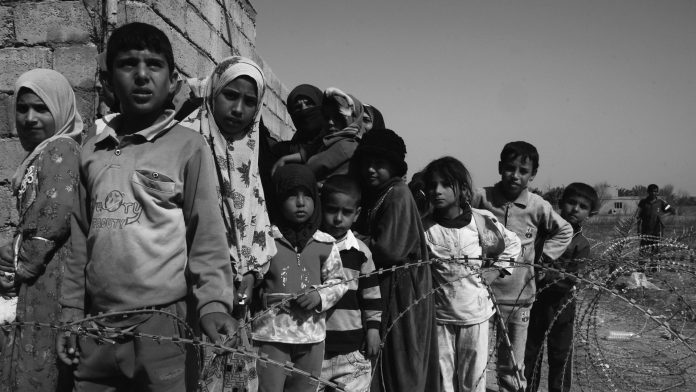
Download Now
logo
FREE & ONLINE 3-Day Bootcamp (LIVE only) on

How Can Experienced Professionals Become Independent Directors

calender
28th, 29th Mar, 2026, 2 - 5pm (IST) &
30th Mar, 2026, 7 - 10pm (IST).
Bootcamp starting in
Days
HRS
MIN
SEC
Abhyuday AgarwalCOO & CO-Founder, LawSikho

Register now

Abhyuday AgarwalCOO & CO-Founder, LawSikho