Download Now
Home Blog Page 515

Delhi Race Club Limited v. Union of India and delegation of legislative functions

0
Image Source: https://bit.ly/3nme8WP

This article is written by Vritti Jain, a student of Symbiosis Law School, Hyderabad.

Introduction

In the case of Delhi Race Club V. Union Of India, the Petitioner, Delhi Race Club Limited, was formerly known as the Delhi RaceClub and was founded in 1926. In 1940, it was reorganised as a limited-liability corporation, with the assets and liabilities of the former club transferred to it. The main objective of the Petitioner was to promote Indian-bred horses and Indian Jockies, as well as to give horse races the legitimacy of a sport or a game. 

Facts

In this Lawsuit, we are challenging: (1) the Central Government’s notification dated October 19, 1984, which stretched the Mysore Race Course Licensing Act, 1952 (later referred to as the Act) to the Union Territory of Delhi; and (2) the Lt. Governor’s notification dated March 7, 2001, which purportedly exercised Section 2 of the Mysore Race Course Licensing Act 1952 (later referred to as the Act) to the Union Territory of Delhi and (3) the Delhi Race Course Licensing Rules 2001, as well as (4) the demands dated 31.1.2002, in which the Petitioner was ordered to pay the amended/enhanced Licence Fee of Rs.17,80,000/- for the financial year 2001-2002 by Respondent No.3 (Commissioner of Excise, Entertainment & Luxury Tax, New Delhi) and for year 2002-03, Rs. 18,00,000.

The Central Government, in exercising the rights vested on it by Section 2 of the Union Territories (Laws) Act, 1950, restricted to the Union Territory of Delhi, the Mysore Race Courses Licensing Act, 1952, as it was in power in the State of Karnataka on the date of the aforementioned notification, relating to the adjustments stated therein by the first notification, dated October 19, 1984. The aforementioned Act, as it was extended to the Union territory of Delhi allowed the granting of horse racing licences by the state, as well as the imposition of a Licence Fee. But, no charge amount was established in the Act as it pertained to Delhi. The Government has the right to enact rules under Section 11 of the aforementioned Act, which was extended to Delhi, including the charges payable for such licences. As a result, the Administrator of the Union Territory of Delhi issued a notification on March 1, 1985, notifying the Guidelines thereunder, which were termed as the Delhi Race Course Licensing Rules 1985. (later referred to as the said Licensing Rules). The licence fee for horse racing on the racing track (i.e., venue racing) shall be an amount of Rs.2000/- per race day on which the race is hosted, and the licence fee for organising for gambling or placing bets on a horse race on any other race course (i.e., inter-venue racing) will henceforth be an amount of Rs. 500/- per race on day which the race is conducted, according to Rule 6 of the said Delhi Licensing Rules. The second notification, that is,  t he aforementioned Rule 6 of the said Delhi Licensing Rules was effectively altered by the Notification of 7th March 2001, which increased the licence price from Rs. 2000 to Rs. 20,000 per day for venue races and from Rs.500 to Rs.5000 per day for inter-venue races. The demand dated January 31, 2002 is focused on the increased licence fee announced in the 2nd notification dated March 7, 2001.

Issues

In light of this, it is evident that the most important issues are:

  1. Is the licencing charge set forth in Rule 6 of the relevant Licence Rules a fee or not? 
  2. Is the fee extremely high or not?

Decision

In the Liberty Cinema case, it is evident that the Constitution Bench did not assess what a fee is or the criteria by which it should be decided. It also didn’t address whether, in order for a tax to be considered a fee, the legislature establishing it must aim to confer the advantages of the services mainly on those who paid it. 

It is evident, then, that the Supreme Court ruling in the Liberty Cinema case did not address the issues of fees that were addressed in later Supreme Court judgments, particularly in the A.P. Paper Mill’s case as well as Secundrabad’s case. 

We conclude that the petitioner’s claims are without substance, and therefore invalidate the writ petition. Parties are responsible for their own fees.

Horse racing

Many states have enacted the Public Gambling Act of 1867, which includes an addendum that expressly prohibits horse racing. The following definition of gambling is included in the revised gambling acts of the states:

Gaming’ includes wagering or betting on any figures or numbers or dates to be subsequently ascertained or disclosed, or on the occurrence or non-occurrence of any natural event, or in any other manner whatsoever except wagering or betting upon a horse-race when such wagering or betting upon a horse-race takes place:”

  1. “On the day on which such race is to be run; and”
  2.  “In any enclosure where such race is to be run, and sanction of the Provincial Government set apart from the purpose, but does not include a lottery.”

The Supreme Court of India defined horse racing, football, chess, rummy, golf, and baseball as skill games in the judgment of Dr. KR Lakshmanan v. State of Tamil Nadu. It went on to say that gambling on horse racing  was a skill game because it required analyzing the performance of the horse and jockey, as well as the nature of the race, among several other things. 

Telangana, Assam, Delhi, Haryana, Karnataka, Maharashtra, Meghalaya, Punjab, Tamil Nadu, Uttar Pradesh, and West Bengal are among the states and union territories that permit horse racing bets. Professional horse racing is currently held at Bangalore, Chennai, Delhi, Hyderabad, Kolkata, Mumbai, Mysore, Pune, and Ooty turf clubs.

Since many Indian states (except Assam, Odisha, Andhra Pradesh, Tamil Nadu, and Telangana) have wagering laws that exempt games of skill from the definition of gambling, they have been designated as a different category. In the lack of a legislative definition of a game of skill, the Supreme Court in Dr KR Lakshmanan v. State of Tamil Nadu, State of Andhra Pradesh v. K Satyanarayana, and State of Bombay v. RMD Chamarbaugwala has determined that a game of chance is one in which the component of luck prevails over the component of skill, while a game of skill is one in which the factor of skill prevails over the factor of luck. 

Laws in India relating to horse racing and race course licensing

During the 1800s, when the Royal Empire of Britain dominated over every element of India’s economic and socio-cultural growth, including the nation’s position on horse race gambling restrictions, a majority of India’s regulations were impacted by the perspective of their British colonists. Horse racing was first introduced to Indians as a sport and leisure by the British. Whereas many Indians think gambling is a sin, horse racing gambling became an exception shortly. The vast, though not all, forms of gambling are forbidden by federal and state gaming laws; although, exceptions have been established for lotteries and skill-based games. Indian gambling regulations alter as they cross borders is regarded a state subject by virtue of the 1949 addendum to the Indian Constitution, which permits individual states to either embrace central gaming rules or create their own.

Race course licensing and horse racing details

Gambling is still a state matter in India, and practically all of the 29 states in India have written exclusions for horse racing in their gaming legislation. The West Bengal Gambling Rules of 1958 is an example of how states create exclusions to their gambling laws to explicitly exclude horse racing. Other states, such as Maharashtra, may have adopted different horse racing license laws from their general betting regulations. The Bombay Race Course Licensing Act of 1912, for example, permitted the state to specifically handle the rules and regulations of gaming within its territory. The West Bengal Gambling Rules and the Bombay Race Course Licensing Act are comparable or identical in all states. Many horse race licencing regulations describe how operators can get a licence, as well as the repercussions for breaking the law, exceptions, and basic guidelines they need to follow. These legislations also provide legal definitions for horse racing and race tracks, though not all definitions are identical between states.

How do these laws impact gambling in India?

The truth is that, much like with lotteries, the technical validity of horse racing and racecourse licencing rules is fairly muddled. While these rules primarily affect India’s horse racing sector, they also have an indirect effect on how states and people approach other kinds of gambling. Horse race wagering is regarded as a mostly skilled kind of wagering because it necessitates extensive knowledge of the racing industry. This is in stark contradiction to the fact that, despite their basic similarities, gambling on sports such as cricket remains outlawed in India. 

Many people argue that the rule is unjust because horse racing is permitted despite the fact that it involves a factor of chance, i.e. gambling, but other sports betting is banned. This frequently irritates Indian sports bettors who seek a greater range of domestic sports betting options. 

These regulations efficiently established legal procedures for dealing with illegal racetracks and sports betting while also defining the boundaries for legal racetracks and gamblers. Horse race and racecourse licencing laws have no direct impact on gaming because gambling is divided into two categories: games of chance and games of skill, with horse race gambling falling under the second category.

To support this argument, the Supreme Court of India held in 1996 that horse racing is a legitimate sport and means of public enjoyment, and that it is neither prohibited under the 1888 Police Act or the 1930 Gaming Act. They go on to argue that effectively betting on horse races involves skill rather than luck, confirming its status as a skill game. The Turf Authority of India regulates racing events, pari-mutuel gambling booths, and trackside bookkeepers, as well as managing and overseeing India’s nine licensed race tracks. The Turf Authority of India is made up of only six Turf clubs, and while the industry is flourishing, rigorous laws prevent many online operators from offering horse race bets to foreign players.

References

  • Vidushpat Singhania, The Law Reviews – The Gambling Law Review Thelawreviews.co.uk (2021), https://thelawreviews.co.uk/title/the-gambling-law-review/india#footnote-029-backlink (last visited Aug 19, 2021).
  • Horse Racing Laws and Legislations | HorseRacing.com, HorseRacing.com (2021), https://www.horseracing.com/reference/laws/ (last visited Aug 19, 2021).
  • Abanti Bose, Major types of cyber gambling, punishment laws and countermeasures – iPleaders iPleaders (2021), https://blog.ipleaders.in/major-types-cyber-gambling-punishment-laws-countermeasures/#Introduction (last visited Aug 19, 2021).
  • Staff Reporter, ‘No horse races till further orders’ The Hindu (2018), https://www.thehindu.com/news/cities/Delhi/no-horse-races-till-further-orders/article22820151.ece (last visited Aug 19, 2021).
  • India’s Laws Regarding Horse Racing & Race Course Licensing, India Legal Online Casinos, https://www.legalonlinecasinos.in/laws/horse-racing-laws/ (last visited Aug 19, 2021).

LawSikho has created a telegram group for exchanging legal knowledge, referrals, and various opportunities. You can click on this link and join:

Follow us on Instagram and subscribe to our YouTube channel for more amazing legal content.

Download Now

An analysis of Section 195(1)(b)(i) of CrPC in light of the case of Bhima Razu Prasad v. State

0
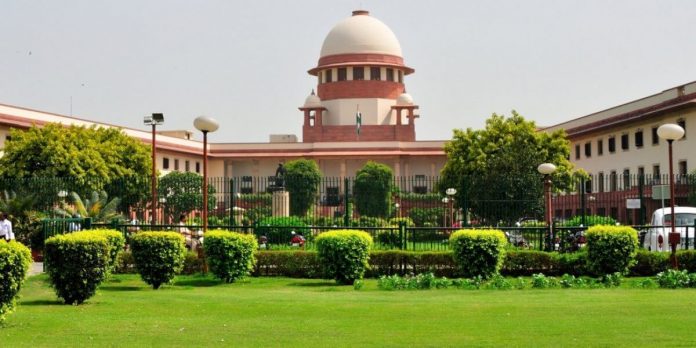
Supreme court of India

This article is written by Raslin Saluja, from KIIT School of Law, Bhubaneswar. This article analyses Section 195(1)(b)(i) of the Code of Criminal Procedure based on the decision given by the Apex Court on Bhima Razu Prasad v. State.

Introduction

Section 195(1)(b)(i) of Code of Criminal Procedure (CrPC) deals with the prosecution for contempt of the lawful authority of public servants, for offences against public justice and specifically for offences relating to false evidence given in evidence mentioned in Chapter XI of the Indian Penal Code (IPC). The holistic view of this Section aims to provide protection to people from being unnecessarily harassed by vexatious prosecution in retaliation by restricting the power of the Magistrate to take cognizance under Section 190, IPC. Under Section 195 of CrPC, cognizance can only be taken by the court if the complaint is filed by the public servant concerned or the court mentioned therein. This article has thus analysed the approach of the Supreme Court in the concerned case. 

Brief facts of the case

  • The appellant/accused no. 1 was working as a Regional Manager (South) at Rashtriya Ispat Nigam Ltd at Chennai. A case was registered against accused no. 1 under Section 120B read with Sections 420, 467, 468 and 471, IPC, and Section 13(2) read with Section 13(1)(d) of the Prevention of Corruption Act, 1988 (PC Act) on 4th January 2001. 
  • Subsequently, upon conducting a search at the appellant’s residence an amount of Rs. 79,65,900/ (“seized currency”), jewellery and property papers, were seized. Since the assets found were disproportionate to the appellant’s income, the case of another asset was registered under Section 13(2) read with Section 13(1)(e) of the PC Act was registered on 9th March 2001.
  • During the course of the investigation, accused no 2 and 3 wrote a letter to the Superintendent of Police on 4th February 2002 claiming that seized currency did not belong to the appellant. It was contended that accused no 2 had entered into an agreement of sale to purchase properties from accused no 3, for which 80 lakhs were to be paid in advance. 
  • Since accused no. 2 was not going to be available on the date of execution, had entrusted the appellant with the amount (seized currency) as well as a duplicate copy of the agreement signed by him. Accused no. 3 had to execute the agreement in presence of the appellant. However, since the raid was conducted at the house of the appellant, agreement of sale could not be executed and therefore the accused no 2 and 3 seek recovery of the seized currency.
  • Accused no. 2 even produced the relevant documents and books of accounts, however, the appellant had not taken any such defence at the time of search nor produced any duplicate copy of the sale deed. While on the other hand based, on the investigation conducted by the respondent, their claim was that the accused nos. 2-4 along with the appellant have plotted together to fabricate a false sale deed, and present a false explanation of escrow arrangement amongst the three parties, to protect themselves from any legal action and justify how the seized currency came to be in the appellant’s possession. 
  • This led to another charge being framed against the appellant and the accused nos. 2-4 under Section 120B read with Section 193 of the IPC, in addition to other charges under the PC Act.

Before the Trial Court

While at the stage of taking cognizance, no objection was raised by the accused. However, upon trial. It was argued that for prosecuting the case under Section 193, IPC, a complaint under Section 195(1)(b) of the Code of Criminal Procedure (CrPC) was necessary. This argument was rejected by the trial court citing the case of Iqbal Singh Marwah and Another v. Meenakshi Marwah and Another, (2005) and on finding that it was not proved by accused no 2 had entrusted the seized currency to the appellant for holding in escrow the amount till sale transaction took place with accused no 3.

The trial court then convicted the appellant under Section 13(2) read with Section 13(1)(e) of the PC Act as well as Sections 120B and 193 of the IPC and sentenced him to rigorous imprisonment for two years and payment of fine of Rs 1.5 lakhs. Accused Nos. 2 and 3 were convicted under Sections 120B and 193 of IPC and sentenced to rigorous imprisonment for one year and payment of a fine of Rs 1 lakh each.

Appeal before the High Court

Accused no. 2 and 3 reiterated similar points on the requirements of complying with Section 195(1)(b)(i) and 340 of the CrPC prior to framing of charge under Section 193 of IPC. They reiterated how it was illegal and without jurisdiction for the trial court to frame the charge without conducting an inquiry and making a written complaint. The High Court too rejected their contention and held that the procedure under Section 195(1)(b)(i) is mandatorily applicable only when the offence directly affects the administration of justice. For that, the offence must have been committed after a document is produced in evidence before the court. Since in the present case, the documents were fabricated in the investigative phase before they were produced in the trial court, the said sections will not be applicable.

The High Court referred to the case of Sachida Nand Singh and Anr. v. State of Bihar and Anr., (1998) whose decision was later affirmed in the Iqbal Singh Marwah case. The High Court upheld the decision of the trial court that the accused had conspired to fabricate false evidence to exonerate the appellant from legal prosecution. However, due to the long passage of time, the sentences awarded were reduced. Though the decision in the above-mentioned cases was related to the interpretation of Section 195(1)(b)(ii) of CrPC, the High Court while referring to the cases held that Section 195(1)(b)(i) is analogous to the former provision and therefore all observations made on that decision will be equally applicable in the present case.

Appeal before the Supreme Court

Under the concerned appeals, the counsel for appellants argued that Section 195(1)(b)(i), CrPC cannot be interpreted to be analogous to Section 195(1)(b)(ii), therefore the judgment in Iqbal Case will not be applicable in the present case.

They stressed that there is an absolute bar against taking cognizance for offences under Section 195(1)(b)(i) without having a written complaint by the concerned court. Thus, the prosecution, in this case, is unsustainable.

They relied on the case of Bandekar Brothers Pvt. Ltd. And Another v. Prasad Vassudev Keni and Others (2020) in support of their contentions.

Contention by Respondent

That the Iqbal case is applicable and sought to distinguish those cases relied upon by the appellants as they do not apply in the present case.

Issues before the Supreme Court

  1. Whether Section 195(1)(b)(i), CrPC bars filing of the case by the investigating agency under Section 193, IPC, concerning the offence of giving false evidence which is committed at the stage of the investigation, before production of such evidence before the Trial Court?
  2. Whether an offence under Section 193, IPC committed during investigation before the production of the false evidence before the Trial Court by a person who is not yet party to proceedings before the Trial Court, is an offence “in relation to” a proceeding in any court under Section 195(1)(b)(i), CrPC?
  3. Whether the words “stage of a judicial proceeding” under Explanation 2 to Section 193, IPC can be equated with “proceeding in any court” under Section 195(1)(b)(i), CrPC?

Analysis by the Court

Import of the words “in relation to” Section 195(1)(b)(i) of CrPC

The construction of the words “in relation to any proceeding in any court” gives this provision a wider meaning and appears to include in its scope situations wherein fabrication of false evidence has been prior to it being produced before the court of law, for the purpose of being used in the court proceedings. Thus the analogy with Section 195(1)(b)(ii) may not be applicable in all cases. The overarching principle applicable herein is that even if the offence is committed prior to submitting the fabricated evidence in court, it must have a direct or reasonably close nexus with the court proceedings.

The Section would still be attracted to an offence of fabricating false evidence before it is produced before the Court, provided that such evidence is led by a person who is a party to the court proceedings, for the purpose of leading the Court to form a certain opinion based on such evidence. Based on the decision given in the Bandekar Brother, the bar against taking of cognizance under Section 195(1)(b)(i) may also apply to a person who was initially not a party to the court proceedings fabricates certain evidence, and later became a party and produced it before the court or falsely represents as a witness before the Court on the basis of such evidence, to divert the Court’s opinion on a material point and redirect to form an erroneous opinion. However, the situation will be different where a person fabricates false evidence for the purpose of misleading the investigating officer, which may not be considered to have any direct nexus with the subsequent court proceedings.

The Court observed that there is an indirect nexus in as much as if any wrongdoing is not suspected at all by the investigating agency and the case gets committed for trial by the court, it might then impact the judicial decision making of the court when the evidence is being produced for the court’s perusal. On the other hand, it may be equally possible that even if such evidence does appear sufficiently convincing, it may be dropped against the accused by the investigating agency and who would rather divert its time and resources elsewhere. Therefore, the offence may never reach the stage of court proceedings. Further, if in the future it does come to light that the evidence was falsely adduced, the loss will have to be suffered by the investigating agency who will then be forced to conduct a fresh investigation.

In that case, even though the offence is one that affects the administration of justice, it is the investigating agency, and not the court, which is the aggrieved party in such circumstances. The Court further goes on to justify the non-consideration of a wider interpretation. The Court stated in such circumstances, the investigative agency should not be left remediless against persons producing false evidence to meddle with the investigation process. The present case still concerns offences under the PC Act and the harm to the public interest and state reputation would still continue to suffer immense harm if corrupt public servants are facilitated by third parties in hiding their assets from scrutiny. Hence, such interpretation must be avoided which negates against the speedy and effective trial of such persons.

Whether “stage of a judicial proceeding” under Explanation 2 to Section 193 IPC is synonymous with “proceeding in any court” under Section 195(1)(b)(i) CrPC

Explanation 2 deems an investigation preliminary to a proceeding before a Court of Justice to be a “stage of a judicial proceeding” in reference to this Section and it would apply even in the case where such investigation may not take place before a Court of Justice.

The objective of Section 195(1)(b) aims to limit the right to make complaints in respect of certain offences to public servants, or to the relevant court, as they are considered to be the only party who is directly aggrieved or impacted by those offences. Furthermore, it is a requirement of the section that there must be an intention on part of the alleged accused to directly mislead the court into forming a certain opinion.

Though the criminal investigation is construed as a stage of judicial proceeding so far it leads up to the issue of process and trial, however, it will not be considered a proceeding in reference to a court under Section 195(1)(b), CrPC before the court has taken judicial notice of such investigation. The Court then went to distinguish between the words “judicial proceedings” and “proceeding in any court”.

The Court then referred to a few cases and observed that wherein the law deems proceedings before a certain authority to be judicial proceedings, then it would be considered as proceedings in any court for the purpose of Section 195(1)(b)(i). However, the facts of those cases were distinguished from the present appeal as they involved false statements made on oath/affidavits in a judicial proceeding and before an authority deemed as a court under the law.

As per CrPC, the definition of “judicial proceeding” in Section 2(i) CrPC, includes any proceeding in the course of which evidence is or may be legally taken by oath. To that end, the investigation under the PC Act was admittedly a stage of a judicial proceeding by virtue of Explanation 2 to Section 193, IPC. However, as per the facts of this case, neither was the fabricated evidence given on oath before the investigating officer nor is the investigating authority under the PC Act deemed to be a “court” for the purpose of Section 195(1) (b), CrPC.

In the present case, it is the investigating authority/agency which has been directly affected due to false evidence presented by the appellants and not the Trial Court. In the first instance, the appellant’s intention cannot be construed as to be misleading the Trial Court, their goal was to ensure that accused no. 1 is exonerated of wrongdoing at the investigation stage itself. It was only after they were charged under Section 193 IPC, that the appellants reiterated the made-up story of escrow arrangement before the Trial Court so as to prove their innocence. Hence, it cannot be said that the offence under Sections 120B read with 193, IPC was committed by the appellants “in relation to” a proceeding in a court under Section 195(1)(b)(i), CrPC.”

Thus, the investigating agency under the PC Act cannot be equated with a proceeding in a court of law under Section 195(1)(b)(i), CrPC, though it is deemed to be a stage of a judicial proceeding under Section 193, IPC. That the court would have taken a different view, had the investigation agency not been suspicious of accused no 2 and 3, and the Trial Court itself would have discovered the pretext created by them.

Conclusion                                            

Since in the present case, the investigating agency had been judicious, the Court refrained from requiring an independent inquiry and written complaint by the Trial Court. The Court stated it would be unjust and impracticable to interfere with the findings of the Trial Court and the High Court. Thus, Section 195(1)(b), CrPC will not bar prosecution by the investigating agency for an offence punishable under Section 193, IPC which is committed during the stage of the investigation. Provided, the investigating authority must have lodged a complaint/filed a case under Section 193, IPC before the commencement of proceedings and production of such evidence before the trial court.

References


LawSikho has created a telegram group for exchanging legal knowledge, referrals, and various opportunities. You can click on this link and join:

Follow us on Instagram and subscribe to our YouTube channel for more amazing legal content.

Download Now

All you need to know about the doctrine of duress

0

This article is written by Aditya Rastogi, pursuing a Diploma in Advanced Contract Drafting, Negotiation, and Dispute Resolution from Lawsikho.

The doctrine of duress : definition and meaning

This doctrine of duress is applicable in the cases where an act is performed by an individual as a result of fear, threat or influence. This doctrine acts as a weapon to the people who have been victim to the same kind of situation and in the pursuit of the same have committed an act. The limits to what kind and extent of pressure are acceptable are something that is fading away with time but, the doctrine of duress aims to identify such limits and the fine line between the two. 

The law of contract in this doctrine is applicable for the purpose of eliminating any kind of undue influence or pressure while the parties are entering into a contract. The concept of this doctrine originated from the known notion that no party should enter into a contract with another as a result of any pressure or influence. It provides for the concept of ‘Freedom to Contract’. This article majorly aims at covering the evolution of the doctrine of duress, elements of duress and types of duress.

Evolution of doctrine of duress

Initially, the doctrine of duress was applicable only in the cases of actual or threatened violence to an individual. The happening of an unlawful act or a wrongful act was something which was extremely important to establish the applicability of the doctrine of duress, the presence of fear in victims was something which was not of much importance to ensure that the doctrine of duress is to be applied.

This vague line of difference between violent or threatened act and the act which is performed under the influence was making it very difficult to establish in the court of law whether an act would fall under the category of the torts or, under the category of the doctrine of duress, thus, making it an overlapping concept. Equity in law has always been about providing remedies in cases where precedents are absent and even here, it was used to deal with promises which had been extracted by the ways of unethical or immoral use of methods such as superior bargaining position, as found in confidential or fiduciary relationships, which later inhibit the victim’s free exercise of his will to enter into a contract. 

Subsequent development of the doctrine

Historically, there existed only one exception with respect to the common law rule which stated that duress would only create a contract that is voidable when induced by threat or, personal violence, that is, duress of goods. An early incursion in this area began in the early eighteenth century in cases with regard to the wrongful seizure or detention of property that is personal in nature. There were no parallel developments in countries like England. Instead, English courts completely devoted their energy to the development of an illogical distinction between payments of money when the duress is made, and a promise made to pay money in the future scenario. In the previous case, the victim was provided with the restitution of his money, whereas in the latter case the victim was ordered to pay the money to its coercer.

When summarising, common-law distress can be considered as a crude, ill-defined and obscured notion, which is little used and is of little use except in the cases of averting threats. At the same time, when invoked by the courts more often, undue influence or pressure have been found to lack sufficient definition in order to be effective.

Elements of duress

It has become extremely common that people are entering into contracts under some or the other influence which is making the concept of entering into an agreement quite ambiguous and blurred. Let us understand this with the help of important case law on this point. In the case of Barton vs. Armstrong, Barton and Armstrong were major company shareholders and it was decided in a meeting that Barton would buy Armstrong’s interest. They had an agreement drawn up and executed. Barton subsequently claimed that he was coerced into buying Armstrong’s share and that Armstrong had threatened to have him murdered if he did not buy it. He further alleged that Armstrong also exerted unlawful pressure over him, which Barton claimed made the terms of the agreement voidable. 

It was stated that in a huge number of cases the only option left with the individual is to act in a certain way due to the pressure and influence of another. Therefore considering that every agreement which is entered into due to pressure is always liable to be avoided on the basis of duress means that almost all agreements will be considered vulnerable to attack this relative ground.

There are two important elements to be present in order to ensure the applicability and seek remedy under the same. The elements are mentioned below:

1) There must be an element of pressure that results in the compulsion of the will of the individual entering into the contract and,

2) Their pressure must be considered illegitimate in the eyes of law.

In the cases where there is a contract being entered by the parties and it is inclusive of both the above elements, then in those cases the parties who are victim to the same can be provided with the remedy under the doctrine of duress.

The elements to determine the applicability of the doctrine of duress were laid down in the case law Universe Tankship Inc of Monrovia v. ITF;

  • The first element which majorly talks about the presence of pressure is investigative in nature and majorly deals with the question of whether the consent was provided willingly or not by the parties to the respective contract in question. 
  • The second element is mandatory in nature and states that the pressure exerted upon the individual or the party to the contract should be termed illegitimate in the eyes of the law which means that it defines the kind the pressure and the limitation to it. Every kind of pressure cannot be considered as pressure as per the doctrine of duress. 

Types and forms of duress

In the initial years when the concept of the doctrine of duress was new, the scope of the same was quite narrow and short-termed. But lately, its scope was extended, and it became wide in nature. The types and forms of duress can be divided into various forms as provided below.

Duress of person

Duress of the person may consist in violence to the person, or threats of violence, or in imprisonment, whether actual or threatened. The threat of violence need not be directed at the claimant: a threat of violence against the claimant’s spouse or near relations and a threat against the claimant’s employees have been held to constitute duress. It is suggested that even a threat against a stranger should be enough if the complainant genuinely thought that the submission was the only way to prevent the stranger from being injured or worse. 

In the case of duress by person, the victim only needs to prove that the contract was entered into as a result of the pressure or influence supported by the relevant proof. Then in this case the courts simply determine that the pressure exerted was illegitimate or not. Once determined, the courts accordingly act upon the same. The said pressure should be capable enough to affect the decision-making power of the individual too.

Duress Colore Officii

These are the cases where the pressure is generally in the form of unlawful demand of the payments by the public official. A distinction is supposed to be considered in the cases where the person victimised paid the sum of money in order to obtain any kind of a service from a public official and cases where the individual paid the sum of money through tax or impost. 

Duress of goods

Any kind of threat that is related to the destruction of the property or the goods of an individual who is the party to the agreement or the contract amounts to the duress of goods. The threat necessarily should not be of the destruction of the associated property or goods, but it can also be related to seizure or the detainment of the respective goods. 

When an individual submits to the defendant’s pressure which is illegitimate in nature and pays the sum of money and readily enters into an agreement in order to recover the goods which have been wrongfully seized or detained by the defendant party or done in order to avoid immediate seizure or any kind of damage to his goods, it is recognized in the eyes of the courts. In such cases, the complainant normally has no alternative which seems to be practical but to submit to the defendant’s threat and pressure.

Economic duress

Other kinds of threats which are different from the certain kinds of threats or the pressure which are related to the property or goods or life but, have influenced the decision-making power of the individual then in such cases also the doctrine of duress are applicable in the form of the economic duress. Such a threat also is an offence in the eyes of law. In the case of economic duress, the main question to consider is whether the individual had any practical or appropriate alternative available. If any such kind of alternative was available, then in that case the economic duress has no role to play. 

Conclusion

The doctrine of duress is one of the finest doctrines under English Law. Under Indian Law, it is generally referred to as coercion. The nature of both concepts are the same. This doctrine majorly looks at the intent due to which the contract was entered into which further clarifies and strengthens the stems of the agreements and contracts. 

This concept was when initially introduced and adapted it had a very narrow scope and had less applicability but, later on, its practical aspect increased hence, widening the scope of the doctrine. This doctrine is of high relevance and plays a major role in determining the scope and legal credibility of the contract or the agreement which has been entered into by the parties. 

References


Students of Lawsikho courses regularly produce writing assignments and work on practical exercises as a part of their coursework and develop themselves in real-life practical skills.

LawSikho has created a telegram group for exchanging legal knowledge, referrals, and various opportunities. You can click on this link and join:

Follow us on Instagram and subscribe to our YouTube channel for more amazing legal content.

Download Now

Gurdwara reform movement from 1920s and its importance

0
Image Source: https://bit.ly/3twHIJZ

This article is written by Ridhima Purwar, from Symbiosis Law School, Noida. The article extensively talks about the Akali reform movement and the Sikh Gurdwara Act, 1925.

Introduction

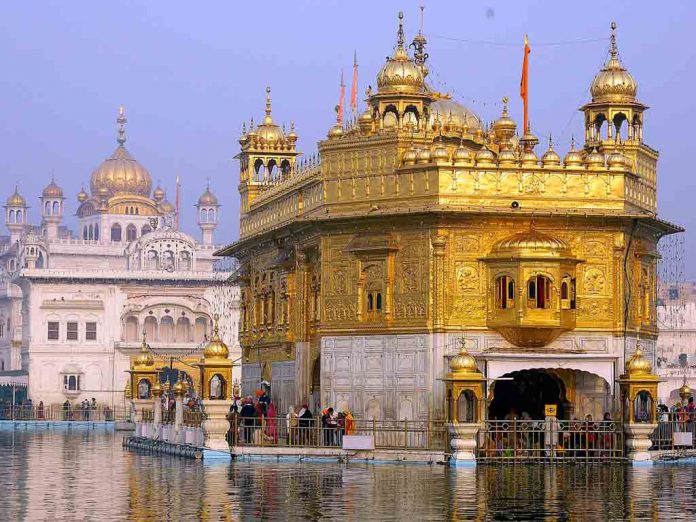
The Akali movement of the 1920s, which began as a strictly religious movement to reform Gurdwaras, or Sikh holy temples, quickly took on a political dimension and became an integral component of India’s liberation struggle. Aside from being anti-imperialist, the Akali movement, also known as the Gurdwara Reform Movement or Gurdwara agitations, describes the Sikhs’ long protracted battle in the early twentieth century for the freedom of their Gurudwara or holy temple. The non-violent agitation marches, divans or religious meetings, and protests for Sikhs to express their freedom to control their place of worship drew passionate support, particularly from the rural people. Finally, the government had to give in to public demand and enable the Sikhs to administer their shrines; the Gurdwara Act of 1925 created the SGPC, a Sikh representation organisation, custodian of all significant Sikh sites of worship. 

Launch of the movement 

The British administration had taken possession of several Gurdwaras, including the Golden Temple, Akal Takhat, and Baba Atai in Amritsar, as well as Tarn Taran Sahib. The administration had been exploiting gurdwaras for political reasons since they had a great religious appeal for the Sikh population. The remaining 260 gurdwaras were permitted to stay in the hands of Mahants (Priests). The Mahants had been living a lavish existence while caged up in a safe place under the fostering care of the British government. In certain gurdwaras, Mahants also practised Hindu traditions such as idol worship, which were antithetical to Sikhism’s beliefs.

Beginning in the early twentieth century, Sikhs began to demand that the gurdwaras be returned to the Panth. They seized control of the Golden Temple, Akal Takhat, and a few other gurdwaras through persuasion and non-violent means. They also agreed to establish a central religious organisation to oversee the operation of the Gurdwaras. The Akal Takhat issued a hukamnama summoning a general assembly of all Sikhs to Amritsar on November 15, 1920, for this purpose.

To begin with, the government purposefully maintained a neutral stance towards the Gurdwara Reform Movement. The government anticipated that by keeping Sikhs occupied with this activity, they would not join the Non-Cooperation. Furthermore, the government was unwilling to take any serious action against Sikh reformers, fearing that repression might push them to join Non-Cooperation. However, the administration was irritated when, on October 19, the Central Sikh League, a political organisation of the Sikh middle class, decided to adopt Non-Cooperation under the influence of Congress. The government now worried that the Central Sikh League’s extreme Sikh leadership would seize control of the organisation. As a result, barely two days before the meeting at Akal Takhat, the government created a provisional Committee for gurdwara management. Except for a few reformers, it was dominated by loyalist Sikhs, with Harbans Singh Atari as President.

This Committee, however, was unpopular with Sikhs since its members were chosen by the government without consulting the Panth. As previously stated, a conference was convened at Akal Takhat, and an organisation known as the Shiromani Gurdwara Prabandhak Committee (hereinafter referred to as SGPC) was created to administer Gurdwaras. It had a total of 175 members. It also comprised 36 members of the government’s interim committee. Under its Constitution, any baptised Sikh of 21 years of age or older was granted the right to vote. Sunder Singh Majithia and Harbans Singh Atari were elected President and Vice-President during the organization’s first meeting on December 12, 1920. They were members of the Chief Khaba Diwan, a loyalist organisation led by the Sikh nobility. Perhaps it was because of this faithful leadership that the government did not resist the SGPC’s takeover of the Golden Temple and other gurdwaras. The administration believed that the Gurdwara Reform Movement, led by loyalists, would follow constitutional guidelines.

Another Sikh organisation, the Shiromani Akali Dal, was founded on December 20, 1920, to reform gurdwaras via moral pressure. Although it was an independent organisation, it typically followed the SGPC’s orders. Even before the formation of the SGPC, Akalis were striving to reform gurdwaras. They organised into Jathas, and their leaders were known as Jathedars. These local Jathas were now merged in a single entity known as the ‘Shiromani Akali Dal.’ It was mostly made up of Sikh Jat peasants, craftsmen, skilled and unskilled labour, and retired warriors.

Daily Akali got launched

On 11 November 1920, the daily Punjabi newspaper “Akali” was launched from Lahore, thanks to the efforts of Harchand Singh and Master Sunder Singh of Lyallpur. In its very first issue, the Akali proposed the following programme for the Akali movement:

  1. To bring Gurdwaras under the democratic control of Sikhs. 
  2. To bring Khalsa College, Amritsar, also under the democratic control of Sikhs. 
  3. Reconstruction of the wall of Gurdwara Rikabganj, Delhi  
  4. To create a political awakening among Sikhs and arouse them to participate in the national freedom struggle.  
  5. To set up an organisation of Sikhs on a democratic basis.

As a result of Akali promotion, Akali Jatha sprang up in towns and the countryside. Members of this jatha donned black turbans, carried kirpans, and swore to make all sacrifices for the sacred cause of life.

The Gurdwara reform movement is significant in three respects 

  1. It created a sense of confidence among the Indians that the British could be forced to meet their genuine demands through non-violent mass movement;  
  2. It brought the Akali Dal and the Congress leadership very close to each other, giving a great impetus to the freedom movement in Punjab; 
  3. The Shiromani Gurdwara Prabandhak Committee and the Akali Dal provided the institutional and organizational structure to respond to the aspirations of the newly mobilized Sikh masses, and in the process, it acted as the training ground for the emerging Sikh

Reformation throughout the movement 

Gurdwara Babe-di-Ber 

Babe-di-Ber in Sialkot was the first Gurdwara to be changed via agitation. The gurdwara, which was erected in remembrance of Guru Nanak’s visit to that location, became known as Babe-di-Ber because the Guru sat under a Ber tree there. This was the first location where the British authorities clashed with Sikh reformers. When Harnam Singh, the Mahant of this gurdwara, died, his widow chose her little son as his successor under the supervision of one Ganda Singh, an Honorary Magistrate.

The Golden Temple and Akal Takht 

Corrupt and non-Sikh practices in the precincts of the Golden Temple and the Akal Takht at Amritsar and official control over its management had been a source of great discontent among the Sikhs long before the beginning of the reform movement. While the reformers were anxious to free these central seats of the Sikh religion from evil influences and official control as early as possible, the British authorities in Punjab resisted any effort at reform or change in the existing system of management which would deprive it of the privilege of using (rather misusing) the religious places of the Sikhs to consolidate their power and to weaken their political opponents.

Sarbrah (gurdwara managers) chosen by the government exploited the gurdwaras’ large donations for their job. Gifts for the gurdwaras gradually made their way to the houses of the Sarbrah and other priests. Pundits and astrologers began to utilise the precincts, and idols were openly worshipped within the gurdwara grounds. With the broad awakening of the Sikhs in the early twentieth century, they began to oppose these more wicked influences. Recognizing the situation, no attempt at purification or betterment could be made until the gurdwaras were free of government authority. As a result, several intellectual Sikhs banded together and launched the Gurdwara Reform Movement. 

Gurdwara Panja Sahib 

Gurdwara Panja Sahib was likewise under the influence of the corrupt mahant, who exploited the gurdwara’s offerings for his gain. According to the tale of Panja Sahib, a Jatha of 25 Akalis marched from Amritsar to Panja Sahib on November 18, 1920, under the command of Bhai Kartar Singh Jhabbar. The next day, when the Jatha was playing Kirtan, the new Mahant announced in a vehement speech that the Akalis had no regard for the gurdwara and requested them to leave immediately. The Akalis, on the other hand, insisted on allowing the Jatha to finish the Kirtan. The Mahant’s followers jumped up and began insulting Kartar Singh Jhabbar and other members of his Jatha while the Jatha was still playing the Kirtan, resulting in a fight.

The Akalis saw this as an excellent chance to accomplish their goal. As a sign of their dominance over the gurdwara, Jathedar Kartar Singh Jhabbar took possession of the cash box containing the daily offerings and proclaimed the Mahant a Tankhahia, not to be permitted to visit the shrine until he went to the Akal Takht “to seek pardon for his deeds.” The Mahant’s efforts to reclaim control of the gurdwara were futile, and the Gurdwara Panja Sahib slipped into the hands of reformers, who quickly created a representative management council to oversee it.

The Darbar Sahib, Tarn Taran 

The Gurdwara Darbar Sahib, located fifteen kilometres from Amritsar, was managed in the same manner as the Golden Temple and the Akal Takht. During Arur Singh’s reign, the Mahants of Tarn Taran became more or less self-sufficient and established a slew of bad practices within the gurdwara’s walls. Local reform movement leaders encouraged the mahants to modify their methods, but there was no change in the mahant’s behaviour. Instead of listening to the members of the jatha who urged the mahant to organise for the recitation of Asa-di-Var on 11 January 1921, the Mahants are alleged to have beaten up the members of the jatha with lathis.

Later, via the Commissioner of Lahore, a settlement was reached between the mahant and the local reformers. However, the mahant’s behaviour remained unchanged. The word of the immoral acts started to arrive. For a lasting solution to this dilemma, a group of 40 Sikhs travelled to Tarn Taran to consult with the mahant. The mahant consented to the creation of a Joint Committee to address the disagreement, which was a ruse to buy time before an assault. They even declared their intention to accept the plan late at night and requested that the Akalis provide a fair copy of the agreement to be signed by them.

Instead of giving the paper to the Akalis while they waited for it to be signed, the mahant launched an attack. Some of the jatha members who were inside the gurdwara were badly injured. The mahant fought with lathis, daggers, and brickbats. The sacred site was quickly covered with the blood of the injured Akali volunteers, two of whom died as a result of their injuries. When the District Magistrate and other authorities learned of this, they went to the location to speak with the leaders of both sides. The mahant was prohibited from accessing the gurdwara by an official order until the case was eventually settled by the Parbandhak Committee. As a result of the gurdwara falling into the hands of reformers, a Provisional Committee of Management was created in the interim, pending the formation of a formal agreement by the S.G.P.C.

The Nankana Holocaust 

Nankana, being Guru Nanak’s birthplace, has the most significant position among Sikh places of religious worship. Aside from the gurdwara at Janam Asthan, where the Guru was born, there are around a half-dozen more shrines associated with various events in the Guru’s early life. After being appointed as the Mahant of Gurdwara Janam Asthan in Nankana Sahib, Mahant Narain Das began to lead an immoral life. With time, he began to indulge in the normal vices. He is believed to have married a Muhammadan drummer’s wife, welcomed dancing ladies to the complex of Gurdwara Nankana Sahib, and allowed profane singing even in the hallowed confines of Janam Asthan. The Akali reformers were drawn to this condition of things in Nankana Sahib.

A resolution was approved urging Mahant Narain Das to change his methods and clean up the temple administration. Instead of reforming or even reaching a compromise with the Akalis, Narain Das proceeded to gather a powerful army to oppose the Akali Movement. Furthermore, on February 20, 1921, a group of 150 Sikhs came to pay their respects at the gurdwara. Not only were they not permitted to access the hallowed sanctuary, but Mahant Narain Das’ private army assaulted them with guns and ammunition. Sikhs were reciting religious chants. The onslaught came on fast and furious, with bullets raining down from all sides. Bhai Lachman Das, who had gotten into the shrine and was chanting Sri Guru Granth Sahib, was also shot on the spot. While Gurbani was on his lips, he died instantaneously. The holy book was also damaged and had blood stains on it. The Mahant was outside the main gate with a gun in his hand, riding on horseback and commanding the entire operation. He was yelling at the top of his lungs, “Don’t let a single Sikh out alive, finish them, finish them! Nobody should be able to escape.” Six people who were standing close to the Mahant were murdered by the Mahant’s men and put into the potter’s kiln. Firewood and kerosene oil were taken out of the temple and a fire was started. All of the dead and injured were tossed into it and devoured by fire in minutes. Others were chained to a tree and burned alive.

The entire country was stunned as word of these heinous killings spread. It elicited a lot of sympathy for the Sikhs, and there was a lot of pressure put on the Mahant and his minions. There were representations made to the government. The Governor of Punjab paid a visit to the location of the crime and was greatly touched by what he saw. A few days later, Mahatma Gandhi paid a visit to the spot. The authorities were obliged to take action against the wrongdoing of Mahant, who was eventually apprehended along with his hired help. The government delegated control of the gurdwara to a committee of seven Sikhs.

The Keys’ Affair 

In October 1920, the Akalis took possession of the Golden Temple, the Akal Takht, and the neighbouring Gurdwaras. Though the S.G.P.C. and the Committee formed by it essentially managed the business of the Golden Temple, the fact that the keys to the Toshakhana remained in the hands of a Government-chosen Manager gave the reformers the impression that the government retained authority over the gurdwaras. The S.G.P.C. The Executive Committee instructed Sardar Sunder Singh Ramgarhia to give over the keys to Sardar Kharak Singh, the president of the S.G.P.C., during its meeting on October 29, 1921. However, the British-appointed manager refused to accept the S.G.P.C.’s demand. As a result, a conflict arose between the Committee and the British authorities. Many meetings were conducted to compromise, but no results were reached. However, the British authorities eventually agreed to hand over the keys to the Committee. On January 17, 1922, a Punjab Government gazette official was dispatched to give the keys to Baba Kharak Singh, president of the S.G.P.C.

Guru-ka-Bagh Morcha 

A big conflict erupted between the Akalis and the British Government at Amritsar’s Gurudwara Guru ka Bagh. The Gurdwara Guru ka Bagh is around 20 kilometres from Amritsar in the town of Ghukkewali. Mahant Sunder Das was in charge of the Gurdwara. On August 23, 1921, he embraced baptism and subjected himself to the jurisdiction of an elected management body of 11 members selected by the Shiromani Gurdwara Parbandhak Committee. However, the Gurdwara’s land remained in his control. Langer used to get firewood from the Sikhs who lived on the site. The mahant grumbled about having to chop firewood. Five Akali sewadars were arrested and charged with criminal trespass on August 9, 1922. The Akalis convened in Guru ka Bagh, where police dispersed them and arrested leaders such as Mehtab Singh and Master Tara Singh. 

The Shiromani Gurdwara Parbandhak Committee accepted the challenge and planned to organise a morcha, with Jathas of 100 Akalis each marching towards Guru Ka Bagh. The clash between the police and the passive resisters lasted 19 days. A total of 5605 Akalis had been detained, and hundreds had been injured. On September 13, 1922, Lt-Governor of Punjab Sir Edward Maclagan visited Guru Ka Bagh and stopped the beating of Sikh volunteers. Sir Ganga Ram’s offices were used to address the problem.(Harbans Singh “The encyclopedia of Sikhism”) On November 17, 1922, Sir Ganga Ram leased the garden property from Mahant Sunder Dass. He granted the Akalis access to the garden. On April 27, 1923, the Punjab Government issued instructions for the convicts’ release. The Akalis seized Guru Ka Bagh as well as contested territory. It was the Akali reformers’ second significant victory over the British government.

Jaito Morcha 

The British ousted Maharaja Ripudaman Singh of Nabha because he sympathised with nationalists and the Akali movement. The S.G.P.C. promised the Maharaja its complete backing. An Akhand Path of Guru Granth Sahib was started in July 1923 in Jaito in Nabha State for the reinstatement of the ousted Maharaja Ripudaman Singh. On September 1st, it was agreed that the Jathas, made up of 25 Akalis, would look into this matter. The police used oppressive measures to try to put an end to the Akand Path. These Akalis were apprehended by the state police. The S.G.P.C. agreed to dispatch daily Jathas from Amritsar’s Akal Takht to Jaito. Protesters were detained, beaten, and kicked as they were carried inside the Jaito Fort. The Government of Punjab proclaimed the S.G.P.C. and S.A.D illegal organisations in an order dated October 12, 1923, and detained 59 Akali leaders. The Indian National Congress expressed its complete support for the Akali cause. Members of the All India Congress Committee, including Pt. Jawaharlal Nehru, K. Santhanam, and A.T. Gidwani, joined the Akali Jatha. They were apprehended and sent to Nabha Jail. Finally, the Punjab government succumbed and agreed to hand over the management of the Gurdwara to the Akalis.

Sikh Gurdwaras Act, 1925

The Punjab Legislative Council passed a legislation that marked the culmination of the Sikh people’s struggle from 1920 to 1925 to reclaim control of their places of worship from the mahants or priests into whose hands they had passed during the eighteenth century when the Khalsa were driven from their homes to seek safety in remote hills and deserts. When the Sikhs gained control of Punjab, they renovated their shrines, endowing them with enormous jagirs and estates. The management, on the other hand, remained with the priests, most of the Udasi sect, who, following the arrival of the British in 1849, began to see the shrines and lands linked to them as their personal property, diverting the revenue coming from them to their use. Some of them freely alienated or sold gurdwara holdings. They had instituted a ceremony, which was frowned upon by traditional Sikhs. Furthermore, there were allegations of immorality levelled against them. All of these causes contributed to the Gurdwara Reform movement, during which Sikhs were imprisoned on a massive scale and subjected to atrocities and murder. 

Brief analysis 

As stated in the preamble, the purpose of the Act was to provide for better management of some Sikh gurdwara and inquiries into problems and the resolution of disputes related to them. The Act is divided into three sections.

Part I

In addition to basic topics such as title, scope, and definitions, references to gurdwaras covered by the Act, this part also includes processes for bringing further gurdwaras under the Act’s jurisdiction and the appointment and procedures for a Gurdwara Tribunal. Surprisingly, the defining Section does not define a Sikh gurdwara; instead, a later sentence, Section 2.10 defines a registered Sikh gurdwara as any gurdwara proclaimed to be a Sikh gurdwara by notification of the local authority under the provisions of this Act. 

Schedule I of this chapter (Sections 3–11) and the schedules referred to therein are essential components of the Act. There will be two types of Sikh gurdwaras: scheduled and unscheduled. Schedule I of the Act lists significant historical shrines where there can be no dispute that they are Sikh gurdwaras undeniably held by Sikhs. Originally, this Schedule included 241 gurdwaras, 65 of which remained in Pakistan following the partition of Punjab. However, the amending Act of 1959, added 173 additional gurdwaras inside the states of Patiala and the East Punjab States Union to it. Schedule II provides information on establishments that were not Sikh gurdwaras and over which no challenge could be brought. The State Government published a notification in the official Gazette proclaiming the gurdwaras mentioned in these two schedules, or the scheduled gurdwaras, to be Sikh gurdwaras. The notification also listed the property that each gurdwara claimed.

In the case of the second category, i.e. gurdwaras other than the Scheduled Gurdwaras listed in Schedule I, Section 7 of the Act states that fifty or more worshippers, who are 21 years of age and live in the area of the police station in which a Gurdwara is located, may submit an application to the State Government within the prescribed time, detailing the property claimed to be of religious significance. By notification, the State Government publishes this application and seeks objections, if any, from either a hereditary office-holder of that institution or at least twenty worshipers thereof to be lodged within ninety days of the notification’s date. If no such petition is made, the Government notes that the gurdwara is a Sikh gurdwara.

If an objection petition is filed, the case is forwarded to the Sikh Gurdwaras Tribunal for resolution. The Sikh Gurdwaras Body, a high-powered tribunal of three members presided over by a current or retired High Court judge, is provided for in Chapter III of Part I of the Act (Section 12-37). An appeal against a Tribunal decision is limited to the High Court and must be considered by a two-judge panel. The criterion for deciding whether the challenged institution is a Sikh Gurdwara or not is if the gurdwara was utilised for public worship by Sikhs before too and at the time of the petition’s presentation and whether the Tribunal further determines that the gurdwara established 

  1. By or in memory of any of the Ten Gurus of the Sikhs; or
  2. Owing to some tradition connected with one of the Ten Gurus; or
  3. Owing to some incident connected with the life of any of the Ten Gurus; or
  4. In memory of a Sikh martyr, saint or historical person; or
  5. For use by Sikhs for public worship Sikhs.

Part II

The sole Section 38 of Part II of the Act stipulates that if the benefit of the Part I procedure was not taken, ordinary civil courts may be used to seek a declaration that a certain institution was a Sikh gurdwara. When it is eventually determined that the gurdwara is a Sikh gurdwara, the State Government provides the required notification, and the provisions of Part III of the Act related to the gurdwara administration become applicable to it. The Act also includes procedures for resolving disputes over gurdwara properties.

Part III

This Part of the Act is known as the Gurdwara Central Board, which took the name Shiromani Gurdwara Parbandhak Committee at its inaugural meeting (S.G.P.C. for short). The government approved the name change and published it in a notification dated 17 January 1927. The Committee directly oversees some significant Sikh gurdwaras and monitors the work of gurdwara committees, which are partly nominated by the Committee and partially elected by the voters of the district in which the gurdwara is located. According to a 1987 modification to the Act, all gurdwaras having an annual income of more than 25,000 rupees are governed directly by the Shiromani Gurdwara Parbandhak Committee. The Shiromani Gurdwara Parbandhak Committee is made up of 140 members, 15 of whom are Scheduled Castes. They are elected by Sikhs, which includes Sahajdhari Sikhs, over the age of 21, who have their names entered on the electoral rolls by submitting a declaration that they are eligible to vote under the Act. Ex-officio members include the chief priest of Sri Darbar Sahib and the Takhts.

The aforementioned members then co-opt fifteen members, not more than five of whom must be Punjab residents. A member who is elected or co-opted must be a Sikh who is at least 25 years old. A person who trims or shaves his beard or head, save for Sahajdhari Sikhs, smokes or consumes alcoholic beverages is ineligible to be a member or voter. Kesadhari members must be Amritdharis. Other ministers and paid staff of the Sikh Gurdwaras or the Board (now the Shiromani Gurdwara Parbandhak Committee) are ineligible for election as members of the Shiromani Gurdwara Parbandhak Committee.

The usual tenure of S.G.P.C. is five years, although it remains in office until a new Committee is elected. Detailed regulations are governing the disqualification of members, Committee meetings, elections of the executive committee and other office-bearers, and their respective powers. A judicial commission of three members is established by the State Government to handle issues about any act of the current or previous members and the operation of the Committee, as well as to settle any accusation of malfeasance or misfeasance.

The Act provides specific measures for the S.G.P.C. and its committees’ budgets. The General Fund, which cannot exceed 10% of total yearly income, is used to maintain ancient gurdwaras with insufficient income. The excess, if any, may be used for religious or philanthropic reasons, as well as for the Panth’s social or general welfare. The Religious Fund was established to promote the Sikh faith and related issues. The S.G.P.C. will provide a minimum yearly donation of Rs. 20,000 to the Research Fund, which will be used to research Sikh history and publish publications. The Committee can also create and administer funds for specific purposes such as industrial or educational advancement of the community.

Amendment of 1944 

For more than a half-century, several flaws in the Act’s operation were addressed by consecutive Amending Acts. The most comprehensive modification was undertaken through an amendment to Act XI of 1944. Giani Kartar Singh, a member of the Punjab Legislative Assembly at the time, proposed the change. Some of the most notable clauses included in it were: 12 seats on the S.G.P.C. were allocated for Mazhabi and Ramdasia Sikhs; the tenure of SGPC was raised from 3 to 5 years; staff of the S.G.P.C. were also made liable to legal action for misuse of official authority (before only members of the committee were so responsible); Plural constituencies for S.G.P.C. elections were abolished and replaced by single-member constituencies; the S.G.P.C. was only allowed to change the percentage of dasvandh or share in the income of gurdwaras under its control; the government was to have no authority to intervene; the S.G.P.C. was to be independent in allocating the budget for religious preaching, charities, education, industry, and other purposes. 

Despite criticism of some of its provisions and flaws in its implementation, the Act represents a watershed moment, notably barring government involvement and acknowledging Sikhs’ freedom to administer their gurdwaras through elected representatives. Rituals and behaviours that were antithetical to Sikh beliefs that were popular before the Act’s passage in 1925 have been prohibited. The Sikhs have long advocated for a comprehensive Act that applies to all gurdwaras in India. Gurdwaras Bill was drafted in 1979 by an Advisory Committee led by Sardar Harbans Singh, former Chief Justice of Punjab, following consultation with Sikh delegates from all across India, and presented to the Central Government.

Amendment of 2016

The Government introduced the Sikh Gurdwaras (Amendment) Bill, 2016 before the Rajya Sabha in an attempt to repeal the exemption granted to Sahjdhari Sikhs under the Sikh Gurdwaras Act, 1925, which allowed them to vote in elections for members of the Board and the Committee established under the Sikh Gurdwaras Act, 1925. The Act came into effect on October 8, 2003, and removed this exception retroactively. The following are the particular modifications made to the parent Act: 

The provision of Section 49 has been changed to eliminate the exception allowing Sehjdhari Sikhs to have their names recorded on the electoral roll of a constituency formed for the election of members of the Board. The provision of Section 92 has been changed to eliminate the exception allowing Sehjdhari Sikhs to have their names recorded on the electoral roll of a constituency for the election of members of a committee or a local committee. 

The Bill proposed had been passed by the parliament and the act now stands amended accordingly. 

Conclusion 

The Gurdwara Reform Movement altered the nature of Sikh Gurdwaras, which became important sites of protest against loyalist institutions. The most significant success of this campaign, which was one of India’s greatest, longest, fiercest, and most popular public uprisings against colonial authority, was to obtain for the Sikhs. Absolute control over about 250 gurdwaras with an income of Rs. 20 lakhs at the time. (Richard G. Fox, Lions of the Punjab: Culture in the Making, New Delhi: Archives Publishers, 1987, p.79. ) It put a stop to the hereditary caretakers’ mismanagement and exploitation of the vast gurdwara finances. The Gurdwara Reform Movement grew in strength, and the British authorities consented to Akalis reformers’ requests. Thus, the Gurdwara Reform Movement succeeded.

References


LawSikho has created a telegram group for exchanging legal knowledge, referrals, and various opportunities. You can click on this link and join:

Follow us on Instagram and subscribe to our YouTube channel for more amazing legal content.

Download Now

A checklist of agreements required to raise capital in a start-up

0

This article is written by Shreya Patil, pursuing a Diploma in Advanced Contract Drafting, Negotiation, and Dispute Resolution from Lawsikho.

Introduction

You might have an exceptional and innovative idea for your start-up but it might never happen if you lack the requisite capital. Hence, designing a plan to approach sources becomes extremely vital. The challenge to grow your company and landing the requisite capital comes with an equal amount of excitement and threat. 

Unless you possess supernatural powers, it is unlikely to hook an investor initially. Some might expect a detailed plan of your business and its strategies, while some even may ask for sureties. Hence, organizing your business documents and other essential documents to acquire investment opportunities is the first step to raise capital. Before understanding what essential documents/agreements are required to raise capital in your start-up, it is important to understand the structure of the legal entity for incorporation. 

It is pertinent to note that giving away shares in your business as an exchange for investment is impossible unless the start-up is a private limited company. Hence, if you are operating as a sole trader, or you are intending to start, transferring all the property owned by the “business” into the company name. Start-ups most probably have start-up costs to secure either work-premises, purchase stock or equipment, hiring staff, or even pay for legal costs to make sure of the smooth running of the company. 

Financing your business can be executed in two categories: Either debt finance or equity finance. Borrowing money or some sort of value to exchange it for repaying the debts later with interest are debt finances. Loan notes or Bank loans are few common forms of debts that can be redeemed at a future date. Equity finances involve raising capital through the mode of selling the parts of the business to investors or shareholders.

Here is your guide to recognise and understand the most used documents in raising capital and investment agreement that you may need to utilize while raising capital for your start-up!

Investment agreement

A contract executed between founders of the start-up and potential investors who seek to purchase shares of the company is called an “Investment Agreement”. The investors can either be a new share-holder, an external investor, or even an existing share-holder. Not only does the agreement generally focus and outline the rights and responsibilities of the investors but also it applies restrictions with regards to exercising their powers.

Importance of an investment agreement

We are all aware of how the funding to a start-up is its lifeblood and extremely crucial for its working. The growth of a start-up is directly proportional to its survival where investment plays a major role. Although it is a lucrative opportunity to invest in a start-up, the fact that it also comes with its associated risks cannot be denied and that is the reason investors demand security for their investment which comes in the form of investment rights. However, often founders are reluctant towards giving away these rights as they fear losing power in their business. So, what can be done in such cases? That’s where a good investment agreement comes into the picture where the needs of the founder and the security for the investment are balanced out which brings down the chances of disputes. 

Hence, as the businesses must raise capital through investment from the investors and investment companies, this agreement helps to raise the capital by safeguarding the rights and responsibilities of the parties involved resulting in the acceleration of business growth. How could the owners of a company gain the trust of the investors? It can be done through an investment warranty where the statements made are explicitly true and accurate. 

Acquiring certain securities of the company in exchange for the investment is the purpose of this agreement. So, the securities are generally in the form of shares of the company. Few forms of the shares are: 

  1. Equity Shares- The riskiest form of investment for an investor are equity shares. However, incorporating certain essential rights to the investors such as ownership, voting rights, and dividends are some of the benefits which accelerate the growth of the company due to share appreciation. 
  2. Preference Shares- This type of share does not really bestow voting rights in the company on the shareholders. However, the payment of the dividends in priority to the preference shareholders over the equity shareholders is a benefit. 
  3. Hybrid Security- The most popular form of security these days are hybrid securities. Since they have both the features of equity/debt and preference shares. They are provided with initial security with a fixed amount of interest, equity shares and ownership rights, voting rights later. 

If you are an investor in a start-up, you are expected to know that each time there is a new investment, the shareholding percentage of your investment in the company reduces. Hence, ensuring the protection of your veto rights is a must for an investor. The investor possesses a veto right for the issue of fresh shares which essentially means that the company has to take the consent of the investor allowing them to take over the control of the capital structure of the company. 

Important clauses in an investment agreement that ensure the security of investors

Whenever there is a fresh issue of shares, the shareholding percentage of the previous investor who had invested reduces, which affects the interests of the investor especially when the subsequent investment is raised at a lower valuation. Hence, the investor ensures certain protection in the form of rights to his investment. 

  • Veto rights against the fresh issue of shares

Veto rights are granted to the investors in order to take control of the fresh issue of shares. This basically means that the company has to ask for the consent of the investor in order to decide the capital structure of the company. 

  • Pre-emption right

The pre-emption right enables the investors to subscribe to the fresh shares which protects as well as enables the investors to maintain their share-holding percentage. 

  • Anti-dilution right

Often companies issue fresh shares at a lower valuation in the funding round. In such cases, anti-dilution rights come to the rescue where the companies issue fresh shares to the investor. Though this might be a difficult road to go through with regards to the equity shares as Indian law restricts the free shares to be issued. 

Now that we have discussed the investor agreement, there are various kinds of agreements that accelerate the raising of capital in a start-up. They are as follows:  

  1. Shareholder’s agreement.
  2. Subscription agreement. 
  3. Share purchase agreement.

Shareholders agreement 

Shareholders are those who invest or have invested for a percentage ownership in a company in the form of shares. If you are a start-up, approaching shareholders to invest in your company can be a great way of raising capital. However, in order to protect your business, yourself, and your shareholders, drafting a shareholder’s agreement is extremely necessary. 

It is pertinent to understand that each agreement is crafted for the specific needs of each company and its shareholders without which one could suffer significant damage. An agreement that is concluded between the shareholders of the company at the time of the investment or before is known as the “shareholders agreement”. The rights and responsibilities which certainly protect the company, as well as the minority shareholders, are defined in this agreement. In case there already exists a Shareholders agreement, in place, the new investor can enter into a DEED of Adherence. 

Generally, when a group of people associated to form a company and take important decisions as to who shall be their contributors towards maximising the share capital of the company, an Article of Association is drafted which sets out terms and conditions of the company with respect to capital and shares, mode of share transfer, Director’s rights and duties, corporate meetings, proceedings of the board and other operational terms etc. 

The need for having a shareholder’s agreement

However, they may not have all the details with respect to the rights of the shareholders (minority or majority) and that’s where the importance of this agreement i.e., “shareholder’s agreement” pops up wherein investors in addition to the Articles of Association enter into such crucial agreement with the company. This agreement not only defines the relationship between the company and shareholders but may also define the relationship between the share-holders which state their rights and obligations with respect to the operation of the company.

With the shareholder’s agreement in force, the process of raising the capital and adhering to the legal requirements is executed seamlessly. Due to the similarity between the shareholder’s agreement and investment agreement, they are usually turned into one document. As your start-up matures, you may need to execute or modify your legal shareholder agreements but initially, before the company is created, it can negotiate and sign a seed-stage share-holder agreement that outlines contributions, obligations and the effort that the shareholder is expected to dedicate to the company. 

When drafting a shareholder’s agreement, we might have to consider the following: 

  1. The ownership of each shareholder in the start-up.
  2. The payment needs to be done by each shareholder to get their share.
  3. Rights of each shareholder under the corporate structure
  4. Protection of minority shareholders if any. 
  5. Restrictions to prevent shareholders from competing against the company. 
  6. Dividend policies. 
  7. Termination of shareholders per the interests of the company
  8. Rights of the Shareholders to abandon or acquire shares. 
  9. Rights of the shareholders to buy additional shares before a third party.
  10. Accounting policies of the company.
  11. Deadlock Resolution or dispute.   

Shareholder’s agreement is a great mechanism that saves the company from losses and protects its interest. The key provisions incorporated in a share-holders agreement create a balance between the shareholder’s interests and the company’s interests since the transfer of shares is generally not very difficult. It comprises such rules where the shares can’t be easily transferred without the written consent of the existing shareholders. The death of such shareholders is an exception since the shares of such shareholders are transferred to the family of or legal representatives. This is not the only restriction when it comes to the restriction to the transfer of shares. They are also described further. 

Right of first refusal

The right of the first refusal protects the company and the existing shareholders from selling any stocks to a competitor company or such parties with whom the company doesn’t really have friendly relations. Incorporating a clause in a shareholder’s agreement that in the event of share-selling by any shareholder, they have to show the right to match an offer received from the third party is of vital importance. 

Buy-out rights

When a shareholder is found to be incompetent due to certain major events, incorporating a buy-out rights clause where such shares of the particular share-holder can be bought by the existing shareholders safeguards the interests of the company. 

Importance of shareholder agreement for the shareholders 

There are two categories of Shareholders in a company depending on the ratio of the capital invested: 

1) Majority shareholders- Shareholders who collectively hold 51% of the share capital of the company. 

2) Minority shareholders- Shareholders who collectively hold less than 51% of the share capital of the company. 

We are all aware of how the decisions of a company are made, regardless of them being operational or managerial. There are often circumstances of shareholders not being in agreement with each other or circumstances where decisions of the majority shareholders jeopardise the minority shareholders. Under such circumstances, this Agreement plays a vital role since the rights and obligations of all the shareholders are incorporated in detail in order to eliminate injustice and move towards the goal of the progress of the company. 

In a fast-growing number of start-up-based countries like India, business is always going to be more complex and a goal-driven organisation is more crucial than ever. Such objectives can only be accomplished through quintessential and efficient internal and external management of the company where SHA plays a vital tool for the management of the company internally. 

Subscription agreement 

An investor’s application to join a limited partnership is a Subscription agreement which often is recognized as a two-way guarantee between a +new shareholder often known as a subscriber. When a company agrees to sell a certain number of shares at a specific price, it expects the subscriber to buy it at a predetermined price. Start-ups usually offer a subscription agreement in the early stages of investing. 

However, if your start-up company desires to protect its legal rights with more experienced parties, a well-written subscription agreement definitely helps your organization avoid future disputes. The utilization of the subscription agreement certainly depends on a few factors such as the needs of the company, industry, company size, etc. Despite such factors, there are key details regarding a previously agreed upon return on investment by new investors. 

Subscription agreements are varied depending on the company they pertain to and the reasons they are offered for. Often under such types of agreements, a predetermined rate of return of the initial investment by a new company is offered upon; which could also be corporate profits after the company reaches a financial milestone while growing business. A well-structured subscription agreement often includes the details of the transaction, the number of shares being sold and the price per share, and any legally binding confidentiality agreement and clauses. 

Advantages of a subscription agreement

  1. Limited partnerships without and personal liability. 
  2. Lump-sum investment. 
  3. Opportunity to invest early and witness the growth of the investment as the company scales. 

Disadvantages  of a subscription agreement

  1. No liquidity as once the investment of funds is done, there should be someone to buy out those shares. 
  2. Lack of transparency and oversight without the Securities and  Exchange Commission’s involvement. 
  3. Potential legal issues if expert advice is not used to examine the deal.

Working on the subscription agreement

  1. Executing your subscription agreement in writing.
  2. Ensuring your subscription agreement is in a simple yet effective format. 
  3. Identification of principals and investors of the agreement accurately.  
  4. Setting precise considerations and obligations in stone. 
  5. Determining the method of termination and settlement of disputes with the investors. 
  6. Retaining confidentiality of the affairs of the company and negotiation of contracts. 
  7. Preferably hiring a securities lawyer to draft a subscription agreement. 

Some start-up companies, in order to save a few bucks, get their contracts drafted online. However, it is pertinent to note that this may help to accomplish the basic objective but might affect and cost the company in the future. 

Share purchase agreement 

A formal and legal agreement between a purchaser of shares in the company and buyer with requisite terms and conditions is known as a share purchase agreement. When there is a purchase of a part of the company’s operating business, this type of transaction generally takes place where the buyer steps into the place of the seller. The share purchase agreement in India comprises information relating to the types of shares purchased, the number of shares purchased the share price, and the rights and liabilities of the company and the shareholder. 

Many start-up businesses don’t realize the importance of having this agreement drafted in the early stage. As the possibility of this agreement is mostly in the closely held companies, it regulates the sale and transfer of the company’s shares. 

  • The aim of this agreement is mutual agreement over the terms and conditions of the agreement if the seller agrees to sell the mentioned number of shares at a certain price. 
  • It’s an essential business practice since the absence of it might invite unwelcome consequences. 
  • This agreement gives a chance to carefully examine each clause in the document as it covers the wide-ranging aspect of the transaction. 

Hence, even though on one hand, we spectated as to how important a share purchase agreement is, is it equally important if your start-up has only one share-holder? Addressing this question directly, that private company with limited offerings are generally exempted from the Securities Act registration. Hence, it’s really not mandatory to own a share purchase agreement if your start-up consists of only one shareholder. 

Reasons to go for a share purchase agreement 

  1. It is a legally binding document, 
  2. It increases the possibility of Revenue through business, 
  3. It offers tax benefits, 

Contents of a share purchase agreement

The share purchase agreement contains all the terms and conditions that are finalized when selling the shares of the company. The following are listed in a share purchase agreement:

  1. Name of the company,
  2. Par value of shares,
  3. Name of the purchaser,
  4. Warranties and representations made by seller and purchaser,
  5. Employee benefits and bonuses,
  6. Number of shares that are to be sold,
  7. Details of the transaction,
  8. Indemnification agreement for unforeseen costs.

Before the finalization of the agreement, a letter of intent is formed where the buyer is obliged to perform due diligence to ensure that the purchase agreement and the letter of intent have the same terms. 

Business loan agreement

An extremely well-known and uncomplicated way to raise money for any business is through a business loan. Depending on the potential of your start-up, banks get only the interest instead of profit percentage or company share. This could be a viable option unlike sharing profit percentage or company shares with equity investors. However, regardless of the success of your start-up, one is made liable to pay the loan. The terms under which the loan is agreed upon are listed under the “loan agreement”. 

Not only an individual or a group of individuals who have gathered to initiate a business start-up can avail of a business loan, but it can also be availed by an existing business for expanding operations or any sort of development.

However, there are a few business loan eligibility and documents requirements for loan seekers. They are: 

  1. Minimum age of 21 and a maximum of 65,
  2. Indian Citizenship,
  3. Valid PAN and Aadhaar cards,
  4. Bank statement proofs of the past six months,
  5. Signature proof,
  6. Proof of ownership of business and robust business plan. 

The most important aspects taken into consideration for business loans are the business plan and a CIBIL score. A good credit score is generally proportional to the approval of the business loan application. Hence, having a solid business plan and a good score is very beneficial for any entrepreneur. 

Important contents of a loan agreement

A loan agreement contains the following information;

  1. Loan amount and duration: The clear specification of the loan amount given to the borrower for a certain period. 
  2. Interest clause: It states the rate of interest to be paid along with the principal by the borrower. If required, additional charges in the event of default along with the principal interest are also incorporated under this clause. 
  3. Repayment clause: The major element of a loan agreement is a repayment clause. It dictates how the clause specifies the method of repayment of the loan to be paid by the borrower to the lender. The loan sum payment can either be as a lump sum repayment or on a periodical basis. In the event of a periodical payment basis, it should specify the number of instalments due on the due date.
  4. Loan security: A loan can be secured or unsecured, however, in the case of start-ups, the possibilities of this clause may depend on the potentiality of the business and the sole discretion of the lender. Generally, in the case of a secured loan, some assets are pledged for collateral whereby may be recovered in the event of default. Hence, entrepreneurs should be of utmost caution while pledging any asset which directly doesn’t harm the start-up or raise any liability. 
  5. Prepayment clause: Early payment of loan i.e., payment before the due date. Prepayment of loan is generally granted allowance on the payment of penalty charges. The penalty is levied to protect the lender against the loss of interest payments.

Asset purchase agreement

Another important method of raising capital is through asset purchase where the start-up businesses may wish to finance themselves by selling some of their assets. An asset purchase may involve the purchase of some or all of the assets of the business which includes fixed assets such as buildings, machinery, or trading stock, and also intangible assets such as intellectual property rights or the goodwill of the business. An asset purchase agreement is used to document the purchase and outlines the terms and conditions relating to the sale and purchase of assets of a business start-up.   

Usually, instead of acquiring all of the shares, assets, and liabilities, a buyer very often prefers to take over certain assets. Possibilities of sale of the company itself are also possible in the asset purchase agreement and are termed as the acquisition of the company. However, an individual shareholder will be a seller in the share sales. 

It’s important to identify what exactly will be preferred to be bought while buying the assets of the business in an asset purchase agreement which may include: 

  1. Plant and machinery,
  2. Stock,
  3. Contracts,
  4. Premises,
  5. Good-will,
  6. Intellectual property. 

You might wonder, how  “goodwill” is termed as an asset in an ‘asset purchase agreement’. Let’s find out how: 

The brand reputation which is built concerning specific goods or services attracting the customers is the goodwill of the business. Where a business has established goodwill, the expectation of the customers to purchase something from the brand reputation is expected. Hence, the buyer will therefore seek assurances that there is protection from the seller affecting its goodwill. Inclusion of clauses such as non-compete clauses is required as restrictive covenants in goodwill asset purchase agreements.  

Venture capital agreements : term sheets

Equity financing used for small businesses and start-ups accelerates the high growth and increases the need for significant funding to sustain that growth and it is then that venture capital steps in into start-ups where the venture capitalists see potential. In return for the investment, venture capitalists often demand a seat at the board of the start-up. This type of resource often proves to be fruitful if the start-ups are engaging in a risky venture where bank loans and other types of loans won’t be qualified. Few of the most successful and influential businesses like Apple, Amazon, Facebook have received venture capital funding to evolve.

Venture capitals can either be individuals, companies, or any financing institutions that offer not only capital but strategic assistance, introduction to potential customers, partners, and employees. Start-ups generally offer proposals to a lot of venture capital firms.. Since most of the venture capitals focus on one geographical area, getting their attention is easier than approaching distant venture capitalists.

Once a start-up is successful in getting venture capital financing, they initially draft a “Term Sheet” and present it to the entrepreneur. 

  • It is an important document that signals the seriousness of the venture capitalists to invest, proceed with due diligence and prepare definitive legal investment documents. 
  • Despite the non-binding nature of the term sheet except for provisions like confidentiality, exclusivity, it is the most important document to negotiate with the investors. 
  • The term sheets cover all important facets of the financing. Example; valuation provided to the company, control issues, veto rights. 
  • The investors do not need to have control over the start-up, however; they can be an observer of the Board. 
  • An entrepreneur should perceive term sheets as the blueprint of the relationship between them and the investor.

Venture capital investors are also known as Angel investors who prepare term sheets that outline the terms by which an investor can make a financial investment in the company. It tends to consist of three sections: funding corporate governance and liquidation. 

What are known as debentures?

Debentures are movable property and are in the form of certificates that are issued by the start-ups or companies themselves as a “Certificate of indebtedness”. In case, the companies do not want to raise share capital, they issue debentures for a particular period and at a fixed rate of interest. 

According to the Companies Act 2013, “Debenture includes debenture stocks, bonds or any other instruments of a company evidencing a debt, whether constituting a charge on the assets of the Company or not”. The company has rights to issue bonds or debenture which is either secured or unsecured instruments acting to create a charge on the assets of the company. 

As per Section 71 of the Companies Act, 2013 issuing debentures into shares wholly or partly can be issued by the company at the time of redemption however such issuance of debentures to further convert into shares can be approved through the shareholders of the company by passing a special resolution.

Types of debentures

  • Redeemable debentures

These types of debentures are issued on the terms that the company is bound to repay either at a fixed date, upon demand, or after notice

  • Convertible debentures

The option given to the debenture holders in exchange for shares under certain conditions is known as convertible debentures. This also enables investors to upgrade their position from debenture holders to shareholders.

  • Secured and unsecured debentures

The security or insecurity of debentures is dependent on the mortgage or charge on the property of the company secured debentures are subject to terms and conditions as prescribed by the Companies rules 2014 and amendment thereof. 

Contents of debenture

  1. Name of the issuing company.
  2. Principal debt amount and interest payable by the company. 
  3. Debenture holder name, date, and the amount payable. 
  4. Brief description of terms and conditions in brief. 
  5. Nature of the debenture as to whether it is redeemable of a convertible debenture. 

Debentures are different from equity shares and do not constitute any voting rights; however, this is an extremely viable option if the start-up wants to generate capital without extending shareholders in the company. Hence, a format of the debenture certificate should be included if the company seeks to raise capital. 

Conclusion

Regardless of whether you are starting out or your business is in the growing stage, choosing the right legal structure for running your business is extremely necessary. Flexibility, complexity, liability, taxes, control, capital investment, licenses and permits are a few of the crucial factors to be considered while opting for your legal structure of the business. 

Capital investment by outside funding such as investment, capital venture, banks is only possible when you establish a corporation. They have an easier time obtaining such funding instead of sole proprietorships. Establishing a limited liability company may seem like a viable option; however, investors do not prefer investing in such a business due to tax implications and restrictions to invest in the LLC which might affect the raising of capital funding. Hence, if you are opening a corporation, the checklist of agreements provided in the article is a must for your startup corporation.   

References


Students of Lawsikho courses regularly produce writing assignments and work on practical exercises as a part of their coursework and develop themselves in real-life practical skills.

LawSikho has created a telegram group for exchanging legal knowledge, referrals, and various opportunities. You can click on this link and join:

Follow us on Instagram and subscribe to our YouTube channel for more amazing legal content.

Download Now

All about copyright contracts for filmmakers in India

0
Image source: https://bit.ly/3nLvNUK

This article is written by Uzma Naureen, pursuing a Diploma in Advanced Contract Drafting, Negotiation, and Dispute Resolution from LawSikho.

Introduction

“CREATE YOUR OWN VISUAL STYLE… LET IT BE UNIQUE FOR YOURSELF AND YET IDENTIFIABLE TO OTHERS.” – Orson Welles

A filmmaker is someone who is in charge of producing, directing, and developing movies. Films are highly personal to the filmmakers as they are the creative manifestation of their thoughts and ideas. They spend hours making the film to fit the time constraint while also delivering entertainment and knowledge to the viewers and highlighting the talents of the artists and performers featured in the film. India has one of the oldest and largest film industries in the world. Every year, it releases around 1000 films, which are well-received by people all over the world. Doesn’t it make you wonder how these filmmakers protect their creative works like films and movies from people who try to copy their works and creations and call them their own? This is where copyright contracts come to play.

What is copyright and what part does it play in the Indian film industry?

The movies initially appeared in India in 1896, and the subject of piracy began to gain legal attention in 1928 and began to reach the courts. Prior to the Brussels Act, films lacked independent copyrights and could not file for copyright protection due to their components, such as scripts, songs, and so on. Cinematograph films were recognized as independent copyrights after the 1950s, when India had evolved into one of the world’s largest film production nations, as a result of the Brussels Act of 1948, which revised the Berne Convention. For many years, contracts in the film industry were handled solely by oral agreements. This had to alter due to the necessity for Intellectual Property (IP) laws, which were enacted in response to the litigation that arose as a result of disputes, copyright violations, and breach of contract, etc.

What are copyrights?

  • Copyrights are a form of Intellectual property law. 
  • Copyright, in simple terms, prohibits the right to copy the original works of the creator. 
  • Copyright law protects the original works of authorship for a limited time period before it is available to the public domain. 
  • The author’s copyright is generally valid for the duration of his life plus 60 years after his death. 
  • There are two important legal requirements for obtaining copyright for your work. Firstly, the creative work should be original and secondly, it should be in a tangible medium. Such works include literature, music, dramas, plays, choreography, pictorial work, graphics, sculptures, computer software, motion pictures, sound recordings, and architectural work. Copyright cannot be granted for live events. In India, it is governed by the Copyright Act of 1957.

Role of copyrights laws specifically in the Indian film industry

Copyrights mostly cover literary and artistic works and thus play a very important role in the Indian film industry, which contributes significantly to India’s economic growth. When artists register for copyright they get ownership rights over their creative works. For example, a filmmaker entering into a copyright contract registered under the Copyright Act 1957 gets ownership rights over their films and movies. Various rights are granted to a copyright holder under Section 14 of the Copyright Act 1957, by the registrar of copyrights.

The filmmakers who have copyright for their films possess the exclusive legal right to reproduce, publicly display, distribute copies of, publicly perform, and make ‘derivative works of their films. In this way, they protect their creativity from being duplicated or stolen. But, it is not as simple as it sounds. 

Suppose, a filmmaker wants to make a film based on a novel. He can’t just go ahead and start manifesting his ideas. He needs to find out if that novel is in the public domain or copyrighted. If the novel is copyrighted then he’ll have to go take permission from the owner of that copyright, that is, the author. If the novel is popular then he might have to pay a lot of money to get the license to write that screenplay, which will give him some rights over that novel for a certain period of time. He will need to write the screenplay within that time period. It is advisable to get the permission of the author before expending your time and energy in writing the screenplay and adapting it.

What all can be copyrighted in a cinematograph film 

It is interesting to note that every item of copyrighted content in a film, from music to acting performances, to a painting in the backdrop of a scene, and even some structures or other architectural works that may appear in a shot, is subject to a similar concept. In the same manner, if another individual wants to use the film or a part of it in his creative works then he will have to take permission from the filmmaker. Such permissions can be taken by entering into a copyright license contract which is discussed later in this article.  

For the purpose of copyright law, a cinematograph film is viewed in a broader perspective including the script and dialogues, which fall under the category of literary works; the lyrics of the songs, which fall under the category of musical works; the complete songs, which fall under the category of sound recordings; posters and advertisements, which fall under the category of artistic works, and so on. 

While each of these underlying works is entitled to separate copyright protection under the Copyright Act of 1957, a cinematograph film as a whole is also entitled to be protected under the Act. It is important to remember that copyright does not protect ideas but the particular expression of that idea by the artist. A copyright owner must prove that the person who infringed their copyright copied protected material. Ideas and historical facts are non-copyrightable but themes, characters, dialogues, plots, etc are copyrightable.

Let us discuss a few cases

  • Take the case of Yash Raj Films Pvt Ltd vs Sri Sai Ganesh Productions &Ors. In the year 2010, Yash Raj Films released the film ‘Band Baaja Baaraat,’ starring Ranveer Singh and Anushka Sharma. Sri Sai Ganesh Productions, the Telugu version’s producers, released the film in 2013, following which the Delhi High Court issued an interim injunction prohibiting its release in any format. The Court recently issued a final judgment prohibiting the Telugu film from being released in any media, including DVDs, VCDs, Blu-ray discs, and television, for brazenly duplicating the plaintiff’s film’s essential characteristics and forms on purpose.
  • But in the case of R.G. Anand vs Deluxe Films & Ors. R. G. Anand, an architect by profession and a playwright, dramatist and producer wrote and produced a play called ‘Hum Hindustani’ in 1953 which was a tremendous success and was re-staged several times. With the play’s growing popularity, Mr. Mohan Sehgal got in touch with Anand, and Anand recounted the whole play “Hum Hindustani” to him. In the month of May 1955, Sehgal began filming the film “New Delhi” which Anand felt was based on his play despite Sehgal assuring him that the film bore no similarity to his play and was unrelated to it. However, after seeing the film in September 1956, Anand concluded that it was a copy of his play and sought a permanent injunction against Sehgal for infringing on his copyright in the play “Hum Hindustani.” The Supreme Court held that the movie, although based on the same concept, was not a copy of the play. Therefore there was no copyright infringement in this case.

In the above case, it was held that there exists no copyright in relation to an idea, subject matter, themes, plots, or historical or legendary facts. Infringement is restricted only to the form, manner, arrangement, and expression of the idea by the author of the copyrighted work. When the author develops and acts upon the same idea it is bound to have a common source and similarities. There is no issue of copyright violation if the theme is the same but is presented and treated differently, resulting in an entirely new work. Infringement occurs when a substantial or fundamental portion of the work has been copied.

What are copyright contracts and how does it work for Indian filmmakers?

A copyright contract is an agreement that grants a person exclusive rights to utilize the copyright holder’s creative works for a certain period of time in exchange for a consideration or in some cases, transfers the whole ownership of the copyright to the person. 

  • A copyright holder can allow some of his or her exclusive rights to be exercised by another individual through a copyright license agreement 
  • Basically, it permits the owner of the copyright to decide how, when, and where the material can be used by others. 

It should not be confused with copyright assignment where there is a transfer of ownership and the title of the copyright to another person. In the assignment, once the copyright holder sells his ownership rights, he cannot control how the other party uses those rights. Therefore, there are two types of Copyright contracts in order to enable the exploitation of copyright by third parties – 

(i) Copyright license agreement and, 

(ii) Copyright assignment agreement.

Copyright assignment agreement

Parties involved

In the case of a copyright assignment agreement, the person assigning the copyright is called the assigner, and the person receiving such copyright is known as the assignee. The owner of the copyright has the option of assigning all of his rights or only some of them. In the case of the latter, there is the only partial assignment. The assignee will be the owner of the assigned copyright, while the assigner will be the owner of the remaining rights. 

Duration

The assignment could last for the entire copyright period or only a few months. If no duration or period is specified then it is considered to be 5 years. When there is a full assignment, the assignee receives full ownership of the copyright and its intellectual properties. 

How does this agreement work?

Copyright assignment is more expensive than copyright license because here, the assignee has full and complete ownership of the work and can further license or resell it themselves. 

  • After assignment, the assignor has no control or right over the use of the copyrighted work by the assignee. 
  • A copyright assignment is valid only when it is in writing and signed by or on behalf of the assigner. 
  • The subject of the assignment must specify which work’s copyright is being assigned. 
  • It must specify the rights assigned, the period of the assignment, the territorial extent of the assignment, and the amount of royalty payable to the author/owner. 
  • If no territorial extent is mentioned, it is presumed and considered to extend within India. 
  • Unless otherwise stated and specified in the contract, if the assignee fails to exercise his rights within a year from the date of the assignment then the assignment is considered to have lapsed.  
  • In the case of an assignment in a work that has not yet been created, the assignment will not take effect until the work has been created and completed.

A problem could arise when the legislature grants new rights on existing works owing to technological advancements. The question then pops as to who owns the new rights: the assignor, who has already assigned all of the existing rights on the work, or the assignee, who has already been assigned all of the existing rights on the copyrighted work.

Copyright license agreement

Parties involved

In the case of a copyright license agreement, the person licensing the copyright or some exclusive rights of his copyright is called the licensor, and the person receiving the copyright or such exclusive rights is called the licensee. 

Exclusive or non-exclusive

The copyright license agreement can either be exclusive or non-exclusive. In the case of a copyright license, the licensee receives only a specified interest in the intellectual property, not ownership. Section 30 of the Copyright Act, 1957 says that a copyright license given to a person in any future work will only take effect when that work comes into existence. If the licensee in such cases dies before the work comes into existence then his/her legal representatives are entitled to such works, in the absence of any provisions to the contrary. 

In exclusive copyright license agreements, the licensee gets substantial rights against the licensor, including the right to sue the licensor. The licensee cannot take action against a third party unless he joins the owner of the copyrights as a party to the infringement action. Except where the copyright licensing agreement clearly or impliedly restricts the right, a licensee has the right to make changes and alterations. The licensor is entitled to royalties when their copyrighted creative works are used by others. Royalties are payments made to the creator and owner of the copyright whose work is being licensed in exchange for using their copyright. The licensor can revoke the license if the licensee fails to pay the royalties. A copyright license does not have to be written or signed. A license can be oral or implied when all of the facts and circumstances surrounding the transaction between the copyright owner and the alleged licensee are considered.

Role of licensing in the film industry 

In Indian cinema, the film producers are usually the copyright owners. Directors, actors, authors, and other important people part of the production of a work typically sign contracts by giving up their copyrights and demanding royalty terms as a part of their agreement. The actors and cine artists are not protected by copyright law for their actions. Instead, they have special rights called performers’ rights under Section 38 of the Copyright Act, 1957. Therefore, a filmmaker is the first owner of the copyright on his film. The copyright on cinematographic works lasts for 60 years after they are released to the public, while for photographic works it lasts for 25 years after they are created.

  • As held in, Indian Performing Rights Society Limited (IPRS) vs. Eastern Indian Motion Pictures Association, the rights of a film’s music composer or lyricist might be overruled by the film’s producer, who becomes the first owner of the copyright unless there is an express agreement or a contract signed between the parties which allow the music composer or lyricist to retain their copyrights in their songs and recordings used in that film. The author of a lyrical or musical piece cannot later claim infringement of his rights if he transfers the copyright of his work to the film producer.

A filmmaker can thus license their films and movies to a third party through a copyright license agreement and in turn, receive royalties for the same. One of the biggest examples of copyright licensing is Netflix. A lot of movies on Netflix are not their own, instead, they are licensed. Netflix pays royalties to the owner of the movies in exchange for streaming them on their platform. Royalties are valued based on the amount of time spent on production, the type of output, and the market in which the product appears.

  • In M/s Lyca Productions & Anr. Vs. J. Manimaran, it was held that the titles of the films cannot be protected under the Copyright Act 1957 because they are too short to be considered an independent work. Apart from copyright contracts, filmmakers can enter into a lot of different agreements while making their movies starting from the production stage till post-production stage. Such agreements include rights purchase agreement for purchasing the script if allowed, life rights purchase agreement if a filmmaker decides to make a biography on a person’s life, option agreement, writer agreement, director’s employment agreement which provides compensation for development and production in case the director is hired, etc. 

What are the important clauses in a copyright contract?

In a properly drafted copyright contract, the subject matter should be clear. The rights that are being transferred or licensed should be stated clearly and specifically to avoid future disputes. Carrying out due diligence before negotiating a copyright agreement is necessary, such as conducting thorough research on technology, goodwill, and reputation, market share, possible future developments, and profits, etc.

Some of the important clauses that a copyright assignment should include

Object and scope

As mentioned earlier it is very important to clearly state the object as well as the scope or extent of the contract. It plays an important part in determining the right compensation and the goal of the contract.

Sample clauses 

“The Assignor hereby assigns, transfers and conveys to the Assignee, and the Assignee accepts the assignment by the Assignor, of all the Assignor’s rights, title, and interest, in and to the Assigned Copyright, to be held and enjoyed by the Assignee for its own use and benefit, and for the use and benefit of its successors, assigns, or other legal representatives, as fully and entirely as it would have been held and enjoyed by Assignor if this assignment and sale had not been made”

“The Assignor hereby irrevocably transfers and assigns to the Assignee, her/his/their/its successors, heirs, and assigns, in perpetuity, all Rights, Title, and Interest in the Copyright, throughout the world, including any renewals or extensions thereto, in the Work, for good and valuable consideration, receipt of which is hereby acknowledged.(Copyright reg. no. _________)” 

Term

The duration of the term for which the assignment is made should be specified clearly. The assignment can either be for a defined term or for a perpetual term. The rights are assigned for the remainder of their lawful term as of the date of the contract.

The term of the agreement needs to be fixed. In case of absence of term, the assignment will automatically be considered for the period of five (5) years under the Copyright Act.

Sample clause 

“This Agreement shall be deemed to have come into effect on the Effective Date and shall remain in full force for a period of five 15 years unless earlier terminated in accordance with the provisions of the Agreement”

Warranty

Both the licensor and the licensee make warranties or assurances about their ability to enter into this Agreement, ownership of the copyright, and compliance with the terms of this Agreement and the laws. Such additional warranties can be mentioned under this section if necessary. This clause ensures that the assignor holds title to the rights it is assigning, that the assignment is legal, and that it does not violate any statutory or contractual obligations or requirements.

Sample clause 

“The Assignor represents and warrants to the Assignee that the Assignor: 

(a)  is the sole owner of all rights, title, and interest in and to the Intellectual Property Rights;

(b)  has not assigned, transferred, licensed, pledged, or otherwise encumbered any Intellectual Property Rights or agreed to do so to any other party except the Assignee in any manner that conflicts with and/or hampers the execution of this Agreement;

(c)   has full power and authority to enter into this Agreement and to make the assignment provided in Clause 2, and perform all other terms of this Agreement;

(d)  is not aware of any violation, infringement, or misappropriation of any third party’s rights (or any claim thereof) by the Copyright;

(e)  is not aware of an infringement of Moral Rights of any third party;

(f) Is not aware of any questions or challenges with respect to the validity of any claims of any existing copyright or copyright applications relating to the Intellectual Property Rights;

(g)  If the Assignor engaged the services of any third party to develop any of the Intellectual Property, it has obtained legal and beneficial title to that Intellectual Property from that third party so as to be able to assign it to the Assignor as contemplated by this Agreement;

(h)  has signed and executed written agreements with all its current and past employees, founders, directors, consultants, and advisors assigning the Copyright to the Company.”

Further assurances

In this clause, the assignor promises to assist the assignee in obtaining any additional procedural clearances or regulatory permissions, such as document registration, defense of any judicial opposition, or any other proceedings necessary to effectuate and fully complete the ownership of his/her rights for their full use and enjoyment. This provision also helps the assignee to finish the transfer procedure and make appropriate use of the rights without being embroiled in legal or procedural snags. This provision is not always included in a contract. A party may be required to extend its assistance to another party in order for the latter’s responsibility to be completed. The second party will be unable to complete its task without such cooperation. We don’t want the first party to claim that the second party is in default due to its own lack of cooperation. As a result, in order to add clarity to the contract, it is critical to clarify the issues on which collaboration will be required.

Sample clause 

“The Assignor shall perform all further acts and things, as well as execute and deliver all further documents required by law or requested by the Assignee, in order to vest in the Assignee the full benefit of the right, title, and interest assigned to the Assignee under this agreement, including:

a) Registration of the Assignee as applicant or (as applicable) proprietor of the Assigned Rights; and

b) aiding the Assignee in acquiring, defending, and enforcing the Assigned Rights, as well as assisting in any other proceedings taken by or against the Assignee against or by any third party pertaining to the Assigned Rights.”

Confidentiality

This clause talks about whom the terms of the agreement can be shared and under what circumstances, the measures that should be taken to keep its contents confidential, and exceptions. If necessary, the parties can execute a separate non-disclosure agreement.

Sample clause 

“The Assignee shall not disclose or use the confidential information communicated orally or in writing, directly or indirectly, in violation of the terms of the agreement or for the benefit of any third party without permission and shall retain copies of the Assignor’s confidential information except as permitted under the agreement. The assignee shall use the confidential information only for the purposes for which it is provided and must safeguard the integrity of the shared confidential information to prevent any unauthorized disclosure.” 

Assignment of rights

This is a substantive clause that contractually assigns the copyright to the assignee. It is important to specify what rights are being assigned and the region/area of assignment. the assignment clause further specifies how ownership of the right is transferred from the assignor to the assignee.

Sample clause 

“The Assignor hereby assigns to the Assignee absolutely with full title guarantee any and all his rights, title and interest in the territory of __________ and to the Assigned rights including:

a) The absolute entitlement to any registrations granted pursuant to any of the applications comprised in the copyright;

b) Any and all goodwill attached to the copyright; and

c) The right to bring, make, oppose, defend, appeal proceedings, claims or actions and obtain relief (and to retain any damages recovered) in respect of any infringement, or any other cause of action arising from the ownership, any of the Assigned Rights whether occurring before, on or after the date of this Agreement.

The  Assignor hereby grants or will cause to be granted to the Assignee a non-exclusive, royalty-free, irrevocable, perpetual, transferable, worldwide license (with the right to sublicense) to make, have made, use, offer to sell, sell, import, copy, modify, create derivative works based upon, distribute, sublicense, display, perform and transmit any products, software, hardware, methods or materials of any kind that are covered, to the extent necessary to enable the Assignee to exercise all of the rights assigned to the Company under this Agreement.” 

Transfer of rights

It is important that the parties state and define their intentions regarding the transfer of future rights to any third party in writing.

Sample clause –

“Without the Assignor’s prior written consent, Assignee shall not transfer or assign any right, title, or interest in the Intellectual Property, or any ancillary rights arising from it to any other person. Any alleged transfer or assignment that is made in violation of this Clause is void.”

Payment of the assignment fee

This clause is very important and controls the financial obligations. It depends on the parties whether they want to have payment in one go or want to pay in installments. This clause specifies the assignment fee to be paid by the assignee to the assignor for the Assignment of the copyright. As tax clauses are also required to be taken care of in the agreement, a clause pertaining to GST or any other tax clauses should also be added in the agreement.

Sample clause 

“Assignee will pay INR._______(Indian Rupees to be filled in words) to Assignor on _____ (Time and date to be decided by the parties). GST will be calculated above the amount. Payment may be made subject to applicable tax deductions at source.”

Indemnity

This clause is included in the contract to protect the assignee from any misrepresentation in the copyright agreement. The Indemnification Clause shields the assignee from any expense, judgments, penalties, claims, or demands forced on him through no fault of his own, and thus provides protection against fraud or breach.

Sample clause 

“The Assignor represents and warrants that it has and will have appropriate rights over all the Copyright contributed or created in connection with this Agreement. It shall hold the Assignee indemnified against all claims in connection with Intellectual Property violations, or allegations of such violations from third parties or any other violations related to the Confidential Information as per this Agreement.”

Termination

This clause states when the agreement can be terminated. One of the most essential rights of the parties is the power to terminate the agreement. As a result, properly drafting a termination clause is important. The clause will be negotiated based on the nature of the party, that is, the assignee or assignor.

Sample clause 

“Either Party may terminate this Agreement at any time, by written notice and with immediate effect for any of the following reasons:                    

a) If a competent legal, regulatory, statutory, or supervisory authority issues directives, orders, or notices alleging malpractice or fraud, or if required by applicable laws;

b) In the event that the Party violates any law or regulation that may be in effect from time to time in the performance of this Agreement,

c) any infringement of the copyright of any third party;

d) breach or non-performance of any obligations envisaged in this Agreement.”

Dispute resolution

This provision specifies how a dispute between the two parties will be resolved if one arises in the future. This clause is pre-determined and agrees to handle the dispute amicably with the help of an arbitrator rather than going to court. Arbitration is a cost-effective method of Alternative Dispute Resolution (ADR) that is used for the resolution of commercial disputes. The jurisdiction clause and governing law should be mentioned under this clause.

Sample clause 

“Any disputes and claims arising out of or in connection with this agreement or the breach, termination or invalidity thereof, shall be settled by arbitration in accordance with the provisions of procedure of the Indian Arbitration & Conciliation Act,1996. This agreement shall be governed in accordance with the laws of India. This agreement shall be subject to the jurisdiction of the courts at Pune, Maharashtra.”

Some of the important clauses that a copyright license should include 

Object and scope

Sample clause 

“The licensor hereby grants the licensee a (non)exclusive, non-transferable license to use the Copyrighted work in the course of its business and to otherwise copy, create, use, and sell the Work, subject to the terms and conditions of this Agreement. The licensee may copy and sell the Work for general advertising materials including advertising, and other promotional materials for the Copyrighted work in line with the terms set forth below.”

Term

The duration of the term for which the copyright is licensed should be specified clearly. It should be stated as either a specific date or a period of time following the license‘s effective date.

Sample clause 

“This Agreement will come into effect on ________ and will continue to remain in effect until ____________ unless terminated in accordance with the provisions thereof. After the termination of this Agreement, the licensor will acquire exclusive ownership to all the rights licensed to the licensee under this Agreement.”

Renewal

This clause specifies whether the License can be renewed and if yes, when can it be renewed. Sometimes the renewal of a license is automatic. The details of the renewal are mentioned in this clause.

Sample clause 

“Licensee may renew this Agreement for a Second License Period from [date] to [date], provided that the licensee has faithfully fulfilled its obligations stated under this Agreement. Notice of desire to renew this Agreement for the second time shall be given by the licensee no later than [date].  The licensee hereby acknowledges and agrees that the licensee has no right to extend or renew this Agreement beyond the term and renewal options as stated under this Agreement.”

Modifications

This clause specifies whether the licensee is permitted to make any changes to the copyright rights granted to him, and if so, who will have the rights to and ownership of any derivatives of those modifications.

Sample clause 

“Licensee shall not make or use any modification to any of the rights licensed to him without the prior express written approval of the licensor, whose approval may not be unreasonably delayed or withheld.”

Description of licensed property

The details about the licensed property can be mentioned under this clause of the Agreement. It should be stated herein details about what copyright or copyright rights are being licensed to the licensee. If required, a detailed description can be mentioned under a Schedule to the agreement.

Grant of rights

This clause defines the scope of rights and limitations of a licensed property. This includes the geographical area to which the use of the copyright is restricted and the purpose of issuing the License to the licensee.

Sample clauses 

“Licensor hereby grants to licensee, subject to the terms and conditions of this Agreement, a non-exclusive, non-transferable license to use the Work in the course of its business throughout the [country] and its territories, for its own internal business purposes, and for no other purpose whatsoever without the express written permission of the licensor.

 Licensee shall not sell or distribute the Work in any way. Licensee may copy the Work in accordance with the terms of this Agreement, for general advertising materials and point of sale displays, advertising, and other promotional materials for the Work, and for its own internal business purposes.

Any other use made by the licensee shall only occur upon the receipt of prior written approval from the licensor.”

“During the Term of this Agreement, licensor grants licensee a non-exclusive, worldwide license to use the rights licensed under this Agreement, including, without limitation, certain copyrighted works, solely in connection with the promotion of licensee’s relationship with licensor in connection with advertising or promoting licensee’s products and services, and for use in Regulatory Filings (as deemed appropriate by licensor (as herein defined).”

Sub-licensing rights

This clause specifies and clarifies whether the licensee is permitted to sublicense their rights and obligations granted to him/her under the agreement regarding the copyrighted work to any third parties and, if so, what restrictions or conditions apply to such sublicensing.

Sample clause 

“Licensee may not assign, pledge, encumber, or otherwise transfer any license granted in this Agreement, voluntarily or involuntarily, by operation of law or otherwise, without licensor’s prior written consent, which consent may be withheld in licensor’s sole discretion, and any attempt to do so in violation of this Agreement will be null and void. If any trade secrets are included in the IP Rights leased hereunder, licensee must not reveal, distribute, or otherwise expose the trade secrets to any other party.”

Consideration/royalty

This clause talks about a variable or fixed fee that a licensee must pay to the licensor to continue using the license. This fee is usually a percentage of net sales or gross revenue. It specifies the mechanism for calculating the licensee’s royalty, how it will be paid to the licensor, and who will pay the GST (Goods and Services Tax) on the transaction. It also includes a penalty for the late payment of the royalties.

Sample clause –

“The licensee agrees to pay the licensor a one-time royalty of Rupees _____ for the duration of this Agreement, as well as any renewals or extensions. Licensee shall pay to the licensor, a royalty of five percent of Gross Receipts from a profit of the copyrighted work. (The sale price less any rebate, discount, or return actually received is referred to as Gross Receipts). If the licensee fails to make any payment required under this Agreement when it is due, the licensor may, at its discretion, terminate this Agreement. The licensor will provide written notification to the licensee of termination of this Agreement if a required payment is not made within thirty (30) days of the payment’s due date.”

Ownership

This clause clarifies and states that the ownership of the copyrighted work belongs to the licensor and that licensee has no right to exploit it in any manner whatsoever.

Sample clause 

“Licensee acknowledges that licensor is the single and exclusive owner of the copyrighted work, as well as all associated federal intellectual property registrations and pending registrations if any, and that licensee will not act in any way that contradicts this ownership. Licensee further agrees not to claim ownership of the Work, or any derivative, compilation, sequel, or series of the copyrighted work, or any similar work owned or used by Licensor. licensee acknowledges that nothing in this Agreement grants licensee any right, title, or interest in the copyrighted work other than the right to use it in accordance with its terms. The licensee agrees not to create any derivatives of the copyrighted work that are comparable to the copyrighted work. Licensee recognizes that all copyrights for the Work and all associated intellectual property registrations are valid and that any and all rights acquired by licensee as a result of its use of the Work will inure solely to licensor’s benefit.”  

Revocability of license

This clause states when and under what circumstances a license can be revoked by the licensor.

Sample clause 

“In the event, the licensee does not commence in good faith and breaches the terms and obligations set forth under this agreement, the licensor in addition to all other remedies available to it shall have the option to terminate the License granted hereunder upon written notice of such termination to licensee.

In the event licensee files a petition in bankruptcy or is adjudicated as bankrupt, or if a petition in bankruptcy is filed against licensee or if licensee becomes insolvent, or makes an assignment for the benefit of its creditors or an arrangement pursuant to any bankruptcy laws, or if licensee discontinues its business, or if a receiver is appointed for it or its business, all rights granted hereunder, without notice, shall terminate automatically upon the occurrence of any such event.”

Confidentiality

Sample clause 

“The licensee shall not disclose or use the confidential information communicated orally or in writing, directly or indirectly, in violation of the terms of the agreement or for the benefit of any third party without the permission of the licensor and shall retain copies of the licenser’s confidential information except as permitted under the Agreement. The licensee shall use the confidential information only for the purposes for which it is provided and must safeguard the integrity of the shared confidential information to prevent any unauthorized disclosure.” 

Conclusion

Thus, in the film industry, copyrights are crucial because they ensure that proper procedures and rules are followed both before and after the film is made and released. Copyrights safeguard a film’s creators and contributors, allowing the business to operate in a methodical and fair manner. Drafting a copyright contract is no easy job and involves a lot of complexities. Every stage of drafting a copyright contract is equally significant. If not correctly drafted, it may cause problems in the future. With new films releasing each year, the demand for copyright contracts rises dramatically and continues to give the filmmakers opportunities to safeguard and protect their creations.

References 


Students of LawSikho courses regularly produce writing assignments and work on practical exercises as a part of their coursework and develop themselves in real-life practical skills.

LawSikho has created a telegram group for exchanging legal knowledge, referrals, and various opportunities. You can click on this link and join:

Follow us on Instagram and subscribe to our YouTube channel for more amazing legal content.

Download Now

Recent developments in International Laws

0
Image source: https://bit.ly/3mrcVu7

This article is written by Aditi Aggarwal, from Symbiosis Law School, Noida. The article discusses the recent developments in international laws, specifically focusing on two major developments that took place in the year 2018.

Introduction

It was not many years ago that individuals as victims of crimes of aggression were not recognised nor there was a detailed interpretation of the human right to life under international law. Recent developments in international laws (as in 2018) aimed to depart from this approach. 

Two developments will be discussed in this article. The first development is by the International Criminal Court (ICC) which activated its jurisdiction over the crime of aggression, imposing criminal liability on individual leaders and therefore, became the fourth core crime to be tried at the ICC. The second development is by the United Nations Human Rights Committee that determined General Comment No. 36 for giving a wider interpretation of Article 6 mentioned under the International Covenant on Civil and Political Rights. One of the determinations was that if an act of aggression results in deprivation of human life, then it is a violation of Article 6.

Activation of jurisdiction of the ICC over the crime of aggression 

The crime of aggression was made the fourth core crime under the ICC’s jurisdiction on 15 December 2017 at the headquarters of the United Nations in New York. This revolutionary move allowed the International Criminal Court to persecute leaders who wage aggressive wars and make them criminally liable at an individual level.

Definition of the crime of aggression 

‘Crime of aggression; is defined under Article 8 bis³ of the Rome Statute of the International Criminal Court in the following way: 

  • It means a person doing any of the following four activities:
    • Preparation
    • Execution
    • Initiation
    • Planning
  • Further, it is written that the person should be in such a position so as to direct or control a State’s military or political action to commit an act of aggression.
  • That crime should be the one that constitutes the Charter of the United Nations’ manifest violation.
  • That violation can be judged by the crime’s scale, gravity, or character.

One thing that should be noted here is that this definition is given only for the purposes of the particular statute under which it is defined i.e. the Rome Statute of the International Criminal Court.

The next question that comes to one’s mind after going through the above definition is what does ‘act of aggression ’ mean then. 

It is defined as an act done by State, wherein it uses:

  • Armed forces against the territorial, sovereign integrity or
  • Another state’s political independence or
  • In any other way that is violative of the United Nations Charter. 

How was the crime of aggression adopted by the ICC

When the Rome Statute was enacted in 1998, aggression was one of the four crimes mentioned in the treaty. The fulfilment of the definition and terms of jurisdiction, on the other hand, was postponed to negotiate further. A definition of ‘crime of aggression’ was adopted by the member states of ICC in 2010 along with the crime’s jurisdiction, which was finally updated in 2017 by the Assembly of States Parties (ASP)

After ten days of intensive diplomatic negotiations that lasted into the early hours of December 15, 2017, the resolution on the crime of aggression was adopted. ASP 16 was entrusted with activation after ICC member states agreed on the definition of the crime at a review meeting in Kampala in 2010.

Application of the jurisdiction of the ICC

During the negotiations, states had a divided opinion on the question of jurisdiction that would be applied to all the member states of the ICC after 30 states would ratify it or would it be applied only to these states who would ratify it.

There were two views regarding the same, which are discussed as follows:

  • Once the ratification is done and ASP has taken the decision, the jurisdiction would be applied to all the member states, notwithstanding the status of ratification of each State separately. The only exception discussed here was that the jurisdiction would not apply if a state submits an opt-out declaration. 
  • A counter-argument was also offered, stating that the court’s jurisdiction over the crime of aggression is limited to ICC member nations that have the amendments ratified.

The first view was held by the plurality of the member states.

Dual nature of ICC’s mandate

Ending the impunity for the most serious crimes under the international law 

The first aim that the ICC is to achieve through its mandate, is the ending of impunity or escapism from punishment for crimes done at an international level with a two-fold purpose, that is:

  • For upholding the international criminal law and strengthening the core value of the society protected by it.
  • For sending the word across the leaders of the world that those who commit crimes under their jurisdiction will not get away with it. 

Preventive function 

The ICC tries to prevent the problems i.e. the court has a preventive function that involves

timely intervening in situations where:

  • there is an indictment of future crimes within its jurisdiction or
  • where crimes like that are already being committed.

It is to be noted that the ICC Prosecutor performs this duty largely through preliminary examinations, which encompass a wide variety of situations.

Exercise of the jurisdiction over the crime of aggression

The provision of the jurisdiction’s exercise is given under Article 15 bis and Article 15 ter of the Rome Statute of the International Criminal Court, which is discussed as follows:

Article 15

Under this specific article, the crime of aggression’s exercise of jurisdiction with respect to state referrals and  proprio motu (investigation initiated by the prosecutor) are discussed, which is as follows:

  • The court can only have jurisdiction over crimes of aggression committed one year after thirty States parties have ratified or accepted the amendments.
  • If the prosecutor determines that there is a legitimate basis to pursue an inquiry into a crime of aggression, he or she must first determine if the Security Council has determined that the State in question has committed an act of aggression.
  • The prosecutor shall inform the United Nations Secretary-General of the position before the court, along with providing any document and information that are relevant.
  • After a determination by the Security Council, the prosecutor can then investigate the matter. The prosecutor may proceed without the determination if it is not made within six months after the notification’s date. The only condition, in this case, is that the Pre-Trial Division must have authorized the investigation to be commenced.
  • An external organ’s judgment of an act of aggression shall not be prejudicial to the court’s own findings under the Statute.

Article 15

Under this specific article, the exercise of jurisdiction of the ICC is discussed with regard to a UN Security Council referral. According to it, if the UN Security Council refers to a situation the prosecutor has the authority to investigate any of the four core crimes, including the crime of aggression, committed in any territory by any state’s citizen.

General Comment 36 added by the UN Human Rights Committee: the second development

Through its expanding jurisprudence on the right to life, the UN Human Rights Committee has given advocates on economic and social rights a powerful new enforcement tool. 

With its recent General Comment No. 36 on the right to life provided under Article 6 of the International Covenant on Civil and Political Rights, the Committee has contributed in a significant way to justify human rights at both the national and international levels. 

The United Nations Human Rights Committee acknowledges that any deprivation of life as a result of an act of aggression is a violation of Article 6 of the International Covenant on Civil and Political Rights, which identifies a previously ignored class of victims.

What does Article 6 say?

Article 6 comprises six paragraphs, which are briefly described as follows:

  • Article 6 paragraph 1 of the International Covenant on Civil and Political Rights enshrines the right to life as the inherent right to life is vested with every human being, that shall be given protection by the law and that no human being’s life shall be unjustly deprived.
  • The punishment of the death sentence is discussed in the next four paragraphs, with paragraph 3 establishing a link between the crime of genocide and the deprivation of life, and forbidding deviation from any obligation assumed under the Convention on the Prevention and Punishment of the Crime of Genocide.

Apart from Article 6 of the International Covenant on Civil and Political Rights. The right to life is enshrined under Article 3 of the Universal Declaration of Human Rights (UDHR) as: “Everyone has the right to life, liberty, and security of person.”

new legal draft

Certain aspects discussed and obligations imposed under the General Comment No. 36

  • Under General Comment 36, the committee recognized that the right to life’s modern world understanding needs engagement with addressing a large number of threats relating to social, environmental, and economic aspects to life which many people face worldwide on a daily basis. The focus of the comment is on issues like healthcare, climate change, housing, environmental degradation, and encouraging sustainable development. 
  • In the above view, the committee makes it a duty of the States parties to take necessary measures for addressing the society’s general issues. It also assured that general societal circumstances are required to preserve the right to a dignified existence.
  • The comment discussed that the right to life is that one right that should be interpreted at a wider level. In this regard, it mentions that the right is concerned with providing every individual freedom from the omissions and acts that may or intend to cause premature or unnatural death along with a life of dignity and its enjoyment to the fullest. 
  • Further, it says that the right provided to humans under Article 6 guarantees the right to life to even the persons who are suspected or convicted of the most serious crimes across the world.
  • With regard to international law, the comment highlights that the deprivation of life inconsistent with any domestic or international law is arbitrary.
  • It obligates States to ensure legal and safe abortions along with ensuring the sale and development of weapons and activities that are extra-territorial. 
  • Police brutality and nuclear weapons are some other issues that have been discussed under the comment.
  • The comment also highlights that a State using the death penalty as a punishment for any crime except intentional killings is a violation of the right to life. It also reinforces that states that have abolished the death penalty are not allowed to reinstate it and that states are not allowed to execute those who were under the age of 18 at the time of the offence.

Conclusion

The two developments provide a way to a better world as far as criminal and constitutional law at an international level is concerned. However, the organizations and the ICC have to take utmost diligence in imposing the liability on someone or deterring someone because obligations are not fulfilled. As much as doing the right thing is important, focusing on not doing any wrong thing is equally important.

Along with focusing on upkeeping the laws, the focus should be on two points that no innocent get convicted and no convicted individual is convicted inconsistent with legal backing.

References


LawSikho has created a telegram group for exchanging legal knowledge, referrals, and various opportunities. You can click on this link and join:

Follow us on Instagram and subscribe to our YouTube channel for more amazing legal content.

Download Now

Fundamental duties of Indian citizens towards animals

0
Image Source: https://bit.ly/3syUk2Q

This article is written by Vanya Verma from O.P. Jindal Global University. This article talks about the fundamental duties, rights and their impact on animal protection in the country.

Introduction

Laws are there to protect animals from cruelty, this indicates that animals have a right to be free from cruel treatment. They have a right to liberty because it is against the law to hold them hostage. Article 51A (g) of the Indian Constitution puts on us a fundamental responsibility to protect wildlife and to have compassion for all living creatures. This implies that animals have a corresponding right to be treated with compassion.

The Indian Constitution is the supreme law of the country, outlining the country’s core political code, citizens’ rights and responsibilities, state policy directing principles, methods, structures, and authorities. The Indian Constitution respects the sacredness of animal life and makes it a fundamental duty of citizens to protect and treat animals with dignity. 

India’s constitutional framework for animal protection

The following sections make up India’s Constitutional framework for animal protection:

  1. Fundamental Rights (Part III)
  2. Directive Principles of State Policy (Part IV)
  3. Fundamental Duties (Part IV-A)
  4. Allocation of powers between the Union and the States (7th Schedule
  5. The judicial authority of courts (Articles 141 and 144)

Fundamental Rights 

Part III of the Indian Constitution (Articles 12 to 35) enshrines the country’s fundamental rights. They establish universal, constitutionally guaranteed rights such as the right to equality, the right to freedom, and the right against exploitation, among others, that are necessary for the existence and development of all people. Any violation of fundamental rights is regarded as serious, and constitutional remedies can be sought directly from the Supreme Court of India under Article 32.

Animal welfare is the fundamental right to life under Article 21

Article 21 establishes the right to life, declaring that no one shall be deprived of his life or personal liberty except following legal procedure.

The Article has characterised the “procedural magna carta for the protection of life and liberty.” The Supreme Court of India has given the right to life a broad interpretation, including the right to food and shelter, as well as the right to education.

In the case of Animal Welfare Board of India v. A. Nagaraja & Ors. (the Jallikattu case), (1949) the Supreme Court used an expansive view of the right to life to include some animal rights under the ambit of the right to life. The facts of the case are as follows:

Jallikattu is a traditional sport in the Indian state of Tamil Nadu in which a bull is thrown into a mob of people who attempt to grab the bull’s back hump and hold on while the animal tries to flee. Over the years, the custom has resulted in multiple human deaths as well as animal welfare problems. The bulls are prodded with sharp rods or scythes, their tails are stretched to severe lengths to fracture the vertebrae, and they are even bitten before being released. There have been tales of bulls being forced to drink wine or having chilli peppers put into their eyes to cause dizziness and agitation. The bulls are stabbed with knives and sticks, pummelling, pounced on and pulled to the ground during the spectacle. If the bulls are not enclosed, they may stampede into oncoming traffic, breaking bones or even dying.

The Animal Welfare Board of India (AWBI) filed a complaint before the Supreme Court of India in 2010 to outlaw Jallikattu, citing concerns about animal cruelty and public safety. The Ministry of Environment and Forests outlawed Jallikattu in 2011, issuing a notification prohibiting the use of bulls as performing animals. The Tamil Nadu Regulation of Jallikattu Act, however, allowed the practice to continue under specific conditions (2007).

The AWBI filed an appeal against a High Court judgement that allowed Jallikattu to be conducted under the Tamil Nadu Act. The AWBI attempted to implement a government order prohibiting bulls from being displayed or used as performing animals.

Judgement of the Supreme Court

The Supreme Court found in favour of the AWBI and upheld the ban on Jallikattu enforcement. It declared Article 51A (g) of the Constitution to be the “magna carta of animal rights” and offered various recommendations to protect animals’ “life” under Article 21.

Every species has a right to life and security, which is subject to the law of the nation, which includes the deprivation of that right for human convenience. While protecting human rights, Article 21 of the Constitution also protects life. The term “life” has been broadened, and any disturbance to the basic environment, which encompasses all kinds of life, including animal life, that are necessary for human life, is covered by Article 21 of the Constitution. In our opinion, “life” in the context of animals means more than simple survival, existence, or instrumental utility for humans, but rather living a life of inherent worth, respect, and dignity.”

Article 21 states that everyone has the right to life and that no one can be deprived of their life or personal liberty unless the law allows it. During the famous Jallikattu (bull taming) case, the Supreme Court declared that animals have rights under this Article.

The Supreme Court also recognised Article 51 A (g) of the Constitution to be the “magna carta of animal rights” in India and incorporated the right to life of animals under Article 21 to value their lives as much as human lives.

Article 51 A of the Constitution, which was amended in 1976, established the Fundamental Duties of Indian citizens. Indian citizens have a responsibility to maintain and improve the natural environment, as well as to exhibit compassion for all living beings, according to Article 51 A (g).

Animal welfare regulations are founded on Article 48 of the Constitution’s Directive Principles of State Policy. According to Article 48, the state must strive to develop animal husbandry using a modern scientific method, while also maintaining, enhancing, and preventing cattle slaughter. Furthermore, the State strives to maintain and defend the country’s ecosystem, forests, wildlife, and environment, according to Article 48A, which was inserted after the 42nd Amendment.

Directive Principles of State Policy

The Directive Principles of State Policy (DPSP) are a set of 15 principles incorporated in Part IV (Article 36-51) of the Constitution that serve as the foundation for state legislation and policies. The DPSP, unlike the Fundamental Rights, are not enforceable in a court of law. States, on the other hand, have the responsibility of putting them into legislation to create a just society. Three directive principles, entrenched in the following Articles, constitute the cornerstone of state policies on animal care in India:

Article 48

The State should make every effort to arrange agriculture and animal husbandry in a modern and scientific manner, with a special focus on maintaining and enhancing breeds of cows and calves, as well as other milch and draught livestock, and outlawing slaughter.

Cattle slaughter, particularly cow slaughter, is a sensitive subject in India since cows are revered by Hindus, Jains, Zoroastrians, and Buddhist groups. Article 48 was debated in the Constitution’s Constituent Assembly as to whether it should be incorporated as a fundamental right. The Constituent Assembly eventually accepted the provision as a DPSP instead of compelling non-Hindus to adopt something against their will, claiming that fundamental rights only apply to human beings and not animals.

Judicial developments in cow slaughter

In the case of cow slaughter, there have been some recent judicial developments. The Supreme Court considered a petition about the legality of Bihar’s cow slaughter ban regulations in Abdul Hakim Qureshi v. State of Bihar (1961). The petitioner claimed that the rules infringed on the basic right of Muslims to freedom of religion (under Article 25) by restricting them from freely practising religious practices such as cow sacrifice on Bakr-Id Day. The Supreme Court of India ruled that none of the Islamic texts, including the Hidaya and the Quran, required cow slaughter and instead allowed for the sacrifice of a goat or camel. As a result, the Court determined that a comprehensive ban on cow slaughter did not violate Muslims’ religious freedom. In the context of Article 48, the Court determined that the directive only applies to cows, calves, and other animals with the ability to provide milk or work as drought animals. As a result, Article 48 does not imply that all cows or cattle must be slaughtered.

In Mohd. Hanif Qureshi v. State of Bihar (1959), the Supreme Court found that “a blanket ban (on cow slaughter) was not permissible if, under economic conditions, maintaining useless bull or bullock would be a burden on society and thus not in the public interest.” 

In State of Gujarat v. Mirzapur Moti Kureshi Kassab Jamat (2005), the Supreme Court decided that Article 48 of the Constitution prohibits the slaughter of cows and their offspring. It was stated that cattle who have helped the human species should be treated with care in their old age, even if they are no longer useful. “It was clear from a combined reading of Articles 48 and 51-A(g) of the Constitution that citizens must show compassion to the animal kingdom,” the Court said, adding that “the animals have their fundamental rights, and Article 48 specifically states that the state shall endeavour to prohibit the slaughter of cows and calves, other milch and draught cattle.”

Article 48A

Article 48A establishes the directive principle for environmental conservation and enhancement, as well as the preservation of forests and wildlife. It adds, “The State shall work to maintain and improve the environment, as well as to safeguard the country’s forests and animals.”

The 42nd Amendment of 1976 included this Article, which requires the state to conserve the environment and animals. Article 48A may become enforceable under the purview of the right to life under Article 21 even if it is not judicially enforceable.

The Supreme Court heard public interest litigation in the area of air pollution in Delhi in M.C. Mehta v. Union of India (2002). Regarding Article 48A and public health, the Court made the following observations:

Articles 39, 47, and 48A, individually and jointly, impose an obligation on the state to safeguard and improve people’s health, as well as to protect and improve the environment.

The Supreme Court declared in Sachidanand Pandey & Ors. v. The State of West Bengal & Ors. (1987) that if a case involving environmental preservation is brought before the Court, Article 48A must be considered.

Fundamental Duties

Article 51A (Part IV-A) of the Constitution of India establishes the fundamental duties of the citizens. The 42nd Amendment of 1976 was enacted to bring the Indian Constitution into compliance with Article 29(1) of the Universal Declaration of Human Rights. While Fundamental Duties are not enforceable in courts, they are frequently used to interpret constitutional and other laws.

Article 51A (g) imposes a responsibility on Indian citizens to maintain and improve the natural environment, as well as to exhibit compassion for all living things. Compassion for all living beings includes care for their pain and well-being, according to Animal Welfare Board of India v. A. Nagaraja & Ors. (2014). The Supreme Court viewed 51A (g), combined with the obligation to nurture scientific temperament under Article 51A (h), as the magna carta of Indian animal rights law.

The Supreme Court concluded in State of Gujarat v. Mirzapur Moti Kureshi Kassab Jamat & Ors. (2005) that the Parliament’s objective in enacting Article 51A was for it to be read in conjunction with Articles 48 and 48A, ensuring that the spirit of all provisions is respected.

Freedom granted to animals to ensure their welfare

When it comes to fundamental rights of animals or the five freedoms afforded to them, they were formalised in a 1979 press statement by the UK Farm Animal Welfare Council and are utilised by animal welfare advocates to help win animals the conditions they need to live a healthy and dignified existence. 

The Hon’ble Supreme Court highlighted it in its order on the subject of Jallikattu- Animal Welfare Board of India vs A. Nagaraja & Ors. The World Organization of Animal Health (OIE), of which India is a member, operates as the international reference organisation for animal health and welfare, according to the historic judgement. The World Trade Organization (WTO) has designated the OIE as a reference organisation, with a total of 178 member countries as of 2013. According to the OIE, an animal is in a good state of wellbeing if it is healthy, comfortable, well-nourished, safe, able to exhibit intrinsic behaviour, and not suffering from unpleasant states such as pain, fear, or distress (as determined by scientific evidence). 

The five freedoms granted are as follows:

  1. Freedom from hunger, thirst and malnutrition;
  2. Freedom from fear and distress;
  3. Freedom from physical and thermal discomfort;
  4. Freedom from pain, injury and disease; and
  5. Freedom to express normal patterns of behaviour.

These five freedoms are recognised as animal essential rights around the world and serve as the foundation for future legal actions. These five freedoms are seen as the foundation for all other animal care regulations and rules around the world, similar to how we see our fundamental duties (Article 51 A of the Constitution). It is important to remember that it is also part of our fundamental obligation to safeguard and improve the natural environment, including forests, lakes, rivers, and wildlife, as well as to have compassion for living creatures.

These freedoms, which have been stressed by judicial systems all across the world, are used to determine whether or not animal rights and freedoms have been violated. Each of these five has a deeper significance, which may be interpreted from a variety of perspectives.

Freedom from hunger and thirst

To maintain health and vigour, we must guarantee that animals are free from hunger and thirst by providing easy access to fresh water and food. Our pets and farm animals can easily win the right because they have an owner or caretaker who is responsible for ensuring that they are fed and watered on time. When it comes to wild animals, there are a million projects underway all over the world. Many of these are supported by the government, but others are managed by animal welfare organisations without official assistance.

It’s also worth noting that in India when a section of forest is designated as protected, the area’s employees and authorities take steps to guarantee that the animals inside the forest have access to food and water. Chulannur sanctuary’s man-made water tanks, which can compensate for dry lakes and pools in the summer, are one such measure. Planting endemic trees and plants that are suited to the temperature, soil, and terrain of the site is also a significant step in this direction. When there is a scarcity of food or water, examples of man-animal conflict emerge, leading to unforeseen angles in the incidence.

new legal draft

Freedom from discomfort

The majority of the time, these are animals that are chained or caged and unable to flee. In addition, animals seeking shelter on our private land are frequently scared away. It is impractical and impossible to provide sanctuary for all street animals. However, adopting them rather than purchasing them from pet stores or breeders can provide a loving home for at least a few of them. What we must strive for is a society in which no further rescue is required, a world in which animals are safe and comfortable even when travelling on roadways. This can be accomplished by providing a suitable habitat, which includes shelter and a relaxing resting spot. Animals, particularly stray animals, are subjected to such distress mostly during extreme weather and natural disasters. Numerous animals can be seen on the streets, shivering in the rain and fog or panting in the hot sun. Humans trying to preserve themselves amid natural disasters often forget about their fellow beings, which might result in fatalities. Each flood we hear about or see on the news or the internet is accompanied by images of dead and rotting animals.

Freedom from pain, injury or disease

This is a freedom that allows for a healthy life or a dignified death. Animal euthanasia is permitted only in exceptional circumstances when it is carried out according to a strict protocol and under the guidance and supervision of an expert team. In M/S.Lalitha Spinners vs The Union Of India (2018), the Madras High Court upheld this as well. However, this does not grant anyone the right to kill or slaughter animals indiscriminately if they are vermins or have an incurable disease and are mortally wounded in someone’s opinion. 

“When it comes to food, only licenced slaughterhouses are allowed to butcher Ovines, Caprines, Suillines, Bovines, fish, and poultry,” says M. N. Jayachandran, Member, Kerala State Animal Welfare Board. The tragic death of an elephant in Kerala’s Palakkad region calls into question this freedom and raises the question of whether the animal deserved a more rapid and painless death. All creatures are in the same boat. We see them walking around in pain with wounds, and it is the citizen’s responsibility to report them to the appropriate authorities so that they can have a healthy life.

Freedom to express normal behaviour

We frequently hear concerns about residents associations and neighbours refusing to allow people to live with their pets, such as dogs since the animals exhibit typical behaviour. Dogs are the most common example of this, as they cause a nuisance to the neighbours. However, the law emphasises the necessity of animals expressing their natural behaviour to provide them with a good existence. Also, sociable animals and birds that are imprisoned, caged or chained are more likely to suffer from sadness, trauma, and other mental health issues. This is a problem that must be addressed as well. This will be ensured by providing adequate space, adequate facilities, and the company of other animals of the same species.

Freedom from fear and distress

Animals who are beaten suffer not just physical injuries but also mental illness as a result of their treatment. In various grades, barbaric tactics such as unscientific training and taming, screaming, and even expecting them to behave like human beings are examples of this. The fundamental right to remain mentally engaged is also enforced through this freedom. This can be accomplished by ensuring that mental pain is avoided through conditions and therapy.

These five freedoms, as stated, explain the five dimensions of animal welfare under human control. These liberties ensure not only animal welfare but also a decrease in the number of occurrences of man-animal conflict and animal attacks. When animals’ rights are infringed, they are forced to behave and act in ways that harm humans in one way or another. As a result, these legislative regulations might be viewed as a step toward human welfare and safety. It can also be seen as an effort to promote the idea of living in harmony with nature.

Conclusion

These precise Constitutional provisions and significant Supreme Court decisions serve as the foundation for wildlife protection and conservation. They also enable citizens and civil society institutions to positively participate in the process of forest and wildlife protection.

Animal rights are effectively defended by our statutory provisions and judicial declarations. No right, however, can be absolute. Animal rights, like human rights, must be regulated. We must strike a balance between protecting animal interests while also ensuring the safety and well-being of humans. Abuse of animals must come to an end. Humans must abandon their patronising attitude toward other creatures. Human supremacy in terms of intellect cannot be allowed to trump the living rights of other animals. All life forms must coexist to prevent our ecosystem from becoming unbalanced.

References


LawSikho has created a telegram group for exchanging legal knowledge, referrals, and various opportunities. You can click on this link and join:

Follow us on Instagram and subscribe to our YouTube channel for more amazing legal content.

Download Now

How can IP help in developing your fashion brand

0
Image Source: https://rb.gy/rzc6yx

This article has been written by Vijaya S Ingule, pursuing the Diploma in US Intellectual Property Law and Paralegal Studies from LawSikho.

Introduction

The term fashion is defined as a popular or the latest style of clothing, hair, decoration, or behaviour. When one speaks of fashion and branded products, what instantly comes to our mind are the cuts, designs, price tags, and our budget, and thereafter the plethora of markets all over the world that provide the first copy of these branded items. The word ‘Fashion’ – by itself gives immense pleasure to our senses, such that when a brand name is added to the product it not only gives a sense of pride to the owner but also becomes a subject of envy for others. Speaking of bags, who would not love to have a Louis Vuitton? Similarly, every bride in an Indian wedding dreams of a Manish Malhotra or Sabyasachi outfit. Fashion is an ever-evolving industry where designs, colours, hues, etc. are constantly changing, revolving around various themes,  and keep evolving be it on clothing, hair, decoration, or accessories. 

In the fierce fashion industry, there is not only a constant demand for new products but there also is fierce demand for a new trend that could be copied. In view thereof, it becomes necessary to protect the rights ingrained in the creativity; be it colour, prints, material, etc. which comes within the definition of “Intellectual property.” In this chapter, we will look at various laws that the fashion industry can deploy to protect and safeguard the different intellectual property rights and preserve its goodwill in the market.

What’s an IP?

IP is the abbreviation for Intellectual property. Intellectual property is an intangible asset of a legal person or entity. It is the outcome of the person’s intellect, creativity, ideas, inventions, conceptions, etc. Non-significant a few years ago; intellectual property of late has gained significance owing to the goodwill and revenue it generates for the business houses. 

Intellectual property rights may be broadly divided into the following:

  1. Trademark,
  2. Copyrights,
  3. Industrial designs, 
  4. Patents.

Apart from the above, there are also;

  1. Geographical indication,
  2. Traditional know-how,
  3. Trade secrets,

According to World Intellectual Property Rights Organisation for short WIPO, ‘Intellectual Property’ refers to creations of the mind, such as inventions; literary and artistic works; designs; and symbols, names, and images used in commerce.

Fashion and IP

As stated above, fashion is an industry that is constantly changing and evolving. It encompasses every walk of life and not just clothing, electronic gadgets. etc. It’s an industry in itself and contributes to the world economy. In terms of revenue, the fashion industry contributes about 2% to the world’s gross domestic product which roughly translates to about 3,000 billion dollars a year. However, much of the revenue of this fashion industry is eroded due to the counterfeit and knock-offs of these products. This industry is therefore facing a huge loss in its income and revenue because of the illegal and rampant copying of the products and merchandise. The Organisation for Economic Co-operation and Development (“OECD”) and the European Union Intellectual Property Office (“EUIPO”) in 2019 published a joint report titled “Trends in Trade in Counterfeit and Pirated Goods”, which stated that the value of imported fake goods worldwide topped $509 billion based on 2016 customs seizure data, up from $461 billion in 2013, the latter represents 2.5% of world trade.

The fashion industry is essentially a roll-out of products, though manufactured by machine, they are designed by the intellect. Right from its logo, punch lines to its design, the need to protect the merchandise becomes necessary as it carries not just the goodwill of the business house but more importantly the untiring efforts of the people involved in it. . The loss faced by the fashion industry on account of illegal and rampant copying of the merchandise and products, can be protected by the laws of intellectual property. 

Why is it important to obtain a trademark for your fashion brand?

As across the globe, many jurisdictions are silent on the fashion industry’s requirement in terms of protection, the most popular method of seeking protection in the sector of intellectual property in the fashion world is to apply for registration of a trademark under its brand.

A trademark is any word, logo, graphical representation,  phrase, symbol, or shape of a product and/or service. It creates an identity in the market which helps the consumer to distinguish the goods and/or services from the plethora of other such goods/services available in the market. Thus, for example; when someone utters the word ‘Zara’, people immediately connect to the retail brand of clothing; likewise,  the word “Louis Vuitton” brings to mind images of luxury bags. 

  • As the very basis of a trademark is to create an identity of any goods and/or services and should be able to distinguish from other products in the market, 
  • The trademark must be distinctive, non-generic, non-suggestive, and different from an existing recognised mark.
  • That said, there are certain marks which though unregistered or are generic and suggestive in their appearances and/or names, get recognised and protected under the trademark for acquired distinctiveness. 
  • These marks are protected based on the goodwill it has created, the impact on revenue generation, advertisement, the number of years in the business, etc. E.g., Chanel is the last name of the famous designer Coco Chanel. With her designs, she has created a niche for herself in the fashion industry. 

In the industry of fashion, a trademark plays an essential role not only in terms of logos, marks, or punch lines but also plays an essential role in the registration of the pattern, designs, colour. E.g., Christian Louboutin’s red bottom shoe soles where the mark consists of a red lacquered outsole on footwear that contrasts with the colour of the adjoining (“upper”) portion of the shoe or the distinctive stitch granted to Guru Denim Inc. under Class 25 for a stitching design consisting of the one-half inch stitch pattern used to outline the pocket and the chevron flap and to depict the “U” shape, as well as the, zigzagged stitching on the chevron flap.

How does trademark registration help?

Trademark registration in the fashion industry offers protection to the product against counterfeit, copying, etc. In the case of Christian Louboutin S.A., v. Yves Saint Laurent America Holding, Inc and Ors. The footwear designer brought an action against Yves Saint Laurent, alleging that the competitor violated her trademark by producing ‘‘high fashion’’ shoes with designer’s trademarked, signature lacquered red outsoles. The United States Court of Appeal held that “the District Court’s conclusion that a single color can never serve as a trademark in the fashion industry was based on an incorrect understanding of the doctrine of aesthetic functionality and was, therefore, an error. We further hold that the District Court’s holding that Louboutin’s trademark has developed ‘‘secondary meaning’’ in the public eye, was firmly rooted in the evidence of record, and was not clearly erroneous and that the Red Sole Mark is, therefore, a valid and enforceable trademark.”

Other than granting protection within the fashion industry, a registered trademark also grants protection to the owner from third parties outside the fashion industry. In the case of Louis Vuitton v. Louis Vuitton Dak, a South Korean fried chicken restaurant was not only using the nearly identical name “Louis Vuitton” but also was using similar packaging and logo of Louis Vuitton. Ruling for the brand, the court at Seoul held that the defendant was guilty of infringement and was fined to the tune of 14.5 million. A registered trademark of a brand adds to the valuation of the designer house or the company that owns the registered brand.

Getting copyright registration for the fashion designs

Under the regime of trademark a brand’s logo, punch lines, name, etc. may be registered, however, there is little or rather no protection guaranteed for prints, fabrics, etc. in the fashion industry. Copyright encompasses within it to protect the rights that creators have over their artistic works. Works covered by copyright range from books, music, paintings, sculpture, and films, to computer programs, databases, advertisements, maps, and technical drawings.

As a trademark only protects the brand’s logo, under copyright a designer may seek protection for their published design or work. 

  • Copyright grants the owner the right to adaptation and reproduction. 
  • However, to seek protection under copyright, the owner/designer must exhibit that the work sought is original, made independently, is artistic, creative, and has been produced on a tangible medium of expression. 
  • Further if the designer house, designer, or the legal entity has any mobile application and/or website, the same can also be copyrighted in terms of its source code, programme, etc. 

Shortcomings of copyright protection

However, copyright protection has its own shortcomings. For eg. In India under the Copyright Act, 1957 though copyright grants protection for over 60 years (the 60-year period is counted from the year following the death of the author), one loses the protection of copyright as soon as the design has been reproduced more than fifty times by an industrial process by the owner of the copyright or by any other person or entity with a valid license to produce the work. Further, copyright in the fashion industry also faces flak under the garb of “functionality.” Clothing lines particularly have been looked into as a utilitarian function. 

However, over the years, designers have jumped over the fence to make their clothing line come under the umbrella of “wearable art” rather than that of wearable apparel. 

  • In 2016, Forever 21 sued Bastiat USA Inc., for allegedly knocking off a fabric print that was copyrighted by Forever 21. However, the infringement suit was settled out of court. 
  • In yet another famous case of Star Athletica, LLC v. Varsity Brands, Inc., the Supreme Court of the United States decided the circumstances under which aesthetic elements of “useful articles” can be restricted by copyright law. The court created a two-prong “separability” test, granting copyrightability on conditions of separate identification and independent existence of the product.

Registering designs for securing original and creative work

Fashion merchandise, especially accessories by luxury brands thrive on its ornamental features even more than the utility factor of the product. As discussed, where trademark takes care of the logo, mark, name, etc. of the brand and copyright takes care to some extent of the design patterns, etc., design becomes important for protecting the ornamental feature of merchandise. While intellectual property rights are refused to a product that has the factor of being functional and utilitarian, a registered design makes sure that the ornamental aspect of the product which is a creative, unique, and original invention of the creator is protected even if the product is functional and utilitarian.

  • A design consists of the visual ornamental characteristics embodied in or applied to, an article of manufacture. 
  • Since a design is manifested in appearance, the subject matter of a design patent application may relate to the configuration or shape of an article, to the surface ornamentation applied to an article, or to the combination of configuration and surface ornamentation. 
  • A design for surface ornamentation is inseparable from the article to which it is applied and cannot exist alone. It must be a definite pattern of surface ornamentation, applied to an article of manufacture.

This intellectual property is mostly applied for the design of shoes and footwear, hair accessories, handbags, jewellery, watches, etc. For a design to be approved, a design must be ornamental, visible, independent of the functionality of the utility, novel, and unique. Under the jurisdiction of the United States of America as mentioned at 35 U.S.C. 173, the term for a design patent is a term of 15 years from the date it is granted. 

Fashion and geographical indications

A geographical indication (GI) is a sign used on products that have a specific geographical origin and possess qualities or a reputation that is based on that origin. To function as a GI, a sign must identify a product as originating in a given place. In addition, the qualities, characteristics, or reputation of the product should be essentially based on the place of origin. Since the qualities depend on the geographical place of production, there is a clear link between the product and its original place of production. E.g., Pashmina from Kashmir, Bandhani from Rajasthan, etc. 

Geographical indications are yet another most important and relevant protection that the fashion industry has as it protects the unique handicrafts and fashion articles originating from a specific location and consisting of specific quality or reputation. 

Conclusion

To sum up, for the fashion industry the lawmakers are yet to bring legislation that protects their creation independently and entirely, however, various aspects of intellectual property assist the fashion industry to protect its work and make sure that the revenue generation keeps increasing. The fashion industry spreads over to trademark, copyright, design patent, and GI. With more and more creations coming in, it is for the attorneys to determine and gauge correctly under which legislation the application of such protection should be made on behalf of their client from the fashion industry.


Students of LawSikho courses regularly produce writing assignments and work on practical exercises as a part of their coursework and develop themselves in real-life practical skills.

LawSikho has created a telegram group for exchanging legal knowledge, referrals, and various opportunities. You can click on this link and join:

Follow us on Instagram and subscribe to our YouTube channel for more amazing legal content.

Download Now

Krishna Iyer : the one who made justice more humane

0
Image source - https://bit.ly/3hmtSFs

This article is written by Dnyaneshwari Patil, from RTMNU Babasaheb Ambedkar College of Law, Nagpur. In this article, she discusses the early life of VR Krishna Iyer and his elevation to the Supreme Court judge, his commitment to social justice and liberal approach to fundamental rights and his contribution to Indian jurisprudence.

Introduction 

The one who humanised India’s top court from the colonial tradition that existed in the initial year of independence. The one who helped develop a unique jurisprudence that helped common people have access to justice. He served as a minister under the Shri E.M.S.Namboodiripad government in Kerala and held portfolios for law, justice, home, irrigation, power, prisons, social welfare, electricity and inland navigation. He is none other than Justice VR Krishna Iyer. He is a distinguished judge who has adorned the Supreme Court and had a substantial political past. His career, ranging from becoming a High Court judge to Member of the Law Commission of India and Judge of the Supreme Court of India, is well known. Justice Krishna Iyer has unique qualities of judgeship and is often referred to as a conscience keeper of justice in India. Justice Rohinton Nariman reminisces legend Krishna Iyer as a genius and unfailingly courteous to every single member of the bar.

Early years and elevation 

Krishna Iyer was born on 15 November 1915 at Palghat in Palakkad District, presently part of Kerala. His father was also a prominent lawyer practising at Tellicherry and Malabar District Courts. Krishna Iyer followed the footsteps of his father and joined his father at the district court. He accepted varied clientele and found himself drawn to the causes of helpless and oppressed people. 

Supreme Court judge who was jailed by Government of India

Krishna Iyer was committed to the cause of the suppressed and oppressed and eventually found himself involved in popular movements like peasants struggles, workers’ strikes, arrest of their leaders leading such movements. State action against them is often criminal, thus, Krishna Iyer rose to be a leading lawyer on the criminal side while representing various leaders from different political backgrounds. He was in constant contact with communist struggles and defended the local communists even in sensational cases of murder and rioting. He remained thorough regarding his conviction and was committed to the cause of justice. One fine day, Krishna Iyer was arrested under the accusation that he supported the communists’ violent activities and provided hideouts to them. However, the police were not able to justify the arrest before the court, leading to the release of Krishna Iyer after one month. He realised the condition under which the prisoners have to live from his personal knowledge. Thus, his concern for the prisoner was great and this was reflected in many of his judgments. 

In Sunil Batra Etc vs Delhi Administration And Ors (1978), the petitioner sent a letter to the Supreme Court judge and thus was accepted as public interest litigation. In the letter, the petitioner showed concern about the poor living conditions and questionable treatment of inmates at the jail. Justice Krishna Iyer observed “Karuna is a component of Jail Justice. Basic prison decency is an aspect of Criminal Justice.’‘ He spelt out guidelines regarding the exercise of power by the police authorities under Section 56 of the Prisons Act, 1894, which deals with empowering the Superintendent to take necessary precautions by putting the prisoners in irons. Thus this judgement conceptualised the thoughts on freedom for prisoners behind bars and the necessity for peace in prisons.

Similarly, in Prem Shankar Shukla vs Delhi Administration (1980), the court held that handcuffing of under-trial prisoners would be done only in exceptional cases. Justice Krishna Iyer said, “When they arrested my neighbour, I did not protest. When they arrested the men and women in the opposite house, I did not protest. And when they finally came for me, there was nobody left to protest”, demonstrating that if the rights and freedom of one person fall to the police one day, then on other days, the freedom of many may fall and no one would be left to whimper. The courts should be vigilant and police the police authorities before it is too late. 

Krishna Iyer’s next phase of public service – that of a legislator

Krishna Iyer contested the 1952 Madras Assembly elections from Kuthuparamba. He returned as an independent candidate with support from the Communists and the Indian Union Muslim League. He was seen as a prominent legislator in the opposition and a committed social reformer throughout this tenure. In 1956, the Kerala state was established, and Krishna Iyer got a chance to represent his home in the Kerala assembly. Shri. E.M.S.Namboodiripad was elected as a leader and the first Communist government of India. Being an independent leader, Krishna Iyer was not a member of the party. However, he was an obvious choice for ministership due to his services towards disadvantaged and oppressed people, his performance in the Madras assembly, his alignment to the leftist agenda and his support to the communists.

Justice Krishna Iyer held a wide range of portfolios and, using this opportunity, brought many revolutionary changes. For example, the Kerala Land Reform Act provided legal protection to the actual tiller of the land. This land reform formed an inspiration for the other states’ land reform acts. As a legislator, he entertained even the simplest of public grievances. As law minister, he pointed out the judiciary system’s misfortune: the chronic arrears of cases all over India. He, therefore, proposed ten extra days of sitting to reduce arrears. Hence the Kerala High Court worked on Saturdays to reduce the arrears and showed its commitment to the public. 

In 1959, EMI ministry was dismissed, and Krishna Iyer was sent to the House by the Courts. He joined the House as a member of the opposition. Krishna Iyer lost both elections held in 1960 and 1965; therefore, he went back to advocacy. 

Next phase as a judge

In 1968, Krishna Iyer was appointed as a judge of the Kerala High Court. He was on the bench of the High Court for three years. From 1971 to 1973, he was a member of the Law Commission of India. He headed and was associated with many national and international organisations. In 1973, he was appointed as judge of the Supreme Court of India. His appointment to the Supreme Court was not smooth.

People of the Bombay bar were against it due to his prior political involvement, including his ministership in the communist government. However, after he was elevated to Supreme Court judge, even his bitter critics became his ardent admirers. He continuously worked for advancing the backward classes, not just those which the government defined. According to Justice Krishna Iyer, the social and economic philosophy was embedded and approved by the Constitution. However, due to the class backgrounds of the judges, the philosophy was hardly applied faithfully, as the judges’ backgrounds affected the judgements. In 1980, Justice Krishna Iyer said that the Supreme Court was mainly Brahmin and upper class (no Scheduled Caste judge had been appointed to the Court at that time). On November 14, 1980, Justice Krishna Iyer retired at the age of 65. 

Man who rescued the Supreme Court from supreme shame

In one of his articles, Harish Salve mentions that Justice Krishna Iyer saved the Supreme Court from supreme shame. In 1975, the Allahabad High Court passed a judgment, holding that Prime Minister Indira Gandhi was guilty of electoral malpractices. Thus India Gandhi was disqualified from holding public office for six years. This was appealed before the Supreme Court. The Supreme Court allowed a partial stay of the judgment. Justice Krishna Iyer held that she could be a Member of Parliament and would be able to attend the house; however, she could not participate in its proceedings or vote as MP. She also could not draw any remuneration as an MP. Thus instead of setting aside the verdict ultimately, he partially stayed the judgement. Indira Gandhi wanted a complete stay on the ruling, but Justice Krishna Iyer proved that the game’s rules do not change however mighty the person is. Eventually, a national emergency was declared the next day. 

After the darkest chapter in the history of the Indian courts (ADM Jabalpur vs Shvkant Shukla, 1976), the jurisprudence of Justice Krishna Iyer breathed new life into the institution. In the Maneka Gandhi case (1978), he expanded the interpretation of “right to life” and “personal liberty”. Also, he focused on the feature of the interlinking of the provisions of Articles 19, 14 and 21, holding that these provisions are inseparable. In this, the confiscation of Maneka Gandhi passport by the authority was questioned and thus Krishna Iyer observed that: “The watershed between a police state and a people’s raj is located partly through its passport policy…The policing of a people’s right of exit or entry are fraught with peril to liberty unless the policy is precise, operationally respectful of recognised values and harassment proof.” This shows his liberal attitude to protect individuals from state-aided abuses. 

In the 1970s, the judicial system was attacked because of its inaccessibility. Thus he introduced and penned down the report ‘Nyaya panchayats’ to provide a solution to the problem. He suggested, instead of expansion of legal aid, that one can meet the problem by creating informal parallel institutions and diluting judicial procedure. This vision was later developed into the institution of Lokadalats, tribunalization at the intermediate level and Public Interest Litigation (PIL) at the highest level of the judiciary. 

Krishna Iyer, along with Justice P.N. Bhagwati, laid down the foundations for filing PILs (Public Interest Litigations) in a series of cases. PIL letter petitions were initially addressed to them personally, and one such letter was addressed to him from jail as a writ petition, i.e., the one of Sunil Batra. Commenting on this, he said: “Freedom behind bars is part of our constitutional tryst…If wars are too important to be left to the generals, surely prisoners’ rights are too precious to be left to the jailors”. Thus, Professor Upendra Baxi said about him that from the Supreme Court of India he made it the Supreme Court for Indians’. 

In Som Prakash Rekhi vs Union of India (1980), the question was raised whether a statutory company Indian Petroleum Corporation is a state under Article 12 or not. He expanded the definition of state for enforcing fundamental rights. He observed that ”The conclusion is impeccable that if the corporate body is but an ‘instrumentality or agency’ of Government, then Part III will trammel its operations. It is a case of quasi-governmental beings, not of non-State entities. We have no hesitation in holding that where the chemistry of the corporate body answers the test of ‘State’ above outlined; it comes within the definition in Art. 12. In our constitutional scheme where the commanding heights belong to the national economy’s public sector, granting absolution to government companies and their ilk from Part III may be perilous. The court cannot connive at a process that eventually makes fundamental rights as rare as ‘roses in December, ice in June”.

Krishna Iyer’s commitment to social justice

Krishna Iyer’s commitment to social justice was always staunch from the very beginning. He has more than 700 judgements on his credit. Each one of them has precedential value. His contributions to the evolution of the Indian judicial system and legal jurisprudence are noteworthy. In the Bangalore Water Supply and Sewerage case (1978), he expanded the definition of “industry” to grant justice to thousands of workers, which the Industrial Disputes Act, 1947 did not cover; thus, it remains one of the landmark judgements in labour law. This judgement has a far-reaching impact on small scale industries and charitable organisations. Several workers in the hospital would not be able to come under the ambit of rights enshrined in the Industrial Dispute Act if it was not for Justice Krishna Iyer.

In Gurdial Singh’s case, “small man” in Land Acquisition cases was voiced. The state acquired this land for a grain market, and the foundation stone was laid. This was then challenged. Later, the High Court held the state action was malafide. The same land was acquired later under emergency power under Section 17 of the Land Acquisition Act, 1894. The landowner alleged that the statutory authority was misused to satisfy the personal ends of an individual with political influence. Justice Krishna Iyer observed: “It is fundamental that compulsory taking of a man’s property is a serious matter and the smaller the man, the more serious the matter”. Thus the Supreme Court dismissed the petition and held that malafides vitiated the action. 

In the fatal accident case of Darshana Devi’s case (1979), he was in favour of strict liability. By dismissing the special leave petition filed by the State of Haryana, he observed that: “Here is a case of a widow and daughter claiming compensation for the killing of the sole bread-winner by a State Transport bus; and the Haryana Government, instead of acting on social justice and generously settling the claim, fights like a cantankerous litigant even by avoiding adjudication through the device of asking for Court fee from the pathetic plaintiffs.” 

In the Ratlam Municipality case(1980), the concept of ‘polluters pays’ and that of distributive justice were laid. Justice Krishna Iyer started the trend for the judges to go to the grounds to see the actual situation rather than seating in the courtroom. In this case, the responsibility of the government and the industry in connection with the pollution and cost of the pollution was dealt with for the protection of the larger interest of the society. 

Contribution to different social issues

Reformative Justice

In Mohd. In Giasuddin’s case(1977), the appellants were convicted of cheating under 420 of the India Penal Code. They acquired the amount of Rupees 1200 from an unemployed young person, with the promise that they would help them secure jobs through politically influential friends. The Trial Court convicted them and awarded them a sentence of three years rigorous imprisonment. The High Court upheld the same. When the question of conviction was raised in the Supreme Court, Justice Krishna Iyer held that “The humane art of sentencing remains a retarded child of the Indian criminal system”.

Further, he added that “the Gandhian diagnosis of offenders as patients and his conception of prisons as hospitals mental and moral – is the key to the pathology of delinquency and therapeutic role of punishment. The whole man is a healthy man, and every man is born good. Criminality is curable deviance. If every saint has a past, every sinner has a future, and it is the role of law to remind both of this.” Thus the Court directed the government that the nature of work provided to the prisoner should not be monotonous, technical or intellectual. Those who wanted to pursue advanced or higher studies should be provided with the opportunity. Activities such as basic learning of tailoring, doll making etc., should be facilitated to the women prisoners. Hence, in this case, the sentence was reduced to 18 months, and a fine of Rupees 1200 was ordered to be paid to the victim of cheating. 

Devki Alias Kala vs the State Of Haryana (1979) was an abduction case where a seventeen-year-old girl was pushed into a cab and carried away by the abductor. She was enslaved and then was offered for marital sale. She escaped and reported to the police. The abductor was convicted and sentenced to 3 years of rigorous imprisonment by the courts. He approached the Supreme Court through special leave to appeal. Justice Krishna Iyer dismissing the petition, and held that “All that we can do is to reject the pleas with indignation and follow it up with an Appeal to the State Governments of Bihar and Haryana to put a special squad on the trail and hound out every such offender so that the streets of our towns and cities may be sensitized and safe after sunset for Indian womanhood”

Capital punishment

Justice Krishna Iyer was against capital punishment. He considered capital punishment inhuman and was against it. In Ediga Anamma’s case(1974), a woman, who committed a planned murder was awarded a death sentence by the session court, which the High Court upheld. An appeal to the Supreme court was filed for dissolving the death sentence. Krishna Iyer, in this case, showed his belief in the reformative theory of punishment. He commuted the death sentence to life imprisonment, based on factors like gender, age, socio-economic background and psychic compulsions. He believed that various other factors should be considered while commuting the death penalty, and not just the crime committed. However, he did not completely support abolishing the death penalty, considering various social factors present in society.

In Rajendra Prasad’s case(1979), he restricted the scope of the death penalty under Section 302 of IPC, and he stressed that it is violative of Articles 14, 19 and 21. He further held that two conditions should be required to impose the death penalty. The special reason should be recorded, and the death penalty must be imposed only in extraordinary circumstances. He further observed that the special reason should be regarding the criminal and not the crime, and the death penalty should be awarded only when the security of the state and public order compelled the course.

Krishna Iyer once observed: “Every saint has a past and every sinner a future, never write off the man wearing the criminal attire but remove the dangerous degeneracy in him, restore his retarded human potential by holistic healing of his fevered, exhausted or frustrated inside and by repairing the repressive, though hidden, the injustice of the social order which is vicariously guilty of the criminal behaviour of many innocent convicts. Law must rise with life, and jurisprudence responds to humanism.” 

Refreshing approach to bail

In the seventies and eighties, the Supreme Court’s attitude towards bail became liberal because of Justice Krishna Iyer. Before, the practice was to refuse bail to those involved in the cases involving a sentence of about three years or more. In life sentence cases, bail was hardly given. Now, the delay in the disposal of the case can be considered a factor for granting bail. In Gudikanti Narasimhulu’s case(1977), he opened the argument with “Bail or Jail?’. He highlighted factors such as the time spent by the accused in the jail and the prospect of the appeal being delayed in the court for the hearing. For him, he said that bail is the rule, jail is the exception. He further ruled that “Heavy bail from a poor man is obviously wrong. Poverty is society’s malady and sympathy, not sternness, is the judicial response.” 

In Moti Ram v. the State of M.P (1978), the issue was regarding the bail amount and acceptance of suretyship, whose estate is in the other district or state. The Magistrate requested the surety of Rupees 10000, which the petitioner produced. However, the Magistrate rejected it on the basis that the petitioner’s brother suretyship was in another district. The prisoner moved the Supreme Court to modify the original order and requested a release on the execution of a personal bond. Krishna Iyer observed that monetary bail is not a necessary element of the criminal process, and the magistrate should consider the same. Further, he held that “if a Magistrate is satisfied after enquiring into the condition and background of the accused that the accused has his roots in the community and is not likely to abscond he can safely release the accused on order to appear or on his own recognisance”. The Court thereby mandated the release of the petitioner on personal bond for Rupees 1000. Justice Krishna Iyer, concluding the judgement, said, “The best guarantee of presence in court is the reach of the law, not the money tag.”

Unique style of penship

From reading his articles and judgments, one can mark out his inimitable style of writing. He was a gifted writer. He contributed majorly to newspapers and magazines. After his retirement, he wrote the most scathing opinions on numerous topics. He wrote on issues such as judicial activism, the abuse of contempt power, nuclear energy policy etc. Following are a few excerpts from his decisions:

“Contemporary profusion of prison torture reports makes it necessary to drive home the obvious, to shake prison top brass from the callous complacency of unaccountable autonomy within that walled-off world of human held incommunicado. Whenever fundamental rights are flouted or legislative protection ignored, this Court’s writ will run to any prisoner’s prejudice breaking through stone walls and iron bars to right the wrong and restore the rule of law. Then the parrot-cry of discipline will not deter, security will not scare, discretion will not dissuade, and the judicial process.

For if courts ‘cave in’ when great rights are gouged within the sound-proof, sight-proof precincts of prison houses where dissenters and minorities are often caged, Bastilles will be re-enacted. When law ends, tyranny begins; history whispers that iron has never been the answer to men’s rights. Therefore, we affirm that imprisonment does not spell farewell to fundamental rights although, by a realistic re-appraisal, courts will refuse to recognise the full panoply of Part III enjoyed by a free citizen.” 

“Litigants are legal patients suffering from injustices seeking healing for their wounds. Would you tell a sufferer in the hospital that because he disclosed a certain symptom very late, therefore, he would be discharged without treatment for the sin of delayed disclosure? Humanism, which, at bottom sustains justice, cannot refuse relief unless, by entertaining the plea, another may sustain injury.” 

“Harold Laski treated politics as science and wrote his well-known book on the Grammar of Politics, but the art of politics at a practical level has also been the subject of comment and has been praised and denounced on the basis that it is a profession. To Gandhiji, it is sacred as religion. In Lincoln, it rises to noble heights of statesmanship. Lenin, Nehru and a galaxy of other great visionaries and makers and moulders of the modern world have dedicated themselves to politics as a profession. Of course, in its vulgar and vicious manifestations, this occupation has been regarded by literary giants like Dr Johnson as the ‘last refuge of a scoundrel’. Robert Louis Stevenson has used barbed words: ‘Politics is perhaps the only profession for which no preparation is thought necessary’ (Familiar Studies of Men and Books, ‘YoshidaTorajiro’). George Bernard Shaw uses stinging language in Major Barbara: ‘He knows nothing; he thinks he knows everything. That points clearly to a political career’. It is thus clear, without reference to the wealth of case-law relied on by the High Court, that politics has been a profession and, indeed, under modern conditions in India, perhaps the most popular and uninhibited occupation-with its perils, of course.”

In one of his articles, “Who will judge the judges?”, questioning the criteria and guidelines applied before a Judge of the High Court is elevated to the Supreme Court. He appealed to the Parliament in the following terms: “Parliament should wake up and implement glasnost and perestroika in the judiciary. In the name of independence, we cannot have judicial absolutism and tyranny.” 

Conclusion

Krishna Iyer, after his retirement, turned into the nation’s conscience keeper. He successfully called out questionable actions against the government and Supreme Court. He lived by his conviction till his death. He died on 4 December 2014 due to loss of appetite, indigestion and respiratory tract infection. He lived 100 years. His contribution was multidimensional. He contributed throughout his life towards social justice, human rights, prison reforms, legal aid etc.; he believed in democratising the judicial institution. He reminded everyone that the judiciary should be as democratic as the other two pillars of the constitution, i.e the legislative and executive branch. His inimitable writing is profound. He believed in aiding the justice system less mechanically and more organically. He always strived for the welfare state and gave a significant facelift to Indian jurisprudence. He is the only judge who has been hailed as a “Bhishma Pitamah” of the Indian judiciary. The values and ideals he gave would be guiding principles in the administration of justice and help make justice accessible to citizens of our country. He made the judicial system more humane. 

References


LawSikho has created a telegram group for exchanging legal knowledge, referrals, and various opportunities. You can click on this link and join:

https://t.me/joinchat/J_0YrBa4IBSHdpuTfQO_sA

Follow us on Instagram and subscribe to our YouTube channel for more amazing legal content.
Download Now
logo
FREE & ONLINE 3-Day Bootcamp (LIVE only) on

How Can Experienced Professionals Become Independent Directors

calender
28th, 29th Mar, 2026, 2 - 5pm (IST) &
30th Mar, 2026, 7 - 10pm (IST).
Bootcamp starting in
Days
HRS
MIN
SEC
Abhyuday AgarwalCOO & CO-Founder, LawSikho

Register now

Abhyuday AgarwalCOO & CO-Founder, LawSikho