Download Now
Home Blog Page 580

Private label agreements : meaning, importance, and its industrial relevance

0
Pre incorporation agreements
Image Source - https://rb.gy/fhudlu

This article has been written by Smita Asawa, pursuing a Diploma in Advanced Contract Drafting, Negotiation, and Dispute Resolution from LawSikho.com.  

Introduction

Marketing channels are the ways through which goods and services are made available to consumers for their use. All goods undergo through channels of distribution and the distribution channel from manufacturer to retailer to consumer, is mainly discussed below. We must have heard the term private label or private labeling for retail at some time, but we are never sure what this term is all about, so this article mainly describes different products available in the market and different ways to sell your product to the retailers. The one-way manufacturer can sell its product directly to retailers is by directly selling them where the product is having their own brand name, having their product name, packaging and the whole entire product created by them which will be kept at the retailer store just like the national brand products are displayed on retailers store like in Reliance Retail, D-Mart, Shoppers Stop, Infiniti Retail Ltd, etc. National brand products are available everywhere in India. 

There is another way also to sell your product that is through a private label channel which is widely used worldwide. There is no specific governing law for the private labels in India but it can be derived from legal metrology laws which state the mandatory labels on the packaged product. The purpose of this article is to know about the private label and some private brands in the retail sector in India, the growth potential of private brands, and the prerequisites required to make the private label enter into the market.

What is a private label?

The Private Label Manufacturers Association (PLMA), founded in 1979 in the US, states that “Private labels products encompass all merchandise sold under a retailer’s brand. That brand can be the retailer’s own name or a name created exclusively by that retailer. In some cases, a retailer may belong to a wholesale group that owns the brands that are available to only the members of the group”. 

Dhar and Hoch (1997) define private labels are those products owned, controlled, and sold exclusively by a retailer in his own store or chain of stores and for what the retailers must accept all responsibility from developing, sourcing, warehousing, and merchandising to marketing such as branding, packaging, promoting and even advertising. Nielsen A.C. (2003) defines private label as follows: “any brand that is sold exclusively by a specific retailer or chain”. In simpler ways, products having private labels are produced/manufactured by entering into an agreement or by a third-party manufacturer and sold under the brand name of the retailer. These definitions bring out two main usages of private labels. First, the retailer is the one who owns and manages the brand whereas this was the actual part of the producer. Second, the retailer has rights to its own product. 

According to retailers, what works with private labels is that people buy goods from a  chosen grocer or storekeeper from where they buy biscuits, rice, cooking oil, and other staples because of the assurance of getting a product at the right price and it will be of good quality. The roots of the private label lie in this trust and assurance, where retailers can sell the product with its own brand name knowing that different retailers do not sell identical private labels. Private label brands are also referred to as store brands or own brands that are typically those manufactured by one company to offer under the name of another company’s brand. Private labels are widely used in all product categories, be it apparel, beauty, cosmetics, food and health, workout equipment, Travel accessories, Bottles, LED Lights, and the list goes on. Such brands are less expensive in comparison to national brands because there is no requirement of advertisement as retailers can decide the production cost, warehouse cost, labour, etc. in order to meet the consumer demand.

Within a decade, private labels have seen a huge increment with the entry of retailers such as Bharti-Walmart, Future Group, Tata Group, Reliance, Tata, Shoppers Stop, Spencers, and Vishal Megamart in India. In doing so, retailers are heading towards the position of being a distribution channel solely and becoming a direct competitor to the manufacturers. Thinking in another way, the retailers are making themselves from pure customers to the manufacturers of national brands to direct competitors of the manufacturers.

Some organised retailers with private label brands in India 

  • Wal-Mart India: Some private labels by Wal-Mart in India are: George Apparel, Equate, Home Trends  (home furnishing), Great Value line of food (flour, dry fruits, spices, cereal, and tea),  Mainstays (plastic containers, kitchen accessories), Kid Connection (toys, clothing), Astitva, a line for Indian ethnic wear, Athletic Works (athletic shoes, equipment), Faded Glory (footwear).
  • Aditya Birla Group: Feasters brand (fruit squash, biscuits, fruit syrup, Instant Fruit Mix Powder, Noodles), Paradise (Room Air Fresheners), 110 Percent (toilet cleaners, detergents, soaps), AU79 (Deodorant), Fresh-O-Dent toothpaste, and toothbrushes are some private label brands by Aditya Birla.
  • Shoppers Stop: Shoppers Stop provides Haute Curry, Kashish, EllizaDonate, and Vettorio Fratini private labels in its product offerings. ‘Life’ T-shirts for men, while ‘Stop’ as ladies western wear.
  • Vishal Megamart: Vishal Megamart offers salt and toothbrush under its `Vneed’ brand.
  • Pantaloon Retail India Limited: Pantaloon Retail India Limited offers Fresh n Pure, Cleanmate, Tasty Treat, Caremate, Sach brands in food and FMCG; Tasty Treat in food segment and in the baby diapers segment; DJ&C, Knighthood, John Miller brands in men’s apparel; Care Mate is its private labels. 
  • Along with this in Electronic Bazaar offers washing machines, refrigerators, air conditioners, fans, toasters, and mixers as the brand named KORYO.

Advantages of private labeling

1. Exclusivity

Private Labeling makes retailers do something distinct with their customers’ purchase patterns. National brands are widely available everywhere and customers have many choices to opt for them from various stores. By offering complete exclusivity through a reliable price on products and building a trustworthy image of private label, the retailer can draw the attention of new customers and build customer loyalty as they will become more reliable due to the exclusive offerings. It is an excellent way to separate retailers from their brand competitors. With private branding, one can create their reputation and have their own identity which will promote stronger customer recognition and loyalty. 

2. Loyalty

A loyal customer base works as a major factor to make a retail business successful and with private-label branding, retailers can gain trust and loyalty by offering high-quality products with limited production of goods as per the research of the consumption of the product.

3. Improved quality

Retailers can have complete control over the sourcing, development, warehousing, merchandising, and marketing of their own brand. Retailers can alter and improve the quality of a product on the basis of consumer buying habits and preferences.

4. Wholesale income

Private label branding can allow retailers to be a wholesaler of their own brand. Being a wholesaler, they will restrict other retailers who are willing to pay premium costs to gain rights to sell their brand in their specific location. Income generation is more while selling to other retailers and there will be good exposure of the product in the market. Retailers can determine the product price and profit margin.

5. Branding

Private label branding helps retailers to create their unique image, which in return gains more customer recognition. Manufacturers who offer private label branding must be able to manage the packaging and labels the way the owner specifies it in agreement and as also as per the statute rules and regulations. As per the law, the product includes the product name, description, company’s logo, and contact information and address of the manufacturer which will make customers more relaxed and helps to gain the customer faith in the product. For better sales opportunities retailers must provide authentic details of the quality of the product and make private labels successful.

6. Increased revenue and better margins

Lastly, private label brands give more profit margin when compared to resale products because there are no middlemen in the chain. It is because the cost incurred for making the product is usually much lower and it is given that the lower their expenses at production, the higher margin of profit can be achieved. For example, supermarkets mostly use private labels to attain high-profit margins which top industry brands fail to do so.

Private label agreements

Private label agreements are legally binding on the manufacturer and the retail business owner under which a manufacturer agrees to produce their own recipe and formula that will be marketed under the branding of the retail business owner. Private labeling is completely legal as long as both parties have agreed on their own terms and conditions. Well-defined and structured private label agreement contains clauses such as payment terms, product orders, indemnification, and more where the terms need to be negotiated and agreed upon by both parties without infringing the intellectual property rights of each other and the third party.

Before a product can be sold in the market there are certification requirements to be fulfilled by retailers. One of the requirements is to fill the private label application to confirm the product’s authenticity. The main reason for certification requirements is to verify private label products since they are identical to original versions already out in the market today. The certification will confirm the products are authentic under a private label and not simply fake versions of the originals. Various requirements are needed to be acquired to make the product available for the end-user. Private label products are sold online now after the outbreak of COVID-19. Example on Amazon nowadays.

Conclusion

Private labels have come a long way in the last two decades and they became the most effective strategy for retailers. Private-label goods and services are available in a wide range in India. They are considered as lower-cost alternatives when looking at regional, national or international brands. Researchers observed the growth of private labels which are going to give tough competition to the national brands if and only if the retailer sticks to the quality of the private label and adds features to its own product.

Recently some private label brands have been named as “premium” brands to compete against existing “name” brands due to increasing sales. Already existing branded companies desire to take their brand to a higher level by making their product line to be marketed through “Private Label.” One can find that many well-known supermarkets, franchises, and large store chains stock and collect private label product lines from other companies to sell in their own store.

Today, private-label products possess a much higher quality which was not earlier where consumers considered it as a cheap quality of the product. In India, 38% of consumers tried new products or brands during the COVID-19 outbreak, 58% of the shift in brand choices was driven by preferred brands being unavailable. 21% of consumers switched because the alternative options offered better value. 40% of the customers who switched brands will continue to purchase the new brand. COVID-19 has driven almost 20% of consumers to buy more private label products. As more consumers turn to private labels to bridge the gap between quality and affordability, retailers continue to rapidly introduce new products and lines to elevate their own-brand ranges.

In supermarkets, it is found that out of one of every four products are of the private label giving tough national-brand competition, just as in D-Mart having Maida or balsamic vinegar or chocolate-coated raisins of its own brand. The popularity is just because they are less expensive and affordable to the layman because they cost 18 % to 38 % percent less than name-brand products, stated an industry expert. Some of the store brands give products cheaper than 30 percent which is lucrative for the customers leading them into purchasing it.

Even though the private label is increasing, the retailer must not make all the products of private label that will make them lose the customer. More research is needed to analyse the interest and shopping habits of customers so that products can be modified and made better, making customers wonder “what is the difference between these two products of the same characteristics?”

References


Students of Lawsikho courses regularly produce writing assignments and work on practical exercises as a part of their coursework and develop themselves in real-life practical skills.

LawSikho has created a telegram group for exchanging legal knowledge, referrals, and various opportunities. You can click on this link and join:


Follow us on Instagram and subscribe to our YouTube channel for more amazing legal content.

Download Now

Importance of the role of human resources in times of COVID-19

0
COVID-19
Image Source - https://rb.gy/0obcyj

This article is written by Smaranika Sen from Kolkata Police Law Institute. This article exhaustively deals with the role of human resources in the time of COVID-19.

Introduction

Since 2020, the whole world has witnessed the huge impact of the deadly Coronavirus. Our lives have completely changed since then. The pandemic has not only affected the health of the people but also affected the social connections, economic conditions, and livelihood of people all over the world. The pandemic has also impacted the businesses and jobs of people. Many companies have faced huge financial crises and losses due to the pandemic. The operational system of various companies and businesses have changed drastically during these tough times. Amongst various functions of a company, the functional process and role of human resources have eventually changed a lot during the pandemic. Through this article, we will try to analyse the importance and role of human resources in the time of COVID-19. 

Concept of human resources (HR)

Every organisation, be it large or small, may be a company or a business that needs to operate systematically to continue the work. The people working in such organisations need to have a piece of good knowledge about the working procedures and whereabouts of the organisation. A human resource is a group of people in any organisation whose work is to find, recruit, train, and administer the job applicants or the people who are interested to join the organisation. Human resources are also called ‘HR’. They look after the benefit programs of the employees. They also play an important role in making deals for the company, creating an efficient work culture in the organisation. 

The role of human resources in an organisation, at times, seems very confusing even to the employers of the company. However, their role is vital for an organisation. They enhance the growth of the company and also build up a strong connection between the company and the employees. They act like a bridge and a support system to the employees. 

Role of human resources in an organisation

Following are the key roles played by the human resource in an organisation:

  • Recruitment: The human resource of any organisation looks after the recruitment section. While recruiting they try to select only those persons who are suitable for their organisation. They also observe the needs of the company and recruit accordingly. For example, if an organisation needs members in the sales department then its main focus is to recruit people that can manage the particular department. The process of recruitment is massive; it requires a lot of research, analysis, referencing the market values, etc.
  • Hiring: The human resources also look after the interviewing rounds, confirming the candidates, and selecting them. They also ensure the paperwork is completed which is required to be done to hire someone.
  • Payroll: The process of payroll is completely executed by HR. HR looks after all the expenses that need to be reimbursed and raises and bonuses that need to be added. 
  • Disciplinary action: Human resources also have the power to take disciplinary action against any employer. The HR can take disciplinary actions against any employee as well if the employee is found to be doing any act inappropriately, or not abiding by the rules and regulations of the organisation. 
  • Policies: Every organisation is required to update their policies annually. The HR of an organisation usually makes official updates to policies or suggest any changes regarding the old policies.
  • Maintain employee record: The human resource of an organisation maintains the record of the employees of the organisation. The records include all the skills and performances of the employee along with their details. 

Impact of COVID-19

As already stated above, the pandemic has impacted largely the working system of various organisations. The traditional working systems were no longer accessible during the pandemic. During the pandemic, the whole country went into a lockdown. For most of the people, the environment of the lockdown was new. Even the businesses, companies, organisations were initially under complete shutdown for quite a good number of days. Unfortunately, the pandemic was not for just a few days. Therefore, businesses, companies, and organisations were required to adopt an alternative to the traditional approach of working systems. Various organisations adopted a remote work culture. Face to face collaboration, meetings, etc. was replaced by video conferencing, Zoom meetings, etc. Online system of working has been adopted around the world. 

Conflict between the role of human resources before the pandemic and during the pandemic

During the pre-pandemic years of our life, the role of human resources was quite different than it is now. During those times their role was to have communication amongst the employees, organize meetings, etc. They have been instrumental in talent acquisition, development of employees, conflict resolution within the team members, etc. At the very early stage, the role of HR was limited only to the development of employees. Over time, their rule has extended to the growth of the company. Even before the pandemic, the role of HR in an organisation was very vital. 

After 2020, the role of human resources changed immensely. Philippe Gomes and Marine Fournier, the founder of Digital Workplace Services and Solutions, stated that the colossal shift to the digital workplace that had been observed due to the pandemic had changed the role of HR. They further added that human resources had to redesign and reimagine the way of working in a workplace. 

Role of human resources during the pandemic 

The remote work culture is the only option during the pandemic for the organisations, businesses and companies to continue surviving. Due to the remote work culture, the role of human resources has increased. They have various responsibilities to address. The main motto of human resources is to establish a common ground for all the employees so that they can work together from diverse geographical and socioeconomic backgrounds. 

It is well known that there are various employees in an organisation who before the pandemic used to live in messes or hostels or rented flats or apartments, etc. However, during the pandemic, many employees had to return to their native place and among them, many belong to distinct places when the network connection is still not proper. Now does this mean that such employees will no longer continue in an organisation? It will be very cruel to remove an employee just because of some inevitable circumstances. Therefore, the HR of an organisation needs to establish and address their issues so that even they can work. 

We have also observed that various people lost their jobs due to the pandemic. The main reason that various people were either removed or asked to resign was that the organisation was unable to provide salaries and allowances to their employees. The human resources were also required to keep their employees productive, motivated and help the organisation in achieving such a goal where employees need not be removed to combat the loss faced by the organisation during the pandemic. The HR also had the responsibility to provide the company with fruitful work so that the company at the very first instance did not incur any loss. 

Changing roles of human resource

Function 

According to a survey, the role of HR has become more challenging because of the pandemic. They have had to deal with capital changes as well as sustainability concerns presented by the pandemic. Besides monitoring the virtual workplace of the organisation, the human resources had to also set up a plan for the future about the work culture. The new challenging role of HR demands more developed skills in order to fulfil their role diligently. 

Recruitment

Virtual working is hectic but virtual hiring or recruiting is equally demanding. It takes a lot of effort in conducting the entire recruitment process online. Virtual recruiting also demands new technologies and facilities. Special remote onboarding is very challenging for HR. Its demands strengthen technology, communication, engagement skills to foster connections and complete paperwork virtually. 

Management

In the pre-pandemic time, the responsibility of the human resource was not to manage any specifically remote teams. But after the pandemic, the human resources had to take the responsibility to manage remote teams. The main challenge was to undertake any remote work with proper infrastructure and support systems. During the pandemic, the companies also started to work with a lesser number of employees like 70% or 80%. The HR had the responsibility to give efficient work for the organisation even with a smaller number of employees.

Technology

The pandemic has shown us that technology is one of the most vital components of our lives. School going students, college students, office goers, etc., all have to avail themselves of the online mode for continuing their studies and works. Similarly, the virtual mode of working demanded better technologies. Human resources have largely been tasked with selecting, learning, and implementing those technology systems. This has especially been observed in the IT departments.

Employee surveys

Human resources even in the pre-pandemic time had to conduct regular surveys for their employees. However, with the onset of the pandemic, conducting surveys has been a little different. Working from home might look very easy and comfortable but in reality, it is not so. It comes with its share of problems. During the pandemic, a lot of employees might have gone through tremendous stress and many of them might have been infected with COVID-19. Therefore, at times the efficiency or engagement of the employees might have been affected. Some of the employees have also taken undue advantage of the online mode of work. This makes it difficult on the part of human resources to identify who is genuine and who is not and also to keep the adequate engagement of the employees with the company. 

Public health administration

One of the most challenging roles that human resources had to play is serving as a public health administrator. Every employee of any organisation expects that their workplace has a safe working environment. The human resources had to stay current on fluid policies and regulations related to work safety in order to provide a safe online working environment. They had to make various changes in the workplace such as staggering work schedules, relocating employee workstations, writing mask policies, etc. They even had to communicate those policies to the employees and audit compliance. 

Privacy concerns

The internet is a boon as well as a curse. The virtual mode of working during these tough times has been the only alternative way for the survival of any organisation or company. Over time, people have become more aware of their data which are stored on the internet, that is, how the data is being used, if there is any privacy breach, or if their data is being recorded by someone for some unwanted purposes. These concerns are very genuine and every person should be aware of their private information. This concern has also somehow increased the responsibility of human resources. As the human resources record the data of the employees, they have to be very careful about the data which is being stored. They also have to keep an eye that the details are not being used for any unwanted purposes and there should not be any privacy breach of any of the employees. In the pre-pandemic era, this workload was there, but with everything shifting to online mode, the responsibility has increased quite a lot. Privacy breaches may take place by identity theft where any person online can use another’s identity and can do several wrongdoings, their laptops could be hacked and any important documents can be stolen, etc. 

Role of human resources as a legal authority in an organisation

Human resources also play a role as a legal authority in an organisation. They act as a quasi-judicial body and try to solve the disputes of the employees. To solve such issues they are required to know the Industrial Disputes Act, 1947. Human resources are known for hiring employees to an organisation and also regulate the resignation process of any employee. All this work of hiring and resignation or asking an employee to resign consists of a lot of legal work like making contracts, signing of contracts, negotiations, etc. They are also required to follow different provisions of the Indian Contract Act, 1872. At times, they are required to draft leave policies for a company, and for this, they need to know the State Wise Factories and Establishments (National, Festival and other Holidays) Act. They are further required to protect the employees from any sort of harassment, abuse, etc. However, they do not have the power to solve all the legal issues. Their power as a judicial authority is quite limited. Some organizations even have a separate judicial body for solving any legal matters. 

If in any organisation there is a case of any sexual harassment, usually the human resource managers are the first recipient of such complaint. They are also required to draft the sexual harassment policies and formation of the internal complaints committee. Thus, a human resource manager needs to know the laws, especially the Sexual Harassment of Women at Workplace (Prevention, Prohibition and Redressal) Act, 2013. This will help them form effective laws for an organisation and it will also help solve any cases regarding sexual harassment.

Every organisation needs to deal with labour issues. This brings the human resource to form rules and regulations in compliance with the legislation of the country. Therefore, the human resources must know the Factories Act, 1948 to deal with the labour issues as well as to form rules and regulations in compliance with it. It has been observed that many large companies are trying to train human resource managers about the Factories Act. The Act mostly provides the basic rights and interests of the workers, and also states provisions that guarantee them with proper sanitation, ventilated workspace, etc.

Every employee wants a secured life. They also try to work in organisations that provide them with benefits like retirement pension, medical care, housing loan benefits, insurance benefits, perks of post-retirement, etc. All these rules and regulations are made by human resources. Thus, knowing the Employees Provident Fund and Miscellaneous Provisions Act, 1947 enhances their ability to make such laws and regulations which will be beneficial for the employees and also that such rules and regulations comply with the legislation of the country. Regarding the formation of rules for medical benefits or insurance policies, HR should also know the Employees State Insurance Act, 1948.

One of the most vital policies of any organisation is its policy regarding the maternity leave period. Each organisation has certain rules and regulations regarding maternity leave. Human resources make such rules and regulations. Therefore, they need to know the Maternity Benefit Act, 1962. The Act states the benefits and the rights of a mother during her pregnancy and post-pregnancy.

There must be certain rules and regulations to provide financial protection for employees in case of any labour accidents. Therefore, it is the responsibility of the human resources to make such laws in compliance with the Workmen’s Compensation Act, 1923. The Act provides financial protection to the workers in case of any injury at the time of the work. 

Gratuity is a part of a salary that an employee receives as a token of gratitude for the services performed during their employment tenure. Generally, an employee is entitled to gratuity if the employee has completed one year of service in a particular organisation. Therefore, human resources must know about the Payment of Gratuity Act, 1972.

It is an essential work of any human resource manager to provide wages to the employees of an organisation monthly. The Payment of Wages Act, 1936 ensures the standards for assessing the remuneration of the employees and also checks that the salaries are governed as per the industry standard. Therefore, human resources must know the provisions of the Act. If the HR is required to give bonuses for the employees, he/she should first know the provisions of the Payment of Bonus Act, 1965 to know who is entitled to get a bonus, or how much bonus can be given to an employee, etc.

Legal changes that have taken place due to online work

Due to the online mode of working, the transparency between the employees and the human resources has been reduced nowadays. There have been a lot of times when the employees have faced harassment, abuse from other colleagues which was unnoticed by the HR manager or it was not possible to know. There have been instances like an employee of an organisation has shown up shirtless in a virtual meeting with a manager who was a woman. At that very point in time, the HR manager couldn’t know about such online harassment. In an office, such kind of harassment is not quite possible. However, in the online mode of working it has been observed that harassment has increased a lot. 

Sometimes it has also been observed that in a Zoom meeting some unknown person with their camera turned off has stated vulgar and abusive comments. It has not been easy for an HR manager to identify the main culprit from behind the computer or laptop screens. There have also been instances wherein a zoom meeting inappropriate screenshots of the participants of a meeting were taken and later used for trolling and harassing. There have been other instances as well. Now the problem that has arisen is that previously this kind of harassment was not there, therefore, the rules and regulations were also not made in such a way to combat such harassment. However, now the times have changed and the rules and regulations must be made in such a way that online harassment can be reduced and the offenders must get proper punishments.

Due to COVID-19, the financial standards of every organisation has been more or less affected. Therefore, various policies which were previously made regarding salaries, allowances, retirement benefits, etc have been changed. This is creating huge confusion. There is also certain dissatisfaction among the employees regarding their reduced salaries and reduction of bonuses. Therefore, the HR department should look into this matter and make such laws and policies which will be beneficial to both the employees and the organization.

Future of human resources

The reshaped labour force and working style of various organisations or companies in these tough times have diminished various opportunities but have also increased jobs or opportunities in some departments. Some massive importance has been observed in the roles of human resources in an organisation. It can be said that human resources can lead organisations in navigating the future. Some of the jobs or opportunities which might be there for human resources in near future are:

  • Director of well being.
  • Work from the home facilitator.
  • Human-machine teaming manager.
  • Strategic human resources business continuity director.
  • Human resources detective, etc.

Conclusion

We all pray that the pandemic ends soon. However, some changes which have been brought about in various aspects of our lives due to the pandemic might remain more or less the same. One of the aspects can be the remote work culture. Various organisations have stated that they might continue this system of working even after the pandemic ends. Companies like Facebook have even stated that if any employee can provide sufficient and effective work from home, they can permanently do that. This clearly shows that human resources have a very vital role to play in the future as well. Thus, the human resources department must learn more skills to empower the digital workplace more effectively. 

References


LawSikho has created a telegram group for exchanging legal knowledge, referrals, and various opportunities. You can click on this link and join:

Follow us on Instagram and subscribe to our YouTube channel for more amazing legal content.

Download Now

All you need to know about aleatory contracts

0
Image Source: https://rb.gy/msix72

This article is written by Shruti Nair, pursuing Diploma in Advanced Contract Drafting, Negotiation, and Dispute Resolution from LawSikho.

Introduction

Everyone knows what an insurance policy is. We have all seen an advertisement on television that shows two friends talking about how uncertain life is and one of them would suggest getting an insurance policy would be a wise idea. Have you ever wondered what contract is used in an insurance policy? I bet you haven’t! An insurance policy is a common example of an aleatory contract. The intention of this article is to un-pretzel your thoughts and enhance your understanding of aleatory contracts.

What is an aleatory contract?

Definition: “An agreement concerned with an uncertain event that provides for an unequal transfer of value between the parties.” An agreement between two parties in which the performance of the obligation of both the parties depends upon a fortuitous event. A fortuitous event is an event that is unforeseen or unpredictable. These fortuitous events are those that are beyond the control of either party. The fortuitous event could be an accident, natural disaster or death. 

In other words, an aleatory contract is a contract between two parties, the insurer and the policyholder, in which the insurer does not have to perform the obligation of the contract unless an external triggering event occurs that is beyond the control of either party.

The person who insures is the insurer, i.e. the insurance company and the person who purchases the insurance is the insured. The insured is also known as a policyholder.

For example, A bets to B that if it rains tomorrow, he will pay B a sum of Rupees 10,000/- and if it does not rain, B has to pay Rupees 15,000/- to A. In this agreement, the parties do not have to perform the obligation unless an external triggering event occurs that is beyond the control of either party.

Understanding aleatory contracts

The term aleatory contract is developed in the later Medieval Roman law, where the lawmakers deemed it necessary to cover all contracts whose fulfilment depended on chance or on the occurrence of an external event. Depending upon the happening of the event by chance, or non-happening of the same, would determine if the contract would be used to the full benefit of the purchaser or policyholder. As the odds of the happening of the uncertain event are low and as the companies only have to pay if the event occurs, the companies are able to keep the money coming from multiple purchases of the policy. Other than an insurance policy, gambling, betting, and wagering use aleatory contract.

In aleatory contracts, both the parties accept jeopardy:

1. The insurance policyholder pays the premium for the assistance they might not get. So if you don’t ever have an accident, you would still pay for insurance in the event that the accident should happen. The contract is only valid as long as you are paying the premium. If you stop paying your premium, the insurance company will not be liable to cover the loss even though you have made payments in the past.

For example, an insurance company agreed to cover any loss that might happen to the protected property of the policyholder if the loss has occurred due to a natural disaster. For this purpose, the policyholder would pay the premium for the duration as agreed upon. The insurance company will not be liable to cover the loss that occurred on the said protected property if it was due to any other reasons other than a natural disaster.

2. The insurer’s hazard is that it has to cover you by paying an amount that far outweighs the premium in the event of a change occurring.

For example, say a person purchases a life insurance policy from the insurance company for Rupees 1,00,00,000/- and has to pay Rupees 5000/- towards the policy as a premium to the insurance company. However, tragically, the policyholder dies within a year after making payments for only one year. In this scenario, the life insurance company would have only received Rupees 60,000/- but the company has to pay Rupees 1, 00, 00,000/- to the beneficiary who claimed the amount after the death of the policyholder as agreed upon in the aleatory contract.

As death is an unpredictable event, the beneficiary may not receive anything if the policyholder lives until the date of maturity.

Characteristics of aleatory contract 

  • An aleatory contract is a contract where the exchange is uneven.
  • The contract takes effect only after the occurrence of an uncertain event.
  • The uncertain event should be beyond the control of either party.

Insurance policy as an aleatory contract

An insurance policy is an unequal contract. It is not a ‘value for value’ contract. It is basically an invisible promise that a company has to pay when the loss occurs. Insurance policies are considered aleatory contracts because the policy does not assist the policyholder unless the uncertain event occurs. Only after the fortuitous event occurs will the insurer grant the policyholder the agreed amount or services specified in the aleatory contract.

Who takes an aleatory contract?

Death is unpredictable and if you are the only source of income in your family, in the event of your death, your family will have no financial support. This contract is taken by an individual who needs to protect his or her family in the event of his or her untimely death. 

Contents of aleatory contract

The contents of the aleatory contract are as follows;

  • Full name of both the parties i.e. the insurer and the insured.
  • The registration details of the insurer and office address.
  • Complete and thorough communication details of the insured.
  • Policy details including the type of policy, benefit amount, premium amount, term of the policy, etc.
  • The date issued of the policy.
  • Unique policy number of the policy.
  • Risk class that mentions if the insured is a smoker or non-smoker.
  • Additional riders are additional clauses to the contract for which an extra premium needs to be paid.
  • Details of the beneficiary(s).
  • A contestability period is a period after two years from the date of issuance of the policy where the insurer confirms the policy holder’s personal details and claims are contested or denied.
  • Exclusions are certain situations where the claim will not be entertained. For instance, suicide.

Points to consider for drafting an aleatory contract

  • Determine the parties to the contract and their relationship.
  • Details of the insurance company including the year of formation, permissions for issuing the policies, complete official address and communication details.
  • Details of the insured including age, beneficiary details, communication details, type of policy.
  • Benefit amount and term.
  • Additional riders and risk class.

Remedies in case of violation of terms of the agreement

For a policyholder to get the benefit of the policy insured to him, he must adhere to timely payments of the premium without defaults. The policyholder must read the terms and conditions of the policy as there is a provision of exclusion that captures details of what not to do to enjoy the complete benefit of the policy. If the policyholder defaults payment or does an act given under the exclusion clause or goes against the terms and conditions, the insurer is not liable to cover for the loss incurred to the policyholder.

On the other hand, if the policyholder has made a timely payment without any default and has complied with the terms of the agreement but the insurance company fails or refuses to cover the beneficiaries of the policyholder, the insurer has violated the terms of the policy. The insurer is liable to pay the claim and compensate the beneficiaries as decided by the court. In such an event, the beneficiary may also claim the legal cost incurred, from the insurer.

Annuity and aleatory contract

Definition: The term annuity means “a form of insurance or investment entitling the investor to a series of annual sums”.

An annuity contract is a contract between an insurance company and the annuitant in which the annuitant makes a lump-sum payment or series of payments and, in return, receives regular payments, either immediately or at some point in the future.

An annuitant is an individual who is entitled to collect the regular payments of annuity investment.

Understanding annuity contracts

An annuity contract is a contractual obligation between the insurance company, the owner of the annuity, the annuitant, and the beneficiary. 

  • The owner is the person who purchases an annuity.
  • An annuitant is a person whose life expectancy is used for determining the amount and timing when benefits payments will commence and cease. Usually, the owner and annuitant will be the same person. 
  • The beneficiary is the person who will receive any benefit in the event of the death of the annuitant.

The aim of an annuity contract is to deliver stable income ideally during retirement. The annuity contract can be tailored as per the annuitant’s needs. The annuitant gets the option of choosing between a lump-sum payment and a series of payments to the insurer. The annuitant decides when he wants to annuitize his contributions, that is, start receiving payments. Essentially, an annuity contract guarantees risk-free retirement income.

An annuity that commences payment immediately is referred to as an immediate annuity, while one that starts at a pre-established date in the future is called a deferred annuity.

Keeping in mind the following points when going for an annuity

  • Annuities are complex, and so these contracts may not be very friendly to many investors due to unfamiliar concepts.
  • The surrender period is the period during which an individual who owns an annuity is able to withdraw all their money without paying a penalty.
  • Multiple-tier annuity contracts include Tier 1 that permits withdrawals over a lifetime. Tier 2 if the annuity owner takes out their entire balance at once, then the annuity seller may reduce the value of benefits by 10% or 20% and what penalties may be triggered if the owner wants to liquidate their annuity.
  • High teaser rates to motivate buyers followed by far lower rates for the life of the annuity contract. The way around this matter is for the annuity seller to completely disclose the rate they will pay for the life of the annuity.
  • Try to buy an annuity that permits a joint annuitant to be named, which gives owners and beneficiaries more flexibility with withdrawal timing and tax planning.
  • Annuity contracts have different withdrawal amount policies. One has to make sure they are flexible. For example, most have a 10% withdrawal amount, but if you want to withdraw 20% after two years, make sure it is the one known as cumulative withdrawals, that is, an alternative without a penalty.

In other words, when a person is looking for a possibility to enhance their income in the event of retirement and/or has exhausted all savings, annuities work as a solid plan to receive a stable income. It is essential that one understands the complex patterns of the contract before investing in it. Although with due care and planning, an annuity may be the most fitting choice.

Why opt for annuities?

People typically purchase annuities to manage their income in retirement. Annuities provide for the following:

  • Recurring payments for a specific amount of time: This can be for the rest of your life or the life of your spouse or another person.
  • Benefits: The individual you have named as beneficiary would receive payments if you die before acquiring the said payments.
  • Tax-deferred growth: Until you withdraw the money, you have to pay no taxes on the income and investment gains from the annuity until you withdraw the money.

Advantages and disadvantages of annuities

For some people, annuities are a way to ensure their retirement and to receive regular payments once they no longer obtain a salary. The two phases to annuities are;

  • During the accumulation phase, you make payments that may be split among various investment options. In addition, variable annuities often allow you to put some of your money in an account that pays a fixed rate of interest.
  • During the pay-out phase, you get your payments back, along with any investment income and gains. You may take the pay-out in one lump-sum payment, or you may choose to receive a regular stream of payments, generally monthly.

Expenditure incurred

Among the number of charges incurred, other than surrender charges are as follows;

  • Mortality and expense risk charge. 
  • Administrative fees. 
  • Underlying fund expenses.
  • Fees and charges for other features. 
  • Penalties.

(Be sure you understand all charges before you invest.)

Some of the types of annuities

  • Fixed period annuities – Pay a fixed amount to the annuitant at periodic intervals for a specific duration of time.
  • Variable annuities – Payments made to the annuitant varying in amount for a definite length of time or for life. The amounts paid may depend on profits earned by the pension or annuity funds or by cost-of-living indexes.
  • Single life annuities – Pay a fixed amount at periodic intervals during an annuitant’s life, ending on his or her death.
  • Joint and survivor annuities – A fixed amount paid to the first annuitant at regular intervals for his or her life. After the first annuitant’s death, the second annuitant would receive a fixed amount at regular intervals. The amount paid for the life of the second annuitant, may or may not be the same as was paid to the first annuitant.
  • Qualified employee annuities – When an employer purchases a retirement annuity for an employee under a plan that meets certain Internal Revenue Code requirements.
  • Tax-sheltered annuities – A special annuity plan or contract purchased for an employee of a public school or tax-exempt organization.

Contents of an annuity contract

  • Policy details

The policy details of the annuity contract include the annuity policy number, purchase date, policyholder, annuitant, joint annuitant, date of birth, payment start date, frequency, beneficiary, premium amount, date received and source.

  • Annuity details 

The annuity details include the annuity type, source type, payment start date, annuity income payments, guaranteed periods, last guaranteed payment date, taxable amount per payment frequency, provisions that apply to this annuity contract.

  • Understanding your policy

A list of definitions describing the terms used in the annuity contract.

Commutative and aleatory contract

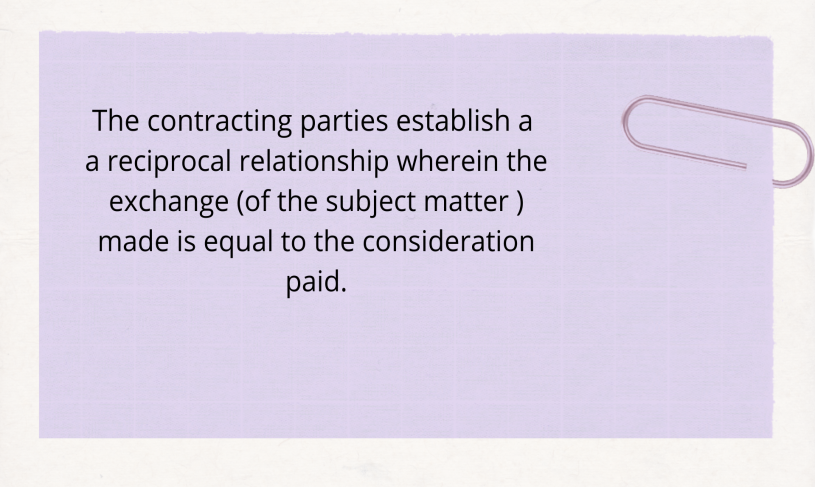
Definition: The commutative contract is one in which the contracting parties give and receive an equivalent or reciprocal value.

In other words, the contracting parties give and take something of equal value.

A common example is the contract of sale where the seller sells a thing and receives consideration equivalent to the thing he sold and the buyer pays the amount equivalent to the thing he wishes to purchase.

In a nutshell, an aleatory contract is one in which one party does not have to pay the other unless a specific event takes place. In a commutative contract, both the parties to the contract give and receive something similar or equivalent. In an aleatory contract, the premiums paid by the policyholder and the benefits by the insurer may not be the same. However, in a commutative contract, the values exchanged are similar or equivalent.

Conclusion

An aleatory contract is a contract where the exchange is uneven unlike a commutative contract, where the exchange is similar or equivalent. Insurance policy is a fitting example of an aleatory contract. The obligations of an aleatory contract are set off when a fortuitous event that is beyond the control of either party is triggered. In an aleatory contract, both the parties accept uncertainty, that is, the policyholder pays a premium to the insurer in the event an accident should occur while the insurer has to cover the policyholder by paying an amount that far outweighs the premium. An annuity contract, on the other hand, is known as a guaranteed risk-free retirement income. The idea behind an annuity contract is that an annuitant pays either a lump sum or a series of payments which after a point of time, ideally in retirement, receives regular payment. 

Like the advertisement comes with a warning, read the schemes and related documents carefully, understand the terms and conditions before purchasing a policy.

References


Students of Lawsikho courses regularly produce writing assignments and work on practical exercises as a part of their coursework and develop themselves in real-life practical skills.

LawSikho has created a telegram group for exchanging legal knowledge, referrals, and various opportunities. You can click on this link and join:

Follow us on Instagram and subscribe to our YouTube channel for more amazing legal content.

Download Now

Investment by a Non-Resident Indian (NRI)

0
Image Source:

This article is written by Tanya Gupta, pursuing Diploma in M&A, Institutional Finance and Investment Laws (PE and VC transactions) from Lawsikho.

Introduction

In the World Bank’s ease, India climbed 23 points by doing business index to 77th place and becoming a top-ranked country in South Asia for the first time and third among BRICS. Historically in India investment climates have never been so attractive. Easing the business process, removal of red tape and establishing a domestic consumer market are the efforts done by the government which all combine to give handsome returns on Non-Resident India’s investment. Various steps are taken to promote investment by Indians living abroad in India by the government of India. It has been taken up as a priority to promote investments by advising prospective investors including Non-Resident Indians on investment climate opportunities policies and producers. The government is now focusing on the Indians who live in foreign countries and their ability by investing in India and the Indian economy as India becomes the global community to invest.

What does NRI really mean? 

Before we move to the technicalities of the topic let us first understand who are NRIs? There is a lot of confusion about who is an NRI? Non-Resident Indians are specifically defined in two major laws in India that is the Income Tax Act 1961, and Foreign Exchange Management Act 1999. In the Income Tax Act, the NRI is determined on the basis of the number of days the person resides abroad. In Foreign Exchange Management Act the NRI is determined upon the intention of that person to reside abroad.  

According to the Income Tax Act, 1961

Non-Resident India is an individual who is not a resident of India yet a citizen of India or a person of Indian origin. Therefore, in order to figure out whether an individual is a Non-Resident Indian or not, under Section 6 of the Income Tax Act, his residential status is required to be determined.

An individual is said to be a non-resident in India if he is not a resident in India according to Section 6 of the Income Tax Act, 1961.

If an individual satisfies any of the following then he is deemed to be a resident in India in any previous year;

  • If an individual resides in India for a period of 182 days or more during the previous year or,
  • If he resides in India for 60 days or more during the previous year and 365 days or more during 4 years immediately preceding that year.

For example; Mr. Shah went to Canada for her graduation of three years from a reputed university. While studying his professor suggested doing a post-graduation course from the same university Upon the completion of the course the company offered him a permanent position. She worked there for the past four years which means he stayed out of India for nine years now so the above conditions are not fulfilled which makes him a non-resident.

Although the period of 60 days is substituted by 182 days as mentioned in the second point if an Indian citizen or a person of Indian origin visits India during the year. The same thing is also applicable to India who leaves India in any previous year as a crew member for the sake of employment.

An individual is said to be a not ordinarily resident in India in any previous year if such individual;

  • Has been a non-resident in India in nine out of ten previous years preceding that year or during the seven previous years preceding that year amounts to seven hundred and twenty-nine days or less or,
  • Manager of a Hindu undivided family has been non-resident in India in nine out of ten previous years  preceding that year or during the seven years preceding that years amounts seven hundred and twenty-nine days or less or,
  • Citizen of India or a person of Indian origin having total income excluding from foreign resources exceeding fifteen lakh rupees during the previous years for a period which amounts to one hundred and twenty days or more but less than one hundred and eighty-two days.

According to FEMA Act, 1999

An individual is said to be a non-resident according to the FEMA Act, 1999 if a person is a citizen of India but resides outside India.

According to the provision of FEMA, 1999 as contained in Section 2(v) person who is a resident in India means if he resides in India for a period of more than 182 days during the preceding year still there are few exceptions in which the above definition is not applicable;

  • If you stay out of India for the sake of employment.
  • If you have gone abroad to set up your business.
  • If you have gone abroad which explains your intention to stay outside India.

In such cases, a person is regarded as a person outside India(NRI) if he stays in India for more than 182 days.

A person which is resident outside India if he resides in India for 182 days or less than during the preceding year yet there are exceptions in which the above definition does not apply;

  • If an individual stays in India for the sake of employment.
  • If an individual comes to India for setting up a business.
  • If an individual comes to India for any reason which specifically clears the intention of residing in India for a certain period of time.

For example; If an individual is settled abroad and comes to India for a reason other than business or employment and has no such intention to stay in India then he is considered to be a resident outside India.

How can NRIs invest?

NRI investments may be paid in the following manner;

  1. Through inward from abroad directly.
  2. Through Non-Resident External (NRE) or foreign Currency Non-Resident or Non-Resident Ordinary (NRO) accounts indirectly.

All the applicable rules, regulations, laws along with RBI notifications and policies have to be in strict compliance with all these accounts, deposits and transfers mentioned above. It is very simple to open these types of accounts and very similar to opening a regular bank account and first requires a few documents for the KYC.

a) Non-Resident External Account

These are types of bank accounts in which NRIs are only allowed to open and maintain a rupees account. Banks and authorized dealers which are authorized by the RBI open and maintain such types of bank accounts. These can be saving accounts, current accounts.

In such accounts, there are strict constraints allowed.

  1. Transfer from NRE/FCNR accounts
  2. All interests accrued on the accounts or on the investments.
  3. Any maturity proceeds from investment.

In NRE accounts only local disbursements transfer to other NRE/FCNR accounts or investments in India are allowed. To make local payments in rupees the accounts can be withdrawn. There is an exemption from Indian Income Tax for interest earned on NRE accounts.

b) Foreign Currency Non-Resident Bank (FCNR) (CBI)

Only NRI’s in foreign exchange with the authorized dealers and banks authorized by the RBI are only allowed to maintain such types of accounts. Principal amount or return on investment is subjected to income tax act in such accounts.

In such an account currency cannot be converted into INR and it has to be maintained in foreign currency only. The FCNR account holder is allowed to avail loan against his account by the Reserve Bank of India. Though a loan cannot be taken for the following purposes.

  • Real estate investment,
  • Speculative purpose,
  • Re-lending,
  • Agriculture or plantation activities.

These types of accounts can be opened with the help of the following;

  • Traveller’s cheque.
  • Funds from an exciting FCNR account foreign currency notes.

c) Non-Resident Ordinary (NRO) 

Any person who lives outside India with an authorized dealer or bank can maintain this account.

Credit can be made in NRO accounts are as follows;

  1. Dues which are legitimate in India,
  2. Residents in India can make loans or gifts,
  3. Transfer from other NRO accounts,
  4. Any inward from outside India.

Debits that can be made in NRO accounts are as follows;

  1. Current Income abroad,
  2. Local payment,
  3. Transfer to other NRO accounts, 
  4. USP 1 million in one financial year,
  5. Any other bonafide transaction.

Cabinet approvals and DIPP amendments

In the FDI policy, there were two relevant amendments made by the cabinet on May 21, 2015. The first amendment was to amend the definition of NRI defined in FDI Policy so as to align it with the definition of NRI in the Citizenship Act which was approved by Cabinet and brought into force by the Department of Industrial Policy and Promotion. The concept of registration as a PIO cardholder with the concept of registration as an OCI Cardholder was replaced by the amendment of the Citizenship Act, 1955 in January 2015.

An individual resident outside India who is a citizen of India or is an Overseas Citizen of India cardholder within the meaning of Section 7(A) of Citizenship Act, 1955 is a Non-Resident India. Overseas Citizen of India cardholders is the persons of Indian Cardholders registered under a notification issued by the central government. The definition of NRI is aligned under two laws through the amendment which would bring consistency between exchange control regulations and the citizenship Act. Investment in Indian companies, partnerships and proprietary concerns, lending to Indian companies in INR and acquisitions of immovable property in India and a broad range of transactions by NRI are subject to change in definition.

The Second Amendment was to amend the relevant clause in the FDI Policy which states that investment by NRIs on a non-repatriation basis was approved by the cabinet and brought into force by DIPP would be considered as domestic investments. Investments by NRIs on a non-repatriation basis is dealt with separately under Schedule 4 under the Foreign Exchange Management

Regulations, 2000. This schedule differentiates investment by NRIs as foreign investment whether on a repatriation basis or on a non-repatriation basis. The amendment seeks to increase foreign investment on non-repatriation basis by NRI as a domestic investment so as to encourage the law and foreign investment.

The amendment in the simple language is that investment by NRI will be deemed to be domestic investment at par with the investment made by residents under Schedule 4 of FEMA Regulations. The consequence of this amendment is sectoral caps, pricing guidelines, a cap on coupon rate and investment by NRIs from an FDI perspective are subjected to restrictions that would not be applicable in the case of NRIs investing on a non-repatriation basis.

Investment by NRIs on the non-repatriation basis is a direct implication of this amendment and is immune from all sorts of FDI restrictions which give comfort and encourage NRIs to invest in India on a non-repatriation basis. While determining whether an Indian company is a foreign-owned company with 50% or more shareholding held by non-residents, investment by NRIs on a non-repatriation basis would not be included as another direct implication of this amendment. So, companies engaged in sectors subject to sectoral caps or specific conditions existing limitations would not apply in case of investment by NRIs on a non-repatriation basis from the perspective of downstream investment.

Conclusion

Either automatic or government-approved path any NRI is allowed to invest in India depending on the sector in which NRI is interested to invest and subject to exclusion of prohibited sectors. It is to be kept in the mind of NRI investors that Foreign Direct Investment is a capital account transaction and any violation of the regulations, rules and laws associated with it is critical and attracts penal provisions under FEMA. The Directorate of Enforcement, Ministry of Finance and the Government of India has the authority to investigate if there is any violation in the transaction under FEMA administered by RBI. Recent developments of various business schemes connect many more NRIs to invest in India.


Students of Lawsikho courses regularly produce writing assignments and work on practical exercises as a part of their coursework and develop themselves in real-life practical skills.

LawSikho has created a telegram group for exchanging legal knowledge, referrals, and various opportunities. You can click on this link and join:

Follow us on Instagram and subscribe to our YouTube channel for more amazing legal content.

Download Now

Nissan Motors India Private Limited’s Memorandum of Understanding with Ennore Port Limited

0
Image Source: https://rb.gy/4gqoip

This article is written by Kusuma Sai, pursuing Diploma in Advanced Contract Drafting, Negotiation, and Dispute Resolution from LawSikho.

Table of Contents

Introduction

In India, a Memorandum of Understanding is admitted as a Letter of Intent. It means where the two or more parties condense the harmony or framework to work or to complete the project. The Letter of Intent should be signed by contracting parties. The contracting parties involved in this Memorandum of Understanding are Nissan Motors India Private Limited and Ennore Port Limited. The main purpose of this article is to understand the Memorandum of Understanding between Nissan Motors India Private Limited and Ennore Port Limited. This article also covers the importance, benefits, contents and documents needed for a Memorandum of Understanding. This Memorandum of Understanding is very important to understand to avoid future conflicts that arise in the course of a contract.

About Nissan Motors India Private Limited (NMIPL)

Nissan Motors India Private Limited is a 100% subsidiary of Nissan Motor Co. Limited, Japan. It was incorporated under the Companies Act, 1956 in the year 2005. It is a global full-line vehicle manufacturer which sells more than 60 models under Nissan, Infiniti and Datsun brands.

About Ennore Port Limited (EPL)

Ennore Port Limited was initially formulated as a satellite port to the Chennai Port. Predominantly the purpose of the Port is to handle the thermal coal to meet the requirement of the Tamil Nadu Electricity Board (TNEB). The Port was equipped with immense chunks of land. The Port was incorporated under the Companies Act, 1956. This Port was declared a big port under the Indian Ports Act, 1908. It was incorporated as the Ennore Port Limited.

What is a Memorandum of Understanding?

A formal arrangement between two or more parties that have agreed to enter into a contract is called a Memorandum of Understanding. Generally, a Memorandum of Understanding is executed by government organizations, non-government organizations and sometimes by the corporates. The aggrieved parties should reach an understanding which is acceptable by each party in the first place and also crystalline information on the predominant attitude for each of the parties to prepare a complete and effective document of Memorandum of Understanding. Even though the Memorandum of Understandings is not binding legally they can include a clause that can be legally binding to the parties. Violation of the clauses mentioned in the agreement can result in the guilty party being liable. To make the Memorandum of Understanding legally binding, there are certain elements. They are as follows:

  • An offer.
  • Acceptance of the offer.
  • Legally binding intention.
  • Consideration. 

Why does Nissan Motors India Private Limited and Ennore Port Limited need a Memorandum of Understanding?

Nissan Motors India Private Limited is not willing to enter into a contract. There is a difference between a Memorandum of Understanding and a contract. The contract is binding in nature whereas the Memorandum of Understanding is non-binding in nature. Nissan Motors India Private Limited should export their cars through Ennore Port Limited only because the manufacturing plant is near to the Ennore Port. There is a condition put forward by Ennore Port Limited. The condition is that Nissan Motors India Private Limited should not export their products through other ports located in Tamil Nadu except Chennai Port. By agreeing to the condition, Nissan Motors India Private Limited had entered into a Memorandum of Understanding. To avoid future conflicts Nissan Motors India Private Limited and Ennore Port Limited had entered into a Memorandum of Understanding. 

The process involved in drafting a Memorandum of Understanding

Memorandum of Understanding possesses a very unique drafting process. The steps involved in drafting a Memorandum of Understanding is as follows:

1. Link the agreement to the initiative

Here initiative means the opportunity to act or take charge before others do. It determines the actual parties of the agreement/Memorandum of Understanding. It also elucidates the collaboration between the parties to implement the agreement and what each party can accomplish.

2. Develop the content of the agreement

Parties must agree to responsibilities, objectives, time frame of the project, coordination procedure. And also how the parties will authorize and pay for any costs incurred in the project. The process of the Memorandum of Understanding would preferably be open and transparent to all the parties to the agreement. 

3. Ensure Memorandum of Understanding is fit for purpose

Ensure that the Memorandum of Understanding is applied as per the aim of the contract to all parties to increase transparency. Make sure that the Memorandum of Understanding is drafted for the purpose of entering into the project. Having a legal representative’s review for elucidating the language used Memorandum of Understanding before it is signed by both the parties.

4. Execute and communicate the agreement

The formal agreement of collaboration must be conveyed to all the parties of the Memorandum of Understanding and the public, wherever possible. A copy of the Memorandum of Understanding should be posted publicly or it must be available for the public. A Memorandum of Understanding is examined and signed by each party.  

5. Review and adapting the Memorandum of Understanding

As the project develops, certain amendments can be made in the Memorandum of Understanding to incorporate relevant emerging clauses or agreements among the parties. The parties should regularly scrutinize the Memorandum of Understanding to scan its implementation and comprehensiveness. 

Contents of Memorandum of Understanding 

There are many contents that can be included but are not limited to certain contents in the Memorandum of Understanding. The following are the contents of the Memorandum of Understanding:

1. Scope of the Memorandum of Understanding

The purpose of the Memorandum of Understanding should be mentioned by the parties. If both the parties come to Understanding during the time of entry to a contract, then there is less chance of conflicts arising of conflicts. The Memorandum of Understanding prescribes the purpose and scope and is helpful when conflicts arise. 

2. Intended action

Memorandum of Understanding communicates meeting of will between the parties, specifying a willful common line of action, in place of a legal document. Both parties should have a common intention. 

3. Name of the parties

A Memorandum of Understanding should contain the name of the parties. A Memorandum of Understanding is not valid without the name of the parties.

4. Name of the project

The name of the project shall be mentioned in the Memorandum of Understanding. 

5. Responsibilities of respective parties

Each party must ensure that the responsibilities are fulfilled. The responsibilities of each party vary from project to project. Here are some of the responsibilities:

  1. The project shall complete within the specified time.
  2. Confidentiality shall be maintained by both parties.
  3. The parties shall ensure that the payment is made on time.
  4. The parties have the responsibility to check the quality of the products that are used in the project.
  5. The parties must follow the terms and conditions without breaching which are specified by the parties in the Memorandum of Understanding.

6. Length of the Memorandum of Understanding

The length of the Memorandum will be the time period of the Memorandum of Understanding. That means if the project is for 10 years, then the length of the Memorandum of Understanding will be for 10years.

7. Date of execution of the Memorandum of Understanding

The parties must disclose the date of execution of the Memorandum of Understanding. For example, if the Memorandum of Understanding is entered on the 28th of July, 2021 then the date of execution will be 28th July, 2021. 

8. Clause of termination of the Memorandum of Understanding

If any of the parties to this Memorandum of Understanding breaches the terms or conditions, then the other party can terminate the Memorandum of Understanding.

If the project has been completed on time, then the Memorandum of Understanding will terminate.

9. Contact information of both the parties

The address, contact number of both the parties are mandatory in the Memorandum of Understanding.

10. The possible dates for performance reviews

Both parties have the right to check the performance or improvements of the project.

11. Notice clause

If any dispute arises during the course of the project, the party shall send the notice to the other party without fail. 

12. Amendments

If any amendments are to be made, then the parties can amend necessary points to the Memorandum of Understanding with the consent of the other party.

Briefing of documents

A “briefing document” should be prepared to provide conditions and hypothesis for the Memorandum of Understanding as well as a crystalline attestation of the benefits to the other party. The document must include the following:

  1. Background of the proposed party.
  2. Summary statement of mission, purpose and scope of the Memorandum of Understanding.
  3. Reasons for using the Memorandum of Understanding form of agreement instead of other forms like contract or articulation agreement.
  4. Advantages to the party (who accepts the offer).
  5. Background of development of the partnership arrangement.
  6. A list of individuals working under the project.
  7. Consequences if Memorandum of Understanding is not pursued.
  8. Nature of the risk in entering into the Memorandum of Understanding.
  9. A copy of the signature page. 

Benefits of Memorandum of Understanding

1. Establishes a common intention

It is supreme that both parties understand each other’s objectives and goals. If there are no clear terms and effective communication, the business will fail. A Memorandum of Understanding would be a great asset to the business. So Memorandum of Understanding is appreciably beneficial. Parties must be able to simplify their requirements and expectations. Subsequently, this will initiate a common intention for future engagements.  

2. Providing a framework for future dealings

Memorandum of Understanding can settle the mind at ease. Paradoxically for proficient businesses also entering into a legal contract could be intimidating when the project is for a long period of time. If we put forward certain terms that have been set forth earlier in a document, it leads to a good framework for future dealings. Memorandum of Understanding might be used as a basis for the future contract. 

3. Reduces the risk of uncertainty

Business debates might be unsteady and uncertain at times. At the beginning of the relationship, there might be a misty relationship between the parties. There is nothing deficient other than contradicting the business partner overdetermined terms. Therefore, the Memorandum of Understanding contributes a substantial precaution to reduce the risk of uncertainty expectations and targets. The reduction of risk is beneficial to commercial partnerships and relations where the commitment is for a prolonged period. During the time of drafting the formal contracts, setting out prospects and ambitions is very beneficial to the parties to reduce the risk of uncertainty at the beginning of negotiations.

4. Records prior agreements

If any of the parties of an agreement retract any of the terms specified in the agreement then they can refer to the Memorandum of Understanding. In this case, Memorandum of Understanding is very beneficial as it records the terms and conditions of an agreement between the parties. Therefore, Memorandum of Understanding is helpful in the course of negotiation. Even though the document is not binding legally, it empowers safe communication and confidential information between the parties. For formation of partnerships Memorandum of Understanding is expressly a valuable document.

5. The ease of ending engagements

Contrary to the Memorandum of Understanding, a formal contract is binding legally. Even though Memorandum of Understanding eases a positive association between the parties, at the time of quitting or exiting the agreement a formal termination process should be followed. When compared to the Memorandum of Understanding, a formal contract is binding legally. If one of the parties is willing to exit the agreement it will be more difficult, complex and costly. 

6. Stamp duty

Substantially there is no need of paying the stamp duty on Memorandum of Understanding. Although, if a Memorandum of Understanding incorporates an agreement to purchase any property which is immovable and worth’s more than Rs. 100, it is compulsory to be stamped before producing it in court. The document for which stamp duty is paid is admitted as evidence in the court. If the document for which there is no payment of stamp duty, then it is not admitted as evidence by the court.

About Memorandum of Understanding between Nissan Motors India Private Limited (NMIPL) and Ennore Port Limited (EPL)

Ennore Port Limited had developed a Cargo-cum-terminal at a length of 35 acres. The development of Cargo-terminal had cost over Rs. 140 Crore which facilitates parking of 10,000 cars. This was the biggest car parking yard when compared to the other major ports. Whereas, Nissan Motors India Private Limited was aiming to expand their market share from 1.2% to 10%. Apart from the increase of market share, Nissan Motors wanted to carry on with its exploring opportunities for the expansion of the export base for India-built cars.

In 2008, Nissan Motors India Private Limited had entered into a Memorandum of Understanding. The Memorandum of Understanding had facilitated the export of 60,000 cars per annum. The Memorandum of Understanding was signed by Kenichiro Yomura (Managing Director and CEO of Nissan Motors India Private Limited) and M. A. Bhaskarachar (Chairman-cum-Managing Director of Ennore Port Limited) in the presence of Union Minister of Shipping, Road Transport and Highways T R Baalu. The validity of the Memorandum of Understanding is 10 years. 

Nissan Motors India will use only Ennore Port for 10 years to export cars from the Oragadam Manufacturing plant which is situated in Chennai. There is an important point that has been mentioned in the agreement. The note is that Nissan Motors India Private Limited must export their cars through Ennore Port only. Nissan Motors India Private Limited cannot export their cars through any other ports located in India. Other Ports include; L&T’s Kattupalli Port which is adjacent to Ennore Port and Krishnapatnam Port which is about 30km away from Ennore Port. 

In the event of failure of any of the conditions by Nissan Motors India Private Limited, Ennore Port can terminate the agreement. If Ennore Port fails to handle cars by giving a valid reason, then Nissan Motors India and Renault (Nissan’s Alliance partner) can export their cars through Chennai Port. 

Nissan Motors India Private Limited had started its business in September, 2010. It was named as the first motor company to use the port as a transportation gateway. 

In the year of 2009 Ennore Port Limited and Nissan Motors India Private Limited had entered into a new agreement. The agreement specifies that Nissan can relish concessions in the use of Wharf up to 60,000 units per annum at the rate of 0.36 per cent of the Wharfage for a car. Nissan Motors India Private Limited got a free parking space for a period of 15days starting from the date of execution of the agreement. Also, Nissan Motors India Private Limited got the first priority in handling the automobile units in Ennore Port Limited. 

Ennore Port Limited had provided a special berth space of 40 lakhs square meters to Nissan Motors India Private Limited for parking their vehicles. 

Nissan Motors India Private Limited has exported over 2.44 lakh cars to various countries like Africa, Europe and the Middle East in the year 2010, exported 14,000 cars in the year 2013 and more than 3.36 lakh cars in the year 2016. The cars which have been exported from Ennore Port Limited are Ashok Leyland, Ford, Honda and Toyota. 

Sample draft: Memorandum of Understanding

This Memorandum of Understanding is entered into by the Metonian Meteorological Service (MMS) and the Metonian Broadcasting Corporation (MBC), hereinafter referred to as “the Parties”. 

1. Background

This Memorandum of Understanding is entered into by the parties in recognition of the potential opportunities for the improved safety of the community through closer cooperation between the parties. The MMS is responsible for the provision of official severe weather warnings, and the MBC is responsible for the broadcast of these warnings to the general community. This Memorandum of Understanding provides a framework for effective collaboration between the Parties to ensure that warnings are received and understood by the public in the most effective way to minimize loss of life and property.

2. Definition of terms

2.1 In this Memorandum of Understanding, unless the contrary intention appears, the following definitions will apply: 

  • Business day – Any day that is not a Saturday, Sunday or public holiday. 
  • Commencement date – The date upon which this Memorandum of Understanding is signed by both parties. 
  • Dispute notice – A notice is given in accordance with clauses 7.2 to 7.8. 
  • Memorandum of Understanding – The Memorandum of Understanding is amended from time to time. 
  • Term –The term of this Memorandum of Understanding is set out in clause 7.1. 

2.2 In this Memorandum of Understanding, unless the context indicates to the contrary: 

  • Words importing persons include a partnership and a body whether corporate or otherwise. 

3. Legislative context 

3.1 The parties acknowledge that MBC’s undertakings under this Memorandum of Understanding will be subject to the MBC Governing Rules. MBC Governing Rules refers to all laws and MBC Board directions regulating or otherwise affecting the conduct of the MBC, including the National Broadcasting Act and the MBC’s editorial policies. 

3.2 This document is not intended to create legal relations or constitute a legally binding contractual agreement between the Parties. Nothing in this Memorandum of Understanding is intended to impose any legal relationship, rights, duties, sanctions or liability on any party or be the subject of litigation. 

4. Aim of the Memorandum of Understanding 

The aim of the Memorandum of Understanding is to ensure that the MMS and the MBC will work closely together to improve the safety of the community through a better flow of weather-related information, and to try to reduce the burden on both organizations of sharing information. 

5. Scope of the Memorandum of Understanding

5.1 This Memorandum of Understanding forms the understanding between the parties on the subject matter. Any previous Memorandum of Understandings are superseded by this Memorandum of Understanding.

5.2 The parties acknowledge there will be other broadcasters that may broadcast emergency information.

5.3 No other agreements or working arrangements entered into with third persons by the parties will be affected by this Memorandum of Understanding.

5.4 This Memorandum of Understanding applies to the provision and broadcast of severe weather warning information to the general public.

5.5 The parties acknowledge that warning messages are entirely separate from editorial, news and other content on the MBC networks. This Memorandum of Understanding has no effect whatsoever, expressed or implied, directly or indirectly, on MBC’s journalistic independence.

6. Joint undertakings 

6.1 The parties agree to undertake the following activities: 

(a) Identify opportunities to maximize the efficiency of information exchange between the Parties; 

(b) Share information that might lead to a better understanding of the way weather-related information is distributed and received by the public;

(c) Arrange regular senior operational meetings to discuss the organization and industry developments, future directions, community expectations, research and feedback;

(d) Arrange single points of contact at each organization through who contact information can be distributed and;

(e) Arrange annual senior briefings to discuss community warnings and seasonal forecasts to enable both organizations to plan for the receipt and distribution of warnings in the most efficient and effective way.

7. Terms of operation of this Memorandum of Understanding

7.1 This Memorandum of Understanding will begin on the commencement date and will continue until such time as it is terminated by the parties in accordance with clauses 7.8 and 7.9. 

Dispute resolution 

7.2 For the day-to-day operation of this Memorandum of Understanding, in the first instance, the parties will address any operational difficulties, disputes, issues or disagreements together in a transparent manner through open discussion. 

7.3 If a dispute cannot otherwise be resolved through open discussion, a party claiming that a dispute has arisen under this Memorandum of Understanding, between the parties or the way they are interacting, must give a Dispute Notice to the other party, specifying the nature of the dispute. 

7.4 A Dispute Notice may be withdrawn at any time by the party that gave the Dispute Notice. 

7.5 Within ten business days from the date of issue of the Dispute Notice, the representatives of each party will use their best endeavours to resolve the dispute between themselves at an operational level.

7.6 If the representatives of each party are unable to resolve the dispute within 20 business days from the date of issue of the Dispute Notice, the representatives of each Party will refer the dispute for resolution to their respective Managing Directors (or equivalent position holder). 

7.7 Even if a dispute is taking place, the parties to the dispute should make best efforts to continue to comply with this Memorandum of Understanding. 

Termination

7.8 This Memorandum of Understanding may be terminated by one party by giving two months’ notice to the other party. 

7.9 If a party does not agree to the termination, then the Parties agree that this will constitute a Dispute to be resolved in accordance with clauses 7.2 to 7.8

8. Length of the Memorandum of Understanding

This Memorandum of Understanding is entered with intention and may be modified by mutual consent of authorized officials from ___________. The period of this Memorandum of Understanding will end within 20 years from the date of execution of this Memorandum of Understanding. 

9. Costs

Unless otherwise agreed by the parties, each party will pay its own legal costs and other expenses for and incidental to the preparation, negotiation and completion of this Memorandum of Understanding.

The parties agree to the terms and conditions set forth above as demonstrated by their signatures as follows:

Signed for and on behalf of the Metonian Meteorological Service 

Signature [title of authorized signatory]:  

Name:  

In the presence of

Witness signature:

Witness Name:

Signed for and on behalf of Metonian Broadcasting Corporation 

Signature [title of authorized signatory]:

Name:

In the presence of 

Witness signature: 

Witness Name:   

Conclusion

In the world of business, Memorandum of Understanding takes an important role. In general, Memorandum of Understanding does not require any exchange of money. Broadly, the Memorandum of Understanding is not binding legally. Even if there is an exchange of money, a Memorandum of Understanding is considered a legally binding contract. Nissan Motors India Private Limited entered into a Memorandum of Understanding with Ennore Port Limited in the year 2008 by agreeing to export Nissan Motors India Private Limited vehicles to other countries through their port and is valid for 10 years. In the period of 10 years, NMIPL had planned to manufacture nine new models. Initially, they exported over 1,10,000 units of automobiles which included LCVs, cars etc. by the second half of 2010. 

References


Students of Lawsikho courses regularly produce writing assignments and work on practical exercises as a part of their coursework and develop themselves in real-life practical skills.

LawSikho has created a telegram group for exchanging legal knowledge, referrals, and various opportunities. You can click on this link and join:

Follow us on Instagram and subscribe to our YouTube channel for more amazing legal content.

Download Now

Medical evidence in sexual offences

0

This article is written by Yashaswi Srivastava, pursuing Certificate Course in Advanced Criminal Litigation & Trial Advocacy from Lawsikho.com.

Introduction

The advancement in science and technology has greatly influenced solving crime across the globe. From collecting biometrics of people to making a dead body speak through various tests and diagnosis, we have come a long way. However, this kind of help involves various other factors like; trained staff, forensic experts, trained police personnel who can handle documents with proper care and caution and most importantly providing adequate funds and supplies to facilitate such processes. With the increase in sexual offences, the importance of timely medical help and assistance becomes very crucial. In this article, we look at the various aspects of why medical assistance is crucial when a sexual offence is committed.

What is medical evidence?

Medical evidence is the use of medical expertise in collecting evidence with regard to a crime that has taken place. Now, there are two widely used terms when we talk about medical evidence. 

  • Forensic, and
  • Medico-legal.

Google describes forensic as ‘scientific tests or techniques used in connection with the detection of crime’. It collects, analyzes and preserves scientific evidence during the course of an investigation. On the other hand, among many definitions of medico-legal, with regard to offences, it is defined as a legal case requiring medical expertise when brought by the police for examination. 

It involves tests and diagnosis on documents both real and document and on humans. Examples of such tests would be; DNA analysis, trace evidence, bodily injuries, traces of substances etc. 

Importance of medical evidence in sexual offences 

Provisions regarding sexual offences are divided into majorly two parts; 

  1. Adults i.e., females over the age of 18 years,
  2. Children (hereinafter called adolescents) i.e., females under the age of 18 years.

The answer to the question as to what caused the death, what was the exact time when the person died, what kind of weapon was used can all be answered through medical expertise. The rules and regulations regarding adolescents and adults are different in cases of sexual offences. Consent is an important aspect when we come across tests like these. Adults for example have the capacity to understand the importance of these examinations and so their consent can be easily gained. On the other hand, the law strictly states that if an adolescent refuses to consent for such an examination before or anytime during the tests, the doctors must stop

then and there and she must be let go. The Hon’ble Supreme Court in the case of Samira Kohli v. Dr Prabha Manchanda and Another held that the doctor must inform the person giving the consent of the nature of the treatment, procedures, benefits of such examination and all the risks involved if any and that such consent is voluntary in nature. 

The court in the case of Mafabhai Nagarbhai Raval v State of Gujarat stated that unless there is something inherently defective in the medical report, the Court cannot substitute its own opinion for that of the doctor. Furthermore, the importance of medical evidence was highlighted in the case of Pawan v State Of Uttaranchal (now Uttarakhand) where the medical evidence proved beyond reasonable doubt that the victim died of a homicidal death and that she was raped before being murdered. In one case, an accused who was tried for the rape of a married girl who was below 16 years of age was not convicted due to the absence of corroborative medical evidence. 

Governing provisions in sexual offences

The adults are regulated under the Indian Penal Code, 1860 r/w the Code of Criminal Procedure 1973 and the Indian Evidence Act, 1872. The adolescents are regulated under the Protection of Children against Sexual Offences Act, 2012. A common point between the two statutes other than the fact that it deals with females is that in both of them, the name of the victim is concealed. This is to protect the victim’s dignity and identity from getting tarnished in the public domain. The medical provisions in sexual offences are also governed under the Indian Medical Council Act, 1956. 

  1. Indian Penal Code, 1860- Sections 375 to 376E of the stated code defines and lays down offences and punishment for offences of rape. 
  2. Criminal Procedure Code, 1973- Section 53A(1) states that examination of a person accused of rape shall be done by a medical practitioner whereas medical examination of a rape victim is governed under Section 164A. Consent for such examination under this Section is primarily important. 
  3. A medical practitioner in the aforementioned Section must be one who is qualified under Section 2(h) of the Indian Medical Council Act, 1956. 
  4. Amongst the other important provisions regarding rape in Evidence Act, 1872 one is Section 45 which is the opinion of the experts and Section 53A which states that previous sexual experience is not relevant in rape cases. 
  5. Under Section 27(4) of the POCSO Act, 2012 states that the medical examination of a child shall be conducted by a woman doctor in the presence of her parents or guardian or in the absence of the two in the presence of a female nominated by the head of the medical institution. 

Role of a medical practitioner

It is noteworthy that when we talk about medical evidence, the role of a medical practitioner becomes primary and extremely crucial. It is of such level that one tiny mistake can send an innocent person to jail or can even leave the victim deprived of justice. They perform a dual role

in such a situation. One is to provide psychological support and medical treatment to the victim and the second is to assist in collecting evidence and documenting them. 

Under Section 357C of the Code of Criminal Procedure, 1973, all hospitals, public or private are bound to inform the police about any rape incidents that appear for medical attention before them and they are must immediately treat such victims free of cost. The following are the steps that they should follow when such a person knocks on the door;

➢ Providing first-aid to the victim,

➢ Providing them information about examination and collection of samples,

➢ Giving information about how the incident took place, 

➢ Medical examination,

➢ Age estimation test when requested by the investigating agency,

➢ Collection of evidence,

➢ Documenting those evidence,

➢ Sealing, packing and labelling them, 

➢ Treating any kind of injuries,

➢ Tests for diagnosing any STDs or pregnancy,

➢ Psychological counselling.

Role of an investigator

When the matter of medical and forensic evidence arises, one cannot neglect the role played by an investigator. It is because the investigator is the first person who reaches the crime place and gets hold of all of the available evidence at the crime scene. In cases where the victim has lodged an FIR with the police, it is then the responsibility of the investigator to ensure that the victim does not wash or change her clothes before going through a medical examination with the registered medical practitioner. Caution and extreme vigilance are needed by the investigator while he/she is collecting evidence. In case of an accused of a rape case, it is important to take him immediately for medical examination. 

Medical evidence found in cases of sexual offence

There are different types of medical evidence that are found while examining a rape victim and rape accused. It further differs when a rape victim is an adolescent and when she is an adult. Factually, genital injury or non-genital injury occurs in about only 50% of rapes of females. Ideally, the aim of the doctors who conduct a medical examination of a rape victim should be: 

  1. Medical tests and treatment of bodily injuries, and most importantly prevention of pregnancy and STDs. 
  2. Providing solutions in case pregnancy is unavoidable. However, the Medical Termination of Pregnancy Act, 1971 allows for termination of pregnancy up to 20 weeks of pregnancy. 

In one of the leading cases, the Bombay High Court allowed abortion of a 24-week old foetus because the pregnancy affected the mental health of the mother. 

  1. Collection of forensic evidence on the person of the female including her clothes and any other item she had on her when the offence was committed. It also includes the assessment of the place where the offence took place. 
  2. Psychological evaluation is another important aspect that doctors should take care of. Reaction after the offence differs from victim to victim. The most witnessed reaction is weeping, trembling with shock or quiescence or screaming. Others may include smiling which is basically a shock coping mechanism or even talkativeness. 
  3. Recommendation for counselling sessions for crisis management and psychological support must also be made. 

As seen in the aforementioned points, there should be a specialized team of doctors at work. Every hospital should have a psychologist who can understand and calm the victim when she is brought for her examination along with a forensic expert and a medical practitioner u/s 2(h) of the Indian Medical Council Act, 1956. These points become more pertinent in cases where the victim is a minor. 

Guidelines for forensic medical examination in sexual assault cases

The Central Forensic Science Laboratory Directorate of Forensic Science Services which operates under the aegis of the Ministry of Home Affairs, Government of India released a fresh set of guidelines for forensic medical examination in sexual assault cases in 2018. A summary of these guidelines is as under: 

  1. Consent is primary when it comes to the examination of a victim. A medical practitioner has to inform the victim of various tests involved in such medical examination and the benefits of such examination. Refusal to give consent will not mean denial to give examination. The matter must be handled with utmost caution when the victim is an adolescent.
  2. Detailed information should be given to the victim in case of an adult and if she is incapable of understanding the procedure then to her guardians/parents or if the victim is a minor then to her family of the tests and various procedures involved in a medical examination.
  3. A two-finger test is not allowed.
  4. A medical practitioner or his/her team must refrain from commenting about the victim’s past sexual experiences or any statement that body shames the victim.

Factors that determine the nature of forensic evidence

There are three major factors that determine the nature of forensic evidence collected. These are:

  1. Acts involved in sexual violence.
  2. The time-lapse between the act done and the examination. 
  3. If the victim bathed/washed/changed her clothes after the act or not.

Specimens and samples to be collected

According to the 2018 guidelines, the following samples/specimens should be collected and the purpose of collecting them. For most of them, the aim is to have evidence of DNA profiling and the presence of semen. 

  1. Clothes- Detection of blood, saliva, semen, vaginal secretion etc. on clothing and identification of the victim or accused by DNA profiling.
  2. Sanitary pad/tampons- To detect the presence of spermatozoa or semen and identification of accused by DNA profiling.
  3. Condom- Presence of semen (inner surface) and vaginal epithelial cells (outer surface).
  4. Evidence on the body- Presence of body marks, scratches, injuries, bite marks, redness etc.
  5. Head hair.
  6. Public hair.
  7. Vulva swab
  8. Vaginal swab.
  9. Cervical swab.
  10. Anal/rectal swab.
  11. Oral swab- To detect oro-genital contact between the victim and the accused.
  12. Penile swab and urethral swab- To corroborate penovaginal contact between the accused and the victim.
  13. Smear slides/vaginal, cervical, anal oral etc.- To detect the presence of semen.
  14. Nail clippings- To establish physical contact between the victim and the accused.
  15. Urine sample- For pregnancy test.
  16. Vaginal wash and aborted foetus (if any)- For DNA profiling and to detect the presence of semen.
  17. Blood- To detect the presence of alcohol and drugs and blood grouping and DNA profiling 

Collection of the above samples within 24 hours of the commission of the crime is suitable for easy collection and preservation of evidence. Some of the evidence may vanish after 24 hours e.g., oral swab collection. In the case of S P Kohli v High Court of Punjab & Haryana, the Supreme Court noted that examination of smegma loses all importance after 24 hours of sexual intercourse. 

In the case of Rafiq v State of Uttar Pradesh, it was stated by the Hon’ble Supreme Court that the absence of injury marks does not always mean the sexual act was committed with the female’s consent. Additionally, it is pertinent to note that collection of all this evidence is important and just collecting one or two of these samples is not sufficient. 

Storage and preservation of evidence

  1. Dry evidence such as clothes, tampons, sanitary napkins etc. must be air-dried before packing them for the forensic laboratory. They should not be sun-dried or with a hairdryer.
  2. Swabs and their smear slides should also be air-dried before packing and they should be stored at room temperature.
  3. The specimens of hair and nails should be collected and stored on a white butter paper sheet which should be properly sealed and labelled.
  4. Foreign hair or clumps of hair should also be sealed, packed and labelled separately. 
  5. Vaginal wash/urine should be collected and stored in a different leak-proof sterile container at a room temperature of 4°C without any kind of added preservatives.
  6. Blood samples should be collected and stored at 4°C and should be carried in refrigerated conditions. 

Important instructions for medical practitioners

  1. Maintaining the integrity of the samples collected is important. It should not be compromised.
  2. Protective gears such as gloves, masks, aprons, and headgears should be worn to avoid contamination.
  3. Any kind of sneezing, coughing in and around the area where the examination is taking place must be avoided.
  4. Sterile or disposable devices for collecting samples should be used.
  5. Evidence that is biological in nature should not be exposed to high temperatures.
  6. All the evidence should be packed properly and carefully. They all should be labelled clearly. There should be no scope for any kind of ambiguity. Polythene bags should not be used.
  7. It is pertinent to observe, maintain and document the chain of command.
  8. Once the evidence is packed, it should have the following details clearly written over it; 
    • Name of the examinee.
    • Description of the evidence collected.
    • Date, time and place of evidence collected.
    • MLR No./PMR No. 
    • FIR No. 
    • Name of the police station. 
    • Name and signature of the medical officer under whose supervision the examination was conducted.
  9. All forms duly signed in the stated guidelines should be sent along with the samples.
  10. The attested specimen seal and signature should also be sent along with the evidence.
  11. The registered medical practitioner should use the Sexual Assault DNA Evidence Collection Kit (SADECK) for the purpose of collecting evidence. 

Critical analysis

Duly examining a rape victim helps medically build a strong case against the accused. Medical examination in the Nirbhaya Case was conducted while the victim was alive struggling for her life. Though she died, evidence collected from the person of her assisted in ensuring capital punishment for the perpetrators. Much of the above-listed evidence loses its value after a certain point in time which makes it more necessary to record what they have to say about the incident that took place. Consent of the victim is of utmost importance. If she refuses to appear for the medical examination at the time, she must be persuaded and should be made to understand the importance of this medical evidence. Therefore, you want those blood stains and shattered glass pieces to speak, you’ve to make sure they are spoken too soon otherwise your case will go down the drain if they are kept silent for long.

The 2018 guidelines are available only for females right now. However, victims of rape are not just female, they are men mostly found in prisons and people who recognize themselves under the LGBTQ+ community. We have neglected them for a very long time and now is the time to understand and sensitize ourselves and the system towards these victims also. 

These guidelines could provide concrete support for genuine rape victims in getting justice. However, what lacks is implementation and funding. Irrespective of these impediments, efforts are made by professionals and organisations to provide adequate support with regard to forensic evidence collection and medical support systems. 


Students of Lawsikho courses regularly produce writing assignments and work on practical exercises as a part of their coursework and develop themselves in real-life practical skills.

LawSikho has created a telegram group for exchanging legal knowledge, referrals, and various opportunities. You can click on this link and join:
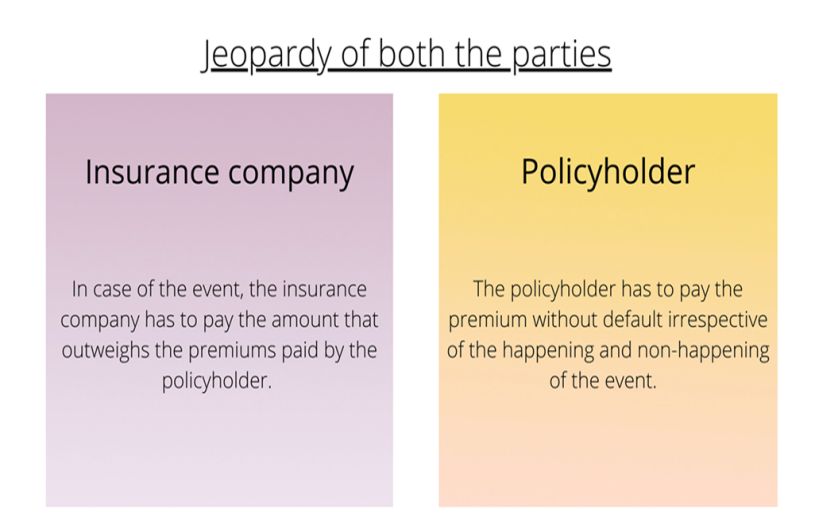
Follow us on Instagram and subscribe to our YouTube channel for more amazing legal content.

Download Now

Blog competition winner announcement (Week 1st June 2021)

0
winner
Image source - https://bit.ly/2WVMFfR

So today is the day! We are finally announcing the winners of our Blog Writing Competition for 1st  week of June 2021 (From 31st May 2021 to 6th June 2021). 

We’d like to say a big thanks to everyone for participating! It has been a great pleasure receiving your articles on a different legal topic, they were all amazing! 

And now we’d like to congratulate our top 5 contestants, who become the undoubted winners. They will receive Prize money of Rs 2000, LawSikho store credits worth Rs. 1000 and a Certificate of Merit from team LawSikho.

They will also get an opportunity to intern at iPleaders under the direct mentorship of Ramanuj MukherjeeAbhyuday AgarwalHarsh Jain, and Komal Shah. Their articles will get published on iPleaders blog (India’s largest legal blog). Click here to see other perks available to them.

Their entries (see below) received maximum marks based on the average marks given by the panel of editors, and have been crowned the winners!

S.no

Name

About Author

Article

1

    Oruj Aashna

Intern

What to do if someone has a nude picture/video of you

2

    Sabaat Fatima

Intern

Challenges faced by foreign banks entering India

3

    Deepa Rishi

Guest Post

Order 30 of Civil Procedure Code: Suits by or against firms

4

      Ishita Goel

Guest Post

Role of directors and managerial remuneration under Company law

5

      Anagha S S

Guest Post

Services covered by the Consumer Protection Act, 2019

Meet our next 5 contestants who made it to top 10 here. They will receive a Certificate of Excellence from team LawSikho.

They will also get an opportunity to intern at LawSikho under the direct mentorship of Ramanuj MukherjeeAbhyuday AgarwalHarsh Jain and Komal Shah. Their articles got published on iPleaders blog (India’s largest legal blog). Click here to see other perks available to them.

S.no

Name

About Author

Article

6

    Mridul Tewari

Student pursuing Certificate Course in Arbitration: Strategy, Procedure and Drafting 

from 

LawSikho

Case analysis : Hindustan Construction Company Limited & Anr. v. Union of India & Ors

7

    Shreya Singh

Guest Post

Backlog of pending cases : a milestone to achieve

8

    Pranav Sethi

Intern

Observing the demand for Tocilizumab in India as a valid ground for questioning the centre by the Delhi High Court 

9

Sonali

Student pursuing Certificate Course in International Commercial Arbitration and Mediation 

from 

LawSikho

Arbitrating environmental disputes : a critical analysis 

10

    Adv. Vaibhav 

     Shrivastava

      Guest Post

Judicial response to police reforms in India and their implementation

Click here to see all of the contest entries. Click here to see our previous week’s winners.

Our panel of judges, which included editors of iPleaders blog and LawSikho team, chose the winning entry based on how well it exemplified the entry requirements.

Certificates will be sent on the email address given by the contestant while submitting the article. The contestants have to claim their prize money by sending their account details as a reply to the mail in which they received their certificate within 1 month (30 days) of the date of declaration of results and not afterwards. 

For any other queries feel free to contact Vanshika (Senior Managing Editor, iPleaders) at [email protected]

LawSikho credits can be claimed within twelve months from the date of declaration of the results (after which, credits will expire).

Congratulations to all the participants!

Regards,

Team LawSikho

Download Now

Filing of a foreign decree and the limitation period

0
Image source - https://bit.ly/3ipnmP9

This article is written by Mehreen Garg and Tanya Srivastava.

Introduction 

“As India becomes a global player in the international business arena, it cannot be one of the few countries where the law of limitation is considered entirely procedural.”

While India’s presence in the global market is undeniably growing, the need to ensure foreign parties that they are protected under the authority of Indian courts in terms of the execution of foreign judgments obtained through foreign courts in the event of a dispute has become increasingly pressing.[Section 2(5) of the Code of Civil Procedure defines foreign courts as the courts outside the territory of India which have neither been established nor continued under the authority of the Indian Central Government]. India is not a signatory of the Hague Convention on the Recognition and Enforcement of Foreign Judgments in Civil and Commercial Matters yet.

India, however, does have bilateral treaties with multiple countries for enforcing reciprocity in the execution of judgements and decrees. At the moment, India has a bilateral treaty with numerous nations such as Fiji, Aden, the Federation of Malaya, Bangladesh, Trinidad and Tobago, Papua New Guinea, New Zealand, the United Kingdom, Hong Kong, Singapore and the Cook Islands and the Trust Territories of Western Samoa; the United Arab Emirates is the newest addition to the list (as declared by the Ministry of Law and Justice of India via the Official Gazette of India as on 17th January 2020). With the existing bilateral treaty with these countries, the decrees and judgements passed in these nations become executable within the Indian territory, having the same effect as if they were passed by a local District Court in India, as long as the decree or judgement is in accordance with Section 13 of the Code of Civil Procedure (Algemene Bank Nederland Nv vs Satish Dayalal Choksi, AIR 1990 Bom 170).

This article aims to understand and analyse the limitations for the filing of an application for the execution of the foreign decree or judgement passed in a country which has a bilateral treaty for executing reciprocity in the execution of judgements and decrees in India.

Sources of Law

  1. Legislation: The principal statute governing and regulating foreign execution of judgements and decrees in India is the Indian Code of Civil Procedure (1908). It is Section 13 and Section 14 of the CPC which lay down the mechanism for recognizing and enforcing foreign judgements in India. However, it is Section 44 and Section 44A of the CPC that talk about the execution of foreign judgements from reciprocating territories. With regards to the applicability of S.44A of CPC, in the case of Middle East Bank Ltd. v. Rajendra singh Sethia, the court passed the decision that even for a foreign judgement to be enforced in India, it is essential for it to be executed under S.44A of CPC. The court also concluded that for the judgement to be executed under the S.44A, the judgement must be conclusive within the meaning of S. 13 of the act. However, for a decree or judgement from a reciprocating territory to be executed under S. 44A, the decree must be executing an amount of money which is to be paid (this does not include taxes, fines or penalties). 

With respect to The Limitation Act (1963), Article 136 declares that for the execution of any decree (other than a decree granting a mandatory injunction) or order of any Civil Court, the period of limitation is twelve years. This period begins when the decree or order becomes enforceable. However, it is evident from the wording of this provision that it only deals with decrees that are passed by Indian courts, this is additionally confirmed because a Civil Court is not the same in a foreign jurisdiction. If for an application there is no specific period of limitation provided in the Act, the residuary provision of Article 137 is applied. The period of limitation as prescribed under this Article is three years, the period begins to run when the right to apply accrues. 

  1. Judicial Precedents: The court in Maloji Nar Singh Rao v Shankar Saran found that a foreign decree which has not been obtained by a superior court from a reciprocating territory will not be allowed to be executed within the territory of India unless a new suit is filed where the before obtained foreign decree is merely used for its evidentiary value.
  2. Bilateral Treaties: India has existing bilateral treaties with multiple countries for the enforcement of executing foreign judgements and decrees. As mentioned previously, Fiji, Aden, the Federation of Malaya, Bangladesh, Trinidad and Tobago, Papua New Guinea, New Zealand, the United Kingdom, Hong Kong, Singapore and the Cook Islands and the Trust Territories of Western Samoa and the latest being the United Arab Emirates.

Madras High Court on the issue

Section 44A was added to the CPC in 1937 by Act No. 8, before which, any foreign decree could not be executed in India, the only option available was that a suit could be filed on the grounds of a judgment passed by a foreign court. In 1966, the Madras High Court addressed the issue of whether Section 44A provides not just the mechanism of executing a foreign judgment but also the period of limitation in the case of Sheik Ali vs Sheik Mohamed. The court in this case was of the opinion that the lone purpose of Section 44A was to apply and make the process of execution of Indian decrees similarly applicable to the execution of foreign decrees also. Additionally, the court ruled that Article 136 of the Limitation Act (1963) does not apply to the execution of a foreign decree under Section 44A.

Article 136 of the Limitation Act claims a period of twelve years for the execution of any decree (other than a decree granting a mandatory injunction) or order of any civil court. The Article prescribes that this limitation period starts when the decree or order becomes enforceable. Instead of this, the court declared that the residuary provision is applicable; it provides that limitation will be three years from the time “when the right to apply accrues”. The right to accrue occurs when a certified copy of the obtained foreign decree is filed in a District Court (there is no limitation for the filing of such foreign decree, but a decree can not be executed if it’s enforcement is barred by limitation in the cause country).

Punjab and Haryana High Court on the issue

The issue of limitation on the execution of a decree passed by a court in a foreign nation was addressed again in the judgement passed in the case of Lakhpat Rai Sharma vs Atma Singh by the Punjab and Haryana High Court in 1970. The court in this case interpreted Section 44A and suggested that in it’s effect, a foreign decree should be treated like an Indian decree for all purposes, implying that, the limitation period of the execution should be equivalent to twelve years from the date of passing of the decree. This view contradicted the judgement passed by the Madras High Court and made it even more challenging to interpret Section 44A. 

Supreme Court on the issue

The Supreme Court, on the 17th of March 2020 tried to settle the concerns of various High Courts throughout the country which were ridden with conflict regarding the limitation period of filing a foreign decree passed by a superior court of a reciprocating territory. Giving regards to both the contradicting opinions of both the Punjab and Haryana High Court in the case of Lakhpat Rai Sharma v. Atma Singh, as well as Madras High Court in the case of Sheik Ali vs Sheik Mohamed the Supreme Court attempted to settle the confusion with the case Bank of Baroda vs. Kotak Mahindra Bank

The court declared that upon applying S.47 of CPC, it becomes evident that S.44A of CPC has nothing to do with the period of limitation. The Supreme Court also set aside the judgement of the Madras High Court in the case of Sheik Ali v. Sheik Mohamed, declaring that the date on which a person files a certified copy of a foreign decree is not the starting date of the limitation period. However, the Supreme Court did not completely disregard the views on the Madras High Court on this issue, it kept weightage of the following view of the Madras High Court:

“…(19) To sum up our conclusions, we are of the view that Section 44-A(1) is confined to the powers and manner of execution and has nothing to do with the law of limitation. The fiction created by the Sub-Section goes no further and is not for all purposes, but is designed to attract and apply to the execution of foreign judgments by the District Court its own powers of execution and the manner of it in relation to its Decrees, without reference to limitation.”

The court, to settle the debate on the issue of the starting point of the period of limitation, further stated two possible situations that could arise for the application of the given issue. The first being the decree-holder failing to attempt to execute the obtained decree in the cause country in accordance with the limitation law of the said court, where the court claims that the limitation period starts from the date of passing of the decree in the reciprocating territory (cause country). Hence the declaration of the court that the time of limitation of a money decree in India stands to be 12 years and 6 years for England. However, it can be more than 12 years for some countries as well, hence, the court found that “40…the limitation would start running from the date the decree was passed in the cause country and the period of limitation prescribed in the forum country would not apply. In case the decree-holder does not take any steps to execute the decree in the cause country within the period of limitation prescribed in the country of the cause, it cannot come to the forum country and plead a new cause of action or plead that the limitation of the forum country should apply.” 

Secondly, the court refers to a situation that may possibly arise where the decree-holder does try to execute the obtained decree well within the specified period of limitation of the cause country but the decree is only partially satisfied. The court decided that in such a circumstance, the right to file using S. 44A of the CPC is applicable after the cause court finalizes the proceedings to be executed. Once this step is taken care of, the decree-holder is to file the certificate and a certified copy of the foreign decree in the Indian Court within a period of three years.

Conclusion and Analysis

The judgement in the case of Sheik Ali v. Sheik Mohamed was passed in the year 1966 and in the case of Lakhpat Rai Sharma vs Atma Singh in the year 1970. Almost 50 years later, the Supreme Court passed its judgement, settling the debate on the issue of the period of limitation for decrees passed in foreign courts. While this case answered a lot of questions, it raised some new ones too. In its 193rd report, the Law Commission proposed an amendment in the Limitation Act (1963), aiming at an addition of a specific provision dealing with the aspect of limitation for foreign decrees. A separate provision would help fill the gap in the statute and put an end to all ambiguities, and thus such a gap should have been filled or a solution should have been introduced in the form of an amendment. 

The Supreme Court in this case states that the Law of Limitation is supposed to be procedural law. Similarly, the Delhi High Court in NNR Global Logistics Shanghai Co. Ltd. Vs. Aargus Global Logistics Pvt. Ltd declared in its judgement that the Law of Limitation is procedural law, upholding its argument by citing 193rd report of the Law Commission of India:

Transnational Litigation -Conflict of Laws – Law of Limitation’ discussed how in the context of expansion of international trade it has become necessary to take notice of the fundamental changes in the law of limitation in all common law countries. While recommending that India should adopt the practice in civil law countries, it was pointed out that as of now the law of limitation was considered in India as part of the procedural law and not the substantive law”. 

The Supreme Court in Bank of Baroda vs. Kotak Mahindra Bank had also found that Article 136 of the Limitation Act is only concerned with the decrees passed in Indian courts and hence will not be applicable to foreign decrees. Hereby, arguably implying that this provision should be applicable to petitions pending execution.

This judgement given by the Supreme Court seems to raise a paradoxical situation where the question arises that which article of the Limitation Act will be applicable in an executing petition, in case the court while dealing with an executing petition declares Article 136 to be non-applicable. On the other hand, according to the judgement, Article 136 would be only applicable to decrees obtained in the domestic court and hence would not be applicable on the pending petitions which seek to enforce a foreign decree. These are some aspects of the judgement that still need clarification. 

The Supreme Court tried to settle the debate regarding the limitation period of execution of foreign decrees. However, analysing the paradoxical situation created by the same judgement, we can say that the judgement was straightforward but it left some questions unanswered, and hence it will fall upon the various courts throughout the country to interpret this Supreme Court judgement to the best of their applicability, till the Supreme Court decides to comment on the issue again. 


LawSikho has created a telegram group for exchanging legal knowledge, referrals, and various opportunities. You can click on this link and join:

https://t.me/joinchat/J_0YrBa4IBSHdpuTfQO_sA

Follow us on Instagram and subscribe to our YouTube channel for more amazing legal content.

Download Now

Animal Rights with reference to animal ambulances in India

0
Image source - https://bit.ly/3joKSuH

This article is written by Saurav Narayan, intern of RTI Cell, iPleaders.

Introduction

India has a diverse and rich biodiversity. Some endangered and uncommon species, such as the Royal Bengal Tiger and the Great Indian Rhinoceros, call it home. Animals, like humans, have the right to live freely. It is also our responsibility to ensure that their rights are protected. In India, there are a number of animal laws that aid in this endeavor.

Animals are sacred in India, according to tradition. In ancient days, ahimsa, or nonviolence against animals, was the standard. As a result, vegetarianism became the norm among Indians. Even now, a sizable portion of the Indian population follows the vegetarian diet. As a result, India has enacted fairly stringent animal protection legislation. The Apex Court in the State of Karnataka And Anr vs. Dr. Praveen Bhai Thogadia observed that:

“The chore of religion based upon spiritual values, which the Vedas, Upanishad, and Puranas were said to reveal to mankind seems to be – “Love others, serve others, help ever, hurt never” and “Sarvae Jana Sukhino Bhavantoo.” Ownership in the name of religion, whichever it be or at whosoever’s instance it be, would render constitutional designs countermanded and chaos, claiming its heavy toll on society and humanity as a whole, maybe the inevitable evil consequences, whereof.”

In this article, I will be discussing animal rights and Constitution, animal rights and Penal Code, animal rights and other laws, the recent judgment of High Courts, and animal ambulance.

Animal Rights and the Constitution

Article 48 A of the Indian Constitution talks about environment protection and improvement, as well as forest and wildlife preservation. The state will work to maintain and improve the environment, as well as the country’s forests and wildlife.

Article 51 A(g) of the Indian Constitution talks about compassion for all living animals as a fundamental duty of every Indian citizen.

While they are not directly enforceable in Indian courts, they establish the framework for animal protection legislation, policies, and state directives at the Central and State levels. Furthermore, they may be enforced in courts by using a broad judicial interpretation to bring them within the scope of Article 21’s judicially enforceable fundamental right to life and liberty.

Animal Rights and the Indian Penal Code

It is illegal to kill or maim any animal, especially stray animals which are explained under Section 428 and 429 of the Indian Penal Code. The punishment for causing mischief by killing, poisoning, maiming, or rendering useless any animal or animals worth ten rupees or more is outlined in Section 428 of the Indian Penal Code. Simple or rigorous imprisonment for a duration of up to two years, a fine, or both are possible punishments for such acts/offences. Section 429 of the IPC, on the other hand, deals with the punishment for the same type of offence, but for animals worth fifty rupees or more. It must be reported to the local police station as soon as possible. In this situation, the punishment will be either imprisonment for a time up to five years or a fine, or a combination of the two. Sections 428 and 429 of the Indian Penal Code make it a cognizable offence.

Animal Rights and other laws

A slaughterhouse is the only site where an animal (including poultry) can be slaughtered. Animals that are sick or pregnant are not to be killed. (Chapter 4 of the Food Safety and Standards Regulations, 2011, and Rule 3 of the Prevention of Cruelty to Animals (Slaughterhouse) Rules, 2001.) 

Neglecting an animal by depriving it of adequate food, water, shelter, and exercise, or by keeping him chained/confined for lengthy periods of time, is punished by a fine of up to 3 months in prison, or both. (Prevention of Cruelty to Animals Act (PCA) 1960, Section 11(1)(h).)

 It is illegal to train and use bears, monkeys, tigers, panthers, lions, and bulls for amusement in circuses or on the streets. (PCA Act, 1960, Section 22(ii).)

It is a criminal offence to organize, participate in, or incite an animal fight. (PCA Act, 1960, Sections 11(1)(m)(ii) and 11(1)(n).)

 Cosmetics that have been tested on animals are prohibited, as is their import. (1945 Drugs and Cosmetics Rules, Rules 148-C and 135-B.)

Teasing, feeding, or disturbing zoo animals, as well as littering the zoo grounds, is a crime punishable by a fine of Rs. 25000 or up to three years in prison, or both. (Wildlife (Protection) Act of 1972, Section 38J.)

Disturbing or destroying eggs or nests of birds and reptiles, or chopping a tree containing such nests, or even attempting to do so, is considered hunting and carries a fine of up to Rs. 25000, or a sentence of up to seven years in prison, or both. (Section 9 of the 1972 Wildlife (Protection) Act.)

Under two Central Acts, it is illegal to transport or carry animals in or on any vehicle in any manner or position that causes discomfort, agony, or suffering. (Prevention of Cruelty to Animals (Transport of Animal) Rules, 2001, and Motor Vehicles Act 1978, Section 11(1)(d).)

Recent judgment/order of High Courts on Animals Rights

The Kerala High Court recently took a Suo Motu petition to monitor state action in reported cases of animal cruelty and in the prevention of animal cruelty. Following that, notices were sent to the Centre, the States, and the Animal Welfare Board of India, in that order.

This comes after Justice Jayasankaran Nambiar wrote to the Chief Justice of India, pleading with him to investigate a news story that three kids were involved in the inhumane killing of a dog named Bruno on a beach in Thiruvananthapuram. Even though a police report had been filed in the instance, the letter stressed that prosecution in similar cases was rarely purposeful and fast.

The letter’s main concern was that Indian animal protection laws were based on the assumption that humans were superior to all other species.

It further stated that the time has come to pressure the government and its agencies to take aggressive action to protect animal rights. It had gone into detail about various cases in which the courts had affirmed similar rights for the welfare of animals.

The Suo Motu proceedings were eventually titled In Re: Bruno in honour of the unfortunate dog who died as a result of three youngsters inhumane behaviour.

A recent landmark judgment of the Delhi High Court held that community dogs (stray or street dogs) have the right to food, and citizens have the right to feed them. However, when exercising this right, care and caution should be exercised to ensure that it does not infringe on the rights of others or cause any harm, hindrance, harassment, or nuisance to other individuals or members of society.

Delhi High Court further stated that Article 21 establishes the Right to Life, stating that no one’s life or personal liberty may be taken away except in accordance with legal procedures. The Article has been dubbed the “procedural Magna Carta for the Protection of Life and Liberty.” Not only does the Article protect human life, but it also protects the lives of animals.

Animal Medical Ambulance: A way forward 

The major goal of Mobile Veterinary Services (Animal Ambulance) is to give year-round access to meet the livestock’s emergency and critical care needs in the required quantity and quality. Timely and quick access of the Mobile Veterinary Services (Animal Ambulance) to the site, for the right reason, to the right animal patient, giving the right veterinary medical care at the right time might save animal life.

Providing emergency veterinary services is difficult because it entails dealing with a variety of animal patients, various emergencies such as medical, surgical, obstetrics, and gynaecological conditions, identifying zoonotic and notifiable diseases, and prompt and timely reporting to the appropriate government agencies.

States in which the Animal Medical Ambulance is available 

  • The Late Chief Minister J Jayalalitha launched AMMA services in Tamil Nadu on September 25, 2016. AMMA services have carved a niche for itself as a dependable service for livestock owners. A vehicle is equipped with a hydraulic system for transferring animals to local veterinary facilities for ambulatory treatment (MVC-AC).
  • Telangana’s Pashu Arogya Seva (PAS): On September 15, 2017, the Chief Minister of Telangana, Mr. K Chandrashekhar Rao, inaugurated PAS services with 100 state-of-the-art Mobile Veterinary Clinics (MVC), one MVC each rural assembly seat.
  • Gujarat’s Karuna Animal Ambulance Services (KAAS): The Karuna Animal Ambulance service was established on October 6, 2017, by Gujarat Chief Minister, Mr. Vijay Rupani, with 11 ambulances for the care of stray animals. In 2018, the service was expanded throughout all of Gujarat’s districts with the addition of 26 more ambulances. Based on the great success of the Karuna Ambulances, the Gujarat Chief Minister Vijay Rupani launched a concept of 10MVD, or one mobile veterinary dispensary, to serve the animal and livestock populations of ten villages, with the introduction of 108 MVD in Gandhinagar on June 24, 2020, with the goal of increasing the number of Mobile Veterinary Dispensaries to 460 by the end of the year, covering over 4600 villages in Gujarat and providing health security coverage on the spot to over 3.5 million animals.
  • The Ministry of Animal Husbandry in the state of Karnataka has introduced an ambulance service for farmers’ sick cows in 15 districts. This service’s phone number is 1962. When any call is received on this number, a doctor will be dispatched to assess the animal’s condition. Currently, ten ambulances are operating in Bengaluru, with one ambulance assigned to each of the 15 districts. They are called ‘pashu sanjeevani’ said Prabhu Chauhan, Minister of Animal Husbandry.
  • Andhra Pradesh has decided to establish “India’s first government-run animal ambulance network.” This decision was made in order to help the state’s animal husbandry and veterinary industries grow even further. One of the main purposes of the Ambulance Network is to assist in reaching out to distressed animals and providing them with proper animal healthcare. The Animal Husbandry Department was given the task of establishing a Mobile Ambulance Veterinary Clinic in each assembly constituency. A total of 175 mobile ambulances (veterinary) clinics would be stationed at Assembly Constituency Level to provide veterinary services at the doorstep.

In my opinion, every state government should implement Mobile Animal Ambulance so that no animal will die in the absence of a proper medical facility as the Right to life (Article 21) is not only limited to humans but also to the animals as held by Delhi High Court in the case of Dr. Maya D. Chablani v Radha Mittal & ors.

Conclusion

In my perspective, India still has a long way to go in terms of actually establishing a firm foundation for animal legislation. The Indian Constitution’s animal protection clauses remain ideas rather than concrete laws enforced in courts. The penalties for cruelty to animals under the Prevention of Cruelty to Animals Act (PCA) 1960 and Wildlife (Protection) Act are just insufficient to prevent crimes against animals. The law is not strictly enforced, and it provides many provisions that allow for liability to be avoided. In order to provide India with a stronger animal protection law, extensive modifications are required.

Regardless of how many rules exist, it is ultimately our responsibility to guarantee that our animals are not harmed. Animals are living entities, just like people. When they are harmed, they are in excruciating pain, and we must always remember this. As a result, we must uphold our responsibilities and refrain from harming animals unnecessarily. And just because you do not own an animal doesn’t mean you have the right to harm others.

References

  1. https://legodesk.com/blog/knowledge-base/animal-laws-in-india/
  2. http://www.awbi.org/awbi-pdf/APL.pdf
  3. https://www.thebetterindia.com/46721/humane-society-india-animal-laws-prevention-of-cruelty-act/
  4. https://www.animallaw.info/article/overview-animal-laws-india
  5. https://blog.ipleaders.in/animal-protection-laws-in-india/#comments
  6. https://www.livelaw.in/pdf_upload/pdf_upload-376035.pdf
  7. http://jkspcb.nic.in/WriteReadData/userfiles/file/Slaughter%20houses/Slaughter%20houses%20Rules,%202001.pdf
  8. https://economictimes.indiatimes.com/news/politics-and-nation/pregnant-elephant-dies-after-consuming-pineapple-stuffed-with-crackers-in-kerala/articleshow/76181693.cms
  9. https://www.livelaw.in/pdf_upload/drmayadchablanivssmtradhamittalorson24june2021-1-395823.pdf
  10. https://www.telegraphindia.com/india/street-dogs-guaranteed-right-to-food-in-landmark-delhi-high-court-judgment/cid/1820916
  11. https://www.livelaw.in/news-updates/kerala-high-court-bruno-animal-welfare-in-state-animal-owners-shall-register-the-animals-with-local-self-govt-bodies-177475
  12. https://currentaffairs.adda247.com/andhra-pradesh-to-launch-indias-first-govt-run-animal-ambulance-network/

LawSikho has created a telegram group for exchanging legal knowledge, referrals, and various opportunities. You can click on this link and join:
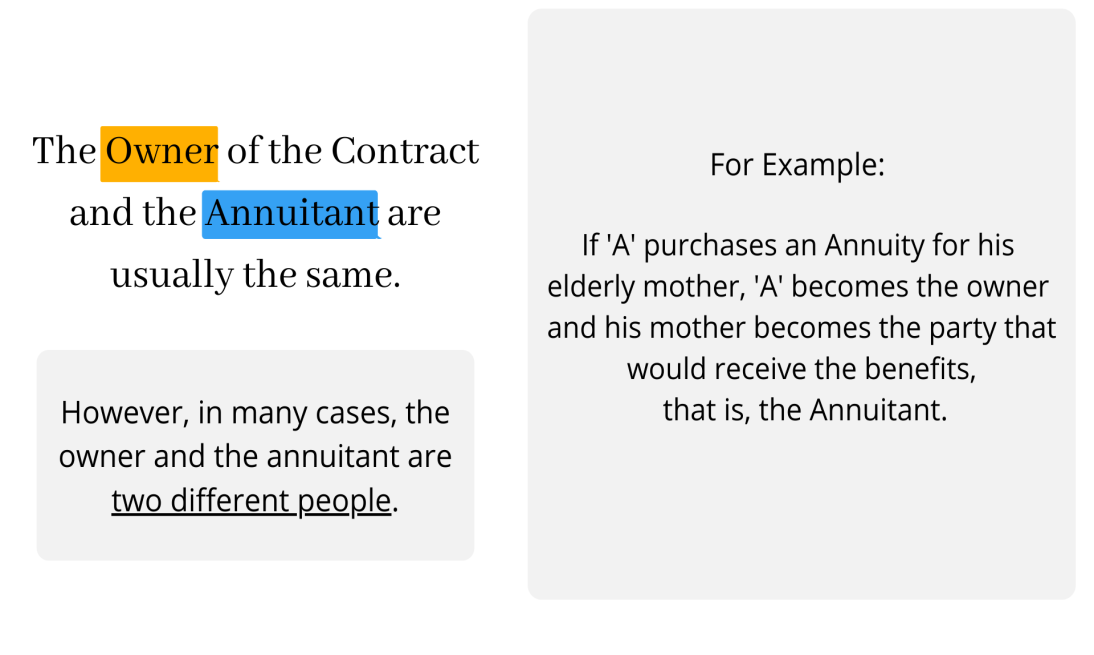
https://t.me/joinchat/J_0YrBa4IBSHdpuTfQO_sA

Follow us on Instagram and subscribe to our YouTube channel for more amazing legal content.

Download Now

Relaxation and benefits that are given by SEBI and the government to families of the deceased employee

0
Image Source-https://rb.gy/plmmty

This article is written by Sharad Yadav from the Institute of Law, Nirma University. This article talks about the benefits which are given to the employee’s family, if the employee had died due to covid or any other reason.

Introduction

We all are aware that the World Health Organization (WHO), on March 11, 2020, had formally declared the novel coronavirus (Covid-19) outbreak as a global pandemic. We have seen many people get infected, and many of them even died due to coronavirus. Amidst this critical situation now, companies are facing difficulty in managing and running their business smoothly. Many of the company’s employees died during this pandemic, and many people lost their loved ones. To help, the government has come up with a certain type of scheme to provide assistance to those families financially.

Power of SEBI

  • Quasi-Judicia l – SEBI has the authority to deliver judgments related to frauds and any unethical practices in terms of the securities market. It helps in ensuring fairness, and transparency.
  • Quasi-Executive – SEBI has the power to implement the regulation and judgments made and can take any legal action against the violators. It also has the authorized power to inspect the books of accounts and any other documents.
  • Quasi-Legislative – SEBI has the power to frame rules and regulations to protect the interest of investors. Some of the rules like inside trading, listing obligations, and disclosure requirements are formulated to keep the malpractices at bay. 

Relief to the families

In view of the Covid pandemic situation in India Security and Exchange Board Of India (SEBI) decided to provide relief to the families of the deceased employee who worked in the listed companies. SEBI said that the provisions of Share Based Employee Benefit Regulation, 2014 (SBEB) relating to a minimum vesting period of one year would not be going to be applied in case of death. 

In such a case cause of death is not necessarily be Covid. All the employee stock options, stock appreciation rights, or any other benefits granted to the employee will be given to the legal heir or nominee on the employee’s date of death. This SEBI regulation will only be available to all employees who have passed away on or after 1 April 2020.

According to SEBI Regulations, 18(1) and 24(1) provide that there will be a minimum vesting period of one year in case of employee stock options and Stock Appreciation Rights(SAR). A Stock Appreciation Right (SAR) refers to the right to be paid compensation which is equivalent to an increase in the company’s common stock price over a base or the value of appreciation of the equity shares currently being traded on the public market.

Further, Regulation 9(4) of the SBEB Regulations stated that in case of death of any employee all the options, SAR, and if there are any other benefits granted to him/her under a scheme, then it will be transferred to the legal heirs or nominees of the deceased employee.

Employee Deposit Linked Insurance (EDLI) scheme

If someone who is an active employee of the company passed away due to Covid-19, his/her legal heirs are eligible for money up to 7 lakh under the scheme of Employee Deposit Linked Insurance(EDLI). It is an insurance cover provided by the EPFO for salaried employees from the private sector. Nominees of the employer get the lump sum payment in case of any unfortunate event of the said person’s death during the service. 

To help private-sector employees affected by the COVID, Employees Provident Fund Organisation (EPFO) on 28 April 2021 issued a notification for raising the benefit under this scheme from 6 lakh to 7 lakh for the subscriber of its EDLI scheme. Earlier also in the year 2015, the benefit was raised from 3.6 lakh to 6 lakh. 

The notification, issued in April, stated that the provision which was inserted would have effect from 15th February 2020, and the benefit will not be less than two lakh and fifty thousand. If any organization has more than twenty employees, then they need to register for EPF. Therefore, any employee who has an EPF account automatically becomes eligible for the EDLI scheme.

To claim the insurance under this, the only condition is that the EPF account holder should have died when he was still employed, i.e., before the retirement, the deceased person should have been the active contributor to the EPF scheme of their death.

It’s not going to be matter whether the employee died on leave or while having a vacation or while at work, regardless of how and when he died, the nominee can claim the money for claiming this nominee has to submit the details like death certificate, succession certificate, a cancelled cheque of a bank where they wish to receive the money, and bank details. If the employee who died does not have any nominee, the legal heir can claim this amount.

Who is covered under ESIC and EPFO

Employees State Insurance Act, 1948 applies to all the factories and notified establishments located in the implemented area employing ten or more people and will be applicable on the employee drawing wages up to 21,000 per month and in case of disability, the said amount is 25,000. It covers almost 3.49 crore of family units of workers and provides case and medical facilities to 13.56 cr beneficiaries.

Pension scheme for a deceased government employee

The Union government has written to all the ministries for distributing the pension to all the families of government employees. The authorities have been asking to disburse the pension to the families as soon as they receive the claim with a corona death certificate. It’s going to be a win-win situation for the families having urgent need of funds for livelihood. 

Rule 80-A of the Central Civil Service(Pension)Rules,1972 which provide for the payment of provisional family pension and provisional death gratuity, pending Pension Payment Order(PPO). All the ministries have been asked to strictly comply with the order for sanctioning the provisional family pension by the Head of Office immediately after he received the claim along with a death certificate for the eligible family members without waiting for the forwarding of the case to the Pay Account Office(PAO). 

It was ordered that it must ensure that PPO for family pension is issued and disbursed of regular pension is commenced by the bank not later than one month after the receipt of claim application for family pension. To expedite the process of disbursement of the pension to the family members, two separate reckons were sent to all the ministries to calculate the pension and another benefit of the employee under the Old Pension Scheme and National Pension System.

Various challenges for the companies

  • Many sectors are badly hit by the covid pandemic, such as manufacturing, mining, textile, power generation, etc. Manpower in the industries is unavailable, and transportation is disrupted, but they have to pay wages to the employee and workers from their reserve.
  • Another challenge that companies face during a pandemic is conducting the meeting, such as board meeting, annual general meeting, extraordinary general meetings or meetings, necessary for an instrument of decision making.
  • Amid this extraordinary situation, many companies cannot hold an extraordinary meeting or face delays in a meeting where a passing meeting is a requirement of shareholder’s approval for passing any resolution. This delay is leading to non-compliance and inviting penalties to the companies.
  • Companies are now shifting to the digital mode for conducting conferences and other things leading to exposure to cyber threats for companies, such as leaking of sensitive information. When many of the employees are doing work from home, they might be using unprotected personal networks, which open up the organization to completely different levels of fraud and cyber-risks.

Relaxation of norms for companies by SEBI

  • There are benefits given to the companies by the SEBI, like the extension of the deadline given to the companies for filling financial results for the quarter and the financial year ended March 31 to June 30. SEBI allowed the listed companies to use digital signature certificates made to stock exchanges for filling or submissions made to stock exchanges under its listing obligations and disclosure requirements regulations,2015 for all the filling until December 31, 2021.
  • To cope with the liquidity crisis created by the pandemic, SEBI has eased the capital raising for the companies listed. Markers regulators have amended the takeover code to allow the promoters to acquire up to ten per cent in a financial year without triggering a penned offer, but this can only be done by issuing preferential issues of equity shares. 

In other words, we can say that promoters will have to infuse fresh capital into their company and not just simply acquire shares from the secondary market. Now SEBI has incentivised the promoter to do a preferential allotment of large size then take the benefit of increasing creeping acquisition limit.

SEBI has chosen this to give incentive to the promoters coming at higher prices and companies to receive more significant amounts from promoters should the need arise.

  • On March 25 of this year, SEBI approved certain amendments to the delisting regulation by fixing the timelines, allowing acquirers to provide indicative price, and detailing the role of a merchant banker in the delisting process. 

Delisting of the company listed or “take-privates” as delistings are well known globally has met with limited success in India mainly due to stringent pricing rules under the Delisting Regulations. In delisting offers, price discovery is left with the public shareholders. Reverse book building allows the public shareholders to tender their share at a price of their choice above a certain level of floor price. The price at which the acquirer is able to cross 90 per cent of the share capital of the company becomes the final delisting price. It is for the acquirer to accept then or reject this so-called discovered price.

Conclusion

In this pandemic, many people lost their loved ones. Government or any other organizations can not help bring back those persons but can provide financial help to the families. These financial cover might seem to be small, but they can help those who need money urgently. Government should increase the amount of insurance cover a little more so that their family members who have urgent needs of money do not suffer. SEBI helped to some extent in such a time of pandemic situation, especially to the families with urgent needs of money.

References


LawSikho has created a telegram group for exchanging legal knowledge, referrals, and various opportunities. You can click on this link and join:
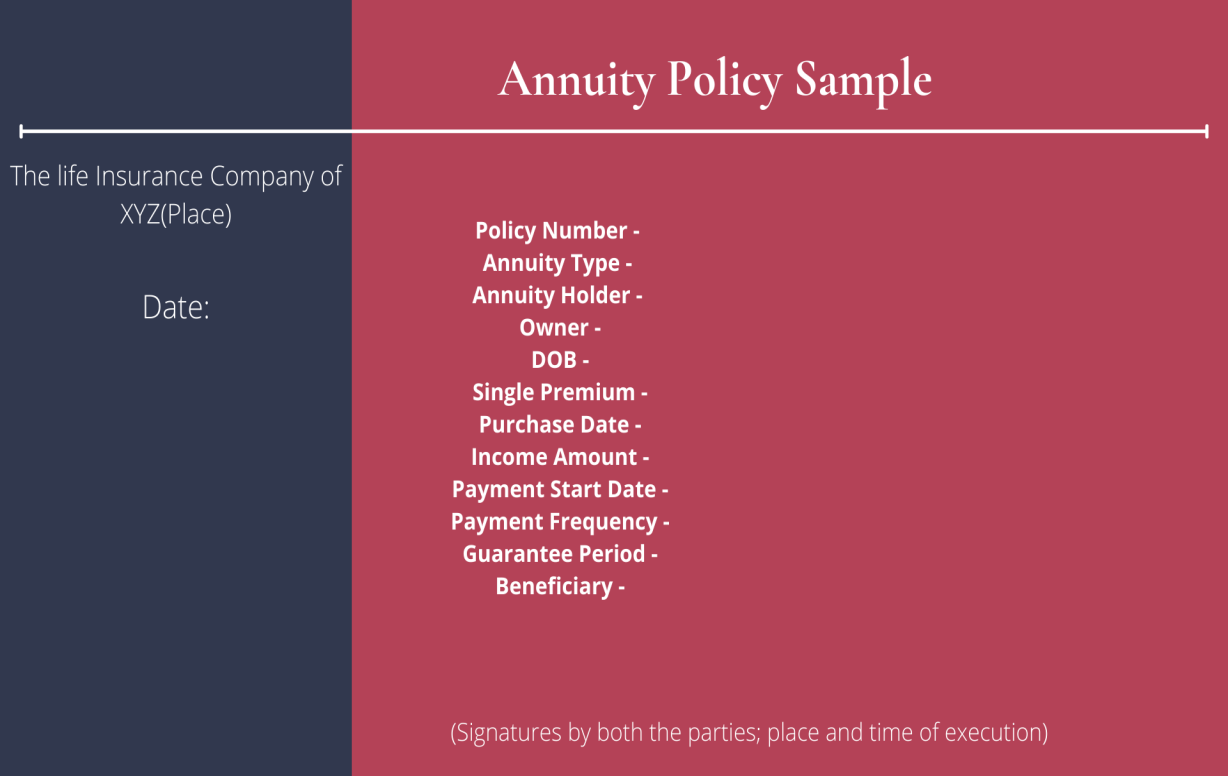
https://t.me/joinchat/J_0YrBa4IBSHdpuTfQO_sA

Follow us on Instagram and subscribe to our YouTube channel for more amazing legal content. 

Download Now
logo
FREE & ONLINE 3-Day Bootcamp (LIVE only) on

How Can Experienced Professionals Become Independent Directors

calender
28th, 29th Mar, 2026, 2 - 5pm (IST) &
30th Mar, 2026, 7 - 10pm (IST).
Bootcamp starting in
Days
HRS
MIN
SEC
Abhyuday AgarwalCOO & CO-Founder, LawSikho

Register now

Abhyuday AgarwalCOO & CO-Founder, LawSikho