Download Now
Home Blog Page 584

All you need to know about the Raj Kundra pornography case

0
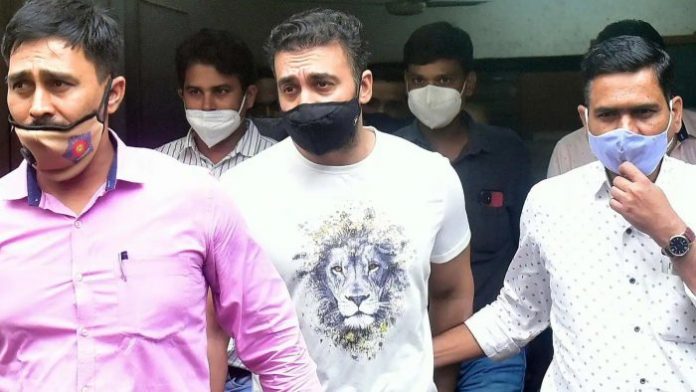
Image Source: https://bit.ly/3jnG213

This article is written by Vanya Verma, from Alliance University, Bengaluru. This article covers all the relevant facts and laws concerning the arrest of Raj Kundra, the husband of famous Bollywood actress Shilpa Shetty and a businessman in pursuance of the pornography case.

Introduction

Raj Kundra, the husband of famous Bollywood actress Shilpa Shetty and a businessman, has been detained on multiple charges including cheating and creating pornography. Many women have complained to the Mumbai Police that they were persuaded to star in explicit content for Raj Kundra’s app Hotshots, which is currently held by a UK firm that purportedly belongs to Kundra’s brother-in-law, Pardeep Bakshi. Raj Kundra was apprehended after a series of arrests and raids.

Section 420 (cheating), Section 34 (common intention), Sections 292 and 293 of the Indian Penal Code, Information Technology Act and the Indecent Representation of Women (Prohibition) Act are the charges under which Raj Kundra has been booked.

To know more about the Raj Kundra pornography case in brief, please refer to the video below:

Analysis of the case

Raj Kundra was detained in connection with a pornographic film racket and remanded to police custody until July 23. The 45-year-old is suspected of broadcasting pornographic footage shot in Mumbai and the nearby areas through a mobile phone application called Hotshots. According to Mumbai police, Shilpa Shetty has not been discovered to have had any active involvement in the case so far. “We haven’t been able to locate any active Shilpa Shetty roles yet. We’re looking into it. We’ll ask the victims to come forward and contact Mumbai’s Crime Branch, and we’ll take appropriate action, “Milind Bharambe, Joint Commissioner of Police (Crime), stated.

What is Hotshots?

The mobile application in the racket at the centre is a paid streaming app that is no longer available. According to the app’s description, it features “exclusive and original short films, hot photographs, and videos of some of the world’s biggest superstars.” The content is rated 18 plus.

So far, the investigation has shown that Raj Kundra’s Viaan Industries has an agreement with Kenrin, a London-based company that controls the ‘Hotshots’ app and is allegedly involved in producing pornographic films, which is owned by Kundra’s brother-in-law. The shooting was done by Kundra’s company, and the subscription money came under the name of Kenrin, despite the fact that the UK-based company was in charge of the entire operation.

The case concerning the arrest of Raj Kundra

The Mumbai police announced on February 4, 2021, that they had detained five people for allegedly pushing women into pornographic films. They would promise opportunities in web series to these aspiring actresses from all around the country if they came to Mumbai. On the day of the filming, however, they would alter the script and threaten the women, asking them to expose themselves. If the women refused, they would be expected to pay for the shooting preparations.

After the films were shot, the defendants made them available on mobile apps with subscriptions similar to those seen on popular OTT platforms. They would then use social media sites to market. As pornography is illegal in India, this too was against the law.

How and where were these movies shot?

It would generally be a daylong shoot at a leased home on the outskirts of Mumbai, such as Madh Island, according to the police. A minimum of five to six persons would be employed as directors, dialogue writers, location Scouters, and web app developers. According to the authorities, these apps grew in popularity during the lockdown, with some having lakhs of users.

Role of Raj Kundra according to the police

The police investigation had two components. One was pursuing individuals who created the pornographic shows, while the other focused on the ones who broadcasted the clips. Some of these production companies transmit from servers located outside the United States.

The executive of one such UK production house, Umesh Kamat, was detained after it was discovered to be uploading similar content. Kundra was arrested because of his claimed ties to Kamat and the company that posted the pornographic content, according to an officer.

Similar cases pending against Kundra

In connection with a case filed by the Maharashtra Cyber police last year, Kundra asked for anticipatory bail last month in June 2021. The cyber police had filed an FIR in that case as well, alleging that numerous sites were involved in showing pornographic information. The anticipatory bail application is expected to be decided by the court in the coming days.

Key highlights of the case

  • Raj Kundra founded Arms Prime Media Pvt Ltd in February of this year. 
  • Six months later, the business released Hotshot, a mobile phone application that has been dubbed the “porn streaming app” by police. 
  • The app was then sold for $25,000 to Kenrin Ltd., a London-based company run by Kundra’s cousin Pardeep Bakshi. 
  • Kundra resigned from Arms Prime Media in December 2019, however, he used to control the app’s whole functioning through three WhatsApp groups. 
  • Apple App Store banned the Hotshots app in June 2020, while Google Play Store withdrew the app in November 2020. The content was the reason in both cases.
  • In February 2021, Mumbai Police filed a complaint after a woman complained to them about being compelled to shoot a pornographic film. 
  • Two further cases were filed after that, and the Mumbai criminal branch’s property division made several arrests in connection with the matter.

Raj Kundra’s lawyer’s take on the matter

Raj Kundra was arrested on Monday in connection with an alleged pornography case. He’s been dubbed the case’s “key conspirator“. He was later taken to court, where he was placed in police custody until July 23. The case is only the tip of an iceberg in a pornographic film racket, according to the police. In the midst of this, Raj Kundra’s lawyer argued in court that ‘vulgar content’ should not be classified as pornography.

Raj Kundra’s lawyer, Abad Ponda, said it was incorrect to apply Section 67A of the Information Technology Act for sending obscene material in electronic form along with sections of the Indian Penal Code that deal with pornography because the laws consider “actual intercourse” to be “porn” and anything else is to be considered merely as “vulgar content”. 

The lawyer went on to say that an arrest should only be made if the investigation cannot proceed without it. The lawyer stated, “Police detention should be the exception rather than the rule. Arrests should only be made when the inquiry cannot proceed without them. The accused was forced to join the inquiry once he was arrested in this case”.

In conclusion, the lawyer stated that Raj Kundra’s arrest was not made in accordance with the law. The businessman had sought anticipatory bail in the case.

Raj Kundra may now face charges of money laundering and foreign exchange violation

Raj Kundra may be booked under the Prevention of Money Laundering Act (PMLA) and Foreign Exchange Management Act (FEMA)

  • It was reported by the news agency, ANI, that the central agency charged with investigating financial irregularities may bring complaints against Kundra under the Prevention of Money Laundering Act (PMLA) and the Foreign Exchange Management Act (FEMA). According to ANI,  the Enforcement Directorate (ED) could do so “anytime after July 26“.
  • The Mumbai Police will notify the ED, who will investigate the financial irregularities in the case, which also involves a foreign exchange violation. The current case involves the alleged creation of pornographic films and their distribution through several apps.
  • After filing a case, the ED will obtain a copy of the First Information Report (FIR) from Mumbai Police. Before interrogating Raj Kundra, the ED may issue a summons under the PMLA and FEMA.
  • The Mumbai Police’s crime branch stated before a local court that Raj Kundra was profiting from this unlawful activity by charging users of these apps subscription fees.
  • The Mumbai Police Department also informed the court that they believe the proceeds from pornography were used for online betting.

Raj Kundra’s employees turn witnesses against him

According to Mumbai Police sources, four employees of businessman Raj Kundra have turned witnesses against him in the pornography racket case. They went on to say that these employees had given the complete information on the racket’s operation to the Mumbai Crime Branch’s property cell, putting Kundra in even more trouble.

He was detained by the Mumbai Crime Branch on July 19 along with 11 other people on accusations linked to the suspected manufacturing of pornographic videos. His custody has been further extended to July 27, 2021.

On Sunday, the Mumbai Crime Branch’s property cell summoned Gehana Vasisth, a television star and model, and two other people for questioning in connection with a pornographic case. During searches for the porn video case, the Mumbai Police Crime Branch discovered a hidden cupboard at Viaan and the JL Stream office of Raj Kundra in Mumbai’s Andheri. 

Laws dealing with pornography in India

Indian Penal Code, 1860

Sections 292 and 293 of the Indian Penal Code forbid the publishing and selling of obscene books, pamphlets, and other representations that are considered “lascivious or appeals to the prurient interest”, which may include obscene advertising.

Section 292

According to this Section, something is declared obscene if it is lascivious or appeals to the prurient interest. The Section says that anyone who takes part in or receives profits from any business in the course of which he knows or has reason to believe that any such obscene objects are for any of the purposes aforesaid, made, produced, purchased, imported, exported, conveyed, publicly exhibited or in any manner put into circulation is to be punished with on first conviction with im­prisonment of either description for a term which may extend to two years, and with fine which may extend to two thousand rupees, and, in the event of a second or subsequent conviction, with imprisonment of either description for a term which may extend to five years, and also with fine which may extend to five thousand rupees.

Section 293

According to this Section, whoever sells, allows to hire, distribute, display, or circulate to any person under the age of twenty years any such obscene object as mentioned in the previous Section, or offers or at­tempts to do so, must be penalised.

The Indecent Representation of Women (Prohibition) Act, 1986

The Act criminalises the portrayal in any manner of the figure of a woman; her form or body or any part thereof in such a way as to have the effect of being obscene, disrespectful to, or denigrating women, or is likely to deprive, corrupt, or harm the public morality or morals. The offender is to be punished with imprisonment up to two years and a fine of 2000 on the first offence, and on the subsequent offence, with imprisonment up to 5 years in jail and a fine ranging between Rs. 10,000 to Rs 15,000.

Information Technology (Amendment) Act, 2008

According to Section 67 of the Act, anyone who publishes or transmits or causes to be published or transmitted in electronic form any material that is lascivious or appeals to the prurient interest, or if its effect is such as to tend to deprave and corrupt persons who are likely, having regard to all relevant circumstances, to read, see, or hear the matter contained or embodied in it, shall be punished.

Section 67(A) makes it clear that publishing sexually explicit material will result in a penalty.

  • The first offence carries imprisonment up to five years and a fine up to ten-lakh rupee.
  • If you commit the same offence again, the offender can be sentenced to imprisonment for a term up to seven years and a fine of up to ten lakh rupees.

Section 67(B) of the amended Act represents a watershed moment in India’s anti-child pornography movement. This low level makes it clear that not only the printing but also the viewing and possession of pornographic material are illegal.  The penalty is the same as above.

While shooting for adult content is prohibited in India, the government has recently shut a number of pornographic websites. In India, however, there is no particular law that prohibits you from accessing porn websites at home.

Regulation of obscene content over OTT Platforms

OTT platforms such as Netflix, Amazon Prime, Hotstar, and others are subscription-based audio and video streaming services that specialise in streaming feature films, web series, documentaries, and other material. On these platforms, there is also obscene content.

A notification dated November 9, 2020, published under the Government of India (Allocation of Business) 357 Amendment Rules, 2020, gave the Information & Broadcasting Ministry the ability to regulate Over The Top (OTT) Platforms. It is unclear whether this Code will be revised or if the Ministry will pass new legislation requiring these OTT platforms to obtain content certification and approval.

It is also unclear whether the Ministry of Information and Broadcasting would release a strict code of behaviour or a broad framework for OTT services to self-regulate. The issue will become evident only after the rules are announced.

Issues related to obscene content over OTT Platforms

  • Firstly, it is to be decided who would be held liable if any vulgar, profane, or seditious items are made public. Millions of people, for example, express their opinions on a range of topics on YouTube. The Ministry can now remove any seditious or illicit comment, and the platform, i.e. Youtube, will not be held accountable because it is a free media with no control over the content posted there.
  • Secondly, because the internet is largely devoid of laws and censorship norms, content makers can experiment intellectually without the worry of being censored. Furthermore, because they are free of formulaic content generation and recognise public morality norms, OTTs are a relatively new medium for making art. For movies released on the OTT platform, the Central Board of Film Certification does not require a licence (CBFC). The government’s fear of censorship, on the other hand, will stifle the spread of innovative and unconventional information under the new content control legislation.
  • Thirdly, the government will be faced with a tremendous responsibility of monitoring content 24*7.
  • Finally, such unrestricted regulation and changes made without prior consent would be a breach of Article 19 of the Indian Constitution, which protects freedom of speech and expression.

In an era of rapidly changing entertainment media, the government and other stakeholders must work together to create a framework that balances freedom of expression with the need for essential limits to maintain peace and order.

An overabundance of restrictions/guidelines may limit content creators’ creative freedom, affecting OTT platform viewership in the process.

Conclusion

The final outcome of the pornography case involving Raj Kundra is yet to be declared. It may take some time when the public will know if Raj Kundra is guilty and the allegations made against him are true or not. 

References


LawSikho has created a telegram group for exchanging legal knowledge, referrals, and various opportunities. You can click on this link and join:

https://t.me/joinchat/J_0YrBa4IBSHdpuTfQO_sA

Follow us on Instagram and subscribe to our YouTube channel for more amazing legal content.
Download Now

Six things you should not miss before filing your petition for judicial separation

0
Image source: https://rb.gy/raddzy

This article is written by K Vidya Sagar, pursuing an Introductory Course to Legal Writing from Lawsikho.

Introduction

Judicial separation is the process of separating a married couple without having to divorce them. It is commonly known as divorce from bed and board. It is generally granted by the court on a petition by any one of the partners on certain grounds provided under the law. It should be noted that judicial separation and divorce are not the same thing and cannot be used interchangeably. The effect of an order of judicial separation is a temporary suspension of the marriage and is provided under the Hindu Marriage Act, 1955. Judicial separation is the means by which the court gives time to marriage to heal and for the couples to reconcile the differences between them.

The object of this article is to help couples of troubled marriages to know the basics of judicial separation before seeking an order for the same from a court of appropriate jurisdiction. The law has however provided several means of resolving disputes if possible and dissolving marriages if the marriage is irretrievably broken or the spouse/s has broken the matrimonial obligations/laws as the case may be. There might be several things that might be running through your mind when you come to think of your marriage as a failed one but what can you do about it in terms of judicial separation.


1. What does the law say about adultery being a ground for judicial separation?

The stand of various laws on adultery

  • Hindu Laws – 

Section 13(1) of the Hindu Marriage Act, 1955 defines adultery as an act of sexual intercourse of a spouse with a person outside of their marriage. According to Section 10 of the Act, adultery is a valid ground for judicial separation. If the spouse of a person has indulged in sexual intercourse with a different individual, then it certainly is recognized by the law although adequate evidence has to be provided to prove the same.

  • Muslim Laws – 

The Muslim Laws do not have express provisions for judicial separations. However, it has been iterated in several cases by the courts time and again that adultery is a valid ground for judicial separation.

People from other faiths who are not termed as Hindus can take recourse for judicial separation under this Act. The said Act makes provisions for judicial separation for adultery under Section 22. The Section bars divorce mensa et thoro nevertheless makes a provision for a decree of judicial separation on the grounds of adultery.

It should now be clear that regardless of your faith you are entitled to judicial separation on the basis of adultery but are you aware of the special provisions on which a woman can claim judicial separation under the Hindu Marriage Act, 1955?

2. Remedial mechanisms provided by law for a troubled marriage

Having a look at Section 13(1)

1. Separation by agreement

A separation by agreement is a consensual separation by the parties to a marriage to live independently of each other when they do not have grounds for judicial separation or divorce or they want to resolve the matter quietly without the intervention of the court. Such an agreement might be entered into by the parties to avoid being accused of desertion. This agreement may also include matters relating to maintenance, custody of children, and the like. This however need not be abided by the court when any matter is brought before it including restitution of conjugal rights.

2. Judicial separation

Judicial separation is an order from the court that can be obtained by either individual if they are eligible on specific grounds of Section 13(1) of the Hindu Marriage Act,1956. This is a process of formally separating the couple from cohabitation and the performance of marital obligations. The grounds on which such an order can be obtained are as follows: 

  1.  Adultery,
  2.  Cruelty,
  3.  Desertion,
  4. Insanity,
  5. Virulent and incurable leprosy,
  6. A contagious venereal disease, an
  7. Renunciation of the material world.

This can be obtained if there is hope for the marriage to continue and the disputes between the couples can be resolved. This is an action that will give time to the partners from each other and prevent an action as harsh as divorce. An order of judicial separation can only be rescinded by the court itself and not simply by cohabitation. It should be kept in mind that Section 18(2), Hindu Adoptions and Maintenance Act, 1956, provides the opportunity of having a separate residence and claiming maintenance from the husband and this should not be confused with judicial separation.

3. Divorce

Divorce is the most extreme step that can be taken in the case of a failed marriage. It puts the marriage to an end and relieves the couple of the contract they have entered into. The grounds for judicial separation and divorce are the same under Section 13(1) and additional grounds for women are provided under Section 13(2).

Additional grounds provided under Section 13(2)

Additional grounds have been provided under Section 13(2) under the Hindu Marriage Act, 1956 solely for the wife to claim judicial separation –

Bigamy

If the husband had remarried while the first wife was still alive and their marriage was solemnized before the commencement of the Act then the wife can use this as a ground for judicial separation.

Rape, sodomy, and bestiality 

If the husband is guilty of the above offences, then the wife can seek judicial separation under this ground.

Repudiation of marriage  

If a girl is married before the age of 15 then she can renounce such marriage after the completion of 15 years of age and before completion of 18.

Non-resumption of cohabitation 

The wife can seek judicial separation if cohabitation between the parties has not resumed following a court order for maintenance and a period of one year has lapsed from the time such an order is made.

3. Expenses of the litigation process and the time period it is expected to prolong for

  1. Your legal expenses for a judicial separation might vary on a wide spectrum varying from Rs 5000 and up to Rs 50,000 per hearing. This depends on a number of factors like the experience of the lawyer hired, the complexity of the case, the consent of the defendant, and even the jurisdiction of the court in which the case arises.
  2. The expenses of the lawyer may vary from one practitioner to the other and you might be charged per case, per hearing, or even by the hour. If the complexity of the case is mediocre and the gains are not very high it is pragmatic to keep the legal expenses to a minimum by not going for those charges exorbitantly. The legal fee also extends to the drafting of the case by the lawyer, consultation fee, and also the charges that arise for an out-of-court settlement mediated by your lawyer. Keeping all these in mind it is plausible to think one might be in for quite an expensive ride. However, as long as the desired results are delivered this should not be an issue as the one who can get the decree in his/her favor has a lot to gain.

4. Maintenance 

Sections 24 and 25 of the Hindu Marriage Act,1956 talk about the maintenance that is to be provided to the wife by the husband or vice-versa. The former talks about temporary maintenance and the latter about permanent alimony. 

Section 24 (temporary maintenance)

If it appears to the court that any of the spouses cannot maintain themselves independently, then the respondent shall be directed to pay alimony to the petitioner on an application to the court for the same. It is also said that such an application for temporary maintenance shall be disposed of within 60 days of application. The maintenance was construed in a very wide sense in the case of Rani Seth v. Sunil Seth, which said that it cannot be taken to mean bare subsistence. 

Section 25 (permanent maintenance)

Maintenance under this Section of the Hindu Marriage Act is paid when a divorce is claimed by the applicant as judicial separations are only temporary and order for one applies for a period of one year only.

5. Jurisdiction

A petition for judicial separation can be filed in the district court within the jurisdiction of the person where the marriage was solemnized, the place where the parties to the marriage cohabited lastly and where the respondent resides at the time of filing. At the time of filing such petition all the necessary elements given in Order VII, Rule 1 of the Civil Procedure Code, 1973 should be given, such as – 

  • The date and place of marriage,
  • Name, status, address of both the parties,
  • Details of litigation filed before filing the decree for judicial separation,
  • The evidence.

6. Finding a suitable lawyer 

Finding a lawyer who will fit your needs is very crucial to achieve the result as the lawyer’s experience on the specific issue plays a great role apart from other factors like his expertise on the matter. Choosing a lawyer who has a reputable name among the masses is very beneficial in comparison to those who solicit their services, as reputation is only achieved by producing desired results, and marketing by word of mouth is more reliable than any other means. If a lawyer neither has knowledge nor the technical know-how on the subject then the case is very likely to be dismissed or worse, leads to an expensive legal process that might not be ruled in favor of the applicant. 

Conclusion

Therefore, if you think your marriage is in a troubled position and judicial separation might give you time to fix what according to you had gone wrong, then don’t forget to follow through with these six points which can be crucial to your case. To summarise- 

  1. Know the grounds provided in law for judicial separation.
  2.  What are the choices you have to remedy your situation?
  3. The expenses you might incur in the process.
  4. The situation in which you can claim maintenance.
  5. The court where your application can be filed.
  6. Getting the right man to do the job.

It is, therefore, recommended that you should always equip yourself with all the tools you can before you approach the court of law to have a nice chance at making the best of your case and getting a remedy that would favor your cause rather than going to the court prematurely and wasting your time and resources at a cause that helped nothing.

References


Students of Lawsikho courses regularly produce writing assignments and work on practical exercises as a part of their coursework and develop themselves in real-life practical skills.

LawSikho has created a telegram group for exchanging legal knowledge, referrals, and various opportunities. You can click on this link and join:

Follow us on Instagram and subscribe to our YouTube channel for more amazing legal content.


Download Now

Controversies related to the 2020 summer Olympics

0
Olympics
Image Source - https://rb.gy/z91br4

This article is written by Gitika Wadhwani, from Jagran Lakecity University. This is an exhaustive article dealing with the 2020 Summer Olympics, problems faced by Japan, and the reason for the non-postponement of the Summer Olympics in 2021.

About the 2020 summer Olympics

The Summer Olympic games also known as the Games of the olympiad is a major international event held once every four years. Last summer Olympics were held in 2016 in Rio de Janeiro, Brazil. The 2020 summer Olympics were to take place in Tokyo, Japan. During the 125th International Olympic Committee (IOC) session in Buenos Aires, Argentina in 2013 Tokyo was selected as the host city for the 2020 Olympics. Japan will be hosting the summer Olympics for the second time, the first time it was held in 1964. 

Postponement due to Covid outbreak

The summer Olympics were originally scheduled to take place from July 24 to August 9, 2020, but due to the Covid pandemic, it was postponed. They were rescheduled to be held in 2021. Before March the Japanese government requested the schools to be closed from March, various schools were closed in march though the number of Covid cases was only about 250. The Olympic games were to be held in July, 2020. People from Japan and other countries highly criticized the government for scheduling the games during this pandemic. Eventually, the government had to postpone the Olympics by one year. 

It has never happened in history that the Olympic games were cancelled for any public health reasons. But it may get cancelled if COVID-19 cases continue to rise. The postponement of the Tokyo Summer Olympics has really affected the country. Olympics facilitate economic growth by generating revenue through a large number of spectators and tourists who visit to enjoy the sporting event. On one hand, there is a huge economic loss to the country, especially the hospitality industry who has suffered a huge loss of revenue. Before the postponement, it was expected that Tokyo would receive approximately 20 million visitors, 70,000 volunteers for the games, and 8,000 for the city. Around 11,090 Olympic athletes and 4,400 paralympic athletes were expected to participate. Around 14 million dishes were expected to be delivered to the participants. This sporting event was not limited to recreation but was a huge prospect for economic growth for Tokyo. But due to Covid, the event was postponed to safeguard the health of athletes.

Olympic Charter and other related important legal documents

Every sports tournament is governed by a certain set of rules made by an organising committee. The Olympic Games are no exception to it. The Olympic Charter is a framework that sets rules and guidelines for organising Olympic games and governing the Olympic movement. It was adopted by the International Olympic Committee and was last revised on 17th July, 2020 during the 136th IOC session. The Olympic charter serves three main purposes:

  1. It sets the principles and values of Olympism.
  2. It serves as a legal framework for the IOC.
  3. It defines the rights and obligations of the IOC, the international federation and the national Olympic committees, and the organising committees for Olympic games. 

Main features of the Olympic Charter

The Olympic Charter consists of 6 chapters and 61 Articles. Its main features are as follows:

1. The Olympic movement 

Article 1- The Olympic movement comprises organisations, athletes, and other persons who are willing to be abided by the Olympic charter. 

Article 2- The mission of the IOC is to promote Olympism and to lead the Olympic movement. IOC encourages and supports the promotion of ethics and educating youths. Facilitating sports competitions strengthen the unity of the Olympic movement, support the promotion of women in sport, take measures on the health and safety of athletes, etc. 

Article 6- The Olympic Games are a competition between individuals or teams not between countries. Athletes are selected by their NOCs and entries are accepted by the IOC. 

Article 8- The Olympic symbol consists of five interwoven rings of equal size in five different colours: blue, black, and red rings at the top, the yellow and green rings at the bottom. 

2. The International Olympic Committee (IOC)

This chapter in the Olympic charter deals with: 

  1. The legal status of IOC;
  2. The composition of IOC;
  3. The organization of IOC;
  4. Commissions of IOC;
  5. Official languages of IOC.

3. The international federations (IFs)

This chapter outlines the:

  1. Recognition of IFs;
  2. The mission of IFs within the Olympic movement- to make and enforce rules for their respective sports as per the Olympic spirit, development of sports throughout the world, contributing in achieving goals set under the Olympic charter, assisting IOC to review candidates for Olympic games, promote health and safety measures of sports athletes; 
  3. Role of IFs- formulate proposals related to Olympic charter and the Olympic movement, assist in preparing for Olympic congresses, participate in activities of IOC commissions on IOCs request.

4. The National Olympic Committees (NOCs)

The mission of NOCs is to promote and develop the Olympic movement in their respective countries. The role of NOCs is to promote the principles of Olympism, ensure the abidance of the Olympic charter, encourage higher performance sports, and provide training to contribute to the principles of Olympism. 

5. The Olympic games

This chapter deals with the celebration of the Olympic games, selection of location, organisation of games, role of IFs in Olympic games, and authority of the IOC. 

6. Measures and sanctions

This chapter states what measures or sanctions can be taken in case of violation of the Olympic Charter, the World Anti-doping Code, the Olympic Movement Code, or any other regulation. Also, it deals with dispute resolution by the IOC and the Court of Arbitration for Sports (CAS). 

Olympic Movement Code (2015) on the Prevention of the Manipulation of Competitions 

This Code provides a harmonized regulation to sports organisations to prevent the risk of manipulation in the competitions. Betting, manipulation of sports competitions, corrupt conduct, using inside information, failure to report, and cooperation are all considered violations of the code. Violation of Code in any form may call for a disciplinary procedure by the sports organisation. The participant who has been alleged to have violated the Code should be informed and an investigation can be done. The burden of proof to establish the violation of Code lies on the sports organisation, during the whole procedure the organisation shall maintain confidentiality. Further, provisional measures such as provisional suspension can be done if there is any risk to the reputation of the sport. Once the violation is proved, the sports organisation should impose a reasonable and appropriate sanction on the participant. The Code is binding on all sports organisations under the Olympic Charter and any amendment to this Code needs to be approved by the IOC executive board.

World Anti-Doping Code (2021)

This Code is a core document that provides a harmonized framework for anti-doping policies, rules, and regulations all around the world for sports organisations and among public authorities. Approximately 700 sports organisations have accepted this Code including IOC and IFs. This Code aims to promote healthy and fair, doping-free sports. And to harmonize the rules at the national and international levels. This Code prescribes the circumstances which constitute the anti-doping rule violation, burden of proof, testing and investigation, notice and provisional measures, trial procedure, sanctions against individuals, teams, and sports organisations, implementing decisions and roles and responsibilities of IOC, NSFs.

LGBT laws in Japan – how is Japan’s legal stand on same-sex relationships affecting its image during the Olympics

Same-sex relationships were never considered illegal in Japan. Only in 1873, sodomy was criminalized by the criminal code but the law was repealed in 1882. There is no criminalization of same-sex relationships in Japan since. There is no separate statute that recognizes same-sex marriages in Japan. Only Article 24 of the Japanese Constitution provides for marriage between men and women through mutual consent having equal rights. But it is under debate whether this applies to only men and women or LGBT community also have equal rights. Due to the lack of legal recognition, same-sex couples face difficulties in their lives. 

In 2016, the opposition parties submitted a Bill to eliminate discrimination based on sexual orientation and gender identity, the ruling party presented an outline of the Bill only at promoting a tolerant society. This Bill was criticized by many LGBTQ rights organizations for not containing any mention of the prohibition of discrimination based on sexual orientation and gender identity. During the internal process of approving the cross-party Bill, several conservative LDP lawmakers said that it “could cause confusion by increasing trials on the grounds of discrimination”.

Many discriminatory remarks were made during the discussion. The Bill was not submitted to Japan’s national diet and is still open to debate. In Japan, 2020 Olympics were scheduled to be held which are rescheduled in 2021, many LGBTQ rights organisations sent a letter to the Japanese Prime Minister requesting to enact an anti-discrimination law to keep up with the Olympic charter ban on “discrimination of any kind”. The groups are running an #EqualityActJapan campaign to prohibit discrimination and pass a law to protect the LGBT community. The Olympic games give a wonderful opportunity to Japan to pass anti-discrimination laws and to stand in solidarity with the LBT community in Japan. All eyes are set on Japan, by enacting the law on protection from discrimination Japan can prove that it supports the Olympic spirit. 

Why is Japan facing trouble managing the summer Olympics?

The Tokyo Olympics are just to start but Japan is facing the fourth wave of the COVID-19 pandemic. Prime Minister, Yoshihide Suga has announced an emergency in nine prefectures of the country including Tokyo. Japan’s vaccine rollout has been the slowest among all the developed countries. It started vaccinating people from February much later than other developed countries. People are criticizing the government’s decision to host the Summer Olympics and calling for postponement or cancellation. 

Rising COVID cases in the country

Japan reported 1,400 new infections every day but the case number is falling from a peak of more than 6000 that was reported in mid-may. Experts said that to conduct games safely the infection rate needs to fall below 100 in the city of Tokyo. In Japan, around 8.7% of the population is fully vaccinated with a second dose. But the situation is still not under control and the majority of people did not want Tokyo to hold the Olympics. 

Allegations of bribery

Tokyo Olympics were postponed to 2021 due to the COVID-19 pandemic, it is facing scrutiny over allegations that Tokyo’s bid to host the games was secured by millions of dollars in bribes laundering. A team of dozens of French prosecutors and police investigators is investigating the allegations of corruption. Tsunekazu Takeda, President of the Japanese Olympic Committee was alleged with a bribery scandal that is suspected to help Tokyo to organise the 2021 summer Olympics. Mr. Takeda denied the corruption allegations against him. Takeda is also a powerful member of the Japanese Olympic Committee and the head of its marketing commission. He holds this position by virtue of the Japanese presidency. Takeda has resigned and said he will leave the Japanese Olympic Committee Chairmanship and committee membership. Takeda is being replaced by Yasuhiro Yamashita, a gold medalist in judo at the 1984 Olympics.

Takeda acknowledged that he signed about $2 million payments to a Singapore consulting company, Black Tidings, and its head Ian Tan Tong Han. French investigators linked Black Tidings to Papa Massata Diack, a son of powerful ex-International Olympic Committee member Lamoine Diack of Senegal who had a huge influence over Olympic voters in Africa. International Olympic Committee members voted for Tokyo in 2013 eliminating Istanbul and Madrid. Takeda said he was not involved in the decision-making process and it’s a regular commercial contact approved by others at Japanese Olympic Committee. Dentsu, the Japanese advertising and marketing agency giant, was also under light, Dentsu acknowledged that it advised the Japanese bid committee about bid consultants just before the International Olympic Committee vote in 2013 and Tan was among them. 

The Fukushima Daiichi nuclear disaster – it’s radiations and effect on athletes 

The Tohoku earthquake caused the tsunami, disabling the power supply and cooling of three Fukushima Daiichi reactors on 11 March, 2011 and the emergence of radioactive isotopes commencing on 12 March, 2011. The Fukushima accident was rated Level 7 on the International Nuclear and Radiological Event scale, due to high radioactive releases over days 4-6. The Fukushima nuclear power plant (NPP) had six separate boiling water reactors made by General Electric (GE) and maintained by the Tokyo Electric Power company (TEPCO). Reactor 4 was de-fuelled when the incident took place, and reactors 5 and 6 were in a cold shutdown for planned maintenance. When the earthquake hit, reactors 1-3 were automatically shut down by the insertion of control rods. Then emergency generators came into play to provide power supply for the electronics and coolant devices, which operated till the tsunami struck. Levels of radiation have decreased through the massive programme by the government to remove the top layer of the soil in affected areas.

But till 2020, about 6.7 million of the black bags were still stored in Fukushima. While the plant’s operator managed to stabilize the damaged reactors, melted nuclear fuel that was buried deep into the ground below the plant is still to be located and removed which will take at least four more decades. At the end of 2019, Greenpeace conducted radiation measurements around J-village where the Olympic torch relay kicked off and found several hotspots. The level of radiation was as high as 71 microsieverts per hour at surface level, 1,775 times higher before the Fukushima disaster. The sports complex lies only 20 km south of Japan’s Fukushima Daiichi nuclear power plant. The ex-Prime Minister Shinzo Abe held the sporting mega-event as a way to show that Japan had overcome the disaster and to promote the development of infrastructure in the region. But the radiation is still prevalent and it may cause different health issues to the athletes if the Olympic games take place in Tokyo. 

Sexist comments by JOC head and his reluctant resignation

Yoshiro Mori, the 83-year-old former Prime Minister and the President of the Tokyo 2020 Olympic games organising committee have sparked controversy after he commented that female members of the Japanese Olympic Committee (JOC) talk too much and a board meeting including many women would take time. The comment was in response to the JOC’s policy for increasing the ratio of female directors to 40 percent. These comments set off a firestorm in Japan and abroad, adding to the existing problems surrounding the Olympic games. Mori was insisted to apologize, but his refusal to resign from his post led to the movement in Japan and outside to force him out. In the lower house session clad in white, the female opposition party legislators protested against Mori’s actions. Mori has apologized and resigned in February from his post. 

Another sexist controversy – resignation of Hiroshi Sasaki (creative director of games)

Hiroshi Sasaki, the creative director of the Tokyo Olympic games during a meeting with other planning staff members suggested that Naomi Watanabe, a popular Japanese comedian could appear as an “Olympig” in the opening ceremony. This derogatory comment led to controversy over insensitive remarks towards women. Later, Sasaki apologized and said that he is sorry to Watanabe and people who felt discomfort with such content. Sasaki gave his resignation to Tokyo 2020 President, Seiko Hashimoto.

Plagiarized logo

The Tokyo 2020 Organising Committee in 2015 unveiled to the world the logos for the Olympic and Paralympic games designed by Kenjiro Sano. The logo was designed for the Olympics and around the concept of Unity and abstraction of the letter “T”, with black color which represents diversity. The shape of the circle represents an inclusive world. And the red circle represents the power of every beating heart and the Japanese flag. After some time the Belgian designer Olivier Debie sent a letter to the Japanese organizers claiming that the logo was a copy of his design for the Theatre de Liege which was designed in 2013. Sano denied the allegations and the Tokyo 2020 Marketing Director said that they conducted checks of the trademark before revealing the logo and it was not registered. They defended the design but the logo’s reputation was too affected to be used. Following the accusations of plagiarism, decided to remove it.

The committee decided to hold the first-ever open design competition to find a new logo. Nearly 15,000 submissions were received, four finalists were revealed in 2016. In April, 2020, Tokyo 2020 Emblem Selection Committee revealed the winning design “Harmonized checkered emblem”, designed by Asao Tokolo, a 46-year-old artist. It is composed of three varieties of rectangular shapes that represent different cultures, nationalities, and ways of thinking; the logo incorporates the message of “Unity in diversity”.

Other problems 

The small islands, called Dokdo in South Korea and Takeshima in Japan, have been a subject of long-territorial disputes between the two countries. The use of a map that includes the Liancourt Rocks, known as Dokdo in South Korea by the Tokyo Olympic Organizing Committee as a Japanese territory on the Tokyo games website has outraged South Korea. South Korea foreign minister Chung Eui-Yong said that the government will take the severe action possible towards the map posted by the Tokyo Olympic Committee. Japanese government repeatedly said that Dokdo is a Japanese territory based on historical facts and refused to change the map posted on the website. The South Korean government has urged the IOC to consider the issue in the same way as it was handled during the PyeongChang Olympics. The Korean Sport and Olympic Committee asked the IOC to mediate the dispute and ask Japan to remove a reference to South Korea-controlled islands. 

Protests by the people against the Olympic games

The Olympic games are just about to start but the majority of the people in Japan are resisting the Olympic games and believe that they should be canceled or postponed due to the Covid situation in Japan. Japanese people do not support the idea that the Olympics can be held safely in Tokyo. Various protests are happening in Japan from metro stations to popular public spots. There is a huge protest against the Olympic games with slogans like ‘No Olympic 2020’, ‘No Olympic anywhere’, ‘Olympics kill the poor’, ‘get out IOC’. People in Japan are furious that despite the Covid situation, authorities are still conducting the Olympics putting public health at risk. They are concerned that the Olympic games may further worsen the situation when people from different parts of the world will come and they might bring new variants of viruses. And the fact that Japan is still in the vaccination process and people are not fully vaccinated raises more concern. The protesters continued to protest and if the games take place in Tokyo as scheduled it might intensify the protests in Japan. 

Why is Japan not open to postponing the games again?

The Tokyo 2020 Olympic Games were postponed for the first time due to COVID-19 Pandemic. Still, the situation is not under control and safe in Japan. On one hand, where the people are protesting against the Olympic games, the organisers believe that the games can be held safely by taking proper precautions. In May, when Tokyo was in a state of emergency due to the COVID-19 pandemic the Tokyo medical practitioners Association, wrote an open letter to the Prime Minister of Japan Yoshihide Suga to cancel the games. Various polls were conducted which suggested that the majority of the population want the cancellation of the Olympic games. Even the top athletes in Japan including Hideki Matsuyama, Naomi Osaka, and Kei Nishikori raised concerns about the games. Despite such resistance from people from Japan and abroad the International Olympic Committee and the Japanese government are adamant that they will go ahead with the games and it is unlikely that they will change from this position despite what the situation is in Japan. 

After receiving criticism from people and opposition the Japanese government said that they cannot cancel the games as it is not under their authority. As per the contract that Japan signed when they won the bid, the power to cancel the games lies with the IOC. The cancellation of the Olympic games by the Japanese government or local organising committee on their own may call for legal consequences. And if the IOC and Tokyo organising committee together agree to call off the games, it will cause severe financial impacts. And secondly, legal ramifications as both organisers and IOC have contractual obligations towards third parties, like sponsors and broadcasting companies. It will set a bad precedent for future events and Olympic culture.

Japan is already missing out on the revenue generated through foreign fans due to the ban on foreign fans. It has invested billion dollars to organise the Olympics and if the games are canceled it will be a huge loss for the country and various parties involved with the games. It will be hard for athletes in events like wrestling, shooting, or boxing who have been working hard for decades and Olympic games are once in lifetime events for them. The further postponement is not possible as last year’s delay had cost $3.5 billion extra. 

Conclusion

The modern Olympic Games’ most popular international sports event is organized every four years, rotating between the Summer and winter Olympics every two years. Since 1896 there have been 28 Summer Olympic games held in 23 cities and 23 winter Olympic Games held in 20 cities. The 2020 summer Olympics that were scheduled in Tokyo, Japan were postponed due to the COVID-19 outbreak. So far there is no improvement in the Covid situation and the Olympics are to be held in July, 2021. There have been various challenges that Japan has been facing in managing the summer Olympics. Covid-19 pandemic being the top challenge, other challenges include allegations of bribery against the president of Japanese organising committee in bidding for the 2020 Olympics in Tokyo, the resignation of ex-prime minister of Japan and creative director of Tokyo Olympic games over sexist comments that caused an outcry in the world. Among other problems, the Fukushima Daiichi Nuclear disaster of 2011 caused a huge concern among people to prevent the 2020 Olympics in Tokyo due to the presence of radiation in nearby areas which may affect the athletes and visitors. The logo of the Olympic games was also challenged to be plagiarised, which was replaced with a new checkered emblem. 

After facing numerous problems in organizing the 2020 Olympic games, the struggle is yet not completed. The Japanese government is facing protests from people who are calling for postponement or cancellation of the Olympic games. Because of the Covid situation and slow vaccination, people are not convinced that the Olympics will be safe for the Japanese public. They are insecure that the government is putting public health at stake to organise the Olympic Games. The government is not ready to postpone or cancel the Olympic games any further, because it will cause financial problems and legal issues to the organising committee and IOC. Furthermore, the Japanese government cannot cancel the game unilaterally, the IOC has the power to cancel but is not in favor as it will impact the reputation of Olympic games and the future of sports events and athletes. 

References


LawSikho has created a telegram group for exchanging legal knowledge, referrals, and various opportunities. You can click on this link and join:

https://t.me/joinchat/J_0YrBa4IBSHdpuTfQO_sA

Follow us on Instagram and subscribe to our YouTube channel for more amazing legal content.

Download Now

Censorship plays : regulating obscene content on OTT media websites

0
Image Source: https://rb.gy/3pwm5r

This article is written by Jai Shetty, pursuing Diploma in Media and Entertainment Law: Contracts, Licensing and Regulations from LawSikho.

Introduction

Nowadays, the Indian Government (“GOI”) has been rampant in enforcing one draconian law to another. They are trying their utmost best to get everyone in order or everyone under their control. It is a matter of how one perceives the situation. The conditions in India have always been different as compared to the West. One simply cannot make a slightly funny caricature of anyone from the ruling Government as that will be perceived as being anti-national. Freedom of speech and expression is curtailed to such an extent that we need to be doubly sure, as to what we are posting on any social media platform. The same policy applies to Over The Top (“OTT”) platforms as well. In the past, there have been several ridiculous bans implemented in India, which is why one does not find it strange when the attention has now turned to OTT platforms. 

OTT platforms are no strangers to controversy (at least in India). Religious sentiments or scenes that are deemed indecent or immoral do not always sit well with Indian audiences. People moving the court to either ban the film or the web series on grounds of hurting sentiments and graphic scenes are at an all-time high.

When the world was stuck with COVID-19, there was a sudden surge in online viewership in India. People were glued to not only their television but also their phone screens. Record-breaking viewership numbers were reported from India and as a result, many international OTT platforms were producing more and more Indian content catering specifically to the Indian audience. 

Application of test of obscenity for content on OTT platform

Primarily, the content which is made available to the public by way of films and tv shows exhibited traditionally, viz., theatre and television (broadcasted content) are governed by laws. The broadcasted content has been a regulated subject. The Cable Networks Television (Regulation) Act, 1995 governs television broadcasting in India, whereas the Cinematograph Act, 1952 and the relevant rules therein, regulates public exhibition of films in India.

The same is not the case when it comes to content that is readily available on these OTT platforms. Some of these contents are unregulated, to say the least, and there are no laws or regulations. Some are in favour of heavy censorship of these films and shows which are shown on such platforms.

The provisions of the Cinematograph Act are primarily applicable to those films that are shown in theatres and not applicable to the ones which are transmitted through the medium of the internet. Any certifications of a film by CBFC do not apply to the contents streamed on OTT platforms.

Platforms like Netflix, Amazon Prime, Hotstar, etc. always put up warnings at the start of the web series detailing the graphics of the shows by putting up phrases like 18+, crude sexual content, strong language, etc. This enables the user to either proceed with the content or not. 

An OTT platform does not require a Central Board of Film Certification and the provisions of the Cinematograph Act, 1952. Such platform service providers come under the aegis of Internet and Mobile Association of India (“IMAI”) and have adopted voluntary censorship, “Code for self-regulation of online curated content providers“. This code regulates the dissemination of the content and also ensures that age-appropriate content is made available to the audience. It restricts the OTT platforms from exhibiting or promoting inappropriate content to the public.

There has been a sudden push to regulate the content on OTT platforms. More often than not, OTT platforms have been let off scot-free due to the lack of regulations. 

Now, the attention has turned to OTT platforms, wherein a sea of content, not foisted but is conferred upon the users. Apart from following the basic laws of the land, OTT platforms do not have any regulating body to regulate the content per se. 

There are no particular tests as such that govern the content on these online platforms. Although the courts in India have adopted the Hicklin test and the Roth Test to check what constitutes an obscene matter. 

The Hicklin test was adopted in the case of Regina vs Hicklin, wherein it was laid down that the publication can be judged for obscenity, based on an isolated part of the work considered out of the context. While applying Hicklin Test, the work is taken out of the whole context of the work and then it is seen that if that work is creating any apparent influence on the most susceptible readers/viewers such as children or weak-minded adults. 

The second test is the Roth test, which was developed by the US Courts in 1957 to judge such obscenity. It was held that only those sex-related materials which tended exciting lustful thoughts were found to be obscene and the same has to be judged from the view of an average person by applying contemporary community standards. This test was considered to be sharper and narrower than the Hicklin test as it does not isolate the alleged contents but limits itself to the dominant theme of the whole material and checks whether if taken as a whole, it has to redeem social value or not.

Censorship rules for OTT

In a country like India, laws to regulate the content on the OTT platform are the need of the hour. OTT platforms enjoy total freedom from screening their content which more often than not leads to an uproar in the country. While hearing a plea by Aparna Purohit, Amazon Head of India Originals, challenging the Allahabad High Court order denying her anticipatory bail in connection with FIRs lodged over the Tandav web series, the Supreme Court stated that “Traditional film viewing has become obsolete. People watching films on these platforms has become common. Should there not be some screening? We feel there should be some screening… At times they are showing pornography too,” The court further stated that a certain degree of screening must be done before showing such films or web series to the general public. 

Since there weren’t any robust laws or legal framework vis-à-vis the content on OTT platforms, the Government released Information Technology (Guidelines for Intermediaries and Digital Media Ethics Code) Rules, 2021 (“IT Rules”).

OTT platforms are concerned with Part – III of the rules, to which we are going to restrict ourselves, which contains the Code of Ethics, procedure, and safeguards concerning digital media. The same is administered by the Ministry of Information and Broadcasting (“MIB”). The MIB is empowered for the implementation of this Code of Ethics. These have to be diligently followed by OTT platforms, online news, and digital media entities. OTT platforms would now be called ‘publishers of online curated content’ under the new rules.

The rules are as follows pertaining only to OTT platforms:

  • Self-classification of content

The OTT platforms, called the publishers of online curated content in the rules, would self-classify the content into five age-based categories- U (Universal), U/A 7+, U/A 13+, U/A 16+, and A (Adult). Platforms would be further required to implement parental locks for content classified as U/A 13+ or higher, and reliable age verification mechanisms for content classified as “A”. The publisher of online curated content shall prominently display the classification rating specific to each content or program together with a content descriptor informing the user about the nature of the content, and advising on viewer description (if applicable) at the beginning of every program enabling the user to make an informed decision, before watching the program.

  • Compliance officer

In total, three compliance officers must be appointed by the OTT platforms and they should all be residents in India. These compliance officers are as follows – 

(1) Chief Compliance Officer, 

(2) Nodal Contact Person and

(3) The Resident Grievance Officer.

  • Compliance report

These platforms also have to publish a monthly report mentioning the details of complaints received and the action taken.

Along with the Code of Ethics, a three-tier grievance redressal must also be established to deal with and resolve any complaints made by the user.  

1st level:  Self-regulation by the publishers

A Grievance Officer shall be appointed to deal with the complaints from the victim viz., the user, and even the name and contact details of such officers must be shared by such intermediaries. He shall acknowledge the complaint must be acknowledged by the Grievance Officer within twenty-four hours and he must resolve it within fifteen days from the date of receipt.

2nd level: Self-regulatory body

Self-regulation is carried out by one or more self-regulating bodies of the publishers to address the grievances that the publisher hasn’t resolved within 15 days. This body will consist of not more than six members and will be headed by a retired judge of the High Court, Supreme Court, or an independent eminent person.

3rd level: Oversight mechanism

The Oversight mechanism shall be formulated by the MIB. In addition to this, an Interdepartmental Committee shall be constituted for hearing and resolving the grievances.

Conclusion

The user, like you and me, have tons of options regarding what one wants to view. Similarly, the same person also has an option to stop viewing such web series or films, after finding out it is not suitable for that user. For the first time, the user while enjoying the cinematic experience on his phone or in the comfort of his/her home, the user can simply change or stop the content if he/she feels that the contents of this web series/film are not suitable for that person. 

The practice of self-classification was in place since its inception but the real question is whether the user can make a conscious decision to stop himself from watching the content or continue watching it. This varies from person to person. Curiosity is such a thing that no person can suppress. When the warning is shown at the start of the show, it surely piques the user’s interest even more than ever. In that case, even after giving a fair warning, how can the OTT platforms then be held liable? It is as simple as smoking cigarettes or drinking alcohol, there is always a warning, but people do indulge in it. The same can be fairly said about OTT platforms and they can wash their hands off it like alcohol or tobacco companies. 

The three-tier redressal system bestows upon the government unfettered powers to essentially regulate every bit of news/content that will be shown to the public of India. Introducing the already implemented self-regulation along with certain minor additions like parental locks is commendable as children are impressionable. However, a puzzling conundrum in the hands of the government is that whether this will deter the adults, in any way possible. 

The High Courts all over India have been bombarded with Petitions challenging these Rules. Recently the Apex Court on 9th July 2021, refused to grant any interim order to stay the proceedings of the cases pending before the various High Courts that challenged the constitutionality of such Rules. 

It is yet to be seen how this is going to play out in the end, after all the legal battles subside. 

References


Students of Lawsikho courses regularly produce writing assignments and work on practical exercises as a part of their coursework and develop themselves in real-life practical skills.

LawSikho has created a telegram group for exchanging legal knowledge, referrals, and various opportunities. You can click on this link and join:

Follow us on Instagram and subscribe to our YouTube channel for more amazing legal content.

Download Now

Jurisdiction of NCLT under the Companies Act, 2013

0
Companies Act

This article is written by Supravo Dey, pursuing Certificate Course in National Company Law Tribunal Litigation from LawSikho.

Introduction

Before the establishment of the National Company Law Tribunal (NCLT), the matters related to Companies were scattered to different forums for adjudication.

The Company Law Board established under the Companies Act 1956, had jurisdiction over the matters related to companies and the Board for Industrial and Financial Reconstruction had jurisdiction over the matters related to sick and distressed industries and adjudication of matters related to debts of those industries.

The NCLT was established on June 1 2016, with the following objectives:

  1. To club every matter related to Companies under one roof,
  2.  To deal with the matters related to sick and distressed industries after the Board for Industrial and Financial Reconstruction failed to meet its objective.

Apart from company matters under the Companies Act, 2013(Act), NCLT has jurisdiction over insolvency proceedings of Companies and limited liability partnerships (LLP) under IBC 2016.

Section 408 of the Companies Act 2013, deals with the provision of the constitution of NCLT under Companies Act 2013, it states that the tribunal shall be consisting of a President, and such members of judicial and technical members as the central government may appoint from time to time as it may deem fit proper for the time being in force.

This article will discuss the matters that are adjudicated by the NCLT under the Companies Act 2013.

Jurisdiction of the NCLT under the Companies Act, 2013 

Section 280 of the Companies Act 2013 states the jurisdiction of NCLT under the Companies Act 2013, which are as follows:

  1. Any suit or proceedings initiated by the company or against the company,
  2. Any claim made against the company or by the company including its branches over India,
  3. Any application made under Section 233 of the Act,
  4. Any scheme submitted under Section 262, (omitted by Section 255 of IBC 2016, Clause 14 of  the Eleventh Schedule)
  5. Matters relating to assets, business, actions, rights, entitlements, privileges, benefits, duties, responsibilities, obligations or in any matter arising out of, or in relation to winding up of the company.

Apart from the jurisdiction mentioned in the Section above NCLT has various other powers to adjudicate matters under the Companies Act 2013 which is overall discussed below along with the jurisdiction.

  • Change in the financial of the company

After the commencement of the Companies Act, 2013 it became necessary to maintain a particular financial year which will start from 1st April and end on 31st March of the next year, for every incorporated company in India. But if a company is a holding company or subsidiary company incorporated outside India it can file an application under Section 2(41) of the Act for a change in its financial year to consolidate its accounts, if the NCLT deems fit it may allow the application for such change.

  • Conversion of the company

Every company that wants to convert from public to private company or private to the public company have to take the approval of the NCLT for such conversion as per the provisions of Section 13 (alteration of memorandum of the company) Section 14 (alteration of articles of the company) read with Section 18 (conversion of companies already registered) of the Act. It is totally upon the discretion of the NCLT to approve or reject the application under Section 13,14 read with Section 18.

  • Variation of shareholder’s rights

When the share capital of the company is divided into different variants (class) of share the rights attached to those variants may be changed with the consent in writing by the holders of those shares.

If any class of holders does not consent to such variants it may file an application under Section 48 of the Act before the Hon’ble Tribunal with a majority of not less than ten per cent of the issued shares for cancellation of such variant.

  • Refusal to register and rectification of share

As per the provisions of Section 58 of the Companies Act 2013, NCLT has the power to adjudicate matters related to refusal for registration of shares and rectification of shares.

As per the provisions of Section 58 of the Act:

  1. If after the transfer of share by a transferor to the transferee, the company (private ltd. company) refuses to register the share of the transferee by sending notice of such refusal, the transferee may appeal to the tribunal for such refusal within thirty days from the date receipt of notice and within sixty from the date of transfer if no notice is sent by the company.
  2. In the case of a public company, the transferee may within sixty days from the date of intimation or within ninety days where no intimidation is sent by the company to appeal to the tribunal for such refusal.

The tribunal after receiving such application under this Section may reject the application or pass an order for rectification of register and registration of the share.

  • Rectification of registration of a member

As per the provisions of Section 59 of the Companies Act 2013, if the name of a person is entered into the register of member a company or omitted from there or default or delayed in entering, in the register of the company without sufficient cause the affected person may file an application before the Hon’ble Tribunal for rectification of such and the tribunal may either reject the application or pass an order for rectification of the register of the company.

  • Reduction of share capital

If a company has to reduce its share capital it will require prior approval of the NCLT as per the provisions of Section 66 of the Act. If the tribunal deems that the rights of the creditors of the company will not be prejudiced, the tribunal will pass an order for the reduction of share capital or else will reject the application under Section 66 of the Act. 

  • Restriction on incurring liabilities

If the Debenture Trustee is in the opinion that the company’s assets are insufficient or will become insufficient to discharge its principal amount and when such amount becomes due the Debenture Trustee may file an application under Section 71(9) of the Act before the tribunal for imposing restriction upon incurring further liabilities by the company and if the tribunal deems fit it may impose such restrictions to protect the interests of the debenture holders.

  • Reopening of the accounts of the company

Generally, the accounts of the company should not be reopened after it is closed, but as per the provisions of Section 130 of the Act, if a concerned person in the opinion that the accounts of the company are prepared fraudulently or there is mismanagement with the affairs of the company for a relevant period of time that makes the reliability of those financial statements of the company questionable, may make an application under Section 130 of the Act, before the tribunal for reopening of the accounts of the company.

  • Compromise or arrangement between the company and its creditors

The NCLT has the power to adjudicate matters relating to compromise and arrangement (renegotiation) between the company and its creditors or class of creditors. The application for compromise and arrangement may be made by the company or the creditors or the class of creditors of the company under Section 230(1) of the Act. The tribunal also has the power to supervise and enforce such compromise and arrangements as per the provisions of Section 231 of the Act.

  • Oppression and mismanagement

The Companies Act 2013, gives power to the NCLT to adjudicate matters relating to oppression and mismanagement. 

As per the provision of Section 241 of the Act, if a complaint is made to the tribunal by any member of the company that:

  1. The affairs of the company have been dealt with in such a manner that it is prejudice to the public interest or oppressive to the member or any other member or members of the company, or
  2. Any material change made to the company such as alteration of the board of directors or share capital, for the interests of a creditor or shareholders or debenture holders which is prejudice to the members or class of members of the company.

Upon receiving an application under Section 241 of the Act, if the tribunal deems fit that there is a conduct of oppression or mismanagement with the affairs of the company it may provide appropriate relief to the applicant as per the provisions of Section 242 of the Act. 

As per the provisions of Section 245 if there is a conduct of mismanagement with the affairs of the company which is prejudice to the member/s or depositor/s of the company, persons affected by such act may approach the tribunal for appropriate relief under this Section 245 of the Act.

  • Winding up of a company

If any application under Section 272 is made  by the company, any contributor/s (central or state government), registrar of the company or any person authorised by the central or state government to the tribunal for winding up of the company, the company may be wound up by the tribunal in the following cases as prescribed under  Section 271 of the Act, after receiving Application under Section 272:

  1. If the company by a special resolution decided to wound up the company by the tribunal,
  2. If the company acted against the sovereignty or integrity or security of the nation.
  3. If on an application filed by the registrar of the company or person authorized by the government, the tribunal is in the opinion that the company is unlawful or a sham created for an unlawful purpose.
  4. If the company made default in filing with the registrar its annual returns or financial statements for the past five consecutive years.
  5. If the tribunal is of the opinion that the company is required to be wound up.
  • Winding up of foreign companies

The tribunal has the power under Section 376 of the Act to wound up the companies as unregistered companies that are incorporated outside India and carrying business in India but cease to carry business in India.

Matters under Companies Act 2013 that are either substituted or omitted by IBC 2016 

Matters under Companies Act 2013, that are either substituted or omitted by IBC 2016, for adjudication before NCLT:

1. Revival and determination of sickness

Section 253 to 269 of the Companies Act 2013, used to deal with determination and revival of sick industries and matters relating to default of debts but after commencement of IBC 2016, it is omitted by Section 255, 11th Schedule (Clause 8).

In the present time,

  1. A financial creditor can file corporate insolvency resolution process (CIRP) of a corporate debtor (borrower company that made a default) under Section 7 of IBC 2016,
  2. An operational creditor can file CIRP of a corporate debtor under Section 9 of IBC 2016,
  3. If the corporate debtor shows financial distress or is going to make a default in the near future it can initiate its own CIRP by filing an application under Section 10 of IBC.

Explanations

  • Financial creditor

As per the provision of Section 5(7) of IBC 2016, financial creditor means the creditor against whom a financial debt is owed. For the purpose of this Section, financial debt means money borrowed against interest as defined under Section 5(8) of IBC. For example; loans by banks, bonds issued by companies etc.

  • Operational creditor

As per the provision of Section 5(20) of IBC 2016, an operational creditor is a creditor against whom an operational debt is owed. For the purpose of this Section operational debts means debt or claim arises out of goods and service as defined under Section 5(21) of IBC. For example; services that are provided to the companies by the service providers such as electricity, goods purchased by the company against which an invoice is generated against the company.

  • Corporate debtor

As per the provision of Section 3(8) of IBC corporate debtor means a company against whom a debt is owed by any person. 

2. Voluntary winding up

Before commencement of IBC 2016, a company has two options for winding up i.e. either by the tribunal or voluntarily as stated in Section 270 of the Companies Act 2013, but after commencement of IBC this provision is substituted by Section 255 of IBC 11th Schedule (Clause 9) and now a company can only be wound up by a tribunal.

3. Voluntary liquidation or liquidation

Before commencement of IBC 2016, a company can liquidate or wind up voluntarily as per the provisions of Sections 304 to 323 of the Companies Act 2013, but after commencement of IBC, this provision is omitted by Section 255 of IBC 11th Schedule (Clause 16). 

Now a company can be liquidated under IBC in the following ways:

  • A company against whom an insolvency proceeding is going on maybe liquidated by an order of the tribunal. The tribunal if deems fit that the company cannot be revived by insolvency proceeding it may pass an order for liquidation of the company as per the provision of Section 33 of IBC.
  • A company that has not committed any default may initiate its own liquidation proceeding as per the provisions of Section 59 of IBC.

Conclusion

From the above discussions, it can be seen that NCLT has jurisdiction over every matter related to companies, under the Companies Act 2013. Matters related to restructuring, management, share capital, winding up and every kind of grievances against the company if anybody is prejudiced by any act of the Company such as oppression and mismanagement.

Though NCLT has jurisdiction over every kind of matters related to companies under the Companies Act 2013, some matters related to companies are transferred from the Companies Act to IBC for adjudication before NCLT.

Following matters are now adjudicated by NCLT under IBC:

  1. Determination of sickness and revival of company and insolvency proceedings against the companies,
  2. Liquidation and voluntary liquidation.

Students of Lawsikho courses regularly produce writing assignments and work on practical exercises as a part of their coursework and develop themselves in real-life practical skills.

LawSikho has created a telegram group for exchanging legal knowledge, referrals, and various opportunities. You can click on this link and join:

Follow us on Instagram and subscribe to our YouTube channel for more amazing legal content.

Download Now

Case analysis : Sir Sobha Singh and Sons Pvt. Ltd. vs. Shashi Mohan Kapur

0
federal system
Image Source: https://rb.gy/dlbcyk

This article is written by Karan Sharma, pursuing Certificate Course in Advanced Civil Litigation: Practice, Procedure and Drafting from Lawsikho.com.

Introduction

Indian courts currently have 1,05,04,442 civil cases out of which 15,01,818 are execution petitions. As we understand that a suit has various stages like filing a plaint/ written statement, presenting evidence, etc., the final stage of a suit is a judgment and a decree by the Hon’ble Court.

The “execution petition” is presented post the judgment stage of the Hon’ble Court. Before explaining the concept of execution petition, we need to understand who files such kind of petition. When a case is filed and is on its original initial stage, it is filed by a plaintiff, a person who is aggrieved and the other person is the defendant, who is accused of causing such grievance. When a suit is being disposed of with the judgment, the party in whose favour the judgment and decree are announced is called the “Decree Holder” and the party on which the obligation of the decree is imposed is known as “Judgment Debtor”.

To explain it in the language of Code of Civil Procedure, 1908,

  1. Section 2(3): Decree Holder means any person in whose favour a decree has been passed or an order capable of execution has been made.
  2. Section 2(10): Judgment Debtor means any person against whom a decree has been passed or an order capable of execution has been made.

Why is an execution petition filed?

The Code of Civil Procedure, 1908 under Section 2, provides definitions of various terms but the word “execution” cannot be noticed anywhere under the definitions section of the code, so, here we can use the external aid of interpretation and refer to the mainstream meaning of the term “execution”. According to the Oxford Learner’s Dictionary, the term execution means the act of following the instructions in a legal document. Now, the legal document that is to be executed is the decree which is the adjudication that is done to dispose of the suit. So, as mentioned above, when a Judgment Debtor is assigned such actionable decree and he does not perform the action, the Decree Holder has the right to file an execution petition against the Judgment Debtor to compel him for the performance of his duty.

Illustration: A files a plaint before the court against B for mesne profits of a rented property, and the court adjudicates the matter by deciding that B is liable to pay Rupees 1,00,000(Rupees One Lakh) to A. B does not comply with the decision of the court and hence does not pay a single penny to A. As explained above, in this scenario, A is Decree Holder and B is the Judgment Debtor so, A (Decree Holder) has the right to file an execution petition before the same court, asking the court to pass such order that compels B (Judgment Debtor) to perform his actionable duty mentioned in the decree (to pay Rupees 1,00,000) in regard to A.

What does the Code of Civil Procedure say about the execution petition?

The Code of Civil Procedure, 1908 has dedicated 38 Sections and 106 Rules in Order XXI for the execution of a decree. To understand the scope of the execution petition we should shed light on some important provisions of the code.

Which court can execute the execution petition?

Section 38 of the code explains that primarily, the court which passed the decree can execute the decree after receiving the execution petition but it can also be executed by the court to which the decree is sent for execution.

Shall the execution petition be presented orally or shall it be written?

The Order XXI of the code tells about the requirements, payments application and etc. in regard to execution petitions.

Order XXI Rule 11(1) tells that when there is a decree for payment of money, the court may, on the oral request of the Decree Holder while passing the decree, may order an immediate execution of the decree. And, Order XXI Rule 11(2) says that an execution petition of the decree shall be in writing, except for the case in Sub-rule 1, in a tabular form with all the information mentioned in Sub-rule 2.

Can the court put a stay on execution of decree?

Yes, under Order XXI Rule 26, the court can put a stay on the execution of the decree for a rotational period of time if there is a reasonable cause and the court deems fit to give the Judgment Debtor reasonable time to show the reasonable cause.

Can an execution petition be filed without a certified copy of the decree?

Even though the code in Order XXI Rule 11(3)explicitly uses the word “certified decree”, we can answer this question by analysing the following judgment given in Sir Sobha Singh and Sons Pvt. Ltd. vs. Shashi Mohan Kapur.

Analysis: Sir Sobha Singh and Sons Pvt. Ltd. vs. Shashi Mohan Kapur

Brief facts of the case

The suit was filed by Sobha Singh and Sons Pvt. Ltd. (Herein “appellant”) against Shashi Mohan Kapur (Herein “respondent”) for the vacancy of property and mesne profits. The appellant served two notices dated 21.12.2004 and 16.01.2009 respectively. The respondent failed to evacuate the property resulting in a civil suit for the vacation of property and mesne profits against the respondent by the appellant. The respondent marked his attendance as present in court, did not contest the suit and was ready to compromise and thus, the Hon’ble Court passed a consent order but no formal decree was drawn. Subsequent to the order passed by the court, the respondent filed applications in the court for an extension of the time limit to vacate the suit property.

The respondent still did not vacate the suit property culminating in the filing of an execution petition by the appellant and the executing court deciding against the respondent and additionally put the cost of Rupees 5,00,000 (Rupees Five Lakh) on the respondent. The respondent then filed an appeal in the Delhi High Court against the order passed by the trial/executing court and challenged the maintainability of the execution petition filed by the appellant in the Trial Court. Delhi High Court decided the matter in the favour of the respondent and held that since the Trial Court did not draw up the formal decree after passing the consent order, the execution petition filed by the appellant is not maintainable. The High Court gave the option to the appellant to practice their right under Section 152 of the Code and ask the Trial Court to draw up a decree. The appellant appealed against the judgment given by the Delhi High Court in the Supreme Court.

Issue raised

After the above-mentioned facts and circumstances and when an appeal was filed before the Hon’ble Supreme Court, the main issue that arose was, is an execution petition not maintainable if a certified decree is not presented in the court?

What was held by the Hon’ble Supreme Court?

The Apex Court recognized the rights of the parties and held the following:

  • About the execution petition

The Apex Court held that the respondent was right initially according to the various provisions of the code i.e., Order XXI Rule 11(3) and Order XXIII Rule 3 where it is suggested that a certified decree may be filed for the execution and a decree shall be passed by the court while disposing off the matter, nonetheless, the Supreme court also acknowledged the fact that the respondent is using such objections with mala – fide intentions, that is avoidance of performance promised in the consent order. Therefore, even if the provisions ask for a certified decree, the code gives a power of discretion to the executing court to receive a certified decree and hence, such execution can be maintainable even without a certified decree.

  • About High Court’s rejection against the judgment by trial court

The Apex Court has held that the High Court was right in deciding that the execution petition was not maintainable as the High Court merely followed what the Code of Civil Procedure said but, the High Court was unsuccessful in judging the matter on its merit, hence, the final decision of the High Court was rejected.

  • About the High Court’s advice to draw up a decree

The Supreme Court held that the High Court was right in suggesting the Appellant to ask the Trial Court to draw up a decree but the provision which was added as aid was wrong. Section 152 of the Code of Civil Procedure deals with amendments of the decrees that contain any errors. The relevant provision regarding the drawing up of the decree from the Trial Court shall be Order XX Rule 6A. The Supreme Court said that the Decree Holder can file an application under Order XX Rule 6A and ask the court to draw up a decree.

  • Conclusion by Supreme Court

The Supreme Court in the conclusion held that the appeal by the appellant is allowed, all the orders passed by the High Court were set aside and the executing court’s decision was altered and the cost of Rupees 5,00,000 (Rupees Five Lakhs) that was imposed on the Respondent was brought down to Rupees 50,000 (Rupees Fifty Thousand). The court has held that an Execution Petition or an Appeal can be filed without submitting a certified copy in the court under Order XX Rule 6A.

Critical analysis

At the outset, I would like to summarize by saying that the decision of the Supreme Court in Sir Sobha Singh and Sons Pvt. Ltd. vs. Shashi Mohan Kapur, is a noble piece of work as such kind of judgment acts as an accessory to provide justice to the aggrieved who have generally declined justice on the basis of technical errors. A lot of Decree Holders, despite having a judicial victory on their side, are inaccessible to get what they deserve. Through this judgment, the Apex Court has made it clear that you should not be denied justice on a mere technicality where the discretion of the court is present.

The Supreme Court has a lot of time, within the lawful boundaries, has given various unorthodox orders, decisions and judgments which result in providing fair and square justice to both the parties. The Supreme Court, in this case, acknowledged the objections of the Respondent which were present well within the parameters of the code, but, the court did not fail to understand the dissimulating intentions of the respondent that were, to present the objections only to not fulfil the promise of performance made in the consent order. 

The Supreme Court also agreed with the decision of the Delhi High Court that the execution petition was not maintainable due to the provisions of the code but the Apex Court, in the end, had to put aside the decision of the High Court as the High Court failed to interpret and pursue that why did the Executing Court deem the execution petition maintainable. The Supreme Court perused the facts and the decision of the Executing Court and upheld the execution by altering the cost from Rupees 5,00,000 (Rupees Five Lakhs) to Rupees 50,000 (Rupees Fifty Thousand).

Conclusion

In conclusion, I would say that a mere technicality shall not obstruct the course of justice. The Code of Civil Procedure, 1908 in its Order XXI Rule 11(3) already states that “The Court to which an application is made under sub-rule (2) may require the applicant to produce a certified copy of the decree.” Through the basic rules of “Interpretation of Statutes”, the word “may” does not impose an obligatory act on a party or on the court. The word “may” provide the court with a discretionary power on how to proceed further in the suit. So, the Apex Court was very much right in pointing out and finally deciding that filing of an execution petition or an appeal to secure justice without any obstruction, it shall not be mandatory to attach a certified decree while filing the above-mentioned petition and appeal.

References


Students of Lawsikho courses regularly produce writing assignments and work on practical exercises as a part of their coursework and develop themselves in real-life practical skills.

LawSikho has created a telegram group for exchanging legal knowledge, referrals, and various opportunities. You can click on this link and join:

Follow us on Instagram and subscribe to our YouTube channel for more amazing legal content.

Download Now

All you need to know about consumer financial services litigation

0
Image Source: https://rb.gy/ogevz2

This article is written by Amritambu Satyarthi, pursuing Certificate Course in Advanced Civil Litigation: Practice, Procedure and Drafting from Lawsikho.com.

Introduction

In most simplistic terms, consumer financial services are the services such as current and savings accounts, online payment services, credit cards, debit cards, mortgage lending, commercial lending, securitizations etc. that are provided to ordinary consumers. Companies and Institutions providing these services need to constantly adhere to the compliances enforced by regulatory agencies such as the Reserve Bank of India (RBI), Securities and Exchange Board of India (SEBI), Ministry of Finance etc. 

With the economic growth, the demand for financial services has grown tremendously amongst the consumers. This has also led to an exponential rise in laws protecting consumers that are availing of financial services from financial institutions and companies. As a result of these laws and regulations, financial service providers face an onslaught of litigation. Consumers of financial services can be the customers of banking, capital markets, insurance etc. Litigations usually arise when these consumers are dissatisfied with the services being provided to them.

In this article, we will get an understanding of what entails consumer financial service litigations, new avenues that are leading to rise in such litigations and the way forward for such litigations in India.

What entails consumer financial service litigation?

Banks and financial institutions providing financial services to the consumers have to deal with a variety of claims involving:

  1. Enforcement of arbitration provisions of consumer credit card contracts.
  2. Challenges to the fees, interest rates and other contractual terms between a customer and the bank or financial institution.
  3. Reverse redlining and credit discrimination.
  4. Data privacy of customers along with other cybersecurity issues.
  5. Insurance coverage.
  6. Lien validity.
  7. Loan modification and forbearance contracts.
  8. Fraudulent debt management or fraudulent management of funds of the customer.
  9. Court proceedings initiated under various laws such as Consumer Protection Act, 2019, Banking Ombudsman Scheme, 2006, Insurance Regulatory Development Authority Act, 1999, SEBI Act, 1992, Pension Fund Regulatory and Development Authority Act, 2013, Recovery of Debts Due to Banks and Financial Institutions Act, 1993 (DRT Act), SARFAESI Act, 2002, Insolvency and Bankruptcy Code, 2016, RBI Notifications, Regulations and Circulars etc.
  10. Unlawful or biased arbitration in consumer disputes.
  11. Financial service providers using unlawful means to obtain possession of consumer’s assets.
  12. Regulatory organizations filing compliance litigations against the financial service providers.

These are some of the claims on which consumer financial service litigations are based. The vast majority of disputes are the litigations instituted by consumers against financial service providers. But consumer financial service litigations can also entail regulatory bodies instituting suits against the financial service providers or the service providers themselves instituting litigations against consumers or regulators.

When the financial service provider or the Ombudsman or the regulator (RBI, IRDA, SEBI etc.) are not able to resolve consumer’s complaints, Consumer Disputes Redressal Commission (on National, State or District level depending upon the amount claimed by the consumer) or Courts’ intervention is usually sought by the consumer. 

Functioning of Consumer Commissions

The relief provided to the consumers depends on the forum that they approach. Consumer Dispute Redressal Commissions while granting any order will have to pass that order within the confines of the Consumer Protection Act, 2019 (CPA). These can grant an order to:

  1. Remove any defects from the financial services that are being provided to the consumers.
  2. Return the price of the services along with interest to the consumer. 
  3. Award compensation or punitive damages to a party to the dispute
  4. Withdraw the challenged financial services from the market.

CPA provided for three levels of grievance redressal bodies for resolution of consumer disputes;

  1. District Consumer Dispute Redressal Commission (DCDRC)
  2. State Consumer Dispute Redressal Commission (SCDRC)
  3. National Consumer Dispute Redressal Commission (NCDRC)

Section 34(1) of CPA provides that if the value of services or monetary claim of the consumer does not exceed Rs. 10,000,000 (1 crore) then the District Commission will have jurisdiction to hear the matter. As per Section 47(1)(a)(i) of CPA, if the claim of the complainant is between Rs. 1 crore to 10 crores, the complainant can directly approach the State Commission. For monetary claims exceeding Rs. 10,00,00,000/-, the matter can be filed directly with the National Commission, as per Section 58(1)(a)(i) of CPA.

Moreover, the State Commission has the power to entertain appeals against the decisions of the District Commission (Section 41), while the National Commission has the jurisdiction to hear appeals against the decisions of both State and District Commissions (Section 51). A party aggrieved with an order of NCDRC may approach the Supreme Court for relief in certain circumstances (Section 67).

Defining ‘consumers’ in financial services disputes

CPA does not consider a person who avails financial services for commercial purposes to be a consumer. Section 2(7)(ii) of CPA provides that a consumer means any person who “hires or avails any service for a consideration but does not include a person who avails of such service for commercial purpose.”

This restriction is not limited to the courts. Even insurance and banking regulators provide that a complainant (or consumers) must be acting in his or her personal capacity while availing of the financial services.

In Insurance Ombudsman vs. Indus Motor Co. P. Ltd. & Ors. (2005), the issue of determining whether an incorporated company availing insurance policy can be considered as a consumer came before the High Court of Kerala. The Court accepted appellants’ contention that a consumer is an ‘individual’ taking financial services on “personal lines” or “individual capacity.” Thus, the Court decided that an incorporated company taking financial services on products for commercial use would not be considered a consumer.

In the matter of HDFC Bank Ltd. vs. Subodh Ghanshyam Prabhu (2014), the respondent had purchased shares of various well-known companies and opened a share mortgage account with the petitioner bank. Respondent had taken a loan from the petitioner against these shares. Thus, NCDRC had to determine if the respondent in this matter comes within the ambit of “consumer” under the Consumer Protection Act, 1986. National Commission held that since the loan was not availed by the respondent for personal purposes, he would not be a consumer under Consumer Protection Act, 1986. Therefore, an investor taking a loan for commercial purposes would be barred from filing a consumer complaint.

Seeking remedy from the courts

A remedy under Consumer Protection Act, 2019 (CPA) cannot be sought from District Courts and High Courts of various states, as CPA expressly bars their jurisdiction. In Nivedita Sharma vs. Cellular Association of India and Others (2011), the issue came before the Supreme Court as to whether High Courts can entertain appeals against an order of State Consumer Commission. The Apex Court held that while Article 226 of the Constitution gives unabridged powers to the High Court to issue writs, yet the High Court should not entertain a writ petition against any order if an alternative remedy is available to the aggrieved party and the statute under which the High Court has been approached, itself consists of an alternate mechanism for redressal of grievances (like Consumer Commissions).

Nonetheless, High Courts can be approached in consumer financial services disputes under various statutes other than the CPA. Consumers can initiate litigations against the financial service providers in the commercial branch of the High Courts. High Courts in such litigations are bound by the legislation under which they are approached or the Constitution when granting relief to any party.

For many consumer finance disputes, the High Courts may be approached directly under Article 226 of the Constitution for enforcement of a legal right. Otherwise, the High Courts can initiate suo-moto proceedings on its own motion.

The Supreme Court may be approached when a financial services’ consumer’s fundamental right has been violated (Article 32 of the Constitution). An appeal to the Supreme Court may also lie against a decision of NCDRC only when the National Commission is exercising its original jurisdiction. When the matter has been decided by NCDRC after an appeal from the State Commission, no appeal to the Supreme Court lies from that decision. However, there is no bar on the Supreme Court’s extraordinary jurisdiction under Article 136 of the Constitution (Special Leave Petition).

Banking and insurance disputes

Generally, courts have favoured the consumers in banking disputes and have granted them relief. Yet in insurance disputes, the courts have a tendency to enforce the contractual terms even when consumers have demonstrated that the terms were opaque and unclear to the consumer.

In Banking disputes where the banks have acted against the guidelines, circulars or notifications of RBI the decision has been in favour of consumers. In Vaidyanath Urban Co-op Bank Ltd. vs. Narayan (2015), the respondent had made cumulative deposits with a bank that was merged with the petitioner bank. However, on the maturity of the deposits, the petitioner bank refused to pay interest to the respondent on these deposits due to the deposited amount not being renewed within the stipulated time that was mandated by RBI. The National Commission opined that the banks must inform the depositors of any policy decision that may deny or restrict the interest that is to be provided to the depositors. Thus, it was adjudged that when the bank only returned the principal amount to the depositor without any interest, then the consumer (depositor) would be entitled to interest and compensation from the bank. 

In another judgement of State Bank of Mysore vs. TL Vasudeva Rao (1994), where instant credit was not provided to the consumer for outstation cheque, which led it to be dishonoured, the bank was held liable to pay compensation to the consumer. 

In certain matters, the National Commission has even laid down the procedure when there is an absence of clear guidelines regarding an issue.  In Atul Nanda vs. Reserve Bank of India (2008), a consumer of financial services approached the National Commission as RBI’s policy, with regard to the period for giving credit to the consumers, was unclear. Especially for outstation cheques, RBI’s policy was not known to the consumers. The commission accordingly issued directions for the benefit of the consumers that:

  1. Local cheques should be credited and debited on the same day or not later than the next day.
  2. The period for collection of the outstation cheque should not be more than 14 days.
  3. The detailed policy should be made available to the consumer if he or she requires.

In various other judgments Courts’ have generally shown a tendency to favour individual consumers while granting any relief. In Vijaya Bank vs. Gurnam Singh (2010), the bank allowed withdrawal of Rs. 3,50,000 against a cheque leaf which was reported as lost. The Supreme Court held the bank liable for wrongful withdrawal and directed it to reimburse this money along with costs to the consumer.

However, there have been matters where courts have ruled adversely against the consumers especially when there has been a delay in filing on part of the consumers. In MI Plywood Industries vs. Canara Bank (2012), the bank failed to provide the petitioner with mortgaged property’s original documents and NOC against a loan. The State and the National Commission dismissed the matter due to a delay on part of the petitioner’s lawyer. 

In insurance disputes, Indian courts have predominantly tried to maintain the sanctity of contracts. In a very early judgement from the nineteen sixties, General Assurance Society Ltd. vs. Chandumull Jain (1966), an issue came up before the Supreme Court where some of the houses of respondent were insured against the river flooding which was prevalent in the area where these houses were situated. Until the policy was provided to the respondent, protection cover notes having a validity of thirty days were sent to the respondent. After the expiration of thirty days insurance policy was still not supplied to the respondent, who sought an extension of the protection cover note beyond these thirty days. The river flooding and landslides had already begun by this time, so the insurance company sought cancellation of the policy.  Constitutional Bench of Supreme Court remarked that:

“In interpreting documents relating to a contract of insurance, the duty of the court is to interpret the words in which the contract is expressed by the parties because it is not for the court to make a new contract if the parties themselves have not made it.” 

The court ruled that insurance is a commercial transaction where sending a cover note before the completion of a proper proposal or while preparation of policy for delivery to the consumer, is a common practice. The Apex Court opined that an insurance contract is like any other contract where the insurer accepts the proposal of the consumer by accepting and retaining the premium paid by the consumer. The court ruled in favour of the insurance company since it did not accept the premium paid by the consumer and instead sent a letter to him to grant him a refund of this premium. 

In the 2004 judgement of United India Insurance Co. vs. Harchand Rai Chandan Lal (2004), the respondent was insured against any damage or loss due to burglary. The insurance contract stipulated that burglary must be preceded by violence or threat. When theft occurred in the respondent’s premises without any violence then no relief was given by the court to the respondent. The Supreme Court clarified that when it comes to insurance contracts it will interpret and read the terms strictly. 

Moreover, in a recent matter of M/s Industrial Promotion and Investment Corporation of Orissa Ltd. vs. New India Assurance Co., the Supreme Court was again tasked with interpreting the burglary and housebreaking insurance policy which required loss/damage to the property or theft on the property to be preceded by violence or threat of violence. Since theft occurred on the property in possession of the appellant without any violence, the court ruled that the appellant cannot take advantage of an insurance policy. The apex court again took the stance that terms of both insurance contract and any other contract shall be interpreted strictly, without any addition or subtraction from the terms of such a contract. The Supreme Court’s view was that it cannot through its interpretative process create a new contract between the parties. 

The courts have enforced the contractual terms of insurance contracts even if they were unfair or one-sided, provided that the consumer knew about them. Courts have judged that full disclosure of material facts, terms and conditions of the insurance contract is essential. In Modern Insulators Ltd. vs. Oriental Insurance Co., when the insurance company only provided the cover note and insurance policy schedule to the consumer without disclosing key terms and conditions, the Supreme Court decided that the insurance company cannot take advantage of the excluded clauses that it did not disclose to the consumer. 

When the consumers demonstrate to the courts or consumer commissions that they did not have knowledge of the terms and clauses of the contract then they can get relief from the forums.

Yet, the principle of holding the consumer to be strictly bound by contractual enforcement if he or she signs it has been enunciated in the judgement of Gautam Construction and Fisheries Ltd. vs. National Bank of Agriculture and Rural Development (2000). In this matter, the Supreme Court had to resolve the dispute arising between the parties out of a sale-purchase agreement for some office premises. The appellant was awarded interest at the rate of 18% per annum while the contract between the appellant and respondent stipulated an interest rate of 12% per annum. Therefore, the Supreme Court, while applying a strict interpretation of the contract, ordered the appellant to reimburse the excess amount it had received back to the respondent. 

Courts assume that the consumers very well understand the terms that they sign. This may not always be true. Sellers of financial services may try to push financial products regardless of the fact that they may be unsuitable for that particular consumer.

The new Consumer Protection Act, 2019 provides powers to consumer commissions to declare certain unfair terms in financial services contracts as void. But the unfair terms are limited to disproportionate penalties on consumers, unreasonable charges, unilateral termination of the contract, refusal to accept early payment of debt and excessive deposits for the performance of the contract. 

The Act does not make it easier for consumers to understand or better negotiate the terms of contracts for financial services and products. The government in this context should frame sector-specific rules to obligate the financial service providers to disclose material information to the consumer so that the terms are more understandable to them. The rules may also allow the consumers to negotiate some key terms of the contract and impose on financial service providers reasonable standards of fair dealing. 

Various US legislations such as the Truth in Lending Act, Fair Credit Reporting Act, Fair Debt Collection Practices Act, Fair and Accurate Credit Transactions Act, Home Mortgage Disclosure Act and Statutes on the prohibition of unfair and deceptive trade practices can be some good examples for Indian legislators to follow.

Challenges faced by parties in consumer financial service litigations

Financial service providers as well as consumers have to deal with various challenges when instituting consumer financial litigations in courts. 

  • Excessive delay in resolution of financial service disputes

CPA mandates that efforts should be made to resolve disputes within three months. If testing and analysis are to be done, then a decision on any consumer dispute shall not take more than five months. Yet, the average amount of time taken for a decision in Banking disputes at NCDRC is 1.99 years. When it comes to insurance disputes the average amount of time taken is 2.38 years. 

That is the situation when most of the disputes come before NCDRC as appeals from State or District Commissions. Since a decision has already been taken by the State or District Commission, therefore, the NCDRC has to ponder upon very few questions in a matter. Time is taken for settlements of disputes at the State or District commission level add to the woes of the parties. The average time taken for the resolution of a civil matter in ordinary courts is 3.49 years

Additionally, there have been instances where financial service providers have tried to delay the judicial proceedings when it is to their advantage. Banks may use delaying tactics such as the need for translations, loss of documents etc. in finance and credit disputes as it will help them use the deposits of consumers.

  • Low amount of compensation being awarded

Low compensation being awarded to a complainant is another issue that discourages him or her from initiating consumer financial service litigations. In the matter of State Bank of Patiala vs. Rajender Lal, a cheque was dishonoured as it was lost in transit on its way back to the issuer. NCDRC held the bank liable to pay the customer or issuer a compensation of Rs. 15,000, even though the cheque was amounting to Rs.75,000. The issuer of the cheque could have been liable to pay twice of this amount and could have been imprisoned for two years for the dishonour of the cheque under Section 138 of the Negotiable Instruments Act, 1881.

  • Lack of class action lawsuits

Since Indian substantive law on class action lawsuits is not very clear like in other countries such as the United States and Canada, consumers of financial services in India are at a disadvantage. Class action lawsuits can help the consumers to pool resources, knowledge and litigation expenses when they are challenging service providers on similar issues. 

When claims of a consumer are for a small amount, they may be unable to challenge a service provider. Class action lawsuits allow various consumers to aggregate their claims. When individual consumers do not have much bargaining powers over the financial service providers they can share evidence, witnesses and litigation expenses with other consumers who have claims against the same service provider. 

The burden of proving who will be members of a class to institute a suit rests upon the plaintiffs. Members of a class are easier to determine in financial disputes, through tracing the contract by which the relationship between consumers/complainants and service providers arose. Yet the courts need to certify and recognize this class, for class-action lawsuits to be initiated. For this Indian courts also need to have a friendly approach towards class action lawsuits. 

The new Consumer Protection Act, 2019 has further invalidated class action lawsuits with the creation of the Central Consumer Protection Agency (CCPA). The new Act mandates that any complaint regarding a violation of the rights of consumers as a class is to be forwarded to CCPA. Thus, the Act has effectively taken away the power of consumers to approach consumer commissions as a class, and instead directed them to put their complaints to the subjective satisfaction of CCPA. 

Third-party funding (TPF) is also helpful in class action lawsuits. However, there is no central law to recognise TPF contracts as fair and just. It is entirely dependent on the court’s discretion, so there is a lot of uncertainty over third party funding of litigations. This has not allowed TPF to grow in India.

Laws expressly recognising class-action lawsuits could be helpful. Legislations also need to provide clarity on what constitutes an adequate portion of the class for it to approach courts.

  • Lack of specialization in dispute resolution forums

Consumer courts do have a very wide range of experience. However, in many consumer financial service litigations, the members and judges of such forums need to be aware of the complicated intricacies of finance. They need to have specialised knowledge of financial markets in order to resolve these disputes. In many other advanced common law jurisdictions, sectoral experts in finance adjudicate financial services and products disputes.

New avenues of consumer financial service litigations 

The global economic crisis of 2008, brought to notice the wide-scale irregularities in the financial services market. As consumer rights abuses were rampant in this sector, a range of legislation were enacted by various countries, so that in future such a crisis could be averted. India followed suit and created the Financial Sector Legislative Reforms Commission, to harmonize and rewrite financial services laws. Nonetheless, most of their suggestions were not implemented, except for the creation of a Resolution Corporation (through IBC) that would identify entities facing insolvency and provide them with early resolution. 

Development of the fintech sector, enactment of Insolvency and Bankruptcy Code, 2016, increased focus on data privacy and data protection of the consumers, the rise of internet banking etc. are the factors that are necessitating the government and Indian legal system to innovate. Additionally, the current government has increasingly focussed on the financial inclusion of people from all strata of the society through schemes such as Jan Dhan Yojana, Pradhan Mantri Mudra Yojana, Pradhan Mantri Suraksha Bima Yojana, Stand Up India Scheme etc. The financial service market is destined to expand even further to great lengths. 

Naturally, it could lead to more instances of friction between consumers and financial service providers. In November 2020, RBI announced the creation of an Innovation Hub, for the purpose of creating an ecosystem for easier access to financial services and financial inclusion.

Association of Mutual Funds is targeting a three-times growth in investor accounts to 130 million by 2025. Additionally, the investment corpus in the insurance sector of India is expected to rise to $1 Trillion by 2025. In April 2021 transactions through immediate payment service (IMPS) increased to 322.96 million amounting to the US $40.85 billion by value. Similarly, in the same month, United Payment Interface (UPI) recorded 2.73 billion transactions amounting to US$ 67.31 billion. 

All these stats indicate that the Indian financial market is diversifying at a rapid pace. Banking services only may not be the predominant financial service in the future. Keeping all these factors in mind, the financial service market will grow exponentially in the coming years. Reflecting this trend consumer grievances, complaints and litigations are also bound to increase many folds. 

Reforms

Since the consumer financial service litigations are bound to rise in the coming years, India needs to develop an efficient and fast grievance redressal mechanism and judicial system. While judicial reforms would be a continuous process requiring years, there are certain steps that could be taken with immediate effect to improve financial dispute resolution procedures.

One of the steps that could be taken is promoting arbitrations in consumer financial disputes. Arbitrations can ensure speedier resolution of financial disputes. Additionally, arbitration proceedings are much more flexible than court proceedings, and therefore gives much more room to the parties to negotiate and resolve their disputes when compared to conventional court proceedings. This position was supported by the Supreme Court in M/s Afcons Infra Ltd. vs. M/s Cherian Varkey Construction Company Ltd. (2010). In this judgement, it was held that consumer financial disputes could be referred to not only mediation but arbitration as well. 

But this decision was overturned in A Ayyasamy vs. A Paramasivam (2016), where the apex court adjudged consumer disputes not to be arbitral due to their public nature. Public disputes determine the rights of parties against the public at large. The court opined that since in consumer disputes the parties are not only determining their rights amongst themselves but the public at large, therefore they are non-arbitral. The court further held in this judgement that specific categories of disputes whose jurisdiction have been granted to a special forum cannot be referred to arbitration. Jurisdiction of consumer disputes has specifically been granted to consumer forums (or commissions) under Consumer Protection Act, 2019, which bars them from arbitration. This stance was further supported in the judgement of M/s Emaar MGF Land Ltd. vs. Aftab Singh (2018)

The legislature must step up, to declare consumer financial disputes to be arbitral. Low compensation awarded to the parties is another issue that encourages parties to renege from their financial services contracts. For example, financial service providers who are aware of this fact may purposefully act in a way detrimental to consumer’s rights, as the cost to the service provider for such a breach may be minimal.

If we add delaying tactics of the service provider to the equation then consumers will face even more woes. Courts in India are still awarding compensation and relief to the consumers in consonance with the old Consumer Protection Act, 1986. A law that is 35 years old does not reflect the present market condition. Therefore, the Legislature needs to issue new rules under the Consumer Protection Act, 2019, to clarify the process of awarding compensation to parties. In many other jurisdictions courts award disgorgement (surrender of profit gained through illegal means) and remedy of restitution to the injured party. Through this process, actual damage could be measured based on the defendant’s wrongful gains and by calculating the plaintiff’s loss based on their capital cost.

Efforts should be made to promote class action lawsuits. Legislations or rules providing for adequacy requirements of a class and issuing rules providing for contingency fees for lawyers could be important steps in this direction. The contingency fee is the fee that a lawyer, representing a certain class of litigants, would get which would be a proportion of the costs that are awarded to the litigants. 

The legislature can take further steps such as enacting sector-specific rules for consumer financial disputes under Consumer Protection Act, 2019 (like it has enacted for E-commerce). The legislation also needs to be enacted for mandating the financial service providers to disclose and explain all the terms and information to the consumers regarding a financial product or service. There have been many instances when disputes have arisen on account of consumers not understanding the terms of a contract despite having full knowledge of them.

Finally, judicial delay, an issue that has been haunting India for decades, needs to be addressed. For this, the essential reforms would need to be taken with regard to the functioning of consumer commissions. The creation of a National Judicial Centre for handling administrative tasks of consumer courts, separating them from judicial functions, can be an important measure. As members of the consumer commission will have more time for hearing matters, this could reduce the delay in the resolution of consumer disputes. The National Commission (NCDRC) can exercise its powers to conduct statistical analysis and regularly review the functioning of State and District Commissions, in order to find out the causes which are leading to a backlog of matters. On the basis of this, Consumer Commissions can prioritise resolving older disputes before the new ones.

Conclusion

Despite the COVID-19 pandemic, the Indian economy and the financial sector is bracing for exponential growth in the coming years. The market of financial services is ever-expanding and is now making inroads into rural India. Financial Service Litigations will only grow with time. Legislative and judicial reforms to deal with this situation are the need of the hour. Besides this, there is an urgent need for a robust mechanism for the enforcement of contracts. The reforms suggested in this article would not only improve the redressal mechanism of consumer financial service disputes but would also positively affect the entire judicial system.

Rules and norms requiring the financial service providers to disclose and explain all the terms to the consumers need to be notified. Efforts to provide financial literacy and education to the masses would go a long way. 

References

  1. https://www.saul.com/services/consumer-financial-services-litigation.
  2. https://www.ballardspahr.com/services/industries/consumer-financial-services.
  3. https://www.dykema.com/services-practices-consumer-financial-services-lit.html.
  4. https://blog.theleapjournal.org/2021/03/grievance-redress-by-courts-in-consumer.html.
  5. https://www.nipfp.org.in/media/medialibrary/2021/03/WP_331_2021.pdf.
  6. Roman Inderst and Marco Ottaviani, “Misselling through agents” (2009) 99(3) American Economic Review 883.
  7. National Judicial Data Grid, “Summary Report of India as on July 13th 2020” https://njdg.ecourts. gov.in/njdgnew/index.php
  8. https://blog.theleapjournal.org/2020/05/why-do-we-not-see-class-action-suits-in.html.
  9. https://www.dvara.com/research/wp-content/uploads/2013/06/A-New-Framework-for-Financial-Consumer-Protection-in-India-IFF-Position-Paper.pdf
  10. https://www.ibef.org/industry/financial-services-india.aspx

Students of Lawsikho courses regularly produce writing assignments and work on practical exercises as a part of their coursework and develop themselves in real-life practical skills.

LawSikho has created a telegram group for exchanging legal knowledge, referrals, and various opportunities. You can click on this link and join:

Follow us on Instagram and subscribe to our YouTube channel for more amazing legal content.

Download Now

Legal ethics in the pandemic era

0

This article is written by Daisy Jain, pursuing B.COM.LLB (Hons) from the Institute of Law, Nirma University. This is an exhaustive article which deals with legal ethics in the pandemic era.

Meaning of legal ethics

The term “ethics” originated from the Greek word “ethos” (character) and from the Latin word “mores” which means custom. They work in tandem to characterize how members of society choose to communicate with one another. In philosophy, ethics describe what is beneficial to the person and community and create the scope of the obligations that individuals and groups bear to each other. 

Ethics and the legal profession frequently coexist. The legal profession is an honorable one. The legal profession’s nobility is upheld by those who pursue it, adhering to a wide range of professional standards. It is referred to as legal ethics or legal profession ethics. 

The principles of legal ethics may indeed be described as rules of behavior, verbally or in writing, that govern a practitioner lawyer’s conduct toward oneself, his client, his opponent in statute and the honorable court.

Legal ethics is a phrase that refers to a code of conduct that governs appropriate professional conduct and establishes the nature of a person’s and society’s liabilities. 

Legal profession and legal ethics

First and foremost, judges and lawyers are essential for the formulation and application of the law. Also, the rule of law has its origin from the principles of equity, fairness and justice.  If the judges and lawyers do not abide by and encourage these principles of equity and ethics, the law will be brought into great misconduct, and people will then turn to substitute methods of conflict resolution with an increase in public dissatisfaction, and therefore, the rule of law will be undermined.

Secondly, lawyers have noble profession. This principle exemplifies the idea that challenges of ethical duty and obligation are fundamental to the legal profession and must be addressed as such. It’s been said that the cohesive prestige of a noble profession like this, as well as the optimism it continues to inspire, is perhaps the most important commodity. The legal profession, in particular, must be able to inspire optimism in the general public.

In addition, legal ethics require that attorneys conduct themselves in an honorable and fair manner with their clients and opponents. For instance, the fee charged by attorneys must be reasonable and equitable. The high cost of legal representation discourages the general public from using the legal system to safeguard their rights. It is an abuse of the advocate-client relationship built on trust and respect between the two parties.

Regulation of the behavior of lawyers in India

The Bar Council of India provides for a certain set of professional standards that an advocate needs to comply with. These rules and regulations for lawyers under Section 49 of Advocates Act, 1961 along with the set of conduct and standards which every lawyer is obligated to follow, are mentioned under Chapter II of Part IV of Bar Council of India Rules. The sections of Chapter II of of Part IV of Bar Council of India Rules are mentioned below which state the standard of professional conduct and etiquette:-

Section I – Duty towards the Court 

  • An advocate must uphold his reverence and integrity towards the court if he is portraying in his case or as an audience. An advocate must therefore not be submissive and it should also be his responsibility to send his concerns to the suitable officials even when there is an adequate basis for a legitimate issue against the judicial officer. 

An advocate must remain civil. He cannot behave inappropriately as it spoils the court’s integrity, the court is a good place to come to pursue justice. An advocate cannot impact the judge’s verdict or visit the judge personally to interact to give the ruling in his favor.

  • A lawyer can use his perfect efforts to accomplish the case, but he can’t engage in any unethical competition and should teach his client how to respond in court and with an adversary. The lawyer shouldn’t be the client’s spokesperson but should inform the client concerning the court processes and mechanisms. 

They must retain the language during the argument in court. A lawyer should show up in the stipulated attire. This recommended dress code must not be worn outside the court or in an open area and it should only be stretched when the Indian Bar Council allows certain ceremonial events.

Section II – Duty towards client

  • A lawyer should preserve his correlation with his client, especially financially. Money plays an essential part in every profession. Even the lawyer takes money, but this doesn’t imply that this career path is only centered on money, but it is a cognitive service. Contract terms govern the attorney-client correlation in India.
  • A client selects a lawyer relying on his professional outcomes hoping he’s the perfect individual to represent his preferences. An advocate concurs if the defendant intends to spend a certain amount, if the client does not make a payment, the lawyer may sue him.

A client wants that his lawyer is devoted solely to work, is hard-working and well-reputed. Even with his hectic schedule, a client can freely consult his lawyer and discuss issues. An advocate can reject a stubborn client.

The advocate should pay close attention to his client’s issue and make the complaint accordingly. Under Rule 33 of the Bar Council of India, an advocate must not alter the parties as per the rule of professional and judicial etiquette.

Section III – Duty towards the opponent

  • A lawyer is not expected to visit the opponent and must not conduct any other kind of bargaining on the subject matter and the case and if he intends to explain some specifications, he only has to specify the opponent and is not supposed to interact with the opponent. 

Quite often the lawyers promise the opponent party that they may come down for a resolution or mediation, but a lawyer could only go to settlement through the other party’s lawyer and not by directly approaching the opponent. 

  • A lawyer should not interfere with an opponent’s lawyer as they have the authority to cross-examine, argue and confirm the documents as this might ruin the court’s civility and integrity. If a lawyer has to object, he is required to tell the judge. No lawyer has the right to prevent a judge from following the course of argument presented by the opponent.
  • A lawyer should establish sportsmen enthusiasm because the case includes two parties and each advocate works hard to get a decision in their favor and may be defeated. A lawyer should always establish an outlook of equal rights because all lawyers are equal in court, no lawyer should condemn any lawyer including the opponent’s lawyer as it will ruin the ambience of advocacy, court hearings and justice administration.

Section IV – Duty towards colleagues

  • A lawyer cannot show up in a situation in which the other advocate’s name occurs on a memo. To do just that, he should first receive approval from the lawyer and if that approval is not accepted, he should register an application with the honorable court describing why he requires approval. A colleague is a phrase used to refer to all Bar Association members. A lawyer must honor and abstain from condemning all colleagues. 

The responsibilities the advocate must fulfill are called professional ethics. An advocate who fails to satisfy these duties has infringed on professional ethics ideals. These are the moral responsibilities that all must uphold, not just advocates, but even individuals in other areas because morality and ethics are crucial to everyone in society.

Virtual courts due to the pandemic

Concerning the legal profession, Covid-19 has impacted many lawyers in a negative manner. This was because only emergency cases have been dealt with by the courts through virtual hearings. In virtual hearings, the number of cases heard was decreased, constraining the work done by lawyers. The junior lawyers of the Bar were the most affected. 

The Bar and the Bar Associations have made attempts to assist the lawyers who are in need by implementing numerous financial support initiatives for lawyers and expanding assistance for the payment of medical expenditures for Covid-19 infections, but this is still not enough. 

The Delhi Bar Council has also bought oxygen cylinders to support members in an emergency. The Indian Bar Council lodged a petition last year with the Apex Court to pursue financial help and support lawyers following the pandemic, but a verdict remains underway.

The virtual courts had a lot of benefits, for example, they reduced the environmental impact of court proceedings. They also saved expenses as it reduced the need for the litigants and lawyers to go to the courts. It also provided the parties with openness regarding the place of proceedings and facilitates available online. 

They provided direct exposure to court orders. It appears that courts in India post-pandemic will provide a healthy balance between virtual and physical systems. But the issue persists. In India, the Bar Council itself said that upto 90% of lawyers are not technology-friendly and fully prepared for these digital advancements. While several councils of State Bars have made laudable efforts, they have still not proved to be very effective.

However, the selected 10 percent, who were able to easily access the courts have ensured that the courts in the country remain constantly diligent on their citizens’ fundamental human rights.

Lawyers and legal ethics in virtual courts

Because of the coronavirus outbreak, which resulted in a nationwide lockdown to prevent the virus’ spread, the Supreme Court had planned to conduct court proceedings virtually through video conferencing. Although the judges, attorneys and lawyers are gradually becoming accustomed to virtual proceedings, the video conferencing proceedings have produced some humorous instances

There were even some incivile incidents that have taken place during the video conferencing in the courts. In one such recent court hearing which was held through video conferencing in the Supreme Court, the judges and the public were taken aback when a lawyer appeared up on the screen without wearing his shirt. 

Although the presence lasted only a few seconds, it was sufficient to cause bafflement among those who were present. Controlling the access to live court hearings has resulted in some humorous incidents in the past and it isn’t the first time it has happened. While participating in a virtual proceeding carried via video conferencing, many lawyers have indeed been observed smoking hookah or even relaxing on the bed.

It is common for the attorneys to sign-in on the application several minutes before the proceeding is due to begin. They also need to double-check and make certain that their audio connection is working properly. Some people, nevertheless, who are not familiar with the process of video conferencing end up doing something else instead.

Need for professionalism – online and offline

In times of the pandemic, it is the duty of an advocate who is involved in a noble profession, to keep his ethics entitled to him. The deficit of the honor and dignity of the legal profession results in a lack of reverence for the court system and the law. 

People have lost faith in the justice system and they presume that no action will be taken in the event of a complaint. If justice is established in society, individuals will begin to take steps to address their concerns on an individual basis. 

People have taken the law into their own hands and are not willing to indulge in the judicial process. As a result, property and lives are destroyed and society as a whole is brought to its knees. 

Legal ethics necessitates the ethical conduct of the legal profession to prevent the destruction of society. The Bar and the Bench are required to work cooperatively with one another to avoid the conflict of interest. 

The judiciary (the bench), the Bar (the Bar Association), and the prosecution are not adversaries. To achieve justice, they should work together in a friendly manner. It is the duty of a person (judge or advocate or a normal client) whether in offline or in an online mode conducted through virtual hearings, to abide by the etiquette and standard professionalism to maintain the decorum of the court.

Conclusion

The pandemic caused radical changes and disturbances in the society. This also caused a negative effect on the legal profession. Amidst these difficulties, lawyers must still adhere to their professional responsibilities and ethical principles. During the outbreak of COVID-19, numerous State Bar Associations have even released guidance to assist lawyers with their ethical responsibilities. 

The same way in which every person has standards of conduct, so does every advocate has ethical guidelines or duties that must be carried out towards himself or herself, his or her clients, opponents, colleagues, and the court, among other things. For example, it is the advocate’s responsibility to sustain the civility of the court and to act appropriately with his or her opponents or colleagues. 

He must always work for the benefit of his clients and must abstain from engaging in any action that would betray their confidence in him. All of these responsibilities, ethics, and moral standards assist an advocate in achieving greatest success in his or her career and becoming a successful lawyer.

In the time of pandemic, many people are in a situation of distress and it is a duty of an advocate to not take advantage of their distress and help them in their interests, keeping in mind the ethical standards. 

References


LawSikho has created a telegram group for exchanging legal knowledge, referrals, and various opportunities. You can click on this link and join:

https://t.me/joinchat/J_0YrBa4IBSHdpuTfQO_sA

Follow us on Instagram and subscribe to our YouTube channel for more amazing legal content. 

Download Now

The Rowlatt Act and preventive detention laws in India

0
Image source - https://bit.ly/3imBPLO

This article is written by Rudresh Mishra, from School Of Law, Jagran Lakecity University, Bhopal. This article analyses the similarities between the Rowlatt Act and the Indian preventive detention laws.

Introduction 

Preventive detention refers to the practice of incarcerating the accused before trial, assuming that it is not in the public interest to release the accused, especially with the assumption that they may commit further criminal offences. The release of the accused is believed to weaken the state’s ability to conduct investigations. Preventive detention gives any police officer the right to arrest anyone who is suspected of committing a crime to prevent them from doing so. The person may be imprisoned for a period of three months to two years, which can also be extended. These powers are granted to police officers under various central laws, such as The Code of Criminal Procedure, 1973 [“CrPC”], Unlawful Activities Prevention Act, 1967 [“UAPA”] and National Security Act, 1980 [“NSA”].

Given the recent serious application of the law, this article is relevant, for example, only within 22 days of protesting against the 2019 Citizenship Amendment Act (CAA); 5,558 people were held in Uttar Pradesh. It is also worth mentioning here that, in Uttar Pradesh, more than half of the total number of people arrested by the National Security Agency in 2020 were arrested in relation to small incidents involving the slaughter of dairy cows. 

Given the dramatic increase in preventive detention cases in India, the similarities between preventive detention laws and oppressive colonial laws cannot be ignored. This article examines the evolution of the preventive detention laws in British India, which were severely criticized at that time but had a place in the Constitution of the independent post-colonial India.

India’s current government system includes certain specific laws and regulations, which are formulated to maintain internal security or have existed since British rule. In the modern world too, caste and community violence is widespread. According to Article 21 of the Indian Constitution, human freedom is the core principle of the Indian Constitution. It guarantees a decent life for all, which is a basic and inviolable right. However our drafters chose to retain temporary detention to prevent anti-state actions. There are various laws on preventive detention, but it is not clear to what extent these procedures can protect the interests of detainees. It has been felt that current laws are more conducive to arbitrary exercise of power and thus, require immediate action.

Overview of the Rowlatt Act

The Rowlatt Act, also known as the Black Act, was passed by the British government during the First World War in 1919 and was named after Sir Sidney Rowlatt, Chairman of the Rowlatt Committee. The purpose of implementing the law was to suppress the uprising and eradicate the anti-British conspiracy in India.

The Rowlatt Act allowed the British to arrest anyone suspected of planning to oppose British rule. According to this law, anyone suspected of participating in an anti-British uprising revolt could be sentenced up to 2 years in prison without a trial. Any suspect could be arrested without an arrest warrant and detained indefinitely. The law also authorized the government to silence the press when it wanted to investigate the motives and the evidence. As a result, all cultural and religious public gatherings were banned.

Therefore, this law was categorically opposed by the Indians. Mahatma Gandhi was also against this law and organized “Hartal”, a form of protest through non-violence, work stoppages and hunger strikes. However, in many places including Mumbai, Ahmedabad and Punjab, unpleasant changes took place, leading to unrest and violence. When Gandhi realized that India was not ready to accept non-violence, he withdrew the hartal.

The British government then passed the Rowlatt Act, which aimed at preventing Indians from resisting the British rule by suppressing revolutionary groups and depriving Indians of their personal freedom and speech rights. The Rowlatt Act mainly stipulated that anyone can be arrested and deported on suspicion of sedition and rebellion. The trial of prisoners was to be conducted by special courts established for this purpose. Under the Act, even the mere possession of treacherous literary works was punished. 

Overview of present Indian preventive detention laws 

Preventive detention is the practice of pre-trial detention of defendants, provided that their release will not benefit society and they may commit various other crimes if released. In it’s simplest sense, preventive detention means that a person is detained without a trial and conviction in a court because of the threat that if they are released again, they might harm public law and order. In the case of Mariappan v. the District Collector (2014), it was held that preventive detention is not to punish anyone but to prevent certain things from being committed. 

The repressive British regime long used the “Preventive Detention Act” as a tool to suppress dissidents. To commemorate the history of India, the British government passed many laws equivalent to the country’s preventive detention laws. For example, the Defence of India Act of 1915 was a law passed during the First World War that allowed suspects to be tried in court without questioning their verdict. Under this law, they arrested freedom fighters, activists, dissidents and other propagandists who were found to be suspected of crimes and were detained during the trial. Similarly, the Anarchical and Revolutionary Crimes Act passed in 1919, better known as the Rowlatt Act, allowed the government to arrest and detain suspects for up to two years without trial. Opposition and protests were held across the country, including the Loras Satyagraha movement against Rowlatt Act led by Mahatma Gandhi. Another example of such preventive detention law was the Armed Force Ordinance,1942, which gave the armed forces vague and artificial powers to detain and use force, and even kill civilians when they were suspected.

Where is the similarity? 

In the British era, this kind of preventive detention law was widely criticized by Indians. After Rowlatt Satyagraha resisted the opposition, various movements sprung up. The British government was trying to crack down the political dissidents through laws such as preventive detention and sedition. However, after independence the preventive detention law was not abolished but is part of the new Constitution.

Is Rowlatt Act a reflection of preventive detention laws?

Although there were disputes and disagreements among lawyers, as the Internal Security Act of 1971 (repealed, Maintenance of Internal Security Act, 1971 [“MISA”] and NSA’s “Pre-Detention Act” etc. are still an integral part of the Indian legal system. The administration does not care about the same. Preventive detention was discussed in the debate of the Constituent Assembly. However, still such laws were incorporated in the Indian legal system and have increased exponentially. A large number of people including students, doctors, journalists, etc. have been detained for long periods of time without charge, including many who were refused trial. Thus the regulations on preventive detention do reflect the Rowlatt Act.

The Judicial Committee found in its 177th Report in 2001 that out of 57,163 arrests of potential crimes in Delhi in 2000, 39,824 were preventive arrests. This clearly demonstrates India’s ruthlessness in applying the preventive detention laws. The level of preventive detention is so high that many innocent people are detained under the pretext of preventive detention. The following are some examples of how the law of preventive detention has been applied recently.

Chandrasekhar Azad an activist and leader of Dalit, was initially charged with robbery, murder, riot and arson. After the court released him on bail for political reasons, he was arrested by the National Security Agency a day later and detained for 15 months, but he was never charged.

During the JNU dispute in 2016, when the trial was still in its infancy, protests against the hanging of Afzal Guru were widespread and laws such as sedition and preventive detention were used to suppress the protests. Kanhaiya Kumar was arrested and charged with sedition, and more than seven other students were also arrested under the preventive detention law.

In protests against CAA, 1,113 people were arrested under the Preventive Detention Law and 5,558 people were detained, including students, doctors and teachers who were initially detained by various FIRs; however, when they were later released on bail, they were registered under UAPA (The Unlawful Activities Prevention Act, 1967)and detained again. Some of them, including Umar Khalid, were even detained for six months without any charge.

All these examples show how leaders can use the preventive detention law to quell dissent and opposition. However, if an authoritarian government emerges in the future that can begin to apply the same laws to innocent people who despise them or disagree with the government,thus it will affect the freedom of citizens. Autocratic governments use preventive detention extensively and there is an urgent need to introduce controls and counter-measures in these laws to prevent abuse because such laws definitely reflect the Rowlatt Act of 1919. These laws must be reviewed before they become as brutal as the Rowlatt Act.

Judiciary’s stance on preventive detention cases 

In the famous case of AK Gopalan v. State of Madras(1950), when the Preventive detention Act of 1950 was passed, Justice Das issued an accompanying comment: “The procedures prescribed by the law may violate the sense of Justice Hirala Kania, The judgment passed by the legislature may contradict the idea of ​​the court’s criminal responsibility.”

In Nand Lal Bajaj v. The State of Punjab and Others(1981), although the court agreed that the law on preventive detention and the lack of legal representation as a basis are completely inconsistent with the basic considerations of the parliamentary government structure, it concluded that the problem is as follows. It is mainly a question of politics and politicians, not the judiciary. The Supreme Court has repeatedly warned judges to exercise restraint and generally should not interfere with legislative or administrative agencies.

In Shri Pawan Kharetilal Arora v. Shri Ramrao Wagh & Others(1953), one person was imprisoned for nine months for twenty-four false cases. The nature of the error and the serious error committed by the accused shocked the judge’s conscience. The judge then acknowledged the authorities’ apology and determined that the authorities acted in accordance with basic honesty.

Conclusion 

It can be said that the adoption of such laws is definitely to prevent anti-social factors from interfering with the operation of society and good government, but these laws directly affect the basic rights and freedoms of individuals too. The difficulties caused by the irresponsible application of these laws are very time-consuming for the judiciary and the lives of the arrested.

In mature democracies, preventive detention laws are unnecessary, especially as a peacetime measure. In the United States, the law on preventive detention is completely unknown, and even in the United Kingdom, it was only used during the war. In fact, no country in the world uses preventive detention during peacetime like India.

Preventive detention should only be used during major national emergencies, not during peacetime or normal times. The guarantees provided for the detention of a person must be strictly observed and the interpretation of preventive detention must be very narrow. It is guaranteed that it does not belong to the four aspects of the relevant law and does not infringe on personal freedom.

It is vital for developing countries to protect scarce resources while maintaining peace and order. Since independence, India has suffered many rebellions based on gender, class, race, beliefs, etc. Autonomy is achieved through the use of these preventive detention methods and national security laws. The law on preventive detention is not entirely fair and proportionate and some amendments or additions are needed to meet the scope of the right to life and freedom. Defending human rights is a fundamental concept. India is a country with a vast territory and a long national border. It is composed of many identities, so that the neighbouring countries are hostile to it. In this case, the responsibility for maintaining independence, dignity and sovereignty lies in these security rules, measures and regulations.

References 


LawSikho has created a telegram group for exchanging legal knowledge, referrals, and various opportunities. You can click on this link and join:

https://t.me/joinchat/J_0YrBa4IBSHdpuTfQO_sA

Follow us on Instagram and subscribe to our YouTube channel for more amazing legal content.
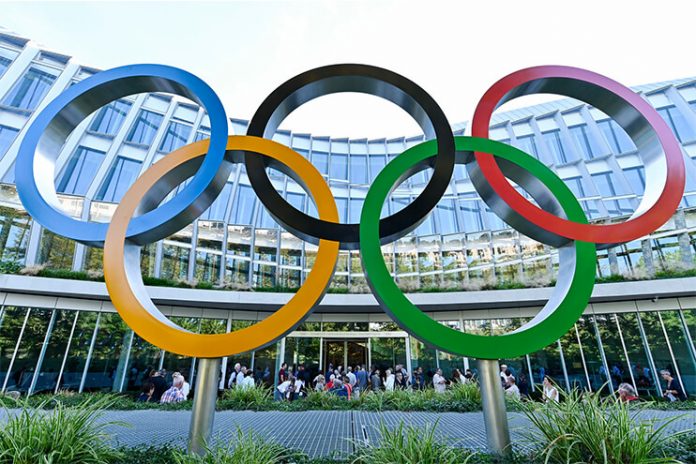
Download Now

Lipika Paul vs State of Tripura – Employees have right to freedom of expression on Social Media

0
Image source-https://bit.ly/3rYpMra

This article  is written by Abhishek Aditya who is  pursuing Diploma in Labour, Employment and Industrial Laws (including POSH) for HR Managers from Lawsikho.

Introduction

In a landmark judgment, in January of 2020, the High Court of Tripura ruled that ‘a government servant is not devoid of her right of free speech, a fundamental right.’ The Court did acknowledge that the expression of the right to speech is subject to curtailment in certain circumstances; nevertheless the judgment has significant implications concerning the right to freedom of expression for government employees. Before discussing those, let us first examine the facts of the case and the details of the judgment. 

The Case-facts in-brief

Lipika Paul was an Upper-Divisional-Clerk in the Fisheries Department of Government of Tripura. Her conditions of service were governed by the Tripura Civil Services (Conduct) Rules, 1988. She was due to superannuate on 30.04.2018. Five days before the date of superannuation, her employer passed an order of suspension, because she had taken part in a political rally organized by a particular party on 31.12.2017. By this action, she was said to have violated Rule 5 of the Conduct Rules. Her post-retirement benefits were withheld pending the completion of the inquiry. 

Subsequently, on 04.10.2018, a charge-sheet was served to Ms. Paul. The sole article of charge stated that she had “canvassed against a political party by making defamatory and indecent comments against political leaders who were contesting election from a recognized political party in the Assembly Election of 2018”. In her reply to the charge-sheet she denied all charges. 

Thus the main charge against Ms. Paul was that she had participated in a political rally and that she had posted defamatory comments on her Facebook page against political leaders. The specific text of her post has been quoted in the judgment.

The Petition in the High Court

While the departmental inquiry in the case was still going on, Ms. Paul filed a writ petition on 25.11.2019 under Article 226. Her contention was that even if the alleged actions of taking part in a rally or of posting her comments on social media were true, those do not constitute misconduct or violation of Rule 5 of Conduct Rules. 

In his counter to the petition, the Government Advocate argued that the petition has been filed prematurely as the departmental inquiry is yet to be completed. Whether her actions constitute misconduct or not will be established only in that inquiry. He argued that there is no reason for the Court to interfere at this stage. 

Usually the courts would not intervene at this stage, as the departmental inquiry was yet to be completed. However, in the instant case, the Court chose to consider the petition on its merits. It reasoned that it would be futile to make the petitioner undergo a departmental inquiry if it could be established at this stage itself that her actions did not amount to any violation of Conduct Rules. 

Rule 5 of the Conduct Rules

Rule 5 of Tripura Civil Services (Conduct) Rules, 1988 is titled ‘Taking part in politics and elections’. It has been derived from mutatis-mutandis from Rule 5 of Central Civil Services (Conduct) Rules, 1964. Inter-alia prohibits government employees from being a member of political parties or organizations. They are barred from canvassing or taking part in elections. 

In the statement of imputation of her misconduct, Ms. Paul was stated to have taken part in politics by ‘participating’ in a political rally. By posting comments against some political leaders on her Facebook page, she was stated to have canvassed against them.

The Judgment

The Courts examined the charges in light of the above-mentioned Rule 5 of the Conduct Rules. It held that the employer had wrongly equated Ms. Paul’s ‘presence’ in the rally to her ‘participation’ in it. The Court thus drew a distinction between being merely physically ‘present’ and actively ‘participating’. 

It reasoned that the presence of a person at a rally could be attributed to being a passive spectator, as rallies are common during elections. This neither indicates her political affiliation nor her political views. Thus mere presence in a political rally of Ms. Paul cannot be termed as participation by her. 

With respect to her Facebook post, the court examined the content of the post, and found that it was a general post. There was nothing specific against any political party in the post. It cannot be held as ‘canvassing against any person in elections’. The court thus dismissed the charges of violation of Rule 5 of the Conduct Rules. Accordingly, the government was ordered to release the post-retirement benefits of Ms. Paul. 

A Critical Analysis 

The judgment has been hailed as guaranteeing government employees their right to freedom of expression on social media. Of particular significance are these words by the Ld. Judge

“As a Government servant, the petitioner is not devoid of her right of free speech, a fundamental right which can be curtailed only by a valid law. She was entitled to hold her own beliefs and express them in the manner she desired of course subject to not crossing the borders laid down in sub-rule (4) of Rule 5 of the Conduct Rules”

[Sub-rule (4) of Rule 5 pertains to the bar against government servants canvassing in elections.]

The Court emphasized that the right to freedom of speech and expression being a fundamental right [Article 19(1) (a)], cannot be curtailed unless by way of a valid law. Further, a government servant, like all citizens, can express them in any manner. Such expression should not however, amount to canvassing for or against a political party or person. Subject to the restraints placed by the Conduct Rules, she is free to hold her beliefs and to express them.

So what does Lipika Paul vs. State of Tripura contribute to the discourse on citizens’ rights in a democracy? For one, it clarifies that the right to post on social media, as a form of expression, is available to all citizens including government servants. Social media is a powerful tool, especially in a democracy. Its reach and potency are much higher than other traditional modes of mass media. 

Social media popularity can easily boost or damage political fortunes. Facebook posts are said to have caused democratic uprisings (Arab Spring) in recent times. While it is unsurprising that political parties would like to exercise control over such powerful tools, sometimes they go overboard like in the case of Ms. Paul.

It must however be emphasized that in the case of Ms. Paul the content of her Facebook post was key to her being cleared of charges. The judge found that her post contained nothing against any particular person and was a general comment. 

Thus the judgment must not be construed as a carte-blanche to government servants to express their political affiliations or to campaign for political parties. Their right to freedom of expression remains subject to their terms of employment (like the Conduct Rules).

Apart from Rule 5, government servants are barred from being connected with press or media (Rule 8), from criticism of government (Rule 9) or to join associations which are ‘prejudicial to the interests of the sovereignty and integrity of the country’ (Rule 6). 

They cannot engage in demonstrations (Rule 7(i)) or accept gifts, except as provided in the Conduct Rules. They cannot undertake other employment (Rule 15) and there are restrictions even on investment in stock markets (Rule 16).

It is thus obvious that government servants have to carry themselves according to a different standard of conduct than other citizens. There are greater restrictions on their fundamental rights than on other citizens. However, these restrictions (such as the Conduct Rules) constitute a ‘valid’ set of employment terms, established by the due process of law-making. Such restrictions apply in all spheres, including social media. 

On social media, though, many traditional boundaries have been blurred. A post on Twitter, may have greater reach than many newspapers. Does it amount to being connected with the press or media which a government servant is barred from? A ‘cover-photo’ on Facebook might end up with more ‘views’ than the attendance at a political rally.

Can it be construed as ‘demonstration’? Exactly what gets termed as ‘prejudicial to the interests of the sovereignty of the country’ is a function of which political party gets to decide. If it is not the one that the government servant is affiliated to, he may end up being victimized on flimsy charges of misconduct like Ms. Lipika Paul. 

Conclusion

In summary, Lipika Paul vs the State of Tripura, does not travel beyond the limited question of whether Ms. Paul’s conduct had constituted a violation of Conduct Rules. It does unequivocally state that the government employees, like other citizens, have a right to freedom of expression, including expression on social media. 

It does not venture into examining whether those Conduct Rules amount to some unreasonable and unjust restrictions on fundamental rights of government servants. In the absence of clear-cut guidelines, the protection of the right afforded by Lipika Paul, is at best, tenuous. Government servants would better steer clear of any expression on social media that might even remotely appear to be in violation of their Conduct Rules. 

After all, while the Court chose to intervene in Lipika Paul case, it has itself stated that such interference, before the completion of a departmental inquiry, are few and far in between. Not every government employee might be as fortunate. 

References


LawSikho has created a telegram group for exchanging legal knowledge, referrals, and various opportunities. You can click on this link and join:

https://t.me/joinchat/J_0YrBa4IBSHdpuTfQO_sA

Follow us on Instagram and subscribe to our YouTube channel for more amazing legal content. 

Download Now
logo
FREE & ONLINE 3-Day Bootcamp (LIVE only) on

How Can Experienced Professionals Become Independent Directors

calender
28th, 29th Mar, 2026, 2 - 5pm (IST) &
30th Mar, 2026, 7 - 10pm (IST).
Bootcamp starting in
Days
HRS
MIN
SEC
Abhyuday AgarwalCOO & CO-Founder, LawSikho

Register now

Abhyuday AgarwalCOO & CO-Founder, LawSikho