Download Now
Home Blog Page 591

Right to liquor: is consumption and trade of liquor a fundamental right

0
Federalism

This article has been written by J Jerusha Melanie.

Introduction

What a person consumes is a matter subjected to his own choice, and so is what he does for a living. Nevertheless, choices are the products of freedom. What if you want to consume liquor but are prohibited from doing so? Or, what if you like to trade it but are not permitted to do so? Do you feel wronged? Does the question of “Don’t I have the right to consume whatever I wish and trade whatever I like?” rise in your mind? Let’s try and find out its answer concerning liquor. 

Liquor consumption in India

In 2016, the total alcohol consumption in India was about 5.4 billion liters. On average, consumption of liquor is higher in rural than urban areas. Andhra Pradesh, Dadar and Nagar Haveli, Andaman and Nicobar Islands, and Arunachal Pradesh are the top alcohol-consuming states in India. 

Liquor trade in India

India has two types of liquor- 

  • Indian Made Indian Liquor (IMIL); and 
  • Indian Made Foreign Liquor (IMFL). 

The revenue from the sales of alcoholic drinks amounted to over $67 billion in 2018; in 2016, Tamil Nadu became the highest liquor revenue-earning state in India with about ₹300 billion. No wonder India has the third-largest alcohol market globally. 

Like other commodities, alcohol is also taxable; the share of excise duty on alcohol is 10-15% of Own Tax Revenue in most of the states. States that collect the highest revenue from excise on liquor include Uttar Pradesh, Karnataka, Tamil Nadu, and Maharashtra. 

Liquor as a subject of the state list

Entry 8 of List II (State List) of the Seventh Schedule under Article 246 of the Indian Constitution pertains to ‘Intoxicating liquors’. Being a subject under the State List, the production, manufacture, possession, transport, purchase, and sale of liquor is a matter on which the respective state governments have the exclusive power to promulgate laws.  

Liquor license

All states have their own rules relating to the trade and consumption of liquor. One can trade liquor only after obtaining the required license from the concerned state excise department. Different liquor licenses are issued for various purposes, like L-1, L-3, L-6, L-9, L-10, L-13, etc. 

Arguments

The battle to recognize the right to consume and trade liquor started way back in 1951 in the case State of Bombay v. F.N.BalsaraThe bone of contention of the entire matter is all about whether the ban on liquor trade and consumption in some states is legal or not. Further, it questions the existence of the fundamental right to consume and trade liquor.

Arguments supporting the Right to Liquor

The arguments that support the contention that the Fundamental Rights guaranteed under the Indian Constitution include the right to consume and trade liquor mainly pertain to Articles 21 and 19(1)(g) of the Constitution. 

Right to Consume Liquor under Article 21

The right to privacy was recognized as a fundamental right embedded in Article 21 of the Indian Constitution in the landmark case K.S. Puttaswamy And Another v. Union Of India And Others Supreme Court Of IndiaThe supporters of the contention that the right to privacy provided in the Indian Constitution include the right to consume liquor argue that what a person consumes is an outcome of his personal choice; it is an integral part of his privacy. 

Ban is not a ‘reasonable restriction’

On the alleged infringement of the fundamental rights of any citizen, in the case of K.S. Puttaswamy And Another v. Union Of India And Others, the nine-judge bench held that the State must prove otherwise by:

  1.  Showing that there is a law, and 
  2. It amounts to a reasonable restriction within the meaning of Article 19(2) of the Constitution”. 

Alcohol indeed attributes to various health disorders like high blood pressure, confusion, loss of coordination and critical judgment, etc. Often under the influence of liquor, people tend to engage in violent activities in public areas; under such circumstances prohibiting its consumption in public is understandable. But the complete prohibition on the consumption of liquor even in confined, restricted, and protected space like one’s own house is clearly an infringement of one’s privacy. 

By restricting the citizens from drinking what they want, the State curtails their right to privacy, embedded in Article 21 of the Indian Constitution. 

The supporters of this contention argue that the complete ban on the consumption of liquor doesn’t fall under the ambit of “reasonable restrictions”. Prohibiting liquor consumption in public spaces may be a reasonable restriction, but a total ban on the same is a violation of one’s fundamental rights.   

Right to Trade Liquor under Article 19(1)(g)

The supporters of the contention that the fundamental rights provided under Part III of the Indian Constitution include the right to trade liquor. The argument goes that the right to trade liquor falls under Article 19(1)(g) of the Indian Constitution; Article 19(1)(g) reads, ‘All citizens shall have the right to practice any profession, or to carry on any occupation, trade or business.’ 

If the fundamental rights guaranteed to the citizens include the right to trade liquor under the mentioned provision, then the complete ban on liquor trade is indeed a violation of the Indian Constitution; this is because Article 19(6) permits the State to put only ‘reasonable restrictions’ and a total ban is definitely not one.  

Arguments opposing the Right to Liquor: 

The arguments that oppose the fundamental right to consume and trade liquor are supported by Articles 19(6) and 47 of the Constitution of India

Right to Liquor under Article 19(1)(g)

Article 19(6) provides that the State can make any law:

  1. Imposing reasonable restrictions, in the interest of the general public, on the exercise of the right conferred under Article 19(1)(g); 
  2.  Relating to the professional or technical qualifications necessary for practising any profession or carrying on any trade; 
  3. Relating to a trade carried out by the State, or by a corporation owned or controlled by the State, whether to the complete or partial exclusion of citizens. 

The opposers of the right to liquor hold on to the argument that the State has the right to impose reasonable restrictions on the trade carried out by any citizen, provided, such restrictions are in the interests of the general public. When the State believes that the trade of liquor is against the interests of the general public, it can indeed impose restrictions. So, the liquor bans are constitutional, and the right to consume and trade liquor per se doesn’t exist. 

Right to Liquor under Article 47

Article 47 (Directive Principles of State Policy) of the Indian Constitution deals with the State’s duty to raise the nutrition level, standard of living, and public health of citizens. 

It states that improving public health is one of the primary duties of the State. It specifically points out that the State must “endeavour to bring about prohibition of the consumption except for medicinal purposes of intoxicating drinks and of drugs which are injurious to health.” 

Meaning, as much as possible, the State must strive to prohibit the consumption of intoxicating drinks. 

The opposers of the right to liquor argue that this is exactly what the liquor bans try to uphold. It is common knowledge that liquor is injurious to health. 

By imposing liquor bans, the State tries to fulfil its duty prescribed under Article 47 of the Indian Constitution. So, the right to consume and trade liquor per se doesn’t exist. 

The conflict of contentions

In the case of Khodhay Distilleries Ltd. v. State of Karnatakaan interesting conflict of contradictory contentions was observed as to whether or not to recognize the right to trade liquor.

If Right to Liquor exists

Restrictions can be imposed only when a right exists. Validating the restrictions on liquor trade would mean that citizens indeed possess the right to trade because restrictions under Article 19(6) are imposed only if the citizens possess such a right. 

If Right to Liquor is non-existent  

On the other hand, if citizens do not have the right to trade liquor, the state governments will have a monopoly over the liquor market. But by doing it, the State violates Article 47 (Directive Principles of State Policy), which provides that the State shall endeavour to prohibit the consumption of intoxicating drinks and drugs. 

Nevertheless, it is vital to analyze the insights of the courts on this matter. 

The perspective of courts

After scrutinizing the diverse arguments of both the supporters and opposers, the perspective of the courts on the existence of the right to liquor is so far unchanged.   


State Of Bombay And Another v. F.N Balsara (1951) 

The constitutionality of the Bombay Prohibition Act, 1949, was challenged in this case. The said Act prohibited the following: 

  • Manufacture, 
  • Trade, 
  • Transport, and 
  • Possession of liquor within the state. 

Challenging some sections like Sections 12, 13, 23, and 24 of the said Act, the petitioner contended that it infringed his rights to: 

  • Possess, consume and use medicated wine, whisky, beer, eau-de- cologne, etc.;
  • Import and export liquor;
  • Purchase, consume, possess or use any stock of foreign liquor, medicinal preparations containing alcohol, etc. 

The petitioner also argued that the said Act violated Article 19(1)(f) that provided citizens the right to property (omitted by the Forty-Fourth Constitutional Amendment, 1978), that is, to acquire, hold, and dispose of the property. 

Judgment

In the appeals that reached the Supreme Court of India, a five-judge bench headed by Hon’ble Justice Saiyid Fazi Ali unanimously held the impugned Act as unconstitutional only to the extent of the “ordinary use of liquor for toilet and medicinal preparations”. The total prohibition on potable liquor is valid.

Ultimately, the right to consume and trade liquor as a fundamental right per se does not exist. 

Khoday Distilleries Ltd. v. State of Karnataka (1994)

This case provided one of the landmarks judgments as far as the right to trade liquor is concerned. 

Primarily, this case challenged the constitutional validity of the following Rules: 

  1. Karnataka Excise (Distillery and Warehouse) (Amendment) Rules, 1989, 
  2. Karnataka Excise (Manufacture of Wine from Grapes) (Amendment) Rules, 1989,
  3. Karnataka Excise (Brewery) (Amendment) Rules, 1989, 
  4. Karnataka Excise (Sale of Indian and Foreign Liquors) (Amendment) Rules, 1989,
  5. Karnataka Excise (Bottling of Liquor) (Amendment) Rules, 1989,  
  6. Kerala Foreign Liquor Rules, 1974, and
  7. Andhra Pradesh Foreign Liquor and Indian Liquor Rules, 1970. 

Though various SLPs, appeals, and writ petitions were clubbed together in this case, the bone of contention was whether or not the petitioners had the right to trade liquor.  

Judgment

The judgment was delivered of a three-judge bench of the Supreme Court of India, headed by Justice P.B. Sawant, was similar to that of the F.N Balsara case; but, this time the Court’s insights upon the right to liquor was far thoughtful and straightforward. 

Relying upon Articles 19(1)(g), 19,(6), and 47 of the Indian Constitution, the Court held that:

  • The State has the power to impose reasonable restrictions on the trade or business run by any citizen, provided, they are in the interests of the general public; 
  • No one can be deprived of his property unless the deprivation is following Article 19(6);   
  • The State has the power to prohibit the consumption of liquor, to improve public health; 
  • The State’s power to prohibit liquor trade implies that it has the exclusive power to carry on that trade. 
  • The State can have a monopoly on the production and supply of liquor; 
  •  No citizen has the fundamental right to trade and consume liquor. 

Ugar Sugar Works Ltd. v. Delhi Administration And Others (2001) 

Specific policies dictating liquor trade within the National Capital Territory of Delhi made under Punjab Excise Act, 1914, were challenged in this case. The petitioner, a liquor manufacturing company, contended that the restrictions imposed under the said Act violate his right to trade guaranteed under Article 19(1)(g) of the Indian Constitution.   

Judgment

Again, a three-judge bench of the Supreme Court of India rejected all the arguments that support the fundamental right to liquor. It vigorously held that “there is no fundamental right to trade in intoxicants, like liquor”, and cited various precedents like State Of Bombay And Another v. F.N Balsara, the Khoday Distilleries Ltd. v. State of Karnataka, etc. to support the judgment. 

Conclusion 

Presently, no Indian citizen has the fundamental right to consume and trade liquor. Respective state governments have a monopoly over the liquor market in India. It is a billion-dollar industry in India, and hence, an almost inseparably necessary evil. 

Nevertheless, if the respective governments implement the liquor rules well, then there may be chances to balance the interests of both the people who favour and condemn the right to liquor. 

References

  1. https://www.statista.com/statistics/727026/consumption-of-alcoholic-beverages-india/ 
  2. https://www.who.int/substance_abuse/publications/global_alcohol_report/profiles/ind.pdf 
  3. https://www.statista.com/statistics/698036/states-with-highest-alcohol-revenue-india/#:~:text=India%20has%20the%20third%20largest%20alcohol%20market%20in,makes%20alcohol%20a%20controversial%20commodity%20in%20the%20country 
  4. https://rbidocs.rbi.org.in/rdocs/Publications/PDFs/STATEFINANCE201920E15C4A9A916D4F4B8BF01608933FF0BB.PDF 
  5. https://indianexpress.com/article/explained/explained-why-states-are-so-keen-about-excise-duty-on-liquor-6393643/ 
  6. https://legaldesire.com/how-to-get-a-liquor-shop-license-in-india/ 
  7. https://www.alcohol.org/effects/ 
  8. https://www.casemine.com/ 
  9. https://indiankanoon.org/ 
  10. https://www.casemine.com/judgement/in/5609aca3e4b014971140f62e 
  11. https://www.casemine.com/judgement/in/5609ad98e4b0149711411ce2 
  12. https://www.casemine.com/search/in/State%20Of%20Bombay%20And%20Another%20v(DOT)%20F(DOT)N%20Balsara 
  13. https://legislative.gov.in/constitution-forty-fourth-amendment 

LawSikho has created a telegram group for exchanging legal knowledge, referrals, and various opportunities. You can click on this link and join:

Follow us on Instagram and subscribe to our YouTube channel for more amazing legal content.

Download Now

An analysis of the Advocates Protection Bill, 2021

0
 

This article has been written by Shivangi Prakash, from Amity Law School, Noida.

Introduction

The Bar Council of India issued the Advocates Protection Bill, 2021 on July 2, 2021. The statute was drafted by a seven-member team with the problems and difficulties faced by advocates and their families in mind. The main objectives for the bill are said to be the protection of advocates and the removal of restrictions to their ability to fulfil their tasks. A variety of circumstances are mentioned in the bill that obstructs the execution of tasks.

This bill was also drafted in compliance with the 8th United Nations Congress on the Prevention of Crime and Treatment of Offenders, which took place in Havana, Cuba from August 27th to September 7th, 1990. India took part in the Congress and accepted the “Basic Principles on the Role of the Lawyer.”

Advocates, like the police and the judiciary, play a vital role in bringing justice to the public. Even after this, the Police and the Judiciary have been given protection and privileges, but Advocates have not. There seem to be no laws protecting advocates, which is one of the reasons we are seeing an increase in assaults, killings, and illegal detentions of advocates.

Need for the bill

The major needs of the bill are stated to be the protection of advocates and the removal of impediments to their performance of their duties. A variety of circumstances are mentioned in the bill that obstructs the discharge of tasks. A primary reason is a sudden increase in assaults, kidnappings, intimidation, and frequent threats against advocates. When the security of lawyers is jeopardised as a result of their work, the government must provide the necessary protection. Such a measure is required to protect activists. Advocates must also be supplied with welfare benefits and the essential needs of life, according to the law.

A cyclist was arrested a few days ago on the Pune-Bengaluru Highway for assaulting a 41-year-old corporate lawyer[1]. A mob of roughly 20 individuals savagely attacked two lawyers who were meeting with their clients with swords.[2]

Three guys were arrested in October 2020 for kidnapping and killing a lawyer and then discarding his body in a forest in Pune.[3]

All of these activities have instilled fear in the minds of advocates, causing them to be unable to adequately fulfil their jobs, resulting in a decrease in the delivery of justice.

As a result, this Bill has been created in order to reduce similar situations and to assist Advocates in carrying out their duty. It was also created to support the Advocates with basic essentials in time of crisis.

The Council has decided to introduce a bill to safeguard Advocates for the reasons stated above. Apart from physical security and illegal arrest and detention, it also stressed social security.

Important features of the bill

The preamble of the bill states that it is meant to safeguard advocates and their responsibilities when performing professional obligations. The Bill’s objectives and arguments are then stated in detail in nine points.

Acts of violence defined (Section 2)

Under Section 2 of the bill the definition of “advocate” will be the same as in the Advocates Act of 1961. There, the term “advocate” refers to a person who has been registered as an advocate as per the requirements of that Act.

The term “acts of violence” is also stated in the same section of the bill.. All acts performed towards advocates with the goal to hinder or disrupt the practice of unbiased, fair, and honest litigation fall under this category. 

Threat, coercion, malicious prosecution, harassment, assault  criminal force, loss, hurt, injury, and so on are examples of ‘acts’ that could affect advocates’ working and living conditions. This also involves property loss or damage. These should be cognizable and non-bailable offences.

Punishment and compensation (Section 3 and 4)

What happens if the Advocate is the victim of an “act of violence”? Will that person be held accountable? Will the lawyer against whom the violence is committed to receive any remuneration?

Sections 3 and 4 of the Bill contain the answers to all of these questions. Section 3 discusses punishment, whereas Section 4 discusses compensation.

According to Section 3(1) of the Bill, anyone who commits or even aids and abets an act of violence against an Advocate would be sentenced to a minimum of six months and a maximum of five years imprisonment.

The fine for the crime might range from 50,000 to one lakh rupees, depending on the seriousness of the crime.

Furthermore, under Section 3(2) of the Bill, anyone who has already done the act but does so for a second or subsequent time shall be penalised with detention ranging from 2 to 10 years and/or a fine of more than ten lakh rupees but not less than that.

If a crime has been committed, the offender will be required to pay compensation in addition to the penalty imposed under Section 3. Depending on the circumstances, the court will estimate the extent and amount of compensation.

However, notwithstanding compounding under Section 6, if the damage is made to any property, the amount of compensation will be twice the market value of that damaged property, as per Section 4(3).

In addition, if compensation is not provided under Sections 4(1) and 4(2), Section 4(4) states that the money will be reclaimed as land revenue arrears under the Revenue Recovery Act of 1890.

Investigation by officer not below the rank of DSP {Section 5(2)and 5(3)}

When a case is filed under Section 3 of the Bill, it can only be investigated by a police officer of at least the position of Deputy Superintendent of Police (DSP), and the investigation must be completed within 30 days of the filing of the First Information Report (FIR) under Section 154 of the Indian Penal Code, 1860, according to Section 5(2) and section 5 (3) of the Bill.

Jurisdiction {section 5(4) and 5(5)}

According to Section 5(4), matters cannot be brought before courts that are lower than the status of District and Sessions Judge.

Section 5(5) makes it abundantly clear that no adjournment would be granted unless it is absolutely required, and that all witnesses will be cross-examined repeatedly from day today.

This Section further states if the trial is not concluded within the specified time, the time limit can be extended for a maximum of six months, with the judge recording the grounds for non-completion.

Redressal committee

The bill’s next major provision is the establishment of a redressal committee. From every level, i.e. District, High Court, and Supreme Court, a three-member commission for Redress of Grievances of Advocates and Bar Associations have been established. The head of the court at that level, such as a District Judge for the District Court, a Chief Justice or his nomination for the High Court, and a CJI or his nominee for the Supreme Court, will lead this committee.

The two remaining members will be appointed by nomination from their respective Bar Councils. At the meetings of the redressal committee, the president of the Bar Council will be a Special Invitee.

Protection against suits

An advocate who has performed his or her duties in good conscience will not be prosecuted. Interaction between advocates and their clients should be honoured, and confidentiality should be maintained.

Protection against arrest and prosecution

Section 11 states that no police officer may arrest a lawyer or investigate an advocate case without a specific order from the Chief Judicial Magistrate.

If a police officer receives information about an advocate committing a crime, the officer enters or causes the substance of the information to be entered into a book that the officer must keep and refers the information to the nearest chief judicial officer, who conducts a preliminary investigation into the case and the Chief Judicial Magistrate shall give an opportunity to the advocate to be heard or to his representative by issuing him a notice.

new legal draft

If the chief discovers that the application was filed out of hatred or malice, the lawyer will be allowed bail.

Social security (Section 7 and Section 15)

This Advocates (Protection) Bill, 2021, recognises and provides for the social security of Advocates under Section 15. It states that the Central Government, as well as the State Government, might grant financial assistance to Advocates in need during unanticipated events such as epidemics or other natural disasters.

On the proposal of the State Bar Council, the Local District Magistrate or District Court may pay a minimum of Rs. 15,000 to Advocates in Need till the epidemic or other natural calamity is over.

The Central Government will cover half of the costs, while the State Bar Council will cover the other half. Apart from that, the Central Government may establish some insurance plans.

The Central Government even has the authority to lend money to such lawyers. It may order Public Sector Undertakings and Scheduled Banks to grant loans at fair interest rates via a circular.

Further sections provide for police protection, the formation of a grievance redressal body, the protection of advocates from illegal arrest and malicious prosecution, and so on.

Advocates who the court believes are or may be the victims of any of the offences listed in Section 2 of the Bill may be given police protection. The courts will decide how long such protection will last. Section 7 of the Bill provides such protection.

Presumption as to coercion in case public servant obtaining privileged communication from legal practitioner (Section 12)

Section 12 states that when a public servant who has powers to arrest or investigate under CrPC has any confidential material or communication that can be proven by being gained by an advocate in possession or is found that it is useful or beneficial in the investigation, it shall be assumed to have been gained through coercion from that concerned public servant.

Conclusion

The Advocates (Protection) Bill of 2021 can be extremely beneficial in this regard. After analysing and investigating every relevant aspect, the committee of specialists drafted this Bill with great care. All of the major concerns confronting the Advocates fraternity have been explored and debated.

The Bill goes into detail about recent events of assault, criminal force, harassment, and threats aimed directly at Advocates when they are performing their professional responsibilities that usually results in shortcomings in Advocates’ provision of effective services to clients as well as instilling a deep sense of fear in Advocates’ minds. The threat of malevolent and false prosecution by opposition sides, which is also aimed to interfere with the performance of its duties, thereby interfering with the administration of justice itself, is one of the other reasons for introducing this Bill.

The suggestions received by the Bar Council of India will be thoroughly evaluated by the Council, which will thereafter consider incorporating any required adjustments. The final draft Bill will be given to the Hon’ble Minister for Law and Justice, who will present it to Parliament.

Advocates also have the challenge of representing detainees, those who are imprisoned or incarcerated. In order to aid in the investigation of alleged wrongdoing, attorneys are questioned about privileged communications with their clients. All of the above issues that the advocates are facing will be remedied if the bill is passed.

To conclude, this Bill should be transformed into an Act and made applicable throughout India in order to safeguard and save our Advocates from criminal charges and to enable them to carry out their duties without danger.

References

[1] Cyclist booked for attacking lawyer in road rage incident on Pune-Bengaluru Highway available at: /timesofindia.indiatimes.com (last visited on 27 July 2021)

[2] Lawyers attacked with swords on busy Dahisar road in daylight available at: timesofindia.indiatimes.com (last visited on 27 July 2021) 

[3] 3 held for kidnapping, killing lawyer available at: timesofindia.indiatimes.com (last visited on 20 July 2021)


LawSikho has created a telegram group for exchanging legal knowledge, referrals, and various opportunities. You can click on this link and join:

Follow us on Instagram and subscribe to our YouTube channel for more amazing legal content.

Download Now

All you need to know about Starbucks franchise

0
Image source: https://www.entrepreneur.com/article/311377

This article is written by Nihar Ranjan Das pursuing a  Diploma program in Advanced Contract Drafting and Negotiation and Dispute Resolution from Lawsikho.

Introduction

Before jumping into the topic, let’s understand the meaning and the use of a Franchise Agreement. A Franchise Agreement has come into existence only when a Parent company wants to operate its business through various individual branches in different cities/countries. The Parent company strictly imposes its standard and specification of its product/services with the third-party individual, which is also commonly known as the Business Model. The Parent Company (also called as Franchisor) through this franchise agreement with the third-party individual (called as Franchisee) shares his product/service specification including the available Intellectual properties (Trademark, copyright if any, etc.) and in exchange for the same collects the royalty from the Franchisee for the use of its brand name. Nowadays there are multiple companies operating and even prefer to enter into a new market through their franchise business model. Let’s discuss the franchise options available for the café business.

The Author’s aim to write this article is to showcase the details involved in the Café franchise business, especially the Starbucks café franchise business, and also the detailed terms and conditions involved in the Starbucks franchise agreement. As far as the café business is concerned, we have generally two options: create our own brand or take the franchise of an existing popular brand. If we are planning to start our own café brand, we need to be aware of the risk and rewards involved therein. Whereas, the franchise route is something straightforward and rewarding too. There are multiple café franchise options available in India and the cost will be in the range of a few lakhs and go up to few crores. So, we need to choose the most suitable café franchise as per our budget. Now it is not a surprise at all that people who have a good amount of money, prefer to take the franchise of a popular international café brand. We can take an example of the most popular, desirable, and expensive global café brand, which is the Starbucks franchise.

Everything about Starbucks Franchise Model

Starbucks is a very premium café brand of the world by having its headquarter in Seattle, Washington (USA). It was primarily started in the year of 1971 by Jerry Baldwin, Gordon Bowker, and Zev Siegal. However, at the beginning of 1980, they sold their brand to Howard Schultz. Since then, this brand got its recognition all across the USA and went worldwide in the last quarter of 1990. As per the company’s data, by the end of 2019, Starbucks has made its presence over 31,000 locations worldwide with a revenue of USD38 billion. As far as the Starbucks franchise is concerned, in the initial years, the expansion of Starbucks happened through the franchise process only. But, after the ownership transferred to Howard Schultz, Starbucks stopped providing franchises and started expanding through the licensing route only. 

But why Starbucks doesn’t provide franchises for its stores?

For any brand, franchising is always a preferred model of expansion to grow in the market, especially in the food and beverage industries. There are very popular international brands available in the market which are operating their businesses through franchise stores, which helps the companies to get a prime location with a very minimum investment. Also, they don’t have to invest their time, money, and resources to manage the stores, as it is done by the franchisee. If we will take an example, KFC, McDonald’s, Burger King, Domino’s, Pizza Hut, and many other international brands are operating their businesses through franchising routes only.  

Then, the question arises, if these popular companies are operating through the franchise model, why not Starbucks. Howard Schultz, in his book “Pour your heart into It” answered this question, in which he mentioned that:

A Franchise is a middleman, who would stand between them and their customer. If he had opted for the franchise model, Starbucks would have lost the common culture, which made it strong.

It is however true that most of the food and beverage companies while franchising, leave the entire store with the franchisees including the product quality and delivery, and customer interaction. But Howard Schultz’s intention was to exactly avoid these things while expanding his business in other territories.

Then what is the Starbucks Expansion Model?

Most of the companies generally prefer to use company-owned stores or franchise-owned stores for the expansion of their brand in the market. But Starbucks instead of going with these options prefers the other route of expansion, which is by way of licensing. Starbucks (Licensor) by way of Licensing Agreement, provides the license to the desired person (Licensee) who is interested to invest in Starbucks. As a Licensor, Starbucks manages the overall product and customer experience, which is its main focus. Whereas, the Licensee manages the all-other aspects of the business. This licensing model in the franchising term is very much similar to the Franchise Owned and Company Operated (FOCO) model. The advantages of such a model are, food quality always remains with the Licensor and the customer experience shall be taken care of by the franchisor or Licensor. But Starbucks no franchise police has some exceptions in the US. Starbucks in the US airports lounge, hospitals, department stores, colleges, and universities are mostly franchise stores. In America itself, almost 40% of Starbucks stores are operating on a franchise model. The other exception is Starbucks entering a few countries through a partnership or joint venture with local business companies.

How to get a Starbucks Franchise in India?

As we have already discussed, Starbucks doesn’t provide a franchise to open its store in any country. But for India, Starbucks doesn’t even provide the licensing model to operate its store. TATA Starbucks Private Ltd. Owns all the stores available in India. They have even planned to continue this model in the future also. So, anyone who is interested in opening a Starbucks store will have to wait till they change their business model to licensing route. Starbucks entered the Indian market in the year of 2012 with a joint venture with TATA Global Beverages (a company of TATA group). This joint venture is then called TATA Starbucks Private Ltd. As of now, Mumbai has the maximum number of Starbucks stores in India, and overall, more. Starbucks entered the Indian market in the year of 2012 with a joint venture with TATA Global Beverages (a company of TATA group). This joint venture is then called TATA Starbucks Private Ltd. As of now, Mumbai has the maximum number of Starbucks stores in India and overall, more than 200 stores across 15 cities of India.    

So, how to associate with Starbucks?

As TATA Starbucks Private Ltd., doesn’t allow the Starbucks franchise or License model to operate the store, still, there is a way to associate with Starbucks and that is by giving the property on rent at a prime location of the city to open the store. If someone owns a property measuring an area of more than 2500 Square feet, they can directly contact the company and allow them to open a store by providing a long-term lease. If the company has any plan to start their business in that city and they find that the location will be more suitable for them, they will contact the property owner for the deal. As per the report published by Kotak Institutional Equities, a single Starbucks store individually makes a profit of over Rs. 93,000/- per day, so the monthly earnings shall be around 30 lakhs. But, at the same time, the Starbucks store paid almost Rs. 6 Lakhs as rent and the value of the rent is going up regularly. As per the report published by Tata Starbucks Private Ltd., the rental expenses have now been increased to 35%.

How does a Starbucks license work?  

Starbucks US provides the Franchise Application Form for, who are interested to associate with the company. This form shall include all the personal and business information of the Licensee for granting the license. It will also ask you to mention the financial statement for the last full financial year including the salary amount, commission, interests/dividends, and any other income during that period. It will also ask to fill in the complete details of Assets and liabilities and how much capital he has to invest in the business (the minimum amount required by the company is £500k of liquid assets). You will also need to specify what variety of Starbucks products you are going to offer.  

Once you have filled in all the details of the Application form and applied it, they will let you know the status of the Application after verifying all the details. If they select you to become a licensed store owner, you will be provided with support for many aspects as per the company’s criteria. They will help you in the business operation, including the design of the store, staff training and the installation of all equipment. But you need to have sufficient funds available to make the business a success. Starbucks expects the Licensee shall have a certain amount of funding available and the estimated fund as earlier mentioned at least $700,000 in liquid assets. So, the Licensee must have a great location with the combination of mentioned liquid assets to open a Starbucks licensed store.

Conclusion

Starbucks is one of America’s great success stories. The company also successfully managed to achieve this growth rate through a dedicated focus and belief towards licensing routes. Yet one of the ways that Starbucks has distinguished itself from its competitors has been by avoiding franchising, unlike other popular companies. As we have discussed in detail regarding their approach towards the franchise and licensing model in different countries. But in India, they don’t even provide the licensing route to start this international premium café brand in your town. There is also no such form to apply for the Starbucks franchise in India. The only way to reach them out is by contacting them as per the details mentioned on their website. Also, one can send them an email by mentioning your interest and the location of your owned property. If they found it useful, then they may contact you.

References

  1. https://globalassets.starbucks.com/assets/a337b14462c44ee98c1aef01ca6a4b48.pdf.
  2. https://www.starbucks.com/terms/suppliers-standard-terms-and-conditions.
  3. https://franchising.scooterscoffee.com/2019/10/15/starbucks-franchise/.

Students of Lawsikho courses regularly produce writing assignments and work on practical exercises as a part of their coursework and develop themselves in real-life practical skills.

LawSikho has created a telegram group for exchanging legal knowledge, referrals, and various opportunities. You can click on this link and join:

Follow us on Instagram and subscribe to our YouTube channel for more amazing legal content.
 

Download Now

Case comment : Vishaka vs. State of Rajasthan

0

This article has been written by S.Sujitha.

Introduction

I raise up my voice—not so that I can shout, but so that those without a voice can be heard. We cannot all succeed when half of us are held back.

-Malala Yousafzai

As Malala Yousafzai gave voice to numerous women who weren’t heard, similarly, there was a woman who raised her voice against sexual harassment at the workplace in the late 1990s. In the present scenario, we all have the appropriate legislation of Sexual Harassment of Women at the Workplace, 2013 to be claimed in instances of any harassment or to safeguard and provide a safe environment for working to women. But have you ever thought what would be the scenario back in 1992, which is almost 15 years before 2013? This case of Vishaka vs. State of Rajasthan showcases the picture of one such instance of discrimination against women. Owing to the need for distinct legislation in this regard, the Supreme Court ruled the Vishaka guidelines in this case for the protection of women from sexual harassment in the workplace.

Facts of the case

At the outset, it is necessary to put forth the facts of the case in detail to render a better understanding. Firstly, there was an immediate cause responsible for initiating this fight for gender justice which was the case of the alleged brutal gang rape of a woman in a village in the State of Rajasthan. Bhanwari Devi, a social worker was gang-raped for doing the noble act of preventing child marriage. Unfortunately, this criminal case pursuant to the insufficient evidence proving the crime was dismissed [1]. However, this incident gained momentum among various social activists and NGOs, enforcing the necessity for specific legislation for sexual harassment of women at the workplace in the light of Gender Equality. Subsequently, this writ petition was filed by certain social activists and NGOs under Article 32 on the ground of violation of Articles 14, 15 and 21 of the Constitution.

Issues

Before delving into the analysis, let’s have a look at the issues raised: 

  1. Whether sexual harassment in the workplace is a violation of Fundamental Rights under Articles 14, 15 and 21 of the Constitution?
  2. Whether International Convention can be applied in cases of the absence of appropriate domestic laws?
  3. Whether there is a need for mandatory guidelines to be laid in the light of Sexual harassment at the workplace?

Key contentions 

The Council on behalf of the Petitioners contended that the sexual harassment undergone by women at the workplace is a violation of Articles 14, 15, 19(1)(g) and 21 of the Constitution. Adding on, the counsel pointed out the need for the legislation by highlighting the lacuna of appropriate provision of law in the view of a safe working environment for women. The counsel on behalf of the respondent, indeed, extended considerable assistance required to aid the Court in dealing with the discussed social evil. Additionally, Ms. Meenakshi Arora and Ms. Naina Kapur also lent a helping hand to the Court. Further, Shri.Fali S. Nariman being appointed as Amicus Curiae as well assisted the Court. Therefore, it goes without saying that the judicial assistance provided, portrays the willingness to work together, towards a better upshot on taking the interests of the people into account. [2]

Judicial reasoning

Firstly, the court ruled that such an incident is a crystal clear violation of Article 14, 15, 19(1)(g) of the Constitution. Furthermore, the Court indicated few other provisions relevant, in particular, Article 42 (Provision for Just and humane conditions of work and maternity relief) and 51A (Fundamental duties of the citizen). [3]

Secondly, the Court dealt with the application of international conventions in the absence of required Domestic Law. The court highlighted that a relevant International Convention which is consistent with the fundamental rights as well in harmony within its scope can be applied for the promotion of the Object of the Constitutional guarantee as implied under the Article 51 (c) and Article 253 (Power of the Parliament to enact laws for the implementation of the International Conventions and Norms) read along with the Entry 14 under the Union List in the 7th Schedule of the Indian Constitution. In addition to this, the court also emphasized Article 73 (Extent of Executive power of the Union).

 Thirdly, the court acknowledged the need for guidelines to render Gender equality and emphasized the significance played by the International Convention and Norms as the very nature of protection of sexual harassment and right to work with dignity being universal. 

The court envisaged the Beijing Statement of Principles of the Independence of the Judiciary in the LAWASIA region [4] which sets the minimum standards required to be taken into account to ensure the Independence and effective functioning of the Judiciary. On moving forward with the problem at hand, the Court adverted to Articles 11 and 24 of the Convention on the Elimination of All Forms of Discrimination against Women [5]. Subsequently, the Court relied on the cases of the High Court of Australia in Minister for Immigration and Ethnic Affairs v. Teoh [6] and Nilabati Behera v. State of Orissa [7] to reiterate the application of International Conventions for the better understanding of the fundamental rights explicit in the Constitution through the prism of gender equality. 

Judgment

On considering the absence of domestic law regarding gender equality and protection from sexual harassment at the workplace, the Court formulated the guidelines and norms to be observed at all the workplaces until the enactment of legislation under Article 32 for the enforcement of the Fundamental Rights of the Constitution. Adding on, the court declared this as a law under the ambit of Article 141 of the Constitution. The guidelines prescribed are:

Duty of the Employer

  • The employer is duly responsible to prevent such commission of acts of sexual harassment by means of expressing prohibition of such actions, providing quality work conditions and including the said prohibitions in the rules of either government body or private sector related to the conduct and discipline.
  • Appropriate disciplinary action must be taken by the employer if there’s misconduct in the employment of this kind. In cases where such a case constitutes an offence under IPC, then the employer shall take suitable action. Also, it should be ensured that the victims aren’t to be discriminated against, based on this complaint and should be given the option to seek transfer to her or to the wrong-doer. 
  • The employer shall carry out the steps required to help the person who’s affected in cases where such acts were done by a third party.

Definition of sexual harassment 

It is defined as an unwelcome sexually determined behaviour either directly or indirectly which includes physical contact, demand/request for favours based on sexual nature, Showing pornography, any sexually coloured remarks or other unwelcome physical verbal/non-verbal conduct of sexual nature. 

Complaint mechanism and committee 

An efficient complaint mechanism should be engendered ensuring the time-bound remedies to complaints. In addition to this, a complaint committee can be set up, headed by a woman, comprising of a special counsellor, a third party related to this issue and not less than half the members being women. This committee and the employer are required to submit a report annually to the concerned government department regarding the complaints and the actions taken thereon. 

Worker’s initiative

Employees should be encouraged to come forward to raise such issues at the appropriate forums.

Awareness 

Awareness should be created among the employees regarding the prescribed guidelines.

Government to adopt required legislation 

The court puts a request to the Central or State government to enact appropriate legislation in the private sectors in this regard.

Critical Analysis 

First of all, the inputs put forth by the Hon’ble Supreme Court is highly worth mentioning. On a serious note, this case deals with one of the most sensitive and needed issues for women and indeed, has shed light on the same, to a certain extent. Further, the acknowledgement of the loopholes in the provisions and the need to formulate the necessary solution for the social evil, by the judiciary, reinforces the very essence of democracy. Without a doubt, the court‘s decision on incorporating the International Convention in the absence of suitable domestic legislation is absolutely pitch-perfect. On drawing parallels between the situations back then and now, Sexual harassment still prevails to be a menace to women. One such incident in a women’s life has got all the power to have adverse repercussions on all the spheres of her life. 

Even after eight years of the enactment of the Sexual Harassment of Women at Workplace Act, 2013, there are several incidents of sexual harassment being reported, moreover, many go unreported. 

The Act has not lived up to the high expectations that would be expected of a bill that has been in limbo for over 16 years. Many sections are self-defeating and nullifying, and certain essential features have gone unnoticed. Essential mechanism procedures such as the provision of legal expertise, clinical counselling facilities, medical insurances related to the violence, compensation from the employer, and so on have not been made available. 

The Act, which was supposed to be very victim-friendly, causes complications for the victim at every turn. Laws should reflect cultural developments, particularly in areas like sexual assault and exploitation. 

In many situations, the inability to correlate legal growth with societal development reveals a great deal about the level of misunderstanding regarding very humiliating acts like sexual harassment. The legislature should thoroughly review the Act and address the flaws that it contains. In a severely affected society like India, a firm and serious effort on the part of the legislature is necessary to address and remove this problem. Socially speaking, women empowerment have come a long way since Independence but still have multiple arenas to be achieved. This huge gap can be enrooted to the gender stereotyping mindset of the society. The ultimate solution is the real change in the mindset of society to establish gender equality. Only then, the feathers of Women Empowerment can be flaunted with pride. 

Conclusion 

India is making significant progress toward its development goals, and more women are entering the workforce. Recognizing the right to protection against sexual harassment is an essential component of safeguarding women’s human rights. All of this is a step toward ensuring women’s independence, equality of opportunity, and the right to a dignified workplace. Workplace sexual harassment is a societal issue that has to be addressed. It is critical to raise employer and employee knowledge of the presence of various types of sexual harassment at work, as well as preventative measures and the legal framework for preventing and treating sexual harassment. 

Needless to say, this case proves to be one of the turning points in reforming society in the light of Women empowerment. The Court’s efforts in this ruling to clear cut solution to the issue at hand should be appreciated. This ruling, beyond the shadow of a doubt, turns out to be a significant precedent till date. Eventually, the Sexual Harassment of Women at workplace act was enacted in the year 2013 which ultimately brought light on various needed provisions. However, the social problem of sexual harassment at the workplace still continues to exist, amid the presence of such legislation. On the other hand, men are also harassed sexually in various cases. All these results in a pressing need for more appropriate legislation to cover all the spheres of this issue. 

Dissemination and awareness-raising activities should be undertaken and reviewed on a regular basis in order to develop best practices for dealing with sexual harassment in the workplace, as well as to forewarn and enlighten prospective victims of sexual harassment so that they can avoid it. Enhancing sexual harassment training classes and following the guidelines on sexual harassment prevention can aid women in combating it. 

You can tell the condition of a nation by looking at the status of its women.” – Pandit Jawaharlal Nehru

Reference

[1] Vishakha and others v State of Rajasthan, https://en.wikipedia.org/wiki/Vishakha_and_others_v_State_of_Rajasthan (Last accessed on 27 July 2021)

[2] https://indiankanoon.org/doc/183531264/ (Last accessed on 27 July 2021)

[3]Article 42, Constitution of India, https://indiankanoon.org/doc/111604/ (Last accessed on 27 July 2021)

[4] Beijing Statement of Principles of the Independence of the Judiciary in the Lawasia Region, https://www.icj.org/wp-content/uploads/2014/10/Beijing-Statement.pdf (Last accessed on 27 July 2021)

[5] Convention on the Elimination of All Forms of Discrimination against Women, https://www.un.org/womenwatch/daw/cedaw/ (Last accessed on 27 July 27, 2021)

[6] High Court of Australia in Minister for Immigration and Ethnic Affairs v. Teoh, HCA 20, (1995) 183 CLR 273

[7] Nilabati Behera v. State of Orissa, AIR 1993, SC 1960


LawSikho has created a telegram group for exchanging legal knowledge, referrals, and various opportunities. You can click on this link and join:

Follow us on Instagram and subscribe to our YouTube channel for more amazing legal content.

Download Now

Understanding dowry death : Gurmeet Singh vs State of Punjab

0
Image source: https://www.livelaw.in/top-stories/section-304b-ipc-dowry-death-soon-before-not-immediately-before-supreme-court-guidelines-174853

This article is written by Vidhi Birmecha, pursuing an Introductory Course to Legal Writing from Lawsikho.

Introduction

  • Case name – Gurmeet Singh v. The State of Punjab
  • Citation – Criminal appeal no. 1731 of 2010
  • Judgement date – 28th May 2021
  • Court – Supreme Court of India
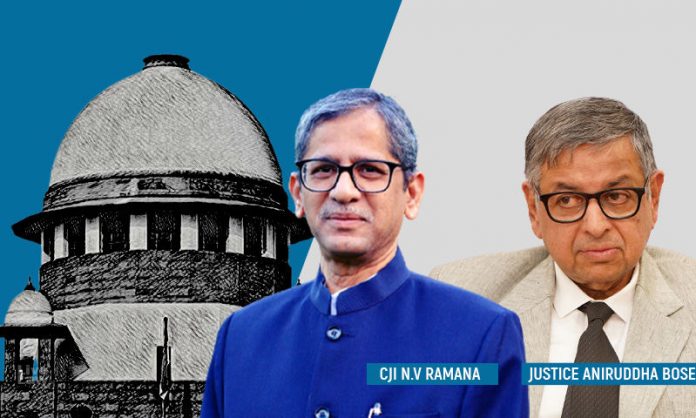
  • Bench – Hon’ble CJI N.V.Ramana, Surya Kant, Aniruddha Bose

After 72 years of Independence, living in the 21st century, we have been able to get rid of many social evils. Yet what has not left the minds of Indian people is the concept of dowry. The case of Gurmeet Singh vs the State of Punjab is one such case, wherein the accused-appellant has harassed and physically assaulted the deceased as the demand of dowry was not fulfilled. The court held that all the essential ingredients of Section 304B IPC have been satisfied and the appellant’s appeal was dismissed. The case mentioned below is of utmost significance regarding dowry death and focuses on how it is still a major social evil. 

Procedural history

The above case Gurmeet Singh vs The State of Punjab falls under the appellate criminal jurisdiction and has been an appeal from the accused. The earlier judgement dated 15.03.2010 was passed by the High Court of Punjab and Haryana at Chandigarh via a criminal appeal.  Both the High Court and Trial Court dismissed the appeal and convicted the appellant under Section 304-B IPC and sentenced him to undergo rigorous imprisonment for seven years and a fine of Rs.5000/-

Facts of the case

  • The deceased (daughter) and accused(son-in-law) were engaged in 2004. Later, when the complainant (father of the deceased daughter) left for Abu Dhabi in April 2004. They solemnized their marriage on 23.11.2004 and gave birth to a child in 2006. 
  • The deceased was subjected to physical assault according to the demand of dowry by father-in-law, mother-in-law, and the appellant-husband. When the complainant returned to India in 2007 and was informed about the demand. Allegedly, they gave a gold chain to the accused persons. Later, it also came to light that, again the in-laws have demanded money for the purchase of a car. However, this time the demand was not fulfilled.
  • On 08.08.2008 it was informed by the father-in-law of the deceased to the complainant that the deceased had consumed poison and due to that lost consciousness and was taken to the hospital. It was found by the complainant that his daughter was unconscious. Later that day, she died.
  • The trial court order dated 03.09.2009 convicted the appellant-husband, father-in-law, and mother-in-law for the offence under Section 304-B and sentenced them to undergo rigorous imprisonment for seven years each and a fine of Rs 5000 each. In default of the payment of fine, the accused were directed for imprisonment for one year each.
  • Later, the aggrieved party approached the High Court in appeal and the judgement dated 15.03.2010, acquitted father-in-law and the mother-in-law, but upheld the order of conviction stated by the Trial Court. 
  • Challenging the above-mentioned judgement of the High Court of Punjab and Haryana, the accused-appellant approached the Supreme court of India.

Issues before the court

  1. Whether the accused-appellant has committed the offence of dowry death?
  2. Have the ingredients of Section 304-B IPC been satisfied in the present case?
  3. Has the High Court of Punjab and Haryana and Trial Court committed any error in convicting the appellant under the said section?

Rules applied

The provisions in question in aforesaid judgement are Section 304-B (Dowry death) and Section 498-A (Husband or relative of husband of a woman subjecting her to cruelty).

  • Section 304-B(1) IPC defines the dowry death of a woman. It has been stated that whenever death of a woman is due to burning, bodily injury or has occurred not in normal situations within seven years of marriage and soon before her death she was subjected to any kind of cruelty or harassment by her in-laws concerning the demand of dowry can be considered a “dowry death”. 
  • Section 304-B(2) IPC states for punishment for the above offence, i.e., whoever is found to commit dowry death shall be punished with imprisonment of not less than seven years which may also extend to imprisonment of life.  
  • Section 498-A IPC talks about the husband or relative of the husband of a woman subjecting her to cruelty. Anyone in the in-laws of the woman who has subjected her to cruelty shall be punished with imprisonment which may extend to three years and shall also be liable to fine. 

By the term ‘cruelty, we mean – 

  • any wilful conduct which may be responsible for a woman to commit suicide or cause grave injury or danger to life, limb, or health (physical or mental) of a woman or 
  • Harassing the woman where the same is with the view to coerce her or any person related to her to meet any unlawful demand for any property or valuable security or is on account of failure by her or any person related to her to meet such demands.

Party’s arguments

Arguments put forth by Appellant’s counsel 

  • The counsel appearing for the accused-appellant argued – as a matter of routine, the court has taken into presumption Section 113B of Evidence Act but even the basic and the most essential ingredient of Section 304B IPC is not satisfied as it cannot be said that the deceased soon before her death was subjected to cruelty for the demand of dowry. They contended that the deceased was happy with the appellant because they bore a child and had never previously mentioned any harassment or cruelty being meted out by the appellant. The allegation of gifts taken by the accused from the complainant does not stand as the gifts were voluntarily given by the latter and his family. Lastly, it was pointed out that any charge without coming under Section 498A IPC a conviction under Section 304 B IPC cannot be sustained.

Arguments put forth by Respondent’s counsel 

  • On the other hand, the counsel on behalf of the State of Punjab argued that the death in the present case has occurred within four years of marriage due to poisoning which cannot be denied. It was known that fifteen days before the incident, the deceased had specifically told her father about the demand for the car. It was also revealed that the accused had forged the medical records of his mother-in-law to show a cordial relationship between the two families. Therefore, the presumption pointed out by the accused-appellant cannot be rebutted.

Judgement

It was held by the Supreme Court of India that the accused-appellant was rightfully convicted under Section 304-B IPC. All the above-mentioned facts match the evidence, testimony and materials put forth by the respondent. 

  • Both the essential ingredient of Section 304B IPC has been satisfied the death of the deceased occurred in 2008 after she consumed poison in her matrimonial home, fulfilling the first ingredient as to death not in normal circumstances within seven years of marriage and 
  • The second essential ingredient being the demand for dowry “soon before her death” must be established. It can be interpreted that “soon before” does not mean “immediately before” rather “proximate live link” should be there between the cruelty and the death of the victim due to the former. Herein, the father of the deceased “Sarwan Singh” has constantly brought into the notice that the consistent demand of the car or equivalent cash was demanded by the accused. It was also noted that the deceased had expressed her unhappiness due to the constant harassment. 
  • To meditate on family relations, the father of the deceased gave certain gifts to the accused. 
  • Lastly, it came to the attention of the court that the mother of the deceased had informed the father 15-20 days prior to the incident as there was continuous harassment by the accused. 
  • Both the prior courts found the father of the deceased evidence to be reliable and consistent despite a thorough cross-examination. Taking into consideration all the evidence put forth, the prosecution proved the necessary ingredients under Section 304-B IPC against the accused-appellant.
  • It was also pointed out that to prove that both the families shared a cordial relationship, the appellant forged the hospital medical records.
  • It was argued by the accused that the deceased was suffering from depression owing to her mother’s health issue, but no evidence was produced either to show the deceased’s depression due to the alleged poor health condition of her mother or to even show that her mother’s health was deteriorating.
  • Lastly, it was pointed out by the counsel on behalf of the appellant-accused that without any charges under Section 498A IPC a conviction under Section 304B IPC cannot be sustained. It was held that the said sections are of distinct nature. 
  • The trial court’s decision has been based on a detailed analysis and does not need any interference. There was no material/evidence put forth by the appellant that could preserve their arguments. Therefore, all the contentions filed by the prosecution stand satisfied. 

In the light of the above findings, after closely pursuing the relevant material, evidence, testimony put forth, it was held that the High Court and Trial Court have not committed any error in convicting the appellant under Section 304B IPC as there was a failure in discharging of the burden under Section 113B Evidence Act. 

Cases referred by the court 

In the recent judgement of “Satbir Singh vs the State of Haryana, the relevance of Section 304-B IPC and Section 113B Evidence Act was stated which plays the key feature in the case of Gurmeet Singh vs the State of Punjab. In the above case, the court cited the essential ingredient of both the sections and its importance while establishing the offence of dowry death. 

  • Section 304B must be interpreted only with the view of the legislative intent to curb the social evil of bride burning and dowry demand.
  • To prove Section 304B the prosecution is required to establish the essential ingredients of the said section which has already been done. Once the ingredients are established, the presumption of Section 113B Evidence Act operates against the accused.
  • The phrase “soon before” does not signify immediately before rather it can be interpreted, and the prosecution should establish the existence of “proximate and live link” between the dowry death and cruelty or harassment for dowry demand by the husband or his relatives.
  • The death considered under the said section has not been specifically categorized as homicidal or suicidal or accidental. This implies that the death must not have occurred in normal circumstances.

The above points are cited by the appellant’s counsel which the court has corrected with reference to the above case. 

In relation to proving the incompetence of charges under Section 304B IPC and Section 498A IPC otherwise, a conviction cannot be sustained. In this aspect, the court referred to the case of Kamesh Panjiyar vs the State of Bihar.

The court has cited explanations about Section 498A IPC and Section 304B IPC as again it forms the basis of a judgement given.

  • Both the sections are not necessarily mutually inclusive. It is true that cruelty is a common thread in both the sections mentioned above but that must be proved.
  • Section 498A IPC mentions the explanation of the term “cruelty” while Section 304B IPC does not have any explanation of the term, rather it explains the term dowry death and the punishment involved. 
  • It can also be noted that the term “cruelty” or “harassment” has been taken as a common background is the same as prescribed in Explanation to Section 498A under which cruelty by itself is an offence but in Section 304B it talks about dowry death. 
  • There is no mention of the time in Section 498A IPC but in section 304B the time of seven years of marriage has been mentioned.

If the case is established there can be a conviction under both sections.  

  • It has been that the nature of Section 304B IPC can be read with Section 113B Evidence Act – Judges, prosecution and defence should be careful during conduction of trials.
  • The nature of the trial court hearing incorporates the valuable principle of “audi alteram partem” as it gives the accused the offer of an explanation for the incriminatory material appealing against him. 
  • The court must put the accusation before the accused and seek his response. It is the duty of the counsel to prepare his defence keeping in consideration the nature of section 304B IPC reads with Section 113B Evidence Act.
  • Section 232 CrPC states that “If after taking the material, evidence by the prosecution, examining the accused and hearing the prosecution and the defence on point, the Judge shall consider that if there is no evidence that the accused committed the offence, the Judge shall record an order of acquittal.
  • Once, the Trial Court decides that the accused is not eligible to be acquitted, the provisions of Section 232 CrPC, specifically calls for defence evidence as per the procedure which is not of that value.
  • It is also to be noted that other family members of the husband get roped in even though there was not enough active role in the offence committed.

Conclusion

Dowry death is one of the most burning issues still prevalent in Indian society. It is true that we do have legal provisions in place but in spite of that, the ill mentality of some sections of our society is not letting go of this social evil.

Therefore, in the cases like Gurmeet Singh vs the State of Punjab, wherein the court takes a strict stance at the offence of dowry death, it goes on to set a notable precedent. The court held the appellant responsible for the death of the deceased wife and convicted him under Section 304B IPC. This goes on to become one of the most important cases to understand the legal provisions around dowry death as the court in the judgement has explicitly cited the explanations of Section 304B IPC, 113B Evidence Act and 498A IPC. These sections draw the basics of dowry death and once these grounds are satisfied, the accused can be held responsible. 

References

[1]https://www.scconline.com/blog/post/2021/06/09/explained-cruelty-and-dowry-death-can-conviction-under-section-304-b-ipc-sustain-without-any-charges-under-section-498a-ipc/.

[2]https://indiankanoon.org/doc/133037111/.


Students of Lawsikho courses regularly produce writing assignments and work on practical exercises as a part of their coursework and develop themselves in real-life practical skills.

LawSikho has created a telegram group for exchanging legal knowledge, referrals, and various opportunities. You can click on this link and join:

Follow us on Instagram and subscribe to our YouTube channel for more amazing legal content.


Download Now

Rights and duties of an agent

0
contract

This article has been written by Aayushi Bhatti, Chinmay Harsh Karn, Dipendra Singh Tomar, Gajjala Ramesh Bhavani, and Sambhav Purohit of Alliance University. 

Introduction 

It is very common nowadays to delegate all or some of authority to another person or to make another person our representative. If we talk about agency in very means, delegating some of authority or power to another person and him as our representative. 

The topic agency is a vital and integral part of the Indian Contract Act. Nowadays it’s very common to delegate all or some of authority to another person. From big to small business agreements, deals, normal agreements, or any transactions the role of agent or agency holds considerable weightage. Section 182 of the Indian Contract Act defines the term Agent and principal, as per which, Agent is the person appointed by another person to represent in dealings or any kind of professional work with a third party. The principal is the person who appoints the agent to represent him. So the meaning of the terms agent and principal is simple but the work carries a lot of risks also. To deal with the problem that arises between the Agent and the Principal the Indian Contract Act gave some rights and duties to the agent and principal. The duties of the agent become the right of the principal. 

The paper covers the following rights and duties of the Agent:

Rights under the Indian Contract Act

  1. Right of Retainer (Section 217).
  2. Right to Remuneration (Section 219 & 220).
  3. Right of Lien (Section 221).
  4. Right to Indemnity (Section 222 & 223).
  5. Right to Compensation (Section 225).

Duties under the Indian Contract Act.

  1. Duty to avoid conflict of interest (Section 215 & 216).
  2. Duty to maintain accounts (Section 213).
  3. Duty of reasonable care and skills (Section 214).
  4. Duty not to delegate his duties (Section 190 195).
  5. Duty to follow instructions or customs (Section 211). 
  6. Duty to remit sums (Section 218).

The paper deals with all the rights and duties of the agent in deals. The paper also discusses various case laws to justify each section of rights and duties. The paper covers all the aspects to justify the title of the research paper.

Agency 

Section 182 of the Indian Contract Act defines the term Agent and principal, as per which, Agent is the person appointed by another person to represent in dealings or any kind of professional work with a third party. The principal is the person who appoints the agent to represent him. So the meaning of the terms agent and principal is simple but the work carries a lot of risks also.

Rights of agent 

Rights of retainer

Agency is a very important topic of the Indian contract Act and Agent is an important aspect of the same. Indian Contract Act gives certain rights and places some obligations/duties for the agent. 

As per Section 217 of the Indian Contract Act.

“Agent’s right of retainer out of sums received on principal’s account. —An agent may retain, out of any sums received on account of the principal in the business of the agency, all money due to himself in respect of advances made or expenses properly incurred by him in conducting such business, and also such remuneration as may be payable to him for acting as an agent.”

In simple terms, if we define section 217 it means the agent has the right to hold or retain the money accrue to an agent in due course of conducting a business act as guided by the principal. The agent can retain money to clear the dues of the remunerations also.

The Condition of this act says, the expenses incurred to an agent for which he is retaining money must be arising in course of business-related work and as guided by the principal. 

Leiboak Syndicate v. Finlay Fleming & Company 

This case is considered as the case for the evolution of the right of retainer. In this case, the first time the court held that the agent has the right to retain the money or goods as a retainer. It was also held that the agent is liable to answer all the questions of the principal including why the explanation of money or goods the agent holds S. if the agent satisfies with his claim to retain the goods or money of the principal, he can hold or retain the goods or money until all claims/dues satisfy. 

Hammonds v. Barclay

In another case, it was held that the person had the right to retain the goods or money of another person until his claims were fulfilled. This case is related to a possession lien. The priority is given to a person to claim his/her dues. So, the agent has the right to become the retainer of the goods or money of the principal which arises from his work as an agent. An agent can claim or clear dues from the retained goods or money. 

Rights of remuneration

Receiving the remuneration from the principal is one of the rights of the agent. Section 219 of the Indian Contract Act, 1872 states that the agent is entitled to get remuneration from the principal for the conduct of business. An agent must get the remuneration as agreed by the principal and the agent at the time of making the contract. For instance, if there is no agreement between the principal and agent for specific remuneration, then reasonable remuneration should be given to the agent for the services rendered by him. The agent can get the remuneration if the services provided by him are involuntary or gratuitous. However, the agent will be able to get the remuneration only if he completes the assigned work. When the right to decide the remuneration is left at the discretion of the principal, then also the reasonableness would be applicable. To know when the agent’s act will be complete, the particular terms and conditions of that contract should be checked.

For example, if an agent was appointed to get the orders for publishing advertisements in the newspapers. Then he will be entitled to get the remuneration after securing the orders as he had done his assigned work.

Section 220 of the Indian Contract Act, 1872 states that the agent is not entitled to remuneration for the misconduct of the business. It means that the agent will lose his right to claim remuneration if an agent is found guilty of the fraud or breach. Along with this, he will be liable to the principal for the compensation of loss or harm caused due to the breach of the duty.

Khursheed Alam v. Asa Ram

In this case, the plaintiff was Khursheed Alam and the defendant was Asa Ram. 

The plaintiff was a broker of the defendant. The defendant appointed him to sell property, which was located in Lahore, to any buyers and agreed to pay commission for that work. The defendant told the plaintiff to search for another buyer for the other land. Meanwhile, the plaintiff had sold his property to his brother. The defendant refused to pay the commission to the broker as the defendant thought that the land was purchased by the plaintiff himself.

The issue that was raised in this case was about the reasonable payment that needs to be given by the principal to the agent. The court held that the agent would get proper compensation as this case doesn’t have a written contract. Also, the buyer of the land was the plaintiff’s sibling but not the plaintiff. So, the plaintiff i.e. broker would get the remuneration or payment for his services.

Green v. Bartlett

In this case, the plaintiff was appointed by the defendant for the sale of the property. To find out the buyer, an auction was organised by the plaintiff. However, the plaintiff was failed to find a customer. But one person who attended that auction approached the plaintiff and got the details of the principal from him. He bought the property without the intervention of the plaintiff.

The issue, in this case, was whether the plaintiff is entitled to get a commission for his action even though he wasn’t present at the time of sale negotiation. It was held that the plaintiff would get a commission for his efforts which led to the sale of the property directly by the principal. So, the principal is entitled to give commission to the agent as per the agreement.

Right of lien 

The term lien has been described in the case of Houghton v. Mathewas as the right of a man to retain certain goods that he possesses, belonging to another, until certain demands of the person who possesses the goods are not satisfied. Section 221 of the Indian Contract Act provides for the right of lien that an agent has on the principal’s property. 

The section provides that, an agent is well within his rights to retain the movable or immovable property of the principle until he is compensated or accounted for his services relating to the property that he was provided with. The movable and the immovable property might include- goods, paper, house, etc. Services here encompass commission, disbursements, and services relating to the property that he had been provided with by the principal. 

There are some conditions that the agent must fulfill to avail the right of lien. The conditions are as follows-

  1. The compensation of money that the agent seeks should be lawfully owed to him by the principal. This money is owed to the agent in the form of commission earned, disbursements made, and the services that were rendered in the implementation of the business of the agency. 
  2. The property that the agent holds (movable or immovable) should belong to the principal. Furthermore, the property should have been received by the agent in his official capacity and during the course of his business as an agent. 
  3. If the property is under the agent’s watch or he has been dealing with it, it is considered to be sufficiently in the agent’s possession. 
  4. In the cases where the property has been handed to the agent under special purposes, it does not come under the purview of the right of lien. This principle has been laid down in the case of Williams v Millington.
  5. The way in which the agent gets possession of the property of the principal should be lawful. In a case where the mode of achieving possession is fraud or misrepresentation, there can be no right of lien.      
  6. The right of lien that has been provided to agents through Section 221 of the Indian Contract act, corresponds to a particular lien only. Particular lien grants the right to a retainer only on goods that have been not compensated for. It does not grant the right to retain all goods. 

The right of lien is an important right that has been granted to agents in order to protect their interests. However, it is not absolute. The exercise has some caveats and restrictions. In the event of a breach of these restrictions and caveats, the protection that the right provides is lost.  An agent could lose his right of lien in the following ways-

  1. The right to lie arises under the precondition of possession. Once possession of the property is lost, the right to lien remains infructuous. The agent loses possession of the property of the principal as soon as he delivers his property or instructs a carrier to deliver it to him. 
  2. Right of lien stands infructuous in the event of the agent waiving off the right. The said waiver might arise as a result of an agreement implicit or explicit. It could also be waived off through conduct inconsistent with the right. 
  3. Section 221 of the Indian Contract Act provides that the right of lien exists only if the contract of agency does not have a clause to the contrary. If the agent after taking due consideration decides to enter into an agreement with the principal to exclude the right of lien it stands infructuous. 

Right to indemnity 

Section 222 Right of indemnification for lawful acts: The principal is sure to indemnify the agent against all consequences of lawful acts wiped out the exercise of his authority.

EXAMPLE: Ram of Bangalore appoints Shyam of Chennai because he wanted to sell his merchandise. Because of this  Shyam started delivering contracts to various parties for selling merchandise. But Ram due to some family issues fails to send the rights of merchandise to Shyam. Due to this Shaym faced various litigations for not performing the act which he was liable to perform in the contract (selling of merchandise). After this Ram assured Shyam that he will be paying the whole amount which Shyam incurred for the purpose of litigation.

In the relevant case of Kishan Lal v. Bhanwar Lal, the plaintiff was an agent both at Jodhpur and Indore within the name of “Kanmal Surajwal and Kanmal Kishwnmal” respectively and thus the defendant entered into several contracts for the acquisition and sale through the plaintiff firm at Indore. The transaction proved unprofitable to the defendant and except a little profit of Rs 103 annas and every one of the rest transaction led to loss and loss aggregated to the sum of Rs 21423, plaintiff paid the number to 3rd party on behalf of defendant and plaintiff receive altogether sum of Rs 11457 which defendant paid from time to time. So, the defendant now is liable to pay RS 9861. The plaintiff doesn’t file the suit related to the business but he asked for the reimbursement of all the expenses and the losses that he had incurred while working as an agent for the defendant.  This suit wasn’t related to the sale and buy of bullion, it had been suited by an agent claiming for losses and expenses incurred by him on behalf of the defendant.

The judgment which was passed in the above-mentioned case held that the agent is applicable for receiving compensation of his expenses and losses which he incurred during the business for which he was appointed by the principal.

Section 223: Right of indemnification against acts done in good faith included under section- 222. Where the agent acts in good faith on the instruction of the principal, an agent is entitled to indemnification of any loss or damage from the principal. 

EXAMPLE: Suman appoints Rama for the selling of some goods, here Rama worked as an agent for Suman. Rama sold those goods to Tej on the behalf of Suman but after7 days of sale Tej came to know that those goods don’t belong to Suman. Here in this case if a third party sue for this act, Rama is liable to pay compensation, reimbursement, and indemnification for such deed which she performs in good faith.

Right to compensation

Subject to the contract terms with the Agency, an Agent may claim compensation, whether general or particular, for damages above pay. The ‘immediate and proximate’ consequences of the breach of the contract create widespread damage. Usually, compensation may be provided for loss or harm, which may be connected directly or nearly to the contract breach. One way of determining damages is to differentiate the contract price from the market price the day before the contract infringement, plus reasonable expenses incurred due to the breach plus court costs. Special damages or consequences will arise in the event of extraordinary circumstances. Such effects may only be granted if the persons infringing have the specific circumstances predicted or expressly known to them.

The Act states that, according to the terms of the Agency contract, the Agent must be paid by the Principal under the following circumstances:

  1. Section 222 of the Act states that: “The employer of the agent should compensate the agent in the exercise of his powers in respect of the legal proceedings of the agent.”
  2. Under Article 223 of the Act: — ‘When a person is acting by an employer, and this is being done in good faith by the Agent, the employer is liable to pay the Agent for the consequences of the act, even if it infringes the rights of third parties.’ Article 222 of the Act provides that, in exercising the authority bestowed upon it, an employer is obliged to pay an agent for the consequences of any legal acts carried out by such an Agent. Following this clause, there is an Indian Law Agreement between the Principal and the Agent in respect of which the Principal must make up for the damages and consequences of the lawful behavior of the Agent while using his powers. For instance, if an Agent is permitted to contract for the delivery of goods or is not prohibited from concluding such contracts on his behalf, the Agent shall, when concluding such contracts, have the right to indemnify for any personal liability related to any contract for the purchase of such goods. His right to act on this remuneration must not be delayed when he fulfills his duty to seek compensation. 
  3. The Agent must show that the Agent has experienced a loss and that the loss is essential. In addition, to claim compensation under this clause, the Agent’s behavior needs to be lawful. Indian courts held that an agent is entitled to indemnification even for transactions that are unlawful but not conducted illegally. The Indian courts have held that even if amounts paid by the Agent were not legally required the Principal must reimburse him. Article 223 of the Act provides that a person acting in good faith by the Agent even without knowledge being illegal must be paid for the consequences of any unlawful conduct that is not criminal. This provision enables an agent to demand damages for suitable faith activities that infringe on other parties’ rights. The right to remuneration permits an agent to receive his commission and all of his expenses incurred on behalf of the Principal. The Supreme Court of India decided that the Agent’s right to remuneration from its principle is entirely a collateral matter in the primary contract concluded by the Agent on behalf of the Principal and that it is not affected by anything which renders the main contract unenforceable.

Duties of agent 

Agent duty to avoid conflict of interest 

The conflict between duty and interest of the principal. Agent duty to avoid conflict between his duty and the interest of the principal. The agent is not allowed to carry any work which resulted in any kind of conflict between his duty and the interest of the principal. Section 215 and 216 of the Indian Contract Act deals with the present disused situation 

Section 215 of the Indian Contract Act, deals with – “Right of principal when an agent deals, on his account, in the business of agency without principal’s consent”. As per this section, if the agent enters into any kind of transaction on his account without obtaining the consent of the principal or without giving full information or plays any dishonest act, the principal has the right to repudiate the transaction. The principal can repudiate the transaction if find any dishonest act against him or cheating by an agent. 

  • Illustration: Ram is the principal and directs his agent Shyam to sell his property. Shyam, the agent, purchases Ram’s property for himself in the name of Raven. In this situation, if Ram, the principal finds any kind of cheating or dishonest act by Shayam against him. The principal can repudiate the transaction. 

Boulton Bros & Co. Ltd v New Victoria Mills Co. Ltd: In this case, the agent fails to share some of the crucial business information with the principal, because the agent enters into a deal with the third party for that information. In this case, the court held that if the agent does not do his work honestly and comes in conflict of his interest over his duty. The principal has all the right to rescind the transaction that gained benefit between the agent and the third party. 

  • A similar situation arises in the case of De Busche v Alt, in this case also the court allowed to repudiate the transaction. As the act of his agent is dishonest and fraudulent. As the agent did not disclose all the important material before the principal. And it led to the benefit of the third party and the agent. The principal rescinds the transaction. 

As we have discussed, the principal has the right to rescind the transaction of the agent when the act of the agent is dishonest or gives an advantage to the agent and the third party. And there is another right given to the principal, in the situation of conflict between agent duty and his interest

Section 216 of the India Contract Act: “Principal’s right to benefit gained by agent dealing on his account in business of agency”- As per this section, when the dishonest act of the agent gives an advantage to the agent and the third party, the principal has the right to claim the part of advantage with arising from his transaction. So, this section says, if the principal doesn’t repudiate the transaction which involves the dishonest act of the agent. The principal is entitled to claim the part from the transaction. 

So, in very simple terms if we define section 216, it says the agent is not allowed to make a secret profit and if it arises from the dishonest act of the agent. The principal is also entitled to claim the part from the profit of the agent.

 Jaiswal Coal Co. v Fatehganj Co-op MKTG Society: In the present case, during the course of the employment, the agent while performing his duty gains some profit by fraudulent means. In the present case, the court held that if the agent does not perform his duty honestly and gain some profit by changing the true nature of the information or through any of his dishonest acts, the principal is within his right to recover all the gains from the agent, that agent gains from the transaction. 

In the case of Harris (L.S.) Trustees Ltd. v. Power Packaging Services Ltd, the court held that if the agent transfers any kind of confidential information to any third party for his profit/gain. The principal has the right to terminate the transaction and the right to recover all the gains from the transaction. The agent is bound to comply with the orders of the principal. Its agent duty is to avoid the conflict of interest between his duty and for his interest. 

Duty to maintain accounts

The duty to maintain accounts has been provided under Section 213 of the Indian Contract Act. The provision provides that an agent ought to render proper accounts to his principal on demand. It was laid down in the case of S. Paul & Co. v State of Tripura that the maintaining of accounts is necessary in order to properly perform other duties of an agent like- duty to remit sums to the principal. This duty of maintaining accounts lies only on the agent, not on the principal. However, the courts have granted agents the equitable right of demanding accounts in special circumstances. The term special circumstances include a scenario where all accounts are in the possession of the principal. 

The case of Yasuda Fire and Marine Insurance Co v Orion Marine Insurance Underwriting Agency Ltd. delved deep into the question of the source of the agent’s duty to maintain accounts. The court in the said case held that the duty of providing proper accounts and inspection to the principal finds its origin in the agency relationship and does not depend on the said relationship being created by the contract of the agency. The obligation exists along with the contract of the agency. The duty of providing inspection into the accounts is not excluded in the preceding obligation it qualifies as an implied duty within its purview. 

The duty of providing access to inspect the accounts does not get terminated after the termination of the contract of the agency. It is due to the fact that such termination could lead to extreme inconvenience and potentially damaging for the principal. It is not as if obligations do not survive after the termination of contracts. For instance, an agreement for arbitration outlasts the termination of its mother contract.

Agent’s duty to take reasonable care

Section 212 sets forth the level of care and competence that an agent requires.

  1. Common law mandates an agent to do his duty with appropriate caution and competence. Agents that do not comply with this criterion are prima facie negligent.
  2. In general, an agent in a particular profession, business, or vocation who carries out his job with the anticipated degree of care and competence of a decent, average member of a related profession, trade, or calling fulfills the required level.

The Agent is obliged to exercise reasonable diligence and use his Principal’s skills and compensate his Principal for the immediate consequences of his carelessness, his desire for skill or misbehavior, but not for losses or damages indirectly or remotely resulting from such neglect or wrongdoing. If there is any loss due to the care or competence of the Agent, the Principal must reimburse the Agent for the loss. An agent is responsible for direct repercussions to his Principal. For instance, if an agent cannot transfer money to the Principal in a timely fashion, he may be held responsible for the funds and interest lost, but not if that is why the Principal becomes bankrupt.

In Wheeler v. Keppel, a representative chose to sell a home. He got an offer which he immediately conveyed to his director. The latter tentatively accepted it “under contract.” The Agent was then given a better offer that he was unable to pass on to the Principal. The first offer was finally accepted, unaware of the second. The Agent was responsible for the loss of the principle in terms of the price difference. 

The case of Pannalal Jankidas v Mohanlal defined “direct effects” where an agent, who was ordered to insure specific items, could not do so. The items were lost at the docks after an explosion. Even though the Agent had sought out a fire insurance policy, as usual, the loss would not have been covered since the fire would have been a foreseeable danger owing to the explosion. However, the Bombay Government passed an order under which it assumed half the losses for uninsured products. The Principal thus only had half of what he would have if the items were insured. The Agent argued that the damage was too far since the passage of the order could not be expected. But the majority concluded that the loss was the direct consequence of the Agent’s carelessness. A compensated agent should, under comparable circumstances, operate with care, expertise, and attention usually done by agents. They paid agents who show that they have a competence level more significant than the usual may be held to a commensurate higher degree of performance. Likewise, if a principal and Agent stipulate that the Agent must have and practice more or less than usual care and expertise, an agent’s obligation may alter.

Agent’s duty under contract law

Section 212 of the Indian Contract Act states that an agent must do business with such skill and care in an agency contract, usually followed by individuals involved in comparable firms. His actions should be implemented efficiently and diligently. If he does not do so, his Principal is accountable for the direct consequences of his misbehavior, lack of skill, or misbehavior. However, it cannot be held indirectly or distantly liable for damage or loss from carelessness, lack of competence, or misconduct. Moreover, if the Agent complies with the requirements in the kind of business in which it is engaged, he is not liable for paying the principal.

Evidently, the level of skill, care, and skill with where an agent undertakes his duty relates, relying not only on the nature of the changes to be made but on all circumstances, such as instruction, commercial use, and customs accompanied by that business, how previous transactions have been formed and how far they are being carried out.

If thus, the transaction requires experience and knowledge, the Agent effectively commits to exercise the knowledge and abilities of an expert if there is no other goal on his side. On the other hand, if the Agent somehow doesn’t claim to be an expert and knows that fact, nevertheless considers it appropriate. The Agent shall not be liable or liable to use the expert’s ability and knowledge if the Agent does not reach a more exceptional standard on which the Agent has grounds for relying.

In section 212, an agent is obliged to use due care in difficulty contacting the Principal and trying to get his instructions. If a loss occurs due to his conduct, the Agent is liable for the Principal as determined by Jayabharthi Corp v Sv P.N. Rajasekhara Nadar.

Agent’s duty under English law

The English law also continues the same line and says that an agent must offer care and competence depending on their profession. An insurance agent, for example, must ensure that the usually necessary safeguards to protect the concept were included in the policy. A land officer must also be thoroughly educated about the land laws and check the renter’s solvency. The English law also says that an individual who works as an agent should have sufficient legal knowledge to safeguard the Principal’s interests in the course of the Agency.

Under US law, if an agent is appointed, he implicitly undertakes to use reasonable expertise, care, and care in the execution of the Agency. In general, a certain degree of knowledge, care, and attention is required if an agent is paid for the services, it offers and is adequate for others with a similar capacity and prudence to engage in similar transactions.

Duty not to delegate his duties

Section 190 says about when an agent cannot delegate which means an agent cannot give his work to someone else. An agent cannot lawfully employ someone for his work. The work is solely given to him and he cannot appoint to do his work. Only in some ordinary situations when an agent says that a sub-agent is required that only he can appoint. 

The widespread rule is that an agent won’t delegate his authority or responsibility in complete or in component besides with the authority and consent of the essential. Owing to the reality that a business enterprise settlement is aware of the essential and the agent and that authority is generally given to the agent personally, as a consequence of his trustworthiness, talent, or experience, the agent is beneath a responsibility to the essential now no longer to delegate his responsibilities beneath the business enterprise settlement to some other person, however, to exercise the authority in person. Hence, an agent has generally no implied authority to appoint deputies or sub-marketers to perform his responsibilities. Where an agent isn’t legal to delegate, the act of a “sub-agent” appointed via way of means of the agent will now no longer be binding at the essential. The agent who so delegates his authority is likewise in breach of the responsibility now no longer to delegate and is prone to catch up on any loss which the essential might also additionally go through in outcome of the agent’s failure to exercising his authority in person.

In the case between John Mc Cain and Co. V. Pow, it had been led down that unless authorised by the principal-agent as no right to appoint a subagent and delegate the responsibility of his powers which must be accomplished by the agent. during this case another thing which was laid down was that no implied authority might be pleaded. During this case, the claim of commission presented by the sub-agent wasn’t accepted as consistent with the contract of agency appoint of a subagent isn’t valid.

These are the subsequent criteria during which duties are often delegated by an agent:

  1. Nature of labour There are some circumstances in reference to work that make it mandatory for an agent to appoint a sub-agent. we will understand this idea by reading the subsequent illustration:
    There is a banker in Delhi who is sure to auction the land in Chandigarh. he’s working as an agent, but thanks to the distance he was alleged to appoint a sub-agent for the accomplishment of labour. This made it mandatory for an agent to appoint a sub-agent.
    It was held within the case between Surinder Singh V. Hardial Singh & others which was held in Hon’ble Punjab supreme court.
  2. The principal may allow his agent to appoint a sub-agent. So during this situation agent can appoint a sub-agent because the principal may ratify his agent’s unlawful delegation.
    The above principle means a delegate cannot further delegate. Therefore, an agent cannot appoint a sub-agent. However, there are subsequent exceptions to the present principle:
  • When the principal allows delegation.
  • Where it’s the custom or usage of trade to delegate.
  • When delegation is important for correct and efficient performance.
  • Where it becomes essential thanks to some emergency
  • When the principal knows that the agent’s intention is to delegate.
  • Where the work is ministerial.

Duty to follow instructions or customs

Basically, in a contract of Agency, an agent is appointed by the principal to act on behalf of his/her interest. So, the agent is obliged to fulfill the tasks or works assigned with due diligence and intelligence. A fiduciary relationship exists between the principal and the agent in a contract of agency. Thus, the agent needs to act in such a way that it leads to the greatest advantage of the principal. There are certain duties of an agent. One of the main duties of an agent is to follow- the instructions given by the principal or the customs of the area of business. The said duty is specified in Section 211 of the Indian Contract Act, 1872. The agent must perform or regulate the activities according to the instructions or directions of the principal only. The agent is bound to conduct the business in such a way that it does not go beyond the authority of the principal. But if the agent does not act according to the principal’s instructions, then the agent will be absolutely liable for any loss or harm caused due to his disobedience. The agent should make that loss as good to the principal.   Whenever the instructions given by the principal are not clear, in such a way that it conveys two meanings or ways, then the agent won’t be liable to the principal. The principal cannot argue against the agent that he should have understood the instruction in another way than what the agent actually understood.  But when the instructions are absent, business customs should be followed by the agent. This means that the agent is supposed to follow the customs which are present in the other businesses of the place where the agent carries out such businesses. This is applicable because an agent should perform the acts under the control of the principal for the principal’s benefit. That’s the reason to follow the directions of the principal to conduct the agency business.  If the agent does not follow the prevailing customs in absence of instructions from the principal, then also, the agent would be liable for the loss or harm resulting from that act. However, there are some exceptions for the agent to not follow the instructions or customs of the principal. An agent need not follow the orders of the principal which are illegal and immoral. For example, an accountant is not obliged to follow his client’s directions if they are unethical as per the rules of his profession. A gratuitous agent need not follow the principal’s directions to work as an agent under the principal.

Case laws: Lilley vs. Doubleday: The plaintiff, in this case, was Lilley and the defendant was Doubleday. Doubleday was Lilley’s agent.

The plaintiff had instructed the defendant, the agent, to store the goods at a particular warehouse. The plaintiff had insured all the goods that were handed over to the defendant. However, the defendant stored the part of the goods according to the instruction of the goods at a different warehouse which was also safe. The other part of the goods which were kept at different warehouses was destroyed because of the fire. Also, the plaintiff lost the insurance benefit due to the change in place of storage. In this process, there was no negligence by the defendant.

Should the defendant pay for the value of destroyed goods? (Case citation: (1881)7 Q.B.D. 510 It was held that the defendant was liable to pay for the value of goods because the defendant didn’t follow the instructions of the plaintiff and kept the goods at a different place without Lilley’s consent. Even though the defendant had not committed negligence, the failure to follow instructions caused the loss and breached the contract. So, the defendant was absolutely liable to pay the plaintiff.

Pannalal Jankidas vs. Mohanlal and Anr.

In this case, the plaintiff had kept the goods in the Godown in Bombay with a pending receipt of a permit from the defendants. Before the dispatching of goods, the goods were destroyed due to the big explosion in Bombay Harbour. All the goods were uninsured. The plaintiff received compensation for the 50% of damages for the uninsured goods according to the Bombay Explosion (compensation) Ordinance, 1944. The agents claimed that they had the right to be indemnified by the defendant for the recovery of the remaining 50% of the goods. The defendants claimed that the plaintiffs had taken the amount for insuring the goods. So, the defendants argued that the plaintiffs had to pay the damages caused because of their negligence and breach of duty.

The issue, in this case, was: what damages are plaintiffs liable to pay to the defendants for failure to insure the goods which were destroyed?

The Supreme Court held that the party in breach should make compensation according to the direct consequences resulting from the breach but not according to the indirect consequences. It has given this judgment based on the principle of Restitutio in Integrum. So, the counter-claim given by the defendants to the plaintiff was dismissed. It was held that the agent was liable to compensate.

Duty to remit sums 

According to this Duty under Section 218 Agent is bound to pay all the sums that are received him/her on the behalf of or Principal.

For Example-

A appoints B as an Agent for him, for the purpose of selling the extra inventories that are kept inside the shop. As in the process of accomplishing the given task, the agent was bound to sell the goods costing 25000 but during the deals, the agent was provided by the customers a sum of Rs 30000 so in this case, the Agent is entitled to pay a sum of Rs 30000 including the initial amount of Rs 25000. So, A is entitled to receive a sum of Rs 30000.

In the case between Sri Konathala Venkata Raman VS State of Andhra Pradesh which was decided on 24 October 1968 in the Hon’ble Court of Andhra Pradesh, it was held that Konathala the agent who was enjoying a profit of 10000 that was received by the agent on the principal needs to be repaid by him to the principal.

In another case of Shivram Govind Darshane vs Viswanath Govind Darshane which was held on 28 September 1955 in the above case a sum of Rs 10800 was distributed among the 108 persons of the village in the plaintiff’s account Rs 600 were there but the respondent worked here as an agent and received plaintiff’s sum and it was held in the courtroom that the respondent is now liable to pay a sum of Rs 600 to the principle as a way of the sum received by an agent on the behalf of Principle.

Conclusion

The contract of agency is a contract that the principal, as well as the agent, mutually enter into with their respective consent. The principal through the use of the contract of agency grants powers to an agent to act on his behalf and under his control. Both the parties to the contract share a fiduciary relationship and the actions of the agent bind the principal. The agent as a result of the contract of the agency has a lot of rights and duties placed upon his shoulders. 

The fiduciary relationship works in a way that an agent is liable to indemnify his principal for the losses or damages arising due to his acts and in turn the principal owes contractual duties to his agent. There are several rights and duties that an agent has. Some of the rights are- right to remuneration, right to indemnity, right of retainer, right to lien, and right to compensation. Furthermore, the duties include- duty to follow instructions or customs, duty not to delegate his duties, duty to avoid conflict of interest, duty to maintain accounts, and duty of reasonable care and skills. 

References


Students of Lawsikho courses regularly produce writing assignments and work on practical exercises as a part of their coursework and develop themselves in real-life practical skills.

LawSikho has created a telegram group for exchanging legal knowledge, referrals, and various opportunities. You can click on this link and join:

Follow us on Instagram and subscribe to our YouTube channel for more amazing legal content.
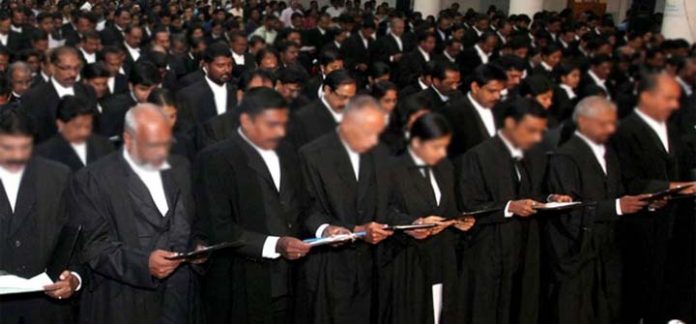
Download Now

Judicial interpretation of the term ‘arising out of and in the course of employment’

0

This article has been written by Shloka Shailesh Rasal.

Introduction

The term ‘arising during the course and out of employment is prescribed under Section 3 of the Workmen’s Compensation Act, 1923 prima facie indicating the employer’s liability when the workman’s employment is the proximate cause of his injury. It won’t be a predicament to detect whether the injury occurred while the workman is discharging his duty in the working hour.[1] However, when a workman is injured near the work premise or just prior to joining work or on the way of joining work impediment ascends as the components do not coincide together. To address this issue and grant relief to the workmen the Courts have adopted application of Doctrine of Notional Extension widening the scope of ‘employment’ wherein the place of injury has to be inferred as the place of duty albeit of not reaching the actual workplace. [2] Moreover, if the accident occurred attributable to the risk incident to the employment the claim for compensation must succeed regardless his individual imprudent act per se exposed him to an added peril. [3]

Despite the establishment of the underlined doctrine, a substantial number of workers are denied protection by workers compensation after classifying them as ‘independent contractors’ in order to deviate from the legally mandated benefits.[4] Although the statute claims to compensate occupational diseases, very few claims are triumphant owing to myriad factors. Such cumbersome regulations prove futile while granting compensation to the workmen discharging their assigned duties.[5] This paper canvasses the exceptions to the general rule of Section 3 of the Act whilst apprehending the nexus between ‘arising out of employment’ and ‘during the course of the employment’ by comparing it to the application of the Doctrine in UK via judicial interpretation.

Judicial interpretation of Section 3(1) of the Workmen Compensation Act, 1923

Section 3(1) of the Workmen Compensation Act, 1923 prescribes that if the workman is affected by personal injury ensued by accident arising out of and in the course of his employment, the employer shall be held liable to compensate him or his legal representative as per provision of Chapter II.  Accidents arising out of and in the course of his employment and Personal injury are the three ostensible components of this definition. In the nineteenth century, the definition “scope of employment” was substituted by “in the course of employment” denoting the risk incidental to the workman’s duty of rendering service owing to the master, compelling it to be reasonable to believe that the workman wouldn’t otherwise suffer an injury.[6] 

Personal injury

The term Personal injury has not been defined under this Act. However, the term ‘Employment Injury’ has been defined under Section 2(8) of The Employees State Insurance Act, 1948 envisaging a personal injury caused by an accident or an occupational disease ascended during or in the course of employment.[7] The burden of proof lies on the employee to corroborate that the accident was incidental to his employment. [8] Section 3 of Workmen Compensation Act, 1923 postulates:

i) The workman must sustain a personal injury;

ii) Personal injury must be caused due to an accident;

iii) Accident must arise during or in the course of employment;

iv) The workman must be totally or partially disabled for not more than a period of three days or must have died resulting from the personal injury.

This definition broadened the scope of the term ‘personal injury’ to encompass all physical injuries perpetrated during the course of employment. Albeit, the employer will be liable if his employee suffers psychological diseases, mental stress, mental illness and strains stem from the employment. Therefore, a death from nervous shock inflicted due to an excitement and alarm and a heart stroke was held to be a personal injury entitling the dependents to compensation. [9]

Accident

Pursuant to legal liabilities, Lord Lindley avowed that the term ‘accident’ comprises any unexpected or unintended event that results in hurt or loss. The judiciary must interpret the term accident to denote the cause and effect without discriminating between the two. The General case of an accident is due to an external event. Failure of muscular action of heart, exertion causing apoplexy or neurasthenia, the strain causing rupture are a few less obvious cases of an accident where Lord Atkin termed them as ‘internal accidents’. In such cases, it is impossible to distinguish between ‘accident’ and ‘injury’ thus in such cases ‘injury’ and ‘accidents’ coincide. The essential principles to determine the injury inter alia to be an accident are:

  1. There must be a causal nexus between the accident, injury and the work done in the course of employment.
  2. The onus lies on the employee to prove that the work he was engaged in resulted in the strain which aggravated the injury.
  3. The evidence brought on record cannot be a subject matter of conjecture or surmise.

Therefore, death may result from an accident but the occurrence of the accident must be proved. Just because death took place in the course of employment would not amount to the accident as there is no assumption that an accident occurred. Thus, the term ‘accident’ is an untoward mishap that is unexpected or undersigned. [10]

Arising out of and in the course of employment

The term ‘in the course of employment’ connotes the term ‘in the course of employment wherein the workman’s employment is incidental to the accident.’ The application of this term is not confined to the mere nature of employment rather applies to its incident, condition, nature, obligation. Contemplating the above factors, if the workman is within the zone of danger the injury would be said to arise out of employment to which the claim must succeed unless the workman by his own prudent act was exposed to an added peril. It is a well settled law the term ‘duty’ is not confined to the period of time the workman commences his work and downs his tools.[11] 

new legal draft

If the workman leaves his house and subsequently is found in a public place, public transport or on a public road unless in the nature of his employment he is not in the course of employment. Even though a worker has not arrived at or departed his workplace, he can be perceived to have been in the course of his employment if he has a rational extension of both time and place.

Every case’s facts and circumstances would have to be scrutinised extensively for determining whether the accident occurred as a result of and during the employment of a worker, especially considering the principle of notional extension at all times.[12] It may be pointed out that if an employee is obliged to travel by a specific means of transport for reaching or while leaving the premises albeit not being a legal obligation. But if the circumstances induce the workman to adopt those means it would resonate with the period to include in the course of employment. Furthermore, pursuant to occupational disease like silicosis, employees engaged in serving silk extracting processes are exposed to an atmosphere that would cause certain diseases known as occupational diseases. However, the employer will not be liable:[13] 

a) Wilful disobedience of explicit orders given or framed of the employee,

b) Wilful removal of safety guard or any device provided for securing the employee from harmful danger.

Doctrine of vicarious liability in the United Kingdom: judicial interpretation

Under English law of torts, doctrine of vicarious liability holds employers strictly liable for the wrongdoings of their employees.  If an employee performs any act during the course of his employment, damaging the third party, then the employer will be held vicariously liable for the act of his employee. A tripartite test helps determining vicarious liability:

  1. An offence or a tort is committed by an employee,
  2. A tort is committed, and
  3. An offence or tort is committed during or in the course of employment. 

This test differentiates between contract of service and contract for service. A contract of service is between an employer and employee or an independent contractor. In the case of Market Investigations Ltd v Minister of Social Security[14], the court opined that when an individual is in the business on his own account it leads to contract of services, the factors determined are chance of profit and risk of loss. Bramwell LJ connoted a servant is subjected to the orders of his master as to the manner of work to be done.

The difference contemplates the amount of control the employer has on his employee. If injury occurs and the employer is deemed to be in a position of sufficient control, the courts will usually hold the employer vicariously liable as the causal link between the employer and employees engaged services. ‘Mutuality of obligation’ to enter into the contracts must be considered to hold the employer liable.

The control test was primarily established in the case of Honeywill v Larkin[15]  wherein Slesser LJ stated that the employer will not be held liable for the acts of independent contractors in the way he would be liable for the acts of his employees or agents, albeit acts being performed during the course of employment for the benefit of the employer. 

Dennig LJ proposed a test to determine an individual as an independent contractor or an employee:

  1. Whether the employer imposes a level of control on the individual to make the former his master?
  2. Whether the individual in consideration of his remuneration delivered personal services?
  3. Whether the terms and conditions of the contract are compiled to be a contract of service?

If the three questions are satisfied, then the individual would be considered as an employee and the employer will be vicariously liable to the acts of his employee performed during the course of employment. As per the English tort law an employer would be liable for the acts of his temporary employees loaned from third party services. The onus to prove that the employee was acting in his course of employment while the tort was committed lies on the claimant.  However, in the case of Joel v Morison[16], Parke B protected the rights of employers by stating that the master is only liable when the act is performed during the course of his employment. However, if the employee denies the master’s implied common, the master will not be held liable for negligent acts of his employees. He emphasised that there must be a causal link between the tortious act and the employment.

Discussion and analysis

Contemplating the evolutionary perspective of ‘doctrine of notional extension’ and ‘doctrine of vicarious liability’ discussed in the above chapter, this chapter’s ostensible purpose is to study and analyse the revolutionary reforms of these doctrines. 

It is well settled that the doctrine of notional extension pursuant to the employer’s premise encompasses the area which the employee passes or repasses while leaving or going to his workplace. The liberal interpretation of judiciary denotes that there may be a reasonable extension in time and place, regarding the workman to be in course of his employment albeit of his absence in his workplace. The terms ‘scope of employment’ and ‘accident’ have attained a wider significance whereby the courts while determining the compensation must contemplate the risks, working conditions and incidents and the duties of a workman. [17] Andhra Pradesh High Court in Ravuri Kotayya v. Dasari Nagavardhanamma [18] laid down test to identify injury arising out of employment:

  1.  Workman must be employed or discharging his duty midst time of accident,
  2. Personal injury must have occurred at or about the place of employment where he mandatorily was required to be present to discharge his duty.
  3. The immediate act resulting in the injury must establish a proximate nexus with the employment.

Section 2 (8) of the Employees State Insurance Act, mentions the meaning of Employment injury- personal injury or occupational disease caused in the course of insurable employment within the territory of India. In Ved Prakash Garg v. Premi Devi[19] and Others the Supreme Court held that for employment and occupational injuries caused due to insurable employment, compensation must be paid along with interest. Exceptions to the general rule of the doctrine are- minor injuries not causing total or partial disablement exceeding thirty days, influence of alcohol or drugs, wilful disobedience, intentional removal of safety guard. In the case of State of Rajasthan v. Ram Prasad and Another[20], the Apex Court held that the appellant will be liable to pay compensation if the workmen is exposed to Vis Major (Act of God). Doctrine of Contributory Negligence is a valid defence for the employer and the onus to prove the same is of the Employer. The law laid down in the above case was applied by the Karnataka High Court in the United India Insurance Co. Ltd v. Smt.Kanakavalli[21] wherein the deceased went to refresh himself beside the river with prior permission of his employer leading to his death, the court held the employer liable for compensation. In the case of Management of the Hathikuli Tea Estate v. Rita Bhumij[22], the Court held that the employer will be liable in case of operation of unexpected natural forces such as tidal waves, storms, hurricanes, cyclones, lightning without the inclusion of human intervention. Thus, we can apprehend that Indian judiciary has broadened the scope of the term ‘arising during or in the course of employment’. 

At this juncture, while examining the question when the employment commences and ceases, the reasoning coined by Lord Porter in Weaver v. Tredegar Iron Coal Co [23] is analysed wherein he expanded the scope of duty while elucidating the duty doesn’t cease on showing ‘down tool’ signal or while leaving his workshop. If the workman is arriving and leaving the workplace in the course of employment under the implied terms of the contract, then the employer is liable for compensation. In the recent judgments of WM Morrison Supermarkets [24], the Court of Appeal of the United Kingdom stated that employers should be liable only if the employees’ conduct was “closely related” to their daily duties. Mr. Skelton’s “area of operations” did not include the digital disclosure of the data as it was not his job. His unlawful disclosure of the data wasn’t quite closely related to the job that it can be considered made in the usual course of his work reasonably and properly. Hence, the court held that the employer was not vicariously liable. Furthermore, the court in the case of Haringey London Borough Council v FZO [25] held the school liable for sexual abuse of a student by a teacher not only in the premises of the school but also after the claimant left the school premises.  In Barclays Bank PLC v Various Claimants[26] recognized the traditional law principle that the employer will not be held liable for the acts of an independent contractor. The judgements passed by the Court of Appeal prove their expansive approach towards the application of the test of ‘close connection’. 

Conclusion and suggestions

In recent decades, the judiciary had centred on a narrow interpretation of a “notional extension of the workplace.” As a result, injuries that occurred while the employee was on the route to his workplace, were not encompassed within the ambit of the term ‘accidents’ that occurred “out of and in the course of work.” The definition “arising out of” was thus subjected to judicial interpretation since its inception, and in most cases, the court has intended to confer a liberal interpretation. Moreover, this term has contemporarily been used in conjunction with the phrase “arising out of employment.” Despite the fact that the notion of these two words are dissimilar, they are inextricably linked. It was formerly believed that arising “in the path” meant a large circle and “out of” meant a small circle within it. However, the preferred approach is that these two terms are two circles that converge somewhere. To be compensated, these two conditions must be met. Under this statute, these two terms are conjunctive. If these principles had been disjunctive, a larger area must be addressed. Vicarious liability established in the UK is a legal responsibility levied on the employer for employees negligent or unauthorised acts performed in the course of employment wherein the act must have a connection with the employment. Therefore, this principle is a loss-distribution mechanism applicable on the grounds of economic and social policy. These doctrines have accomplished the ostensible purpose of the statutes by recognizing the rights of the employees.

References


[1] George A. Kingston, Arising out of and in Course of Employment, 4 The Virginia Law Register 804–820 (1919), https://www.jstor.org/stable/1106511 (last visited Feb 25, 2021).

[2] The Superintending Engineer vs Tmt.Sankupathy, 2004(5) CTC 321 Mad First Bench

[3] Mackinnon Mackenzie and Co Pvt. Ltd v. Ibrahim Mohammad Issak, (1965) 67 BLJR 735.

[4] Kamta Prasad Pandey, COMPENSABLE HARM UNDER WORKMEN’S COMPENSATION ACT, 1923—A COMPARATIVE STUDY OF THE INDIAN AND ENGLISH DECISIONS, 11 Journal of the Indian Law Institute 430–479 (1969), https://www.jstor.org/stable/43950044 (last visited Feb 25, 2021).

[5] Master and Servant. Injury “Arising out of and in the Course of the Employment,” , 5 The Virginia Law Register 238–240 (1919), https://www.jstor.org/stable/1106192 (last visited Feb 25, 2021).

[6] M. Mackenzie v. I.M. Issak, (1970)

[7] R.b Mundra and Co. v. Mr. Bhanwari, (1990) RAJ 111

[8] Shakuntala Chandrakant Shresti v. Prabhakar Maruti Garveli and Another, (2007) I L.L.J 478 (SC)

[9] The Divisional Controller v. Smt. Kiran and Ors. 2017 ILR 363 (SC)

[10] Fenton v. Thorley & Co., 1904 UKHL 460

[11] State of Rajasthan v. Ram Prasad and Another, (2001) IL.L.J 188 (SC)

[12] Trustees Port of Bombay v. Yamunabai, (1952) Bom. 392

[13] Balaji v. Kala, (2018) Mad C.M.A. 2279

[14] (1969) 2 QB 178

[15] (1934) 1 KB 192

[16] (1934) EWHC KB J89 178 ER 1336

[18] (1961) AP 42

[19] (1997) 8 SCC 1

[20] (2001) I L.L.J. 177 (SC)

[21] (2020) 4 SCC 55

[22] (2018) 2 LLJ 339

[23] (1940) 4 All. E.R 167

[24] (2020) UKSC 12

[25] (2020) EWCA Civ 180

[26] (2020) UKSC 13


LawSikho has created a telegram group for exchanging legal knowledge, referrals, and various opportunities. You can click on this link and join:

Follow us on Instagram and subscribe to our YouTube channel for more amazing legal content.

Download Now

How to draft an amendment agreement

0
Image source: https://rb.gy/nf7odc

This article has been written by Vaishnavi Krupakaran, pursuing a Diploma in Advanced Contract Drafting, Negotiation, and Dispute Resolution from LawSikho.com

Introduction

The one thing that is constant in all our life is change, there are many reasons why the contracts have to be changed, for example – sometimes we fill the need for extension of a contract, or sometimes when the quantity of work might need to be increased or there might be a change necessary because of statutory requirements. Sometimes a judge might also order the change in an agreement. Hence drafting the amendment clauses of an agreement plays an important role as much as drafting of the conditions of the amendment itself.

Amendment agreement 

An amendment agreement is a revised agreement or an addition to the original agreement. The change to the original agreement is called an amendment. The amendment is usually entered into by the parties instead of entering into a new fresh agreement. The change required in an agreement is substantial then it has to be changed but if the changes are easy and simple then amending the agreement is the best possible solution. The main details which have to be entered into an amendment agreement are clauses in a contract, details that have to be revised, the clause numbers that need to be revised, etc. The main function of the addendum is to modify, nullify change and clarify the terms of the contract.

Reasons for  people want to amend contracts 

People amend contracts due to the advancement in business and society there shall always be changes in the amendments in contract from time to time therefore amendments secure a special place in the contracts. For example, due to Covid-19  many employment and rental policies have been amended. An addendum is an efficient way to attach the updated terms and conditions of a contract.

Usage of such contracts 

As discussed, such contracts are used to amend the existing contracts. The amendment agreement needs to be signed by both the parties and has to be written in a stamp paper and the date has to be clearly mentioned . The price of the stamp paper would vary from state to state in India. The stamp paper value will be enlisted on the website. As a customary practice, it is important that all the parties sign on the stamp paper and distribute one copy of the stamp paper to each other.

Law applicable 

The main foundation   of law and reference of an amendment agreement is the Indian Contract Act, 1872. It covers the general principles, formations, and mutual understanding of the contract.

The general structure of  an amendment agreement 

Introductory paragraph 

The first para should contain the name of the partners and the name of the company, description of the amendment.

Definition 

The words used in the addendum contract shall be clearly defined before starting with the recitals. The definitions are very important as the same words can be used in different senses in different contexts. Hence definition and under which Act the word would be defined is different in every contract.

  1. Designated record set” means The group of records maintained by or for a covered entity that.

Consideration 

It is very important to revise and mention the consideration during the addendum as consideration is the main purpose of the contract, therefore it is very important to revisit consideration of an agreement.

Conclusion 

There should be a guarantee of enforcement of the amendment and shall be assigned with the contract, it shall remain written for safety.

Signature 

A signature is very important as it is used to mark acknowledgement of the person after reading the agreement. Usually, the person signs below the print of his title like CEO, principal, etc.

In a partnership amendment agreement, it’s essential only for the partners to sign but in the case of corporate or financial firms, other signatures are also required. Therefore the sign in every agreement whether a new or an amended one is very important for the enforcement of the contract. The most important part of signing is to proofread the agreement before signing the agreement for safety and precaution and to agree on mutual terms.

Managing of amendment 

Usually, a contract is subject to many amendments where every amendment should be numbered, for example, the amendment “number 1”, “amendment number 2.”

There are 4main types of agreements, while amending we should be very specific and concise the amendment should sound significant else it would resemble the original contract.

Therefore are broadheads under which the contracts amendments are classified –

  • The most common way is to underline the lines which need to undergo changes and strikethrough the ones that are not essential for deletions.

Example – Section 5 is amended as follows –

The term of the agreement shall be from 31/05/2010 – 31/05/2019  31/05/202

The terms of the agreement 

For example – the term of the agreement shall be amended from 01/03/2000 to 01/03/2001.

Term of the original contract 

For example – the term of the original contract of the non-addendum part of the contract shall in no way be affected by the addendum clause.

  • The next method is very common: a particular clause is completely severed or entirely changed or replaced with a new clause.
  • The next way of the amendment is describing the amendment 
  • First, the heading or the main amendment is stated and then the descriptions are given.

An addendum should always be attached with the original contract, the modified terms and conditions of the original contract shall be read in continuation with the original contract. Addendums of people – usually addendum is used to add more people in the partnership to change and determine the original contract. Therefore joinders are widely used to expand and clarify partnerships.

Steps of an amendment agreement 

  • It is very important to first read the original contract thoroughly.
  • The next step is to find out the lacuna in the original agreement and find out how we can overcome it.
  • Review the contract and see what could be done.
  • Have a fair discussion with the other party and discuss if they agree on the same parlance.
  • Then move on to the amendment part – always write the amendment part on top of the contract then clearly state the name of the parties, date when they were being amended, and time.
  • It is always regarded as best to describe such amendments and make a note of the pg no . and clause.
  • After completion of the amendment, state when and how shall the amendment come into full binding force.
  • Add the following details below – 

Terms of the original contract –

  • Have all the parties sign and make note of the changes.

Written vs oral amendment agreements 

It is always very important to note that a written agreement will act as a piece of evidence and uphill the battle in the court in case of a dispute rather than oral ones, oral ones are accepted but they are not safe, written documents are the best proofs of evidence. 

Modification of a contract before and after signing the contract

Pre signing 

If there is an error in the contract, but not completely pertaining to the amendment then such typing error or a grammatical error may be corrected even after the contract is signed by the parties.

Post signing 

Usually, pre-signing is done very easily but post-signing is very hard because it includes and involves all the consents of everyone in the partnership agreement. Sometimes even before amending the original contract may have a clause stating that if required the contract may be amended, modified, and supplemented.   

Amendments, consents, and waivers 

Commonly the concept of the amendment and waive off and consents are confused. An amendment is to make changes to the existing terms of the contracts but on the contrary, the concept of consent or waive off means to annul a term stated in the contract or nullify it as against what is written in the contract. The concept of consent and permit means – to give consent to deviate from the terms stated in the contract. Therefore, the actions of waiving off and consents should not be confused with amendments

Difference between amendment  and addendum 

According to a common man, the words “amendment” and “addendum “are commonly used but they have variations according to the Contract Act. Therefore in simple terms: 

  • The amendment means – changes to the existing clauses, revision, alteration all of it comes under the amendment.
  • Addendum means- addition to the existing clauses, sometimes if something crucial had probably been omitted previously addition of it to contracts is the amendment.
  • Sample format of an addendum –

Addendum to the contract (hereinafter referred to as the “Addendum”) shall be entered on ———

Between————and ———————, bearing the address of ——————–,

Emails id and phone number of the address shall be ———————-. They shall collectively be referred to as” parties “ hereafter, both the parties agree to the amendment of the contract, with regard to ———–,titled—————————–. A copy of the agreement shall be attached to the original contract. The addendum of the contract shall therefore bring about the following changes ——————————————————————————————————————————————————————————————————————————————————————————-   

The amendment shall be made with the amendment of both parties. This Addendum is acted in accordance with the laws of the state. This Addendum will be binding upon the parties. If any term of the contract shall be invalid or incapable of being enforced, all other terms, conditions, the other provisions of this Addendum shall be unaffected and remain in full force and effect. The Parties agree to the terms and conditions acknowledged by their signatures as follows:

Name: ______________________                                                         Name :    ———————         

Signed: _____________________                                                         Signed :———————–

Date: _____________________                                                              Date :————————–

(party A)                                                                                                                     (party B)

Conclusion 

Contract amendment agreement permits the parties to make changes that are agreed upon by an existing contact. An amendment agreement of a contract deletes, changes, makes addition to the existing agreement. While we need to be careful and bear in mind that while negotiating a contract, changes made while drafting the original contract are not amendments, as there is no existing contract, therefore an amendment agreement is made only to an original contract. An amendment is a legal way to bring changes to the existing contract, with new terms in writing with the understanding and agreement of everyone so that there is no room for misunderstanding.   

References


Students of Lawsikho courses regularly produce writing assignments and work on practical exercises as a part of their coursework and develop themselves in real-life practical skills.

LawSikho has created a telegram group for exchanging legal knowledge, referrals, and various opportunities. You can click on this link and join:

Follow us on Instagram and subscribe to our YouTube channel for more amazing legal content.

 

Download Now

An analysis of grounds to deny specific relief with reference to the case of A.R. Madana Gopal v. Ramnath Publications Pvt. Ltd.

0
Supreme court of India

This article is written by Arya Mittal from Hidayatullah National Law University. The article analyses the case of A.R. Madana Gopal v. Ramnath Publications Pvt. Ltd. in reference to the available grounds to deny specific performance.

Introduction

Recently, in April 2021, the Supreme Court gave its judgement in the case of A.R. Madana Gopal v. Ramnath Publications Pvt. Ltd. (2021) wherein it dealt with the issue of grounds for denying specific performance. Ever since the 2018 amendment, the Specific Relief Act, 1963 has made it compulsory for the courts to enforce the specific performance of a contract. Yet, the Supreme Court has laid down the grounds for denying specific performance. This article seeks to analyse these grounds in light of the afore-mentioned case and thereafter, discusses various Supreme Court judgements. 

The case of A.R. Madana Gopal v. Ramnath Publications Pvt. Ltd.

Facts of the case

  • The case relates to the sale of four properties by respondents to the appellants. The sale deeds were to be executed within four months. In furtherance of the same, the respondents requested the Income Tax authority to issue a clearance certificate. 
  • However, the authority ordered for compulsory acquisition of property which was challenged in the court by respondents by filing writ petitions. In between, the parties entered into four Memorandums of Understanding (MoUs)
  • Later, the appellants requested for the execution of the sale deed to which respondents replied that the execution could take place only after the disposal of the cases. 
  • After some time, it was brought to the notice of appellants that the property was already encumbered so they filed a suit for specific performance, which was passed in their favour by the Single Judge of High Court. The same was challenged by the respondents before the Division Bench which reversed the order of Single Judge. 
  • Therefore, an appeal was filed in the Supreme Court which relates to the current case. The timeline of events is provided in the form of tabular representation for simplicity and clarity since time is of the essence in the current case.

Date

Event

20.03.1991

The parties entered into four agreements for sale of property by the respondent to appellants

25.06.1991

Income Tax authority passed an order for compulsory acquisition of property

21.12.1992

Madras High Court directed the Income Tax authority to reconsider the matter

22.02.1993

Income Tax authority issued an order for the purchase of property which was challenged by the respondents by way of writ petitions

10.03.1993

Interim order of injunction by the Court to not change the nature of the property

24.01.1994

Parties entered into four MoUs according to which the title deeds were to be retained by the respondent till the sale of property and the balance amount was to be paid by the appellant immediately after disposal of writ petitions at time of execution of sale deed

11.09.1998

Writ petition disposed of by High Court in favour of respondents which was challenged by the Income Tax authority

10.2000 (Date not specified)

Appellants filed four suits for specific performance 

17.07.2003

Suits were decreed by the Single Judge of the High Court directing the balance amount to be deposited by the appellant along with twelve percent interest rate within eight weeks and respondents were directed to execute the sale deed and deliver possession to the appellant.

01.08.2003

Balance consideration deposited by appellants

25.07.2008

Appeal by respondents allowed by Division Bench of the High Court against the decree of Single Judge. Appeal reversed the order of Single Judge and passed judgement in favour of respondents. 

Issues of the Case

  1. Is the Division Bench of the High Court correct in denying specific relief to appellants on grounds of non-payment of balance amount immediately after disposal of writ petitions?
  2. What can be the possible grounds for denying specific performance?

Contentions of the parties to the case

Appellants

  • The appellants argued that they had already made 90 percent of the payment to the respondents back in August 1994 for which they received possession of part of the property. They were told that the agreements will be executed only after the disposal of the writ appeal. 
  • As regards the agreements and the MoU, they contended that the two should be read together. They emphasized the recital part wherein it was stated that ‘the payment should be made at the time of registration of sale deeds immediately after disposal of writ petitions. They were of the view that the High Court gave excessive emphasis on the word ‘immediately’ ignoring ‘at the time of registration of sale deeds’. 
  • Thus, when they were later informed that the property was encumbered, they filed a suit for specific performance. So, it cannot be said that the appellants delayed in filing the suit since they were always ready to perform their part of the agreement and pay the balance amount. 
  • Further, they contended that since the Income Tax authority had filed an appeal, they did not take any step to execute agreements. 
  • Also, the suit for specific performance was not barred by limitation so they were entitled to specific relief. 
  • Lastly, they placed reliance on the amended Section 10 of Specific Relief Act, 1963 which provides that specific performance is no more the discretion of the court and needs to be compulsorily enforced. 

Respondents

  • The respondents argued that time is of the essence in the agreements and MoU existing between the parties. 
  • They were of the view that even after the petitions were disposed of in the favour of the respondents, the appellants failed to file the suits for specific performance for two years and three months which is fatal since time is of the essence in the present situation. 
  • Further, they contended that escalation in prices is a relevant factor since the property is situated in Chennai.
  • Lastly, they argued that there was no clause in MoU to give possession to the appellants in the agreements yet they acquired possession of part of the property which they did not prove but also made attempts to disturb the possession of Indian Bank. 

Findings of the court

  • The Hon’ble Court agreed with the view of appellants that the High Court failed to consider the words ‘at the time of registration of sale deeds’ which led to its erroneous decision. It held that the clause meant that the balance amount will be payable at the time of registration which should be done immediately after disposal of petitions. 
  • The Court also agreed with the view of appellants that the delay in filing suit was due to the appeal filed by the Income Tax authority and held them correct in doing so. 
  • It held that non-payment of the balance amount cannot be a sole ground for denying specific relief. 
  • Not pleading the manner in which the possession was received by appellants cannot be a ground to deny relief. 
  • Specific relief cannot be denied on account of trespass by appellants and causing disturbance since Indian Bank was not a tenant and only a creditor. The frivolous complaint of a party, non-pleading the manner of possession and trespass cannot be grounds for denying equitable relief.
  • Moreover, escalation of prices of a property cannot also be considered as the sole factor for denying relief. 
  • Suit for specific performance cannot be denied on the sole ground of delay or laches except in the case of immovable property where time is of the essence. In the current case, the delay was not a result of the default of appellants and can thus, not be denied relief. 
  • The court may decide to provide or not provide an additional amount depending on the circumstances of each case. In this case, since ninety percent of the amount had already been paid before 1994 so the respondents were not entitled to any additional amount. 

The possible grounds to deny specific performance

Section 10 of the Specific Relief Act, 1963

Section 10 of the Act deals with the specific performance of contracts. It provides that the court shall enforce the specific performance of the contract subject to certain provisions of the Act. However, before the amendment of 2018, providing such relief was the discretion of the court since the former provision used the word ‘may’. Therefore, as per the current provisions, the court should compulsorily enforce specific performance subject to Sections 11(2), 14 and 16 of the Act. Apart from these provisions, certain judgements of the Supreme Court have also iterated the grounds wherein specific performance can be denied. These cases have been discussed hereafter.

Mehboob-ur-Rehman v. Ahsanul Ghani (2019)

In this case, the court has held that even post-amendment, the Court may deny specific performance if it is evident that the plaintiff was not ready or willing to perform his part of the contract in accordance with Section 16 of the Act. A similar view has been held by the Court even in the case of Umabai v. Nilkanth Dhondiba Chavan (2005).

K.S. Vidyanadam and Others v. Vairavan (1997)

In this case, the plaintiff failed to make payment for the balance amount and thereafter executed the sale deed within six months of the agreement by the parties and filed suit for specific performance only after two and a half years. The Supreme Court held that though the case might not be barred by limitation, yet total inaction on part of the plaintiff can be a ground for denying specific performance. It held that, in the Indian context, specific relief cannot be denied on the sole ground of delay or laches, yet total inaction on part of the plaintiff can be a ground for denying specific performance. 

A. Kanthamani v. Nasreen Ahmed (2017)

In this case, the court held that though it is important for the plaintiff to show his willingness and readiness for his part of the performance of the contract, yet if the plaintiff does not deposit money, then it cannot be said that he was not ready and cannot be disentitled from the specific relief. A similar ratio was also given by the Privy Council in the case of Bank of India Ltd. v. Jamsetji A.H. Chinoy (1949).

I.S. Sikandar v. K. Subramani (2013)

In this case, a contract was terminated and as a result, a suit for specific performance was filed. However, the plaintiff failed to pray for setting aside the termination of the contract. The court held that since the plaintiff did not seek declaratory relief to set aside the termination so it would be deemed that the plaintiff had accepted such termination and this would show acceptance on his part. As a result, he cannot sue for specific performance since the contract has come to an end from his side.

A similar decision was given by Supreme Court in Adcon Electronics (P) Ltd. v. Daulat (2001) wherein it held that the party asking for specific performance for execution of sale deed, needs to specifically ask for possession of such immovable property, else the same will not be permissible. 

Nirmala Anand v. Advent Corpn. (P) Ltd. (2002)

In this case, the Supreme Court held that though the rise in prices is an important factor for consideration, yet it cannot be the sole ground on which the relief can be denied to the plaintiff. It concluded that escalation of prices may be relevant when the decree is being granted for the first time, yet it cannot become the sole consideration for denying the relief. 

Conclusion

The case of A.R. Mardana Gopal is yet another achievement of the Supreme Court to clarify the grounds on which the court may grant or deny specific performance. Factors such as escalation in prices, non-pleading of the manner of possession, non-payment of balance amount etc. cannot be grounds for denial of specific performance and thereby reject equitable relief. 

References


LawSikho has created a telegram group for exchanging legal knowledge, referrals and various opportunities. You can click on this link and join:

Follow us on Instagram and subscribe to our YouTube channel for more amazing legal content.

Download Now

Negotiation of a partnership with a food delivery company 

0
Non-registration
Image Source - https://rb.gy/k4trle

This article has been written by Vaishnavi Krupakaran, pursuing a Diploma in Advanced Contract Drafting, Negotiation, and Dispute Resolution from LawSikho.com

Introduction 

A partnership is one of the best ways to expand and start a business, very often an entrepreneur tries to wear all the hats but this leads to a lot of confusion and many times leads to inefficiency in work. It is very important to have a written partnership agreement. The partnership has many advantages and disadvantages but such as increased labour, capital,  ideas, vision, and viewing a problem through many eyes. If the partnership is done efficiently it can be very lucrative and successful. Money is one of the key reasons that can strain the relationship therefore it is very important to negotiate the terms of a partnership agreement and track the finances. There may be many points of dispute like handling of employees,  dividing responsibilities, bringing and firing employees on board, etc. Hence traveling through these tricky waters is very essential and can only be handled through efficient negotiation. Through negotiation, we can hammer out the differences of opinion and formalize the whole thing. Before delving into the main topic of negotiation of the partnership agreement with food delivery Company we should first understand a few terms–

  • Food delivery – a food delivery company is a courier service in which restaurants, stores, cafes have tie-ups with independent food delivery companies that deliver food to customers.
  • Partnership agreement – it is when two or more individuals come together in order to generate more profit and manage the business together.
  • Negotiation – the act of reaching a dispute through various forms like discussions and agreement to settlement. As we know the basic terms of the topic now lets us try to understand the terms of negotiations for a partnership agreement with a food delivery company. 

Draft a written agreement 

In order to legalise business, it is always advised to have formal conduct of business. Irrespective of the size of the business it is very important to have a well-drafted agreement, complete the business partnership agreement. This is the best way to prevent any financial and legal disputes in n  the future. The next step is to discuss the mutual goals of the business and growth of the business –

The ultimate goal of the food delivery company and the restaurant is customer satisfaction which will directly be proportional to the growth of their respective business collectively and individually. Therefore it is very important for the restaurants and food delivery companies to have mutual goals and the same view of growth and expansion.

Profit ratio

This is one of the prime things to be negotiated, which is how will the profits be distributed and how will the profits be shared based on the ratio. It is also very important to discuss the employment policy  –

Example 1:

The delivery partners who would be employed, their qualifications, the average time that would be taken to deliver the food.

Example 2:

The customer service professionals who would be in charge of dissatisfied customers.

All these terms are very important to be negotiated in order to handle situations which might not turn favourably even if one of these people in the chain does not turn out to be a good fit.

Protect the interest of the restaurant owner and the food delivery company 

The agreement shall have a clause that shall protect the interest of both the parties and keep the interest tapped for a long-term issue. For example, by putting a simple process ahead of time and making the process fair and simple to protect the interests of both parties. 

Beware of the possible conflicts 

It’s essential to know your deal-breakers or must-haves to know where you would like to draw off your line before starting off, the best way to fulfill it is by articulating what would want vs what you are willing to give up. It is always told that we should be aware of the dreaded consequences in order to be prepared to face the worst. therefore the possible conflicts which could be aroused shall always be addressed while negotiating. 

Example – the profit-sharing ratio. Who shall be responsible and in what manner shall they be responsible in case of a dissatisfied customer, in what manner are the losses going to be split up if the food is returned due to various causes. The next point is an alignment of goal and expansion of business which shall affect both the business. It is very important to address in case of a conflict to a third party and how it shall be handled, for example – arbitration if a dispute shall arise between both the parties.

Promotion and advertisement 

It is very important to attract the customers, hence there shall be a huge cost that shall be incurred under the heads of advertisement and promotion. Who shall be responsible if there shall be a coupon code awarded, how are the original rates of the business going to be affected. Who shall bear the offers of happy hours or festive days all that shall be discussed?

The partnership shall include commercially reasonable efforts to engage the parties in cross-marketing and promotional activities like social media engagement, blogs, testimonials, restaurant video features, logo, etc.

Clarify on ownership and goodwill  of all the property (physical or virtual)

This point can be elucidated with an example. If a person orders on a food delivery app he trusts the goodwill of the app and the restaurant, under what name is the food being served under the delivery app’s name or under the name of the restaurant that needs to be clearly negotiated.

  • For example – when we order food on Zomato and Swiggy we choose the restaurant but that is not the case with few other apps the food is served under their name. The topic of patent, trademark, inventions all shall be clearly discussed as a comprehensive property can bring potential value to a small business. A clear understanding of both parties as to what belongs to whom is essential to negotiate the value of physical and intellectual property and setting up shops on their own. It is important to discuss and set the mutually agreed goals to start with the positives and also to address the conflicts.

Negotiation  on dissolution and changes 

It is very important to discuss what would be the consequence if the partnership has to be dissolved – along with acknowledging the positives it is important to acknowledge the negatives as well by acknowledging that the partnership might not work, it might fail or some amendments or changes may be needed to be brought in.

The rights and licenses granted 

Usually, the delivery company grants licenses to the restaurants and stores especially if they are budding ones, the reputation, and goodwill rise once it’s listed in the delivery company. This needs to be clearly discussed, as a huge part of goodwill and intellectual property rights and proprietary rights come under it. Illegal usage of such rights and breach of agreements shall lead to cancellation of rights by the delivery company and dissolution of the partnership.

Confidentiality 

Confidentiality and secrecy are key qualities in a partnership business. There may be processes related to trade secrets, intellectual property business development, etc. which is very important. The non-disclosure agreement should contain what information is confidential and how it should be handled. The limits and purposes for handling the information, the process of enforcing the agreement, and the solution and remedy if such violation occurs.

Tax implications 

It is very important to discuss the tax procedure, the tax principle should be taxable on reaping benefits on reaping the benefits of allocation. It is very important to negotiate and make sure that the taxes are taxed independently. The allocation of profits and losses should be discussed clearly and negotiated in order to determine the taxes.

Pricing 

The pricing strategy, the percentage which will belong to the restaurant, the percentage of vat which will be charged. What percentage of an administrative fee would be charged. The customer price that would be applicable. 

Errors and penalties 

In case of errors on who would have the right to determine, whether it would be the restaurant or the food delivery company for fulfillment of reorders. Who would bear the costs associated with rectifying such errors?

Food health standards 

The agreement between both the companies that it would pass through all the local tests regulated by the local authorities. If there are any violations with respect to substandard materials being used then there shall be immediate termination in the contract.

Competition 

The clause of no illegal soliciting of either of the businesses in the food fraternity shall be accepted.

Service agreement 

The responsibilities and the parameters of the restaurant ongoing support of the agreement shall be discussed  such as: 

Example:

  • How shall the restaurant receive orders, maybe via email, app messenger, etc?
  • Mutually agree upon the food listed in the menu and the description of the food in the app. Agree with the restaurant’s location and how and when shall it be changed from time to time.
  • The time that the restaurant should take to confirm the order. 
  • How shall the restaurant notify the food delivery company if it is unable to fulfill the order?
  • How and by when shall the pickup time be indicated by the restaurant.

Branding and labeling 

The companies shall mutually agree to presentations of the food for example with no grease, clear labels. Presentation of boxes in a specific device probably in trays, boxes, etc, the branding logo. The labeling shall contain the name of the order, notes, names.

Law governing and jurisdiction 

The agreement shall be binding by the state and central laws of the country and the binding effect shall take place in the jurisdiction it is located in.

Indemnification  and liability 

If there are any losses incurred by the food delivery company then the restaurant shall be indemnified and visa versa. Probably due to breach of agreement or warranty. If damages cause the death of the party or cause injury in any way. If any loss has been caused due to willful misconduct and or negligence of the food delivery company. The liability of the parties shall be discussed and the type of the liability of the party, for example, whether it’s limited liability of partnership, etc.

Termination and severability clause 

Either party shall have the right to terminate but with a notice period given beforehand for example 30 days or 45 days and what shall be the after-effects of the termination – for example, an invoice shall be sent on the date of the termination.

Conclusion 

As it is always told that two heads are better than one, so is the case in partnership it can either be traumatic or exciting. The best trick is to lay down a strong and clear understanding of the agreement and negotiate well through well-defined processes and clear goals. These are the steps that should be taken which would surely be worth a pound of cure back.

References 


Students of LawSikho courses regularly produce writing assignments and work on practical exercises as a part of their coursework and develop themselves in real-life practical skills.

LawSikho has created a telegram group for exchanging legal knowledge, referrals, and various opportunities. You can click on this link and join:

Follow us on Instagram and subscribe to our YouTube channel for more amazing legal content.

Download Now
logo
FREE & ONLINE 3-Day Bootcamp (LIVE only) on

How Can Experienced Professionals Become Independent Directors

calender
28th, 29th Mar, 2026, 2 - 5pm (IST) &
30th Mar, 2026, 7 - 10pm (IST).
Bootcamp starting in
Days
HRS
MIN
SEC
Abhyuday AgarwalCOO & CO-Founder, LawSikho

Register now

Abhyuday AgarwalCOO & CO-Founder, LawSikho